• Skip to primary navigation
  • Skip to main content
software stack logo

Software Stack

Get your Software Stack together

  • Knowledgebase
    • All Categories
    • Accounting Software
    • Automation & Workflow Software
    • Customer Relationship Management
    • E-Commerce Shopfronts & Payments
    • Marketing Automation
    • Online Courses & Membership
    • Project Management
    • Surveys & Forms
    • Web Hosting
  • Home
  • About Us
  • Contact Us
  • Show Search
Hide Search

Shopping Platforms & Marketplaces

4 Proven Ways to Fund Your Next Business Idea (2024)

Software Stack Editor · March 27, 2024 ·

Do you know how many different ways there are to fund your company? Angel investors, crowdfunding, loans—the list goes on. It can be hard to decide what’s right for you and your brand. 

In Vicky Pasche’s case, she needed the money to fund Dapper Boi, a body inclusive, gender-neutral fashion brand. She and her co-founder, Charisse Pasche, turned to Kickstarter in 2015 to launch the company. Five years later, they raised $300,000 through equity crowdfunding alone. 

Whether you’re trying to secure your spot in the market or find the best way to bring your concept to customers, Vicky’s advice will help you fund your business. 

Don’t miss an episode! Subscribe to Shopify Masters.

4 ways to fund your business

Co-founders Vicky and Charisse (pictured in the center and far left) took the first step to fund their business by finding like-minded people who believed in the idea. Dapper Boi

1. Run a crowdfunding campaign 

If you want to start a business but don’t have the capital, look for your ideal customer to help fundraise on a crowdfunding platform like Kickstarter. 

“When we went on Kickstarter, it was just about connecting and relating to people. We were solving a problem, so we had to find people that had the same problem,” Vicky says. Kickstarter allowed her to connect with people facing the same challenges, and they were excited about her solution. Vicky and Charisse raised $26,000 after their initial ask of $18,000.

Try using crowdfunding tools like Kickstarter to find like-minded people who will help you achieve your vision.

2. Take pre-orders

While a great business idea can be lucrative, you’ll need money upfront to get production started. A way to solve this issue and bring in capital is to take pre-orders. 

“At the start, we offered [pre-orders] with an intro price discounted by 30%, for three weeks only,” says Vicky. ”Customers went nuts.” The limited time pre-order model raised demand and brought in a quick influx of cash for the founders. 

The money from a pre-order campaign will fund product production and give you a positive runway to keep growing the business. 

3. Connect with investors 

Vicky recommends using LinkedIn, signing up for networking events, and taking courses to meet as many people as possible. “You need to connect early and often,” Vicky says. The odds of finding an angel investor is higher with each new person you meet and share your vision with. 

There is no shame in asking people for help or for an introduction that will result in you raising more money. Vicky asked a mentor for advice and ended up meeting Dapper Boi’s first investor, who infused $250,000 into the company. Meeting more people will raise your chances of finding the right person to invest in your brand. 

4. Open up equity crowdfunding 

Attracting the right angel investor can be challenging and take a lot of time. That’s why equity crowdfunding is a great option once you’ve found your target audience. Vicky and Charisse usedStart Engine to offer customers partial ownership of Dapper Boi.

This approach is debt-free and allows for an influx of cash into the business, without having to exchange physical goods. Contributors receive a financial stake in the business for showing their dedication and support of the company’s growth. 

It’s intimidating to allow one investor to own part of your business. This route will allow you to feel the support of the community while gaining cash for the company. 

To learn more about Vicky’s journey, and discover how the brand manages a 50% customer return rate, tune in to the full Shopify Mastersepisode.


How Shopify Checkout’s Built-in Accessibility Can Increase Conversion (2024)

Software Stack Editor · March 27, 2024 ·

At Shopify, our goal for accessibility is to make commerce accessible to everyone. This includes all entrepreneurs of any ability or age, and anyone within the Shopify ecosystem, including shoppers!

Shopify Checkout is a highly accessible user experience by default. This means shoppers with disabilities can buy with confidence using their own assistive devices and technologies; no third-party apps or plug-ins are required.

Before we get into the details of Checkout’s accessibility, let’s first define what we’re discussing.

Table of contents

What is digital accessibility?

“Digital accessibility” refers to the access of digital content. The definition we share reads as:

“Web accessibility is the practice of designing and developing a website or web application to be usable for as many people as possible, regardless of physical impairment or cognitive ability.”

When digital products are made with accessibility baked-in, people with disabilities can equally perceive, operate, understand, and interact with it. This not only helps with usability, but builds confidence and trust in the digital product and brand.

Understanding web accessibility for merchants

Learn more about best practices for web accessibility standards, the guidelines for accessible websites, and how to test your website’s accessibility.

Learn more

Why is accessibility important to my business?

When it comes to businesses of any size, accessibility helps to enable greater success in entrepreneurship. It does so by making your product open and available to more people. More people means greater growth opportunities, increased revenue, and positive public perception.

A woman with a prosthetic arm holds a credit card while online shopping on a laptop.
Shopify Checkout is highly accessible for shoppers with disabilities. Pexels

An industry report from 2020 estimates the number of people with disabilities to be 1.85 billion, which makes it a “market larger than China.” This represents a market opportunity in the trillion-dollar range. (Disability touches 73% of consumers and controls more than $13 trillion in annual disposable income.)

Disability touches 73% of consumers and controls more than $13 trillion in annual disposable income.

Let’s review how this helps your business regarding brand loyalty, competitive advantage, and conversion opportunity.

Brand loyalty

A recent study shows how consumers identify with and remain loyal to brands that reflect their own values. A key takeaway states 82% of shoppers want a consumer brand’s values to align with their own.

Some of the values mentioned in this study reflect the idea of inclusivity, which is at the heart of accessibility.

Competitive advantage

Implementing accessibility and inclusive design into your product can help you have a competitive advantage.

The WebAIM Million, an annual study that reviews the accessibility of the top one million homepages shares that across the one million homepages, almost 50 million distinct accessibility errors were detected—an average of 50.0 errors per page.

This reflects how accessibility is, unfortunately, not the norm. If your business provides an accessible user experience by default, this will set you apart from your competitors. People will take notice and recognize this is a part of your business values.

Increase conversion

Two studies conducted by Shopify partner Fable Tech Labs share compelling data for entrepreneurs.

The first looks closely at the relationship with disabled users and accessible apps on mobile platforms. This study reveals 94% of respondents factor the accessibility of apps and mobile sites into their decision around which businesses to support.

The other study looks at the state of online shopping for people with disabilities. This also shares more revealing data points, including:

  • 71% of assistive technology users will abandon a digital experience that is difficult to use.
  • Confidence building user experience is key to repeat purchases and customer loyalty.

What these studies reveal is how deploying an accessible user experience helps to increase conversion. Shoppers who are able to use your website or app with ease and confidence will do so and likely become loyal, repeat customers.

These important insights provide a sense of what the online shopping experience is like for disabled customers, and why it’s important for your business.

How does Shopify ensure an accessible checkout?

Shopify Checkout is not only the world’s highest-converting checkout, trusted by the biggest brands, it’s also highly accessible by default. Our Checkout design and engineering teams take great care in crafting accessible and usable components in conjunction with people with disabilities who rely on assistive technology.

Our Checkout design and engineering teams take great care in crafting accessible and usable components in conjunction with people with disabilities who rely on assistive technology.

Checkout Extensibility can add customizations to Checkout, including new visual elements built using a component library provided by Shopify. The components in this library are continuously tested to ensure they meet our internal accessibility standard. However, app developers still need to apply accessibility best practices when using these components.

A woman sitting on her wheelchair while using her mobile phone and holding a credit card.
Shoppers with disabilities can buy with confidence using their own assistive technology. Pexels

Accessibility review

Accessibility of Checkout is reviewed on a continuous basis, the primary focus being usability with assistive technology and the coverage of core user flows. This is achieved through:

  1. Design review of new components when required.

    Our internal accessibility team works with Checkout designers when new components or features are being created. By catching potential accessibility issues earlier in the product creation lifecycle, the team accelerates time to market by avoiding shipping defects and sprints to retrofit. It also means wider adoption by shoppers using assistive technology from day one.

  2. Automated accessibility testing at the component level is continuous.

    Our component library and CI environments include accessibility testing via automation. These tests report high-level, objective accessibility defects.

  3. Usability test sessions with people with disabilities are conducted quarterly (or on demand when required.)

    Test results disclose usability issues: subjective accessibility defects or blockers that may prevent task completion. These are triaged and sent to the team responsible for remediation.

    This task is contracted out to Shopify partner Fable Tech Labs.

  4. Internal, manual assessments are conducted bi-annually (or on demand when required.)

    Deep-dive reviews are completed by Shopify’s internal accessibility team. By working through Shopify’s Accessibility Assessment Checklist — success criteria that reflect the latest WCAG standards — both design and code are thoroughly scrutinized in order to reveal defects that may have been missed otherwise.

Conducting accessibility reviews on a continuous basis means our Checkout teams are able to monitor for and remediate accessibility defects in a timely manner. This helps to ensure Checkout flows are highly accessible and usable by assistive technology users, further building confidence and trust in your brand.

Usability statistics

Regular usability testing of Checkout provides metrics and insight into where we prioritize effort. It also reveals blockers that need immediate attention.

A recent usability test session of Checkout revealed:

  • 100% completion rate across varying assistive technologies; screen reader, voice dictation, and alternative navigation
  • 86/100 accessibility score across Checkout state: guest, logged in, and mobile
  • A total of two reported issues for a single usability test session, which were promptly sent to our engineers for remediation
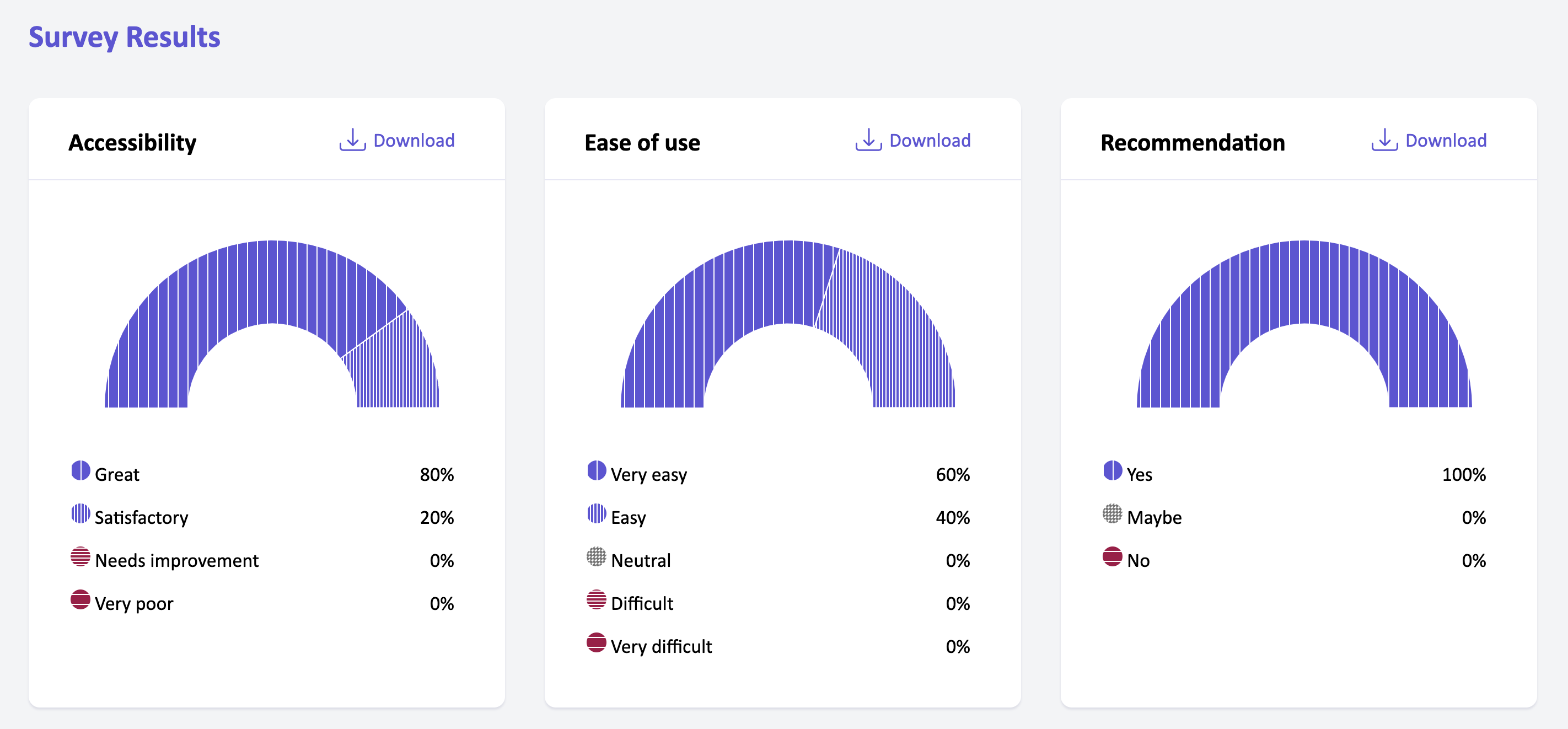
Fable checkout survey results. Accessibility: 80% great, 20% satisfactory. Ease of use: 60% very easy, 40% easy. Recommendation: 100% yes.
Shopify Checkout survey from Fable usability testing shows positive results.

As we continue to innovate and increase the extensibility of Checkout, we anticipate that these metrics will be consistent/improve across future test sessions.

Accessibility is good for business

Shopify Checkout is the world’s highest-converting checkout, trusted by the biggest brands, and is highly accessible by default. An accessible ecommerce solution means additional brand loyalty, giving your business a competitive edge and increased conversion opportunities.

By conducting accessibility reviews on a continuous basis, our Checkout teams are able to monitor for and remediate accessibility defects in a timely manner.

Up to 27% of adults in the United States have some type of disability. With more than 10% of all US ecommerce powered by Shopify, you’re well equipped to support your customer’s needs from day one with Shopify Checkout.

Accessibility is good for business. Start, run, and grow your business with Shopify!

Resources

Profitable Logistics Business Ideas You Should Consider In 2024

Software Stack Editor · March 27, 2024 ·

image

An old friend from college has a growing ecommerce company selling athletic apparel they acquired as overstock from major retailers. The company could use some help keeping track of things such as incoming shipments, inventory, and customer orders—a series of processes collectively known as logistics. Your idea: Start a logistics company that could take this burden off your friend’s hands.

Here’s what you need to know about starting a logistics business.

What is a logistics business?

Logistics is the handling, storing, and transporting of goods. Its origins are related to the military’s need to supply food, clothing, and equipment to soldiers on the move.

Modern logistics companies manage supply chains, the series of relationships between businesses that starts with a producer shipping goods and ends with those goods’ delivery to customers. Logistics is also involved in the transport of people; airlines, cruise ships, passenger trains, buses, and even taxis are thought of as logistics businesses.

As ecommerce and online shopping has grown, so has the need for companies to outsource logistics. For many businesses, it’s more cost-effective to pay someone else to manage activities like shipping and handling. Advanced information technology such as inventory tracking software and barcode scanning make this possible for ecommerce businesses of all sizes.

[embedded content]

Logistics business ideas

There are many business opportunities in the world of logistics. Here are some ideas for logistics companies to get you started:

Warehousing

Warehouse logistics is usually focused on temporary storage of bulk items. For example, a tire manufacturer may need a warehouse for thousands of tires before selling them to an automaker, but it doesn’t want to be in the business of running a warehouse.

There’s a significant upfront investment for running a warehouse—you need to own or lease a warehouse, and you will need an inventory tracking system, security, insurance, and maintenance. Success will depend on how well you manage the warehouse space and your ability to set competitive storage fees.

Fulfillment or distribution center

An order-fulfillment center is typically a large space for receiving, storing, and distributing goods. Unlike a warehouse, a fulfillment center focuses on quick turnover—typically small goods such as consumer items.

Fulfillment centers move goods quickly because the operators get paid for distribution rather than storage time. This is called order fulfillment, also known as pick-pack-ship logistics. This kind of logistics business also usually requires a significant capital investment to buy, lease, or build a facility to handle the volume of incoming goods from suppliers, as well as a computerized order-fulfillment system.

Order fulfillment software

If you know how to write computer code and you have experience in ecommerce order fulfillment, you might create a software program that ecommerce businesses can use to manage the order-fulfillment process.

Cargo and parcel tracking

A logistics business could focus on real-time location tracking of packages for delivery to homes and offices. You could also track larger cargo destined for warehouses or other storage centers using GPS, barcodes, and other information technology.

Freight forwarding

As a freight forwarder, you serve as an intermediary between import and export shipping companies and businesses buying and selling goods. A freight forwarder arranges shipping—including customs clearance and storage—but has no direct or hands-on involvement in shipping.

Trucking

Carrying cargo by truck is a type of transport and logistics business in which you haul goods from a producer, shipper, or warehouse to an intermediary or final customer. Long-haul trucking companies carry goods 250 miles or more, usually with an 18-wheeler. A short-haul trucking business typically handles routes of less than 250 miles, often relying on smaller trucks. Amazon, FedEx, and some other big package companies often use independent contractors for deliveries. You need your own truck or van if you want to work as a delivery driver.

Drone delivery

Although still in its infancy, drone delivery might prove viable for handling light goods, such as small grocery packages, retail items, basic medical supplies, or small electronics. If you live in a city where customers would accept delivery by drone, this could eventually be a viable business model.

Logistics training

If you have a strong background in logistics, you might create a training program or course for companies looking to handle logistics in-house, or help companies that want to provide third-party logistics. You could sell the logistics training program as an online service, for example, or organize in-person training sessions at a location such as a hotel conference center.

Taxi or shuttle service

Since the dawn of time, there’s been demand for taking people from Point A to Point B. Consider starting an airport shuttle service or get by driving for ride-share services such as Uber or Lyft. Consider cornering a niche transportation market—say, coordinating stretch Hummer limo rentals for bachelor parties.

Moving company

You could start in the moving business with one truck and a few strong employees. You may not need any sophisticated logistics company technology, but you should have some experience handling the contents of homes and offices.

Vehicle rental

A vehicle rental business can be profitable, if logistically complicated. For a car rental business, you will need a fleet of vehicles and geographical coverage to ensure you have cars available when and where customers need them.

Tips for running a logistics business

  1. Know your strengths
  2. Develop a business plan
  3. Understand the regulations
  4. Obtain permits and licenses
  5. Line up financing
  6. Cultivate customers

The following six steps can help get you started, no matter the kind of logistics business you’re considering:

1. Know your strengths

Think about your existing skills and experience. If you’ve worked as a writer, consider starting a blog. Are you a computer whiz? Maybe develop software for logistics companies. Did you work in marketing and advertising? You could try focusing on developing specialized campaigns for logistics companies. Did you ever work as a truck driver? You might parlay that experience into starting a transportation and logistics business.

2. Develop a business plan

Draw up a business plan showing how you will operate your logistics business, how many employees you will need, and the size of your potential market. Include financial projections that scope out when you will break even and become profitable. Start with a simple plan and revise it later as the business evolves.

3. Understand the regulations

Almost every type of transportation and logistics business in the US has regulations at the federal and state level. Depending on the complexity of your business model, consider having legal counsel to guide you.

4. Obtain permits and licenses

If your type of logistics business requires any kind of license or permit to operate, be sure to obtain it. If you have employees, you’ll need an employer identification number for payroll and tax withholdings.

5. Line up financing

Know the startup costs and obtain the funds necessary to start your logistics business. Make your business plan clear and easy to understand so you can persuade friends or family to back your venture, win funding from outside investors, or help a bank decide whether to lend you money.

6. Cultivate customers

If you already have experience in the field, contact people or companies you’ve worked with in the past and make your pitch for handling their logistics. You can also find customers through trade publications as well as industry gatherings and conventions. Consider using business-to-business (B2B) marketing and social media channels to get out the word about your logistics business.

[embedded content]

Logistics business ideas FAQ

Is owning a logistics company profitable?

A logistics business can be quite profitable, depending on your niche, your scale, and your ability to find customers. For example, profitable transportation business ideas require investment in large-capital assets, and they generally have lower profit margins than services such as freight forwarding and logistics software programs.

Why should you start a logistics business?

Demand for all types of logistics services is increasing, as more companies—especially those in the sphere of online shopping—look to outsource their logistics needs. Barriers to entry are fairly low in the logistics industry and a logistic business often is relatively easy to scale.

What are common mistakes to avoid when starting a logistics business?

Common mistakes include:

  • Underestimating startup costs
  • Over- or understaffing
  • Having too much or too little storage space
  • Lack of clear and precise procedures
  • Inadequate IT for processing and tracking inventory
  • Operating without customer contracts or liability waivers
  • Inadequate insurance

How to Find the Best Time to Post on TikTok in 2024

Software Stack Editor · March 26, 2024 ·

Whether you’re a business owner or an individual creator, developing a TikTok strategy takes a little planning and a lot of experimentation. After creating your TikTok content, you’ll need to find the best times to post on TikTok to maximize engagement from TikTok users.

Luckily, data can help you reach the right audience at the right time. 

Ahead, learn what the experts think are the best times to post on TikTok for each day of the week, within the US and beyond. And, find out how to analyze your own TikTok data to discover the optimal posting schedule for your social media calendar and specific target audience.

Best times to post on TikTok in the US (in ET)

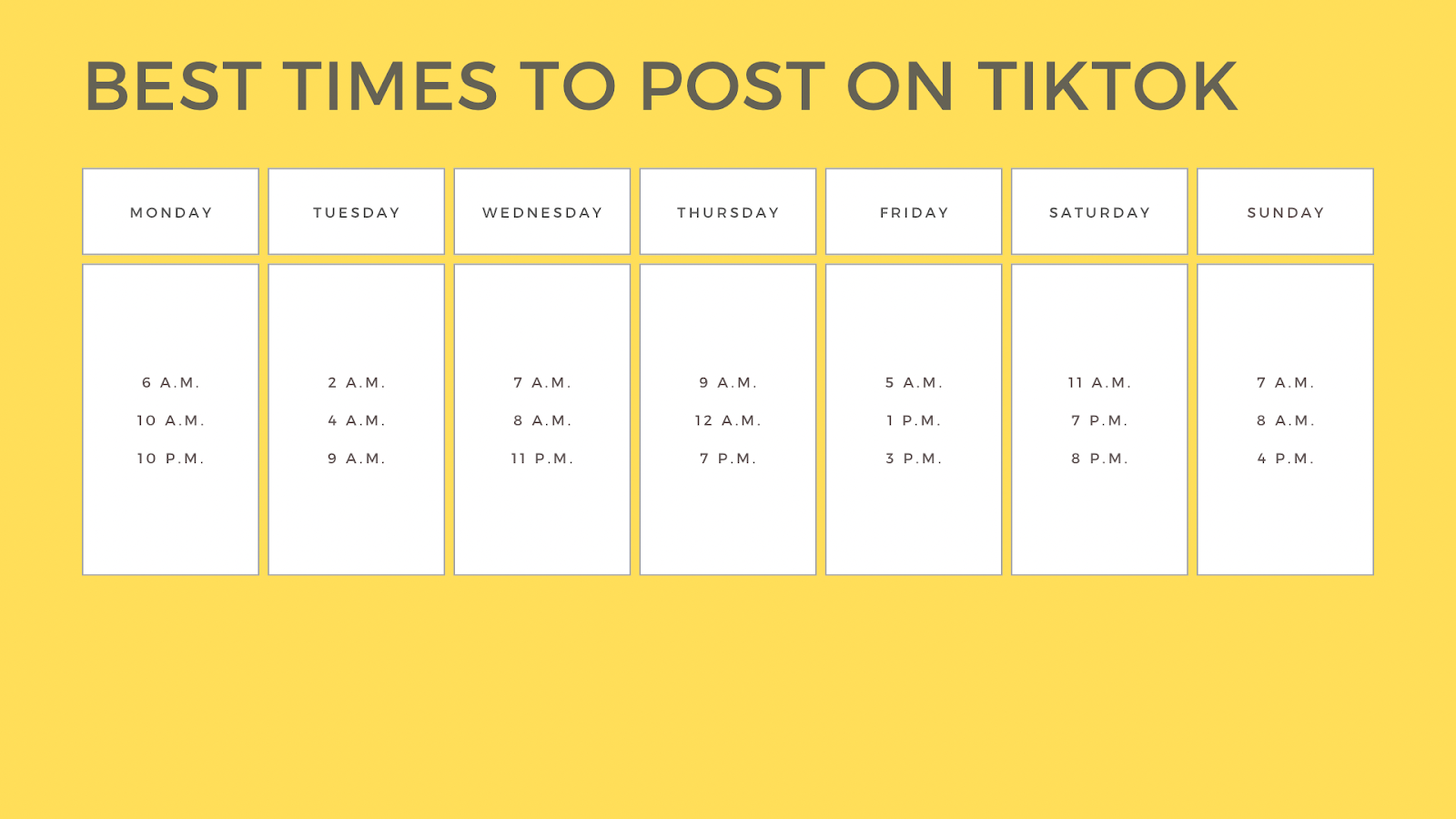
The best times to post on TikTok vary by day. Here are the best daily times:

  • Monday: 6 a.m., 10 a.m., 10 p.m.
  • Tuesday: 2 a.m., 4 a.m., 9 a.m.
  • Wednesday: 7 a.m., 8 a.m., 11 p.m.
  • Thursday: 9 a.m., 12 a.m., 7 p.m.
  • Friday: 5 a.m., 1 p.m., 3 p.m.
  • Saturday: 11 a.m., 7 p.m., 8 p.m.
  • Sunday: 7 a.m., 8 a.m., 4 p.m.

Let’s take a deeper look at these best times to post, broken out by day.

Daily TikTok posting schedule

Follow this schedule of optimal posting times to get maximum engagement from your audience:

weekly chart of the best times to post on TikTok according to Shopify’s social media team.

Best time to post on TikTok on Monday

In general, the best times to post on TikTok on Mondays are 6 a.m., 10 a.m., or 10 p.m ET.

These times cover a global audience while also fitting into daily schedules in the US, such as when users are scrolling TikTok videos before school or work, before lunch, and before bed. 

Best time to post on TikTok on Tuesday

The best times to post on TikTok on Tuesdays are 2 a.m., 4 a.m., and 9 p.m ET.

This suggests people are checking TikTok when they wake up, and again late in the evening. Posting during these hours will ensure fresh content is ready when users open the app.

Best time to post on TikTok on Wednesday

The best times to post on TikTok on Wednesdays are 7 a.m., 8 a.m., or 11 p.m ET.

If you post video content on TikTok during these times, you can catch people on the platform before work or school—and then again right before bed.

Best time to post on TikTok on Thursday

The best times to post on TikTok on Thursdays are 9 a.m., 12 p.m., and 7 p.m. ET.

Your content may receive extra reach if you post them on Thursdays around lunchtime. Many sources recommend scheduling the majority of your posts for early mornings, midday, and evenings across the midweek.

Best time to post on TikTok on Friday

The best times to post on TikTok on Fridays are 5 a.m., 1 p.m., and 3 p.m. ET.

More engagement in the early evening suggests viewership reduces on Friday nights, when some people may switch to other forms of media, such as streaming, or head out for a Friday night activity. Post on TikTok earlier on Fridays when more of your audience are checking their socials.

Best time to post on TikTok on Saturday

The best times to post on TikTok on Saturdays are 11 a.m., 7 p.m., or 8 p.m. ET.

TikTok’s viewership decreases on the weekends. However, you can make the most of Saturday posts by scheduling them late morning and later in the evening.

Best time to post on TikTok on Sunday

The best times to post on TikTok on Sundays are 7 a.m., 8 a.m., or 4 p.m. ET.

Schedule video content to go out early on Sundays to capture people who rise and shine for a morning workout, jump on social media before grabbing breakfast with friends, or who just like to scroll in bed.

Connect with shoppers on TikTok

Shopify comes with powerful tools to help you tell your brand story and create shoppable content on TikTok. Sync your store and let TikTok users buy your products in a few clicks.

Start selling on TikTok

The best time to post on TikTok by location

Two women look at a mobile phone together while sitting on a couch

The best time for you to post on TikTok won’t be exactly the same as the best time for Shopify’s social team or for other TikTok users—it will depend on your time zone and location of your target viewers.

If you have a global audience, pay attention to when people are most active across multiple time zones, and try to calculate time differences so that you can post content when the largest section of your audience is online.

For example, if your TikTok audience is primarily located in the UK and most active around 9 a.m. GMT, the best time for you to post on TikTok is 2 p.m. ET.

Keep scrolling for information on when your TikTok audience is most active.

When do the experts say is the best time to post?

A watch sits on a yellow surface

Not everybody agrees on the best time to post content. Here’s what several social media management companies found when they analyzed the timing and reach of TikTok posts sent via their platforms.

SocialPilot TikTok study

After analyzing seven million TikTok posts published by more than 50,000 accounts connected to SocialPilot, the team at this social platform found that top-performing content was most often posted at these times (ET):

  • Monday: 6 a.m.
  • Tuesday: 2 a.m.
  • Wednesday: 7 a.m.
  • Thursday: 9 a.m.
  • Friday: 5 a.m.
  • Saturday: 11 a.m.
  • Sunday: 7 a.m.

Buffer TikTok study

When the team at Buffer analyzed more than a million TikTok videos sent through their platform, they found that hourly reach peaked during these times:

  • Monday: 2 p.m.
  • Tuesday: 10 a.m.
  • Wednesday: 4 p.m.
  • Thursday: 4 p.m.
  • Friday: 10 a.m.
  • Saturday: 8 a.m.
  • Sunday: 10 a.m.

The study concluded that TikTok videos posted on Tuesdays have the widest reach, with the lowest reach occurring on Saturdays.

Influencer Marketing Hub TikTok study

To determine the best times to post on TikTok, Influencer Marketing Hub analyzed more than 100,000 TikTok posts and looked for engagement trends. They found that the best times (ET) to post are:

  • Monday: 12 p.m, 4 p.m.
  • Tuesday: 4 a.m., 8 a.m., 10 a.m., 3 p.m.
  • Wednesday: 1 p.m., 2 p.m.
  • Thursday: 5 a.m., 3 p.m., 6 p.m.
  • Friday: 1 a.m., 11 a.m., 7 p.m., 9 p.m.
  • Saturday: 5 p.m.
  • Sunday: 1 a.m., 2 a.m., 1 p.m., 2 p.m., 10 p.m.

Arguably, these studies reveal that there is no single best time to post on TikTok. In other words, the best posting time for you is likely to be unique, based on your audience’s viewing habits.

Next, let’s go beyond the general advice and look at how to use your TikTok app to find personalized data that will tell you exactly when to post.

How to find the best time to post on TikTok for your target audience

Two women sit on a yellow couch and create content for TikTok.

If you really want to find out the best time to schedule posts for your audience, you’ll need to use data analytics from your TikTok account.

General posting schedule recommendations are good for those crafting their initial content strategy and posting their first TikTok videos. If you’ve been a TikTok creator for some time, however, you can access personalized analytics to see when you should post to reach specific target audiences.

Leverage your TikTok posting data by following these steps:

  1. Create a TikTok Business account
  2. Open your TikTok analytics dashboard
  3. Find your follower activity
  4. Check your activity on individual TikTok posts

1. Create a TikTok Business account (formerly TikTok Pro)

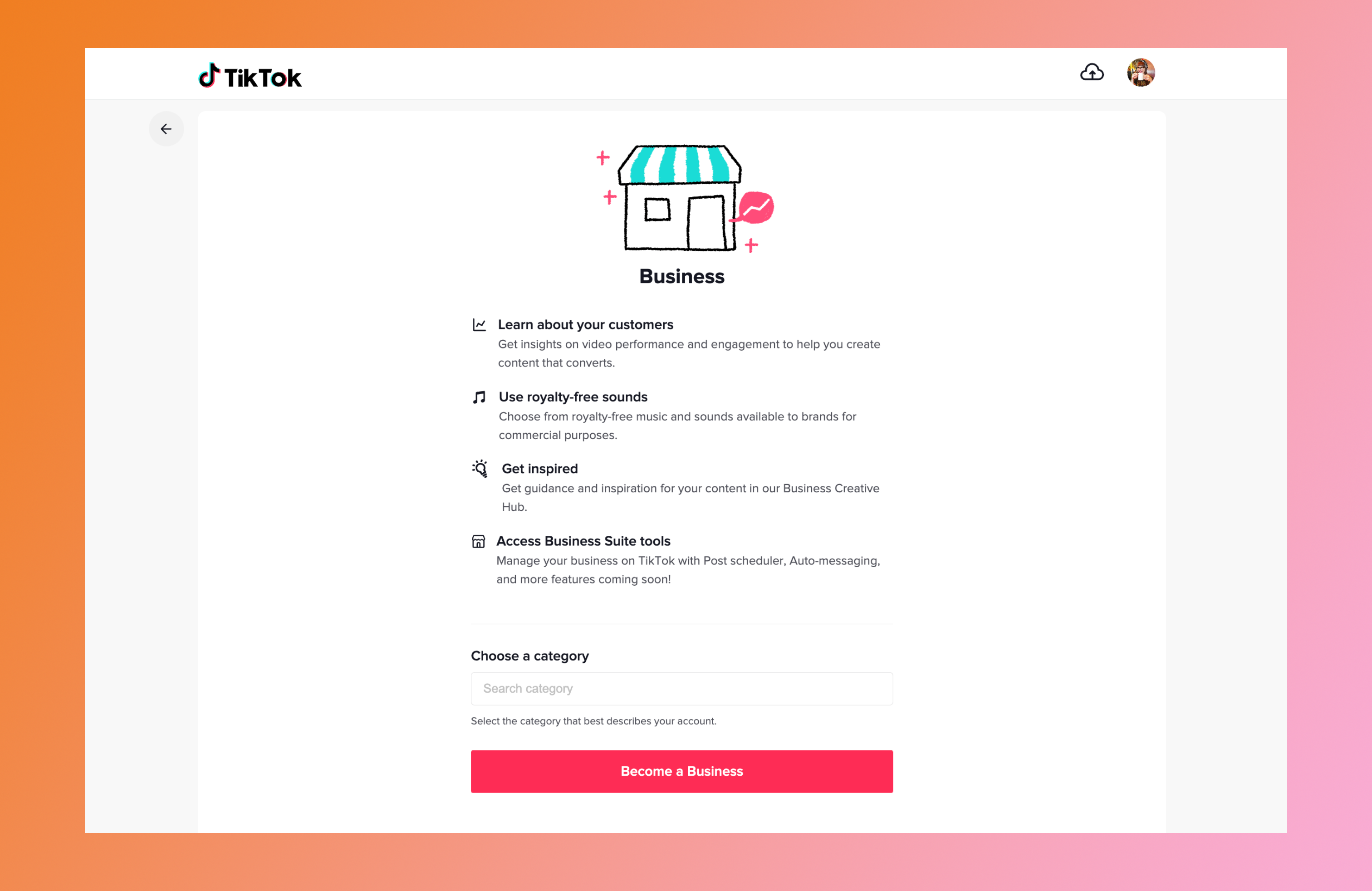
First, you need to make sure you have a TikTok Business account set up on the app. It’s free and simple to switch back and forth with your personal account. Just go to Settings and Privacy, then Manage Account, then tap Switch to Business Account. This gives you access to analytics as well as other features.

Interface for TikTok's business account sign up

2. Open your TikTok analytics dashboard

Next, you’ll want to look at your TikTok analytics. You can get there by clicking the menu at the top right of your profile screen, clicking Creator Tools, then Analytics. This opens TikTok’s analytics dashboard in your Business account, which offers insights into your account and your followers.

Here’s where you’ll find information like the average watch time of video content and other TikTok insights that will help you determine when to post videos across multiple time zones.

3. Find your follower activity

If you’re looking to find the best time to post on TikTok, you’ll want to check the Followers tab at the top. From there, scroll down, and you’ll see a pane titled “Follower activity.”

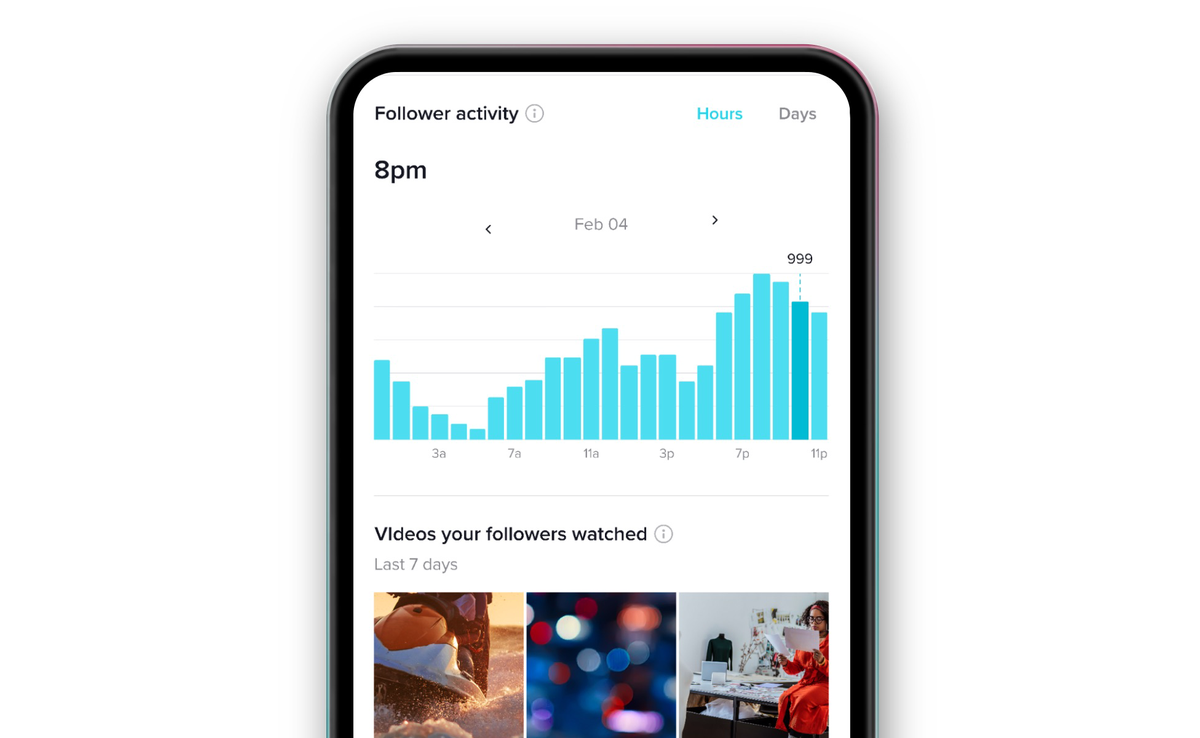
This is what it looks like on mobile:

TikTok analytics mobile dashboard, showing follower activity over a day.

This is the best TikTok analytics pane to use if you’re trying to figure out when your followers are most active.

Convert times from UTC

In the image above, the graph shows that follower activity increases during the day and peaks at 8 p.m. TikTok always displays times in UTC, so remember to convert any data to your local time zone.

For example, 8 p.m. UTC converts to 3 p.m. ET. So this account should aim to post around that time for the best chance at maximum engagement.

You can also find this information on a desktop by logging into your account and selecting “View analytics” under your profile. This gives a more detailed view (see below). You can download your data from the desktop dashboard.

TikTok follower activity graph showing daily fluctuations in activity over the course of a week.

Find the right times for your global audience

TikTok’s analytics dashboard shows not just when general users are active, but when your own followers are most often online. This can help you figure out the best posting schedule for your brand when you need to hit multiple time zones.

Bear in mind that your followers and TikTok customers may have different peak activity times compared to the general TikTok viewership. If your target audience or customer base is parents, for example, their activity might peak in the evening when they have more free time. If your target is students, their activity might peak after school hours.

This is the method that Shopify’s TikTok team uses to determine the best time to post. Shopify’s community of entrepreneurs is most active in the late afternoon but, again, this might be different for your audience.

The dashboard will also show where your followers are located. If, for example, you’re based in the US but notice you have a lot of followers in the UK, you may want to split your posts to target different time zones.

[embedded content]

4. Check activity on individual TikTok posts

You have the best chance of receiving likes, comments, and views when your followers are most active. To get more detailed information about follower activity from your analytics dashboard, navigate to the Content tab.

From there, you can see data on individual posts from the past seven days, including:

  • Total play time
  • Average watch time
  • How many people your video reached
  • Where your video was found (your profile or the For You page)

This tab also shows the time and date your videos were posted. By combining your follower analytics with your TikTok account data, you can figure out when to post your TikTok videos for the most views and engagement.

After looking at your data, you may find that certain content does better at particular times of the day compared to other posts. Again, activity is likely to be highly individualized, so digging into your personal dashboard is key to finding the best TikTok posting times for your business.

💡Tip: The best time to post on TikTok may not be the same as the best times for other social media platforms. Check your analytics across each platform to find the optimal time to post content.

Learn more:

How to optimize your TikTok videos for engagement

Person holding an Android Smartphone with the TikTok app open

Finding the best time to post on TikTok for your brand is only valuable if your content can successfully engage your audience.

Success on social media platforms like TikTok goes beyond posting your content at the right time. Quality content that offers value to your target audience and has clear goals. Even if you schedule content to go live at peak times, the content won’t perform if you don’t have a great strategy and brand voice.

Here are some ways you can optimize your TikTok content.

💡 Did you know? You can manage TikTok ads directly from Shopify.

Optimize TikTok video length

One of the key factors that impacts TikTok engagement is the length of your videos. As of spring 2024, TikTok will allow video uploads of up to three minutes in length, but what is the optimal video length for maximum engagement?

Data suggests two potential strategies for optimizing TikTok video length. One approach is to make videos shorter than 10 seconds. These videos received an engagement rate of 6.09% from March to August 2023.

For maximum engagement, however, videos should be longer than 54 seconds. Posts of this length saw a 6.7% engagement rate over the same time period.

Why short videos can work

Even though longer videos are the best overall engagement play, a short or micro-video strategy can work well on TikTok, thanks to the platform’s fast-paced nature. Users typically scroll through their feeds quickly, so posts that instantly capture attention are likely to generate engagement.

Short videos are worth considering, given that they may be easier to make, consume, and share. The more videos you post, the greater your chances of making content that goes viral.

Tailor video length to your audience

While general rules can guide you, optimal video length can vary depending on your audience. It’s important to use your analytics dashboard and experiment with different video lengths to find the right format for your most-valued audience.

💡Learn more: TikTok for Ecommerce: How To Convert Fans to Customers.

Follow TikTok trends

A TikTok influencer sets up their phone with a light ring in preparation to record a post.Another aspect of maximizing engagement on TikTok is staying up to date with current trends. Whether or not you follow TikTok trends can influence the best times for you to post.


The impact of trends on posting times

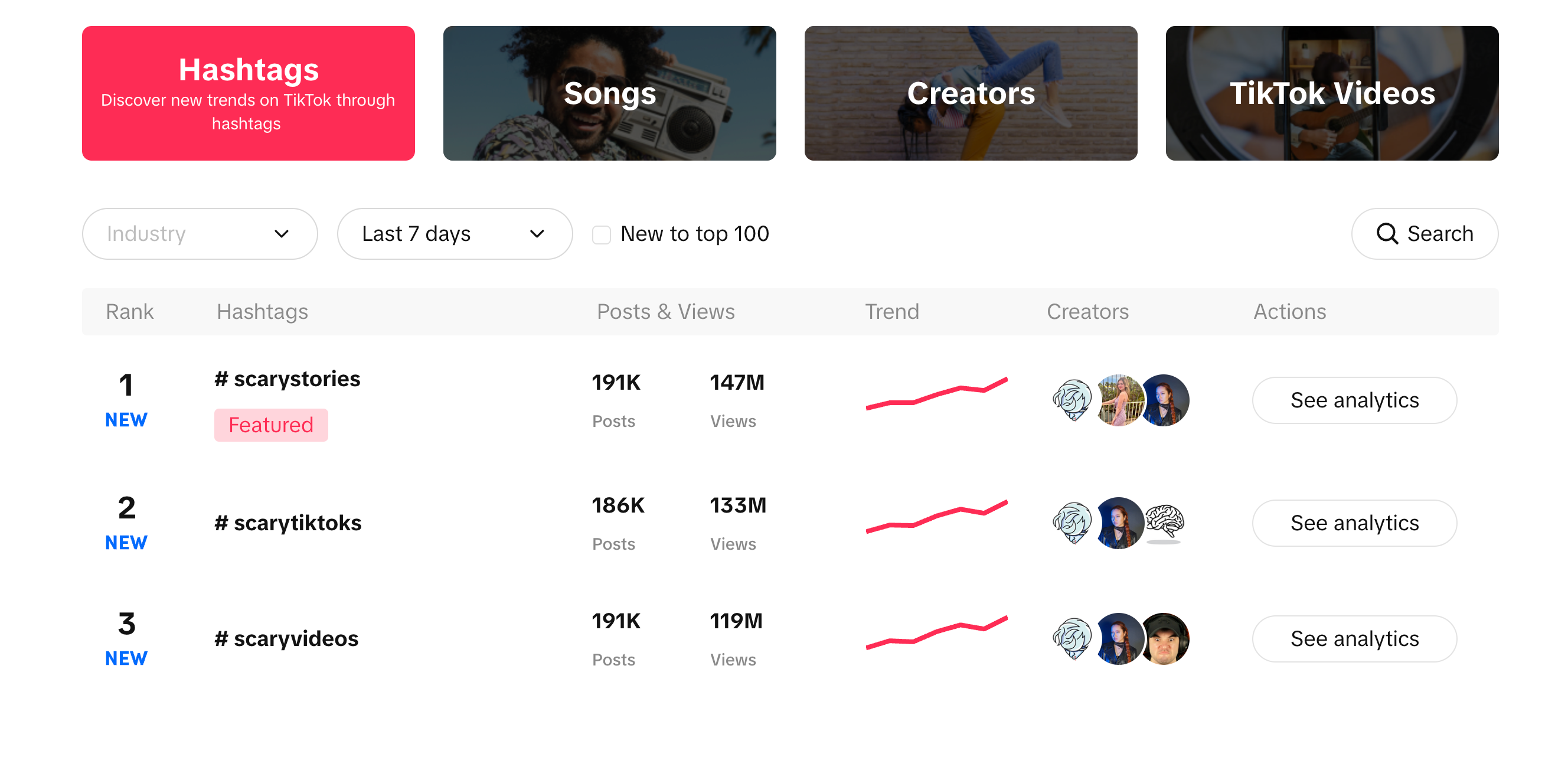
TikTok trends can dictate the type of content users interact with. For example, if a trending song or dance challenge becomes viral, videos featuring that trend are more likely to see higher engagement. This may affect the best times to post, as users may be more active during times when they can participate in trends or challenges.

Content featuring trending challenges often receives engagement during after-school hours (3 p.m. to 5 p.m.) and in the evening (7 p.m. to 9 p.m.). Posting content related to a trend during these times could increase your engagement.

Interface for TikTok trends page

Keeping up with TikTok trends

You’ll need to use TikTok regularly to stay up to date with the latest trends. Join the TikTok community by:

  • Following creators: TikTok creators start and propagate trends. Following them can give you early insight into what might become popular.
  • Using the Discover tab: Discover shows trending hashtags and sounds, providing a snapshot of what’s currently popular on TikTok.
  • Engaging with your audience: Pay attention to the trends your audience is participating in. This can provide ideas for relevant content that your audience is likely to engage with.

The best time to post on TikTok is now

A man smiles while taking a selfie on a yellow mobile phone

Insights from Shopify’s social media team and other studies can give you a general idea of the best time to post on TikTok for your brand. Even better, analytics from your TikTok account will tell you when your audience is most likely to engage with your posts.

However, the best thing you can do to build engagement on TikTok is to post consistently over days, weeks, and months. TikTok recommends that businesses post authentic, engaging content between one and four times per day for best results. 

The more you post on TikTok, the more data, feedback, and followers you’ll gain—and the more you’ll be able to pinpoint the best time to post on TikTok for your business.

Best time to post on TikTok FAQ

Does posting time matter on TikTok?

Yes, posting time does matter on TikTok. TikTok’s algorithm prioritizes recent and relevant content, so it’s best to post on TikTok when your audience is most active and engaged. This will increase the chances of your content being seen by more people.
Experiment with different posting times and analyze the performance of your videos using your dashboard to find the best schedule for your specific audience. The best time to post on TikTok will differ for each audience.

Is Sunday the best time to post on TikTok?

Survey’s of TikTok post popularity have shown that posting on Sunday mornings may generate more engagement. However, weekend posts generally see lower reach and engagement than TikTok videos posted during the week. Ultimately, posting consistency and video quality are more important than the specific day or time of your TikTok posts.

Why does my TikTok get no views?

There are several reasons why your TikTok videos may not be getting any views. Here are a few possibilities:

  • Inappropriate content: TikTok has community guidelines that prohibit certain types of content such as nudity, hate speech, and violence. If your content goes against these guidelines, it may not be recommended to users.
  • Low-quality content: High resolution video and audio is likely to get more views than videos that are poorly shot or have low-quality sound.
  • Lack of hashtags: Hashtags help your videos reach a wider audience. If you don’t include relevant hashtags in your video, it may not show up in popular searches.
  • Timing: Posting your content at the right time is important. If you post when most of your followers are asleep or busy, your video may not get as much engagement. The best time to post on TikTok depends on your audience’s time zone, as well as data from your TikTok analytics dashboard.
  • Lack of engagement: To grow your account, you need to engage with other users, respond to comments, and create content that encourages conversation.

Is it better to post TikTok videos at night or in the day?

There isn’t one simple answer to this question. The best time to post on TikTok depends on a number of factors, including your audience’s location, your time zone, the multiple time zones of your followers, and the most popular times to post on TikTok, according to your analytics data.

How do I analyze my target audience behavior through my TikTok account?

As you post on TikTok, you will gain access to insights via the app to help you determine when to post. Open a TikTok Business account, navigate to Insights, and check your follower activity.

Moving From Etsy to Shopify: An Ecommerce Migration Story (2024)

Software Stack Editor · March 26, 2024 ·

In 2009, the Polder family decided to become farmers. At the time, they were living on a half-acre property in Melrose, Florida, and had no prior farming experience. They made the small space work for them, raising rabbits, making jams, and selling them both locally.

Today, the Polder family lives and works on a 115-acre farm, where they run a successful handcrafted wooden home-goods business, Old World Kitchen.

The business makes most of its sales on its Shopify store, but this wasn’t always the case.

Old World Kitchen began offline, before launching on Etsy. While the Polder family credits Etsy helping establish the brand, it was a move to Shopify that unlocked growth. After moving platforms, conversions increased and Old World Kitchen was able to expand into resale goods and email marketing.

Here, business manager Loran Polder speaks about her family’s journey and the benefits of moving from a marketplace to an online store.

Meet Old World Kitchen

After dabbling in basket weaving, blacksmithing, and leather work, Loran’s dad, Trevor, found his stride with woodworking. The family began selling his handcarved wooden spoons at local farmers markets, garnering positive reception. The success of the spoons prompted the family to pursue the farming business in a serious way.

Hands reach into the frame where a work table is cluttered with woodworking tools

“We just went for it,” says Loran of the family’s early days. “We certainly weren’t getting rich doing it, but it was moving in the direction of our dreams.”

You just don’t see people bringing this kind of product to your doors these days.

Loran Polder

The Polder family then packed their bags and moved to a larger farm property in Tennessee, adding dairy cows and beekeeping to their scope. True to their Old World approach, their initial sales channel was also a throwback. The Polders packaged their honey and handmade goods into gift baskets, and sold them door to-door. “You just don’t see people bringing this kind of product to your door these days,” says Loran.

The Polders found surprising success with the approach, but it was time consuming and unsustainable. That’s when a neighbor suggested an Etsy store. But at the time, the family didn’t even own a home computer. “We were going to the local library to check emails,” Loran says.

“We knew nothing about marketing,” says Loran. “It just seemed to us, sheltered as we were, that you put up a website and people got to it somehow.” The main benefit of a marketplace, however, is that high-intent buyers are built in. And three days after launching, they made their first sale. “That was hugely encouraging to us,” says Loran.

Building a brand on their own terms

It was when a pop-up opportunity landed on their plate that the Polder family began investing in their brand’s image, honing in on a message and vision for the company as a whole.

The effort to build a brand led to more success—until the family hit peak production capacity. That’s when they asked themselves: How do we scale?

I think that a lot of crafters have this idea that you have to be the poor struggling artist, like there’s something wrong with figuring out how to make your business profitable.

Loran Polder

The family considered investing in a CNC machine to create another line of wooden spoons at a lower price point. The move, however, would contradict the brand’s by-hand ethos. The alternative? Increase their prices. “I think that a lot of crafters have this idea that you have to be the poor struggling artist,” says Loran, “like there’s something wrong with figuring out how to make your business profitable.”

Their customers are happy to pay the higher prices for products rather than buy from other producers selling comparable products at a fraction of the cost. That’s because the family behind Old World Kitchen isn’t selling just a spoon. They’re selling a way of life, their story, and an experience.

Person holds and chicken in one hand and cradles eggs in an apron in the other

As their brand grew, and their prices became more aligned with a luxury brand, the Polders found Etsy could no longer meet the needs of their growing business. Loran felt the typical Etsy shopper—younger and more budget conscious—was no longer their target audience.

The Polders began to grow their social channels in an effort to build a customer base outside of Etsy. In the meantime, they upgraded their camera and editing skills to improve their product photography.

When they were ready to move away from Etsy, they tried alternative marketplaces and platforms before deciding to build a store with Shopify.

The new Old World Kitchen

Handmade wooden spoons are arranged on a fancy plate and surrounded by eggs and flowers

Moving from Etsy to a new store on Shopify was a game changer. “We were just absolutely blown away, because our conversion rate went up so much,” says Loran.

While the family needed to learn marketing on the fly, the efforts meant their visitors were high-intent. “There’s a huge amount of distraction on Etsy,” Loran says. “It’s more like strolling through a crafts fair rather than intentionally driving up to a brick-and-mortar store.”

Old World Kitchen held firm with the new pricing strategy and continued to grow its following. The pricing model allowed the business to scale while staying true to its craft origins. Each year, as they hit production capacity, the family regroups to decide how they can continue to grow while maintaining brand integrity.

One of those strategies was partnering with other brands as resellers—an avenue of growth that was not possible with Etsy. Now, complementary products like cast iron cookware and tea towels are available in the store.

Close up of hands holding a stack of tea towels Cast iron pans on a wooden surface, arranged with home good and food

When (and why) to move from Etsy to Shopify

Loran credits Etsy for getting the family’s business off the ground. The platform was a good place to experiment with ecommerce, learn about online customer service, and bring their product to an existing audience.

But they quickly outgrew it. In contrast to Etsy’s marketplace structure, the freedom and flexibility of running a business on Shopify let the Polder family scale their business and automate Old World Kitchen’s commerce processes—so they could focus on what they do best: making.

The right time to migrate from Etsy to Shopify and build your own ecommerce store depends on your goals, growth rate, and the features your business needs.

As a store owner, you might be ready to move your handmade business and open a new Shopify store if:

  • Brand is integral to what you make. If your brand story or visual design are important to you, it’s more challenging to center these on Etsy. Port your products to a platform, like Shopify, that allows you to own your brand and customize the experience for your customer.
  • You want to scale by converting your handmade production to a manufacturer. While Etsy now allows some mass-produced goods, the audience is still predominantly those looking for handmade or vintage goods. When you make this move, you may have outgrown the Etsy customer.
  • Your target audience exists outside of the Etsy community. This may be the case if your brand decides to target a more luxury-focused customer. Setting up an online store lets you optimize for the search terms that are relevant to you.
  • You’re interested in expanding your brand beyond products you make yourself. Etsy prohibits reselling, except in the case of vintage items. If you’re looking to partner with other brands to curate products, your own Shopify store will give you more flexibility to do so.
  • You want to have control over your own marketing and customer lists. When you build on platforms like Etsy or some social channels, you often don’t own your audience or customer lists. Owning a store on Shopify lets you collect customer emails and market your business your way. Communicate directly to your loyal customers to ensure repeat business.
  • You have surpassed a certain number of sales per month. Etsy’s pricing model relies on per-listing and per-transaction fees. This is ideal for new businesses, but the costs may not be worth it for large-volume stores. Once you’ve crested a certain sales threshold, Shopify’s monthly plans and lower transaction fees may be more attractive.

You can also maintain a presence on Etsy and Shopify at the same time. It’s a tactic the Polder family employs, using their Etsy store as a secondary sales channel.

A business for generations to come

Wooden spoons are arranged on a table with eggs and flowersToday, Loran handles all of the tasks involved with keeping the online store running, including everything from social media to email marketing. Her younger sister manages the shipping and fulfillment, while most of the family makes up the production team, with Trevor at the helm. Matriarch Angela Polder heads up quality control. “If anybody’s slacking, she makes sure they know it,” says Loran.


Old World Kitchen is a business designed to support generations to come, with room to incorporate future spouses and children into the mix.

The Polder family’s own story is one and the same with the brand. Being able to tell it on every page of their own site is critical to the success of their business and the preservation of their legacy.

Moving from Etsy to Shopify FAQ

What’s the difference between Etsy and Shopify?

Etsy and Shopify are both ecommerce platforms that let you sell products and run your business online. The key difference between the platforms is that Etsy is a marketplace for handcrafted, vintage, and independent goods, while Shopify allows merchants to sell through an online store, at a physical location, and via social media. As a result, Etsy stores must comply with the rules and restrictions of the marketplace. Shopify merchants, on the other hand, have full control over all elements of their stores.

Can I move my Etsy shop to Shopify?

You can move from Etsy to Shopify entirely or manage them as two separate sales channels. Use an Etsy migration tool to import data and products into Shopify. If you plan on maintaining both channels, an app like Etsy Marketplace Integration can sync your products and sales from your online store and your Etsy store to help you manage everything in one place.

What are the steps to migrate from Etsy to Shopify?

This is a step-by-step guide to migrating your data from Etsy to Shopify:

  1. Export your Etsy data as a CSV file from your Etsy shop manager. This includes downloading store data, customer data, and product data (your Etsy listings).
  2. Import your shop data into Shopify. Use the Store Importer app from the Shopify App Store (accessed directly from your Shopify admin) to upload your CSV file.
  3. Review and update your data to ensure it is imported successfully. If any listing data fails to import, you can upload files manually. Your Shopify migration is complete!

There are a number of other apps in the App Store that can help you import or sync your data across the platforms.

When should you make the switch from an Etsy store to a Shopify store?

You may be ready to make the move from Etsy to Shopify if your brand has built a substantial following and you think you can drive traffic to a standalone ecommerce site. Other signals that it’s time to move include the need for additional site functionality, interest in curating products from other brands, or the desire to build an email list.

What are the benefits of moving from Etsy to Shopify?

The benefits of moving from Etsy to Shopify and building your own site include the ability to:

  • Target new customers outside of Etsy’s community, and own them.
  • Gain control over the design and function of your site with customizable theme options from the Shopify Themes Store.
  • Give legitimacy to your brand with your own domain.
  • Grow your brand beyond the limitations of Etsy by bringing on other curated brands, adding wholesale pricing, or moving your production to a manufacturing facility.
  • Develop your content marketing strategy and improve SEO with a blog or video content hosted on your site.
  • Run email marketing campaigns to drive sales and traffic. Communication with customers on Etsy is restricted to messages within the platform. Shopify allows you to communicate regularly with your customers and subscribers directly.
  • Layer on apps from the Shopify App Store to increase site functionality.
  • Tell your brand story, your way.

Photos courtesy of Old World Kitchen

5 Design Principles That Helped This Brand Grow—And Save Lives (2024)

Software Stack Editor · March 25, 2024 ·

Thousand founder Gloria Hwang never used to wear a helmet while commuting on her bike. She thought they looked a little goofy—and too “I’m a serious biker”—for riding to work.

But when a friend died in a bike accident, Gloria decided she could design a better helmet. “If you can make a helmet people actually want to wear, you can help save lives,” she says.

That philosophy has always been at the heart of Gloria’s company. Even the name—Thousand—is a reference to the company’s mission to save 1,000 lives of people on wheels.

Thousand surpassed that milestone last year. The company has a lifetime replacement policy, where it will send customers a new helmet for free if theirs is damaged in an accident. Thousand sent out its 1,000th replacement under the policy last year. “It was a really special moment in the company, just knowing that every day, we are achieving our mission,” Gloria says.

To do so, Gloria knew she needed to design helmets more people would wear. Ahead she shares design principles that helped her grow Thousand. 

5 design principles to guide your brand

Gloria wearing a Thousand helmet in front of a bridge
Gloria says she stopped riding a bike for a while after her friend’s accident because she couldn’t find a helmet she liked—and she didn’t feel safe without one. Thousand

To sell enough helmets to reach the 1,000 replacement goal, Thousand had to grow the market for helmets. “It’s not just to invite people who are currently wearing helmets,” Gloria says. “The goal is, at the end of the day, can you get people to wear helmets for the first time.”

Here’s how she went about designing helmets for new users.

1. Don’t sacrifice style for safety

Gloria found that recreational bikers didn’t necessarily want all the bells and whistles of other helmets on the market. Above all, they want something that was functional and safe.

Gloria worked with an industrial designer to create a helmet that met safety standards but leaned into a more minimalist and retro-inspired design. “There’s a way to elevate style so you’re proud to wear the products,” Gloria says.

2. Give customers the opportunity to personalize

Gloria says customers started picking Thousand helmets over other brands because the products better fit their personality. The company leaned into this by offering more customization options like colors and monograms. “It’s all centered around this idea of, “How can products help you express your personal style?’” Gloria says.

3. Build in convenience

Another pain point for many helmet wearers is that they have to lug it around. There’s often not a safe way to leave a bike helmet with the bike. 

That’s why Thousand patented the PopLock. It’s a feature built into the helmet that gives riders a way to attach the helmet to a bike lock. Plus, if the helmet ever does get stolen, Thousand will replace it for free.

4. Make your products inclusive

<img height="500" width="625" src="https://softwarestack.tech/wp-content/uploads/2024/03/thousand-helmet-heritage2-lifestyle-coastal-blue-6_480x480.jpg" alt="A man and woman wearing Thousand helmets talking with their bikes outside
A slight majority of Thousand’s customers are women, even though most bike riders in the US are men. Thousand

Part of expanding the market for helmets was designing a product that would appeal to everyone. 

Gloria says Thousand has intentionally created more inclusive products—and not just by offering a wider range of colors. She says most small bike helmets don’t actually fit women because they weren’t designed for them. “Our size range really takes into account different head shapes and genders,” Gloria says. 

5. Iterate, iterate, iterate

Gloria says it’s important for founders to be the advocate for their customers, especially when working with manufacturers. Even if a design may be more arduous or complicated for a manufacturer, it will pay to push for the features you really want. 

Thousand often goes through many iterations to find just one piece of their product. “We’ll sample 10 different versions of a similar color to settle on the final one we want,” Gloria says.

Still, the final version may change again after customer feedback. For example, Thousand’s popular Heritage helmet is on its second version.

After finding success designing helmets, Thousand is planning to use the same design principles to put its own spin on other bike and travel accessories.

To learn more about how Thousand used design to make safety products more approachable, listen to Gloria’s full interview on Shopify Masters.

Turning a Hobby Into a Business in 9 Easy Steps (2024)

Software Stack Editor · March 21, 2024 ·

For as long as you can remember, you’ve been building wooden birdhouses or sewing tote bags or hand-pouring candles from scratch—simply because the act of making brings you joy. 

But over time, you’ve become somewhat of an expert at your craft, prompting friends and family to demand, “Take my money!” Maybe you’ve even dabbled in selling, either through a local marketplace or online selling site, or to friends for cash.

It’s probably time to ask yourself: Could this hobby become a business? There are several benefits to turning your passion into an honest-to-goodness brand—and factors to consider before taking the leap.

Ahead, learn the differences between hobbies and businesses, the legal and financial implications of making the switch, and the steps you can take to turn a hobby into a business today. Plus, get expert advice from hobbyists-turned-entrepreneurs running thriving businesses.

Hobby vs. business: What’s the difference?

Shelves of spools of thread in many colors
Patrick Chin

In some cases, a hobby and a business can be one and the same. Your hobby is the thing you engage in after work hours and in your spare time, but you also may exchange the results of those hobbies for cash.

In the eyes of the government, that hobby income is real income that you may need to claim. The true difference between a hobby and a business comes down to tax law. The laws vary from country to country and depend on many factors. For example, in the US, the IRS looks at the intention to turn a profit and history of profit. If you have profited from your hobby in at least three of five consecutive years, the IRS will see this as intentional and, therefore, qualify your activity as a business. 

While claiming income may seem like a hassle, the benefits to upgrading your hobby to a business can balance the negatives. Business owners can claim expenses like material costs, a portion of utilities (for home-based businesses), or other specific expenses applicable to the particular business—hobbyists cannot. 

Once you make the distinction that your hobby is now a venture, tracking and organizing your business finances will set you up for success at tax time.

🛑 Note: This information is general and not intended to replace the advice of a tax professional. It’s important to check with the revenue agency in your country or consult an accountant or lawyer before you launch your business and when you file taxes.

Which hobbies make great businesses?

A YouTube page for YouTube chef Wil Yeung
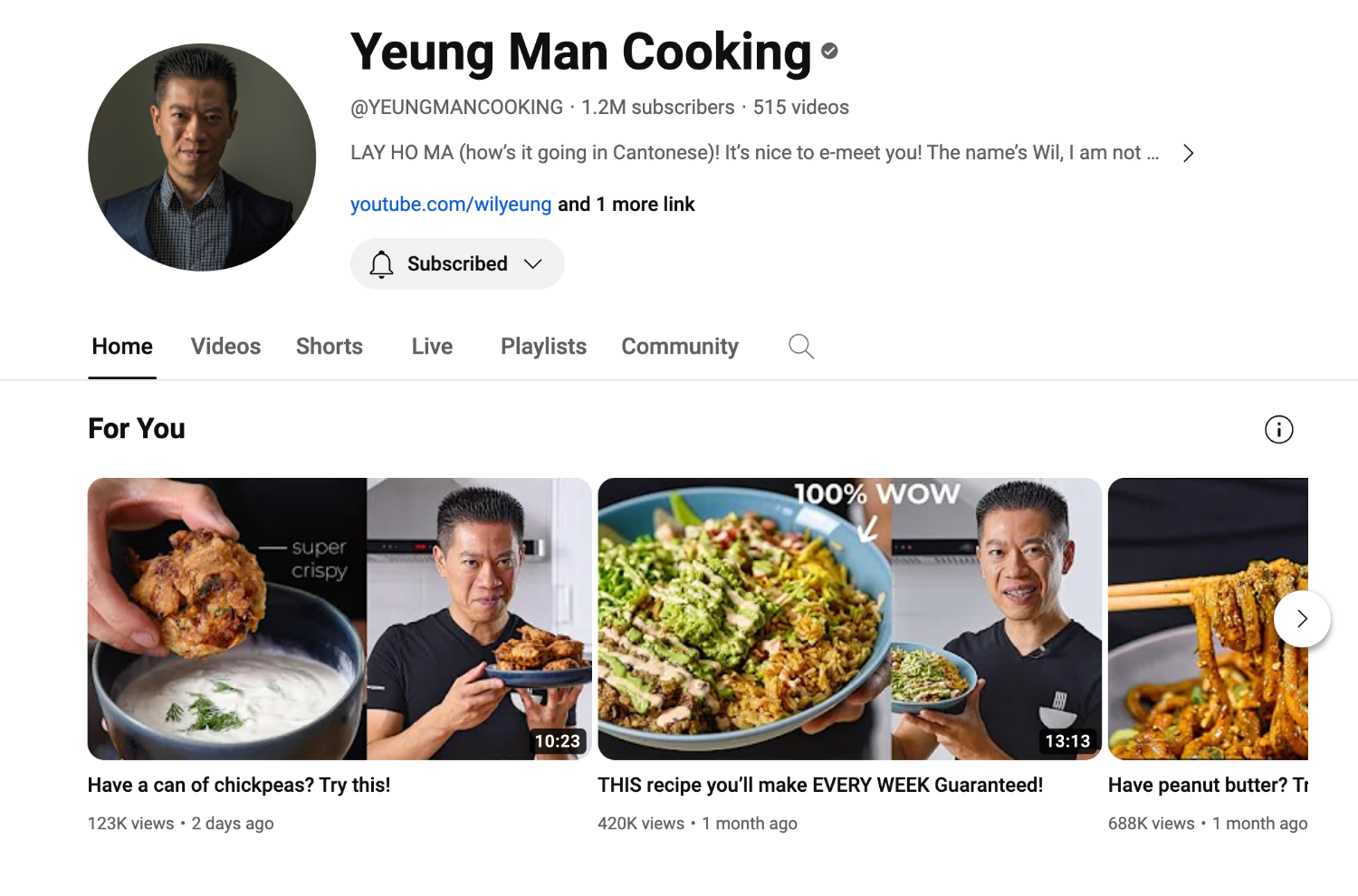
A cooking hobby can become a successful creator business. Wil Yeung turned his love of cooking into a popular YouTube channel, online cooking class, and cookbook. Yeung Man Cooking

There are some fairly common hobbies you can monetize—selling finished handmade goods, like knit wool mittens at a craft market, for example. Many entrepreneurs start this way. But there are other types of hobbies that have a marketable angle. A few examples include:

  • Musicians can sell music samples or teach guitar classes.
  • Gamers can join the creator economy and build a business around streaming.
  • Gardeners can grow seeds into plants to sell or harvest fruit to make jams and pies to supply local restaurants.
  • Dancers can set up summer camps to teach kids the art of movement.
  • Bakers can sell cookies, baking kits, or virtual baking lessons online. 
  • Home décor DIYers can grow social media accounts with helpful content and eventually earn money through partnerships, affiliate links, and sponsored posts.
Don’t miss an episode! Subscribe to Shopify Masters.

Turning a hobby into a business in 9 steps

  1. Conduct market research
  2. Determine your business model
  3. Develop your brand
  4. Consider funding options
  5. Streamline your processes and workspace
  6. Set up an online store
  7. Launch and market your brand
  8. Create boundaries
  9. Set yourself up to scale

Now that you’ve either determined that you are in fact an accidental entrepreneur or you want to become one, let’s make it official. Here’s how to turn a hobby into a business in nine easy steps.

1. Conduct market research

“Everyone has this million-dollar idea,” says entrepreneur and YouTube chef Wil Yeung, “But not everyone has a million-dollar execution.” Pulling off great execution starts with doing the groundwork. To turn a hobby into a business, there are a few questions to ask yourself about your motivations and the viability of your idea.

The best way to validate your business idea is by conducting market research. This includes a number of steps such as evaluating your competition, researching your target customer, looking at market and consumer trends, and understanding your unique selling proposition.

Answering a few questions about your audience and competitors will tell you if there’s space for your product or service in the market. Can you offer something your competition can’t? Is there an underserved market that your specific brand can target? What trends in your industry indicate that it’s the right time to launch?

2. Determine your business model

What kind of business can you run, based on the nature of your craft? Determine if you will run your business from home or if you will run it solo or with a business partner, and if you need to outsource or hire for any part of the process. Will you sell finished goods or services? Do you plan to sell online or in person? Or maybe some mix of the above?

Writing a business plan will not only answer these questions, but will also help determine factors like required funding and path to profitability. If you choose to seek outside funding, a business plan helps frame your pitch to investors.

3. Develop your brand

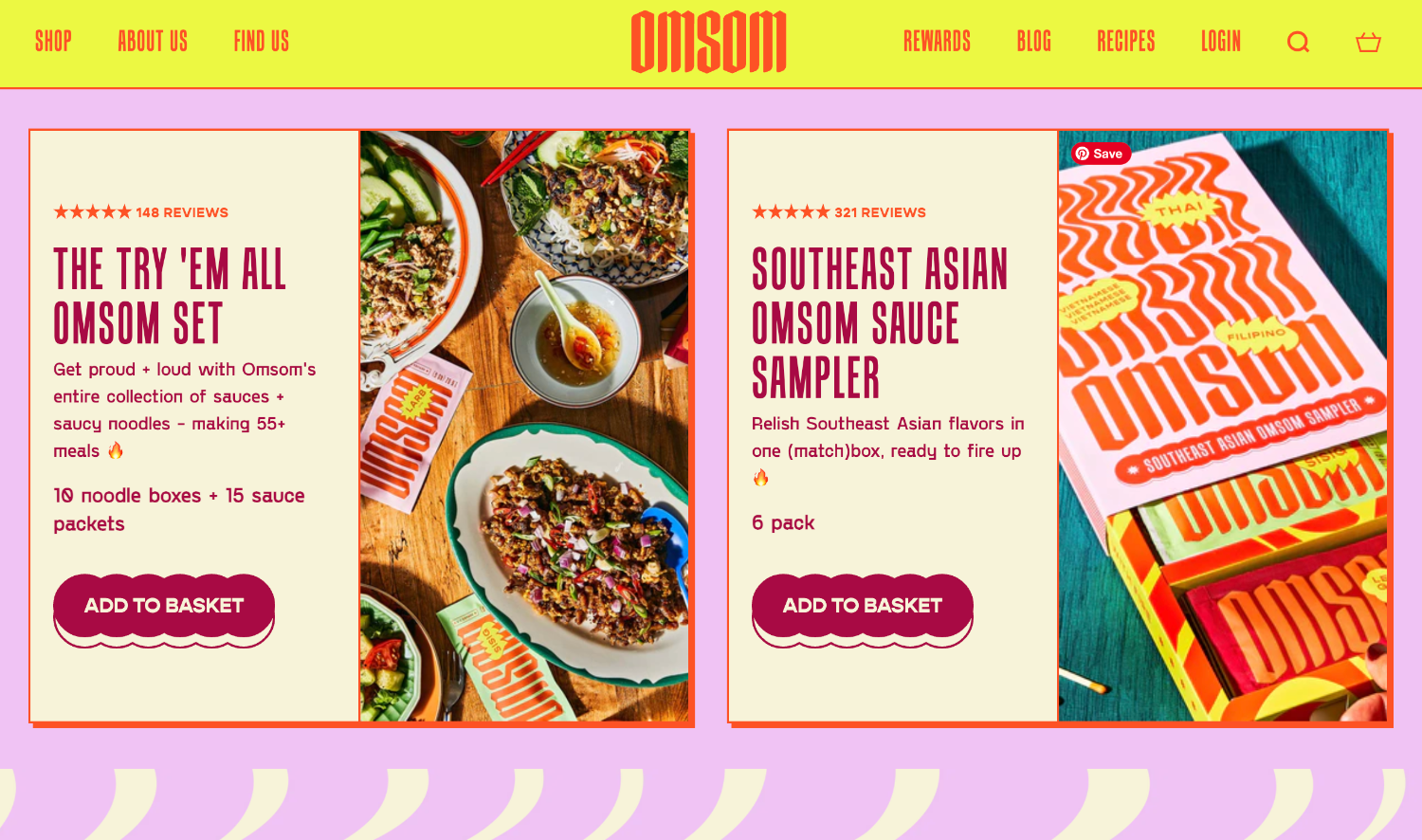
Webpage for the brand Omsom
Color, fonts, tone of voice, image aesthetic, and packaging design are all components of branding. These come together to tell a story, like in this example from Omsom. Omsom

Say you’ve been dabbling in jewelry design, maybe gifting or selling your pieces to friends. As you transition that hobby to a business, your work should be anchored to a brand. A brand defines everything around your product or service, including what you stand for, your brand voice, visual guidelines, and your brand story.

A strong brand will inform your website, branding assets like logo design, social media content, and product packaging. Even if you’re selling a product in a crowded market, branding can set you apart from the competition if you can tell a compelling story that resonates with your target audience. 

That story can also attract press attention. “If you are not dedicating time and energy to storytelling, then the media doesn’t have a story to tell,” Omsom founder Vanessa Pham says.

4. Consider funding options

If your business is born from a hobby, you likely already own much of the equipment required to produce your product. However, in order to transition, you may need to upgrade machinery, buy supplies in bulk, or even transition rooms in your home to dedicated workspaces. 

For example, if you’re a fitness buff looking to parlay your love of movement into virtual classes, consider that you’ll have upfront expenses for lighting and camera equipment. Also consider other costs like website hosting, accounting software, and online advertising.

In some cases you may need to apply for a loan, small business grant, or capital offer, start a crowdfunding campaign, dip into your savings, or seek other types of funding.

Hobby businesses, however, are usually conducive to a bootstrapping method—or funding the business on your own by investing profits back into it. Even if you start a business with no money, as you grow your sales, you can use those profits to slowly upgrade equipment or invest in marketing.

5. Streamline your processes and workspace

Kerin Rose Gold sits in her studio making products
Kerin Rose Gold bedazzled a pair of sunglasses for herself—and caught the attention of some famous names. Since launching A-Morir, she has upgraded to a dedicated studio and workspace. A-Morir

Tinkering with furniture making in your garage is one thing, but is the space set up in the most efficient way to transition to a woodworking business? You’ll be spending more hours in the space than you did as a hobbyist. 

Consider ergonomics (a better chair, anti-fatigue mats), the flow of your workspace (how things are arranged for efficiency), and whether or not your space and processes meet legal requirements for ventilation and safety. 

When Melissa Butler started making lipstick in her kitchen, she was still working on Wall Street full time. When she left the financial industry and made a real go of her small business, she realized her kitchen lab was no longer sustainable. The Lip Bar operations moved to a factory, allowing Melissa to scale and follow beauty industry regulations.

6. Set up an online store

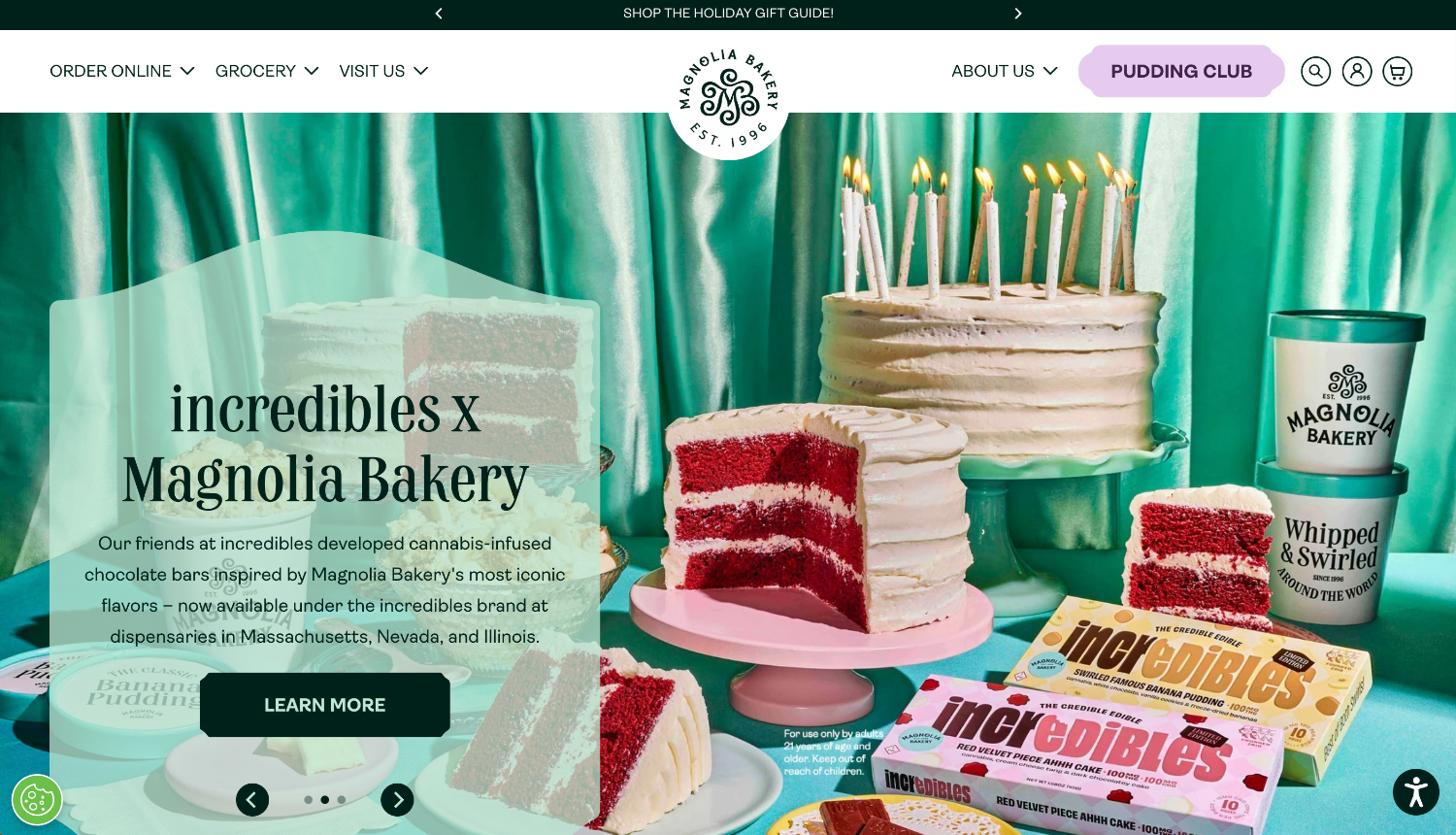
Homepage for magnolia bakery
Your website needs to make a great first impression. Attractive and optimized homepage design is important for new brands to convert visitors to customers. Magnolia Bakery

Many hobbies can translate into a business that sells goods and services online. Setting up an online store on a platform like Shopify is a great way to launch your business without a lot of upfront cost. Once you’ve done that, consider other sales channels to expand your reach.

The right sales channels can help you reach the right audiences, even if your marketing budget is low. If you make handmade goods, set up your own website so you have ownership over your brand and email list, but also try selling on a marketplace like Etsy, where handmade buyers can discover you. 

If you’re a hobbyist online creator, like a comedian, or you sell virtual class subscriptions for DIY home renovations, consider channels where your personality can shine. TikTok has been a springboard for several influencers-turned-brands—and you can sell on TikTok with Shopify’s integration.

💡 Tip: Start with our guide on how to start a business and follow step-by-step instructions to create an online store for your new brand.

7. Launch and market your brand

It’s time to launch! If you’ve been at your hobby for many years and have had support from family and friends, start with these loyal fans to help promote your new brand through word-of-mouth marketing. Treat these folks as your first customers and nurture the relationship as such. 

Set up social media accounts and a Coming Soon page in advance of your official launch to generate buzz and grow your email list and followers. There are several organic marketing ideas for creative small business owners with even smaller budgets.

Market your business with Shopify’s customer marketing tools

Shopify has everything you need to capture more leads, send email campaigns, automate key marketing moments, segment your customers, and analyze your results. Plus, it’s all free for your first 10,000 emails sent per month.

Discover Shopify’s customer marketing tools

8. Create boundaries

Hobbies often integrate seamlessly with life—knitting in front of the TV, gaming in your bedroom—but if you’re considering upgrading to a business, those spaces may no longer work for you. Separating your work spaces from your life spaces will help you create boundaries and maintain a healthy work-life balance.

9. Set yourself up to scale

Embrace optimism and blue-sky thinking: your hobby-turned business could catch on, leaving you scrambling to meet demand. That’s the dream! Don’t get caught by surprise and risk annoying your new fan base with slow customer service and sold out products. 

Consider how you will scale at each sales milestone. And, get help early, even if it just means outsourcing your least favorite tasks to a VA or part-time employee so you can focus on the big picture.

As you develop your own hobby business, look ahead two, five, and 10 years—can your business scale sustainably, and what will you require for it to do so?

Questions to ask before starting a hobby business

An artist paints a canvas

Maresa Smith

Before you take the necessary steps to turn your hobby into a business, there are a few key questions to ask yourself to understand if the move is right for you.

Does your hobby have the potential to become a viable business? 

Your hobby may be close to your heart, but are there others who share your love of this craft? Validating your product idea through research will help you determine if there’s demand for what you’re offering and if you are bringing value to the market. This is also where you ask yourself if your hobby is sustainable as a business—is it something you can scale? A business plan can answer many of these questions for you.

Are you in it for love, money, or both? 

A common pitfall for those who turn their hobbies into businesses is that the thing that once brought distraction from work and stress can suddenly become work and stress. When your craft is a hobby, you only answer to yourself. Expectations from customers, vendors, and retail partners can add pressure. Is your hobby something you will still enjoy if it becomes your full-time gig? 

Your business doesn’t necessarily need to scale exponentially, however. If you’re in it for the love of your craft, a business can serve as a way to pay for itself or generate a little extra spending money.

Will your hobby become a side hustle or a full-time business?

It’s possible to keep your business small, running it on the side while you still work. Consider whether this is enough or if you plan to scale your hobby into a full-time business. It may also become your early retirement plan as you transition to an income source that’s more flexible with fewer hours. 

Hobby to successful business examples

Many entrepreneurs found their start by transforming their passion into a brand. They saw potential in what they already loved to do in their free time as a viable business capable of making enough money to become a success. Here are a few hobbyists who became their own boss. 

Mush Studios

Several organic shaped rugs on a floor

The height of the rug tufting trend collided with the COVID-19 pandemic and Jacob Winter was looking for a new hobby. He took to the craft immediately and started sharing his processes and creations online. When audiences took notice, Jacob saw that his newfound passion could become his own business. Jacob launched Mush Studios, selling amorphous rugs to his TikTok fans. In explaining his viral success, he says, “People wanted something they had never seen before in terms of shape and texture.”

Floof

Homepage for Floof cotton Candy brand

When Hannah Perry became a single mom after a divorce, she needed to find a way to support herself and her family. She had already been experimenting with baking and cotton candy creations when the idea for a rainbow cotton candy cake took hold. The cake went viral online and Hannah realized it could be a real business. She launched Floof, selling her cakes across the country including to celebrity clients.

Prairie Sage Soap

Two soaps stacked on a table

Trisha Trout made soap as a hobby while staying home to raise her children. When her husband passed away unexpectedly, the family needed a new source of income. Trisha turned to her passion as a way to support herself and built Prairie Sage Soap into the thriving business it is today.

Jaswant’s Kitchen

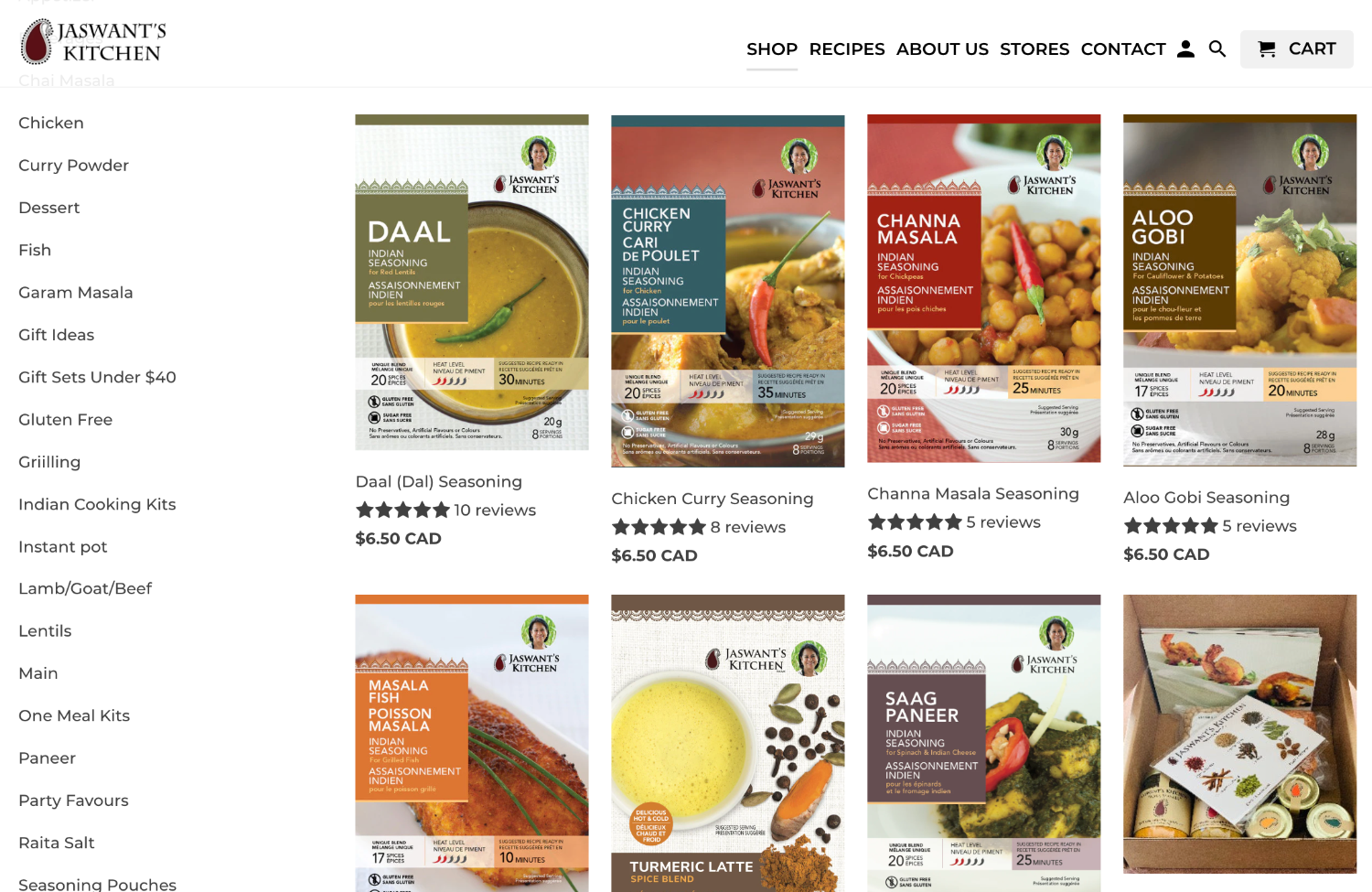
Product collection page for Jaswant's kitchen spices

Jaswant Kular raised her daughters on traditional Indian cooking. But when her kids moved out on their own, she realized they struggled to recreate the dishes of their childhood. Jaswant made spice blends to help her daughters more easily cook curries and other traditional dishes. That’s when she discovered demand for the product beyond her own family. Jaswant’s Kitchen is now found online and in grocery stores everywhere.

Craft your career around what you love

There’s nothing more relaxing and satisfying than losing yourself in your favorite pastime. When you know, you know. If you’ve ever wondered how to harness that feeling and turn it into your livelihood, you’re at an exciting crossroad. 

As a creator or as someone passionate and skilled at your favorite thing, you already have an important advantage. You have the product, you have the knowhow, you have the drive. What’s stopping you from making the leap from hobby to business?

Hobby to business FAQ

How much money can you make before a hobby becomes a business?

In the eyes of the government, hobby income is real income that you may need to claim. The true difference between a hobby and a business comes down to tax law. The laws vary from country to country and depend on many factors. Check with your local government to find out how much you can earn before you are required to claim it on your taxes.

Do I need to register my hobby as a business?

The short answer is no. In many regions, you can operate a business without a license. But this depends on the industry, too—some industries require specific licenses (say, if you process meat products). Check with the government agency that regulates small businesses to see if your hobby business requires any sort of licensing. Registering your business is usually a good idea either way, as it generally comes with certain protections.

Should I turn my hobby into a small business?

You should turn your hobby into a business if the advantages of doing so outweigh the challenges. Many hobby businesses are easy to convert into businesses that allow you to make money on the side from home. Learn how to turn a hobby into a business and understand the implications before you do. Do your research to see what, if any, modifications you’ll need to make to comply with law and file taxes.

What is the most profitable hobby?

Profitability of your hobby business comes down to having a solid business plan, the right pricing, and an interested market for your product. Any hobby can be profitable, provided you have those elements in place. While high-end custom furniture could fetch high price points, you’ll be selling fewer of these than $8 knit mittens. Invest time in a financial plan to determine how much you need to sell and what retail prices to set in order to turn a profit.

Fuel Business Growth With This Founder’s Winning YouTube Strategy (2024)

Software Stack Editor · March 20, 2024 ·

In 2010, Mimi Ikonn co-founded Luxy Hair, a line of hair extensions and accessories, and grew the brand’s YouTube channel to reach over three million subscribers. She later sold the multimillion-dollar company and launched Intelligent Change. Again she found success, selling more than two million copies of the company’s Five Minute Journal. 
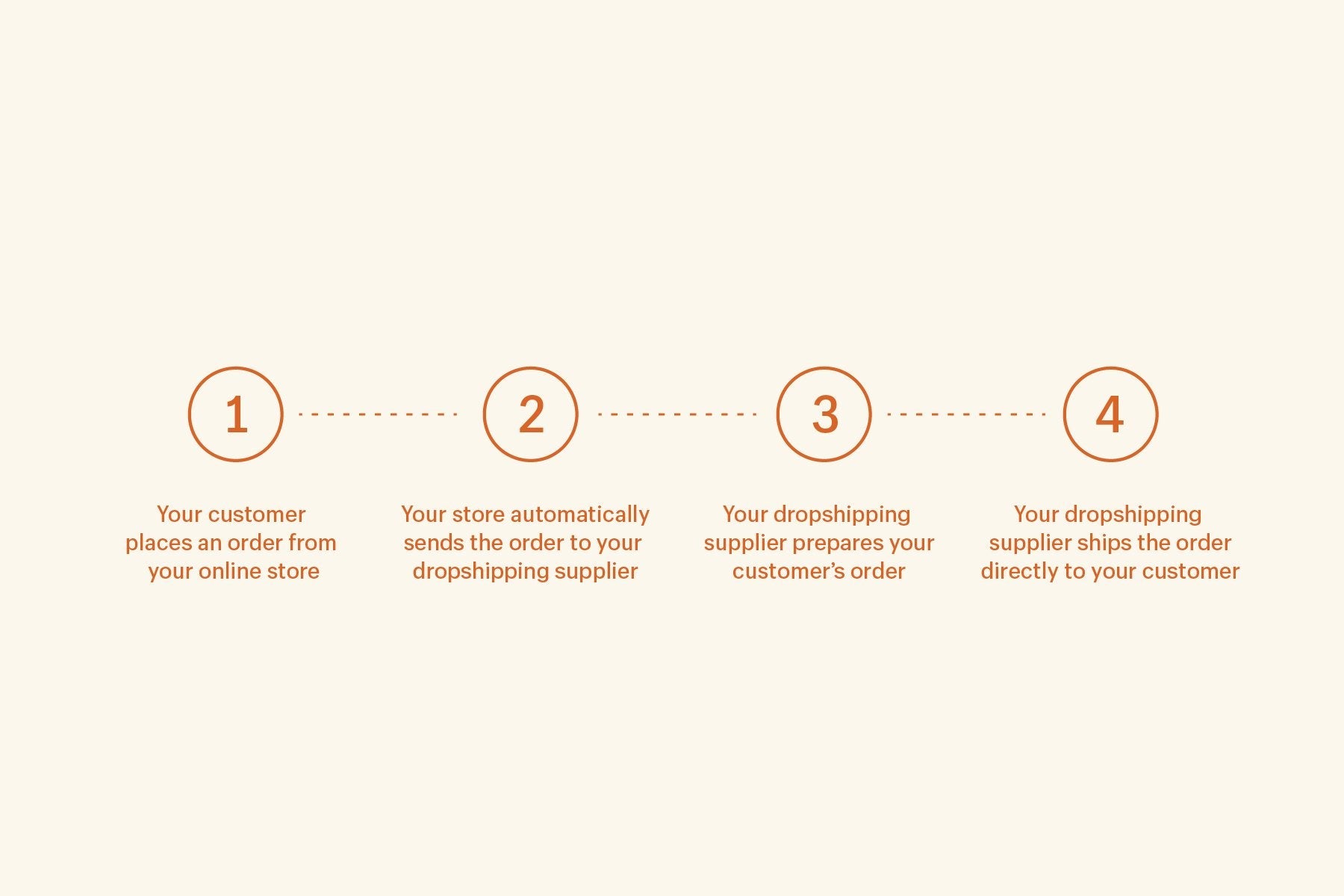
Mimi’s success as a serial entrepreneur can largely be attributed to a YouTube strategy that has allowed her to build communities online. After using YouTube for business for more than a decade, Mimi has perfected her growth formula for creating a successful channel.

Don’t miss an episode! Subscribe to Shopify Masters.

The blueprint for a winning YouTube strategy 

Mimi knows firsthand how powerful a YouTube community can be when it comes to building a business. Ahead, she shares six key tips to help you grow your brand on YouTube. 

1. Focus on your interests 

“It’s never too late to start a YouTube channel, as long as it’s a topic you’re really interested in,” Mimi says. Even if somebody already has a channel like yours, you can differentiate with your own unique perspective and unique experiences.

When it comes to launching and growing a YouTube channel, you’ll want to focus on topics you’re passionate about to avoid burnout. It will also inspire you to keep going, and motivate you when your subscriber growth is slow or stagnant. “It’s about enjoying what you’re doing, because that will resonate with the audience,” Mimi says. If you get bored of the content, your viewers will probably feel the same way. 

2. Keep it simple and clear

“If you can simplify your topic, people will watch and engage [more],” Mimi says. For Luxy Hair’s YouTube channel, Mimi documented her own journey as she learned how to use different styling tools and hair accessories. She broke content up into small segments so viewers could replicate the techniques themselves. Incorporating a clear beginning, middle, and end will make it easier for viewers to watch and help you grow your channel over time. 

3. Build trust 

“Building trust with your audience is extremely important,” Mimi explains. One of the best ways to do this is through a consistent posting schedule. If you can share videos regularly, then people will know when to return to your channel or look out for new content. 

Creating authentic content will give your audience the confidence and security they need to subscribe. Having genuine excitement in your videos will highlight your conviction and give viewers faith in your ability to provide value and expertise.

4. Have fun with it 

If you’re going to grow on YouTube, you also have to engage on the platform as a user. Choose to grow your channel because you genuinely like YouTube as a social media platform. If you spend all day scrolling on Instagram, chances are you should be trying to grow your business there instead. “If you don’t like the platform it will be difficult to put in long-term, consistent effort,” Mimi explains. 

5. Mix up your content (length)

Mimi loves long-form videos because they allow her to go deeper into a topic. But it’s important to experiment with different lengths and formats. “You can repurpose the [long form] content into smaller videos for YouTube Shorts,” Mimi says.

Since the algorithm on YouTube is constantly changing, mix up the length of your videos to connect with different audiences. If you normally post a full 20-minute video to your channel, try slicing it up and sharing shorter versions along with the full-length video. Different content styles will attract different audiences. 

6. Learn from other creators 

Look out for trends that resonate with you and your industry. “Watch other creators and see what works for them. Don’t copy [them] but do similar things with your own content that you put out,” Mimi says. 

It’s OK to learn from other successful channels, but remember to make it your own. Add a personal touch or incorporate an idea you saw used in a different genre or industry to make your content unique.

Establishing a large YouTube channel won’t happen overnight. Mimi’s tips will help you to start cultivating a dedicated audience that will fuel your growth. 

Tune in to the full Shopify Masters episode to discover Mimi’s tips for converting subscribers into customers and launching one successful business after another.

29 Passive Income Ideas To Increase Your Earnings in 2024

Software Stack Editor · March 19, 2024 ·

Passive income may not make you a millionaire overnight, but it can supplement your salary and help you build wealth over time.

Through investments, royalties, rentals, and revenue, passive income is money you earn without the need for ongoing work. It’s not linked to a regular job and doesn’t require your constant attention. This means more freedom, flexibility, and cash for you.

Explore these passive income ideas to strengthen your financial portfolio.

29 passive income ideas

  1. Start a dropshipping store
  2. Create a print-on-demand store
  3. Sell digital products
  4. Teach online courses
  5. Become a blogger
  6. Sell handmade goods
  7. Run an affiliate marketing business
  8. Sell stock photos online
  9. Become a social media influencer
  10. Buy a rental property
  11. Invest in the stock market
  12. Rent out your spare room
  13. Rent out your car
  14. Lend money to peers
  15. Earn while shopping online
  16. Buy and sell websites
  17. Start a YouTube channel
  18. Invest in REITs
  19. Sell designs online
  20. Invest in businesses
  21. Rent out unused space
  22. Create a job board
  23. Create no-code apps
  24. Earn royalties through inventions
  25. Record audiobooks
  26. Invest in vending machines
  27. Build and sell spreadsheets
  28. Open a high-yield savings account
  29. Rent out your parking space

1. Start a dropshipping store

Dropshipping is a great way to make money from anywhere, even if you’re starting with a small budget.

In a dropshipping business, you set up an online store where customers browse and buy products. When you receive an order, you forward it to your dropshipping supplier, who ships the product.

4 steps explaining the dropshipping process
The dropshipping business model.

Dropshipping suppliers handle everything from manufacturing to packaging to fulfillment. And, since you don’t need to send money to your supplier until your customers pay, this passive income business has limited cash risk. You can use a platform like the DSers to find trending products in different niches to sell in your store.

💡 Tip: With Shopify, it’s easy to start a dropshipping business and sell online without the hassle of managing inventory, packaging, or shipping.

2. Create a print-on-demand store

If you’re an artist, designer, or entrepreneur, print on demand can be a profitable income stream and monetize your creativity. It involves working with suppliers to customize white label products like t-shirts, posters, backpacks, or books and selling them on a per-order basis. 

Similar to dropshipping, you only pay for the product after you sell it. There’s no buying in bulk or inventory needed. Print-on-demand stores are a good passive income stream because:

  • You can create products quickly and put them up for sale in minutes
  • Shipping and fulfillment is taken care of by your supplier
  • Once your store is set up, you can automate many marketing and sales processes

With a print-on-demand company like Printful, you can quickly and easily create products to sell in your Shopify store. Overall, print on demand is a simple, low-risk passive income source you can get up and running fast.

3. Sell digital products

Digital products are assets or pieces of media consumers can’t touch physically. These include downloadable or streamable files such as Kindle books, templates, plug-ins, or PDFs. 

Digital products are great income sources because they have high profit margins. You only have to make the asset once, and you can sell it repeatedly via your online business. There’s no storage or inventory needed. 

You can sell as many digital products as you want. Many creators scale passive income from digital assets by selling kits, printables, files, and other materials professionals can use.

4. Teach online courses

It’s easier than ever for educators to create an online course. Whether it’s marketing, illustration, or entrepreneurship, you can create pre-recorded courses and start selling with few limitations. You can sell online courses repeatedly without holding any inventory or stock, generating passive income.

Teaching online requires some upfront investment in time. You’ll need to outline your course, record it, and create downloadable assets like templates for students to walk away with. 

Whichever way you look at it, teaching an online course is a great way to generate income at a low startup cost, other than investment of time.

5. Become a blogger

Starting a blog can be a challenging venture, but the blogging business model is only becoming more successful as a passive income stream. 

It takes a little bit of time to build a blog. But if you create quality content and promote it through your platforms, you’ll build an audience big enough to generate a significant income stream. 

You could earn passive income from blogging by:

  • Selling affiliate products
  • Creating sponsored posts
  • Selling your own products 
  • Running ads through Google AdSense

The best part? You don’t need any design or coding skills to start a blog. With a content management system and hosting service like Shopify, you can get a blog up and running in no time. 

6. Sell handmade goods

There are hundreds of online sites you can sell on. Some have specific niches, like video games or handcrafted goods, while others let you sell whatever you want. 

Some popular online selling sites include:

  • Faire
  • Amazon
  • eBay
  • Ruby Lane
  • AliExpress

The upfront investment is twofold. You’ll need to invest in materials and time to make and sell DIY goods like pottery or clothing. You’ll also want to create an online store to house your products.

Selling from your own store reduces the amount of fees you pay on each sale, plus, you can create a brand for yourself. The benefits of building a brand compound over time as you grow an audience and connect with more customers. It’ll help you sell more over time and make money online.

7. Run an affiliate marketing business

Affiliate marketing involves recommending a product or service to an audience. It’s a great source of passive income because you earn a commission whenever someone uses your referral link to buy the recommended product or service.

Online entrepreneurs become affiliate marketers for a few key reasons:

  • It’s easy to execute. You just handle the marketing side of things. The brand will develop products and fulfill orders.
  • It’s low risk. There’s no cost to join an affiliate program. You can sell established profits without any upfront financial investment. 
  • It’s scalable. Affiliate marketers typically don’t hire extra help. You can introduce new products to an audience and create campaigns while your past work makes money in the background. 

Earning money with affiliate marketing can be a rewarding way to add new revenue streams to your business. All it costs is your time. Once the hours are invested, you can reap the rewards continually.

[embedded content]

8. Sell stock photos online

Unlike many of the other passive income ideas on this list, photography is a service-based business, which typically means you get paid for your time. You must be at an event or photoshoot to make money with photography, which, even if you’re making a killing, can be tiring after a while. 

However, if you’re a full-time photographer or own a good camera, you can generate passive income from photography by selling photos online. Stock photo sites like Pexels, Shutterstock, and other online media houses will pay for high-quality photos and videos.

Shutterstock homepage featuring a search bar and background image of the ocean
Stock photography website Shutterstock.

If you run your photography business on Shopify, you can also easily tie in digital products like prints or print-on-demand products like shirts and hats, giving you even more passive income streams so you can work less and make more.

9. Become a social media influencer

To become a social media influencer—someone who can sway another person’s buying decisions—you’ll need to build a community of people who enjoy similar topics. 

Are you a comics fan? You can create an Instagram account and start posting consistently about the latest Marvel and DC shows. The same applies if your interest is in sports, scuba diving, home décor, or even general culture. 

If you have an engaged audience, you use that engagement to support a variety of passive income ideas. For instance, you can partner with large and small businesses to promote their products to your followers. Or you can make money through selling your own merch.

💡 Tip: Shopify Collabs makes it easy to find brands that match your vibe, build affiliate relationships, get paid for what you sell, and track everything in one place.

10. Buy a rental property

Real estate investing is one of the oldest ways to build long-term wealth in general, and passive income in particular. 

If you have enough money, you can buy apartment buildings or some other form of real estate and lease them out for rental income. But since the job of being a landlord is pretty active, you can hire property managers to manage tenants, maintain properties, and collect monthly payments or rent.

As a bonus, your properties will appreciate as the housing market rises, increasing your profits in the event of a future sale.

11. Invest in the stock market

Although the stock market might have a steep learning curve and can be confusing, it’s a great way to build lasting wealth. A common mistake most people make with investment funds is thinking short term instead of playing the long game to reach financial goals. 

The goal for investing in stocks is to diversify your portfolio and reduce risk. You can do this through investing in mutual funds, index funds, exchange-traded funds (ETFs), and high-dividend stocks that earn you capital gains over time. 

s and p 500 graph showing gains and losses over time
S&P 500 index.

To start investing in the stock market, you need to open up a brokerage account at a quality financial institution and fund it. It’s recommended that you also speak with a financial adviser to help plan and hit your passive income strategy goals. 

12. Rent out your spare room

Maybe you don’t have the startup capital to invest in rental properties. But do you have an extra room in your apartment? Or are you going on a three-week road trip and don’t want to leave your house empty? You can partner with a rental company like Airbnb or VRBO to put your free space up for rent.

Airbnb connects homeowners with people who are looking for their next getaway. People prefer Airbnbs because they’re sometimes cheaper and often more convenient than hotels, meaning a high demand for your free space as an Airbnb host. 

While renting out one spare room to earn passive income is great, renting out 10 is even better. If you want even more income from Airbnb, you can (depending on local laws) buy apartments for the sole purpose of renting them out. You should note, though, that renting your space out often requires work upfront. You might have to furnish or renovate your space before putting it up for rent.

13. Rent out your car

Your home is not the only thing you can rent out to earn passive income. You can also offer your car up for rent with a service like Turo. If you already use your car as an Uber, you can sign up with platforms like Carvertise or Wrapify to earn extra money as you take trips around town. 

Another way to turn your car into a income stream is to look for someone who needs a car for Uber or Lyft. So instead of actively driving around in your free time, you can pull up a Netflix show while your car works for you.

14. Lend money to peers

Have extra cash that’s not working for you? Try peer-to-peer lending as a side hustle. Peer-to-peer lending involves lending money to borrowers or small businesses. 

To make the process easy, you can sign up on a website like LendingClub, Prosper (for individuals), or Worthy (for businesses) that connects borrowers with lenders. 

These sites usually host loan requests along with interest rates based on the borrower’s history. The return on these loans is usually around 5% to 6%. The more you lend, the higher your cash flow will be.

15. Earn while shopping online

Cashback reward sites like Swagbucks, MyPoint, and Rakuten allow you to generate passive income when you shop online. After signing up, you don’t have to do anything extra, aside from shop, to make money from these sites. The more you shop online, the more points you gain. And the more money you can make.

A note of caution: don’t exceed your monthly spending budget or max out your credit card in a bid to earn some reward.

16. Buy and sell websites

Websites abound on just about any topic you can think of. The best part? A lot of them make a healthy income through the likes of affiliates, ads, memberships, or products—and they’re often put up for sale. 

Sites like BizBuySell make it easy to buy and sell online stores securely once you open and verify an account.

It’s a great way to own a business that already has some sales and traffic coming in. Once you complete your purchase, you also get access to seller support afterward to ensure you do well. 

17. Start a YouTube channel

[embedded content]

It’s not too late to start a YouTube channel. A whopping 2.7 billion people around the world use YouTube every month. That’s a lot of eyeballs to capture for passive income. The catch? It’s a lot of upfront work for little to no return in the beginning. 

Yet, if you’re a long-term thinker and don’t mind frontloading your efforts, the income potential of a successful YouTube channel is high. Affiliate sales, sponsorships, branded integrations, and ad income can all add up passively as you accumulate content, clicks, and views and grow your audience. You can even easily spin off into starting a podcast and earn more money through sponsorships. 

18. Invest in REITs

What if you don’t have money to buy entire apartment buildings? Can you still earn rental income? Yes, you can. 

With a minimum investment of $500, you can use a real estate investment trust (REIT) platform like Fundrise to invest in a variety of real estate assets—and earn more passive income as the assets appreciate. A REIT is a company that owns and manages profitable real estate. It’s a great way for smaller investors to pool their money to afford investments they wouldn’t be able to afford by themselves. 

As a long-term investment, real estate investment trusts are one of the best income ideas to look into if you have startup capital. Besides upfront capital, getting started also takes some in-depth research. This isn’t an investment you want to walk into blindly. Thankfully, there are plenty of resources, like this guide, to help you get started.

19. Sell designs online 

Design websites like 99designs, ThemeForest, or Creative Market are great places to generate a passive income stream by selling digital designs online. Whether you use a website builder to build website themes, logos, branding resources, templates, illustrations, or even fonts, these platforms offer a built-in market that is already looking for design resources.

creative market homepage showing a collage of exmaple websites
Creative Market.

For instance, if you wanted to start selling designs on Creative Market, you’d need to apply and wait for approval. From there, you get your own storefront, where you can start selling your branded designs.

20. Invest in businesses

Today, getting started investing in historically inaccessible business opportunities is absolutely possible. Platforms like Mainvest make it easy to invest passively with a $100 initial investment without any of the investor fees.

The returns? As with any investment, it depends. But Mainvest aims to earn you anywhere from 10% to 25%. You don’t even have to vet the businesses yourself. Mainvest takes care of the vetting process for you. You simply invest the capital to get started. 

As a passive income idea, this is a great, safe way to step into the business investment world and learn as you go.

21. Rent out your unused space 

Have a basement or garage you aren’t using? Rent it out as storage space! It’s possible to do this safely and efficiently with storage rental platforms like: 

The storage industry is projected to grow to as much as $64 billion by 2026. In other words, this isn’t an income idea that’s going away anytime soon. You can store a variety of items, including cars, boats, RVs, or even business inventory. 

Using storage rental platforms is also a great way to avoid liability issues, as they provide safe payment options, contracts, and storage provider and client information.

22. Create a job board

A job board is a great way to earn passive income as an online entrepreneur. These websites are used by employers to promote job vacancies to job searchers. 

Job seekers can look for new job opportunities online or in-person. You can charge employers to post on your job board and offer premium features like sponsored jobs or unlimited access to your candidate database. 

Even if you don’t want to design a job board from scratch, you can buy a job board theme and start generating passive income right away. Now, building the website is the easy part. Creating awareness of your job board is where the bulk of the work is.

Once you get the flywheel going and your job board becomes established with return customers, you can count on a large part of your income to be passive. Check out sites like ProBlogger, Dribble, or Construction Jobs for inspiration.

23. Create no-code apps

The fact that any novice can create a basic to advanced mobile app with today’s no-code tools is beautiful. Platforms like Appy Pie, Adalo, or Bubble make it possible to get started.

To start, you’ll have to decide whether you want to create a website or mobile app. Besides the concept of the app (what niche it will serve and what problem it will solve), there’s also monetization to think about.

You can generate passive income with a mobile app using:

  • Subscriptions
  • Ads
  • Pay to download
  • A marketplace model

If you aren’t sure what problem your app should address, here’s a great list of research tools to help you get started.

Ubersuggest can give you insight into what keywords have high search volumes.

From there, it’s a matter of setting up your digital guide to collect sales, whether that’s through your own storefront or a seller platform.

24. Earn royalties through inventions

Inventors aren’t a thing of the past. You can make passive income through your unique inventions. Though this isn’t a passive income route that’s talked about often, it’s a real one.

Getting started is probably one of the hardest parts of the inventor’s journey. You want to make sure you have a worthy invention that’s useful and solves a problem. Start by checking out the US patent website to make sure your idea hasn’t already been created. 

If you want to outright sell your invention, sites like Invention City can help you get started. Depending on the deal you strike, you can passively earn a percentage or payouts from the income generated through your idea once it’s on the market.

25. Record audiobooks

Audiobooks have to be created by someone. Why can’t that someone be you? Once you break into the industry, it’s possible to create passive income in the form of royalties—which is how most audiobook narrators get paid. 

To successfully make income from audiobooks, there are a few things you need to master first. These include learning:

  • How to audition
  • Proper narration technique
  • What niche you’ll work in
  • Some editing skills

You don’t have to go at it alone. Some platforms make it easier to get started and land your first few gigs. Check out sites like ACX to learn what you need to make it in the industry.

26. Invest in vending machines

Ever wonder who takes care of all those vending machines that are always stocked? The owner of those machines is earning (semi) passive income from your snack and soda cravings.

Starting a passive source of income through vending machines does require an upfront time and money investment.

Marketplaces like Craigslist, eBay, and BizBuySell can help you gauge the upfront investment you’ll need to buy your first set of machines (as well as how many you can afford to start). Once you secure areas where you can install them, a route of vending machines makes for a great cash-flowing source of largely passive income.

27. Build and sell spreadsheets

Some of us are natural-born spreadsheet masters. If that’s you, it’s possible to put your spreadsheet skills to work to earn passive income. 

Whether you create spreadsheets with Excel or Google Sheets, there’s a market that will pay for you to create spreadsheets for all kinds of purposes: budgeting, profit projections, habit tracking, or even P&L spreadsheets that business owners don’t want to create from scratch. 

Pair a Shopify storefront with the Digital Downloads app and you have yourself a passive income stream ready to earn money. For that to happen though, you do need to drive traffic to your storefront. Thankfully, we have some resources to help.

28. Open a high-yield savings account

A high-yield savings account generates passive income by offering a higher interest rate than traditional savings accounts. By depositing money into this account, you earn interest over time without any additional effort. Some high-yield savings accounts and certificates of deposits offer over 4% APY.

This interest is essentially “free money” that accumulates as your savings grow. Although the returns may be lower than other investments, high-yield savings accounts offer a safe, low-risk option for beginners to start earning income and building wealth.

29. Rent out your parking space

Renting out unused parking spaces can generate passive income, requiring minimal effort. By listing your available spot on a parking-sharing platform or through local ads, you can monetize the empty space. 

Renters seeking convenient parking will pay a fee, creating a steady stream of revenue with low maintenance, while you enjoy the financial benefits.

Find the right passive income idea for you

There is only so much time in a day, and finding ways to make a lot of money more efficiently can give you flexibility in your personal finance to hit the next level. That level might be taking a nice vacation or buying that awesome pair of shoes, but whatever it is, adding passive income streams with different underlying economics can give you the freedom to explore it.

[embedded content]

Passive income ideas FAQ

How can I make $1,000 a month in passive income?

To make $1,000 a month in passive income, diversification is key. You can invest in dividend-paying stocks, peer-to-peer lending platforms, or rental properties. These investments generate regular income without requiring your active involvement.

How to passively make $2,000 a month?

To passively make $2,000 a month, create your own assets, like a dropshipping business or a YouTube channel to have more control over your income. You can also buy up vending machines or create a job board to earn money while doing this active work.

What is the easiest form of passive income?

The easiest form of passive income is likely investing in index funds or dividend stocks. These options require minimal management, and you can start with a small initial investment while reaping the benefits of compound interest over time.

How can I make passive income with no money?

To make passive income with no money, you can leverage your skills or knowledge by creating digital products, like ebooks or online courses, and selling them through self-publishing platforms like Amazon Kindle or Teachable. Once created, these products can generate income with minimal ongoing effort.

Inside This Black-Owned Bookstore’s Massive Organic Growth (2024)

Software Stack Editor · March 18, 2024 ·

Jazzi McGilbert didn’t exactly start out with a business plan, but rather a vision of a space for Black people in Los Angeles. She wanted to create a place where they could gather as a community, inspired by her own childhood in the city. “I was just a creative, bookish, introverted Black girl growing up and always needed spaces to just feel safe. And I lacked those,” Jazzi says. “So I went out and built one.”

With just $20,000, Jazzi started Reparations Club, a bookstore and community space. In just three years, the store has grown into a seven-figure business. Much of that growth has happened organically, driven by creativity, curation, and careful risk-taking.

Harnessing her creative side

Jazzi is an artist who works in multiple mediums. She was a fashion magazine editor and a creative director before starting Rep Club, and brought a similar artistic sensibility to designing the store. “I approach my business like an artist in that I am thinking about color and texture and how people are going to resonate with the work,” Jazzi says.

For Reparations Club, Jazzi wanted the store to have a 1970s-inspired aesthetic, similar to the décor of her childhood.

Jazzi McGilbert laying on a couch at Reparations Club and reading a book
Reparations Club features warm colors, mixed textures, and cozy couches that are meant to feel like a welcoming living room. Nicki Sebastian for Doen

Curating with purpose

Reparations Club sells books and products from Black-owned brands. “I think every bookstore is ultimately, in some way, a reflection of its owner,” Jazzi says. She explains that her interests and identity, as well as the interests and identity of her staff, are reflected in the products on the shelves.

People shopping at Reparations Club
Reparations Club often features books by underrepresented authors. Amber Aisha

The ups and downs of entrepreneurship

When she started, Jazzi had a vision for Reparations Club and knew the community she was building it for, but she didn’t know how it would be received. When she did find her first retail space, she went in expecting the worst. “If nobody walks in this space and buys anything, how much do I stand to lose?” she asked herself.

When the building’s roof had a leak, Jazzi almost did lose it all, with water damaging almost all of the store’s inventory.

Jazzi kept going, though. The COVID-19 pandemic forced Reparations Club to shut down its brick-and-mortar location temporarily, but Reparations Club opened an online store and started making book deliveries around the city.

And Reparations Club was able to meet customers’ needs when people were looking for resources amid the Black Lives Matter protests in 2020. “This was the summer of anti-racist reading. People were really seeking out education that they were now realizing they lacked,” Jazzi says.

Growing through word-of-mouth marketing

Reparations Club hasn’t spent any money on advertising. Instead, the brand’s growth has been organic. “I just wanted to focus on people having such a good experience that they told somebody else about it,” Jazzi says. Creating that experience is sometimes as simple as recommending a book to a customer or helping an author celebrate their first release. 

The indie bookstore business can be challenging at times, but Jazzi does see some hope in the amount of books that people are reading and how many films are based on books. “There is this return to reading that I’m deeply inspired by,” she says.

To learn more about Reparations Club and Jazzi’s journey to becoming a business owner, listen to the full interview on Shopify Masters.

7 Profitable Retirement Business Ideas for Your Second Act (2024)

Software Stack Editor · March 12, 2024 ·

The sedentary life of mid-day cocktails and leisure sports might suit some as a reward for years of hard work, but it’s not for everyone. Retirement brings an end to work and with it goes its built-in routine, social interaction, and physical activity (say, walking to the office).

What if retirement looked more like work and less like golf and sandy beaches? It’s not a completely absurd idea. In fact, Boomers of retirement age account for 37% of all small business owners, and one survey found that 54% of Americans would prefer starting a business over retiring. 

Ahead, find a list of retirement business ideas, tips, and advice for pursuing entrepreneurship. And hear from small business owners over 50 who found happiness in working (after retiring from working). 

Why start a retirement business

Research finds that Americans staying in the workforce cite financial stability, access to benefits, and physical ability as reasons to not to rush retirement. The same study also found that due to the nature of jobs changing, including technology replacing manual work, many jobs have become more “age friendly.” When they do retire, some take a phased approach with part-time work for the same reasons.

If you’ve asked yourself, “Should I start a business after I retire?” the answer depends on your goals, personality, and retirement income needs. There are plenty of benefits to starting a business in retirement, while still finding room for a little R&R.

Take advantage of your experience

This demographic is well suited to entrepreneurship, due to having more life experience and fewer responsibilities. The risk may be much lower, too: for many in this age bracket, pensions can provide backup, the kids are on their own, and living expenses are typically lower.

Stay active

It’s no surprise that study after study shows staying physically active can stave off health issues and prolong your life. But keeping an active mind can also reduce the risk of dementia and Alzheimer’s.

An older man runs beside the coast
Baby boomers who wish to stay active in retirement years should look at small businesses that allow them to be on the move. Barbara Olsen

A small business demands both physical exertion (packing orders, trips to the post office) and mental exercise (writing product page copy, planning marketing campaigns). A business run from home also allows for those with limited mobility to set their own level of activity.

Supplement your pension or income

Depending on your situation, you may be relying on reduced income after you retire. A new business could provide support for staying on top of bills, paying down debt, or tucking away for a rainy day. 

Pursue a lifelong dream

If sitting around just isn’t your thing, retirement is the perfect time to find a new kind of freedom. Starting a retirement business is the opportunity to live out the dreams you may have put on hold for “someday.” Today is someday. Entrepreneurship carries less risk than it might have in your younger years, keeps you active, and can help offset the cost of a passion project.

Fund a hobby

If the goal isn’t to make money, dig into your interests and hobbies and choose something that brings you joy. Sell handmade items online or at local fairs to help pay for materials and fund a retirement hobby. This can offset the reduced income that you’ll experience after retirement.

Stay social

The passive life of retirement might feel like the opposite of freedom for some who get social interaction through their work. Removing this benefit could actually be detrimental to your health.

Though loneliness levels among those 50 to 74 have actually decreased in recent decades due to more social opportunities and access, nearly half of all Americans report feeling lonely always or sometimes. 

Starting a business could replace some of that interaction—with customers, suppliers, postal carriers, and other professionals. There are also plenty of online and IRL communities for small business owners where you can get advice and meet friends with similar interests.

[embedded content]

7 retirement business ideas to act on today

  1. Start a consulting business
  2. Make products to sell
  3. Start a coaching business
  4. Sell courses
  5. Offer tutoring services
  6. Become a reseller
  7. Sell services

The best retirement business ideas start from what you know. If the goal is not necessarily to make money online, dig into your interests, experience, and hobbies and choose something that brings you joy. The business ideas for retirees are infinite!

1. Start a consulting business

Retirees can leverage their years of experience and expertise in a specific field by offering consulting services. Did you work in corporate interior design? Sell consultations for smaller residential projects. Were you an investment advisor at a firm? Start your own financial consultancy and set hours that work around retirement leisure.

There are many consulting business ideas that are ideal for new retirees who want to set their own pace without stopping work altogether.

2. Make products to sell 

If you occasionally sell jams or knitted goods at your church’s bazaar on weekends, you can ramp things up by starting a maker business. Consider expanding your sales channels into other local markets and craft fairs. If you’re less mobile, an online store is an excellent option for retirees, as it has the flexibility to be run from home.

What are you already doing in your spare time? Wooden dollhouses, prize-winning pies, and crocheted blankets are just a few things you can make and sell in retirement.

Trisha Trout drinks a coffee on a porch
Trisha Trout became self-employed when her retirement plans were unexpectedly put on hold.

Trisha Trout didn’t start her handmade soap brand until after she was 50. She spun a weekend hobby into a retiree business after a family tragedy. “The best part of running my business is just the knowledge that I’m able to support myself,” says Trisha. “I’m not wealthy, but I make enough to enjoy life and help others here and there.”

Soap bars stacked on a table with natural ingredients
Prairie Sage Soap Company is run by 66-year-old grandmother Trisha Trout. Prairie Sage Soap Co.

3. Start a coaching business

Coaching is one of the best retirement business ideas for those with a background in business or psychology. You could start a successful business after retirement doing what you already do best. As a small business owner, you can now set your own hours at your own pace, and only take on projects that energize you. 

4. Sell courses

You have a wealth of life and work experience! How can you monetize what you know? Sell digital products like video or PDF instructional courses—these require more work upfront, but have excellent margins and minimal effort in the long run.

You can also run courses from your home such as art tutorials or yoga classes, inviting students to join in person or via livestream.

Website homepage for Nonna Live
Older entrepreneurs can start a business from home, selling courses like Nonna Nerina. Nonna Live

Chiara Nicolanti found a way to keep her grandmother busy during the COVID-19 pandemic when lockdowns forced her in-person cooking classes to shut down. Chiara took those classes online and her late grandmother, Nonna Nerina, became the face of Nonna Live. In her memory, the business lives on, employing other retired women in her small Italian village. 

Small business owners of older generations have a lot to share due to their years of experiences—and people are willing to pay for it. “I share our history and let [customers] experience a part of Italy, our family, and my grandma’s culinary secrets,” says Chiara.

5. Offer tutoring services

Teachers who love sharing knowledge but want to retire from formal education environments can consider starting a tutoring business. Tutor children, college students, or adults either in person or virtually from home through an online business. This is a great way to make money as a teacher after you retire.

6. Become a reseller

If you have retirement savings to invest in a new business, consider becoming a reseller. This involves less work than developing your own product. Starting an online store to sell goods from other brands is a great small business idea to make extra income. And, if you choose a dropshipping model, you won’t even need to handle inventory.

Portrait of Sonja Detrinidad
TikTok usage among users in Sonja’s Age group was low. But when she found virality, she retired from her job to start a business. Partly Sunny Projects

Sonja Detrinidad took a new hobby to the next level when she went viral on TikTok. The former mortgage professional was sourcing plants for her own garden and documenting her journey online. Soon others were requesting her services. Sonja started Partly Sunny Projects to bridge the gap between greenhouses and plant parents everywhere.

Website homepage for Partly Sunny Projects
Partly Sunny Projects

7. Sell services

As an older entrepreneur, you can sell services like landscaping or pet sitting—activities that can keep you physically active and social. This is a great way to stay connected to your local community and pick your own hours. Other services may be related to your former career. Retirees from service industries like accounting, construction trades, or wellness services may choose to downgrade from working full time to selling these services on the side&

Looking to retire early? Consider following the FIRE movement, a lifestyle that seeks financial independence through self-employment, saving, and investing strategies.

Retirement business spotlight: Bernie Rothrock

An alpaca sleeps in the grass
Maximus & Penelope

When Bernie Rothrock retired after 30 years of teaching, he accepted his brother-in-law Tom’s offer to manage his alpaca ranch. Bernie and his wife had no specific retirement plans at that point and took a chance. “I had never worked with any animals whatsoever in my lifetime,” says Bernie.

When Tom passed away, much of the herd was sold, and the ranch was purchased by new owners to use as a getaway home. Since the new owners had no use for the barn, they allowed Bernie to keep 11 alpacas on the property. He continued to care for them as pets, with no intention to breed them for profit. “Alpacas are just really nice, neat little animals,” Bernie says. “And our grandkids love them.”

Bernie’s sister-in-law had a small store at the ranch. “The alpaca socks always sold really well,” he says. That’s when his son Drew suggested Bernie sell those socks online.

Alpaca wool knit socks in many colors stacked on a wood table
The shorn coats from alpacas provide a wooly fiber that can be made into products like socks and mittens. Maximus & Penelope

The resulting fiber from the annual shearing of alpacas is sent to a fiber co-op and turned into products like socks, hats, and mittens. Co-op prices are lower than wholesale for ranchers like Bernie, because he’s providing the raw materials.

Bernie initially bought $1,000 worth of socks and launched them on his own website in time for Cyber Monday in 2015. The response was overwhelming. “Within a day, I’m calling my wife and saying, ’We need more socks!’” he says.

Bernie Rothrock on his property with his grandkids in winter
Bernie’s business helps him fund an interest and still spend plenty of time with his grandkids. Maximus & Penelope 

Maximus & Penelope—named for two alpacas in the herd—became a thriving Shopify store, run by a retiree with no previous business experience. The store provided Bernie and his wife a little extra money to travel and enjoy a peaceful retirement. “I really did not have that entrepreneurial bug, if you will,” he says. “It was happenstance. Things just worked out.”

4 questions to ask before starting your retirement business

Three older people sit on chairs talking to each otherOnce you have an idea, the best way to get started is to just start. You can begin a free trial on Shopify and play with your new store before you go live. If the prospect of building a website is overwhelming, start with free resources to guide you through the process. Next, ask yourself a few important questions:

1. How will you finance your new business?

What if we told you that you can start a business with a $0 budget? It’s possible. If the point of starting your business is staying active or social, there’s no need to invest a lot upfront. There are a few avenues to pursue if your project requires startup capital. Plan ahead and seek advice from a financial professional before starting your business. 

Here are few tips to get you started:

  • Start small. Don’t invest a ton into a business idea simply because you’re passionate about it. Test your idea with a small audience, and start with a little inventory.
  • Borrow against retirement savings. In the US, you can borrow against your 401(k) like a small business loan. Check with your local government for rules specific to your country or region.
  • Consider a micro-loan. Keep an eye on the SBA’s website (or your local government’s small business site) for small loans and grants specific to retirees or your age bracket.
  • Keep it lean. Starting a business on a budget means leaning into free resources like logo design tools and spreadsheets to track financials. 
[embedded content]

2. Can you play to your strengths (and learn the rest)?

Bernie’s 30 years as a teacher has made him quite the wordsmith. He writes all of the site’s copy, product descriptions, and blog posts. With a little help from his son, he learned the mechanics of building and maintaining a website.

It’s never too late to learn something new. In many cities, public libraries, government-run facilities, and community groups offer free courses for seniors like basic computer skills and web design. Check listings in your area for programs catering to retirees or older folks.

3. Do you have an exit strategy?

You may retire with tons of energy and the ability to run a business on your own, but what will happen if you no longer can? What’s your plan if health issues prevent you from continuing to manage the business? Have you had discussions with your family about your wishes? 

Bernie says he watched many like him enter the alpaca business at an older age. “You’re just one health issue away from no longer being able to care for your herd,” he says. That’s why he’s keeping the business small.

4. What about a family business?

Consider starting a business that brings your family together and builds a legacy for future generations to carry on in your name. Bernie and Drew might live in different countries, but the business was the catalyst for keeping them connected regularly. Bernie’s wife has even joined the team, and between caring for her grandkids, she managed the store’s social accounts.

Retirees make great small business owners

Let’s face it: You’re in the prime of your life. Ideally, you have fewer responsibilities and more savings, making the prospect of acting on a business idea all the more possible. There are plenty of retiree business ideas for every type of lifestyle you hope to have in your older years. Take those decades of experience and make extra income doing something you love.

Start a business in retirement FAQ

Can I start a business in retirement?

Many retirees are interested in starting their own businesses. However, it’s important to note that there are some risks associated with starting a business later in life. Consult with a financial adviser to see if starting a business is the right decision for you.

What’s the best business for retirees?

The best business for retirees depends on each individual’s skills, interests, and resources. However, some popular retiree business ideas include starting a consulting business, a home-based business, or a franchise.

Is 60 too old to start a business?

No, 60 is not too old to start a business. There are many successful businesses that were started by people over the age of 60.

How can I start my own business at 65?

There is no one-size-fits-all answer to this question, as the best way to start your own business at 65 may vary depending on your unique skill set, experience, and resources. However, some tips on how to start your own business at 65 may include studying your industry and sector, researching the competition, and developing a business plan. Additionally, it’s important to consult with an experienced business attorney to ensure that you are taking the necessary legal steps to establish your business.

A Latin American Game’s Remarkable Journey to US Target Stores (2024)

Software Stack Editor · March 11, 2024 ·

Founder Mike Alfaro played his cards just right. He started a side project called Millennial Lotería, designing modernized versions of a traditional card game played in Latin America.

At the time, Mike was still working a full-time job in advertising, but invested $20,000 of his savings into the first production run of 1,000 sets of the game. It sold out in four days. “I was like, ‘Whoa, OK, there’s a big demand for this out there,’” he says.

That’s when Mike decided to pursue Millennial Lotería full time. His journey as a business owner has opened the door for other opportunities as an influencer, advertising creative director, and children’s book author.

Learning on the job

Mike didn’t exactly set out to be an entrepreneur, but he was gaining all the skills he needed in his advertising career. He learned how to build a brand and shoot commercials—things he does regularly for Millennial Lotería. Even the designers and the first manufacturer he worked with came from his advertising connections.

A set of Millennial Loteria cards and coins fanned out on a pink background
Mike works with several artists that he met through advertising to help design Millennial Lotería. Millennial Lotería

As Millennial Lotería grew and started doing partnerships with McDonald’s, Disney, and other brands, Mike’s previous work experience came in handy. “Because I spoke that language of advertising and marketing, knowing how to deal with clients, meeting deadlines, I think it was an easy transition for me to work with studios and different agencies,” he says.

Focusing on his strengths

Mike has always been more interested in the creative aspects of the business, so when a publisher approached him to license Millennial Lotería, he jumped at the opportunity to delegate. “I don’t have to worry about when shipments are arriving from Colombia to the US and all that kind of stuff,” he says. The publisher also helps facilitate partnerships with retailers.

Mike has thought of the licensing agreement as a way to generate passive income from the game. It has also allowed him to focus on the aspects of the business that he enjoyed, like coming up with new versions of Millennial Lotería.

A Millenial Loteria card called La Student Debt
Because of his licensing agreement, Mike can focus on what he does best: designing characters for his game.

Representation matters

Mike created an exclusive family-friendly version of Millennial Lotería to sell at Target. He says working with the retail chain is a full-circle moment. 

Mike remembers feeling foreign when he first walked into Target, after arriving in the US for college from Guatemala. He hopes other Latino immigrants will see Millennial Lotería on the shelves and feel differently. “Maybe they’ll feel more like, ‘Hey, this is a place where I belong,’” he says.

Mike was so proud of the partnership with Target that he posted a TikTok about his journey getting there, which went viral. Soon, the game started selling out at Target stores across the nation.

Mike thinks social media engagement comes down to being authentic. “Brands pay millions of dollars to advertising agencies to make their brands feel more human online,” he says. “I think that for small business owners, it is just easy to just be human.”

Using business to fuel a career

The success of Millennial Lotería led to more freelance advertising work for Mike as well. “People started to also follow me as a creator, not just as the brand,” he says. 

His collaborations with different companies on Millennial Lotería have been such positive experiences that these brands invited him back to work on other projects, including advertising trailer concepts.

Mike also is now writing bilingual children’s books, which he sees as the next step in helping Latino children, like his own daughter, feel represented. “Hopefully that love translates to other people and their kids and seeing that excitement that these books will bring to bilingual Spanish-English education,” he says.

To learn more about Millennial Lotería and Mike’s multifaceted career, listen to the full interview on Shopify Masters.

44 Best Thank You for Your Purchase Messages (2024)

Software Stack Editor · March 10, 2024 ·

Showing sincere appreciation is one of the easiest ways to build a closer relationship with your customers. It’s simple, but remarkably few companies ever take the time to genuinely show customer appreciation.

When it comes to standing out against entrenched competitors, it’s rarely practical to compete on price or efficiency. However, new and growing stores that focus on loyalty and word of mouth, can carve out their own place in the market.

In this pursuit, thanking customers for their purchase goes a long way. In fact, nearly half of US consumers say customer appreciation is an indispensable part of providing excellent care.

Being purposeful and personal when thanking your customers can help create connections, increase customer lifetime value, and improve customer retention.

This guide will explain why you need to show customer appreciation, provide you with 44 thank you for your purchase templates, and offer useful advice on providing memorable customer service.

Table of contents

6 types of thank you for your purchase messages

  1. Handwritten thank you notes
  2. Package inserts
  3. Free gifts or samples
  4. Personal connections with video
  5. Post-purchase discounts
  6. Customer spotlights

While creative planning and smart decision-making set the stage for delight, at the end of the day, you still need a few simple ideas to act on. A great thank you message not only shows you care about your customers, but can also encourage customers to share their experience with family and friends.

If you’re in need of a little inspiration, here are six ways you can show your thanks, with examples, and move one step closer to a loyal and satisfied customer.

1. Handwritten thank you notes

This is a tried-and-true way to thank your customers. Writing a personalized thank you note shows that there’s a human involved behind the scenes and behind the screen.

Thank you notes are effective because they’re a bit of a lost art. Think about the last time you actually sent a handwritten letter instead of quickly firing off an email or a text. Those mediums allow for incredible efficiency, but a handwritten thank you card creates something tangible and meaningful.

Remember these five steps when writing the perfect thank you note:

  • Greet your customer by name.
  • State why you are sending them the note, like mentioning the specific product they purchased.
  • Leave directions on how to get in touch if they have questions or issues.
  • End the note by adding “Best,” “Warm regards,” or “Cheers” and sign your name.
  • Sign off with your website and social media handles.

A brand that describes itself as “a business built on love,” John’s Crazy Socks knows a thing or two about making a connection. Customers almost always receive a personalized, handwritten note inside their sock order.

twitter post by johns crazy socks customer showing how it thanked them for their purchase with written note

While sending a handwritten note in every order might not be scalable, you can always set a monthly goal for yourself or for your team. Brandon Eley, founder of 2BigFeet, explains how he ensures he contacts as many customers as possible: “It’s my goal to send 1,000 cards every year, which works out to just four cards every weekday.”

Involving your entire team helps create a culture of gratitude for your customers.

You might also send out thank you cards after replying to a customer, a special order, or a holiday. It doesn’t just have to be a card inside the order.

If you’d like to streamline this process a bit, you can use a service like Postable to send out thank you notes on your behalf.

For one-off notes, or if you’d like to invest a bit further in this idea, there are a number of online options for sourcing quality cards that will brighten up your customers’ mailboxes, including:

2. Package inserts

Packaging inserts are all about exceeding customer expectations. Unboxing is an experience in itself, and customers look forward to the moment they get to hold their new product in their hands. They are primed to be delighted with just a little extra effort. It’s also an opportunity to add value to the order through beautiful how-to manuals, and a chance for upsells.

Below are a few standout examples from stores that understand the value of delivering a small surprise.

TheFrank Body brand is bold, to the point, and all about beautiful bodies. It includes a package insert with its body scrub orders that reinforces the brand, offers a simple how to, and encourages customers to stay in touchthrough social media.

A package insert from franks body with a thank you for your purchase

Package inserts can be as targeted or as catch all as you like. Just make sure you keep a stack next to your order packers and toss one in each box. Need to stock up on package inserts? Check out these providers for high-quality stickers, business cards, and flyers:

Stickers

Business cards or promotional material

Resource: Before you check out the providers, use our free business card maker to design your own cards in minutes — no design skills necessary.

3. Provide free gifts or samples

Free samples aren’t just an amazing way to say “thank you for purchasing” anddelight your customers. It also showcases something the customer hasn’t tried yet. If they like it, you might even see them purchase it in their next order. Just be sure to try and match the sample to your customer’s profile as much as possible to make sure it’s something they can use.

4. Create personal connections with video

If you want to take things a step further, try recording a personalized thank you video for your customers. Whatever the medium, the key to thanking customers is to be personal, thoughtful, and genuine.

Personalized videos feel thoughtful because they are time-consuming manual work. Send videos in apost-purchase follow-up or as a separate interaction entirely. Videos are particularly great for special occasions and holidays where you can be creative with the theme.

Videos are a great experiment to run if only to see how customers react. There are many different ways to use videos to say thank you for purchase, which means you can really get creative. Here are a few tools to check out to create quick, personalized videos:

5. Offer post-purchase discounts

Rewarding loyal customers with discounts and coupons is a great way to keep them coming back while thanking them for their patronage. Although you have to be careful with discounts, as they can train customers to wait for deals, sending a discount to a new customer is usually a cost-effective way to get them to return and make another purchase.

Julep runs a makeup box subscription and always adds a little bonus for customers who need to stock up.

A thank you for your purchase card from julip with a 10% off code

Writing copy for your coupons can be a bit tricky, because you don’t want to come off as trying to make a sale or as overly pushy. Use words to promote the exclusivity of the coupon like:

  • Just for you
  • As a thank you …
  • A customer perk for you!
  • For our loyal customers

Discounts can either be sent separately, as a package insert, or in a thank you email. If you’re creating discounts, make sure youuse a unique coupon code so you can track how effective it is.

6. Spotlight your customers

Showcasing your customers is a great way to publicly share how much you appreciate them.

Build strong customer relationships to elevate your brand above the competition.

User-generated content (UGC) is especially great in the creative industries, because your customers rely on exposure to grow their own audience. For example, hairdressers love to be featured on Instagram. Small businesses love a shout-outs. It can help give them credibility and gain clients. Plus, it creates a bond between you and them.

Showing off its product is just one advantage of Luxy Hair’s user-generated content. It also helps its clients build their brand through sharing beautiful images.

luxy hair instagram post thanking a customer for their purchase by featuring the customer's hairdoTo find great content to share, create a hashtag that customers can use on their own posts. Before sharing content, make sure you ask the owner for permission.



44 best thank you for your purchase message templates

Now that you have an idea of what a good business thank you looks like, let’s check out some templates you can use to say “Thank you for your purchase.”

You can copy and paste these customizable templates into an email or purchase note and send them to customers after they’ve made a purchase.

  1. Thank you so much for your order! We really appreciate it. Enjoy 10% off your next purchase with this coupon code: THANKYOU10.
  2. Thank you for shopping with us. If you want 15% off your next order, leave a review on our website.
  3. Thank you, [first name]. We’ve received your order, and it’s really lovely. We’ll send you an email when it ships.
  4. Thanks for your support! We think you’re pretty awesome. As a token of our gratitude, below is a reward you can use during your next visit. Enjoy!
  5. Happy [day of week]! This is not a marketing email, just a quick thank you note for your purchase. 
  6. Hi, [customer name]. Thank you for your recent purchase. We are honored to gain you as a customer and hope to serve you for a long time.
  7. Hey, [customer name], just want to drop a quick note to express our genuine gratitude. Your purchase allows us at [company name] to continue to do what we love and provide you with quality products. 
  8. Welcome to the family, [first name]. We at [company name] love big families, so here’s a small thank you for your purchase. 
  9. Hi, [customer name]. Thanks for your recent purchase. We hope you’re loving your new [product name]. If you haven’t started using it yet, check out the following tips below.
  10. Hi, [first name]. We got your order! We’ll let you know when it ships and is headed your way.
  11. Thank you for your purchase and for joining our mailing list. We look forward to having you be one of the first to find out about the exclusive deals, new arrivals, and big events coming up. 
  12. Thanks so much for your recent purchase. We appreciate you and hope you enjoy your new items. Here’s a 10% discount on your next purchase, our way of saying thanks!
  13. Thank you, [customer name]! We got your order and it’s quite gorgeous. We’ll send you an email when it ships!
  14. We’re honored that when it comes to style, you think of us. There are a lot of choices out there, but you singled us out, and that means a lot. We just want to express how much we appreciate your business.
  15. Your business means a lot, so here’s a gift to show you how much we appreciate you. Get $20 off your next purchase with code 20THANKYOU.
  16. A great big thank you for shopping with [company name]. We love our customers dearly, and hearing your feedback is so helpful to us. If you have a few minutes to answer a quick survey, we’d be very grateful.
  17. Thank you for shopping with us during this busy [special occasion] season. You have a lot of choices, and we appreciate that you chose us. 
  18. Thank you for your order and for supporting our small business! If you want to track your delivery, use the tracking number provided.
  19. Thank you for supporting my online store! Purchases both big and small help us keep our dream of providing the best quality products to our customers.
  20. Dear [customer name]. You made our day, thank you for choosing us for your [product type] needs. If you have any questions, please don’t hesitate to get in contact with us.
  21. Hi, [customer name]. Thank you for your recent purchase. We are so happy to serve customers like you.
  22. Hi, [customer name]. Thank you for shopping with us. Want early access to our best deals? Sign up for our newsletter (if you haven’t already!)
  23. It’s important for us to make sure our customers feel appreciated and valued. We want to make sure you’re happy. Please don’t hesitate to contact us with any concerns.
  24. Thank you for your support. We appreciate you!
  25. Thank you for your purchase. We love having customers like you, and your support means everything to us.
  26. Thank you for your order. We hope to see you again soon! Please follow this link to choose two free gifts—on us!
  27. Thanks for choosing us again! We appreciate your repeat purchases. Here’s a little extra gift for you. 
  28. Thanks, [customer]! We just received your order and we’ll get started right away.
  29. Thanks for your order! We’re working hard to get it shipped to you. We hope to see you again in the future. 
  30. Thank you for choosing us! We’re dedicated to giving you the best products possible. If you have any questions, feel free to get in touch.
  31. Thank you for shopping with us. We’ve successfully processed your payment. You can access your order information through the link below. 
  32. Thanks a million for your purchase!
  33. Hi, it’s [your name and title]! Thank you for purchasing [product]. It really means a lot to us at [company name].
  34. [Customer name], we’ve received your order and all systems are go. When your order ships, we’ll send you another email with your tracking info.
  35. Thank you for your purchase! To get access to all our amazing deals and discounts, subscribe to our completely free customer loyalty program here.
  36. Thanks for your order. Enjoy this free gift!
  37. Thank you for joining the [company name] family! We value our customers and want to ensure that your experience is amazing. If you could fill out this survey, we can make sure you get only the best.
  38. You made our day, [customer name], now we’re making yours. We’ve added 50 bonus points to your account.
  39. [Customer name], thank you for your continuous support. Please enjoy this gift as a token of our appreciation. 
  40. You’re our hero! Thank you for choosing [company name]. We hope you enjoy your [product name].
  41. Your purchase has just helped a small business. Thank you for your support. We can’t wait for you to try your [product] and tell us what you think.
  42. We can’t say thanks enough for your support, but we’d like to try. Here’s a 15%-off coupon for your next purchase.
  43. Thank you for your purchase. We have the feeling this is the beginning of a beautiful friendship! So that we can get to know each other a little better, we’re offering you $10 off an order of $50 or more!
  44. Dang, you’re smart. Not only did you get a [product], but you got it from [company name]. We’ll package and ship it to you shortly!

Don’t just copy these message templates—customize them to your liking and brand voice and you’ll be amazed at how far they can go in helping create a loyal customer for life.

How to write a “thank you for your purchase” note

Sending the perfect thank you doesn’t need to be complicated. In fact, most consumers don’t have a high bar when it comes to appreciation. Show customers that there’s a real human behind the scenes and behind the screen.

Simply express gratitude, personally and directly, for being a customer and placing trust in you to deliver. That’s enough to create a connection.

Know who are you thanking

It might feel overwhelming, or even disingenuous, to personally thank every customer for every order. For that reason, it can be helpful to segment customers into the groups that you’d like to prioritize.

For example, handing out a swanky gift package with every order is a surefire way to blow your budget. But segmenting high-value customers and sending them a handwritten note with a branded gift can cement an already positive relationship. Here are a few ways you can group your customers into different tiers of thank yous:

Set an appropriate budget

The budget for your thank you program will be linked with the number of customers you want to reach out to. But even if you’re hoping to show gratitude to all of your customers, you don’t need to spend a ton of money to create moments of delight.

In The Thank You Economy, Gary Vaynerchuk writes: “It’s not the money that makes these efforts shocking and awesome, it’s the care and creativity involved.” Frugal wows are often just as effective at creating that connection. It could be as simple as a card, package insert, or small sample, just be sure it fits within your budget.

Build a repeatable process

Depending on whether you’re including a thank you in every box or just occasionally sending out swag, decide on a repeatable process to get those thank yous in the hands of your customers. It doesn’t have to be automated, but structuring the process will make sure it happens consistently.

If you’ve got a team working for you, provide an easy way for them to nominate customers for thanks. It might be a Google form or a Friday afternoon session hand-writing cards.

Pulling the entire team into these moments of delight creates a culture of gratitude for your customers.

A thank you goes a long way

There are so many different ways to thank your customers and create moments of delight post-purchase. Remember, the key is to be personal, thoughtful, and genuine. Customers—and people in general—love a sincere thank you but dislike insincerity.

When you have an attitude of gratitude, creating connections and building brand advocates is natural. Building these customer relationships gives you the opportunity to elevate your brand above the competition.

Illustration by Lynn Scurfield
Design by Brenda Wisniowski

Thank you for your purchase message FAQ

How do you say thank you to your customers?

You can thank online shoppers with a handwritten note sent to their home address, a personalized email from a real person, an automated SMS, or a printed note in their package. Saying thank you to your customers gives them a positive experience and supports customer retention.

Why should you thank your customers?

Thanking your customers builds and nurtures meaningful relationships. When customers trust you and feel appreciated by you, they are more likely to return for future purchases. Customer retention is the most effective growth hack for ecommerce businesses today.

How do you write a thank you note after a purchase?

Start your note by greeting the customer by name. Tell them you appreciate their business, mentioning the specific product they purchased. Tell them how to get in touch if they have any questions or issues, and then sign off with your name.

Can I send handwritten thank you notes to customers?

Yes, you can. If you get a limited number of orders every month, you can do this yourself. But if your store is growing, hire a letter-writing service to do it for you.

Grow Your Profit With This Après Ski Brand’s Social Strategy (2024)

Software Stack Editor · March 6, 2024 ·

What if you could turn a hobby you love into a thriving business? South Van Der Lee took her passion for knitwear and après ski fashion to grow GOGO Sweaters into the successful brand it is today. As president and designer, South works with a team of knitters in Calgary, Canada, to create handmade luxury designs. 

Today, you can find GOGO Sweaters in stores like Free People, Revolve, and Holt Renfrew, thanks to international demand for the brand. One of the biggest levers of growth for GOGO Sweaters is its Instagram account. Over the years, South has put together a successful recipe to help her create engaging posts that drive engagement and increase sales.

Don’t miss an episode! Subscribe to Shopify Masters.

4 tips for creating social media content that converts 

Ahead, South shares her four tips for creating Instagram content that will help you attract new customers. 

1. Stick to a theme 

South wants most of her products shot in the snow in Canada so viewers can get an authentic feel for what the brand is all about. These images depict a consistent aspirational lifestyle that attracts an audience of winter sport lovers. 

“Skiing will always be the anchoring point, and when I decided that, that’s when things really started taking off [on Instagram],” South says. People like familiarity on social media. It will make your brand easier to remember, and identifiable characteristics can help a brand travel faster to the right audiences by word of mouth. 

a model holds a pair of skis and poles while wearing the flower jacket in the color lilac.
South loves to shoot content related to skiing because it’s the main inspiration for her designs, and it helps bring her art to life. GOGO Sweaters

2. Capture a lifestyle 

“It’s really hard to sell someone on a flat image, especially in the luxury business. You have to sell a fantasy too,” South says.

When capturing photos of your products, include lifestyle shots to give social media users an idea of what life would be like if they too owned the item. “It’s really important to have photos that the shopper can put themselves into,” South says. 

With so many shopping options, potential customers need to be able to picture themselves in your products to justify the purchase. 

3. Think outside the box

To catch people’s attention on social media, standing out from the competition should be your goal. “You want to get people thinking about how they would want to wear your product, your brand,” South says. 

One example she shares is posting daily to her Instagram Stories, showing different ways she wears her GOGO sweater to work. Some of them are less traditional than others. “I want people to re-envision how they wear their clothes, so I’m trying to train people to wear sweaters over things instead of under,” South says. 

This approach helps draw people in, piques their interest in the brand, and makes the Instagram page an enjoyable follow for users. 

4. Set up shop 

South has found that most customers are shopping on their phones, so she makes sure to shoot and post content with this perspective in mind. 

To make things easier on her followers, South connects her Shopify store to the product images on Instagram. When her site is working with Instagram Shop it makes each of the photos shoppable and speeds up the checkout process all together. “This was a big moment of change for our sales,”South says. 

While growing your Instagram following will take time, these four steps can help you simultaneously grow an audience and convert them into loyal customers.

To hear more of South’s social media marketing tips and discover her best strategy for negotiating with retailers, tune in to the full Shopify Masters episode. 

Wake Up Earlier Than the Competition (And Other Tips for Mobile Businesses) (2024)

Software Stack Editor · March 4, 2024 ·

Ryan Lagasse took her two loves—coffee and ceramics—and turned them into her own business: a mobile coffee shop based out of a converted airport shuttle. Alongside coffee, Little Lamb sells ceramics and other goods at farmers markets, college campuses, and production sets in Los Angeles.

Being mobile is a key differentiator for Ryan’s business. From her previous role as a production coordinator, she knew there was demand for artisanal coffee on sets. To address this need, she bought a vehicle to drive around to TV, film, and photography productions around the city. 

Ryan believes her unique mobile aspect helped her secure a loan from the US Small Business Administration. It also gives her the flexibility she wants in a career. “I’m not sure that LA is where I’m rooted for the rest of my life, so I didn’t want that to prohibit me from starting my own business,” Ryan says.

Ahead, Ryan shares her advice for taking your business on the road.

4 tips for running a mobile business

The exterior of the Little Lamb mobile shop
Little Lamb sells coffee and other drinks from the window, and ceramics and other merchandise from the front door. Little Lamb

In the first year of Little Lamb, Ryan learned that a business on wheels comes with a few unique challenges—and opportunities that brick-and-mortar store owners might not have. 

1. Consistency is key for getting customers

It’s not as simple as parking somewhere and expecting customers to show up. Ryan says going to certain locations regularly helps people find out about the brand and makes them curious enough to try a new business. “It’s going to take about three solid weeks of going [to a spot] to get any sense of the business in the neighborhood,” she says.

2. Wake up earlier than the competition

“LA is bogged down with food trucks, so it’s competitive to find a spot,” Ryan says. Some food trucks might have partnerships that let them park outside certain stores, but everyone else is fighting for the same areas with good foot traffic.

That means Ryan wakes up at 4:30 a.m. to get a parking spot that’s big enough for her mobile shop. In some cases, it also means eating the cost of parking tickets if she expects there will be enough customers to make up for it.

3. Go cashless

One of the considerations of a mobile business is safety. Ryan pays $1,500 a month at a commissary to be able to park her shop overnight, which provides some security.

She also runs a cashless operation, even at farmers markets, where cash is still the norm. “I want to make it clear to people that there’s no cash on the bus,” she says, pointing out a sign in the window.

4. Make your vehicle your own

Knowing that she would be spending a lot of time alone in the converted airport shuttle, Ryan wanted to create a space that was creative, warm, and inviting. 

Ryan worked with her fabricator to do a custom build, with colors like pink on the outside and yellow on the inside.Little Lamb

It’s a stark contrast to generic food trucks that typically are colored stainless steel gray on the inside. “The shop was meant to be marketed toward a different market of people that have a bit more appreciation for a creative aesthetic,” Ryan says. 

Ryan has been able to tap into that market further by selling the ceramics she creates herself, along with other goods. Ryan says she eventually wants to grow the business to the point where customers can sip their drinks from her very own creations.

To learn more about running a mobile business, listen to Ryan’s full interview on Shopify Masters.

How To Come Up With a Business Idea: 8+ Brain Boosters (2024)

Software Stack Editor · March 4, 2024 ·

Every entrepreneurial journey starts with a seed, a small idea that grows into a blooming business. Often, it’s the only thing standing in the way of you and the life you’ve always wanted. But what if you can’t find one? How do you get unstuck and train your brain to produce great ideas? 

Ideas might strike when you least expect it, but often they need to be actively summoned. In this step-by-step guide, learn how to come up with a business idea, with brainstorming exercises and real examples.

Once you find that one idea, understand how to determine if it has the potential to become a profitable business. Plus, take a personality quiz for more tailored ideation tips.

8 ways to come up with a successful business idea

  1. Find a problem to solve
  2. Assess your interests
  3. Audit your skill set
  4. Improve an existing product or service
  5. Conduct market research
  6. Identify an underserved market
  7. Spot emerging trends
  8. Get innovative

Let’s be clear: No new business idea is guaranteed to be successful. But if you’re running your ideas through the right checkpoints, asking the hard questions, seeking feedback, and open to pivoting, you have a solid chance of reaching success—whatever success means to you.

1. Find a problem to solve

Many great business ideas start with a problem. If you can identify a problem in your own life or the lives of the people around you, it could inspire an idea. After you’ve narrowed in on an area or industry of interest, find out what pain points people have with the products or services offered within. This might mean iterating on an existing idea or inventing something completely new.

Range Beauty ecommerce website

Range Beauty founder Alicia Scott struggled to find the products that wouldn’t irritate her reactive skin. “I just couldn’t get with the makeup brands that were not only ignoring my skin tone but my skin conditions too,” she says. Alicia’s business idea was based on solving that problem, offering reactive skin-friendly beauty products in a range of skin tones.

2. Assess your interests

A good business idea often stems from a founder’s own interests or hobbies. Brainstorm ideas related to things you already enjoy, like a sport, craft, hobby, or subject. Choosing a business idea based on a passion means you’ll have a better chance staying motivated through the twists and turns of starting a small business.

3. Audit your skill set

What are your strengths? Which entrepreneurial traits do you already possess? As you look for an idea for your own business, tap into your existing skills. Many entrepreneurs use this as their starting point. A few examples of this could be:

  • Creative skills. Think of ideas that allow you to work with your hands or put your great eye for design to use.
  • Technical skills. What services can you offer to help others solve problems?
  • Mechanical or construction skills. Can you design and build a new product and a working prototype?
  • People skills. What are some business ideas you can pursue that involve working with or helping people?
  • Do competitive analysis. Who are the major players in the industry and what do they lack?

4. Improve an existing product or service

A great business idea doesn’t have to be an entirely new invention. Some of the most successful brands are those that iterated on or modernized an everyday product or service. Think Uber for taxis and Tinder for analog speed dating—these companies changed the business model for a longstanding service. 

Is there a product or service in your area of interest that you can improve on? Can you innovate to make it faster, smarter, smaller, lighter? What if you offer it in an unexpected color or texture? Can you take an existing concept and apply it to a new purpose?

A single serve cocktail machine

That’s what Bartesian did when its founder Ryan Close riffed on the idea of a capsule coffee machine to create the brand’s single-serve cocktail maker. “I understood it was difficult to make great tasting cocktails at home if you’re not a bartender,” Ryan says. Instead of inventing something from scratch, he leveraged existing technology to create something new.

5. Conduct market research

Take a look at the current market as a source for possible business ideas. This is a great option if you’ve already narrowed your idea down to an industry, target audience, or product category. There are several market research tools and exercises you can use to find a gap in the market or a trend worth pursuing. Some of the ways you can do this are:

  • Interview or survey potential customers and host focus groups.
  • Consult trade publications and industry reports.
  • Run relevant keywords through Google Trends to assess interest over time.
  • Follow influencers and popular accounts in the industry to understand their audiences.

6. Identify an underserved market

If you’re a member of a niche online community, that might be a good place to mine for ideas. Is there another niche market you can cater to? As a consumer with specific needs, are these needs being met by the market? When finding ideas for an underserved market, it’s best if you’re already a part of that market and can understand its needs. 

Ecommerce website homepage for Healthy Roots Dolls

When Yelitsa Jean-Charles spotted a gap in the toy industry, specifically for young Black girls, she used a school assignment to explore it as a business idea. The results of that exploration formed Healthy Roots Dolls, a brand helping girls love their curly hair. “When you’re ignored by the mainstream media, you have to become a problem solver,” says Yelitsa.

7. Spot emerging trends

New business ideas are often sprung from consumer trends or trending products. There are several resources available—most of them free—that can help you identify trends as they emerge. Social platforms such as Pinterest and TikTok have dedicated trend pages. You can also see trending topics within social platforms themselves, usually within the search function. On Instagram, navigate to search and you will see a row of trending keywords below the search bar, while in TikTok you can filter search results by “Top” or toggle to “Hashtags” to see the usage volume for related tags. 

Ecommerce webpage for Somos brand

Sometimes, though, as soon as you spot a trend, it might already be on its way out. Spotting trends before they emerge might mean translating them into a different industry. That’s what Miguel Leal did when he and his co-founders came up with the idea for Somos. They looked to restaurant trends and imagined how those could be translated to consumer packaged goods.

8. Get innovative

New ideas are often sprung from existing ideas or as a modern replacement for an everyday product. But there’s still room to create something entirely new that the world hasn’t seen before. If you have a knack for design and you can identify a problem not solved by something that already exists, develop a product prototype and test it with your target audience.

7 ideation boosters for aspiring entrepreneurs

Simple routine changes in your life can kick-start a flow of ideas. Exercise, better sleep, more water—all common recommendations for whatever ails you. But taking care of your mental health and wellness can have positive psychological effects like improved confidence and motivation. 

Try these ideation techniques, life hacks, and simple exercises to give your brain a boost and come up with new business ideas.

1. Break your routine 

Shake up your usual routine by taking a new route to work, eating outside rather than at your desk, or doing something new on a Saturday night. A rigid routine might keep you productive, but it’s easy to move through it on auto-pilot, missing out on inspiration.

2. Chill out

There won’t be any vacancy for those fresh ideas if your mind is booked solid with other concerns. Carve out time that’s dedicated to self care, whether for you that’s swinging in the hammock or getting absorbed in hobbies. Go a step further and practice mindfulness, an activity that has been shown to improve divergent thinking. There are plenty of resources, from apps to guided meditation podcasts to help you get started.

3. Doodle

Think of this as completely unstructured visual brainstorming. Just start drawing and let your page fill with scribbles, words, and images that flow from your mind. Don’t judge your drawing ability—this exercise is meant to spark creativity.

4. People-watch and observe new surroundings

Be present and take a look around you. Park yourself on a public bench or on the patio of a café you’ve never visited before and take note of what and who you see. Observing how people interact with their surroundings might spark an idea that solves a problem.

5. Meet and engage with new people

Gain energy from people with different perspectives and run ideas by new friends. Join entrepreneur social groups to engage with folks who are keen to swap ideas and give/get feedback. You might even meet your future business partner this way!

6. Consume content and culture

Read books, listen to audio books or podcasts, watch documentaries, or try a new album or genre of music. Whatever your medium, get inspired by other creators. Don’t limit yourself to just business content—even fiction stimulates creative thinking.

7. Try journaling

Ideas might strike you in the middle of a dream or on a bike ride. Get in the habit of jotting them down to revisit later, even if you don’t have the time to fully flesh them out in the moment. If writing doesn’t come naturally to you, try a journal with structured sections, questions, or exercises.

Brainstorming exercises for business ideas

People painting on easels while one person snips her canvas into a flowerFormal brainstorming techniques can help squeeze out more startup ideas now that your brain is primed for creativity. Whether you opt for a solo practice or a formal exercise with a group, try these methods of brainstorming at any stage—from coming up with a business idea to growing your dream even bigger:

Classic brainstorming

In its most widely accepted format, brainstorming is the process of throwing out any and all ideas unfiltered. Participants call out words or thoughts verbally then engage in conversation to help each other build on ideas. You can set your own rules for the session (like time limits) but the fewer restraints, the more vast the ideas. 

Brainwriting

Brainwriting is similar to the verbal version but is done silently, on paper. This method may be preferable if you are in a larger group—that way all voices have equal opportunity to be heard. 

You can use Post-it notes to gather ideas, then discuss as a group. Other variations on silent brainstorming to investigate are: brain netting (online version using a tool like Miro), rapid ideation (lightning round), or method 6-3-5 (timed and structured).

Storyboarding

Storyboarding is a visual method of brainstorming that you may use in the latter part of your ideation journey. Say you’ve come up with a great startup idea, you’ve gathered feedback, and you’re ready to flesh out that idea. You can use a storyboard to illustrate scenarios or situations that apply to your idea or work through solving a problem via narrative. 

Mind mapping

Mind mapping is a brainstorming format that is great for solo ideation. It involves writing the central idea or theme at the center of a page then “mapping” word associations off of that idea. 

You can then continue to branch out additional word associations from each of those spin-off ideas. This exercise can also be done in a group using a whiteboard or online whiteboarding tool.

How to validate your business idea

Now that you know how to come up with a business idea, it’s time to validate it. This is the process of understanding whether your idea has a market. These methods will help you answer important questions about your business idea and its viability.

Test half-baked ideas

If you’re having trouble validating your ideas on paper, what if you tested them out through a prototype or beta version of your product? It might not be perfect, but it will allow potential customers to interact with your idea and provide feedback you can use to hone the final product. This means you’re not investing in large scale manufacturing until you’re sure your idea is viable. 

Do competitor analysis

Competitive analysis is a market research process that evaluates the strengths and weaknesses of competitors in your industry. It involves gathering data and insights on your competitors, including details about products, pricing, marketing strategies, distribution channels, and customers. 

Analyzing your competitors can help you spot gaps in their offerings—gaps that you can fill with your business. It also provides a benchmark for what’s expected by consumers for your product. This information can be used in your business plan.

[embedded content]

Conduct SWOT analysis

A SWOT analysis can help you evaluate what’s good about your business idea and what’s a potential risk. SWOT stands for strengths, weaknesses, opportunities, and threats. This is a framework that prompts you to consider your idea from all angles, including internal and external factors that could impact its success. This can also be included in your eventual business plan.

Engage in trend spotting

If you found your idea through an emerging trend, you can skip this step. But it’s a useful exercise for those ideas that were formed through other means. If you came up with a business idea in the cosmetics industry for example, investigating color trends within that market may help steer your palette in the right direction. 

You can find trending products and other social and cultural trends through Google Trends, publications in your industry, and social media platforms like TikTok and Instagram.

Seek customer feedback

Don’t live in a vacuum. As you start to come up with a few ideas, workshop them with friends or people who would fit the description of your potential customer. Informal polls or surveys on social media might help confirm your idea’s viability.

“I went directly to consumers,” says Yelitsa about her decision to use crowdfunding to validate Healthy Roots Dolls. “I presented the concept to them and let them vote with their money and proved that there was demand.”

Conduct a gap analysis

While competitive analysis can be used to find gaps in the market of your competitor’s businesses, a gap analysis looks at your idea’s own gaps. You can use this process to determine where your business or idea is in its current form, and the ideal future state to become viable or competitive. 

A gap analysis is often conducted by a company after a period of being in business, but you can use many of the same exercises to identify gaps before you launch.

Ideation strategies for every personality type

How you best come up with ideas will depend on your personality type. Do you ideate effectively in groups? Are you inspired by art, nature, or books? Understanding a little more about your personality will help unlock the best strategies for coming up with winning small business ideas.

Take our quiz: What kind of entrepreneur are you? Then, return to this article and navigate to your Founder Sign below for tailored tips.

Business idea generation for Trailblazers

You’re full of ideas, Trailblazer! Where you might stumble is focusing on just one or doing the work to validate that idea beyond your passion for it. For you, ideating in a group is ideal, because you could use voices of reason to balance your gut instincts.

Ideation techniques picked just for your personality type are:

  • Tap into your community to share your ideas widely and use outside perspectives to help shape your ideas. But share early—if you fall too deeply in love with an idea, you may have a hard time hearing criticism.
  • Try visual brainstorming techniques like mood boarding, mind mapping, or storyboarding that let you express yourself creatively.

Business idea generation for Outsiders

Ideation is hard for you, Outsider, because you like to operate within a strict routine. Inside the bubble you’ve created for yourself, it may be challenging to gather inspiration. Pushing outside of your comfort zone will expose you to creative stimuli and help shake off the brain dust. 

Get unstuck and open your mind to new ideas by trying these techniques, handpicked for you:

  • Try a more structured brainstorming approach that prompts you with set questions rather than a brain dump style which may be too overwhelming.
  • Get out of your comfort zone. Even baby steps like breaking routine or visiting a new restaurant can bring inspiration into your life.

Business idea generation for Mountaineers

Chances are, Mountaineer, you’ve already found your big idea and you’re pushing toward it with pure, uninterrupted dedication. If not, you might be feeling a little lost right now. That’s because you’re driven by goals that you map the rest of your life around. 

Discover your true calling through these ideation techniques picked just for you:

  • Call on your most trusted allies—ideally a group of people with diverse backgrounds and perspectives and who are confident enough to challenge your ideas. Bounce ideas in an informal brainstorm or organize a structured session.
  • Expand your circles. Seek out new experiences, travel, and meet new people. Expose yourself to situations that inspire and spark ideas. 

Business idea generation for Firestarters

Ideas? You’re dripping with them, Firestarter. If we know you, you’re probably chasing down half a dozen of them right now. Ideas are what drive you, so you’re not looking to nail yourself to just one. For you, finding deep pools of inspiration, ideas, and collaboration is where you’ll thrive. 

Try these methods for gathering ideas, picked for your personality type:

  • Surround yourself with folks like yourself who inspire friendly competition, but also seek out counterpoints. Healthy debate will only strengthen your ideas.
  • Don’t settle on just one business idea. Narrow your ideas to the most promising and put them into practice. The best ones will reveal themselves through trial and error.

Business idea generation for Cartographers

Your attention to detail and ability to examine all angles tend to produce iron-clad ideas, Cartographer. Where you falter is in letting go. Being too rigid at this stage of the process might cause you to miss truly creative and wild ideas. 

Try these ideation strategies picked just for Cartographers like you:

  • Solo mind mapping is a great exercise for Cartographers because it marries creativity and structure.
  • After gathering inspiration and landing on a new business idea, it’s time to give it shape. Market research can help you gather data to support your sharp instincts. Leverage free entrepreneur resources to help you where you may have knowledge gaps.

Successful businesses are born from an idea

The best business ideas are those that bloom into thriving brands. But don’t act too quickly on an idea before you validate it first. Every successful founder asked themselves hard questions, conducted research, and tested their ideas before launching their product or service to the world. Put your brand new business idea to the test and you’ll have a better chance of transforming it into a profitable business.

Feature illustration by Alice Mollon

How to come up with a business idea FAQ

How do you come up with an idea to start a business?

Business ideas are often inspired by the world around you. First, look at your interests and skill set—can you find an idea at the intersection of these two things? Next identify a real world problem or pain points people often have with an existing product or service. Can you find a solution? Use brainstorming exercises and seek inspiration from your life to help you find a viable business idea. 

How do you develop a good business idea?

Once you have a great business idea, it’s time to develop it. Validating your idea is the first step to doing so. Conduct market research to determine if there’s demand for your idea. This can be done through researching industry reports, interviewing your target customers through online surveys, and looking at market trends. After you’ve validated your idea, you can turn your business idea into your own business. 

How do you brainstorm a business idea?

Business ideas are often born from a brainstorming session or other creative process. There are a number of styles of formal brainstorming exercises, including brainwriting, storyboarding, and mind mapping. When brainstorming, remember that this is not the time to edit. Capture everything that comes to mind—even the worst ideas could inspire you to find a great one.

5 Key Traits of a Successful Entrepreneur (2024)

Software Stack Editor · February 28, 2024 ·

Whether you’re searching for partners or trying to secure funding, growing a brand takes determination. Venture capitalist Arlan Hamilton looks for that determination, and other traits, in an entrepreneur to determine if their business will be successful. 

As the founder of Backstage Capital, Arlan invests in overachieving, underrepresented entrepreneurs. To date, she’s backed 200 companies, including Shop Latinx, Bippy, and Couplet Coffee. 

In nine years, Arlan has met with thousands of potential founders and narrowed down her checklist of prerequisites. This list helps her make more informed decisions and find entrepreneurs who are worth her investment.

When it comes to launching a successful and sustainable brand, Arlan has specific character traits she’s looking for in a founder.

Don’t miss an episode! Subscribe to Shopify Masters.

The 5 character traits every founder needs 

Ahead, Arlan shares five traits she needs any startup founder to have if she’s going to invest in them.

1. Confidence

To Arlan, the embodiment of a good founder is someone with “radical self belief.” A true sign of confidence is powering through when someone thinks you’re going to fail or won’t agree to work with you. 

“You first have to believe that you can accomplish it and that you are the one to do it,” Arlan says. Ownership in your idea is important too, because if you don’t believe you’re the one to bring this business to life, then an investor won’t either. 

2. Resilience

“If I’m going to pattern match for anything, it’s going to be grit, drive, and resilience,” Arlan says. Entrepreneurs need to be able to survive ups and downs—dealing with delays, or managing customer service, for example. Your determination will keep you motivated as things evolve over time. 

3. Open-mindedness

As an entrepreneur, it’s important to remember your business is going to change. Arlan wants to work with people who have accepted that some shifts along the journey will be necessary. 

There will be a lot of pivoting, Arlan warns. Get comfortable learning along the way, rather than fighting to stay the same. “It’s not just changing your mind. It’s evolving and having opinions as data presents itself,” she says. 

4. Kindness

Unexpectedly, kindness is one of the key factors Arlan looks for in founders. As a business owner, it’s inevitable that you’ll interact with hundreds of people, and you never know who may be able to help you in return. 

The way you interact with other people and businesses is a direct reflection of your brand. 

“There’s so many people involved in your story, and there’s an impression you leave on this world, and kindness goes really far,” Arlan says. 

5. Uniqueness

Arlan admires a founder who isn’t afraid to highlight their unique perspective and what makes them different. One of the best ways to embrace your unique view is to begin sharing your ideas with others—and find who you can partner with to bring them to life. 

“Have an unique view of the world with strong opinions and willingness to execute, even if others are telling you you’re crazy,” Arlan says. 

If you don’t already possess these soft skills, work on building them alongside your business. Treat every interaction as a way to grow personally and professionally. 

To learn more about how Arlan chooses founders to work, with and her strategy for reaching $1 million in revenue, tune into the full Shopify Masters episode.

Shop Pay Installments Banners Boost Sales and Empower Buyers (2024)

Software Stack Editor · February 27, 2024 ·

For commerce companies selling big-ticket items, it can be challenging to move buyers from consideration to checkout. But sticker shock doesn’t have to be a sticking point. That’s where buy now, pay later (BNPL) plans come in. BNPL plans like Shop Pay Installments can drive more sales by allowing buyers to split large purchases into smaller, more manageable payments over time. 

With a new upgrade, Shop Pay Installments shows your buyers their purchasing power even earlier in the buying process. Now you can display estimated payment amounts directly on your product pages—making it easier for customers to check out with confidence. Here’s how the internet’s best-converting checkout helps you increase your conversion rates and average order value.

Table of contents

Merchants using Shop Pay Installments experience up to a 50% increase in average order value and up to 28% fewer abandoned carts.

Boost sales with buy now, pay later

Let your customers view their estimated payment amount directly on product pages and in their carts. Showcase payment options in helpful banners to boost conversion rates and average order value.

Add your banners

What is Shop Pay Installments purchasing power?

Shop Pay Installments purchasing power estimates how much a buyer is eligible to spend on a merchant’s store. Shop Pay Installments informs buyers of their purchasing power directly in your online store, helping them understand how far their money can go.

For example, say a buyer is interested in buying a $1,001 side table. Shop Pay Installments informs the customer that they can buy it today, by choosing a plan to pay $90.35 monthly over 12 months at 15% APR. Rather than abandoning their cart, the customer knows they can make their order now, and choose the payment plan that best fits their budget.

Purchasing power estimates help your customers understand their payment options, so they can complete their purchase while selecting a budget-friendly plan. Purchasing power allows merchants to provide customers with the information they need to buy with confidence. 

Buyers who know their payment options upfront are more likely to complete checkout. They’re also more likely to add more items to their cart, increasing average order value. It’s a win-win for customers and merchants. 

What are Shop Pay Installments purchasing power banners?

Shop Pay Installments banners appear in your online store and display a buyer’s estimated purchasing power amount and payment options. The banners help your customers see they might be eligible for a buy now, pay later plan. Banners can appear in two places in your store: on the product detail page and in carts.

Product detail page banners

A product detail page banner is exactly what it sounds like: a banner that shows an estimated payment amount on your product’s webpage. These banners appear directly below the full price of a product. Product detail page banners let your customers see their payment options early in their buying journey, so they can make an informed purchase on their terms.

Example of how purchasing power banners display on product detail pages

Cart banners

Purchasing power banners also display in your customer’s cart. Your customers can see cart banners below the subtotal on the cart page before completing checkout. Cart banners help customers see they might be eligible for flexible payments, so they’re more likely to make the purchase.

Example of how purchasing power banners display in carts

What are the benefits of Shop Pay Installments banners?

Higher conversion rate

Shop Pay Installments banners make it clear to customers that paying in full isn’t their only option. With product detail page banners, you can reach customers as soon as they’re interested in a product and keep them on the path to checkout. When customers know manageable payment options are available, they’re more likely to buy higher-priced items. In fact, merchants using Shop Pay Installments experience up to 28% fewer abandoned carts.*

Increased average order value (AOV)

Companies using Shop Pay Installments see up to a 50% increase in average order value.* When customers know they can pay incrementally instead of all at once, they’re more likely to add other items to their carts. Banners on both the product detail page and cart ensure your customers know their options. 

Sleep brand Pillow Cube has seen the positive impact Shop Payment Installments can have first hand. 

“Shop Pay Installments is now 6.5% of our GMV [gross merchandise volume]. We’ve also seen a consistent increase in our average order value rate,” says Will Beck, director of business development at Pillow Cube.

For Pillow Cube, Shop Pay Installments drove 10 times more installments revenue than its previous provider.

Shop Pay Installments is now 6.5% of our GMV. We’ve also seen a consistent increase in our average order value rate.

Will Beck, Director of Business Development, Pillow Cube

Improved customer confidence

Purchasing power banners on your product detail pages and in carts provide the transparency customers need to make informed purchases. With estimated payment options and a prequalification amount provided upfront, purchasing power banners help customers understand how your products fit into their budget. Customers get a clear picture of pricing, so they feel more confident completing bigger purchases and adding more to their carts.

How Shop Pay Installments purchasing power banners work

Shop Pay Installments purchasing power banners are only available to merchants based in the United States, selling in USD, and that have both Shopify Payments and Shop Pay activated. 

If you’re eligible and using default themes, banners will be shown on your store automatically. For merchants using custom themes, you can use the following help center resources to add your banners: 

If you’re using custom themes, you can also work with a Shopify Expert partner at HeyCarson to help you set up your banners free of charge.

Add purchasing power banners to your product pages

Knowledge is purchasing power. Give your customers more insight into their payment options and drive higher conversion rates and larger cart sizes. Shop Pay Installments purchasing power banners ensure your customers know they can make the most of their budget, so you can make the sale. 

Add purchasing power banners with Shop Pay Installments

Let your customers know their purchasing power upfront, right on your product pages and in carts. Help your customers understand their payment options and feel more confident making large purchases.

Add your banners

Shop Pay Installments purchasing power FAQ

Is my store eligible for Shop Pay Installments?

In order to use Shop Pay Installments, you need to be based in the United States, selling in USD, and have both Shopify Payments and Shop Pay activated.

Log in to check your eligibility and add Shopify’s buy now, pay later solution in just a few clicks. With Shop Pay Installments, you can track sales and fees right from your store’s admin.

What happens if customers don’t make their payments?

Shop Pay Installments is powered and serviced by Affirm. Affirm is responsible for collecting installment payments from your customers, and you aren’t at risk if your customers stop making payments. You’ll always get paid in full, upfront.

How do I add purchasing power banners to my product pages and cart?

*These statistics are based on internal Shopify data. The sample size consisted of 281 merchants using Shop Pay Installments with varying financial packages. Individual results may vary. 

Purchasing power is an estimate of what a consumer can spend using Shop Pay Installments. Rates from 0%–36% APR. Payment options through Shop Pay Installments are subject to eligibility, may not be available everywhere, and are provided by Affirm’s lending partners: affirm.com/lenders. Options depend on your purchase amount, and a down payment may be required. More options may be available upon approval. State notices to consumers: affirm.com/licenses.

How to Brand Your Business To Gain a Competitive Edge (2024)

Software Stack Editor · February 27, 2024 ·

You have an innovative product, an air-tight business plan, and the chops to make it as an entrepreneur. But you’ll launch to the sound of crickets without compelling branding. The key to success is packaging your strengths into a brand that speaks to your target audience.

Selling a product or service isn’t enough in the competitive world of ecommerce. To stand out, you have to sell a feeling, a dream, a promise. Creating your brand means telling a story and translating that story into visual elements that build brand recognition.

What makes a customer buy one white t-shirt over another? An effective brand. What makes instant noodles more than a quick snack? Again, brand. In this guide, learn how to brand your business with advice from pros and real examples of businesses with winning brand strategies.

What is branding?

Branding is the strategic process of creating a distinct mission, visual identity, and voice for your business, products, and services in a way that makes them instantly recognizable to customers and the general public. 

A strong brand identity helps your business stand out from the competition. And, effective branding provides a promise to customers that they will have a consistent experience with your brand everywhere it shows up. 

An ecommerce page from Oatly brand's website
Plant milk company Oatly is recognizable for its consistent branding across product packaging and website content. Oatly

Elements of branding and brand identity

Your brand is defined by a set of rules, usually called brand guidelines. It contains direction around the following elements of your brand, including how to use—and not use—them. 

  • Value proposition. What do you offer that your competitors don’t? Define this at the start of your branding exercise.
  • Brand story. Telling your brand story helps you demonstrate authenticity. Help customers relate to a real person behind your brand and build loyalty.
  • Values and mission statement. Setting brand values can help customers identify that your business aligns with their own values. Your mission statement is your North Star, offering a promise to customers and guiding your business decisions.
  • Logo. This is your company’s visual identity—it communicates what the company does and stands for. It can be a combination of symbols, brand colors, and other identifiers. 
  • Company name. Create a unique business name that conveys your company’s message and works across your website domain and social handles.
  • Tagline. A tagline is a memorable catchphrase that communicates your company’s mission, value proposition, and even what you offer.
  • Voice and tone. Your brand voice is a manner of speaking that resonates with your target customer and helps build brand recognition.

The visual elements of your brand, including color palettes and fonts will all become part of your brand style guide. This document will inform everything from marketing materials to social media posts.

Why a strong brand identity is important

Brand identity is more than a logo. It’s a visual representation of your brand’s mission, values, and unique selling proposition. Branding your business means choosing colors, fonts, and other visual elements that convey a specific mood and message. It’s important to build a strong brand identity for a number of reasons.

It has a competitive edge

Distinguishing your company from competitors can be the difference between attracting a new audience and fading into the crowd. Defining a distinct brand means understanding what the market expects through competitive analysis, but applying your own unique spin. 

It builds trust

According to one study, 85% of consumer purchases involved a brand they already knew and 22% of consumers reported feeling anxiety about trying a new brand. Gaining a customer’s trust starts with building a solid brand. If potential customers get a consistent brand experience everywhere they encounter your business, it goes a long way to building trust. 

It attracts customers—and keeps them coming back

What does loyalty mean for businesses? It could equate to repeat sales and lower customer attrition, also known as churn. Customers who trust your brand tend to be more loyal—and they become ambassadors for your business, building your brand equity with user-generated content and word-of-mouth referrals.

It attracts talent

Companies with strong brands not only attract customers but also qualified employees who see strong brands as stable and dependable. A brand with clearly defined values attracts talent that aligns with those values, making them ideal representatives for your company. As you are building a brand, consider creating your employer brand with care. This is the part of your business that defines the experience for employees.

It increase revenue

An effective brand can even increase revenue. That’s because it encourages repeat sales, builds customer loyalty, and generates steady business. In 2023, brands that topped the Prophet’s Brand Relevance Insights Report outperformed revenue gain of S&P 500 companies by 201%.

How to brand your business in 9 steps

  1. Determine your goals
  2. Know your audience
  3. Establish your unique value proposition
  4. Identify your mission and core values
  5. Define your brand voice
  6. Tell your brand story
  7. Create brand assets
  8. Apply your brand across channels
  9. Reinforce your brand

1. Determine your goals

Beyond sales goals, businesses often set brand goals. These may include increasing customer retention or building a premium brand that commands higher prices than the competition. If you’re running a sustainable business or B Corp, your brand goals may be related to reducing packaging or donating a specific amount to a partner charity.

An ecommerce page from the brand Wirth's website
Social impact brand WIRTH set its goals around its mission to provide access to those who could not afford mental health counseling. WIRTH

Dan Demsky, founder of Unbound Merino, advises other entrepreneurs to start with one “big hairy audacious goal” (BHAG) before breaking it down into achievable chunks. “From the BHAG, figure out where you could be in three to five years if things go extremely well,” he says. 

After that, break those into yearly, then quarterly goals. “Three months is the perfect amount of time to conquer one meaningful and sizable project.”

2. Know your target audience

Understanding your target customer is the key to creating a brand that resonates with them. By conducting market research, you can uncover customer preferences and interests, such as which social media channels to frequent to discover products. 

Create a buyer persona and get to know the slang they use and the other brands they gravitate toward. This will help you brand your business in a way that speaks their language.

3. Establish your unique value proposition

A unique value proposition (UVP), is your product’s competitive advantage. It describes how your product or service solves your customers’ pain points or meets their expectations better than the competition. Creating a UVP means understanding who the competition is, the needs of your customers, and what your business offers that others can’t. 

✏️ Note: A unique selling proposition is similar, but it focuses on the products or services, whereas a UVP encompasses the full brand offering.

[embedded content]

4. Identify your mission and core values

Customers are increasingly choosing to buy from ethical companies with a clear mission and values that align with their own. Consumer trends have been leaning this way for years, with Gen Z and future Gen Alpha consumers leading the charge. Featuring core values on your website and in your marketing messaging can influence how customers and investors feel about your brand.

An ecommerce page from the brand Outdoor Voices's website
Outdoor Voices proudly communicates its mission and values on the company’s website. Outdoor Voices

5. Define your brand voice

A brand’s voice is its unique personality. If you think about your brand like a person, what would it be like? How would it speak? To develop a distinct voice and tone for your brand, create buyer personas that help you understand how your customers communicate. 

Your brand’s voice could be charismatic and bold or formal and motivating. A brand voice that resonates with a target customer fosters connection, community, and trust. 

6. Tell your brand story

Once you’ve established your UVP, core values, and voice, piece them together to tell your brand story. The most obvious place to tell this is on an About Us page on your website, but mission-driven companies and founder brands may choose to incorporate this story into their marketing strategy. 

A brand’s story can be one and the same with the founder’s own, or a more formal story that details the mission and history of the company.

An ecommerce page from the brand SALT's website
SALT founder Jessica Wilson tells her personal story on the brand’s website to form a connection with customers. SALT

Polysleep used storytelling to set itself apart from the competition. “The goal was really to humanize a brand, make people realize that we’re actually a team,” says co-founder Jeremiah Curvers. “[We wanted] to connect the users to Polysleep as a brand, and not just as a company that sells mattresses.”

7. Create brand assets

Brand assets include your brand’s logo, as well as other design elements that align with your style guide. These may be fonts, color palettes, photo treatments, graphic shapes, social media templates, and secondary logos and wordmarks. 

Part of a set of brand guidelines for Starbucks
Starbucks brand guidelines include examples of assets that could be created for a variety of applications, helping designers and agencies remain consistent. Starbucks

This becomes an asset library that works alongside your style guide, used by anyone speaking about your brand—from staff to partners to press. A comprehensive asset library can help maintain a consistent brand image.

8. Apply your brand across channels

Establishing your brand in the market means being loud, proud, and consistent on every channel. All the decisions you’ve made and assets you’ve created to this point will now be put into play. Apply your brand across social channels, your website, online ads, email marketing templates, retail displays, marketing materials, and everywhere potential customers may find you.

9. Reinforce your brand

A set of brand guidelines will help you maintain brand consistency as you grow. This is a document that will guide future decisions, from creating marketing materials for a campaign to expanding your business into new markets. Use this guide to stay focused on your mission and values.

A printed brand book for Fenty Beauty
A concept for a brand book for Fenty Beauty is an example of how to brand your business and capture it in a set of guidelines. Behance

How to brand your business on social media

Whether you’re trying to attract an audience or keep existing customers engaged, there’s no better place than your active social media accounts to do so. It’s often the place where users discover new products and brands. Certain platforms have even become the go-to for discoverability. 

TikTok users are 1.5 times more likely to buy a product they discovered on the platform compared to other social networks. And, 80% of Pinterest users report they discover new brands and products through the platform. 

That’s why it’s important to brand your business on social media with the same vigor you would apply to your website. 

Tips for branding your social media presence

There are a few best practices when it comes to applying your brand on social channels:

  • Optimize your profile page with SEO in mind for descriptions and use a size-appropriate version of your logo for the avatar.
  • Be consistent with posting, not only through frequency of content but also considering how each post communicates your brand.
  • Don’t set it and forget it. Your voice also shines through in how you engage with social media comments and DMs.
  • Your logo isn’t as important here. Forget pushing products and heavily featuring your branding—social media is a place for your brand personality to shine. Entertain, don’t sell.
[embedded content]

3 brand examples to inspire your own

Want to see the results of effective branding? Look no further than successful brands around you. Who’s dominating the space? What makes their branding resonate with their audiences? Get inspired by these three brands winning in their respective industries.

1. The Honey Pot

An ecommerce page from the brand The Honey Pot's websiteThe Honey Pot is a sexual wellness and feminine care brand that’s made breaking taboos central to its brand. Its beautiful visual identity and product photography aside, The Honey Pot’s brand truly shines through its frank tone of voice and messaging: a carefully crafted balance between educational and funny. “Our content might have an angle of humor, but then the caption, for example, will be deeply insightful, with reference points that are backed in science,” says VP of marketing Giovanna Alfieri.
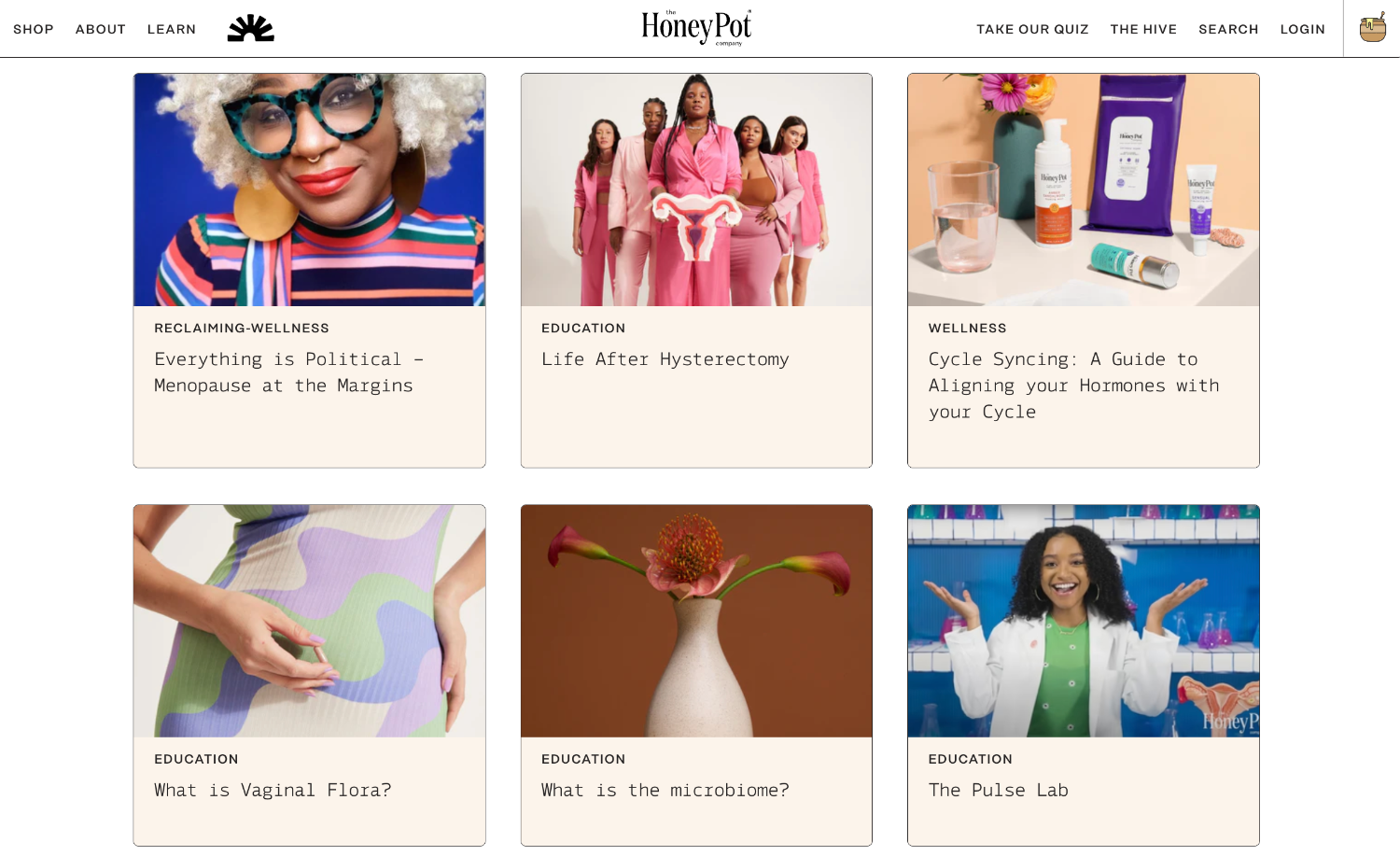
Content marketing example from the brand The Honey PotThe Honey Pot invests in influencer marketing, choosing ambassadors that can evoke the brand’s unique tone of voice—and creators with stories that mirror those of its target customer. This approach builds trust with the community it aims to reach.

2. Heyday Canning

An ecommerce page from the brand Heyday's websiteWhat’s so special about Heyday Canning is that its market research didn’t prompt it to follow the norm. In fact, the exercise highlighted the need to do something bold and daring in an industry stuck in time. Heyday took an everyday product and spiced it up—both inside the can and out.
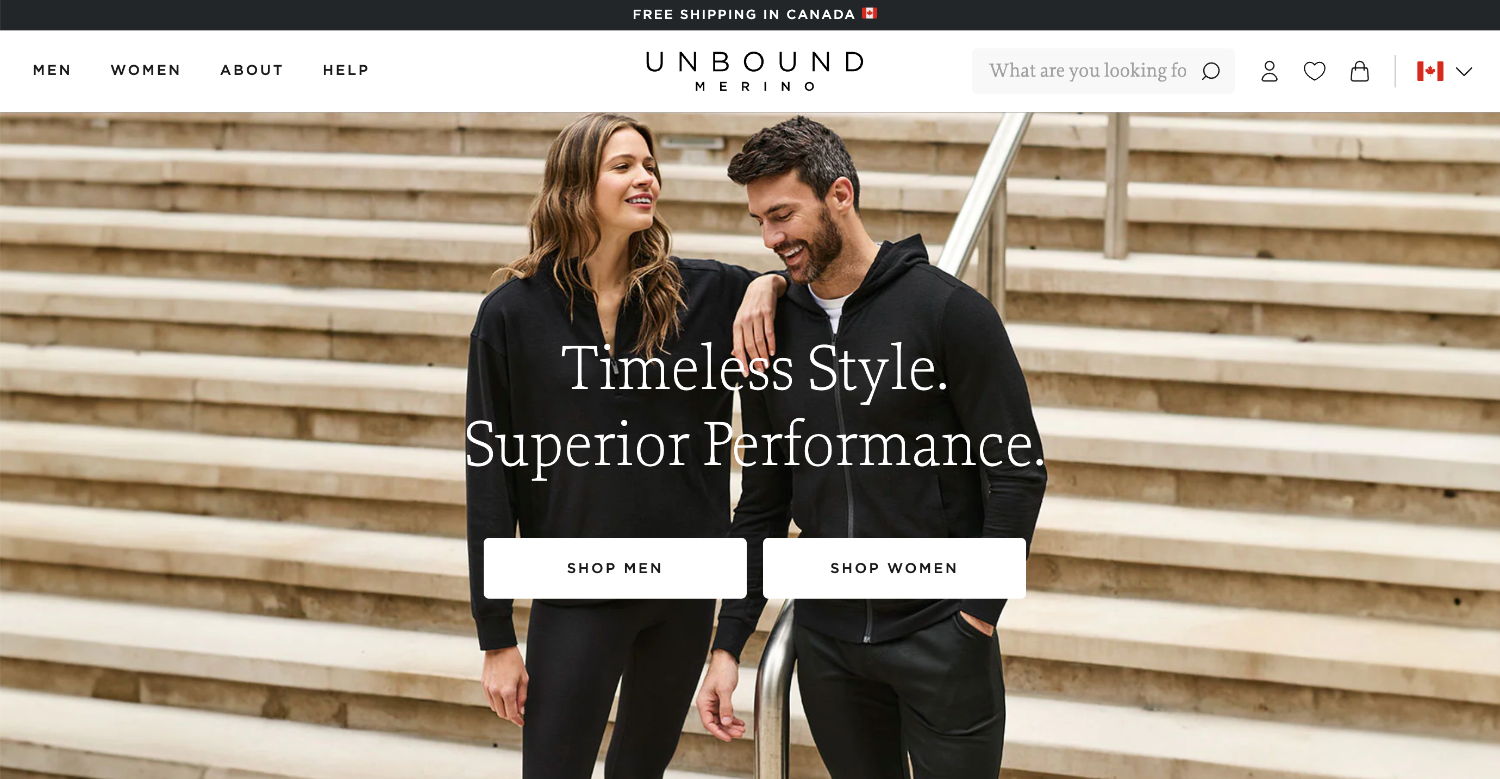
The brand chose a modern color palette and suite of fonts along with a playful tone of voice to reach a specific type of customer. The consistency of the brand can be seen through Heyday’s approach to social media content, including daring viral campaigns like its NYC Bean Swap.

3. Unbound Merino 

An ecommerce page from the brand Unbound Merino's websiteUnbound Merino’s branding is as unfussy as its products. This apparel brand aims to communicate product benefits like versatility, ease of care, and timeless design. That messaging is not only explicitly called out in website copy, it’s also reflected in the brand’s laid back visual identity. 
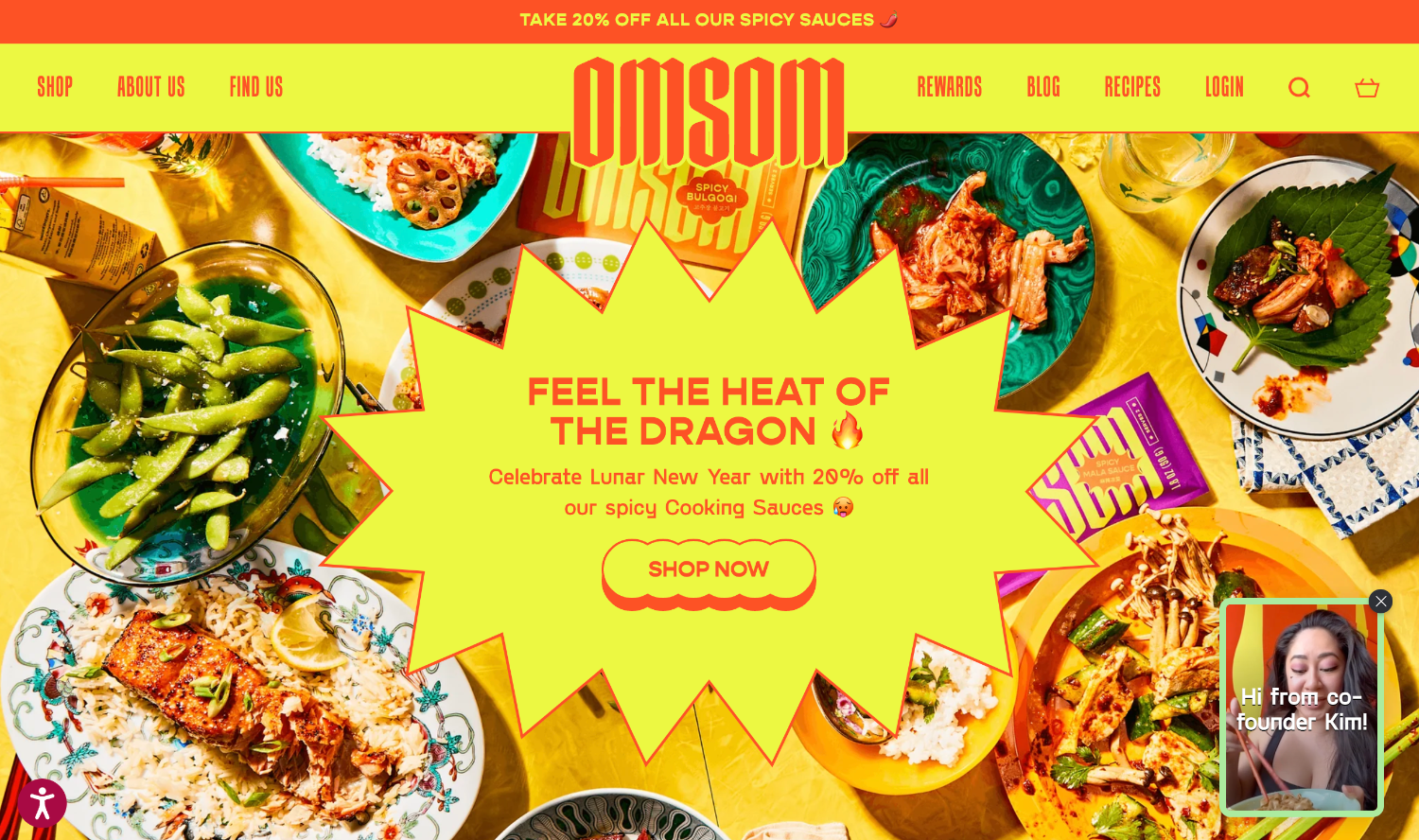
On social media, Unbound carries that messaging through its content. It partners with influencers and uses UGC to reflect the faces of its ideal customers back to them. 

Best practices for building a brand

Every brand is unique, and the experience of building yours will be, too. But there are a few general guidelines that every business can apply.

Be consistent

Building a recognizable brand relies on showing up consistently. When you set expectations with your customers, be sure you can meet them every time they engage with your brand. Consistent branding isn’t just about using the same palette across your social channels. It’s also about a consistent ordering experience and a customer service experience that’s predictable. 

Always center your customer

Your customer is the true hero of your brand story. Remember to center their experiences throughout every business and branding decision you make. Brand your business in a way that appeals to your target market and reflects its values. Everything from marketing campaigns to website design should be approached from the customer’s perspective. 

Remember: Less is more

“One issue I see the most is logos that are very busy with lots of color and without any refinement,” says designer Skyler Hestnes. Simple branding will be the most versatile across several mediums. This doesn’t mean you can’t have fun with it—just make sure your logo and branding assets work at every size, from website favicons to massive billboards. Even the most “out there” brands are crystal clear on their brand image.

Even though Omsom’s homepage is busy and bright, if you dissect its elements, it focuses on a tight color palette and clean type-based logo that reads clearly among the chaos:

An ecommerce page from the brand Omsom's website

Use tools to support your strategy

There are many free tools available online to help businesses on a budget craft a professional brand. And, if you’re a team of one, they can even save you time or simplify marketing efforts. But use caution with AI tools specifically, says Polysleep’s Jerimiah Curvers. “Really spend the time to ensure it makes sense for the user,” he says, “because it’s easy to pump gibberish that will not bring value to the user, and ultimately that will not help your brand.”

Building a brand that reaches your target audience

Now that you know how to brand your business, it’s time to put that learning to work. As you set out to build your own successful brand, take the long view: How will your branding hold up in five years? What about 10? As you evolve your brand to suit trends or consumer preferences, what values will remain consistent? No matter how much you grow, never lose sight of your brand’s goals, mission, and customer.

How to brand your business FAQ

What is the best way to brand your business?

The best way to brand your business is by following a few key steps:

  1. Establish a mission statement, set of values, and brand voice.
  2. Create a strong logo and visual identity.
  3. Develop a website that reflects your brand values and messaging.
  4. Use social media to connect with customers and build community.
  5. Create a unique customer experience.
  6. Stay consistent with your branding across all channels.

What are the 7 stages of the branding process?

The seven stages of the branding process are:

  • Research: Understand your target market.
  • Positioning: Create an identity that is distinct from your competitors.
  • Brand strategy: Develop a strategy to communicate your brand identity to the market.
  • Brand identity design: Design a logo, brand style guide, and brand assets to represent your brand visually.
  • Brand promotion: Spread the word about your brand through advertising, social media, and other channels.
  • Brand management: Monitor and adjust your branding as trends and consumer tastes change.
  • Brand evaluation: Measure the success of your branding efforts.

What are 3 tips for successful branding?

  • Establish a clear brand identity. Your brand identity should be clearly defined and communicated across all marketing channels. This includes your logo, colors, typography, messaging, and values.
  • Be consistent. Offer the experience customers expect from you based on your brand promise—and show up consistently everywhere your brand appears.
  • Use storytelling to connect. Use storytelling as a tool to create meaningful connections with customers who share your values or resonate with your experience.

How To Use a Content Strategy: Free Content Strategy Template (2023)

Software Stack Editor · June 13, 2023 ·

One of the best ways to build trust and connection with customers is through your content strategy.

“Content is a free tool that allows you to get brand awareness and traffic,” says Anaita Sakar, cofounder of Hero Packaging. “Especially when you’re starting out as a bootstrapped business, it is critical that you are just pumping out content, whether it’s educational or product-based. Because when you are creating more content, it builds up your credibility and therefore the search engines will actually point to your website.”

A carefully planned content strategy allows you to demonstrate your brand’s unique point of view and appealing products—which ultimately helps bring in more (and better) customers.

What is content strategy?

A content strategy is the practice of planning marketing content—which can include blog posts, emails, posts on social media platforms, videos, and podcasts—that speaks to your audience and serves your business goals.

A successful content strategy is the framework that helps you plan what kind of information you publish—and to whom. If your content isn’t backed by strategy, it can become busywork; a solid strategy should deliver return on investment (ROI).

How to develop a content strategy

  1. Choose your template
  2. Define your goals
  3. Research your target audience
  4. Audit your existing content
  5. Assess the competition
  6. Decide what types of content you’ll create
  7. Create engaging content
  8. Build an editorial calendar
  9. Measure content effectiveness

1. Choose your template

You don’t necessarily need a content strategy template to create your own content marketing strategy, but a good template will make the process easier. The free content strategy template linked in this article includes everything you need to get started.

2. Define your goals

Select concrete goals for your content strategy, and choose the KPIs you will use to measure success. Think about what kind of content would help you reach these objectives.

Examples of content marketing goals include:

  • Increasing brand awareness by tripling your social media following within six months
  • Increasing customer acquisition by growing your conversion rate from 2% to 4% in six months
  • Increasing brand authority by growing organic traffic (visits from unpaid search results) to your landing pages by 20% in a year

3. Research your target audience

Study your target demographic’s interests and preferred content channels so you can create content that will appeal to them on platforms they use. Two ways to find your audience include:

1. Market research. Use market research tools on consumer behavior and trends, as well as conduct your own primary research through surveys, customer interviews, and reading customer feedback. This legwork can help you understand your target audience, their buying preferences, preferred social media channels, and the way they consume content.

2. Using web analytics. Web analytics will tell you not only who’s visiting your site, but also how much time they spend there, which pages they visit, and how they find your site.

As you move through this process, consider creating a buyer persona to help you understand how to create content that will resonate with your audience. Give your persona a name, occupation, age, hobbies, geographic location, income, and aspirations, and list the types of content they consume. Use your buyer persona as a guide to shape your content marketing efforts.

4. Audit your existing content

If you have already created content, audit your existing assets. Ask yourself:

  • Is my current content still relevant?
  • Will my planned content be a significant departure from my existing content?

This may be the time to phase out some of the old stuff. Use social media analytics tools and Google Analytics to see what content is most popular and what falls flat. Consider ending production of content that doesn’t resonate with your audience or that diverges from your goals.

5. Assess the competition

Do a competitive analysis so you can compare and measure the success of similar companies’ content strategies. Create a list of your direct and indirect competitors, then visit competitor sites and go through their customer experience—identifying content you like and dislike. Subscribe to their newsletters, read their blog posts, follow them on social media. Check out what types of content they post—and how often.

If you like their content approach, consider what you could do better or differently. Use SEO tools to see which keywords drive traffic to competitors’ sites. This can help you determine which keywords are worth building content around to help your audience find you. 

6. Decide what types of content you’ll create

Understanding how your target audience engages with content will help guide your content decisions. Refer to the sales funnel, which is the process by which prospective customers become aware of your brand, consider your products, and eventually make a purchase.

Producing different types of content aligned with each stage of the funnel can help your target audience arrive at the sale. Here’s what that might look like:

Awareness

At this stage, you’re introducing your brand. Create educational content in the form of articles, blog posts, ebooks, explainer videos, newsletters, and social media posts. You’re not pitching a product—you’re only trying to pique your audience’s curiosity.

Charlotte Palermino, cofounder of skin care company Dieux, credits brand storytelling with Dieux’s success on social media. “For Dieux, it’s always about telling stories and getting really geeked out on different parts of the story of how we got to where we are,” Charlotte says on Shopify Masters. “I mean, one of our most viral videos right now is just talking about packaging. It’s like a five-minute video about plastic and aluminum and it’s doing really well, and that’s because it’s about storytelling.”

Consideration

Here, you’re nurturing the relationship with your audience, shifting into a combination of product marketing and helpful information that educates them about areas where you can claim a competitive advantage. This might look like how-to articles that feature your product, product reviews, and case studies.

For example, Fellow, which makes electric kettles and other coffee-making tools, has a collection of brewing how-tos on its website. You don’t need to own any of Fellow’s products to find the guides useful, but these educational materials feature plenty of product images. If someone is considering buying a new coffee grinder or kettle, the guides nudge them toward Fellow’s versions of those products.

Fellow’s how-to guide on brewing whole bean coffee. Useful to everyone, featuring Fellow products.

Purchase

Your audience has done its research and is ready to buy. This is where you can focus on why your product or service is better than the others using buyers’ guides, product videos, and user-generated content.

Post-purchase

In the post-purchase phase, your customer may have questions about how to use your product. Answering these questions with high-quality content can encourage customer loyalty.

For example, bike and outdoor gear company Retrospec’s guide center serves as both an FAQ page and educational blog. “If they are purchasing the product directly online, they probably have questions on how to make sure they fine-tune the bike specifically to how they want to ride it,” Retrospec founder Ely Khakshouri says on Shopify Masters.

The guides include information on how to set up your new bike, plus specific articles about charging electric bikes, repairing flat tires, performing a tune-up, and more. “We’re using the guide center as a resource to educate our customers and make sure the post-purchase experience is one that’s pleasant,” Ely says.

7. Create engaging content

In the early stages of your business, you may create your own content. For example, Charlotte Palermino of Dieux leveraged her prior experience at Snapchat to create short-form video content.

As you scale up, you might have a dedicated team member tasked with creating content, or hire a freelancer or content agency to execute it. If you’re planning to publish a series of articles, shoot video, or run a full social media campaign, you might want to add creators that specialize in social media or writing.

8. Build an editorial calendar

Create a content calendar to ensure your content has a regular cadence and is cohesive across channels. Creating a system to publish content on a regular, predictable schedule reinforces to your audience that you’re a trusted source for information.

9. Measure content effectiveness

Evaluate how well your content is performing with your audience by using tools like Google Analytics, email marketing software, social media analytics tools, and other analytics tools to track KPIs like click-through rate, website traffic, social media reach and engagement, mobile traffic leads and conversion rates, and search rankings. Depending on your results, you may make tweaks or change your strategy over time.

Questions your content strategy should answer

  1. What do you want the content to do for the business?
  2. Who is the content for?
  3. What will your content do for your customers?
  4. What channels will you use?
  5. How will the content reflect your brand?

There is no single way to create a content strategy, since it’s dependent on your target audience. Still, you can ask the following five questions to help create the framework for your content strategy:

1. What do you want the content to do for the business?

Content can serve a number of purposes for a business, and it’s important to get clear on your objectives. Ask yourself: What are the business goals associated with our content efforts? What key performance indicators (KPIs) will we use to assess success? Common goals and metrics include:

  • Increase brand awareness, measured in impressions, traffic, and brand recognition surveys
  • Drive engagement, measured in email open rates, clicks, and time on page

2. Who is the content for?

Identifying your ideal customer will help you understand how to communicate with them and what value your content can bring them. Ask yourself:

  • What are my target audience groups?
  • What needs or challenges do they have that I could fulfill with good content?
  • What content formats are most likely to connect with them?
  • Where do they consume content?

Answering these questions will help inform the next few aspects of the framework.

3. What will your content do for your customers?

Once you understand your audience and their needs, desires, and pain points, you can set out to solve those with content. Be clear about how your content will deliver value. For instance, if you sell fishing flies to novice fishing enthusiasts, your content might be informative—like a series of articles on choosing bait, casting techniques, and types of reels.

4. What channels will you use?

Content is most effective when it reaches audiences where they are—meaning they can discover it on channels where they already consume content. For business-to-business (B2B) companies, that might be on LinkedIn; for a Gen Z skin care brand, it might be on TikTok. Or, you might try to reach your audience when they’re searching on Google with paid search ads or a blog post designed for search engine optimization (SEO).

5. How will the content reflect your brand?

Does your content have a point of view? A distinct brand voice enables a company to reach its target audience and build connections and community. Consistent messaging in your brand voice will help you speak to your target demographic in language that resonates.

Content Strategy FAQ

How often should you update your content strategy?

You should update your content strategy when it no longer serves your goals. Monitor the results of your content marketing efforts and whether it delivers on your KPIs, and update your strategy if it’s not doing what you need.

What is the role of audience analysis in content strategy?

Understanding your audience will help you know what kind of content they interact with and what platforms they engage with regularly, as well as what their pain points are, and how you can help solve them.

How is content strategy different from content tactics?

Content strategy focuses on achieving big-picture goals, while content tactics are the practical methods you use to achieve those goals. Your content strategy is the larger framework that determines what kind of content you create, your target audience, and your goals.

What are the most common mistakes to avoid when creating a content strategy?

The most common mistakes include erratic publishing schedules and not measuring your content’s performance. If you’re not publishing the right type of content for your target audience when they want it, you risk sacrificing customer loyalty.

  • « Go to Previous Page
  • Page 1
  • Interim pages omitted …
  • Page 73
  • Page 74
  • Page 75

Get your Software Stack together. softwarestack.tech

Software Stack

© 2024–2026 - Software Stack is a trading name of SouthwestCIO Limited ac ompany registered in England & Wales 11319049

  • Knowledgebase
  • Home
  • About Us
  • Contact Us