• Skip to primary navigation
  • Skip to main content
software stack logo

Software Stack

Get your Software Stack together

  • Knowledgebase
    • All Categories
    • Accounting Software
    • Automation & Workflow Software
    • Customer Relationship Management
    • E-Commerce Shopfronts & Payments
    • Marketing Automation
    • Online Courses & Membership
    • Project Management
    • Surveys & Forms
    • Web Hosting
  • Home
  • About Us
  • Contact Us
  • Show Search
Hide Search

Shopping Platforms & Marketplaces

How To Sell Sex Toys Online: The Complete Guide (2024)

Software Stack Editor · May 13, 2024 ·

While sex toys might sound like a taboo subject, 78% of Americans say they own at least one. And, more brands are popping up by the minute to answer unique desires and reach longing customers.

While the industry still has its challenges, changing attitudes and the sex positivity movement have opened more space for those looking to sell sex toys online. 

In this ultimate guide, we’ll take you through the ins and outs of the sex toy industry, with guidance on how to sell sex toys online—everything from developing a brand to ensuring customer satisfaction—as well as advice and real examples from seasoned business pros.

The sex toy industry: current landscape

As late as the 1990s, buying and selling sex toys happened almost exclusively in strip-mall stores with obscured windows, purchases secreted in paper bags. 

It has been only in the past couple of decades that body and sex positivity elevated adult brands from fringe to celebrated. This shift coincided with mass adoption of the internet and ecommerce: Niche communities found each other and anyone could sell sex toys online to customers shopping from the privacy of their homes.

But as with any topic as politicized as sex, challenges persist. The nature of the business requires extra rigor on the part of founders to protect customer privacy. And, while technology has made it easier to reach buyers, it’s also often the source of strife for those selling sex toys. Restrictions from financial institutions and social media platforms demand that adult brand founders find creative solutions.

With the right tools, a unique product idea, and plenty of research, however, it’s possible—even for beginners—to build a successful brand selling sex toys and accessories online. 

How to sell sex toys online

  1. Find an idea—and a market for it
  2. Build a brand
  3. Choose your business model: Make, manufacture, or resell sex toys
  4. Create an online store to sell sex toys
  5. Invest in sex education
  6. Consider additional sales channels
  7. Get familiar with safety and privacy practices for adult stores
  8. Market your sex toys and adult products
  9. Prioritize customer satisfaction

Selling sex toys online can be a rewarding business, but there are unique challenges that require creativity. If you’re looking to sell adult toys, this guide will walk you through the steps to creating sex toys, developing a brand, and navigating censorship. 

Get advice from the folks behind brands Emojibator, Strange Bedfellas, Clone-A-Willy, and Little Jane to help you start your own sex toy business.

1. Find an idea—and a market for it

A person holds a vibrator in their handsTo get started selling sex toys, hone in on a specific niche or product that you want to sell. What corner of the sex toy market will you conquer? Maybe you’ll even carve out your own. Whatever you decide, do your research, says Kristin Fretz, co-founder of Emojibator. “Identify a strong product-market fit before investing capital and resources into an idea.” Consider ideas within the following buckets:

🍌 Target audience

  • Products marketed to specific groups and communities (e.g., LGBTQ+)
  • Kink-specific (e.g., BDSM)

🍆 Product type

  • Vibrators, massagers, masturbation devices, dildos, and other adult sex toys
  • Lingerie, apparel, and adult cosplay
  • Complementary products and accessories (e.g., lubricants, condoms, merch)

🍑 Trends and themes

  • Novelty and fantasy products (e.g., unicorn-themed dildo)
  • Innovative sex technology (e.g., AR, smart sex toys, rechargeables)
  • Emerging trends (e.g., long-distance sex toys)
  • Sexual health, sexual wellness, and self-care

When you are offering a product or service that has strong differentiators compared to your competitors, it becomes easier to market your idea in compelling ways.

Kristin Fretz, Emojibator

Emojibator cashed in at the intersection of a women’s sexual empowerment movement and the popularity of the eggplant emoji. Not only was the idea unique in the sex toy market—it was culturally relevant. “When you are offering a product or service that has strong differentiators compared to your competitors,’’ says Kristin, “it becomes easier to market your idea in compelling ways.” 

Keep an eye on emerging trends in the industry, too, says Sarah Starkey, founder of Little Jane, a self-care and women’s sexual-health brand. “Brands that position themselves as part of the self-care and health and wellness industry are reaching new markets,” she says. “There is less shame now around this, less prudishness.”

Identifying your customer 

Portrait of the founder of Strange Bedfellas
Meesh Oglesby-Cunningham founded Strange Bedfellas with the help of the community she hoped to sell to. Strange Bedfellas

In lockstep with narrowing in on your sex toy product, you should be finding an audience for it and assessing market demand. “We were in luck,” says Meesh Oglesby-Cunningham, founder of Strange Bedfellas, “because there was already a robust community built around the collecting of fantasy sex toys.” 

Meesh also knew that the fantasy sex toy community was built largely by LGBTQ+ folks, and she has taken guidance from that community since she launched the brand. “We’re fortunate to have folks who are willing to tell us how to achieve wider appeal with our designs,” she says. “Since starting this company I’ve learned so much about inclusive language and product design.”

While Strange Bedfellas chose to target a narrow slice of the market, Emojibator launched its sex toys to more general appeal, with Joe describing the brand’s wide customer base as “first-time sex toy buyers, parents, gift shoppers, avid sex-toy collectors, gender non-conforming people, emoji fanatics, and folks rediscovering pleasure after sexual trauma.”

2. Build a brand 

The founders of the brand Emojibator
Kristin Fretz and Joe Vela launched Emojibator while they were still working full time. Emojibator

Kristin and co-founder Joe Vela launched Emojibator in 2016 after Joe had the idea for an eggplant shaped vibrator. The duo set out to build a sex toy brand that was “approachable and relatable”—adjectives Kristin says are not usually used to describe sex toy companies. 

While Emojibator’s success can be attributed to launching at the right time—at the height of emoji mania—the decisions the founders made in positioning the brand with humorous, shareable content played a large role.

This is an important stage in building any business. Aside from having an innovative product, your brand is critical in influencing customers to buy from you. It should aim to tell a story, connect with your target audience, and have a clear mission. When you sell sex toys, brand is also a tool used to build trust.

Developing your sex toy brand 

Clone-a-willy branded packaging
Empire Lab /Clone-A-Willy

Clone-A-Willy is a consumer brand offering molding kits that allow customers to make safe sex toy replicas of genitalia. The parent company made its name in the medical and film industries, supplying prosthetics for various purposes. When it migrated its technology from B2B to direct-to-consumer (DTC), it built a more consumer-friendly brand.

When building your own brand, you will determine your target market and tell a story. But there are several other questions to ask yourself at this stage. The answers will help you create a playbook for every decision you make as you build your sex toy business.

Ask yourself:

  • What do I stand for?
  • What value does my brand or product bring to the market and customer? What’s my value proposition?
  • What is the voice and tone for my brand communications? Are we informative and professional? Daring and playful?
  • What are my values?
  • What are my goals?
  • Where do I want to see myself/my brand in five, 10, 20 years?
  • Is my personal story critical to the brand story?

An effective set of brand guidelines will inform all aspects of the business, from who you partner with to what’s in your press kit. It will help you scale your sex toy business and maintain brand consistency as you hire or outsource.

Branding for your sex toy business

A branded box for an Emojibator sex toy
Emojibator

After you have completed the above brand exercise, branding becomes the living representation of those results. 

Here you will make decisions about things like logos, colors, and creative direction. You’ll choose a brand name, slogan, and domain name. Branding guidelines will then inform you—and any future staff—as you build your website, design products and packaging, and develop marketing content. 

For a DIY approach, use a free tool like Canva, or Shopify’s logo maker and business name generator tools. Otherwise, hire a design pro who can bring your vision to life. Shopify Experts are vetted partners skilled in helping ecommerce business owners with their brands.

3. Choose your business model: Make, manufacture, or resell sex toys

As with many businesses that sell consumer goods, you have multiple business model options, depending on how hands-on—or off—you’d like to be. Making your own sex toys to sell, outsourcing manufacturing, and reselling existing products are all options available to you, and each comes with its own challenges and benefits.

Making sex toys and adult products

A set of 3 silicone sex toys by Strange Bedfellas
Strange Bedfellas

Meesh and her team design and produce silicone sex toys by hand in their own facility. As she transitioned from 2D illustrations to 3D sex products, Meesh found that the information around making and selling sex toys was readily available online, and that it isn’t overly regulated in the US. This required extra diligence on her part to ensure her processes and materials were safe.

“There are tutorials and information out there for people who put the time into searching for it,” Meesh says. “As well, there is a big community of collectors who discuss this sort of thing and were a great source of information when I first started down this road.” 

🍌 Benefits

  • Total end-to-end control of the business
  • Fulfilling for makers and creatives
  • Unique product not available anywhere else

🍆 Challenges

  • Learning curve
  • Onus is on you to meet safety standards and do testing
  • More difficult to scale

Manufacturing sex toys and adult products

An array of sex toys in a flatlay
Emojibator

Emojibator’s products are designed in Philadelphia, and the company is run by a remote team across multiple cities. All of the manufacturing is outsourced to factories in the US and China. This model allows the founders and team to focus on other aspects of the business, like marketing and product development. It also lets the brand scale quickly and operate globally.

Finding and learning to work with manufacturers is the most challenging aspect of this business model. As sex toys are products that can cause harm if produced or used improperly, it’s important that you do your homework. 

Verify that any factory you work with has experience in the industry and understands and adheres to safety standards. You can work with a third-party auditor or a liaison to help ask the right questions—this is especially important if there is a language barrier.

Sell internationally in minutes with Shopify Markets

Shopify Markets helps you sell to multiple countries and scale your business internationally—all from a single Shopify store. Manage store localization, shipping, duties, and compliance all in one place.

Discover Shopify Markets

Once you’ve started working with a reputable manufacturer, you can dedicate resources to growing your product line. As Emojibator adds new products to its collection, Joe and his team ask themselves two questions:

  1. Does it fit with our brand mission to deliver accessible, affordable, and fun pleasure for all genders? 
  2. Is it exciting, astonishing, and newsworthy? 

“These factors allow us to create niche products and unique experiences for our community,” says Joe. Use your own brand exercise to outline criteria for product development.

🍌 Benefits

  • Ability to scale quickly
  • Working with a manufacturer with experience and safety standards brings peace of mind
  • Outsourcing the production lets you run with a lean in-house team

🍆 Challenges

  • Less control over the manufacturing and QA processes
  • Navigating manufacturing sourcing and relationships can be a learning curve
  • Potential high minimums for new and small businesses

Reselling in the sex toy industry

An array of sex toys and sex accessories arranges in front of a red curtain
Little Jane

The most hands-off model involves sourcing and reselling existing products for your own store. If the product design and development processes don’t interest you, or you’re looking to spin up a brand quickly, this is the option for you. There are multiple ways to do this, including:

White label or private label

Manufacturers create “blank” products for multiple brands, usually customizing things like labels for each. You can sell sex toys that already exist, branded with your own creative.

Reselling

Your brand may be built around a theme, rather than a product. Your efforts will focus on brand development and curating existing products (by buying wholesale) that fit into that theme. Selling sex toys in this way is a quick-start option for beginners.

Otherwise, you may choose to become a local reseller for another single brand, if, for example, that brand doesn’t sell directly to customers in your region. You would purchase wholesale quantities of products to warehouse and ship to customers.

Dropshipping

The dropshipping model is the same as the above but it doesn’t involve handling any inventory. Customers shop from your online sex toy store and your suppliers ship directly, skipping you as an intermediary.

🍌 Benefits

  • More hands-off (ideal as a business to launch initially as a side gig)
  • Ability to work with established brands with good reputations
  • With dropshipping, no need to carry inventory, and can start up on a lower budget

🍆 Challenges

  • Same products may be sold elsewhere—effort should be placed on marketing and brand
  • You are at the mercy of other businesses’ decisions (discontinued product) or manufacturing and shipping delays 

4. Create an online store to sell sex toys
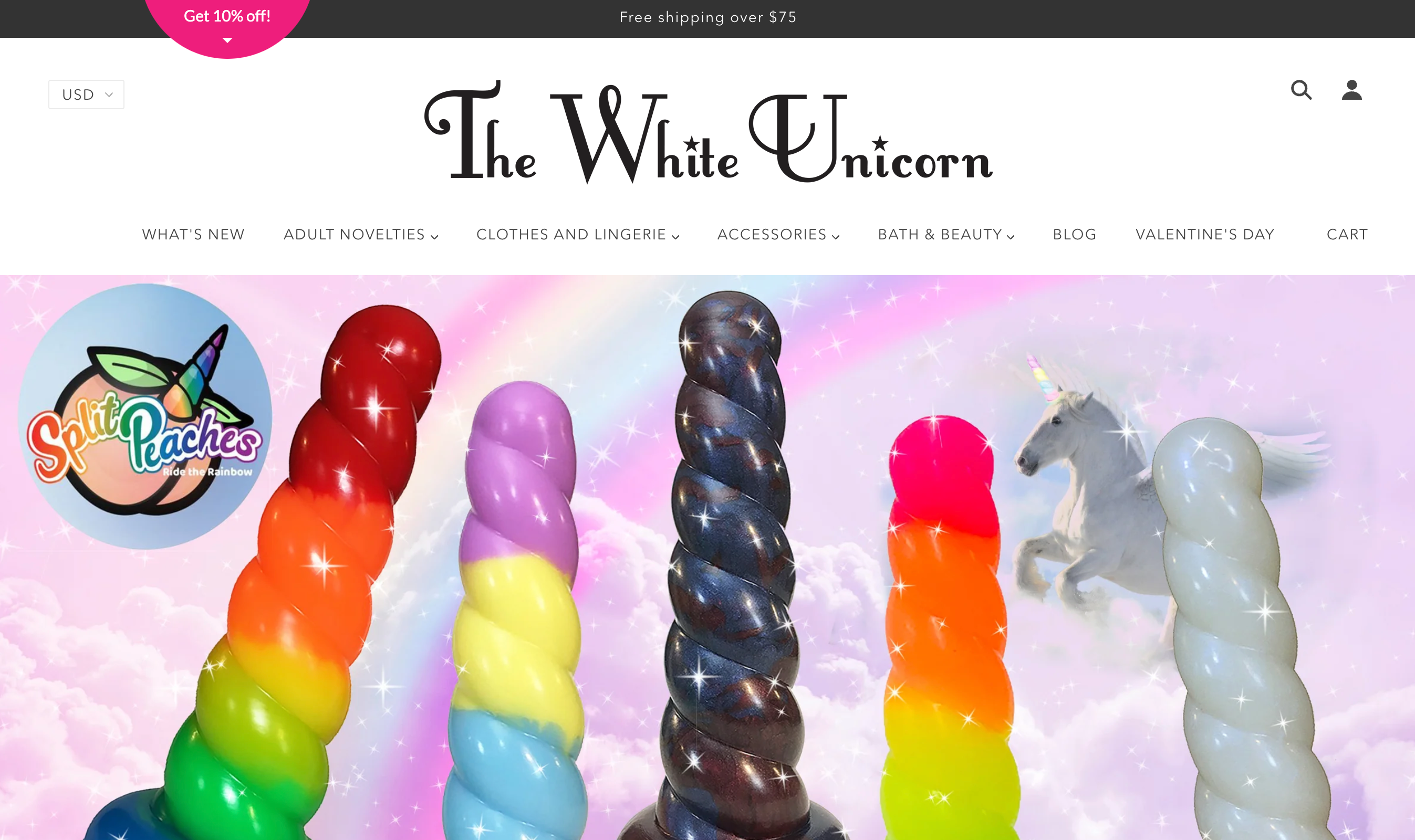
An ecommerce home page for a brand selling sex toys
The White Unicorn

Selling sex toys online is possible through platforms like Shopify. Where you may run into challenges is through payment processors and payment gateways. While some sex toy brands are able to use Shopify Payments, certain products may be restricted (e.g., cannabis). Here, we’ll take you through the steps to get started, look at which apps to integrate, and offer advice on choosing a payment partner.

Setup, themes, and design

Once you have developed branding guidelines, you’re ready to build your online store and sell sex toys! You can plug your logo, colors, and other assets into preset, customizable website themes, rather than building a site from scratch. This makes the setup process simple, even if you don’t have strong design or coding skills. 

Suggested themes for selling sex toys online:

If you require further customization, you can work with a Shopify Expert to tweak a theme or build a unique site for your brand. 

💡 Tip: Need help picking the right theme for your store? Take our quiz.

[embedded content]

Essential pages for your website

There are a few critical pages to build when you are setting up an online sex toy store. 

Collection pages

If you have a large collection of products, sort them into themes based on type, sexual preferences, kinks, or any other categories that help your customers navigate your website and find what they’re looking for.
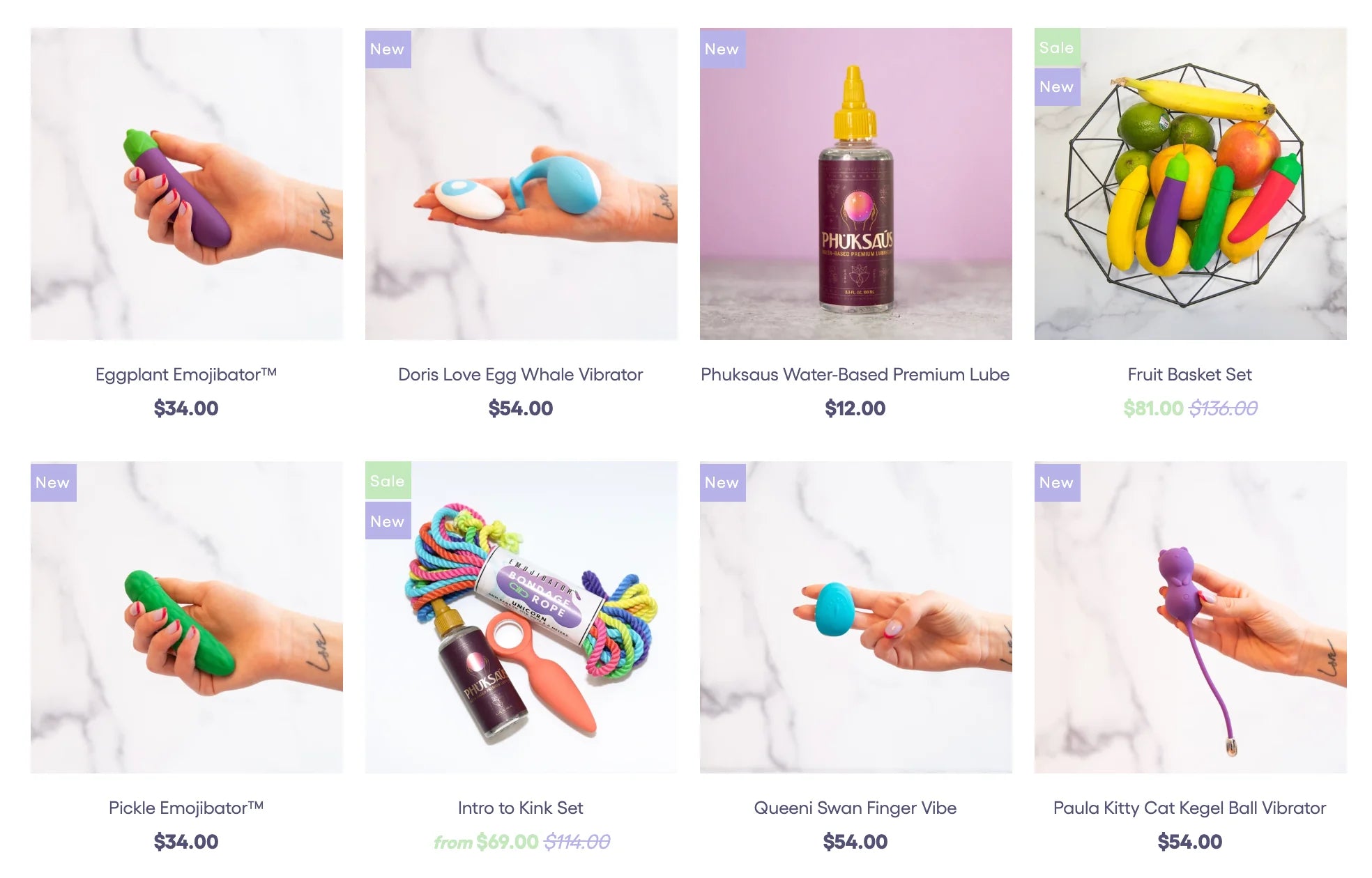
A collection page ona website featuring several sex toys
Emojibator
Product pages

Due to the nature of your business and product, product pages need to pull more weight than simply providing a description, photo, price, and Buy button. Use an app that lets you create tabbed information to avoid clutter on the page. Information that can be useful here includes: use instructions, safety warnings, cleaning and care tips, and warranty information. These help you sell sex toys to customers by increasing their purchase confidence.

FAQ page

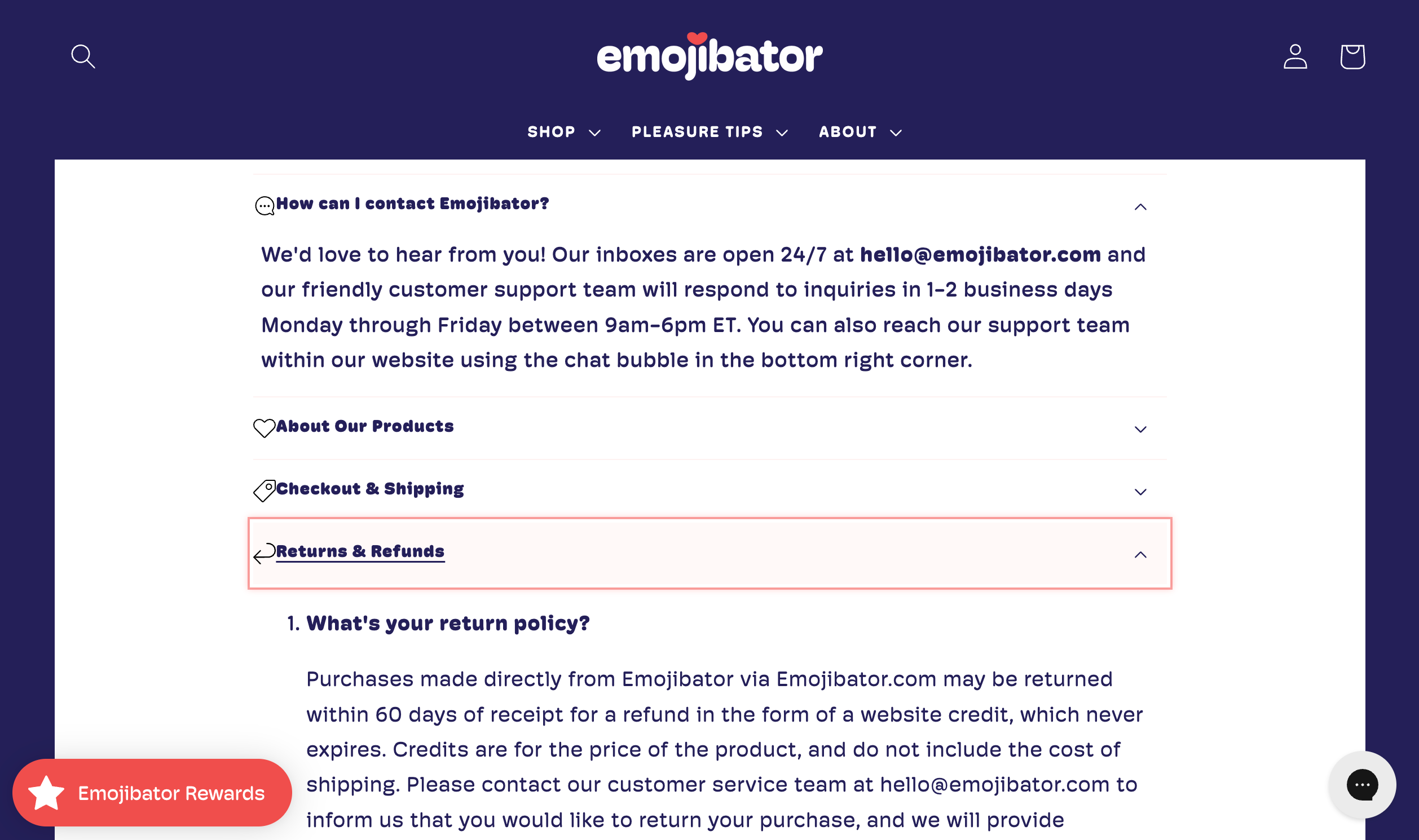
This is an important page for those selling sex toys online. You likely will be selling products that cannot be returned for resale, due to hygiene and safety reasons. An FAQ page is the place to clearly state your return and exchange policy. You can also answer questions here about materials, product use and care, privacy, and shipping. 
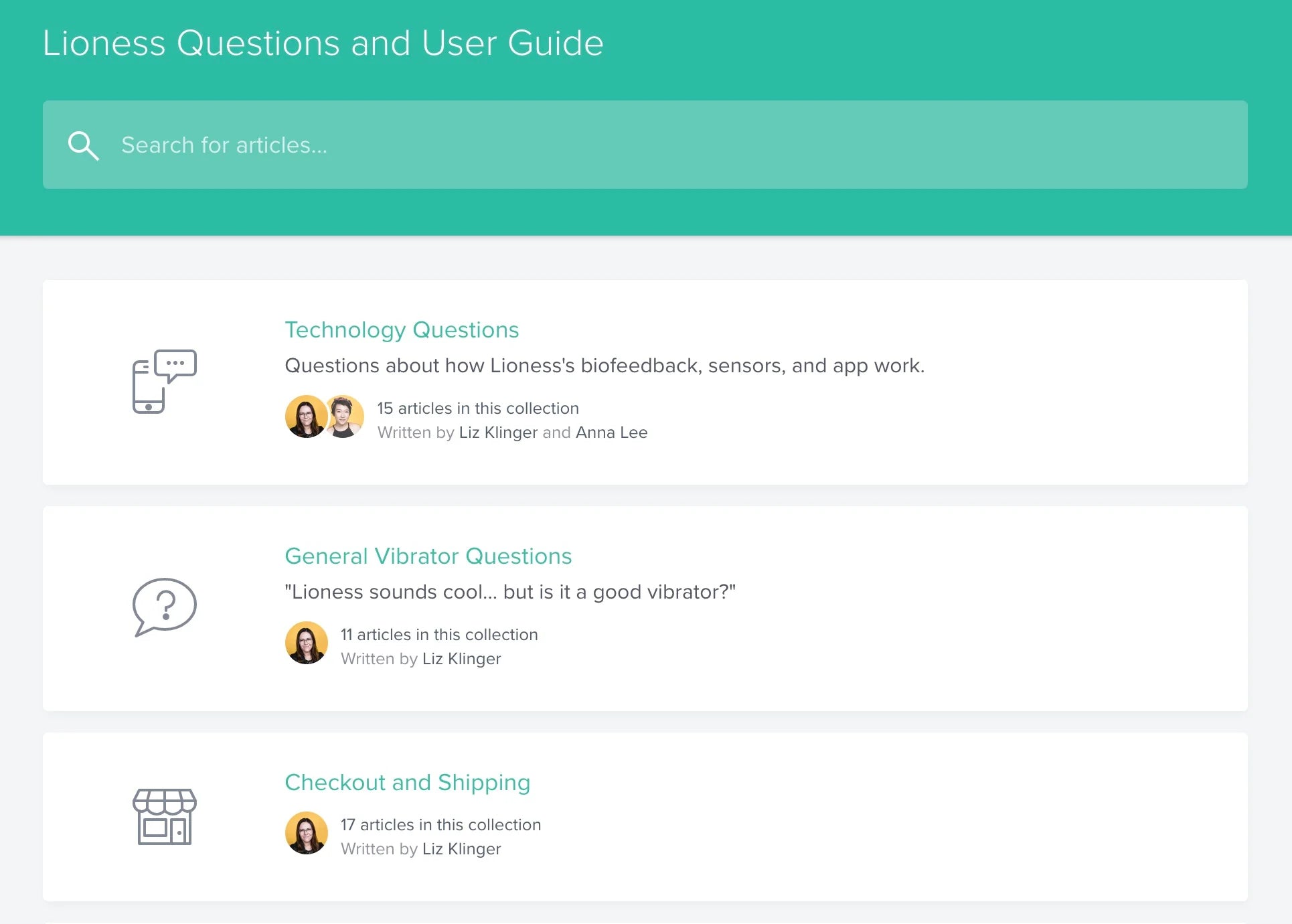
An FAQ page on a sex toy business website
Lioness, a smart vibrator brand, provides customer information through an organized and searchable FAQ page. Lioness
About pages

Remember that brand exercise? This is an opportunity for your brand story to shine and to build trust with customers. Whether or not you center yourself and your personal story here, you can still remind customers that there are real people behind your brand. Your About page could contain your mission, brand values, company history, and press links.
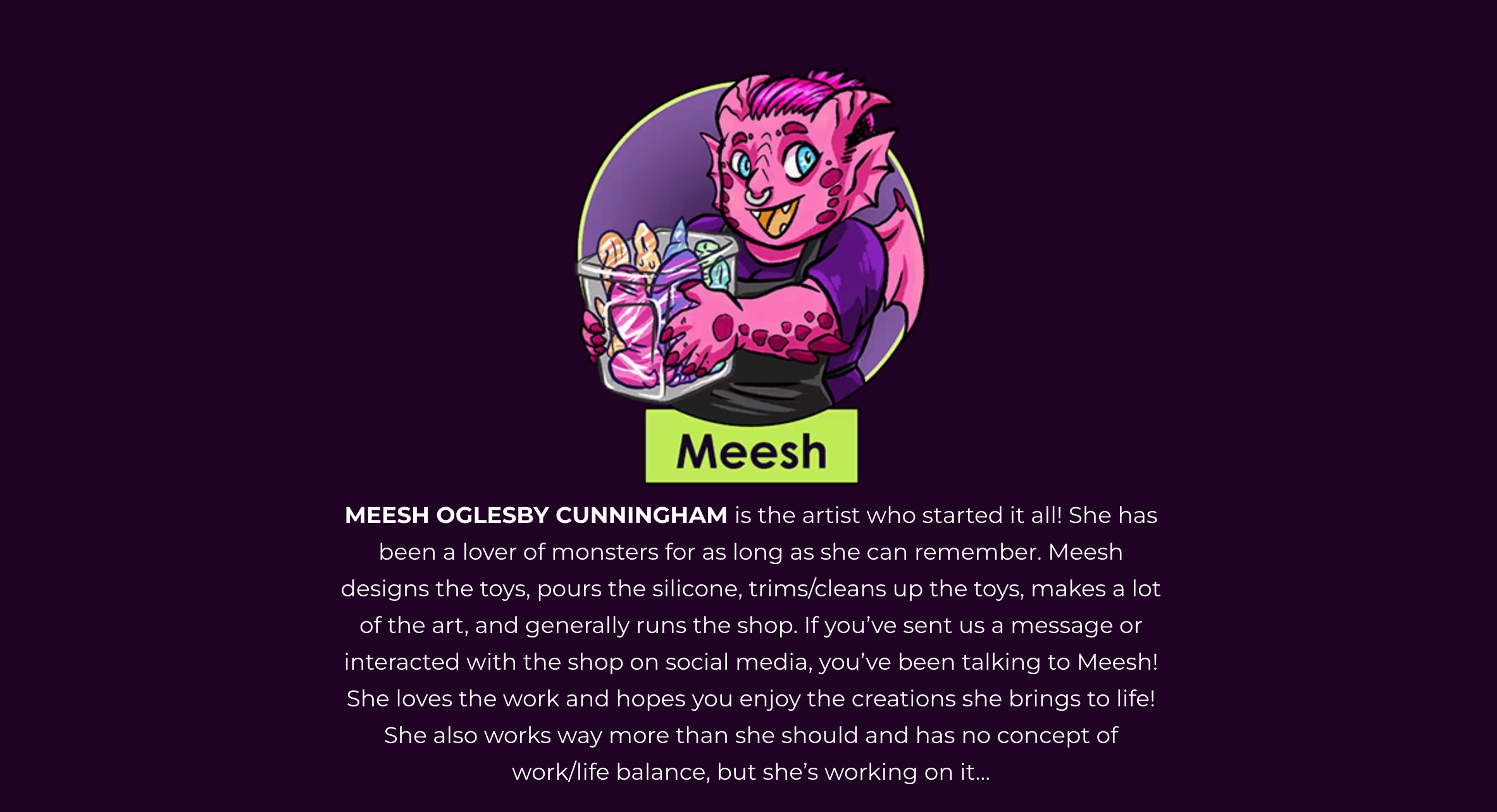
An ecommerce About Us page for a sex toy brand
Strange Bedfellas

Ecommerce photography for sex toy brands

With most businesses selling online, you don’t have the benefit of letting customers touch, feel, or demo your products before buying. Your product page should be as descriptive as possible to help replicate the in-person experience—both with copy and photography. Shoot sex toy products at multiple angles and include images of any accessories (i.e., charging devices).

While your product page should prioritize clear and uncluttered images to highlight the product, a lifestyle shoot can provide images for other places on the site, as well as for social images, ads, and your press kit.

An array of products from a sex toy store
Styled images are useful for marketing, social media, and other visual needs on the website. Emojibator

This is an opportunity to capture the tone of your brand visually. Emojibator leaned into the humorous side of the products, having fun with its lifestyle photography. “We were brilliantly practical in our decision to take a picture of our friend’s cat holding the Eggplant Emojibator for our press release,” says Kristin, “and the internet in response laughed along with us.”

Also consider what video assets you may need for customer education or marketing tools to help you sell sex toys online. Hire a professional to shoot core assets that you’ll use over and over, and consider DIY video content for platforms like TikTok.

Choosing payment providers

When Meesh moved her brand to Shopify, her products fell under Shopify Payments’ acceptable use policy regarding products. But her peers have faced challenges. As a security measure, Strange Bedfellas secured a backup payment provider.

The relationship between financial institutions and those running sex-related businesses can sometimes be tenuous. “We face unjust financial discrimination as a sex toy company, and it prevents us from competing fairly in the marketplace,” says Kristin.

But many brands successfully sell sex toys on Shopify using a variety of payment providers. “Read the terms of service and what is and isn’t allowed to be sold,” says Sarah. “This not only differs between payment providers, but also between the same provider based on country. Nudity in images, prostitution, weapons, bondage, and potential for injury could all be relevant.”

🍑 Resources

🛑 Note: This is not an exhaustive list. There are several other payment providers available to you, depending on your region and business type. We suggest you seek legal advice in ensuring you are complying with the terms and conditions of any platform and payment provider you work with to avoid future surprises.

Apps and tools for adult stores

Shopify integrates with multiple apps to augment the experience for customers and customize your site to your needs. We also offer a number of free tools to help you launch and run your business. 

Here are a few suggestions for brands selling sex toys online:

  • With more challenges in reaching new customers, sex brands should pay plenty of attention to existing customers. A loyalty app like Rise.ai Gift Cards & Loyalty will help you reward and retain your biggest supporters.
  • The Help Lab FAQ page helps you quickly set up a simple FAQ page on your Shopify store. 
  • You may wish to formalize your shop policies and ensure that customers understand them by adding a Terms and Conditions Box.
  • A video maker like Vimeo Create can help you produce professional video ads and educational content. 
  • Create a privacy policy with our free generator.
  • An age-verification app, like Hulk Age Verification or Real ID, can provide a checkpoint to let browsers know that your site contains adult content.
  • Consider creating personalized shopping experiences with apps that support quizzes and custom size guides.

5. Invest in sex education

Education is essential to sex toy companies to both ensure that the customer makes an informed purchase and to protect yourself and customers from any harm. “The products we sell are very intimate by nature, and I want to help people make choices they will have good experiences with,” says Meesh.

Producing content is not only a fun challenge but a way for our brand to lean in on our educational mission.

Joe Vela, Emojibator

Educational information can appear on product pages, an FAQ page, and on product packaging. But it can also form part of your content strategy. Informative sexual health information can establish you as a trusted expert—and content can help drive purchases.
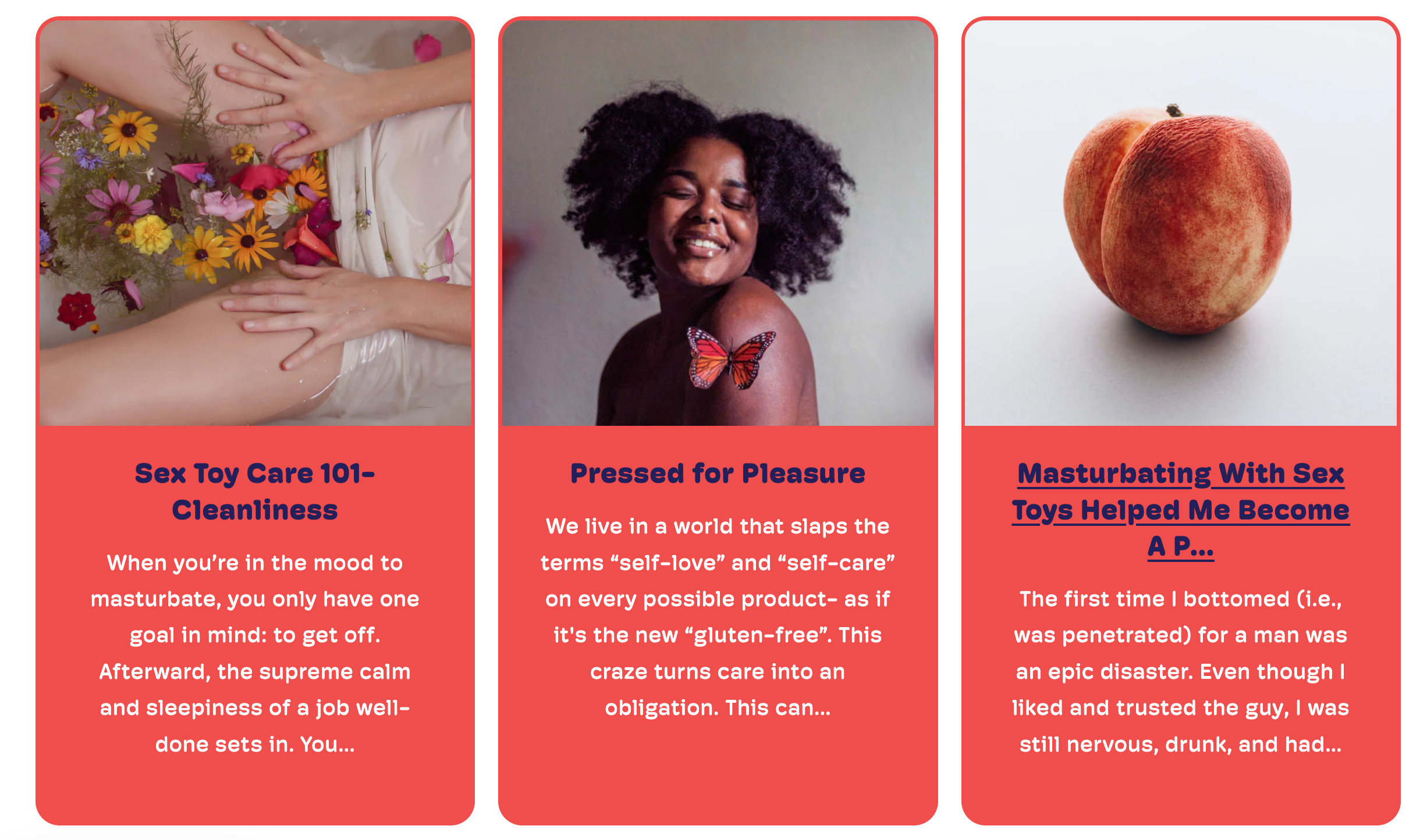
An ecommerce blog from sex toy business Emojibator
Emojibator’s “Pleasure University” serves as the brand’s blog and resource bank for sex toy education. 

Emojibator took educational content to the next level, launching a month-long campaign each year. “During the month of May, our Masturbation Month site receives nearly twice as many visits as our shop’s site,” says Joe. “Producing this content is a way for our brand to lean in on our educational mission.”

6. Consider additional sales channels

With the challenges and restrictions related to online ads for sex toy businesses (we’ll talk about that in a minute), many brands need to get creative with selling adult toys online by adding more sales channels to achieve wider reach.

Explore the following channels:

  • Sex shop founder Amy Unicorn says events like drag shows are a key part of her business. Music festivals, artisan markets, and other events may also work for you, depending on the nature of your product.
  • Formal trade shows or consumer shows are another type of event that can draw wholesale buyers and customers to your brand.
  • Selling wholesale through other established retailers can expand your reach. Seventy percent of Emojibator’s business is wholesale, says Joe. 
  • The next stage of your online sex toy business might be a physical retail store, where you can benefit from passerby traffic and local listings. Dabble in IRL selling with a pop-up shop first.
  • Online marketplaces like Amazon or Etsy are another option. Check with the platform’s terms of service to ensure that your products are approved on the site.

“The biggest challenge has been raising awareness about our brand and products,” says Joe. “That’s why we’ve leaned in on our wholesale sales channel. We have been lucky to find reputable and certified partners around the world.”

7. Get familiar with safety and privacy practices for adult stores
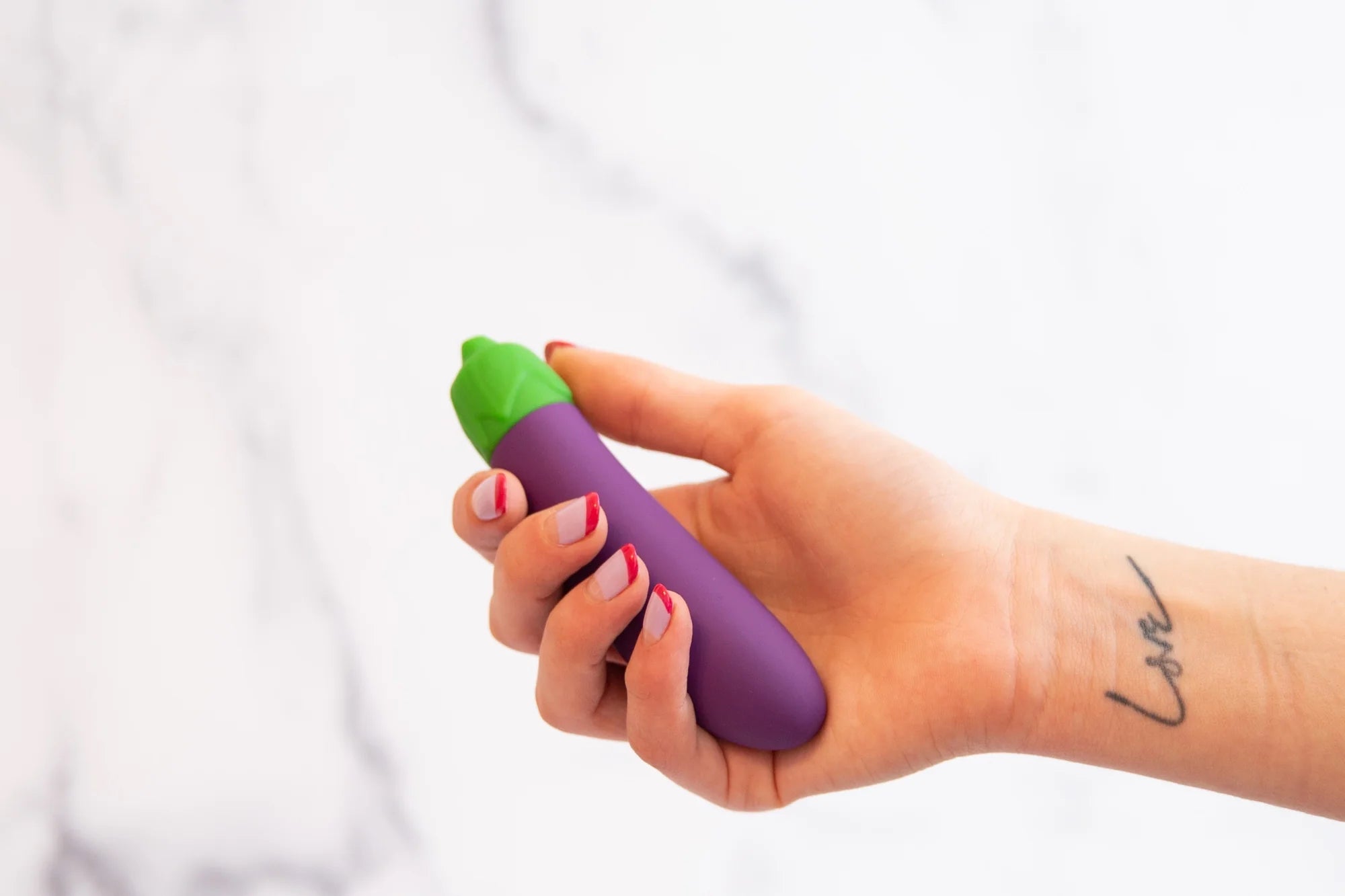
A person holds a small eggplant vibrator
Emojibator

You are about to launch in an industry that has unique challenges due to the intimate nature of the product. Spend time here to ensure your butt is covered.

Product safety and testing

As we’ve mentioned throughout this guide a few times, safety is a concern if you are planning to sell sex toys. Rules and restrictions may govern your business depending on where you live, so it’s important to do your own research.

“I don’t personally give instructions on how to use our products because I’m not a sex educator,” says Meesh. “My best tool is to put disclaimers on our products and encourage folks to do their research before purchasing.”

The community looks out for its members, and identifying dangerous shops is part of that. You don’t want to be on the bad list.

Meesh Oglesby-Cunningham, Strange Bedfellas

Disclaimers, as well as FAQs, instructional videos, and proper labeling can all help to ensure your product is used safely. At the production phase, work carefully with your manufacturer to ensure they have stringent safety standards. Expect the same of any other brand you work with as well. “The community looks out for its members, and identifying dangerous shops is part of that,” says Meesh. “You don’t want to be on the bad list.”

As an extra precaution, you may want to consult with a lawyer to ensure you are meeting any legal requirements for safety and labeling.

Customer privacy

While you’re launching your sex toy business in a time when views about sexuality are much more liberal and open, there are still many reasons why someone would want their purchases to remain private. “A lot of our customers live with family or friends who may not appreciate finding their purchases or may be quite hostile to them about it,” says Meesh.

As such, Strange Bedfellas ships in plain boxes and uses its generic LLC name on the return label. Similarly, “due to societal realities,” Kristin says that the brand name doesn’t appear on shipping packaging or credit card statements.

Privacy also extends to the information you collect from your customer. There are already many laws that govern how you use this info, but sex toy businesses may want to be forthcoming about how they handle data. “We don’t share any personal data with third parties that don’t require it,” says Joe. “If anyone requests their data to be deleted, we ensure it’s wiped completely from all of our systems.”

8. Market your sex toys and adult products

Sex sells, but selling sex toys is a little more tricky. Navigating the marketing of sex-related products is one of the most common challenges surfaced by business owners in the industry. Selling sex toys to your target audience means finding them where they are. But sometimes those places can be restrictive for sex toy businesses.

“The most effective paid ad networks have either completely censored or heavily blocked any product related to adult toys,” says Joe. In 2020, Instagram tightened its restrictions even more, impacting organic content for sex-related businesses. 

“Censorship is a considerable hurdle we have to constantly navigate, and we’ve had to be very creative in marketing and promoting to the masses,” says Victoria Nelthropp, Clone-A-Willy’s marketing and brand coordinator. 

But on saturated and established platforms like Instagram, making any headway with organic marketing is challenging too—for any type of business. 

Social media is still a valuable tool for sex toy brands. Meesh uses it as another channel for customer service, and Joe says that Emojibator has done some successful community building.

Censorship is a considerable hurdle we have to constantly navigate, and we’ve had to be very creative in marketing and promoting to the masses.

Victoria Nelthropp, Clone-A-Willy

With paid and social advertising being heavily limited for adult brands, creative founders can still find ways to grow their business:

  • Influencer marketing. Reach out to sex-positive influencers that appeal to your ideal customer. Even new brands can work with emerging influencers who may have lower rates.
  • Affiliate networks. Build a network of other websites, blogs, affiliate marketers, and advertisers who take a small cut of any sales they refer.
  • PR and media pitches. “We have a publicist on our team that keeps our brand story in the news cycle, and we aim to create astonishing products worth talking about, which has been our strategy since day one,” says Joe.
  • Email and SMS marketing. Build your email list even before you launch any products. Start to grow buzz and community for your brand by pushing people to a simple Coming Soon page. Collect emails and offer perks or early access to those who sign up pre-launch.
  • Content and SEO. Use on-site content to not only build trust and help customers, but also to drive traffic to your site through relevant keyword searches.

Find influencers to drive sales with Shopify Collabs

Shopify Collabs makes it easy to partner with creators, promote your products, reach new customers, grow your sales, and track affiliate campaign performance all from Shopify admin.

Discover Shopify Collabs

9. Prioritize customer satisfaction

FAQ page for a sex toy shop
Emojibator’s FAQ page contains everything customers need to know to make an informed purchase. 

“I actually really enjoy when customers ask detailed questions before purchasing items,” says Meesh, who finds that the communication helps her recommend the best products. But occasionally, she’ll even find that another brand might be better suited to her needs. “I have a lot of peers in this industry whose work I trust, and I have no problem referring customers to them if I think they’ll be a better fit.”

Due to the nature of sex-related products, returns and exchanges are usually not possible. That’s why customer support at all stages is important to avoid unhappy customers. 

“We have an extensive policies page and we link to it often throughout the site: on listings, on info pages, in all the emails we send,” says Meesh. “We can’t say it often enough!”

There may be cases when you will accept returns of open products, say in the event of a manufacturing flaw. If you’re a reseller, the product you’re selling may have a warranty, and you can refer those customer service issues to the manufacturer.

Emojibator offers a one-year warranty on all of its products. The company prioritizes customer support to ensure that any warranty claims are handled with care. “We know sex toy experiences are unique to each person,” says Kristin, “so we treat each customer with the utmost respect, patience, and kindness.” 

Helpful resources

What does it cost to start a sex toy business?

What’s a topic that’s almost as taboo as sex? Money. (Though neither should be.) The cost to start a business selling sex toys online varies wildly, depending on the model you choose.

If you decide to become a reseller, the bulk of your startup costs will be buying inventory, renting storage space (if you don’t have it), and fees for your online store. Even if you DIY a lot of this (using free tools to design your branding), expect to require a few thousand dollars to get started.

As a maker, your start-up costs may be lower, as you can make to order rather than producing inventory that sits. But depending on your process, the equipment and supplies could still cost you hundreds—or thousands—of dollars. You also will need to invest in branded packaging, which likely will have upfront minimums.

If you are designing a novel or new product, you can expect that process to take a minimum of one year and $10,000 upfront.

Joe Vela, Emojibator

For manufacturing sex toys, minimums are also a consideration. Manufacturing partners may require you to purchase hundreds of units to keep your costs sustainable. Even the product development process can be costly. “If you are designing a novel or new product,” says Joe, “you can expect that process to take a minimum of one year and $10,000 upfront.”

The most economical way to start a business is through dropshipping. There are downsides to this model, as you have zero control over the production or shipping of products, but you can start a business with a few hundred dollars for a basic website and other online tools.

Pricing your products

As with any business, pricing sex toys is a delicate balance between making your desired profit and a retail price that customers are willing to pay. Use a standard pricing strategy to calculate your fixed and variable costs and add your profit margin. Then compare your pricing to similar competitors in your industry: Are you relatively in line with the expected retail price ranges?

Get off on getting started

You’re now equipped with all the tools you need to start selling sex toys online. Those passionate about sex education, empowerment, or supporting communities marginalized by traditional sex content and products may find the sex toy market a fulfilling space to launch as an entrepreneur. And as demand increases, there’s still room for newcomers in the sex toy space.

Despite the challenges, anyone with the desire to enter this space and the patience to navigate creative problems can sell sex toys and build a rewarding career. “I really enjoy this job!” says Meesh. “I wasn’t aware I could find so much fulfillment making dildos.”

The more brands creating space for open conversation about sex, the more collective effort can be diverted to influencing policy change. And the permissionless future promised by the web’s next act has a pleasurable ring to it. 

Feature image by Chris Gash

How to sell sex toys FAQ

What should I do to become a sex toy seller?

Learning how to sell sex toys takes a little research to ensure you have found an ideal market and a product that meets the needs of your audience. Start with identifying your brand, your sex toy business model, and brushing up on safety and privacy practices. You’ll need to source existing products or create your own—and there are plenty of businesses you can partner with to achieve this goal. Now you’re ready to market and sell adult toys!

What is the best way to sell sex toys?

Selling sex toys can be done through a number of channels, such as through retail stores, online marketplaces, or your own sex toy website. With your own store, you are able to have the most control over your brand, and you’ll own your audience. When selling sex toys online, be sure to check the rules that govern each platform and payment gateway to ensure that your products will be supported.

How can I market sex toys online?

To sell sex toys online, you’ll need to market your business to your target audience. Marketing sex toys can be challenging online due to content restrictions imposed by some social and ad platforms. Get creative with your social posts to avoid getting content flagged and build an organic strategy. Growing an email list means that you can reach customers who’ve opted in to adult content. Other ideas include getting your products featured on sex toy review sites or hiring a PR pro.

What type of sex toys should I sell?

If you’re looking to start an online sex toy store, you’ll first need to determine your target market and the type of sex toys you want to sell to it. To stand out in the sex toy market, you’ll want to narrow in on a niche or underserved audience. There are a number of types of sex toys and sex accessories you can sell, from vibrators and apparel to massage oils and sexual wellness products.

Branding Basics: The What and Why (2024)

Software Stack Editor · May 13, 2024 ·

Whether you’re an aspiring entrepreneur ready to launch your dream to the world or a seasoned founder scaling an existing business, the strength of your brand plays a critical role in your success.

Your brand is how you are viewed in the eyes of your customers, your competition, and your community. Branding decisions you make now will shape customer perceptions, determine the trajectory of your business, and guide every decision going forward. That’s why it’s important to take your time with this step.

In this introductory guide, learn the basics of branding, understand the benefits of having a strong brand, get inspired by best-in-class branding examples, and find out how to update your branding as you grow and scale. 

What is branding?

Branding is the process of creating a distinct identity for a business in the minds of your target audience and the general population. At its core, branding consists of a company’s name and logo, visual identity design, mission, values, and tone of voice. Your brand is also determined by the quality and uniqueness of your products, the customer service experience you provide, and even your pricing strategy.

[embedded content]

How is branding achieved?

Actions like building a website, designing ads and marketing content, choosing a color palette associated with your business, creating a logo, interacting with customers in live chat, and posting comments on social media set the tone for your brand. Early interactions are already shaping people’s perceptions of your business.

✏️ Takeaway: Your brand can be decided by the market. That means that regardless of what you do, consumers will form an impression of your business based on their interactions. However, it’s best to control this brand image with intentional branding and a solid brand strategy.

What is the purpose of branding?

The purpose of brand building is to help your customers understand what you offer and what you stand for, through effective positioning. Great branding communicates a unique selling proposition (USP), your brand values and mission, and your brand’s story. These all help customers decide if you are a business that meets their needs or aligns with their values.

Ultimately the goal of branding is to attract loyal customers, grow your position in the market, and make sales. 

The elements of branding

Branding is more than just choosing a business name and designing a logo. It encompasses so much more. Successful branding shows up consistently everywhere from the first customer touchpoint to the last. But how do you ensure you’re covering all the bases? Let’s dig into the elements of branding to consider as you build your brand. 

Brand mission and values

Your mission is the north star for your business and should have a prominent place in your business plan and brand guidelines to keep all other decisions on track. Your branding exercise should also narrow in on your brand values, which will be non-negotiables as you grow and scale. These ensure your brand remains strong, even as things like your logo or products evolve.

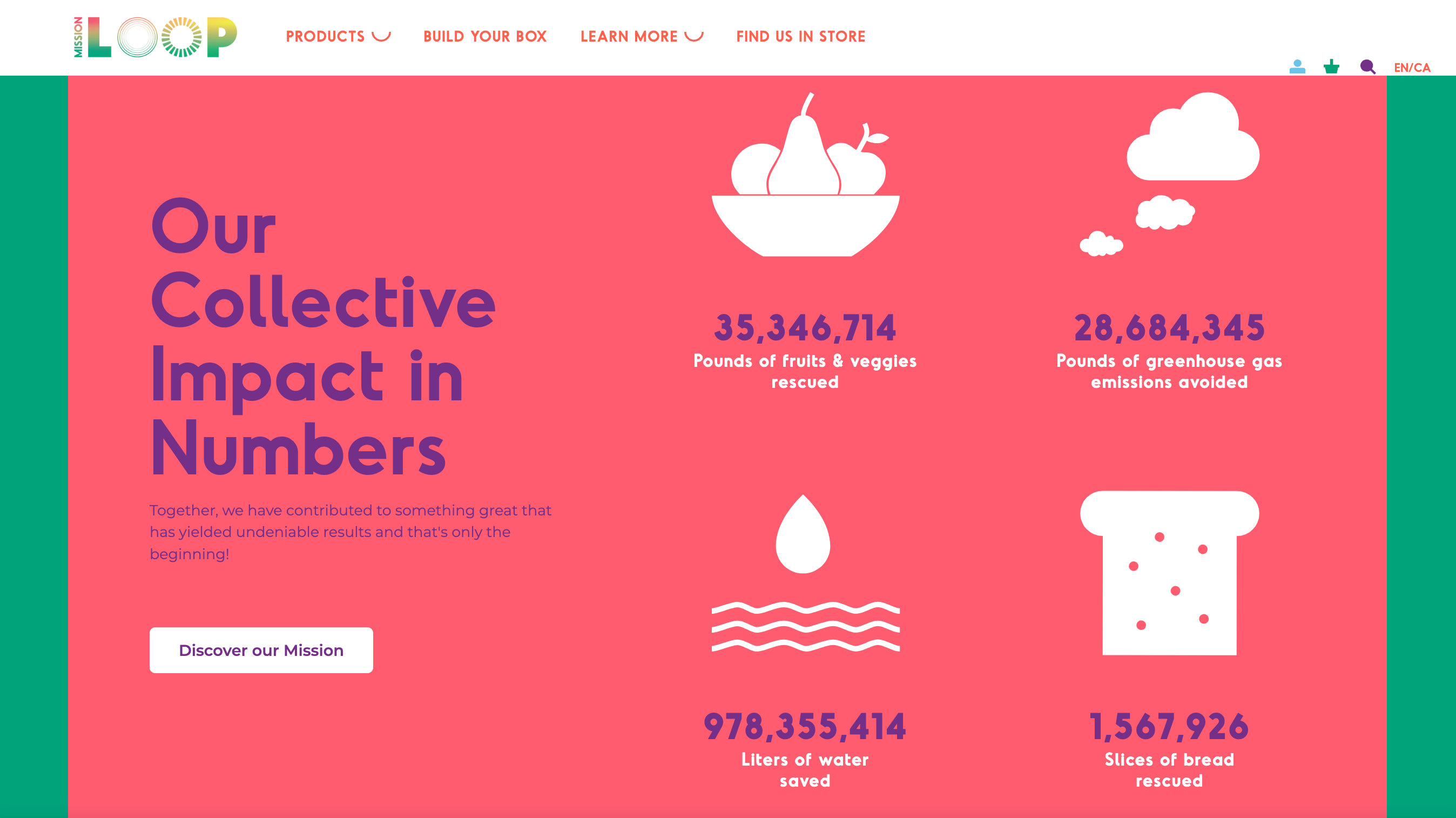
In this example, Loop highlights its social impact and links to its mission directly on its homepage, because it’s so critical to its overall brand:

A page on Loop's ecommerce website

Increasingly, younger consumers are demanding that brands take a stand. Being crystal clear about the mission of your company and the values that matter to you during the branding process helps Gen Z and the upcoming Gen Alpha customer decide whether to support you or not. These consumers are looking for brand transparency around ethics, sustainability, and manufacturing practices. 

Brand voice and tone

Put simply, this is how your brand communicates. Within your branding guidelines, spend time narrowing down the tone of your voice across communications from social ads to customer service emails. Is it playful and funny? Serious and soothing? Educational and confident? Decide if there is certain slang you will or will not use. Understanding how your target audience communicates will be helpful in understanding how to hone your brand voice and tone.

See how Hardgraft conveys its brand effectively through the tone of the content on its homepage:

A page on Hardgraft's ecommerce website showing a brand story

Brand story

Story is an important device in your branding strategy. Consumers, especially those who engage in social commerce, are looking for authenticity from brands. Telling your story—whether it’s your brand’s origin story or your founder story—humanizes your brand, puts a face to the business, and increases trust and brand affinity. Tell your story across your website, social media, and anywhere you engage with customers.

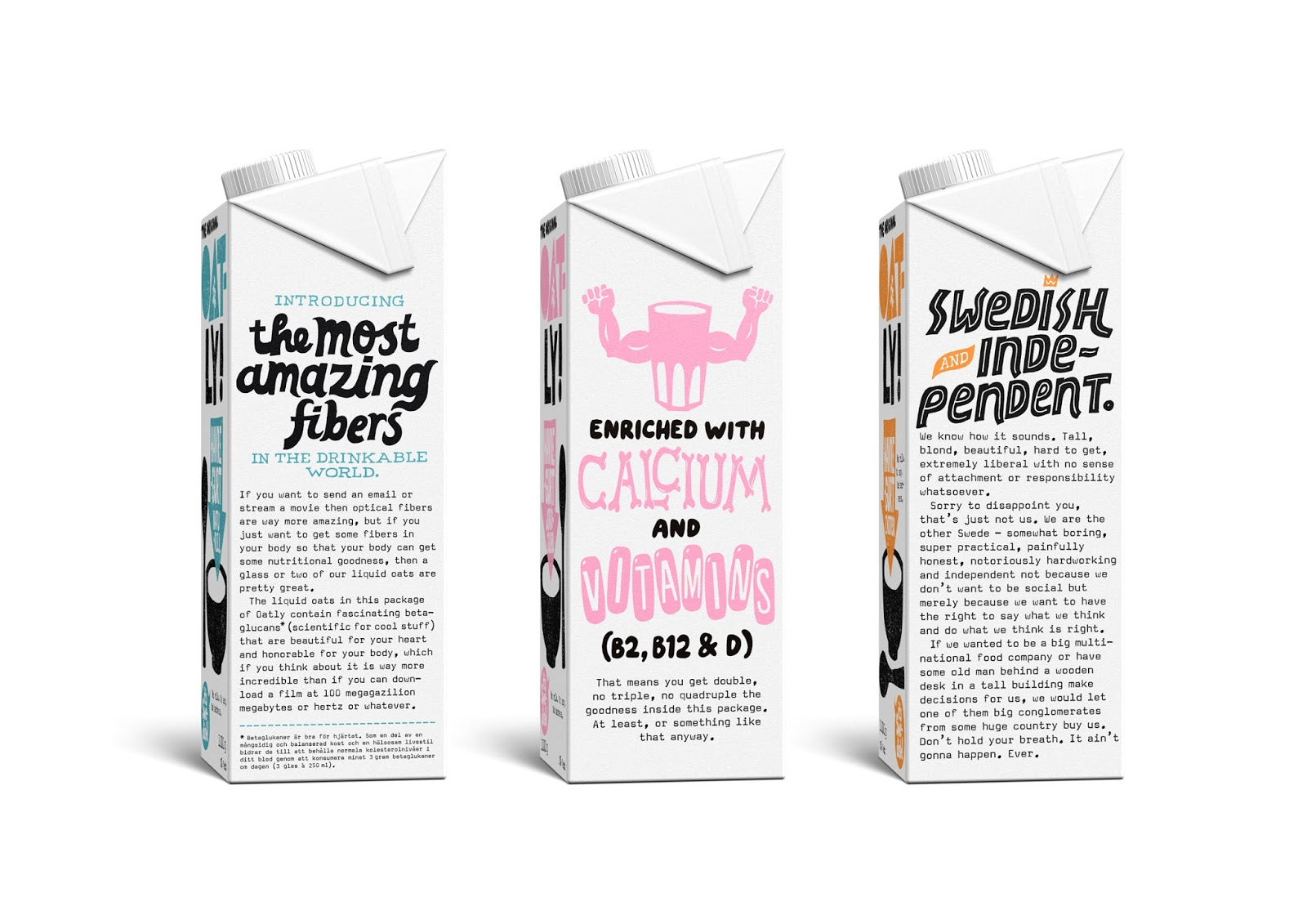
Here, Oatly uses its product packaging as a vehicle for brand storytelling:

Product packaging showing brand story from Oatly oat milk

Brand identity

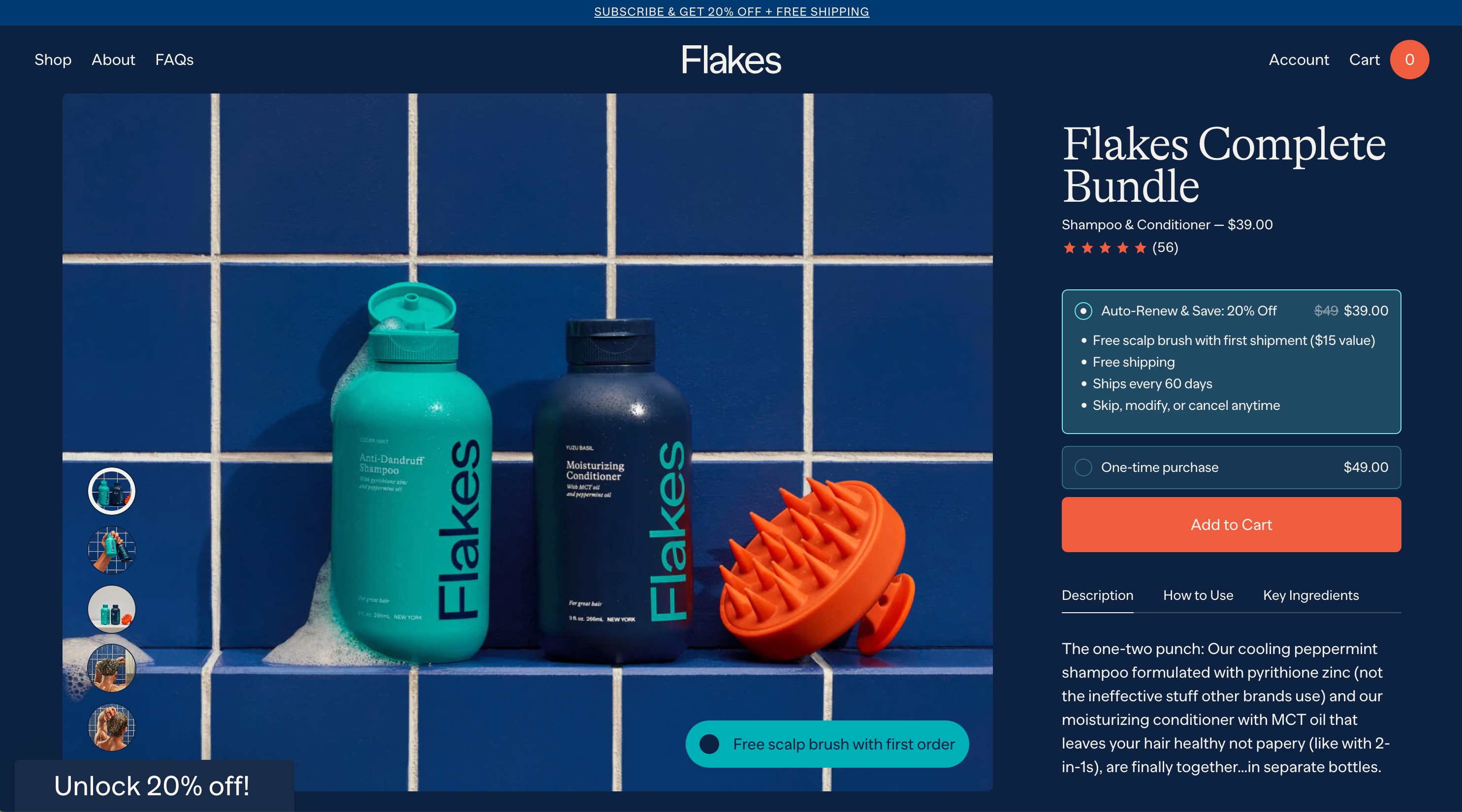
Brand identity refers to the visual aspects of your brand. Your visual branding exercise should start with a mood board or a word association exercise that helps you determine the vibe or mood of your brand (what do you want people to feel when they interact with you?). This will make it easier to pinpoint the colors, fonts, and other visual elements that represent your brand. 

Every design decision on Flakes’ product page was intentional, from the colors to the font, to the product photography. These visual elements are consistent across the brand’s website, socials, and packaging:

A product page from Flakes' ecommerce website

Additionally, your brand will need a unique, memorable business name. You can choose something personal, like your own name (e.g., Macguire), something creative like a made-up word (e.g., Sanzo), or something obvious that tells customers what you sell (e.g., The Cheese Bar). Be sure you can find a compatible domain name and available social accounts to accompany your name choice.

⚒️ Resource: Free Business Name Generator by Shopify

[embedded content]

Why you should take branding seriously 

As soon as you take the steps to start a business, you have a brand. The very first time a potential customer sees your packaging or visits your website, a perception of your brand is being formed. That’s why it’s important to set the tone upfront before you make the wrong impression. 

Ultimately, what your customers think and say about your brand is the reality (not what you’d like them to think). It’s a feeling they leave with based on their experiences they’ve had with you, good or bad.

No business intends to build an unreliable or “bad” brand, but if you don’t take branding seriously and have a strategic approach from the beginning, your brand can take on a life of its own—one that you may not have imagined for it.

Effective branding requires a strategic plan including clear brand guidelines that will guide every decision you make, affect every customer touchpoint, and be guided by a clear set of values and goals.

The benefits of building a strong brand

Branding is a foundational exercise that will guide every decision you make going forward, from new product collections to email marketing copy. Solid brand guidelines will scale with you, helping to keep your vision consistent, even as you hire or expand into new markets.

Other benefits of building a strong brand include:

  • Potential for increased sales
  • Reaching target customers and your desired audience
  • Customer loyalty and recognition
  • Helping create a clear and inspiring mission or purpose company wide
  • Helping create a strong company culture where your employees love to work
  • Attracting the best talent to grow your business
  • Developing strong brand equity that helps you stand out from your competition
  • More collaboration opportunities with brands and creators that want to align with you
  • Attracting press and mentions from social media users
  • Aligning employees, agencies, and contractors who speak on behalf of your business

📚 Read more: How To Build a Brand in 7 Steps

Brand strategy and guidelines

A woman sits on the floor navigating a branding tool on a tabletHaving clear brand guidelines are critical for keeping your brand consistent, no matter where you show up or who is creating content or assets. 
Your strategy and guidelines set during the branding process should consider all the ways and places your brand will show up in the world. As you develop your brand guidelines and hone your strategy, don’t forget to consider these areas.

Store environment and atmosphere

Do you want your store environment to be uplifting and modern? Or moody and mysterious? Consider how your brand will show up in training materials. Explicit guidelines on how your staff members should treat customers will help them deliver your brand through their interactions. Do you want to be known for incredible customer service and personalized shopping experiences? Consider how your brand will help achieve that.

Products and pricing

The products you sell and how you price them can signal to customers what your brand is about. Are your products known to be high-quality? Are they unique or niche? How does your branding communicate this? If your products are geared toward luxury customers, be sure you are creating branding that appeals to this audience. Conversely, how will you communicate to deal shoppers? 

Product packaging can also go a long way to telling the story of your brand, even when customers stumble upon it in a retail store. Consider how you can represent your brand outside the context of your online presence. 

Marketing, PR, and collaboration 

Effective advertising is critical for improving your brand recognition. Your messaging to your target audience should speak directly to their pain points, challenges, and needs. 

You should also consider public relations as part of your branding strategy. How you respond to challenges or crises can make or break your brand. Include worst-case scenarios in your plan, with details on how you will handle them in the public eye.

Collaboration and sponsorships can be a great way to surface your brand to new audiences. But not every opportunity will be a great fit for your brand. Decide what types of organizations or events you’ll sponsor and the businesses or creators that you’d ideally partner with.

💡 Tip: Keep your goals in mind as you do your branding exercise and check that the decisions you make are in the service of meeting them.

Market your business with Shopify’s customer marketing tools

Shopify has everything you need to capture more leads, send email campaigns, automate key marketing moments, segment your customers, and analyze your results.

Discover Shopify marketing tools

3 examples of successful branding

Large corporate brands are some of the best examples of successful branding. Take brands like Coca-Cola, McDonald’s, or Nike. Consumers recognize these brands all over the world just by hearing a few notes of a jingle or spotting a tiny swoosh logo. These long-standing brands spend a lot of money and thought to reach target customers. 

Here are some best-in-class examples of great brand design and branding communication from beloved direct-to-consumer brands. 

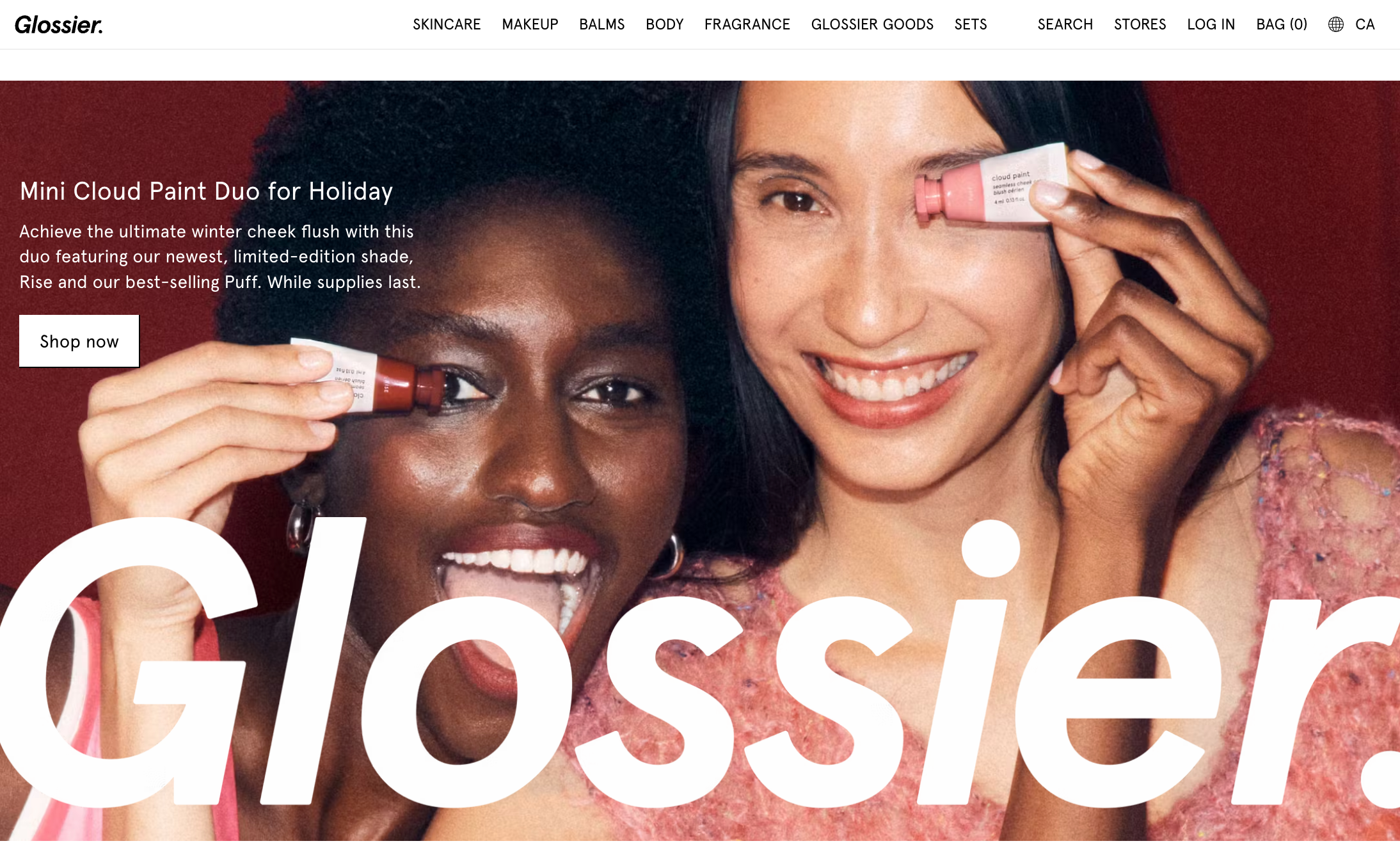
Glossier

A page on Glossier's ecommerce websiteGlossier became a quick cult favorite after popular beauty publication Into the Gloss transformed into a full-fledged beauty brand. The early equity built by the content helped Glossier launch with a head start. But the company is unbeatable in terms of branding, quickly becoming a household name in an industry once dominated by a few legacy brands. It’s become so popular with social media creators that it’s often memed. 
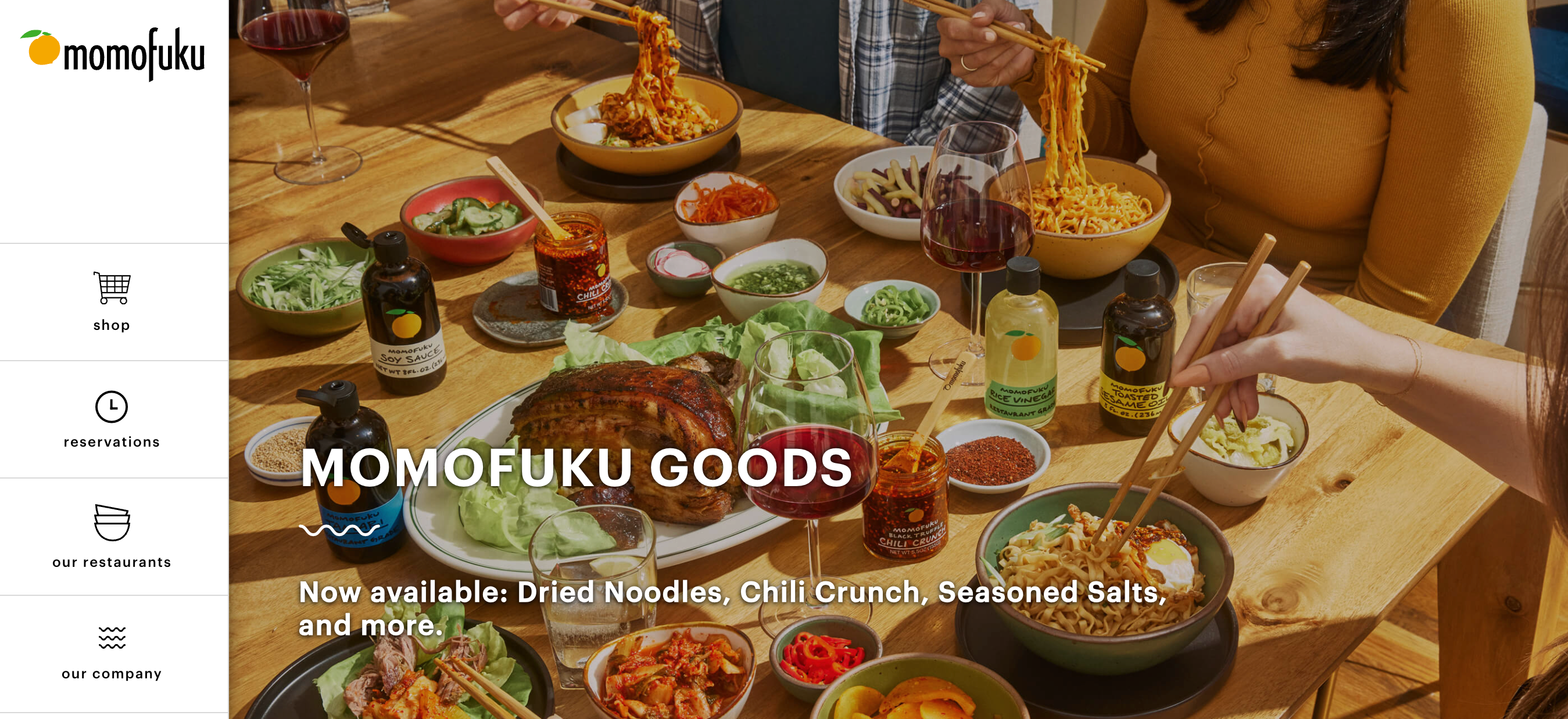
Momofuku

A page on Momofuku's ecommerce websiteEverywhere you turn, Momofuku ads are popping up in your feed or getting praise from your favorite food influencers. Momofuku not only had to build a brand, it also had to build a market for an elevated take on a college dorm favorite: instant noodles. The brand’s fresh design and modern photography go a long way to achieving the brand’s goals of reaching new audiences for “contemporary Asian-American cuisine.”
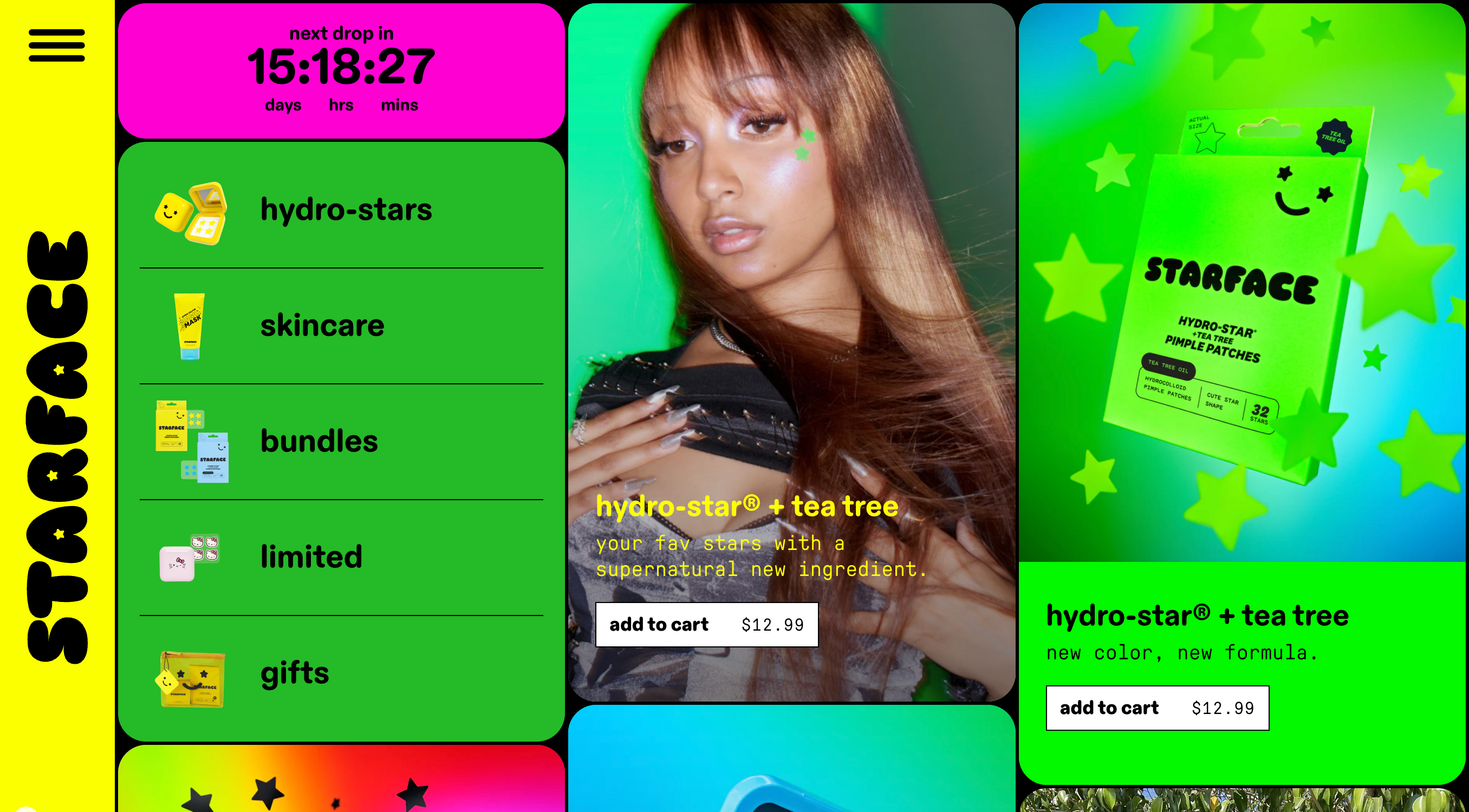
Starface

A page on Starface's ecommerce websiteStarface’s unique branding challenge was reshaping consumer attitudes around managing skin conditions like acne. While brands before it aimed to conceal, Starface’s brand is built on highlighting “imperfections” with its fashion acne patches. The brand’s colors, tone, and design of its online store and content all speak to its young, bold target audience. 

4 branding tips for growing and evolving your brand

As your brand grows or time passes, it might become dated or lose touch with a growing audience. This means you might be ready for a rebrand. Before you start over, it’s important to keep your target audience in mind.

Avoid the temptation to start from scratch. Updated branding can improve the health of your business or help you realign with your values, but you want to avoid alienating loyal customers in the process.

When rethinking your business’s branding, follow these guidelines for a smooth transition.

1. Identify what’s working (and what’s not)

Identify what your customers and target audience love most about your business. What makes yours stand out? What are your strengths? Maintain these branding elements as much as possible and revise the rest.

2. Reset your brand values

Do the original brand values you set when you launched still ring true? Have changes in consumer behavior, developments in politics or social movements, or your own evolution as a founder shifted your values? If you don’t believe in your own brand values, it will be hard to maintain a consistent brand message. Revise and communicate your brand values to meet the current reality of you, your customers, your business, and the modern world.

3. Update your brand identity

Do you run a legacy brand or a longstanding family business with dated branding? You can still maintain the aesthetic and elements that customers come to recognize while making tweaks that work better with modern design preferences. Be sure not to depart too much from your core brand or follow fleeting design fads. 

4. Roll out your new branding

Apply your new visuals and messaging across every marketing tool you use, from advertising to signage to customer emails. This helps both existing customers and new customers identify a consistent brand message and get accustomed to your new look.

💧 The secrets to the Better Booch branding strategy

The founders of this innovative kombucha company wanted their packaging and branding to represent what was inside the can. 👉 Learn how they did it

Branding is the foundation of your business

You don’t have to run a multinational corporation to reach your target market with branding that speaks to them. From an online store homepage to a TV commercial to a sandwich board in front of a local business, you can help customers connect with good brand storytelling everywhere. 

You won’t always get it right, but the costs of not investing in your branding far outweigh the potential negative consequences. And, you can always tweak as you go. Build a brand that meets its promises, speaks the language of its ideal customer, and leaves a lasting positive impression.

Branding FAQ

What does branding mean in marketing?

Branding in marketing refers to the process of building a positive perception of your company, products, and services, using marketing communications such as email, social media, print, advertising, and more. Branding elements surfaced across ads and organic marketing content include a brand’s logo, colors, messaging, and brand voice and tone.

What does branding mean in business?

Branding in the context of business is the continued process of shaping public perception of your organization. Branding is a foundational exercise that makes decisions about the look and feel of a business, brand voice and tone, and a company’s mission and values.

What is a brand promise?

A brand promise is a guarantee you communicate to your customers that tells them what they should expect from you when they engage with your brand or buy your products. This is tied into your branding values and mission. Keeping your brand promise (as in delivering what you promise) is an important factor in building and maintaining brand loyalty.

How do you build brand equity?

Brand equity is the perceived value of your business in the public sphere and the minds of customers. You can build equity for your brand with effective branding guidelines and a brand strategy that surfaces your business, messages, and products in the right place at the right time. Consistent use of your branding elements and positive customer experiences go a long way to building equity (or value) for your brand.

How To Make Money Online: 23 Proven Ideas for 2024

Software Stack Editor · May 13, 2024 ·

Are you dreaming of building your own business or simply looking for ideas to make extra money on the side? 

With modern technology advancing before our eyes, there are more ways than ever to make money on the web. Whether you’re selling your used clothes on a local marketplace site, creating merch for your TikTok fans, or starting a business from a passion or hobby, there are tools to help.

And if you don’t yet have an idea in mind, this list will spark ideas for making money online—no matter your skill level. Ahead, explore 23 creative money-making ideas, including everything from beginner side hustles and passive income ideas to advanced business models.

How to make money online

  1. Sell print-on-demand products
  2. Monetize a blog
  3. Sell digital products
  4. Become a reseller
  5. Try affiliate marketing
  6. Become an influencer
  7. Look for side gigs 
  8. Sell photos online
  9. Create and sell handmade or custom products
  10. Write and sell books or ebooks
  11. Start a dropshipping business
  12. Sell services or consultancy
  13. Create online courses and workshops
  14. Monetize a YouTube channel
  15. Livestream on Twitch (or other platforms)
  16. Become a social media consultant
  17. Start a podcast
  18. Sell products through online marketplaces
  19. Develop and sell a unique product
  20. Become an online tutor
  21. Become an Airbnb host
  22. Narrate audiobooks
  23. Make a subscription box 

Many of these ideas for making money online can be executed from home, allowing you to get up and running quickly. From generating advertising revenue from your YouTube videos to setting up your own online store, you can make money online leveraging your unique skills and experience. 

💡Tip: Looking for low-effort ideas that require no skills or experience? Becoming a virtual assistant or taking online surveys are two of many such ideas. Browse even more ways to make money online for beginners and earn extra cash in your spare time. 

1. Sell print-on-demand products

A person walks away carrying a printed tote bag, a product that can be to make money onlinePrint on demand (POD) allows artists and creators to customize white label products with their own designs without the need to hold inventory. When a customer places an order, a print-on-demand company will print your design on a product, fulfill the order, and ship it to the customer. 

POD options include t-shirts, mugs, tote bags, or fan merch. This model lets you create customized products quickly, making it a low-risk, low-investment way to earn extra income.

Best for: Creatives looking to make money online by monetizing their designs, influencers selling merch, those seeking passive income.
Startup time: A few hours to set up an ecommerce platform and print-on-demand integration.
Effort level: Easy to start if you already have designs to upload. Easy to medium to maintain.
Time to first payment: After you sell a product, expect a wait period of around five days to receive funds on most platforms. 

What to know

  • After you set up a Shopify store, browse the many print-on-demand suppliers to compare pricing, quality, and product lineup.
  • Most ecommerce platforms require that you are at least 18 years of age.
  • Requirements vary by country and region, but some products may require you to have licenses, permits, or certifications.
  • This is an easy online business to scale once you’re set up.

2. Monetize a blog

A person types on a laptop while making money at homeWhile many businesses use blogs to help drive traffic to their products, did you know that you can make money online with a blog alone? You can monetize a blog in a number of ways, including generating advertising revenue, using affiliate links, writing sponsored posts in partnership with a brand, or selling merch or custom products to an audience.

Best for: Existing bloggers and writers, those looking to make money online from home.
Startup time: A few hours.
Effort to start: Medium to start, but it will take a lot of effort to maintain.
Time to first payment: Varies depending on how you are monetizing your blog.

What to know

  • While blogging can be a low-investment, small business idea, it can take time to pay off.
  • Use SEO practices to drive organic traffic and read about more ways to monetize a blog.
  • You will require a blogging platform.
  • Choose an interest or skill you want to write about—consider a topic where you can bring a unique perspective and offer value to readers.

🎈 Success Story: This DIY Blogger Monetized her Following

Jordan Ferney started Oh Happy Day as a blog first, eventually opening her own online party supply store once she built a massive audience.

Read Jordan’s story

3. Sell digital products

A person makes music on an electronic keyboard as a way to make money onlineSelling digital products is a great way to earn cash with low ongoing effort and cost. These products include guides, ebooks, templates, music samples, plans, printables, and tutorials that can be delivered digitally, in formats like PDF or via log-in access to a portal. This is a great option for creatives looking to make money online by selling music or selling art. 

Another example of digital content is recipes and meal plans. Food blogger Lauren Fit Foodie sells this content to her audience through Instagram. 

Best for: Creatives or those looking to make money fast.
Startup time: Once the asset is created, it takes a couple hours to get up and running online.
Effort level: Medium to high, depending on product and ability to grow a customer base. Low effort to maintain.
Time to first payment: After you sell a product, expect a wait period of around five days to receive funds on most platforms. 

What to know

  • Digital goods are scalable, with no limit to the number of times you can sell the same asset to earn money online.
  • If you want to license your product or use licensed materials, be sure to consult with a lawyer or research licensing laws.
  • You will require an ecommerce online platform and a digital delivery app from the Shopify App Store.

4. Become a reseller 

A person makes money from home sittings on a bed doing admin workReselling existing products is one of the easiest online money making ideas, and it can take many forms. Whether you buy and resell vintage or collectible items or become a certified distributor of a brand in a specific region, you can start selling products without making any of your own. 

Another option is to curate products from other brands through your own ecommerce store—say your favorite skin care products for problem skin.

💡 Tip: This model assumes you will be carrying and managing inventory. For a lower-investment option, jump ahead to dropshipping.

Best for: Those looking to make money fast.
Startup time: Varies depending on what you plan to resell. 
Effort to start: Low to medium, as you don’t need to create your own products.
Time to first payment: After you sell a product, expect a wait period of around five days to receive funds on most platforms. 

What to know

  • You can find brands to resell by consulting wholesale directories or simply reaching out.
  • AliExpress is another option for finding generic trending products to sell under your own brand. These can even sometimes be customized and considered white label products.
  • You will require an online platform to sell your products.
  • In some cases, you may sign contracts with brands in order to resell. 

5. Try affiliate marketing

A person scrolls through instagram on a mobile deviceAffiliate marketing involves sharing affiliate links that you receive from brands to promote their products on your site or social accounts to earn money online. When someone buys the product after clicking your affiliate link, you’ll receive credit for the referral, along with a commission. A solid content marketing strategy around your affiliate links will help you drive visits, clicks, and buys.

Best for: Marketers, bloggers, and creators with an existing audience; those looking for passive income.
Startup time: A couple hours.
Effort level: Medium to start. Very low effort to maintain.
Time to first payment: Varies, depending on the success of the affiliate links and the payment terms you set with the brand.s

What to know

  • Sign up for Shopify Collabs to get access to brands offering affiliate programs to creators and influencers.
  • Disclaimers are required by the Federal Trade Commission and most reputable affiliate programs. You are required to let your audience know if you are being paid to promote a product.
  • You will require a website, blog, or social media presence where you can promote products. 

6. Become an influencer

An influencer sits in front of a ring light recording herself on a phone to make money onlineInfluencer marketing is popular with brands looking for clout with audiences that resemble their target customer. Brands are clamoring to sponsor content by productivity and stationery creator Amanda Rach Lee. But you don’t need to have Amanda’s two million followers to make money online as an influencer. 

You will need an engaged following, but influencer marketing statistics show that influencers with as few as 1,000 followers—considered nano influencers—can get brand deals on platforms like YouTube, TikTok, Twitch, and Instagram. Anyone can create viral videos if you understand what your audience wants.

How to get paid as an influencer:

  • Open a store online and sell merch to your fans.
  • Sell sponsored posts to brands or become a brand ambassador or affiliate.
  • Make ad revenue.
  • Offer exclusive content through platforms like Patreon.

Best for: Aspiring creators with expertise or a unique POV on a specific topic.
Startup time: Varies, but generally, about three to four months.
Effort level: High. Popular accounts need fresh content to keep audiences constantly engaged.
Time to first payment: Varies, depending on the type of monetization you pursue.

What to know

  • The Shopify Starter Plan is perfect for creators who want to get selling fast without building a website. Or, you can also use a link-in-bio tool to superpower your social bio and push fans to your store. 
  • You will need to meet minimum age requirements for each platform account to earn money online.
  • Choose this money making idea if you have a flair for content creation and being an on-camera personality (video and photo editing skills are a bonus).
  • An ecommerce platform for selling fan merch may be required.

🌵 Success Story: TikTok’s Plant Mom Spun Virality Into a Brand

Get inspired by Sonja Detrinidad, a mortgage professional turned succulent influencer who monetized her audience to start her plant business, Partly Sunny Projects.

Read Sonja’s story

7. Look for side gigs

A person does makes money online through gig work by delivering food by bike in a citySide gigs are the classic way to earn money while keeping a full-time job. Side gigs that help you earn money online include data entry, transcribing, manual labor, virtual assistant work, or administrative tasks. Use platforms like Fiverr or TaskRabbit to create side gigs. You can also consider food delivery or driving as a side gig, making money through apps like Uber.

🚀 Level up: Once you gain experience and clients through a marketplace, set up a simple ecommerce site and sell specific tasks or take on custom jobs.

Best for: Those looking to make money fast.
Startup time: Less than an hour.
Effort to start: Medium.
Time to first payment: Varies depending on the freelance marketplace or app you use.

What to know

  • Some side gig marketplaces require an upfront fee to sign up, so read the fine print carefully.
  • Review the side gig marketplace’s payment schedule to make sure it works for you.
  • In most cases, you will only require a solid internet connection and a device.

💡 Tip: Looking for how to make money fast? Choose ideas like this one that have a low barrier to entry and a short startup time. 

8. Sell photos online

A person wears a digital camera around their neckWhether you’re shooting on the newest iPhone or the latest Canon DSLR, you can sell photos online as a photographer. One of the best money making ideas for creatives, selling photos in your spare time is also easy to start if you already have a body of work.

Partner with a local printer to print your photos on specialty paper or other materials, or invest in a high-quality home printer. You can ship and sell numbered and signed versions of your photos directly to customers through your website. 

💡Looking for a more hands-off or beginner-friendly way to sell your photos? Jump to print on demand.

Best for: Photographers and photography enthusiasts looking to make money online from their craft.
Startup time: A few weeks or months to build your portfolio.
Effort level: High to start as you build your portfolio and website. Medium ongoing effort to maintain the business and develop new products.
Time to first payment: After you sell a photo, expect a wait period of around five days to receive funds on most platforms.

What to know

  • Build awareness for your brand by growing your following on social media.
  • Use other methods of selling photos (like licensing to stock sites) to generate interest in your work.
  • You will require a camera, photo-editing software, and an ecommerce platform plan.

9. Create and sell handmade or custom products

A woman makes money online by selling the items she is sewing on a sewing machineMaking products by hand is a great way to turn a hobby or passion into a business. You are already an expert at your craft—why not sell your work? Or, explore a new hobby and learn a hands-on skill that you can monetize. 

Hand-making goods gives you full control over product development and quality, but can be time consuming. Also consider allowing customers to customize each order to their specifications. This is called bespoke, or one of a kind (OOAK).

Best for: Creatives looking to monetize their hobby, those looking to make money from home.
Startup time: It will take just an hour or two to set up your ecommerce store.
Effort level: Depends on whether you already produce goods. High effort to maintain.
Time to first payment: After you sell a product, expect a wait period of around five days to receive funds on most platforms. 

What to know

  • While this is one of the most rewarding money making ideas, scaling this model is challenging. To grow, consider bringing on other artists you can train.
  • Most ecommerce platforms require that you are at least 18 years of age.
  • Requirements vary by country and region, but some products may require you to have licenses, permits, or certifications.

👓 Success Story: How a Crafter Scaled Her Eyewear Business

Kerin Rose Gold started designing her own sunglasses before being spotted by top celebs. Now she employs other artists as she grows her brand, A-Morir.

Read Kerin’s story

10. Write and sell books or ebooks

A man earns money online while sitting at a desk in a home office working on a laptopIn the same way that you can monetize your expertise with an online course or your influence as a YouTuber, you can also earn cash selling books or ebooks online. There are a number of formats and genres, from novels to memoirs to self-help books. 

Try using a print-on-demand book service to print and sell books online on your own ecommerce store, or use a service like Amazon Direct Publishing to sell ebooks. 

Best for: Writers, journalists, and subject matter experts.
Startup time: Varies by book, but could take years to write, edit, and publish.
Effort level: Hard to start. Medium ongoing effort to market and sell the book.
Time to first payment: Depends on how and where you sell your books.

What to know

  • Grow a following for your personal brand as an author.
  • Digital delivery apps can be useful if you plan to sell ebooks directly to customers on your own website.
  • You will need to find a publisher or print-on-demand service to print physical books.
  • Choose a platform for selling your book or ebook directly to customers to cut out the middleman and make more money online.

🍜 Success Story: How a YouTube Chef Became a Published Author

Serial entrepreneur and self-taught vegan chef Wil Yeung built his business with a YouTube content strategy. He now sells his recipes as books, ebooks, and courses online.

Read Wil’s story

11. Start a dropshipping business

Two cardboard boxes open on a table ready to be packed for an online businessDropshipping is a low-cost business model where products are shipped to customers directly from the vendor or manufacturer. This is a popular way to make money online for beginners as, as the seller, there is no need to handle inventory or shipping—you’re simply responsible for driving traffic and customer service.

Due to the ability to be nimble, dropshippers can follow trends and sell trending products as they emerge.

Best for: Those looking for passive income and making money from home.
Startup time: A few hours to set up a store and source vendors.
Effort level: Medium to start and grow the business. Low effort to maintain.
Time to first payment: After you sell a product, expect a wait period of around five days to receive funds on most platforms. 

What to know

  • You can create a Shopify store and test it out with a free trial.
  • AliExpress and other dropshipping suppliers are great places to start sourcing products. 
  • Most ecommerce platforms require that you are at least 18 years of age.
  • Requirements vary by country and region, but some products may require you to have licenses, permits, or certifications.
  • This is not a passive income idea, as widely believed. While you don’t need to handle inventory, there is work required to drive traffic and manage customer service. 

12. Sell services or consultancy

Fabric swatches for home design business that makes money onlineWhile it may be most common to think of selling physical products online, you can also sell non-tangible things. Consider selling a virtual service like online personal shopping, home décor consulting, or one-to-one personal training. Set up your own ecommerce store and visit the Shopify App Store to find an app that integrates to help with appointment booking and live chat.

Best for: Subject matter experts.
Startup time: Several hours to set up your website.
Effort level: Hard. This will require ongoing effort to build your client list, perform services, and maintain your website.
Time to first payment: After you sell a service, expect a wait period of around five days to receive funds on most platforms. 

What to know

  • Reviews and testimonials are your friend. Ask happy clients to write or record reviews and post them on your site.
  • You will require a website or ecommerce store as well as expertise in a particular field.

13. Create online courses and workshops

A person performs a yoga pose in her living room while watching a laptopOnline workshops and courses are another form of digital product that you can create to earn income from your expertise. This is a great idea if you are a subject matter expert on a topic people are willing to learn. Selling courses online is made easier using a course platform or your own website. A digital delivery or course app can be installed in your Shopify store to help sell courses online.

Best for: Creatives and subject matter experts.
Startup time: It can take weeks or even months to write, shoot, and edit an online course.
Effort level: Very high to start. Medium effort to maintain.
Time to first payment: Varies, depending on your course and platform’s payment structure.

What to know

  • Research your competition: What value can you create beyond what’s already available online?
  • Use free gated content to build your customer list and give potential customers a sample of your offering.
  • Live elements like instructor office hours or exclusive Q&A sessions help sell your course.
  • You will require audio and video equipment and editing software as well as a platform to sell and deliver course content. 

14. Monetize a YouTube channel

An influencer makes money online performing for a mobile phone cameraTop YouTube influencers like Cassey Ho, Wil Yeung, and Katie Carson all started where you are: with an idea. Each of these YouTubers built audiences through authentic content before monetizing their channels. 

Once you’ve reached 1,000 subscribers, you can try YouTube ads. You can also offer a paid product placement or become a brand affiliate. Selling products like your own branded merch is a great way to build your personal brand. Create your own website and link it to your channel to sell t-shirts, hats, and other swag to your fans.

Best for: Creators, YouTubers with an existing audience.
Startup time: It will take an hour or two to start a YouTube channel.
Effort level: High. YouTube requires an ongoing effort to create and publish video content. 
Time to first payment: Once you’ve reached 1,000 subscribers, you can start earning revenue from ads to make money on YouTube. Time to first payout via other methods varies. 

What to know

  • Finding a niche with an underserved audience is a great option for your channel’s angle. Understand this audience and create content that adds value.
  • YouTube Shorts offer a way to keep your page fresh with shorter and more casual content.
  • You will require audio and video equipment and editing software.
  • Parental permission to start a YouTube channel will be required if you are between 13 and 17 years old.
  • Choose a sales channel or online store platform to sell merch (must be 18 to open a store).

Start selling your products on YouTube from Shopify

Shopify comes with powerful tools that help you promote and sell products on YouTube. Sync your product catalog, tag or pin products in livestreams, and manage all your sales from Shopify.

Start selling on YouTube

15. Livestream on Twitch (or other platforms)

A young person makes money online wearing a headset and playing video gamesWhile the first platform that comes to mind for livestreaming may be Twitch, a popular site for gamers and other content creators, many other platforms now offer native livestreaming, including YouTube and Instagram. You can livestream everything from game play to recipe demos to bike tours. Hone in on a niche to build an audience around a particular interest or skill.

You can monetize your livestream on Twitch a handful of ways:

  • Selling products like merch directly to fans
  • Brand sponsorships
  • Fan donations
  • Exclusive content subscriptions
  • Twitch ads

Best for: Those looking to make money from home, gamers, creators, on-camera personalities.
Startup time: An hour or so to create an account.
Effort level: High to start as you build an audience. High ongoing effort to create consistent content.
Time to first payment: Varies depending on streaming service. Twitch pays out 15 days after the end of each month.

What to know

  • Stay consistent by regularly broadcasting at the same time of day or the same day every week.
  • Monetize your Twitch channel by selling products using the Shopify Starter Plan—this is an affordable alternative to a full ecommerce website plan.
  • You will require a camera, microphone, and livestreaming software or platform.
  • Twitch is recommended for ages 15+, but many monetization options may require you to be over 18. Consult each platform’s terms of service for details.

16. Become a social media consultant

A person earns money online typing on a laptop in a home settingAre you Extremely Online? Do you jump on every new social media platform? Have a knack for spotting trends, writing great copy, or attracting audiences? 

As a social media consultant, you can work with brands to brainstorm creative ideas, develop a content strategy, produce videos or graphics, and produce copy. Once you gather clients and experience, you can become an official Shopify Expert, marketing your skills to brands looking for your unique expertise.

Best for: Social media experts, creators with popular channels.
Startup time: Several hours to reach out to prospective clients.
Effort level: High. You’ll need to be consistently maintaining client relationships and working on projects in order to be profitable. 
Time to first payment: After you invoice a client, in most cases they will have 15 to 30 days to pay you, depending on the terms you set. 

What to know

  • Build your own social following first and use it as a portfolio to demonstrate your ability.
  • Networking will help you land new clients. Be proactive with your outreach.
  • You will require experience creating a successful social media presence that makes money.
  • Set up social media accounts and a website to showcase your work and start gaining clients.

17. Start a podcast

A woman speaks into a podcasting mic, showing one way to make money onlineBy the end of 2024, the number of podcast listeners worldwide is predicted to grow to more than 500 million. This popular audio format for consuming stories, comedy, news, and opinions continues to grow. If you have a great voice, love to talk, and have a particular interest or talent to share, podcasting could be a great way to make more money.

As you build your following, there are many ways to monetize your podcast:

  • Sponsorship deals
  • Premium (paid) content offerings
  • Donations and tips
  • In-podcast ads
  • Selling merchandise to fans through an online store

Best for: Those looking to make money from home, creators, subject matter experts.
Startup time: Average nine to 14 hours per episode, including editing.
Effort level: High.
Time to first payment: Varies, depending on how you are monetizing your podcast.

What to know

  • Once you have an audience, they will expect regular episodes to keep them engaged.
  • Building a following will require work and time. Pay attention to feedback and make adjustments to your production quality and content accordingly.
  • You will require studio recording equipment, including a professional microphone and editing software.
  • Set up an account with a podcast service like Spotify, Stitcher, or Apple Music.

18. Sell products through online marketplaces

A person types on a laptop open to a marketplace showing how to make money online selling productsOnline marketplaces are often launch points for many now-successful brands, because they come with built-in audiences seeking specific products. For example, Etsy is a go-to source for buyers looking for handmade and vintage items, while Amazon is a global destination for product discovery and research.

You can get up and running quickly because there is less pressure on the seller to drive their own traffic or build a brand. 

🚀 Level up: Take your online business to the next level by building your own store. You can even sell products on both Etsy and Shopify, syncing inventory with an app like Etsy Marketplace Integration.

Best for: Creatives, those looking to make money from home.
Startup time: An hour or two to set up your account and add products.
Effort level: Depends on your product and business model.
Time to first payment: Anywhere from the day after to 14 days after you make a sale, depending on the marketplace.

What to know

  • Follow Etsy’s guidelines around what you can sell and acceptable use of the platform.
  • You must comply with Amazon’s seller policies to be in good standing.
  • Most marketplaces require that you are at least 18 years of age.
  • Sellers between 13 and 18 years of age may use Etsy with the supervision of a parent or guardian.

🥄 Success Story: Old World Kitchen’s Leap From Etsy to Shopify

The Polder family started their handcrafted wooden spoon brand by selling door to door before launching on Etsy. Now, they sell both through the marketplace and a standalone ecommerce store.

Read the Polder family’s story

19. Develop and sell a unique product

A person makes money online on their laptop in a woodworking shop settingWhen you think of most direct-to-consumer brands, this is what comes to mind: original products that make meaningful improvements to well-known items. You too can develop and manufacture a unique product to sell—and make money online in the process. Consider designing a prototype for a product that solves a common problem, then finding a manufacturer to create it.

Best for: Aspiring entrepreneurs and product developers.
Startup time: Several months from design to prototype to manufacturing.
Effort level: High to start. Medium ongoing effort to maintain.
Time to first payment: After you sell a product, expect a wait period of around five days to receive funds in your bank account on most platforms. 

What to know

  • Manufacturing domestically means you have more control over quality and sustainability, but your costs may be higher.
  • Research manufacturers carefully to find the right fit for your product and brand.
  • Be sure to consider labeling laws in every region where you plan to sell.
  • Most ecommerce platforms require that you are at least 18 years of age.
  • Requirements vary by country and region, but some products may require you to have licenses, permits, or certifications.

20. Become an online tutor

A child speaks to a woman over a video chat on a laptopIf you are knowledgeable in subjects like biology, math, or languages, you could earn income on the side with online tutoring. With sites like TutorMe and Fiverr, you can easily make money online by finding students who need your help. Or set up a simple website and use social media and peer recommendations to drive traffic and sign-ups.

🚀 Level up: If you find success with tutoring, try selling online courses and promoting them through a dedicated ecommerce store.

Best for: Subject matter experts, those looking to make money from home.
Startup time: A few hours to set up a website or an account on a tutoring platform.
Effort level: Medium to start. Ongoing effort level depends on how many students you take on.
Time to first payment: Varies, depending on how you bill your students.

What to know

  • Most freelance sites require proof that you are skilled in the subject matter. 
  • Expect transaction fees on tutoring platforms.
  • You will require knowledge of the subject matter you wish to teach. 
  • Licenses or diplomas may be required by each platform and subject.

21. Become an Airbnb host

A modern living room that can be rented out online to make moneyHave an unused spare bedroom, in-law suite, or carriage house? Create a cozy guest experience and invite travelers into your home. You can make good money from your investment to help you pay your mortgage, cover expenses, or even save money for the future. Make even more money by selling products to your guests. 

🚀 Level up: Try using QR codes in your house manual to sell products seen in your home (throw pillows or scented hand soap) via affiliate links. Shopify Collabs can help you find brands to work with. 

Best for: Property owners looking to earn money from their investment.
Startup time: Your listing will appear in the search results 72 hours after you publish your listing.
Effort level: Medium at startup. High effort to maintain the property/space and manage guest communication.
Time to first payment: Airbnb sends host payouts 24 hours after each guest checks in.

What to know

  • Sign up for a free Airbnb account and go to the Airbnb host page and follow the prompts to publish a new listing.
  • You will require a room, home, cottage, or other dwelling that you can legally rent.
  • Learn local laws, restrictions, and regulations for your area related to short-term rentals.
  • Account for any occupancy taxes relevant to your region.
  • Permits may be required by your area to rent out your space on a short-term basis.
  • When you create your listing, add descriptive copy and high-quality images to attract guests.

22. Narrate audiobooks

A woman makes money at home narrating a book using a professional microphoneLove reading and have a great speaking voice? Make money online by putting your talents and interests to use by becoming an audiobook narrator. Organization, professionalism, and meeting deadlines are important to help you build a good reputation. Try finding narration work through audiobook marketplaces like ACX, Bunny Studio, or Voices.

🚀 Level up: Create a website and post samples of your narration. This will be attractive to recruiters who can get a feel for your style.

Best for: Those looking to make money from home.
Startup time: Many hours.
Effort level: Medium to hard.
Time to first payment: Varies by marketplace.

What to know

  • Networking is essential in order to secure work. Join meetups, attend audiobook networking events, and engage on social media.

23. Make a subscription box

A subscription box full of products for home that can be sold online to make moneyA subscription business provides customers with products on a recurring basis, and can be a winning strategy for making money from home. There are two types of subscription businesses: replenishment model, where goods are delivered at intervals, and membership model, where members get access to perks or exclusive products. Subscription boxes fit into the former category.
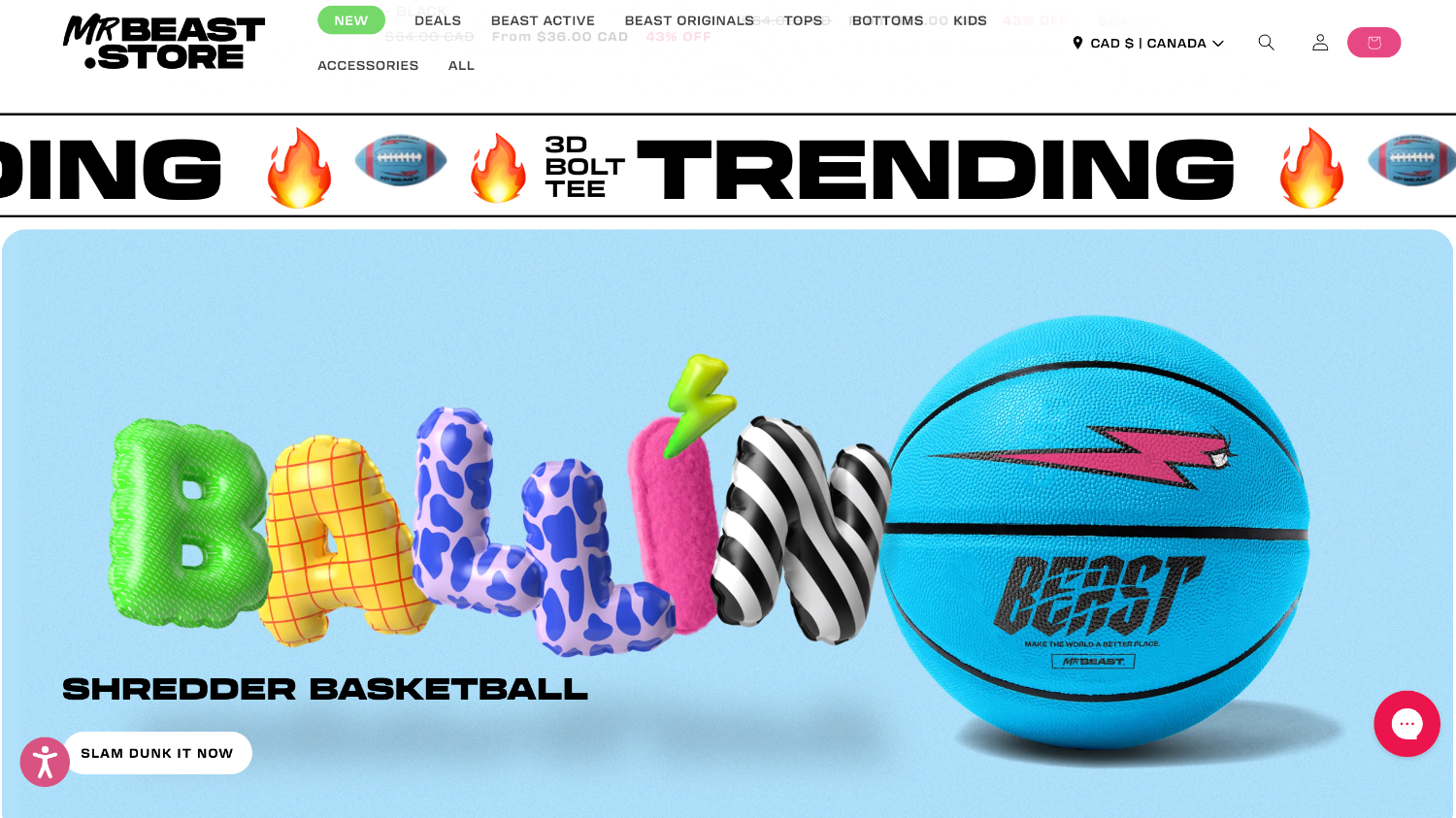
Start a subscription box business and make money online by curating products within a category and marketing your business to a niche audience. Choose a product category in which you have interest or experience and look for gaps in the market to find an underserved group of customers. 

Best for: Aspiring entrepreneurs, those looking to make money from home.
Startup time: Many hours.
Effort level: Hard.
Time to first payment: After you sell a product, expect a wait period of around five days to receive funds in your bank account on most platforms. 

What to know

  • Because you are curating a box, you will handle fulfillment yourself until you grow large enough to hire a third-party logistics company (3PL).
  • Consider helping local small businesses thrive by curating products made in your home town.
  • Do market research to find which categories are underserved in the subscription box market.

How to make money online in 2024

You can start making money online as early as today. Earn passive income by dropshipping trending products or get a part time job as a social media consultant. Whatever idea you choose from this list, you’re on your way to putting extra cash in your pocket. 

A side gig is a great way to save money for school, retirement, or a big splurge. And there are several online platforms available to help you start making passive income or monetize your hobby. And if you choose one that you’re passionate about, you may even level it up to a full-time business. 

Make money online FAQ

Do you need skills or experience to make money online?

No, you don’t need any skills or experience to start making money online. Some of the most basic ways to get started are taking market research surveys, selling your used stuff on marketplaces, offering online tutoring services, or trying gig work. All you need is an internet connection to earn extra money.

How can I make money online as a beginner?

There are many ways to make money online for beginners. You can earn income in your free time by selling used goods through local classifieds, taking surveys, becoming a brand affiliate, offering transcription services, becoming an online tutor, or selling print-on-demand products. 

How can I make $100 a day online?

Many ways to make $100 a day online require upfront investment of time, money, and hustle to reach that level. You can start a profitable business that makes you $100 or even $1,000 a day if you put in the work. In some cases, after your business is running smoothly, you can earn extra money through passive income. Some ideas to consider are:

  1. Start a dropshipping store
  2. Run a print-on-demand business
  3. Create and sell digital goods
  4. Start an affiliate marketing business
  5. Find freelance jobs
  6. Become a digital marketing consultant 
  7. Start a tutoring business
  8. Sell stock photos

How can I make money online fast?

To find out how to make money fast, choose a method that requires minimal skill, time, and money to get started. These ideas include dropshipping goods, selling data entry services, selling your used stuff through online marketplaces, and participating in market research through survey sites.

How can I make money from home?

If you’re looking for how to make money from home, there are a number of ways, thanks to tools and platforms that let you earn extra cash with an internet connection and a laptop. For beginners, take online surveys, test websites, become a virtual assistant, and sell your used stuff on Facebook Marketplace. Those with more skills and experience can make money online from home if they tutor people online, sell stock photos, become a digital marketing consultant, or even create their own online store.

How To Make Merch for YouTube—and Sell It to Your Fans (2024)

Software Stack Editor · May 13, 2024 ·

There’s a reason why every popular YouTube creator is in the business of selling merchandise. These creators know they’re running a business—and successful business owners find ways to diversify their revenue.

Relying on advertising and brand deals can be fickle as they come down to the whims of third parties and algorithms. More than ever, YouTube creators realize selling merchandise and other products can bring in revenue while also energizing their fan base. And the best part is the creator is in full control, including designing the merch, running the shop, and promoting their goods. No algorithm required.

You don’t need millions of subscribers to start selling—in fact, starting early can help you grow your YouTube channel. Read on to find out why you should start selling merch and how to get started today.

Why you should sell merch as a YouTuber

From the outside looking in, being a content creator on YouTube seems like you’ve achieved career freedom. But the truth is more complicated.

Creators on any platform are too often beholden to other people or companies, whether that’s pleasing YouTube’s requirements or courting brand deals. Making money as a creator often means playing by someone else’s rules.

Here’s why selling merch is a great way to diversify your income and make money online on your own terms.

Own your audience

What’s become clear is that YouTube creators who make it big know how to protect their independence.

Truly owning your business as a creator means taking back control from YouTube, and merch is one way to get there. Creating and selling products is a revenue stream that you have full control over, which means you also reap all the rewards. You can set up an ecommerce store on your own without negotiations or contracts while retaining full autonomy of your brand and values.

By selling merch, you maintain a revenue stream that is protected from these issues and that you can start without needing to be in the partner program. That means you can start making money even with a lower subscriber count.

Give fans a way to support you

For fans, it also offers a way to support you while getting something in return that also has the added bonus of promoting your channel. While fans can support you with likes and subscribes, your most loyal are willing to pay for a piece of you. Merch is an affordable way for fans to support their favorite creators.

Ecommerce homepage for YouTuber MrBeast
The MrBeast store is the official source for the creator’s merch, including branded t-shirts, sports equipment, and more.

Add an easy income stream

One benefit of fan merch is that it’s generally easy to create, especially with on-demand printing options. This also means the merch can be very cost effective—with so many options out there for printing merch, you don’t have to worry about sourcing original products, keeping an inventory, or even dealing with shipping if you use an on-demand service. All of that saves you both time and money.

Fan merch is an established market

There’s an established market for these types of products. Fans already know to look for these items and probably have already bought them in the past from other creators or media that they’re a fan of. 

What to sell as a YouTube creator

Broadly speaking, there are two categories of items you can consider selling as a YouTube creator: fan merchandise and products you create. There are pros and cons to each approach, and a long-term strategy is to consider how to sell both.

Selling fan merchandise

Creating traditional merchandise is the classic way to offer products to fans. Think of the shirts you can buy at a concert or a branded water bottle. These are items that carry slogans or images associated with your channel that fans can wear and use to show support for your work as a creator.

Ecommerce product page for YouTube channel Two Hot Takes
Podcasters and YouTubers Two Hot Takes take the popular approach to merch: selling branded items like tees, stickers, and hats in a dedicated online store.

These can include:

Basically anything you can print with your branding is a good candidate for merch.

While simple to create and easy to manage, the downside is that these aren’t the most unique offerings. But you can improve that by focusing on creating exclusive and interesting designs. 

[embedded content]

Selling unique products or services

Creating your own products or offering services have the potential to bring in higher revenue, but they take a lot more work.

Brands like Holo Taco, Chamberlain Coffee, and Trixie Cosmetics are great examples of this. These are products that were designed, sourced, manufactured, and sold by the creators who own them.

Ecommerce product page for Chamberlain Coffee
In addition to branded merch, YouTube creator Emma Chamberlain produced her own tea and coffee blends for her brand Chamberlain Coffee.
Ecommerce product page for Trixie Cosmetics
Drag Queen Trixie Mattel propelled to online stardom after her stint on RuPaul’s Drag Race. Since then, she’s launched a line of namesake cosmetics products.

All of this takes time and money, which, as a small creator, you may be short on, but there are still ways to make it happen. Start with something less complex and think of what your niche is as a creator and how you can share that with your fans. 

Creating products to sell to your YouTube audience could be as simple as:

  • PDF instructions for a craft or project
  • Handmade items like jewelry or ceramics
  • Workshops or consulting
  • Art prints
  • Audio tracks
  • Digital recipe collections

Once you get your footing, you can work with a manufacturer to produce a new product—or collection of products—from scratch. All of these are valuable to your fans because they’re unique offerings only you can provide. Keep in mind that you will need to consider upfront costs like inventory, and ongoing effort to deliver these products and fulfill orders. 

How to make merch for YouTube

If you’re just starting out selling products as a YouTube creator, fan merch is a smart and cost-effective way to launch a store. Here’s how to do it in three easy steps.

1. Design your own merch for YouTube

The first big question you’ll have is what exactly you should put on your merchandise. The good news is you don’t need to be a skilled illustrator or graphic designer yourself to get your hands on unique, high-quality designs.

First, think about how the branding of your channel could translate into a design. You could use your logo, slogans you say during videos, or even illustrations of your face.

Let’s take a look at YouTube influencer Safiya Nygaard. Her YouTube channel is known for fashion challenges, beauty “science experiments,” travel adventures, and other topics delivered in Safiya’s signature quirky and delightfully dark style.

Her merch store, Fiendish Behavior, matches this vibe with items like stickers and t-shirts that nod to the YouTube content Safiya is famous for. These items borrow a color palette from her youTube channel, featuring dark purples and black. 

Ecommerce product page for Fiendish Behavior

Like Safiya, you can stick to a few basic designs and use them across multiple products in different colorways. This melting lipstick illustration is printed on a tote and a sweatshirt:

Ecommerce product page for Fiendish Behavior

Taking those as inspiration, you can probably already imagine what merch would look like for your channel.

You can design your own merch if you’re a savvy designer. If you’re not, there are plenty of places where you can find artists who can create designs for you, including:

By browsing through these sites you’re bound to find a designer whose style matches your vision for your own merch.

Tip: You can also try Shopify’s free logo maker if you’re just getting started with branding your channel.

Designing merchandise that resonates with your audience

One thing to consider, whether you’re a designer or not, is whether your designs will be in demand from your audience. You can determine this in a number of ways:

  • Look at YouTube insights for your channel to get to know your audience better.
  • Test different designs, products, and colors in your store. Use sales data to determine where to invest.
  • Pre-launch designs and ask your audience for feedback.
  • Poll your audience to see which merch products and types of designs they’d like to see. 

2. Set up your store

There are a variety of services available that court YouTube creators looking to sell merch. They streamline the process of selling merch, but the downside is that you have far less control over the look and feel of your shop, as well as what products you can sell.

The best way for YouTube creators to make merch and sell it is through a dedicated online store. Platforms like Shopify allow you to create your own website and offer the following benefits:

  • Ability to personalize it with your branding and information
  • Branded domain that’s easy for fans to find
  • Opportunity to host content on your site to improve SEO
  • Dedicated About and Contact pages offering more room to tell your story than your YouTube About section
  • Integrations with countless apps and tools allowing you to sell on multiple channels and sync with your YouTube page

Here’s an example from popular YouTube creators Colin & Samir. They built a merch store to promote their newsletter The Publish Press: 

Ecommerce product page for Publish Press

Once you’ve set up your online store, you’re ready to start creating products.

3. Produce your merch 

Once your store is created, there are a number of ways to populate it with merch and other products.

Print on demand method

When you set up a Shopify store, you’ll have access to print-on-demand apps like Gelato, Printify, and Printful. You can also search through the Shopify App Store for more.

You’ll want to check out different printers and see what types of products they offer and where they ship to. All will offer a range of apparel, such as t-shirts and hoodies, as well as various materials, sizes, and colors. You can also look to see what other products they offer, like mugs, tumblers, mouse pads, or other home goods.

Once you choose a printer and add it as an app in your Shopify store, you can begin uploading your designs and placing them on products. You’ll then set a price and transfer the product to your store, where fans can start buying it.

The advantage of on-demand printing is that the printing service takes care of printing and shipping the orders, so your only job is to run and promote your shop. This takes away the hassle of sourcing items and printing products yourself, which means you don’t have to keep an inventory of items that may or may not sell right away.

Creating merch from scratch

This is a more advanced method and involves product development and working with a manufacturer or making your own products by hand. Finding a white label manufacturer is a great option if your desired product is already on the market. In this case, you can simply work with the white label manufacturer to customize products with your branding and specifications.

Sometimes, however, you might have a product idea that you want to develop from scratch. If you’re a maker, this is a great way to turn your hobby into a business. As a YouTuber, you already have an engaged audience to sell to.

If you don’t have the time or skills for handmade products, find a manufacturer that can produce products based on your designs. YouTuber Amanda Rach Lee sells unique merch on her site that goes beyond basic print-on-demand t-shirts. She sells journals and pencil cases manufactured with her own specifications and art:

Ecommerce product page for YouTuber Amanda Rach Lee

How to promote and sell your merch on YouTube

Once you have merch available, your fans need to know about it.

Many creators will post a video announcing the launch of a merch line to get fans excited, as well as announce it on other platforms, such as Instagram, a Substack newsletter, or TikTok. A link in bio can capture all of your fan touchpoints, including your merch store, like this example from YouTubers Two Hot Takes:

Link in bio page for Two Hot Takes

Moving forward, you should include a link to your store underneath all your videos, in your YouTube bio, and in your bio on other platforms as well. And don’t forget to make announcements when you add new items to your collection!

Joining the YouTube partner program

The traditional way to make money on YouTube is through the YouTube Partner Program (YPP). Currently, to apply to the program, you need to have 1,000 subscribers and live in a country that supports the program, among other requirements. 

Once you’ve been accepted to the program, you’ll not only be able to earn ad revenue from your videos, you’ll also get more exposure, and access to additional YPP and Shopping features. This makes it easier to promote and sell your merch on YouTube.

In this example from Jeffree Star, relevant products sit on a “merch shelf” below the creator’s video. These link directly to Jeffree’s shop where he sells customer products from his cosmetics line:

YouTube video page for Jeffree Starr showing a product shelf

In this example from creator Marques Brownlee, a collapsible list of tagged products appears to the right of the video:

YouTube video page for Marquees Brownlee showing shoppable products

Connecting your merch store

Using the Google and YouTube app, you can connect your merch store directly to YouTube. You can sync your product catalog with YouTube to feature shoppable products right inside your videos.

Start selling your products on YouTube from Shopify

Shopify comes with powerful tools that help you promote and sell products on YouTube. Sync your product catalog, tag or pin products in livestreams, and manage all your sales from Shopify.

Start selling on YouTube

Managing inventory and fulfillment for merch

When YouTuber Trixie Mattel first launched merch, she says she was responsible for packing and shipping orders herself. That meant managing inventory, packing orders, and dealing with customer service inquiries. When you’re just starting out, this is an economical way to start selling merch on YouTube. 

As you grow, consider working with a third-party logistics company (3PL), hiring staff, or using print-on-demand to manage the entire process for you.

YouTube creator merch examples

Printed merch: Miniac

Scott Walter is the creator behind Miniac, a channel with more than 354,000 subscribers that focuses on the miniature figurine hobby. On his channel, he posts about table-top gaming and the intricate art of painting miniatures. He’s successfully carved out a niche on YouTube and has a store to go along with it that sells both merch for fans and products for fellow miniature enthusiasts.

His offerings include shirts and hats inspired by both miniatures and his love of metal music.

Ecommerce product page for YouTuber Miniac

Scott initially sold his merch on RedBubble, an on-demand printer, but ended up switching to Shopify so that he could sell apparel alongside products he created himself. 

“We’re able to sell merch for the channel but also products for the channel on one website, which is nice for the buying experience. You don’t have to go to different places to get different things,” he says.

Scott also says Shopify offers the advantage of being able to create a more complex website for his channel, with a blog and other information.

Product development: Blogilates

When Cassey Ho started to amass followers on her fitness YouTube channel, fans started demanding merch. 

“I was like, ‘Why in the world would you want to wear my screen name?’” she says. 

Early on, Cassey produced Blogilates merch but pivoted to developing her own products under the brand Popflex. 

Today, she still sells Blogilates products through her partnership with Target as well as Popflex athletic wear on her own ecommerce site. 

YouTuber Cassey Ho shows off her product collection
Ecommerce product page for PopFlex

Through Cassey’s video content, she often highlights new products. This is a great way to remind old and new subscribers that you sell products. And, pushing your audience to your website is another opportunity to capture more information about them.

[embedded content]

How much do YouTubers make from merch sales?

Exactly how much money YouTube creators make is usually a closely guarded secret. Some creators are a little more open than others. Jeffree Star, for example, has often showed off his lavish lifestyle and alluded that his cosmetics line and merch business brings in millions.

On her SimplyNailogical podcast, Cristine Rotenberg said her nail polish business has a high volume of sales and is profitable, even with the cost of employees, warehousing, and designing custom bottles.

Cassey Ho’s own journey into products has been incredibly profitable.

“We had over 1.5 million visitors just last month to popflexactive.com,” she told Shopify Masters in 2022, “and we are over 800% up since 2019 in sales.” 

These are celebrity-tier creators with millions of subscribers.

For Scott Walter, who has a more modest subscriber number, revenue can vary. But he estimates that up to 50% of his overall revenue is coming from online store sales. To break that down, he says the majority of his revenue comes from products he created himself, including exclusive miniatures. This makes up anywhere from 30% to 40% of his revenue. The other 10% to 20% comes from more straight-forward merchandise, like t-shirts and posters.

The rest of his revenue as a creator is from a combination of ads on YouTube, Amazon affiliate links, Patreon, and sponsorships.

Scott says the key is being able to offer something unique. He said that, for example, someone who posts one video a week could make much more from product sales generated by a video than whatever it makes from ad placements. 

“If you can create something that gives value to your audience, it’s a huge revenue stream,” he says.

It stands to reason that the more you grow your subscribers and views, the more you can potentially make from merchandise sales. However, even a small creator has potential to have a significant portion of their revenue come from those sales.

Grow your YouTube channel with merch

Getting started with selling custom merch as a YouTube creator doesn’t require having a ton of subscribers. You already have all the tools you need to start making income independent of YouTube and its algorithm, restrictions, and partner program.

Making it as a YouTube creator means creating a sustainable business that can thrive through whatever the platform throws your way, and starting your own merch shop can help get you there.

Feature image by Gabrielle Merite

How to make and sell YouTube merch FAQ

Can you sell merchandise on YouTube?

Yes, you can sell branded merchandise on your YouTube channel. You can set up a merch shelf in YouTube Studio to display and sell your own branded merchandise. You can also work with a third-party service to sell products such as t-shirts, mugs, and accessories.

Where do YouTubers sell their merch?

YouTubers typically sell their merch through their own website, or through a third-party merchandising platform such as Printful. You can enable shopping features on your YouTube channel by integrating your online store with the platform.

What is the best platform to sell merch?

The best platform to sell merch depends on your specific needs. If you are looking for an affordable solution with a wide range of features, Shopify is a great choice. You can integrate your own online store with YouTube to seamlessly sync your products within your YouTube videos. Other popular marketplaces for selling merch include Etsy and Amazon.

What is a YouTube merch shelf?

A YouTube merch shelf is the informal name for a product “shelf” (or row of products) that sits below or beside your videos. This is one of the many access points viewers have to purchase your custom merch or products on YouTube.

How To Go Viral on TikTok: 16 Proven Ideas (2024)

Software Stack Editor · May 10, 2024 ·

TikTok’s incredible rise has been well documented since its launch. Not only is it one of the most popular social networks in the world, but it’s also the fifth largest, with 1.58 billion active users.

Given its ability to boost brand awareness and sales, TikTok is a must for ecommerce brands. But knowing how to make a video go viral on TikTok can sometimes be a mystery for creators and businesses. What may work for other social networks won’t necessarily prove effective on TikTok. 

The good news is that due to TikTok’s unique algorithm, anybody can go viral on the platform—even a brand new account. Ahead, learn how to produce content favored by TikTok users and the algorithm to increase the chance of going viral on the platform.

About going viral on TikTok

Virality on TikTok can sometimes feel like pure luck. The TikTok algorithm might be a difficult nut to crack, but staying in touch with the platform can help you create the next viral video. This includes keeping an eye on which TikTok videos go viral, what TikTok users are liking and sharing, relevant hashtags for your brand, and the TikTok trends flooding your For You page.

While your goal may be to reach your target audience to sell more products through TikTok for ecommerce, your video content should still be true to your brand. That’s because authenticity is key on the social media platform. Aside from this important ingredient, other factors like video length and trending sounds can help your content go viral on TikTok.

How This Mom’s Confection Brand Went Viral on TikTok

After Hannah Perry lost her job and her marriage unraveled, she revisited an old dream—starting a cotton candy business—to build a new life for herself and her kids.

Read Hannah’s story

Understanding the TikTok algorithm

The algorithms of your favorite social media apps may be a mystery, especially considering the platforms are always evolving. That said, if you want to learn how to go viral on TikTok overnight, getting to know the algorithm will help you get there.

The TikTok algorithm considers user signals like comments, likes, follows, and watch duration, as well as video information such as keywords and hashtags used in captions, sounds, and embedded details. 

All of these signals help TikTok serve tailored recommendations to each user through the app’s For You page.

TikTok’s most popular content

Looking at TikTok’s most popular content can help you understand the types of content that resonate with the majority of users. In 2024, the most popular TikTok creators include Khabane Lame, Charli D’Amelio, Bella Poarch, and MrBeast. 

While these creators can offer broad insights, it’s best to find influencers and popular creators within your industry or those with followers that resemble your own target audience. This will give you a better sense of what resonates with the users you care about most.

16 ways to go viral on TikTok

  1. Keep up with the latest trends
  2. Use trending and relevant hashtags
  3. Spark curiosity
  4. Use sound to your advantage
  5. Post consistently and at the right times
  6. Tell a story
  7. Interact with your followers
  8. Interact with other users and posts
  9. Collaborate with other content creators
  10. Keep your videos short
  11. Entertain and be relatable
  12. Add value and educate with content
  13. Start with a hook
  14. Jump on memes and challenges
  15. Cross-promote your TikTok content on other platforms
  16. Improve your editing skills

Here’s how to go viral on TikTok with tried and true tactics used by successful brands everywhere. Incorporate these ideas into your own videos to achieve viral success for your business. 

[embedded content]

1. Keep up with the latest trends

With TikTok being one of the most trend-driven social media platforms, one important way to go viral requires you to keep up with what’s hot on the app. This can inspire you to create similar content, whether it’s a specific dance challenge, audio clip, video format, or topic.

Fortunately, finding out what’s trending on TikTok isn’t difficult. TikTok’s Creative Center is packed with insights on up-to-the-minute trends. Within its keyword insights, filter by region, industry, and timeframe to see what users are talking about.

TikTok interface showing the latest keyword trends

You can also browse TikTok itself to spot patterns on your own For You page. As you browse through and identify a trend, consider whether it’s relevant to your niche, and, if so, jump on it and create your own video.

TikTok interface showing the discover page

Note that TikTok trends don’t tend to last more than a few days, so if you have an idea that has the potential to go viral, it’s best to tap into it right away.

2. Use trending and relevant hashtags

Hashtags are a key ranking factor on TikTok and allow TikTok’s algorithm to categorize your content. But if you want to know how to go viral on TikTok using hashtags, you need to know the right ones to use. While trending hashtags are useful to know, niche hashtags that are relevant to your brand may offer more potential for going viral on TikTok.

Some hashtags have staying power on TikTok as well as universal appeal. Chief among them is #TikTokMadeMeBuyIt, a hashtag for users to share products they discovered on the platform:

TikTok interface showing results for a hashtag

You can search trending hashtags in your niche within the TikTok app. Enter a keyword in the search bar (without the hashtag) and once the list of results is loaded, tap on the Hashtag column and you’ll find a list of trending hashtags and the number of views received by videos with these corresponding hashtags.

Community hashtags also tend to stick around and have very specific audiences. Tapping into the ones that are relevant to your brand can be a goldmine for finding potential fans for your brand, influencers to work with, and ideas to help you create viral videos.

Here are a few of the top TikTok communities:

List of TikTok sub communities
TikTok
Results for TikTok search for Booktok hashtag

Tips:

  • Helpful as they may be, try not to overload your post with hashtags. As a general rule of thumb, three to five hashtags per post is sufficient to guide the algorithm. 
  • You’ll also want to avoid using generic hashtags as competition for them is extremely fierce. These include generic hashtags like #FYP and #foryou.

3. Spark curiosity

According to TikTok, content intended to spark curiosity keeps users watching 1.4 times longer. The longer users watch your videos, the more likely the algorithm will see the content as worth surfacing to other users. 

Since 40% of millennial TikTok users and 44% of Gen X users say the platform helps them discover new things, give them something to discover. To inspire curiosity, create content around new ideas, groundbreaking technologies, innovative hacks, or other things users may not typically see on the platform.

In this video from Partly Sunny Projects, founder Sonja Detrinidad piques interest by teasing a big reveal at the end of the video:

4. Use sound to your advantage

TikTok is all about audio. In fact, 88% of TikTok users say that sound is a critical part of the TikTok experience.

The entire library of music and sound clips available to creators alone is a testament to how much they value audio in their videos. The TikTok videos that tend to have viral success often include trending TikTok sounds or popular music.

TikTok mobile view showing trending songs

When looking through your For You page for what’s trending, consider paying close attention to the music, sounds, and songs used in the videos you come across. 

Incorporating them into your TikTok content can take you one step closer to virality. That’s because the platform’s algorithm actively recommends videos containing trending audio to other creators who have used it, making a great way to increase your reach.

TikTok’s Creative Center also offers insights into trending sounds and songs that you can use to create videos:

TikTok interface showing trending songs

Here’s the best part: TikTok makes it extremely easy for creators to jump on trending audio clips. All you have to do is select any TikTok video with audio, tap on the name of the clip used (usually located below the post’s caption and next to a musical note icon), and you’ll see an option to “Use this sound.”

P.F. Candle Co. used trending sound “Girls are like candles” in its content and it became one of the brand’s most popular videos on its account, garnering more than 500,000 views.

When you click on a sound in a video, you can access a list of all other videos that have used this song. This can give you an idea of how popular the sound is:

TikTok search results for a trending sound clip

Creating our own TikTok sounds

If you’re feeling particularly inspired, consider creating your own audio.This plays right into TikTok’s algorithm, which considers originality and the audio used as ranking factors—and uses them to boost a video’s visibility.

This doesn’t necessarily mean producing your own music from scratch. You can make your own audio by editing and customizing existing sounds from TikTok’s sound archive or recording a separate voiceover for a video. The latter can help TikTok understand what your video is about and, in turn, know what types of audiences to promote the video to.

5. Post consistently and and at the right times

Woman poses against a pink brink wall using a mobile phone

One factor TikTok’s algorithm looks at is the amount of activity (comments, likes, shares, etc.) a particular video receives. It does not necessarily consider whether a user has had high-performing videos in the past.

What this means is, going viral on TikTok pretty much boils down to basic math. Since each video stands an equal shot at going viral, the more often you post, the higher your chances at virality. Plus, you can use every video opportunity to hone your TikTok video creation skills. 

One key consideration when creating a TikTok strategy is to follow a posting schedule that’s predictable for fans. The goal here is not to hit a certain number of posts in a period of time but to be consistent. For instance, posting two videos a day for a week and then going silent for a month isn’t a good tactic. 

When to post on TikTok

Aside from posting frequently, doing so at the right time is also important. After all, going viral means getting as many eyes on your TikTok video as possible, which means you should be posting when the majority of your target audience is active on TikTok. 

You want your post to be published during peak usage hours, as that’s when you’re most likely to get views. According to research, there are several time slots throughout the day that can result in high engagement rates.

Chart showing the best times to post on TikTok

In particular, Tuesdays at 9 a.m., Thursdays at 12 p.m., and Fridays at 5 a.m. are the three best times to post on TikTok, as the content published during these hours tends to generate higher engagement. 

However, keep in mind while these are great guidelines to go by, the best time for you to post will ultimately depend on factors like your niche market, your target audience’s location, and when they’re most likely to be browsing TikTok.

6. Tell a story

Storytelling is consistently one of the best ways to attract followers and customers to your brand. That’s because authenticity and human connection can build trust and affinity with your target audience. This is especially true on TikTok, a platform that values good content over polished content. 

If you can tell a great story, it doesn’t matter if you don’t have professional equipment or editing chops. 

TikTok identified “Storytelling unhinged” as a trend force for 2024. This refers to unpredictable storytelling with unique characters and formats. One of the most popular among these is creator Reesa Teesa’s 50-video arc, “Who TF did I marry?”

But brand’s too can embrace storytelling to attract users. In this example from apparel brand Girl Crush, one of its founders told the emotional story of the company’s inception:

7. Interact with your followers

Knowing how to go viral on TikTok means understanding the importance of interaction and engagement. If you’re serious about going viral on the platform, your efforts should not end at posting content. Social networks are a great place for interaction with your customers—and TikTok is no exception.

Apart from posting TikTok videos, you also want to engage with your followers and encourage them to interact with you. Replying to comments from your TikTok audience can create a sense of community and increase the chances of your content going viral as the video platform’s algorithm rewards interaction. 

You can also encourage engagement by including a call to action in your videos. For example, you can sign off your videos by asking your followers to leave you a comment, share their thoughts, share your TikTok video, follow your account, or even respond with a video of their own using the Stitch or Duet features.

8. Interact with other users and posts

Aside from interacting with your followers, you’ll also want to engage with other videos and content creators—especially those in your target audience. This is helpful for new accounts or accounts trying to gain TikTok followers.

Interact with the TikTok community by engaging with TikTok videos, preferably ones that are trending and have the potential to go viral. Basic interaction includes liking and commenting, but if you want to go the extra mile, you can create your own Stitch or Duet videos in response to another user’s viral video. 

9. Collaborate with other content creators

A woman gives another woman a makeover

Partnering with popular creators using influencer marketing can not only boost your reach and increase the chances of your content going viral, it can also increase trust. In fact, 82% of TikTok users consider creators to be authentic and 76% of users say they’re relatable. 

A good partnership leads to a win-win situation for both, as it helps both parties expand their reach and increase their content’s visibility. When looking for TikTok creators and influencers to work with, consider whether they’re relevant to your niche, as this ensures that you get the right attention.

If you’re new to TikTok, it may be difficult to find a content creator who wants to work with you immediately, because of your low follower count. But don’t be discouraged. Start by following the influencers you may one day want to collaborate with, understanding their style, and interacting with their posts. Once you’ve built up a solid following, reach out to them with a collaboration proposal.

Inkbox partnered with a popular creator, Mollie Rose, to produce content in the style of the popular #GRWM (get ready with me) format: 

“When we started on Instagram it was a lot easier to grow your following, and a lot more important of a channel back then,” says Inkbox co-founder Braden Handley. “Now, TikTok is where you can actually acquire consumers, especially if they’re in that demographic of 18 to 24 year olds.” 

10. Keep your videos short

Another way to increase the chances of your TikTok content going viral is to keep your videos short. Over the years, consumers’ attention spans have been getting shorter. 

When TikTok first launched, users were only able to publish videos up to 15 seconds long. Over the years, the social media platform has added 60-second-, three-minute-, and even 10-minute-long options.

Despite this, TikTok users still seem to prefer bite-sized videos, and experts recommend creating videos of nine to 15 seconds in length for maximum impact and to meet user average watch time. 

11. Entertain and be relatable

In terms of content, there’s no one single type that’s guaranteed to go viral. But if you want to raise those odds, being funny and entertaining in your posts can definitely help.

Humor goes a long way in TikTok. Many viral TikTok videos tend to be ironic, self-deprecating, and sometimes even embarrassing content. And it works: 30% of TikTok users said humor is a top motivation for making a purchase from a brand or creator.

Chipotle is one brand that has perfected the TikTok content mix, striking the right balance between entertainment and branded content:

12. Add value and educate with content

Close cropped image of a hand holding a mobile phone taking a photo of a cake

If humor isn’t your thing or the tone doesn’t match your brand voice, you can still be entertaining by adding value through educational or behind-the-scenes content. If you want to cater to the TikTok crowd and go viral with this content—be relatable and authentic.

That means offering value to your audience with information, recipes, hacks, or product tips while also staying true to your brand. Sweets brand XO Marshmallow uses TikTok to announce new and seasonal flavors, but it also gives users more reasons to watch with how-to content that’s clever and timely:

13. Start with a hook

With shortening attention spans and most TikTok videos lasting mere seconds, you’ll need to grab viewers’ attention instantly. 

The “hook” needs to be established in the very first few seconds—if not the first frames. Over 63% of videos with the highest click-through rate (CTR) have their key message in the first few seconds of the video, according to TikTok.

Tease what’s to come, use humor or shock value, or flash the “after” or outcome at the beginning of your video to encourage users to stick around.

14. Jump on memes and challenges

Challenges are a big part of TikTok, setting off waves of content from a single hashtag. While some, like the Tide Pod challenge, can be controversial and even dangerous, for the most part, they’re a fun way for users to connect around a common theme or cause.

If you have a loyal following, you can start a challenge around your brand or create your own audio to start a meme. If you’re trying to grow your reach, you can jump on a trending meme or challenge using popular hashtags and sounds to increase your reach. That’s what beauty brand Sol de Janeiro did when it added its spin to the Shark Tank meme that included a trending sound that’s been used more than 100,000 times:

15. Cross-promote your TikTok content on other platforms

Cross-promoting your TikTok content on other social media platforms can actually increase your chances of going viral.

Short and punchy videos are now the norm across social media, with platforms like Instagram and YouTube following TikTok’s lead with their versions of the format. By promoting your TikTok videos on other social networks, you’re increasing your reach, getting more eyes on your content, and at the same time, driving traffic back to your TikTok channel. 

16. Improve your editing skills

Punchy TikTok content that grabs users’ attention and encourages them to stay can be achieved with clever editing. You don’t need to be a professional videographer to create dynamic cuts. Free tools like TikTok’s native editor and apps like CapCut allow you to add text, combine and edit clips, add effects and transitions, and coordinate your visuals with sound.

More TikTok tips for businesses

TikTok interface showing the business account sign up page

Using a TikTok business account and the TikTok app for Shopify, you can monetize your videos by selling your products via TikTok ads and content. Whether you’re making merch for TikTok or adding TikTok shopping to your sales channels, using TikTok for business is a great way to get value from the platform as a brand. 

Having a Business account on its own has no direct bearing on the chances of your content getting promoted by the TikTok algorithm. What it does do, however, is provide you with greater visibility into your content’s performance, audience behavior, and more. This allows you to understand your followers better, how they’re reacting to your content, and ultimately fine-tune your TikTok marketing strategy for success.

Connect with shoppers on TikTok

Shopify comes with powerful tools to help you tell your brand story and create TikTok in-feed ads in minutes. Make sales on TikTok and manage all your orders, returns, and payments from Shopify.

Start selling on TikTok

Reach viral status with your brand’s TikTok videos 

Learning how to go viral on TikTok is only the first step. Putting these video content ideas into practice requires patience and time. Once you’ve found the sweet spot—the right content to the right audience at the right time—you’re on your way to viral success and potentially making money on TikTok.

But remember, with TikTok’s algorithm and trends constantly changing, your chances of going viral on TikTok will diminish if you stick to the same old ideas. Understand how each video performs, stay on top of trending music, and create content that brings true value to the users you care about most. Let’s go viral!

How to go viral on TikTok FAQ

How do I get my TikTok to go viral?

Learning how to go viral on TikTok requires understanding the TikTok landscape, your target audience, and the trends that come and go. There is not one magic formula that guarantees that your content will go viral on TikTok. You can, however, try some tested strategies for appeasing the TikTok algorithm and getting video content to go viral on the platform. These include:

  • Optimizing video length for viral videos
  • Promoting content on other social media channels
  • Using a trending sound or your own audio
  • Testing funny videos
  • Creating a response video to another user’s viral content

How many views are considered viral on TikTok?

Whether a video has gone “viral” is largely subjective, but generally speaking, videos with more than a million views are considered viral app-wide. That being said, videos can go viral within specific TikTok communities with as little as 5,000 to 10,000 views, while the most viral videos may have hundreds of millions of views.

How long does it take for a TikTok video to go viral?

Videos that go viral usually reach their peak three to seven days after the first signs of rapid growth. However, it’s impossible to know when a video will start to go viral on TikTok. Videos may be posted weeks or even months before gaining traction and going viral. Post frequently, test content formats, and pay attention to video performance to know the minute your content goes viral on TikTok.

What can make me go viral on TikTok?

The TikTok algorithm may be a mystery as you learn how to make a video go viral on TikTok, but there are several ingredients that are common to most viral videos. They are usually either funny, entertaining, culturally relevant, or related to a viral trend. But viral video success also depends on that content reaching the right target audience on the video platform. Factors include length of video, consistent posting schedule, and current trends.

What types of videos go viral on TikTok?

Many types of content go viral on TikTok every day. To understand how to go viral on TikTok overnight, look at what’s currently trending, and consider content types like humor or a compelling story. Create videos that are short and use trending audio, hashtags, and other TikTok trends to appeal to the TikTok algorithm.

How To Sell on Pinterest in 9 Easy Steps (2024)

Software Stack Editor · May 10, 2024 ·

Pinterest is a place to collect ideas and inspiration for a new project—or a big purchase. These user habits help Pinterest predict upcoming trends, providing valuable insights to businesses on the platform.

With more than 500 million monthly active users, Pinterest isn’t the largest social platform in the world. But, its unique audience and their motivations make it the perfect place for brands to get discovered: 80% of Pinners say they have purchased something they found on Pinterest. 

Pinterest isn’t just a valuable marketing tool for brands looking to reach the platform’s young audience. It’s also a powerful sales channel. Ahead, learn how to sell on Pinterest, sync online sales with your account, and get the most from the social media platform’s shopping features. 

Why sell products on Pinterest?

Pinterest is an ideal channel for selling products online for a few key reasons:

Pinterest is a product discovery channel

As 97% of top searches on Pinterest are unbranded, Pinterest users are looking to the platform for recommendations. Brands that surface their products with the right targeting can reach eager buyers. When users click on Pinterest’s search bar, popular and tailored search ideas help them discover products:

Pinterest search interface

It has a distinct audience

If your target audience skews toward younger women, your brand should be on Pinterest. The majority of Pinterest users fall into the 25-to-34-year-old age group, but adoption is growing among Gen Z users, who now make up 42% of the user base. Pinterest is also distinct for its gender demographics: almost 70% of users identify as female.

Chart showing Pinterest demographics

Pinterest offers paid ads

Adding Pinterest ads to your paid social media marketing strategy means getting even more targeted with your Pinterest marketing efforts. Brands that advertise on Pinterest earn double the return on ad spend compared to on other social media networks.

Access robust audience insights

Pinterest provides specific insights about your audience with Pinterest Analytics, which helps you see what content performs well, who’s interested in your brand, and what other interests those people have. Dial in on your account’s audience to see a breakdown of Pinterest demographics like location, gender, and age. 

Take advantage of unique shopping features

Brands with a business Pinterest account can upload their products using Catalog. Merchants who do so earn five times more impressions than brands that don’t add products. Another feature is Pinterest Try On, which uses augmented reality (AR) to allow shoppers to “try on” products virtually.

Pinterest integrates with your other channels

Connect your Shopify store with Pinterest to publish pins, sync product catalogs and inventory data, run ads, and track performance. The Pinterest Shopify app is free and easy to install.

Stay on top of emerging trends

Each year, Pinterest predicts upcoming trends on the platform. At the end of 2023, Pinterest revealed that 80% of its predictions were accurate and translated to real trends. This is a valuable resource for new brands or those looking to develop new products.

How to set up a Pinterest business account

To start selling on Pinterest, you’ll need a Pinterest business profile. If you’re using Pinterest for your business with a personal account, you could be missing out on powerful features to help you reach your audience and sell on the platform. Your business account gives you access to the Pinterest Ads platform, allows you to set up profiles and permissions for staff, and lets you integrate your online store to use shopping features.

There are three ways to create a Pinterest business account:

  • Create an account from scratch
  • Add a business profile to your existing profile
  • Convert your personal account to a business account

Create an account from scratch

Don’t have a personal account already? You can start using Pinterest as a business by creating a business account from scratch. 

Pinterest sign up page

Here are the steps to set it up:

  1. Visit the Pinterest website.
  2. In the top right corner, click “Sign up.”
  3. Click “Create a business account.”
  4. Enter your email, new password, and birthdate.
  5. Click “Create account.”
  6. Follow prompts on the next few screens to build your profile and describe your business.
  7. Click “Done” and proceed to business manager to complete additional details.
Pinterest business sign up flow

Your Pinterest business account is now ready to use. Access business features from the Pinterest business hub in the main menu. Later in this article, you’ll learn how to sell on Pinterest by syncing your account with your online store and using Pinterest ads.

Add a business account to your existing profile

If you already have a personal Pinterest account, you can create a new business account with your professional email and attach it to your profile. Follow these steps:

  1. While you’re logged into your personal account, access the menu from the top right corner of the screen. 
  2. Select “Add account,” then choose “Create a free business account.”
  3. Follow the instructions from the last section to complete setup.
Pinterest business sign up flow

After you have set up your new account, you’ll be able to toggle between the two by accessing the menu in the top right corner of the screen.

Convert your personal account to a business account

If you’ve already built an audience using your personal account and it’s a fit for your business (say, you have a popular personal brand or your name is also your business name), you can convert your personal account into a business account. Doing so will retain your posts and followers so you don’t need to grow Pinterest followers from scratch.

Pinterest profile settings

Here’s how to do it:

  1. While you’re logged into your personal account, access the menu from the top right corner of the screen. 
  2. Click “Convert to business.”
  3. Follow prompts on the next few screens to build your profile and describe your business.
  4. Click ”Done” and proceed to business manager to complete additional details.
Pinterest business dashboard

Note: You can reverse this change later if you choose to convert back to a personal account and create a separate business account.

How to get started selling on Pinterest

You can start selling on Pinterest in one of three ways. The first, and best for most small business owners already selling online, is to connect Pinterest with your online store via an integration app. Learn how to do this for your Shopify store later in this section.

Otherwise, you can upload your product feed to Catalogs by installing the Pinterest tag on your website and uploading your products to Pinterest. For larger retailers, use the Pinterest API to create and manage your catalog. This is an advanced option that requires specialist knowledge.

Note: You can still use rich pins and Pinterest Ads to drive sales for your business without directly connecting your store. 

How to sell on Pinterest with Shopify 

Link your Shopify store and your Pinterest account to promote the products on your website via the platform. While you can manually add the Pinterest tag to Shopify, as described above, using the Shopify Pinterest integration is a more straightforward approach.

The Pinterest Shopify app simplifies syncing your online store and inventory with your Pinterest account. When you integrate using the app, you can quickly publish product pins, create ads with a free credit, and track performance with the Pinterest tag. Plus, your product catalog will automatically update as you add or remove products from your website.

To connect: Go to the Shopify App Store and find the Pinterest Shopify app. Click “Install” and follow the prompts to set it up. 

9 best practices for selling on Pinterest

  1. Brand your Pinterest account
  2. Focus on high-quality visuals and content
  3. Use Pinterest catalogs
  4. Organize content into Pinterest boards
  5. Use rich pins
  6. Explore collection pins
  7. Leverage Pinterest SEO
  8. Try Pinterest Ads
  9. Engage often

Ready to make your first sale on Pinterest? Here are some tips to help you make the most of your Pinterest account and reach your target audience of Pinterest users. 

1. Brand your Pinterest account

Treat your Pinterest profile as you would any other surface where your brand shows up. Be sure your bio, username, business name, and avatar all follow your brand guidelines and accurately describe your business. 

These steps legitimize your business and help you earn confidence with Pinterest users looking to buy a product like yours. These two examples from Bushbalm and Kopari both use copy and visuals to instantly tell a visitor what they’re about. 

Pinterest profile page for brand bushbalm
Pinterest profile page for brand Kopari

Verify your business profile

Go a step further with your profile by becoming a verified merchant. To qualify for the Verified Merchant Program, you must have a business profile, products that meet platform guidelines, and a Pinterest account that’s been active for 13 months. 

Advantages of the program include a verified badge on your profile, merchant values tags, and access to additional shopping features like pricing and availability information on every product Pin. 

In this example from Doe Lashes, “Asian-owned” and “Personal touch” are value tags available to the brand through the verified program.

Pinterest profile page for brand Doe Lashes

Tip: Pinterest’s business blog has insights to help you thrive on the platform. Alongside its Pinterest Predicts report, it also publishes color trends to guide your creative.

2. Focus on high-quality visuals and content

Pinterest is a visual search engine. That’s why high-quality product visuals including photography, video, and graphics are digital marketing essentials for this channel. When users search for products and ideas, catchy imagery will draw their attention.

Pinterest recommends the following for pin creative:

  • Vertical images work best at a 2:3 aspect ratio, ideally 1000 pixels by 1500 pixels in size
  • Include your logo or other brand signals (especially on Pinterest Ads)
  • Add a caption, call to action, and link to every pin

This example from Blume includes brand signals, graphics, and copy over a captivating image. Both the caption and the text overlay have a strong call to action (CTA) as they promise to add value for the pinner.

Pinterest pin by brand Blume

Pinterest demands a creative and visually appealing approach, even if your products aren’t visual in nature. Users build boards around moods and aesthetics, so make sure your visual content is inspiring rather than overly salesy.

This example from Caraway includes its products in an aspirational lifestyle photo that could live on any dream kitchen board.

Pinterest pin by brand Caraway

3. Use Pinterest catalogs

Pinterest catalogs is the platform’s main shopping feature. Catalogs allows you to import your store’s products into pins along with pricing, availability, and a direct link to buy. These are called product pins. Here’s an example from Herschel Supply that shows how your product information will look in a product pin: 

Pinterest pin by brand Herschel

Product pins also get priority placement at the top of searches. In this search for “running shoes,” you can see a row of product pins under the header “Shop running shoes” before the rest of the results.

Pinterest shopping search results

How to qualify for Pinterest catalogs

Pinterest catalogs is a feature available to business accounts with a claimed website and business practices that meet Pinterest’s requirements. These include having a compatible ​​shipping policy and return policy, and availability of contact information. You also need to have a data source for your products—if you’re a Shopify merchant, that would be your Shopify store.

4. Organize content into Pinterest boards

Pinterest boards work as folders or categories for your collection of created and curated pins. Organize your boards so users can easily browse and engage with your pinned content. Boards can also boost your visibility in search if you optimize them for search terms relevant to your brand (more on that later).

Here’s a sample of boards by SPF brand Supergoop. The boards are organized by product type and theme, with a few educational boards mixed in. Educational content can support potential customers with their purchases and position your brand as an authority in your industry.

Pinterest boards by brand Supergoop

Notice how a consistent color palette makes the brand look cohesive. Inside its boards, Supergoop also puts its best foot forward, with graphics that use similar design elements:

Pinterest board by brand Supergoop

Even inside a product-focused board, Supergoop is careful not to overload the content with product pins. These live naturally among other helpful and on-brand content like demos and user-generated content: 

Pinterest board by brand Supergoop

5. Use rich pins

Rich pins automatically sync with website data and display that data for users. There are three types of rich pins:

  1. Article pins: Article pins include the headline or title, description, and author of the article or blog post.
  2. Product pins: Product pins include pricing, availability, and product information.
  3. Recipe pins: Recipe pins include the title, serving size, cook time, ratings, diet preference, and list of ingredients.

While you’ve already learned about the benefits of product pins earlier in this article, other types of rich pins can be helpful as part of your content marketing strategy. For example, food brands can build value for potential customers with recipes that use their product. Here’s an example from Starbucks:

Pinterest recipe pin by brand Starbucks

Note: Rich pins are especially valuable, as they don’t require any manual updating. If you update the information on your website, it will automatically update for your rich pins as well.

6. Explore pin formats

Collections pins are groups of product pins. When a user clicks on a pin in a collection, they can easily shop for similar or related products from your store. This is a great way to expose pinners to your brand. Collections pins can be promoted and converted to a collections ad. 

Try on product pins use augmented reality (AR) technology to let Pinterest users virtually “try on” products they find on the platform. This feature can be enabled on product pins. You must have a business account and catalogs enabled to use this feature. It currently isn’t available in every market.

Pinterest examples of selling on the platform
Pinterest

7. Leverage Pinterest SEO

Investing in search engine optimization (SEO) for Pinterest will boost visibility and traffic to your page and website. Keywords are a core component of Pinterest SEO, since the platform functions as a visual search engine. The higher you rank, the more people will see your content, engage with your pins, and discover your products.

You can use external keyword research tools to develop your SEO strategy, but Pinterest also offers a native keyword research tool. You can access this through the Ads platform by creating a campaign and choosing “Conversion” as your business goal. Enter keywords associated with your brand to see keyword search volume and related keywords.

Pinterest ads keyword search

Find words and phrases relevant to your products and pins through the Pinterest search bar. Pinterest will auto suggest search queries based on Pinterest’s own historical search data. Typing a simple term into the search bar can give you ideas for long-tail keywords:

Pinterest search keywords

Once you’ve chosen your keywords, it’s time to use them. Understand what types of content people are looking for on Pinterest by looking at the top search results. This should help you choose images. 

You can then optimize your pins by:

  • Using keywords in pin titles and descriptions. Follow character and word count recommendations for each as you create your pins
  • Using relevant hashtags in pin descriptions 
  • Putting pins in relevant boards with optimized titles and board descriptions 
  • Using rich pin formats

In the following examples, see how brands Girlfriend Collective, Rothy’s, and Pair Eyewear use descriptive text, keywords, and hashtags to optimize their pins:

Pinterest pin by brand Girlfriend Collective
Pinterest pin by brand Rothy's
Pinterest pin by brand Pair Eyewear

“Pinterest is this strangely powerful hidden tool that I don’t think a lot of people are using,” says Dan Blacklock, founder of BoxThrone. “When you do a Google image search, a good 20% of the photos that show up are from Pinterest, at least from my product. That matters a lot in SEO.”

8. Try Pinterest Ads

[embedded content]

Pinterest Ads are available to business accounts and can be a valuable marketing channel for your brand. There are a few types of Pinterest ads you can use depending on your content, products, and goals: 

  • Promoted pins look like regular pins but with a “Promoted by” tag above your username.
  • Showcase ads are carousel ads where each image in the carousel can link to a different page on your website. 
  • Quiz ads are dynamic ads that allow you to poll your audience directly inside the pin. This is a great way to personalize the experience and send users to different pages, depending on the result. 
  • Shopping ads are designed to promote products to your target audience and can be formatted as a static image, video, or collections ad.
  • Premiere spotlight is a new feature that shows edge-to-edge video in search and home feeds on mobile. 

Again, if we look at search results for “running shoes,” you can see organic results mixed with promoted pins from Adidas, Saucony, and Merrell:

Pinterest search results for running shoes

When you create ad campaigns, you can target customers based on audiences from email lists, demographics and location. To create even more targeted and effective campaigns, consider adding interests and keywords. To use this feature and launch the Ads platform, navigate to “Create campaign” from the main menu on Pinterest.

9. Engage often

As with any social media platform, your success is determined by how engaging your content is but also how you respond to that engagement. Pinterest should be considered a two-way communications channel, where your brand engages with its audience. Respond to comments, pin user-generated content, and post consistently to show you’re a brand that’s invested in its customers.

Track and analyze Pinterest performance

Pinterest Analytics provides valuable insights into how your account, pins, and ads are performing. You can also view specific metrics for your product pins.

Pinterest’s analytics allow you to toggle between organic and promoted content to measure results separately. A number of filters allow you to slice the information by date range, device, and type of engagement. In your analytics dashboard, you can also drill down to specific pin performance metrics. Learn about trends and audience insights, too, by exploring the links in the left navigation bar.

Pinterest analytics dashboard

Note: In addition to Pinterest Analytics, you can also track performance of your product pins through your Shopify dashboard when you use the Pinterest app for Shopify.

Turn Pinterest users into loyal customers

There are two key things to remember when you’re learning how to sell on Pinterest: it’s a visual platform, and it functions more like a search engine than a social networking site. Your Pinterest content should be visually engaging and targeted to the appropriate audience and relevant keyword searches.

Once you’ve attracted your target audience, make it easy for them to buy by taking advantage of Pinterest’s shopping features. Integrating it with your online store via the Pinterest Shopify App makes it easy to sync your product catalog to the platform. Now you’re ready to turn pins into purchases!

How to sell on Pinterest FAQ

Does it cost to sell on Pinterest?

No, it doesn’t cost to sell on Pinterest. You can add the free Pinterest Shopify app to your website to start selling today. There are costs associated with any promoted pins or Pinterest Ads.

How do you sell a product on Pinterest?

You can sell a product on Pinterest by connecting your Pinterest business account to your online store and syncing your products using Pinterest catalogs. You can also use promoted pins, rich pins, Pinterest SEO, and Pinterest Ads to drive traffic to your store and sell products on Pinterest.

What sells best on Pinterest?

If you’re looking to sell on Pinterest, the following categories are the most popular among Pinterest users:

  • Jewelry and accessories
  • Beauty products and personal care
  • Home and garden goods
  • Pet products
  • Health and wellness products
  • Fashion
  • Travel

How do I make money on Pinterest?

You make money on Pinterest by building an audience of engaged followers, establishing your brand, and promoting products from your online store with a Pinterest marketing strategy. Product pins allow users to see product information directly inside a pin, making it easier for them to make a purchase decision.

How can I make my products stand out on Pinterest?

Pinterest is a visual search engine, and it’s one of the best social media platforms for product discovery. It’s therefore important to use visually appealing images as creative. You will also want to use rich pin formats like product pins to add more information from your online store to your pins. Pay attention to SEO if you want to sell on Pinterest—pins with relevant keywords can appear higher in search results.

How to Sell Online: Get Started in 9 Simple Steps (2024)

Software Stack Editor · May 8, 2024 ·

image

Selling online has unlimited potential. You sell products or services to anyone, anywhere, and grow a profitable business with as much (or as little) involvement as you wish.

But you can’t just snap your fingers to get there: You’ll need to find an idea for your online business, make a website, and plenty more before you’re ready to bring in a steady income. Luckily, that’s where this guide comes in. Ahead, find the nine steps you need to follow in order to sell online. 

9 simple steps to start selling online

  1. Find a niche or competitive angle
  2. Establish your target audience
  3. Decide which products to sell
  4. Create an online store
  5. Choose your sales channels
  6. Set up payment processing
  7. Choose your shipping methods
  8. Promote your products
  9. Continuously improve your services

1. Find a niche or competitive angle

With so many entrepreneurs operating their own online stores, you need something to set your new business apart. Choose a niche you’re interested in, then find products in high demand you can sell within it at a high price point.

Research your competition

Who are your competitors for your target audience’s attention? Find them through competitive research. Look at their marketing strategy, audience, and price points. Use what they’re doing well to inspire your own ecommerce business.

Evaluate your idea

Arguably the hardest part of selling online is deciding on a business idea. Whether you operate your store from home, on the side of a day job, or as a creative outlet, find an idea before progressing to the next stage of selling online.

Write a business plan

You know what you’re selling and who you’re competing against. Put this information in a business plan. It’s a document that outlines what your company is, and its mission statement, competitive analysis, and marketing strategy.

Resource:  Free Business Plan Template: A Practical Framework for Creating Your Business Plan

2. Establish your target audience

Your target audience is the type of person you sell to online. Discover them through surveys and competitor analysis, and build a buyer persona to target them.

Run customer surveys

Customer surveys allow you to get inside the mind of your ideal customer. Run quizzes, one-to-one usability tests, and group feedback sessions to figure out the wants and needs of your target audience.

Evaluate a competitor’s audience

When you start selling products online, you’ll have to convince a competitor’s audience to buy from you instead. Uncover the customer persona they sell and market to through competitive analysis. Play on the unique value proposition that sets you apart.

Build buyer personas

Buyer personas are characters that detail who your ideal customer is. In yours, include their pain points, interests, hobbies, demographics, and job title. Refer to them to make sure you’re targeting the right people (those most likely to buy) through your marketing campaigns.

3. Decide which products to sell

Once you’ve landed on your niche idea and the audience you plan to sell it to, it’s time to figure out what product, exactly, you’ll sell. Will you need to find a manufacturer for this product, or go the private label route? Will you launch with a single product, or a product line?Your choices here will have a large impact on how successful your ecommerce store will be.

A business model is the framework you use to sell products online. There are various models to choose from, depending on how much cash you have to invest, the type of product you’re selling online, and whether you want to handle inventory storage and fulfillment.

Find an in-demand product

The more in-demand your product is, the easier it will be to find prospective customers looking to buy it. Whether you’re dropshipping or selling directly to consumers, an in-demand product makes sure you’re not wasting time promoting products people won’t buy.

Price your products

A high profit margin means you buy items for much cheaper than you sell them online for. But there’s more to sticking an arbitrary figure on your products. Your customer base is heavily influenced by price. Get it right through research and analysis to avoid scaring them away.

Learn more: How to Price Your Products in 3 Simple Steps

4. Create an online store

An online store allows shoppers to buy products from you over the Internet using a web browser or a mobile app. If you’re tight on budget and plan to validate your product idea before committing to an ecommerce store, try a more entry-level offering such as Shopify’s Starter plan, where you can access all the tools you need to sell for a monthly fee of $5.

Compare ecommerce platforms

[embedded content]

Create essential pages

Once you have a domain name, you’ll want to start building your store pages. 

People look for specific information before trusting an online retailer with their money. That includes your product page, category, about page, contact page, and FAQ. Make sure you have them ready to go before online shoppers are able to look for them.

Optimize the checkout process

People abandon their online cart for several reasons. Dig deep into the most common reasons and fix them through checkout optimization. When customers buy through a Shop Pay–optimized checkout ecommerce website, retailers see conversion rates lift by as much as 50%. And, because it only takes one click to complete the transaction, it’s a superior customer experience.

Manage inventory

Do you know how much inventory you have available to sell? Mastering inventory management is one of the biggest struggles for retailers, especially if you sell things online across several channels. Find an inventory management system that merges data from all channels and prevent stockouts from driving customers toward a competitor.

5. Choose your sales channels

A sales channel is the platform you use to sell products to online shoppers. Here’s how to identify those you should be using.

An online store

Your own website is a direct way for people to buy your products. Not only will you maintain high profit margins since you’re minimizing middlemen taking a cut, but you’ll collect customer data so you can deepen the relationship and set the foundation for future personalization. Know exactly who’s buying what when the order comes through your own online store.

Online marketplaces

If your online store is like a standalone brick-and-mortar, selling in an online marketplace is like setting up a kiosk in a mall—a way to gain exposure to new audiences in addition to your own direct channels. These include online selling sites like:

  • Amazon
  • Etsy
  • Craigslist
  • Poshmark
  • Ruby Lane
  • Facebook marketplace 

Reach those shoppers by listing your products for sale there. Just bear in mind that each selling platform charges a transaction fee when you make a sale. Some may also charge a listing fee. Mitigate risk by adding an online marketplace as a secondary sales channel—not your primary one.

Resources: 

Social commerce

Social media users rely on their favorite platforms to buy products, engage with brands, and share product recommendations. Get active on your customer’s favorite platforms to drive sales for your ecommerce business. You can sell your product everywhere from Instagram to TikTok to Pinterest.

B2B or wholesale

Wholesale commerce happens when you sell items to another retailer, usually in bulk and at a lower price. It’s a good strategy to increase sales without upping marketing spend, enter new markets with less risk, and leverage other brands to sell your products online. Here’s how to find a wholesale marketplace where you can sell your product. 

6. Set up payment processing

A payment processor allows you to take payment when selling online. It moves funds from your customer’s account to your merchant account, keeping sensitive information secure and encrypted throughout the process.

Debit or credit card is the most popular payment method for online shoppers. Accept credit cards on your online storefront to capture those people. Your ecommerce platform requests authorization from the customer’s bank, which approves (or denies) the transaction and releases funds into your merchant account.

Digital wallets

Customers can pay for online purchases without entering their entire credit card number each time. Digital wallets, such as Shop Pay, store a customer’s credit card information. They can make purchases with just a few clicks, minimizing friction and increasing conversion rates.

7. Choose your shipping methods

Modern customers demand free, fast shipping; many would abandon an online purchase if the delivery didn’t meet their expectations. They also want brands to be more sustainable. With the Planet app, customers can choose a carbon-neutral shipping option for between 3.5¢ and 15¢ per order.

Domestic shipping

Shipping online orders to a customer in the same country is cheaper than shipping internationally. That said, evaluating different couriers, packaging materials, and shipping zones can bring costs down—and therefore increase your profit margins while improving customer satisfaction.

Learn more:  6 Ways to Reduce Shipping Costs for Small Business

International shipping

How do you get parcels to customers on the other side of the world? With an international shipping strategy, you can decide where you’ll ship to, the rules and regulations of that country, and the costs associated with getting a product into a cross-border customer’s hands.

Omnichannel fulfillment

Ecommerce fulfillment describes how you pick, pack, and ship orders to your customers. Choose to manage fulfillment in-house, work with a dropshipping supplier, or hire a third-party logistics partner.

8. Promote your products

Once you know what you’re selling and how customers will receive it, spread the word about your products with an ecommerce marketing strategy.

Promote on social media

Broadcast information about your products on the social media platforms your chosen audience is using. Produce high-quality content, experiment with images and video, and regularly engage with followers. Use native social commerce features to share in-app shopping experiences with users without leaving the platform.

Run paid advertising campaigns

Advertising increases the odds of reaching your target audience. Whether you have a budget to invest or are sticking to free advertising sites, build an advertising strategy to promote the products you’re selling online.

9. Continuously improve your services

People with an entrepreneurial mindset always aim to improve. Once you’re ready to scale, continuously improve back-end operations and product assortment to remain competitive.

Automate time-consuming tasks

Small business owners spend hours working on their business every week. As you grow, automate tasks you spend the most time on. Use that free time on higher-impact activities that will help your business scale.

Experiment with in-person commerce

Take your online business in-person by attending local events. Host a pop-up shop or use your brick-and-mortar store as a way for customers to buy online and pick up items in-store. Shopify POS gives you a single source of truth by merging retail sales data, inventory, and customer profiles between both sales channels.

Tips for selling online 

  1. Optimize your website for user experience
  2. Invest in SEO
  3. Partner with influencers
  4. Start an email list
  5. Offer buy now, pay later options
  6. Use high-quality images and descriptions
  7. Offer excellent customer service
  8. Use social proof
  9. Create a content marketing strategy

1. Optimize your website for user experience 

Your website is your online storefront, and should be as inviting and user-friendly as a physical shop. Easy navigation, clear product descriptions, high-quality images, quick load times, and a straightforward checkout process are key for selling products online. A great UX design can reduce cart abandonment rates and improve conversions.

Shopify has more than 100 optimized website themes, known as Shopify themes. 

2. Invest in SEO

Search engine optimization (SEO) is a long-term marketing strategy that increases your chances of appearing in the search results of your target audience. From keyword research to building backlinks, follow SEO practices to attract potential customers already looking for the products you sell online.

3. Partner with influencers

Influencers—even micro influencers—have the power to drive thousands of dollars in online sales to your online store. Find and partner with influencers across your ideal customer’s favorite platform—be that Instagram or TikTok—and leverage their audience loyalty to make sales.

Learn more:  Shopify Collabs: Get Paid By Brands You Love

4. Start an email list

Email is the only direct line of communication you have with your customers. Encourage people to sign up to your email list and send them regular content, such as educational videos or cart abandonment emails. 

Unlike social media platforms that can restrict your content at any time, email marketing means you’ll always reach your customers’ most sacred virtual place: their inbox.

5. Offer buy now, pay later options

Buy now, pay later is a payment method that allows shoppers to pay for their purchases in installments. Enable this on your online store through a provider like Shop Pay Installments. You’ll capture the millions of people who use BNPL to buy products online.

6. Use high-quality images and descriptions

Customers can’t physically touch products online, so you want to provide high-quality photos from different angles and thorough descriptions. This gives customers a clear understanding of what they’re buying and can help reduce returns.

7. Offer excellent customer service

Superior customer service is a strong differentiator when selling products online. This includes quick response to inquiries, easy returns and exchanges, and resolving any issues that arise quickly.

8. Use social proof

Social proof points including customer reviews, testimonials, ratings, and user-generated content are all critical in online shopping. These are powerful persuasion tools to drive purchases, as people trust the experiences and opinions of others.

9. Create a content marketing strategy

Content marketing can serve multiple purposes: 

  • It helps build your brand
  • It establishes you as an expert in your field 
  • It drives traffic to your website

You can leverage many different types of content: blogs, videos, podcasts, newsletters. Anything that provides value to your audience beyond just selling your product.

For example, a fitness equipment retailer could create a blog and YouTube channel with workout routines, fitness tips, and nutritional advice. 

These resources draw in customers who are interested in fitness, establishing the retailer as a trusted authority. This kind of content marketing strategy increases customer engagement and loyalty, leading to more repeat business and referrals.

How to sell online FAQ

How can I legally sell things online?

The legalities of selling online vary depending on your ecommerce business’s structure. Consider registering a trademark or patent-protecting your business’s name for legal protection. You’ll also need to adhere to email privacy laws, especially GDPR, if your customers are based in the EU.

What is the best site for selling online?

Shopify is the best site for online selling. From just $5 a month, the Starter Plan gives you the tools you need to sell across the social media channels your target customers are using.

Do I have to pay taxes on items I sell online?

The amount of tax your ecommerce business pays depends on where you’re operating from. In the US, you’ll need to collect sales tax on any products you sell online. Talk to an accountant to make sure you’re paying the right taxes. 

What is the most profitable thing to sell online?

  • Digital artwork
  • Handmade goods
  • Water bottles
  • Pens and pencils
  • Custom design clothing

Closet Full of Treasures? Here’s How to Sell Vintage Clothing (2024)

Software Stack Editor · May 8, 2024 ·

If you live for the thrill of scoring a 1970s-era dress at your local thrift store for next to nothing, selling vintage clothing online might be right for you. Having an eye for sourcing and curating vintage is a skill—and it could have benefits beyond your unique wardrobe. 

Vintage shoppers rely on store owners to do the tedious sifting, curating a painless browsing experience of only the best items, in the best condition. And, with rapidly shifting consumer consciousness about where clothes come from, selling vintage clothing is a sustainable business opportunity with a growing market. 

This guide will walk you through each step to building your own brand, and teach you how to sell vintage clothing online—and everywhere else. You’ll learn where to source products, photography tips, pricing strategies, and more, with industry advice from successful vintage sellers.

The vintage clothing market

In the US, the secondhand market is projected to more than double by 2027, reaching $350 billion. The demand has contributed to the success of brands like ThredUp and the growing number of vintage clothing sellers popping up on Etsy and eBay. 

While there is a lot of competition, there’s no reason you can’t create a unique vintage brand to define your particular taste, away from the crowded marketplaces. But before you get started selling vintage clothing, be sure you understand the terminology.

Vintage vs. antique vs. retro

An antique dress on a mannequin
Clothing more than 100 years old is considered antique, not vintage. Retro clothing refers to anything produced in vintage style in the past 20 years. Pexels

There are a few terms you need to understand as you consider starting a business selling vintage clothing online. 

  • Vintage clothing. Vintage clothing is widely described as anything produced between 20 and 100 years ago. 
  • Antique clothing. Clothing can be considered antique if it’s more than 100 years old. These pieces are more rare and often found in museums or personal collections. 
  • Retro (or repro) clothing. Any item produced today or within the past 20 years in a vintage style cannot be considered vintage. Typically, these items would be referred to as retro or repro (short for reproduction).

How to sell vintage clothing online in 11 steps

  1. Find your angle
  2. Build your vintage clothing brand
  3. Fund your business idea
  4. Source vintage clothes to sell
  5. Manage vintage clothing inventory
  6. Photograph your vintage products
  7. Develop a pricing strategy
  8. Set up your online store
  9. Sell vintage clothing on other channels
  10. Market your vintage clothing business
  11. Set up a shipping and returns strategy

In this guide, you’ll learn how to sell vintage clothes with help from founders of four successful vintage clothing businesses. Through their stories, glean best practices for sourcing vintage items and setting up your own business.

1. Find your angle

Every successful business starts in the same place: with a great small business idea. While you may just elect to pick and sell what you like, consider choosing a niche within the vintage clothing world to help your business stand apart. 

Two vintage looks styles on dressforms
OMNIA

You may choose to sell vintage clothing within one of the following niches:

  • A decade or decades, say the 1920s or the 1980s 
  • A specific purpose or occasion, like evening wear or athletic wear
  • High-end vintage designer clothing
  • A niche item, like vintage band tees
  • Reworked or reclaimed styles (adapting vintage clothing into new pieces) 
  • New retro clothing in a vintage style (read our guide on starting a clothing line)
  • Trending styles, like ’90s revival

Dayna Atkinson, founder of FYRE VINTAGE, found her groove in reimagining vintage pieces by cutting them apart and stitching them back together in new ways. “I have a good mix of regular vintage and reworked vintage, which makes my shop unique,” she says.

Once you’ve landed on a niche, run it through a series of tests before you commit: 

  • What’s your style? You’ll naturally find sourcing vintage clothing easier when you play up your own aesthetic. You’re already familiar with the brands, and your eye will naturally spot good finds among crowded thrift racks.
  • Is your niche too limited? If you choose a slice of vintage that’s too specific, you may have difficulty sourcing enough inventory. Be sure you can establish reliable sources for your niche.
  • Is it too saturated? Are there already too many shops that sell vintage clothing in the same niche? If so, how can you differentiate your offering?
  • Should you follow a trend or start a new one? What’s happening on the runways any given season, as well as influencer trends, can help dictate your direction. Vintage clothing sells better if it translates to a modern style or lifestyle.

2. Build your vintage clothing brand

Portrait of vintage store owner Dayna Atkinson
FYRE VINTAGE’s brand is based on reimagined vintage clothing including cropped cardigans, like this one pictured on owner Dayna Atkinson. FYRE

Building a solid brand for your vintage business will help you find a relevant audience, create a guide for future hires as you expand, and keep your focus consistent.

It’s important that you define your vintage clothing brand at this early stage. Answering a few questions will help you tell your brand story, carve out your visual aesthetic (or brand identity), capture your mission, and more clearly envision your ideal customer. 

You will continue to reference your brand guidelines as you design your site and curate your collection. And, as you scale and hire staff, these guidelines will also help keep your messaging consistent. 

3. Fund your business idea

Today’s tools and technology mean you can launch your vintage business from your home with very little initial investment. 

This is, however, a business model that requires you to buy inventory upfront—unless you opt for a consignment model (paying for the items after they are sold). You can also bootstrap and sell vintage clothing piece by piece on an online marketplace, using sales to buy more inventory.

As you scale, consider how long your living space will be able to handle your storage needs, and plan ahead for when you may need to upgrade to a dedicated office or warehouse space.

Seán Domican and Oisín Manning started Durt Co. Vintage with personal savings and bootstrapped as they grew. They are careful to closely manage cash flow. Due to the nature of the business, having cash on hand is essential for buying one-of-a-kind stock as it becomes available. 

💰Other funding sources for your vintage business include: Small business loans, VC and angel funding, crowdfunding, and bootstrapping. Once your Shopify store is up and running, you may also qualify for Shopify’s financial products.

4. Source vintage clothes to sell

A three pan image showing different vintage looks on one model
COAL N TERRY sources vintage clothing items within a specific niche. COAL N TERRY

There are a few ways to source inventory when you are looking to sell vintage clothing. These include thrift stores, auctions, and wholesalers. Let’s explore the number of ways to buy vintage clothing items.

Vintage thrifting

When you’re starting out in the world of selling vintage clothes, local thrift shops can be excellent sources of vintage finds. If you have the patience and eye for scouring racks and don’t need a ton of inventory, start there. There are a few best practices for finding vintage clothes to sell online. 

  • Go often and on the right days. Many stores get shipments on specific days. Ask the store staff for that information and plan your visits around those days.
  • Have a plan. Save time and money by clearly defining the items you’re looking for before you start. If you have help, create a clear style guide with helpful identifiers.
  • Carefully inspect items before purchasing. Thrift stores often don’t have the same quality standards as curated vintage stores, and items may have stains or other damage. “Take the time at the end of your shopping trip to analyze everything in your cart for any imperfections,” says Dayna.
  • Know your stuff. Study old fashion magazines to look for telltale signs from specific eras, such as tags, zipper placements, and cuts.
  • Keep large bags and cash on hand. You never know when you might stumble upon a vintage clothing sale.
A business owner walks along the street carrying IKEA bags full of vintage clothing
“Always carry extra IKEA bags in your car and have cash,” says OMNIA founder Naomi Bergknoff. OMNIA

OMNIA founder Naomi Bergknoff still hits thrift stores whenever she travels, and her clothing is picked from a number of sources, including collectors and her customers. Regardless of the source, she says she’s always selective: “I’m always thinking about what I’m attracted to and what I know my customers will like to see.”

Other sources for finding vintage clothing

Don’t stop at thrift shopping. There are many places to find treasures if you’re willing to dig. Here are a few options to consider:

  • Auctions. Sign up to receive notifications for auctions in your area. Some of these take place in person, but there are several online auction sites, like eBay and MaxSold.
  • Estate sales. These can be a goldmine for a lot of vintage clothes in one place. Stay on top of upcoming sales by getting on the email list of local estate sale management companies. 
  • Online marketplaces and classifieds. Sites like Craigslist might turn up some treasures, as well as listings for garage sales, moving sales, or estate sales. 
  • Pickers. Once you’ve built up your business, consider outsourcing by hiring a picker. This could be a person who simply makes the rounds to thrift shops on a regular basis.
  • Wholesalers. Sign up as a trade customer with wholesalers to gain access to vintage in bulk and at wholesale pricing.
  • Consignment programs. Set up a program to buy or consign vintage items from your customers or site visitors. Consignment is a low-risk arrangement that involves paying the owner only if you sell the item.
  • Flea markets. Showing up early means first dibs, but you’ll get the best deals at the end of the day and the end of flea market season, when dealers are looking to unload stock.
  • Collectors. Private collectors may be interested in working with you to unload some of their stock. 

Working with wholesalers

Vintage clothing wholesalers generally get their stock by picking from thrift store cast offs that end up in overseas rag houses. Pickers then cull any items that can be sold to vintage shops through wholesalers. 

In Ireland where Seán says vintage hasn’t quite caught on the way it has in other parts of the world, the options were slim for Durt. Finding a wholesaler gave them access to bulk vintage clothing—and they can review the stock virtually. “Someone has a tripod with a camera and they just go through clothes and pick for you,” Seán says.

The team behind COAL N TERRY also built wholesale relationships to free up their time and expand the business. “They already know what kinds of things we are looking for,” co-founder Azeezat Owokoniran-Jimoh says. “Sometimes we get high-fashion brands.” 

5. Manage vintage clothing inventory

A clothing rack filled with vintage clothing in a boutique
OMNIA

Without a plan, vintage inventory can start to feel like a disorganized thrift store. Unlike stores with limited product listings (and multiple units within each), vintage clothes are usually one of a kind. Once you start scaling selling vintage clothes, a messy system can be detrimental to efficiency.

Develop a system to help sort, store, and identify items to simplify shipping and fulfillment. Processing incoming vintage clothing in batches, Durt stores items using a numerical system—each new piece is tagged, numbered, and placed on racks in order. “Now we know where it is if someone orders it,” says Seán. 

Vintage inventory tips

  • Consider air quality. Store vintage items in temperature- and humidity-controlled environments (not musty basements), protected from moths and other fabric pests. 
  • Use garment bags. These can help keep dust from settling on items and protect them during handling, but avoid plastic—it can trap moisture.
  • Use padded hangers only. Wire hangers can cause unwanted rips, creases, or even stains if they rust. Some wood hangers can also cause damage, depending on the finish.
  • Avoid sun. Keep vintage clothes out of natural light—sun can fade colors.
  • Use the right storage. Use plastic bins (never cardboard boxes) for accessories and open racks for clothing so that everything is visible and accessible. 
  • Protect clothing. Be mindful of sequins or embellishments that can catch on the delicate fabrics of other garments.
  • Stay organized. COAL N TERRY sorts its racks by type—pants, tops, denim—and then by color, so any of its staff can easily locate items. 

Cleaning and repairing vintage clothing

An array of sewing supplies arranged in a flatlayEven though you’re selling vintage clothing—essentially a used product—customers will expect that your items arrive clean and in the condition described. If there are permanent stains, rips, or other damage, they may still have value and be desired by a customer. But be sure to clearly describe and photograph the damaged areas to avoid surprises—and returns.

Tips for cleaning and repairing vintage clothing

  • Check the label, and follow care instructions. If labels are missing, assess the item’s fabric composition, soil level, and condition, and research the best method for cleaning. 
  • Use a steamer. If the item is relatively clean, a clothes steamer can remove odors and wrinkles, and is preferable to ironing.
  • Hand wash. Use this method for delicate pieces and remove stains the Smithsonian way.
  • Find a reliable dry cleaner. Look for a cleaner that has experience with vintage textiles or specializes in delicate fabrics. 
  • Find a reputable tailor. You can also learn basic sewing techniques to repair simple damage like missing buttons or fallen hems. 
  • Separate your colors. Durt discovered this the hard way when a red item turned an entire load of clothes pink.
  • Consider upcycling. This is a great way to use pieces of vintage clothing that are too damaged or soiled to sell as is. 

6. Photograph your vintage products

Product photography in a vintage business is an ongoing task. Unlike other clothing stores that may schedule shoots once per season or as new collections are released, vintage merchants have a steady intake of inventory, all of which needs to be individually shot. 

Building an in-house photo studio

COAL N TERRY’s owners do all of their clothing photography in-house with a basic fixed studio setup, including a DSLR, tripod, simple lighting kit, and white seamless background. The setup is permanent, which means that the photography looks consistent on collection pages, even though the items may have been shot weeks apart. 

Shooting in tiny spaces

A basic photo studio setup for clothing brands
Durt’s photography setup. Durt

If you’re planning to sell vintage clothing from home or in a small space like an apartment, a permanent studio setup may be unrealistic. In this case be sure to keep your equipment stored in one place for easy setup and tear down.

Take note of tripod placement, camera settings, and lighting conditions so you can recreate the look each time you shoot. And, shoot in batches (say, weekly or biweekly) rather than item by item. 

Outsourcing photography

You may decide that your photo skills aren’t up to scratch and you’d rather work with an existing studio. Do some upfront prep to maximize your studio time. “I plan out the outfits a day or two before the shoot and put them on the rack in the order I want to shoot them in,” says Dayna.

DIY vintage clothing photography guidelines

A two pane image of the same model wearing a dress in two different poses
A variety of shots that capture the piece styled on a model, or even in motion, can help your customers visualize how to wear the garment or how the fabric might flow. OMNIA

Follow these guideline to help you get the most out of your photo shoots:

  • Replicate the in-store experience. When you sell vintage clothing, it’s important that you recreate the personalized shopping experience of an in-store purchase, as customers will not be able to touch, feel, or try on your clothing. 
  • Capture every angle. Shoot a variety of images: the full garment on a model or mannequin, zoomed-in details like stitching or buttons, a close-up of the original label, and any noted flaws or damage.
  • Supply inspo. Inject fun and inspiration into basic product shoots. If possible, show the items on a model (even if that’s just you and a camera timer) and with accessories to show how each item can be styled.
  • Shoot in batches. “Dividing the stock into weekly collections makes it easier to manage as a batch process,” Naomi says. She does weekly “drops” on her site after measuring, prepping, and shooting a batch of vintage clothes at once. 
  • Work with the resources you have. When Naomi can’t shoot on models, she finds other ways to be creative, like styling vintage clothing on a dress form. “If styled with care, it can look really great,” she says. 
  • Forget about expensive equipment. “We noticed that our customers tend to respond better to pictures taken with our phones as opposed to photos from professional shoots,” says Azeezat. 
  • Don’t skimp on lighting. “I like using natural light, but that can be fickle,” says Naomi. Basic lighting kits and off-camera flashes can be relatively inexpensive and are a key component of your photography toolkit.

7. Develop a pricing strategy 

When you sell vintage clothes, follow the same basic rules for pricing products for ecommerce—be sure to factor in the cost of the item and other overhead and expenses. But forget standard pricing formulas (multiplying wholesale cost by X), because you also need to factor in vintage clothing value. 

Each piece will need to be considered independently, but you may want to stick within a specific range, depending on your ideal customer. “I make an effort to keep my pricing consistent so my customers know what to expect,” says Dayna.

Price vintage clothes according to:

  • Rarity
  • Age
  • Wearability
  • Demand
  • Condition
  • Trend (is the style of the garment currently in fashion)
  • Label (is it a luxury brand or fast fashion) 

The best way to determine selling price is to search for similar vintage items on vintage marketplaces like eBay or Etsy. Are there a ton of the same? Your selling price decreases. Is your item in better condition than others like it? Your selling price increases. 

For very old, rare, or couture items, consider an appraisal service or consult experts in the vintage community. “It’s rare that we have a piece that requires appraisal,” says Naomi. “But once in a while I’ll ask fellow vintage dealers for their expertise.” You don’t want to miss a rare gem and sell vintage clothes far below their value.

💡Tip: Check Google trends and keyword search volume to see if there is actually demand for the item. Your piece may be rare, but if there’s not much demand, that could affect your pricing.

8. Set up your online store

Ecommerce store homepage for Omnia vintage clothing
OMNIA

You’re now ready to set up a basic website on a platform like Shopify to start selling vintage clothes online. Most ecommerce platforms have a free trial so you can play around before committing. Let’s dig into some of the steps to building your website.

Store design

When setting up your first Shopify store, you can easily customize the design with your own branding without needing to code. There are several standard Shopify themes to choose from—some free and some paid—that you can tweak with colors, fonts, and custom navigation.

As you grow, you may choose to customize your site even more. If you need help with code or design, consider hiring a Shopify Expert.

Critical ecommerce pages

Don’t forget to invest in your About page. This is the place where your brand story lives; it tells your customers what you’re about (decades you focus on, your inspiration, etc.), and it could share information about your mission, your sustainability statement, and links to your FAQ and Contact pages. 

Your FAQ page should clearly indicate that vintage items are used/worn and one of a kind. This is a great place to educate your customers on sizing, garment care, and your condition ratings. You may also use this page as a one-stop shop for shipping and customer service information, such as postal rates per country and your return policy.

Product pages and collections

Product page copy is incredibly important for setting customer expectations when you sell vintage clothing. It also can improve SEO (search engine optimization), and minimize returns. Vintage clothes require more specific information than new clothing, like measurements, history, and condition. “Every item and body is unique, so finding ways to effectively communicate what a garment is through a website is key,” says Naomi. 

Collection pages will help organize your online store and keep it from looking like a rummage sale. Consider organizing vintage clothing inventory into collections by era, color, occasion, item type, or season. “We do specialty collections around seasons, holidays, and various themes,” says Naomi. This exercise will also help with SEO and navigation.

An ecommerce product page for vintage clothing store OMNIA
Your product page should contain as much information about each item as possible, including measurements and condition, as well as a mix of full body and detailed photos. OMNIA
Product page tips for vintage clothing sellers
  • If the label is missing, search for similar items online to learn more information about the garment. In some cases, it will be an educated guess—do your best. 
  • Develop a consistent system for sizing. Include waist, hip, sleeve, and chest measurements in both inches and centimeters.
  • Define a list of terms to describe the condition of vintage items, and use terminology consistently throughout the site. Create a condition chart or glossary like this one, and link to it from product pages.
  • If known, add fabric composition and care instructions to the description. 
  • Tell a story. If the item has a known history, share it on the product page. Maybe you sourced it from the estate sale of someone famous, or it’s similar to something worn on a bygone red carpet. 

Getting ready to launch

When you launch, be sure your website is ready to receive traffic. Seán and Oisín generated hype around their business by building social audiences prior to launch, and they weren’t ready for the impact. “After one of our TikTok videos took off, a stream of people were visiting the unfinished site,” says Seán. 

9. Sell vintage clothing on other channels

“Something that helped me over the years was diversifying where I sold,” says Naomi. “Mixing online with in-person events and vintage markets was a great way to bridge the gap with local customers, move product, and make new connections.”

Online marketplaces and social selling channels

There are multiple online selling sites for vintage clothing brands, and the good news is that you don’t have to pick just one. Having your own dedicated website gives you full control over design, is helpful for reaching customers through organic search, and acts as a hub for your brand. 

With Shopify, you can integrate with marketplaces like Etsy that have audiences seeking vintage items. Apps for clothing stores help sync your inventory across multiple sales channels. 

Reach customers everywhere they are with Shopify

Shopify comes with powerful tools that help you promote and sell products on Facebook, Instagram, TikTok, Google, and YouTube from one back office. Make sales on multiple channels and manage everything from Shopify.

Explore Shopify’s sales channels

Selling locally and in-person

Durt opted to sell only to customers in Ireland, where the founders say competition for vintage is low. If you don’t have a dedicated retail space, look for other opportunities to sell in person, like a local clothing and vintage market or a pop-up booth at festivals.

10. Market your vintage clothing business

There are several ways to get the word out and attract customers to your store—some paid, some organic. 

Social marketing for vintage businesses

The beauty of one-of-a-kind is the availability of content. With new items arriving constantly, COAL N TERRY uses Instagram to quickly get iPhone snaps in front of its loyal customers right away.

Azeezat and Dare grew their business on social media without spending money on any formal advertising. They rely on shoutouts from celeb or influencer partners, and user-generated content in the form of customer photos. “We actively ask customers to share their photos,” says Azeezat. Durt sends vintage clothing to influencers in Ireland. “We never really ask people to post,” says Seán. “But 90% of the time they post anyway.”

Dayna similarly has had success with Instagram, using the platform to announce product drops.

Depending on your audience and personality, you may have success marketing your products on video-based platforms like TikTok or YouTube. Try showcasing new products or taking fans behind the scenes.

Email marketing

“The weekly newsletter is successful in driving traffic to our new arrivals,” says Naomi, who uses email marketing as a way to communicate when new batches have dropped. Email marketing is a great tactic for rewarding repeat customers, giving them advance access to new vintage clothing items or other loyalty rewards. 

Organic search and content marketing

When building your site, invest time in organic marketing strategies. Understanding SEO and how to use it to send organic traffic to your site is a great way to grow your business when you’re on a budget. That means considering the keywords and search terms your customer might be using to find you.

You can also drive traffic through your site with content marketing. Use blogs or short video and create content that answers questions, weighs in on a relevant topic, or cashes in on a popular meme. Relevant, consistent, and timely content can help you build an audience and gather email leads.

Loyalty and repeat customers

You’re in a great position as a vintage clothing reseller to have a revolving door of new and unique items constantly hitting the site. Investing in your existing customers is key because there will always be something new to help bring them back. Consider setting up customer accounts, reward programs, and discounts.

Little extras tucked in your unboxing experience can inspire delight in your customers and get them sharing their experiences with friends and online.

11. Set up a shipping and returns strategy

View inside an ecommerce studio full of shipping packages
OMNIA

Setting up a shipping strategy means deciding where you’ll ship, the carriers you’ll work with, the rates and options you’ll offer to customers, and how you’ll handle returns for your vintage clothing business. 

Sustainability is something more and more consumers are considering as they shop. If you’re attracting customers based on the sustainable nature of vintage, you can take it a step further by using sustainable packaging for your shipping.

Sell internationally in minutes with Shopify Markets

Shopify Markets helps you sell to multiple countries and scale your business internationally—all from a single Shopify store. Manage store localization, shipping, duties, and compliance all in one place.

Discover Shopify Markets

Build a future with looks from the past

Now that you’re armed with everything there is to know about selling vintage clothes online, is it still the right business for you? The key to success is a healthy balance of born-with-it good taste and a viable niche, mixed with great curation, presentation, and branding. If that’s you, it’s time to count down to your grand opening.

“Be one with the hustle!” says Naomi. “It’s truly a labor of love and requires a lot of attention and energy, as well as a genuine affinity for customer service.”

Feature image by Pete Ryan

Selling vintage clothing FAQ

How do I sell vintage clothing?

Selling vintage clothing is easier than ever, with multiple ways to get old finds into the hands of new customers. Source vintage clothes from thrift stores, auctions, or wholesalers. Then, set up your own online store and market to your target audience.

What is the best place to sell vintage clothes?

You can sell vintage clothing online through your own dedicated ecommerce store. This is the best way to reach customers directly and build lasting relationships. Selling online through marketplaces is also beneficial as a secondary channel. Consider in-person sales opportunities as a way to network locally and find new customers.

Is it worth selling vintage clothes?

If you are looking to sell vintage clothes online or in a vintage clothing store, it can be a profitable business. Invest time in building a solid brand, finding a niche with a healthy market, and using all the marketing tools at your disposal. Also be sure to price your clothing items in a way that accounts for your expenses and profit margin.

Strategies for Collecting Market Research & Community Feedback (2024)

Software Stack Editor · May 7, 2024 ·

Before building her brand August, Nadya Okamoto founded Period, a nonprofit that went into the community and destigmatized menstruation for those in need. Through her work with Period, she met with thousands of people to understand what the vision for menstrual equity, care, and transparency should look like. Those conversations inspired her to launch August, a company that makes sustainable period products out of 100% absorbent cotton.

Nadya’s goal with August is to reimagine periods as powerful. Launched in 2020, the brand has a transparent supply chain and a dedication to inclusive storytelling that includes the entirety of people who menstruate, no matter their gender identity. You can find August at your local Target or WeWork. Her brand has stood out in the personal care market and has become a popular D2C company, in part because of strategic partnerships with Doordash, and the USA Track & Field team.

Since transparency is part of the DNA of the brand, Nadya goes beyond using the brand’s social channels to promote the business and also promotes August on her personal TikTok account to her more than 4 million followers. On TikTok, she’s a “menses-fluencer” that documents the challenges of entrepreneurship, her work as a period poverty activist, and even her personal mental health struggles.

Building August has always been about continuing a conversation about the role of menstruation in society, so Nadya uses specific tactics to research and collect customer feedback, and understand her customers’ pain points. After four years of brand building, Nadya has a playbook she uses to engage customers and create life-long bonds with her community.


The best strategies for collecting market research and community feedback

Nadya Okamoto holds boxes of august products on her head.
Nadya always approaches potential customers with an open and authentic version of herself, creating a safe space for them to feel comfortable expressing themselves. Lucy McDonald

Ask tough questions 

When she started August, Nadya got on Zoom calls and sent iMessages asking friends, family, and volunteers about their period products. “What are you not currently getting? What do you need? And how can we do it in a way that is unique and different,?” she says.

Those conversations with friends, family, and strangers gave her the idea to launch her own brand. But it wasn’t the conversations alone, it was thanks to the questions she asked. She was personal and detailed, and didn’t tip-toe around the subject matter. 

two models pose with august products in their back jean pockets, as they reach for opposite products, august tampons on the left and august pads on the right.
August is fighting the stigma that it’s taboo to talk about your menstrual experiences by bringing people together to bond over shared experiences. August

Choose a communication platform you can rely on

When you’re a startup doing your own user research, having a way to directly communicate with your target audience is essential. Brands sometimes use social channels like Instagram, X (formerly Twitter), or Discord, others use toll-free numbers, August used Geneva. As a small business August wanted something useful that didn’t require a large chunk of its budget.

“We were looking for a conversation platform and Geneva really fit what we were looking for, because it was free, and easy to use,”Nadya says. Geneva is a group chat app that connects people online. Nadya was able to use it to poll August’s customers, run concepts by her core consumers, and have a space for others to interact with the August community, whether she was there or not. 

Nadya always felt like August’s customers were a part of the brand, so allowing them to speak directly to her and each other was never in question.

a model poses with her underwear at her ankles, with an august pad on.
Platforms like Geneva allow the August team to intimately understand the needs and personality of their customers, to create ads that speak to them. August

Lead by example first

In an age where transparency can feel strategic, Nadya knows that there is still stigma around menstruation. Her goal is for August to change the narrative, so she opens up about her own menstrual journey online. You’ll see TikTok videos of her asking her boyfriend to grab some pads for her or you’ll see her standing outside the WEF in Davos offering menstrual products to attendees. She shares personal stories, mostly on TikTok, and responds with meaningful questions when people open up to her about their time of the month.

Nadya knows that if she wants to break down barriers and destigmatize periods, she needs to do what she’s asking of her community. If you want authentic, valuable feedback, you’ll need to make people feel comfortable and safe by opening up first. Share your experience, let your community know why you’re passionate about helping others, and be ready to answer the tough questions that you’re asking of your customers. 

Creating a meaningful brand takes an alchemy of user research, community building, and message refinement. And, while you can find books and courses on how to do these things in a silo, entrepreneurs like Nadya who understand their product and community, can achieve these goals organically. 

While your product might not have the same social stigma as discussing menstrual products, understanding your product’s unique value proposition, as well as your own personal value proposition can propel your brand’s success. 

Listen to more of Nadya’s advice on community building, product development, and VC funding in the full Shopify Masters episode.

What Is a Payout in Ecommerce? A Guide for Retailers (2024)

Software Stack Editor · May 2, 2024 ·

Making a sale is a critical near-term goal for any business. But the financial journey isn’t complete until you actually receive the money from the purchase. This is also known as a payout. 

If you win a bet but the gambling company doesn’t release your money, does it really matter that you won? Or if you get a $10,000 order but the funds get held up by a credit card processor, for example, that doesn’t do you much good when you have your own bills to pay. That’s why business owners need to understand what a payout is and how a payout works.

In this guide, we’ll cover the ins and outs of payouts, including the different types of payouts and different ways to manage them to run a more effective business.

What is a payout? 

A payout is the distribution of money to an end recipient. Many different types of payouts exist, such as how an insurance company can provide payouts to customers when settling claims, and companies can provide payouts to investors by distributing dividends. In ecommerce, payment processors provide payouts to retailers by transferring collected payments into a merchant account, which can then get paid out into a traditional bank account.

Note, however, that not every step in the payment processing journey involves payouts—at least in terms of what retailers are practically looking for: money in the bank. 

If a customer makes a purchase with a debit or credit card, for example, a payment processor would instruct the card’s issuing bank to transfer funds to the retailer’s merchant account, which is a type of bank account set up to accept card payments (some payment processors offer integrated merchant accounts). Once the money lands in the merchant account, another payout can take place to the retailer’s primary bank account.

With Shopify Payments, you can easily accept online payments from all major credit cards and other popular payment options, and you can easily manage your cash flow with transparent payouts.

Start accepting payments fast with Shopify Payments

Skip lengthy third-party activations and go from setup to selling in one click. Shopify Payments comes with your Shopify plan, all you need to do is turn it on.

Discover Shopify Payments

Types of payouts for ecommerce merchants

Ecommerce merchants can receive different types of payouts, depending on how they set up their stores to receive payments from customers. Some of the more popular payout types include the following:

  • Bank transfer
  • Payment apps
  • Cash
  • Check

Bank transfer

One of the easiest and most common payout methods is a bank transfer. For example, when using Shopify Payments, you can set up automatic payouts, where net sale proceeds will be paid out via bank transfers to your linked bank account.

Payments extensions

Some Shopify store owners use third-party payment integrations like PayPal for payment processing and/or as a payment method. For example, when a customer pays for an order using PayPal (through their linked credit card), funds can then get paid out to your business’ PayPal account. 

Another option is to receive a payout through a mobile payment app like Venmo. From there, you might use the funds within that payment app or do a bank transfer to a separate bank account.

Cash

A literal cash payout is more common in physical settings, such as how a coffee shop manager might provide pooled tips as a cash payout to baristas. 

In an ecommerce setting, a cash payout sometimes refers to liquid funds, including bank transfers, that can be used almost instantaneously like cash. If you choose cash on delivery as a payment option, for example, then customers could pay a courier in cash when they receive their order, and the courier could then provide you with a cash payout.However, receiving alternative payouts in the form of a store credit, for example, would not be a cash payout. 

Check

It might seem like checks are antiquated in today’s online-oriented world, but they have managed to remain relevant. By some estimates, 40% of US B2B payments still rely on checks. 

Not only do many companies pay for goods and services by check, but this remains a common payout method too. An insurance payout, for example, can involve cutting a check as a settlement for a policyholder. And in ecommerce, some payment platforms offer merchants an option to cut a paper check as a payout option, though doing so can carry a fee.

How to initiate a payout to your business bank account

While all the behind-the-scenes action of payment processing can be interesting to some, you probably just want to know how to get the money into your business bank account. Here’s how the process works: 

  1. Choose a payment processor
  2. Link your business bank account or use an integrated merchant account
  3. Select your local payout currency
  4. Set a payout schedule or use automatic payouts

1. Choose a payment processor

The first step to initiating a payout to your business bank account is to choose a payment processor. You can choose from Shopify or third-party payment solutions that allow your customers to use different payment methods, such as credit or debit cards, buy now, pay later (BNPL) options, or Amazon Pay. 

A company can act as both a payment processor and a payment method. For example, you might use a payment processor like Shopify Payments as your primary means of accepting credit card payments, while also letting your customers pay through PayPal. 

When using PayPal as a payment processor, customers could then have the option of processing credit card transactions through PayPal or paying with their PayPal balance.

💡Fun fact: PayPal is one of Shopify’s default payment providers. Once you open a Shopify store, you’re given a PayPal Express Checkout account.

Checkout page for a white hat that costs $24 and offers PayPal Express Checkout.
Checkout page for Strength of One offering various payment options.

To choose a payment processor, consider factors such as:

  • Fees. Payment processors charge varying fees, such as a percentage-based fee plus a per-transaction fee in some cases.
  • Security. Because payment processors handle sensitive data, such as your customers’ credit card or banking information, you want to be confident that they have strong security protections in place. Check that your payment processor is PCI compliant and offers encryption and tokenization. 
  • Customer experience. Whichever payment processors you use should facilitate a frictionless checkout experience. Some customers prefer to use certain payment processors due to their familiarity and trust of certain platforms, thus you might choose to offer more than one payment processor, depending on your customer base.
[embedded content]

2. Link your business bank account or use an integrated merchant account

After choosing among payment processors, decide where you want your payouts to go. For many businesses, that means linking an external business bank account, though some store owners prefer to link merchant accounts that are already integrated with payment processors.

If you’re using Shopify Payments, you can link an eligible bank account to receive payouts, based on country-specific requirements. In the US, for example, externally linked bank accounts just need to be able to receive payouts in US dollars and accept ACH transfers, which is a standard bank transfer in the US. 

Alternatively, set up a Shopify Balance account to receive payouts even faster—as quickly as the next business day from the transaction processing date (instead of the three-business-day time frame for external accounts). A Shopify Balance account is a business financial account that lets you manage all your money from the Shopify admin.

The choice depends on factors like how much payout speed matters to you, your comfort with using different accounts, and additional benefits like access to capital. 

3. Select your local payout currency

Companies with international customers can allow customers to make purchases using their local currencies through Shopify Markets, and you can then receive payouts in your preferred currency. To receive the payouts, you need to have a bank account in the currency that you want to be paid in. So if this situation applies to your business, select your payout currency within your Shopify Payments banking information section in your Shopify admin payment providers page. 

Note that your linked account needs to accept your payout currency to complete the conversion process, so check with your bank or merchant account provider if you’re unsure. Final payouts also depend on your payment provider’s exchange rate and any conversion fees, though any associated costs are often worth it in order to provide a more customer-friendly experience by letting them pay in their home currency.

4. Set a payout schedule or use automatic payouts

Depending on your payment processor, you might receive payouts on a set day of the week. Some providers automatically process payouts as soon as a transaction clears. 

With Shopify Payments, for example, you can automatically receive payouts once per business day for any purchases where payments have been processed, although countries outside of Australia, Canada, New Zealand, and the United States have minimum thresholds before payouts can be initiated.

You could also set up a payout schedule, such as if you want to get paid once per week every Friday. In that case, processed payments would be held until your set payout date. Or get your payouts automatically deposited into Shopify Balance as fast as the next business day. You can keep the funds in Balance to pay bills and make business purchases, or transfer the funds to an external bank account as needed.Note that the specific sum transferred in a payout is calculated after accounting for fees, refunds, and adjustments.

How to manage personal payouts as a business owner

The final aspect of payouts for business owners is figuring out how to send payouts from your business account to your personal bank account. You have several options when it comes to managing personal payouts, such as:

1. Owner’s draw

One option is to initiate payouts from your business account to your personal account through standard bank transfers, based on how much money you have at any given time. If sales have been strong, you might take more out more. Other times, you might wait until the business account reaches a certain level before paying yourself.

2. Salary

Another way to receive payouts is through a set salary that you set up through a third-party payroll platform. This option tends to be more popular the larger a business gets and is required by some business structures, like S corporations and C corporations. But even if you’re a solo entrepreneur, you might prefer to get paid on a consistent basis by giving yourself a salary. That way you have a more stable income to plan out your personal expenses.

3. Dividends

Business owners who receive salaries can also provide themselves with additional payouts by way of dividends. The exact requirements and structure can vary by business, such as based on your articles of incorporation, but often dividends involve initiating a payout as a percentage of your earnings. Keep in mind, however, that you might not want to take all of your profit as monthly or quarterly dividends paid.

In Jones’ view, your overall payout ratio should not exceed “20% in total of what you’re profiting so that you can save for slow months so that you don’t have to go back into your personal savings to pay for business needs.” 

However, depending on factors such as your business size and net profit, what’s considered a reasonable percentage can vary substantially. Consider speaking with a trusted financial advisor such as an accountant if you get to this point.

Manage payouts more effectively with Shopify

With all the hard work you put into marketing your business and making sales, you don’t want to let an ineffective payout process drag you down. Manage payouts more effectively by using a trusted payment processor like Shopify Payments so that your transactions settle in a reasonable time frame.

For the quicker payouts, consider opening a Shopify Balance account. This way you can get payouts as quick as one business day after making a sale. From there, you can then use the money in your Shopify Balance account to pay bills or use it via a spending card, or initiate a transfer to an external bank account.

Manage your money where you make it with Shopify Balance

Shopify Balance is a free financial account that lets you manage your business’s money from Shopify admin. Pay no monthly fees, get faster payouts, and earn cashback and APY rewards.

Discover Shopify Balance

What is a payout FAQ

What is a payout ratio?

A payout ratio refers to a percentage of profits paid out to shareholders. It could be called a dividend payout ratio, such as if a company pays 1% of its earnings to shareholders each quarter. A payout ratio can also apply to small businesses, like if Shopify store owners pay out a percentage of profits to themselves.

What is a payout for a merchant?

A payout for a merchant is the movement of funds via a payment processor into the merchant’s own account. A payment processor could instruct a customer’s bank to move a sum into the merchant’s account, based on the size of the sale. From there, the merchant might keep the money in their merchant account or transfer funds to an external bank account. The merchant does not always receive the full amount of the sale when getting a payout. Net income depends on factors such as credit card processing fees.

What does payout to Shopify Balance mean?

A payout to Shopify Balance means moving money paid by customers into your Shopify Balance money management account, after accounting for any fees, refunds, and other adjustments. Shopify store owners can set this up so that the net income from sales automatically moves into your Shopify Balance account in as fast as one business day.

How do payouts work?

Payouts work by an entity sending money to a recipient who has earned that money. For example, an insurance payout would happen if the company moved money into the corresponding financial institutions where beneficiaries of life insurance policies hold accounts. Or, an ecommerce platform could send a payout to a retailer by moving money into a merchant account after an order has been processed.

Assessing Market Demand is Critical—Here’s How to Do It (2024)

Software Stack Editor · May 2, 2024 ·

Excited about a new product idea? Entrepreneurs need more than a hunch to prove their business idea is viable. Whether it’s for your own reassurance or to build a strong case for getting funded, understanding market demand in your niche is a critical step to starting a business.

Calculating market demand means answering questions about your target audience, their purchase behaviors, and factors that may affect their preferences and habits. Ahead, learn the basics of determining demand for a product or service before you go all in on your big idea.

What is market demand?

Market demand is the total quantity of a product or service that consumers are willing and able to purchase at a given price within a specific market. It represents the collective desire and purchasing power of all potential customers. Market demand is influenced by factors such as consumer preferences, income levels, population demographics, and overall economic conditions.

Total market demand can fluctuate over time—in most cases, it does. This could be due to a variety of factors, some seasonal and predictable, others more out of our control, like a natural disaster or even a pandemic. Sometimes the entire demand curve shifts.

When more people want a specific type of product, this is an increase in market demand, and retail prices typically go up. When market demand decreases, prices typically follow suit. With any truly competitive market, there will always be ebbs and flows of supply and demand.

Why is market demand important?

One common business mistake is not considering market demand for your venture, especially when it comes to product development. You don’t want to invest too much in products that no one will buy—sitting stock eats at your profits and takes up warehouse space. You also want to account for economic growth as well.

On the flip side, you want to make sure you always have enough to serve your customer base. Out of stocks are costly issues and could spoil your chance to snag a new lifelong customer.

What is the difference between individual and market demand?

Individual demand refers to a single person or household, while market demand generalizes trends for many individuals in a particular segment. An individual who is passionate about dogs is more likely to pay more for a dog product than someone who has an average or minimal interest level. That individual’s preferences might not reflect the trends of your entire target market. General market demand is also often referred to as aggregate demand.

The distinction is important to note while doing your own market research. To estimate demand, you need to survey many individuals—not just the individuals who have the most passion for your industry or product. If you forecast based on individual demand, you might have skewed data and make yourself vulnerable to significant losses.

What’s a market demand curve?

The market demand curve is a visualization of demand based on product pricing. You map all of the individual demand inputs onto a line graph to create the market demand curve.

On the Y axis, you have different price points. On the X axis, you have the number of times the product has been purchased in a given time period at that price point. You’ll have several lines, one for each individual, that typically slope downward. This is because when a product is priced higher there’s usually a shift in demand, as people are likely to buy less of it. On the flip side, the supply curve slopes upward.

Chart demonstrating market demand
Investopedia.

It’s critical to keep an eye on the demand curve over the course of the year so you can adjust your business strategy appropriately. When demand increases, this is often an opportunity to raise the price of your products, but you don’t want to raise prices so much that your customers opt for your competition.

How to determine market demand

While one-to-one conversations with real people can provide a ton of valuable insights, there are ways to get additional data and make this process more valuable and streamlined. There are two great places to “listen” to consumers: search engines and social media.

1. Use keyword research tools

SEO tools are great places to start as you seek to determine market demand. Keyword Surfer is a free Google Chrome add-on from Surfer SEO that provides insights from search engine result pages (SERPs) directly—no dashboard or login required.

It gives you search volume, keyword suggestions, and estimated organic traffic for all ranked pages. You can get a lay of the land before doubling down on a product idea inspired by search trends.

Google search results page showing the Keyword Surfer extension in action
A demo of Keyword Surfer on a Google search results page.

You can also find inspiration in Google Trends, another free tool to help you find market demand. Use it by typing in keywords, phrases, and topics to see how frequently users search these and related terms. You can filter by time period, country, and even city.

Much like the trending countries, the specific cities searching for your potential product give you insight into the distribution of interest and inform where you should focus your marketing efforts. Also check out Google’s Trending Now page for emerging topics.

Google Keyword Planner is another free SEO tool to help you with your discovery. You’ll need to open a free Google Ads account to access it. Keyword Planner allows you to determine the average monthly search volume on Google for a search term and related terms. If you type “iPhone accessories,” Keyword Planner gives you a list of similar keywords that can serve as inspiration for product ideas and validation for market demand.

Google Keyword Planner page
Google Keyword Planner

For your own market demand research, use the targeting settings to get data from your intended market. You want to make sure you’re targeting the countries you plan to sell to.

In your list of results, there are three things to pay attention to:

  • Long-tail keywords. Long-tail keywords are keywords that are made up of three or more words. You’re not just looking for long-tail keywords, but long tails that are closely related to your product and niche. 
  • High search volume. Look at long-tail keywords that have a decent search volume each month. Higher search volume means more people are looking for your potential product. This can start to give you a good understanding of how in-demand your product is.
  • Competition. This column refers to how many other people are actively bidding for and competing to show up in queries related to that keyword. Low competition generally means that it would be easier to rank for these keywords and cheaper to purchase ads based on these keywords.

There is no minimum number of relevant searches per month, but it’s important to recognize the current potential. It’s also relative to other product ideas and keywords.

2. Use social listening tools

Social listening involves aggregating data from social media conversations about products, industries, and brands.

Many tools allow you to filter conversations, target specific geographic locations, and pull summarized analytics reports you can use in combination with other data. Each tool works differently but they all accomplish the same thing when it comes to researching market demand.

Essentially, you’ll enter a few keywords and the tool will pull social media posts that mention or are relevant to that keyword. You can see what the sentiment is, where people are talking about it, and even what they’re actually saying about it. This will give you valuable qualitative data to support your keyword research.

3. Look at data and market trends

Market demand is about more than just calculating interest in a product. It’s also about understanding how much product your target market will purchase and at what price point.

Refer to industry reports, case studies, and market publications to get information about product sales. A good old-fashioned Google search is also a great starting point. If you search “how many people purchase dog food?” several reports will be returned, giving you an indication of spending in the pet category. 
Search result pages for pet food data
A graph showing retail sales of pet food over time
Statista

If you’re looking to start a pet business selling dog food, you could use this data as a starting point to estimate the potential market demand, and then drill down further into pet categories relevant to your idea to get a better estimate.

Understanding the effects of pricing on market demand is also a critical step. Competitive analysis during your research will help you determine the retail prices of products in your market. 

Calculate market demand for your product

Ready to put all this information to work? In this hypothetical example, say you want to sell “Taylor Swift iPhone cases,” which was a long-tail keyword found in Google’s Keyword Planner when you searched “iPhone accessories.”

A quick look on Google Shopping shows these phone cases go for anywhere from less than $3 to as much as $64 each.

Now, look at individual demand. How many Taylor Swift iPhone cases do people buy and at what price level? 

Sample customer Riley likes to switch out their phone case frequently—and they also break it a lot. They typically buy a new iPhone case every month—over the course of a year, six of those feature Taylor Swift. The second customer, Sandra, makes her cases last longer, so she only buys two a year. Both of those are Taylor Swift cases.

However, as the price is adjusted, this influences both Riley and Sandra’s behavior. As prices rise, both will likely purchase iPhone cases less frequently. 

Here’s what that looks like for a full year:

A graph showing market demand for a product based on two people and price

When prices increase, Riley and Sandra buy fewer iPhone cases, impacting market demand.

Notice how as prices go up, demand goes down. That’s pretty much universal for all products and all markets (though there are always exceptions). To get an idea of total market demand, repeat the above process for each customer.

Market demand examples

To determine market demand, these brands put their ideas through a number of tests. Learn how they used research to find a market for their products before building successful businesses.

Healthy Roots Dolls

Portrait of the founder of Health Roots Dolls

Yelitsa Jean-Charles started her journey by asking herself, “Am I the only one with this problem?” But after speaking with Black parents, she realized there was a gap in the toy market for a doll that celebrated natural hair. 

Before going to market with Healthy Roots Dolls, Yelitsa further assessed the desire for her product by launching a crowdfunding campaign. 

“I went directly to consumers,” she says, “presented the concept to them, and let them vote with their money and proved that there was demand.”

Encircled

A woman wears a wrap dress

As a great example of how market demand can be impacted by world events, take Encircled’s experience. During the COVID-19 pandemic, demand spiked for non-surgical masks. 

“We got involved in some products where we wouldn’t have necessarily launched them previously, but there was so much market demand,” says founder Kristi Soomer. 

The product was a fit for Encircled’s operation, which was already producing sewn accessories in comfortable fabrics. And, because they acted quickly, the move paid off. 

“We were one of the first brands to move on that in Canada, and it got us the number one placement in SEO on Google for face masks,” says Kristi.

Pastreez

A person holds up a tray of macarons

Yami and Anthony Rosemond took several approaches to validating their business idea and assessing market demand for French macarons in America. The couple used SEO tools to check keyword volume and competition in their target market but conducted additional market research to confirm their findings. 

“We needed to see and meet people to observe the market and what people like,” says Anthony.

When Yami and Anthony launched Pastreez, they used farmers markets as a way to understand their customers. 

“The farmers market was a test to see: Is there enough demand to focus only on the macarons? And if so, what are the flavors we should come out with?” says Anthony.

Finding demand for a product is your key to success

It’s always great to be excited about your small business ideas. It’s equally important to logically and objectively analyze the viability of your product by determining whether there’s aggregate demand for it. When you understand market demand, it’s easier to accurately forecast so you don’t fall victim to purchasing too much or too little inventory. Backed with the results of your market research, you can confidently launch your idea to a market that demands it.

Market demand FAQ

What are the three requirements of demand?

The three requirements that determine demand for a product are:

  • Consumers must desire a product or service.
  • Consumers must be willing to purchase the product or service.
  • Consumers must have the resources to be able to buy the product or service.

How do you increase demand for a product?

While there are many factors that go into the demand of a product or service, there are a few things you as an online store owner can do to increase demand:

  • Use marketing to generate awareness for your products.
  • Through market research, discover pain points of customers and explain how your product can solve them.
  • Educate your target audience on the value of your products or services.
  • Use genuine scarcity to increase demand.
  • Invest in product marketing and research.

What are supply and demand curves?

The demand curve is a visual representation of the relationship between the price of a product and the amount of quantity demanded over time. The supply curve shows the correlation between the quantity of that product sellers offer and the price of that product. You can plot these two together to discover the equilibrium price for that product.

Build an Engaged Online Community with These Tested Strategies (2024)

Software Stack Editor · April 30, 2024 ·

The best way to make content that attracts millions of likes is to experiment constantly. That’s the approach Timm Chiusano takes as VP of content at Spectrum Reach, where he helps more than 2,000 companies achieve their marketing goals every year. 

On top of his day job, Timm runs a popular TikTok page, with content that’s garnered more than 50 million likes. With his videos, he’s changing how people view the world, by making their day-to-day lives easier. 

Ahead, Timm outlines his social media strategy with advice for anyone looking to build an audience online.


How to define your content strategy

After years of posting online, Timm gained more than one million followers by sticking to four content development pillars.

1. Experiment within your areas of interest

If you want to find out what type of content will grow an audience, start by experimenting. Instead of sticking to one specific topic, cover your passions with the hopes of sharing as much knowledge as you can. 

Timm looked at TikTok as a way to express his creative ideas and play around. “I was driven to be in a position where I could experiment and just have fun creating,” he says. He recommends going in with zero expectations, creating the content only because you love it. 

2. Respond to feedback 

After posting a TikTok video, Timm leaves it up to his audience to decide whether or not it’s a format worth pursuing. His analytic process is surprisingly simple: “I’ll wait to hear if [the content is] helpful, and if it is, I keep track of it in the back of my head for when I plan what’s next,” Timm says.

Timm started by covering any topic, including shoes, power bars, sushi restaurants, and more. Now, he sticks to two main categories: things you can put in your mouth and things you can’t.

Take into consideration your engagement, and keep track of the most common pieces of feedback, both on- and offline. Most days Timm hears, “You make being an adult feel less scary,” which inspires him to make more videos about managing adulthood. 

3. Express yourself 

“Just being myself and human instead of trying to be something I’m not is the biggest differentiator in my content strategy,” Timm says. If you can share an unedited, raw version of yourself, people will gravitate toward your advice and content. 

Timm shares his thoughts and emotions for the viewer to see, and he credits this as one of the main reasons people stick around. “Everyone should be leaning into who they are,” Timm says. 

4. Always add value 

At the end of the day, Timm knows that to keep people coming back for more videos, he has to provide valuable information. “You should always create your content because you’re sitting on a wealth of information that you think would be helpful to share,” Timm says. 

Timm has spent decades in the corporate world. He’s also a father, a son, and a husband, giving him plenty of experience to pull from. “By always having purpose as a pillar, I can ensure I’m always delivering value,” he says.

Timm’s key content pillars helped him develop a dedicated audience that benefits from his content. It may feel overwhelming deciding what to share online, but get started with some experiments and react to the feedback you collect.

Catch the full Shopify Masters episode to learn more about Timm’s journey growing a TikTok following. Plus, discover his best marketing strategies for small businesses and creators.

What Is Ecommerce? The Complete Guide To Online Selling (2024)

Software Stack Editor · April 29, 2024 ·

On August 11, 1994, a compact disc exchanged hands during the first ever online sale. This transaction would mark an important shift in the way we shop and do business. It was the birth of ecommerce, the buying and selling of goods and services online.

Today, ecommerce is powered by a massive ecosystem of technologies and digital platforms from website builders to payment gateways to social media sales channels. It continues to grow, with global ecommerce sales projected to reach $8 trillion and account for 23.6% of all retail activity by 2026. It’s no wonder that new technology emerges every day, enabling businesses and creators to more easily sell products to customers online.

Ahead, explore the ins and outs of ecommerce: how it works, types of ecommerce models, online shopping trends, and the benefits of selling online. Plus, learn how to start an ecommerce business and launch your own big idea.

What is ecommerce?

Ecommerce refers to when individuals or companies buy and sell goods or services online. Ecommerce can take place within a company’s smartphone app, on a social media platform, or in an online marketplace. You can participate in ecommerce anywhere you can establish an internet connection. Common examples includes online shopping, electronic payments, online auctions, and internet banking.

How does ecommerce work?

Three examples of ecommerce websitesAfter a customer makes a purchase, the online retailer delivers the order via shipping, store pickup, or local delivery (in the case of physical products), or digitally (for digital products like PDFs, virtual courses, or online consultations).

Ecommerce transactions happen across a variety of devices and platforms, using a number of different payment methods. Other applications and businesses support this ecosystem, from ad platforms like Google Ads to third-party logistics companies to ecommerce store apps. Let’s explore a few of the technologies powering online sales.

Types of ecommerce platforms and online sales channels

Example of a website builder and sample ecommerce websiteThere are many ways to reach and sell to consumers online, including owned channels like an online store and through third-party platforms. There are pros and cons to each and many online sellers choose an omnichannel approach, selling through multiple channels.

Ecommerce platforms

An ecommerce platform is a service that allows you to make money online through your own website. Shopify is an example of an ecommerce company that enables individuals, creators, and businesses of all sizes to sell online and in person through a brick-and-mortar store.

Benefits: These ecommerce companies generally offer everything you need to build a website, create product listings, and accept payments online, making them an easy way to build a brand and start selling.

Challenges: Selling on your own website requires active marketing efforts to drive traffic and make sales.

[embedded content]

Online marketplaces

Online marketplaces are ecommerce sales channels that allow you to sell products and services to an active audience. Online selling sites like Amazon or Etsy are also powerful search engines, as they are often the first point of discovery for consumers looking for products.

Benefits: You can sell on marketplaces in tandem with your Shopify online store using integrations to sync sales. Marketplaces often have discovery built in, meaning you benefit from traffic with less active marketing.

Challenges: Marketplaces make it difficult to build a brand versus a standalone ecommerce store. You often don’t own your customer lists and you have limited control over the look and feel of your store or brand.

Social selling channels

Many social media platforms offer in-platform buying and selling features, enabling small businesses or personal brands to sell directly to audiences without an online storefront. Facebook and Instagram both offer native shopping features. You can also sell to social audiences with a Shopify Starter plan, an economical alternative to a full ecommerce website.

Benefits: You can easily sell to existing audiences on channels you already manage without building an ecommerce website.

Challenges: The audiences you build on social media sites areoften not owned. If you lose your account or the platform shuts down, you will need to rebuild from scratch.

Reach customers everywhere they are with Shopify

Shopify comes with powerful tools that help you promote and sell products on Facebook, Instagram, TikTok, Google, and YouTube from one back office. Make sales on multiple channels and manage everything from Shopify.

Explore Shopify’s sales channels

Payment methods for ecommerce

Demo of Shop Pay on a mobile phone
Shop Pay is an accelerated checkout option that consumers can use to buy products on Shopify ecommerce sites with a few clicks.

Consumers can make online purchases in a number of ways from digital wallets to credit cards processed through a payment gateway in an online store. Ecommerce platforms usually include integrations with payment processing services and sometimes offer their own digital payment platforms. These services are the liaison for online transactions between a merchant and a customer’s bank. Payment options are often bundled in the checkout to offer the customer choice.

A few types of payment methods for ecommerce stores include:

Boost sales with buy now, pay later

Shop Pay Installments gives customers flexibility at checkout by letting them pay in 4 interest-free payments or monthly installments up to 12 months. Increase average order values, reduce abandoned carts, and turn more browsers into buyers today.

Discover Shop Pay Installments

Types of ecommerce businesses explained 

Two people pack a box for shippingThere are many ecommerce types, defined by who you are and who you’re selling to. Some helpful ecommerce terms to know are as follows.

Business to consumer (B2C)

A business that sells goods or services to an individual consumer (e.g., An ecommerce footwear store sells individual pairs of shoes directly to its customers).

Business to business (B2B)

A B2B business that sells goods or services to another business (e.g., A software company sells licenses for its technology to a small business).

Consumer to consumer (C2C)

An individual who sells goods or services to another individual (e.g., A person sells a single used sofa to another person on a buy-and-sell marketplace). Note: Once a person begins selling multiple items in this way (a vintage reseller using channels like Depop), their business model could be considered B2C.

Consumer to business (C2B)

An individual sells their own products or services to a business or organization (e.g., A business pays an independent influencer to promote the brand on social media).

You may also encounter a few other terms to describe types of ecommerce businesses. Direct-to-consumer (DTC or D2C) brands are those that primarily sell directly to their customers, either online or in person, without a middleman (a retailer or distributor). A digitally native vertical brand (DNVB) refers to a DTC business that started entirely online. Popular examples of these ecommerce business models include mattress brand Casper and men’s grooming brand Harry’s.

5 ecommerce revenue models

In addition to deciding what type of ecommerce business you want to run, it’s important to decide how that business will make money. There are at least five different revenue models used by businesses selling online. They are:

  1. Sales model. This is the most common model used by online brands and physical stores alike. It involves selling products and services for profit.
  2. Subscription model. Growing in popularity among consumers and ecommerce DTC brands, this model relies on recurring revenue from subscriptions to products or services.
  3. Advertising model. This model is common among online creators and influencers who grow personal brands thanks to advertising deals (promoted content) with other businesses.
  4. Affiliate model. Affiliate programs are also popular among creators who have large followings and may or may not sell their own products. They earn commission when a customer buys a product using an affiliate link.
  5. Transaction fee model. This model applies to ecommerce companies that process financial transactions. They earn revenue by charging a fee on each sale.

🥩 How a Meat Business Thrives on a Subscription Model

In this episode of Shopify Masters, ButcherBox founder Mike Salguero explains how his meat and seafood business started as a side hustle and bloomed to a nine-figure brand using a subscription revenue model.

Hear his story

The benefits of ecommerce businesses 

Person types on a laptopRunning an ecommerce business has its perks. Not only does this business model allow you to launch a business quickly, it also offers access to a global pool of potential customers looking for a convenient way to buy your product and interact with your brand. 

1. A convenient way for consumers to shop 

Ecommerce allows customers to shop from anywhere, on any device, at any time, without the need to physically visit a store. Potential customers can more easily discover your brand—even from another country—and compare products, features, and prices in minutes. With a multitude of payment options offered by ecommerce, shopping online is even more convenient.

2. Increased reach and access to new markets

An ecommerce business can reach a wider audience than a physical store alone. With an ecommerce store, businesses can sell their products to customers all over the world, without the need for a physical presence in every location. Shipping partners and logistics companies connect the dots, moving online orders across the globe.

🌍 This Grandmother Took Her Local Business Global

Nonna Nerina offered old world pasta making classes to tourists in her small village in Italy. Then the pandemic put a halt to travel. With the help of her granddaughter, she launched Nonna Live to a global market online.

Read her story

3. Personalization and data

While it’s difficult to replace the one-to-one touch of a retail experience, online stores have a leg up on personalization. Customer data can be used for ecommerce marketing personalization, with customized experiences tailored to each individual. This can include personalized product recommendations, targeted marketing campaigns, fit finder quizzes, and loyalty programs. 

Online stores usually have the ability to offer more choices, like color variants or product customization. Personalized shopping experiences can help businesses build stronger relationships with their customers and increase customer loyalty.

4. Lower startup and operating costs 

Ecommerce businesses often have lower overhead costs than traditional brick-and-mortar stores. An ecommerce business can be run from anywhere, including a home office. While new business owners are still on the hook for inventory and costs to set up a website and domain, they often don’t need to worry about rent, utilities, and other high startup costs. Certain ecommerce business models such as dropshipping or print on demand don’t require inventory, and can be fairly inexpensive to set up and run.

The challenges of ecommerce businesses

Person sits among a pile of cardboard shipping boxesWhile running an online business has its benefits, it also comes with a few challenges. If you’re looking to start an ecommerce business, plan for these potential pitfalls before you proceed.

Security concerns in ecommerce

One of the biggest challenges of ecommerce is security. Customers need to trust that their personal and financial information is safe when they make purchases online. Ecommerce businesses should invest in secure payment gateways, SSL certificates, and other security measures to protect their customers’ data. Note: Plans on Shopify come with security features like SSL and a secure payment gateway.

Clearly outline these security measures for customers in your terms and conditions and on the checkout page.

Increased competition

Ecommerce is a highly competitive space, with many businesses vying for the same customers. Online businesses need to differentiate themselves from their competitors by offering unique products, competitive prices, and exceptional customer experiences.

Shipping and logistics challenges

Every successful ecommerce business owner knows that a customer’s experience with shipping can make or break a brand. Online stores need to have efficient and reliable shipping and logistics systems in place to ensure that products are delivered to customers on time and in good condition.

[embedded content]

Returns and customer service demands

In order to be competitive, ecommerce brands need to have robust return policies and customer service systems in place to handle customer inquiries and complaints. This can be challenging, especially for businesses that sell complex or technical products, or for small businesses with little or no staff.

Top ecommerce trends and statistics 

Example of an ecommerce store theme
Ecommerce trends impact everything from how websites look and function to the most popular products types.

Staying on top of ecommerce shopping trends will help your business remain competitive and meet ever-changing customer needs. While trends are constantly evolving, there are a few that signal a more permanent shift in the way consumers discover, buy, and support businesses.

1. Social ecommerce is on the rise

Social commerce sales in the US are expected to exceed $56 billion in 2023. Effective social selling means engaging in actual conversations with potential customers online. As you build trust and establish relationships, you can eventually move the customer through the marketing funnel toward a successful sale.

Learn more about this trend and how to sell on social platforms with these selling guides:

2. Social platforms are the new search engines

More and more, product discovery is happening in places you might not expect. Alongside Google, consumers look to YouTube and Amazon to find brands and products. Google reported that Gen Z is using social media platforms like TikTok to research brands more often than they use search engines. 

🧶 A Rug Making Hobby Became a Business, Thanks to TikTok

In this episode of Shopify Masters, Mush Studios founder Jacob WInter explains how his rug making content went viral on TikTok after users discovered his unique style. In response, Jacob launched his creations as an ecommerce brand.

Hear his story

3. Online shopping goes mobile

M-commerce, or mobile commerce, refers to ecommerce transactions that occur via mobile phone. M-commerce sales were expected to account for 43% of the total ecommerce sales in the US in 2023. This number has been on a steady climb for years, and doesn’t show signs of slowing. Brands should therefore pay attention to the user experience on mobile devices, focusing on an optimized and streamlined mobile commerce UI that converts, with special attention to mobile payments. 

4. AI aids in ecommerce personalization

In one 2023 study, 56% of consumers surveyed said they would become repeat customers after purchasing with a personalized experience, which is up from 49% in 2022. With the recent surge in interest in AI technology like ChatGPT and Midjourney, ecommerce brands are taking advantage of new tools to personalize customer experience. They can learn more about their customers, deliver personalized recommendations, and send targeted advertising messages. 

AI is also used by ecommerce brands to create efficiencies and automate processes. Several AI apps in the Shopify App Store can help businesses automate tasks like customer service chat, syncing between sales channels, and inventory management.

Starting an ecommerce business: 8 steps to launching an online store

A person types on a laptopIf you’ve decided to start a business, congratulations, you’ve already completed the first step! Once you have an idea and the desire to get started, you’re well on your way to launching your own ecommerce store. Once you’ve decided on the details, you can sign up with an ecommerce platform like Shopify to help you execute your vision. Let’s do this! 

  1. Find an idea: Look for product opportunities, untapped audiences, or a gap in the market.
  2. Do market research: Thoroughly research your competition.
  3. Write a business plan: If you plan to seek funding, this will come in handy.
  4. Develop a brand: Choose a logo and business name and create a set of brand guidelines including mission, values, and brand voice.
  5. Set up your online store: Choose an ecommerce platform and a plan that fits your business size. Customize your ecommerce site with your branding and add products.
  6. Choose your shipping strategy.
  7. Develop a marketing plan: Set sales and marketing goals and prioritize advertising channels
  8. Launch your ecommerce business!
[embedded content]

💡 Learn more: Take an in-depth look at each of these steps with our complete guide on how to start an ecommerce business. Or sign up for Shopify’s free course, including video modules, templates, and playbooks to get you on your way to starting a business online.

Make the leap to ecommerce today

The ecommerce industry has lots of room for newcomers looking to bring innovative ideas to the global market. Retail ecommerce sales continue to grow, making this business model an ideal first business for aspiring entrepreneurs.

If you’re ready to start an ecommerce business, bookmark this guide as a handy resource to revisit on your way to launching your dream job.

Ecommerce FAQ

What is ecommerce?

Ecommerce, short for electronic commerce, refers to the buying and selling of goods and services over the internet. It involves a transaction between two parties, usually a business and a consumer, where the payment and delivery of products or services are conducted online.

Ecommerce can take many forms, such as online shopping, digital downloads, online subscriptions, and online ticketing. It has revolutionized the way people do business and has become an increasingly popular way to shop due to its convenience and accessibility.

What are the 3 types of ecommerce?

There are three main types of ecommerce business:

  • Business-to-consumer (B2C) refers to a business selling goods directly to an end consumer using ecommerce. Some B2C ecommerce brands also operate a physical store.
  • Business-to-business (B2B) is a company that sells products or services to another business. For example, an accounting firm could sell services and online consultations to small businesses.
  • Consumer-to-consumer (C2C) refers to individuals selling items to each other, as in the example of local buy-and-sell marketplaces. This is a popular method for individual creator brands, too.

What is an example of ecommerce?

An example of ecommerce is online shopping, where consumers purchase products or services online through a B2C website or online marketplace. Ecommerce allows consumers to browse a vast range of products, select and compare prices and features, and make purchases securely using various payment methods. Mobile commerce is also an example of ecommerce—customers shop online using a mobile phone to find products and pay online.

Ecommerce can take on a variety of forms involving different transactional relationships including:

  • Online retail sales of physical or digital goods
  • Wholesale transactions 
  • Dropshipping
  • Crowdfunding
  • Subscription-based products and services
  • Services and software licencing
  • Transaction fees

What is an ecommerce website?

An ecommerce website is an online store that allows businesses to sell products or services over the internet to customers. Ecommerce websites can be designed to sell physical products, digital products, or services. They typically include features such as product catalogs, pricing information, customer reviews, order tracking, customer accounts, and payment processing systems. 

Those looking to start an ecommerce business don’t necessarily need an ecommerce website. Online marketplaces and social selling platforms are alternatives to standalone websites. These may be ideal options for first-time founders looking to attract customers to a new business online. A Shopify Starter Plan is a great way to enter ecommerce without building out a full online store.

What Is A Business Transaction? Definition and Examples (2024)

Software Stack Editor · April 29, 2024 ·

image

Running a successful business means paying attention to what’s happening behind the scenes. 

Whenever you make a sale, buy inventory, or pay employee wages, a business transaction is born. To make accurate business decisions and get a clear picture of your company’s cash flow, you need to understand how these transactions work. 

Ahead, you’ll learn what business transactions are and how they’re recorded in the company’s books.

What is a business transaction?

A business transaction is an agreement between a buyer and seller to exchange goods or services for cash or other item(s) of value. These transactions affect the company’s financial position and are recorded in its accounting records, also called its books.

Key features of business transactions include:

The buyer and seller must agree on the terms of the exchange

The buyer makes an offer for the goods or services, and the seller accepts the offer. An example of this is when you buy a car. You make an offer of $10,000 to purchase a Honda Civic from a dealer, and the dealer accepts your offer. However, the order of the offer and acceptance can also be switched. 

Think of shopping at the grocery store. The grocer offers to sell you a bag of rice for $1.99 and you agree to purchase it by checking out. These are both considered business transactions.

NOTE: Unlike the examples above, the exchange of goods or services doesn’t have to occur immediately. 

Suppose your business entity is accepting preorders for a new product you’re launching in a few months. A customer agrees to purchase one and pays you now even though you won’t deliver the product until sometime later. This is a sales transaction.

The buyer must offer something of value to the seller

This is often cash. But it could also be goods or services, which is known as a barter transaction. A barter transaction example is when you provide a gift card from your ecommerce store to your tax accountant for preparing your annual tax return.

The key is that something of value must be offered by each party.

Let’s look in detail at a hypothetical ecommerce example. Suppose your ecommerce store sells Samsung cell phones. You make an offer to a wholesaler to purchase 100 Samsung Galaxy S24 phones for $300 each.

Does this qualify as a business transaction?

Not yet, because the wholesaler hasn’t accepted your offer. The wholesaler rejects your $300 per piece price and counters with $325. You agree this is still a reasonable offer and agree to purchase 100 phones at $325 each.

Now, we have a business transaction. The wholesaler made an offer, and you accepted. Both of you offered something of value—for the wholesaler it’s phones and for you it’s cash.

As we mentioned earlier, once a business transaction occurs, it must be recorded in the company’s financial records, depending on the type of business transaction. 

Manage your money where you make it with Shopify Balance

Shopify Balance is a free financial account that lets you manage your business’s money from Shopify admin. Pay no monthly fees, get payouts up to seven days earlier, and earn cashback on eligible purchases.

Discover Shopify Balance

Types of business transactions

Business transactions are recorded according to their type and category. There are four main types:
  1. Sales transactions
  2. Purchase transactions
  3. Payment transactions
  4. Receipt transactions

1. Sales transactions

All businesses exist to sell goods or services. A sales transaction happens when your business sells something to a buyer. That something could be a physical item, an intangible good (like software), or a service.

As we’ve seen, these exchanges can be for:

  • Cash now (cash transactions)
  • Cash later (credit transactions)
  • Items or services of value (barter transactions)

Let’s get specific with an example. Assume a pastry company offers to sell a major hotel brand a case of its delicious macarons for $100 to give to guests. And the hotel accepts its offer. 

This creates a sales transaction for the pastry company because it’s offering something of value (a case of macarons) and the hotel accepted by offering something of value (cash).

But what if the pastry company offers the case of macarons for a free one-night stay at the hotel? This is still a sales transaction because both parties agreed on the transaction details and both offered something of value.

2. Purchase transactions

In business, purchase transactions occur when a company buys goods or services. Like sales transactions, these purchases can be for cash or something of value. 

Going back to the pastry company example, when the company buys sugar to make the macarons, a purchase transaction occurs and is recorded in the company’s financial books.

Purchase transactions also happen when the pastry company buys a MacBook to help with recordkeeping, a van to help with local deliveries or new baking equipment. 

A business records a purchase transaction at the earlier of two events:

  • Payment: when it pays for the goods or services it ordered
  • Receipt: when it receives the goods or services

Let’s consider some examples.

If the pastry company orders a MacBook for $1,500 but hasn’t paid for or received it, there’s no purchase transaction, and the bakery shouldn’t record this purchase.

But, if the company orders the MacBook and immediately pays with a credit card, then it has a purchase transaction to record. And, if the pastry company orders the MacBook and receives it, but hasn’t paid for it, it will record this as a purchase transaction. 

If the pastry company offers a dozen macarons to a professional photographer for product photos for the company’s website, this is also a purchase transaction.

3. Payment transactions

Contrary to a purchase transaction, which may not include an immediate exchange of cash, a payment transaction is always accompanied by a cash transfer. When a company pays for any business-related item—whether salaries, utilities, office supplies, taxes, or inventory, a payment transaction occurs. 

With a payment transaction, the key thing is that there must be a transfer of cash.

4. Receipt transactions

A receipt transaction occurs when a business receives money for any business-related reason. This could be for goods sold, services rendered, assets disposed of, or a tax refund—anything that leads to an increase in cash.

A receipt transaction differs from a sales transaction. But they are related. Remember that a sales transaction doesn’t always include an immediate transfer of cash. You have a sales transaction when you supply the requested goods or services, even if it’s not paid for immediately.

On the flip side, for a receipt transaction, a business must receive cash. So when you get paid by your customer for that sales transaction, you’ll have a receipt transaction to record. 

How to record business transactions

All business transactions must be recorded in a company’s financial records.

This process is known as bookkeeping. Inaccurate bookkeeping can create a host of problems for a business owner, including solvency issues and inaccurate tax reporting.

The bookkeeping of a business is like a flow chart and follows these steps: 

  1. Identify when a business transaction happens 
  2. Quantify the financial impact of the transaction
  3. Record the transaction 
  4. Prepare financial statements

Step 1: Identify when a business transaction happens 

Understand your business to know when a business transaction occurs.

Perhaps an electronics ecommerce store receives 100 units of Samsung phones it ordered, a bakery receives money for the pastries it sold, or a business pays employees’ salaries. 

Step 2: Quantify the financial impact of the transaction

Review relevant documents, like invoices, receipts, or contracts, to determine which financial accounts are affected and by how much.

Step 3: Record the transaction 

Post the transaction, via a journal entry, into the financial ledgers. Include details such as the transaction date, items purchased, and the amount paid. 

Step 4: Prepare financial statements 

Financial statements are prepared periodically, often monthly, quarterly, and annually.

A business prepares its income statement, to know how much profit it earned or how much loss it incurred. Companies also prepare their balance sheets to know their assets, liabilities, and equity. 

Manage business transactions easily with Shopify Balance

Thanks to technology, business transactions are easier to record, monitor, and analyze. And ecommerce businesses can use Shopify Balance to manage their business finances in one spot.

Integrated into your Shopify admin, Shopify Balance: 

  • Is fee-free
  • Requires no minimum balance
  • Gets you paid up to seven days earlier than a bank
  • Automatically sets aside sales tax for you
  • Syncs with your accounting software
  • Has a mobile app to manage money on the go
  • Gives you cash back on eligible purchases
  • Provides you a complete view of your business’s money 

Thanks to technology, business transactions are easier to record, monitor, and analyze. And ecommerce businesses can use Shopify Balance to manage their business finances in one spot. Integrated into your Shopify admin, Shopify Balance: Is fee-free Requires no minimum balance Gets you paid up to seven days earlier than a bank Automatically sets aside sales tax for you Syncs with your accounting software Has a mobile app to manage money on the go Gives you cash back on eligible purchases Provides you a complete view of your business’s money

Manage your money where you make it with Shopify Balance

Shopify Balance is a free financial account that lets you manage your business’s money from Shopify admin. Pay no monthly fees, get faster payouts, and earn cashback and APY rewards on eligible purchases.

Discover Shopify Balance

[embedded content]

Business transactions FAQ

What are the 4 types of transactions with examples?

The four business transactions are:
Sales transactions: A sales transaction occurs when a business delivers a good or provides a service either for cash or for an item of value.
Purchase transactions: A purchase transaction occurs when a business buys a good or service for cash or an item of value.
Receipt transactions: Receipt transactions take place when a business receives money for any business-related reason, including for goods supplied, services rendered, or assets disposed of.
Payment transactions: Payment transactions occur when a business pays cash for any business-related reason, including buying goods, receiving services, or acquiring assets.

What are the elements of a business transaction?

The elements of a business transaction include:
An agreement to exchange goods or services between the buyer and seller for cash or item of value
The exchange of the goods or services
The exchange of cash or the agreed-upon item of value

How do you write a business transaction?

Business transactions are written—or recorded—as journal entries in the financial ledgers of the company. Journal entries include the transaction details like the transaction date, items bought or sold, and the amount of money received or paid.

What is business transaction flow?

Business transaction flow tracks a transaction’s journey from start (e.g. customer order) to finish (appearing in the company’s financial statements).

Unlock Brand Growth With a Community Event Strategy (2024)

Software Stack Editor · April 25, 2024 ·

Growing a community today takes more than creating engaging content on social media. It’s about meeting customers where they are with creative in-person events. This is how Gym+Coffee scaled to become an eight-figure lifestyle brand that’s loved by its community. 

CEO and co-founder Niall Horgan launched the brand with his two best friends, and oversees events, partnerships, and retail expansion. Niall and his team plan well over 50 to 60 events a year, totalling more than 400 events to date.

Niall shares how to plan and execute a successful event that establishes a loyal community and dedicated customer base. 


How to grow your brand through events 

While not all online businesses have the ability to reach customers IRL, those that do should take advantage of the opportunity. Connect with local customers with these tips from a successful founder.

1. Make it personal 

“We’ve all been to events where you might not know people, you might feel a little bit awkward—maybe it’s your first ever fitness class. So we want to break those barriers immediately,” Niall says. 

To make guests feel comfortable, Niall welcomes every person that shows up to the brand’s group workouts and hangouts. “We introduce them around, tell them about us, and find out a little bit about them,” Niall says. People who attended the events became loyal customers, establishing a meaningful connection to the brand, its ethos, and the people behind it. 

Go out of your way to connect with everyone who shows up for your event, and they’ll become supporters of your brand. “If Gym+Coffee was personified, it would be the first person to welcome you to a fitness class as you come in the door, while other brands might be over in the corner taking a selfie,” Niall says.

2. Start small

“Our first events were small—20 people—but we used it to get the momentum going,” Niall says. You don’t need to have a huge following to host a live event. If you can start small, you’ll get feedback, and feel encouraged to keep going. 

The dedication helped Gym+Coffee grow the size of its events each time. “We committed to a 10-week event series to begin with. The first one started with 20 people, and by the 10th week we had about 300,” Niall says. The people you’ll meet at your first, smaller events will inspire and remind you why you’re doing what you’re doing. 

3. Collect information from your attendees 

As the team welcomed more and more attendees to their events, they made sure to grab their contact information and take note of which types of events were the most popular.

Once the Gym+Coffee team took over their first retail space, they were able to host events at the store and track attendees’ online purchases post-event. Collecting attendee information allows you to continue the conversation after the in-person interaction and build trust. Niall also uses this data to understand customer segmentation and profiles on a deeper level.

Establishing a popular event series can feel out of reach for new businesses, but starting small will help you grow into a well-known brand with impactful activations. Focus on the individuals who show up for you in the early days—and watch as they grow into your most loyal customers.

Niall shares more in the full Shopify Masters episode.

10 Most Popular Social Media Platforms in 2024 [Apr 2024 Update]

Software Stack Editor · April 25, 2024 ·

image

Before launching your social media marketing strategy for your ecommerce business, you need to first get an overview of the distribution of social media usage. Given the growing penetration and usage of social media these days, you should start your marketing efforts by focusing on the platforms where you can find most of your target audience. To do that, you need to find out which social media platform has the largest user base.

Most popular social media platforms in 2024 by user count

The latest statistics show that Facebook continues to reign strong as the king of social media, with 3.05 billion active users in 2024. That means that nearly three out of every five of the estimated 5.17 billion social media users across the world are active users of Facebook. 

Facebook’s statistics and its social media ranking say it all. Not only is it the social media platform with the most active users, but it also ranks among apps that consumers spend the most amount of time on. Global Android users spend 19 hours and 47 minutes per month on the Facebook app.

Second on the list of the most popular social media platforms in 2024 is YouTube, with 2.49 billion active users—81.7% of the number of Facebook users. 

Given that 500 hours of video are uploaded to YouTube every minute worldwide, it may seem like an uphill task to get your video noticed. But also consider these YouTube statistics: 1 billion hours of video on YouTube are watched daily and one-quarter of people say they discover new products through YouTube ads. 

The third- and fourth-most popular social media platforms are WhatsApp and Instagram, with 2 billion active users each. Incidentally, both are owned by the same parent company as Facebook: Meta (previously Facebook).

Further down the list are TikTok and WeChat, China’s version of WhatsApp, with 1.56 billion and 1.34 billion global users, respectively. These six social networks are the only ones boasting over a billion active users worldwide.

WeChat is followed by Facebook Messenger, another Meta-owned entity, with 979 million users worldwide. This social media ranking paints a clear picture of Meta’s dominance. Of the seven most popular social media platforms, more than half are its entities—namely Facebook, WhatsApp, Instagram, and Facebook Messenger.

The eighth- to 10th-most popular social media platforms are:

  1. Telegram: 800 million
  2. Douyin: 752 million
  3. Snapchat: 750 million

      Want to Learn More?

      Popular Social Media Platforms FAQ

      What are the social media trends for 2024?

      • Augmented Reality: Augmented reality (AR) will continue to be a major trend in 2024, with more businesses and organizations utilizing AR to engage with their customers on social media.
      • Video Content: Video content will remain a key trend in 2024, with more businesses creating interactive and engaging videos for their social media accounts.
      • Chatbots: Chatbots will become more popular, with more businesses and organizations using chatbots to answer customer questions and provide support.
      • Social Shopping: Social shopping will also become increasingly popular, as businesses use social media to showcase their products and services and allow customers to purchase directly from their social media accounts.
      • Influencer Marketing: Influencer marketing will continue to be a powerful tool for businesses in 2024, as they leverage the reach and authority of influencers to promote their products and services.
      • Social Advertising: Social media advertising will continue to be an important part of any social media strategy in 2024, as businesses target specific audiences with ads tailored to their interests.

      Which social media platform is best for marketing 2024?

      That depends on the type of marketing you are looking to do and who your target audience is. Generally, the most popular social media platforms for marketing in 2024 are expected to be Facebook, Instagram, Twitter, and YouTube.

      What is the next big social media site?

      It is hard to predict what the next big social media site will be, as the popularity of different sites can change quickly and unexpectedly. However, there are a few potential contenders that are gaining traction, including TikTok, Vero, and MeWe.

      What is the most active social media platform 2024?

      It is impossible to predict which social media platform will be the most active in 2024. However, some of the most popular social media platforms in 2023 were Facebook, Instagram, Twitter, YouTube, and TikTok, and it is likely that these platforms will remain popular in 2024.

      How To Find a Product to Sell: 16 Proven Methods (2024)

      Software Stack Editor · April 24, 2024 ·

      Many businesses are born from an idea too good to pass up. Whether it’s a brilliant invention, a unique twist on a classic, or a trending product with tons of market potential, a product idea is usually the first step to entrepreneurship.

      But what if your desire to become an entrepreneur comes before your big idea? How do you find a product to sell when you’re starting from scratch? The process can seem intimidating, especially when it seems like every product possible is already available online.

      Still, new brands emerge every day, proving there’s still room in the market for your idea. By conducting product research, watching trends, and evaluating customer demand, you can find a profitable product and build your own brand around it. Ahead, learn how to find a product—and an audience to sell it to.

      Table of contents

      What is product research?

      Product research refers to the process of gathering information and data about a product and the current market for it. This includes research about brands who sell it (competitors), their customers, and the industry at large. Product research also involves analyzing that information to answer specific questions about the product, like market demand, viability, and the best sales channels. 

      Product research is beneficial for new businesses looking for their first product, but it’s also a valuable tool for growing brands. It can help validate the move into new products or categories with a strategic approach that can help a brand avoid pitfalls and stay ahead of the competition.

      16 ways to find a product to sell 

      1. Solve a pain point
      2. Spot trends before they emerge
      3. Appeal to niche interests
      4. Address an underserved market
      5. Follow a personal passion
      6. Consider your professional experience
      7. Find product opportunities in keywords
      8. Leverage social media
      9. Browse online marketplaces
      10. Improve an existing product
      11. Research products with higher profit margins
      12. Meet the demand for sustainability
      13. Attend trade shows and fairs
      14. Consider personalization
      15. Analyze international markets
      16. Get inspired by social change
      [embedded content]

      1. Solve a pain point

      Many profitable products on the market aim to solve a problem (or pain point). In assessing customer demand for a product, pay attention to challenges people have with the products around them. Social media and customer review sites are great places to mine for ideas.

      Solving a pain point isn’t always inventing a new product altogether. Sometimes, you’ll be able to identify a gap in your competitors’ approach to that product’s design, or a pattern of poor customer service in a particular industry. 
      Woman in a bike helmet looks over her shoulder
      Thousand

      How can you iterate on an existing idea to solve a common frustration? Gloria Hwang did just that when she built her brand, Thousand. She found many cyclists who didn’t wear helmets cited style as one of their reasons. “If you can make a helmet people actually want to wear, you can help save lives,” she says. Gloria’s brand focused on style—and safety—to reinvent an everyday product.

      2. Spot trends before they emerge

      Recognizing an emerging trend can be a significant win for a new business owner. It allows you to establish yourself as a leader before others jump on the opportunity. Usually, though, once something is recognized as a trend, it’s probably already on its way out. Anticipating trending products before they become mainstream is the goal.
      A Google Trends page comparing trends for two jewelry products
      Google Trends

      Here are a few ways to keep an eye on products with trend potential so you can act on the opportunity:

      • Social media: This can be as basic as scanning trending hashtags and following influencers in a specific genre. Most platforms have a trending tab or section. You can also use social listening tools to identify and monitor trends over time.
      • Google Trends: Here, you can see the popularity of trends over time. As with fashion, trends tend to cycle back around, and Google Trends may be able to help you predict the next wave.
      • Trade publications: Publications within your field may have insights or trend predictions based on research and historical trends.
      • Current events and pop culture: Profitable product opportunities may be found by following the media about what’s happening in the world. Trends often emerge from popular TV shows or world events.
      • Technological advances: New technology can spark customer demand for products that use it. Consider the surge of “smart” appliances and devices that come to market after every advance in AI and machine learning.
      A trends page on YouTube
      YouTube

      Miguel Leal identified a trend in one industry and repackaged it for another. His brand Somos found that supermarket Mexican food products weren’t advancing alongside his favorite Mexican restaurants. Miguel took trends from popular restaurants and brought them to the grocery aisles. 

      A spread of food featuring jars of Somos condiments
      Somos

      3. Appeal to niche interests

      When people are passionate about a particular hobby or interest, they’re usually more inclined to invest money to get the exact product they want. This is why understanding your target market is important. This is an easier task if you’re selling to a group you belong to. Do you play pickleball or attend a weekly knitting circle? Chat with fellow enthusiasts to learn their preferences and pain points.

      Narrowing in on a niche may mean a smaller market, but it could be a loyal one if you nail the product-market fit. This approach can be even more successful if you find a niche underserved by the current products on the market.

      An ecommerce webpage for Sole bicycles
      Solé

      Solé Bicycles doesn’t just sell to cyclists. The brand designs products for those who view their rides as a “mobile canvas” to represent their personality and style. That’s why a wide array of bold color options are essential to Solé’s offering and aspirational lifestyle imagery is central to its marketing. 

      4. Address an underserved market

      Underserved markets aren’t limited to hobbyists with niche interests. They can also include entire demographics of people ignored by the current brands on the market. For example, LGBTQ+ people may discover the wedding industry doesn’t always cater to their needs, more often offering products designed for hetero unions. Uncovering gaps like these can help you find a product customers want.

      Three young girls hold Healthy Roots dolls
      Healthy Roots Dolls

      Yelitsa Jean-Charles identified a gap in the toy market for dolls for Black kids that celebrated curly hair. She designed Health Roots Dolls to create a product that she would have wanted as a kid—one that taught girls to love and style their own hair. “When you’re ignored by the mainstream media, you have to become a problem solver,” says Yelitsa.

      5. Follow a personal passion

      Choosing a niche based on your own interests is one of the most common entries into entrepreneurship. Many businesses have sprung from hobbies including makers who scale their craft to sell handmade goods online. 

      Founder-market fit matters, because you’ll be better equipped to stay motivated and overcome hurdles of building a business if you’re deeply invested in what you’re selling. And, you’re more likely to understand your target market when you already embody your ideal buyer persona.

      A spread of food and botanicals surrounding a cake
      Wild Rye Baking Magic

      Sarah Chisholm’s career as a dancer ended abruptly. That’s when she turned to a passion to create a new path for herself. She spun her love of food into Wild Rye Baking Magic, a brand that sells premium cake, frosting, and pancake mixes. Relying on existing knowledge and contacts, Sarah built her business with support. “Nobody is going to know your local community better than you,” she says. 

      6. Consider your professional experience

      Past experience can go a long way to helping you succeed in a future business. Did you leave a career as a coach? Try finding a product with an amateur athlete audience. Have experience in teaching? Create a suite of courses to sell online as digital products. Your experience means you’ll understand your audience, have contacts in the industry, and can easily gain trust due to your expertise.

      An ecommerce webpage for Retro Supply
      Retro Supply

      RetroSupply is a brand that sells vintage-inspired fonts and other design assets for graphic designers and illustrators. Founder Dustin Lee pivoted from running a freelance web design shop to generating more passive income through RetroSupply’s selection of digital products.

      7. Find product opportunities in keywords

      Gaining organic traffic from search engines is a great way to grow a business. But with plenty of competition and Google’s ever-changing algorithm, SEO can be daunting for new business owners.

      However, you can use keyword research to find opportunities where the search volume is high (meaning the product is something people want) and competition is low (meaning it will be easier to rank for the term). There are several keyword research tools and browser extensions you can try—some are even free. 

      A view in Ahrefs showing a keyword search
      A tool like Ahrefs can help you conduct keyword research. Ahrefs

      Remember that Google isn’t the only place where people start their search. Increasingly, social media platforms are the places where consumers—especially younger Gen Alpha and Gen Z shoppers—turn to for product discovery. Pinterest, Instagram, and TikTok search data can be great sources for product ideas for these demographics.

      8. Leverage social media

      While you’ve learned that social media can be a great place to spot trends and conduct keyword research, it’s also a great platform for testing your ideas, learning about audience behavior, and getting inspired.

      Mush Studios co-founder Jacob Winter stumbled upon his business idea when his rug-making TikTok videos went viral. The interest in his creations told him there was a market for his hobby. Since he had already built an audience as a creator, he understood how to speak to—and sell to—them.

      9. Browse online marketplaces

      While it’s possible to sell on Amazon, Etsy, and eBay alongside your standalone Shopify store, you can also use these marketplaces strictly for research. Within each, you’ll find lists designed for shoppers that can uncover insights for product opportunities. Here are a few links to get you started:

      A best sellers page on Amazon's website
      Amazon

      To dig a little deeper, consider using a tool like Jungle Scout which helps you identify opportunities by examining data that includes top-selling products and popular sellers.

      10. Improve an existing product

      Customer reviews can be a goldmine for finding a product to sell. That’s because reviews uncover customer pain points with existing products. Once you’ve narrowed down to a product, category, or industry, browse reviews on existing top selling products to see where they’re lacking.

      This also goes for existing businesses. If you’re looking to find the next product to sell under your brand, your own product’s reviews will uncover customer desires. Use these as a guide to developing your next product. 

      A styled image of Brightland products and a person pouring olive oil
      Brightland

      With dozens of generic olive oil options on grocery shelves, it’s hard for the average consumer to understand what they’re buying. Brightland’s Aishwarya Iyer decided she could improve upon a common pantry staple with great branding, customer education, and carefully selected production partners. “There’s got to be something here where we can build a brand that people feel really excited by and people want to put it out on their countertop,” Aishwarya says.

      11. Research products with higher profit margins

      Products with higher margins—that is, those with low expenses and high potential for profit—are a great place to start, because the risk is much lower. When pricing your products, you need to account for the cost of goods sold (COGS) to determine your retail price and profit margin. COGS includes any cost to create, promote, store, and ship a product.

      Look for low-cost items that can generate a high return on investment (ROI). Some products with high profit margins include children’s items, specialty products, candles, and private label products.

      🏬 Success Story: A family candle business helmed by three kidpreneurs

      Three young brothers were looking for a way to make money for college—and Nerf Blasters. Their hand-poured candle business became more than a side project. 👉 Read their story

      12. Meet the demand for sustainability

      Consumer trends increasingly point to a demand for brands that do good. This includes everything from sustainable business practices to eco-friendly products. Younger consumers are especially drawn to brands with values that match their own. Meet customer demand by selling a sustainable product. 

      A few approaches to finding a product to sell in this category include researching other sustainable businesses to find popular products and designing a sustainable version of an existing product.

      An ecommerce webpage for Tsuno
      Tsuno

      Tsuno founder Roz Campbell saw an opportunity to improve on an everyday personal care item. She not only designed sustainable period products but also created a one-for-one program that donated products to girls in need. She invests proceeds in partner organizations that send girls to school.

      13. Attend trade shows and fairs

      Understanding the current landscape and your potential competitors is an important step in the product research process. If you already have an industry or product category in mind, seek out trade shows, markets, and other events to conduct competitive analysis and discover good product ideas. Pay attention to which booths are generating the most buzz. 

      14. Consider personalization

      One way to stand out from competition is to offer unique, customized, and one-of-a-kind products. A print-on-demand model allows you to execute this concept for merch like t-shirts and mugs without having to make products or carry inventory yourself. 

      Pluto Pillow jumped on the sleep hygiene trend to reinvent a product in everyone’s home. Their pillows are custom designed to each person’s specifications including sleep position and preferences. 

      An ecommerce webpage for Pluto Pillow
      Pluto Pillow

      Note: Personalization can extend beyond the product itself. If you’re selling an existing product in a competitive market, stand out by offering a personalized shopping experience around your brand.

      15. Analyze international markets

      International markets may be the key to the next big thing in your region. Trends in other countries may catch on beyond their borders. Consider the boom of Korean beauty in North America in the early 2010s. Look at regions that typically influence the culture where you live: Can you spot a trend before it catches on?

      An ecommerce webpage for Paper Shoot Camera
      Paper Shoot Camera

      You can create your own products in the spirit of those popularized in other regions, or you can opt to become a local distributor or reseller for an existing brand. That’s what Gillian Gallant did when she discovered Paper Shoot Camera on TikTok and knew it would be a hit in North America.

      16. Get inspired by social change

      In addition to sustainable products, companies can demonstrate their values in other ways. Social impact brands can build loyalty with customers who share those values. If you’re selling a common item, tying it to a cause can be a great differentiator between your brand and your competition.

      An ecommerce webpage for Hippy Feet
      Hippy Feet

      Hippy Feet is a brand selling socks and other accessories, with 50% of profits supporting non-profit partners. Customers buy the brand’s socks not only for the creative patterns and wide variety of options—they also do so because it feels good.

      Validating your product idea

      Product validation truly happens when you make a sale and confirm your hunch. Still, there is plenty you can do ahead of choosing a product to determine if it will sell. 

      • Conduct product research. Evaluate the market and your competitors.
      • Do market research. Try focus groups, surveys, or even social media callouts to get feedback from potential customers. 
      • Run the numbers. Does the product have potential to profit? Understand your costs and determine the ideal retail price to find your margin.
      • Try a crowdfunding campaign. Securing some level of interest and investment from potential customers before you launch your ecommerce business is undeniably valuable. 
      • Run a pre-sale. Similar to the above, you can gauge genuine interest from customers by selling the product before you manufacture.

      “I’ve always been taught to take smart risks,” says Nancy Twine, founder of Briogeo. “So I knew that if I was going to leave my career in finance to start my own company, I wanted to feel really good about what I was going to embark on.” For her, that meant investing in market research and building the company slowly while she was still employed.

      Product opportunities are everywhere

      Whether you’ve narrowed in on a product category or you’re starting from zero, there are plenty of places to find profitable product ideas in high demand. Tap into search engines, social media and Google Trends. Look at best selling products from other brands. And, look for trending products or an underserved audience in niche markets.

      Once you’ve landed on niche products for your online business, you’ve taken the first step to your future as an entrepreneur. Set up your online store and start investing in digital marketing to reach your ideal customer. You’re ready to start selling products online!

      Feature illustration by Isabella Fassler

      How to find a product FAQ

      How can I find products to sell online?

      You can find products to sell in your ecommerce store through a few methods. Product opportunities can come from solving a customer pain point, appealing to enthusiastic hobbyists in a niche market, pursuing your personal passion, leveraging your professional experience, and more. To find profitable products to sell in your online store, be sure to assess product demand and conduct market research.

      What are some good sources for product ideas?

      You can find products to sell by looking at social media, current trends, successful products from other brands, and search volume on Google and marketplaces. Trade publications or consumer magazines within your desired product categories are also good resources.

      Which product category is in high demand?

      The product categories in high demand may change over time. Jungle Scout published its list of most popular categories on Amazon in 2024. And Shopify regularly updates its list of trending products. Use this list to determine patterns within product categories. Be aware that high demand product categories may also have tons of competition.

      How can I validate my product idea?

      You can validate market potential for your product ideas by researching search, social media, and industry trends. Use tools like Buzzsumo and Google Keyword Planner to see what people are talking about and searching for. Evaluate the competitive landscape to identify gaps and opportunities. Meet customer needs by filling those gaps.

      What is the most profitable product to sell?

      Your profit margin will depend on a number of factors, including your COGS, pricing strategy, amount of competition, and product demand. However, some product categories typically have low costs and high margins. These include beauty, jewelry, and electronics products.

      The PR Playbook from DTC Companies‘ Favorite Agency (2024)

      Software Stack Editor · April 23, 2024 ·

      Lauren Kleinman is the woman brands call when they want headlines. She‘s at the helm of Dreamday, a PR agency with an impressive roster of clients: Brightland, Clevr and Fly by Jing, to name a few. 

      Dreamday has helped some clients triple their press hits and unlock six-figure revenue from affiliate marketing. Laura says the agency‘s success comes down to combining traditional PR outreach with an affiliate marketing strategy to help publishers size up business opportunities when partnering with a brand. It‘s a win-win: The brand gets customers from the press coverage and the publisher makes a commission on purchases driven by the content.

      Ahead, tap into Lauren‘s winning approach for your own brand.


      3 ways to win with a PR strategy

      Through her years of experience Lauren has developed a strategy that drives results. Here‘s what‘s in Lauren‘s PR playbook for direct-to-consumer (DTC) companies.

      1. Get started with affiliate marketing

      “Probably 95% of publications that are recommending products are getting a commission on the back end anytime a consumer is purchasing that product,” Lauren says. In other words, the opportunity in affiliate marketing is huge.

      As the first step, Lauren recommends businesses join an affiliate network, which will help connect them to publishers. Businesses can usually expect to pay a 10% to 20% commission on purchases that come through a partner‘s affiliate link.

      There are many different types of partners in each stage of the marketing funnel, from top-tier publications at the top of the funnel, content creators and bloggers in the mid-funnel, and loyalty and coupon programs at the bottom.

      2. Make news with your brand

      PR isn‘t necessarily pay-to-play. Lauren says the clients that make press coverage an easy sell already have an interesting founding story or are constantly innovating or participating in a larger cultural conversation.

      Press doesn‘t necessarily have to be tied to new products. Lauren explains that being willing to share an insight into why the company made a decision can also be a reason for coverage.  Data that conveys the success of a product can also be enough to drive interest from the media.

      3. Don‘t sacrifice brand equity for performance

      Lauren noticed that some performance marketing agencies focus so much on results that they water down the brand. To address that need, Lauren created a second agency called The Quality Edit, a publisher that helps businesses with editorial, paid social media strategy, ad creative, influencer casting, and more. “There‘s always going to be that fine balance of creative versus performance, but I think what we‘ve cracked at The Quality Edit is kind of the sweet spot of both,” she says.

      To learn more about Lauren Kleinman and how she runs both Dreamday and The Quality Edit (while creating an award-winning, supportive company culture), listen to her full interview on Shopify Masters.

      Introducing Shopify Bill Pay: Pay Any Business, Any Way You Want (2024)

      Software Stack Editor · April 22, 2024 ·

      As a merchant, handling business payments, managing vendor relationships, and dealing with accounting software can take more of your time than it should. Oftentimes you may find yourself hopping between systems to pay invoices or upload payments to your accounting software. That time spent on administrative work adds up and takes you away from what’s important: growing your business. 

      That’s why we built Shopify Bill Pay powered by Melio, a fully-integrated business payments tool that helps you easily pay invoices without leaving your Shopify admin. 

      What is Shopify Bill Pay?

      Shopify Bill Pay is a business payments app that lets you easily schedule, pay, and manage your business invoices from your business admin.

      With Shopify Bill Pay, you can keep track of all your vendors, suppliers, and contractors in one place. Regardless of your payment method, you can let vendors decide if they want to receive funds by check or bank transfer. 

      Now, you can save time paying your business bills and stay on top of your cash flow all from Shopify. And the best part? There are no signup or subscription fees. 

      What are the benefits of Shopify Bill Pay?

      Everyone pays and gets paid their way

      If your vendor only accepts checks, that’s okay. With Shopify Bill Pay, you can pay via Shopify Balance, credit or debit card, or ACH bank transfer, and vendors can receive payments through ACH bank transfer, paper checks, or international wire transfers. This flexibility strengthens vendor relationships while ensuring everyone’s needs are met.

      Vendor payment delivery methods

      Pay vendors worldwide

      Geography shouldn’t keep you from working with the best vendors and suppliers in the industry. Shopify Bill Pay lets you pay vendors worldwide without any complicated workarounds. This allows you to form relationships with vendors outside of the US and manage everything from the same place. 

      Stay on top or your invoices 

      Misplacing or losing track of your bills can result in missed deadlines and late fees. To ensure you keep tabs on all your bills, you and your vendors can send invoices to your dedicated Shopify Bill Pay email address.

      Your invoices will automatically populate in your Bill Pay dashboard for your review. All your invoices are centralized in one place, organized, and ready for you to schedule payment.

      How Shopify Bill Pay works

      The first time you pay a vendor through Shopify Bill Pay, your payment preferences will be stored for future use.  You can change these preferences at any time.

      If you’re paying a vendor for the first time, you’ll quickly add the vendor’s details to process payment. After that, their details will be saved for future payments—and your vendors don’t even need to sign up. 

      [embedded content]

      Paying business bills with Shopify Bill Pay is straightforward. For a step-by-step walkthrough, visit our Help Center.

      Tips to get the most out of Shopify Bill Pay 

      1. Use your credit card to earn rewards and cash back

      With Shopify Bill Pay, you can pay all your bills by credit card and earn rewards and cashback in the process—even when a credit card isn’t an accepted payment method. Along with racking up points, paying by card is secure, gives you cash flow flexibility, and can have faster payment processing times than alternative payment methods.

      2. Use payment scheduling to never miss a payment 

      Shopify Bill pay lets you schedule when payments go out so you can pay as close to the due date as possible. This ensures your vendors get paid on time while you avoid early payment cash flow issues or incurring late fees. In addition to maintaining strong vendor relationships, this may result in more favorable terms in the future. 

      3. Sync to Gmail, QuickBooks® Online, or Stocky for seamless workflow and reconciliation 

      To easily import and track all your bills and reduce manual administrative tasks, try syncing Shopify Bill Pay with your Gmail, QuickBooks® Online, or Stocky account.  

      Vendor details and all of your unpaid, scheduled, and paid bills will automatically appear in your Shopify Bill Pay dashboard. This adds up to big time savings and fewer mistakes resulting from manual entries.

      4. Pay bills with Shopify Balance to save on transaction fees 

      Get free standard bank transfers (3-4 days processing time) when you pay bills with Shopify Balance.

      Shopify Bill Pay payment methods

      You can use Shopify Balance to pay any business bills—utilities, rent, contracted work, purchase orders, and more. Plus, your vendors can still receive payments via check or ACH bank transfer.  

      Pay any business, any way you want today

      Shopify Bill Pay helps you save time on paying bills and stay on top of your cash flow without having to juggle between multiple tools. It’s free to install, and there are no signup or subscription fees. Spend less time on administration and focus on what matters most: your customers, your products, and growing your business. 

      Take the toil out of paying your bills

      Use Shopify Bill Pay to manage all your business payments from the same place you run your business. Easily pay vendors your way while they still get paid their way. Plus, you can ditch subscription fees.

      Install Shopify Bill Pay

      Cultivate a Community Online in 3 Simple Steps (2024)

      Software Stack Editor · April 18, 2024 ·

      Often, cultivating a loyal community online is one of the best ways to build a brand. But how do you make content that’s relatable and rallies the support of strangers? Liah Yoo has the answer. 

      Liah is the founder of KraveBeauty, a multimillion-dollar skincare company that’s resetting industry norms. Her brand focuses on limiting the number of products used in a typical skin care routine to minimize breakouts. 

      Liah founded her company after she documented her own journey with adult acne on YouTube. She built a community of more than one million subscribers before launching her market-disrupting brand.

      Ahead Liah shares the strategies that helped her connect with a large audience online. 


      3 ways to build a community online 

      Lilah has been creating content on social media since 2011. Tap into more than a decade’s worth of her experience to grow your own community.

      1. Find a problem you already have 

      If you want your content to perform well on social media, address a problem you understand first hand. “Community gets built really easily around a shared problem,” Liah says. As soon as she began making videos documenting her struggle with adult acne, people started subscribing to her channel. 

      Lilah was vulnerable about her own frustrations, and how confused and overwhelmed she felt with the industry. “Oftentimes with acne-prone skin, we’re applying way too many products, and sometimes you need to press reset and simplify in order to clear your skin,” Lilah says. Her content was enjoyable because it not only was relatable, but came from an authentic point of view. 

      2. Create a slogan that embodies your brand

      a picnic displaying all nine of the kravebeauty products. In order from left to right: oil la la, oat so simple water cream, matcha hemp hydrating cleanser, kale-lalu-yAHA, beet the sun, 100% cold-pressed tamanu oil, great barrier relief, great body relief, and makeup re-wined.
      Dedicated to pressing reset on the skin care industry, KraveBeauty limits its offerings to nine staple products for the face and body. KraveBeauty

      Lilah highlights the importance of having a slogan for your content. “Nike has, ‘Just Do It’ and Apple has, ‘Think Different,’” she says. “Your slogan represents your brand and the lifestyle you want other people to also join and live together. For us that was definitely #PressReset.” 

      The slogan refers to resetting thoughts around routine, the industry’s waste, and other jargon brands use to scare or upsell customers. Lilah uses the slogan throughout her content, including as a hashtag on her posts. 

      3. Focus on value for your audience

      So many influencers sell skin care products online that it can be unclear what actually works and what’s excess. Lilah focused her content on providing value in the form of helping and informing her audience.

      Frustrated by all the contradicting information sold to her by popular skin care brands, she wanted to promote the fact that you don’t need expensive treatments or topicals to heal. “The industry makes you feel like you need to apply more products, go through a laser treatment, or take accutane,” Liah says. 

      If you can create content with helpful, tactful information, people will keep coming back for more. Developing personal expertise is important when it comes to making your posts engaging online—and earning the trust of your target audience.

      To learn more about KraveBeauty and Liah Yoo’s social strategy, tune in to the full Shopify Masters episode.

      • « Go to Previous Page
      • Page 1
      • Interim pages omitted …
      • Page 71
      • Page 72
      • Page 73
      • Page 74
      • Page 75
      • Go to Next Page »

      Get your Software Stack together. softwarestack.tech

      Software Stack

      © 2024–2026 - Software Stack is a trading name of SouthwestCIO Limited ac ompany registered in England & Wales 11319049

      • Knowledgebase
      • Home
      • About Us
      • Contact Us