• Skip to primary navigation
  • Skip to main content
software stack logo

Software Stack

Get your Software Stack together

  • Knowledgebase
    • All Categories
    • Accounting Software
    • Automation & Workflow Software
    • Customer Relationship Management
    • E-Commerce Shopfronts & Payments
    • Marketing Automation
    • Online Courses & Membership
    • Project Management
    • Surveys & Forms
    • Web Hosting
  • Home
  • About Us
  • Contact Us
  • Show Search
Hide Search

Shopping Platforms & Marketplaces

How To Make and Sell Enamel Pins (Ultimate Guide) (2024)

Software Stack Editor · June 10, 2024 ·

Enamel pins have exploded in the fashion world and entrepreneurs can take advantage of this business opportunity.

These tiny metal pins are highly customizable and can feature any design, including offbeat illustrations, branded logos, and anything else you can dream up. Enamel pins act as an extension of people’s personalities and give them the chance to customize and accessorize jean jackets, backpacks, hats, and more.

From graphic designers to apparel masterminds to major retailers like Urban Outfitters, creatives and pin makers worldwide have started building successful online businesses by transforming their unique designs and ideas into enamel lapel pins.

This comprehensive guide covers how to make and sell enamel pins, from design to manufacturing and marketing. It’s time to create your own online accessory powerhouse.

Use our free starter kit to sell enamel pins!

Burst is a free stock photo site powered by Shopify. Download our free enamel pin images and read our guide to learn how to start selling pins online.

Get a free starter kit from Burst

Why make enamel pins?

Souvenir pins have been around for decades. Go into any rest stop or gift store and you’ll likely find an assortment of different lapel pins.

Today, people wear pins to express themselves and to promote the things they like. They can place pins anywhere: backpages, hats, shirts, pants. Enamel pins have become a sort of fashion statement, with celebrities like Taylor Swift wearing them on the cover of Entertainment Weekly.

Taylor Swift in enamel pin jacket
Source: Elle

Illustrators and artists love the enamel pin industry for a few reasons:

  • Pins are a good complement to selling clothes and stickers
  • The profit margins on enamel pins are high
  • They are easy to make and ship
  • There’s no limit on creativity

Types of enamel pins to make

Soft enamel

Soft enamel is the most popular choice for creating enamel pins and a favorite for beginners. It generally has more color options, with richer and more vibrant colors available. Using enamel paint you can customize this type of enamel pins to your heart’s content.

soft enamel pin example
Source: Strange Ways

Using soft enamel also lets you get more texture detail into your design, including borders and edges you can actually feel. However, soft enamel pins are also much less durable than hard enamel pins and they can be scratched easily. From a pin production perspective, they can be easy to make but have durability drawbacks.

To create a soft enamel pin, one layer of paint is applied on recessed areas of the pin’s surface. The slightly higher metal between these recessed areas give the pin a rigid finish. These enamel pins are often cheaper to produce.

Hard enamel

Hard enamel is much more durable and rugged than soft enamel but can be more expensive and generally has more restrictions when it comes to coloring. Hard enamel pins can appear subdued and less vivid than soft enamel pins.
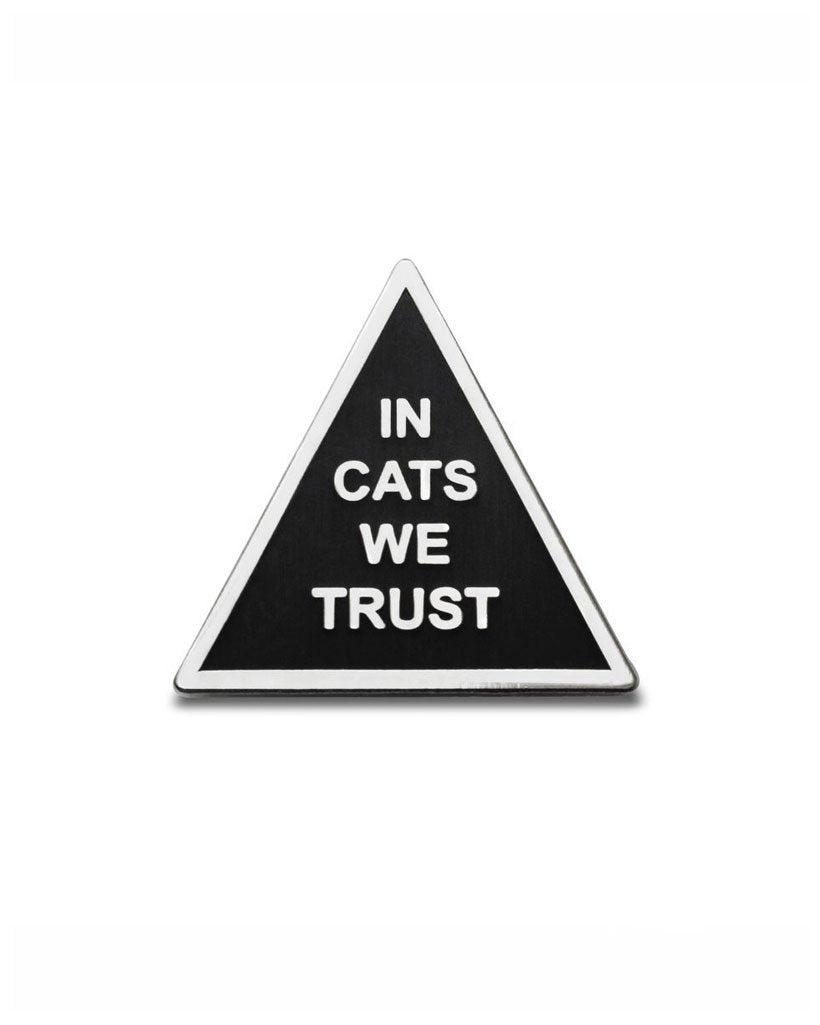
hard enamel pin example
Source: Strange Ways

Additionally, hard enamel pins use a clear coat of resin on top which creates a textureless, smooth surface. Hard enamel is a good choice if your pins will need to withstand the elements and if long-term durability is important to you. For example, if you’re targeting customers who want to hang their enamel pin on their outdoor back back for example, this type of pin might be a great option.

3D mold

3D mold pins, or die-cast pins, are a type of pin made with metal. They are made when molten metal is poured under high pressure into a mold of your design. 3D mold pins typically have a more elegant, classic look and are made from either zinc or pewter.
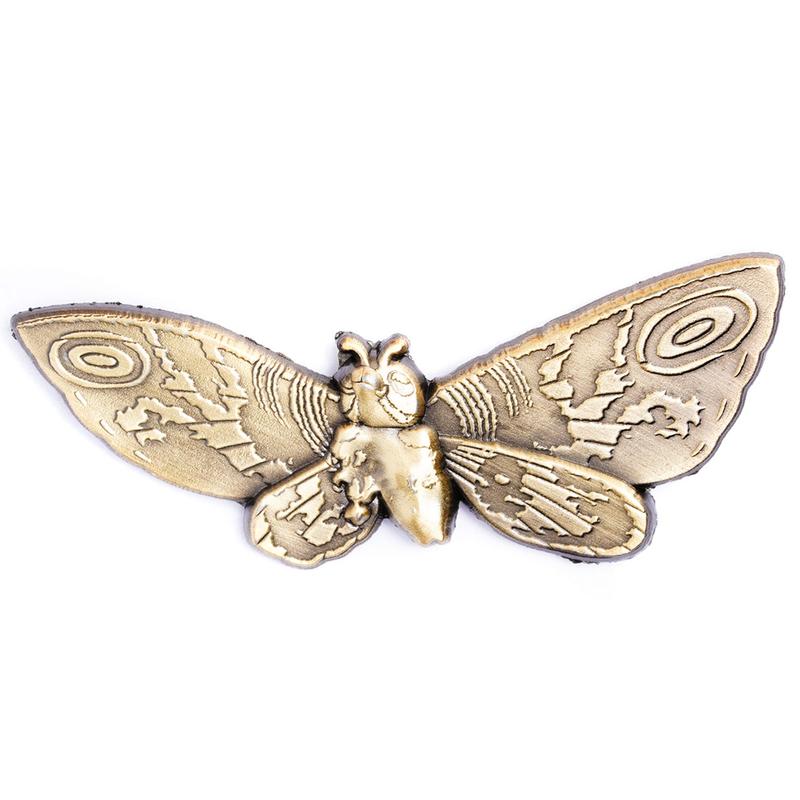
3d mold enamel pin example
Source: Pintrill

You’ll want to use die cast pins when you have an intricate design that requires cutouts or a pin that isn’t a perfect shape. Think designs for animals, toys, planes, or symbols.

Offset epoxy pins

An epoxy pin has a clear plastic coating that is applied to soft enamel or offset-printed-style lapel pins. It adds shine and protects your designs from damage. Epoxy coating can protect silk screen paint or offset printed designs from fading or scratching over time.
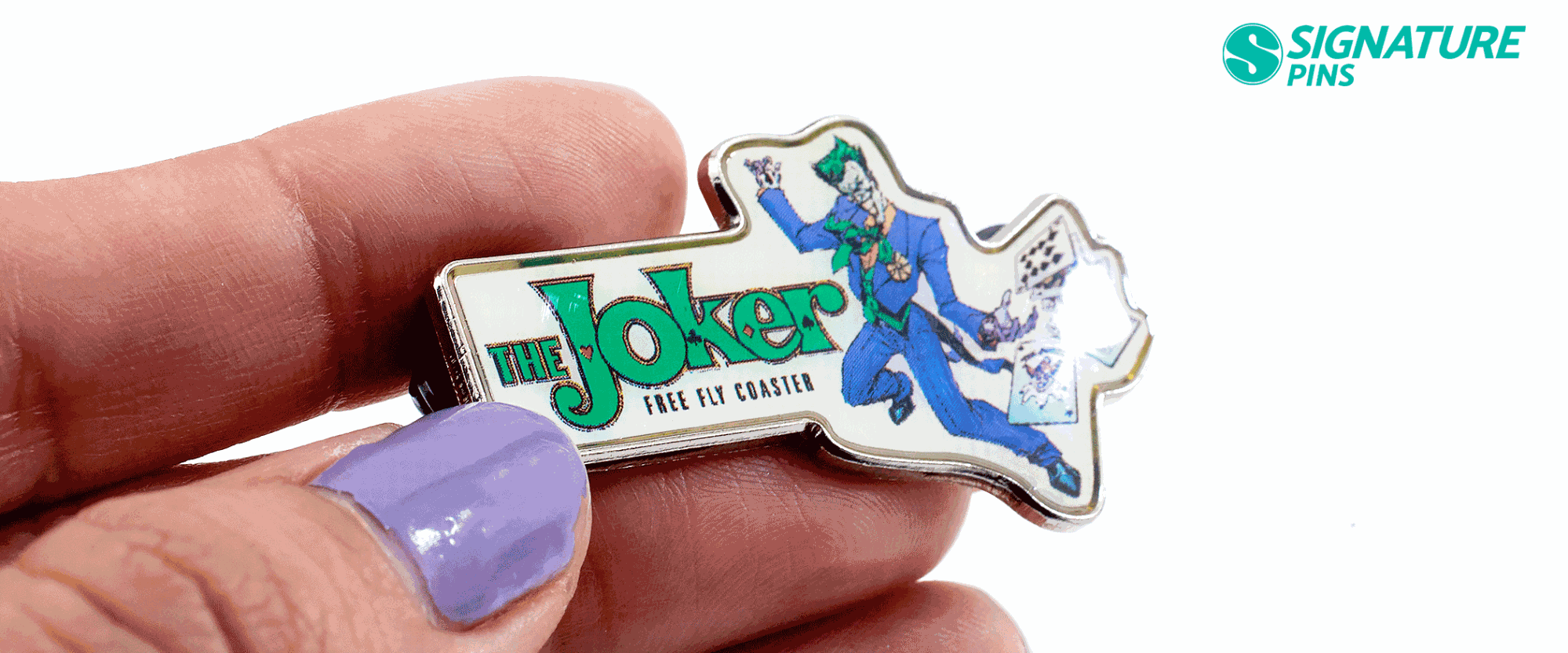
epoxy pin example
Source: Signature Pins

Die struck

Die struck pins are made from pressing metals, like iron, gold, or copper, against a steel mold to create your pin. Striking the metal creates a recessed area where you can add color options, like cloisonné. Some makers also sandblast the recessed area to create a two-tone metal look.

die-struck pin example
Source: Monterey Company

How to make enamel pins

  1. Find your unique niche
  2. Design your custom enamel pins
  3. Make your pins
  4. Sell your pins on marketplaces

1. Find your unique niche

Want to know the secret to creating a great product? Find an audience first.

If you can narrow down a unique niche for your enamel pins, the rest of the process will be much easier. Understanding your audience also means understanding how to design a great product and sell it to that audience.
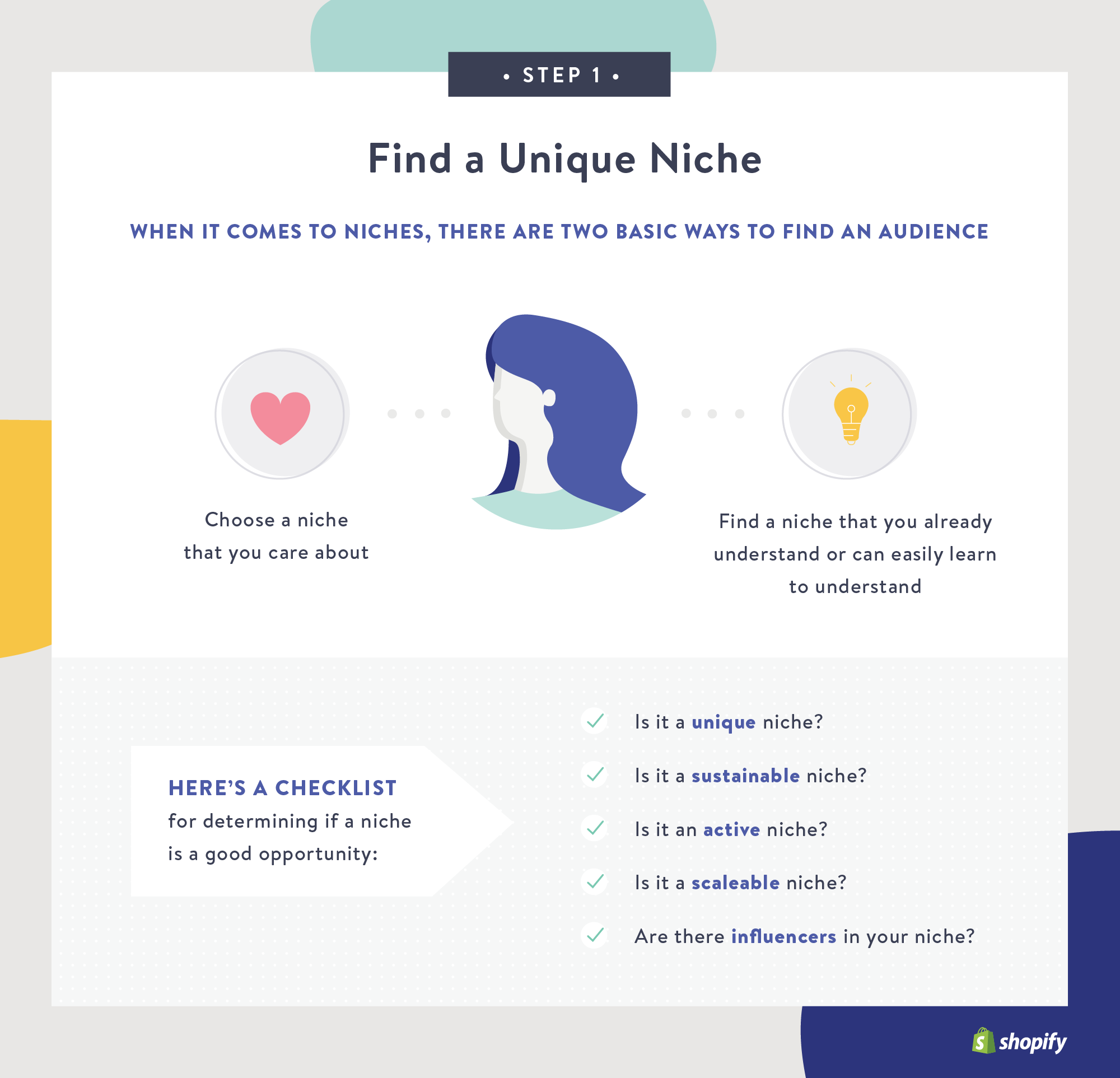
An infographic with a checklist for finding your niche

Often times, the best foundation for a successful small business idea is a passion project. When you find a niche that you’re passionate about first, creating and selling enamel pins online won’t feel like work. It’ll still take time and effort, but you’ll enjoy every part of the process if it’s something you truly care about.

When it comes to niches, there are two basic ways to find an audience: choose a niche that you care about or find a niche that you either already understand or can easily learn to understand. All it takes is a bit of market research to find a passionate, engaged audience that will be perfect for your brand.

Spend some time browsing your favorite enamel pin websites or social media profiles. Have a look on Pinterest for some inspiration. Take note of what you like and what you think could be improved. Be sure to look for inspiration outside of the enamel pin niche as well. You can always borrow inspiration from other industries to help further grow your enamel pin business.

Using your own niche communities

If you’re already an active member of a niche community, creating a business that caters to their values is a straightforward process. Remember: a niche can be any community with a specific, definable set of interests.

A niche can be any community with a specific, definable set of interests.

Not sure which niches you belong to? Take a look at your interests and think about the communities that surround them.

  • Do you have any hobbies?
  • What are your favorite TV shows, movies, or books?
  • What are the things you’re crazy about?

Discovering new niche communities

Targeting your own community can be a rewarding strategy, but sometimes it’s better to find new niche audiences with fresh opportunities instead.

There are a few different methods to seeking out active niches:

  • Reddit. Using tools like Reddit List, you can discover the most active communities on Reddit. Reddit is a meeting place and message board for some of the world’s largest subcultures, which makes researching and validating niche audiences simple.
  • KWFinder. Another way to evaluate demand and interest is by using KWFinder to find out how often people are googling terms related to your target niche.
  • Google Trends. You can also use Google Trends for a more generic overview of global search volume. While Google Trends isn’t as in depth as the other two options, it quickly can help you determine the viability of a niche.
  • Pinterest. Because Pinterest is an incredibly visual platform, this is a great place to start. Take note of the best boards and influencers who post frequently about enamel pins or craft jewelry. 

Determining whether a niche community is a good fit

Once you’ve done some research and found a set of niche communities that could work for your business, it’s time to determine whether they’re good fits for creating a successful, sustainable product.

Here’s a simple framework for evaluating a niche’s potential:

  • Is it a unique niche? Your niche should have defining traits that set it apart from larger, more mainstream audiences. A set of unique traits will make your niche easier to target. Lots of different folks like enamel pins! Get clear on who you want to target. 
  • Is it a sustainable niche? If you’re planning on building a successful business, you’ll want to find a niche that has the potential to stick around for a long time. If there are already businesses serving your chosen niche, changes are good it’s a sustainable business model.
  • Is it an active niche? Without an active community, marketing to a niche can be a major challenge. If your niche has lots of engaged members, it will be much easier to build an audience that will rally behind your business.
  • Is it a scalable niche? While you might start out targeting a single, small subset of the population with your products, if you’re successful, you’ll want to expand. If you think targeting your niche won’t limit your business’ potential in the future, it’s a good fit.
  • Are there influencers in your niche? If your niche has major players who are popular social media influencers, marketing to your audience will be considerably easier. Are there certain members with large followings on Instagram (#pingame) or Pinterest? Even just a few big influencers can go a long way.

2. Design your custom enamel pins

After you’ve determined who you’re going to be selling your enamel pins to, you’ll need to figure out what those pins will actually look like.
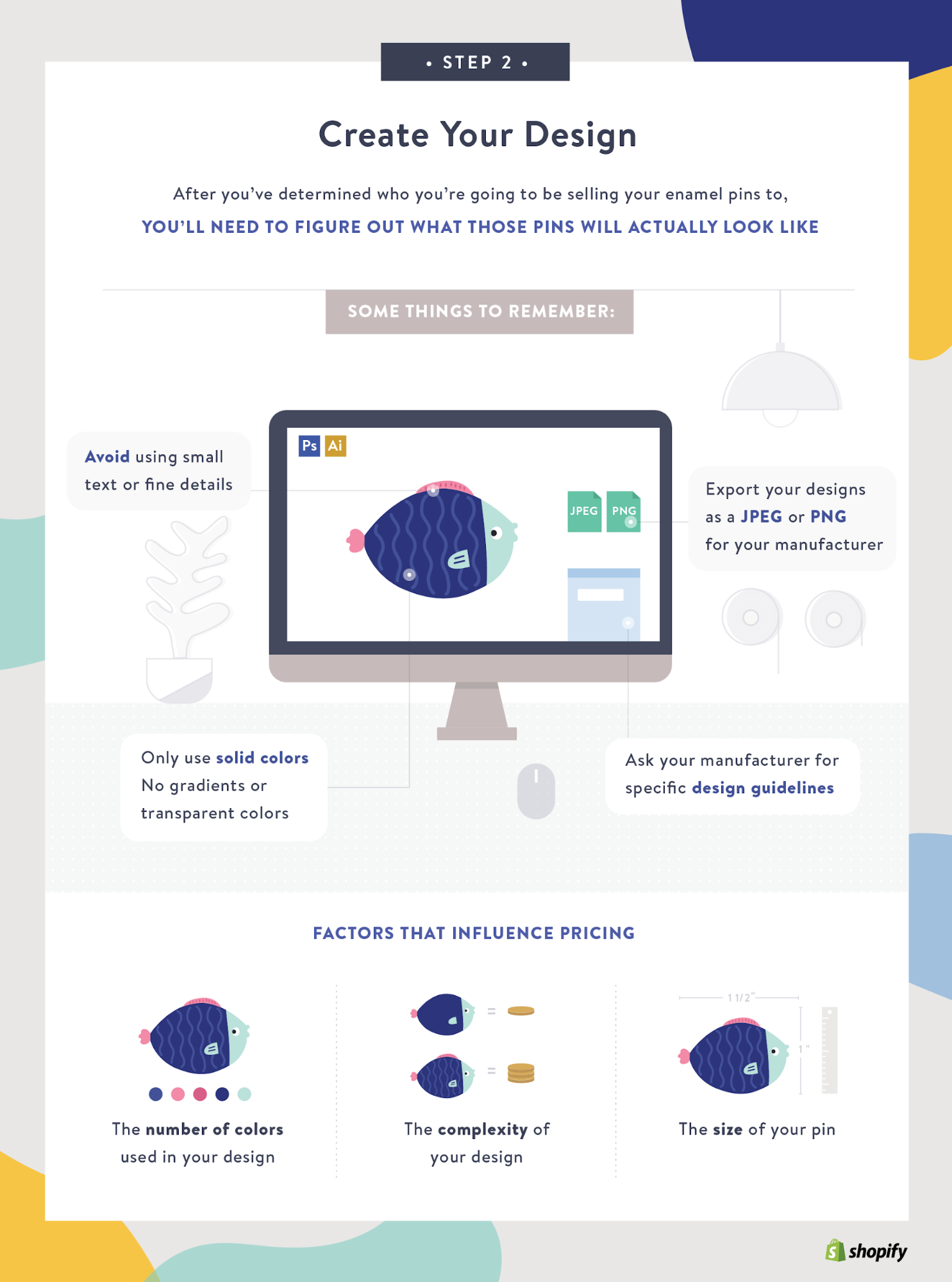
how to make an enamel pin infographic

Even if you don’t have any design skills, creating enamel pins is totally possible. There are a wide variety of options out there to connect you with talented artists or turn your original designs into physical products.

Let’s take a look at the different resources and tools you can use to design stunning enamel pins, regardless of your skill level.

Design your own pins

For creating mockups of your lapel pins, using Adobe Illustrator or Photoshop is probably your best bet. If you don’t have access to Photoshop, here are some free alternatives you can use to create your own original designs:

Work with a pin designer

Maybe you aren’t confident in your design skills or you don’t have the time to create your own designs. Whatever the reason, there are lots of great options out there for outsourcing the entire design process to talented designers from around the world.

You can work with a company like Your Stuff Made that specializes in pin design and manufacturing.
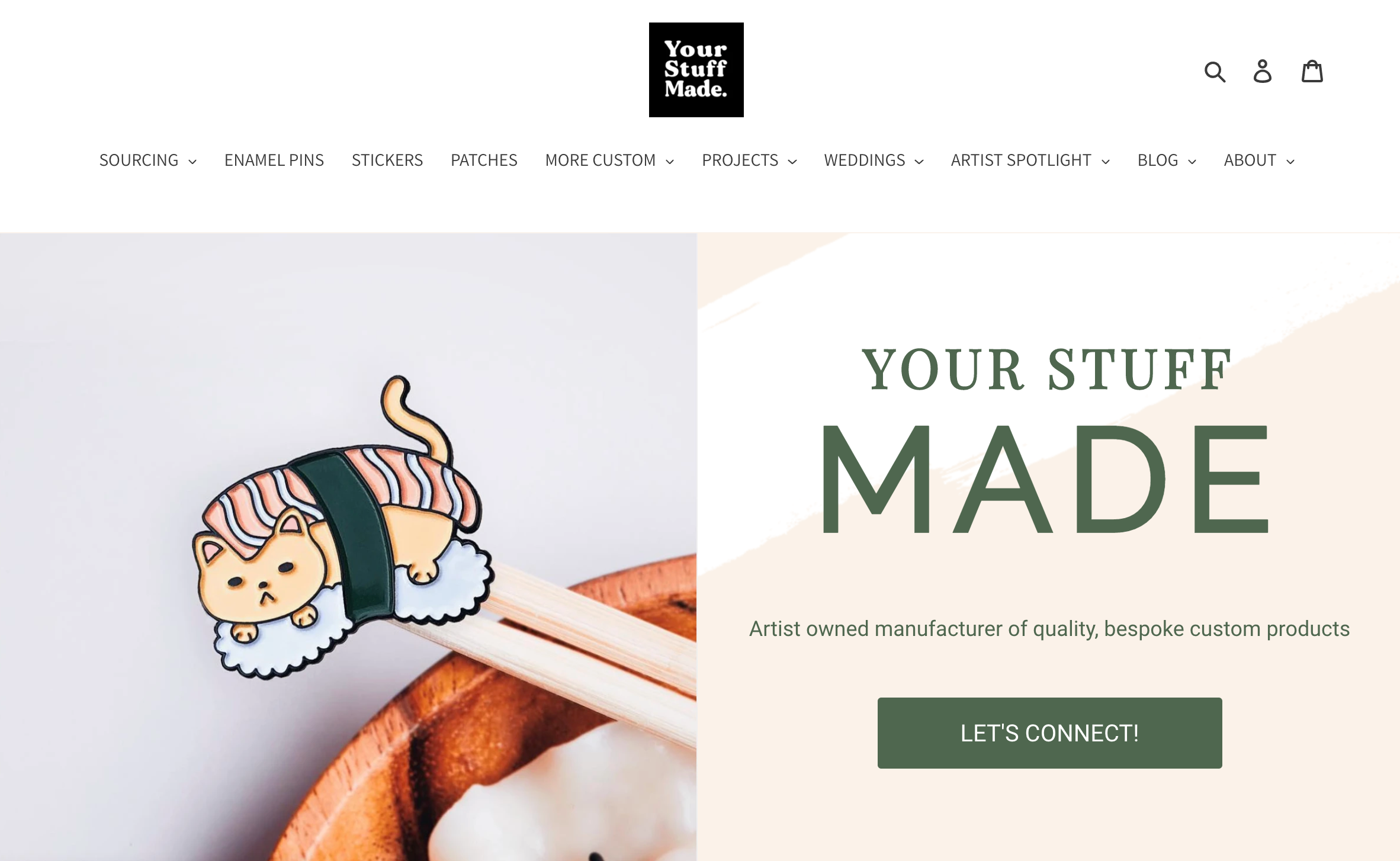
Your Stuff Made

The brand is artist-run and owned, so you know you’ll get high-quality, custom pin designs at an affordable price. It also manufactures pins out of its own ethically sourced and certified factory in China. You’ll pay between $130-180 for a minimum order of 100 pins between a size range of 1-2 inch pins.  

There are also great marketplaces for hiring graphic designers and purchasing design resources:

Note: If you’re purchasing design resources, make sure they have a commercial license so you can use them for your products.

When it comes to enamel pins, there are a few guidelines your final designs will need to follow:

  • Your designs will need to only use solid colors, usually from the Pantone color matching system, which means your enamel colors can’t include gradients or transparent colors.
  • Due to the size of enamel pins, you should avoid using small text or fine details in your designs.
  • Normally, your manufacturer will only need a JPG, PNG, or vector file of your design, but be sure to ask them for details like sizing and bleed area to make sure you’re following their specific guidelines.

Learn more: The Business of DIY: 24 Things to Make and Sell Online

3. Make your pins
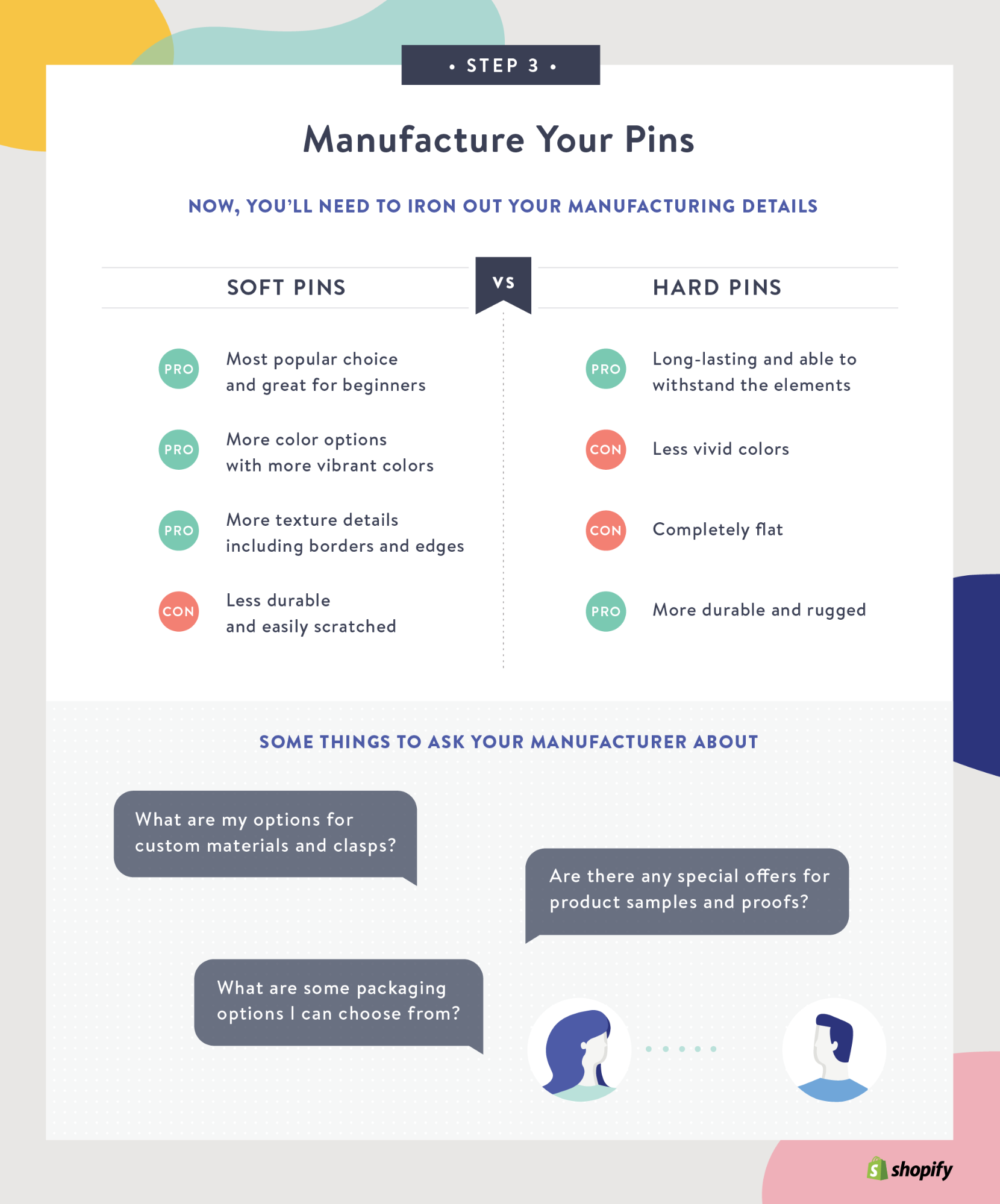
how to manufacture pins infographic

Once you’ve come up with your designs, you’ll need to track down a manufacturer who can take your ideas and transform them into enamel pins.

Even if you’re an experienced entrepreneur, researching and contacting manufacturers, suppliers, and distributors can seem a little intimidating. However, the manufacturing process is fairly straightforward if you know what you’re looking for ahead of time.

In this section, we’ll explore the step-by-step process for researching and evaluating manufacturers, as well as things to keep in mind once you’re ready to get your enamel pins made.

Factors that influence pricing

As a rule of thumb, it’s important to try to keep your costs low when ordering pins. Here’s a look at the factors that increase the final price of your order:

  • The number of colors used in your design;
  • The complexity of your design;
  • The pin size;
  • The quantity of your order.

In terms of order quantity, the main cost for manufacturers is building the initial mold for your product. Once they’ve built the mold to cast your pin, the cost to add more pins to your order is not as impactful on your bottom line as the cost of creating the mold. Just something to keep in mind when you’re considering how large of an order you should make.

Finding a manufacturer for your enamel pins

There are many companies in North America, Europe, and Asia that offer enamel pin manufacturing. A quick Google search for enamel pin manufacturers can turn up lots of different results. Here’s a quick look at a few options:

Alternatively, you can use Alibaba to track down a reliable manufacturer overseas.

Connecting with overseas manufacturers is an intimidating process. If this is your first time dealing with manufacturers, you probably have no idea where to start—but that’s totally fine.

Manufacturing specifications for enamel pins

For enamel pins, there are a few details you should keep in mind when reaching out to a manufacturer.

Most enamel lapel pin manufacturers will allow you to customize the materials you use for your pins, beyond hard or soft enamel. You’ll be able to choose the color and texture of your enamel pins’ base before dyes are added, so make sure you ask to see all the options available. You should also ask about the options available for the needle on the back of your pin, including whether the clasp for the needle is steel, rubber, or some other material.

Additionally, find out if your chosen manufacturers will also let you customize the way your pins are shipped. Enamel pins usually arrive in small plastic bags, but some manufacturers will allow you to add a custom backing card to each bag for a unique, professional touch. If backing cards are available, make sure you’re given the exact design specifications for them, including color limitations and bleed area.

Get a sample

Any trustworthy manufacturer will send you a proof or sample pin for you to inspect before ordering a full run of product. Be sure to thoroughly examine this sample to make sure that the product lives up to your vision.

After finalizing your product design, the next step is to validate demand. Order the smallest run possible first and see how it does. Once you’re positive there’s a substantial demand for your product, then you can think about scaling up and increasing the size of your orders.

How to sell enamel pins online

Now that you know your market, the pins you’ll sell, and your supply chain, it’s time to figure out how and where to sell your enamel pins.

Open an online store

Marketplaces like Amazon and Etsy are good places to list your pins, but you’ll want to open an online store for your own brand. An online store acts as your digital home, where you can connect with shoppers and sell your products.

For example, PINTRILL, a leading enamel pin seller, features hundreds of pins on its ecommerce website.
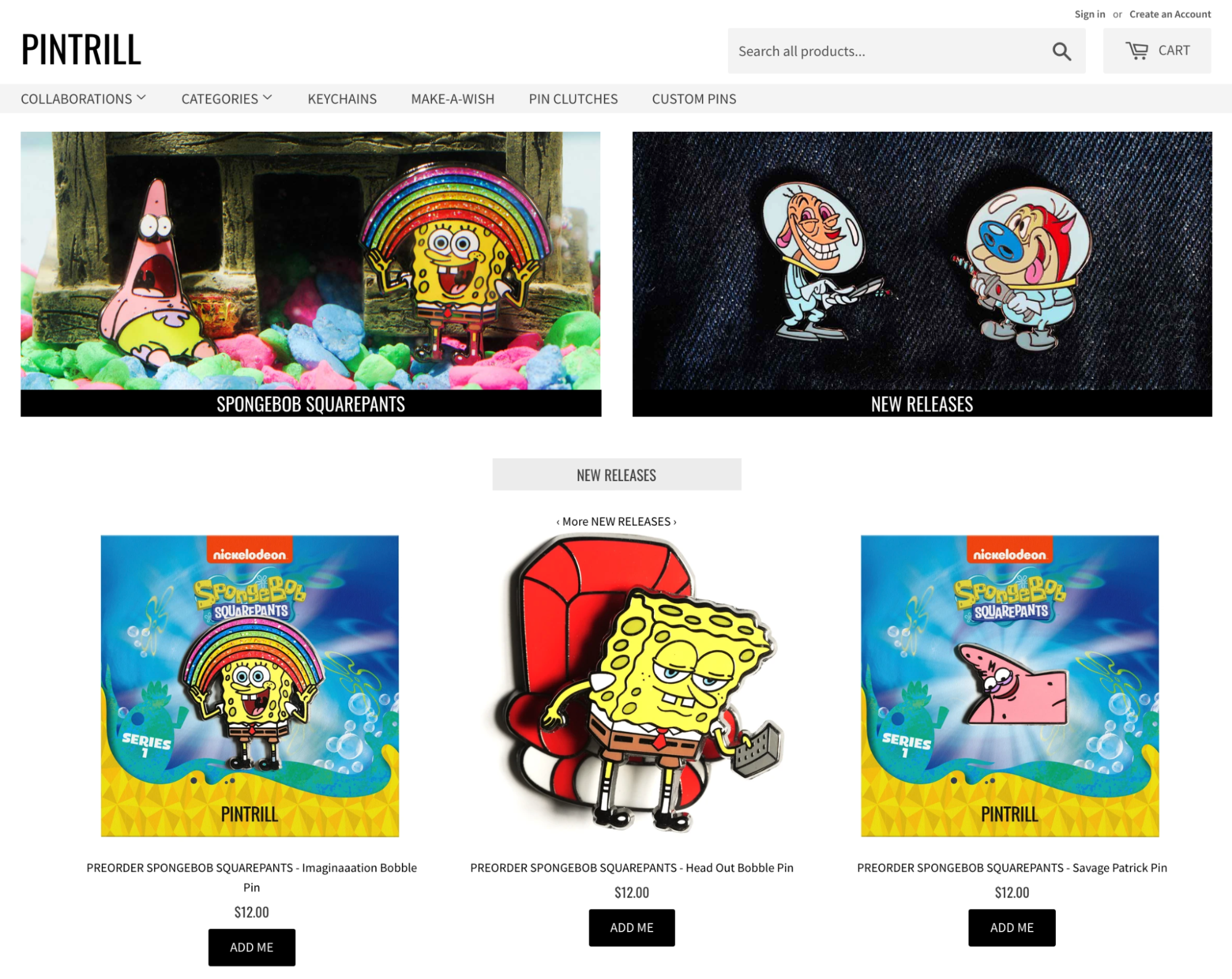
PINTRILL gives new life to work by artists that have passed like Jean-Michel Basquiat and Keith Haring. It also expanded its product line to include keychains, pin backs, and hats. You can create your own DIY custom pins right on the website.

Because PINTRILL doesn’t list on third-party marketplaces, it doesn’t pay commission and can keep all the profits.

Resources:

Take great product photos

Make sure to take good product photos of your pins. Shoppers will want to see the details, and you took the time to design them, so might as well show ’em off.

Market your online store

When it comes to marketing your own enamel pin business, there are some recommended channels you’ll want to try:

  • Search engine marketing (SEO). SEO helps you reach people who are looking for specific enamel pins or designs. The buying intent behind these searches means you’ll get relevant traffic to your product pages, which can result in more sales. You can do this organically through on-site optimization or by promoting through Google Ads.
  • Instagram marketing. Instagram is a highly visual platform, perfect for creators to show off their products. You can publish a mix of Stories, posts, or Reels to promote your products and connect with followers. The more they enjoy your content, the more likely they are to buy.
  • Facebook advertising. Say you want to target a specific group with your pins. Facebook ads can help you market to people who fit that profile.
  • Influencer marketing. Partner up with micro-celebrities, YouTubers, Instagrammers, and TikTokers to use their influencer and promote your pins. Influencers help you get in front of the right people.

Building a DIY enamel pin business

Building an enamel pin business can be both rewarding and profitable when done right.

Even if you feel like there is some competition in your niche, do it. Like any competitive market, if you focus on making incredible products and getting them in front of the right audience, you’ll turn a profit.

Start your business as a side hustle, then slowly turn it into a full-time venture. You’ll figure out what pins sell and different ways to source them to increase margins and make money online.

Illustration by Pete Ryan

Making enamel pins FAQ

How much does it cost to make enamel pins?

The cost of making enamel pins depends on many factors, like colors, materials, and type of enamel pin. However, you can expect to pay between $130 and $220 for 100 units, even cheaper if you buy from overseas.

How do I make custom pins?

  • Find your niche
  • Design your own pins
  • Find a manufacturer
  • Sell your custom pins online
What are enamel pins made of?

Enamel pins are made of many different materials. You can make enamel pins from metals like copper, pewter, zinc, gold, and brass.

Why are enamel pins so expensive?

Enamel pins can be expensive because you have to make a mold to produce them. Whether you make one or one thousand pins, the mold costs the same. The mold is also the most expensive part of creating custom pins.

How To Find Wholesale Suppliers (2024)

Software Stack Editor · June 10, 2024 ·

Wholesale trade is worth about $670 billion dollars annually in the US alone, and the industry has grown by more than 38% since 2020.

Those are hard numbers for sellers to ignore, which is why more of them, especially dropshippers, are scrambling for a piece of the wholesale ecommerce pie.

Still, you can’t sell a product you don’t have. The biggest challenge in sourcing products is finding a supplier you can trust. With scores of wholesale options all around the world, finding the best supplier for your online business can feel overwhelming.

[embedded content]

But it doesn’t need to. With Shopify Collective, you can discover high-quality products from Shopify brands to sell through your online store. Another option is a marketplace like Faire, which offers products from thousands of independent brands.

If you’re already on Shopify, you can use the Faire: Buy Wholesale product sourcing app to buy wholesale products and sync them to your store. If you want to sell wholesale, you can try the Faire: Sell Wholesale app to gain exposure to independent retailers globally.

Ahead, learn how wholesale buying works, explore additional options, and learn how to find the perfect wholesale or dropshipping suppliers for your needs.

Table of contents

[embedded content]

What is a wholesale supplier?

A wholesale supplier is a business that buys goods directly from the manufacturer and sells them to brick-and-mortar or online retailers for a profit. The wholesale model soared in popularity with the onset of mass production and marketing techniques in the 19th century.

Without wholesalers, manufacturers would have to market goods to retailers on their own. Instead, wholesale vendors act as middlemen in the supply chain.

They buy from manufacturers in such large quantities they get a significant discount, which they can then pass on to retailers. They normally have a product license and, as such, their products are not available to regular customers—or at least not at the same price points they offer to retail partners.

Retailers then repackage the wholesale products for individual sale at a profit. Price is always negotiable, but dropshippers and other retailers typically pay wholesalers 60% to 70% of what they charge consumers.


Connect with manufacturers

Find the perfect production partner to build inventory for your ecommerce store with our free sourcing and manufacturing outreach template.

Learn more


How to find a reputable wholesale supplier

With so many options, finding the best suppliers for your business can be daunting. Here are a few things to bear in mind:

  • Quality. Some sites do feature more than their fair share of knockoffs and low-quality products, so do your market research before you’re stuck with thousands of low-quality items.
  • Price. Take detailed notes on prices and remember: everything is negotiable. The more you buy, the larger the discount should be. If you can get a 10% discount, then you’re in good company.
  • Complaints. If something goes wrong, who’s going to fix it? Customer service is a key part of dropshipping, so you’ll only want to work with wholesalers who have a good reputation.

Another concern for merchants is how to find suppliers who can handle a quick turnaround. Meeting this window is crucial, as consumers expect products to arrive within three business days.

So how do you find legitimate, quality wholesale suppliers? The following are all wholesale supplier marketplaces you can order products from.

Wholesale suppliers by variety and price

If your online business curates a wide variety of products or is competing on price, consider working with some of the following wholesalers.

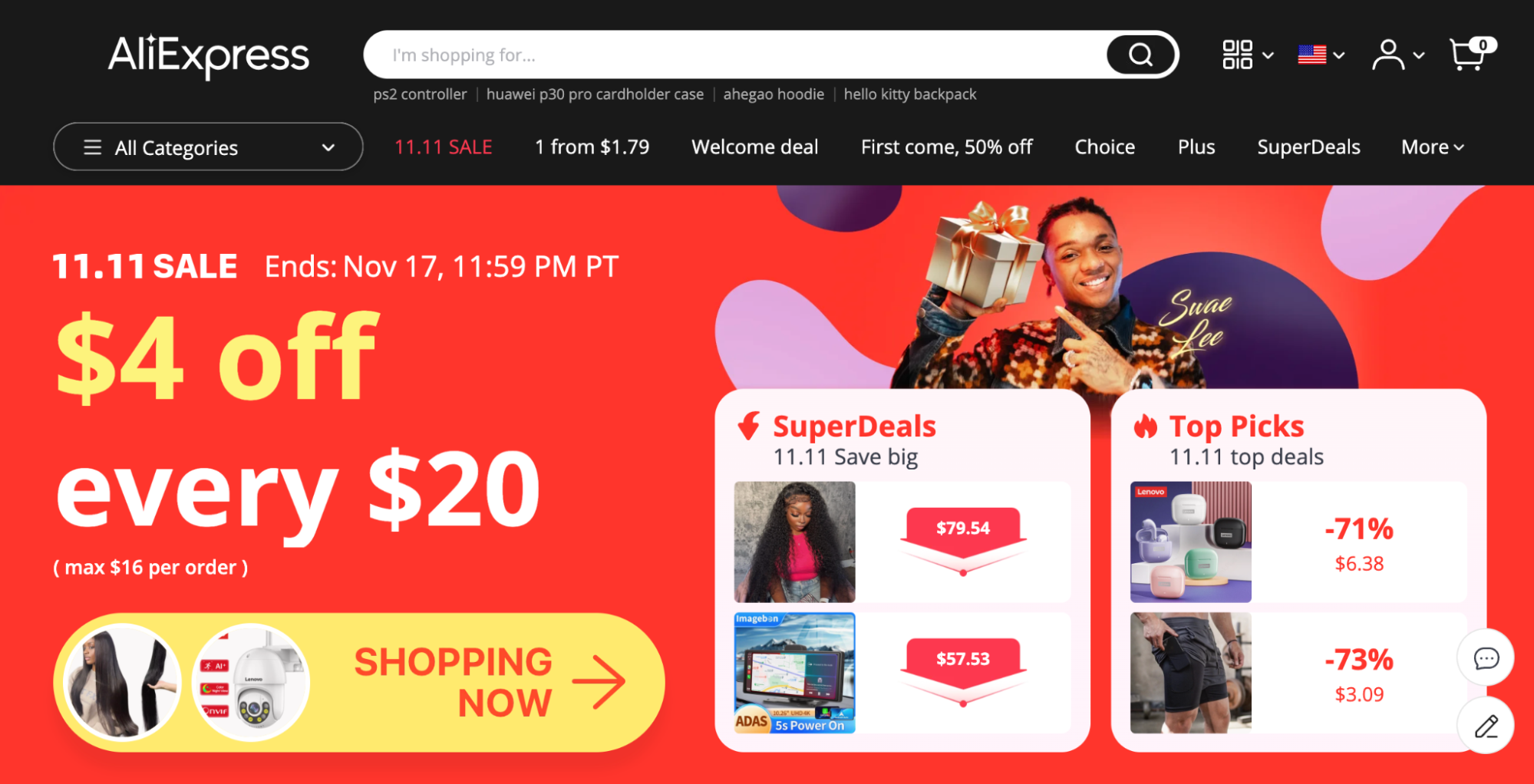
Alibaba and Aliexpress

Image of AliExpress wholesale supplier homepage

The Ali family of websites is China’s most dominant online marketplace, comparable to Amazon in the US. Research shows it has a 63% share of the domestic (Chinese) ecommerce market. Alibaba is a wholesale supplier directory aimed at a B2B audience, while AliExpress is a B2C experience.

If you’re looking to conduct a limited trial run, AliExpress might be a wise choice before going all-in on wholesale with Alibaba. The Ali family of websites is ideal for:

  • Medium- to low-quality goods sourced from China
  • Wide variety of wholesale products and price points
  • Private label/white labeled items

One of the best things about working with suppliers based in China is ePacket delivery, which makes shipping much faster and more affordable than it used to be. This is because in 2011, the US Postal Service made ePacket delivery eligible for First Class service and delivery confirmation.

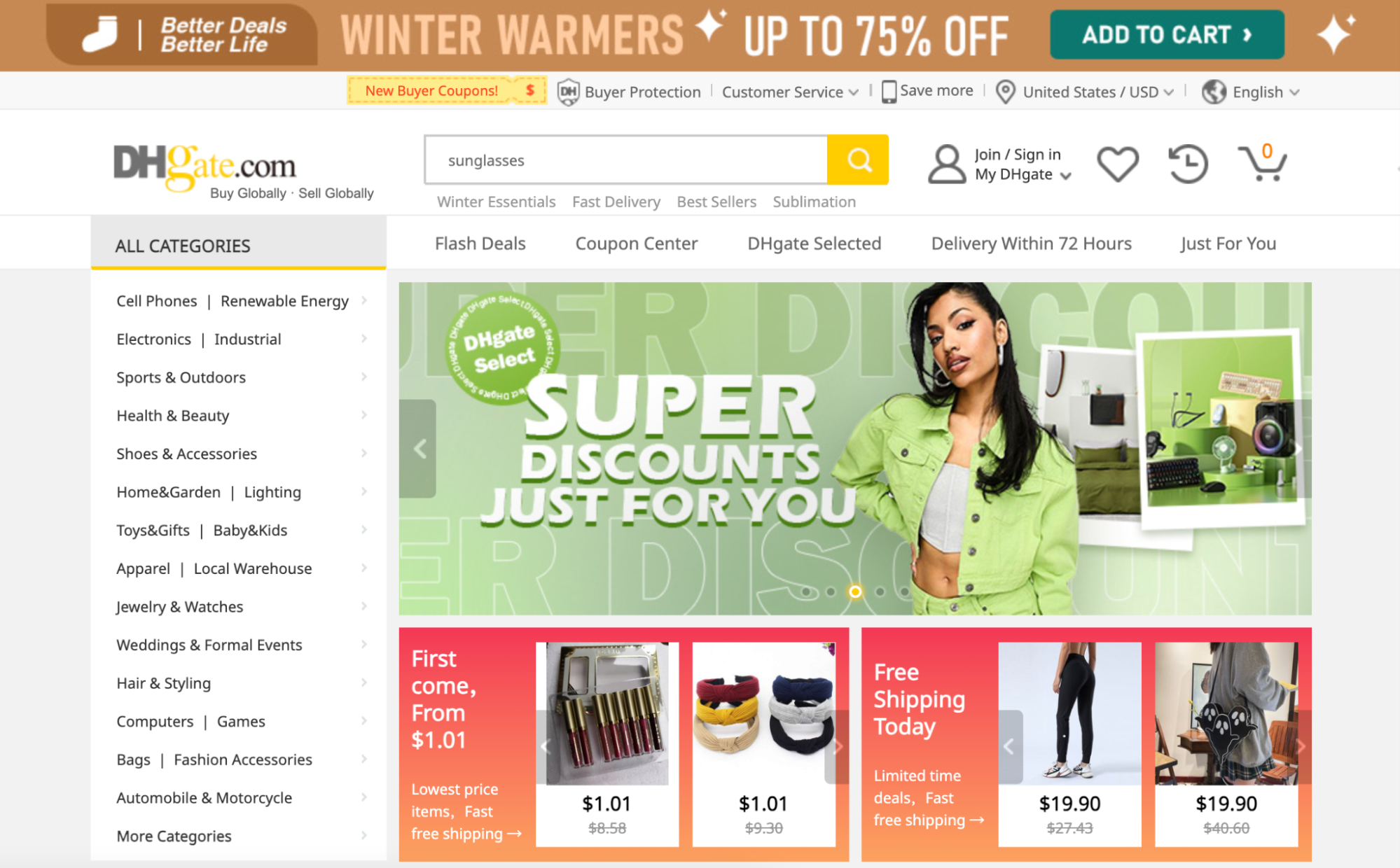
DHgate

Image of DHGate wholesale supplier website promoting discounts

DHgate is another wholesale supplier based in China. DHgate has lower prices on a lot of wholesale products, but is known for carrying a lot of replica goods. If that’s not an issue for your business, it’s worth digging through deals to see what you can unearth.

DHgate is best for:

  • Having a wide selection of products with options to suit any merchant and niche
  • Integrated rating system to help vet the right supplier for you

Wholesale suppliers by location

Sometimes it’s best to pick a wholesale supplier based on geography. Fast delivery is increasingly a priority for modern consumers. If you’re in North America or Europe, then these are the wholesalers you should know about.

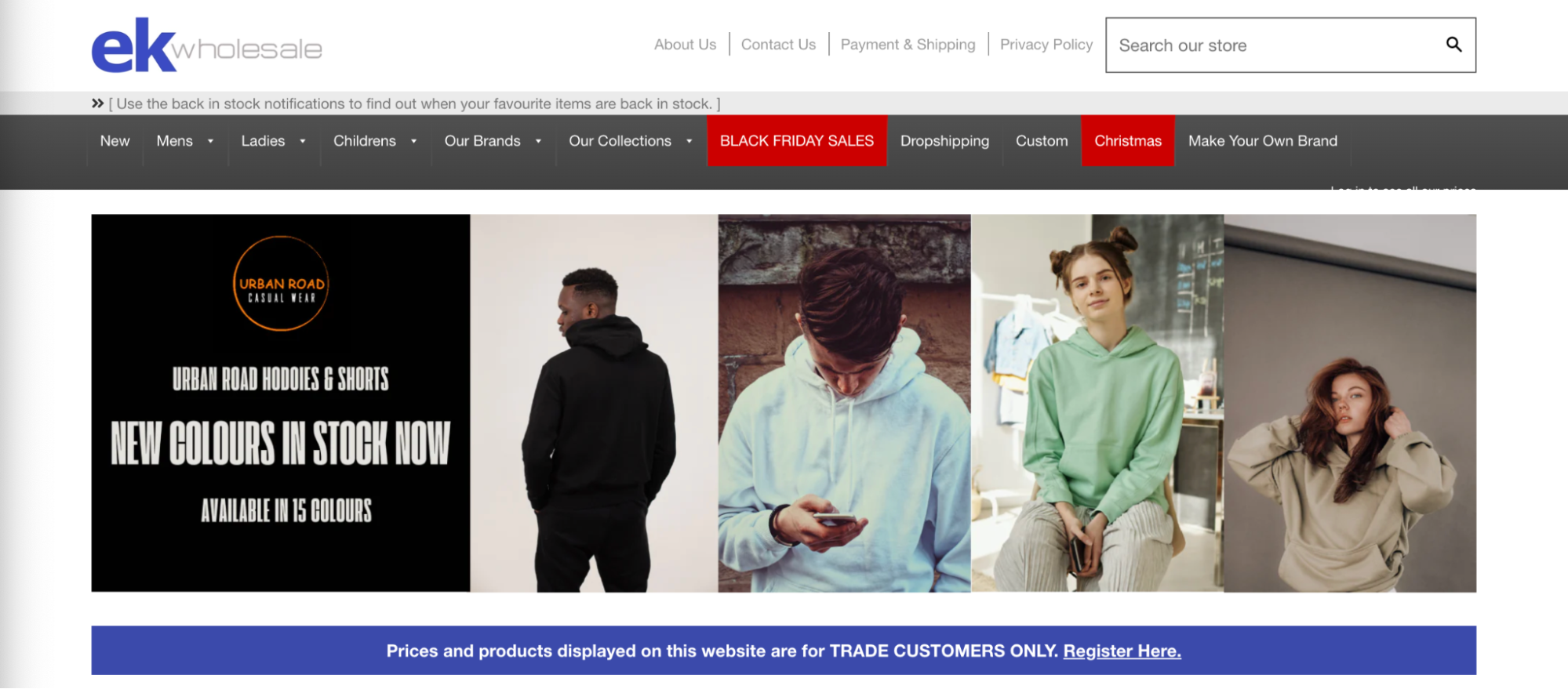
EK Wholesale

EK Wholesale’s supplier website: how to find wholesale suppliers

EK Wholesale is based in Scotland and has been around for more than 30 years, making it one of the leading wholesale suppliers for merchants who do business in Europe. EK is known for carrying high-quality products, and offers free delivery to the UK mainland on orders of £250 or more. Other benefits include:

  • Specialization in clothing (so if you’re not selling clothes you might want to look elsewhere)
  • Full integration with the Shopify POS
  • Ability to design your own private label clothing brand

If most of your customers are based in the EU or your business specializes in the fashion niche, then working with EK Wholesale might be the best option for you.

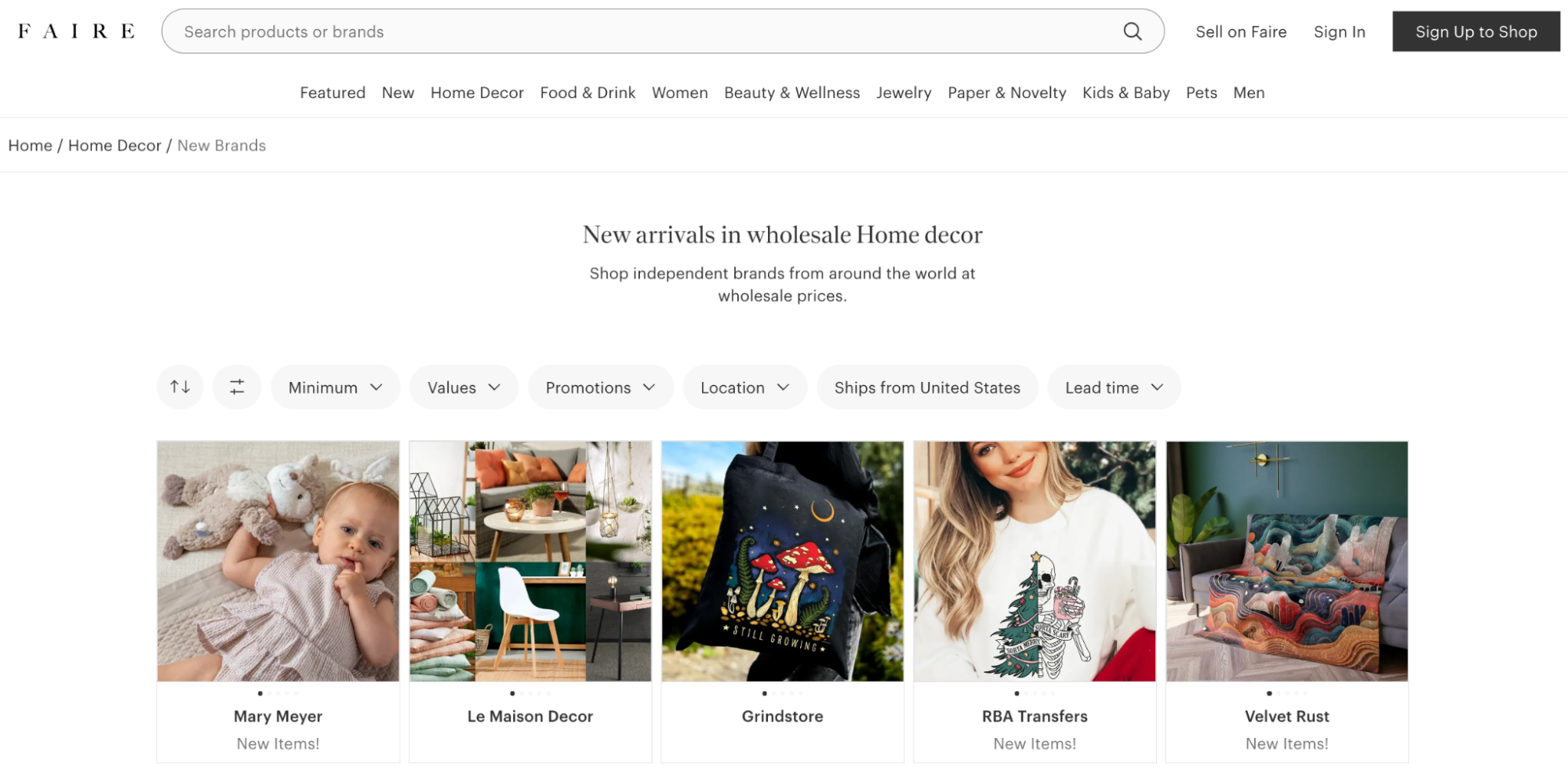
Faire

wholesale marketplace Faire with new arrivals: how to find wholesale suppliers

Faire is ideal for merchants based in North America. It has a wide variety of suppliers based on the continent—and a wide variety of goods, including beauty, kitchen, pets, and bags.

Faire is also good for dropshippers looking to save on shipping costs. The free shipping bonus could really make a difference to your business, especially if you’re new to the world of dropshipping.

Wholesale suppliers for dropshipping

If you already know what you’re doing when it comes to dropshipping, take a look at some of the following options. Experienced dropshippers who are comfortable navigating clunky websites, or those with a very specific niche, are sure to find some great price points.

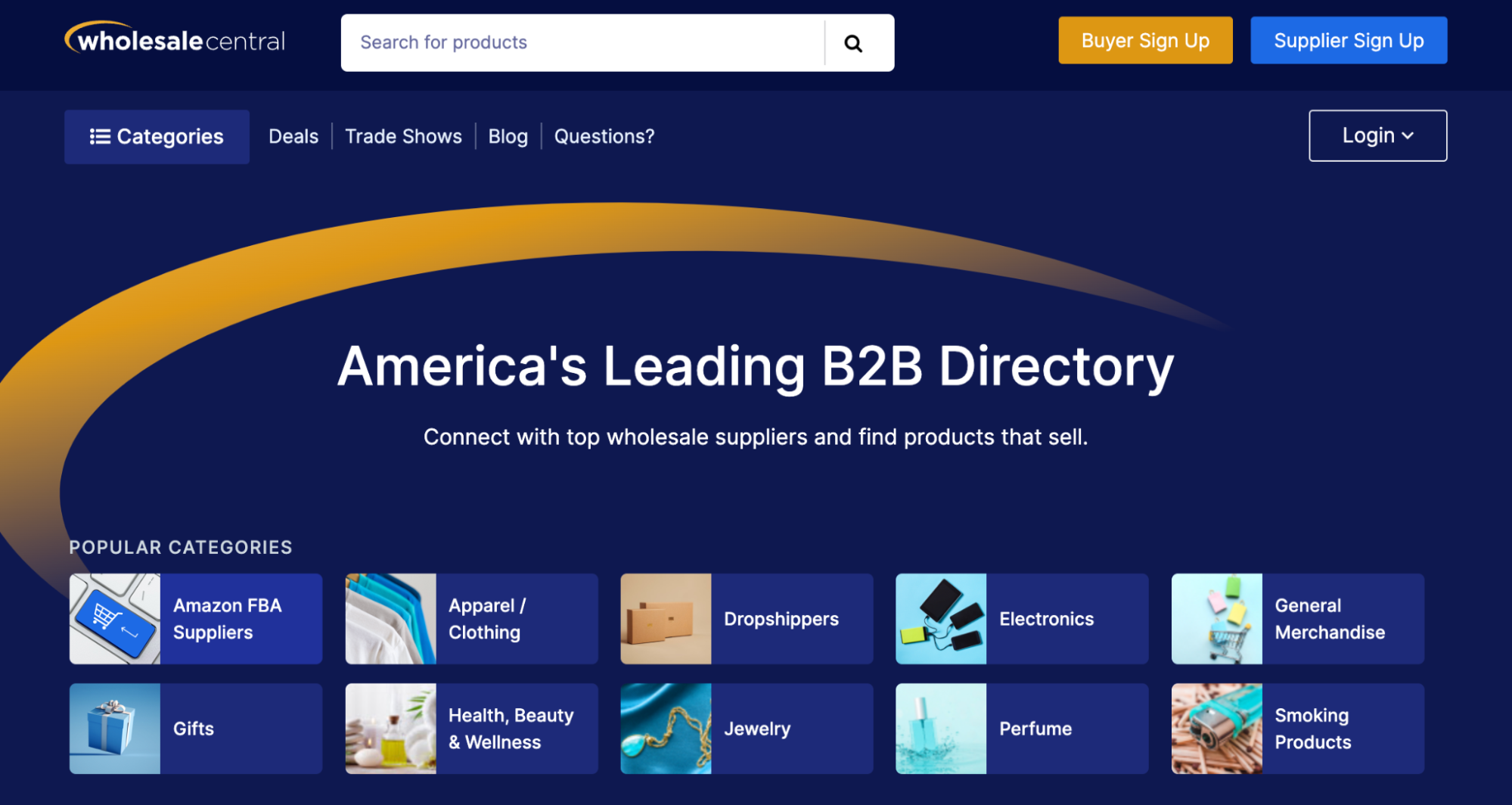
Wholesale Central

Wholesale Central’s directory website with categories like apparel and electronics: how to find wholeesale suppliers

Wholesale Central has more than 1,400 suppliers, more than 700,000 products, and requires no membership fees. Its website isn’t flashy, but if you know what you’re looking for and have some experience wholesaling, this can be a solid option.

  • Wholesale Central offers a wide variety of options for dropshipping and wholesale only. There are no retail prices whatsoever, so make sure you have your business ID and tax number ready.
  • You can use Wholesale Central to search for dropshippers directly, and results are sorted by geography.
  • No registration is needed: you can start searching and connecting to wholesalers right off the bat. Some other sites require a waiting period as they process your registration.

If you’re eager to get started on your dropshipping journey, not having a registration waiting period makes Wholesale Central a solid option.

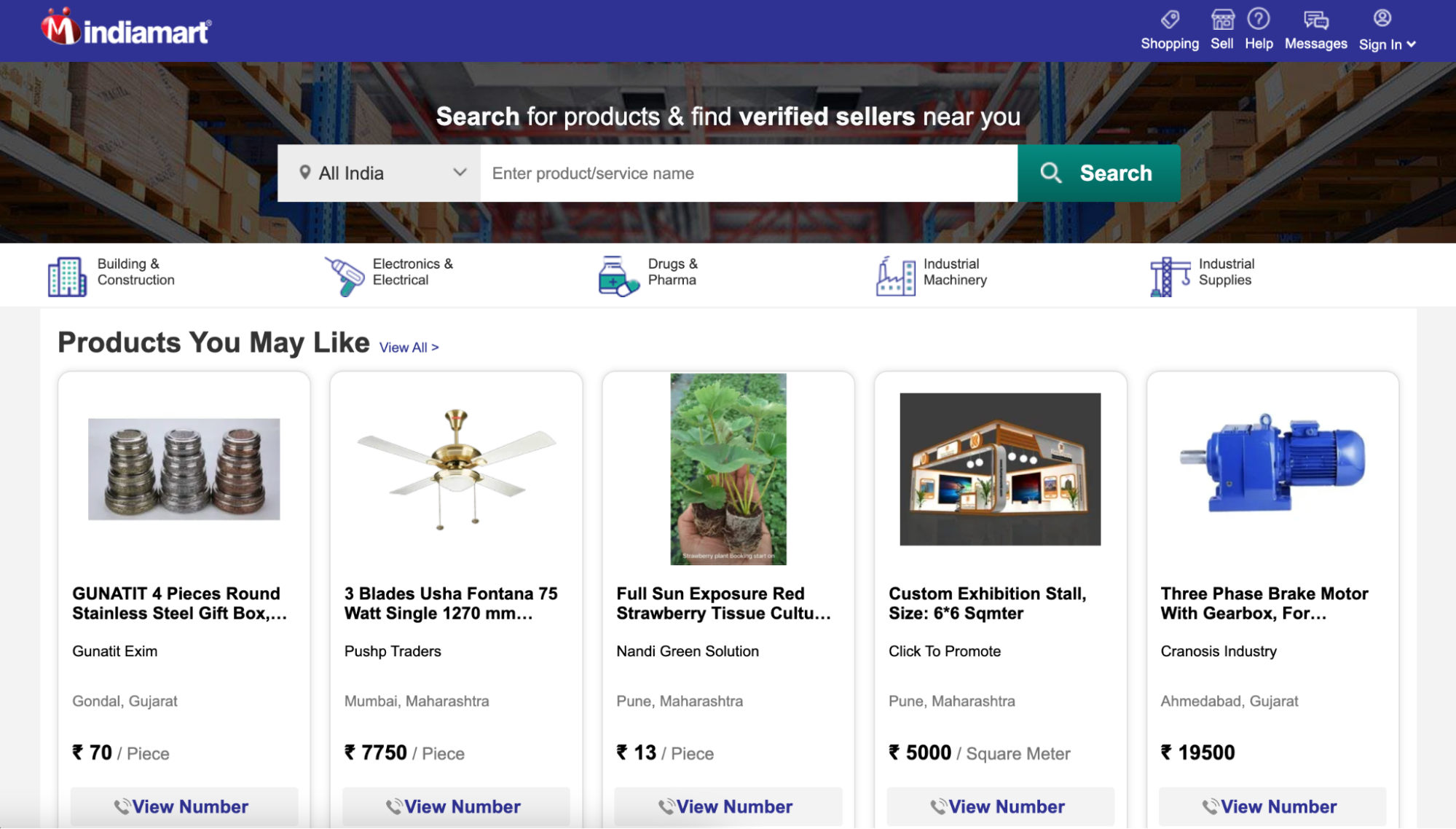
IndiaMart

Indiamart’s wholesale supplier website promoting products the browser might like.

IndiaMart’s range of suppliers is staggering—it stocks the usual consumer goods, plus a few specific industries. Depending on the wholesale product you’re pursuing, this could be your best choice. Here’s why:

  • IndiaMart is very good for certain niches. If you’re selling medical, chemical, industrial, or automobile supplies, this is the site for you.
  • IndiaMart is also one of the few wholesale companies to offer over-the-counter (OTC) pharmaceutical dropshipping services.

IndiaMart’s strength lies in its niches. Few wholesale vendors have contact with the industries that IndiaMart does.

Other considerations for finding suitable wholesale suppliers

If you have the patience to dig through the options we’ve laid out, you’re bound to find suppliers that suit your business. Just make sure to avoid some of the common pitfalls:

  • Overspending. On one hand, you want to spend enough so you actually get the benefit of working with a wholesale supplier, but you also don’t want to go all-in on a product that hasn’t been market tested. Know your budget limits and calculate what you should be paying.
  • Fees. Know the membership fees or any extra costs you’re paying for so you don’t get surprised. Membership fees are the norm in the wholesale world, but make sure your supplier is upfront about it.
  • Public selling. If a wholesale supplier offers goods to the public, that’s a red flag. Legitimate wholesale prices require business identification.

If you’re just starting your dropshipping journey and need a little extra help, consider a dropshipping app. An app syncs with your Shopify account, meaning you can add products directly to your online store. Dropshipping avoids the stress of packaging, shipping, and managing inventory.

What problems does a wholesale supplier solve?

For businesses that wholesale products, the goal is to select and curate the best wholesale products for customers, while handling all the marketing and customer service.

But those products have to come from somewhere. Otherwise, you’d have to develop your own products and supply chain. That’s where wholesale suppliers come in. There are many advantages to working with wholesalers:

  • You can buy as much stock as you need without worrying about expensive storage rental.
  • If something sells out suddenly, you have an existing relationship with a supplier and can quickly restock.
  • You get discounted products to sell online at solid profit margins.
  • You essentially bypass the entire product development process—saving money and time.

Dropshipping and wholesale suppliers

Dropshipping is a fulfillment method where an online store doesn’t keep the products it sells in stock. Instead, the store will purchase products from a third-party supplier and have them shipped directly to the customer. As a result, the seller never handles the products directly.

Think of it as wholesale purchasing meets third-party fulfillment (as opposed to regular retailers who buy wholesale—or develop and manufacture their own products—and handle fulfillment on their own).

Learn more: 150+ Dropshipping Products to Sell for Profit

Unconventional ways to find wholesale suppliers

Using wholesale supplier marketplaces is the simplest way to connect with a wholesale supplier, but it’s not the only way.

Those willing to stray from the beaten path just might find a great deal lurking around the corner. Other options for finding reliable and trustworthy suppliers include:

  • Going to an industry trade show and connecting with wholesale suppliers in person
  • Joining social media groups for your niche and talking shop with other merchants
  • Joining trade organizations for your product to see if any names come up

Those willing to meet and greet a wholesaler live may find a solution that’s ideal for their unique business needs. Some people work better in person, and building a business relationship face to face can lead to increased trust and cheaper prices for wholesale purchases down the line.

Once you’ve found your ideal wholesale supplier, it’s time to reach out and take the next steps.

What to ask when contacting a potential wholesale supplier

Before you pick up the phone, ensure you have the necessary business license and tax documents on hand. You won’t be able to place an order at some companies—or even get their attention—without this information.

Rules for dealing with certified wholesalers vary from state to state. (Do your research.) Wholesale suppliers often have a special product license, meaning they legally cannot do business with consumers, only other businesses.

When you do call, here are key questions to ask:

  • What are the minimum order quantities (MOQs)? If you’re looking to order 100 pieces of jewelry but the supplier only offers discounts on orders of 500 pieces or more, then that’s an issue.
  • What’s the cost per unit? This question goes hand in hand with MOQs. According to the economies of scale, the more you order, the lower your cost per unit (CPU) will be. But don’t be tempted to order more than you need, especially if you’re just starting out. If a product isn’t as popular as you anticipated, you’ll be left with a large surplus and a loss.
  • What’s the return policy? If there’s a problem with an order, are you going to have to front the cost of returning bulk orders, or will the wholesaler cover them Knowing the answer to this upfront will help minimize risk.
  • What is the lead time? When you’re running a dropshipping business you need to keep your customers happy. Knowing the lead time on a product lets you manage customer expectations and not leave them waiting indefinitely. Long delays mean unhappy customers. Especially when the product is sold out and restocking will take too long.

Ask clear, direct questions that will help you find answers to your most important questions.

“I’m thinking of maybe starting a dropshipping business sometime soon” is the type of vague email that a busy wholesaler might just ignore. But straightforward questions that show you mean business—such as, “What’s your best price for 250 units per month?”—are more likely to get a reply.

And remember—oftentimes, you can negotiate with wholesale suppliers. Don’t be afraid to push back if the numbers they’re quoting won’t work for your margins.

Final checks before you sign on the dotted line

You’ve done all the homework and are almost ready to come to an agreement with your wholesale supplier. But before you sign that contract, here are a few more things to check:

  • Ask for references from other customers. If a wholesale company is reluctant to share this information with you, that may be a red flag.
  • Do they have liability insurance? If not, be careful. This type of insurance is there to protect you in case anyone is injured by a faulty or damaged product that you sold them.
  • Do the numbers make sense? Don’t overextend your business just because the discount offered is exciting. If you’re new to dropshipping, the best strategy is to buy only what you need. You don’t want to be left holding surplus stock if what you thought was the next hot product turns out to be a dud.

Next, here are some special considerations for popular products available to wholesale, along with some things you’ll need to keep your eye on before placing a large order.

Popular wholesale products

When selecting among top wholesale suppliers, it’s important to consider what kinds of products you’re selling. While two suppliers may be roughly the same for general merchandise, one may be the ideal supplier for a specific niche. Here are some tips for specific wholesale items and industries.

Wholesale jewelry

When you’re looking for the right wholesale watch or jewelry supplier, make sure the wholesaler mentions the following key information. If they don’t, you might want to keep looking for another supplier.

  • What are the product reviews like? Does the quality match consumer expectations?
  • Who is the wholesaler currently supplying? If it’s a well-known ecommerce business, that builds trust.
  • Jewelry is small and delicate. If the worst happens, who pays for it? Iron out issues like this before you place an order.

Wholesale clothing

Fashion is highly popular among dropshippers, and the possibilities are constantly changing in line with the latest trends. A couple things that can make or break a fashion wholesaler are:

  • Possibility of brand customization (e.g., custom t-shirts or hoodies)
  • The quality of the unboxing experience—packaging is the only channel that reaches 100% of your customers

Learn more: What Is Print on Demand and How To Start a Business (2024)

Wholesale tea and coffee

Selling coffee online has an easy entry point, with its own considerations:

  • Nobody sees a logo when they’re drinking coffee, so packaging is your only opportunity to connect with wholesale buyers.
  • Establishing a brand identity is important for those in the food industry, and a good wholesaler should be willing to work with you on that.

Find the best wholesale suppliers for your business today

Sourcing a supplier feels like a roadblock: You can’t open an online store until you have something to sell. But it’s never been easier to find a reliable wholesaler of quality products (who also delivers on time).

Find a well-reviewed wholesaler who’s familiar with your niche, get a few samples, negotiate a price, and open that online store.

Wholesale suppliers FAQ

How do I find a reliable wholesaler?

  • Attend a trade show.
  • Use a wholesale directory such as Alibaba, Global Sources, ThomasNet, or SaleHoo.
  • Contact manufacturers directly.
  • Look for online marketplaces.
  • Research liquidation companies.
  • Join a wholesale forum.
  • Ask for referrals.
  • Utilize a fulfillment house.

Where can I buy bulk items to resell?

The best wholesale website depends on the type of products you are looking for. Some of the most popular wholesale websites include AliExpress, DHgate, Alibaba, and Amazon.com.

How do I buy wholesale for a small business?

Many wholesale suppliers don’t sell to consumers directly, either by choice or by law. To benefit from wholesale prices, you’ll likely need to take a few steps toward starting a business, including opening a business bank account and getting an employer identification number (EIN).

12 Startup Business Loans and How to Get Them (2024)

Software Stack Editor · June 8, 2024 ·

image

A great idea is one of many things you need to start a new business. And taking your business from startup to scale up often requires you to invest significant time and money.

Getting a startup business loan for a new venture is more challenging than borrowing for an established business, especially if you don’t have good personal credit or experience in the industry. However, many new founders have had success with different types of financing and funding.

Ahead, you’ll learn the top startup business loan and financing options available to fund your venture. 

What is a startup business loan? 

Startup business loans aren’t a specific type of loan. Rather, they are any type of loan used to open a new business. A business owner might need this money to help develop a product or service, hire employees, lease space or equipment, invest in marketing, and buy inventory. Startup loans can also include funding for businesses that have opened their doors but are still in the earliest stages.

These small business loans generally don’t require business credit or high revenue—because lenders know they’re lending money to support a new idea. However, your personal credit and experience in the industry can affect your eligibility and loan terms. You can also use different types of financing to support your business. Shopify Capital, for example, offers fast, flexible financing for small businesses through loans and merchant cash advances for eligible merchants. 

Get funding to run and grow your business through Shopify Capital

Shopify Capital makes it easy to get funding in two business days, if approved, and use it for inventory, marketing, and more. Automatically make payments as a percentage of your daily sales*. No compounding interest. No schedules. No surprises.

Explore Shopify Capital

4 reasons to get a startup loan

There are many circumstances under which you might need financing via a startup business loan. Here are a handful of reasons to get one: 

  • Buying inventory: With a startup loan, you can keep bestsellers in stock, lock in bulk discounts, explore a new product line, and gain more control of your supply chain.
  • Marketing: Startup loans are helpful if you want to optimize for SEO, collaborate with influencers, launch a rewards or referral program, or invest in paid marketing on social, search, and more.
  • Product development: Bring product ideas to life with prototypes, invest in market research, and launch new products and collections with a financial boost. 
  • Talent acquisition: Bring on experts and contractors, compete for top candidates, promote your best employees, and explore new ways to foster your team’s professional growth.

12 best startup business loans to consider

  1. Self-financing
  2. Financing from friends and family
  3. Small Business Administration loans
  4. Local business financing
  5. Crowdfunding
  6. Small business grants
  7. Asset-based financing
  8. Business line of credit
  9. Online term loans
  10. Equipment financing
  11. Invoice financing 
  12. Business credit card

1. Self-financing

Many new small business owners take out personal loans or dip into their savings to finance their businesses. You may be able to do this with an unsecured loan, business credit cards, second mortgage, or by borrowing against your retirement accounts.

These options can be helpful if you’re having trouble qualifying for a business loan or you want to fully own your business rather than selling part of it to an investor. However, you may also be putting your personal assets and savings at risk.

2. Financing from friends and family

You could also try to raise money from friends and family members. In exchange, you could offer to repay them with an ownership interest, or let them buy a portion of your business and potentially profit if it succeeds. 

Your friends and family might not require a credit check, and may offer you better terms than what you could receive from other lenders. But consider what can happen to your personal relationships if your business fails and you can’t repay the loan.

3. Small Business Administration loans

The US Small Business Administration (SBA) doesn’t offer most SBA loans directly, but it partially guarantees loans offered through participating lenders. You can apply for different types of SBA loans depending on your business and how you plan to use the funds. 

Although the application and approval process can be lengthy, the guarantee can also make it easier to get a substantial loan on favorable terms, even if you don’t have great credit.

  • The SBA 7(a) loan program is one of the most popular and offers up to $5 million in funding.
  • The SBA 504 loan program could be a good option for buying real estate or equipment.
  • The 7(a) Community Advantage loan program is for businesses in underserved markets.
  • The SBA microloan program offers up to $50,000 to start or expand a business.

The SBA also offers a lender matching tool, which you can use to find participating lenders and compare loan offers based on your specific needs.

4. Local business financing

You could also look for traditional business loans from local credit unions, community banks, and nonprofits. 

Although the rates, terms, and requirements can vary depending on the lender, you may find that smaller lenders are more open to working with you based on your personal experience than large banks or online lenders. Some lenders may also participate in local or statewide loan guarantee programs similar to the SBA programs.

5. Crowdfunding

Online crowdfunding platforms can help you organize a campaign and raise money from strangers and people you know. There are four common types of crowdfunding: debt, equity, donation, and rewards. 

With equity, you’re raising money in exchange for a portion of your business, while with a loan or bond, you’re taking on debt that must be repaid with interest. Donor crowdfunding, like GoFundMe campaigns, isn’t often used by startups because you have little or nothing to offer in return. 

However, you could consider a rewards-based campaign in which you offer donors one of your business’s products or services in exchange for their contributions.

6. Small business grants

There are corporate, local, state, and federal grants for small business owners, and these can be a great option because you don’t need to repay the money. However, your business will need to align with the grantor’s goals, and there may be a competitive application process. 

Grants.gov is a good starting point for finding federal small business grants. You can also search for a local Small Business Development Center, which can provide personalized advice for finding grants, financing, and running your business successfully.

7. Asset-based financing

You can also use existing business assets as collateral for a loan. This type of lending is useful if you don’t have robust financials, but possess assets like real estate, accounts receivable, or inventory. The amount of the loan is often a percentage of the appraised value of the assets. 

A lender, for example, could offer a loan amounting to 70% of the value of your equipment and 80% of your accounts receivable. You can use the funds to cover immediate operational costs and repay the loan as you fulfill orders. 

8. Business line of credit

A business line of credit can give you continuing access to funding for your startup. Unlike with a loan, you won’t receive the entire amount upfront. Instead, you draw money from your line of credit, which will have a ceiling on how much you can borrow. You’ll also have more flexibility than you would with a term loan because you only pay interest on the amount you borrow.

9. Online term loans

Online business loans are often term loans, which means you receive the entire loan amount when you accept the loan and then make monthly payments over a predefined term until the loan is repaid. 

Online lenders may also have easier qualifications and a faster application process than traditional lenders, and they might use modern techniques (such as connecting to and analyzing your bank account) to determine who qualifies.

Several online lenders offer lines of credit to startups that have only been in business for six months and three months. 

[embedded content]

10. Equipment financing

Equipment financing is a type of loan specifically designed to help businesses acquire the equipment or machinery they need to operate. 

The lender typically provides funds to purchase the equipment outright. The equipment itself then serves as collateral for the loan. So, if the borrower defaults, the lender can seize the equipment to recoup losses. This means startups can get assets without tying up working capital. 

11. Invoice financing

Invoice financing, or accounts receivable financing, allows startups to access capital by leveraging their unpaid invoices. The lender advances a percentage of the value of outstanding invoices to the business upfront. Once the customer pays the invoice, the lender releases the remaining balance minus fees.

Repayment terms for invoice financing loans vary but are usually tied to the timing of customer payments. Once customers pay their invoices, the lender deducts the advanced amount, plus fees, from the total amount collected.

12. Business credit card

A business credit card operates similarly to a personal credit card but is simply intended for business use. Businesses can use a pay-in-full card like Shopify Credit to make purchases, track expenses, and access revolving credit lines to cover cash flow gaps.

Business credit cards make it easier to separate personal and business expenses, as well as take advantage of rewards programs tailored to business spending categories.

Earn cashback rewards with Shopify Credit

Get up to 3% cashback on your eligible marketing spend, including on TikTok, Meta, and Google, using Shopify Credit—the pay-in-full Visa® business card designed for Shopify entrepreneurs. No annual fees and no credit checks.

Explore Shopify Credit

How to get a startup business loan

You may want or need multiple rounds of funding to get your idea off the ground, and the specifics will depend on the options you choose. However, the basic steps start with preparing your pitch, reviewing your qualifications, and seeing what you can qualify for at the time.

1. Create a business plan

Lenders want to see you’ve thought through the challenges and opportunities that will come with your new business. One great way to do this is with a business plan. 

A business plan is a strategic document that outlines your company’s goals, strategies for accomplishing them, and the time frame you plan to accomplish them. Make sure to include any relevant information about your experience running a business or working in the industry.

Here’s a quick-hitting list of the sections your business plan should include, and you can also check out this guide to writing a business plan. Your plan should include the following:

  • Executive summary
  • Company description
  • Market analysis
  • Organization and management
  • Product or service line
  • Marketing and sales strategy
  • Funding request
  • Financial projections

2. Evaluate your personal credit

Your personal credit may be a factor in whether you qualify for financing and the rates and terms you receive. Many free apps and financial accounts let you check your credit scores for free. See where you stand and what you can do to improve your credit score.

If you see any inaccuracies or red flags on your credit report, take steps to correct them or mitigate their impact. Dispute errors, pay off debts, or negotiate settlements with creditors as needed. Moving forward, make sure to pay your bills on time, keep credit card balances low, and avoid opening unnecessary credit accounts.

3. Build business credit

Your business gets a credit profile, too. Establishing a separate credit profile for your business can enhance your credibility with lenders and improve your access to financing. 

The first step is to register your business and get an employer identification number (EIN) to make it official. Then you can open bank accounts or get a credit card under your business name.

4. Compare different types of loans

Once you’ve narrowed down the types of funding from the options above, you’ll need to find lenders who offer your funding of choice. Consider how much money you need, when you need it, and how much you can afford to repay as you review the options and analyze your top potential lenders.

5. Apply for a startup loan

Now you’re ready to apply! It’s helpful to gather financial statements, tax returns, and business licenses so you have them handy for your applications. 

Review the eligibility and application requirements and apply with several lenders or organizations. Compare the offers you receive to determine which will be the best fit. You can negotiate at this stage to ensure you get the best terms. 

Startup business loans FAQ

How can I get a loan to open my own business?

Generally, these five actions can help you get a loan for your business:

  • Create a business plan
  • Evaluate your personal credit
  • Build business credit
  • Compare different types of loans
  • Apply for a startup loan

Is it possible to get a loan for a startup business?

Yes, it’s possible to get a loan for a startup business. It might be challenging due to the lack of established credit history and track record, but there are numerous funding options available for startups. Options include traditional bank loans, SBA loans, alternative lenders, and investor funding.

Which loan is best for a startup business?

The best loan for a startup depends on the business’s industry, funding needs, credit history, and repayment ability. Options include SBA loans, which offer flexible terms and government-backed guarantees, or alternative lenders, which may provide faster funding with less stringent eligibility criteria.

Is it difficult to get a business startup loan?

It can be difficult to get a business startup loan for new ventures without a proven track record. Lenders typically assess factors such as the borrower’s credit history, business plan, collateral, and industry viability when evaluating loan applications—this can be limited for startups.

Which bank is best for startup business loans?

Some banks that are best for startup loans include:

  • Wells Fargo
  • PNC Bank
  • Huntington National Bank
  • Bank of America
  • TD Bank Business

What credit score do you need for a startup business loan?

Generally, a good personal credit score above 670 can improve your chances of qualifying for favorable loan terms and rates. However, there are also alternative lenders and financing options available for borrowers with lower credit scores or limited credit history.

*Shopify Capital loans must be paid in full within 18 months, and two minimum payments apply within the first two 6 month periods.

This article is focused on industry standards and descriptions are not specific to Shopify’s lending products. To understand the features of Shopify’s Capital products, please visit shopify.com/lending.

Available in select countries. Offers to apply do not guarantee financing. All financing through Shopify Lending, including Shopify Capital, is issued by WebBank in the United States.

10 Best Free Background Remover Tools for 2024

Software Stack Editor · June 8, 2024 ·

A background removal tool is key to creating polished, high-quality images, whether for your website or social media campaigns. 

Removing an image’s background provides benefits including easy integration across sales channels, increased attention to your product, and improved image optimization for SEO. 

If you’re handling branding design tasks, there may be more tools available to remove image backgrounds than you realize. Sure, there’s Photoshop, but it’s not the only option. There are also free photo editors, as well as more scalable AI business tools to get the job done faster.

Below, we’ll look at some of the best tools for removing image backgrounds. 

Table of contents

Let Shopify Magic edit photos for you

Make your product photos instantly more professional with Shopify Magic, your AI sidekick. Transform product image by automatically removing, replacing or generating new backgrounds, making it easier and faster to run your business.

Try Shopify Magic today

Best background remover tools 

  1. Pxl Photo Background Remover
  2. InPixio Remove Background
  3. AutoClipping
  4. Cutout.pro
  5. PhotoScissors
  6. Clipping Magic
  7. Adobe Express

1. Pixl Photo Background Remover

Pixl Photo Background Remover removing park background with AI.

Pxl Photo Background Remover is a free Shopify app that helps you remove backgrounds and create stunning product photos in one click. It uses AI to detect your object and remove the background, saving you editing time and money. You can even add a colored background to match your store design and remove up to 15 backgrounds at one time. 

Features:

  • 100% automated using AI technology
  • Customizable background colors
  • Bulk actions
  • Integrates with Shopify store
  • HD download options

Pros: 

  • One-click background removal
  • Backup feature 
  • Bulk background removal actions

Cons: 

  • One user claims the app doesn’t retain image quality 
  • 10 free credits

Price: Free 

2. InPixio Remove Background

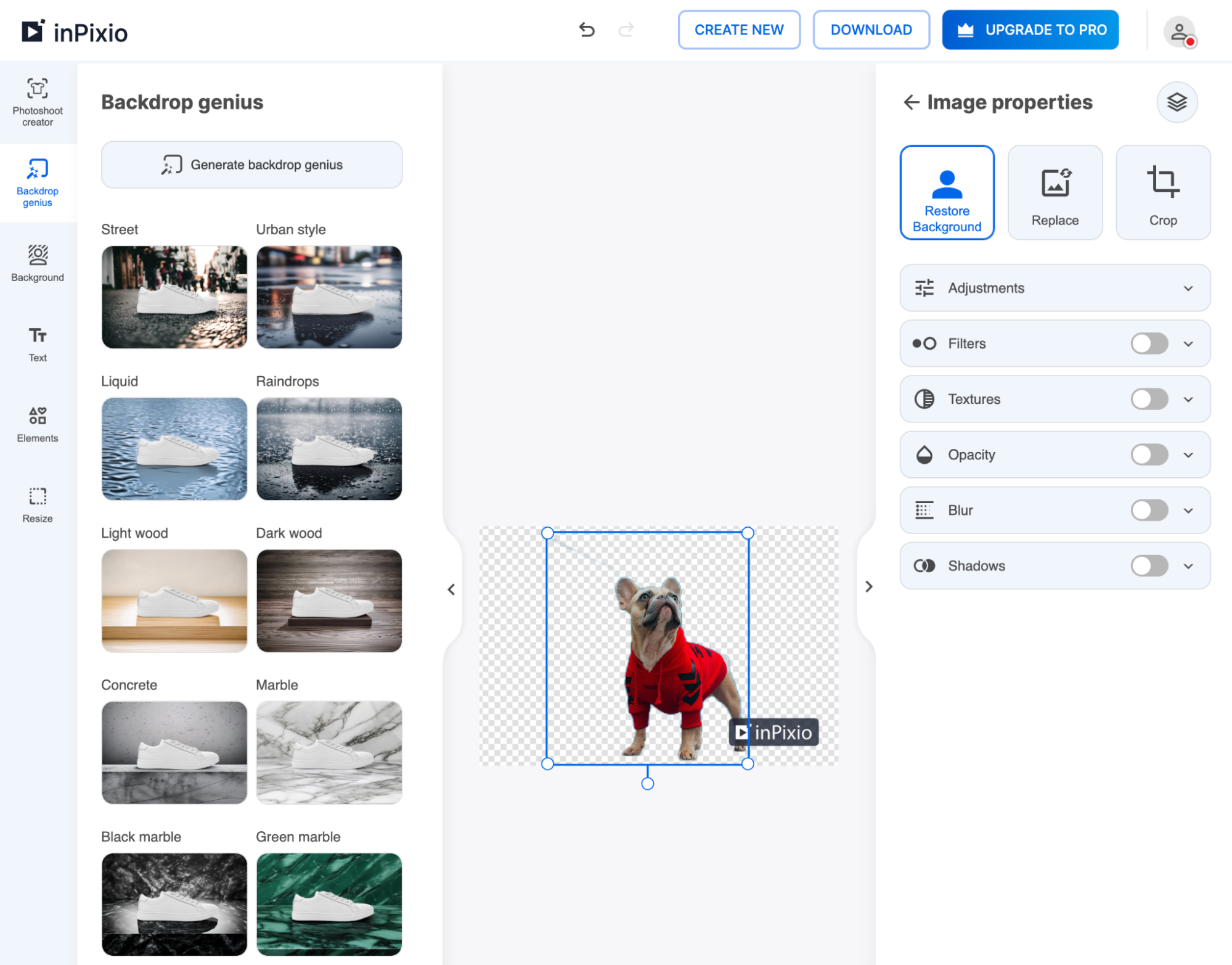
InPixio background removal tool showing a dog in a sweater with background options.

There is both a free version and a paid version of InPixio. The free version is an online background remover that uses an AI algorithm to erase unwanted objects from your photo’s background. The great thing about this app is that it also has retouching tools that allow you to select your background in more detail.

You can save your photo as a JPG file with a white background or use the preset background images to superimpose your photo. This photo editing app allows you to save and upload images unlimited times. However, you don’t get access to any other photo editing tools unless you pay a yearly subscription.

Features:

  • User-friendly interface for beginners
  • Allows for fine-tuning of automatic selections
  • Batch processing
  • Saves images with transparent backgrounds in PNG format
  • Text, image, and shape overlays
  • Background genius lets you add different backdrops

Pros: 

  • Uses AI to detect and remove backgrounds quickly
  • Retouching tools

Cons: 

  • AI might not detect complex backgrounds
  • Limited editing tools

Price: Free plan available; full access starts at $49.99 per year

3. AutoClipping

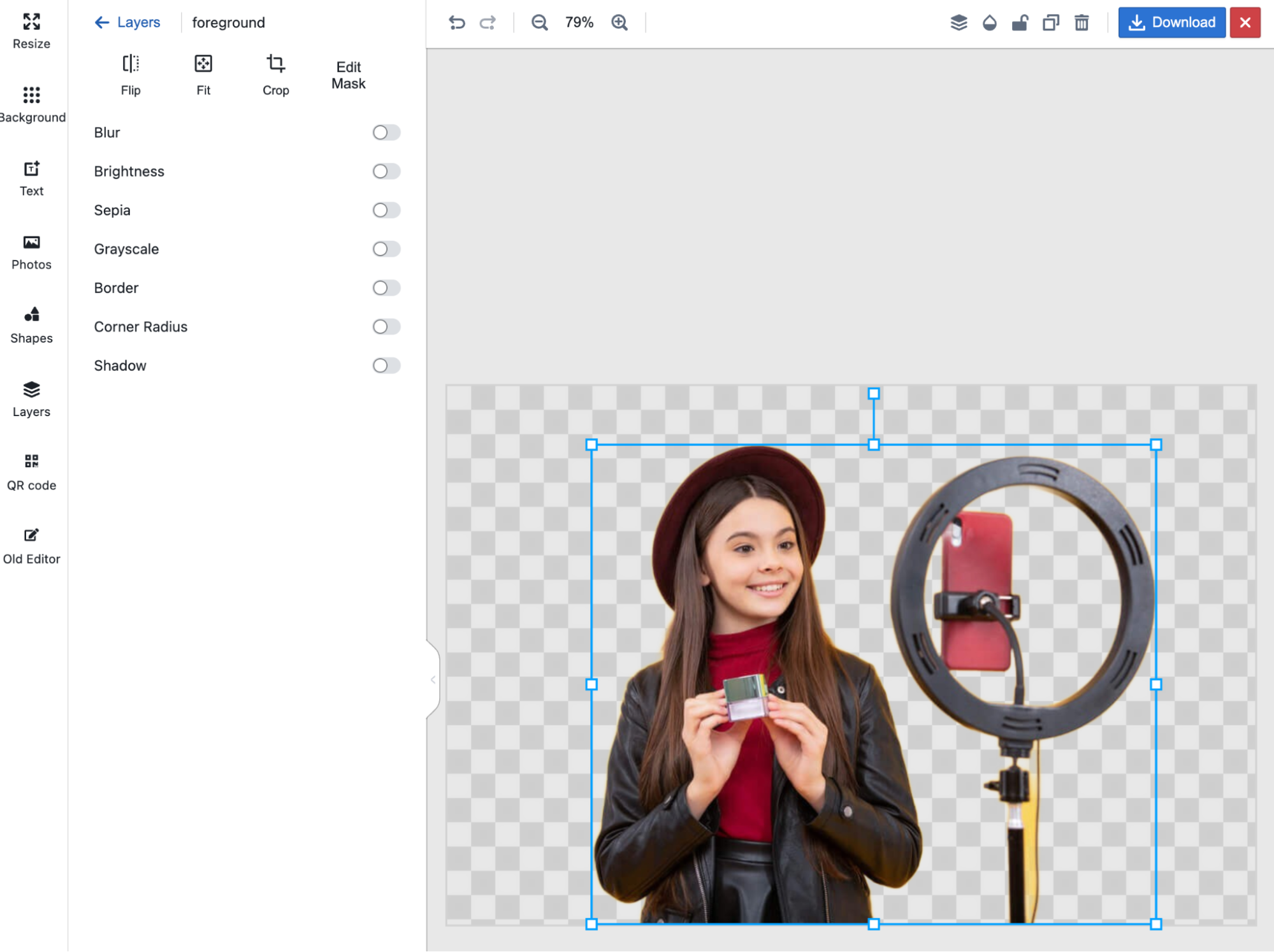
AutoClipping app removing background of sky from city image.

AutoClipping is a free online background remover. It’s great for beginning photo editors who don’t want to mess around with complicated edits. AutoClipping’s AI does all the work in removing those pesky backgrounds. However, to get a good transparent background, you do need to make sure your images have clearly defined subjects.

Features:

  • Ability to convert photos into banners for social media
  • Text layers
  • Manual corrects 

Pros: 

  • Zero-click background removal with AI
  • Easy to use
  • Image upscaling

Cons: 

  • Limited to three background removals with free version

Price: Free plan available; paid plans start at 20¢ per image

4. Cutout.pro

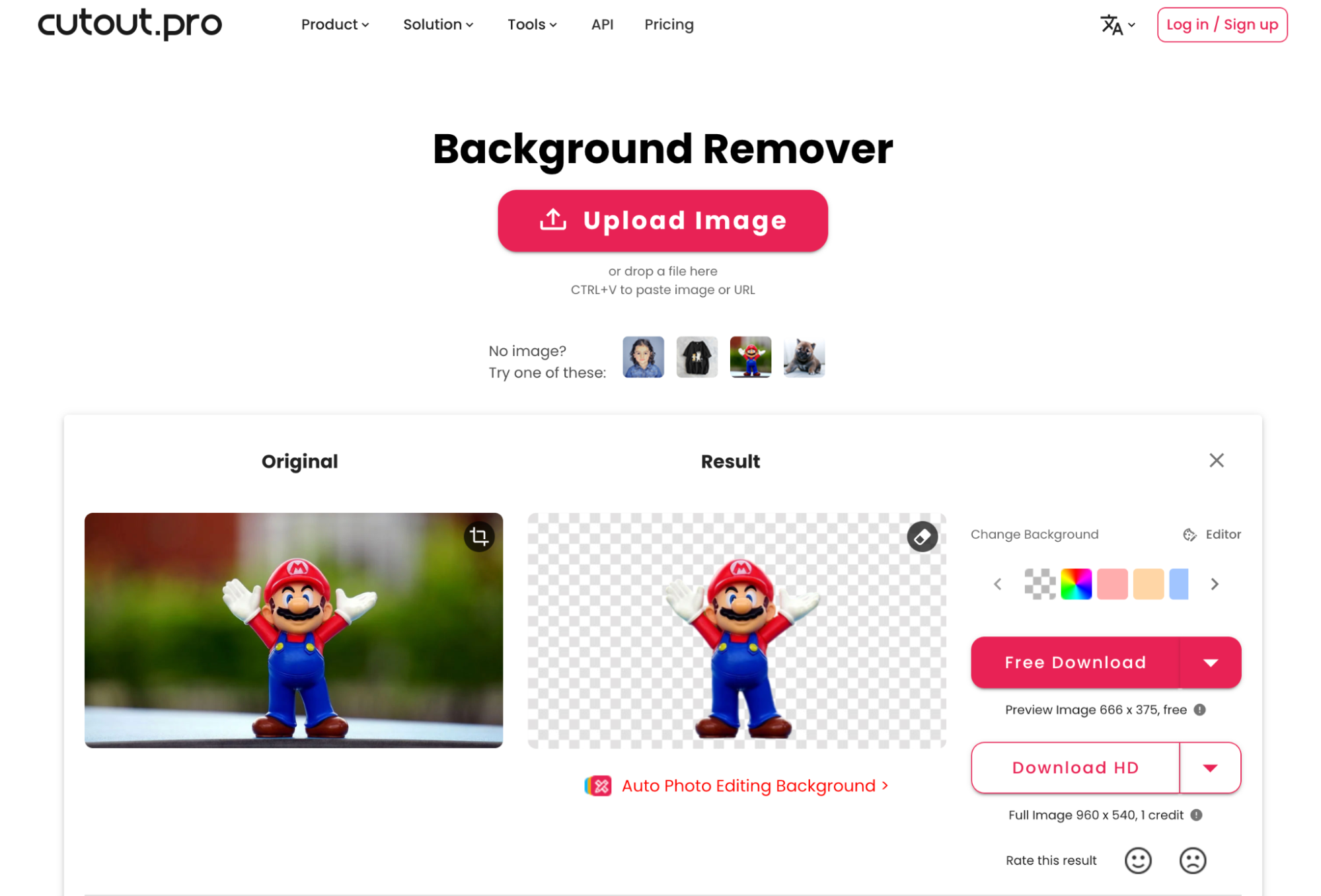
Cutout.pro background remover dashboard showing image of Mario toy being edited.

You aren’t limited to removing backgrounds only in photos anymore. Now you can do it in your videos too. Cutout.pro is an online background remover that automatically removes the backgrounds in your images and videos. It also allows you to superimpose your images and videos onto any background of your choice.

Cutout.pro lets you crop your images to fit different social media needs and add text to them. All in all, this is a great one-stop shop if you have fairly simple editing needs. 

Features:

  • Ability to change the background color
  • Free download for images up to 500 x 500 pixels
  • Video background remover
  • Basic image editor

Pros: 

  • Automatic background removal
  • Remove background from image and video quickly
  • Superimpose images and videos

Cons:

  • Must pay for HD image download

Price: Free

5. PhotoScissors

PhotoScissors’ new editor showing tools to edit a photo of a woman posing.

PhotoScissors is an online background remover that removes the backgrounds of busy images. It also has presets for cropping images so they’re compatible with sites like Amazon and eBay, and with social media. 

With PhotoScissors, you can upload unlimited files, but you’ll need to pay for photo credits to download high-resolution files. You’ll also need to pay for Inpaint, PhotoScissors’s complementary software, to access more detailed background removal tools. PhotoScissors operates on a pay-as-you-go model, where one credit equals one image. Depending on how many credits you buy, you can pay anywhere from 3¢ to 50¢ per image. 

Features:

  • AI background removal 
  • Swap background 
  • Precision cut-outs
  • Image generator
  • User-friendly interface
  • Resize tool

Pros: 

  • Automatic background removal
  • Built-in tutorials
  • Remove background around tricky objects like hair

Cons: 

  • Pay as you go

Price: Free download of images in standard definition; full photo editing package starts at $84.95

6. Clipping Magic

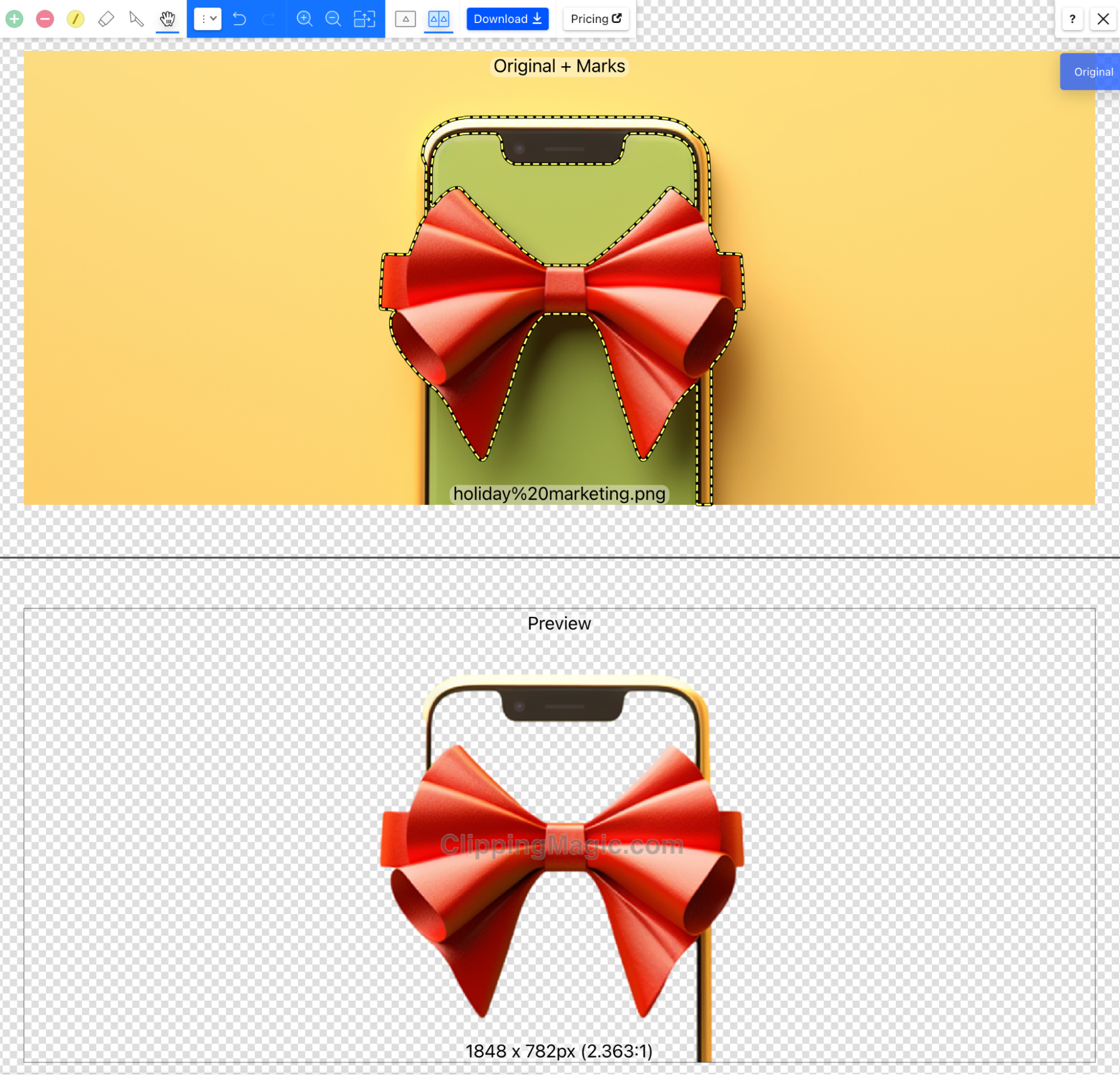
Clipping Magic’s video editor showing the background of a picture of a phone with a bow.

Another great online background remover tool is Clipping Magic. It uses AI technology that constantly improves its background removal tool with every photo uploaded to its servers.

The only drawback is that the free version of this tool leaves a watermark on all of your images. If you want an image without one, you’ll have to pay for credits. You’ll also need to pay for a monthly subscription if you want access to the full range of Clipping Magic’s features, like bulk clipping. 

Features:

  • AI background remover
  • Smart Editor for precise cutouts
  • Dedicated hair tool

Pros: 

  • API Integrations
  • Bulk clipping
  • Tutorials

Cons: 

  • Can download a small image with watermarks for free
  • Subscription required for removing watermark and downloading images

Price: Free, then $3.99 per month for paid plans

7. Adobe Express

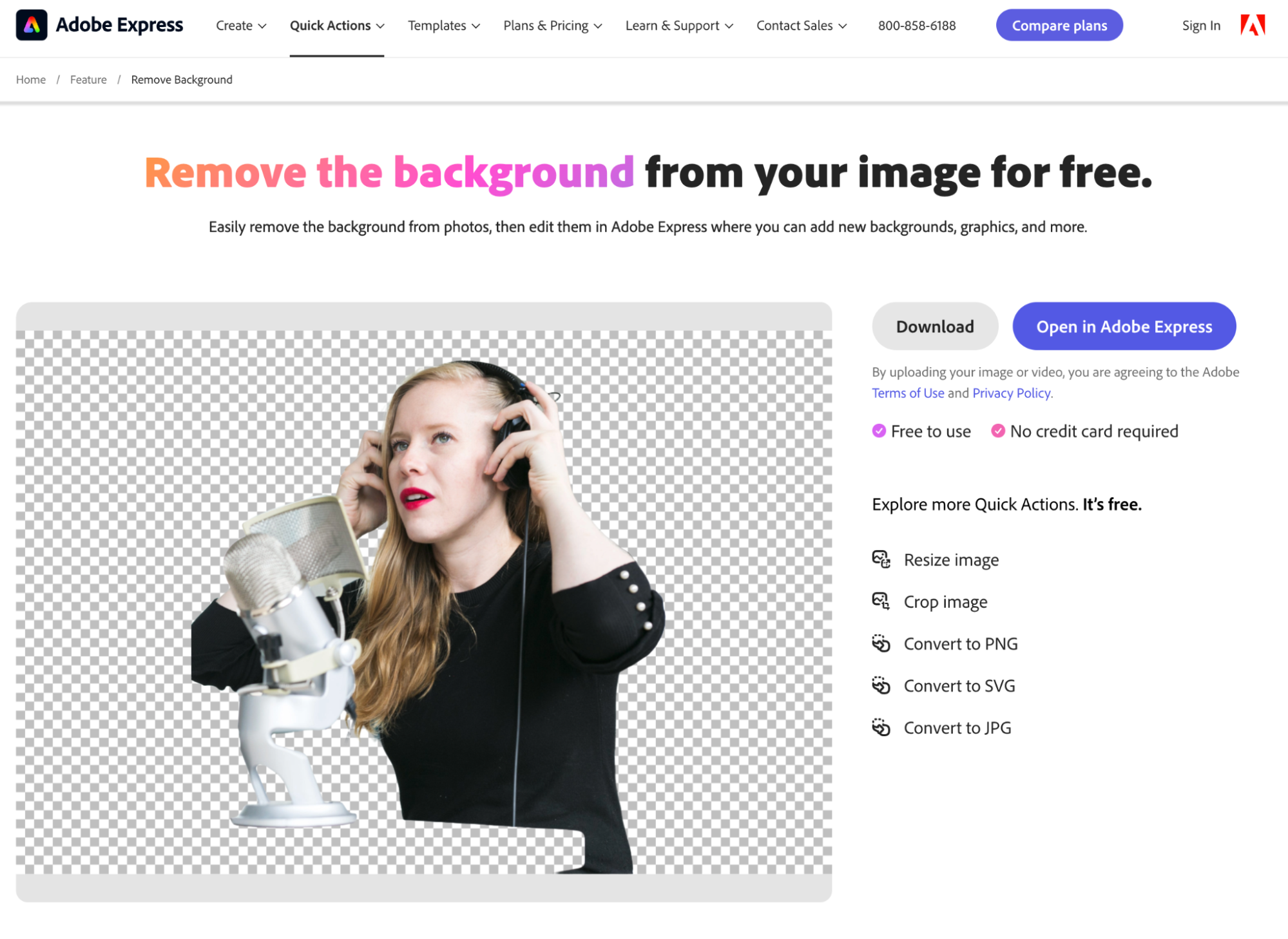
Cutout image of woman listening to music, with no background created using Adobe Express.

Adobe Express offers a free online image background remover. Simply upload any JPEG or PNG to its website, then edit it or add a new background in the Adobe Express platform. 

Features:

  • Automatic background remover with AI
  • Easy to use
  • Integrates with other Adobe products
  • Available on web and mobile
  • Edit and enhance options

Pros:

  • Efficient and precise 
  • No design skills required

Cons: 

  • Subscription required for full capabilities 
  • Need internet connection 

Price: Free plan available; premium plans start at $9.99/month 

Best background removal apps 

  1. PicMonkey
  2. Background Eraser
  3. Background Eraser – Remove BG*

8. PicMonkey

4 images showing how PicMonkey mobile app works as a video editor and background remover.

PicMonkey is an online photo editor for tweaking product photos taken on a smartphone. PicMonkey saves everything in the cloud automatically, and you can access it from any Android or iOS device.

It has both an automatic and a manual background remover, as well as some pretty good photo editing tools and templates for collages and banners.

Although you can use PicMonkey for free, most of its features are available only if you subscribe. For example, if you want to download the image you’ve been working on, you’ll need to pay for an annual subscription.

Features:

  • Graphic design tools like fonts and stickers
  • Design templates for Facebook, Instagram Stories, and Pinterest
  • Photo editor 
  • Stock image library

Pros: 

  • Automatic cloud storage
  • Built-in tutorials and resource center
  • Ability to print your images

Cons:

  • Must subscribe to access background remover

Price: Free seven-day trial, then $72 per year

9. Background Eraser

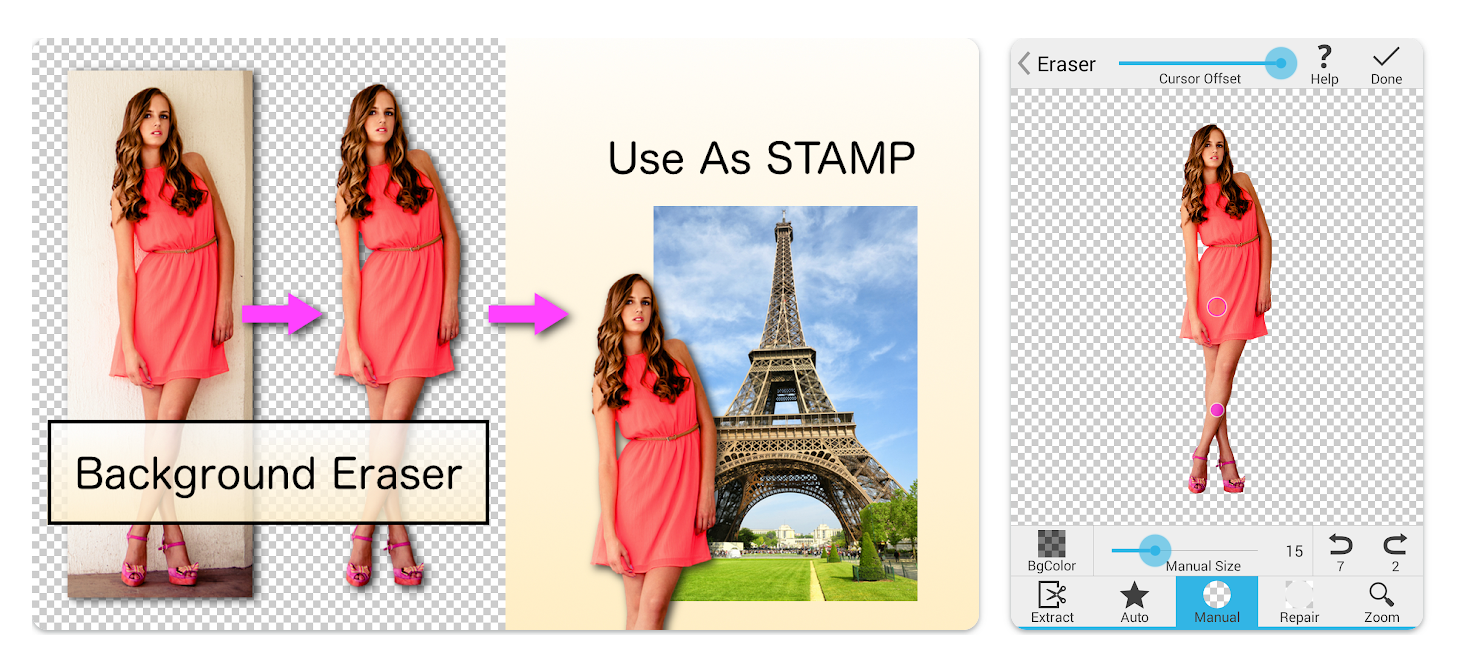
3 images showing how Background Eraser Android app uses stamps to replace backgrounds.

Background Eraser is a free background remover app for Android that has been downloaded more than 100 million times. It is fairly simple and focuses entirely on helping you remove backgrounds from your photos. You can download Background Eraser from the Google Play app store.

It offers three different ways to remove backgrounds:

  • Auto is a removal tool that removes pixels similar to the ones you’ve selected.
  • Magic acts like a magic wand and makes estimations based on your selections.
  • Manual gives you complete control.

The only drawback is Background Eraser is focused only on background removal. That means you’ll need to download other apps to superimpose your images or turn them into marketing materials.

Features:

  • Three background removal options
  • Auto color feature
  • Basic image editing tools 

Pros:

  • Easy to use
  • Excellent AI features

Cons: 

  • For Android devices only

Price: Free

10. Background Eraser – Remove BG*

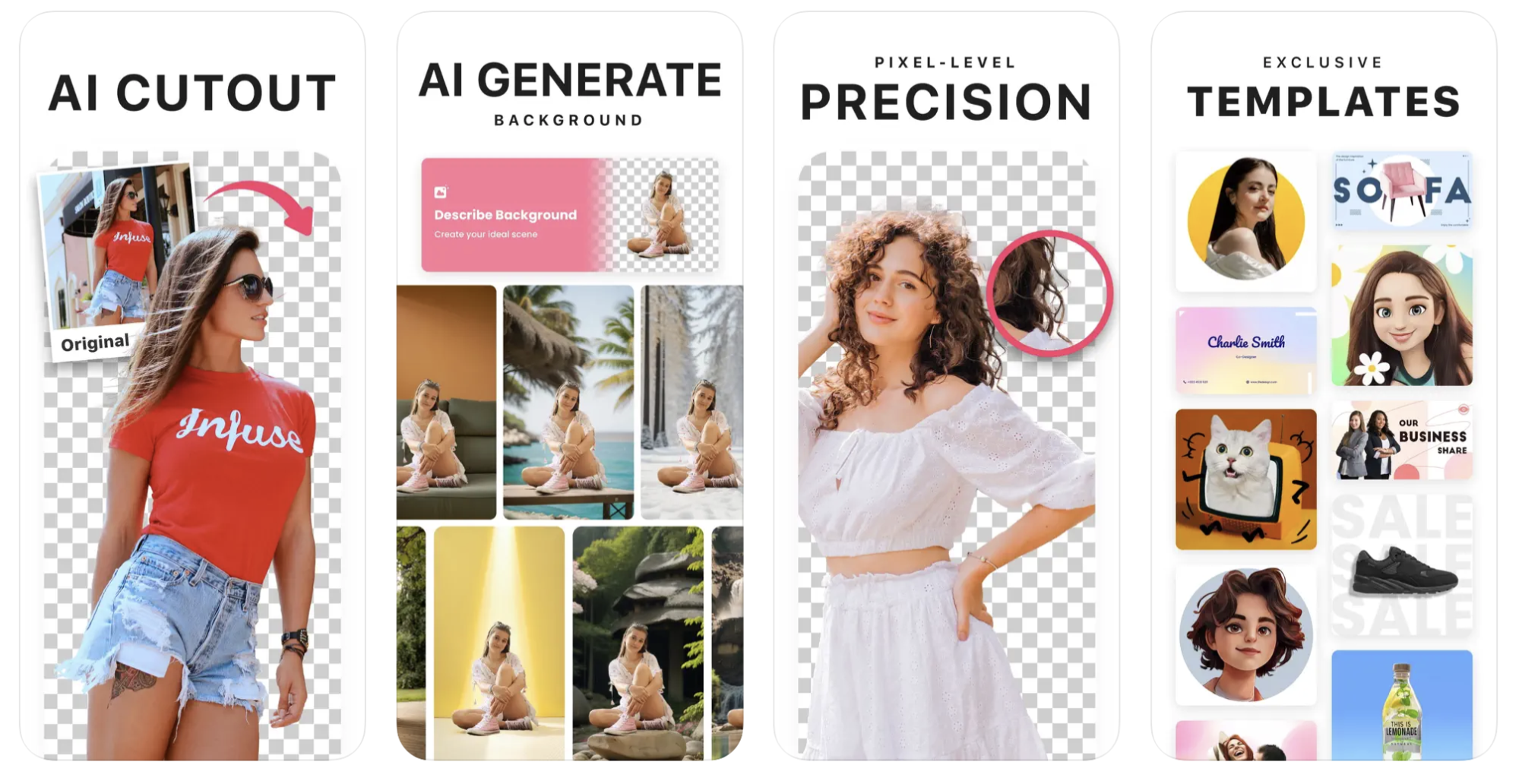
Four images showing how Background Eraser iOS app works with AI cutouts, generation and templates.

Background Eraser – Remove BG* uses artificial intelligence to detect which part of the picture is the background. Then, it turns the background transparent. From there, you can change it to whatever you want. It’s an iOS app used by more than 10 million people to showcase their products or photography work. 

Features:

  • AI-generated backgrounds
  • Templates 
  • Pixel-level precision 
  • AI avatars 
  • Multiple cut-out modes
  • All-in-one editor

Pros: 

  • Automatic background removal
  • Export images in different social-media-friendly dimensions
  • You can download high-quality versions of different image sizes

Cons:

  • Subscription required for full features
  • For iOS devices only

Price: Free, with in-app purchases 

Finding the best background removal tool for you

As you can see, there are a lot of tools out there to help you get perfect ecommerce photography images. What’s more, you don’t have to be an expert photo editor or spend hours in front of a computer. With a quick upload into one of the image tools on our list, you’ll have that perfect soufflé picture for tempting everyone on social media.

Best free background remover FAQ

How can I remove the background of a picture for free?

You can remove the background of a picture for free using online tools like remove.bg or PhotoScissors. These websites offer easy ways to remove picture backgrounds at no cost.

Which website removes background for free?

Remove.bg is a popular website that automatically removes backgrounds from images for free. You can also try Adobe Express or AutoClipping.

Is there a free background eraser app?

Background Eraser is a free app available on Android, iPhone, and iPad. It can help you easily erase backgrounds from your pictures.

Can Canva remove background?

Using the background removal tool in Canva is as simple as uploading an image, selecting it, and choosing “Background Remover” from the effects menu. The whole process takes just a few seconds.

What is the best background removal tool?

The best background remover is Adobe Photoshop. Photoshop makes it easy to remove photo backgrounds with its quick selection tool, magic wand, and advanced cutout tools. It also allows you to adjust the background’s color and create transparent backgrounds.

How To Patent an Idea in 8 Easy Steps (2024)

Software Stack Editor · June 8, 2024 ·

image

Say you’ve started a business to sell an ingenious invention of your own design, or you’re working on that million-dollar idea. You know no one has ever devised a product like this before—and you also know that the second it hits the market, copycats will start making knockoffs of your hard work. This is where patents can come in to save your business idea. 

But that’s not to say patents can guarantee protection from copycats. Take Bitten Design, for example. “We own the worldwide patent for the mustache pacifier, but if you go and look on the internet and type in ‘mustache pacifier,’ there’s a load of copies,” says Al Cuttell, Bitten Design co-founder. The Bitten team believes that legally stopping the dozens of companies copying their products isn’t possible.

“We don’t want to spend time in such a negative way,” Al says. “We look at other companies who copy our products and sometimes it’s actually quite nice, because you realize that you’ve done something good that other people want.”

In spite of these challenges, a patent is still the most powerful tool for protecting intellectual property in the US. This article will walk you through the steps of successfully compiling a satisfactory application for patent recognition.

What is a patent?

A patent is a legal tool enshrined in the US Constitution for the purpose of protecting intellectual property. Specifically, a patent is a document that declares ownership of an invention, much as a deed proves ownership of a piece of real estate.

I recommend that entrepreneurs appreciate the value of copyrights, trademarks, design patents, over the value of a utility patent when it comes to enforcing and protecting their actual products; really invest in that.

David Barnett, inventor and founder, PopSockets

How do patents work?

Patents are issued by the United States Patent and Trademark Office (USPTO) in exchange for the necessary registration fees, and issuance grants the patent holder “exclusive rights.”

Exclusive rights allow the patent holder to “exclude others from making, using, offering for sale, or selling” the invention covered by the patent domestically, or importing the invention from overseas. The USPTO, while acting as a central clearinghouse for patent and trademark information, does not enforce patent rights. Those rights are enforced through the civil court system.

Despite the protection a patent is meant to provide, infringement is a common challenge. A patent infringement happens when a third party makes, uses, sells, or imports a patented invention without the permission of the patent holder. 

Patent holders need to be prepared to enforce their rights through the legal system, which might involve litigation to get compensation or stop further infringements.

How to get a patent in 8 steps

Applying for a patent is one of the more complicated processes for protecting your intellectual property. Although it is possible to do it on your own, you may want to consult a patent attorney to help you prepare and submit the filing.

1. Determine if patent protection is appropriate. 

If you are looking to protect a creative work, you should seek a copyright; for brand names, logos, or slogans, you should apply for trademarks. If you want to protect an invention, a physical product, or a design, patent protection is the right route.

2. Determine if your invention is patentable

To be patentable, an invention must be:

  • Patentable subject matter. Under Section 101 of the US Code, “patentable subject matter” includes any “process, machine, manufacture, or composition of matter” or “any new and useful improvement thereof.”
  • Useful. A patent’s usefulness is rather easily proved—it must offer some functional purpose.
  • Novel. A patent is not novel if it was known to the public before the applicant filed the patent.
  • Non-obvious. A patent is non-obvious if inventing it required some advanced skill that an ordinary person couldn’t replicate.

3. Conduct a patent search

Make sure your invention is sufficiently novel by investigating whether anyone else has a similar existing patent. You can run a search through the USPTO online.

4. Determine what kind of patent you need

Do you need to file a utility patent application, or one for a design or a plant patent?

5. Prepare to submit your application

You should review the USPTO’s catalog of various patent registration fees, as well as timelines for having your application examined. At this stage, after ascertaining the complexity of your application, consider hiring a patent lawyer.

6. Submit your application

You can use EFS-Web, the USPTO’s electronic filing system to file your patent application online. Your application must contain all required parts (see the list below) and the appropriate fee. You can file either a regular patent application (RPA) or a provisional patent application (PPA). A PPA allows you to claim “patent pending” status for your invention, and it is subsequently less complex than applying for an RPA. An RPA entails the full patent examination process, explored below.

7. Work with your patent examiner

If your application is incomplete, you will be notified by the patent office by mail of what’s missing. You will have a limited period, depending on the deficiency, to update your application. If the omission isn’t corrected, your application will be denied and returned to you. If the application is accepted as complete, it will be assigned to an examiner, who will review it to determine whether it meets the legal requirements of patentability. You will have opportunities to amend your application if the examiner finds you have failed to meet legal standards. After two rejections, you may appeal the examiner’s decision to the Patent Trial and Appeal Board (PTAB).

8. Get approved and pay final fees

If the examiner determines your application is satisfactory, you will receive a Notice of Allowance from the USPTO. You must then pay an issue fee, and possibly a publication fee before the patent finally is issued.

3 types of patents

  1. Utility patent
  2. Design patent
  3. Plant patent

Patents fall into three main categories.

  1. Utility patent: Utility patents protect anyone who develops any new “useful process, machine, article of manufacturing, or composition of matter, or any new and useful improvement thereof,” according to the USPTO. This concerns inventions in the traditional sense: new gizmos, gadgets, materials, etc.
  2. Design patent: Design patents are granted to anyone who invents a “new, original, ornamental design for an article of manufacture.” This includes specifications for pieces of clothing, furniture, or consumer products.
  3. Plant patent: Plant patents are granted to anyone who invents and “asexually reproduces” any new variety of plant life. Asexual reproduction means the plant is produced in some way other than through the germination of seeds—such as cutting or grafting.

David Barnett, inventor and founder of PopSockets, learned a lesson in design patents early on in his career. “I recommend that entrepreneurs appreciate the value of copyrights, trademarks, design patents, over the value of a utility patent when it comes to enforcing and protecting their actual products; really invest in that,” he says.

“Utility patents typically tend to be more valuable than design patents, but it turns out that when you’re enforcing your IP, when you’re trying to shut down factories that are making counterfeits, it’s much easier to use a design patent.”

Can you patent an idea?

Ideas are not patentable. US patent law holds that patents may only be granted on the physical manifestations of ideas—machines and products, but not the underlying ideas themselves.

Patent vs. copyright: Similarities and differences

Both patents and copyrights are legal tools for protecting intellectual property in the US. Although they both concern protecting products of imagination, they are distinct in what they are meant to cover.

How are they similar?

Patents and copyright are similar in that they are both devices of US federal law designed to protect intellectual property rights.

How are they different?

Copyrights and patents differ in the rights they are intended to protect. Copyright protects ownership rights in creative works (books, films, works of art, etc.) and patents protect ownership rights of inventions (machinery, consumer products, product designs, etc.).

Patent checklist

Depending on what you want to patent, and the type of patent you seek, your application should include:

  • Patent description. A patent description should include a name for the invention, its purpose, its components or steps, how the components interact with each other, or how the steps are enacted. It also should include how to use the invention, descriptions to accompany any drawings, and the benefits or alternative uses for it.
  • Patent drawings. Your application must include drawings or schematics, unless it is for a method, materials composition, or chemical compound. They should be clear and easy for a layperson to interpret. All views and angles must be captured by the drawings, and they should be sufficiently labeled with reference markings. Drawings can consist of line drawings, charts, photographs, computer-generated graphics, or hand illustrations.
  • Inventor information. You must identify yourself and any co-inventors in your application. A co-inventor is anyone who contributed to the conception of your invention. It’s important to make these identifications to insulate yourself from any competing patent claims or lawsuits down the road.

How to patent an idea FAQ

How much does it cost to patent an idea?

USPTO registration fees can be as much as $900, depending on the type and scope of the patent. Examination fees are about $220 on top of that. If you use patent lawyers, the cost of patenting a relatively simple invention, such as a small consumer product or hand tool, is between $8,500 and $12,000.

What is the best way to patent an idea?

The best way to patent an invention you thought up is to hire a specialized attorney to guide you through the patent process. As an alternative, you can consult the USPTO’s guidance documents for preparing a successful application yourself.

Can you patent an idea yourself?

You can patent a product that is the result of an idea yourself, but not the idea itself. However, the patent application process is arduous and complex, and if you have the financial means, you may want to hire a patent attorney to assist you.

How long does a patent last?

A patent lasts 20 years, but you must pay maintenance fees at 3-, 3.5-, 7-, 7.5-, 11-, or 11.5-year intervals.

Is it hard to patent an idea?

Patenting is a demanding and time-consuming process. Because of the complications of the patent filing process, even for provisional patent applications, there are many opportunities for a filer to make mistakes or fail to include the required information. Preparing a USPTO patent application, therefore, requires great care and attention to detail, and advice from a legal expert.

How To Start a Business in Tennessee: 10 Steps (2024)

Software Stack Editor · June 7, 2024 ·

image

This content doesn’t contain and isn’t meant to provide legal, tax, or business advice.*

Tennessee has emerged as a popular spot for new businesses in recent years. Its low cost of housing, major manufacturers, and competitive corporate tax rate draw entrepreneurs from across the country.

Whether you’re looking to start a business in the urban hubs of Nashville or Memphis, in smaller cities like Chattanooga or Knoxville, or in one of the abundant rural regions, here are nine steps to get your new venture up and running in the Volunteer State.

Start a business in Tennessee

  1. Choose a business idea
  2. Name your Tennessee business
  3. Create a business plan
  4. Choose a business structure and get started
  5. Get a federal employer identification number (EIN)
  6. Obtain business licenses and permits
  7. Examine business insurance options in Tennessee
  8. Open a business bank account
  9. Get funding for your business entity
  10. Market your business

1. Choose a business idea

A great business idea can vault you past the competition. You may want to create a new product or service or improve an existing one. Here are two questions you can ask yourself to find your footing:

Who is your customer?

Analyze your target market, paying particular attention to customers who aren’t fully served by current offerings. You may want to survey prospective customers, investigate successful businesses in your sector, and look into industry trends. Conduct market research to steer you in the right direction before you open your doors for business.

What’s your projected profitability?

It isn’t enough to simply make money. You have to make more than you spend over the long term. How many products or services do you need to sell to cover your costs and turn a profit? How long will this take?

2. Name your Tennessee business

Customers can glean a lot about a business’s product offerings, prices, and quality simply from its name. Consider two hypothetical florists: one called Flower Warehouse and another called Lennie’s Desert Flora. You get an instant sense of how these two differ. Here’s how to secure a strong name for your Tennessee business:

Get creative

Many successful businesses have unconventional names that stand out and stay lodged in people’s minds. Alliteration, rhymes, and pop culture references can work wonders. These business name guidelines can help if you need extra pointers.

Register your original name

Before registering your business online in Tennessee, confirm another business hasn’t already claimed it. The Tennessee Secretary of State provides a business name availability tool for this purpose. Once you have a name, file Tennessee Form SS-9425: Application for Name Reservation by mail or email the Secretary of State. The filing fee is $20. 
Include required phrases

Tennessee requires LLCs to include the term “Limited Liability Company” or its abbreviations (“LLC” or “L.L.C.”) in their official business names. Tennessee corporation names must contain the word “Corporation,” “Company,” or “Incorporated” (or an abbreviation of one of these words). Tennessee professional corporations must include the phrase “Professional Services Corporation” or the abbreviation “PSC.”

Register a DBA

DBA stands for “doing business as.” The term applies to companies organized under one legal business entity but that interface with customers using an assumed name. For instance, Whittinghill Agricultural Ventures LLC might use Happy Chickens Grain Feed as an alias. To use a DBA, register an assumed name with the state of Tennessee for $20. Shopify offers a dive into the DBA process.

Reserve an online domain name and social media handles
Secure a domain name and social media handles aligned with your business name or DBA, that way your customers are able to find you online. You can use a domain name generator to create a URL for your business website.

3. Create a business plan

Many successful business owners craft and follow business plans establishing organizational objectives, plot growth, and set benchmarks for success. Most of these also include a financial plan balancing business income with business expenses.

If unsure how to start, consult a business plan template or browse business plan examples for inspiration. Comprehensive business plans include:

  • An executive summary
  • A mission statement and company description
  • An outline of the organizational and managerial structure
  • An operations and logistics plan, including forecasted business costs
  • A portfolio of products or services
  • Market research and analysis
  • A marketing plan
  • A customer segmentation report

4. Choose a business structure and get started

Your new business entity will likely take one of four business structures: sole proprietorship, limited liability company (LLC), general partnership, or corporation. Each has its benefits, operational requirements, and tax exposure. Here’s how the three structures compare:

Sole proprietorship

Sole proprietorships are owned and operated by a single person. They’re not recognized as legal entities, meaning there’s no legal distinction between an owner’s personal and business expenses.

For instance, if the company is sued, the sole proprietor could have to pay out of their personal savings. These informal business structures have few legal paperwork requirements and keep all their profits. Tennessee sole proprietorships may appeal to small business owners in low-risk industries with no employees.

General partnership

A general partnership is similar to a sole proprietorship, but it involves two or more partners who share in a company’s profits, losses, and assets.

LLC

A limited liability company (LLC) is a formal business structure owned by individuals called LLC members. Members control their company’s operations without the oversight of a corporate board of directors and often abide by an LLC operating agreement. LLCs provide personal liability protection, meaning owners’ personal assets are not at risk if the LLC is sued.

Many small business owners favor LLCs for their personal asset protection. Regarding federal taxes, the IRS treats LLCs as pass-through organizations, meaning LLC profits and losses pass through to members, who report them on their personal income tax returns. To officially establish an LLC in Tennessee, you must file Articles of Organization with the Secretary of State.

Corporation

A corporation is a legal business entity owned by shareholders. Like LLCs, corporations do not mingle company assets with their owners’ personal assets. The shares-based corporate business structure makes it easier to welcome new shareholders and raise capital for business expenses.

Corporations are taxed at a corporate rate, which differs from the personal income tax rate. In Tennessee, the corporate excise tax rate is 6.5%. Corporations have a more complex legal structure and require more formalized accounting and tax filing than LLCs and sole proprietorships. Corporations must maintain corporate boards of directors, name corporate officers, and hold periodic meetings.

Incorporating in Tennessee

Tennessee requires new corporations to:

File a corporate charter

Tennessee corporations must file a corporate charter via the Tennessee Secretary of State’s website or by mailing in a form. The filing fee is $100. If your corporation is based outside Tennessee and wants to expand into the state, file Tennessee’s Form SS-4429 and pay a $20 filing fee to the Secretary of State’s office. A $600 fee accompanies the separate application for the Certificate of Authority . Further details are included in the Tennessee Smart Start Small Business Guide.

Designate a registered agent

Registered agents receive legal and tax correspondence on behalf of the company. Your corporation’s registered agent must have a physical address in Tennessee. A registered agent can come from your ownership ranks, or you can enlist a dedicated registered agent service.

5. Get a federal employer identification number (EIN)

If your Tennessee business plans to hire employees, you must apply for a federal employer identification number (EIN) with the Internal Revenue Service (IRS). An EIN functions as a business’s federal tax number.

You’ll need to present your EIN in various business ownership scenarios, from hiring employees to establishing a business bank account and paying business taxes. Your EIN is also used to obtain a state sales tax number from the Tennessee Taxpayer Access Point (TNTAP).

6. Obtain business licenses and permits

Tennessee business law subjects most companies to licensing and permitting regulations. Many Tennessee business licenses are issued at the county level. The Tennessee Department of Revenue provides more information to get you started. Common Tennessee business licenses include:

Standard business license

If your Tennessee business has gross receipts of $100,000 or greater, you must obtain a standard business license from your local county clerk. The registration fee is $15.

Minimal activity license

Tennessee businesses with gross receipts of more than $3,000 but less than $10,000 must obtain a minimal activity license from their local county clerk. (You don’t need a license if your business income from gross receipts is less than $3,000.) The registration fee is $15.

Sales and use tax certificate

Tennessee LLCs must collect a 7% sales tax on goods and certain services, and localities can add additional amounts. You need a sales tax and use certificate to conduct retail sales in the state legally. To obtain one, create an account on the Tennessee Department of Revenue website and follow the prompts.

Many Tennessee industries require unique certification and business licenses, including medicine, architecture, accounting, insurance, home inspection, and cosmetology. Consult the Tennessee Department of Commerce & Insurance website for details.

7. Examine business insurance options in Tennessee

Even with the personal asset protection afforded by LLC and corporate business structures, most small business owners purchase insurance to shield their business assets against costly mishaps. In Tennessee, some types of insurance, like workers’ compensation insurance, are required by state law (with some conditions). Other insurance is not state mandated but may be required by other entities such as landlords or lenders.

The Tennessee Department of Commerce & Insurance provides business resources to help you determine what insurance you need. Standard business insurance policies include:

  • Workers’ compensation insurance. Tennessee requires all businesses with five or more employees to purchase workers’ compensation insurance to cover on-the-job injuries.
  • Commercial general liability insurance. Commercial general liability insurance (CGL) protects businesses from financial claims involving property damage, bodily injury, libel, slander, and misleading advertising.
  • Professional liability insurance. A professional liability insurance policy protects your business against claims that your advice or services caused a customer financial harm. For example, a real estate agent who fails to note mold in a basement can be liable for damages.
  • Cyber liability insurance. Cyber liability insurance protects against financial losses from cyberattacks and data breaches. You may find this coverage invaluable (and more comprehensive than data breach insurance alone) if your business collects customers’ credit card numbers or other personal information.
  • Commercial automobile insurance. If you own a vehicle in Tennessee, it must be covered by vehicle insurance, whether it’s for commercial or personal purposes. For your business vehicles, obtain commercial auto insurance.

8. Open a business bank account

Choose a financial institution to handle your company’s business banking. Use this account to separate personal and business expenses when paying workers or business tax, and when receiving income.

Manage your money where you make it with Shopify Balance

Shopify Balance is a free financial account that lets you manage your business’s money from Shopify admin. Pay no monthly fees, get payouts up to seven days earlier, and earn cashback on everyday spending.

Discover Shopify Balance

9. Get funding for your business entity

New companies often need cash infusions to get off the ground. Several Tennessee agencies connect business owners with funding, grants, and information about tax benefits, including the Tennessee Small Business Development Centers network and the Tennessee Department of Economic and Community Development.

The US Small Business Administration is an independent federal agency supporting entrepreneurs and small businesses. It maintains an office in Nashville.

Get funding to run and grow your business through Shopify Capital

Shopify Capital makes it easy to get funding quickly and use it for inventory, marketing, and more. Automatically make payments as a percentage of your daily sales. No compounding interest. No schedules. No surprises.

Explore Shopify Capital

10. Market your business

Marketing starts with building a brand and identifying what makes it stand out. Effective marketing takes into consideration color schemes, fonts, logos, and slogans. Once you’ve honed in on your brand identity, you’re ready to promote your business online and in person. Popular methods include:
For further guidance, peruse online marketing resources like this small business marketing guide.

Tips for starting a business in Tennessee

Starting a business can seem easy once you’ve done your market research and have funding in place, according to Phala Mire, president and CEO of Women’s Business Enterprise Council South (which includes Tennessee).

“Don’t forget that there are steps every business owner needs to take before starting a business to ensure that the company is operating in compliance with state and local laws,” she emphasizes.

Here, Mire shares her top three startup tips for business owners launching a business in Tennessee:

Research start-up requirements on the state and local levels

Startup requirements can vary by state, geographic location, and business type. Make sure to check in with your state’s economic development office to find out exactly what steps you need to take and what resources they provide to business owners.

The Tennessee Department of Economic & Community Development’s (ECD) Business Enterprise Resource Office (BERO) offers a comprehensive Tennessee Smart Start Guide with step-by-step instructions for those looking to start their own business.

Register your business with the Secretary of State, and obtain any licenses and permits necessary for your business structure and industry requirements

Having the necessary licenses and permits ensures that you run the company legally—and avoid potential fines and penalties. This is also a great time to research possible business certifications—national, state, and local—that can help your business access opportunities for certified small businesses, as well as minority-, veteran-, and women-owned businesses.

Take advantage of any tax breaks and business start-up incentives

Check what’s offered by your state or city government. The Tennessee Department of Revenue lists a plethora of incentives on their website, such as the Jobs Tax Credit, which allows qualified businesses a credit against franchise and excise taxes based on capital investment and the number of jobs created.

*This post is for information only. You are responsible for reviewing and using this information appropriately. This content doesn’t contain and isn’t meant to provide legal, tax, or business advice. Requirements are updated frequently and you should make sure to do your own research and reach out to professional legal, tax, and business advisers, as needed. Businesses outside of Tennessee will have different steps and requirements. To sell products using the Shopify platform, you must comply with the laws of the jurisdiction of your business and your customers, the Shopify Terms of Service, the Shopify Acceptable Use Policy, and any other applicable policies.

Starting a business in Tennessee FAQ

How much does it cost to start a business in Tennessee?

Sole proprietorships are informal business structures that do not require any legal filings, so there are no startup costs concerning the Tennessee government. For more complicated legal structures, the total fees can range from around $100 to $3,000.

Is Tennessee a good state to start a business?

Tennessee has a competitive corporate tax rate of 6.5%. And the state is experiencing strong economic growth, plus it provides ample business and training opportunities for small businesses. However, its sales tax rate averages 9.75% when combined with state and local rates, which is among the highest in the country.

What is a good business to start in Tennessee?

  • Ecommerce
  • Real estate
  • Home improvement 
  • Restaurant
  • Law firm
  • IT firm
  • Landscaping
  • Beauty salon

What do I need to start a business in Tennessee?

How To Start a Candle Business in 2024 (Guide and Examples)

Software Stack Editor · June 7, 2024 ·

If you’re an entrepreneur who is eager to burn the midnight oil with a new business venture, we’ve got a potential business idea for you: selling homemade candles.

When it comes to creating a product that’s practical and hot (literally and figuratively), learning how to make candles is a skillset that’s useful even for the hesitant DIYer.

So, if you’re curious about how to make homemade candles and start a candle business, it’s time to learn how you can make money online with this trending product.

Start your online candle business
Why start a candle business?

Candles are an essential decor item—an industry set to eclipse 10 billion in global sales by 2032, according to Expert Market Research. 

In past years, the commercial use of candles has seen a sharp increase, with spa and massage using scented candles for aromatherapy, and restaurants creating soft, moody environments for customers. 

Consumers buy candles as home decor accents as well as for relaxation and stress reduction, according to the National Candle Association. Taking a quick look on Google Trends shows us that global interest for homemade candles is consistent. And while candles may be used for various purposes across the globe, most of the searches for homemade candles are concentrated around North America, New Zealand, Ireland, and South Africa. This is great intel for candlemakers looking to find a market for their DIY products.

In addition to the popularity of this hot product, candles offer business owners a number of other benefits, including:

  • Low cost entry. Granted, some homemade candle varieties require pricier materials than others, but in general, candlemakers can create their wares with very little cash up front.
  • Easy to sell anywhere. Want to sell your home decor items at craft fairs and local markets? Homemade candles travel well, so you can sell them both online and offline.
  • Scalable craft to learn. Whether you’re a DIY master or a crafting newbie, the base recipe for basic candles is easy to follow. As you’ll notice from our handy infographic below, the formula is simple.
  • Easy to customize. With so many types of candles, it’s easy to personalize your products and differentiate yourself from direct competitors.

From the standpoint of a DIY business, learning how to make candles is a skill that can be transformed into a viable income stream. But before we tackle the topic of creating homemade candles of your own, let’s take a look at the popular types that are piquing shoppers’ interest.

🏬 Success Story: A family candle business helmed by three kidpreneurs

Three young brothers were looking for a way to make money for college—and Nerf Blasters. Their hand-poured candle business became more than a side project. 👉 Read their story

Types of homemade candles

One of the big advantages when it comes to making candles for your business is the variety—there’s likely a type of candle out there that will catch the eye of any potential customer.

Not sure where to start? Here are some of the top types of homemade candles you can explore when planning your candle business opportunities.

Soy candles

Soy candles are made from a base of soy wax. This wax is derived from soybeans and, therefore, is made from vegetables (opposed to regular oil- or paraffin-based candles).

A New York City scented soy candle from the candle business Homesick
New York City soy candle by homesick

Not only are soy candles made from a renewable resource, they also burn cleanly and for longer. That way, customers get more bang for their buck when it comes to getting a longer-lasting candle.

Scented or aromatherapy candles

This is one of the most common varieties of candles. Scented or aromatherapy candles offer a spectrum of scents for customers looking to spruce up their homes with pleasant smells.

Whether they’re meant to mask a normal household stench or simply create a unique scentscape, these candles come in dozens of scents—so there’s a smell that will appeal to almost everyone.

KUSH scented candle by the candle business Boy Smells
KUSH scented candle by Boy Smells

Aromatherapy candles makers market their products as offering specific benefits that correlate to certain scents. Generally, the recipes for these candles use essential oils that are meant to enhance physical or mental well-being. For example, lavender scents are often associated with relaxation.

Vegan candles

There’s a growing segment of shoppers that are concerned with the materials businesses use to make their products—particularly any animal ingredients. Basic candles often contain animal byproducts like beeswax, which isn’t desirable for some consumers.

A Neroli-scented candle next to its elegant box from vegan candle business Brooklyn Candle Studio
Vegan candle by Brooklyn Candle Studio

But here comes vegan candles to the rescue! Vegan candles use modified formulas with ingredients like soy wax, plant-based waxes, fragrance oils, and natural fragrances.

Decorative candles

When entering a homeware store, you’ve likely noticed candles that come in many colors, shapes, and sizes. Some candles are made purely for decorative purposes—they aren’t necessarily scented and aren’t made from special ingredients. They simply add a certain something to a space in your home.

A black candle shaped like a hand doing a peace sign by candle business Amara
Decorative Candle by Amara

Decorative candles often come in complicated shapes, feature accessories, and employ complicated designs.

Helpful resources

How to start a candle business

  1. Do market research
  2. Build your brand
  3. Create a candle business name
  4. Write a business plan
  5. Make candles to sell
  6. Build your online store
  7. Create a marketing plan

1. Do market research

Your target market are the people you want to reach with your marketing efforts. These are the buyers who will be most interested in your products and most likely to convert to customers. In the candle industry, target markets are broken down into three categories:

  • Prestige. Luxury candles are a new and quickly growing segment of the candle market. Pricing may vary. The average prestige candle can sell for between $30 and $100. Prestige candles are known for their premium packaging, fragrances, and emphasis on brand storytelling. 
  • Mid-market. These mid-tier candles have broad appeal. You’ll likely find them in retail outlets like Target. Mid-market candles typically have unique scenes like rose water, grapefruit, or basil, and cost around $10 per candle. 
  • Mass market. These candles are the most affordable on the market. Brands like Yankee Candle and Bed Bath and Beyond take up most of this segment. You’ll find standard scents like vanilla or ocean breeze, and will cost around $5 to $8 per candle. 

Decide on which market you’ll go after. Do you want to get into retail stores like Home Goods or Macy’s? Then mid-market may be the best route. Want to only sell through your own website and other online boutiques? Prestige candles may be your calling. 

Choosing your market will guide everything from sourcing materials to building your brand and packaging. Once you have a segment in mind, you’ll want to decide on the types of candles you’ll create. 

2. Build your brand

The second step in starting a candle making business is building a brand. A brand helps you build an audience, influences your marketing efforts, and makes it easier to create better products for your customers. 

A good brand strategy is crucial for candle businesses in particular. The industry has grown so significantly over the past decade that it can be challenging to break in. 

Let’s look at three ways you can stand out in the saturated candle market.

Unique and interesting fragrance blends 

Fragrance is the most important buying factor for consumers today. Research by the National Candle Association shows that three-fourths of candle buyers say it is “extremely important” or “very important” in their selection of a candle. 

One way to stand out from the competition is with interesting fragrances. Developing a new blend immediately carves a place in the market for you. Rather than offer standard floral and woodsy scents, opt for more complex and sophisticated smells buyers can’t find elsewhere: scents that make people think or remember something or feel a sense of mystery and intrigue.

Brand story

A brand story is the fastest way to connect with buyers. It’s a narrative that shapes and communicates your brand to people. It’s the foundation on which your mission, message, and voice is built. 

Brand stories, especially in the candle business, are captivating, human, and honest. It should make people feel something, which then drives them to take action—whether it’s a signup, purchase, donation, etc. 

Take Keap Candles story for example. The founders, Harry Doull and Stephen Tracy, were unhappy with their jobs in tech. They want to do something more meaningful and inspiring with their work and turned to candle making. 

[embedded content]

To find your story, ask yourself:

  • Why am I making candles?
  • Who am I making candles for?
  • What impact do I want to have on them?
  • What impact do I want to make on the world?

Visual identity

Your visual identity (which includes your logo, photography, website, social media, and packaging) is the most direct way to influence how people feel about your candle business. 

When it comes to your candle brand, you want to pay close attention to the aesthetic of your products. Customers will use your candles for their scents and a home decor complement, so you want to design products in-line with your audience.

For example, Boy Smells brand is bright, sensual, and accessible to all genders.

Candle business Boy Smells' visual brand

The brand adds this identity into all its marketing assets, from website to social media. 

Once you interact with Boy Smells, chances are you won’t forget it. That’s the power of strong visual identity. 

Read more: Stand Out in the Market with Distinct Identify Design

3. Create a candle business name

At this point your candle business is shaping up nicely. You’ve probably come up with a few business names along the way, and now’s the time to decide on one. 

Be sure to keep your candle business name ideas short and simple. That’ll make it memorable and easy for buyers to pronounce. If your name is too difficult to remember, you’ll miss out on free word-of-mouth marketing. 

If you’re still stuck on a business name, use Shopify’s business name generator to stir up fresh ideas. All you have to do is enter a keyword, click Generate Names, then browse thousands of auto-generated name ideas for your company.

4. Write a business plan

A business plan guides your entire operation when creating a candle business. It helps define your strategy, pinpoint challenges, understand what resources you need, and analyze your business idea before launch. 

Ask yourself: What is the end goal for my brand? Who are my direct competitors? Do I want to be sold in retail outlets like Target or Nordstrom? Or do I want to start an ecommerce store and sell directly to my customers? 

Identify your business goals and keep them in mind as you build out your candle making brand.

5. Make candles to sell

As we’ve demonstrated, there are plenty of candle types you can create in your own kitchen. Here, we’ll show you how to make a basic soy candle. You can take the same basic ingredients, tweak them slightly, and create your own customized recipe.

Gather your materials

Illustration of ingredients you need, in order to make candles for your candle business

For this homemade soy candle recipe, you’ll need:

  • Soy wax
  • Wicks (preferably cotton)
  • Super glue
  • Essential oil of your choice
  • Spatula
  • Double boiler
  • Thermometer
  • Mason jar
  • Pen or pencil

While you likely have some of these items sitting around your house, you can easily procure the rest without busting your budget. You can find soy wax in bulk on sites like AliExpress or Bulk Apothecary for around $10 per pound.

Merchants looking to source jars or other glass containers can look on AliExpress for a variety of bulk-buying options, or check their local thrift store or dollar store for inexpensive containers.

See our guide on Aliexpress!

Essential oils are available at your local craft store or on Etsy or Amazon. The remainder of the ingredients can be found at almost any grocery store.

Prep your wax and container

Illustration of how to prep your candles your candle business

Now, let’s prep your materials to get your candle wax ready. Take your soy wax and put it into your double boiler on your kitchen stove to melt (if you don’t have a double boiler, use a glass bowl on top of a larger saucepan or pot). Fill the bottom pot with water and the top with the soy wax and turn the burner to medium heat. Stir the wax with your spatula, making sure you break up any chunks.

While the wax is melting, take your wick and glue the end to the bottom of your glass container. Allow glue to dry, which will keep your wick in place as you pour your wax.

Customize your candle mixture

Illustration of how to customize your candles your candle business

Once your wax melts, take your preferred essential oil and stir into your mixture at a ratio of one ounce per pound of wax. If you’d like to change up the color of your candle wax, stir in chunks of non-toxic crayons.

Once your ingredients are melted and mixed, let it cool to 130–140 degrees Fahrenheit. Check the mixture with your thermometer to ensure it reaches the correct temperature.

Prep your pour

Illustration of how to prep your pour for your homemade candles

Now that your wax mixture is cooled to the correct temperature, it’s time to pour it into your jar. Hold the wick upright with one hand and pour the mixture out of the pan with the other. Fill up three quarters of the jar with the hot wax mixture.

To keep the wick upright, tie its end to the pen and set it across the opening of your jar.

Finishing your candle

Illustration of how to finish your candle making process

Allow your wax to firm up before beginning your final pour. You may see a small sinkhole in the wax around the wick—don’t worry, that’s normal.

Take the remaining wax mixture and pour the remaining quarter into the jar. Allow the rest of the wax to set completely. Once the wax is firm, snip off the excess wick with some scissors, and your candle is ready to burn!

6. Build your online store

Now that your candles are ready to go, where should you sell them? A great place to start is your own ecommerce store. 

Creating an online store sounds like a daunting task compared to listing your candles on online selling sites like Amazon. But these marketplaces cut deep into your profits and don’t let you express your brand freely. Your online store is not only more profitable in the long run, but acts as a digital home for your brand. 

A photo of a candle from candle business KEAP Candles' online store

When it comes to building an online store, Shopify is the simplest way to start. You can build an ecommerce website without any coding or huge budget. 

7. Create a marketing plan 

You’ve got the recipe for success—now it’s time to figure out how to sell your soy candles (or other homemade candles).

Online

One of the easiest—and most lucrative mediums—for selling candles is online. You can use multiple digital platforms, like social media and your own ecommerce site, to reach potential customers around the world.

While every digital medium won’t be a successful sales platform for every merchant, here are a few places entrepreneurs can try to help them get started.

  • Instagram. Many lifestyle brands found great success by focusing on Instagram marketing . Curate a feed of beautiful images related to your brand, stage photos of your candles to show off to customers, and reach a larger audience. You can also use Instagram to reach out to brand evangelists or micro influencers and provide a behind-the-scenes peek at how you make your candles.
  • Pinterest. Home decor is a major category for users of Pinterest, which is one of the largests platforms customers use to find brands and products. So it’s wise for homemade candle merchants to consider Pinterest marketing as a pillar in their strategy.
  • Snapchat. As another highly visual platform, Snapchat is another viable option for maker merchants. As one of the fastest-growing social media platforms with more than 200 million users, DIY hustlers can use Snapchat marketing to reach an increasing audience.
  • Giveaways and contests. As part of a social/content marketing strategy, you can use some of your merchandise as prizes in a series of giveaways and contests. Not only can these contests help you gain followers and build brand awareness, but you also have the opportunity to show off how well your products work.
  • Email marketing: Deliver your message (as well as promos, discounts, and other brand news) right to your customers’ inboxes.

Offline

Although selling online is a viable avenue for merchants, don’t be afraid to try selling IRL.

Homemade candles are compact and travel well—which makes them ideal for selling on the go. Your sweet-smelling home decor items are ideal for displaying in craft shows and pop-up shops and gives merchants the opportunity to get in-person feedback directly from potential customers.

Still not sold on selling in person? Going IRL for sales has a number of other benefits, including:

  • Getting direct feedback. If you’re eager to improve your products (or just dying to hear what customers think), selling in person is a great way to do it. Meet your target customers face-to-face, address their pain points, and get ideas for potential new products.
  • Discover wholesale opportunities. Ready to scale your business? Or looking to explore selling B2B? Markets and fairs are ideal events to meet wholesale buyers and establish a foundation for such a relationship.
  • Build your online following and email subscribers. Whether you’re aiming to grow your social audience or build your email list, use pop-up shops and markets to connect online. When visitors show up at your booth or shop, ask them to subscribe to your email list or follow your branded social channels for new products, discounts, and giveaways.
  • Networking and inspiration. Connecting with fellow makers and entrepreneurs is also a major part of the draw for festivals, markets, and fairs. Meeting other merchants can inspire you with new ideas and help you come up with new solutions to shared problems.

Although physical sales require different skills than sitting at your desk, a little know-how and the right tools can make it simpler to make sales on the go. Use a mobile point-of-sale system like Shopify POS to help you set up your shop or booth at your next flea market, farmer’s market, craft fair, and/or maker fair, and keep transactions quick and simple.

Candle business tips

Whether you’re starting a candle making side hustle or kicking off full-time, keep these candle business tips in mind:

Take amazing product photos 

Great product photography is key to convincing people to buy your candles. Make sure you can clearly see the shape and label of your candles. Up for a challenge? Stage an image of the candle in use in your home so shoppers can envision it in theirs. You can hire a professional photographer to take your photos or take high-quality photos with a smartphone.

Create more selling opportunities 

Having recurring customers is more profitable than constantly finding new ones. Test different cross-sell and upsell opportunities to drive more revenue from your existing customers—such as travel-sized versions of your most popular candles, or limited-edition scents. You could also offer subscription boxes, like Frostbeard Studio. The brand offers a Candle of the Month Club, where customers get a brand new candle every month for a set price. 

Expand your product line 

Brands like Tofino Soap Company repurpose their scents for products like soaps, shampoos, balms, perfumes, and other things to make and sell online. It’s an easy transition for many candle makers because the scents are already developed, you just need to create the new product. You can then upsell customers based on scents they buy often, create scent-centric care packages, and reach new audiences.

Push holiday sales 

Approximately 35% of candle sales happen during the Christmas holiday season, according to the National Candle Association, with 76% of buyers viewing candles as an appropriate holiday gift. Prepare for this season by creating holiday campaigns with special promos and ads targeted at potential buyers.

Stay on top of consumer trends

Stay up to date with what’s going on in your niche. Use resources like Meta Foresight, Think with Google, and Nielsen to understand customer pain points and track breakout trends. You can use this insight to come up with new product ideas, fragrances, and marketing campaigns to promote your brand.

Starting your candle making business

You’ve gotten this far, which means you now have a great grasp on how to get started with your own homemade candle business. With the tools and knowledge above to help you make and sell your homemade candles, you can move forward to create your own income stream using your DIY skills.

Candle business FAQ

Is candle making a good business?

Candle making is a great small business to start. It doesn’t require much equipment or technical knowledge, it has a low startup cost, and you can make candles from home. 

How much does it cost to start a candle business?

The benefit of starting a candle business is its low cost. Common costs for making candles include equipment like double-boiler, pouring pots, and Mason jars. Plan to spend about $1,000 to start a small candle business from home.

Is candle making profitable? 

A candle making business can be extremely profitable. Not only is there a low cost barrier to entry, but the candle making industry is expected to reach nearly $5 billion by 2026. There’s no shortage of customers buying candles they love.

How do I start a candle business from home?

  1. Do market research
  2. Build your brand
  3. Create a business name
  4. Write a business plan
  5. Make candles to sell
  6. Build your online store
  7. Market your candle business

Win Sales With a Unique Selling Proposition + 9 Examples (2024)

Software Stack Editor · June 7, 2024 ·

Competition is the natural order in business, especially for ecommerce brands where it’s not just your local competitors that you need to worry about.

Customers are overwhelmed with options, and they want to quickly understand what makes one product or brand different from another. Knowing the right way to position yourself and your products can mean the difference between standing out and blending in.

That’s why it’s crucial for all entrepreneurs to understand how to both identify and communicate a unique selling proposition (USP) to help guide your branding and marketing decisions.

What is a unique selling proposition?

A unique selling proposition (USP) is the unique benefit that makes your business or product better than the competition. It’s a short sentence or two defining the specific and clear benefit that makes your business stand out when compared to others in your market.

Forming an opinionated and deliberate unique selling proposition, or unique selling point, helps focus your marketing strategy and influences messaging, branding, copywriting, and other marketing decisions, as well as prospective customers.

At its core, a USP should quickly answer a potential customer’s most immediate question when they encounter your brand:

What makes you different from the competition?

Your USP plays to your strengths and should be based on what makes your brand or product uniquely valuable to your customers. Being “unique” is rarely a strong USP in itself. You have to differentiate around some aspect your target audience cares about, otherwise your messaging won’t be nearly as effective.

A compelling USP should be:

  • Assertive, but defensible: A specific position that forces you to make a case against competing products is more memorable than a generic stance, like “We sell high-quality products.”
  • Focused on what your customers value: “Unique” won’t count for much if it’s not something your target customers truly care about.
  • More than a slogan: While a slogan is one way your USP can be communicated, it’s also something that you can embody in other areas of your business, from your return policy to your supply chain. You should be able to talk the talk and walk the walk.

It’s not necessarily what you sell that has to be unique, but the message you choose to focus on that your competition doesn’t.

Venn diagram that shows a unique selling point is the overlap between what your customers want and what your business does well

What a unique selling proposition isn’t

Specific marketing offers—like 10% off, free shipping, 24/7 customer service, or a strong return policy—are not USPs. Convincing and effective though they may be, they’re not unique on their own, nor are they positions that are easy to defend, as any of your competitors can copy them.

USP marketing isn’t just the header copy on your homepage. It’s a position your small business takes as a whole that can be incorporated into your products, your brand, the experience you provide, and any other touch point your customers have with your business.

The best way to understand what makes a powerful USP in business is through examples. So here are nine unique selling proposition examples that get it right, and what you can learn from each successful business.

[embedded content]

9 unique selling propositions examples

  1. Pipcorn
  2. Death Wish Coffee
  3. Muse
  4. Taylor Stitch
  5. Tattly
  6. Saddleback Leather
  7. Third Love
  8. Beardbrand
  9. Warby Parker

1. Pipcorn

You can buy pre-popped popcorn at your local dollar store, so “mini-popcorn” on its own isn’t much of a unique selling point.

pipcorn unique selling proposition example

Instead, Pipcorn is a great case of a brand using specificity to carve out their own unique place in the market, choosing instead to focus on what makes their product a smart choice for the health-conscious or vegan consumer.

Phrases like “all natural,” “whole grain,” and “small batches” are seen on the bag, and the brand’s site highlights other health benefits like gluten free, non-GMO, and antioxidants. Pipcorn also gets specific about how its snack food is healthy instead of just saying that it is, listing points of difference that its customers will care about.

pipcorn unique selling proposition breakdown

By positioning its product around current health-conscious trends, it’s able to create a USP that would not only actively help them attract new customers, but also retail their popcorn as a premium product.

2. Death Wish Coffee

A lot of coffee shops and roasters lay claim to having the “smoothest” or “richest” cup of coffee out there. Death Wish Coffee, however, chose to cater to those who need an extra kick in their cup of joe by instead selling the “world’s strongest coffee.”

death wish coffee  unique selling proposition example

Death Wish Coffee is an excellent example of developing a product based on a unique selling proposition that was largely left untouched in the crowded coffee market. It’s not a position that will immediately attract every kind of coffee drinker, but the product firmly appeals to a certain segment of consumers, and it’s hard to imitate.

Death Wish Coffee backs it up too. In addition to boldly declaring its USP on its site and packaging, and breaking down how its product is made, it also offers full refunds for anyone who says the coffee wasn’t the boldest cup they’ve ever had.

3. Muse

Muse is a noteworthy example of why you need a USP even when your products are truly unique. Muse offers the first consumer tool out there that can provide real-time feedback on your brain’s activity as you meditate.

It is the first company to offer what it does, but having no direct competitors doesn’t mean it has no competition at all. People have been doing just fine for centuries without its product, after all.

muse unique selling proposition example

In this case, Muse’s biggest competitor is the status quo: unaided meditation. So its USP, naturally, is around enhancing your existing practice to “get the most out of meditation.”

You can see how a lot of its copy, while focusing on different selling points, comes together under this single idea.

muse unique selling proposition

Throughout its content and marketing messages, it builds a case for both mediation in general and for meditation aided by its product. This is a smart example of acknowledging the norm to position yourself as a truly different solution.

4. Taylor Stitch

Taylor Stitch is a clothing company that relies on crowdfunding in order to develop new products. While some consumers may frown upon established brands that leverage crowdfunding, that isn’t the case here because of how they make it a part of their USP.

Taylor Stitch successfully turns crowdfunding into a competitive edge: “We design new products. You crowd fund them.”

taylor stitch unique selling proposition example

It immediately lets customers know why crowdfunding new products offers advantages to traditional self-funded or investor-funded business models. Customers are assured that:

  • They’ll save 20% by preordering.
  • It’s better for the environment.
  • It gets these products in your hands when you’d actually use them.

These are staples of crowdfunding that have been brought to the surface and translated into value for the customer—it’s hard to argue with saving money and being more environmentally friendly, and supporting a business you believe in is a nice bonus, too.

taylor stitch unique selling proposition example

By positioning its unconventional business model this way, they turn a potentially risky pre-order process into a compelling marketing angle.

5. Tattly

Many temporary tattoo products are intended for kids and feature simple and silly designs. Tattly takes a different approach, offering gorgeous, intricate art for people of all ages.

tattly unique selling proposition example

These temporary tattoos are meant to be beautiful like traditional tattoos, allowing customers to express themselves without the commitment or high cost of real tattoos.

Tattly doesn’t have many direct competitors that sell similarly bold designs made from safe materials. This makes it easier for the brand to develop its USP, in theory, but it still needs to differentiate itself from the inevitable comparisons between its products and its more familiar counterparts.

By focusing on the art, it’s able to do that with its USP, which it expresses as: “Fake tattoos by real artists.”

Many design-centric brands source designs from real artists, but Tattly surfaces this fact about its business. The artists behind its designs are as much a part of what it sells as the tattoos themselves, getting prominent profiles on its site organized under a section dedicated to artists and their works.

tattly unique selling proposition example

It could have left it as a mere line of copy on its site, but instead it chose to incorporate the artists behind its products into the design of its online store, reinforcing the idea that tattoos are a form of wearable art.
6. Saddleback Leather

One of the first things you notice about Saddleback Leather’s site is its famous tagline: “They’ll fight over it when you’re dead.”

saddelback leather unique selling proposition example

It’s a sentence that immediately conveys the unique value of Saddleback’s products to its potential customers, in its signature irreverent tone: this product is built so well it will outlive its owner. The messaging also refers directly to its 100-year warranty, which backs the promise with a guarantee that the products will last you a lifetime and then some.

saddle back leather USP in content

Longevity, especially for high-priced, everyday carry products is definitely a unique selling point, especially when so many competitors are focused on positioning their products as status symbols, the stylish trends that you’ll want to replace next year, or a cheap solution to an expensive look. Longevity is Saddleback’s competitive advantage.

In fact, when cheap knockoffs of their products started appearing in the market, Saddleback Leather took it as an opportunity to create a clever “how it’s made” video that reinforces the quality of its own craftsmanship. Because it was clear on its USP, it took advantage of the opportunity to further entrench the company’s unique position on quality and craftsmanship.

[embedded content]

7. Third Love

Women’s lingerie is a billion dollar industry, so newcomer Third Love had to find a way to make sure it was able to compete with legacy brands.

Third Love made its “We have the right fit” USP an integral part of its branding. It’s not just a key part of the messaging in its ads and the copy on its site—it even has a Fit Finder quiz that allows first-time customers to find the right fit for them.

third love unique selling proposition example

To go even deeper on its promise, it also offers half-sizes and a “try before you buy” guarantee.

third love unique selling proposition

Third Love’s USP is a powerful promise. And while other brands might offer a sizing chart to help shoppers, Third Love prioritizes getting you the right fit based on your individual needs.

Of all the messages it could have focused on around style or quality, it honed in on a pain point that many women experience when shopping for bras, and chose to double down.

8. Beardbrand

A lot of cosmetics companies—for both men and women—try to offer quick fixes at cheap prices, addressing symptoms instead of the root cause. Beardbrand’s USP takes the form of a product ethos that immediately sets them apart from the industry standard.

It wants to create products that “work with your body’s natural chemistry, rather than to disguise or change it.”

beardbrand unique selling proposition example

It lets users know it doesn’t sell harsh, drying, artificial products, and instead uses natural oils that work with the customer’s body chemistry.beardbrand unique selling proposition

This product ethos means that it only sells products that live up to this standard and pits itself against a rampant problem in the industry.

Casting the industry norm as an antagonist is a positioning strategy often used by brands that are confident about their solution to the customer’s problems.

9. Warby Parker

Warby Parker’s USP is all about customer service and experience.

The popular DTC eyewear brand sets itself apart from the crowd by offering a home try-on program. It lets customers try five frames at home, for free.

Warby Parker homepage with two people wearing glasses, staring at camera

Once the try-before-you-buy period is over, customers must return the items they don’t want (using a prepaid return shipping label), and can purchase the items they like. 

The service allows it to compete with brick-and-mortar retailers, and stand apart from them. It meets customers where they are by taking something that used to only happen in person (buying glasses) and makes it convenient and easy to do from home.

How to write a unique selling proposition

Now that we’ve looked at unique selling proposition examples from other businesses, you might be wondering how you can go about creating, uncovering, or refining your own unique selling proposition.

Every USP is going to be, well, unique but that doesn’t mean there isn’t a process you can follow to put yourself on the right track. Here’s how you can write your USP:

1. Get specific about your differentiators

Make a list of all the potential differentiators of your brand and what you sell. Get specific. Breakout products and compelling marketing messages rely on precision—they solve the exact right problem and communicate that benefit to customers in their own words.

2. Research the competition

Who are your competitors and what are their USPs? Look for gaps where you can potentially introduce your brand differently. Products in the same category can be positioned in wildly different ways—footwear, for example, can emphasize style, comfort, or durability.

3. Identify your customer needs

Compare your most unique angles against your audience’s needs. Are there any customer needs that haven’t been filled? Do you see any pain points that you can appeal to that your competitors haven’t?

4. Compile the data

Take the information that you’ve learned and sift through it to single out your strongest USP.

5. Write your USP

    Once you have a vague idea of what your USP is, it might help to express it as a positioning statement so you can get it down on paper:

    [YOUR BRAND] offers [PRODUCT/SERVICE] for [TARGET MARKET] to [VALUE PROPOSITION].

    Unlike [THE ALTERNATIVE], we [KEY DIFFERENTIATOR].

    This won’t be exactly what you advertise on your website, but it should help you clarify your USP, its audience, and any specific differentiators that might be worth highlighting.

    6. Apply your USP across your business

    Applied properly, a USP can be woven into different areas of your business, from your brand name to your return policy, to reinforce the idea to your customers.

    While it can take some time to get your USP down, it can then be used across your ads, landing pages, and even social media copy.

    Unique selling propositions: Defining your competitive edge

    A USP isn’t just a persuasive line of copy on your homepage. It’s ultimately how you position your products or even your entire business to the rest of the world.

    Your products don’t need to be wholly unique in and of themselves for you to have a strong unique selling proposition. Instead, look for a spot in the market where you can plant your flag that is relatively untouched by the competition.

    There may be a dozen ways you could sell your products, but your USP is the big idea that best positions your brand according to what your customers care about and what your competitors aren’t.

    Unique selling proposition FAQ

    How do you write a unique selling proposition?

    1. Make a list of all the potential differentiators of your brand and what you sell. Research your competition.
    2. Compare your most unique angles against your audience’s needs.
    3. Compile the data.
    4. Take the information that you’ve learned and sift through it to single out your strongest USP.
    5. Experiment with a few different positioning statements based on your research.

    Why do you need a unique selling proposition?

    A unique selling proposition is critical for helping you stand out from your competition and really home in on your businesses strengths. Your unique selling proposition can dramatically improve your overall business strategy.

    How To Make Money on Facebook: 6 Best Ways (2024)

    Software Stack Editor · June 7, 2024 ·

    While Facebook may not have the edge it once had, it still has an incredibly high number of active users: more than 3 billion, compared to Instagram’s 2 billion and TikTok’s 1.5 billion. 

    Facebook users have many options to make money, from affiliate marketing and running ads through Messenger to selling items on Facebook Marketplace.

    But making money on Facebook isn’t without its challenges: average engagement on organic posts hovers between 1.5% and 2.5%, and those that pay-to-play via ads and sponsored content see their reach dwindle over time. 

    The good news? Facebook still offers exciting ways to make money, many of which are aimed at entrepreneurs and creators with Facebook followings.

    Whether you’re looking to make some extra money on the side or find more customers for your existing business, here are six ways you can monetize your Facebook audience. Plus, the requirements you’ll need to meet in order to do it. 

    [embedded content]

    Before you start: check your Facebook monetization eligibility

    There are a handful of ways to make money from your Facebook content, but first you must be eligible to do so. This means your Facebook page and the content you post on it must abide by the platform’s eligibility requirements, which are grouped into three categories:

    1. Facebook Community Standards: These are the platform’s foundational rules, such as no graphic or unsafe content.
    2. Partner Monetization Policies: These rules are for your Facebook page as a whole, as well as the content you create, how you share your content, and how you receive and make online payments.
    3. Content Monetization Policies: These are content-level rules that apply for every piece of content you post, such as no violent or profane content.

    To check your eligibility, go to the Facebook section of your Creator Studio and click the Monetization tab. Select which pages you want to see your monetization eligibility for—you will also be served other monetization information about the page. 

    Screen grab of Facebook admin flow in Creator Studio

    Once you’re eligible to monetize your Facebook content, it’s important to stay eligible if you want to sell on Facebook. Regularly review the platform’s Community Standards, keep your domain clean with high-quality content, and ensure you have the rights to post your content. If for some reason your page becomes ineligible, Facebook will inform you via the Monetization tab in your Creator Studio, along with the reason you’re no longer eligible. 

    How to make money on Facebook: 6 ways

    1. Create videos with in-stream ads
    2. Add a paid subscription to your page
    3. Collaborate with brands
    4. Earn money directly from your fans
    5. Run paid events online
    6. Drive visitors to your online store
    1. Create videos with in-stream ads

    In-stream ads attract the attention of a captive audience and are ideal for creators and brands with a sizeable audience. When a user is part-way through watching a Facebook video, they are more likely to watch the entirety of an ad if it means they can continue on with the original content—unlike a standalone ad in their feed, which they’re more likely to skip.

    In-stream ads in action: Bottled water brand LIFEWTR wanted to increase brand awareness and generate a positive, creative sentiment around its product.

    So it implemented short in-stream ads that ran in the midpoint of feed videos as well as properties like Facebook Watch, showcasing its community art projects through powerful visual stories. The campaign resulted in a two times lift in brand awareness and a 1.9 times higher lift in ad recall.

    Screengrab of a Facebook ad campaign by LIFEWTR

    Why it worked: LIFEWTR used in-stream ads to tell a story and keep the attention of an already-captive audience. 

    Get started: Think about what you want to achieve with your videos and what stories you can tell about your brand. If you want to advertise mid-roll, try adding in one- to two-second natural pauses when you create your videos where an in-stream ad could slot in.

    As well as meeting Facebook’s eligibility criteria, videos must be over one minute in length and influencers need at least 10,000 page followers to run in-stream ads. These tips apply to brands that want to pay to run in-stream ads. 

    2. Add a paid subscription to your page

    Generate consistent monthly revenue through fan subscriptions, which encourage your most loyal followers to pay a recurring sum to fund your page. This is a great way for brands and creators with large, active audiences to monetize their page and reward fans with exclusive content and discounts. The “stars” feature lets users buy a pack of stars to send tips to their favorite creators for additional revenue. 

    Fan subscriptions in action: The Vegan Baker has created a separate Facebook Group for supporters of the brand. Fans are charged $4.99 a month to access exclusive content and discounts.

    They are also able to send additional tips via Facebook’s stars feature for a piece of content they particularly enjoy. 

    Three panels showing a Facebook campaign for paid subscriptions by the page for The Vegan Baker

    Why it worked: The Vegan Baker can monetize its active audience while rewarding users with exclusive content. The stars feature allows the brand to see which types of content perform best and increase engagement with a tight-knit segment of its followers. 

    Get started: Fan subscriptions are only available on an invitation basis at the moment. Users can unlock fan subscriptions when they have 10,000 followers or more than 250 return viewers, and either 50,000 post engagements or 180,000 watch minutes.

    Once you’ve received your invitation, you can choose what benefits you want subscribers to get, create a promotional video to launch your subscription service, and film a thank you video to welcome new subscribers. 

    3. Collaborate with brands

    Create content with a relevant, complementary partner to increase your reach and diversify your content output. There are plenty of brands that want to work with influencers, creators, and other companies to reach new audiences and raise brand awareness, and this can be a great way to boost your follower count and generate engagement. 

    Brand collaboration in action: StyleNow Feed partnered with Jasper’s Boutique to bring followers of both brands fresh content. The paid partnership allowed the two companies to collaborate on relevant content that aligned with the needs of both their audiences, and users could click on each piece of content to learn more about each brand. 

    Three panels showing the mobile view of a brand partnership campaign on Facebook

    Why it worked: The two brands are well-aligned and have similar but not identical audiences, which meant they could unlock a new segment of followers by reaching users who already had a strong connection with the partner brand. 

    Get started: Before you can start tagging business partners in posts, you have to request access. Once you’ve done that, you can access collaboration opportunities and view insights inside the Brand Collabs Manager. 

    This type of monetization method is best for Pages with an active, loyal following who post content that most brands won’t consider risky. 

    4. Earn money directly from your fans

    Fans who sign up to Facebook Stars can buy Stars to show their appreciation for your content. When a viewer watches one of your live streams or plays your Reel, they can tap the Star icon to send stars to your creator page. Facebook will pay you $0.01 for every Star you receive on your content.

    Organic content rewards in action: Paula Garcia has a large following and by creating Reels especially for Facebook, can cash in on the number of views, likes, and comments she gets. Paula actually combines a number of the tactics used here to solidify her Facebook monetization strategy, like getting sponsors for her Reels and posting them organically on the platform. 

    Two panels show a mobile view of a Facebook campaign featuring photos of food

    Why it worked: Paula Garcia already has a large following, so was a no-brainer for her to tap into Facebook’s features that let her cash in on the number of views she generates. 

    Get started: Facebook Stars are only available to members of Level Up and managed partners. Once signed up, you will alerted in chat when a viewer sends you Stars. You can track your Star count in Meta Business Suite.

    5. Run paid events online
    Engage followers through a live event they can enjoy from the comfort of their own home. Facebook’s paid events feature lets you schedule, set up, and run events through your page, which is perfect for creators and businesses moving in-person events online. 

    Paid events in action: Jasper’s Market hosts and advertises a number of events through its Facebook Business page. Fans can view a list of events and purchase access directly from the brand’s page.

    Seeing how many people are interested or attending creates a buzz around the event, while regular reminders ensure attendees don’t miss a single moment. 

    Mobile phone open to Facebook showing an event page

    Why it worked: Hosting online events helps Jasper’s Market reach new audiences who are interested in different kinds of events. It also generates engagement among followers who may not all be in the same location. 
    Get started: Enable paid online events on your page and click the Events tab to create a new event. Choose the “paid” option and fill in the required information about your event, the price, and a co-host, if you have one. 
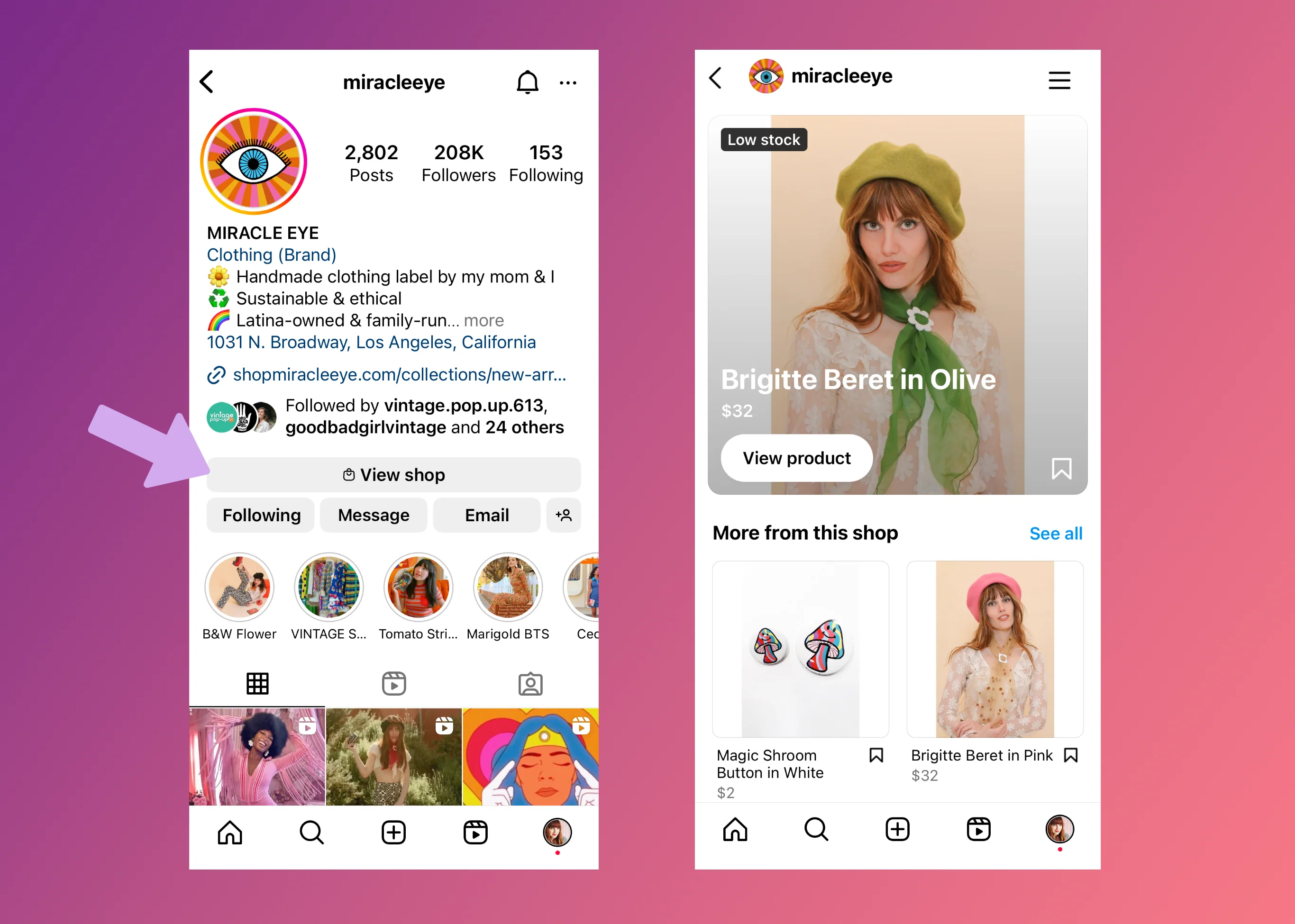
    Your Facebook account and page must pass Facebook’s monetization eligibility criteria before you can start creating paid events. 

    6. Drive visitors to your online store

    Direct shoppers from your Facebook page to your Shopify store through the platform’s social commerce features. This is a great way for brands who already have a small business on Facebook to capture consumers mid-scroll with shoppable ads and powerful calls to action. You can turn well-performing shoppable posts into paid ads to drive more traffic and define a new target audience you’d like to reach. 

    Start selling your products on Facebook

    Shopify comes with powerful tools that help you list, promote and sell products on Facebook and Instagram. Create product collections, showcase your brand and products, and make sales on Facebook and Instagram from one place.

    Start selling on Facebook

    Shoppable posts in action: Clothing brand QUEENSHOP wanted to boost sales among fans who had previously engaged with its content. It used Facebook’s Live Shopping feature to reach consumers who were online at that exact moment and direct them to the brand’s website through a product CTA in the bottom corner of the screen. The Live videos resulted in a 1.7 times higher return on ad spend and a 3.3% uplift in adds to carts.

    Mobile phone open to screen demonstrating shoppable Facebook posts

    Why it worked: QUEENSHOP was able to engage fans who were actively online and ready to make a purchase. It reduced the number of steps in the buying process by directing shoppers straight to the correct product page so they could make an instant purchase. 

    Get started: Add your product catalog to your Facebook page in the Catalog Manager and link to relevant products when you post an image or video. To link to a product during livestreams, click Feature under the product or link you want to show after you’ve started your video. 

    Diversify your earnings

    Starting an ecommerce business, selling services, and creating digital products or merch all benefit from using Facebook’s massive audience as a sales tool. With the platform’s new suite of features made especially for entrepreneurs and brands, it’s easier than ever to engage new and existing audiences. 

    But don’t get tied to just one feature or just one platform. Diversify your offering so that if one platform dries up you have other streams of traffic and revenue. This is especially important today, when the organic reach of mammoth social media sites like Facebook are dropping by the day and consumers are becoming increasingly skeptical of paid advertising campaigns. 

    How to make money on Facebook FAQ

    Can you make money on Facebook?

    Yes, you can make money on Facebook. The platform has a number of features that allow creators, influencers, and brands with Facebook pages to monetize their accounts and content. This includes running in-stream ads during videos, collaborating with other companies and influencers, creating a subscription service, running paid online events, and using the social commerce features to drive visitors directly to your ecommerce store.

    How many followers do you need on Facebook to make money?

    The more followers you have, the easier it is to make money. Most of Facebook’s new monetization features (including in-stream Facebook ads and fan subscription services) are only available to Facebook pages with more than 10,000 followers. This doesn’t mean it’s impossible to earn money on Facebook if you have less followers than that, though. Other options like social commerce features, driving traffic to your store, and partnering with other brands and influencers don’t have a lower limit on the number of followers needed.

    Top Product Development Companies of 2024

    Software Stack Editor · June 7, 2024 ·

    image

    Coming up with a great product idea is tough—bringing that product to life can be even tougher. That’s why many businesses turn to product development companies for assistance. These companies—from renowned design consultancies to tech giants and management consulting firms—can help you turn a whisper of an idea into an actual, tangible product. They can also refine an existing product to fit your customers’ needs.

    Table of contents

    What is product development?

    Product development is the process of conceptualizing, designing, creating, and refining a new product or service that you introduce to customers. In many cases, a product development company pairs a client with a product manager, who helps navigate the complexities of market dynamics, respond to customer preferences, and embrace technological advancements—all in the name of helping a product get to market and then thrive.

    Product development companies often bring together experts from multiple disciplines, including engineering, design, marketing, and manufacturing. These professionals collaborate to ensure the product meets quality standards, is competitive in the marketplace, and satisfies customer expectations.

    The product development process involves multiple steps, including:

    At the end of the process, the product development team launches the product into the market.

    Top product development companies

    A bevy of companies offer product development services to corporate clients in different industries. Most have specialties, including physical product development, software development for digital products, web development, mobile app development, and service product development.

    Each product development company comes with its own unique degree of technical expertise. For instance, a custom software development company is more likely to know the intricacies of microchip architecture than an industrial design company.

    Here are 10 established firms with strong reputations in their respective industries:

    IDEO

    IDEO is a global design company that helps businesses develop exceptional services, products, experiences, and overall brands. The company deals with everything from product design to mission focus, depending on your needs.

    For instance, Omada Health began as an internal IDEO research project and expanded into a behavior-driven development company in the health care space. It’s since enrolled more than one million lifetime members. In another initiative, IDEO worked with Sephora to reimagine the in-store experience for digital-first shoppers.

    Contact IDEO directly to discuss your business goals and learn about pricing.

    Speck Design

    Speck Design is a product design company that specializes in the medical, retail, telecommunications, robotics, and transportation sectors, with more than 250 projects completed and more than 200 patents.

    Services include product strategy, design strategy, innovation strategy, market research, brand design, industrial design, packaging design, UX design, and engineering expertise across various industries.

    Contact Speck to learn more about its services and pricing.

    Design 1st

    Design 1st offers a comprehensive range of services including industrial product design, UX design, engineering, and manufacturing.

    Design 1st’s product management portfolio covers many industries, from medical devices to consumer electronics. Notable clients include Momentum IoT, Armstrong Pumps, and NASA. The company serves as a comprehensive resource to startups and established businesses alike.

    Contact Design 1st to discuss your business goals and learn about partnerships.

    Accenture

    Accenture is a vast firm with a significant product development division. It offers product design, strategy, and engineering services. Accenture also helps businesses sustainably, efficiently, and environmentally scale up product manufacturing. Accenture partners with many digital providers, like Microsoft and Google Cloud, to provide a wider suite of services.

    Contact Accenture for pricing and service options.

    ARC Technology Solutions

    ARC Technology Solutions is a full-service product development firm and engineering partner. ARC’s internal team offers expertise in aerospace, automotive, aviation, defense, electronics, heavy equipment, and transportation. Its product managers have the resources to support enterprise organizations that demand high-quality products.

    Contact ARC to discuss collaborating on high-quality products.

    BiTE Interactive

    BiTE Interactive, a specialized software development firm, excels in creating mobile apps with a unique value proposition, which sets it apart from other product developers who also venture into web applications.

    Focused solely on mobile applications, BiTE serves a diverse range of industries, including connected vehicles, life sciences, FinTech, agriculture, and aerospace.

    Contact BiTE Interactive to get quotes on mobile app development and product management.

    Frog

    Frog aims to offer fresh ideas and unique solutions to bringing its client’s products to life. Its client base includes software development companies like Applied XL, automotive manufacturers like Volvo, and consumer products retailers like IKEA.

    Frog’s offerings include thorough research, rapid prototyping, growth strategizing, and marketing support, among other services.

    Contact Frog for information on product design services, product management, growth, and more.

    Abalta Technologies

    Abalta Technologies has a steep track record, with more than 100 global customers and 800 successful program launches. Abalta specializes in mobility software and is known for its deep understanding of navigation and mapping applications. Its midsize team of information technology specialists helps businesses create products that prioritize quality and customer experience.

    Abalta’s signature product is WebLink, which projects smartphone apps from Android and iOS devices onto in-vehicle touch displays. Other existing products center around mapping data, and you can use these to support mapping in software programs you develop.

    Contact Abalta for a consultation.

    Brash

    Brash is a product development company that offers a comprehensive array of services including brand development, industrial design, UI/UX design, mechanical engineering, PCB design, and manufacturing. Brash’s diverse portfolio spans from a dental health app to houseware collections.

    Start the process by reaching out to Brash to explain your needs and get a quote.

    Code and Theory

    Code and Theory specializes in information technology. Its clients include Marriott Hotels, Yeti, Volvo, Amazon, and Adidas, among major brands. Its holistic approach to product development helps align all elements of the product development process, from market research to software engineering to marketing. AdAge named it the best transformation agency for the year 2024.

    Contact Code and Theory directly to learn more about the services it provides.

    Get your free product development worksheet

    Create a product that meets your customers’ needs with our easy-to-follow, seven step product development worksheet.

    Learn more

    Product development companies FAQ

    What are the four major types of product development?

    The four major types of product development include incremental innovation, platform innovation, breakthrough innovation, and disruptive innovation.

    How do you choose the right product development company?

    Choosing the right product development company involves assessing a company’s expertise, track record, alignment with your goals, and ability to meet your specific needs.

    Why should you consider consulting with a product development company?

    Consulting with a product development company can give you access to specialized expertise, resources, and innovative methodologies that can streamline the development process, mitigate risks, and ultimately enhance the success of your product.

    How To Improve Your Email Conversion Rate (2024)

    Software Stack Editor · June 7, 2024 ·

    image

    In 1978, marketing manager Gary Thuerk launched the first commercial email marketing campaign. In it, he announced a new line of computers to 400 email recipients. Since then, email has grown into one of the most important channels for marketers, small business owners, and ecommerce entrepreneurs; in fact, one study forecasts the number of email users worldwide will surpass 4.7 billion by 2026.

    But what are the best ways to evaluate your email marketing efforts? According to a survey, over a quarter of email marketers reported that their preferred success metric of an email marketing campaign was the conversion rate. After learning how to calculate your email marketing conversion rate, you can take critical steps to improve it.

    What is the conversion rate in email marketing?

    An email conversion rate is a metric that measures the percentage of email recipients who take a desired action after opening an email. This action is often a specific conversion goal, like buying a product, signing up for a service, downloading a resource, redirecting to a website, or claiming a promotion.

    Email marketing conversion rates are an essential metric when running email campaigns because they offer insights into how effective your campaigns are and how you can improve them. By calculating the conversion rate for email marketing campaigns, you can identify strengths and weaknesses in your campaigns and adjust their marketing strategies accordingly to inspire more conversions.

    [embedded content]

    How to calculate your email marketing conversion rate

    To calculate email marketing conversion rates, divide the number of email recipients who completed a desired action by the number of delivered emails. Then, multiply the result by 100 to find a percentage.

    Here is the formula for how to calculate email conversion rate:

    (Number of conversions / number of delivered emails) x 100 = email conversion rate

    For example, if you sent 1,000 emails with the goal of increasing website traffic, first find the number of emails that went through successfully without bouncing back or getting flagged as spam (most email marketing platforms provide these insights).

    Then, check how many email recipients opened the email and clicked through to your website. If 960 of your emails were successfully delivered, with 48 of the recipients completing the desired action by clicking through to your website, your calculation would look like this:

    (48 conversions / 960 delivered emails) x 100 = 5% email conversion rate

    What is a good conversion rate for email marketing?

    A good conversion rate varies depending on your particular industry, company, and email campaign. However, average email conversion rates typically fall between 2% and 5%. For example, one survey reported that automated welcome emails sent by ecommerce merchants in 2022 had an average email conversion rate of 3%.

    Tips for improving email marketing conversion rates

    Some factors that can negatively impact your average conversion rate include poor email list hygiene (such as having addresses with typos), subject lines with spam-triggering words, and irregular sending frequency with too many or too few emails sent at random times. Here are a few ways to increase the effectiveness of your email marketing efforts:

    Maintain good email list hygiene

    Email list hygiene is the process of maintaining a clean, accurate, and engaged list of email subscribers. If your email list includes invalid email addresses, your email deliverability can suffer, resulting in fewer emails landing in recipients’ inboxes and a decreased email conversion rate overall.

    Regularly remove any invalid email addresses. Include clear Unsubscribe buttons in your emails to allow recipients to easily remove themselves from your email list. Although making it easy to unsubscribe from your email list can seem counterintuitive, it ultimately helps you maintain a high-quality list of engaged recipients.

    Write compelling subject lines

    Craft engaging email subject lines that grab attention and clearly convey your benefits. Make them no more than roughly 50 characters, and avoid spammy phrases like “apply now” or “cash bonus” or too many special characters like exclamation marks as these can trigger filters that send your emails into spam folders. Make sure to deliver on any relevant content promised in your subject line. 

    Include clear call-to-action buttons

    When developing an email marketing strategy, set clear conversion goals and create attention-grabbing call-to-action (CTA) buttons that encourage readers to click through and, most importantly, act. Design your emails so that they draw attention to your CTA buttons. The visuals and wording can have a huge impact on your email conversion rates.

    For example, if you launch an email campaign with a sales conversion goal for a new product line, include a bold call-to-action button using active language like “Buy now” or “Add to cart.” Consider setting up dedicated landing pages for CTA buttons to inspire specific conversions.

    The CTA button for the new product line could link to a landing page highlighting its benefits and offering straightforward checkout options.

    Personalize your emails

    Rather than send the same email to everyone on your email list, send personalized emails that address recipients’ specific interests and needs. Personalized emails include a recipient’s name, as well as information relevant to their previous purchase histories or behavior on your online store.

    Start with email segmentation; divide your email list into smaller groups based on factors like demographic data, purchase history, and customer behavior. Segmenting your email subscribers into targeted groups allows you to send more relevant email campaigns tailored to each segment. For example, you could create welcome emails for new customers or follow-up emails for customers with abandoned shopping carts.

    Optimize emails for mobile

    Optimize campaigns for mobile devices to increase conversions. One study reports that mobile ecommerce sales exceeded $2.2 trillion in 2023, accounting for roughly 60% of worldwide ecommerce sales.

    Mobile optimization techniques include compressing images for faster loading times, using a single-column layout with simple horizontal navigation, and building a responsive template that lets mobile users navigate your emails easily on their phones.

    Running your ecommerce business on Shopify gives you access to a built-in email marketing tool called Shopify Email that makes it easy to create email campaigns with mobile-friendly templates that can help increase conversions.

    Create branded emails in minutes with Shopify Email

    With Shopify Email, you can easily create, send, automate, and track email campaigns, all from your Shopify admin—no coding required.

    Discover Shopify Email

    Use automation tools for email sequences

    To further enhance your email campaign’s performance in driving conversions, leverage automation tools. Tools like Shopify Email, ActiveCampaign, and Omnisend offer automation features that let you set up email sequences—a series of automated emails that differ based on user behavior.

    For example, you could set up a welcome email sequence to maximize engagement from new subscribers and inspire them to take a specific action like sharing feedback about your products or services. You can boost conversions through automatic email sequences that save you time and money while targeting customers with information relevant to where they are in your sales pipeline.

    Test and adjust your email campaigns

    Implement A/B testing—also known as split testing—by sending two different versions of a marketing email to two different groups from your email list to compare and contrast the results. Pursue the version with the best results and adjust your email campaigns based on feedback.

    Comparing campaign performance can provide insights into how to optimize your email engagement and craft emails that inspire more conversions. You can also monitor email marketing metrics like click-through rate, bounce rate, and unsubscribe rate to evaluate the success of your campaigns.

    Email conversion rate FAQ

    How do I increase my email conversion rate?

    Some conversion rate optimization strategies you can implement include clear call-to-action (CTA) buttons, personalized messages, email automation tools, and emails optimized for mobile users.

    How does conversion rate relate to ROI in email marketing?

    Conversion rate directly impacts return on investment (ROI), as a higher conversion rate will lead to lower costs for inspiring specific actions and, therefore, a higher email marketing ROI.

    What are common conversion rate challenges in email marketing?

    Some of the most common email marketing conversion rate challenges include finding the right frequency for sending emails, sending the same email to everyone on an email list without personalization, and using phrases or design elements that trigger spam filters.

    How To Start a Franchise: Step-by-Step Insights for Entrepreneurs (2024)

    Software Stack Editor · June 7, 2024 ·

    image

    If you want to own a business, but you’re not sure where to start, franchising might be a good option. Instead of developing a brand new business idea, you can open your own local branch of an existing business as a franchise. Here’s how it works.

    What is franchising?

    Franchising is a system in which individuals (known as franchisees) purchase the right to use a company’s (the franchisor) trademark. A franchise agreement typically goes beyond trademarks to include the plan and method for operating the franchise business.

    “It’s a playbook put together by the franchisor that includes the systems, the processes, and the marketing,” says Teri Villanueva, a franchise consultant with FranNet. “And then an owner comes in and executes the model that’s already been created by the franchisor.”

    [embedded content]

    Benefits of franchising

    When you open a franchise, you’re setting up a business of your own—but you have a leg up and plenty of support. Some of the benefits of opening a franchise include:

    Brand recognition

    Unlike starting a business from scratch, opening a franchise usually comes with established brand recognition. Everyone knows McDonald’s golden arches mean inexpensive burgers and fries, and a blue-and-yellow IKEA sign signals affordable Swedish furniture.

    Franchise owners are often willing to pay a premium to hitch their wagon to successful, big-name brands.

    Support and training

    Before you open a franchise, you’ll receive extensive training in franchise operations. Franchises require consistency, so it’s in the franchisor’s best interest to teach you how to run your business.

    This kind of support can be hard to find in the competitive world of solo entrepreneurship. Teri says franchising is particularly attractive to people used to being part of a larger organization. “When people leave the military or corporate America, you miss that camaraderie that you had,” Teri says. Joining a franchise offers the opportunity to connect with other franchise owners during training, conferences, and beyond. “You really support each other,” she says.

    Ease of financing

    One of the hardest things about launching a new business is securing funding. “If somebody starts from scratch, there’s really no track record for banks to look at,” Teri says. With franchising, the likelihood of getting approved for a Small Business Administration (SBA) loan or other financing is higher because the franchisor’s model has already proven to be successful.

    Drawbacks of franchising

    Franchisors want to expand their businesses and collect royalties, so they might downplay some of the negative aspects of franchising. These might include:

    Financial risk of owning a business

    As with any business, there is financial risk involved with opening a franchise. Although as a franchise owner you operate under the franchisor’s name and business model, you’re investing your own capital. If your business fails, the franchisor won’t bail you out.

    What if the franchisor goes bankrupt? It depends on your franchise agreement, but it’s possible your agreement will simply be voided, and you’ll have to figure out what’s next on your own. It’s a good idea to have a lawyer look over the franchise agreement before signing anything.

    Limited creative control

    If your reasons for becoming a business owner include expressing your creativity, franchising might not be a good fit.

    “One of the things that some people may not like is that the franchisor dictates the products and services that you sell,” Teri says. “So if you say, ‘Hey, we could add this to the order, or maybe I would add this service,’ well, you can’t.” In other words, you must be comfortable selling the goods or service as is, without much of your own input.

    Royalties and franchise fees

    To open a franchise, you need to pay an initial franchise fee to the franchisor. You’ll also pay ongoing royalties, which can cut into your profit.

    Get funding to run and grow your business through Shopify Capital

    Shopify Capital makes it easy to get funding quickly and use it for inventory, marketing, and more. Automatically make payments as a percentage of your daily sales. No compounding interest. No schedules. No surprises.

    Explore Shopify Capital

    7 types of franchises

    1. Business services
    2. Commercial and residential services
    3. Lodging
    4. Personal services
    5. Real estate
    6. Restaurants
    7. Retail

    When someone thinks of a franchise they often think of McDonald’s or some other fast-food chain. But franchises are much more than just restaurants. According to the International Franchise Association (IFA), there are about 806,000 franchise establishments in the US in a range of industries. The IFA breaks franchises down into seven business lines:

    1. Business services

    Business services franchises exist to help other businesses run smoothly or make it easier for consumers to get things done. They include accounting and tax-preparation franchises like H&R Block and shipping franchises like the UPS Store.

    2. Commercial and residential services

    This category covers services needed to build, renovate, and maintain homes and businesses. These franchises may or may not have a physical location and typically require equipment like a truck and tools.

    Cleaning services like Molly Maid, plumbers like Mr. Rooter, and exterminators like Orkin are all franchises. This category also includes construction and renovation businesses like California Closets.

    3. Lodging

    Lodging franchises range from campgrounds like Kampgrounds of America (KOA) to hotels like Days Inn. These are often some of the most expensive franchises to open because of their large real estate footprint.

    4. Personal services

    Personal services include everything from educational franchises like School of Rock to gyms like Planet Fitness, workout studios like Pure Barre, and spa services like the NOW massage boutique and Drybar.

    5. Real estate

    Some of the biggest names in real estate are franchises, including Re/max, Sotheby’s International Realty, and the Corcoran Group. The real estate industry also includes property management and home inspection.

    6. Restaurants

    When you think of franchising, fast food chains like Subway probably come to mind. And for good reason: McDonald’s is the biggest US-based franchise in terms of sales, generating more than $118 billion in worldwide sales in 2023. (The largest franchise system by number of outlets is Subway.)

    Quick-service restaurants (QSRs)—or restaurants that don’t have a full dining area—aren’t just the largest franchise industry, they’re also growing. In 2023, 21% of new franchise concept lines were QSRs.

    Restaurants that offer table service are known as full-service restaurants (FSR) and include establishments like California Pizza Kitchen, the Counter, and Ruth’s Chris Steak House.

    7. Retail

    Retail franchises sell goods. This business line includes retail bakeries like Nothing Bundt Cakes, grocery stores like Grocery Outlet, furniture stores like Relax the Back, IKEA, and La-Z-Boy, supplement stores like The Vitamin Shoppe, florists like 1-800-Flowers, and secondhand shops like Plato’s Closet.

    How to open a franchise

    1. Plan
    2. Research
    3. Commit to a territory
    4. Attend training
    5. Set protocols for a smooth open

    Opening a franchise is different from starting your own business from scratch. Here’s how it usually works: 

    1. Plan

    Determine what you want to get out of franchising. “Everybody has a really different driver,” Teri says. “I always ask, ‘What’s your why for business ownership? What do you want the business to do for you and your family?’”

    Narrow your options by asking yourself practical questions like:

    • How are you going to finance your franchise?
    • What is your net worth and liquidity? (This will determine if you meet the franchisor’s specifications.)
    • How long do you want to own your franchise? (Franchise agreements typically have strict rules about how you can sell your franchised business.)

    2. Research

    Once you know what you’re looking for in a franchise, you can start comparing your options. Teri says the research process can take a prospective franchisee anywhere from 60 to 90 days. You’ll get information from three main sources:

    • The franchise disclosure document (FDD), which is a public, legal document providing information like the franchisor’s financials and expectations of the franchisee (including the franchise fee and royalties)
    • Conversations with the franchisor’s representatives
    • Talking to current franchisees about their experiences

    3. Commit to a territory

    Once you’ve decided on a franchisor, the next step is to pay the one-time franchise fee to secure your franchise location. You can’t open franchise locations just anywhere—the franchisor decides which regions are eligible for new franchises and then breaks those regions up into exclusive territories to prevent market oversaturation.

    “Once you commit to a territory, that’s yours and no one else can come in,” Teri explains. If your business is a brick-and-mortar, your physical location will be within your territory’s boundaries. If you don’t have a physical location, you’ll provide services within your territory.

    4. Attend training

    The length and format of training varies, depending on which franchise you decide to open. Training may consist of an online course or in-person training at headquarters or a regional office.

    Teri says that one of the biggest misconceptions about franchising is that franchisees need experience in their industry. “[The franchisor is] going to train you on whatever the specific industry is and how the model works, how it performs most efficiently,” Teri says. “So you don’t have to have experience. That’s what you’re paying for—the support from the franchisor.”

    5. Set protocols for a smooth open 

    If your business is a brick-and-mortar, you’ll need to find a location and build out the space. In some cases, the franchisor will help you select a location. Other franchisors may require you to purchase a location they have already selected and built out.

    If your business does not have a physical location or operates out of a small office, then you’ll be able to open more quickly.

    You also might have to purchase equipment, such as a van for mobile pet-grooming, or carpet-cleaning machines for a rug-cleaning business, but some franchises require little more than a laptop and a phone, such as a travel agency. The franchisor may require you to purchase equipment and materials from specific vendors.

    Once you open your business, the hard work begins. “Even though the system’s been created for you, you still have to get out there and promote your business,” Teri says. “You have to hire the right people. You have to spend on marketing and all those things.”

    How to start a franchise FAQ

    Can anyone open a franchise?

    Most franchise opportunities are not available to everyone. To open a franchise, you’ll need to meet the franchisor’s net worth and liquidity requirements. For example, you’ll need a net worth of $3 million and $1.5 million cash to open a Planet Fitness, but you can start a travel agency from home with just $3,500.

    What is the difference between licensing and franchising a business?

    The difference between licensing and franchising is that licensing involves paying to use a business’s trademark; franchising includes the trademark but also the business model and an ongoing business relationship. Licensing is common with products, while franchising is common with service-based businesses.

    What fees do you pay for owning a franchise?

    To own a franchise, you’ll pay a one-time franchise fee plus ongoing royalties and marketing fees. These fees vary significantly by franchise.

    How To Leverage Supply Chain Optimization for Peak Efficiency (2024)

    Software Stack Editor · June 7, 2024 ·

    image

    Every item in your home has a supply chain story, often more intricate than you realize.

    Take a pair of new black leather Chelsea boots, for example. Behind them is a company with a streamlined supply chain. By carefully choosing suppliers of high-quality raw materials, the boot maker ensured reliable sourcing. Its lean inventory management system leverages demand forecasting to maintain just-in-time stock, minimizing waste. Its efficient distribution network uses logistics technology to rationalize transportation routes and warehouse workflows, reducing transportation costs.

    Supply chain optimization lets the shoe company efficiently transform materials into stylish, affordable products, ensuring timely delivery of the perfect boots. Here’s what you need to know about supply chain optimization and how to upgrade your company’s supply chain.

    What is supply chain optimization?

    Supply chain optimization is the process of increasing the efficiency and effectiveness of a company’s supply chain operations. It involves reviewing, analyzing, and improving various operational procedures, strengthening supplier relationships, and integrating advanced technologies to reduce costs, improve quality, and ensure that customer deliveries arrive on time.

    The goal is to create an efficient and responsive supply chain that meets customer demands and boosts business performance, while minimizing operational costs across the supply chain.

    Unify your inventory management with Shopify

    Only Shopify helps you manage warehouse, pop-up shop, and retail store inventory from the same back office. Shopify automatically syncs stock quantities as you receive, sell, return, or exchange products online or in-person—no manual reconciling necessary.

    Explore inventory management on Shopify

    Supply chain optimization features

    A holistic approach to supply chain optimization improves end-to-end efficiency and performance. Here are five key features of an effective supply chain optimization strategy:

    Visibility

    Visibility in supply chain optimization means having real-time access to data points across your supply chain. Advanced tracking systems and Internet of Things (IoT) devices help you monitor stock levels, shipment status, and production schedules instantly.

    For instance, your supply chain management system can automatically reroute shipments, minimizing business disruption if a raw material shipment is delayed. This transparency enables quick decisions and problem resolution.

    Inventory tracking

    Effective inventory tracking is crucial for optimizing supply chain processes and meeting customer expectations. By using radio-frequency identification (RFID) tags, barcode systems, and inventory management software, you can track stock levels, movements, and locations in real-time. This way, if product stock falls below a certain threshold, your system automatically reorders it.

    Automatic reordering ensures a steady influx of products to match demand, rather than inefficient sporadic bulk orders. This just-in-time approach maintains continuous operations and product availability, maintaining the smooth flow of your supply chains and keeping customers satisfied.

    Precise tracking helps prevent overstocking or stockouts, ensuring that products are always available when needed.

    [embedded content]

    Supplier management

    Effective supplier management is a must for supply chain network optimization. Strong relationships with reliable suppliers ensure consistent quality, on-time deliveries, and favorable terms. When suppliers are treated as partners through open communication, data sharing, and collaborative forecasting, they become invested in their customer’s success. This fosters joint problem-solving and continuous improvement.

    Supply chain managers can use performance metrics and regular evaluations to monitor supplier performance and resolve issues. For example, if a supplier fails to meet deadlines, you can renegotiate terms or find an alternative supplier to maintain the efficiency of your supply chain network optimization efforts.

    Demand forecasting

    Demand forecasting helps predict future customer purchases accurately. Using advanced analytics and historical data, you can anticipate trends and adjust your inventory and production schedules accordingly. For example, accurately forecasting a seasonal spike in demand helps you to stock up in advance, giving your business a competitive advantage in the market.

    This proactive approach minimizes supply chain disruptions and ensures you can meet customer needs consistently. 

    Advanced technology integration

    Leveraging advanced technology, like supply chain optimization software, is essential for enhancing data accuracy, automating processes, and improving decision-making in modern supply chain management. For example, using AI-driven analytics can help you accurately predict demand, while a cloud-based inventory management system can provide real-time inventory updates, ensuring your supply chain management remains efficient and responsive.

    Challenges of supply chains

    Because of the complexity of modern supply chains, they don’t always run smoothly. Here are four critical issues to keep an eye on:

    Organizational silos

    Organizational silos in supply chains occur when departments like procurement, production, and distribution operate independently, causing communication breakdowns and coordination issues. This can lead to mismatched inventory levels, production delays, and inefficient order fulfillment.

    [embedded content]

    Customer demand fluctuations

    Customer demand fluctuations present a significant challenge because sudden changes can lead to either stockouts or excess inventory, resulting in lost sales or unexpected storage expenses. These unpredictable shifts strain production schedules and inventory management.

    Extended lead times

    Extended lead times can severely disrupt your supply chain, causing delays in production and delivery that frustrate customers and increase costs. These delays often stem from inefficient supplier processes, long transportation routes, and customs hold-ups.

    High operational costs

    High operational costs in supply chains often stem from excess inventory holding, high transportation expenses, and unfavorable supplier agreements. For example, holding too much inventory ties up capital and incurs storage costs, while inefficient transportation routes increase fuel and labor expenses.

    Supply chain optimization techniques

    Here are four key techniques to boost efficiency, reduce costs, and improve overall supply chain performance:

    Cost optimization

    Cost optimization focuses on reducing expenses across your supply chain, without compromising quality or service. This involves identifying inefficiencies and implementing cost-saving measures related to procurement, production, warehousing, and transportation.

    Inventory optimization

    Inventory optimization aims to strike the perfect balance of stock to meet demand while minimizing inventory carrying costs, by ensuring enough inventory to fulfill orders without overstocking. This reduces storage costs and prevents obsolete inventory that must be disposed of at a loss.

    Network optimization

    Network optimization involves designing and managing the supply chain network to maximize efficiency and customer service. This includes determining the right number and location of warehouses, distribution centers, and production facilities to meet customer delivery expectations.

    For example, supply chain modeling can identify the most cost-effective number and placement of distribution centers to reach customers within a two-day delivery window.

    Technology optimization

    Technology optimization is the use of advanced tools and systems to improve supply chain operations. You might integrate software like enterprise resource planning (ERP) systems, RFID inventory tracking, and AI to improve data accuracy, automate processes, and help your team make better decisions.

    For instance, implementing warehouse management software could optimize picking routes and slotting assignments, reducing the time it takes warehouse associates to fulfill orders. Alternatively, your business might add sensors on production equipment to monitor machine health and predict maintenance needs, minimizing unplanned downtime.

    Supply chain optimization tips

    Supply chain optimization can elevate your business efficiency, reduce costs, and improve customer satisfaction. Here are five specific tips to get you there:

    Leverage data analytics

    Implement data analytics to gain a greater understanding into your entire supply chain and identify areas for improvement. Use tools like Tableau, Power BI, and SAP HANA to analyze historical data and trends, helping you forecast demand accurately. Focus on visualizing data to spot patterns, optimize inventory levels, and identify bottlenecks quickly.

    Foster strong supplier relationships

    Choose reliable suppliers by evaluating their track record, financial stability, and capacity to meet your needs. Negotiate terms like fair pricing, flexible payment schedules, and shared risk agreements.

    Communicate regularly and openly to ensure alignment on expectations and performance. Offer incentives like longer-term contracts, volume commitments, and shared cost savings for high performance, and work collaboratively on problem-solving and continuous improvement.

    Integrate advanced technologies

    There’s a range of advanced technologies you can implement for supply chain optimization, including:

    • Internet of Things: Improve your supply chain operations by adding IoT devices to your tech stack for real-time tracking of inventory and shipments, ensuring precise location data and condition monitoring.
    • AI: Use AI and machine learning algorithms to analyze data, predict demand, and optimize production schedules.
    • Robotics: Incorporate advanced robotics and automation in warehouses to improve efficiency and reduce human error.

    In tandem, these tools can help streamline your supply chain processes.

    Continuously monitor and improve

    Build a more efficient supply chain by setting specific key performance indicators (KPIs) like order accuracy, lead time, and inventory turnover rates. Conduct regular supplier performance reviews and internal audits to identify bottlenecks and inefficiencies. To identify and resolve issues as fast as possible, implement real-time data analytics to track your KPIs.

    Collect and analyze feedback from all stakeholders, including suppliers and customers, to make data-driven improvements. For example, evaluate supplier delivery performance through metrics like order fill rate, on-time delivery rate, and lead time adherence. Survey customers on satisfaction levels in product quality, delivery speed, and service experience. Reassess and update your supply chain design to keep pace with market changes and technological advancements.

    Supply chain optimization FAQ

    What is a good supply chain strategy?

    A good supply chain strategy minimizes costs, responds swiftly to market changes, and supports overall business goals.

    Why is supply chain optimization important?

    Supply chain optimization focuses on reducing costs, increasing speed, and boosting customer satisfaction.

    What tools are available for supply chain optimization?

    Supply chain optimization solutions include enterprise resource planning systems, AI, RFID tracking systems, and advanced analytics platforms.

    How To Find a Manufacturer or Supplier for a Product (2024)

    Software Stack Editor · June 7, 2024 ·

    Entrepreneurs can find themselves hitting a brick wall when it comes to sourcing products. Whether you plan to manufacture something of your own or find suppliers to purchase from wholesale, good products aren’t always easy to identify.

    Sourcing a supplier for your next project includes finding a manufacturer, deciding whether it’s better to work with manufacturers near you or abroad, and evaluating if a manufacturer is legitimate. It’s also essential to ask suppliers certain questions when developing a product for your ecommerce business.

    [embedded content]

    What is a manufacturer?

    A manufacturer is any business that produces finished goods from raw materials. They sell these goods to consumers, wholesalers, distributors, retailers, and other manufacturers wanting to create more complex items.

    Manufacturers typically stick to one type of product. For example, you could work with a glassware manufacturer who creates glass bottles and jars. You could work with one manufacturer for cardboard boxes and another for plastic or natural products. 

    Retailers often work with multiple manufacturers at once to create an inventory for their store.

    Connect with manufacturers

    Find the perfect production partner to build inventory for your ecommerce store with our free sourcing and manufacturing outreach template.

    Learn More

    Is a manufacturer a supplier?

    Suppliers refer to anyone who can provide you with products and inventory. This encompasses manufacturers, wholesalers, and distributors.

    There are a ton of helpful resources online that you can find through Google. But before you begin, there are a few things you need to know and decide.

    You should figure out what type of supplier you’re looking for, which could depend on your ecommerce business model. This will help determine the terminology you need to use in your research. There are several supplier options, the most common being:

    • A manufacturer that produces your product idea
    • A supplier (who may also be a manufacturer), wholesaler, or distributor who purchases already-existing brands and products
    • A dropshipping company that supplies products and fulfills orders of already-existing brands and products

    Dropshipping with Shopify Collective

    Connect with US-based Shopify brands to easily sell their products. With Shopify Collective, you can curate items from like-minded stores and ship them directly to your customers.

    Explore Shopify Collective

    Domestic vs. overseas suppliers

    If you plan to manufacture or wholesale, when looking for suppliers you’ll need to decide whether you want to source domestically or from abroad.

    It’s a good idea to secure two manufacturers: one domestic and one foreign. Your local manufacturer can be used as a backup. If international orders are late or incorrect, you can fall back on your local supplier. Domestic suppliers are often more expensive, but it’s better to keep products stocked and customers happy instead of waiting for delayed shipments.

    It’s often cheaper to source your products overseas, especially in Asian countries, like India, China, and Vietnam, which ranked as the three countries with the cheapest manufacturing costs, according to U.S. News & World Report.

    How to find a manufacturer in 6 steps

    Manufacturers can make your product ideas a reality. Follow these six steps to find the best manufacturers and suppliers for your business.

    1. Research your options
    2. Outreach and collect information
    3. Communicate your designs
    4. Order samples and compare
    5. Negotiate
    6. Place your order

    1. Research your options

    Finding the right manufacturer for your product is crucial to your success. Manufacturers can play a role in determining your product’s cost, quality, packaging, and shipping. You can use tools to help you find suppliers:

    Google

    To find manufacturers near you, do a Google search for “manufacturers near me.” Check out their websites, customer reviews, and product specialties.

    Screenshot of Google search results for manufacturers near me
    Google can help you find local manufacturing options.

    Many suppliers’ websites are old, sparse on information, and have poor search engine optimization. This means you may have to use a variety of search terms to find what you’re looking for. For example, words such as “wholesale,” “supplier,” and “distributor” may be used interchangeably, so you should search for all of them.

    Make yourself familiar with Google’s advanced search features to improve the quality of your results.

    Screenshot of Google search results for manufacturers near me
    Use different search terms to find new options.

    Referrals

    Some of the best leads can come from referrals. Ask your professional networks if they have supplier recommendations or if they know someone who might. Look for individuals who’ve found success in an area you’d like to pursue and see if they’re willing to share their contacts. Join Facebook groups and other online ecommerce communities to see if there are helpful reviews.

    Even if a supplier isn’t the right fit for you, ask them if they can point you in the right direction. Being in the industry means they’ll likely have contacts to refer you to that could be better fits.

    NAICS codes

    Another way to look for product suppliers is searching for your products by their code in the North American Industry Classification System (NAICS).

    The NAICS classifies manufacturers and products with codes, making some manufacturers and suppliers easier to find, especially in professional directories. Here’s the link for the United States’ NAICS code and the link for Canada’s NAICS code.

    You’ll need to vet your potential manufacturer. Once you’ve narrowed it down to a few possibilities, continue your research to make sure they’re credible. Check the Better Business Bureau (BBB) to see if there have been any complaints filed and browse the manufacturer’s customer reviews.

    Alibaba

    Alibaba connects you with manufacturers from China. It’s a popular marketplace to find existing products, but you can also use Alibaba to connect with manufacturers to create custom products. Search for the products you’re looking for and browse through the various suppliers and manufacturers.

    Alibaba homepage featuring products and manufacturers options.
    Alibaba is a great way to connect with manufacturers for custom products.

    It’s easy to safely buy from Alibaba. The marketplace lets you vet manufacturers upfront to get the best products at a fair price. When researching manufacturers on Alibaba, make sure they have the following qualifications:

    • Gold supplier, which means they pay for their Alibaba membership.
    • Verified, which means a third-party evaluation services company or Alibaba has visited their manufacturing facility.
    • Trade assurance, a free service that protects your orders from payment to delivery. 

    You can continue to search by applying filters. You can sort by certifications (such as SA8000, which ensures humane working conditions) to find a manufacturer that aligns with your business values.

    You can also make sure your manufacturer is not a trading company. A trading company is a liaison and won’t be able to produce your products.

    Directories

    Another place to research manufacturers is in an online supplier directory. These directories act as manufacturer catalogs that contain profiles for thousands of manufacturers, wholesalers, and suppliers. A few of the most popular ones for domestic and international suppliers are:

    Online domestic directories
    Online overseas directories

    2. Conduct outreach and collect information

    Once you’ve got a few manufacturers on your radar, you’ll want to get quotes. Aim to get a minimum of three quotes to compare options. For local manufacturers, you can also reach out to organize a tour of their facility or a visit to their office.

    In addition to pricing information, you’ll want answers to the following questions:

    • Can they accommodate custom orders? Assess if the supplier or equipment manufacturer can create the product you want. Do they have the skills and resources? Do they have automation features?
    • What are their lead times? How long will it take to produce and ship items? You don’t want to work with manufacturers who take three months to deliver your products. If a product goes out of stock, you don’t want to leave customers waiting to receive their orders.
    • What are shipping costs? Shipping makes up a massive portion of small business expenses. Learn a manufacturer’s shipping costs to determine how it’ll affect your bottom line.
    • What are their minimum order quantities (MOQs)? Don’t lead with this question, because it might deter manufacturers from working with you. However, you’ll want to know the minimum amount of items you have to order before they start producing your product. This is often negotiable. 
    • What is the cost per unit? While you’re negotiating MOQs, you’ll also want to negotiate cost per unit. The larger the order, the lower your cost per unit can be. 
    • Can they grant you exclusivity? If there’s tooling involved (i.e., you buying a tool for them to manufacture your product), make sure they aren’t allowing others to use it. You can also ask for territorial, market, or total exclusivity. Some service providers may even offer private label goods.
    • Are there setup fees involved? Sometimes manufacturers will charge a fee to get equipment ready to produce your goods. 
    • What’s their defect policy? Find out who eats the cost for incorrect or defective items. Who pays for the shipping and duties?
    • Is the manufacturer sustainable and ethical? Find out about the factory conditions, and see how they impact the environment and those who work there.

    Negotiating minimum order quantities

    If you’re looking for a supplier for the first time, you’re going to quickly learn about MOQs. It’s not uncommon for a manufacturer to require a commitment to purchase hundreds or even thousands of units for your first order, depending on the product and manufacturer.

    MOQs make it difficult when you have limited funds or want to start small and test the market before making larger purchases. MOQs are almost always negotiable.

    Before you negotiate, understand why the supplier has imposed a minimum. Is it because there’s a lot of work upfront? Is it because they prefer to work with larger buyers? Understanding the reasons for the minimum will help you better understand their position and allow you to negotiate and propose the best counter offer.

    Discussing payment terms

    Many suppliers will require new businesses to pay for a full order upfront. This is important to know, since inventory is a major cost for ecommerce businesses. You should also ask if they provide payment terms on future orders.

    Suppliers get bombarded with email quote requests all the time from flaky buyers, so it’s not unusual for suppliers to ignore your request. Suppliers’ lack of responsiveness is a common complaint from new ecommerce entrepreneurs.

    So how do you ensure you’re not ignored? There are a few things you should do when you reach out to suppliers for the first time:

    • Focused emails. Your first email to a manufacturer should be clear and concise. Avoid telling too much about your story and background. The first email should purely assess potential fit at a high level. Focus on what suppliers care about the most, like the details of what you’re trying to source. 
    • Asking for what you need. Requests aren’t always easy for the supplier to satisfy. It’s important to ask about pricing for multiple quantities, but avoid asking for too much or too many quotes. Stick to what you absolutely need to know to assess fit between you and the supplier.
    • Prepare. If you’re unsure about your request, consider giving the supplier a call or send a one-question email. For example, you might want to know the supplier’s minimum order because if you ask for a quote that’s well below their minimum order, you might not receive a response.

    Many good manufacturing suppliers will be open to negotiating payment terms. One payment strategy you could propose would be to pay for 50% upfront and 50% after you receive the shipment. This holds both parties responsible for the order and doesn’t leave too much risk on either side.

    Communicating with manufacturers and suppliers

    Chances are you won’t use a manufacturing manager when starting your online business. You’ll have to communicate with suppliers on your own. You can do this via phone, email, or text. When working with local manufacturers, you can also do in-person meetings.

    Look for companies that are responsive and eager to work with you. If someone is slow to respond to emails and send samples, you may not want to trust them with your business.

    3. Communicate your designs

    Once you talk with a potential manufacturer, ask if they can create your design. Some manufacturers have a product development process with prototyping and 3D modeling—but it can get expensive. 

    As an alternative, communicate your ideas with them through: 

    • Sketches
    • Instructions
    • Reference photos 

    If they don’t do design, you can use Fiverr or Upwork to find freelancers to create drawings for you. Look to hire:

    • Indstrustial designers
    • Product designers
    • Computer-aided design (CAD) experts

    Another option is finding a local designer. You can work with them to develop prototypes and custom molds. It could be more affordable than going through a manufacturer.

    4. Order samples and compare

    Get samples to test before going into production. Once the sample is to your standard, you should date and sign the sample. Save one or two for yourself. These are called your control samples: forensic samples used to assure quality and get consistent consumer products.

    For example, you open a package from a manufacturer and find your products’ colors are completely wrong. You can reference the control sample to indicate the products you received are not what was previously agreed upon.

    5. Negotiate

    Between the time you get a sample and when you place your order, it’s still possible to negotiate terms on payment or MOQ. When negotiating, put yourself in the manufacturer’s shoes. The goal isn’t to exploit your manufacturing partner to get the best price. It’s to work together so both parties profit and are happy. It’s the only way to build a long-term, healthy relationship.

    6. Place your order

    After completing a quality control check to make sure every product meets your standards, you can place your order and get the production process started.

    Moving forward with your supply partners

    Sourcing suppliers and manufacturers is one of the costs of starting a business. Partnering with suppliers that are good fits is a critical decision for your new business, and they aren’t always easy to find.

    It’s easy to get frustrated when you hit dead ends or brick walls, but in most cases, it just requires a little more patience and perseverance to find the perfect partner for your new venture.

    Illustration by Pete Ryan

    How to find a manufacturer FAQ

    What does manufacturing mean?

    Manufacturing refers to turning raw materials into finished products through tools, labor, and machinery. It’s an industrial process that allows for the mass production of goods using advanced technologies and assembly processes.

    What are the types of manufacturing?

    Types of manufacturing include:

    • 3D printing
    • Repetitive manufacturing
    • Discrete manufacturing
    • Job shop manufacturing
    • Continuous process
    • Batch process

    What is an example of manufacturing?

    The clothing industry has many different manufacturing processes. For example, a clothing manufacturer’s process could include fabrics receiving and relaxing, form layout, laying, marketing, cutting, screen printing, sewing, and quality checks before creating a single garment.

    How do I find a manufacturer?

    You can find a manufacturer via the directories and suppliers listed above. Some of the most common places to find manufacturers include:

    • Alibaba
    • Free online directories
    • Google
    • Referrals
    • NAICS codes

    Reach Customers, Spend Less With These Expert Tips (2024)

    Software Stack Editor · June 6, 2024 ·

    The marketing landscape is ever changing. Digital advertising costs are rising and there are more restrictions to access customer data. How can businesses navigate these realities and reach their business goals? 

    In this episode of Shopify Masters, Eric Seufert, founder and partner at Heracles Capital, and Andrius Baranauskas, director of product at Shopify, uncover some of the answers. 

    From pivoting your marketing strategies to using the latest Shopify tools, Eric and Andrius share their marketing tips for entrepreneurs.


    Pivoting from paid ads to creating organic content 

    For brands, organic content shouldn’’t be an afterthought. In fact, Eric believes it should be at the center of your marketing efforts. “Creative should lead marketing activities, because that’’s really the biggest lever we have to differentiate, [and] because we’’re able to apply it to all of these surface areas that were totally off limits to us before,” explains Eric. Some of these surfaces can be new channels, such as producing your own podcast to reach new audiences. 

    Leveraging Shop Campaigns on the Shop app

    The Shop app is a marketplace for consumers to discover Shopify stores and their products, track their packages, and enjoy a fast one-tap checkout. Being on the Shop app not only allows brands to reach customers in a new channel, it’s also a place to market to them through Shop Campaigns.

    By being on the Shop app, merchants can leverage Shop Campaigns to acquire new customers at a controlled cost on the Shop app and Meta platforms.
    By being on the Shop app, merchants can leverage Shop Campaigns to acquire new customers at a controlled cost on the Shop app and Meta platforms Eric Seufert and Andrius Baranauskas

    “On the Shop app, business can set up campaigns much like those on social media ad platforms. “Shopify optimizes the creative, chooses the perfect placement either in Shop or beyond, targets the best audience, and then brings you customers that convert,” says Andrius. “You pay only for the customers that convert and you get full access to that customer’s data. ” 

    Saving customer acquisition costs with Shopify Audiences

    Businesses today are facing rising acquisition costs. Shopify Plus merchants are reducing these costs by close to 50% by using Shopify Audiences. 

    “Merchants get their ads in front of the most interested buyers with custom audience lists that we generate,” says Andrius. “They’’re powered by the algorithms and the millions of insights that we have here at Shopify.” 

    Shopify Audiences allows merchants to use those insights to acquire customers at lower costs on platforms like TikTok, Meta, Google, Pinterest, Snapchat, and more. 

    “For example, Happy Hippo makes bath products that are safe for kids and fun to use,” Andrius says. “They reached 70% lower cost to acquire new customers by leveraging the Shopify Audiences.” 

    Happy Hippo is a bath products brand that used Shopify Audiences to reach new customers while reducing its acquisition costs.
    Happy Hippo is a bath products brand that used Shopify Audiences to reach new customers while reducing its acquisition costs. Happy Hippo

    To hear more about the latest Shopify tools and how to update your marketing strategies, listen to the full episode on Shopify Masters. 

    The Ultimate Guide To Selling Plants Online (2024)

    Software Stack Editor · June 6, 2024 ·

    Houseplants have a chokehold on a generation of homeowners and apartment dwellers not quite ready for pets or kids. Legions of plant parents are investing their instinct to nurture in a hoard of foliage. It’s unsurprising: Raising plants has physical health benefits, mental health benefits, and a very low barrier to entry.

    Searches for “buy plants online” surged in the spring of 2020, just as retail businesses and greenhouses everywhere were shutting their doors against COVID-19’s first wave. Unspent going-out funds collided with a collective need for at-home joy.

    More online plant stores sprung up from garages and garden sheds to answer the demand—a demand that doesn’t show signs of slowing. Your green thumb could be worth more than you think. If you’ve ever thought of selling plants online, now is the time. 

    Plants lined up on a shelf on the wall
    Burst

    In this beginner’s guide, explore the steps to starting your own plant selling business and consult experts to bring you tips on how to succeed. Learn everything from planting the seed to cultivating your brand to nurturing your customers.

    And, hear from plant experts Mignon Hemsley and Danuelle Doswell, founders of Grounded, and the plant queen of TikTok, Partly Sunny’s Sonja Detrinidad. 

    How to get started selling plants online

    Side by side images of people holding plants in terracotta pots
    Grounded/Mignon Hemsley

    Yes, you can ship live plants in the mail! In fact succulents, cacti, and even delicate hanging plants can arrive safely at your customers’ homes in a cardboard box. Ready to propagate this trend and grow your own plant selling business? Let’s dig in.

    Finding your niche

    There are more ways to get into the plant selling business than simply shipping houseplants in the mail. How you decide to define your own offerings may depend on the climate where you live, your access to wholesale greenery or space to grow, and how much you’re willing to invest upfront.

    Here are a few ideas to get you started selling plants online:

    • Houseplants. Will you specialize in succulents, cacti, or air plants, for example? What can you reliably grow or buy wholesale where you live?
    • Outdoor plants. Consider seasonality not just where you live but also where you sell to. Will you run a seasonal business or sell all year round?
    • Seeds and bulbs. West Coast Seeds doesn’t sell live plants but it does ship seeds, bulbs, and growing supplies across Canada.
    • Plant care products. Think soil, fertilizer, growing medium, and grow lights. These items can also be sold in tandem with live plants and work well with an upsell strategy.
    • Home decor. Decorative plant pots, trays, and hanging planters can be sold as a business on their own or sold alongside the plants that fill them.
    • Terrariums and kits. Sell a combination of live plants and supplies to build terrariums at home.
    • Plant-derived products. Grow your own plants and create products derived from them. The founders of Terre Bleu grow lavender on their farm and sell lavender-based soaps, sprays, and salves online.
    • Plant subscriptions. Both Grounded and Partly Sunny guarantee repeat business by offering recurring plant shipments through a subscription program.
    • Think outside the pot. Why not start a service-based business to supply plants for events and corporate clients? Or try “planterior design,” a term Grounded uses to describe its private client consultation service. Sonja started her business at first as a personal plant shopper doing one-on-one consultations and purchases based on customer requests. 

    Should you grow your own plants or source them?

    A woman crouches to pick strawberries in a field
    Burst

    Growing your own plants to sell is possible if you have the right space and conditions to do so. If you’re starting small, you can grow plants in your own backyard garden or create a DIY greenhouse—but do consider space limitations if you plan to scale. Growing your own plants on a larger scale will require a lot more space and specialized plant know-how. There are plenty of free online resources to teach you the production side of the business.

    For the purposes of this guide, we will focus on the business of selling plants online by working with a wholesaler, greenhouse, or nursery. Note that you will still require sunny space to store and care for the plants on their brief stop between their origin and final destination, but this method is much easier for new plant entrepreneurs.

    When I asked Sonja if she’d ever consider scaling her business to grow her own, she reminded me that in California, she didn’t need to. “I have growers that have been growing certain varieties of plants for 40 years,” she says. “When I’ve got this guy, literally three blocks away from me, I could just buy his product.”

    Sourcing plants

    Wide shot of the inside of a greenhouse filled with lush greenery
    Burst

    Many local greenhouses, nurseries, and plant suppliers offer a wholesale program. Look for details on their website or inquire directly. There are generally a few requirements to become a registered reseller, including purchase minimums.

    Here are some tips for working with nurseries, greenhouses, and plant wholesalers:

    • Form a relationship with the supplier. Repeated business and a positive business relationship could help you get the best stock or advance notice on supply.
    • Shop around. Some suppliers may have lower minimums than others—perfect if you’re starting small. 
    • Opt for local suppliers, if possible. Pick up wholesale orders if you can to minimize cost and reduce the amount of stress on the plants.
    • Understand seasonality. Which plants will be in stock at which times of year? This will help you plan campaigns and inventory.
    • Don’t put all of your seeds in one basket. Source multiple suppliers if you can to ensure that if one is out of a popular item, another may have it in stock. Some suppliers or growers may also only operate seasonally. Sonja frequents several greenhouses in her area and even scours local buy-and-sell groups for rare finds.
    • Develop a pricing strategy that accounts for fluctuating wholesale costs by season.
    • Try online wholesalers. If you live in an area that doesn’t have a reliable source for wholesale plants, look for online suppliers like Gro ‘n Sell.
    • Dropship. Short on space? Some, like House Plant Wholesale, will even dropship! Currently, Grounded works with several greenhouses that ship to them before they ship to customers. “I think, eventually, we’ll cut ourselves out as the middleman and ship directly from the greenhouse,” says Danuelle. “That’s definitely a long-term goal.”

    Cultivating your plant brand

    Hands place a potted plant on a grey surface
    Grounded/Mignon Hemsley

    Don’t skip this step. Differentiating your business from another website selling plants relies heavily on brand. And we’re not talking about your logo—that’s branding. For plant selling businesses, your brand should achieve the following:

    Take a stand

    What are you about? Decide what you will and will not sell and establish quality standards. Create a cohesive set of brand guidelines that you will use to make decisions across the business and help maintain consistency, even as you scale.

    Grounded’s brand is rooted in the power of plants to bring peace and mindfulness to daily life—a mission clearly captured on the site’s About page and throughout its branding and marketing copy. The founders also want to expand on their plant education focus to launch a sister non-profit to invest in community gardens and gardening education for youth.

    Establish trust

    You are shipping live plants—your messaging should reflect that you are knowledgeable and have high care for your shipping process and after-purchase customer support. Using education as part of your brand and content strategy will foster trust. Sonja provides consistent content like plant care tips to build trust with an audience before converting them to customers.

    Help you stand apart

    What makes you unique? Tell your brand story on an About page, on social, and even on packaging. Outline your values, share information about any charitable partnerships, and let customers peek behind the curtain. “People buy from people they like,” says Sonja.

    Now, you can use your clear vision for your brand to help you develop branding assets and a visual identity for your business.

    🌵 Grow your knowledge: 

    Pricing plants to sell online

    You can follow standard pricing models for pricing most goods for online sale. To find a retail price for your plants or plant accessories:

    1. Add up your variable costs per product (cost of goods sold, packaging, shipping, etc.).
    2. Add a profit margin (consider the overall market).
    3. Don’t forget about fixed costs (overhead expenses, like rent).

    Even if we’re paying a little more wholesale than usual, we’ll still keep it at that price point just to remain consistent.

    Mignon Hemsley, Grounded

    There are a few other factors to consider when pricing plants: 

    Seasonality

    Seasonality can affect pricing. For example, if you choose to sell a specific plant in a set number of sizes because you have a reliable supply chain, factor in fluctuations to the wholesale cost of the plants (nurseries may adjust prices seasonally). If you want to be consistent with pricing on your site, consider the highest possible cost when calculating retail price. “Say if we sell a golden pothos for $20, we’ll keep it at $20 across the board,” says Mignon. “Even if we’re paying a little more wholesale than usual, we’ll still keep it at that price point just to remain consistent.”

    Market price

    Market price is important to keep in mind. While your brand may be very different from another brand, a snake plant is still a snake plant, and you should price within an acceptable range based on the market. 

    Customer preferences

    Who is your customer and what do they expect to pay? “We strategically put our price points at a place that is affordable and accessible to most people,” says Mignon. “We want everyone to be able to experience having plants and being able to take care of something.”

    Labour costs

    Consider labor when calculating your fixed costs. Even if you’re not paying staff to help grow and care for plants, your effort should factor into the overall cost. 

    🌵 Grow your knowledge:

    Inventory and plant care

    Close up detail of a purple and green succulent plant
    Burst

    While I fancy myself quite the green thumb *gazes with motherly pride over a brood of tomatoes,* there simply aren’t enough hours in the day to cover water and sunlight needs for every species of plant. Once you decide what you will sell, research each variety to understand its specific needs. 

    Generally, you will need enough climate-controlled space to adequately care for your plant inventory before it ships to your customers. Sonja, who has had to hire staff to manage the volume of orders pouring in, still uses her home’s garage as her headquarters, but has recently announced a move to a dedicated greenhouse space. 

    For plant businesses, managing your inventory tightly is critical. Developing a relationship with reliable suppliers will help you plan ahead. You should also ask yourself:

    • Will your offerings change seasonally based on greenhouse supply? 
    • Will you run pre-sales for upcoming varieties? 
    • Should you build in a buffer in case some of your inventory is damaged or dies? 
    • If you go away for several days, what is your plan for plant care? Automated irrigation systems and timed grow lights can bridge the gap if you don’t yet have staff coverage.

    As you are running a business that may have items going in and out of stock seasonally, create a system for yourself that helps you identify and manage inventory within your Shopify store. A consistent naming/numbering convention along with grouping plants into standard sizes can help you keep inventory organized. For example, if you are selling a variety of houseplants, you may want to establish a SKU system as follows: three letters representing the category, three letters representing the plant type, and two letters representing the size.

    Example: SUC-ALO-SM could represent a small aloe plant in the succulent family. Define what “small,” “medium,” and “large” mean to you for the purposes of pricing and inventory, as plants will come in a range, usually measured in inches by pot/plant diameter.

    Manage all your inventory from Shopify

    Shopify comes with built-in tools to help manage warehouse and store inventory in one place. Track sales, forecast demand, set low stock alerts, create purchase orders, count inventory, and more.

    Explore inventory management on Shopify

    Photography for online plant businesses

    Home photography studio set up with lights, a backdrop, and a plant
    Burst

    For any business selling physical products, it’s important to invest time and care into photography. You can either hire a professional or DIY your photography needs. Either way, follow the basic principles of product photography that exist across all product categories.

    The last thing you want to do is use filters, because it’s not the reality. It leads people down the road of having unmet expectations of what their gardens should look like.

    Sonja Detrinidad, Partly Sunny Projects

    Photography tips for online plant brands:

    • Your product page should feature a variety of shots to help your customer see the product from all angles.
    • Include close-up detail shots that illustrate texture.
    • Show your product in a scene (also called a lifestyle shot) that provides inspiration to your customer for styling or placing the item in their own space. These are also great photos to use on your homepage as well as on social media.
    • Consider getting your products shot in 3D so customers can use AR technology to place the item in a room.
    • Your smartphone is perfectly capable of capturing great behind-the-scenes shots, plant care tutorial videos, and other images for use on social media.
    • For greenery, you’ll want to shoot it in the most natural light possible so your customers have realistic expectations for the plants you’re selling.

    “The last thing you want to do is use filters, because it’s not the reality,” says Sonja. “It leads people down the road of having unmet expectations of what their gardens should look like.”

    A hand holds a smartphone and takes a photo of a greenhouse
    Burst

    🌵 Grow your knowledge:

    Start selling plants online: build your online store

    The best way to sell plants online is through your own website. Sonja started her business by taking orders through a WhatsApp group chat and invoicing each customer. When too much of her time was spent making invoices, she opened a Shopify store. The switch allowed her to spend less time with paperwork and more time building her brand.

    [embedded content]

    Shopify themes for plant sellers

    Shopify is designed to make starting a business simple, even if you have no coding or design skills. Use one of the preset themes in the Shopify Theme Store, then customize with your own branding, fonts, colors, and unique layout. 

    A couple of themes we recommend include the Cascade Theme, which is great for plant sellers who have a strong brand story, and the Editions Theme, a simple theme with lots of white space that lets your brand shine.

    Example of Cascade Shopify theme applied to a sample store
    Shopify Cascade Theme

    As you grow, you can continue to customize your online store. Shopify can help you improve the design and function of your store if you’re much better with plants than computers.

    Shopify apps for selling plants online

    Layering apps onto your Shopify store increases functionality and allows you to customize your site to your—and your customers’—individual needs. Browse the Shopify App Store for apps that plug in to your site and make it easier for you to sell plants online.

    A few highlights:

    • Offset is an app by Shopify that neutralizes your shipping emissions. With each order, you are investing in sustainability initiatives to counteract your impact on the planet.
    • Route offers additional protection and tracking for your packages—especially important when shipping live plants.
    • Smart Tabs adds product page tabs so you can nest important care instructions in each product page without crowding the selling features or overwhelming your customers.

    Product pages for plants

    Your product pages should include standard information like plant species, description, and size, along with clear product photos. Consider also using this space for education. You’ll want to ensure that your customers are equipped to care for their new plants indefinitely. After-care customer service is important—and we’ll cover that later—but you can minimize the burden on your customer service team (or you, if you’re a team of one) if you provide helpful care instructions upfront.

    The product page is a perfect place to include plant education. Use tabs to keep the page uncluttered or link out to the resource elsewhere on your site. West Coast Seeds packs each product page with useful info like hardiness zone, difficulty level, ideal pH for growing conditions, and detailed planting instructions.

    As you sort products into collections, you can organize by species, size, or, like Grounded, helpful categories such as “pet friendly” and “beginner friendly.”

    🌵 Grow your knowledge: 

    Alternate sales channels

    Plants sit in a hanging planter on a wall
    Burst

    Consider gaining more exposure for your brand and accessing new audiences by selling plants through online marketplaces or finding local retail opportunities. Beyond opening your own brick-and-mortar store, there are many affordable ways to add in-person selling to your mix:

    • Open a booth at a weekend farmers or arts market.
    • Run a pop-up event. 
    • Partner with an established retail business to sell plants from their space. They benefit from the decor upgrade and take a commission for each sale.
    • If you grow your own plants or work from a dedicated facility, offer limited hours for customers to browse your inventory in person, say through a monthly event. 

    Marketing and social media for plant brands

    Side by side photos of plants: person holds a potted plant on the left, close up of cactus on the right
    Grounded/Mignon Hemsley

    Good news: with the rise in searches for plant content online, there are opportunities to grow your audience with the right mix of search optimization, social media, and content marketing paired with a unique and cohesive brand.

    Content and social marketing

    If you’re starting out with a limited budget, grow your social audience and email list organically with consistent posting and incentives for those who sign up. You can add value through social media or a blog by establishing yourself as an expert, sharing free advice about plant care. Invest time in a content marketing strategy and learn how to optimize content to rank. Content that lives on your site can help drive organic traffic that you can convert into sales.

    Sonja has positioned herself as a subject matter expert on TikTok and has found that she doesn’t need to lay on a heavy sales pitch. “Make yourself valuable on the platform as a source of information, then do a little sidestep like, ‘Oh, by the way, here’s the link to my website,’” she says. “And they’re going to trust what you’re putting out there because they’re seeing results from the things that you’ve advised them to do.”

    Getting press

    As Grounded was gearing up for the big launch in 2020, it struggled to get initial traction on social and with its newsletter. “Danuelle made her dad an Instagram so he could be our hundredth follower,” says Mignon. Then Danuelle wrote a press release and shopped it around to local DC publications. One picked it up and their follower account surged to 8,000, and 700 people signed up for their newsletter.

    The press release caught attention because it highlighted the brand’s subscription program—a feature that was different from other businesses in the area—and tapped into the need for joy in a world entering a long pandemic lockdown.

    Loyalty

    Take it from me—buying one plant is the gateway to a house full of them. While you absolutely want to attract new customers to your site, don’t forget about your existing customers. These are easier sales to make because they already trust you, you’re top of mind the next time they’re looking for plants, and you have direct access to them via email, mail, and/or social.

    Consider loyalty programs that give your customers even more incentive to come back: points programs, referral rewards, and exclusive discounts or promotions for those already on your subscriber list.

    Grounded recently ran an experience survey to gain valuable feedback from their loyal customers. The partners use data to drive decisions around marketing and other aspects of the business.

    Subscription boxes are an easy way to guarantee future purchases and continued engagement with your loyal customers.

    🌵 Grow your knowledge: 

    Shipping and packing plants

    Woman stands at a front door flanked by bushes. A package waits for her on the stoop
    Burst

    “Imagine that your package is going to be in a rugby match until it gets to its destination,” says Sonja. “You have to do everything you need to do in order to protect it.” Packing your plants for shipment is extremely important to ensure their survival—and customer happiness. “The plant community will tear you apart if your packaging is not up to par,” she says.

    There are many factors to consider depending on shipping location and method, climate, and hardiness of the plant. Here are a few things to keep in mind as you determine your packing and shipping processes:

    Shipping soil and organic matter

    There are laws that govern how soil and organic matter can travel over international borders. For example, Canada allows imports of soil from the US if accompanied by the correct certificate/documentation but will not allow imports from other countries.

    Shipping to—or from—areas with extreme climate

    If your plants will be subject to below freezing temperatures in transit, consider adding heat packs to the packaging and/or only shipping express methods to ensure plants aren’t exposed to cold for too long.

    Cutting down on shipping costs

    Soil can add a lot of weight to a final package. Some plants can be shipped without the soil (bare root), then planted in soil by the customer.

    Ensuring plant survival

    Minimize messy soil spillage by wrapping a cardboard collar or wood excelsior around the base of plants. This will also provide some stability to the plant. Ensure the plant has adequate water for the trip and wrap the entire plant and pot in bubble wrap or something similar. Nest wrapped plants in a box with plenty of packing material (newsprint paper or biodegradable packing peanuts).

    Choosing a carrier

    Work with carriers that deliver seven days a week to avoid weekend interruptions, and consider offering only express methods for locations beyond your local area.

    “This is kind of embarrassing, but at the beginning, we did not have packaging for the dirt specifically,” says Danuelle. “I remember hearing the dirt sliding around inside of the boxes when USPS came to pick them up. I would pray over each packet like, ‘This is in God’s hands now.’”

    Grounded’s founders learned from their early mistakes and now secure the soil as well as the pot and plant so customers don’t open a box full of loose dirt. “That can be overwhelming, especially if you’re a new plant parent.”

    🌵 Grow your knowledge: 

    Customer care for plant brands

    Two people hold one plant in a terracotta pot
    Grounded/Mignon Hemsley

    Like plants that need adequate sun, water, and nutrients to thrive, your customers require care before and especially after their purchases. As we discussed in our content marketing section, customer education is a huge opportunity for plant-selling businesses to gain exposure and establish trust.

    People can sign up for free Zoom office hours. It’s easier for us to assess the issue with the plant through video and help bring it back to health.

    Mignon Hemsley, Grounded

    But beyond marketing benefits, education ensures that your customers are equipped to enjoy their plants for a long time—and even become repeat purchasers.

    Customer service tips for plant brands:

    • Explicitly communicate your refund policy and guarantee. Give customers peace of mind in ordering from you by letting them know you stand by your plants arriving safe.
    • Include clear plant care instructions in order confirmation emails, in the shipping box, on packaging, and/or in a reference guide or blog on your site.
    • Pack your FAQ page with common plant care concerns and troubleshooting tips.
    • Make yourself available: be sure customers know when and how to contact you with plant concerns. As you scale, hire or outsource customer care to knowledgeable people.

    “We have a plant specialist who speaks with our customers whenever they have an issue with their plants,” says Danuelle. Grounded mitigates customer disappointment by investing heavily in education and customer support. “People can sign up for free Zoom office hours,” says Mignon. “It’s easier for us to assess the issue with the plant through video and help bring it back to health”

    🌵 Grow your knowledge: 

    Meet the experts

    Danuelle Doswell and Mignon Hemsley, Founders, Grounded

    Side by side portraits of the founders of Grounded plants
    Grounded/Mignon Hemsley

    Danuelle Doswell, a marketer and brand strategist, and Mignon Hemsley, a graphic designer, photographer, and DJ, met and bonded over their lifelong love of food. But it was another part of their similar upbringings that inspired their business called Grounded. “My mom would always encourage me to keep a garden at the house,” Mignon says. “We would grow strawberries and tomatoes and peppers.” And Danuelle recalls the houses of all of her relatives being filled with plants.

    When Danuelle noticed how many fellow millennials owned plants, the two paired up to serve that audience. Grounded now sells houseplants and accessories from their Washington, DC, headquarters to customers across the country, and offers services like “planterior design” to corporate clients.

    Sonja Detrinidad, Founder, Partly Sunny Projects

    Founder of Partly Sunny Projects holding a plant
    Partly Sunny Projects

    Sonja Detrinidad started dabbling in plants as a distraction from her stressful career in the mortgage industry. When she discovered her knack for sourcing greenery and inspiring audiences with her straight-shooting plant content, she quit her job and her California-based plant business exploded. The bulk of Sonja’s sales and traffic come from TikTok, a platform she uses to share humorous and helpful plant advice to more than 450k followers.

    Read more about how Sonja discovered the formula for succeeding at TikTok for business.

    Propagating success

    For those looking for a more hands-on business to nurture, selling plants is a rewarding one. Studies show that plants reduce stress and increase productivity, counteracting the hectic pace of being a new business owner.

    Feature illustration by Pete Ryan

    Selling plants online FAQ

    Is selling plants a good business idea?

    Although selling plants requires more specialized knowledge (plant care), and has specific needs for space and shipping, it is a great business idea. Interest in plants has trended up.

    What are the best plants to sell online?

    With the right care in packing and shipping, many varieties of plants can be sold online. If you’re new to selling plants, try succulents. Many varieties are hardy and compact, making them easy to package, and most don’t require much water to survive the trip. Succulents come in many varieties, are common houseplants (therefore easy to source), and most are uncomplicated to care for.

    Is it legal to sell plants online?

    Yes, it is legal to sell plants online in most places. That said, there are laws that vary from country to country regarding the import and export of soils and organic matter. Look into the regulations where you sell and in all of the territories that you plan to sell.

    Do I need a license to sell plants online?

    This may vary from country to country or even state to state, but in some places you may be required to obtain a business license or a specialized permit for selling plants. California, for example, requires different permits for selling “nursery stock” and selling seeds.

    What plants can be sold from home?

    If you live in a home that has the ideal conditions for caring for a large inventory of plants, you can pretty much sell any plant from home. Consider space, water, and sunlight needs as well as each plant type’s vulnerability (i.e., will it survive shipping?).

    Can you make money from selling plants online?

    You can absolutely make money selling plants online. This guide has everything you need to get started building a profitable business. Remember that many businesses take a while to earn a profit, often investing back into the business to buy inventory or run paid ads. Temper your expectations at the start and keep a close eye on your finances. You may need to adjust your pricing strategy or rein in expenses—this is all part of growing a new business.

    12 Profitable Hobbies That Make Money (Start Today) (2024)

    Software Stack Editor · June 5, 2024 ·

    Many people have hobbies—pastimes where you dedicate some of your spare hours to activities they find fun or fulfilling.

    While you probably didn’t get into your favorite hobby to make money, you can still turn it into a side hustle or thriving business that generates a stream of income. Depending on how you direct your talents and interests, you can make anything from extra spending money to a full income through an online business centered around your hobby—all by doing something you might have done anyway.

    This guide compiles a list of common lucrative hobbies that can make money.

    12 profitable hobbies that make money

    1. Writing
    2. Creating illustrations and designs
    3. Making music
    4. Cooking
    5. Gardening
    6. Doing photography
    7. Producing DIY crafts
    8. Performing comedy
    9. Drinking (and knowing about) coffee
    10. Caring for pets
    11. Brewing beer
    12. Gaming

    Shopify Compass Course: Sell Your Homemade Goods Online

    Have a product you’re ready to sell? The Kular family shares their experience building a business around their mom’s recipe book, from selling one-on-one to reaching the aisles of Whole Foods.

    Enroll for free

    1. Writing

    Paper and pencil for writing on a table with pencil shavings.

    Writing and publishing online can offer you a lot of practical value outside of being a mere hobby. You can use it to further your career and establish yourself as an expert on a topic. You can build a social media following for sharing your ideas. If you have the discipline and know how to write a good blog post, you can create your own business as a blogger by picking a niche and building an audience over time.

    Once you have some experience writing, you can make money by selling your skill on sites like Upwork or Fiverr, or by reaching out directly to blogs for paid gigs. Great bloggers with niche expertise are usually in demand, and even a few clients can turn your writing hobby into a full-time business. You can also leverage professional social networking sites like LinkedIn for writing opportunities, or consider making money as a copywriter.

    For more inspiration, check out:

    • How Best Self Co. used blogging to sell its productivity tools
    • How Wait But Why built a business around Tim Urban’s humorous and insightful content

    2. Creating illustrations and designs

    Pencil illustration of two taxi cabs showing hobbies that make money.

    Illustrations and graphic design are creative money-making hobbies you can do at home on a freelance contract basis. Fiverr, in particular, features many newer artists with a variety of illustration styles. Potential clients post projects for which they need to hire artists, whether for marketing projects, custom portraits, or anything in between.

    If you want more control, you can put your art on products—from t-shirts to posters to canvases—and sell those items instead. It’s important to understand that to turn your art or graphic design into a product, you’ll need to cater to a specific target market or build a unique brand. Hatecopy is an excellent example of a business that was started by an artist putting their work onto items people can buy.

    With this type of small business idea, you don’t need to front the money for inventory, either. Print-on-demand services offer a low-risk way to take advantage of your graphic design hobby. You just need to create mockups of your products to list and sell online.

    Once you make sales and know which designs have the most demand, you can consider investing in your own inventory.

    To learn more, check out the following resources:

    3. Making music

    While there are a whole range of ways to make money as a musician, one of the more interesting ways is by creating beats and samples. Beats are short hooks composed from different sounds and meant to be a background for a musician, while samples are a portion of a sound recording to reuse elsewhere.

    List beats on third-party sites—such as Airbit and BeatStars—that work similarly to stock photo sites. Essentially, people purchase your music to use in their own content. Airbit artists have earned more than $50 million in all, and BeatStars has paid out over $200 million to creators.

    You can also set up your own site to sell samples to other artists directly. Samples by Vanity is an online business that sells samples for artists to remix and splice together to create their own music.

    Homepage of Samples by Vanity showing featured collections of work.

    You can make your audio exclusive or non-exclusive. There’s more money to be made when you sell exclusive rights, but you need to produce high-quality work. SoundOracle is an example of an online sample library with an excellent reputation—and its sounds have been featured in more than 20 Grammy Award–winning songs.

    4. Cooking

    Cooking is one money-making hobbies you can share with the world in a variety of ways, from starting a blog, YouTube channel, or Instagram account to diving head first into a business with your own food or cooking products. You might even take your favorite hobby on the road with a food truck business.

    For inspiration, check out:

    5. Gardening

    Gardening is a hobby that can make you happier, healthier, and, perhaps, even a higher earner. As with many of the other hobbies on this list that make money, there are multiple ways to make your gardening hobby profitable. If you’re an avid indoor gardener, you can earn money selling mature indoor plants from your own home. Leaf & Clay, for example, sells succulents, both as one-time purchases and on a subscription basis.

    Leaf & Clay homepage showing image of many succulent plants available for sale.

    Increase recurring revenue with the Shopify Subscriptions app

    The free Shopify Subscriptions app lets you offer subscription services and integrates seamlessly with your Shopify admin. Install it today to increase repeat purchases and customer lifetime value.

    Install Shopify Subscriptions

    Alternatively, you can also sell products and accessories to help your customers connect with their own gardening hobbies. Technology seller ēdn introduced an indoor garden to its product line, enabling customers to grow herbs and other plants in a compact space with artificial light.

    Small garden growing container product page.

    Finally, you can make good money as a gardening influencer or teacher by setting up your own channel on social media, with tips and resources for the tens of thousands of users searching for good gardening content.

    6. Doing photography

    Film camera sitting on book with blanket, illustrating hobbies that make money.

    If you own a high-quality camera and know how to use it, you have options to turn photography from a fun hobby to a profitable side hustle.

    While a side job as a freelance photographer is possible, this can restrict you to shooting local events. For a more scalable gig, sell your shots as stock photos or prints online. You can also use your photography skills to grow an Instagram following and monetize it. You need to pick a niche to serve or a style you want to capture in your photos.

    Check out the how to sell photos online guide for a more detailed look at how to monetize your photography skills.

    7. Producing DIY crafts

    If you enjoy working with your hands, there are plenty of crafty things to make and sell: candles, bath bombs, jewelry, soap, and more.

    “Handmade” communicates a certain quality, care, and uniqueness that department store alternatives often don’t offer. You can test the market for your products by selling them on a smaller scale to friends and family, at flea markets, or on Etsy, and then think about scaling into a full-fledged business as you rack up customers.

    If the idea of crafting the goods yourself isn’t striking a chord, you can also make money selling kits that allow customers to flex their own maker muscles at home. Create DIY kits for fun projects, like FlowerMoxie’s DIY bridal bouquets.

    Flower Moxie homepage showing a woman holding a bouquet.

    Here are a few more inspiring stories about DIY businesses, and resources to show you how it can be done:

    8. Performing comedy

    Hand holding a microphone illustrating how a comedy hobby can make money.

    Are you good at making people laugh? Do you know what the hottest memes are right now? Why not take that sense of humor and use it to build an audience on the internet? Comedy is one of the more creative ways to make money from a hobby.

    You can probably think of several Instagram, Facebook, YouTube, or Twitter accounts that amassed large audiences simply by curating memes and viral videos, or by tapping into a niche of humor that no one else was serving.

    Once you have an audience, you can partner with brands to do sponsored posts or turn your best running jokes into t-shirts and other products.

    Examples of comedy as a side hustle that makes money include:

    Get paid by brands you love with Shopify Collabs

    Shopify Collabs makes it easy to find brands that match your vibe, build affiliate relationships, get paid for what you sell, and track everything in one place.

    Learn about Shopify Collabs

    9. Drinking (and knowing about) coffee

    Selling coffee online is a great way to turn a common hobby into a business idea that generates extra money.

    Globally, people drink more than 400 billion cups of coffee every year, fueling an industry worth $60 billion annually. And as coffee drinkers have become accustomed to brewing their caffeine fix at home, it’s a prime time to capitalize on this opportunity. If coffee is one of your own passions, it could be next on your list of lucrative hobbies.

    Globe-trotting creatives Jeff Campagna and Tania LaCaria found that coffee mixed well with one of their other passions: motorcycle travel. They opened up their own bike garage, Steeltown Garage Co., complete with coffee shop and merch for sale, and they’re cultivating a whole community through their hobby-based business.

    Check these out for more inspiration for your coffee biz:

    10. Caring for pets

    Do you love taking care of your pets, watching funny videos of animals online, or giving back by fostering or donating to animal-related charitable causes? If so, your love of pets can also be a profitable hobby that enables you to earn money in your spare time.

    Transforming your pet hobby into a pet business can take a variety of forms. With Supakit, for instance, owners Leili Farzaneh and Kevin White turned a personal pet story into their own shop selling cat accessories.

    Supakit homepage with a cat on a leash in a garden.

    If you have a unique pet story or extensive experience taking care of animals, you can turn your expertise into extra cash by starting a YouTube channel or social media presence devoted to pet-related content, including an online course or funny videos.

    Alternatively, you can concentrate your money-making hobby closer to home by starting a pet-sitting or dog-walking business. Depending on where you live, even a local pet-sitting business can generate a surprising amount of extra money.

    11. Brewing beer

    Homebrewing, or making your own beer at home, is trending upward—with the global market for using machines to produce at-home brews at 41.2 million.

    While brewing beer at home is legal across all 50 states, laws vary. Consider contacting your local jurisdiction or state’s alcohol beverage control agency, for example, as you may be required to obtain certain permits, licenses and approvals from federal, state, and local authorities. However, if you love sampling or making craft brews, there are a variety of ways you can translate that into a money-making endeavor.

    Brooklyn Brew Shop, for instance, sells homebrew kits and accessories so its customers can enjoy the hobby themselves.

    Brooklyn Brew Shop’s homepage with beer kits and new products for hobbyists.

    If you have experience making unique or award-winning beers, you can set up your own online store selling supplies and recipes to adventurous homebrewers, create an online course, or create your own YouTube channel discussing the finer points of the craft.

    Finally, homebrewing is a technical hobby with lots of equipment requiring careful setup and maintenance. Still, you can build and sell brewing and kegging setups, or tutor budding brewers directly (in person or virtually).

    12. Gaming

    You might question the notion of gaming as a moneymaker, but even this hobby has the potential to earn you extra cash. Here are a couple ways:

    • You can livestream and play video games on Twitch and make money by becoming an affiliate, a partner, or sponsored. You can also monetize gaming by posting playthroughs to YouTube and earning ad revenue.
    • Invite one-time donations from your community of viewers. A perk of this strategy is that it’s relatively easy to implement—you can start making money even in the early development stages of your audience.
    • Offer subscriptions to your followers, but keep in mind: Since your audience can fluctuate, this means the amount you earn through live streaming can vary greatly.

    While the amount of commitment needed to make a significant income might turn gaming into work, you can still have fun if you choose to stream a game you love, are good at it, and bring your personality to the screen.

    If you’re an avid gamer who understands the needs of the market, you already have an advantage as an entrepreneur in this space. You can consider building a business of your own to cater to the needs and interests of gamers. Look for inspiration from the following:

    How to make money from a hobby

    To start a business based on your hobby, take the following steps:

    1. Validate your business idea. Do some market research to make sure there’s demand for your offering.

    2. Find a business name. Develop a business name that gives your business a unique identity.

    3. Make a plan. Create a business plan to keep you on track to meet your goals.

    4. Understand business finances. Set up business accounts, funding sources, and other money matters. (An accountant can help you with these tasks.)

    5. Develop your product or service. The product development process is where you turn your hobby-inspired offering into something customers are willing to pay for, whether it’s a physical or digital product, a consulting service, an online course, or a membership.

    6. Pick a business structure. Legitimize your business and protect your personal assets by picking the best business structure that meets your needs.

    7. Research licenses and regulations. Do your due diligence to ensure you’re conducting business lawfully, or retain the services of a lawyer or legal consultant.

    8. Select your software systems. Build your website, set up accounting software, and get the rest of your tech stack up and running.

    9. Find a business location. Determine where you can operate your business, whether it be from home or elsewhere, online or a brick-and-mortar store—or both.

    10. Plan workload and team size. Bootstrap or hire help, depending on your business plans.

    11. Launch your business. Let the world know!

    When will I make money from a hobby?

    Turning your favorite hobby into a side hustle or full-time job has its perks: You’ll be your own boss, work on your own schedule, and set your own prices—all while doing work that you love. Nevertheless, it’s important to have realistic expectations about the time and work that entails.

    To start, you’ll need to build a marketing strategy to let the world know about your side hustle. That strategy may begin on social media, a freelance marketplace, or a full-fledged Shopify store.

    When you start making sales, it’s key to keep track of the incoming and outgoing cash. This makes tax time easier, simplifying the process if there’s an audit and helping protect your personal assets. Additionally, tracking your revenue and expenses helps to ensure that your money-making hobby becomes profitable. It’s a good idea to get set up with accounting software to manage your books.

    Even with all of these preparations and more, achieving financial independence or a full-time income from your favorite hobby may take months or even years.

    Make money from your hobbies today

    In many cases, when it comes to discovering a profitable hobby, it’s what is done for free and fun that hints at the kinds of businesses to pursue—with passion and interest as the fuel.

    If you have the urge for new pursuits but don’t know where to start, ask yourself what you’re already good at or know about.

    What do you already do in your spare time that could turn into something more?

    Hobbies that make money FAQ

    Can a hobby turn into a profitable business?

    What are hobbies that make money?

    Some of the best hobbies for making money are:

    • Writing
    • Creating illustrations and designs
    • Making music
    • Cooking
    • Gardening
    • Doing photography
    • Producing DIY crafts
    • Performing comedy
    • Drinking (and knowing about) coffee
    • Caring for pets
    • Brewing beer
    • Gaming

    How can I turn my hobbies into money?

    How To Create an Instagram Business Account (2024)

    Software Stack Editor · June 5, 2024 ·

    Businesses have long used social media as a marketing tool. Each has its own benefits, depending on your brand, audience, and goals. Instagram in particular is an ideal platform for gaining brand awareness—but with a business account, you can do so much more.

    Users increasingly turn to Instagram and other social networks for product and brand discovery. Instagram is no longer a place to scroll idly past beautiful imagery—it’s a powerful tool for surfacing products to eager buyers. 

    Ahead, learn how to set up an Instagram business account, choose the right account type for your brand, and leverage features to help run your business. 

    What is an Instagram business account?

    An Instagram business account is a type of professional account on the Instagram platform designed for use by brands and businesses. It operates like a personal account, allowing the user to post content and engage with other users. The distinction lies in the features available to business users.

    Business accounts on Instagram have access to insights, Instagram’s ad platform, and shopping features. Creator accounts, another type of professional account designed for artists and influencers, have their own suite of features, including Instagram Subscriptions. 

    3 types of Instagram accounts

    It’s important to understand the difference between the three types of Instagram accounts and choose the right one:

    1. Personal account. Most users have personal accounts, which is the default account type for individuals.
    2. Creator account. Influencers and content producers can switch to a creator account to access business features designed for their needs. 
    3. Business account. Brands and companies selling products or services can use a business account to access insights, ads, and shopping features.

    Which Instagram account type is best?

    If you already have a personal account, you can convert it to a business account. This may be an ideal move if you already use that account for business, or if you’re the face of your brand. Creators who have personal brands they want to monetize may also switch their personal account to a professional one.

    However, some brands benefit from having a distinct branded account separate from its founder. Creating a new account allows you to focus the content and maintain your personal account. You can use your personal account to nudge your followers over to the brand’s account.

    In this example, creator Cassey Ho built a strong following for her personal brand, Blogilates. But when she launched her activewear brand, PopFlex, she set up a separate account. This allowed her to keep distinct branding between her two accounts. 

    Side by side panels of mobile screens showing Instagram account examples

    In another example, influencer Katie Sturino launched her brand Megababe under a separate business account. This allows her to continue to post a diversity of body positive content on her creator account and dedicate Megababe’s account to brand content.

    Side by side panels of mobile screens showing Instagram account examples

    How to create an Instagram business account 

    Now that you’ve decided which method and account type will work for you. Follow the instructions in the relevant sections below to set up your account. 

    Switching to a business profile from a personal profile

    If you plan to convert your personal account, these simple instructions allow you to get a business account right inside your account settings.

    1. Tap the menu in the upper right corner in your Instagram profile.
    2. Tap “Account type and tools.”
    3. Tap “Switch to professional account.”
    4. Tap “Continue.”
    5. Select a category for your business and tap “Done.”
    6. Select Business and tap “Next.”
    7. Complete optional steps or tap “X” on the top right corner to return to your profile.
    Side by side panels of mobile screens showing Instagram sign up flow

    Creating a business account from scratch 

    Businesses looking to create an account from scratch can follow the same steps for creating a personal account before switching the account type in settings.

    1. Create a new Instagram account from scratch by navigating to the Instagram app and following the signup flow.
    2. Choose your username and password and enter your contact details.
    3. Set up the account (it will automatically be created as a personal profile).
    4. Once you have set up your account, follow the steps in the previous section to switch to a business account.
    Side by side panels of mobile screens showing Instagram business account details

    Access your professional dashboard directly from your Instagram business profile. Within settings, you’ll see new options like Insights, which allows you to track account performance.

    Switching to a creator account

    If you’re a creator with a business account, consider switching to a creator account. This is similar to a business account but offers unique features such as subscription monetization and access to some commercial audio that’s usually restricted for businesses. 

    1. Go to your profile and tap the menu in the upper right corner.
    2. Select “Business tools and controls.”
    3. Select “Switch account type.”
    4. Select “Switch to creator account.”
    5. Select “Switch.”

    Note: You can also switch from a creator account to a business account following the same steps and tapping “Switch to business account.” 

    Adding a new business account to Accounts Center

    If you already have a personal account and have created a new business account, you can link these accounts, making it easier to toggle between them.

    1. Tap the menu in the upper right corner in your Instagram profile.
    2. Tap “Accounts Center.”
    3. Tap “Add or remove accounts from this Accounts Center.”
    4. Follow steps to link your accounts.

    You can also link your Meta Accounts Center with Facebook pages and profiles. This allows you to easily toggle between without logging in and out.

    Side by side panels of mobile screens showing Instagram account center views

    If you change your mind about switching your personal account to a professional account, you can easily change it back in your settings. Take note of the warning before you make the switch back—you’ll lose access to business features when you do.

    The benefits of a business account on Instagram

    Switching to a business account is a no-brainer for brands. You can convert your account in seconds, and it’s free to do. And, you can access features that super-power your Instagram efforts, from ads to insights to monetization.

    Get deep insights

    Side by side panels of mobile screens showing Instagram insights views
    Instagram

    Instagram Insights gives you a snapshot into your audience and content performance. This data can be adjusted based on timeframe to help you zero in on your most successful content. As you grow, audience insights will tell you more about your followers and the content they prefer.

    Sell directly to followers

    Side by side panels of mobile screens showing Instagram Shop examples

    With Instagram’s in-app shopping features, your audience can browse and buy products without ever leaving the app, reducing friction and increasing conversion. You can pair your ecommerce store with your Instagram account using the Facebook and Instagram app for Shopify.

    Start selling your products on Instagram

    Shopify comes with powerful tools that help you list, promote and sell products on Facebook and Instagram. Create product collections, showcase your brand and products, and make sales on Facebook and Instagram from one place.

    Start selling on Instagram

    Run ad campaigns 

    Instagram ads can expose your brand to new followers and potential customers through powerful targeting capabilities. Analytics built into the ad platform help you keep tabs on what’s working so you can double down on your most successful ads.

    Side by side panels of mobile screens showing Instagram ad examples

    Ads like these above from Knix and Casper look like regular posts in users’ feeds, with the exception of a small “Sponsored” tag and a direct link to the advertisers’ store.

    Add more details to your profile

    Switching to a business account means you can super-power your profile with more information and more ways to get in touch. Add a retail address, contact options, and, for creators, a subscribe option.

    Side by side panels of mobile screens showing Instagram business account examples

    In the example above, The Herbivorous Butcher and Revol Cares both took advantage of extra features of professional accounts, adding buttons and dropdown options like Shop, Email, Sign Up, and Order Food.

    4 tips for making the most of your Instagram business account 

    Brand your profile

    Like your website or a store display, Instagram is an opportunity to surface your brand to new eyes. Use a branded profile photo or logo and other identifying elements (slogan, brand voice) that help new visitors understand your brand values and aesthetic. 

    Instagram bio page for Frank Darling

    In this example, Frank Darling not only used a branded profile picture (its own logo), it also created a set of matching icons that serve as covers for its Story Highlights. 

    Take advantage of the available features

    Business accounts get more out of Instagram bios, with the ability to add location, address, and type of business without taking up precious character count. Also, try adding Instagram shopping and, for creators, Instagram Subscriptions.

    Plan your content

    While it’s tempting to jump on every Instagram trend or share every exciting moment in your entrepreneurial journey, consider the overall story you are telling. Edit your content down to the types of posts that resonate most with your target customer. And, consider the overall vibe of your content grid. Is it cohesive? Does it reflect your brand?

    Side by side panels of mobile screens showing Instagram account examples

    In the above examples, brands Freedom Moses and SuzyQ Doughnuts both consider the overall feed aesthetic when posting content. Consistent type treatments and color palettes make these brands feel professional.

    Consider your target audience

    With a personal account, your posting habits are often related to what you like. Business accounts should consider, however, the content their target audience likes. If the goal of your Instagram account is to increase brand awareness, grow your audience, or drive sales, consider what content will help you achieve that. 

    One study found that certain content types perform better overall than others, with funny, creative, and informative content taking the top three spots. 

    Chart measuring the preference of different content types on Instagram
    Statista

    However, this data represents Instagram users overall and may not match your target audience’s preferences. Test content types and formats, and analyze which resonates best with your followers. 

    How to grow your business account 

    With your business account set up and a plan for moving forward, you can start to consider the bigger picture: how will you grow your account to help meet business goals? Alongside monitoring your insights and adjusting your content strategy accordingly, there are more ways to grow your business on Instagram.

    Side by side panels of mobile screens showing Instagram sponsored post examples
    The Bellagio Hotel in Las Vegas partnered with influencer Timothy Pakron of Mississippi Vegan to promote its brunch features.
    • Try Instagram ads. Instagram ads look like organic posts and appear with them in the feed. Ads can get you more reach and help you target specific audiences by demographic and interests.
    • Use relevant hashtags. Research hashtags that are trending at the moment or in your industry and use only those that match your content and brand. This can attract more Instagram followers by giving your content more reach.
    • Engage in partnerships. Partnering with other complementary brands can be a win-win for both brands. Choose partners wisely and ensure you share similar audiences to gain reach with the right people. Run a co-hosted giveaway or launch a collab product. 
    • Leverage the power of influencers. Even smaller influencers can give your brand a boost. Find those that are genuinely excited about your brand so that the partnership feels genuine.

    Find influencers to drive sales with Shopify Collabs

    Shopify Collabs makes it easy to partner with creators, promote your products, reach new customers, grow your sales, and track affiliate campaign performance all from Shopify admin.

    Discover Shopify Collabs

    Building an Instagram business from the ground up 

    Now that you’ve set up your new professional account, it’s time to put its features to work! Instagram can be a valuable tool for brands that take advantage of its power to build awareness, foster connections with users, and drive sales.

    Instagram business account FAQ

    Can I create an Instagram business account without a personal account?

    Yes, you can create a business Instagram account without a personal account. Start by setting up a new personal account from the Instagram app. Then, head to your settings and tap Switch to professional account. Follow the prompts to convert the new account to a business or creator account.

    Are Instagram business accounts free?

    Yes, business accounts on Instagram are free to set up and use. Instagram ads are a paid feature of business accounts. You can also pay for Meta Verified status on eligible accounts.

    Can you have a personal and business Instagram account?

    Yes, you can have a personal and business Instagram account. You can manage both accounts along with your Facebook page from Meta’s Accounts Center inside the app.

    Crush Your Pitch With This Investor’s Proven Strategies (2024)

    Software Stack Editor · June 4, 2024 ·

    Crafting the perfect pitch to deliver to investors can be time consuming. And, if you don’t have the right resources, understanding the venture capital world can be intimidating. That’s why tapping into others’ expertise can be valuable.

    Elly Truesdell spent nearly 10 years at Whole Foods, sourcing new brands as global director of product innovation, before starting her venture fund, New Fare Partners. The fund has backed powerhouse brands such as Omsom, Midday Squares, and chef Bobby Flay’s premium cat food line, Made by Nacho.

    Elly has experience both pitching investors and receiving pitches from founders. Ahead, she shares her strategies for pitching and actionable tips for aspiring business owners. 


    Drafting short and organized emails

    Investors have limited time on their hands and receive a large number of pitches. If you can break your cold email into small digestible sections and clear objectives, it’s more likely someone will get back to you. “Length is so important. Keep it tight and make your point quickly,” Elly says. 

    Adding a personal touch 

    Having a personal anecdote will go a long way. “I need to know why you, as a founder, have gone out and put your life on the line to build this business, not just that you’re chasing opportunity,” Elly says.

    bobby flay feeds his cat nacho made by nacho food.
    Bobby Flay had inspiration beyond just wanting to build a profitable business. He wanted to bring his cat Nacho’s favorite dishes to the world.Made by Nacho

    Making your brand as personal as possible will help convince investors to take a chance on you. It’s best to have a few stories that explain the larger impact of your business, what it means to you, and why the connection is so strong. “Get me excited and interested beyond you just making money,” Elly says. 

    Find out what is going to tie that fund, angel investor, or high net worth person to your business. Story will go a long way to making this connection. “There needs to be something tangible and more personal to you and them, because I need to know no one else could do it the way you’re doing it,” Elly says. 

    Knowing your audience

    Find personal anecdotes that connect you to each fund and thoroughly research each investor you pitch. Check in with other founders who can give you first-hand advice, improving your chances of securing funding. “Know their past investments and motivations to set yourself up for success, and talk to those other founders, because they will be honest,” Elly says.

    Putting yourself in a good position to pitch your brand in a way that’s suited to an investor is key. “We try to keep very up-to-date notes with specs on investors, with their website, key players, typical check size, their stage, and current portfolio, so that we’re walking into the conversation as if we’re a student of the fund,” Elly says. 

    As important as it is to research funds, it’s important to know your competitors as well. “It’s tough when I get pitched a product that says they’re the only person doing X … and I, just off the top of my head, know three or four other brands who are doing it,” Elly says.

    Practice makes perfect

    Going through the pitching process isn’t easy. As difficult as it is to put yourself out there in front of investors, you’ll get better at it over time. 

    “In my early days of Made by Nacho, we had a couple sample pitches on Zoom calls with funds and people that we knew either wouldn’t invest or were not people that we really wanted to invest, just to practice,” Elly says. If you can do so without wasting anyone’s time, use your connections to work out your pitch and practice feeling confident. 

    Doing a few test runs is important. It will be even more helpful if you have other people that you’re raising money with, because there needs to be a bit of choreography to your pitch. 

    As a founder, you’re going to face many rejections, but it shouldn’t stop you from pushing onward. 

    Discover more of Elly’s fundraising tips and hear how she developed her career on the fullShopify Masters episode.

    Learn How To Become a Reseller And Start Selling Right Away (2024)

    Software Stack Editor · June 3, 2024 ·

    You don’t need a revolutionary new product idea to sell things online. In fact, you don’t even have to manufacture your own products to start your own ecommerce business.

    Various business models put product development, manufacturing, and order fulfillment into the hands of others—and profits into yours. One of these models is the resale business model.

    Becoming a reseller is a great way to launch a small business and quickly start selling online. Read on to learn how to become a reseller, and get some tips and ideas for running a successful reseller online shop.

    What is a reseller? 

    A reseller is a business that purchases products from manufacturers, liquidators, or other retailers and then sells them to its own customers. A reseller business permit—also known as a resale license, resale certificate, or tax exemption certificate—allows resellers to purchase certain items free of sales tax, including:

    • Items to sell at wholesale
    • Items to sell at retail
    • Ingredients or components to manufacture and sell things

    The reselling business model makes it easier for the average consumer to find and purchase products.

    Many resellers also provide a value-add for the customer experience. For instance, buying directly from a supplier isn’t necessarily easy, and often requires minimum purchase quantities. By contrast, resellers can sell items individually to customers (at a markup), as well as create a branded customer experience. Those elements may be as simple as in-depth product descriptions and reviews, a customer loyalty program, and customer support.

    A reselling business has a number of benefits and can be a profitable business model, especially if you have niche expertise. You can launch an ecommerce store faster when you don’t have to go through all the steps of product development and building an audience.

    Reselling is also a viable business pursuit for people who like and have success with marketing. If you can plan and execute effective marketing strategies, your reselling business is more likely to achieve success.

    Straight product reselling is great for someone who has specific expertise or knowledge of an industry or demographic. For example, someone who knows a lot about vintage apparel could create a reselling business around vintage concert t-shirts.

    How to become a reseller

    1. Register your business
    2. Research state laws and regulations
    3. Gather your application materials
    4. Get a resale permit

    1. Register your business

    Get a business license where your business operates and/or is incorporated. In states outside of where a business is registered, you’ll need to have foreign qualification.

    2. Research state laws and regulations

    Many states will let you use an out-of-state reseller’s permit to avoid paying sales tax on resale items. However, some won’t honor out-of-state permits. Research state law before buying across state lines, both for in-person and online sales.

    3. Gather your application materials

    Once you know what you need to register and submit your application, prep all the necessary documentation for your reseller business.

    4. Get a resale permit

    File for a reseller business permit in each state where you buy and sell goods. You might also have to pay associated fees.

    Sales tax laws vary by state, and each state has its own sales tax rates. In some states, local sales taxes must be collected, too. According to the Tax Foundation, 45 states and the District of Columbia collect statewide sales taxes, and 38 states collect local sales taxes. To find out your specific requirements, it’s best to check with your local jurisdiction.

    In the United States, a business with a reseller permit doesn’t pay sales tax on the products it purchases for sale. However the reseller does have to collect sales tax from its customers and send it to the state.

    Like a business license, you take out a resale permit wherever your resale business operates. So, if you incorporate in Florida, but have an online store, shipping location, or factory in Delaware, you’ll need a Delaware reseller’s permit. If you buy and sell goods in multiple states, you’ll need a valid permit in each.

    How to find suppliers for your resale business 

    To find a supplier for your resale business, start with identifying what types of products you want to sell and what kinds of customers you want to sell them to. Then you’ll need to determine if you want to find a supplier that operates like a distributor, providing wholesale products to you, or like a dropshipper, supplying products and handling order fulfillment.

    To search for reseller business suppliers, you can browse online directories, do a Google search, or ask for referrals from within your network. Here is a list of product sourcing apps perfect for Shopify merchants. Each serves as a directory that makes it easy to find products to sell online. You can access a variety of products across all kinds of categories, such as electronics, toys, and cosmetics.

    You can also start a reselling business by partnering with well-known dropshipping websites like Worldwide Brands, SaleHoo, Doba, and AliExpress (see our complete guide to AliExpress). Browse their websites to see what kinds of products are available for resale.

    Five reseller business ideas

    Reselling opens the doors to a lot of new business opportunities, as you don’t have to invest in product development and manufacturing. These qualities also make reselling a great home business or side hustle, which you can eventually turn into a full-time job.

    Here are five ideas to get you started with a reselling business.

    1. Dropshipping business

    You can start a dropshipping business, which gives you the ability to offer a wide range of products without stocking any inventory. In a dropshipping business model, the products that you’ll resell are all fulfilled by the supplier—all you have to do is market and sell the products. Your dropshipping supplier handles everything product-related, from product development to warehousing and tracking, and even through to order fulfillment.

    Dropshipping is a low-risk business model because it doesn’t require investment in inventory, not to mention the costs associated with storing that stock. Plus, the supplier handles the fulfillment process for you, so you don’t need staff or a space to ship goods to customers.

    2. Sneaker business

    Shoes offer resellers a wide range of niches—from athletic shoes to stylish heels to trendy sneakers and everything in between. People always need shoes, and you can keep things fresh by launching seasonal designs. There’s ample opportunity to resell shoes and make a tidy profit doing so.

    New Jersey–based Shopify merchant Packer Shoes started as a small neighborhood custom shoe shop. The company has grown since its humble beginnings in 1907, largely thanks to its omnichannel approach. Now, in addition to reselling sneakers from household name brands like Adidas, Packer Shoes offers its own designs as well.

    Packer Shoes homepage showcasing the Adidas sneakers they have available

    3. Vintage boutique

    If you’re thinking about how to start an online boutique for reselling, you’re on the right track. The used goods resale industry is huge: in the US alone, there are more than 20,000 stores that sell used goods, amounting to a combined annual revenue of about $17.6 billion. A vintage boutique is a great way to take advantage of this reselling business opportunity.

    When sourcing vintage goods for your reseller business, you can go by the traditional definition of goods that are older than 50 years and younger than 100, or you can take inspiration from vintage trends. COAL N TERRY does the latter with its vintage clothing collection.

    You can resell vintage clothing, antique furniture, or any knick-knacks you can find at garage sales, yard sales, thrift stores, or donation centers. The key to a successful vintage reselling business is to learn what items people look for, and the price points they’re willing to pay. For example, vintage Corningware is in high demand for a niche market of customers.

    4. Consignment 

    If an online business selling vintage goods sounds appealing, consider taking this idea to the next level by opening a consignment shop. Consignment shops sell upscale or luxury used goods, and not everything is antique or vintage—some items are newer.

    Love that Bag etc, for example, is a Shopify merchant that operates a consignment shop from its online store. Though Love that Bag etc is selling high-quality designer bags for less than they cost brand new, they’re more expensive than bags you might find at a vintage shop.

    Love that Bag etc. homepage that features one of its high-end purses

    5. Subscription box

    The subscription box reached peak popularity with brands like Birchbox, and remains a flexible business model for a reseller looking to establish a more predictable revenue stream. You can curate an assortment of goods and package them into a single box.

    To start your own subscription business, first determine your target market and then look for goods that fit their wants and needs. You can assemble the goods in themed boxes and launch a new one each week, month, quarter, or whatever cadence you want to hit.

    [embedded content]

    Start your reselling business today

    Now that you know how to become a reseller, consider starting your reseller journey today. Because you don’t have to invest in product development, upfront inventory, or fulfillment, this business model is a low-risk way to dip your toes into operating an ecommerce business and owning your own shop.

    Illustration by Gracia Lam

    How to become a reseller FAQ

    Is being a reseller profitable?

    A reseller business can be quite profitable if you understand your audience and your items. Depending on your niche, you can buy goods second hand and sell them at a significant markup.

    Where do resellers get their products?

    Resellers source stock from a variety of sources, including wholesalers, liquidators, second-hand stores, and even local estate sales.

    How much does it cost to start reselling?

    Starting a reselling business can be surprisingly affordable: all you need is a source of used or discounted goods and an online store to resell items to your waiting audience.

    Is being a reseller illegal?

    As long as you follow local tax laws and obtain any necessary permits, running a reseller business is perfectly legal. Once you purchase an item, you own it and are free to resell it wherever and to whomever you please.
    • « Go to Previous Page
    • Page 1
    • Interim pages omitted …
    • Page 67
    • Page 68
    • Page 69
    • Page 70
    • Page 71
    • Interim pages omitted …
    • Page 75
    • Go to Next Page »

    Get your Software Stack together. softwarestack.tech

    Software Stack

    © 2024–2026 - Software Stack is a trading name of SouthwestCIO Limited ac ompany registered in England & Wales 11319049

    • Knowledgebase
    • Home
    • About Us
    • Contact Us