• Skip to primary navigation
  • Skip to main content
software stack logo

Software Stack

Get your Software Stack together

  • Knowledgebase
    • All Categories
    • Accounting Software
    • Automation & Workflow Software
    • Customer Relationship Management
    • E-Commerce Shopfronts & Payments
    • Marketing Automation
    • Online Courses & Membership
    • Project Management
    • Surveys & Forms
    • Web Hosting
  • Home
  • About Us
  • Contact Us
  • Show Search
Hide Search

Pipedrive

Ultimate Strategic Marketing Guide for SMBs

Software Stack Editor · October 29, 2025 ·

Strategic marketing management turns scattered efforts into a repeatable system for small businesses.

The payoff is clear: steady leads that drive measurable growth.

In this article, you’ll learn how to build a strategic marketing approach that makes every marketing dollar work harder. You’ll also get a four-step framework and practical tactics that integrate with your sales processes.

Key takeaways from strategic marketing

  • Strategic marketing online aligns all marketing activities with business goals, creating predictable revenue growth instead of marketing experiments.

  • Focusing marketing efforts on channels and content that reach the right prospects improves conversion speed and efficiency.

  • Integrating marketing campaigns with CRM and sales processes reduces lost leads and makes follow-up more effective.

  • Pipedrive helps your team set goals and track your strategic marketing impact in real-time – try it free for 14 days.

What is strategic marketing? (and why most advice doesn’t work for SMBs)

Strategic marketing definition: Strategic marketing means having a clear plan and purpose that aligns with your business goals for every marketing activity.

This approach helps companies avoid random acts of marketing, where you might launch a campaign or write an article without knowing how it contributes to business growth.

For small and medium businesses (SMBs), being strategic means using your marketing spend and resources even more efficiently.

Example. A project management SaaS startup publishes blog posts sporadically, based on topics the sales team suggests. Traffic is inconsistent and the blog posts don’t generate many leads.

The marketing lead does market research and maps topics to the customer journey. Each new post nurtures leads and directly supports sales.

Much of the strategic marketing advice out there has large enterprises in mind. It often assumes you have a big team, deep budgets and time to test multiple approaches at once.

Typical advice may include strategies like advanced market segmentation – which requires digging through lots of data – or public relations campaigns that rely on costly agencies and media connections.

When you have fewer resources, an SMB marketing strategy should integrate with your existing workflows – not require a complete organizational overhaul.

Recommended reading
https://www-cms.pipedriveassets.com/Marketing-Management-Tools.png

The ultimate marketing management tools guide

The 4-step strategic marketing framework for SMBs

Following a framework helps keep your marketing team on track and working toward the same goal.

These four steps take you from the decision-making and planning process to a fully-fledged marketing strategy.

1. Align your strategic marketing plan with sales objectives

Start with your sales targets and work backward to determine what marketing needs to deliver.

While getting more social media followers or newsletter subscribers is good, revenue is the clearest measure of success for SMBs.

Download Your Sales and Marketing Strategy Guide

Grow your business with our step-by-step guide (and template) for a combined sales and marketing strategy.

Aligning marketing with sales goals ensures that every activity contributes to the key results, such as generating leads or shortening the sales cycle.

You can use customer relationship management (CRM) data to help set your marketing objectives.

Example: One in five leads typically becomes a customer. Since your goal is 10 new customers this quarter, your marketing objective is to generate 50 qualified leads. By focusing on specific outcomes, you easily measure the impact of your strategic marketing efforts.

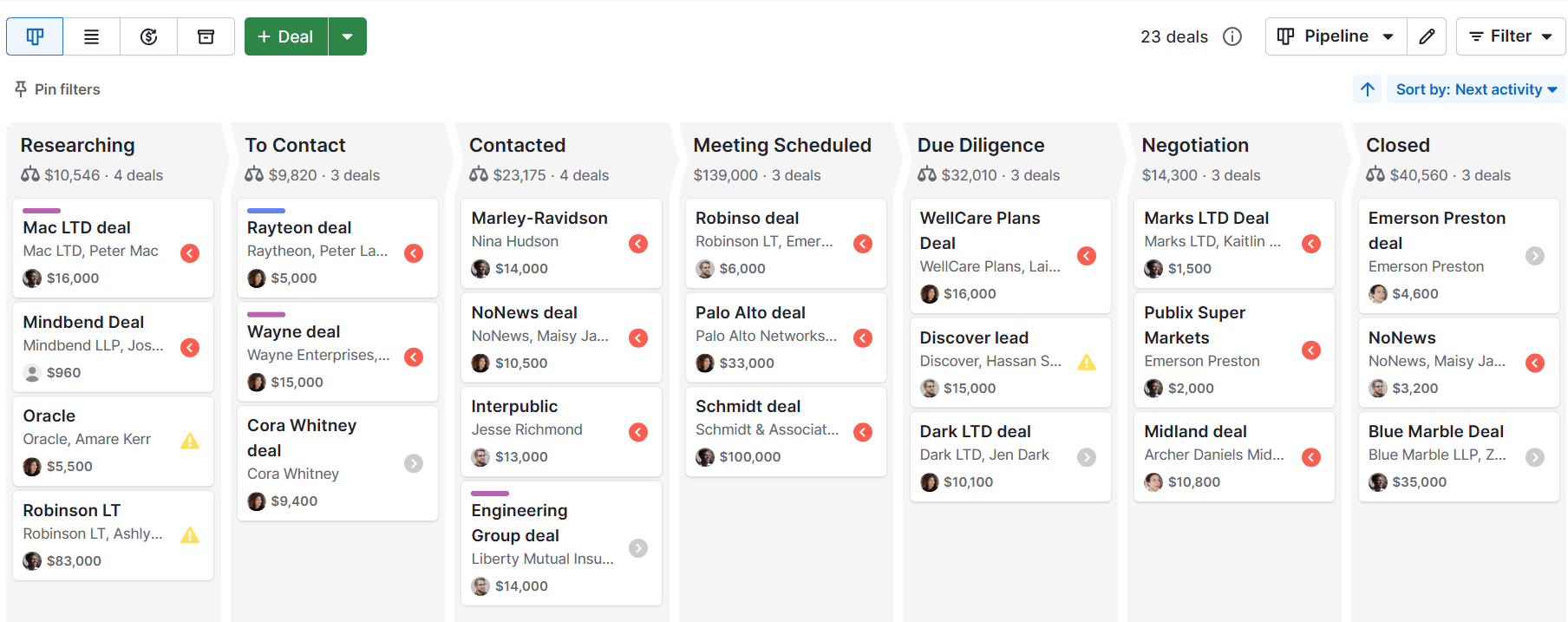
Using Pipedrive as your CRM, you can set a goal for how many new leads enter your sales pipeline.

Strategic marketing Pipedrive goals

Set a timeframe and assign the relevant stakeholders. Visualizing your progress is a great way to motivate your team.

Pipedrive in action: Tour and activity booking company TrekkSoft aimed to increase sales in specific areas and verticals. With Campaigns by Pipedrive, it personalized emails to each segment, increased email sends from 500 to 4,000 per week and doubled sign-ups.

2. Define and segment your ideal customer for laser-focused targeting

Focus on the customer groups that generate the most revenue instead of relying on broad buyer personas.

Strategic marketing is most effective when it reaches the customers who matter most to your business. Chasing every possible lead can spread resources thin.

Look at the closed deals in your CRM and see if you can find and see if you can find patterns in:

  • Deal size – which customers bring the most revenue?

  • Sales cycle length – who tends to close faster?

  • Close rate – which types of customers are most likely to convert?

  • Lifetime value – who renews or expands their contracts?

From there, group similar customers together. Aim for around two or three main segments that represent most of your revenue.

Example: The SaaS company finds that creative agencies close quickly and adopt premium features, but their budgets are smaller and these customers churn more often. Consulting firms take longer to decide, but when they do, they bring bigger contracts and stay longer.

Map out pain points, buying behavior and preferred channels for each segment to create marketing campaigns that speak directly to those groups.

Note: If you have access to more detailed data, you can create in-depth marketing segmentation based on factors like customer demographics or purchase history. This approach lets you refine your value proposition and make more confident marketing decisions for each group.

3. Choose marketing channels that fit your resources and feed your sales process

Spreading efforts across every possible platform can drain resources and dilute results.

Instead, pick two or three channels. When evaluating these channels, consider:

  • Resource requirements – can you use the channel consistently with your current team?

  • Audience alignment – are your target customers active and reachable there?

  • CRM integration – can you track leads from this channel through your sales pipeline?

  • Measurable ROI – can you link activity on this channel directly to closed deals?

While limiting the channels you use seems counterintuitive, it lets your SMB team invest their time where it matters most.

The result? Greater customer engagement and improved conversion across your campaigns.

Example: The SaaS team focuses on LinkedIn and content marketing. Consulting firms in the brand’s target audience spend time on LinkedIn, where case studies and posts build trust. Creative agencies respond better to practical blog articles that show how the software saves time.

4. Measure your success through sales outcomes, not marketing metrics

At this stage, focus on immediate sales outcomes that show whether your marketing activities are helping deals move forward.

Traditional marketing metrics like email opens, website traffic and social media engagement don’t directly predict revenue. Instead, focus on signals like:

  • Lead-to-opportunity conversion rate. The percentage of marketing-sourced leads that become qualified opportunities.

  • Opportunity-to-customer conversion rate. How many of those opportunities turn into paying clients.

  • Time to close. How quickly marketing-sourced deals move from first contact to signed deal.

With Pipedrive, you can easily see how many of your leads convert with the deal conversion report.

Strategic marketing Pipedrive deal conversion report

You could even add custom labels to deals that come from your marketing campaigns (like “Newsletter” or “Facebook ad”).

Then, you can filter for those labels in the conversion report to see how well leads convert from specific campaigns.

Remember, sales metrics don’t just indicate how successful your campaigns are. The data also shows you where to focus your efforts to reach your goals faster.

Example: The project management SaaS sees that leads from case study downloads move through the pipeline faster than article lead magnet downloads. The marketing team decides to prioritize case studies next quarter.

Having marketing metrics and sales data at your fingertips empowers you to make more confident decisions and helps your teams stay focused.

Pipedrive in action: Digital agency Spark Interact created custom dashboards in Pipedrive to track campaign results and daily KPIs. This visibility helped it identify top-performing sales and marketing strategies, leading to a 12% average annual revenue increase.

As Marketing Technology Specialist Mackey Kandarajah observes: “With marketing and sales data housed in one place, the team gains a clear view of which content truly moves prospects, allowing them to refine strategy in real time and convert interest into long-term client relationships.”

Now that you know how to structure your marketing strategically, learn how to execute that framework in practice with concrete tactics ideal for SMBs.

Proven strategic marketing tactics for resource-strapped SMBs

Strategic marketing campaigns don’t need to be flashy to get results.

The tactics below work because they directly support sales and move deals forward.

Align email marketing campaigns with your sales stages

Develop email sequences that mirror your sales process. Instead of generic newsletters, create targeted campaigns for each buying stage:

  • Awareness – product marketing and educational content addressing pain points.

  • Consideration – case studies and product comparisons.

  • Decision – testimonials and implementation guides.

  • Post-purchase – onboarding resources and referral or partner programs.

Planning campaigns with these stages in mind ensures you meet customer needs throughout their buying journey.

Here’s an onboarding email example from product analytics platform Posthog:

The email works because it focuses on the onboarding stage and directly addresses what the user needs to do next.

It sets clear expectations for how often emails will arrive and maintains a personal, approachable tone that encourages engagement.

Create content for in-market buyers

Content is most effective when it speaks to people further along in the marketing funnel who are already evaluating solutions.

Instead of broad awareness pieces, focus on bottom-of-funnel (BoFu) assets that help prospects choose your product.
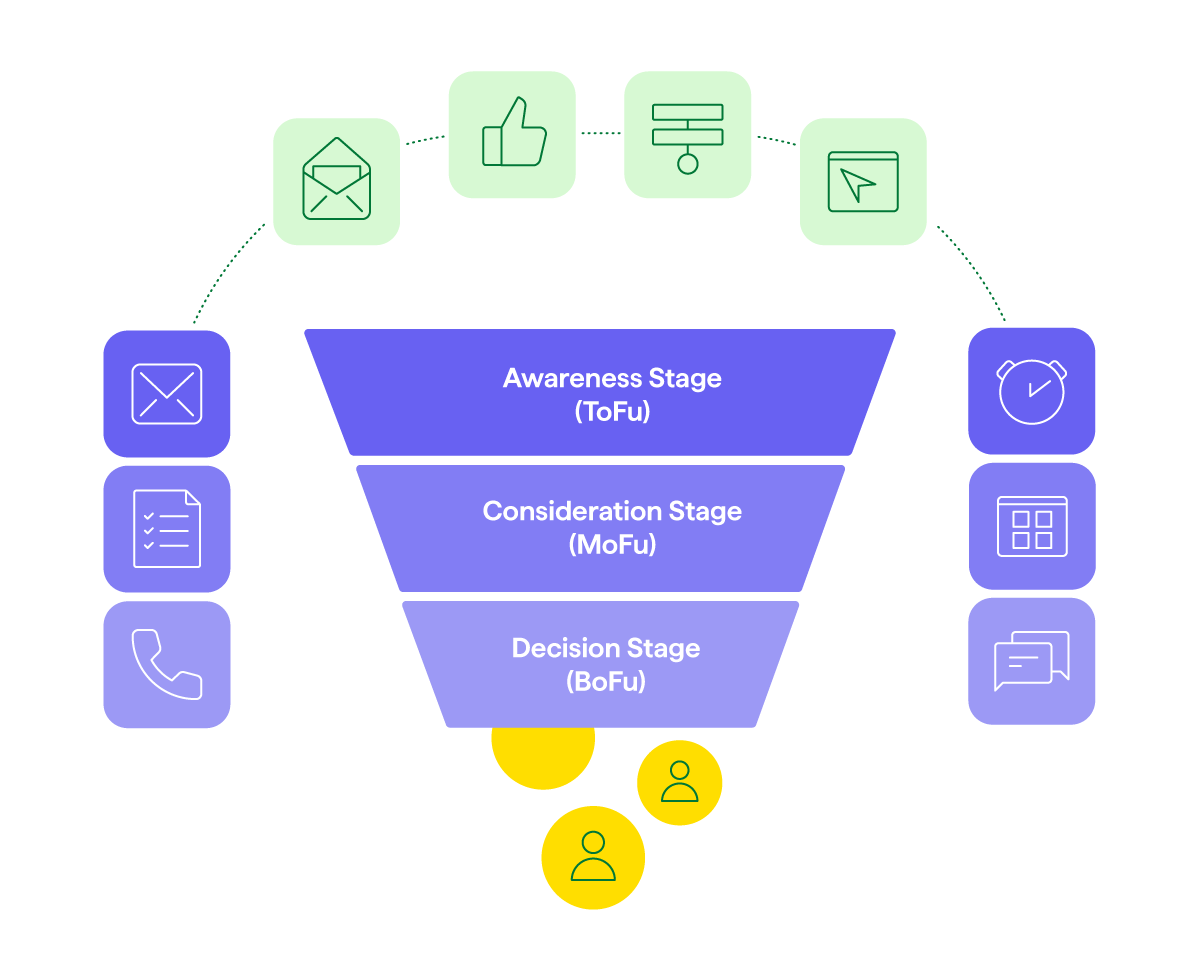
Strategic marketing Pipedrive marketing funnel stages

Comparison guides and “top X software” roundups often have much higher conversion rates than top-of-funnel content and help secure your market position.

Work with your sales team to surface common objections and decision factors, then create content that addresses them head-on.

Here’s an example from time-tracking app Buddy Punch:

Strategic marketing Buddy Punch article

The introduction speaks directly to its customer base by addressing pain points head-on. The rest of the article shows how Buddy Punch solves those problems and offers alternative solutions.

Build relationships on LinkedIn for social selling

Equip your sales team with LinkedIn social selling strategies that complement marketing efforts.

Share valuable industry insights or new products, engage with prospect content and build relationships with your target market.

Here’s how Will Allred, co-founder of AI email assistant Lavender, connects with sales teams on LinkedIn:

Strategic marketing Will Allred LinkedIn post

Coordinate your social media marketing efforts with marketing campaigns. When the marketing team publishes new content, sales reps can share it with relevant prospects while adding personal commentary.

When marketing runs LinkedIn ads, the sales team can follow up with warm messages to engaged prospects.

Run referral or affiliate programs

Referrals are among the most cost-effective ways for small businesses to grow.

Your program could be as simple as a discount for referred clients or as formal as an affiliate program with recurring commissions.

Here’s an example from Senja, a customer testimonial tool:

Its affiliate program clearly outlines how partners earn commissions, making it easy for customers to share the product and earn rewards.

A clear, consistent sales referral system means you can turn happy customers into one of your strongest acquisition channels.

How to measure strategic marketing success over time

Along with tracking immediate results, it’s essential to monitor longer-term trends that show the overall impact of your marketing efforts.

These metrics reveal whether your strategy is sustainable and scalable, not just effective in the short term:

Metric

Details

Lead quality score

  • What it is: The percentage of marketing leads that become qualified opportunities.

  • How to calculate: Divide the number of marketing-generated leads that reach the “qualified” stage by total marketing-generated leads in the same period.

Pipeline velocity

  • What it is: How quickly marketing-sourced deals move through sales stages.

  • How to calculate: Average number of days a deal spends from first contact to close, for all marketing-sourced deals.

Customer acquisition cost (CAC)

  • What it is: Total marketing spend per new customer acquired.

  • How to calculate: Add all marketing expenses (tools, content, ads, staff) and divide by the number of new customers in the same period.

Revenue per lead

  • What it is: Average revenue generated by marketing-sourced prospects.

  • How to calculate: Total revenue from marketing-sourced deals divided by the number of marketing-sourced leads.

Alongside these metrics, examine marketing attribution to learn where leads came from and which campaigns influenced their decisions.

The simplest starting point for SMBs is single-touch attribution. It credits just one touchpoint per conversion, while multi-touch attribution splits credit across all interactions.

You can track attribution through tools like Google Analytics or a platform like Dreamdata.
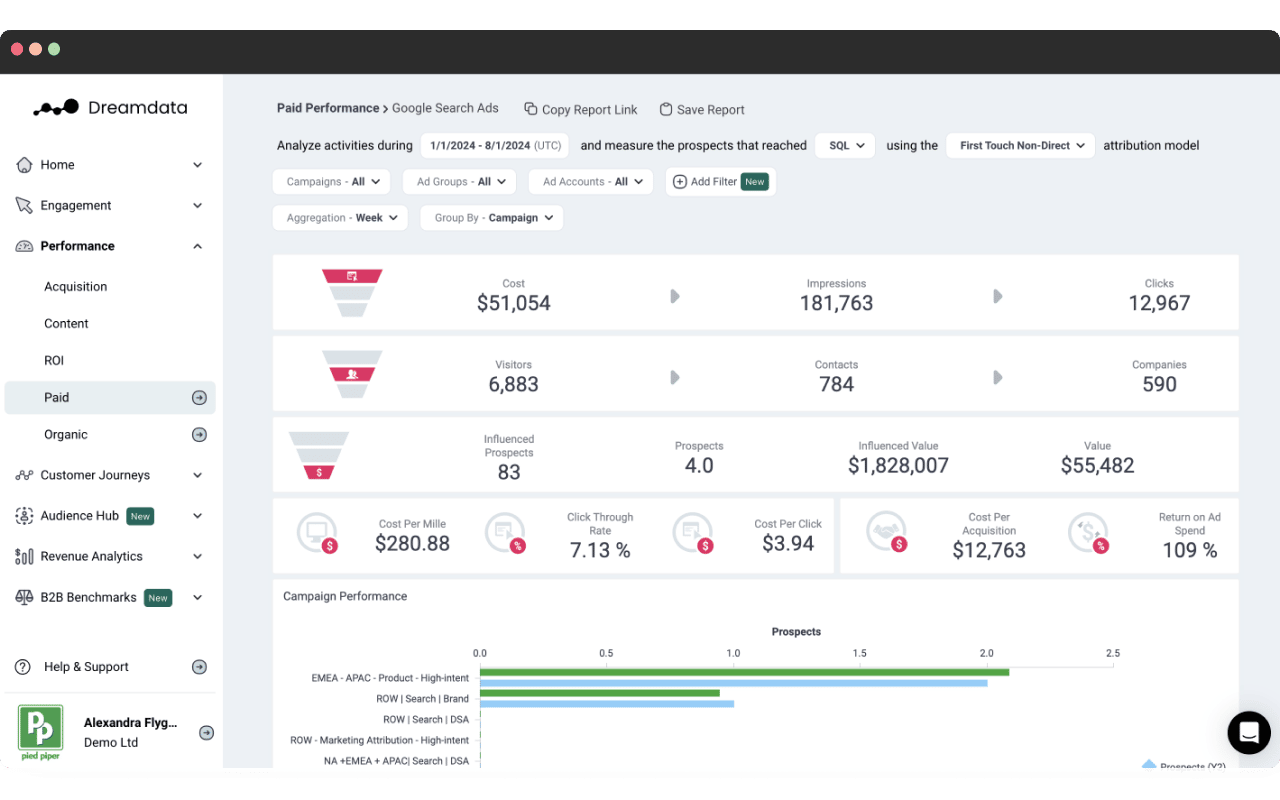
Strategic marketing Dreamdata dashboard

Dreamdata integrates directly with Pipedrive to sync conversions automatically and link leads and digital marketing campaigns to your revenue. You can easily identify your most successful campaigns without creating complex dashboards.

Even with the right tools, SMBs can fall into pitfalls when implementing strategic marketing. Awareness of the risks helps your business manage its marketing efforts safely and successfully.

Common strategic marketing mistakes SMBs make

Avoid these mistakes to protect your marketing budget and make your campaigns more effective.

Copying enterprise tactics without the resources to execute them

Enterprise marketing strategies need dedicated teams, big budgets and sometimes complex new technology.

Small businesses should focus on simplified versions that fit their constraints. For instance:

  • Create basic qualification criteria based on company size and budget instead of complex lead scoring

  • Develop a few targeted email campaigns for the primary customer segments instead of elaborate automation sequences

It’s best to start small. You can always add more complexity as your strategic marketing and sales processes evolve.

Spreading efforts too thin across different channels

Focused marketing on two or three channels can deliver better results than implementing efforts across many platforms.

When you master a few key channels, you can create higher-quality content and build stronger engagement with prospects.

Pick channels where your target audience is active and you can execute consistently. Build expertise in these areas before expanding to new ones.

Running marketing separately from CRM and sales processes

Connecting marketing directly to your sales processes improves conversions and keeps leads moving forward.

Here’s how to link the two:

  • Build CRM integration into every marketing campaign from the start

  • Set up lead capture forms to automatically create CRM records

  • Configure email campaigns to track engagement in your sales system

Campaigns by Pipedrive connects email marketing directly to your CRM, so every email interaction automatically updates contact records.

Strategic marketing Pipedrive Campaigns detail

When your email marketing lives inside your CRM, your sales reps can see which prospects engage with content and tailor their outreach accordingly.

Pipedrive in action: Trainify, a corporate education company in Latvia, uses Campaigns by Pipedrive to connect its email marketing with the CRM. This two-in-one functionality saves Trainify two hours per week on campaign creation and management while automatically tracking interactions to support sales follow-up.

Focusing on brand awareness instead of lead generation

Brand awareness works best as a side benefit rather than the primary goal.

Small businesses get better ROI from demand generation that directly feeds the sales pipeline.

Focus on creating content that captures contact information and moves prospects toward purchase, like webinars or free templates that solve a specific challenge.

Your brand naturally builds market share through valuable, lead-generating content that solves real customer problems.

Strategic marketing FAQs

  • Strategic marketing connects all marketing activities to business goals and measures success by sales results.

    Regular marketing focuses on specific tactics like content or emails without necessarily planning how they link to revenue.

  • Initial results usually appear within a few months as you optimize targeting and messaging.

    Early indicators include better lead quality, shorter sales cycles and higher conversions from marketing-generated leads.

  • Your SMB can build a strategic marketing strategy using your customer data. Broader market research can add valuable context if you have the resources to pull it off.

    A focused market analysis can help you identify market trends affecting strategy.

    For instance, a simple SWOT analysis and benchmarking (comparing your performance to competitors or industry standards) highlight your sales opportunities and challenges.

    This insight informs decisions about pricing strategies, segmentation and new business opportunities.

  • Start by defining your ideal customers and segmenting them based on their needs and behaviors.

    Choose a marketing mix that fits your resources and feeds your sales process. Track results with marketing analytics to see what’s driving leads and revenue.

    This approach turns your marketing into a repeatable system that supports growth.

Final thoughts

The strategic marketing process isn’t about having the biggest budget or the largest team.

Focus on the most impactful marketing initiatives for your small business to turn strategy into a sustainable competitive advantage.

Tracking your marketing campaigns’ performance is key to effective marketing and sales success, helping you see what works and optimize it for improved results.

Pipedrive supports a strategic approach by connecting your leads, sales activity and revenue in one place – try it free for 14 days.

7 Best Customer Marketing Strategies for SMBs

Software Stack Editor · October 28, 2025 ·

Customer marketing transforms one-time buyers into brand advocates who drive growth.

For small businesses, it means shifting focus from the high costs of chasing new prospects to maximizing the value of customers who already trust the brand – and are easier to sell to.

In this article, you’ll discover seven effective customer marketing strategies to generate predictable revenue and sustainable business growth from your existing customer base.

Key takeaways from customer marketing

  • Customer marketing focuses your efforts on existing customers who already trust you instead of only chasing new prospects.

  • Focusing on existing customers drives more revenue through upgrades or selling additional products while keeping acquisition costs low.

  • Programs like referrals, loyalty rewards and VIP treatment turn satisfied buyers into advocates and prevent churn.

  • Pipedrive tracks customer history, automates follow-ups and helps you segment by value so you can focus on marketing strategies that drive the highest returns – try it free for 14 days.
What is customer marketing?

Customer marketing definition: Customer marketing takes a customer-centric approach by focusing marketing efforts on the existing customer base. Your business encourages current customers to buy more, stay loyal and refer others

While many businesses focus on customer acquisition, this approach overlooks easier revenue opportunities.

Customer marketing focuses on your current customers, who already know your business. They’ve experienced your value first-hand and may be more willing to re-purchase.

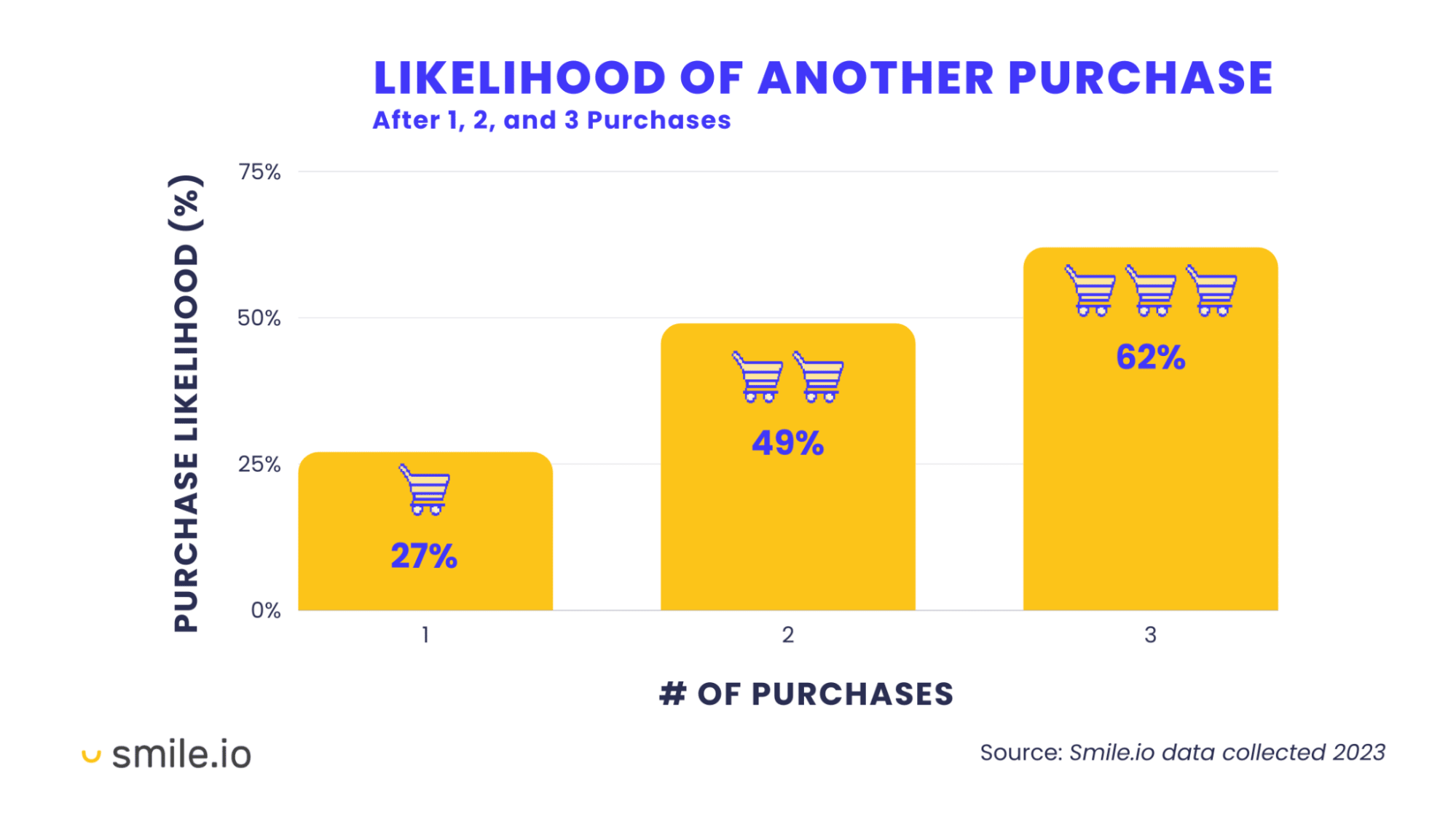
According to Smile.io research, customers who buy from your online store once have a 27% chance of buying again. Their second and third purchase probability goes up further.

customer marketing repeat customers

Your existing customers become more valuable over time, with each purchase building trust and familiarity with your business.

Still, you can’t treat all customers the same way. Someone who bought from you once needs different attention than a customer who’s been with you for years.

There are three key elements to effective customer marketing based on your buyers:

  1. Segmentation – segment according to people’s customer engagement and purchase behavior

  2. Personalization – create messages that address specific customer needs

  3. Progression – strengthen customer relationships and move them toward higher value

You need to understand where each customer sits in their journey with you. Then, create clear paths that guide them toward higher value and deeper engagement.

Benefits of customer marketing

Customer marketing gives you a head start over acquisition. You skip the awareness and consideration stages altogether.

The customer journey becomes shorter and you start with warm leads instead of cold leads every time.

Download our customer journey map template

Start mapping your customer journey with our free customer journey template.

Here are some of the benefits of customer marketing for small businesses:

Higher profitability

Why it works: Your existing customers are more profitable than new ones.

Example: Say your acquisition cost is $500 per customer and you sell software plans of $1,000 annually. When users renew next year, you make $1,000 in profit instead of $500. Moreover, you already know their specific needs.

Cost-effective growth

Why it works: Existing customers require less marketing budget and effort.

Example: A B2B SaaS company may spend $5,000 on ads to get five new trial users. However, an upgrade email to existing users might convert more for the cost of one email blast.

Revenue expansion

Why it works: Existing customers are easier to upsell and cross-sell.

Example: A three-person sales team uses your basic software plan at $50 per user. When the team doubles, your customer marketing manager sends an email offering additional seats. They upgrade immediately, adding $150 in monthly revenue. No re-pitch required – they already trust your solutions.

Competitive protection

Why it works: Satisfied buyers become loyal, improving customer retention rates.

Example: Your customers get cold emails from competitors with promotions, but are reluctant to change service providers. A 20% off offer in HR software isn’t attractive when they’ve already built their processes in your system. They’d have to start over and lose the relationship they’ve built with your team.

Business insights

Why it works: Long-term buyers give you better customer feedback and data.

Example: Say you run a survey and find out most of your customers prefer using the mobile app. So you improve the mobile experience, which helps you sell more effectively to similar sales prospects.

Now that you understand why customer marketing works, learn why it’s different from lifecycle marketing in a fundamental way.

Customer marketing vs. lifecycle marketing

Customer marketing and lifecycle marketing differ in timing.

Customer marketing starts after the first sale. You increase customer satisfaction, build loyalty and move customers toward advocacy. The main focus is developing the post-purchase relationship for retention and repeat purchases.

Lifecycle marketing starts before potential customers know you exist. You create marketing for every customer touchpoint along the journey – from brand awareness to advocacy.

Customer marketing is one function of lifecycle marketing, while the latter spans the whole journey.

Most businesses need both approaches for successful growth. Yet, small-scale business owners often focus on acquisition and miss out on crucial customer retention opportunities.

Recommended reading

https://www-cms.pipedriveassets.com/Delight-the-Customer.jpg

10 reliable ways to delight the customer and amplify customer loyalty

7 successful customer marketing strategies for SMBs

Customer marketing strategies work best when they match your current business stage and customer needs..

Here are some successful marketing strategies you can use.

1. Customer onboarding campaigns

A customer onboarding campaign is a sequence of emails that guides new customers.

You design these emails to educate customers or help them achieve milestones. For example, helping them set up their first sales pipeline or importing their contact list.

The main goal of these emails is to move customers from “I’m just signed up” to “I’m getting value”. If customers don’t get value quickly, they may churn.

An onboarding campaign can have the following email sequence:

First milestone email (e.g., create an email campaign or import contacts)

SMB benefit: Onboarding campaigns work better for small businesses that need to educate customers. If customers can understand your offer without guidance, onboarding may be unnecessary.

Here’s an example of an email from Pipedrive’s onboarding sequence:

customer marketing pipedrive onboarding email

This is a milestone email to help customers import data. Rather than making customers log into their account and navigate to the feature, Pipedrive provides a handy “Let’s go!” button.

The message also includes a link to a video tutorial. This gives customers additional support if they need more guidance on the import process.

2. Upselling and cross-selling

Upselling and cross-selling marketing help you promote upgrades and complementary products to get more value from customers.

Upselling campaigns promote premium versions of products your customers already use. For instance, you may market a pro plan to customers who are on your software’s basic plan.

Meanwhile, cross-selling campaigns promote additional or new products that complement customers’ purchases. For example, a buyer who’s upgraded to your pro plan may need your consulting services.

SMB benefit: Upselling and cross-selling increase customer lifetime value without adding acquisition costs. Higher lifetime values mean you can invest more in your business growth

Take Grammarly, the writing assistant that marketing teams can use to create content faster. Here’s how it subtly upsells to its customers:

customer marketing grammarly upselling

When you use the free plan, Grammarly catches basic spelling and grammar errors – providing immediate value. Pro suggestions appear greyed out as you write, promising to improve your content quality.

SMBs can instantly see how a product upgrade benefits their limited resources, which makes the sales conversation easier.

3. Customer loyalty programs

Customer loyalty programs are reward systems that give customers incentives to keep buying.

They typically involve points, tiers or membership benefits. You structure these programs so customers earn rewards after reaching a specific milestone.

A few examples for a small SaaS provider can include:

  • “Pay yearly, get 15% off”

  • “Refer a client, earn $100 credit”

  • “Spend $,5,000 yearly, unlock VIP support”

SMB benefit: Loyalty programs are critical for SMB management and success because you can turn occasional customers into predictable revenue. Users earn rewards for repeat purchases, making them less likely to switch to competitors.

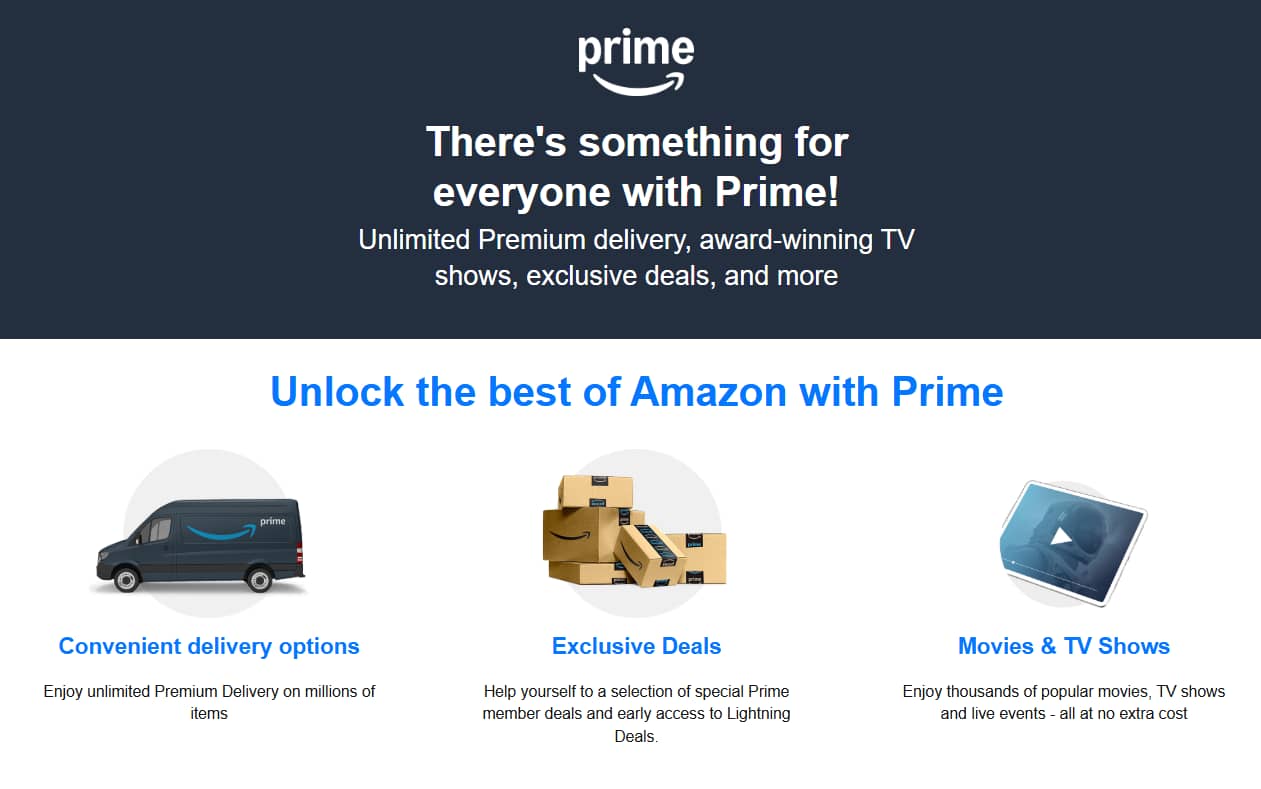
Take how an Amazon Prime subscription can help small businesses get supplies delivered quickly at no extra cost.

Amazon Prime represents a new approach to loyalty programs. Instead of using point accumulation, it creates loyal customers through upfront membership fees.

customer marketing amazon prime

The subscription offers fast shipping, exclusive discounts and access to other Prime products.

Because of these benefits, Prime members may be more motivated to buy from Amazon. They’ve already paid for the benefits, so they’ll want to maximize their investment.

If loyalty works for Amazon, you can make it work for your valued SMB customers.

4. Customer advocacy programs

Customer advocacy programs turn your happiest customers into brand ambassadors who promote your business through content creation and customer stories.

This content may come in the form of:

Advocacy initiatives recognize a simple truth. Happy customers often enjoy sharing their wins. Your job is to give them easy ways to share those stories.

SMB benefit: Advocates create authentic marketing content. Sales prospects trust real customers more than ads, making social proof more effective for SMB sales than any campaign you could run.

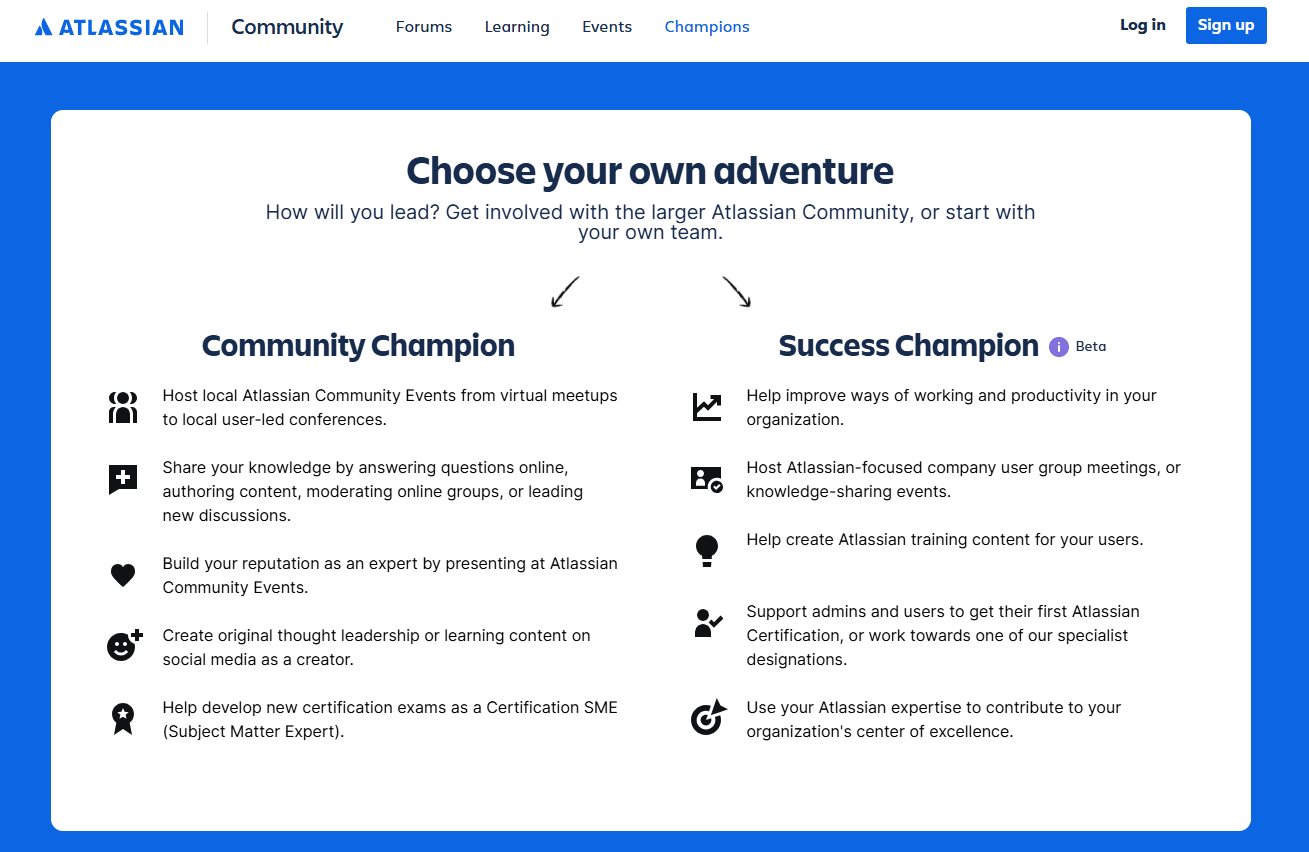
Atlassian owns project management tools like Jira and Trello, which small teams can use to track tasks and collaborate on projects.

Here’s how Atlassian’s community champion program turns customers into advocates

customer marketing atlassian champion

Atlassian looks for customers with deep product expertise. The company gives these champions free course vouchers, exclusive champion-only spaces and even direct access to the Atlassian team.

Champions create educational content about Atlassian products in return. They host webinars, mentor other users and speak at conferences.

This advocacy feels natural because it builds on real expertise and genuine enthusiasm – an ideal scenario in the tech industry.

5. Referral programs

Referral programs are a word-of-mouth strategy in which customers refer others to your product or service.

Referrals involve giving both the referring customer and the new customer a reward. This reward often comes in the form of:

A referral program works because it leverages the existing trust between customers and their networks. When someone gets a recommendation from a trusted source, they’re more likely to pay attention to it and dismiss any sales pitch.

SMB benefit: Referral programs are one of the most effective ways of acquisition. Instead of paying upfront for advertising that may not deliver results, you only pay when someone brings you a new customer.

Consider Dropbox. Small businesses can use the cloud storage service to collaborate on documents and back up important data.

Here’s how Dropbox’s referral program makes both existing and new customers willing to take part:

customer marketing dropbox referral

You just need to sign up for Dropbox and send an email or referral link to your contacts. If one of them joins Dropbox, you both get an extra 500 MB (Basic users) or 1 GB (Plus users) of space.

Everyone benefits from this interaction. Dropbox gains a new customer and users win more storage space.

This makes the referral process feel mutually beneficial rather than a transaction.

6. Win-back campaigns

Win-back campaigns try to re-engage customers who stopped using your product or service.

It often involves sending emails with compelling offers to convince customers to buy from you again. The email may start with a simple “we miss you” message and escalate to special discounts.

Win-back strategies work because former customers are easier to convert than new customers. They already know your business and have experience with your product.

SMB benefit: When you have a limited marketing budget, reaching out to former customers is more cost-effective than acquiring new ones. You’re essentially skipping the awareness stage and going straight to conversion.

At the same time, by understanding why customers left, you prevent future customer churn.

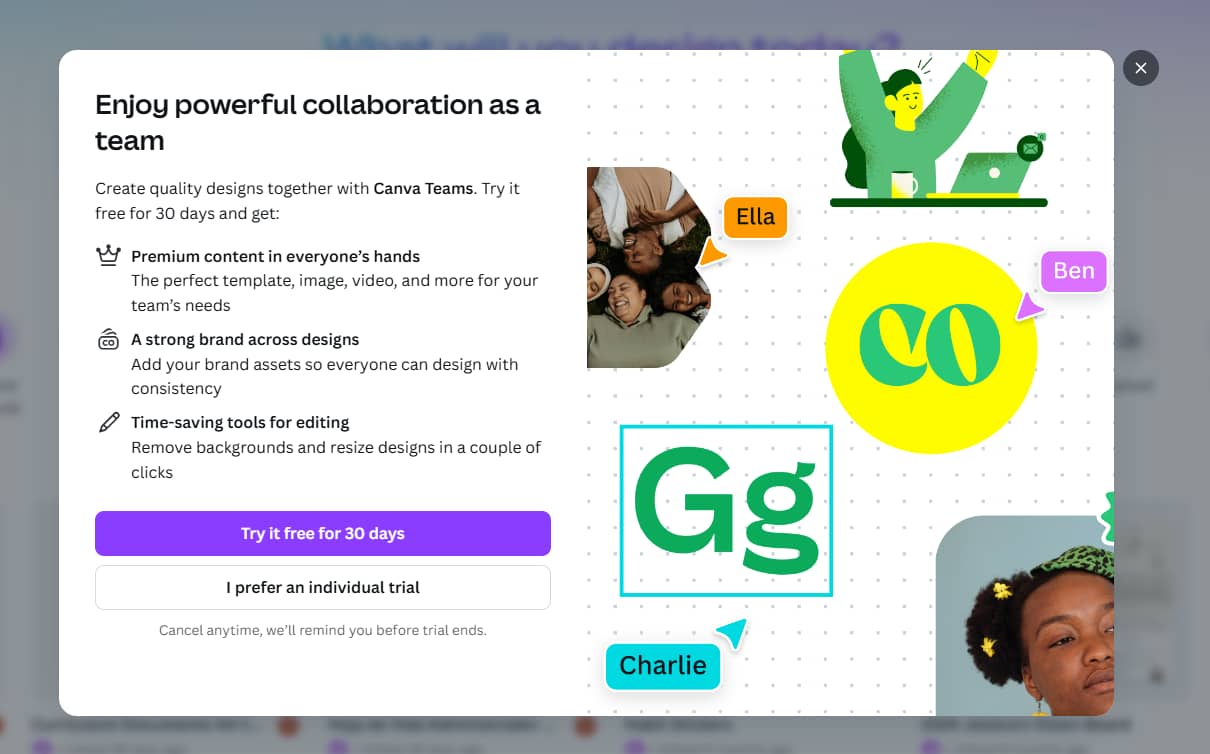
Canva’s design tool is popular among small businesses looking to create professional-looking marketing materials.

Here’s how the brand re-engages customers:

customer marketing canva strategy

After you’ve been on the free plan for a while, when you log into Canva, a pop-up offers you 30 days of premium features for free. This achieves several purposes:

  • Removes the cost barrier that made you downgrade

  • Reminds you of premium features you’re missing

  • Creates urgency with a time limit

  • Provides value without risk

When you can remind customers of specific benefits, your win-back strategies become more compelling.

7. VIP/exclusive programs

VIP programs provide exceptional customer experiences to high-value customers.

The value of these customers is often based on their spending or strategic importance. Losing one usually costs far more than losing an average customer. They represent a considerable amount of your revenue, so it makes sense to invest in extra resources to keep them happy.

Keeping high-value customers is more about risk management. Not an optional customer service enhancement.

SMB benefit: Retaining high-value customers becomes even more critical for SMBs. If you generate $500k a year and a customer account for $75k, losing them means losing 15% of revenue.

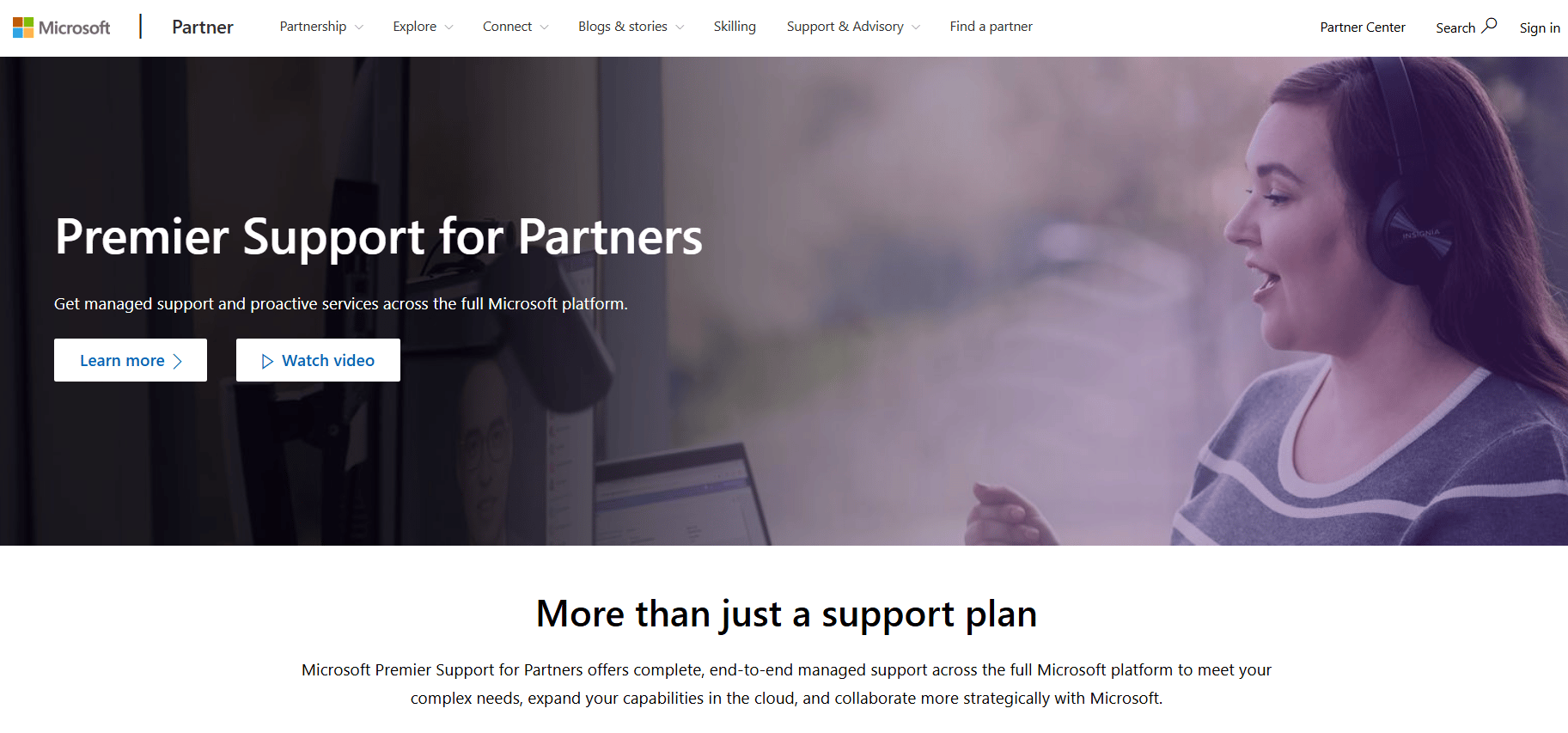
Small businesses rely on Microsoft tools for daily operations – from email to file sharing. Here’s how its Premier Support program provides VIP treatment to high-value clients:

customer marketing microsoft partners

The program offers a dedicated account manager, faster response times, workshops and in-depth customer support.

A key component of this strategy is recognizing that the cost of extra services is far less than losing high-value customers and that VIP marketing efforts help preserve their lifetime value.

Recommended reading

https://www-cms.pipedriveassets.com/Campaign-management-best-practices-for-SMBs.png

Campaign management for SMBs: benefits, best practices and top tools

How to implement customer marketing strategies with Pipedrive

While Pipedrive’s customer relationship management (CRM) software manages your sales pipeline and tracks customer interactions, it can also power your customer marketing efforts.

The platform streamlines email campaigns, identifies high-value customers and segments audiences for targeted marketing.

Here are three ways Pipedrive supports some of the customer marketing strategies outlined in this article.

1. Automate email sequences with Campaigns

Pipedrive’s Campaigns feature automates your email campaigns and customer communications directly from your CRM.

With this customer marketing solution, you can send onboarding sequences or win-back marketing campaigns.

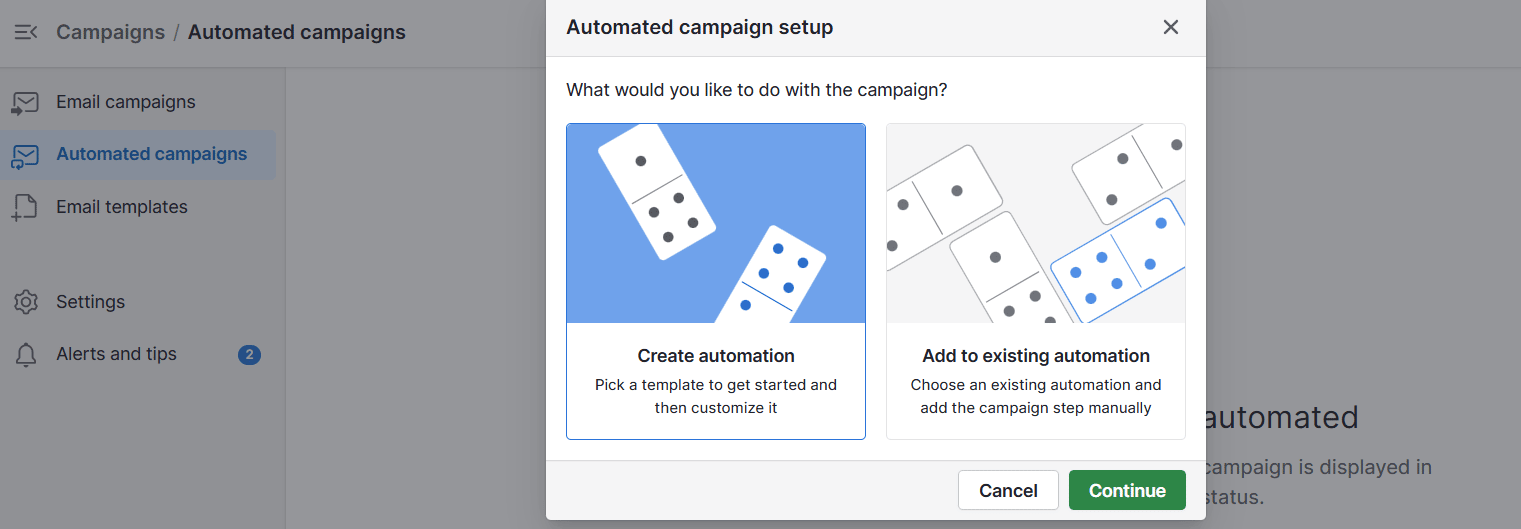
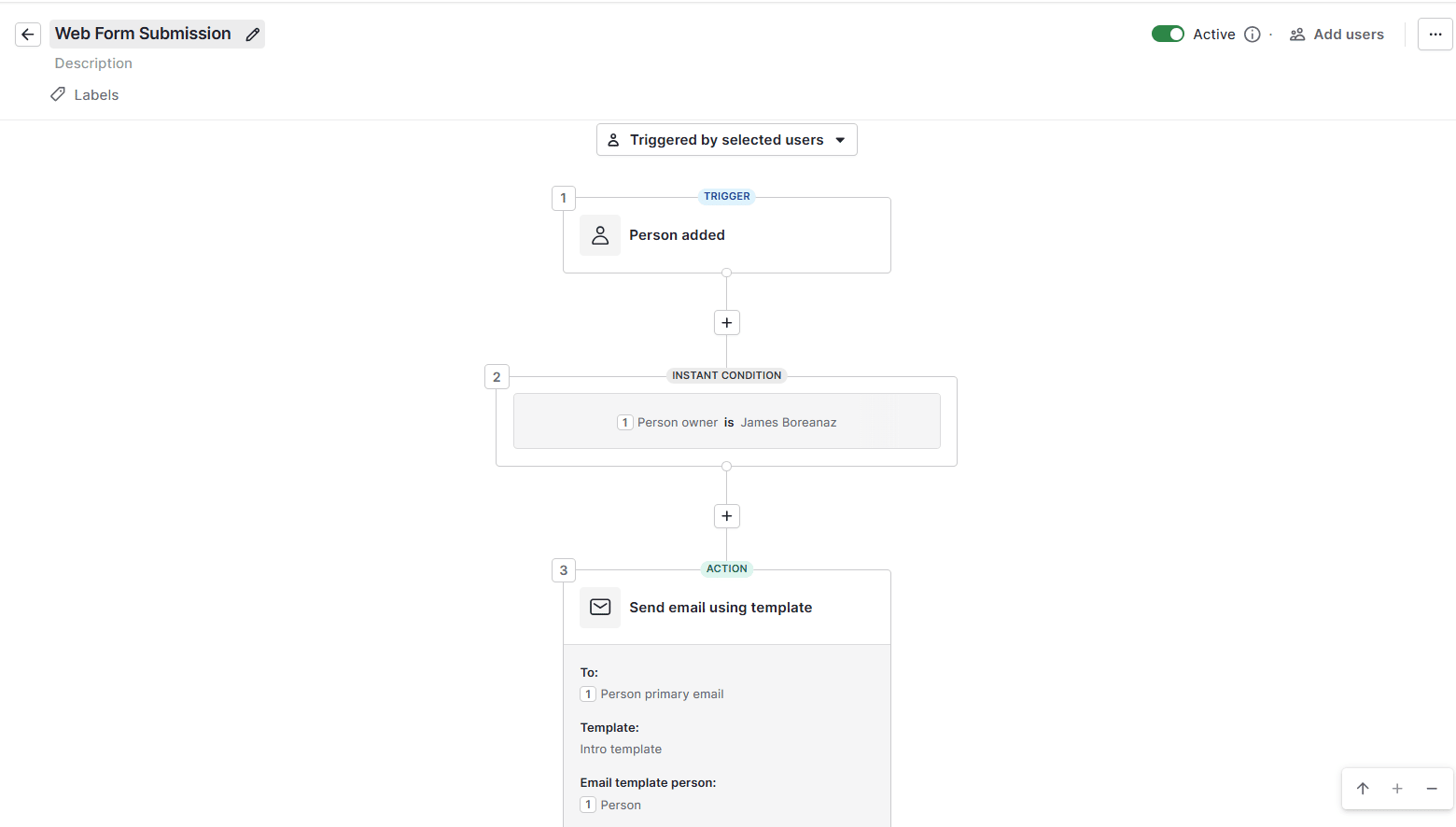
Create an automated email campaign by going to Campaigns > Automated campaigns > + Campaign.

customer marketing Pipedrive automated campaign setup

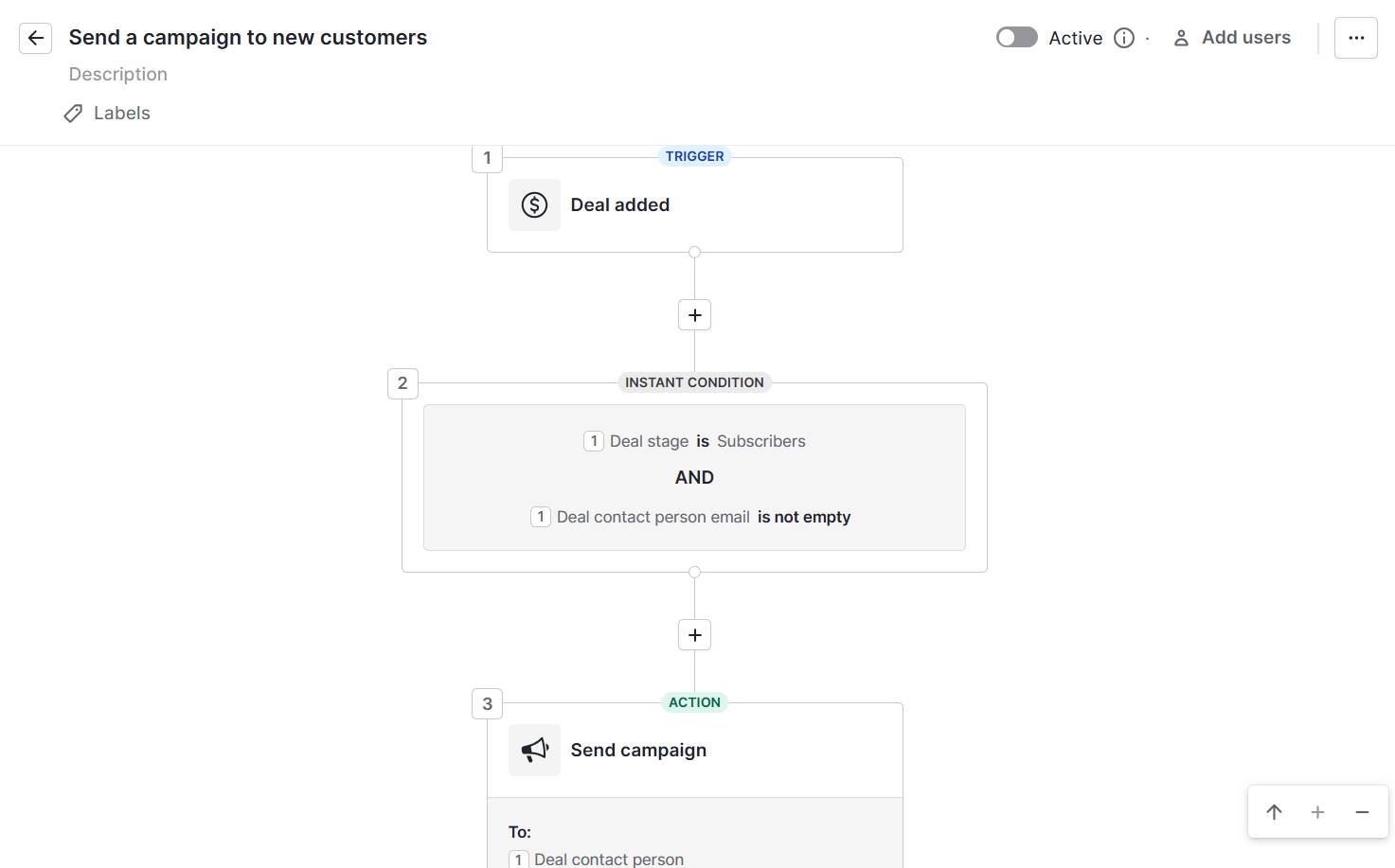
Enter the trigger, condition and action. For example, to build a welcome sequence that includes tutorial videos on day one, set:

  • Trigger as “deal won”

  • Condition as a label for “new customer”

  • Action as “send email immediately”

customer marketing Pipedrive campaign automation

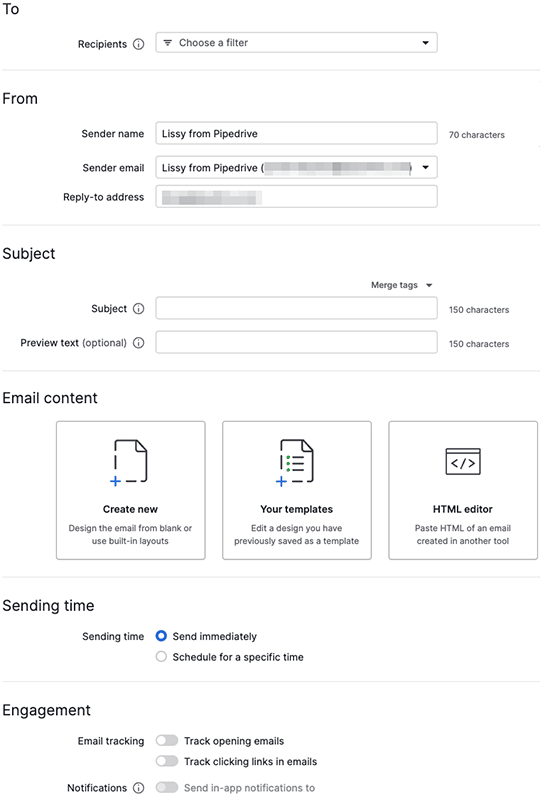
Once your campaign is live, you can track open rates and click-throughs to see which messages resonate best with your customers.

The drag-and-drop builder makes it easy to design professional emails. You can customize your messages by adding your brand colors, images and CTA buttons.

Pipedrive in action: Trainify, a corporate education company in Latvia, struggled with disconnected email marketing and CRM tools. Every campaign required the company to export contacts from its CRM into its email tool first. This process wasted hours each week and created errors when the data didn’t sync properly.

After switching to Pipedrive’s CRM and adding the Campaigns feature, Trainify consolidated all contacts on a single platform. Email campaigns now pull data directly from the CRM without manual exports or imports, saving the company two hours every week.

2. Track customer value with deal data

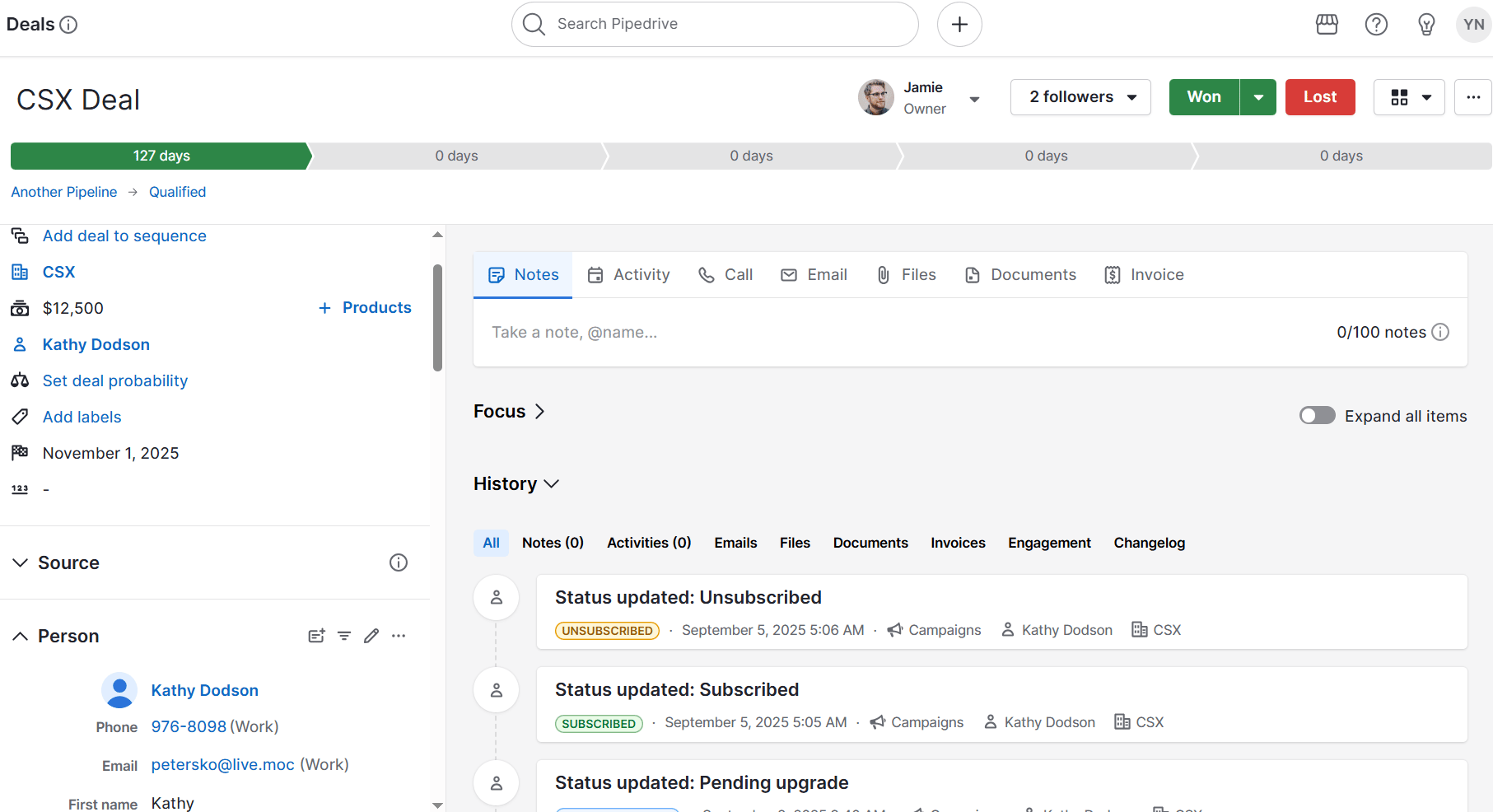
Pipedrive stores metrics and information about every customer sale in your deal records.

You can see purchase history and product preferences all in one place. The deal records help you identify which customers spend the most in your business. You can spot patterns like:

customer marketing Pipedrive deal view

From these insights, you can identify upsell and cross-sell opportunities.

Example: You might notice a client’s marketing team has grown from five to 10 people. Their current plan only covers five seats, which signals a perfect moment to reach out about upgrading.

Pipedrive in action: Snug, a subscription rental housing platform, relied on spreadsheets to track customer data. This manual process made it difficult for the sales team to access and act on information.

With Pipedrive, everything moved into a centralized system. Custom fields and automation helped Snug’s small sales team prioritize leads more effectively,boosting its prospect list growth by 40% a month.

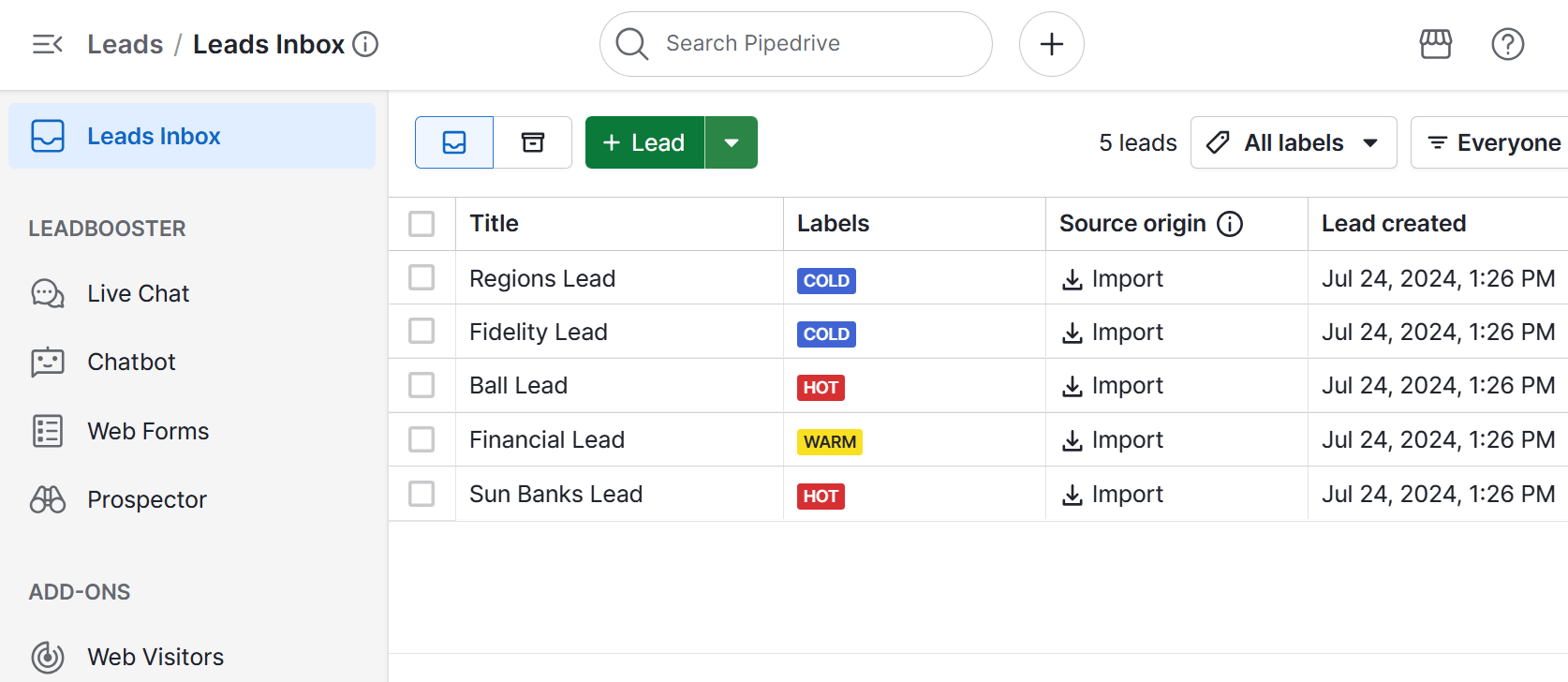
3. Segment customers with labels and filters

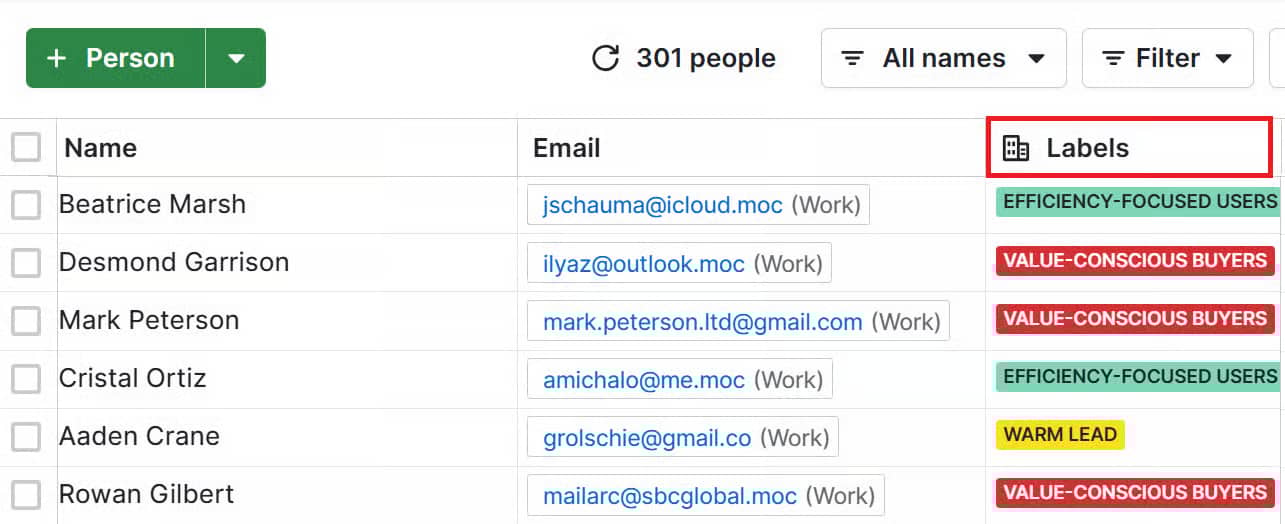
Pipedrive lets you organize customers into groups using labels and custom filters.

You can create segments based on purchase behavior, engagement levels or customer value. Think of these segments as customer personas that help you send the right message to the right people.

customer marketing Pipedrive leads filter

Example: You might create labels like “VIP customer”, “upsell ready” or “at risk of churning”. Apply these labels to deals or contacts based on the patterns you spot in your customer data.

When you need to run a specific campaign, filter your contact list by label to target exactly the right people.

Pipedrive in action: UK-based marketing agency Creative Race struggled to monitor prospects’ movements across the pipeline, leading to missed sales opportunities and poor forecasting.

With Pipedrive’s customizable fields, CreativeRace built targeted customer lists and maintained accurate data across its dashboards and reports. The payoff:a 600% year-over-year boost in client acquisition.

Final thoughts

Customer marketing can increase revenue per customer, reduce churn and turn satisfied customers into brand advocates – all while keeping marketing costs low.

Instead of chasing new, costly prospects, you focus on those who already trust and know your value.

Pipedrive gives you the tools you need to implement effective customer marketing strategies. You get automated campaigns, customer segmentation and value tracking in one platform.

Sign up for a 14-day free trial to grow your SMB through your existing customers.

The Salesperson’s COB vs. EOD Guide

Software Stack Editor · October 27, 2025 ·

End of day (EOD) and close of business (COB) both mean “at the end of the day”. But what is COB exactly and how does it differ from EOD?

Knowing which term to use helps you set clear deadlines and keep your team on the same page.

In this guide, you’ll learn to use COB vs. EOD in practice, with practical examples you can use to communicate deadlines everyone understands.

Key takeaways for COB vs. EOD

  • COB and EOD are very similar terms – understanding their nuances helps you use them more effectively.

  • Using these terms with care builds trust and keeps projects moving forward by preventing the confusion caused by different work schedules.

  • Replacing “EOD” with something specific, like “3 PM EST tomorrow”, eliminates confusion and prevents deals from stalling due to miscommunication.

  • A CRM like Pipedrive helps you manage timed activities and store contact data such as time zones. Try it free for 14 days to bring clarity to your sales process.

COB vs. EOD at a glance

COB stands for close of business, while EOD stands for end of day.

COB typically refers to 5 or 6 PM, while EOD is more flexible and could mean anytime before midnight.

Here’s the difference between these two business abbreviations:

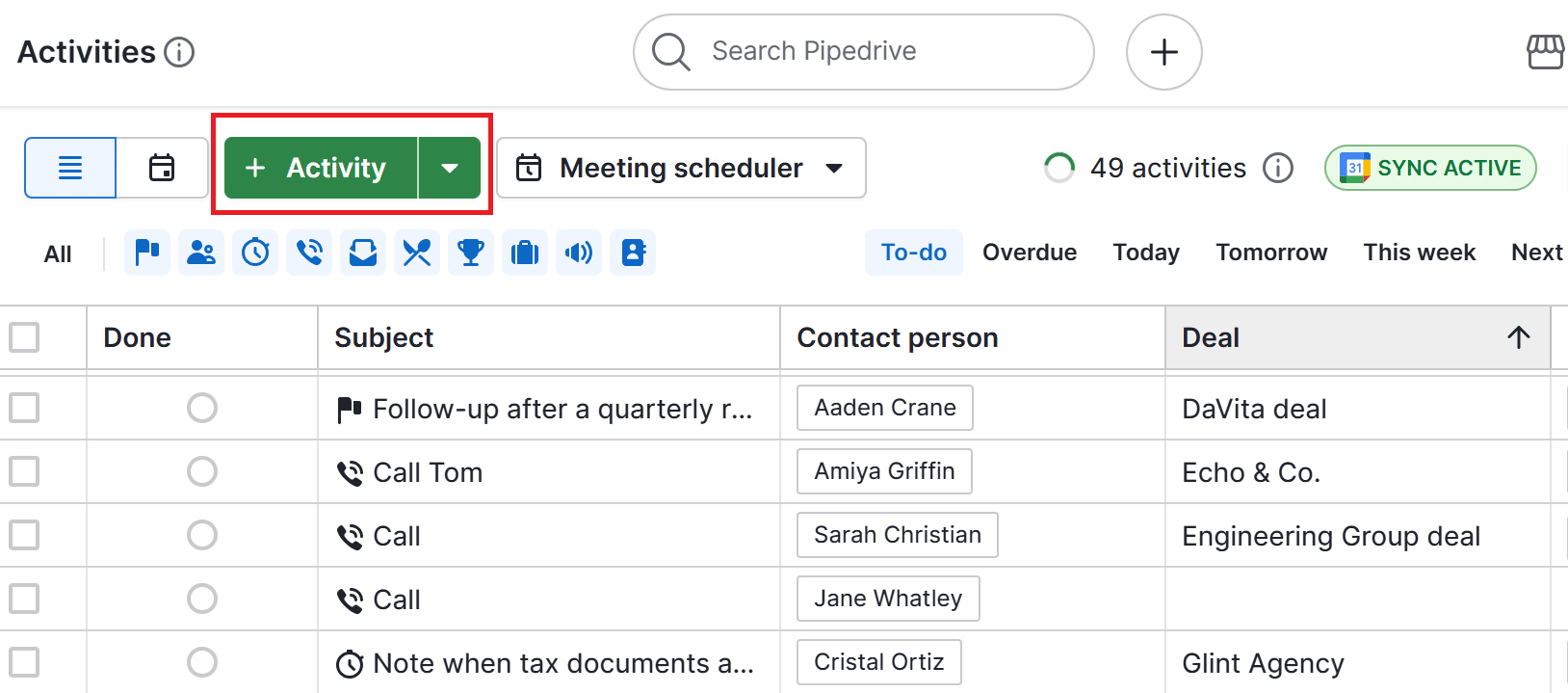
What is COB in business?

What is EOD in business?

It’s the time that your office officially closes for the day.

Most businesses close between 5 PM and 6 PM, so when someone asks for something by “close of business”, they want it during standard business hours.

It refers to the end of the business day.

For some people, “end of day” means when they personally finish work. For others, it means the end of the calendar day (at midnight).

Best for: Client deadlines, formal documentation and external communication.

Best for: Team communication, internal deadlines and projects with flexible timing.

The biggest problem with both business acronyms is time zones. Take a look at the different zones in this map of the US:

COB vs. EOD US time zones

If you tell someone in another city to finish something by EOD or COB today, they might not know whether you mean your time or theirs.

For remote teams spread across the country – or even the world – that can easily create a three-hour (or more) expectation gap.

In business, you might also come across similar terms:

  • EOP (end of play) and COP (close of play) mean the same thing as COB and are more common in British and Australian workplaces

  • EOB (end of business) means the same as EOP and COB

  • EOW (end of week) typically means Friday at COB, though some people interpret it as Sunday at midnight

  • EOM (end of month) refers to the last business day of the month, usually at the close of business

These terms carry the same time zone problems as COB and EOD, but the fix is simple. All you have to do is include the actual time and time zone.

Note: Historically, COB has referred to the closing of the New York Stock Exchange financial markets. These days, people typically use it to refer to the end of a typical workday rather than relating it to the stock market.

How to use COB and EOD in practice

In the business world, being specific about deadlines helps build trust and create a better first impression.

Clear communication shows you’re professional, organized and respectful of your sales prospect’s time.

Here are two quick examples of how a simple wording choice can change the outcome with a new lead.

Example 1: A sales rep follows up with a high-value prospect

Imagine a sales rep needs to send a proposal to a new prospect in a different time zone and works a standard nine-to-five schedule.

The examples below show how the two different approaches play out.

In the first approach, the rep uses common office shorthand in their follow-up email:

Subject: Following up

Hi Jane,

Great talking to you. I’ll get that sales proposal over to you by EOD.

Best, Alex

The outcome: Alex sends the proposal at 7 PM his time, which is 9 PM for the prospect. The email arrives after the prospect has logged off for the day. Because “EOD” is ambiguous, it creates uncertainty and leaves the delivery time open to interpretation.

In the second approach, Alex takes an extra few minutes to be precise and confirm the prospect’s time zone.

Subject: Your Proposal

Hi Jane,

Following our call, I’ll prepare a detailed business proposal and send it to your inbox by 3 PM your time (CST) tomorrow.

Best, Alex

The outcome: The proposal arrives exactly when promised. Alex looks organized and reliable. He builds trust before the prospect opens the document, smoothing the sales process.

Example 2: Aligning deadlines for a global team

Imagine a project manager in London needs to collect feedback from team members in New York and Bengaluru.

In the first approach, the project manager sets a deadline that’s clear to her, but ambiguous to the rest of the team:

Subject: Feedback on Project Alpha Draft

Hi Team,

Please submit all feedback on the Project Alpha draft by the end of the workday.

Thanks, Maria

The outcome: The message is confusing. The New York City resident thinks the deadline is 5 PM Eastern Standard Time (EST). For London, that’s 10 PM; for Bengaluru, it’s 2:30 AM the next day. The deadline is impossible to meet and creates delays.

In the second approach, Maria uses a universal time standard to create a single deadline for everyone’s deliverables:

Subject: Feedback on Project Alpha Draft

Hi Team,

Please submit all feedback on the project report by Wednesday at 14:00 UTC.

For reference, that’s 10 AM in New York (EST) and 7:30 PM in Bengaluru (IST).

Thanks, Maria

The outcome: There’s no confusion. Every team member understands when the feedback is due. The deadline falls within a reasonable workday and ensures everyone can contribute on time. The project stays on track and the team feels aligned.

Turn Maybe Into Yes With These Killer Follow Up Email Templates

These customizable follow up email templates will help you boost your chances of breaking through to your busiest prospects.

How concrete deadlines help you avoid sales problems

Using concrete deadlines helps sales teams prevent costly bottlenecks, from inaccurate forecasts to losing deals in the final stage.

It’s beneficial when you have remote or flexible teams working throughout the day in different countries.

Here are five scenarios where a concrete deadline prevents miscommunication:

Vague deadline scenarios

Concrete deadline scenarios

Sales forecasting: A manager asks for updates by EOW. Reps send them at different times, so the final report has inconsistent data.

Sales forecasting: The manager sets a firm cutoff time. Reps submit on time, giving her complete data and an accurate forecast.

Contract management: A rep promises a sales contract by COB. The client is in a different time zone, so the contract arrives late, pushing the deal to the next quarter.

Contract management: The rep confirms the client’s cutoff and schedules the delivery beforehand. The legal team has plenty of time to review and the deal closes this quarter.

Deal management: A prospect needs a final proposal by COB. The rep sends it by their COB, so it arrives after the prospect’s meeting ends and they choose a competitor.

Deal management: The rep double-checks when the prospect needs the proposal and gets it in on time. The prospect can prepare for their meeting and they make a deal.

Marketing campaigns: The marketing team asks the design team for new assets by EOD. They deliver by 10 PM, but marketing needed them by 4 PM, delaying the campaign.

Marketing campaigns: The marketing team provides a clear handoff time. The design team delivers on schedule and the new campaign launches smoothly.

Product launches: The US team needs a press release from the UK team by their EOD. It arrives too late to pitch to morning media outlets and the launch loses steam.

Product launches: The teams establish a single deadline using a universal time standard. The US team gets the marketing materials in time to hit the media cycle.

Building clarity into your communication and time management practices is the most effective way to prevent these problems.

It’s a straightforward habit to build and it starts with a few simple techniques.

Recommended reading

https://www-cms.pipedriveassets.com/Email-Etiquette.png

16 email etiquette tips for effective communication

4 simple ways to improve deadlines and move deals forward

Here are four practical strategies to help you communicate timing more effectively and close deals faster.

1. Use scheduling tools to eliminate back-and-forth

Appointment scheduling tools save you time by letting prospects book meetings into your calendar without endless emails.

Consider this common problem: a prospect in Sydney asks for a call next Tuesday morning, but you’re in Boston.

Scheduling software solves this instantly.

It automatically displays your availability in your contact’s local time zone, so they can choose a slot that works for them.

You both get a calendar invite with the correct time – no confusion, missed deadlines or delays.

Pipedrive’s scheduling tools in action

Pipedrive’s Scheduler connects to your CRM and shows prospects when you’re free. When they book a meeting, Pipedrive creates an activity in your sales pipeline and adds the time zone details – no need to type anything.

To use the Scheduler tool, click “Tools” in your main menu and click “Scheduler”. Link your calendar and choose when you’re available for meetings.

COB vs. EOD Pipedrive meeting scheduler

Then, share the link in your emails. When someone books a time with you, Pipedrive will record it and email you both a confirmation.

2. Save time zone data in your contact records

Saving time zone information in your customer relationship management (CRM) system means you always know the best time to reach a prospect.

When you manage dozens of contacts worldwide, it’s easy to lose track of who’s in which time zone. You check LinkedIn profiles or scroll through email signatures whenever you need to schedule a call or set a deadline.

The solution is to capture time zone data upfront and store it somewhere your team can see it.

That way, anyone who touches the deal knows when to reach out.

Pipedrive’s contact management features in action

Pipedrive’s custom fields make contact management easy.

Go to “Settings” > “Data fields” and create a new field called “Time zone”. Set it up as a dropdown menu and write the major time zones your team deals with.

Once you create the field, it’ll appear on every contact record. Fill it in when you make a new contact; the information will stay there permanently.

Whenever you or your teammates open that contact’s 360-degree view, you’ll see their time zone right next to their email and phone number.

COB vs. EOD Pipedrive contact view

Having this information in one place unlocks some practical workflows. For example, you can filter your email list by time zone and batch your outreach by region.

For example, you could call your East Coast prospects in the morning when they’re settling into their day, then switch to the West Coast in the afternoon.

You’ll reach more people when they’re available and ready to talk, keeping your day organized.

3. Define and track the next action for every deal

Clear next steps keep deals moving and stop sales opportunities from going cold in your pipeline.

A prospect tells you they’ll get back to you by the end of the week. You agree and move on to the next call.

Friday passes. Then the weekend. By Monday, you’re unsure if you should follow up or wait.

The prospect might be thinking the same thing. Without a concrete next action, the deal sits in limbo until someone remembers to check in.

At this point, the momentum is gone.

The solution is to confirm the following action, who owns it and when it’s due. Instead of “I’ll send the proposal soon”, be specific. Both sides will know what happens next and when.

Pipedrive’s Activities and Goals feature in action

Pipedrive’s activity management system helps you turn commitments into trackable tasks. After a call or meeting, create an activity linked to the deal.

Set the date and time, write what needs to happen and assign it to the right person. Go to the deal card and click “Add activity”. Choose the activity type (cold call, email or task), set the due date and time and then add notes about what needs to happen.

Pipedrive will send you a reminder as the deadline approaches, so nothing slips through the cracks.

The calendar view shows all your upcoming activities, clearly showing what needs to happen across your entire pipeline. If you’re managing a team, you can also check your team members’ sales activities and spot deals that need attention.

4. Create an internal communication standard

Setting team-wide rules keeps everyone on the same page. Here’s how to create a simple communication plan your team will follow.

Start with a clear, easy-to-remember standard. Agree on just a few basics, such as:

  • EOD always means 5 PM in the office’s local time

  • Any deadline after 5 PM must include a specific time

  • All global project deadlines will use [specific time zone] as the default

Rules that are out of sight are out of mind. The best way to make a standard stick is to build it into your team’s daily tools.

Pipedrive in action: Internal communication isn’t easy, but getting it right can drive serious business growth. As Falcon.io expanded beyond 100 employees, its sales and customer success teams began working in silos, causing delayed handoffs and inconsistent customer experiences.

The company adopted Pipedrive for its 100+ commercial team members to solve this, creating a shared view of the entire customer journey. Now, the customer success team has instant access to every deal detail, helping the company deliver faster responses and achieve an impressive 98% customer satisfaction rate.

Internal mix-ups happen when one person’s EOD is another’s 10 PM.

Setting a shared standard for how your team communicates deadlines helps prevent confusion and keeps projects moving on time.

COB vs. EOD FAQs

  • Yes, but it’s redundant. EOD already means “the end of today.” Simply say “by EOD”.

    If you’re referring to the next day’s working hours, say “by EOD tomorrow”.

  • Use COB when discussing standard business hours and EOD when you mean any time before midnight.

    The meaning of COB is more precise because it sets a more exact time at the end of a business day.

  • A business day is Monday through Friday, excluding public holidays. This is how most companies operate.

    Once Friday ends, the next business day begins on Monday morning.

Final thoughts

Clear and specific deadlines are a simple way to keep your team working smoothly.

As you implement these practices, you’ll keep your clients happier and spend less time clarifying expectations. This small change directly impacts your bottom line.

Pipedrive makes it easy for your team to communicate clearly. It gives you a single place to track every activity and build a standard process for your team. Start building a more efficient workflow with a free 14-day trial.

5 Key B2B Pre-Sales Tips for SMB Success

Software Stack Editor · October 27, 2025 ·

Pre-sales activities help SMBs focus on high-potential leads, demonstrate value effectively and close deals faster.

Yet many SMBs struggle with limited time and resources, meaning it’s easy to waste efforts on unqualified prospects.

By prioritizing pre-sales activities, SMBs maximize their time and resources, ensuring every targeted interaction is impactful.

In this article, you’ll learn each step of the pre-sales process, from lead qualification to stakeholder engagement. Then, apply actionable strategies to streamline your approach, improve conversion rates and increase sales.

Key takeaways from what is pre-sales

  • Pre-sales activities happen in the lead up to a sale, including lead qualification, needs assessment and stakeholder engagement.

Pipedrive’s CRM centralizes pre-sales data, tracks performance and helps SMBs prioritize the right deals – sign up for a 14-day free trial to close deals more efficiently.

What is pre-sales and is it necessary for SMBs?

Pre-sales definition: Pre-sales consists of the activities, processes and interactions that happen before a business closes a deal, typically between the first contact with a lead and the point where they’re ready to buy.

Pre-sales bridges marketing and sales by preparing prospects for a successful purchase. The entire process qualifies leads, educates and engages them and prepares proposals that align with their needs.

By handling key activities early, pre-sales shortens the sales cycle and time to conversion.

Common pre-sales activities include the following:

List of Common Pre-sales Activities

Take a look at the purpose of each of these activities in more detail:

Researching prospects

Function: Gathering information about potential customers to understand their industry, business challenges and buying behavior.

What it achieves: This research helps develop a clear understanding of the prospect’s world and tailor outreach accordingly.

Assessing customer needs

Function: Engaging with prospects to uncover their goals, pain points and priorities.

What it achieves: These insights guide how you position your solution to solve specific challenges and improve customer satisfaction.

Demonstrating solutions

Function: Showing potential clients how your business solves their challenges.

What it achieves: These activities bridge the gap between interest and confidence, allowing prospects to see value firsthand.

Providing technical knowledge or product expertise

Function: Answering complex product questions, configuring solutions or developing proposals that fit each customer’s technical and business needs.

What it achieves: This guidance builds trust and credibility and reassures prospects that your solution meets their requirements.

Is creating a pre-sales process worth it for smaller businesses?

Pre-sales helps small and medium-sized businesses (SMBs) with limited time and staff to identify which leads are worth pursuing. By qualifying sales prospects early, teams avoid wasting resources on unfit opportunities.

These pre-sales activities speed up the sales cycle since prospects already understand how your product meets their needs before entering formal negotiations.

As a result, you can focus discussions on pricing, implementation and closing rather than continuously clarifying the product’s value proposition.

Effective pre-sales can also improve conversion rates. By building trust and addressing objections upfront, sales teams move from interest to commitment with greater confidence and less friction.

Recommended reading

https://www-cms.pipedriveassets.com/Sales-experience-guide-SMBs.png

Everything you need to know about sales experience

What does the pre-sales process include?

Pre-sales covers all activities that prepare a prospect for a successful sale, turning raw inquiries into qualified, decision-ready opportunities.

To show how pre-sales works in practice, consider the following hypothetical example.

DataCloud, a SaaS company that sells a cloud-based data analytics platform for mid-sized logistics firms, engages with TransLogix, a prospect that manages fleet operations. TransLogix wants better visibility into delivery times and fuel efficiency.

Here are the pre-sales activities that DataCloud might use to guide TransLogix toward a confident purchase decision.

Lead qualification to identify high-potential prospects

Lead qualification helps sales teams focus their time and effort on prospects with high conversion potential, improving efficiency and win rates.

Here’s an example of how lead qualification works as part of pre-sales:

  • The company evaluates each lead against its ideal customer profile using criteria such as business size, industry and buying urgency

What this pre-sales activity would look like for DataCloud: DataCloud’s sales development rep (SDR) receives a demo request from TransLogix.

During a short sales discovery call, they confirm that TransLogix operates 200 delivery vehicles, currently relies on spreadsheets for route data and has a budget for analytics software this quarter. The decision-maker is the Head of Operations.

Based on this insight, the sales rep marks TransLogix as a qualified lead and highlights it for deeper assessment.

Start generating quality leads with your B2B Prospecting ebook

This guide will help you find high-quality leads while staying compliant with the rules and regulations.

Needs assessment to uncover operational challenges

A thorough needs assessment helps salespeople connect product features to a prospect’s pain points, increasing the likelihood of a tailored, high-value proposal at the pre-sales stage.

Here’s how it works:

  • Businesses schedule discovery calls to learn how prospects operate and where they struggle

  • Pre-sales teams ask targeted questions about workflows, data sources, reporting methods and business goals

The needs assessment stage helps teams align product value with measurable outcomes.

What this pre-sales activity would look like for DataCloud: During the discovery call, TransLogix explains that it lacks real-time visibility into delivery delays and fuel usage. It manually compiles data from GPS trackers and spreadsheets, taking 10 hours a week.

The primary goal is to reduce delivery delays by 15% and cut fuel costs by 10% over six months.

Solution design to align your product with prospect goals

Custom solution design allows teams to translate prospect needs into practical, tailored offerings that demonstrate real business impact.

Here’s a breakdown of how this customization might look in pre-sales:

The goal is to create a clear plan that connects the product’s capabilities to the prospect’s measurable goals.

What this pre-sales activity would look like for DataCloud: DataCloud’s pre-sales engineer proposes integrating directly with TransLogix’s GPS tracking and fuel management systems. The tailored solution will display route performance dashboards and automated efficiency reports.

A two-week configuration plan outlines milestones for setup, testing and training.

Product demonstrations to build confidence and trust

Product demos show prospects how your solution directly improves their operations, helping sales teams turn interest into buying intent.

Delivering product demos typically includes the following steps:

Using relevant or sample data helps prospects visualize how the solution performs in their environment and builds confidence in its value.

What this pre-sales activity would look like for DataCloud: DataCloud runs a live demo using sample delivery data from TransLogix. The dashboard highlights late deliveries, identifies routes with excess fuel consumption and suggests optimization strategies.

The pre-sales rep walks through how the system would save roughly 30 staff hours per month.

Proposal and pricing preparation to communicate clear ROI

A well-structured business proposal translates technical value into business outcomes, helping sales teams justify cost and speed up decision-making.

These steps show how sales teams might create proposals to demonstrate ROI:

  • Businesses prepare detailed proposals that outline the product scope, pricing structure, implementation plan and expected outcomes

A clear, structured proposal helps decision-makers understand costs, benefits and timelines before moving to contract discussions.

What this pre-sales activity would look like for DataCloud: DataCloud’s software proposal for TransLogix includes a quote for 50 user licenses, integration setup and sales onboarding support.

The proposal includes an ROI projection showing potential annual savings of $60,000 from reduced fuel costs and improved scheduling efficiency.

Download your guide to perfecting your sales proposals

Everything you need in your sales proposals to win more business, how you can automate the process and a free template to get you started.

Technical or consultative support to remove barriers before sign-off

Technical support addresses final integration or security concerns, ensuring the prospect feels confident committing to the purchase.

Here are some of the ways support teams might ensure a smooth implementation:

This step builds customer trust and eliminates last-minute obstacles before final approval.

What this pre-sales activity would look like for DataCloud: Before committing, TransLogix’s IT manager asks about data security and integration reliability. DataCloud’s pre-sales engineer provides an architecture diagram, confirms compliance with ISO 27001 standards and sets up a 30-day proof of concept using limited data.

The pilot shows accurate reporting and seamless integration with TransLogix’s GPS.

Stakeholder engagement to secure company-wide buy-in

Engaging all stakeholders early in the pre-sales process ensures alignment across departments, speeding up approvals and reducing deal friction.

Here’s how businesses might engage with all stakeholders:

  • Sales teams hold separate sessions with operations, IT and finance leaders to address their unique concerns and success metrics

Effective stakeholder engagement shortens approval cycles and increases confidence in the decision.

What this pre-sales activity would look like for DataCloud: DataCloud’s team presents to TransLogix’s operations director (who focuses on delivery speed), IT lead (who verifies system compatibility) and CFO (who reviews ROI projections).

By addressing each stakeholder’s priorities early and establishing its trustworthiness, DataCloud shortens the final approval process.

Recommended reading

https://www-cms.pipedriveassets.com/B2b-Customer-experience.png

B2B customer experience: what it involves and 5 CX best practices

How to ensure an effective pre-sales process: 5 tips for SMBs

An effective pre-sales process helps SMBs qualify the right leads, tailor their approach and close deals faster.

Each activity strengthens the link between marketing and sales, ensuring SMBs handle every opportunity efficiently and precisely.

Here’s how to create a pre-sales framework that delivers measurable results.

1. Clearly define lead qualification criteria

Lead qualification sets the standards that determine whether a lead is worth your team’s time, ensuring effort goes toward prospects most likely to convert.

For example, a financial advisory firm might define a qualified lead as a business with:

  • Over 50 employees

By defining lead qualification criteria, the sales team can focus on warm leads and increase the likelihood of making a sale.

Clarifying these criteria also standardizes the qualification process. All team members can evaluate leads consistently and prioritize efforts that generate revenue.

Here’s how to define what a qualified lead looks like so your team targets only high-potential prospects:

  • Identify ideal customer traits. Analyze existing successful clients to define company size, industry, role and budget ranges. Your team can then focus on prospects with similar characteristics.

  • Score and prioritize leads. Assign points for key criteria, such as decision-maker involvement and urgency. Scoring leads directs your team to follow up with the most promising opportunities first.

  • Review and adjust regularly. Update qualification criteria based on market trends, product updates or changes in your ideal customer persona. Regular review keeps your pipeline efficient and aligned with current business goals.

By implementing these steps, your team can focus on the best leads, improving efficiency and effectiveness.

Customer relationship management (CRM) can help you prioritize leads by automatically applying your qualification criteria and ranking prospects, so your team knows exactly which opportunities to focus on first.

Pipedrive’s solution, for example, automatically scores leads based on custom fields such as company size, budget or engagement activity.

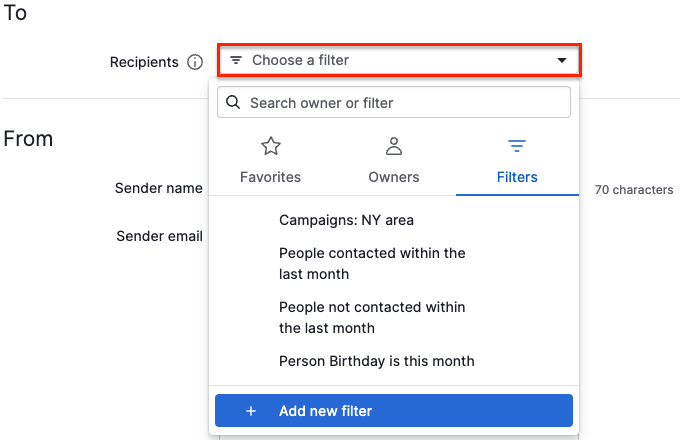
What is pre sales Pipedrive lead scoring

This automation ensures your team spends time on the right prospects.

Pipedrive in action: Flowbird, a marketing and CRM implementation company, used Pipedrive’s lead scoring to prioritize prospects based on engagement and activity. This approach helped the sales team focus on the most promising leads, increasing business by 23%.

2. Understand your prospect’s needs

A needs assessment uncovers the customer’s pain points, goals and success metrics before proposing a solution.

Understanding these aspects allows your team to position your product or service as the ideal solution, increasing the likelihood of conversion.

For example, an inventory management company might discover that its prospects are struggling with managing high volumes of seasonal orders. The company offers advanced features and predictive demand forecasting to address these challenges.

By aligning the solution with the prospect’s goals, the sales team builds credibility and proves business value.

Here are some of the ways to gather customer insights and position your solution as an ideal choice:

  • Research thoroughly. Examine the prospect’s website, press releases and industry trends to understand their business context. Market research gives your team the background needed for informed discussions.

  • Ask targeted questions. Conduct discovery calls and ask about workflows, business bottlenecks and current tools. Asking the right questions identifies challenges your solution can address.

Thoroughly understanding your prospect’s needs helps you address their specific challenges, increasing the likelihood of a successful sale.

Pipedrive’s customer management software supports needs assessment by centralizing all prospect and customer information in one place. Your team can log discovery call notes, track interactions, store research insights and attach relevant documents directly to each lead or deal.

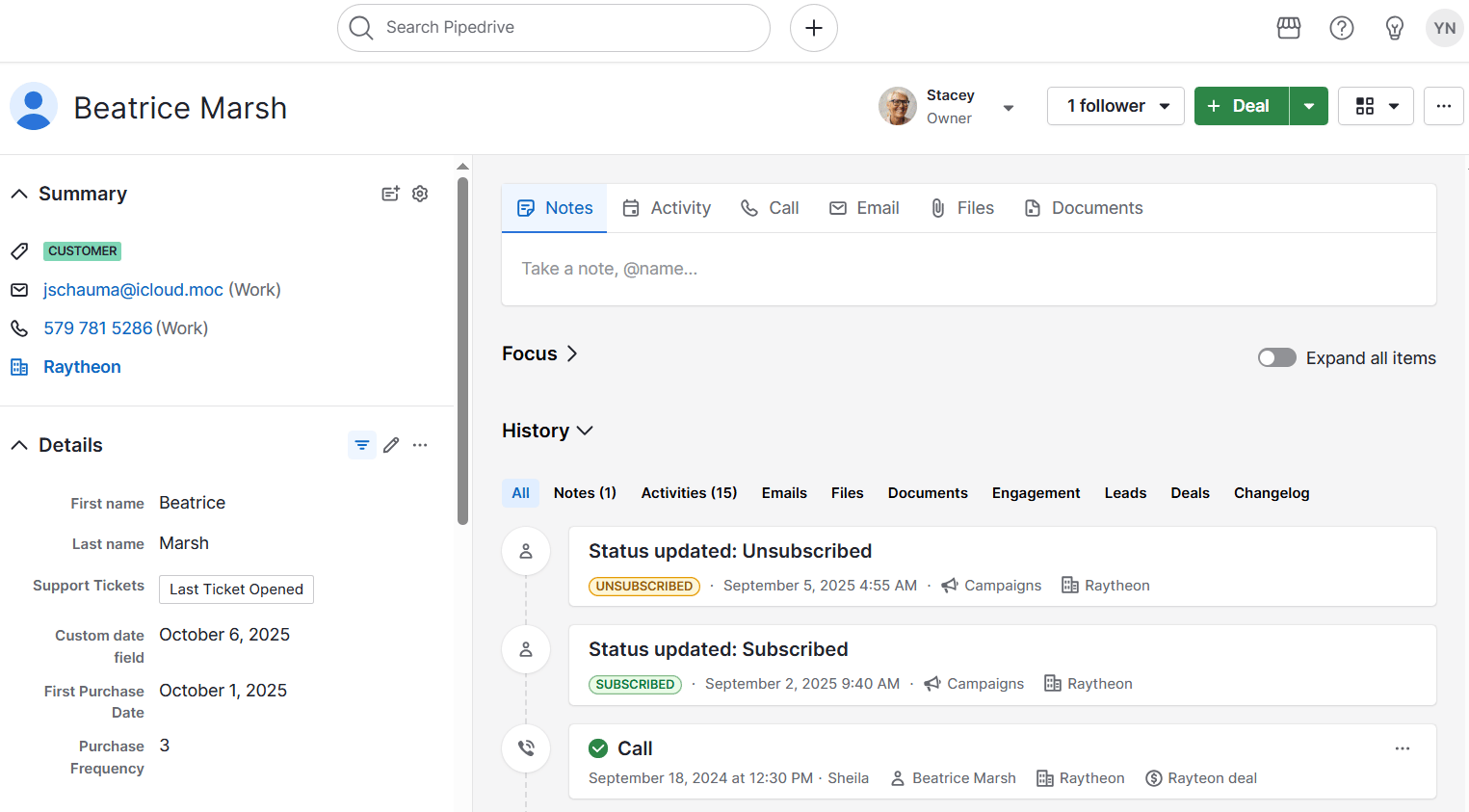
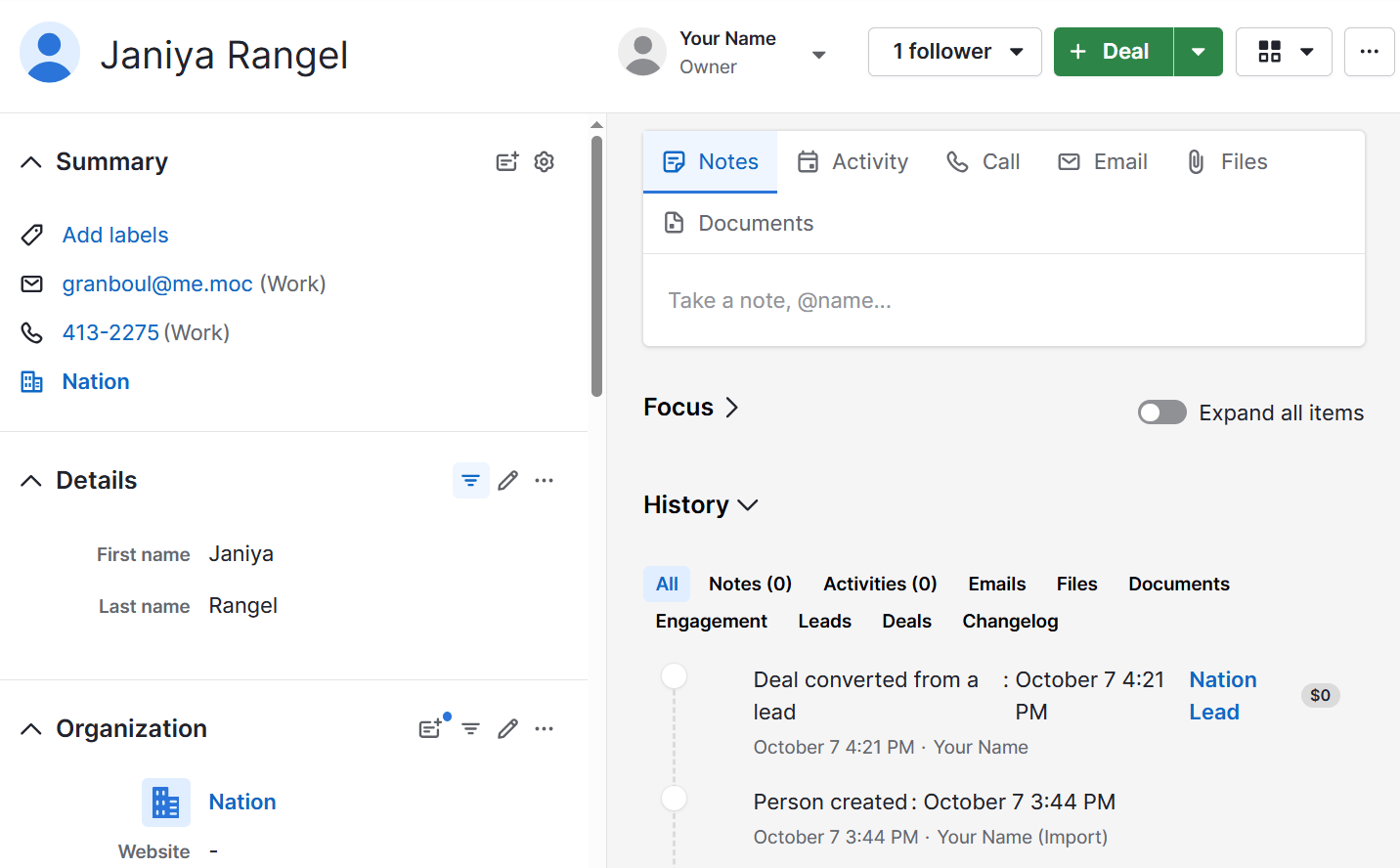
Here’s an example of a contact in Pipedrive, where you can see activity, call, email and file history:

What is pre sales Pipedrive contact management

Centralizing communication and documentation ensures that everyone on the sales team can access the same up-to-date information without miscommunication or repeated questions.

3. Customize solutions and demos

Customization ensures demos and sales pitches that reflect the prospect’s real-world use cases, making it easier for customers to see value.

For example, a consulting services firm might customize a demo to show how its solution can streamline project management processes. The demo focuses on how the solution can improve efficiency and reduce costs for potential customers.

Tailoring presentations to the prospect’s needs and challenges demonstrates a deep understanding of their business and positions the consulting firm as the ideal solution.

Here’s how to adapt your presentations to show how you address each prospect’s goals:

  • Emphasize measurable benefits. Focus on results such as time and cost savings or efficiency improvements to reinforce the product’s value. Pipedrive’s custom fields let you track past successes and relevant metrics, making it easy to showcase outcomes that resonate with the prospect.

Customizing your solutions and demos lets you highlight the value of your offering, making prospects more likely to buy.

4. Ensure sales reps are confident with pre-sales tasks

A confident salesperson can manage demos, proposals and consultative discussions without errors, maintaining professionalism and momentum.

For example, an IT company might train its sales team to conduct technical demos and create customized proposals to address specific client needs.

Providing the sales team with the necessary training and resources ensures they can effectively nurture leads to close more deals.

Note: While large organizations often have pre-sales teams, SMBs typically do not. Ensure sales reps master pre-sales activities to maintain deal velocity and deliver a professional customer experience without additional resources.

Take a look at some of the ways to provide practical sales team training:

  • Develop sales enablement materials. Create sales playbooks, FAQs, case studies and other materials to minimize mistakes and build confidence. With Pipedrive, reps can access these readily available documents in Smart Docs, which keeps all resources centralized and easily retrievable.

  • Gather feedback and improve. Review performance after each engagement to identify areas for improvement. Using Pipedrive’s web forms, collect structured client feedback to help reps refine selling techniques and increase success rates.

Ensuring your sales reps are confident and well-prepared means you can boost deal velocity without additional resources.

5. Track and measure pre-sales performance

Tracking pre-sales metrics shows which activities boost sales and where you need to improve.

A SaaS sales leader might track metrics (such as demo attendance) to assess the effectiveness of their pre-sales efforts.

Monitoring these key performance indicators (KPIs) helps the team identify successful strategies and areas for improvement, creating more efficient sales pipelines that lead to higher conversion rates.

Here are some of the ways to monitor pre-sales performance:

  • Collect prospect feedback. Request the prospect’s input after demos or trials to learn what influenced their buying decisions. Use their feedback to inform improvements to presentations, proposals and demos.

Tracking and measuring pre-sales performance consistently helps you make data-driven decisions to enhance your process and improve sales outcomes.

Using a CRM allows you to centralize data, monitor key metrics and identify trends in your pre-sales activities.

For instance, Pipedrive’s in-depth analytics dashboards track conversion rates, demo effectiveness and proposal success:

What is pre sales Pipedrive CRM dashboard

This overview provides clear visibility into where deals stall and which pre-sales actions drive the most impact.

Pipedrive in action: Spark Interact used Pipedrive’s analytics dashboards to monitor key metrics and identify areas for improvement. With these insights, the digital agency increased revenue by 12% year-over-year without expanding its sales team.

Pre-sales FAQs

  • Pre-sales strategies are structured approaches that engage and qualify prospects before a sale.

    Efforts include researching prospects, assessing needs and preparing tailored proposals.

    This way, sales reps focus on high-potential leads and position solutions to increase conversion rates.

  • A sales professional typically focuses on the entire sales process, including closing deals, managing customer relationships, negotiating contracts and increasing customer retention.

    A pre-sales professional usually focuses solely on the activities before the sale. They support the process by generating leads, understanding customer needs and providing technical guidance to simplify and speed up the sale.

  • A request for proposal is a document a company issues when seeking a vendor to solve a specific problem or provide a service.

    The document outlines solution requirements, timelines and evaluation criteria. Vendors then submit detailed solutions and pricing for consideration.

    An RFP enters the pre-sales process during solution design and proposal preparation. Responding effectively builds credibility, shortens decision cycles and focuses efforts on qualified opportunities.

  • A solutions consultant bridges the gap between technical expertise and customer needs. They’re also known as:

    • A solutions engineer

    • A solutions architect

    • A pre-sales consultant

    These professionals work with prospects to understand business challenges, design tailored solutions and demonstrate how a product meets those needs.

  • For sales leaders, pre-sales means different things based on their business type, size, industry and ideal audience.

    One business might focus on qualifying leads and running discovery calls, while another could tailor demos or conduct needs assessments.

Final thoughts

Pre-sales helps SMBs qualify leads, tailor solutions and close deals faster.

Define lead criteria, understand customer needs and track performance to create consistent high-value opportunities.

A CRM centralizes data and provides visibility into every pre-sales activity. Pipedrive, for example, tracks lead engagement, demo effectiveness and proposal success to prioritize high-potential deals.

Sign up for a 14-day free trial to see which prospects drive revenue and efficiently close deals.

The Complete Guide to Warm Leads for SMB Sales

Software Stack Editor · October 24, 2025 ·

Finding and converting the right prospects is essential for small businesses with limited time and resources. Warm leads offer the best balance between effort and opportunity.

In this guide, you’ll learn the meaning of warm leads, how to generate them and how to nurture those relationships through your pipeline. You’ll also discover practical strategies for closing deals with warm leads more quickly and efficiently.

Key takeaways for warm leads

  • Warm leads are potential customers who already know your business and have shown genuine interest.

  • Nurturing warm leads consistently through personalized communication and relevant content helps keep them engaged.

  • Following up promptly when a warm lead shows buying signals ensures you capitalize on momentum and maximize conversions.

  • A CRM like Pipedrive makes it easy to capture, track and convert warm leads efficiently. Try it out today with a 14-day free trial.

What are warm leads, and why should you pursue them?

Warm leads are potential customers who are familiar with your brand and have shown some interest in buying from you.

They have already engaged with your brand (e.g., by downloading content, attending a webinar or interacting on social media) and are open to further outreach.

By contrast, cold leads have had no prior interaction and hot leads are ready to buy.

Warm leads sit in the middle of the lead funnel. They are more likely to convert and move through the sales cycle faster than cold leads, but less likely to do so than hot leads.

This table summarizes the differences between cold, warm and hot leads:

Cold leads

Warm leads

Hot leads

  • Engaged with your business

  • Ready to buy

  • Bottom of the lead funnel

  • Strong chance of converting quickly

Warm leads are especially important for SMBs because they bridge the gap between brand awareness and buyer intent.

Warm leads often deliver higher conversion rates, helping small businesses know where to focus their sales teams and resources.

Concentrating on these engaged sales prospects enables small teams to spend less time on cold outreach and more time on conversations that will impact the bottom line.

For SMBs, investing in nurturing warm leads can mean shorter sales cycles and higher conversion rates, even if budgets are limited.

Four Steps to Finding the Right Leads Fast

Make instant improvements to your lead qualification process with this four-step guide full of actionable sales advice.

How to identify warm leads among your prospects

Warm leads show interest through consistent actions that indicate they’re considering your solution.

If you’re wondering whether you’re working on a warm lead, look for behavioral signals and engagement patterns like:

  • Repeated website visits

  • Content downloads

  • Response to sales outreach

  • Activity following an email campaign (e.g., clicking through to a landing page)

  • Response to experiential marketing activity (e.g., attending a webinar or event)

  • Engagement on social media (e.g., following your business’s account)

These actions all indicate genuine curiosity and growing intent, even if the prospect isn’t ready to buy yet.

Here’s a checklist you can use to identify warm leads. The more boxes you can check, the warmer a prospect is likely to be:

Is this a warm lead?

– Engaged with your content marketing or email newsletter

– Downloaded a lead magnet or registered for a webinar

– Followed or interacted with your brand on LinkedIn or social media

– Opened or clicked through recent email campaigns

– Revisited key landing pages or pricing pages

– Scored as “warm” in your CRM or lead scoring system

– Responded to or acknowledged previous sales outreach

A sales CRM like Pipedrive offers more sophisticated methods for identifying warm leads.

With lead scoring and activity tracking, you can automatically assign points to each meaningful interaction.

Warm leads Pipedrive lead scoring

This practice helps B2B sales teams distinguish truly qualified leads from those that may have started to cool.

Over time, these data-driven insights make it easier for SMBs to prioritize outreach activity, personalize communications and prevent promising leads from falling by the wayside.

Now that you know how to identify warm leads, let’s explore some ways to generate them.

Recommended reading

https://www-cms.pipedriveassets.com/Pipedrive-Data-Enrichment-to-uncover-missing-organization-and-people-details.png

Fill in the blanks faster with Data Enrichment

4 tried and tested ways to generate warm leads

Generating warm leads is all about investing in relationship-building tactics to attract qualified prospects.

Here are four proven lead generation tactics to warm up new leads without overstretching budgets or teams.

1. Make the most of referrals

Sales referrals are one of the most reliable ways to generate qualified leads, as a personal endorsement carries more weight than an ad or a cold call or email.

If a prospect has received a recommendation from someone they trust, they will already be warm when they start interacting with you. A referral might be more likely to take a call from you, reply to a voicemail or respond to an email from your company.

The key to encouraging referrals from your existing customers is to make the process easy and rewarding.

For example, after a successful project, send a simple follow-up email to thank your customer and invite them to write a review or provide a testimonial.

You might also consider introducing a more formal referral program to encourage customers to make recommendations.

Your CRM should allow you to store and organize referrals so your sales reps can follow up with these leads systematically. Pipedrive integrates with tools like Referral Factory to automate referral outreach activity and make it easier to manage your referral program.

2. Use LinkedIn for outreach

Using B2B social media, particularly LinkedIn, is one of the most effective ways to identify and engage with warm leads.

The key is to focus on authentic, personalized outreach rather than sending mass messages.

Salespeople can start by:

  • Connecting with their ideal customers on LinkedIn

  • Engaging with prospects’ posts (i.e., by reacting to them or posting a meaningful comment)

  • Sharing professional insights relevant to their ideal customers’ pain points

From there, sending a thoughtful direct message to ideal customers can kick-start a conversation.

For example:

Subject line: Loved your post on [topic]. Here’s a quick idea

Hi [Name], I really enjoyed your recent post about [topic]. We’ve encountered similar challenges with [pain point] and have helped several teams streamline it using [your solution].

Would you be open to having a quick chat this week?

This kind of warm message demonstrates understanding, adds value and builds trust – all of which are essential to effective lead generation.

Some AI sales automation tools automate LinkedIn outreach activity. Many solutions – like Surfe – integrate with Pipedrive, allowing users to add data from LinkedIn directly to their CRM.

3. Build trust with relevant content

Most B2B prospects aren’t ready to buy immediately, but you can stay top of mind by giving them useful, relevant content that builds trust until the time is right.

Content marketing is a powerful way for small businesses to attract and nurture warm leads over time. Creating valuable, relevant information that engages your audience also supports SEO-driven lead generation.

Focus on creating relevant content that addresses your target audience’s biggest challenges. This content might include:

For example, the e-commerce platform Shopify shares business strategy tips through blog posts, lists and other articles in its content hub.

Warm leads Shopify content marketing

By offering real value in exchange for contact information, these assets act as lead magnets by bringing new prospects into your sales funnel.

Consistently delivering this type of content helps you build trust, strengthen credibility and establish your business as a go-to resource for your target audience.

Over time, those informed, engaged contacts can become your warmest, most qualified sales leads.

Your CRM should offer functionality to support this kind of activity. For example, with Campaigns, Pipedrive’s email marketing software, you can create and distribute content easily through email.

Warm leads Pipedrive Campaigns

Campaigns helps you win customers’ attention with beautiful email communications, allowing you to manage all of your data directly in Pipedrive.

4. Use software to automate lead generation activity

Conducting lead generation manually can be time-consuming and energy-draining, especially for smaller businesses juggling multiple priorities.

Automation helps you optimize your sales process by automatically capturing and scoring new leads, freeing your team to focus on conversations that close deals.

Using CRM and marketing automation, you can create email campaigns, log phone calls and assign tasks to sales reps as leads move through the sales funnel.

Automating this activity results in a sales process that keeps every potential buyer engaged without overwhelming your team.

Pipedrive in action: Australian web design agency Nirmal Web Studio used Pipedrive and Overloop (formerly Prospect.io) to streamline its lead qualification activities and automate email outreach.

The agency achieved a 50% increase in annual sales, and the number of daily outreach emails it could send shot up from 12 to 250.

With Pipedrive’s LeadBooster add-on, you can use embedded web forms to collect leads directly from your landing pages.

Warm leads Pipedrive Lead-booster web forms

LeadBooster is available in Pipedrive’s Premium and Ultimate pricing plans.

Recommended reading

https://www-cms.pipedriveassets.com/B2B-content-marketing-strategy-for-SMBs.png

How to create a B2B content marketing strategy for your small business

How to nurture warm leads to conversion

Nurturing warm leads means building trust, demonstrating value and making it easy for prospects to take the next step.

Here’s how to do that effectively.

1. Act promptly to make sure no lead is lost

The longer you wait to reach out to a warm lead, the more likely they are to cool off or turn to your competition.

Fast action shows professionalism, responsiveness and genuine interest in helping. These are all signals that will help keep prospects engaged and eager to continue the conversation.

Pipedrive in action: When Pipedrive started, our sales team had to manually assign leads to each rep. As the company scaled, we refined our processes to manage the increasing volume of new leads.

Today, our sales team uses automatic assignment in Pipedrive to connect a lead to a rep within the first five minutes. Automatic assignment also contacts new leads within 10 seconds, ensuring no prospect feels neglected or overlooked.

Acting quickly and building automation into your sales process ensures no opportunity slips through the cracks, regardless how busy your team becomes.

2. Warm your leads up with personalized outreach

When prospects feel seen and understood, they’re more likely to engage and move forward.

Personalizing your outreach communication is a great way to ensure that happens from the start of your relationship with prospects.

Personalization involves tailoring every touchpoint to your lead, from subject lines to email marketing content. This personalization might include:

  • Addressing your lead by name in emails, follow-ups or even subject lines to create a friendly, one-to-one tone

  • Referencing their role, business or industry to show that you understand their unique challenges and priorities

  • Referring to their past interactions with your brand, such as a webinar they attended, a pricing page visit or a content download

  • Highlighting specific pain points they might be experiencing, such as common efficiency or automation issues, you’ve seen similar businesses face

Before sending an email, refer to the note system in your CRM to review previous interactions between your prospect and other sales reps.

Warm leads Pipedrive custom notes

Pipedrive’s CRM notes system is a powerful tool for recording customers’ preferences and engagements, providing unparalleled access to their history.

Notes in Pipedrive intelligently integrate with the software’s sales pipeline, linking rich customer insights directly to deals and contacts.

Find more of the best leads fast with your lead qualification ebook

Learn how to find more of the right leads faster. This 22 page ebook will help you build a scalable lead qualification process for your team.

3. Mix channels to keep leads engaged

Different prospects have different communication preferences, so use a mix of channels to follow up with warm leads.

For example, a B2B SaaS company might use a combination of phone calls, emails and direct marketing to stay top of mind for the widest range of prospects.

By diversifying your communication channels in this way, you can ensure consistent visibility and build familiarity among warm leads without overwhelming them.

Reps can use Pipedrive’s Activities feature to schedule and track communications across a wide range of channels.

Warm leads Pipedrive Activities

Pipedrive’s integrations allow users to make phone calls, send WhatsApp messages and manage all their lead nurturing communications from a single platform.

4. Deliver the right content at the right stage of the buying journey

Effective nurturing means delivering relevant content that matches where prospects are in the buying journey.

Sharing the right insights at the right time builds trust, prevents leads from cooling and positions your business as a helpful partner.

For example, an e-commerce retailer might:

  • Send a product guide to prospects who have browsed certain categories

  • Offer a discount to new shoppers who abandon their carts

  • Share customer success stories with leads who add items to their wishlists but don’t buy

In Pipedrive, you can filter email lists to ensure each group receives the most appropriate content.

Warm leads Pipedrive Campaigns filter list

You can also use Pipedrive’s Campaigns functionality to schedule regular nurture emails and send out content automatically.

Now that you know how to nurture warm leads, let’s explore how to get them over the line and close the deal.

Recommended reading

https://www-cms.pipedriveassets.com/blog-assets/Swapping_blog.jpg

How to fill your sales pipeline with hot leads (and lose the cold leads fast)

Best practices for closing warm leads, and how Pipedrive can help

The key to closing warm leads is adopting the right approach and timing your move carefully.

Here are some best practices to help SMB sales teams convert warm leads into loyal customers.

1. Recognize when a warm lead is becoming a hot lead

A lead transitions from warm to hot when they show high buying intent, including include signals such as:

  • Engaging repeatedly with your marketing efforts

  • Requesting a demo of your product

  • Responding consistently to communications

  • Asking about pricing or talking about their budget

Spotting the right signals allows reps to time their closing sales pitch perfectly.

Pipedrive’s lead scoring CRM qualifies and categorizes leads based on key attributes so reps can take the right actions to engage them.

Warm leads Pipedrive Scores

The Scores feature is available in Pipedrive’s Premium and Ultimate pricing plans.

Real-time activity notifications empower team members to strike when the lead is hot and close the deal.

Meanwhile, Pipedrive’s lead conversion report gives you insight into conversion rates across types of leads, allowing you to define what “hot” looks like for your business.

2. Time your outreach and follow-up carefully

A well-timed follow-up can reignite interest among warm leads, while getting your timing wrong can turn leads cold.

Use the functionality in your CRM to get the timing of your outreach and follow-up activity right. For example, you can use Pipedrive to:

  • Schedule automated follow-ups for key touchpoints like demo requests or content downloads

  • Use the Activities feature to keep your pipeline organized and maintain consistent timing

  • Review analytics to see when leads are most likely to respond

Acting quickly and systematically will warm leads, improve conversion rates and increase workflow efficiency.

3. Align your sales and marketing teams

Alignment between sales and marketing (sometimes known as smarketing) ensures that both teams share data, context and goals when moving leads through the funnel.

Warm leads are far more likely to do business with you when they have a seamless experience throughout the entire buying process, from initial contact to final signature.

Pipedrive gives sales and marketing teams a “single source of truth” for learning about contacts and leads.

Sharing CRM insights like interaction notes, deal status and customer preferences helps marketing and sales understand lead pain points and priorities.

Warm leads Pipedrive People contacts

Reps can use these insights to guide leads through the buying journey, and both teams can use the data to optimize processes and refine strategies.

4. Deliver value in every interaction

Closing a deal doesn’t happen because of one perfect pitch but because of the value and trust you build over time with each interaction.

That means it’s vital to keep sharing valuable insights throughout the entire buyer journey, even in the final stages.

In Pipedrive, you can build an automation workflow to send content designed for late-funnel leads (such as case studies or comparison guides) when a deal enters the “proposal” stage.

Warm leads Pipedrive automations

You can then use the software to track the engagement of each asset to see which content resonates the most with high-intent buyers.

Start generating quality leads with your B2B Prospecting ebook

This guide will help you find high-quality leads while staying compliant with the rules and regulations.

Warm leads FAQs

  • You can track marketing metrics like conversion rates, time to close and engagement to see how effectively warm leads move through the sales funnel.

    A CRM with reporting and analytics makes it easier to monitor these results.

  • Common mistakes include slow follow-up, generic communication or neglecting lead signals.

    Prompt, personalized communication prevents leads from cooling off.

  • While you can track leads manually, a CRM streamlines organization, automates follow-ups and provides insights that make nurturing and converting warm leads far more efficient.

Final thoughts

Focusing on warm leads can transform your small business by speeding up the sales cycle and increasing conversion rates. By combining marketing strategies with the right CRM, you can automate key tasks, personalize outreach and ensure no promising lead slips away.

Whether you’re refining your lead generation process or scaling your sales team, investing in warm leads will deliver lasting growth and stronger customer relationships. Start managing and converting your warm leads with Pipedrive. Begin your free 14-day trial today.

9 Powerful Affiliate Marketing Niches to Drive Sales

Software Stack Editor · October 24, 2025 ·

image

Affiliate marketing lets small business owners generate new revenue streams by promoting products they trust.

The most successful affiliate marketers focus on a specific niche. Instead of trying to sell to everyone at once, they build a dedicated audience and create targeted content in that area.

In this guide, you’ll learn how to find the best affiliate marketing niches that fit your market and customer base. You’ll discover nine growing sectors and learn how to choose products that business owners in your network need and will invest in.

Affiliate marketing niche key takeaways

  • Choosing a high-quality niche starts with building business expertise and conducting market research.

  • The most successful SMB affiliates build a loyal audience by solving specific business problems.

  • Build authority through consistent, valuable content that serves your specific audience.

Pipedrive helps you manage your affiliate partnerships and content so you can focus on profitability. Try it free for 14 days.

What is affiliate marketing?

Affiliate marketing is a way to earn money by promoting another company’s products or services.

You receive a unique trackable link when you sign up for an affiliate program. If someone clicks your link and makes a purchase, the company pays you a commission.

Affiliate marketing means you can run a business without launching new products or managing inventory.

The core of this strategy is customer trust. To succeed, you must build a credible brand, and the most effective way to do this is by choosing a niche.

Here is how a niche-focused strategy compares to a general one:

General affiliate marketing

Niche-focused affiliate marketing

Without a defined audience, it’s challenging to build trust and credibility

You target a specific group of people with shared interests and problems

You face massive competition from established, broad-topic websites

Your content stands out easily, since niches have less competition

You lack a clear focus, so your recommendations seem random

You build brand authority by becoming a go-to expert on one topic

Your content lacks a clear direction

You can create highly relevant content that directly answers your audience’s questions

Without targeted sales promotions, your conversion rates are low

Conversion rates are higher because your recommendations solve specific needs

A focused approach allows you to connect with a specific audience instead of getting lost in the noise of general marketing.

9 profitable and growing affiliate marketing niches

Finding the right niche can be challenging, but new opportunities emerge yearly.

Here are nine trending niches to explore – use them as inspiration to find the ones that best fit your interests and expertise.

1. Software-as-a-service (SaaS) and artificial intelligence (AI)

The SaaS and AI sector pays you monthly commissions for every customer you refer to subscription services.

Quick facts:

  • Target audience – Small business owners, marketing managers, sales teams and entrepreneurs

  • Best marketing approach – Create problem-solving guides, step-by-step tutorials and real-world examples

  • Typical commissions – Around 20–50% recurring (monthly or first year only)

Fortune Business Insights valued the SaaS market at $266 billion in 2024 and predicts it’ll grow to $1,131 billion by 2032.

On the AI side, Grand View Research expects the artificial intelligence niche to surge from $279 billion in 2024 to $3,497 billion by 2033. That means there will be a constant flow of new products and customers looking for solutions.

Popular sub-niches include:

To succeed when selling software to businesses, show people how to use it. Create detailed walkthroughs that prove the tool saves time or makes money. Use real examples from actual companies.

For SMBs already using tools like a CRM, affiliate marketing creates an additional revenue stream with minimal overhead.

You’re likely already recommending solutions to peers in your network. Affiliate partnerships let you monetize that expertise while strengthening your reputation as a trusted industry resource.

When you demonstrate clear value, you’ll become the go-to source for B2B customers ready to buy.

2. Personal finance and investing

Credit cards and budgeting apps pay some of the highest commission rates in affiliate marketing.

Quick facts:

  • Target audience – Young adults learning to budget, experienced investors and anyone seeking financial services

  • Best marketing approach – Use educational content, case studies and personal finance stories to build trust

  • Typical commissions – $100–250 per sign-up or approval

Finance is one of the most profitable affiliate marketing niches, particularly for business consultants and accountants who already advise SMBs on financial decisions.

You’re likely already recommending banking solutions or financial tools – affiliate partnerships let you monetize that expertise while adding value to client relationships.

The fintech market keeps growing. Global Market Insights projects it will jump from $260 billion in 2023 to almost $1 trillion by 2032.

It’s an evergreen niche, with mobile banking and investing apps creating new opportunities yearly.

Popular finance niches include:

Personal finance sub-niches

Examples

Investing and trading platforms

eToro offers several different affiliate programs based on your country, usually a flat fee of around $200 or a percentage of around 25%

Credit cards

Credit card affiliate programs like American Express pay a flat fee of up to $200 for each approved application

Budgeting apps

Rocket Money pays a small commission for each user who signs up for its premium subscription

Cryptocurrency platforms

Coinbase gives a 50% commission on your referee’s trading fees for the first three months

Building trust is everything here. Your content needs to be well-researched because people make decisions with money.

Share case studies or personal finance journeys that readers can relate to. Show them how you’ve used these tools or the results from people you’ve helped.

Always include disclaimers that you’re not a licensed financial advisor. Focus your affiliate marketing efforts on educational content rather than aggressive selling.

When you help people make informed decisions, the conversions will follow.

3. Health tech and digital wellness

The health tech and digital wellness niche continues growing as more people use technology to manage their well-being.

Quick facts:

  • Target audience – Fitness enthusiasts, people managing mental health and those with chronic conditions

  • Best marketing approach – Share personal experience, video diaries and long-term product tests

  • Typical commissions – Around $100 flat fee per subscription or percentage on device sales

According to Grand View Research, the global digital health market is expanding from $330 billion to $1.5 trillion by 2032.

The top affiliate marketing niches in health include:

Health tech sub-niches

Examples

Fitness and nutrition apps

Noom, a weight loss app, offers a commission for each new user

Home gym equipment

Bowflex provides a 3% order-based commission rate on purchases

Supplements and vitamins

iHerb gives partners a 10% commission for the first three months, then 5% or more afterwards

Hair care products

Function of Beauty pays a dynamic commission on custom product sales

Authenticity matters more in this market than almost anywhere else. The most effective strategy is sharing your own journey with the affiliate products you promote.

Show the real results, whether that’s better sleep from a tracking ring or improved fitness.

Be transparent and clarify that you’re sharing your personal experience, not giving medical advice.

4. E-learning and online courses

Online education gives high commissions as people always look to upskill or learn something new.

Quick facts:

  • Target audience – College students, professionals upskilling, entrepreneurs and hobbyists

  • Best marketing approach – Course reviews from personal experience, outcome showcases and comparison guides

  • Typical commissions – Around 15–45% per course sale or 30% recurring for platforms

Global Market Insights expects the e-learning industry to rise to over $1 trillion by 2032.

Content creators and bloggers succeed here because educational content is one of the best ways to promote courses.

The e-learning landscape covers a wide range of sub-niches, like:

E-learning sub-niches

Examples

Broad skill-based platforms

Coursera offers a commission of up to 45% on thousands of courses and specializations from top universities

Creator-focused platforms

Teachable gives affiliates a recurring 30% commission by referring course creators to its platform

Language learning apps

Babbel, a popular language-learning service, offers a commission for new subscriptions

Business and marketing guides

Udemy gives affiliates a 10% commission rate on its courses

To build credibility, actually take the courses you promote. Share your honest experience and results.

Create content that answers the questions people are asking. Is this course worth it? What will they be able to do afterwards?

When you show real outcomes, people will invest in the course.

5. Home office and productivity

Remote work has created massive demand for home office products, from ergonomic furniture to home office software.

Quick facts:

  • Target audience – Remote employees, freelancers, entrepreneurs and students

  • Best marketing approach – Desk tour videos, setup guides and long-term product reviews

  • Typical commissions – Around 5–50% depending on product type (physical vs software)

Small business owners are particularly well-positioned in this niche. You understand what remote teams need because you’ve solved these problems yourself.

Share how you’ve optimized your own workspace or equipped your team; those recommendations will convert fellow business owners who trust your experience.

This lucrative affiliate marketing niche lets you promote products at every price point. Fortune Business Insights shows the digital workplace market was worth $39.81 billion in 2023 and should reach $164.55 billion by 2032.

The home office sector includes a mix of physical products and digital tools:

Home office sub-niches

Examples

Ergonomic furniture

FlexiSpot, a popular maker of standing desks, offers a 5–12% commission on sales

Productivity tools

Notion offers partners a 50% commission per sign-up and 20% of the first year’s revenue

Focus and deep work tools

With no minimum threshold, Bose offers up to 5% commission on its audio products

Laptops and computers

Dell gives a 3% commission on business laptop and desktop computer sales

Home office is a visual niche, so help people see what’s possible in your marketing. Build different workspace setups and show them off through desk tour videos and great photos.

Demonstrate how products work together to create a comfortable workspace.

Long-term reviews work exceptionally well because they build trust, which you can use to sell more expensive items, such as desks.

6. Sustainability

Eco-conscious consumers search for sustainable businesses in fashion, home goods, beauty and more.

Quick facts:

  • Target audience – Eco-conscious families, young professionals and ethical consumers

  • Best marketing approach – Share the “why” behind brands (their environmental impact, mission and ethical practices) to build a customer connection

  • Typical commissions – Around 5–15% on product sales, with low competition compared with larger niches

The Business Research Company projects that the ethical fashion market will grow from $8.77 billion in 2024 to over $12.95 billion by 2029.

It’s another evergreen niche that’s gaining momentum in influencer marketing.

Sustainability is especially popular among younger audiences on platforms like TikTok and Instagram. This niche also appeals to environmentally conscious businesses looking to partner with ethical brands.

As people consider the environment more, they seek trusted recommendations for sustainable products.

Here are some types of products you can market in this sector:

Sustainability sub-niches

Examples

Sustainable fashion

Pact, a brand known for its organic cotton basics, offers affiliates a commission on sales through the ShareASale network

Clean beauty and personal care

The Detox Market, a retailer for non-toxic beauty products, gives affiliates a custom commission on makeup and skincare

Renewable energy tech

Goal Zero gives a dynamic 10% commission on all its products, with an average order value of over $600

Home decor

Etsy offers affiliate programs for sustainable items, usually around 4% commission

Authenticity is everything for this market, as the audience is wary of “greenwashing”. You must build your content on a genuine passion for sustainability.

Go beyond simple reviews and tell the story behind the brands you promote: their mission, materials and ethical practices.

Your own commitment to sustainability is your brand. Be transparent about your journey and it’ll help you convert a mindful audience.

7. E-commerce tools

Online store owners need software to run their businesses and are willing to pay premium prices for tools that increase sales.

Quick facts:

  • Target audience – New entrepreneurs, small business owners, dropshippers and marketing agencies

  • Best marketing approach – Show real numbers and results and walk your audience through how the tools work in practice

  • Typical commissions – Around 20% recurring, or high fixed bounties ($50–500 per sale)

Grand View Research valued the global e-commerce market at $5.47 trillion in 2023 and projects it will expand to $17.77 trillion by 2030.

It’s one of the best niches for business owners building affiliate revenue.

This niche complements marketing and consulting business owners. If you’re already helping clients with their online presence, why not use affiliate partnerships with e-commerce platforms to add value while creating recurring income?

This way, you won’t just sell tools, you’ll become a strategic partner who guides businesses toward sustainable growth.

This sector provides a variety of solutions for online sellers:

E-commerce sub-niches

Examples

E-commerce platforms and web hosting

Shopify offers a fixed bounty for each new merchant who signs up for a paid plan (up to $150 for a Point of Sale Pro referral)

Marketing and sales automation

Omnisend provides a 20% recurring revenue share on the monthly payments of referred customers

Dropshipping and sourcing tools

SaleHoo, a directory of wholesale suppliers, pays affiliates up to $500 a year for every sale (a 50% commission rate)

Customer support helpdesks

LiveChat gives partners a commission rate up to 22%, with 24/7 live support

When creating content, think like a business consultant. Your audience wants to know how a tool will boost sales or save time.

Create case studies showing real outcomes, like “how email automation reduced abandoned carts by 20%”.

When you prove ROI with numbers, store owners will trust your recommendations.

8. Meal kits and food subscriptions

Busy professionals and families need convenient meals and subscription services pay reliably for each new customer you refer.

Quick facts:

  • Target audience – Busy professionals, families and health-conscious eaters

  • Best marketing approach – Film unboxing-to-eating experiences, compare multiple services side-by-side and show prep time and portion sizes

Grand View Research predicts the meal kit market will grow from $20.54 billion in 2023 to $64.27 billion by 2030.

This industry serves a variety of dietary needs and culinary preferences:

Meal kit sub-niches

Examples

Standard meal kits

HelloFresh gives a fixed commission (up to $20) on the first sale, with bonuses for top sellers

Specialty and dietary kits

Green Chef has an affiliate program that pays $15 per new customer

Pet food subscriptions

Farmer’s Dog, Ollie and other services for pet owners offer affiliate programs with commissions on new subscriptions

First-hand reviews work best here because people want to see what they’re getting before they commit.

Video marketing content performs well, since customers need to see the food quality and portion sizes to feel confident about subscribing.

9. High-end hobby gear

Passionate hobbyists invest heavily in equipment. In this niche, even small commissions can mean substantial earnings.

Quick facts:

  • Target audience – Dedicated experts, enthusiasts and creative professionals

  • Best marketing approach – Test gear over weeks or months with data, compare competing products and explain the differences that justify pricing

  • Typical commissions – Around 2–12% on high-ticket items

The photography market is a prime example. Grand View Research projects it will grow from $7.16 billion in 2023 to $10.25 billion by 2030.

While the sales compensation might seem lower than other niches, 5% on a $2,000 camera lens still earns you $100 per sale.

This sector spans a wide range of passions and interests:

Hobby gear sub-niches

Examples

Photography and videography

B&H Photo Video offers a 2% commission on its inventory

Outdoor and adventure gear

Backcountry pays a 4–12% commission for premium climbing, skiing and camping equipment sales

Smartphones and gadgets

Amazon Associates offers up to 12% for sales on qualifying purchases

Gaming niche gear

Razer grants 3% commissions on video game equipment like mice, keyboards, headsets and streaming gear for gamers

Serious buyers demand the best, so you must prove you’re an expert if you want them to listen to you.

This audience researches extensively before purchasing, which creates opportunities for detailed, helpful content.

To earn their trust, demonstrate actual expertise through hands-on testing. Create in-depth, long-term reviews and technical comparisons.

How to choose a niche for affiliate marketing

Choosing the right niche is the most critical step in building a thriving affiliate business.

Here’s how to find a lucrative affiliate marketing niche that matches your interests and expertise:

  • Start with what you know and care about. List your passions, hobbies and professional skills. You’ll find it much easier to create content about topics you enjoy. Inbound marketing works better when you’re passionate about what you promote.

  • Find a customer base with real problems. A niche is a group of people with similar issues you can solve by recommending related products. For each of your ideas, define who would buy these products. What challenges do they face?

  • Check if you can make money. Once you have an audience and a problem in mind, ensure it’s profitable. Look for existing affiliate marketing programs to see what products and commissions are available.

  • Use keyword research to prove high demand. Use Google Trends and keyword tools to see how many people search for terms in your niche. High search volume for problem-focused keywords shows an audience seeking solutions.

  • Test before you fully commit. Create a few pieces of content and promote them to your target audience through social media or paid ads. The engagement and feedback you get will show if the niche has potential before you build your affiliate marketing business.

You gain a significant advantage when you can identify a specific audience that competitors overlook.

As your affiliate network grows, staying organized becomes critical. Pipedrive’s pipeline management features help you see which partnerships generate the most revenue.

You can create custom fields to track commission rates, payment terms and monthly earnings per program. This way, you quickly identify your most profitable affiliates and turn them into a predictable revenue stream for your business.

15 Best Prospecting Tools for Sales Teams

Software Stack Editor · October 24, 2025 ·

Engaging new customers shouldn’t drain reps’ valuable time – not when prospecting tools can connect them to the right leads, verify contact information and handle outreach efficiently.

The challenge is picking from hundreds of platforms, all marketed as the perfect prospecting fix.

This guide cuts through the noise. Below, you’ll find the best prospecting tools for SMBs, organized by use case, with clear details on key features and ideal use cases.

Key takeaways for prospecting tools

  • Prospecting tools help sales professionals find qualified leads faster and focus on meaningful conversations instead of admin work.

  • Automation, AI and CRM integrations improve data accuracy, simplify outreach and shorten the sales cycle.

  • Building a connected tech stack – linking prospecting, enrichment and engagement tools – creates a smoother workflow for sales teams.

  • Try Pipedrive free for 14 days to organize leads, automate outreach and close deals more efficiently.

How a B2B sales prospecting tool improves lead-gen and outreach

Prospecting tools help sales professionals find and engage high-quality leads faster. They automate repetitive tasks and provide more accurate customer and company data access.

Instead of scouring social media for decision-makers or checking phone numbers one by one, which does not guarantee a qualified lead, you can let one of these platforms do the heavy lifting.

The best sales prospecting tools help sales teams:

  • Identify qualified leads that match ideal customer profiles (ICP)

  • Access accurate contact data, including email addresses and phone numbers

  • Automate outreach with personalized email sequences and other communications

  • Track engagement to see who’s interested and when to follow up

  • Enrich prospect data with company details, job titles and buyer intent signals

Prospecting takes up 40% of the average salesperson’s working day, according to Pipedrive’s State of Sales and Marketing Report.

It’s why automation matters: the right tools save time, increase profitability and allow reps to build relationships and close deals faster.

Recommended reading

https://www-cms.pipedriveassets.com/Small-Business-Lead-Generation.png

Small business lead generation: top techniques to fill your pipeline

The best sales prospecting tools for B2B SMBs

Here’s a curated list of prospecting tools to help you find and convert the right prospects faster and with less manual effort.

Each tool addresses one or more parts of the prospecting process, from lead generation and research to outreach automation.

1. Pipedrive and LeadBooster

Category: All-in-one prospecting and sales acceleration

Pipedrive is a cloud-based sales CRM that brings lead generation, outreach and deal tracking together into one place.

Prospecting tools Pipedrive workflow

Users can manage their entire prospecting workflow without wasting time switching tools.

According to one HBR study, eliminating app-switching can save teams as much as five weeks annually.

How to prospect better with Pipedrive:

  • Manage contacts and track deals through every sales pipeline stage

  • Access built-in prospecting, lead management and email marketing features without paying for separate point solutions

  • Automate follow-up actions and get timely reminders so that no opportunities can fall through the cracks

  • Get real-time notifications when prospects engage with outreach efforts

In addition to all the deal and contact management functions any fast-moving sales team needs, LeadBooster adds powerful lead-generation capabilities directly to your CRM.

The add-on includes Prospector’s B2B database of over 400 million verified contacts and Live Chat and Web Forms to capture visitor information. Chatbot qualifies leads while you focus on selling.

Here’s Prospector in action:

Prospecting tools Pipedrive Prospector B2B database

Brazilian waterproofing business Salis reduced lead qualification time by almost a third using LeadBooster with Pipedrive’s CRM features.

The tools’ automation and integration capabilities have proved particularly useful, as partner Dominic Dutra explains:

Automating tasks is wonderful. It allows me to send a presentation email automatically. In that email, I can ask questions and make some assumptions, and the integration with Google Apps is fantastic. I can see representatives’ emails, automate them, do follow-ups en masse and many other things.

Who Pipedrive CRM and LeadBooster are best for: SMB sales leaders who want a complete prospecting solution that stays valuable throughout the buyer journey. Cloud infrastructure and flexible pricing suit fast-scaling teams on tight budgets.

Pricing: Plans start at $14 per seat per month when billed annually. LeadBooster is included with Premium and Ultimate plans. Otherwise, it’s available as a company-wide add-on.

Recommended reading

https://www-cms.pipedriveassets.com/CRM-Evaluations.png

CRM evaluations: How to choose the perfect system

2. LinkedIn Sales Navigator

Category: Lead generation and data enrichment

Sales Navigator makes it easy to find and contact the exact decision-makers in your target market using LinkedIn’s live company and role data.

Regular LinkedIn users will find the interface familiar.

Prospecting tools LinkedIn Sales Navigator interface

You can also use the automation app Zapier to share new lead information with a CRM, like Pipedrive. Giving sales reps easy access allows them to make informed decisions when nurturing prospects.

How to prospect better with LinkedIn Sales Navigator:

  • Filter contact records by job title, seniority, location, industry and more

  • Save lists and specific accounts for faster access across the team

  • Combine InMail (direct messaging) and account alerts for timely, impactful outreach

Who LinkedIn Sales Navigator is best for: Sales teams with existing social selling strategies that want to target particular B2B audiences.

Pricing: Subscription plans vary by team size and feature access, with monthly and annual billing option

3. Apollo.io

Category: Lead generation and data enrichment

Apollo.io combines a B2B database of around 270 million contacts with outreach functions. It lets you find potential customers and launch email sequences from a single platform.

Prospecting tools Apollo interface

Users access the enriched data using credits. An email address costs one credit while a phone number – a more direct prospecting route – costs eight.

Apollo’s Chrome extension can add prospects to sequences straight from LinkedIn profiles or company websites, making it easy to build lists on the fly.

How to prospect better with Apollo.io:

  • Organize prospective customers using their name, job title, persona, company and 60+ other filters

  • Identify high-converting accounts based on buyer intent data from Bombora and LeadSift, website activity and org charts

  • Book meetings and manage availability with an in-built scheduling system

Who Apollo.io is best for: SMB sales teams that want a balance of contact data and lightweight outreach without juggling multiple tools.

Pricing: Free and paid plans available, with pricing based on contact volume and automation features.

4. Pulse

Category: Lead generation and data enrichment

Pulse is Pipedrive’s AI-powered lead qualification and engagement scoring tool, built to enrich CRM contact data with public information about organizations and decision-makers.

Prospecting tools Pipedrive Pulse notification

Pulse helps users sell more by automatically scoring leads based on engagement signals and company fit. Reps can cut through the noise to focus on those most likely to convert.

How to prospect better with Pulse:

  • Plug CRM gaps in seconds as AI auto-populates industry, size, revenue and contact detail fields

  • Prioritize leads based on the criteria that matter most to your business (e.g., strong ICP match, recent activity and response times)

  • Blend automated and manual outreach for maximum impact in seamless email Sequences

Who Pulse is best for: Sales professionals who want to know who to engage with and when for the best chances of closing deals without laborious manual research.

Pricing: Available as part of Pipedrive’s Professional plan and higher, starting at $34 per user per month when billed annually.

Recommended reading

https://www-cms.pipedriveassets.com/Customer-Data-Platform.png

What is a customer data platform (and do you need one)?

5. Campaigns

Category: Email outreach and automation

Campaigns is Pipedrive’s built-in email marketing tool that integrates directly with your CRM.

Prospecting tools Pipedrive Campaigns interface

Instead of exporting lists into third-party software, sales and marketing teams can create, send and track targeted email campaigns from one place.

How to prospect better with Campaigns:

  • Build branded email campaigns using professional templates and a simple drag-and-drop design tool

  • Segment audiences using CRM fields and send the most relevant content to the right people at the perfect moments

  • Track open and click-through rates in real time alongside sales metrics to see how campaigns contribute to conversions

Who Campaigns is best for: SMBs that want to combine email marketing with sales data without paying for separate systems. No design skills are needed, as the email builder is intuitive and easy to use.

Pricing: Campaigns is a paid add-on available for companies, in addition to a Pipedrive CRM subscription.

Pipedrive in action: Latvian training company Trainify streamlined its sales and marketing by combining CRM and email in Pipedrive Campaigns. Automatic contact syncing cut manual admin and accelerated campaign prep, saving the team around two hours per week.

6. Mailshake

Category: Email outreach and automation

Mailshake streamlines prospecting by combining email, LinkedIn and cold calling features in one sales engagement platform.

Prospecting tools Mailshake recipients data

Sales leaders, reps and agency owners can build large-scale outreach campaigns using various automation triggers and templates.

The platform includes an in-built dialer for easy phone calls and integrations for sharing data with other sales and marketing tools – including Pipedrive and HubSpot.

How to prospect better with Mailshake:

  • Build multi-channel outreach sequences with simple templates (e.g., social, email and phone calls)

  • Use the built-in A/B testing features to refine campaigns and learn the best tactics

  • Validate contacts’ email addresses to ensure messages land in inboxes, not spam folders (i.e., email deliverability)

Who Mailshake is best for: B2B sales teams prioritizing cold outreach over other lead-gen tactics. Most will need to connect a sales CRM to engage buyers differently and manage lead data effectively.

Pricing: Simple tiered pricing based on user count and automation features, with a 30-day free trial.

Heat up your cold emails with 25 customizable email templates

These cold email templates sourced from Pipedrive sales experts will help you scale your prospecting, drive more replies and stay out of those trash folders.

7. Hunter.io

Category: Email outreach and automation

Hunter.io is billed as an “all-in-one” email outreach platform, but is best known for its email finder and verifier features.

Prospecting tools Hunter email finder

The tool scans company domains to find valuable contacts. It then checks deliverability to avoid bounces and protect your sender reputation.

There are some basic outreach functions, but Hunter’s strength is building useful prospect lists.

Fortunately, a native Pipedrive integration allows you to seamlessly import data from Hunter into your sales pipeline and contact records. You can then use it in multichannel outreach campaigns.

How to prospect better with Hunter.io:

  • Find email addresses for specific people at target companies or source new contacts on the fly with a browser extension

  • Verify email addresses to reduce bounce rates and improve your sender reputation, so that fewer messages land in spam folders

  • Identify companies whose websites use tech that aligns or competes with your product (i.e., good-fit prospects)

Who Hunter.io is best for: Sales teams looking to build their prospect lists with accurate contact data and improve email deliverability.

Pricing: A free tier is available, with paid plans scaling by monthly email verification limits.

Recommended reading

https://www-cms.pipedriveassets.com/email-drip-campaign-example.jpeg

Drip marketing: Creating the perfect email campaign

8. LinkedIn

Category: Social selling and online engagement tracking

Regular engagement on LinkedIn builds credibility and keeps you visible to potential customers. Even if you don’t treat it as active prospecting, your presence helps generate and nurture leads.

Prospecting tools Pipedrive LinkedIn company page

Prospecting on LinkedIn requires more manual effort than using the paid tools on this list, but it can also foster more authentic relationships that often lead to warmer responses.

A Sopro study ranked LinkedIn second only to internal databases for finding new B2B customers.

How to prospect better with LinkedIn:

  • Research prospects to better understand their interests, challenges and backgrounds before reaching out

  • Share valuable content to show your expertise and build authority in your industry

  • Use strategic connection requests to expand your network organically over time

Who LinkedIn is best for: Anyone involved in B2B prospecting, regardless of company size or industry.

Pricing: Free to use, with premium and Sales Navigator options for advanced search and outreach.

9. PhantomBuster

Category: Social selling and online engagement tracking

PhantomBuster is a social media automation tool built to take various prospecting tasks off reps’ plates so they have more time to sell.

Prospecting tools PhantomBuster dashboard

The B2B prospecting tool connects to LinkedIn and other social networks to extract data and perform helpful but repetitive actions. For example, it can visit profiles and send connection requests on your behalf.

How to prospect better with PhantomBuster:

  • Export prospects’ contact info from search results or groups, ready for outreach

  • Segment potential leads based on ICP fit, so reps know who to contact

  • Send connection requests and follow-up messages in automated sequences

Who PhantomBuster is best for: Sales teams running high-volume social media prospecting campaigns who want to automate repetitive outreach tasks on LinkedIn and other platforms.

Pricing: Monthly and annually billed plans available, with a possibility of upgrading to team plans.

10. Shield

Category: Social selling and online engagement tracking

Shield is a LinkedIn analytics tool that gives users deeper insights than the social network’s performance reports.

It pulls profile and content performance data into simple dashboards, so you can track prospecting efforts without switching apps.

Prospecting tools Shield dashboard

With Shield’s advanced search and filtering, you can instantly uncover key profile insights and identify new sales or marketing opportunities.

How to prospect better with Shield:

  • Track post performance to learn what resonates with your target market

  • Monitor profile views and connection requests to see who’s already interested in your brand

  • Get insights on the best times to post based on past engagement

Who Shield is best for: Sales professionals and teams for whom LinkedIn is a primary prospecting channel.

Pricing: Monthly and annual plans are available based on the number of LinkedIn profiles tracked.

Recommended reading

https://www-cms.pipedriveassets.com/Social-Media-Management.png

Social media management for small businesses

11. Dealfront

Category: Web visitor and buyer intent tracking

Dealfront identifies anonymous visitors on your site and turns them into actionable company profiles complete with contact data and buyer intent signals.

Prospecting tools Dealfront company profiles

Dealfront claims its database of 60 million companies and 400 million verified contacts can cut prospecting time by up to 75%.

You can filter and set alerts with over 100 options, including trigger events like company growth and management changes.

How to prospect better with Dealfront:

  • See which companies independently research your brand or products and add their data to your connected CRM

  • Get alerts when target accounts visit your site, for perfectly timed outreach

  • Track visitor behavior to understand buying signals and use what you learn to improve lead scoring accuracy

Who Dealfront is best for: B2B firms with active websites that struggle to turn traffic into revenue.

Pricing: Contact Dealfront for a custom quote.

12. Visitor Queue

Category: Web visitor and buyer intent tracking

Visitor Queue is a simpler alternative to Dealfront for identifying and engaging website visitors. It stands out for its ease of use and affordability.

Prospecting tools Visitor Queue interface

The tool aggregates company social profiles along standard firmographic data, giving you more ways to connect with interested prospects.

How to prospect better with Visitor Queue:

  • Learn about new leads in real time, so reps can reach out while your product is at the front of their mind

  • Give the same prospecting support to your entire team, with all plans allowing unlimited users at no extra cost

  • Personalize your website based on company firmographics, so each segment gets the most relevant content (this is a premium add-on)

Who Visitor Queue is best for: Budget-conscious SMBs that need to track multiple websites (e.g., for different brands or product lines).

Pricing: Tiered pricing based on website traffic volume, with free trials for new users.

13. Leadinfo

Category: Web visitor and buyer intent tracking

Leadinfo focuses on the European market, offering GDPR-compliant visitor identification with a special emphasis on data privacy.

Prospecting tools Leadinfo visitor identification

The software builds a profile for each new visitor and presents the information in a simple dashboard.

Leadinfo is based in the Netherlands and keeps all its data in the EU. This aspect helps meet regional compliance standards and build trust with privacy-conscious businesses.

How to prospect better with Leadinfo:

  • Access detailed data on European companies that US-focused tools may miss

  • Set up automated workflows that trigger based on visitor behaviors such as LinkedIn connections, emails and meeting requests

  • Connect to your CRM or ERP system and plug leads straight into your sales cycle

Who Leadinfo is best for: Privacy-conscious B2B companies that primarily target European markets, although their contact database broadly covers 195 countries.

Pricing: Monthly and annual plans are available and priced by site traffic and integration needs.

Recommended reading

https://www-cms.pipedriveassets.com/blog-assets/google-analytics-email-tracking.png

How to track your email campaigns with Google Analytics email tracking

14. Pipedrive’s automations and integrations

Category: Workflow automation and AI assistance

Pipedrive allows you to automate tasks across the entire sales funnel, from prospecting to nurturing, closing and following up.

Prospecting tools Pipedrive automations

A well-stocked integration marketplace adds further automation opportunities. Over 400 apps help to reduce manual data entry and ensure consistency throughout the prospecting phase.

Prospecting tools Pipedrive marketplace

Pipedrive has a track record of helping SMBs shorten their sales cycles.

For example, interior design firm Pole Design saves at least two days weekly using the software to convert web form submissions into deals.

How to prospect better with Pipedrive’s automations and integrations:

  • Pull lead data straight from web forms, chatbots or social networks into your CRM

  • Route potential customers to the best-fit reps based on your chosen criteria

  • Auto-fill missing CRM data from the integrated Prospector database and further enrich records with Pulse AI

  • Send timed outreach emails when new leads enter the pipeline

Who Pipedrive’s automations and integrations are best for: Sales, marketing and customer support teams eager to grow efficiency and make their tech stacks more effective without writing code.

Pricing: AI and automations are included with all Pipedrive plans. Prospector, Web Forms and Chatbot are part of LeadBooster, which comes with Premium and Ultimate plans or as an add-on.

Start generating quality leads with your B2B Prospecting ebook

This guide will help you find high-quality leads while staying compliant with the rules and regulations.

15. ChatGPT

Category: Workflow automation and AI assistance

ChatGPT is a straightforward but powerful conversational AI assistant that supports prospecting by handling tasks that often drain reps’ time.

Provide clear, detailed prompts and the app can accelerate research and help craft personalized outreach. It’ll also generate sales enablement content on demand.

Prospecting tools ChatGPT cold email draft

Integrated with CRMs via third-party apps or alone, the tool gives sales teams a fast way to personalize messages and summarize prospect data before reaching out.

How to prospect better with ChatGPT:

  • Draft grammatically correct cold emails and LinkedIn messages in seconds, ready to send or edit

  • Summarize prospect company news or websites into quick talking points for smoother cold calls

  • Generate call scripts and objection-handling notes to make outreach consistent across your team

Who ChatGPT is best for: Sales reps who want to save time preparing personalized outreach or need quick summaries before prospect calls.

Pricing: Free version available. Paid Plus plan adds advanced features and higher limits.

Recommended reading

https://www-cms.pipedriveassets.com/Best-AI-B2B-tools-to-improve-operations.png

7 top AI B2B tools for doing more with less effort

How to choose the right prospecting tool for your business

The best prospecting tool depends on your team’s size, sales process and growth stage.

Before committing, map out where your reps spend the most time and where you lose leads.

Consider these key points when researching:

  • Your ICP and channel mix. Choose tools that help you reach decision-makers where they’re most active – LinkedIn, email, phone or web.

  • Ease of use. A lightweight, intuitive platform will save you more time than a complex system your reps avoid. Training can help, but the software’s probably not intuitive enough if it requires too much.

  • Integration with your CRM. Prospecting tools for sales are most valuable when they connect seamlessly with your existing pipeline and reporting software. Siloed systems lead to data discrepancies, making it harder to see what’s happening in your business.

  • Scalability and pricing. Look for flexible plans that grow with you. This capability is critical if you’re on a limited budget, as it’ll save you from needing to re-invest later.

Here’s a simple comparison guide to help you decide:

Your needs

Recommended tools

You’re building from the ground up and need a complete sales and prospecting solution

Pipedrive (with LeadBooster)

You already have a CRM tool, but need more data

Pulse, Apollo.io

You’re focused on email outreach and building customer relationships

Campaigns (Pipedrive), Mailshake

Social prospecting is your primary focus

LinkedIn, Sales Navigator, PhantomBuster, Shield

Your website traffic is healthy, but not converting

Dealfront, Visitor Queue, Leadinfo

Your limited budget is making prospecting harder

Hunter.io, ChatGPT, Visitor Queue

Don’t worry about having the flashiest features. The right choice is the software – or combination of – that fits your workflow today while leaving room to grow tomorrow.

Prospecting tools FAQs

  • CRM platforms organize prospect data, record interactions and show your sales pipeline in one place.

    The best CRMs have built-in prospecting features. Look for lead databases, email marketing tools and automations that cut manual work.

  • Outreach software automates and manages communication with potential customers.

    It sends personalized email sequences, tracks engagement and helps sales reps know when to follow up.

  • Sales prospecting software handles repetitive tasks like manual list building and contact research.

    It keeps data quality high while freeing sales professionals to have more conversations with qualified leads.

Final thoughts

Chasing more leads isn’t the fastest way to increase sales. You’ll see better results by streamlining how you find customers so reps have more time to nurture and convert them. That’s where prospecting tools make the difference.

For small and growing businesses, the best approach is to start simple: find your biggest bottleneck, choose a tool that solves it and integrate it with your CRM. From there, build a scalable tech stack that can grow with your business.

Pipedrive unifies the entire prospecting process, from finding leads to nurturing them with automated outreach. Try it free for 14 days and see how much time and revenue you save.

The Ultimate Investment Proposal Guide

Software Stack Editor · October 23, 2025 ·

An investment proposal is your chance to showcase your business to potential investors and secure the funding you need to grow.

Translating deep company knowledge into a compelling pitch that builds investor confidence takes a clear structure and strategic approach. Done well, it answers every question and secures the capital you need.

In this guide, you’ll discover what makes up a successful investment proposal and how to write one that convinces investors to back your business.

Key takeaways from investment proposal

  • An investment proposal outlines your market opportunity and financial forecast so investors feel confident funding you.

  • It builds credibility by telling them a data-backed story about the problem you solve, your unique solution and your growth plan.

  • To write a successful proposal, research your market deeply and present a clear business strategy.

  • A CRM like Pipedrive helps you manage investor outreach like a sales pipeline. Try it free for 14 days and see how it streamlines the fundraising process.

What is an investment proposal?

An investment proposal is a formal document or pitch deck a business presents to potential investors to secure funding.

The goal is to make a compelling case for why your company is a valuable investment. A strong proposal achieves this by outlining your plan, market opportunity and how you’ll use the funds to generate a solid return on sales.

When done well, an investment proposal helps you:

  • Raise capital. It’s a professional tool for unlocking the financing needed for business expansion, new hires or product development.

  • Clarify your strategy. Writing a proposal forces you to analyze your business goals and model, strengthening your overall plan.

  • Build credibility. A well-researched proposal shows investors you’re serious and have a clear vision for the future.

To achieve these benefits, your proposal needs to contain the essential sections every investor expects to see.

Recommended reading

https://www-cms.pipedriveassets.com/Components-of-a-lean-business-plan.png

9 crucial components of a lean business plan: the SMB guide

What should an investment proposal include?

Your investment proposal should guide an investor through your brand story, from the big picture to the finer details.

While the exact structure will vary from business to business, here are the essential sections and what they need to cover:

Investment proposal section

Purpose and key information

Executive summary

  • Grabs the reader’s attention by summarizing your mission statement, the funding you need and the expected return

Company overview

  • Introduces your business, explaining what you do, your legal structure and any achievements to date

  • Shows investors what your business is about and who you are

Problem and solution

  • Clearly defines the pain point your target customer type faces and why your product or service is the ideal solution

  • Proves that there’s a real need for what you offer

Market research

  • Shows that you’ve done your homework on your industry

  • Details your target audience profile, the size of the target market and your competitive advantage over other businesses

The team

Marketing and sales plan

Financial reporting

  • Presents your past financial performance (if any) and sales forecasts for the next few years

  • Includes income statements, balance sheets and cash flow projections

Funding request

  • Clearly states how much money you’re asking for

  • Provides a breakdown of how you’ll use the funds (e.g., 40% for product development, 30% for marketing and 30% for new hires)

Remember that your investment proposal format doesn’t have to be overly formal.

Many small businesses use pitch decks and PowerPoint presentations to keep things brief.

Your free investment proposal template

In the next section, you’ll learn how to create a business investment proposal. To streamline the process, download our free investment proposal sample.

Download Pipedrive’s free business proposal template

Want to put together a persuasive business proposal for your next client? Download this customizable business proposal template for free.

Once you’re ready to draft the final document, you can write it out and add your branding.

How to create an investment proposal in 6 steps

Creating a strong proposal begins with research and planning, then drafting the core sections and polishing the final document.

Follow these six steps to turn your business idea into a professional, investor-ready proposal.

1. Define your strategy and target investors

Before writing, you must decide who you’ll ask for money from and how much you need.

Since a real estate investment proposal will target a completely different type of sponsorship than a nonprofit proposal, this needs serious thought.

You’ll need to:

  • Research and identify the right investors for your business

  • Determine a specific and justifiable funding amount

  • Create a master outline to guide your writing process

It’s crucial to get your strategy right from the start. Your funding source determines your investors’ expectations, their level of involvement and your company’s future.

Target investors who fit your specific business stage and industry perfectly. The two most common types for sales SMBs are angel investors and venture capital (VC) firms:

Angel investors

Venture capital firms

Who they are: Wealthy entrepreneurs who are investing their own money.

Who they are: Professional firms investing other people’s money from a large fund.

Investment size: Typically smaller, between $25,000 and $500,000.

Investment size: Much larger. Usually $1 million and up.

What they look for: A great team and a promising idea, often in an industry they know well.

What they look for: Proven traction, a large investment opportunity and a clear path to a strong return on investment (ROI).

Involvement: Can be very hands-on as a mentor or completely hands-off.

Involvement: Almost always take a board seat and are a highly involved stakeholder in the company’s strategy.

Finding the right investors takes research. Create a target list by:

  • Using corporate social platforms like LinkedIn and Crunchbase to find investors who have funded similar companies in your industry

  • Attending local industry and startup networking events to meet investors and other founders

  • Asking for warm introductions through your existing network – this is the most effective way to get a meeting

Once you know your target, you need a specific and justifiable asking amount. Your goal is to secure enough finance to operate and grow for the next 12–18 months, which is known as your “runway”.

To calculate your ask, create a detailed budget that includes all projected expenses for that period. Think about salaries, sales and marketing, operating costs and unexpected expenses.

Finally, with your target investor and funding goal clear, create a master outline for your proposal.

This roadmap keeps you focused and ensures the final document flows logically. Include all the key sections listed in the table above.

When you finish this step, you should have a clear plan, a target and a structure to follow.

2. Conduct market and competitor research

To convince investors, you need to use complex data to prove that a paying market exists for your product and that you have a clear advantage over the competition.

The next step is to:

  • Find credible data to define your market size

  • Build a detailed profile of your ideal target customer

  • Analyze your competitors to find your unique advantage

Investors need objective, third-party proof that your opportunity is significant. The standard way to present this is by using the TAM, SAM, SOM model:

TAM, SAM, SOM framework

What it means

Total addressable market (TAM)

The entire global demand for a product or service, which represents the biggest possible picture of the market

Serviceable available market (SAM)

The segment of the TAM that your business can realistically target with your products and sales channels

Serviceable obtainable market (SOM)

The specific part of your SAM that you can immediately target in the next three to five years

Start by looking for credible reports and statistics from reliable sources.

  • Industry reports: Search for market research reports from firms like Gartner, IBISWorld or Statista.

  • Government data: Use official sources for customer demographic and economic data that can help define your customer base.

  • Bottom-up analysis: You can also build your own estimate. Multiply the number of potential customers you can reach by the average annual revenue you expect from each customer.

Once you’ve defined the market, show investors you know precisely who you’re selling to. A business that targets everyone is less appealing, so you need a detailed customer persona.

The persona should be a snapshot of your ideal buyer.

  • Demographics: Age, location, job title and income.

  • Goals and challenges: What they’re trying to achieve and what’s in their way.

  • Pain points: The urgent problems that your product solves.

  • Where to find them: The social media platforms, blogs or forums they use.

After defining your market and customer, analyze the competition. A competitive matrix is the best way to compare your business to others and highlight your unique advantage.

Here’s an example:

Investment Proposal Pipedrive competitive advantage

Your market analysis should help you pinpoint your unique selling proposition (USP) – what you do better than anyone else for your target customer.

3. Write your core narrative: Company, problem and solution

With your research complete, it’s time to tell investors who you are and why your solution is worth funding.

During this phase, you’ll:

  • Introduce your company name, mission and values

  • Frame the problem from the customer’s perspective

  • Present your solution and focus on its unique benefits

Start by drafting the company overview section. It should set the stage and define your business’s identity and purpose.

A great way to do this is by defining your mission and vision:

Along with these statements, provide the essential facts about your business, like:

  • Your company’s legal name and structure

  • Your location and founding date

  • A brief origin story or a few of your most important milestones to date

With that written down, frame the problem you solve. Investors need to see that the pain is widespread and costly, which creates a clear business opportunity.

Quantify the problem to show its scale and impact:

  • How many people does it affect? For example, “over 10 million US-based SMBs still rely on manual spreadsheets rather than CRM solutions.”

  • What is the economic cost? For example., “…costing them an estimated $50 billion annually in lost productivity.”

  • Why are existing solutions failing? For example, “current software is too expensive, too complex or not designed for service-based businesses.”

After establishing a clear problem, present your solution as the answer. Avoid technical jargon and focus on the value you create:

This section is also where you’ll state the USP you identified during the research stage. After reading it, investors should see who you are and why you’re uniquely positioned to win.

4. Frame your go-to market plan to prove profitability

In the go-to-market section, you prove you have a credible engine for turning an investor’s capital into profits.

You need to:

  • Frame your pricing strategy to show its value and profitability

  • Present your marketing plan as a predictable system for attracting customers

  • Outline your sales process and show it’s efficient and scalable

Your pricing strategy is the first piece of evidence. Show investors that you’ve chosen the right model to maximize customer lifetime value (LTV) and ensure predictable revenue streams.

Investment Proposal Pipedrive pricing model

Choosing a standard, justifiable model gives investors confidence. Here are some key examples:

Pricing strategy

Best for (+ examples)

Subscription

SaaS companies and services that need recurring revenue.

Examples: Pipedrive, Microsoft 365

One-time purchase

Physical goods, software licenses and digital downloads.

Examples: Office equipment or legal document templates

Freemium

Products that attract a large user base with a free offering, then upsell later.

Examples: Slack, Trello

Usage-based

Services where costs scale with the number of interactions or transactions.

Examples: Stripe (charges per transaction) and some email marketing plans

Next, show how your business plan guides the customer acquisition funnel. Investors want to see how putting “X” dollars in at the top produces “Y” qualified leads out of the bottom.

Define your marketing channels and use specific metrics (like customer acquisition cost) to prove your marketing is a wise investment.

Finally, present your sales process as a well-oiled machine that’s efficient and ready to scale. Investors need to see that if they invest, your sales team has the know-how to handle an increased volume without breaking.

A repeatable process gives investors confidence that you can grow reliably. Outline how your sales team addresses each of these stages:

Using a customer relationship management (CRM) system like Pipedrive shows investors you have a single source of truth for all sales data. You can forecast funding accurately and prove your business is ready for growth.

With Pipedrive, you can build a dedicated investor pipeline to track outreach and progress, using custom fields and reporting to monitor every stage. Your pipeline might look something like this:

Investment Proposal Pipedrive investor pipeline

Once you’ve set up your pipeline, attach proposals and pitch decks to deals to keep everything organized. Share real-time progress updates with stakeholders and build long-lasting investor relations.

5. Build your financial projections

The financial section proves your plan is profitable by forecasting future revenue and outlining the assumptions behind your numbers.

In this step, you’ll:

  • Prepare your key financial statements

  • Create a three-to-five-year financial forecast

  • List the main assumptions that justify your projections

Investors want to see data that clearly shows your company’s financial health.

Investment Proposal Pipedrive financial projections

If you have an operating history, get up to three years of these statements ready for due diligence:

Financial statement

Purpose

Income statement

Shows your revenues, costs and profitability over a period of time

Balance sheet

Gives investors a snapshot of your assets, liabilities and equity at a single point in time

Cash flow statement

Shows how cash moves in and out of your business

Your proposal itself shouldn’t include all the detailed statements. Instead, present a high-level summary table showing the big picture and your growth trajectory.

The table shows key metrics like your revenue report, gross profit, operating expenses and net income.

Most importantly, it lists the core assumptions that you based your forecast on. They should be direct, like:

  • We will grow sales by 40% year-over-year by hiring two new sales reps

  • Our customer acquisition cost will be $250, based on current Google Ads performance

  • Our gross margin will hold steady at 70%, matching our historical average

You also need to outline your potential exit strategy. Investors need to see how they will get a return on their financial support, typically within a 5–10-year timeframe. Usually, you’ll plan for another company to buy you out or sell shares on the stock market.

You don’t need a specific buyer, but showing you understand these options proves you are thinking about the long-term return for your investors.

Pipedrive in action: To secure funding, you must prove your business is scalable. Accentuate, a marketing agency, struggled to scale its sales process, limiting its revenue potential.

It began using Pipedrive to organize its sales workflow and track every deal, creating a sales model that grew revenue by 1,000% over four years. This quantifiable growth proves to investors that a business is ready to scale.

With your financial projections complete, the final step is to bring everything together.

6. Assemble the final sections and review

The final sections of your project proposal build an investor’s confidence that you can execute your plan.

In this step, you’ll:

Create a short bio for each key team member to show your team has the relevant experience to execute your plan and overcome challenges.

Each bio should focus on:

  • Relevant experience – highlight past successes, especially in the same industry or in a startup environment

  • Key skills – mention specific skills that are critical to the business (e.g., software engineering or sales management)

  • Roles and responsibilities – clearly state each person’s job in the company

Investors also need to see a strategic plan for their money. Vague statements like “for business growth” won’t get you funded. Instead, you need a clear idea of what you’ll spend it on.

Here’s an example investment plan for a $500,000 funding request:

Funding area

What we’ll do

Product development ($200,000 – 40% allocation)

Hire two senior software developers

Sales and marketing ($150,000 – 30% allocation)

Launch Google Ads campaigns and hire a sales representative

Operating costs ($150,000 – 30% allocation)

Cover 18 months of software subscriptions, rent and inventory

You should also list the key milestones this funding will help you achieve to connect the investment to tangible results. For example, it might help you reach 10,000 users or achieve $500,000 in annual recurring revenue.

The executive summary is the final piece you’ll write, even though it comes first in your proposal.

A one-page overview of your proposal hooks investors and convinces them to read past the cover page.

Review your completed sections and pull the most potent point from each, including your mission, problem, solution, market size and asking amount.

Once your draft is complete, use this final checklist to polish it to a professional standard:

Business investor proposal area

Key question to ask

Story and flow

Does the proposal tell a clear and compelling story from start to finish?

Clarity and tone

Is the language simple, confident and jargon-free?

Design

Is the document clean and easy to read?

Feedback

Has a trusted advisor or mentor reviewed it for weaknesses?

Proofreading

Have you checked every line for typos and grammatical errors?

Your completed proposal is the key to getting a meeting. Now it’s time to win the funding.

Recommended reading

https://www-cms.pipedriveassets.com/Crowdfunfing-for-small-business.png

Crowdfunding for small business: a practical financing guide (and free campaign checklist)

How to present your proposal to investors

A confident and well-prepared presentation secures your business funding for the future.

The following tricks will make your presentation far more effective:

  • Practice the 10-minute pitch: Investors are busy. Try to deliver your core pitch in 10 minutes, leaving the rest of the time for questions and discussion.

  • Lead with the story, follow with data: Don’t open with metrics. Hook them emotionally with a relatable story about the problem your business solves.

  • Read the room: Pay close attention to body language and engagement. If an investor seems particularly interested in one area, spend more time there.

  • Prepare for hard questions: Investors will be skeptical. Treat tough questions as an opportunity to address concerns and demonstrate your expertise.

  • Define the following steps: End the meeting by stating what will happen next, whether it’s a follow-up meeting or a timeline for their decision.

A successful presentation is about building rapport and demonstrating credibility and trustworthiness.

The proposal provides the facts, but your presentation provides the conviction, which is the final step in making your investment case.

Recommended reading

https://www-cms.pipedriveassets.com/Startup-Business-plan.png

How to write a lean startup business plan: a step-by-step guide

Investment proposal example for SMBs: Buffer

Buffer, a social media tool, used a pitch deck to raise $500,000 in 2011. It’s the perfect investment proposal example for SMBs because it focuses on clarity and proof:

Investment proposal example Buffer business model

Here’s what made its pitch so effective:

  • Clear and relatable problem: Buffer engaged investors with a simple question about a universal business challenge: “How do you use social media to drive traffic?” This made the need for a solution obvious.

  • Visual solution: The company used a simple screenshot instead of a wordy explanation, quickly demonstrating the product’s value.

  • Data-driven traction: It presented complex numbers (users, sales revenue, growth) as the ultimate proof. This approach immediately reduced risk and built credibility by showing that people had already paid for the product.

  • Simple business model: Buffer explained how the company makes money, answering the investor’s core question about profitability and proving the model was ready to scale.

Investment proposal example Buffer metrics

Now that you have the blueprint, the next section will walk you through how to research and write each part to build a clear and persuasive proposal.

Recommended reading

https://www-cms.pipedriveassets.com/Essential-competitive-analysis-guide.png

The essential guide to competitive analysis (including template)

Investment proposal FAQs

  • The key difference is the audience and the goal.

    A business proposal aims to win a client, while an investment proposal aims to secure funding from an investor.

  • Writing a thorough proposal can take anywhere from two to six weeks.

    While the writing might only take a week, conducting market research, building financial projections and strategizing takes time.

  • There’s no difference between the two.

    Both proposals refer to a document presenting a business case to secure capital from investors.

Final thoughts

An excellent investment proposal organizes your plan, tells your story and gives investors confidence to fund your business. It does the hard work of explaining your business on paper, freeing you up to focus on your pitch.

Whether you’re just starting or looking to grow an existing company, a strong proposal is the tool that helps you raise the money you need.

Start managing your investor pipeline today with a free 14-day trial of Pipedrive.

What is RFM? The Ultimate Guide

Software Stack Editor · October 23, 2025 ·

Gaining strong customer insights doesn’t have to be complex. The RFM model provides SMB marketers with a simple, data-driven way to segment their customer base and find the best growth opportunities.

In this guide, you’ll learn how RFM analysis works, see practical examples of how businesses apply it to marketing strategies and discover ways to act on these insights.

Key takeaways for RFM

  • RFM stands for recency, frequency and monetary value and offers a simple way to segment customers by purchasing behavior.

  • RFM analysis helps SMBs identify their best customers, spot at-risk accounts and improve loyalty through data-driven marketing.

  • By transforming raw transaction data into actionable insights, RFM enables SMBs to personalize marketing, boost profitability and optimize resources.

Use Pipedrive to track customer insights and run targeted campaigns for your customer segments – try it free for 14 days.
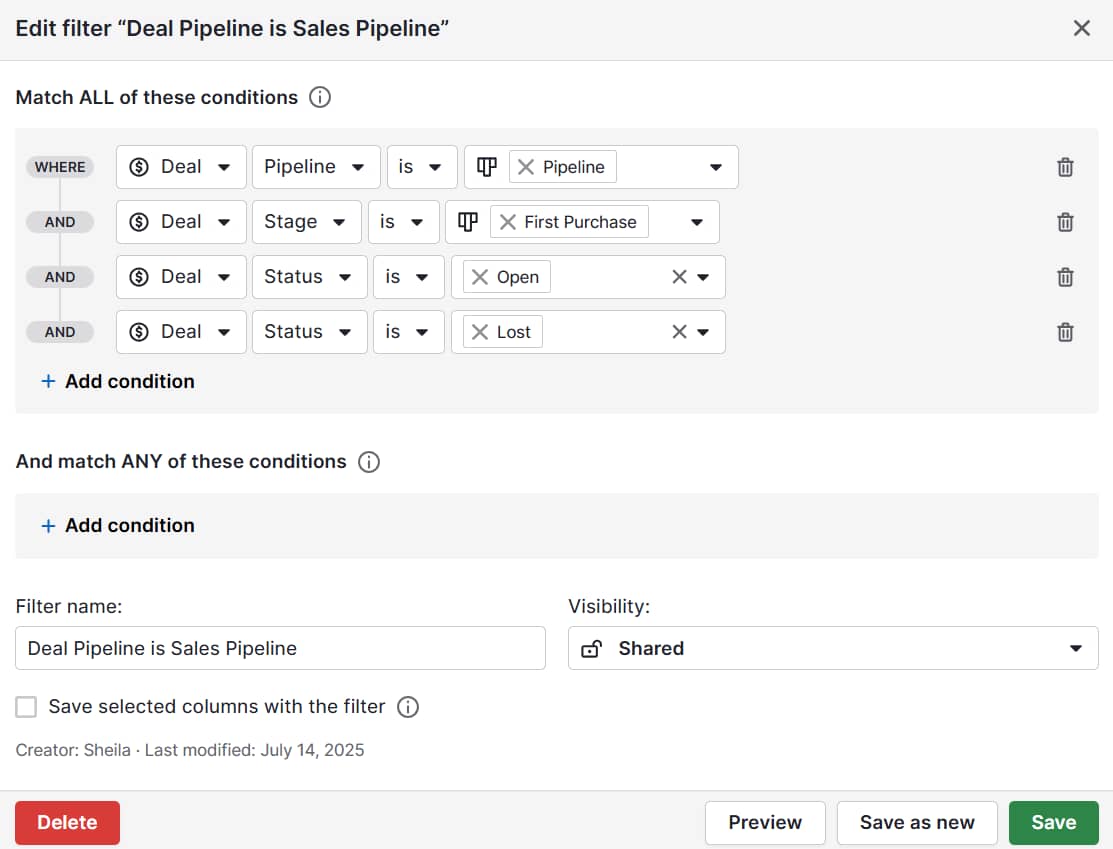
What is RFM analysis?

The RFM model, which measures recency, frequency and monetary value, is a tool for segmenting customers to identify top buyers, understand purchasing behavior and guide marketing strategies.

RFM analysis is a simple way for businesses to evaluate customer behavior based on the following factors:

  • Recency. How recently the customer made their last purchase.

  • Frequency. How often they buy from your business in a given period.

  • Monetary value. How much the customer spends.

By scoring customers on these three factors, small businesses can quickly identify their most valuable customers and pinpoint areas for improvement in loyalty.

For small and mid-sized businesses, RFM is especially useful because it helps prioritize limited time and resources.

As a customer segmentation method, RFM identifies which customers are worth nurturing, which are likely to respond to upsell offers and which would benefit from re-engagement activities.

For example, a local coffee subscription service might find that customers who ordered within the last month, purchase regularly and spend more than average are its most valuable group.

As a result, the company could target that group with exclusive offers to boost loyalty.

Recommended reading

https://www-cms.pipedriveassets.com/B2B-Market-Research.png

B2B market research explained: techniques and tips for growing businesses

How RFM analysis works

RFM analysis is a structured method for turning customer data into practical insights.

It begins by scoring recency, frequency and monetary value, then grouping customers into clear segments.

Calculating RFM scores

To calculate an RFM score for individual customers, assign a score for each factor in the model. Many businesses use a 1–5 scale, with 5 representing the strongest performance.

Here’s an example of how a company might score each factor based on its business model:

Factor

Scoring example

Recency

Customers who bought very recently get high scores:

  • Purchased within 30 days = 5

  • Purchased within 90 days = 3

  • Purchased more than 180 days ago = 1

Frequency

Frequent repeat buyers score higher:

  • 10+ purchases = 5

  • 4–6 purchases = 3

  • 1 purchase = 1

Monetary value

High-spending customers earn higher scores:

  • Total spend above $1,000 = 5

  • Total spend between $300 and $600 = 3

  • Total spend below $100 = 1

A simple formula for an overall RFM score is:

Recency score + Frequency score + Monetary score = RFM score

The higher a customer’s total RFM score, the more likely they are to do business with the company again in the future.

This simple visualization illustrates how a company might approach its customers in light of RFM analysis.

RFM Analysis Model

Combining the scores for recency, frequency and monetary value creates a picture of customer engagement that marketers can use to make strategic decisions.

Creating customer segments

Once you have RFM scores for your customers, the next step is to group them into segments. Many businesses categorize their customers as follows:

  • High-value customers. Top scorers across all three elements of the RFM model. These are loyal, active and profitable buyers who should receive VIP treatment or exclusive offers.

  • Medium-value customers. Customers with a steady but smaller number of transactions. Discounts or special offers may encourage these customers to buy more and become high-value customers in the future.

  • At-risk customers. Strong spenders or frequent buyers in the past who have not made a recent purchase. They may respond well to win-back campaigns.

  • New customers. Recent buyers with low frequency and monetary value. They need to be nurtured to encourage repeat purchases.

  • Inactive customers. Low recency, low frequency and low monetary value buyers. While some may be lost, selective reactivation offers can still work.

With customers categorized in this way, you can make better-informed decisions about which marketing activities to invest in for each group of customers.

Making RFM metrics actionable

Scoring and segmenting buyers gives you a structured view of your customer base, but it’s important to prepare this data for action. Here are three practical ways to do that:

  1. Spreadsheets and manual methods. Spreadsheets, such as Excel or Google Sheets, work well with a small customer base. You can calculate RFM scores using simple formulas and filter the results by segment to identify your most valuable customers.

  2. Charts and graphs. Visualizing your RFM data can make customer behavior easier to see and understand. For example, a bar chart can show whether your number of high-volume customers is growing or shrinking.

  3. CRM platforms like Pipedrive. For larger customer bases, CRMs enable SMB marketers to scale RFM segmentation without manual work. In Pipedrive, you can automate follow-ups, set reminders for at-risk customers and build targeted campaigns around high-value groups.

Once your RFM data is organized, you can start connecting the insights to your marketing strategies and customer engagement efforts.

Download Your Sales and Marketing Strategy Guide

Grow your business with our step-by-step guide (and template) for a combined sales and marketing strategy.

How to apply RFM insights to SMB marketing

Once you’ve completed the analysis, it’s time to implement the findings around RFM, meaning you apply the insights to your SMB marketing activities. Here’s how.

Designing campaigns for different customer segments

RFM segmentation provides the insight you need to tailor promotions and communication to different customer groups.

Instead of sending the same message to everyone, businesses can adjust their marketing campaigns to match customer needs.

For example, a B2B SaaS company offering analytics software might offer incentives to different customer segments as follows:

Customer segment

Marketing activity

Best customers

These customers get early access to new products, VIP offers and invitations to loyalty programs.

Medium-value customers

These customers receive targeted marketing campaigns with bundled pricing to optimize profitability.

New customers

These customers receive a personalized onboarding sequence that highlights quick wins, accompanied by a discount code for their next purchase.

SMB marketers can also use RFM insights to improve customer retention and support reactivation activities.

Improving retention and reactivation

When the RFM model flags at-risk or inactive customers, businesses can act in real time to re-engage these users and combat customer churn:

  • At-risk customers. Personalized marketing, such as tailored email marketing reminders, special offers or feature updates, could win them back.

  • Inactive customers. Re-engagement emails and targeted marketing campaigns may reactivate some inactive users.

SMBs can use RFM segmentation to create data-driven marketing strategies that optimize customer experience, strengthen customer loyalty and increase long-term profitability.

Download the State of Sales and Marketing Report for 2024/2025

Get your report

5 best practices for RFM analysis

To get the most value from RFM analysis and avoid common mistakes, marketers in SMBs should follow these five best practices.

1. Keep scoring simple

RFM metrics don’t need to be complicated to be effective.

Many small businesses fall into the trap of over-engineering their scoring system with too many brackets or weighted formulas.

In reality, a basic scale of 1–5 for recency, frequency and monetary value is usually enough to identify the most critical segments:

  • Loyal customers

  • At-risk customers

  • Inactive groups

The key is to choose thresholds that make sense for your customer base. For e-commerce businesses, frequency might be measured in terms of purchases per month, while a B2B software firm might measure it in terms of renewals or feature usage.

2. Pay attention to smaller segments

Although it can be tempting to focus on the top customers or the largest groups in your database, RFM segmentation may reveal smaller groups with significant potential.

For example, a group of recent, new customers could become repeat customers if they receive targeted marketing campaigns early in their journey.

A large segment that’s shrinking could indicate risk. Fewer loyal customers may be an early sign of declining customer engagement or a poor product fit.

By noticing these signals, you can optimize marketing efforts and protect customer lifetime value (CLV).

3. Consider wider context when interpreting scores

RFM scores are only as useful as the context you give them.

To interpret the data effectively, you need to benchmark the scores against your own customer base rather than industry averages.

For instance, for a SaaS platform where the average client logs in less than once per week, high frequency might mean four or more logins per month. However, an e-commerce store with repeat customers who buy weekly would set a much higher bar for this figure.

It’s also important to consider complementary marketing metrics when reviewing RFM scores.

Combining behavioral segmentation with other data, such as customer demographics or engagement survey results, can help uncover why users behave the way they do.

This data-driven approach ensures your marketing strategies target the right groups with the right messages at the right time.

Download our customer journey map template

Start mapping your customer journey with our free customer journey template.

4. Prioritize privacy and ethical considerations

RFM segmentation relies on data about customer transactions and purchasing behavior.

Businesses must handle this information responsibly to comply with GDPR and other relevant privacy regulations.

Best practices in this area include:

  • Only collecting the data you need for relevant marketing campaigns (e.g., a B2B e-commerce retailer might use RFM metrics to identify at-risk customers and send them a reminder email about items left in a cart)

  • Being transparent about how customer data is used

  • Avoiding over-personalization that could feel invasive (e.g., referencing a customer’s purchasing history in detail)

  • Ensuring real-time data storage and processing are secure

These best practices aren’t just about compliance. Handling data responsibility also helps build customer satisfaction and brand trust.

5. Update RFM calculations regularly

Because customer behavior changes over time, marketers should regularly update their RFM calculations to ensure they continue to work with up-to-date and helpful insights.

There’s no single best-practice timeframe for updating RFM scores. However, e-commerce businesses may need to do so monthly to keep pace with purchasing cycles.

B2B SaaS companies, on the other hand, may only need quarterly updates, since subscription renewals and feature usage follow longer timelines

Updating your RFM score regularly allows you to identify shifts in customer engagement, such as loyal customers becoming inactive or new customers moving into the high-value segment.

Recommended reading

https://www-cms.pipedriveassets.com/Customer-Persona.png

A step-by-step guide to creating effective customer personas

How Pipedrive brings RFM insights to life

Pipedrive makes it easier for small businesses to conduct RFM analysis and put the insights into practice.

Instead of managing spreadsheets manually, SMB marketers can track high-value customers and set automated follow-up tasks to maintain customer engagement.

With Pipedrive, you can create targeted marketing campaigns for customer segments identified through RFM analysis.

Pipedrive in action: Marketing agency NJ Media has used Pipedrive to identify a new niche market with high returns – and win seven new clients within it. Using Pipedrive’s email automation to personalize emails and warm up prospects, the agency has reduced its sales process from 20–40 days to an average of 11 days.

You can also use Pipedrive to automate outreach sequences such as email marketing, renewal reminders or reactivation campaigns.

Pipedrive in action: Corporate education company Trainify uses Pipedrive’s Campaigns software to automate its email outreach, combining its CRM and email marketing in a single solution to save the company two hours of admin time each week.

Pipedrive makes it easy to monitor RFM metrics in real time, with visual dashboards that highlight changes in customer behavior.

Now, let’s examine how a company might conduct RFM analysis and use Pipedrive to act on the insights gained from this exercise.

An example of RFM analysis in action with Pipedrive

Imagine a SaaS company offering accounting and invoicing software.

Following RFM analysis, the CMO sees that clients with both high recency and high monetary value are enterprise accounts due for renewal.

In Pipedrive, the CMO uses Campaigns to create and schedule personalized marketing emails for this customer segment, highlighting premium features.

What is RFM Pipedrive personalized marketing campaign

The CMO also uses Pipedrive to set reminders for the account management team to follow up with these customers and discuss their upcoming renewal.

What is RFM Pipedrive activity scheduling

Meanwhile, the CMO flags the company’s at-risk customers for reactivation in Pipedrive. This designation triggers an outreach sequence in the software that includes a customer email with a discount code and a follow-up call task for account managers.

What is RFM Pipedrive outreach sequence

With automated workflows and real-time customer insights, Pipedrive helps SMBs act on RFM analysis to strengthen retention, boost reactivation and drive growth.

Recommended reading

https://www-cms.pipedriveassets.com/Psychographic-segmentation-in-marketing.png

A practical guide to psychographic segmentation in marketing for SMBs

FAQs about RFM

  • Unlike other segmentation methods, RFM analysis focuses on customer behavior.

    It provides data-driven insights that are simple, actionable and effective for designing targeted marketing campaigns and improving customer retention.

  • Yes. Any business with customer transactions can use RFM analysis and benefit from the insights it offers.

  • While you don’t have to use a CRM to conduct RFM analysis, a CRM like Pipedrive makes it far easier to streamline RFM segmentation, track metrics in real-time and automate follow-ups.

Final thoughts

RFM analysis turns raw customer transactions into clear insights that small businesses can use to optimize their marketing efforts, improve customer retention and increase profitability.

With a CRM like Pipedrive, you can automate RFM segmentation, monitor metrics in real-time and ensure that your loyal customers, at-risk accounts and new buyers all receive the right level of attention. Start your free 14-day Pipedrive trial today.

9 Best Online Reputation Management Software

Software Stack Editor · October 22, 2025 ·

Reputation management software helps you nurture your business while strengthening your brand reputation.

You respond faster to reviews, track mentions and check sentiment trends from a single dashboard – turning feedback into growth opportunities.

This article will show which tools work best for local businesses, growing SMBs and multi-location companies. You’ll also discover ways to maximize your reputation management investment with your CRM.

Key takeaways from reputation management software

  • Reputation management software helps you manage your online presence by tracking reviews and mentions from one dashboard.

  • Local and growing businesses use these tools for automated review collection and unified customer messaging across platforms.

  • Multi-location businesses leverage reputation management software for centralized control and bulk management across all regions.

  • Pipedrive’s CRM improves customer satisfaction using customer history and automating follow-ups – start a free 14-day trial today.

What is online reputation management software?

Reputation management tools track how customers perceive your business across online channels.

They pull information from review sites, social media and news outlets into a central dashboard to show what people say about your business online.

Your online reputation can directly impact how much money you make.

When potential customers want to buy from you, they don’t just look at your website. They also search for online reviews, check your Google Business Profile (GBP) and scan your social media.

Customers have endless options, so they can choose a competitor with better reviews and a stronger brand visibility.

Having software to track your online presence is just one component of reputation management. The diagram below shows how it fits into your overall strategy:

reputation management software platform management

Online reputation tools monitor several key areas:

  • GBP and Google Reviews

  • Social media platforms (e.g., Facebook, X and Instagram)

  • Review sites (e.g., Yelp, TripAdvisor and industry-specific platforms)

  • News articles and blog mentions

  • Forum discussions and Q&A sites

For example, say someone leaves a review on Yelp at midnight. The software sends you a notification email or text alert. You can respond promptly, showing customers you care about their experience.

Here are some other customer pain points that reputation management software solves:

Pain point

Benefit/solution

You spend hours each week checking review sites manually.

Automated monitoring tracks all platforms in real time.

You have blind spots where mentions slip through unnoticed.

Complete coverage catches every new review and social mention.

You can’t observe customer patterns by checking feedback.

Analytics show trends and changes in customer sentiment over time.

You lack data to make informed reputation decisions.

Detailed reports guide your strategy with hard numbers.

Online reputation tools solve real business problems that cost you time and money. You get automated systems that streamline operations while focusing on growing your business.

Recommended reading

https://www-cms.pipedriveassets.com/Delight-the-Customer.jpg

10 reliable ways to delight the customer and amplify customer loyalty

9 best online reputation management software

Choosing the right reputation management software depends on your business size and challenges.

Local shops need different features than growing small business owners or multi-location companies looking to scale. Each tool excels in certain areas while falling short in others.

The table below shows nine recommendations for SMBs with a summary of features and pricing:

Reputation management software

Summary

Podium

Key features:

Best for: Unified customer communication

Pricing: Starts at $399 per month for two locations

Broadly

Key features:

Best for: Automated review collection

Pricing: Starts at $299 per month

Yelp for Business

Key features:

Best for: Restaurant and service businesses

Pricing: Free without ads or upgrades

Birdeye

Key features:

Best for: Growing companies overall

Pricing: Starts at $299 per month for one location

ReviewTrackers

Key features:

  • Reputation scorecard metrics

  • AI smart responses

  • Automated request campaigns

  • Sentiment breakdown analysis

Best for: Review analytics and insights

Pricing: Starts at $89 per month for one location

Brand24

Key features:

Best for: Social listening and brand monitoring

Pricing: Starts at $199 per month

Trustpilot

Key features:

Best for: Multi-location reviews

Pricing: Starts at $299 per month

Yext

Key features:

Best for: Business listings management

Pricing: Starts at $4 per week

Social Places

Key features:

Best for: Franchise businesses

Pricing: Starts at $1,800 for 100 locations

Next, you can explore each tool in more detail below.

Reputation management tools for local businesses

Local businesses compete in a specific geographic area where word of mouth travels fast and GBP reviews can make or break your success.

Example: A local law firm gets a negative GBP review about client communication, which could influence potential clients searching for legal services nearby within days. Without quick response tools, that single review costs them new client inquiries.

Local businesses need tools with:

  • GBP review monitoring and response tools

  • SMS messaging for direct communication

  • Automated review requests after service

  • Integration with local platforms (e.g., Yelp and Facebook)

Local customers value personal connection and immediate responses. The three tools below excel at review management for these specific local business needs.

1. Best for unified customer communication: Podium

reputation management software podium reviews

Podium consolidates all your customer conversations into one dashboard.

You handle website chats, text messages, social media and review responses from a single inbox.

Say an accounting firm gets reviews on Google and Yelp. They also get messages on Facebook or email about appointments. Instead of switching between platforms, you can handle everything from Podium’s dashboard.

Podium’s AI responds to new leads across all channels. You can send sales invoices, start video calls and automatically ask for reviews from over 24 platforms.

What users say about Podium

Nicole, an office manager, notes the positive impact of Podium on company processes:

Using Podium for our business has streamlined our Customer Care so much! Our team is able to work together to quickly answer customers, day or night. Being able to track and follow up on conversations, both phone calls and texts, helps keep our documentation in order.

Michelle, a quality assurance nurse, mentions limited bulk messages as a drawback:

I like that it is easy to add or delete a contact and that you can send bulk messages out. Still, I really do not like that we only have so many bulk messages.

The bulk messaging limits affect automatic marketing campaigns. Since you can’t send promotional SMS to all your customers simultaneously, you must batch campaigns over several days.

Despite this limitation, Podium excels at unified customer conversations. You get organized tracking for every customer engagement, regardless of where customers choose to reach you.

2. Best for automated review collection: Broadly

reputation management software broadly reviews

Broadly increases your review generation by targeting customers when they’re most satisfied.

For example, when a property management firm onboards a tenant, Broadly can send an automated review request. This is when positive customer experiences are fresh in their minds, so the firm likely gets a good star rating.

Beyond sending review requests via text or email, Broadly updates your business info on 40+ directory sites. It also uses AI to create your social media posts and answer reviews.

What users say about Broadly

Amy, a director of public relations, explains the results of using Broadly:

I have seen a noticeable increase in positive reviews posted since we started implementing Broadly. We also appreciate the option for guests to provide unfavorable feedback, so we have the opportunity to offer a resolution before they post to the online forums.

She also provides feedback when it comes to customization:

I do wish we had more accessibility to edit/design the email automation sent to our clients when a request for review is delivered.

While the email templates lack customization options, Broadly compensates for this with strong local SEO tools. It helps you track your rankings while recommending keywords you can use to help customers find you online.

3. Best for restaurant and service businesses: Yelp for Business

reputation management software yelp business

Yelp for Business connects you with 2.5 million daily visitors actively searching for local businesses.

Customers can request custom quotes directly through a Yelp profile. If a company asks an IT services business for network setup pricing, that’s a warm lead. They’re ready to hire.

Like in a GBP, you update your hours, photos and business information from one dashboard. You also get analytics on page views and customer interactions like phone calls, website clicks and quote requests directly from Yelp.

What users say about Yelp for Business

Khara, a digital marketing SEO analyst, approves of the tool’s simplicity:

I love the interface of Yelp and how simple it is to navigate around the platform. The menus are neatly arranged on the sidebar and don’t have confusing sub-menus. It provides a high-level metric overview of the ad spend, impressions, clicks, click-through rate, cost per click and what period you’d like to see.

Still, reporting has limitations:

I wish that Yelp could have a lot more sophisticated reporting… The current reports are in CSV, and I wish to have an option to have them in PDF as well. Under the performance tab, you are able to see user views by desktop and mobile. This is great and all, but it would be better if you could filter out just the mobile or just the desktop.

Beyond free features like profile management and quote requests, Yelp Ads let you reach more customers with targeted advertising. When someone visits a competitor’s Yelp page, your ad can appear there to capture their attention.

Recommended reading

https://www-cms.pipedriveassets.com/Customer-Interaction-Management.jpg

Delight customers and grow your business: Why customer interaction management is vital

Reputation management tools for growing companies

Growing SMBs need to track more than mentions on social media and review platforms. They need advanced reporting to understand trends and collaboration tools for your team.

Example: A growing B2B software company needs to track industry conversations and analyze sentiment. This practice becomes critical as it expands into new markets with different competitors. Spreadsheets and manual monitoring can’t keep up with this complexity.

Scaling businesses require reputation management tools with:

  • Multi-channel monitoring beyond review sites

  • Advanced reporting and competitive benchmarking

  • Team features for coordinated responses

  • Social listening to catch all mentions

  • CRM integration for customer data

Growing companies face different challenges from local businesses. They serve broader markets and compete with bigger brands.

The tools below handle the complexity that comes with business growth.

4. Best overall for growing companies: Birdeye

reputation management software birdeye calendar

Birdeye handles growing companies’ online presence with AI-powered automation.

For instance, a SaaS startup with a growing online presence may receive feedback from reviews, social media, customer surveys and emails. Birdeye pulls conversations from these customer touchpoints into one dashboard, so nothing gets missed, even as the customer base expands.

Birdeye uses AI for different parts of your business. The Insights AI feature reads customer feedback and tells you what to improve, while Competitors’ AI shows how you stack up against other companies. Additionally, Listings AI optimizes your business profiles across directories.

What users say about Birdeye

Bailey, a volunteer coordinator, shares her positive experience:

The most helpful thing about Birdeye is the calendar view! I like how you can see the week in full and see how often you are posting! I also like the AI-recommended times to post for the most engagement, which is very helpful when trying to make sure you are reaching an audience.

Marketing supervisor Alex explains that some features, like review tracking, have gaps:

One challenge we’ve noticed is that when a customer edits their review, it doesn’t always prompt or flag that the review has changed.

Beyond scheduling and review monitoring, Birdeye has a Reviews AI feature that A/B tests different ways to ask customers for reviews. Experiment with different message styles and see what gets the best response rates to actively refine how you gather feedback.

5. Best for review analytics and insights: ReviewTrackers

reputation management software reviewtrackers dashboard

ReviewTrackers provides actionable insights and customer sentiment analysis to understand your market position and customer satisfaction trends.

With the request campaigns feature, you can ask customers for reviews at an optimal time (e.g., after purchases or service completion). The reputation scorecard gives you a quick look at your ratings, response times and review volume.

For example, a software company’s scorecard in ReviewTrackers may show a 4.2-star rating, 18-hour response time and 127 total reviews this month. It can compare these metrics against three competitors to see where to improve.

ReviewTrackers also provides you with AI smart response templates. You can generate responses based on the sentiment and content of the review.

What users say about ReviewTrackers

Hannah, a social media community manager, appreciates the following features:

I like the sentiment breakdown, the ability to organize reviews for easy response.

Still, she feels limitation affects her ability to conduct detailed analysis:

Wish I could look at the sentiment by restaurant and track specific reviews. Wish there was less emphasis on response time, or the ability to turn it off.

Beyond sentiment analysis, ReviewTrackers also tracks where you appear in local search results compared to competitors. You can see which search terms help customers find your business and improve your search engine rankings in each location.

6. Best for social listening and brand monitoring: Brand24

reputation management software brand24 dashboard

Brand24 monitors what people say about your brand across the internet, not just review sites.

The AI-driven anomaly detector spots sudden spikes in mentions that could signal a crisis. You also get sentiment analysis, showing whether people feel positive or negative about your brand.

Say a marketing software company gets mentioned on blogs or Reddit. Brand24 captures every reference. When someone complains about pricing on a forum, the company gets an alert and can respond before the negative sentiment spreads.

Brand24 also finds influencers in your industry and measures your share of customer voice against competitors. You can track hashtags to see which campaigns work best.

What users say about Brand24

Eduardo, a marketing director, comments on the improved interface:

The new design of the analytics tab is a solid improvement – it feels more intuitive and helps visualize insights more clearly. We’ve also noticed better segmentation when managing multiple projects, which is a big plus for our team.

He also mentions that language support needs work:

It would still be great to have full Spanish support across the dashboards and PDF reports. Also, being able to export a single consolidated PDF that includes all active projects… would significantly improve efficiency.

In addition to the interface updates, Brand24 provides topic analysis that shows trending conversations in your industry. You get real-time alerts when noteworthy mentions happen so you can quickly protect your reputation.

Reputation management tools for multi-location businesses

International or multi-location businesses must maintain brand consistency across dozens or hundreds of locations.

They need to watch the performance of each specific location and respond to local customers appropriately.

This creates unique problems that single-location businesses don’t face. You’re managing reputation at scale while keeping quality control.

Example: A commercial real estate agency with 50 offices across regions receives conflicting info. Some offices respond within hours, while others take days. This inconsistency confuses business clients and damages the brand’s reputation.

Multi-location businesses need tools with:

  • Centralized dashboard for all locations

  • Bulk management and response capabilities

  • Location-specific reporting

  • Templates with local customization

  • Local SEO for each location

The tools below are built for companies that run many locations.

7. Best for multi-location reviews: Trustpilot

reputation management software trutspilot interface

Trustpilot lets multi-location businesses manage reviews for all their stores from one place.

You handle unlimited locations under one account while keeping your brand message consistent.

A B2B consulting firm with offices in 15 cities can set different access levels in Trustpilot. For example, local office managers can handle local reviews, while regional directors view performance across their three-office territory.

Each location automatically collects its reviews, aided by the system tagging reviews with the correct store information. Moreover, you can see how each location performs from your main dashboard.

The AI review spotlight feature reads through all your reviews and finds patterns and trends across every location.

What users say about Trustpilot

Maral, a marketer, likes the simple setup:

The interface is very user-friendly. It’s easy to integrate with e-commerce and easy to manage replying to customer reviews

Still, email customization feels limited to head of CRM Suzanne:

Can’t customize the appearance of the review email, so feels very separate from the rest of the customer journey.

Even with this caveat, Trustpilot is among the world’s most popular websites. When customers search for your business on Google, your Trustpilot profile often shows up in results. This visibility improves your brand awareness and brings in more customers.

8. Best for business listings management: Yext

reputation management software yext dashboard

Yext keeps your business information accurate across 200+ online platforms from one dashboard.

Agencies serving franchise businesses benefit from this centralized approach. When their client’s restaurant chains change business hours across locations, the agency updates the details once in Yext.

The new information automatically appears on Google, Yelp, Facebook and other platforms for all 50 stores in real time.

Yext also automatically finds and removes duplicate listings. Remember, multiple listings for the same location confuse customers and hurt your search rankings.

What users say about Yext

Peter, a project administrator, mentions the usefulness of bulk features:

I like how I am able to do bulk updates to my listings inside the platform. I manage over 300 listings and being able to upload them all at once is very efficient. I also like that I can upload hours for listings efficiently. I also like the timely syncs that are reflected to the external listings (Google, Facebook, Yelp, etc.).

According to Jenna, a general manager, navigation can be confusing:

Some functions are counterintuitive. Have to go through different knowledge gaps to get to the same place.

Beyond day-to-day reputation management, Yext structures your business data for new AI search tools like Google Gemini and Bing Copilot. This keeps your brand visible as search technology changes.

9. Best for franchise businesses: Social Places

reputation management software social places

Social Places has reputation management tools specifically for franchises and multi-location businesses.

An insurance company, for example, can use the white-label tools. When customers get review requests emails, they see the insurance company’s logo and branding. This keeps everything looking consistent and helps build customer trust.

The tool allows you to manage listings, ads, social media and reviews for all your locations from the all-in-one platform. AI handles bulk updates across hundreds of locations automatically, so you don’t have to log into different pages for each location.

What users say about Social Places

Kristen, a social media digital manager, highlights the key features:

The GoListings, Ads and social media audits features are definitely the most impactful for our business. It’s super easy to use, and if you’re not familiar with it, the team is great at onboarding!

She feels some features still need work:

The filter feature on the dashboard can sometimes be a bit buggy and I’ve struggled with it a few times, but the support team is always quick to help when users get stuck or if there’s a system issue.

With Social Places, you get three different levels of reporting. Listing reports track the store performance, reputation reports check reviews and social reports measure social media engagement.

Each reputation management tool handles different aspects of your online presence, from review collection to social listening. Your CRM can amplify these efforts by turning reputation insights into stronger customer relationships.

Recommended reading

https://www-cms.pipedriveassets.com/Brand-Positioning.png

What is brand positioning: The ultimate guide with 4 examples

How to use Pipedrive to complement your reputation management

With Pipedrive’s CRM (customer relationship management) software, you can complement your reputation management efforts by improving customer satisfaction.

When a customer leaves a negative review, you can turn this experience into an opportunity for stronger relationships.

Here’s how to do it.

Create a dedicated pipeline for problem resolution

Set up a pipeline for customers who had bad experiences or left negative reviews. This would work like a ticketing system that tracks each issue from discovery to resolution.

The pipeline keeps every problem organized. You never lose track of unhappy customers or forget to follow up on their concerns.

reputation management software pipedrive pipeline view

Your negative reviews pipeline might include stages like:

  • Issue found – you discover a customer complaint or negative review

  • Investigate – your team researches what went wrong

  • Offer solution – you propose how to fix the problem (e.g., discount, refund, replacement, etc.)

  • Fix issue – you resolve the customer’s problem

  • Follow up – you contact the customer about changing the review

Each stage represents a clear step in your problem-solving process. Your team knows exactly where each issue stands and what needs to happen next.

Access the deal or contact view for context

Your customer representative can check the contact or deal view to see the full customer story. They will see purchase history, previous interactions and any other support tickets.

reputation management software pipedrive deal view

With this context, it’s easier to solve the problem faster and ensure customer service quality assurance. Instead of asking customers to repeat their story, your rep already understands their relationship with your business.

Pipedrive in action: Healthcare provider Eye Hospital Denmark struggled to track patient information across its large customer base. Important details would get lost between departments. This led to missed appointments and service issues.

With Pipedrive, the hospital now centralizes all patient data. Staff can access relevant information and provide better customer support.

Moreover, automations and integrations with existing systems simplify day-to-day workflows. This streamlines processes and cuts repetitive tasks.

The hospital reduced patient no-shows by 50% and achieved a 0% failure rate in ordering lenses within one year.

Request reviews with the AI email writer

Pipedrive’s AI email writer can help you create messages based on your customer information.

After closing a deal, you can send a personalized email asking customers to share their experience. In the email, you can include a link to direct them to your preferred review platform (e.g., Yelp, GBP or Trustpilot).

With the AI email writer, you can select the tone, email length and specify the context. This automated approach makes collecting reviews easier for your business.

You can even consult the AI email generator to handle delicate situations, such as requesting a review update after resolution:

reputation management software pipedrive email content

If you want to boost your open rates, you could include incentives in your email subject. Small rewards like discount codes or loyalty points motivate customers to leave feedback.

Turn Maybe Into Yes With These Killer Follow Up Email Templates

These customizable follow up email templates will help you boost your chances of breaking through to your busiest prospects.

Pipedrive complements your reputation management efforts by organizing customer issues and automating review collection.

You solve problems faster while generating more positive reviews, which creates a complete system for protecting and improving your online presence.

Online reputation management software FAQs

  • Start by determining the type of business you run (e.g., local business, growing company or multi-location presence).

    Check this guide to see which tools work best for you.

    Once you know which tools fit your needs, sign up for free trials or request product demos.

    Talk to their sales teams to see which one feels right for your business.

  • No, reputation management software can’t remove authentic customer feedback – including negative reviews.

    The tools primarily help you watch, respond to and request reviews. They can, however, flag fake or inappropriate reviews for potential removal.

  • You can flag fake reviews using reputation management software, though you can’t automatically delete reviews you don’t like.

    Most platforms have policies against fake reviews. Google, Yelp and Facebook will remove reviews that violate their guidelines after you report them.

Final thoughts

Reputation management software helps you manage your online reputation. You can track reviews and mentions across channels – and respond faster.

Local businesses often need communication and review collection tools. Growing businesses need advanced analytics and social listening. Multi-location businesses benefit from centralized dashboards and bulk management features.

Pipedrive’s CRM can work alongside these tools to create a better customer experience. Start a free trial today to improve your client interactions and build trust.

5 Effective Team Capacity Planning Tips for SMBs

Software Stack Editor · October 22, 2025 ·

Imagine delighting customers by finishing more projects on time without overworking staff.

Team capacity planning helps small businesses achieve more with limited resources, prevent employee burnout and make data-backed hiring decisions.

In this article, you’ll learn what team capacity planning is and how it works. You’ll also find a free team capacity planning template and five best practices to guide your efforts.

Key takeaways from team capacity planning

  • Team capacity planning calculates how much work your team can complete in a given timeframe and whether a new project is feasible.

  • Use one of three capacity planning methods – lead, lag and match – depending on your business type, size and goals.

  • Consider planned vacations, non-project work and skill levels to create an accurate estimate.

  • Technology like Pipedrive’s CRM and work management tools improves planning and increases capacity. Try it free for 14 days to centralize data and automate workflows.

What is team capacity planning?

Team capacity planning is the process of determining how much work your team can realistically complete within a given period.

It helps small and medium-sized businesses (SMBs) maximize limited resources and tight budgets by efficiently using each employee’s time.

A good team capacity planning process goes beyond simple headcounts, factoring in sales skills, availability, paid time off (PTO) and the complexity of each project to ensure timely completion.

Consider a small software development agency with 15 developers. Rather than assuming each engineer contributes 40 hours per week, a good project manager will account for the fact that:

  • Sales meetings take up one-fifth of the workday

  • Junior developers work at a slower rate than senior developers

  • Staff vacation days impact project deliverability

  • Context switching between different projects slows work

As a result, the team’s capacity might be closer to 400 hours per week than 600. Knowing this, the project manager can meet deadlines and manage workplace stress.

Business owners can calculate capacity by hand or using dedicated capacity planning tools like Jira. Your customer relationship management (CRM) platform or project management software might also work, but more on that later.

Capacity planning vs. resource planning:

While people often use these two terms interchangeably, they serve different but complementary purposes.

– Capacity planning determines the amount of work your team can complete. It’s a way to analyze whether you have sufficient resources to handle anticipated workloads.

– Resource planning determines who will complete the work. It’s the process of identifying, acquiring and allocating specific resources to particular projects or tasks.

Now that you know what capacity planning is and what it looks like in a small B2B company, it’s time to learn why it’s crucial for all small businesses looking to increase efficiency.

Recommended reading

https://www-cms.pipedriveassets.com/Key-operations-strategy-elements.png

The ultimate guide to operations strategy planning

What are the benefits of capacity planning for SMBs?

While capacity planning may seem like another administrative task to add to your to-do list, it helps your team save time, increase efficiency and boost sales.

Here’s why the latest research shows capacity planning is a must for small businesses.

Stop employee burnout

Team capacity planning reduces burnout risk in small teams by increasing workload visibility and helping managers schedule work thoughtfully.

Burnout is a growing problem for small businesses with lean teams and a limited capacity to absorb extra work. Recent research finds that 82% of employees are at risk of burnout – a crisis costing companies up to $5 million per year.

Team capacity planning is a team management strategy that factors in planned vacations and non-project activities to improve work-life balance and job satisfaction.

Boost productivity and profitabilit

Research by Employment Hero finds that while 74% of small business leaders and employees find that productivity has increased with tech empowerment, one in three small businesses operates in “survival mode” without the ability to grow or innovate.

team capacity planning employment hero statistic

Team capacity planning fixes this misalignment by helping small businesses allocate limited resources efficiently, ensuring each team member focuses on tasks best suited to their skills and availability.

Make better hiring decisions

Hiring the right people matters in cash-strapped small businesses, yet McKinsey finds that the most appropriate people aren’t in 20% to 30% of critical roles in many organizations.

Not only does capacity planning improve resource allocation, but it also helps SMBs move from reactive hiring to a roadmap based on actual needs.

Team capacity planning helps you stop responding to urgent issues and start growing by balancing workloads and allocating resources efficiently.

There’s more than one methodology to get your workloads on track. You’ll learn about the three most common capacity planning methods next.

Recommended reading

https://www-cms.pipedriveassets.com/Personnel-management.jpg

Personnel management: definition, importance and emerging trends

Which type of team capacity planning should you use?

You can use three strategies when planning team capacity: lead, lag and match planning.

This table quickly summarizes the key differences between each type of resource capacity planning:

Capacity planning strategy

Description

Lead capacity planning

  • A proactive approach that anticipates growth and seasonal spikes

  • Gives you a competitive edge by preparing for increases in demand

  • Risks overcapacity and comes with higher upfront costs

Lag capacity planning

  • Ideal for conservative companies and those with limited budgets

  • Offers a cost-effective strategy that manages risk

  • Poor recruitment can be a bottleneck for businesses and may put your company at a disadvantage

Match strategy planning

  • A balanced approach to capacity planning

  • Encourages efficient resource use and adaptability

  • Complex to implement and relies on accurate forecasting

Here’s more information to help you choose a strategy that aligns with your work, business model and risk tolerance.

1. Lead capacity planning

What it is: Lead capacity planning builds bandwidth ahead of anticipated demand. It’s an aggressive approach that ensures resources are available when sales opportunities arise. Although costs increase in the short term, you capitalize on customer needs and demand without delay.

Who it’s best for: Fast-growing companies like startup teams or those in highly competitive markets.

2. Lag capacity planning

What it is: Lag capacity planning is a more conservative approach that adds capacity only after demand materializes. It reduces financial risk but requires an efficient hiring and onboarding process to meet demand.

Who it’s best for: Companies with tight cash flow and those operating in industries with readily available talent.

3. Match strategy planning

What it is: Match strategy combines elements of both lead and lag strategies, with companies making incremental adjustments based on internal data and market signals. It’s a balanced approach that requires accurate sales forecasting but optimizes resource allocation.

Who it’s best for: Well-established companies with moderate growth rates.

Example: An IT services company uses sales data and market trends to make quarterly hiring decisions. It maintains resource allocation rates at 85% and adjusts capacity in small increments rather than making significant workforce changes.

Once you’ve decided on your project planning approach, use the free template below to assess your team’s capacity.

Recommended reading

https://www-cms.pipedriveassets.com/The-Flexible-Work-Effect-on-Well-being.png

The flexible work effect on well-being: transforming lives and workplaces

Download Pipedrive’s team capacity planning template

You don’t need to start from scratch when planning your team’s capacity. Pipedrive’s ready-made template has space for key information about your project, resource demands and team capacity.

This free template is the fastest way to get started, whether preparing for your next project, undertaking a new initiative or implementing agile team capacity planning.

How to plan your team’s capacity

Strategic planning is an ongoing process you should perform when a new project comes in.

Here’s a process you can follow using the template above to avoid guesstimations and improve accuracy.

Define the deliverables

You’ll need a clear picture of what you’re delivering before you can plan your team’s capacity.

Defining an upcoming project’s requirements, deadlines and deliverables will help you understand how work will impact your team’s capacity and what adjustments you need to make.

Gather the following information about the project:

A standardized project intake form will accelerate this process. Use it to ensure you don’t miss relevant information.

Here’s what a complete entry might look like in the template:

team capacity planning project intake

By capturing this information upfront, you can set realistic short-term deadlines, manage stakeholder expectations and prioritize projects effectively.

Forecast resource demand

Next, calculate the resources you’ll need to complete the project. Estimating how much effort each task takes transforms planning from guesswork into a data-driven exercise.

Specifically, you’ll want to estimate how much time each employee needs to complete their work.

Follow these steps to make an accurate estimate:

  • Break down projects into specific tasks and activities

  • Estimate the effort required for each component

  • Identify skill requirements and experience levels needed

  • Build in buffers for unexpected challenges based on risks, deadlines and employee dependability

Here’s how to compile the above information in the template:

team capacity planning resource demand

You don’t have to use hours to measure resource demand. If you’re capacity planning for agile teams, you can use sprints or story points instead.

Calculate your team’s current capacity

Knowing how many hours your team has available is just as crucial as knowing how many hours you need. It will prevent you from overcommitting resources, help you maintain sustainable utilization rates and avoid a “feast or famine” environment.

Assess your team’s day-to-day capacity to determine how much work they can take on.

Take into account the following when calculating your team’s capacity:

  • Total available hours (team size × working hours)

  • Planned absences (vacation, holidays, training, sick leave)

  • Non-project time (meeting productivity, administrative work, email)

Here’s what a complete team capacity plan might look like:

team capacity planning team utilization rate

Calculate each team member’s resource utilization rate by dividing their accounted-for hours (assigned hours, planned absences and non-project hours) by their total available hours and multiplying by 100.

For example, Sarah’s utilization rate would be:

Utilization rate = (120 + 40 + 80) ÷ 480 × 100 = 50%

Measuring utilization rate avoids the risk of burnout by ensuring you don’t overload employees with work.

Measure and close the gap

Now, you can compare your forecasted demand with current available capacity to assess a project’s feasibility, prioritize work and maximize resource allocation.

Your team will rarely have the exact capacity required to undertake a project, which will mean careful planning on your part.

You’ll likely have one of the following scenarios for each employee:

Outcome

Description

Capacity surplus

Excess capacity compared to demand, which creates an opportunity for additional projects.

Capacity deficit

More demand than capacity, which means a risk of missed deadlines or burnout if you don’t increase resources.

Skill mismatches

Enough capacity, but the wrong skill mix.

Timing conflicts

Adequate capacity but poor distribution across timelines.

In the example above, both Tom and Emily have a capacity surplus. They’ll be able to complete their design work by the given deadline.

Raj, the developer, only has 106 hours of capacity next quarter. He’s in a capacity deficit, which means Sarah will need to make one of the following adjustments to complete the work on time:

  • Hire additional team members

  • Delay Raj’s lower-priority projects

  • Reduce project scope

  • Increase project timelines

  • Reduce non-project time

Once you’ve planned your team’s capacity, use the following best practices to optimize your efforts and reap even greater results.

Download your guide to managing teams and scaling sales

The blueprint you need to find a team of superstars and build a strong foundation for lasting sales success

5 best practices to improve team planning and availability

While a thorough and effective capacity planning process will help you accurately predict demand and allocate available resources, the following best practices will help you push your efforts further.

Use these five tips to streamline planning, optimize allocation and increase your team’s capacity.

1. Centralize information in a project management app

The foundation of effective capacity management is centralized, real-time data. Use project management tools to centralize information from spreadsheets, emails and other business apps in one location to improve accuracy and efficiency.

Pipedrive’s Projects combines project management and CRM functionality into a single platform. You can use it instead of purchasing expensive capacity planning software.

Here’s what the platform looks like:

Team capacity planning Pipedrive Projects

Use custom fields to align Pipedrive with your resource management process or mirror your work intake form for even faster data entry. Create sub-tasks when you break work down and assign team members relevant tasks.

How Pipedrive helps

Mobility service provider (EMSP) and charge point operator (CPO) Blulinc uses Pipedrive Projects to manage installations and reclaim 30% of its team’s time.

It sets checkpoints within each project to forecast and address issues. This practice also lets the team learn from previous work to streamline future projects. Pipedrive’s automation features have also reduced the repetitive work the team performs.

We need to be on top of the installations because we have a lot of competition in the market. The other companies take about 4–6 weeks to finish off the project, while we can deliver the solution in about 2 weeks or even faster.

Cihan KrandaFounder, Blulinc

Read the full case study to learn more.

With Projects, you get a single source of truth for project data and real-time visibility into your team’s workloads and availability.

2. Improve internal communication

Better sales communication directly improves the accuracy of your capacity planning efforts by providing real-time insights into team availability and project status.

No one knows workloads better than front-line staff, so encourage honest conversations about current projects and workloads. Scheduling time each week to sit down and discuss capacity is even better.

Use Pipedrive’s native integration with communication platforms like Slack and Outlook to never miss a message.

Alternatively, you can use the notes section of each task to add project updates and other notifications.

Team capacity planning Pipedrive notes

Setbacks happen, employees get sick and scopes increase, but good communication that highlights these issues immediately will help you get your project back on track faster.

3. Use automations to automate workflows

Non-project work, like administrative tasks, repetitive processes and manual data entry, poses some of the biggest threats to team capacity. Workflow automation can dramatically reduce this burden and free up capacity for value-creating activities.

For example, in Pipedrive, you can use pre-defined triggers to automatically move projects through pipeline stages when tasks are complete.

The CRM comes with several ready-made workflow templates, or you can create your own using the automation flow below:

Team capacity planning Pipedrive workflow automation

Workflow automation reduces non-project workloads and reduces human error, allowing your team to focus on delivering projects rather than the busy work of managing them.

4. Learn from past projects

Experience is a great teacher, so analyze previous projects to refine your future capacity estimates. You’ll identify patterns, improve estimation accuracy and optimize resource allocation.

Pipedrive’s custom reports, insights and dashboards make it simple to manage performance in real time and analyze it when completed.

How Pipedrive helps

Pipedrive’s Insights feature helps Combat Ready analyze sales team performance and identify winning patterns that canimprove future results.

The team tracks key sales metrics, such as lead numbers and sources, as well as business-specific information – for instance, the number of people attending a training course and where products need to be collected.

“The statistics part helps us track habits and behaviors,” explains founder Remo Ojaste.

Read the full case study to learn more.

Use the platform’s notes functionality to document successful strategies or issues that caused capacity to become stretched. That way, it’s easy to refer back when planning your next project.

5. Use your capacity plan to make data-backed hiring decisions

Your capacity plan provides the data you need to make informed decisions about when to hire, what skills to prioritize and whether to choose permanent staff versus contractors.

For example, if your developer is constantly in a capacity deficit, hiring additional support makes sense.

Once you’ve identified a skills shortfall, use Pipedrive’s custom pipelines to build an applicant tracking system. Assign each process stage (applied, interviewed, offered, accepted, etc.) to different pipeline stages and create new deals for applicants.

Here’s what your pipeline could look like:

Team capacity planning Pipedrive recruitment

You can even use Pipedrive’s automations to create interview reminders and integrate online meeting tools like Zoom and Teams so staff can run interviews without leaving the platform.

Case study: How Pipedrive helps Socionomera reduce admin work

Socionomera, an authorized staffing company, uses Pipedrive to manage the recruitment process in a competitive market. It can use the platform to search for candidates with the right skills and automatically remove those who don’t – sending them an automatic rejection letter.

The company also uses Projects to give candidates access to the resources they need, such as login credentials and time reporting systems and Smart Docs to send digital contracts.

Thanks to Pipedrive, the team has seen a 5x reduction in administrative work and has been named the third-fastest-growing company in Sweden.

In every aspect, Pipedrive is saving us a lot of time. Many, many hours. The ability to automatically remove unqualified or unsuitable candidates from the system makes our whole process more efficient.

Damir SabaniFounder and CEO, Socionomera

Read the full case study to learn more.

By using Pipedrive to monitor the entire inbound recruiting process, you can stay on track, shorten hiring times and increase capacity as quickly as possible.

Recommended reading

https://www-cms.pipedriveassets.com/blog-assets/employee-referral.png

What are employee referrals? Definition, guide and best practices

Team capacity planning FAQs

  • Team capacity planning determines how much work your team can complete within a given timeframe.

    It accounts for factors like skill levels, availability and planned absences to set achievable workloads and ensure timely project completion.

  • The five key steps of capacity planning are:

    1. Define the deliverables. Clarify project requirements, deadlines, dependencies and risks.

    2. Forecast resource demand. Break down projects into individual tasks and estimate how long each task will take.

    3. Calculate your team’s current capacity. Assess available work hours after planned absences and non-project work.

    4. Measure the gap. Compare demand against capacity to identify surpluses or deficits.

    5. Allocate resources accordingly. Assign tasks, adjust timelines, prioritize projects or hire as necessary to balance workloads.

  • An example of team capacity planning is a SaaS company assigning tasks based on realistic estimates of a project’s complexity and each developer’s skills.

    Realising the agency is in a capacity deficit ahead of upcoming projects, the owner hires three contractors to increase available resources and complete work on time – boosting team and sales productivity.

Final thoughts

Mastering team capacity planning is vital for small businesses that want to meet deadlines, boost productivity and foster sustainable growth.

By mapping project demands against your team’s workload, availability and skills, you can improve decision-making, prevent burnout and optimize resource allocation.

Pipedrive’s project management and workflow automation capabilities are ideal for centralizing workload data and reducing non-task hours. Try Pipedrive free for 14 days to plan efficiently and increase your team’s capacity.

Complete CRM in the Life Sciences Industry Overview

Software Stack Editor · October 21, 2025 ·

Life sciences companies face growing pressure as managing HCP relationships, patient data and compliance becomes increasingly complex.

A CRM built for the life sciences industry turns these challenges into opportunities by connecting every stakeholder and automating critical workflows.

In this article, you’ll learn how life sciences CRMs help SMBs streamline operations, optimize engagement and deliver patient-centric results while staying compliant and ready to scale.

Key takeaways for CRM in Life Sciences

  • A CRM in life sciences helps SMBs manage compliant, data-driven relationships with HCPs, HCOs and patients.

  • Automation tools and connected workflows reduce manual effort, helping teams focus on patient care and stakeholder engagement.

  • Integrations across marketing, communication and reporting systems create a unified ecosystem that supports end-to-end visibility and compliance.

  • Pipedrive gives life sciences teams a simple, scalable way to stay organized. Try it free for 14 days.
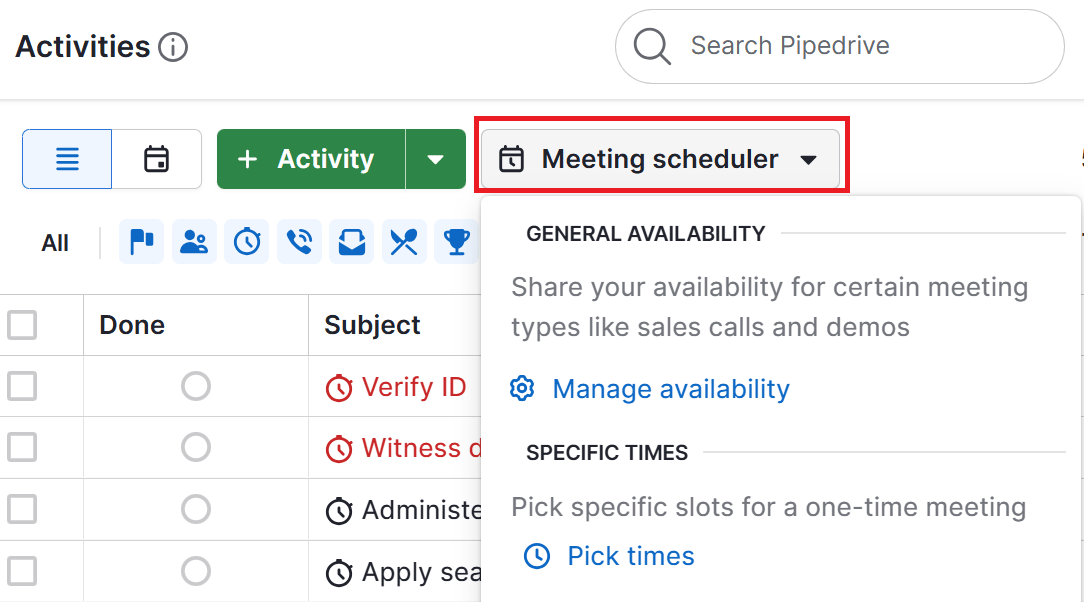
What is a CRM in life sciences?

CRM in life sciences is a customer relationship management (CRM) system that biotech, pharmaceutical, medical device and diagnostics companies use to track customer interactions and ensure regulatory compliance.

Unlike a general or sales-focused CRM platform, it helps teams manage fewer but more important relationships with healthcare professionals (HCPs), healthcare organizations (HCOs) and patients while staying compliant with strict rules.

For small and mid-sized life sciences companies, the right CRM gives a clear view of customer engagement without adding extra complexity.

The system links sales, marketing and patient support teams through automation and secure data sharing.

CRM in Life Sciences Pipedrive What is a CRM?

The right platform can also ensure shared data complies with the Health Insurance Portability and Accountability Act (HIPAA), the General Data Protection Regulation (GDPR) and other local privacy laws.

For example, a general CRM might track a sales rep’s meetings and email history. A life sciences CRM adds layers like approved content sharing, adverse event reporting and audit-ready records to meet healthcare regulations.

A CRM in the life sciences industry brings people, data and workflows together. It helps companies manage outreach, support key opinion leaders (KOLs) and improve engagement strategies across every channel while keeping compliance simple.

Recommended reading

https://www-cms.pipedriveassets.com/CRM-Experience.png

What is CRM experience? Create more delightful customer experiences

Why CRM matters for life sciences

CRMs in the life sciences industry are essential for managing every relationship that drives growth.

Gartner highlights that traditional CRMs, which focus solely on sales force automation, no longer meet the outreach needs of life sciences companies.

Modern life sciences companies need connected, data-driven systems that help them engage HCPs, HCOs and patients with accuracy and trust.

Why it matters:

  • Regulations, privacy laws and regional rules make it hard to manage data across markets without a connected system

  • New digital tools like telehealth, artificial intelligence (AI) and mobile apps have raised expectations for real-time, personalized engagement

  • Silos between marketing, sales and medical teams limit collaboration and reduce the impact of every customer touchpoint

A modern CRM built for life sciences brings all of this together.

For example, a medical device company can use a CRM to connect its sales and support teams, enabling them to share product training sessions, maintenance logs and customer feedback automatically.

This transparency helps sales reps understand usage patterns and allows service teams to anticipate needs. It also ensures compliance teams can track every interaction from a single, verified record.

Turn Maybe Into Yes With These Killer Follow Up Email Templates

These customizable follow up email templates will help you boost your chances of breaking through to your busiest prospects.

What are the core features to look for in a life sciences CRM?

Small and mid-sized companies need CRM tools that simplify complex work without adding extra cost or heavy infrastructure.

Unlike enterprise systems built for global pharma, SMBs benefit most from flexible, easy-to-use CRMs that still meet strict compliance and data security standards.

The goal is to balance functionality with efficiency so teams can focus on building strong HCP and patient relationships rather than managing technology.

Below are some of the key features to look out for:

CRM feature

Why it matters

Compliance and security

Keeps sensitive patient and HCP data protected and can help meet HIPAA and global privacy laws.

HCP and KOL management

Tracks key relationships, interactions and preferences to support more targeted outreach.

Segmentation and targeting

Helps tailor campaigns and messages to specific HCP, HCO or patient groups.

Omnichannel communication

Connects email, video and in-person touchpoints so every interaction stays consistent.

Analytics and dashboards

Provides real-time insights for better decision-making and performance tracking.

Integration with Enterprise Resource Planning (ERP) and marketing automation

Reduces data entry, aligns commercial operations and improves reporting accuracy.

For SMBs, these features create a powerful yet practical foundation for growth. A well-chosen life sciences CRM turns daily operations into connected workflows, making it easier to engage customers without adding complexity.

Pipedrive in action: Serenis, an online mental health platform, used Pipedrive to stay connected with patients and therapists as the company grew.

By automating workflows and improving team visibility, Serenis reduced admin work and delivered a more personal care experience. Read the full case study to see how they scaled faster with Pipedrive.

Recommended reading

https://www-cms.pipedriveassets.com/How-to-keep-operations-running-with-Healthcare-workflow-automation.png

Healthcare workflow automation: what it is and why you need it

How a CRM supports sales, marketing and patient engagement

For SMBs in life sciences, a CRM helps sales reps, marketers and patient support teams work together using the same data and insights.

This alignment makes it easier to deliver consistent, high-quality experiences for HCPs and patients and make data-driven decisions.

Let’s take a closer look at some specific use cases across a life sciences organization.

Sales teams: tracking visits and building stronger HCP relationships

Sales in life sciences are built on trust, not transactions.

A CRM helps reps manage complex HCP relationships, track visits and follow up at the right time without missing key details.

It keeps all meeting notes, emails and approved content in one place so teams can stay organized.

For example, a biotech sales rep can review a doctor’s history, plan the next visit and log outcomes all from the same dashboard.

How a CRM helps sales teams:

  • Tracks HCP interactions, field visits and sample deliveries in real time

  • Automates reminders and follow-ups for faster, more consistent outreach

  • Keeps all communication and materials compliant with industry standards

  • Shows past activity so reps can personalize each visit and build stronger relationships

Tip: Use Pipedrive’s automation and field sync features to follow up with leads faster and spend more time engaging HCPs.

Marketing teams: delivering targeted campaigns for HCPs and patients

Marketing in life sciences relies on precision and compliance.

A CRM helps marketing teams segment audiences, manage consent and send approved content through the right channels. It ensures every campaign aligns with regulatory standards while still feeling personal and relevant.

For example, a biotech company launching a new therapy can use its CRM to segment HCPs by specialty, region and prescribing history. It can then deliver custom messages to help each segment understand how the new therapy meets their specific needs.

For smaller life sciences companies, this means marketing can move at the speed of digital without risking compliance.

How a CRM helps marketing teams:

  • Segments HCPs, HCOs and patients based on specialty, region or engagement history

  • Automates email campaigns and event outreach with pre-approved materials

  • Tracks engagement and feedback across channels to refine future campaigns

  • Connects marketing data with sales insights for a complete view of performance

Tip: Align marketing workflows with your compliance team before launching a campaign. Building approved templates and automated review steps into your CRM keeps outreach fast and consistent.

Patient support programs: improving adherence and communication

A CRM helps teams manage support programs, track progress and communicate with patients in ways that feel personal.

For example, a pharma company running a treatment adherence program can use a CRM to schedule check-ins, log outcomes and flag potential follow-up needs.

How a CRM helps patient support teams:

  • Tracks each patient’s progress and touchpoints through the full care journey

  • Automates reminders for medication, appointments or follow-up communication

  • Stores notes and data securely to maintain HIPAA compliance

  • Gives teams visibility into patient outcomes for better support and insights

Tip: Use your CRM to centralize patient communication. A single source of truth helps teams coordinate faster, reduce confusion and create a smoother patient experience.

Operations: keeping reporting accurate and compliance-ready

Operations teams are the backbone of any life sciences organization.

They handle the data, documentation and reporting that keep everything running smoothly.

A CRM helps teams collect and organize information from every department, ensuring that compliance reports, audits and performance reviews are quick and reliable.

For example, a medtech company can use a CRM to track device distribution, document adverse events and generate ready-to-share reports for regulators.

How a CRM helps operations teams:

  • Centralizes data from sales, marketing and patient programs for consistent reporting

  • Automates audit trails and documentation for faster compliance checks

  • Tracks adverse events and medical inquiries to ensure issues are resolved quickly

  • Provides dashboards that give real-time insight into commercial operations and performance

Tip: Try Pipedrive’s automated reporting templates and shared dashboards to simplify compliance checks and ensure consistent performance data.

Power your life sciences CRM strategy with Pipedrive

Disclaimer: In the United States, any system that handles protected health information must meet HIPAA standards. Pipedrive isn’t HIPAA compliant, so you shouldn’t store patient names, medical details or other sensitive health information in the platform.

For SMBs in the life sciences, teams need a platform that’s simple enough to use every day yet powerful enough to manage complex relationships, workflows and compliance requirements.

Pipedrive offers that balance by providing growing life sciences organizations with the tools to connect with HCPs, HCOs and patients while keeping operations lean and compliant.

Let’s look at some ways Pipedrive helps bring structure, insight and workflow automation to life sciences engagement.

1. Create a unified view of HCP and patient relationships

Keeping track of every relationship is one of the most challenging parts of working in life sciences.

Pipedrive solves this by giving teams one place to see every interaction, note and follow-up in a clear, visual pipeline.

When a new contact is added, Pipedrive stores all communication history, meeting details and documents in a single view.

You can see how to set up a sales pipeline in this video:

Customizing pipelines makes it easy for anyone on the team to understand the full relationship before the next interaction.

Filters and custom fields help segment contacts by specialty, region or engagement type so teams always know where each relationship stands.

Note: While Pipedrive is ideal for managing relationships with healthcare organizations (HCOs) and professionals (HCPs), it shouldn’t store protected patient data.

For companies that manage patient programs, we recommend integrating Pipedrive with a HIPAA-compliant patient management or EHR system to securely handle sensitive information.

2. Automate for compliance and follow-ups

With Pipedrive, everyday admin tasks like assigning new leads, scheduling calls and logging follow-ups happen automatically.

Automation helps smaller life sciences companies stay efficient while maintaining accurate records for compliance and reporting.

When someone shows interest in your services, Pipedrive’s Leads Inbox captures their details so your team can respond quickly.

Here’s a deeper look at using Leads Inbox:

Using LeadBooster or custom API tools, new customers or patients appear instantly, triggering the next steps, such as assigning a consultant or scheduling a call.

You can also tag contacts with labels like “Clinic” or “Hospital buyer” to make sorting and follow-up easier.

The Advanced Stem Cell Institute is a great example of automating follow-ups.

The clinic used Pipedrive to connect sales, scheduling and patient communication in one platform. By doing so, it’s been able to reach out to about 25 more patients per day and boost conversions.

According to Erez Illouz, Treatment Coordinator and Regenerative Medicine Consultant:

“Once we’ve scheduled a patient for a consultation, our conversion rate is 68%. Some patients do not qualify past this point. For the ones that do, after they have received their treatment recommendations our conversion rate is 89%.

This could not be done without Pipedrive helping us sort our leads, automatically schedule activity reminders and keep our staff on track to not lose any details for each patient during the process.”

3. Connect to your existing marketing and communications tools

For life sciences companies, the real power of CRM lies in its ability to integrate seamlessly with other systems.

Sales, marketing and operations teams all rely on different tools, such as email marketing platforms, patient management software or documentation tools.

Without integrations, data stays siloed and teams waste time switching between apps or duplicating work.

Pipedrive’s Marketplace offers hundreds of integrations that simplify this process.

crm in life sciences Pipedrive Marketplace

Teams can connect their CRM with tools they already use for marketing, automation and communication without complex development.

Popular integrations for life sciences teams include:

  • Zapier for connecting patient care management or scheduling systems

  • Google Workspace for syncing calendars, emails and meeting notes

  • QuickBooks for handling invoice creation and tracking

The benefits of this approach are clear in the story of Eye Hospital Denmark.

The hospital used Pipedrive integrations to connect its CRM with patient journal systems, automate reminders and link marketing tools.

These integrations helped reduce appointment no-shows by 50% and eliminated errors in lens ordering, achieving a 0% failure rate.

As Kristian Mejlvang, Eye Hospital Denmark’s Marketing Manager, explained:

“We chose Pipedrive because of its intuitive, clever design, its simple UI and lead generating abilities. Pipedrive is not a heavy system: unlike Salesforce or Microsoft Dynamics 365, Pipedrive is easy to use and has a simple approach to building activities.

Being part of the health/medical industry, the system is suitable because it allows us to connect to several other vital systems, such as patient journal systems.”

What are the challenges of implementing a CRM in life sciences?

CRM solutions can transform how life sciences companies operate, but they also present a few challenges to plan for.

Understanding these risks helps teams set realistic expectations, choose the right tools and avoid common roadblocks during rollout. Here are some of the top concerns to be aware of:

  • High upfront cost. While modern CRMs like Pipedrive offer affordable pricing, setup and customization can still require time and budget. Smaller life sciences companies may have to balance investments in software with training and compliance needs.

  • User adoption barriers. If teams view a CRM as extra work instead of support, adoption rates tend to fall. Training and clear workflows are key to showing value early.

  • Integration with legacy systems. Many life sciences organizations still rely on older patient or ERP systems. Connecting these securely to a new CRM can be complex without API support or integration tools.

  • Evolving regulatory requirements. Data privacy laws like HIPAA and GDPR change often. CRMs must adapt quickly so organizations can maintain compliance without the need for constant manual checks.

  • Data quality issues. Inconsistent or outdated information weakens the CRM’s impact. Clean data management and regular audits help ensure accurate insights and trustworthy reports.

By addressing these challenges early, SMBs in the life sciences industry can build a CRM system that works smoothly, supports compliance and enhances the customer experience.

CRM in life sciences FAQs

  • CRM (customer relationship management) in healthcare refers to strategies and systems that manage interactions between healthcare providers, patients and partners.

    CRM supports outreach, scheduling and communication while ensuring secure, compliant data handling.

  • A medtech CRM focuses on device sales, service and training, while a pharma CRM manages drug promotion, clinical coordination and approved content.

    Both prioritize compliance and data accuracy, but serve different industry-specific workflows.

  • The key feature is a unified, compliant data hub that provides all teams with accurate, audit-ready information.

    A central database ensures secure communication, reliable insights and easier compliance reporting.

  • CRM systems connect sales, marketing and operations into one workflow. They automate tasks, improve collaboration and enable personalized engagement with HCPs and patients while ensuring compliance.

Final thoughts

With the right CRM, small and medium-sized life sciences companies can simplify workflows, stay compliant and build stronger relationships that drive lasting growth.

Pipedrive gives your team a simple, scalable way to manage outreach, automate follow-ups and track results across every touchpoint. Try Pipedrive free for 14 days.
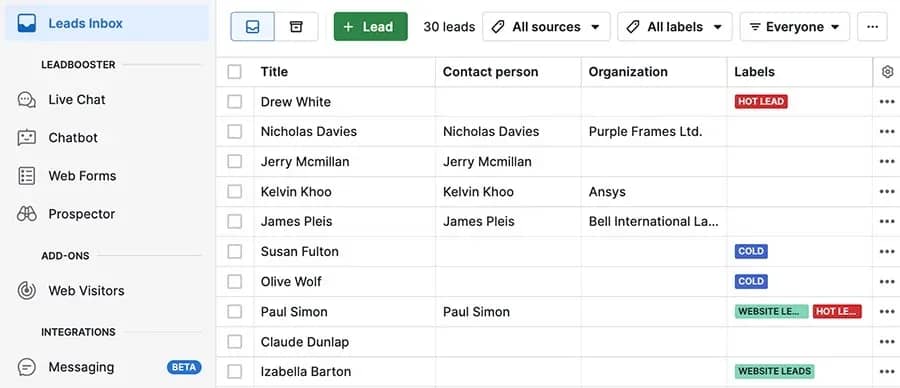
Dynamic Email | What is Dynamic Email

Software Stack Editor · October 13, 2025 ·

BC

Benjamin ClarkeSEO Product Owner & AI Developer

Prospects respond to messages that reflect their role, timing and context. Dynamic email tailors each send with account data and recent activity, resulting in outreach that feels relevant and earns more replies.

Relevance turns into outcomes when it’s connected to your customer relationship management (CRM) software. Use structured fields in the template and simple follow-up rules to route positive replies to the right owner, book sales meetings faster and move opportunities forward.

Key takeaways for dynamic emails

  • Dynamic email tailors each send with reliable CRM data and simple rules, increasing relevant replies and booked meetings.

  • Use a small set of trustworthy email dynamic fields and one clear CTA, place the most relevant detail near the ask.

  • Apply dynamic content to swap proof or next steps by segment or stage, with safe defaults and clean HTML fallbacks.

  • Measure beyond opens, track reply quality, meetings, opportunities and pipeline. Use Pipedrive to route responses, automate follow-ups and report impact – try Pipedrive free for 14 days.
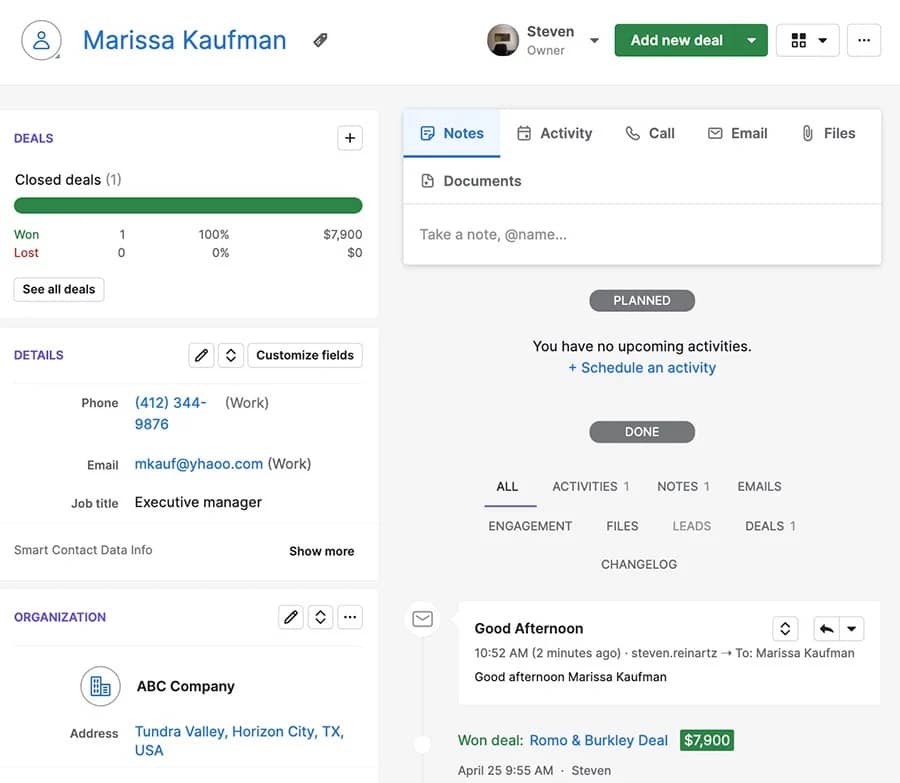
What is dynamic email and what does dynamic email cover?

Dynamic email is an email template that adapts for each recipient using data or behavior. Instead of one fixed message, the template pulls dynamic fields (like name, company, role or last activity) and applies simple rules to swap lines, blocks or calls to action (CTAs) at send time.

Two building blocks make it work. Email personalization inserts small details that prove relevance (for example, role, product tier or region). Conditional content changes larger sections based on segment or stage.

For example, one template can greet the prospect by name, reference an industry result, surface a relevant case study and present the right next step. A finance leader might see a cost-reduction line with a video demo link. An admin might see a setup tip with a link to enable a feature.

“There’s no question that the future of email marketing will entail more personalization using machine learning and generative AI, more integration between channels and more of a focus on maximizing customer lifetime value.” – Chad S. White, Oracle Digital Experience Agency

“Dynamic email meaning” is simply this idea of adaptable content. One template becomes many accurate variations driven by your data, every recipient gets a message that fits their situation without manual rewrites.

Recommended reading

https://www-cms.pipedriveassets.com/blog-assets/responsive-email-design.png

Responsive email designs: Intended format across all devices

What are email dynamic fields and which should I use?

Email dynamic fields are placeholders that pull values from your CRM at send time. Common fields include first name, company, role, owner, industry, current plan and last activity. Dynamic fields let one template feel specific without manual edits.

Use a small set of fields you trust. Keep name and company formats consistent, shorten long values and set safe defaults. Put the most relevant detail close to the CTA so the connection is clear.

Business introduction emails should be kept simple. Limit character length, skip niche fields that vary a lot and preview a sample list before every send. If a field isn’t reliable, use it only for routing or segmentation.

What is dynamic email content and when should I use it?

Dynamic content changes lines, blocks or calls to action based on simple rules. Examples include showing different proof points by industry, offering a demo link to evaluators while presenting a setup guide to current admins or swapping a paragraph for trial users versus new prospects.

Dynamic content is appropriate when the core message stays the same but the proof or next step should vary. If the narrative, tone or objective differs, a separate template is warranted. Rules should remain lightweight so emails render cleanly across clients and remain easy to test.

Performance should be assessed by sales metrics: reply quality, meetings booked and opportunities opened. Promote variants that start conversations, retire those that generate clicks without sales calls.

Recommended reading

https://www-cms.pipedriveassets.com/blog-assets/email-lead-nurturing.png

How to Create an Automated Lead Nurturing Workflow that Converts Visitors

How does dynamic email work with a CRM

Dynamic email pulls contact, account and deal data from the CRM at send time. The template holds placeholders and simple rules, each message fills the fields and swaps sections based on segment, sales stage or recent activities.

Buyers now expect this level of tailoring. According to Forrester’s The State of B2B Personalization (2024), 82% of global B2B marketing decision-makers say buyers want personalized sales and marketing experiences.

The CRM preserves context. Replies, clicks and web form submissions attach to the record with source, topic and next step. Owners and follow-ups can be assigned automatically and meetings can be scheduled from the same thread.

Measurement closes the loop. Interactions tie to records and campaigns, so you can track reply quality, meetings booked, opportunities opened and pipeline created by variant, segment and message, then visualize it in Pipedrive Insights dashboards.

What are best practices for dynamic email

Use these practical guidelines to keep dynamic email reliable and revenue-focused:

  • Verify fields first. Limit variables to trusted data and standardize formats. Set safe defaults for blanks to prevent awkward copy.

  • Put relevance near the ask. Place one high value detail next to the CTA, this makes the purpose clear and lifts response.

  • Keep rules simple. Use a few clear segments and minimal conditions. Simple logic renders cleanly and is easy to test.

  • Write for skim. Lead with the outcome and keep paragraphs short. A single, visible CTA reduces decision friction.

  • Protect deliverability. Authenticate the domain and keep a steady sending pattern. Test on mobile and strict clients before launch.

  • Close the loop in the CRM. Route replies to an owner and auto-create follow-ups. Log context so performance can be reviewed by replies, meetings and opportunities.

Follow these email best practices for dynamic emails to keep messages relevant and reliable. Limit variables to fields you trust, standardize name and company formats, cap character length and set safe defaults for missing data. Place the most useful detail near the CTA so the relevance is obvious at a glance.

Write for skim. Lead with the outcome, keep paragraphs short and keep one clear CTA. Avoid heavy images and complex layouts that break on mobile emails or in strict clients.

Protect deliverability. Authenticate sending domains, keep a steady sending pattern and avoid “no-reply” addresses. Test across common clients and maintain a clean HTML fallback for any advanced elements.

As of 2024, Google and Yahoo require one-click unsubscribe for marketing mail and a user-reported spam rate under 0.3%, non-compliant senders risk rejection.

Close the loop operationally. Route replies to owners, create follow-up activities when links are clicked or forms submitted and log context on the record. Review performance weekly against sales metrics: meetings, opportunities and sales pipeline created.

Recommended reading

https://www-cms.pipedriveassets.com/8-creative-announcement-emails.png

15 creative announcement email examples and templates

How should dynamic email be measured beyond opens?

Measure outcomes that move sales forward. Track positive reply rate, meetings booked, opportunities created and pipeline value per 1,000 sends. Add time to first meeting and no-show rate to see whether messages create real conversations.

Protect deliverability while you test. Monitor unsubscribes and spam complaints alongside reply quality. If complaints rise or replies feel generic, tighten targeting, simplify the ask and use AI A/B testing to trial pre-headers and subject lines before rolling out a variant.

Compare like with like. Tag each variant in your CRM and use a 14–30 day window to attribute meetings and opportunities. Cohort by segment, message and send time to spot patterns. Keep a control template, wait for a reasonable sample size and decide on winners with clear thresholds.

Diagnose gaps, then adjust. High replies but low meetings suggest the CTA or scheduling flow needs work. Strong meetings but weak opportunities point to lead qualification or targeting issues. Promote variants that consistently book calls and retire those that don’t.

Why Pipedrive for dynamic email and handoffs to sales

Pipedrive keeps contact, company and deal data in one place, so email templates can use dynamic fields without exports or copy-paste. Safe defaults and custom fields make messages readable even when data is incomplete and every send stays tied to the right record.

Capture and route social clicks, website forms and replies with web forms, live chat, chatbots and campaign/UTM tracking. Lead routing rules assign the right owner immediately, while required fields ensure the context that shortens discovery.

Workflow automation turns signals into action. Create follow-ups when a link is clicked or a form is submitted, start activities and goals based on intent and use SLA reminders to keep response times tight. The built-in meeting scheduler removes back-and-forth so interest becomes a booked call.

Impact is visible end to end. Pipeline reporting and source and channel dashboards show meetings, opportunities and revenue influenced by each dynamic variant, segment and message.

FAQ for dynamic emails

  • A dynamic email is a template that adapts per recipient using data or behavior. It fills fields like name or role and can switch sections or calls to action at send time.

  • Dynamic fields (merge fields) pull values from your CRM at send. Common examples are first name, company, role, owner and last activity. Use safe defaults if a field is missing.

  • Dynamic content changes lines, blocks or CTAs based on rules like segment, stage or intent. The core message stays the same while proof or next step varies.

Final thoughts

Dynamic email is practical personalization: one template adapts to each reader using reliable data and simple rules. Teams that keep fields clean, copy skimmable and asks specific see more replies, faster meetings and steady movement through the funnel.

Put it into action. Connect templates to your CRM, route responses to the right owner with clear follow-ups and measure by meetings, opportunities and revenue.

With Pipedrive handling data, routing, activities and reporting, dynamic email becomes a repeatable way to turn attention into scheduled calls and trackable pipeline.

The SMB Guide to the 7×7 Rule PowerPoint

Software Stack Editor · October 9, 2025 ·

The 7×7 rule for PowerPoint makes your team updates, sales pitches or investor meetings more transparent and engaging.

Instead of cramming information into your slides, this simple design principle helps you communicate quickly and effectively to better connect with your audience.

In this post, you’ll learn the psychology behind the 7×7 rule and how to use it to create digestible, data-backed presentations that get faster buy-in from leads and stakeholders.

What is the 7×7 rule in PowerPoint presentations?

The 7×7 rule (or “7 by 7 rule”) is a cognitive design principle that keeps your PowerPoint presentations clear, focused and engaging.

PowerPoint 7×7 rule: No more than seven lines of text per slide or seven words per line

Here’s an example of a slide that uses the 7×7 rule:

7×7 rule PowerPoint slide example

This concept is rooted in cognitive psychology and is based on how people process information. Too much text overwhelms your audience and distracts you as the speaker (you’ll learn more about this science in the next section).

Most small and mid-sized businesses (SMBs) don’t have full-time design teams. According to Venngage research, almost half of marketers struggle with design layout for data, stats or copy.

If you create your own, the 7×7 rule is a fast, reliable way to make business presentations look polished and perform better.

Keeping slides clean allows you to add the details verbally. By better engaging audiences, you make your message more likely to resonate.

You can apply it across almost any slide deck, including:

Note: If you don’t use PowerPoint, apply the 7×7 rule in Google Slides, Canva, Venngage or any other tool where you create presentation slides.

No matter the setting, the 7×7 rule helps your audience understand, remember and act on what you share.

Recommended reading

https://www-cms.pipedriveassets.com/blog-assets/5-creative-content-marketing-ideas.png

A beginner’s guide to creative content marketing (with examples)

What are the psychological principles behind the 7×7 rule?

The 7×7 rule for PowerPoint taps into how our brains naturally process information. Using fewer lines and words reduces mental strain and allows your audience to focus on the important content.

Humans have limited attention spans and memory, especially in fast-paced business settings. When slides contain only the core information, people are more likely to grasp the message and listen to what you say.

Here are three core psychological principles that explain why the 7×7 rule works.

Occam’s Razor: our brains prefer simplicity

Occam’s Razor says that when faced with multiple options, we instinctively choose the one that requires the least mental effort to understand.

Our brains are wired to prefer simple, clear explanations over complex ones. Cleaner slides feel more intuitive and trustworthy to customers and prospects – especially in sales, where complexity often causes doubt or confusion.

Let’s say a small business owner is pitching her service to a potential client. Her original slide lists 10 features with chunky, jargon-heavy descriptions.

After applying the 7×7 rule, she uses fewer words and bullet points to explain benefits in plain language. The client immediately connects with the value and asks for a follow-up.

Cognitive Load Theory: keeps your audience engaged

The 7×7 rule reduces cognitive load (i.e., the mental effort to process a specific amount of information).

According to Cognitive Load Theory, people disengage or miss the point when you overwhelm working memory.

Here’s the basic process of how we process and remember information:

7×7 rule PowerPoint brain processing model

Limiting text and focusing each slide on one core message helps your audience stay mentally present and follow your narrative.

Imagine a founder presenting a financial report to investors. Instead of using a dense mix of text and graphs, she chooses to simplify her slide to a short headline, three bullet points and one chart.

Now, the audience listens intently instead of reading ahead or zoning out.

Miller’s Law: boosts clarity and recall

Miller’s Law says people can only hold about seven pieces of information in short-term memory. The 7×7 rule taps into this by limiting how much content appears on each slide to help your message stick.

Attention is crucial for impactful presentations and for what your audience remembers afterward. Focused slides improve learning and recall, and they’re especially useful in pitches, training or client onboarding.

Here’s a simplified representation of what that looks like:

7×7 rule PowerPoint Miller's Law

For example, a sales rep is onboarding a new client. His original training deck covered too many steps simultaneously, and even an experienced colleague found it confusing.

After applying the 7×7 rule, each of his slides focuses on one key concept. The client retains more, asks fewer follow-ups and learns faster, reducing the need for ongoing support.

Recommended reading

https://www-cms.pipedriveassets.com/blog-assets/4_Sales-Motivation.jpeg

6 ways to hack sales psychology and sell better

5 steps for SMBs to use the 7×7 rule in PowerPoint presentations

The 7×7 rule isn’t just a presentation design tip. This mindset shift compels you to simplify your message, prioritize content and communicate more effectively.

Here’s how you can apply it to keep your audience’s focus, step by step.

1. Draft key points before designing slides

Lay out your main points before looking at any presentation templates. Outline the ideas you want your audience to walk away with instead of starting with flashy visuals.

As an SMB, you often build decks quickly for clients, investors or your team. Without a straightforward narrative, you’ll likely pack in too much information instead of strategic storytelling.

Drafting core points before designing anything ensures you treat every slide like a stepping stone in the story.

For example, you might break down a sales presentation into 3–5 core takeaways: first, showing that you understand the customer’s pain points; then explaining how your product solves that problem; backing it up with proof, like a case study or key data; and finally, ending with a clear next step or call to action.

Focus on differentiating each page from the previous slide. Write down the key message you want people to remember, then design visual elements around it.

2. Limit slide text using the 7×7 rule

When drafting your copy, follow the 7×7 rule: there should be no more than seven lines of text per slide and line.

In sales, training or strategy sessions, overloading information makes you redundant as a speaker. The rule ensures your slides support your presentation skills. Here’s an example:

7×7 rule PowerPoint slide design

Let’s say you’re prepping a demo for a new client. Ensure each slide has five punchy lines (each under seven words) and expand verbally during the call.

As you’re not reading out text, you spend more time making eye contact, answering questions and building a stronger connection that leads to a sale.

Here’s how to stick to the 7×7 rule to create professional presentations:

  • Use bullet points to anchor your main takeaways

  • Avoid long sentences and think in headlines (e.g., “Team hit Q2 targets early” instead of “Our team successfully reached the second quarter’s goals ahead of schedule”)

  • If you need more detail, say it out loud, instead of writing it on the slide

  • Try specifically designed 7×7 PowerPoint templates to stick to the format

Don’t write down everything you want to say. Add just enough to keep your ideas top-of-mind and your audience engaged.

3. Use visuals to support, not distract

Use visual aids (e.g., charts, diagrams, icons or infographics) to reinforce your message without competing. The goal is to make your point more straightforward, faster and memorable.

According to Decktopus research, over 70% of audiences say slides should contain less than 25% text. However, nearly everyone agreed they should always include visuals.

A relevant graphic or screenshot helps your audience “get” topics in seconds, whether you’re explaining a sales funnel, client results or internal processes.

For example, here’s a quarterly sales chart where the data is the main feature

7×7 rule PowerPoint slide with chart

A rep presenting to a lead may want to show pipeline momentum. Instead of listing deal stages in text, he includes a customer relationship management (CRM) screenshot with open deals highlighted. This visual proof helps the client immediately grasp the tool’s value.

Here’s how to thoughtfully use visuals alongside your 7×7 PowerPoint design:

  • Replace blocks of text with a simple chart or infographic

  • Use icons to separate points or sections

  • Add screenshots from tools you use (e.g., your CRM system or analytics dashboard)

  • Keep visuals clean and avoid overdone animations or stock images that don’t add meaning

  • Use consistent visual styles (e.g., colors, fonts and layouts) to maintain a polished look

High-quality, relevant images and designs help you save time, build trust and make your message stick.

Download the Sales Presentation Templates ebook

Nail your sales presentations with this guide containing the 8 slides you need and tips on how to make them.

4. Practice explaining the content aloud

Run through your deck aloud before presenting to confirm that your slides support your words. The 7×7 format means less text to read off the screen, which can trip you up if you aren’t prepared.

For busy SMB leaders juggling multiple roles, writing a full script might not be realistic. But practicing out loud helps you catch awkward phrasing, trim what’s not needed and feel more confident when it’s time to present.

Let’s say you find yourself reading each bullet word for word. Revise the title slides into lines of no more than seven words.

The next time you read through, you’ll explain points more naturally and leave space for questions.

Here’s how to ensure you turn your slideshows into conversations:

  • Present to a friend or teammate and ask, “Am I reading this or explaining it?”

  • If you can’t talk through a slide without reading it verbatim, simplify the content

  • Time yourself and look for places that drag or feel cluttered

  • Record a quick practice session to catch weak spots

  • Adjust the language on slides to act as cues, not scripts

By trimming your slides down into prompts and practicing in advance, you’ll land your message with clarity and confidence.

Note: If you’re nervous about public speaking, rehearse in low-stakes settings (e.g., with a colleague or in a team meeting) before high-pressure moments.

5. Design for quick scanning

Structure each slide so your audience understands it in under five seconds. Use layout, spacing and visual hierarchy to guide the eye.

SMB teams often present to busy clients, executives or stakeholders who skim first and focus second.

They’ll miss the message if your slides are visually chaotic or overly dense. Quick-scanning design like this slide with three short chunks of text helps your key points land instantly, even before you speak a single word:

7×7 rule PowerPoint skimmable slide

Imagine you’re pitching a website redesign. Instead of cluttering the page with multiple screenshots and paragraphs of copy, you highlight a slide title and single concept (e.g., a “before and after” image).

The client instantly sees the difference, and the sales conversation moves smoothly.

Here’s how to design your 7×7 slides for quick scanning:

  • Use clear headers and large fonts for key takeaways

  • Left-align text so it’s easier to skim

  • Add white space between sections to avoid visual overload

  • Use consistent formatting (e.g., bullet styles or text sizes)

Choose one that best supports your point instead of mixing too many visuals on one slide. If your audience can’t pick up the central message of your slide in a few seconds, it’s time to simplify.

Recommended reading

https://www-cms.pipedriveassets.com/Value-Selling_2023-01-06-174451_ltup.png

How to grow revenue with value selling (plus real brand examples)

How to present engaging sales data using Pipedrive and the 7×7 rule

Use the 7×7 rule alongside Pipedrive’s sales reports to create clean, engaging slides highlighting one meaningful insight at a time.

SMBs often face pressure to present performance data in weekly team briefs, client check-ins or investor updates. Following the 7×7 rule makes it easier to incorporate that data clearly without cluttering slides with numbers and jargon.

The benefits extend to clients, teammates or executives, who can grasp what matters immediately and take action.

Pair your insights with a clear dashboard screenshot for more engaging decks, persuasive conversations and (often) shorter sales cycles.

Let’s say you’ve just wrapped up a batch of product demos and want to share what leads thought of the experience. You ran a short post-demo survey with three options and stored the answers in Pipedrive:

  1. Very confident

  2. Somewhat confident

  3. Still unsure

Generate a CRM chart of that information by adding a new manual report:

7×7 rule PowerPoint Pipedrive add report

You can also use the AI report generator to create one. Tell the AI tool, using your own words, what you’d like the report to focus on.

For example, you could say, “What were the results of last month’s product demo survey?”

7×7 rule PowerPoint Pipedrive AI report generator

Once you have the insights, choose the type of chart that best fits (e.g., funnel, bar or pie) and display only the metrics that support one key point. Here’s what that looks like:

7×7 rule PowerPoint Pipedrive survey response report

When you’re happy, export the report and place it as the central visual in your PowerPoint slide. To highlight key insights, add no more than seven short bullet points (each under seven words).

Your final slide may look like this:

7×7 rule PowerPoint Pipedrive survey report slide

Sticking to one core chart and using minimal text leaves space for the story. As the presenter, you guide the audience through the “so what” without reading from the screen.

Whether it’s an internal review or pipeline stand-up, applying the 7×7 rule to your sales presentations helps you tell data-backed (not data-buried) stories.

7×7 rule PowerPoint FAQs

  • Most people searching for the “7 rules of PowerPoint” refer to the 7×7 rule.

    This guideline suggests using no more than seven lines of text per slide and seven words per line to create clear, stunning presentations that boost audience engagement.

  • PPT is short for Microsoft PowerPoint files, the presentation software.

    If you see “7×7 rule PPT”, it references the PowerPoint design rule.

  • The symbol “×” is the multiplication sign and is different from the letter “x”.

    Within the 7×7 rule, it means “seven lines by seven words”, like a grid.

    However, typing “What is the 7×7 PowerPoint rule?” into search engines will still bring up the correct results (as most people use the letter “x” as a shortcut).

Final thoughts

The 7×7 rule helps you create clear, focused PowerPoint presentations that are easier to deliver and capture your audience’s attention.

Include real business data from a robust CRM platform to make your slides more compelling.

Try Pipedrive free for 14 days to quickly generate charts and insights that strengthen your message and help grow your business.

A Simple Guide to Price Elasticity of Demand

Software Stack Editor · October 9, 2025 ·

A software company increases plan pricing by 10% and sign-ups stay steady. A supplier does the same to its next-day delivery rates, and orders drop fast. Why does that happen?

The price elasticity of demand (PED) explains why matching price changes have different results in different scenarios. It’s also a reliable way for small businesses to test pricing strategies and plan promotions.

This guide shows how price elasticity works, including how to calculate and apply it to business decisions. You’ll also learn how to track the impact in your sales software.

What is the price elasticity of demand (and why does it matter in a small business)?

The price elasticity of demand measures how much customer demand changes when you adjust your prices. It’s like a “price sensitivity meter” for your products.

If demand barely moves after a price change, it’s called inelastic.

If demand changes a lot, it’s elastic.

Here’s a simple example:

Inelastic demand

Elastic demand

When coffee shops put latte prices up, most customers still buy their morning cup because it feels essential to them and is still very affordable.

A small price jump in luxury watches causes demand to drop as customers can wait or find cheaper alternatives. Unlike coffee, it’s a significant purchase.

Both types of price elasticity of demand apply in B2B sales. Customers will likely accept a small price change if your specialist product is deeply tied to users’ daily operations, like accounting software. That’s an example of inelastic demand.

A small price jump could push customers to switch providers if you sell a less critical tool with many cheaper alternatives, like a generative AI app. That’s an example of elastic demand.

Whatever the context, elasticity follows the same formula:

Price Elasticity of Demand (PED) = % change in quantity demanded ÷ % change in price

We’ll explain this method in more detail shortly, with some examples.

What price elasticity means for SMB sales and marketing teams

Pricing mistakes can be costly for small and budget-conscious businesses. Understanding price elasticity helps them make informed decisions about how much to charge for products daily and during sales promotions.

This practice helps SMBs avoid expensive errors that slow or halt growth, like chasing overly price-sensitive leads when inelastic products bring better margins.

When you know how customers are likely to respond to cost increases, you maximize profitability by charging as much as they’re happy to pay without risking a drop in demand or driving people away to cheaper competitors.

Both sales and marketing teams benefit from knowing how elasticity affects their products and audience segments:

  • Salespeople can spot price-sensitive leads, recommend the right products and avoid over-discounting, which leads to better margins and more confident sales pitches

  • Marketers can decide which products to discount, when to push bundles and how to tailor offers based on buyer behavior

For example, if you know certain products have inelastic demand, focus on generating as much interest as possible rather than offering unnecessary discounts that cost your small business.

If a product has elastic demand, highlight lower costs or unique value-adds (like extra features or support) in pitches and content to convince price-sensitive customers to convert.

Note: Elasticity can vary between customer segments. The exact percentage change might not impact one group but significantly impact another. That’s why you must track how different audiences respond to changes and then tweak pricing or messaging accordingly.

How to calculate price elasticity of demand (the easy way)

This simple formula for calculating PED works for any product in any industry:

Price elasticity of demand = (% change in quantity demanded) / (% change in price)

Here’s a quick to show how it works:

You sell software-as-a-service (SaaS) at $50/month and usually get 200 monthly sign-ups. After a $10 price rise, monthly sign-ups drop to 160.

How to calculate PED:

  1. Find the percentage change in price

(60 − 50) ÷ 50 = 0.2, or a 20% increase

2. Find the percentage change in quantity demanded

(160 − 200) ÷ 200 = −0.2, or a 20% decrease

3. Divide the change in demand by the change in price

(−20% ÷ 20%) = −1

Economists usually drop the minus sign to get the absolute value. What matters most is how significant the demand shift is, not whether it went up or down. So, the −1 above is a price elasticity of demand of 1.

This PED value of 1 is called unit elastic demand. The price increase offsets the sign-up drop, so total revenue stays the same.

Each result tells you something different about how customers respond:

PED value and demand type

What it means

0 – perfectly inelastic demand

Demand doesn’t change, whatever the price

Example: Critical medicines that have no close substitutes

Less than 1 – inelastic demand

Small change in demand when prices change

Example: Everyday essentials like soap or gasoline

1 – unitary elasticity

Demand changes proportionally with price (revenue stays the same even if demand drops)

Example: Our SaaS product above

More than 1 – elastic demand

Higher prices bring demand down

Example: Luxury goods with a high availability of substitutes, like vacation packages

∞ (infinity) – perfectly elastic demand (also called “PED”)

Customers switch immediately when prices rise

Example: Commodities in highly competitive markets, like oil or currency exchange

That basic formula works fine for small changes. It’s super quick and easy to apply. However, when prices or demand shift by more than about 10%, the midpoint method is more accurate.

This method compares changes using the average of the old and new numbers, not just the starting point. It works like this:

% change = (new − old) ÷ average of old and new

For example, if the price goes from $50 to $60 and sign-ups drop from 200 to 160, the midpoint method gives a PED of 1.22. That’s a bit more elastic than the earlier result of 1.

It’s a slight difference that can affect how you interpret and act on the outcome.

Recommended reading

https://www-cms.pipedriveassets.com/KPIs-for-Sales.jpg

20 most important KPIs for sales teams to track

What affects the price elasticity of demand?

Price elasticity isn’t fixed. Many factors influence how customers respond to price changes, and the same product might be elastic in one context and inelastic in another.

These factors offer a practical lens for spotting where pricing flexibility exists and doesn’t, so you can use your limited time wisely and focus your efforts where they’ll have the most impact.

Here they are in more detail:

Factor

How it works

Necessity vs. luxury

Essential products and services are generally more price inelastic because customers need them regardless of cost.

Luxury items are more elastic for the opposite reason: customers can easily skip or delay their purchases without negatively impacting their lives.

B2B example: accounting software for payroll (inelastic) vs. a premium add-on for polishing sales proposals (elastic).

Availability of substitutes

The more options customers have, the more price elasticity. If there are many close substitutes, even tiny price increases can push customers to competitors. Unique products have more inelastic demand because they’re harder to replace.

B2B example: proprietary sales analytics tool with industry-specific datapoints (inelastic) vs. project management software (elastic).

Brand loyalty and cost of switching

Strong brands have less elastic demand because customers value their unique benefits. Tight marketing budgets make it harder for SMBs to build loyalty than larger competitors, so demand may be more sensitive to price changes.

High switching costs also reduce elasticity. The costs could be financial (e.g., paying for new hardware) or time-based (e.g., learning new interfaces).

B2B example: Long-term Pipedrive users with unique workflows (inelastic) vs. first-time customer relationship management (CRM) software buyers comparing options (elastic).

Income proportion

Expensive purchases relative to customer income are more elastic because buyers can afford to spend a little more without affecting their quality of life.

For instance, 10% of $5 is only 50c, whereas the same percentage of $50,000 is $5,000, which is around a month’s earnings for the average American and therefore more impactful.

B2B example: A 10% price increase on office coffee subscription (inelastic) vs. 10% increase on a custom software build (elastic).

Period

Demand can become more elastic as customers learn about alternatives or change their habits.

Short-term demand may be inelastic, while long-term demand becomes elastic.

B2B example: a SaaS renewal offer after a sudden price rise (short-term, inelastic) vs. customers switching platforms after six months (long-term, elastic).

These factors often overlap and shape your customers’ sensitivity to price changes.

Before you make any rash increases, ask yourself these five questions:

  1. Is your product essential or a luxury?

  2. How many close substitutes exist?

  3. How strong is your brand differentiation?

  4. What percentage of customer income does your product represent?

  5. Are you analyzing short-term or long-term demand?

The more factors suggesting inelastic demand, the more room you have to adjust pricing without losing customers.

Recommended reading

https://www-cms.pipedriveassets.com/Brand-Positioning.png

What is brand positioning: The ultimate guide with 4 examples

4 small business tactics for applying elasticity insights (with examples)

Tracking the price elasticity of demand for your products is just the first step. Now, you need to put what you learn to good business use.

Here are four simple ways to use PED insights to close deals and generate more revenue.

1. Limited-time discounts for elastic products

Temporarily reduce pricing on products with elastic demand to boost sales quickly.

Creating a cheaper option in a competitive market generates new interest, even if it’s just for a week or two. You may also push some hesitant buyers who already know about your brand into finally making a decision.

Fast, discount-based promotions like this are called flash sales. They’re helpful in SMBs as they create urgency without the significant marketing spend of an ongoing campaign.

Flash sales are particularly effective in these situations:

  • Introducing a new product or feature (i.e., building interest)

  • Clearing extra inventory (e.g., at the end of a longer promotion or ahead of a product update)

  • Filling slow sales periods (e.g., out-of-season travel tickets)

Whatever the reason, promote one-off discounts through email and social media, like Designmodo did here:

Price elasticity of demand Designmodo promotional email

The email content is bold and to the point. As soon as you open, you know how much discount you’ll get (a substantial 50%), with some tangible examples. There’s also a clear deadline and CTA to inspire action.

2. Bundle elastic products with higher-value items

Bundle elastic products with inelastic ones to make them more appealing without dropping prices.

Buyers are more likely to commit if they feel they’re getting extra value and not just paying less because of a discount. This approach works exceptionally well when you’re selling on a smaller scale and margins are already tight, as you can protect your profit while finding ways to grow.

Here are some effective pairings:

  • Must-have product + helpful add-on (e.g., business laptop bundled with an annual cloud storage plan)

  • Core service + complementary support (e.g., monthly social media management with content marketing strategy sessions included)

  • Entry-level tool + a premium feature (e.g., a basic CRM plan in a package with three months of advanced reporting)

HP is a hugely successful brand that uses bundling in its business store, pairing elastic and inelastic products to grow sales. Look at all the bundle options available on this single product:

Price elasticity of demand HP laptop bundle page

High-spec laptops are essential to HP’s professional audience, but the products it bundles with them – file transferring software, printers and extended warranties – are not. These extras have more elastic demand on their own but feel more valuable as part of a package.

Bundling is an entirely scalable pricing technique. Although HP is a major brand, it works just as well for lower-cost items and smaller target audiences.

Want to Learn How to Influence Your Prospect’s Buying Decisions?

Get inside the head of your customers and take advantage of consumer psychology with this Psychological Selling Guide.

3. Plan pricing tiers based on how audiences respond to price

Create pricing plans that reflect how much different customer types are ready to pay.

Elastic segments convert more often at lower prices. To attract them, offer a cheaper entry-level plan, then upsell later once they’ve seen your product’s value.

Inelastic segments will likely pay for premium features like supported onboarding and out-of-hours help. You’ll still need to prove value, though. Tailored product demos and case studies will help close those deals.

For example, small SaaS company Balloon has three pricing options:

Price elasticity of demand Balloon pricing plans

The Pro tier has fewer features but is less than a third the cost of the next option. You can also “Get Started” instantly. The Business and Enterprise tiers are more expensive and use a “Contact Us” CTA instead, letting the sales team prove value before asking for a bigger commitment.

Note: Tiered pricing harnesses the framing effect, where people naturally compare options side by side. A mid-range option often just feels right when it’s between cheaper and more expensive choices. It becomes the “safe” choice.

4. Use a freemium model to win over elastic buyers

If it suits your product, use a freemium model to remove the entry barrier entirely. Freemium is where you offer a limited free plan to demonstrate value and then upsell users by inviting them to upgrade as their needs grow.

Many low-cost business tools in competitive markets use this approach. Giving free access in the short run helps them hook prospects and build trust, creating momentum.

For example, Dropbox offers 2GB of free cloud storage. It makes money by upselling those free users to one of four paid packages:

Price elasticity of demand Dropbox pricing plans

Many price-sensitive Dropbox customers start by storing files in a free account. The more they add, the more valuable the service becomes to them and the more likely they are to upgrade.

They could choose the $9.99/month Plus plan when that time comes. However, the “Best Value” Professional tier, with extra storage and security, might be just as appealing for $16.58/month.

Technically, those free users could switch providers, but that means moving files across (extra effort) and rebuilding trust with another company. The freemium model stops it from happening.

Not every product suits a true freemium model. If offering a permanently free tier isn’t viable for your business, a time-limited free trial can achieve a similar goal: reducing the barrier to entry and letting elastic buyers experience your product’s value before they commit.

For example, Pipedrive offers a 14-day free trial with full access to premium CRM features. This free trial makes it easy for teams to explore and test the platform risk-free and upgrade with confidence when they’re ready.

Price elasticity of demand Pipedrive pricing plans

Recommended reading

https://www-cms.pipedriveassets.com/blog-assets/psychological-selling-guide_200512_175315.png

Psychological selling guide: How to better understand your leads

Use your CRM to track pricing impact

Once you’ve tried a pricing tactic, the next step is to measure its real-world impact. The goal is to learn what works (or doesn’t) and make better strategic decisions.

This context is where your CRM system becomes more than a contact database. It’s your control panel for tracking how pricing changes affect deal size, conversion rates and sales cycles.

Use your CRM dashboards and reporting features to monitor the following sales metrics:

  • Lead-to-deal conversion rates. See whether pricing changes are convincing more prospects to say yes. A drop points to resistance. An increase shows you’ve found a better fit.

  • Deal value by segment. Compare deal sizes across different types of customers. You’ll quickly learn which segments are most sensitive to price and who’s happy to pay more.

  • Sales velocity and average time to close. Look at how long deals are taking to move through the sales pipeline. Faster closes prove that your new pricing is more compelling or clearer.

Pipedrive’s Insights dashboard makes analysis effortless. Build custom reports by product, sales funnel stage or customer type and see the impacts of pricing changes over time.

This feature is handy for spotting trends after promotions or discounts:

Price elasticity of demand Pipedrive performance dashboard

Ultimately, sales metrics provide real-world feedback on how price elasticity impacts your business, so you can confidently keep improving.

Recommended reading

https://www-cms.pipedriveassets.com/blog-assets/measure-and-track-entire-team_blog.jpg

How to measure and track your entire sales team’s performance

Price elasticity of demand FAQs

  • Yes, and it often is.

    The law of demand states that there is typically an inverse relationship between product price and quantity demanded. When the price rises, demand falls, and vice versa.

    This results in a negative value when calculating PED. However, economists usually focus on the absolute value to measure the strength of the response, not the direction.

  • While price elasticity of demand measures how buyers react to price changes, price elasticity of supply (PES) measures how much quantity supplied changes when the product’s price changes.

    PES tends to be lower when suppliers can’t adjust output quickly in the short run. Different supply curves show this on a graph: steeper for inelastic supply and flatter for elastic.

  • Cross-price elasticity of demand measures how demand for a product changes when the price of a substitute good or complementary product changes.

    For example, if Microsoft Teams gets more expensive, the demand for Zoom will likely increase because they perform the same function.

    The formula for this is:

    Cross-price elasticity = (% change in quantity demanded of Product A) ÷ (% change in price of Product B)

    If the result is positive, the products are substitutes. If it’s negative, they complement one another. This knowledge helps with product bundling and pricing strategy decisions.

  • Income elasticity of demand shows how demand changes when consumer income changes, not price.

    It helps predict how sales will respond to economic trends. For example, luxury goods often have high income elasticity, while basic tools show little change.

    In contrast, price elasticity looks at the percent change in demand due to a proportional change in the product’s price.

Final thoughts

Price elasticity is a core concept in microeconomics, but it’s just as valuable to small business leaders, sales pros and marketers.

More than just theory, it’s a powerful tool for better decision-making – one that helps you plan effective promotions and product launches, even when margins are tight.

So, instead of guessing how audiences will react to price decreases or how a price increase will impact your demand curve, start pulling historic sales records from your CRM and back your strategies with data.

Download Your Sales and Marketing Strategy Guide

Grow your business with our step-by-step guide (and template) for a combined sales and marketing strategy.

6 Powerful Real Estate Guide Tips for SMBs

Software Stack Editor · October 9, 2025 ·

Real estate guides attract high-intent prospects and establish your expertise in the local market.

When done well, they capture leads researching their next move and position you as the trusted advisor they’ll call when ready to buy or sell.

In this article, you’ll discover how to create real estate guides that convert browsers into clients. You’ll also get step-by-step advice on promoting your guides and nurturing leads to closed deals.

Key insights from real estate guides

  • Real estate guides help you attract serious prospects who are actively researching buying or selling decisions by offering valuable local market insights they can’t find anywhere else.

  • The best guides mix general real estate advice with specific local knowledge, such as neighborhood price trends, seasonal timing tips and trusted local service providers.

  • Creating successful guides means building a complete system, from researching what prospects want to promote across multiple channels to tracking which sources bring the best leads.

Turn guide downloads into paying clients with automated follow-ups, lead scoring and targeted email campaigns that keep you top-of-mind during long decision cycles. Start your 14-day free trial with Pipedrive to build a system that converts prospects into closed deals.

What are real estate guides?

Real estate guides are lead magnets that offer valuable data in exchange for customer information. They’re typically short documents that explore specific topics that interest real estate prospects.

For instance, a home buyer’s guide for New York might include a checklist for a successful home inspection and an overview of the appraisal process.

A busy professional researching their first home-buying experience would gladly share their email address for this insider knowledge.

Sharing guides helps real estate professionals:

  • Capture qualified leads. Serious home sellers and potential buyers will sign up for property advice from a realtor, meaning higher conversion rates than general web traffic.

  • Build trust and authority. Helpful content positions you as the local expert. People will see you as someone who will help them find their dream home and achieve homeownership.

  • Stay top-of-mind. Prospects will reference your guide throughout the buying or selling journey, and your name will be visible as they make decisions.

  • Generate referrals. If prospects are satisfied with your guide, they’ll share it with others and recommend you to family and friends.

The key is creating a free guide that solves your target audience’s challenges. Different prospects need different information, which is why successful real estate brokers create multiple guides.

Recommended reading

https://www-cms.pipedriveassets.com/blog-assets/real-estate-sales-stack.jpg

The real estate sales stack tools & softwares

6 types of high-converting real estate guides

Real estate agents focus on six main types of guides to engage customers. Each one solves a specific problem that faces key real estate customer segments:

Real estate guide type

What it covers

1. First-time real estate buyers’ guides

A cComplete walkthrough of the home-buying process, including local lenders, neighborhood price ranges, inspection checklists and hidden costs to budget for.

2. Seller preparation guides

Room-by-room preparation checklists, staging strategies that increase sale prices, repair priorities and realistic timeline expectations.

3. Local market guides

Neighborhood deep-dives with recent prices, school districts, walkability scores, planned developments, statistics and buyer demographics.

4. Investment property guides

Cash flow calculators, rental yield analysis, tax deduction strategies, property management companies and market opportunity assessments for specific areas.

5. Downsizing guides

Practical advice for empty nesters, including home valuation strategies, right-sizing tips, moving logistics and finding communities that match their new lifestyle.

6. Relocation guides

Complete city guide covering utility setup, school enrollment processes, healthcare providers, local services and cultural insights.

When choosing what to create, consider your customer’s needs. For example, first-time buyers want simple explanations, while sellers need action steps. Similarly, investors look for numbers and data, while people moving to your area need practical local information.

Understanding these motivations helps you create content that drives consultations.

The complete guide to real estate sales

When it comes to Real Estate Sales, process is king. Optimize your process with our free ebook guide.

How to create a real estate guide that generates leads

To create a guide that people want to download, research your audience and create strategic content. Follow these four steps to build a high-converting real estate guide.

1. Research your audience’s problems

Research lets you base your guide on what prospects ask about. When you understand their real problems, more people download your guide and contact you.

Start your research by downloading the real estate guides from agents in your area. Read each one and create a spreadsheet for columns about topics, quality and what’s missing.

Here’s an example analysis of three fictional guides and what they’re missing:

Real estate guide and what it’s missing

Your opportunity to stand out

First-time buyer guide: Missing local lender recommendations.

Include specific banks and credit unions in your area, with interest rates and which lenders work best for different situations.

Seller’s guide: No mention of virtual tours or digital marketing.

Explain how to create virtual tours and optimize listings using tools like multiple listing services (MLS).

Real estate investing guide: Only contains general numbers with no local data.

Provide neighborhood-specific rental rates, property taxes and future affordability. Show which areas have stronger demand and why.

Look for outdated information and generic advice that could apply anywhere. These are good opportunities to create a more up-to-date and helpful guide for local prospects.

Also, pay attention to their lead capture process. How many form fields do they use? How quickly do they follow up? These details help you create a smoother experience.

Next, send a brief survey to your past clients. Ask about the buying or sales process, what information they wish they had earlier and what resources helped them most.

You could also join local Facebook groups for real estate in your area. Look for posts where people ask questions or mention what frustrated them. If multiple people have the same problems, it’s likely a good topic for a real estate guide.

Another solid resource is Reddit, particularly the r/RealEstate and r/FirstTimeHomeBuyer subreddits. Search for posts mentioning your city, and look for universal concerns you can address with local examples.

Real estate guides Pipedrive Reddit research

Research takes time, but it separates your guide from prospects who ignore it. You’re building a foundation based on real questions from real people.

2. Structure your guide for maximum engagement

Most people scan content for specific information, rather than reading from start to finish. If you structure your real estate guide for easy reading, you’ll help them find what they want.

Begin each section with a problem. Explain the solution with specific details, then give an actionable next step.

For example, you could open by stating that most first-time buyers underestimate closing costs. Then, explain what closing costs include and provide an easy way for readers to calculate theirs.

It’s also crucial to break your content into bite-sized pieces that busy people can scan. Here’s an example layout from Studio MJA:

Real estate guides sample layout

Each section should solve one problem rather than trying to cover everything at once.

To keep readers engaged:

  • Keep paragraphs to three sentences since readers skip longer blocks of text

  • Use bullet points for lists of items, steps or tips

  • Include a table of contents so readers can jump to relevant sections

  • Add fill-in worksheets, comparison charts and printable checklists

  • Use charts or graphs to show local data, like market trends and home prices

  • Break up text with visual elements every 200–300 words to maintain interest

Make your guide as interactive as possible. Include practice calculations and checklists (for online guides) that readers can use during their search.

These tools make your guide more valuable and give prospects a reason to keep it nearby.

3. Add content that builds authority

Local knowledge proves you’re the expert in your area, setting you apart from agents who provide generic advice.

You must prove your know-how to convert leads into clients and help them make informed decisions. Encourage them to do their due diligence and offer to assist with the process.

One of the best ways to show your expertise is by sharing real stories from recent deals. Without using client names, tell readers what you did as the buyer’s agent and how it turned out.

Check out this example from Tamara Williams & Company, showcasing sales metrics for family homes in Bozeman:

Real estate guides Tamara Williams & Company

It sets expectations for sellers (like how long their home will be on the market) and shows why this company is worth trusting (they sell houses quicker, more often and for higher prices).

You should also tackle the big worries that keep prospects up at night.

Create sections that address fears like “What if the real estate market is too hot to enter?” or “What if the housing market crashes next year?”. Readers trust you when you calm these fears with actionable data and examples from your deals.

Beyond stories and objection handling, your guide needs content only a local expert could provide. Here’s what works best:

Content type and why it matters

What to include

Neighborhood price analysis: Shows that you know local values

Include average price per square foot and recent sales KPIs.

Example: “Riverside district averages $425/sq ft because of the school rating and new facilities.”.

Seasonal market timing: Proves that you track patterns that other agents miss

Show data on the best months to buy or sell, average time on market and price differences.

Example: “March listings seek 23% faster than December and here’s why”.

Local inspection issues: Demonstrates your experience with area-specific problems

List common issues like neighborhood age and negotiation strategies.

Example: “75% of pre-1985 homes here need electrical updates. Here’s how to handle it”.

Lender and service provider reviews: Shows you have insider connections

Compare local banks, credit unions and mortgage brokerages. Provide rates for contractors and inspectors you recommend.

Example: “For inspections, I recommend Johnson & Associates. They’re thorough and provide same-day reports”.

Closing cost breakdowns: Proves that you know the real numbers

List every fee buyers pay in your area (including down payments and the average mortgage payment).

Example: “In our country, transfer tax is $1,200, title insurance is $650 and attorney invoices are between $800 and $1,000.”

Bidding strategy examples: Highlights how you win deals in competitive markets

Share recent examples of successful offers and what made them work.

Example: “My client won by offering the asking price with a flexible closing date that worked for the seller. Sometimes, timing matters more than money.”.

Market prediction and trends: Establishes you as a local market expert

Analyze recent data, new project reports, zoning changes and economic factors affecting your area.

Example: “The new train station opening will likely increase property values by 15–20% within half a mile, based on similar projects in neighboring areas.”.

To stand out, make every piece of advice as specific as possible. Instead of saying “get pre-approved”, explain which three local lenders offer the best rates and how to get pre-approval from them.

The more detailed and local your advice, the more valuable readers find your guide.

Note: If you’re in the US, as a National Association of Realtors (NAR) member, you’re bound by a strict code of ethics. Providing accurate, transparent information demonstrates your commitment to these professional standards.

4. Set up lead capture systems

The whole point of creating guides is to generate leads for your real estate business. When someone downloads your guide, they’re genuinely interested. Getting their contact details means you can follow up and turn them into paying clients.

You’ll need a simple landing page for each guide with a clear URL that’s easy to share. It should focus on getting people to download your guide, like this example from Yaletown Realty:

Real estate guides Yaletown Realty example

Your headline makes the most significant difference to how many people download your guide. Focus on the specific benefit they’ll get, rather than describing what’s inside.

For instance, “How to Sell Your House Fast in New York” promises a clear outcome, while “Seller’s Guide” doesn’t tell them what they’ll gain from reading it.

Keep your lead form as simple as possible. Once people trust you enough to download your guide, they’ll happily share more details when you follow up.

Pipedrive’s customer relationship management (CRM) system can help you capture leads. You can build sign-up pages using the Web Forms feature.

In Pipedrive, go to the Web Forms section and create a new form with the fields you want to collect.

You’ll get an embed code to paste into your landing page or use the direct link to send people to a form. Anyone who fills it out automatically becomes a new lead in your sales pipeline.

Note: Most people will find your guides through social media, so test your landing pages on mobile devices before you launch them. If your page doesn’t work correctly, you’ll lose potential leads to competitors with better mobile experiences.

How to promote your real estate guides

You need to promote your guide to get downloads and generate leads. The best promotion strategy combines multiple channels to reach prospects wherever they spend time online.

Here’s where to focus your real estate marketing efforts:

Promotional channel

What it works best for

Email to past clients

All guide types: Past clients already trust you and might refer friends and family.

Facebook groups

First-time buyer and local market guides: People ask questions and seek advice in these communities.

LinkedIn posts

Investment property guides: Professionals and homeowners often seek investment advice on LinkedIn.

Google and Facebook ads

All guide types: Targets people actively searching for real estate help on these platforms.

Open house flyers

First-time buyer and local market guides: Open house attendees want to buy local property.

Local newspaper ads

All guide types: Older demographics read local papers to find housing information.

Radio sponsorship

Local market guides: Commuters hear about your neighborhood expertise while driving through the area.

Here’s where many real estate professionals hit a roadblock. You’ve promoted your guide across multiple channels, and people download it.

Without a system to follow up with these new leads, you’re missing out on potential clients who showed interest. Targeted email follow-ups are essential.

Pipedrive’s Campaigns feature lets you send these email follow-ups. You can segment your audience based on which guide they download and send relevant content that matches their interests and stage in the buying process.

If someone downloads your investment guide, enroll them in a drip marketing campaign that shares sales successes and market research.

If they’re a first-time buyer, send them an email series with tips on getting pre-approved, what to look for during a home tour and testimonials from other first-time buyers.

Recommended reading

https://www-cms.pipedriveassets.com/blog-assets/real-estate-task-management.png

The definitive guide to real estate task management

How to convert downloads into clients with Pipedrive

Getting downloads is a great start, but your follow-up process turns initial interest into signed agreements. You must build a relationship, demonstrate your value and guide the prospect toward a consultation.

A CRM system is the engine for this process, helping you optimize every interaction. Here’s how to build a system to convert downloads into clients.

1. Create an instant follow-up strategy

When someone downloads your guide, they’re at their most interested. A fast response within the first hour helps you make a strong impression before they lose motivation.

Instead of manually tracking every download, use your CRM’s sales automation tools to engage every lead.

With Pipedrive, you can set up workflow automation to run a welcome email series as soon as someone submits your guide’s Web Form.

Go to “Tools & Apps” > “Automations” and click “+ Automation” to create a new workflow.

Set your trigger to “Web Form is submitted”. Whenever someone fills out your guide forms, it’ll activate the automation.

Next, add an email action to deliver the guide immediately. Click “+ Add action” and select “Send email”. Write a template message that includes the guide attachment and your contact information.

Real estate guides Pipedrive send email

Add another action to create a deal in your real estate pipeline. Set it to route new leads to your first pipeline stage so that every guide download is trackable in your CRM, rather than just sitting in your leads inbox.

You can also schedule an activity like calling real estate leads with the “Create activity” action. Set this for the next day with a clear description like “Follow up on guide download” so you can contact the lead.

2. Use long-term nurturing

Most people take months before they’re ready to buy or sell. Your job is to stay relevant throughout their entire customer journey.

To do this, you must create targeted lifecycle campaigns that provide ongoing value without being pushy.

A CRM with email marketing tools lets you set up different nurturing sequences. For example, with Pipedrive’s Campaigns feature, go to “Marketing” > “Campaigns” and create sequences based on which guide someone downloaded.

Real estate guides Pipedrive Campaigns feature

Build a seller sequence that includes things like:

  • Monthly neighborhood market reports showing recent homes for sale and price trends

  • Seasonal home selling and improvement tips that increase property value

  • Recent sales in their area showing how the listing agent secured a great deal for new home sellers

For first-time buyers, create content around:

  • New listing alerts in their budget and preferred neighborhoods

  • Mortgage rate updates and changes to lending requirements

  • Local market timing advice about when to start looking seriously

Schedule these emails to send every 2–3 weeks. Include your contact information and make it easy for people to reply when they’re ready to take the next step.

3. Qualify and score your leads

As you generate leads, you need a way to separate serious prospects from casual browsers. Build a system to determine who needs immediate attention and who is okay with automated nurturing.

Create a simple lead scoring system in your CRM using custom fields. In Pipedrive, go to “Settings” > “Data fields” and add a field called “Lead score” with options for hot, warm and cold.

The real power comes when you connect lead scores to pipeline stages. You can use workflow automation to update scores based on meaningful actions and see their stage.

For instance, you could set up an automation that marks a lead as “hot” when they book a meeting and move to your pipeline’s “Consultation” stage. They’ve taken a concrete step that shows interest, and now you can easily see that at a glance.

In contrast, deals that sit stagnant need a different treatment. Create an automation that changes prospects to “cold” if they haven’t moved through your pipeline in 30 days.
Your routine becomes much more efficient when you can always see your hottest prospects. Filter your contact list so hot leads appear first and spend your most productive hours on the sales conversations most likely to close.

4. Measure success and optimize performance

Track what works to improve your results. Knowing which guide generates the most valuable clients allows you to make more innovative marketing strategies.

Are your investment guides generating higher-value clients than your seller guides? Is Facebook giving you a better return than your local newspaper ads?

Pipedrive tracks where your leads come from when they fill out your online forms. You can see this data in any deal’s detail view under the source information sidebar.

Build custom reports to track your lead-to-client journey using Pipedrive’s Insights feature. Go to “Insights” and click “+ Create” > “Report” to build reports.

With these reports, you can:

  • Track deals by source using a “Deal Performance” report. Filter by “Status = Won” and group by source origin to see which web forms generate the most closed deals.

  • Analyze conversion rates by comparing total leads to won deals for each source. See what percentage of downloads from each guide turn into clients. You should adjust your follow-up strategy if the rate is low.

  • Measure sales velocity using a “Deal Duration” report to determine how long leads from different guides take to move through your entire sales process. Spot which guide types convert faster, and set realistic expectations for future lead generation efforts.

Monitoring these metrics allows you to make data-driven decisions that grow your real estate business faster.

Recommended reading

https://www-cms.pipedriveassets.com/Real-Estate-Marketing-Ideas.png

19 real estate marketing ideas to generate more leads

Final thoughts

Real estate guides work when you solve problems for prospects in your local market. Create content only a local expert could provide, then build systems that automatically follow up and track results.

Successful agents treat guides as long-term lead generation assets. They create helpful content and focus their marketing budget on what results in real estate transactions.

Start a 14-day free trial with Pipedrive and see how much easier it is to capture real estate leads and turn them into paying clients.

3 Top Ways to Boost Customer Value for SMBs

Software Stack Editor · October 9, 2025 ·

Customer value helps businesses boost loyalty, drive referrals and maximize ROI – even with limited resources.

Yet many SMBs struggle to measure and improve it, often stretching resources too thin or missing key moments in the customer journey.

In this article, you’ll learn what customer value is, why it matters and three actionable ways to increase it so you can strengthen long-term relationships, reduce churn and unlock more predictable revenue growth.

Key takeaways

  • Customer value is a customer’s perception of how much your product or service is worth based on functional, monetary, social and psychological factors.

  • For SMBs, prioritizing customer value improves loyalty, drives referrals and maximizes ROI without requiring large budgets or teams.

  • Many SMBs struggle to measure and improve customer value, but using tools like CRMs helps overcome this challenge.

  • Pipedrive helps SMBs increase customer value with personalization, touchpoint optimization and value-driven offers – start a 14-day free trial to strengthen loyalty and accelerate growth.

What is customer value?

Customer value definition: Customer value represents the total benefit a consumer receives from a product or service compared with the cost they pay.

In practical terms, the value of the customer shows how much your business:

Customers weigh benefits against sacrifices. If the total customer benefits outweigh the total customer costs, the value for money is high.

Here’s how to calculate customer value:

Customer value = perceived value / price paid

You can also quantify customer value with the customer lifetime value (CLV) formula:

CLV = (average purchase value × purchase frequency) × customer lifespan

Note: CLV identifies high-value customers from a revenue perspective, but doesn’t capture the full picture of customer value as a lived experience.

Keeping the distinction clear ensures you don’t overlook the emotional, social and functional drivers that keep customers coming back. More on measuring CLV later.

Here’s a breakdown of the key components of CLV:

Average purchase value

How much a customer spends on average per transaction.

Purchase frequency

How often a customer buys from you over a certain period.

Customer lifespan

How long a customer continues buying from your business.

CLV estimates are powerful customer value indicators for SMBs. They highlight which customers bring the highest return on sales and guide where to focus sales and marketing strategies.

McKinsey research shows that companies that focus on delighting customers extract more value from their existing customer base, which translates into stronger financial results.

By understanding customer value, you can allocate resources more effectively, strengthen loyalty and grow profits without overspending.

Recommended reading

https://www-cms.pipedriveassets.com/Customer-research-management.png

Customer resource management: a practical guide for growing businesses

Why customer value is important for SMBs

Customer value is a critical metric for maximizing growth and profitability when managing limited resources.

Here are the main reasons small businesses should prioritize customer value:

  • Focus limited resources efficiently. SMBs often have smaller marketing and sales budgets. Tracking customer value helps prioritize high-value customers and campaigns to optimize spend for the best results.

  • Improve customer retention. Satisfied customers are more likely to buy again, reducing churn and acquisition costs. Understanding what customers value most allows SMBs to tailor offers and improve their offerings.

  • Drive growth without scaling headcount. Increasing customer value means SMBs can grow revenue without adding large marketing or sales teams. Upselling, cross-selling or improving experiences boosts sales without extra staff.

  • Inform strategic decisions. Tracking customer value provides insight for smarter decision-making across the business. The data shows which products to improve, what pricing customers will accept and which services deliver the highest returns.

Prioritizing customer value enables SMBs to strengthen customer loyalty, maximize ROI and build sustainable growth without overextending resources.

Recommended reading

https://www-cms.pipedriveassets.com/blog-assets/return-on-sales-ratio.png

How to calculate your return on sales ratio: formula, definition and more

How to measure customer value: tips for SMBs

SMB sales can measure customer value by tracking repeat purchases, feedback, engagement and advocacy.

Here’s how SMBs can track and measure customer value in practice.

Track repeat purchases and subscription renewals

Repeat purchases and subscription renewals are clear indicators of good customer value.

Customers who return consistently or renew subscriptions show that your product or service meets their needs. SMBs can use this data to identify their most loyal segments and focus retention efforts where they have the biggest impact.

To start measuring, focus on specific behaviors that reveal loyalty and revenue potential:

  • Segment customers. Group customers based on their buying patterns. As a result, you can prioritize marketing and retention resources toward the segments generating the most value.

A client relationship management (CRM) platform centralizes customer purchase history, making it easy to spot repeat business and subscription activity patterns.

With Pipedrive, for example, you can create pipeline stages for repeat purchases and subscriptions.

Here’s an example of a workflow with custom stages in Pipedrive:

Customer value Pipedrive custom pipeline stages

Each stage can represent a step in the customer’s journey, such as first purchase, second purchase or subscription renewal. Then, you can track customers in real time.

Download our Customer Journey Map Template

Start mapping your customer journey with our free customer journey template.

Use simple customer surveys

Surveys give SMBs direct insight into what customers value, how satisfied they are and what they think of your brand reputation.

Customer feedback uncovers the information needed to improve offerings, user experience and engagement.

Well-designed surveys can also help you segment customers based on perceived value and tailor future interactions.

Consider these steps to turn customer survey data into actionable insights:

  • Ask value-focused questions. Include items such as, “Which feature or service is most valuable to you?” or “How likely are you to recommend us?” These answers reveal what customers appreciate most and where to make improvements.

  • Segment responses for analysis. Organize survey results by customer group or score to spot patterns. This segmentation helps you create tailored offers, messaging and campaigns for different segments.

A CRM links survey responses to customer profiles, creating a holistic view of engagement and satisfaction.

Pipedrive lets you record survey results and connect feedback to individual deals or accounts. From here, you can filter and segment customers by their survey scores, track trends over time and trigger follow-up actions such as personalized offers.

Here’s an example of labeling users in Pipedrive to create customer segments:

Customer value Pipedrive segmentation

Linking survey responses to a CRM turns feedback into actionable insights. SMBs can prioritize high-value segments and make data-driven decisions that improve retention, satisfaction and revenue.

Monitor engagement with your brand

Customer engagement is a strong indicator of perceived value and future purchases.

Customers who actively open emails, click links or respond to campaigns show interest and loyalty. Low engagement can signal disengagement or dissatisfaction. Tracking these behaviors allows SMBs to target follow-ups and nurture campaigns effectively.

To understand engagement, focus on measurable actions that indicate interest and involvement:

  • Track email interactions. Monitor opens, click-through-rates and replies to emails. These insights reveal which customers are paying attention to your messaging and help you tailor email content to boost interest.

  • Analyze website and content activity. Track website visits, downloads and time spent on key pages. Customers who engage consistently are more likely to make repeat purchases.

A sales CRM consolidates engagement data alongside customer records, giving a holistic view of behavior and interest over time.

Pipedrive’s CRM lets you log all activity (including email opens, clicks and call notes) in one place.

Here’s an example of the email activity you can track in Pipedrive:

Customer value Pipedrive email engagement

This data ensures your sales and marketing efforts focus on the customers most likely to generate ongoing value.

Estimate CLV in a simple way

CLV estimates help SMBs identify high-value customers and make smarter decisions about marketing spend, retention and product development.

To calculate and interpret CLV effectively, follow these steps:

A CRM stores historical purchase data and calculates trends over time, allowing you to easily calculate CLV.

Use Pipedrive to pull historical deal data for each customer to track customer longevity. For example, you can create custom dashboards to automatically visualize CLV trends:

Customer value Pipedrive insights dashboard

Track total revenue per customer, repeat purchase frequency and time since first purchase to identify high-value customers and prioritize efforts accordingly.

Get organized with your free sales pipeline excel template

Looking for a more streamlined way to manage your sales? Download this free sales pipeline template and test it out now.

Watch referral and advocacy behaviors

Monitoring who recommends your business and how often helps SMBs reward advocates and leverage them for growth.

Referrals and word-of-mouth recommendations are strong indicators of customer value because satisfied customers generate new revenue at minimal cost.

To capture the impact of advocacy, focus on observable behaviors and patterns:

Tracking referrals and advocacy helps SMBs identify their most influential customers, reward loyalty and maximize relationships to drive sustainable growth.

Recommended reading

https://www-cms.pipedriveassets.com/Social-Media-Marketing-2024.png

Social media marketing: Everything small businesses need to know in 2025

3 ways to increase customer value and improve business outcomes

SMBs can increase customer value by creating more personalized experiences, optimizing key touchpoints and offering incentives that meet customer expectations.

Here are three practical ways to increase value and drive better business outcomes.

1. Personalize the customer experience

A personalized experience increases customer value by making them feel understood and appreciated, boosting loyalty, repeat business and lifetime revenue.

Take a look at Duolingo as an example.

After a user signs up, the app initiates a series of emails designed to engage and guide them through their language learning journey. These include welcome emails, progress updates and reminders to motivate learners.

Here’s the initial email:

Customer value Duolingo personalized email

These emails boost customer value by offering useful tips and advice, both of which support and motivate consumers to continue using the service.

Use these strategies to make personalization practical and effective:

  • Analyze CRM data to understand behavior. Track past purchases, interactions and preferences. This insight helps predict what customers want and informs targeted messaging and offers.

  • Tailor communications and follow-ups. Send emails or messages relevant to each customer’s needs or milestones. Personalized outreach increases engagement and demonstrates that your business values them as individuals.

  • Use examples of personalized offers. For instance, suggest an upsell based on previous purchases or congratulate a customer on a relevant milestone. These gestures strengthen emotional connection and encourage repeat business.

Pipedrive offers a suite of personalization tools that empower SMBs to tailor their customer interactions effectively.

Here are some of the key features:

Custom fields and segmentation

Create custom fields to capture specific customer information, enabling precise segmentation.

Benefit: Target communication based on customer attributes.

Automated workflows

Set up workflow automations to send personalized emails and reminders based on customer behavior and interactions.

Benefit: Send timely and relevant communication automatically.

Lead scoring

Implement lead scoring to prioritize high-value prospects.

Benefit: Focus efforts on leads with the highest potential

With these CRM features, SMBs can deliver personalized experiences that strengthen customer relationships.

Pipedrive in action: TrekkSoft used Pipedrive to personalize marketing efforts by segmenting leads and automating marketing campaigns. This tailored approach doubled sign-ups, increased email outreach from 500 to 4,000 per week and boosted sales team productivity fourfold.

2. Optimize touchpoints across the buying journey

When SMBs focus on touchpoints that matter most (like onboarding, customer support and education), they create a seamless experience that strengthens long-term relationships.

Here are a couple of examples from website builder Framer. The first is one of the company’s paid social media ads on LinkedIn:

Customer value Framer LinkedIn ad

The ad raises brand awareness, introduces Framer’s value proposition and sets the stage for future interactions that can lead to conversions.

The second example is this post-purchase email:

Customer value Framer upselling email

The email suggests additional templates and features customers might like, keeping the brand top of mind after their initial purchase.

These communications at different points in the buying journey strengthens relationships, boosts loyalty and increases customer lifetime value (CLV).

Here’s how to refine key customer interactions to create a smoother journey:

  • Deliver educational content. Empowered customers are more engaged, loyal and likely to renew. Share guides, tips and best practices to help customers maximize the product.

CRM systems like Pipedrive give you full visibility of the customer journey, helping you spot key touchpoints and identify where customer engagement will make the biggest impact.

For instance, manage a sales pipeline that mirrors your sales process and monitor how leads and deals progress through each stage. This allows you to align outreach and resources with customer needs at the right time.

Here’s how these stages appear in Pipedrive:

Customer value Pipedrive custom deal stages

With this oversight, you can nurture leads effectively, sharing information at the right time to increase the likelihood of conversion.

Pipedrive in action: Full-service digital agency Spark Interact introduced automated follow-up emails, clear sales pipeline stage definitions and activity prompts to ensure no leads slip through the cracks. The CRM’s structured and predictable sales process generates 12% annual revenue growth for the agency.

3. Create value-driven offers and incentives

Offering tailored bundles, loyalty programs or small perks encourages repeat purchases and increases a customer’s perceived value.

TechSolution is a good example.

The growing SaaS company launched a loyalty program that offered personalized incentives like early access to features, exclusive webinars and tiered rewards.

The points-based system rewarded customers for actions like referrals, completing surveys and product usage. Members could redeem points for feature upgrades, exclusive webinars or priority support.

The program’s tiered rewards unlocked greater benefits as customers advanced, adding a gamified element that boosted engagement.

Thanks to the TechSolution loyalty program:

  1. Customer referrals rose, driving a 22% increase in new customer acquisition

  2. 40% of new customers reported that recommendations from existing users influenced their decision to join

  3. Participation in product feedback surveys and beta testing grew by 78%

These results show that well-designed, personalized incentives can enhance customer engagement and loyalty to drive long-term success.

Consider these approaches to craft offers that resonate with your customers:

  • Implement loyalty or referral programs. Rewarding repeat purchases or referrals strengthens engagement and incentivizes advocacy. As a result, you retain loyal customers and attract new ones without overspending.

  • Offer small, high-value perks. Free add-ons, priority support or exclusive content enhance satisfaction. These perks improve how a customer feels about your brand, increasing their likelihood of buying again.

Pipedrive’s CRM helps SMBs design and deliver effective incentives by providing insight into purchase patterns.

For example, sales reps can create product reports. These reports show which products or services sell most, allowing them to tailor incentives likely to drive repeat purchases.

Here’s how this information appears in Pipedrive:

Customer value Pipedrive product report

The CRM also highlights the optimal stage in the buying journey for offering rewards or perks, ensuring timely and impactful incentives.

Pipedrive in action: Tiffany Largie, a business coach and speaker, used Pipedrive to manage client relationships and offer personalized incentives. By segmenting her customer base and tailoring offers, she increased client engagement and grew her business to $2.5 million.

When done well, these approaches build lasting relationships. Combining bundles, loyalty programs and small but meaningful perks increases value and engages customers long after their first purchase.

Customer value FAQs

  • The four types of customer value are:

  • Delivering the best customer experience depends on your target audience.

    CRMs like Pipedrive provide insights into customer behavior, helping businesses refine touchpoints and deliver tailored communication to enhance CX.

  • Using an accounting software as an example, here’s what customer value looks like:

    • Businesses pay a subscription (cost)

    • They gain streamlined invoicing, automated reconciliations and high-quality financial reporting (functional value)

    • Teams save time and reduce errors (monetary value) as a result

    The software also improves credibility with investors or clients by:

  • The definition of customer value is the same in marketing as it is in other contexts:

    For marketers, increasing customer value means identifying pain points, refining messaging, optimizing offers and focusing resources on attracting and retaining the most profitable customers.

Final thoughts

Increasing customer value drives SMB growth through loyalty, retention and smarter resource use.

By personalizing experiences, refining your ideal demographic touchpoints and offering meaningful incentives, you strengthen client relationships to boost sales.

A CRM like Pipedrive helps turn strategies into action with centralized customer data, journey tracking and tailored offers.

Sign up for a 14-day free trial to strengthen loyalty and accelerate growth.

5 Top Conversational Marketing Tips to Grow Your SMB

Software Stack Editor · October 6, 2025 ·

GC

Gabriela CampagnaSEO Content Writer, Pipedrive

Conversational marketing turns website and social media visits into real-time sales opportunities.

Yet many small businesses struggle with knowing how to use conversational marketing effectively and which tools deliver results.

In this article, you’ll learn how to identify high-intent pages and channels, choose the right chat and messaging tools and measure the ROI of your conversational marketing efforts.

You’ll also see how a CRM like Pipedrive can help your SMB prioritize high-potential prospects, shorten sales cycles and convert more deals efficiently.

Key takeaways

  • Many SMBs struggle to choose the right tools and tactics, but focusing on high-intent pages, the most effective channels and implementing conversational AI overcomes this challenge.

  • Pipedrive’s CRM centralizes visitor data, tracks engagement and qualifies leads, helping SMBs prioritize prospects and close deals faster – start a free 14-day trial today.

What is conversational marketing?

Conversational marketing turns website and social media visits into real-time sales opportunities.

A conversational marketing strategy uses dialogue-driven tools like chatbots, live chat and messaging apps to connect with potential customers instantly.

Instead of having web visitors fill out static forms or wait for email responses, these tools let visitors ask questions, get answers and move through the customer journey immediately.

Here’s an overview of the conversational marketing process in a typical customer journey:

Conversational marketing process in a customer journey

First, a visitor encounters a chatbot or live agent on a website or social media page. Once the tool determines their needs, it routes them to the next step – like live support or a self-service solution.

Immediate and personalized interactions transform casual visitors into engaged prospects, driving higher sales velocity.

Conversational marketing vs. inbound marketing: what’s the difference?

Inbound marketing attracts prospects while conversational marketing turns prospective interest into immediate engagement.

Inbound marketing

Conversational marketing

Definition: Focuses on attracting leads over time using content that educates or entertains.

Examples: Blog posts, downloadable guides, social media campaigns, email newsletters and SEO-driven website content.

Purpose: Creates awareness and builds trust, gradually guiding prospects through the sales funnel.

Definition: Engages visitors instantly and interacts with them in real time.

Examples: Live chat, marketing chatbots, personalized messaging or interactive product recommendations.

Purpose: Instead of waiting for a lead to fill out a form or respond to an email, conversational marketing meets them where they are and immediately moves them forward in the sales process.

The two approaches complement each other. Inbound marketing attracts a steady flow of qualified leads, while conversational marketing captures and nurtures those leads in the moment.

Example: A visitor reading a blog post on your website might encounter a chatbot offering a free consultation. Or, a downloadable guide could trigger a follow-up email with personalized advice.

Together, they create a seamless user experience that pulls prospects in and guides them through the funnel.

Recommended reading

https://www-cms.pipedriveassets.com/blog-assets/sales-funnel-image.png

Sales funnels: definition, process, stages, template and examples

Why conversational marketing matters for SMBs

Today’s buyers expect speed, better personalization and meaningful interactions.

As technology advances, these expectations will continue to grow.

Conversational marketing allows small businesses to meet these expectations by providing instant answers that guide them toward a purchase.

Here are some of the other benefits of conversational marketing for SMBs:

  • Shorter sales cycles. Qualify leads instantly through chatbots, live chat or AI-driven messaging, reducing the time from interest to conversion.

By combining speed, personalization and automation, conversational marketing lets SMBs convert more leads without overextending their resources.

Recommended reading

https://www-cms.pipedriveassets.com/blog-assets/how-to-create-personalized-emails.png

How to sell more with personalized emails in 2025

5 tips to use conversational marketing to grow your SMB

Conversational marketing allows SMBs to engage with prospects instantly, qualify leads faster and drive more sales.

Use the five conversational marketing tips below to achieve these key outcomes.

1. Find the right pages and channels

Effective conversational marketing relies on identifying where visitors show the strongest buying intent.

Not all pages and channels deliver equal results. By finding where your prospects spend time and what they interact with, you can use the right marketing platforms to target your efforts, increase engagement and accelerate conversions.

Here’s how to pinpoint the right pages and channels:

  • Identify high-intent pages. Use website analytics to spot pages that indicate strong purchase intent, such as pricing pages, demo request forms or detailed product pages. These are where visitors are most likely to respond to real-time engagement.

  • Focus on top-performing channels. Identify which channels your audience uses most frequently (like WhatsApp for local businesses, LinkedIn for B2B sales or email for existing customers) and prioritize them for conversational campaigns.

  • Review visitor insights. Use tools to track who visits your site, what content they interact with, their pain points and how long they stay. These insights help you uncover high-potential leads, tailor your messaging and follow up effectively.

To get the most value from web visitor data, SMBs need more than surface-level analytics.

A sales CRM with web tracking integrations shows who your visitors are and how they behave online. This level of detail provides the necessary context to engage with prospects in real time.

With Pipedrive, for example, the Web Visitors add-on shows how users found you, what they engaged with and how long they stayed.

You can then analyze visitor behavior along with your other website data to:

By combining these analytics with Pipedrive’s tracking, SMBs can pinpoint their highest-value pages and channels and prioritize leads most likely to convert.

Pipedrive in action: Inkwell and The Pitch used Pipedrive’s Insights dashboard and custom fields to track which channels and lead sources delivered the highest-quality opportunities. This visibility helped them focus on the pages and marketing campaigns that mattered most, fueling 32% annual growth and tripling revenue since 2020.

2. Set up relevant conversational tools

Effective conversational marketing depends on using the right mix of tools to engage visitors in real time without overwhelming your team.

SMBs often don’t have the resources to staff live chat 24/7, but they can combine automation with human support to balance efficiency and personalization. Choosing the right setup ensures prospects always get the quick responses they expect.

Here’s how to set up the right conversational tools:

  • Combine both for flexibility. The most effective approach is often a hybrid. Let a chatbot handle the first touchpoint, then route more complex questions to a live agent. This way, you deliver fast support without sacrificing personalization.

To maximize results, these tools must connect seamlessly with your CRM.

Pipedrive’s Leadbooster chatbot software makes this simple by capturing visitor details, qualifying leads and syncing them directly into your sales pipeline. You can even design personalized conversation flows that guide prospects to book a meeting or request a demo without leaving the site.

By automating the early stages of engagement, SMBs save time while ensuring no valuable lead slips through the cracks.

3. Ensure accuracy in AI integration

AI-powered tools only drive results if they deliver accurate, helpful and natural responses to prospects.

Poorly trained bots risk frustrating visitors. When done well, conversational AI can enhance customer experience and keep your pipeline healthy. Accuracy comes from preparation, regular refinement and knowing when to let humans take over.

Here’s how to ensure accuracy in AI integration:

  • Train with real customer data. Feed your chatbot with FAQs, past customer queries and proven sales scripts so it can recognize common needs and respond with clear, relevant answers.

By treating conversational intelligence as a support tool rather than a full replacement, SMBs can deliver fast, accurate interactions that build trust.

4. Keep the customer at the center

Conversational marketing only works when interactions feel personal, supportive and focused on the customer’s needs.

Prospects want to feel understood and guided through the buying journey with meaningful conversations. By keeping the customer at the center, SMBs can build stronger relationships, increase conversion rates and boost customer retention.

Download our customer journey map template

Start mapping your customer journey with our free customer journey template.

Here’s how to adopt a customer-centric approach:

  • Personalize with CRM data. Use details like name, company, location and previous interactions to tailor conversations. With Pipedrive, chatbots and live chat pull data directly from your CRM so every exchange feels relevant.

  • Give customers control. Provide clear options, like booking a sales demo, speaking to a rep or accessing resources, so visitors never feel stuck in a loop. Giving them choices keeps the experience smooth and frustration-free.

Put the customer at the center of every interaction to create engaging, personalized experiences that optimize satisfaction and drive more conversions.

5. Focus on ROI and future-looking strategies

Conversational marketing should deliver measurable business impact, not just more conversations.

To stay competitive, SMBs must track ROI, scale proven tactics and prepare for the next wave of customer engagement. Here’s how to do it:

  • Measure with clear KPIs. Track conversion rate, sales velocity and customer satisfaction to see how conversational marketing tools affect revenue. Pipedrive’s Insights dashboard makes it easy to measure these metrics and visualize how leads move through your pipeline.

  • Start small, then scale. Launch conversational marketing on one high-impact page or campaign first. Once you prove ROI, expand across more pages, communication channels and audience segments.

Here’s how to add an insights dashboard in Pipedrive:

conversational marketing Pipedrive Insights dashboard

By focusing on ROI today and preparing for emerging technologies, SMBs can build conversational marketing strategies that drive sustainable growth. Check out some real-world successes below.

Recommended reading

https://www-cms.pipedriveassets.com/Customer-Obsession.png

How to implement customer obsession as an SMB to drive revenue and retention

Real-world conversational marketing examples

Conversational marketing helps SMBs turn every user visit into an immediate opportunity to guide prospects toward conversion.

Here are some real examples of conversational marketing done well.

HoorayHR: real-time messaging with chatbots

The cloud-based human resource management software HoorayHR uses conversational marketing to provide real-time support for HR-related queries.

The company’s chatbot answers SMB’s customer questions about recruitment processes, benefits and employee management instantly:

Conversational marketing HoorayHR chatbot

By automating routine questions, HoorayHR frees up staff to focus on more complex tasks while ensuring visitors always get immediate assistance.

Visitors feel heard and supported, which builds trust and encourages them to take the next step: signing up for a demo, downloading resources or starting a trial.

Pipedrive in action: By integrating Pipedrive’s CRM functionality with its chatbot system, HoorayHR tracked conversations, qualified leads and seamlessly handed off high-potential prospects to its sales team. As a result, the company shortened its sales cycle and closed deals twice as fast.

Banco Bolivariano: WhatsApp customer support

The financial institution Banco Bolivariano built an automated digital assistant, Avi, on WhatsApp to provide real-time support and guide customers through banking services.

Banco Boliviarno Conversational marketing

Here’s how it works:

  • Customers engage Avi to ask questions about account balances, branch locations, loans or credit card services

Avi led to a 46% reduction in call center volumes, with reps dealing with 98% of inquiries through WhatsApp. Seventy percent of Banco Bolivariano’s customers also prefer WhatsApp over other digital channels.

By leveraging WhatsApp conversational marketing, Banco Bolivariano delivers a streamlined, personalized service. It also reduces strain on call centers and increases revenue from additional services.

LinkedIn: personalized social media ads

LinkedIn uses conversational marketing to nurture prospects through automated, personalized ads.

The platform sends users targeted ads based on their profile, behavior and engagement. These ads feature tailored content that guides users toward conversion.

Here’s an example:

Conversational marketing LinkedIn ad

Users receive content that aligns with their interests and professional goals. This tactic increases engagement and encourages actions such as signing up for a demo, downloading a guide or exploring a product trial.

By leveraging personalized, conversational ads, SMBs create meaningful interactions that move prospects closer to conversion.

Recommended reading

How our sales team uses Chatbot to convert more customers

Conversational marketing FAQs

  • A common example is a chatbot on a website answering FAQs and guiding a visitor to book a demo.

    Text messages (SMS) are also an example of conversational communication in marketing, sending messages directly to a consumer’s mobile device.

  • Traditional marketing involves using offline channels like print, TV, radio and direct mail to promote products or services to a broad audience.

  • SMBs typically use live chat, chatbots, messaging apps like WhatsApp and Facebook Messenger and social media direct messages.

    These channels are easy to implement, cost-effective and enable real-time conversations without overloading small teams.

  • Conversion marketing is a set of strategies for turning leads into customers, using tools like landing pages, email campaigns, retargeting ads and call-to-actions.

    Unlike conversational marketing, which engages prospects in real-time dialogue, conversion marketing focuses on guiding visitors through the sales funnel across multiple channels.

  • Conversational marketing moves visitors toward a purchase with real-time dialogue. General human conversation isn’t goal-oriented.

  • Combine conversational marketing with other marketing activities – like email campaigns, social media, content marketing, paid ads and retargeting – for best results.

    For example, use real-time chat to capture leads from landing pages, then nurture them with automated email sequences or targeted ads.

Final thoughts

Conversational marketing helps SMBs engage visitors in real time, shorten sales cycles and build stronger customer relationships.

Focus on high-intent pages, use the right channels and tools, personalize customer interactions and track ROI to drive results.

A CRM like Pipedrive strengthens conversational marketing by centralizing visitor data, tracking engagement, qualifying leads and automating follow-ups. Every interaction becomes measurable and actionable, helping SMBs put high-potential prospects first.

Sign up for a free 14-day trial today to capture and convert more leads.

6 Proven Push vs Pull Marketing Techniques

Software Stack Editor · October 6, 2025 ·

Push vs. pull marketing – these two approaches are the foundation of every successful marketing strategy. Master both and they’ll help you consistently fill your sales pipeline.

Push marketing helps you generate immediate visibility and sales, while pull marketing helps you build long-term trust and loyalty. The real power, however, lies in knowing how and when to use each.

In this guide, you’ll learn how to combine both tactics to grow your business faster.

Key takeaways for push vs. pull marketing

  • Push marketing sends your message to prospects, while pull marketing attracts them to your brand.

  • The most effective marketing plan combines both approaches, using pull marketing to generate interest and trust with a long-term perspective and push marketing to drive growth with a short-term perspective.

  • To create a successful hybrid strategy, you must understand your customer journey and deploy the right tactics at each stage.

Push vs pull marketing: what’s the difference?

The main difference between push and pull marketing is how you engage with your target audience.

  • Push marketing is a direct approach to customers. You take your product to them, like using a megaphone to broadcast a message to an audience. The idea is to present your message to people to generate interest and direct sales.

  • Pull marketing works by bringing customers to you. It’s more like a lighthouse, guiding people already searching for answers or solutions. You create content and a strong brand positioning so customers seek you out independently.

Here’s a more detailed look at how the two types of marketing differ:

Push marketing

Pull marketing

The goal: To create immediate demand and quick sales

The goal: To build a loyal audience, generate referrals and create long-term brand value

The approach: Show an audience a promotional message (outbound marketing)

The approach: Attract an audience by providing helpful resources (inbound marketing)

The communication: Flows one way, from the business to the customer

The communication: Is a two-way conversation that encourages engagement

The focus: Your company’s brand identity and products

The focus: Helpful content and the customer’s needs

It helps to look at the specific marketing tactics involved to see how these theories play out. First, consider the outbound methods of push marketing.

Recommended reading

https://www-cms.pipedriveassets.com/Brand-awareness.png

The essential guide to brand awareness for small businesses

When to use push marketing (+ examples)

A push marketing strategy is the right choice when you can’t afford to wait for customers to find you.

It’s a proactive approach that helps you achieve business goals, especially when you need to build sales momentum quickly.

Push marketing is most effective in three key situations.

1. Driving immediate action and quick wins

An outbound push is the best way to get results when you have a time-sensitive goal.

The main strength of push marketing is speed. It can create a sense of urgency and encourages potential customers to act immediately, which is ideal for hitting short-term sales goals.

Here are some examples of how push marketing helps in specific business scenarios:

When to use push marketing

Why?

Launching a new product or feature

You must build buzz from a standing start and get your first wave of users

Running time-bound promotions

You have a special offer to make before the deadline expires

Hitting crucial sales targets

The end of the quarter is approaching and your team needs to acquire new customers to meet targets

Here are two examples in practice:

  • Social media advertising. A SaaS company runs some pay-per-click (PPC) display ads offering a discount for new customers. The ads appear in the LinkedIn feeds of professionals who fit their ideal customer profile, pushing them to a purchase decision.

  • In-store promotions. Discounts, product placement, or free samples to drive direct sales and brand awareness in stores, potentially as part of a time-bound campaign across multiple channels

In both cases, the goal is to trigger an immediate response. It could be a purchase, a click, a sign-up or a booked meeting – anything that will generate measurable results quickly.

While many modern push tactics are digital, traditional marketing methods are still effective for specific industries.

For example, consider Fenty Beauty’s 2017 launch. To make an impact in a crowded market, the brand pushed teasers and announcements to Rihanna’s massive social media following.

Following this, it launched simultaneously in 17 countries, backed by strategic partnerships and in-store displays with major retailers like Sephora.

The campaign reportedly generated an estimated $100 million in sales within its first 40 days, proving that a strong push can create instant market dominance.

2. Building brand awareness from the ground up

Push marketing lets you create initial demand and introduce your brand to an audience that’s not yet aware of your solution.

When your business is new, customers don’t know to look for you. A push marketing promotional strategy is essential in these situations:

When to use push marketing

Why

Launching a startup business

You need to get your new business’s name in front of investors, potential customers and the media from day one

Entering a new market or region

You have to educate a new audience about who you are and what problem you solve

Introducing an innovative solution

People can’t look for a solution if they don’t know that one like yours exists

In practice, these awareness-building efforts might include tactics such as:

  • Podcast sponsorships. A new financial services company sponsors a popular business podcast. An ad read introduces the startup to thousands of listeners, pushing the brand name out to a relevant audience.

  • Industry trade shows. An IT company sets up a booth at a conference. Engaging attendees and offering sales demos allows it to push its solution to a concentrated group of potential buyers.

The objective here is not necessarily an immediate sale, but to plant a seed and make your brand visible so customers can find it later.

3. Targeting specific high-value accounts

Push marketing lets you target specific high-value accounts with personalized messaging.

This targeted approach is ideal in scenarios like these:

When to use push marketing

Why

Managing a long and complex sales cycle

The customer journey needs multiple touchpoints with different stakeholders.

Selling to a particular customer demographic

You know exactly which companies and job titles to reach and can contact them directly.

This marketing approach leads to some of the most targeted tactics, such as:

  • Engaging on social media with target companies: An enterprise software company identifies 50 target companies and uses LinkedIn to engage with them. This can be combined with other activities, e.g., hosting invite-only virtual roundtables.

  • Highly targeted advertising: Display ads & retargeting campaigns targeted to specific job titles, industries, locations etc.

When to use pull marketing (+ examples)

Pull marketing is a long-term approach that helps you build a trusted brand that people find when they have a problem.

Instead of pushing messaging to customers, you encourage them to come to you with valuable content and experiences.

The pull approach in marketing is most effective in these three situations.

1. Building a trusted brand and long-term assets

A trusted brand and durable marketing assets enable sustainable business growth. They often outlast short-term tactics and compound in value over time.

Because your content works around the clock, it helps establish your company as the go-to expert in the field. Unlike a paid ad that vanishes when you stop paying, a helpful blog post or guide attracts qualified leads for years.

Pull marketing is essential in situations like:

When to use pull marketing

Why

Differentiating your company in a crowded market

You build trust and stand out by consistently providing expert guidance and insights.

Establishing thought leadership

You become the authoritative source in your industry, attracting high-quality prospects.

Creating evergreen marketing assets

You invest in content that generates traffic and leads long after you publish it.

In practice, building these assets might include these examples of pull marketing:

  • Writing in-depth blog posts. A software company writes a comprehensive guide to processes, strategies, techniques etc. It ranks on Google, attracting users trying to improve their processes.

  • Hosting webinars and workshops. A project management software company hosts a free monthly webinar on productivity hacks for remote teams. It builds an email list and establishes the company as an expert.

These efforts aim to build a library of content that continuously attracts your target customer base over time.

For instance, consider Ahrefs, an SEO software company. Instead of spending heavily on paid ads, it focused on creating in-depth blog posts and video tutorials that solve its audience’s problems.

This strategy worked remarkably well. Ahrefs grew its blog traffic by 1,136% over a few years, going from 15,000 monthly visits to hundreds of thousands. It only publishes around two weekly posts, but each article targets topics people actively search for on Google.

Its content attracts qualified traffic years after publication, proving that pull marketing creates evergreen assets that work around the clock.

2. Capturing high-intent leads

Pull marketing captures prospects who already know they have a pain point and are actively searching for solutions.

Your goal is to be the best and most visible answer they find. If you succeed, you’ll connect with people who are interested in what you have to offer.

Here’s when this approach is most effective:

When to use pull marketing

Why

Your audience uses search engines to research

You can capture traffic from people looking for answers related to your product.

The customer journey is research-heavy

You provide the information leads need at an early stage, guiding them toward your solution.

You need to generate qualified leads more efficiently

Since leads who find you have already identified their needs, they come pre-qualified.

Here are two examples of how to capture customers who are already looking for you:

  • Search engine optimization (SEO). An accounting software firm creates a high-quality small business invoicing template optimized for search engines. The page ranks on Google, capturing thousands of potential customers looking for that solution.

  • Customer reviews and case studies. Your company encourages happy customers to leave reviews on sites like G2 or Capterra. When potential buyers research competitors, the positive word-of-mouth pulls them toward choosing your product.

These tactics work by aligning your approach with customer intent. You’ll attract prospects much further down the sales funnel who are closer to making a purchase.

3. Nurturing an audience and building community

Pull marketing keeps leads engaged and builds lasting relationships after you attract them.

Since you provide ongoing value, you can turn one-time visitors into long-term relationships. You transform your marketing efforts into an ongoing brand loyalty machine.

This long-term engagement is helpful for scenarios such as:

When to use pull marketing

Why

You have a long sales process

You must stay top-of-mind by providing consistent value until the prospect is ready to buy

Customer loyalty is a key goal

You build a relationship with your audience, meaning they’re more likely to choose and stick with you

You want to build a brand following

You create a community of fans who engage with your content marketing and advocate for your brand

This approach includes tactics like:

  • Email newsletters. A B2B marketing company sends a weekly newsletter with curated tips, industry news and case studies. In this way, it keeps its brand in its subscribers’ inboxes, nurturing them until they’re ready to buy.

  • Social media management. A company shares daily tips and tutorials on Instagram. It creates an influencer marketing program, where trusted figures in the industry advocate for the brand. Over time, it builds a community that turns to the company for expert advice.

These strategies build trust and loyalty, which lead to sustainable business growth.

How does the Pipedrive CRM help me run effective marketing campaigns?

The Pipedrive CRM enables you to run powerful email campaigns with Pipedrive Campaigns and helps you convert website visitors that are driven by your marketing campaigns into leads with webforms and website chats.

In addition, Pipedrive acts as a central hub to empower collaboration between your marketing and sales teams – and to create seamless customer journeys and a great customer experience.

Pipedrive email marketing software

A carefully crafted email campaign goes a long way. Build, send, automate and analyze email campaigns with Pipedrive Campaigns and create seamless workflows by combining CRM and email marketing software.

  • Email builder: With Campaigns by Pipedrive, you can either choose from a range of out-of-the-box free email templates, import pre-existing HTML templates or use a drag-and-drop email editor in the email marketing software, create an email from scratch or modify an existing one from our template editor.

  • Email segmentation: With Campaigns’ email segmentation tool, you can filter your recipient list based on campaign data, interactions etc. and send targeted emails to make sure the right message gets delivered to the right people.

  • Email analytics: Campaigns by Pipedrive allows you to deep dive into your data through the campaign reports and insights feature. Discover which campaigns win the hearts of your audience with real-time reporting.

  • Email automation: Campaigns by Pipedrive offers a workflow automation feature, meaning you can trigger emails to be sent out automatically, e.g. for nurturing campaigns and other email sequences.

Capture leads with Pipedrive

Pipedrive web forms to capture website visitors driven by push or pull marketing campaings

Convert traffic generated by your marketing campaigns into leads on your website with Pipedrive’s tools for lead capture.

  • Chatbot: Pipedrive’s Chatbot acts as a tireless team member who instantly engages your website visitors 24/7. Customize how it looks, the questions it asks and how it replies. Tailor questions on different web pages, and depending on visitors’ answers, qualify them immediately or route them to an available sales rep.

  • Live Chat: Have available sales reps add a human touch when needed – from anywhere. They can seamlessly pick up conversations started by a Chatbot using the Pipedrive web or mobile app. If your team ever gets too busy, your Chatbot steps in so no leads slip away.

  • Web Forms: Give your visitors an easy and reliable way to share their contact information with you. Pipedrive’s Web Forms is intuitive to use yet highly customizable, allowing you to share or embed forms in your website or social media and let the leads roll in.

Push vs. pull marketing FAQs

  • Pull marketing tends to be more cost-effective long-term since content and SEO continue to attract leads over time. Push often requires ongoing investment in ads.

  • Yes, a hybrid approach is ideal. Small businesses can start with cost-effective pull tactics (e.g., content, SEO) to build trust and momentum over time while using push tactics (e.g,. ads) to accelerate short-term growth.

Final thoughts

A winning marketing strategy uses push and pull marketing to balance quick sales with building long-term customer relationships.

Whether launching a new product or scaling an existing company, the right mix of push pull marketing helps you create integrated customer journeys across multiple touchpoints.

Start a 14-day free trial with Pipedrive and see how it can empower your marketing and sales efforts.

11 Top Customer Feedback Tools for SMB Growth

Software Stack Editor · October 3, 2025 ·

Customer feedback tools help you understand your customers’ thoughts and turn those insights into measurable business growth.

The right tools allow you to spot problems early and improve your products based on real customer needs. With a more customer-centric approach, you’ll quickly build stronger relationships with those who buy from you.

In this guide, you’ll find the best customer feedback tools for small businesses and learn how to choose the right one. You’ll also get practical tips for collecting feedback and using those insights to increase sales.

Key takeaways from customer feedback tools

  • Customer feedback tools range from simple survey builders to comprehensive platforms that monitor reviews, analyze sentiment and track conversations across multiple channels.

  • The most significant benefit is turning scattered customer opinions into actionable data that directly improves your products, reduces churn and identifies upselling opportunities.

  • Free plans work for basic testing, but most businesses need paid features like unlimited responses, CRM integration and advanced analytics to scale effectively.

Pipedrive’s workflow automation connects with leading feedback tools to automatically create follow-up tasks when customers submit responses. Start your 14-day free trial to see how customer insights can drive more sales.

6 types of customer feedback software

Customer feedback software helps you collect, organize and analyze what your customers think about your business. It makes it easy to gather opinions through surveys, reviews, direct messages and more, then turns that data into actionable customer insights.

That’s why tracking customer feedback is essential, especially for small and medium businesses (SMBs), where every customer relationship impacts the bottom line. It helps you understand what’s working and what isn’t, so that you can boost sales.

Here are the main types of feedback software and what to look for in each:

Customer feedback software

How you can use it

1. Customer survey tools

Create and send questionnaires to customers.

  • Survey builders

  • Multiple question types

  • Response tracking

2. Review management

Monitor and respond to online reviews.

3. Live chat feedback

Collect real-time feedback on website features.

4. Email feedback tools

Send feedback requests through email campaigns.

5. Website feedback analytics

Add feedback forms to your responsive website.

6. All-in-one customer feedback platforms

Combine multiple feedback methods in one tool.

  • Multiple collection methods

  • Unified dashboard and advanced reporting

  • CRM integration

The right type of feedback tool depends on how your customers prefer to communicate and where you most need their input. Many small businesses start with one kind and add others as they grow.

Recommended reading

https://www-cms.pipedriveassets.com/Customer-Service-Report.png

What are customer service reports? Key metrics explained

11 best customer feedback tools in 2025

The right feedback software does more than gather opinions. It can reduce customer churn and build customer loyalty.

Here are the best customer feedback tools for improving customer support and driving repeat sales through lasting relationships.

1. SurveyMonkey

SurveyMonkey is an online platform for building, sharing and analyzing surveys. It helps businesses collect feedback, conduct market research and gather employee insights through different survey types and question formats:

Customer feedback tools SurveyMonkey dashboard

SurveyMonkey’s free plan lets you create unlimited surveys for things like product feedback, but it limits you to 10 questions and only allows you to view up to 25 responses per survey. It works well for general feedback collection across teams, such as measuring customer satisfaction.

How businesses use SurveyMonkey:

  • Collect basic feedback or run quick polls for free, as long as you don’t need to see more than 25 responses (Free plan)

  • Choose from 500+ templates for customer satisfaction, product feedback and market research (Free plan)

  • View responses and export customer data as a PDF or spreadsheet for analysis (Standard Monthly plan)

  • Remove SurveyMonkey branding from your surveys and use advanced features like A/B testing questions (Advantage Annual plan)

  • Collaborate with team members and control who can view, edit and comment on survey results (Team Advantage plan)

  • Use AI to build surveys and identify patterns in responses (all paid plans)

The free plan works for basic testing, but serious customer feedback collection requires a paid plan to access all response data and remove branding.

2. Typeform

Typeform is a tool for creating forms and surveys that ask one question at a time, making the experience more like a conversation. This interactive style can help increase completion rates.

Customer feedback tools Typeform

It helps create engaging forms that make a good impression, like lead capture forms or welcome email questionnaires. The free plan offers unlimited forms but caps you at 10 responses per month.

How businesses use Typeform:

  • Create a simple contact or registration form with basic branding (Free plan)

  • Use conditional logic to show different questions based on a customer’s answers (Free plan)

  • Collect up to 100 responses per month and access basic integrations (Basic plan)

  • Remove Typeform branding, add your logo and use custom subdomains with up to 1,000 responses monthly (Plus plan)

  • Access advanced analytics and support up to 10,000 responses monthly with priority support (Business plan)

Typeform creates a substantial visual impact and interactive customer experiences. The free plan is relatively limited, so businesses should use a paid plan for ongoing customer feedback.

Note: Typeform integrates with Pipedrive through Zapier and offers a direct integration with Pipedrive, creating new deals when someone fills out your form. You can map form responses to specific Pipedrive fields and choose which pipeline stage to send new leads to.

3. Jotform

Jotform is an online form builder with features beyond simple surveys, including payment processing, e-signatures and data management.

Customer feedback tools Jotform

It’s a cloud-based, no-code solution that allows you to create custom forms by dragging and dropping elements from various form fields.

Jotform is helpful for different types of data collection, not just feedback. The free plan offers up to five forms, with 100 monthly submissions and 100 MB of storage space.

How businesses use Jotform:

  • Create almost any type of form using a library of over 10,000 templates (Free plan)

  • Collect up to 10 payments or 100 e-signatures per month without a paid subscription (Free plan)

  • Get more monthly submissions (1,000) and remove Jotform branding from your forms (Bronze plan)

  • Access 50 forms, 2,500 monthly submissions and 10 GB storage (Silver plan)

  • Gain HIPAA compliance functionality for handling sensitive healthcare information (Gold plan)

  • Use the Jotform API to build custom integrations with your business software (Enterprise plan)

Jotform’s free plan makes it a solid tool for startups and small businesses needing versatile operations, sales and feedback forms. Its compliance features make it worthwhile for healthcare companies.

4. Survicate

Survicate is a customer feedback solution that runs surveys on your website, inside your mobile app or through email. It lets you gather feedback right at the moment a customer is interacting with your product or service:

Customer feedback tools Survicate

Asking users about a specific feature right after using it makes the feedback more accurate across the entire customer journey.

How businesses use Survicate:

  • Run one website or in-app survey at a time and collect up to 25 responses per month (Free plan)

  • Track customer engagement with net promoter score (NPS) surveys, measure delight with customer satisfaction score (CSAT) surveys and gauge effort with customer effort score (CES) forms (Free plan)

  • Sync responses to your CRM for sales use cases (Free plan)

  • Add your branding and get survey-level analytics and visual reports (Starter plan)

  • Get unlimited surveys, recurring user feedback, advanced targeting and team collaboration (Growth plan)

  • Use AI-powered tools to find advanced insights, like sentiment and automatic feedback analysis (Growth plan)

Survicate helps get specific types of feedback and gauge customer sentiment. The free plan offers useful features, but limited responses mean you’ll likely need to upgrade quickly.

Note: Survicate integrates with Pipedrive through Zapier. The user-friendly integration creates feedback notes in Survicate’s Feedback Hub and updates customer profiles with survey responses.

5. Google Forms

Google Forms is a free tool for creating simple forms and feedback surveys. It’s part of the Google Workspace suite and can support questions like multiple choice, open-ended and Likert scales.


Customer feedback tools Google Forms

Google Forms is for businesses or individuals who need a functional way to gather information at no cost. It’s useful for internal team surveys, simple event RSVPs or basic customer feedback forms where budget is the primary concern.
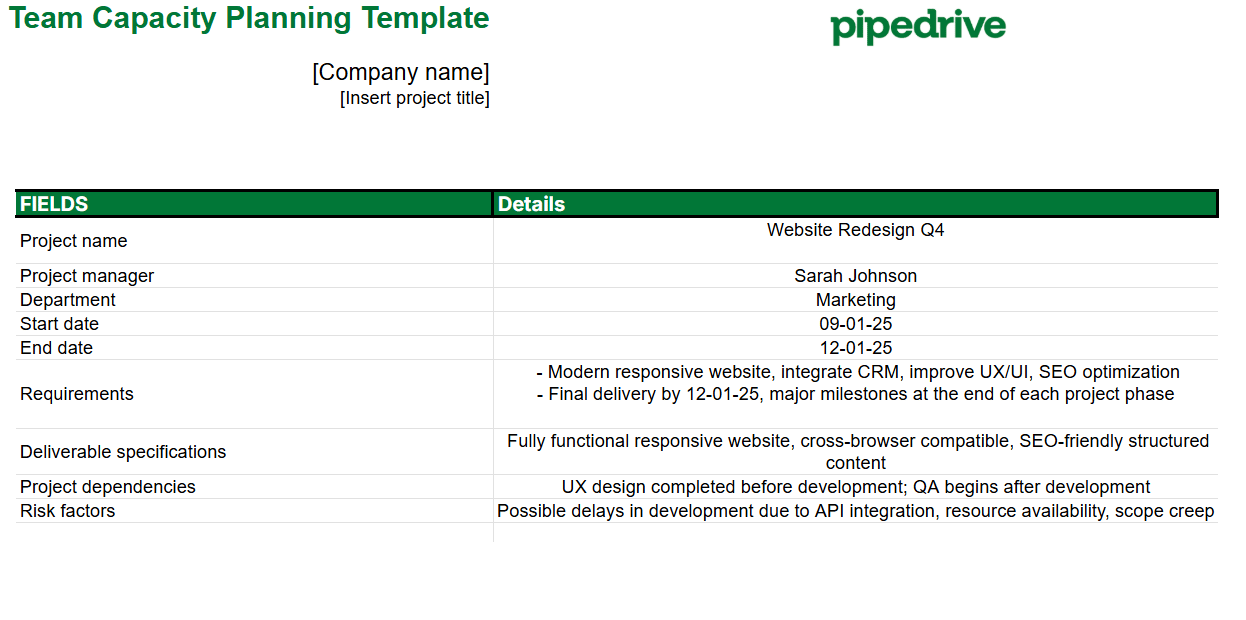
How businesses use Google Forms:

  • Create unlimited surveys with unlimited questions and collect unlimited responses for free

  • Automatically send all responses to a Google Sheet for easy sorting, filtering and analysis

  • Add collaborators to let multiple team members build and edit a form together

  • Use basic skip logic to send users to a specific section based on their answer (limited to dropdown and multiple-choice questions)

  • Embed forms directly onto a webpage or send a link via email

Google Forms provides straightforward data collection. While it doesn’t offer many question types or advanced reporting features, its free availability and syncability with other apps make it worthwhile for small businesses with a small budget.

6. Zonka Feedback

Zonka Feedback is a customer experience platform that lets you collect multi-channel feedback:

Customer feedback tools Zonka Feedback

It captures experiences and feedback at all touchpoints, including in-person, offline, online, through email and mobile SMS. It also provides a space for active listening.

A key feature is its ability to run surveys on tablets or smartphones in kiosk mode, meaning you can capture feedback on-site without an internet connection.

How businesses use Zonka Feedback:

  • Collect up to 25 responses per month across web, email and links (Free plan)

  • Create surveys to measure key marketing metrics like NPS, CSAT and CES (Free plan)

  • Get more responses and use more offline devices for on-site feedback (Starter plan)

  • Remove Zonka Feedback branding and trigger surveys via SMS or QR codes (Professional plan)

  • Automate actions by integrating with CRMs to create tickets or send notifications based on feedback (Professional plan)

Zonka Feedback captures omnichannel feedback, meaning you’ll only need one tool. Combined with a CRM like Pipedrive, it provides almost everything you need to track and supply your customers’ needs.

7. Qualtrics

Qualtrics is an enterprise-level platform for complex research and in-depth analysis of customer and employee feedback:

Customer feedback tools Qualtrics

It’s suitable for larger teams needing advanced statistical tools to manage feedback across the company. Qualtrics’ capabilities also mean a steeper learning curve and higher cost for a small business than other tools.

How businesses use Qualtrics:

  • Create an introductory survey with up to 500 responses and see a summary of the results (Free plan)

  • Use advanced logic, like randomizing choices or requiring responses, to improve data quality (Free plan)

  • Analyze open-ended text comments, identify topics and perform sentiment analysis without manual reading (using Text iQ on paid plans)

  • Build and share dashboards to report on key metrics across the business (paid plans)

  • Integrate with enterprise systems like Adobe to connect feedback data with operational data (paid plans)

While Qualtrics offers a functional free plan for basic surveys, its core strength lies in its premium offerings (like advanced analytics features). It’s a powerful tool – likely more than most small businesses need for day-to-day feedback.

Note: Qualtrics integrates with Pipedrive through the Qualtrics API. You’ll need a developer to build the connection so that survey responses automatically create deals and trigger workflows.

8. UserVoice

UserVoice is a product feedback management system. It helps software companies capture, organize and prioritize feature requests from their customer base.

Customer feedback tools UserVoice

It’s useful for product teams that want to manage customer ideas and communicate their product roadmap. Instead of tracking requests in spreadsheets, UserVoice provides a central hub for users to submit and vote on ideas.

How businesses use UserVoice:

  • Collect and track feature ideas and bug reports through an in-app widget (all plans)

  • Create a public feedback portal where users can see, discuss and vote on ideas submitted by others (all plans)

  • Analyze feedback from specific customer segments, such as filtering ideas from high-value accounts (Premium plan)

  • Communicate new product updates directly to the users who requested a particular feature (Premium plan)

  • Integrate with tools like Jira or Azure DevOps to link customer feedback directly to development tasks (Premium plan)

UserVoice is a specialized tool for making product decisions. It’s ideal for SaaS businesses focused on building a user-driven roadmap, rather than general customer satisfaction surveys for small companies.

Note: UserVoice integrates with Pipedrive through Zapier and Make. Users adding new suggestions create deals or activities for your team to follow up on in Pipedrive’s CRM.

9. Hotjar

Hotjar is a customer behavior analytics tool that helps you understand how customers use your site. It offers heatmaps, visitor recordings, form analytics and feedback polls:

Customer feedback tools Hotjar

Hotjar is valuable for marketers, UX designers and product managers who want to see how users behave, rather than just reading survey responses.

Heatmaps show customer interactions as visual feedback (like clicks and scrolling patterns), helping you find friction points and usability issues.

How businesses use Hotjar:

  • Create unlimited heatmaps and session recordings with 35 daily sessions (Free Basic plan)

  • Set up feedback widgets and collect up to 20 monthly survey responses (Free Basic plan)

  • Track up to 100 daily sessions and use basic filtering options (Plus plan)

  • Get unlimited customizable surveys and integrations with up to 500 daily sessions (Business plan)

  • Use advanced analytics, Hotjar’s custom API and collaboration tools (Scale plan)

Hotjar provides deeper insights into user behavior that traditional surveys can’t capture, with a free plan for small websites. The pricing increases as your business grows, and some advanced features are only available on higher-tier plans.

Note: Integrating Pipedrive and Hotjar through Zapier helps sales teams understand which website interactions led to customer feedback. You can update deals in Pipedrive when Hotjar creates new feedback responses or recordings.

10. Canny

Canny is a customer feedback management tool. It creates a central hub where customers can submit feature requests, vote on ideas and track product development from suggestion to completion.

Customer feedback tools Canny

Instead of managing feedback through emails and support tickets, Canny puts all customer input in one place.

How businesses use Canny:

  • Collect feedback in a public portal where users can vote on ideas (all plans)

  • Capture feedback from customer conversations using Autopilot AI, which finds feedback in chats, calls and reviews (all plans)

  • Create custom domains and statuses to match your brand and workflow (Core plan and above)

  • Integrate with project management tools like Jira and Slack to sync feedback with development tasks (Pro plan)

  • Build private feedback boards for internal teams and set up advanced user permissions (Pro plan)

Canny is suitable for B2B SaaS companies that want to build products based on customer ideas. It offers a free plan for small teams, but pricing scales quickly as user engagement grows.

Note: Canny integrates with Pipedrive through Zapier. When users submit feedback, it creates activities in Pipedrive for your sales team to follow up with prospects.

11. Mention

Mention is a social media monitoring and brand listening tool that tracks conversations about your business on the web and social media platforms. It helps companies monitor their reputation by finding mentions of their brand, products and keywords.

Customer feedback tools Mention

The platform analyzes mentions from social networks, news websites, blogs, forums and review sites. It gives businesses a complete picture of their online presence.

How businesses use Mention:

  • Set up keyword alerts to monitor brand mentions, competitor analysis and industry discussions across social media and web sources

  • Create advanced search queries to filter results and exclude irrelevant mentions

  • Analyze sentiment and track key metrics like reach, volume and engagement to measure brand health and campaign impact

  • Generate reports and dashboards to visualize pain points and gather insights for stakeholders

Mention offers custom pricing for your needs and scale, making it suitable for businesses of various sizes. It makes sense for marketing professionals who must track their company’s online reputation.

Note: Mention integrates with Pipedrive through Zapier. When the platform captures a relevant new brand mention, users can add a task or note to an existing deal.

How to use customer feedback tools

Customer feedback tools work best when they’re part of a connected system rather than standalone solutions.

Here’s how to get the most value from these platforms and integrate them with your sales and marketing processes.

1. Ask for feedback at the right moments

Timing matters when collecting customer feedback. Knowing how to ask customers is crucial, but getting it at the right moment increases the customer’s chance to reply.

Try to send surveys immediately after key interactions, such as purchases, support tickets or sales demos, when the experience is fresh in customers’ minds.

Most CRM tools let you automate feedback requests so your team can send them at the right moment. For example, in Pipedrive, you can set up workflows that send feedback requests when deals move to “Won” status or when you mark activities complete.

Customer feedback tools Pipedrive example

You can also create email sequences that wait a certain amount before sending, so customers have enough time to experience your product.

Pipedrive’s workflow automation builder makes this simple with drag-and-drop triggers and conditional logic that lets you customize timing and create an integrated helpdesk solution.

2. Keep surveys short and focused

Short surveys improve response rates and provide higher-quality data. Stick to 3–5 questions that relate to your business goals and avoid asking about everything at once.

Here’s an example of a straightforward feedback form:

Customer feedback tools Pipedrive example

Ask your main questions using a scale, then give customers a way to provide additional feedback if they wish to.

Using a mix of rating scales and open-ended questions gives you both quantitative and qualitative data. Rating scales give you measurable data you can track over time, while open-ended questions reveal the actionable insights behind customer opinions.

Feedback tools let you create survey templates for different purposes, like post-purchase satisfaction or feature requests. Choose the proper survey to send based on the customer’s interaction with your business.

Recommended reading

https://www-cms.pipedriveassets.com/Customer-Complaints-Response.jpg

How to respond to customer complaints (with 6 templates)

Pipedrive in action: With a CRM, you can track feedback from collection to implementation. For example, Document360’s CEO, Saravana Kumar, has highlighted Pipedrive’s usefulness for customer feedback:

“Pipedrive has helped us to streamline and automate our sales process to serve a huge volume of prospects and respond to customers’ queries for better customer service.”

Using Pipedrive, you can log responses as customer records so your team sees feedback history during conversations.

Customer feedback tools Pipedrive notes

The platform’s pipeline stages help you track feedback status and set up automated reminders to follow up with customers after implementing their suggestions.

Turn Maybe Into Yes With These Killer Follow Up Email Templates

These customizable follow up email templates will help you boost your chances of breaking through to your busiest prospects.

Final thoughts

Customer feedback tools help you understand customers’ thoughts, so you can improve your products and boost retention.

Choose a tool that works where your customers spend their time. Focus on your most significant knowledge gaps, then connect the feedback to your CRM to create follow-up tasks for your sales team.

Start a 14-day free trial with Pipedrive and see how much easier it is to capture customer feedback and turn those valuable insights into sales growth.

  • Page 1
  • Page 2
  • Page 3
  • Interim pages omitted …
  • Page 28
  • Go to Next Page »

Get your Software Stack together. softwarestack.tech

Software Stack

© 2024–2025 - Software Stack is a trading name of SouthwestCIO Limited ac ompany registered in England & Wales 11319049

  • Knowledgebase
  • Home
  • About Us
  • Contact Us