
The post Secure Your Intellectual Property appeared first on ClickFunnels.
First-time entrepreneurs often don’t put much thought into protecting their intellectual property (IP). And you know what?
That’s understandable. Founders have their hands full with product development, marketing, sales, customer support, and public relations. Plus, if their company needs funding, they also have to pitch their business idea to investors to raise capital.
So, it shouldn’t be surprising that they tend to procrastinate on the boring legal stuff that doesn’t seem urgent. You can always take care of it later, right?
The problem is that this negligence can backfire, and it might happen much sooner than you would expect. It’s all fun and games until someone steals your IP or accuses you of stealing their IP.
That’s why today we want to discuss intellectual property: what it is, why you should protect it, and what practical steps you can take to do that.
- What is Intellectual Property?
- Why Should You Protect Your Intellectual Property?
- Real Talk: Hire a Lawyer if You are Serious About Protecting Your Intellectual Property!
What is Intellectual Property?
“Intellectual property” is an umbrella term that refers to creations of the human mind that can be legally owned and protected by law.
There are four main IP categories:
- Patents
- Trade secrets
- Copyrights
- Trademark
American-Made Program has published an excellent webinar in which intellectual property attorney Carl Ronald explains these IP categories in depth.
We’ll summarize the key points below and also add some of our thoughts on the subject:
Patents
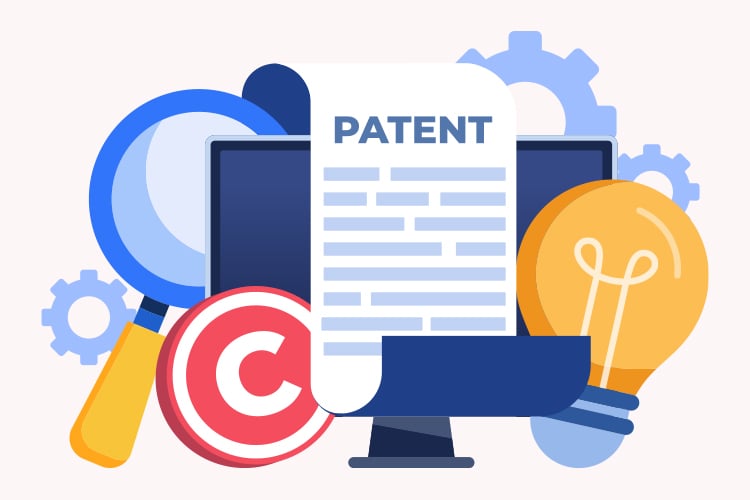
A patent is a government-issued right to exclude others from making, using, selling or importing your invention.
You get this right for a limited period of time in exchange for teaching the world how your invention works, which you do by explaining it in your patent document.
Patents incentivize innovators to make their inventions public instead of keeping them secret, which adds to human knowledge and contributes to technological progress from which we all benefit.
3 Types of Patents
There are three types of patents:
- Utility patents are available for processes, devices, and compositions of matter that advance the state of the art in a particular industry or multiple industries.
- Design patents that are about the look and feel of the product.
- Plant patents that deal primarily with genetic modification of plants for disease resistance.
3 Types of Patent Applications
There are also three different types of patent applications:
- Provisional applications are placeholders
- Non-provisional applications are the “proper” patent applications
- Patent Cooperation Treaty (PCT) applications for those who seek international protection
Should You Get a Patent?
Getting a patent might make sense if you have an invention that you want to protect because you believe that it can give you a serious competitive advantage.
However, patenting something is a long and expensive process that typically lasts a few years and can cost anywhere from $7,000 to $30,000.
Big corporations can patent all kinds of random stuff because they have unlimited financial resources.
As a startup founder, you cannot afford to do that, so think carefully about whether you need patents!
Trade Secrets

Company information that is not available to the public can be considered a trade secret if you take measures to protect it by:
- Only giving access to people within the company on a need-to-know basis.
- Adding a trade secrets clause to freelancer and employment contracts.
- Ask freelancers, employees, and outsiders with whom you need to share this information, such as potential investors, to sign NDAs.
Startups often treat their customer data, lead lists, standard operating procedures, etc. as trade secrets. That enables them to sue ex-employees who take this information to existing competitors or use it to launch their competing businesses.
If something can be patented or kept as a trade secret, going the patent route might make sense if it can be reverse-engineered or if you are worried that you may not be able to keep that information contained.
Otherwise, you can keep it as a trade secret, provided that you get everyone involved to sign contracts and NDAs that are legally enforceable.
Trademarks
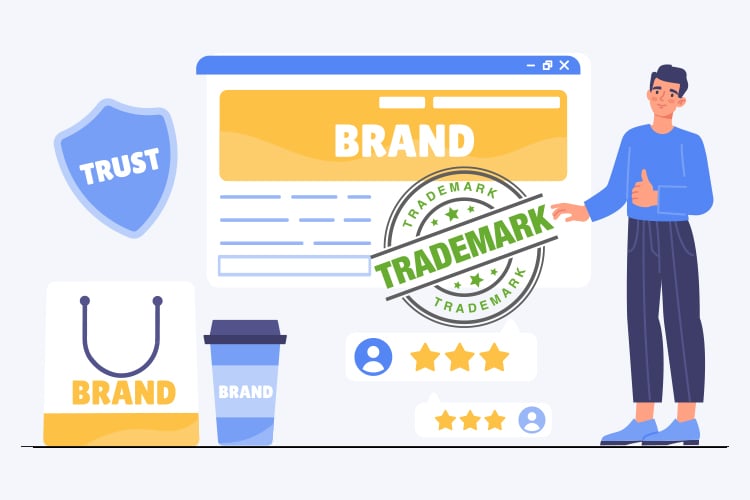
A trademark is any symbol, name, or device used in trade to indicate the source of goods or services.
In the United States, there are three types of trademarks:
- Federal trademark
- State trademark
- Common law trademark
The most potent federal trademark covers the entire country and its territories.
However, it’s essential to understand that its rights are contingent upon ongoing commercial use. You’ll have to demonstrate that you are using whatever you want to trademark.
Copyrights
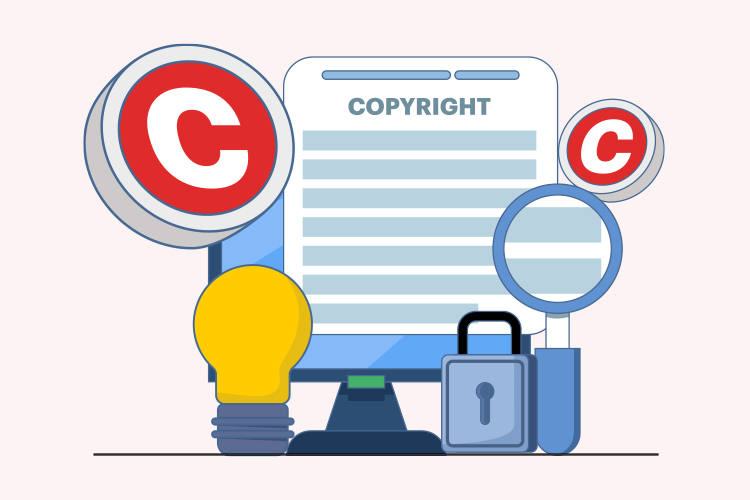
Copyrights protect original works of authorship, such as written materials, images, photos, videos, and software.
If you own a copyright to something, you have exclusive rights to display that work publicly, reproduce it, distribute copies, and create derivative works.
Interestingly, although you get these rights upon creating the work in question, you won’t be able to sue someone for infringement in federal court unless you have registered a copyright.
That can take several months, but it costs less than $100. Consider doing it for the most critical original works you use in your business.
Watch: Intellectual Property Protection Fundamentals for Tech Startups and Entrepreneurs (Webinar)
We recommend watching the whole thing. It includes an IP attorney’s presentation and the experiences of three tech startup founders and their unique perspectives!
Why Should You Protect Your Intellectual Property?

Let’s be real:
Most entrepreneurs aren’t inventors and don’t fancy themselves as such.
So why bother protecting your intellectual property when you aren’t building anything groundbreaking?
Deterring Copycats
Many people out there choose to steal from others instead of coming up with something themselves.
If they see that your company is doing well, they might copy your products, marketing campaigns, sales materials, funnel, and web design.
For example, copycats that outright clone other people’s apps are a big problem in the indie hacker scene of bootstrapped software entrepreneurs.
Keeping trade secrets, registering copyrights, and applying for trademarks can offer some protection against this.
Sure, you won’t deter all copycats because there are so many of them, but you might get some to back off with cease-and-desist letters!
Avoiding Cofounder and Ex-Employee Drama
If you have never built a company before, you are probably underestimating the potential for drama, especially when a lot of money is involved.
Here are some of the most common scenarios:
- If you have an idea for an app, hire someone to help you build it; they steal your idea and launch their startup.
- You and a friend have an idea for an app and start building it; they decide to quit after a few months while you continue pursuing the idea. Once your company takes off, your friend starts demanding equity.
- You fire an employee who then decides to retaliate by making your trade secrets public, taking them to a competitor or using them to launch their own startup in the same niche.
Cofounder agreements, freelancer and employment contracts with intellectual property clauses and NDAs can help you avoid situations like that.
You shouldn’t blindly trust people even if you have known them for a long time. Put everything in writing and get them to sign it before you start working together. Ensure all agreements, contracts, and NDAs are legally enforceable!
Providing Reassurance to Potential Investors
Seasoned investors have seen it all, so they tend to be wary of startups with intellectual property vulnerabilities.
Even something seemingly minor can put them off. For example, you and two friends launched a startup; one of them left early on, but you are sure that they will not cause any problems in the future.
Again, you shouldn’t blindly trust people, but let’s say that you are correct – the friend who left is an honorable person and doesn’t present any threat to your company. Well, guess what? Investors don’t know that!
Think about it from their perspective: what if this ex-cofounder shows up in five years and tries to shake you down for equity, potentially creating a PR nightmare?
Remember that investors get bombarded with business pitches every day, so they are spoiled for choice. Why would they take a risk on your company when they can put their money into startups that don’t have vulnerabilities like that?
Real Talk: Hire a Lawyer if You are Serious About Protecting Your Intellectual Property!
Here’s a quick overview of the steps that you can take to protect your intellectual property:
- Do your homework to ensure you are not infringing on anyone else’s IP with your company name, logo, and slogan.
- Get federal trademarks for your company name, log,o and slogan.
- Identify your trade secrets and only share them within the company on a need-to-know basis.
- Patent innovative technology and design if it makes sense for your business.
- Register copyrights for the most important original works of authorship such as proprietary software, information products, marketing and sales materials, etc.
- Add intellectual property clauses to freelancer and employment contracts.
- Use non-disclosure agreements with freelancers, employees, potential investors, advisors, and anyone else you may need to discuss trade secrets with.
We strongly advise hiring an intellectual property attorney to help you with this. Ideally, you want to find someone who specializes in working with startups or has plenty of experience with them.
Yes, it will be expensive, but it’s a good investment. If you don’t address your intellectual property vulnerabilities now, it might cost you way more money in the future. Don’t wait until you get hit with a lawsuit or need to sue someone yourself!
Watch: How to Protect Your Intellectual Property (WSGR Startup Basics)
We recommend watching this video, where entrepreneur and investor Jason Calacanis interviews attorneys Rachel Proffitt and Todd Carpenter.
Want to Learn How to Build Sales Funnels That CONVERT?
Our co-founder Russell Brunson used sales funnels to take ClickFunnels from zero to $100M+ in annual revenue in less than a decade.
He is now widely considered to be one of the top sales funnel experts in the world. Want to learn from him?
His best-selling book “DotCom Secrets” is the best place to start because it covers everything you need to know to build sales funnels that convert.
This book is available on Amazon with over 2,500 global ratings and a 4.7-star overall rating.
But you can also get it directly from us for free…
All we ask is that you pay for shipping!
So what are you waiting for? 🧐
Get “DotCom Secrets” for FREE!
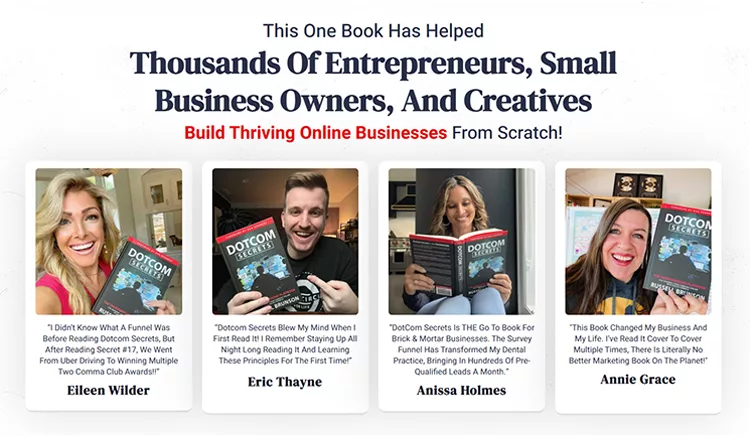
P.S. Here’s What Readers Say About “DotCom Secrets”…

Get “DotCom Secrets” for FREE!
Thanks for reading Secure Your Intellectual Property which appeared first on ClickFunnels.