
The post Making Money While Retired appeared first on ClickFunnels.
The online world has opened up opportunities that didn’t exist a generation ago. Opportunities let you share decades of expertise, connect with people who value your experience, and earn income without sacrificing the flexibility that retirement should offer.
In this guide, we’ll explore 7 practical ways retirees earn extra income from home. We’re not discussing filling out surveys for pennies or falling for “get rich quick” schemes. These are real opportunities that other retirees are already using successfully.
1 – Curate Unique Experiences for Others
Retirement is a great time to share what you know with others – and earn from it, too. Several retirees are doing precisely this through platforms like Airbnb Experiences.
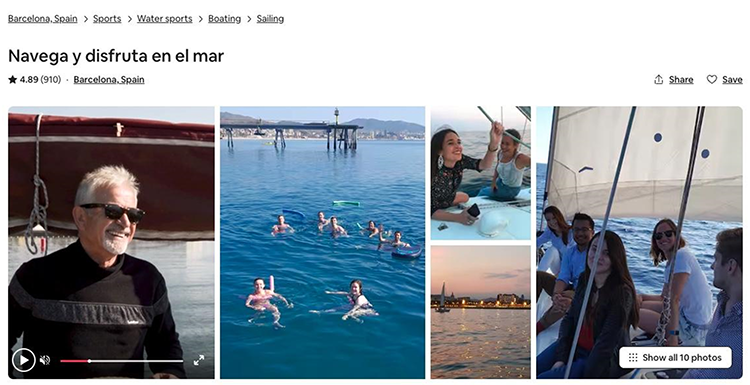
For example, Deo from Barcelona’s sailing experience has made him the most booked host, over 60 in Europe. He takes visitors out on his boat for relaxing Mediterranean sailing trips. His experience “Sail & Relax with Captain Deo” lets him share his passion for the sea while meeting people worldwide.
In Singapore, 87-year-old Chwee Lian Tan runs the last remaining Taoist deity shop in the country and shares the art of effigy making with visitors through her experience “Where Gods Are Born.”

What makes this idea work so well?
You’re sharing knowledge you already have, meeting new people, and earning money from it. You don’t need to be a professional guide or teacher. You just need to be yourself, sharing what you love about your corner of the world.
Find the Perfect Experience for You to Share
Think about what you love doing in your free time.
Sometimes, the best experiences come from hobbies we’ve enjoyed for years. It could be anything – photography you’ve practiced for decades, a garden you’ve perfected, or even that sourdough bread you’ve mastered during retirement. What do your friends always ask you to help them with? That’s often a clue to what you could teach others.
You can share your local knowledge as well.
Visitors want to see your city through local eyes. They’re curious about those hidden alleyways, eager to hear stories about that old theater downtown, and interested in learning why certain streets come alive during festivals. Travelers value and are happy to pay for this authentic perspective of your hometown.
The best way to start is small. Share your knowledge with friends or family first – their reactions will tell you a lot. Maybe join a local community group where you can practice sharing your skills. Teaching one person before moving to groups helps build confidence and refine your approach.
2 – Turn Your Work Experience Into Consulting
Think back on your working years. Every day at work, you learn something new. You figured out better ways to get things done. All of that knowledge is still in your head today. Now, you can offer your professional expertise to businesses or individuals who need it and charge a fee. That is called consulting.
Take Carol Berning’s story – after 34 years at P&G, she now works half the hours as a consultant but earns about the same as her previous six-figure salary. That’s the kind of flexibility many retirees are looking for.

Another example is insurance companies.
The insurance industry is experiencing a “talent drain” as experienced professionals retire. However, companies are now turning this challenge into an opportunity by bringing back retired experts as consultants. This isn’t unique to insurance thought. It’s happening across industries where deep expertise matters.

Consulting can work for almost any professional background – because every industry needs experienced problem solvers.
Here are some examples:
- If you spent years managing a restaurant, you might help new restaurant owners set up their kitchens efficiently or train their staff.
- If you were a high school math teacher, you could help schools choose better teaching methods or help students who struggle with math.
- If you worked in HR, you might help small businesses handle employee paperwork and the hiring process.
- As a nurse, you could help families understand how to care for elderly relatives.
- As an accountant, you could help small businesses organize their finances.
What’s particularly valuable about consulting in retirement is that clients often care more about your real-world experience than formal credentials. Those workplace challenges you solved, the teams you managed through crises, and the industry relationships you built carry more weight than any degree or certification when clients seek expertise.
How to Get Started With Consulting?
First, identify your core professional strengths. Look at the major responsibilities you handled in your career. What problems did you solve? What systems did you improve? What specialized knowledge did you develop?
Think about how to package your expertise. You might offer:
- Project-based work (helping solve a specific problem)
- Advisory services (regular meetings to guide decision-making)
- Training sessions (teaching others your specialized skills)
- Process reviews (evaluating and improving existing systems)
Many retirees begin consulting with one client to test the waters. This allows you to understand what works best for you without overwhelming yourself. You can then expand your practice based on your comfort level and interests.
3 – Rent Out a Room, Garage, or Parking Space
In retirement, your home likely has spaces you no longer use much – maybe a home office you don’t need, empty bedrooms after kids move out, or a yard that’s become too much to maintain. All these unused spaces can become sources of income.
The most straightforward option is renting out rooms. You can do this either as a short-term rental for travelers or as a longer-term rental for students or professionals.
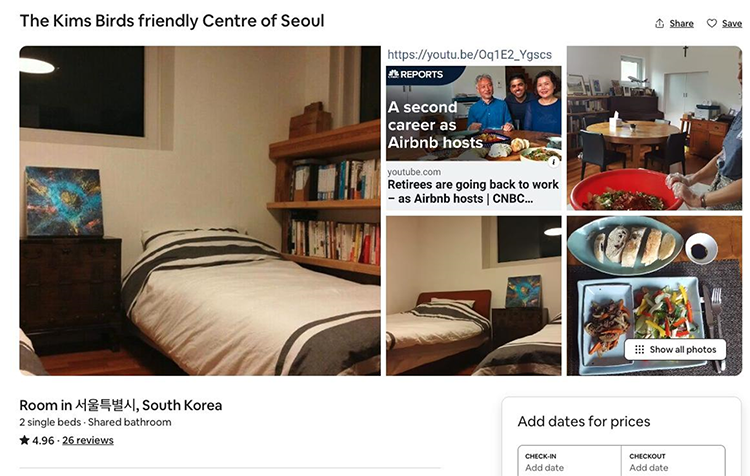
For example, Young In from Seoul (born in the 1960s) has turned her home into a cozy rental space that she advertises on Airbnb.
You don’t need a separate property to get started. You could:
- Rent out a spare room
- Convert that rarely-used dining room into a cozy guest room
- Transform the basement or attic into a private guest suite
- Share your space when you’re traveling
What makes this work well for retirees is that you’re usually more available to interact with guests, you know your area well, and you’ve likely developed the people skills that make hosting natural. Plus, it provides both extra income and social connection – something many people value in retirement.
Think about your garage, too. While you might only use half of it, someone in your neighborhood could need storage space for their:
- Cars they don’t use often
- Motorcycle or small boat
- Outdoor furniture in off-season
Try to find websites like Parklet.co.uk or JustPark.com to advertise your space.

Even your backyard could work for you. People often look for space to:
- Host small events or gatherings
- Set up photography sessions
- Create temporary workspaces
- Practice music or art outdoors
Parking or outdoor spaces can be steady income streams with minimal effort on your part. Unlike hosting guests in your home, renting out these spaces usually requires very little day-to-day involvement.
When calculating how much income you can earn from renting, here are a few points to keep in mind:
- Research similar rentals in your area for realistic rates
- Consider seasonal changes in demand
- Factor in any extra costs (utilities, cleaning, maintenance)
- Start small to test what works best
- Remember to check local rules and insurance needs
4 – Run an Online Class or Course to Teach Something You Know
The quickest way to share your knowledge with the world and earn money from it is via an online course. You have to put in the effort once – to create the course and set the marketing for it. But once done, you can spend a few hours every week promoting it, updating the content, or taking live classes. And then it runs on its own.
Take NonnaLive, for example – it’s a website where Italian grandmothers teach cooking classes online from their own kitchens in Italy. These retired nonnas (grandmothers) share their lifelong cooking knowledge and traditional family recipes through live virtual classes. They’re earning money doing what they love while working flexible hours from home.

Finding the Idea and Starting Your Online Course
Don’t chase trending topics or jump into subjects just because they seem profitable. The most successful online courses come from genuine expertise and passion. Use this simple framework – the TEACH Method – to uncover your most valuable knowledge; the kind people would gladly pay to learn.
T (Track Record)
- What skills have you refined over 20+ years?
- What do people compliment you on?
- Which problems do friends ask you to solve?
E (Expertise Edge)
- What can you do better than 90% of people?
- What industry secrets do you know?
A (Audience Needs)
- What expensive mistakes could you help others avoid?
- Which skills are becoming increasingly valuable in your field?
- What problems did you struggle with that you’ve now mastered?
C (Competition Check)
- Search “[your skill] course” on Google – are people searching for it?
- Look for Facebook groups or Reddit communities around your topic
- Check if similar courses exist (some competition is good – it proves demand)
H (Heart Check)
- Could you teach this topic for hours without getting bored?
- Do you have enough material for at least 6-8 hours of content?
- Can you break this skill into clear, teachable steps?
Create a free mini-course or run a live workshop on Zoom. Share it in relevant Facebook groups or LinkedIn communities. Pay attention to the questions people ask and the challenges they mention. This feedback is gold for designing your full course. If people are actively engaging and asking for more, you’re onto something promising.
Tools to Promote Your Online Course
Creating your course is just the first step. Even the best content won’t sell itself. You need to actively get it in front of your target audience. But don’t let this intimidate you.
ClickFunnels streamlines the entire process, handling the technical heavy lifting so you can focus on teaching.
You can build your website and landing pages with simple drag-and-drop tools – no coding needed. Whether you’re teaching cooking, crafts, or career skills, you can create a professional online presence in hours, not weeks.
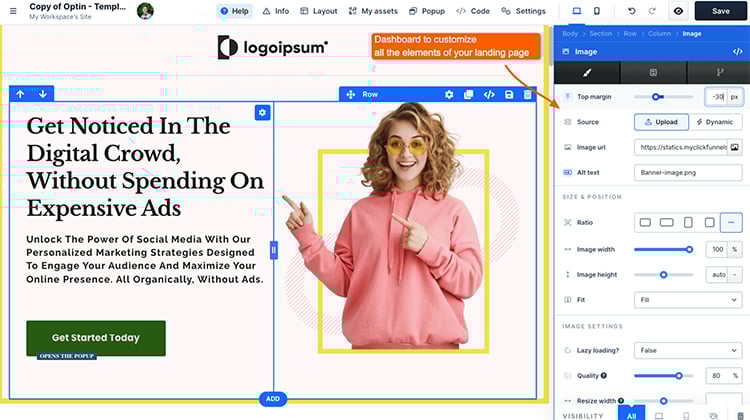
Choose from pre-built marketing funnels designed specifically for online courses. These ready-made workflows guide potential students through your course offerings, from initial interest to enrollment.
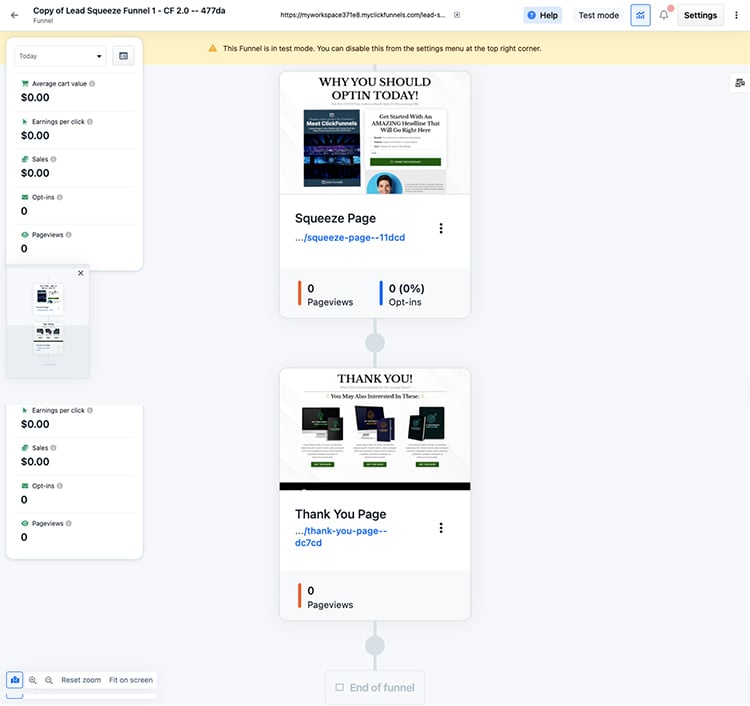
The platform’s email marketing tools help you stay connected with your audience, sending automated welcome messages, course updates, and student support.

ClickFunnels also monitors which marketing approaches work best and adjusts accordingly.
Create And Launch Your Online Course With ClickFunnels!
5 – Self-Publish Books
There’s no age limit when it comes to writing books. If you browse Goodreads and search for authors who published after age 65, you’ll find numerous inspiring examples.

If you’re looking to publish while keeping costs low and maintaining control over your investment, self-publishing can be an excellent path forward.
You can write at your own pace, choose your topics, and maintain complete creative control over your work. You’ll also get to control the price and choose any platform on which you want to sell your book.
A self-published book can bring you better money per copy than going with a traditional publisher.
For example, when you publish through Amazon KDP, you get to keep 70% of your ebook price (for books priced $2.99-$9.99) and about 60% for paperbacks after printing costs. Meanwhile, for traditional publishing, authors typically only get 10-15% for paperbacks and 25% for ebooks, so it is just $1-2.50 for a $10 book.
There are several self-publishing platforms like Amazon KDP, Barnes & Noble Press, Apple Books, Draft2Digital, Book Baby, etc.

Each platform has its own strengths, with some focusing on ebooks, others specializing in print books, and several offering both options. Research each platform’s requirements & structure to find the best fit for your specific publishing goals.
You can write about topics you’re knowledgeable about from your career, life experiences or the place where you live.
For instance, people like Mike Miller have successfully self-published regional travel guides that target specific destinations or experiences. These kinds of focused, local-interest books can do well through self-publishing since they serve a clear market need and can be updated regularly as attractions and destinations change.

You can even self-publish novels if you have any interesting story ideas.
Marc Sheinbaum is a perfect example of a self-published author who created a complete series of science fiction novels.

Looking at the professional quality of his book covers and the consistent branding across the series, you can see that self-publishing doesn’t mean amateur work. Self-published authors can create professional-looking series that compete with traditionally published books.
6 – Checkout Job Boards Catering to Retirees
You should work for some income, but not necessarily in the same intense way as before.
That’s where platforms like AARP ( American Association of Retired Persons) can help. They partner with companies that appreciate retirees’ strengths, such as reliability, experience, and strong work ethics.

They understand you’re not looking for a high-pressure career climb but rather meaningful work that fits your retirement lifestyle and hence offer jobs that can fit certain criteria like:
- Part-time work
- Flexible hours to balance with other activities
- Doesn’t require a lot of physical strengths
Besides AARP’s job board, several other websites cater specifically to experienced workers looking for flexible work.
FlexJobs, while not exclusively for older adults, focus on remote and flexible schedule positions – perfect for retirees wanting work-life balance.
Another option is RetirementJobs.com, which lets you search by zip code and offers filters for part-time positions.

For those with specialized backgrounds in accounting, insurance, or HR, Work at Home Vintage Experts (WAHVE) matches experienced professionals with remote contract positions who value their years of expertise.

7 – Become a Virtual Assistant
Not everyone has the specialized knowledge to become a consultant or stories to write books about. But if you’ve worked in an office setting, you already have the basic skills many businesses need help with. Things you probably do every day – like managing emails, scheduling meetings, or organizing files – are precisely what many small business owners seek.
This type of work, where you help businesses with their daily tasks remotely from home, is called virtual assistance. As a Virtual Assistant (or VA), you’re a remote office administrator, supporting clients without commuting to their workplace.
What Makes This Work Well for Retirees?
You’re not learning anything new – just using the skills you used at work. Plus, you can work from home, choose your hours, and pick tasks you’re comfortable with. Many retirees find this less stressful than other online work because they’re already experts at these everyday office tasks.
What Can You Offer as a VA?
Think about the basic office tasks you handled in your career – those are exactly what small business owners need help with. Here are some ideas of standard VA services you could offer:
- Email management and basic correspondence
- Calendar scheduling
- Simple bookkeeping and invoice processing
- Travel arrangements
- Basic document editing
- Customer service support
Setting Your Rates
Look for “ongoing tasks” rather than “urgent projects.” This allows for a more predictable income and schedule.
While many VA websites suggest starting rates around $15-20/hour, retirees with professional experience can often start at $30-35/hour for basic tasks. The key is positioning yourself not as a beginner VA but an experienced professional choosing to do VA work in retirement.
Many retired VAs find their sweet spot with 3-4 ongoing clients needing 5-10 hours weekly. This creates a reliable monthly income of $1,200-2,400 while keeping the workload manageable.
How to Find Virtual Assistance Opportunities
The easiest way to start is through platforms that connect assistants with clients.
Websites like Upwork and Fancy Hands are particularly good for beginners because they handle the client-matching process. You just need to create a profile highlighting your office experience, and they’ll help match you with suitable clients. While these platforms might pay less initially ($15-20 per hour), they’re a great way to get your first clients and build confidence.
For better-paying opportunities ($30-45 per hour), try professional networks like LinkedIn. Update your profile to highlight your administrative skills and share posts mentioning that you’re offering virtual assistance services.
Many business owners prefer hiring through professional networks because they can see your real work history. Don’t forget to let your former colleagues know you’re offering VA services – they might need help themselves or know someone who does.
You might also find opportunities through:
- Community Facebook groups for small businesses
- Local business networking events
- Professional network you might have built while you were working full-time
Final Thoughts
The opportunities we’ve explored are about finding simple ways to use what you already have – whether that’s space in your home, time in your day, or knowledge in your head. You don’t need to become a full-time entrepreneur or learn complex new skills.
The key is to pick one thing and try it out. It doesn’t matter if it’s not perfect at first. Every retiree who’s successfully earning extra income started precisely where you are now: with a simple decision to try it.
And once you’ve mastered one thing, you can also pick something else. You can try several things at once if you want to. You could rent out your garage while helping a business with their emails a few hours a week. Or teach an online weekday class and watch someone’s pet on weekends.
What often holds people back isn’t a lack of opportunity but overthinking it. You don’t need everything figured out perfectly before you begin. If you’re interested in teaching others or sharing your knowledge, platforms like ClickFunnels make it easy to create and sell your first online course without any technical headaches. But even simpler – you could start by renting out your parking space or helping someone organize their emails.
Try ClickFunnels Free Today!
Thanks for reading Making Money While Retired which appeared first on ClickFunnels.