
• Skip to primary navigation
  • Skip to main content
software stack logo

Software Stack

Get your Software Stack together

  • Knowledgebase
    • All Categories
    • Accounting Software
    • Automation & Workflow Software
    • Customer Relationship Management
    • E-Commerce Shopfronts & Payments
    • Marketing Automation
    • Online Courses & Membership
    • Project Management
    • Surveys & Forms
    • Web Hosting
  • Home
  • About Us
  • Contact Us
  • Show Search
Hide Search

Smartsuite

Simplify Construction Project Management with SmartSuite

Software Stack Editor · November 11, 2024 ·

image

Why SmartSuite for Construction Task Management?

SmartSuite combines no-code capabilities with an intuitive interface, making it ideal for construction businesses of any size. It’s versatile enough to handle everything from task assignment to project phase tracking without needing a developer. As JP Lal, co-host of Build Smart Blueprint, says, “If you’re not on anything, you may as well get on something that has the capability to grow with your business.”

Setting Up Your Task Management Solution

To get started, sign in to SmartSuite and create a new “solution” specifically for your tasks. Starting a solution from scratch allows you to customise fields and tailor the solution specific to your workflows.

Task Management Made Simple for Construction Firms with SmartSuite

1. Define Core Fields and Categories

  • Department: Whether tasks fall under sales, accounts, or projects, each task should be easily assigned to a specific department.
  • Project Phase: With construction projects, tasks often differ depending on the phase (pre-construction, construction, or post-construction). This phase tagging helps separate tasks into manageable phases.
  • Priority and Due Date: By sorting tasks by urgency and due date, you’ll always know what needs immediate attention.

2. Create Custom Views for Different Roles

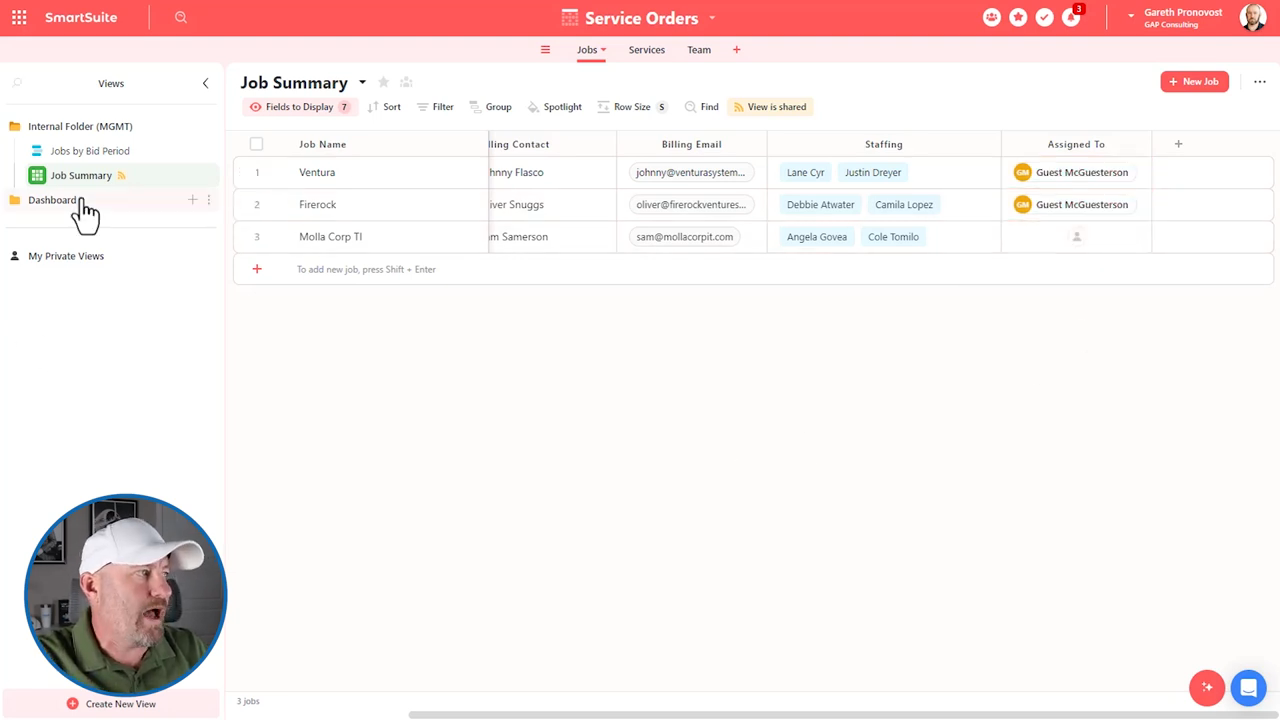
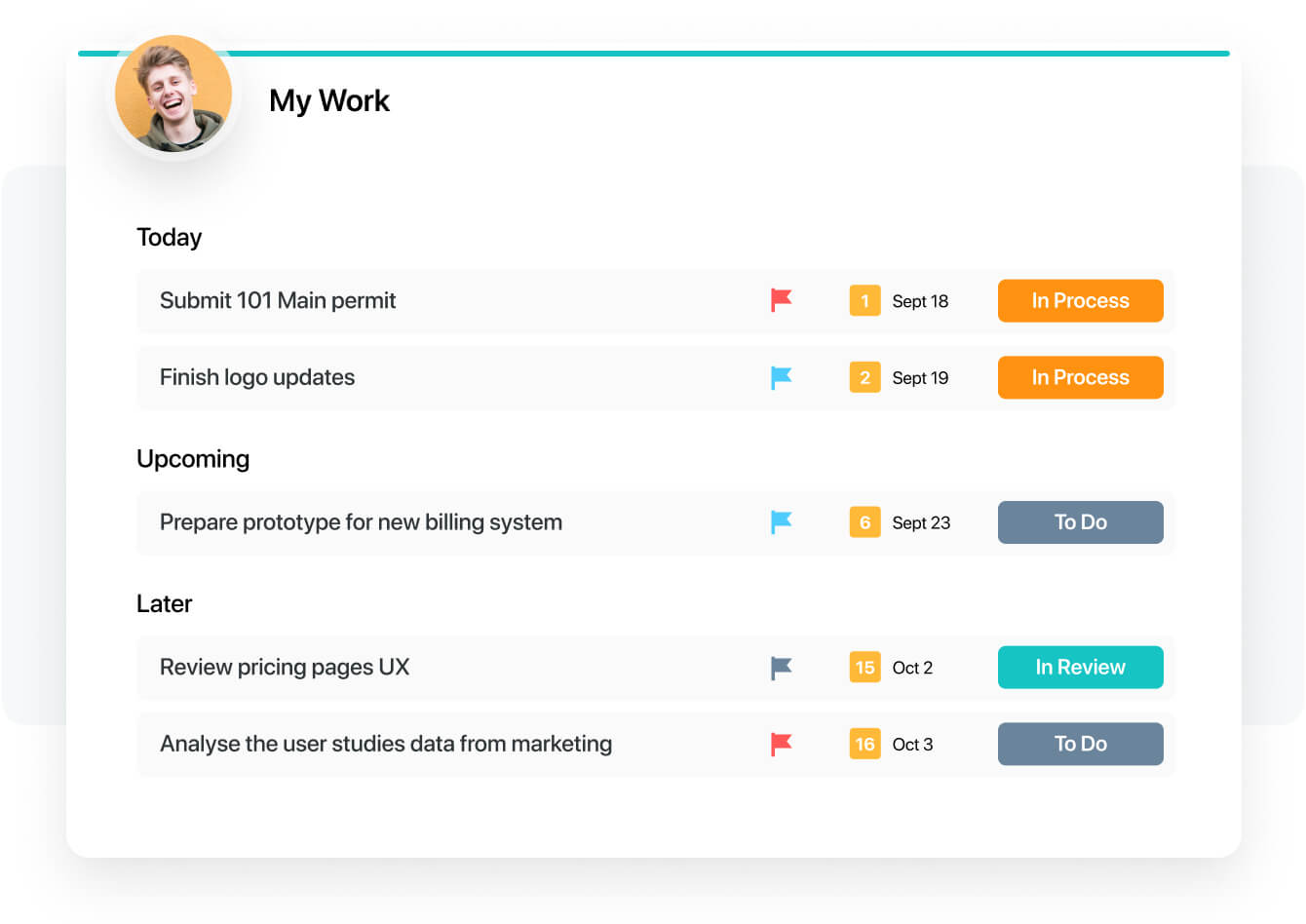
SmartSuite’s views feature allows you to set up tailored lists for various team members. For instance, if Mark is responsible for on-site work, he can have a view filtered only to his assigned tasks. Likewise, administrators can focus on sales and accounts without construction details cluttering their dashboards. Custom views make it easy to keep everyone on the same page without overload.

3. Track Projects Using Calendar Views

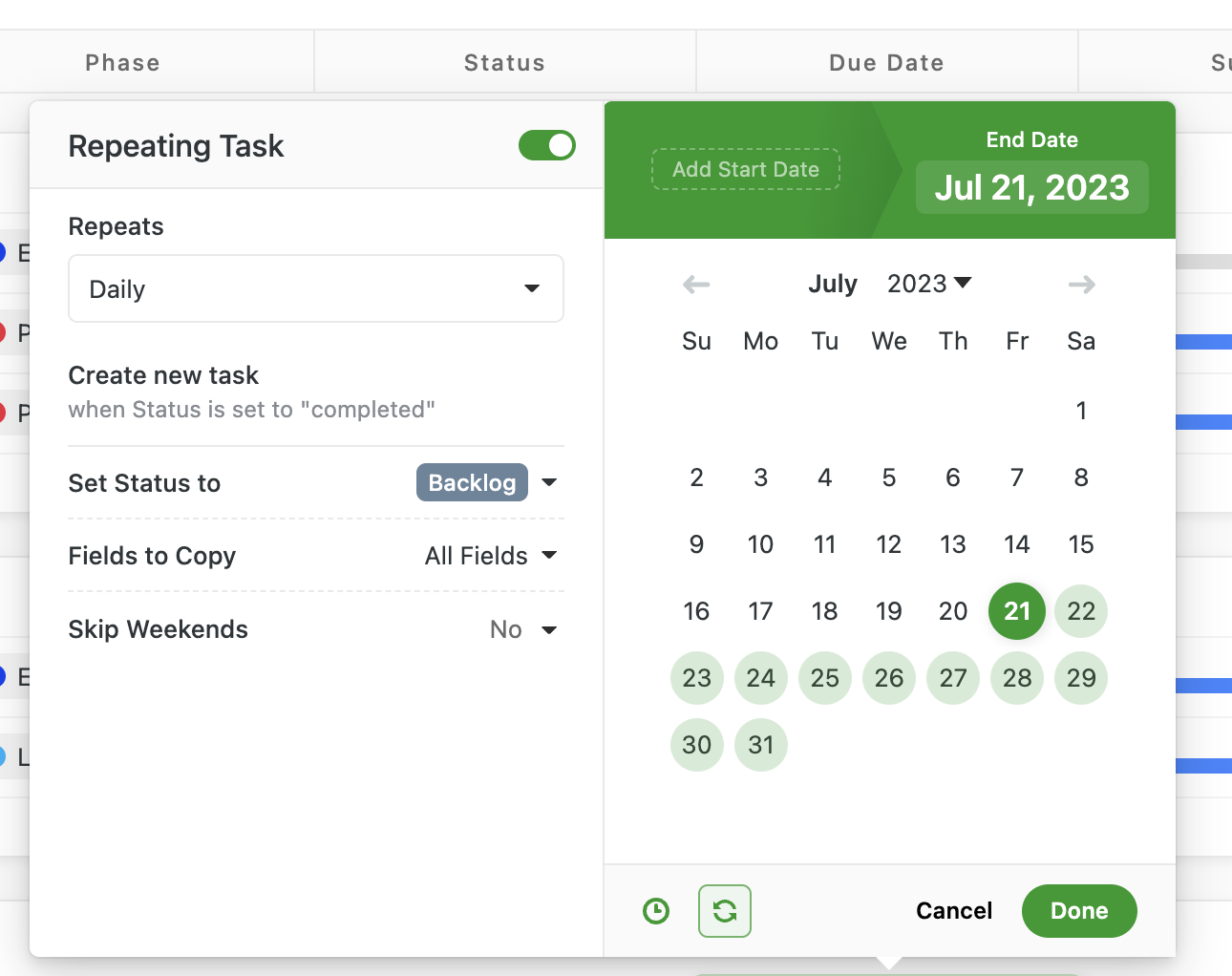
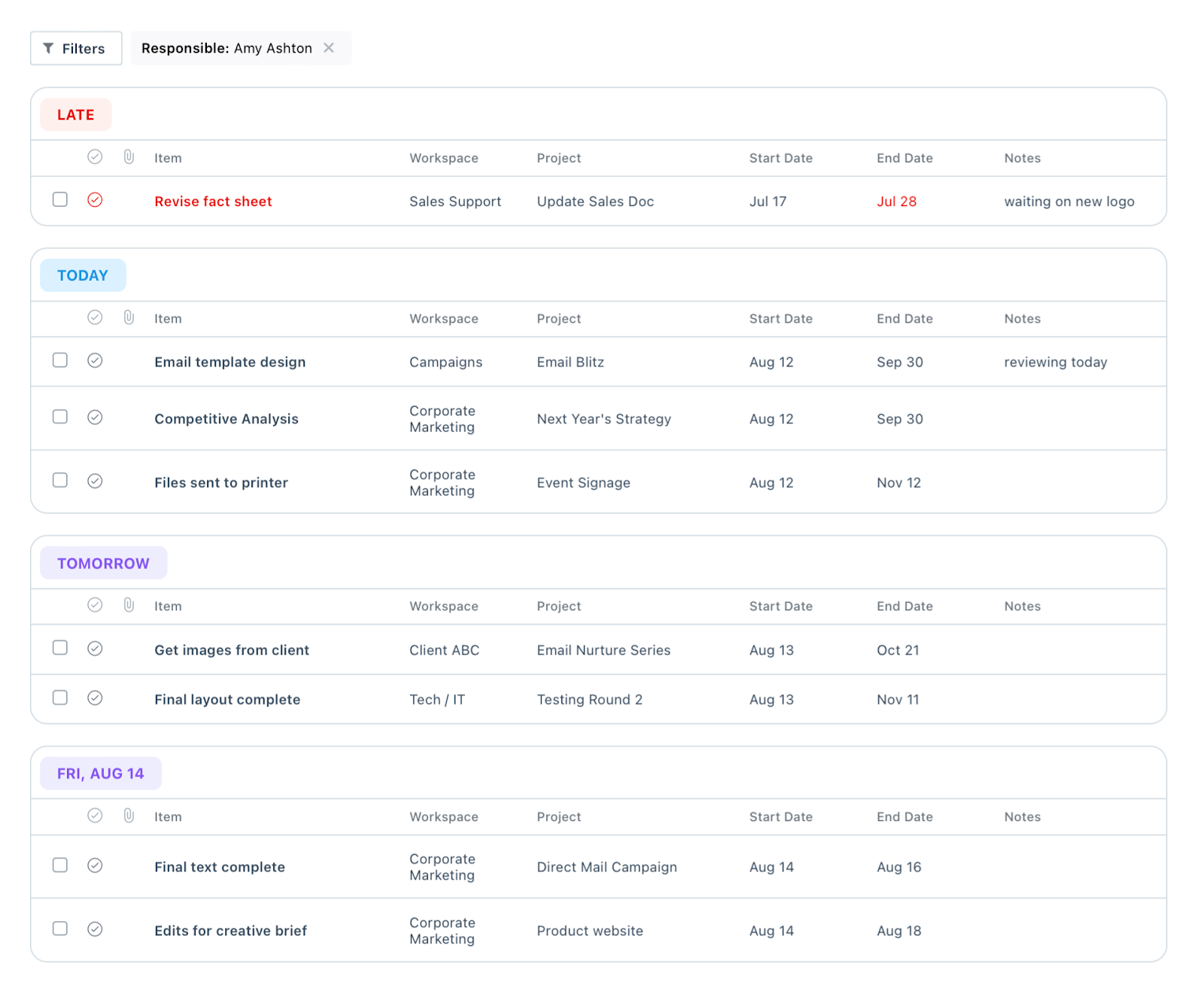
In addition to list views, calendar views make scheduling easier, particularly for contractors with frequent due dates. For example, setting recurring tasks for project valuations every two weeks ensures nothing slips through the cracks. Having this calendar format allows managers to quickly see project timelines and due dates visually, preventing overlooked deadlines.

4. Streamline Field Work with Task Forms

SmartSuite’s forms simplify task creation from the field. For instance, create a “Snag Report” form where site workers can quickly log an issue, upload a photo, and assign it to a specific project. Forms can be accessed via a simple link, making it easy for team members in the field to add new tasks without needing to navigate the full app.

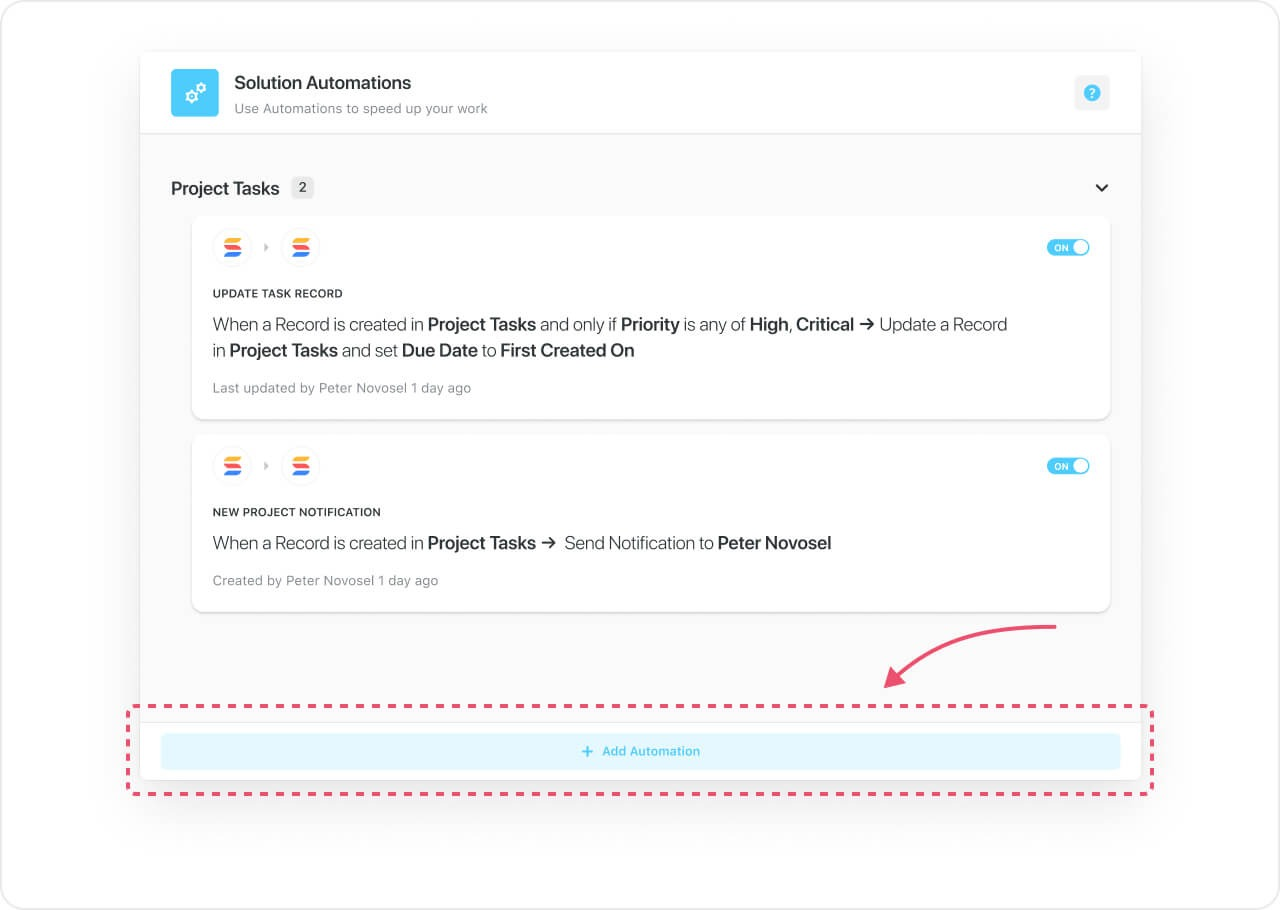
5. Automate and Scale Up

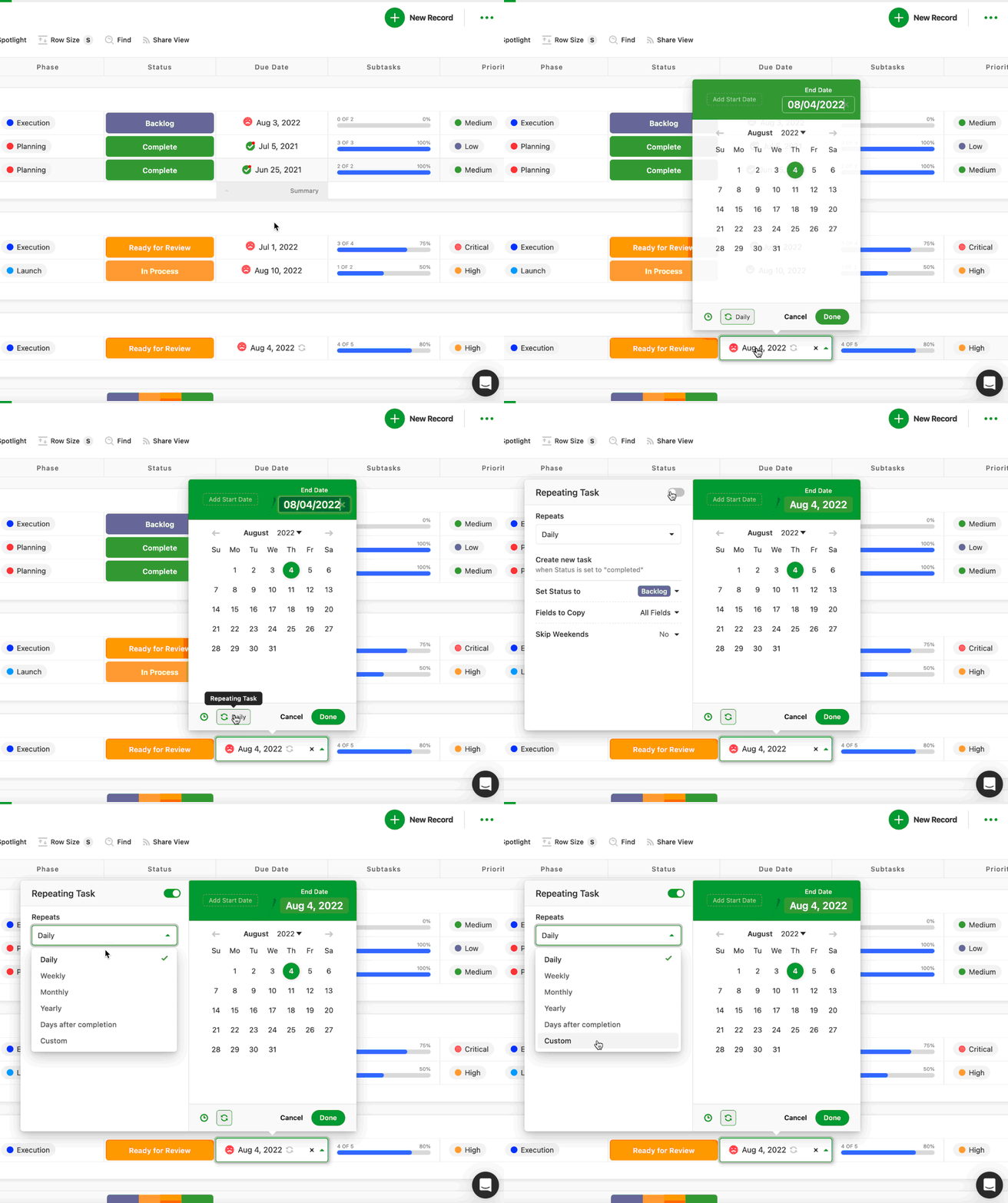
Once your team is comfortable using SmartSuite, automation is the next step. You can set recurring tasks, automatic status updates for overdue items, and reminders, freeing up time and reducing manual work. As your business scales, SmartSuite can accommodate additional project tracking, timesheets, HR solutions, and more.

Best Practices for Long-Term Success

Transitioning to a digital task manager can be an adjustment, but keeping a few principles in mind can make it seamless:

  • Consistency: Add due dates for all tasks, even those not immediately urgent. Regularly reviewing and updating task statuses prevents tasks from falling through the cracks.
  • Periodic Tweaking: As you use the system, set aside time to make small adjustments based on what’s working and what isn’t. After a few months, you may find that automating more or adding solutions for separate departments can increase productivity.

By starting with task management in SmartSuite, construction businesses gain a foundation they can expand as needs evolve. The goal is not just efficiency but also building an operational framework that can grow with your team and projects.
10 Best Marketing Project Management Software in 2024 [In-Depth Guide]

Software Stack Editor · November 4, 2024 ·

Project management lies at the core of the success of your marketing campaigns, but it is often overlooked.

Choose the wrong tool, and you’re setting yourself up for failure before you even begin: 

The project’s resources are misaligned, communication is not transparent, and project goals are not met.

Thus, having good project management software is paramount. It helps you build a command centre for all your projects and resources while keeping stakeholders in the loop.

To help you manage your projects smoothly, we’ve shortlisted the 10 top marketing project management software on the market in 2024. 

We’ve tried and tested each tool to share their use cases, top features, strengths and drawbacks to help you make an informed decision.

Factors to Consider When Evaluating Marketing Project Management Software

Look for the following features to find the best project management tool to plan and manage your marketing tasks and projects.
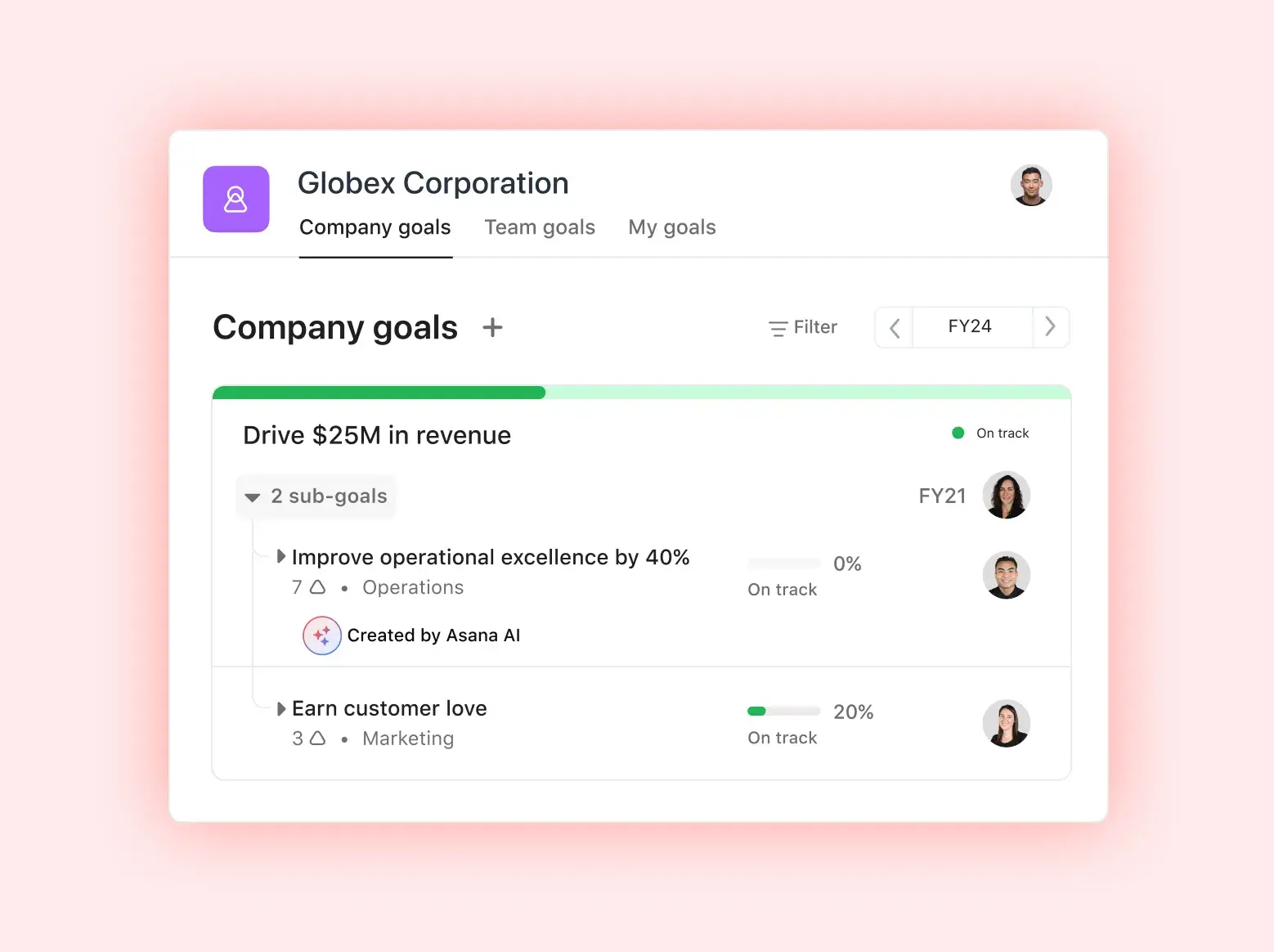
Customizable workflows

To manage your projects from planning to execution, you need a customizable tool to adapt to changing requirements during the project’s life cycle. 

Ensure that the tool helps you:

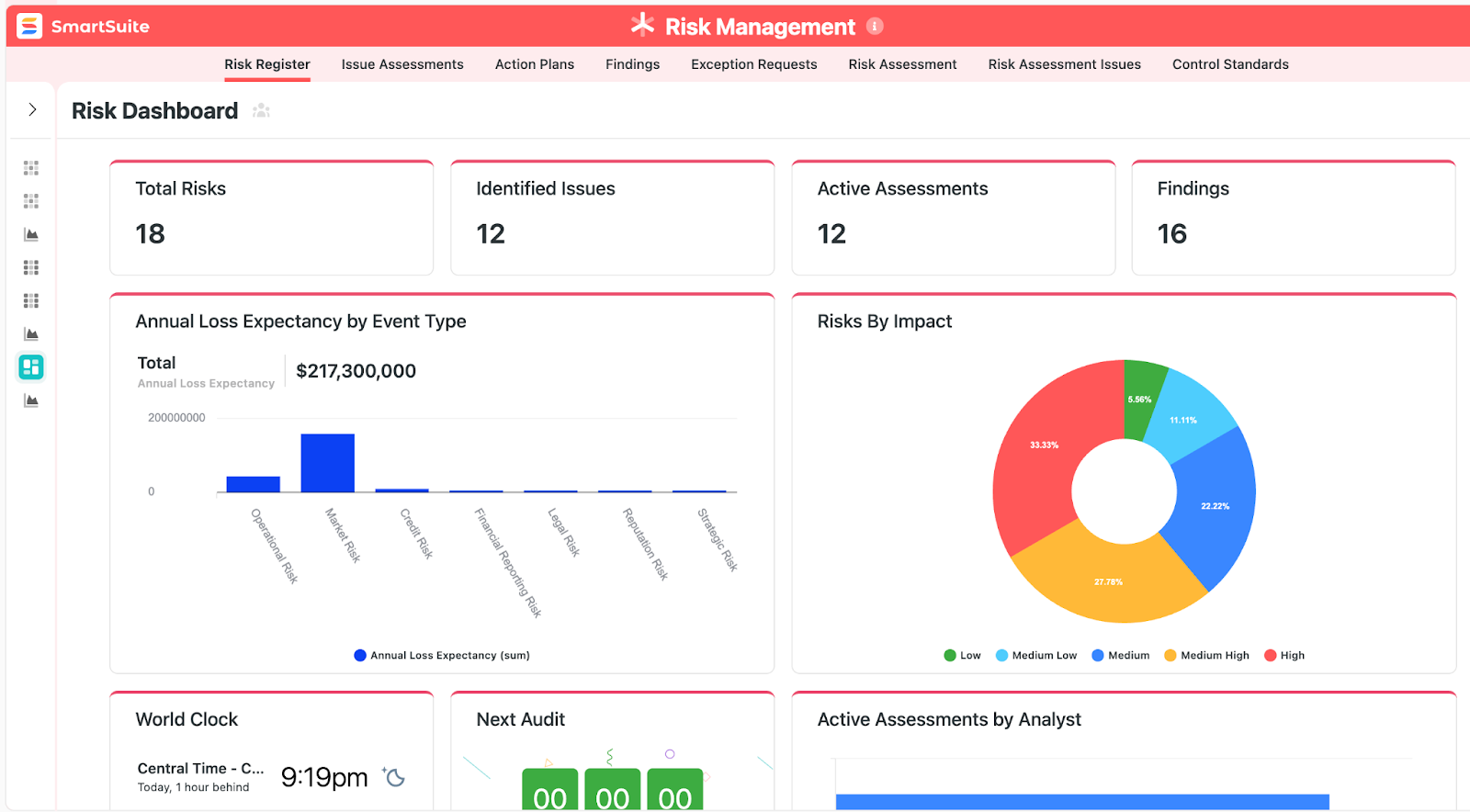
  • Develop project-specific dashboards.
  • Create templates to share internally and reduce work overload.
  • Build automated workflows to eliminate routine tasks like approvals, status updates, etc.

Flexible project views

Look for a project management tool that caters to everyone’s preferences through multiple views.

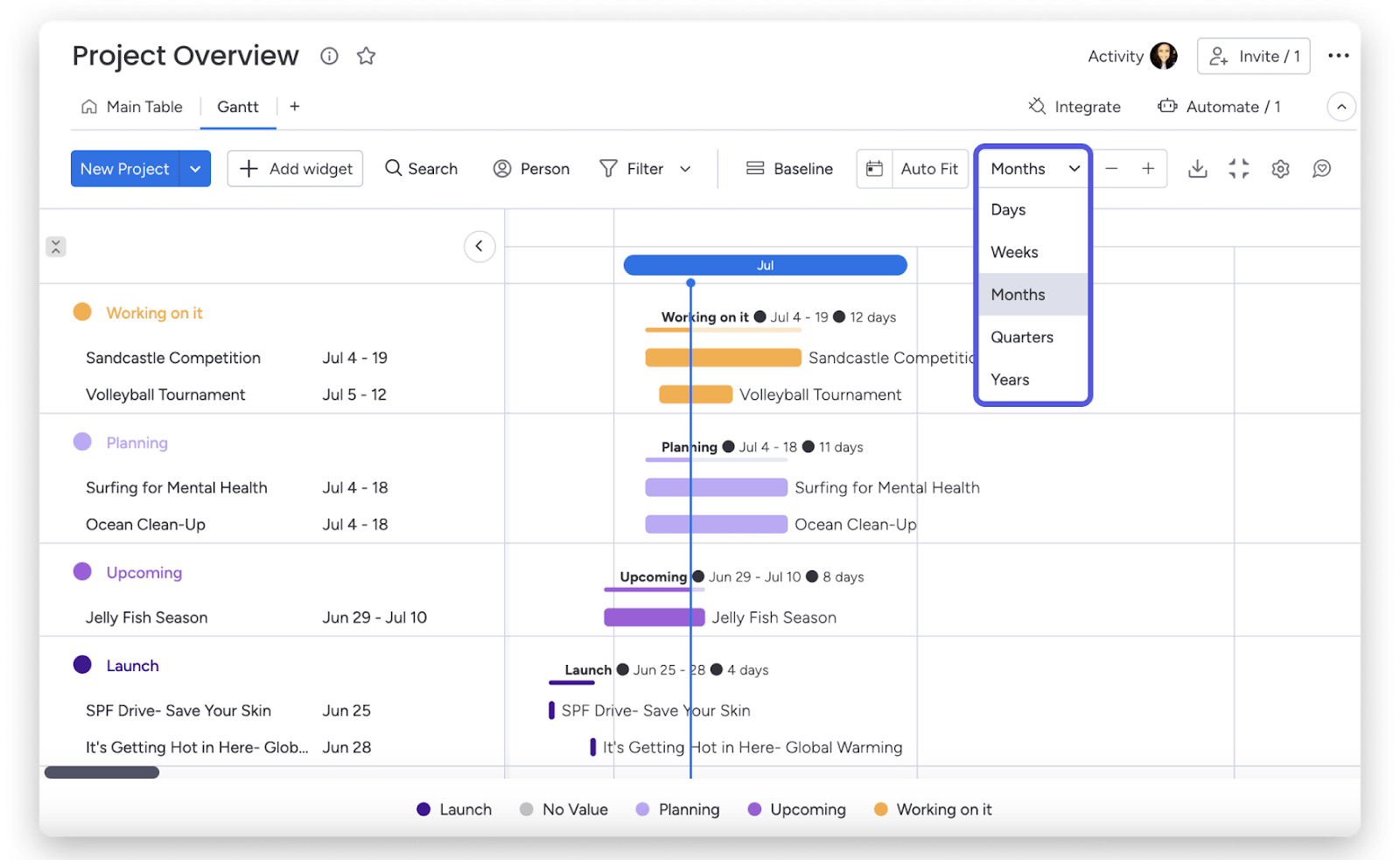
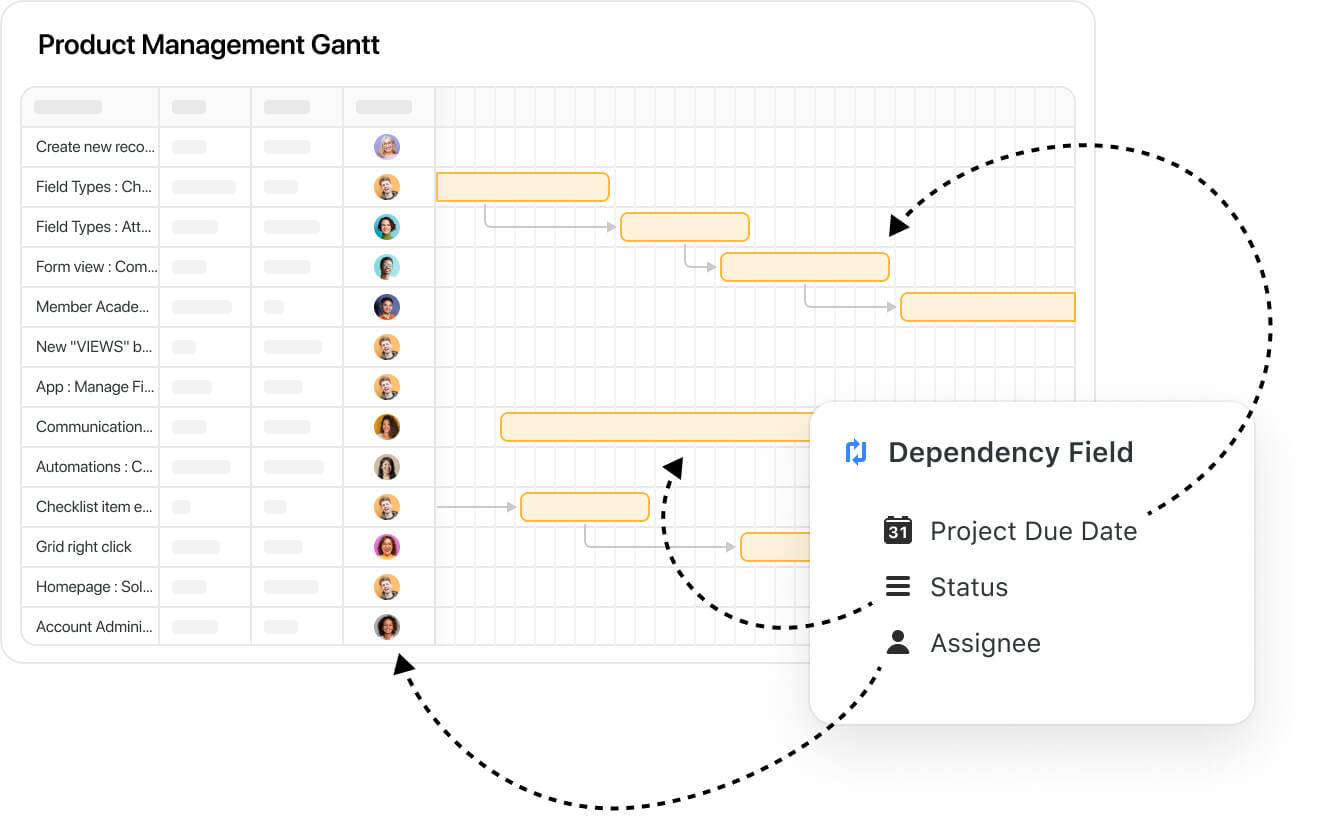
  • Gantt charts for visualizing task dependencies and project timelines.
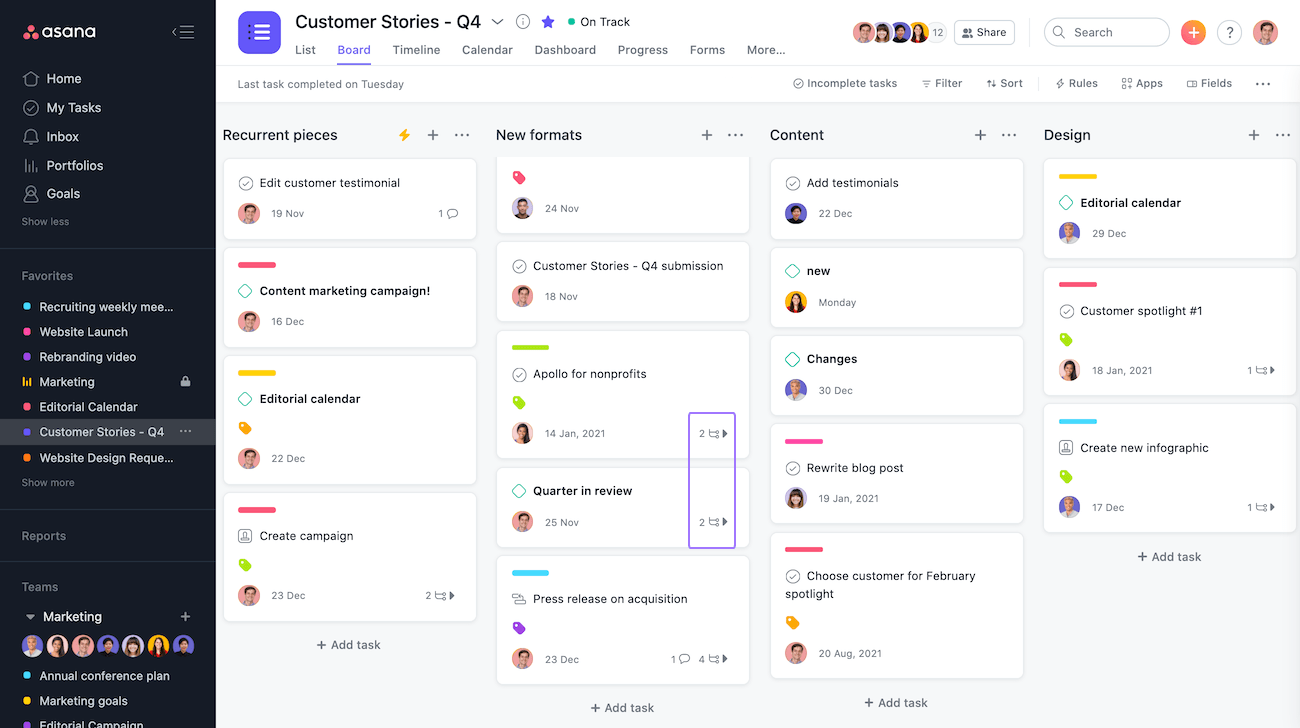
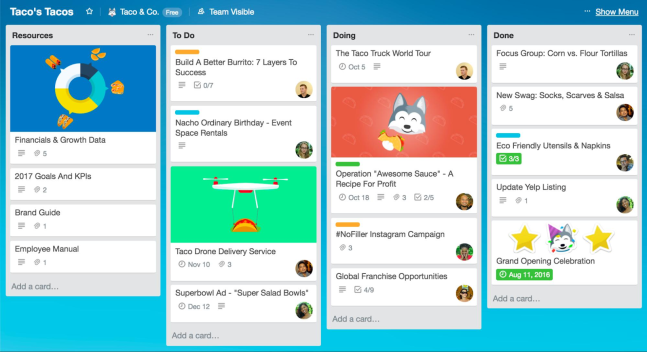
  • Kanban boards for campaign management and task prioritization.
  • Calendar view for tracking publishing and execution schedules.
  • Timeline view to track project duration and deadlines.
  • List views for a quick overview of the task list.

Reporting and analytics

Sharing project-end reports or per-campaign reports is vital to measure the success of your campaigns. To do this, ensure that the tool.

  • Integrates with existing analytics tools such as Tableau, GA, and PowerBI.
  • Helps you build custom reports by pulling data from your project dashboards.
  • Offers easy sharing and exporting options for visibility across the project team.

Collaboration and communication tools

Real-time, consistent communication is key to managing marketing projects. You should look for:

  • Task and project-level comments and @mentions.
  • In-app messaging for 1:1 or group chats with stakeholders and teammates.
  • Option to build project-specific chat channels to keep conversations organized.

Integrations with marketing software

To expand the collaboration beyond your workspace, ensure the tool integrates with your existing stack. Look for these integrations:

  • Social media management platforms: Hootsuite, Buffer, Sprout Social.
  • Design and creative tools: Figma, Adobe Creative Cloud, Canva.
  • Content management systems: WordPress, Ghost, Webflow.
  • CRM tools: Salesforce, HubSpot CRM, Pipedrive.
  • Automation tools: Marketo, Zapier, Make.

Resource management

The project management tool should help plan project resources, balance resource allocation, and assess the team’s capacity. 

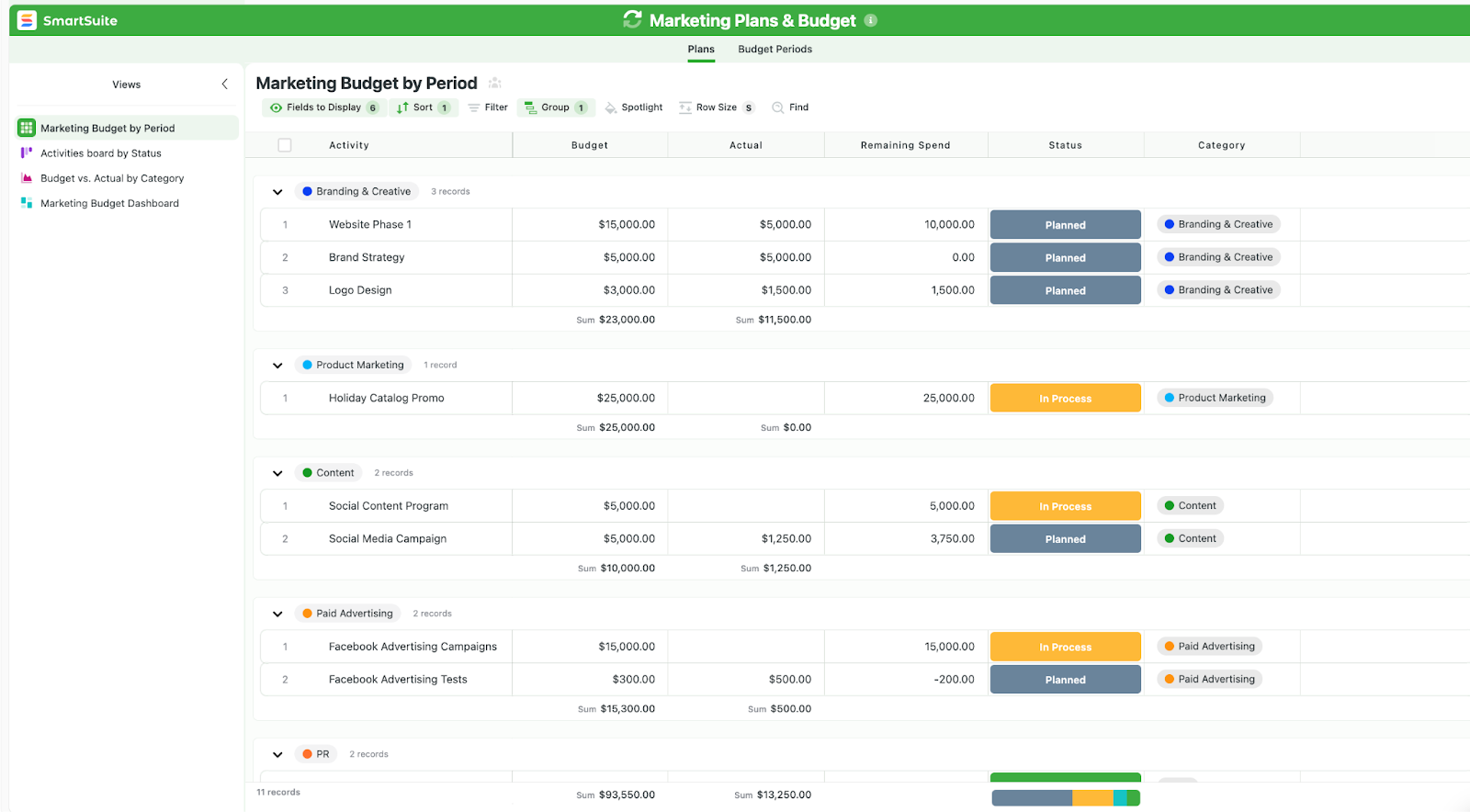
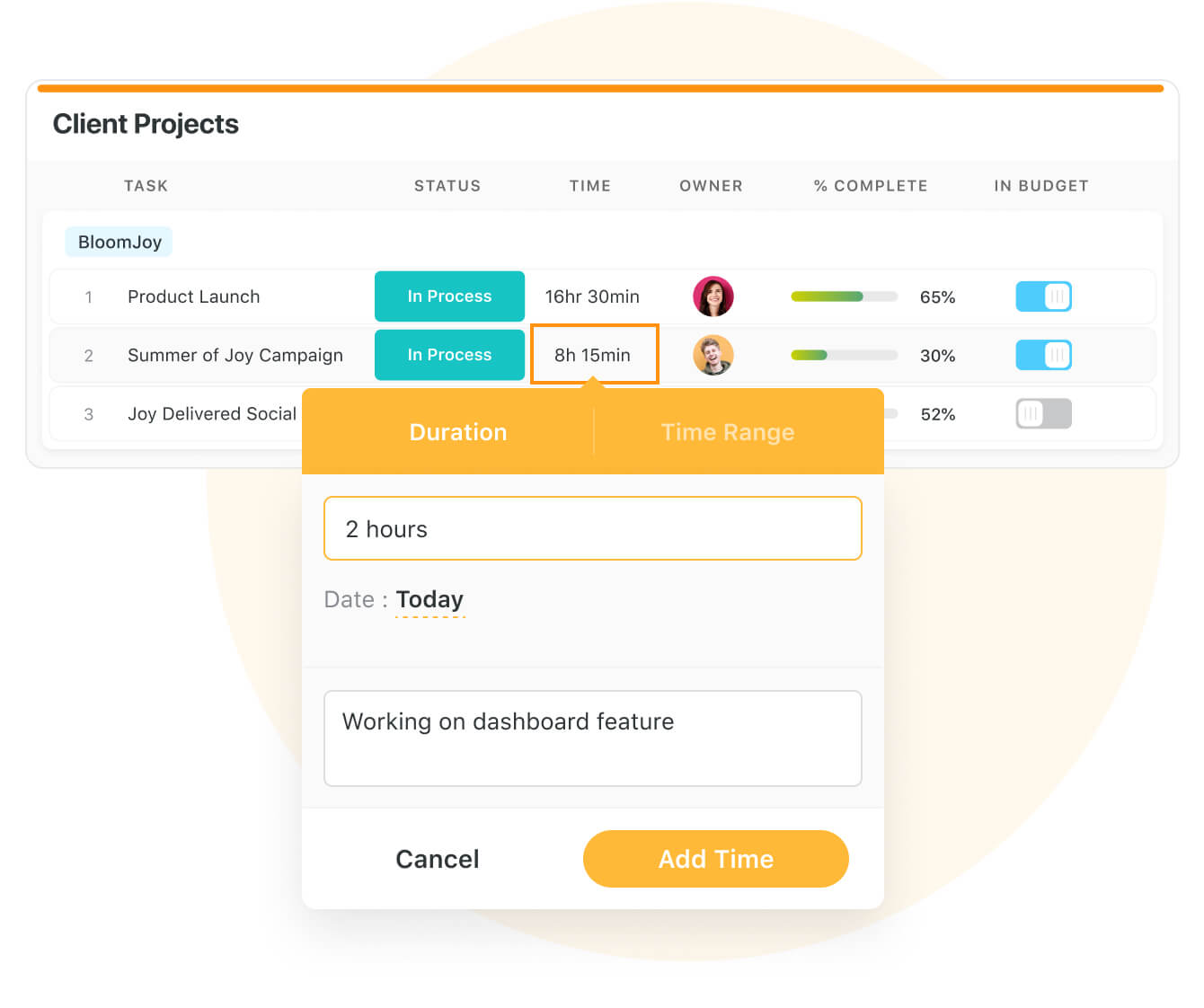
Features like time tracking, dashboards, and budget planning are some key ones you should monitor.

We analyzed 30+ project management software based on several factors and shortlisted our top picks.

Let’s dive in!

10 Top Marketing Project Management Software

Here are our top marketing project management software picks for 2024 based on our research and after looking at 100+ user reviews:

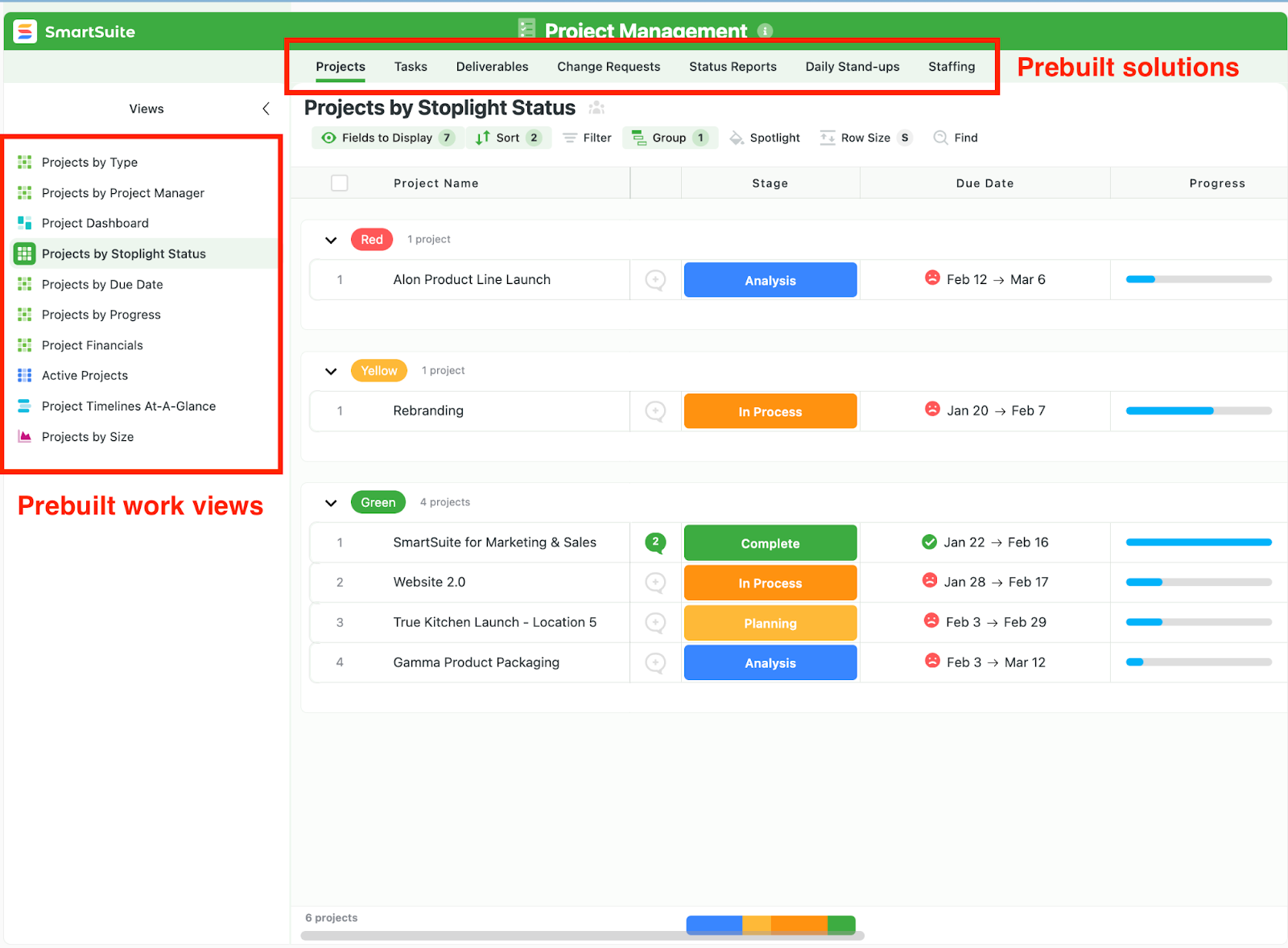
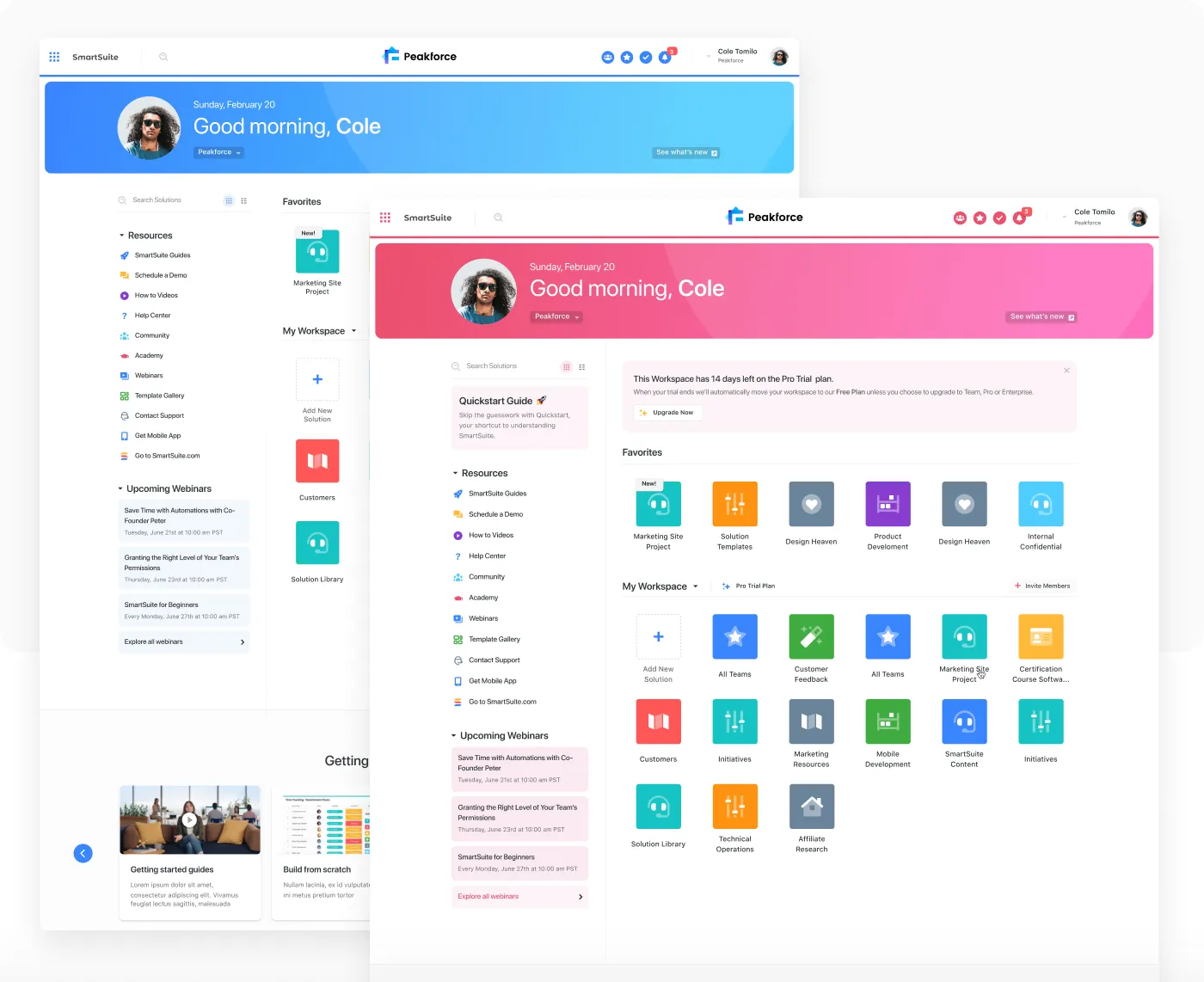
  1. SmartSuite: Marketing project management platform that combines automation with a personalized workspace to help you plan, manage, and track projects of all sizes.
  2. ClickUp: Managing large-scale marketing projects with a DIY approach.
  3. Hive: Multipurpose collaboration to manage projects and communicate effectively.
  4. Trello: Manage and track marketing campaigns using Kanban boards.
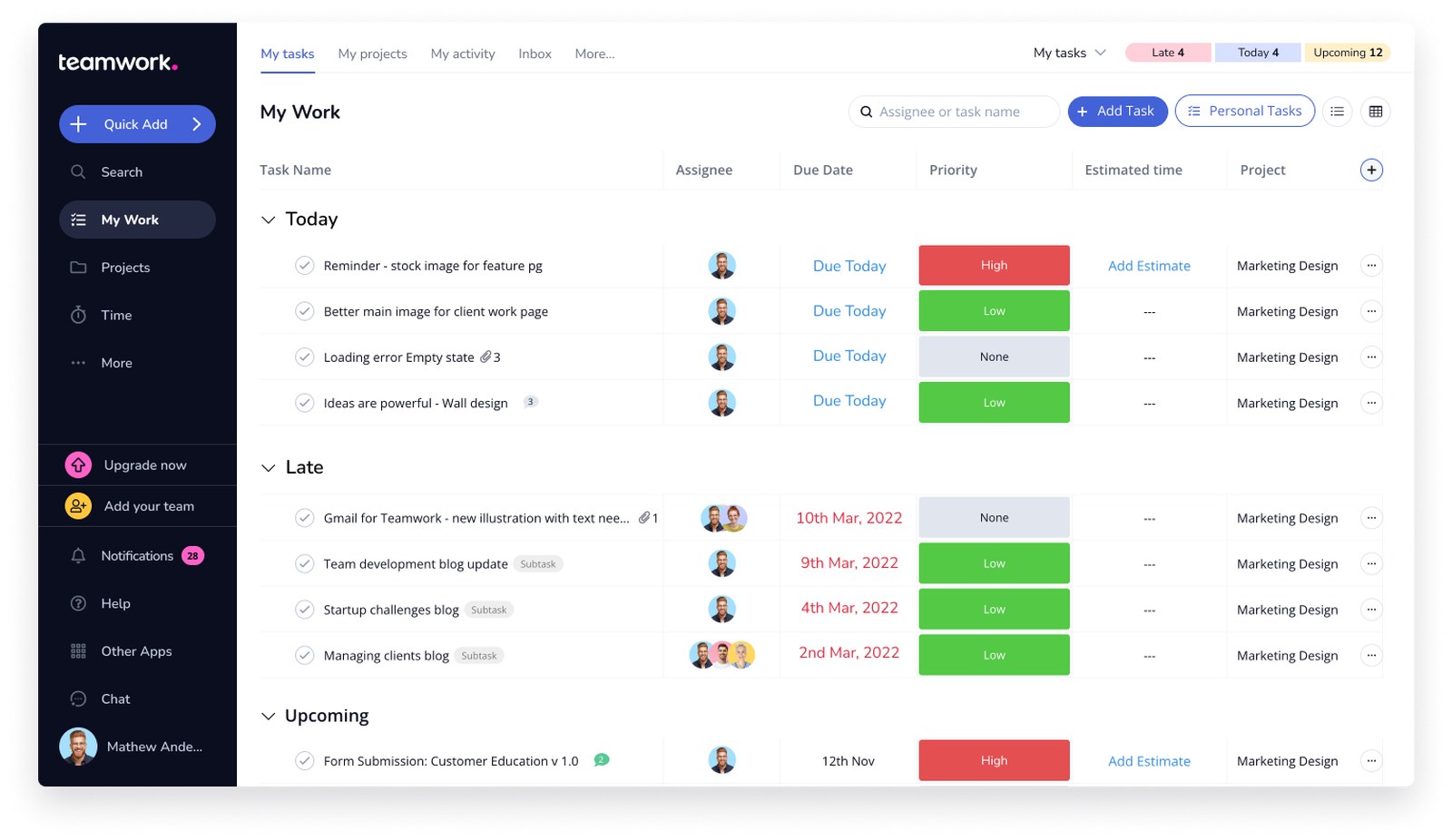
  5. Teamwork: Client project management across various clients and collaboration.
  6. Monday.com: Managing complex projects with flexible dashboards.
  7. Asana: Building flexible workflows through dependencies and automation.
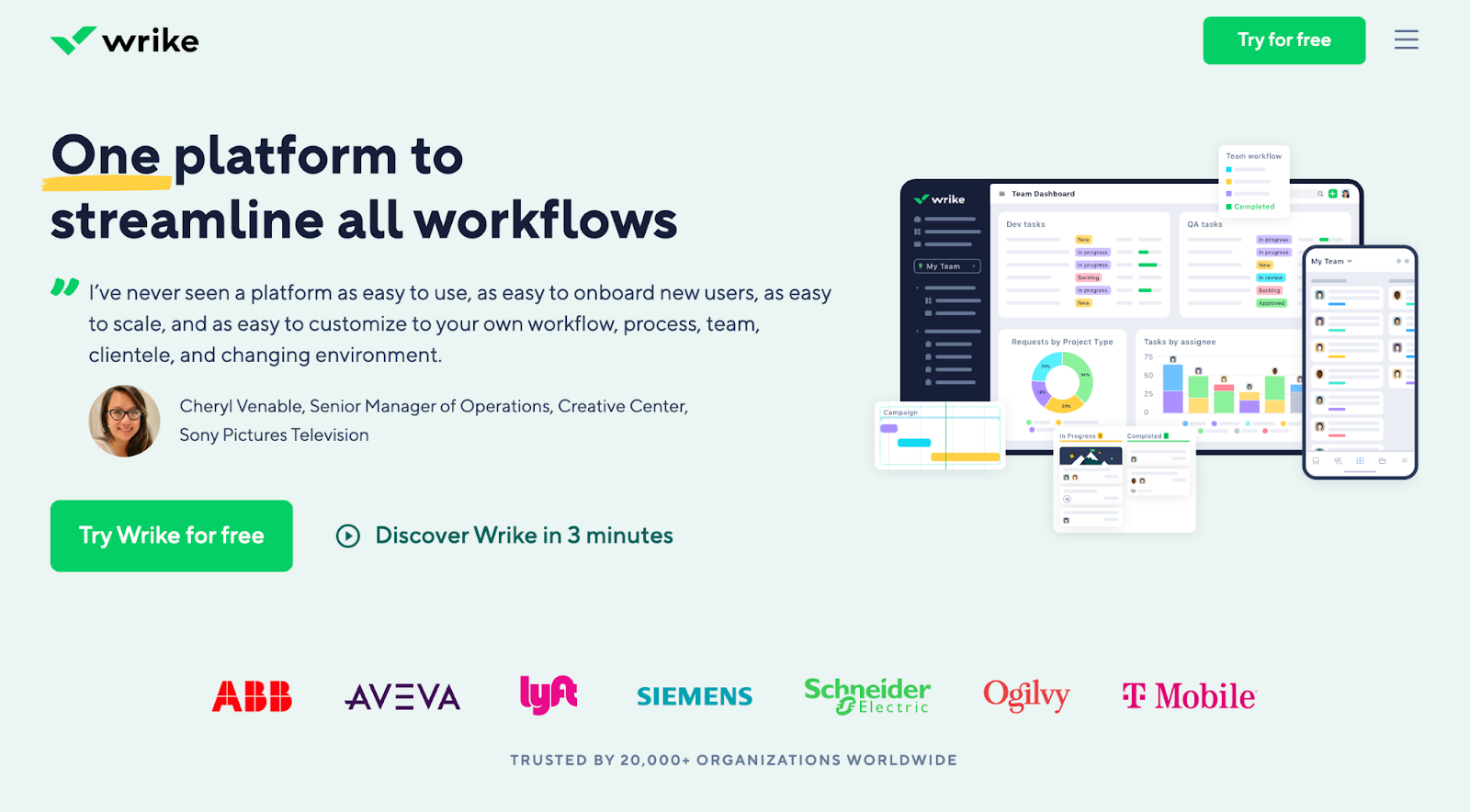
  8. Wrike: Managing marketing campaigns across multiple teams.
  9. Workzone: Multiple marketing campaign management with built-in time tracking/.
  10. Basecamp: Centralized campaign management–from ideation to execution.

#1: SmartSuite

SmartSuite is a versatile marketing project management software that combines automation with a tailored workspace to help you plan, manage, and track projects of all sizes.

Our tool unites all teams, ensuring streamlined information exchange to get work done quickly.

Its intuitive dashboards, powerful automation builder, and native collaboration make it a preferred choice for marketing teams and managers.

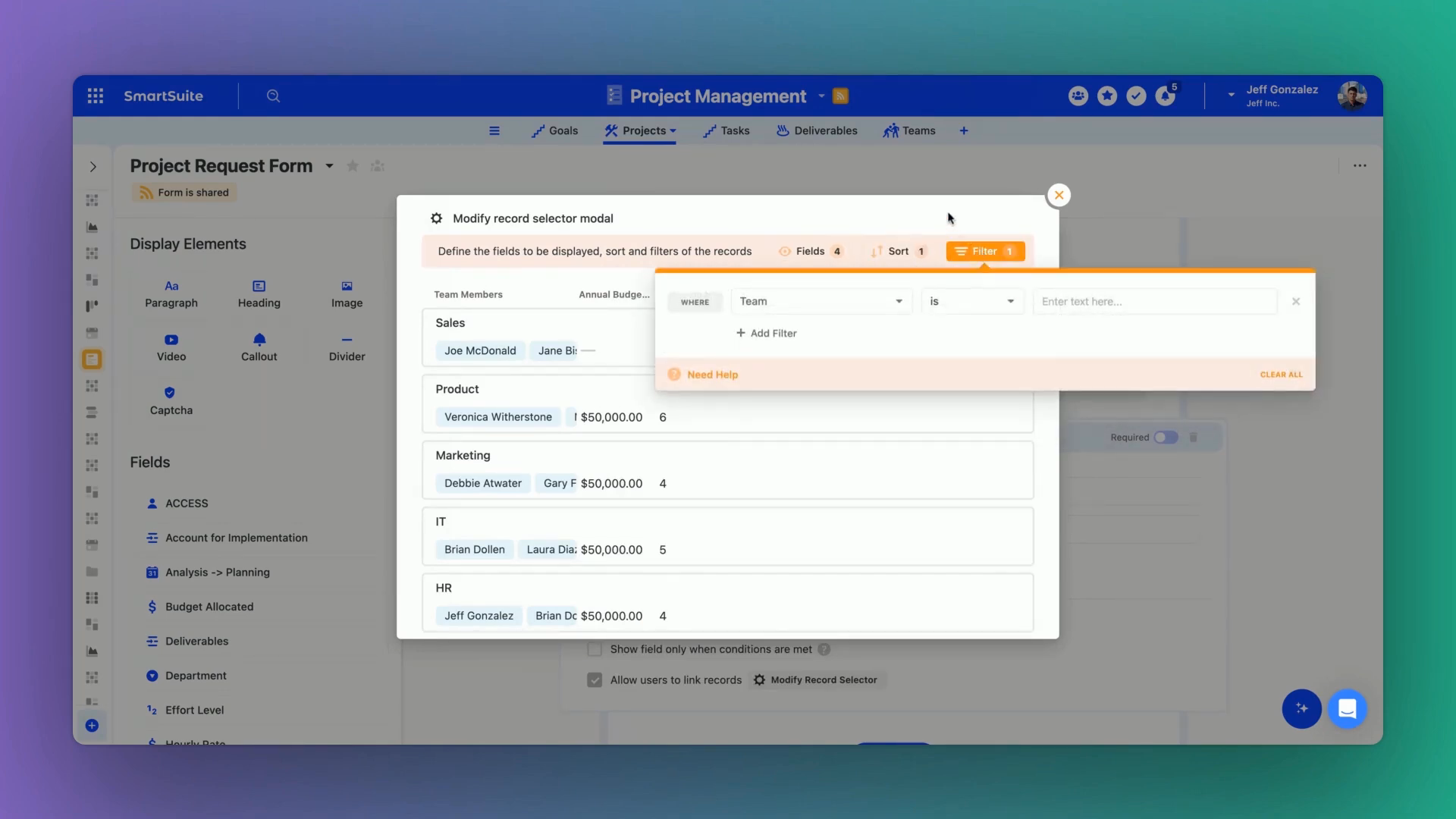
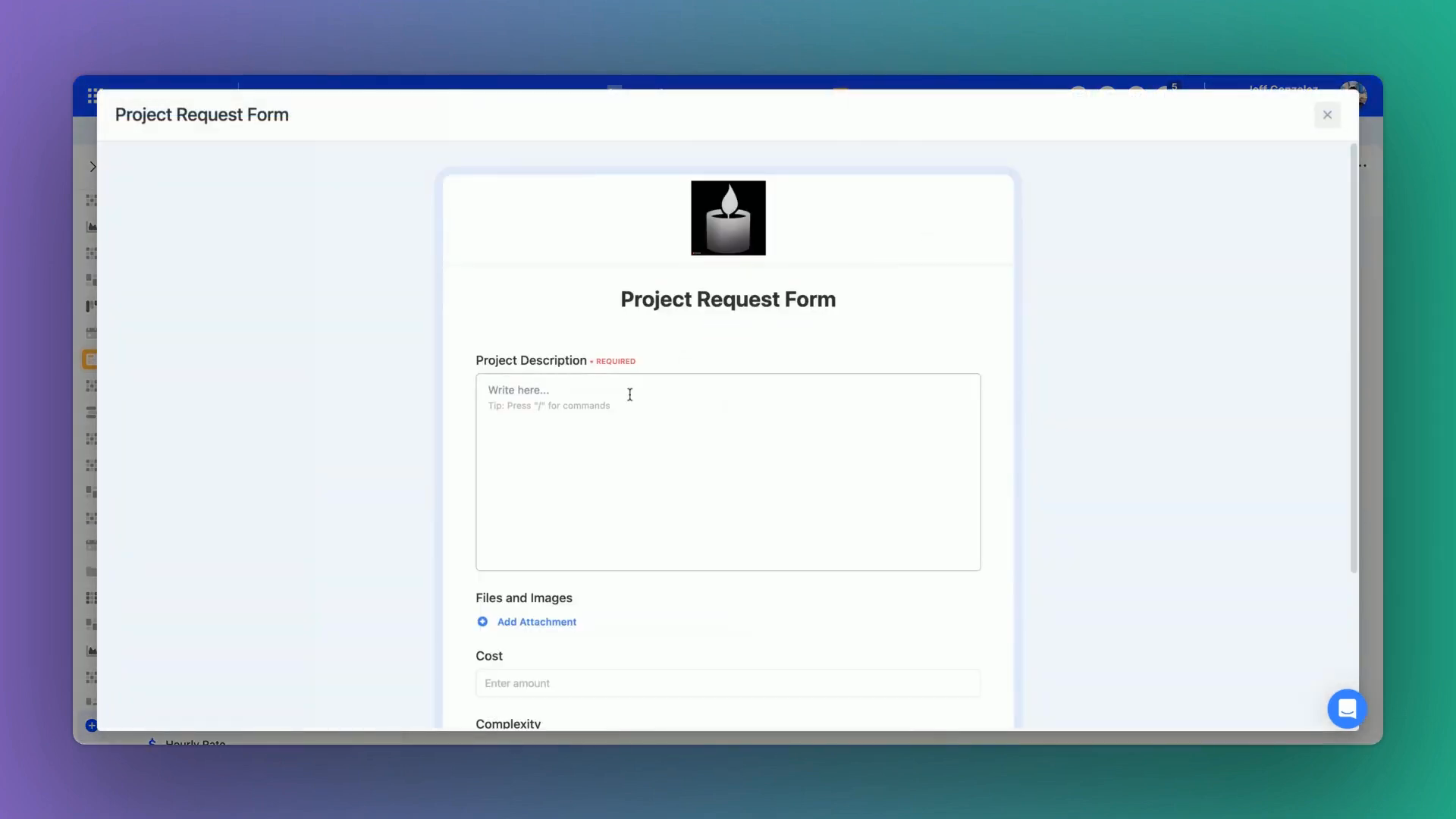
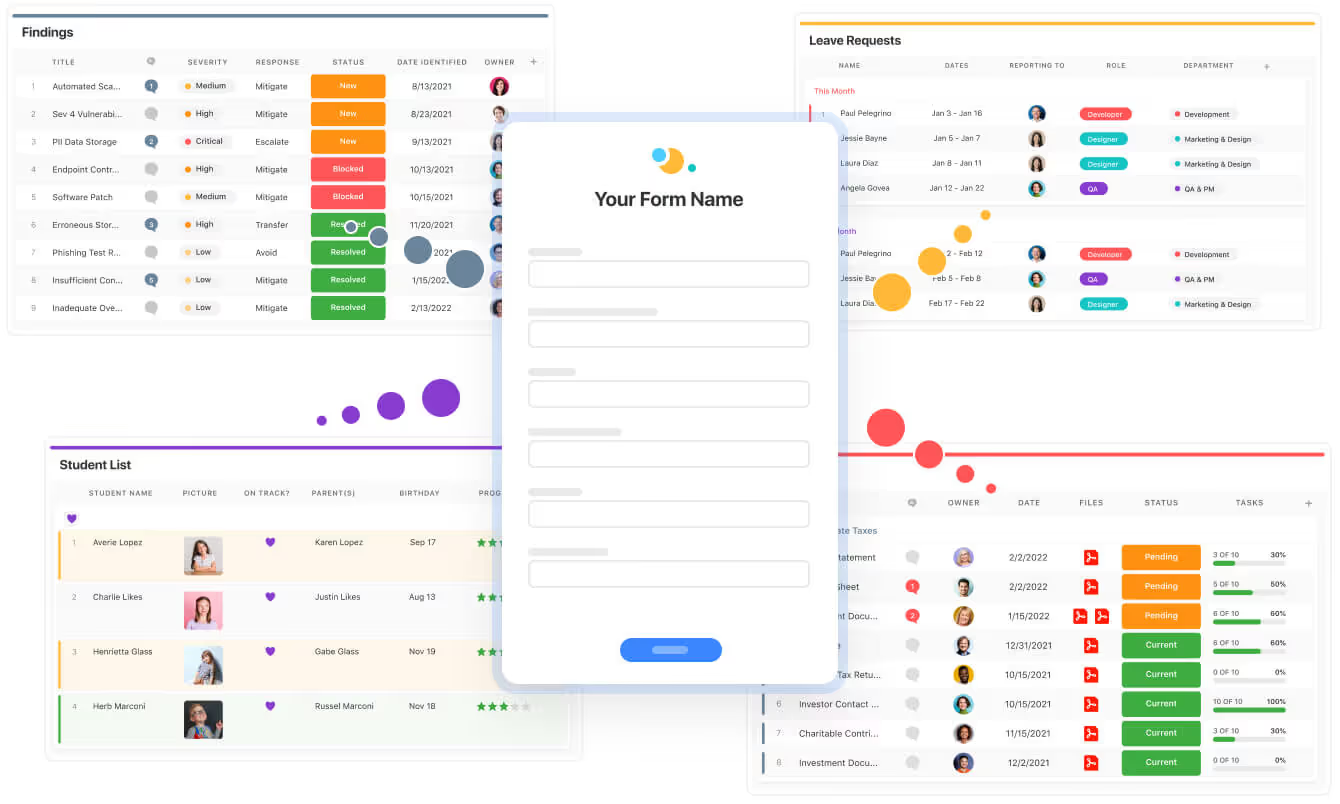
Centralize request forms and approvals

Instead of gathering customer feedback or stakeholder changes across various channels and compiling them in your task management tool, SmartSuite eliminates the manual work through request forms.

These forms help you collect all the information at the start of the project, reducing delays once you initiate it.

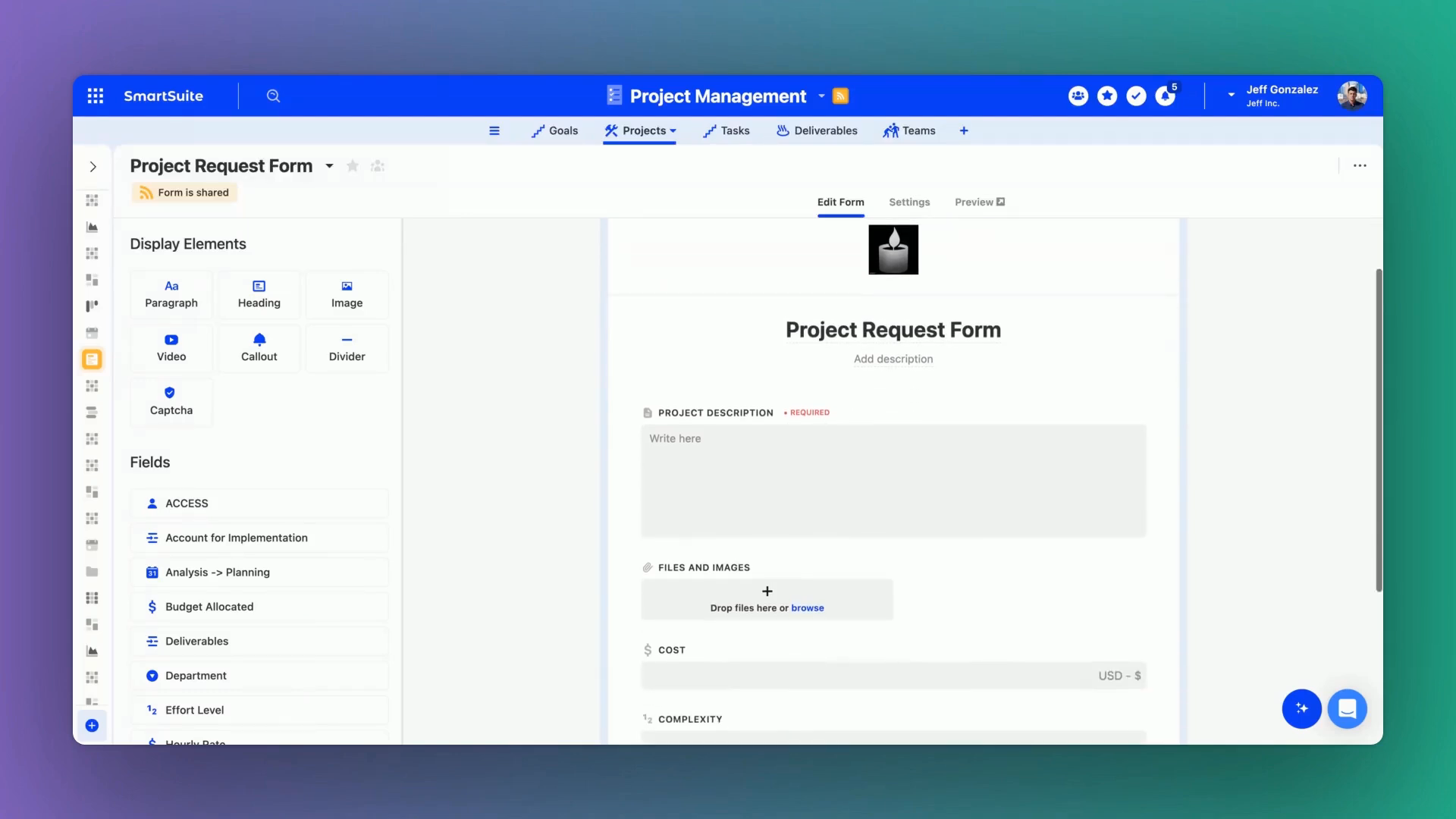
Drag-and-drop form builder

You can build custom forms using SmartSuite’s drag-and-drop builder:

  • Add or remove fields, change field type, or add custom fields like dropdown menus.
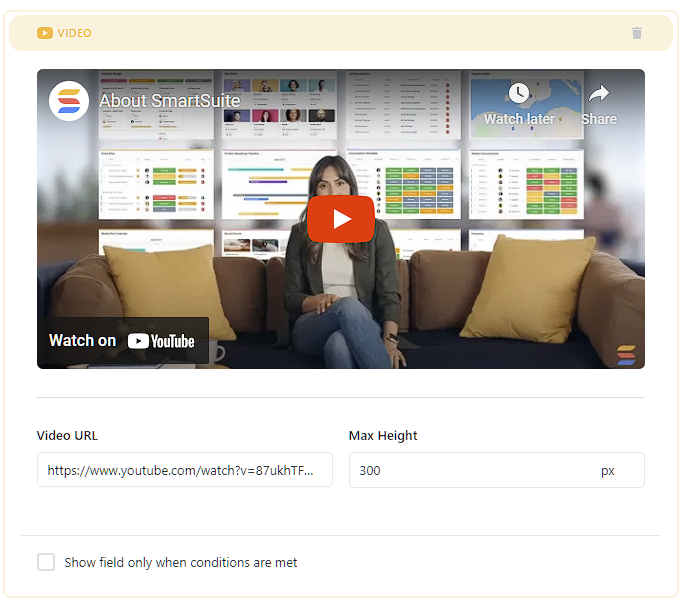
  • Add multimedia items, such as images, videos, or GIFs, to provide more context to clients.

If you’re collecting feedback on your website layout, you can add a snapshot of the layout, a rating menu, and a description field for clear and detailed feedback.

Dynamic forms

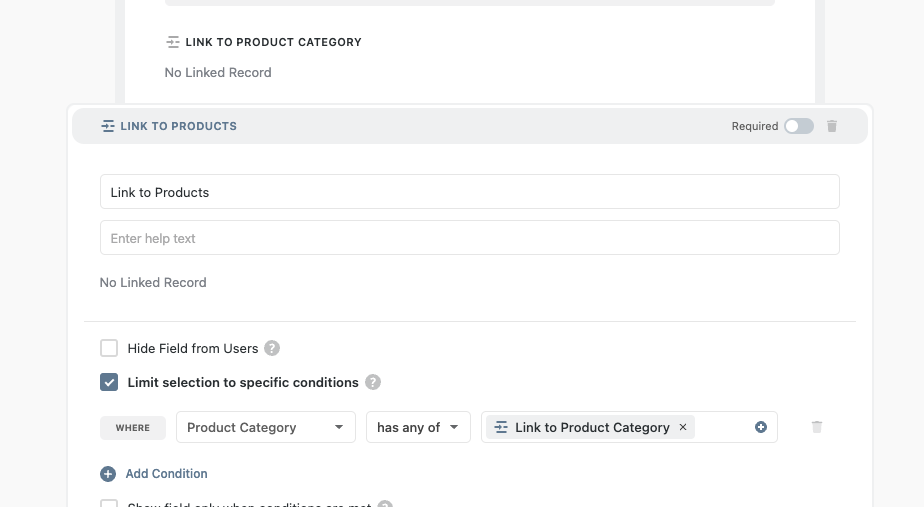
Dynamic forms in SmartSuite use conditional logic to show or hide fields based on previous responses. This lets you:

  • Create branching logic in your forms.
  • Display only relevant questions to each respondent.
  • Customize the form experience based on user input.

You can design a form for website homepage redesign with conditional logic to display specific questions based on previous responses. 

For instance, if a respondent selects “copy changes,” subsequent questions focus on website copy.

Plan and manage creative marketing campaigns

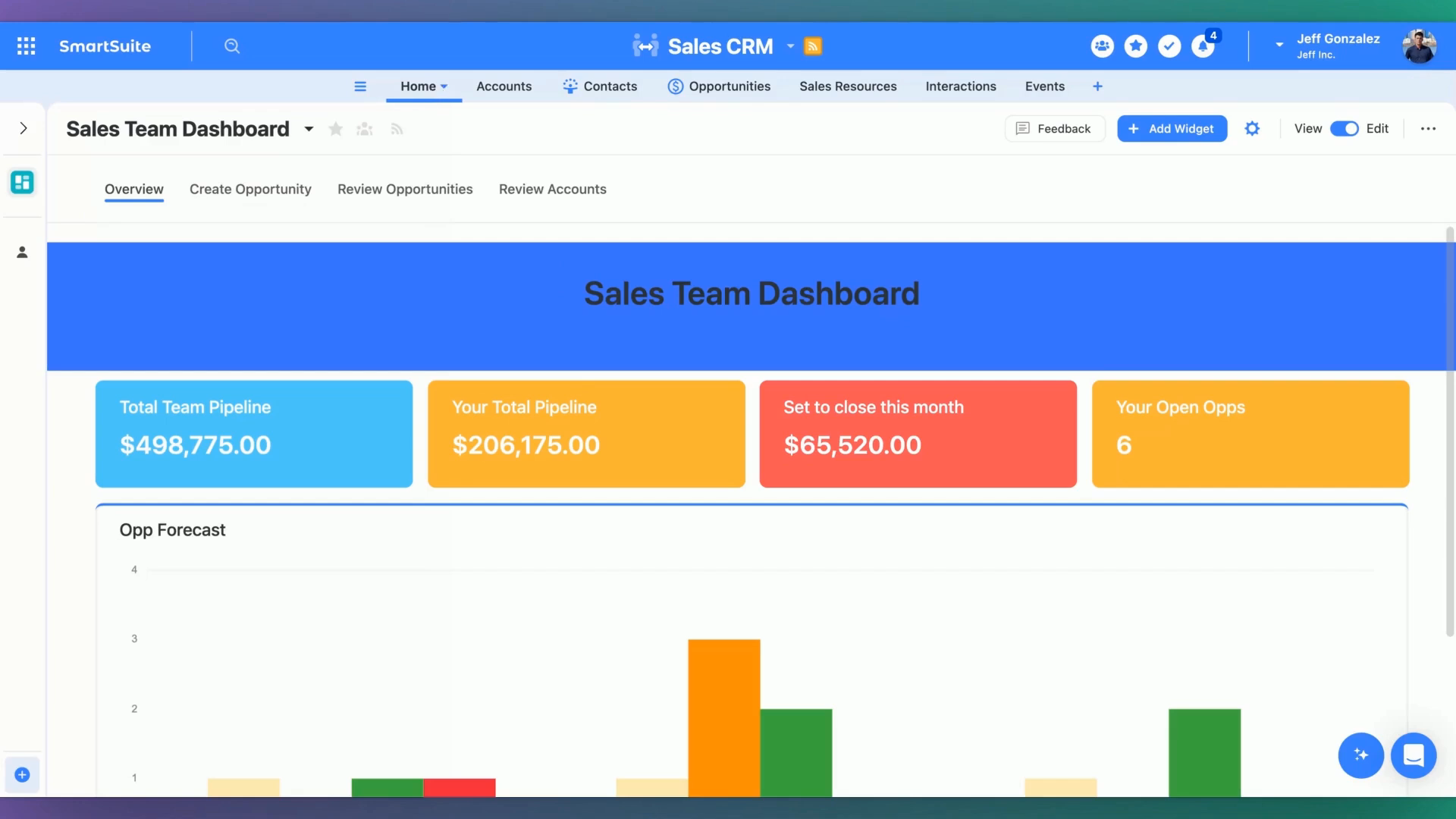
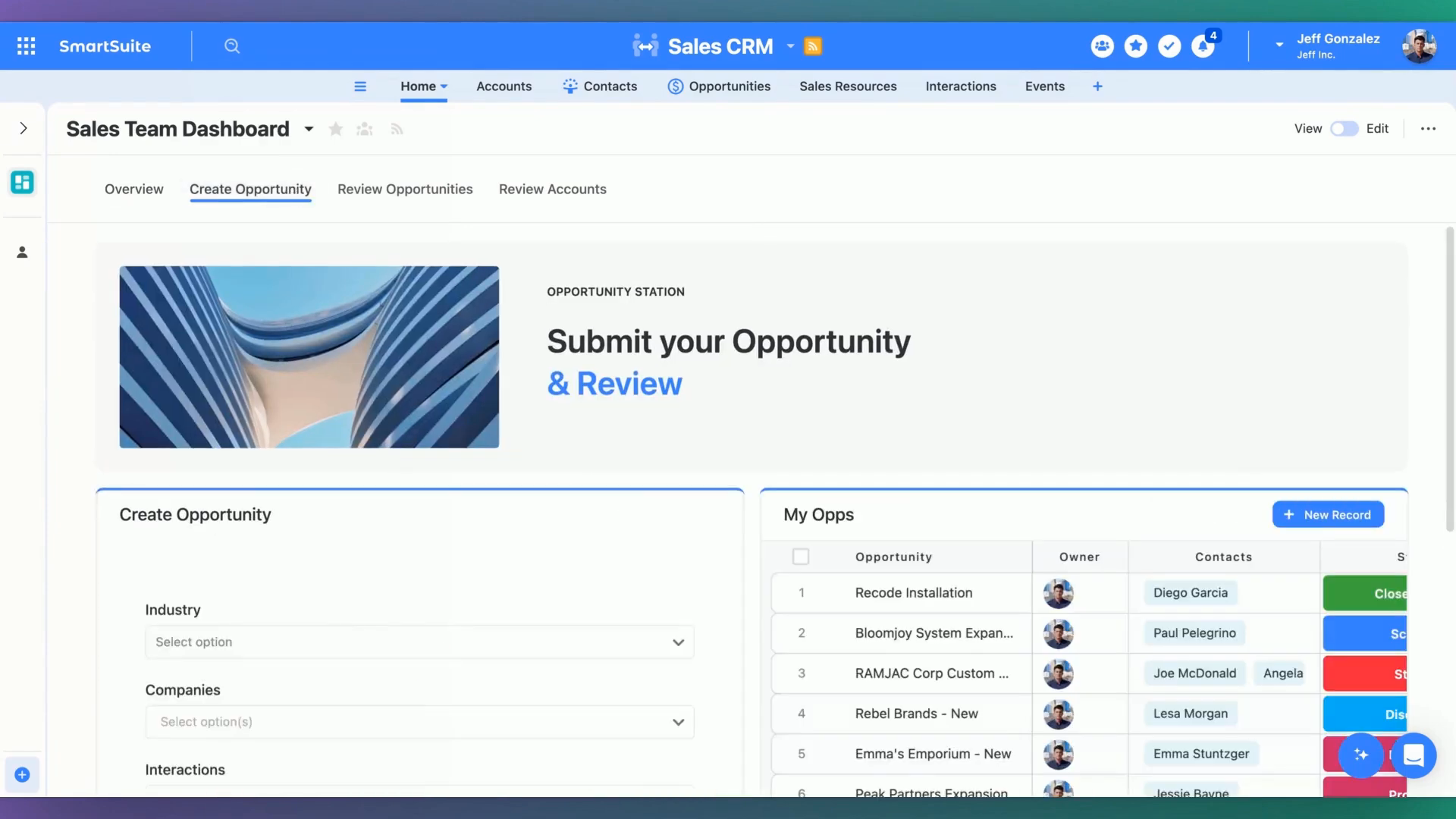
SmartSuite’s project management dashboard offers a 360-degree view into your project’s life cycle—prototyping, review, and refinement.

You can brainstorm design improvement ideas, assign responsibilities, and build reports in one tool.

  • Vote and rating field: Collect feedback on the prototype and final design with the vote and rating field. View and present these ratings as charts in the reporting dashboard.
  • Automate recurring tasks: Build linear to multi-sequence workflows to update status, track progress, and assign tasks without manual effort. Set up automation once and use it forever.
  • Task management: Convert any record type into tasks and add different fields–subtasks, checklists, and sub-items. Enhance each task with notes and comments for the assigned person.
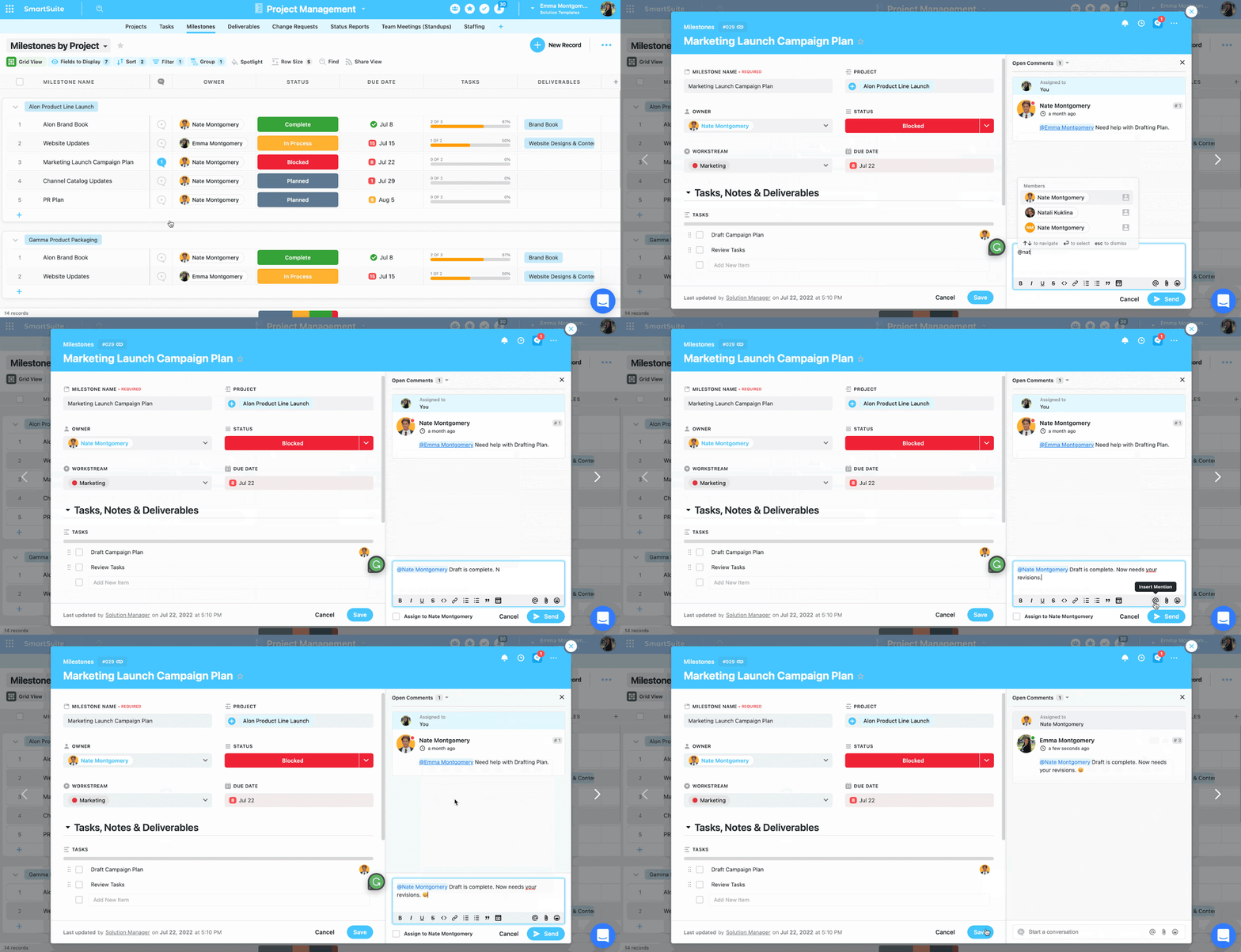
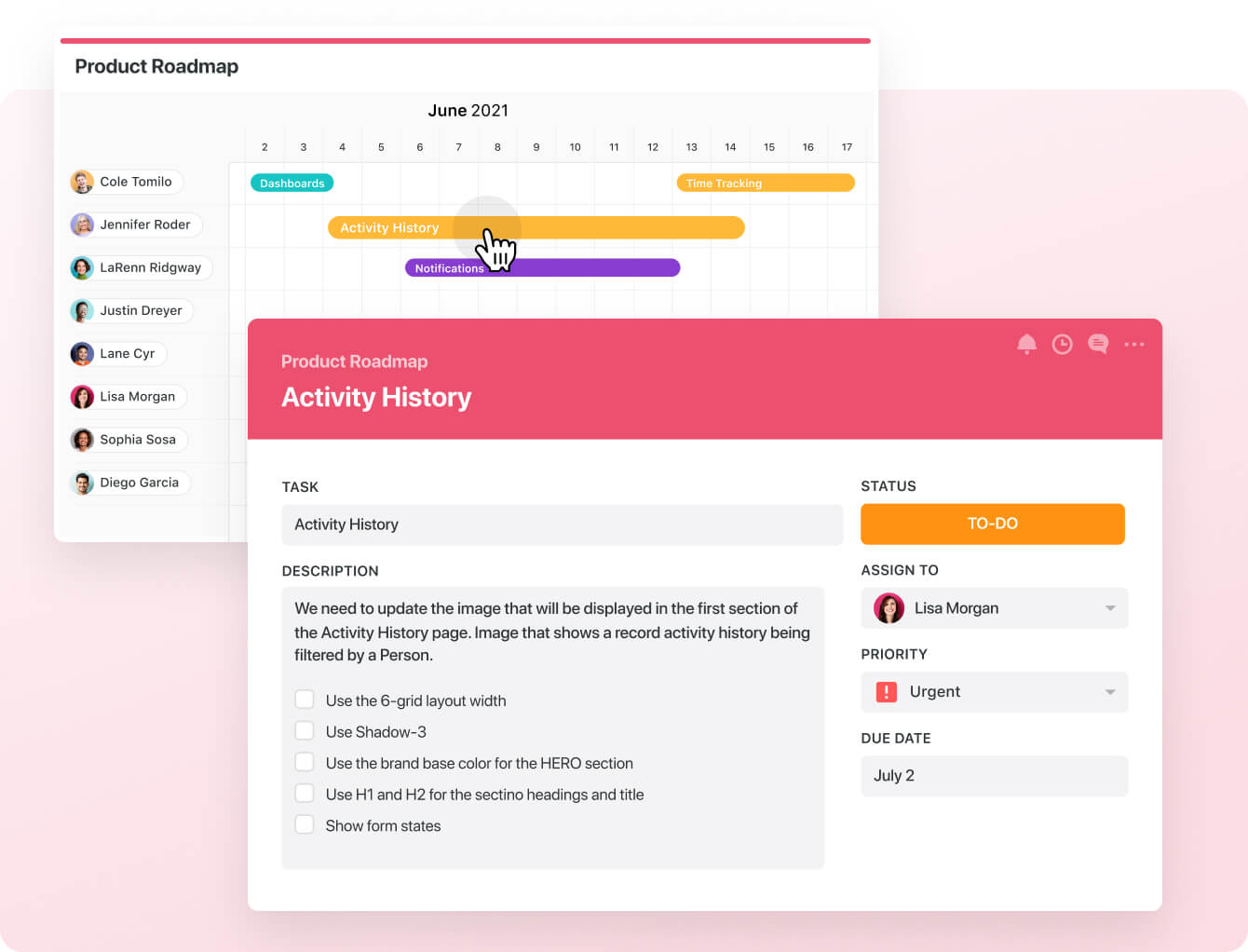
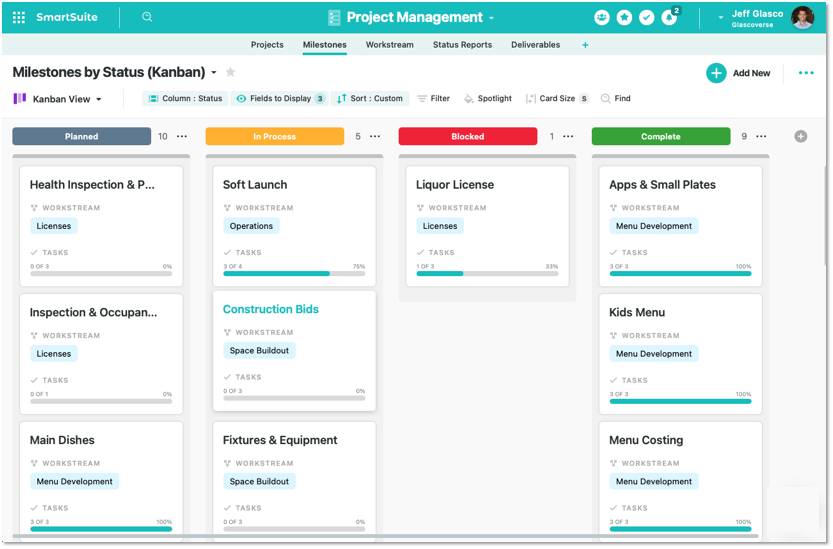
  • Milestone tracking: Break down project goals into task-based milestones to monitor progress. Configure tracking by workstream, team, and owner, flag roadblocks, and create resolution plans.‍
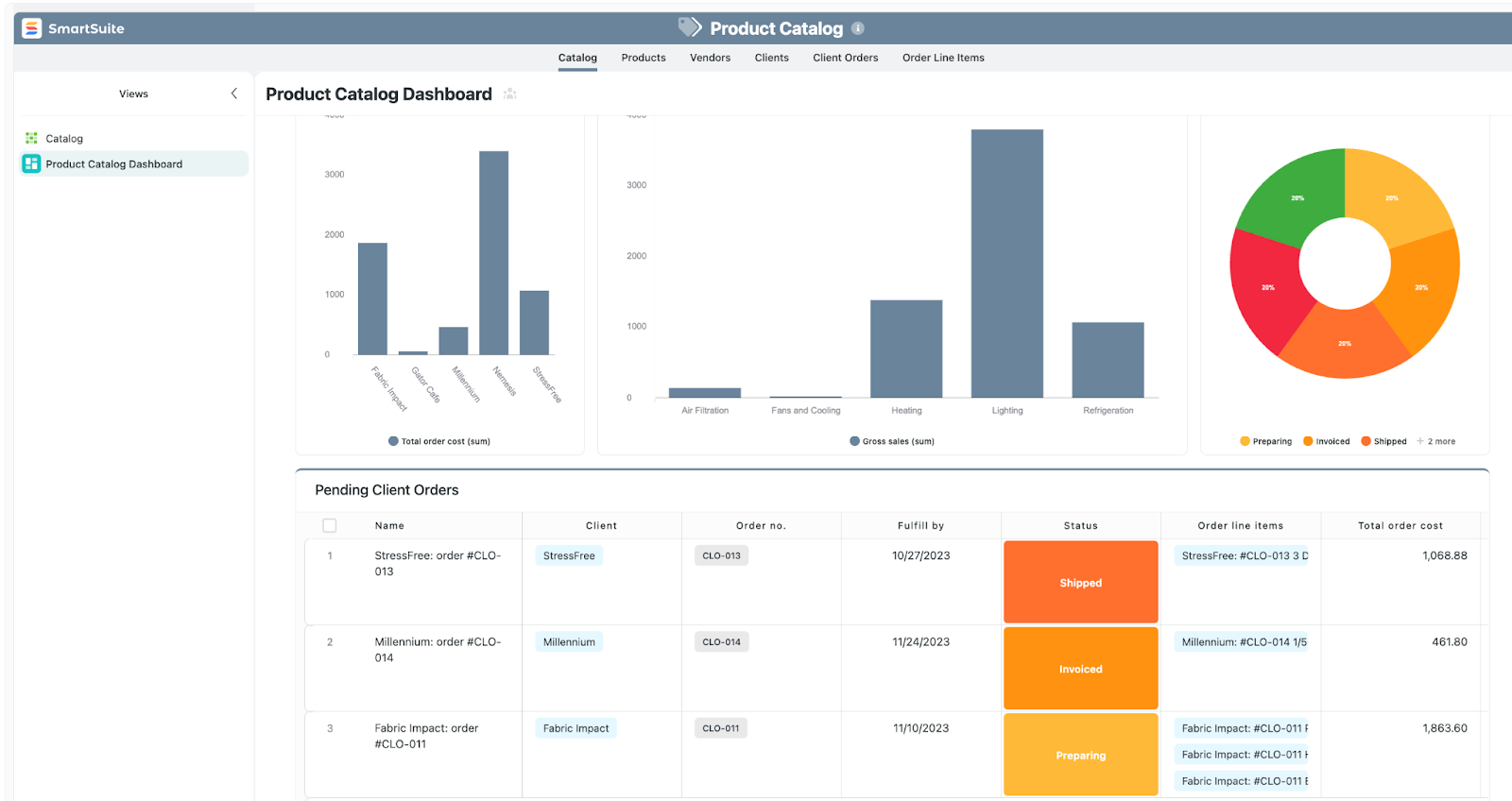
  • 200+ creative project management templates: Access pre-built templates for use cases like product catalogs, video production, press tracking, and user research. Each template has multiple workviews, letting you set up tasks easily.

Keep everyone updated with native team collaboration

If your team isn’t using dedicated project management, crucial feedback is likely getting lost in long email threads or Slack messages.

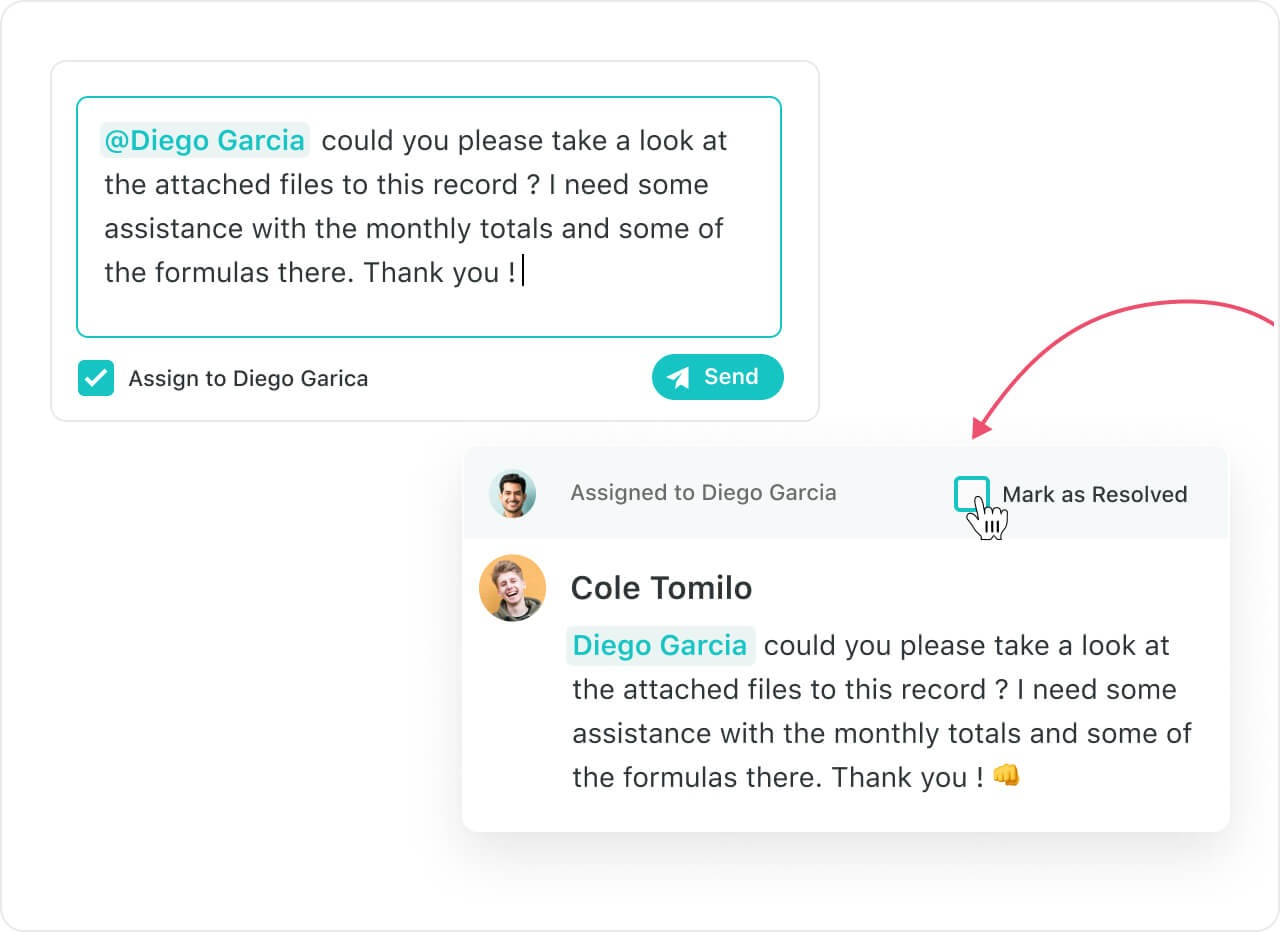
SmartSuite’s built-in communication and collaboration features help centralize communication.

The conversation happens where the work is, in your project management tool.

Here are the key features that make collaboration easy in SmartSuite.

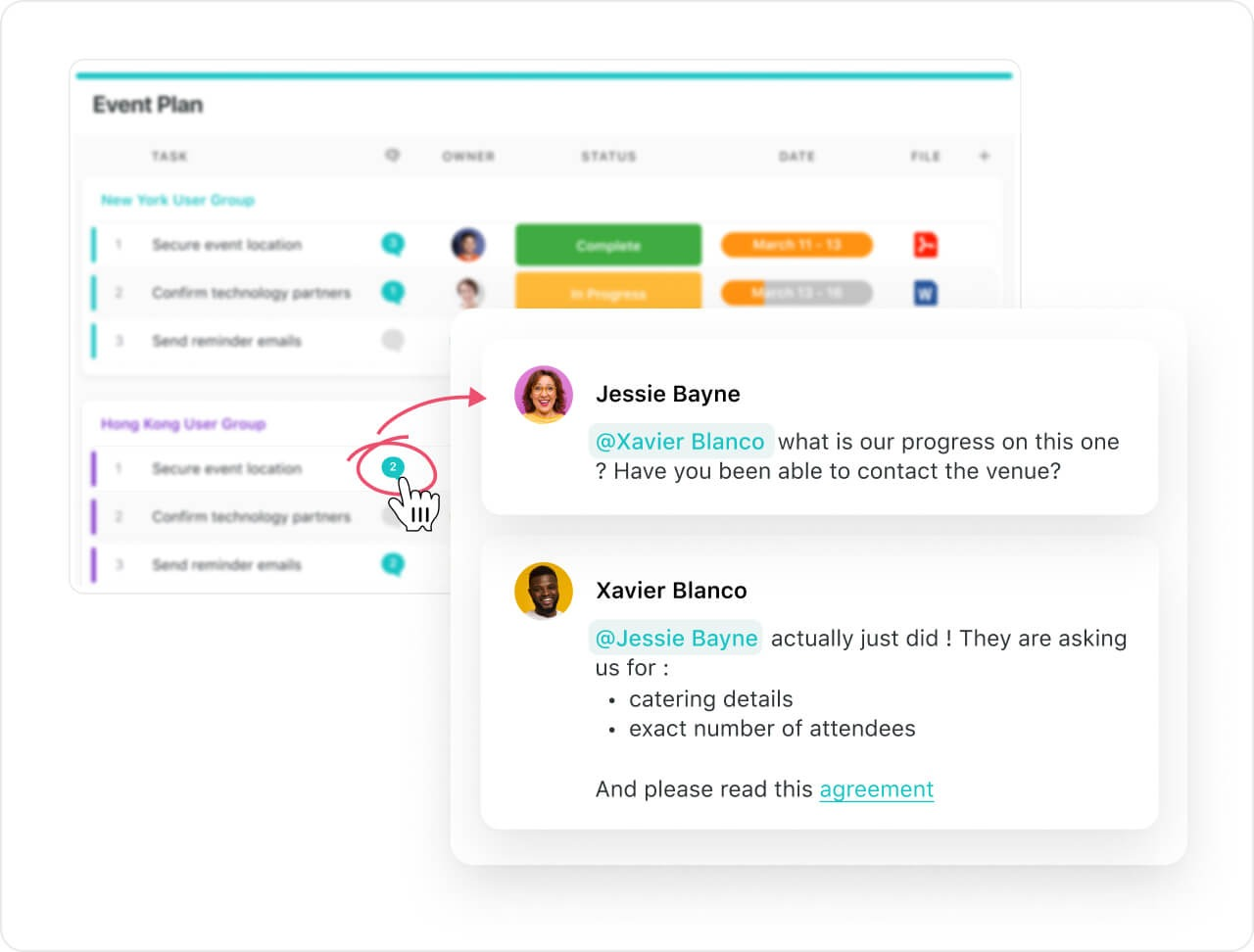
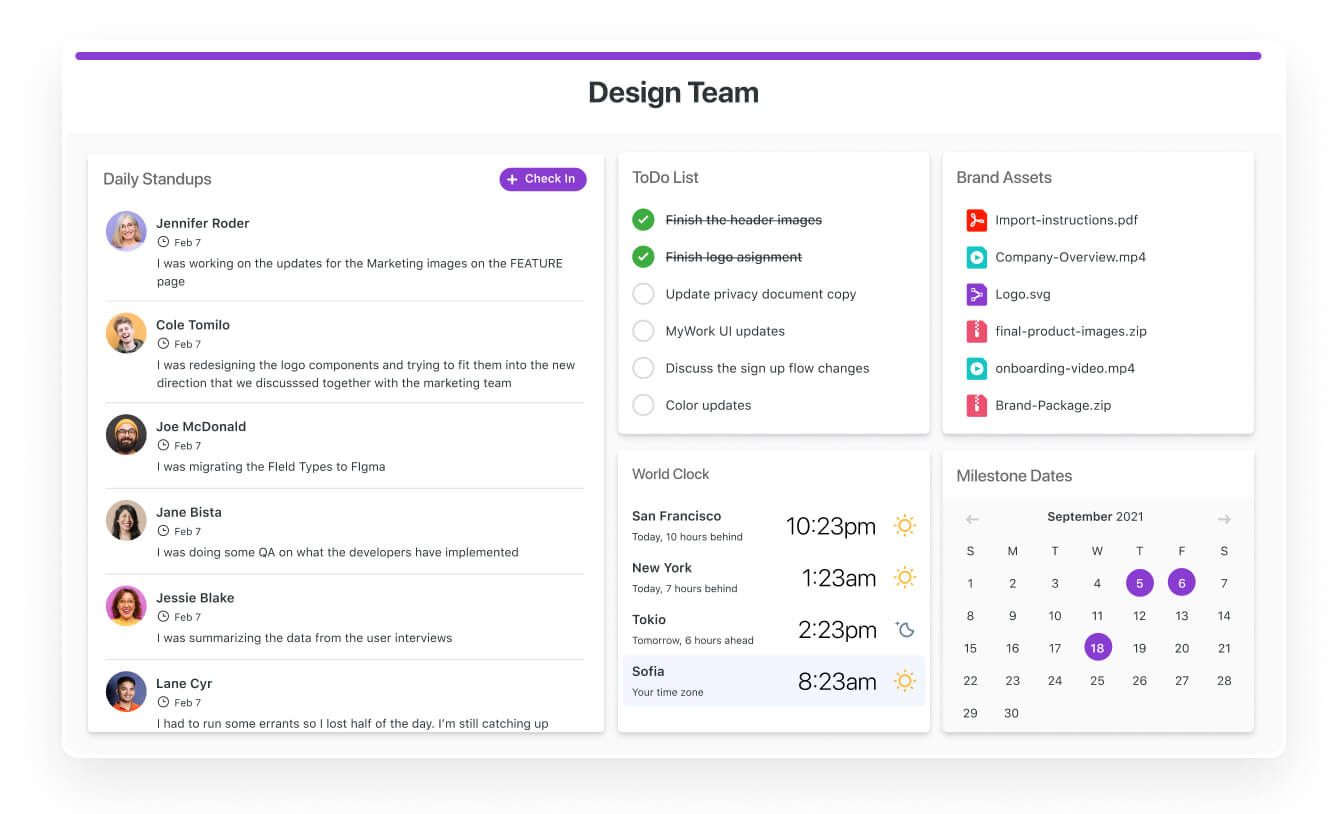
  • Built-in communication center for connecting with peers in group chats or 1:1 conversations for quick feedback and keeping stakeholders updated throughout the project.
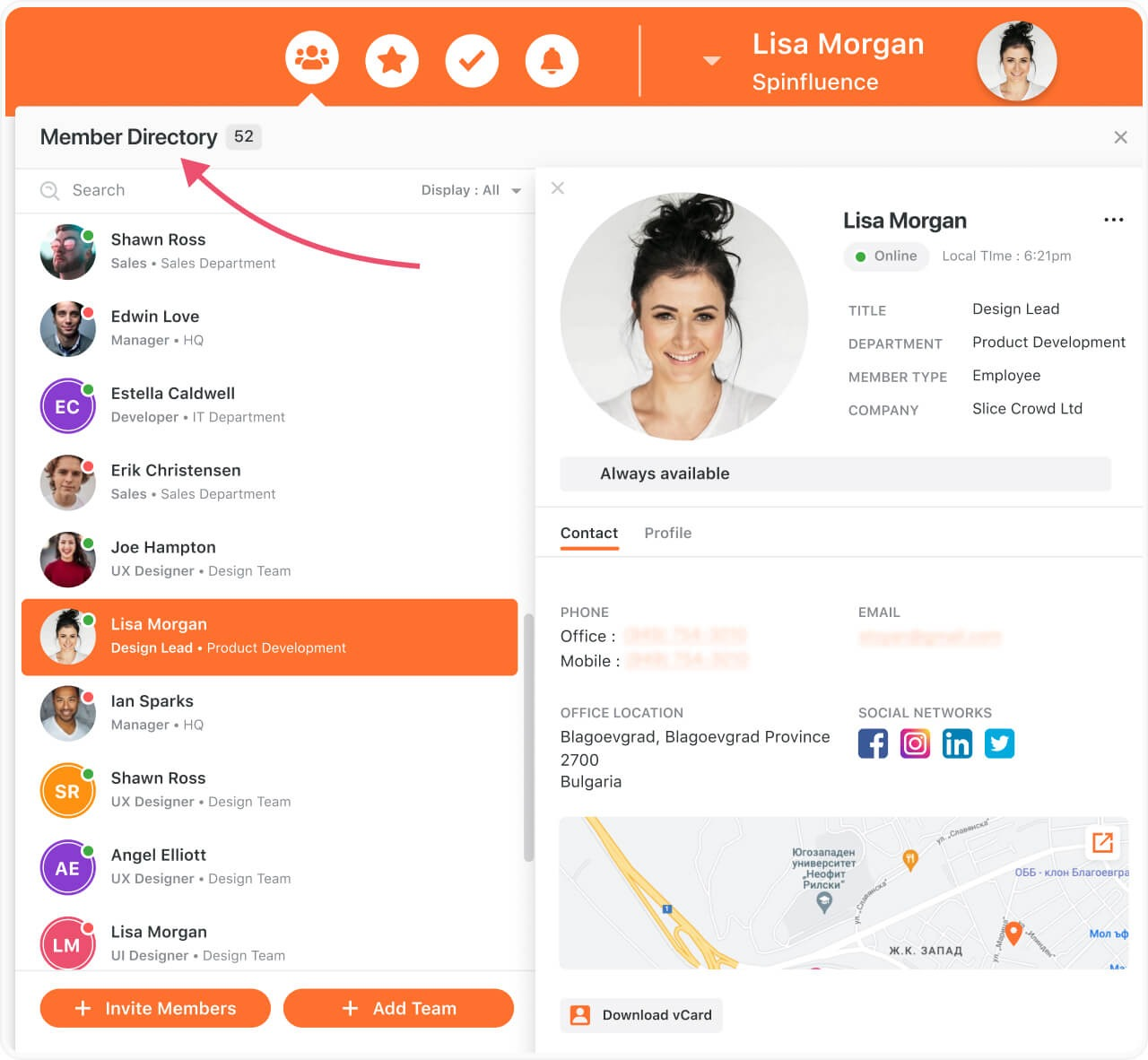
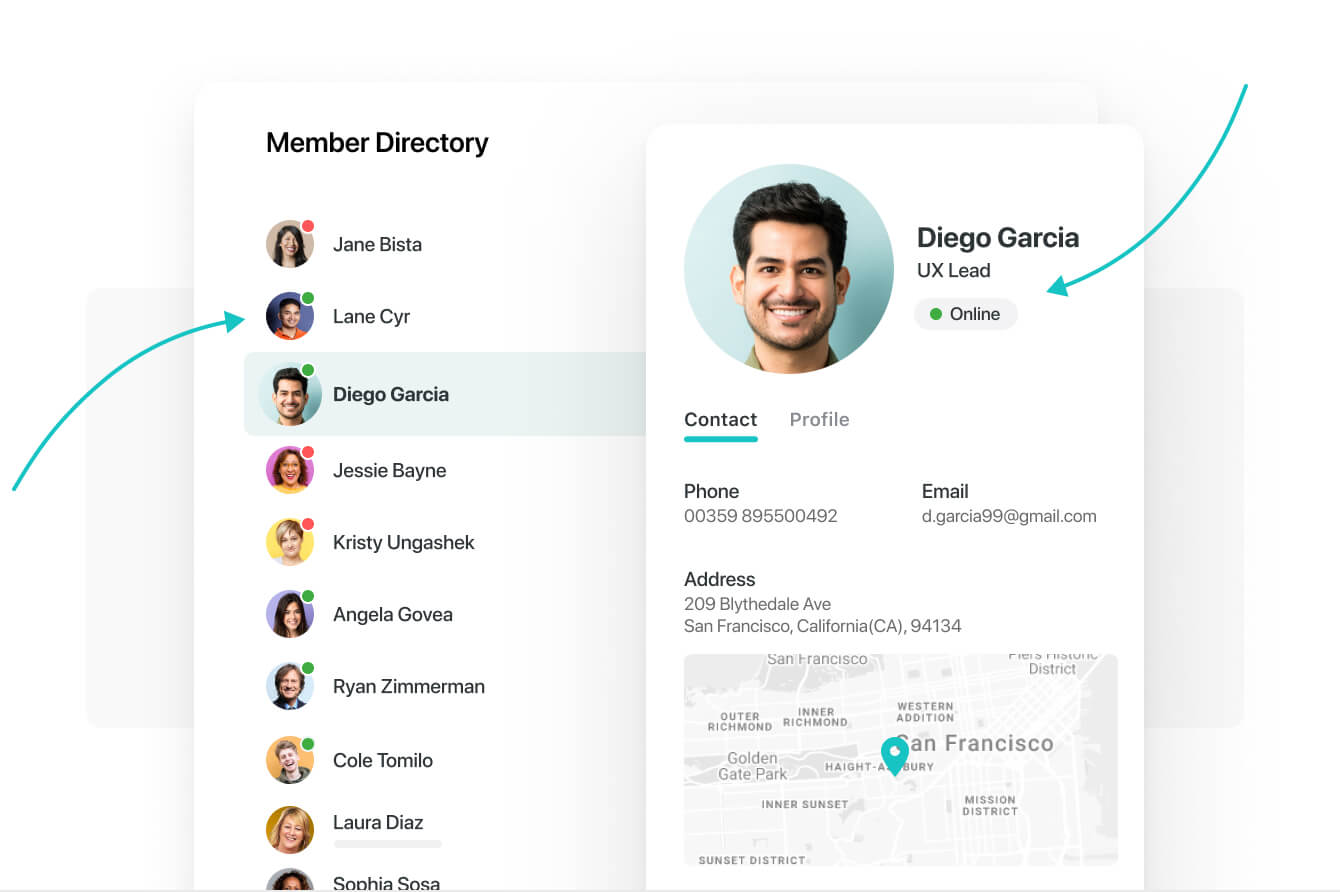
  • The member’s directory lets you see all the details about your co-workers, including their availability status and job profile, making it efficient to contact the right people.
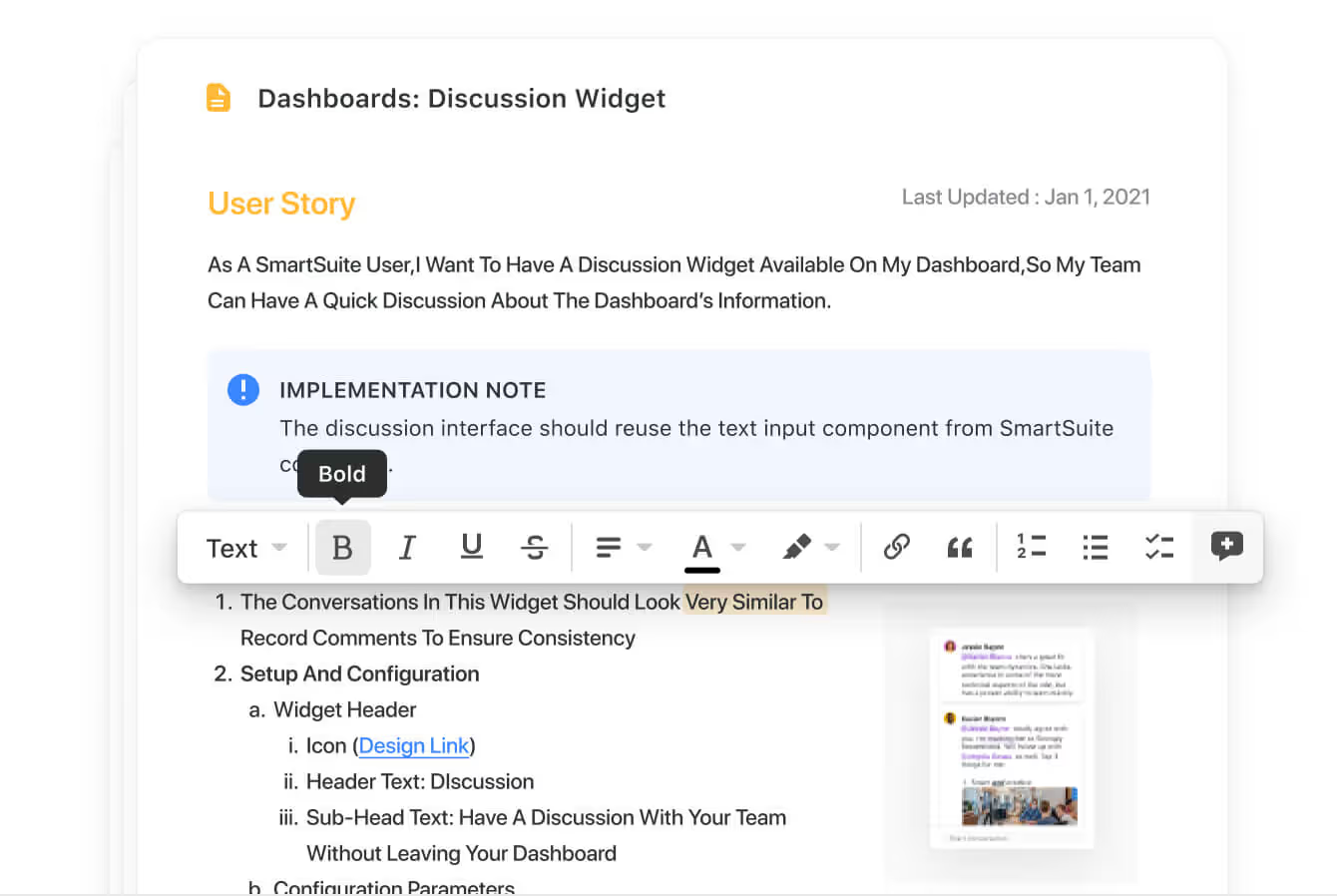
  • SmartSuite docs help you brainstorm with your teams, map out the campaign’s resources, or do a SWOT analysis. All this happens in your work management platform ensuring smooth collaboration and task assignments.

Source

SmartSuite Pricing

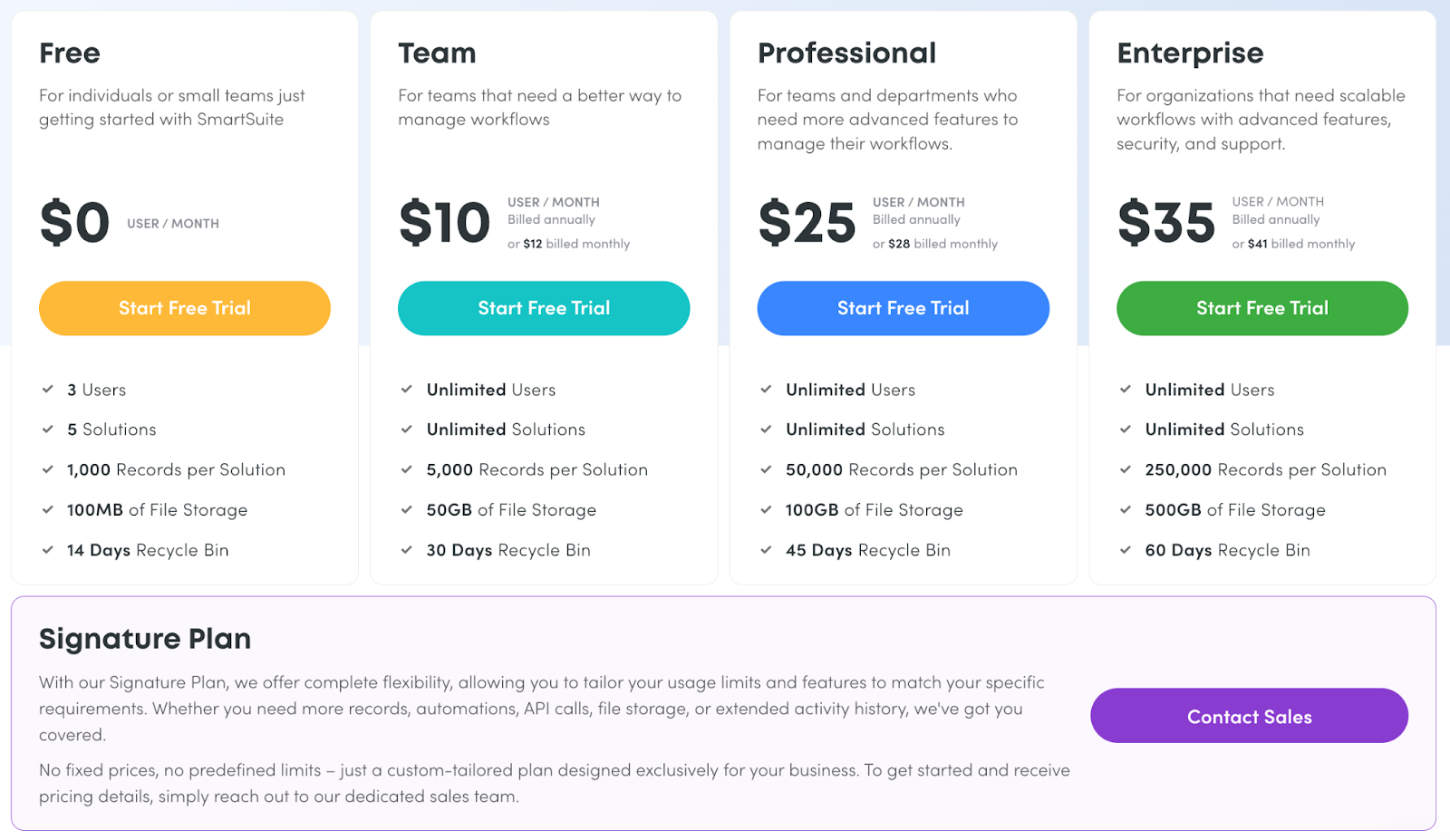
SmartSuite offers a forever-free plan with access to 250+ automation actions, team collaboration, multi-dashboard views, and more.

There are four paid plans with a 14-day free trial:

  • Team: Starts at $12/user/month, including SmartSuite AI, Gantt charts, timeline views, 5000 automation runs, and time tracking.
  • Professional: Starts at $28/user/per month, including, two-factor authentication, Gmail & Outlook integrations, resource management, and advanced permission control.
  • Enterprise: Starts at $41/user/month, including 500,000 automation actions, audit logs, data loss prevention, and 50,000 monthly API calls.
  • Signature: Customized plan tailored to your organization’s needs and team size.

SmartSuite Pros and Cons

✅ Generous free plan with access to advanced features.

✅ 200+ project templates for various use cases.

✅ Integrated document and file management.

✅ Comprehensive workflow automation.

✅ Dynamic dashboards and reporting.

❌ Less native integrations when compared to alternatives.

#2: ClickUp

Best for: Managing large-scale marketing projects with a DIY approach.

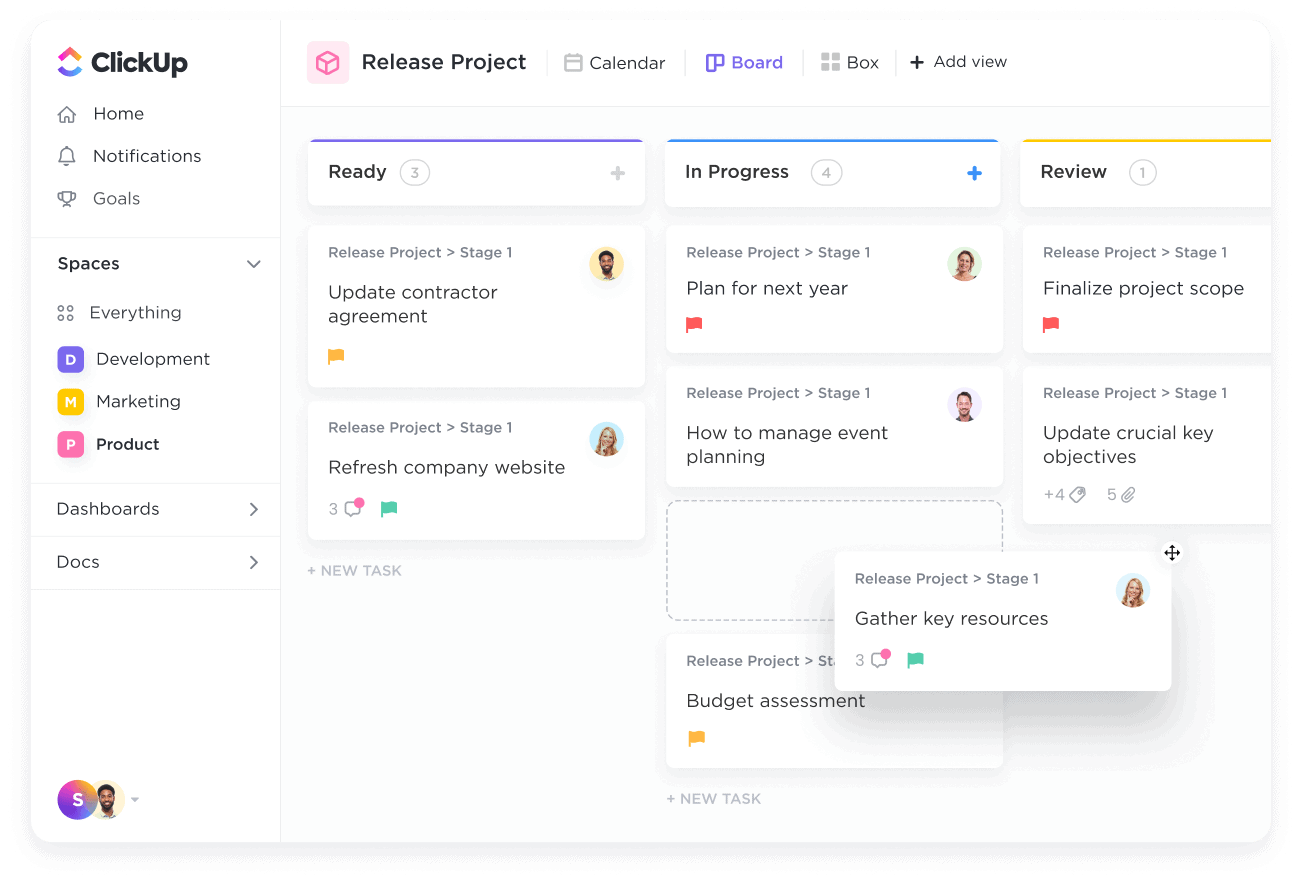
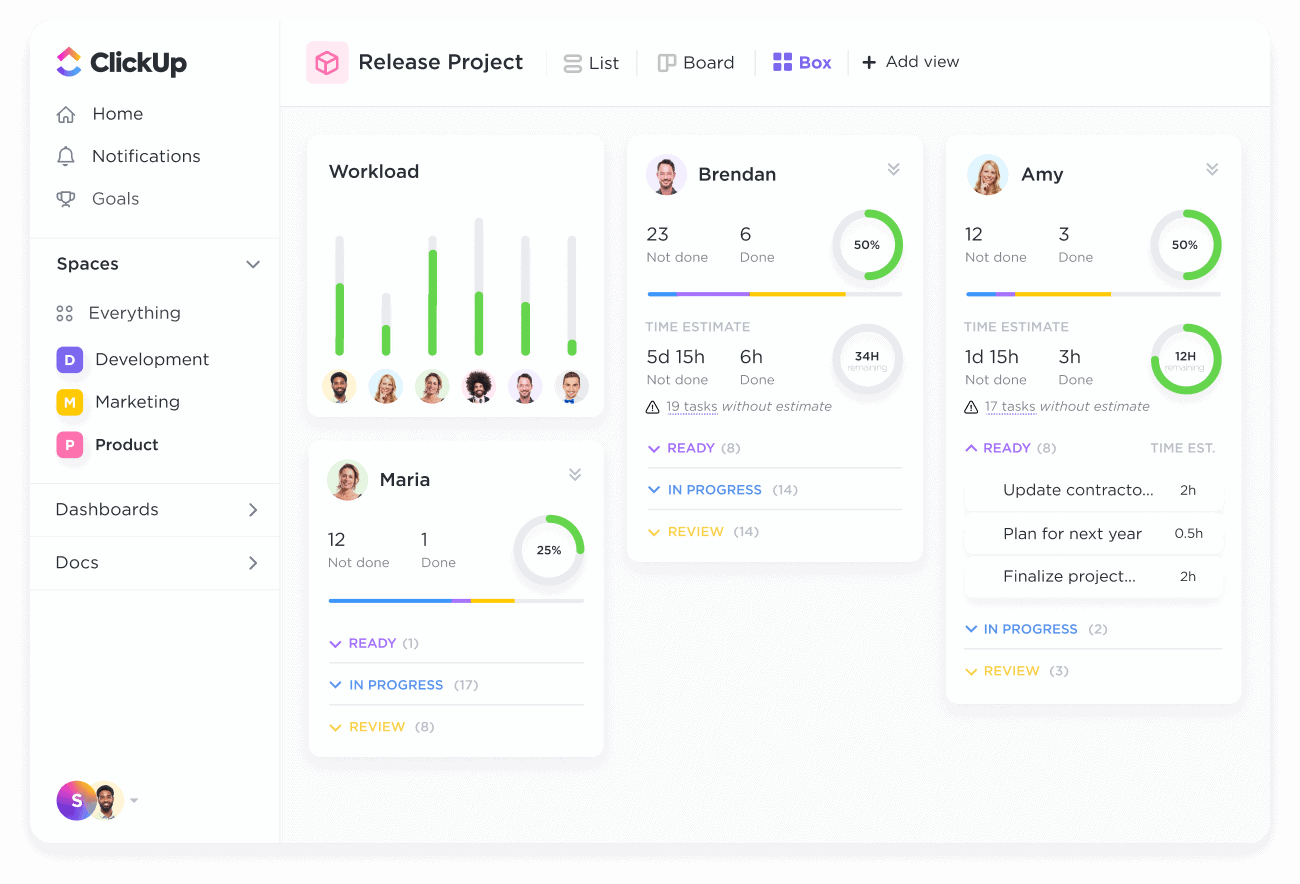
ClickUp is an all-rounder cloud-based project management software. 

The software offers a power base for marketing teams to manage campaigns, brainstorm ideas, develop strategy documentation, collaborate with stakeholders, and track project goals.

Who Is It For?

Marketing consultants, marketing agencies, and small-to-large businesses.

ClickUp’s Top Features

  • Goals tracking: Map out your project’s goals, boil them down into milestones, and assign metrics to track progress.
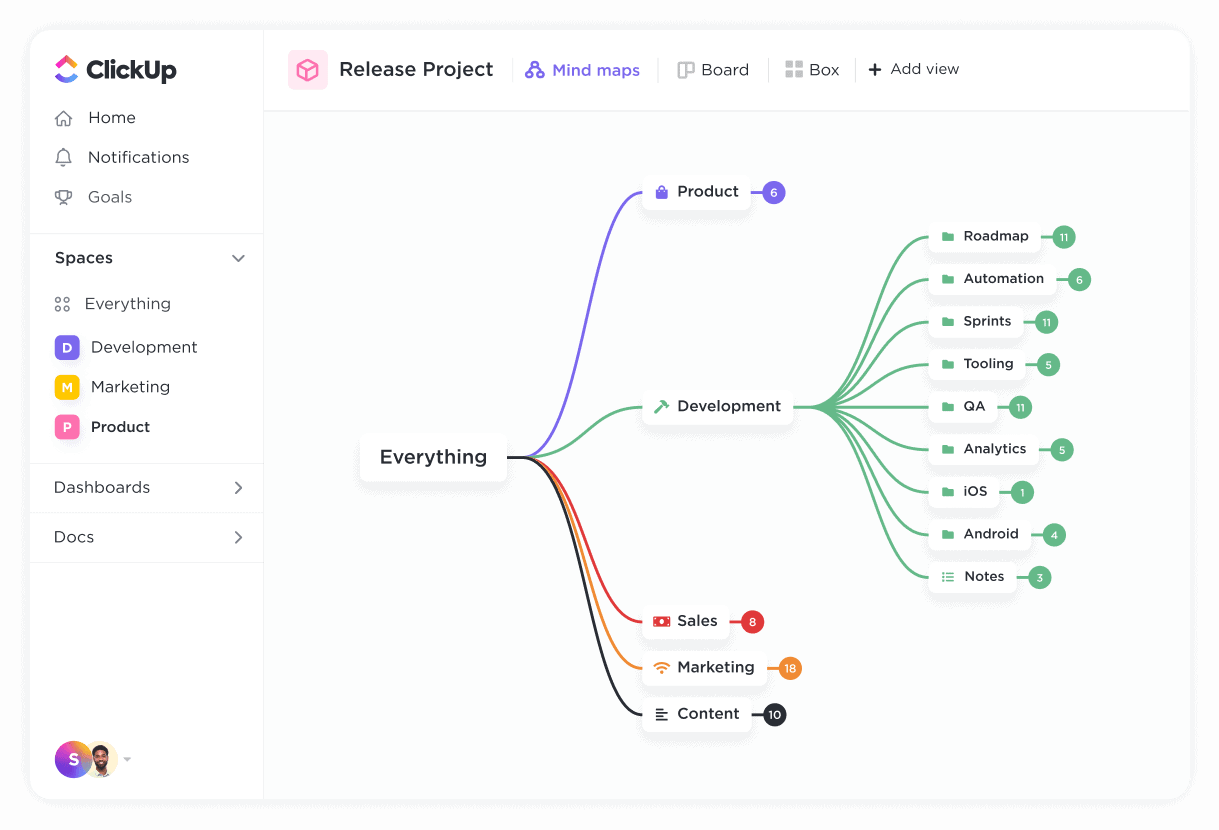
  • Whiteboards: Collaborative workspace for brainstorming sessions. Using whiteboards you can generate campaign ideas, map out user’s journeys, and structure your team’s responsibility without external tools.
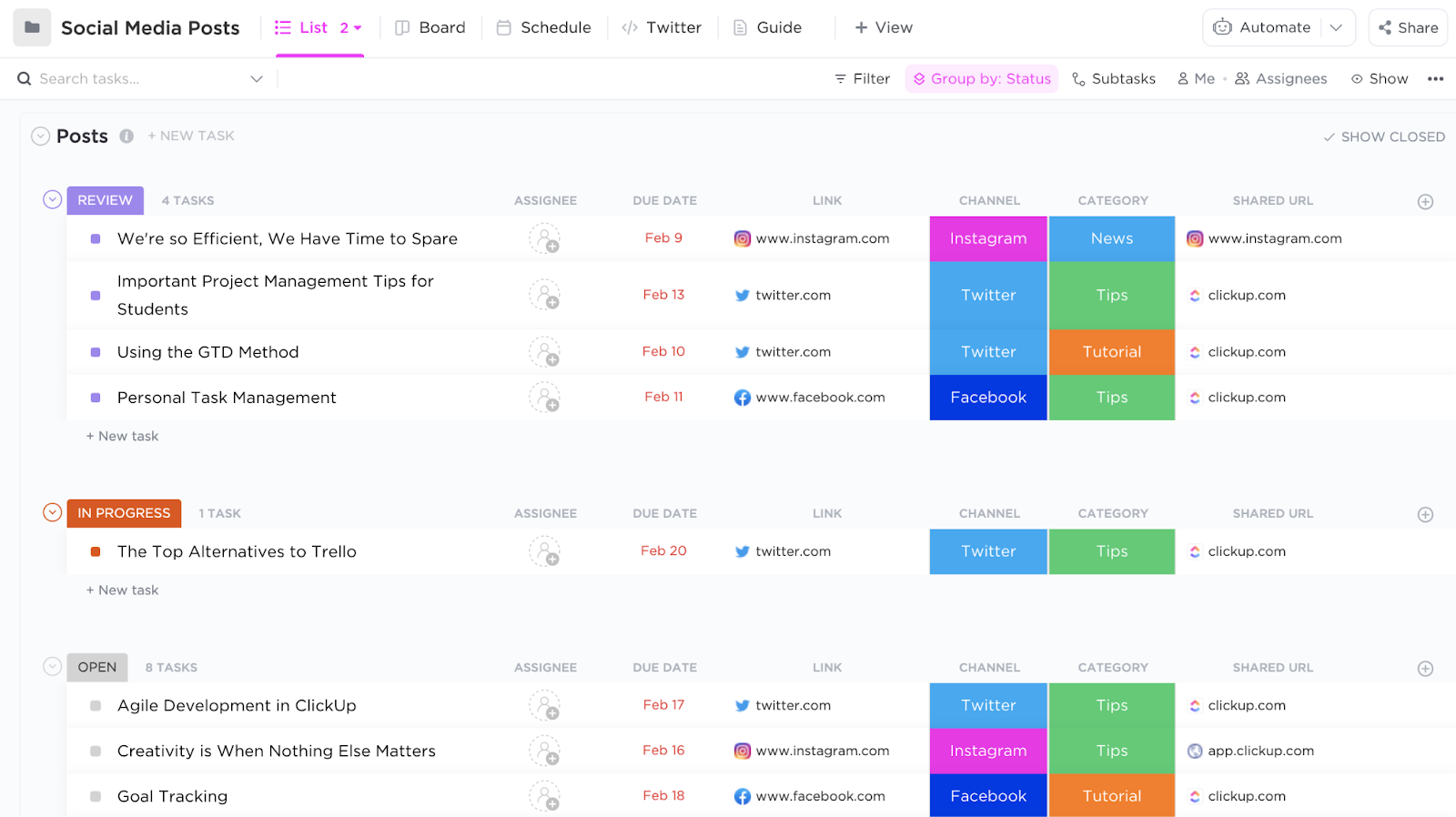
  • Folders and tasks: Use folders as the main projects and add tasks to move the needle toward your goals. Folders and tasks keep your campaigns organized and easy to navigate.

ClickUp Pricing

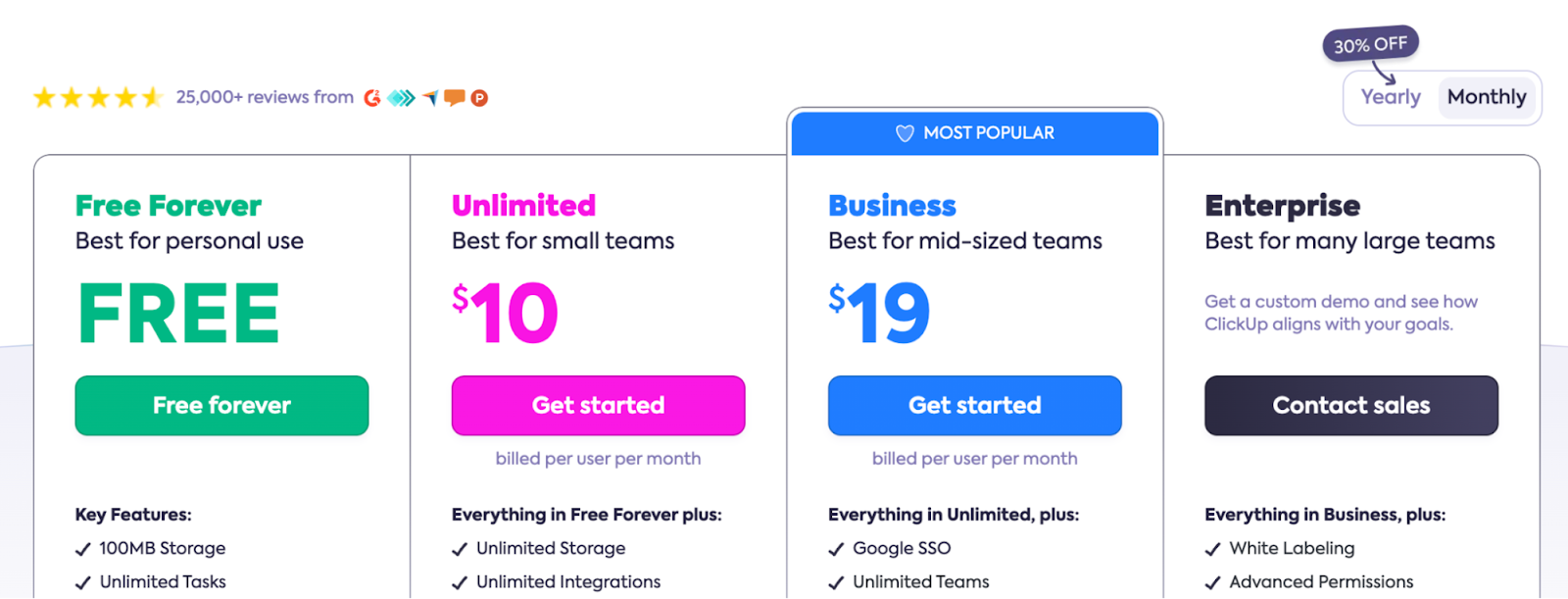
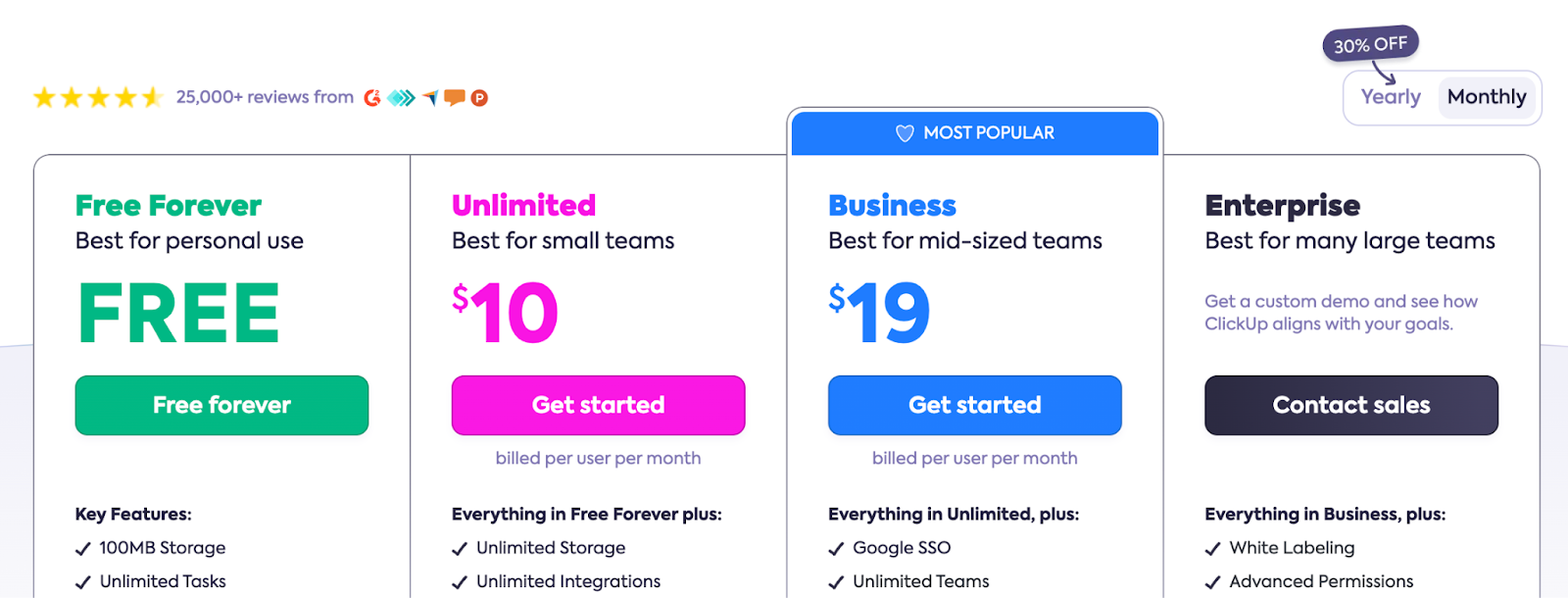
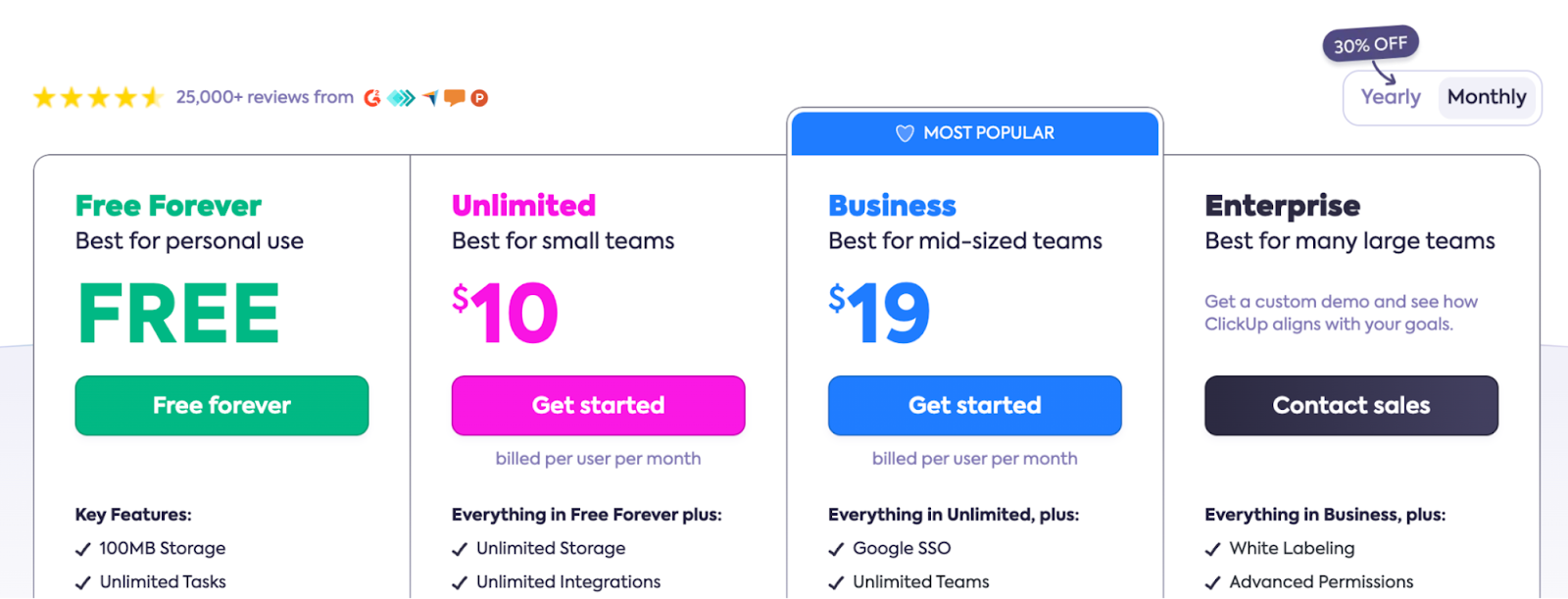
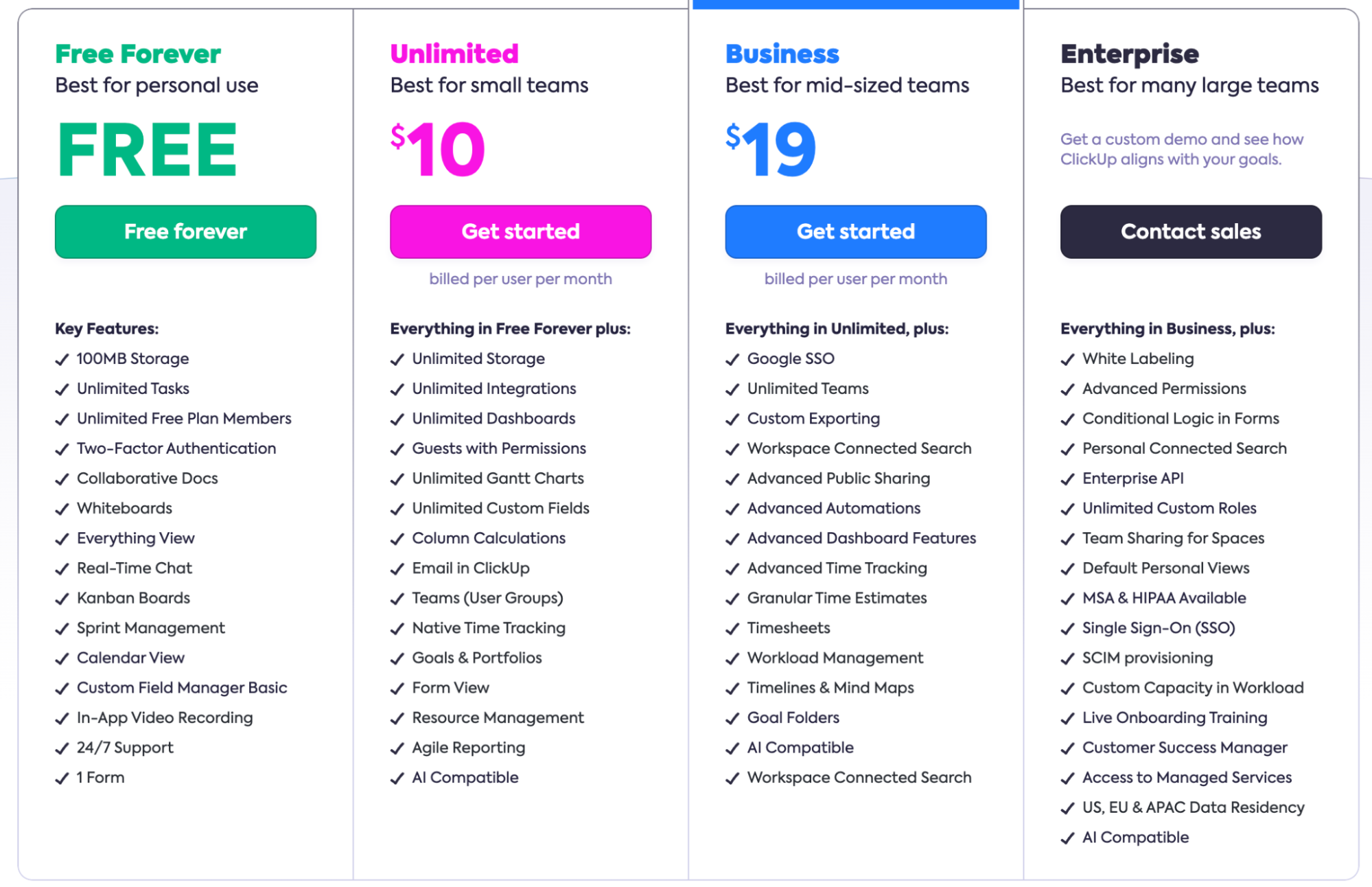
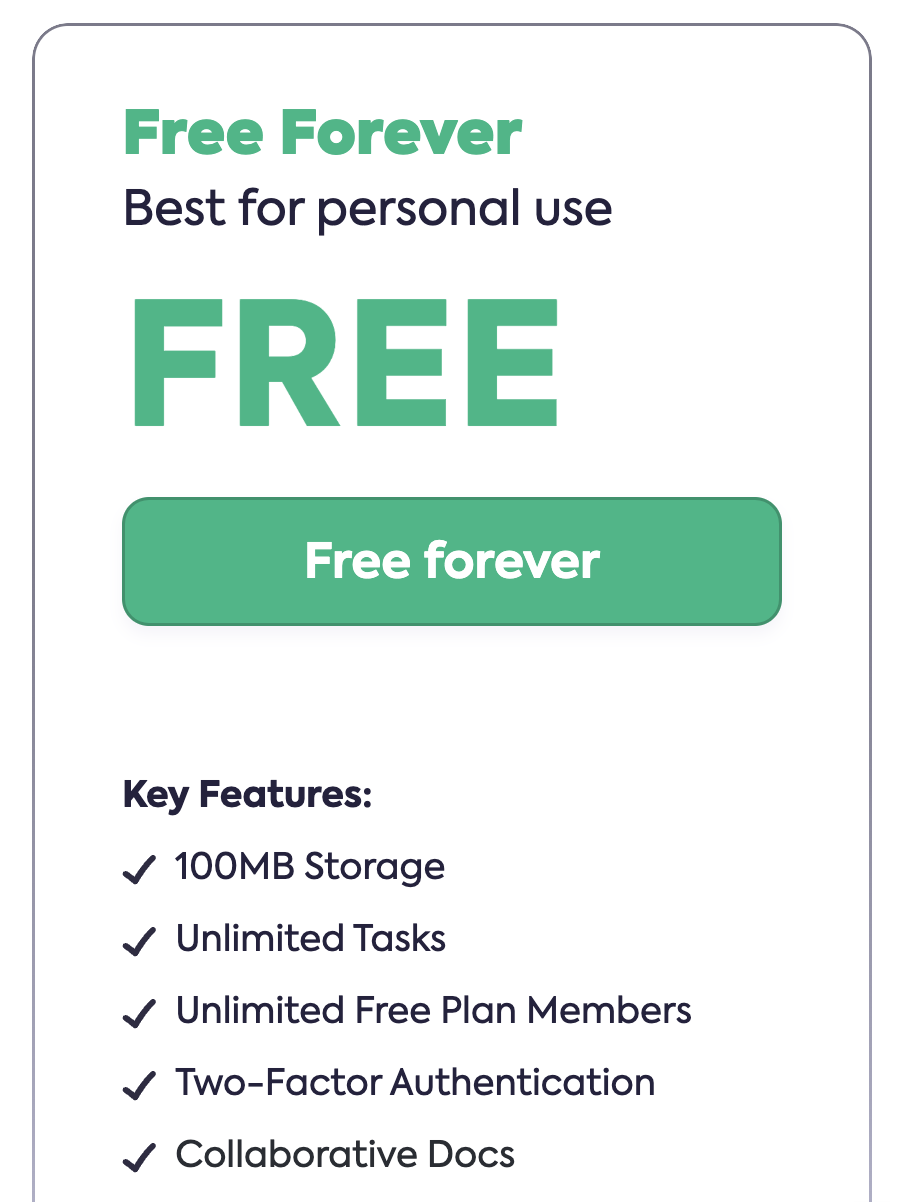
ClickUp’s free plan includes unlimited task creation, 100 MB storage, and collaborative docs.

It offers three paid plans with a 14-day free trial:

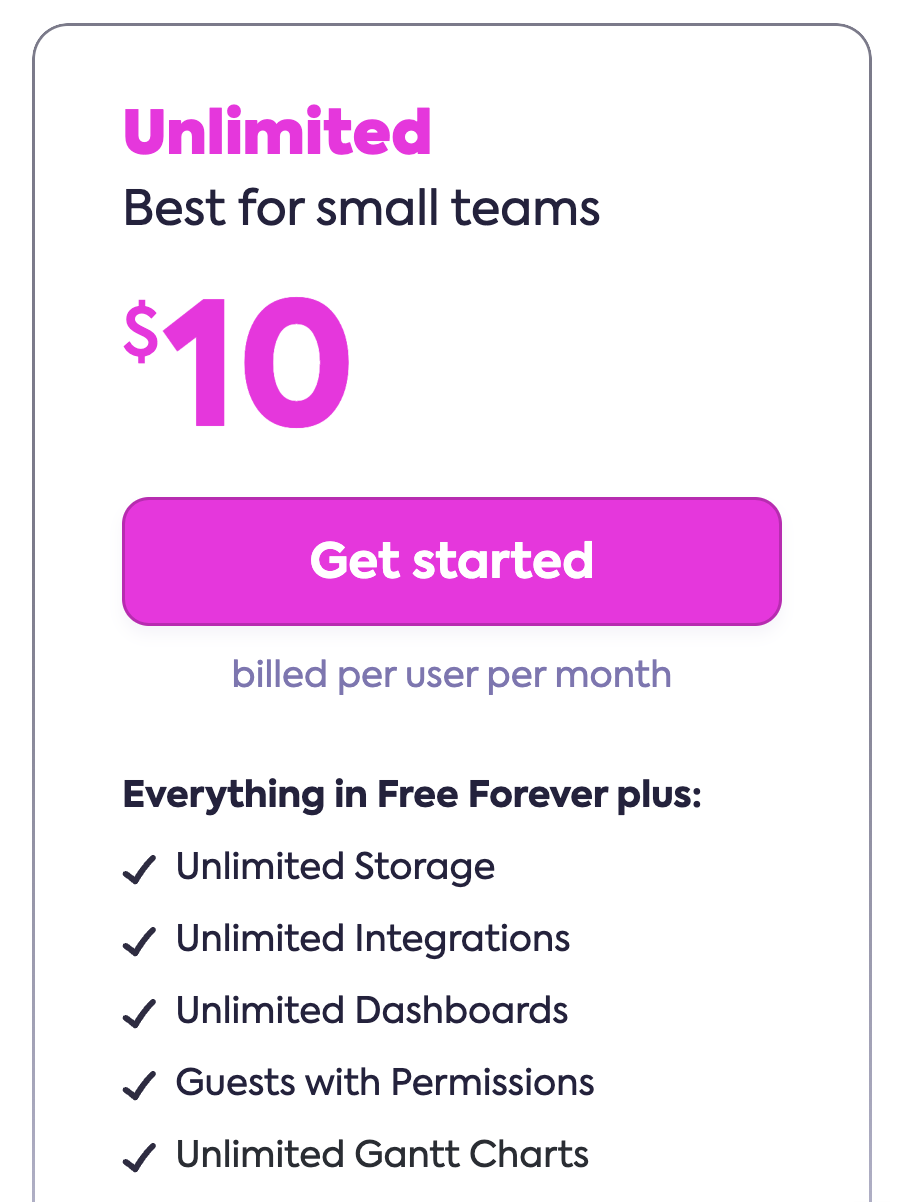
  • Unlimited: Starts at $10/user/month, offers unlimited custom views, timesheets, guest access, and 100 mind map creations.
  • Business: Starts at $19/user/month, offers private docs, sprint reporting, and all dashboard views.
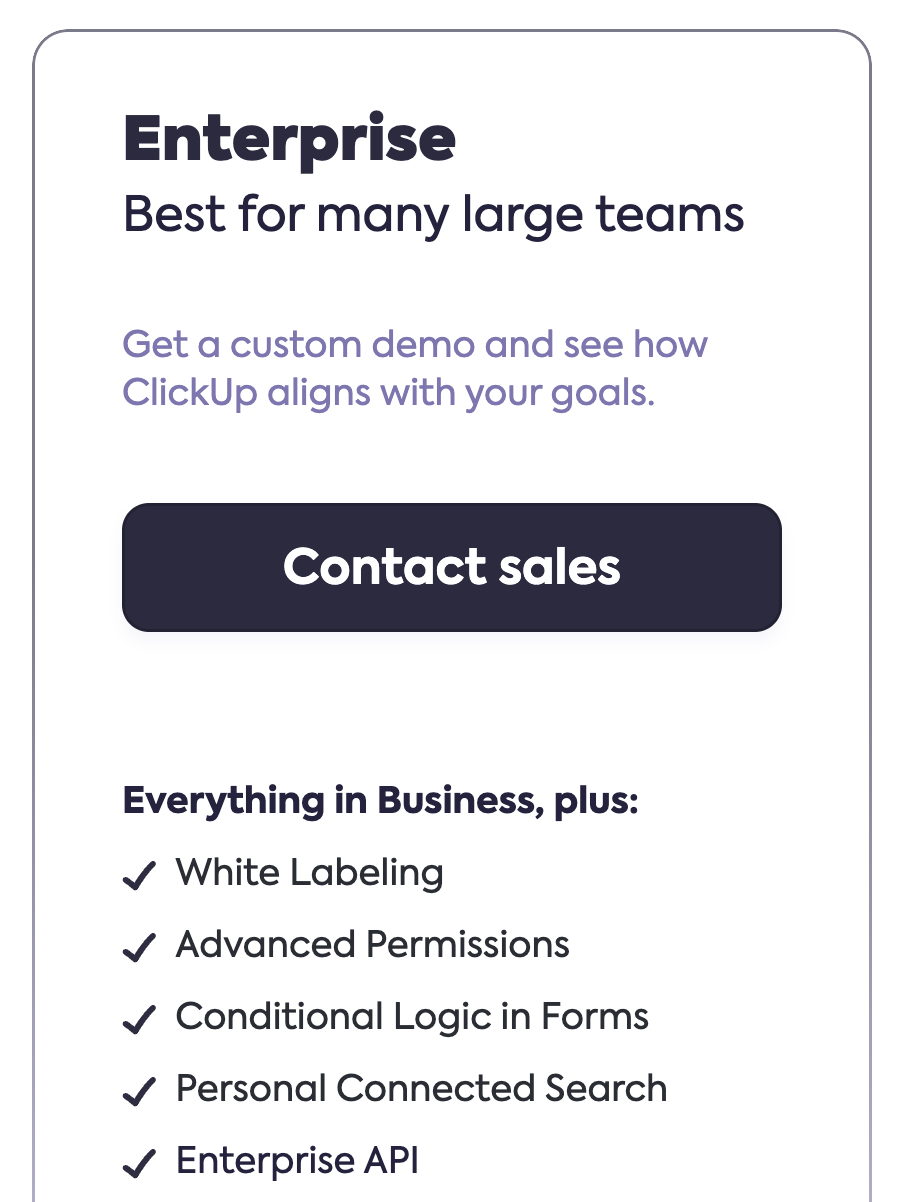
  • Enterprise: White labelling, top-notch security, and enterprise AI. Contact sales for a quote.

ClickUp Pros and Cons

✅ Low entry-level pricing.

✅ Highly customizable with many built-in tools.

✅ Native team management and collaboration tools.

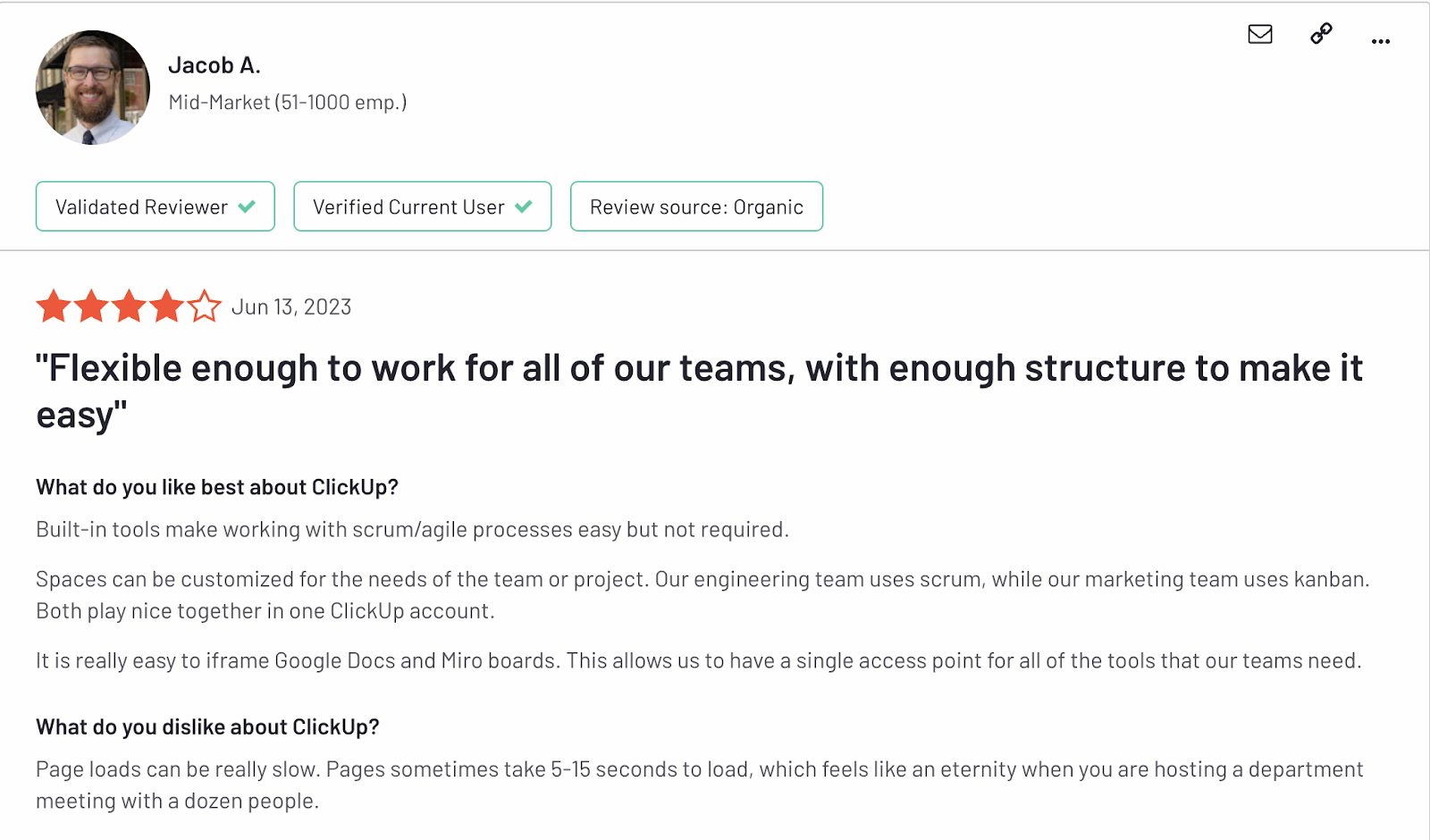
❌ Can overwhelm new users due to the complex interface.

❌ Usually takes longer to set up a fitting dashboard.

#3. Hive

Best for: Multipurpose collaboration to manage projects and communicate effectively.

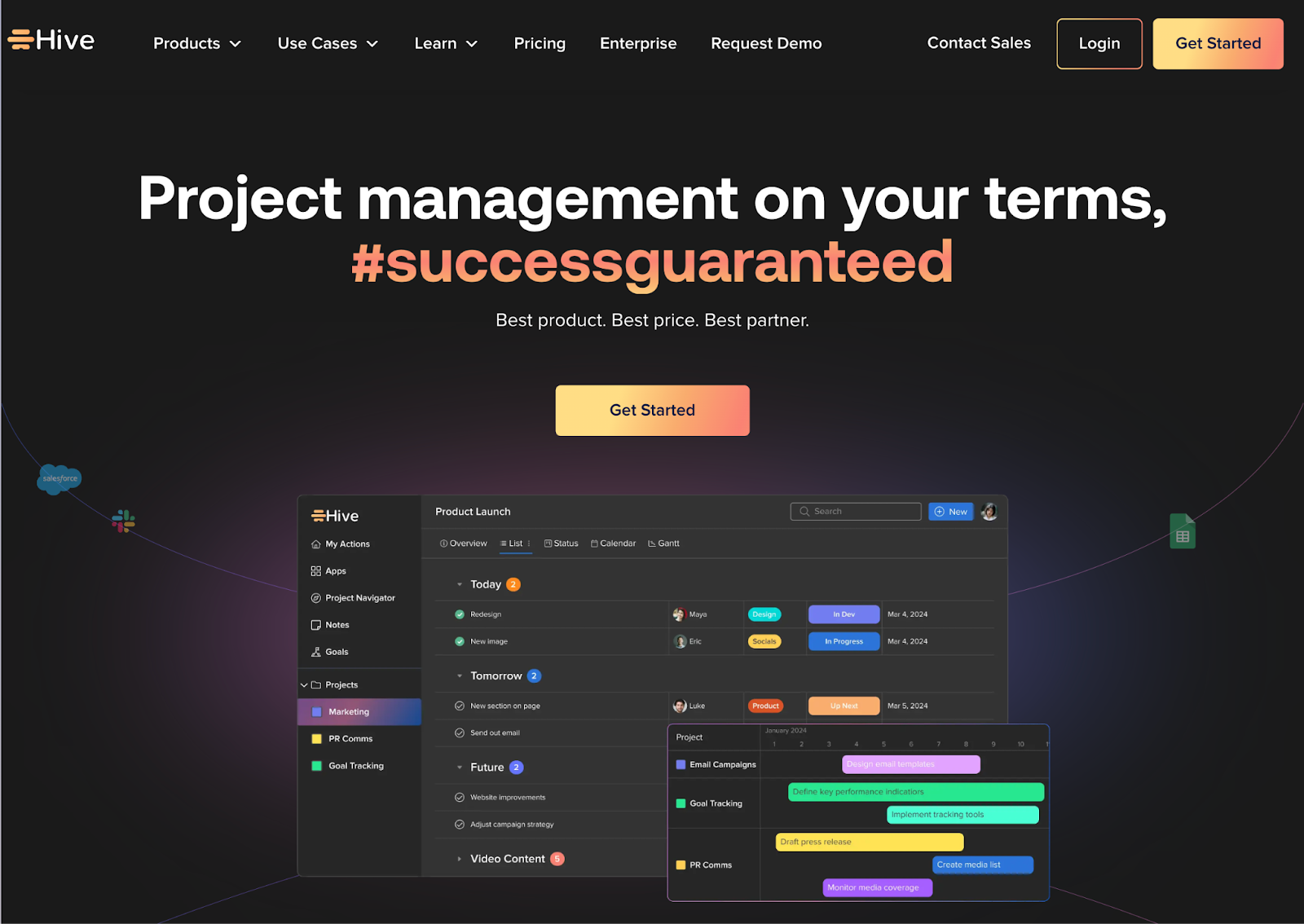
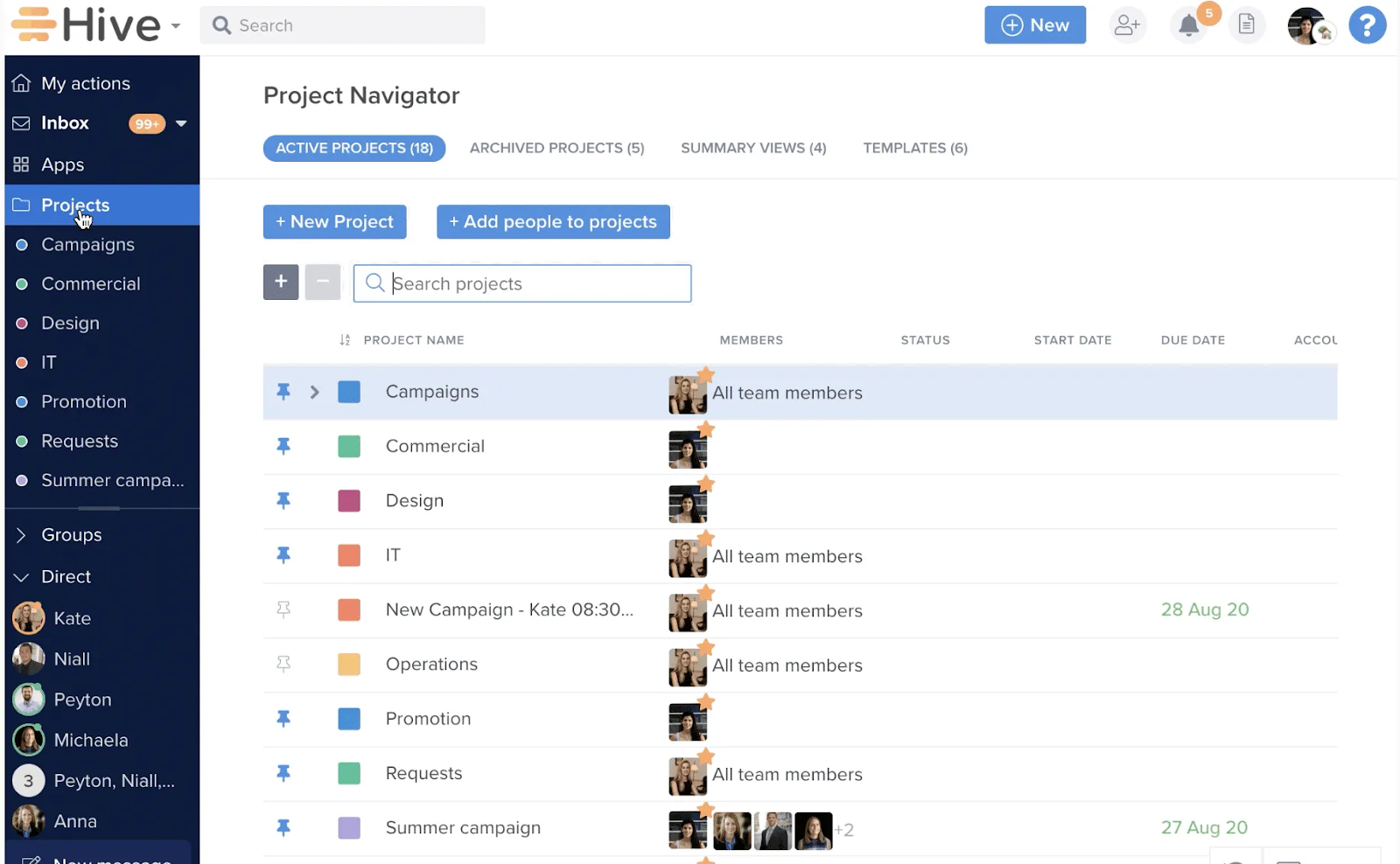
Hive is a cloud-based project management software that helps marketing teams organize campaigns and boost productivity.

You can track multiple projects, build custom workflows, set up request forms, and chat with your co-workers in real-time.

Who Is It For?

Suitable for teams of all sizes–from start-ups to large enterprises.

Hive’s Top Features

  • Built-in communication tools: Text messaging and video calling options for private and group chats.
  • Automation: Build triggers to automate repetitive tasks, such as status updates, task assignments, or email updates.
  • Form builder: Set up custom forms to collect feedback, requests, or orders. Automatically convert form responses into action cards.

Hive Pricing

Hive offers a forever free plan with up to 10 workspace members and a 14-day free trial. Using per-user pricing, Hive offers three paid plans:

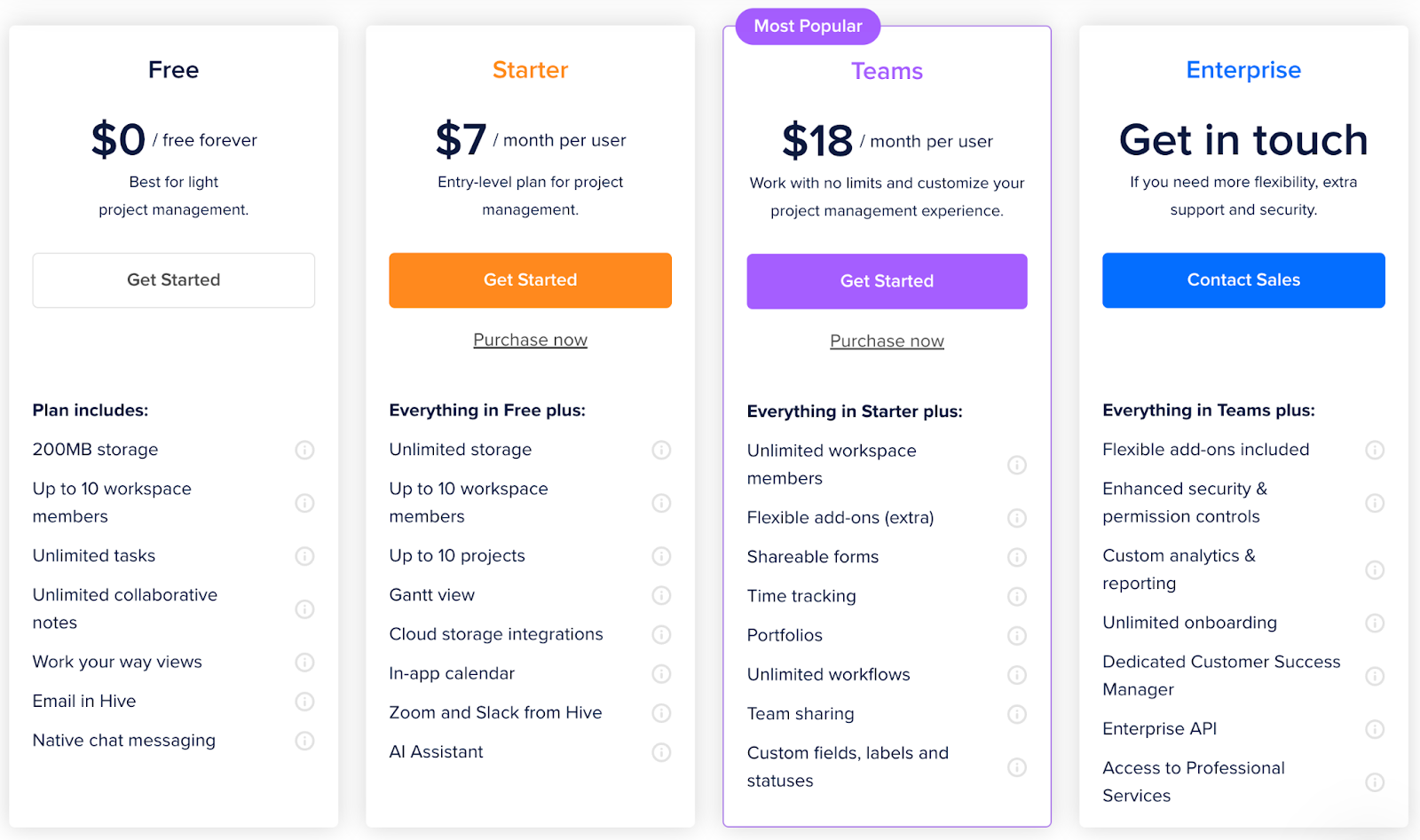
  • Starter: Starts at $7/user/month with unlimited storage, up to 10 workspace members, and 10 projects.
  • Teams: Starts at $18/user/month with unlimited workspace members.
  • Enterprise: Custom pricing (Custom analytics & reporting dashboard, enterprise API, and dedicated CSM).

Hive Pros and Cons

✅ Built-in AI-powered tools.

✅ 100+ templates for different use cases.

✅ Multiple dashboard views.

❌ Custom analytics and reporting are only available on the enterprise plan.

❌ Limited native integration with heavy reliance on Zapier.

#4: Trello

Best for: Manage and track marketing campaigns using Kanban boards.

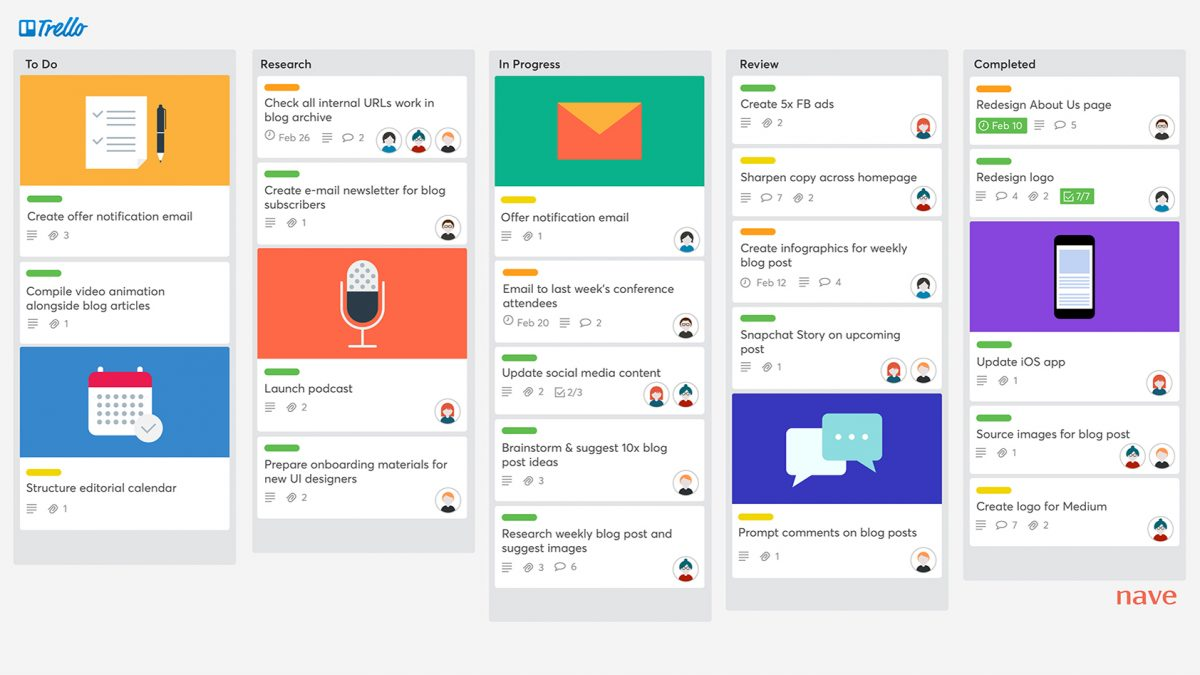
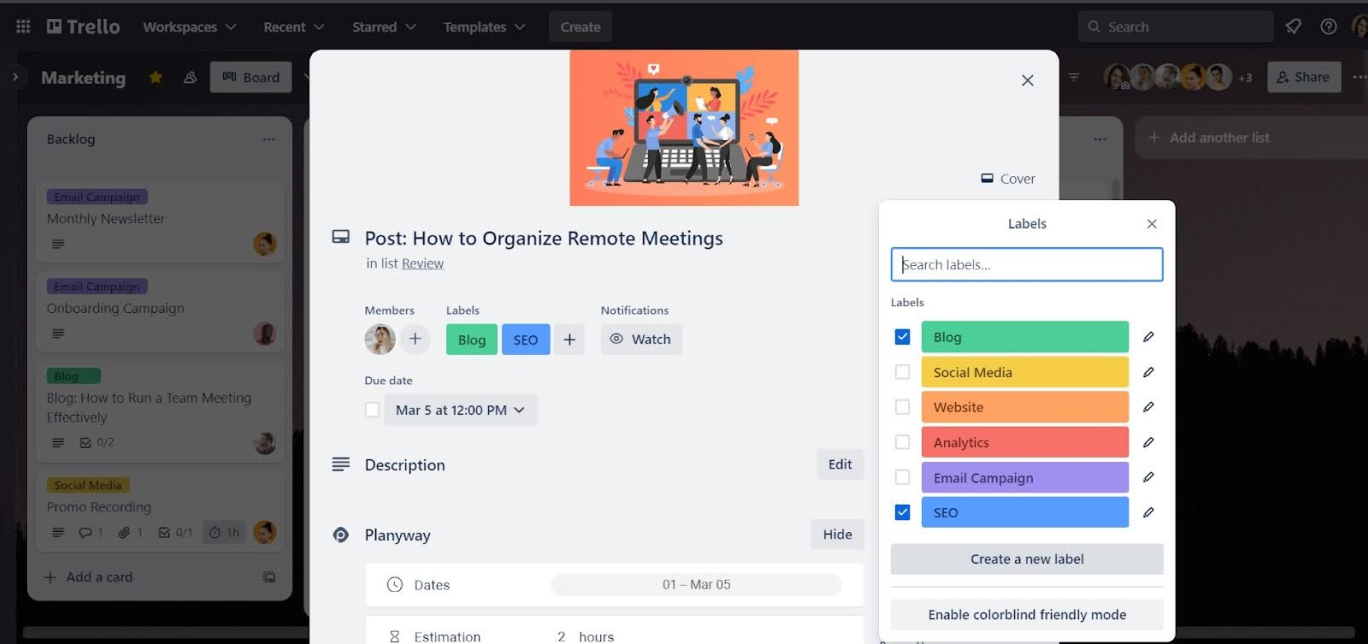
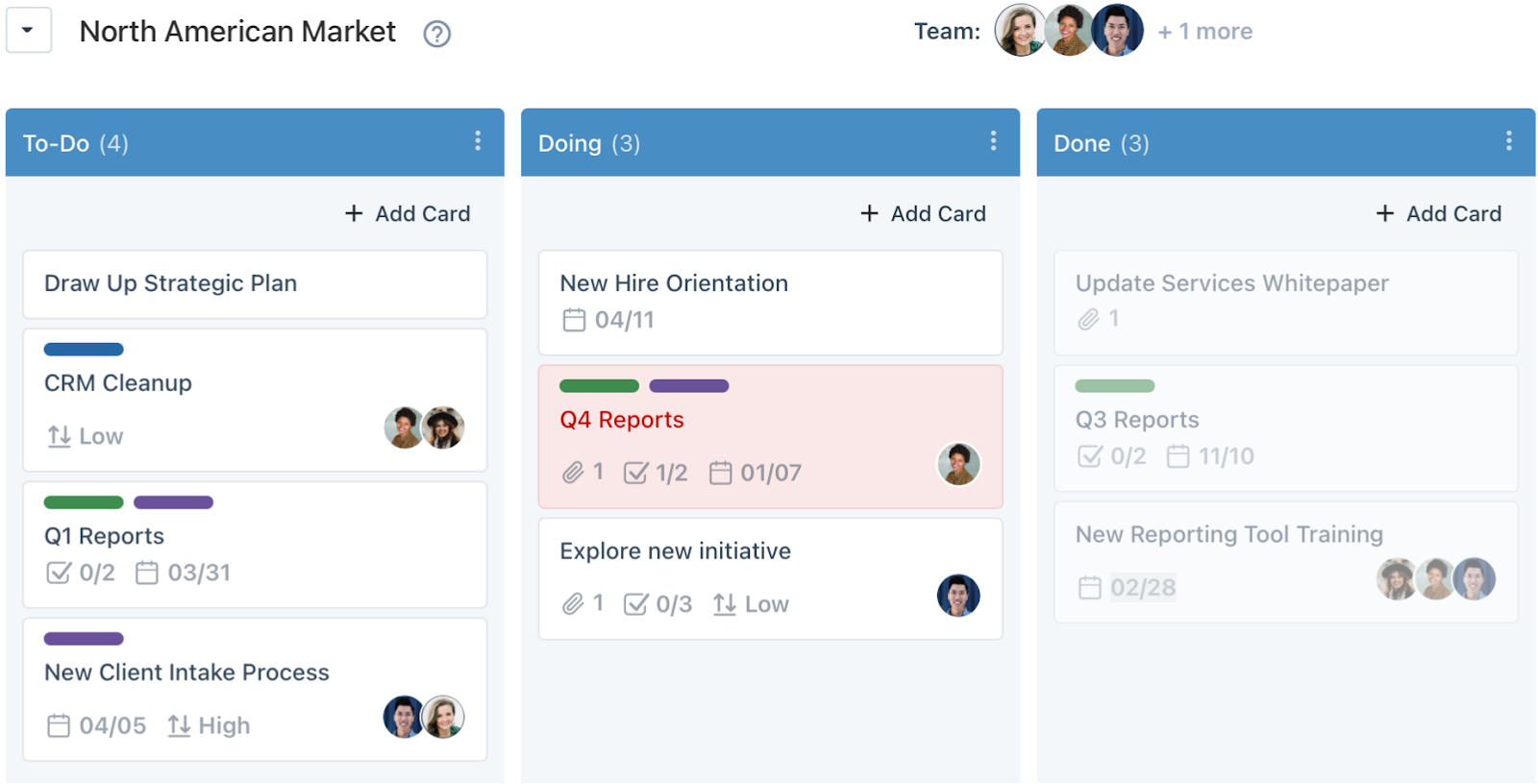
Trello is a low-cost project management software for creatives managing client work and side projects. It helps plan, track, and manage projects using a Kanban board and list view.

Its ease of use, wide range of templates, and drag-and-drop functionality make it a handy tool for managing marketing campaigns, tracking projects, and reporting.

Who Is It For?

Freelancers, solopreneurs, marketing agencies, and small businesses.

Trello’s Top Features

  • Automation: Automate routine tasks to free up time for strategic thinking and campaign reporting. Trello’s automation builder, the Butler, also recommends automation based on your activity and trigger history.
  • Power-ups: 150+ apps and integration to expand Trello’s workspace capability—automation, time tracking, communication, and analytics.
  • Task management: The timeline, list, dashboards, Kanban, and calendar view provide a detailed view of your tasks’ progression. With drag-and-drop capability, you can easily move tasks from one card to another.

Trello Pricing

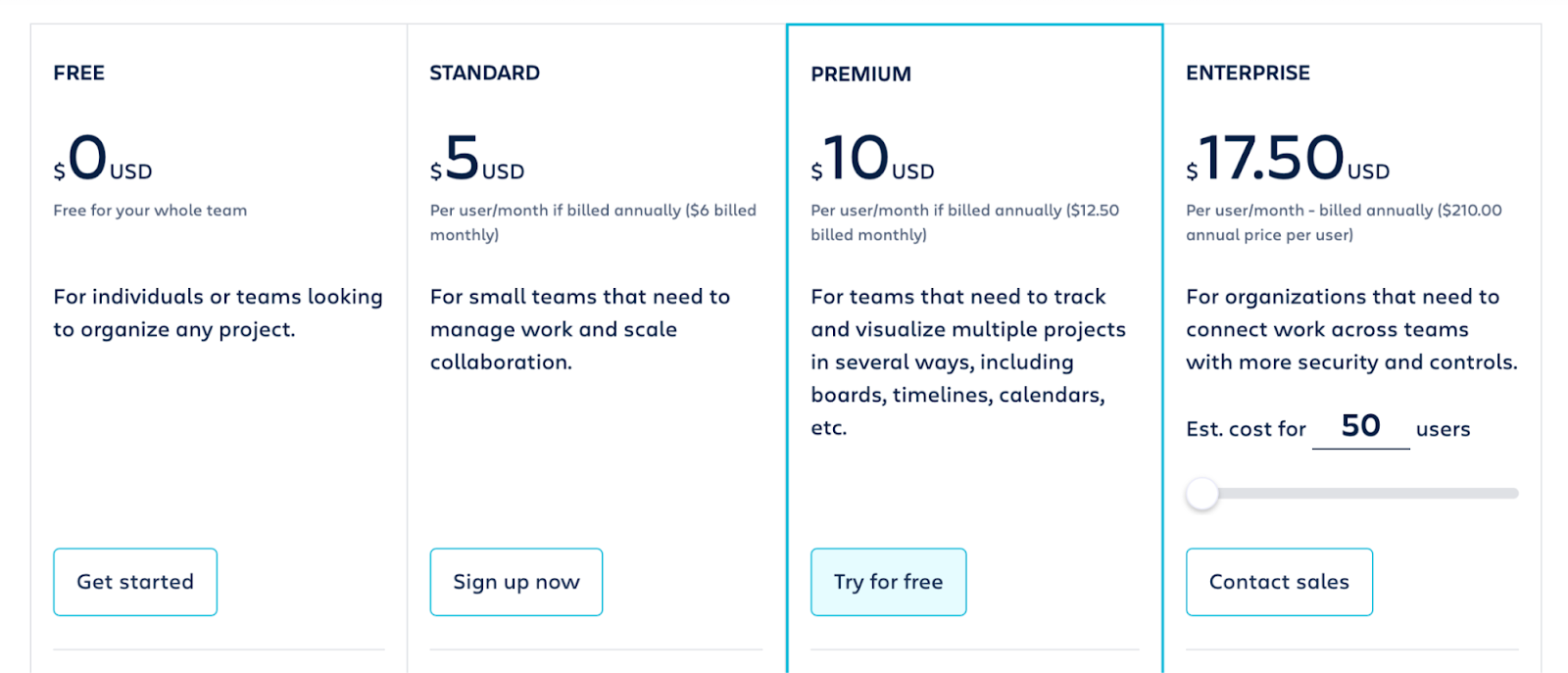
Trello offers a free plan with built-in automation and 10 workspace collaborators. You get a 14-day free trial for its three paid plans:

  • Standard: $6/user/month with unlimited activity log, advanced checklists, and 250 automation runs/month.
  • Premium: $12.50/user/month with unlimited workspace collaborators, all work views, and built-in automation.
  • Enterprise: $17.50/user/month with 24/7 enterprise admin support and SAML SSO via Atlassian Access. Per head cost decreases with team size.

Trello Pros and Cons

✅ User-friendly and intuitive dashboard.

✅ Ease of use across devices.

✅ Built-in advanced automation.

❌ No built-in team communication.

❌ Table, Calendar, Timeline, Map, and Workspace view start only on the premium plan.

❌ No task assignment features for members.

#5: Teamwork

Best for: Client project management across various clients and collaboration.

Teamwork’s client-facing tools are ideal for creative and marketing teams across industries. 

Features like client onboarding, budget planning, invoicing, and time tracking make it an all-around project management software.

Who Is It For?

Client-service businesses–marketing agencies, consulting firms, and creative agencies.

Teamwork’s Top Features

  • Team communication and collaboration: Share updates with clients, get approvals, and communicate internally with a built-in messaging app, comments, and @mentions.
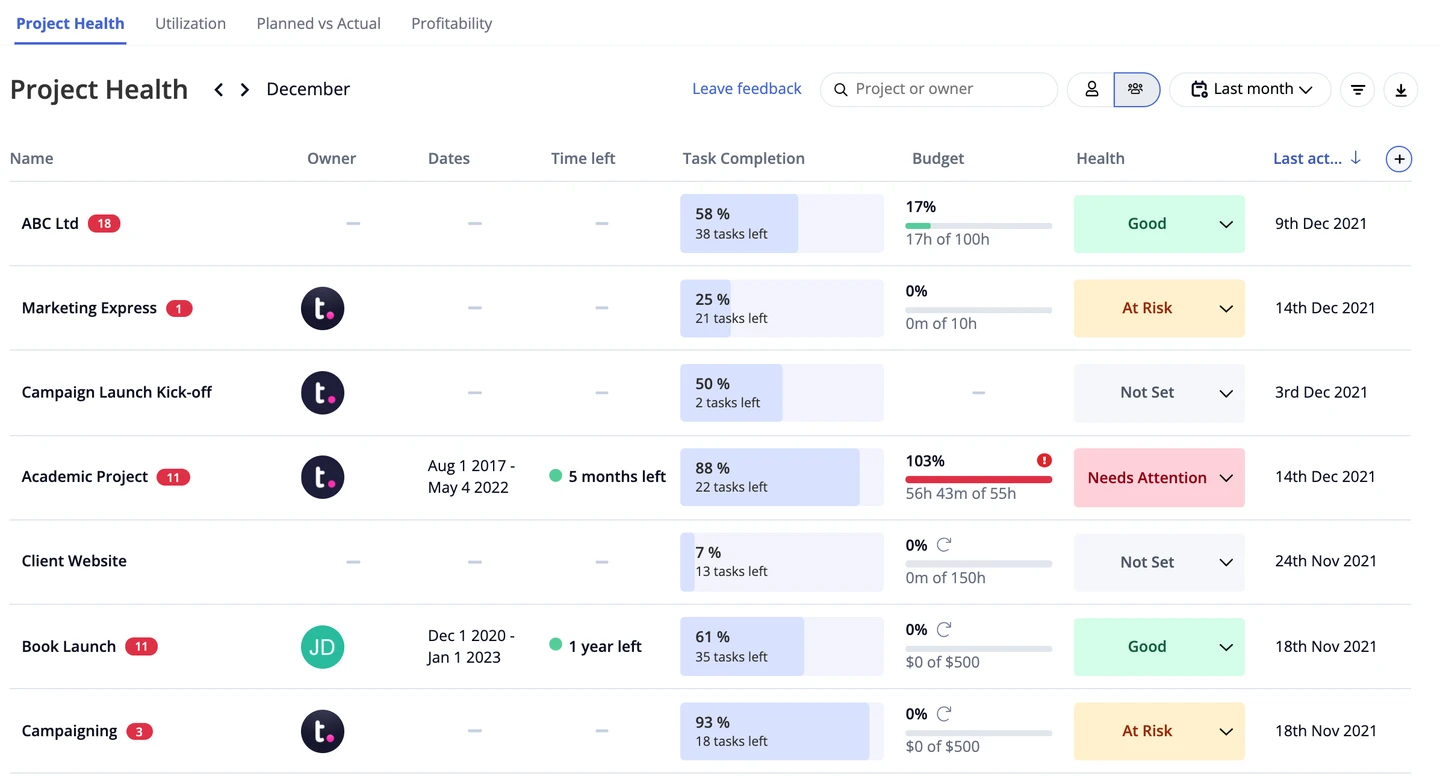
  • Resource planning: Assess your project’s health, understand the team’s workload, and re-allocate resources to maintain peak efficiency.
  • Time and invoice tracking: Use the time tracking field to estimate billable hours and manage invoices within your workspace.

Teamwork Pricing

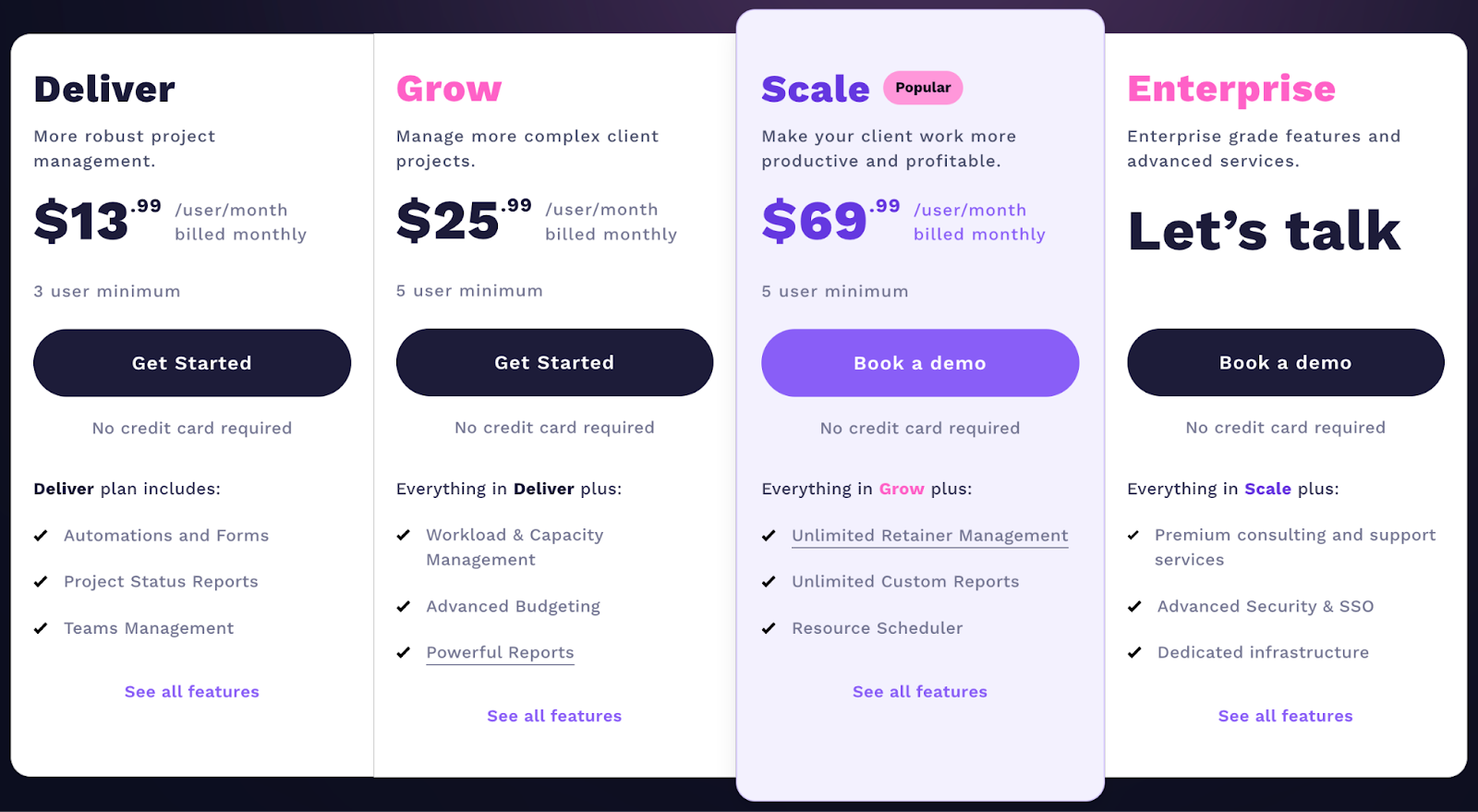
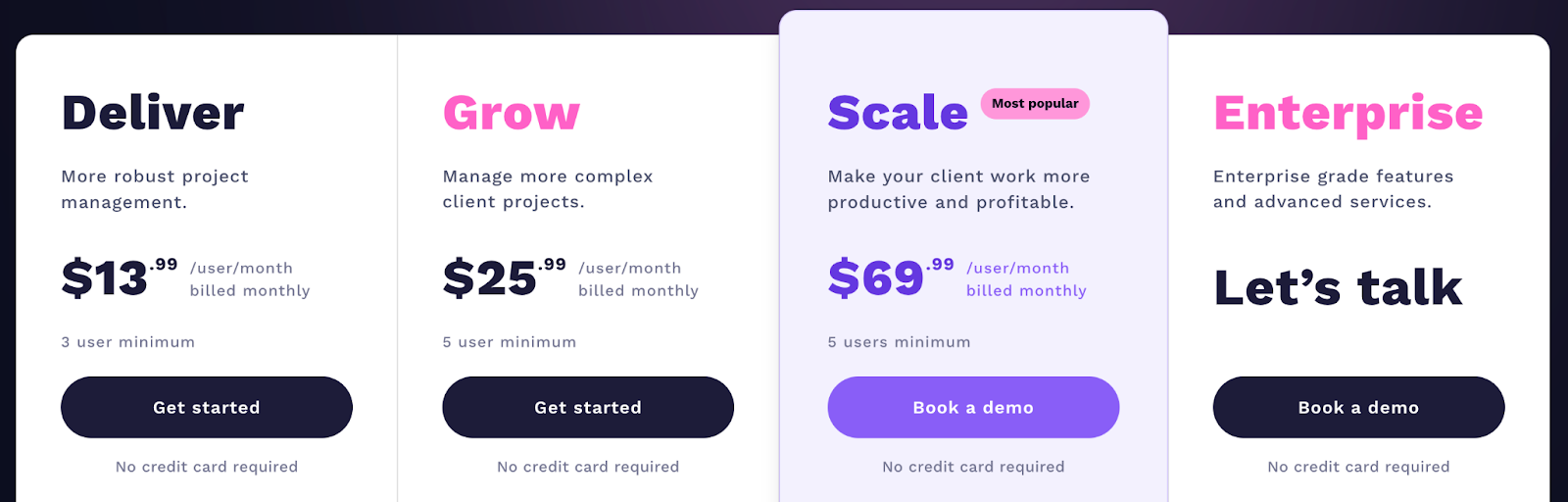
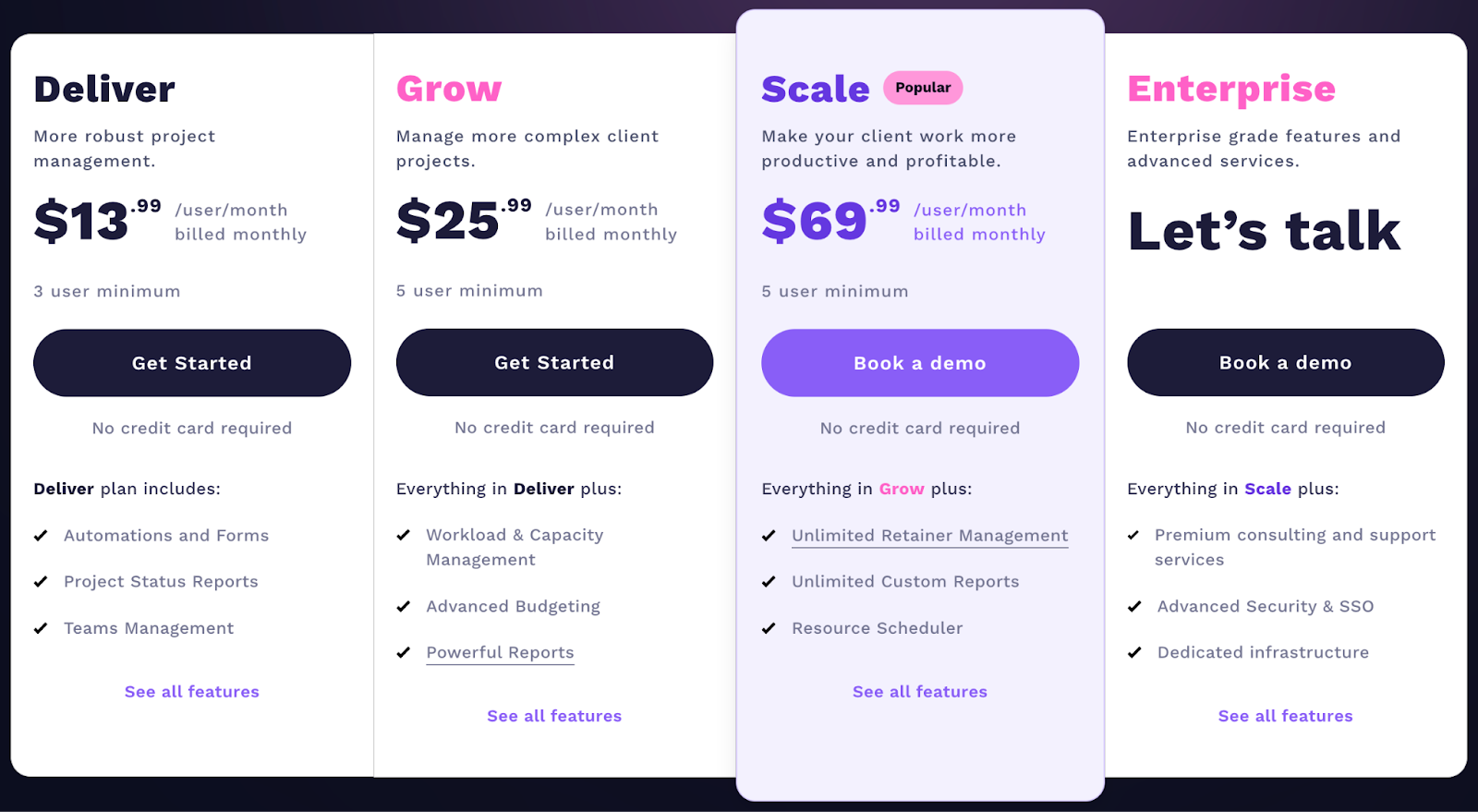
Teamwork.com offers a forever free plan for up to 5 users and four paid plans with a 30-day free trial.

  • Deliver: $13.99/user/month for a minimum of 3 users, billable time tracking, client company management, and Gantt charts.
  • Grow: $25.99/user/month for a minimum of 5 users, resource scheduling, utilization report, and a custom domain with SSL.
  • Scale: $69.99/user/month for a minimum of 5 users, unlimited retainer management, projects, and advanced automation with conditional logic.
  • Enterprise: Dedicated Customer Success Manager, premium support, and advanced security. Contact sales for a quote.

Teamwork Pros and Cons

✅ Customizable workflows and templates.

✅ Built-in resource management tools—time tracking, invoicing, and budgeting features.

✅ Ease of collaboration with external users like vendors or contractors.

❌ Group pricing leads to expensive plans for solo teams.

❌ Limited native integration, relying on Zapier.

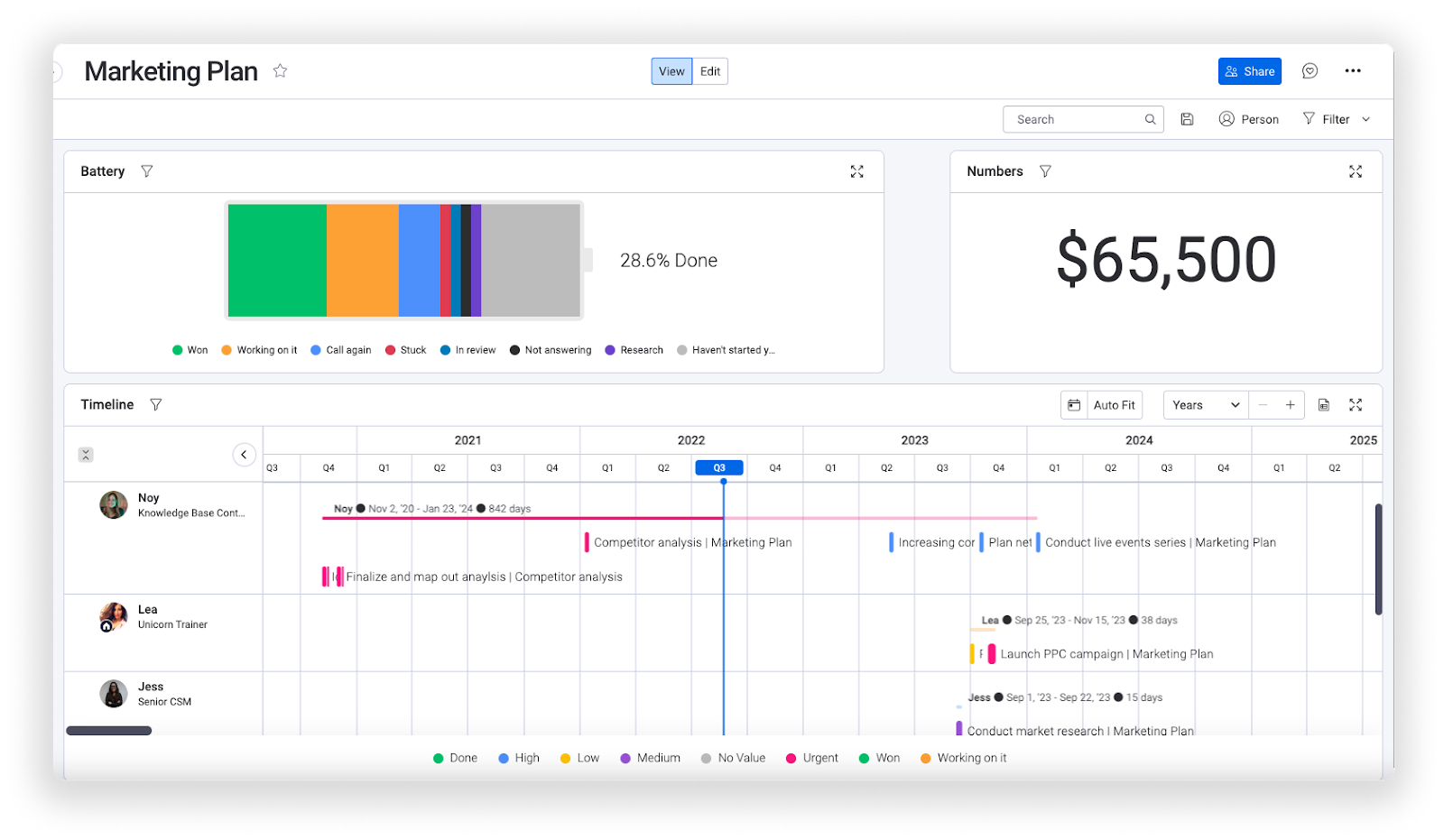
#6. Monday.com

Best for: Managing complex projects with flexible dashboards.

Monday.com is a robust project management tool to help marketing teams streamline various campaigns and creative work. 

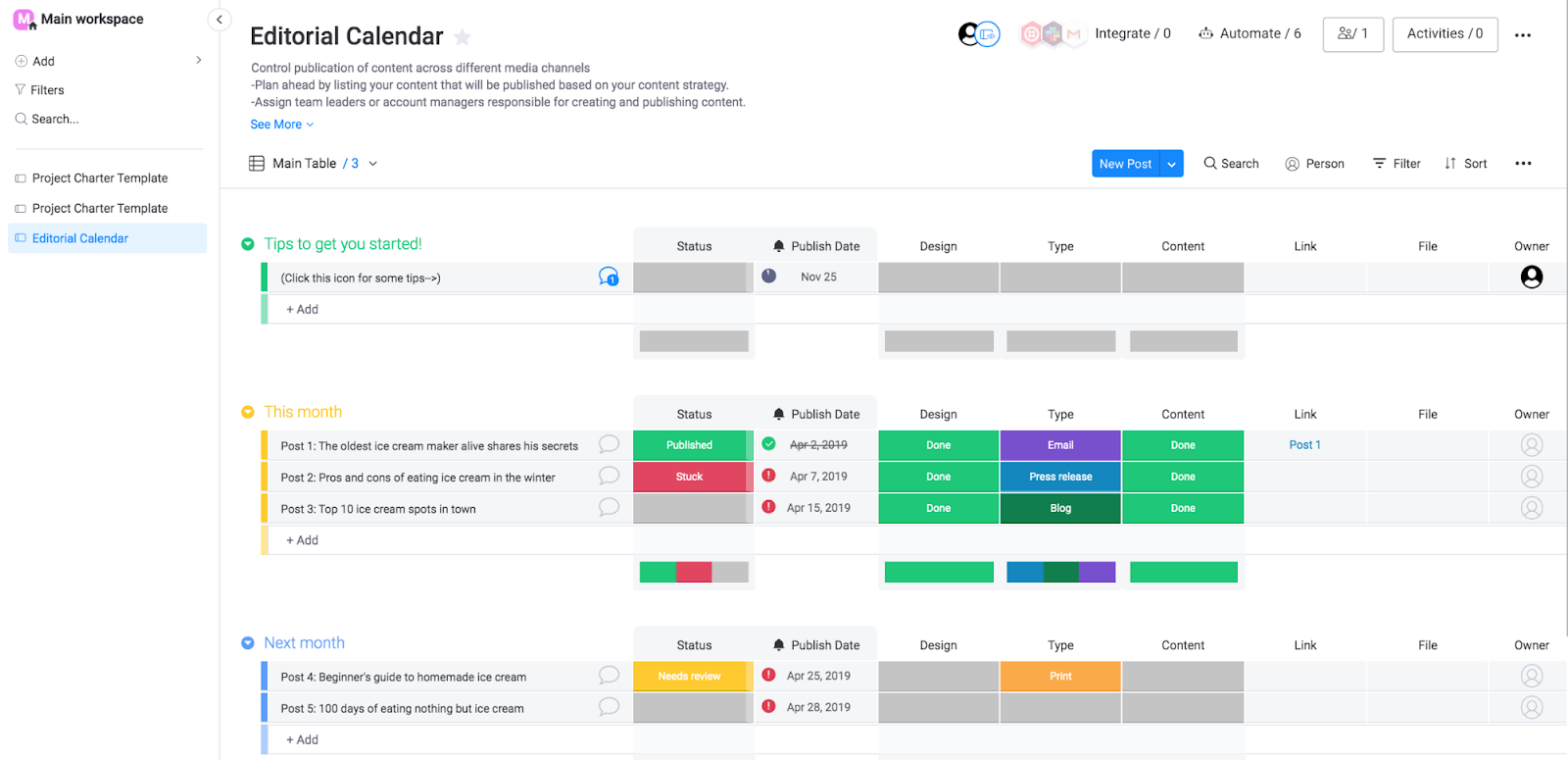
You can build monthly content calendars, plan and launch holiday promotional campaigns, and map out quarterly marketing strategies.

Who Is It For?

Medium and large-scale businesses who want an adaptable project management tool.

Monday.com’s Top Features

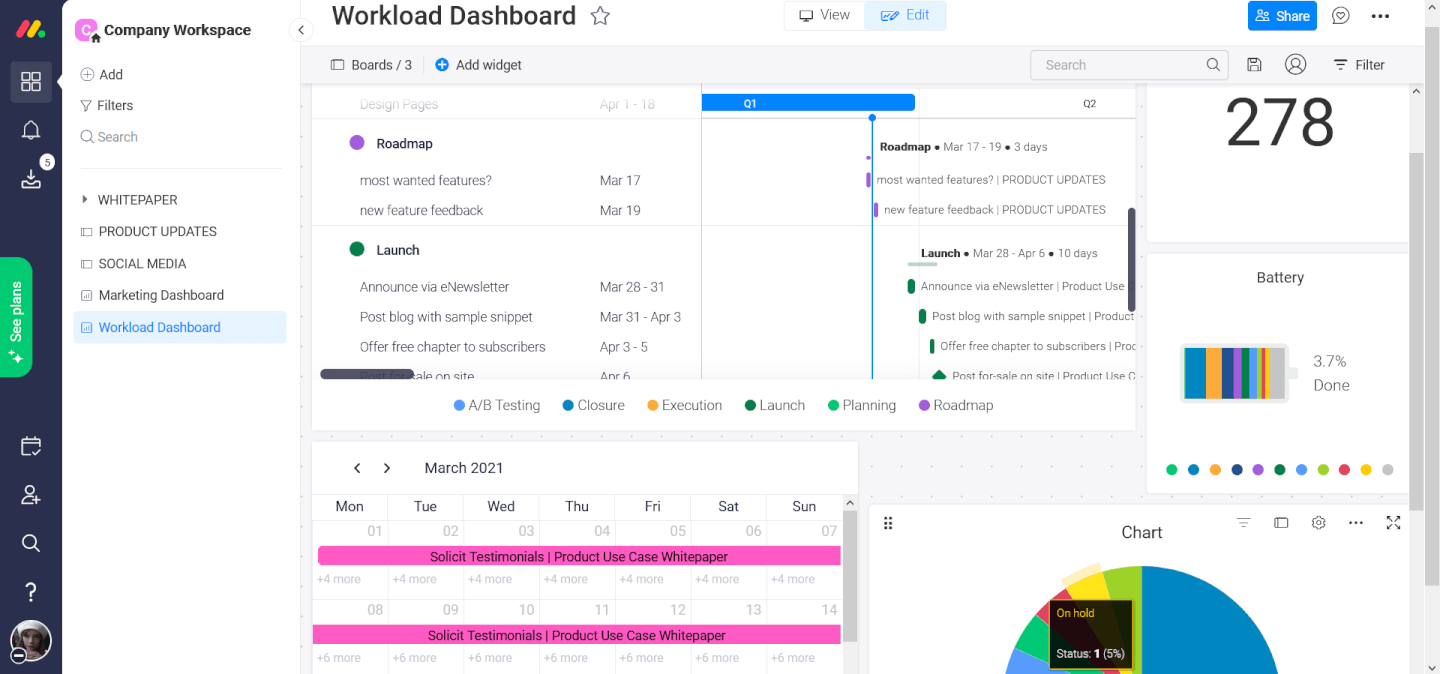
  • Gantt charts: Visualize task dependencies, see the project’s timelines at a glance, and identify any blockers across the projects.
  • Asset management: Store, view, and manage your project-related assets—social media assets, strategy documents, and website graphics—in one place.
  • Automation: Workflow automation to create project boards, set approvals and reminders, and standardize processes across organizations.

Monday.com’s Pricing

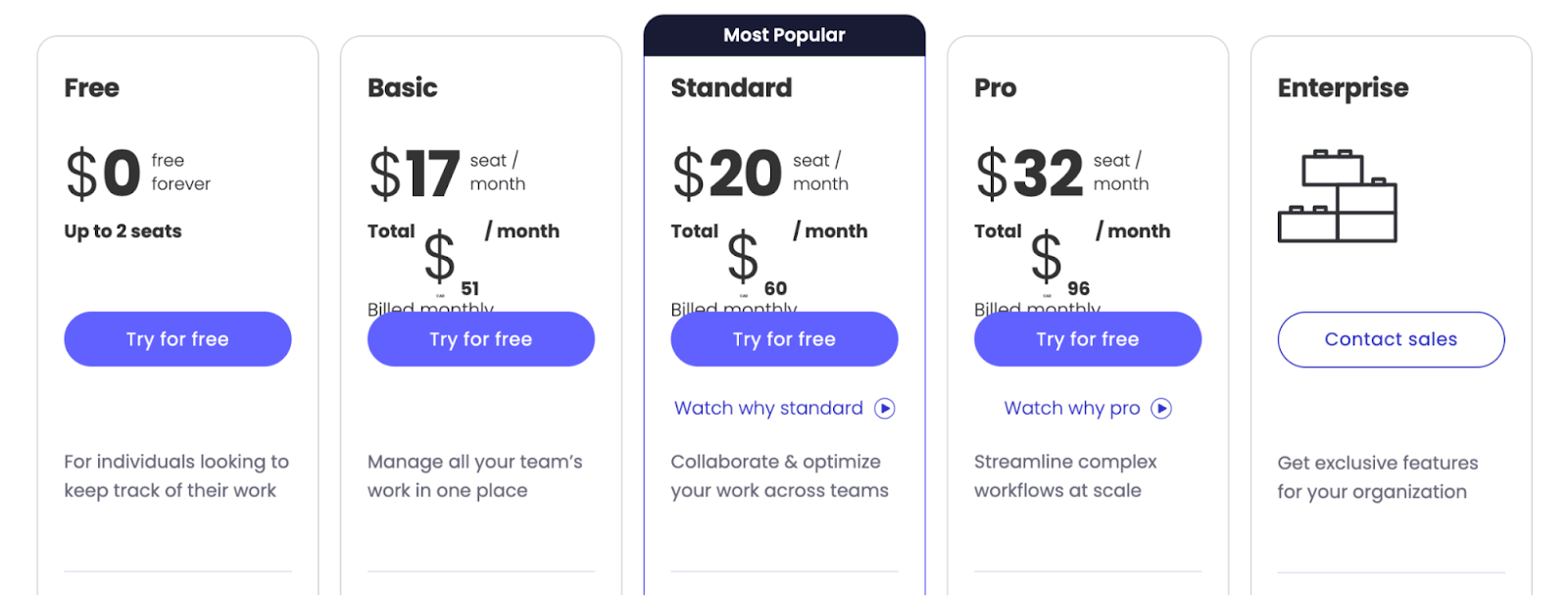
Monday.com offers a 14-day free trial and a free plan for up to 2 users.

Their paid plans are based on a minimum team size of 3 and come in four categories:

  • Basic: Starts at $17/user/month with only Kanban boards view.
  • Standard: Starts at $20/user/month with 250 automated actions/month and 3+ dashboard views.
  • Pro: Starts at $32/user/month with all five dashboard views and 2-factor authentication.
  • Enterprise: For enterprise-level reporting and administration control. Contact sales for a quote.

Monday.com Pros and Cons

✅ Multiple customization options.

✅ No-code automation builder.

❌ Steep learning curve.

❌ Expensive and confusing plans.

❌ Slow loading time and constant screen lag.

#7: Asana

Best for: Building flexible workflows through dependencies and automation.

Asana is a project management platform that helps marketing teams streamline campaign planning, tracking, and execution through automated workflows, dependencies, and portfolios.

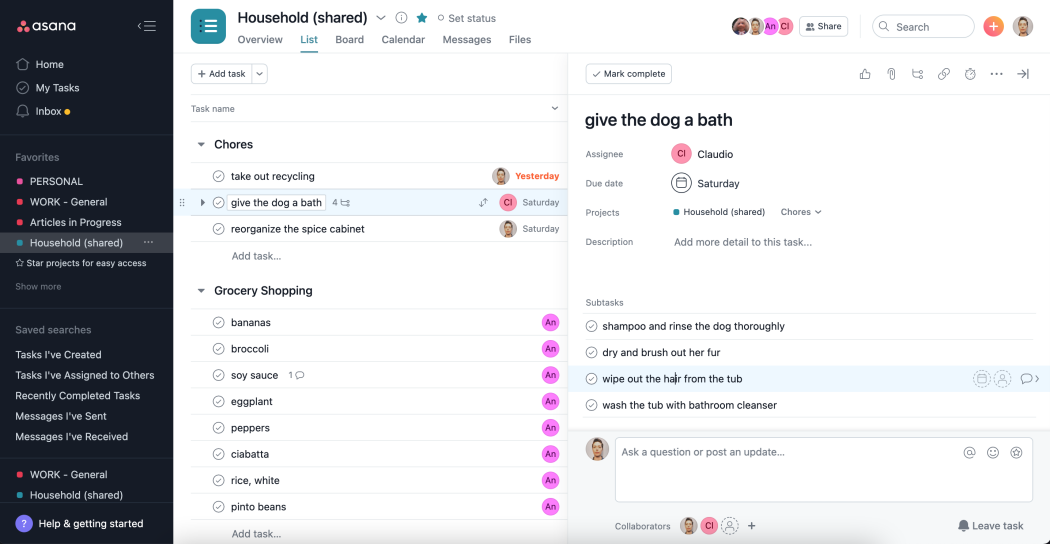
The built-in portfolio helps you organize multiple projects, giving you access to all documents, tasks, and due dates in one place. 

Dependencies let you build a hierarchical work structure while automation handles recurring tasks.

Who Is It For?

Creative and marketing agencies, small and medium-sized businesses.

Asana’s Top Features

  • Request forms: Create standardized templates and send them to prospective clients to immediately collect all details. This helps you gather the information needed to start any project.
  • Capacity planning: Optimize resources (time, people, and cost) by understanding your team’s workload, task prioritization, and project goals.
  • Portfolios: Organize multiple marketing projects in dedicated portfolios. Each campaign can be a portfolio, giving an overview of the task lists, the team involved, and overall progress.

Asana Pricing

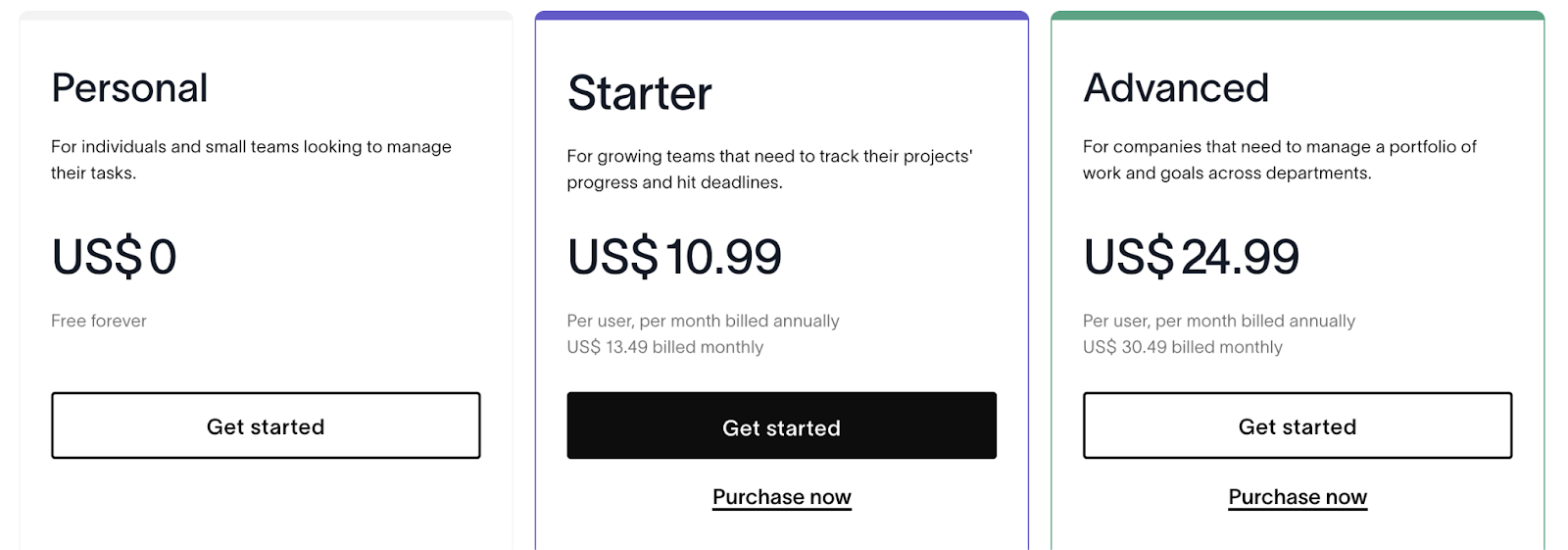
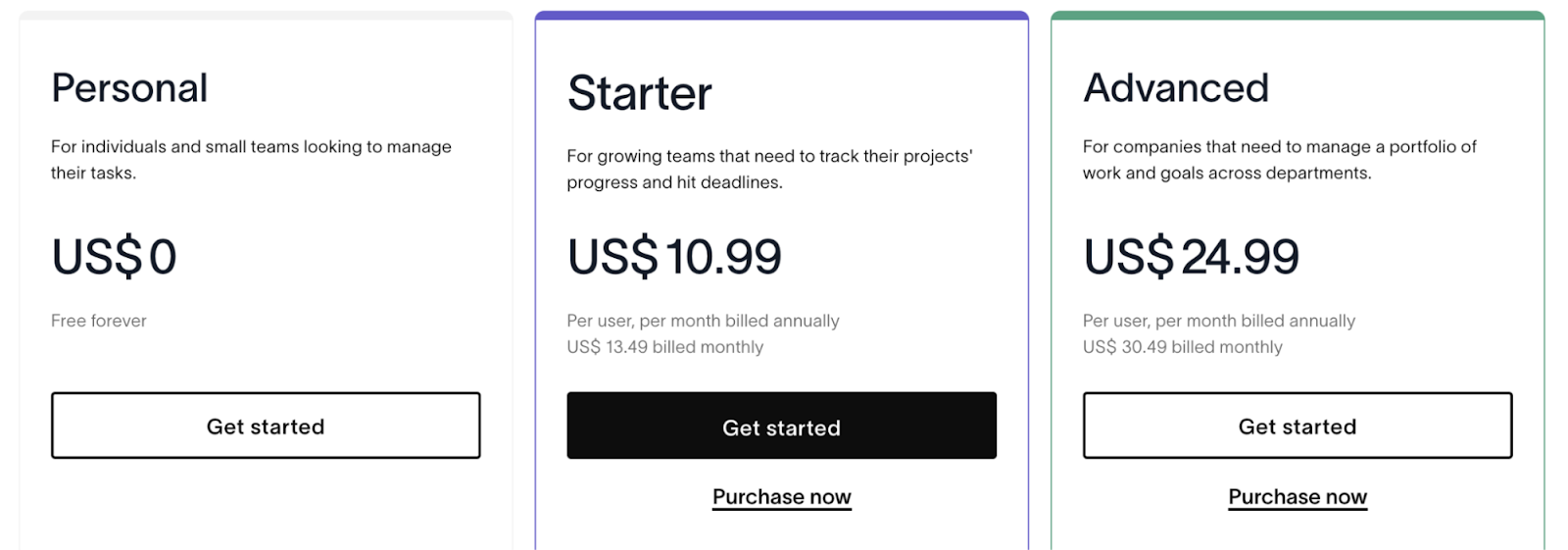
Asana offers a free plan for up to 10 users, unlimited file storage (100MB per file), and three task views—board, list, and calendar.

There are four paid plans with a 30-day free trial.

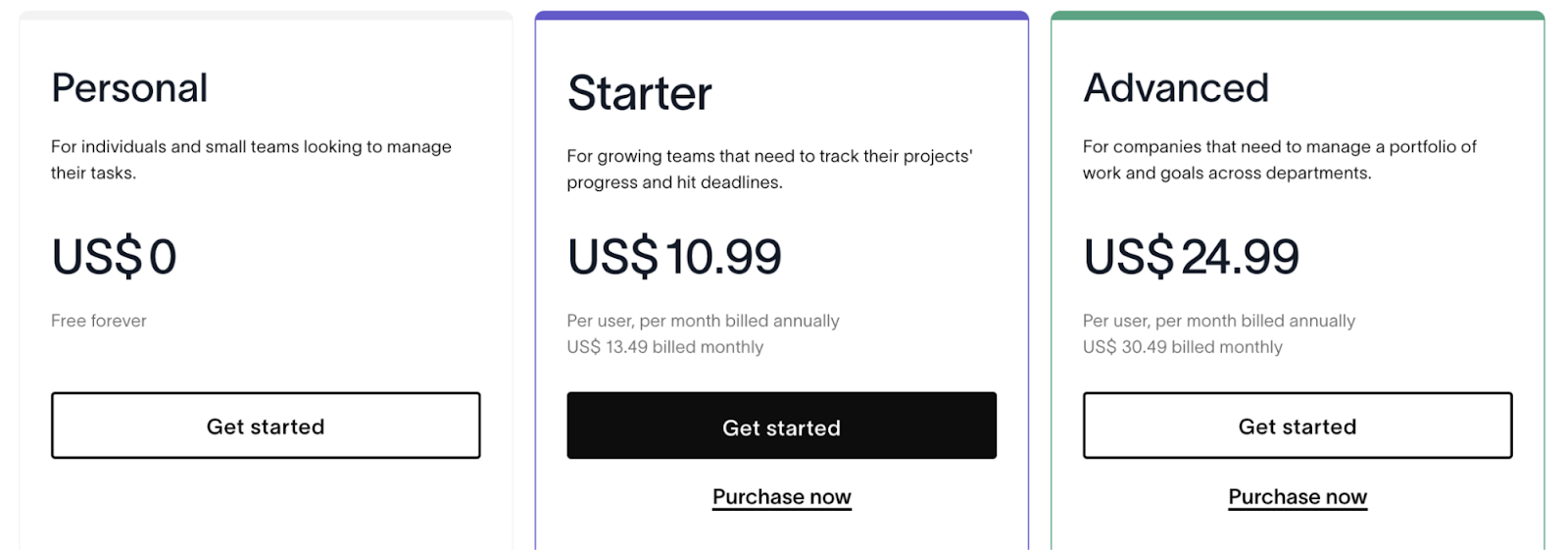
  • Starters: Starts at $13.49/user/month, with up to 500 teammates collaboration, Asana AI, private projects, and teams.
  • Advanced: Starts at $30.49/user/month, with 25,000 automation/month, 100 portfolios, universal reporting, and goal tracking.
  • Enterprise: Advanced integrations, unlimited seats, portfolio, and automation bundles. Contact sales for a quote.
  • Enterprise+: Audit log API, HIPAA compliance, and data loss prevention integrations. Contact sales for a quote.

Asana Pros and Cons

✅ Centralized work management with portfolios.

✅ Powerful workflow automation.

✅ 270+ native integrations.

❌ Lack of native collaboration and communication tools.

❌ Group-based pricing causes a price increase for small or one-person businesses.

#8: Wrike

Best for: Managing marketing campaigns across multiple teams.

Wrike is a project management tool that helps teams manage marketing campaigns, streamline proofing processes, and build real-time reports.

Who Is It For?

Large to enterprise-level businesses and marketing agencies managing multiple clients.

Wrike’s Top Features

  • Dynamic request forms: Use custom forms to collect and manage all incoming requests. Each request filled out via these forms is auto-added to your designated workspace.
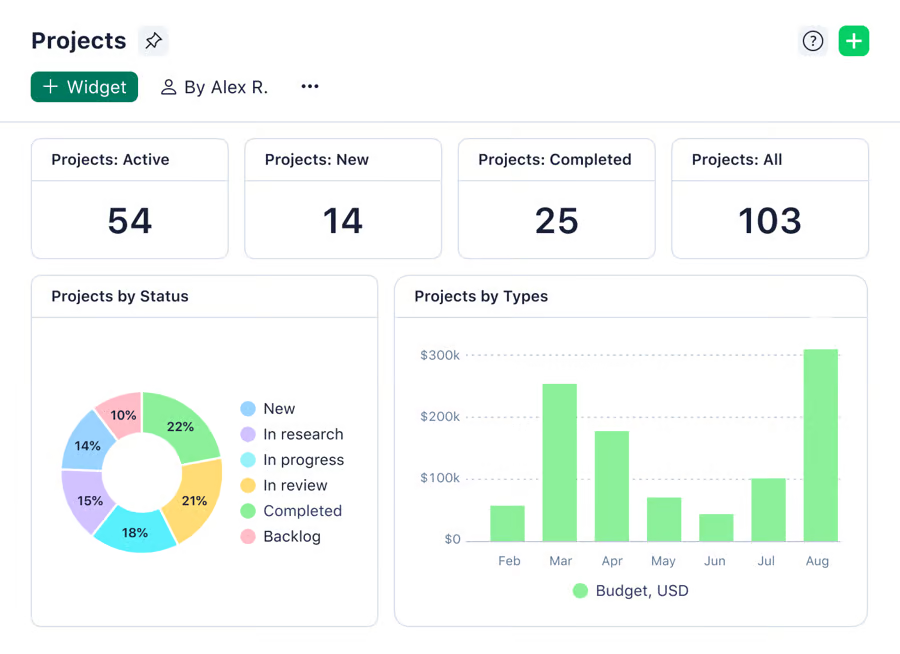
  • Reporting dashboards: Build a real-time snapshot of your campaign’s performance using pie charts, graphs, and tables.
  • Resource management: Allocate resources based on your team’s capacity, request additional resources, and optimize the team’s workload.

Wrike Pricing

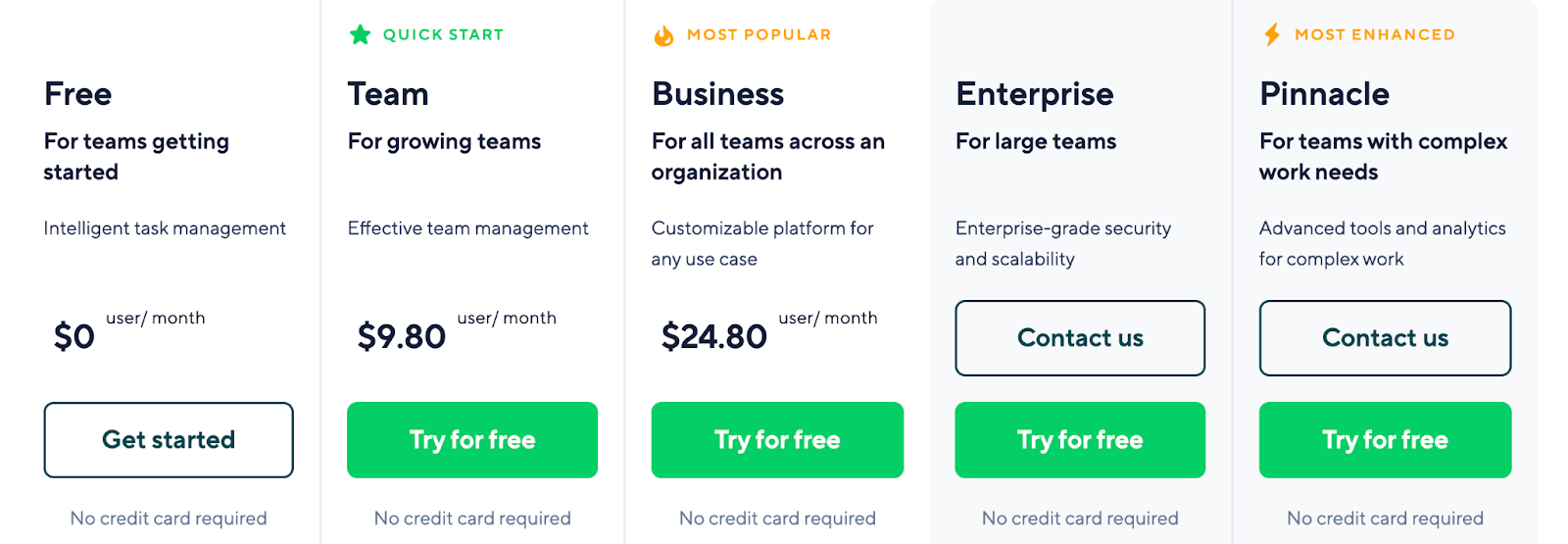
Wrike offers a generous, free-forever plan with email integration and enterprise-grade security. There are five paid plans with a 14-day free trial:

  • Team: Start at $9.80/user/month for up to 25 users, including custom fields, workflows, unlimited request forms, and dynamic Gantt charts.
  • Business: Starts at $24.80/user/month for up to 200 users, including portfolio management, AI Risk Prediction, nested projects, and real-time reports.
  • Enterprise: Unlimited users with advanced admin, reporting, security, and integrations. Contact sales for a quote.
  • Pinnacle: Native Power BI integration, locked spaces, and budgeting features. Contact sales for a quote.

Wrike Pros and Cons

✅ 400+ integrations, including marketing tool stack.

✅ Generous free plan with unlimited users.

✅ Detailed marketing project templates.

❌ Learning curve due to overwhelming features.

❌ The budgeting feature is limited to Pinnacle plan users.

#9: Workzone

Best for: Multiple marketing campaign management with built-in time tracking

Workzone is one of the earliest cloud-based project management software for marketing teams. 

The platform helps teams create a central documentation and task-tracking hub to enhance collaboration, transparency, and productivity.

Who is it For?

Mid-sized to large organizations, marketing teams, agencies, and operations teams with 5+ users.

Workzone’s Top Features

  • Time tracking: Assess how much time is spent on a project and individual tasks. Nitpick areas for improvements to meet the project’s goals.
  • Project dashboard: Provides a holistic view of all your marketing projects— campaign statuses, project organization by department, campaign, or client.
  • File management: Supports secure file sharing, image markups, and file versioning, facilitating seamless collaboration on marketing assets and documents.

Workzone’s Pricing

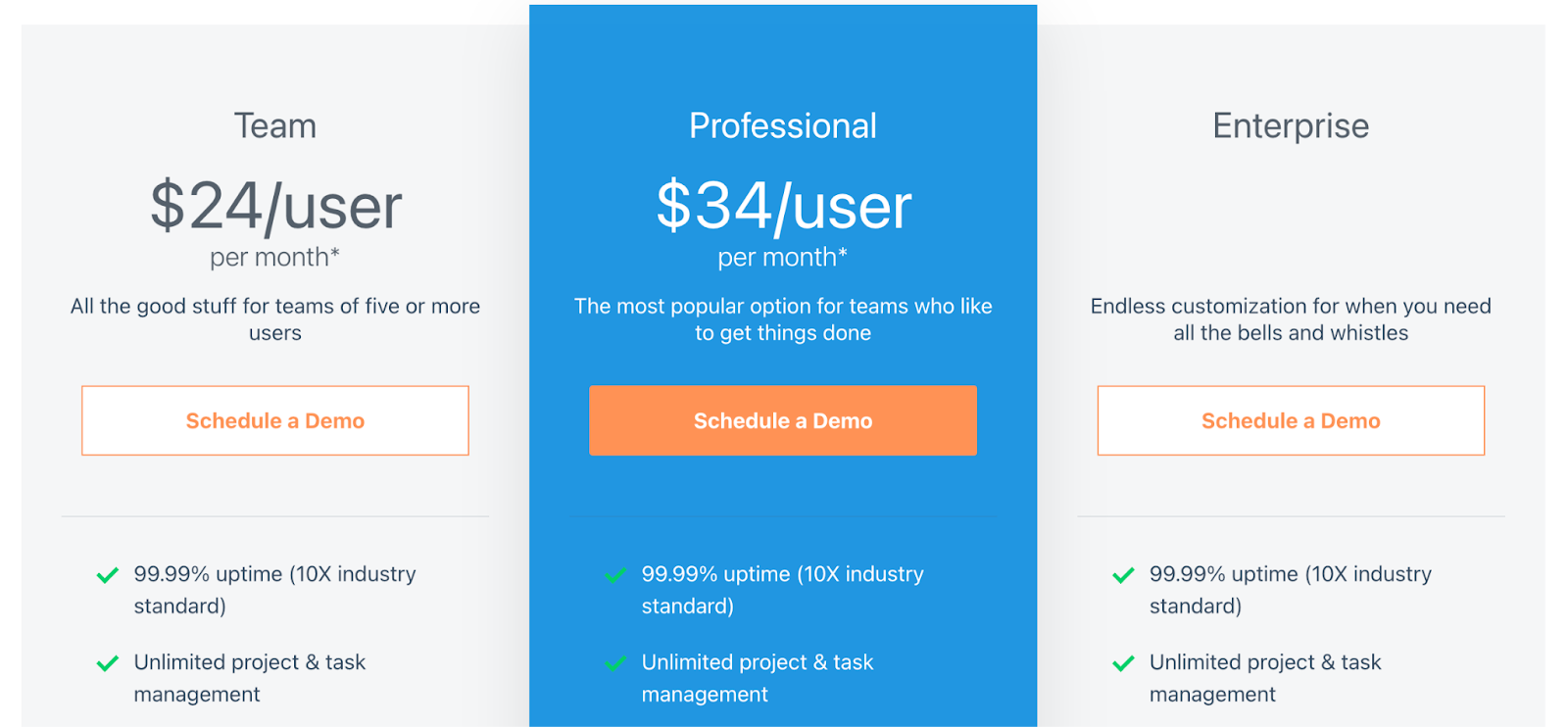
Worksozne doesn’t offer any free plan. And, their free trial access is available only once you get on a demo and feel the need to have one.

There are three paid plans:

  • Team: Starts at $24/user/month with a minimum of 5 seats. The plan includes 100GB storage, resource management, expense tracking, and Gantt charts.
  • Professional: Starts at $34/user/month, including Custom project intake forms, advanced capacity planning, and 150 GB storage.
  • Enterprise: Cross-project dependencies, custom workflows, advanced time tracking reports, and workspace groups. Contact sales for a quote.

Workzone Pros and Cons

✅ Clean and easy-to-use interface.

✅ Time tracking and resource management are included in all plans.

❌ Cross-project dependencies are available only on the enterprise plan.

❌ No native communication. Collaboration is possible through comments only.

❌ Can be expensive for smaller teams.

#10: Basecamp

Best for: Centralized campaign management–from ideation to execution.

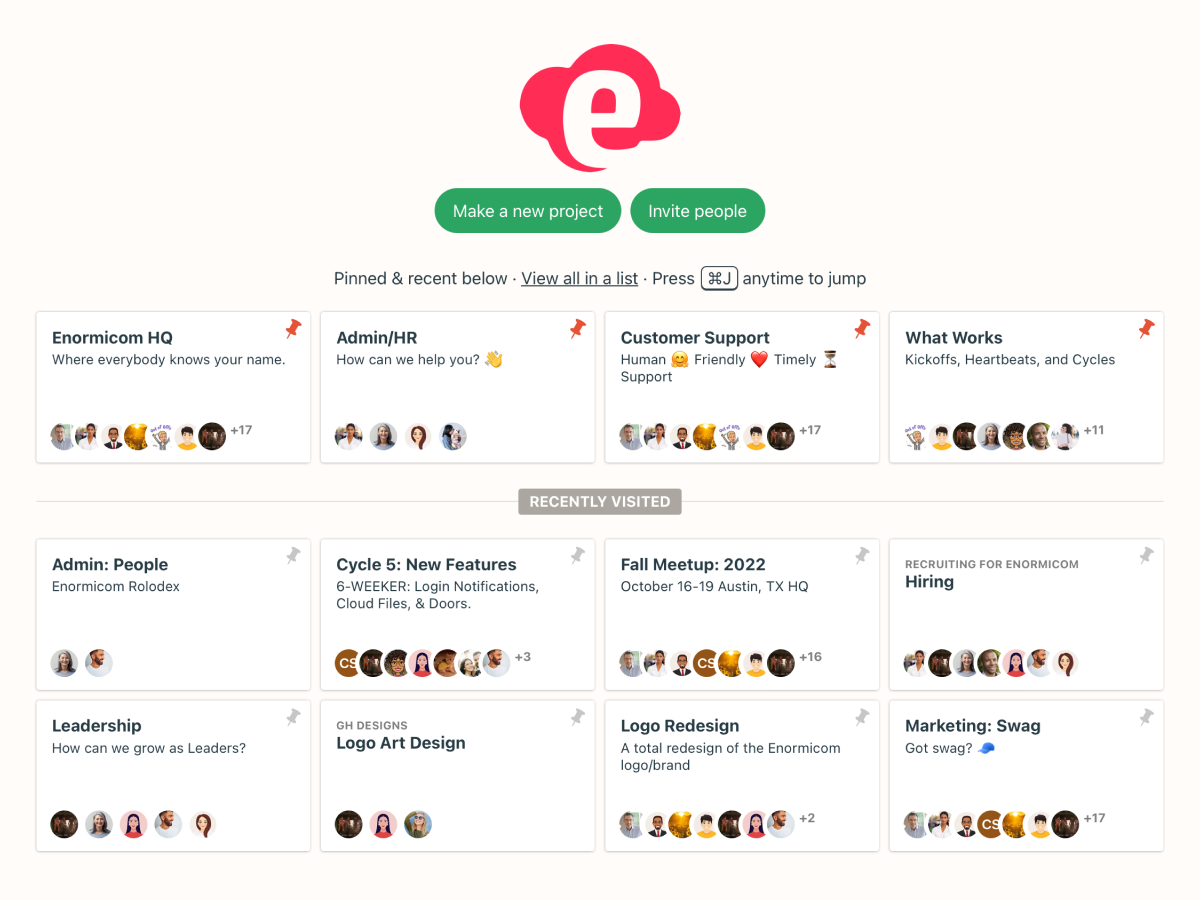
Basecamp’s project management offering is the best suite for marketing teams who want to manage multiple campaigns and require cross-team collaboration. 

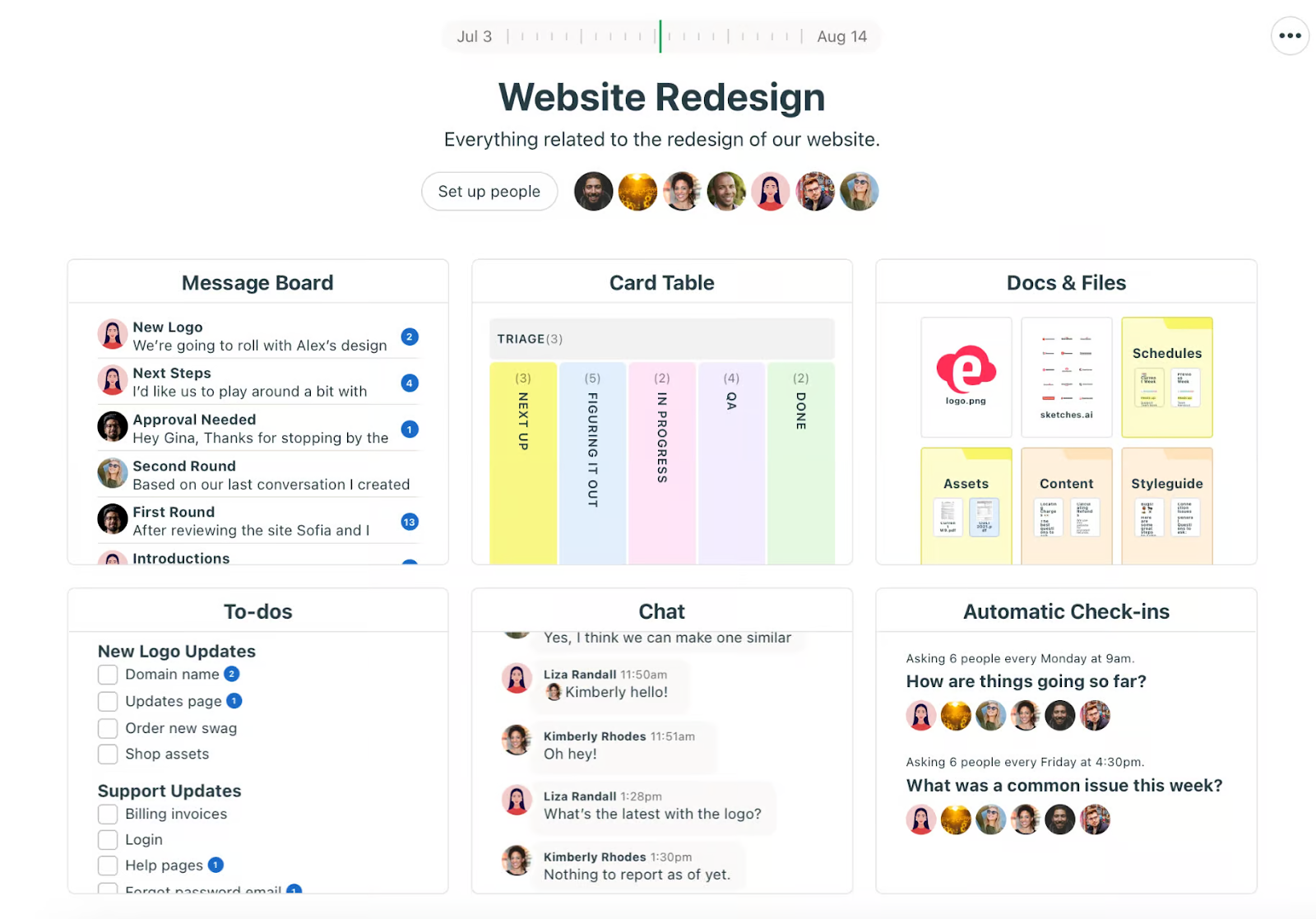
Every campaign has a folder containing all the details—files and docs, task lists, conversations, automated triggers, and reports.

Who Is It For?

Marketing teams of various sizes (from small 5-person teams to larger organizations) and marketing agencies managing multiple client projects.

Basecamp’s Top Features

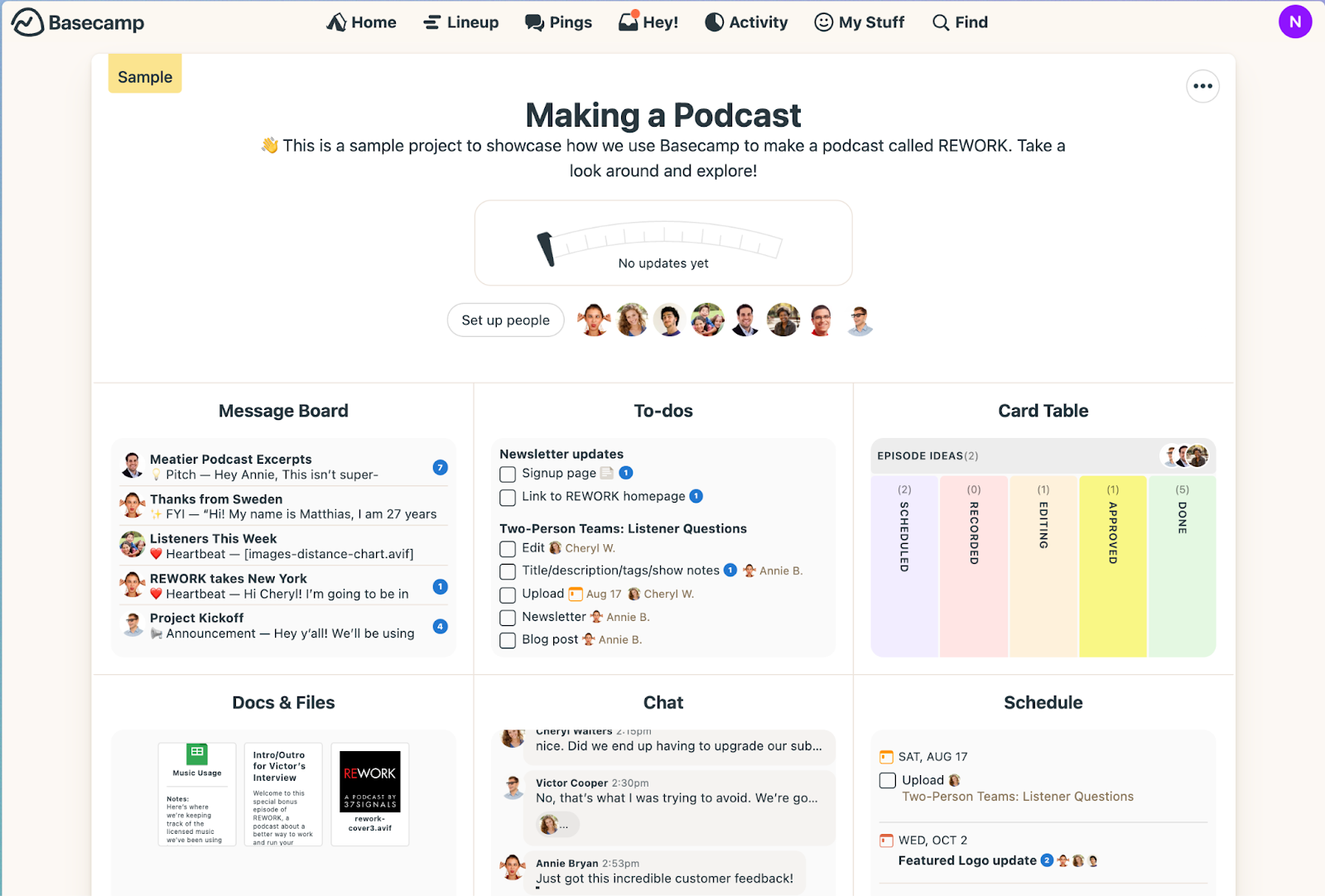
  • To-do lists: List all the tasks that need to be done in a to-do list format and assign them to team members.
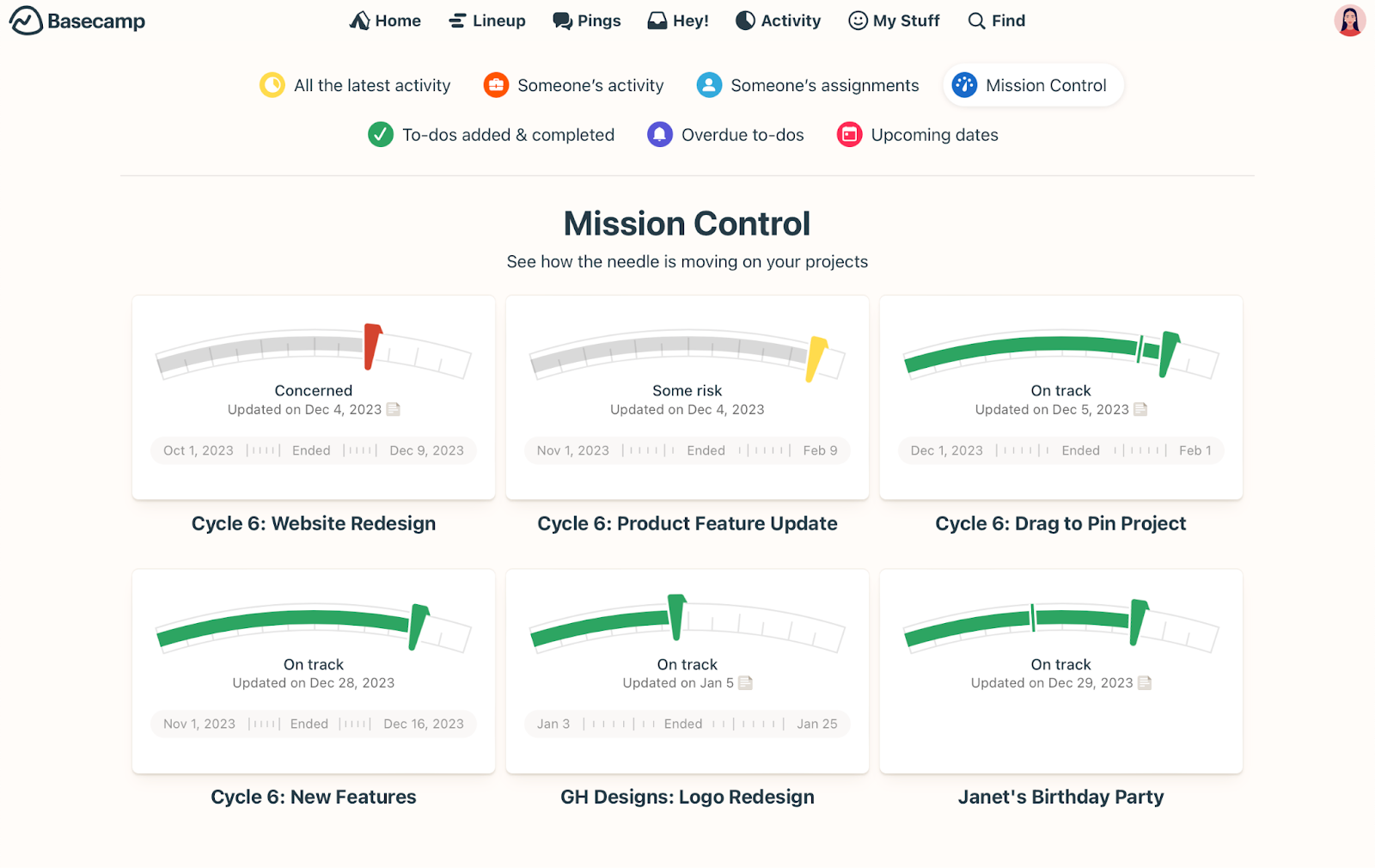
  • Hill charts: A hill-like chart gives an overview of multiple to-do lists. Team members can update task progress, giving you a clear picture of task movement across the timeline.
  • Cross-functional team communication: 1:1 chats, group conversations, comments, @mentions, and message boards all help reduce time spent on meetings or finding feedback through long email threads.

Basecamp Pricing

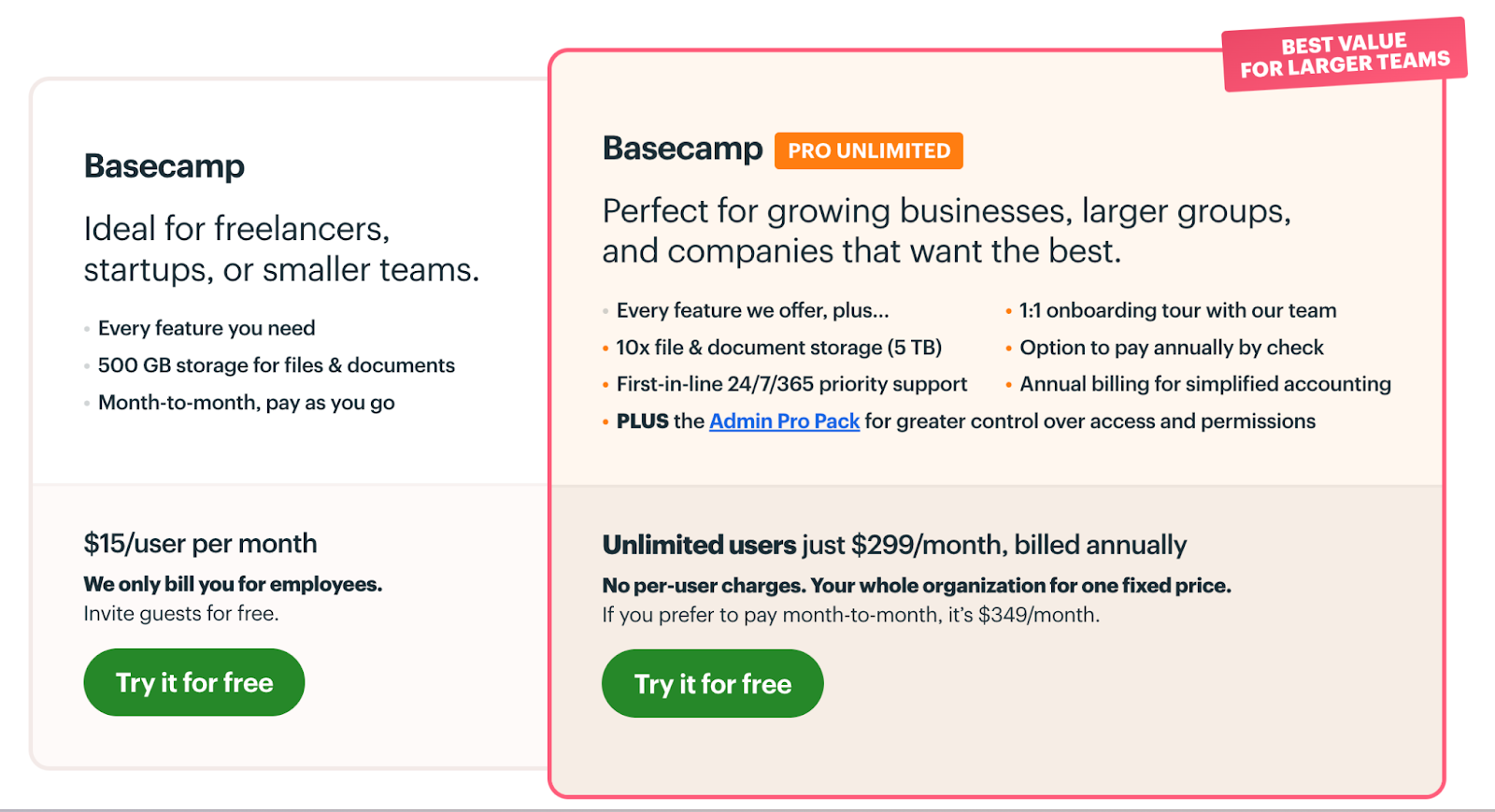
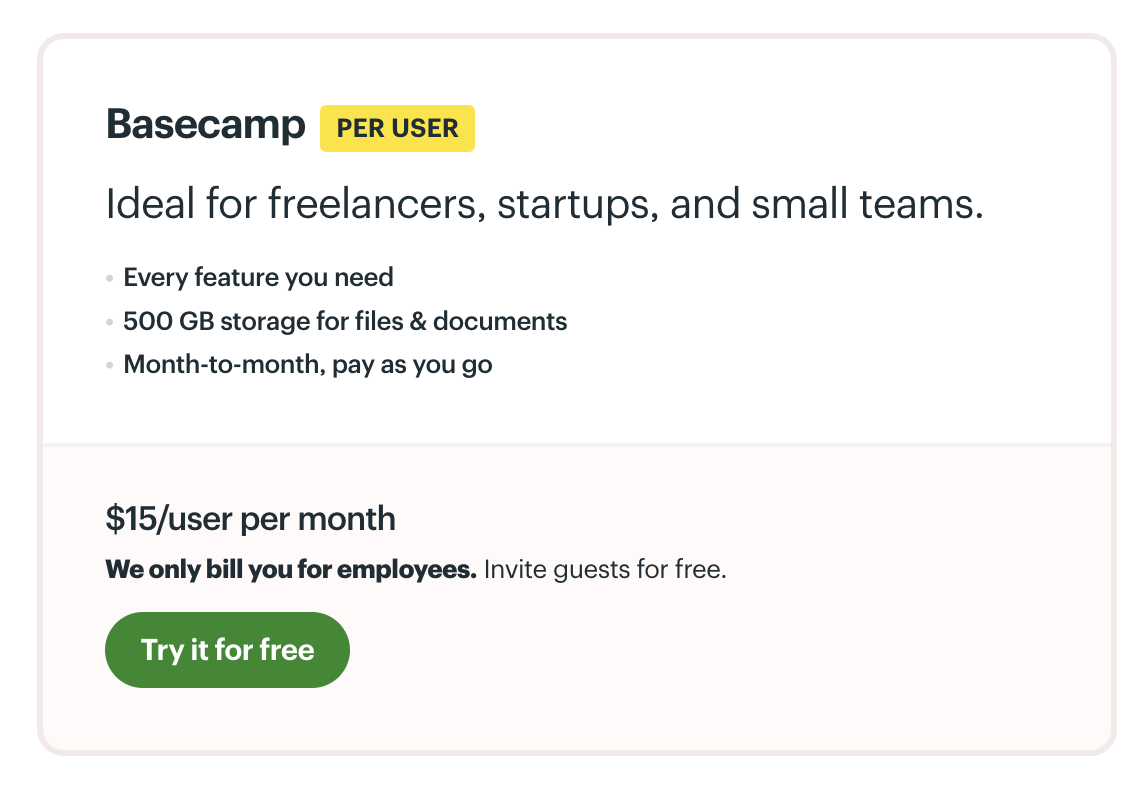
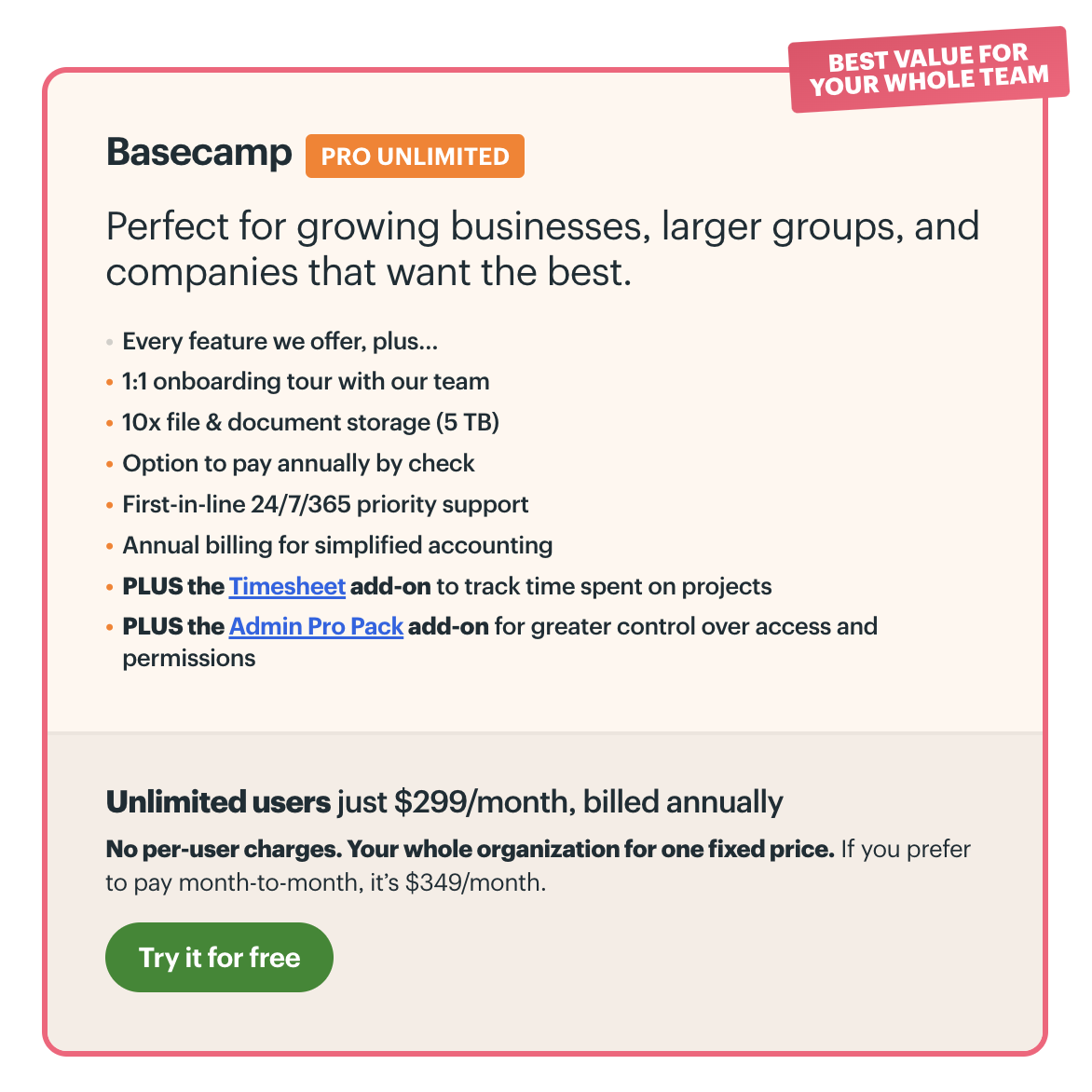
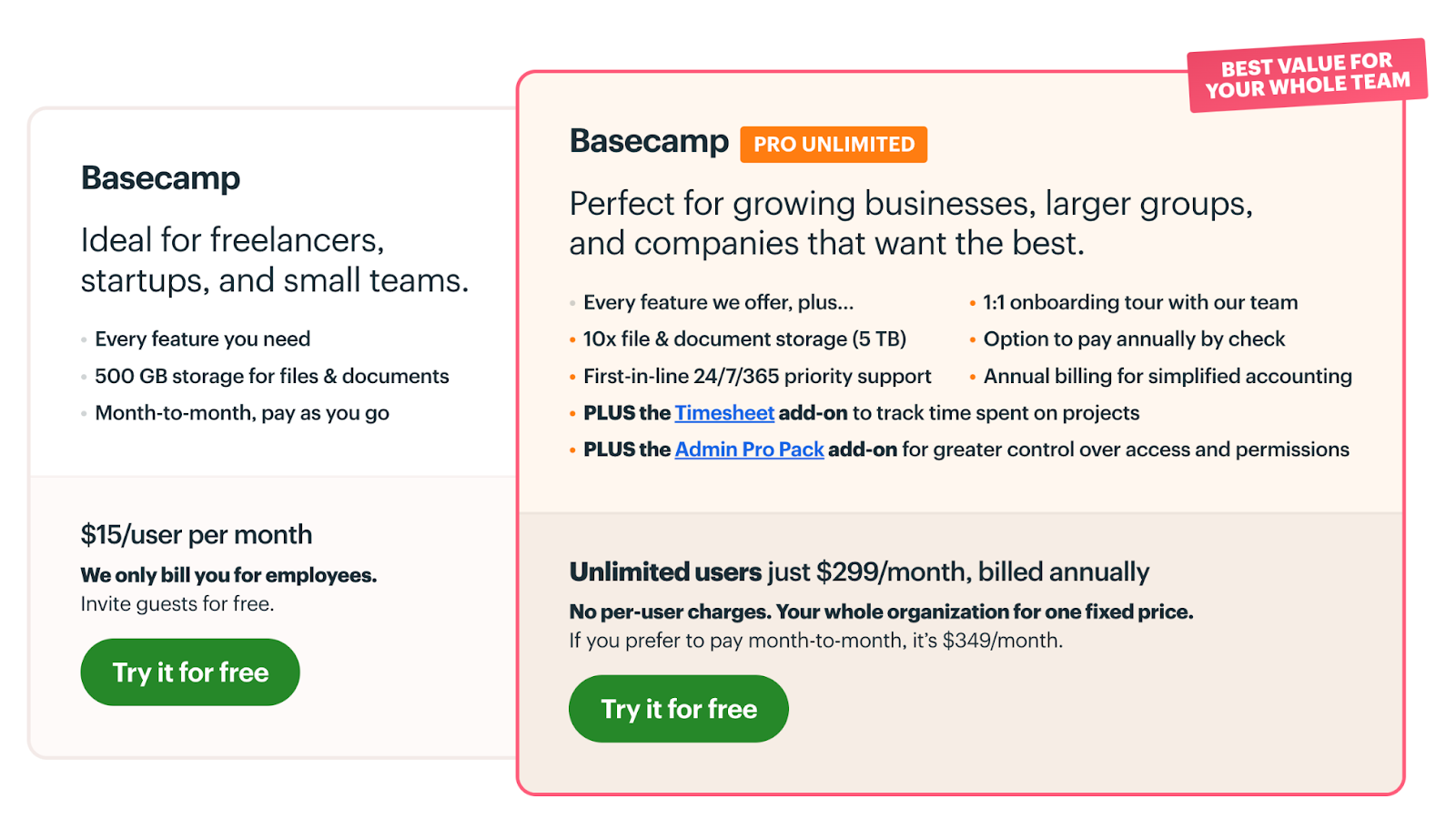
Basecamp offers two plans with complete access to all features. 

The key difference is that one plan has per-user pricing, while the other has a fixed fee for unlimited users.

Both plans offer a 30-day free trial.

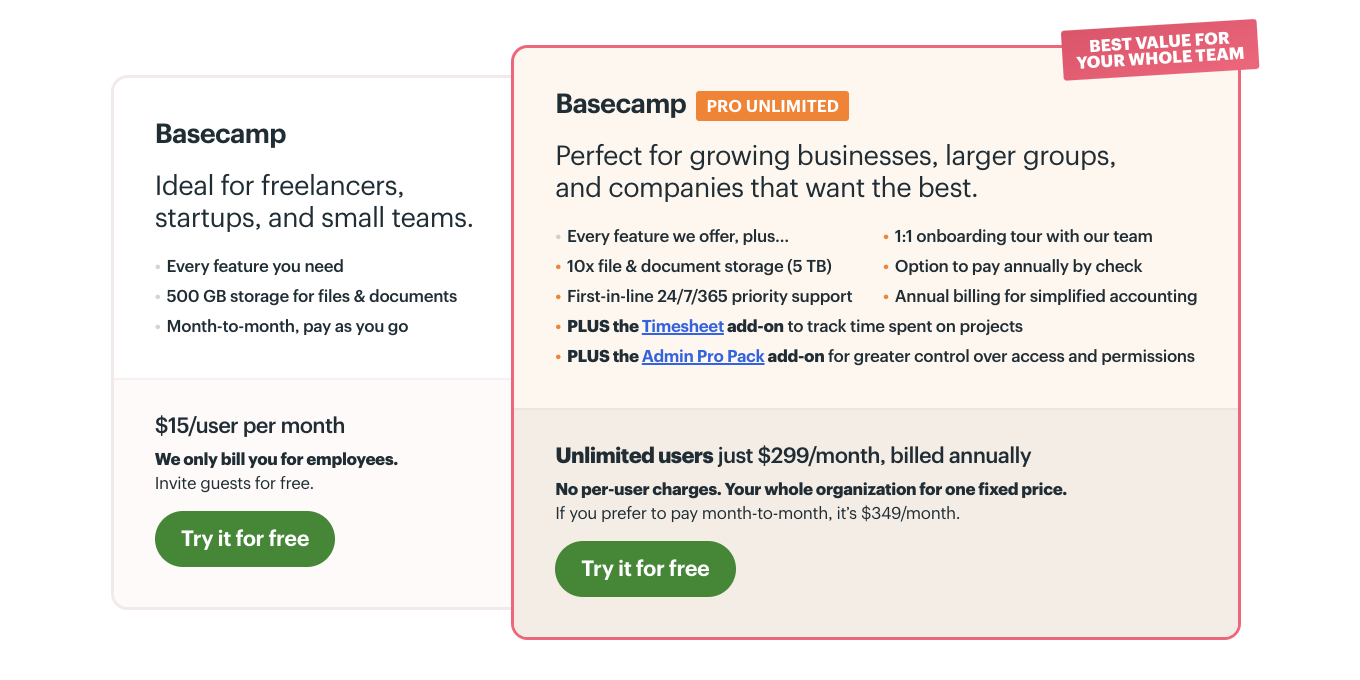
  • Basic: Starts at $15/user/month including collaboration tools–messaging, comments, and emails, visual reporting graphs, 500 GB storage for files & documents.
  • Pro Unlimited: $349/month fixed price for unlimited seats, including 1:1 onboarding tour, 10x file & document storage (5 TB), 24/7/365 priority support, Timesheet and Admin Pro Pack add-on.

Basecamp Pros and Cons

✅ Built-in team communication.

✅ Impressive visual reports like Hill Charts.

✅ Free unlimited guest invites in the Pro Unlimited tier.

❌ Limited integrations and automation when compared to alternatives.

❌ No built-in Gantt chart view.

Take Marketing Projects From Chaos to Clarity

Reliable project management software can align cross-functional teams on a project’s goals, boost team collaboration, and enhance transparency among various stakeholders.

Finding such a tool calls for a detailed analysis of the tool against your needs.

➡️ To give you an idea, consider features like team collaboration, resource management, project organization, customizability, and native time tracking.

Each software we reviewed has unique features, but the best choice depends on your use cases, budget, team, and project size.

ClickUp and Monday.com offer an integrated marketing solution for project management.

Teamwork and Wrike are the best tools for managing client work. Hive, Trello, and Basecamp offer budget-friendly options for smaller marketing teams.

The ideal solution should support campaign management, team collaboration, and workflow automation while keeping everything organized in one place. SmartSuite is that.

💡 Our tool offers a budget-friendly plan with flexible dashboards, automated workflows, strong collaboration features, and a built-in approvals and request intake feature.

Try a 14-day free trial or sign up for a free plan to explore how SmartSuite can help streamline your marketing projects.

‍

10 Best Enterprise Project Management Software

Software Stack Editor · November 4, 2024 ·

Managing dynamic projects can seem like an arduous task when you’re juggling dynamic projects. 

Progress tracking, timely communications, and reports can be time-consuming without reliable project management software.

Such software helps you organize your tasks, share updates with stakeholders, and allocate resources while ensuring the project stays on track.

To help you out, we’ve curated this list of the 10 best enterprise project management software. Each software has been tested and reviewed by our team to share the best use cases, features, pros and cons of each tool.

Before we dive into the list, let’s see how to choose the right software.

Factors to Consider When Evaluating Enterprise Project Management Software

While doing your research, here are some key factors you should look for.

Presence of key features

Start by analyzing the key features you need to plan, manage, and execute your projects and meet the goals. Look for the following features:

  • Task management: Assess if the software caters to your project management methodology. Depending upon your approach, check if the tool offers various views to visualize tasks in different formats, such as Gantt charts to see dependencies or timeline views to track due dates.
  • Automation: Check if the tool comes with a native automation builder or offers integrations with your existing automation tool for routine task automations.
  • Team collaboration: Look for features like a native document builder, comments, @mentions, whiteboards, and communication tools.
  • Reporting: Check the report types you can build and whether the tool offers a customizable dashboard curating data from various projects.
  • Resource management: Explore the tool’s resource management feature and see how it helps you allocate, manage, and report your resource utilization.

Integration capabilities

The platform you pick should integrate with your existing tool stack or offer pre-built APIs to facilitate the data transfer. 

In case the tool doesn’t offer a native tool, see if it integrates with one. For example, if the tool doesn’t offer a built-in messaging option, check if it connects with communication apps, such as email or Slack.

➡️ Some other key integrations to look for include CRM, reporting and analytics, team management, and design and creative tools.

Usability

Look for software that has a user-friendly and easy-to-navigate interface. Consider the ease of use from all the perspectives of people involved in the projects. Some questions you can ask to make informed decisions.

  • How easy is it to understand the hierarchical structure of all the tasks?
  • Can my team navigate the interface without getting confused?
  • Is the navigation menu clear and outlines all the options?
  • How easy will it be for my team members to update the task’s status?

There is a high chance that you will need to configure the tool according to your enterprise project’s goals and deliverables. 

In such cases, look for the onboarding and set-up support offered. 

For example, when you buy 25 or more user seats on SmartSuite, you get a dedicated customer success manager who offers personalized training and continued support.

Security and Compliance

Evaluate the security measures offered by the platform to ensure your data is safe and private. Look for data encryption and authentications such as two-factor authentication and SAML-based single sign-on (SSO). Also, enquire about the privacy of data especially during migration, if required.

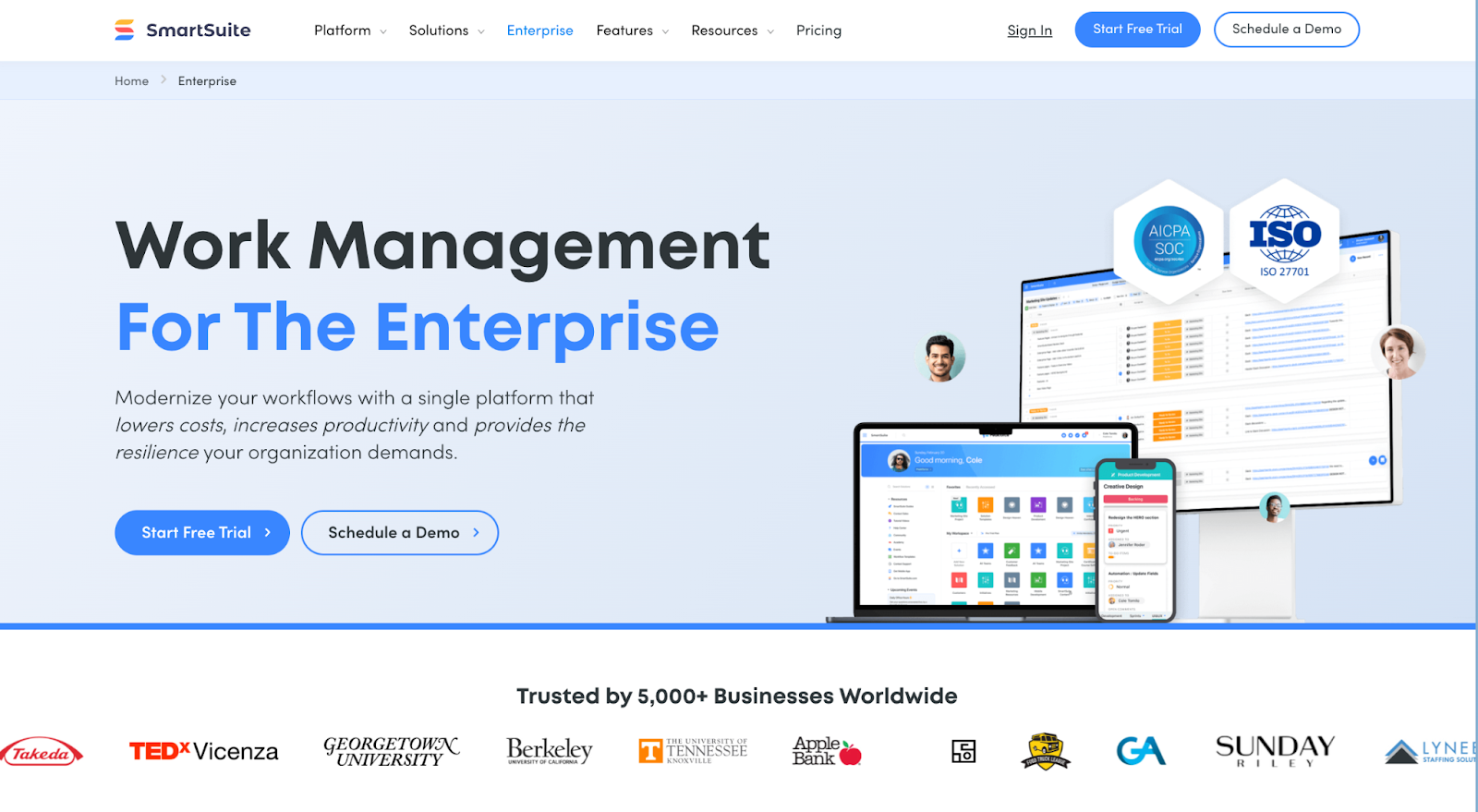
➡️ It’s also important to keep an eye on the industry standards certifications the platform has obtained. The most common certificates are SOC2 Type II, ISO 27001:2013, ISO 27018:2019, and country-specific compliance.

What Are The Best Enterprise Project Management Tools In 2024?

Here are our top enterprise project management software picks for 2024 based on our research and after reviewing 100+ user reviews:

#1: SmartSuite: All-in-one organizational tool to plan, manage, and track projects, resources, and team members.

#2: ClickUp: Managing large-scale marketing projects with a DIY approach.

#3: Asana: Building hierarchical projects with subtasks and dependencies.

#4: Wrike: Managing marketing campaigns across multiple teams.

#5: Teamwork: Client project management across various clients and collaboration.

#6: Monday.com: Managing complex projects with flexible dashboards.

#7: Smartsheet: Managing complex projects using a spreadsheet-like interface

#8: Zoho projects: Managing and tracking leads in a dedicated space with highly tailored dashboards and reports.

#9: Quickbase: Building custom apps to cater to different use cases and projects.
#10: ProofHub: Project management at a large scale with high-level team collaboration and reporting.

#1: SmartSuite

SmartSuite offers a complete work management operation system for scalable projects, regardless of industry. 

Our tool adapts to your enterprise’s growing project needs with features like built-in automation, 7+ work views, native team collaboration, and top-notch security and permissions controls.

1. Plan, manage, and track projects of all sizes

SmartSuite’s project management dashboard offers a 360-degree view of every stage of your project’s life cycle, from planning to reporting.

With an array of features, the project smoothly moves from one stage to the next, giving you complete transparency into the team’s responsibilities, resource usage, and overall progress.

Here are our top features that make enterprise project management easy.

  • 200 self-serve project management templates: Access pre-built templates for use cases like product catalogs, video production, press tracking, and user research. Each template has multiple workviews, letting you set up tasks easily.
  • Task management: Convert any record type into tasks and add different fields–subtasks, checklists, and sub-items. You can access 7+ views, including Gantt charts, Kanban, and Calendar view, ensuring work visualization per your preference.
  • Dynamic approval request form: Build dynamic forms to collect user’s data, client’s request, or feedback and turn them into action items.
  • Automate recurring tasks: Build linear to multi-sequence workflows to update status, track progress, and assign tasks without manual effort. Set up automation once and use it forever.
  • Milestone tracking: Break down project goals into task-based milestones to monitor progress. Configure tracking by workstream, team, and owner, flag roadblocks, and create resolution plans.

2. Involve the right stakeholders with native team collaboration

One of SmartSuite’s notable features is its extensive built-in communication and collaboration tools that facilitate real-time conversations within a work context.

You can exchange ideas, ask questions, share updates, involve the right stakeholders, and discuss crucial updates. Such integrated conversations make collaboration easy, transparent, and reliable.

Here are the key features that make collaboration a breeze in SmartSuite.

  • Built-in communication center for connecting with peers in group chats or 1:1 conversations for quick feedback and keeping stakeholders updated throughout the project.
  • The member’s directory lets you see all the details about your co-workers, including their availability status and job profile, making it efficient to contact the right people.
  • SmartSuite docs help you brainstorm ideas, map out resources, or outline task lists in a collaborative canvas. The docs offer rich-text formatting and static and dynamic views, allowing you to customizable docs for different use cases.
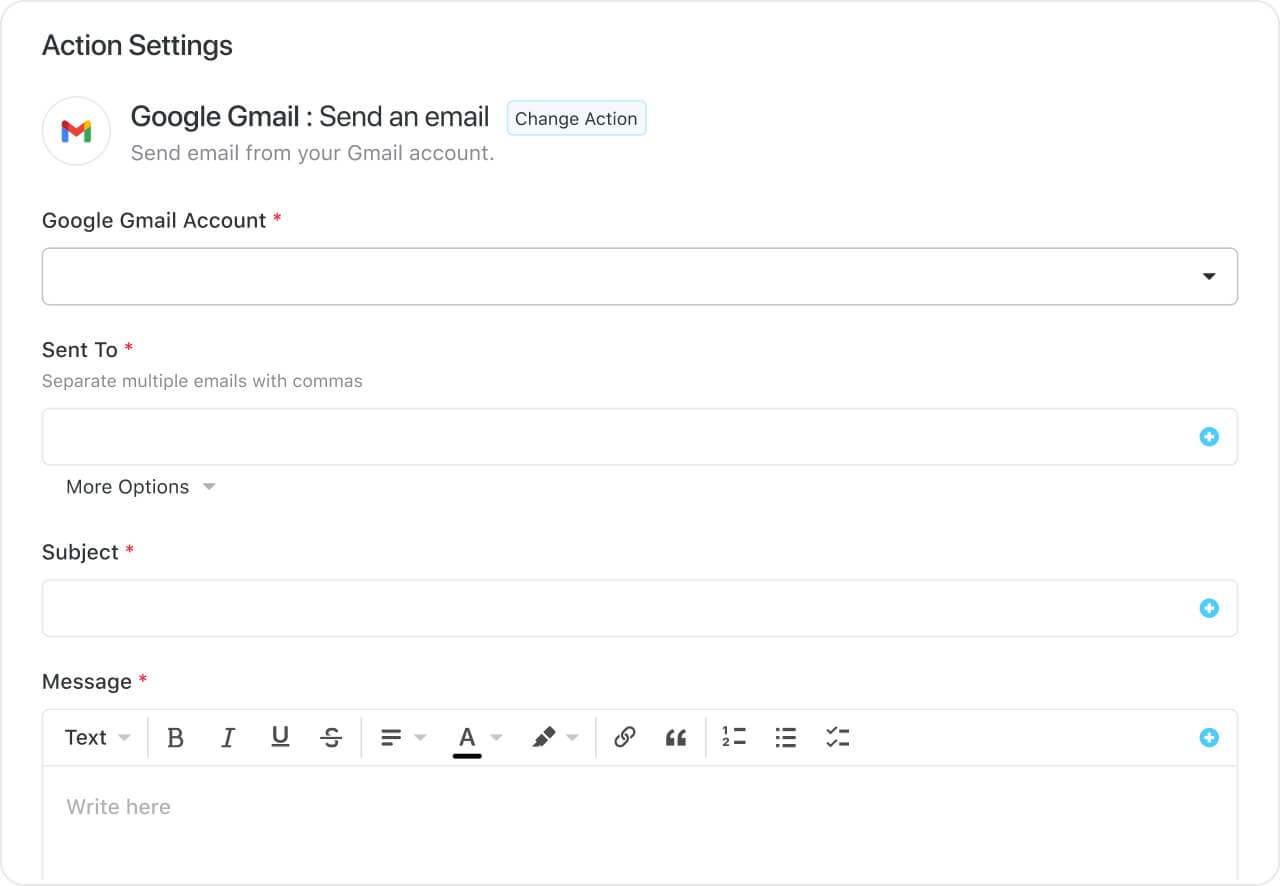
  • SmartSuite integrates with Gmail and Outlook, allowing you to send and receive email within your workspace.
  • Share updates with stakeholders, loop them in the conversation or clarify issues within the context of your projects using comments and @mentions.

3. Share real-time insights through extensive reporting

SmartSuites offers dynamic project analytics with customizable charts and graphs letting you look at a project’s performance and also get detailed task-level information and progress tracking.

The reporting dashboard helps you track the project’s performance, understand resource allocation, and identify slow-moving projects. 

Based on such insights, you can quickly develop plans to overcome the roadblocks and get the project on track.

Some other amazing features of SmartSuite’s reporting:

  • Private or public reports: Share reports with public access, making it easier to share quick access for everyone involved in the project. If you want to get a granular view of your work, you can build private reports, visible only to you.
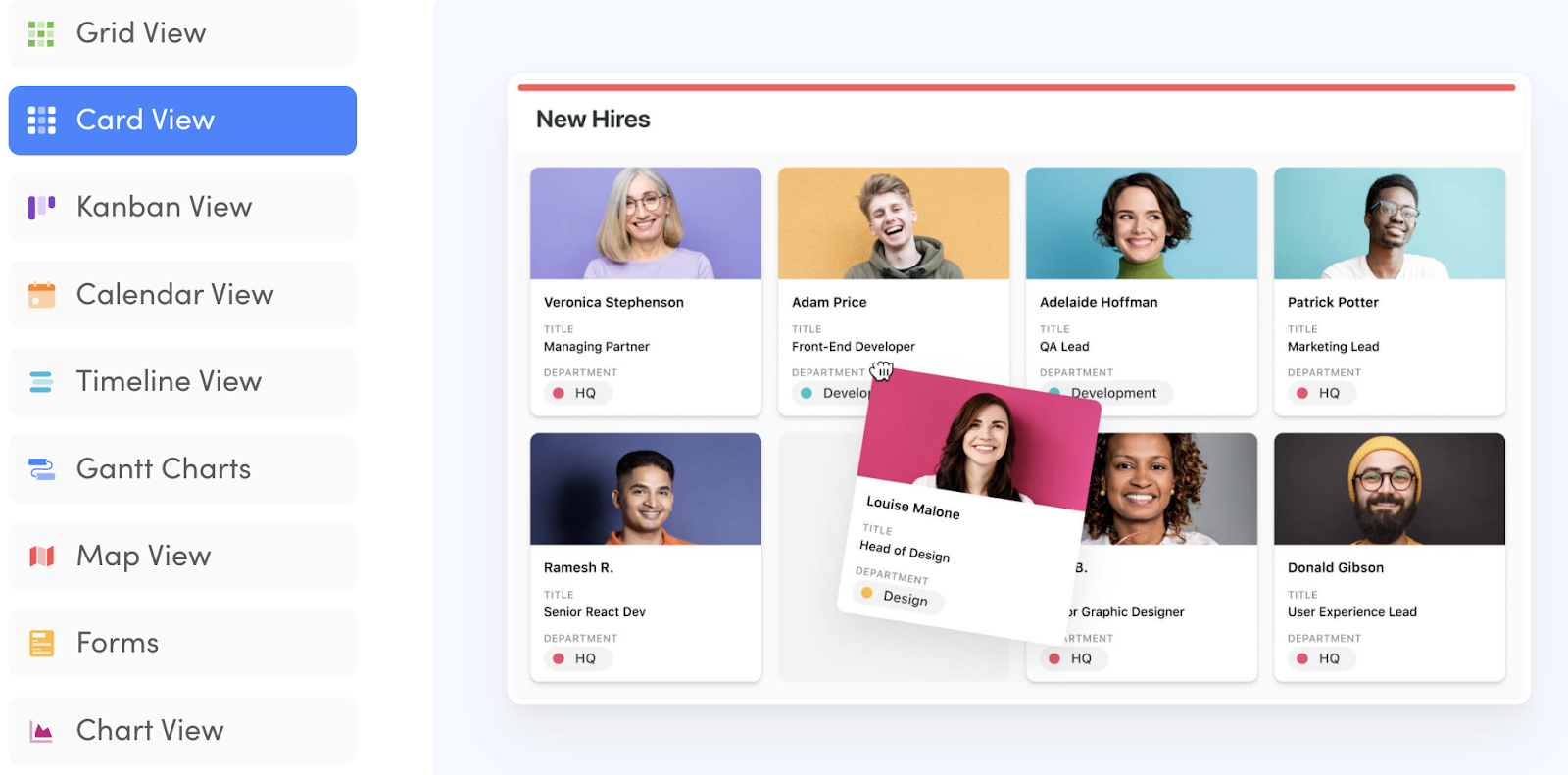
  • Multi-view reporting: Visualize reporting in different views–-Grid, Card, Kanban, Timeline, Map, Calendar, or Dashboard. You can add as many views as you need to build a visual storyboard for your project’s progress.
  • Easy exporting: Access your reports by printing or exporting them as PDF, Excel, Google Sheets, or CSV format.

SmartSuite Pricing

SmartSuite offers a forever-free plan with access to 250+ automation actions, team collaboration, multi-dashboard views, and more.

There are four paid plans with a 14-day free trial:

  • Team: Starts at $12/user/month, including SmartSuite AI, Gantt charts, timeline views, 5000 automation runs, and time tracking.
  • Professional: Starts at $28/user/per month, including, two-factor authentication, Gmail & Outlook integrations, resource management, and advanced permission control.
  • Enterprise: Starts at $41/user/month, including 500,000 automation actions, audit logs, data loss prevention, and 50,000 monthly API calls.
  • Signature: Customized plan tailored to your organization’s needs and team size.

SmartSuite Pros and Cons

✅ Generous free plan with access to advanced features.

✅ 200+ project templates for various use cases.

✅ Integrated document and file management.

✅ Comprehensive workflow automation.

✅ Dynamic dashboards and reporting.

❌ Less native integrations when compared to alternatives.

#2: ClickUp

Best for: Managing enterprise-level projects with a fully customizable solution.

ClickUp is cloud-based project management software that offers a power base for enterprise businesses to manage marketing campaigns, brainstorm ideas, develop strategy documentation, collaborate with stakeholders, and track project goals.

Who Is It For?

Medium to enterprise-level businesses who are comfortable with the DIY approach to project management.

ClickUp’s Top Features

  • Analytics: Generate real-time insights from your data through reports like time tracking, productivity, sprints, and burndown charts.
  • Whiteboards: Collaborative workspace for brainstorming sessions. With whiteboards, you can generate campaign ideas, map out user’s journeys, and structure your team’s responsibilities without relying on external tools.
  • ClickUp dashboards: These dashboards bring together a large amount of data across projects to understand key metrics and performance indicators, identify bottlenecks, and communicate the project’s progress to the stakeholders.

ClickUp Pricing

ClickUp’s free plan includes unlimited task creation, 100 MB storage, and collaborative docs. It offers three paid plans with a 14-day free trial:

  • Unlimited: Starts at $10/user/month, offers unlimited custom views, timesheets, guest access, and 100 mind map creations.
  • Business: Starts at $19/user/month, offers private docs, sprint reporting, and all dashboard views.
  • Enterprise: White labelling, top-notch security, and enterprise AI. Contact sales for a quote.

ClickUp Pros and Cons

✅ Low entry-level pricing.

✅ Highly customizable dashboards.

✅ Native team management and collaboration tools.

❌ Can overwhelm new users due to the complex interface.

❌ Large databases might slow down the workspace’s loading time.

❌ Usually takes longer to set up a dashboard from the ground up.

#3: Asana

Best for: Building hierarchical projects with subtasks and dependencies.

Asana is a project management tool that lets you manage complex projects and ensure timely communication through task-level collaboration.

Why Users Switch to Quickbase Alternatives?

Who Is It For?

Enterprise businesses with huge project team sizes use a linear approach to project management.

Asana’s Top Features

Airtable Alternatives: Why Do You Need Them?
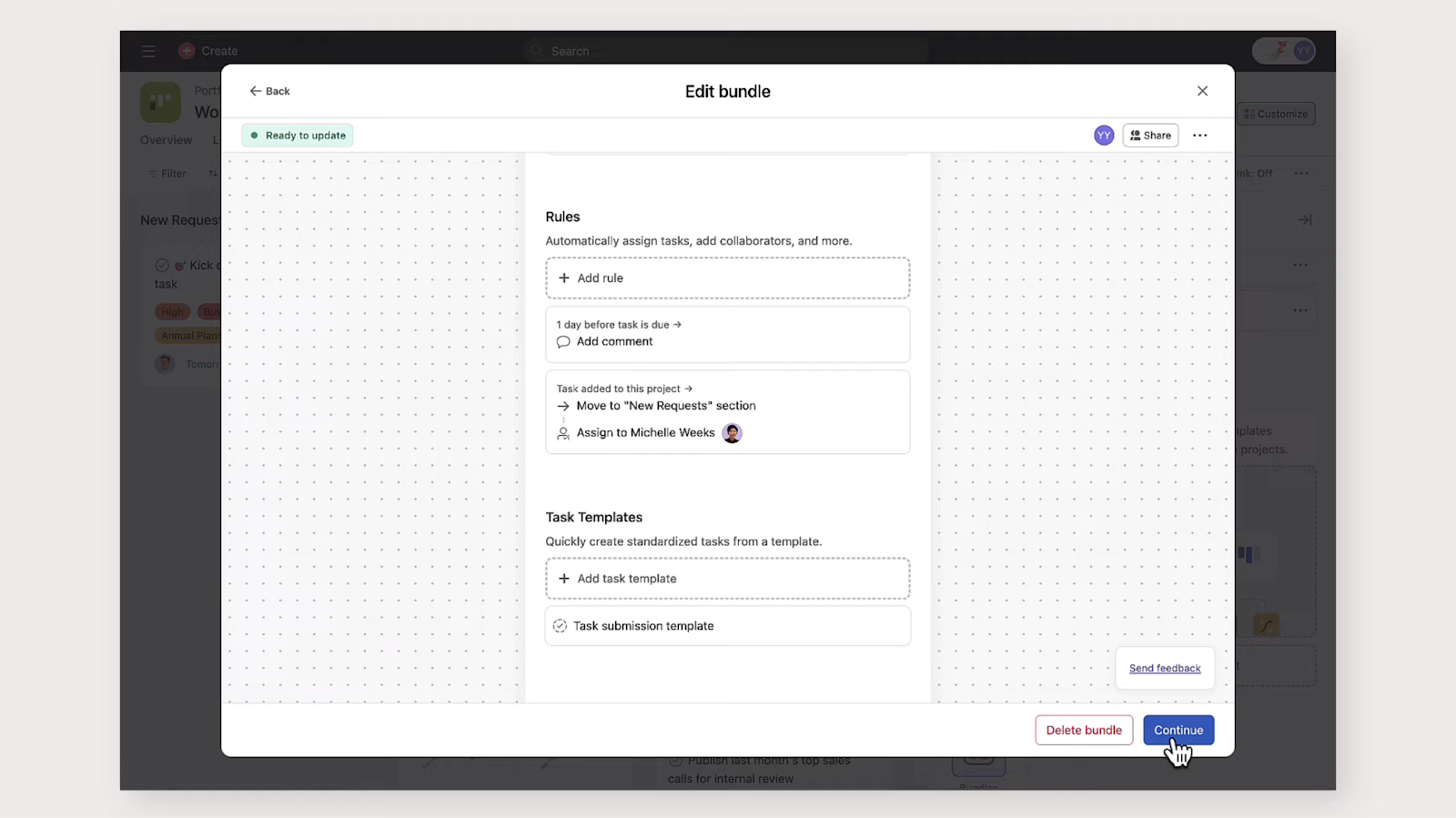
  • Automation bundles: Package elements such as rules, custom fields, and task templates in automation bundles. Apply these bundles to new projects to improve consistency and accuracy across projects.
  • Resource management: Allocate and manage your project’s resources to keep all the projects on track and ensure team members have the resources to achieve those goals.
  • Integrations: Asana integrates with 270+ apps across communication tools, marketing, and reporting.

Asana Pricing

Asana offers a free plan for up to 10 users and four pricing plans with a 30-day free trial. Pricing for paid plans is as follows:

  • Starters: Starts at $13.49 per user/month, with up to 500 teammates collaboration, Asana AI, and workflow builder.
  • Advanced: Starts at $30.49 per user/month, with 25,000 automation/month, scaled security, advanced reporting, and goal tracking.
  • Enterprise: Advanced integrations, unlimited seats, custom branding, and premium support. Contact sales for a quote.
  • Enterprise+: Audit log API, HIPAA compliance, and data loss prevention integrations. Contact sales for a quote.
Why Users Switch to Quickbase Alternatives?

Asana Pros and Cons

✅ 270+ native integrations.

✅ Subtasks and dependencies for granular task assignments.

✅ Organization of automation to apply to projects without building from scratch.

❌ Lack of advanced reporting tools.

❌ No native communication tools.

#4: Wrike

Best for: Automate project workflows and building blueprints to enhance efficiency.

Wrike is a project management tool that helps enterprise businesses organize their projects, contextualize conversations, and automate tasks to ensure every task contributes to the project’s goal.

Who Is It For?

Large to enterprise-level businesses who want a comprehensive project management tool.

Wrike’s Top Features

  • Budgeting: Get complete visibility into your project’s finances and balance your project’s budget to ensure your project runs smoothly.
  • Reporting dashboards: Create a real-time snapshot of your project’s performance using pie charts, graphs, tables, and other widgets.
  • Resource management: Allocate resources based on your team’s capacity, request additional resources, and optimize the team’s workload.

Wrike Pricing

Wrike offers a generous, forever-free plan with email integration and enterprise-grade security. There are five paid plans with a 14-day free trial:

  • Team: Start at $9.80/user/month for up to 25 users, including custom fields, workflows, unlimited request forms, and dynamic Gantt charts.
  • Business: Starts at $24.80/user/month for up to 200 users, including portfolio management, AI Risk Prediction, nested projects, and real-time reports.
  • Enterprise: Unlimited users with advanced admin, reporting, security, and integrations. Contact sales for a quote.
  • Pinnacle: Native Power BI integration, locked spaces, and budgeting features. Contact sales for a quote.

Wrike Pros and Cons

✅ 400+ integrations, including business intelligence and CRM tools.

✅ Generous free plan with unlimited users.

❌ No built-in note-taking tool.

❌ No built-in communication tools.

#5: Teamwork

Best for: Client management right from onboarding to invoicing with built-in collaboration.

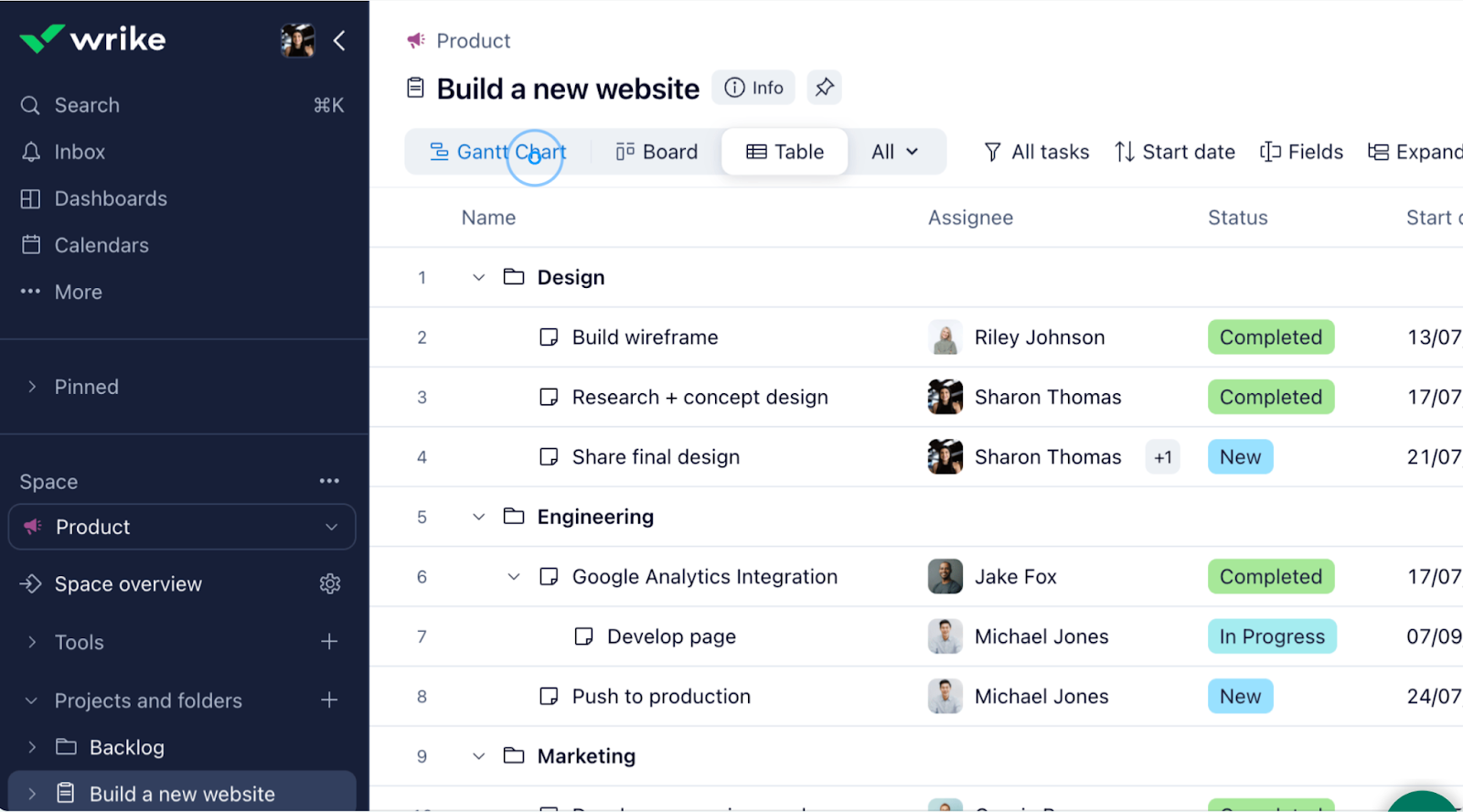
Teamwork’s client-facing tools are ideal for agencies and consulting firms managing enterprise clients across industries. It offers 6+ project views (Gantt charts, kanban, lists, tables, my work, and client portal), budget planning, invoicing, and time tracking to manage all your clients in a single platform.

Who Is It For?

Client-service businesses who work with enterprise-level clients across industries like legal services, manufacturing, IT, and architecture.

Teamwork’s Top Features

  • Team communication and collaboration: Share updates with clients, get approvals, and communicate internally with built-in docs, messaging apps, comments, and @mentions.
  • Resource and workload management: Assess your project’s health, understand the team’s workload, and re-allocate resources to maintain peak efficiency.
  • Time and invoice tracking: Use the time tracking field to estimate billable hours for tasks and projects. Create, manage, send, and track invoices from the same dashboard.
Teamwork Pricing

Teamwork.com offers a forever free plan for up to 5 users and four paid plans with a 30-day free trial.

  • Deliver: $13.99/user/month for a minimum of 3 users, billable time tracking, client company management, and Gantt chart.
  • Grow: $25.99/user/month for a minimum of 5 users, resource scheduling, utilization report, and a custom domain with SSL.
  • Scale: $69.99/user/month for a minimum of 5 users, unlimited retainer management, projects, and advanced automation with conditional logic.
  • Enterprise: Dedicated Customer Success Manager, premium support, and advanced security. Contact sales for a quote.

Teamwork Pros and Cons

✅ Customizable workflows and templates.

✅ Built-in resource management tools—time tracking, invoicing, and budgeting features.

✅ Ease of collaboration with external users like vendors or contractors.

❌ Limited native tools with heavy reliance on Zapier.

#6. Monday.com

Best for: Managing complex projects with flexible dashboards.

Monday.com is a robust project management tool that helps you adapt and scale your projects to meet stakeholder’s needs and achieve project goals. With an all-rounder suite of tools, Monday.com brings teams and departments together to facilitate communication, collaboration, and decision-making.

Who Is It For?

Medium and large-scale businesses who want an adaptable project management tool.

Monday.com’s Top Features

  • Reporting and analytics: Curate data from various projects to build agile reports. Some reports you can build and share are pivot analysis, OKR tracking, and work performance insights.
  • Admin management: Get complete access to assign the right people with the right permission level. You will decide who can make changes to the dashboard and who can invite external collaborators.
  • Asset management: Store, view, and manage your project-related assets—social media assets, strategy documents, and website graphics—in one place.

Monday.com’s Pricing

Monday.com offers a 14-day free trial and a free plan for up to 2 users. Their paid plans are based on a minimum team size of 3 and come in four categories:

  • Basic: Starts at $17/user/month with only Kanban board view, 500 MB storage, and shareable forms.
  • Standard: Starts at $20/user/month with 250 automated actions/month, custom fields, and 3+ dashboard views (Timeline, calendar, and map).
  • Pro: Starts at $32/user/month with all five dashboard views, private docs, time tracking, and 2-factor authentication.
  • Enterprise: Enterprise-level reporting and administration control. Contact sales for a quote.

Monday.com Pros and Cons

✅ Multiple customization options with 5+ workviews.

✅ No-code automation builder.

❌ Steep learning curve.

❌ Slow loading time and constant screen lag.

#7: Smartsheet

Best for: Managing complex projects using a spreadsheet-like interface

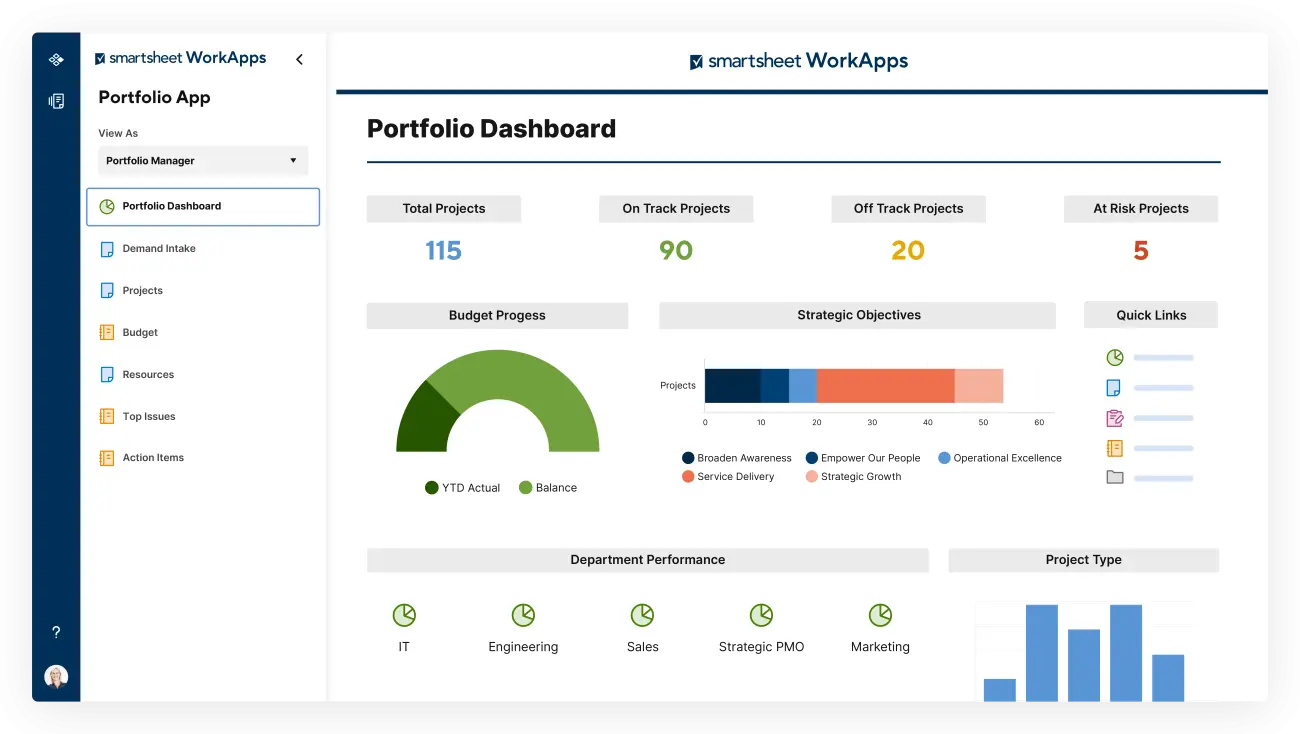
Smartsheet is an advanced enterprise-level work and project management software that helps you manage and track projects consistently and at scale.

Its control center feature acts as the source of truth where you store your client’s database, build a portfolio and automate workflows to ensure the smooth execution of each project.

Who Is It For?

Enterprise-level teams who manage large numbers of complex projects.

Smartsheet’s Top Features

  • Dynamic view: Create custom dashboards or views to add only the relevant projects to share with specific stakeholders. These views offer flexibility and control over your projects’ privacy.
  • Automation workflow: Build no-code automation with triggers and actions to dump mundane tasks. Send upcoming deadline reminders, request signatures through integration with DocuSign, or perform calculations.
  • Digital asset management: Manage your assets in a single place, contracts, templates, project SOPs, and more.

Smartsheet Pricing

Smartsheet offers three paid plans with no free plan or trial.

  • Pro: Starts at $12 per member/month, includes private sheets creation and unlimited form access.
  • Business: Starts at $24 per member/month, includes unlimited automated workflows, and requires at least 3 users.
  • Enterprise: Unlimited storage and enterprise plan manager. Contact sales for a quote.

Smartsheet Pros and Cons

✅ High level of customization.

✅ Huge library of project templates.

✅ Powerful analytics and reporting tools.

❌ Steep learning curve for spreadsheet novices.

❌ Data doesn’t get updated in real-time.

#8: Zoho projects

Best for: Project management with extensive native collaboration features.

Zoho CRM is a solid and budget-friendly enterprise project management solution that offers extensive customization and integration capabilities.

Who Is It For?

Enterprise businesses who want a pocket-friendly project management tool.

Zoho’s Top Features

  • Blueprint: Build linear to multi-step automated workflows to update task statuses, send messages to the right people, and trigger email alerts upon status changes.
  • Cross-department collaboration: Provide updates to stakeholders and loop them in at critical stages of project reviews through built-in chat, forum, and comments options.
  • Process management: Build scalable sales process including lead scoring, approvals, lead assignment rules, and reviews.

Zoho’s Pricing

Zoho offers a free plan for up to 34 users with limited access to features such as lead tracking, management, and basic reporting.

The platform has a 15-day free trial for its four pricing tiers:

  • Standard: Starts at $20 per user/month with access to sales forecasting tools, 100 custom reports, and 5 forms/modules.
  • Professional: Starts at $35 per user/month with access to SalesSignals and unlimited customer reports and dashboard creation.
  • Enterprise: Starts at $50 per user/month with access to Zoho AI and marketing attribution.
  • Ultimate: Starts at $65 per user/month with access to 25 cohort analyses and access to advanced integration.

Zoho’s Pros and Cons

✅ Cost-effective pricing plans.

✅ Pre-set reports and custom reporting capabilities.

❌ AI assistance is only available on Enterprise and Ultimate tiers.

#9: Quickbase

Best for: Building custom apps for different use cases and projects.
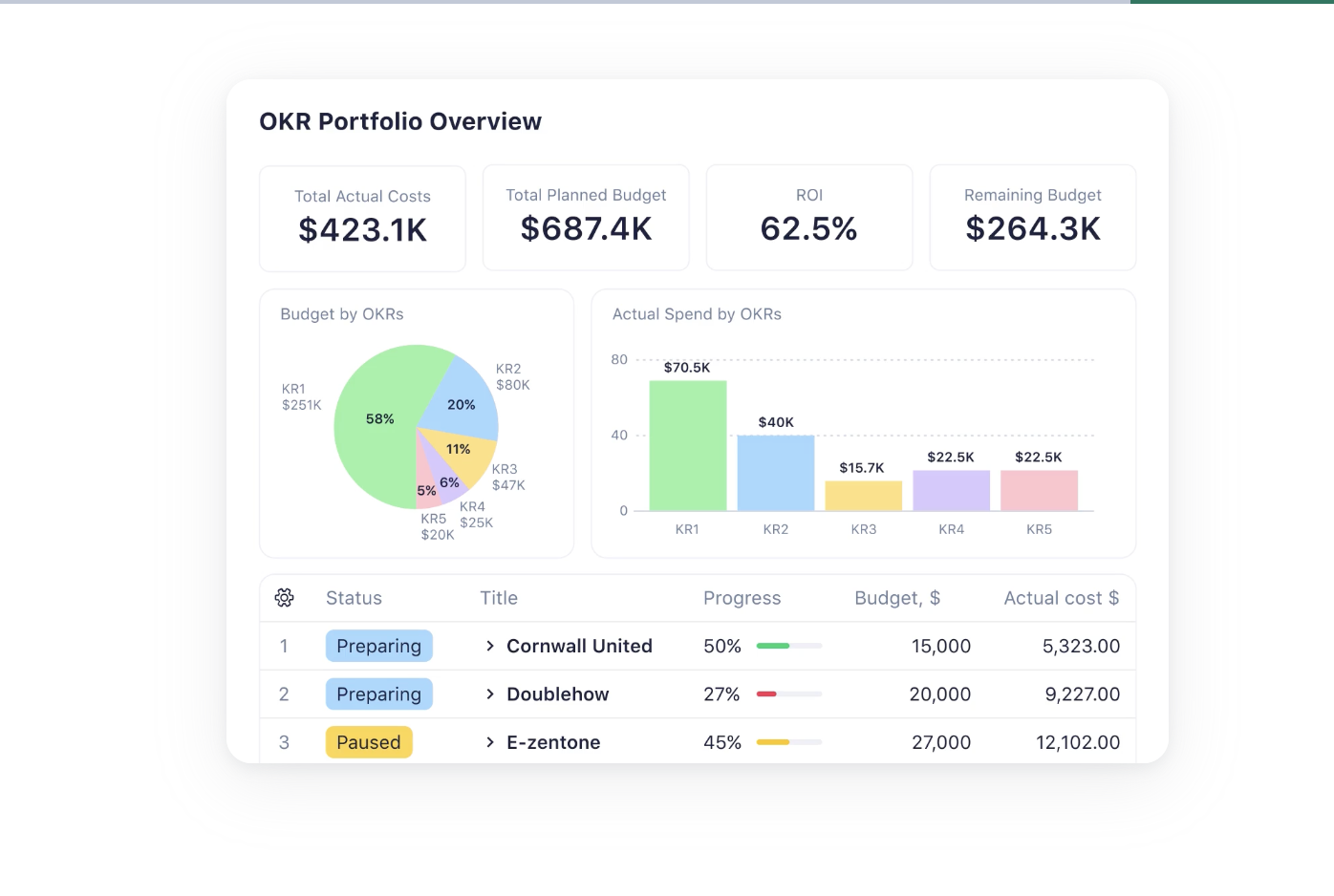
Quickbase is work management software that helps you build customizable dashboards and lets you manage your projects, reports, and communication centrally.

Who is it for?

Enterprise business in construction, property management, education, and legal industries.

Quickbase’s Top Features

  • Automations: Speed up project execution and delivery by setting routine tasks on auto-pilot.
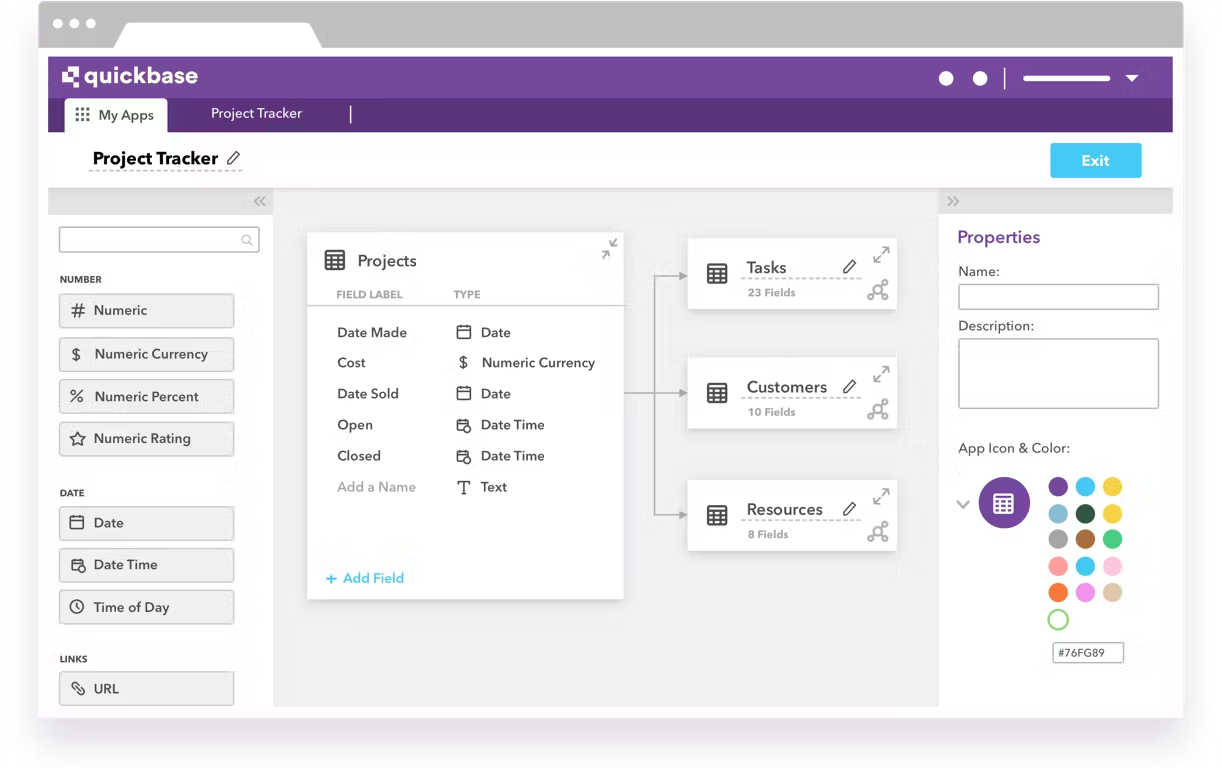
  • App builder: Create no-code custom apps to massage your projects. Through these apps, you can eliminate the need to rely on ad-hoc solutions or perform repetitive tasks in a dynamically updating solution.
  • Reporting and analytics: Build data-driven reports of your projects by creating tabular, summary, or chart reports.

Quickbase’s Pricing

Quickbase doesn’t offer a free plan. It has three pricing tiers, a 30-day free trial, and a minimum user cap. 

‍

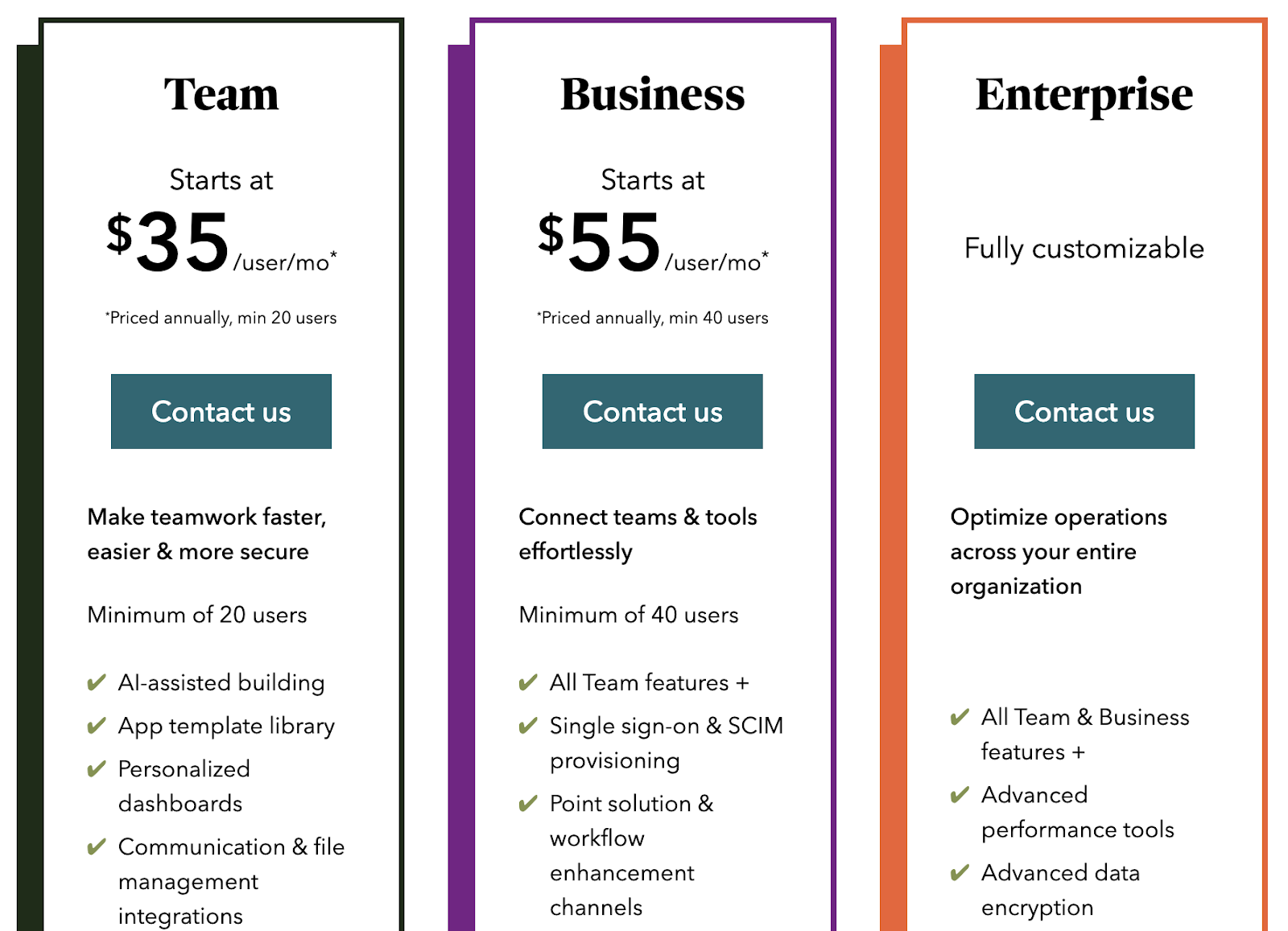
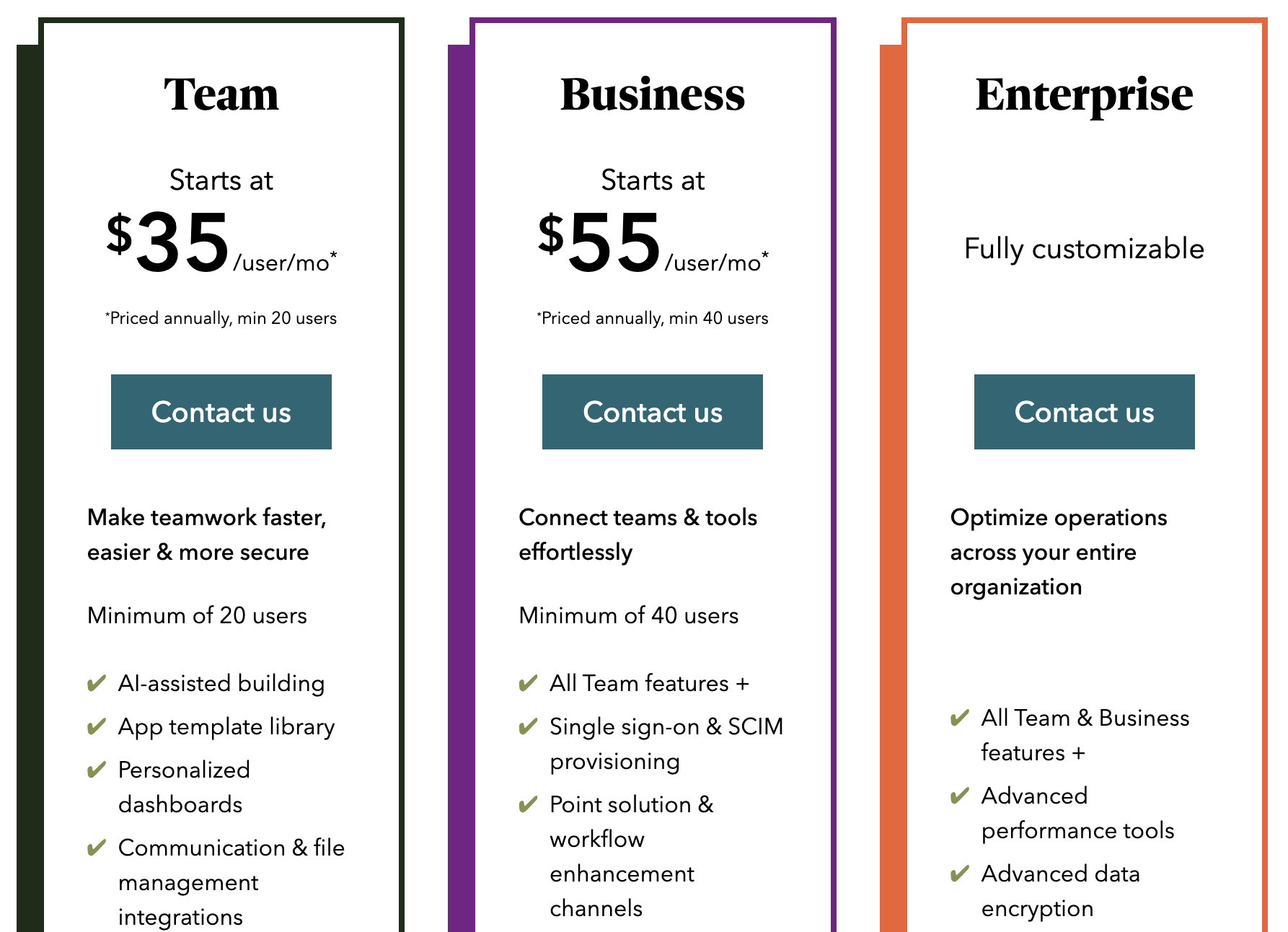
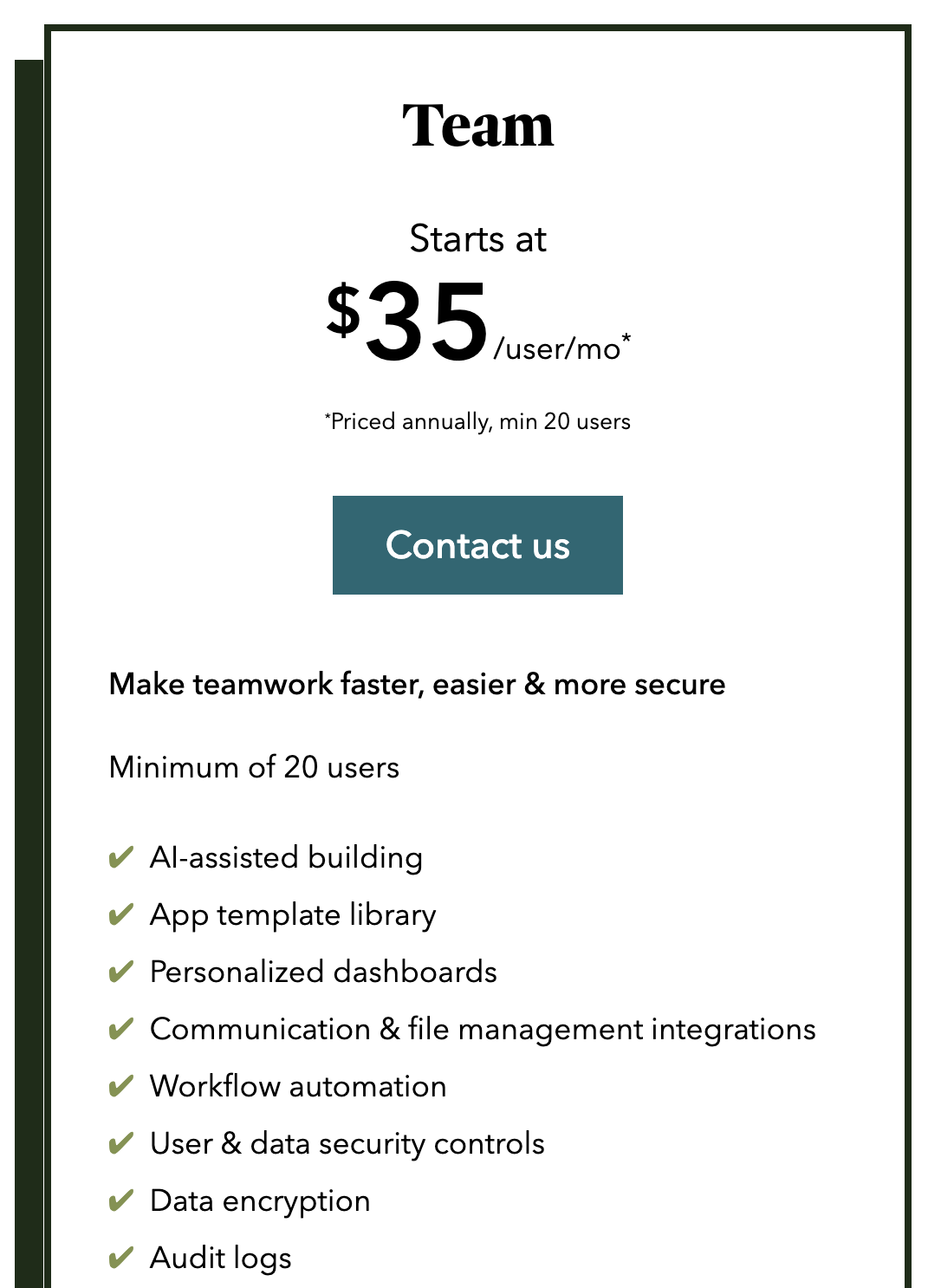
  • Team: Starts at $35/user/month with a minimum user cap of 20. Features include communication and file management channels, workflow automation, analytics, and six months of data retention.
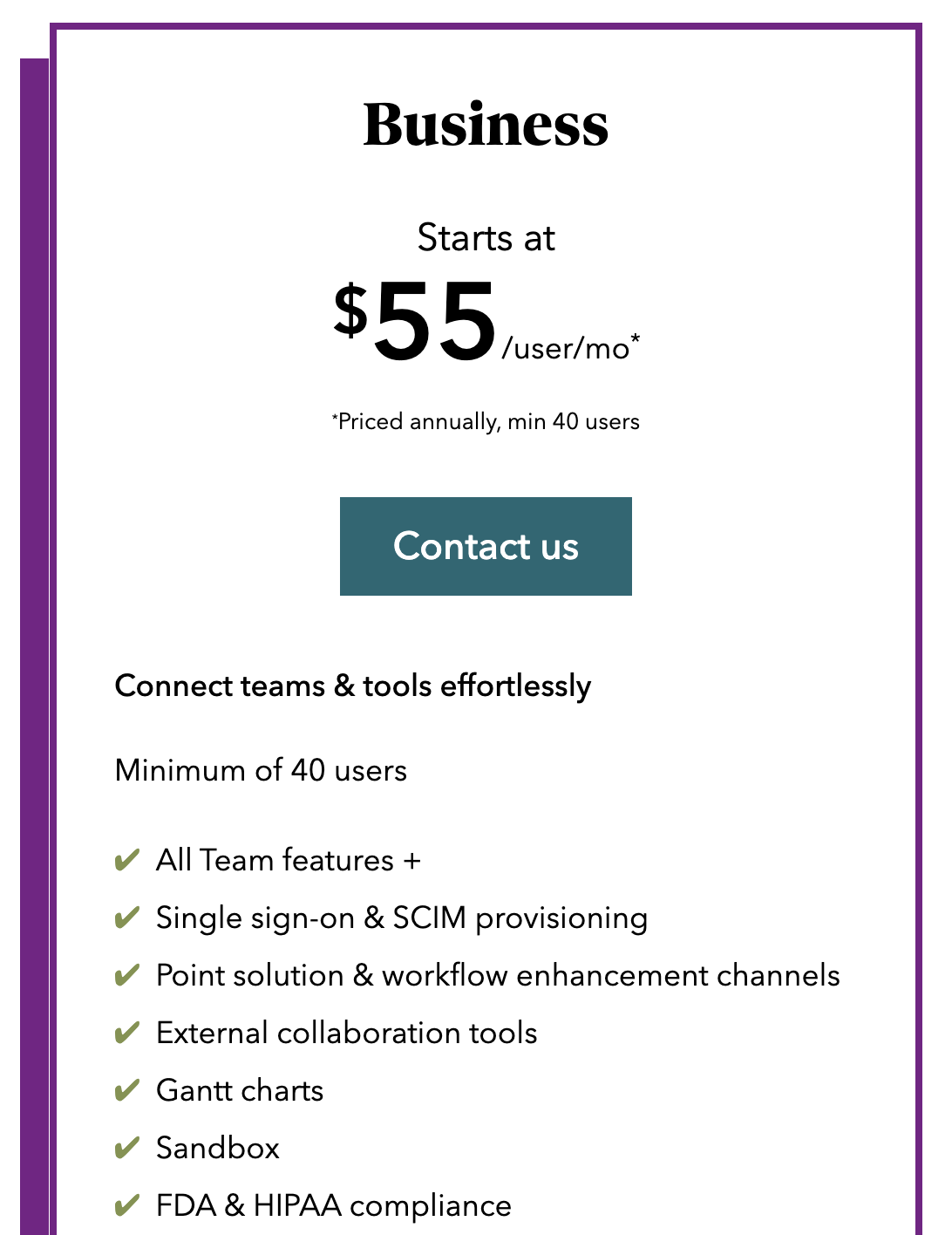
  • Business: Starts at $55/user/month for a minimum of 40 user seats. Features include custom branding (account-wide), Gantt charts, 1-year data retention., and integrations with Formstack Documents, Asana, JIRA, Trello, Quickbooks Online, and more.
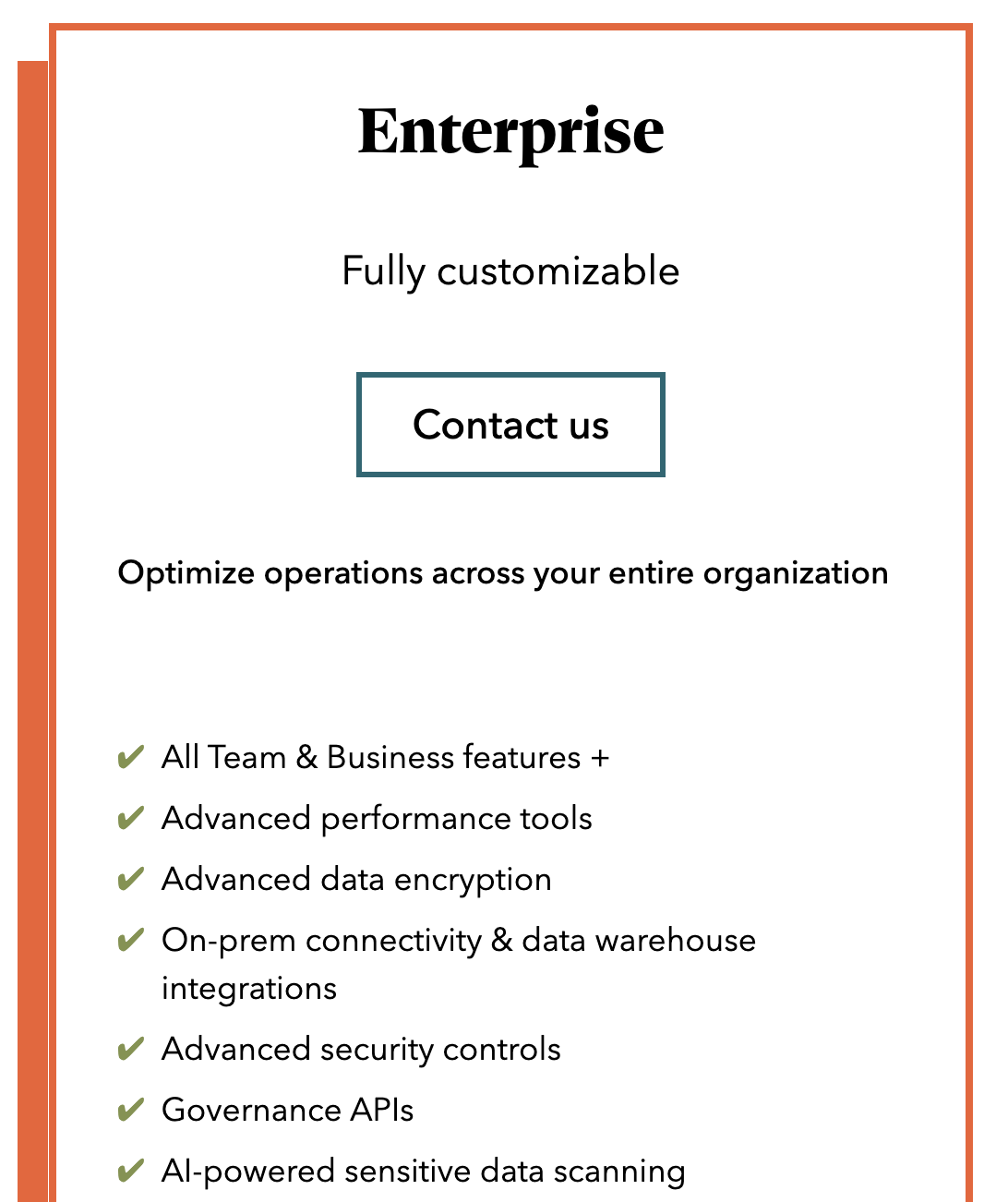
  • Enterprise: Advanced data encryption security controls, admin access, performance Tools, 3-year data retention, and integration including ServiceNow, Snowflake, On-prem connectivity, and Amazon S3. Contact sales for a quote.

Quickbase Pros and Cons

✅Customizable dashboards.

✅No built-in budgeting feature, making you rely on third-party apps.

❌User interface is somewhat outdated compared to the latest PM tools.

❌Large project size can slow down the loading time.

#10: Proofhub

Best for: Project management at a large scale with high-level team collaboration and reporting.

Who Is It For?

Medium to large-scale businesses.

Proofhub’s Top Features

  • Reporting: Dedicated space to view and customize reports, including resource utilization, time logged, project status, and task completion.
  • Team collaboration: Start a discussion on a project or task level, review files and share feedback, engage in 1:1 or group conversation, brainstorm ideas, organize notes, and post announcements.
  • Workflow automation: Build custom automation on the task and project level through pre-defined triggers and actions.

Proofhub Pricing

Proofhub offers flat pricing divided into three tiers:

  • Small team: $89/month for 10 users, including time tracking, custom fields, and Gantt chart.
  • Large team: $153/month for 100 users, including workflow automation, priority support, and API access.
  • Large team plus: $310/month for unlimited users and projects.
You can get access to all three plans on a 14-day free trial.

Proofhub Pros and Cons

✅Integrated collaboration tools.

✅Full control over client access to the dashboard with custom roles.

❌Fixed pricing might be expensive for teams who only need a limited number of users.

Take Enterprise Projects From Chaos to Clarity

Enterprise project management demands a consistent and scalable approach to meet the project’s goals. With multi-department involvement, the expectations to meet goals while keeping cost, timeline,m and scope within boundaries is paramount.

Such high-level demand requires robust, configurable, and scale project management software. Good Enterprise project management software will help you manage project risks, enhance company-wide communication, and share detailed reporting with stakeholders.

Each software we reviewed has unique features, but the best choice depends on your use cases, budget, team, goals, and project size and volume.

➡️ ClickUp, Monday.com, and Wrike show promise for agile project management. Smartsheet seems the right choice for businesses already familiar with spreadsheets. Zoho Projects and Teamwork offers an extensive range of built-in team communication tools.

➡️ An ideal campaign management solution should support team collaboration workflow automation and keep everything organized in one place. SmartSuite is that.

💯 Our tool offers a budget-friendly plan with flexible dashboards, automated workflows, strong collaboration features, and a built-in approvals and request intake feature.

Try a 14-day free trial or sign up for a free plan to explore how SmartSuite can help streamline your enterprise-level projects.
‍

10 Best Project Management Software for Designers to Boost Productivity

Software Stack Editor · November 4, 2024 ·

Designers and creative professionals face challenges when managing a large volume of projects. 
Unclear feedback, disorganized workflows, and endless email threads are some challenges that hinder the creative team’s performance.

The right project management software could be your team’s life raft to stay afloat.

Our team has explored 30+ project management tools and found 10 of the best ones to streamline your creative project management and boost team collaboration.

What to Look for When Evaluating Project Management Software for Designers

The right software can significantly impact a creative team’s productivity and output quality, from handling visual assets to facilitating creative collaboration.

Here are the critical factors to consider:

Visual collaboration features

Look for software that offers features like digital whiteboards, mood boards, mind-mapping tools, and visual task boards. These features ensure that you can collaborate with your team, brainstorm ideas, share concepts, and organize tasks visually.

File management and version control

Look for software that helps you manage, store, and access all the versions of files and multiple iterations of designs. The software should allow easy uploading, organizing, and sharing of design files. 

Version control features will help you keep track of changes, revert to previous versions if needed, and maintain a record of your design process.

Resource management and capacity planning

Effective resource management tools will help you allocate resources to projects based on your team’s skills, expertise, and availability. 

Look for features that provide visibility into team members’ workloads, allowing project managers to balance resources effectively and prevent burnout.

Integration with design tools

Check if the tool integrates with popular design tools like Adobe Creative Suite, Sketch, Figma, and Canva. 

Such integration can enhance workflow efficiency by facilitating file syncing, time tracking, and collaboration.

Customizable workflows and templates

Look for software that allows you to create custom workflows and project templates tailored to your specific needs. 

This flexibility ensures the tool adapts to your team’s work rather than forcing you to change your processes to fit the software.

10 Best Project Management Software for Designers in 2024

Let’s explore the top 10 options, each offering distinct features to enhance your design workflow and project management capabilities.

  • SmartSuite: All-in-one creative project management software.
  • Miro: Visual collaboration and ideation.
  • Monday.com: For building customizable workflows.
  • ClickUp: Comprehensive project and task management.
  • Asana: Hierarchical design task organization.
  • Basecamp: Project-related communication and file sharing.
  • Notion: Flexible knowledge management alongside project tracking.
  • Teamwork: Client-focused project management.
  • Hive: Versatile project views and automation.
  • Wrike: Scalable project and portfolio management.

#1. SmartSuite

SmartSuite is a versatile creative project management software that combines automation with a tailored workspace to help you plan, manage, and track projects of all sizes.

Our tool unites all teams, ensuring streamlined information exchange to get work done quickly.

Its intuitive dashboards, powerful automation builder, and native collaboration make it a preferred choice for creative teams and managers.

Centralize request forms and approvals.

Instead of gathering customer feedback or stakeholder changes across various channels and compiling them in your task management tool, SmartSuite eliminates the manual work through request forms.

These forms help you collect all the information at the start of the project, reducing delays once you initiate it.

Drag-and-drop form builder

You can build custom forms using SmartSuite’s drag-and-drop builder. Add or remove fields, change field type, or add custom fields like dropdown menus. Add multimedia items, such as images, videos, or GIFs, to provide more context to clients.

If you’re collecting feedback on your website layout, you can add a snapshot of the layout, a rating menu, and a description field for clear and detailed feedback.

Dynamic forms

Dynamic forms in SmartSuite use conditional logic to show or hide fields based on previous responses. This lets you:

  • Create branching logic in your forms.
  • Display only relevant questions to each respondent.
  • Customize the form experience based on user input.

You can design a form for website homepage redesign with conditional logic to display specific questions based on previous responses. 

For instance, if a respondent selects “copy changes,” subsequent questions focus on website copy.

Plan and manage creative marketing campaigns

SmartSuite’s project management dashboard offers a 360-degree view into your project’s life cycle—prototyping, review, and refinement.

You can brainstorm design improvement ideas, assign responsibilities, and build reports in one tool.

  • Vote and rating field: Use the vote and rating field to collect feedback on the prototype and final design. Then, view and present these ratings as charts in the reporting dashboard.
  • Automate recurring tasks: Build linear to multi-sequence workflows to update status, track progress, and assign tasks without manual effort. Set up automation once and use it forever.
  • Task management: Convert any record type into tasks and add different fields–subtasks, checklists, and sub-items. Enhance each task with notes and comments for the assigned person.
  • Milestone tracking: To monitor progress and break down project goals into task-based milestones. Configure tracking by workstream, team, and owner, flag roadblocks, and create resolution plans.
  • 200+ creative project management templates: Access pre-built templates for use cases like product catalogs, video production, press tracking, and user research. Each template has multiple workviews, letting you set up tasks easily.

Keep everyone updated with native team collaboration

If your team isn’t using dedicated project management, crucial feedback is likely getting lost in long email threads or Slack messages.

SmartSuite’s built-in communication and collaboration features help centralize communication. 

The conversation happens where the work is, in your project management tool.

Here are the key features that make collaboration easy in SmartSuite.

  • Built-in communication center for connecting with peers in group chats or 1:1 conversations for quick feedback and keeping stakeholders updated throughout the project.
  • The member’s directory lets you see all the details about your co-workers, including their availability status and job profile, making it efficient to contact the right people.
  • SmartSuite integrates with Gmail and Outlook, allowing you to send and receive email within your workspace.
  • Share updates, nudge teammates, or add new people to the conversation through task and project comments and @mentions.

SmartSuite Pricing

SmartSuite offers a forever-free plan with access to 250+ automation actions, team collaboration tools, multi-dashboard views, and more.

There are four paid plans with a 14-day free trial:

  • Team: Starts at $12/user per month, including Gantt charts, timeline views, 5000 automation runs, and time tracking.
  • Professional: Starts at $28/user per month, including two-factor authentication, Gmail & Outlook integrations, and unlimited editors.
  • Enterprise: Starts at $41/user/month, including audit logs, data loss prevention, and 50,000 monthly API calls.
  • Signature: Customized plan tailored to your organization’s needs and team size.
Factors to Consider When Choosing an Organization Software

SmartSuite Pros and Cons

✅ Generous free plan.

✅ 200+ project templates for various use cases.

✅ Dynamic dashboards and reporting.

✅ Integrated document and file management.

✅ Comprehensive workflow automation.

❌ Less native integrations when compared to alternatives.

#2: Miro

Best for: Visual collaboration, ideation, and creative process building.

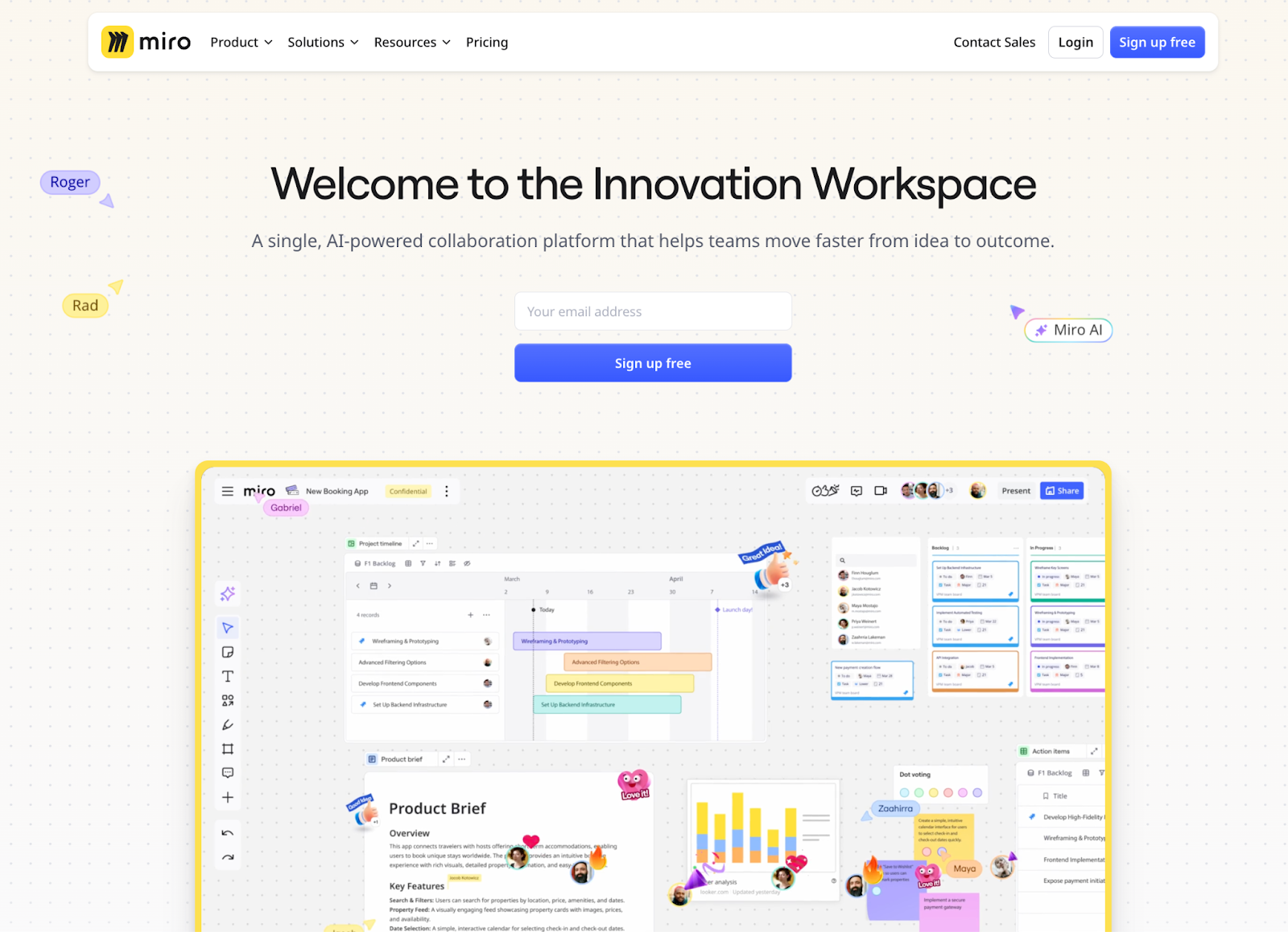
Miro is a digital whiteboard platform that excels in visual collaboration, making it ideal for creative teams that need a space for brainstorming and conceptual work. 

It integrates with various creative project management platforms, making it easier for teams to streamline project workflows.

Who is it For?

Design agencies, UX/UI teams, and web designers who want a visual and collaborative tool.

Miro’s Top Features

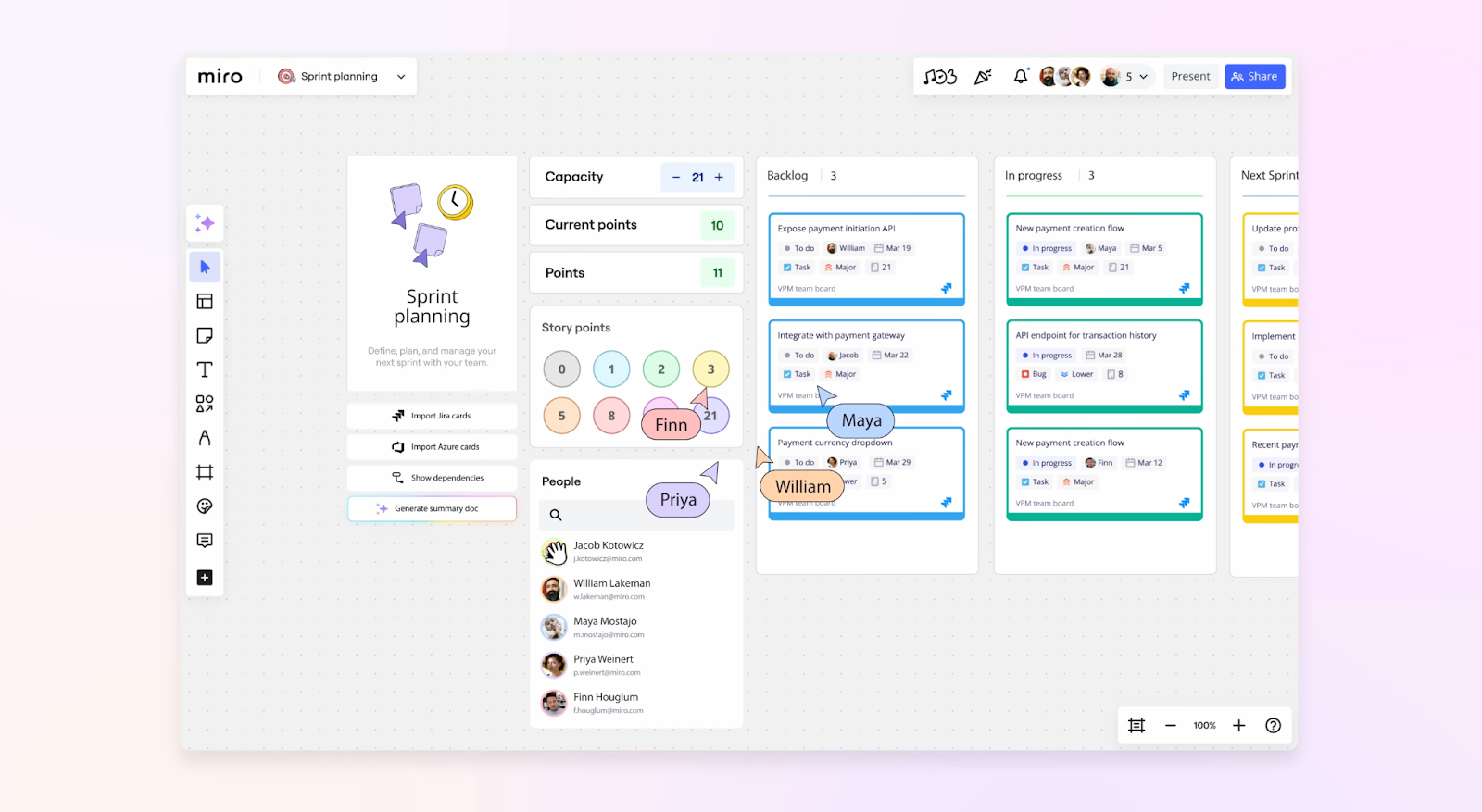
  • Intelligent canvas: AI-powered canvas to help you create expansive visual workspaces for road mapping, sprint planning, task organization, and more.
  • Miro docs: Built-in documentation tool to create SOPs, outline proposals, and keep track of the team’s feedback.
  • Real-time collaboration: Enables multiple team members to work on the same board simultaneously, fostering instant ideation and feedback.

Miro pricing

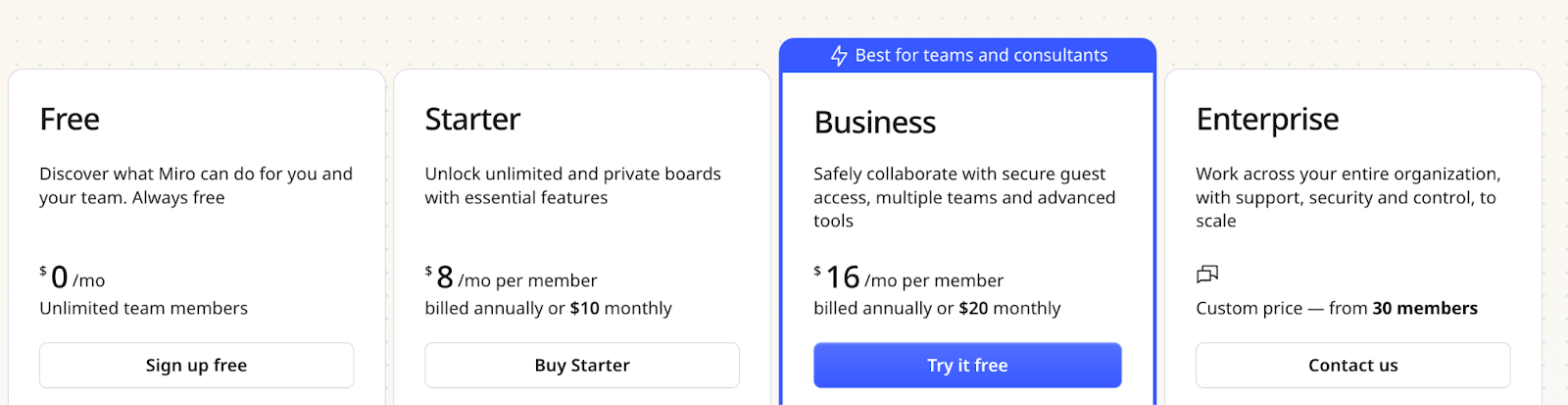
Miro’s free plan includes 3 editable boards, 10 AI credits, and 150+ integrations. Some of the key features are available on its three paid plans:

  • Starter: Starts at $10/user/month, including private mode, 25 AI credits per member/month, brand center, and task timeline estimation app.
  • Business: Starts at $23/user/month, including 50 AI credits per member/month, smart diagramming tool, and dependencies and task planner.
  • Enterprise: Custom pricing with a minimum team size of 30. Features include advanced administration control, dedicated support, and premium security.

Miro’s Pros and Cons

✅ Visual interface that aligns well with designers’ work style.

✅ Excellent for remote collaboration and virtual workshops.

✅ Extensive integration capabilities with other design and project management tools.

❌ Can be overwhelming for non-visual team members.

❌ Limited project management features for complex projects.
❌ Pricing can be steep for larger teams or organizations

#3: Monday.com

Best for: Customizable workflow management for complex creative projects.
Monday.com offers a flexible and visually appealing platform for managing design projects. With a wide range of views, including Gantt charts, Kanban boards, and calendars, the tool adapts to various design projects and management styles, such as agile workflows.
Who is it For?

Creative teams of all sizes, from small studios to large agencies, especially those looking for a configurable project management solution.

Monday.com’s Top Features

  • Customizable boards: Allows teams to create tailored workflows for different project types or clients.
  • Automation: Build linear to multi-sequence automated workflows for repetitive tasks, notifications, and status updates.
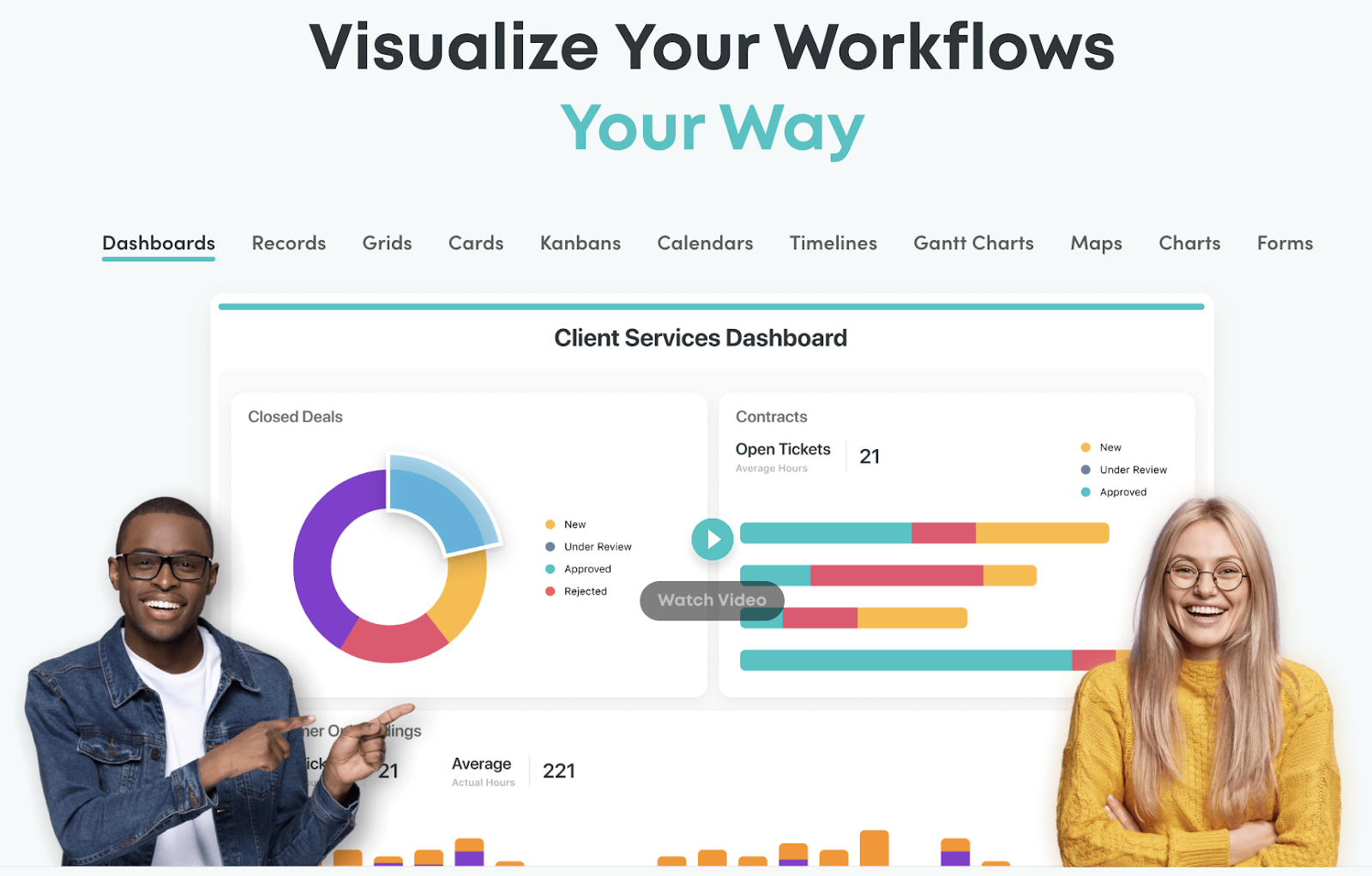
  • Time tracking: The built-in time tracking feature helps the team manage billable hours and project budgets and build timesheet reports.

Monday.com’s Pricing

Monday.com offers a free plan for up to 2 users. 

Monday.com pricing plans are based on minimum user seats of 3 and come in four tiers:

  • Basic: Starts at $17 per user/month, including Kanban board view, unlimited free viewers, and unlimited boards.
  • Standard: Starts at $20 per user/month, including 250 automated actions/month, 3+ dashboard views, and Zoom integration.
  • Pro: Starts at $32 per user/month, including all five dashboard views, time tracking, and 2-factor authentication.
  • Enterprise: Includes dedicated customer success manager, cross-project analytics, and resource management insights. Contact sales for a quote.

Monday.com’s Pros and Cons

✅ Customizable to fit specific design workflows.

✅ Appealing interface that’s easy to navigate.

✅ Strong reporting and analytics capabilities.

❌ Some advanced features are only available in higher-tier plans.

❌ Mobile app functionality is limited compared to the desktop version.

#4: ClickUp

Best for: Project and task management software task management.

ClickUp is an adaptable project management tool that offers a wide range of features to support creative teams. It combines task management, docs, goals, visual mapping, and more in a single platform.

Who is it For?

Medium to large creative teams and agencies need robust, all-in-one design project management software with extensive customization options.

ClickUp’s Top Features

  • Multiple view options: Visualize tasks in 5+ views, including list, board, calendar, timeline, and Gantt views.
  • Custom fields: Add specific properties to tailor each dashboard to manage your creative projects.
  • Docs and wikis: Integrated documentation feature for creating and storing design briefs, style guides, and project notes.

ClickUp Pricing

ClickUp’s free plan offers unlimited task creation and guest invites with full access only. They have three paid plans:

  • Unlimited: Starts at $10 per user/month, offers unlimited custom views, timesheets, guest access, and 100 mind map creation.
  • Business: Starts at $19 per user/month, offers private docs, sprint reporting, and all dashboard views.
  • Enterprise: White labeling, top-notch security, and enterprise AI. Contact sales to get a quote.

ClickUp’s Pros and Cons

✅ Free plan offers access to advanced features.

✅ Easy to tailor to fit various design workflows.

❌ Requires time and training to set up dashboards.

❌ Occasional performance issues with larger projects.

❌ Can be overwhelming due to the sheer number of features.

#5: Asana

Best for: Task-oriented project management

Asana is known for its clean, intuitive interface and powerful task management capabilities. It offers a flexible platform for organizing and tracking design projects, with features supporting high-level project planning and detailed task management.

Who is it For?

Small to medium-sized design teams and freelancers who need a straightforward, task-focused project management tool.

Asana’s Top Features

  • Portfolios: You can organize projects into folders and get a birds-eye view. Portfolios also become a central space for sharing key details with team members without overburdening them.
  • Automation bundles: Curate your most used automation into bundles and implement them across different projects. Bundles help you maintain consistency and reduce the manual work of setting up automation for each project.
  • Forms: Create custom forms for work requests, streamlining the intake process for new design projects.

Asana Pricing

Asana offers a free plan for up to 10 users and four pricing plans with a 30-day free trial. Pricing for paid plans is as follows:

  • Starters: Starts at $13.49 per user/month, with up to 500 teammates collaboration, Asana AI, and workflow builder.
  • Advanced: Starts at $30.49 per user/month, with 25,000 automation per month, scaled security, advanced reporting, and goal tracking.
  • Enterprise: Advanced integrations, unlimited seats, custom branding, and premium support. Contact sales for a quote.
  • Enterprise+: Audit log API, HIPAA compliance, and data loss prevention integrations. Contact sales for a quote.

Asana’s Pros and Cons

✅ Intuitive interface with a low learning curve.

✅ Strong task management and organization features.

✅ Subtasks and dependencies build a hierarchical workflow.

❌ Limited file storage capacity in lower-tier plans.

❌ Can become cluttered with tasks in large, complex projects.

#6: Basecamp

Best for: Streamlined communication and file sharing

Basecamp takes a unique approach to project management, focusing on clear communication and organized file sharing.

Its interface is designed to reduce clutter and keep teams focused on what’s important, making it an excellent choice for design teams that prioritize simplicity and effective collaboration.

Who is it For?

Small to medium-sized design teams and creative agencies that value straightforward project organization and clear communication channels.

Basecamp’s Top Features

  • Message Boards: Centralized spaces for team discussions, reducing the need for lengthy email threads.
  • To-do lists: Simple yet effective task management with the ability to assign, schedule, and track progress.
  • Automatic check-ins: Customizable questions prompt team members to provide regular updates without meetings.

Basecamp Pricing

Basecamp doesn’t offer a free plan but a 30-day free trial for its two paid plans.

  • Basic: Starts at $15/user per month, offers 500 GB storage for files & documents with guest invites.
  • Pro Unlimited: $349/month fixed price for unlimited seats with priority support.

Basecamp’s Pros and Cons

✅ Clean, distraction-free interface.

✅ Excellent for organizing project-related communications.

✅ Flat-rate pricing model is cost-effective for growing teams.

❌ No Gantt charts or timeline view.

❌ Limited customization options.

❌ No built-in time tracking.

#7: Notion

Best for: Flexible knowledge management and creative project organization

Notion offers a unique blend of note-taking, knowledge management, and project-tracking capabilities. Its highly flexible structure allows design teams to create custom workspaces that can serve as project hubs, design systems, and collaborative documentation all in one place.

Who is it For?

Design teams that need a versatile tool for both project management and knowledge base creation, especially those working on complex, information-rich projects.

Notion’s Top Features

  • Customizable databases: You can configure the database the way you prefer. You can build a client feedback tracker, website design task list or a design system through Kanban, gallery, list, and timeline view.
  • Documentation: Add rich-text formatting to your notes, invite teammates to share feedback, and organize them through tags. From drafting project requirements to curating pitch decks, you can use it as a central source of knowledge.
  • Powerful formulas: Build complex databases with auto-update fields by setting up formulas and functions.

Notion Pricing

Notion offers a generous free plan with access to 10 guest invites, subtasks, and unlimited pages. Notion doesn’t offer any free trial for its three pricing plans.

  • Plus: Starts at $12 per user/month, including unlimited file uploads, 100 guest invites, custom automation, and a Notion calendar.
  • Business: Starts at $18 per user/month, including database export as PDF, 250 guest invites, and SAML Single Sign-On (SSO).
  • Enterprise: Dedicated Customer Success Manager, audit logs, workspace analytics. Contact sales for a quote.

Notion’s Pros and Cons

✅ Flexible dashboards to build various design workflows.

✅ Excellent for creating and maintaining design systems and documentation.

✅ Built-in file storage with sufficient space.

❌ Limited native integrations.

❌ Basic automation on the free plan.

❌ Performance can slow down with very large databases or pages.

#8: Teamwork

Best for: Client-focused project management

Teamwork is designed with client work in mind, making it an excellent choice for creative agencies and freelancers who manage multiple client projects. It offers robust features for project planning, time tracking, and client communication.

Who is it For?

Creative agencies and teams that work with multiple clients need strong client management features alongside project management capabilities.

Teamwork’s Top Features

  • Client users: Allows teams to give clients limited access to projects for seamless collaboration and feedback.
  • Billing and invoicing: Integrated features for tracking billable time and generating invoices based on project work.
  • Resource management: Tools for allocating team members to tasks and projects based on availability and workload.

Teamwork Pricing

Teamwork offers a 30-day free trial and a forever free plan for up to 5 users. Similar to Wrike, the paid plans have a minimum user cap.

  • Deliver: $13.99 per user/month requires a minimum of 3 users, time tracking, client company management, and 4 project views (List, Table, Boards, and Gantt chart).
  • Grow: $25.99 per user/month requires a minimum of 5 users, resource scheduling, If/then conditional logic for forms, and a custom domain with SSL.
  • Scale: $65.99 per user/month requires a minimum of 5 users, unlimited retainer management, projects, and customer reports.
  • Enterprise: Dedicated Customer Success Manager and advanced security. Contact sales for a quote.

Teamwork’s Pros and Cons

✅ Strong focus on client management and collaboration.

✅ Built-in invoicing and client onboarding tool.

✅ Robust time tracking and billing capabilities.

❌ Interface can feel cluttered with all features enabled.

❌ Higher-tier plans can be costly for smaller teams.

#9: Hive

Best for: Versatile project views and workflow automation.

Hive offers a flexible project management platform with multiple views and powerful automation capabilities. Its interface seamlessly allows teams to switch between Gantt charts, Kanban boards, and calendar views, catering to different project management styles within a design team.

Who is it For?

Medium to large design teams that require project visualization options and workflow automation.

Hive’s Top Features

  • Action cards: Centralized task cards that can be viewed and managed across different project views.
  • Hive Analytics: Built-in analytics tools for tracking project progress, team productivity, and resource allocation.
  • Resourcing: Tools for managing team capacity and assigning resources across projects efficiently.

Hive Pricing

Hive offers a forever free plan with up to 10 workspace members and a 14-day free trial. Using per-user pricing, Hive offers three paid plans:

  • Starter: Starts at $7 per user/month with unlimited storage, up to 10 workspace members, and 10 projects.
  • Teams: Starts at $18 per user/month with unlimited workspace members.
  • Enterprise: Custom pricing (Custom analytics & reporting dashboard, enterprise API, and dedicated CSM).

Hive’s Pros and Cons

✅ Flexible project views cater to different management styles and project types.

✅ Strong automation features for streamlining repetitive tasks.

✅ Integrated time tracking and timesheets.

❌ Less intuitive interface and navigation menu.

❌ Mobile app functionality is limited compared to the desktop version.

#10: Wrike

Best for: Scalable project and portfolio management

Wrike is one of the best project management software for large-scale creative teams. It helps with task management, resource planning and allocation, and project analytics, making it suitable for design teams looking to grow their business.

Who is it For?

Creative agencies and in-house design teams within larger organizations need advanced project management capabilities and scalability.

Wrike’s Top Features

  • Custom workflows: Allows teams to create and automate complex workflows tailored to their specific design processes.
  • Workload views: Provides a clear overview of team members’ workloads for better resource management and capacity planning.
  • Proofing and approval: Integrated tools for reviewing, commenting on, and approving design assets directly within the platform.

Wrike Pricing

Wrike offers five plans, including a 14-day free trial and a forever free plan with limited features. The paid plans are as follows:

  • Team: Start at $9.80 per user/month for up to 25 users.
  • Business: Start at $24.80 per user/month for up to 200 users.
  • Enterprise: Unlimited user access with advanced reporting and integrations. Contact sales to get a quote.
  • Pinnacle: Native integration with PowerBi and locked spaces. Contact sales to get a quote.

Wrike’s Pros and Cons

✅ 400+ native integrations.

✅ User-friendly interface.

✅ Library of customizable templates.

❌ Learning curve with dashboard navigation.

❌ The budgeting feature is only available for Pinnacle plan users.

Choosing the Right Tool for Your Design Workflow

Selecting the ideal project management software for your design team involves carefully considering your needs, workflow, and dynamics.

Each tool we’ve explored offers unique strengths. But, the best choice depends on your team size, project complexity, client involvement, and specific design processes.

Smaller teams might prefer the simplicity of Asana or Basecamp, while larger agencies could benefit from Wrike’s scalability or ClickUp’s comprehensive features.

SmartSuite stands out from the list due to its comprehensive list of offerings suitable for basic to complex creative projects.

Its built-in automation, extensive template library, custom dashboards, and robust communication features make it a standout choice for creative teams. 

Try a 14-day free trial or sign up for a free plan to explore how SmartSuite can help in your creative endeavors.

‍

How User Permissions are Inherited in SmartSuite Dashboards

Software Stack Editor · November 1, 2024 ·

Welcome to another insightful read on unraveling the intricacies of SmartSuite Dashboards. In this blog post, we’ll delve into how user permissions are ingeniously inherited within SmartSuite dashboards. Through this understanding, you’ll be able to tailor dashboard experiences for diverse users within your organization.

[embedded content]

Introduction to SmartSuite Dashboards

SmartSuite has emerged as a vital player in the no-code arena, providing powerful tools to simplify and automate workflows. A key feature that sets it apart is its innovative dashboards, which inherit user permissions seamlessly, providing customized views and interactions for each user.

Let’s walk through how these dashboards are structured, specifically around how user permissions are set up and managed within the workspace.

Understanding User Permissions

User permissions in SmartSuite ensure that every individual in the organization has access strictly aligned with their roles. This nuanced control makes SmartSuite a secure, user-friendly platform as your team collaborates on various projects.

‍

Inheritance of Permissions

The permissions in SmartSuite dashboards are inherited based on the user’s role within the team or organization. Permissions include viewing, editing, and creating records, and are organized into solutions and specific tables within those solutions.

Creating Service Order Templates

To begin, using a service order template exemplifies how easy it is to set up and customize your workspace.

  1. Accessing Templates: Log in to your SmartSuite account and navigate to the Template Gallery.
  2. Searching Templates: Type “Service Orders”, and choose to use this template within your workspace.

This installation provides you with a pre-configured solution, complete with tables like Jobs, Services, and Team, ready for customization.

Organizing with Folders and View Permissions

Keeping a well-organized workspace is essential for collaboration, and SmartSuite’s folder system is key:

Creating Folders

  • Internal Folder: Use this for management-level views or sensitive data.
  • Dashboard Folder: This folder will host the dashboard views, ensuring easy access management.

Setting Permissions

Folders allow you to set view-specific permissions:

  1. Internal Use: Restrict access to management or admin roles.
  2. Team Access: Open view access within selected folders, ensuring individuals only see data relevant to their roles.

‍

Building a Custom Dashboard

Now let’s create a dashboard customized to the specifics of your team’s projects.

Steps to Build:

  1. Add a Dashboard View: Within the Jobs table, add a new dashboard.
  2. Customize with Widgets: Add widgets such as summary blocks or record details to bring the necessary information to the forefront.

‍

Practical Tips for Widgets

Use filters to ensure that users only see data of relevance to them. For example, configuring a summary card to display records assigned to the current user only.

Assigning Jobs to Team Members

A critical aspect of managing dashboards is ensuring that job assignments are clear.

Assigning Using Fields

The “Assigned to” field is pivotal:

  • Ensures individuals only access data pertinent to their role.
  • Simplifies the visibility of tasks across teams.

Onboarding and Managing Teams

When it comes to scaling your operations, SmartSuite offers a neat solution through team management:

Creating and Managing Teams

  • Team Setup: Create teams for structured permissions.
  • Automatic Access: Onboard new members by assigning them to existing teams, which inherit predefined permissions.

Sharing Solutions Access

To effectively collaborate, sharing access is crucial yet needs to be handled cautiously:

Levels of Access

SmartSuite lets you granularly assign permissions:

  • Solution Owners: Have full access to manage permissions.
  • Team Members: Can be assigned as assignees, viewing and editing their assigned tasks only.

Custom Permissions

Through advanced permissions, specify who can create, view, or edit content, ensuring each team member works productively yet securely.

Hands-on: Managing Dashboard Permissions

As you build dashboards, setting permissions is vital to control access to sensitive data.

Step-by-step Permission Setup:

  1. Select Folder: Assign permissions at a folder level.
  2. Assign Team Access: Designate which team or individuals can view dashboard content.

Ensuring a Secure User Experience

Security and access control are foundational in SmartSuite:

Testing User Access

Always validate your setup by logging in as different users to ensure the correct data visibility.

Comments and Collaboration:

Even with restricted access:

  • Comments: Users can communicate within records they are assigned, facilitating seamless collaboration.

‍

Conclusion

SmartSuite Dashboards provide a robust and flexible way to manage and interact with data. By harnessing the power of inherited user permissions, you can streamline operations, enhance security, and ensure each team member has the access they need to be productive. Dive in and start customizing your SmartSuite experience today, and remember, your journey to optimizing workflows starts with understanding user permissions.

10 Best Task Management Software in 2025 [In-Depth Guide]

Software Stack Editor · October 28, 2024 ·

This guide will explore 10 of the best task management solutions in 2024. We’ll delve into each platform’s unique features and benefits, equipping you with the knowledge to select the perfect tool for your organization’s needs.

Juggling endless to-do lists, deadlines, and shifting priorities can leave even the most organized professionals feeling overwhelmed and unable to focus on high-impact work. 

Inefficient task management hinders individual productivity and undermines team coordination and overall organizational success.

A good task management software can solve these pain points. These platforms provide the tools and capabilities to regain control, streamline workflows, and drive measurable results.

This guide will explore 10 of the best task management solutions in 2024. We’ll delve into each platform’s unique features and benefits, equipping you with the knowledge to select the perfect tool for your organization’s needs.

What to Look for When Evaluating Task Management Software

When selecting task management software, consider these essential factors to pick the right tool that aligns with your team’s specific needs and workflow.

User interface and ease of use

The software should have an intuitive interface, allowing team members to adapt and use the tool effectively and quickly. For better visualization options, look for drag-and-drop functionality, customizable dashboards, and task views (Kanban, lists, timelines, boards, and Gantt charts).

Collaboration features

Effective task management software should facilitate seamless collaboration. To keep everyone on the same page, consider tools that offer real-time updates, comment threads, email integration, built-in approvals, file sharing, and team chat functionality.

Integration capabilities

The ability to integrate with other tools in your tech stack is crucial. To create a cohesive workflow, look for software connecting your existing project management, reporting, communication, and productivity tools.

Customization and flexibility

Assess if the tool adapts to your specific task management processes. Also, check if the tool offers custom fields, forms, automation, etc., to let you tailor your workspace to your and your team’s preferences.

Reporting and analytics

Robust reporting features help track progress and identify bottlenecks. Look for software that offers customizable reports, time tracking, and performance analytics to gain insights into your team’s productivity.

What is the Best Task Management Software In 2025?

Here’s a curated list of the top 9 top task management apps and tools for 2025, designed to help you find the perfect fit for your team’s needs.

#1. SmartSuite: All-in-one creative project management software.

#2: Todoist: Visual collaboration and brainstorming.

#3: Monday.com: Customizable workflows and task management.

#4: ClickUp: All-in-one project management and productivity.

#5: Asana: Managing recurring tasks through subtasks and automated workflows.

#6: Basecamp: Simplified project management and team communication.

#7: Notion: Flexible knowledge and task management.

#8: Teamwork: Client-focused task management.

#9: Trello: Task management using Kanban boards.

#10: Any.do: Integration of personal and professional task management.

#1. SmartSuite

SmartSuite is one of the best task management software that combines automation with a tailored workspace to help you plan, manage, and track multiple projects.

Our tool helps you develop transparent team communication and collaboration, build workflows for effective task management, and keep track of the progress of the overall task.

Workflow automation

Smartsuite offers built-in task automation that helps you eliminate repetitive tasks with pre-made and custom triggers. Whether you want to trigger a status update once a task is complete or build multi-step automated workflows to streamline your process, SmartSuite has you covered.

And the best part?

You don’t need any coding knowledge to build simple to complex automation. The ease of use and intuitive dashboard makes trigger setup a breeze.

[embedded content]

Once you’ve set up a workboard in SmartSuite, head to “Automations” and automate anything from record creation to updates to task assignments and notifications. 

Comprehensive task management

SmartSuite’s task management dashboard offers a 360-degree view of your project’s life cycle: prototyping, review, and refinement.

You can brainstorm design improvement ideas, prioritize tasks, assign responsibilities, and build reports in one tool.

  • Request forms: Request forms help you collect all the information at the start of the project, reducing delays once you initiate it. You can build custom forms using SmartSuite’s drag-and-drop form builder.
    The builder also offers features such as adding or removing fields, changing field types, and adding custom fields like dropdown menus.‍
  • Task conversion: Convert any record type into tasks and add different fields–subtasks, checklists, and sub-items. Enhance each task with notes and comments for the assigned person.‍
  • Milestone tracking: Break down project goals into task-based milestones to monitor progress. Configure tracking by workstream, team, and owner, flag roadblocks, and create resolution plans.‍
  • 200+ task management templates: Access pre-built templates for use cases like product catalogs, video production, press tracking, and user research. Each template comes with multiple views, fostering effective task management.
Factors to Consider When Evaluating Creative Project Management Software

Native team collaboration

If your team isn’t using dedicated task management software, crucial feedback is likely getting lost in long email threads or Slack messages.

SmartSuite’s built-in communication and collaboration features help centralize communication. 

The conversation happens where the work is in your task management tool.

Factors to Consider When Evaluating Creative Project Management Software

Here are the key features that make collaboration easy in SmartSuite.

  • There is a built-in communication center for connecting with peers in group chats or 1:1 conversations, providing quick feedback, and keeping stakeholders updated throughout the project.
  • The member’s directory lets you see all the details about your co-workers, including their availability status and job profile, making it efficient to contact the right people.
  • SmartSuite integrates with Gmail and Outlook, allowing you to send and receive email within your workspace.
  • Through task and project comments and @mentions, you can share updates, nudge teammates, or add new people to the conversation.

SmartSuite Pricing

SmartSuite offers a forever-free plan with access to 250+ automation actions, team collaboration, multi-dashboard views, and more.

There are four paid plans with a 14-day free trial:

  • Team: Starts at $12/user per month, including Gantt charts, timeline views, 5000 automation runs, and time tracking.
  • Professional: Starts at $28/user per month, including two-factor authentication, Gmail & Outlook integrations, and unlimited editors.
  • Enterprise: Starts at $41/user/month, including audit logs, data loss prevention, and 50,000 monthly API calls.
  • Signature: Customized plan tailored to your organization’s needs and team size.
Factors to Consider When Choosing an Organization Software

SmartSuite Pros and Cons

✅ Generous free plan with access to advanced features.

✅ 200+ project templates for various use cases.

✅ Dynamic dashboards and reporting.

✅ Integrated document and file management.

✅ Comprehensive workflow automation.

❌ Less native integrations when compared to alternatives.

#2: Todoist

Best for: Task management through checklists and subtasks.

Todoist is a task organization tool that helps you manage tasks by breaking down tasks into smaller work blocks. You can filter and sort set priorities and attach labels to keep tasks organized and visible across the workspace.

Who Is It For?

Individuals and small teams with a handful of tasks to manage.

Todoist’s Top Features

  • Subtasks and checklists: Use subtasks and checklists to break down bigger projects or tasks into manageable ones. Each checklist and task can be assigned a separate priority, tag, and description.
  • Team collaboration: Assign tasks, share updates via comments, and build sharable projects.
  • Custom views: Adding filter, sort, and grouping options and save as custom views. Each custom view can be used across the workspace.

Todoist Pricing

Todoist’s beginner plan is available for free. 

You can create up to 5 projects, access a one-week history, and view your tasks in list and board layouts. There are two paid plans: For individuals and the entire team.

  • Pro (individuals): Starts at $5/month including 300 personal projects, unlimited activity history, and Calendar layout.
  • Business (Teams): Starts at $8 per user/month including shared team workspace, 1000 team members and guest invites, and centralized team billing.

Todoist Pros and Cons

✅ Synchronization across all devices and platforms.

✅ Work reports, including productivity and team activity.

✅ Huge library of templates.

❌ No automation features.

❌ Lacks built-in time tracking functionality.

❌ No built-in team communication option.

#3: Monday.com

Best for: Customizable workflows and task management.

Monday.com is a versatile task management tool that stands out for its highly customizable interface and multiple project views. It helps teams create tailored workflows that match their exact processes, from simple to-do lists to complex project timelines.

Who is it For?

Mid-sized to large teams across various industries, particularly those that require a flexible task management tool that can be adapted to different departments.

Monday’s Top Features

  1. Custom widgets: Monday.com offers 80+ widgets through integrations with apps such as videos, calendars, clocks, images, etc., giving you the flexibility to build comprehensive task dashboards.
  2. Multiple views: Offers Kanban, Gantt, calendar, and timeline views to visualize tasks in various formats.
  3. Automation: Set up no-code workflow automation to eliminate repetitive tasks and share quick updates with your team members.

Monday.com’s Pricing

Monday.com offers a free plan for up to 2 users. 

Monday.com pricing plans are based on minimum user seats of 3 and come in four tiers:

  • Basic: Starts at $17 per user/month, including Kanban board view, unlimited free viewers, and unlimited boards.
  • Standard: Starts at $20 per user/month, including 250 automated actions/month, 3+ dashboard views, and Zoom integration.
  • Pro: Starts at $32 per user/month, including all five dashboard views, time tracking, and 2-factor authentication.
  • Enterprise: Includes dedicated customer success manager, cross-project analytics, and resource management insights. Contact sales for a quote.

Monday’s Pros and Cons

✅ Highly customizable to fit various team structures and workflows.

✅ Excellent visualization options for complex projects.

❌ Can be complex to set up initially due to its customization options.

❌ Pricing can be high for smaller teams or startups.

❌ Mobile app lacks full functionality compared to the web version.

#4: ClickUp

Best for: All-in-one, task tracking, management and productivity

ClickUp is a task management tool central to resource management, work management, and team collaboration.

Who is it For?

Businesses of all sizes, from solopreneurs to large enterprises, especially those looking to consolidate their productivity tools into a single platform.

ClickUp’s Top Features

  1. Multitask toolbar: Allows users to edit multiple tasks simultaneously, saving time on repetitive updates.
  2. Custom fields: Enables teams to add unique data points to tasks, tailoring the tool to specific project needs.
  3. Goals and portfolios: Helps teams track high-level objectives and manage multiple projects in a centralized view.

ClickUp Pricing

ClickUp’s free plan offers unlimited task creation and guest invites with full access only. They have three paid plans:

  • Unlimited: Starts at $10 per user/month, offers unlimited custom views, timesheets, guest access, and 100 mind map creation.
  • Business: Starts at $19 per user/month, offers private docs, sprint reporting, and all dashboard views.
  • Enterprise: White labeling, top-notch security, and enterprise AI. Contact sales to get a quote.

ClickUp’s Pros and Cons

✅ Comprehensive suite of features at a competitive price point.

✅ Highly customizable to fit various workflow needs.

✅ Generous free plan with core features.

❌ Occasional performance issues with larger projects.

❌ Advanced reporting features are limited to higher-tier plans.

#5: Asana

Best for: Managing tasks through subtasks and automated workflows

Asana is a popular task management tool known for its clean interface, hierarchical task workflows, and automation. Its subtasks and dependencies help large teams organize complex projects with ease.

Who is it For?

Medium to large-sized teams, particularly those in tech, marketing, and creative industries, require robust collaboration features and project oversight.

Asana’s Top Features

  1. Team collaboration: Share comments and mentions directly within tasks, assign tasks to multiple projects, add dependencies, and receive real-time updates.
  2. Bundles: Package workflow elements such as rules, custom fields, and task templates and apply them instantly to new (and multiple) projects.
  3. Timeline view: Offers a Gantt-chart view to plan and track project schedules visually.

Asana Pricing

Asana offers a free plan for up to 10 users and four pricing plans with a 30-day free trial. Pricing for paid plans is as follows:

  • Starters: Starts at $13.49 per user/month, with up to 500 teammates collaboration, Asana AI, and workflow builder.
  • Advanced: Starts at $30.49 per user/month, with 25,000 automation per month, scaled security, advanced reporting, and goal tracking.
  • Enterprise: Advanced integrations, unlimited seats, custom branding, and premium support. Contact sales for a quote.
  • Enterprise+: Audit log API, HIPAA compliance, and data loss prevention integrations. Contact sales for a quote.

Asana’s Pros and Cons

✅ Intuitive interface with a low learning curve.

✅ Strong built-in team collaboration.

✅ Offers a variety of project views to suit different working styles.

❌ Limited customization options.

❌ Free plan is restrictive in features.

❌ No built-in communication tools.

#6: Basecamp

Best for: Simplified task management and team communication

Basecamp is another visual task management software that helps you get a bird’s eye view of your projects. You can communicate through a built-in messaging option, manage tasks through your calendar, and track task progress through visual graphs.

Who is it For?

Small to medium-sized businesses and remote teams that prioritize clear communication and straightforward project organization.

Basecamp’s Top Features

  1. Hill charts: A unique visual tool for tracking project progress and identifying potential bottlenecks.
  2. Campfire: An integrated team chat feature that keeps conversations organized by project.
  3. Automatic check-ins: Scheduled questions that prompt team members to share updates, reducing the need for status meetings.

Basecamp Pricing

Basecamp doesn’t offer a free plan but a 30-day free trial for its two paid plans.

  • Basic: Starts at $15/user per month, offers 500 GB storage for files & documents with guest invites.
  • Pro Unlimited: $349/month fixed price for unlimited seats with priority support.

Basecamp’s Pros and Cons

✅ All-inclusive pricing model with no per-user fees.

✅ Clean, distraction-free interface promotes focus.

✅ Excellent for managing client communications alongside internal tasks.

❌ Lacks some advanced features such as Gantt chart view.

❌ Limited integration options.

❌ May not be suitable for complex projects requiring detailed task dependencies.

#7: Notion

Best for: Flexible knowledge and task management.

Notion is an adaptable workspace that combines note-taking, databases, and task management into a single platform. Its strength lies in its flexibility, allowing users to create custom workspaces that fit their needs.

Who is it For?

Startups, creative teams, and individuals need a flexible tool that can adapt to various use cases. Notion’s Top Features

  1. Databases: Powerful, customizable databases that can be used to create task lists, CRM systems, and more.
  2. Cross-database relations: You can cross-reference information by adding relational properties in each database.
  3. Wikis: Easy-to-create knowledge bases that help teams organize and share information effectively.

Notion Pricing

Notion offers a generous free plan with access to 10 guest invites, subtasks, and unlimited pages. Notion doesn’t offer any free trial for its three pricing plans.

  • Plus: Starts at $12 per user/month, including unlimited file uploads, 100 guest invites, custom automation, and a Notion calendar.
  • Business: Starts at $18 per user/month, including database export as PDF, 250 guest invites, and SAML Single Sign-On (SSO).
  • Enterprise: Dedicated Customer Success Manager, audit logs, workspace analytics. Contact sales for a quote.

Notion’s Pros and Cons

✅ Flexible and customizable to fit various workflows.

✅ Combines multiple tools (notes, tasks, wikis) in one platform.

✅ Offers a generous free plan for personal use.

❌ Limited automated triggers and actions.

❌ No built-in forms to collect work requests.

❌ May require significant setup time to create an optimal workspace.

#8: Teamwork

Best for: Client-focused task management.

Teamwork is a comprehensive project management tool that manages client work and billable hours. It offers robust features for task management, time tracking, and client collaboration.

Who is it For?

Agencies, consultancies, and service-based businesses that manage multiple client projects simultaneously.

Teamwork’s Top Features

  1. Workload planner: Helps managers allocate resources, assign tasks, and track project progress.
  2. Built-in time tracking: Track and manage your team’s completion time and bill your clients accurately for accurate invoicing and budget management.
  3. Billing and invoicing: Integrated time tracking and invoicing features streamline client billing processes.

Teamwork Pricing

Teamwork.com offers a 30-day free trial and a forever free plan for up to 5 users. Similar to Wrike, the paid plans have a minimum user cap.

  • Deliver: $13.99 per user/month requires a minimum of 3 users, time tracking, client company management, and 4 project views (List, Table, Boards, and Gantt chart).
  • Grow: $25.99 per user/month requires a minimum of 5 users, resource scheduling, If/then conditional logic for forms, and a custom domain with SSL.
  • Scale: $65.99 per user/month requires a minimum of 5 users, unlimited retainer management, projects, and customer reports.
  • Enterprise: Dedicated Customer Success Manager and advanced security. Contact sales for a quote.

Teamwork’s Pros and Cons

✅ Easy to manage client-facing projects and communications.

✅ Native time tracking and billing features.

✅ Wide range of project views and reporting options.

❌ Interface can feel cluttered with all features enabled.

❌ Steep learning curve.

❌ Advanced features are only available in higher-tier plans.

#9: Trello

Best for: Task management using Kanban boards.

Trello is a low-cost organization software that helps you plan, track, and manage projects. It’s built around Kanban workflows and offers pre-built templates to set up these boards for quick access.

Who Is It For?

Freelancers, solopreneurs, and small-sized businesses, familiar with Kanban-based task management.

Trello’s Top Features

  • Automation: Set up automation for project-level activity, such as when a task is completed or an item is moved between different cards. 
  • Power-ups: Integrations and additional apps that enhance Trello’s capabilities. These help you build custom fields, add advanced triggers, and sync databases.
  • Task management: Get a granular picture of your tasks’s progression with the timeline, list, dashboards, kanban, and calendar view.

Trello Pricing

Trello offers a free plan with built-in automation and 10 workspace collaborators. You get a 14-day free trial for its three paid plans:

  • Standard: $6 per user/month with unlimited activity log and 250 workspace command runs/month.
  • Premium: $12.50 per user/month with unlimited workspace collaborators and built-in automation.
  • Enterprise: $17.50 per user/month with 24/7 enterprise admin support and SAML SSO via Atlassian Access. Per head, cost decreases in this pricing plan as your team size increases.

Trello Pros and Cons

✅ User-friendly and intuitive dashboard.

✅ Ease of use across various devices.

✅ Built-in advanced automation.

❌ No built-in team communication.

❌ Rely on third-party integrations for reporting (paid).

❌ No option to assign tasks to team members.

#10: Any.do

Best for: Integration of personal and professional task management.

Any.do is a comprehensive task management and to-do list app that simplifies daily planning and task organization.

Who is it For?
Busy professionals and small teams must manage personal and work-related tasks in one place, focusing on daily planning and organization.

Any.do’s Top Features

The Best To do list App for Web | Any.do
  1. Any.do moment: A daily planning feature that prompts users to review and organize their daily tasks, fostering better time management.
  2. Location-based reminders: Set reminders that trigger when you arrive at or leave specific locations, ensuring you never forget location-specific tasks.
  3. Shared lists: Easily collaborate on shared lists with family members or colleagues, making it ideal for personal and professional use.

Any.do’s Pricing

Any.do offers a forever free plan with features including tasks and lists, reminders, and calendars. For the paid plans, you can choose from the following:

  • Premium: Starts at $7.99/month, including recurring tasks, WhatsApp reminders, color tags, and AI-powered features.
  • Family: Starts at $9.99/month, including shared family space, projects, and grocery lists.
  • Teams: Starts at $7.99/user/month, including 100+ workflow templates, project boards, and collaborative workspace.

Any.do’s Pros and Cons

✅ Integration of personal and work-related tasks.

✅ Intuitive interface for effective task management.

✅ Strong focus on daily planning and organization.

❌ Limited project management features.

❌ No advanced reporting feature.

❌ Advanced features like location-based reminders are only available in the premium version.

Elevate Your Task Management Processes

Each tool in this list has unique use cases, from Miro’s visual collaboration capabilities to Wrike’s enterprise-grade project portfolio management.

The choice ultimately depends on team size, project complexity, task volume, industry-specific requirements, and budget constraints.

For visually oriented teams with a range of creative projects, Miro or Notion might be the best fit. Larger organizations managing multiple complex projects could benefit from adaptable tools like Monday, Asana, or Wrike. Smaller teams or those focused on client work might find Basecamp or Teamwork more suitable. 

Consider your team’s needs, workflow preferences, and growth trajectory. 

SmartSuite is worth checking out if you want a tool that offers all of these features in a pocket-friendly package! It integrates into your existing business processes and adapts to the scalability of task management and organization.

Try a 14-day free trial or sign up for a free plan to explore how SmartSuite can help your creative endeavors.

Rapidly Produce Invoices with Document Designer

Software Stack Editor · October 18, 2024 ·

Welcome to another episode of SmartTips. I’m Jeff Gonzalez, and today we’re diving into the intriguing world of invoice generation using SmartSuite. We’re focusing specifically on how to rapidly produce invoices, leveraging the powerful Document Designer feature.

[embedded content]

Introduction to SmartSuite Invoicing

If you’ve been tracking your invoices inside Smart Suite, you’re already familiar with the foundational tools at your disposal. However, you may be wondering: “How can we produce those invoices in a matter of seconds?” In this blog post, we’ll cover this exact process, step-by-step.

Understanding the Template Solution

Our journey begins with the Orders and Invoicing Template Solution. This setup comprises multiple interconnected tables, primarily:

  • Invoices Table
  • Orders Table
  • Customers Table

These tables work cohesively, sharing crucial data that ensures your invoices are detailed and accurate.

Key Fields to Note

Each invoice includes several essential fields:

  • Billing Details: Address and contact information of the recipient.
  • Total Amount: Automatically pulled from linked orders, ensuring accuracy.
  • Additional Metadata: Information that provides context and granularity to each invoice.

The Power of Document Designer

The Document Designer is your primary tool for converting raw data into polished, professional invoices. Let’s explore what makes this feature indispensable.

Static and Dynamic Elements

Document Designer combines static text and dynamic data seamlessly on a PDF. A typical setup includes:

  1. Title: A clear label, such as “Invoice”, at the top.
  2. Field Titles: Static labels for invoice numbers, dates, customers, etc.
  3. Dynamic Data: Real-time data populated from your tables.

Customizing the Layout

You have the flexibility to:

  • Drag and Drop Elements: Arrange fields and static elements intuitively.
  • Resize and Position Fields: Ensure every piece of information is right where you want it.

Thanks to these capabilities, moving to a new invoice record effortlessly updates the PDF with relevant data.

Linking Records and Adding Details

One standout feature is the ability to showcase linked records directly within your invoice PDF, reinforcing how interconnected your data really is.

Showcasing Linked Orders

For instance, orders linked to an invoice table can be displayed with:

  • Order Date
  • Items List
  • Shipping Fees

All these details appear in a structured table format, effortlessly adjusting to your design preferences.

Advanced Structuring with Table Mode

Use the Table Mode to customize column order, alignment, and more. This granularity ensures your invoices are as informative as they are attractive.

Automating the PDF Generation

Creating invoices quickly is just one part of the solution. Automating the process enhances efficiency:

Automation Setup

With Smart Suite, you can automate the PDF generation and save the document within your records:

  • Trigger: A change in a yes/no field starts the automation.
  • Action: Generates a PDF with a unique title, saving it to the invoice’s record.

Automating PDF Delivery

Automation doesn’t end with saving the PDF. If your customer data is linked, you can easily automate sending the invoice as an email attachment.

Summary and Final Thoughts

The SmartSuite Document Designer and its associated automation capabilities offer powerful tools for any business needing quick, accurate invoicing.

“I made this in less than five minutes,” shares Jeff.

This efficiency, combined with visually appealing designs, can elevate your invoicing process, ensuring speed and professionalism.

¿Qué es Smartsuite? ¿Cuánto cuesta? Ventajas y desventajas

Software Stack Editor · October 14, 2024 ·

image

¿Estás cansado de la falta de visibilidad y control de tareas en tu equipo que ocasiona muchas veces que la productividad de tu empresa decaiga? Cuando esta realidad sucede, ni una planilla de Excel es capaz de ordenarte el día a día de la forma adecuada. ¿Te gustaría poder centralizar todos los flujos de trabajo en una misma plataforma?

Si estás buscando una herramienta de gestión de procesos y proyectos para tu empresa, SmartSuite es una plataforma que sin lugar a dudas deberías revisar, ya que combina una interfaz intuitiva, con alertas y automatizaciones que puede ser muy transformadora para muchas empresas que hasta ahora llevan su gestión usando herramientas inadecuadas, pero ahora estén buscando algo más profesional.

En este artículo, te contamos de qué se trata SmartSuite, cuáles son las principales ventajas y desventajas de implementarla en tu negocio y cuánto cuesta cada plan de suscripción.

¿Te falta visibilidad en la gestión de tareas y proyectos? Contar con una plataforma como SmartSuite te puede ayudar a mantener el control de tus procesos. Agenda una videollamada gratuita con nosotros para que podamos ayudarte

¿Qué es SmartSuite?

SmartSuite es un software en la nube enfocado, entre otras cosas, en la gestión de tareas (work management) de origen norteamericano y pensado para que las empresas puedan desarrollar su trabajo en una plataforma centralizadora. Forma parte de una tendencia mundial en el software de herramientas no-code; esto quiere decir que están pensadas para que el usuario pueda usarla y configurarla sin necesidad alguna de poseer conocimientos de programación.

SmartSuite para que sirve

La plataforma cuenta con la flexibilidad suficiente para adaptarse a infinidad de business process; y también de integrarse con otros softwares, cuando se requieren capacidades específicas que no logran ser cubiertas por la herramienta. Sus funcionalidades principales se orientan en tres ejes:

  • Asignación clara de responsables por tarea, proceso o proyecto.
  • Fijación de fechas límites, compromisos y seguimiento tiempo.
  • Reporte del estatus y alertas asociadas.

Project management con SmartSuite

Aprovechando las mismas capacidades, como gestor de proyectos, SmartSuite permite llevar adelante una gestión de proyectos completamente profesional. Tanto para los equipos que buscan algo simple, centrado solamente en el control del tiempo, alcance e inversión; hasta metodologías ágiles como scrum y asignación por puntos de esfuerzo, SmartSuite es una alternativa que poco tiene para envidiarle a sus competidores en esta categoría.

El mismo dato, múltiples perspectivas

Parte de la potencia de SmartSuite se despliega en las diferentes formas de visualizar la información, lo que permite al usuario enfocarse en la porción de información que le resulta relevante en cada tarea. Sin la necesidad de duplicar datos ni editar la información, SmartSuite permite convertir las celdas de datos en cronogramas, tableros de kanban, calendario, mapas, gráficos y más.

De manera similar, cada vista puede ser filtrada y agrupada según la preferencia de cada área u equipo de trabajo. Esto es una funcionalidad clave para favorecer la colaboración y una correcta priorización de la carga de trabajo, lo que garantizará un customer success duradero.

Gestión de permisos: la clave para un uso corporativo

Un punto fuerte de SmartSuite sin lugar a dudas es que presenta uno de las mejores gestiones de permisos que existen entre herramientas de gestión similares. Todas las bondades de de este tipo de soluciones se ponen en juego si el software no logra restringir con éxito quienes pueden crear tableros, espacios de trabajo, modificar y extraer datos.

En este aspecto, SmartSuite lo resuelve en forma excelente. Los usuarios son creados con roles preasignados, limitando qué pueden hacer dentro de la cuenta en forma global. A este nivel se le añade una segunda capa de permisos, que limita la capacidad para visualizar y/o editar datos sensibles específicos dentro de las aplicaciones a las que el usuario tiene permitido ingresar.

Automatiza y enfócate en lo importante

Con la posibilidad de generar tareas recurrentes, crear alertas por vencimientos o notificar a las personas que deben tomar parte en cada etapa del proceso, lo esencial está cubierto.

Con mayor grado de expertise en la herramienta pueden construirse flujos de proceso robustos, que permiten replicar por ejemplo los niveles de permisos/autorizaciones propios de tipos de procesos más complejos.

Si bien también pueden lograrse automatizaciones más avanzadas en SmartSuite, es cierto que hasta el momento la interfaz para configurarlas está un punto por debajo de otras herramientas de productividad.

¿SmartSuite está disponible en español?

Recientemente, SmartSuite ha incorporado de forma nativa múltiples lenguajes, incluídos entre ellos el español, portugués, italiano, francés y demás. Por supuesto estos han sido incorporados al inglés, lenguaje original de la herramienta.

¿Puedo usar la aplicación desde el móvil?

Los usuarios pueden acceder desde cualquier dispositivo conectado a internet, ya sea que utilicen sistemas operativosAndroid o iOS.

A continuación, te compartimos los códigos QR para que puedas descargar SmartSuite en tu teléfono inteligente o tableta.

SmartSuite Academy

Uno de los productos más destacados de la herramienta para sacarle el máximo provecho es Academy, una plataforma educativa online que ofrece cursos y capacitaciones para aprender a utilizar SmartSuite. Esta plataforma online proporciona tutoriales, guías y formaciones específicas para ayudar a los usuarios a mejorar su rendimiento, tanto en entornos laborales como en proyectos personales.

Los cursos suelen abarcar desde aspectos básicos del uso de la herramienta hasta funciones avanzadas, ofreciendo formación tanto para principiantes como para usuarios experimentados con intenciones de maximizar sus habilidades con la plataforma.

SmartSuite Certification

La herramienta ofrece diversas certificaciones por completar los programas de formación diseñados para validar y reconocer el dominio de los usuarios en el uso de la plataforma. Estas certificaciones suelen estar estructuradas en diferentes niveles, cada uno enfocado en habilidades y conocimientos específicos.

Niveles de certificación

Existen 3 niveles de certificación para aprender a usar la herramienta:

  • Básico: orientado a usuarios nuevos o principiantes. Cubre las funcionalidades esenciales de la plataforma, como la creación y gestión de proyectos, tareas, y la colaboración en equipo.
  • Intermedio: para usuarios con cierta experiencia en la plataforma. Incluye el manejo de características más avanzadas, como la automatización de flujos de trabajo, la integración con otras herramientas y la personalización de dashboards.
  • Avanzado: enfocado en usuarios expertos. Aborda la implementación de la herramienta a nivel empresarial, la gestión de múltiples proyectos complejos y la optimización de procesos para equipos grandes.

SmartSuite Integrations

La plataforma se destaca por su capacidad de integrarse con una amplia gama de herramientas y aplicaciones, lo que permite a los usuarios conectar sus flujos de trabajo y centralizar la gestión de proyectos y tareas en un único lugar. A través de integraciones nativas y mediante el uso de API, facilita la sincronización de datos y la automatización de procesos con aplicaciones populares como Slack, Google Workspace, Microsoft 365, y herramientas de CRM como Salesforce. Esto no solo mejora la eficiencia operativa, sino que también permite a los equipos trabajar de manera más fluida, eliminando la necesidad de cambiar constantemente entre diferentes plataformas.

Conexión permanente con distintas fuentes de información

Además de las integraciones con herramientas de comunicación y productividad, la plataforma también se conecta con sistemas de almacenamiento en la nube, plataformas de marketing, y servicios de gestión financiera. Estas integraciones permiten a las organizaciones automatizar tareas repetitivas, como la actualización de bases de datos, la generación de informes, y la gestión de campañas de marketing, todo desde una sola interfaz.

SmartSuite Pricing: ¿Cuánto SmartSuite? ¿Tiene algún plan gratuito?

SmartSuite sigue un modelo comercial freemium; esto quiere decir que ciertas funcionalidades básicas pueden ser utilizadas en forma completamente gratuita, sin límite de tiempo.

Esto es también una ventaja en comparación a otras compañías que no disponen de planes gratuitos sino de pruebas temporales (conocidas como free trails) que suelen durar como máximo 30 días.

Poder usar la herramienta de forma gratuita permite a las empresas poder hacer una evaluación real mucho más profunda de la plataforma antes de decidir si vale la pena invertir dinero en adquirir funciones más avanzadas (aquellas que se desbloquean con una suscripción).

Planes disponibles (actualizado Febrero 2024)

Si bien los servicios en la nube suelen variar de precio, a continuación te compartimos los diferentes planes de tarifas disponibles para contratar SmartSuite.

Los precios están expresados por cada usuario, y en dólares estadounidenses para planes anuales, de pago mensual. Recuerda que esta es la única moneda en que hasta el momento se puede contratar un plan de pago.

Free (Gratuito)

  • -Completamente gratuito. No requiere de tarjeta de crédito para probar la herramienta.
  • -Pueden crearse hasta 5 soluciones.
  • -Cada solución tiene un límite de 1.000 registros como máximo.

Team (Equipo)

  • -USD 10 por mes, por usuario bajo contratación anual.
  • -Pueden crearse soluciones en forma ilimitada.
  • -Cada solución tiene un límite de 5.000 registros como máximo.

Professional (Profesional)

  • -USD 25 por mes, por usuario bajo contratación anual.
  • -Pueden crearse soluciones en forma ilimitada.
  • -Cada solución tiene un límite de 50.000 registros como máximo.

Enterprise (Corporativo)

  • -USD 35 por mes, por usuario bajo contratación anual.
  • -Pueden crearse soluciones en forma ilimitada.
  • -Cada solución tiene un límite de 200.000 registros como máximo.

¿Qué dicen los expertos sobre la plataforma?

En el mundo del software de gestión existen rankings independientes que comparan y analizan las herramientas de forma objetiva. Entre ellas, una de las principales a nivel mundial es G2 Crowd.

En su última evaluación del 2023 la calificación general brindada a SmartSuite fue de 4.8/5. Sus puntos más sobresalientes han sido la calidad de su nivel de soporte (9.9/10) y la facilidad de uso (9.4/10). En ambas calificaciones toma ventaja de más de 1 punto sobre el resto de las herramientas que compiten en el mismo segmento.

Por último, SmartSuite obtuvo el reconocimiento de “Software de Alto rendimiento” para el verano 2023, un importante premio que confirma el crecimiento de la herramienta.

‍Si ya estás considerando seriamente implementar SmartSuite, agenda una videollamada gratuita con nosotros para ayudarte a implementarla.

¿Pensando en darle una chance?

Nuestra opinión profesional, luego de haber revisado montones de herramientas como monday.com; Trello, Asana, ClickUp, y muchas más es que SmartSuite es un jugador que se convertirá en un peso pesado.

Por su versatilidad, su precio competitivo y su facilidad de uso, SmartSuite tiene lo necesario para competir con las principales plataformas; y es difícil imaginar una empresa Pyme que no pudiera beneficiarse de implementar una herramienta como ésta en sus procesos.

Si te han convencido las funcionalidades de SmartSuite y estás considerando alguno de los planes para aplicarla en tu empresa, agenda una reunión con nosotros para que te ayudemos a sacarle el máximo provecho, como si fueras un SmartSuite partners.

Unlock Webhook Actions in SmartSuite

Software Stack Editor · October 14, 2024 ·

Welcome to a new realm of possibilities with Smartsuite! If you’re familiar with no-code tools, you’ll know the power they bring to automation. Recently, SmartSuite introduced a revolutionary feature—webhook actions. This addition opens up creative avenues, but it might seem complex at first. Fear not; we’re here to break it down step-by-step.

[embedded content]

What’s New in SmartSuite?

SmartSuite now supports native webhook actions, allowing you to interact with APIs directly from your automation workflows. This pioneering approach enables you to enrich data, interact with external services, and much more within your SmartSuite environment. In this guide, we’ll explore webhook actions in detail, and by the end, you’ll be ready to harness this powerful tool.

Meet Gareth: Your Guide Through Automation

Hello, automation enthusiasts! I’m Gareth, your guide from GAP Consulting, where our mission is to help you unlock the full potential of no-code tools like SmartSuite. As no-code tools evolve, so do the possibilities, and in 2024 onwards, SmartSuite stands as one of our favorites for its evolving capabilities.

Why Webhooks?

Before we dive into the nitty-gritty, let me invite you to our free general automation training. Whether you’re a beginner or an advanced user, understanding the fundamentals of automation can transform how you work. You can register for our free training at GapConsulting.io.

Starting with SmartSuite Webhooks

Scenario: Data Enrichment for Prospective Clients

Imagine you have data about prospective clients—just a company name and website. You want to enrich this data with follower numbers and company type (public or private). This is where webhooks shine, allowing us to automate the enrichment process with an external API.

‍

Step 1: Determining the Trigger

To start, you’ll need a trigger in SmartSuite. In our case, it’s a simple button that, when pressed, activates our automation process. Once pressed, it sends out a request to the API, asking for additional data about the company.

Setting Up Your Webhook Action

1. API Connection

  • Destination: Identify where your request is sent. In our example, we’re using a service called Enrich, which provides company data. Input the static part of the API URL: https://api.enrich.company
  • HTTP Method: Use the GET method since we’re retrieving data.

2. Headers and Authorization

  • You’ll need two headers:
    • Authorization: Include a bearer token for security.
    • Content-Type: Set this to application/json.

Here’s a brief example of how your headers might look:

Authorization: Bearer Content-Type: application/json

‍

3. URL Parameters

  • Determine the parameters you’ll send. For our case, include:
    • name: Company name
    • domain: Company’s website domain

These parameters allow the API to return enriched data based on your input.

Receiving and Utilizing Data

When the API responds, it provides a wealth of information about the company. Our focus is on two elements:

  • Followers (number)
  • Type (text)

4. Break Down the Response

Now, let’s break down the response and extract the details we need. SmartSuite can process these details into usable data fields.

Updating Your Records

With the webhook successfully set up, the final steps involve updating your SmartSuite records based on the response.

  • Update Followers and Company Type
  • Reset the Toggle: Once the data is updated, reset the trigger toggle for future automations.

if (automationSuccess) {updateRecord(followers, companyType);resetToggle();}

Let’s Put It to the Test

Let’s test this setup with a well-known company like Disney. By toggling the update, the data enrichment begins.

  • Expected Outcome: For Disney, we see 5.8 million followers and confirm it’s a public company. Similarly, you can check for Amazon and Google.

Keeping Track

SmartSuite provides a comprehensive history view allowing you to track both successful and failed automation attempts.

Benefits of Webhooks in SmartSuite:

“Webhooks in SmartSuite automate complex data interactions, providing seamless integration with external APIs.”

Conclusion: Embrace the Power of Automation

Embracing webhook actions in SmartSuite empowers you to automate complex processes effortlessly. Whether you need real-time data enrichment or complex event-triggered workflows, webhooks provide the flexibility and power to achieve your goals.

How to Separate the Details of a Record In A Dashboard

Software Stack Editor · October 14, 2024 ·

Welcome to another episode of SmartTips! I’m Jeff Gonzalez, and today we’re diving into a super handy technique for organizing information in a dashboard. Imagine having multiple record detail widgets attached to just one record selector. This setup not only simplifies information retrieval but also enhances formatting options. Let’s explore the myriad benefits of this approach.

[embedded content]

Understanding the Event Planning Dashboard

In our event planning solution, we have an event overview dashboard designed to manage granular details of a specific event. Here’s the scoop: events involve a plethora of information like schedules, venues, speakers, attendees, vendors, and event staff. We need a strategy to segregate these details effectively.

Why Splitting Information Matters

Instead of cramming all fields into one record detail, breaking them into multiple widgets helps us:

  • Focus on what really matters
  • Apply unique formatting styles
  • Manage tasks more efficiently

“A lot of our folks that use smart suite successfully have action items in a different widget found in the same dashboard.”

Our team frequently uses distinct styling—budget, venue, and attachments marked in yellow, while action items appear in blue. It’s a straightforward way to keep everything organized.

Creating and Using Record Detail Widgets

Here’s the fun part. With record detail widgets, you can see a checklist field alongside a comprehensive list of attendees. This linked record field encompasses various records, making it essential to manage them efficiently without clutter.

Steps to Set Up Your Dashboard

  1. Create Record Detail Widgets: Choose your source and select pertinent fields you wish to include.
  2. Organize Information: Prioritize which details show up and where. This setup is bidirectional, simplifying the process immensely.
  3. Implement a Record Selector: Start by creating record selector widgets, then link them to your record detail widgets.

This streamlined approach makes configuration straightforward. You don’t need to flip back and forth to set it up on both ends.

Advantages of This Approach

Here are some reasons why splitting records into multiple widgets is beneficial:

  • Improved Usability: Users can sift through details easily without visual clutter.
  • Flexible Formatting: Customize widget appearances to suit team workflows.
  • Focused Task Management: Clearly delineate action items, enhancing productivity.

Consider it as having a map where each detail widget is a landmark, ensuring you never lose sight of essential information.

Questions and Interaction

As you master this technique, don’t hesitate to leave any questions or comments. My goal is to help you navigate these digital tools with confidence.

Clients + Orders + Details all in one SmartSuite Dashboard Page

Software Stack Editor · October 7, 2024 ·

Welcome to another exciting tutorial with GAP Consulting! If you’ve been looking for a way to streamline your data management and create a cohesive view of your clients, orders, and line items all from one dashboard, you’re in the right place. Today, we’re diving into SmartSuite’s powerful new dashboards and how you can leverage them to bring all of your critical information together on one screen.

[embedded content]

Introduction to SmartSuite Dashboards

SmartSuite’s new dashboards are not only robust but also incredibly user-friendly. They offer the capability to link multiple datasets, providing seamless navigation through orders, line items, and other pertinent details all within a single unified interface.

Building the Dashboard: The Backend

Before diving into the dashboard, it’s essential to understand how everything is connected in the backend. Let’s explore our data schema and the tables involved.

Data Schema Overview

Inside SmartSuite, the solution we’re using is aptly named “Client Orders,” and it includes four crucial tables:

  1. Clients
  2. Orders
  3. Line Items
  4. Inventory

Clients Table

Here’s a simple yet effective Clients table. This table contains basic information such as name, and connects to the Orders table, as orders are always made on behalf of a client.

Orders Table

The Orders table links to both the Clients table and the Line Items table. Each order might include one or multiple line items, and a formula is used here to calculate the order total by summing the line item totals.

Line Items Table

In this table, each entry links back to the corresponding order and the specific inventory items. It includes quantities and prices, with a formula calculating the total for each line item.

| Order ID | Inventory Item | Quantity | Unit Price | Line Item Total ||----------|----------------|----------|------------|-----------------|| 001      | Pine           | 10       | $15        | $150            || 001      | Walnut         | 5        | $30        | $150            || 001      | Spruce         | 7        | $20        | $140            |

Inventory Table

This table is quite straightforward, listing different inventory items and their prices.

| Item      | Price per Unit ||-----------|----------------|| Pine      | $15            || Walnut    | $30            || Spruce    | $20            || Cedar     | $25            |

With this schema in place, we’re ready to build our comprehensive dashboard.

Building the Frontend: The Dashboard

Our goal is to create a dashboard where users can select a client, view their orders, and drill down into the line item details. Let’s start building.

Creating the Dashboard View

First, navigate to the Clients table and create a new dashboard view.

  1. Add New Dashboard View: Click on the left menu to add a new view and select “Dashboard.”
  2. Customization Options: Dashboard configurations are flexible; you can add navigation, include logos, action buttons, footers, and tweak the style.

Adding Widgets

Client Selector Widget

  1. Record Picker Widget: Add a “Record Picker” widget to allow the selection of a client.
  2. Customize Display: Change the display settings to list view for a cleaner look. You can also add filters to display only active clients or show additional fields like address or phone number.
  3. #### Client Selector Settings- **Source:** Clients Table- **Display Style:** List- **Background:** Neutral

‍

Order Selector Widget

  1. Linking Orders to Clients: Add another “Record Picker” widget. Set its data source to the client selector. This will filter the orders based on the selected client.
  2. Display Orders: Customize the fields shown, such as order number and client name for verification.

#### Order Selector Settings- **Source:** Client Selector Widget- **Field to Link:** Orders linked to the selected client- **Display Style:** List- **Background:** Neutral

Line Item Details Widget

  1. Detailed View: Add a “Record Display” widget where the data source is the order selector. This widget will show detailed information about the orders including line items.
  2. Customization: Arrange fields to show critical information such as client name, order total, and the line items orderly.

Line Item Details Settings- **Source:** Order Selector Widget- **Fields to Display:**- Client- Order Number- Line Items- Order Total

Final Touches and Usability

SmartSuite dashboards are designed with user permissions in mind. Whether viewing or editing, user permissions will dictate the interaction level with the dashboard.

“The permissions in SmartSuite are top notch inside the no-code industry. They carry through even to these dashboards.”

Conclusion

SmartSuite’s new dashboards offer a powerful way to integrate various elements of your data into a single, interactive view. Whether managing clients, orders, or detailed line items, this system brings together all necessary information for efficient data handling.

10 Best Organization Software in 2024 [In Depth Guide]

Software Stack Editor · October 7, 2024 ·

Handling a few tasks can seem like a piece of cake. 

However, as projects increase in scope, resource requirements increase, and so does the need to manage them more neatly.

Without a reliable organizational tool, managing multiple tasks, tracking team members’ progress, and conducting project analysis becomes challenging.

Our team hand-picked these 10 best organizational software tailored to different use cases, team size, and budget.

Factors to Consider When Choosing an Organization Software

Finding the right organizational tools will demand a thorough analysis of multiple factors. Here are the most crucial ones to make an informed decision.

Task views and customizability

Check what kind of task views the organizational tool offers. By default, all software offers lists and table views to organize tasks and projects. 
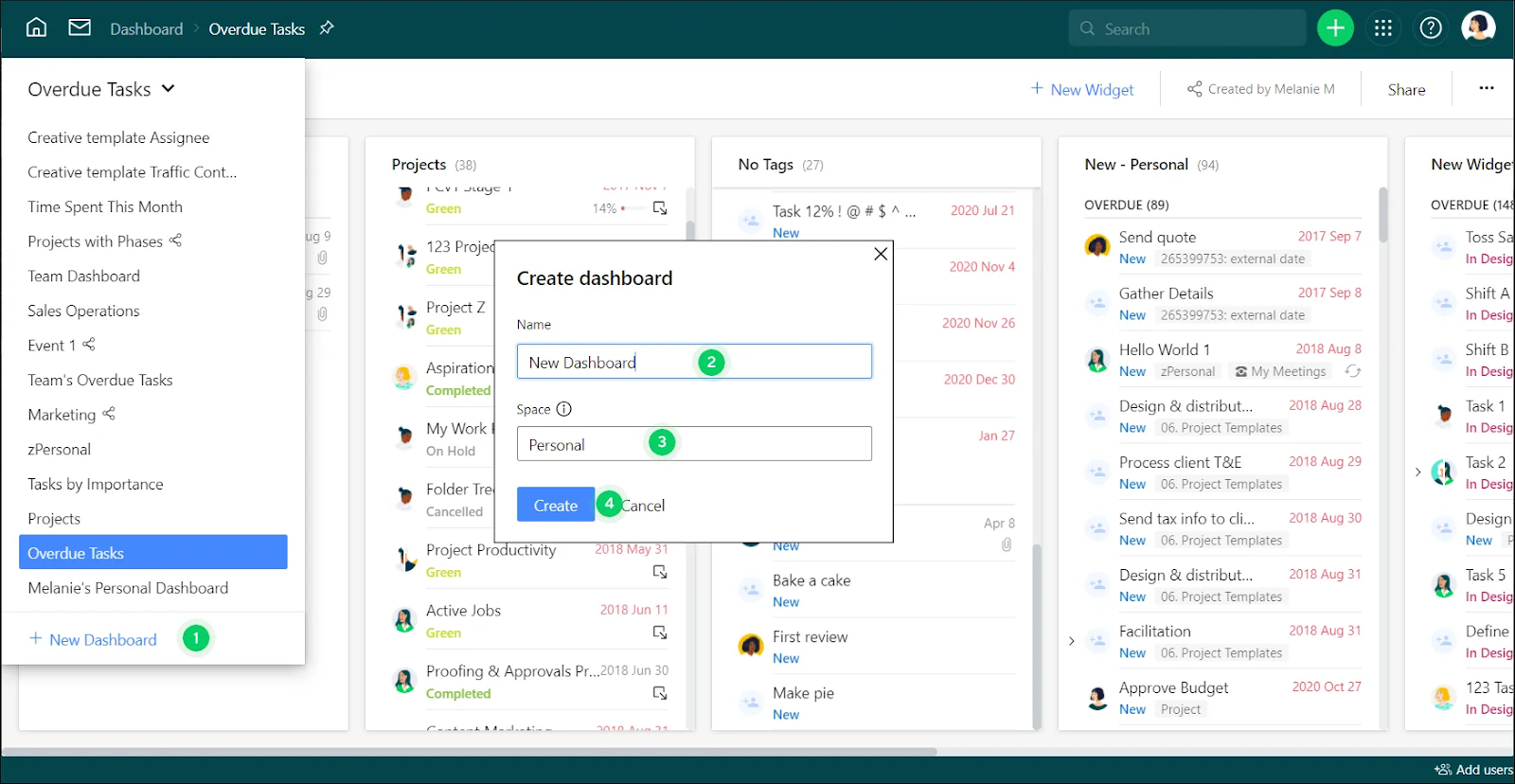
While this is a good start, as the project expands in scope and resources, these views often fall short of giving a more detailed and granular view of the task’s progress, team assignments, and workload planning.

➡️ Depending on your specific use cases, look for advanced work views such as Kanban, Timeline, Calendar, and Gantt charts.

Team collaboration and communication

To enhance the team’s productivity and ensure effective communication, organizational tools must offer integrated collaboration features. 

➡️ Look for features like comments, @mentions, and file sharing to facilitate quick updates and feedback among internal and external stakeholders.

Many software programs offer native communication tools, such as chat and inbox. If your team needs these, consider adding them to your software checklist.

Automated workflows

Automation isn’t just a nice-to-have; it’s a must to manage large-sized projects without being overwhelmed. And, without a headache.

While evaluating the automation builder, check:

  • What kind of triggers and actions are available? 
  • How easy it is to build a workflow?
  • If you can build custom triggers and actions.

💡 A built-in automation builder will take care of recurring tasks, freeing up your time for more strategic work such as resource planning or report analysis. 

Reporting capabilities

Look if the software offers built-in reporting and analytics capabilities. Reporting dashboards will help you. 

  • Flag potential blockers to keep your project on track.
  • Raise resource requests more accurately with stakeholders. 
  • Build transparency about the project’s progress with team members.

While testing out the tool’s reporting dashboard, look for the types of reports you can build.

Some important ones are:

  • Burndown charts are essential – they show progress over time. 
  • Timesheet reports (if the tool tracks time) help you manage resources. 
  • Task progress reports keep everyone aligned. And capacity planning reports? They’re crucial for preventing team burnout.

Here are some more factors to consider while shortlisting an organizational software:

  • Ease of use: Is the tool easy to use, or is there comprehensive training material available?
  • Scalability: Is the tool adaptable to your project’s scope and deliverables?
  • Integrations: What kind of integrations are available? Does it integrate with your existing tool stack?
  • Resource management: Does the tool offer resource planning, allocation, and management tools?
  • Budget and team size: Does the software have budget-friendly features and licensing?

What Are The Best Organizational Tools for Better Project Management?

Here are our best organization software picks for 2024 based on our research and 100+ user reviews:

1. SmartSuite: All-in-one organizational tool to plan, manage, and track projects, resources, and team members.

2. ClickUp: Managing large-scale projects in a custom-built interface.

3. Asana: To build flexible workflows through dependencies and automation.

4. Notion: Documentation and task organization with highly customizable dashboards.

5. Trello: Task management using Kanban boards.

6. Airtable: Work management through relational databases.

7. Todoist: Task management through checklists and subtasks.

8. Google Sheets: Maintaining databases and analyzing work progress.

9. Teamwork: Client project management across various clients and collaboration.

10. Monday.com: Work management with the option to build advanced reports.

#1: SmartSuite

SmartSuite is the ultimate organizational tool, as it combines the power of automation with a tailored workspace to help you plan, manage, and track projects of all sizes.

Our platform has intuitive dashboards, a centralized source of knowledge, and native collaboration making it a go-to choice for project and operation managers who want to streamline work and boost team productivity.

SmartSuite differs from other organizational tools due to its affordability, advanced automation builders, and native tools such as time tracking and Linked field records.

But there’s more to it. Here are three key features that make SmartSuite one of the best organizational tools.

Intuitive automation workflow builder

SmartSuite’s built-in automation maintains consistency and efficiency across all your projects. You can set up customizable recipes based on specific triggers and conditional logic. 

Such automated workflows eliminate manual intervention in routine tasks, such as changing dates or sending updates, freeing up your time to focus on getting work done. 

For instance, when the progress status changes (trigger), send a Slack message (action). By adding conditions, you can specify to whom you should send that Slack message.

Robust project management

SmartSuite’s comprehensive project management dashboard offers a 360-degree view into the project life cycle—from task creation, assignment, tracking, and completion.  It does this by offering a range of features, including:

  • Task management: Convert any record type into tasks and add different fields–subtasks, checklists, and sub-items. Power up each task by adding top-of-mind notes and comments for the assigned person within each task.
  • Milestone tracking: Break down project goals into task-based milestones to monitor progress over time. Configure the tracking by workstream, team, and owner, flag roadblocks, and draw resolution plans.‍
  • 200+ project management templates: Get your hands on prebuilt comprehensive templates for different use cases such as inventory planning, customer relationship management, and event planning. Each template consists of multiple workviews letting you set up tasks with little effort.

Native collaboration and communication tools

SmartSuite makes collaboration a breeze and enhances the team’s productivity. All of this happens in a space where tasks are executed, thus, reducing roadblocks quickly by keeping everyone in the loop.

  • Built-in communication center to engage in group chat, 1:1 conversations, and email receiving and sending.
  • Member’s directory, which gives you access to your team and the tasks they’re working on, along with their availability status.
  • Share quick updates via @mentions, which sends real-time alerts to the tagged person.

 All of the collaboration features are available on SmartSuite’s mobile app, giving you access to instant communication within minutes.

SmartSuite Pricing

SmartSuite offers a forever-free plan with access to 250+ automation actions, team collaboration, multi-dashboard views, and much more. 

As for the paid plans, there are four options with a 14-day free trial:

  • Team: Starts at $12/user per month, including Gantt charts, located views, 5000 automation runs, and time tracking.
  • Professional: Starts at $28/user per month, including two-factor authentication, Gmail & Outlook integrations, and unlimited editors.
  • Enterprise: Starts at $41/user per month, including audit logs, data loss prevention, and 50,000 API calls monthly.
  • Signature: Customized plan tailored to your organization’s needs and team size.

SmartSuite Pros and Cons

✅ Generous free plan with access to advanced features.

✅ 200+ project templates for different use cases.

✅ Dynamic dashboards and reporting.

✅ Integrated document and file management.

✅ Comprehensive workflow automation.

❌ Less native integrations when compared to alternatives.

#2: ClickUp

Best for: Managing large-scale projects in a custom-built interface.

ClickUp is an all-rounder cloud-based organizational software. It helps with project management, brainstorming, team collaboration, and reporting.

The tool’s high customizability makes it adaptable to every use case, team size, and industry, as it can be used as a CRM, inventory management, or sprint tracker.

Who Is It For?

ClickUp is best for solopreneurs, agencies, and small to large-sized businesses.

ClickUp’s Top Features

  • Task management: Get a complete overview of each project’s tasks. ClickUp offers multiple task views, custom fields, dependencies, and comment-based collaboration to enhance productivity.
  • Whiteboards: Brainstorm with your teams in a virtual canvas to build agile workflows, outline dependencies, and strategize action items to meet the project’s objectives. 
  • Time tracking: Native time tracking field to set time estimates for each task. ClickUp also lets you sync time tracking through integration with popular time-tracking apps such as Toggl for better productivity. 

ClickUp Pricing

ClickUp’s free plan includes unlimited task creation, 100 MB storage, and collaborative docs.

It offers three paid plans with a 14-day free trial:

  • Unlimited: Starts at $10 per user/month, offers unlimited custom views, timesheets, guest access, and 100 mind map creation.
  • Business: Starts at $19 per user/month, offers private docs, sprint reporting, and all dashboard views.
  • Enterprise: White labelling, top-notch security, and enterprise AI. Contact sales to get a quote.

ClickUp Pros and Cons

✅ Low entry-level pricing plan.

✅ Highly customizable with an abundance of built-in tools.

✅ Native team management and collaboration tools.

❌ Can get overwhelming for new users due to the complex interface.

❌ Usually takes longer to set up a dashboard that fits the bill.

#3: Asana

Best for: To build flexible workflow through dependencies and automation.

Asana is a work management platform that helps you with goal tracking, resource, and project management. 

It offers a dependency feature, letting you set predecessor and successor to move tasks sequentially.

Who Is It For?

Asana is best for creative agencies, small and medium-sized businesses.

Asana’s Top Features

  • Capacity planning: Allocate and optimize resources (time, people, and cost) to each project throughout its lifecycle.
  • Portfolios: By organizing projects into folders, you can get a bird’ s-eye view of them. Portfolios also become a central space for sharing key details with team members without overburdening them.
  • Automation bundles: Curate your most used automation into bundles and implement them across different projects. Bundles help you maintain consistency and reduce the manual work of setting up automation for each project.

Asana Pricing

Asana offers a free plan for up to 10 users and four pricing plans with a 30-day free trial. 

  • Starters: Starts at $13.49 per user/month, with up to 500 teammates collaboration, Asana AI, and workflow builder.
  • Advanced: Starts at $30.49 per user/month, with 25,000 automation/month, scaled security, advanced reporting, and goal tracking.
  • Enterprise: Advanced integrations, unlimited seats, custom branding, and premium support. Contact sales for a quote.
  • Enterprise+: Audit log API, HIPAA compliance, and data loss prevention integrations. Contact sales for a quote.

Asana Pros and Cons

✅ Powerful workflow automation.

✅ 270+ native integrations.

❌ Lack of collaboration tools.

❌ Group-based pricing.

#4: Notion

Best for: Documentation and task organization with highly customizable dashboards.

Notion is one of the simple yet powerful organizational tools.

You can build a basic task-tracking database or complex product roadmaps through subtasks, dependencies, and automation. 

Its intuitive interface makes it less overwhelming, even for newbie project managers.

Who Is It For?

Notion is ideal for solopreneurs, freelancers, startups, and small-to-large sized businesses.

Notion’s Top Features

  • Customizable databases: Configure the database the way you prefer. Through Kanban, Gallery, List, and Timeline view, you can build a sales pipeline, product roadmaps, and sprint boards.
  • Documentation: Add rich-text formatting to your notes, invite teammates to share feedback, and organize them through tags. From drafting project requirements to curating pitch decks, you can use it as a central source of knowledge.
  • Powerful formulas: Build complex databases with auto-update fields by setting up formulas and functions.

Notion Pricing

Notion offers a generous free plan with access to 10 guest invites, basic page analytics, and a 7-day page history. It offers three paid plans:

  • Plus: Starts at $12 per user/month, including unlimited file uploads, 100 guest invites, custom automation, and a Notion calendar.
  • Business: Starts at $18 per user/month, including database export as PDF, 250 guest invites, and SAML Single Sign-On (SSO).
  • Enterprise: Dedicated Customer Success Manager, audit logs, workspace analytics. Contact sales for a quote.

Notion Pros and Cons

✅ Free plan gives access to all the features.

✅ Easy to collaborate with team members.

✅ Synced databases.

❌ Gets slow with multiple databases or heavy files embedded.

❌ No offline access.

❌ Basic automation capabilities.

#5: Trello

Best for: Task management using Kanban boards.

Trello is one of the low-cost organization software that helps you plan, track, and manage projects.

It’s built around Kanban workflows and offers pre-built templates to set up these boards for quick access.

Who Is It For?

Trello is good for freelancers, solopreneurs, and small-sized businesses.

Trello’s Top Features

  • Automation: Set up automation for project-level activity, such as when a task is completed or an item is moved between different cards. 
  • Power-ups: Integrations and additional apps that enhance Trello’s capabilities. These help you build custom fields, add advanced triggers, and sync databases.
  • Task management: Get a granular picture of your tasks’ progression with the timeline, list, dashboards, Kanban, and calendar view.

Trello Pricing

Trello offers a free plan with built-in automation and 10 workspace collaborators. You get a 14-day free trial for its three paid plans:

  • Standard: $6 per user/month with unlimited activity log and 250 workspace command runs/month.
  • Premium: $12.50 per user/month with unlimited workspace collaborators and built-in automation.
  • Enterprise: $17.50 per user/month with 24/7 enterprise admin support and SAML SSO via Atlassian Access. Per head cost decreases in this pricing plan as your team size increases.

Trello Pros and Cons

✅ User-friendly and intuitive dashboard.

✅ Ease of use across various devices.

✅ Built-in advanced automation.

❌ No built-in team communication.

❌ Rely on third-party integrations for reporting (paid).

❌ No option to assign tasks to team members.

#6: Airtable

Best for: Work management through relational databases

Airtable is primarily a database management software that offers relational capabilities. It means you can connect one data source to a different but related dataset. 

For example, you can connect customer feedback data with your research database to draw much deeper insights.

Who Is It For?

Airtable is good for medium to large-sized businesses and agencies.

Airtable’s Top Features

  • Airtable automation: Build multi-sequence automated workflows that reduce repetitive tasks through 15+ actions and 10+ triggers.
  • Customizable views: Build custom views for different departments and offer a more transparent peek into the work progress. Currently, Airtable offers lists, Gantt charts, Kanban boards, and calendar views.
  • Interface designer: Build custom interfaces to show stakeholders specific and relevant information. Using custom dashboards, users can view huge data volumes in smaller, easy-to-understand sections.

Airtable Pricing

Airtable’s free plan offers access to a single workspace with all basic dashboard views and 100 automations per month. 

The paid plans come in three tiers, with a 14-day free trial available only for the Team plan.

  • Team: Starts at $24 per user/month, including timeline view, 25,000 automation per month, and Airtable AI.
  • Business: Starts at $54 per user/month, including multi-source syncing and dynamic filtering.
  • Enterprise scale: Includes admin reports, enterprise-level integrations, and premium support. Contact sales for a quote.

Airtable Pros and Cons

✅ High-level customization and flexible dashboards.

✅ User-friendly interface with multiple views.

✅ Vast project templates.

❌ Limited reporting capabilities.

❌ Limited team communication.

#7: Todoist

Best for: Task management through checklists and subtasks 

Todoist is a task organization tool that helps you manage tasks by breaking down tasks into smaller work blocks. 

You can filter and sort, set priorities, and attach labels to keep tasks organized and visible across the workspace.

Who Is It For?

Todoist is best for individuals and small-sized teams who have a handful of tasks to manage.

Todoist’s Top Features

  • Subtasks and checklists: Use subtasks and checklists to break down bigger projects or tasks into manageable ones. Each checklist and task can be assigned a separate priority, tag, and description.
  • Team collaboration: Assign tasks, share updates via comments, and build sharable projects.
  • Custom views: Adding filter, sort, and grouping options and save as custom views. Each custom view can be used across the workspace.

Todoist Pricing

Todoist’s beginner plan is available for free. 

You can create up to 5 projects, get access to a 1-week history and see your tasks in list and board layouts.

There are two paid plans: For individuals and the entire team.

  • Pro (individuals): Starts at $5/month including 300 personal projects, unlimited activity history, and Calendar layout.
  • Business (Teams): Starts at $8 per user/month including shared team workspace, 1000 team members and guest invites, and centralized team billing.

Todoist Pros and Cons

✅ Works offline.

✅ Work reports, including productivity and team activity.

✅ Huge library of templates.

❌ No automation features.

❌ No built-in team communication option.

#8: Google Sheets

Best for:  Maintaining databases and analyzing work progress.

Google Sheets is a spreadsheet platform that is part of Google Suite. 

It offers data management and collaboration features, including cell formatting, data filtering and sorting, data visualization, and pivot tables.

Who Is It For?

Google Sheets is good for freelancers, agencies, and small teams for data management.

Google Sheets’s Top Features

  • Reporting: Generate pivot tables, visual graphs, and advanced reporting through data connectors such as BigQuery and Looker Studio.
  • Custom table views: Use pre-built tables for event planning, project management, inventory management, and custom views.
  • Team collaboration: Real-time collaboration with co-editing, feedback, and task assignment via comments and @mentions.

Google Sheets Pricing

Google Sheets is free to use on a personal account.

For the paid plan, you need to get Google Workspace, and the pricing is as follows:

  • Business Starter: Start at $5.77 per user/month with 30 GB storage and 100 participant video meetings.
  • Business Standard:  Start at $11.54 per user/month with 2 TB storage and 150 participant video meetings + recording, noise cancellation.
  • Business Plus:  Start at $17.31 per user/month with 5 TB storage, 500 participant video meetings + recording, attendance tracking, noise cancellation, and appointment booking pages.
  • Enterprise: Custom pricing with advanced security, compliance controls, and 1000 participant video meetings + recording, attendance tracking, and noise cancellation.

Google Sheets Pros and Cons

✅ Free for personal use with access to all the features.

✅ Add-ons available to increase the capabilities.

❌ Certain collaboration features are limited to paid plans, such as Google Meet integration.

❌ Not suitable for large database management.

❌ Sluggish with large datasets.

#9: Teamwork

Best for: Client project management across various clients and collaboration

Teamwork is one of the best organizational software built for businesses that manage multiple clients across industries. 

Features like client onboarding, budget planning, and time tracking make it an all-around organizational platform for client-facing businesses.

Who Is It For?

Client-service businesses of all types–marketing agencies, consulting firms, and creative agencies

Teamwork’s Top Features

  • Team communication and collaboration: Share updates with clients, get approvals, and communicate internally with a built-in messaging app, comments, and @mentions.
  • Project reporting: Get a detailed view of project health and resource management through burndown charts, timesheets, and profitability reports.
  • Time and invoice tracking: Get a near-accurate estimate for billable hours and create invoices within the platform. 

Teamwork Pricing

Teamwork.com offers a 30-day free trial and a forever free plan for up to 5 users. Their paid plan is based on per-user pricing and includes the following:

  • Deliver: $13.99 per user/month requires a minimum of 3 users, time tracking, client company management, and 4 project views (List, Table, Boards, and Gantt chart).
  • Grow: $25.99 per user/month requires a minimum of 5 users, resource scheduling, If/then conditional logic for forms, and a custom domain with SSL.
  • Scale: $69.99 per user/month requires a minimum of 5 users, unlimited retainer management, projects, and customer reports.
  • Enterprise: Dedicated Customer Success Manager and advanced security. Contact sales for a quote.

Teamwork Pros and Cons

✅ Customizable workflows and templates.

✅ Built-in messaging, time tracking, invoicing, and budgeting features.

✅ Invite and collaborate with external users (vendors or contractors).

❌ Abundance of features and options can be overwhelming.

❌ Limited native integration with heavy reliance on Zapier.

#10: Monday.com

Best for: Work management with the option to build advanced reporting

Monday.com is a versatile platform offering tools including work management, CRM, and dev platform.

Note: For relevancy, we will discuss its work management platform in this article.

The platform offers an all-in-one organizational tool that helps you build project-level goals, plan resources, and assign responsibilities to team members.

Who Is It For?

Medium to large-scale businesses and teams who already use Monday.com’s CRM for developers’ platforms.

Monday.com’s Top Features

  • Automation: Build automated workflows with no-code builders and send timely alerts or update status. Save each automation as a template and use them for future projects.
  • Portfolio management: Organize multiple projects within the portfolio and track overall progress to assign resources and budget.
  • Work forms: Build custom forms to collect and share feedback from internal and external stakeholders. You can sync form responses by adding them to relevant projects and converting requests into actionable items.

Monday.com Pricing

Monday.com offers a 14-day free trial and a free plan for up to 2 users. 

Their paid plans need at least 3 users and come in four tiers:

  • Basic: Starts at $17 per user/month, including Kanban board view and unlimited users with view-only access.
  • Standard: Starts at $20 per user/month, including 250 automated actions/month, 3+ dashboard views, and Zoom integration.
  • Pro: Starts at $32 per user/month, including all five dashboard views, time tracking, and 2-factor authentication.
  • Enterprise: Includes dedicated customer success manager, enterprise-level reporting, and administration control. Contact sales for a quote.

Monday.com Pros and Cons

✅ Advanced reporting and analysis at project and portfolio level.

✅ 200+ integration across apps, including communication, design, and productivity.

❌ Plan upgrade available in set increments of 5 and 10 users.

❌ Automation gated to the more expensive plans.

Next Step: Choose The Right Organization Software

With so many organization software options out there, it can be overwhelming. Each app claims to be the top choice.

However, finding the right work management tool will depend on your goals, team size, budget, and project scope.

The organizational tools we discussed are some of the best available and cater to different team sizes and use cases.

➡️ For instance, Todoist, Google Sheets, and Trello are best for small teams and freelancers who want to run their daily operations smoothly. 

➡️ In contrast, ClickUp, Notion, and Airtable are best for building highly custom work views with built-in documentation capability. For large businesses, Teamwork and Monday.com should be a go-to choice.

However, you can’t achieve your goals with certain features alone. You need a complete suite of tools, from management to collaboration.

In that case, SmartSuite is one of the best organizational tools.

💡 With SmartSuite, you can create dynamic dashboards, automate workflows, monitor project performance, and collaborate with your team. 

All of this starts at just $12 per user/month, or you can try SmartSuite for free with up to three users’ access for 14 days.

How to Optimize Linked Records in a Form

Software Stack Editor · October 4, 2024 ·

Welcome to another episode of SmartTips. I’m Jeff Gonzalez, and today I’m going to walk us through how we can optimize the way a linked record field appears within a form. We’ll explore how to filter out specific options, control the sort order, and even include field-the values from those linked records.

Let’s jump in and see!

[embedded content]

‍

‍

In this episode, we’ll dive into enhancing the usability of linked record fields within forms. Specifically, we’ll cover:

  • Filtering out specific options
  • Controlling the sort order
  • Including field-led values from linked records

Here’s a sneak peek of the form we’ll be working with.

Understanding the Project Request Form

Within our project request form, we have a variety of fields sourced from our projects table. Here are some of the fields we’re dealing with:

  • Product Description (SmartDoc Field)
  • Attachments Field (Files and Images)
  • Projected Cost (Currency Field)
  • Perceived Complexity (Number Field)

Today, our focus will be on the team assigned to the project. This information will be pulled from our table of teams, using a linked record field.

‍

Working with Linked Record Fields

Linked record fields allow us to pull data from related tables, which can be incredibly powerful. Let’s explore how it works.

Modifying the Record Selector Modal

We’ll begin by opening up the linked record field to inspect the modify record selector modal. This modal provides control over which fields of information will be visible to users during their selection process.

In this modal, you can:

  • Sort the fields
  • Filter the options

This functionality mirrors what you can do in views within SmartSuite. But here, it’s tailored specifically to linked record screens in forms.

Previewing the Form

Now, let’s get a preview of the form to see how it looks. With our assigned team field, we’ve chosen specific fields of information to display. This enhancement greatly assists users in understanding their selections more clearly.

Detailed Steps to Optimize Linked Records

Step 1: Access the Form Designer

To start, access the form designer within your project request form. Here, you’ll see the array of fields available for configuration.

Step 2: Configure Linked Records

Find the linked record field for team assignments. Click to open the modify record selector modal.

‍

Sorting and Filtering

In the modal:

  • Sort Order: Arrange the teams based on criteria such as alphabetical order, project priority, or team lead.
  • Filter Options: Exclude teams that are overcapacity or not relevant to the current project.

‍

Step 3: Include Field Values

Now, enhance the field by including additional values from the linked records. For instance, you might want to add columns like team lead’s name, current project status, or capacity.

Step 4: Review and Save

Once you’ve configured the settings, preview the changes to ensure everything looks good. Make any necessary adjustments, then save your form.

‍

Benefits of Optimizing Linked Records

Optimizing linked records in your forms leads to several benefits:

  • Clarity: Users have a better understanding of their choices.
  • Efficiency: Easier and quicker to locate the right team.
  • Accuracy: Reduces the potential for selection errors.

Conclusion

Optimizing the way linked records appear in your forms can significantly enhance your workflow. By sorting, filtering, and including essential field values, you can create a more intuitive and user-friendly experience.

If you have any questions, leave them in the comments below. And as always, thanks for watching!

Organize Sales Processes in One Dashboard

Software Stack Editor · October 4, 2024 ·

Welcome to another episode of SmartTips! I’m Jeff Gonzalez, and today I’m going to guide you through how to organize all of our sales processes in one dashboard. While this topic is directly relevant to sales, it is also highly useful for any function within a business. We are going to explore ways to consolidate all processes into a single dashboard to reduce the navigation effort required to work in SmartSuite. Let’s dive right in!

‍

[embedded content]

The Importance of a Centralized Dashboard

First and foremost, if you’ve seen my videos before, you know I’m a big advocate for using an empty table dedicated solely to dashboards. The concept isn’t revolutionary, but it can be game-changing in terms of improving workflow efficiency. This “home table”, as I call it, can act as a central hub from which you navigate all different processes. All the crucial information resides within these tables, making them available for your team to check their sales pipeline, create forms, or review data on a calendar.

“A centralized dashboard mitigates navigation hassle, allowing teams to focus more on their actual tasks.” — Jeff Gonzalez

Creating a Sales Overview Dashboard

As new groups join SmartSuite, it’s vital to ease their transition with a user-friendly dashboard. To achieve this, I’ve designed a master dashboard where team members can view a sales overview, manage their individual pipeline, and review opportunities forecasted to close within the next month.

Sales Overview Elements

  1. Entire Pipeline View:
    • Team Pipeline: Offers a holistic view for the entire team to see the collective progress.
    • Individual Pipeline: Members can focus on their specific targets, streamlining their workflow.
  2. Opportunity Forecast Chart:
    • Visual representation of different opportunities categorized by their status buckets.
    • Allows everyone to see the forecast in one glance, making it easy to identify potential issues or areas of improvement.

Creating New Opportunities

Another key feature is a tab dedicated solely to creating new opportunities. This section includes:

  • Custom Form: Embedded within the dashboard using custom code widgets. The form pulls from various fields in the “Opportunities” table.
  • Immediate Update: New entries made through the form reflect instantly in the grid view on the right-hand side.
  • Editable Entries: Users can open and make adjustments to newly created opportunities right from this tab.
    ‍

‍

Detailed Review of Opportunities

For a more in-depth review, we have a dedicated tab where the focus is on scrutinizing individual opportunities. This tab allows users to:

  • Select Specific Opportunities: Pick an opportunity to dive deeper into its details.
  • Adjust and Note: Make necessary adjustments or jot down additional notes for future reference.

In my previous video, we explored a design pattern combining the record selector with the record detail widget to enrich the user experience. This tab follows the same principle, allowing dynamic field population to offer a comprehensive view.

Reviewing Accounts

A similar approach is applied to the “Review Accounts” tab. Users can select specific accounts, displaying all relevant details in a consolidated view. This design not only streamlines using SmartSuite but also significantly enhances user experience.

“Combining record selectors with detailed widgets creates a powerful and user-friendly interface.” — Jeff Gonzalez

‍

Inspiration Beyond Sales

While these examples primarily relate to sales, the principle can be universally applied across various business functions. A well-organized dashboard can simplify processes, making it easier for new team members to get up to speed and ensuring that seasoned members can quickly access the information they need.

Again, thank you for watching and reading! Stay tuned for more SmartTips to enhance your workflow and business processes.

Key Takeaways

  1. Centralized Dashboards Improve Efficiency: Mitigate navigation efforts and provide easy access to crucial information.
  2. Design for Ease of Use: Custom forms and widgets help create a user-friendly experience.
  3. Dynamic Details and Adjustments: Allow for real-time updates and make it easy to drill down into specific records.
  4. Universal Applications: Although our focus was on sales, these principles are universally applicable across different business functions.

‍

How to Improve Your Team’s Productivity with Task Management Software

Software Stack Editor · September 30, 2024 ·

A guide to task management.

Task management is the backbone of successful project execution. Imagine your team juggling multiple projects, each brimming with tasks spread across different team members. How do you ensure smooth sailing? How can you track task completion, prioritize effectively, and guarantee every team member has the information they need? While sticky notes, to-do lists, and endless meetings might seem like solutions, they often fall short. Enter task management software: a game-changer that transforms chaotic workflows into streamlined, efficient processes.

This guide dives deep into the world of task management, exploring common hurdles managers face and how to overcome them. We’ll unpack the power of task management software, its team-boosting benefits, and the must-have features to look for when choosing your ideal solution. Whether you’re drowning in project complexities or seeking to supercharge your team’s productivity, mastering task management is your ticket to success.

What is Task Management?

Task management is the process of creating, prioritizing, delegating, and monitoring tasks to ensure they are completed within given deadlines. It also involves organizing the workflow and resolving bottlenecks to ensure efficient task completion. Task management is an essential component of effective project management and successful business operations.

What is task management?

Project managers (PMs) often use software for managing tasks to get an overview of the entire work process and the project’s lifecycle. When they can see the big picture, it’s easier to prioritize, schedule, and assign tasks. How is task management different from project management? 

Task management can sit under project management, but they are two different roles. The first focuses on getting tasks set up and ensuring employees submit work before deadlines, whereas project management mainly focuses on reaching overall project milestones and deadlines. PMs can assign an employee multiple tasks across different projects as part of their daily or weekly workload since it’s a unit of work. When these tasks are completed, it contributes to project progress.Project management also involves other aspects of projects, such as resource management, budgeting, and portfolio management.

Task Management vs Work Management: What is the Difference?

While task management and work management might seem similar at first glance, they’re actually distinct approaches that a savvy project manager needs to understand. Task management is like zooming in on the individual pieces of a puzzle, focusing on specific activities that need to be completed. It’s about breaking down projects into bite-sized chunks, assigning them to team members, and tracking progress. Work management, on the other hand, is more like stepping back to see the entire picture. It encompasses not just tasks, but also processes, resources, and overall workflow across multiple projects or the entire organization. A skilled project manager knows how to balance both: they use task management to ensure day-to-day progress and work management to align these efforts with broader goals. They’re the maestros who conduct this symphony of tasks and work, ensuring that every note contributes to the grand performance of project success.

What Are the Common Challenges in Task Management?

Task management might seem simple when you first start out, but it’s a complex process with multiple variables. As such, PMs often face these challenges when it comes to task management:

  • Employees need uniform and efficient work processes so that they can get their work done on time. Implementing these processes is easier said than done, especially for larger projects where tasks are spread across multiple employees and different teams.
  • PMs can end up wasting a lot of time manually delegating and tracking every dependent task or subtask. A task management app with automation can speed up this process significantly.
  • Collaboration is harder without task management software since every team member has to go back and forth between tools to understand even the most basic details. 50% of employees said workplace distractions, like checking multiple communication platforms, had a significant effect on their productivity.
  • PMs have to manually set up a recurring task every time. Doing this on a weekly or monthly basis can bog them down with mundane work.
  • It’s challenging to keep track of every deadline, milestone, and goal. In a 2020 report, 54% of project managers said they did not have access to real-time project key performance indicators (KPIs).

When you lose track of important data related to project progress, it’s harder for PMs to lead their teams toward successful project completion.

What is Task Management Software?

Task management software is a tool used to streamline all the processes involved in creating, delegating, and completing tasks. These tools are built to help project managers get the best out of their teams. They also help employees work faster and collaborate better.

The basics of task management software

A task management tool combines every necessary feature a PM needs to create and manage tasks. These features include: 

  • Creating and sharing task lists
  • Assigning work to individuals
  • Identifying and labeling dependent tasks
  • Creating subtasks from larger deliverables
  • Estimating task duration
  • File sharing
  • Collaboration tools

And more.

Most task managers also let you import data from third-party apps and attach them to tasks as needed. Ideally, your task manager should let you create a work process suitable for you rather than forcing your team to adapt to it. Whether you want to create a simple to-do list and assign each item to a team member or create a complex yet intuitive system to complete large projects, task management software makes the process effortless.

The Benefits of Task Management Software

If you’re still not convinced that task management software is the way to go, here are some reasons for you to reconsider:

  • Organize all tasks on a single platform: With the right task management tool, PMs have their entire workspace on one platform. They can delegate tasks with ease, monitor them at a single glance, and immediately address any delays or issues.
  • Prioritize tasks based on importance: All tasks are important. But are they all equally important? No. With a task management tool, PMs and teams can focus on the most critical tasks first and then turn their attention towards less impactful ones.
  • Boost team collaboration: ‘Teamwork makes the dream work’ might be a cliche, but it holds true for most organizations. Task management platforms have features to boost collaboration, such as in-task comments and user mentions, to help teams communicate with a purpose.
  • Break down complex projects into subtasks and dependencies: Large projects can be daunting. They require tons of planning and seamless execution since minor delays or mistakes can lead to major issues. This is why task management software like SmartSuite lets you create sub-tasks and dependent tasks, so it’s easier to manage.
  • Automate repetitive tasks: Some tasks, like a monthly report or a weekly meeting, happen on specific dates throughout the year. Rather than setting up each of these occurrences manually, task management software uses automation to create tasks every month or week, based on the PM’s needs.
  • Check on tasks with a single glance: Project managers have multiple projects on their plates. They can’t afford to manually look at every task every day to make sure it will be completed on time. This is why they need a task management tool to see all their tasks in one window.
  • Portability: Good task management software like SmartSuite lets PMs monitor tasks and communicate with their team no matter where they are via dynamic mobile apps. They can also alter task details on the go.
  • Support remote teams: When the entire team can look at an up-to-date project board with all their tasks on it, they don’t have to go looking for crucial information or badger their managers/team members for it. This is especially crucial for remote or hybrid teams where different workers have varying time zones and work schedules.

How to Pick the Best Task Management Software

When you’re picking out a task management tool, here are seven features to look out for:

1. Visual Task Management

Your task management platform should have a visual interface that makes task planning, task tracking, and collaborative task management easy. This easy-to-use interface should let you drag and drop items, indicate task priority, add task dependencies, and easily see details like task status, deadlines, and assignees without actually opening the task. Team members should also have access to any information they need at all times.

Task management software with a visual interface

Good project management software offers multiple project board views to support different project methodologies. These views include a Kanban board, Timeline View, and Card View. 

On SmartSuite, PMs can group their team’s tasks and create a Gantt Chart via the Calendar View or see a task list using the Grid View. In addition to this, time tracking capabilities allow team members to log their time and ensure they’re being productive. A dynamic interface ensures proper information distribution and helps even the most rookie users understand their tasks in minutes.

2. Real-Time Collaboration

The right task management software enables you to create a culture of collaboration in your organization. One of the primary features to facilitate effective teamwork is in-task comments. When you add comments within tasks, work conversations happen where the work is being done — aka within context. This eliminates the need to switch between tabs and apps to get general information, updates, or edits. 

SmartSuite takes it a step further by letting you @ mention team members to bring them into a conversation or grab their attention to an essential element within project tasks.

Every task management software must boost collaboration

To streamline inter-team projects, SmartSuite has a member directory where you can view information about employees in other teams. This way, you can find collaborators from other departments and ask them to join your project. Permissions allow PMs to dictate what every employee has access to, while Activity History lets everyone monitor exactly what is happening.

3. Automation

Manual, redundant tasks have a significant impact on productivity. Research suggests 90% of employees are frequently burdened with monotonous or low-value tasks. Mundane, repeatable tasks that could be automated are estimated to cost businesses 19 working days of productivity per employee each year. Which can significantly affect your bottom line.

Automation is essential for effective task management. It eliminates low-impact tasks from your workflow so that employees can focus on work that matters. Task management software like SmartSuite has automation rules to streamline your work processes. The automation works on a “if this, then that” logic, where “this” is a trigger and “that” is an action. You can see an example in the image below.

automation on task management software

You can use automation for creating and assigning tasks, getting notifications, moving tasks from one field to another, generating records from your email, and more. On SmartSuite, you can even automate events across multiple integrated apps.

If you need to calculate values quickly (or just hate math), you can use SmartSuite’s Formulas to get all the calculation features you’d get in a spreadsheet. You don’t have to manually build the formulas (though you can if you want to). Instead, you can just use the Formula Builder to pick items from a drop-down menu.

4. Third-Party Integration

When your team has to jump between different apps to get data, update schedules, or communicate, they waste time. The more tools they use, the more noise there is in terms of emails and notifications. This is why your task management system must integrate with third-party apps.

An integrated workspace that connects your email, Slack, Calendar, and document management systems helps teams eliminate the noise and be more productive. Tools like SmartSuite go beyond integration. We integrate with 2000+ apps and also let you create automation rules between them. 

Apps SmartSuite integrates with

Using SmartSuite, you can create a cohesive system where all your apps work together.

5. Templates

Getting started with a task management platform shouldn’t take you hours. The right tool will have templates for easy onboarding, regardless of the industry you’re in. PMs need templates for multiple project processes in different industries to get their teams running as quickly as possible. Whether you’re building a sales system, marketing campaign, or recruiting board, or you’re tracking a construction project, SmartSuite has Solution Templates for them all. 

templates on a task management software

All of these templates are customizable. So, you just need to pick one and fill in the details or make changes to match your work process. Even if you choose to start from scratch, SmartSuite lets you create a project management tool for their team with ease. PMs can select from different elements, including work process, field types, and reports, to develop transformative business solutions for their team.

6. Dashboard

Dashboards are your key to making data-driven decisions on a task, project, and organizational level. A dashboard visualizes all critical data in one place, so managers and leaders can gain valuable insights, make crucial decisions, and identify any potential issues.

In task management software like SmartSuite, you get access to a dashboard filled with different types of widgets. All these widgets compile data in real-time and show the latest stats on every important project metric.

use Dashboards for reporting on task management software

You can create a dashboard to track projects and monitor department performance, or you can even create a personal one to get your latest performance statistics.

On SmartSuite, you can embed charts into widgets and add tables to summarize the data for easier understanding. A dashboard helps keep decision-makers, such as stakeholders and leadership, updated on project progress. They can grasp project or task progress without diving into too much detail and make decisions accordingly.

7. Data Management

Manually filling in data from multiple sources into your project is time-consuming, and there’s a higher chance of errors. Exporting data manually is equally arduous. The task management software you choose must enable seamless data importing and exporting with a few clicks. This is why in SmartSuite, you can import data from spreadsheets, calendars, and contacts to update existing records or create new ones. Its import module is intuitive and directly fills in the imported information into the appropriate fields. 

Example of data management in SmartSuite

You can also customize which data is filled into which column and pull in data from other apps using automation. Plus, you can directly add files to records, so team members have it right where they need it, rather than having to use email or Slack or a shared folder on another app. You can add multiple file types, images, and videos to every task or record.

You can also drag and drop or upload files into records, fields, checklist items, and comments. Collaborators can add comments directly into the shared file. For example, editors can use comments on an image to suggest edits.

What Is the Best Task Management Software?

We’re not biased or anything, but SmartSuite is the best task management software for any team or organization. Do we have hundreds of competitors? Yes. But do we have the features to beat them all? We think so.

SmartSuite is a dynamic all-in-one work management platform that supports effortless task management and offers many other solutions across every business process.

SmartSuite task management features

Our tool uses a system of Solutions, Applications, Fields, and Records to help you create a task out of any item. You can read how it works here. 

Here’s how SmartSuite stands apart from its competitors:

  • We have 100+ Solution Templates so that you can set up projects instantly. Whatever field you’re in, there’s a template for you.
  • You can also build a custom Solution to match your team perfectly.
  • Unlike most other workspace tools, our system lets you turn anything into a task by adding due dates and assigning it to team members. This includes checklist items, comments, sub-items, and records.
  • Your tasks are supported by intuitive file sharing, collaboration, and data management features. So, your team can streamline their work processes and be more productive.
  • Teams can use seven views — including Grid, Kanban, Card, Calendar, Timeline, Map, and Chart — to visualize their tasks and promote transparency.
  • You can automate your entire workflow and create a cohesive work system on our platform by integrating with 2000+ third-party apps.
  • Our time tracking capabilities make for easier work management.
  • Our platform has activity logging, instant notifications, login tracking, and a recycle bin, so you’re aware of any modifications to a Solution or specific data. Admins can even view all active sessions and terminate any suspicious ones.
  • We have dynamic web, tablet, and mobile apps, so you can work on the go, at the office, or from home.

Learn more about our platform and why it is the best task management software here.

Get Your Work Done on Time With SmartSuite

Task management software is part of the foundation of a successful organization. SmartSuite has all the tools needed to help you manage every task and project without a hitch. Our robust platform caters to businesses across every niche. 

You can get a taste of how our platform works by checking out our Task Manager Solution Template.

Recommended Templates (Live Interactive Demo):

ServiceNow Pricing: Is It Worth It in 2024?

Software Stack Editor · September 20, 2024 ·

Concerned about ServiceNow’s undisclosed pricing plans?

You’re not alone. Because of a custom pricing structure, the tool’s cost is nearly impossible to determine.

We asked around and read dozens of customer reviews to gauge ServiceNow’s pricing. 

In this guide, we will explain our findings to help you make an informed decision.

ServiceNow’s Pricing Plans

ServiceNow is a cloud-based platform that provides a suite of IT service management (ITSM) and business process automation tools.

Key features of ServiceNow:

  • Comprehensive ITSM capabilities, including incident management, problem management, change management, and service catalog.
  • Automation for various business processes beyond IT, including HR, customer service, and finance workflows.

ServiceNow’s pricing plans are not publicly listed, as they offer consultation-based pricing through a 1:1 sales call.

However, understanding the factors that influence the pricing is crucial to get a near-accurate estimate of total cost.

Some of the major ones include:

  • Number of users/licenses you require.
  • Types of product required (IT Service Management, HR Service Delivery, or Now platform).
  • Level of support needed.
  • Additional features or configurations.

How Much Does ServiceNow Actually Cost?

Based on ServiceNow customer and public reviews, the average cost of ServiceNow contracts can range between $50,000 and $500,000 annually, depending on the number of licenses, features, and other configuration requirements.

Source

So, to get a closer estimate of how much ServiceNow would cost your organization, it’s best to contact its sales for a custom quote.

Looking for a ServiceNow Alternative?

Users have shared their concerns about ServiceNow’s expensive pricing plans and lack of features for non-IT work management. 

This limits ServiceNow’s use cases across the organization, leading users to seek alternatives.

Source

Among the ServiceNow alternatives, SmartSuite is one of the most affordable, easy-to-use, and feature-packed platforms. This is why 👇🏼

  • It has a forever-free plan with incomparable features, including workflow automation and 7+ task views.
  • It offers a flexible and affordable four-tier pricing structure, with the lowest plan starting at $10 per user/month (billed annually).
  • It offers advanced task management capabilities through 40+ fields, including a linked records field.
  • It has built-in team collaboration tools like email integration, whiteboards, and a member directory.

There’s more.

SmartSuite offers three major features to help you stay on top of your due dates and deliver exceptional results to your clients.

SmartSuite’s Key Features

#1: Robust project management

With SmartSuite, you can plan, track, and manage projects of different sizes.

The platform comes with 7+ task views, including Gantt charts and Kanban boards, to let you get a real-time overview of your projects, tasks, and team performance in a visual format.

 Below are its key functionalities:

  • Dependency Fields: This feature helps you build multi-step task sequences for an enhanced project workflow. You can define task relationships like predecessors and successors, which helps you monitor task performance more diligently.
  • Gantt Chart View: This view creates a visual timeline of project tasks, showing their start and end dates and dependencies. This helps track project progress and ensure tasks are completed on schedule.

Additionally, SmartSuite’s Gantt view allows for customization of project templates and integration with other views, such as Kanban and Calendar, for comprehensive task management.

  • Team-Based Dashboards: With dashboards, you can create a detailed overview of multiple tasks, projects, and workspaces. This helps you plan the team’s priorities and next steps, assess the team’s performance, and share updates with stakeholders.
  • Files and Deliverables: Attach multimedia files such as files, documents, videos, or images within your workspace and quickly tag them using the Attachment field. This way, you can ask for approvals or feedback quickly, reducing the delays in task execution.‍
  • Time tracking: You can view your team’s time entries and filter them in various ways to build customized reports.

#2. Integrated team collaboration

SmartSuite focuses on facilitating integrated communication with less contextual switching. Its comprehensive team collaboration feature is replete with tools to ensure team members get real-time updates, share feedback or approvals, and keep external clients updated.

Some of its key functionalities include:

  • Comments and @Mentions: Team members can leave comments directly on tasks or documents and tag each other for instant feedback and discussion.
  • Live Updates and Notifications: Changes made in the project are updated in real-time, and automated notifications keep everyone informed about updates, deadlines, and changes.
  • Shared Workspaces and Document Editing: Multiple users can work on the same document or task simultaneously, with changes visible to all in real-time. This ensures seamless teamwork and productivity.
  • Guest Role: This role is designed for external users such as contractors.‍
  • Email integration: Integrate your email account with SmartSuite and easily send and receive emails within your workspace. Less contextual switch, more focused work.

The use cases spread across the whole organization, including IT teams. IT and DevOps teams can build custom dashboards to share real-time updates with coworkers and stakeholders and stay on top of their projects.

#3. Advanced workflow automation builder

SmartSuite’s automation builder is intuitive and lets you automate actions across workspaces—on a task or overall project level. It gives you more power to automate and build processes that handle recurring tasks such as status updates or approval sharing.

The automation builder offers no-code functionality to build simple one-liner sequences or multi-step flows through triggers, conditions, and actions. 

To configure the automation, you get multiple triggers and actions, such as when a status is changed to completed (trigger) and when you can send a Slack message to John Doe (action).

SmartSuite takes your automation a step further by offering ‘AND/OR’ based conditional logic.

Furthermore, you can choose to integrate SmartSuite with email, file storage, messaging, or SMS platforms such as Slack, Microsoft Suite, Slack, and Calendars to build custom actions.

‍

You can authorize your account by selecting the Google Gmail integration action, specifying your email addresses, and customizing your message, for example. 

This email will be sent when the trigger and its conditions are met.

Manage Your Project With SmartSuite Today

ServiceNow is best suited for enterprises that need to configure the tool as per their requirements. 

However, ServiceNow might not be the best solution for a team that wants a budget-friendly, easy-to-use project management tool to manage their day-to-day operations.

In contrast, SmartSuite is a compelling choice due to its flexible pricing plans and feature-rich work management solutions.

Here’s what’s in it for you when you try any of SmartSuite’s plans:

  • Generous free plan with features, including multi-board views (Kanban, Chart, Map, Timeline, Card, and Calendar), 100 automation/month, and 40+ field types, including formula and linked record fields.
  • No-code automation builder to set up to 500,00 trigger/action workflows.
  • Built-in productivity tools, such as time tracking, status tracking, and checklists.
  • Team collaboration and planning tools such as whiteboards and SmartSuite docs.
  • Resource management across projects and teams.
  • 40+ field types, including custom fields.

Sign up for a free plan to try SmartSuite or get a 14-day free trial to explore all its amazing features.

Or, if you’d like to talk to our team of experts, schedule a demo.

ClickUp Pricing: Is It Worth It in 2024?

Software Stack Editor · September 20, 2024 ·

ClickUp is a go-to project management tool known for doing it all. 

But how do its pricing plans compare—both against each other and the competition? Are there any hidden limitations? And which plan fits your needs best? 

In this guide, we’ll explain everything and help you choose the right option before you dive into ClickUp.

ClickUp’s Pricing Plans

ClickUp is a project management software known for its high customization and feature package. 

It facilitates task management through a multi-dashboard view, team collaboration through whiteboards, and reporting of tasks and projects. 
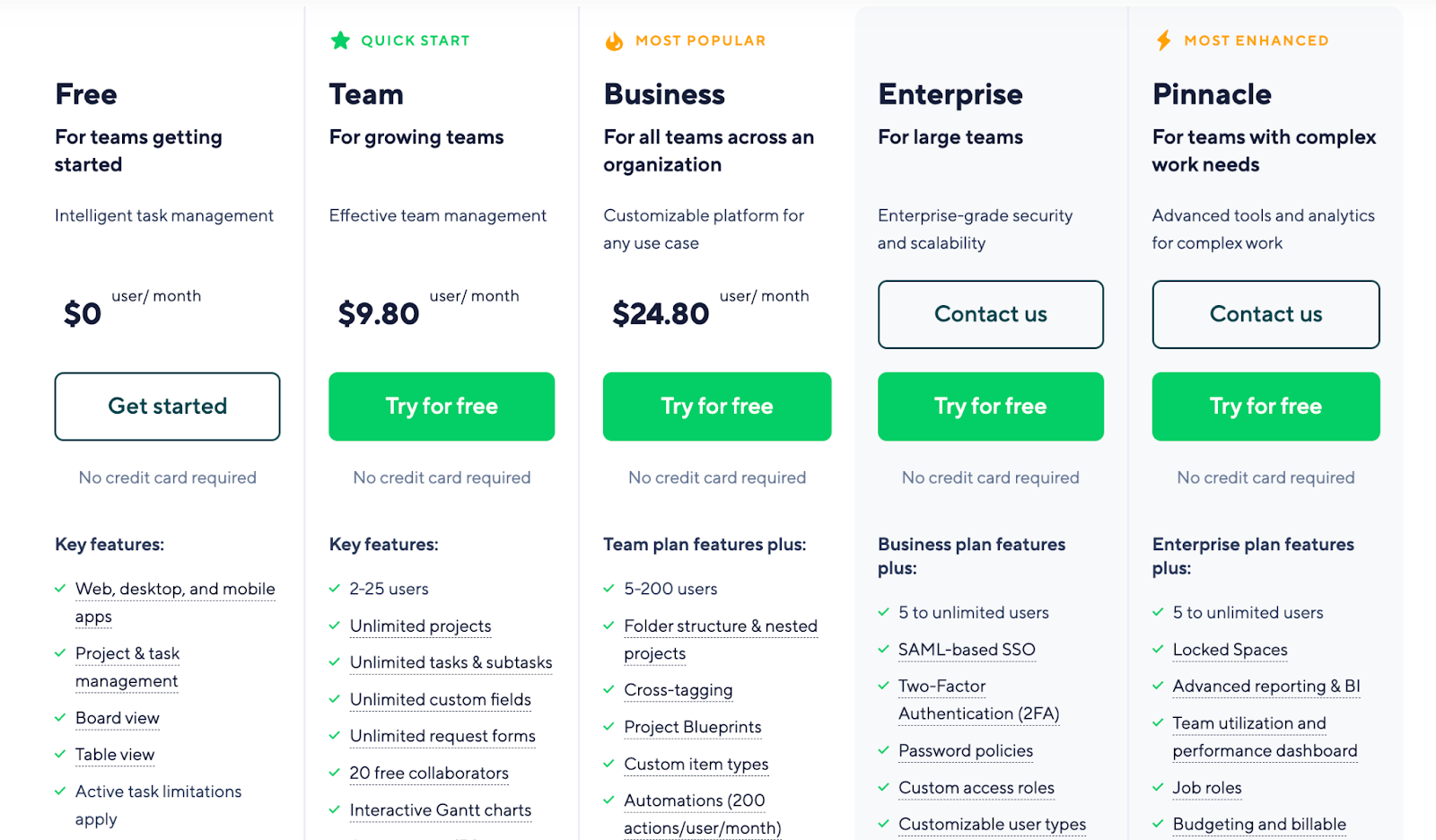
Due to its wide range of features, ClickUp is a go-to choice for small —to medium-sized businesses.

Key features of ClickUp:

  • Project planning and brainstorming tools include whiteboards, mind maps, and documents.
  • Manage projects across clients using built-in portfolio management
  • Native productivity tools such as time tracking.

ClickUp offers four pricing tiers for different team sizes, from small to enterprise.

Here’s a quick run-through of ClickUp’s plans and key features. 👇🏼

ClickUp: Free Plan

ClickUp’s free plan is best suited for personal use as it offers generous features to get the basic project work up and running.

Here’s a rundown of what’s included in ClickUp’s free plan:

  • 100MB file storage.
  • 60 custom fields.
  • Basic views—list, board, and calendar.
  • Limited use of time tracking.
  • 100 uses of proofing: Image & PDF Annotation.
  • 100 automation executions.

One standout feature is the no-user limit, meaning you can invite as many members as you want at no additional cost. The downside is that you will have no control over the permissions. Every user will have full access to your workspace.

Another downside is that ClickUp offers advanced features such as whiteboards and dashboards but with a maximum cap. For example, you get only 60 whiteboards and 100 dashboards, pushing users to upgrade to higher plans.

ClickUp: Unlimited Plan

The unlimited plan starts at a low price of $10 per user/month (billed monthly) and is best suited for small teams. This plan solves the biggest limitation of free plans, i.e., no permission for guests. You can manage permission levels to share your workspaces across stakeholders. Oyster additions include unlimited storage, spaces, and Gantt charts.

User cap for some features still exists, although increased:

  • 100 uses of timeline and workload view
  • 100 use of mind maps
  • 10 whiteboards
  • 1000 automation executions
  • 100 uses of subtasks in multiple lists

This plan offers a higher degree of customization and advanced features for a comparatively lower per-user fee.

ClickUp: Business Plan

ClickUp positions its business plan as its most preferred plant for medium—to large-sized businesses. In addition to more control over workspace customization, the plan lifts nearly all use caps and offers unlimited whiteboards, mind maps, dashboards, and views.

This plan also offers more sprint and time management features, including sprint reporting, granular time estimates, and goal organization in the folder. It would be the right fit for sprint—or dev-focused teams.

Additional business plan features include:

  • Advanced time tracking with notes, labels, and billable time
  • Private docs
  • Advanced automation through webhook, email, and SMS integrations, 

ClickUp: Enterprise Plan

The enterprise plan offers the highest level of security, advanced integrations, and enhanced permission and control. For teams who want all this and have many seat requirements, talking to the sales team to get a custom quote would be the right choice.

Some additional capabilities that the enterprise plan includes:

  • Custom forms  and conditional logic.
  • White labelling.
  • Tableau web connector.
  • US, EU & APAC Data Residency.
  • SSO with Microsoft, Okta, and customer SAML.
  • Dedicated customer success manager.

Looking for a ClickUp Alternative?

Despite being an eye-catcher, ClickUp might not be the best project management tool. Users have complained about slow loading time while managing many projects and confusing UI due to the high level of customizations.

Source

Among the ClickUp alternatives, SmartSuite is one of the most affordable, easy-to-use, and feature-packed platforms.

  • It offers better task management capabilities through 40+ fields, including a linked records field.
  • It has built-in team collaboration tools like email integration, whiteboards, and a member directory.

Let’s look at some key features that make SmartSuite the best ClickUp alternative.

SmartSuite’s Key Features

#1: Advanced task management

SmartSuite’s task management feature helps small—to large-sized businesses plan, manage, and track all their tasks in an intuitive dashboard.

One key area where SmartSuite really shines over ClickUp is that in SmartSuite, you can turn anything into a task—a checklist item, comments, or sub-item. You can also quickly assign these tasks to the right stakeholder with a due date and priority status.

Other key features that stand out:

  • 7+ task views: SmartSuite offers over seven task views, including Grid, Kanban boards, Card, Calendar, Timeline, Map, and Chart. All the views are available starting from its free plan, letting you build more flexible workspaces.
  • Native time tracking: Keep track of time on every task or project by adding a time field in your workspace. You also get to generate timesheet reports to accurately view billable and non-billable hours and track your team’s productivity levels.
  • Set up recurring tasks: Automate routine tasks within a specific record by setting it as a repeating task. Choose the frequency (daily, weekly, monthly), set the task status, and choose the day/date to start the repeating cycle.
  • My work section: This is a dedicated section where you get a granular view of all the tasks assigned to you, notifications you received, and comments that need your attention.

You can group the tasks by assigned date, priority level, or progress status. My work section creates a dedicated space, making task management a breeze for all the team members and keeping them on their due dates.

#2. Integrated team collaboration

SmartSuite focuses on facilitating integrated communication with less contextual switching. Its comprehensive team collaboration feature is replete with tools to ensure team members get real-time updates, share feedback or approvals, and keep external clients updated.

Some key features that boost a team’s productivity include:

  • Comments to task conversion: Convert any comment into an action item within a record or field within a record. Also, you can assign these tasks to team members and track their progress in real-time.
  • Member’s Directory: Get a complete list of all your team members in a single dedicated space and get access to information such as their department, position, location, timezone, etc. To find the right memeber/s, you can use grouping or filtering options without manually scrolling through the list.
  • Email integration: Integrating your email account with SmartSuite and sending and receiving emails within your workspace. Less contextual switch, more focused work.

The best part? SmartSuite offers an intuitive mobile app that lets you stay in touch with co-workers on the go.

#3. Flexible automation builder

SmartSuite offers automation starting from its free plan, similar to ClickUp. 

However, SmartSuite’s automation builder is much more user-friendly and lets you automate actions across workspaces—on a task or overall project level. It gives you more power to automate and build processes that handle recurring tasks such as status updates or follow-up emails.

The automation builder offers no-code functionality to build simple one-liner sequences or multi-step flows through triggers, conditions, and actions. You can choose the prebuilt actions or integrate SmartSuite with email, file storage, messaging, or SMS platforms such as Slack, Microsoft Suite, Slack, and Calendars to build custom actions.

You can, for example, authorize your account by selecting the Google Gmail integration action, specify your email addresses, and customize your message. This email will be sent when the trigger and its conditions are met.

Get Started with SmartSuite Today

If you want to customize your workspace to the last bit and need a tool that does it all, ClickUp is the ideal choice.

But with such flexibility comes a higher learning curve and slow loading time when your projects grow in numbers.

SmartSuite helps you tackle this by offering just the right customization and a library of 200+ project management templates to get your projects up and running. It’s also as user-friendly as it gets.

Here’s what’s in it for you when you try any of SmartSuite’s plans:

  • Generous free plan with features including multi-board views (Kanban, Chart, Map, Timeline, Card, and Calendar), 100 automation/month, and 40+ field types, including formula and linked record fields.
  • No-code automation builder to set up to 500,00 trigger/action workflows.
  • Built-in productivity tools—time tracking, status tracking, and checklists.
  • Team collaboration and planning tools such as whiteboards and SmartSuite docs.
  • Resource management across projects and teams.
  • 40+ field types, including custom fields.

You have various options to get started with SmartSuite. Sign up for a free plan to test the water or get a 14-day free trial to explore all its amazing features.

Or, if you’d like to talk to our team of experts, schedule a demo.

‍

Quickbase Pricing: Is It Worth It in 2024?

Software Stack Editor · September 20, 2024 ·

Quickbase offers a range of powerful work management tools, but does its pricing reflect its value?

We’ll break down Quickbase’s pricing plans to help you decide whether they’re a good fit for your needs.

Quickbase’s Pricing Plans

Quickbase is work management software that helps you build a customizable dashboard to manage projects, collaborate with teams, and track overall performance.

Key features of Quickbase:

  • Organization and management of large datasets in a central workspace.
  • Resource management through real-time tracking and analysis.
  • Ease of integration across the MarTech toolkit, including communication tools, work management, and accounting software.

Quickbase offers three pricing tiers with a 30-day free trial for different team sizes, from small to enterprise.

Here’s a quick run-through of Quickbase’s plans and key features. 👇🏼

Quickbase: Team Plan

Quickbase team plan is available at $35 per user/month for a minimum user size of 20. 

Ideal for a small team, this plan offers basic project management and communication features with customization, such as in-app branding.

Other features include:

  • Communication and file management channels.
  • Personalized dashboards.
  • Reports and charts.
  • Workflow automation.
  • Quickbase analytics.
  • Six months of data retention.

Quickbase: Business Plan

The business plan starts at $55 per user/month and requires a minimum team size of 40. 

It would be ideal for teams planning to expand their clientele or scale their project operations.

Quickbase’s business plan includes everything in the team, plus:

  • Custom branding (account-wide).
  • Point solution and workflow enhancement channels.
  • Gantt charts.
  • Share publicly (everyone on the internet). 
  • Email anyone (email non-users).
  • FDA & HIPAA compliance.
  • Data classification.
  • 1-year data retention.
  • Integrations with Formstack Documents, Asana, JIRA, Trello, Quickbooks Online, and more.

Quickbase: Enterprise Plan

The enterprise plan is the right fit for a large team that needs a fully configurable Quickbase solution. This plan offers premium integrations, enhanced security, and management control. 

Key features include:

  • Enterprise system integration channels.
  • Advanced data encryption.
  • AI-powered sensitive data scanner. 
  • Advanced security controls. 
  • API access to audit logs.
  • Performance Tools: Optimizer and insights.
  • 3-year data retention.
  • Integrations: ServiceNow, Snowflake, On-prem connectivity, Amazon S3.

Quickbase add-ons

Quickbase also offers a range of add-ons, including:

  • Audit log retention: Increase audit log retention for 3, 5, or 7 years.
  • App restore assistance: Restore your apps and data from Quickbase’s backups.
  • Users: Add more users to your Quickbase workspaces.
  • Enablement services: Personalized training, onboarding support, and technical consulting.

Looking for a Quickbase Alternative?

Quickbase’s powerful integration and highly configurable dashboards make it a steal. 

However, group-based licensing, lack of free plan, and lack of team collaboration limit its functionalities as a work management platform.

Source

Teams that want price and user flexibility might consider more affordable, feature-rich, and configurable Quickbase alternatives.

Well, SmartSuite is just that.

It’s one of the best alternatives to Quickbase for small to enterprise-level businesses due to its affordable per-user pricing and feature-affluence.

It stands out because:

  • It offers a forever free plan with access to advanced features like automation builder, 7+ dashboard views, and custom field types.
  • It doesn’t lock you in a fixed number of user seats. You can add as many users as you want without any minimum seat requirement.
  • It has built-in team collaboration tools like email integration, whiteboards, and a member directory.

Here are some key features that make SmartSuite the best Quickbase alternative.

SmartSuite’s Key Features

#1. Integrated team collaboration

SmartSuite offers much more robust and integrated collaboration tools to facilitate team members’ sharing of feedback, giving approvals, or collecting updates from their coworkers. 

Everything happened within the same contextual setting through chat, comments, and emails, reducing the need to rely on external tools for information sharing.

Some key features of SmartSuit’s team collaboration include:

  • Communication center: With a native communication center, you can chat with your colleagues in 1:1 or group chat and send or receive emails. Having an integrated communication tool expedites the communication process and ensures your team works with the right material at the right time to meet the goals.
  • Comments to task conversion: Convert any comment into an action item within a record or field within a record. Also, you can assign these tasks to team members and track their progress in real-time.
  • Member’s Directory: Get a complete list of all your team members in a single dedicated space and get access to information such as their department, position, location, timezone, etc. To find the right member/s, you can use grouping or filtering options without manually scrolling through the list.
  • Email integration: By integrating your email account with SmartSuite, you can send and receive emails within your workspace. This means fewer contextual switches and more focused work. 

#2: Advanced project management

SmartSuite’s project management feature helps small—to large-sized businesses plan, manage, and track all their tasks in an intuitive dashboard.

One key area where SmartSuite really shines over Quickbase is that in SmartSuite, you can turn anything into a task—a checklist item, comments, or sub-item. You can also quickly assign these tasks to the right stakeholder with a due date and priority status.

Other key features that stand out:

  • Multiple task views: SmartSuite offers over seven task views, including Grid, Kanban boards, Cards, Calendar, Timelines, Map, and Charts. All the views are available starting from its free plan, letting you build more flexible workspaces.
  • Native time tracking: Keep track of time on every task or project by adding a time field in your workspace. You can also generate timesheet reports to accurately view billable and non-billable hours and track your team’s productivity levels.
  • Set up recurring tasks: Automate routine tasks within a specific record by setting it as a repeating task. Choose the frequency (daily, weekly, monthly), set the task status, and choose the day/date to start the repeating cycle.
  • Milestones: Create milestones in your project planning to track your progress and celebrate small wins. Tracking milestones by workstream, team, or owner will also help you identify bottlenecks in advance, giving you enough flexibility to resolve them to keep the project’s performance intact.

#3. In-depth reporting capabilities

With SmartSuite’s advanced reporting, you can manage your project’s delivery, track the task’s progress, or understand resource usage for future projects. You can add/remove fields, adjust the report views, configure the column positioning, and build custom fields.
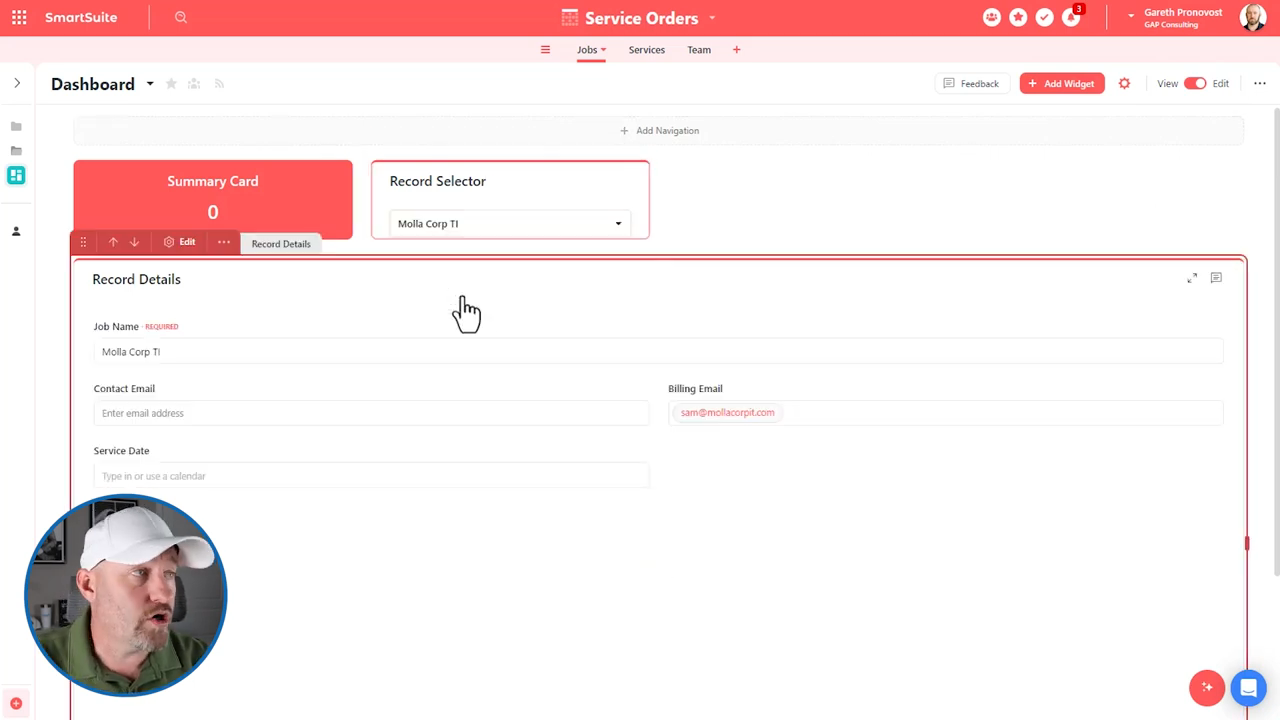
Some other amazing features of SmartSuite’s reporting:

  • Private or public reports: Share reports with public access, making it easier for everyone involved in the project to share quick access. If you want a granular view of your work, you can build private reports that are visible only to you.
  • Multi-view reporting: Visualize reporting in different views–-Grid, Card, Kanban, Timeline, Map, Calendar, or Dashboard. You can add as many views as you need to present a clear and in-depth analysis of your projects.
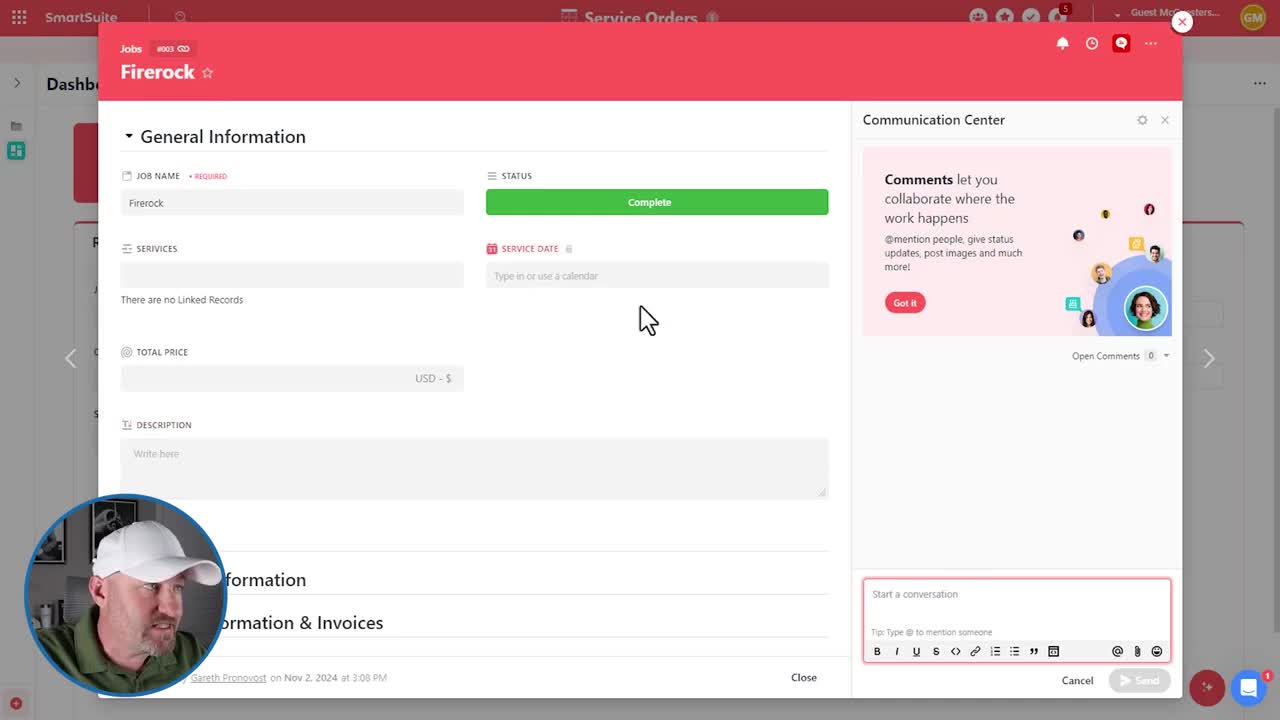
  • Easy exporting: Access your reports by printing or exporting them as PDF, Excel, Google Sheets, or CSV format.

Get Started with SmartSuite Today

Quickbase is best suited if you plan to have a set number of users in your workspace, as the margin cost per user will drop drastically. 

But if you want more flexibility in per-user seat pricing, integrated communication tools, and ease of use, SmartSuite should be on your search list.

Here’s what’s in it for you when you try any of SmartSuite’s plans:

  • Generous free plan with features including multi-board views (Kanban, Chart, Map, Timeline, Card, and Calendar), 100 automation/month, and 40+ field types, including formula and linked record fields.
  • No-code automation builder to set up to 500,00 trigger/action workflows.
  • Built-in productivity tools—time tracking, status tracking, and checklists.
  • Team collaboration and planning tools such as whiteboards and SmartSuite docs.
  • Resource management across projects and teams.
  • 40+ field types, including custom fields.

To get started, sign up for a free plan to learn the basics or explore the paid plans with a 14-day free trial.

Or, you can always reach out to our team or experts by scheduling a demo.

Basecamp Pricing: Is It Worth It in 2024?

Software Stack Editor · September 18, 2024 ·

Basecamp Pricing is among the most simplified across the project management industry.

There are only two pricing plans, both giving access to all features.

But is simplicity always better? Is the grass really greener on this side, or are there hidden costs?

In this guide, we will demystify Basecamp’s pricing plans, talk about what you get, and explore some alternatives that might offer better value for your specific needs.

Let’s dig in!

Basecamp Pricing Plans

Basecamp is a project management tool with a clean and intuitive interface. It helps teams of various sizes manage and track their projects’ performance.

Some key features of Basecamp include:

  • Integrated team collaboration with features like message charts, comments, and Pings.
  • Visual graphs such as Hill Charts to track to-do’s in real-time
  • Native workdocs to brainstorm ideas and convert them into action items.

Basecamp offers two simple pricing plans—Basecamp Basic and Basecamp Pro Unlimited.

There are two notable things about Basecamp’s pricing:

  • Basecamp only charges for people working internally. It means there is no additional cost to invite guests such as external vendors or contractors.
  • Flat fee for unlimited users on its pro unlimited plan.

Does Basecamp Have a Free Plan?

In October 2022, Basecamp changed its pricing model to a per-user basis, ending its forever-free plan. So, unlike most project management software, Basecamp no longer offers a free plan.

It only offers a 30-day free trial for both of its paid plans. Such a long trial period gives you enough time to test the waters before you commit to a paid subscription.

Plan 1: Basecamp Basic

The basic or starter plan gives you access to all of Basecamp’s features starting at $15 per user/month. While a bit pricey compared to other project management software, Basecamp doesn’t restrict any features to its only premium plan—Pro Unlimited.

This makes their pricing more justifiable, making it an affordable project management tool for freelancers, solopreneurs, and small teams with limited budgets.

Key features of Basecamp’s basic/starter plan:

  • Unlimited projects
  • Unlimited guest invites
  • Native collaboration tools—Group chats, Pings, comments, and message board 
  • Centralized project boards
  • To-do lists and card views
  • 500 GB of file storage
  • Access on Mac, Windows, iOS, and Android apps

Plan 2: Basecamp Pro Unlimited

Basecamp’s pro unlimited plan offers unlimited user access for a flat fee of $299/month, billed annually, and $349/month, billed monthly. It’s best for large businesses with multiple departments and teams collaborating and managing projects.

The features are similar to their basic plan, with some additional perks, including:

  • Increased storage (10x file & document storage)
  • Priority support (24/7/365)
  • 1:1 onboarding (With a team of experts)
  • Two add-ons:some text
    • Timesheet: Track time spent on each project and task and generate timesheet reports.
    • Admin Pro: Gives you more control over user access and permissions.

The fixed pricing plan offers the best value for your money if you have a large team involved in management and collaboration. For instance, if you have a team of 50 people across departments, the costs per seat would be only $6 per user, compared to the $15 per user/month costs of their starter plan.

However, if you have a smaller team size, you will find Pro Unlimited to be more expensive.

Looking for a Basecamp Alternative?

There is no denying that Basecamp’s pricing model sounds like a package deal.

But, due to the lack of key features in Basecamp, such as advanced reporting dashboards and an automation builder, you might have to turn to external tools to fill the gaps. Eventually, buying those tools will lead to higher costs.

An all-in-one solution will help you to avoid adding more to your bills.

That’s where SmartSuite comes in.

SmartSuite is comprehensive work management software that offers a complete package for planning, managing, tracking, and analyzing projects. As one of the best Basecamp alternatives, SmartSuite offers various native tools, including automation workflows, project management, reporting, and more.
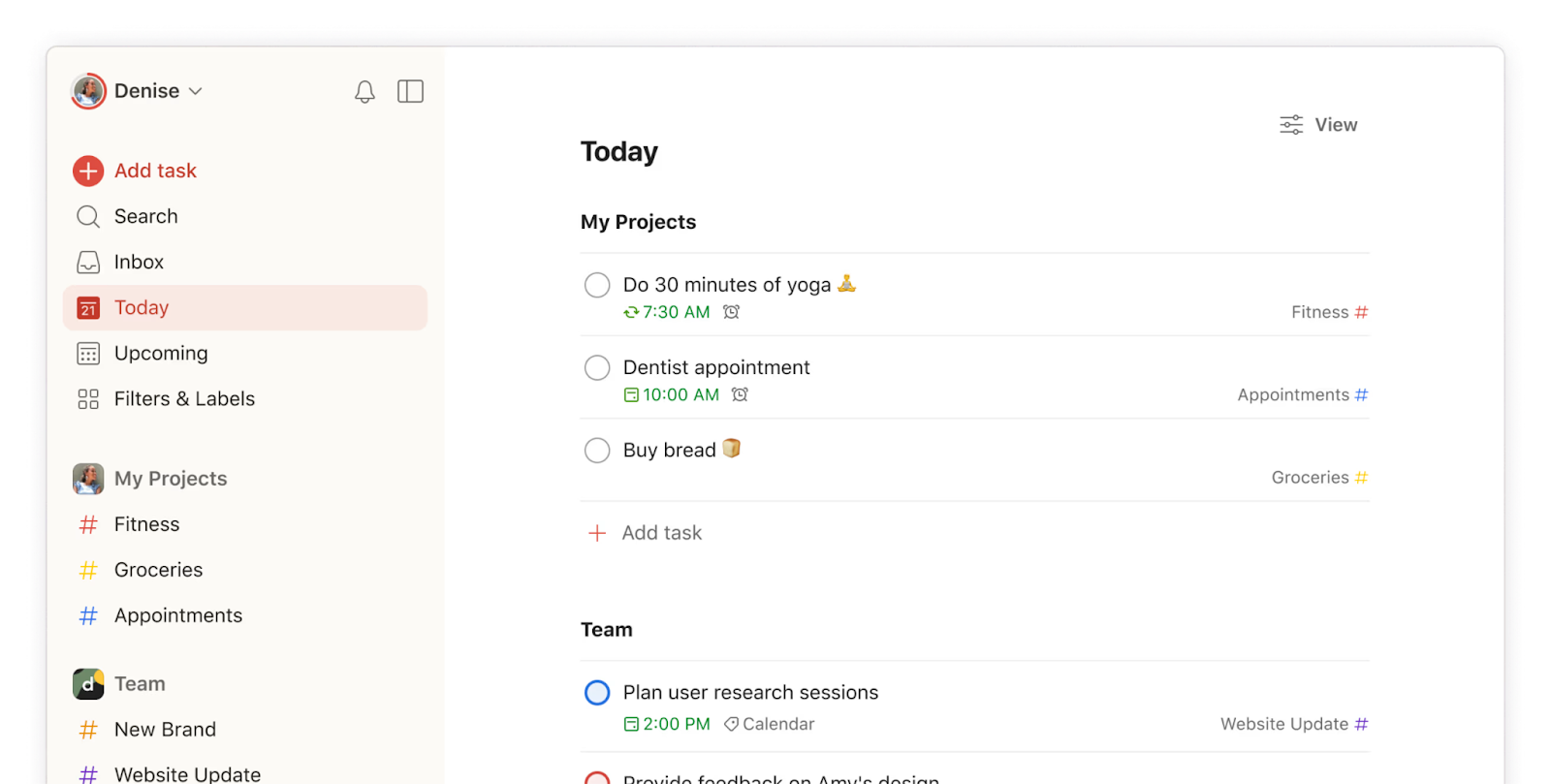
[embedded content]

 Let’s see all these key features in more detail.

SmartSuite’s Key Features

#1. Integrated project management

While Basecamp offers robust project management tools, its project-centric approach limits cross-project reporting and analysis.

SmartSuite addresses this by offering enhanced connectivity between projects through its connected project management approach.

One significant feature is its ‘Linked records’ field.

A linked record field allows you to connect records in different apps or solutions within SmartSuite. It’s like drawing a line between related information, reducing the need to add duplicate information multiple times.

[embedded content]

For example, you have a ‘Task’ app and a project app in a project tracker solution. In the Tasks app, you add a ‘Linked Record’ field that connects to the Projects app. This allows you to assign tasks to specific projects and see the number of tasks within your ‘Project’ app.

Cherry on the top is you can build linked records between two solutions. For example, your project tracker solution and time tracker solution. Here’s how it looks in action 👇🏼

Some other notable functionalities of SmartSuite’s project management:

SmartSuite solution template

This is the starting point for building a scalable project dashboard. You can access 200+ templates for various use cases—project portfolio, task manager, time tracker, etc. You can filter by use case, industry, or workflow. This library gives you a headstart on your projects by removing the mental load of building everything from scratch.

Want to try it yourself? 👇

Project milestones

Within each app, you can add milestones to get a more detailed view of how each task contributes to your project’s overall progress.

File storage

Depending on your chosen plan, you get up to 500GB of storage. Built-in storage gives you the flexibility to keep all your deliverables—files, documents, sheets, images, etc., handy and share them quickly with your team members or clients.

Time tracking

Keep track of time spent on each task and project by different team members through a built-in time-tracking field.

#2. Advanced workflow automation

SmartSuite scores 10/10 over Basecamp due to its integrated automation workflows. Basecamp doesn’t offer a built-in automation setup, so users rely on third-party integration for basic setup, such as status updates or email sends.

SmartSuite offers a no-code automation builder that helps you create automation sequences across your projects. Instead of manually updating the record, automation takes the load off your shoulders, freeing up your time for more strategic work.
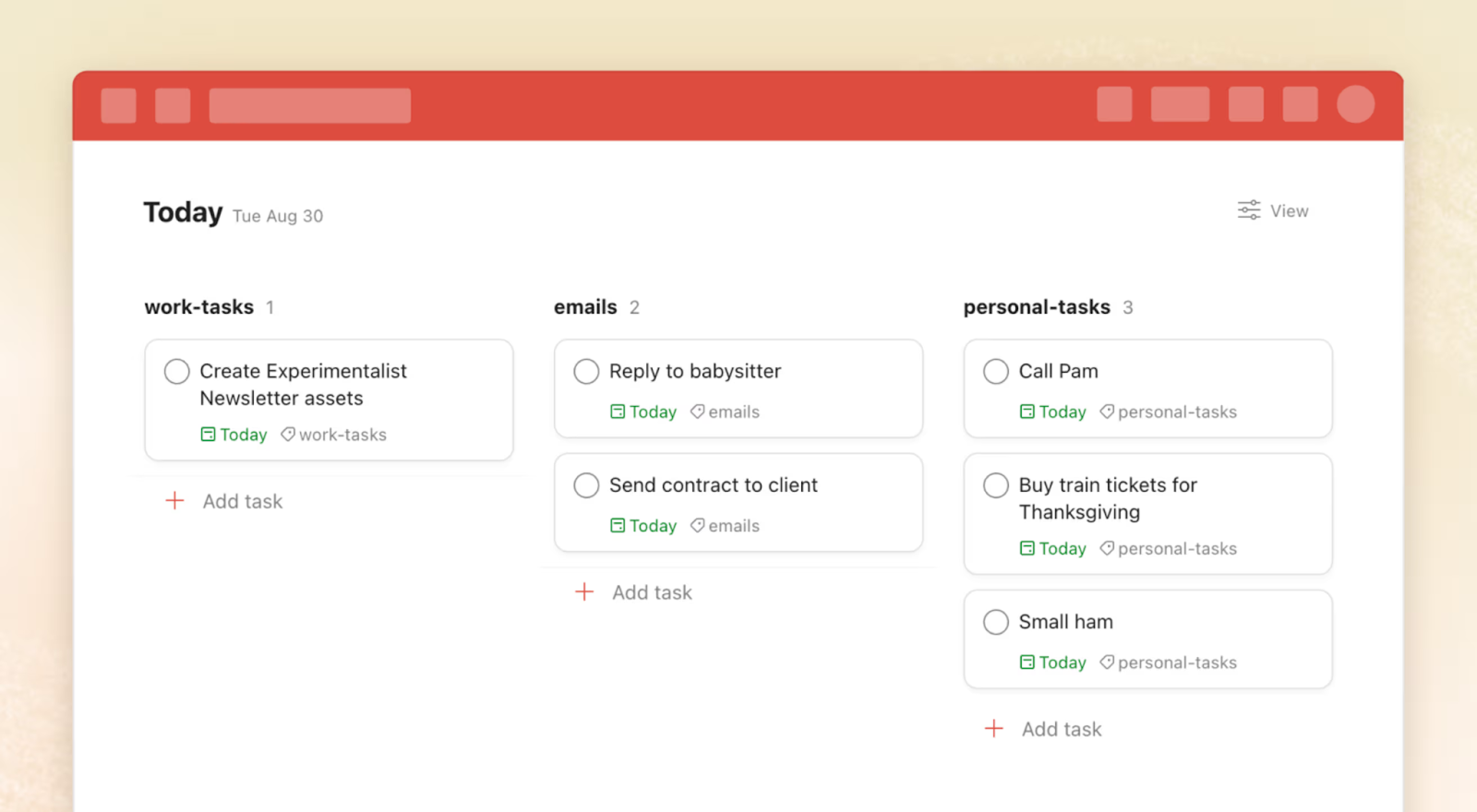
SmartSuite’s automation is an interplay between pre-defined triggers and actions. You can choose from pre-made trigger/action components or set up one from scratch.

To set up an automation, choose from the six available triggers, e.g., ‘when a checklist is completed,’ and define the action to happen on that trigger, e.g., ‘send an email.’

Through integrations, including Salesforce, Intercom, Slack, Calendar apps, Hubspot, and Twilio, you can streamline your process by building multi-trigger and action-based workflow sequences.

You can trigger up to 50 automation per table and 10 actions per automation.

#3. Robust reporting dashboard

In SmartSuite, dashboards are synonyms for building detailed reports by pulling data from different apps within a single solution.

One key area where SmartSuite really takes over Basecamp is the ability to pull data from different solutions and get a more comprehensive view of your overall performance.

For example, if you have two solutions—project management and Invoicing management, you can build a single dashboard by pulling data from both solutions. Such connected reporting is not possible in Basecamp.

You start with a blank workspace and configure it with widgets, including

  • Charts (bar, column, line, area, pie, donut, combo, scatter, bubble, and heatmap)
  • Metrics (comparison, progress)
  • Tables
  • Text blocks
  • Embedded content (Google Docs, Sheets, Slides, Figma, InVision, etc.)
  • Countdown timers
  • World clocks

As you make changes to any underlying solution or app, the data in the dashboard changes automatically in real time. So, you’ll always have the most recent updates from the reporting dashboard without much manual work after the initial setup.

SmartSuite also offers plenty of options and flexibility for sharing your dashboard with external members, such as clients or vendors.

On a broader level, you can toggle the ‘Share View’ button, and the system will generate a public sharing link.

When your dashboards are public, you can still customize the viewing permission by checking off one or more of the four options:

Get Started with SmartSuite Today

While Basecamp offers seamless team collaboration, an intuitive interface, and affordable plans, its limitations quickly become visible when managing multiple projects.
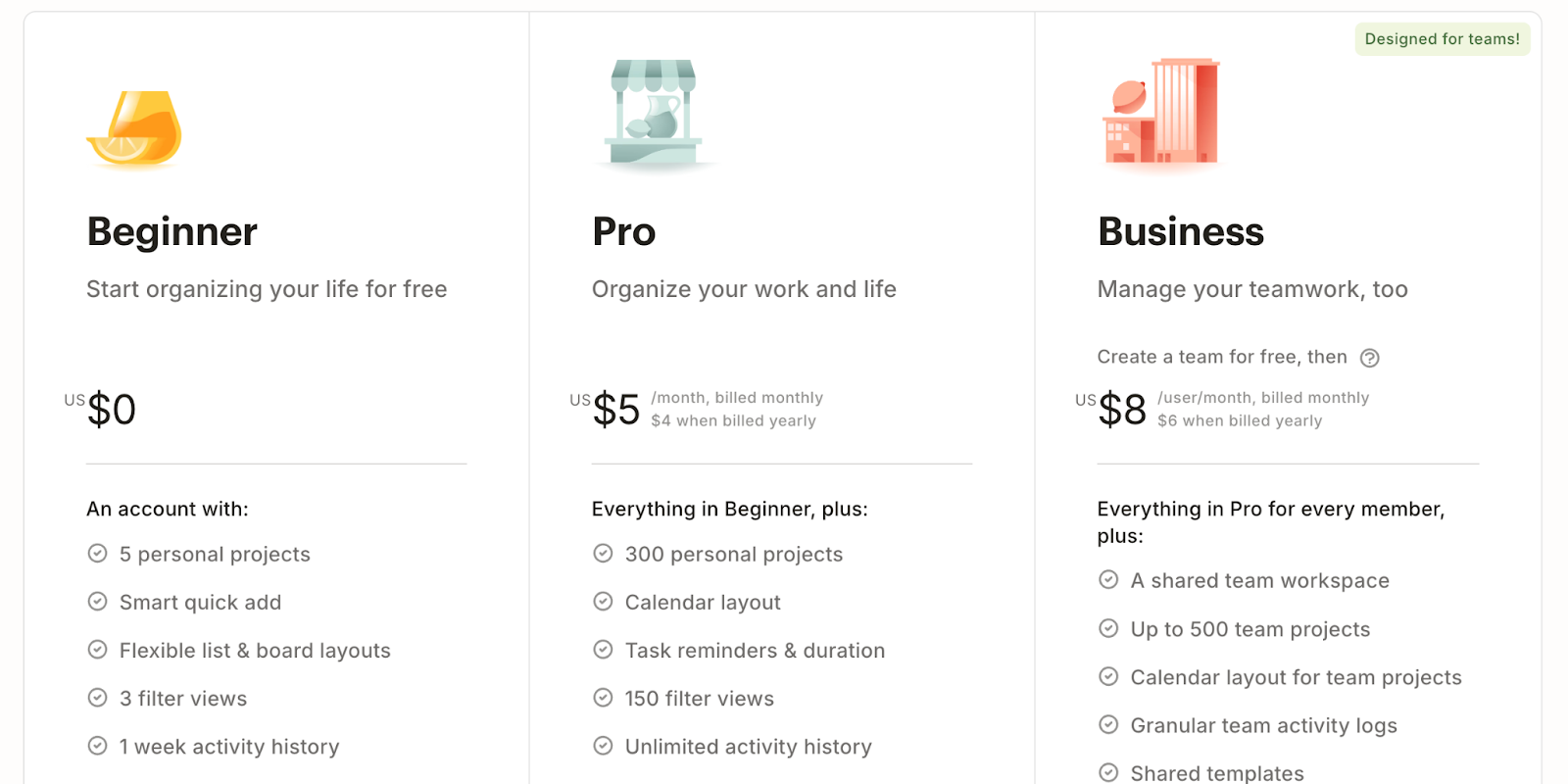
As your team grows, you need a project management tool that can accommodate all your needs, give you 360-degree visibility across various projects, and enhance your management efficiency.

SmartSuite is just that and more.

SmartSuite stands out from Basecamp in the following ways:

  • Generous free plan with access to features such as automation workflows, 7+ task views, and dashboard creation.
  • Lower pricing plans, starting from $10 per user/month (billed annually), offer a more extensive range of capabilities.
  • 200+ free workflow templates to give you a headstart on your project management plans.
  • High level of interconnectedness among different apps and solutions, allowing for better visibility.
  • Dynamic reporting dashboards with 7+ widget types.

And, you get various options to get started with SmartSuite. Signup for a free plan to test the water or get a 14-day free trial to explore all the amazing features that SmartSuite has to offer.

Or, if you’d like to talk to our team of experts, schedule a demo.

Airtable Pricing: Is It Worth It in 2024?

Software Stack Editor · September 17, 2024 ·

Effective project management shouldn’t come with a hefty price tag. 

Whether you manage a small team or handle enterprise-level operations, we’ll explore Airtable’s pricing structure and help you determine which plan offers the best value.

Airtable Pricing Plans

For all spreadsheet nerds, Airtable is powerful no-code data management software that helps you create, store, and manage large volumes of data, such as inventory, employee records, projects, or client lists, in a spreadsheet-like format but with relational capabilities.

Key features of Airtable:

  • Powerful automation builder to build single to multi-step automated sequences
  • Interface designer to build custom apps such as project tracker, CRM, inventory management, etc.
  • Multiple workspace views, including Gantt charts, Kanban boards, and Timeline.

Airtable offers a four-tier pricing structure, including a free plan and three paid plans. Unlike most project management software, Airtable doesn’t offer a free trial. The only way to explore the tool’s features is to opt for a free plan.

Here’s a quick run-through of Airtable’s plans and key features. 👇🏼

Airtable: Free Plan

Airtable’s free plan is a good starting point for individuals, solopreneurs, or small businesses that are just getting started in project management. 

One interesting thing about Airtable’s free plan is that you can access all 8+ views (List, grid, Kanban, Calendar, Dashboard, Gallery, Inbox, and Forms), but with some limitations. For example, you cannot add custom branding or create date ranges in a calendar view.

You get access to a few of must-have features:

  • 100 automation/month
  • Maximum 1000 records (rows)
  • 1 workspace
  • Real-time collaboration and commenting
  • iOS and Android mobile app
  • Interface designer

Airtable: Team Plan

The team plan starts at $24 per user/month and offers advanced workspace permissions, more customization options, and 25,000 automated actions per month. For automation, you also get the option to build custom trigger-action workflows, giving you more flexibility over automating your work.

As you grow your team, you can also use task dependencies to build a more hierarchical task list and assign it to multiple stakeholders.

Additional features you’ll see include:

  • 50,000 records per base
  • 20GB file attachment size
  • Up to 1-year snapshot history
  • 100,000 API calls/month
  • Gantt chart and Timeline work view
  • Customizable forms
  • Locked views and personal views

Airtable: Business Plan

The business plan offers a huge upgrade to all the features in low-tier plans and some more, becoming a go-to plan for small —to medium-sized businesses. 

You get access to an unlimited workspace, allowing you to use 125,000 records per base. In addition, you get access to 100GB per base, 100,000 automation actions per month, and unlimited API calls.

Here’s what else you get in Airtable’s business plan:

  • Admin panel
  • User groups
  • Premium data syncing and integrations
  • Conditional filtering in Interface elements
  • 2-year revision and snapshot history

Airtable: Enterprise Scale Plan

For enterprises, Airtable’s enterprise-scale plan offers higher administration control, premium and dedicated support, and strong security features.

Here’s a rundown of the key features:

  • 500,000 automation actions/month
  • Premium integrations include Adobe Experience Manager, Jira Server/Data Center, Snowflake, and Workday.
  • Admin reports
  • Enterprise hub
  • Audit log
  • Enterprise key management
  • Custom retention policies

‍

Limitations of Airtable’s Pricing Plans

#1: Airtable’s pricing shoots up as you scale

Airtable plan starts at $24/user per month, which is costlier than other project management tools. 

Also, read-only access is limited. So, if you need many view-only users, you need to buy a higher-tier plan.

Source

Additionally, Airtable offers a limited number of rows per dataset/plan, which makes the tool even more expensive if you work with large datasets.
Source

#2. No free trial

Unlike most project management software, Airtable doesn’t offer a free trial for its paid plans. Therefore, you are bound to buy a paid plan, restricting your access to testing out various advanced and helpful features.
Looking for an Airtable Alternative?

Airtable’s free plan is generous, giving you access to automation and multi-dashboard features. However, the cost per user stands on a higher pricing bar than other project management tools.

SmartSuite, for example, offers its starting plan at $12 per user/month, while Airtable costs double the price for a single license. The lack of a free trial also limits the ability to explore different plans before you decide to buy them.

High pricing with basic team collaboration are among the key reasons users search for Airtable alternatives. SmartSuite is one of the most affordable and feature-packed platforms among the alternatives.

  • Its free plan offers advanced features such as task views, automation, and guest invites.
  • There is a 14-day free trial for all paid plans. Try out all the amazing tools before you swipe your card.
  • It has a powerful suite of team collaboration capability along with an advanced dashboard to create dynamic reports.

Here are top features that make SmartSuite the best Airtable alternative

SmartSuite’s Key Features

#1. Powerful team collaboration

Airtable doesn’t offer team-focused tools to boost in-house team communication and collaboration with external stakeholders.

SmartSuite, on the other hand, focuses on facilitating integrated communication with less contextual switching. Its comprehensive team collaboration feature is replete with tools to ensure team members get real-time updates, share feedback or approvals, and keep external clients updated.

Some key features that boost a team’s productivity include:

  • Comments to task conversion: CConvert any comment into an action item within a record or a field within a record. Also, you can assign these tasks to team members and track their progress in real-time.
  • Members’ Directory: Get a complete list of all your team members in a single dedicated space and get access to information such as their department, position, location, timezone, etc. To find the right memeber/s, you can use grouping or filtering options without manually scrolling through the list.
  • Email integration: Integrating your email account with SmartSuite and sending and receiving emails within your workspace. Less contextual switch, more focused work.

The best part? SmartSuite offers an intuitive mobile app to let you stay in touch with co-workers and on the go.

#2. Automated workflows builder

Smartsuite offers automation starting from its free plan, similar to Airtable. But, SmartSuite’s automation builder is much user-friendly and lets you automate actions across workspaces—it can be on a task or overall project level, giving you more power to automate and build processes that take care of recurring tasks such as status updates or follow-up emails.

The automation builder offers no-code functionality to build simple one-liner sequences or multi-step flows through triggers, conditions, and actions. You can choose the prebuilt actions or integrate SmartSuite with email, file storage, messaging, or SMS platforms such as Slack, Microsoft Suite, Slack, and Calendars to build custom actions.

You can, for example, authorize your account by selecting the Google Gmail integration action, specify your email addresses, and customize your message. This email will be sent when the trigger and its conditions are met.

#3. Advanced reporting capabilities

SmartSuite’s customizable reports help you create, manage, and track various projects and analyze how each task moves toward the target.

With seven reporting views, including Grid, Card, Kanban, Timeline, Map, Calendar, or Dashboard, you can visualize your report based on your team’s and stakeholder’s preferences.

Here’s what’s more you can do with SmartSuite’s reports:

  • Easy exporting: Access your report by printing it or exporting it as PDF, Excel, Google Sheets, or CSV format.
  • Share via email: Send the report as an attachment and a link to the SmartSuite reporting dashboard so the recipient can access the grand report.
  • Spotlight: Bookmark or star your favorite reports to access them instantly.
  • Private or public reports: SmartSuite gives you full control over the privacy of your reports. You can create public reports that are accessible to everyone or set up private reports that are only visible to you. 

Get Started with SmartSuite Today

While Airtable has made a name for itself with its highly flexible app designer and robust automation, its pricing structure comes with notable limitations, particularly for teams that need more affordable tools with powerful collaboration and reporting capabilities.

SmartSuite bridges this gap by providing a more cost-effective solution that includes all the essential features growing teams need immediately. 

Here’s what’s in it for you when you try any of SmartSuite’s plans:

  • Generous free plan with features including multi-board views (Kanban, Chart, Map, Timeline, Card, and Calendar), 100 automation/month, and 40+ field types, including formula and linked record fields.
  • 200+ free solution templates
  • Resource management across projects and teams
  • Task management tools—time tracking, status tracking, and checklists
  • Up to 500,00 automation with a no-code automation builder

You have various options to get started with SmartSuite. Sign up for a free plan to test the water or get a 14-day free trial to explore all its amazing features.

Or, if you’d like to talk to our team of experts, schedule a demo.

‍

  • « Go to Previous Page
  • Page 1
  • Interim pages omitted …
  • Page 4
  • Page 5
  • Page 6
  • Page 7
  • Page 8
  • Interim pages omitted …
  • Page 10
  • Go to Next Page »

Get your Software Stack together. softwarestack.tech

Software Stack

© 2024–2025 - Software Stack is a trading name of SouthwestCIO Limited ac ompany registered in England & Wales 11319049

  • Knowledgebase
  • Home
  • About Us
  • Contact Us