• Skip to primary navigation
  • Skip to main content
software stack logo

Software Stack

Get your Software Stack together

  • Knowledgebase
    • All Categories
    • Accounting Software
    • Automation & Workflow Software
    • Customer Relationship Management
    • E-Commerce Shopfronts & Payments
    • Marketing Automation
    • Online Courses & Membership
    • Project Management
    • Surveys & Forms
    • Web Hosting
  • Home
  • About Us
  • Contact Us
  • Show Search
Hide Search

WP Engine

Master PageSpeed Scores in Minutes With WP Engine 

Software Stack Editor · June 3, 2024 ·

In today’s digital landscape, speed reigns supreme. Your website’s ability to load quickly at all times, even (or especially) when handling high traffic, can make or break your digital success.

However, optimizing for speed can be an ongoing challenge. Because it’s a multifaceted process, it often requires the implementation of multiple solutions, which in turn can create unnecessary complexity and added plugin bloat.

Nevertheless, page speed remains critical for achieving your website goals, whether you’re trying to achieve higher search engine rankings, boost conversions, or drive more purchases.

It’s why you work hard to optimize your website(s), and it’s why we’ve been laser-focused on Page Speed Boost, an addition to our platform that allows you to optimize your code, boost your PageSpeed scores, and supercharge your SEO in minutes, all without any technical expertise.

Want to find out more? You can speak with a representative now for answers to your questions, or keep reading to learn how Page Speed Boost can unlock your best PageSpeed scores yet!

Faster page speed = better page experience

In 2020, Google introduced a set of “page experience signals” to help site owners assess and improve the performance and usability of their digital properties. Among these different metrics, which can be measured through Google’s PageSpeed Insights and Lighthouse tools, were three “Core Web Vitals,” which became a factor in Google’s ranking algorithm in 2021:

In March 2024, Google replaced FID with Interaction to Next Paint (INP), maintaining a foundational set of three Core Web Vitals. Together with other PageSpeed scores, these metrics have reshaped the digital landscape, due in large part to their effect on search engine rankings.

But beyond the implications for SEO, a deeper focus on Core Web Vitals has also helped website owners and developers refocus on the page experience they provide site visitors. This higher awareness of once-obscure metrics has been a net positive, as it’s elevated the way we think about quality digital experiences.

The problem? Most sites have subpar page speed

Unfortunately, the current state of WordPress websites in terms of Core Web Vitals and page speed performance leaves much to be desired. Shockingly, over 60% of sites fall below the threshold when it comes to “good” Core Web Vitals. This means a substantial portion of websites are grappling with higher bounce rates and lower conversion rates, not to mention a poor user experience for a high percentage of site visitors.

Why do so many sites suffer from poor PageSpeed scores? The answer lies in the complexity of maximizing these scores, which involves adhering to more than a hundred code-specific recommendations from Google. To achieve this, you’d need a highly experienced developer working tirelessly to optimize and maintain your site. That is, until now.

Meet Page Speed Boost: The simplest way to maximize your PageSpeed scores

There’s a more straightforward solution for unlocking faster page speed and a better user experience. Enter Page Speed Boost—an innovative feature powered by NitroPack OneClick that’s designed to optimize your PageSpeed scores within minutes, without requiring technical expertise!

Here are some of the key benefits you can expect to see after enabling Page Speed Boost on your site(s):

  • Lightning-fast load times: See PageSpeed scores skyrocket by as much as 60%, delivering crucial improvements to the metrics Core Web Vitals measure while improving your user’s “real feel” experience on the page.
  • Better SEO juice: Improved PageSpeed scores translate into enhanced SEO, leading to higher rankings on search engine results pages (SERPs). Faster-loading pages naturally attract more attention from search engines.
  • Improvements across desktop and mobile: Clean site code and optimized images create a lighter digital experience, catering to users across different devices while ensuring an improved user experience for all.

The magic behind Page Speed Boost

What’s the technical wizardry behind Page Speed Boost? This feature optimizes various elements of your website, including images, scripts, and frontend code like HTML, JS, and CSS, to boost loading speed and enhance Core Web Vitals metrics.

In fact, Page Speed Boost offers more than 30 automated site enhancements to boost SEO, page speed, and user experience. Using a single source for optimizations reduces potential conflicts and breakages with the traditional piecemeal approach. It also allows you to reduce the number of plugins on your site—another culprit of sluggish performance.

Full-stack, 360-degree image optimization ensures images load quickly on all devices. Automatic code improvements streamline cluttered code for better Core Web vitals metrics. Intelligent page loading prioritizes the most important scripts, allowing users to interact with the site as quickly as possible.

What else sets Page Speed Boost apart from other options in the market? A simplified interface in the WP Engine portal reduces the need for constant tweaks and deep technical knowledge—it’s a one-click activation, and you’re done. If you’re a marketer without technical skills or a developer managing many sites, Page Speed Boost is the simplest way to ensure your site is performing at its best.

Real-life results

The impact of this technology is already speaking volumes across our customer base. Customers who have embraced Page Speed Boost routinely see their page speed metrics improve across both Google PageSpeed Insights and GTmetrix.

All types of websites will benefit from Page Speed Boost’s performance enhancements.

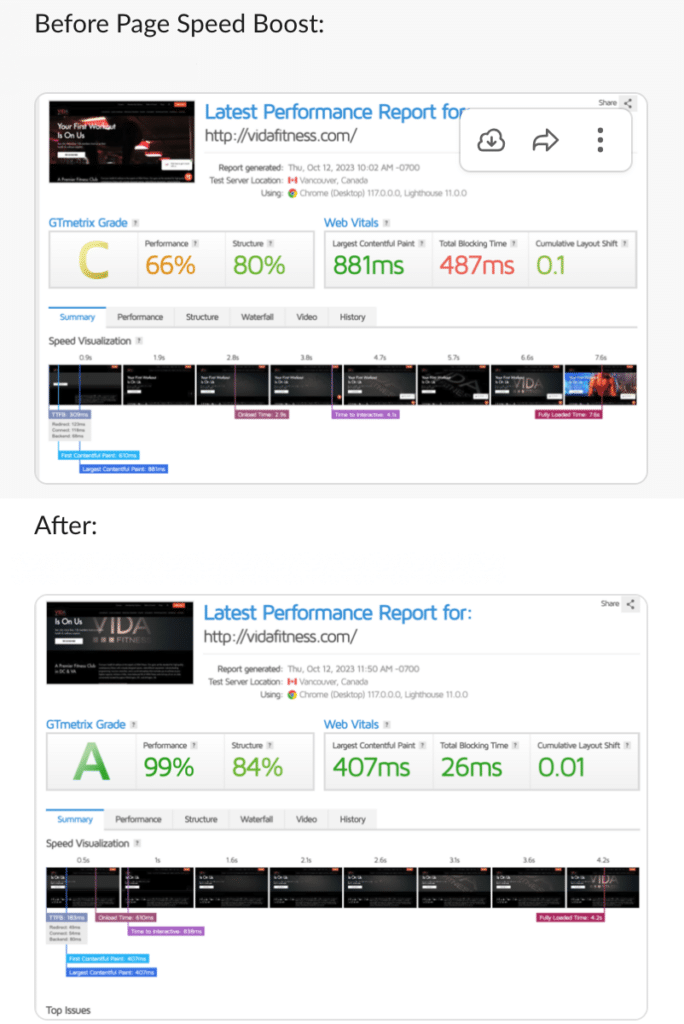
Virtual Window, a WP Engine Agency Partner, saw performance skyrocket after enabling Page Speed Boost on one of its client’s sites. Vida Fitness, a premier fitness club with locations throughout Washington, D.C., and Virginia, saw its GTmetrix scores jump from a 66% performance score to 99% after Page Speed Boost was enabled on its website.

Furthermore, other metrics, such as Largest Contentful Paint, dropped by more than 50%, plummeting from 881ms to 407ms and Total Blocking Time dropped by nearly 95%, from 487ms to 26ms.
In short, Page Speed Boost has already proven to be a game-changer. The remarkable performance enhancements it delivers make it an undeniably powerful tool for enhancing our customers’ websites, promising a faster and more engaging user experience.

Superior speed, effortless implementation

Simplicity is at the core of how we’ve imagined Page Speed Boost. Once it’s enabled on your account, all it takes is a single click, and voila—your website is on the path to page speed perfection.

Optimize for full-stack performance with WP Engine Page Speed Boost

Page Speed Boost augments WP Engine’s verified industry-leading server response time, offering you access to proven back-end architecture and a front-end site optimization tool to instantly unlock your best PageSpeed score yet.

Stay tuned for more Page Speed Boost use cases, results, and product updates, as we have even more additions on the roadmap to take your front-end performance to the next level.

We look forward to helping you on your site optimization journey. Learn more about Page Speed Boost here, and see why more businesses choose WordPress and WP Engine for a faster, more successful online presence.
Introducing Performance Insights: WP Engine’s Newest User Portal Enhancement

Software Stack Editor · May 30, 2024 ·

Site speed and performance are integral to your business, which is why they’re at the core of what we do at WP Engine.

To provide you with confidence online, our teams are hyper-focused on fine-tuning our fully managed WordPress platform and providing you with tools and features you can use to further optimize your site. 

While we’ve equipped customers with detailed metrics reporting for years, we recently expanded those metrics and streamlined the way you access them with a dedicated Performance Insights page in our User Portal. 

This comprehensive snapshot of your site quickly provides a clear view of frontend metrics, as well as actionable insights for improving site speed, accessibility, SEO, and more!

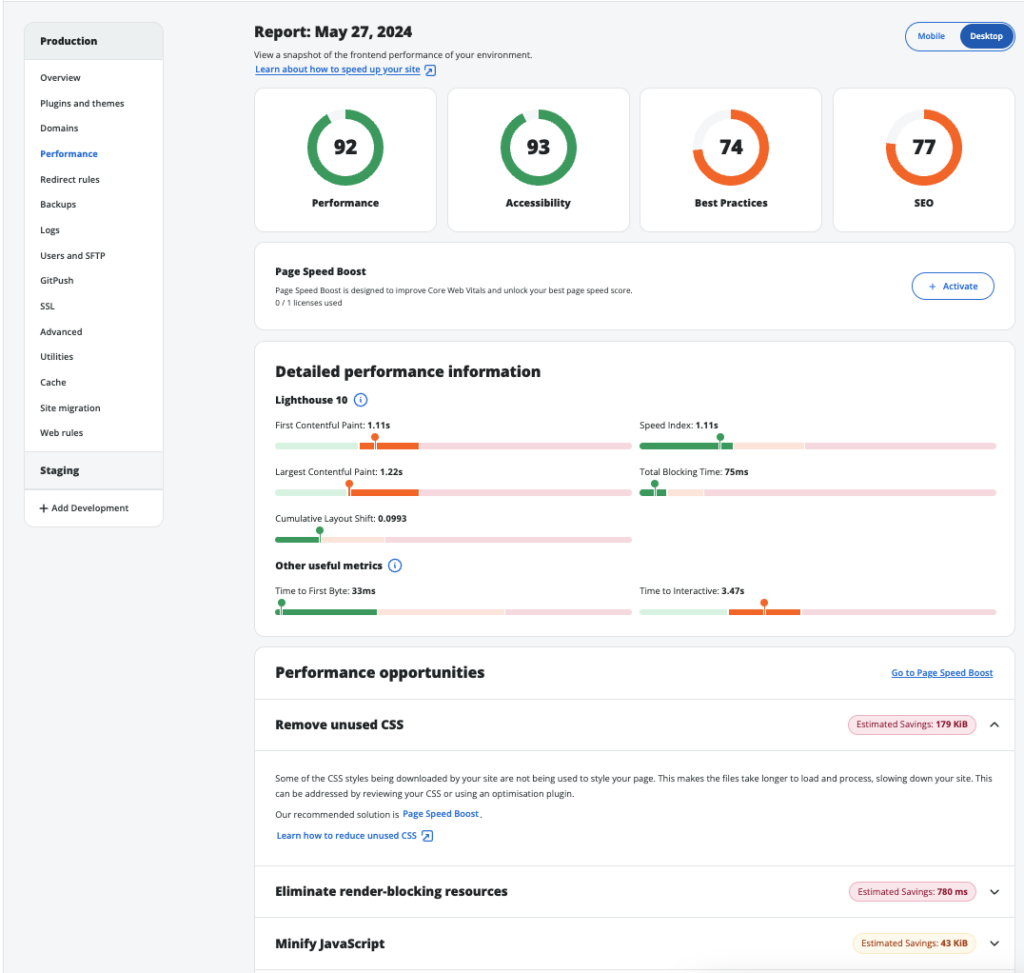
The new Performance Insights Page in WP Engine’s User Portal provides direct access to actionable frontend metrics, all in a single location.

Each detailed report pulls holistic scores tracking your website’s current state across key areas and provides more granular reporting on specific frontend metrics.

To access your Performance Insights page, simply click on the performance tab in the left-hand sidebar of your User Portal and an up-to-date report with mobile and desktop results will be generated.

Bringing you the metrics that matter

We added the new Performance Insights page to our User Portal to provide customers with a clear view of how their sites are performing against industry benchmarks such as Google’s Core Web Vitals and other PageSpeed Insights results. 

These metrics are important for two reasons: 

  • They provide insight into the “page experience” your users encounter when they arrive on your site and can inform improvements that aid in higher engagement and more conversions.
  • They can directly affect your search engine rankings as Google has used Core Web Vitals as a ranking factor in its algorithm since 2021. 

Armed with an accurate analysis of where your site is performing well and where it’s not, you can focus on performance improvements that make a tangible difference—for both your site and your site visitors.  

“Performance Insights gives our customers a central, easy-to-find frontend metrics report they can use to take immediate action,” said WP Engine VP of Product, Jeremy Pollock. 

“With other solutions, gaining a clear view into frontend performance often means pulling reports from multiple disparate services. By providing these key metrics in a single place, our customers are able to focus on the right areas for improvement and more easily monitor for regular fine-tuning and maintenance.”     

Why are frontend metrics important to track? 

Frontend metrics serve as the pulse of your website’s health and usability, signaling how well it delivers content to users and how smoothly it interacts with them. 

These metrics aren’t just numbers, they represent real-world experiences and directly impact user satisfaction, engagement, and ultimately, the success of your online presence. 
These metrics also directly or indirectly affect Core Web Vitals, which are a set of specific metrics that Google considers important in a webpage’s overall user experience. 
Core Web Vitals are pivotal because they not only affect user experience but also play a role in SEO. Since 2021, Google has incorporated these three metrics into its ranking algorithm, underscoring their importance in web performance and visibility in search results. 

By offering a central hub for monitoring these critical frontend metrics, our Performance Insights page enables you to focus on enhancing areas that will significantly improve your site’s user experience and search engine ranking. 

This proactive approach to monitoring and optimizing frontend performance ensures your website meets and exceeds the expectations of modern web users, paving the way for better engagement, higher conversion rates, and wider business growth.

Which metrics are included in this dashboard? 

The new Performance Insights page offers a dashboard view of your most important frontend metrics, allowing you to better understand the specific components of frontend performance. 

These include: 

Largest Contentful Paint (LCP) One of Google’s three Core Web Vitals metrics, LCP measures the time it takes for the largest content element on the page to become visible to the user, reflecting how quickly a page can deliver useful content. A slow LCP can frustrate users who might perceive the site as sluggish, potentially driving them away before they even interact with your content. 

Cumulative Layout Shift (CLS)  CLS (another Core Web Vitals metric), quantifies the stability of a page as it loads. High CLS scores indicate a lack of visual stability, with elements shifting unexpectedly as the page loads, which can lead to accidental clicks and a confusing user experience. Ensuring minimal layout shifts is key to maintaining user trust and comfort. 
Google Lighthouse Speed Index Speed Index provides a holistic view of load performance across a sequence of snapshots, capturing the experience of how quickly a page’s contents are visibly populated. 

Total Blocking Time (TBT) and Time to Interactive (TTI) are additional critical measures that highlight a page’s responsiveness by quantifying the time it takes for it to become fully interactive. 

Time to First Byte (TTFB ) TTFB measures the responsiveness of your web server by gauging the time from the user or client making an HTTP request to the first byte of the page being received by the browser. 
How can I use frontend metrics to improve my site? 

Frontend metrics can be used in many ways to improve your website effectively, particularly with regard to speed, usability, accessibility, and even security. 

As noted above, Core Web Vitals play a key role here. In addition to being important factors Google considers for a webpage’s overall user experience, they also provide helpful benchmarks for refining your site.

By monitoring these metrics, you can identify opportunities for improvement, such as optimizing image sizes to enhance LCP or double-checking web fonts to ensure they’re not impacting CLS. 

Additionally, tracking frontend metrics allows you to enhance usability by identifying areas where users may struggle, such as complex navigation paths or inaccessible content for users with disabilities. 

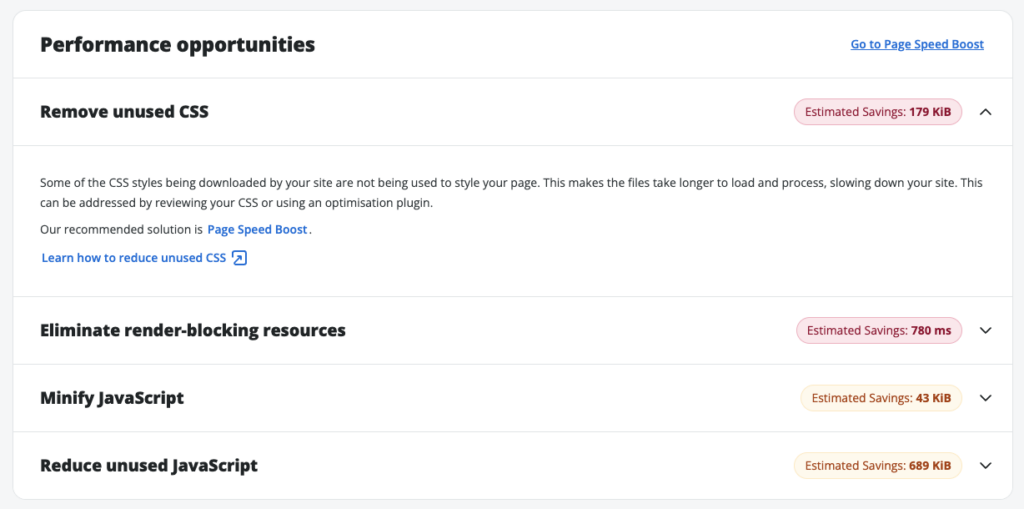
While WP Engine’s Performance Insights page helps you identify these opportunities through robust metrics reporting, it also includes a “Performance opportunities” section that directly highlights key areas for optimization. 

This section, which is customized for your site, provides specific, actionable suggestions along with estimated improvements you can expect after implementing each optimization.

The “Performance opportunities” section of the new Performance Insights page in WP Engine’s User Portal provides actionable suggestions for improving your site.

Tools like heatmaps and session recordings can also complement frontend metrics reporting by providing qualitative insight into user behavior. 

While often considered separately, security can also be gauged through certain frontend metrics. For instance, monitoring and minimizing the use of outdated libraries or excessive third-party requests can mitigate potential security vulnerabilities. 

Overall, leveraging frontend metrics empowers you to make data-driven improvements to your website. These enhancements not only accelerate your site’s performance but also significantly elevate the user experience, directly contributing to increased user engagement and conversions.

Boost your frontend metrics with an all-in-one solution

If you’re seeing low frontend metrics scores, either in your WP Engine User Portal or elsewhere. There are numerous optimizations you can make to improve them. 

However, if the piecemeal approach isn’t for you, leveraging an all-in-one tool like WP Engine’s Page Speed Boost allows you to optimize your code, significantly improve page load times, and supercharge your SEO in minutes, all without technical expertise.

Audit your image library, leverage edge caching, and watch your PageSpeed scores skyrocket with this powerful tool enabled on your site(s). Find out more here, or visit WP Engine to learn more about our industry-leading WordPress tools and technology.

New Custom Block-Building Features Released in Advanced Custom Fields 6.3

Software Stack Editor · May 28, 2024 ·

Over the last couple of years, I’ve attended nearly a dozen events, big and small, where the topic of building custom blocks with Advanced Custom Fields (ACF) has triggered serious interest and excitement amongst the audience.

It’s no surprise that developers are simultaneously excited by the future of the WordPress experience while also wanting to leverage the development workflows they have refined for many years. The ACF team here at WP Engine loves this—it represents the best of what has brought us here, combined with the potential of where we can go!

With this in mind, the ACF team is working hard on a series of releases to enhance custom block building with ACF even further, starting with the just-released ACF version 6.3. These new features and capabilities will help you lean further into modern WordPress while leveraging your skills in PHP. 

Let’s have a look!

Field validation support for ACF Blocks

Restricting what data can be entered into a form field is an important part of a well thought through editing experience in WordPress. 

Validation rules facilitate this in form fields, and although these have been configurable for traditional ACF fields for some time, they haven’t functioned for fields in ACF Blocks. Version 6.3 changes that! You can now set up custom validation rules for your block fields.

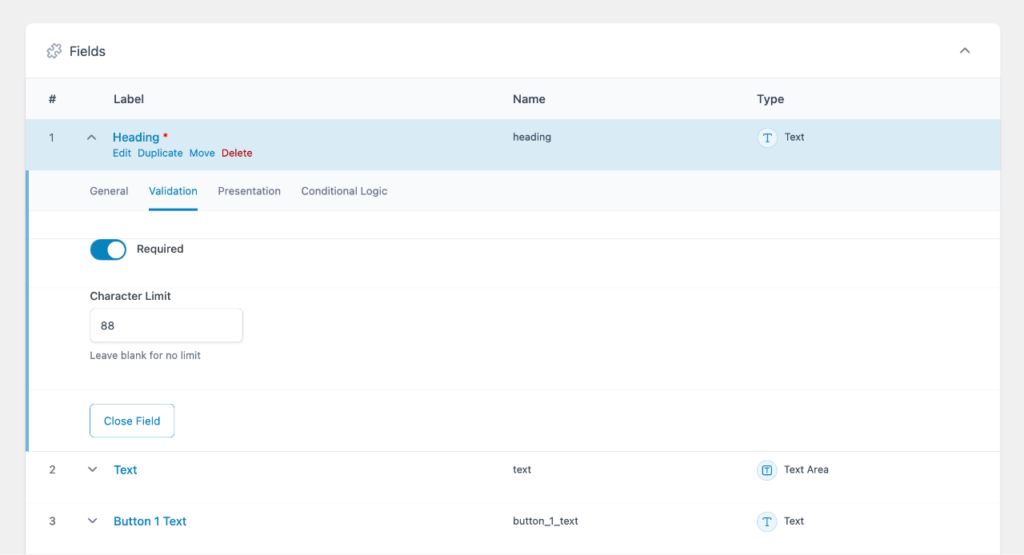
Let’s have a look at an example below. I have a custom block that I have built for the hero section of a college website. For the way I want this block to be used I want to make sure that:

  1. The heading is never left blank
  2. The heading does not exceed a certain number of characters

In the field group settings, it’s easy to set the validation rules.

Setting validation rules on a field

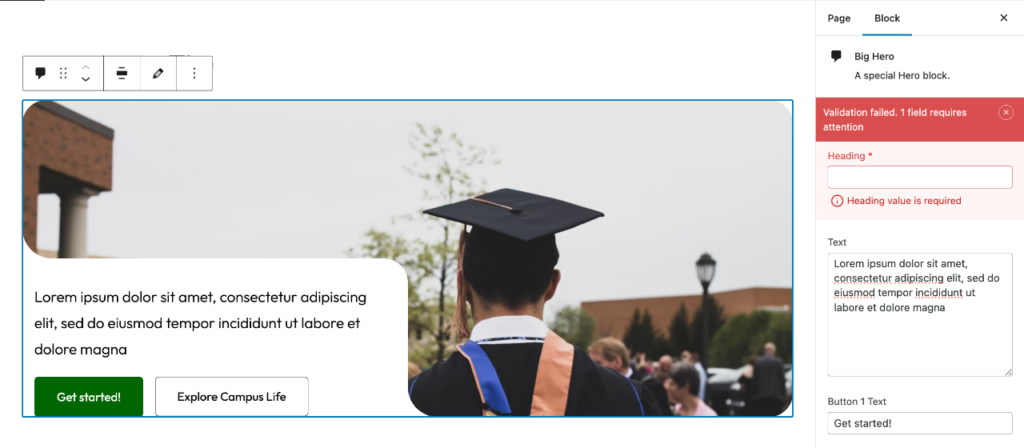
Now in the content editing experience, you can see below that when the rules are not met, I see a visual warning for what needs to be done. Additionally, until the rule is met the editor cannot save the post.

Example of validation error notification in the block editor

Storing ACF Block field values in post meta

By default, WordPress stores field data within the HTML comments of a block in the post_content column of the posts table. This works for many scenarios, but there are plenty of occasions where you may want to store and read data from the post_meta table. 

Version 6.3 makes this possible with a new attribute you can include in your block.json file: usePostMeta: true (default false). You can now enter your structured data through the blocks interface rather than deferring to the traditional custom fields interface.

block.json file including new usePostMeta attribute set to true.

New icon picker for custom post types and options pages

The custom post types and options pages you can easily spin up with ACF appear in the sidebar of the WordPress admin area. When working with ACF for this, you have been able to set an icon to sit alongside the text label. 

Version 6.3 introduces a simple icon picker that pulls in the open-source dashicon library. You can still select and set your own, but when you want to work with the native icon library of the WordPress admin, this new icon picker speeds up the experience.

New icon picker within ACF 6.3

For the astute ACF user, you may see this icon picker and think, “Why don’t we make this a new general field type?” Well, we did!

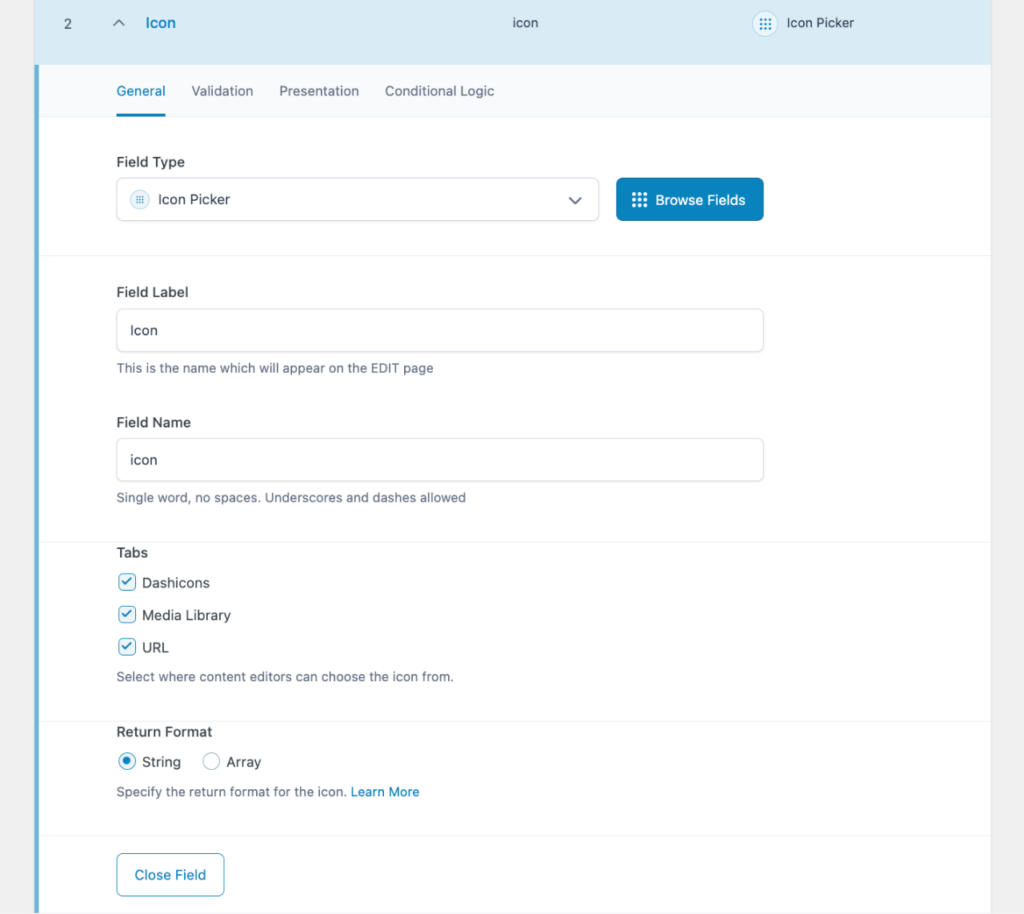
New icon picker field type

Leveraging the good work mentioned above, there is now a new field type: the “Icon Picker” field. When an editor needs to pick a dashicon icon or one from the media library, you can now add an icon picker field. 

Most modern web designs use icons in some way, and ACF users no longer have to leverage alternative field solutions for these. We plan to add extendability to this field type in a future release so that you can easily load other popular icon sets. 

Selecting the icon picker field type in a field group

These were the big headlines for the release, but it also includes a number of other improvements, which you can read about in the full release post from the ACF team. 

Visit the ACF website if you would like to use ACF to push the boundaries of what you can build with WordPress!

Want to level up your ACF game?

We run several events, community spaces, and content hubs for those who build with Advanced Custom Fields. If you want to learn more and find other like-minded WordPressers, check out
WP Engine Builders.

Behind the Scenes of Our New Brand Refresh

Software Stack Editor · May 23, 2024 ·

As WP Engine rolls out its refreshed brand identity, we’re thrilled to share this project with our customers and the world. 

I wanted to share a closer look at the research and artistic detail that informed our deliberate choices for this refresh. 

If you’re design-oriented or simply curious about the different elements that went into this project, read on for a recap of our brand evolution journey.  

Building a solid foundation with a research-driven strategy 

Before getting into the nitty gritty of our design work, our team began by mapping out a meticulously planned, research-intensive strategy. 

We wanted a solid narrative foundation to inform our approach, so we started with an in-depth exploration of our brand’s mission, vision, emotional and functional benefits, and messaging hierarchy. 

As part of this process, we conducted nearly 100 qualitative interviews with key stakeholders, including WP Engine’s leadership, members of acquired brands, and customers and partners of all sizes.

These interviews provided valuable insights into our brand’s unique strengths and opportunities to stand out in a busy marketplace.

Two major themes emerged through this initial round of research: 

  1. WP Engine is widely viewed as a brand that “powers” websites, which fits perfectly with our core mission: “We power the freedom to create.”
  2. Our customers value and stay with WP Engine because of our friendly people and the reliable advice they receive from us. 

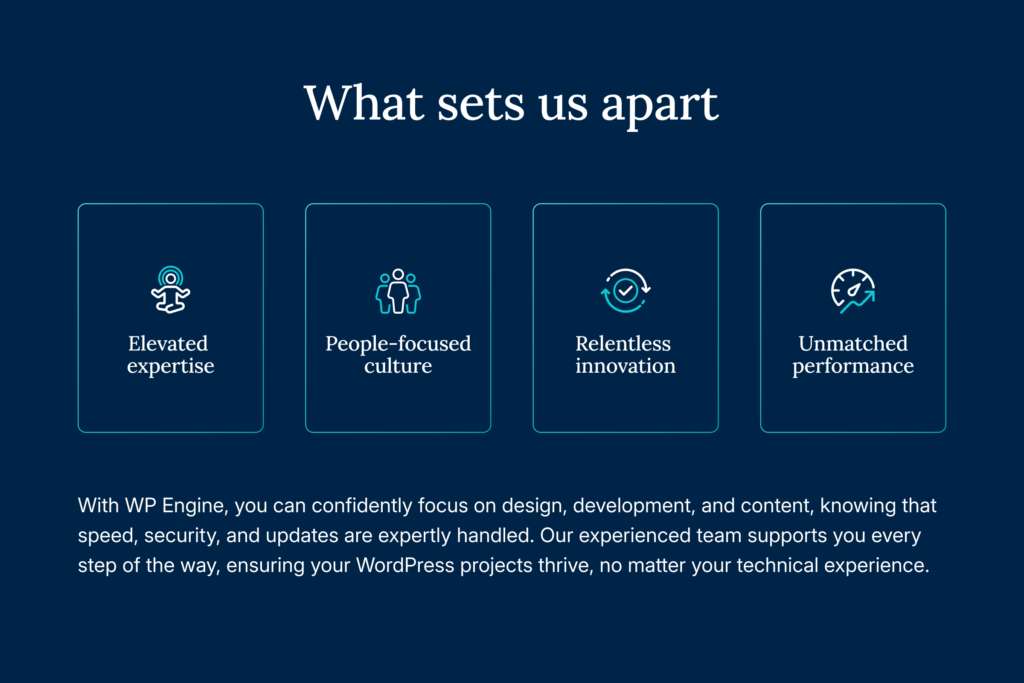
These insights helped inform four signature pillars of the WP Engine experience for customers, which significantly influenced the development of our verbal and visual systems.

WP Engine's customer-inspired brand pillars provided the foundation for our visual and strategic decision-making.
 WP Engine’s customer-driven brand pillars: Elevated expertise, people-focused culture, relentless innovation, and unmatched performance.

These pillars were refined and validated through a comprehensive quantitative survey involving close to 1,000 respondents across our various audiences to ensure we were speaking to what matters most to our customers.

Not another cog in the machine

One crucial element as we embarked on this journey was honoring WP Engine’s history and the story behind the iconic WP Engine cog. 

Since 2013, the cog has symbolized the coming together of all the pieces that make us “us,” from our Core Values to our place in the broader WordPress community. WP Engine now has a portfolio of products and we wanted to take this concept of parts coming together to a new level. 

Rather than starting from scratch, we chose to reinforce the spirit of the cog in a modern context—with a clean, rounded design and new typeface—all aimed at making our mark even more iconic.

We strategically utilized the shapes inside our new logo. The circular shape at the heart of our logo showcases our core offerings, namely Managed WordPress. The outer ring of square shapes describes the tools and plugins that we use to enhance WordPress for all members of the WordPress community—regardless of where their site is hosted.

WP Engine's new brand framework reflects who we’ve become—a global web enablement company and leading WordPress solutions provider trusted by millions of users and customers around the world.
The platforms, tools, and features we proudly offer our customers are represented by different shapes within the cog.

customer-centric approach by using the circular shape in the middle of the design to represent our customers. And those square shapes orbiting that customer—we use to showcase the faces of the friendly WordPress experts at WP Engine who are actively working with you on your site’s success.

The story of the WP Engine cog is about bringing pieces together to serve a greater goal. That combination of pieces is customized to each customer we serve.

Our new design embodies our commitment to continuously applying a customer-centric mindset across all of our efforts, whether it’s providing exceptional, award-winning support, fine-tuning our industry-leading WordPress platform, or empowering our customers with relentless innovation. 

Usability-centric design

Accessibility and usability were significant drivers behind many of our choices. This was certainly the case when it came to colors, which, as a key part of our brand, played a pivotal role in shaping our new identity.

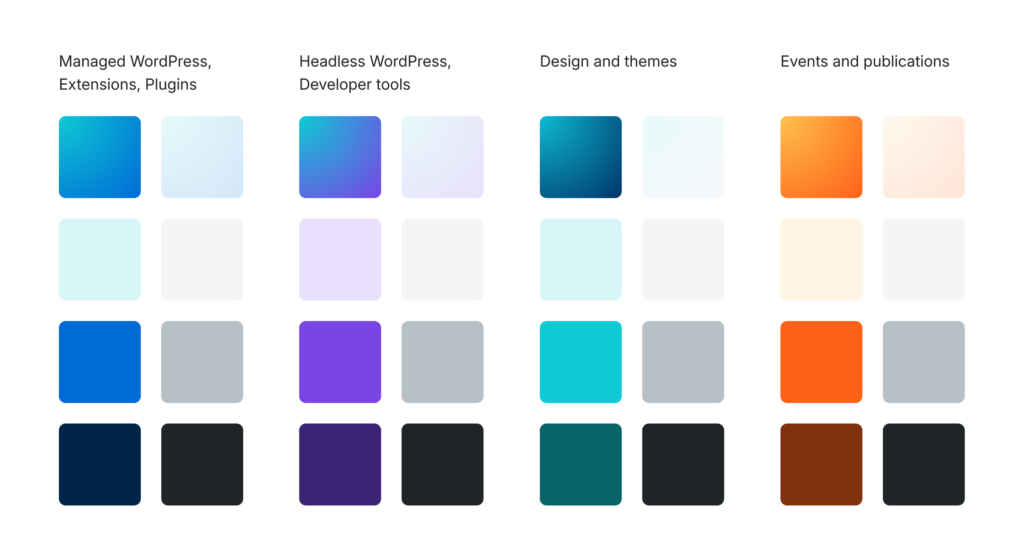
WP Engine’s new color palette simplifies the shades and tones found across our legacy primary colors.

WP Engine has a catalog of products and tools, many of which have distinct color schemes. We wanted to bring things together in a way that allows products to maintain their identity while looking cohesive. We simplified our color palette from a dizzying array of shades to eight core colors used across all products, ensuring consistency and enhancing accessibility.

We’ve strategically applied our color palette to make each brand's unique qualities easily identifiable and highlight their connection to our broader suite of WordPress solutions.
We’ve strategically applied our color palette to make each brand’s unique qualities easily identifiable and highlight their connection to our broader suite of WordPress solutions.

But color is just as much about function as it is about looking pretty, and our new palette was made with accessibility front of mind. Whether you’re on our marketing site or using our tools, we want all people to have the smoothest possible experience when navigating the things we build. 

This focus on usability was also well-timed—coinciding with WordPress’ 21st birthday and the release of WordPress 6.5 (which includes more than 65 accessibility improvements!). Our brand refresh aligned with these updates and complements them wherever possible.

Typography and imagery

Work across our visual identity also extended to our textual representation, which we’ve updated with a new font family that includes Inter for body text and Lora for headings. 

The Inter and Lora fonts, respectively, have been selected for WP Engine’s textual representation.

This choice, which will roll out across our channels over the coming weeks, enhances readability and gives our content a fresh, modern look. 

Both fonts balance contemporary style with functional clarity. Lora and Inter are also both open source, reinforcing our love of open-source communities that make beautiful things.

An eye towards the future

Our brand refresh marks a pivotal moment for WP Engine, reflecting our growth and our commitment to innovation and excellence. 

With an emphasis on accessibility and modern aesthetics, our new design system has provided a scalable framework for brand integration while ensuring a streamlined user experience for all—making it easier for you to build, power, manage, and optimize your WordPress sites and apps. 

With this new chapter, we’re excited to continue our journey, empowering you with unmatched WordPress expertise and innovation along the way.

Visit WP Engine to see our new brand in action and learn more about our industry-leading Managed WordPress, Headless WordPress, and our Agency Partner Program, the largest network of WordPress agencies in the world! 

WP Engine Ireland is a 2024 Best Workplace in Tech!

Software Stack Editor · May 23, 2024 ·

image

Following its general certification earlier this year, WP Engine Ireland has once again been designated a Best Workplace in Tech by Great Place to Work®, the global authority on workplace culture.

2024 marks the fourth consecutive year our Limerick-based team has received this honor. 

“For eight years, we’ve built a culture that instills pride in our employees’ roles and fosters a harmonious balance of home and work life,” said WP Engine Sr. Director, Product and Limerick Site Leader Haidee McMahon.

“This remarkable recognition stems from the unwavering commitment of each individual to embody our core values, including doing the right thing, being customer-inspired, committed to giving back, and building for growth. We remain steadfast in our efforts to build a culture that continues to be worthy of this honor.”

Read on for a quick overview of Great Place to Work, how companies are selected for specialized Great Place to Work lists, and WP Engine Ireland’s storied history with the authority on workplace culture.

Great Place to Work’s specialized certifications

Using the global standard Great Place to Work Trust Model™, including the Trust Index Survey™, Great Place to Work releases specialized lists of certified companies related to particular demographics and industries based on employee satisfaction. 

After analyzing the information collected, Great Place to Work identifies top employers that are building a trust-based, people-first workplace culture. The feedback is then anonymized and returned to the organization for review. 

These invaluable insights provide institutions with an unbiased understanding of the way our employees feel at work while simultaneously providing Great Place to Work with the information they need to rank employers on specialized lists, including Best Workplaces for certain demographics, like women and Millennials, or for certain industries, like Tech, Healthcare, and more.

The Best Workplaces in Tech list recognizes organizations creating engaging workplace cultures within Ireland’s growing tech sector, highlighting 53 employers of choice in an increasingly competitive job market.

This year’s 53 Best in Tech companies are those ranked highest by their employees on the Great Place to Work Trust Index Survey, which gauges the employee experience by examining each individual’s trust in their leadership, pride within their role, and relationships with their colleagues.

WP Engine Ireland’s Great Place to Work journey

This fourth recognition on the Best in Tech list is a testament to our Limerick team’s sustained focus on building an exceptional workplace culture for employees.

WP Engine first expanded customer support and engineering capabilities in Ireland with the opening of our Limerick office in 2016, and our continued growth there has served as a catalyst for further investment in the region.

In addition to four consecutive placements on the Best Workplaces in Tech list, WP Engine Ireland has previously secured certification as a Best Workplace for Women in 2023 and a Best Workplace for Health and Wellbeing earlier this year.

Join a team that’s certifiably great!

WP Engine’s global teams extend their congratulations to our colleagues in Ireland for this latest recognition and share our thanks for their continued commitment to making WP Engine a Great Place to Work.
Find out more about what it’s like to work at WP Engine Ireland and check out our careers page to start your next adventure at an organization that’s certifiably Great!

WP Engine Poland Recognized as a 2024 Great Place to Work

Software Stack Editor · May 23, 2024 ·

image

WP Engine Poland has once again been certified by Great Place to Work, the leading authority on workplace culture, as one of the country’s Best Workplaces.

This year marks the fourth consecutive certification for WP Engine Poland and further solidifies its reputation for fostering a positive company culture and prioritizing employee well-being.

“We started building our Product and Engineering teams in 2019, and as one of WP Engine’s EMEA based hubs, we’re exceedingly honored to not only receive this year’s recognition from Great Place to Work, but to add it to the accolades we’ve received since we opened our doors,” said Zygmunt Dyras, Vice President of Engineering.

“Now that we’ve been certified every year for the last four years, including specialised certification as the Best Workplace for Millennials, it’s safe to say that the work our team is doing to share and create our amazing WP Engine culture here in Poland is truly taking root.”

Read on to discover more about Great Place to Work, the rigorous selection process for certified companies, and WP Engine’s history of certification by Great Place to Work.

WP Engine Poland’s Great Place to Work journey

WP Engine Poland has earned certification every year since its first certification in 2021, when the office first met the employee threshold for consideration. The team also earned specialized certification as a Great Workplace for Millennials last year.

WP Engine Poland underwent a thorough assessment by Great Place to Work Poland to achieve official certification. Utilizing data obtained from employees who participated in the Trust Index Survey™, Great Place to Work identifies workplaces that excel in creating environments conducive to both personal and professional growth.

Earning Great Place to Work certification places WP Engine Poland among a select group of companies dedicated to nurturing work environments where employees can flourish. This year, WP Engine Poland was ranked 10th among certified companies in the super-small-sized company category.

Understanding the certification process

Over the past four decades, Great Place to Work has evaluated thousands of employers to pinpoint those that prioritize their workforce, fostering cultures that benefit both the business and its employees.

Companies vying for certification ask employees to complete the Trust Index Survey and submit the anonymized data to Great Place to Work. By benchmarking this data against similar organizations, Great Place to Work identifies top performers. 

According to the Great Place to Work Trust Model, exemplary workplaces are those whose employees score the organization highly on these five dimensions of a high-trust company:

  1. Credibility: Leaders follow through on their promises
  2. Respect: Leaders treat employees with due regard for their rights, needs, and wishes
  3. Fairness: Leaders treat employees equally and without favoritism
  4. Pride: Employees feel fulfilled by the work they do within an organization
  5. Camaraderie: Employees feel a sense of belonging within the organization

Positive employee responses to the Trust Index Survey (four and above on the five-point scale) are averaged to provide an organization-wide assessment of culture, and companies that score above a set threshold become Great Place To Work Certified.

Companies must also meet strict requirements for how surveys are distributed as well as the percentage of employees who respond to ensure the results accurately represent feedback from the company’s full population.

Once certified, companies may earn additional accolades based on specific demographics, locations, or industries.

WP Engine’s Great Place to Work history

WP Engine first earned certification from Great Place to Work in 2017. Since then, it has garnered more than 30 individual certifications, ranging from general workplace recognition to inclusion on international lists spanning the UK, Ireland, and Poland to specialized lists such as Best Workplaces in Tech, for Women, and for Wellness.

The Poland site is WP Engine’s second international hub to earn certification so far this year, with WP Engine Ireland already earning both general certification and specialized certification as a Great Workplace for Health and Wellbeing.

Join a certifiably Great team!

We extend our sincere appreciation to our employees in Poland for their invaluable contributions which made this recognition possible. Thank you for your unwavering commitment to building and maintaining an outstanding workplace!

If you’re seeking to join a truly exceptional team, check out our career opportunities to discover a role that aligns with your skills and aspirations!

Confidence Online: Introducing the New WP Engine

Software Stack Editor · May 22, 2024 ·

We’re proud to stand at the forefront of innovation and expertise at WP Engine, where we’ve inspired confidence online since 2010.   

In our early days, we aspired to be the best WordPress platform for you to host your sites on. Over the past 14 years, we’ve grown to encompass more than 20 brands, including solutions for traditional managed WordPress and headless WordPress, 11 developer-centric tools and plugins, and popular community events, all designed to help you win online. 

This growth is a testament to our relentless innovation in service to our customers with the best platform and products for building, powering, managing, and optimizing WordPress sites and apps.

However, this growth also created a mosaic of different brand identities that didn’t fully convey the unified excellence we aim to achieve. This challenge sparked a transformative journey at WP Engine, starting today with a comprehensive digital brand refresh that unifies and elevates our company brand. 

To start the refresh, our brand team launched an in-depth exploration of our mission, vision, and customer feedback on their experiences with us. In speaking with our customers and partners, we clearly heard that WP Engine is valued for our expertise, people-focused culture, our relentless innovation, and unmatched performance. 

These customer-inspired brand pillars provided the foundation for every subsequent visual and strategic decision that was made, aligning our Core Values and brand pillars in a way that would resonate with our audiences.

WP Engine's customer-inspired brand pillars provided the foundation for our visual and strategic decision-making.
WP Engine’s customer-inspired brand pillars provided the foundation for our visual and strategic decision-making.

Honoring our history with an eye for what’s next 

With a solid foundation in place, our team became laser-focused on simplifying the user experience across all of our channels. We wanted our brand framework to reflect who we’ve become—a global web enablement company and leading WordPress solutions provider trusted by millions of users and customers around the world. 

As the brands under WP Engine have their own unique identities, our first step towards this goal was visually aligning these brands to demonstrate their increased interconnectivity. To accomplish this, our internal brand creative team, with inspiration from our design partners, reimagined our design system so it ensures a unified look and feel for all WP Engine brands while preserving their unique product characteristics.

WP Engine's brands have been visually aligned to highlight their interconnectivity.
The first step in simplifying our user experience was visually aligning our brands to highlight their interconnectivity.

Rather than reinventing the cog, er, wheel, we chose to reinforce “the engine” spirit of our cog logo in a modern context, updating our logo to identify different WP Engine solutions, products, tools, and plugins that could be represented through these shapes.

By maintaining this connection to our roots, we ensure continuity and respect for our brand’s legacy while future-proofing it for more innovation goodness to come.

WP Engine's new brand framework reflects who we’ve become—a global web enablement company and leading WordPress solutions provider trusted by millions of users and customers around the world. 
 Our brand framework reflects who we’ve become—a global web enablement company and leading WordPress solutions provider trusted by millions of users and customers around the world. 

Empowering our teams and partners

Another crucial aspect of our brand refresh revolves around the people behind our products and technology, empowering our employees and partners to embrace and amplify our new identity. We are proudly showcasing the brilliance and passion of our global team in fresh, modern photography that brings our people-centric culture to life.

WP Engine proudly showcases the brilliance and passion of the people behind its products and technology.
We are proudly showcasing the brilliance and passion of the people behind our products and technology with fresh, modern photography.

We’re rolling out comprehensive brand guidelines and resources that detail everything from logo usage to editorial voice, making sure every point of contact with our brand reflects our values and vision.

Looking ahead

As this rebrand becomes more evident across our channels, we hope you see it as a reflection of our commitment to our customers and partners, web enablement excellence, and leadership in the WordPress community. 

Together let’s power the freedom to create, and thanks for being on this journey with us.

Visit WP Engine to see our new brand in action and learn more about our industry-leading Managed WordPress, Headless WordPress, and our Agency Partner Program, the largest network of WordPress agencies in the world! 

WordPress Shines Bright at the 28th Annual Webby Awards

Software Stack Editor · May 15, 2024 ·

The best of the Internet was on full display this week at the 28th Annual Webby Awards, which were presented in front of a live audience at New York City’s iconic Cipriani Wall Street. 

Hosted by comedian and talk show host Amber Ruffin, the star-studded event recognized some of the most impressive digital projects of the past year, including a large crop of WordPress and
WP Engine-powered sites.  

The Webby Awards are organized by the International Academy of Digital Arts and Sciences (IADAS), and recognize digital excellence across a wide range of categories, including websites and mobile experiences, videos, advertisements, apps, social media, podcasts, games, and immersive experiences with AI and the Metaverse. 

Hundreds of projects were nominated for various accolades, from Best Music Podcast (Questlove Supreme) to Best Entertainment Video Series (Variety’s Actors on Actors) and beyond.

In addition to these primary categories, the Webby Awards also highlight digital projects by bestowing special honors, such as The Webby People’s Voice Awards which are determined by the broader online community. 

“The Webby Awards truly represent the best of the web, showcasing projects that inspire countless digital creators, builders, and innovators,” said WP Engine Chairwoman and Chief Executive Officer Heather Brunner.  

“Each year, the event goes above and beyond to highlight digital excellence, and we’re honored to see an increasing number of WordPress and WP Engine customers and partners among the list of Winners and Nominees.”

As is customary, the list of Webby Winners was revealed in the weeks leading up to the live event, and despite the broad range of platforms and technologies represented by this year’s Winners, WordPress projects stood out across multiple award categories.

To further spotlight these outstanding projects, WP Engine and The Webby Awards will soon reveal the fifth annual Crafted With Code series, a showcase delving into the how-they-did-it stories behind select Webby-recognized websites built with WordPress. 

In the meantime, check out some of the WP Engine partners and customers whose projects made waves at the 2024 Webby Awards!

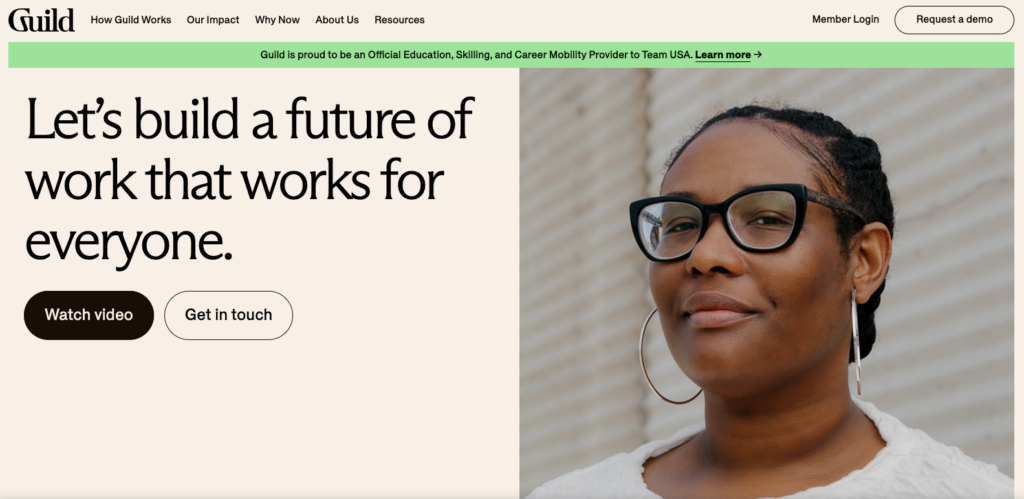
Webby Award Winner: Guild

Offering a curated marketplace of learning programs, dedicated career coaches, and tools to help employees explore and grow within their careers, Guild is an educational platform that helps employers provide tuition-free education, skilling, and career mobility to their workforce.

Named a 2023 CNBC Disruptor, Guild faced a unique challenge amidst rapid growth: communicating its diverse offerings to different audiences in distinct yet interconnected ways while maintaining a cohesive, bold, and engaging narrative. 

To solve this, WP Engine agency partner Athletics partnered with Guild to design and develop a new site experience that extends Guild’s brand identity and storytelling into the digital realm. 

The site, which won a Webby Award for General Desktop & Mobile Sites in the Employment category, effectively targets Guild’s primary audiences—employers, learning partners, and working adult learners—enabling each group to understand Guild’s unique offerings and their role in driving career mobility at scale.

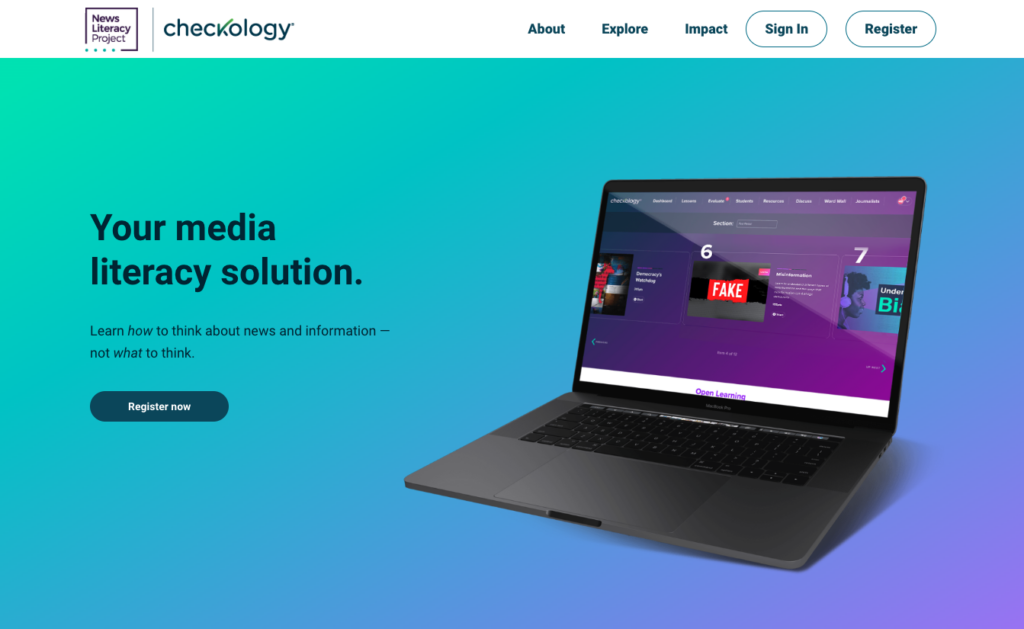
Webby People’s Voice Award Winner: Checkology

Checkology is a free e-learning platform intended to help web users of all ages hone the ability to identify credible information, seek out reliable news sources, and apply critical thinking to the online content they consume.

Built on WP Engine’s WordPress platform, the Checkology website is full of engaging, authoritative lessons led by journalists and media experts on subjects like news media bias and conspiratorial thinking, which help users develop the skills to fight misinformation with news literacy.

Funded and submitted by the News Literacy Project, the Checkology website earned a Webby People’s Voice Award for Responsible Information, which recognizes web products, platforms, software, and other technologies effectively working to combat disinformation, misinformation, and false or misleading information online.

Webby People’s Voice Award Winner: The Society of Experiential Graphic Design

The Society of Experiential Graphic Design is a multidisciplinary community of graphic and exhibition designers, fabricators and architects, media developers and creative technologists, students, and educators with a common motivation: to enrich the human experience through inclusive, intuitive, emotive, engaging, and sustainable design.

To build a visually engaging and interactive experience worthy of this talented creative community, agency experts at Wide Eye Creative reimagined the entire storytelling arc of the group’s website, leaning into a site narrative and content strategy that centers wonder and connection to take site visitors on an emotional journey through design.

The WP Engine-powered site earned a Webby People’s Choice Award for General Desktop & Mobile Sites in the Community category thanks to its emotionally resonant approach and seamless navigation.

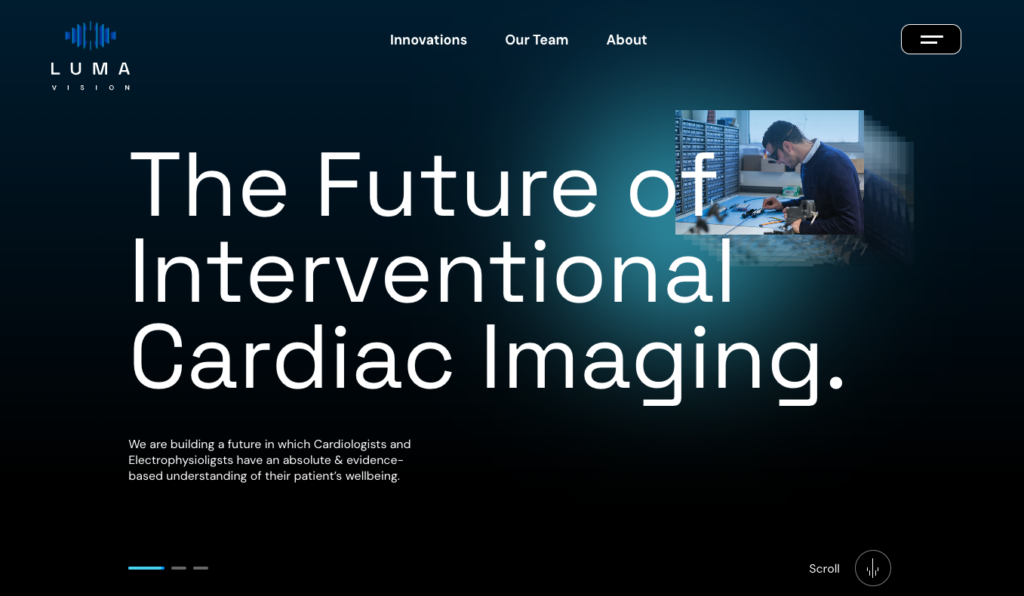
Webby Award Honoree: LUMA Vision

LUMA Vision is a medical device development company on a mission to build a future where cardiologists and electrophysiologists  have access to better, more innovative technologies. 

The company worked with WP Engine agency partner WONDR to bring this story to life, showcasing the expertise of LUMA Vision’s team, which operates at the intersection of hardware, software, and machine learning with the hope of radically advancing the landscape of health-tech innovation.

The site, powered by WP Engine, was named a Webby Award Honoree among General Desktop and Mobile Sites in the Health and Wellness category.

Webby Award Honoree: Embark

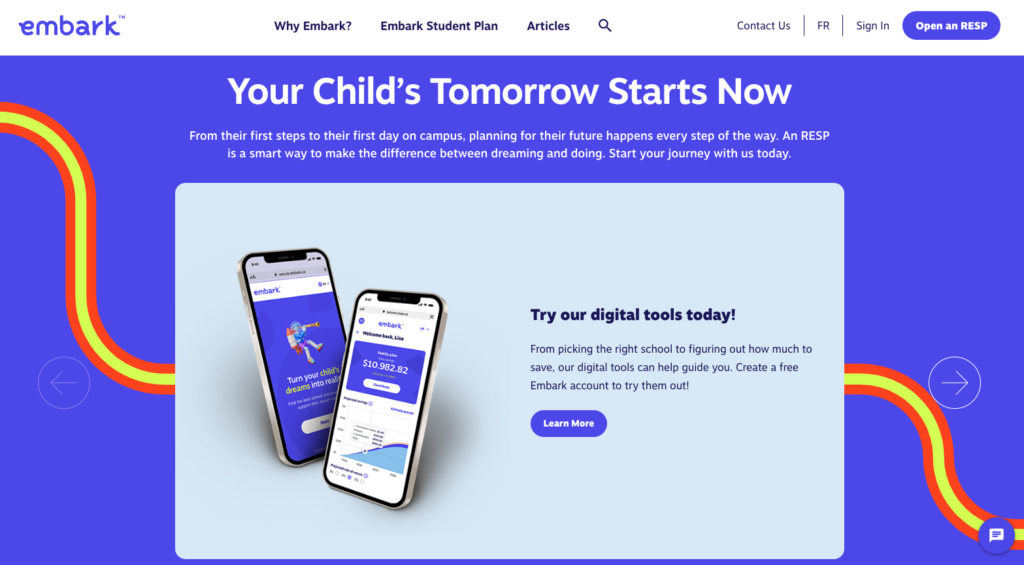
Dedicated to education savings, Embark is a financial services company that helps families plan for and manage post-secondary education costs. 

Faced with the need to create a new website and a comprehensive brand presence, Embark sought assistance from digital agency Art & Science, whose team harnessed its design and creative expertise to develop a new brand identity and website that effectively communicates Embark’s message.  

Using WP Engine for a headless WordPress architecture, Art & Science delivered a high-performing website featuring API response times in double-digit milliseconds. 

In addition to being recognized as a 2024 Webby Awards Honoree for General Desktop and Mobile Sites in the Financial Services/Banking category, Embark and Art & Science have received additional praise for the new site, including winning “Headless Project of the Year” as part of WP Engine’s inaugural Agency Partner Awards.

Webby Award Nominees: CIC and Harvard Law Review

WP Engine agency partner 10up was recognized multiple times by Webby Awards, including for its work on two projects built on WP Engine’s platform. 

The website for Harvard Law Review, which was redesigned by 10up earlier this year, was nominated in the Law category of Websites and Mobile Sites. The new website offers a compelling, easy-to-navigate experience that reflects the publication’s authority and reputation for excellence. 

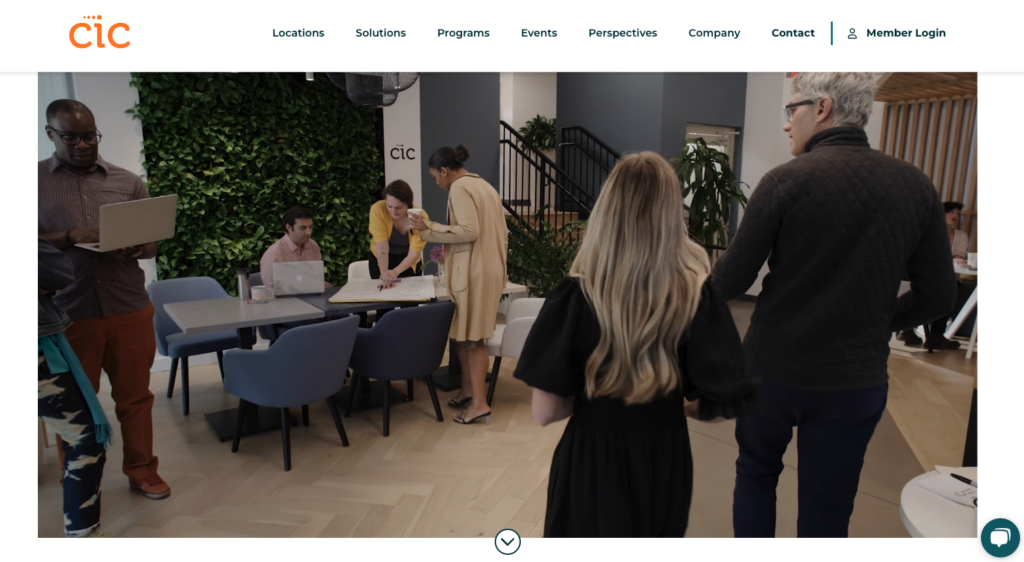
Additionally, the new CIC.com was nominated under the Real Estate category for Websites and Mobile Sites. 10up collaborated with the CIC team to reimagine its website, designing and building a modern, expansive hub that aligned with the company’s growth goals. 

Building with WP Engine’s industry leading WordPress platform and powerful developer tools, 10up ensured both sites deliver world-class performance, security, and reliability, showcasing the agency’s commitment to excellence and innovation.

Webby Award Nominee: CMYK

WP Engine agency partner CMYK revamped its own website this year, and in doing so, received a nomination for a General Desktop and Mobile Site Webby Award in the Professional Services and Self-Promotion category. 

CMYK is a full-service digital agency specializing in creative website and video production, empowering brands to share their stories through beautiful digital experiences.

The agency’s new website, built on WP Engine’s  platform, illustrates the company’s passion for color, animation, interactivity, and intuitive navigation.

As users scroll through the site, CMYK’s portfolio shines through engaging case studies that highlight the company’s diverse range of previous projects and creative solutions.

Webby Award Nominee: Hawkridge Austin

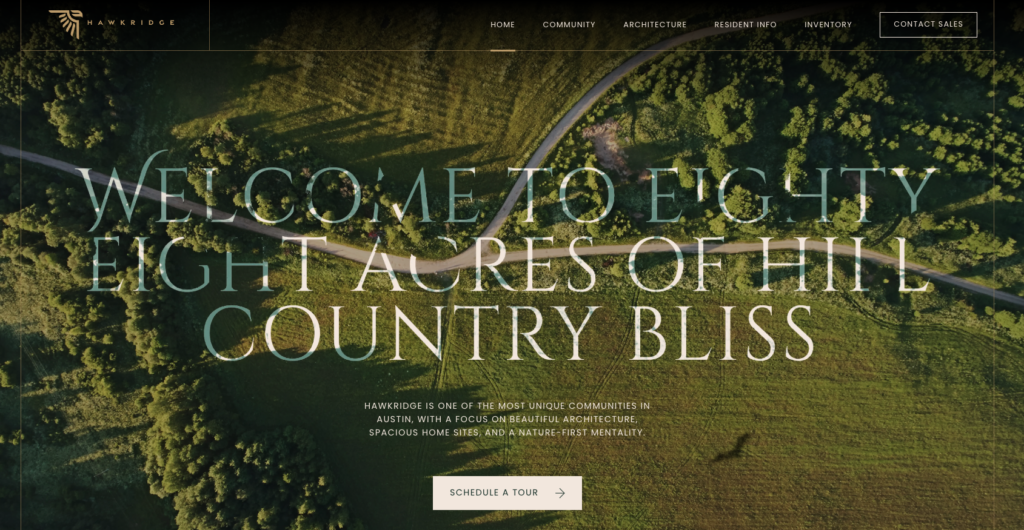
Creative design  experts at DD.NYC helped create a bespoke luxury brand identity for Hawkridge Austin, a land development project focused on building Austin’s newest luxury community, located just minutes from central Austin in Dripping Springs, TX.

The new, custom digital experience establishes this vision and brand identity, while providing the underlying infrastructure for a fast, performant user experience.

Featuring simple, elegant parallax effects paired with high-quality images of the surrounding landscapes and existing custom home projects, the Hawkridge Austin site was nominated for a General Desktop and Mobile Sites award in the Real Estate category.

Celebrate Web Excellence With The Webbys!

Visit The Webby Awards’ website for a full breakdown of the Winners, including Special Achievement Winners, and make sure to follow them on Instagram and X for more content.

And visit WP Engine to find out more about powering your next outstanding digital project with confidence.

Staying Ahead of the SEO Game

Software Stack Editor · April 26, 2024 ·

Search Engine Optimization (SEO) has remained a rare constant in an otherwise rapidly changing digital landscape.

Emerging in the late 1990s as a niche marketing skill, SEO has transformed into an indispensable part of any digital strategy. Nonetheless, as technology evolves, SEO practitioners must keep pace with the latest best practices and the most effective strategies for success.

This article provides an overview of how you can stay ahead of the SEO game, including insights from WP Engine agency partner Inbound FinTech focused on the future of SEO and AI-powered search. 

For more detailed insights, download our comprehensive SEO ebook and explore our SEO webinar mini-series, which are both filled with expert advice and advanced technical insights.

Here’s what we’ll cover below:

Table of Contents

What is SEO? 

At its core, SEO involves enhancing both the content and technical aspects of a website to boost its visibility in search engine results.

SEO begins with understanding how search engines—like Google and Bing—work. These search engines deploy sophisticated algorithms to index and evaluate web content based on relevance to search queries, site speed, mobile compatibility, and content freshness.

By aligning your content and website structure with these criteria, your site(s) can climb higher in search engine results pages (SERPs). This is significant because most users typically click on links at the top of the first page of search results (more on this below), underscoring why a high ranking is so important.

Understanding the nuances of SERPs—including the variety of content that gets ranked and the latest algorithm updates—is vital for effective SEO.

Additionally, successful SEO demands ongoing refinement and testing, and it hinges on proficient keyword research to identify and analyze terms people use in searches. Strategically embedding these keywords into quality content and optimizing your site’s technical setup for performance and usability establishes a solid SEO foundation.

WordPress designer works at a laptop at her home desk

Why SEO Remains Essential

SEO remains essential because it’s pivotal for increasing a website’s visibility, impacting its ability to attract and engage users effectively. 

A staggering 93% of online experiences start with a search engine, and the top five organic results on Google account for 67.6% of all clicks, highlighting SEO as a fundamental component of digital marketing and underlining the importance of securing high SERP rankings. 

SEO’s relevance extends beyond merely generating traffic; it’s about attracting quality traffic that’s likely to convert. By aligning website content with user search intent, businesses can draw in visitors who are genuinely interested in their products or services. This targeted approach can be more cost-effective than broader traditional advertising methods.

Additionally, as AI and AI-driven technologies evolve, they’re reshaping SEO by enhancing search engines’ understanding of user intent and content relevance. This requires businesses to continuously refine their SEO strategies to keep pace with sophisticated AI tools that analyze data for content optimization, market trend predictions, and personalized user experiences.

Understanding and Implementing SEO Basics

Understanding and implementing SEO basics involves a comprehensive strategy that goes beyond keyword optimization. 

One critical aspect is ensuring content quality; your website should offer informative, engaging, and relevant content that addresses the needs of your audience. 

Equally important is optimizing your user experience (UX). This includes enhancing site navigation, reducing load times, and improving your overall design to facilitate better user interactions. 

Another fundamental element of SEO is developing a robust backlink profile. Acquiring high-quality backlinks from reputable sources can significantly boost your site’s credibility and authority in search engines. 

Leveraging social media, along with backlinks, can further enhance your online presence and help drive organic traffic to your website. 

It’s vital to continue monitoring and updating your SEO strategies. This dynamic approach ensures that your strategies adapt to changing trends and algorithms, keeping your website competitive and at the top of search engine results.

Tools and Strategies for Effective SEO

Employing the right tools and strategies is paramount to maximize your website’s visibility in search engine rankings. 

Below, we’ll explore a range of essential SEO tools and strategic approaches you can use to optimize your site for search, ensuring it meets both user needs and search engine criteria.

Audit and Strategy Planning

Understanding your website’s current performance is essential before leveraging any SEO solutions—you have to know where you are to know where to start.  

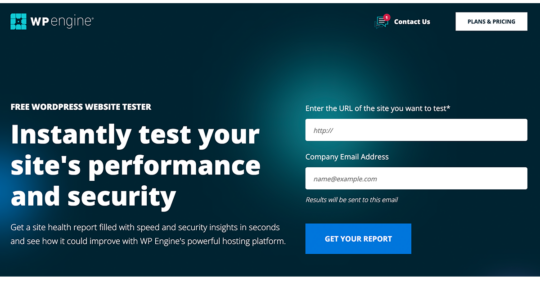
Tools like HubSpot’s Website Grader or WP Engine’s free Website Tester (for WordPress sites not already on our platform) can provide a snapshot of your site health in seconds, offering insights on speed and security.

WP Engine's free Website Tester
WP Engine’s free Website Tester delivers a snapshot of your website’s health, providing insights into speed and security in just a few seconds.

Tools like Semrush can also be beneficial for in-depth competitive analysis and keyword research. These insights will allow you to tailor your content and overall SEO strategies to target gaps in the market effectively. 

Additionally, Google Analytics can provide real-time performance tracking, while Google Search Console and Bing Webmaster Tools offer direct feedback from search engines, which helps refine your SEO approach.

SEO Plugins and Technical Optimizations 

Integrating SEO plugins such as Yoast SEO can significantly simplify managing SEO essentials like meta tags and sitemaps, which are vital for enhancing your search rankings. 

For WordPress users, All in One SEO provides comprehensive features that automate and optimize a wide array of SEO elements from your dashboard. 

Technical optimization also involves improving site speed and mobile responsiveness. Tools like PageSpeed Insights can help diagnose speed issues, while responsive design testers can help ensure your site is optimized for different devices. 

Local and International SEO

Navigating the complexities of SEO for diverse geographic markets requires a focused approach to both local and international settings. 

Optimizing your Google My Business listing is essential for local SEO. This ensures that your business’s name, address, and phone number are consistent across all online platforms. Utilizing local keywords in your website’s content and meta descriptions can also significantly improve visibility to nearby customers searching for services or products in their area. 

When expanding your reach internationally, implementing hreflang tags is crucial for targeting specific languages and regions, helping search engines serve the most appropriate version of your content to users based on their location and language preferences. 

Advanced SEO Tools and Automation 

For those looking to further automate their SEO efforts, consider employing advanced tools such as Moz Pro for an all-encompassing SEO solution that includes site audits, keyword tracking, and link analysis. 

Ahrefs offers detailed content and keyword analysis for content optimization, which can help craft content strategies that drive traffic and engage users.

AI-driven tools like Clearscope, MarketMuse, or Quattr can also be highly effective. These tools use machine learning to provide content recommendations and keyword insights based on current content ranking factors. These tools analyze top-performing content within your niche and generate guidelines to enhance content relevancy and SEO performance.

While these tools provide a foundation for automating and streamlining SEO tasks, the next evolution in SEO technology involves the integration of AI-driven search capabilities.

The Future of SEO: AI-Driven Search Tools

Additionally, the advent of AI-powered search platforms, such as Google’s Search Generative Experience (SGE), is reshaping the SEO landscape. 

This evolving feature integrates AI-generated synopses at the forefront of search results, necessitating new SEO strategies tailored for these advanced algorithms. 

The SEO and development teams at Inbound FinTech, a WP Engine Agency Partner, closely monitor emerging trends and create strategies for Google SGE. They analyze various websites to understand their inclusion in SGE knowledge panels and advise businesses on optimizing their visibility.

Inbound Fintech SEO Specialist Christopher Smith provides expert insights on preparing for Google SGE in this recent article, emphasizing the importance of optimizing title tags, featured snippet images, and schema markup to capitalize on AI-driven search capabilities.

“While Google SGE is still in the development and testing phase, it’s important to keep an eye on such new developments and changes with Google’s AI-powered search plans,” Smith notes. 

“You need to start preparing and optimizing your website accordingly to take advantage of the opportunities these developments present. Leveraging the potential of innovations like AI in search can do wonders for your company’s digital presence and, in turn, your marketing ROI.”

By integrating the above tools and strategies, you can ensure a robust approach to SEO that enhances your site’s visibility and overall performance in search engine rankings. This holistic strategy is essential for staying competitive in the rapidly evolving digital landscape.

Continuous Learning and Adaptation

As noted above, SEO is an evolving field that requires continuous education and adaptation to new algorithms and market trends. 

To stay updated, engage with ongoing training resources and webinars, which you can find on wpengine.com/resources. 

Visit WP Engine to find out more about our fully managed WordPress platform and the performance (and SEO) benefits it provides.

Introducing Smart Query Monitor

Software Stack Editor · April 25, 2024 ·

We’re excited to announce the latest addition to our smart suite of eCommerce tools: Smart Query Monitor (SQM). 

This new feature, available with all Premium eCommerce plans, is designed to enhance your site’s performance by securely and continuously identifying and alerting you to slow queries, ensuring your eCommerce store runs smoothly and efficiently.

Check out the video below to find out more, or read on for a preview of this new addition to our eCommerce toolset!

What are slow queries?

Before diving into the details of Smart Query Monitor, let’s clarify what slow queries are. In short, a query is a request used to interact with your database. it retrieves, updates, deletes, or inserts data information. 

A slow query is any query that takes too long to execute, leading to performance issues on your site. Slow query resolution is particularly critical for eCommerce platforms where speed directly impacts conversions.

The challenge of troubleshooting slow queries

Dealing with slow queries can be frustrating and time-consuming. Identifying the source of performance bottlenecks often involves sifting through complex data and logs. 

This process not only hampers productivity, but also impacts your bottom line by affecting user experience and, potentially, sales.

How Smart Query Monitor can help

SQM simplifies the process of pinpointing and addressing slow queries and has several unique advantages over other query monitoring tools, including:

  • Continuous monitoring and logging: SQM logs slow queries, providing you with detailed insights into query performance over time. This data enables us to enhance the tool’s functionality, including alerts for performance changes or issues related to specific plugins.
  • Zero performance impact: Unlike traditional plugins or premium solutions that can strain your server, Smart Query Monitor runs seamlessly in the background without affecting your site’s performance.
  • Built-in and preconfigured: No setup or configuration is required. Smart Query Monitor is integrated into WP Engine’s platform, offering immediate benefits without any additional effort on your part.

How it works

Let’s take a closer look at how Smart Query Monitor functions:

  • Easy access: From the “Sites Overview” page in your WP Engine dashboard, locate Smart Query Monitor under “eCommerce features,” and click “View Queries” to see a list of queries taking longer than the specified threshold.
Find Smart Query Monitor under “eCommerce features” in your WP Engine dashboard
  • Comprehensive details: Each query log includes the date of execution, the asset associated with the slow result (e.g., plugin, theme, or script), the duration of the query, and a link to a detailed report.
Smart Query Monitor’s query log includes key details associated with individual slow queries
  • Detailed reports: Clicking on a query report reveals additional information such as asset type, request URL, and—most importantly—the source file, line, and code snippet where the issue originated.
Each Query Report includes additional information that allows you to find exactly where an issue originated

Empowering your optimization efforts

With Smart Query Monitor, you’re not just identifying performance issues—you’re equipped to address them promptly and effectively. 

Whether you’re optimizing your site personally or collaborating with developers, Smart Query Monitor provides actionable insights to ensure optimal shopper experiences throughout the buyer journey.

It joins EverCache for Woo, Live Cart, and Page Speed Boost to further expand our premium WooCommerce performance optimization toolset.

Get Started Today!

Get started with Smart Query Monitor to quickly optimize your eCommerce site’s performance with simple slow query identification. 

With WP Engine’s smart suite of eCommerce tools, your site is equipped to thrive in the competitive online marketplace.

Watch Smart Query Monitor in action and discover how it can transform your eCommerce optimization strategy.

Optimize your eCommerce experience with Smart Query Monitor—because every millisecond counts!

A Smarter Way to Search, For All Things ACF

Software Stack Editor · April 24, 2024 ·

WordPress’ default search functionality has long been a sticking point for developers, especially when building dynamic, content-rich websites. 

The issues are multifaceted, but the antiquated nature of WordPress’s search algorithm, which prioritizes date over relevance, means users often receive inaccurate or irrelevant search results and, ultimately, a less-than-ideal user experience. 

Enter WP Engine Smart Search 

Advanced Custom Fields uses WP Engine’s AI-powered Smart Search for an instantly improved search experience across its website

To enhance WordPress search with a focus on site speed and performance, WP Engine created Smart Search, an advanced search optimization tool built specifically for WordPress sites. Smart Search is an easy-to-use, highly customizable answer to the search conundrum many WordPress users face, and it’s already generating impressive results, most notably on advancedcustomfields.com. 

Advanced Custom Fields (ACF) is the most widely used custom fields plugin in the WordPress ecosystem. With more than 5 million active installations, hundreds of thousands of monthly site visitors, and a content archive spanning thousands of helpful resources, advancedcustomfields.com presented a perfect use case for applying Smart Search’s capabilities. 

Given ACF’s broad functionality and wide range of use cases, finding relevant tutorials, documentation, and support articles is often crucial for its many users.

Now, with Smart Search up and running, finding those resources has become faster, more precise, and more comprehensive than ever before. 

Since Smart Search was launched on the site last month, aggregate searches have increased daily. With more than 100,000 searches on the site over the last 30 days, advancedcustomfields.com is currently one of the most searched websites on WP Engine’s platform. 

“We know users rely on our website as a trusted source of information, whether they’re experimenting with ACF and testing out a new concept, or it’s the 11th hour for a critical project and they’re trying to answer a specific question,” said ACF Senior Product Manager Iain 

Poulson. 

“In either case, Smart Search significantly improves their experience, helping them navigate our expansive collection of resources and empowering them to use ACF more effectively.”

Harnessing the Power of AI

A smarter way to search WordPress sites

ACF’s new search capabilities also leverage the new AI-powered Hybrid Search for Smart Search, which is currently in beta testing. This natural language search feature provides a GPT-like experience combining traditional keyword-based and semantic search to produce more relevant search results.

“What we’re doing on the backend is running your data through a Machine Learning model that’s specially tuned for Natural Language retrieval,” said WP Engine’s Product Manager for Search and AI,  Luke Patterson. 

“What this means for you, is that you can now type full sentences or questions into the search bar, and have that return really exceptional search results. And because Smart Search is one of the only products out there that indexes all of your ACF fields and Custom Post Types with just a click of a button, you get all those included in those results as well.”

In addition to improving the search experience on your site, Smart Search also enhances the speed of site searches by transferring the indexing and search processes away from your WordPress MySQL database to a specialized search server. This approach significantly reduces the load on your WordPress site, making searches quicker and more efficient. 

“Smart Search has given our users the ability to quickly find needed content on our site, even if they don’t know the exact ACF function they’re looking for, rather than relying on third-party searches,” said ACF Senior Staff Software Engineer Liam Gladdy, 

“And activating Smart Search was as simple as hitting a few buttons in the control panel—a no-code solution that’s significantly improving the experience for ACF’s users.”

Find a Smarter Way to Search

WP Engine Smart Search is an advanced search optimization tool built specifically for WordPress sites

The WordPress ecosystem offers a variety of tools for enhancing search, each with its pros and cons.

While there are several popular plugins used for improving WordPress search, many of these solutions struggle to scale as they depend on WordPress’s server to process queries. Other, more advanced solutions often require a significant investment of time and money.

Historically, these alternatives have left a noticeable gap for a solution that combines scalability, cost-effectiveness, and a comprehensive feature set. WP Engine has stepped in with Smart Search to address this need. 

Smart Search is both scalable and efficient, supporting websites as they expand. It offers customizable content prioritization, ensuring that search results favor the most relevant content, and it automatically indexes all content types, including custom post types from ACF. 

It’s also easy to set up and start using, improving search across your site while providing critical insights into how your users search.

Learn more about Smart Search here, and download this ebook to find out why WordPress search might be hurting your conversions—and how to fix it!

WP Engine Ireland is a Great Workplace for Health and Wellbeing

Software Stack Editor · April 18, 2024 ·

WP Engine is again leading the charge among top workplaces, securing placement on the Great Place to Work IrelandⓇ list of Best Workplaces for Health and Wellbeing™.

The unranked list includes companies doing an exceptional job of ensuring their employees have access to resources that benefit their overall wellbeing, with a focus on physical and mental health resources.

“Recognition from Great Place to Work is always an honor, but placement on this list is especially meaningful,” said WP Engine Sr. Director of Product and Ireland Site Lead Haidee McMahon. 

“Because when our team feels empowered to lead healthy, well-balanced lives, it resonates deeply within our organization. It’s not just about retaining talent; it’s about fostering an environment where everyone can flourish. When each member thrives, the collective impact is profound, uplifting not only individuals but also our shared goals and aspirations.”

Read on for more information about WP Engine Ireland’s history with Great Place to Work, 

WP Engine Ireland’s Great Place to Work Journey

WP Engine Ireland was first certified by Great Place to Work in 2019, just three years after the office opened, and this year’s general certification marks the fourth consecutive recognition for our Irish teammates. 

In previous years, WP Engine Ireland has earned placement on a few specialized lists, including Best Workplaces for Women in 2023 and Best Workplaces in Tech in 2021 and 2022.  

Insights Gleaned from This Year’s Best Workplaces in Ireland

After releasing the list of certified companies in Ireland in February, Great Place to Work narrowed down those organizations to create its Best Workplaces for Health and Wellbeing list, highlighting companies focused on creating an environment where personal health and wellbeing are prioritized.t. 

Generally, Great Place to Work noted that companies designated as Best Workplaces all share certain important characteristics. First, Great Workplaces create clear pathways for career development. WP Engine does this primarily through its Career Compass: a set of guidelines that makes it easy for employees to identify key performance metrics that will help them progress in their careers.

Top employers were also more likely to organize events to celebrate their employees and implement policies that strengthen employee engagement, morale, and overall workplace satisfaction.

Employers on this year’s Best Workplaces for Health and Wellbeing list scored highly on key metrics identified in the Trust Index Survey™—a prerequisite for achieving any certification from Great Place to Work.

Employees from companies on the Best Workplaces for Health and Wellbeing list reported high rates of feeling supported by their managers and flexibility in their work to properly balance it with their lives outside the office. In fact, 84% of respondents from certified companies reported feeling encouraged to balance their personal and professional lives, compared to only 54% of respondents feeling the same at non-certified companies.

About Great Place to Work 

Great Place to Work, the global authority on workplace culture, has been compiling its Best Workplace lists since 1984. Now, the company publishes more than 250 Best Workplace lists annually, reporting on findings from more than 20 million employees across 170 countries. 

To be eligible for inclusion on specialized lists, including Ireland’s Best Workplaces for Health and Wellbeing in 2024, participating organizations must hold Certification™ as a Great Place to Work.

Join a Certifiably Great Team!

Congratulations to our Irish teammates for making this recognition possible. Thank you for your dedication to creating a work environment in which all employees can thrive!

If you’re ready to join a certifiably great team, check out our open roles. We’re always seeking the best talent to add value to our global team!

ACF Wins Plugin Madness 2024!

Software Stack Editor · April 15, 2024 ·

After weeks of close calls and stiff competition, the dust has settled in the final round between two of WordPress’ top plugins, and Advanced Custom Fields (ACF) has emerged victorious, securing the Plugin Madness crown for the second consecutive year. 

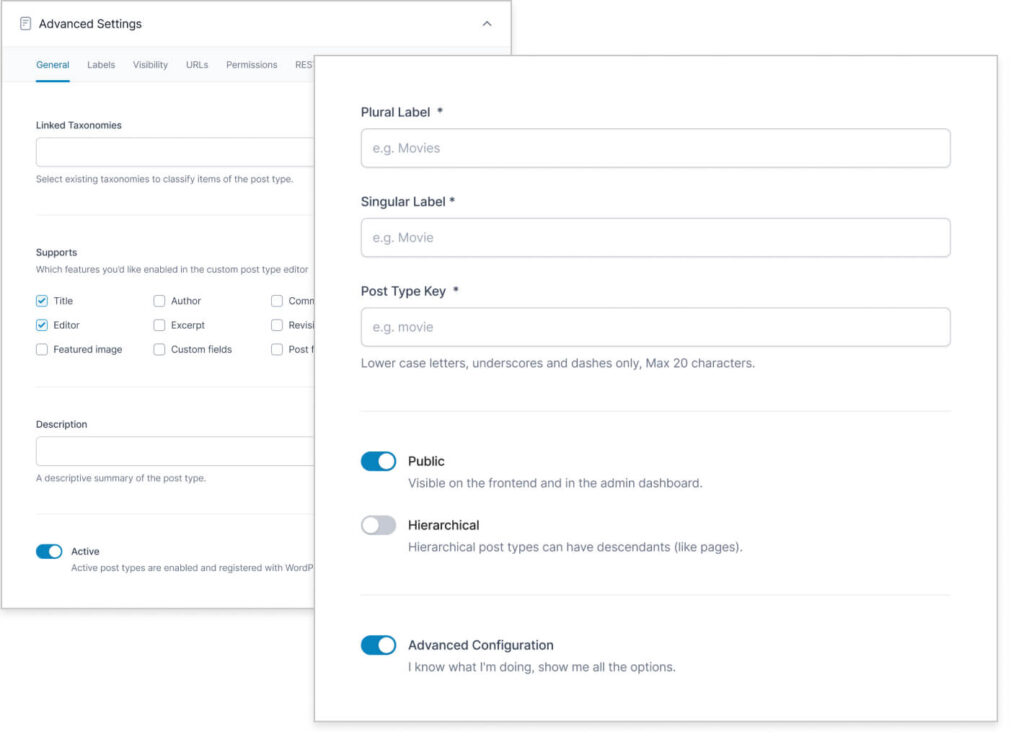
ACF is the most widely used custom fields plugin, allowing users to take control of their WordPress edit screens and custom field data. The plugin makes it easy to add custom fields, post types, and taxonomies to WordPress sites. 

ACF is the WordPress community’s top choice for enhancing the experience of entering metadata into WordPress’ database, controlling and standardizing stored data, and displaying that metadata on the front end in a clean and stable way.

ACF expands the custom field system—a core feature of WordPress—by providing a standardized collection of fields, each with their own special capabilities.

A Nail-biting Finale 

The Plugin Madness final four was stacked with power players, including WooCommerce (2nd), WordFence (3rd), and TablePress (4th). 

With this most recent victory, ACF earned its second consecutive title and third overall Plugin Madness win, the first of which took place in 2016. 

The first and only three-time winner in competition history, ACF now reigns supreme as the undisputed champion of Plugin Madness.

After weeks of voting, the field of 64 plugins had whittled down to an illustrious final four

Now in its ninth year, Plugin Madness is a great way for the WordPress community to highlight their favorite plugins, and the bracket-style competition has seen a handful of illustrious past winners including Elementor, Smush, and Fluent CRM.

To be eligible for nomination, every plugin had to be available for free in the plugin repository, be compatible with WordPress version 5.7 or higher, and have been updated within the last year. 

Every one of the starting 64 plugins is responsible in some way for helping developers and designers better customize, optimize, manage, and maintain their WordPress sites. 

Thank you to the entire WordPress community for making Plugin Madness possible, and especially to those who nominated their favorite plugins and came back to vote week after week!

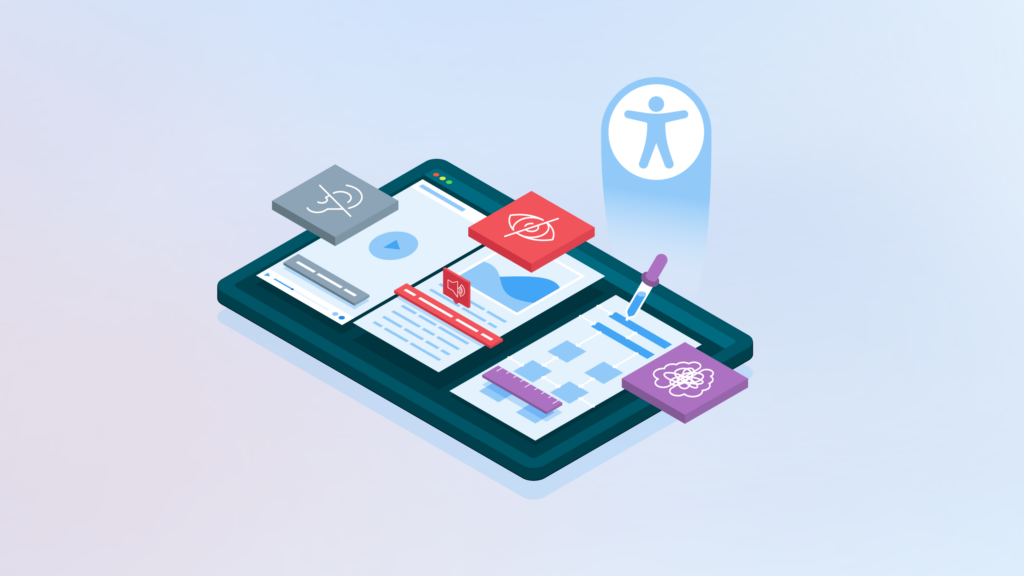
AI, Accessibility, and the Promise of the Universal Web

Software Stack Editor · March 22, 2024 ·

This article was written by Modus Agency Executive Vice President, Growth, Michael Stineman. Headquartered in New York City, Modus is a full-service digital agency, and WP Engine Agency Partner focused on building human-centered digital experiences that drive businesses forward.

Any business or institution today wouldn’t fathom making their physical location inaccessible. However, for 1 in 6 people worldwide with a significant disability—sensory, cognitive, physical, or emotional—navigating websites and digital platforms can be time-consuming and frustrating to the point where they are exclusionary.

In the digital age, web usage is essential to daily life. In addition to online shopping and socializing, web access is often integral to employment, education, and government services. 

And while web accessibility has evolved from a discipline focused on meeting compliance standards to one that’s about developing inclusive experiences, there’s still a significant digital divide. According to a recent IDC report, fewer than 10% of websites are fully accessible.

This is where the transformative abilities of Artificial Intelligence (AI) have the potential to profoundly improve web accessibility. Organizations have the opportunity to use these new tools to address accessibility at a personalized level for the end user. AI can help drive the digital environment closer to the goal of universal design.

Illustration depicting an AI-infused web experience accessible to all.

What is Universal Design?

“Universal design is design that’s usable by all people, to the greatest extent possible, without the need for adaptation or specialized design.”

– Ron Mace, an architect with polio who coined the term in the 1980s

When websites such as those using WordPress apply universal design principles, they are accessible to all people, including those with disabilities. By addressing accessibility issues in the component and template architecture, future pages and content updates will remain accessible without additional coding or maintenance. 

The Business Case for Prioritizing Web Accessibility

The Web Content Accessibility Guidelines (WCAG) were developed to help web designers and site owners meet best practice standards. According to the guidelines, web accessibility means users can perceive, understand, navigate, and interact with the web, as well as contribute to it.

Organizations can hire digital partners like Modus to conduct accessibility audits and implement fixes. Beyond the legal and ethical motivations to meet these criteria, organizations can serve more people and reach more customers. McKinsey estimates that companies that lack accessible digital experiences stand to lose close to $7 billion a year. And that figure is expected to grow as the aging population increases. 

From following best practices in coding to copywriting, designing web experiences for accessibility is no small feat. Organizations can save money by investing in web experiences that are the most accessible from the beginning.

“A lot of organizations try to address accessibility concerns after the fact, and while that approach can be successful, the cost of doing this is orders of magnitude greater than when you consider all these factors from the very beginning,” says Modus Vice President, Engineering, Asim Mittal.

AI’s capacity to automatically adjust the user interface for people with disabilities is potentially game-changing. Let’s explore some of the latest advancements using AI technology to transform web accessibility:

AI-enhanced Image and Object Recognition

For the visually impaired, screen readers have evolved over the years to convert digital content into audible speech. With AI-powered computer vision and natural language processing, these tools have improved to better interpret web content. 

For example, Ahrefs’ free AI Alt Text Generator can scan the content of an image and produce descriptive copy, identifying the essential elements and context for comprehension. You can even select your preferred tone of voice.

Another tool for those with visual impairments, Be My AI is a digital visual assistant tool created by Be My Eyes in collaboration with OpenAI.

image showing BeMyAI, a digital visual assistant that provides detailed audio descriptions of photos taken on iOS and Android devices.  
BeMyAI is a powerful digital visual assistant that provides detailed audio descriptions of photos taken on iOS and Android devices.  

Users can get clear, vivid audio descriptions of the photos they take with their iOS and Android devices. Users can even chat with the app for more information or guidance about the items pictured, such as interpreting product instructions.

AI-powered Audio Transcription

The speed and quality of audio captioning and transcription have significantly improved with AI, as the popularity of tools like Otter.ai and Zoom AI Assistant have proven. Real-time captions for audio and video content can help users with any type of hearing impairment access online content that has sound. 

Many of these tools also provide bulleted summaries that help users understand overall main points, decisions, and action items. Of course, the accuracy of natural language processing is still not perfect and should not be relied on completely.

AI-optimized Navigation

For users with physical disabilities, such as motor challenges, it’s important to consider alternative ways of navigating your website without the use of a mouse. 
Plugin solutions like accessiBe and UserWay overlay the front end of your website to enable accessibility adjustments, such as keyboard navigation.

Image showing UserWay, a popular WordPress plugin used for improving website accessibility.
UserWay is a popular plugin used for improving website accessibility, ensuring all users can navigate and interact with site content.

The programs use AI to analyze the architecture of your site and apply keyboard functionality. It’s important to make sure your website has well-structured headings to ensure the content is understandable for these tools.

Continuously improving

AI-driven technology for accessibility is just getting started. Future trends on the horizon include AI-driven real-time translation, gesture recognition, and brain-computer interfaces, which hold the promise of further breaking down barriers to accessibility.

However, businesses need to adopt AI solutions responsibly. Validating solutions with input from disability communities will help ensure they benefit people as intended. We’re excited to work towards a future where the digital experience welcomes all users and brings us closer to the promise of a universally accessible internet.

Learn more about Modus here, and visit WP Engine to find out more about our Agency Partner Program—the world’s largest WordPress agency ecosystem.

DE{CODE} Strikes a Chord, Achieves Record-Setting Attendance

Software Stack Editor · March 21, 2024 ·

image

Today marks the end of WP Engine’s fifth annual DE{CODE}, the virtual developer conference. With recorded sessions airing live across two days and three time zones, the conference had more than 4,000 attendees from 86 countries.

More than 45 experts from across WordPress gathered to share their advice and insights on some of the most pressing topics in modern development, from AI and accessibility to payment processing, security, and more.

Read on for an overview of some of the most-attended sessions or head to our YouTube channel to watch all of the sessions now!

Please note that our keynote session featuring former OpenAI Head of Go-to-Market Zack Kass will only be available to rewatch for a limited time on our event platform, so make sure you’re registered and sign in to watch it again before that session expires!

AI and the Future of WordPress Development

In this keynote discussion, presenters explore how AI will impact key areas of development, from accessibility to productivity and beyond.

We’re using AI to enhance what we do best, which is solving real problems for our customers, making things better, faster, cheaper, and more delightful.

Jason Cohen, Founder & CIO, WP Engine

WP Engine Founder and Chief Innovation Officer Jason Cohen joins Product Manager Luke Patterson, Equalize Digital CEO Amber Hinds, Code and Theory Chief Technology Officer David DiCamillo, and CXR General Manager Lucky Gobindram to discuss how developers are harnessing AI to create better, more performant digital experiences.

[embedded content]

The Business of WordPress

The advantages of open-source technology for businesses in any industry are undeniable.

[embedded content]

In this entrepreneurial keynote session, Brainstorm Force CEO & Co-Founder Sujay Pawar; Elementor Head of WordPress Relations Miriam Schwab, and Newsletter Glue Co-founder Lesley Sim share how they’ve harnessed the power of WordPress to accelerate their businesses—and how you can do the same.

Breakout Sessions

Additional DE{CODE} breakout sessions cover everything from eCommerce payments and compliance to headless innovation and beyond!

The following are three of the most-attended sessions from this year’s conference.

Empower Your Development: The Breakthrough Features of WordPress 6.5 Unleashed

The first major WordPress release of 2024 is set to launch on March 26. In this discussion, you can hear directly from the 6.5 Editor Triage Release Team as they unveil and demonstrate new features and functionality.

Now, with the Block Bindings API, you can bind data to an existing block, so the ease with which you can incorporate custom data into core blocks without creating your own will unlock quite a bit.

Nick Diego, Developer Relations Advocate, Automattic

From the Font Library to the latest in the DataViews project, follow along as experts explore what’s new in 6.5 and how these changes can inform even more innovations in future releases.

Mastering Modern Site Creation With the Best Workflows in WordPress

If you want to take on more projects and more clients, you need to streamline your workflow, ironing out all the kinks to ensure your development process is seamless from start to finish.

In this session, experts highlight important tools you can use to develop sites more efficiently, including Local, Advanced Custom Fields, WP Migrate, Frost, WP Engine’s WordPress platform, and more!

How to Fix a Site You Didn’t Build for Optimal Performance

When a client asks you to fix a site you didn’t build, you’re left to wonder what issues are lying in wait beneath that code.

In this session, experts share practical advice on how to turn an underwhelming site into an overwhelming success, including how to identify major problem areas, manage client expectations, and decide on the best course of action. 

Keep Learning With DE{CODE}

Special thanks to the sponsors of DE{CODE} 2024 as well as the presenters who joined us; we appreciate the time and effort you took to help make this year’s DE{CODE} our most successful conference yet!

Make sure you register on our event platform to view our keynote featuring Zack Kass, or head to our YouTube channel to watch the recorded sessions now.

How WebDevStudios Saves Time and Simplifies Elementor Migrations for Enterprise Clients

Software Stack Editor · March 18, 2024 ·

This article was written by WebDevStudios Director of Accounts Jen Miller, MBA, MSML. A WP Engine Agency Partner, WebDevStudios is a WordPress website design and development agency creating quality-driven digital experiences that fuel client success.

According to W3 Techs 43.2% of websites worldwide are powered by  WordPress, with 62.8% using WordPress as their content management system (CMS). Of those WordPress websites, 23% utilize Elementor.

The popularity of Elementor’s drag-and-drop interface is due to the builder’s ease of use. Historically, before the arrival of the WordPress Block Editor, Elementor made it simpler for non-technical users to build a website. Unfortunately, a simple test utilizing Google’s PageSpeed Insights shows that websites created with page builders score lower than those built in the block editor.

Testing indicates that page load speed is affected by Elementor, as the page builder makes larger than average page sizes and prompts the need for migration, as these issues affect search engine optimization (SEO). Often, the discovery of problems such as these occurs during a routine website audit.

“An audit is one of the most critical pieces of the discovery process, as it helps to set our baseline for improvement,” says WebDevStudios Director of Engineering Mitch Canter. 

“As such, 99% of the projects we take on here at WebDevStudios start with an audit for performance, code quality, and security.” 

Due to this, clients seek out WebDevStudios to migrate their existing WordPress website from Elementor to a block-based theme.

“We’ve seen an uptick in new leads interested in migrating away from Elementor,” says WebDevStudios CEO Brad Williams. 

“While the website design produced by the team may look great, they ultimately choose a no or low-code solution like Elementor as they don’t have the experts on staff to truly develop a modern block-based theme in WordPress.”

Migrating from a Page Builder – A Common WordPress Challenge

If you have yet to attempt to migrate from Elementor, you’re likely unaware of the challenge it presents. 

Website pages usually export and import relatively easily. However, page builders present unique challenges in this area.

For example, Elementor layouts become a solid block on import, which removes the original design elements and may result in missing content and unauthorized designs. Widgetized areas become one block as well, adding to the migration challenge. When migration challenges exist, more hours are needed, increasing the client cost. 

[embedded content]

Until recently, migrating a page builder site to blocks required manual migration. However, that was not the most efficient solution. WebDevStudios Chief Operations Officer Lisa Sabin-Wilson explains this in detail: 

“Traditionally, migrating website data from a WordPress installation using the Elementor page builder to one that leverages the Block Editor was a cumbersome and time-intensive task,” she says. 

“It required significant manual effort, was prone to errors, and often resulted in increased project timelines and costs. Understanding these challenges, we developed this Elemetor-to-Block migration script that automates the conversion of Elementor-designed pages into the Block Editor format, effectively eliminating the manual labor that was once a staple of these types of data migration projects. Due to the volume of requests, our engineering team decided to design an Elementor to Block Editor solution.”

WebDevStudios Develops Time and Cost-Saving Migration Solution

WebDevStudios engineers analyzed why this problem occurred and developed a framework to address the issue. Our specialized framework converts Elementor blocks and widget content to the WordPress block editor through the custom command line interface. This results in quicker system line integration for engineers, allowing automated conversion of Elementor pages to core WordPress blocks when using a traditional theme, saving agencies and clients time and money.  

“It is important that our clients are able to take their data with them, no matter where they are headed on the web, ensuring their content remains intact and accessible, regardless of the platform,” says Sabin-Wilson. 

“Our script supports data portability, facilitating smooth transitions without the risk of data loss, embodying our commitment to delivering flexible and future-proof web solutions. Whether it’s for a facelift or a full-on re-platforming, it is vital that your data is ready to move when you are.”

“Operationally, the Elementor-to-Block migration script has helped us realize efficiency gains, reduced costs, improved project quality, and reaffirmed our commitment to innovation in this space and our ability to address and overcome the challenges of modern WordPress development,” Sabin-Wilson adds. 

“The right tech can make our work better, not just faster, and adding this script to our toolkit means we spend less time on the tedious and more time on the creative side of web development, and helps us keep costs down for us and our clients.”

The process is simple, requiring deactivating the Elementor plugin and activating a new theme, such as the WP 2024 default theme, as seen in the demo video. Once loaded, the website content remains without style and layout as one block in both the front end and the Elementor editor. 

However, when the WebDevStudios block editor framework runs in the custom command line interface, that one block becomes a series of blocks, as intended. The WordPress editor can now access Elementor widgets and elements found in previous layouts, as all Elementor widgets are now WordPress blocks. From here, our WebDevStudios team updates block designs and styles to match the design of the original Elementor pages, resulting in a more performant website.

To learn more about this innovative Elementor migration solution, please get in touch with WebDevStudios or call us at 1.855.932.3380. Let us know if you have a different problem for us to solve! We love creating innovative enterprise website solutions that create value.

Elevate Your WooCommerce Store With WP Engine’s New Stripe Checkout Integration

Software Stack Editor · March 12, 2024 ·

Introducing the all-new, frictionless Stripe Checkout integration for WooCommerce by WP Engine. Now you can optimize your store’s checkout flow with a world-class checkout experience customized to your brand and simplify compliance associated with online transactions—with the flip of a switch.

Last year, we integrated Stripe with the WP Engine portal, giving our eCommerce users a more efficient and secure way to connect and take payments. 

Now, we’re expanding our offer to go beyond payment processing by offloading the entire checkout experience. Our new Stripe Checkout integration is designed to increase conversions by allowing shoppers to complete transactions in fewer clicks with fewer fields, and it simplifies regulatory compliance by offloading the processing of sensitive payment information to fields originating directly from Stripe’s PCI DSS-validated servers. 

Our Stripe Connect integration includes:

  1. Toggle control of sandbox/test mode
  2. 20+ built-in payment add-ons, including BNPL, Link, Apple Pay, Google Pay, and direct bank payments
  3. Increased key security

The new integration also moves beyond payment processing, creating an entirely upgraded hosted checkout experience. Use WooCommerce for browsing, shopping, and store management and integrate a checkout experience designed by Stripe’s team of engineers and designers that works continually to increase sales on your behalf.

This integration simultaneously provides a completely branded checkout experience optimized to boost conversions and a simple way to meet regulatory compliance. 

If your business model requires you to handle card data, you may be required to meet the more than 300 security controls in Payment Card I Data Security Standard (PCI DSS). There are more than 1,800 pages of official documentation about PCI DSS published by the Payment Card Industry Security Standards Council (PCI SSC), and more than 300 of those pages are simply explaining which form(s) to use when validating compliance. This would take, on average, 72 hours just to read!

Stripe Checkout offloads the processing of sensitive payment information to fields that originate directly from Stripe’s PCI DSS-validated servers. More secure, and more sales seamlessly integrated with Woo.

What Makes the WP Engine Integration Unique?

We’ve done all the heavy lifting integrating Stripe Checkout with Woo—so you can flip the switch and run it without coding, saving hours in development and offloading the cost of ongoing maintenance. 

Simply toggle on the Stripe Checkout feature, and all future transactions will offload to Stripe’s PCI-DSS validated servers

As a managed hosting provider with an industry-leading average customer satisfaction rating of 4.8%, you know the code will be maintained to work seamlessly on each new version of WordPress and WooCommerce. It is mobile responsive to work across any device and lets customers move quickly to input and reuse payment information, helping to spot errors in real time.

Like our Stripe Connect integration, Stripe Checkout has an airtight setup and security checks you can’t get from a third-party solution. No sharing passwords or copying and pasting of keys; we use OAuth authentication, so you can protect sensitive information for shoppers, merchants, and developers.

The WP Engine portal integration seamlessly blends Stripe into your WooCommerce checkout flow. When your shoppers are ready to pay, they are directed to your Stripe Checkout experience, and when the transaction is complete, they return to your store without a break in the design or shopper experience.

WP Engine Stripe Checkout features include:

  • Address auto-complete
  • Address collection
  • Adjustable quantities
  • Automatic currency conversion
  • Branding customization
  • Card brand identification
  • Card testing protection
  • Card validation
  • Chargeback protection
  • Custom fields
  • Descriptive error messages
  • Email receipts
  • Email validation
  • Fraud logic with machine learning
  • Language support in more than 30 languages
  • Payment method optimization
  • Phone number collection
  • Local currency displayed
  • Pricing table
  • Responsive design
  • Shipping method selection
  • Simplified PCI validation
  • Store policies display
  • Third-party autofill
  • 1-click payment using Link
  • And, more…

Plus, Stripe Checkout supports 30+ languages and more than 135 currencies so you can securely sell across the globe.

This all sounds great—but it also sounds expensive. Fortunately, the Stripe Checkout integration for Woo is included with all WP Engine eCommerce plans. There are no additional processing fees and, unlike other eCommerce platforms, we do not penalize merchants for choosing another method.

So How Does it Work?

To use the Stripe Checkout feature, you need to first connect to your Stripe account in the WP Engine portal. This will give you the option to turn on Stripe Checkout. 

Built into the portal are options to update your Store Policies and add fields to collect shipping information and a phone number. This works out of the box with the default configuration. 

WP Engine’s Stripe checkout integration provides a completely branded checkout experience optimized to boost conversions

To edit styles, including adding your logo and customizing the page’s background color, button color, font, and shapes without code, simply visit the Branding Settings within Stripe to edit from the WYSIWYG interface, save your changes, and the styles will be applied.

Get Set for WooCommerce Success on WP Engine

WP Engine eCommerce is designed to set your WooCommerce store up for success from starting and selling to optimization and management. 

With Stripe Checkout, we’ve reduced the friction of integration and setup, taking the stress out of compliance, code maintenance, and transacting with Woo.

WP Engine’s DE{CODE} 2024: What’s Next in Modern Web Development

Software Stack Editor · March 12, 2024 ·

image

Austin, TX – March 12, 2024 – WP Engine today announced registration is open for DE{CODE} 2024, the company’s annual developer conference and the industry’s largest WordPress developer event. The free, virtual event will be held on March 19 (North America and APAC) and March 21 (EMEA). 

Now in its fifth year, WP Engine DE{CODE} brings together WordPress community thought leaders to share best practices and discuss the future of modern web development innovation. This year’s agenda features developer-centric content and learning opportunities, including:

  • Industry-leading keynote speakers, including AI futurist expert Zack Kass, OpenAI’s former Head of GTM on ‘Navigating Our AI Future’ 
  • New product launches unveiling the latest WP Engine innovations including its new artificial intelligence (AI) offering
  • Breakout sessions from agencies and brands including Brainstorm Force, Elementor, NitroPack, Google, PeachPay, Code & Theory, Granite Digital, Illustrate Digital, StrategiQ, americaneagle.com, WEBDOGS, and drewl.

“WP Engine’s north star is to advance WordPress success, offering unparalleled technology and expertise that helps our customers win online,” said WP Engine Founder and Chief Innovation Officer Jason Cohen.

“DE{CODE} was created with that same spirit in mind, empowering developers with ongoing education centered around the latest innovations in WordPress. This year, we’re empowering attendees with the skills and inspiration needed to shape the future of the web through sessions on performance optimization, developer efficiency, eCommerce growth, and modern development solutions such as headless WordPress and AI.”

The conference has grown to become the industry’s largest WordPress developer event and will feature content, networking opportunities, and live demos dedicated to helping developers, marketers, and agencies build better WordPress sites. With four breakout tracks of programming, this year’s attendees will learn how to:

  • Improve developer workflows and increase efficiency
  • Uncover new strategies for enhancing site performance and SEO
  • Discover how to optimize eCommerce sites
  • Explore how the applications of emerging technologies, such as artificial intelligence (AI) and headless WordPress, are modernizing web development 

To register for the conference and learn more about what to expect at DE{CODE} 2024, visit: https://events.wpengine.com/GPrGQQ?Refid=PR 

About WP Engine

WP Engine provides the most relied upon and trusted WordPress products for companies and agencies of all sizes, including specialized solutions for managed WordPress hosting,eCommerce, enterprise WordPress, headless WordPress, and developer-centric tools like Local, Advanced Custom Fields, Genesis, and more. WP Engine’s tech innovation and award-winning WordPress experts help to power more than 1.5 million customers across 150 countries. More of the top 200,000 sites in the world use WP Engine to drive their digital experiences than anyone else in WordPress.

At WP Engine, we do what’s right for our customers, and this focus helps us to do the best work of our careers. We prioritize investing in our employees’ success and love offering opportunities to help them grow and develop professionally. Learn more at wpengine.careers. 

Crafted Future: UX For a New Era

Software Stack Editor · March 11, 2024 ·

Designing digital experiences is becoming increasingly complex year over year. Performance and accessibility are assumed, and users have come to expect highly personalized experiences across the digital touchpoints they encounter every day. 

Brands and agencies must adapt to the needs of their users by creating digital experiences that not only adhere to modern best practices for development, but also fulfill the hyper-individualized needs of each consumer.

To explore the nuances of UX-focused design, WP Engine, in partnership with The Webby Awards, recently hosted a Crafted Future panel discussion titled UX For a New Era. 

The Crafted Future series shines a light on some of the most important topics surrounding the way developers, marketers, and other creative professionals are shaping the web and the future, and the most recent panel discussion, which you can view in its entire here, includes L+R Digital Product Designer Jingxuan Yu, CMYK Digital Designer Celine Wang, and WP Engine Lead Web UX Designer Andrea Wofford.  

Throughout the discussion, all three panelists dive into the trends defining UX in 2024—from artificial intelligence and hyper-personalization to accessibility and more—while more than 600 attendees from Philly to France and far beyond joined in the discussion to explore the changing digital design landscape, what works, and how to focus your design efforts on the most important factor: the needs of the end user.

Read on for a breakdown of the expert insights shared during the panel or watch the full session on demand!

[embedded content]

Accessibility and Simplicity

The conversation opened with a discussion around two cornerstones of modern UX design: accessibility and simplicity. Across the panel, experts agree that accessibility is not just a way to accommodate a wider audience, but is actually a central marker of quality UX design. 

Part of that accessibility, according to the panel, includes stripping designs down to the basics, offering simplicity instead of including excessive bells and whistles.

“I feel like good UX, at its core, has always been about getting a user from point A to B in the most efficient way while making that process enjoyable,” said Wang. 

“Nowadays people have so much access to all these different platforms, devices, and technologies—they’re constantly being stimulated by all these things,” she continued, “which is why I think people value transparency, especially now. Sometimes simple is better.” 

Attendees agreed with the panel: simple, accessible design is the way of the future

Wofford echoes that point as well, remarking that designers are moving away from “clutter” and choosing to create highly focused designs instead. 

“There was a tendency in the past to overdesign—make things more flashy—but that was not necessarily serving the user,” she said. 

“I’m seeing sort of a movement towards simplifying things and removing anything that could potentially get in the way of a user accomplishing their goal.”

Let’s Get a Little Personal

Marrying that accessibility and simplicity with highly personalized experiences will be, according to the panel, the next big shift in UX design. While users crave clarity in design, they also demand digital experiences that speak to their personal, lived experiences.

“I definitely see that design has become more curated, more personalized to provide higher value to individual users,” said Yu. 

“For example, we see a lot of user-generated content and platforms using special algorithms to customize the information that a unique user will receive based on their interests and behaviors.”

This movement toward creating personalized experiences for a broad spectrum of users on a dynamic internet—like most shifts in the digital world—will bring about rapid changes, many of which are just now starting to surface.

“Personalization is becoming a lot more prevalent, but at the same time, it feels like it’s still in its infancy—like we are just now starting to unlock it and figure out how to best integrate it into the user flow,” said Wofford.

Experts agree that this move toward personalized experiences will require developers to lean on tried-and-true best practices while simultaneously embracing emerging technologies 

“It’s gonna take an open mind and a willingness to embrace new technologies,” said Wofford. “To design in a way that’s forward-looking and say ‘What can I do at the moment that will help facilitate a personalized user experience later on.’”

AI, Headless, and the Future of the User Experience

Speaking to that forward-thinking mindset, the discussion closed with panelists sharing their views on the many potential permutations of what the future of UX design could look like as well as the ways emerging technologies—like artificial intelligence and headless site architecture—could affect the work of designers.

One topic that’s top of mind for many designers is AI, and for the panel, the future coordination between AI and UX design is unclear but exciting.

“If I say I know exactly how this new technology will fit into UX design, that’s a lie,” Yu quipped. 

“However, I assume AI, as a powerful tool, will help to facilitate the expansion of UX to more fields outside of Internet products. I would recommend teams start trying it out—really testing these AI tools at work so that you could get a sense of where the boundary exists in current technology deployment.”

Yu goes on to name a few tools she has tried in her own work, including DALL-E plugins for Figma and Nexa AI.

Wofford shares how AI and headless architecture are both already affecting her work on WP Engine’s headless website with Smart Search, an AI-powered search tool designed to enhance search capabilities on WordPress.

“Currently what I’m working on is a search experience where we are bringing together all of our different repositories of content, and we’re using WP Engine Smart Search to aggregate it all so that you can search through all of them—regardless of whether they’re on a headless site or not—in one place, and I’m really excited about how helpful that is going to be for the user,” she said.

Attendees shared excitement about new technologies and tips for incorporating these tools into your own work

With their final words, panelists made sure to tell attendees that trending technologies, while exciting, should not be adopted for adoption’s sake. Choosing new tools and technologies with purpose is more important than staying ahead of the curve.

“Make sure that you’re adopting new trends for a reason and not just adopting them because they’re trendy, and when there are companies or clients who are insisting on certain things, I think that it’s okay to push back—it’s okay to give them reasons why you don’t necessarily go need to go in that direction,” said Wofford. 

“The beauty of UX design is that there are so many resources where we can actually prove efficacy through numbers or research or tests,” she continued, “so I think it’s good to embrace these trends where it makes sense and to use your expertise to make sure that you’re part of the conversation as to how they get applied.”

What is Crafted Future?

Crafted Future is a series of panel discussions presented in partnership with The Webby Awards and WP Engine. The virtual event series explores topics impacting the work of digital professionals as told by top-level experts in their fields.

You can find all the previous Crafted Future discussions on The Webby Awards’ YouTube channel.

Craft Your Future on WP Engine

We extend our gratitude to everyone who watches this virtual event and hope the insights shared make you excited about the future of UX design.

For WordPress lovers, make sure to check out WP Engine for a world-class WordPress hosting experience that keeps your sites secure, performant, and future proof!

Going From Local to Live Just Got a Whole Lot Easier!

Software Stack Editor · March 5, 2024 ·

image

Local, for many years now, has been the number one local WordPress development solution for those who want to build with WordPress on their local machines. 

Easily spinning up a new site, configuring it, and operating it on the almost zero-latency environment that is your own desktop has been a huge productivity boost for developers. And we can’t ignore the fact that it’s also a gorgeous-looking app! 

Building locally is one thing though. Taking what you’ve built from Local to live is another. With Local version 8.3 out this week, we make this “getting my site live” piece a whole lot easier! 

We’ve taken a fresh look at the deployment functionality of Local and made some massive improvements to the overall user experience and its reliability. In addition to streamlining the flow of connecting your WP Engine account to Local, we’ve also taken steps to give you more control over what is actually moved when you hit the button.

Let’s have a look!

Connecting Your Account

To connect Local to your WP Engine hosting account you first need to have one. Explore our plans to find a hosting solution that fits your needs. Once your account is ready, it’s as simple as clicking the “pull” button in Local against one of your sites and then authenticating with your account.

Something like this:

Selecting Your Site and Environment

Once Local is authenticated to your WP Engine account, you can select the account (you can actually have multiple accounts), the site, and the site environment (dev, staging, production) you want your site to push to or pull from.

Like this:

Choose What You Move

Now, sometimes you don’t want to push everything live. Sometimes you just want to send up the files without the database, or even just some of the files. Others want to pull only the database down, syncing up their development environment with production data while leaving files untouched. This is now easy in Local!

Check it out:

What’s Next…

For Local users looking to further streamline their workflows, it’s these kinds of improvements that make all the difference! 

We’re not stopping here though! The roadmap for this year is full of exciting features and improvements that will further cement Local as everyone’s favorite local WordPress development tool!

If you want to get a glimpse of what’s to come, make sure you join us at this year’s DE{CODE}  You can register for free here. 

Not working with Local yet? You can download it for free right here! 

  • « Go to Previous Page
  • Page 1
  • Interim pages omitted …
  • Page 4
  • Page 5
  • Page 6
  • Page 7
  • Go to Next Page »

Get your Software Stack together. softwarestack.tech

Software Stack

© 2024–2026 - Software Stack is a trading name of SouthwestCIO Limited ac ompany registered in England & Wales 11319049

  • Knowledgebase
  • Home
  • About Us
  • Contact Us