• Skip to primary navigation
  • Skip to main content
software stack logo

Software Stack

Get your Software Stack together

  • Knowledgebase
    • All Categories
    • Accounting Software
    • Automation & Workflow Software
    • Customer Relationship Management
    • E-Commerce Shopfronts & Payments
    • Marketing Automation
    • Online Courses & Membership
    • Project Management
    • Surveys & Forms
    • Web Hosting
  • Home
  • About Us
  • Contact Us
  • Show Search
Hide Search

WP Engine

Meet the Experts: Julio Diaz

Software Stack Editor · October 16, 2024 ·

WP Engine has more than 1,000 employees worldwide. From our award-winning customer support team to the engineers who keep our platform fast and performant, each role is as unique as the person who fills it.

We take pride in our teams’ expertise, whether in technical troubleshooting, driving relentless innovation across our fully managed platform, or providing exceptional support for our agency partners.  

In this ongoing series, we speak with WP Engine’s experts to learn more about their roles, their areas of expertise, and how they support customer success. 

In this interview, we speak with Julio Diaz, a senior training and support specialist based in Austin, Texas.

Julio (right) next to Greg Baldwin (left). Baldwin is the voice actor for General Iroh in Avatar the Last Airbender, one of Julio’s favorite characters from the series.

Say hello to Julio!

Meet Julio Diaz. He’s a cooking enthusiast who enjoys 3D modeling and sci-fi audiobooks. He’s also a vital member of WP Engine.

Julio joined the company in 2014, starting with WP Engine’s first-ever training class. Now, he uses his talents to train other employees on WP Engine’s systems, including our chat support. 

“It’s definitely fun thinking back on how it all started,” Julio says. “I didn’t even know what WordPress was, let alone WP Engine. After my initial interview, I was invited to a happy hour. Apparently, I left an excellent impression because ten years later, I’m lucky to be able to tell this story.”

Aside from 3D printing and cooking, Julio enjoys playing video games, kayaking, and disc golf, but only “when it’s not 900 degrees in Texas.”

Julio’s career journey

Because Julio has been helping train WP Engine employees for years, he has a deep understanding of our technical processes. This makes him a perfect mentor for new employees who are learning WP Engine’s systems for the first time, and he takes a hands-on approach to that mentorship.

“I make it a point to lead by example. Before anyone I train takes a chat, I’ll take one myself and have the class observe my workflow,” he explains. “This keeps me practiced enough to help teach others.”

His hands-on approach to teaching likely stems from the fact that, before Julio joined the company in 2014, he had received little technical training himself. 

“I was on the fence about applying to WP Engine because I didn’t think I was technical enough to join,” he says, “but I was ready for a new adventure.”

Now, ten years into that adventure, Julio has taught dozens of employees, and he’s learned plenty of lessons along the way. 

“The biggest lesson I had to learn (and relearn) is that leadership isn’t a title,” he says. “I thought I had to be a manager before I could learn about leadership. I’m glad I’ve since learned that isn’t the case.”

Julio’s words of wisdom: Ask questions and keep learning

Speaking of learning, continued education is a huge part of Julio’s job as a training facilitator. For him, learning means asking a lot of questions.

“I’m not afraid to ask questions. As a trainer, I often hear comments like, ‘I have a dumb question…’” he explains. “I tell all my classes that the only dumb question, in my opinion, is one that’s never asked.”

That kind of openness and willingness to keep learning makes Julio exactly the kind of person you want tracking down answers to customer inquiries and teaching others how to do the same.

“If I don’t understand something, I’ll go turn over all the rocks, and oftentimes, other things get fixed along the way,” he says. “Some might not want to rock the boat, stir the pot, push the red button—I’ll do all of those things. If someone isn’t reporting something that needs to be fixed, how are we going to get better as a whole?”

Julio’s dedication to the success of WP Engine and our new employees comes from his genuine desire to see others succeed. 

“Not only is my own growth good to see, but watching the growth of my peers is equally rewarding,” he says. “Seeing those I’ve trained getting promoted and furthering their careers is one of my favorite parts of the job.”

As a training facilitator and mentor to so many new WP Engine employees, Julio is full of good advice for those embarking on a new adventure. Whether it’s a new career, a new role, or any other new chapter, this tidbit seems applicable no matter what your next adventure is.

“Strive to improve yourself each day. If you miss the mark, try a different path. Little by little, you’ll get there.”

Powered by people

When asked what his best advice would be for someone pursuing a career at WP Engine, Julio’s instructions are simple: “Come ready to learn and grow, because that’s how we roll!”

WP Engine is powered by people like Julio, who work around the world and around the clock to optimize our platform and products.

Want to find out more about what it’s like to work at WP Engine? Visit our careers site to see the roles we currently have open and check out our blog for more information about all the great people who work here!
Celebrating Certification Nation Day—WP Engine is a Great Place to Work!

Software Stack Editor · October 16, 2024 ·

At WP Engine, we believe that creating a positive workplace environment is crucial for driving innovation, fostering growth, and building community. Our many recognitions by Great Place to Work (GPTW), the global authority on workplace culture, underscore our commitment to this goal. 

Each of WP Engine’s global locations has earned GPTW certification for 2024, and we couldn’t be more proud of our teams around the world. To that end, we’re thrilled to celebrate Certification Nation Day, marking our commitment to building an exceptional workplace that prioritizes our people. 

Read on to learn more about Certification Nation Day, WP Engine’s history with Great Place to Work, and how our core values drive greatness every day!

What is Great Place to Work Certification Nation Day?

Great Place to Work (GPTW) is the global authority on workplace culture, employee experience, and leadership behaviors. Through in-depth employee feedback surveys, GPTW recognizes companies that foster environments where people feel respected, empowered, and engaged. 

Earning this certification isn’t just about perks or benefits—it’s about creating a workplace where trust, collaboration, and inclusivity thrive.

Certification Nation Day, celebrated every October, highlights organizations that have achieved Great Place to Work certification based on employee feedback collected in the Trust Index survey. 

The feedback, which GPTW collects, anonymizes, and returns to participating organizations, provides an opportunity for companies to reflect on their achievements, celebrate their teams, and continue the work of maintaining a positive, inclusive environment.

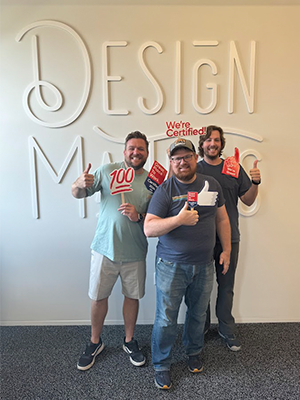
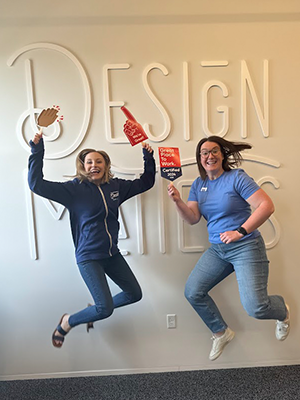
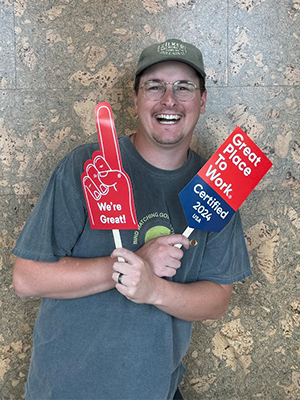
A few of our team members celebrate Certification Nation Day in Omaha

WP Engine’s Great Place to Work journey

WP Engine has a longstanding history with GPTW. Since earning our first certification in 2017, we’ve been recognized on several prestigious lists, including Best Workplaces in Technology, Best Workplaces for Women, and Best Workplaces for Millennials. 

Each of our international locations has received GPTW certification at various points, including multiple certifications in Ireland and the UK as well as our most recent certifications in Poland and Australia. These achievements reflect the strong culture we’ve built globally, where innovation and teamwork coincide to create a thriving workplace.

Our GPTW journey is a testament to our efforts throughout the years to invest in our people and ensure that they feel supported, valued, and engaged, even across multiple countries and time zones.

Our Core Values drive our greatness

At the heart of WP Engine’s success as a Great Place to Work are our Core Values. These ideals actively shape every facet of our business and guide our interactions with each other, our customers, and the broader community. 

By living these values every day in their roles, each individual on our team has contributed to creating an inclusive, dynamic, and high-performing workplace.

Do the Right Thing 

This value is all about integrity and responsibility. 

In everything we do, especially when serving our customers and creating robust benefits and compensation packages for our employees, we strive to act with empathy and a commitment to doing what’s right. 

Customer Inspired 

Our product and engineering teams are passionate about building solutions that truly solve the needs of our customers. 

Seeking inspiration from the people who use our platform and products motivates our internal teams to innovate, evolve, and deliver solutions that empower businesses to thrive on WordPress.

Design Matters

From customer experiences in our User Portal to brand communications, our team believes in the power of great design. 

This value emphasizes our belief that aesthetics and functionality must go hand in hand. Every piece of content or interaction with our brand—including internal communications with employees—is thoughtfully designed to make a lasting impact.

Committed to Give Back 

We are dedicated to making a difference, both through investment in our employees and making charitable donations to causes and communities that affect our team members. 

Our employee resource groups help foster inclusivity and openness among disparate members of our global teams. Whether we’re sponsoring a community event or donating to disaster relief, we’re committed to giving back to the communities we live and work in.

Built for Growth 

Our commitment to growth isn’t just about expanding our business—it’s about the personal and professional growth of all employees. 

We create opportunities for learning, mentorship, and career development across all departments, ensuring that every team member has the opportunity to grow and advance their skills.

Conclusion

WP Engine’s history of continued recertification as a Great Place to Work reflects our values in action. These certifications serve as a testament to the commitment we’ve made to our people and the culture we’ve built together. 

As we celebrate this year’s Certification Nation Day, we want to acknowledge the hard work and dedication that’s led to each of our global certifications and send our congratulations to all of the incredible companies certified by Great Place to Work this year. 

Here’s to continuing to live our Core Values and making WP Engine a Great Place to Work every day!

The Block Editor: A Smart Move for WordPress Agencies

Software Stack Editor · September 23, 2024 ·

image

Back in 2006, when I first started working with WordPress, building custom themes was all about diving into PHP files and hand-coding layouts from the ground up. Fast-forward to today and things have completely changed with the arrival of the Block Editor.

Recently, I hosted a webinar, “Mastering Web Development Efficiency: Automate & Scale Your Agency,” where I discussed how embracing new tools like the Block Editor and automation can help agencies scale faster and serve more clients without sacrificing quality.

Is your agency still using the classic editor?

If so, it might be time for a change. With the Block Editor, you can expedite workflow and make it easier for your design and development teams to work together. The transition and learning curve might take some time, but once you hit that “a-ha moment,” you’ll wonder why you didn’t do it sooner.

Let’s explore compelling reasons why your agency should consider investing time and resources into the Block Editor.

WordPress is becoming a design system

The Block Editor turns WordPress into a complete design system, so you don’t have to rely on PHP or custom templates for every project.

Block patterns and global styles make your workflow smoother, and your designs stay consistent. It lets you focus on what matters—giving clients great results—without wasting time on code or minor fixes. It’s just a simple, practical design that gets the job done.

When Nathan Rice and I created the Genesis Framework, we aimed to build a simple, structured system for developers. The Block Editor follows that same idea. You can design sections like hero images, testimonials, or call-to-action areas and reuse them across pages, projects, or clients. It saves agencies a lot of time and keeps designs consistent.

With Full Site Editing (FSE), you’re not just arbitrarily adding blocks—you’re designing the entire site layout using blocks, from header to footer. For agencies, this is a huge benefit. It makes the handoff smoother and gives clients more control, all while maintaining the design.

Create a base theme to expedite workflow

I’ve made my workflow easier by creating a base block theme. It’s a blueprint you can use as a starting point for every new project. Instead of creating a new theme from scratch for every client, you can customize the base theme to fit the client’s brand while saving yourself work hours.

When creating themes for StudioPress, starting from scratch was just part of the job. With block themes, it’s like using a template—the structure is already in place, and all you have to do is adjust the blocks to match the project’s needs. It’s faster, cleaner, and more consistent across your agency’s work.

With Global Styles, you can manage typography, colors, and other settings from one central spot, making changes across the entire site in minutes, not hours. The more you integrate blocks into your workflow, the more efficient and scalable your processes become.

Leverage block patterns for quicker builds

Another feature agencies should be taking advantage of is block patterns. Block patterns are pre-designed layouts—think of them as ready-to-go sections like pricing tables, contact forms, or hero sections—that you can reuse across multiple projects.

As we worked on Genesis, the goal was to make development quicker and easier for theme designers. Block patterns take that same idea to the next level. They allow you to save common design elements that you can quickly drop into any page with a single click, which speeds up development and keeps client sites consistent.

If your agency builds websites for small businesses, you probably have a well-designed block pattern ready for a service section. Instead of starting from scratch, reuse the pattern, update the content, and you’re done. This newfound process saves time and keeps the website looking consistent and professional.

Future-proof your agency workflows

The Block Editor isn’t just another feature—it’s the future of WordPress. Each core update shows more block functionality, better style controls, and stronger Full Site Editing tools. By embracing the Block Editor now, your agency is staying ahead and preparing for what’s next.

Agencies that stick to their classic workflows might feel comfortable, but they’ll eventually have to play catch-up. The Block Editor continues evolving, and clients expect more flexibility and control over their websites. Agencies that adopt these changes early will stay ahead of the competition.

Clients should appreciate the Block Editor because it empowers them to make content changes independently without worrying about breaking the site’s design. This frees up your team from minor edits and gives clients a sense of control and satisfaction, allowing you to focus on the bigger picture—designing and developing high-quality websites.

The time to embrace blocks is now

I’ve been building on WordPress for nearly two decades, and in that time, I’ve seen it evolve in ways none of us could have imagined. The Block Editor is one of the most significant shifts in this evolution, and it’s here to stay, shaping the future of WordPress development.

For folks who have traditionally built with custom fields and templates, you don’t have to worry about losing control—it just requires a different approach. With core blocks and patterns in the Block Editor, there’s more creative control, not less.

Adopting the Block Editor is crucial for long-term success. It’s not only faster and more flexible, but it also gives both developers and clients far greater control. Agencies that make this shift will stay ahead of the competition, while those clinging to outdated workflows will only risk falling further behind.

The digital world is constantly shifting, and so is WordPress. Getting on board with the Block Editor now doesn’t just keep your agency in the game—it sets you up to handle whatever comes next.

Highlighting Over a Decade of Innovation and Contribution to the WordPress Community

Software Stack Editor · September 20, 2024 ·

image

WordCamp US, which is wrapping up today in Portland, marks another milestone in WordPress’ ongoing evolution. The event brought together enthusiastic WordPress users from near and far and featured insightful sessions, workshops, and vibrant discussions, all highlighting the exciting momentum within the WordPress community.

WordPress thrives thanks to a broad spectrum of developers, builders, agencies, and businesses committed to its success. WP Engine is proud to be part of this remarkable ecosystem, powering the freedom to create for more than 1.5 million WordPress sites and more than a million developers using our web-building tools.

Advancing the WordPress CMS for over a decade

Since our founding in 2010, WP Engine has been deeply dedicated to advancing the use and adoption of WordPress through innovation, investment, and active community involvement. 

We’ve always been laser-focused on helping people succeed with WordPress, enabling them to build websites that are performant, scalable, and secure. These capabilities are essential for the many businesses that rely on WordPress for their mission-critical digital needs. 

Beyond our proprietary platform and deep technical expertise, we’ve partnered with thousands of agencies as they build and grow their own WordPress businesses. These creative pioneers play a monumental role in the growth of WordPress’ dynamic ecosystem, building a large portion of the websites that make WordPress the most popular CMS in the world. 

By empowering agencies with the tools, resources, and support they need, WP Engine helps drive innovation and ensures WordPress continues to flourish as the preferred way to build websites for creators and businesses alike.

Consistent support and dedication to the WordPress community

As WordPress has matured, the community surrounding it has grown and expanded much beyond the core project. 

As such, and in addition to our employee-led work on WordPress Core code, our contributions have included tens of millions of dollars in ongoing support for the broader community through events, sponsorships, and the development of educational resources.

As an example, beyond our sponsorships of the core community WordCamps worldwide, we produce educational events like DE{CODE}, which bring thousands of developers together to learn and grow with WordPress.

We’re also passionate about educating and empowering the WordPress community through content like the WordPress Roundup and our Building WordPress series. Our deep archives of WordPress-focused content, from our Resource and Support hubs to Torque and Velocitize, cover everything from technical troubleshooting and thought leadership to digital marketing and business insights.  

Additionally, we regularly produce informative webinars, podcasts, and tutorials supported by our Developer Relations team, all designed to help WordPress users and developers succeed in their more advanced technical projects.

Vast investment in the WordPress ecosystem

Like the community that fuels it, the WordPress ecosystem has also grown and expanded enormously over the past decade, extending well beyond the core WordPress project. 

The contributions that WP Engine as an organization, and so many of our people make to this wider world of WordPress go past the core software itself and include the investment of significant resources into growing the ecosystem of developers, users, and organizations that can use WordPress, creating new and sophisticated use cases.

Our ongoing support for modern web frameworks, exemplified by the development of Faust.js, WPGraphQL, and our Headless WordPress platform, is a testament to the way we’re pushing the boundaries of what WordPress can do.

These and the other tools and innovations we proudly steward offer developers new pathways for using WordPress, extending its flexibility and making it an even more powerful solution for businesses of all sizes. 

Whether it’s through headless architecture or advanced customization tools like Advanced Custom Fields (ACF) or Genesis Blocks, WP Engine is committed to ensuring the WordPress CMS remains at the forefront of the modern web.

Supporting your freedom to create

WP Engine’s commitment to WordPress and its passionate community is unwavering. We’re proud to partner with and provide the ecosystem with an enterprise-grade experience chosen by an amazing cohort of creators, agencies, and businesses who continue to impress us with their commitment to help drive freedom, creativity, and innovation for everyone. 

WP Engine will remain at the forefront, finding new and exciting ways to drive the WordPress ecosystem’s success for years to come in partnership with this vibrant, innovative community.

AI and SEO: Empowering the Digital Success of Tomorrow, Today

Software Stack Editor · September 20, 2024 ·

image

Recent advancements in artificial intelligence (AI) have sparked a new wave of innovation across numerous industries, and search engine optimization (SEO) is no exception. 

With breakthroughs in natural language processing, machine learning, and most recently, generative AI technology, AI is reshaping the way businesses approach SEO strategies, helping them navigate the ever-evolving digital landscape with precision and efficiency. 

In this article, we’ll take a closer look at the intersection of AI and SEO, highlighting AI’s important role in SEO strategies as well as ways you can leverage AI to enhance your SEO efforts. Let’s dive in! 

Table of Contents

Why is AI Important for SEO? 

AI brings a multitude of benefits to the world of SEO. By analyzing vast amounts of data and patterns, AI-powered tools and algorithms can uncover valuable insights, optimize content creation processes, and deliver more relevant search results to users. 

Here are some of the top reasons AI is becoming essential for successful SEO: 

Advanced Data Analysis 

AI tools can efficiently process and analyze vast amounts of data, which helps SEO professionals gain valuable insights into keyword trends, consumer behavior, and market dynamics. These insights enable informed decision-making and sharpen the ability to identify emerging opportunities. 

Automation and Efficiency  

AI can also streamline time-consuming tasks such as keyword research, content optimization, and performance tracking. By automating these processes, SEO professionals can focus on strategic planning and delivering value to their audience. 

“And I think that’s what platforms like Quatrr have set out to change,” Quattr Inc. Founder & CEO Anurag Singhal said during a recent panel discussion hosted by WP Engine. 

“By leveraging generative AI and advancing the speed at which teams can scale their SEO efforts, AI tools can serve as a true co-pilot for SEO, every step of the way.”

Enhanced User Experience

AI algorithms can analyze user behavior and preferences to better understand search intent and deliver more personalized search results. By tailoring content and user experiences on a more granular level, businesses can improve engagement, reduce bounce rates, and boost conversions, among other positive outcomes.  

And that’s just scratching the surface. As AI continues to evolve and its applications expand even further, it will have a much broader and more significant impact on the field of SEO. 

Nevertheless, there are many ways you can use AI in your SEO strategies, starting today. Check out the next section for a closer look at current, practical AI applications for SEO.  

Optimization in Action: Using AI to Improve SEO 

While you may still view AI as the stuff of science fiction, the recent, rapid progression of AI technologies has indeed inserted it into a wide array of day-to-day activities, SEO included.

Here are a handful of ways you can put AI to use to enhance your SEO efforts:   

Content Creation

Generative AI has quickly become one of the most popular ways to put AI to use, as AI-powered tools can generate high-quality content, including blog articles, product descriptions, and social media posts. By leveraging natural language processing, tools such as ChatGPT or Jasper can assist with the creation of engaging, SEO-optimized content that resonates with your target audience. That said, these tools are imperfect, so you’ll still want to give this content a human edit before publishing. 

Content Gap Analysis 

AI-powered tools such as Quattr can analyze your content, identify gaps in coverage, and provide recommendations for topics or keywords that can improve search rankings. These recommendations can help you identify areas for expansion and optimization across your site content to make your site a more comprehensive resource for your readers. 

Link Crawling and Suggesting 

AI algorithms can also analyze website links, identify broken links, and suggest relevant backlink opportunities. By automating this process, AI saves your team time while improving site credibility, visibility, and search rankings. 

Metadata Creation

AI can assist in generating optimized meta tags and meta descriptions for web pages. By utilizing natural language processing and analyzing user intent, AI algorithms can create compelling metadata that enhances click-through rates and improves search visibility. 

Topic Cluster Creation

AI can help organize content into topic clusters, which are groups of interlinked pages focused on a core topic. By leveraging AI, you can create comprehensive content frameworks that boost SEO relevance and improve website structure. 

The Importance of Strong Prompting

Before experimenting with AI in your SEO strategies, it’s important to remember that even though AI can provide invaluable assistance, it’s crucial to craft strong prompts that can guide AI models effectively. Here’s why: 

Contextual Understanding 

AI models excel at pattern recognition but require well-defined prompts to produce accurate and relevant results. Providing clear instructions and context helps AI systems comprehend the nuances of SEO requirements, ensuring optimal results. 

“I think that even though there’s a lot of buzz about generative AI, the art of prompting is something that we’re all still building,” continued Singhal in that same panel discussion. 

“I would encourage everybody to look into stronger prompting skills because there is maybe a prompt for every SEO task you are taking today. You can develop really good prompts to auto-generate FAQ questions, or even the answers, or to do internal linking. Good plans can help you generate good results.”

Mitigating Bias 

AI models rely on historical data, which can inadvertently contain biases. By using strong prompting, SEO professionals can help AI systems overcome bias by providing balanced and inclusive instructions, leading to more equitable outcomes. 

Looking Ahead: Embracing the Future 

The future of SEO is tightly intertwined with advancements in AI. 

Leveraging AI’s capabilities empowers businesses to deliver enhanced user experiences, gain deep insights from data, and optimize their SEO strategies with unprecedented efficiency. 

By embracing AI-powered tools and leveraging robust prompting techniques, SEO professionals can enhance their efforts, focus their time on more valuable pursuits, and keep in step with the evolving digital landscape. 

To learn more about AI and SEO, including actionable steps you can take to improve your SEO strategy, check out WP Engine’s recent webinar mini-series, which dives deeper into a variety of SEO topics. You can also find out more about WP Engine’s SEO-friendly WordPress hosting, or speak to a representative now.

WP Engine Launches Improved Agency Directory

Software Stack Editor · September 17, 2024 ·

WP Engine’s Agency Partner Program, the world’s largest WordPress agency ecosystem, is designed to help digital agencies grow and improve their efficiency with access to industry-leading incentives.

With the launch of our newly revamped Agency Partner Directory, we’re excited to provide yet another resource for driving leads and creating value for our agency partners. 

Our agency directory is designed to connect our Agency Partner Program members with brands and businesses looking to take on new projects. The directory listings facilitate direct lead generation and enhance SEO for our partners by driving traffic back to their websites.

Keep reading for a quick overview of the Agency Partner Program, the latest enhancements to the agency directory, and why it’s such an excellent resource for agency growth.

What is the Agency Partner Program?

WP Engine’s Agency Partner Program supports digital agencies by providing resources and tools to help them grow their businesses. Through the program, agencies gain access to exclusive partner perks, including training, co-marketing opportunities, personalized account management, and priority customer support.

In addition to these benefits, our partner program enables agencies to acquire leads through a detailed agency directory page. Enhancing the features and functionality of our agency directory provides our partners with an improved resource for lead generation.

“The WP Engine Agency Partner Program has been a tremendous help to me as a business owner,” said Daniel Quinn of DQuinn.net.

“Outside its referral network, I’ve closed several qualified leads in the past year that found me through its directory. I’m certain this revamp will only strengthen my pipeline.”

What is the agency directory?

The WP Engine agency directory is a comprehensive listing of WP Engine’s agency partners and their tiers within the Agency Partner Program. 

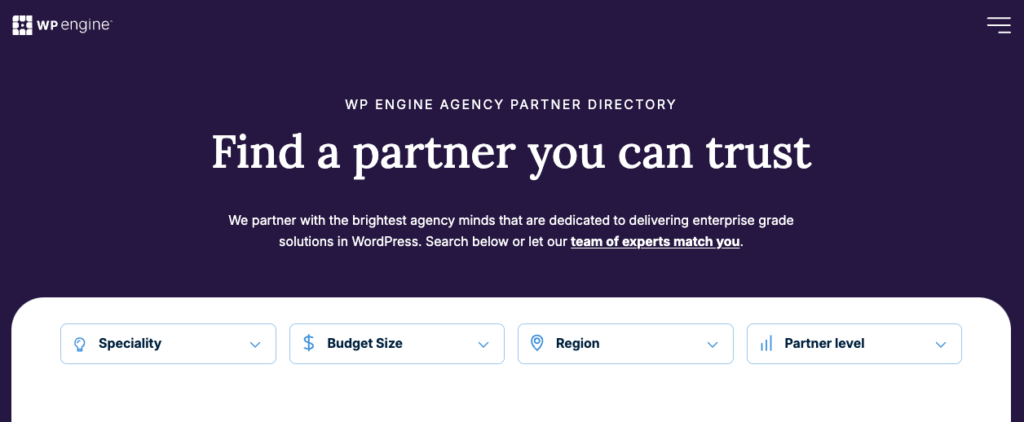
Screenshot of the search filters on the improved WP Engine Agency Partner Directory page

Following the initial launch of our new agency directory page in November, this most recent update brings additional enhancements, including better visibility about partners and their tiers as well as improved search functionality. 

These updates are part of our ongoing efforts to ensure a robust, user-friendly platform for all our visitors and provide our agency partners with better access to more leads.

“Our agency partners are some of the biggest drivers of our business, and our Agency Partner Program is how we ensure they’re getting the most value out of our platform and products,” said WP Engine Senior Partner Marketing Manager Sam Schumacher.

“The new improvements we’ve made to our directory are just another way we’re helping our agency partners drive growth and efficiency within their organizations—from more intuitive navigation that helps every user find exactly what they’re looking for to more relevant search results that better connect agencies with businesses seeking services in their locales and specialties.

What’s new?

The upgraded Agency Partner Directory comes with several exciting features aimed at improving user experience and enhancing partner visibility:

  • Refreshed look and feel: The directory now boasts a modern design, offering users a sleek and engaging interface.
  • Enhanced search functionality: Brands seeking agency support will now enjoy a smoother, more intuitive search experience, making it easier to find the perfect match for their needs.
  • New matchmaking form: Our new form streamlines the matchmaking experience, improving efficiency and accuracy in results.
  • Improved visibility: This upgrade allows WP Engine’s internal agency teams to more accurately see where leads are being routed, providing greater transparency and insight.

Providing value for our partners

Lead generation remains one of the most valuable reasons to join WP Engine’s Agency Partner Program. By featuring agency partners in our directory listings, agencies gain direct visibility to potential clients actively seeking their expertise.

This year, we’re especially focused on matching our diverse customer base—including SMBs and enterprise-level clients—with the agency partners best suited to meet their unique needs.

Check out the new agency directory page now and stay tuned as we continue to roll out new features and drive more connections with this powerful resource!

Press This: Accessibility, Inclusive Design, and Debunking Myths

Software Stack Editor · September 13, 2024 ·

image

Welcome to Press This, a podcast that delivers valuable insights and actionable tips for navigating the ever-evolving world of WordPress. 

In this episode, host Brian Gardner and Ryan Bracey, director of web UX at Second Melody, explore accessibility in web design, breaking down what it is and debunking common myths about it.

.redcircle-link:link {
color: #ea404d;
text-decoration: none;
}
.redcircle-link:hover {
color: #ea404d;
}
.redcircle-link:active {
color: #ea404d;
}
.redcircle-link:visited {
color: #ea404d;
}

Powered by RedCircle

Brian Gardner: Hey, everybody. Welcome back to the Press This podcast. I am your host, Brian Gardner, a WordPress advocate at WP Engine. And I’m excited about today’s show. Ryan and I have connected several times, even several years ago. I walked through the block editor to the agency he works for. But I will introduce Ryan Bracey, the director of Web UX at Second Melody, out of New Jersey. Ryan, welcome to the show.

Ryan Bracey: Thanks, Brian. Glad to be here.

Brian Gardner: It’s funny how often people connect in WordPress through various channels. Yes, we all love WordPress, but it sometimes brings specific aspects of web design development or WordPress people together. And in this case, that’s what happened in this particular show. But before we get into the topic of accessibility, could you give us a couple of moments to talk about Second Melody and your involvement there? Maybe even before that, how you got into WordPress to set the table for what we’re going to talk about.

Ryan Bracey: Absolutely. So yeah, as you mentioned, my name is Ryan Bracey. I’m the director of Web and UX at Second Melody. We are a branding studio located in New Jersey. We are fully remote, though, so we are a dispersed team, but our headquarters is in New Jersey.

And what my agency does is everything a brand could need from you come to us; you don’t even have a name yet. We can name you and give you a logo, develop a brand for you, and give you messaging pillars so we can assign a voice to your brand. We will design collateral for you, social media marketing, and then what my team handles is anything web-related. We will do the strategy behind a website. We will design and build that website. So we can meet you as a client anywhere along that map. If you need everything, we can give you everything. If you need some things, we can also provide them to you.

As for how I got into WordPress, I started, much like you, Brian, as a designer. And I still consider myself primarily a designer, even though I’m almost exclusively a developer. But I got into web design, I got into web design. I started researching UI components, how to design things for usability, and how to design things that were easy for my developers to code. And just doing that research, I picked up more code until I eventually started developing sites myself and became a full-on developer.

The agency I was working at was WordPress-based. So, I naturally moved into WordPress, found this whole community, and met people like yourself.

Brian Gardner: In our last episode, I talked with Rich Tabor, who, as we all know, works with Automattic right now. And we made a joke in that conversation, the whole designer and developer thing, right? Because it feels like, I don’t know, like many years ago, those were two different skill sets. And I think now, in the joke we made and that conversation with Rich is in the room full of developers, I’m a designer, in a room full of designers, I’m a developer, and so on.

Ryan Bracey: Yeah, exactly.

Brian Gardner: When you explain sort of your design background, I think, in general, people think design, logos or colors or whatever, but there are all kinds of even specialties within just design alone, usability, UX, accessibility, all this other stuff that we’re going to get into here. I’m excited to have you on the show because you’re not just another person who could put pretty pixels on a page; you do it purposefully and for all kinds of people. And that’s the nuts and bolts of where I want to go. I will use that as a segue because you are part of Second Melody and have some involvement elsewhere. Would you like to talk about that?

Ryan Bracey: I would love to; that was a great segue. So I think you put it perfectly too of saying it’s more about looking pretty, it’s usability, it’s what I’m putting out there functional and which ties in nicely to the organization I’m here for today, WordPress Accessibility Day. I am the lead organizer for the speakers team. So, this year, my responsibility has been coordinating with speakers, rating submissions, and building our schedule.

So, we are a nonprofit organization, and we put on a 24-hour global event once a year dedicated to promoting and learning about website accessibility with a focus on WordPress. So, since we are an international conference, it is a fully remote conference. We run for 24 hours with a session starting each hour on the hour.

We have speakers from all over the world, and they speak in all kinds of disciplines. So we have anything from very advanced developer-focused talks to designer talks to the legality around accessibility today, accessibility for content writers. So, we will try to cover all facets of accessibility and your skill level.

If this is your first time hearing about web accessibility, I’m talking about it now. We will have something for you. If you’re an expert, you’ve worked in it for years. We will also have something for you. And yeah, our mission is to help educate and bring accessibility to the forefront and teach people how to make websites usable for everybody in the world, regardless of their abilities.

Brian Gardner: So we’re going to dive deep into that statement alone because I think there are some myths around accessibility, such as what it is and who it’s for. But I’ll acknowledge one thing: we’ve had Amber Hinds from Equalize Digital. She is involved in the WordPress accessibility movement, does a podcast, and has products.

It probably was about three or four years ago when I started to ask what accessibility is and why it should matter to me. Right. As a product person, I take a lot of responsibility for the things I’ve put out in the wild, and it started, I started to be convicted saying, OK, you know, everything I do, I think looks pretty, and it codes well, and it runs fine and Google page speed. But accessibility is sort of, and I won’t use the word taboo because it doesn’t.

That’s not quite the right word, but it sometimes feels that way where it’s one of those things people don’t want to discuss. Because most don’t understand it, or most don’t want to do the extra work, or it’s not front end or fun in their eyes, which is not true. So, I had Amber at our Build Mode session. And even before that, I asked her to jump on a call and ask her to help me understand accessibility at a very high level.

She gave me access to her Accessibility Checker Pro plugin, which I ran on a couple of sites I was working on, and then ran it through the products I was working on. It was eye-opening because there are various levels of accessibility, but it’s even kind of like the 80-20 rule. You spend 20% of your time to knock off 80% of the existing issues just with some knowledge. And I started, and we’ll talk about this too.

I started first with the accessibility, the contrast checker tool, right? Like text in the background, I obsessed over that and insisted on becoming the contrast checker policy of WordPress. I get frustrated because you see themes that come through on the directory, and I could spot from the screenshots that this stuff isn’t going to pass accessibility. I may try to get on the theme review team at some point. Cause I feel strongly about this.

A lot of stuff makes it that just fails miserably. And so that’s maybe my contribution towards wanting to help with accessibility. But let’s start at the beginning and talk about accessibility 101 for, like, the layperson or the person who wants to understand fundamentally what it is. Can you talk a little bit about what web accessibility is and why it is important?

Ryan Bracey: Yeah. Amber Hinds is one of our board members for Accessibility Day. So that was a suitable plug. So, at its basic level, web accessibility is just the idea that everybody should be able to access information online. Full stop, that’s it. It’s just that you, as a human browsing the internet, should have no issue accessing that information, regardless of your situation if you are a person living with disabilities. So what we try to do is, and you brought up the contrast checker, that is a pretty good place to start. It just ensures that if I have text on a background color, I’m not putting neon green text on a neon yellow background. A person with low vision wouldn’t be able to see that. Nobody would be able to see that.

Brian Gardner: But it looks pretty though. I mean, that’s what matters, right? And that’s what I get. Well, it looks pretty though. It doesn’t matter if it doesn’t pass the checker. I like the way it looks; it is a terrible excuse.

Ryan Bracey: Right? And it’s something we hear often. And then other things, too. So, make sure that the text on that background can be read clearly. I gave an extreme example, but stuff like white on maybe a medium or dark blue you would think would pass as someone who doesn’t have vision issues; I can read it perfectly, OK. I’m way below the requirements if you check that contrast. I’m probably cutting out a large portion of my audience from even being able to read this text.

Also, it’s just things like using UI components that make sense. You’re correctly using them so that if someone is not a sighted user or someone does not browse the web in a typical manner, and I say typically because there is no such thing as a typical user, but what we consider typical is someone using a point and click interfaces like a mouse or a trackpad. If someone has a cognitive disability and they’re navigating with a keyboard. If you’re misusing UI components, it might be impossible for that person to navigate your website. If you’re building your heading structure incorrectly and a blind user comes to your site using a screen reader, they might not be able to read your content in the correct order or quickly navigate around your site.

The same goes for putting a video on your site, and someone with a hearing impairment comes to watch it, but you didn’t include captions or a transcript, so they can’t intake that content. So, all that to say and bring back to that base sentence is that it’s just making sure anyone coming to your site can access the content you’re putting on your website, regardless of their abilities.

Brian Gardner: So one of the things I get another thing I get convicted of is even though it passes the contrast test, this is sort of kind of a tangent, but it’s something I want to point out because I’m guilty of it and I want to defend it still, but I don’t want to be disrespectful or inconsiderate to folks is the use of, I’m a black and white and splash of color kind of guy, but minimalist by nature. so my brain says, I’m going to use pure black #000 on pure white #FFF or vice versa. It’s probably worse with white text on a pure black background. But Sally Goetsch brought it to my attention that there’s this thing called digital eye strain. And that’s where you’re like, well, black and white. I mean, it doesn’t get more contrast than that. But, if you can Google this, and I’ve Googled this and researched this extensively, it’s actually, and not only is there a tiny element of it that kills conversion.

So, digital eye strain is a group of vision-related problems that result from prolonged screen exposure. And some people have just issues seeing that. And so just another quick call out to, you know, design something just simple. Tailwind does a great job of using a sort of dark gray.

But it’s a thing, and it’s out there, and we won’t get into the legal part of it yet, but we’ll talk about that as part of the second half here of the show.

Ryan Bracey: Yeah, and that’s a good call out. We focus so much on low contrast, but you’re 100 % right. There is such a thing as too much contrast as well.

Brian Gardner: Maybe we can spend a few minutes just talking about, like, as a freelancer, as a product builder or an agency owner or anybody building something for somebody else on the web, why should they pay attention or at least, you know, educate themselves a bit and what should they think of and why is accessibility important is kind of what I’m asking.

Ryan Bracey: You’re right about what you said earlier in the podcast. Many people consider it a taboo, so why should I care about this? Why is it going to make it look less pleasant? It’s too much extra work. And then, especially under the lens of a freelancer who might not be charging as much as an agency charges for someone like that, they look at it as a lot of extra work for me, and I already have a tight margin. So why should I spend my time doing this? So I think that’s a great question because you should spend your time doing it. I’ll get into this later, too, but it’s not much extra work. You have to put a little consideration upfront, but once you start figuring out what to do, it’s not that much extra work you have to do.

It’s a moral obligation to ensure you’re not excluding people from your products. It’s, and I like to say it’s the right thing to do to top-line it outside of that. I don’t want to use this as a reason, but it is a big reason. It is possibly one of the more significant motivators for anyone who is a little on the fence about whether they should spend their time or money on this—that it is a legal requirement as well in our country, as well as many other countries around the world to make your site accessible to anyone coming. So, there is a little legal aspect to it, too. Still, I like to focus more on the ethical and moral approach; it is just the right thing to do to make sure whatever you’re putting out in the world can be consumed by anyone coming across it and trying to absorb that information.

On top of that being the right thing to do, it helps your site in many aspects. Having a site that’s accessible doesn’t just make it accessible for users who live with disabilities. It makes it a lot easier for anyone to access. So, I am just returning to my point of using UI components correctly.

Yes, this ensures that anyone using any navigating device, keyboard, mouse, trackpad, or whatever someone’s using can use those inputs. It also makes using those things much easier for anyone visiting your site. It also makes your site easier to hang on to and more easily scanned by search engines. Because if you think about it, Google or any other search engine bots are non-sighted users. So, having the correct markup in your DOM and the correct heading structure makes your pages much easier to read for those bots, increasing your SEO standings. It just, altogether, you are, like I said, doing the right thing. Still, you are also just improving your site’s usability for all of your users and putting a product out that’s not just a better user experience but better for search.

Brian Gardner: I like using the word inclusive because it slightly alters the connotation. And it makes it a little bit less scary for people to hear. And I’m going to tell a story here real quick. I am often naive and stubborn with my thinking; I’m opinionated. It’s easy for me to jump to conclusions and formulate opinions based on whatever. We go to Disney World at least once a year; we’ve been there several times. One of the things that Disney has is the transportation system. And so buses take you from the resorts to the hotels, the parks, and all this other stuff. One of the things that every bus has is space for two motorized vehicles.

The first time I went, we were all excited. We were running short on time. We wanted to get to the park. We got into the line for the Magic Kingdom. At the end of that, as we were getting ready to get onto the bus, a motorized scooter came up instantly, and I got frustrated. Why? Because I knew what that meant. It meant that before anybody got on the bus, the guy getting the driver was going to have to get off. was going to have to lower the bus down. He was going to flip the landing. She was going to have to drive up into the thing. And then they would have to hook her in and do all these things.

And that was going to cost me time. And I got selfish about my time until we got to the park and all got off. Then, she got off and talked to her family. Her granddaughter wrapped her arm around this woman in the wheelchair as they headed to the entrance. She was driving, and the kid was skipping beside her—happy.

And it hit me right then and there. I wondered, my God, how would this person have gotten to Magic Kingdom otherwise? If Disney had made considerations for making their transportation system accessible to all people, in her case, with a disability, she could not walk or get there otherwise. It was one of those mornings where I was just like, OK, like life made more sense to me that day.

It’s not quite the same thing, but imagine someone coming to your site and getting to the bus and not having a way on or to get to, you know, your sales page or Magic Kingdom, for that matter. If there was no vehicle in which that person had a way to get to that point, then you’re not being inclusive. And so, you know, that was several years ago and kind of, you know, fast forward to web accessibility. It’s a slightly different topic, but it’s a similar sentiment.

Ryan Bracey: Yeah, I love that story too because I feel like people think of web accessibility, especially as this new thing came out with the internet a few years ago. But that shows, no, it’s everywhere around us. It’s out in the world. In the same way, you wouldn’t build a house without a front door; you shouldn’t build a website without considering how people will access that site. It’s true. I have always liked hearing stories about accessibility out in the world.

Brian Gardner: Fast forward to five or six years ago, my wife injured herself running, and we had a Disney trip planned, and she was unable to walk. She was on crutches. And that was sort of another reaffirmation that I was like, now we’re going to be those people who held up some other family because she had to get her motorized vehicle onto the bus. And so it came full circle, and it’s the kind of thing that is general.

It is the right thing to do to keep things inclusive for all people. Let’s shift the conversation. You and I discussed last week on our call that there are common myths about accessibility. These are things people think are true but aren’t necessarily true. And in fact, they might be the exact opposite of what they believe it is. So, myth number one, and some of these may sound fun, but they’re very real, and they’ve happened even to me in conversations or projects that I’ve been a part of. Myth number one: people with disabilities are just looking to sue over inaccessible websites. Do you want to talk about that?

Ryan Bracey: Yeah. And this is something I hear often. I work with many large companies, many of which have their internal legal departments. It’s very new to many of these people as well. So they’re coming to us as I’ve just heard about this web accessibility. Have you heard of this? What’s going to happen? Is our site OK? Are we going to get sued? How do we make sure we’re not going to get sued? So it’s always kind of this little frantic call, but I’ve just learned about this. What is this?

What do I have to do? Which I always like to take a step back. As you said, this is a big myth. No one is out to sue you for having an inaccessible website. And that is a big fear people have. If I don’t do this, it’s primarily a legal risk that is the impetus for being accessible or inclusive when you design and build your site.

What it is is that when people with disabilities are giving you feedback on your site, they’re not attacking you. They’re trying to provide constructive input with the overall aim of making your website and the internet as a whole better for everybody. It’s not that people are out there on ambulance-chasing websites and are looking for a lawsuit to file. One of the easiest things you can do on your website, and I tell this to clients too, who may have a site we’ve inherited; our project scope is to create a new website for them. Look at the old site. I’m sure you’ve seen the backend of some old sites you inherited.

Sometimes, it’s not the easiest to work with them. The amount of time you’d have to put into something to get it to a point where you could even start giving proactive help to someone would blow your whole budget. One of the easiest things you can do as a website owner, if you fear you have a site that might be a little inaccessible, is to add a page to your site with a way to contact you that says, we are aware that there may be issues with our site. We are doing our best to make this accessible.

If there’s something we missed or some way we could make this experience better for you, here’s how you can get in touch with us—just that tiny step makes it now a conversation that you can have with a person visiting your site. And then, to bring it to the legal aspect, many courts do see something like that as you are making reasonable strides to try to be accessible. They don’t want to know that you’re writing it off entirely. So, it protects you slightly, especially if you say we are working on something new. We know we might have some issues in the interim, so please get in touch with us. We’ll try to accommodate as best we can in that interim time. And it’s, like I said, great for you. You can have that conversation now with your users. And you get a little bit of protection from that as well.

Brian Gardner: I added an accessibility page to my website. It is what you just described. I’m firmly committed to continuously enhancing the accessibility of my website. As you recommended at the bottom of that page, accessibility is an ever-changing process, and I strive for ongoing improvement to increase accessibility and functionality for all. Should you experience difficulty using this site, I welcome your feedback and invite you to contact me. And so again, if you know, I think half the battle is just the attempt to try to make it accessible and show less ignorance, I guess, in this case. And so, go ahead. Before we get to the next myth, I want to call out because this isn’t on our list of things to discuss, but I was thinking about this as you discussed the first myth.

Ryan Bracey: Yeah. So yeah, that’s perfect.

Brian Gardner: One myth I think of is that people think it will cost me money, and I have to do more work for this client. But you could, I mean, this is a shocker in newsflash, you could offer it as a service where you make people pay for it, whether you learn how to do these things yourself and provide that as an upcharge. You can also work with someone like Amber at Equalize or hire somebody out. And say, Hey, I know this is important. I’m aligned with or partnering with people who are and offer that as a service. Or even if you recommend that they contact those folks indirectly. But it doesn’t have to be a thing that costs you money or means more work to do for the same amount of money. Just bake that into the price for whatever project you’re working on.

Ryan Bracey: Yeah, exactly. And that’s what we do here. We don’t offer it as a line item because we don’t want it to be something that can be crossed off, but it is just baked right into our cost. If you’re getting a website from us, we’re considering accessibility along the way. Our price is adjusted to account for that, and our process adjusts it. And then, as you said, even though we have people we outsource to, if you want a little extra, we have some contacts who are certified under the IAP, and they have them; I’m going to mess up the CPA CC certification. So, if you are someone who is certified in web accessibility, we will put you in touch with a person like that if you want to go that extra mile. But as I said, we build it into all of our processes so that if we’re touching a website for you, it will have accessibility in mind.

Brian Gardner: I love that, and I even love the visual of the idea of crossing it off because if someone sees it as a line item that costs, let’s say 1500 bucks, it would be easy for them to say, I need it to look good I’m going to take this and save some cost, and so I love that you guys at Second Melody do that so let me ask you this Ryan I don’t want my website to be unattractive or hinder the creativity in which my process might be is that a myth or is that fact that people say this

Ryan Bracey: Right? It’s a fact that people say it. The myth, yeah.

Brian Gardner: But the myth is, yeah, inaccessible websites are unattractive. That’s not true.

Ryan Bracey: No, not at all. We both have a creative mindset, and any creative will tell you the same thing, but restraints or limitations make you a better designer. It gives you something to design within it. The worst thing you can do to a designer is give them a blank slate without direction. If you think of accessibility as something else you must consider, it makes it easy. It might take some learning in the beginning, but for someone like me or members of my team who have been doing this for a few years now, you don’t even think about it anymore.

When you’re putting text on a page, check the contrast. You’re finding images. If it’s a non-decorative image, you assign alt text to it. It just becomes second nature. And I’m lucky enough to work at an agency that does the whole gambit of starting with branding all the way through. So even our brand designers consider this at the beginning of the process when choosing a color palette; they ensure the colors work together. They put a page in our brand guidelines that we deliver that shows what combinations work together. They ensure that if they’re choosing fonts, they’re easy to read, which means there’s enough letter spacing between letters to read the words correctly.

If you’re looking at a font with a lowercase l and uppercase i and a number one that all look like the same glyph, maybe we don’t use that font. So you can do many little things initially, and then it becomes second nature. And it doesn’t take away from the appearance of the design. I want to point anyone to my WordPress Accessibility Day website, 2024.wpaccessibility.day. If you look at that website, I think it is very nicely designed and uses a lot of pastel colors, which many people also believe you cannot do with a pastel palette and have an accessible site. I will tell you to look at that site. You will change your mind.

Brian Gardner: You have every right to say this. Pastel colors with white text don’t work. But in this case, it looks striking. If you look at the WordPress Accessibility Day logo, you see it in the market, the market itself, with several pastel colors, from blue to orange to green to pink and purple. Those colors with black or dark text on top even have call-to-action buttons. Cause I think our minds are like, call to action buttons need to be color gradients with white text. And if you were doing this ten years ago, there’d be like text shadow, which is, you know, stuff we all want to forget. Still, I have started to enjoy the idea of, like, a pastel, like a light color button with black text, maybe putting a black border around it to help frame that in so that they can see the contrast against the white, but is a good looking web design.

That leads me to the next half step before we get to the last myth: WordPress now has a contrast checker as part of the block editor. So if you have a background color in a group or a button or a paragraph block, let’s say it is a light gray, and then you try to change the text color to something darker gray but would fail the test.

WordPress puts out a lower note that says, this isn’t accessible. It’s hard to read. You might want to pick a different or darker color or a color that contrasts more with whatever the background color is. And so there’s almost like training wheels. If you’re using WordPress and the block editor, some training wheels will help you avoid what is probably the biggest, the most significant thing people do, which is the contrast thing.

As you mentioned, the other one is the alt text for images. At first, I was like, stuff them with keywords because it’s good for SEO and Google. A friend and I went back and forth about all of this. And we somehow got into, you know, alt text, and I was like, yeah, that’s, you know, pretending I knew what I was talking about. That’s great for accessibility because it helps with SEO. And she’s like, no, it’s way more than that. And here’s what it is. You imagine closing your eyes and going to the museum and saying there’s a painting on the wall. And, like, that’s it.

Ryan Bracey: Yeah, that doesn’t help anybody.

Brian Gardner: And I’m like, OK, yeah, no, that doesn’t help. If you said, cloud, OK, that’s also not helpful, but saying, Chicago skyline with boats, a sun, and a cloud, you suddenly give somebody at least some help—somebody who’s blind and can never really see the picture. You make it more descriptive. And so, even inside my themes and products, I used to say sample image. I’m like, that’s not helpful. You know, a sample image with a Powder logo or something to that effect is at least, you know, a little bit more and almost like a sentence case. Like really, you know, you don’t have to go crazy, but help somebody. Use it not as a keyword-stuffing tool, which can sometimes backfire.

Just imagine yourself trying to imagine what this thing is on the page and close your eyes, and just what do you see? Because that’s what the person on the other end who’s impaired can’t see and needs you to tell them what it is. So, there are two things: contrast on text and background and all text on images. That’s a lot like the immediate failures we see in accessibility. Is that something that you see as true as well?

Ryan Bracey: I always see those things and poor use of heading structure. That’s right? And it’s interesting what you said about alt text, which is right on. Imagine your eyes are closed, and someone has to describe the image to you. That’s the perfect way to go about it. There’s a little more nuance to it. The actual criteria only say you have to define non-decorative images relevant to the content and not explain them within the content. If you have a sample image in your case, but you explain that in the paragraph next to it, you can leave an empty alt tag. You would do this because someone non-sighted would be reading duplicate content.

Meanwhile, for a sighted user, it’s just supplemental. So there is a little nuance to it, but if you need to write alt text for images, that is the perfect way. How would I describe this to someone who has their eyes closed?

Brian Gardner: OK, we both said that you and I are developers in a room full of designers. That being said, myth number three is that accessibility is solely the responsibility of developers.

Ryan Bracey: I often hear this, especially when inheriting sites; you make this accessible? Or if we get to the point of development, you will make this accessible too, right? We’ve already done the work. So, as I mentioned before, our brand designers consider this stuff when creating a brand: they’re looking at colors and fonts.

So, luckily, if it’s a brand we’ve developed in-house, by the time it gets to my team, we don’t even have to consider those things. We know the colors are going to work. We see the font’s going to work. Content writers play a big part in this, too. The guidelines that drive compliance and web accessibility are called the web content accessibility guidelines. Content’s right there in the name.

The whole point of accessibility is creating content that users can access. Well-written, well-organized content will probably get you 85% of the way there. A developer does just those things I mentioned before, ensuring you use interactive elements or UI components correctly. You’re coding them correctly to ensure that if someone comes with a different kind of assistive technology, you’re not excluding that technology. You’re allowing people to interact with the site.

However, things like colors and content can be addressed way early in the process by your content creators and brand creators. Your designer does a lot of work on this. I always say that, as the developer at the end of the line, the amount of work I have to do in accessibility is small because so much has been done before it even gets to me, ideally. As I mentioned, that’s one of the nice things about working in an agency where we all have talked about it and taken this holistic approach to accessibility. Still, it is not the responsibility of just your developer. If that’s how you’re approaching it, you’ll always be playing catch up and trying to fix issues rather than trying to prevent the problems by having that accessibility-minded approach in the first place.

Brian Gardner: So we’ll call them the three Cs. You’ve got content, colors, and code. You don’t want your developer writing content. You don’t want your developer to write or choose colors and all of that. We all, in every case here, share the responsibility. Again, it’s not just a developer thing, as you mentioned. And so that is an excellent way to debunk the myth that it’s just for developers because that’s not true, as we just heard. OK, so with the time that we have left, let’s briefly go into one of the reasons why we’re here. We want to bring accessibility into the hands of everyone at WordPress; whether you’re a user, a developer, a designer, a content producer, or anybody who touches WordPress, accessibility is more accessible to you than you think. We’ll start with that.

Let’s talk about that. Accessibility Say is a 24-hour global event, as you mentioned, dedicated to promoting and learning website accessibility and best practices for WordPress websites. It’s live streaming free from October 9th through 10th. So, by the time this episode airs, that’ll still be several weeks out, with many opportunities to register. Why don’t you talk briefly about Accessibility Day, what folks can expect, maybe, you know, talk about a session or two that either you’re giving or you’re excited about or looking forward to hearing?

Ryan Bracey: Definitely. Yeah, so that’s the perfect lead-in, as Brian. We have registration open right now. It is free to attend. We do a lot of work to ensure we offer this as a free conference. We are a nonprofit organization under the umbrella of a larger nonprofit called Nobility. We volunteer our time as organizers. We do a lot of fundraising, though. We do pay our speakers an honorarium.

All this is to ensure that we provide this event for you for free. As you mentioned, it is 24 hours. It’s a single track. So it’s just one talk right after the other. We have presenters this year from all over the globe. We have people in all corners of the United States, Europe, Asia, Africa, Canada, and South America.

We have people from around the world talking from different perspectives. They will share their experiences working in this field, collaborate, and try to work with clients from their operations. We have a ton of excellent talks this year. I’m excited about it. As I mentioned, I am leading the speaker team. So these are all my children this year of mine, all the speakers we got to choose, and I’ve been talking to and interacting with, and I’m excited for a lot of the talks. Our keynote this year is about the legal landscape of web accessibility. So, as we mentioned, there is a legal aspect to this. Many laws came out in the past year, which are about to come out, especially in Europe, and will have a significant effect.

And I think people are getting a bit tense about what’s going to happen, what’s coming. So we wanted to bring in someone who’s an expert in that. So, our keynote this year is Lainey Feingold. She’s a disability rights lawyer. She started in the early nineties. She has been an advocate for accessibility going back that far. If you’ve ever used an ATM that has braille on the keys, she is one of the people who was instrumental in getting that incorporated.

So she’s been doing this for decades. She’s an expert in this, and her session title is accessibility as a civil right, the digital accessibility legal landscape for the WordPress Community. And she’s just going to talk about existing laws, laws that are coming up, what we can do to prepare for those, what they mean, and how that helps people in the disabled community. So that’s our keynote. I think that’s going to be a fantastic talk. I’m very excited for that one.

Outside of that, we have sessions about anything from content creation to design to development, from intro to accessibility-type beginner things through to advanced coding. We have talks like CSS tiny tricks and how to write code for single-page applications— laying out agile accessibility roadmaps for your team, like a development team. I’m pretty excited about one of our talks, specifically about how to remediate accessibility issues within WordPress.

As WordPress developers, we know it is a system that consists of themes and plugins and custom code and plugin code. So you could get an accessibility failure or warning about a piece of code you didn’t write. So this person will go into how to remediate these issues when you don’t have access to that source code, or it’s coming from a plugin. I’m excited for that one. I think we’re going to have a great keynote. All of our speakers are great this year. Every talk is going to be good. Since we are worldwide, it is 24 hours wherever you listen to this. You can pop in at any time and watch a talk or two. We will release these on our YouTube channel after the event, too. So you can always watch them afterward. And as I’ve mentioned a few times, I think there’s something for everybody here. So, no matter where you are in your journey, whatever you are as an individual, what your occupation is, I think there’s something you can find here that’s useful.

Brian Gardner: I love it, I love it. I’m a music listener throughout the day when I like that. Every once in a while, I try to replace music with just listening to something that is either a podcast or a YouTube video replay of something. In this case, you immerse yourself inside of this content even when it doesn’t require you to take an entire day off to like watch all the things right to say if there’s one or two things that you want to pick from this, you know while you’re taking a bath while you’re in the car while you’re walking in the woods like just you know hit the replay and absorb it that way.

I will say that you had talked about this; Lainey is a disability rights lawyer. She’s not chasing down people who have inaccessible websites. Lainey is being the change. She’s speaking at events like this to help educate those who build for WordPress on what to expect, errors, and things to look out for, as well as how to improve websites.

And so again, debunking that myth, this whole movement is more around making accessibility in education digestible for people who have difficulty understanding it. And so that’s what this event is for. I encourage everyone building or using WordPress to sign up to cherry-pick some talks. And, yeah. So, October 9th, again, is about four weeks away, just a month to the day we’re recording this. So, there’s still time.

Ryan, I appreciate our time here on this call, your efforts at Second Melody to do the things you guys do there, and most importantly, you’re taking additional time to care for and nurture this whole movement and this community. There’s a community of people who are just involved. And so if you know a lot about accessibility or know very little but have a passion for it, maybe you know someone from whom this could benefit.

I encourage you to reach out to Ryan, Amber, or anybody involved to see if there’s a way you can volunteer for next year’s event. It’s some facet of the event. You know, there are sponsorships and ways to volunteer or donate if you have extra money or decide to impact the world. There are ways to donate to this cause. And so, are there any last closing remarks you have here before we sign off?

Ryan Bracey: You just stole it from me. I was going to tell people to come volunteer. It is a fantastic community if you are interested in this and want to get involved. I was lucky enough to find Amber a few years ago through her Meetup talks. Through that, I was introduced to Accessibility Day. And it’s a fantastic community. Everyone’s so warm and welcome. You’ll find this across.

Brian Gardner: Alright, well, go ahead and tell them again. They want to hear it twice.

Ryan Bracey: WordPress is generally the best, but within accessibility, too. It’s a lot of people just trying to help. If you are interested and want to learn more, see the volunteer tab on our website; we are looking for volunteers even for this year’s event. We have all kinds of things you can do. We’re pretty set for this year’s event, but we need people for next year’s event, and we have some post-event tasks. Suppose you want to volunteer to help us get all the information out post-event. That would be fantastic. We’re specifically looking for help translating talks this year. So, if you know someone who can translate or write transcripts or speak a language besides English and you feel like you could help translate, we would love to have you check out the volunteer tab on 2024.wpaccessibility.day.

You can volunteer in many ways; fill out the form. We’ll let you know. As Brian said, we will take donations, too. So, if you have any questions or want to help us, we would love to help. But anyway, you can, we appreciate it.

Brian Gardner: Well, again, I appreciate your time here. I will drop the mic by saying this because I want everyone to know. Accessibility Day is once a year, OK? Accessibility is every day. It isn’t a, get involved once a year sort of thing. There are ways you can get involved throughout the year, through meetups, sponsorships, and even help working and contributing to the WordPress project itself.

Feel free to contact me, Ryan, Amber, and anybody. I certainly will guarantee that people would love to hear from you. So, thank you to everyone listening to this episode of Press This. As a reminder, our podcast at WP Engine here delivers valuable insights and actionable tips for those navigating the ever-evolving world of WordPress. Join me for each episode. I like to bring folks like Ryan from the community to talk about things WordPress people want and those they don’t want to talk about but should hear about. And that’s what we’re here for today.

Demand for Headless Increases, Finds the Latest Report by WP Engine

Software Stack Editor · September 10, 2024 ·

image

AUSTIN, Texas—SEPT. 10, 2024—WP Engine, a global web enablement company providing premium products and solutions for websites built on WordPress, today published The State of Headless 2024, a research report highlighting the widespread adoption of headless web architecture among industry leaders. The international survey found that 73% of respondents are now using headless, and nearly 98% of those not currently using this web architecture plan to evaluate headless solutions over the next 12 months.  

The research, commissioned by WP Engine and conducted by Censuswide in July 2024, surveyed 1,015 chief technology officers, chief marketing officers and IT decision makers from organizations achieving an average of approximately USD $800 million in annual revenue. Responses from across the U.S., UK and Australia were analyzed to understand how and why industry leaders are adopting and utilizing headless web architecture to optimize their websites. 

“The results of WP Engine’s 2024 Headless Report truly underscore the importance of investing in modern, flexible technologies that not only better equip organizations for the future but also position them to drive more impactful and cohesive web experiences,” said Ramadass Prabhakar, Chief Technology Officer at WP Engine. “Headless is no longer an emerging technology, it is a mainstay that organizations will need to fully embrace to maintain a competitive advantage and manage digital change effectively.”

Key Findings 

Adoption is increasing and barriers are being removed.

  • The adoption of headless architecture has increased with 73% of all businesses surveyed now using this website architecture. This represents a 14% increase from similar research in 2021 and a nearly 40% increase from 2019. 
  • Despite 65% of 2024 respondents citing budget concerns as a barrier, 83% agree that digital experiences are important to their organization’s success and 60% believe their organization’s website infrastructure budget will increase in the next 12 months.
  • 16% of respondents expect a 26%- 35% impact on bottom-line financials following headless implementation, while another 16% expect an 11%- 20% impact.

Those using headless technology feel better equipped for the future.

  • Organizations that have implemented headless architecture are more likely than those who have yet to adopt it to rate their organization’s ability to scale websites as good, responding at 79% and 62%, respectively.
  • 80% of businesses surveyed said headless architecture keeps their organization ahead of competitors when delivering new digital experiences. Nearly 70% pointed to competitiveness as the top benefit of using headless. 
  • More than 70% of respondents view enhanced technology and innovation as top benefits of using headless within their organizations, with 26% specifically citing omnichannel enablement as a key advantage.
  • Just over a fifth of companies with 250-499 employees cite AI integrations as one of the primary reasons for using headless. 

Chief marketing officers are more involved in the adoption and utilization of headless than chief technology officers. 

  • CMOs are significantly more likely than CTOs to be heavily involved in developing, designing, marketing, or managing their organization’s website, with 63% of CMOs surveyed saying they are heavily involved compared to 52% of CTOs.
  • 75% of CMOs surveyed are currently using a headless technology approach with their company’s website(s) and 81% agree that implementing headless technologies makes it easier for organizations to deliver a consistent content experience.
  • CMOs are 11% more likely than CTOs to integrate different tools with headless technology, however, they are 18% more likely to find it more challenging to manage these tools and report results.

WP Engine is committed to empowering its customers with the tools and information needed to build and manage the highest-performing sites on the web. To read the full report, The State of Headless 2024, please visit wpengine.com/headless-cms-research/, or visit wpengine.com/headless-wordpress to learn more about WP Engine’s award-winning specialized headless platform. 

About WP Engine

WP Engine empowers companies and agencies of all sizes to build, power, manage, and optimize their WordPress websites and applications with confidence. Serving 1.5 million customers across 150+ countries, the global technology company provides premium, enterprise-grade solutions, tools, and services, including specialized platforms for WordPress, industry-tailored eCommerce and agency solution suites, and developer-centric tools like Local, Advanced Custom Fields, and more. WP Engine’s innovative technology and industry-leading expertise are why 8% of the web visits a WP Engine-powered site daily. Learn more at wpengine.com.

Find WP Engine at WordCamp US!

Software Stack Editor · September 9, 2024 ·

WP Engine is headed to Portland for WordCamp US, and we’re proud to serve as Super Admin sponsors once again!

WordCamps provide an excellent opportunity for WordPress users to explore new trends, network with other professionals, and give back to the community.

Plus, this year’s WordCamp US includes a special Showcase Day, which promises to inspire attendees with unique, innovative uses of WordPress!

Grab your ticket now, and read on for additional details about what you can expect from WordCamp US 2024!

Stop by, say hi!

WordCamp US is scheduled for September 17–20 at the Oregon Convention Center in Portland. WP Engine experts will be available at our sponsor booth throughout the conference to answer questions and engage in conversation about the world’s most loved CMS. 

We’ll have stickers, swag, and t-shirts, as well as short sessions with massage therapists to help you decompress and recharge between presentations. You can also enter our raffle for the chance to win a PS5, so stop by our booth to chat with our team! 

On the evening of September 18, WP Engine and NitroPack are hosting a Link & Clink party! Join us at 8 pm PDT at Besaw’s to mingle with other attendees, enjoy some drinks and small bites, and celebrate WP Engine’s recent acquisition of NitroPack. 

Space will be limited at this event, so please be sure to register if you plan to attend.

Stop by our booth to grab some swag and say hello!

We’d also love to see you at the WordCamp after-party on Friday, September 20, once the conference concludes. The party starts at 7 p.m. PDT at the Oregon Museum of Science & Industry, located just a short drive from the convention center.

Schedule of events

As always, WordCamp kicks off with a Contributor Day, when participants give back to the WordPress open-source project by taking on both technical and non-technical tasks.

Check out the tasks you can take on and sign up to become a WordPress contributor on the Contributor Day page of WordCamp’s website.

Then, on Wednesday the 18th, it’s time for Showcase Day! Speakers will share behind-the-scenes insights into a few of the web’s most impressive WordPress experiences, including Disney Connect, the New York Post, the Pew Research Center, and more!

The rest of the conference will take place over the following Thursday and Friday. Make sure to join WP Engine’s very own Damon Cook on Thursday morning at 10:15 a.m. PDT for his talk, where he’ll explore how the Interactivity API can open up new possibilities for building interactive, dynamic websites without sacrificing performance.

Presentations will cover important topics that impact all aspects of the WordPress ecosystem, including how open source is eating software faster than software is eating the world, how to grow and sustain a digital agency in uncertain times, how to grow and protect your brand, and much more!

See you at WordCamp US!

WordCamp tickets are going fast, so grab yours while there’s still some left, and we’ll meet you in Portland! 

WordPress Roundup: July 2024 Copy

Software Stack Editor · September 5, 2024 ·

image

Welcome to the WordPress Roundup, your monthly digest of the latest news and updates from the WordPress community.

We bring you essential WordPress developments for all experience levels each month, keeping you informed about the latest core updates and upcoming releases.

Whether you’re a seasoned developer, a dedicated site owner, or launching your first WordPress site, these updates promise to enhance your site-building experience by making it more seamless and powerful. You’re a vital part of our community, and we’re here to support you every step of the way.

We’ll also spotlight plugins and themes that elevate your site, highlight important community events and notable contributions from WordPress developers, and share tips to keep you ahead in this ever-evolving ecosystem.

This month’s edition examines Ollie Pro, the Create Block Theme plugin, the upcoming WordPress 6.7 release, and more. Let’s dive in!

Ollie Pro

Ollie is the theme that will elevate your site-building experience, and Ollie Pro gives you access to even more. Imagine combining the power of the block editor with the finesse of professionally designed patterns—Ollie Pro does just that and then some. Ollie isn’t just another theme; it’s your new secret weapon for creating stunning, customizable websites with unparalleled ease.

What makes Ollie Pro stand out? It’s all in the details. The enhanced Pattern Browser is a prime example, offering instant access to a wealth of meticulously crafted design patterns. Whether you want a sleek, minimalist look or something more intricate, the Pattern Browser lets you build it faster than you can say “block editor.”

But it’s not just about speed; it’s about giving you the freedom to express your vision without the usual headaches. Ollie Pro’s customization options are robust yet intuitive, offering you the tools to tweak every detail until it’s perfect. This theme will help you simplify the complex, putting professional-grade design within reach of anyone, regardless of their technical expertise.

Ollie co-founder Mike McAlister recently announced Ollie Pro’s impressive milestone of $10,000 in subscriptions within the first month. Community engagement, transparent communication, and prioritizing user feedback were critical to this success. These elements have driven its early success and will shape its growth.

Ollie Pro is a complete design solution. It seamlessly blends aesthetics and usability and is perfect for those who value form and function. With Ollie Pro, you’re crafting an experience, not just building a website.

Create Block Theme

If you’re not ready for a premium block theme like Ollie Pro, consider an alternative: downloading a free theme and using the Create Block Theme plugin to build your custom site. Start with a solid foundation and let the plugin guide you through designing, customizing, and refining every detail.

The Create Block Theme plugin simplifies development, allowing you to create, edit, and manage themes from your WordPress dashboard. You can generate new themes, clone existing ones, and export customizations as standalone themes. It streamlines the process, making it accessible to beginners and experienced developers.

This approach gives you complete control over layouts, color schemes, and typography, making it easy to tailor your site to your vision. Even for beginners, the plugin is user-friendly and accessible, turning the design process into an enjoyable experience.

Opting for this route saves money and enhances your understanding of WordPress themes, giving you the power to maintain and update your site independently. A free starter theme such as Powder Zero paired with the Create Block Theme plugin offers a perfect blend of creativity and practicality, making it a smart and empowering choice.

WordPress 6.7

With WordPress 6.6 released on July 16, users are now looking forward to the next major update. The upcoming WordPress 6.7 release, slated for November 12, 2024, promises many exciting features and improvements. This version enhances user experience and performance with significant updates to the block editor and site health tools.

Expect a streamlined interface, improved navigation, and new block patterns that simplify the design process. Additionally, performance optimizations will ensure faster load times and smoother interactions, which are crucial for maintaining user engagement and satisfaction.

A highlight is the expanded customization options, providing greater design flexibility. WordPress 6.7 will empower users with more control and efficiency, making creating and managing stunning websites more effortless than ever.

Another exciting addition is Twenty Twenty-Five, the new default theme. Built as a block theme, it aims to minimize CSS, configure styles through theme.json, and make it editable via Global Styles. The theme development team is working closely with Gutenberg contributors to enhance design tools in the block editor to achieve this goal.

Other bits

WP Engine’s acquisition of NitroPack, a leading site performance optimization solution, marks a significant step toward a faster web. This strategic move integrates NitroPack’s advanced speed-boosting technologies with our robust platform. 

The partnership aims to deliver unparalleled site performance, enhance user experiences, and drive better business outcomes. We aim to revolutionize website speed and efficiency, paving the way for a more dynamic and responsive web.

Several exciting WordCamps are set to take place around the globe in August. WordCamp Cape Town kicks off the month on August 1-2. Mid-month, WordCamp Rio de Janeiro and WordCamp Minneapolis/St. Paul will take place on August 16-17 and August 16, respectively. Toward the end of the month, WordCamp Cebu and WordCamp Lira are set for August 24, followed by WordCamp Bogotá on August 30-31.

The WordPress Developer Blog has published three new insightful articles. Building a Card Layout with a Hover Reveal Effect offers a step-by-step guide to creating engaging card designs with interactive hover effects. 

15 Ways to Curate the WordPress Editing Experience provides practical tips to enhance and streamline the WordPress editing workflow. Mixing and Matching Styles, Colors, and Typography in WordPress 6.6 explores creative techniques for combining design elements to achieve stunning visual results in your WordPress projects.​

That’s it for this month. Stay tuned as we watch the development of WordPress 6.7 unfold and inch closer toward WordCamp US.

WordPress Roundup: August 2024

Software Stack Editor · September 5, 2024 ·

image

Welcome to the WordPress Roundup, your monthly digest of the latest news and updates from the WordPress community.

We bring you essential WordPress developments for all experience levels each month, keeping you informed about the latest core updates and upcoming releases.

Whether you’re a seasoned developer, a dedicated site owner, or launching your first WordPress site, these updates promise to enhance your site-building experience by making it more seamless and powerful. You’re a vital part of our community, and we’re here to support you every step of the way.

We’ll also spotlight plugins and themes that elevate your site, highlight important community events and notable contributions from WordPress developers, and share tips to keep you ahead in this ever-evolving ecosystem.

This month’s edition covers WordCamp Minneapolis, Etch for WordPress, Twenty Twenty-Five, WordPress Accessibility Day, and more. Let’s dive in!

WordCamp Minneapolis

WordCamp Minneapolis/St. Paul 2024 was an inspiring experience. The event began with a keynote by E Daniel Swain on “The Importance of Community,” emphasizing how the WordPress community thrives on collaboration and shared knowledge. Sessions like “AI Tools and Techniques: What’s Helpful and What’s Hype-ful?” offered valuable insights into the practical applications of AI in WordPress. At the same time, “Design in an AI World” explored how AI is reshaping design trends and what that means for creativity.

It was also great to connect with Nick Diego, Developer Advocate at WP Engine, who brought even more depth to the discussions. I recently had the pleasure of chatting with Nick on the Press This podcast about the importance of child themes in WordPress development, which added an extra layer of relevance to the event’s conversations.

On LinkedIn, I shared my excitement about the energy and passion among attendees. This WordCamp reminded me of the strength of our community and the endless possibilities when we come together to innovate.

Accessibility was another primary focus, with sessions like “Improving WordPress Accessibility: Tools, Techniques, and Real-World Solutions” and “Inclusive Design: Website Accessibility with WordPress” providing actionable strategies to ensure all users can navigate and engage with websites seamlessly. These sessions reinforced the importance of building more inclusive web experiences, making WordPress sites accessible to everyone.

Overall, WordCamp Minneapolis 2024 was a great reminder of the power of community and collaboration in the WordPress ecosystem. With diverse sessions ranging from AI to accessibility,  I left with fresh ideas and a renewed enthusiasm for WordPress.

Dear WordPress

In his YouTube video “Dear WordPress,” Kevin Geary expresses a hopeful perspective for the future of WordPress, outlining fundamental changes to help the platform thrive. He believes that with the proper focus, WordPress can continue to grow and support its community for years.

Kevin, a respected voice in the WordPress community, continues to challenge the project to improve. He advocates for a renewed focus on quality, user experience, and innovation, encouraging the community to embrace change while staying true to WordPress’s core values.

He outlines five key actions that need to happen:

  1. WordPress leadership must recommit to the core of the product, the content management system (CMS).
  2. We need a freeze on all new major Gutenberg features to focus on user experience.
  3. The Admin UI must be fully unified and modernized.
  4. We must recommit to standards and craftsmanship in everything we do.
  5. Etch for WordPress.

In his fifth point, Kevin introduces Etch for WordPress, a new initiative to enhance the WordPress experience by focusing on user needs and high-quality standards. Etch for WordPress seeks to elevate the platform by offering tools and resources that align with the core principles of WordPress, ensuring a seamless and efficient workflow for users.

Kevin invites everyone to sign up for live webinars on the Etch for WordPress website to learn more about how this new product can transform their WordPress journey.

By addressing these areas, Kevin envisions a stronger, more user-friendly WordPress that remains at the forefront of the industry, continuing to innovate and inspire its vast community of users and developers.

Twenty Twenty-Five theme

Twenty Twenty-Five, set to debut with WordPress 6.7, is being developed under the guidance of co-lead developers Carolina Nymark and Juan Aldasoro. It will offer a modern yet versatile aesthetic that caters to a wide range of WordPress users, from bloggers to business owners.

With its focus on simplicity and functionality, Twenty Twenty-Five provides a clean, adaptable canvas, perfect for showcasing content stylishly and user-friendly.

Building on the groundwork of past default themes, Twenty Twenty-Five finds a sweet spot between minimalism and versatility, bringing a design that’s both fresh and classic. Whether setting up a personal blog or building a professional portfolio, this theme gives you the tools to bring your vision to life.

One of the standout features of the Twenty Twenty-Five theme is its flexibility. It includes a variety of new block patterns and templates, making it easier than ever to craft unique and engaging layouts. The theme is fully optimized for the latest block editor enhancements, ensuring a seamless and dynamic website-building experience.

To learn more about the Twenty Twenty-Five theme, watch this overview by Matt Medeiros, where he explores the theme’s unique features and discusses how users can maximize its customization options.

Additionally, you can explore the following resources for more information and to get involved in the development:

These resources offer valuable insights into the design process, the current progress of development, and various ways you can actively contribute to creating and refining this exciting new theme for WordPress.

WordPress Accessibility Day

WordPress Accessibility Day is a 24-hour global event on October 9th-10th, featuring live-streamed presentations and workshops. It aims to help developers, designers, and content creators make WordPress sites more accessible for everyone, including people with disabilities.

The event emphasizes the importance of inclusive design, ensuring all users can access and engage with websites, broadening audience reach, and supporting WordPress’s democratizing publishing mission.

WP Engine proudly supports WordPress Accessibility Day as part of our commitment to giving back to the community. Our sponsorship reflects our core values and dedication to promoting a more accessible and inclusive web.

Join the movement to make WordPress more inclusive! Visit the WordPress Accessibility Day website to learn more, register for the event, or volunteer your skills. Your participation can help create a more accessible web for all.

Featured community member

Meet Maestro Stevens, a digital strategist and founder of The Iconic Expressions, who specializes in crafting personalized marketing strategies for brands and businesses. With a WordPress development and SEO background, Maestro brings a wealth of knowledge and experience to every project he undertakes.

Maestro calls himself “The Fresh Prince Of WordPress” and is deeply committed to community-building. He regularly shares his digital marketing insights through workshops, webinars, and his YouTube channel, driven by a belief in the power of education and a passion for mentoring others.

Connect with Maestro for a fresh perspective on digital strategy, WordPress development, and the latest trends in digital marketing.

That’s it for this month. Stay tuned as we await more details on Etch for WordPress, get closer to WordPress Accessibility Day, and make progress with the Twenty Twenty-Five theme.

WP Engine Appoints Samuel Monti as its Chief Financial Officer

Software Stack Editor · September 5, 2024 ·

image

AUSTIN, Texas—SEPT. 5, 2024 — WP Engine, a global web enablement company providing premium products and solutions for websites built on WordPress, today announced the hiring of a new Chief Financial Officer, Samuel (“Sam”) Monti. In his new role, Monti is responsible for the leadership and management of all aspects of WP Engine’s financial organization, including corporate development, accounting, tax, treasury, financial reporting and analysis.

With over three decades of experience in public and private equity, Monti excels in driving financial growth and sustainability for technology companies having previously held executive leadership roles with two Fortune 500 companies across global accounting, finance and operations. Most recently Monti was the CEO at Crownpeak where he played a pivotal role in rebuilding the GTM organization and establishing a scalable, sustainable cash profile.

Monti has led several major transactions, including the sale of Mitratech to HgCapital and the merger of Spredfast and Lithium Technologies. Additionally, in his role as CFO of Epicor, a supply chain ERP software company valued at over $7 billion, Monti led a strategic growth transformation that resulted in a 2.5-times increase in the revenue growth rate.

“Sam is a highly accomplished executive whose strategic acumen and proven track record of building sustainable growth is a huge asset to our leadership team as we continue to scale our operations globally,” said Heather Brunner, WP Engine chairwoman and CEO. “We’re thrilled to have Sam join WP Engine in our mission to deliver unparalleled WordPress solutions to our customers.”

“I’m excited to be part of WP Engine’s values-driven team that inspires excellence at all levels and propels the company’s place as a leader in the web enablement space,” Monti said. “I look forward to working with this talented team and enhancing the financial strategies to drive long-term success and give customers confidence online.” 

At WP Engine, Monti is dedicated to ensuring the company’s continued strong financial health and contributing to its strategic growth initiatives. His passion for leadership and financial excellence will drive the company’s robust financial planning and performance.

Monti holds an MBA from The Weatherhead School of Management at Case Western Reserve University and a BS in accounting from Miami University.

About WP Engine

WP Engine empowers companies and agencies of all sizes to build, power, manage, and optimize their WordPress websites and applications with confidence. Serving 1.5 million customers across 150+ countries, the global technology company provides premium, enterprise-grade solutions, tools, and services, including specialized platforms for WordPress, industry-tailored eCommerce and agency solution suites, and developer-centric tools like Local, Advanced Custom Fields, and more. WP Engine’s innovative technology and industry-leading expertise are why 8% of the web visits a WP Engine-powered site daily. Learn more at wpengine.com.

Unlock Faster Site Speed With Edge Full Page Cache

Software Stack Editor · September 3, 2024 ·

image

Whether you’re a site owner, a developer, or you lead a digital agency, the demand for faster, more reliable digital experiences has never been higher. In speaking with our customers, we know this isn’t just a constant source of pressure—it’s a critical element of business strategy and success. 

To help meet this demand, we’re proud to introduce Edge Full Page Cache (EFPC) for customers on our Advanced Network. This powerful new caching solution enhances website performance by extending caching to static HTML, ensuring content is delivered quickly and efficiently to users worldwide. 

Building on Cloudflare’s CDN, which already caches files like images and JavaScript for sites on our Advanced Network, EFPC ensures your site’s data is hosted closer to your customers. This reduces the travel time required to serve content and leads to faster load times and a smoother user experience.

How does this fit with other caches?

To maximize your website’s performance, WP Engine uses several layers of caches. WP Engine has a Page cache hosted on our servers, which has all of your static website content (including HTML) ready to go and waiting for your users. 

In addition, WP Engine has an Object Cache, that caches all of the most common database queries to help speed up your website’s static and dynamic content. We also have other caching on our servers to optimize PHP output.

When combined with EFPC, these caches work together to serve content from the nearest possible location to the end user—starting with the CDN, then Page Cache, followed by Object Cache, and only as a last resort will the website serve un-cached content dynamically.

Benefits of Edge Full Page Cache

The key metrics that EFPC improves are Time to First Byte (TTFB) and server response time. Websites typically see improvements of 60–90% in their TTFB and server response time improvements of 50–90%. 

While your mileage may vary, most websites will see improvements to their Google Lighthouse Desktop Performance scores of up to 10 points or more. Google Lighthouse Mobile Performance scores typically increase by up to five points.

Unfortunately, EFPC isn’t a magic wand, so better-optimized websites tend to see greater performance gains than websites using JavaScript and/or large image files. Optimizing images and reviewing and minimizing JavaScript code can further boost performance scores.

How to enable Edge Full Page Cache

Enabling EFPC is simple for websites on WP Engine’s Advanced Network.

  1. Log into WP Engine’s User Portal. 
  2. For websites with custom domains on Advanced Network, you’ll see a new EFPC toggle on the Cache page. 
  3. Simply toggle the feature on and wait a few minutes for EFPC to be fully enabled on your website.

Remember to clear your caches when updating content to see changes immediately.

To turn EFPC off, simply toggle it off in the same place and clear your caches.

Is Edge Full Page Cache right for my website?

WP Engine is still testing EFPC with popular features and adjusting our settings to maximize performance for users.

For early adopters, you’ll need to clear your caches or wait for your cache expiration to see content changes on your website. We have an “auto cache clear” feature on our product roadmap that will soon remove this requirement.

We currently recommend EFPC for most static and brochure websites as well as WooCommerce sites. EFPC is also compatible with Smart Search, WPGraphQL, and Page Speed Boost. However, EFPC duplicates some Page Speed Boost functionality, and we recommend using Page Speed Boost on its own if you have that add-on.

EFPC is not yet compatible with GeoTarget when used with WooCommerce.

We’re doing additional compatibility testing with GeoTarget and Instant Store Search. 

You can easily test your website with EFPC by enabling the feature and smoke testing your website. If you notice any compatibility issues, simply disable EFPC and clear cache.

Take the hassle out of caching

With the new caching features available on WP Engine’s platform you’ll be able to speed up your development workflow, rest easy, and “test easy,” with assurances that your caching is optimized for your site.

Click here to learn more about WP Engine’s caching features or speak to a specialist now for answers to your questions!

Understanding Upcoming Changes to Let’s Encrypt’s Chain of Trust

Software Stack Editor · August 30, 2024 ·

At WP Engine, we’re committed to ensuring your websites are always secure and easy to access. To this end, we use Let’s Encrypt SSL Certificates to safeguard the communication between your site and its visitors, providing peace of mind that your digital presence is well-protected. 

Let’s Encrypt remains a leader in SSL protection, providing SSL certificates to more than 260 million websites worldwide. However, we wanted you to be aware of significant changes coming to its chain of trust hierarchy, which could impact older devices and operating systems

The impacts of these changes are expected to be minimal, but understanding how they might affect your site is important for maintaining uninterrupted service and trust with your site users. 

Read on for a quick breakdown of what you need to know. 

What’s a chain of trust?

A chain of trust is a fundamental concept in cybersecurity that ensures each component in a system—whether it’s hardware or software—can be trusted. 

Understanding upcoming changes to Let’s Encrypt’s chain of trust

In relation to SSL/TLS certificates, the chain of trust starts with a trusted root certificate authority (CA) at the top and extends through intermediate certificates down to the SSL certificate installed on your site. 

Each certificate in the chain is verified by the one above it, creating a secure link back to the trusted root. This process ensures the SSL certificate used by your site is authentic and can be trusted by users’ browsers and devices.

In some cases, particularly when a new CA is introduced, its root certificate might not yet be widely trusted by older devices and systems. To address this, a cross-signing method can be used, where an established CA vouches for the new CA by signing its certificate.

This creates an additional link in the chain of trust, allowing older devices to recognize and trust the new CA’s certificates. Cross-signing was particularly useful in the years following Let’s Encrypt’s launch, as it ensured older Android devices could trust its certificates, preventing disruption for those users.

Over time, this approach helped increase the percentage of Android devices capable of natively trusting Let’s Encrypt’s certificates from around 60% to over 93%, significantly reducing the need for cross-signing as newer devices became compliant.

What’s changing with Let’s Encrypt’s chain of trust? 

In June 2024, Let’s Encrypt announced it was discontinuing access to its cross-signed chain, in preparation for the expiration of its cross-signed certificate, on September 30, 2024. 

Both have long extended Let’s Encrypt’s chain of trust to older devices and operating systems that rely on legacy methods to validate SSL certificates. However, the need for cross-signing has diminished in recent years, especially as the percentage of compliant Android devices (capable of natively trusting Let’s Encrypt’s ISRG Root X1 certificate) has risen to over 93%.

The remaining 7% represent unpatched, often unsafe Android devices, and Let’s Encrypt’s decision to shorten the chain of trust is indeed aimed at enhancing privacy and security. By phasing out the cross-signed chain, Let’s Encrypt aims to streamline the trust process, reducing potential vulnerabilities associated with maintaining support for outdated systems.

While this update will improve efficiency and security for most users, it could result in some older, unpatched devices no longer recognizing Let’s Encrypt certificates, leading to potential access issues. 

For the vast majority of users on modern devices, the impact will be negligible. However, it’s important to assess whether your audience includes users on older devices and, if so, to consider potential mitigation strategies.

This is because these older systems may no longer recognize the certificates issued by Let’s Encrypt without the cross-signed chain, leading to potential security warnings or blocked access. 

Again, the effects of this change will be negligible for most websites. However, it’s important to assess whether your audience includes users who may be on older devices and, if so, what potential mitigation strategies might be.

How exactly will it impact my users? 

Every browser and operating system relies on a certificate trust store to verify the authenticity of SSL/TLS certificates presented by websites. This trust store contains a list of trusted certificate authorities (CAs), including Let’s Encrypt, that browsers and other devices use to validate a website’s security. 

When a CA like Let’s Encrypt updates its trust model, devices with outdated or unsupported operating systems may lose their ability to recognize and trust certificates issued by that CA, leading to potential security warnings or blocked access.

For example, Android devices running versions below 7.1.1 are particularly at risk (the current version of Android is 14, and Android 7 reached end-of-security-support in October 2019). 

Let’s Encrypt estimates that around 6% of Android devices will be affected by this change, which could result in users encountering security warnings, being unable to establish a secure connection, or even being blocked from accessing your site. 

The impact on your users will largely depend on the composition of your audience. That said, it’s important to monitor your website access logs to identify the devices your site visitors are using. Specifically, you should look for Android user-agents running version 7 or earlier, such as: ‘Linux; Android 7.0.’”

How can I prepare for potential impacts? 

Being proactive in addressing these issues can help ensure all site users, regardless of their devices, continue to have a secure and seamless experience on your site. 

Additionally, you may want to communicate with your users, particularly if you know a portion of your audience uses older devices, to inform them of the upcoming changes and even suggest they update their operating systems or browsers to avoid potential access issues.

For customers concerned about a wider impact, working with a third-party CA, such as SSL.com may be of interest. WP Engine offers the option to import a third-party SSL certificate, however, there are some additional requirements and stipulations to consider. 

More importantly, many third-party CAs may have also curtailed support for older devices, so customers should verify the following if they choose to pursue this route:

  • The CA currently supports older devices and plans to maintain this support 
  • The CA is compatible with WP Engine 

You can find more information about third-party CA’s here, as well as additional workarounds for extending Android Device compatibility here.  

Providing you with confidence online

As technology advances, so do the challenges and opportunities that come with securing your digital presence. That’s why we offer a range of resources and tools designed to help you stay ahead of the curve.

From securing your site with SSL certificates to providing advanced security and performance solutions, we’re dedicated to providing you with confidence online. Visit wpengine.com or speak with a representative now to find out more.

Press This: WordPress as a Design Tool—Empowering Users to Create

Software Stack Editor · August 29, 2024 ·

image

Welcome to Press This, a podcast that delivers valuable insights and actionable tips for navigating the ever-evolving world of WordPress. 

In this episode, host Brian Gardner and Automattic Product Lead Rich Tabor, unpack WordPress’s design potential, highlighting its evolving features and the power it offers website builders.

.redcircle-link:link {
color: #ea404d;
text-decoration: none;
}
.redcircle-link:hover {
color: #ea404d;
}
.redcircle-link:active {
color: #ea404d;
}
.redcircle-link:visited {
color: #ea404d;
}

Powered by RedCircle

Brian Gardner: Hey everybody, welcome back to the Press This podcast. I’m your host, Brian Gardner, and I am here delightfully today with one of my good friends in WordPress, design enthusiast and fellow admirer of the WordPress block and site editor, Rich Tabor. Rich, thanks for being on the show.

Rich Tabor: Hey Brian, thanks for having me today. I’m happy to start talking about WordPress.

Brian Gardner: I’m going to ask you a question. We’re going to have a little fun here with the show. I’m going to ask you a question. It will be one through 10 questions, and then we will return to that question after we do a little intro on you. As it stands, so WordPress 6.6, not including Gutenberg and all of that, on a scale of one to 10, how do you rate WordPress as a design tool?

Rich Tabor: That’s tricky; I’m supposed to answer with an integer value, right?

Brian Gardner: Yeah, just on a scale of 1 to 10. Ten is like Figma, the creme de la creme, and one is worthless.

Rich Tabor: Like a six or a seven.

Brian Gardner: Let me follow that up quickly and say five years ago, right? Right around WordPress 5.0 or whatever. What would you have given it then?

Rich Tabor: It was a very different tool. The design was mainly in the hands of whoever built the site and was about it. So I would still say, maybe, if we’re talking about the empowerment of the site user, like whoever’s building the site and using it, then it was much smaller, maybe like a two or three, but if it’s, the capabilities of WordPress are still on par where they were five or six years ago, I would say.

Brian Gardner: Okay, that’s fair. And we’ll come back to that here in a second. And so, Rich, you are in charge of or as part of the leadership team that works on products at Automattic, which focuses on the WordPress project. Please give us a little synopsis of who you are, how you came to WordPress, and what you do currently at Automattic. From there, we’ll weave ourselves into the design conversation.

Rich Tabor: Yeah, sure. I started doing web work back in the days of front page and whatnot, just exploring and seeing what was there—MySpace profiles, et cetera. I eventually got into WordPress, mainly around the theming front. I was curious about the design and website ideas and tried to define the intersection of the two that best suited my desire. I learned a little bit from an agency, doing some marketing work and building and designing; I’m primarily designing, at that point, a bunch of websites and landing pages and whatnot. From there, I built and sold my own themes for several years. And when Gutenberg was turning the first corner, it was time to jump on block development. So, I dove into React and JavaScript, trying to find my footing there and figure out how I could best impact the future of WordPress.

And you know, we’re here today, in this future where it is block-based, and there is an avenue of WordPress that is very different from what it used to look like five years ago, even when Gutenberg first came in. But yeah, so I build products, and I enjoy it. It’s just really what I do.

Brian Gardner: Many folks here are very familiar with Mike McAllister. He’s got a product called Oli. I grew people like you and him into the same category. Correct me if I’m wrong. We are usually more designers than we are developers. Capable of building for sure. But the three of us have, and you guys are leagues ahead of me regarding design capabilities. I love everything you guys do.Is that an accurate statement that you’re more of a designer than you are a developer?

Rich Tabor: You know, I think of my blog. Say, like, you know, the fancy multi-disciplinary, you know, the intersection of product design and engineering. I am at the middle point of both, with the product being the center, the experience. So, if you count the experience as design, then I lean that way. But if you count experience as engineering, then I mean that way. But for me, it’s an intersection where all those three pieces are interconnected. You can have more than one or two even. Otherwise, you’ll be in a rough spot.

Brian Gardner: Yeah, so there’s that sort of the adage or running joke in conversation in the tech space for people like us in a room full of developers. I am a designer, and I am a developer in a room full of designers. And that’s generally true for me, for you as well. Okay, so that’s right. And people like us are dangerous, both good and bad.

Rich Tabor: Yeah, yeah, that couldn’t be more accurate.

Brian Gardner: I like the ability to have both skills, but it also means that the sea is more wide open—like the capabilities and the creative brain can go in different directions. My development abilities could be improved when I want to design and vice versa. I can develop this quickly, but I can also make it look good, which sometimes makes shutting the computer at the end of the day or even at the end of the workday more challenging. You know what I’m saying here because you and I are slacking sometimes at 11 or midnight.

Rich Tabor: Yeah, you know, like the part I try to lean on, which I’ve been doing since I was at GoDaddy for a couple of years, and then now I’m at Automattic. Something I’ve been pursuing is scale. How do you scale across design and engineering and help move progress across teams? Something I’m trying not to get too caught up on is the small details that I need to record and share, but how do I get more of that out of team members and inspire them in that sense? So that’s been something I’ve been challenging myself with personally.

Brian Gardner: It’s a pretty good segue here because I asked you to come on the show to talk about WordPress as a design tool—not necessarily a design replacement for other programs, but just given where it’s at and all of that. I feel like where WordPress is now is what you described, sort of the intersection of design and development, way more than it ever used to be in enabling the user to do things.

Previously, WordPress was more HTML, PHP, and CSS-based, and themes were built that way. Custom sites were built that way. And you had more of a user or a customer and then a developer or builder, but now, and this is where WordPress is and is continuing to go, you have a tool that resembles more of the Wix and Squarespace and Webflow and Framer, that kind of a thing, where the software is enabling the user to do design things. Over the last several versions, we’ve seen those capabilities improve and strengthen. Where do you feel right now we are along that journey? Do you feel good about it? Do you feel great about it? Is it okay, but there is still much room for improvement? Then, we’ll break down and get a little more granular and talk about what the actual design capabilities of WordPress are like right now.

Rich Tabor: those who work with me daily probably know I’m one of WordPress’s biggest critics. I’m close to the product; I see and work on it daily. And one of the things I keep pressing on is leaning in on simplicity and intuitiveness. We have a lot of controls; we have a lot of quote-unquote features that we’ve added over the last five years. Some of these propel WordPress ahead, and some are just catching up.

But in all that, the one thing that I want to push from a product perspective is to create that sense of intuitiveness, to create those moments where you use WordPress, you try to do something, you drop in a block, and then you’re like, yeah, that helped me do something that years ago would have been difficult to do, or very challenging. So, leaning in on intuitiveness is where the most significant opportunity is design-wise. We have a lot of controls and stuff. Over time, they’re stacked on each other, and now I see this refinement phase coming up.

Brian Gardner: What is WordPress’s biggest empowerment today and its most significant limitation? It’s a big open-ended question, but let’s get into the nuts and bolts of it all.

Rich Tabor: I think the whole concept of a block theme and having everything editable at the block level so you can go into your header, change your logo to the right or the center, edit your footer, move things around, change your entire templates all from a UI. It’s one of the biggest advantages, and with that comes global styles, such as skinning a theme and having those same JSON styles applied to another website or even another theme and shared between the two. Those are the most significant wins.

The most challenging part is that you can select all the blocks in your header and move them around, or you can accidentally delete your content or your footer. There’s this experience layer on top of the tools that we need to refine and push further a little bit more to where it is still as empowering as the original vision of, you know, being able to edit your entire site with blocks, but then also not restrictions, but almost guardrails to keep you in the right lane. Unless you want to go out and do your own thing, then sure, like WordPress is extendable, and it is, you can delete your entire template and start fresh. And that’s cool. But that initial experience and that intuitiveness are things that we need to push in on.

Brian Gardner: I have researched and played with the Create Block Theme plugin. This plugin allows you to install a theme, make changes, and export it. It does several more things than that, and this is where I’m going here, including the ability to start with a blank canvas. And so, when you use that option in the Create Block Theme plugin. It’s mind-blowing because what it does is it just sets up a basic WordPress theme with an index file with no styles. Then it’s just a start-from-scratch thing, which, for, we’ll say that the hobbyist user, somebody trying to get an online presence site up, might be a little overwhelming. But for those like me, I want a blank canvas to design my theme or website. WordPress and the Create Block Theme plugin also allow us to do that. Do you see any future wear capabilities? You can export a theme now, but the full capabilities of that plugin will end up in WordPress Core.

Rich Tabor: There will likely be some overlap; eventually, some of that functionality will move into Core. There is potentially a toolkit for the advanced creators and folks building these themes. That doesn’t suit Core. One of the great things about WordPress is that it can morph into what you need it to be. As you said, Create Block Theme is an exciting project, and Automattic has some of the best theme designers, apart from you, Mike, and a few others. But they’ve been leveraging it, helping to build it, and pushing forward the changes that need to happen. Automattic is pushing a theme or two a week and leaning forward. But yeah, there’s something to bringing some of that to Core.

Brian Gardner: One of the things I love about WordPress now, and it took us some time to get there, because several versions ago, we had the basics in place, but the refinement and the parity of what settings and style controls are in theme.json and marrying them up with an actual user interface inside of the site editor via global styles. In other words, if theme .json could register a color palette, it would be nice for the user in the dashboard to be able to edit those recent changes. One that’s coming to WordPress 6.7 would be the font size.

Theme.json has had that capability for quite some time, where you can register the font sizes for the theme, but you need to get into the code and change that to do that inside the dashboard. These things I’ve discussed in the last couple of episodes excite me from a design perspective. Not myself, because I’m capable, as we discussed earlier, of going into the code and writing it all out through theme.json. However, it allows us to teach people how to design a site using WordPress as a leader. These controls and settings are now available as user interface pieces, which is extremely helpful. And there’s a lot of ongoing work relative to refinement, user interface, and user experience. Do you want to? You’ve been part of that project, which is to go through and click all the buttons and see where there might be opportunities to make even minimal improvements, but ones nonetheless make WordPress better.

Rich Tabor: The font size preset control is exciting. There’s something to be said for Global Styles to be able to configure every piece of a theme. We could be at 80 or 90% of what’s possible in the JSON file. And when I look at Global Styles, all I see is the UI for theme.json. And I think if we make that UI just a little bit simpler and a little bit more intuitive, it’ll be easier for people to use and also potentially export their themes or share themes across sites or be able to make changes on sites instead of having to dive into the code and push changes and try to validate the code on the server versus the code that’s local. There are many workflow things we need to iron out regarding all this. Some of that work is the phase three collaboration and workflow effort. But as a design tool, it’s evolved quite a bit. And there are always things that we can improve. But at the same time, we’re theme-wise, theme creation-wise, and at a pretty good spot.

Brian Gardner: WordPress is not out to feature parity Figma. And I know that Figma has become the de facto design tool, replacing Adobe Photoshop, Sketch, and everything else. And many people have, in various conversations, said, I wish WordPress were more like Figma, which is ridiculous when you think about it because they’re two different things. However, one thing I have appreciated, and this is a little bit less of a design piece, is the ability to rename groups and blocks inside of ListView, which, as you create layers and components in Figma, is a little more like peri there. But the user interface we’re talking about excites me, and I can make the case that, unless it was a sophisticated project, there’s almost no need to use Figma at a light level. Do you agree?

Rich Tabor: The best part of Figma is that there are two significant parts. One is speed. If you’re familiar with this thing, you can use it fast, iterate, and develop many quick ideas. You ideate a lot. So it’s great for that. It’s also great for prototyping, building applications, and trying to flesh out some ideas. It’s a beautiful tool on both of those fronts. And, as a design tool, it’s, like you said, the de facto tool right now.

But when I think about WordPress’s future, I think you can leverage WordPress as a design tool without necessarily having to use Figma. Some folks want to come up with 20 or 30 different ideas fast and fill out what works well, and that’s fine. But it’d be awesome if WordPress was that intuitive to use as a professional tool. Figma is a professional tool. Someone brand new to Figma would be just as I’m familiar with Figma as someone brand new to WordPress. As you do, we have a lot of learning that goes on to develop these tools and get used to how they work. But Figma is still a much easier-to-use tool than WordPress. And it’s a very different animal regarding publishing and whatnot. There’s validity in having a WordPress first design process.

Brian Gardner: I use Figma now more for things that I used to use like Adobe Photoshop for and less for like website design and more like, you know, ideating on like logos and branding and stuff like that, in which case it’s a beautiful tool, more accessible than Photoshop or Adobe Illustrator. Indeed, there is nothing I expect WordPress ever to come close to being able to emulate. But you know, you and I have been friends for a long time. As I know you are, I’m an advocate because I know you’re responsible for some of the wireframe patterns on WordPress.com.

I’m a proponent of wireframe patterns. I have a theme called Frost and a theme called Powder, which embraced that, and in my mind, it was like I had a matching Figma file. Still, it’s gotten to a point where I’m like, I don’t know that I would recommend going to Figma to do the work and then having to go back to WordPress to do the same job, some of which is even easier in WordPress and is figma so there’s just a duplication of effort there. I know there’s been, but I would like to see if you’re familiar with any work here. Still, at one point, there was a hope that you could design in Figma, click a magic button, and have it turn into a theme using tokens. Do you have any insights into that?

Rich Tabor: Yeah, I’m sure some attractive solutions exist. I’ve seen a few that do that. It takes variables and puts them into JSON format, the theme.json format. I’m sure that that’s viable for workflows, for agency workflows, for folks who potentially are designing, you know, like a style guide first, you if you’re trying to figure out the brand colors and the text colors and trying to figure out like what’s the fonts and how are these going to work. And then, Figma is an excellent place for that. We do have a style book in the WordPress experience. It needs more rethinking, but it is like a pleasant experience to see all your headings, paragraphs, buttons, and whatnot and configure from there. So, I do see some validity in the ideation part.

But yeah, I think it’s not; I don’t think it’s a future workflow to be designing these sections of a site, these patterns as individual components in Figma, but more or less having the vibe, having the style, and in WordPress, you’re creating more of these patterns. You’re making what you need now instead of going through a design process flow and approval and then coming back into WordPress and creating it.

Brian Gardner: Let’s talk about the current state of WordPress as a design tool in the sense of, and we can work our way towards your 720 design configuration theme that you’re the brainchild of. And more about that is about the capabilities of WordPress, you know, with typography presets and color presets. What are we calling them these days?

Rich Tabor: Well, they’re all style variations. They’re either theme-style variations or block-style variations. The color ones are color variations or typographies, like typography variations. Just keep the terminology as lean as possible. Yeah.

Brian Gardner: Yep, a problem we’ve had with WordPress for some time is slinging words around and saying, oops, that’s not the best word. So we’ll call it something else. Let’s break down your seven and a hundred, called the Assembler theme. It’s available. I believe on .com. Tell me about what it showcases in WordPress’s current feature set.

Rich Tabor: As simple as an exciting project I worked on, the idea is to have one theme with a lot of variability. You can compose 720 or so unique theme styles. That combines colors and typography settings individually to create those different unique styles. And so I wrote a post, it’s rich .blog slash 720 -themes. And I’m just showcasing that this is possible with minimal effort, like with 45 JSON files for colors and 15 or so for typography. And then, in that combination, the idea that you can maintain something that’s composable in such a simple manner, like the JSON file, is exciting, especially for processes and applications where scalability is essential. For a host trying to build out WordPress theme styles and themes for users to pick from, or even from theme shops, or even for agencies who are like, well, I can maintain all the vibes we use across different agency work. We can put it into this theme and have one file that controls everything.

When you take this idea of this JSON style format, it’s much easier to see a future where you can potentially manipulate it with AI and create more of these from a prompt instead of having to style it yourself. For example, if you said you wanted your website yellow, could it find the elements that need to be yellow and change them to yellow? And if you wish to make it less yellow, it finds different elements to make it less yellow. That’s all feasible with the system that we built today.

Brian Gardner: AI is probably a separate conversation and a separate episode. Being a designer or at least a person with a design mindset, I still struggle in the same way copywriters do when you use, you know, things like chatGPTto generate copy. They’re like that, but it’s not the real thing. It’s not the human thought, you know, emotionally driven choice. In this case, most people don’t care because it’s all about speed, at least for them. But for people like me, people who are pure creatives, I’m like, I don’t love the idea of a prompt that says, create me a church website using black and orange as colors with a serif font and just having AI do its thing. Cause I don’t know, not nine times out of 10, but I don’t know that I would necessarily trust it. Many people don’t care or aren’t as particular as I am about that.

Rich Tabor: The prompt example you just said is close to the future. And it’s not like, and maybe the first stage of like a well-designed system is, you know, inputs that are more like a similar or some other theme like Frost where you do have like your definitions of color and it evolves from there rather than, you know, picking random colors. It’s all about the inputs.

Brian Gardner: I’m going off-topic for a moment. Do you have any thoughts on Tailwind CSS and the whole movement, just in terms of color theory?

Rich Tabor: I think it’s okay. I’ve used Tailwind on several projects over time. If you’re very familiar with Tailwind and theme .json, you can draw some similarities in the sense of having JavaScript or JSON-driven style declarations. There’s a lot of parity there, so I think it’s okay. The most significant difference is we have a little bit more prescriptive block styling. So it’s per block versus coming up with something a bit wider. But if you use presets, even exclusively, I would say most sites that you’re doing for production, like if you’re doing something for a client or whatnot, I would lean heavily on these presets, which are almost the same as setting them up in Tailwind, in my opinion.

Brian Gardner: I love one of the parts of my job is I assume it’s yours as well as when you talk to people who are like at the agency level, small business, more than just one person or even, you know, a sophisticated design development shop. That’s one or two people who can easily use the Create Block Theme plugin or just literally locally, just like cloning a theme and then making it your own. I talk to people a lot about this because I have Frost and Powder, and we’ve talked about the conversations around parent-child themes and whether they’re necessary or not.

I like talking to agencies and encouraging them to create their theme or framework per se where they know WebDevStudios is a good example. They forked one of my themes and made it their base theme for something like WDS or something like that. This is the power of where WordPress is now with templates and patterns, JSON files, and these variations, where you can have an internal library like the agency where you could pick and choose which things you want to plug into a particular site for a client. One thing that excites me most about WordPress outside of the hobbyist controls is the ability on the other side of it to understand how WordPress is built, how block themes are built, and how easy it is. I use the phrase copy and pasteability, but I can grab this file and stick it in this theme. Right? How do you feel about that?

Rich Tabor: No, certainly on the way that WordPress has been moving, you know, the idea that a theme is entirely composed of parts, you know, its templates, its template parts, its patterns, its colors, its fonts now, you know, with this typography styles. But then, like the next big thing, and you know, we’re kind of at this point with most parts of the theme, but the idea is that you can reuse these parts across themes. For example, a section or pattern style applied to one theme can now be used on another. Even parts of patterns, know, that’s why we have these pattern libraries like at wordpress.com. There’s a pattern library. WordPress.org has many patterns, and I know Frost and Ollie and everyone’s building patterns now. And the idea that they are limited to one theme is kind of, in my opinion.

A bit shorter-sighted, like the long term, the long tail is that I could drop a pattern on any WordPress site, the theme inherits the styles, and everything looks fine. I can have a newsletter pattern from you, a gallery pattern from me, and a cult action from Mike’s Oli theme, and I can put them all together because that’s how I want to compose my page. And we’re almost to that point. We need to open up templates a bit more so that when you see a beautiful blog template, you can grab it and use it on your blog instead, making it more accessible. Today, you have to copy and paste and build out something you know in a sense that isn’t quite as ideal.

Brian Gardner: Yeah, I was trying to remember how far back it goes. It’s the same software, but it’s so different. Since 2006, there’s still all the code there. And I joke that WordPress is backward and compatible with a fault. There are probably moments where I’m like, at 5.0, when Gutenberg came out, it should have been forked of itself and called WordPress Pro. That’s a different conversation, which would have introduced another round of confusion.

But in the end, I love where it’s at. I love where it’s going. I mean, you and I have been around WordPress for 40 years, probably. We’ve seen it run its whole gambit of things. So, if you have any last parting words about WordPress design or anything that you think might be coming or that might get people excited, let us have it.

Rich Tabor: Yeah, you on the design front, I’ve been curious about how we can still have the flexibility and the design controls that we have today but then also better support either folks that are newer to WordPress or clientele that don’t necessarily need the full, you know, foundational elements of the editing experience. So, I’m leaning in on some ideas there. Think that there are some concepts around section styles and being able to theme whole parts of your site all at once. So it is exciting to me. I suggest that everyone try a block theme. I recently released a new theme called Kanso, and its simple theme is just a blog, just like my blog at rich.blog. Just try a theme like that, like find out how to change the colors, how to change the typography, and then dig into it if you’re curious like I look into the JSON and see how this thing is configured because it is eye-opening when you see how composable these pieces are and how they come together to create a beautiful end product. Still, then you can also take that end product and morph it into whatever you need. And I think that that’s like the beauty of where WordPress has been headed and where we’re seeing the apex of where we’re seeing that vision through.

Brian Gardner: This morning, I downloaded themes from dot org. Many of us were from Automattic this morning to see how people are doing things. That’s probably one of WordPress’s biggest and sometimes most frustrating features. It can be built with and used in several different ways, and they’re perfect. It’s a weird statement, but it’s almost like there’s no wrong way to WordPress. There are many ways to use WordPress. You and I’ve had several conversations around. Should we do it this way or that way? The Scarecrow and the Wizard of Oz people go both ways, right? It can work both ways depending on how you need to use it, even from a design tool perspective. I love

You can use the controls, build with theme.json, and do all sorts of things with it. And the future is bright. At one point, Matt said several years ago, the road ahead of WordPress is a lot longer than the road behind it. And that’s a pretty bold statement, but as far as I know, you and I are still here for it, right?

Rich Tabor: That’s right.

Brian Gardner: All right, everybody. Rich Tabor, who works on products at Automattic, a thought leader in the space, a brilliant designer, and somebody I am thankful for, is part of the project because it allows it to move forward in a way I hope it goes. And so again, thank you for being on the show. Rich, give us a couple of places where people can find you.

Rich Tabor: Yeah, I blog at rich.blog, which feels like the coolest domain. I tweet, or whatever we’re calling it, post on X slash Twitter at richard_tabor.

Brian Gardner: That’s a wrap for today. We’ll cut it short, but we provided much information here, so continue listening to the Press This podcast. We go into the community, both from a product perspective from a business building perspective, and we talk about the ever-evolving world and landscape of WordPress, where it’s been, where it’s going, and how people like you can use it to make money, to build websites, and everything in between. Thanks again for listening, and we’ll talk to you soon.

Crafted With Code: Performance Showcase

Software Stack Editor · August 27, 2024 ·

image

This year’s Crafted With Code showcase has already highlighted five projects recognized by the Webby Awards and WP Engine, each featuring beautifully designed, highly accessible digital experiences. 

Now, Crafted With Code is shining a light on some of the most performant projects submitted to the Webbys this year.

The Webby Awards exist to honor excellence online, and for the past five years, WP Engine has partnered with the organization to curate Crafted with Code: a digital showcase that provides a deep dive into the stories and strategies behind WordPress-powered, Webby-recognized websites.

Through video interviews with the teams responsible for these projects, Crafted With Code provides a backstory to explain the whos, hows, and whys that go into building top-tier websites using WordPress.

“Performance is the top priority for our customers when building a website, and it’s the cornerstone of what we do at WP Engine,” said WP Engine Director of Brand Regina Yuan. 

“We take immense pride in delivering that level of excellence and are excited to partner with the Webby Awards to highlight WordPress sites that exemplify this commitment to performance.”

Second edition: Digital performance

Crafted With Code has already released the first batch of recognized projects for 2024, each being lauded for excellent use of design principles and accessible navigation.

Now, we have entered the second phase of the Crafted With Code showcase, which features projects that represent the theme of performance. Each of these digital experiences is designed to deliver lightning-fast load times, seamless user experiences, and optimized content delivery, all powered by WordPress.

Later in the year, the showcase will release its final collection, which will explore the theme of innovation by highlighting sites using cutting-edge WordPress technology to tell their stories.

This year’s high-performing projects

To give you a taste of what’s in store, here are a few of the projects highlighted by this year’s Crafted with Code showcase that were built on WP Engine’s world-class WordPress hosting platform.

These sites do more than perform well—they serve as prime examples of how WordPress can be leveraged to create digital experiences that are fast, responsive, and robust enough to meet the demands of today’s internet users.

Check out the full showcase to see all the projects we’ve highlighted so far this year, or learn about a few of the WP Engine-hosted sites from the showcase below!

[embedded content]

Clooney Foundation for Justice by Redback Solutions

The Clooney Foundation for Justice (CFJ) is a nonprofit organization founded by George and Amal Clooney that works toward global justice by providing free legal support to victims of abuses of power.

In order to tell a story that captures the breadth of the injustices CFJ works to dismantle, they tapped the experts at Redback Solutions to help them build a fast, performant website where they can share updates on key initiatives, collect donations, and showcase high-quality images and videos to tell the stories of the individuals they serve. 

With solid Core Web Vitals scores and lightning-fast page speeds, the site was nominated for a Webby Award for Features & Design in the Best Visual Design – Function category.

[embedded content]

LUMA Vision by WONDR

LUMA Vision is a medical company that’s creating the future of interventional cardiac imaging. The company’s goal is to improve patient health outcomes but equipping cardiologists with the tools they need to gain a fuller, evidence-based understanding of their patient’s hearts.

To build a site that captures the essence of a company on the cutting edge of medical innovation, LUMA Vision sought out WordPress experts at WONDR. The teams collaborated to create the new site, which quickly gets to the heart of the company’s message while serving up content quickly for all users.

This year, the LUMA Vision site was recognized as a Webby Honoree for General Desktop & Mobile Sites in the Health & Wellness category.

[embedded content]

Harvard Law Review by 10UP

As one of the most prestigious names in academia, Harvard has a reputation to uphold. When The Harvard Law Review, a more than 100-year-old student-run publication, was looking to refresh its content in a new digital space, agency experts at 10UP were able to help make that vision a reality.

The new media publishing site is well-organized, easily searchable, and highly performant, achieving a Core Web Vitals Performance score of 98!

The site earned a Webby nomination this year for General Desktop & Mobile Sites in the Law category.

Tune into our Crafted Future event to learn more

Want to learn more about these projects or pose a question to the creators who built them?

Register now for the Crafted Future event in September to hear the stories behind these sites straight from the mouths of the experts whose insight and experience made them possible! 

Introducing Sandbox Sites on WP Engine

Software Stack Editor · August 22, 2024 ·

The wonderful thing about hosting more of the top 200,000 WordPress sites and watching site-building workflows evolve over a fourteen-year history is that you start to see patterns. 

Patterns emerge in support queries, customer conversations, and developer behavior, and at WP Engine, these patterns have informed innovations like multi-dev environments, bulk site-management features, our Headless WordPress tooling, and more. 

Over the past year, we’ve observed a new and particular pattern: the creation and use of WordPress sites that don’t belong to the traditional devstageprod workflows. These are usually temporary sites that are created for testing, playing, or early-stage building.

To help our customers better unlock their workflows around this need, we’re excited to announce Sandbox Sites, a new type of site all WP Engine hosting customers now have access to. 

Sandbox Sites are the home for WordPress sites that don’t belong to or aren’t yet ready for primetime. They enable a complete online WordPress experience for the occasions you don’t need to “go live.” Whether playing, testing, or simply just work-in-progress-client-reviewing, Sandbox Sites give you a place to easily explore.

Spin up, spin down, and spin out.

The intent of Sandbox sites is that they are easy to start, easy to stop, and easy to upgrade. Even considerations like “Does this count towards my plan’s site limit?” are removed. If you need a site quickly, without the overhead of where and how it should belong, Sandbox Sites makes it easy.

Let’s have a look!

This is a 60-second video walkthrough of the in-portal experience of creating, deleting, and “promoting” a Sandbox site.

A lovely landing place from Local

You may recall that earlier this year, we rolled out significant improvements to how Local interacts with your WP Engine hosting account. 

Well, these improvements dovetail wonderfully into Sandbox Sites! Consider a site you’ve spun up in Local and now want to deploy “somewhere” online. You might want to quickly share something with friends, colleagues, or clients. It doesn’t justify taking up a full site slot on your plan, but you want to put it somewhere. Hello Sandbox Sites! 

Pushing a site from Local to a Sandbox Site on WP Engine

Built for everyone. Perfect for agencies!

Almost every detail described above screams “perfect for agencies!” 

Anyone may want to create a sandbox site in all sorts of scenarios, but agencies are the real winners here. 

Experimentation and collaboration are part of the day-to-day experience of operating as an agency, and we’ve seen many of our agency partners patch together solutions. 

As we’ve been building out the functionality for Sandbox Sites over the last few months, we’ve worked closely with many of our agency partners to understand what and how they can solve their workflow needs. The feedback we’ve already received has been incredible and much of it has informed what we roll out today!

Sandbox Sites are just the next move among many planned for helping our customers level-up the way they build with WordPress. We’re excited to see how you use them!

FAQs

Q: What WP Engine hosting plans have access to Sandbox Site?

A: All paid WP Engine plans have access to Sandbox Sites. The number of available Sandbox Sites is subject to your plan level.

Q: Does a Sandbox Site count against my plan’s site limit? E.g. Does it count towards the 10 sites a Growth plan includes?

A: No. Sandbox Sites are in addition to your normal site limit. They will however share resource limits such as storage etc that your plan has.

Q: Can I have a custom domain on a Sandbox Site?

A: No. Sandbox Sites are not intended for sites that will “go live” and therefore don’t allow custom domains. You can easily upgrade a Sandbox Site to a regular site if you need and then assign a custom domain.

Q: What other limitations do Sandbox Sites have?

A: Sandbox Sites don’t allow multi-site installations of WordPress.

Q: Can I switch or “promote” a Sandbox site to a regular site?

A: Absolutely! We know that the biggest and best websites often have humble beginnings. You can easily upgrade a Sandbox Site to a full site in the WP Engine customer portal.

Q: Who can create Sandbox Sites on WP Engine?

A: All users with site creation permissions in the WP Engine customer portal and where the associated plan has available Sandbox Site slots.

Q: Do Sandbox Sites expire?

A: At the time of launch, no they don’t. Expiration is something we may include in the future to help our customers better manage their plan resources.

Q: How does a Sandbox Site differ from a Dev or Staging Site?

A: A dev or staging environment has a specific role in the more structured workflow around taking a site through to launch or production. A Sandbox Site is designed to be independent of these workflows. They are a space for exploration or collaboration where the immediate intent for the site is not to be subjected to the overheads of a full site workflow.

Visit WP Engine to find out more about our managed WordPress hosting and the tools and themes that come standard with every plan. Or, connect with a representative for answers to your questions.

Why WordPress: The Right Choice for Everyone

Software Stack Editor · August 19, 2024 ·

image

Choosing the right platform to build an online presence is more crucial than ever. With nearly 20 years of experience working with WordPress, I’ve witnessed countless trends rise and fall. Yet, one thing has always stood out: the importance of selecting a website solution that aligns with long-term goals, offers scalability, and ensures complete control.

This decision isn’t just about selecting the right tool for today—it’s about investing in a solution that will grow with us into the future. And that’s where WordPress truly shines.

WordPress isn’t just a website builder; it’s a robust content management system (CMS) that empowers users with the flexibility and control needed to create and scale remarkable digital experiences. Whether we’re DIY enthusiasts, freelance designers, or agency powerhouses, WordPress provides the tools and community support to bring our visions to life.

Based on my experience, let’s explore why WordPress stands head and shoulders above competitors like Webflow, Squarespace, and Wix for every type of user.

WordPress for DIYers

If you’re a DIY user or hobbyist, you’re likely searching for a platform that’s easy to use yet powerful enough to grow with your ambitions. Platforms like Squarespace and Wix might seem like perfect fits—they’re straightforward, with beautiful templates and drag-and-drop functionality. But there’s a catch: what you gain in simplicity, you lose in flexibility.

For instance, many individuals who start with these platforms eventually find themselves boxed in when their needs outgrow the platform’s limitations, such as the inability to fully customize the design or the lack of support for certain types of content.

WordPress strikes a perfect balance. It’s user friendly, especially with managed hosting solutions and beginner-friendly themes. But more importantly, it’s built to evolve with us. Unlike closed systems like Squarespace, WordPress doesn’t restrict our growth. We own our content, data, and the freedom to make our websites our own.

With a vast community of developers and enthusiasts, help is always available, making WordPress a standout choice for DIY users. The Learn WordPress resource is an excellent starting point for guidance, and the community’s unwavering support ensures that the platform grows alongside its users, fostering progress and innovation rather than imposing limits.

WordPress for freelance designers/developers

As freelance designers or developers, our livelihood depends on delivering unique, customized solutions to our clients. While Webflow offers a sleek design interface and Wix has some creative freedom, more is needed to match WordPress’s customization depth and scalability.

Over the years, I’ve seen firsthand how the open-source nature of WordPress enables freelancers to push the boundaries of what’s possible. We can build anything from a simple blog to a complex eCommerce site or membership platform.

Need to add custom functionality? There’s a plugin for that. Want to dive into the code? WordPress provides full access, unlike platforms that restrict us to a sandbox environment.

This flexibility isn’t just about making our job easier—it’s about delivering superior client results. With WordPress, freelancers can start small and scale up, adding features and complexity as clients’ needs grow.

The extensive ecosystem of themes, plugins, and third-party integrations allows freelancers to create bespoke solutions without reinventing the wheel.

For freelancers, WordPress isn’t just a tool; it’s a gateway to limitless creativity and client satisfaction. The ability to tailor each project to perfection while tapping into a vast market of potential add-ons makes WordPress the ideal platform for those who refuse to settle for anything less than extraordinary.

WordPress for agencies of all sizes

Agencies, whether they are focused on serving small local businesses with specific community-driven needs or large enterprises with sophisticated, global demands, require a platform that is as versatile and adaptable as their diverse client base.

For a smaller agency, it might mean developing a streamlined site for a local SMB one day; for a larger firm, it could involve creating a dynamic, content-driven platform for a global brand the next. WordPress delivers the same powerful capabilities that enterprise-level solutions offer—without the hefty price tag—making it an ideal choice for agencies across the spectrum.

Having worked with agencies of all sizes, I’ve seen how WordPress is built to scale, making it perfect for handling multiple clients and complex projects. WordPress’s multisite functionality allows users to oversee multiple sites from a single dashboard, streamlining workflows and saving time, no matter the scale.

Integration is another area where WordPress excels. It seamlessly connects with various tools, from CRM systems to email marketing platforms, helping agencies create setups that deliver results. And because it’s open source, WordPress transcends the limitations of built-in features—anything envisioned can be developed and realized on the platform.

The WordPress community and marketplace further enhance its appeal. With a wealth of premium themes and plugins, agencies can quickly customize sites to fit any client’s needs. Extensive documentation and community support ensure that even the smallest agency can tackle the most complex projects with confidence.

For agencies large and small, partnering with a trusted WordPress hosting provider like WP Engine ensures that every site is optimized for peak performance, robust security, and effortless scalability, regardless of the project’s scope.

Why WordPress is the future

WordPress stands as the gold standard in a crowded marketplace of website builders. Its unmatched flexibility, control, and scalability make it the top choice for DIY users, freelancers, and agencies.

After nearly two decades of working with this platform, I’ve seen that while other options may offer quick fixes or slicker interfaces, none can match WordPress’s long-term value and limitless potential.

Whether starting small or aiming high, WordPress is the platform that evolves alongside its users. Investing the time to learn means joining a community that pushes the boundaries of what’s possible online.

The future is wide open—and WordPress is the key to unlocking it.

Blending AI and SEO Strategy With Eastern Standard

Software Stack Editor · August 16, 2024 ·

Generative AI continues to transform search engine optimization (SEO), and as it does, it’s become more important than ever to understand how tools like ChatGPT interpret website content.

With this in mind, the team at Eastern Standard, a leader in digital strategy and design and a WP Engine agency partner, undertook an insightful experiment to uncover how ChatGPT processes and responds to various types of website content. 

In addition to their website, the Eastern Standard team analyzed content from various B2B, healthcare, higher education, and nonprofit websites to evaluate ChatGPT’s ability to understand and interpret different content formats and identify areas for improvement.

The results revealed significant insights you can use in your own SEO strategies as you navigate the evolving age of AI. 

To find out more, we sat down with Eastern Standard Co-founder and Chief Digital & Technology Officer Jim Keller, who provided us with a closer look at the findings. 

Read on for a recap of our conversation.

Thank you, Jim. Before discussing the findings, can you tell us more about Eastern Standard and the projects you specialize in?

Eastern Standard is a branding and digital agency originally based out of Philadelphia but now operating a fully remote team. We help a variety of clients get the most out of their digital presence through audience research and messaging, SEO and content strategy, UX and design, web development and CMS implementation, and ongoing site optimization. 

Our client base is quite varied, but we have a strong portfolio in higher education, healthcare, B2B & professional services, and nonprofit organizations.  

With regard to the exercise you ran using ChatGPT, what exactly did you do, and what were you hoping to find? 

We wanted to better understand how AI tools read and interpret content. Our clients were asking how AI should influence their content strategy, and we needed a way to offer concrete guidance instead of just high-level intuitions.

We conducted an experiment where we ingested content from many websites into an AI-readable format, then fed it into an OpenAI language model. We started asking simple questions: for a university we might ask, “How much does it cost to apply?” or, “How do I schedule a visit?”

Using ChatGPT on a laptop
Eastern Standard used a custom web scraper and OpenAI’s API to better understand how AI tools read and interpret content.

At first, we would get pretty unsatisfactory answers, so we refined our prompts and updated our approach. Then something interesting happened.

We would still occasionally get unsatisfactory answers, but it wasn’t because the code was buggy; it was because of actual deficiencies in the content or the content structure. This led us to start using the tool to make specific content strategy improvements. 

In your findings, you note that generative AI doesn’t just ingest keywords but interprets content, making it crucial to create clear, complete, well-structured content. Can you elaborate on the specific nuances content creators should focus on to ensure their work is well-interpreted by AI?

The first thing we noticed is that the AI liked descriptive, fully formed text it could easily read and interpret. Long-form paragraphs and other clear, declarative sentences allowed it to provide the most accurate and confident results.

Obviously, we don’t want to simply write giant walls of text, but content creators should take every opportunity to use clear and complete text phrases to answer specific questions. 

For example, instead of writing, “We offer a variety of paid media and digital marketing services”, go a bit further and give the AI something to really chew on: “Our agency provides pay-per-click ad campaign management, content strategy and copywriting, landing page creation, technical SEO and link building services.”

Website homepage
Content creators should take every opportunity to use clear and complete text phrases to answer specific questions.

If you’re using lists, grids, or other visual elements to break up text content, that doesn’t pose a problem, but it’s critical that your site uses the best semantic HTML markup for the job. 

A lot of sites fall back on

elements for content that should be structured in a more specific tag like

  • ,
    , or

    . There’s still a parser looking at the structure of the page, so use these tags to your advantage.

    In one of your tests, ChatGPT incorrectly inferred that a hospital did not offer medical services due to its legal disclaimer. How can organizations ensure that AI accurately interprets their essential content while still maintaining necessary legal language?

    Ultimately, I don’t think it’s a problem to maintain legal language. We didn’t build any special conditions for legal language into our tool, but Google is smart enough to know that certain content falls into a special category. 

    I think the takeaway here is that there’s sort of a “relative strength” of the language used on the site that can influence AI. To the point above, the legal language was clear, complete, and made definitive and declarative statements. 

    When compared against other areas of the site that may have been relevant to the same query, the clearer answer “won.” So again, it’s a matter of ensuring your text content is chock full of specific answers and isn’t pure marketing jargon. 

    You found that old content can confuse ChatGPT, leading to outdated or incorrect responses. What best practices do you recommend for maintaining and updating web content to avoid such issues?

    You shouldn’t be afraid to remove old, stale content. Content is still king, but that doesn’t mean that more content is always better. 

    For a site relaunch we completed last year, we cut down the number of blog posts by about 70%. There were too many posts that had little or nothing to do with our lead generation or conversion strategy, so after some internal debate, we opted to just eliminate them. 

    We felt confident based on past experience, crawl data, and analytics that it was the right move. We used a “410 Gone” code for those pages (which isn’t as common as 301 or other codes) to indicate “Yes, we removed these on purpose.” 

    The strategy paid off: the remaining, highly relevant blog posts were elevated in many cases to top positions, including featured Google snippets. 

    “You shouldn’t be afraid to remove old, stale content. Content is still king, but that doesn’t mean that more content is always better.”  

    That said, AI bots and search engines are smart enough to weigh newer content vs older content as long as there are clear signals about what’s newer and what’s not. 

    However, we commonly see that those signals—proper meta tags or even a date on a press release—either aren’t there, aren’t accurate, or are tucked away so it’s not clear to a text parser, “This date means this is the date the page was published.”

    So if you won’t be removing content, make sure your page meta tags are present and accurate, including those that specify publish dates.

    How has the increasing use of generative AI in search engines influenced your overall SEO strategy for clients in different sectors?

    Knowing that content will be read and interpreted by AI has influenced us to add more text blocks than we might have before, but ultimately most of the tactics we extracted from our AI experiment aren’t new.

    Proper page structure and markup, clear and direct content, and effective metatags are practices that should’ve been in place prior to AI. However, they’re more important than ever since AI will be interpreting content in a different way than previous crawlers and parsers.

    AI and search
     AI interprets content differently from traditional crawlers and parsers, making clear page structure, concise content, and effective metatags more crucial than ever.

    After AI ingests the content, it’s like having access to a person whose only knowledge of the world comes from the website. We find ourselves asking, “Given the content on the site, how would that person answer this question or that question?”

    If we’re not convinced that our proto-human would have the answer, we have more content work to do.

    Given your insights, what proactive steps can organizations take to audit their existing content and align it better with the interpretive capabilities of generative AI?

    • Clear out old content that may be providing outdated, irrelevant, or conflicting answers
    • Don’t miss the opportunity to clearly and completely answer questions within the text content on your site.
    • Take this opportunity to review your site for practices that aren’t good for SEO regardless of generative AI. For example:
      • Content or important information embedded exclusively in graphics or images
      • Using broad messaging instead of answering specific questions
      • Combining too much disparate content on a single page
      • Failing to use semantic HTML tags

    How do you foresee the integration of AI tools like ChatGPT evolving in the context of website management and content creation over the next few years?

    There’s enough on this topic to fill its own article, but I think it’s safe to say that AI will provide augmentation to people in many different roles. It’s likely that it will become embedded within our workflows and processes the same way that something like Slack has become completely intertwined with how we get work done.

    In terms of content creation, AI is already a great tool for content, especially if you’re relying on it for ideas, drafts, and revisions rather than final copy.

    And while every software tool seems to be rushing to incorporate it regardless of need, there are already helpful productivity adds such as Jira’s AI tool that allows you to craft queries in plain language instead of query language. So once the initial hype train slows down, we’ll be left with some practical and highly useful augmentation to our existing tools.

    Thank you, Jim!

    Find out more about WP Engine’s Agency Partner Program—the largest WordPress agency ecosystem—here, or visit WP Engine to learn more about our fully managed WordPress platform.

  • Press This: The Pros and Cons of Using Block WordPress Child Themes

    Software Stack Editor · August 7, 2024 ·

    image

    Welcome to Press This, a podcast that delivers valuable insights and actionable tips for navigating the ever-evolving world of WordPress. 

    In this episode, host Brian Gardner and Automattic Developer Advocate and Core Contributor Nick Diego explore the nuances and benefits of using child themes with block-based WordPress.

    .redcircle-link:link {
    color: #ea404d;
    text-decoration: none;
    }
    .redcircle-link:hover {
    color: #ea404d;
    }
    .redcircle-link:active {
    color: #ea404d;
    }
    .redcircle-link:visited {
    color: #ea404d;
    }

    Powered by RedCircle

    Brian Gardner: Hey everybody, welcome back to the Press This podcast. I am your host, Brian Gardner. I am a WordPress advocate at WP Engine, and it is my job to spend my day talking and thinking about conversing with WordPress. 

    In the last episode, we discussed some of the points of the WP Engine acquisition of NitroPack and what it means for a faster web. That was exciting. But I’m excited about today’s show, one from a content perspective and two from a guest perspective. And so, let me first introduce you to Nick Diego from Automattic. I’ll let you introduce yourself, Nick; go for it.

    Nick Diego: Thanks for having me, Brian. I am a full-time contributor to WordPress, sponsored by Automattic. I focus on developer relations and helping to bridge the gap between the community of developers and users and the engineers building WordPress itself.

    Brian Gardner: Before we go any further, I want to hone in on something you just said because it makes me happy. Even though you’re in developer relations, you just said you focused on developers and users—and this will be a good segue into our conversation today—because WordPress powers 43% of the internet. 

    There’s so much depth of users within WordPress. And so what we’ll talk about today is that we’ll cover both sides of the spectrum because there’s some stuff in between because there’s a lot of considerations. And so before we go further, thank you for listening, everybody.

    Today, we will discuss child themes, which are near and dear to my heart. It’s been a pain point in my life dating back to the beginning days of Genesis, of which I think Nick, you go back, or at least mostly back, because I know you did stuff built on top of Genesis as well. 

    And so, in a new modern WordPress era, in light of how block themes are and how WordPress sites and block editors are, let’s talk about child themes. And I will open this up just like the wide-open question. From there, we can pick. And I know where you’ll start. Nick, what do you think about child themes? What are your initial reactions when you hear a child theme in light of the current status of WordPress?

    Nick Diego: As you mentioned, I started building with WordPress on top of Genesis. So, the concept of child theming was ingrained in how I first approached WordPress. You install the Genesis theme, and you build a child theme on top of that. You know, that’s just how we built it. 

    As we’ve been transitioning into a block theme world, you can still easily make child themes. However, I found that there is less of a need for child themes in my theme development. I typically will take a block theme and either build one from scratch or take one and modify it directly. And then that’s my new theme. 

    But it’s important to stress that we’re discussing block themes because we’re working in a block. It doesn’t mean that you should use a child theme or you shouldn’t use a child theme. I can speak more to that as we progress in the conversation, especially around WordPress.org, transitioning to a block theme structure with a parent-and-child setup.

    Brian Gardner: Yeah, that is one of the things. I also like what you said about your workflow. Sam, our friend, often says there are many ways to use WordPress. That’s very accurate. And that’s important, especially for those who have followers or—I hate using the word influencers because it’s not like… I don’t love that word.

    But people who influence the WordPress space, when they say definitive things, in their perspective, will say things like, “this is the new way to do a thing, or this is how it should be done.” And I object to that, and I try myself not to do that. And I always, like you, try to caveat my opinions, like “this is what works for me. This method is how I do things. It’s the right way for me, but there might be better ways for you.”

    And so, I encourage people as they talk through things and have these conversations, whether it be opinions on Twitter slash X, or just on podcasts or whatever, always to make that sort of note that there are many ways to use WordPress, and here is a way that works well in my workflow for the needs that I have. As we’ll discuss, users or developers have very different needs. I just wanted to acknowledge that. So, thank you for bringing that perspective.

    This is when Matt talked about Gutenberg 5.0 and all that. One of the reasons I became unsure about the future of it all was back in the days of Genesis, we had built the framework, and the child themes were opinionated designs, the CSS, that kind of thing. 

    As Matt cast the vision of Gutenberg, what I started to realize was much of what he was casting. And I use the word cannibalized because it cannibalized the value proposition that Genesis itself could, you know, hooks and filters and sort of move things around and do things in a bit more accessible way and in a no-code way.

    My opinions on child themes started to shift once Gutenberg landed, and Core incorporated a lot of that functionality. If WordPress core becomes the framework, is there a need for a child theme? If so, what does that look like? I want your perspective regarding the shift from classic WordPress to block-based WordPress and things of that nature.

    Nick Diego: Yeah, that’s an excellent way to frame it. Core is taking on a lot of responsibility, like Genesis did. If I look at it again, this is my opinion. If you want to build a block theme differently, by all means, but if I’m creating a theme for my site, I will develop that theme as a standalone theme.

    Now, if I need to build another similar site, I may take the theme, copy it, and then make the modifications I need for my new site. So, you have two separate themes. I like that approach, and because we have so much standardization around how the theme.json file works and how you will register block styles and variations, the two themes are relatively similar. You don’t need that layer of abstraction of a parent-child. It just becomes more accessible to have a separate theme. 

    I will caveat that it depends on your setup. I alluded to WordPress.org earlier, and WordPress.org is transitioning to a block theme architecture. The way it works is that WordPress.org comprises multiple individual sites.

    And so there is a parent theme, a parent block theme with a lot of functionality built into it. And that lays the foundation for every site. And then each unique site, you know, has the plugins repository and the themes repository and news and all these different pieces of WordPress.org, they are child themes that sit on top of their unique, as you were mentioning, similar to Genesis, their unique styles and, you know, unique functionality for those individual sites.

    Both are very acceptable and reasonable approaches, but it depends on your workflow and how you want to manage the architecture of your site builds.

    Brian Gardner: So many conversations have come through the product lens. You’ve built and sold similar products because you and I are innately product-minded people. And so I generally have always, I mean, StudioPress was a 2006 starting point. So, for the better part of 18 years, my brain has always gravitated towards building something consumed en masse. 

    That is a different perspective than building a custom site for your parents, or the idea of creating a child theme for your parents on top of parenting seems silly. But from a child-themed perspective, let’s bring this into the modern WordPress era because it’s almost three-dimensional. In contrast, the classic world is two-dimensional.

    So, as an example, I would build a theme, and in my head, I’m like, OK, well, there’s a lot of, you know, the core template files, the core theme.json styles and settings. It’d be nice to do so because I gravitate just out of the box, thinking, OK, I build something plugged into. Then, you create many designs outside the original base or parent theme.

    What I need help with the most is that one theme can do anything you want it to. If it starts simple, you could bend it through the site editor, global styles, and everything else. That’s the intent of WordPress, where you can add more templates and create new color palettes.

    But the struggle is that I can do that because I spend 24 hours a day doing this stuff. However, the end user, even a developer who knows WordPress, has yet to arrive. Then, you have to deliver a child theme. So, what they see on the demo gets delivered to them on activation. Let’s talk about that briefly because part of me wants to show tough love and say, let me show you how to fish. And then the other part of me is like, people say, well, I want what the demo is. Why is my header not like that?

    You have to create a child theme more like what they see when they activate it. This fact might lead to a conversation like WordPress’s onboarding piece. We won’t go there today, but talk about that a bit; it’s a struggle.

    Nick Diego: It should be as easy as possible for users so that struggle resonates. Let’s make it easier for users to get started. Watching people who have never used WordPress dive in can be more complex than competitors.

    I’m always inclined toward making the user experience the best. Taking it a step further, though, I think that child themes—just personally—add a layer of complexity for users because you have. Then, they need to start understanding what a parent theme is, and then you install a child theme. That’s a level of abstraction that is also confusing.

    If this were a personal product, even in my workflows, let’s say you take two themes, and they’re very visually different, but the underlying architecture is very similar. So, it could be a situation where you have a parent and two child themes.

    I would create two themes to make it easy for users. You shift the challenge and burden of building the two themes to the developer, so they must maintain two instead of a parent and child theme. The user sees the theme they like, likes it, installs it, has one theme on their site, and is off and running. That’s how I would structure things.

    It’s more challenging from a maintenance perspective as a developer because if you want to make, let’s say, a simple change that you would naturally make to a parent theme, now you’ve got to make it to the bowl of two complete themes. So, there are some trade-offs there, but I would hedge towards the user.

    Brian Gardner: So Nick has had either the pleasure of getting inside my head whenever I want to talk through this. I talk about this often because what you said is like where I’ve been. However, I wanted to make it easier for people to consume. You make a child theme, but then suddenly, you start discussing creating a block theme and saving changes. And this is where we get into the third dimension of WordPress.

    The whole idea of making changes via the site editor puts those changes in a different place. And so I had someone email me the other day, and they’re like, so if I use this base theme and then activate this child theme and then make a bunch of changes in the site editor, it was kind of like, who’s on first, right? And then I was like, do I make a grandchild theme? And I was like, wait a second, all of a sudden this, now we’re in inception.

    Finally, to the point you made earlier, the challenge of why Genesis was its thing back in the day was that I didn’t want to have to maintain 30 different theme.json files that are essentially all the same. But this is where I’m currently at. I joked with my friend Jeremy; that was how I felt today, which could change in an hour.

    Now I’m like, maybe it’s just having a basic base theme and forking it until it’s standalone opinionated themes. Yes, the burden’s on me to maintain that. But at least this way, it’s like one person, one theme; if they make changes, they’re within one theme and don’t go across two themes. I don’t have to worry about a base theme update from .org; seeing all that becomes easier.

    If there’s anything specifically to discuss, we can go into the next layer: the Create Block Theme plugin and what that does. I’ll let you introduce that a bit because I’ve been fascinated by its current state. We’ve talked about this at Build Mode. All of a sudden, it’s changed the way I want to help educate people.

    Nick Diego: Before we move to that, I want to mention child themes. There’s a very interesting use case for child themes in enterprise-level implementations. I say enterprise, but I use that term loosely. It could be a big university with tons of sites or WordPress.org or something like that, where you are not, you’re using a block theme or perhaps a hybrid theme, and you have an implementation where your users aren’t changing that much in the site editor. You’re, you know, you want to keep everything in version control, and you’re deploying these things. You know, developers are deploying these things. It’s not a user going in there and starting to change things.

    That is where a parent-and-child theme setup makes much sense regarding controlling the infrastructure across all your sites. And that is a very valid approach. One that I’ve seen deployed quite a bit. But as we’ve discussed, when you’re talking about child themes from a product perspective, the idea is that we’re moving away from child themes. Speaking to, sorry, go ahead.

    Brian Gardner: This is a brilliant segue into the Create Block Theme plugin. And what you just said, your example of WordPress.org having its own thing and sort of like the enterprise level, I’m starting to encourage people who I think are capable enough. And when we talk about that, it’s different than taking somebody else’s base theme and building many child themes on it. We’re talking about a system that should be used and created, not from scratch. You could take a base theme and fork it or make it your own. Like 10up or WebDevStudios, they should have their base theme so that they can control it. They control how it works and the updates. And they’re not at the mercy of the decisions of people like me who want to change things occasionally. And so, in that context, yes.Create Block Theme is a great introduction. How does one take someone else’s theme and make a theme of one’s own? I’ll let you start with that.

    Nick Diego: I don’t know the genesis of the Create Block Theme plugin, but you can install it from the WordPress plugins directory. Once the plugin is activated, you’ll see a suite of tools available in the admin panel and the site editor. It allows you to back up. When you make changes in the site editor and click the Save button, those changes are saved into the database.

    One of the biggest benefits of the Create Block theme is it allows you to take all those changes and write them back to the actual theme files. It will enable you to modify the theme you’re using without touching a line of code. It also allows you to create a copy of the theme, create a child theme, and do all sorts of things to create a block theme, as the kind of the name of the plugin suggests. But what it does is it takes something that was, if you took a new user and you said, build a theme from scratch. It’s a daunting prospect.

    But instead, if you said, take the new base 2024 theme or take, you know, a theme block theme out there that you like, install it and install the Create Block Theme plugin, start making modifications to that theme in the site editor, doing everything without any code.

    Then, click a few buttons to place those changes in the theme file. You can also download the theme that you’ve just created. That’s a powerful thing. And as we look ahead, there’s a lot of improvements that are, you know, kind of being under discussion around the Create Block Theme plugin, around, you know, pattern management and different functionality there that supercharges the ability to build a block theme really, without touching a lot of code. It’s an excellent tool for getting people to create themes quickly.

    Brian Gardner: As you know, we host Build Mode every Friday. It’s for anybody interested in talking about the business of WordPress and all of the evolutions and changes we see with WordPress. In the last several weeks, we have been screen-sharing and investigating what the site editor is. How does it work? How can you make changes, and so on? And so, last week, I installed the Create Block theme on a local install of mine.

    Quick shout out to our Local development tool. And so, and this is something that I struggled through a little bit with everybody on there because I didn’t realize it was a thing, and I didn’t know, as it’s very much suggested, one of the options as well is to create a blank, start with a blank canvas literally. So yes, you could take your existing active theme, clone it, and create a child theme.

    But you can also create one from scratch, and what that looks like is it generates the theme folder, the blank style sheet with like the header information at the top, and the index template is the only one it starts with because that can control everything. It’s all unformatted. You need to go in and say I got to establish my color palette, so I’m going to add these colors rather than replace the ones that come with the theme that you’re using. It was an exciting and eye-opening experience. Those who want to start with a blank canvas and create their theme could do that and then export it. Many things are coming with the Create Block Theme, which has slightly changed my perspective on this.

    With the people on Build Mode, there’s some pretty good seniority there. Many people have tenure in WordPress development, so they understand how it works. But two weeks ago, I asked the question because a lot of people are, you know, we’ve got Peter, who uses Kadence a lot, and many people are using other similar tools.

    Let me ask a question because I have a hypothesis that was proven wrong when I asked the question. And then I went on Twitter and pulled this too. We call them either theme implementers or developers. Are you more interested in developing client sites with a code or no code sort of process? During Build Mode, many people said they were good with using the tools inside the dashboard and the site editor. I don’t want to learn theme.json, and I don’t get it. And I’m afraid of it and things of that nature, which a quick shout out to anybody who’s going behind the scenes. Once you understand how it works, it’s pretty simple to sort of master.

    Most people on Build Mode said starting with a base theme and building a client site using the site editor would be OK. And so that’s why we’ve, you know, uncovered some things and why we’ve explored. And I was shocked by that response. The intent of WordPress is more from a user perspective. Still, I think there are a lot of people from back in the Genesis days, a lot of people will call them implementers, whether it be Genesis implementers, we call them Genesis developers, they’re basically taking the theme and making a few tweaks and, similarly with Elementor and some of these page builders, most people are just, they’re not touching code. They’re just downloading Elementor, putting it on a client site, bending it to the way the client wants, and calling it a day.

    Why should WordPress be any different? But I was surprised by that. And so it altered my plan. Cause I was like, I was building for and teaching people how to do it and code, and only a few people want to learn in code.

    Nick Diego: Yeah, and I don’t know, I’m the same. I can build the theme from scratch, but if you don’t have to, why should you? Anecdotally, I’m building a small site for a friend. I’m touching the least amount of code possible. You know, I have a base theme already. I’m going into the site editor and building the whole thing out, modifying all the templates, doing everything visually, and then using the CreateBlock theme or simple copy and paste to write that back to the theme files. So, I’m not touching any code. I understand how it works. It is essential to know how things work under the hood. But you don’t have to touch any of that.

    I participate in a series called Developer Hours. And we will have one on August 27th with community members such as Peter and Tammy Lister. That will be all about the Create Block Theme plugin, where it’s heading, and what you can do with it. So, it is one of these tools that is more than just some plugin sitting out there. It’s becoming a fundamental tool for building block themes, making it much more manageable. It abstracts away some of the complexity that things like theme.json can be pretty complicated. But one of the things I love about it is instead of having to learn all that the folder structure and theme.json, instead of having to learn all that upfront, you can dive into Create Block Theme, mess around with it, build your theme, and then slowly, over time, get an understanding of how things work.

    Brian Gardner: Yeah, that’s a good point because, and this is where, you know, as we head into 6.7, well, we’re already headed into 6.7, but 6.7 and beyond. One of the things I appreciate most about the efforts of those who are working on marrying it up because of the Create Block Theme plugin. Much of the promise with Create Block Theme and the number of people who want to use that sort of build tool depends on whether or not, and this is what I want to sit on for a minute, whether or not the user interface within Site Editor matches the capabilities of theme.json.

    Because if there’s a one-to-one, that’s a brilliant system. But if theme.json can do some things, we’ll say that the Site Editor doesn’t have a UI, then there’s a reason to make people go into theme .json, like if they want to tweak a border. And so one of the things I know will be coming in 6.7 makes me the happiest. But when I see them come through GitHub, I’m like, wow, this is what the people need—a UI added to the site editor for modifying font sizes.

    Theme.json can establish the font size system. You can determine if you want that size to be fluid, what it’s called, and everything else. If you think about it, 80 % of the people who are tweaking a thing want to change the size of the fonts. And if they can’t do it inside of the dashboard, then you’re forcing them to cross over into the code, and then it becomes murky. And so I appreciate the efforts around harmonizing what’s making a corresponding UI inside the site editor for anything in theme.json. Once you have that parity, suggest that people use the Create Block Theme plugin. Without revealing trade secrets, will Create Block Theme’s functionality eventually become part of WordPress Core?

    Nick Diego: That’s a good question. I want to back up quickly before I answer about the one-to-one between theme.json and the site editor. Anything that revolves around the visual aesthetic of a theme, such as the available fonts and font sizes, as you just mentioned, should be editable within the site. There is functionality inside theme.json that is much more advanced; that would not necessarily be necessary. It needs to make sense to be in the site editor. Namely, in the site editor and theme.json, you can restrict functionality on different blocks in the settings section. So, I don’t want heading blocks to have color controls. You can do that in theme.json.

    That is a pretty advanced need that the average user just building their site wouldn’t need. And so, there are things in theme.json that will never be in the UI simply because they’re like the advanced things that only a developer or a person building something for a client would need. The Create Block Theme functionality can likely be implemented into Core. It’s also a perfect place to try out new things. We mentioned pattern management, which is being able to add new patterns, save new patterns, delete patterns, and manage patterns.

    There’s been some discussion around implementing that in the Create Block Theme plugin as an initial first step. There’s a natural pathway between the plugin and Core. It’s just a matter of time. We’ve seen tremendous improvement with the site editor over the last few years. However, there’s still a long way to go, especially as we have more harmonization between the post editor and the site editor and some of the admin redesign work that’s also going on.

    Brian Gardner: It’s important to note that some of that functionality is now part of WordPress Core. My understanding is that there’s an option to export the theme in WordPress Core as it stands. There needs to be an interface like Create Block Theme. If you hit the export theme, your work will be bundled. It doesn’t allow you to clone it; it doesn’t allow you to create a child theme, and so on. But at a minimum, if you install a theme and do some work, you want to export it for use on an existing client site. For people who are listening and interested in all of this, spin up a local install and make some changes to a theme, export that, and put it on another local or a client site and see how that works. Cause that’s already there and should work for many use cases.

    Nick Diego: The Create Block Theme plugin is a fully open-source community plugin run by core contributors. So, if you want to test it out, contribute to it, work on it, open an issue, or do whatever, it is a tool to make block theming easier. For those listening, it’s a great way to test it out. If you want functionality, open a feature request.

    Brian Gardner: That’s a good call out for contributing. There is a misconception: I can’t, I don’t write code. I can’t contribute to WordPress. Right. And there is so much to like what we discuss on Build Mode. Those who write code are only writing code based on things that they think or teams internally have discussed, but also things that the community has asked for. As you said, just creating an issue and saying, Hey, it would be great if this functionality was part of either this plugin or part of Gutenberg or WordPress Core, and then conversation happens. And then somebody says, I can write that code, and I like this idea. And so for those looking for ways to contribute, there are all kinds of ways, but sometimes, if you have an idea or clients that continually ask you for the same sort of thing or functionality. It’s only better for you if that gets put into WordPress Core. Then, you don’t have to build a hack or do something special for every client you’re creating.

    Nick Diego: And I want to stress that not opening an issue is second nature to Brian and me, but if you’ve never opened an issue on GitHub before, please feel free to reach out to either of us, and we’ll help you get started. Because GitHub is a foreign land for many. So, we understand that. So we’re here to

    Brian Gardner: And also a quick note that it’s not always a guarantee or slam dunk that just because you put something in there, a feature request that it gets accepted. There might be several factors or reasons for it being a better idea. So go into it with a, take it all to the grain of salt that it’s there to improve the software, but this is not your personal wishlist item for everything you want because it does power 43% of the internet, and there are considerations elsewhere.

    We could continue to talk about this for days and days and days, but this is a good foundation for at least discovering some of the current capabilities. Again, you know, what you do for an end user is different than, you know, a sophisticated agency or enterprise-level implementation of all of this. The take-home point is that WordPress is in a good spot; we all want it to be great. But more importantly, there are many ways to interpret all of this. Mike McAllister at Ollie is building his thing his way. And that’s not right or wrong. It’s right in his mind, and because I might have a different opinion, there needs to be that understanding within our space that there are several ways to accomplish the same thing, which is good and bad sometimes.

    Because a lot of times people are like, well, show me the way. There are six different ways to get to the top. You know, and that’s frustrating for some people because they want one way. Do you have any closing remarks or comments about specific themes and what we discussed here? Or if you have any under-the-hood insights into 2025, which I think is supposed to ship with WordPress 6.7 and all of

    Nick Diego: I think if you’re listening to this and you’ve never built a theme before, or you’re starting this for the first time, my recommendation, and you’ve heard a lot about child themes and maybe there are articles from the past around how you really should start with a child theme, I would recommend finding a solid base theme, whether you want to start with the base 2024 or the upcoming 2025 theme, I would recommend just starting with that theme, making the modifications to it, using the Crate Block theme plugin and don’t worry about child themes right now, especially if you’re starting. Take the theme, make your modifications in the site editor, and use the available tools like Create Block Theme to save those changes to the theme files and go with it.

    Once you master that workflow and find that maybe I need a child theme, start exploring that. Still, it would help if you waited to dive into it first because many tools today allow you to build block themes quickly, save those changes, and build everything in the editor. The child theme is not the first place you need to go, especially if you’re starting. What do you think, Prime?

    Brian Gardner: I agree with that 100%. I wasn’t going to plug this, but I’m going to now that we’re here. I recently released a Powder Zero theme onto the WordPress.org theme directory, a stripped-down version of my powder theme. I started getting scope creep inside of Powder, and we still need to get into the idea of color palettes, presets, variations, and all that stuff, which brings us to a fourth dimension of WordPress.

    Using that as a base theme became hard because you needed help undoing many shipping things with that central theme. So I’m like, you know, in light of all the conversation that we had at Build Mode, let me provide a, what I think is a very, very stripped down and unopinionated theme to do the very thing you just said, which is cut your teeth, put it on a local, understand how it works, take it. There are no patterns. There are a couple of colors just because there should be.

    Then, play with it, build something out, export it, and see what happens as you get more comfortable with that process. Whether through theme files or the Create Block Theme plugin, you can fork it and make it your own. The intent is for someone to take that and make that their base theme. Just play around. The problem is billable hours and all that kind of stuff. And so, like, it gets in the way of the mindset that you are investing into your future means understanding how this works because once you start to understand it Then, you start to see the ROI where you can begin to do things faster and more efficiently, and so on.

    Nick, thank you again for taking some time out of your day. I know you love to help and educate, so this is another extension of what you get paid to do. Of course, I know you love talking about themes and all of that. I promise to avoid bothering you for another few days about what we should do and how to communicate all this.

    Nick Diego: Yeah, well, thanks for having me again. My job is literally to speak to the community and talk to developers who are struggling with things. My colleagues and I are here to hear your frustrations and concerns. If you need help building block themes or with these things, we are in the community to help serve you. So please feel free to reach out; it’s not a bother to reach out to us.

    Brian Gardner: Yep. A hundred percent, a hundred percent. Thanks again, Nick, for being here. I will see you next week at WordCamp Minneapolis, which I’m looking forward to. We’ll continue this conversation through various avenues, online and on social media, through events, etc. So, if you have any questions, hit us up. In the meantime, as a reminder, you’re listening to the Press This podcast, where I, Brian Gardner, WordPress Advocate on behalf of WP Engine, dive deep into the ever-changing world of WordPress and what it means for product people, business owners, and end users. Until next time, have a great day.

    • « Go to Previous Page
    • Page 1
    • Page 2
    • Page 3
    • Page 4
    • Page 5
    • Page 6
    • Page 7
    • Go to Next Page »

    Get your Software Stack together. softwarestack.tech

    Software Stack

    © 2024–2026 - Software Stack is a trading name of SouthwestCIO Limited ac ompany registered in England & Wales 11319049

    • Knowledgebase
    • Home
    • About Us
    • Contact Us