• Skip to primary navigation
  • Skip to main content
software stack logo

Software Stack

Get your Software Stack together

  • Knowledgebase
    • All Categories
    • Accounting Software
    • Automation & Workflow Software
    • Customer Relationship Management
    • E-Commerce Shopfronts & Payments
    • Marketing Automation
    • Online Courses & Membership
    • Project Management
    • Surveys & Forms
    • Web Hosting
  • Home
  • About Us
  • Contact Us
  • Show Search
Hide Search

Shopify

What is a Brick-and-Mortar Business? (2025 Guide)

Software Stack Editor · August 29, 2025 ·

.tg {border-collapse:collapse;border-spacing:0;}
.tg td{border-color:black;border-style:solid;border-width:1px;
overflow:hidden;padding:9px 15px;word-break:normal;}
.tg th{border-color:black;border-style:solid;border-width:1px;
font-weight:normal;overflow:hidden;padding:9px 15px;word-break:normal;}
.tg .tg-wp8o{border-color:#000000;text-align:center;vertical-align:top}
.tg .tg-wkkj{background-color:#efefef;border-color:#000000;
font-weight:bold;text-align:left;vertical-align:top}
.tg .tg-link{color:#15C;text-decoration:underline;}

Why would anyone abandon the comfort of one-click checkout for fluorescent lights and a parking lot? Because despite all the hype around two-hour delivery, brick-and-mortar businesses still account for 83.8% of the US retail pie. 

In the first quarter of 2025, ecommerce grabbed 16.2% of sales, up a respectable 6.1% from the same quarter last year—but total retail grew too, rising 4.5%. 

In other words, digital is growing alongside physical stores, not replacing them.

Ahead, you’ll learn how to open a brick-and-mortar store, hear from real-world success stories, and look at the trends shaping the future of brick-and-mortar retail.

But first, a refresher.

Meet the point of sale for every sale

Only Shopify unifies your sales channels and gives you all the tools you need to manage your business, market to customers, and sell everywhere in one place — in store and online.

Discover Shopify POS

What is a brick-and-mortar business?

A brick-and-mortar business is a company that operates from a physical storefront: the kind you can walk into, browse around, and leave with a shopping bag in hand. 

Whether that’s a 3,000-square-foot flagship store or a hole-in-the-wall sandwich counter with room for six stools—if there’s a door you can walk through, it’s brick and mortar.

But in 2025, that definition comes with layers. Retail stores have moved beyond browsing and ringing up sales. They’re now part of a larger retail ecosystem in which the same space might:

  • Act as a fulfillment hub: Picking, packing, and shipping orders made online to speed up delivery
  • Double as a showroom: Letting customers see and try products they’ll later buy from your website
  • Serve as a pickup point: For customers who want to skip shipping fees or get their order today
  • Host experiences: Workshops, product demos, popups, or community events that draw people in

In short, a brick-and-mortar establishment isn’t really the opposite of ecommerce—rather, it’s the offline touchpoint in an omnichannel strategy. Your store becomes something customers can’t replicate through a screen: the handshake, the instant gratification, the “I didn’t plan to buy this but now I am” moment.

The evolution of brick-and-mortar retail

The retail businesses you know today are brand experiences, service hubs, and local logistics nodes—all rolled into a single in-person shopping experience.

But how did we get here?

Retail began as street stalls and open-air bazaars. In 1852, Le Bon Marché in Paris emerged as the world’s first true department store.

Fast forward to 1916 in Memphis, and Clarence Saunders launched Piggly Wiggly, the first self‑service supermarket, revolutionizing grocery shopping by letting customers pick their own items. This innovation turned retail into something you do, not just something you watch.

Black and white photograph of grocery store Piggly Wiggly.
Source: Piggly Wiggly

The 1920s pushed retail forward. Women were entering the workforce, managing household budgets, and becoming primary decision-makers for everyday spending. Stores responded with more variety, better displays, and store layouts that encouraged browsing. 

Advertising matured, introducing brand loyalty and emotional appeal, leading to chain stores like Woolworth’s expanding rapidly across US cities with standardized storefronts and low fixed prices.

After World War II, the model grew even stronger. The rise of the suburbs—and the spread of cars—sparked the shopping mall boom in the 1950s and ’60s.

In 1970, electronic data interchange (EDI) emerged, allowing retailers and suppliers to send purchase orders, invoices, and shipping updates electronically. A year later, Intel launched its first commercial microprocessor, laying the foundation for in-store computing, digital cash registers, and eventually, inventory automation.

And while it sounds apocryphal, a 1972 ARPANET experiment between Stanford and MIT students—allegedly to arrange a cannabis sale—has been cited as the first recorded instance of ecommerce, according to John Markoff’s 2005 book What the Dormouse Said: How the Sixties Counterculture Shaped the Personal Computer Industry.

The 1980s introduced the first real teleshopping prototype. Michael Aldrich, a British inventor, connected a TV to a real-time transaction-processing system via a telephone line. With it, users could browse items onscreen, place an order, and trigger fulfillment.

A woman called Mrs. Snowball becomes the first online shopper in history.
The world’s first online shopper, Mrs. Snowball. Source: BBC

Aldrich’s invention didn’t scale like the internet later would, but it introduced a now-familiar idea: browse, select, buy—from anywhere.

The 1990s brought retail into the internet era, yet stores stayed central. Retailers began experimenting with online extensions of physical locations. 

In 1995, Amazon launched as an online bookstore. eBay followed the same year. Legacy retailers like Walmart and Best Buy quickly invested in web storefronts, creating some of the first hybrid retail models.

At the same time, loyalty programs went digital, as chains like CVS and Target began using data to track in-store behavior and personalize promotions.

By the 2000s, “multichannel” became the retail buzzword. In 2009, Best Buy introduced “Reserve Online, Pickup In-Store”—one of the first national chains to formalize what is now known as buy online, pick up in-store (BOPIS).

PayPal exploded in usage after its eBay acquisition in 2002, boosting consumer confidence in digital payments—even for in-store pickup. Around the same time, the first mobile POS systems appeared, with Apple Stores leading the way by using iPhones and iPads to complete sales on the floor.

The 2010s were when “omnichannel” went from buzzword to table stakes. Mobile commerce exploded—but instead of cannibalizing stores, it drove more informed in-store visits.
Shoppers checked prices, read reviews, and looked for promo codes while standing in the aisle.

Digitally native brands like Warby Parker, Glossier, Bonobos, and Allbirds opened popups, showrooms, and then permanent stores, proving online-first didn’t have to mean online-only.

Apple Pay (2014) and Google Wallet (2011) turned smartphones into contactless wallets, reshaping how people paid in-store.

And perhaps most importantly, social media stopped being only a marketing channel—it became a sales channel. By the late 2010s, platforms like Instagram and Facebook rolled out native shopping features, letting users browse and buy without leaving the app.

That’s where we are now—more on the future later.

Types of brick-and-mortar stores

Not all brick-and-mortar stores serve the same purpose—or cater to the same shoppers. Some are built for browsing, some for bulk buys, and others for quick, in-and-out essentials.

Here are the major formats that continue to anchor physical retail.

Traditional retail categories

Let’s start with the classics: department stores, specialty shops, grocery chains, and corner-store staples.

Department stores

Saks, Macy’s, and Nordstrom are all examples of brick-and-mortar department stores. As cities grow, so does the opportunity for retail. By 2025, urban residents will account for $20 trillion in annual global economic output. Retailers who want a slice of that pie need to be where the people are—and increasingly, that means investing in dense, walkable locations with curated assortments and connected experiences.

Specialty stores

Brick-and-mortar businesses like Home Depot, CVS, and Petco all specialize in one product category—whether it’s home improvement items, cosmetics, or pet food. In most cases, shoppers visit specialty stores with an item already in mind. 

Despite pressure from big-box retailers and tariffs, small specialty retailers are growing. Revenue is expected to rise at a 4.0% CAGR, reaching $68.4 billion by the end of 2025.

Specialty stores are leaning into location strategy: the US Southeast now has the highest concentration of specialty retail locations, thanks to its population density.

Grocery stores

Grocery stores are another example of brick-and-mortar retail. Brands like Walmart, Trader Joe’s, and Costco have physical stores in most states. In-store grocery shoppers spent an average of 23.4 minutes per visit in 2024, down only slightly from previous years.

Convenience stores

Convenience stores are small retail businesses that are typically open long hours and found in easily accessible locations. They carry a range of everyday items like groceries, snack foods, confectionery, toiletries, soft drinks, tobacco products, and newspapers, often at slightly higher prices due to their convenience. The convenience stores market grew from $2.28 trillion in 2024 to $2.39 trillion in 2025.

Emerging and popular store concepts

Here are four innovative store models that are lighting up real-world retail today:

Experience-led retail spaces

Experience-first retail brings together tactile moments, tech-enhanced demos, and that little feeling of “Wow, I didn’t expect that.”

Take Heathrow Airport. In August 2025, they launched a campaign called Redefine Your Beauty across all four terminals. They built dedicated Beauty Bars offering live masterclasses, fragrance engraving, and skin analysis stations. In Terminal 5, travelers could relax with free La Mer facials and Molton Brown massages before boarding.

Gaming lounges

Hobby retail is having a real-world revival. The appeal is simple: people want to play inside a shopping experience. Gaming lounges deliver recurring footfall, social buzz, and high-margin add-ons.

Game Nite in Memphis is a great example. Tucked away on South Cooper Street, this lounge is the brainchild of the team behind Amuse: The Adventure Museum and Memphis Escape Rooms. Inside, you’ll find 10 themed rooms designed like cozy living spaces. Game sessions run from 45 minutes to 3.5 hours, and prices range from $27.99 to $54.99 per person.

Niche cafes

In a city full of flat whites and minimalist menus, sometimes the smartest move is to go all in on character. Literally.

Enter Australia’s first Hello Kitty Café, inside Melbourne Central. It’s split into four themed spaces, each celebrating Hello Kitty and her friends—Cinnamoroll, Kuromi, My Melody, and the icon herself.

Advantages and disadvantages of a physical store

Opening a physical store is a high-effort move that can give your brand credibility, visibility, and tactile value—if it’s done right. Here’s a clear-eyed look at what brick-and-mortar gets you, and what it demands in return.

Advantages of the brick-and-mortar model

First, a look at the promise of a brick-and-mortar retail business:

Reach customers who don’t shop online

Even in 2025, not everyone shops online; global internet penetration sits at about 67%. And even among those who shop online, plenty still prefer to buy in person—especially for products that need trying, testing, or sizing. 

“Retail offers us a market that we wouldn’t access online,” says Esther Babayov, marketing director of The Suit Depot. “There are just certain demographics that prefer to shop in person—such as older customers, customers who are unsure of their size, customers who are looking for something super specific, etc.—and if we were only online we would be missing out on all of those opportunities to serve those customers.”

Deliver better customer experiences

You can’t smell a candle or test a mattress through a screen, no matter how good AI try-on technologies have become. In-store shopping gives people a multi-sensory experience, and it’s often the only way to build confidence in a high-consideration product.

Brands like lampshade retailer Candid Owl, which opened a physical location after strong online growth, found that customers wanted to feel the fabrics and visualize products in their homes. 

“We opened our first brick-and-mortar store last year,” says Candice Small, founder of Candid Owl. “Whilst successfully selling our product online, we were increasingly receiving requests from our customers to open a showroom/retail unit to enable them to visit and experience our products in person. Our customers can now touch, feel, and experience our fabrics in person to select their bespoke lampshades with confidence that they will suit their home décor.”

Mattress retailer Casper is another retailer that combines customer experiences with their brick-and-mortar stores. They launched The Dreamery back in 2018 for busy New Yorkers to visit the store and pay $25 for a quick nap in a Casper bed. 

Blend online and offline for more flexibility

As of 2024, 97.2 million Americans regularly use buy online, pick up in-store (BOPIS), accounting for 34.2% of all US consumers. That’s one in three shoppers who expect to browse from their couch and pick up down the street. If you’re only selling online, you’re missing out on customers who don’t want to wait for shipping or don’t trust doorstep delivery. 

One way to combine online and in-person shopping is known as “click and mortar” or phygital retail. In this case, people order the item through an online retailer and head to their physical store to collect the item. 

Earl of East is one retailer that used click and mortar to keep their physical store open during the pandemic. Customers downloaded a mobile app to order their food and drinks, and the store was open during the day for collection.

Disadvantages of the brick-and-mortar model

A physical retail presence comes with trade-offs:

Inventory management is more complicated

Running a store means keeping physical stock—and getting that wrong costs money. 

Overstocking means storage issues and markdowns; understocking means lost sales. In 2024, US retailers saw $890 billion in returned merchandise, accounting for 16.9% of total retail sales, according to the National Retail Federation and Happy Returns.

The margin of error is smaller than it looks. 

High operational costs 

Online businesses can often get away with a laptop and a supply chain. But with physical stores, you’ve got rent, salaries, point-of-sale (POS) systems, utilities, insurance, signage, security, cleaning, and maintenance—and that’s just month one.

While retail rents are up just 1.8% year-over-year nationally, many major metros are seeing much higher growth, and wages for retail workers now average $17 per hour, with rates higher in major cities.

Competition is tough (and everywhere)

Your physical store is competing with the shop down the street, with Amazon, with TikTok shops, and ecommerce-only brands with zero physical overhead and nationwide reach.

Walmart and Target have made BOPIS standard. Sephora’s store design has become the template for experience-first beauty retail. And digitally native brands like Allbirds and Glossier are now playing the brick-and-mortar game, too.

That means you can’t win on price or scale: you’ve got to win on curation, service, speed, and specificity.

Brick-and-mortar vs. ecommerce: Key differences

Brick-and-mortar has been around for centuries, and what keeps it relevant is immediacy, sensory experience, and real human interaction. Customers can see, touch, try, and take their purchase home instantly.

Ecommerce, on the other hand, offers convenience and scale. You can buy a pair of shoes at 2 am from your couch and have them delivered to your door the next day. That flexibility is part of why global ecommerce sales are projected to hit $6.3 trillion in 2025.

Both models have strengths and inevitable shortcomings. Here’s how they compare at a glance:

Factor Brick and mortar Ecommerce
Overhead costs Higher: rent, staff, utilities, insurance, upkeep Lower fixed costs, but tech, logistics, and warehousing can scale fast
Geographic reach Local reach; limited to physical foot traffic or nearby shoppers Global or nationwide reach with the right logistics in place
Delivery speed Instant; customer walks out with the product Delayed; requires shipping logistics and fulfillment, even with fast delivery options
Returns and exchanges Often simple; walk in with the item and receipt Can be slower; requires repackaging, shipping, and waiting for refunds
Customer experience In-person support, try before you buy, immersive brand experiences Convenience, flexibility, and self-service from anywhere
Scalability Requires new physical locations and leases to expand Easily scalable with technology and supply chain investment

Webinar: Turn in-store sales into omnichannel retail growth

Learn how connected customer experiences can drive traffic and boost sales. Experts from Shopify POS and Klaviyo share tips and strategies to help retailers manage operations seamlessly across channels and stores.

Watch now

How to open your first brick-and-mortar store

Let’s walk through six steps you can take to open your first brick-and-mortar business.

1. Find the right location

Where you open matters just as much as what you sell. The right brick-and-mortar location puts your brand in front of the right people—people who are already shopping, browsing, and spending.

Take Footwear retailer Rothy’s, for example. The brand has five brick-and-mortar stores across the US. CEO Stephen Hawthornthwaite explains the brand chose cities with a healthy blend of both existing and potential new customers.

“From there, we look for a neighborhood that’s full of character, walkable, and offers a mix of retail, restaurants, and cultural activities,” he says. 

If you’re a Shopify retailer, use tools like Shopify POS Analytics and Shopify Audiences to help identify where your most engaged customers already are. You can also filter your reports by location to decide where to expand next based on regional buying behavior.

📚Read: 7 Retail Locations to Consider for Your Store

2. Choose a point-of-sale (POS) system

Your POS is your store’s brain. With Shopify POS, you get a system that syncs seamlessly with your online store, tracks every sale across all locations, and gives your staff access to customer profiles, purchase history, and product availability—right from the register.

Shopify is built to keep your inventory, orders, and customer data in sync across every channel: storefront, online, warehouse, and popups.

  • Unified channels: Manage your full inventory from one dashboard no matter where the sale happens.
  • Multiple locations: Stock levels update in real time with every sale, return, exchange, or transfer.
  • Real-time visibility: Sell seamlessly across channels with a system that talks to itself. 

Shopify’s total cost of ownership (TCO) is up to 36% lower than competing platforms. That includes software, hardware, payments, support, and everything in between.

Plus, with Shopify Tap to Pay, a handheld mobile POS works on your phone—perfect for sidewalk sales, in-aisle checkout, or popups with no tech headaches.

Whether you’re opening your first store or adding a second (or third), Shopify POS gives you one system to run them all.

3. Hire and train retail associates

Your store’s vibe depends on the people running it. Your team should know your products, your brand voice, and how to offer support that doesn’t feel pushy.

Shopify makes this easier with staff permissions in POS, so employees can access what they need—inventory, customer info, sales tools—without messing with back-end settings. Shopify POS also lets you assign each sale—or individual items within a sale—to a specific staff member, either from the cart or directly from the smart grid. If you offer commissions or want to track sales performance, you can use the built-in Retail sales by staff attributed to sales report.

Pet supply retailer Tomlinson’s struggled with a clunky POS that slowed checkouts and made staff training a headache. After switching to Shopify POS, they cut training time by 32%—speeding up onboarding and streamlining store operations.

“There was no downtime when we made the switch to Shopify POS,” says Kate Knecht, owner and operator. “We were able to train in a sandbox environment for a month and a half prior to the launch to allow our team to get used to the system.”

4. Manage inventory

The biggest mistake first-time store owners make is not syncing their inventory across channels. 

Shopify makes it easy to stay on top of inventory. 

  • Track stock levels, get alerts before products run out, and see the reason for inventory changes—all from your Inventory dashboard. 
  • Need to restock or adjust levels? Do it in just a few clicks. 
  • You can also dig into inventory reports to spot trends and avoid stockouts before they happen.

💡 Pro tip: Use ship-to-customer fulfillment to turn your store into an endless aisle. If an item’s out of stock at one location, don’t lose the sale—sell it in-store and ship it from your warehouse or another store that has inventory. It’s convenient for the customer, and you get to keep the revenue.

Footwear brand Allbirds uses this exact feature to close sales for out-of-stock items. It lets them maintain high store conversion rates across more than 35 locations—without overloading every store with full inventory.

5. Experiment with popup shops

A pop-up shop with a clear end date creates urgency that feels real. It taps into FOMO—the fear of missing out—something that drives 60% of millennial purchases. When customers know your popup won’t be there next week, they’re far more likely to walk in—and walk out with something.

If you’re using popups to test temporary locations, Shopify gives you the tools to launch fast and sell like a full-time store:

  • Multiple location support: Track inventory and performance by popup location, separate from your main store or online channel.
  • Unified customer profiles: Every popup sale is linked to a customer profile, so you can follow up with email marketing, offers, or personalized service later.
  • Staff permissions: Add temporary staff with limited access for the duration of the event, without giving them full admin access.

Eyeglass brand Warby Parker started as an online retailer, then tested a physical presence with a popup in a bus. The result was a wildly successful retail experiment. Today, they operate over 230 storefronts—and counting.

6. Merge in-store shopping with ecommerce

A customer might scroll your Instagram on their phone, check a product’s availability on your site, visit your store to try it on, and then place an order from their laptop later that night.

That’s why unified commerce is your competitive edge. BizTech magazine recently dubbed unified commerce as the “future of seamless retail.”

With Shopify, you can offer:

  • Local pickup and delivery: Offer flexible fulfillment options from the same dashboard. Let shoppers choose local pickup at checkout or get their order delivered from the store closest to them.
  • Returns and exchanges at any location: With Shopify POS and your Shopify admin, your staff can handle returns and exchanges across all locations, regardless of where the item was bought.
  • Gift cards and loyalty rewards that work across all channels: Gift cards bought online can be used in-store. Loyalty rewards earned in person can be redeemed online. Shopify keeps it all in sync.

Customers don’t care which system you use—they just want everything to work.

Examples of successful brick-and-mortar businesses

Forget the old mall model. Today’s most successful physical stores blend smart tech, bold storytelling, and a customer experience you can’t scroll past.

Wildling

Wildling is a German shoe retailer that opened their first brick-and-mortar showroom last year. They use Shopify POS, which fully integrates with their ecommerce platform, to show real-time stock availability, manage inventory, and track orders. 

Inside Wilding Shoes’ showroom.
Wilding Shoes

Since launching their first showroom with this setup, Wildling saw 50% more first-time shoppers in their physical showrooms.

Beauty Heroes

Beauty Heroes was a successful ecommerce retailer that wanted to open their first brick-and-mortar store. They combined the two channels—online and offline—using a single POS system. 

Inside Beauty Heroes’ retail location.
Beauty Heroes

The launch of their first brick-and-mortar store was a success. The Beauty Heroes team saved hours reconciling customer information across both channels—instead using that valuable data to retarget and analyze.

Burberry

Luxury retailer Burberry opened their first brick-and-mortar store in Shenzhen, China, in 2020. But unlike most retailers, they didn’t open the store with the vision of selling more merchandise. 

Instead, they prioritized delivering immersive retail experiences for their customers.

Burberry’s WeChat mini-program incentivizes customers to share their experiences on social media in return for social currency that can be redeemed for exclusive content. This gives the brick-and-mortar store an online presence, too. 

Burberry polo with monogram print shown alongside AR try-on image on a smartphone screen.
Burberry

Peak Design

Peak Design started with one idea: make camera gear easier to carry. Today, the brand sells globally through their Shopify-powered site, retail stores in New York, San Francisco, and Japan, and a growing network of wholesale partners.

Inside Peak Design’s successful retail store.
Peak Design

In stores, Peak Design’s team offers guided, hands-on help. But at first, with a fixed checkout setup, that service hit a wall—staff had to dart back and forth between shoppers and registers, creating bottlenecks and friction.

Since implementing Shopify’s handheld POS Go devices, staff can now:

  • Look up inventory on the spot
  • Check customers out from anywhere
  • Keep the experience smooth, efficient, and entirely mobile

Framebridge

Since launching in 2014, Framebridge has redefined custom framing with a sleek online sales experience. But once they set their sights on rapid retail expansion, they needed a platform that could keep up.

For nearly a decade, Framebridge ran on a homegrown, open-source platform. But that meant more time patching tech—and less time building the seamless experience they wanted.
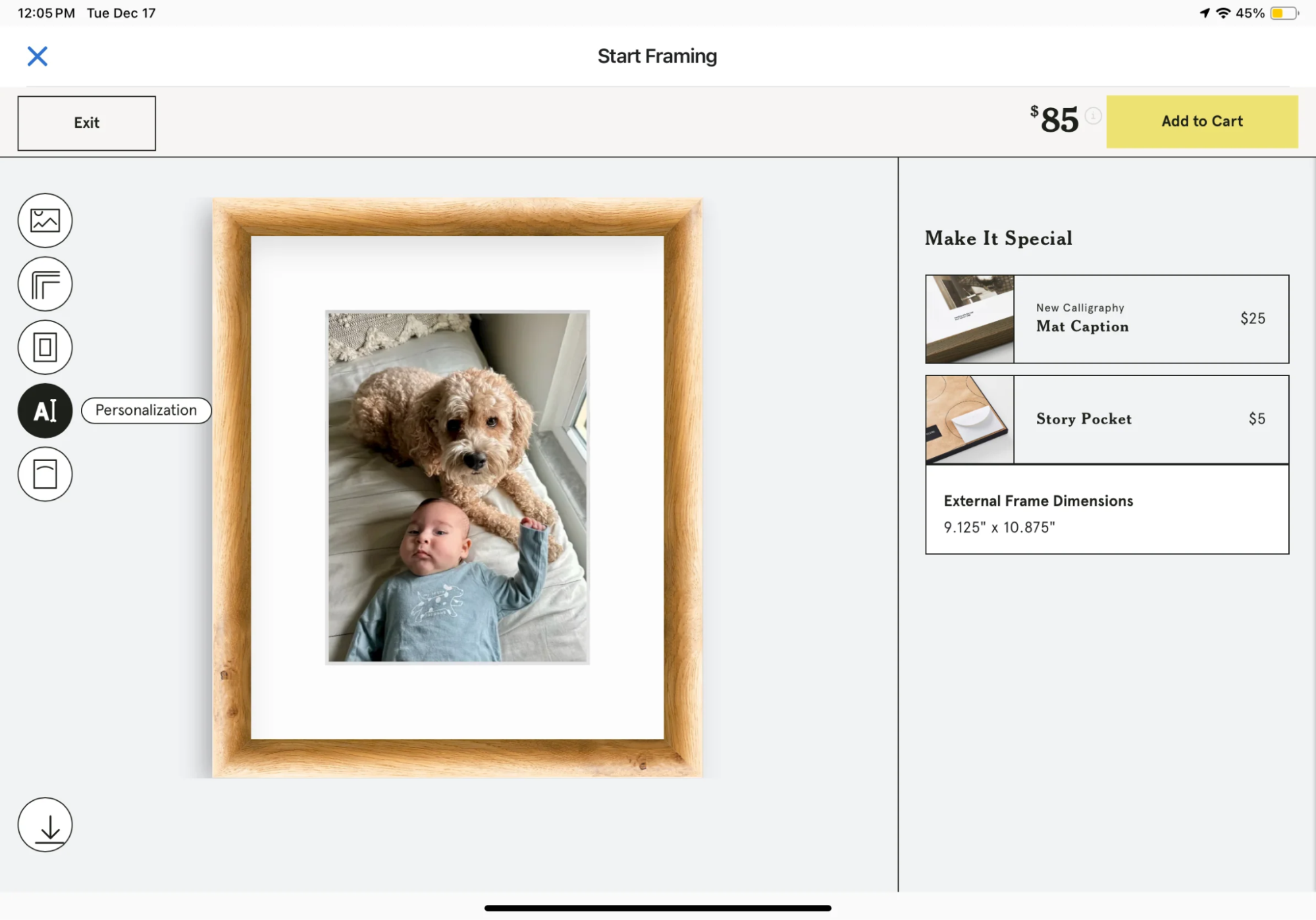
Custom framing UI shows a baby and dog photo with personalization options and prices.
Framebridge

After replatforming to Shopify, Framebridge now runs more than 30 retail stores and manages over 250 employees—all from one system, all built to provide a great customer experience. And they’ve seen the numbers to back it up:

  • 15.3% increase in add-to-cart rate
  • 8.1% increase in checkout-started rate
  • 7.5% increase in conversion rate

Jenni Kayne

Jenni Kayne built her namesake brand into a California lifestyle empire—starting with clothing and footwear, then expanding into home furnishings (Jenni Kayne Home) and skincare (Oak Essentials).

Neutral-toned living room with Jenni Kayne furniture, candle, and coffee table books.
Jenni Kayne

From the beginning, the brand prioritized omnichannel connection. But as new product lines and store openings accelerated, it became clear they needed a platform that could scale with them.

Since migrating to Shopify Plus and Shopify POS, Jenni Kayne has:

  • More than doubled their brick-and-mortar retail footprint
  • Unified customer profiles across channels to drive deeper engagement
  • Removed friction for staff when checking inventory across stores and ecommerce
  • Streamlined quote creation for Trade Program partners with branded imagery and product details

“Shopify has helped us fulfill our omnichannel vision and provide a customer experience that is smooth and seamless.” —Sam Mella, Director of Home Experience, Jenni Kayne

Webinar: How Jenni Kayne Home builds lasting loyalty

Discover how the California lifestyle brand created its competitive advantage with the ultimate point of sale for home and garden retailers. Get actionable tips to scale your business by improving customer experiences and driving repeat sales.

Watch now

Mejuri

Mejuri was built to break the old rules of luxury, making fine jewelry accessible for everyday wear. What began as a DTC brand now spans 45 stores across four countries, blending online reach with tactile, in-person experiences like piercings and styling sessions.

But with growth came friction. A custom tech stack slowed Mejuri’s ability to move fast and innovate. So they switched to Shopify’s unified commerce platform. Since replatforming, Mejuri has:

  • Migrated both ecommerce and POS in under nine months
  • Slashed tech overhead and maintenance costs
  • Transformed stores into fulfillment hubs with dynamic order routing
  • Accelerated global expansion, starting with their Sydney store

The future of brick-and-mortar retail: Trends to watch

Forget the retail industry apocalypse headlines. Brick-and-mortar is getting smarter, greener, and way more fun to shop in. Here’s what the next wave of in-person retail looks like:

Hyperpersonalized, location-aware experiences

According to surveys, 65.6% of consumers say digital in-store media increases their spending.

Consumers who start their journey online increasingly expect that digital breadcrumb trail to follow them into the store. With tools like in-store beacons, brands can push personalized offers to shoppers’ smartphones as they pass by, tailored to browsing history or abandoned carts. 

Once inside, that personalization continues through digital signage that adapts to age and gender, or smart mirrors that let customers virtually try on outfits. 

Sustainability as a growth strategy

Consumers are willing to pay a 9.7% premium for sustainable products, even amid inflation and rising living costs.

Ocado Retail’s innovation in UK packaging offers a glimpse of what’s possible. As the first UK grocer to scale packaging traceability with invisible UV tags, Ocado now gets real-time data on where and when their packaging is recycled—starting with their entire private-label milk range.

The system, built in partnership with Polytag, is live across over 100 Ocado products and supported by a network of plastic-detection units that cover nearly 50% of the UK’s household recycling stream.

💡Note: Green retail will be a big focus for the 2025 RTIH Innovation Awards.

The AI boom is coming to a store near you

According to Gartner’s 2025 CIO Agenda leaders expect their 2025 budgets to jump by 34% for generative AI, 33% for artificial intelligence overall, and 31% for business intelligence and analytics.

Retailers like Walmart-owned Sam’s Club are experimenting with tech-powered checkout verification using exit cameras instead of receipt checks. Others, like retailers using J.P. Morgan Payments, are testing biometric payments: think facial recognition or palm scans at the register.

The retailers that lean into experimentation are the ones most likely to pull ahead.

Instant demo: See Shopify POS in action

Discover how Shopify POS helps you manage in-store and online sales from one powerful platform.

Try now

Brick-and-mortar business FAQ

What is considered a brick-and-mortar business?

Brick and mortar refers to a business that operates in a physical store or showroom—like a clothing boutique, coffee shop, or bookstore—as opposed to purely online platforms. The business model is the opposite of online-only commerce, but in today’s retail landscape, most businesses run on both.

What is an example of a brick-and-mortar business?

Think of Warby Parker, Allbirds, or your local discount store. These brands now all have physical storefronts where people can touch, try, and buy in person.

What is a brick-and-mortar business strategy?

It’s how you plan, operate, and grow your physical retail presence. That includes everything from choosing the right location to syncing your POS with online inventory to offering ship-to-customer options. (And Shopify makes all of that easier.)

Is Amazon a brick-and-mortar company?

Not traditionally—but they’ve dipped in. Amazon owns Whole Foods, has launched Amazon Go convenience stores, and experimented with physical bookshops and popups. While they started online, they’ve clearly expanded into the physical world.


How D’IYANU Built a Multimillion-Dollar Brand While Staying True to West African Roots (2025)

Software Stack Editor · August 28, 2025 ·

When Addie Ajayi founded D’IANYU (a blend of French and Yoruba languages meaning “of or from something wonderful” ), she wasn’t just starting a fashion label—she was betting on herself. With no background in fashion, no outside investment, and only six designs in her apartment, Addie turned a bold idea into a million-dollar brand in just two years. Today, D’IYANU is known for its vibrant West African–inspired prints that blend cultural heritage with modern ready-to-wear.

Her journey is a master class in bootstrapping, digital marketing, and leading with purpose and authenticity. Learn how she built her brand while staying true to her roots.


Taking a leap of faith as a founder

In 2014, Addie launched D’IYANU while still working a full-time corporate job. Just a few months in, she walked away from her steady paycheck to focus entirely on the business, even though revenue wasn’t yet enough to support her.

“I figured to myself, it’s sink or swim. It’s either you make it work or you go back to 9-to-5,” Addie says.“I think that pressure forced me to find a solution that would make my business succeed.”

Within months, she discovered Facebook ads and started seeing immediate returns. For founders, the lesson is clear: sometimes the only way to accelerate growth is to remove the safety net. If you believe in your idea, commit fully—even if it feels uncomfortable.

Models wearing African-inspired clothing
D’IYANU designs its prints in-house and uses innovative fabric blends—like cotton with spandex—to ensure styles are both bold and comfortable. D’IYANU

Building from scratch without outside funding

Starting D’IYANU with no external investors meant that everything from sourcing fabric to building her first Shopify site came out of Addie’s own pocket. “It was just a lot of solo work,” she says. “I had to handle all of it— marketing, finances, production, customer service, the website.”

This self-funded model shaped D’iyanu’s values: grow intentionally, reinvest profits back into the business, and stay resourceful. Addie taught herself ecommerce basics, sourced local manufacturers, scaled only when it made financial sense, and eventually upgraded to Shopify for a more professional look.

For entrepreneurs in any field, bootstrapping can feel limiting, but it also builds resilience, creativity, and scrappiness—qualities that will help you build a sustainable business.

Digital marketing as a turning point

The pivotal moment for D’IYANU came when Addie discovered Facebook advertising. After taking a course, she applied what she learned—and the results were immediate.

“When I implemented it, I saw almost immediately the results of driving more traffic, driving more sales,” Addie says. “Almost overnight it became a success.”

By late 2014, monthly sales climbed from $10,000 to $15,000. By March 2015 she had moved into her first office and made her first full-time hire.

Her early bet on social media marketing built a growth engine that still powers the brand. Today, Meta ads still account for 70% of D’IYANU’s ad spend, with Google and Pinterest rounding out the mix. It’s a case study in how mastering one high-leverage skill can transform your business trajectory.

D'IYANU founder standing next to merchandise
Founder Addie Ajayi envisions D’IYANU as the “Zara of African-inspired fashion,” with plans to expand retail and grow manufacturing partnerships in West Africa. D’IYANU

Prioritizing authenticity while scaling

As D’IANYU grows, Addie still prioritizes staying true to the brand’s cultural roots. Her long-term vision is to be the “Zara of African-inspired fashion,” but without losing what makes D’IYANU unique. “We don’t want to just turn over the brand and make it too watered down or mainstream,” she says.

That authenticity shows up in choices like designing prints in-house, adjusting fabrics for comfort without losing the bold aesthetic, and even surveying customers before launching new collections. For example, while some early holiday styles flopped because the prints didn’t resonate, a recent tribal-print maxi dress sold 500 units in a single week—a clear sign that staying authentic is good business. Plans to expand manufacturing to Ghana and Nigeria further reinforce D’IYANU’s connection to its roots.

Addie’s story is one of bold decisions and unwavering belief. She quit her job without a safety net. She taught herself ecommerce and digital marketing. She stayed scrappy, bootstrapped and built a multimillion-dollar brand on authenticity. For founders on the edge of a big decision, her advice is simple: Trust yourself and start now.

For more insight into Addie’s journey and her tips on building with intention, listen to the full interview on Shopify Masters.

How 8 Brands Turned Customer Feedback Into Business Success (2025)

Software Stack Editor · August 27, 2025 ·

image

Customer feedback is one of the most important resources for a business owner. Who better to highlight what your business is doing well and how it can improve than the people interacting with it on a regular basis?

Customer feedback can help improve your products and services, spark new ideas, uncover weaknesses in your operations, influence your marketing strategy, boost customer satisfaction, and more. And considering that 80% of businesses expect to compete mainly based on customer experience, according to data from business research and advisory firm Gartner, going straight to the source can help ensure you’re providing an experience your customers love, return to, and tell their friends about. 

So, where do you begin? Shopify talked to founders about how they collect customer feedback and use these insights to uplevel their businesses.

Evolving with the customer

When Grace Lee Chen first launched Birdy Grey, her target audience was millennial brides seeking affordable but fashionable bridesmaid dresses. As trends continue to change and her target demo shifts to Gen Z brides, Grace lets customer feedback guide her product strategy. 

“Our customer loves to give us feedback,” Grace says on Shopify Masters. “Whether it’s color, silhouettes, fabrics, wedding vibes—whatever it is, they’re not afraid to reach out and tell us what they want.”

Grace and her team welcome it all, putting systems in place to collect insights and analyze trends. They gather this information through formal surveys, Instagram polls, and feedback from product reviews, third-party sites, and the brand’s Facebook brides group and Instagram broadcast channel.

“We really analyze feedback so that we can serve the customer,” Grace says. “Surveys are a really early indicator for what the bride wants because oftentimes, when we hit her with a survey, it’s about six months to a year before her actual wedding.” This helps ensure Grace and her team have what the bride wants when she’s ready to order.

Establishing a niche

There’s a reason Guru Energy has been around for more than two decades. The natural energy drink company has drilled down on customer feedback to better understand who its core demographic is and why they choose Guru. This, in turn, allowed the brand to home in on its niche and take a more thoughtful approach to product development and marketing, positioning itself apart from synthetic competitors.

“I think, from a brand standpoint, it’s really being clear on the communities we go after, and then being very strategic about which events, partners, or pop-ups where we want the brand to appear,” says Shingly Lee, Guru’s vice president of marketing. 

“One of the first things I did coming into this role was combing through our consumer DMs and understanding a clear [usage] occasion,” she says. Seeing how popular the beverage was in people’s pre-workout routines, the brand partnered with one of Quebec’s largest run clubs to “effectively sample, get community feedback, do VIP drops with their community, and almost co-create with [them] from there,” says Shingly.

Guiding product development

One of the best ways to fine-tune your products is to listen to what your customers have to say about them. Making adjustments based on recurring, constructive feedback can help you build not only a better product but also consumer trust. 

Marcus Milione, founder of Minted New York, has been very transparent about his entrepreneurship journey, documenting the highs and lows on social media. That vulnerability has created space for an ongoing dialogue that influences product development. In one instance, he and his team made a design tweak to a tote bag based on suggestions people were sharing online.

“If you’re blinded to that constructive criticism that can make your product better just because you don’t want to change your product and you think it’s perfect as is, it’s dangerous,” says Marcus. He adds that listening to your customers also helps them feel more connected to the product.

Leah Marcus and Yasaman Bakhtiar, the founders of Good Girl Snacks, changed their core offering in response to customer feedback. The brand is best known for its Hot Girl Pickles, which originally was made with large pickles. During the brand’s soft launch, Leah and Yasaman gathered feedback through email surveys, social media polls, and DMs from anyone who tried their pickles. 

“Due to this large community that we’ve built, we were able to garner a lot of customer feedback, and we decided to switch to smaller gherkin cucumbers for pickles,” Leah says. This swap changed the flavor profile and allowed the snack brand to offer more pickles per jar, which customers love.

Adjusting pricing

When setting your prices, you want to find the sweet spot that attracts customers and still ensures your business is profitable. But if your prices are too high, it could box you out from potential sales. Claudia Snoh, who cofounded premium coffee brand Kloo, used a customer feedback survey to land on a more appealing pricing point. 

“We did have a lot of abandoned checkouts during our soft launch period—not abandoned carts, abandoned checkouts, which means that they had the full intention of purchasing, but they probably saw the shipping fee that we used to have and then abandoned checkouts happened,” Claudia says.

In response, Kloo dropped its bottle price by $3 and eliminated the shipping fee for subscribers. It also offered subscribers a $7 discount per bottle to help motivate people to sign up for scheduled deliveries, while also increasing the minimum order quantity to two bottles. This led to more sales and greater profits. 

Building community

Hummus brand Little Sesame has always looked for opportunities to directly engage with its audience—both for valuable product feedback and to build community, which cofounder Nick Wiseman acknowledges can be difficult in the consumer packaged goods space. 

“I think ‘community’ is thrown around loosely a lot, but I think the power of community is when you create this real opportunity for dialogue and conversation and engagement,” says Nick. 

One such opportunity that Little Sesame created was its Hummus Club, which offered customers a seasonal delivery featuring a special flavor. Nick reached out to some of these top subscribers to thank them for their support and ask for candid feedback. The brand also has a flagship restaurant in Washington, DC, and most recently embarked on the Summer of Hummus, a cross-country van tour to host hummus happy hours, panels, and product demos. 

“There’s not many advantages of a little brand out there in this big hard world we live in, but I think one is that if you do build community and this group of loyalists from the early days, they can really be a catalyst for a lot of growth,” says Nick.

Fueling growth and expansion

Customer feedback can do more than just validate your business idea—it might also inspire you to invest in growth. That’s how the story went for the multimillion-dollar fashion brand Lulus. The company ran a series of pop-up experiences to get a feel for how to best serve its growing community. Its customers made it clear that a brick-and-mortar store was what they wanted, which inspired Lulus’ first flagship store in Los Angeles. Customer insights are continually driving their retail direction. 

Crystal Landsem, CEO of Lulus, sees pop-up experiences as a way to get feedback from real customers before expanding into new retail locations. “If we had a pop-up, let’s test it. Let’s get her feedback. Let’s have focus groups, talk to her about what she wants and what she doesn’t want, and then figure out what the next logical geography is,” she says. 

Know your audience to grow it

Discover powerful insights about your customers by creating unique segments, then reach out with personalized campaigns to drive sales.

Build your audience

Spinning the negative into opportunity 

Debuting your business to a lukewarm reception—or worse, receiving criticism—might leave you feeling defeated, but negative feedback can also be an opportunity to course-correct and come back stronger than before. When Debbie Wei Mullin was launching Copper Cow Coffee, she made it a point to be visible wherever her target demographic was spending time to collect as much feedback as possible.

“Develop as thick a skin as possible, as soon as possible, and just get feedback, because everything is iterative,” she says. “I think that if you have a product that you think that the world needs, go and show the world and see what they say.”

When Debbie and her team were trying to figure out why customers were only placing orders a couple times a year despite saying it was their favorite coffee, she called them up and asked. Learning that customers considered Copper Cow their special occasion coffee, she strategized how to make it an everyday ritual—and the brand’s ground coffee line was born to immediate success.

Attraction Marketing: Key Tactics + Step-by-Step Guide (2025)

Software Stack Editor · August 27, 2025 ·

image

When a cheerful rendition of “Pop Goes The Weasel” rings through the neighborhood, you know what’s coming: ice cream!

The classic melody stirs up nostalgic emotions and creates anticipation. You might start craving a cone as soon as you hear the first note. Jingles like these don’t tell you to buy ice cream directly—they just let you know there’s a truck nearby. Instead of executing a hard sell, vendors trust that consumer desire will motivate them to purchase. 

Businesses can take a similar approach with attraction marketing, a marketing strategy that emphasizes building relationships and creating appeal. Learn more about the attraction marketing formula, how to get started, and how to develop a winning strategy.

What is attraction marketing?

Attraction marketing draws consumers in with valuable content or enriching experiences. Instead of commanding customers to purchase, attraction marketing messages provide meaningful information. They aim to boost customer desire and build relationships. 

For example, an attraction marketing strategy might include publishing original educational content on your brand’s social media pages. This approach gives consumers a reason to follow your page. Blog posts or videos packed with practical advice or interesting insights offer meaningful value to draw people in.

Advantages of attraction marketing 

Attraction marketing requires an upfront investment in content creation and audience development. With proper execution, this powerful marketing strategy can help achieve big-picture goals. Here are some of the key benefits of attraction marketing: 

  • Establishes credibility. Creating high-quality content helps position your brand as a subject matter authority. With consistent, valuable content marketing, consumers might learn to trust your opinion and look to your page for guidance. 

  • Builds strong relationships. Focusing on product and brand appeal helps establish strong connections. With an attraction marketing strategy, you build relationships on a foundation of genuine consumer interest instead of temporary discounts or other promotions. 

  • Supports long-term growth. Attraction marketing fosters brand loyalty by developing relationships. Building a robust community can contribute to growth over time as interested users convert to paying customers. 

  • Bolsters organic reach. Attraction marketing content focuses on useful information relevant to the consumer experience. Sharing valuable content may help increase organic reach on social media platforms and also boost search engine optimization (SEO) efforts, since Google’s algorithms value this type of useful and informative content.

4 types of attraction marketing tactics

Brands can execute attraction marketing campaigns in a variety of ways across a host of platforms. Here are some tactics businesses use to generate appeal:

Influencer partnerships 

Influencer marketing involves partnering with social media creators to develop promotional content. Brands use this technique to borrow credibility and reach an engaged audience. To use this approach for attraction marketing, focus on sharing authentic content. Work with your partners by providing key product facts and allowing them to create content using their own unique voice so they can develop authentic messages that resonate with their existing fanbase.

To practice attraction marketing, an online business selling hair care products could partner with a beauty influencer to create a styling tutorial featuring the brand’s new wave spray. Sharing an informative video demonstrating how to use the product and showcasing the results could help a relevant audience understand its benefits. 

Free information

Offering valuable information can help draw users to your brand. This attraction marketing technique involves creating informative content related to your target audience’s interests.

Know your audience to grow it

Discover powerful insights about your customers by creating unique segments, then reach out with personalized campaigns to drive sales.

Build your audience

Informational materials may not always feature products directly. Supplemental content discussing activities or occasions associated with your brand and your products can provide value to potential customers who haven’t yet reached the shopping stage. A loose-leaf tea company, for example, could create a comprehensive chart displaying the ideal steeping times and water temperature for 10 popular tea varieties. This document would be a useful aid for all tea lovers—even if they aren’t current customers. 

Attraction marketing messages like these may be a natural fit when you’re looking to reach people on social media platforms and blogs. In addition to content marketing, brands can use attraction marketing materials to support lead generation. Creating a lead magnet by making information available in exchange for an email signup or survey response can help grow your potential customer base. 

Educational events

Educational events create an opportunity for consumers to experience your product firsthand. Brands can use in-person workshops, online classes, and product demonstrations to raise brand awareness and showcase quality. 

A kitchenware brand, for example, could host a weekend baking class to connect with consumers. This class would provide value by offering a chance to have fun and learn a new recipe while creating an opportunity for participants to use the brand’s non-stick cookie sheet.

Celebrity endorsements 

High-profile endorsements make products seem desirable and create emotional appeal, which can help reach potential customers. When celebrities share brand content on their own accounts, businesses gain broad exposure. 

A motorcycle gear company, for example, may find success by partnering with beloved actor and famed motorcycle enthusiast Keanu Reeves. Seeing pictures of Reeves in the brand’s signature leather moto jacket would help the brand appear both classic and cool.

How to implement attraction marketing

  1. Get to know your target audience
  2. Refine your brand story
  3. Pick your target platforms
  4. Create valuable content
  5. Nurture your community

Attraction marketing requires strong brand storytelling and an in-depth understanding of consumer interests. Try these attraction marketing tips to start building strong campaigns:

1. Get to know your target audience

Researching your target audience will help you understand how to relate to them. Get to know consumers by running surveys, reviewing existing customer feedback, and monitoring social media mentions. Consider using this information to build buyer personas, or fictionalized characterizations of your ideal customers based on information about them and how they use your product or service.

Look beyond basic demographic information like age and location, and get to know their interests, hobbies, and passions. Developing a complete picture of your ideal customer will help you craft messages that resonate on a personal level. If you understand what consumers value, you can use content and other marketing materials to align your brand with their preferences and boost product appeal. 

2. Refine your brand story 

Brand stories help explain what makes your company unique. They often touch on corporate values, mission statements, production practices, and founder stories. With attraction marketing, businesses focus on developing narratives that add emotional value for consumers. 

Using your brand story to establish a shared set of values can help build customer loyalty. For example, imagine an outdoor apparel company with an ideal consumer who loves camping. To relate to this audience, the company could focus on how its founder developed their first prototype while camping and tested the product on the trail. 

Before you start sharing, sit down with your team to define what your brand stands for. Review your buyer personas and look for commonalities between consumer preferences and corporate practices. Outline key aspects and share talking points to help ensure consistent messaging across platforms.

3. Pick your target platforms 

Decide where you’ll concentrate your efforts and promote brand content. To find the most effective distribution channel, consider platform strengths and audience behavior. Look for a platform your customers already use that can accommodate your ideal storytelling format. For example, if you hope to reach a younger audience and want to use visual storytelling, TikTok may be a strong choice. 

Selecting a target platform helps plan for content creation. If you decide to focus on YouTube, for example, you might want to consider hiring a video producer or investing in a high-quality camera.

4. Create valuable content

Start putting your ideas into action by creating attraction marketing content. Focus on the consumer perspective and prioritize valuable content over sales-focused messaging to draw in consumers. If your content has a clear takeaway and provides useful information or helps resolve pain points, consumers may feel more motivated to follow your brand. 

Stay true to your brand voice and share authentic, engaging stories. For best results, pay attention to performance metrics and adjust your approach as you learn more about which piece of content your audience likes.

5. Nurture your community 

Engaging with consumers helps develop relationships and build brand loyalty. Responding to feedback and replying to social media comments can make customers feel seen and valued. Direct communication shows your brand cares about the consumer experience. This personal touch holds user attention for longer and increases their emotional investment in your brand. 

To incorporate community interaction into your attraction marketing strategy, consider creating low-lift engagement opportunities on social media by sharing polls or asking followers to comment and share their opinions. An active community can help support your ongoing content production. Featuring user-generated content (UGC) such as creative replies or public photos on your brand channels demonstrates appreciation and shows followers that customers love your products.

Attraction marketing best practices

High-quality content is the key to an effective attraction marketing strategy. Try these tips to help your marketing efforts succeed:

  • Put yourself in the customer’s shoes. Attraction marketing messages focus on offering value, not pushing business priorities. For the best results, keep consumer needs in mind while planning and executing content. 

  • Incorporate user-generated content. Sharing UGC helps brands establish social proof. Consider using photos or videos of real customers to demonstrate your product’s appeal. 

  • Think about the takeaway. Aim to create content that leaves users with a clear lesson. This helps assure your content provides real value. 

  • Include visuals. Incorporating photos or videos in your marketing materials helps content capture attention and increases information retention rates.

  • Create emotional connections. In addition to practical benefits, consider how you want your brand to make people feel. Tying your product to social movements or sharing personal stories can add emotional value.

Attraction marketing FAQ

Can you make money with attraction marketing?

Yes. Attraction marketing focuses on building relationships before converting viewers into paying customers. Once relationships have been established, this strategy can lead to consistent sales.

How does attraction marketing work?

Attraction marketing aims to create authentic appeal. This approach focuses on explaining product benefits and generating consumer excitement instead of overt selling. Successful attraction marketing campaigns motivate sales by stoking consumer desire.

What is an example of attraction marketing?

To practice attraction marketing, an athletic apparel company could create a marathon training plan and share it on its blog and social media platforms. Runners might decide to follow their accounts for helpful tips and later turn to the company to stock up on shoes and other gear.

10 Applications of AI in Business: 2025 Guide

Software Stack Editor · August 27, 2025 ·

image

Artificial intelligence is a game-changer for businesses ready to embrace innovation. From automating tedious tasks to uncovering insights you never knew existed, AI tools are helping ecommerce entrepreneurs work smarter, not harder.

In the ecommerce landscape, early AI adopters are outpacing competitors. Up to 84% of ecommerce business owners report real gains from artificial intelligence investments, including greater operational efficiency, revenue growth, and improved customer experience.

Here are practical ways to apply AI in ecommerce—plus top tool recommendations.

10 applications of artificial intelligence in business

  1. Customer service chatbots
  2. Content generation and research
  3. Inventory management
  4. Product recommendations
  5. Fraud detection
  6. Predictive analytics for marketing
  7. Supply chain optimization
  8. Automated quality control
  9. Price optimization
  10. Human resources and hiring

From basic add-ons to advanced, agentic AI powered by plug-and-play APIs, the possibilities for integrating AI apps into your business are vast. Here are 10 essential applications: 

1. Customer service chatbots

AI-powered customer service chatbots have become a linchpin for ecommerce businesses looking to scale support without hiring more workers. The best AI chatbots use advanced natural language processing (NLP) to understand customer inquiries, deliver nuanced responses, and escalate more complex issues to human agents when needed.

In fact, nearly half of consumers prefer interacting with AI chatbots for repetitive tasks like scheduling appointments, placing an order, seeking tech support, or reporting an issue—largely due to their 24/7 availability. This always-on support benefits both customers and businesses.

Beyond basic tasks like order tracking and sharing return policies, AI chatbots can also act as smart shopping assistants. Home Depot’s Magic Apron, for example, guides customers through the home improvement shopping experience by suggesting materials, offering how-to advice, and recommending the right products. Shopify’s Sidekick, powered by Shopify Magic, plays a similar role, helping you navigate and manage your business operations in real time.

2. Content generation and research

With 27% of US adults saying they interact with AI almost constantly or several times a day, it’s clear that deep learning tools like ChatGPT, Gemini, and Claude are reshaping how people work, study, and create.

This shift has reached the ecommerce business world, where top content creation tools are helping scale content production, from product descriptions to social media posts, blogs, and visual assets. Niche tools like Shopify Magic and Jasper AI can help ecommerce business owners craft on-brand content tailored to target audiences. (Studies indicate that generative AI can create persuasive, hyperpersonalized ads, too.)

Beyond brainstorming, generative AI has become an adept research assistant for business owners looking to write authoritative articles or launch new campaigns, though verifying facts and claims is crucial as AI hallucinations get worse.

3. Inventory management

AI systems excel at analyzing data patterns to optimize inventory management, a critical ecommerce function. By leveraging machine learning and neural networks to analyze historical sales, seasonal trends, supplier relationships, and external factors like weather and market trends, AI inventory management systems can forecast demand more accurately than traditional methods—provided you’re working with quality data.

Major retailers like Walmart and Target, for instance, have turned to artificial intelligence to predict stock shortages before they happen. Since implementing AI systems, Target executives report improved inventory availability over four years.

But this isn’t just for big-box retailers: Smaller ecommerce businesses can prevent stockouts and overstocking with tools like Cin7, Zoho Inventory, and Shopify Sidekick, all of which leverage AI to provide inventory alerts and recommendations based on store performance and market trends.

Unify your inventory management with Shopify

Only Shopify helps you manage warehouse, pop-up shop, and retail store inventory from the same back office. Shopify automatically syncs stock quantities as you receive, sell, return, or exchange products online or in-person—no manual reconciling necessary.

Explore inventory management on Shopify

4. Product recommendations

Nearly three-quarters of consumers now expect personalization in their shopping experience. To meet this demand, business owners are turning to AI, which uses machine learning models to analyze customer behavior, purchase history, and browsing patterns, then delivers personalized product recommendations at key moments in the buyer journey.

Beauty giant Sephora—known for its AI makeup artists and chatbots—is now pushing personalized product recommendations straight to Google search results. By creating AI-generated landing pages for queries like “foundation for sensitive skin,” Sephora has improved its search engine rankings and boosted organic visibility by 6%.

Small ecommerce businesses can harness the power of personalization with accessible tools like LimeSpot and Bloomreach, which provide AI-powered personalization and product recommendation tools.

5. Fraud detection

AI-powered fraud detection systems help protect sensitive data across industries—from finance to health care to ecommerce—by analyzing transaction patterns, user behavior, and multiple data sources to detect fraudulent or suspicious activities in real time. The US Department of the Treasury credits AI fraud detection with preventing and recovering more than $4 billion in fraud losses.

In ecommerce, these systems can flag high-risk orders without disrupting legitimate customer purchases. Apps like NoFraud, Signifyd, and Chargeflow offer AI-driven protection for both you and your customers.

6. Predictive analytics for marketing

AI lets you go beyond reactive marketing to predictive strategies based on customer data analysis. Predictive AI systems can forecast customer lifetime value, predict churn risk, and identify the best times and channels for marketing campaigns.

For ecommerce business owners, apps like Klaviyo and TripleWhale turn marketing into a science with AI-powered data analysis. It’s worth noting that predictive analytics work best on large datasets; small businesses may need significant data volume before seeing reliable predictions. 

7. Supply chain optimization

AI optimizes supply chain management in multiple ways, including:

  • Demand forecasting. Predicts customer needs and inventory requirements using historical data and real-time, actionable insights.

  • Route optimization. Identifies the most efficient delivery and transportation paths.

  • Supplier management. Assesses supplier performance and supports better vendor selection.

  • Automated negotiations. Uses AI agents to handle transportation rate discussions automatically.

  • Alternative supplier sourcing. Quickly finds backup vendors when primary suppliers are unavailable.

Ecommerce platforms like Shopify and Etsy use AI-powered supply chain management to support their small business owners. Shopify provides its sellers with AI tools to forecast demand and optimize shipping methods. Etsy’s AI supply chain efforts focus on matching sellers with the most relevant shipping carrier for their needs. Ecommerce owners can also use AI-powered apps like 8data and Stock Perfect to manage their growing supply chains.

8. Automated quality control

Computer vision and machine learning enable automated quality control systems that can identify defects, inconsistencies, or other issues more accurately than manual inspection—particularly vital if you handle physical products or user-generated designs (UGC). Paired with tools like infrared cameras and other visual inspection equipment, AI can help maintain quality in everything from manufacturing to food production.

Although this technology is still emerging, you can already access and implement visual quality control with apps like Robovision or monitor and moderate UGC with apps like Reviews.io. 

9. Price optimization

To suggest optimal pricing strategies, AI-powered systems can analyze:

  • Competitor prices

  • Demand patterns

  • Inventory levels

  • Market conditions

These analyses help you adjust prices dynamically or recommend price changes to maximize revenue and competitiveness. Tools like Prisync and Dynamic Pricing AI can help maximize profit margins and maintain competitive prices.

10. Human resources and hiring

AI applications in human resources can streamline recruitment, analyze employee sentiment, and predict staffing needs for growing ecommerce businesses.

AI can generate job descriptions (with tools like Textio), screen résumés for relevant qualifications (Paradox), and even conduct initial video screenings (HireVue). Sentiment analysis can help identify employee satisfaction issues before they lead to turnover (BambooHR), and predictive models can forecast staffing needs based on business growth patterns.

Note, however, that AI has enabled discrimination in hiring, a symptom of the systemic and institutional bias baked into its training data. As a result, use hiring and HR AI tools with caution and always pair them with thoughtful, human oversight.

Applications of AI in business FAQ

What is the application of AI in business?

The application of AI in business involves implementing AI solutions to optimize various business aspects, including inventory management, customer service, and marketing.

How can AI be used in business?

You can use AI in nearly every facet of your business operations. Applications include automating repetitive business processes, improving customer satisfaction through service chatbots, optimizing inventory and pricing, detecting fraud, generating content, and providing data-driven insights for strategic planning.

What is an artificial intelligence application for business strategy?

AI applications for business strategy include predictive analytics for market forecasting, customer behavior analysis for product development, and optimization of marketing campaigns and resource allocation.

How can AI improve the customer experience?

AI improves customer experience through personalized product recommendations, faster customer service response times, predictive support that anticipates needs, and customized marketing that delivers relevant content and offers.

Content Gap Analysis: How & Why To Do It (2025)

Software Stack Editor · August 27, 2025 ·

image

When your website ranks for the right keywords, you capture valuable organic traffic that can translate directly into leads, customers, and revenue. But if your competitors are ranking for keywords you’re missing, they’re winning business that could’ve been yours. 

That’s where a content gap analysis becomes essential. This strategic process helps you identify which valuable keywords your competitors rank for that you don’t, reveals topics your target audience is searching for throughout their buyer journey, and uncovers underperforming content that needs optimization. By closing these gaps, you can capture more organic traffic, improve your competitive position, and ensure you’re visible wherever your potential customers are searching. Here’s what you need to know to perform a content gap analysis.

What is a content gap analysis?

A content gap analysis is the process of finding relevant topics you haven’t covered or could cover better to improve your search results. Essentially, you’re filling in the gap between the topics you’re ranking for already and those that could be valuable for you to rank for. 

You can do this by auditing your organization’s current content performance and comparing it to competitors. First, you’ll look at the terms your competitors rank for that you don’t. Then, you’ll identify topics you need to add to your content strategy to address all stages of the customer journey. Finally, you’ll look at your existing content that’s not ranking highly, and develop a plan to close the gap between your content and the competitor content that’s beating it.

Content gap analysis vs. competitor keyword gap analysis

Content gap analysis and competitor keyword gap analysis are different but related concepts:

  • Competitor keyword gap analysis. A keyword gap analysis is the process of comparing all the keywords your competitors rank for against the keywords your own content ranks for. 

  • Content gap analysis. Content gap analysis includes a comparison of your keyword capture with that of your competitors’, but it also looks at your existing content to identify underperformers and topics that you (and your competitors) could be missing entirely that your target audience is searching for in their customer journey.

How to conduct a content gap analysis

  1. Run a keyword gap analysis
  2. Audit your existing content
  3. Map the buyer journey
  4. Create a road map
  5. Analyze underperformers
  6. Review your content regularly

Here is a step-by-step guide on conducting a content gap analysis:

1. Run a keyword gap analysis 

Use keyword research tools to identify keywords that your competitors rank for, but you don’t. These tools allow you to see how many people search for those terms each month (search volume) and how hard it would be to rank for them (keyword difficulty). From there, you can prioritize which competitor keywords you want to compete for with new or improved content.

2. Audit your existing content

Next, audit the content across your entire website, including landing pages and blog posts. In a spreadsheet or other project management software, pull key details about each page, like:

  • Page title (or H1)

  • URL

  • Focus keyword

  • Meta title

  • Meta description

  • Content type (e.g., blog post, product description, case study)

  • Content format (e.g., long-form or short-form text, video, infographic, etc.)

  • Date last modified

  • The primary call to action (CTA) (e.g., to buy something, subscribe to the newsletter, etc.)

  • Content performance metrics (like organic traffic, bounce rate, and conversion rate)

You can export many of these data points from SEO tools like Google Search Console and/or your content management system (CMS).

Identify the underperforming content in terms of average rank and monthly organic search traffic so you can set it aside for optimization.

3. Map the buyer journey

Next, think about your potential customers and what their buyer journey looks like. What are their pain points, and what types of questions are they asking at various stages of the sales funnel? 

To uncover those kinds of audience insights, learn as much as you can about your audience. Survey existing customers and brainstorm the different questions they might be asking. These will give you ideas for new keywords to target.

Then, input those keyword ideas into a keyword research tool and assess them for volume and difficulty. 

4. Create a road map

Once you’ve identified content gaps in your existing content suite, you can decide which opportunities will have the most impact on search rankings and conversion rates. Even if you uncover a large number of gaps, it doesn’t mean you need to create all of that content or overhaul all of your existing content at once.

Consider factors such as search volume and keyword difficulty, and prioritize addressing the gaps that would make the biggest impact on your traffic and conversions. Once you’ve identified the new content you want to create or the existing content you want to update, you can add them to your content calendar to streamline the publishing process. 

5. Analyze underperformers

Now you’ll dig into the details of the underperforming content you want to update. For each underperforming page, look at the competitors that are outranking it on the search engine results page (SERP). Pay attention to how well they answer the user’s question. What information are competitor pages offering that your content isn’t? Is the competitor content better organized, more scannable, or more enriched with multimedia elements like graphics or videos? 

Note your insights for each page, and synthesize them into a plan to update your content to be more competitive.

6. Review your content regularly

A content gap analysis is not something you can only do once. It’s important to run this process regularly, ideally every six to 12 months, so you can make sure your content is still timely, relevant, and competitive. Because new sites pop up all the time and competitors will also be updating their content, you’ll want a way to spot changes between full reviews. 

Luckily, some of this can be automated. SEO tools can track your keyword rankings and alert you when competitors start outranking you, and Google Analytics can send automated reports about drops in traffic or new keywords your site is appearing for. These alerts also help you judge how urgently you need to dive back in with a full content gap analysis.

Content gap analysis FAQ

What is a content gap?

A content gap is an area of missed opportunity in the content your business is publishing online. It could be a topic your audience is searching for that you haven’t covered yet, a topic a competitor is ranking for but you’re not, or an update to existing content that would make it more likely to rank higher in search results and drive traffic to your website.

What are examples of content gap analysis?

Examples of a content gap analysis include finding topics your competitors cover that you don’t, and identifying areas where your content might not address user intent as well as it could. It could also mean spotting keywords your competitors rank for that you might be missing, or recognizing outdated information you can update to better suit your audience’s needs.

What are the steps of a content gap analysis?

Content gap analysis involves auditing your existing content, defining your target audience, and researching your competitors’ websites. From there, you can run a keyword gap analysis to uncover search terms competitors rank for that you don’t, identify gaps in user intent where your content isn’t meeting audience needs, and, finally, create new content to fill those gaps and improve your overall content.

What Is VoIP? Features & Benefits To Your Business (2025)

Software Stack Editor · August 26, 2025 ·

image

As a business owner, you’ll likely find yourself faced with the task of setting up phone service for your office or store. At that point, you’ll need to decide between a traditional landline or VoIP phone service from your internet service provider (ISP).

But VoIP systems aren’t just an alternative to landlines—they’re a flexible, scalable communication tool. Whether you’re managing customer service, coordinating with suppliers, or handling calls from remote team members, you may benefit from leveraging a VoIP phone system in your workplace. Here’s an overview of VoIP technology and tips for selecting a VoIP service provider.

What is VoIP?

VoIP, which stands for Voice over Internet Protocol, is a technology allowing you to make voice and video calls, engage in text messaging, and share files without a traditional phone system. Instead, you use a high-speed internet connection that works on a broad array of computers and mobile devices, leveraging internet access from a broadband provider.

How VoIP phone service works

VoIP providers transmit voice calls over IP networks by converting your voice into digital signals, breaking them into small data packets, and sending them over the internet. Here’s how the Voice over IP process works in more detail.

1. Analog to digital conversion. You can place VoIP calls via a traditional phone connected to a special modem, a computer using ethernet or Wi-Fi, or a mobile phone. Some businesses even have dedicated VoIP phones for such calls. When you speak into these devices, an analog-to-digital converter (ADC) converts your voice waves into digital signals. Your VoIP device or software comes with a built-in ADC.

2. Packetization. Next, the system uses a VoIP codec to compress and break down your digitized voice data into small, manageable data packets. Each digital data packet contains a small piece of your voice and “header” information instructing VoIP networks how to route the call.

3. Internet transmission. Your VoIP provider leverages a broadband internet connection (e.g., cable, fiber, 5G, LTE) to route these digital packages to their proper destination. The system hands them off to interconnected VoIP providers as they make their way to the intended recipient.

4. Reassembly to an analog signal. When the data packets reach your recipient, a digital-to-analog converter (DAC) in the recipient’s device (whether that’s a computer or mobile device) reassembles them in the correct order and converts them back into analog voice signals.

Your recipient does not need a VoIP phone system to receive your VoIP call. When you call a landline or mobile phone that’s on a non-VoIP network, your VoIP service provider uses a media gateway to instantly convert digital packets back into the standard analog signals. This is required for the Public Switched Telephone Network (PSTN)—the backbone of landline phone service. Your recipient will have no signs you’re calling via a VoIP telephone service.

Landline vs. VoIP

While you can use either a landline or VoIP to reliably place and receive telephone calls, they operate on different technologies. As such, they offer distinct advantages and disadvantages. Here’s a chart comparing the two communications services.

Landline VoIP
Technology Analog signals travel over copper wires using a circuit-switched network. Internet telephony transmits digital packets.
Call distance and costs In many cases, providers offer a fixed rate for all domestic incoming calls but charge more for international calls. Both domestic and international calls placed over a broadband internet connection are usually free of charge.
Price High prices are common due to a dwindling number of providers and shrinking infrastructure. Low monthly costs are available due to many VoIP service providers competing for the same clients.
Portability Landlines are fixed in one location. You can make VoIP calls anywhere with a reliable internet connection.
Call quality and reliability Landlines provide a consistent call quality. They remain functional during power outages, which is valuable when you need to reach emergency services. Calls made on VoIP phone lines have improved in quality, but an internet outage can leave you with no phone service. Broadband telephony can suffer from latency and digital glitches.
Required hardware Landlines let you make and receive calls using traditional telephones and phone connections. VoIP solutions are flexible, but all require some combination of IP phones, computers, mobile apps, or VoIP adapters.
Scalability Scaling up your landline system requires installing copper wiring, which can be costly and difficult to coordinate. It’s easy to scale broadband phone service, as you can add new lines and approved users via software applications.
Encryption and security Landlines are generally not encrypted. Many VoIP device manufacturers and providers offer encryption and security services, although these may cost extra.
Advanced features Some common landline features include caller ID and voicemail. The PSTN infrastructure does not support more advanced features. Many VoIP providers compete for business clients by offering advanced features like call recording, voicemail-to-email, call forwarding, auto attendant, conference calling, instant messaging, video calls, and CRM integration.

VoIP for business

Many IP telephony providers offer VoIP solutions aimed at business clients. In addition to standard voice services, these solutions offer a robust set of features to enable efficient communication throughout an organization. Here are some features to look for when shopping for a VoIP telephone service.

Auto attendant

An auto attendant is an automated digital receptionist that greets callers with a professional, customizable message. It also provides them with a menu of options (e.g., “Press 1 for sales, press 2 for support, or enter the extension of the person you wish to reach”).

It efficiently routes incoming calls to the correct department or individual without the need for a human operator, even outside business hours. In addition to reducing the workload on your administrative staff, an auto attendant can project a professional image for even the smallest of businesses.

Call encryption

Call encryption is the act of scrambling the digital voice data packets during transmission over the internet, using protocols like secure real-time transport protocol (SRTP) and transport layer security (TLS). When implemented, only the sender and receiver can decrypt the conversation. Call encryption gives you peace of mind when discussing financial data, client details, and confidential information. It also helps your business comply with privacy regulations that may apply to your industry or location.

Call recording

This feature lets you record inbound or outbound calls for quality assurance, training, or legal documentation. Most VoIP providers give you the option to store your recordings locally or on the provider’s servers, where they’re searchable by date or contact.

Call forwarding

Call forwarding automatically redirects incoming calls to another phone number (e.g., a mobile phone or another desk phone). There’s also an advanced VoIP feature known as “find me/follow me,” which attempts to reach the user at multiple designated numbers sequentially or simultaneously until they answer. This ensures the recipient never misses a call.

Voice-to-text or voice-to-email

This feature sends audio voicemail files or transcriptions directly to your email or SMS. It improves productivity by allowing employees to listen to or read voicemails without dialing into a system. They access messages from their device of choice and prioritize urgent calls based on their transcripts. Using this feature can cut down on time because it can be faster to read the text than to listen to the audio.

Turn chats into sales with Shopify Inbox

Shopify Inbox is a free app that lets you chat with shoppers in real-time, see what’s in their cart, share discount codes, create automated messages, and understand how chats influence sales right from your Shopify admin.

Discover Shopify Inbox

Conferencing capabilities

Conference calling, which has long existed on traditional landlines, lets multiple participants from different locations join a single phone call. VoIP systems often support larger-scale audio conferencing than landline providers and can thus be more useful for large organizations.

Many VoIP platforms support integrated video meetings and screen sharing. This facilitates multifaceted discussions where audio alone won’t be sufficient. It’s also an ideal tool for remote teams and client presentations delivered virtually.

Virtual numbers

Also known as direct inward dialing (DID), this feature provides local phone numbers in various geographic areas, even if your business isn’t physically located in those areas. You can also set up direct lines to individual employees, bypassing the main reception.

Integration with other business tools

VoIP services can fluidly integrate with customer relationship management (CRM) software. The CRM feature can be especially helpful to sales and customer service teams because it instantly provides agents with context about the caller, including their past interactions with the business. This feature logs each customer call or even records it for future reference.

[embedded content]

How to choose a VoIP provider

If you want your business to use VoIP telephones and services, you’ll want to research the various VoIP providers in your industry and region. Here are the key features and criteria to consider when selecting a VoIP system.

  • Look for robust calling features. The core reason to get a VoIP system is to make phone calls, so choose a service that excels at call quality. Prioritize clear voice quality, reliable uptime (which means very few dropped calls), and features like call forwarding, voicemail, call waiting, and caller ID.

  • Ensure seamless integration. Whether you use Shopify or another ecommerce platform, look for a VoIP provider whose services integrate with your business software. This includes your CRM and customer service software. VoIP providers Aircall, Nextiva,and RingCentral RingEx are known for their extensive integration ecosystems.

  • Aim for effective customer service. When customers call your VoIP line, they should be able to quickly navigate to the desired department or individual. Look for providers offering customizable call routing, after-hours rules, and call forwarding. An auto attendant can come in handy as well.

  • Seek out scalability. Ecommerce businesses experience rapid growth and seasonal fluctuations. A scalable VoIP system allows you to quickly add or remove lines, users, and features as your business grows or contracts. VoIP providers Ooma and Dialpad offer flexible plans that let you add users on demand, which is perfect for small Shopify stores looking to grow.

  • Prioritize security and encryption. With customer data at stake, your VoIP provider should offer call encryption and data compliance if your industry requires it (e.g., HIPAA compliance for medical providers). RingCentral RingEx and Nextiva offer enterprise-grade call security and two-factor authentication to help protect customer interactions and business data.

  • Take advantage of productivity tools. VoIP protocols can support many related productivity tools. These include call recording, voicemail-to-email transcriptions services, business SMS texting, and video conference features. These tools expand the utility of your VoIP software and help you communicate via a single platform, rather than force you to bounce from one app to another. Look into providers like 8×8, OpenPhone, and Dialpad for packages that include these features.

What is VoIP? FAQ

What is VoIP and why is it used?

VoIP (Voice over Internet Protocol) is a technology that allows you to make and receive voice calls and other communications over an internet connection. Businesses commonly use voice over IP to reduce costs, access advanced features, and enable greater flexibility and remote work capabilities compared to traditional phone lines.

Why would someone use a VoIP number?

Someone might choose to use a VoIP number for its flexibility, lower cost (especially for international calls), and access to advanced features like voicemail-to-email and auto attendant.

What is a disadvantage of using VoIP?

A disadvantage of using VoIP is its reliance on a stable internet connection. Call quality can suffer or service can drop entirely during internet outages or when you’re traveling and have poor internet bandwidth.

Can VoIP calls be traced?

Yes, it’s possible to trace VoIP calls. They rely on IP addresses and network connections, which leave digital footprints. In some cases, authorities or service providers may use these digital footprints to identify the origin and destination of calls.

What Does a UX Designer Do? How To Develop UX Design Skills (2025)

Software Stack Editor · August 26, 2025 ·

image

We’ve all been there: You’re shopping online, but can’t easily click between images. You want to read an article, but there are endless pop-ups in the way. You’re scanning for event information for a cool upcoming concert, but the web page layout is leaving you totally lost. These are examples of poor user experience (UX) design.

As users, we encounter experiences UX designers created for us every day. The best UX design goes unnoticed because of its seamless user flow—the result of extensive usability testing and UX research. A UX designer is behind those resulting delightful experiences.

Learn more about what UX designers do and how they create seamless experiences online.

What is UX design?

User experience encompasses a wide range of small interactions that make up a user’s larger experience with a digital product—typically a website, landing page, or app. UX design considers the hierarchy of information, user expectations, user journey, and visual elements. For example, determining where a call-to-action button is on a mobile app, what it looks like, and where it takes a user. Also, the way a menu is organized, the order in which a user sees key information, and how easy it is to enter payment or contact information.

Overall, the goal of UX design is to move the user through the entire user journey with engaging, intuitive interactions and as little friction as possible. UX designers do this by drawing on a wide variety of disciplines, including visual design, psychology, web development, product design, marketing, and information architecture.

UX design vs UI design vs graphic design 

In the world of product design, every kind of designer is prioritizing user experience, but different design disciplines support that journey in different ways. User interface (UI) design, also known as interaction design, is a component of UX design that focuses specifically on the design and presentation of the interface. UI designers often apply graphic design principles such as branding, typography, and color theory to facilitate a pleasant and intuitive user experience.

Although the way things look and feel is certainly part of UX design, UI designers and graphic designers are the ones who spend more time curating or creating fonts, colors, and imagery that are visually pleasing and aligned with brand guidelines. For example, a UX designer might create wireframes to capture the ideal user journey from a landing page, a UI designer imagines how the visual elements in the wireframe will actually appear, and a graphic designer creates the visual assets that make the user interface design feel like a cohesive part of the brand.

[embedded content]

What do UX designers do?

  1. Conduct user research
  2. Build information architecture
  3. Design wireframes and build prototypes
  4. Conduct user testing
  5. Collaborate with other departments

A UX designer’s role and exact responsibilities will depend on the company and the makeup of the team they’re a part of. At Shopify, designers wear many hats, says senior product designer Kaitlyn Horch, whose role includes both product design and visual design. A good UX designer will be thinking about the way a user interacts with a product on all levels and pitching in wherever necessary to give the user a great experience. But by and large, user experience designers tend to do the following:

1. Conduct user research

User research is one cornerstone of a UX designer’s job. Only through gathering and interviewing real users and analyzing user behavior are companies able to gain a competitive edge. Without user research, a new product might fall short of what people in the real world actually need, decreasing their likelihood of using the product again. Unlike user testing, user research usually happens before the start of a project. Whether that’s creating an entirely new product, updating a feature, or adding a new element to an existing product, user research is a tool to understand users’ needs in the real world. There are multiple ways to collect user feedback:

  • Interviews. Asking real users questions about their needs, preferences, and pain points to understand what’s working and what’s not.

  • Observation. Observe people in everyday life or while using a similar or competitive product to learn about natural user behavior. 

  • Surveys. You can design a set of survey questions to collect feedback from a representative sample of users.

2. Build information architecture

Information architecture includes site organization and mapping, as well as product labeling. While this might be primarily handled by content designers, UX designers play a major role in deciding what information architecture will lead to a high conversion rate. There are also visual considerations UX designers weigh in on, such as information hierarchy on a page, accompanying visuals, and the order in which the user experiences different elements within a digital product.

3. Design wireframes and build prototypes

Wireframes and prototypes are essential UX design tools. They allow designers to anticipate issues, debug user flows, test products, and iterate. When thinking through design solutions for a problem identified in their research, UX designers start by building wireframes, the building blocks of interaction design. Wireframes are blueprints for how a page, app, or feature might function and help the design team visualize the user flow before they dig into details like user interface design or copy.

Prototyping is another key part of the UX design process. Using prototyping tools like Figma or Framer, UX designers mimic the way a digital product will actually function—no coding skills needed.

4. Conduct user testing

Whether it’s using a wireframe, prototype, or an existing product, user testing is a crucial part of a UX designer’s job. While user research can be open-ended and exploratory and usually takes place at the beginning of a project, user testing aims to solve a specific problem or test a hypothesis for an existing product. User testing generally falls into two buckets: qualitative and quantitative.

Qualitative types of user testing include:

  • Observation. Asking users to complete tasks and report points of friction or other feedback about their experiences to live observers.

  • Interviews. Contacting and interviewing users about their experience using a product.

Quantitative types of user testing include:

  • A/B testing. In A/B testing, users are shown two options, and companies track their behavior to understand which option performs better. 

  • Analytics. UX designers can use tools to identify user behavior on a web page, then analyze where users clicked, how long they stayed on a page, or how long they scrolled. That helps them determine whether the user is taking the desired action.

UX designers work alongside UX researchers to analyze test results and use this data to inform their decisions.

5. Collaborate with other departments

UX design is inextricable from the other pillars of product development. Kaitlyn explains there are two approaches to creating a product. The first is what she calls the “waterfall” approach, in which each department works separately on the product, then passes it off to the next department. The second is a collaborative approach, which Kaitlyn uses in her work.

In the collaborative approach, every department works together on the product at the same time in different capacities. When the Shopify design team was redesigning the app store, Kaitlyn remembers having daily stand-up meetings with the entire team to assess progress and assign tasks. “A lot of the developers have really great input on what the solution could be,” Kaitlyn says. “Everyone having a seat at the table is really important in the collaborative approach.”

Skills needed to become a UX designer 

A UX designer is at the intersection of multiple disciplines; there are several (seemingly antithetical) areas where they should shine. Whether you’re hiring a UX designer or considering a career as one, here’s what you need to know about the required skills:

  • Visual communication. A good UX designer thinks visually. They can see how the architecture of a product fits together—and also where it might start to fall apart. They should also have strong presentation skills and be able to take internal stakeholders through their design thinking process. 

  • Critical thinking. A UX designer should think analytically to make decisions, using research, data, and the process of elimination to work through problems and present possible paths forward. They should also be able to zoom out and look at the data as part of a larger picture—their own human experience and the goals of the organization—to balance their decision-making.

  • Empathy. Interfacing with team members and users is a huge part of a UX designer’s day. That’s why effective communication skills like understanding, empathy, and clarity are essential for any UX designer.

  • Technical skills. A UX designer should also have a strong command of industry best practices and digital tools like Figma, Framer, UXCam, Marvel, UXPin, and more. Coding skills are useful though not required.

Visit the Shopify Partners Marketplace

Find experienced commerce professionals who will help you grow your business. Browse the different services Shopify partners offer, post a job, and hire a professional to work with.

Visit now

AI and UX design

Artificial intelligence (AI) is impacting the field of UX as well. New tools make UX workflows more efficient and reduce the workload for UX designers. For example, while UX designers once needed to have a baseline knowledge of software development, AI tools are beginning to code.

But what’s harder for AI to replicate, Kaitlyn says, is taste. “UX designers are going to have to be really good at taste and understanding what ‘good’ looks like,” she says, “because you can dictate something to an AI model, but you have to be able to look at that and understand how to make it 10 times better.”

AI also has the potential to directly benefit end users. In the emerging concept of generative UI, AI tools present custom interfaces to different users based on their preferences. Right now, the vast majority of users see the same interface, and UX/UI design aims to account for the needs of the average user. But generative UI will account for the needs of each user individually. UX/UI designers will need to adapt to this shift to individualized design. 

Why does your business need a UX designer?

UX design is a design process that negotiates the needs of the consumer with the needs of the business to enhance user experience and generate results for the business. Researchers at the Nielsen Norman Group found user-centered design can increase conversions (the number of users who take the action your business wants them to take) by up to 83%, and UX designers lead the charge. They conduct user research, create user journey maps, and define user personas, finding creative solutions that meet user needs. Ultimately, a successful UX designer makes the business more successful, too.

Kaitlyn says improving the lives of small business owners is what drives her work as a designer. “Every decision that I’m making and every design that I’m doing,” she says, “is, at the end, going to help someone run their business much smoother, save them time, make them more money, and give them more freedom to do the things that they actually want to do.”

[embedded content]

What does a UX designer do FAQ

Does UX design require coding?

Artificial intelligence (AI) is changing the level of coding skills UX designers need. While UX designers once needed to have a baseline knowledge of software development, AI tools are taking on that responsibility instead.

What skills do UX designers need?

Recommended technical skills include proficiency in Figma, Sketch, Adobe XD, and other UX/UI design programs, a basic understanding of HTML/CSS, and knowledge of UX research tools like user.com and emerging AI tools. Recommended people skills include relating through empathy and understanding, curiosity, listening comprehension, collaboration, and teamwork. Useful presentation skills include prototyping and wireframing, presenting the rationale behind design decisions, and presenting user research.

How much does it cost to hire a UX designer?

The US Bureau of Labor Statistics reports that the median nationwide salary for web developers and digital designers was $95,380 in 2024, and that the UX designer job market is growing faster than other markets. Be aware of regional differences: Glassdoor reports that UX designers make an average of $170,000 per year in San Francisco, but $125,000 per year in Austin.

How To Start a Lawn Care Business: A 10-Step Guide (2025)

Software Stack Editor · August 26, 2025 ·

image

One constant feature of the US suburban landscape is lawns—lots of them, covering millions of acres, and offering a huge opportunity for people looking to break into the lawn care industry. What’s more, consumers are willing to spend on lawn care, with one survey finding that US households spent about $214 per year on lawn care services in 2023.

Learn how to start a lawn care business and best practices for funding success.

What is a lawn care business?

A lawn care business provides lawn and yard maintenance services for paying clients. Lawn care businesses offer services ranging from fertilizing, watering, and mowing lawns to soil aeration and pest control. Residential clients pay lawn care businesses to maintain lawns around their homes. Commercial clients pay for maintenance at business locations, office parks, schools, hotels, restaurants, and large residential complexes. A solo entrepreneur could run a small local lawn care business on their own, or even expand into a fleet of teams in multiple locations.

First sale to full-scale

From first-time sellers to global retailers, Shopify works for everyone. Start your business journey by finding the Shopify plan that fits your needs.

See plans and pricing

How to start a lawn care business

  1. Analyze the local lawn care market
  2. Develop a business plan
  3. Set your pricing
  4. Register your business
  5. Purchase lawn care equipment
  6. Start marketing to attract new clients
  7. Provide top-notch lawn care services
  8. Manage your lawn care booking schedule
  9. Partner with complementary businesses
  10. Hire employees

Here are some of the steps and best practices to consider before launching your own lawn care business.

1. Analyze the local lawn care market

A competitive analysis of your local competition can help you make more informed decisions about your own business planning. Start by creating a spreadsheet and listing existing lawn care businesses in your area. Research your competitors’ websites and business listings on platforms like Google, Facebook, Angi, and LawnStarter. Include details on their pricing, company size, client reviews, promotions, social media presence, and niche or add-on lawn care services offered (like mosquito prevention or gutter cleaning).

2. Develop a business plan

Write a business plan to outline the goals for your lawn care business and your detailed plan to achieve them. Include your competitive analysis research and information about your target market. Include estimates for travel times to jobs, transportation, and equipment costs.

Describe the lawn care services you’ll offer based on your target market and the competitive landscape. For example, tree removal services for commercial clients like property managers require different equipment and marketing strategies than a lawn mowing business for residential customers.

Here are common services provided by lawn care businesses:

  • Mowing

  • Watering

  • Trimming

  • Weed control

  • Pruning

  • Soil fertilization

  • Leaf removal

  • Lawn aeration

  • Pest control

  • Snow removal

  • Mulching

3. Set your pricing

There are a variety of pricing strategies to consider, but use your competitor research to guide you. Full-cost pricing incorporates all associated costs of a product or service, including equipment, transportation, insurance, permits, taxes, and labor. Set your prices high enough for positive profit margins but low enough to keep your pricing competitive.

4. Register your business

Establish your lawn care business legally by setting up a sole proprietorship, limited liability company (LLC), or corporation. Choose your business structure based on factors like company size and budget. For example, LLCs involve higher startup costs than sole proprietorships, but they offer personal liability protection from your business’s debts and obligations. 

If you’re operating in the US, you can get your general business license from your local office and your employer identification number (EIN) and sales tax permit from the Internal Revenue Service (IRS). Starting a business in California differs from starting one in Georgia, so dig into your state’s requirements on your Secretary of State’s website.

Consider acquiring general liability insurance to protect your business and commercial auto insurance for the vehicle you’re using to transport lawn care equipment. You’ll also need to research local regulations that apply to providing lawn care services. For example, some US states require lawn care business owners to hold permits for certain pesticides.

5. Purchase lawn care equipment

Your equipment needs will vary depending on the services your business offers. For example, if you plan to offer soil aeration services, you will need an aerator machine. If you plan to offer snow removal (a popular winter offering for when green lawns aren’t an option), you will need a snow blower or a plow attachment. Purchase reliable equipment from hardware stores, online platforms, or directly from manufacturers, and incorporate regular equipment maintenance into your operational costs.

Here is common lawn care equipment you may need for your business:

  • Lawn mower

  • String trimmer

  • Leaf blower

  • Aerator

  • Hedge trimmer

  • Shears

  • Hoses

  • Lawn edger

  • Rakes

  • Shovels

  • Sprayers

6. Start marketing to attract clients

Start gaining your first clients through focused marketing efforts in your local area. Print flyers with your business name, logo, services, pricing, and contact details, and post them in locations with high foot traffic, like shopping malls, libraries, community centers, and coffee shops.

Within your digital marketing efforts, prioritize local search engine optimization—the process of tailoring your online presence for local search queries. Build a business website on a platform like Shopify to showcase your services, pricing, what areas you serve, your bio and credentials, and contact information. Be sure to use relevant industry and location-based keywords so your website will rank in search results. Create a Google Business Profile to get your business into local search results in Google Maps.

Build an online store with AI

Create a website in minutes with the AI store builder. Describe your brand or products to generate a free custom theme that fits your idea.

Try it now

List your business on platforms like Yelp, Angi, Nextdoor, and Thumbtack. Launch social media accounts for your business on platforms like Facebook and Instagram. By creating local citations on a variety of platforms, you can increase your chances of reaching potential clients looking for local lawn care services.

7. Provide top-notch lawn care services

Word-of-mouth marketing is a powerful way to get your lawn care business name out to new clients. But it’s only possible if customers are happy with your lawn care services and you build a reputation worthy of sharing with friends and neighbors. Show up on time for appointments and provide meticulous lawn care services every time. Consult with clients about their priorities for their lawns, and focus on those areas with attention to detail.

You can also develop a referral marketing strategy that encourages happy clients to leave positive customer reviews on platforms like Google, Yelp, and Facebook. For example, you could offer one free lawn mowing for any customer who refers you to a new client. Similarly, you could launch a loyalty program that rewards consistent clients with discounts on repeat lawn care bookings.

8. Manage your lawn care booking schedule

As you begin booking more clients for your lawn care business, use software tools to enhance your communication with clients and manage your lawn care schedule, like a customer relationship management (CRM) software system that lets you communicate with all of your clients from one dashboard.

Integrate your website with appointment booking apps that let clients reserve lawn care time slots directly from your website. This can be particularly useful for one-off and special jobs like laying grass or tree pruning, which fall outside of your regular gardening schedule and require more time than standard maintenance. By using these kinds of software tools to manage communications and bookings, you can avoid missed appointments and disappointed clients.

Your time is valuable

Shopify’s integrated appointment booking apps let you effortlessly manage your availability. Allow clients to schedule services directly from your online store—no coding needed.

Explore appointment booking apps

9. Partner with complementary businesses

Research companies in your area that offer services complementary to your lawn care business. For example, you could find a local landscaping business that needs to subcontract for lawn care. Build a network of outdoor contractors to generate referrals from companies that have a built-in client base from past construction or landscaping work. Similarly, you can send referrals back to those partners if any of your lawn care clients need help with more specialized landscaping services like pool removal or patio construction.

10. Hire employees

As your lawn care company gains customers, you can easily max out your revenue simply because of time constraints. Providing high-quality lawn care takes time, and a growing lawn care business run by one entrepreneur can face limitations in terms of how many clients it can take on.

If you want to run a bigger, more profitable business in lawn care, you will likely need to hire employees. Before hiring employees, purchase workers’ compensation insurance to cover any on-the-job injuries and look into health insurance options for your employees as well. Hire lawn care professionals with a good track record who receive positive feedback from clients and have a history of arriving at lawn care appointments on time.

How to start a lawn care business FAQ

Is lawn care a good business to start?

Lawn care can be a good business to start in areas where there is a demand for lawn care services from either residential or commercial clients.

What is the 1/3 rule in lawn care?

In lawn care, the 1/3 rule refers to never cutting off more than a third of the length of the blades of grass at a time to avoid stunting growth. Adhering to this rule prevents soil moisture loss or damage to the lawn’s root system.

How much does it cost to start a lawn care business?

The startup costs for a lawn care business can range anywhere from a few hundred dollars if you already own lawn care equipment and a reliable form of transportation, like a truck, to thousands of dollars for a commercial lawn mower and a trailer to transport it.

Do I need an LLC to start a lawn care business?

No, you don’t need an LLC to start a lawn care business, but it offers advantages like personal liability protection.

What Is Price Matching? Pros, Cons, and Real-World Examples (2025)

Software Stack Editor · August 26, 2025 ·

image

You’ve just bought a new laptop. Three days later, you spot the exact same model advertised for $50 less at another store. That sinking feeling? It’s exactly what price-matching policies are designed to prevent.

When retailers offer price matching, they promise to match competitors’ lower prices—giving customers confidence they’re getting the best deal available. But while this strategy can build trust and boost sales, it’s not right for every business. Read on to learn about the different types of price matching and whether this type of pricing strategy is right for your business.

Build a brand customers love

Dive into Shopify’s free branding worksheet to develop your brand’s name, style, and voice, and build a strong connection with your audience.

Download worksheet

What is price matching?

Price matching is a competitive pricing strategy in which a company promises to match or beat a competitor’s lower advertised price for an identical product. This assures price-sensitive customers that they will get the best possible deal without having to shop around. Price matching can also help you build brand trust and develop customer loyalty by showing customers that you have their best interests in mind.

Who uses price matching?

The most prominent price matchers are major retailers (such as Best Buy, Staples, Walmart, and Home Depot) that sell widely available products. 

It may be more challenging for small retailers to employ a price-matching strategy. Here’s why: Many small businesses cannot purchase their stock in massive volumes the way larger retailers do. Big corporations with a large market share can negotiate special rates for bulk purchases. Lower wholesale rates allow these companies to earn larger profit margins, which they can dip into to fulfill a price match request. By contrast, a boutique online store might not enjoy the same purchasing power, leading to smaller profit margins. If you fulfill a price match request, you might not make a profit.

If you can’t match competitors’ prices, you can still appeal to price-sensitive customers with another approach: matching your own prices. If a customer purchases an item from you and the price drops later on, you’ll refund the price difference to the customer.

Profit margin calculator

Need an effective pricing strategy for your business? First, figure out your markups and profit margins. Use Shopify’s profit margin calculator to find a selling price so your product makes a profit.

Calculate your margins

Types of price matching

  1. Standard price matching
  2. Price protection
  3. Price beating

If you can convince customers that they can count on your business for the best price, you might steer them away from a competitor’s store. Here are three ways to offer price matching and stay competitive in your market:

Standard price matching

This is the most common form of price matching. With this strategy, you promise your customers the best price available. If a customer finds an identical product (same brand, model number, and color) at a lower price from a qualifying competitor, you pledge to match the price the customer found. Brick-and-mortar retailers, in particular, may use price matching as a direct response to showrooming (customers examining products in-store and buying at a cheaper price from Amazon or another online competitor).

Some retailers offer post-purchase price matching, too, often within a limited time frame. For example, you might price match if a customer finds a lower competitor price within two weeks of purchase.

Many retailers offer standard price matching on a case-by-case basis, often requiring that the competitor’s item is in stock (not a special order) and that it is truly an identical product. Retailers will likely ask to see written price verification, whether that’s an online price posted on a website or an in-store price documented in an advertising flyer or on a printed receipt.

Price protection

Price protection is a price adjustment tactic that lets customers receive a partial refund if the store later offers a cheaper price for an item they’ve already purchased. This refund will cover the difference between what the customer paid and what the item now costs.

Price protection is almost always confined to a limited window after the purchase. This means customers can’t go to a store seeking a partial refund for an item they purchased three years prior.

A price protection strategy can help you win customer trust, since buyers will know you’re willing to give them the best price you can, giving you a competitive edge over other retailers who sell the same item without this guarantee.

Price beating

Price beating is an aggressive pricing strategy where you not only match a competitor’s price for an identical product, but you also offer an additional percentage or fixed amount off that lower price. For example, you might promise to beat competitors’ prices by 10%. This aggressive price adjustment ensures your customer always gets the best deal, but it can only work if you have the profit margins to absorb such a discount.

Not many retailers offer price beating, since the policy can spiral into price wars, causing both you and your competitors to lose out on profits.

Advantages of price matching

Should you engage in price matching? There are a few compelling reasons to do so. Here are some advantages of a price-matching policy:

  • Enhanced customer trust. Offering to match a competitor’s lower price can show transparency and earn consumer confidence by showing customers you have their best interests in mind.

  • Increased conversions. Price-sensitive customers might be less likely to abandon their carts and more likely to click Buy Now if they know they’re getting a competitive price.

  • Customer loyalty. Price-matching policies can encourage customers to bypass competitors and shop at your store since they know they won’t need to hunt around for the best price.

  • Enhanced brand perception. Price matching can position your brand as fair and customer-focused, improving brand perception.

  • Reduced need for heavy discounting. Price matching can show price-sensitive customers that they’re getting the best deal without you needing to slash prices across the board.

Disadvantages of price matching

Price matching doesn’t work for everyone. In particular, it may not make sense for small retailers who lack the bulk purchasing power of corporate giants. Even some corporate giants (like Walmart and Target) have moved away from standard price matching. Here are some reasons why price matching may not be in your best interest:

  • Eroded profit margins. Constantly matching lower prices can reduce your overall profitability.

  • Potential price wars. Competing retailers may continuously undercut each other, leading to unsustainable pricing.

  • Increased administrative workload. Verifying competitor prices and enforcing price-matching rules can be time-consuming. Managing exceptions and rules around special sales can further complicate the process.

  • Vulnerable to exploitation. Some bad actors may attempt to abuse price-matching policies with misleading or outdated price comparisons.

  • Not applicable to boutique or bespoke items. Price matching only works if identical items are available at other stores. If you custom-make an item, like a bar of artisanal soap, your competitor’s product won’t be identical, and you won’t be able to price match it.

[embedded content]

How to monitor prices

To effectively guarantee the best prices, you need to monitor the prices of your competitors. You can use automated price monitoring tools like Google Shopping and Yahoo! Shopping, which routinely compare prices across an array of stores. These sites are designed for retail shoppers, but business owners can use them to see what other companies are charging for the items they stock.

You can also leverage a price alert app. This is a type of software—often a browser extension or standalone app—that can track prices and notify you when a price changes. Popular price alert apps for Shopify users include Latori, Wishlist Hero, The Watchlyst, and Pricefy. All are available in the Shopify App Store.

Price matching examples

Price matching isn’t common among small businesses, and it’s still largely confined to big box retailers. Here are some examples:

Best Buy

Unlike Walmart, Best Buy matches the prices of items sold at rival stores. The company publishes a list of key online and local competitors (e.g., Amazon, Target, Walmart, Home Depot, etc.), and it will match these competitors’ prices for identical products. This means the products must be the same brand, model number, and color.

Best Buy’s price match policy excludes clearance, open-box, and refurbished items, and it applies only to new, immediately available products sold directly from Best Buy, not from third-party sellers who use the Best Buy marketplace platform.

Customers can price match at the time of purchase, or, if they bring back a purchased product within its return and exchange period, Best Buy will refund the difference between what the customer paid and what a competitor is offering.

Micro Center

Computer electronics retailer Micro Center matches prices for identical, in-stock items at rival stores. However, it draws the line at special sales. The Micro Center price matching rules state: “We cannot price match special sales such as Prime Day, Black Friday, and Cyber Monday.” The rules also exclude clearance items, pre-owned items, refurbished items, and more.

Walmart

Walmart permits price matching of its own online prices when shopping in‑store, but it no longer matches competitors’ prices. Customers must find the identical item (same model number, brand, quantity, color) in stock on Walmart.com, show it to a Walmart store associate, and then request a price adjustment before checkout.

What is price matching FAQ

What is the meaning of price matching?

Price matching is a pricing strategy where a retailer agrees to match a lower price offered by a competitor for the same product. This policy helps ensure that a customer always gets the best deal by shopping at that retailer.

What are the pros and cons of price matching?

Price matching can build customer trust, increase sales, and help retailers stay competitive by offering the best available price. However, it can also reduce profit margins, lead to frequent price comparisons, and become challenging to manage.

Why don’t companies price match?

Some companies avoid price matching because the required administrative work can be time-consuming and the practice can eat into profit margins. Other businesses don’t price match because they sell unique items that customers can’t find at other retailers.

How To Start a Bookkeeping Business in 7 Simple Steps (2025)

Software Stack Editor · August 26, 2025 ·

image

For many small business owners, the daily demands of running a company leave little time for financial upkeep. This creates an opportunity for skilled professionals to offer support. By providing bookkeeping services, you can empower businesses to make informed decisions and focus on their core operations and growth. Let’s take a deeper look at how to start a bookkeeping business.

What is bookkeeping?

Bookkeepers work with businesses to record and categorize transactions (such as business expenses), reconcile the business bank account, pay bills, and monitor cash flow. They also generate basic financial statements, such as profit and loss statements and balance sheets.

Bookkeeping and accounting are related but separate. Accounting uses the financial data from bookkeepers to provide useful insights. Accountants analyze financial statements to advise on business finances, prepare and file tax returns, and review financial records for accuracy and compliance with rules. They also help with financial forecasting and planning. Both bookkeeping and accounting are important for any thriving business.

What certifications does a bookkeeper need?

Although no specific licenses are mandatory to be a bookkeeper, certain certifications and skills can boost your reputation, marketability, and income. A strong understanding of accounting principles and a mastery of bookkeeping software is most important. Here are a few certifications to consider acquiring as you start your bookkeeping business.

  • Certified Bookkeeper (CB) certification. Offered by the American Institute of Professional Bookkeepers (AIPB), this is a nationally recognized designation. It typically requires two years of full-time bookkeeping experience and passing a comprehensive four-part exam, demonstrating a high level of competence.

  • Certified Public Bookkeeper (CPB) certification. Provided by the National Association of Certified Public Bookkeepers (NACPB), this professional certification involves coursework and exams covering accounting fundamentals, QuickBooks Online, and payroll, along with practical experience requirements.

  • Accounting software certification. Mastery of business accounting software is crucial, and becoming certified is an excellent way to increase your credibility. You can opt to become a QuickBooks ProAdvisor or participate in partner programs such as those offered by FreshBooks, Xero, and Zoho.

  • Associate’s or bachelor’s degree. While not strictly necessary for many bookkeeping roles, a formal college education provides a foundation in financial management and business operations. A degree can strengthen your analytical skills and open doors to handling more sophisticated client needs.

How to start a bookkeeping business

  1. Write a business plan
  2. Select a business structure
  3. Get insurance
  4. Choose software
  5. Create a website
  6. Offer productized services
  7. Find clients

Starting a successful bookkeeping business takes planning and action. Here are the main steps for how to start a bookkeeping business.

1. Write a business plan

A concise business plan clarifies your vision, defines your target market, outlines your services, and helps you project your financial needs and goals. A business plan isn’t just a document for investors; it’s a guide for your company’s growth and decision-making.

For a bookkeeping business, your business plan should detail your core services (e.g., monthly bank reconciliations, payroll, accounts payable and receivable, etc.) and any specialized offerings, such as bookkeeping software training. Clearly define your pricing model, whether you will charge hourly, offer fixed monthly packages, or use value-based pricing.

Your business plan should also specify your chosen technology stack (i.e., the bookkeeping software and other tools you use) and outline your marketing strategy. You will want to factor in startup costs and consider your scalability plan as well: How will you handle growth? Will you hire staff or remain a solo practitioner? What systems will support this growth?

2. Select a business structure

Your business structure affects your liability, taxes, and the paperwork you will need to manage in your bookkeeping business. Sole proprietorships and general partnerships are unincorporated entities. This means there’s no legal separation between you (the owner) and your business. Without this distinction, you’re personally responsible for the losses, debts, or liabilities of your own bookkeeping business.

Limited liability companies (LLCs) and corporations are incorporated business entities. Forming an LLC is generally simpler than forming a corporation. LLC’s benefit from pass-through taxation, where profits are taxed only at the owner’s personal level.

An attorney and a tax professional can offer valuable guidance when you’re deciding which business entity type is best for you. Once you’ve made your decision, you will register your business through your state’s Secretary of State office or business division and receive a business license.

You may also need to obtain an employer identification number (EIN) from the IRS; this acts as your business’s federal tax ID number and is useful even if you aren’t hiring employees right away. Whatever your business structure, keeping your business finances separate from your personal finances will help with filing taxes.

3. Get insurance

Bookkeepers deal with highly sensitive financial data, and even the most diligent professional can make an honest mistake. Adequate insurance protects both your business and personal assets.

Errors and omissions (E&O) insurance, also called professional liability insurance, is essential for bookkeeping businesses. It’s designed to protect you from claims of negligence, errors, or omissions in the professional services you provide. For example, if a data entry error on your part leads to a client incurring a penalty from the IRS, E&O insurance can cover legal defense costs and any resulting settlements or judgments. This provides you with personal liability protection.

Beyond E&O insurance, consider other types of business insurance, including:

General liability insurance

This covers claims of bodily injury or property damage occurring on your business premises or due to your business operations. While less critical for a virtual bookkeeping business, it can still be a good idea, especially if you ever meet bookkeeping clients in your physical office or operate from a coworking space.

Cyber liability insurance

Given you’ll handle sensitive digital financial data such as bank details and transaction histories, cyber insurance is increasingly important. It’s designed to protect you in the event of a data breach, covering costs like client notification, credit monitoring services, data recovery, and legal fees associated with a cyber incident.

4. Choose software

The software you choose for your business infrastructure will define the range of services you can offer and the quality of your work. It is therefore important to invest in the right tools. You will need several types of software, which you can consider part of your startup costs.

Accounting software

To manage your clients’ business finances, you will need accounting software that can record and organize all of your clients’ financial transactions. QuickBooks Online is the industry standard for small businesses. Xero, FreshBooks, and Wave are popular alternatives.

Communication

For secure client communications channels, email, a business phone number, and Zoom or Google Meet can meet your needs.

Document management and secure file sharing

This is essential for securely exchanging sensitive financial documents (such as business bank account statements) with clients and storing records. Features include strong encryption, audit trails, version control, and client portals for easy, secure access. Solutions like Google Drive (with Google Workspace), Dropbox Business, and Microsoft OneDrive offer encrypted cloud storage.

Project management

For staying organized, project management software is essential. Asana, Trello, and ClickUp are a few common options. You can also opt for software made specifically for accounting professionals (e.g., Karbon or Canopy) to keep track of client deadlines, recurring tasks, and internal workflows.

5. Create a website

Build a website to serve as your digital storefront and primary marketing tool. It’s often the first impression potential clients will have of your business, so it needs to be professional and informative. Ensure your website has a clean design that is easy to navigate and can accommodate mobile devices. List the accounting and bookkeeping services you offer, with descriptions of your packages or a clear “how to work with me” section.

Once you have satisfied customers, feature testimonials or short case studies—with client permission—to show how you have helped your clients. You may want to start a blog where you share tax tips or insight on small business growth. This is a great way to demonstrate your expertise. Check out other bookkeeping businesses to determine how your own business is different, and emphasize that.

Shopify is a powerful platform that enables you to create an attractive and functional website, even for service-based businesses. While widely known for powering ecommerce stores, Shopify’s robust website builder and flexible app ecosystem can create an online presence for your bookkeeping service. You can integrate apps for online scheduling, client intake forms, and even list your services as if they were products, making the process smoother for potential clients.

[embedded content]

6. Offer productized services

To simplify your offerings, provide value, and create more earning opportunities, you may want to “productize” some of your services. Hourly billing can feel unpredictable to clients. Instead, try creating fixed-price packages for repeatable services. This turns your services into clearly defined “products” with set deliverables and flat fees.

Some examples of productized services include:

  • Tiered monthly packages. Packages can offer different levels of service, such as a Basic package (bank reconciliation, monthly P&L), a Standard package (Basic plus accounts payable/receivable), and a Premium package (Standard plus payroll, deeper financial analysis, quarterly consultations).

  • One-time clean-up projects. Many new clients come to bookkeepers because their past records are a mess. Offer a fixed fee for bringing disorganized or outdated books up to date.

  • Software set-up and/or training. Offer a flat fee for setting up a client’s accounting software from scratch, customizing their chart of accounts, and training on how to properly use it for their business needs.

7. Find clients

Building a consistent client base is an ongoing effort. Focus your time in places where you can find your target audience so that you can attract prospective clients.

Networking

Join your local Chamber of Commerce, participate in Business Network International (BNI) chapters, or attend local entrepreneur meetings or networking events. Online, participate in LinkedIn groups and forums for small business owners. Offer helpful advice without overtly selling, and build social connections.

Referral partnerships

Cultivate relationships with professionals who serve your target market but don’t offer bookkeeping. This includes certified public accountants (CPAs) and tax preparers (who often need reliable bookkeepers to refer clients to for ongoing record-keeping), business coaches, financial advisers, and web developers. A strong referral network can be your most consistent way to cultivate more clients.

Online presence

Your website is most important, but you can create a Google Business Profile so you’ll be listed in local searches. Publish blog posts, create short videos, or offer helpful guides on financial topics that your target audience cares about.

Certifications and directories

If you have earned certifications like QuickBooks ProAdvisor or Xero Advisor, make sure your profile is optimized in their respective online directories.

Direct outreach

Identify the types of businesses you want to serve (such as small online clothing boutiques) and determine their needs. Then, reach out with a tailored message about how your bookkeeping services can benefit their business.

How to start a bookkeeping business FAQ

How much does it cost to start a bookkeeping business?

The cost to start a bookkeeping business can vary significantly, ranging from hundreds to thousands of dollars, depending on your business setup and the bookkeeping services you offer. You can start very lean if you work from home and are able to use free or low-cost software.

What do I need to start a small bookkeeping business?

You need strong bookkeeping skills and proficiency with accounting software like QuickBooks Online or Xero. You must have reliable equipment and a dedicated workspace. You will also need to choose a legal business structure, obtain E&O insurance, and create a website.

How to find clients as a bookkeeper?

You can find clients by networking in business groups like your city’s chamber of commerce and building referral partnerships with CPAs. You can also list your business in online directories, such as QuickBooks ProAdvisors. Contacting potential clients directly is another strategy, as is requesting referrals from current clients.

COB vs. EOD: When To Use Close of Business and End of Day (2025)

Software Stack Editor · August 26, 2025 ·

image

“Close of business,” or COB, and “end of day,” or EOD, might seem like two different acronyms for the same concept in business communications. However, these two common terms convey slightly different meanings. Fumbling the nuance between them could lead to missed deadlines and compounding inefficiencies on projects.

Learn how to set and meet deadlines within the structured hours of the business world when team members in your workplace use COB or EOD verbiage.

What is COB?

COB is an acronym for “close of business,” referring to the end of the official working hours of a standard business day, typically 5 p.m. People use it in written and verbal business communications to set clear deadlines for completing tasks, submitting documents, or responding to requests.

Historically, COB referred to 5 p.m. Eastern Time (ET) to align with the end of the trading period of the New York Stock Exchange. Use of COB is still common in the business world for setting deadlines, especially in the financial markets, where timing can impact critical trades and reporting. While financial and banking professionals typically understand COB to mean 5 p.m. ET, the term has evolved to signify the end of the workday more broadly in other industries, making it worthwhile to confirm expectations.

When someone says something is “due by COB,” they often mean you must finish it by the agreed-upon end of the business day. In companies where people operate in different time zones, this can be especially crucial. For example, you may need to finish creating a PowerPoint presentation by 5 p.m. ET in the US so a team member in Australia can pick it up and move it forward a couple of hours later. In this case, the deadline for this request is 5 p.m. in your time zone. If you file your work at 9 p.m., it may be considered late.

Shopify Masters: The ecommerce podcast for ambitious entrepreneurs

Shopify Masters is a business podcast powered by Shopify where successful entrepreneurs and experts share their marketing and sales experience with inspirational stories.

Learn from leaders

What is EOD?

EOD is an acronym for “end of day,” referring to the end of a standard business day, typically 5 p.m. local time. It can also refer to the end of the workday for an individual team member, which may be later or earlier than that.

Depending on your industry’s norms, EOD can have a looser definition than COB. It’s a particularly useful acronym when teams work flexible hours within similar time zones, or when working with independent contractors who don’t have set hours. So, for example, a person in New York may ask a freelance graphic designer to submit a logo design by EOD Thursday, so it’s ready to review first thing Friday morning. The designer in Los Angeles may submit their draft at 8 p.m. local time, which would be 11 p.m. in New York, but still within the deadline. That said, it’s best for teams to clarify the exact meaning of the term to avoid confusion. 

When to use COB vs. EOD

In the world of professional communication, using terms that are clearly understood in your industry, such as COB and EOD, helps manage expectations and keeps teams on track for meeting deadlines. 

When to use COB

Use COB to set firm deadlines during the business day. If you work in a critically time-sensitive industry, such as finance, legal, or project management, people commonly use COB to denote that responses or deliverables are due by 5 p.m.—frequently, by 5 p.m. ET. 

When to use EOD 

EOD is more flexible than COB. While both terms refer to the end of the business day, EOD can vary based on the sender’s time zone, the recipient’s local time, and the team’s standard working hours. In global or remote work environments, where teams span different countries and time zones, EOD is useful when rigid timelines aren’t involved.

Businesses should use EOD deadlines for tasks that don’t need to be completed at a specific time but still need to be finished before the person’s workday ends.

[embedded content]

Best practices for using COB and EOD

Using the terms COB and EOD can be helpful when communicating deadlines to colleagues or clients, but they can lead to misunderstandings if you don’t use them properly. Here are some best practices to follow: 

Specify time zones

Assuming everyone is in the same time zone can lead to misunderstandings and missed deadlines. For instance, an EOD gap between colleagues in San Francisco and London is seven hours. That’s an entire working day lost if things go awry. This is why it’s especially vital when working across different countries to specify whether an EOD deadline is based on a certain individual’s local time and which time zone dictates COB. 

Add a day or date 

If you’re including your deadline communication in a longer thread or setting team goals, it’s advisable to include an exact date to avoid confusion. For example, clear communication like this removes any room for doubt: “Please submit all content by EOD (Pacific Time) Monday, August 25.”

Keep in mind public holidays and weekends 

Requesting completion of a task by EOD or COB without considering the recipient’s working days, weekends, or public holidays can result in delays and poor business relationships. If you’re assigning a deadline to a new client or team member, check their regional calendar and adjust accordingly. 

Follow up

Assuming a team member will complete a delegated task by EOD or COB without following up can lead to missed deadlines. Similarly, if you’ve received a task with an EOD or COB deadline, send a quick follow-up message to confirm receipt, ask for clarifications, and acknowledge that you’ll be able to have the work ready by then. If you need an extension or want to change a deadline, do so as early as possible so all parties can adjust accordingly.

COB vs. EOD FAQ

Are EOD and COB the same?

People often use EOD and COB interchangeably, but they aren’t the same. COB refers specifically to the end of the business day as 5 p.m.—often 5 p.m. ET, depending on the industry—while EOD can be more flexible, signifying the end of the workday based on the sender’s or recipient’s unique working hours. Using COB or EOD is a quick and effective way to communicate deadlines, but it’s important to clarify timing to avoid confusion when you’re working with someone new.

Is it correct to say “EOD today”?

Yes, you can say “EOD today” to indicate that a task should be completed by the end of the current business day.

What time is EOD vs. COB?

In business communications, both EOD and COB refer to the end of the workday. However, COB typically aligns with the fixed time of 5 p.m. (historically, 5 p.m. ET), while EOD can vary depending on people’s different time zones and working hours.

How This 19-Year-Old College Student Outsmarted The Entire Grocery Industry (2025)

Software Stack Editor · August 26, 2025 ·

Chain grocery stores traditionally prefer to buy blemish-free farm produce. This has led to food waste of misshapen, yet perfectly edible and still delicious fruits and vegetables. That’s why Divy Ohja launched Odd Bunch in 2017, with a mission to rescue imperfect produce from farms and deliver it to households at a major discount. Today, the Canadian subscription service serves more than 100,000 households—from an initial 87—across four provinces. 

An Odd Bunch box with imperfect fruits and vegetables resting on top and around the box.
Divy was shocked when he saw how perfect looking the “imperfect” food was that farmers couldn’t sell to grocery stores.Odd Bunch

Sometimes the most obvious solutions create the most sustainable business models. Divy’s journey from those first 87 subscribers to his now six-figure roster was forged through what he calls “naive optimism,” relentless customer focus, and an unwavering commitment to operational efficiency.

[embedded content]


How to grow to 100,000 loyal customers

After almost a decade of experience in the food industry, Divy broke down his customer growth and retention strategy. 

1. Start with real problem validation

Divy was a 19-year-old student at Western University who read about food waste during his first semester. The statistics were staggering: Massive amounts of produce never made it off farms while food prices continued rising. 

Reading about a problem and understanding how it exists in the real world are two different things though.

“The first step was to verify that a pain point existed on the supply side,” Divy recalls. Rather than building a solution based on assumptions, he found a local farming directory and started making calls. When farmers didn’t answer the phone, he drove to their farms.

“I was smart enough to not just go in and pitch them on my brilliant idea that I had come up with six days prior,” Divy says. 

Instead, he used the time to understand their business. There were about 47 farms within driving distance, and Divy made multiple visits to get to know the farmers. As with any successful relationship, he built up trust over a period of time. He let farmers know he was interested in what types of seasonal challenges they faced and what they did with their less-than-perfect produce the big chain grocers didn’t want, and he even got to know the history of specific farms and orchards—learning that one orchard had been in business since 1881.

This patience paid off. By the third or fourth visit, farmers opened up about the reality of food waste on their operations. They confirmed surplus produce often became animal feed or was sadly dumped, despite local efforts to share within their communities. Divy knew that problem validation requires going beyond surface-level research. And now he knew that what he identified as a problem was an ongoing real-world issue for farmers. The farmers might not have been as receptive to Odd Bunch if Divy hadn’t spent the time getting to know them and the challenges they faced. 

2. Execute fast, then learn

Once he validated the supply-side problem, Divy moved with remarkable speed. It took him only 47 days from the initial idea to first box delivery. He attributes the lightning flash timeline to “naive optimism.” Something that prevented him from overthinking the operation.

“At 19 I looked at the food system and said, Yep, I could fix that,” he recalls, laughing. “At 26, 27, you kind of realize there’s a lot of depth here. But sometimes when you start overcomplicating, overthinking, you never actually take the most important step, which is the first step.”

Odd Bunch’s rapid execution included getting a friend to build a basic Shopify website in exchange for a ride to Richmond Hill, Ontario. The site was simple but functional—a few products, checkout capability, and subscription functionality from day one. Divy understood perfect was the enemy of done when it came to testing market demand.

Quickly spinning up an ecommerce site worked because it focused on the minimum viable product needed to test the market: Would people buy imperfect produce delivered to their door at a discount? By going to market and launching, Divy could observe actual customer behavior rather than a theoretical scenario. He knew validation needs to happen first and that perfection could come later.

3. Find early adopters where they are

After launching the website, Odd Bunch got zero traffic. Divy’s solution came from an unexpected source—Facebook mom groups.

“It was a mom group and it was a vegan group. There were two that did really well,” Divy explains. “The majority of the first 87 people that signed up in that 10-day activation period, 80% came from those groups.”

Divy didn’t do any sophisticated targeting or demographic analysis. He had an idea of the type of communities where his value proposition would naturally resonate. Moms managing household budgets appreciated the cost savings. Environmentally conscious consumers connected with the food waste mission. Both groups valued supporting a student entrepreneur.

This community-first strategy has driven growth for years. Even as Odd Bunch scaled, word of mouth and referrals remained strong growth drivers.

4. Embrace operational constraints as competitive advantages

The biggest constraint came early when the original Food Fund model—allowing customers to customize their boxes completely—became operationally unsustainable. “We got to 200, we got to 250, we got to 300 SKUs. And it was just madness. The operational side of it was just there was no consistency,” Divy says.

With only four weeks of cash remaining, he pivoted to the current Odd Bunch model, where customers choose between three simple parameters: conventional or organic, mixed/fruit/veggie, and small/medium/large sizes. Rather than seeing this as a limitation, Odd Bunch positioned it as transparency—customers knew exactly what would arrive each week.

Divy was able to turn what was an operational limitation into a competitive moat. By simplifying the choices provided to customers, Odd Bunch still allowed for variety while enabling sustainable scaling.

“That was our happy middle between removing that customization piece where you couldn’t choose exactly what was in the box, but you knew exactly what was in the box,”
Divy notes. Customers can still substitute items or skip weeks, preventing waste while dramatically simplifying operations.

While publicly traded meal kit companies achieve 12% to 15% annual retention rates, Odd Bunch maintains 53% net retention at 12 months—three to four times the industry standard. Odd Bunch excels at retention by focusing on customer satisfaction and product quality over new customer acquisition. 

5. Build retention before scaling acquisition

The majority of subscription businesses focus heavily on customer acquisition, while Odd Bunch obsesses over retention metrics, and has from day one. 

“Virality is rented, retention is owned,” Divy says. The team tracks retention across multiple dimensions—quarterly, annually, by geography, and by product variant. They discovered customers who successfully refer someone within their first four weeks show retention rates “an order of magnitude higher” than those who don’t.

Instead of immediately pushing for additional purchases from customers, they prioritize creating shareable moments that turn customers into referral engines. Research has shown a smaller base of loyal customers often outperforms a larger base of marginally satisfied ones.

6. Scale when unit economics support it

After six years of organic growth (no pun intended), Odd Bunch finally began paid advertising, in November 2023. “We definitely waited for very strong feedback to come through,” Divy explains. 

By waiting until it was profitable before it scaled—Odd Bunch was able to maintain and consistently grow its subscription business. “We haven’t had a single loss-making quarter in the history of the company,” Divy says—a remarkable achievement in the typically capital-intensive world of food delivery.

Divy Ohja on the Shopify Masters podcast, smiling and looking up to his left.
Divy doesn’t regret not getting into paid advertising sooner, but he realizes the benefits now that he has.Odd Bunch

Today, Odd Bunch serves half of Canada’s postal codes, with plans to reach 80% by the end of 2025. The company is also expanding into value-added products like cold-pressed juices and exploring shelf-stable grocery items. With 280 employees and profitable operations, Odd Bunch has built the foundation for continued scaling.

Building for long-term value rather than short-term metrics has enabled Odd Bunch to grow during economic uncertainty while competitors struggled. As food costs rise and consumers become more price-conscious, Odd Bunch’s value proposition is only strengthened.

In an era of growth-at-all-costs mentalities and venture-funded customer acquisition, Divy’s approach is refreshingly old-school yet surprisingly modern. Focusing on fundamentals—product quality, customer satisfaction, operational efficiency—Odd Bunch thrives regardless of market conditions.

Tune in to Divy’s Shopify Masters episode on YouTube to learn how you can create a sustainable business model that creates values while generating consistent profits. 

How AR Try-on Clothes Work: Benefits of Virtual Try-on (2025)

Software Stack Editor · August 26, 2025 ·

image

If you’ve ever tried on a pair of sunglasses or lipstick on a brand’s website by using your phone’s front-facing camera, you have interacted with augmented reality, or AR. What started as the purview of NASA and the US Air Force Research Lab became popularized as a gimmick in movies like Clueless, games like Pokémon Go, and app features like Snapchat’s face filters.

Today, retailers such as Adidas, ASOS, and Macy’s employ virtual fitting rooms. Fashion and lifestyle platforms Zalando and Net-a-Porter use machine learning and computer vision for their virtual fitting rooms. And luxury brands such as Fendi, Burberry, Prada, and Gucci have implemented AR technologies to varying degrees.

AR is an invaluable asset in fashion retail, as it allows customers to try on clothes from the comfort of their homes before they buy—leading to increased sales. In interviews with trade and B2B publications such as Glossy and Sourcing Journal, AR clothing try-on company Perfitly reported that AR try-on technology boosts both time spent browsing and online sales by almost 20%, and it also reduces returns up to 64%. Read on to learn more about the use cases, pros, and cons of AR try-on clothes.

What is AR clothing try-on?

AR clothing try-on refers to three-dimensional digital clothing that is projected onto a live video of a person on their phone, tablet, personal computer, or AR mirror. With sophisticated AR, moving your body makes the digital assets move with it. Additionally, uploading a static photo that then gets “dressed” by digital try-on technology also qualifies as an AR clothing try-on tool.

AR differs from virtual reality (VR) because it overlays digital assets—whether they be garments, accessories, makeup, or filters—on real-world videos or photos. By contrast, VR creates an entirely digital simulated environment, your own likeness included.

With AR try-on clothes, online stores can recreate the in-store shopping experience while freeing customers from both location and time constraints. They can try on clothes wherever and whenever they want, even outside business hours. And unlike typical online shopping, AR-assisted ecommerce allows them to try on clothes without purchasing first.

AR is useful for making sales on both online and offline channels. For instance, in-store AR mirrors bridge the gap between the physical and the digital, creating an immersive online shopping experience and making suggestions based on body shape and personal preferences. An AR mirror in a dressing room connects to the brand’s ecommerce page and prompts the customer to select what they want to try on, while keeping the rest of their outfit as-is. They might try on shoes, tops, bottoms, and more in different styles and colorways—all without having to return to the sales floor.

Create immersive shopping experiences with Shopify AR

Give shoppers a new way to experience your products when you add augmented reality (AR) to your online store. Using 3D models for your products provides customers with a better understanding of the function and size of an item, and increases your customers’ confidence in the quality of your products.

Learn about Shopify AR

Benefits of AR clothing try-on

AR try-on technology combines convenience, personalization, and sustainability, as lower returns benefit both the business and the environment. Customers can enjoy novelty, convenience, and gamification, while retailers in the fashion industry maximize conversions, reduce attrition, and increase personalization.

Decreased returns

AR virtual try-ons can reduce returns when you sell via digital channels. When customers get a sense of how clothing fits and complements their complexion before making a purchase, they’re less likely to change their mind about the clothing later. In fact, virtual try-on company Perfitly reported in an interview with B2B publication Glossy that their customers see their return rates decline by up to 64%. 

Improved personalization

AR try-on technology also harnesses customer data to allow retailers to offer personalized recommendations. This helps build closer relationships between retailers and customers. Suggesting upsells and complementary products tailored to a customer’s tastes can increase their satisfaction and your bottom line.

Differentiation

In the crowded ecommerce landscape, attention is everything. “Brands leveraging AR experiences are 41% more likely to capture consumer attention compared to those that don’t,” explains immersive ecommerce company ArtLabs. By offering AR try-on, you provide a novel experience that is both helpful and fun, giving shoppers a reason to choose you over the competition—and contributing to long-term brand loyalty.

[embedded content]

Challenges of AR clothing try-on

As with any emerging technology, virtual try-on in the fashion world has room for improvement in performance, rendering quality, and labor intensity. 

Technical limitations

The performance of AR clothing try-on technology depends on both the hardware and software the retailer and the customer use. Not all devices or lighting conditions are conducive to a seamless virtual try-on experience. If customers rely on a subpar camera to try on clothes, the quality of the video will translate into a less-than-ideal shopping experience.

One positive case study is Rebecca Minkoff, which used 3D modeling and AR to portray the most realistic image of its products so shoppers could get a better look at the textures and shapes of a garment. The assets were developed through technology available to all Shopify Plus merchants, allowing for augmented reality to bring motion to products through 3D modeling.

Lack of sensory input

Silk, linen, cotton, wool, polyester, and all other fabrics have different textures, and they all drape differently on the body. In a virtual try-on session, customers can’t touch the items they’re trying on, which makes it harder to assess the feel and fit of the clothing. Consider, for example, the way front pleats and pockets impact the fit of a pair of pants depending on one’s body shape. Creating a variety of good 3D models with detailed textures and varied fits, which Shopify Partners can deliver, can help offset this limitation.

Labor-intensive implementation

Uploading products to the AR try-on software is labor-intensive, as the creation of assets requires you to take photos of a product from all angles before creating the actual 3D model, which has to balance detail and a small file size to avoid lag. A variety of virtual try-on apps in the Shopify App Store facilitate implementation with minimal hassle.

Best apps for virtual try-on clothes

If you want to implement AR clothing try-on features on your Shopify website, you can opt for custom AR solutions or leverage one of many existing apps purpose-built for this use case. These include:

  • Virtual Try On. Nivera’s AI-powered virtual try-on uses a single-image upload to allow users to get a sense of what a garment might look like. A single click allows the app to run on your store, and it comes with an in-house dashboard that tracks conversions and sales from the virtual try-on.

  • Camweara. Camweara allows your customers to try on apparel, accessories, jewelry, and even electronics in real time, via a realistic, camera-powered try-on experience. They can choose between live video mode, photo mode, and a 3D view feature.

  • OnYou. OnYou is an AI-powered virtual try-on app designed specifically for fashion brands. A single photo upload allows customers to try on multiple outfits, and the size-recommendation feature helps minimize returns.

AR clothing try-on FAQ

Is there a way to virtually try on clothes?

Yes, with AR try-on technology, you can virtually try on clothes. AR apps use cameras and sensors to place virtual garments on live video or a photo of you in your physical environment.

Is there an app that lets you try on clothes?

Yes, several apps allow you to try on clothes. Shopify-compatible apps include Virtual Try On, Camweara, and OnYou. Other virtual fitting-room apps include Style.me, Fitnonce, Swan.ai, and AlterEgo.

Do I need special glasses to use AR to try on clothes?

No, you do not need special glasses to benefit from virtual try-on technology and virtual fitting-room apps. AR overlays digital assets onto the real world. All you need is your smartphone, tablet, or computer camera. Some brick-and-mortar retailers do use AR mirrors.

How To Write a Box Truck Business Plan: A Step-by-Step Guide (2025)

Software Stack Editor · August 26, 2025 ·

image

A box truck, the closed-in cargo truck commonly used to transport goods and materials, might be the unsung hero of the road. This vehicle is smaller than a semi but larger than a pick-up or sprinter van, a nimble, versatile size for a variety of business ventures. You can use it to provide moving services, last-mile delivery services for local or regional businesses, refrigerated transport, junk removal, bulk item transport, and long-distance transportation of goods across state lines, among other possibilities.

The box truck industry was valued at $12.7 billion in 2024 and has an estimated compound annual growth rate (CAGR) of 4.6%. This is driven in part by the growth of ecommerce businesses looking for alternatives to national shipping brands.

Crafting a business plan can help you launch a box truck company or improve operational efficiency for your existing business. Here’s an overview of what should be included in a business plan if you have or want to run your own box truck business.

How to write a box truck business plan

A solid business plan is a formal document outlining your company’s goals and how you plan to achieve them. It’s equal parts research, forecasting, and planning. It’s also a necessary document for funding applications, whether you’re seeking a small business loan or considering bringing on external investors. Here’s how to turn your vision into an executable plan. 

Executive summary

The executive summary provides a high-level overview of your business, highlighting the key takeaways for whoever is reading your box truck business plan, including potential investors. Some people prefer to write the executive summary after they’ve completed the other sections of the business plan. If you need some starting points, consider framing your summary around these questions:

  • Who are you? Provide a brief company description explaining your transportation services brand. How will you differentiate yourself in the market? What value will you bring to potential customers?

  • What will the person reading this learn? Give readers a sense of what to expect in the larger document. This might include highlighting findings from a market analysis, an overview of the services you plan to offer, and an initial marketing strategy.

  • Why should the reader care? If you’re using your business plan to secure funding, address what a potential investor stands to gain by supporting you. If your business plan is intended to be an internal document to keep you on track, make note of the greater goals and milestones you want to reach.

[embedded content]

Company description

In this section, describe the details of your box truck business. These should include your business structure, the story behind your brand, the types of trucking jobs and contracts you’ll seek, and how you’ll stand out on the road. For example, will you be a one-truck solo sensation, racking up regional miles, or operate a fleet of box trucks intent on local domination? 

Details to include:

  • Your business name, and “doing business as” (DBA) name if applicable

  • The size and cooling specifications (“dry” vs. refrigerated) of your box truck or trucks, which determine what and how much you can haul 

  • The businesses or industries you intend to target

  • Whether you’ll be crossing state lines or staying local

  • Insights around efficiency, pricing, or logistical strategy to inform your unique approach

Services overview

There are many uses for a box truck, so be clear on what your business plans to do. Devote space in your box truck business plan to outline the types of services you’ll offer or specialize in—like white-glove moving services or delivering restaurant orders—and whether you’ll implement tracking systems or logistical tools to make it happen. 

This is also a good spot to work out the details of your pricing strategy. There are a few different methods for pricing box truck services. Some of the most common techniques include:

  • Per-mile. Some operators set $2 per mile job pricing, but others find the rate unrealistic and inflexible. It may make more sense to calculate a competitive per-mile rate that meets your financial goals. Motor Carrier HQ has a helpful cost-per-mile calculator you can use to measure earnings per mile against overhead expenses. 

  • Per-hour. If your services include a handful of local deliveries on a given day, stacking multiple stops and clients, a flat hourly rate may be more profitable than per-mile pricing. 

  • Per-job. For standard one-off jobs or recurring routes, you might create a flat job rate. Per-job pricing also makes it easier to budget and manage operating expenses, but you won’t earn more if traffic or loading setbacks slow the delivery. 

  • Retainer. If your goal is consistent customer contracts rather than finding new business, charging a monthly retainer fee can guarantee space to clients looking for a long-term delivery partner. 

Market research

You don’t need a business degree to conduct impactful market research for your business. At its core, market research is a collection of insights about the industry, the type of business you’d like to build, and the market you plan to serve.

Your market research should include a competitive analysis considering the existing box truck companies operating in your market. Look into their pricing and services, and highlight gaps in the market you intend to fill. Then, include information about the clients you want to pursue. Maybe you’ll target independent furniture stores, or grocery delivery, or make yourself available to move large items on an as-needed basis. Consider their budgets and needs, and detail how your business will be the right fit.

Free competitor research template

Find a strategic angle to achieve sales success, uncover your product-market fit, and stand out from the competition with our free template.

Learn More

Operational considerations

Capturing information in your business plan about required licenses and certifications, hiring plans, insurance, technology, and overall truck maintenance and management shows your commitment to the details and presents a helpful bird’s-eye view of every facet of your operation.

Box truck businesses may come with more requirements than other small businesses, mostly due to regulations around moving goods and road safety. Check with the Federal Motor Carrier Safety Administration for a complete list, and be prepared to include:

Financial plan

The financial section of your box truck business plan is a place to map out how you’ll finance your company and manage costs and revenue. Detail both the startup expenses of your box truck business, including the truck, licensing, and other certifications, and recurring expenses like fuel and maintenance. 

Explain whether you’ll be using personal savings as you get started, seeking a grant or small business loan, or working with private investors. From there, you can address the next few years of business:

  • Projected revenue. Explain what income will flow into your business (e.g., from jobs and contracts). If you’re launching a new company, you’ll need to make estimates based on forecasted sales. 

  • Projected expenses. This is an account of your expected operating costs, including fuel, vehicle maintenance, and ongoing licensing costs.

  • Business capital. Outline the capital you have on hand. This could be money you’re contributing yourself or from friends and family, or it could be money you plan to raise.

If you’ve been in business for a while, include financial statements like:

  • A balance sheet. A record of your business’s assets and liabilities.

  • A cash flow statement. The cash flowing in and out of your business over a specific period.

  • An income statement. Also known as a profit and loss statement, this shows the company’s income and expenditures over a specific period.

Marketing plan

The marketing section of your box truck business plan should address how you plan to find, attract, and keep customers. This should be a multipronged approach that includes traditional advertising alongside techniques like local SEO, which ensures potential customers find your business online. Consider complementary marketing strategies like:

  • Load boards. Load boards are online marketplaces where freight brokers can connect with carriers and truck owners and operators. Post detailed information about the services you provide, the areas you cover, and your rates.

  • A company website. Your marketing efforts should all lead back to a functional, high-quality, well-designed website. Making one is easier than ever, thanks to intuitive website builders like Shopify. A clear and easy-to-navigate website, with contact forms for quotes and questions, client testimonials, and information about your brand, is one of the best ways to establish credibility.

  • Social media. Some box truck owners and experts like Bigg Vic and Entre Mike have a presence on social media. This is especially big on YouTube, where experts dispense insights and answer logistical questions for newcomers to the industry. As you gain more experience, this style of thought leadership might appeal to you, especially once you notice patterns or develop successful techniques on the road. If you’re just starting, posting testimonials from happy customers can help to set you and your business apart.

  • In-person networking. Outline a few ideas for how to meet customers where they are, whether that’s visiting small local businesses or attending industry conventions and events for your target clients.

Box truck business plan FAQ

Is a box truck business profitable?

Yes, a box truck business can be profitable, particularly because it’s versatile. Successful box truck business owners can have multiple revenue streams while meeting demand across many different industries.

How do I start a box truck business from scratch?

To launch a box truck business, you’ll first need to buy or lease a box truck. You will also need to obtain all the necessary licenses required by your state and federal agencies. Then you can offer your services directly to companies in need of delivery partners, foster direct retailer contracts, and post on job boards or local task boards to get started.

Where can I buy box trucks?

You can buy a box truck through dealerships specializing in commercial vehicles and online retailers like Rush Truck Centers. You may also occasionally be able to find used box trucks on online marketplaces or via retailers like U-Haul.

How To Set Up and Use Google Ads Conversion Tracking (2025)

Software Stack Editor · August 26, 2025 ·

image

Google Ads is far and away the largest pay-per-click (PPC) advertising network in the world, with the ability to reach an unprecedented 90% of internet users, according to DemandSage. But how effective is it? Do you wonder what your customers do after they interact with your ads?

Wondering is not enough. Your marketing and advertising strategy doesn’t stop with the ad. You need to know what impact your ads have, so you can ramp up what’s working and change what’s not. That’s where Google Ads conversion tracking comes in.

This guide takes a closer look at the tracking tool, including what it measures and how to use it.

[embedded content]

What is Google Ads conversion tracking? 

Google Ads conversion tracking is a free tool any Google Ads customer can use in tandem with their campaigns. The only prerequisites are a website and a Google Ads account.

Conversion tracking shows you what people do after they perform a Google search and click on your ad, allowing you to measure actions you’ve deemed valuable to gathering leads or making sales.

Google Ads breaks these actions down into three main buckets: 

1. Leads categories. This bucket includes actions at various stages of a customer’s engagement with your business, such as submitting forms, booking appointments, and requesting quotes.

2. Sale categories. Purchase-related transactions, like adding items to a cart and starting the checkout process, fit in this bucket.

3. Further categories. This bucket includes actions that don’t neatly fit in either of the first two, such as viewing pages.

The main benefit of using conversion tracking is to get more data about what ads are working for your business. With an understanding of which keywords and campaigns are most effective at generating leads or driving sales, you can optimize your marketing and advertising efforts.

What Google Ads conversion tracking measures

Google Ads conversion tracking can help you track key customer activities—these are called conversion actions. Here’s a short list of what’s possible. 

Website actions

Website actions are anything that a user does once they’re on your website. Using Google Tag Manager, which allows you to add analytics tags to your site, Google Ads can measure everything from newsletter sign-ups and form submissions to product purchases. For deeper insights into user behavior beyond the initial ad click, you can integrate Google Analytics with your Google Ads account.

Phone calls

Google can help you measure phone call conversions in multiple ways, including phone calls made directly from the ad (like a user clicking on the phone number when they see your ad on their phone) and phone calls made from your website. You’ll set a minimum call length so your data will be a more accurate reflection of legitimate sales or marketing calls. Google Ads conversion tracking also allows you to import call conversions from other call tracking tools, like a customer relationship management (CRM) platform. 

App installs/in-app actions

If your business has a mobile app, Google Ads can track app downloads (both iOS or Android) to users’ devices. It can also track customers’ actions within the app, such as adding items to the cart or completing in-app purchases. Additionally, Google Ads offers a Web to App Connect tool that allows you to link from your ads directly to your business app to drive downloads and other actions.

Offline conversions

An ad doesn’t always result in an immediate online sale. Often, it starts a journey that leads to a purchase offline, like in your store, office, or over the phone. Google Ads conversion tracking allows you to import those offline conversions to optimize your data, offering you a fuller picture of how your ads are performing on the web and in person.

Local actions

If you’re running an ad that’s tied to a particular location or physical store, tracking local actions lets you see when users take an action related to a specific place. This may include placing a call to your store, looking for directions to your store or office, or even viewing photos of your place of business. Cafés and restaurants can use this functionality to track menu views and orders from their ads as well.

Deliver better ads and reduce spend

Find relevant buyers and lower ad costs with custom audience lists powered by commerce insights and machine learning.

Install Shopify Audiences

How to use Google Ads conversion tracking

  1. Establish a conversion action
  2. Set up a conversion action
  3. Install a Google tag on your website
  4. Analyze your data

Using Google Ads conversion tracking, of course, requires you to set up and use Google Ads. Once that’s done and you’ve got some ads to monitor, you can get started tracking conversions. Here’s how: 

1. Establish a conversion action

First, decide on the type of conversion you’d like to track. If you’re an ecommerce company looking to measure actions related to sales, you might start by tracking when items are added to a cart or when a customer begins the checkout process. If you’re a local destination (e.g., a neighborhood barbershop), you might be more interested in tracking local actions, like users getting directions to your store.

Consider the goals you have for your PPC ads. Are you trying to generate leads, boost app downloads, or simply increase sales? You’ll want to track conversions that can give you insight into how effective your ads are in helping you achieve your goals.

2. Set up a conversion action

Once you’ve decided on what you’re going to track, you need to create the conversion action. If you only want to track page views from your ad, you can keep things simple and set up conversions with a URL. If you’d rather track clicks on buttons or links in your ad, then you’ll need to set up a new conversion action manually.

To set up conversion actions from your Google Ads account, click on the Goals icon in the account menu, then Conversions and New conversion action. From that point, you can select the type of conversion (website, app, phone call, etc.). Google has detailed instructions on how to set up conversions.

3. Install a Google tag on your website

After you’ve set up your conversion action, you’ll come to a screen with instructions for installing a Google tag. Depending on how you set up your conversion (using a URL or manually), you may see slightly different screens. Either way, you’ll need to ensure you’ve got a Google tag on your website. This is simply a single snippet of JavaScript (Google tag code) that you add to your website code as the foundation for collecting and measuring a variety of data.

You can use Google Tag Manager (GMT) to install and manage your conversion tags. Google Tag Assistant, a Chrome browser extension, can also help you manage that tag, making sure it’s properly installed and accurately collecting data. It also offers tips along the way.

The Google tag must be installed on each page of your site, although you only need one tag per Google Ad account. For full instructions on installing your Google tag, including using Google Tag Manager and Google Tag Assistant, check Google’s Help Center.

4. Analyze your data

Once conversion tracking has been running for a while, you’ll want to use that valuable conversion data. You can set up various reporting columns in your Google Ads account (under Goals → Conversions → Summary). Reporting columns include:

  • Cost per conversion. This metric shows you the average cost for each conversion.

  • Conversion rate. The conversion rate indicates how often an eligible interaction (like a click or video view) leads to a conversion.

  • Conversion value per cost. This ratio shows how much value your conversions are generating for every dollar spent on ads.

  • Conversion value per click. By dividing the total conversion value by the number of eligible clicks, this metric helps you measure the effectiveness of each click in terms of revenue generated.

  • Value per conversion. This metric tells you how much each conversion is worth on average.

If your ads are delivering as you intended, keep doing more of the same. But, if they’re missing the mark in any way or can simply be improved, analyzing metrics like the ones above can help you optimize your Google Ads campaigns.

[embedded content]

Google Ads conversion tracking FAQ

Can you track conversions on Google Ads?

Yes, you can use Google Ads to track conversions. Conversion tracking is a free tool within Google Ads that allows you to track and measure all manner of user actions following an interaction with your ad.

Can I run Google Ads without conversion tracking?

Yes, you can run Google Ads on its own without conversion tracking. Some businesses may find that they don’t need to track conversions if they’re able to sufficiently track ad performance from Google Ads alone.

What is CTR in Google Ads?

CTR in Google Ads stands for “click-through rate.” It’s a performance metric expressed as a percentage, and it’s calculated by taking the number of clicks an ad receives divided by the number of times that ad is shown (impressions).

Procurement vs. Purchasing: Key Differences + Processes (2025)

Software Stack Editor · August 26, 2025 ·

image

When businesses need to acquire goods or services—whether it’s custom merchandise for clients or accounting software for operations—the way they manage these acquisitions can significantly impact efficiency across all departments. 

Consider how custom merch design studio Telescope works with clients to create unique gifts for its clients, customers, or employees. It starts with the goal of understanding who the gift is for, what it will be used for, and what the merch should convey—whether it’s a funny hat to wear on Zoom calls or a heated mug with custom branding for corporate gifting. Then, Telescope helps choose these unique gifts based on budgets and timelines, checks quality, manages fulfillment and delivery, and creates long-term plans for ongoing merch creation and distribution.

This comprehensive approach to acquiring goods exemplifies the broader concepts of procurement and purchasing. Although often used interchangeably, the two terms have critical distinctions. Procurement involves sourcing the necessary goods, services, and raw materials to operate your company long-term. Purchasing, on the other hand, is just the immediate, transactional aspect of the procurement process—creating a purchase order, receiving shipments, and issuing payments.

Understanding the differences between procurement and purchasing—and how they work together—is essential to optimizing your operations. Let’s dive in.

What is procurement?

Procurement is the strategic process of researching, negotiating, and acquiring goods, services, or raw materials necessary to run a business. Its focus is on longer-term operational needs and competitive positioning.

An ecommerce merchant sourcing products, a manufacturer obtaining materials for production, and a service-based business securing third-party software all rely on procurement to meet their needs. Manufacturing businesses often have a procurement team or manager who is responsible for the strategic sourcing of raw materials, expensive equipment, or large recurring orders. In smaller companies or ecommerce brands that don’t manufacture themselves, procurement may be the purview of managers and leaders of various departments, ranging from product to IT. Procurement specialists analyze market conditions, assess risk, and create supply ecosystems for your business. By taking a strategic approach, businesses can find the best suppliers, negotiate the best terms, and build long-term relationships.

There are three main types of procurement that businesses use:

  • Direct procurement. Direct procurement refers to sourcing the materials, machinery, or items that directly contribute to an end product. For example, an ecommerce merchant selling phone accessories engages in direct procurement when it partners with a phone case manufacturer or a supplier of product packaging materials for in-house order fulfillment.

  • Indirect procurement. Indirect procurement involves sourcing goods necessary to run your business that don’t go directly into an end product. For example, the phone accessory merchant uses indirect procurement to source office supplies for its business.

  • Services procurement. Services procurement entails hiring a third-party provider who offers the necessary services a business needs to operate. For instance, the same phone accessory business might engage in services procurement if they hired a third-party logistics (3PL) provider to handle order fulfillment.

Procurement process

The entire procurement process involves several key steps, each designed to ensure that businesses acquire goods and services efficiently and strategically. Although the process differs based on specific needs, the following steps provide a general guide:

  • Identify your business needs. Assess your specific needs and find procurement solutions to address them. Ask questions like: “What is the problem I need to solve?” and “How will a new product, service, or material fix that problem?”

  • Create a purchase requisition document. Create a formal purchase request document that you can share, so stakeholders (e.g., department head, manager, CEO, investor) understand the purpose, budget, and timeline of an acquisition.

  • Research potential partners. Identify potential suppliers, like manufacturers, wholesale suppliers, or service providers, that offer what your business needs. Research online, read customer testimonials, and compare offerings and pricing differences.

  • Send request for quotation (RFQ) documents. Send request for quotation (RFQ) documents to potential partners outlining the services or goods you need and requesting pricing.

  • Evaluate your options and negotiate rates. Negotiating contracts and choosing the best partner is a huge step in the procurement process. Beyond price, your goal is to choose the partner that will create the most long-term value. Identify your top priorities—whether that’s product quality, customer service, reliability, or shared core values—and partner with a provider that checks those boxes.

  • Manage your supply chain. Supply chain management is another key aspect of procurement. Coordinate the ongoing and timely delivery of goods or services to your business. Procurement software can help get the ball rolling on this; for complex ongoing procurement, you may want to hire procurement managers who can oversee the entire supply chain process from start to finish. 

  • Build ongoing relationships with suppliers. Foster strong supplier relationships with regular, clear communication and evaluation metrics. Building trust with your supplier can help with risk mitigation and even lead to pricing discounts.

What is purchasing?

Purchasing is the immediate process of acquiring goods or services. It specifically involves creating and fulfilling purchase orders as well as making payments. For example, if an ecommerce merchant selling phone accessories buys phone chargers in bulk from a wholesale supplier, it’s engaging in the purchasing process.

Unlike procurement, purchasing only focuses on the immediate purchase transaction between a buyer and seller. In this way, it functions as one of the key phases of the procurement cycle.

Purchasing process

Since this process only involves the actions around purchasing activities, it’s simpler than procurement. Here are the key steps:

  • Create a purchase order (PO). Generate a PO that commits to buying a good or service from a supplier. This should include information about payment terms, delivery dates, buyer and vendor details, and a purchase order number for tracking.

  • Receive goods or services. After the supplier accepts your PO, they will deliver your order, whether these are completed goods, raw materials, or services like software subscriptions.

  • Verify the order and invoice. Perform a three-way match to confirm the accuracy of orders by checking the information on your purchase order against the invoice and goods received note (or GRN, a document used to confirm the receipt of delivered items).

  • Make a payment. Once you’ve confirmed the accuracy of your order, issue the agreed-upon payment to the supplier.

🍿 Success story: Pipcorn’s popping success relies on relationship-building

Jen Martin and her co-founders launched Pipcorn with the aim of creating an easy to digest snack. Find out how supplier relationships played into their success.

Listen to Jen’s Story

Procurement vs. purchasing: What’s the difference?

Purchasing is a subset of the procurement process that includes a limited set of activities: sending a purchase order, confirming these orders, and handling payment processing. The procurement process is more comprehensive and involves detailing your needs, researching partners, creating RFQ documents, the actual purchasing process, and developing ongoing supplier relationships.

Not every item a company buys needs to go through the entire procurement process. A small candle-making business with only three or four employees may purchase office supplies, furniture, and computers for the team without developing a relationship with the supplying company—simply reading reviews and buying the products online or from a physical store. Procurement is typically reserved for expensive, recurring expenses or goods that contribute to the end products a business sells. So the candle-making business would likely go through the procurement process for buying wax and essential oils from a supplier, vetting for considerations like quality, supplier performance, location, continued vendor relationships, and ability to scale.

Procurement vs. purchasing FAQ

What is the difference between procurement and purchasing?

Procurement involves a more complex process than purchasing, since it includes identifying needs, researching partners, and building long-term relationships with suppliers. By contrast, purchasing focuses on the transactional phase of procurement—creating a purchase order, receiving goods or services, and issuing payments.

Is purchasing also called procurement?

Although purchasing and procurement are sometimes used interchangeably, they are different concepts. Purchasing is just one aspect of the larger procurement process.

What is PO in procurement?

In procurement, a PO is a purchase order—a document created by a buyer that commits them to buying a good or service from a supplier. Purchase orders include important information about payment terms, delivery date, buyer and vendor details, and purchase order numbers for tracking.

What is included in the procurement process?

The procurement process generally involves:

  • Identifying your business needs
  • Creating a purchase requisition document
  • Researching potential partners
  • Sending requests for quotation (RFQs) 
  • Evaluating your options and negotiating rates
  • Managing your supply chain
  • Building ongoing relationships with suppliers

How does purchasing fit into procurement?

Purchasing is the purely transactional phase of the larger procurement process. Purchasing involves the immediate action of buying goods, services, and materials for your business. It includes generating purchase orders, receiving and confirming orders, and processing payments.

What types of businesses benefit from procurement?

Almost all businesses use some form of procurement, including those in manufacturing, wholesale, logistics, and ecommerce. Businesses use procurement to source the necessary goods, services, and materials they need to operate.

How To Start a Courier Business in 8 Steps (2025)

Software Stack Editor · August 26, 2025 ·

image

As more consumers than ever order online, demand for courier businesses and local delivery services keeps growing. In fact, according to IBISWorld, the value of the US courier and local delivery service market has increased about 3.4% each year since 2020, hitting nearly $180 billion in 2025.

If you’re an aspiring business owner who’s customer-focused and organized—and interested in logistics, of course—starting a courier business is worth considering. This step-by-step guide covers everything from conducting market research to developing your pricing strategy and building a website, so you can launch your courier business with confidence. Let’s take a look.

What is a courier business?

A courier business is a company that delivers parcels, packages, documents, or other items on behalf of paying clients. Individuals and businesses rely on courier services for deliveries that are often faster, more flexible, and more trackable than traditional postal services. Courier companies range in size from a solo operator making same-day local deliveries to international logistics giants like UPS, FedEx, and DHL. While these three companies alone control about 80% of the global courier, express, and parcel (CEP) market, there’s always room for new businesses to enter the fray with specialized offerings or local expertise. 

Types of courier businesses

Courier businesses fall into several broad categories, and many services operate in more than one of them:

  • Local couriers. A local courier company focuses on making deliveries in specific locations like a city, town, county, or territory. 

  • Express couriers. Couriers like DHL Express offer express delivery services for urgent shipments, including guaranteed same-day deliveries and next-day deliveries.

  • Standard couriers. A standard courier service business like FedEx Ground typically delivers items within one to five business days, with generally lower shipping rates than express courier services.

  • International couriers. This type of courier delivery business has the infrastructure to provide international shipping, making deliveries between countries.

  • B2B couriers. A business-to-business (B2B) courier service company handles delivering shipments between businesses, often moving inventory between warehouses and fulfillment centers. 

  • Specialized couriers. Specialized couriers focus on niche delivery services catering to a specific market, such as medical supply or legal document delivery.

How to start a courier business

  1. Perform market research and select your niche
  2. Write a courier business plan
  3. Structure and register your courier business
  4. Estimate startup costs and fund your business
  5. Acquire delivery vehicles
  6. Set your service prices
  7. Build a website
  8. Market your business to find clients

Here are some basic steps to follow when launching your own courier business.

1. Perform market research and select your niche

Research other courier companies in the areas where you plan to offer delivery services. Create a spreadsheet and fill it out with competitors’ information, including pricing structures, shipping fees, and specific services offered. By performing a thorough competitive analysis, you can identify how your new courier business can fill a need in your target market. For example, you could identify a niche market for premium services like on-demand courier services for local retailers or the need for specialized services like food delivery.

Selecting a specific niche for your courier business from the outset can help you stand out from competitors in your area and inform your business decisions going forward. For example, a legal courier business serving a specific downtown area with bike delivery will involve completely different startup costs than a food courier serving an entire county with a refrigerated truck.

2. Write a courier business plan

Write a business plan following a template that includes a few key components, such as:

  • Executive summary. This is a one-page summary of your business idea, goals, and mission statement (typically written last and pulling information from the other sections).

  • Company overview. Outline your courier business and how you plan to stand out from your competitors (using information from your market research).

  • Products or services offered. Detail what specific courier services you plan to offer and what pricing strategy you will use for those services.

  • Market analysis. Dive deeper into your market research by explaining what target market you will serve and how your business is uniquely positioned to capture that market. Consider using the SWOT analysis framework to identify your courier company’s strengths, weaknesses, opportunities, and threats in your market.

  • Marketing plan. Explain what types of marketing strategies you will use to generate clients for your courier business, including online and local efforts.

  • Logistics and operations plan. Describe what will go into your delivery operations, from delivery vehicles and necessary shipping supplies to software tools like route optimization and real-time tracking software.

  • Financial plan. Create financial projections based on the revenue expected from clients purchasing courier services, along with projected expenses, such as startup costs, overheads, and operating expenses.

Although you may want to write your business plan at the beginning of your business journey (it will function as a sort of roadmap), you should continue to update and adjust the plan as you go through the process.

3. Structure and register your courier business

First, consider the name of your business. You can use Shopify’s Delivery Business Name Generator for ideas. It helps if your name explains what you do (you may want to include words like “deliver” or “courier”) and is distinct and easy to search online. Check for your business name’s availability on your state’s business registry and that it’s available as a domain name and on social media channels you plan to use.

Once you have a name you love, decide on a legal structure for your courier business. The biggest choice is how much personal liability you’re comfortable taking on. Sole proprietorships and general partnerships make no legal distinction between the owner(s) and the business, which means the owner(s) are personally responsible for the business’s losses, debts, and liabilities.

Limited liability companies (LLCs) and corporations, on the other hand, are distinct legal entities, so they provide personal liability protection. Forming a limited liability company is much simpler than forming a corporation, and it enjoys pass-through taxation, meaning the business’s earnings are not subject to federal taxation. C corps are subject to two levels of taxation—corporate taxes on profits plus taxes that the shareholders must pay on their dividends. The advantage of a C corp is that you can sell shares as a way of raising capital.

An attorney or a tax professional can be a helpful resource when deciding on the best structure for your courier business. Once you’ve decided, register through your state’s secretary of state office or business division.

Additionally, you need to obtain any necessary licensing, often including a general business license from your county or city. If you’re in the US, research whether a state business license is necessary, or if there are any other permits you need to acquire to operate in your market. For example, couriers transporting cargo across state lines have a range of federal and interstate permits they need to apply for, depending on the area. Similarly, medical couriers might need to go through HAZMAT (hazardous materials) training or HIPAA (Health Insurance Portability and Accountability Act) training, depending on what they’re delivering. 

4. Estimate startup costs and fund your business

Start with a realistic budget based on your business plan, niche, and estimated shipping volume. Your costs will vary depending on the size and scope of your operation, but here are the main categories to consider:

  • Transportation. One of the major costs for courier businesses is acquiring vehicles to make deliveries, which can range from a few hundred dollars for smaller vehicles like bikes to tens of thousands for larger vehicles like trucks or vans. If you already own a vehicle you can use, calculate fuel costs and vehicle maintenance costs.

  • Shipping supplies. List the types of shipping supplies you will need to buy for your business, such as envelopes for document deliveries or boxes for larger shipments. Other shipping materials include labels, bubble wrap, packing tape, kraft paper, and stretch wrap.

  • Equipment and tools. Calculate the cost of any equipment and tools you will need to move and secure items for shipment. This may include forklifts and pallet jacks, dollies, bungee cords, moving blankets, computers and printers, and more.

  • Business software. Consider the cost of business software, including software for accounting, customer relationship management (CRM), dispatch, GPS tracking, and route optimization.

  • Licenses, permits, and insurance. Calculate the cost of any necessary business licenses, vehicle permits, and insurance (including general liability insurance and commercial auto insurance).

  • Marketing. Evaluate the cost of generating marketing materials for your business, from printing flyers to creating brand assets and running paid ads online.

Once you’ve calculated all of the costs necessary to start your courier business, consider your financing options. For example, you could apply for a small business loan from a bank or the Small Business Administration (SBA). You can contact potential angel investors with your business plan if you have a personal connection. Self-funding, also known as bootstrapping, is another option to consider if you’re planning to launch a small local courier business using a vehicle you already own.

5. Acquire delivery vehicles

If you’re planning to run a small local courier business by yourself, you can consider using your own vehicle when starting, as long as it’s reliable. However, with only one vehicle, you can only handle a limited number of deliveries.

To scale a profitable courier business, you will likely need to acquire a fleet of reliable vehicles that suit the needs of your target market. For example, if you plan to offer legal courier services in a city’s business district, you could consider purchasing several e-bikes to make quick deliveries without getting stuck in traffic. On the other hand, if you’re offering specialized services like furniture delivery, you might need a pickup truck or a box truck.

Remember to get insurance coverage for any vehicle you plan to use for your courier business.

6. Set your service prices

Figure out how you’re going to price your courier services. Set your prices high enough to earn a profit after calculating all of the expenses that go into making deliveries. Other factors that can affect your pricing strategy include customer demand and the competitive landscape (highly competitive markets might require more competitive pricing).

Here’s a breakdown of some of the pricing models you can consider implementing:

  • Flat-rate pricing. You can set a flat rate for your courier services, keeping pricing consistent for all of your services. This method works best for businesses offering similar services, such as legal couriers delivering papers within a small localized area.

  • DIM weight pricing. Dimensional weight, also known as DIM weight or volumetric weight, is a pricing method based on package size rather than actual weight, helping couriers who deliver packages make money from large, lightweight packages that can take up a lot of space in vehicles.

  • Dynamic pricing. Dynamic pricing involves adjusting your prices based on market conditions (such as customer demand) and peak shipping times (such as holidays). 

  • Tiered pricing. Another option is to break different types of packages or shipping distances into pricing tiers. 

  • Bulk pricing. If you plan to offer B2B courier services, consider implementing a bulk pricing model that rewards businesses with discounts when they place large or consistent shipping orders with your courier business.

7. Build a website

Next, set up a website that speaks to your target market and drives sales. Use a reliable platform like Shopify, which can integrate with route optimization apps like EasyRoutes Local Delivery and Bird Pickup Delivery Date.

By downloading route planning and customer communication apps from the Shopify App Store, you can set up the necessary features that let clients book shipments and track orders directly from your website. With a well-designed and easy-to-use website, you can field customer inquiries and schedule deliveries much faster than if you’re handling it manually.

[embedded content]

8. Market your business to find new clients

Develop marketing strategies designed to attract clients for your courier service. Here are some of the strategies you can consider implementing to build a customer base for your courier business:

  • Physical marketing materials. Print physical materials like flyers, ads, brochures, or business cards with your company information. Place them in areas that your target audience is likely to see them, like lobbies in office buildings or commercial centers.

  • Local SEO. Local SEO involves reaching potential customers online by increasing your ranking on search engine queries related to specific locations. Local SEO strategies include building your Google Business Profile and including relevant local keywords on your website.

  • Word of mouth. Encourage word-of-mouth marketing using positive customer testimonials and setting up a referral program that rewards clients with discounts or points in exchange for referrals. 

  • Paid advertising. Another option is to pay for ads on platforms like Google, TikTok, Instagram, Facebook, and LinkedIn.

  • Networking. Contact local retailers and small businesses in your area to learn more about their shipping needs and better understand how you could offer a unique value to earn their business.

[embedded content]

How to start a courier business FAQ

Is a courier business profitable?

Yes, courier businesses can be profitable, but they come with built-in challenges like upfront costs for vehicles and equipment, and a highly competitive market. However, you can overcome these challenges by targeting a niche market with a well-developed business plan and a solid pricing strategy.

Do I need an LLC to be a courier?

No, you don’t need an LLC to start a courier business, but it can offer advantages like personal liability protection and pass-through taxation. An attorney and a tax professional can be helpful resources when deciding on the best business structure for your courier business.

How much does it cost to start a courier business?

Launching a courier business can cost several thousand dollars to pay for vehicles, equipment, insurance, software, and marketing materials. Costs can grow exponentially if you plan to launch with a whole fleet of delivery vehicles.

Do you need a license to be a courier?

Your licensing requirements will depend on where you offer services. If you operate in the US, you will likely need a general business license as well as a valid driver’s license to operate vehicles, although courier drivers generally do not need a commercial driver’s license (CDL).

Inventory Financing: How It Works & When To Use It (2025)

Software Stack Editor · August 26, 2025 ·

image

Having a product go viral presents an exciting opportunity, provided you can fulfill orders and maintain adequate inventory. As more and more orders pour in, you may find your cash flow isn’t sufficient to keep in-demand inventory stocked.

That’s where inventory financing steps in to save the day. With inventory financing, you can get the capital you need to stock up on products, which serves as collateral for the loan.

Read on to learn how inventory financing works and how to secure financing to keep your business bustling.

What is inventory financing?

Inventory financing is a loan or line of credit small business owners use specifically to buy inventory—either finished goods or raw materials to manufacture products. It’s useful for businesses selling or manufacturing physical goods, including retailers with physical stores, ecommerce retailers, manufacturers, distributors, and wholesalers.

Inventory financing is a secured loan, meaning the products or materials you purchase will serve as collateral. If you can’t make payments, the lender can seize your products for compensation. Most lenders limit how you can use the loan, and how much you can borrow, often a percentage of the total cost of the goods you want to purchase. You can’t, for example, take out an inventory financing loan and decide to use it for payroll.

In order for inventory to work as collateral, it has to be nonperishable and able to hold its value for the length of your loan terms. That means you can’t use inventory financing to purchase products like flour for your bakery, but you can use it to purchase spatulas you sell in your kitchen supply store.

[embedded content]

Common uses for inventory financing

Here are common reasons small businesses use this type of business financing:

  • Cash gaps. Many businesses use inventory financing to cover short-term cash gaps. If your cash is tied up in other business expenses, inventory financing can help maintain stock without disrupting daily operations.

  • Product launches. After putting resources into product development, you might need additional funds to get your product made. Financing can help you manufacture and stock your inventory line for launch.

  • Seasonal demand. Businesses can also use inventory financing to prepare for spikes in seasonal customer demand.

  • Bulk discounts. Both established and new businesses can use inventory financing to save money by buying products in bulk. Calculate whether a wholesaler’s bulk purchase discount outweighs the total cost to secure financing.

Get funding to run your business with Shopify Capital

Shopify Capital makes it easy to get funding quickly and use it for inventory, marketing, and more. Automatically make payments as a percentage of your daily sales. No compounding interest. No schedules. No surprises.

Explore Shopify Capital

How does inventory financing work?

Inventory financing can be in the form of a business line of credit or loan. Both options require you to work with a lender, typically a bank, credit union, or online lender.

With a term loan, you apply for a loan in the amount you need to buy inventory. If the lender approves your loan, they’ll give you a lump sum with fixed repayment terms, including interest.

For a line of credit, the lender approves a loan up to a specific amount you can draw on as often as you need during the draw period. You pay interest only on the money you draw, not the amount you are approved for. Often, a line of credit is revolving, meaning once you repay the money you’ve borrowed, you get access to the full credit line again. This means you won’t have fixed payments—they can go up or down depending on how much you’ve spent.

How to secure inventory financing

  1. Assess your financing needs
  2. Compile documentation
  3. Get preapproval from lenders
  4. Compare your options
  5. Apply

The application process for an inventory financing will be familiar if you’ve ever borrowed to buy a home or taken out an SBA loan. Lenders require you to provide a lot of information before they hand over cash, so get your paperwork in order before you apply.

1. Assess your financing needs

Before you take out a loan, you need to know how much money you need to buy inventory. To do that, compile a list of all the expenses associated with purchasing inventory, as well as your projected sales volume and forecasted demand.

For example, imagine you want to hold six months of stock. You estimate you’ll sell 1,000 t-shirts a month, so you need to order 6,000 t-shirts. If each shirt costs $3, you’d need $18,000 in inventory financing.

Get a few itemized estimates from your suppliers so you know what you’ll be spending. This estimate can also come in handy to prove the value of the inventory to the lender, so have the value of the collateral available if you default on your loan.

2. Compile documentation

The lender will want proof of your business income. Gather all the necessary documentation to give to the lender ahead of time, so you’re not scrambling at the last minute, including:

Manage your money where you make it with Shopify Balance

Shopify Balance is a free financial account that lets you manage your business’s money from Shopify admin. Pay no monthly fees, get payouts up to seven days earlier, and earn cashback on eligible purchases.

Discover Shopify Balance

3. Get preapproval from lenders

Research at least three different lenders to compare their offerings and ensure you get the best terms. Then, fill out a preapproval form for each to see the exact loan terms they’ll offer.

Preapproval is less in-depth than a full application. The lender will likely check your personal credit report and may ask about your basic business finances. They won’t require all of your documentation until you actually apply.

4. Compare your options

If a lender pre-approves you, they’ll give you a document sharing the details of the proposed loan. As long as the information you provided in the preapproval step is accurate, terms shouldn’t change when you submit a final application.

Always read the fine print of all loan documentation. Here’s what to look for:

  • Interest rate. Interest rates for inventory financing can be higher than SBA loans. Online lenders often have higher interest rates than banks or credit unions, but accept lower credit scores and short (or no) business history.

  • Repayment terms. Make sure the loan terms are feasible for your business, and check for any prepayment penalties. Some inventory financing loans require daily, weekly, or monthly payments.

  • Funding speed. Some lenders act fast, providing cash within one business day. Others may take a couple of weeks before releasing funds. If you need the funding quickly, make sure the higher interest rate that often comes with faster funding is worth the cost.

  • Requirements for additional collateral. Sometimes, the potential resale value of the inventory you want to purchase won’t be enough to satisfy the lender. They may want to see what other collateral you can offer in the form of business assets.

  • Loan minimums and maximums. Some lenders have maximum loan amounts, so make sure you’re not asking for too much. Additionally, some require you to take out a minimum amount, so make sure you’re comfortable with that as well.

5. Apply

Once you’ve determined the loan that’s the best fit for your business, it’s time to apply. Submit all required documentation. If you’re applying online, the lender likely has a portal where you can upload your application and documentation. If you’re applying in person, your loan officer will collect the paperwork.

Approval times vary depending on the lender. But you should expect to hear back within a few weeks at the latest.

Inventory financing FAQ

What is the difference between inventory financing and invoice factoring?

Inventory financing is when you take out a loan to purchase inventory. Invoice factoring, on the other hand, is when you sell your unpaid invoices from your accounts receivable to a bank or financial company in exchange for capital. They then deal with collecting payment from your clients, taking a fee for their service.

What are the potential disadvantages of inventory financing?

The two main types of inventory financing are an inventory loan and an inventory line of credit. With an inventory loan, you receive a lump sum with a set payment plan and interest rate. An inventory line of credit lets you draw as often as needed during the draw period, and you pay interest only on what you draw.

What are the different types of inventory financing?

The two main types of inventory financing are an inventory loan and an inventory line of credit. With an inventory loan, you receive a lump sum with a set payment plan and interest rate. An inventory line of credit lets you draw as often as needed during the draw period, and you pay interest only on what you draw.

*Shopify Capital loans must be paid in full within a maximum of 18 months, and two minimum payments apply within the first two six-month periods. The actual duration may be less than 18 months based on sales.

Outsourcing Accounting Services for Small Business (2025)

Software Stack Editor · August 26, 2025 ·

image

Many small business owners dread accounting. Organizing a pile of receipts, sending invoices, and finalizing financial statements are tedious tasks that mean less time spent growing their businesses.

Outsourcing your accounting needs to an expert—or team of experts—can help you avoid this problem. Read on to learn how engaging an accounting firm can streamline your business’s financial management and set you up for enduring success.

Why businesses outsource accounting

Businesses generally outsource accounting in one of these scenarios: 

1. The business owner doesn’t have financial expertise

Not all entrepreneurs have the skills to maintain detailed accounting records or file taxes—and that’s OK. Knowing how to do double-entry accounting isn’t a requirement to start a business. 

2. The business is too big or it’s too costly 

Every hour a business owner spends on accounting and bookkeeping is an hour they can’t spend on growing their company. The opportunity cost of managing every financial task can be immeasurable. Outsourcing accounting allows business owners to focus on critical business decision-making and growth.

3. It doesn’t make sense to hire an accountant in-house

For most small businesses, hiring a dedicated in-house accountant, let alone having an entire internal accounting department, may not be necessary. Hiring someone in house entails not only an hourly wage or salary, but also benefits, training, and management. With an outsourced model, you pay only for the time and services you need.

Additionally, an outsourced accounting team provides a deep bench of financial professionals with a variety of skills. These experts may include seasoned bookkeepers, certified public accountants (CPAs), tax specialists, and even virtual chief financial officers (CFOs). This team-based approach means you have access to specialized knowledge for every need, from tax compliance to detailed financial statement preparation.

It can also help ensure accuracy. If you outsource to a firm, you can have multiple sets of eyes on your financial reporting and financial statements, increasing the chances that your books are accurate. This is essential when trying to secure financing or navigate an audit.

Finally, an outsourced accounting model can entail incremental services like cash flow management, tax preparation, and financial analysis. These value-add services can help you spot trends, identify areas that could be more efficient, and create a proactive strategy to ensure a healthy cash flow. 

What kinds of accounting can be outsourced?

The scope of outsourced services is far-reaching, and can be customized to meet your company’s needs. From day-to-day bookkeeping services to high-level executive support, outsourced accounting professionals can handle it all.

Bookkeeping services

Professional bookkeeping services handle the recording of every financial transaction for your business. An outsourced team will take on categorizing your expenses, reconciling bank and credit card accounts, and reviewing your general ledger.

Manage your money where you make it with Shopify Balance

Shopify Balance is a free financial account that lets you manage your business’s money from Shopify admin. Pay no monthly fees, get payouts up to seven days earlier, and earn cashback on eligible purchases.

Discover Shopify Balance

Accounts receivable (AR) and accounts payable (AP)

The management of accounts receivable and accounts payable is important for a healthy cash flow. With accounts receivable management, an outsourced accounting team can manage the entire process, from creating invoices to pursuing late payments. For accounts payable management, they can handle the receipt and payment of bills, ensuring vendors are paid on time and helping you avoid late fees.

Financial reporting and analysis

Outsourced accounting teams can prepare your financial statements on a monthly, quarterly, and annual basis. They can also create custom reports that monitor key performance indicators (KPIs), budget-to-actual analysis, and insights into your company’s performance.

Payroll processing

Outsourced accounting services can manage payroll on your behalf. This includes handling employee wage calculation, deducting taxes and benefits, initiating direct deposits, withholding and remitting taxes, and filing payroll reports with federal and state agencies. 

Tax preparation and planning

An outsourced accounting firm that employs CPAs can prepare and file your federal, state, and local tax returns. Many firms also offer year-round tax planning services, such as a tax specialist who can work with you to understand your long-term business goals.

Outsourced CFO services

For small businesses wanting executive-level financial guidance but that can’t afford a full-time CFO, outsourced CFO services may be the ideal solution. An outsourced CFO acts as a high-level financial adviser assisting with tasks like raising capital, long-term forecasting, budgeting, and business planning. They also provide insights for management and board meetings, helping you navigate major business decisions and come up with strategies for sustainable growth.

How to choose an outsourced accounting partner

The right outsourced accounting firm can impact your business for years to come. Consider these factors when evaluating potential accounting partners.

Industry expertise

Search for an accounting firm with a proven track record working with other businesses in your industry. Often, they will better understand the challenges and financial nuances of your market, which can render their advice more accurate. Be sure to request references from their current clients in your field.

Technology and data access

A modern outsourced team should be leveraging the latest cloud-based accounting software, providing you with secure, real-time access to your financial data. Ideally, they also use a secure portal to communicate and share documents.

They should be able to answer questions about their technology stack, explaining the tools they use and why. Ask about their knowledge of accounting software such as QuickBooks Online, Zoho Books, Xero, and other industry-standard tools.

Communication

The best partners act as an extension of your team, not just a vendor. Look for a firm that emphasizes communication with a point of contact for you and your team, and even regular check-ins. A firm that reaches out with insights before you even ask indicates a true partnership.

Reputation

Research the reputations of accounting firms you’re considering. Check out their online reviews and client testimonials, and ask for a list of references. A positive reputation is an indicator of their quality of service.

Data protection and security

You will be sharing sensitive information with your accounting partner, making data protection a priority. Inquire about their security protocols, encryption methods, and compliance with data privacy regulations such as the General Data Protection Regulation (GDPR). A reputable firm will be transparent and have demonstrable measures in place to protect your confidential information.

Scalability

Choose a partner that can grow with you. As your business expands, your accounting needs will become more complex. The best outsourced firms offer a tiered service model so you can easily scale from basic bookkeeping to advanced outsourced CFO services, without needing to switch firms.

Outsourcing accounting services for small business FAQ

How much does accounting services cost for a small business?

The cost of accounting services varies widely, depending on the services needed, the size of your business, and how complex your financial transactions are. You can expect costs to range from a couple hundred dollars per month for basic bookkeeping services to several thousand for financial management and outsourced CFO support.

Is outsourcing accounting a good idea?

Yes, outsourcing accounting is often an excellent idea for most small businesses. It provides access to experts, improves the accuracy of your financial statements, and offers a huge cost savings compared to building an internal accounting department. It also saves the business owner valuable time for critical tasks like product development, growth, and strategic planning.

What type of accountant does a small business need?

For day-to-day tasks, a bookkeeper or a firm offering bookkeeping services is sufficient. For financial planning and complex tax matters, a certified public accountant (CPA) or a firm offering outsourced CFO services is recommended. The right outsourced accounting team can provide a full spectrum of expertise.

  • « Go to Previous Page
  • Page 1
  • Interim pages omitted …
  • Page 7
  • Page 8
  • Page 9
  • Page 10
  • Page 11
  • Interim pages omitted …
  • Page 75
  • Go to Next Page »

Get your Software Stack together. softwarestack.tech

Software Stack

© 2024–2026 - Software Stack is a trading name of SouthwestCIO Limited ac ompany registered in England & Wales 11319049

  • Knowledgebase
  • Home
  • About Us
  • Contact Us