• Skip to primary navigation
  • Skip to main content
software stack logo

Software Stack

Get your Software Stack together

  • Knowledgebase
    • All Categories
    • Accounting Software
    • Automation & Workflow Software
    • Customer Relationship Management
    • E-Commerce Shopfronts & Payments
    • Marketing Automation
    • Online Courses & Membership
    • Project Management
    • Surveys & Forms
    • Web Hosting
  • Home
  • About Us
  • Contact Us
  • Show Search
Hide Search

Online Learning & Community

Choosing the best LMS for training companies: 9 top options

Software Stack Editor · May 16, 2025 ·

From new hire onboarding to ongoing employee training, employers need to deploy all kinds of training programs to offer their employees the opportunity to grow professionally and perform better in the workplace. And let’s not forget that training often extends beyond the walls of your organization: other common use cases include customer education and partner …

Continue

The post Choosing the best LMS for training companies: 9 top options appeared first on LearnWorlds.

Choosing the best LMS for training companies: 9 top options

Software Stack Editor · May 16, 2025 ·

From new hire onboarding to ongoing employee training, employers need to deploy all kinds of training programs to offer their employees the opportunity to grow professionally and perform better in the workplace. And let’s not forget that training often extends beyond the walls of your organization: other common use cases include customer education and partner …

Continue

The post Choosing the best LMS for training companies: 9 top options appeared first on LearnWorlds.

7 Proven Plays to Beat Creator Burnout & Scale Smart in 2025

Software Stack Editor · May 16, 2025 ·

The average business-focused creator is part strategist, part production crew, part accountant and more, and it shows. In a 2024 survey, 79 percent of YouTube creators said they’d grappled with burnout  according to Tasty Edits.

If you’ve felt the same strain, the solution isn’t “work harder.” It’s choosing work that multiplies itself AND accomplishes your goals. The seven plays below build compounding reach and preserve the energy that makes your work magnetic while also helping you live the life you desired when you started this, with more ease.

1. Start with a “less-but-better” channel strategy

Chasing every platform feels productive until the analytics tell another story. Instagram’s average reach rate fell 18 percent year-over-year between January 2023 and August 2024 according to the Social Insider, which means spreading yourself thin often delivers shrinking returns.

Pick the single channel where your audience already converts best, YouTube for tutorials, LinkedIn for B2B, a niche newsletter for deep dives, and double your creative hours there. You’ll gain data clarity (what works, what doesn’t) and reclaim time you can reinvest in products that scale.

2. Repurpose what already works

Instead of ideating from scratch, think “one masterpiece, many miniatures.” Ninety percent of marketers repurpose content across multiple platforms, and 67 percent say turning high-performing posts into new formats lifts results.

Try the waterfall: record a flagship lesson → clip short reels → pull quote cards → rewrite the core insight as a LinkedIn post. For Teachable creators, the one video can live as a course module, an email teaser, and a gated digital download. 

The message: squeeze every drop from your best ideas before chasing new ones.

content repurposing strategy and ideas

3. Automate and outsource the admin

Creative momentum stalls when invoicing or tax paperwork hijacks your calendar. Marketers who embrace automation save an average of 25 hours every week. 

Teachable bakes those gains in: native sales-tax handling, automated collaborator payouts, and an AI course starter that can spin up an outline, lesson copy, and sales page in minutes. 

Layer Zapier or Make on top to auto-tag new students in your CRM or drop purchase data straight into your P&L. Every hour you reclaim is an hour you can spend refining product or taking a genuine break, both grow reach faster than wrestling spreadsheets.

4. Double down on owned media – email and community

Algorithms wobble; subscribers stick. Email still returns a median $36 for every $1 invested Pair that with a private community, and you control the experience end-to-end.

Teachable’s Community product lives inside the same dashboard as your courses, so a student can move from lesson to discussion thread without ever bouncing to another app. 

Start simple with a weekly newsletter, monthly live Q&A, and a members-only forum where wins are celebrated. As engagement compounds, you’ll see course referrals rise organically.

{{buildcommunity-component=”/blog-shortcodes/blog-cta”}}

5. Co-create and cross-pollinate

When the content market crowds (and half of businesses plan to increase content-marketing budgets this year, according to Enterprise Apps Today. A partnership can become your shortcut to fresh eyes.

Host a guest expert workshop inside your Teachable school, bundle your course with a peer’s complementary template, or swap newsletters for a week. Because each creator promotes to their own list, both sides tap audiences who already trust a human, much warmer than an ad click.

{{trial-component=”/blog-shortcodes/blog-cta”}}

6. Set data-driven boundaries (and actually stick to them)

Growth at the cost of wellness eventually reverses itself. Choose one simple metric, hours worked per subscriber gained, or content pieces published per revenue dollar, and track it weekly. When the ratio slips, schedule a “no-post” day, block vacation into your calendar, or rotate off a channel that isn’t delivering.

A creator who rests will statistically outlast competitors who don’t. Your fans feel the difference in voice and velocity, and the algorithm rewards consistency over sporadic flame-outs.

7. Productize Once, Sell on Repeat

Creating fresh content on demand is exhausting; letting your best ideas sell themselves is freedom. When you convert a proven live workshop, consulting framework, or coaching curriculum into an evergreen course or digital download, you build a 24-hour lead-gen engine that works while you rest.

  • Why it prevents burnout:
    • Replaces hourly effort with scalable revenue.
    • Lets you focus future creative energy on high-leverage updates (a new bonus module or community AMA) instead of starting from zero.
  • Quick win on Teachable:
    • Use the AI Course Outline generator to turn a live session’s transcript into chapter lessons.
    • Add a companion digital download (checklist, template) at checkout to lift average order value instantly.

{{aicurriculum-component=”/blog-shortcodes/blog-cta”}}

Next steps

  1. Pick your play. Scan the seven strategies and choose the one that would reclaim the most hours this week. Momentum loves focus.
  2. Ship an asset that scales. Draft the first module of a course, record the Q&A you’ll send to your list, or set up that Zap that removes a repetitive task.
  3. Let Teachable do the heavy lifting. From AI course outlines to friction-free checkout, the platform is designed to help creators reach further without adding manual effort. Explore the Pro plan and see how quickly you can trade busywork for audience growth.

Being in business doesn’t have to equal burnout. Avoiding burnout is really a systems game. Build the right systems, and every new student and business opportunity becomes an advocate while you preserve the creative spark they signed up for in the first place.

FAQs

How can I manage audience expectations if I need to take a break?

Transparency is key. If you’ve built a genuine connection with your audience, they will likely understand your need for a break. Communicate in advance if possible, explaining that you’re taking some time off to recharge and when they can expect you back. You can also schedule some content in advance to maintain a presence while you’re away. Prioritizing your well-being ultimately allows you to create better content in the long run, which benefits your audience too.

What are some early signs of creator burnout I should watch out for?

Early signs can include persistent fatigue, lack of motivation or enthusiasm for topics you usually enjoy, decreased creativity, feeling overwhelmed by your content schedule, irritability, difficulty concentrating, and noticing a decline in the quality of your work. Physically, it might manifest as headaches or changes in sleep patterns. Recognizing these signs early allows you to adjust your workload, take breaks, and implement self-care strategies before it becomes severe.

How often should I post new content to grow without burning out? 

There’s no magic number. Consistency is more important than frequency. Focus on a schedule you can realistically maintain long-term, whether it’s daily, weekly, or bi-weekly. Prioritize quality over quantity. It’s better to post one high-value piece of content per week consistently than to post mediocre content daily and burn out. Use analytics to see when your audience is most engaged and experiment to find a rhythm that works for both you and them. Batching content can help maintain consistency without daily pressure.

Is it better to focus on one platform or be on multiple platforms?

For sustainable growth, start by mastering one or two platforms where your target audience spends the most time. Trying to be active everywhere can quickly lead to burnout. Once you have a strong footing and efficient workflow, you can strategically expand to other platforms. When diversifying, repurpose content effectively rather than creating unique material for every channel from scratch. The key is strategic presence, not ubiquitous presence.

Why is owned media better for creator longevity?

Owned channels like email and community offer stable, algorithm-proof engagement. They also drive better conversions and deeper relationships than social platforms alone.

‍

Training management system vs learning management system: Choose the best

Software Stack Editor · May 15, 2025 ·

Whenever my team needed a way to manage compliance training or simply create interesting learning content, we also had to think about keeping our costs low while still getting the complexity we wanted. This is when I had to make a critical decision: training management system vs learning management system? Both promised to help with …

Continue

The post Training management system vs learning management system: Choose the best appeared first on LearnWorlds.

Evergreen Content Strategy: Scale Your Business Without Burnout

Software Stack Editor · May 15, 2025 ·

Are you tired of chasing the algorithm and constantly scrambling to create new content? If you answered “yes,” know that you’re not alone. For many creators, the never-ending content mill is real, and it’s exhausting.

The good news is there’s a way out! Imagine this: you have a content system that works for you 24/7. One that brings in new leads, nurtures them over time, and drives sales, even while you sleep.

It’s not a dream, it’s a reality. That’s the power of having an evergreen content strategy.

You need to have a sustainable approach to marketing your business. In this post, we’ll explore what evergreen content is, why it can be game-changing for your business, and how to create an evergreen marketing strategy in a matter of minutes.

What Is evergreen content?

In simple terms, evergreen content is content that stays relevant long after it’s published. Unlike time-sensitive pieces like trendy social media videos, news reactions, or limited-time launches, evergreen marketing assets never stop bringing in new traffic and leads to your business.

Think of evergreen content like planting an apple tree, you put in the work upfront to plant the tree, and as it grows over time, it bears fruit over and over again without much daily attention from you. When done right, evergreen content can keep bringing value to your audience and bring new leads to your business for months and even years to come.

So, what makes content evergreen? Well, here are some common forms of evergreen content you can create:

  • How-to blog posts
  • Ultimate guides
  • Tutorials and step-by-step walkthroughs
  • Educational videos
  • Downloadable resources
  • Pre-recorded webinars
  • Signature online courses

Because this type of content is not tied to news and trends, it remains relevant over time, which makes it extremely efficient. This type of content has higher chances of ranking in search engines and getting repeated shares, and it’s the backbone of a long-term content strategy for creators who want to scale.

Why an evergreen content strategy is essential for creators

The truth is, if you rely on social media alone to promote your business, you’re building a business on rented land. Platforms change. Algorithms shift when we least expect it. Because of it, your reach can be throttled overnight.

Having a strong evergreen content strategy gives you more stability and control over your business and growth. Here’s how it helps:

Stops the burnout cycle

Many creators and online entrepreneurs feel like they need to be everywhere, at all times. It’s hard to sustain, and honestly, it’s not even the best use of your time.

When you shift your mindset from trends to building more sustainable, evergreen content, you become strategic about your efforts and where you expend your energy. Instead of creating non-stop, you create once and reap the benefits.

With evergreen marketing, burnout will be a thing of the past.

Drive traffic and leads over time

While utilizing trends on social platforms like TikTok and getting a viral TikTok hit once in a while is useful (and feels great!), relying on virality and trends is not the most sustainable way to long-term growth.

You see, a viral, trendy post gives you a boost that eventually will fizzle out. A piece of evergreen content, like a well-optimized blog post, YouTube video, or a lead magnet, offers a slower but steady trickle of traffic and new leads over a long period of time without additional effort from your side.

That means you continue to gain email subscribers, students, customers, and a new audience over time without the hustle and bustle of trying to create the next big viral social media post. Slow and steady wins the race.

Supports a scalable business model

Let’s be honest, who doesn’t want a source of passive income from their online business that grows over time? That’s the goal for many online course creators.

Whether you’re selling 1:1 services or digital products, evergreen content works perfectly with a passive content approach. Evergreen content warms up your audience for you and nudges them towards your well-priced offers naturally over time.

You don’t need to create more content to scale your business and grow your revenue with evergreen marketing. All you need is a high-quality library of evergreen content that does it for you — even if you’re on vacation or focused on other parts of your business.

Examples of evergreen content that drive results

Now that you know what evergreen content is, and why it’s essential for online entrepreneurs like you, let’s look at some practical ways you can apply an evergreen content strategy to your business:

Educational blog posts

If you have a blog, investing time and effort into writing high-quality, value-packed blog posts is essential. This form of evergreen content helps build authority and improve SEO. It provides tons of value to your audience and helps you build trust. Also, if you optimize them right with keywords and internal links, these pieces will bring organic traffic from search engines.

‍

‍

Pre-recorded video trainings

Pre-recorded video workshops, masterclasses, or mini-courses are another form of evergreen content that can reap great results for your business. Upload these to YouTube, have them on your website, or better yet, have them as lead magnets to get people on your email list.

Video is a highly engaging format that builds trust quickly and provides tons of value for people. Marketing expert and author Jenna Kutcher has been using the same pre-recorder workshops to build her email list for years, and it works like a charm:

‍

‍

Downloadable guides & templates

Another type of evergreen content that’s easy to create once and can bring value for years to come. Think checklists, scripts, digital planners, workbooks, and everything in between. You can use these as lead magnets to get people on your email list and to upsell related products from your business.

‍

‍

Signature courses and digital products

A signature online course or a selection of digital products that offer value to your audience can be a goldmine. You only create these once, and they can live on your website for years to come.

Kutcher has been selling the same four courses for close to a decade, which has made her millions (if not tens of millions) of dollars:

‍

‍

Also, this is where Teachable shines! With our platform, you can host courses, mini-trainings, and digital downloads with ease. You create it once, and it can be sold indefinitely, we handle everything from delivery to payments for you.

Automated quizzes and lead magnets

Quizzes are a powerful, evergreen content asset that can help you engage your current audience and attract a new audience. You can use them as a lead magnet to get people on your email list. Once they’re in your list, you can segment your audience and deliver tailored emails to them. The best part? All of it requires set up only once!

‍

‍

How Teachable supports your evergreen content strategy

Teachable is much more than a simple course hosting platform. It’s a toolkit for creating and scaling your creative business. The tools we offer are built to support the use of passive content to build your business.

Here’s how Teachable empowers your evergreen marketing approach:

Signature evergreen products

Teachable gives you an easy way to create signature evergreen products like courses and digital downloads. You can create sales pages, upload and edit content, and set up payment processing right on the platform, so no more headaches about how to handle it all.

Once it’s set up on the platform, it’s there for however long you want it to be, generating passive income while you work on other parts of your business.

Capture new leads

If you’re not ready to sell an online course or sell digital downloads, you can use Teachable to capture new leads in your email list. Teachable makes it super easy to create a sales page and a course that you can sell for $0. It’s perfect for delivering things like:

  • Video lessons
  • Mini trainings
  • Resource libraries

Alternatively, you can choose to use the digital download feature to create sales pages for freebies that you sell for $0. It’s perfect for things like:

  • PDF downloads
  • Checklists
  • Ebooks
  • Worksheets
  • Templates

When people get through the checkout, they don’t have to pay, but you’ll get their email list in exchange for delivering a freebie, which allows you to onboard them into your ecosystem and nurture all the new leads in automated email sequences.

Next Steps: build smarter, not harder

You may be thinking: Evergreen content strategy sounds great, but what’s next? How do you go from zero to an evergreen content hero?

It’s easier than you think! Let’s break it down into practical steps you can start today. Remember, “evergreen content” doesn’t mean set-it-and-forget-it. The goal is to create content that lasts and stays relevant over time. Here’s where to begin:

Step 1: Identify timeless topics

Your first step is to brainstorm subjects in your niche that are relevant today and that will remain just as relevant a year from now. What are some persistent challenges your audience faces? What are the common questions beginners are asking over and over again?

For example: If you’re a nutrition coach, you may want to choose to create “healthy meal plan for busy moms” rather than “meal plan for [insert whatever diet is hot at the moment]. Busy moms have been looking for healthy meal plan ideas for years, and they’ll always need help with that in the future.

Next, conduct a keyword search to validate your ideas. Look for long-tail keywords with steady search volume, not just trendy spikes (use tools like Google Keyword Planner or Moz).

The sweet spot for you is to find content that solves a lasting problem your target audience has. And remember, you’re providing real value and help.

Step 2: Choose your evergreen formats

Once you know the topics, the next step is to decide which format you want to use for your evergreen content. Is it going to be YouTube videos? Or would you rather write SEO-optimized blog posts? Maybe you’re ready to create a digital product or even a signature course?

For example: If you’re a B2B content creator, consider creating a free PDF downloadable “client onboarding checklist” that you offer to your target audience year-round. It’s always useful, and your audience will find tons of value from a freebie like that.

If you’re a fitness coach, why not create a course “full-body workout at home for beginners” that you can sell continuously, onboarding new students who are just getting into working out every month.

You can double (or triple) down on it and combine multiple formats — write SEO-optimized evergreen content blog posts that offer an evergreen content freebie, which upsells your evergreen signature course. Once you have a strong evergreen content ecosystem up and running, you’ll see how much easier marketing your business becomes.

Step 3: Plan distribution and repurposing

Once your evergreen content is ready, it’s time to tell the world it exists. To maximise your content’s reach, make sure you optimize it for search and promote it on all of your social channels. Don’t shy away from cross-promoting the same content on various platforms, or resharing the same content after a while, not all followers see all of your posts.

It’s also useful to consider repurposing content into different formats. For example, turn an evergreen blog post into an infographic, a short-form video for socials, and a podcast episode.

Instead of creating a new piece of content for every platform, find ways to turn your evergreen piece of content into different types of content to save yourself time and effort. This strategy also allows you to remain consistent with your messaging without additional effort.

Step 4: Measure and maintain over time

While evergreen content is always relevant, you still need to keep an eye on it to make sure it’s up-to-date. This is especially true if you feature the latest statistics or if there were any major unexpected changes in the world that may have changed something you talk about in your evergreen content.

Updating references, statistics, and maybe swapping old examples for newer, more relevant ones don’t cost too much time (and may even be outsourced if you have the budget), but can have a positive impact on the performance of your content. Up-to-date evergreen content offers more value to your audience.

Also, it’s smart to update your CTAs! This way, when your audience chooses to take action inspired by your content, they are doing exactly what you want them to do in the present moment.

Ready to grow with evergreen content strategy?

The sooner you start planting evergreen seeds, the sooner they’ll bear fruit. As a creator, coach, or consultant, your time is valuable, and you have knowledge that has no expiration date. Respect your time and your knowledge, package it into evergreen content and products that can serve you for years to come.

Teachable makes it easy to turn your expertise into long-lasting assets with ease, from self-paced courses to digital downloads. Get started today by creating your first evergreen online course. 

{{trial-component=”/blog-shortcodes/blog-cta”}}

FAQs

1. What is evergreen content, and why is it important?

Evergreen content refers to content that remains relevant and valuable over time, such as how-to guides, tutorials, and FAQs. It’s important because it continuously attracts traffic, builds authority, and generates leads without the need for constant updates.

2. How does evergreen content benefit online business owners?

Evergreen content benefits online business owners by providing a steady stream of traffic and leads, reducing the need for constant content creation. It supports long-term SEO efforts and helps establish authority in your niche.

3. What are some examples of evergreen content formats?

Examples include comprehensive how-to guides, educational blog posts, pre-recorded webinars, downloadable resources like checklists or templates, and signature online courses. These formats provide lasting value and can be reused or repurposed over time.

4. How can Teachable support my evergreen content strategy?

Teachable offers tools to create and sell online courses, digital downloads, and coaching services. Its platform allows for automated lead capture, seamless content delivery, and integration with marketing tools, making it easier to implement and manage an evergreen content strategy.

5. What steps should I take to create an evergreen content strategy?

Start by identifying timeless topics relevant to your audience. Choose the right content formats, such as blog posts or courses. Optimize your content for SEO, plan for regular updates, and use platforms like Teachable to host and distribute your content effectively.

‍

‍

‍

Best 10 WordPress LMS plugins compared

Software Stack Editor · May 13, 2025 ·

As it turns out, you don’t need much to create and sell online courses. At least from a technical aspect. In fact, if you have a WordPress site, you might be closer than you think. So, can you use WordPress as an LMS? Not exactly, but you are just a plugin away from building your …

Continue

The post Best 10 WordPress LMS plugins compared appeared first on LearnWorlds.

8 digital download examples that are proven to drive sales and grow your business

Software Stack Editor · May 12, 2025 ·

A few years ago, I started selling digital downloads online to build another income stream for my blog. The first thing I made was a simple printable — it was quick to set up (I hand-drew everything in a free doodle app on my tablet), and my audience loved it because it helped them save time.

Since then, I’ve talked to hundreds of successful online entrepreneurs and learned that digital downloads are a pretty common starting point if you want to make money online.

Making a digital download for your business is a great way to bring in more cash, share what you know, and learn the ropes of selling online before you sink tons of time into something more involved, like a signature course or membership program.

And beyond that, you can also use your digital download as a powerful first step to bring new people into your business, build their trust, and make sales long into the future.

In this article, we’ll look at:

  • 8 different digital download examples that are proven to drive sales and bring in engaged customers (plus examples of real entrepreneurs who are using each idea successfully)

  • Advice for how you can apply each digital download idea to your own business

  • Tips for how to grow your business on autopilot long into the future, using your digital download as a starting point

With the right digital download idea, you’ll be on your way to building a full system to earn money in your business. So let’s take that first step.

Sell as many digital downloads as you like with a 30-day free trial of Podia. Podia also has your full website, online courses, email marketing, and affiliates, so you have everything you need to grow no matter what stage of business you’re in. Get started for free.

8 digital download ideas that can grow your business

A helpful digital download can drive signups and sales for your online business, so let’s take a look at eight of the most popular (and profitable) digital download ideas we’ve seen across Podia users.

#1 Printables

My personal favorite! A printable is a digital file that someone can download, print out, and use however they like. While physical items require you to print, assemble, ship, and store inventory, digital printables allow your customer to handle the printing and assembly so they can use their product instantly. (That’s way less on your plate, and your buyer doesn’t need to wait for items to ship. Win-Win!)

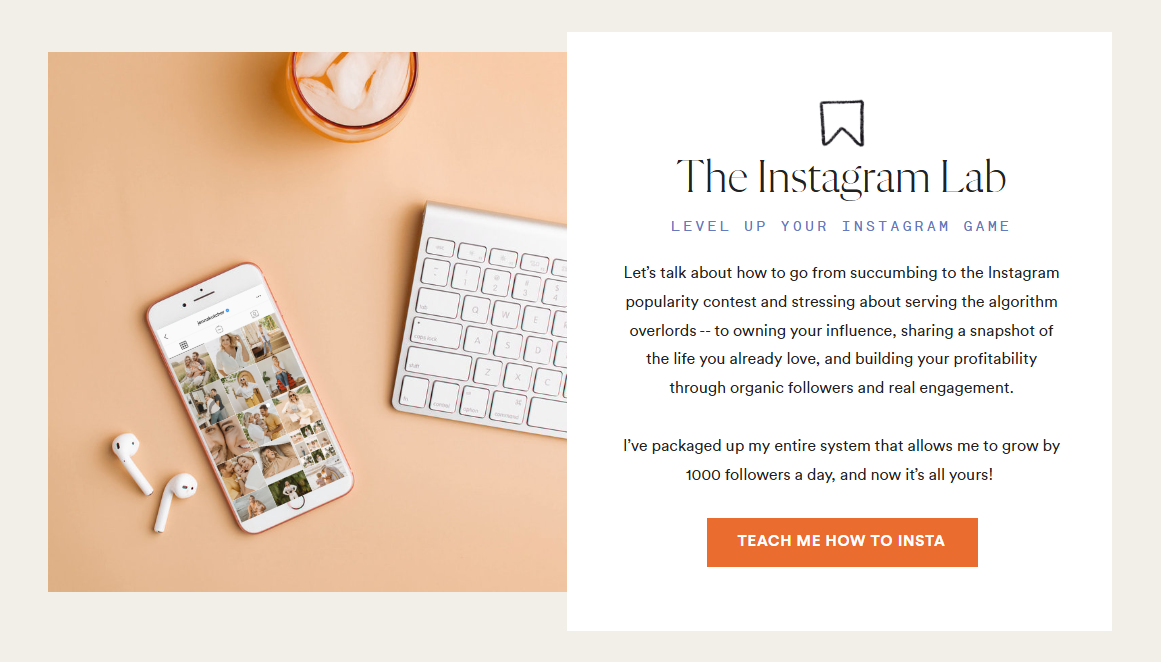
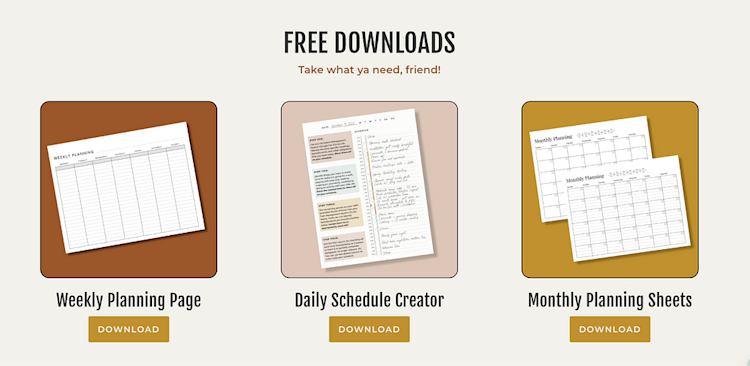
Workbooks, worksheets, calendars, trackers, and planners all make great printables. Dani Bruflodt from Thyme is Honey is a systems and efficiency expert who offers printable calendars for monthly, weekly, and daily planning. She also offers printable quotes that can be turned into artwork.

Thyme is Honey free downloads

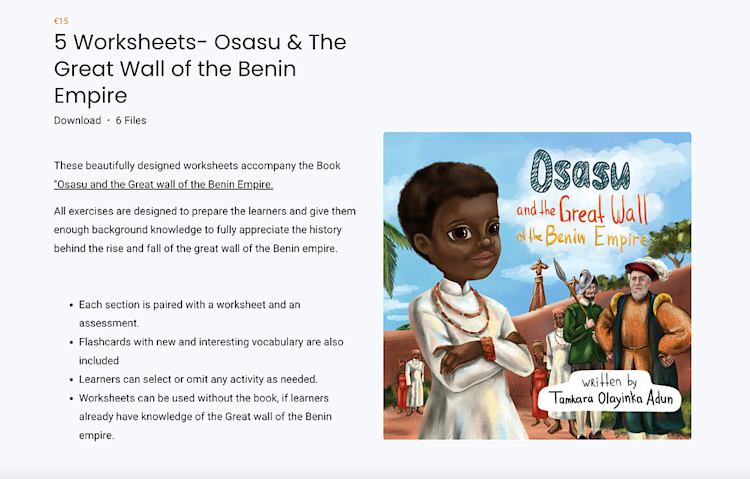
And Tamkara Adun from Odunife offers printable worksheets and activities that go along with the children’s book she published. This way families can go deeper on the content of the book together.

Tamkara Adun printable worksheets

How to use this idea in your business: You can use a tool like Canva, Word, or Google docs/sheets/slides to format your printable. You can even hand draw your printables and scan them into your computer or draw them on a tablet with a stylus like I did. Export your printable into PDF format and upload it as a digital download product in Podia to sell.

Learn how to add your first digital download in Podia in this help doc.

#2 Ebooks

Ebooks are the move if you have lots of information to share and prefer writing over other mediums, like video and audio. Ebooks can cover any topic that makes sense for your audience, and they can be as long or short as you like. Think guidebooks, tutorials, or even a story or novel if it suits your niche.

For example, Mark Moeykens from Big Mountain Studio sells ebooks about SwiftUI and development. He includes lots of images and graphics in his ebooks and also offers ebook bundles.

Big Mountain Studio ebook

And Ayurvedic practitioner Salila Sukumaran offers an ebook of daily Ayurvedic reminders that people can download and use in their practice.

Salila Sukumaran ebook Ayurvedic reminders

How to use this idea in your business: Open up your favorite word processor and start typing — yep, it’s that easy. Here’s a quick step by step of how to take your ebook from concept to finished product:

  1. Outline what topics you want to cover in your ebook. These are your main headings or chapters.

  2. Draft what should go in each chapter, then step away from it for a few hours and revisit to give it an editing pass.

  3. Have a friend/mentor take a look to give feedback.

  4. Post your book content in a tool like Grammarly for a proofread.

  5. Export your ebook as a PDF.

  6. Upload it to Podia as a digital download product to make it available for purchase.

You can also use tools like Canva to style your ebook and add cool formatting, but if you’re feeling overwhelmed, just keep it simple. The content is the most important part anyway, so if your text is solid, your book will be a hit.

#3 Canva templates

Speaking of Canva, Canva templates are one of the most popular types of digital downloads we see these days. Canva is graphic design software that’s accessible to everyone, and you can make professional-looking images and designs even on the free plan.

If you have a knack for designing in Canva, they make it very easy to sell your templates to others with the “Share” feature. This digital download idea works best if your audience includes other entrepreneurs, service providers, or professionals who need digital content for their own businesses.

Levee Road Studio, for instance, offers Canva Pinterest templates for her audience of aspiring Pinterest managers. Her custom pin templates speed up their creation process so customers can make more pins for their clients fast.

Levee Road Studio Canva Pinterest templates

And blogging coach and educator Margaret Bourne from Confident Blogger sells a Canva Blog Branding Toolkit template to help bloggers develop their brand identity. Her audience of bloggers can use these templates to create a stronger voice and visual design.

Confident Blogger Canva Blog Branding template

How to use this idea in your business: Open up Canva and create the design you’d like to sell as a template. Click “Share”, then click “Template link”. This option is available for Canva Pro users. This will generate a link that allows anyone who clicks it to use it as a template in their own Canva account, without altering the original.

Share a template design in Canva

Then, you can create a PDF instruction page explaining to buyers how to access their template (with the link included) and upload this to Podia as a digital download.

#4 Notion templates

Notion is software used for productivity and notetaking, and users can create calendars, spreadsheets, journals, to-do lists, and other workflows for getting things done. Notion comes with several templates built-in, but if you have a layout you’ve designed, they also make it easy to share custom templates with others.

For instance, Paroles de Plumes helps authors finish and publish their writing projects, and they’ve created a Notion template for managing author/reader communication and scheduling through the editing process.

Paroles de Plumes Notion template

And Sofia from Luscofia has a whole library of Notion templates for her audience of creative freelancers, including project management templates, content creation templates, and a daily/monthly/weekly planner template.

Luscofia Notion template

How to use this idea in your business: Like Canva, Notion makes it easy to share your templates with others. You can turn any page in Notion into a template by following these steps:

  1. Customize the page how you like

  2. Click “Share” in the top right corner

  3. Press “Publish” then “Publish to web”

  4. Toggle on “Allow duplicate as template”

  5. Click “Copy web link” to get a URL for your template

From there, you can create a PDF with instructions and your link for customers. Then upload the PDF (including the link!) to your digital download product in Podia.

#5 Niche templates

Canva and Notion templates are definitely popular, but you don’t have to stick to those two platforms to make templates that resonate. If there are other tools, software, or resources that make sense for your niche, your audience members might be happy to get their hands on them.

For example, beauty entrepreneur Bex Irvine offers text message templates that other beauty professionals can use when working with clients. This streamlines communication and helps her clients set boundaries so they can spend less time crafting the perfect message and more time doing what they love.

Bex Irvine text message templates

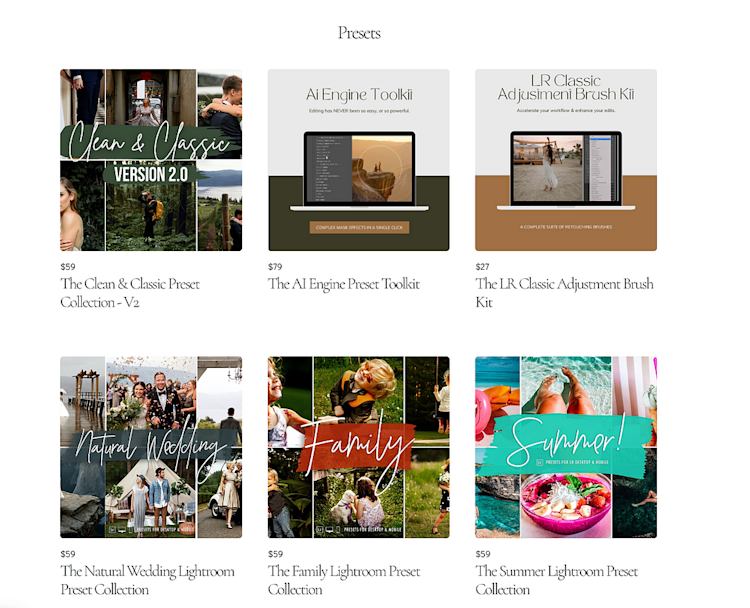
Presets are another popular download to sell, and the photography and marketing brand Signature Edits sells Lightroom presets to their audience, so aspiring photographers can create beautiful images faster.

Signature Edits Lightroom presets

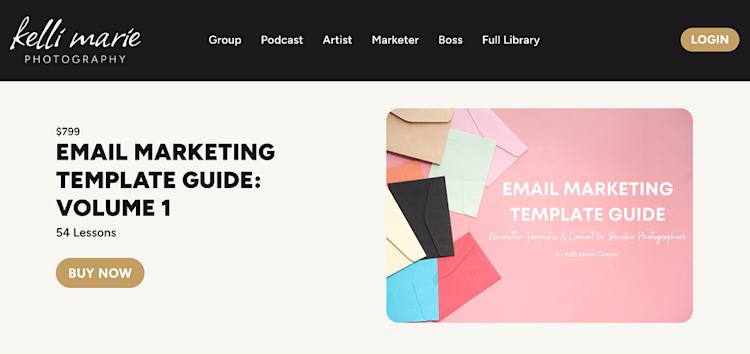
And speaking of photographers, Kelli Marie offers a pack of 52 email templates for photography entrepreneurs that can be customized for their specific studios. This is enough for one email newsletter per week for a year, and customers love having everything ready to plug and play.

Kelli Marie email templates

How to use this idea in your business: You’ll follow the same steps as you would for any other template to create this digital download, but the important thing here is to figure out what your specific niche really needs.

I recommend asking a few of your target audience members to hop on quick 15-minute calls and asking them directly. What resources would help them achieve their goals faster? What template product would make their eyes light up?

#6 Spreadsheets

Are you a spreadsheet whisperer? If so, I envy you. And you probably can make some money selling your genius spreadsheet concoctions online.

At Podia, we most often see spreadsheets used in the budgeting or finance niches, but we’ve also seen successful content planners, habit trackers, inventory trackers, household organizers, and pricing calculators — basically if your audience needs to organize something, a spreadsheet could be a great tool to make for them.

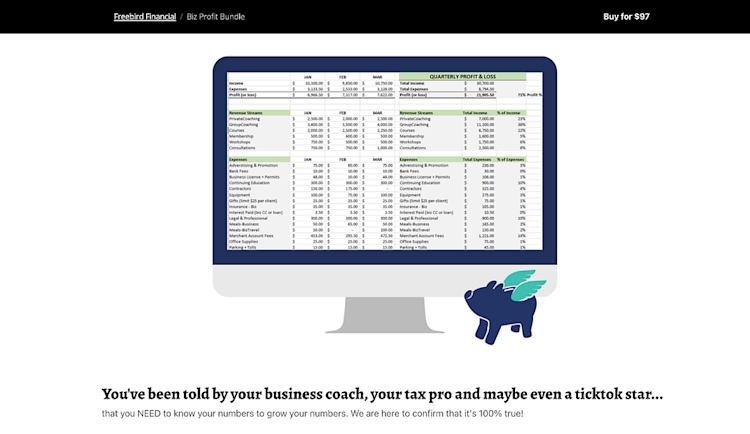
For instance, Freebird Financial offers a spreadsheet for tracking business income and expenses. The spreadsheet also makes it easy for customers to see profit and loss statements and know their numbers to inform their financial decisions.

Freebird Financial business spreadsheet

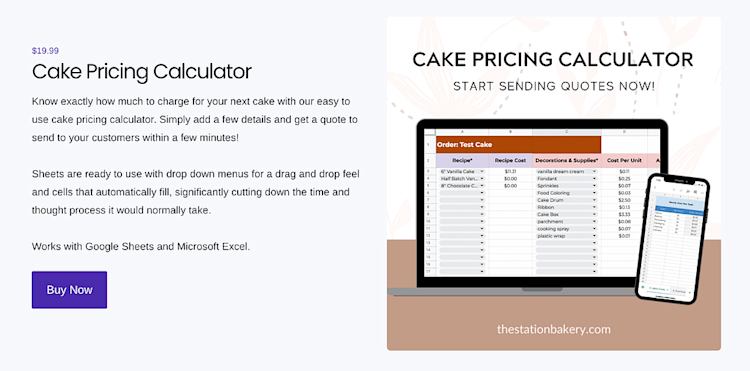
Or take a look at The Station Bakery. They offer a cake pricing calculator spreadsheet so bakers know exactly how much they should be charging for different kinds of cakes.

The Station Bakery cake pricing spreadsheet

How to use this idea in your business: A quick and easy way to do this is to build your spreadsheet in Google Sheets, then click “Share” and change the access to “Anyone with the link”. This will generate a sharable link.

In the URL/link, find the word “edit” and replace it with “copy”. This will force anyone who clicks the link to download their own copy of the spreadsheet to their Google Drive account, instead of editing the original that you made.

Then you can create a digital product in Podia with instructions for how to use the spreadsheet (maybe even a video walkthrough if that’s your jam!) and the link that they can use to download their own version.

#7 Audio files

A lot of digital download example lists focus on written products and PDFs, but if you prefer other mediums, you can absolutely make these too.

For example, instead of writing an ebook, you could record an audiobook. Instead of sharing a list of written affirmations, you could create audio ones for people to listen to while they go about their day. If you have a podcast, you could charge for access to exclusive bonus episodes. If you’re a musician, you could offer your songs and albums for sale as digital downloads.

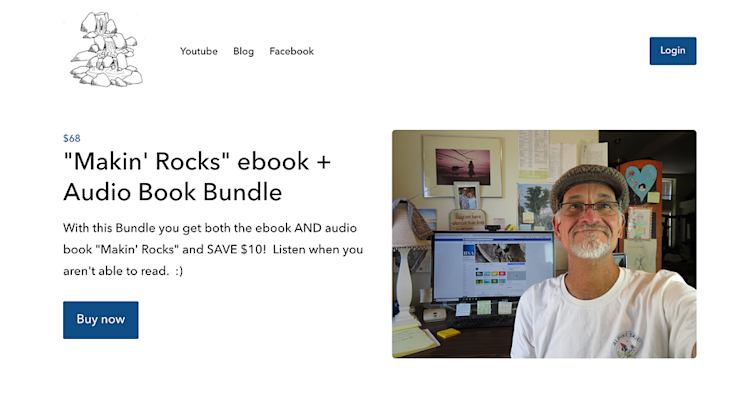
Dave Henderson teaches people how to make artificial rock formations, and he sells an audio book where he explains everything you need to know to create your own waterfalls, grottos, ponds, and pools. There’s also an ebook version, and a bundle where you can get both the written and audio options.

Dave Henderson bundle ebook and audio

And Tamkara Adun from Odunife also offers audio resources for students (in addition to her ebooks and worksheets we talked about earlier). She teaches African languages and offers sets of flash cards with basic greetings and introductions, along with audio files to help students get the right pronunciation.

How to use this idea in your business: Record your audio content on your computer or phone — no need to overthink it. Then upload the audio files directly into Podia as a digital download product, add a price, and you’ll be on your way.

#8 Video trainings

Like audio content, videos are a great way to add some variety to your digital product lineup, and you can share tutorials, trainings, films, walkthroughs, and any other type of video content you like. This works particularly well if you’re teaching visual skills or just want to show your customers what it’s like to work with you face to face without having to schedule a ton of individual calls.

Artist Kathleen Speranza sells masterclasses and video workshops to help other painters improve their skills. Her workshops cover topics like still life painting, landscapes, lighting, and color theory, and students can enroll and learn at their own pace.

Kathleen Speranza color workshop

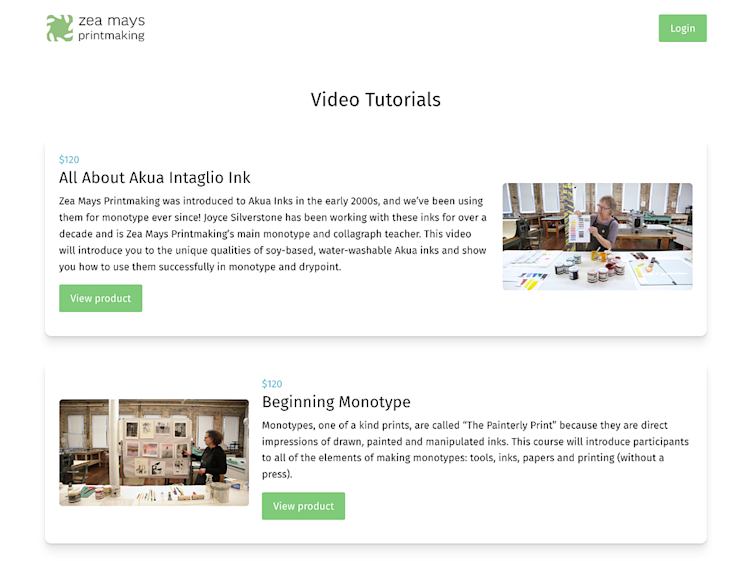
And online art school Zea Mays Printmaking also shares video tutorials for artists, with topics like woodcutting, screenprinting, etching, and home papermaking.

Zea Mays Printmaking video tutorial

How to use this idea in your business: Record your video using your computer or phone. You can upload the video file to Podia on its own using the digital download product type, or you can combine it with worksheets and instructions if it makes sense for your content.

How to use digital downloads to grow and scale your business

Now you’ve got lots of ideas for your digital download, and that’s a great first step! But you also need to think about how this download plays into your business as a whole.

Because making a few sales is awesome.

But building a full system where you use your digital download to attract ideal audience members, run sales funnels to let them know about other offers and boost sales, and send great newsletters to continually share value and build trust? Now you’re unstoppable.

Here’s how to set it all up:

Step 1: Choose a digital download from the list of ideas above. Publish your digital download on your Podia website and set up a sales page where people can buy. (Instructions on how to set up a sales page in Podia here.)

Step 2: On the pricing page for your product, you’ll see an option to add an upsell. This is an additional product that Podia automatically shows to your customers at checkout, and you can give them a special discount code to make the order bump even more enticing. Pick a product that’s related to your digital download, add it as an upsell, add a discount, and press publish.

Step 3: Build an email automation that runs whenever someone buys your digital download. On the first day, you should send a welcome email to tell people about your business. On the second day, share free value and insights, as well as links to your most popular blog posts or YouTube videos. And on the third day, let them know what other products, services, programs, or resources you offer.

Using a series over three days gives people time to learn about you and see the value you offer before they buy more, and as you add more products to your business, you can add more emails to this automation. You can set this up to run automatically in Podia whenever someone signs up for your digital download product. (Step by step instructions for email campaigns here.)

Step 4: Now your system is built, so the last step is to continually attract more people to your digital download in Step 1. You can do this by writing blog posts around that same topic and adding links to your digital download within the blog post so it’s easy to find.

You should also let people know about your digital download product on social media, your website, or anywhere else you have an audience.

If you follow these four steps, you’ll be on your way to growing a system where people find you, buy your download, and learn more about who you are and what you do — all on autopilot. You can expand your system with more products, blog posts, email campaigns, and upsells as your business grows, but it all starts with a digital download.

What digital download example will you use in your business?

You have eight digital download examples that you can test in your business, so your next step is to start building. I bet you can get your first download product up and running in an afternoon with Podia, so if you haven’t already done so, grab your 30-day free trial today.

You can make and sell unlimited digital downloads, as well as courses, webinars, coaching sessions, and memberships, and everything is automatically connected to your website, blog, and email list. I can’t wait to see what you make!

Frequently asked questions

What are the best digital downloads to sell online?

Some of the most popular and profitable digital downloads are printables, ebooks, Canva templates, Notion templates, niche-specific templates, spreadsheets, audio files, and video trainings. These attract customers and drive sales, especially when they help people save time or learn something valuable.

How can I make money selling digital downloads?

Digital downloads are a great way to earn income without ongoing production or shipping costs. Start by creating a helpful product, like a planner or ebook, and publish it on your Podia site. From there, you can add an upsell, build an automated email sequence, and drive traffic with content and social media—creating a system that runs on autopilot.

What tools do I need to create digital downloads?

You can use tools you already know and love, like Canva, Google Docs, Notion, or even a simple microphone or phone camera. The most important thing is to create something useful for your audience. Then, you can upload your file directly to Podia and start selling in just a few clicks.

Do digital downloads really work for growing an online business?

Yes! Many creators use digital downloads as a powerful first product. They’re low-effort to create, easy to sell, and can help you grow your email list, make your first sales, and build trust with your audience. Plus, they can lead into bigger offers like courses or memberships.

What kinds of digital downloads work best for beginners?

Printables and ebooks are a great place to start if you’re new to selling digital products. They’re quick to make, easy to customize, and don’t require any fancy tools. You can even hand-draw your first product! (Raises hand)

Can I sell templates as digital downloads?

Absolutely. Canva templates, Notion templates, email templates, Lightroom presets, and even text message templates are all great options. If it saves someone time or helps them do something better, chances are it’ll sell well.

How do I deliver digital downloads to my customers?

Podia handles delivery for you. Just upload your file (like a PDF, spreadsheet, audio file, or video) and Podia will instantly deliver it to your customers after purchase—no extra tools or software required.

Top Online Course Business Ideas to Grow Your Audience in 2025

Software Stack Editor · May 9, 2025 ·

The days of quietly uploading a course and watching students are behind us. 

In 2025, successful creators understand a powerful truth:

Every lesson, interaction, and student outcome represents an opportunity to expand your reach in an increasingly crowded market. 

Amid economic uncertainty and the advancement of AI, learners seek more than information. They want guidance through disruption, skills that remain valuable despite technological change, and authentic human connection that technology can’t replace. 

This creates a huge opportunity for creators who position their expertise and wisdom in a more strategic way. The creators who thrive now design with intention. They craft experiences that naturally encourage sharing, create visible transformations worth talking about, and build community connections that outlast the curriculum. They know that in a world where attention is precious and options are endless, exceptional educational experiences travel further than ever before.

When your courses generate genuine enthusiasm, authentic testimonials, and tangible results, your audience growth becomes self-perpetuating rather than constantly requiring new marketing efforts.

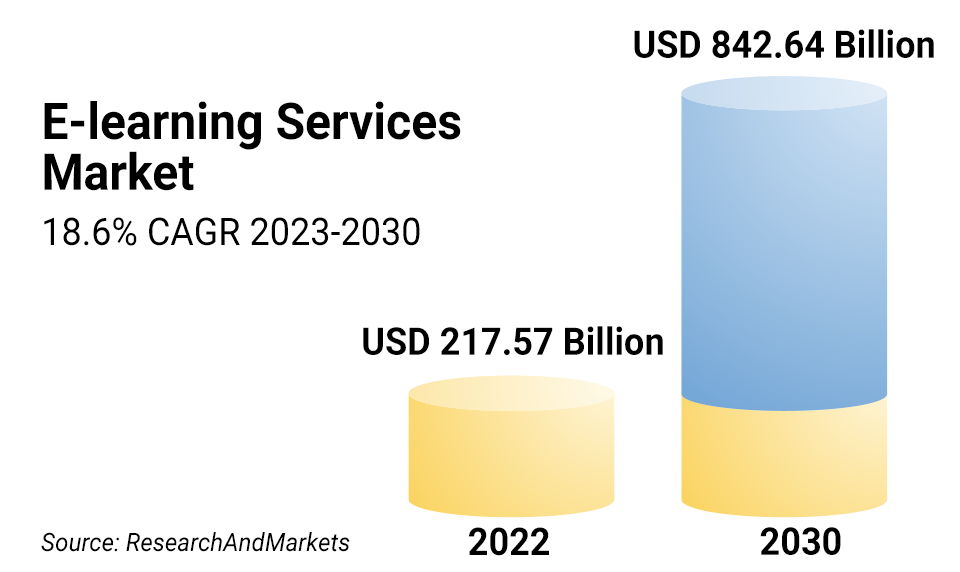
The global e-learning services market is projected to reach $843 billion by 2030. So, the difference between struggle and success increasingly comes down to how you position each educational offering as a gateway to your broader professional creator ecosystem.

E-Learning Services Market 2022-2030; source: LearngingNews via ResearchandMarkets

The following ten course business ideas represent proven models for audience growth in 2025. Each combines educational excellence with built-in discovery mechanisms. These approaches offer a blueprint for expanding your course reach without compromising your unique value or vision.

1. AI integration for creative professionals

What it is

A specialized educational program designed to bridge the gap between traditional creative skills and emerging AI technologies.

These courses specifically address the unique concerns of photographers, designers, illustrators, writers, and other creative professionals who need to incorporate AI tools into their workflows while preserving their artistic voice. Rather than generic AI instruction, these courses focus on the creative process itself, teaching professionals how to maintain control, enhance their distinctive style, and increase productivity through strategic AI adoption.

Implementation strategy

Develop a course, coaching packaging, membership, or digital product series that teaches photographers, designers, writers, and other creatives how to use AI tools to enhance their process while maintaining their unique style. Include modules on prompt engineering, output refinement, and ethical considerations. Feature case studies of successful creators who balance AI assistance with human creativity.

Audience growth potential

This niche targets an established audience of creative professionals concerned about AI disruption while attracting newcomers eager to enter creative fields with technological advantages. Position yourself as a bridge between traditional creative skills and emerging technologies.

Example use case

A professional photographer creates a course showing other photographers how to use AI for image editing, background removal, and style transfer while preserving their artistic signature and workflow efficiency.

Teachable’s complimentary features

Teachable AI, customizable learning paths, and online community spaces for sharing AI experiments and techniques

2. Financial literacy for the gig economy (for finance-focused creators)

What it is

A financial education system specifically developed for independent workers operating outside traditional employment structures.

These courses address the complex reality of variable income, self-employment taxes, business expenses, and personal financial planning within the gig economy context.

Implementation strategy

Create a comprehensive financial course covering tax planning, business entity selection, retirement options, healthcare considerations, and income stability techniques specifically for independent workers. Partner with accountants or financial advisors to add credibility and technical accuracy to your content, if necessary.

Audience growth potential

This evergreen topic addresses a growing segment of the workforce with specific pain points traditional financial advice doesn’t adequately cover. The course solves immediate problems while building long-term financial competence.

Example use case

A financial planner develops a specialized curriculum for freelance designers and programmers, addressing quarterly taxes, retirement planning, business deductions, and even tax audit issues specific to digital professionals.

Teachable Pay complimentary features

Integrated payment plans, downloadable templates for financial tracking, quiz components to confirm understanding of tax concepts.

3. Niche certification programs

What it is

A structured educational experience that culminates in a formal credential, distinguishing the learner as proficient in a specific methodology, framework, or skill set.

Unlike broadly recognized certifications from major institutions, these programs focus on specialized knowledge areas where formal credentials may not yet exist but carry significant professional value.

The certification serves multiple functions: validating the learner’s expertise, enhancing their professional credibility, creating shareable accomplishments, and establishing the course creator as a recognized authority in a defined domain. These programs typically include assessment components, practice opportunities, and clear standards for achievement before certification is granted.

Implementation strategy

Design a comprehensive curriculum with clear learning outcomes and assessment methods. Create professional certificate templates and verification systems. Consider industry partnerships to enhance credential recognition.

Audience growth potential

Certification creates a clear incentive to complete the course and a natural reason for learners to share their results. It also signals authority for the creator and elevates the perceived value of the content.

Example use case

A social media strategist teaches a proprietary client onboarding framework and offers a certification badge students can display on LinkedIn.

Teachable’s complimentary features

Built-in completion certificates, quiz gating, and course compliance tracking.

4. Cohort-based learning experiences

What it is

A temporally defined learning model where a group of students progresses through educational material together according to a fixed schedule, combining independent study with synchronous interaction.  

Cohort-based experiences create social accountability, peer learning opportunities, and community connection through shared progress. These programs typically feature live instruction sessions, structured group activities, facilitated discussions, and collaborative projects. The cohort model resembles traditional educational experiences while leveraging digital capabilities for enhanced flexibility, personalization, and ongoing community development beyond the formal course period.

Implementation strategy

Develop a structured curriculum with clear milestones and accountability mechanisms. Create systems for peer feedback and collaborative assignments. Schedule synchronous learning sessions to build community and address questions.

Audience growth potential

Limited enrollment and time-bound access create urgency. Learners feel more accountability and often refer others due to the group dynamic, if properly executed.

Example use case

A leadership coach offers a 6-week cohort program for mid-career professionals, with weekly workshops and facilitated breakout groups.

Teachable’s complimentary features

Drip content scheduling, integrated community, coaching product, and Zoom/live event integrations.

5. Data literacy for non-technical professionals

“Data literacy is set to be the most in-demand skill by 2030” – The Data Literacy Project

What it is

Educational programs specifically designed to democratize data skills across professional disciplines that traditionally lack technical training.

These courses translate complex data concepts into accessible frameworks using industry-relevant language and examples, allowing professionals in marketing, healthcare, education, law, and other sectors to confidently interpret data, assess analytics reports, make evidence-based decisions, and communicate effectively with technical specialists. The focus remains practical rather than theoretical, emphasizing immediately applicable skills that enhance career performance without requiring coding proficiency or advanced statistical knowledge.

Implementation strategy

Create a course that breaks down the complexity of data analysis for non-technical professionals. Focus on real-world applications that provide immediate benefit like interpreting reports, identifying meaningful metrics, visualizing information effectively, and making data-informed decisions. Use relevant industry examples tailored to specific professional groups.

Audience growth potential

This course addresses a significant skills gap affecting professionals across industries who feel left behind by data transformation. Position your content as the bridge between technical complexity and workplace application.

Example use case

A business analyst creates a consulting program specifically for marketing teams, teaching them to interpret analytics reports, conduct basic A/B testing, and create compelling data visualizations without coding.

Teachable’s complimentary features

Multimedia content, downloadable tools, knowledge checks, and regular curriculum updates.

6. Challenge courses (7-day, 14-day, etc.)

What it is

Time-bound learning experiences structured around daily micro-commitments that build toward a significant skill acquisition or habit formation goal.

Challenge courses break complex behavioral or skill changes into manageable daily actions, creating momentum through quick wins and incremental progress. The important thing to remember is to keep it short. Longer challenges may dissuade some participants from signing up or completing.

Implementation strategy

Structure content into small, achievable daily tasks with clear outcomes. Build accountability systems and progress tracking. Consider community components to enhance motivation and completion rates.

Audience growth potential

Challenges have built-in momentum. They work well as lead magnets and are often shared among peer groups. Many convert participants into long-term customers.

Example use case

A nutritionist launches a 7-day clean eating challenge that includes daily videos, checklists, and a private group.

Teachable’s complimentary features

Drip content, excellent mobile app student experience, downloadable checklists, and course start date customization.

7. Community building for content creators

What it is

Strategic educational programs focused on helping content creators develop sustainable audience relationships through community development rather than algorithmic dependence.

These courses teach creators to transform passive followers into active community participants by establishing dedicated spaces for deeper engagement, implementing effective moderation systems, designing community rituals, and creating valuable member experiences.

The curriculum typically addresses both technical platform considerations and human psychology elements of community building, with emphasis on creating owned spaces that protect creators from platform volatility while enhancing audience loyalty and monetization opportunities. If you are a current or former community manager, this is for you.

Implementation strategy

Create a comprehensive course on building, nurturing, and monetizing audience communities across platforms. Include sections on community structure, engagement strategies, moderation approaches, and transitioning followers from social platforms to owned spaces.

Audience growth potential

This meta-topic appeals directly to other course creators and content professionals seeking to strengthen their audience relationships. Success stories from your community-building approach serve as built-in case studies.

Example use case

A successful community manager creates a comprehensive playbook showing other creators how to transition from social media followers to engaged, paying community members.

Teachable’s complimentary features

Teachable Community, and discussion threads

8. Creator playbooks (teach what you’ve done)

What it is

Detailed, transparent educational products that document a creator’s actual processes, strategies, and systems that produced measurable results in their business or creative practice.

These courses typically combine behind-the-scenes access, concrete examples, adaptable frameworks, and authentic reflection on both successes and failures.

The playbook approach establishes credibility through demonstrated outcomes and positioning the creator as both practitioner and mentor.

Implementation strategy

Document and teach your actual workflows, decision-making processes, and results. Include templates, swipe files, and other  tools that helped you succeed. Be transparent about both successes and failures.

Audience growth potential

These courses showcase credibility and build connection. They position the creator as both a practitioner and teacher.

Example use case

A YouTube creator releases a monetization playbook showing how they grew to 100,000 subscribers using affiliate marketing and course bundles.

Teachable’s complimentary features

Multimedia support, private coaching add-ons, and content reuse for future products.

9. Skill-based upskilling courses for specific roles

What it is

Highly specialized educational programs targeting defined professional roles that support other businesses or creators, such as executive assistants, project managers, editors, virtual assistants, or operations specialists.

These courses address specific skill gaps and competency requirements that traditional education often overlooks, focusing on  tools, workflows, and techniques that enhance performance in supporting roles.

The curriculum emphasizes both technical capabilities and interpersonal skills required for these positions, providing clear paths to increased responsibility, compensation, and career advancement.

These role-specific courses often include industry-standard templates, software training, communication protocols, and productivity systems tailored to the unique challenges of each professional function.

Implementation strategy

Identify specific skill gaps in professional roles and create focused training to address them. Include exercises, templates, and real-world scenarios. Consider certifications or badges to document skill acquisition.

Audience growth potential

These audiences are often underserved and highly motivated. They share resources within their professional communities.

Example use case

A creative agency founder builds a course to train executive assistants in client communication systems used in their agency.

Teachable’s complimentary features

LMS features, tiered pricing, and integrations for business use cases.

10. Re-skilling for career pivots

What it is

Comprehensive educational programs designed specifically for professionals seeking to change career directions, industries, or business models.

These courses address both the technical skills and psychological aspects of career transition, combining practical training with strategies for leveraging transferable skills, navigating identity shifts, and building confidence during professional reinvention. They also tend to include components addressing mindset challenges, imposter syndrome, professional positioning, and logistics of career transformation alongside requisite skill development.

Implementation strategy

Create a well-thought out roadmap for career transition, including skills assessment, market research, and strategic networking. Include case studies of successful pivots and exercises to build confidence.

Audience growth potential

Career pivots are deeply personal. These courses often address pain points with clarity and compassion, which drives word-of-mouth.

Example use case

A former HR director teaches professionals how to transition into fractional consulting, with modules on pricing, positioning, and lead generation.

Teachable’s complimentary features

High-ticket pricing support, payment plans, and custom onboarding email integrations

How to identify your course opportunity

When evaluating these potential course directions, consider where your expertise naturally intersects with these growing needs. Successful course creators combine:

  1. Demonstrable expertise in the subject matter
  2. Personal connection to the challenges being addressed
  3. Unique perspective or methodology within the broader topic
  4. Ability to communicate complex concepts accessibly

The most sustainable course businesses address persistent challenges with evolving solutions rather than temporary trends. Your course should solve problems your audience consistently encounters while adapting to changing implementation contexts.

Strategic course development for 2025

The most effective course business models in 2025 are audience-first by design. They do more than transfer knowledge. They generate trust, promote connection, and create multiple paths for discovery.

As learner expectations rise, and the market grows more sophisticated, especially with AI capabilities increasing by the day, creators must build with intent. Each idea on this list can scale reach without sacrificing depth, especially when supported by a platform that allows flexible product delivery, automation, and community growth.

After identifying your course direction, begin market validation through:

  1. Creating preliminary content pieces addressing aspects of your chosen topic
  2. Engaging directly with your target audience about specific challenges
  3. Developing a minimum viable course module to test engagement
  4. Gathering testimonials from early students to refine your approach

Final recommendations

Teachable provides the technical infrastructure to bring your course to market efficiently, allowing you to focus on content development and audience building. Our course analytics help you identify which topics resonate most strongly with your audience. This makes continous improvement easier.

What expertise could you transform into a valuable learning experience for others in 2025?

The reimagined Member Menu: Your new content hub

Software Stack Editor · May 6, 2025 ·

The Member Menu has officially leveled up.

What was once a simple list of links to locked members-only pages and external tools is now a powerful, flexible content hub. This reimagined Member Menu lets you deliver a beautifully organized, dynamic experience to your members—no extra website setup required.

At the core of this update is the enhanced Collections feature (formerly called Products), which now supports a wide range of content types, visual organization, and new member-focused functionality.
 

Collections still allow you to lock your existing website pages and link to external tools like Google Docs or Zoom. But now, you can do so much more:

Add content directly in MemberSpace

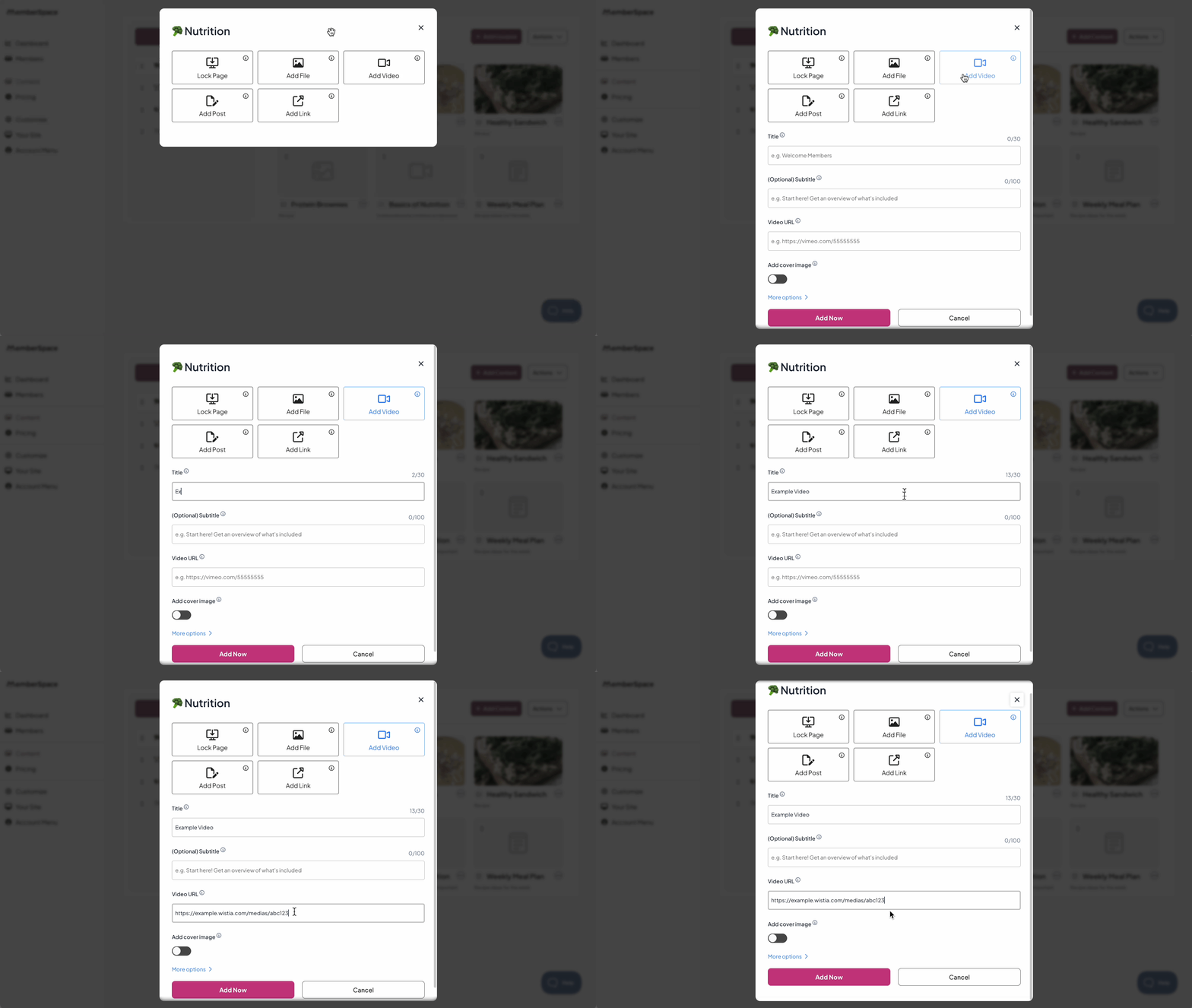
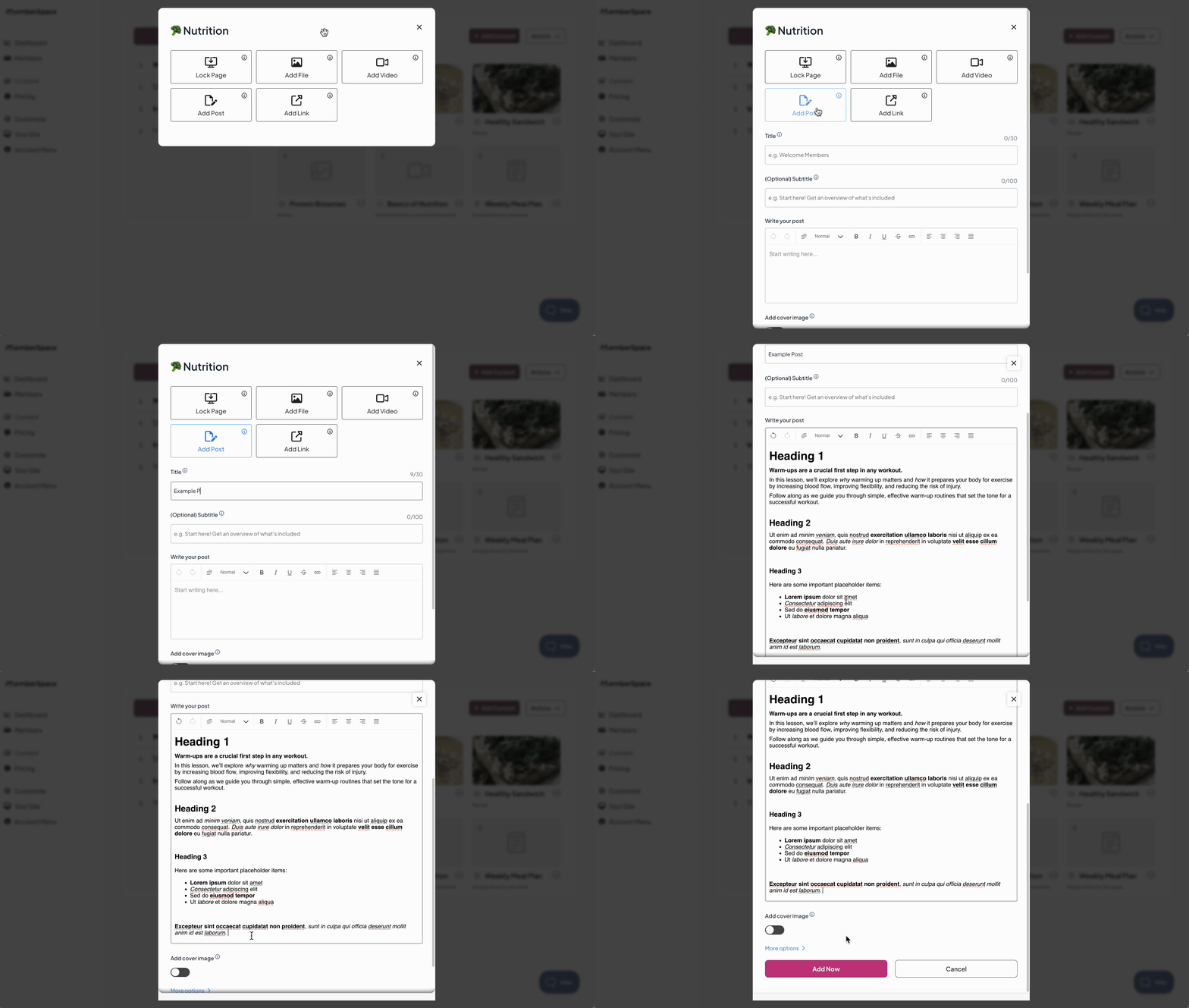
Upload files (PDFs, images, MP3s), embed videos (YouTube, Vimeo, Wistia), or create posts (like newsletters or blog articles) right in MemberSpace—no need to touch your website.

Organize everything your way

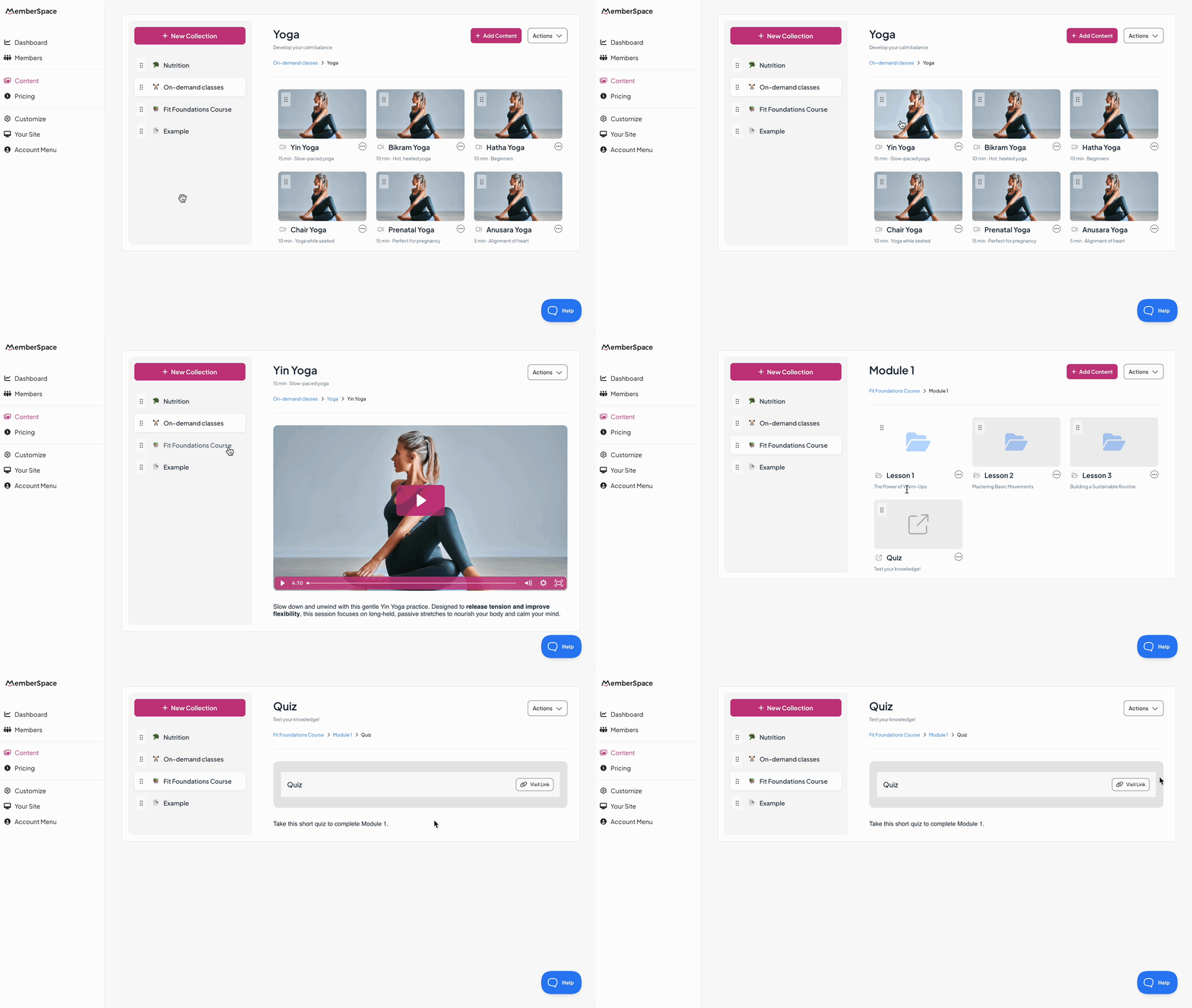
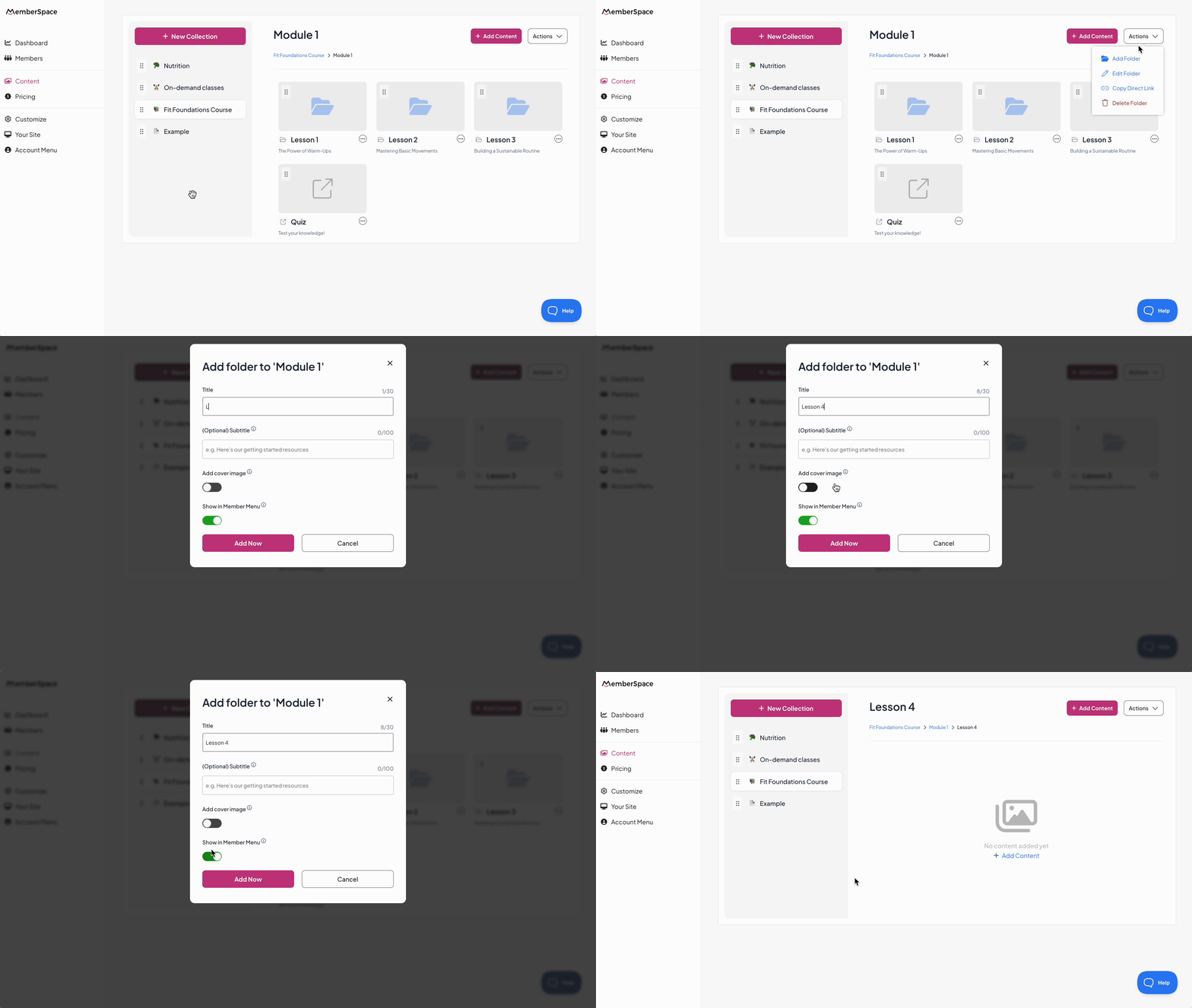
Use drag-and-drop to reorder content within a Collection, move it between Collections, and create unlimited folders—including nested folders within folders.

Let members favorite what matters most

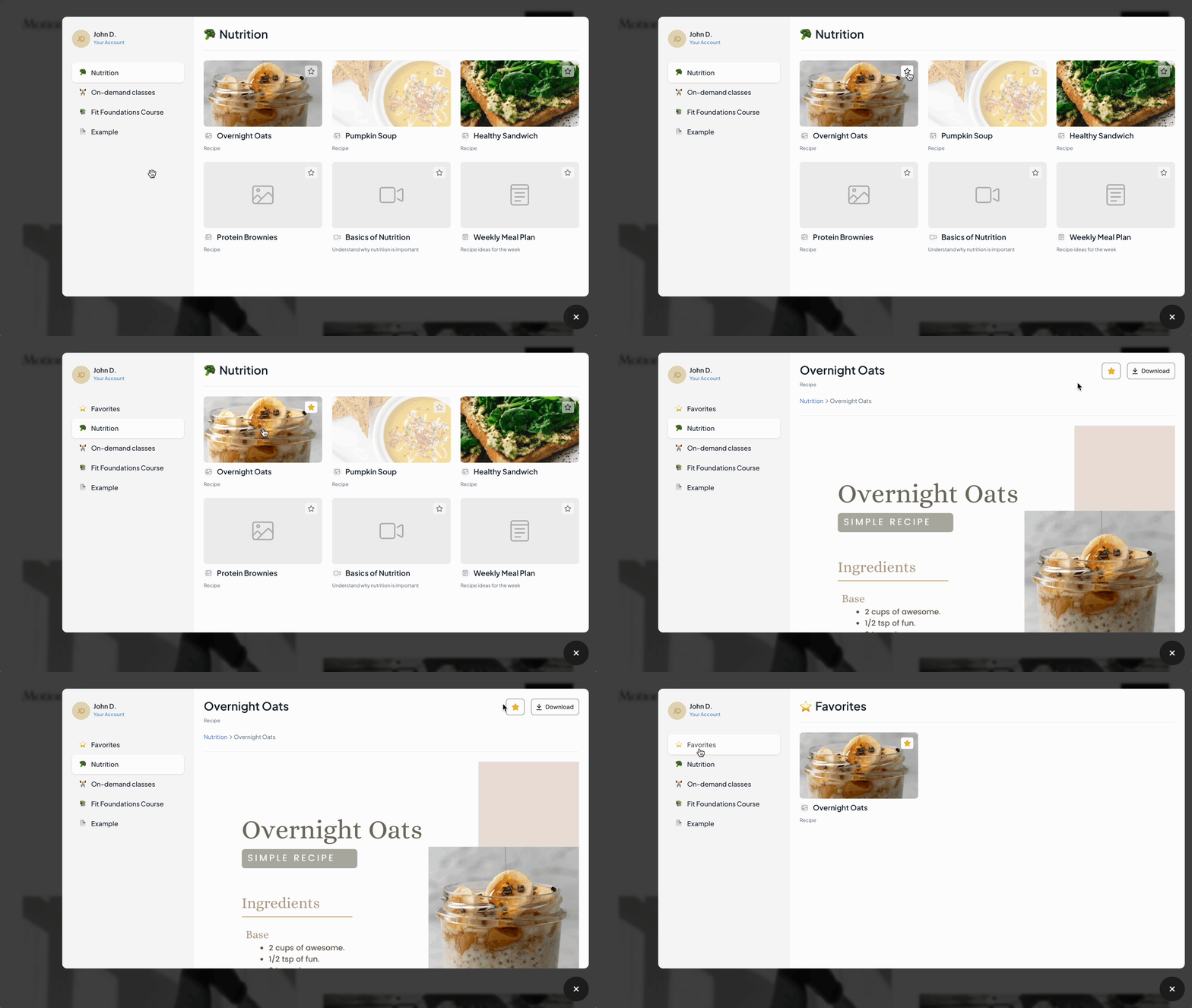
Members can favorite any folder or piece of content to add it to a dedicated Favorites Collection—a personalized area that appears automatically for easy access.

How Collections and content work

Collections are groups of members-only content assigned to pricing plans. A Collection can belong to unlimited pricing plans and be sold individually or bundled with others.

When creating a Collection, you’ll give it a title, choose which pricing plans grant access, and decide whether or not to include it in the Member Menu.
 
You can drag-and-drop to reorder your Collections, and include unlimited content in each one. Here’s what you can include:

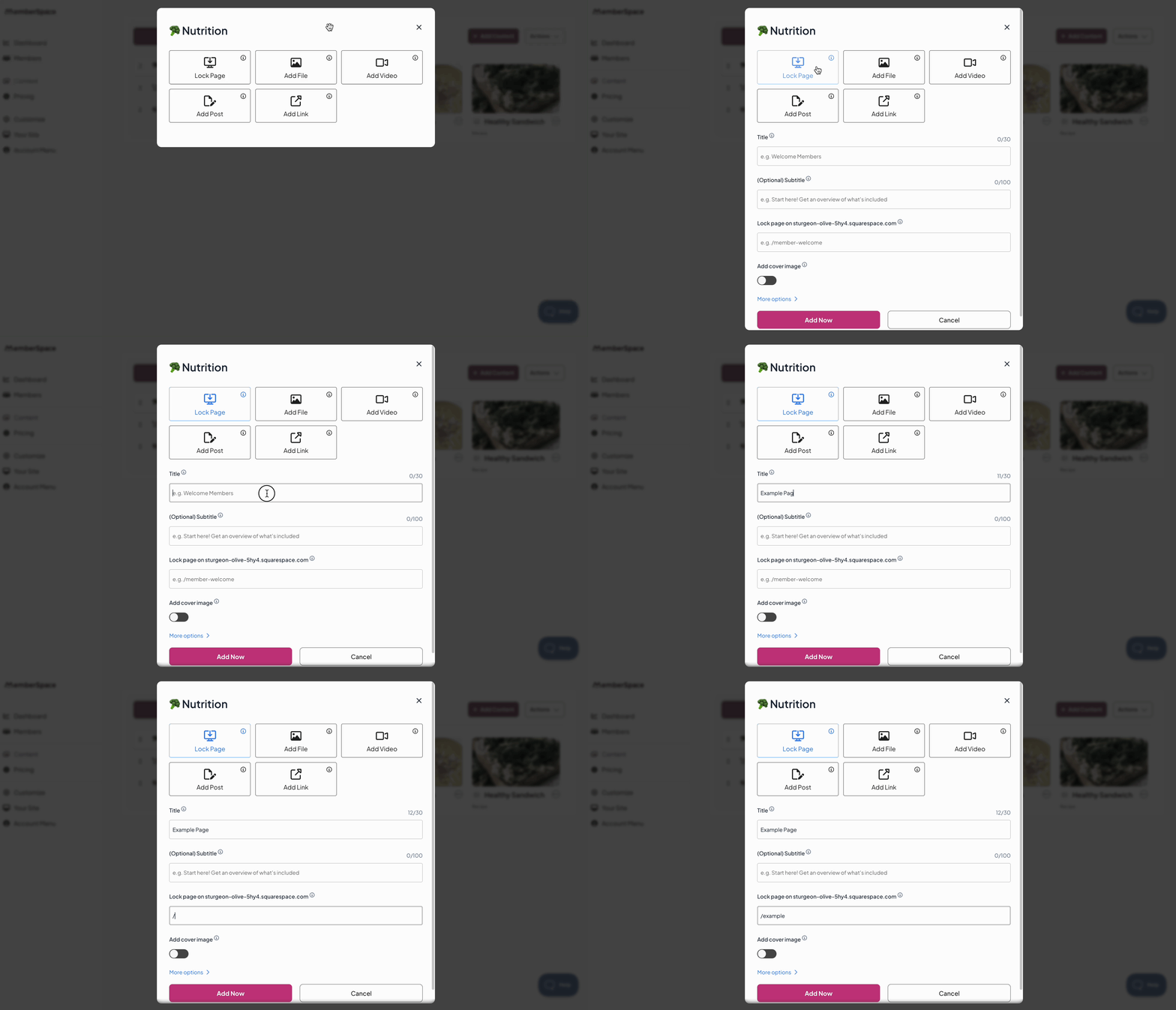
Locked Pages

Lock any page on your existing website using MemberSpace, just like before. The Member Menu makes it easy for members to find and access those locked pages.

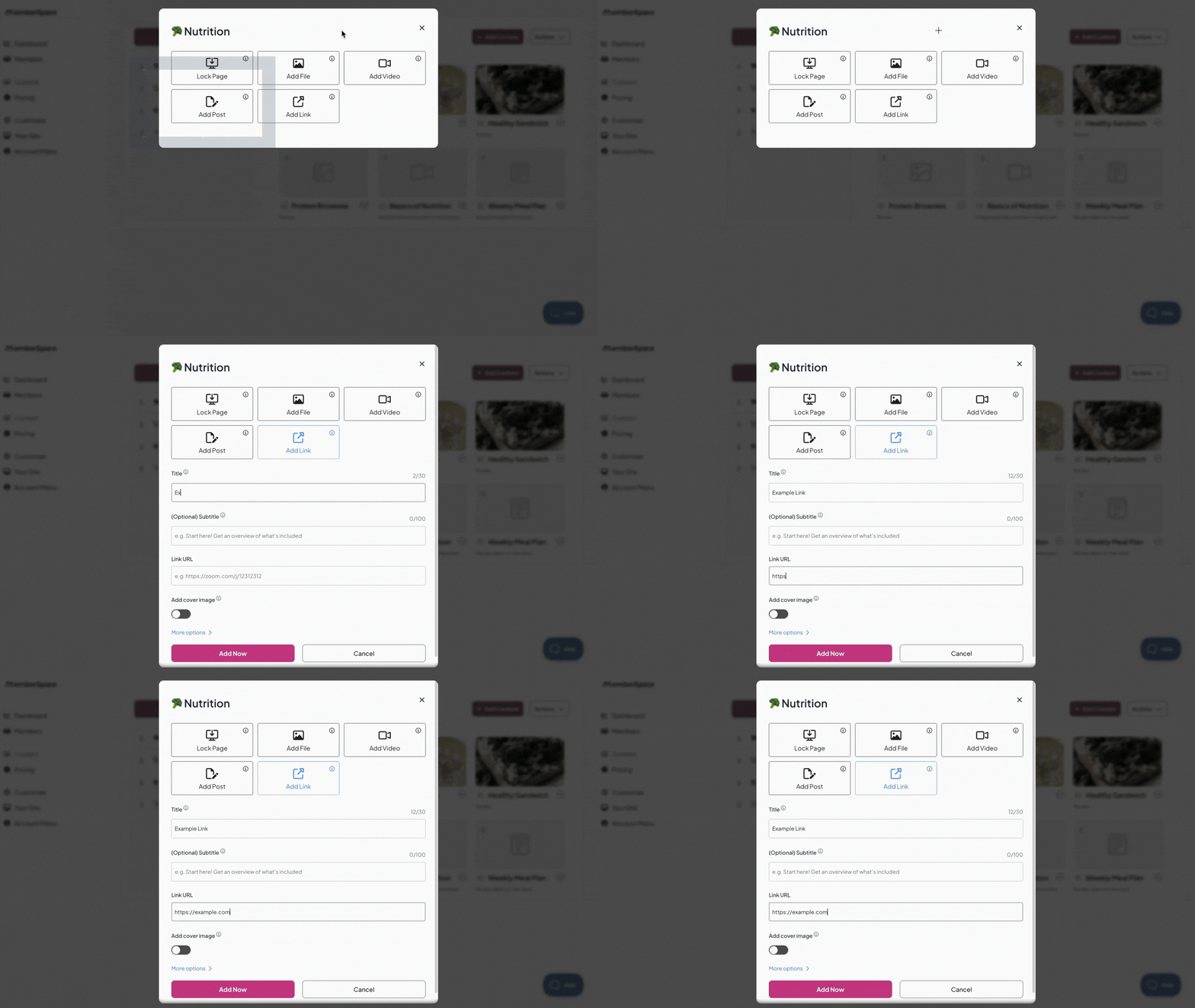
Links

Link to any external URL—Zoom, Google Docs, Calendly, social media, etc. When members click the link, it opens directly in a new tab for a seamless experience.

NEW

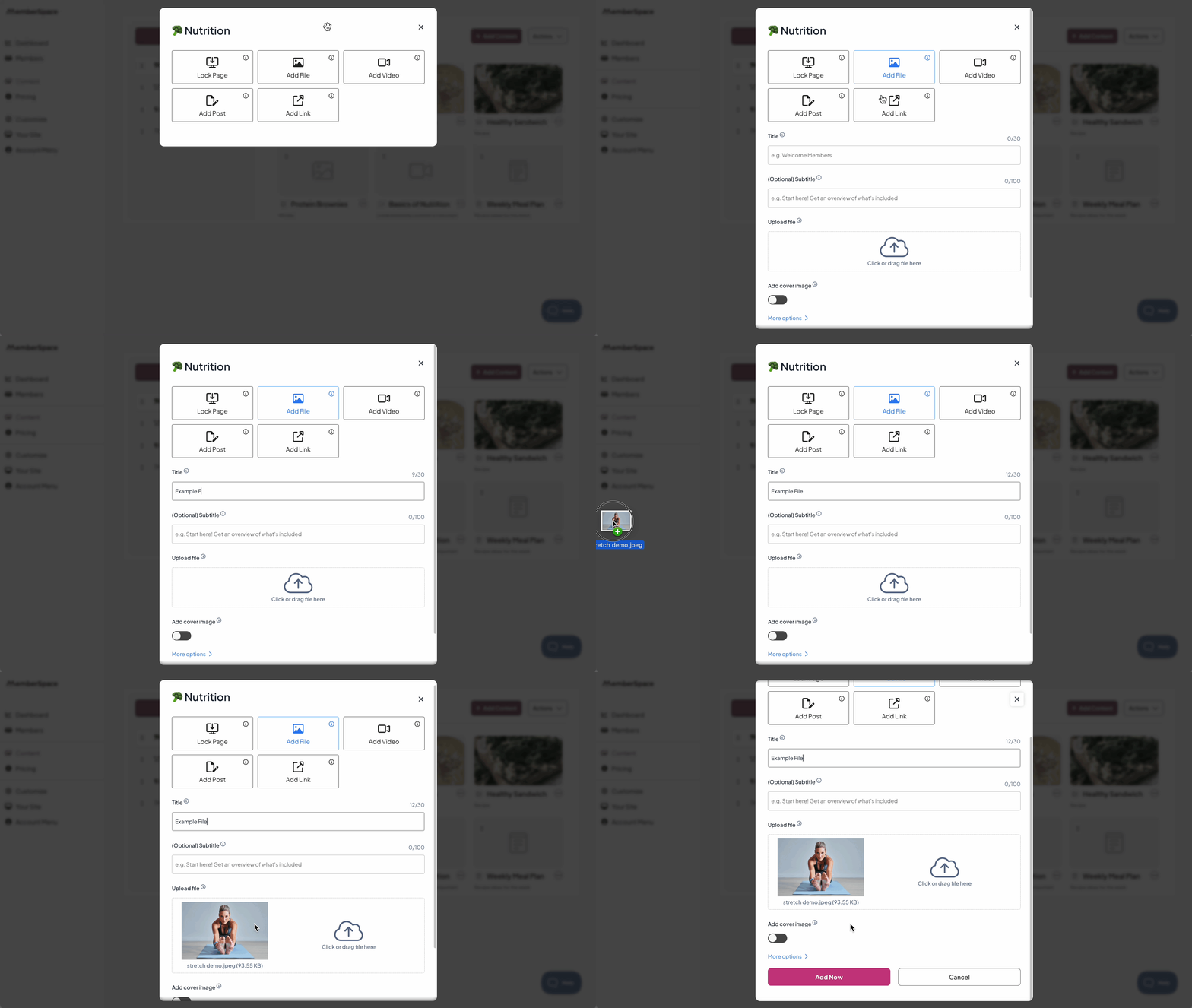
Files

Upload PDFs, images, audio files, and more directly to MemberSpace. Members can view and download them right from the Member Menu.

NEW

Videos

Embed YouTube, Vimeo, or Wistia videos that play directly within the Member Menu. Keep members on your site and minimize distractions. Learn more about video security.

NEW

Posts

Create members-only newsletters, lessons, or blog posts directly in MemberSpace using simple formatting tools—no need to publish them on your website or send them via email.

Customizing each content item

For each piece of content, you can:
  • Set availability: Make it available immediately, a specific number of days after someone joins a plan that grants access to the Collection, or schedule a start and/or end date and time (great for limited-time access).
  • Add a title, along with an optional subtitle, cover image, and description
  • Choose whether to display it in the Member Menu or keep it hidden but accessible via direct link
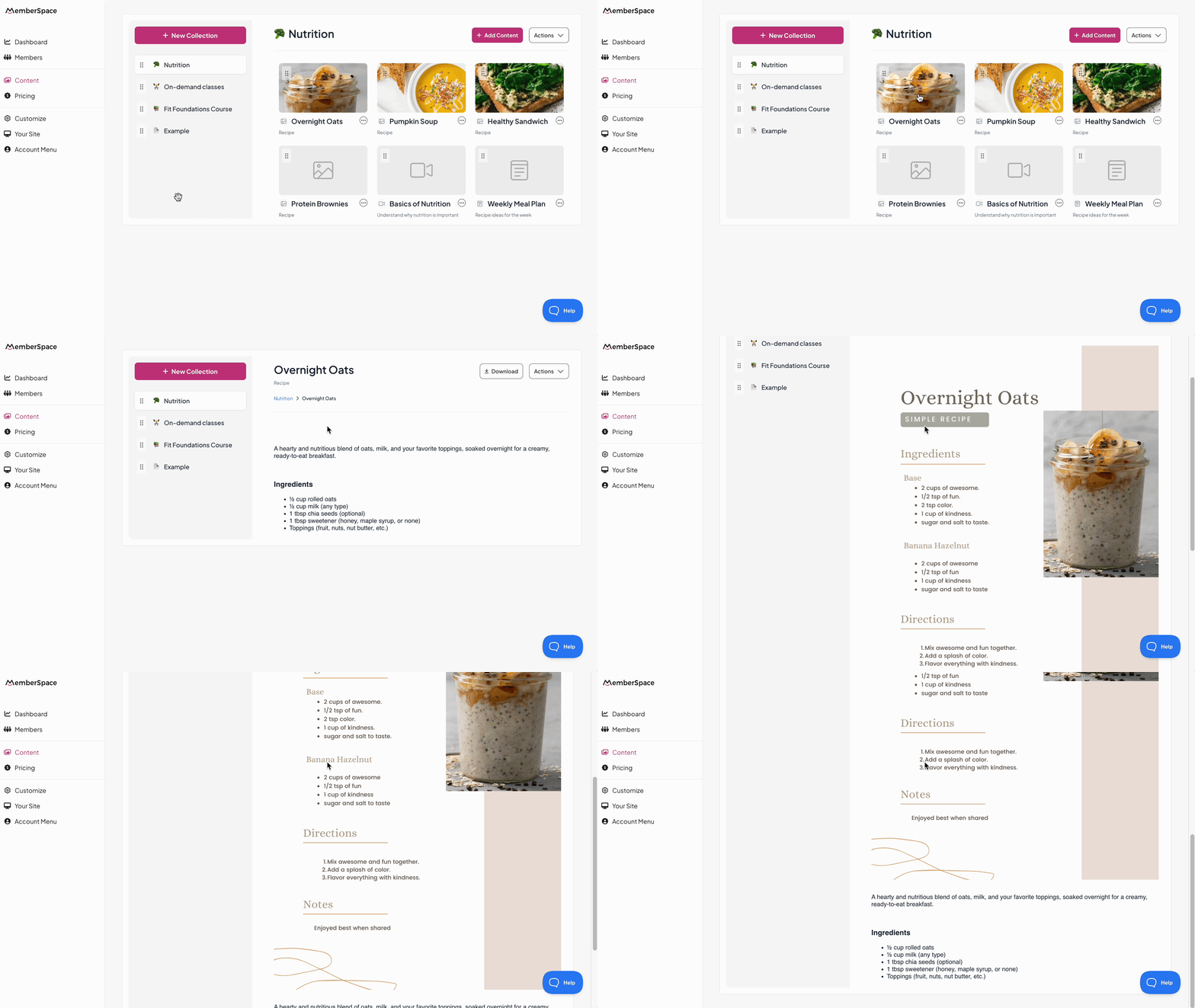
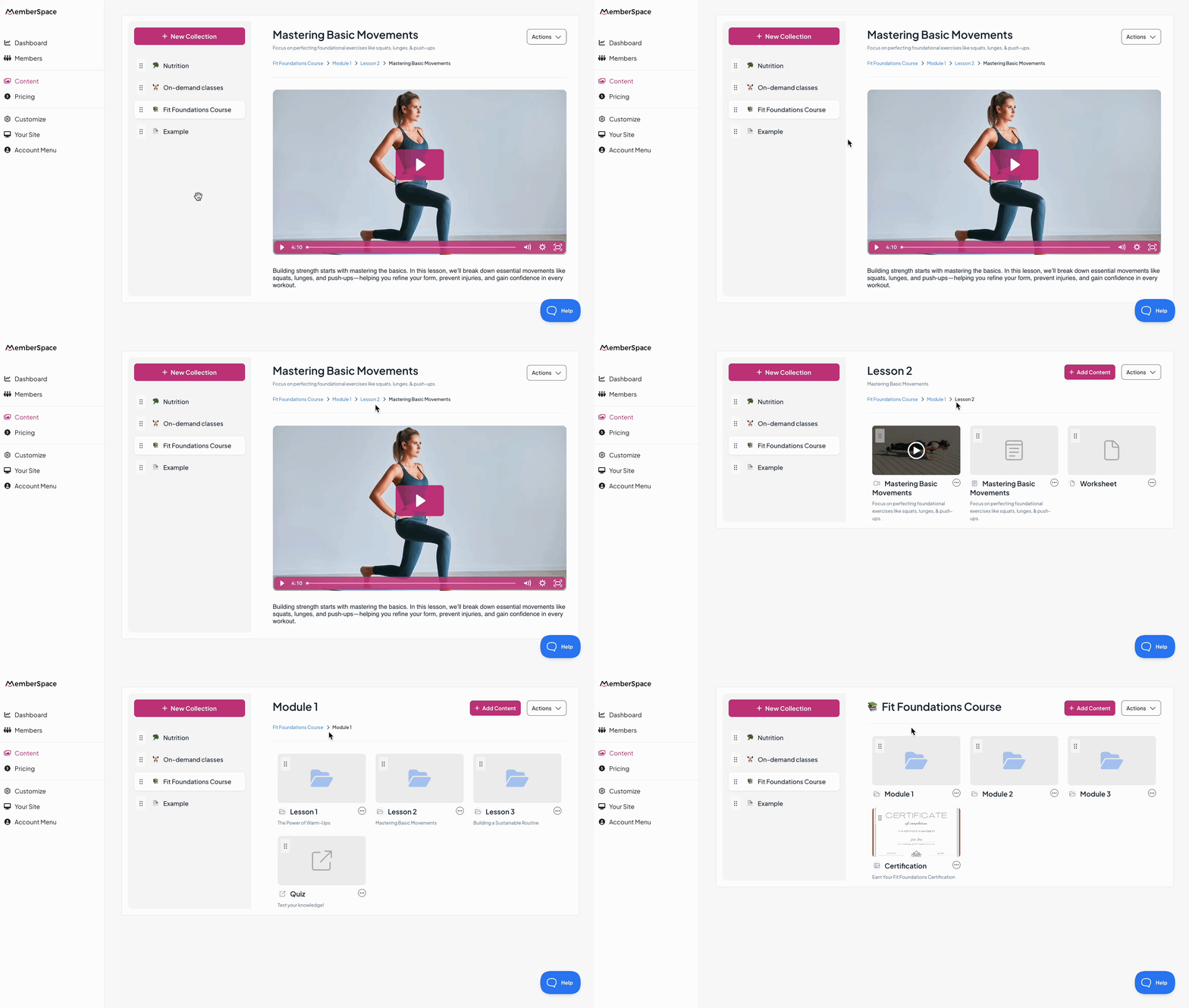
Content appears in a grid view, using your cover image (or a default icon) along with the title and optional subtitle. Clicking a content item opens a dedicated content page with the full experience.

When opening a content page, you’ll see the title, optional subtitle, and, if selected, the cover image displayed on the page. Here’s how the content behaves based on type:
  • Files, Videos, and Posts appear directly within the content page
  • Locked Pages and Links display a button that opens the destination URL in a new tab
  • The optional description appears below the content or button on the content page
  • If no description is included for a locked page or link, members who click the item in the grid view will skip the content page entirely and be taken directly to the URL—saving them a click (admins will still see the content page as usual)

Organizing content with folders

If your Collection has a lot of content, use folders to keep things clean and navigable. You can:
  • Create unlimited folders (and folders within folders)
  • Add optional subtitles and cover images
  • Choose visibility for each folder in the Member Menu

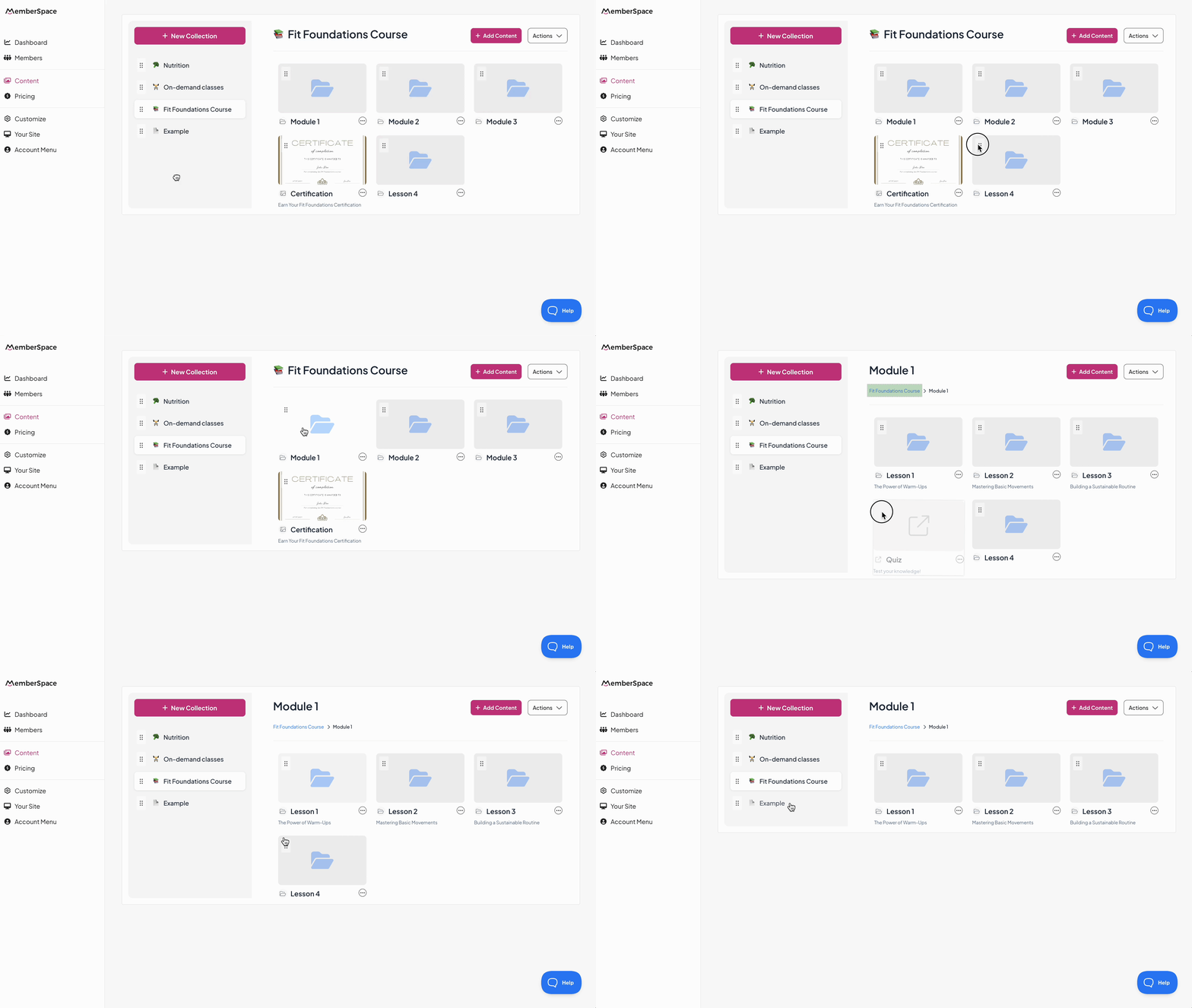
Use drag-and-drop to:
  • Move content into folders
  • Nest folders inside other folders
  • Move folders and content across Collections

Description of GIF

A breadcrumb trail automatically appears to help members track where they are within a Collection and navigate back easily.

Anything excluded from the Member Menu—Collections, folders, or content—will appear semi-transparent in your MemberSpace admin and remain hidden from members. You can still share these hidden items via direct links.

When you share a direct link to a Collection, folder, or specific piece of content, any member with access to the Collection will be able to view it. If the link is to a folder or content nested within other folders, members will also see all related parent and child folders and content.

What members see

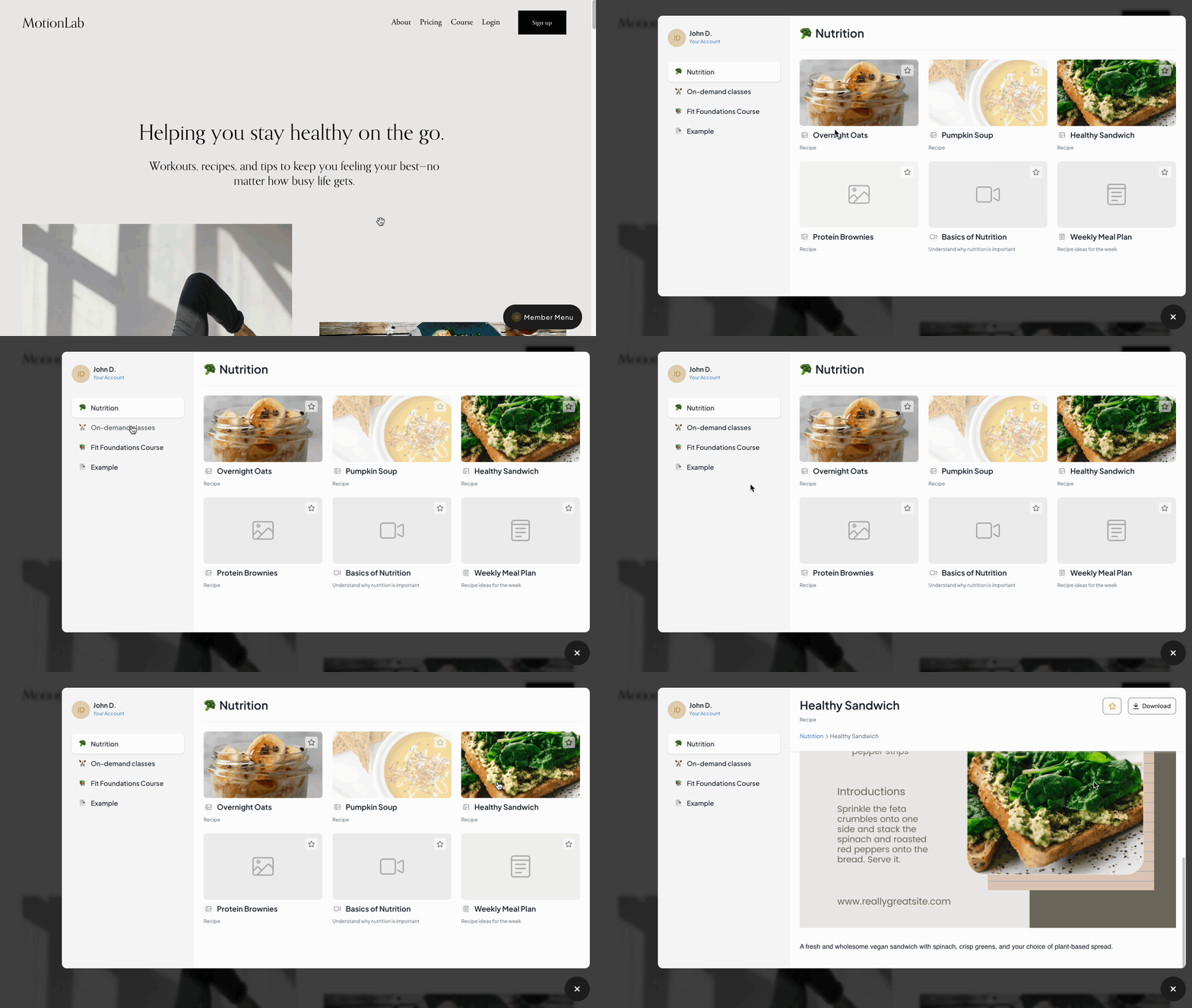
Members access the Member Menu via the familiar default floating Member Button as well as any Member Link options on your website. From there, they’ll see:
  • Their account area (no changes here)
  • A list of Collections included in their pricing plan(s)
Clicking into a Collection reveals its folders and content in a visual grid view. Content-type icons display alongside titles, and clicking a content item opens a dedicated content page.

Members can favorite content or folders by clicking the star icon (in the grid view or on content pages). Favorited items can then be found in a new Favorites Collection that appears automatically above all other Collections once at least one item is favorited—making it easy to revisit frequently viewed or personally valuable content.

Collections, folders, and content hidden from the Member Menu will not be visible at all to members.

When a member visits a direct link, the Member Menu opens automatically and jumps to the correct Collection, folder, or content item.

What happens to my existing products?

No action is needed—your existing setup will still work seamlessly.
  • Products are now Collections: Find all of your previous Products within the Content view
  • Any existing locked pages or external links you had in a Product will now appear as separate content items inside a Collection
  • Your Member Menu settings and visibility options remain unchanged

Look & Feel customization options

The updated Member Menu styling options give you control over how your Collections, folders, and content appear to members—helping you create a cohesive, on-brand experience.

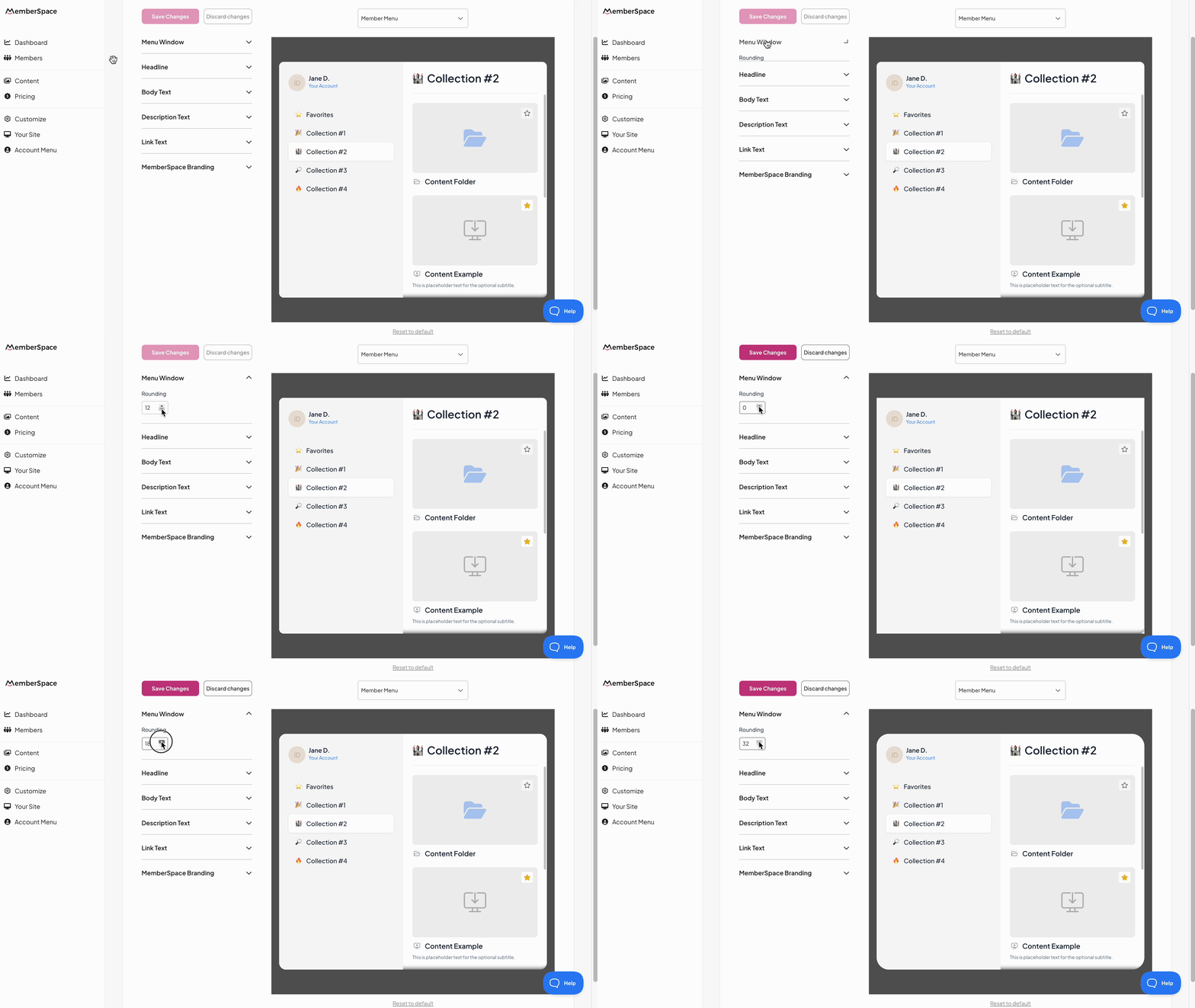
Menu Window

Adjust the rounding of the entire popup window to better match your site’s design.

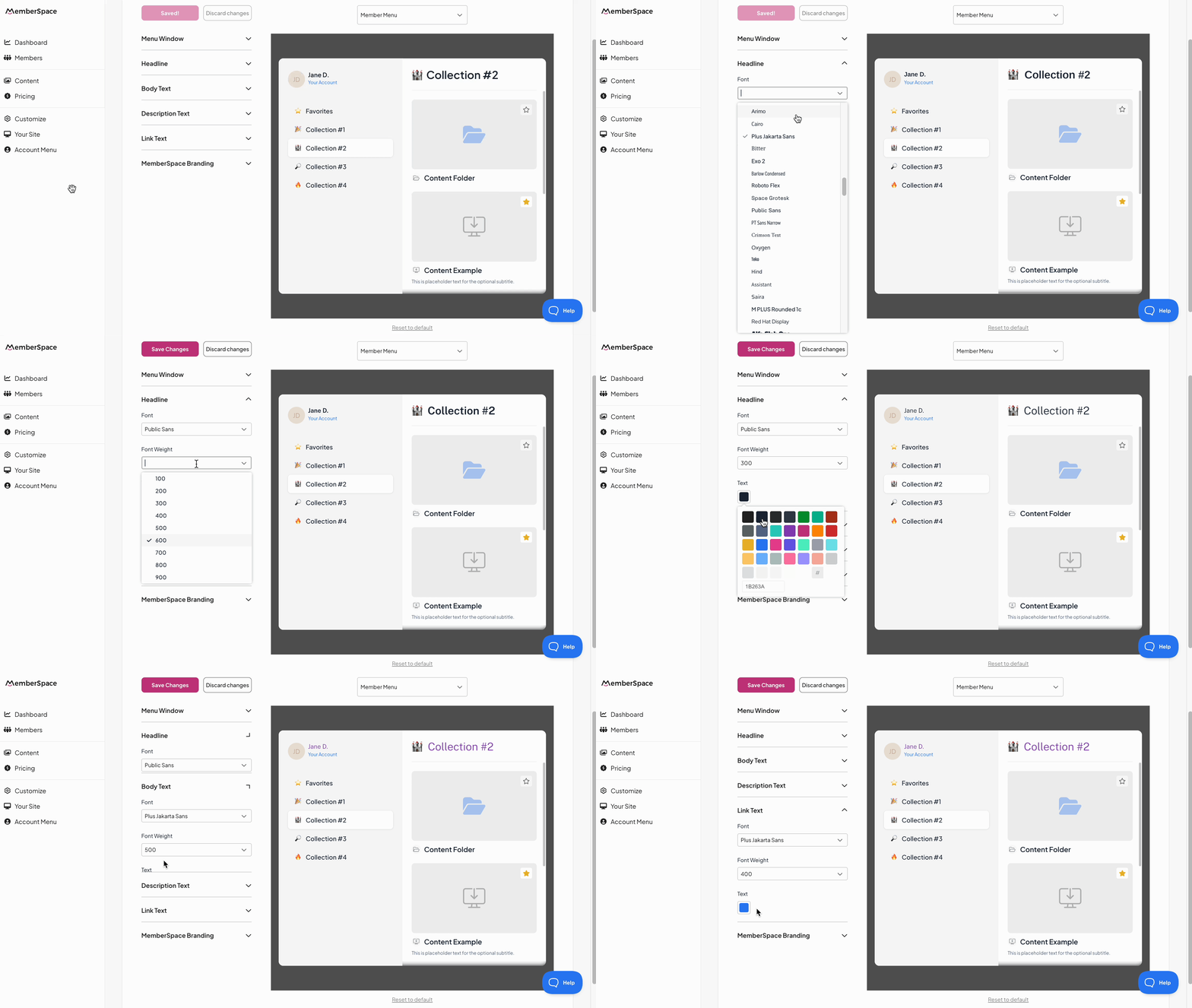
Typography settings

Customize fonts, font weights, and colors for:
  • Headlines — Used for Collection, folder, and content titles
  • Body Text — Applies to the Collections list, content titles in the grid view, content descriptions, and post content
  • Description Text — Used for subtitles
  • Link text — Applies to breadcrumb links and the “Your Account” link

MemberSpace Branding

Enable or disable MemberSpace branding within the Member Menu.

Typography and branding settings also apply to other MemberSpace forms and popups—ensuring a consistent look and feel across your entire member experience.

Improved analytics: Product views → Content views

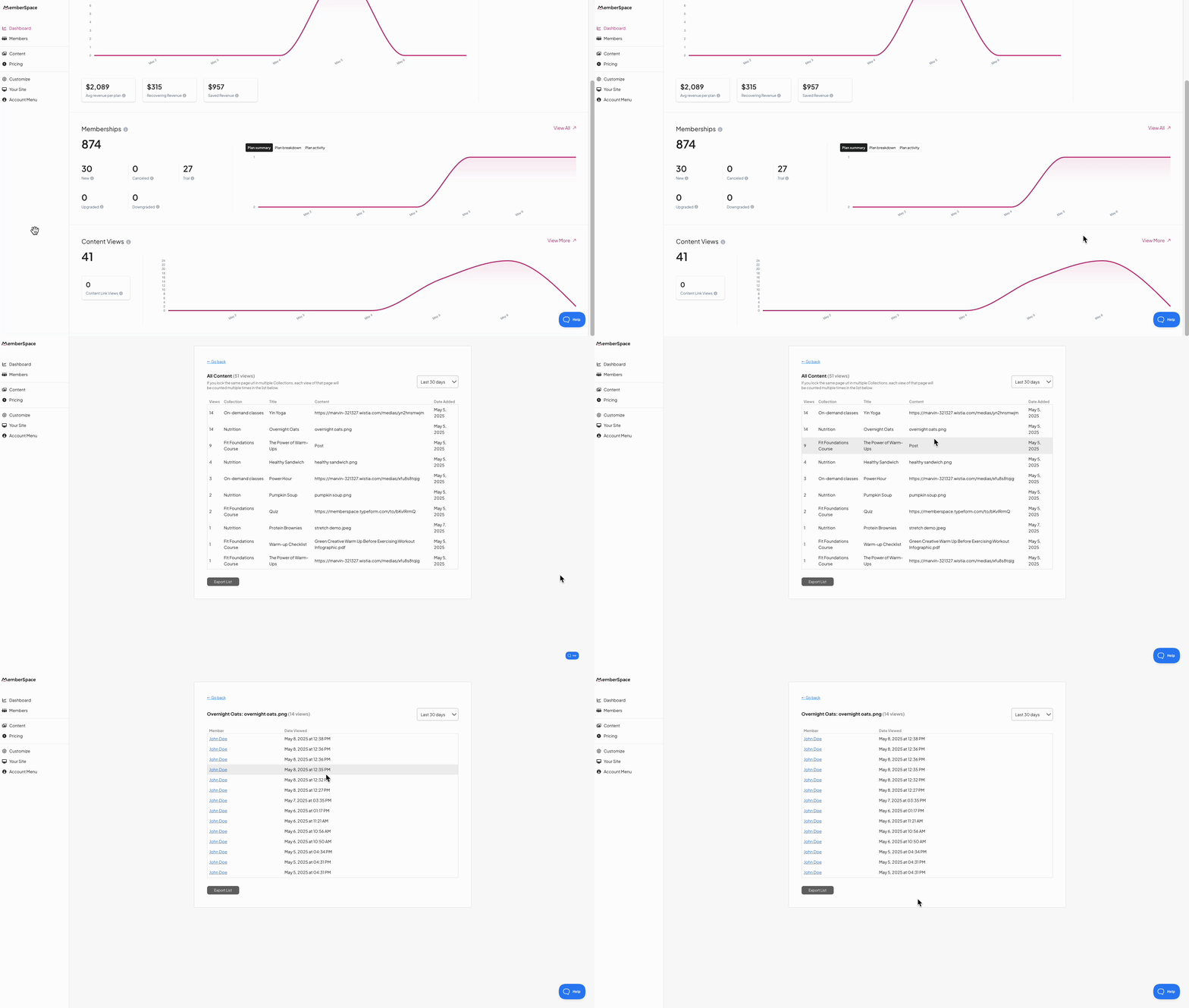
We’ve updated the Product Views section of your admin dashboard—it’s now called Content Views to reflect the expanded range of content types available in the new Member Menu.

The experience will feel familiar, but with a few improvements:
  • When clicking “View more,” you’ll now see a list of content titles along with helpful details (such as the link URL, file name, or other identifiers)
  • Clicking on a specific view record shows the same detailed breakdown as before—including which members viewed the content and when (with date and time)
  • You can continue to filter this data by pre-set time periods, just like before

This update ensures your analytics align with the new content structure while keeping your workflow consistent.

Marketing your gated content

To promote a specific Collection or piece of content, you can create a public landing page on your website. This gives you the opportunity to showcase what’s inside—whether through screenshots, quick video previews, or a compelling description that helps visitors understand the value of what they’ll get. It’s a great way to build interest and encourage signups.

On your landing page, be sure to include a way for visitors to gain access. You can either:
  • Link to a specific pricing plan that unlocks the content
  • Or link directly to a Collection, folder, or individual content item—anyone who clicks will be prompted to join a public plan that includes access

This approach keeps you in full control of how your content is marketed and experienced, while MemberSpace handles access behind the scenes.

✨ If you ever switch to a different website platform, all content you’ve added to the Member Menu will move with you—just like your members, their logins, and their billing info.

With the reimagined Member Menu, it’s easier than ever to organize and deliver digital content—no complicated setup or extra tools required.

Whether you’re already using MemberSpace or just exploring your options, this new experience gives you the flexibility to create a clean, branded hub your members will love.

Need help marketing your membership business? Sign up for our free newsletter, The Membership Blast, for actionable growth tips delivered every other week.


Subscribe for free

How to create an online training course: a step-by-step guide

Software Stack Editor · May 5, 2025 ·

Thinking about creating an online training course and not sure where to start? You’re in exactly the right place. Today, online training courses aren’t just about putting content online — they’re about building learning experiences that truly teach, inspire, and drive real transformation. Whether you’re training employees, helping people master new skills, or selling your …

Continue

The post How to create an online training course: a step-by-step guide appeared first on LearnWorlds.

Product adoption metrics: What to track and why it matters

Software Stack Editor · May 5, 2025 ·

Tracking product adoption metrics is essential if you want to build a product users love and stick with. Whether you’re trying to improve onboarding, reduce churn, or scale product-led growth, knowing what to measure is the first step. In this post, we’ll cover: What product adoption metrics are and why they matter The top metrics …

Continue

The post Product adoption metrics: What to track and why it matters appeared first on LearnWorlds.
LearnWorlds appoints Dario Derna as Chief Marketing Officer to drive next phase of growth

Software Stack Editor · May 2, 2025 ·

Athens, Greece, 30 April 2025—LearnWorlds, the elearning platform that combines the power of an LMS with the agility of a modern course builder, today announced the appointment of Dario Derna as its new Chief Marketing Officer (CMO). Derna brings 15+ years of experience in B2B SaaS and has played a pivotal role in scaling startups …

Continue

The post LearnWorlds appoints Dario Derna as Chief Marketing Officer to drive next phase of growth appeared first on LearnWorlds.

EzyCourse vs LearnWorlds: Which online course platform is right for you?

Software Stack Editor · April 30, 2025 ·

For online educators who want to succeed in today’s competitive market, choosing the right platform to host and sell online courses is crucial. LearnWorlds and EzyCourse are among the most popular online course platforms for course creators and training businesses of all sizes and industries. Both offer powerful tools, but their features, ease of use, …

Continue

The post EzyCourse vs LearnWorlds: Which online course platform is right for you? appeared first on LearnWorlds.

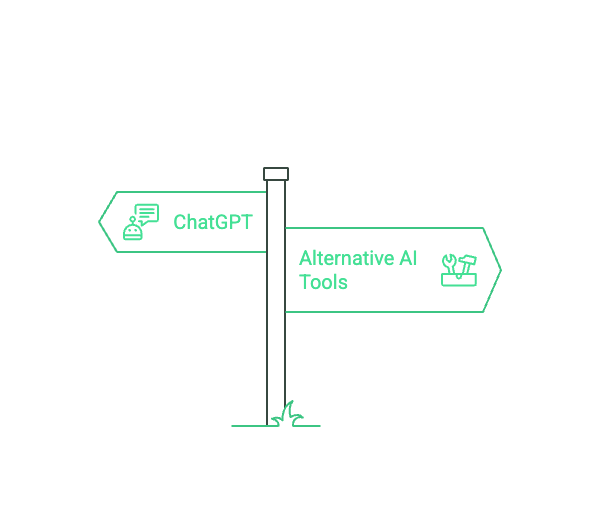
Best ChatGPT Alternatives for Creators and Entrepreneurs in 2025

Software Stack Editor · April 29, 2025 ·

The rise of generative AI has transformed how creators and entrepreneurs approach content, strategy, and workflow efficiency. Generative AI is now by far the most popular form of AI tool, with 51% of businesses using it. While ChatGPT pioneered this revolution, it certainly has limitations that are causing some creators and entrepreneurs to look elsewhere. So, let’s explore leading ChatGPT alternatives and how they complement platforms like Teachable to empower creators and entrepreneurs in 2025.

ChatGPT vs Alternative AI Tools Crossroads street sign graphic

The AI Landscape

When ChatGPT debuted in November 2022, it redefined what AI could achieve, sparking widespread adoption among writers, marketers, and innovators. Its ability to generate text on demand made it a go-to tool for overcoming creative blocks. However, its success also highlighted gaps in specialization. Enter the era of ‘AI copilots’: purpose-built tools designed to tackle specific challenges, from SEO-optimized content creation to CRM automation.

These niche solutions cater to professionals who need more than generic outputs. For example, marketers require brand-aligned messaging, educators demand curriculum-building efficiency, and entrepreneurs rely on seamless integration with existing tools. While ChatGPT remains a versatile starting point, its broad-stroke approach often falls short in scenarios requiring domain expertise or platform-specific workflows. The result? A thriving ecosystem of alternatives that prioritize precision, customization, and reliability.

The Pros & Cons of ChatGPT

The Pros

As the most prominent and popular Generative AI LLM, or large language model, there are a lot of pros to its use. Just the nature of its popularity, as there are many guides and experts out there who can help you use it effectively. It’s also one of the most frequently updated models, with new capabilities end efficiencies being rolled out regularly. 

It’s become highly adept and popular for generating text, analyzing data, and even producing images, especially when using the hyper-advanced models accessible by the paid tiers ($20 per month for ChatGPT Pro). Its popularity as a sort of ‘baseline’ for LLMs and generative AI means there are many integrations and plugins developed for it, making it quite an adaptable piece of kit.

The Cons

But despite its popularity, there are some downsides.

While ChatGPT offers a free tier that lets content creators experiment with prompt-based writing without upfront investment, it can oversimplify nuanced topics, occasionally producing over-generalized or generic prose. Many entrepreneurs appreciate how quickly it can produce outlines, email drafts, and code snippets, but this rapid generation sometimes sacrifices depth and factual accuracy. 

In addition, ChatGPT’s standard models can have quite small context windows, making it challenging to maintain coherence in longer-form content without frequent prompt engineering, which can push you towards the premium models.

The popularity of ChatGPT is a double-edged, as people are growing more adept at spotting text it generates due to common, recurring turns of phrase. Ever noticed how many articles you see online start with something like “in the rapidly evolving business landscape” since ChatGPT hit the market? 

And while ChatGPT has functionality for direct integration into applications, this often requires selecting separate API pricing plans and navigating fixed subscription tiers, adding complexity and integration overhead that many creators would rather avoid. 

Let’s not forget the infamous hallucinations. While things have improved, ChatGPT is still known for confidently offering plausible-sounding information that can be incorrect or misleading, an issue that poses real risks when teaching or marketing requires factual precision. 

Taken together, these trade-offs are leading many creators and entrepreneurs to investigate purpose-built AI alternatives that offer specialized workflows, tighter integrations, and higher reliability.

Best ChatGPT Alternatives

Google Gemini

Google Gemini has emerged as a powerhouse for entrepreneurs deeply embedded in the Google ecosystem. Integrated across Workspace apps like Docs, Gmail, and Slides, it streamlines tasks such as drafting emails, summarizing meeting notes, and generating presentation outlines. Its ability to pull data from Google Drive and Calendar reduces context-switching, enabling users to transition from brainstorming to execution seamlessly. 

Google offers a variety of packages for Google Gemini use. On the one hand, this means you can be selective and pay for what you actually need, but on the other hand you’ll need to do some research on the different models, pricing tiers, and what you need Gemini for to know what you should purchase. 

Perplexity AI

Perplexity AI distinguishes itself as a research-focused tool, delivering concise, citation-backed answers by scouring live web data. Its ‘Deep Research’ mode mimics an expert’s workflow, analyzing multiple sources to generate comprehensive reports, which makes it ideal for fact-checking or competitive analysis. The free plan includes unlimited quick searches, while the Pro tier ($20/month) offers advanced models, more in-depth searches and file-upload analysis for deeper dives.

Claude

Anthropic’s Claude excels in generating natural, human-like text, thanks to its Constitutional AI framework. With much larger context window than ChatGPT’s free models, it can maintain coherence across long-form content, making it perfect for summarizing reports or drafting detailed narratives. The free version suits casual users, while Claude Pro ($20/month) unlocks priority access to updates and higher usage limits.

Microsoft Copilot

For teams reliant on the Microsoft Suie, Copilot embeds AI across Word, Excel, and Teams, automating tasks like data visualization, meeting summaries, and email drafting. While basic features are free for subscribers, the Pro suite ($20/user/month) includes collaborative ideation tools and custom agent creation via Copilot Studio, positioning it as a holistic productivity enhancer.

Teachable AI, Easy to Use With ChatGPT Alternatives.

Teachable can complement these ChatGPT alternatives, while also embedding no-code AI directly into the course-building workflow, which reduces the need to context-switch. 

For example, the Teachable AI Course Curriculum Generator allows you to input a course title and description and receive a full outline in seconds, including sections, lessons, and even sales-page copy. You can then combine these materials with ChatGPT to produce marketing materials like social media posts and email campaigns to promote the course.

For creating the lessons themselves, you could combine Perplexity AI’s deep research, or Claude’s long form content capabilities with Teachable’s AI Hub to craft lecture scripts, which can then be used to produce quizzes and summaries using Teachable’s AI capabilities, like the Teachable AI Quiz Generator.

Meanwhile, Gemini and Copilot’s integrations with the Google and Microsoft Office suites allow for adaptability in working across those suites, allowing you to plan lessons and courses with integrations across your calendars and email inbox.

This is just the start. Teachable’s extensive AI features and how they complement CHatGPT alternatives makes it ideal for creators and entrepreneurs developing courses and learning materials. 

Final Thoughts

Selecting the right AI tools hinges on your workflow’s unique demands. The ChatGPT alternatives out there all have specific strengths that make them suited to different needs, so you need to think hard about what you’re trying to achieve to guide your choice.

Once you’ve chosen the tools you need, Teachable’s AI capabilities are ready to supercharge all your course and learning materials creation. Once you find the most effective, AI-driven workflows, these tools will become more than just productivity boosters, they can be strategic partners. 

AI should help you grow your business, especially for internal processes. See how Teachable AI tools can power your next project.

FAQs concerning ChatGPT alternatives

1. How do I decide which AI tool is the best fit for my business needs?

Start by mapping your most critical workflows and identifying bottlenecks.

  • If you need research depth, Perplexity AI may be best.
  • If you work heavily in the Google ecosystem, Gemini integrates seamlessly with your existing tools.
  • For long-form content or course creation, Claude’s expanded context window outperforms other models.
  • If you need broad team-wide productivity enhancements, Microsoft Copilot could be ideal.

No matter which tool you choose, Teachable’s built-in AI features complement these systems by streamlining course-building, automating quizzes, and accelerating marketing material production, all critical tasks for creators scaling their businesses. 

2. Can I use multiple AI tools together with Teachable, or do I have to pick just one?

You can (and should) combine tools strategically.Think of Teachable as the central hub for your course and coaching business. Tools like Gemini, Copilot, and Perplexity can be used to feed research, outlines, and marketing ideas into Teachable’s AI-powered course builder, sales page generator, and quiz creator. This “stacked AI” approach saves time, reduces manual admin, and ensures your content is higher quality and more aligned with your brand, without needing heavy technical expertise.

3. What are the risks of using ChatGPT or alternatives for creating educational content?

The main risks include:

  1. Inaccuracy or “hallucinations” (false information presented as fact).
  2. Generic outputs that lack your brand voice or audience specificity.
  3. Over-reliance on AI at the expense of original insights or personalization.
    ‍

Teachable’s AI tools help mitigate these risks by offering structured, guided workflows that keep you in control of the final product. Combining generative AI outputs with your expertise ensures your course material remains credible, customized, and impactful.

4. How does Teachable’s AI compare to standalone AI tools like Gemini or Claude?

Teachable’s AI is purpose-built for creators and entrepreneurs. While Gemini, Claude, and others are versatile generalist tools, Teachable’s AI is embedded directly into course creation, sales page writing, quiz generation, and content repurposing workflows.

5. Will Teachable continue expanding its AI features in the future?

Yes. Teachable is actively investing in enhancing its AI Hub, with a strong focus on helping creators and entrepreneurs:

  • Automate more administrative tasks (e.g., student communications, progress tracking).
  • Expand content creation capabilities (e.g., video scripts, marketing funnels).
  • Integrate more seamlessly with external AI tools to create even smoother, cross-platform workflows.

In short: as AI evolves, Teachable’s platform will evolve with it, giving you more tools to save time, grow your audience, and future-proof your business in an increasingly competitive creator economy.

LMS pricing: Choose your best model before signing on

Software Stack Editor · April 28, 2025 ·

Before you rush off to start a demo for a learning management system, I have the duty to tell you that its cost can make or break your learning and development plans.  Complete a purchase for too much (or too little) functionality and you won’t hit your goals. Only pay for what you use, and …

Continue

The post LMS pricing: Choose your best model before signing on appeared first on LearnWorlds.
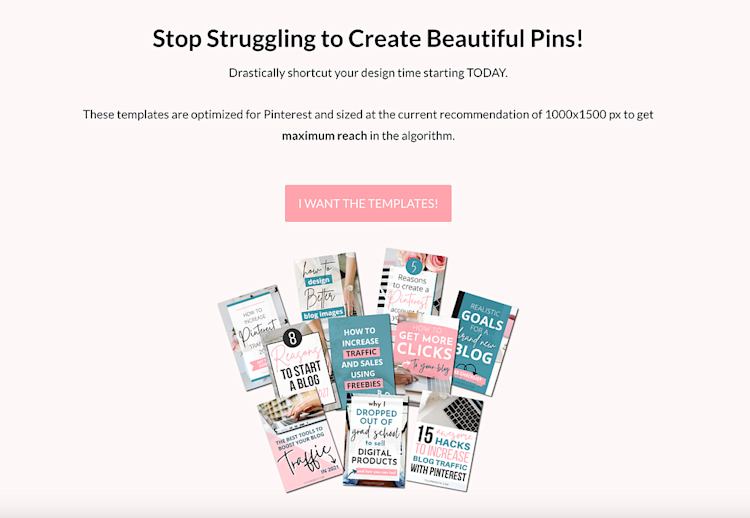
How to create engaging course content that captivates learners and helps you sell more

Software Stack Editor · April 28, 2025 ·

Want your course to sell more? Make it worth finishing. At the end of the day, engagement is more than just a strong learning outcome—it’s a business outcome. Because the truth is, every interaction in your course—every quiz, discussion, video, or downloadable—adds value. And when people feel that value? They don’t just complete your course, …

Continue

The post How to create engaging course content that captivates learners and helps you sell more appeared first on LearnWorlds.
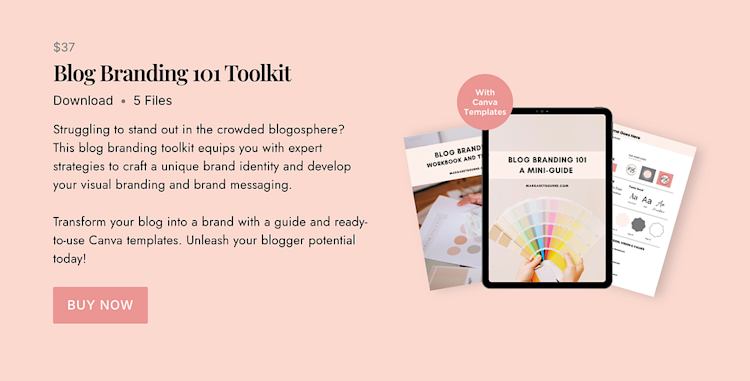
LMS vs. LCMS: A comparison of learning management systems

Software Stack Editor · April 25, 2025 ·

Crazy to think about it, but the online learning platform you choose can make the difference between a dull experience and a rocket-ship full of knowledge. Think about trying to teach a dog to fetch with only a leash. That’s how different a learning management system (LMS) and a learning content management system (LCMS) are. …

Continue

The post LMS vs. LCMS: A comparison of learning management systems appeared first on LearnWorlds.
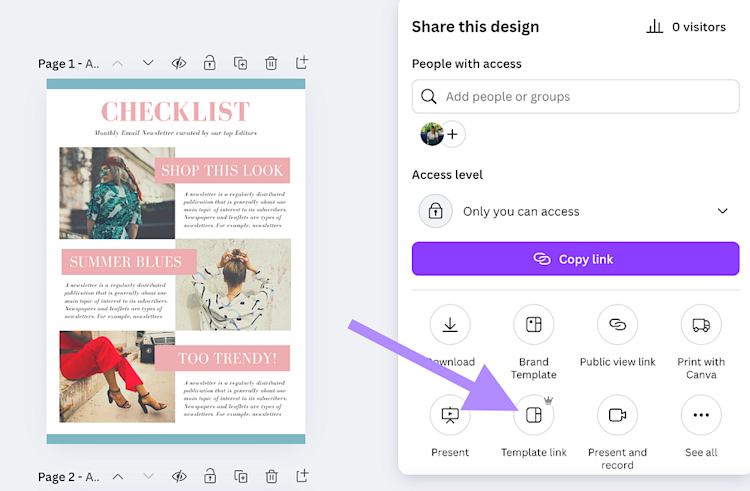
How to create a membership site (in 2025)

Software Stack Editor · April 25, 2025 ·

Running an online business usually requires considering a range of approaches. While there’s no single formula for building and developing a successful online business, some options seem to be more suitable than others depending on your business goals. If you want to monetize your content, build a closed space for your audience to socialize and …

Continue

The post How to create a membership site (in 2025) appeared first on LearnWorlds.
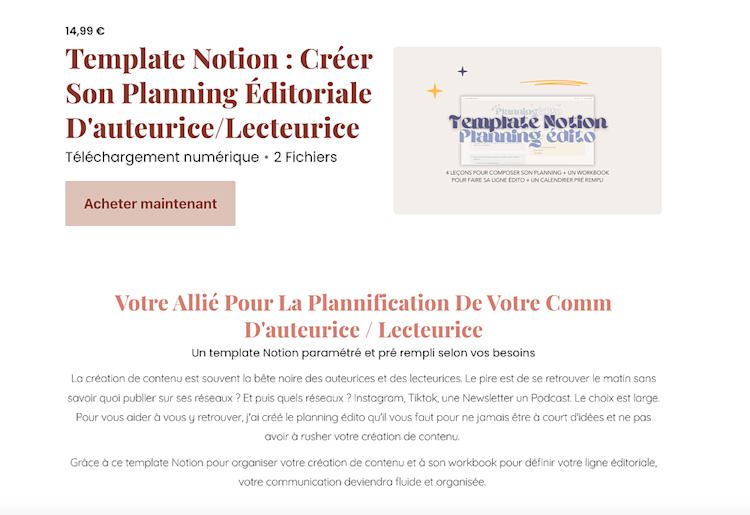
Humanizing AI: Why reclaiming your voice matters in 2025

Software Stack Editor · April 24, 2025 ·

If you have been leaning on AI to write your content faster, while creating content in Learning Experience Platforms (LXPs) or online course platforms (e.g., LearnWorlds, Teachable, Thinkific, Kajabi), then you should keep reading. Google has developed tools and algorithms that can detect unedited AI-generated content, placing purely AI-written text at high risk of serious …

Continue

The post Humanizing AI: Why reclaiming your voice matters in 2025 appeared first on LearnWorlds.
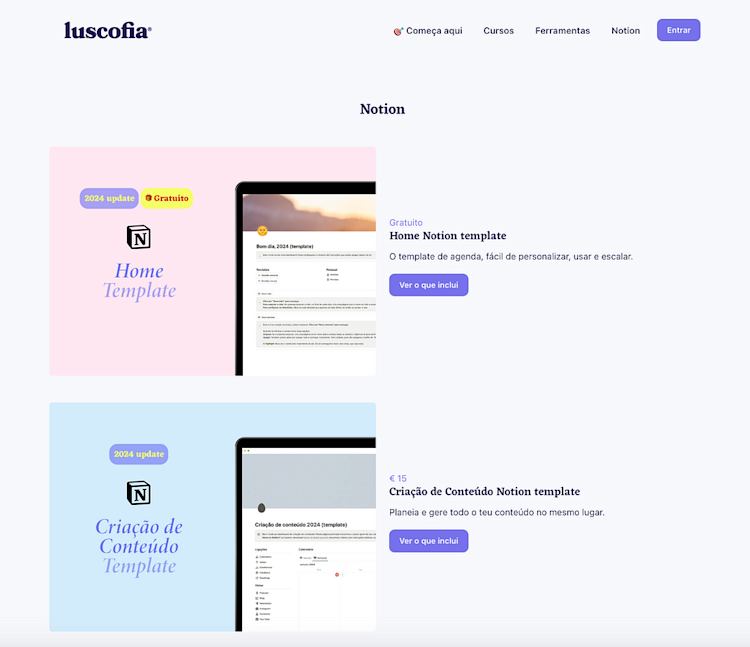
5 top product adoption software platforms to boost user engagement

Software Stack Editor · April 24, 2025 ·

With so many tools on the market, finding the right product adoption platform can be overwhelming. To make your search easier, we’ve picked five of the top solutions in 2025, evaluated based on features, usability, and user feedback. In this blog post, we’ll also break down: What product adoption software is, and why your business …

Continue

The post 5 top product adoption software platforms to boost user engagement appeared first on LearnWorlds.

  • « Go to Previous Page
  • Page 1
  • Interim pages omitted …
  • Page 7
  • Page 8
  • Page 9
  • Page 10
  • Page 11
  • Interim pages omitted …
  • Page 35
  • Go to Next Page »

Get your Software Stack together. softwarestack.tech
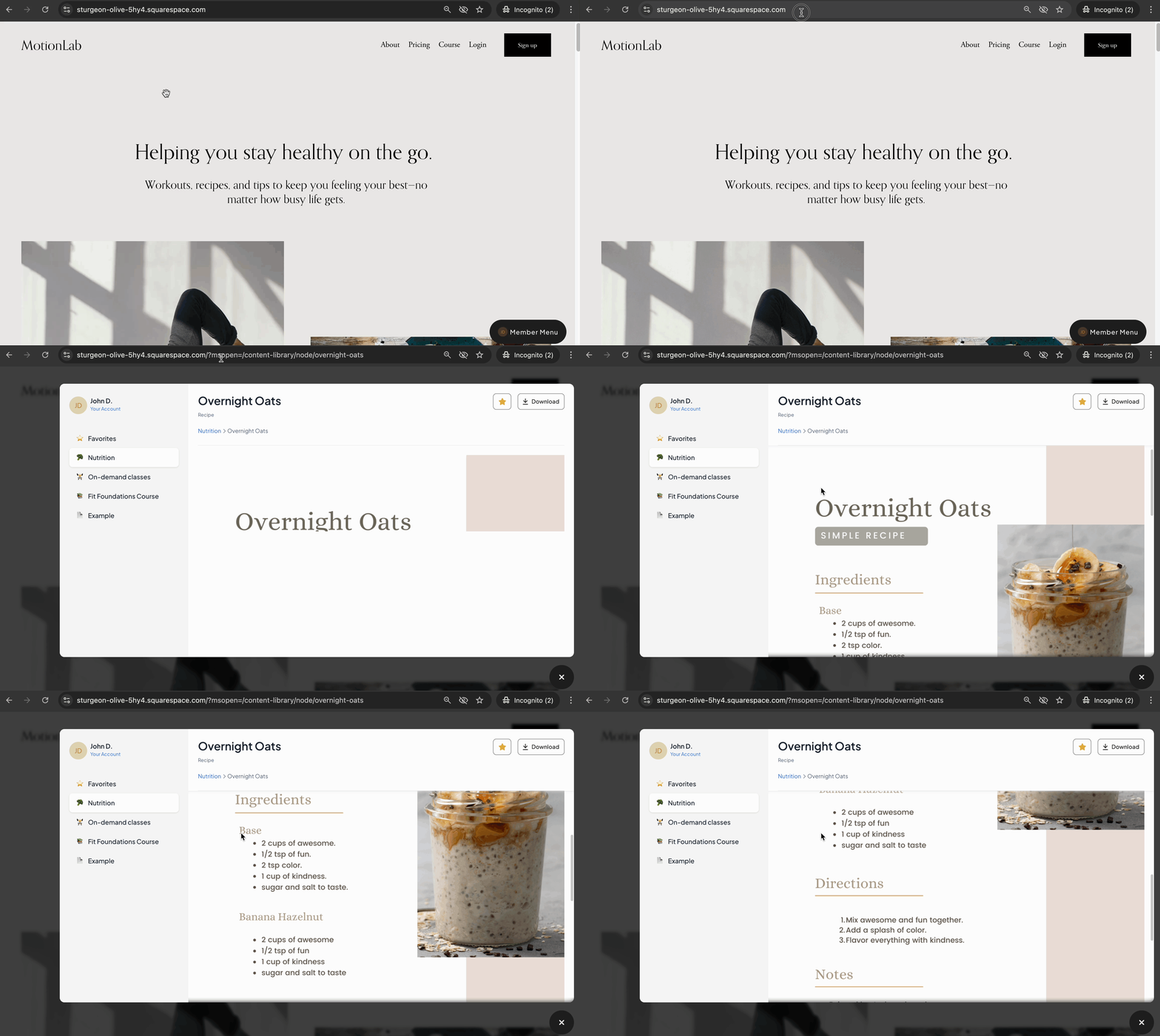
Software Stack

© 2024–2025 - Software Stack is a trading name of SouthwestCIO Limited ac ompany registered in England & Wales 11319049

  • Knowledgebase
  • Home
  • About Us
  • Contact Us