
• Skip to primary navigation
  • Skip to main content
software stack logo

Software Stack

Get your Software Stack together

  • Knowledgebase
    • All Categories
    • Accounting Software
    • Automation & Workflow Software
    • Customer Relationship Management
    • E-Commerce Shopfronts & Payments
    • Marketing Automation
    • Online Courses & Membership
    • Project Management
    • Surveys & Forms
    • Web Hosting
  • Home
  • About Us
  • Contact Us
  • Show Search
Hide Search

Online Learning & Community

How to create a membership website around your course

Software Stack Editor · July 18, 2023 ·

image

Amembership website can be a very lucrative way to expand your online product selection, provide more value to your students, and increase your profit. And what’s best is that this business model works for so many different industries and niches, that any content creator can find a way to take advantage of it.

Let’s talk about how a Membership product can complement your online courses or digital downloads, and why you might want to consider creating one.

5 ways a membership website can complement your online course

What is a membership?

A membership is a business model where customers pay a fee for content that’s exclusive to the membership. That fee can happen on a monthly, quarterly, annual, or any other cadence schedule.

There are many different successful businesses in various niches that operate on a membership or subscription basis. Netflix, HBO Max, and BossBabe (a business membership for women entrepreneurs) all fall under the membership website umbrella.

Why create a membership website to accompany your online course

Most often content creators opt for either creating an online course or running a membership. However, there are many benefits to creating both—an online course, and a membership to accompany the course.

Let’s discuss some of the key benefits of why that’s a good idea for your business:

The memberships make for a good upsell

As a business owner, you want to make sure that you have as many valuable offers available for your audience as possible to maximize your profit. Upsells are one of the most effective strategies to increase your profit. And a membership can be a fantastic upsell for people who are interested in your offers.

Add a paid tier to your online course

Another very effective way you can use a membership to increase your online course business profit is to use it to add tiers to your pricing.

Let’s say you sell an online course about product photography. Here’s how you can break down your pricing into tiers:

  • Tier 1: for $200, students get access to course material
  • Tier 2: for $500, students get access to course material + one-off 30-minute consultation with you
  • Tier 3: for $900, students get access to course material + one-off 30-minute consultation with you + access to an exclusive membership site

With one course alone you can create many more opportunities to increase your profit. Plus an opportunity to provide your students with more value. You can learn more about how to easily do this on Teachable with our Membership product.

Engage your audience with ongoing challenges

One key component of a membership is often the sense of community it creates. This is often  community of people who are all interested in the same topic and are seeking to find solutions to their problems is a very powerful tool.

Running memberships can help you to engage with your audience in a much more personal manner, and you can help them accomplish their goals by offering ongoing challenges.

For example, let’s say you sell online courses teaching people how to achieve various fitness goals like a handstand, a split, etc. You could create a membership option, where every month students can participate in fitness challenges based on your fitness programs. Plus, if you allow them access they can communicate with one another and share their highs and lows on their journey.

This will allow your students to utilize the course materials you offer much better, find a supportive community of like-minded people, and have a way to receive guidance from you.

Keep your students accountable

Another wonderful way to use a membership is to use it as an accountability system. The American Society of Training and Development (ASTD) found that if you’re committed to someone and have an accountability appointment with them, you’re 95% more likely to accomplish your goals.

When you sell your online courses you’re really selling a transformation or a promise of a transformation. A membership that serves as an accountability system is a great way to deliver on that promise. It can also help increase overall student satisfaction with your programs.

You can also offer your time as an accountability buddy through your membership. Or you can connect your students through the membership and take on the role of an accountability matchmaker.

Provide a place for students to connect and network

Depending on what industry you’re in, you can utilize a membership as a way to connect your students to one another. This can also help them find work and other opportunities.

For example, if you’re teaching online courses on web design and development. Your courses provide a way for people to learn a skill, and a membership product could provide tools to find a job or build a career with their newly learned skills.

So, within your membership, you could offer multiple benefits. Like coaching sessions with you, networking events, a job board, and other valuable materials to help people utilize the skill they just learned.

Membership examples

Let’s take a look at a few great examples of successful membership websites that complement other parts of the creator’s businesses:

The Virtual Savvy

The Virtual Savvy offers online courses that teach people how to build their virtual assistant businesses. After listening to their community, they decided to add a membership site for $47/month where they offer additional useful training for their members.

When you join their membership website, you get access to all the previous content, as well as every new training that they add every month.

Allasyummyfood

Allasyummyfood is another great example of a content creator using a membership website to complement their online courses. They sell courses on making cakes and individual live cake-baking workshops.

In addition to that, they have a membership website where members get access to a community, new recipes, and live sessions with the founder every quarter.

Live Richer Academy

The creator of The Budgetnista doesn’t sell online courses, but she does sell books on personal finance. And in addition to that, she has created a membership website that gives people a place to learn about finance and build wealth and find like-minded people.

Membership website models

So, as we already briefly touched on before, there are many different ways to run a membership website. You can offer different forms of content and choose to engage your community in multiple ways:

  • A fixed membership period: This type of membership works best for limited-time challenges, like 30/60/90-day fitness, wellness, or personal finance challenges. People pay a membership fee for the duration of the challenge to get access to content, accountability system, and everything else.
  • Product membership: This type of membership provides the members with access to exclusive content. It’s often delivered in small chunks, giving people time to process the content before receiving a new update.
  • Coaching membership: This type of membership gives the members access to the creator, either in a coaching or accountability format.

Depending on your content, niche, and business goals you might choose to mix and match all these membership types and offer your audience a little bit of everything. There are really no rules as to how you have to run your membership. So it’s best to choose a model that works for your business.

How to keep your members engaged

Creating a membership website and onboarding new members is just the start. You want to make sure that your members are engaged and get value out of their subscriptions. Here’s how you can do that:

  • Engage with them: It’s essential to engage with your community and show up consistently. You can share valuable, inspirational, or motivational short-form content, answer questions or simply offer encouragement where needed.
  • Refresh content: A successful membership website always offers new, valuable content. So, make sure that you’re supplying your members with regular new content in the form of webinars, blog posts, YouTube videos, workshops, and everything in between.
  • Run challenges: If it works with your niche and business model, a very effective way to engage your members is to run challenges consistently and invite people to participate. Take it a step further and offer incentives for finishing challenges–gifts, discounts, or special swag.
  • Listen to feedback: Your members will tell you what sort of content they want to see more, what struggles they are facing and need help with, and how you can better help them achieve their goals or solve their problems.
8 abandoned cart email best practices to increase sales

Software Stack Editor · July 17, 2023 ·

Abandoned cart emails automatically get sent out when someone adds a product to their online cart, then leaves the page before finalizing the checkout process. This type of email sequence is great for reminding potential customers to come back and complete their purchases.

Research shows that almost 70% of consumers abandon their carts—but abandoned cart email sequences can generate a click-through rate of 23.33%, meaning nearly a quarter of those will click back to their cart while considering whether to complete the purchase.

However, to see good success rates with your cart abandonment emails, you need to know how to create the best email sequence you can. We’ve got eight abandoned cart email best practices to help you get started.

8 abandoned cart email best practices to increase sales

Want to increase sales from cart abandoners? Keep these eight best practices in mind when creating your next email sequence.

1. Start your abandoned cart email sequence within 24 hours

Don’t wait too long before starting your abandoned cart email sequence. You still want the product(s) your customer almost purchased to be top of mind.

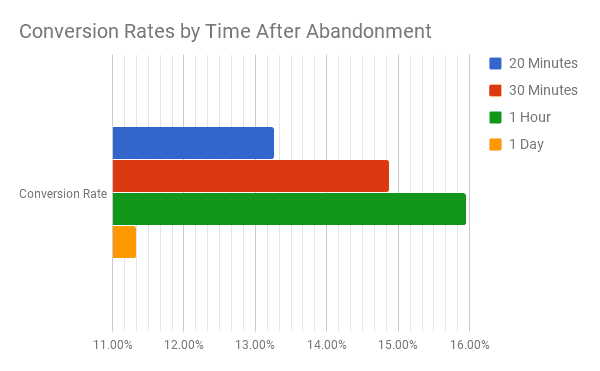
While you absolutely must send that first email within 24 hours of cart abandonment, studies show that the optimal time is actually one hour after abandonment, according to Rejoiner.

abandoned cart email best practices 1

2. Send out three emails

Many businesses simply send out a single cart abandonment email and call it a day. If the customer comes back, great. If not, we tried.

However, best practices dictate that your abandoned cart email sequence should consist of three emails for optimal results. One study done by Klaviyo analyzed nearly 10 million cart abandonment emails to find some of the best data, and here are the results.

Sequences of three emails generate the best results at $24.9 million in revenue. That’s 6.5x the revenue that a single abandoned cart email sends. Two emails generate the second-best results at $16.4 million, then four emails, before we get to the revenue that just one email brings.

This tells us that your abandoned cart emails can’t be a one-and-done. And if they are, you could be leaving a ton of revenue on the table.

But what should go into those three emails? You don’t want to just send the same email three times. One good rule of thumb is to break your emails down like this:

  • Email #1: A brief reminder of their abandoned cart
  • Email #2: A suggestion that they finalize their purchase
  • Email #3: An incentive (like a discount code or free shipping)

3. Use a catchy subject line

Make your emails stand out in your recipient’s inbox. Use a subject line that’s going to grab attention and get your customer to open it.

Klaviyo’s study found that simply reminding your customer about their abandoned cart generates a 47.67% open rate. Their data found that the average cart abandonment open rate was around 41.18%, meaning a simple reminder (one popular subject line is, “It looks like you left something behind”) increased opens by 6.5%.

However, we encourage you to experiment with your subject line, too. Add some of your brand’s personality to it.

For example, this subject from BarkBox adorably mentions that the customer’s dog wanted a reminder sent about their toys.

Brainstorm ideas for your own subject lines that will make your customers want to open your emails.

4. Write engaging email copy

If your subject lines should be catchy, then your email copy should be even more attention-grabbing and enticing. Throw some personality in there and get your customer to want to shop with your brand.

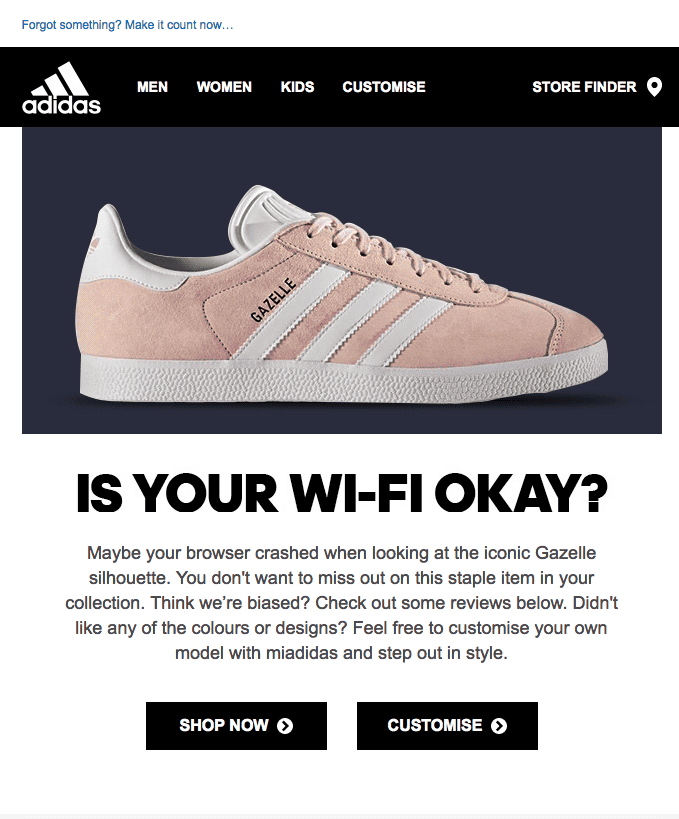
Here’s a fun example from Adidas:

Adidas example for abandoned cart

“Is your Wi-Fi okay?” in big, bold letters helps lighten the mood and assume that it was just a little mistake, the customer wouldn’t have chosen not to fulfill their purchase!

Think about how you can create email copy that helps increase the chances that your recipient clicks through and decides to finish up a purchase.

5. Share high-quality product imagery

Your emails should be simple, but not boring. And they should absolutely include high-quality photos of the product(s) they’ve left behind.

Your photos will likely be automatically pulled from your product page—so step one is to ensure high-quality product photography is used there. Second, make sure your imagery shows up nice and large in your emails so it’s part of the main focus.

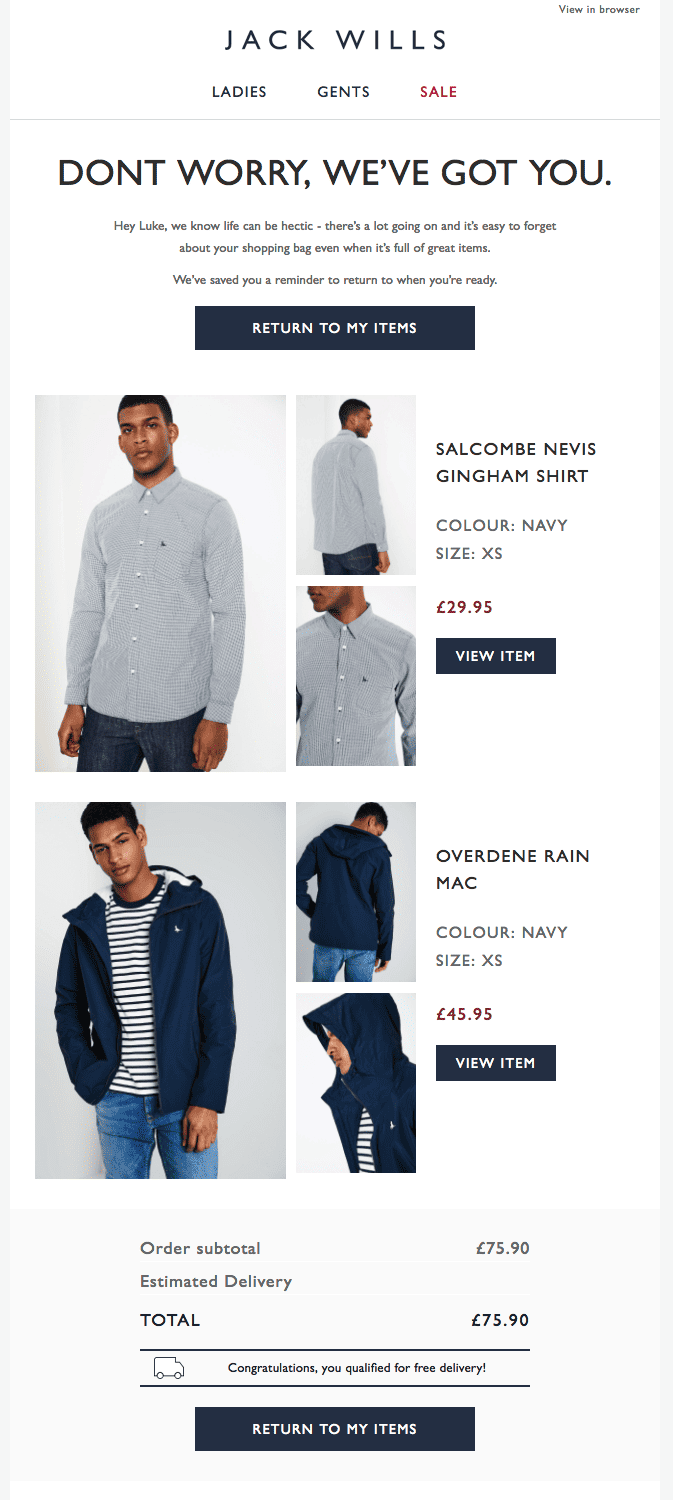
Here’s a great example from Jack Wills:

Jack Willis abandoned cart email

The product information—and photos—are front and center.

If you’re unable to include photos that large, consider taking a page from this Food52 example:

food 52 abandoned cart

While they’ve included the product left behind lower in the email, they also have a visually appealing header photo with a large assortment of their products to help make the email more attractive.

6. Include a call-to-action (CTA)

The purpose of a cart abandonment email is to get your customer to take action in finishing their purchase. So make it clear what action you want them to take with a call-to-action button.

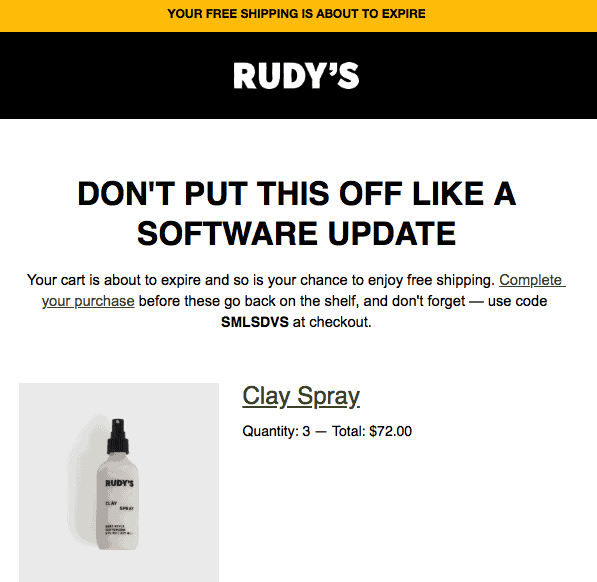
Here’s one example from Rudy’s Barbershop:

cart abandonment email barber

They’ve included a big “Checkout Now” button right underneath the products to clearly state what they’re hoping the customer will do.

CTA button options include:

  • Shop Now
  • Checkout Now
  • Take Another Look
  • Complete My Order
  • Return To My Items
  • View My Cart
  • Continue Shopping

7. Create a sense of urgency

Urgency can help customers decide to make purchases more quickly. One case study found that creating urgency with their customers increased sales by an astronomical 332%. And it can help you make a sale with your cart abandonment emails.

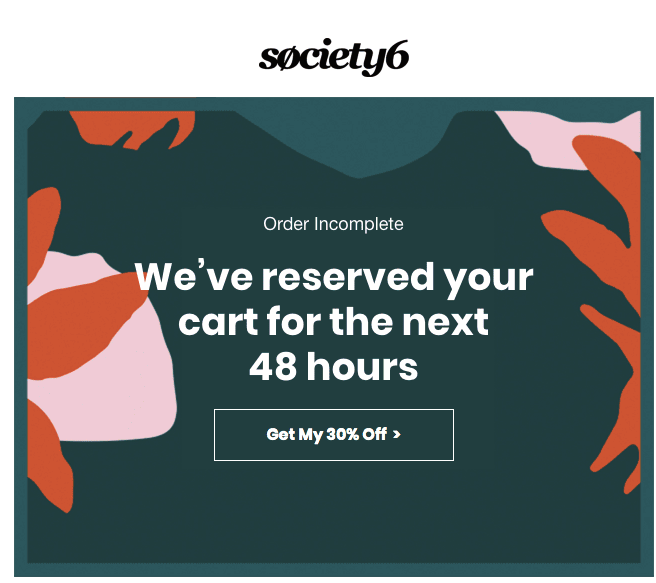
Here’s an example of what this might look like from Society 6:

cart abandoment email best practices 8

Letting customers know their cart is only available for a certain amount of time can increase the odds they take action much more quickly.

Other ways to create a sense of urgency with your abandoned cart emails include:

  • Letting customers know when products are selling out
  • Sharing that the cart will expire soon
  • Including information about limited-time-only products
  • Using phrases like “Don’t wait too long,” or “Going, going, gone!”

8. Provide an incentive

Finally, include some sort of incentive like a discount or free shipping that will help your customer feel better about spending money and making a purchase.

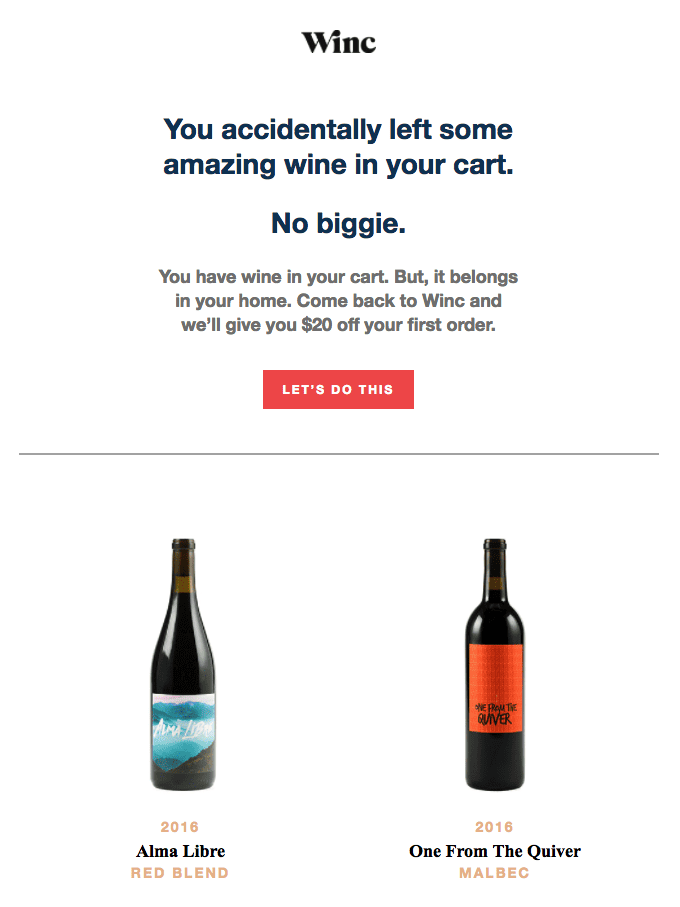
Here’s an example from Winc of what that might look like:

abandoned cart email best practices 9

They’re offering a $20 off discount code to those who go back and complete their purchase—with fun CTAs like “Let’s do this” and “I’m ready for wine.”

Providing some additional incentive—whether it’s free shipping, money savings, or even a free product—can be a great way to get customers through the door, especially after they’ve abandoned their carts.

Use these abandoned cart email best practices in your next sequence

The bottom line is that abandoned cart emails work. Keep your customers from abandoning your course and digital products with these best practices. Learn more about creating abandoned cart email sequences with Teachable.

A step-by-step guide on how to become an online tutor

Software Stack Editor · July 14, 2023 ·

The world of online tutoring has opened up teaching opportunities for people everywhere. Now, you don’t necessarily have to work for a public or private school to share your passion for educating and giving students the tools they need to succeed in adolescence and their careers.

But how to become a tutor online? Let’s answer that question with a step-by-step breakdown of how to offer your tutoring services online.

{{tableofcontents-component=”/blog-shortcodes/table-of-contents”}}

What do tutors do?

Tutors – both online and in-person – are professional teachers who lecture students individually or in very small groups. These professionals provide tutoring services to students for a variety of different subjects, including:

  • Mathematics
  • Writing
  • Science
  • Languages
  • And more

Lots of tutors advertise their online tutoring services on dedicated websites, which connect remote tutoring professionals with students or their parents. Depending on the online tutoring platform used, the tutor might guide the student through interactive lessons, lecture them in a virtual classroom, and more.

To work as an online tutor, every teacher needs to have professional teaching experience or some kind of educational background. There’s a wide range of opportunities available for tutors of all types, especially those who cultivate good reputations and who interact with students regularly.

Tutoring can be a very rewarding experience as well. For many teachers, there’s nothing better than teaching online since it’s often more flexible compared to a traditional classroom teaching environment.

But to work as an online tutor, you need to accomplish several limited steps. For example, you’ll need learning experiences in the educational field, plus you have to complete a background check for your employing company or teaching platform. Many online tutoring websites have very strict requirements for remote tutoring professionals.

Let’s take a closer look at how to tutor online.

How to become an online tutor

To become an online tutor, you have to have relevant educational credentials, knowledge of different teaching styles, pick a specialty, and decide how you will offer your tutoring services.

Earn a degree or diploma

First, you need a high school diploma, GED, or a relevant degree. Technically, you don’t need a degree in teaching or a related subject to work as a tutor or get a tutor job. You can tutor anyone you like for free or for money if they agree to accept your services. However, you won’t be able to work for tutoring companies or official organizations without a bachelor’s degree in education or a similar subject.

Furthermore, it’s unlikely that parents or educators will accept you as a tutor for their children or students if you don’t have a degree highlighting your skills or specialization. Tutoring experience is valuable, but some sort of certification and degree will go a long way.

Generally, if you want tutoring to be your profession in the long run, it pays to earn a bachelor’s degree in teaching or whatever subject you wish to teach.

how to start freelance tutoring

Earn certification

No matter your career path, tutors must pursue certification through different accredited tutoring associations. Examples include:

  • The American Tutoring Association
  • The Association for Tutoring Professionals
  • The College Reading and Learning Association
  • The National Tutoring Association

The more certifications you have, the more likely you’ll be hired by an official tutoring organization like an agency or private school system.

Certifications can also benefit you if you choose to work part-time as a freelance tutor. And they’ll help you learn the important tutoring methods. You can post these on your tutoring profile or business website. Certifications demonstrate your expertise in the area of tutoring and make parents more comfortable hiring you for their kids.

Most tutoring certifications require you to take one or more exams. They may also require you to have a bachelor’s degree in teaching (see more above). Again, this highlights the importance of getting a bachelor’s degree if you want to tutor seriously and for significant money.

Choose your tutoring specialty

Next, you need to decide what to teach or what your tutoring specialty will be. Unlike many public school teachers, most tutors teach one or two subjects maximum. They may teach students to help them master specific subjects or areas of expertise rather than teaching students everything they need to learn from the school system.

For instance, you can be an English tutor, a math tutor, a tutor of music, or something else entirely. English tutors, or American tutoring, are some of the most common as many non-Americans seek English tutors for their children. That’s because American English is an important business language.

However, Chinese is also a common tutoring specialty. Chinese is becoming an important trade language like English, so if you know how to speak it, you could make a lot of money teaching Chinese to current English-only speakers.
Regardless, you should try to teach subjects you have professional training in or enjoy teaching.

how to start a career as a tutor

Choose where you’ll teach

You can offer tutoring sessions in public areas like coffee shops. Or you can tutor at your own home, which provides greater privacy and control over the environment. Alternatively, you might go to your pupils’ homes, especially if your students tend to be on the younger side or high school students and parents are worried about protecting their children from identity theft and online security.

Choosing where you’ll teach can impact your schedule, how often you can tutor, and how much you should charge for your work. Keep all of this in mind when choosing your primary teaching locations.

Decide to work independently or for an agency

After choosing your specialty, you need to decide whether you’ll work as an independent freelance tutor or if you want to work for a tutoring agency. It’s easier to find work when working for an agency in many cases.

A tutoring agency is an organization that hires you as a contractor for private tutoring jobs. The tutoring agency handles marketing, outreach to parents or schools, and many other business elements. In exchange, you tutor for the agency and give them a cut of your profits or accept a salary from them.

In essence, working for an agency means working as a tutor in a traditional employee context. It’s not the same thing as being an independent tutor, where you get to choose all of your clients, set your rates, and have more freedom.

Both types of tutoring have their advantages. For instance, tutors working for an agency don’t have to worry about advertising their services. But they might earn less money working for an agency than they would as a freelancer with their own client base.

Start seeking students

Whether you choose to work for an agency or independently, you’ll need to find students to teach. There are many ways you can do this, though if you work for an agency, you’ll have to advertise your services much less, if ever.

how to become an online tutor

How to start freelance tutoring

Freelance tutoring can be advantageous and beneficial economically, professionally, and personally. When you tutor as a freelancer, you are 100% in control of your:

  • Rates
  • Schedule
  • Who you teach (i.e., high school students vs. college kids, their age range, etc.)
  • What you teach
  • The learning styles you’ll offer your students, etc.

However, running a freelance tutoring business is like running any other online business, whether you teach students in person or over the internet. You need to come up with a business idea, make a quality website, and decide how you’ll present your class materials to your pupils.

You can use online platforms like Teachable to provide educational content to your pupils. Alternatively, you can video conference with your students, especially if your teaching methods require you to converse with them “face-to-face.”

Regardless, to start freelance tutoring:

  • Decide how you will run your tutoring business. Will you advertise locally and meet students at coffee shops? Or will you have a big online tutoring business where you videoconference to teach students throughout the day?
  • Set your rates. The key to succeeding as a freelance tutor is setting your rates to be competitive without going overboard. Look at what other tutors in your area or niche are charging and try to rate yourself competitively. Most students won’t want to take out student loans for a private tutor unless they sign up for a long-term program under your tutelage.
  • Start advertising your freelance tutoring services. Note that it may take you some time to build up a reputation as a great tutor. But over time, getting students to come to you for education will become easier. You can post advertisements, make blog posts about your experiences, and much more.
  • Ask for positive reviews from the parents of your current pupils. This is the best way to build a strong reputation and a client base from scratch.

How to get students to tutor

Now that you know how to become a tutor, it might be wise to start looking for students to teach. After all, you won’t make any money despite your skills if you can’t advertise your tutoring services one way or another!

Fortunately, there are multiple ways in which you can get students to tutor, including:

  • Registering for an online tutoring directory. These are essentially public listings where you can advertise your services. Examples of tutoring directories include Care.com, Wyzant, and more.
  • Asking for referrals. If you know people, ask them to refer you to teachers or parents so you can educate their students/kids.
  • Running online advertisements for your tutoring service, especially if you work as a freelancer. Online PPC or pay-per-click ads could be the best way to advertise in this manner. Alternatively, you could advertise on social media platforms like Facebook and Instagram.

If you get a tutor job with a tutoring agency or organization, you’ll be assigned students to tutor almost immediately. If you decide to go freelance or opt for another business pathway, you’ll need to pursue new students to tutor by yourself.

FAQs

How do I start a career as a tutor?

To start a career as a tutor, you must first figure out what you want to teach, get a degree, and decide whether you’ll tutor for an agency or by yourself. Above all else, you need to be skilled in one area or another so you can teach applicable skills to students.

Can I be a tutor and make money?

Yes! Good tutors earn enough to make a living from teaching just a handful of students each year. However, most tutors make money privately or while working for an agency.

Do I need a degree to become a tutor?

You don’t need a degree if you wish to tutor students as a freelancer. However, working for tutoring businesses requires a degree either in the subject you wish to teach or in education.

How to market online courses and boost your sales in 2023 (41 ideas ahead)

Software Stack Editor · July 14, 2023 ·

Online education is more popular than ever, and teachers like you have wider audiences to market to as well. Whether you’re an experienced educator or are looking to launch your first online class, it can be tough to bring students to your online courses, especially if you don’t already have a dedicated audience.

Luckily, you don’t need to spend tons of money on online advertisements, nor do you need to hope Google’s SEO algorithms favor you over your competitors. Instead, you can take advertising into your own hands if you learn how to market online courses effectively.

Let’s take a look at 41 ways you can do just that.

How to market your online course before it’s ready

Advertising for online classes doesn’t have to begin after your course is ready and uploaded to a quality learning platform like Teachable. You can market your course before making it with a few smart strategies.

The below steps are important for ensuring your later marketing efforts succeed. Think of them as the groundwork you need to do before promoting your online course.

[embedded content]

1. Identify your brand’s USP

First, identify the USP or unique selling proposition of your brand. Of course, “brand” in this sense can be just you as a person or your reputation as an online teacher.

Regardless, the USP is what separates you from other online educators.

It’s important to identify your USP, so you know what you bring to your students and can highlight that in all of your marketing and promotional materials. Your

USP can be things like:

  • The affordability of your online courses
  • Your expertise in your educational niche
  • The quality of your online courses
  • Something else entirely

Bottom line: make sure you know what separates you from the pack of other online educators before selling online courses. It is the number one way to ensure that students understand the intrinsic value of your educational offerings before making a purchase. It’s also a great place to showcase the transition students can expect to undergo after having gone through your course.

2. Determine your target audience

Next, you need to determine the target audience you’ll primarily sell to. For example, if you make online marketing classes about UX design, your target audience will include:

  • Small business owners
  • Online entrepreneurs
  • UX students
  • Online marketers, etc.

Your target audience is the group of people most likely to purchase your courses or attend your lessons regularly. Again, by identifying your target audience, you’ll be better equipped to market to them effectively.

For example, you can make an ad that speaks to them more directly and clearly instead of a generalized ad that doesn’t pull them in or persuade them to view your materials.

You can determine your target audience by:

  • Performing market research, such as keyword research
  • Using some common sense—for instance, if your courses are on a specific subject, your learners will necessarily be professionals in the same industry
  • Considering your experiences as a teacher

{{getaudience-component=”/blog-shortcodes/popups”}}

person filming self

3. Create a “student avatar”

The next step is to create a so-called student avatar. In a nutshell, a student avatar is a representative example of a member of your target audience or the people most likely to enter your marketing funnel. You’ll often hear this called an audience persona, too.

Say that your audience comprises small business owners who want to know how to make a clean e-commerce shop user interface. That’s perfect for your courses because you teach how to make UIs for small websites.

The student avatar might have characteristics like:

  • Aged between 25 and 45
  • Generally female
  • Interested in clear solutions and streamlined tutorials

No matter the exact demographic characteristics or attributes of the student avatar, the point of understanding them is the same. When you create a student avatar, you can advertise to that persona more easily and effectively.

4. Research keywords for titles

Before drawing up a list of potential courses to create, you should research keywords for course titles. Course titles can and should take search engine optimization (SEO) into account, as the titles will impact who finds your courses and how you can categorize them.

Researching keywords can also be advantageous since doing so can help you develop course or topic ideas if you are having trouble.

man on computer in workshop

5. Pre-sell the course

That’s right; you don’t have to sell online courses after they’re done. It might be smarter to pre-sell your courses by letting people purchase them or a tutorial/trial class within the larger course ahead of time.

Pre-selling a course is advantageous because it lets you test out course ideas. If, for example, you pre-sell two courses that you haven’t yet created and one has many more pre-sales compared to the other, you know which of the courses you should focus on. It’s also a fantastic way to gather feedback, secure testimonials, and test the waters with ideas. Learn more about how to run a pre-sale here.

6. Make a “Teacher Profile” page or section

Lastly, you can build trust and your brand authority as an educator if you create a teacher profile page on your website or course sales page. The teacher profile page should include:

  • Your history as an educator
  • Any relevant credentials to the subjects you teach
  • What you plan to bring to potential students, etc.

You should mainly focus on credentials (strong social proof) and authority on this page. But it’s also a great place to share your brand mission statement or course goals. Be sure to link to the teacher profile page in every course description, especially for new courses in untested subjects or niches.

A teacher profile page is even more important if you are a new educator and don’t have a willing audience of trusting students quite yet. Pro tip: include some contact information, such as an email or social account. That way, your potential students can ask questions and see if the course is a fit for them.

How to market online courses once they’re ready

Naturally, most of your marketing work will occur after you create an online course (or several) and are ready to bring students to your materials. Fortunately, you can employ many effective strategies to promote your course after making it and uploading it to Teachable. Here’s how to promote online classes once they’re ready.

woman in greenhouse

7. YouTube promotions

For starters, one of the best ways to advertise a course is through YouTube promotions. YouTube promotions are much more effective nowadays since people are used to viewing video content for ads, promotions, and breakdowns of online courses.

YouTube promotions can be even more effective if you leverage several subsidiary strategies:

  • For example, you can partner with other YouTube creators and cross-promote your courses with each other. This may allow you to bring students from each other’s audiences without having to attract new students.
  • You can join the YouTube Partner Program and create advertisements that show up on related videos.

8. YouTube Ads

Dedicated YouTube ads take some time to create, but they’ll pop up in front of your videos or the videos of related content creators. Think of these as traditional commercials seen on TV. This marketing strategy will likely be more approachable and effective as you earn money and solidify your place as a major educator in your subject.

9. Blog announcements

Blog announcements can also be highly effective. For example, you can make a blog post announcing the recent launch of one of your new courses. The benefit of announcing new courses on your blog is that you can tie them into previous classes you’ve already released or represent the classes however you like.

Similarly, you can cross-promote by partnering with other educators or brands and announce your class on their blogs and vice versa.

10. Student testimonials page for your website

You might consider creating a student testimonials page for your website or a sales page to market a class. Student testimonials are highly advantageous because they:

  • Boost brand authority for you as an educator
  • Show potential students that your previous students had a great time learning from your classes
  • Allow students to gain some insights into your teaching style and your specific benefits

Of course, your testimonials should be legitimate and taken from real reviews. This leads to the next major tip…

11. Ask for course reviews

Don’t hesitate to ask former students for course reviews or testimonials about your teaching abilities. If you’ve just launched a new course, you can ask for reviews for prior classes those students completed.

Asking for course reviews, feedback, and testimonials is highly recommended for your personal branding. Getting the positive word out there and gathering good reviews for your testimonials page is a great way to convince new students that you are worth their time and money.

CreateYourSalesPage-Desktop

12. Make a dedicated course page for your website

You don’t have to have a website to have a course page on Teachable. Teachable can act as your business’s homepage and course directory.

However, if you have your own website, be sure to update the links and information about your course or courses. Each new course you release should have a dedicated page on your website. The dedicated course sales page should include the following:

  • A breakdown of what the course includes
  • Details about how long the course is and how many subclasses it includes
  • What students will learn by the end
  • Who the course is meant for
  • Any other pertinent information

Think of the dedicated course page as a product description for prospective students. The more information you give them, the greater the likelihood a student will sign up for one of the courses since they’ll feel confident about their purchase.

13. Update the existing course page

Alternatively, you can update your existing collective course page if your site has one already. This is essentially a listing page that breaks down all the class offerings you have as a teacher. Be sure to update this each time you launch a new class or change how you price your courses.

Many of your former students will visit the existing course page rather than click on advertisements since they already trust you. Updating the existing course page will make your new class offerings more accessible to new and former students.

14. Email newsletters

Email newsletters are perhaps the best way to market online courses. Getting leads for your newsletters is easy by requiring student emails from every new student who signs up for a class.

If you already have an email list, send out course announcements when you make a new class and invite your students to watch it on your platform. Your marketing newsletters should also include special deals or discounts (more on those below) if applicable.

15. Email signature links

You can passively promote online courses by adding a link to the new class or your educational platform in your email signature. Your email signature is used for all of your professional correspondence, either between your students or other individuals and organizations.

Having the link to your new class in your email signature gets the word out there that you have a new course ready for viewing. It’s a great way to bring a few extra people to your class without having to do much.

16. Podcast announcements

Are you into podcasting? More importantly, are your students? If you answer one or both of those questions “yes,” then you should feel free to announce your new classes on any podcasts you are a part of. It’s a smart, stellar way to market and sell online courses to those interested in your courses.

Whether you host your own podcast show or are a guest on someone else’s, be sure to plug your new class at the end. Most podcast hosts are fairly relaxed about this, as they’re used to product placements or advertisements being a part of their shows.

17. Make a free trial

You can’t go wrong with allowing new students to sample your educational wares without having to pay a penny. To do that, create a free trial for every new course or class you make.

Platforms such as Teachable allow you to do this with a few button presses. But no matter what platform you use, you should make a free trial by:

  • Giving students unlimited access to the course for a short timeframe, like 24 hour
  • Giving students unlimited access to one part of the course, like the first two lessons, but requiring them to pay for the rest

No matter which trial strategy you employ, you can rest assured it will be quite effective at getting new students to want to get the full course offering once they see the beginning. Just be careful not to make your free trial with too much freedom and flexibility; otherwise, you might find that a few highly productive students complete your class within the free 24-hour period, for example.

{{runcourse-component=”/blog-shortcodes/call-to-action”}}

18. Offer a free mini course

Alternatively, you can create a free mini course. This is a great lead magnet, which will help draw new leads to your brand and other courses you offer.
For example, if you make a new course with three sub-classes contained within, you can offer the first one free on your website. This is similar to a free trial, but it doesn’t have the same time limit element and might be a little more effective.

Naturally, any free mini courses you offer should be valuable and accessible from the get-go. The point of mini-courses is to draw students to your larger class offerings. So make sure any mini classes you launch have valuable information while also serving as a taste of what else you can provide.

19. Host a webinar

As an online educator, you’re probably already comfortable getting in front of a video camera. If this is true, consider hosting a webinar for prospective students looking to learn more about your course offerings.

Your webinar can be on your chosen niche or industry, of course. Make sure it provides some interesting information about your current topics and subjects, such as how to sell an online course. The webinar can be a promotional tool if you plug in your new class at the beginning or end of the session.

Of course, you’ll need to promote the webinar regularly to ensure enough people attend. But done right, a webinar can provide lots of marketing benefits. For example, it can improve your authority in your industry if enough people attend and see that you know what you’re talking about.

20. Cross-promote with other courses

If you already have more than one class under your belt, it should be a simple affair to add a promotional line about your new class to the end-of-current course offerings. Include a link to your course, too. This way, you can advertise new classes to students already in your educational pipeline.

They might finish a current course, then notice an advertisement or offer for a new class you just released. If they appreciated the current educational offering, they might be well-prepared to make an immediate purchase and jump into your next course on the same day.

woman sewing at table business success

21. Bundle a new course

You can also attract people to new classes by making them more economically worthwhile, improving sales for your online course offers. For example, you can market online courses by bundling them with old courses.

Say that you just came out with a new class for a subject that relates to your best-selling course of all time. To get people to view the new class, bundle it with the best-selling course and ensure the price is lower than if someone were to buy both courses separately.

While you may not get as many sales from those who have already taken the other course, you might get many more new students who jump at the opportunity to learn from you at a lower-than-average price.

22. Discounts and sales

Speaking of low prices, you can always offer discounts and sales for your new classes, especially in the earliest months after launch. Discounts and sales of between 10% and 15% can do wonders for improving your long-term revenue and showing the value of signing up for your course, although this depends on your profit margins.

Don’t forget to offer discounts and sales for special occasions, such as the Black Friday or Cyber Monday sales periods. Other course creators will undoubtedly do this, and you don’t want to be left behind just because you keep your prices rigidly at their original marks.

23. Amazon book publishing

Have a talent for writing, or do you want to advertise your new course while also improving your brand recognition? In that case, you might consider publishing a book on Amazon. The book doesn’t have to sell tons of copies to get the word out about your new classes and market your educational brand, not to mention boost your product or service search results presence.

Plus, if you make a book about your educational subject, you can always plug that book into any future classes you make. Like modern college professors, you can tell students to buy your book if they want to learn more about your perspective on a topic or get some extra value from your online classes.

24. Attend local meet-ups

Local meet-ups with other online course creators and educators can be beneficial for a few key reasons:

  • They allow you to network with those creators, potentially benefiting from the partnerships detailed below.
  • They let you advertise your online classes since many students attend these meet-ups as well.

However, this tip is contingent on your area having regular meet-ups you can attend. Look for social media groups about local course creators or digital education conferences and conventions before making this a major part of your online course marketing plans.

baristas looking at a phone

25. Partner with other course creators

Consider partnering with other course creators, especially those in related but not identical subjects: an effective way to promote your online course in 2023. For example, you can team up with a UI design teacher if you primarily teach UX or user experience principles.

Simply include a mention for other creators at the end of your courses or mention those other creators in blog posts. They’ll do the same for you, and, in theory, you’ll create a tide of advertising momentum that lifts all proverbial boats.

26. Satisfaction guarantees

Satisfaction guarantees are essentially refunds. While these can cost you if you aren’t careful, they’re still valuable promotional tools since they show that you believe in your online classes enough to offer refunds in the first place.

Generally, it’s a good idea to offer a 30-day money-back guarantee. Then, students who aren’t satisfied with your new class can get a refund within 30 days of making the purchase.

27. Provide a payment plan option

Some students may want to take advantage of your online learning resources, but they may not be able to afford a new class for its upfront price. To help those students out, you can provide a payment plan option by which students make regular monthly installments toward the price of your courses.

This is a great promotional tip if your classes tend to be on the more expensive side due to their length or complexity. That way, even budget-minded students can start learning from your classes quickly after they are released.

getting started setting up payments

28. Google Ads

You can’t forget about Google Ads—arguably the cornerstone of online advertising these days. Google Ads are super easy to set up and allow you to advertise your classes based on certain keywords.

Google Ads are PPC or pay-per-click advertisements, so you only have to pay Google when someone clicks on one of your ads and sees your class’s landing page. With Google Ads, you can also monitor ongoing marketing campaigns, see which ads perform the best, and adjust your marketing efforts accordingly.

29. Other banner ads

While Google Ads are effective, they aren’t the only online ads you can leverage. You can also purchase banner advertisements on websites related to your niche. For instance, if you teach carpentry online, you might purchase banner ads to show up on carpentry supply websites or even on sites for bigger companies like Home Depot.

30. Ask bloggers for course reviews

If you know bloggers in your social or professional circles, you can ask them to review your classes and courses. Of course, ask them to be honest in their opinions, but have them write positive reviews that will bring new students to your courses.

In exchange, you can link to their blogs or provide them with other value depending on your niche or educational industry.

31. Join course forums and participate

There are lots of online course forums and networking sites you can join. It’s a good idea to join them ASAP and participate in conversations regularly. This is a great way to build your reputation as a high-quality educator in your field. If any prospective students read your posts, your insights might convince them to give your classes a try.

teachable affiliate link generator

32. Create an affiliate program

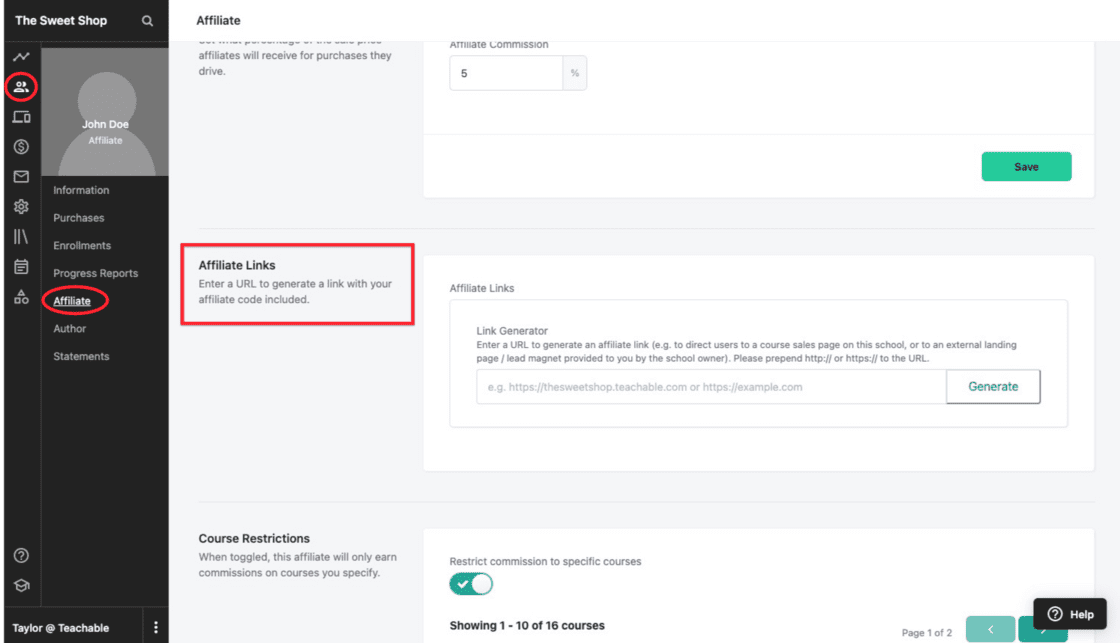
Affiliate marketing programs have you pay bloggers and other content creators to mention or advertise your courses. If they bring students to your classes, you pay them a commission for each sale you make. It is a great and low-cost way to advertise your classes across the web since you don’t have to pay anything if the affiliate marketers don’t produce results.

33. Translate your new course

Translating new courses into other languages aside from English is a great way to expand them into other markets. The most popular languages include Chinese, French, Russian, and Spanish. However, note that you’ll have to spend a good amount of money to get excellent translation services for your classes.

34. Record a Google Hangout presentation

Google Hangouts allows you to create content like video or slide-based presentations. These are great opportunities to showcase your educational skills or host a “trial” class, such as a module from one of your recently released courses. You can share these presentations with your friends or professional peers and even open them up to the public.

lady holding flowers

How to promote online classes on social media

Aside from the above effective marketing tactics, you can and should leverage social media marketing strategies to advertise your courses. Lots of online advertising happens on social media platforms since billions of people collectively use those platforms daily.

35. Update your social media profiles

For starters, you should make sure each social media profile is updated across the web. Ensure that each profile has your new courses listed clearly with functional links to direct visitors to them.

36. Facebook ads

Next, consider leveraging Facebook ads to bring people who know you on social media to your course content. Facebook ads can be static images or videos, but video ads are much more effective than image-based ads in most cases.

37. Facebook groups

Facebook groups are online social networks you can jump into to promote recently released classes. You should try to join Facebook groups for:

  • Your local area
  • Other content creators
  • Students and teachers in your industry, especially if it’s technical

38. LinkedIn groups

By the same token, LinkedIn groups represent ways to network with others in your field or with students who might be interested in what your classes have to offer. Be sure to join these groups and interact with others in them regularly so you can build a positive reputation and have many opportunities to advertise your classes to prospective students.

person filming tiktok

39. Purchase Social Media Posts

Sites such as Fiverr allow you to purchase social media posts from influencers. Often costing just a few dollars each, these can help you spread the announcement of a new online course’s launch far and wide in a few days.

For longer-term advertising purposes, consider working with an influencer directly, who you’ll pay to promote your classes on their social media page.

40. Build a TikTok audience

TikTok isn’t going away anytime soon! If you want to reach younger students, it might be worthwhile to create a TikTok profile, start creating compelling content to promote your business, and build an audience on that platform.

41. Instagram Reels promotions

Don’t forget Instagram, arguably the most important social media platform for advertising. Instagram Reels video content, in particular, is excellent for highlighting your classes, showcasing a few small lessons or nuggets of information, and building intrigue about your course offerings.

Putting it together

Marketing online courses means leveraging multiple promotional channels to get the word out about your classes to as many people as possible. With the right preparation and overarching strategies, however, your online classes will draw people to them faster than you think, and your career as an online educator will blossom in no time.

Of course, a platform like Teachable can help you reach your goals effectively as well.

FAQS

How do you successfully market online courses?

Once you create an online course, it’s easy to get overwhelmed by employing too many tactics to get course sales. That’s why we recommend that course creators start with two or three tactics and focus their energy most on them. In this article, we cover organic search, email, paid, social media, and video marketing strategies.

How do you promote a course on social media?

Social media is one of the easiest ways to reach out and engage people who may have a genuine interest in your product. You can drive traffic to course platforms via Pinterest, Instagram, Facebook, Twitter, YouTube, and more. Many social media platforms offer business profiles that support your marketing efforts.

What is a UGC Creator & Should You Become One in 2024

Software Stack Editor · June 19, 2023 ·

In the creator world, buzzwords and acronyms abound. And while not every one is relevant to you, UGC might be one to pay attention to. First off, what does UGC stand for? Simply put, UGC is an acronym for user-generated content and has been a tried-and-true marketing tactic for brands for years. Brands rely on this user-supplied content as a way to garner social proof, promote their product or service, and market themselves.

However, gathering authentic UGC—and lots of it—can be difficult, especially if you’re a newer brand. This is where UGC creators come in. UGC creators help brands to develop an entire library of user-generated content that doesn’t feel pushy or promotional and resonates well with each brand’s target audience.

In this post, you’ll learn more about what exactly a UGC creator is, what a UGC creator does, and how you can become one to bring in even more income.

{{tableofcontents-component=”/blog-shortcodes/table-of-contents”}}

What is UGC? 

UGC or user-generated content (otherwise known as consumer-generated content) is original and authentic content created by customers about a brand or a product at no cost to the brand. It can be a short-form video like a TikTok or Instagram Reel, an Instagram post, a review, or a testimonial. 

Originally, UGC was organic content that didn’t cost a brand anything. It was out of the brand’s hands what people say about their product and how they showcase it. However once brands noticed how successful their customer creative efforts were, brands started to use paid UGC, meaning they pay professional UGC creators to create UGC for their products. 

What is a UGC creator?

A UGC creator is a content creator who focuses specifically on creating user-generated content for brands. While this is paid content and not organic UGC, it still follows the same formula that makes organic UGC work so well.

User-generated content is so popular because it appeals to the social proof side of marketing psychology. Social proof is a phenomenon that dictates that consumers tend to copy the actions of others in order to emulate their experiences. For example, if someone sees a TikTok video of a woman with great skin sharing a skincare product she loves, they’re going to be much more likely to purchase that product than if they saw an ad directly from the brand talking about the product features and benefits.

This is where UGC creators come in. They are paid to create that content—the type that entices regular everyday consumers to make a purchase because they see other regular everyday consumers use it and enjoy it.

UGC creators vs. content creators

A content creator is a professional who creates content for brands for a living. They might create things like blog content, graphics, videos, ebooks, online courses, and more. You can learn more about what a content creator is and how it differs from an influencer in this blog post.

Content creators differ from UGC creators as UGC creators tend to make this type of content on the side. They’re regular social media users rather than professional creators.

UGC content creators vs. influencers

Influencers focus on building up their audiences. They also work with brands for paid promotional content, but they’re typically sharing the content on their own social media sites rather than sending it to the brand for their content platforms.

Influencers must have a large audience for them to appeal to brands. UGC creators don’t need any type of audience—they just need to be able to create good content for the brands to use.

How to become a UGC content creator

If UGC content creation sounds like something that might be right up your alley, let’s walk through a few steps you can take to become a UGC creator all on your own.

1. Choose your niche

This tip is the same across the board, no matter what type of content creation business you find yourself getting into. Niching down helps you attract more of the businesses that you actually want to work with. Plus, then you have a portfolio filled with content that looks like what they’d probably be looking for. Choose a niche that you actually enjoy and are passionate about. For example, you might focus more on makeup or skincare products. You might want to work with home and gardening brands. Or you could choose to create content for cooking companies.

It’s not necessary to completely box yourself in—feel free to take any kind of work that you think seems interesting. But you don’t want to accept projects just for the sake of it to realize you have zero inspiration down the road.

2. Get your filming setup together

UGC content can consist of a number of things—case studies, graphics, photos, and videos—but one of the most common types that brands hire creators for is video content.

This means that once you’ve decided what types of businesses you’d like to work with, it’s time to get your filming setup together. You’ll need the right tools to record and edit your footage as well as a nice, bright area you can use to film.

You can simply use your smartphone to record your video footage, but other tools you might want to acquire include:

  • Ring light or other lighting additions to supplement more light for your videos
  • Lavalier mic to catch your voice and other sounds (like ASMR) while you record
  • Backdrops to help provide different looks and feels for each video
  • Props to use throughout your video content
  • Editing software (or you can use the TikTok app) to finalize your video content

3. Create your starter portfolio

Once you’ve got your filming setup ready to go, it’s time to create sample content to build up a portfolio. A lot of UGC creators will grab products they already have and use those to create examples of the types of UGC content they could create for other brands.

Put together several videos—ideally using products within the niche you’re hoping to work in—and add them to your portfolio. You can create your portfolio using a tool like Canva and then easily share it with prospective brands.

4. Network with brands you want to work with

The next step is to begin outreach. Create a list of brands you’d be interested in working with and locate their social media handles, websites, and any other potential contact information.

Before you start your outreach, create an email address and social media handles specific to your new UGC creation business. Use these new profiles to follow all of the brands on your list. You can also start to network with other creators in the community.

Then, start interacting with all of the brands you’d like to work with as well as any marketers or founders you can find for each one. Formulate your pitch and share it with them either on the social media platform you’ve been using or via email.

When you first start, finding work might be a slow process, but don’t be discouraged. Keep pitching, and eventually, you’ll start seeing some deals come in.

Pros and cons of producing user-generated content 

Like with any other creative endeavor, there are pros and cons to creating user-generated content.

Pro: Easy to produce

User-generated content is fairly easy to create. Even if you don’t have any video creation experience or fancy filming equipment, you can learn how to create UGC with your phone alone and a little bit of practice. You don’t need a studio or professional background–you can easily film your content in the comfort of your home or any other spot (coffee shop, beach, friend’s house, etc).  

Because of its casual nature, UGC also doesn’t have to be highly produced, so the editing should be minimal and mimic regular content from people you see on social media platforms. 

Con: It might take trial and error to figure out what works 

While it’s pretty easy to get started with UGC, and it requires minimal skills and effort to produce, it can take time to learn the best tactics for creating engaging content. When you create UGC, you want to show the brand that you know how to hook the viewer and showcase the best side of the product you’re creating content about. 

That might require some trial and error and studying the best UGC examples to get it right. You might want to invest in a UGC course from other content creators to help you understand the specifics and strategies better, or simply try and test out different tactics yourself and learn from your experience. 

Pro: Great earning potential 

Probably one of the biggest pros of being a UGC creator is the great earning potential. While as a beginner, you might start off charging only $50 per piece of content, you can easily increase your rates with experience. The sky is the limit when it comes to how much money you can make doing UGC for brands, and it makes it a very lucrative creative endeavor. 

Con: You need to always be on top of trends 

It’s no secret that success on social media platforms like TikTok greatly depends on understanding trends. Those trends change more rapidly than ever, which means that to create engaging, trending content people want to see, you’ll have to be quick at recognizing trends and jumping on them at the right moment to maximize the gains. 

While it might not be a con for some, it might be a huge disadvantage for others. So, before you jump into being a UGC creator, that’s something worth thinking about and considering how to navigate to get the best results for your clients. 

Top UGC platforms for creators

There are also a number of platforms that UGC creators can join to help them find work. Social media in itself can be powerful, but here are a few platforms to pay attention to.

1. Join Brands

ugc platforms for content creators

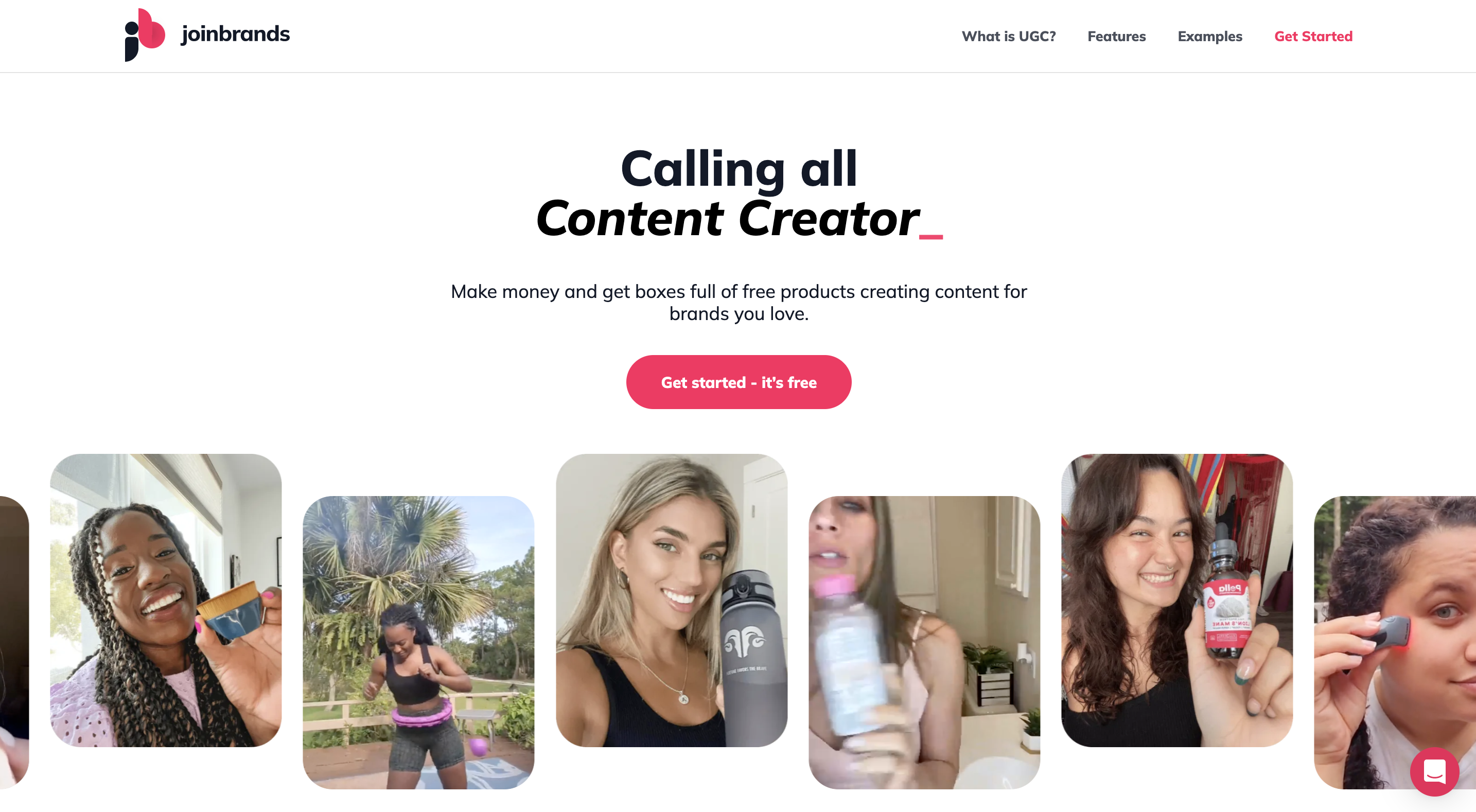
Join Brands has a creator platform that interested creators can join. Rates start at $60 per video and $15 per photo—plus free product to use when creating the content. Easily sign up to be a creator with Join Brands and start getting work with big brands in your preferred niche.

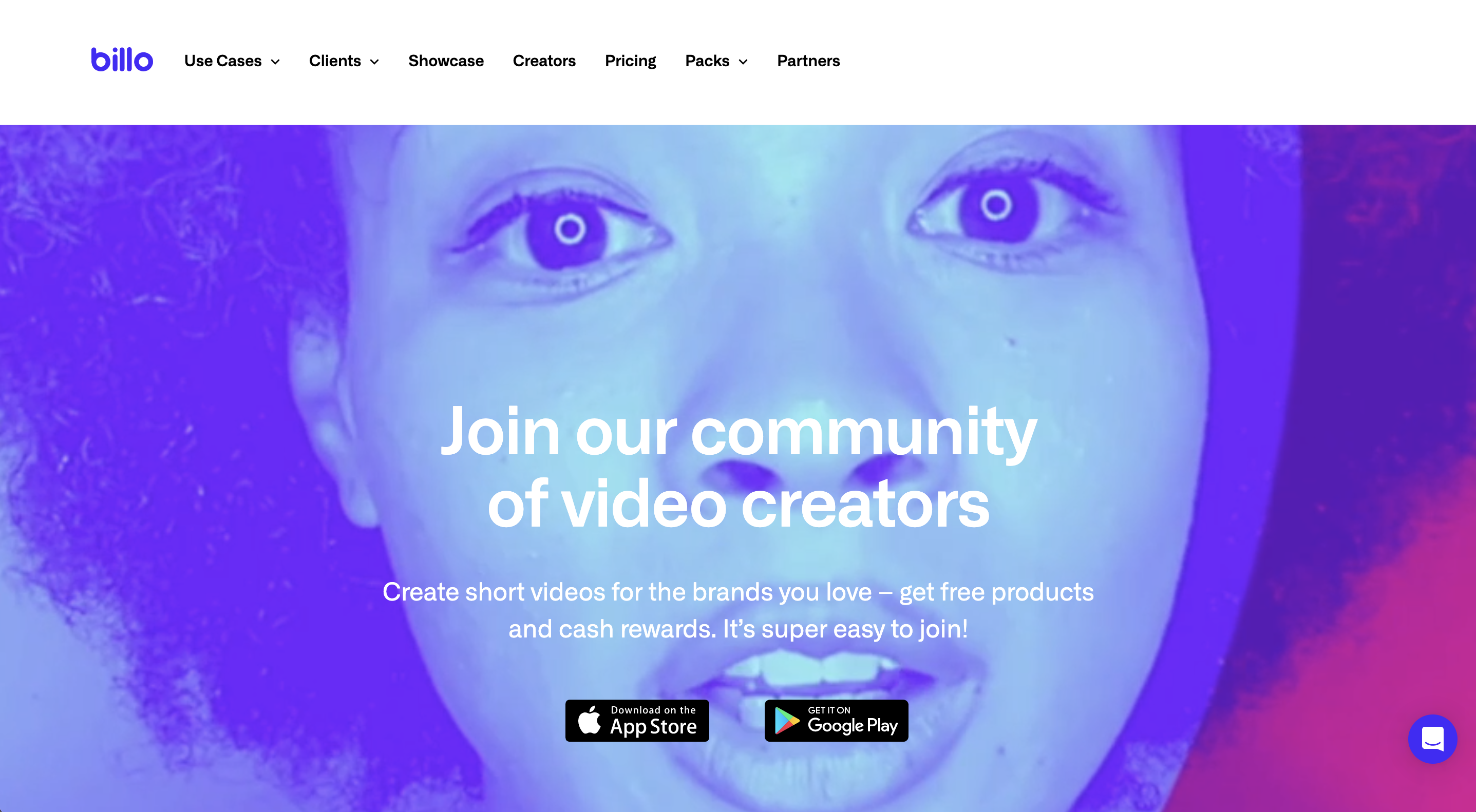
2. Billo

ugc content creators

Billo is an app for video UGC creators to find clients and get paid. There are two tiers: Beginner Creator and PRO Creator. Beginners can have a basic film setup and is the perfect starting place while PRO creators are required to have a full film setup and professional knowledge of product video creation. This app is for US-based creators only.

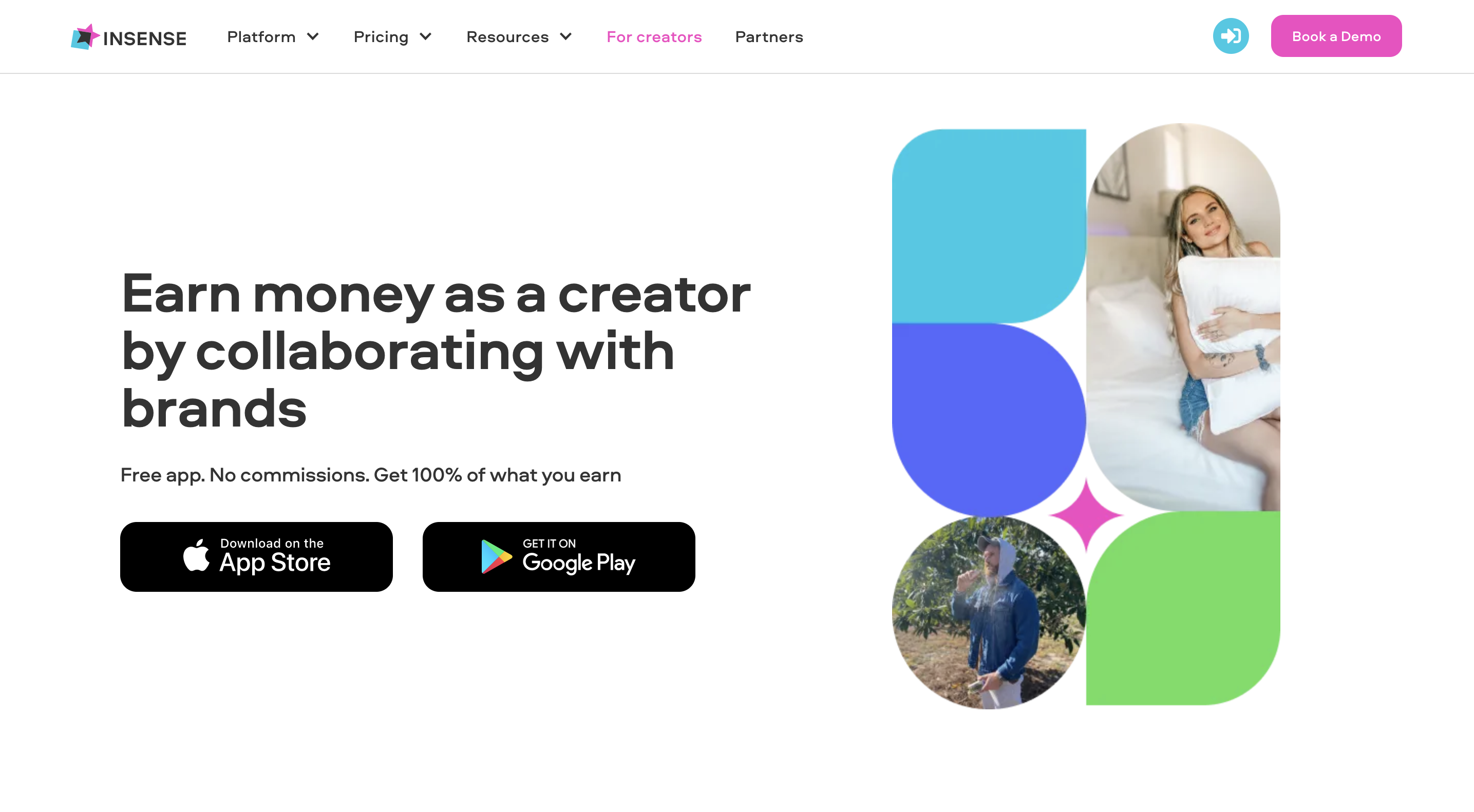
3. Insense

ugc creators

Insense is another app made to connect creators and brands. The cost for brands starts at $50 per video, so the payout per video is somewhere in that ballpark for creators. It’s easy to apply and start finding brands to work with. Some creators working with this platform have made thousands of dollars creating UGC.

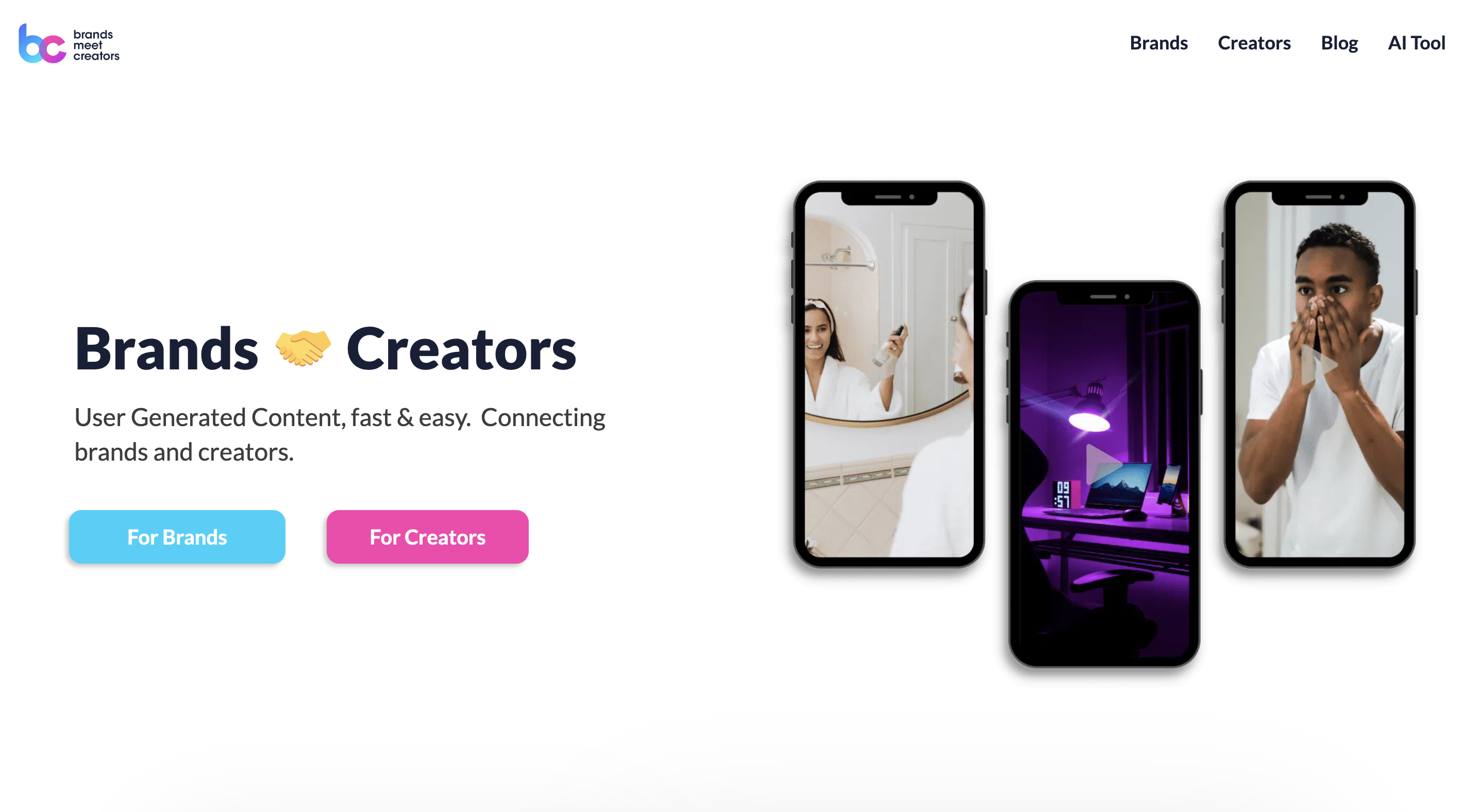
4. Brands Meet Creators

best platforms for ugc creators

Brands Meet Creators is essentially like a job board to easily connect brands and creators. Creators can sign up to receive emails of opportunities or check out the board of available creator jobs. You can apply to jobs that interest you and brands get to sift through the applications to choose the best fit.

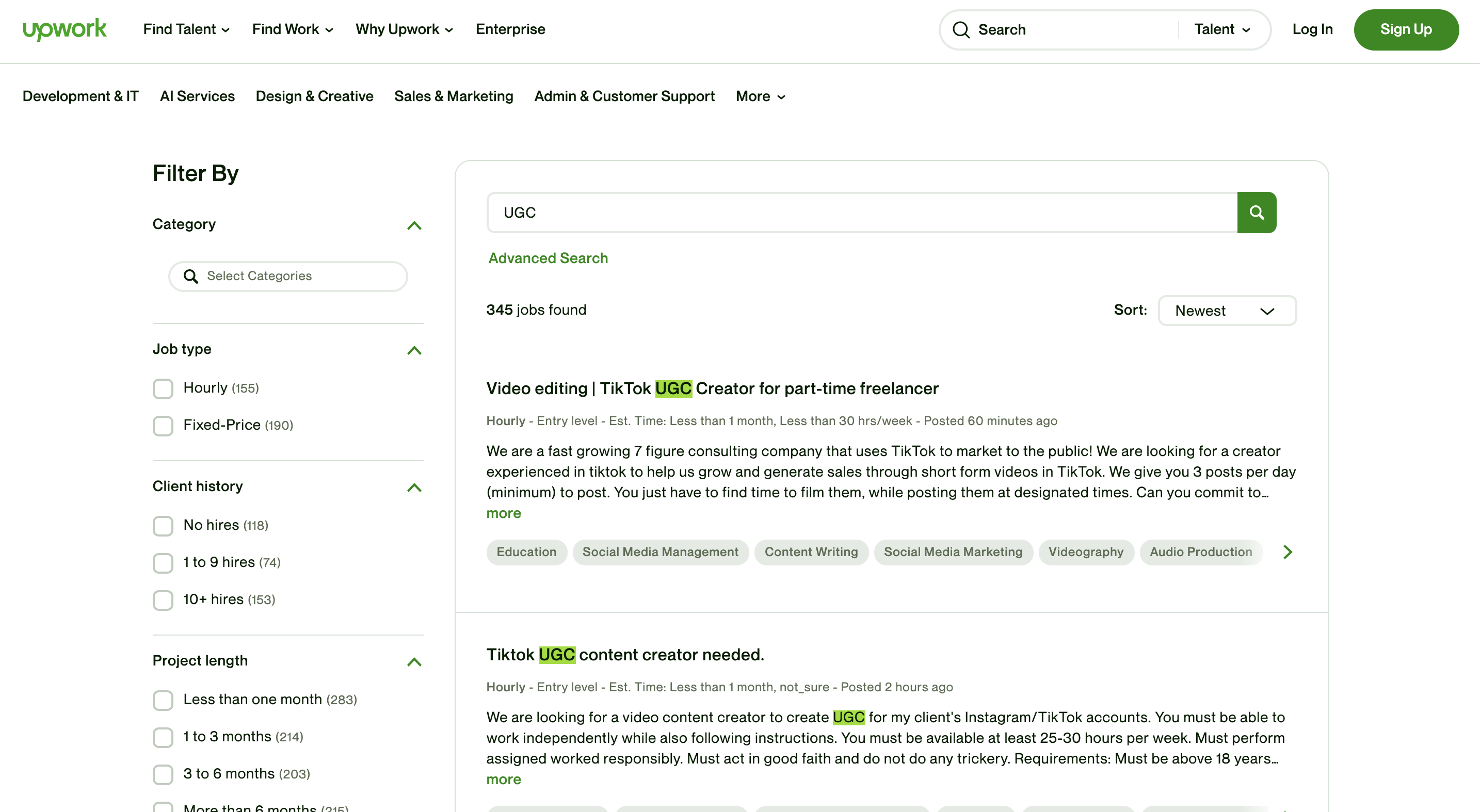
5. Upwork

ugc creation

Upwork is a creator marketplace for all sorts of creative jobs—writing, video editing, graphic design, virtual assisting, and so much more. But the platform also has plenty of UGC creator jobs to check out as well. Look through the gigs to see if any interest you and start applying.

6. Target Creator Program

Target Creator Program is an affiliate program where creators earn commission on sales they attract by creating content. The commission rates are up to 8%, and anyone is free to apply (however, not everyone will be accepted). 

7. Trend 

Trend is a platform that connects brands who need UGC content with creators who want to get paid for creating UGC content for brands. They have an iOS app where you can browse gigs (they add them daily), apply, and submit content. One advantage of Trend is that they provide their creators with free products and monetary payment on successful brand deals. 

8. Tribe

Tribe is another great platform to find UGC gigs in one place. You need 3,000 followers to start making money. You pitch brands your creative ideas for Instagram and TikTok campaigns, which allows you to really tap into your creativity and show off your skills. 

9. Influee

Influee is a global agency that connects brands and UGC creators. They have an app where you can browse and apply for gigs with brands, which is super easy and convenient. 

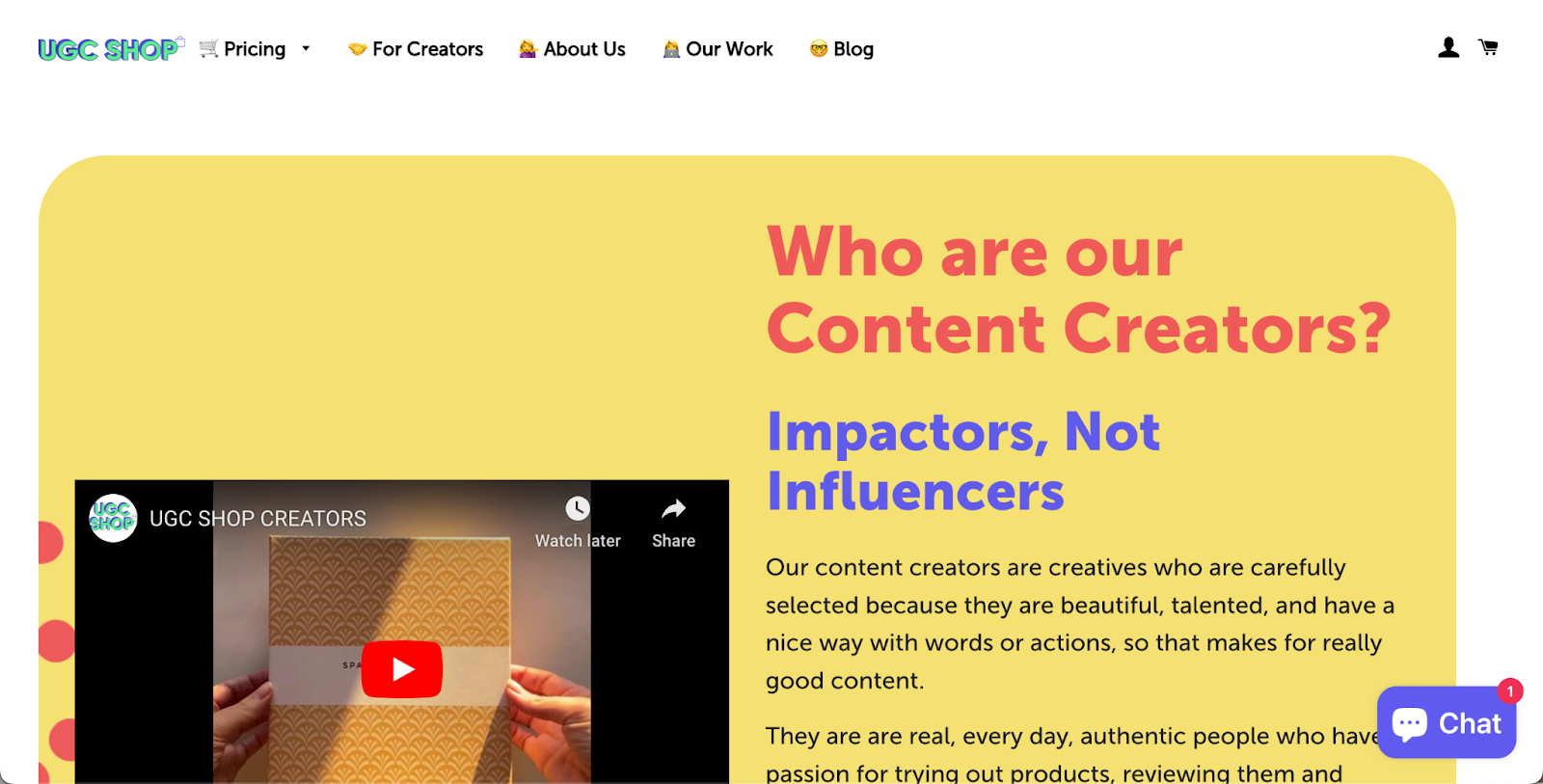
10. UGC Shop

UGC Shop is a smaller global agency and online platform that works with brands and UGC creators. Anyone can apply, and you don’t have to live in the United States to be eligible to start working with brands, receive free products, and get paid. 

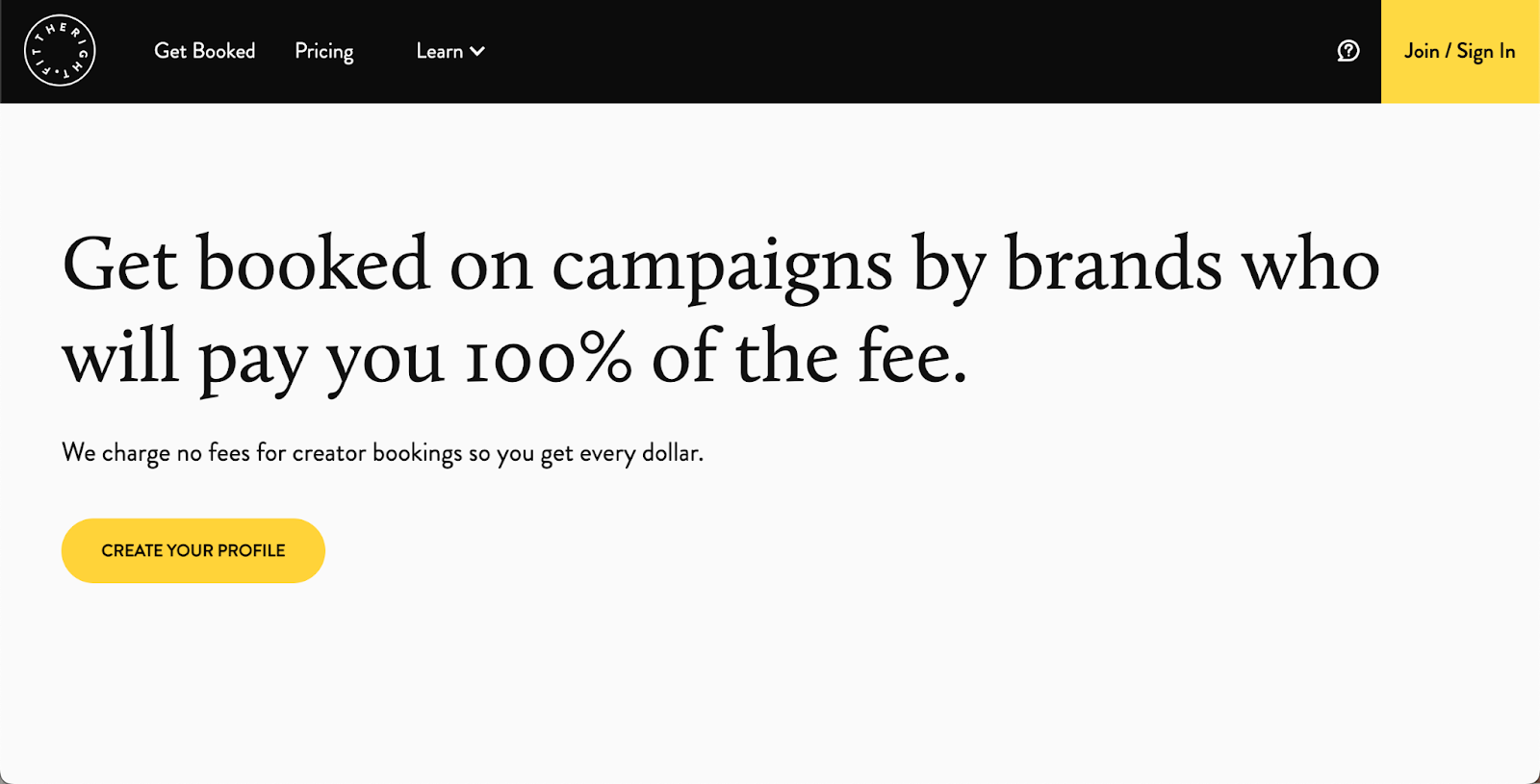
11. The Right Fit

The Right Fit is a platform where you can create your creator profile, browse available brand partnerships, and then apply for jobs that fit your experience and personal brand. You can manage all the applications, collabs, and content directly on their app, which is quick and convenient. 

UGC Success Cases 

To give you a better idea of what being a UGC creator is like, let’s look at a few successful UGC creators. 

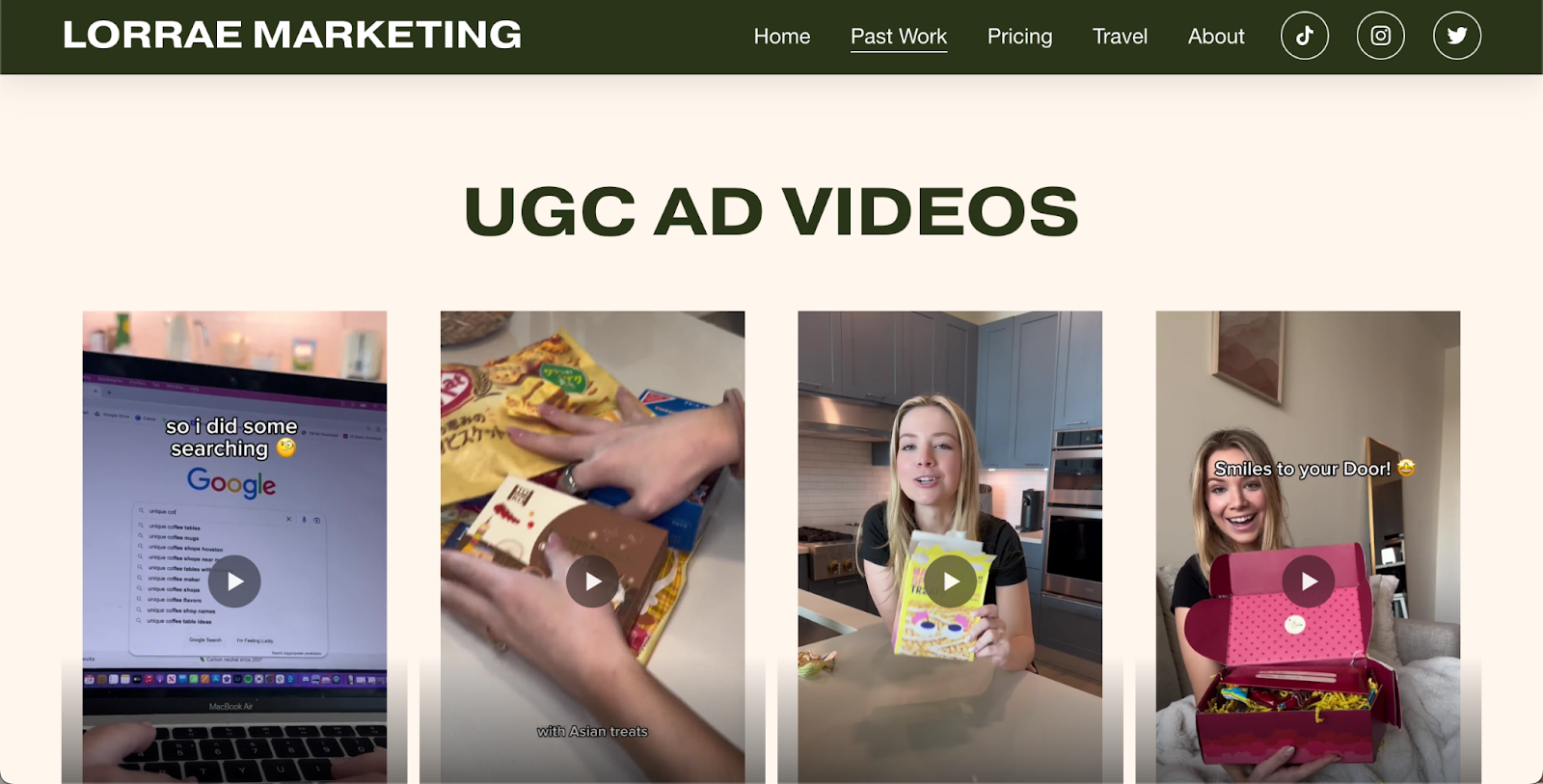
Emma Lorrae 

Emma is a full time UGC content creator and strategist. She has worked with a variety of brands to help them create engaging UGC. On her website, she has portfolio that showcases the high quality videos she created, and brands she collaborated with, which include Girl Code, Waterdrop and more. She makes around $7-8k/month from UGC partnerships.

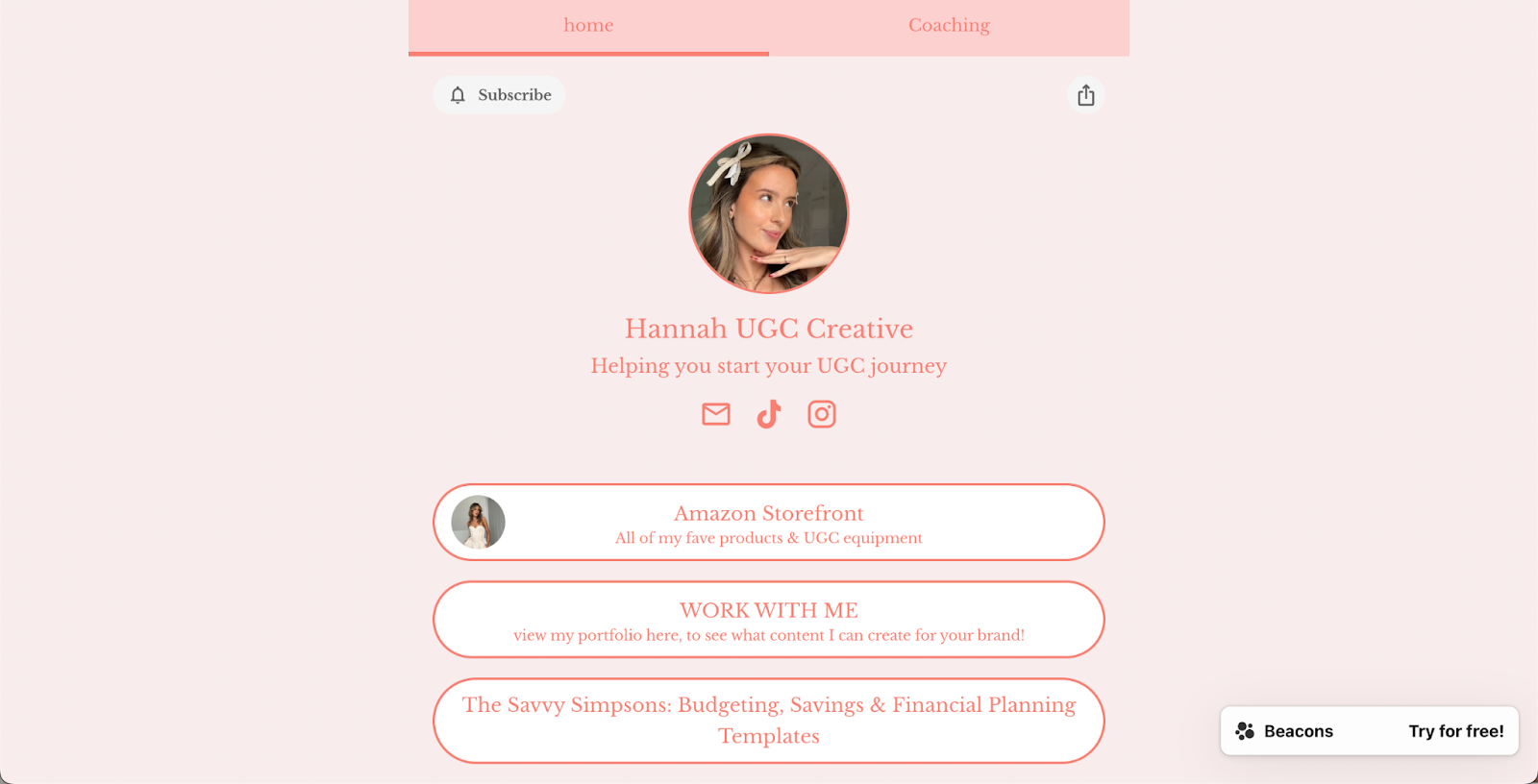
Hannah Jefferson 

Hannah is a full time UGC content creator and mentor from the UK. She creates beautiful aesthetic videos for her own platfrom and for brands. She mainful focuses on hair and beauty, wellness, jerwelry and fashion industries and has worked with brands like Motel, Wild, ghd London and more. 

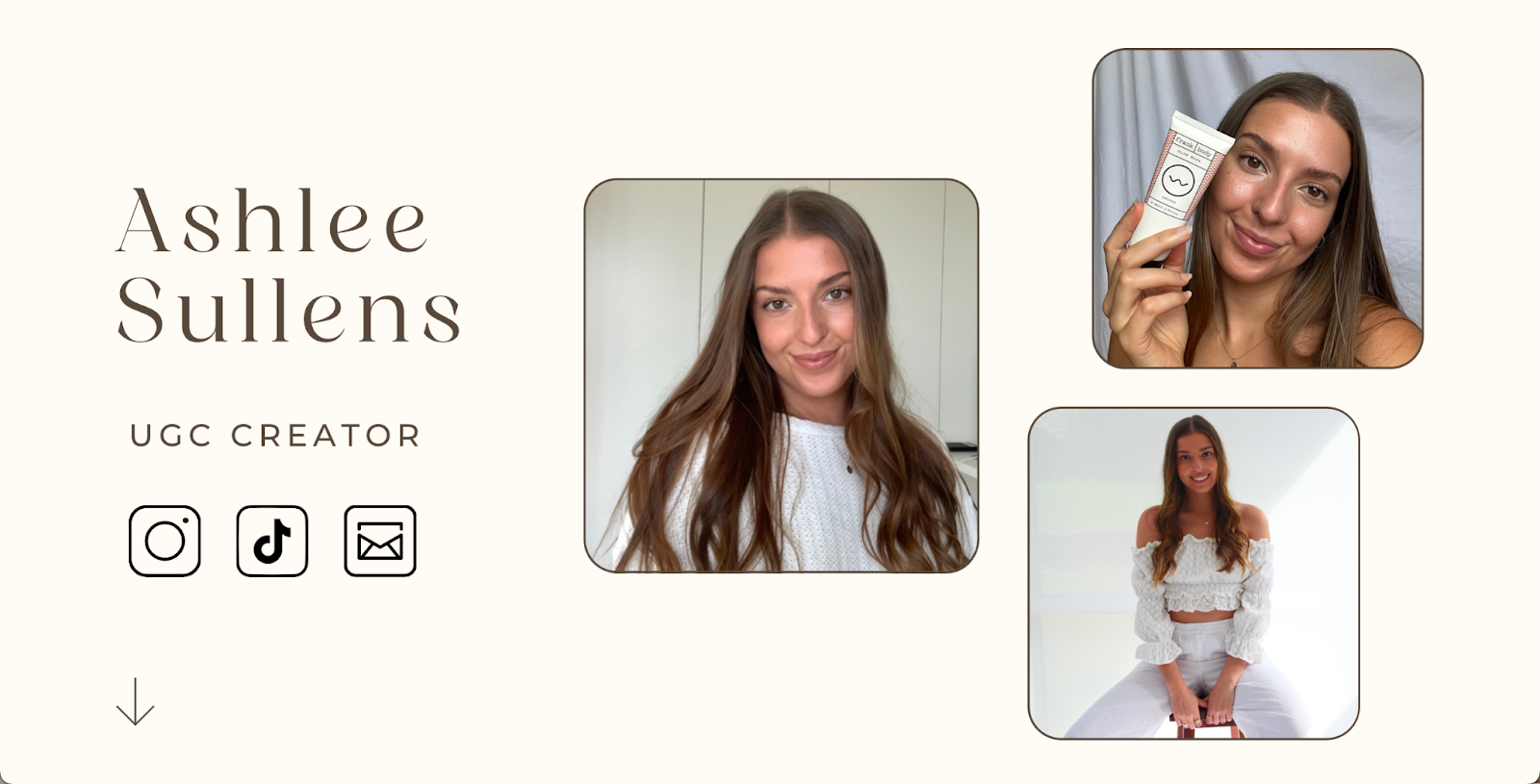
Ashlee Sulens

Ashlee is a full-time UGC content creator from Australia. She creates content about hair, beauty, wellness, food, and lifestyle and has worked with brands like Wild, Esmi, Afterpay, and more. Her rates start at $150 AUD for a video, but she offers a variety of different packages for brands to choose from. 

FAQs

Now, let’s answer some of the most frequently asked questions people have. 

Do UGC creators make money?

Yes! UGC creators can make a good part-time or even full-time income. How much UGC creators will make can vary greatly due to their niche, following, and results. If you can demonstrate to the brand that you can create content that generates engagement, you can charge much more than other creators in your niche who have the same following. 

One UGC creator on TikTok shares that in 2023, she made between $7-8k each month from UGC content alone. Another UGC creator on TikTok shared that, on average, she makes around $15k per month by creating UGC content for brands. As you can see, the sky is the limit here. 

How much should I charge as a UGC creator?

Your rates will depend on your experience and the size of your portfolio. Minimum rates might start out at $50 for a single piece of content and can go up to $500 or more. One UGC creator and educator on TikTok shares that if you’re a beginner, your rates should be $150 for a video and $20-$30 for a photo. She also suggests offering bulk discounts to encourage brands to book content packages with you. 

How do I get UGC for my online course?

The easiest way to get UGC for your online course is to tap into your past and current student network. Chances are that some of them are creating content, or would be interested in creating content. So, reach out to them and ask if they’d be interested in a collaboration. 

You can incentivize your students to create UGC around your course by running giveaways, offering dicounts for their UGC they share online, or running contest with prizes. Make it fun and engaging, so that your students are more willing to participate. 

Is user-generated content legal?

Yes. But, before using UGC, you always have to get explicit permission from the creator to use their content. This is very important for each piece of content every time you want to post a UGC. The same applies if you create UGC and the brand wants to use it–they should always request your permission.

What are the best UGC examples?

Some brands do UGC better than others. ASOS uses hashtag #AsSeenOnMe on Instagram to encourage their customers to share their OOTD (outfit of the day) on their socials wearing ASOS clothing. In 2014, on their website, they launched an As Seen On Me section where they feature outfits they choose from people who used the hashtag on Instagram. 

Another brand that utilized UGC very well is Aerie. When, in 2014, they launched their campaign against retouching models’ pictures, they invited their audience to share their own pictures showing off wearing Aerie clothing with all of their imperfections using hashtag #arieREAL.

‍

Creativity professor Juan Muñoz published his newsletter for 162 weeks in a row. Here’s how his experiments paid off.

Software Stack Editor · April 26, 2023 ·

What if school got learning wrong? Here’s how university creativity professor Juan Muñoz is making more impact as a creator by first becoming a better student.

Jump ahead

In this article

On the first day of class, creativity and innovation professor Juan Muñoz told his students they could turn in their homework any way they wanted.

“It can be written down, it can be in your own handwriting, it can be typed on the computer, it can be a video, it can be a podcast–you can do whatever you want to do. If you want to send a messenger dove with your homework, that’s fine. You don’t have to be confined by a piece of paper or Google Doc,” he instructed.

But even with this freedom, his university students still turned in identical PDFs with the same formatting every single time.

“I was so frustrated,” Juan remembers. “I thought this was the simplest task in the world. How are they going to learn creativity if they can’t even get this done?”

As the pattern continued, Juan wondered if there was a bigger issue at play.

“Students have been programmed for ten, fifteen years in school. They’ve been taught that, whether you’re great or not great, you’ll get a worse grade if you deviate from whatever template that teacher gave you. There’s an intrinsic fear of deviating from the standard path.”

Juan could see that this internalized programming was hurting creativity, and he wanted to change things.

Juan loved teaching, but he felt constricted by university rules. In his free time, he read TechCrunch and other entrepreneurial publications, which gave him the idea to start a business.

At the time, there wasn’t an active entrepreneurship ecosystem in Juan’s home country of Costa Rica, so Juan decided to help get the ball rolling.

“I have a civil engineering degree, and I knew people would think, ‘What does this guy know about business?’ So the first thing I did was I wrote all of my ideas down in a blog and spread them around. I launched my creator career by sharing my ideas online and sharing the things I can do.”

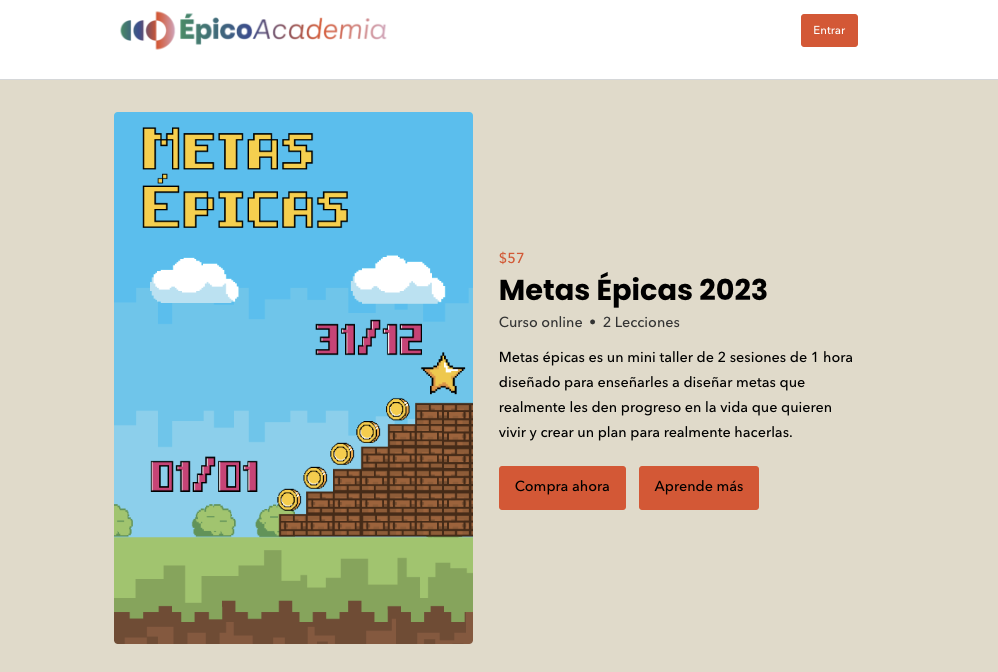
Today, Juan teaches creativity, goal-setting, entrepreneurship, and business through his online learning platform,
Épico Academia
. He offers online courses, a library of free workshops, and a paid weekly email newsletter to help people live more creative and epic lives.

Here’s how experimenting, taking unexpected paths, and continually learning helped Juan build a thriving online business and unlock a holistic approach to entrepreneurship that’s fulfilling and fun.

How to provide content in a way that doesn’t feel like school

With his experience creating courses as a university professor, making content wasn’t a challenge for Juan. He just had to figure out the most impactful way to deliver that content.

“The biggest friction is getting people to consume the content we make,” Juan shares.

“People will buy a course and only a handful will go through it. It feels like school. Even if nobody’s making me do it and I’m really interested, my brain goes back to school mode. There’s a teacher, there are modules, there are classes.”

So Juan started experimenting with other ways he could get his content to his audience.

“What if I try an
email-based course where you receive a cool email every week for a year
? Or TikTok-type content, just 30-second videos. Can I create a course with tons of 30-second videos? I don’t know, maybe. I’ll try it out and see if it works.”

Having the right technology in your corner can make experimenting with different delivery methods and content formats easier. Before, Juan used
Gumroad
to sell his products, but he felt limited because the platform was mainly for PDFs and files.

When he switched to
Podia
, Juan gained access to a wide variety of product types so he could test out different formats and make his lessons more exciting.

“I love how Podia allows me to do basically whatever content I want in whatever order I want. I can make a course that’s just 100, 30-second videos and have people go through them.”

Podia is an all-in-one platform that makes it easy to
sell online courses
,
digital downloads
,
community
,
coaching
, and
webinars
about the topics you love. You can also manage your
email marketing
,
affiliates
, and
website
from one streamlined dashboard. If you have a lot of ideas, Podia can make them happen.
Register for free today.

SIGN UP NOW

Get your free Podia account

Join the 150,000+ creators who use Podia to create websites, sell digital products, and build online communities.

Start free →

One experiment that paid off was a pro-Monday email newsletter

Speaking of experimenting, when Juan tried something different that went against the norm, he ended up creating one of his favorite assets:
The Monday newsletter
.

In the early days of his online business, Juan noticed a trend.

“Every Sunday night and Monday morning, people would post memes about how much they hate Mondays,” Juan says. “I thought, there’s always going to be a Monday. You can’t escape it. So why are you still hung up on this?”

“I started realizing these are the same people that come to me and say, ‘I don’t like my life, I don’t like my job, I want to get better,’ and there was a pattern. I love marketing and branding, and I thought this would be an interesting brand idea because it’s easy to hate Monday. There’s already a club for that, and it’s a big club. But how do you do the opposite?”

Juan started a newsletter all about how much he loved Mondays where he shared one tip, concept, or idea that would help his readers make the most out of their day.

“It attracted a lot of people because people were unhappy with something in their life and I was talking about ways to make their life better. It made people question, ‘Why do I hate Monday?’”

Juan published his Monday newsletter for 162 straight weeks and the
consistency compounded his follower count and impact
. He took a break when his daughter was born, then brought the newsletter back when he had more time during lockdowns.

Today, this experiment-turned-newsletter continues to grow through word-of-mouth referrals, and Juan still loves writing it every week.

To become a better creator, learn as much information as you can about the topics you’re interested in

Not every idea comes together as seamlessly as the Monday newsletter, and Juan found that the best way to get clarity on product and content ideas was to become a student again.

“I’m always mind blown about the fact that we get to live in a world where we can learn from anyone and anyone can learn from us. It’s amazing. If I’m into marbles, I can find someone that’s so much more into marbles that they’ll teach me new things. They can be in Singapore, I might not even know their name, but I can learn from their content.”

To become a successful creator today, learn as much as you can about the topics you love.

“I urge people to consume whatever they’re curious about,” Juan recommends. “Often you can even find free content on social media. And when you consume content, you realize, this is not that deep. This guy is talking about marbles. You don’t have to have a Ph.D. in a subject.”

“There used to be experts,” Juan explains. “There were people that knew everything about one subject because there was only a limited amount of information available. There wasn’t infinite information like we have today, and that information was sequestered somewhere. So there was someone who knew everything about it, and they were the expert. But that’s not the case anymore.”

“There are a lot of people that know a lot, and there are a lot of people that know a little, but there’s always someone that knows less than you. So you can make content for them and still have a big impact.”

Simply put, the more you get out there and learn, the more knowledge you’ll have to share with people around you. If you’re feeling stuck on what or how to teach, try switching roles and becoming a student again to reignite your inspiration.

What if you created things just for the sake of creating them?

One of the most profound lessons Juan learned in his entrepreneurial journey is that there are many different routes people can take to share their passions.

Juan says, “We have these preconceived notions about how things should work. We look online and see how other creators are running their businesses and think that’s exactly how we should run ours too. Instead, get inspired by what others are doing and pick and choose things that work for you. If you go to Podia’s website,
there are dozens of creator profiles
. Read these profiles and you’ll see that there are so many different ways you can do this.”

Creating also shouldn’t be all about reaching a particular outcome, financial milestone, or follower count. Instead, find a balance between Telic and Atelic goals.

“Telic goals are things that have a very fixed outcome that you can measure. Atelic goals are good to do for the sake of doing them. I think people should approach creating with both types of goals in mind,” Juan shares.

“Sure, it would be great to get a million dollars a year out of your course, but if that doesn’t happen, just having
created the course
is good in and of itself. There’s growth aside from the money.
Building an audience
is the same way. If you only focus on the number of subscribers and followers, it’ll be frustrating. But if you focus on creating excellent content every day, just doing that is beneficial to you and to that audience,” Juan reminds.

“If you’re actually helping other people out, then it doesn’t matter if it’s one person or a million.”

Plus, there’s value in your work simply existing in the world.

“If you send out a tweet,
Instagram post
, or video and nobody sees it, it’s still there. Someone can find it eventually. Also, getting likes on a post and helping people through your post are two very different things. I enjoy a lot of things that I don’t double-tap. Just because nobody double-tapped your post or retweeted your tweet doesn’t mean it wasn’t beneficial.”

“Creating is a visceral thing. It’s emotion, it’s vulnerable, it’s very honest,” Juan relates. “It’s a picture of who you are and what you think, and putting that out there and having no one engage with it is horrible.”

“But even if nobody buys it, it’s still valuable. You still learned a lot. You can use that knowledge in consulting or your next job or anywhere. Nobody can take that away from you. That’s soul bound.”

To stay in touch with what really matters, Juan explains how important it is to remember where you came from and celebrate everything you’ve achieved so far.

“I recommend that creators keep journals and think about what you’re doing now through the eyes of yourself five years ago, or ten years ago, or twenty years ago. Ask yourself what you would think about your work now. Because past you would probably think it’s great.”

Finally, Juan reminds creators that the most important thing is getting your work out there. It isn’t about getting record-breaking sales, likes, or clients.

“I think it’s arrogant to assume people won’t want your product. It’s arrogant because you’re making a decision for someone else. Let them make the decision. If they want it, they’ll buy it. If they don’t, they won’t. You just have to make it available to them. Be more mind-blown by the world, learn as much as you can, and make things–other people will make their own decisions.”

“Create your thing and put it out there, Juan says. “You never know what will happen next.”

Personal finance educator Dana Miranda’s first audience wasn’t a fit. But when she made this shift, she started to grow.

Software Stack Editor · April 24, 2023 ·

When Dana Miranda shifted her target audience to provide training and resources for educators and non-profits, she found more alignment and fulfillment in her business.

Jump ahead

In this article

In the two years Dana Miranda worked as a personal finance journalist, she noticed a trend. “Most of the personal finance content out there, most of the advice and education, is from a singular point of view, which is usually white, male, heteronormative, and from a middle-class background.”

“I come from a working-class background,” Dana shares. “I’m a queer woman. And I kept seeing that there was a lack of representation and understanding of the nuances of these different kinds of experiences that people have with money.”

Instead of reproducing the same information that everyone else was sharing, Dana decided to change the narrative.

Today, Dana Miranda is a personal finance educator and the founder of
Healthy Rich
, a platform for inclusive, budget-free financial education. Here’s how Dana built her online business and ensured that her work reached as many people as possible, even if that meant going a nontraditional route.

Have a new business idea you want to try? Join Podia for free and build your website, sell a digital download, offer coaching, and grow an online community. We can’t wait to see what you create!

Just because a monetization strategy is popular doesn’t mean it’s right for your business

Healthy Rich began as a side hobby that Dana ran while working as a freelance writer.

“I started Healthy Rich as a project to tell different personal finance stories. It was just a blog and there was no money coming in. I wasn’t quite sure what monetization would look like, but I knew that eventually, I wanted to grow it into a business.”

“I didn’t want to monetize through advertising and affiliates,” Dana explains. “That’s really common in the personal finance space, and I didn’t like what I had seen on sites that I’d worked for. To make sure we were providing value for the end user, I wanted to take ads out of the equation.”

With ads and affiliates off the table,
selling digital products
was the best revenue option for Healthy Rich. Dana spent months creating personal finance classes for her target audience–individuals in need of financial advice and support–but when launch day arrived, she learned a difficult lesson.

Dana loved the course content she had created. She also enjoyed talking to her students, hearing feedback, and answering questions. But something felt off about selling to her followers.

“I hated the entire launch. I hated the whole sales process of convincing people that they have some pain point and I have the solution–none of it felt right for me,” Dana remembers.

Selling products to individual audience members was not the way forward, which was a big problem. Even though this was Healthy Rich’s monetization plan, she wanted her followers to have access to the information for free. She needed to bring in money but didn’t want that money to come from the pockets of the people she was trying to help.

When creating products for your target market feels wrong, try shifting your audience

To get more perspectives, Dana had conversations with educators and community organizers. From those talks, she realized that there was a huge need for
personal finance curriculum
–and she could be the person to provide it.

“The need for personal finance education is growing,” Dana explains.

“There are a lot of states passing mandates that you have to have a personal finance class to graduate high school, but most of those are unfunded and there’s not a specific educational track for someone to become a personal finance teacher. Educators coming into the space are often just told to teach a personal finance class and don’t feel prepared for it.”

The same issue existed among non-profit workers and those who serve vulnerable populations.

“People who work in a non-profit organization may be helping people in another area of their lives, but it’s all inextricably connected to money. They’re fielding questions about people’s finances that they don’t feel confident answering. I want to help people understand this subject so they can deliver that information with confidence.”

Dana realized that she could bypass selling products to end consumers and instead serve educators and trainers with a much wider audience. Her message could reach more people, her business could earn money, and she could feel good about her impact.

“I like to give content to the people who need it for free as much as possible. Serving community organizations and schools is a way for me to make this education available to the people who need it because individuals are participating in those programs and classes for free,” she shares.

“This opened up a new audience for my business because I was able to empower facilitators and instructors. I can work with both audiences without directly selling classes to each individual person.”

When Dana started to build out her new program for educators, it clicked.

“My first course launch was a good experiment. I’m glad that I learned what I did, but I’m also glad that I learned quickly and moved on to the next chapter.”

Dana needed a place to house all her new offers, and she found
Podia
while researching different online creator platforms.

“I use Podia for my membership,
which is technically a community
, and I’m setting it up as a library of resources for educators. We’re using the community space as a library and also as a community forum for people, just like a brick-and-mortar library would have,” Dana explains.

“I am using the
coaching feature
because I’ll be scheduling consulting calls and virtual training with people. And I plan to do
webinars
with members, so I’m kind of using the gamut.”

In the future, Dana also plans to
build an online course through Podia
. She hopes to make a self-study training option, and having everything in one place makes it easy to grow.

“Podia gives me the flexibility to create what I want. I love it that way.”

Your ideas aren’t limited, and your technology shouldn’t be either.

SIGN UP NOW

Get your free Podia account

Join the 150,000+ creators who use Podia to create websites, sell digital products, and build online communities.

Start free →

To find potential clients, connect on LinkedIn through shared work

To find her first clients in her new target demographic, Dana turned to
social media
. On
LinkedIn
, Dana found that connecting with people about their current projects and achievements was an easy way to start a conversation.

“People like to talk about the work they’re doing. Follow the organizations that you would want to work with and see what they’re up to,” Dana notes.

“It’s been really helpful for me to know the niche that I want to work with, which is educators and nonprofit organizations. I live in Wisconsin, so I’m starting locally with organizations in the community. I can reach out as a fellow community member and say, ‘I care about the work that you’re doing in my community. Let’s talk about how we could work together.’”

By reenvisioning her target audience and the products they need, Dana transformed Healthy Rich into so much more than a blog about personal finance advice. Today, it’s an opportunity to completely change societal conversations around money.

“The way that we talk about money is a problem, and I want to do it differently. I want to provide resources that educators need and also make sure that it’s being taught with a more inclusive and nuanced lens, instead of just the same old budgeting and debt paydown stuff that I was seeing.”

By shifting her target audience from individual people to educators and non-profit workers, Dana stayed true to her values and found a better way to share her knowledge with those who needed it most.

Blaze new trails and avoid comparing your journey to others

Dana reminds creators that “there’s no perfect path for what this career looks like. You have to just experiment and figure out what works for you.”

Part of finding your own path means not comparing yourself to other creators. Instead, Dana recommends looking to the past to see how much you’ve grown.

“Everyone is always at one stage wanting to be at the next stage. What’s really helpful for me is to think about myself five or ten years ago,” she says.

“When I started freelancing, I wanted to be a writer. I started taking on some freelance gigs and blogging, and for my first few years, I was earning very low pay. Whenever I feel frustrated with where I am in my business, I look back at me then and remember what I’ve achieved.”

“I was able to get a full-time job as a staff writer,” she shares. “In the last couple of years, I made six figures freelancing. Now I’m pivoting into a new phase where, instead of my revenue primarily coming from freelance writing, I want it to come from
my business
.

“It’s frustrating figuring out how to make it work, but if you told me twelve years ago that this is the position I would be in, I would not believe that it could happen. I’d be really astonished.”

At the end of the day, taking the leap to follow your creativity is a huge win, and you’ve probably come farther than you realize.

“I think that pursuing this kind of dream is a huge thing to celebrate no matter which stage you’re in.”

We couldn’t agree more. If you’re ready to begin your own creator journey like Dana, Podia can provide the tools to help you get there.
Get your free Podia account
today and have fun blazing new trails.

SIGN UP NOW

Get your free Podia account

Join the 150,000+ creators who use Podia to create websites, sell digital products, and build online communities.

Start free →

34 Low-Cost Business Ideas With High Profit

Software Stack Editor · April 13, 2023 ·

In recent years, more people have started their own businesses. In fact, a report from the Commerce Institute shows that there were about five million new businesses started in 2022. If you’re looking for low-cost business ideas with high-profit potential, you’re in the right place. We’ve compiled a list of 34 opportunities with low startup costs.

Lucrative low-cost businesses to start in 2024

There are many low-cost business ideas that you can start online. We’ve compiled a list of the most profitable options with information on how to begin, startup costs, and earning potential.

1. Sell digital products and downloads

Many Teachable creators earn money by selling digital products and downloads. And if you have something to teach others, you can sell a digital product.

For example, Darnell Brown is a business coach. He’s been using Teachable for years to create digital downloads to help his clients start and grow their businesses.

darnell brown

Tips to get started:

  • Create digital products like ebooks, podcasts, and how-to guides to sell online.
  • Use a platform like Teachable to create and sell digital downloads.
  • After your digital product is ready, promote it on social media, email, and other marketing channels.
  • Over time, create new products to increase your customer base and make passive income.

Startup costs: With Teachable, creating and selling your digital products is easy and affordable. And you can join at no cost, then select from various pricing plans to fit your needs. Whether you’re selling courses, coaching, or digital downloads the no-code platform means you can start now.

How much money can you make: Earning potential for selling digital downloads depends on your products, audience, and topic. Some creators make up to six figures annually.

Take our quiz

Find out which digital product you should create first.

2. Offer copywriting services

Copywriting is one of the best low-cost business ideas with high potential profit because it’s versatile.

Most companies need copywriters to craft landing pages, social media posts, advertising copy, blogs, video scripts, and more. And they also prefer working with freelance writers because they can save on overhead costs.

Tips to get started:

  • Learn grammar and search engine optimization (SEO) best practices.
  • Build writing skills like paying attention to detail and creative thinking.
  • Decide what content you’ll write. Examples include marketing material, websites, emails, and ads.
  • Put together a website and portfolio of your copywriting so you can share it with potential clients.
  • Help clients meet their goals by researching their brand, audience, and marketing trends.

Startup costs: If you have experience copywriting for brands, you can start at no cost. But, if you’re building skills, then a copywriting course usually costs about $300. Creating a portfolio website will cost about $0 to $65 per month.

How much money can you make: Many freelance copywriters charge per word, hour, or project. So your earning potential also depends on the type of content you write.

When it comes to blogs, highly experienced writers charge $100 or more an hour, or anywhere from .25 to $1 per word. If you write 10,000 words per month, you can earn $2,500 to $10,000 monthly.

3. Become a virtual assistant

Because online businesses are booming, the demand for virtual assistants is higher than ever.

Tips to get started:

Consider taking a course to learn virtual assistant skills. Then, create a website to display your services, which usually include:

  • Managing emails
  • Handling social media and blogging
  • Scheduling appointments
  • Making phone calls

Startup costs: Similar to copywriting, startup costs are low for virtual assistants. You’ll likely spend anywhere from a few hundred to a thousand dollars on courses to learn the necessary skill set and create a website to market your services.

How much money can you make: Your income as a virtual assistant can vary depending on your services and experiences. Many virtual assistants charge up to $100 per hour.

4. Host workshops

Like with many other low-cost business ideas with high-profit potential, if you have the knowledge to share, you can host workshops. Workshops might be in-person or online and last anywhere from an hour to a few days.

workshops

Tips to get started:

  • Workshop hosts must be comfortable speaking to and engaging an audience.
  • Decide what kind of workshop you’ll host: online or in-person, seminars, or boot camps. Seminars are shorter and best if you plan to organize and host with little or no help. Meanwhile, boot camps are multi-day workshops and usually include various hosts and speakers.
  • Organize and host a workshop where you’ll teach others how to do something. For example, you might arrange a creative writing workshop if you’re a writer.

Startup costs:

There are various costs to consider when hosting a workshop.

  • Location or online platform cost – A small space runs anywhere from a few hundred dollars to a thousand, depending on how long you use it. You can also host your workshop online using Teachable, which integrates Zoom. The free version covers a 30-minute workshop and a small class size.
  • Audio and visual equipment – Microphones run between $30 and $100, while cameras start at about $500.
  • Printed materials – Print shops usually charge a few cents per page.
  • Refreshments – Depending on the length of your workshop, you may provide snacks and drinks.

How much money can you make: If you only host one workshop per month and charge 30 people $250 per workshop, you can make $90,000 per year.

5. Sell online courses

Online courses are an excellent way to share your knowledge with others from the comfort of your home. With platforms like Teachable, it’s easier than ever to get started with an online course business and generate significant profit. Courses are even one of the top five sources of income for bloggers today.

Tips to get started:

  • Outline what you want to teach. Teachable creators have sold online courses teaching others about various topics, including fitness, houseplant care, and 3D design.
  • Create a course curriculum and record videos of your lessons.
  • Prepare your course using Teachable. You can upload your content, design your course with ready-made templates, set up pricing, and manage your course after it’s published.
  • Scale your business by creating multiple courses over time.

Startup costs: Teachable makes creating and selling courses simple and affordable. Various plans range from $0 to $375 per month.

How much money can you make: It’s possible to earn upwards of $200,000 per year selling online courses. Thousands of Teachable creators earn a comfortable income from online courses. For example, Julia McCoy earned $150,000 from one online course.

{{creatingdigital-component=”/blog-shortcodes/popups”}}

julia mccoy

6. Design and sell low-content books

You can create low-content books in little time and easily sell them online. Low-content books don’t require much writing on your part. They usually have pages that the person buying fills in, similar to workbooks.

Examples of low-content books include:

  • Planners
  • Journals
  • Log books
  • Coloring books

Tips to get started:

  • Choose a niche–a focus for your book. For example, a plant expert might create a gardening journal. Amazon’s search feature offers suggestions based on popular searches, so you can start there.
  • Create your low-content book(s) with templates or DIY on Canva. Then, use a platform like Teachable to upload and sell your digital content. You can also use Amazon to sell hard copies.
  • Increase your income by creating more low-content books over time.

Startup costs: You can create content on Canva and join Teachable at no cost. It’s free to sell on Amazon, but you pay for printing and shipping after you sell a book.

How much money you can make: Low-content books usually sell for $4 to $15. If you sell 300 low-content books per month, you can make up to $4,500. That said, 60% of that usually goes to Amazon for printing and shipping.

7. Start a clothes-flipping business

If you enjoy shopping and are looking for a low-cost business idea, try clothes flipping.

Tips to get started:

  • Buy used clothing items and accessories like jewelry and shoes for a low price at thrift stores, flea markets, yard sales, and online.
  • Wash and spruce up your items before reselling them at a higher price.
  • Sell your items on sites like Poshmark and eBay. You can also create an online shop using a website platform like Shopify, but it’s best to already have an audience to direct to your site.

Startup costs: You can begin clothes flipping at no cost by starting with items you already have. And once you start earning money, you can buy new-to-you items to grow your inventory and increase sales.

How much money can you make: Your earning potential depends on where you find and sell your items and how much time you put into it. The casual thrifters make around $300 per month on average.

More devoted thrifters earn as much as $70,000 to $100,000 dollars per year. This couple earned $12,000 to $15,000 monthly as full-time clothes flippers and sellers.

8. Help students as an online tutor

Do you enjoy teaching and have a subject you’re passionate about? If so, you might want to start an online tutoring business that costs little to nothing to start.

Tips to get started:

  • First, determine what topic you’ll teach. Choose something you’re an expert in. For example, a musician might teach music.
  • Pick a platform to teach on. There are some tutoring marketplaces, but they’ll take a large percentage of your earnings. Another option is using Teachable and Zoom.
  • Create lessons. Some tutoring marketplaces have lesson guidelines, so review the details before committing to one.

Startup costs: If you already have a computer, you should only need noise-canceling headphones and a microphone to get started. This means you can start with less than $100.

How much money can you make: Online tutors can earn $35-$150 per hour. If you tutor for one hour each week, you’ll earn $1,400 to $6,000 monthly.

9. Become a personal trainer

If you’re passionate about fitness and looking for low-cost business ideas with high profit potential, consider becoming a personal trainer.

Tips to get started:

  • Choose a specialty such as strength training, weight loss, or senior fitness.
  • Create exercise plans based on your focus.
  • Start finding clients by sharing your personal training services with your local gym and your network.

Startup costs: This is one of the easiest and most affordable businesses to start because the only investment you’ll need is a personal training certification for less than $100.

How much money can you make: On average, private personal trainers earn up to $70,000 annually. But, running a personal training business can be more lucrative. If you start doing 10 personal training sessions a week at $150 each, you’ll make $1,500 monthly.

10. Illustrate books

Becoming a freelance illustrator is one of the best jobs for artists and costs little to start. While many illustrators attend art school, this is optional.

Tips to get started:

  • Consider what you like to draw. Many illustrators focus on children’s books, but you can also be a product, editorial, or comic book illustrator.
  • Once you know more about what kind of illustrations you want to do, you’ll need to gather the necessary art supplies.
  • Create a website to host your services and portfolio.

Startup costs: Art supplies and tools like Adobe Illustrator will cost anywhere from $200 to $500. A website costs less than $100 monthly.

How much money can you make: Beginner illustrators typically charge $25 to $100 per hour. However, most experienced illustrators charge per project. Ultimately, you should price your services based on how complex each project is and how much time and effort it takes to complete.

You can also package several illustrations into a bundle price. Some illustrators charge anywhere from $500 to $5,000, so don’t be afraid to negotiate higher prices.

11. Offer social media management

Do you enjoy social media, connecting with others, and getting creative? As influencing and social media marketing are rising, so is the demand for social media managers. A recent report shows the market will grow from $17.5 billion in 2022 to $51.8 billion in 2027.

Tips to get started:

  • Learn about SEO, copywriting, and social media trends.
  • Consider what services you’ll offer. Social media management services may include creating strategies and content, publishing posts, and managing engagement.
  • Create a portfolio with sample posts and a media kit. Then, reach out to brands and pitch your services.

Startup costs: Social media managers need a website to share their services and portfolio, which usually costs $0 to $65 monthly.

How much money can you make: Social media managers charge $25 to $250 per hour, depending on experience and services. Like many other online businesses, you can increase your earnings by generating passive income through digital products. Specifically, you might create social media templates that brands can buy.

12. Edit photos

Photo editing is as important as ever, with a high need for visuals to promote businesses, services, and products. While a photography business requires startup money for cameras, lighting, and other equipment, photo editing doesn’t.

Tips to get started:

  • Create a website with a portfolio to show work samples.
  • Work with clients to edit and retouch their existing photos.
  • Help brands review and select images.

Startup costs: A website costs less than $100 monthly, and the popular Adobe Lightroom for editing starts at $9.99 monthly.

How much money can you make: Photo editors can make $40 to more than $100 per hour. On the low end, you can earn $1,600 monthly. On the high end, $4,000 monthly.

13. Help with event planning

Event planning is an excellent low-cost business idea with high profit potential for those with organizational, multi-tasking, and planning skills.

Tips to get started:

  • Set goals for your business and research successful event planning companies. Then use this to create a business plan.
  • Learn about event planning services–organizing meetings, choosing venues, working with vendors, planning event logistics, and coordinating payments.

Startup costs: Event planning startup costs usually only include a website ($0 to $65 monthly). But, you might also hire a professional photographer or videographer to record content from events for your marketing.

How much money can you make: Earning potential depends on what kind of events you plan and where. Private event planners charge between $50 and $150 hourly. You can also earn a commission from event vendors.

14. Develop websites

Website developers create and maintain websites to help companies meet their goals, and they’re in high demand.

Tips to get started:

  • Take an online course to learn how to become a website developer.
  • Create a website to showcase services and testimonials.
  • Most website developers work as freelancers and find clients on freelance platforms. You can also pitch companies via email or LinkedIn.

Startup costs: Web design courses usually cost $100 to $1,000, while a website costs less than $100 monthly.

How much money can you make: The average cost to build a website for a small business ranges from $5,000 to $20,000. However, more complex web development projects cost more.

In your first few years of running a web development business, you can earn $80,000 to $250,000 or more.

15. Plan vacations

If you like traveling and are good at planning, why not earn money by becoming a travel planner?

Tips to get started:

  • Find clients by sharing your services with people you know and through word of mouth.
  • Help clients plan their next vacation by putting together an itinerary.
  • Research and book flights, accommodations, and activities.

Startup costs: Around $0 to 65 monthly for website costs.

How much money can you make: Although travel planners that work for an agency don’t earn a high salary, you have more opportunities running your own business.

If you charge $30 to $100 hourly and work at least 10 hours a week, you’ll earn $1,200 to $4,000 monthly. You can also increase your earning potential by creating passive income with a blog, travel guides, and more.

16. Become a blogger

Learning how to start a blog and make money is how many creators begin their business journey.

Tips to get started:

  • Choose a niche–a focus for your blog. The most profitable blog niches are food, personal finance, lifestyle or parenting, and travel.
  • Make your blog profitable with ads, online courses, affiliate marketing, and more.
  • Consistently publish blog posts about topics your audience wants to read about.

Startup costs: To start a blog, you need a website. This costs $0 to $65 monthly.

How much money can you make: With so many ways to monetize a blog, a blogger’s earning potential is high. For example, Lauren McManus and her business partner have two blogs and make six figures per month.

Bloggers in the most profitable niches earn between $5,000 to $9,000 monthly.

17. Help others by coaching

If you enjoy helping others, consider becoming a life coach. The life coaching industry brought in $1.5 billion in 2022, with an expected annual growth rate of 4.85%.

{{freetoday-component=”/blog-shortcodes/call-to-action”}}

Tips to get started:

  • Choose what type of coaching you want to do. Options include relationship, career, nutrition, and finance coaching.
  • Consider getting a life coaching certificate.
  • Create a website to display your services and start finding clients.

Startup costs: Coaching programs start at about $1,000.

How much money you can make: Freelance life coaches usually charge $75 to $250 per hour.

18. Sell graphic designs

Graphic design is one of the top low-cost business ideas for creatives. There’s ample opportunity for graphic designers because every industry has design needs.

Tips to get started:

  • Combine your art skills with technology to create graphic designs.
  • Build a portfolio of your graphic design projects.
  • Pitch your services to people who might need a graphic designer. You can also use freelance platforms to find clients.

Startup costs: You can make designs using software like Adobe Creative Cloud, which is about $60 per month.

How much money you can make: Graphic designers can charge up to $200 per hour, but usually set rates by the project. For example, you might charge $500-$1,500 for a logo and upwards of $2,500 to $10,000 for a full brand identity package.

19. Upcycle furniture

Another low-cost business idea for creatives is upcycling furniture. Once a popular side hustle, people now find it a lucrative full-time job.

Tips to get started:

  • Gather used furniture from yard sales, thrift stores, and flea markets.
  • Clean and refresh pieces before selling them.
  • Sell your furniture on platforms like OfferUp and Facebook Marketplace. You can also create a website or social media page to list your items.
Startup costs: You can start at no cost by cleaning up and selling items you already have. When you start making money, buy used items and materials for flipping.

How much money you can make: Furniture flippers often make up to $500 per piece. If you upcycle and sell 10 pieces of furniture per month, you can earn $5,000.

20. Become a fashion consultant

Are you passionate about fashion? If so, you could be a fashion consultant and offer clients style advice.

Tips to get started:

  • Define your niche. Fashion consultants often style wardrobes, wedding attire, or jewelry.
  • Connect with potential clients by networking in your community and on social media.

Startup costs: A fashion consultant can start by creating a website for under $100.

How much money you can make: Fashion consultants usually charge an hourly fee of up to $100 or a daily rate of about $1,000.

21. Walk dogs

The dog walking industry has grown in recent years and has an expected growth rate of 11.52% from 2022 to 2030. Dog lovers who enjoy staying active can start their own dog walking business.

Tips to get started:

  • Perform market research to identify your services and rates. Dog walkers often offer home and dog park visits, short and longer walks, and overnight pet sitting.
  • Find clients through networking, word of mouth, and dog-walking apps like Rover.

Startup costs: You can start walking dogs for people you know at no cost.

How much money you can make: Dog walkers usually charge up to $50 per hour.

22. Offer data entry services

If you’re tech-savvy and organized, you could offer data entry services and update online records for companies.

Tips to get started:

  • Learn data entry skills using a platform like Skillshare.
  • Create a website for your services and testimonials.
  • Network and use freelancing platforms to find clients.

Startup costs: You can learn data entry skills for free or take a course starting at a few hundred dollars.

How much money you can make: Freelance data entry clerks charge up to $50 per hour.

23. Become an influencer or digital content creator

Influencers or digital content creators are experts on a specific topic and share their content to earn money.

Tips to get started:

  • Create content in your niche—travel, beauty, wellness, or something else.
  • Choose a platform to get started. Many influencers use YouTube, TikTok, or Instagram. Over time, you might use multiple platforms.
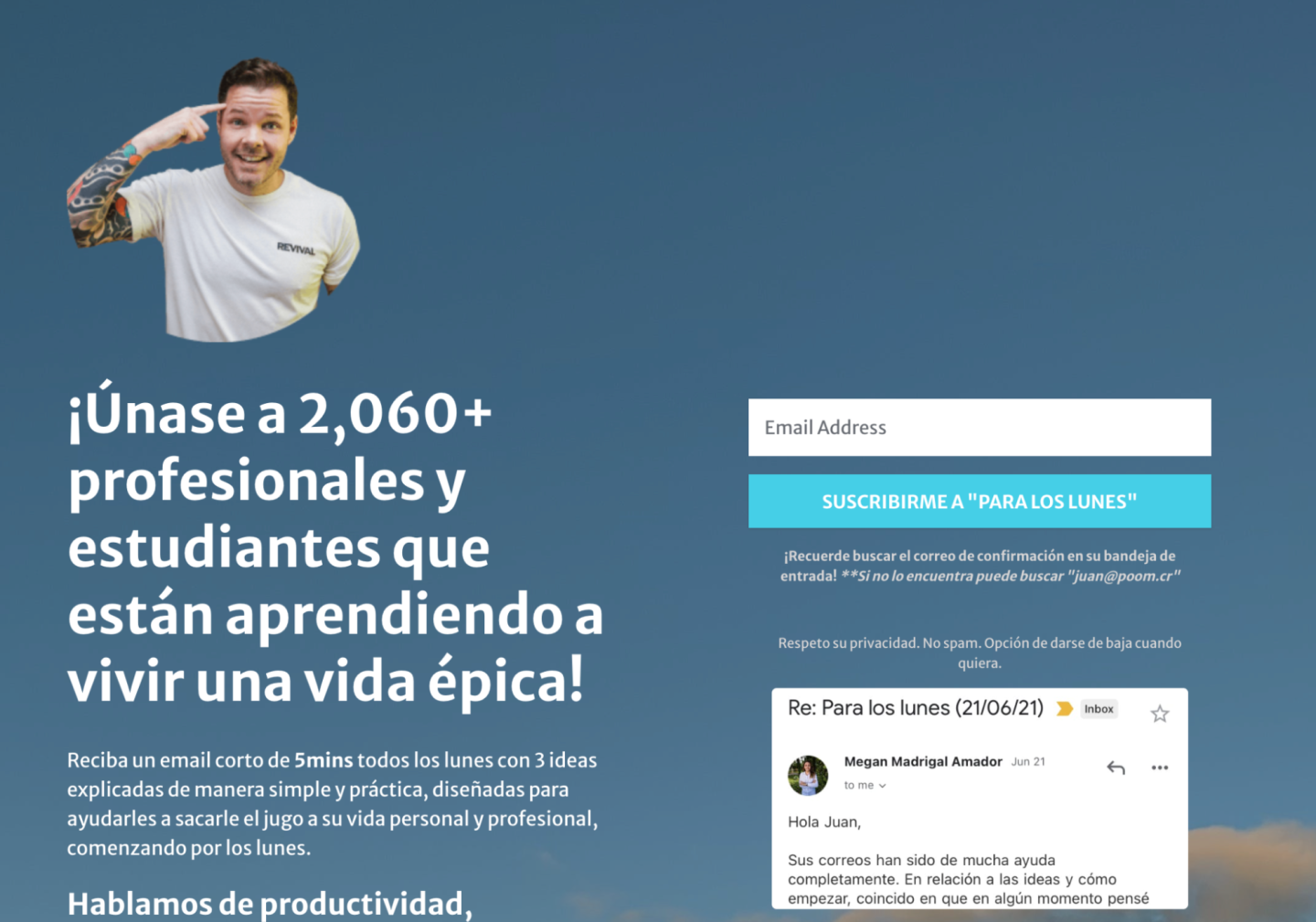
  • Decide how you’ll earn money. Sponsorships, paid aids, and selling merch are common ways to earn money as an influencer.
  • Build a media kit and pitch brands directly to earn sponsorships.
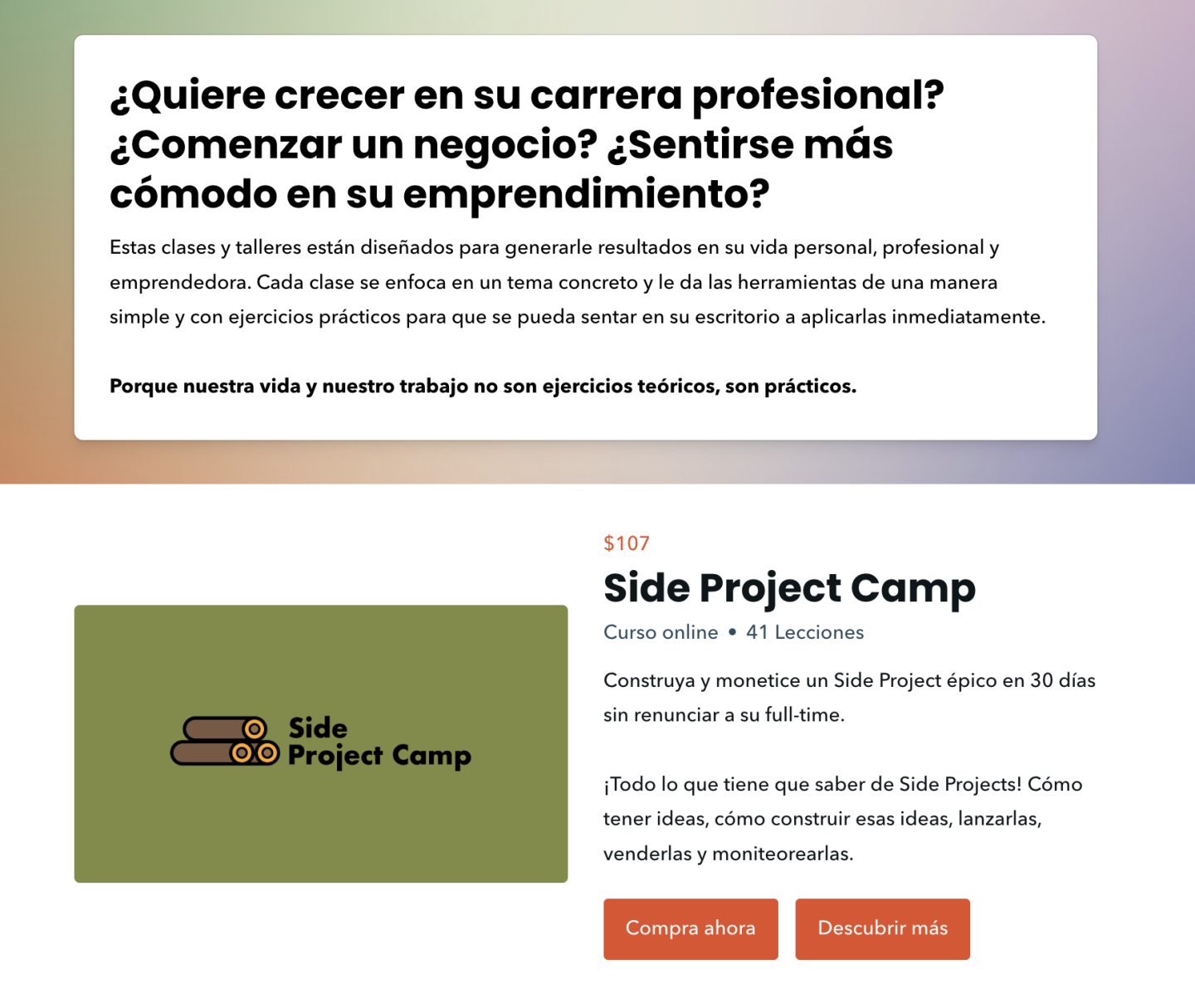
Startup costs: Most influencers don’t pay anything to start.

How much money you can make: Earning potential varies based on different income sources. That said, some influencers report earning a few thousand dollars per post. So, if you share five branded posts per month, you could make $15,000.

24. Edit videos

With many companies relying on video for marketing, video editing jobs are booming. This is the ideal low-cost business idea because it requires little equipment or startup costs.

Tips to get started:

  • Practice editing videos and create a portfolio.
  • Decide what kind of videos you want to edit. While ad videos are common, you can also edit documentaries and music videos.
  • Connect with potential clients and share your work samples and services via your website.

Startup costs: You can create a website with your portfolio and services for less than $100.

How much money you can make: Video editors usually earn $50 to $150 per hour.

25. Become a yoga instructor

The global yoga industry was $105.9 billion in 2022 and expects to hit $177.6 billion by 2028. If becoming a yoga instructor is on your bucket list, now’s a perfect time.

Tips to get started:

  • Decide what style of yoga you want to teach. Common ones include yin, vinyasa, ashtanga, and children’s yoga.
  • Attend a yoga teacher training program.
  • Find a studio to teach at or create your own yoga courses using Teachable, which is how Zabie Yamasaki earns money as a yoga instructor.
online yoga business

Startup costs: Yoga teacher training programs usually cost a few thousand dollars. Most of them offer payment plans.

How much money you can make: Yoga instructors usually charge about $20 per class. If you teach 10 classes to 10 students each, you can earn $2,000 per week.

26. Design print

Another lucrative business idea for creatives is designing print. Print designers use digital software to create visuals for physical items, including

  • Brochures
  • Business cards
  • Labels
  • Merchandise

Tips to get started:

  • Create spec pieces and become familiar with Adobe and other print design software.
  • Add your portfolio and offers to a website.
  • Pitch your services to people who need a print designer. You can also use freelance platforms to find clients.

Startup costs: Adobe Creative Cloud costs about $100 per month. A website costs $0 to $65 to start.

How much money you can make: Print designer rates are similar to graphic designers. You can earn anywhere from $25 to $150 per hour, but it depends on the project.

27. Perform SEO audits

Search engine optimization (SEO) helps companies increase traffic to their sites and get more potential customers to view their products and services. It can be a lucrative way to make money online, especially if you’re familiar with technical SEO.

Tips to get started:

  • Consider taking a course to learn how to perform SEO audits.
  • Create a website to display your packages and testimonials.
  • Connect with your target audience and pitch your services.

Startup costs: There are no costs to get started. You can find various free SEO courses you can take and get your first clients on platforms like Upwork.

How much money you can make: If you know technical SEO, you can charge $1,500 to $5,000 for a basic SEO audit. You can earn $2,000 to $5,000 monthly.

28. Write songs

Being a songwriter is one of the best low-cost business ideas with high profit potential for musicians.

Tips to get started:

  • Consider taking a songwriting course.
  • Practice writing songs. Use this to create your portfolio.
  • Join the International Songwriters Association and freelance platforms and pitch your songs.

Startup costs: You can take songwriting courses for free and create a portfolio for free.

How much money you can make: As a new songwriter, you can charge up to $500 per song and increase this as you gain experience.

29. Sell stock photography

If you have a camera and take good photos, selling stock photography is an easy, low-cost business opportunity.

Tips to get started:

  • Join Shutterstock and other stock photo websites.
  • Create a profile and upload your photos.
  • Consider starting a blog to scale your business and sell pictures on your website.

Startup costs: You can join stock photo sites for free.

How much money you can make: You can usually earn up to $40 for one image.

30. Offer IT support

With an expected growth of 10.36% by 2027, the IT support industry offers excellent earning potential.

Tips to get started:

  • Consider taking a course to learn the necessary skills.
  • Make a website for your business.
  • Work with clients to troubleshoot technical issues and offer support.

Startup costs: IT support courses usually cost $0 to $1,000. You can start your website for free.

How much money you can make: Freelance IT support providers charge an average of $100 per hour.

31. Provide childcare services

If you’re looking for an in-person job and like working with children, childcare offers excellent opportunities.

Tips to get started:

  • Identify your services and the number and age of children you’ll work with.
  • Get CPR and first-aid certified.
  • Gain experience by offering services to people you know.

Startup costs: You can take a CPR and first-aid class for less than $100.

How much money you can make: Earning potential depends on your experience and where you live. Many freelance childcare providers charge up to $40 per hour.

32. Develop apps

App development is one of the fastest-growing industries, offering ample job opportunities.

Tips to get started:

  • Learn about coding and programming.
  • Choose a platform–Android or iOS.
  • Practice your skills and turn an idea into an app. Use this as a work sample.
  • Join freelancing platforms to find clients.

Startup costs: If you take a course, it’ll cost up to $100.

How much money you can make: Most app developers charge $5,000 to $10,000 per project.

33. Become a beauty consultant

Beauty consulting is a great low-cost business idea with high profit potential for skin, hair, or nail experts.

Tips to get started:

  • Do market research to help you choose a focus area and your services.
  • Work with people you know to gain experience and build a portfolio.
  • Find clients through word of mouth and freelance platforms.

Startup costs: Supplies to start can cost up to $500. You can create a portfolio at no cost.

How much money you can make: Beauty consultants can earn up to $50 per hour.

34. Offer content editing and proofreading

Because all industries produce written content, there’s always a need for editors and proofreaders.

Tips to get started:

  • Decide what type of content you want to edit and proofread.
  • Consider taking a course to learn editing and proofreading skills.
  • Create a website for your services and portfolio.
  • Pitch your services to potential clients. You can also use freelance platforms.

Startup costs: There are many free online courses. A website costs $0 to $65 per month.

How much money you can make: You can charge up to $100 per hour.

How to select a low-cost business idea with high profit

With so many low-cost business ideas with high profit potential, there are several ways you can choose the best option:

  • Consider your current skill set
  • Determine your goals
  • Evaluate your budget
  • Check demand
  • Identify your niche market and ideal client

Consider your current skill set

If you choose a job you already have the skill set for, you’ll save on startup costs and time. Make a list of your skills and interests to help you pick your business idea.

Determine your goals

To start a business that aligns with your personal and career goals, use these questions to guide you:

  • What kind of work do you enjoy?
  • How many hours do you want to work per week or month?
  • Do you want most of your work to be online or in-person?
  • How much would you like to earn?
  • Do you want to work alone or have a collaborative job?

After you answer these questions, consider jobs that allow you to meet these goals.

Evaluate your budget

Startup costs for the businesses on this list vary based on these factors:

  • Necessary training
  • Equipment
  • Website and other software

Determine what your budget is to get started. Here are some high-profit job ideas based on various budgets.

Budget of $100:

  • Sell digital products and downloads
  • Start a clothes or furniture flipping business
  • Design and sell low-content books
  • Offer social media management
  • Edit photos
  • Help with event planning
  • Plan vacations
  • Become a blogger or influencer
  • Become a fashion consultant
  • Walk dogs
  • Perform SEO audits
  • Write songs
  • Sell stock photography
  • Provide childcare services
  • Develop apps
  • Offer content editing and proofreading

Budget of $500:

  • Become a virtual assistant
  • Sell online courses
  • Help students as an online tutor
  • Offer copywriting services
  • Illustrate books
  • Develop websites
  • Sell graphic or print design
  • Offer data entry services
  • Become a beauty consultant

Budget of $1,000+:

  • Host workshops
  • Help others by coaching
  • Become a yoga instructor
  • Manage ecommerce stores
  • Offer IT support

Check demand

Once you narrow down business ideas, check their demand to ensure there’s earning potential.

Use social media and other online communities for market research. You can also do keyword research at no cost using Semrush Keyword Magic Tool to see what industries people are searching for.

seo business

Identify your target audience

Consider who you want to work with by thinking about your target audience.

  • What problem does your ideal client or customer have?
  • What results do they want?
  • How can you offer results?
  • What’s your target audience’s budget?
  • What product(s) or service(s) can you offer your ideal client or customer?

Start a profitable business without spending a fortune

With so many low-cost business ideas with high profit potential, there are many ways to earn money without a significant investment.

Thousands of Teachable creators have started lucrative businesses for little to nothing. Start today with a free Teachable account.

How Asha Downes started a natural hair coaching business based on science and self-acceptance

Software Stack Editor · January 25, 2023 ·

Learn how Asha Downes turned her own natural hair journey into an educational coaching business centered on radical gentleness, science, and self-love.

Jump ahead

In this article

From a young age, Asha Downes dreamed of having long hair. She loved playing hairdresser with friends and experimenting with different styles, but she was always told that it was impossible to grow her Afro-textured hair to the long lengths she desired.

Everything changed when Asha was in her late teens. While browsing YouTube, she discovered a creator with her same hair texture who was growing long, natural hair. Despite everyone saying that it couldn’t be done, the creator’s hair was healthy and full. Asha knew that if this creator could do it, she could too.

Asha dove deep into the science behind hair growth. As she learned how to nurture and care for her hair, Asha shared her journey with the world and amassed a significant following on
YouTube
and social media. She launched
1:1 coaching
and
educational products
to better serve her audience, and along the way, learned that growing long hair is much more than achieving a specific style. It’s a radical movement of self-acceptance.

Today, Asha runs
Naturally High Hair,
a company that helps other women grow their natural hair through personalized mentorship and
info-packed workshops
. She won Podia’s 2022 Fall Creator Fellowship, and we were wowed by her gentle, holistic approach to caring for her clients. On top of that, she’s working towards an advanced qualification in trichology to deepen her expertise in her field.

Here’s how Asha turned her passion into a coaching and education business that’s transforming women’s hair — and lives — for the better.

Turning a passion project into a creative business through authenticity

When Asha started learning about natural hair care, she wasn’t alone. Other women around the world were also documenting their natural hair journeys. She recalls, “This was before YouTube was the commercial space it is now, so people were just sharing their tips, recipes, trials, and tribulations.”

“It was paradigm-shifting to see so many Black women talking about this together, even though we’re all in different countries. We’re all going through this experience, and now it has a name: The natural hair movement.”

When Asha decided to share her story publicly, she was drawn to YouTube because that’s where other creators in the space were already spending time. “I was joining them,” she explains. “I didn’t know where I was headed. I just wanted to be part of it.”

On her channel, Asha documented everything as she began to unlearn and relearn how to take care of her natural hair. It was a passion project, and Asha focused on sharing her authentic self. Her audience loved following along, and over the years,
her YouTube channel
and
Instagram account
grew.

“While I was documenting my journey in the very early stages, I wasn’t looking at the views or the subscribers,” she remembers. “It was a place to share my journey with my hair. People found it interesting and started to follow.”

As Asha’s social media reach expanded, her content creation process became more strategic, and she brainstormed future resources to help her viewers.

Meanwhile, Asha was working full-time and living in different countries across Europe. She looked into hair-related jobs for big companies, but none of them felt quite right.

Asha became a creator just to share her personal experience. Her upbeat and transparent videos resonated with people, and she realized that she could have a real impact. She knew that monetization would allow her to invest back into serving her audience and growing her expertise. In her mind, this passion project was transforming from a hobby to a business opportunity, if only she could give it her full attention. Then everything fell into place.

Asha was between jobs visiting the Caribbean when the pandemic forced worldwide lockdowns. With nowhere to go and time on her hands, it felt like a sign to take the plunge.

“There wasn’t an opportunity in front of me to do what I was passionate about. It was during lockdown when I had that time to myself that I decided I would make my own opportunity.”

So Asha got to work.

The power of a super simple launch

Asha initially planned to sell physical haircare products, but a mentor looked at her substantial online presence and suggested that she offer personalized consultations instead. That advice, combined with difficulties sourcing supplies during a global pandemic, sent Asha down the digital path.

Asha’s first product was a 1:1 regimen-building consultation. She wasn’t sure how her audience would respond, so she kept her launch plan simple. She made a Typeform application and
posted the link on Instagram
with an explanation of her coaching services.

“I talked about what I was doing and encouraged people to apply,” she shares. “I got over 200 responses. They were only applying to be coached by me, so they didn’t have to pay, but they gave me their email addresses and shared their hair concerns. Then I responded to them and included a booking link.”

This is a genius way to test an idea without a huge upfront investment. Asha made her product attainable and gauged how much interest she had from her target audience.

Through the applications, she learned what her audience needed in their own words and grew her email list. Those who felt like it was a good match became her first customers, and she proved that her idea had legs before spending countless hours and dollars on a big launch.

Asha started meeting with clients, but she quickly learned that her audience’s needs went deeper than recommending products and creating customized hair regimens.

“I realized this work involves more than just picking products and styles. We’re going to have to do some mindset work.”

“There’s a strong connection between self-acceptance and growing your hair long and healthy for the first time. Your hair can only be preserved and destroyed. It’s a dead fiber. You can’t revive it, so everything you do to your hair, your hair remembers and will affect its future.”

With this understanding in mind, Asha shifted to a more holistic approach
focusing on hair acceptance and self-love
.

“One of the core tenets of my program is this idea of radical gentleness. To be gentle with your hair, you have to accept it. You have to be patient with it and be okay with it looking a certain way. I realized there’s this connection between radical self-acceptance and gentleness and preserving your hair so it can grow longer.”

Listening to her audience helped Asha expand the content of her coaching program and define the shape of her business as a whole. As she continued to work with customers, Asha discovered that one-off coaching was helpful for proactive clients who already had a positive relationship with their hair, but it wasn’t working for clients who needed more accountability.

This inspired her to create a comprehensive coaching program called Longer Lengths™, which provides sustained support over a longer period of time while customers build healthy hair mindsets and habits.

Today, Longer Lengths™ is Asha’s signature coaching offer and the primary way she works with people individually. To accommodate clients at all stages in their hair journey, Asha also offers a
90-minute Grow-Your-’Fro Long Hair Crash Course
.

Asha sells her on-demand crash course as an evergreen product so customers can have a quick win any time, and she takes batches of Longer Lengths™ clients a few times per year.

Having an intentional mix of programs is a great choice for creators who offer coaching. Self-serve products are more affordable and scalable, giving customers an opportunity to interact with you before making a bigger investment. Higher-ticket 1:1 programs are ideal for clients who want more hands-on interaction. By having both, you can reach more people in your target demographic.

Up next, we’ll explore Asha’s approach to overcoming challenges and maintaining a sustainable business aligned with her passion and her audience’s needs.

Asha’s tips for getting out of your own way

Every business has hard moments, but Asha has learned to handle obstacles with confidence. Her secret? Bring in experts, wrangle imposter syndrome, and lean into individuality.

Asking for help is a time-saver

Whether she’s working with mentors to iron out business ideas or bringing on
video editors
and social media consultants, Asha always asks for assistance when she needs it.

Since deciding to go all in on her business, Asha has
worked with several freelancers
, specialists, assistants, and coaches, including a free mentor provided by a UK nonprofit for early-stage entrepreneurs, to keep her on the right track.

“I know I don’t have all the answers.”

She says, “It’s easy for me to see the value in consulting with somebody specialized in marketing or accountability or selling online courses because I understand that, while there are free resources online,
time is worth so much more
.”

“I know I don’t have all the answers… Speaking to an expert helps me cut through the clutter and avoid wasting time. That’s why I place a high value on that kind of insight.”

Need help in your business but don’t know where to start?

Take a page from Asha’s book and see what resources are available through your local chamber of commerce, or look for business and entrepreneurship nonprofits in your area. You can also join the
Podia Creator Community
to get feedback on your work and bounce ideas around with other creators.

Finding proof to face imposter syndrome head on

Everyone feels
imposter syndrome
in their business sometimes, but Asha has reframed this as a positive sign
she’s growing and expanding
. To keep her inner critic at bay, Asha has a few tricks.

First, keep a positive record. “I keep a record of anything good that I do,” Asha elaborates. “I have a list of my accomplishments, so I start programming my mind to focus on positive things in my life.”

To create your own positive record, set up a folder on your computer where you save five-star feedback and kind notes from customers. When you feel down or uncertain, open your file and remember how awesome you are.

Second, become an expert in your subject area. According to Asha, “Another way to battle imposter syndrome is to become really obsessed with the thing you’re offering. I don’t mind being obsessed with something to the point that other people think it’s a bit strange. I have a whole database about hair. I’m constantly reading about hair and hair science.”

Diving into your niche and gaining knowledge can lessen those feelings of uncertainty. You can do this through personal research, practice, or
investing in higher education credentials like Asha
.

Third, be prepared. One of Asha’s most intense experiences with imposter syndrome happened when she sat down to
film a YouTube video
after taking a break for a few months. Flooded with negative thoughts about her content, she felt paralyzed.

When she spoke with her accountability coach about the incident, they realized that a lack of specifics made it hard to film in the moment — the video script wasn’t fully formed, and the purpose was unclear. Once she defined her goals, revisited her video, and made improvements, her feelings of imposter syndrome faded.

Now, Asha asks herself, “How can I prepare the task so that even if I’m experiencing those feelings, I still feel okay? Why am I creating this video, and what do I want people to do after they watch it? Once I have that answer, it’s easier for me to sit through any discomfort I’m feeling.”

Simply put, imposter syndrome is a part of life for creators, but it doesn’t have to be a dealbreaker. As Asha puts it, “The great thing about facing that situation is that you begin to become the kind of person who doesn’t run away in the face of fear.”

Lean into the things that make you unique

Embrace the characteristics that make you stand out as a creator. Having a particular personality trait or skill set can set you apart from the competition and connect you with more customers.

“Apply yourself and go for it,” Asha says. “And then continue applying yourself in other areas to bring your unique twist to whatever you are doing. In my case, I can also provide consultations in German or Spanish.”

Asha also has a research background that gives her content a special scientific spin.

“Don’t focus so much on the specifics of what others in the space are doing. Bring your unique angle and continue to strengthen those things that make you stand out.”

By asking for help, managing imposter syndrome, and sharing your special skills and traits, you’ll be on the way to
creating a business you’re proud of
.

“Follow your passion. I’m really glad to have created this program that involves self-acceptance, empathy, hair science, cosmetic science, accountability, styling, nutrition, and health and to merge all of that into one.”

Want to follow in Asha’s footsteps?
Create your website
,
offer your first coaching product
, or
create a digital product
for your audience, all
for free with Podia
. We can’t wait to see where your passion takes you.

SIGN UP NOW

Get your free Podia account

Join the 150,000+ creators who use Podia to create websites, sell digital products, and build online communities.

Start free →

How Casey Richardson is bringing access to knowledge, community, and capital to Black female entrepreneurs

Software Stack Editor · January 17, 2023 ·

Learn how Casey Richardson used her experience in tech funding to found BLAZE Group and empower a community of Black women entrepreneurs.

Jump ahead

In this article

Two and a half years ago, Casey Ariel Richardson’s life looked a lot different. She lived in the Bay Area and worked for Bank of America, structuring multimillion-dollar loans for tech companies. But she found that she was always the only Black woman on the team — and in over ten years of working in finance, she never saw funding given to a Black business.

“It showed me that not only was the knowledge not getting there, the capital wasn’t getting to my communities,” Casey recalls.

In October 2020, Casey decided to change that.

Armed with her experience in tech funding and business, she quit her 9-to-5 job and founded
BLAZE Group
 — Building Leaders & Accepting Zero Excuses — to provide knowledge, mentorship, and community to the historically underserved community of Black women entrepreneurs.

Fast forward to 2023: BLAZE Group offers online courses through Blaze Knowledge Academy, group coaching programs, an online community, an app, in-person retreats, a semiannual virtual summit, and proprietary research, all led by Casey and her global team.

How did she do it in just two years? A combination of providing resources that meet a specific, underserved need, intentional audience building, and choosing the right tools and team.

From corporate finance professional to game-changing entrepreneur

Before she became a full-time entrepreneur, Casey was a finance professional, structuring multibillion-dollar loans for tech companies. It kept her on the cutting edge of new tech — but she also saw disparity in her team and the businesses they were funding. “I was always the only Black woman on the team. It showed me that my education, my knowledge, my exposure just was not available in my communities.”

Black women are the
fastest-growing group of entrepreneurs
in the United States — but only 3% have “mature” businesses, and 61% self-fund their startup capital. There’s a major disparity in the funding and resources available to Black women entrepreneurs compared to their white male counterparts.

In the summer of 2020, Casey joined the protests against police brutality. She found strength and community that were missing from her day-to-day work. “I felt more alive protesting than I had in all of my years of doing those sexy deals,” she says. “I was rubbing shoulders with the people who were bold enough and courageous enough to lead things that actually matter.”

By October, she was done with the limits of her corporate finance job — not in spite of how successful she was, but because of it. What else could she do with that talent? How could she use her expertise in tech and finance to help other Black women succeed?

“I’m really good inside of these four walls. But I would put money on myself any day to believe that I could take up even more space in the world. So I quit.”

She quit her job, moved to Africa, and started building BLAZE Group, a location-independent business that empowers Black women around the world to do the exact same thing.

BLAZE Group
specifically targets entrepreneurs in their first three years of business building, which Casey calls the “entrepreneurial phase.”

“BLAZE exists to really help them understand how to lead their companies in ways that keep them around. And we do that through tech-enabled solutions, Podia being one of them,” she says.

To serve that audience, Casey had to build genuine relationships with them.

Why you should build an email list (and how to start)

Casey knew that she wanted to create a business intensive online course from the jump — but it was important to build an audience before she launched her first product.

Building an audience is the
top challenge creators face
, and many launch their first product without any marketing or audience building. That can lead to a disappointing launch, a struggle to get their product in front of people, and content that doesn’t resonate with potential customers.

Casey didn’t want that to happen with the launch of BLAZE’s first product. So, she approached her initial audience-building activities with a clear goal: to build an email list.

Why email subscribers over social media followers? “I knew I wanted to be able to get and own relationships,” explains Casey.

When you
own your audience
, you build relationships with them on your own terms, using a platform or channel you control. You don’t have to rely on a social media algorithm to get your content in front of people — you have a scalable, direct line of communication, like an email newsletter or online community.

“On Instagram, you don’t own the relationship. You don’t know what their email address is, and if their handle changes, you better hope you know what the new handle is,” Casey says.

“I wanted to own relationships and be able to get in front of them often to build that brand awareness and trust.”

Casey used two main tactics to
build her email list
:

  1. Reaching out to her existing network

  2. 15-minute discovery calls with her target audience

1. Reaching out to her existing network

There’s a lot of advice out there about how to grow your audience, and many creators think that their first customers will be strangers who found them via social media. But when you start your audience from scratch, you’re missing out on a huge potential source of support: Your friends and family!

Casey reached out to everyone in her circle, letting them know she was starting a newsletter about entrepreneurship and asking if they’d like to subscribe.

“I started by going through my most recent text messages, Instagram DMs, Twitter, Facebook… I set the timer and sent as many as I could in five-minute increments,” she describes.

Many friends and family took Casey up on the offer, and she began building a solid email list leading up to her product launch.

2. 15-minute discovery calls with her target audience

When you get to know your
target audience
 — their goals, challenges, and values — you can create content and products that resonate with them.

And the best way to get to know them is by talking to them.

Casey posted on social media, sharing that she was building a course to help Black women understand business management. “If I can talk to you for 15 minutes and ask questions, let me know,” she added.

She knew that people who set up a call with her were her target audience: Black women interested in entrepreneurship.

Instead of discussing course content or marketing herself, Casey asked questions like, “What keeps you up at night? What is your biggest fear? In one year, where do you wanna be?” She used the time to make the women feel seen and understood. In turn, she learned what was most important to address in her course content.

“Just holding space for that and making them feel safe, that’s a huge part of the magic.”

“By the end of most of those calls, they were like, ‘Can I buy the course now?’” Casey remembers. She was still building the course, but she collected their email addresses and promised to let them know when it launched.

When the course was finally ready, she promoted it to the email list she built with these two tactics. “There was already this anticipation from all of those people. They were ready to enroll.”

The results? 80% of the women she spoke to on those initial calls converted to customers.

More than two years later, Casey still offers free discovery calls as part of her sales process. If potential clients have questions about the Blaze Business Intensive, they can schedule a
free Perfect Fit Call
with Casey.

“On average, it takes five follow-ups to close a deal. I don’t think enough entrepreneurs know that,” says Casey. “I use those calls to really seal the deal.”

Today, BLAZE offers online courses and masterclasses, group coaching programs, an online community, webinars, the
TablexTribe mobile app
, a semiannual virtual summit (a 2022
Webby Awards honoree
for Best in Business and Finance), and proprietary research.

How does she manage all of those things with so much intentionality and care?

Casey has put together an international team that helps her scale different parts of her business, including:

  • A content marketer and blogger based in Nigeria

  • A junior consultant based in London

  • A brand and production manager (her fiancé!) who grew the
    BLAZE Group Instagram
    from 1,300 followers in May 2022 to 70,000+ at the start of 2023

  • An executive assistant in Kenya

  • A research analyst who publishes
    research papers
    across industries, helping BLAZE find new consulting clients

  • A production assistant for the semiannual Blaze Virtual Summit

She doesn’t just hire people to join her team — she hires tools, too.

“I hire tools with a quickness,” Casey laughs. “And I love that because there’s scale.”

An increase in revenue doesn’t always mean your business is scaling, especially if you’re doing more work or spending more money to achieve that growth.

“The increase in revenue should not be the main goal,” explains Casey. “If you’re increasing costs at the same rate that your revenue increases, your bottom line doesn’t change.”

“Scale happens when you can increase revenue, and your costs and time spent barely change.”

Previous experience in tech taught Casey how powerful no-code tools, integrations, and automations can be. As she built BLAZE Group, she leveraged low- and no-code solutions like Podia and Zapier to keep everything running smoothly.

How Casey uses Podia for her courses, community, and downloads

“Podia was the first application I used to offer things at scale,” Casey shares.

Tools like Podia give Casey “more time to do intentional things,” like the one-on-one discovery calls she offers potential clients.

Casey built her first digital product, the
Blaze Business Intensive
online course, with Podia. It’s a six-week, self-paced course on “Business Building, Business Management and Business Excellence for Today’s Black Woman.”

“It was completely no-code. I actually built it back when Podia was doing the 14-day free trials,” Casey remembers. “I built the entire course within that window and started selling it before that expired so I could be immediately profitable.”

(Want to follow in Casey’s footsteps?
Sign up for a free Podia plan
, take as long as you need to get your course content set up, then upgrade when you’re ready to start selling.)

The course is part of the
Blaze Knowledge Academy
, a collection of business education resources Casey built on her Podia site. The Academy also includes:

Casey initially ran the Blaze Women’s Network
on Facebook
, but she didn’t like how customers had to log into different places to access their courses and products.

When Podia launched its community feature, she
moved her community
over. Now, it’s on the same platform as her courses, webinars, and digital downloads, making it easy for her audience to access all of her content — and go from free members to paying customers — in one place.

“People can join the Blaze Women’s Network absolutely free,” Casey explains. We do virtual coworking sessions, I host webinars, and then that funnels people into the paid courses.”

In addition to introducing customers to helpful products, Casey’s community gives members a friendly and supportive place to connect with other founders.

“It used to be that ‘content was king,’ but now things are shifting to ‘community is king.’ People are looking for community-centric programs… and the communities that don’t feel like spam come across as genuine.”

(
Learn more about how Casey and other creators run thriving online communities.
)

Her experience using Podia has given Casey a rubric for what to look for in a no-code creator tool. “You have a very agile system that’s allowed me to do some end-to-end solutions, right on the platform,” she describes. “And I’ve taken that same scorecard when I assess tools because I want to be able to scale with it.”

“It truly is beautiful to use solutions like Podia to impact the entire world in ways that are cost-effective and very accessible to people who are marginalized today.”

Don’t try to do everything all at once

Given all of Casey’s accomplishments in just over two years of running BLAZE, her advice to new creators might come as a surprise: Do less — at least when you first get started.

“Keep the main thing, the main thing,” she advises. Hustle culture tells new entrepreneurs that there’s never enough work done or content created. But Casey reminds fellow creators, “There’s only so much you can do, no matter how amazing you are.”

“You don’t have to do all of the things outta the gate, and it’s going to be really, really hard to perfect several things at once when you’re just starting.”

She recommends starting with a signature offering, then building from there. “I started with the Blaze Intensive, my first course, and that is still my signature course. Entrepreneurs should spend time figuring out what their signature offering needs to be, what they want to be known for, before they start adding on a whole bunch of things.”

There’s a lot to navigate at first: your messaging, target audience, marketing, technology, customer satisfaction. But once you do? You open up the potential for so much more.

“I know we have the potential to do a million things. Maybe in 200 years. Because Blaze will still be around. But that doesn’t need to happen today.”

We’re so glad to be a part of Casey’s journey, and we can’t wait to see what’s next for her and BLAZE Group — this year, 200 years from now, and all the time in between.

SIGN UP NOW

Get your free Podia account

Join the 150,000+ creators who use Podia to create websites, sell digital products, and build online communities.

Start free →

  • « Go to Previous Page
  • Page 1
  • Interim pages omitted …
  • Page 33
  • Page 34
  • Page 35

Get your Software Stack together. softwarestack.tech

Software Stack

© 2024–2025 - Software Stack is a trading name of SouthwestCIO Limited ac ompany registered in England & Wales 11319049

  • Knowledgebase
  • Home
  • About Us
  • Contact Us