• Skip to primary navigation
  • Skip to main content
software stack logo

Software Stack

Get your Software Stack together

  • Knowledgebase
    • All Categories
    • Accounting Software
    • Automation & Workflow Software
    • Customer Relationship Management
    • E-Commerce Shopfronts & Payments
    • Marketing Automation
    • Online Courses & Membership
    • Project Management
    • Surveys & Forms
    • Web Hosting
  • Home
  • About Us
  • Contact Us
  • Show Search
Hide Search

Online Learning & Community

4 Steps to Create a Profitable Online Course

Software Stack Editor · October 2, 2025 ·

If you’ve built an audience online—whether it’s through Instagram, YouTube, a podcast, or your newsletter—you already know the hardest part: earning people’s trust. They show up for your content, they value your perspective, and they look to you for guidance.

That trust is gold. And one of the best ways to honor it—while also building a new income stream—is by creating an online course.

The beauty of a course is that it lets you package your expertise into something structured and actionable. Instead of answering the same questions in your DMs or repeating advice in your content, you can guide your audience step by step through a proven process… and get paid for it.

Let’s break down how to do it without overcomplicating things.

Step 1: Create Your Online Course Content

The most important part of any course is the content itself. This is where you’ll take what you know and break it down into a clear, structured learning experience.

Think of your course as a journey for your students. They’re starting at point A (where they are now) and want to get to point B (the transformation or outcome you’re promising). Your job is to guide them along that path in a way that’s simple, motivating, and actionable.

Break Your Course Into Modules and Lessons

A typical course is divided into modules (big-picture topics) and lessons (specific steps or ideas within those topics). For example:

  • Module 1: Getting Started
    • Lesson 1: Introduction & Goal Setting
    • Lesson 2: Tools You’ll Need
  • Module 2: Core Skills
    • Lesson 1: Fundamentals
    • Lesson 2: Practice Exercises

This structure helps learners feel a sense of progress and makes your content easier to digest.

Mix Up Your Content Formats

Not everyone learns the same way. To keep your course engaging, consider mixing different types of content:

  • Video lessons – Perfect for explaining concepts, demonstrating processes, or presenting slides.
  • Written guides – Great for summaries, detailed explanations, or step-by-step instructions.
  • Audio files – Useful for learners who like to listen on the go.
  • Downloadable resources – Checklists, worksheets, templates, or PDFs that help students apply what they’ve learned.

Even if you’re starting small, aim for at least two different content formats. For example, record a short video and include a downloadable worksheet to go with it.

Step 2: Set Up Your Course With MemberSpace

Once your content is ready, the next step is putting it all together in a place where your students can access it. That’s where MemberSpace comes in.

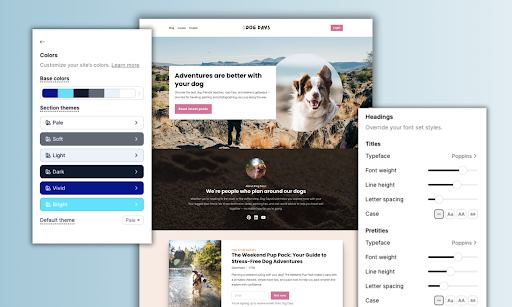
Instead of juggling multiple complicated tools, MemberSpace gives you a simple way to upload, organize, and sell your course content — all in a beautifully designed content hub.

If you already have a website, you can install MemberSpace directly onto it. If you don’t, no problem — MemberSpace can create a free customizable site for you. This way, you’ll have a professional home for your course without needing to hire a web designer or learn code.

Upload and Organize Your Content

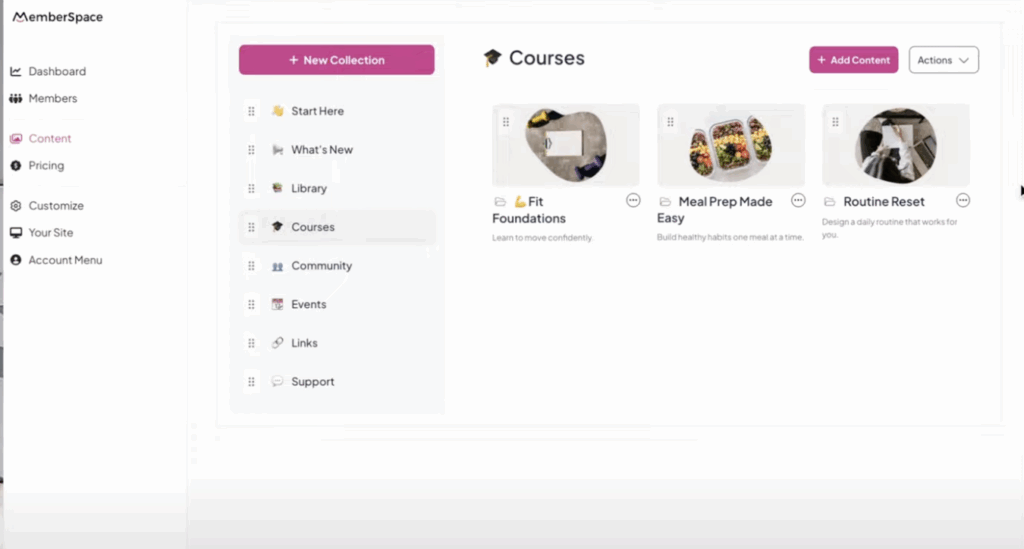
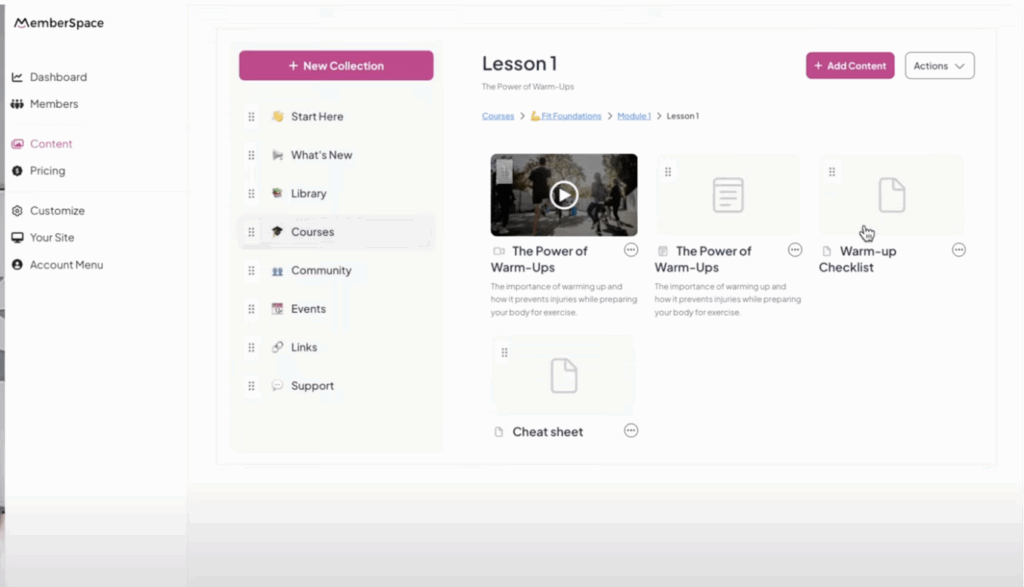
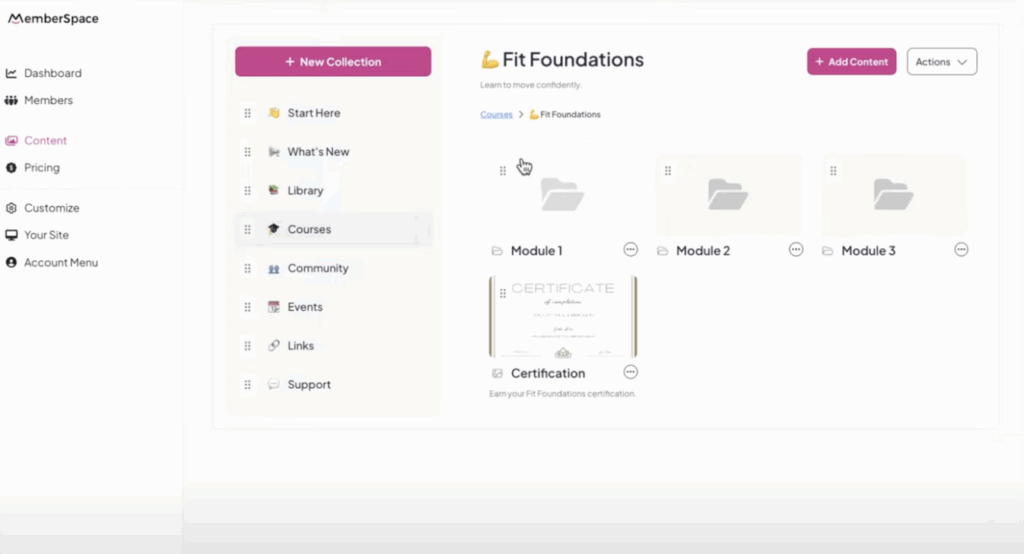
Inside MemberSpace, you can upload all your videos, PDFs, audio files, and other resources. From there, you’ll use the drag-and-drop editor to organize your modules and lessons in whatever order makes sense.

The best part? You can edit, update, or add new content anytime. If you want to launch quickly with just a few lessons and then add more later, you can.

Add Extras Like Quizzes and Certificates

To make your course more interactive, MemberSpace lets you add quizzes to check student understanding and certificates to reward completion. These little touches can make your course feel more professional and keep learners motivated.
 

Screenshot 2025-09-29 at 3.24.06 PM
Screenshot 2025-09-29 at 3.23.53 PM
Screenshot 2025-09-29 at 3.23.43 PM

Sell More Than Just Courses

One bonus of using MemberSpace is that you’re not limited to courses. You can also sell:

  • Digital downloads (like ebooks or templates).
  • Access to private communities.
  • Coaching sessions or workshops.

This means you can start with a course and expand into other revenue streams over time.

Step 3: Set Course Pricing

Now it’s time to decide how people will access your course. MemberSpace gives you several flexible options:

  • One‑time payment for lifetime access
  • Recurring subscription if you’ll be adding new content or want ongoing revenue
  • Free trial to encourage sign‑ups
  • Completely free if your goal is audience growth or lead generation

Think about your goals: Do you want to build recurring income? Offer a one‑time product? Or use your course as a free resource to attract new clients? MemberSpace supports all of these approaches.

Step 4: Share With Your Audience!

Once your course is set up and priced, it’s time to share it with the world.

MemberSpace gives you a direct link to your course. You can:

  • Share it on social media.
  • Add it to your email newsletter.
  • Post it in your community groups.
  • Link it on your website or blog.

The sign-up process is seamless — people click your link, pay (if it’s a paid course), and immediately get access.

Best Practices for Creating an Online Course

To make your course as engaging and successful as possible, here are some proven tips:

  • Repurpose existing content. If you’ve already made YouTube videos, blog posts, or podcasts, you can repackage them into a structured course.
  • Add community access. Consider including a private group or forum where students can connect, ask questions, and support each other.
  • Use quizzes and certificates. These increase engagement and give learners a sense of accomplishment.
  • Keep lessons short. Aim for 5–15 minutes per video to maintain attention.
  • Focus on outcomes. Always tie your lessons back to the transformation your students want.
  • Gather feedback. Ask your first students what they liked, what was confusing, and what they’d like more of.

Frequently Asked Questions about Creating Online Courses

1. Do I need a website to use MemberSpace for my course?
No—you can host your course directly in MemberSpace’s Content Hub and share the link with your audience. If you already have a website, you can integrate your course there too.

2. What types of content can I upload?
You can add videos, audio files, PDFs, slides, links, or any combination of formats. MemberSpace is flexible, so you can build your course in the way that works best for you.

3. Can I update my course after it’s live?
Yes. You can add new lessons, reorder modules, or update files at any time. Your learners will always see the latest version.

4. How do I decide on pricing?
It depends on your goals. A one‑time payment works well for standalone courses. A subscription makes sense if you’ll add content regularly. And if your aim is to grow your audience, offering the course for free can be a great strategy.

5. What if I want to add extras like quizzes or certificates?
You can! Quizzes can be created with tools like Google Forms or Typeform and linked directly in your course. Certificates can be designed in Canva and emailed to learners who complete the course. These are optional, but they can add value.

Final Thoughts

Creating an online course is one of the smartest ways to share your knowledge, help your audience, and build a sustainable income stream. Thanks to tools like MemberSpace, the process is no longer overwhelming — you don’t need coding skills, a huge budget, or months of setup.

Here’s a quick recap:

  1. Create your content – Break it into modules and lessons with a mix of formats.
  2. Set up your course with MemberSpace – Upload, organize, and customize your content hub.
  3. Choose your pricing model – One-time fee, subscription, payment plan, or free.
  4. Share it with your audience – Use your direct link to promote on social media, newsletters, and more.

Remember, your first course doesn’t have to be perfect. Start small, launch quickly, and improve as you go. The most important step is simply getting started.

If you’ve been sitting on an idea for a course, now’s the time to bring it to life. Your audience is waiting — and your future self will thank you.
How to use email marketing to sell your online courses

Software Stack Editor · October 2, 2025 ·

If you’ve built a course and it’s just not selling, it might not be your content that’s to blame. Often, it’s because you don’t have the right marketing plan in place. With an email strategy to sell online courses, you can help turn sales around. To help you out, I’ve put together a guide on …

Continue

The post How to use email marketing to sell your online courses appeared first on LearnWorlds.

How to validate your course idea: A step-by-step guide

Software Stack Editor · September 30, 2025 ·

Nobody wants to hear the story of the course creator who spent months—and money—on a course nobody bought. But unfortunately it happens all the time. Someone gets caught up in the online course trend. Picks the first idea that pops into their head. Designs a beautiful course. Launches it. Then… Crickets. It flops. Luckily it …

Continue

The post How to validate your course idea: A step-by-step guide appeared first on LearnWorlds.

7 Types of Online Communities (And How to Monetize Them)

Software Stack Editor · September 29, 2025 ·

If you’re a creator or entrepreneur, you already know how important it is to have an audience. But here’s the truth a lot of people miss: an audience alone isn’t enough.

Followers can scroll past. Algorithms can change. Email open rates can dip.

What really lasts is a community.

And I don’t mean that in some fluffy “community is everything” way. I mean it literally: building an online community is the foundation of a sustainable business. Whether you’re growing around a podcast, a newsletter, a membership, or even a social media page, the real long-term value comes from turning casual followers into people who feel connected — not just to you, but to each other.

That’s when you shift from “I have an audience” to “I have a business.”

In this post, we’ll break down the main types of online communities, share real-world examples, and talk through how you can monetize whichever type feels right for you.

What Exactly Is an Online Community?

Let’s get clear on this before we dive in.

An audience is one-way. You create content, they consume it. That’s your Instagram followers, your podcast listeners, your newsletter subscribers.

A community is two-way (and sometimes three-way). People don’t just tune in to you — they connect with each other. They share experiences, ask questions, cheer each other on, and feel like they belong.

That shift is powerful. It’s what turns your work from “content” into connection. And it’s also what makes your business more resilient, because communities stick around long after algorithms or platforms change.

The Main Types of Online Communities

There’s no one-size-fits-all here. The best type of community for you depends on your content, your audience, and your goals. Let’s walk through the most common types, with examples of how creators are making them work.

1. Interest-Based Communities

Some of the most vibrant online spaces are built around a shared passion or lifestyle. Fitness. Photography. Gaming. Wellness. The list goes on.

The beauty of these communities is simple: people aren’t just showing up for information — they’re showing up because they want to connect with others who get it.

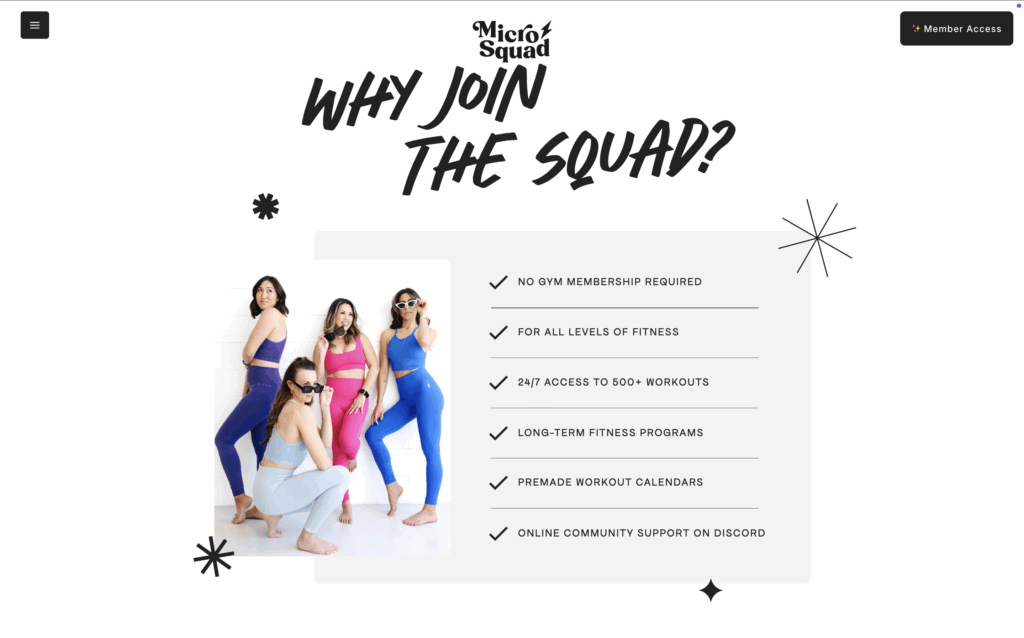
Take Sam’s Micro Squad. It’s a fitness membership that includes a private Discord server. Sure, members join because they want workout plans and training tips. But what keeps them coming back week after week is the camaraderie — the accountability partners, the cheerleaders, the friends who know exactly what it feels like to push through that last rep.

types of community example


And that’s the magic of interest-based communities: they turn something as personal as a fitness journey (or a hobby, or a lifestyle) into a shared experience.

If you’re a creator, here’s where the opportunity lies:

  • Share exclusive content like training plans, recipes, or tutorials.
  • Run group challenges that keep people motivated.
  • Offer premium coaching or small group sessions for those who want extra support.

You don’t need thousands of people to make this work. Even a small, tight-knit group can become the foundation of a thriving membership.

2. Content-Driven Communities 

This one’s especially relevant if you’re a podcaster, newsletter writer, or blogger. Your content already attracts a loyal audience. With the right setup, you can turn that audience into a thriving community.

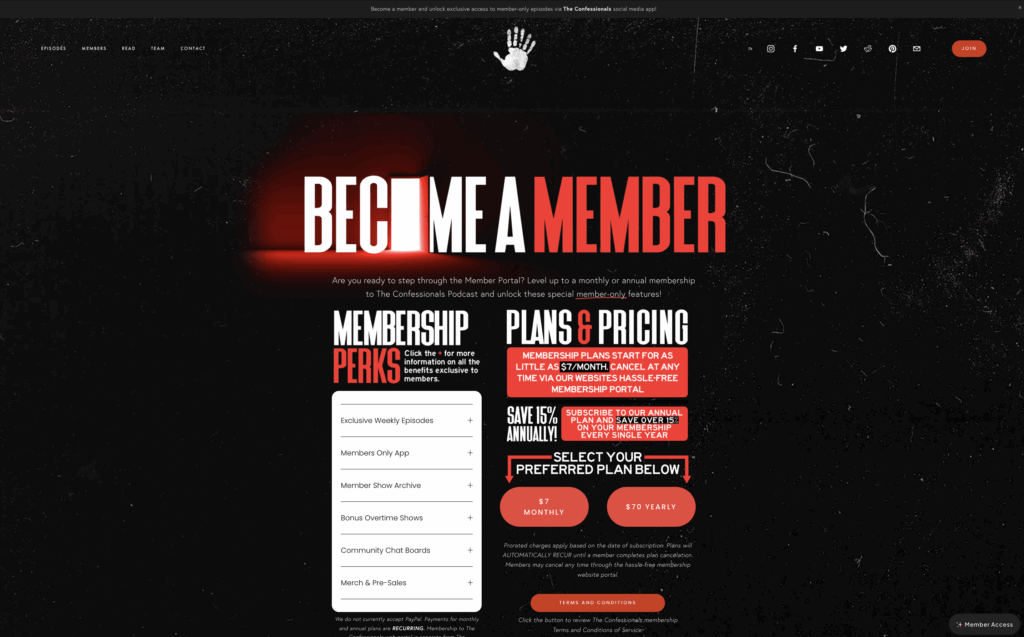
Take The Confessionals Podcast. It explores true stories of unexplained phenomena. But they didn’t stop at publishing episodes. They built The Confessionals Social Network — a private membership app where fans can:

  • Create their own profile
  • Join groups
  • Engage in chat rooms
  • Send private messages
  • Unlock exclusive member-only episodes

content based community example

That’s a textbook example of moving from “listeners” to “community members.”

And the monetization opportunities are endless: paid subscriber tiers, bonus content, behind-the-scenes access, private chats, live Q&As.


3. Professional & Networking Communities

These communities are all about career growth, small business support, or industry networking. They’re especially powerful for entrepreneurs, freelancers, and creators who often work solo.

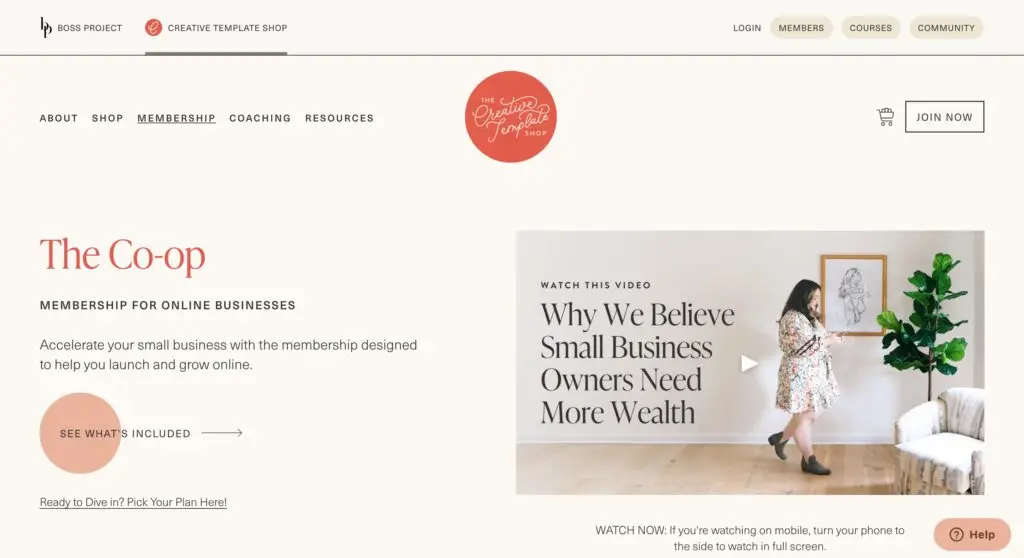
Take Abagail’s The Co-Op. It’s a membership for small business owners, including a private Slack community. Inside, members connect with peers, share resources, and learn from each other’s wins (and mistakes).

The Co-Op Community
Boss Project helps small businesses thrive through their membership, the Co-op.

The real value here isn’t just the content — it’s the access. Members get to be part of a group of like-minded professionals they wouldn’t otherwise meet. That kind of peer support is priceless when you’re building a business.

And from a monetization perspective, professional communities are gold. You can:

  • Host masterminds or roundtable discussions.
  • Run workshops with guest experts.
  • Offer exclusive job boards, templates, or business tools.

When done well, these communities become the go-to space for industry insiders — and that’s something people are willing to pay for.

4. Educational & Skill-Building Communities

If you’re teaching something — marketing, photography, coding, cooking — an educational community might be your sweet spot.

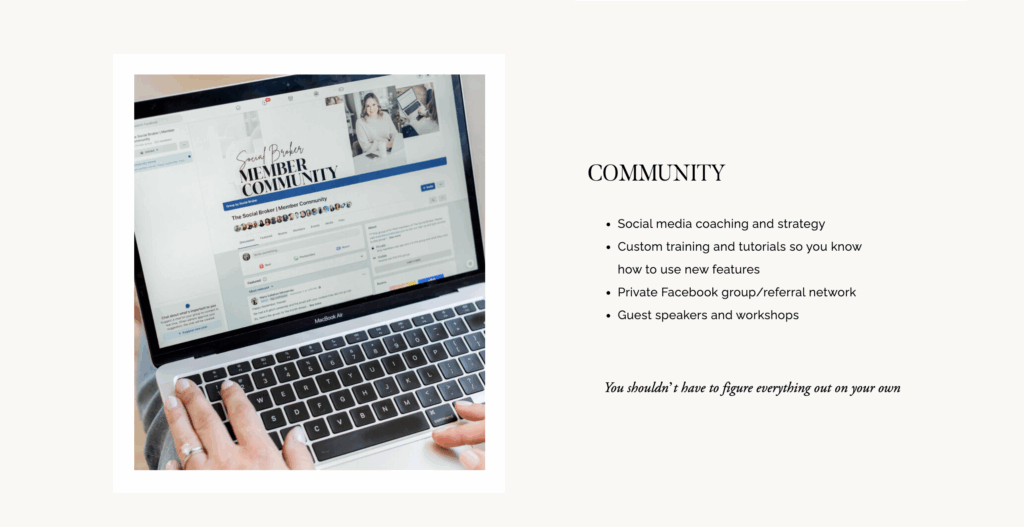
For example, The Social Broker built a membership that includes a private Facebook group. Members get access to coaching, guest speakers, customizable templates, and workshops. It’s part community, part classroom, part resource library.

The Social Broker community

People don’t just learn from you — they learn from each other. And that creates a much stickier experience than a standalone course.

Monetization options are wide open:

  • Tiered memberships (basic vs. all-access).
  • Bundled resources (courses, templates, guides).
  • Live training sessions or office hours.

If you’ve ever thought, “I don’t just want to teach, I want to build something ongoing,” this is the model for you.

5. Support Communities

Not every community is about learning or networking. Some are about support.

These are the safe spaces where people come together around a shared challenge or life stage. Think wellness groups, parenting communities, or accountability spaces for mindset and personal growth.

The value here isn’t in the content — it’s in the connection. Members join because they want to feel understood and supported by people walking the same path.

And while support communities can feel less “business-y,” they’re still highly monetizable. You might:

  • Offer group coaching or facilitated sessions.
  • Create private forums or chat spaces.
  • Run accountability programs or progress-tracking tools.

For many members, that sense of belonging is worth far more than another course or PDF.

6. Product & Brand Communities

Some communities form around a product or service itself. These are especially common in SaaS, e-commerce, or consumer products.

Think of Apple’s user forums or Notion’s online community. Customers come together to share tips, provide feedback, and help each other get more out of the product.

If you run a business like this, creating a community can:

  • Cut down on support tickets (because members help each other).
  • Build loyalty (because people feel invested in your product).
  • Create upsell opportunities (premium support, early access, exclusive events).

In other words: your product might be the hook, but the community is what keeps people sticking around.

7. Hybrid Communities

Most thriving communities are hybrids.

A fitness creator might combine interest-based content (workouts) with educational resources (nutrition guides) and support (accountability groups). A podcaster might mix content-driven discussions with networking opportunities.

Hybrids allow you to serve your members in multiple ways — and they give you flexibility to grow.

Monetization here often looks like:

  • Membership tiers (basic, premium, VIP).
  • Bundled offers (community + courses + events).
  • “All-access passes” for members who want everything.

How to Choose the Right Type for Your Audience

So which type should you build?

Start with a few simple questions:

  • What do your followers already come to you for?
  • Do they crave connection, learning, accountability, or support?
  • Where do they already spend their time (Slack, Discord, Facebook, etc.)?

And here’s the good news: you don’t have to get it perfect from day one. Many creators start small — maybe with a private chat group — and expand into a hybrid model as their community grows.

Think of it as an experiment. You’ll learn what your people truly want by building alongside them.

How to Monetize Any Community with MemberSpace

No matter which type of community you choose, the key is making it sustainable. That’s where MemberSpace comes in.

With MemberSpace, you can:

  • Sell access to private spaces (Discord, Slack, Facebook, or even your own website).
  • Offer different membership tiers to fit different budgets.
  • Bundle perks like workshops, coaching, templates, or bonus content.

And the best part? You don’t need to be a tech wizard. MemberSpace handles the heavy lifting so you can focus on what you do best — serving your community.

Just look at the examples we covered:

  • Sam’s Micro Squad (fitness + Discord).
  • Abagail’s The Co-Op (small business + Slack).
  • The Social Broker (education + Facebook group).
  • The Confessionals Podcast (content-driven + private app).

Each one uses a different type of community, but the common thread is this: they’ve figured out how to monetize their audience while delivering real value.

Final Thoughts

Online communities come in all shapes and sizes. Some are built around passions, others around professions, and others around content. The right one for you depends on your audience and your goals.

But here’s what’s true across the board: you don’t need a massive following to start. You just need clarity on the type of community you want to build — and the right tools to make it happen.

Want more strategies like these? Sign up for Membership Blast, our free newsletter, and we’ll send you biweekly tips to help you grow and monetize your online community.

16 Creator Monetization Strategies

Software Stack Editor · September 26, 2025 ·

You’ve built an audience. Now it’s time to turn that attention into income.

The smartest way to monetize isn’t by relying on social platforms or third‑party apps. It’s by selling directly on your own website. That way you:

  • Keep more of the revenue
  • Own your customer relationships
  • Build a business that lasts

Not sure what to sell? Here are 16 proven strategies creators use every day to monetize their content online.

1. Launch a Membership Program for Recurring Revenue

Memberships give you predictable income and create a sense of community. Even with just a few dozen members, monthly payments can add up fast.

What to include:

  • Exclusive content drops
  • Access to a private forum or group
  • Monthly Q&A calls
  • Discounts on other products

Start with one simple perk and expand as you go. 

Take The Socialite Agency, for example. Kate runs a marketing membership for luxury interior designers. Her members get exclusive access to things like web design and brand messaging, Google & ChatGPT search optimization, and email and blogging services. 

creator monetization example


2. Package Your Knowledge Into an Online Course

Courses are one of the most powerful creator products because they offer structure and transformation. Instead of scattered tips, you’re giving your audience a clear roadmap.

Examples:

  • A 7‑day crash course on photo editing
  • A 4‑week program on podcasting
  • A self‑paced course on building a portfolio

Pro tip: frame your course around the result students will achieve, not just the lessons.

3. Sell a Paid Newsletter With Exclusive Insights

Email is still the most reliable channel. A paid newsletter works when you deliver insights, stories, or curated resources people can’t get elsewhere.

This is a great fit if you:

  • Already write a free newsletter
  • Prefer writing over video or audio
  • Want a low‑overhead product

Position it as a time‑saver: “I’ll filter the noise and send you only what matters.”

4. Write and Sell an Ebook That Solves a Problem

Ebooks are affordable for your audience and quick for you to create. They also position you as an authority in your niche.

Tips for success:

  • Focus on solving one clear problem
  • Keep it concise (30–60 pages is plenty)
  • Add extras like checklists or templates

A short, practical ebook often sells better than a massive “ultimate guide.”

5. Build a Digital Content Library

Think of this as a vault of resources your audience can access anytime.

Ideas for your library:

  • Templates and swipe files
  • Video tutorials
  • Resource lists
  • Worksheets

You can sell access as a one‑time purchase or bundle it into your membership program. Abagail from Boss Project is a great example. She runs a membership for small business owners and provides them with a library of templates and tons of other resources they would need to scale. 

Boss Project helps small businesses through various digital products and a membership
Boss Project helps small businesses thrive through their membership, the Co-op.

6. Run Live Workshops for Hands‑On Learning

Workshops are interactive, time‑bound, and create urgency. People love the chance to learn directly from you in real time.

Always record your workshops—you can resell the replay or add it to your digital library.

7. Host Webinars That Teach and Sell

Webinars are part education, part sales funnel. They’re shorter than workshops and often end with a paid offer.

A simple structure:

  1. Teach something useful (30–40 minutes)
  2. Share success stories or case studies
  3. Invite attendees to your course, membership, or bundle

Done right, webinars build trust and drive conversions.

8. Offer Coaching or Consulting for Premium Clients

Some followers want more than content—they want your direct guidance. Coaching is high‑touch, meaning you can charge premium pricing.

Ways to structure it:

  • Single sessions
  • Multi‑session packages
  • Group coaching for scalability

Even a handful of clients can generate meaningful income.

9. Create a Mastermind Group for High‑Level Learners

Masterminds combine coaching, community, and accountability. You bring together a small group (6–10 people) who meet regularly to learn from you and each other.

Because masterminds are intimate and exclusive, they can be priced at a premium.

10. Sell Digital Templates and Tools That Save Time

Templates are evergreen products people love because they save time.

Examples include:

  • Canva graphics
  • Budget spreadsheets
  • Copywriting swipe files
  • Website themes

You make them once and sell them forever.

11. Share Premium Video Tutorials

Not everything belongs on YouTube. Save your most detailed tutorials for paying customers.

Ideas:

  • Step‑by‑step software walkthroughs
  • Advanced techniques in your niche
  • Full project breakdowns

Sell them individually, bundle them, or release them monthly as part of a subscription.

12. Offer Stock Photos or Media Packs

If you’re a photographer, videographer, or designer, sell your creative assets directly. Other creators and businesses are always looking for high‑quality visuals.

You can:

  • Sell individual packs
  • Release new collections monthly
  • Bundle them into a subscription

13. Create a Private Community Forum

Sometimes the product isn’t content—it’s connection. A private forum or chat space gives your audience a place to connect with each other and with you.

You can charge for access alone or combine it with other perks like monthly AMAs.

14. Host Paid Challenges to Drive Action

Challenges add accountability and fun. A 7‑day writing sprint, a 30‑day fitness challenge, or a month‑long creative push all work well.

People pay because challenges give them structure and momentum they wouldn’t have on their own.

15. Offer Resource Bundles for Instant Value

Bundle your best checklists, guides, and swipe files into one package.

This makes for a great mid‑priced product: easy to sell, easy to deliver, and instantly useful.

16. Sell Event Replays for Evergreen Income

Don’t let your live events disappear. Record them, package them, and sell them as replays.

One event can generate income long after it’s over. You can even bundle multiple replays into a “vault” for extra value.

Final Thoughts

You don’t need to launch all 16 strategies at once. Pick one or two that feel natural, test them, and build from there. Over time, you can stack them—maybe a membership paired with a course, or a newsletter paired with templates.

The bottom line: when you sell directly on your website, you’re not just monetizing your content—you’re building a business you actually own. And that’s the kind of income that lasts.

How B2B training firms can scale training delivery with ease

Software Stack Editor · September 26, 2025 ·

I always found it difficult to explain how scaling B2B training delivery could be so much easier for firms that simply didn’t have the resources to handle marketing to prospects, lead generation, sales, training, and operations on top of it all. But managing the operational side of things while wanting to scale to profitability doesn’t …

Continue

The post How B2B training firms can scale training delivery with ease appeared first on LearnWorlds.

How to market online courses in 2025: 70 top ways

Software Stack Editor · September 25, 2025 ·

After many a caffeine-fueled brainstorming session, you’ve finally decided: It’s time to put together that online course. Nice, I like the way your brain works—online learning is popular. By 2029, there will be over 1.1 billion online learners [1] looking for the right course. But because it’s so popular, you’re not the only one trying …

Continue

The post How to market online courses in 2025: 70 top ways appeared first on LearnWorlds.

10 Ways to Boost Community Engagement (and Actually Keep Members Around)

Software Stack Editor · September 24, 2025 ·

If you’ve built an online community—whether that’s a buzzing Instagram following, a loyal newsletter list, or a private membership site—you already know the hardest part isn’t getting people in the door. It’s keeping them engaged once they’re there.

Because let’s be real: a “community” without engagement is basically just… an audience that occasionally lurks. And you deserve better than that.

The good news? Boosting engagement doesn’t have to feel like pulling teeth. With the right strategies (and a little consistency), you can spark conversations, deepen connections, and turn casual followers into superfans who stick around for the long haul.

So let’s dive in. Here are 10 ways to boost community engagement that you can start trying today.

1. Ask Better Questions (and Actually Listen to the Answers)

Engagement starts with conversation. But if your go-to question is “What’s everyone up to this weekend?” …well, you might get crickets.

Instead, ask specific questions that invite thoughtful responses:

  • A fitness coach might ask: “What’s your go-to snack when you’re short on time but still want something healthy?”
  • A podcaster could try: “If you could hear me interview anyone—living or dead—who would it be?”
  • A business coach might ask: “What’s one client win you’re celebrating this week?”

The key is to show you actually care about the answers. Reply, follow up, and maybe even highlight some responses in your next post or email. People feel more invested when they know their voice matters.


2. Create Exclusive Spaces for Your True Fans

Not everyone in your audience is going to engage at the same level—and that’s okay. But your most engaged people? They deserve a special place to hang out.

That could look like:

  • A members-only Slack or Circle community
  • A private podcast feed
  • A paid newsletter with behind-the-scenes updates

When people feel like they’re part of something exclusive, they’re more likely to show up, contribute, and stick around. Plus, exclusivity naturally creates a sense of belonging—which is basically the secret sauce of community.

Pro Tip: If you’re using MemberSpace, you can easily gate access to any kind of community space and all the resources you provide your members—like a Slack channel, a social media community, or even a private forum. That way, only your paying members get access.

Take The Micro Squad, for example. Sam runs a fitness membership, and one of her exclusive perks is a private Discord server where her members can find support and connection. 

community engagement example

3. Host Live Events (Even Tiny Ones)

There’s something about real-time connection that prerecorded content just can’t replicate. Hosting live events—whether that’s a Zoom Q&A, a casual coworking session, or a monthly workshop—can massively boost engagement.

And no, these don’t have to be huge productions. In fact, smaller, more intimate events often feel more valuable because people actually get the chance to interact.

Pro Tip: You can use MemberSpace to sell access to your live events, so only paying members or subscribers get the invite link.

4. Celebrate Your Members (Spotlight, Shoutouts, Wins)

Want people to engage more? Shine the spotlight on them.

Highlighting your members’ wins, stories, or contributions does two things:

  1. It makes the person you spotlight feel amazing (and more likely to keep participating).
  2. It shows the rest of your community that engagement gets noticed—which encourages them to jump in too.

It doesn’t have to be fancy—just consistent. A simple “Member of the Month” post or a quick shoutout in your newsletter can go a long way.

5. Mix Up Your Content Formats

If your community is only getting one type of content from you (say, long-form blog posts), some people will naturally tune out. Different people engage in different ways—so mixing it up keeps things fresh.

Try experimenting with:

  • Short videos or audio notes
  • Polls and quizzes
  • Templates or swipe files
  • Behind-the-scenes photos

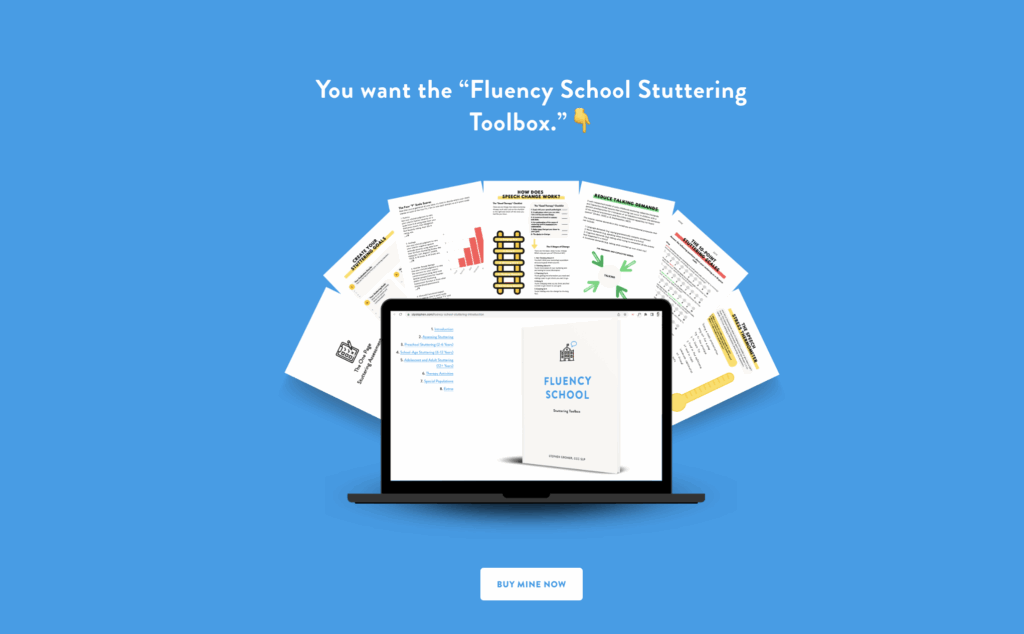
For example, SLP Stephen, a membership for speech language pathologists and parents of kids who stutter, offers assessments, videos, worksheets, downloadable PDFs and more. 

community engagement content

Pro Tip: If you’re using MemberSpace, you can easily organize different types of content into a members-only library.

6. Create Rituals and Routines

One-off posts are fine, but rituals are what keep people coming back. People love recurring traditions because they create consistency and anticipation.

Some ideas:

  • Weekly prompts (e.g. “Win Wednesday” or “Feedback Friday”)
  • Monthly challenges (like a 30-day yoga flow or a writing sprint)
  • Seasonal events (a summer book club, a holiday recipe swap)

When members know what to expect, they’re more likely to show up regularly. And over time, those small touchpoints add up to a much deeper sense of community.

7. Encourage Peer-to-Peer Connection

If all engagement flows between you and your community, you’ll eventually burn out. The real magic happens when members start connecting with each other.

You can encourage this by:

  • Creating themed discussion threads where members can share resources
  • Pairing people up for accountability partnerships
  • Hosting breakout rooms during live calls so members can chat in smaller groups

For example, Clarissa (who runs a membership for creative entrepreneurs) noticed her community really took off once she set up peer mastermind groups. Suddenly, members weren’t just showing up for her—they were showing up for each other.

And that’s when engagement becomes self-sustaining.

8. Make It Easy to Participate

Sometimes people don’t engage simply because… it feels like too much work. If your community space is overwhelming, confusing, or hard to navigate, people will quietly slip away.

So ask yourself:

  • Is it clear where members should go to participate?
  • Are you asking for bite-sized contributions (like a quick poll) instead of always requiring long posts?
  • Do you have clear onboarding so new members know how to jump in?

The easier you make it, the more people will engage.

9. Share Behind-the-Scenes Content

People join communities because they want connection—not just polished content. Showing behind-the-scenes glimpses of your process, your workspace, or even your messy “work in progress” moments makes you more relatable.

For example:

  • A musician could share a rough demo before the final track drops.
  • A food blogger might post a kitchen experiment that didn’t quite work out (because who hasn’t burned a batch of cookies?).
  • A business coach could give a peek at the tools or systems they use to stay organized.

This kind of content invites conversation because it feels authentic. Members will often chime in with their own stories, tips, or “same here!” moments.

10. Ask for (and Act on) Feedback

Want to know what will get your community more engaged? Ask them directly.

Surveys, polls, or even a casual “What do you want more of?” post can give you valuable insights. And here’s the kicker: when you actually act on that feedback, people feel heard—and they’re much more likely to stick around.

For instance, if your members say they’d love shorter video lessons instead of long workshops, try it out. Then circle back and say, “You asked for this, so here it is!” That simple loop of asking, listening, and delivering builds massive trust.

Final Thoughts

Boosting community engagement isn’t about chasing likes or forcing people to comment. It’s about creating spaces where people feel connected, valued, and excited to participate.

You don’t need to implement all of these at once. Pick one or two that feel doable, test them out, and build from there. Engagement is a long game, but the payoff is huge: a thriving, connected community that supports you and each other.

And if you’re serious about taking your community to the next level, MemberSpace can help. From gating exclusive content to hosting private podcasts and member-only events, it’s built to make running your membership simple—so you can focus on building real connections.

Because at the end of the day, engagement isn’t just about getting people to click or comment. It’s about creating a space they want to come back to—again and again.

Customer training: Strategy and best practices

Software Stack Editor · September 24, 2025 ·

Complex products? Check. Customers with short attention spans? Check. Pressure to prove ROI? Got that too. We’ve all faced this while trying to improve customer training. Many leaders I talk to say they struggle with keeping users engaged and managing support costs. So what do they want? Client training that equates to real and measurable …

Continue

The post Customer training: Strategy and best practices appeared first on LearnWorlds.

The 21 best community platforms for 2025

Software Stack Editor · September 23, 2025 ·

Online community platforms have become integral in fostering engagement, collaboration, and knowledge sharing among like-minded individuals. The global enterprise social networks and online communities market is expected to go beyond $5,5 million with a CAGR of 16.5% over the forecast period of 2021-2028 [1]. So, whether you are running an online course, a membership site, …

Continue

The post The 21 best community platforms for 2025 appeared first on LearnWorlds.

15 popular coaching models for your online coaching business

Software Stack Editor · September 23, 2025 ·

Coaches meet all sorts of people: confident, anxious, born leaders, aspiring leaders, determined, bold, shy… Some know what they want from their lives, and some are still trying to figure out what makes them happy. Similarly, there are all sorts of coaches a client can bump into as they’re seeking a mentor to guide them …

Continue

The post 15 popular coaching models for your online coaching business appeared first on LearnWorlds.

12 Smart Ways to Sell to Your Social Media Audience (Without Feeling Salesy)

Software Stack Editor · September 22, 2025 ·

You’ve put in the work to grow your audience. People are liking, sharing, and engaging with your posts — but when it comes to turning that attention into actual sales, things can feel a little uncomfortable.

Here’s the shift that makes all the difference: selling isn’t about pushing something on people or annoying your followers. It’s about offering them something that genuinely makes their lives easier. If you’ve created a solid product you believe in — whether that’s a membership, a course, or a library of templates that saves small business owners hours of work — then sharing it isn’t selfish. It’s service.

That’s why learning how to sell to your social media audience doesn’t mean becoming pushy. It means showing up with confidence, building trust, and making it clear how your offer can help.

Here are 12 strategies that make selling feel more natural and a lot less stressful.

1. Tell Stories That Sell

Stories create connection. Instead of leading with a sales pitch, share the real-life experiences behind your offer — your own journey, a client’s transformation, or the challenges your community faces. A simple structure works well: the problem, the turning point, and the outcome. When people see themselves in the story, your offer feels like the natural next step.

Here’s an example from Instagram creator, Stephen. He has an online business called SLP Stephen where he helps people who stutter learn to speak more confidently. On his Instagram page, he shares personal stories about his own stuttering journey to connect with his audience, like this one: “When I was 17, I searched ‘help for stuttering’ on Google.”

selling on social media example

2. Use Content That Educates and Teases

Your audience follows you because they want to learn. Share practical tips, frameworks, or insights that give them a quick win. But don’t feel like you have to give away everything. Teach the “what” and the “why,” then position your course or membership as the place to learn the full “how.” When you believe your offer will actually make their work or life easier, inviting them to learn more feels natural.

3. Create Exclusive Offers for Followers

People love to feel like insiders. Offering follower-only bonuses, early access, or time-sensitive discounts makes your audience feel special and encourages them to act sooner rather than later. For example, you might announce a bonus resource available only to those who sign up through your Instagram bio this week.

4. Leverage Social Proof

Seeing others succeed builds confidence. Share testimonials, screenshots of positive feedback, or short video clips from happy clients. You could even dedicate one day a week to highlighting a customer story. These moments show your audience that your program works in real life, not just in theory.

5. Go Live and Sell in Real Time

Live video builds trust because it’s unpolished and personal. Use it to answer questions, teach a short lesson, or share behind-the-scenes insights. At the end, explain how your offer provides deeper support. If you know your product solves a real problem, going live is simply giving people a chance to see that in action.

6. Add Clear Calls-to-Action (CTAs)

Great content is wasted if people don’t know what to do next. Be clear and specific: “Click the link in my bio to join,” or “Send me a DM with the word START and I’ll share the details.” Consistency is key here. The clearer you are, the easier it is for your audience to take action — and if your offer truly helps, you’re doing them a favor by pointing the way.

7. Offer Free Mini-Experiences

Sometimes people need to try before they buy. Hosting a short challenge, webinar, or workshop lets your audience experience your teaching style and see the value you provide. At the end, invite them to continue the journey inside your paid program. If you know your product makes their lives easier, this is just giving them a taste before they dive in.

8. Use DMs to Build Relationships

Social media comments are great, but direct messages create real connection. Use polls or question stickers in your stories to spark conversations, then follow up personally. Ask about their goals, listen to their challenges, and share your offer if it’s a good fit. Done thoughtfully, this feels like a genuine conversation rather than a sales pitch

9. Repurpose Testimonials Into Content

Testimonials don’t have to stay tucked away on your website. Turn them into engaging posts, reels, or carousels that highlight your clients’ results. Even a short quote or a screenshot of a happy message can be powerful. Every story you share reinforces that your offer is valuable and worth investing in.

10. Create a Sense of Urgency

Without a reason to act now, people tend to wait. Deadlines, limited spots, or expiring bonuses encourage quicker decisions. If your enrollment closes on Friday, remind your audience with countdown stickers, pinned posts, and story updates. You’re not being pushy — you’re helping people stop procrastinating and start benefiting from something that can truly help them.

11. Share Behind-the-Scenes Content

Transparency builds trust. Show your audience what goes into creating your course, how you prepare for coaching calls, or what your community looks like on the inside. A short video tour or a candid snapshot can make your offer feel more tangible and approachable.

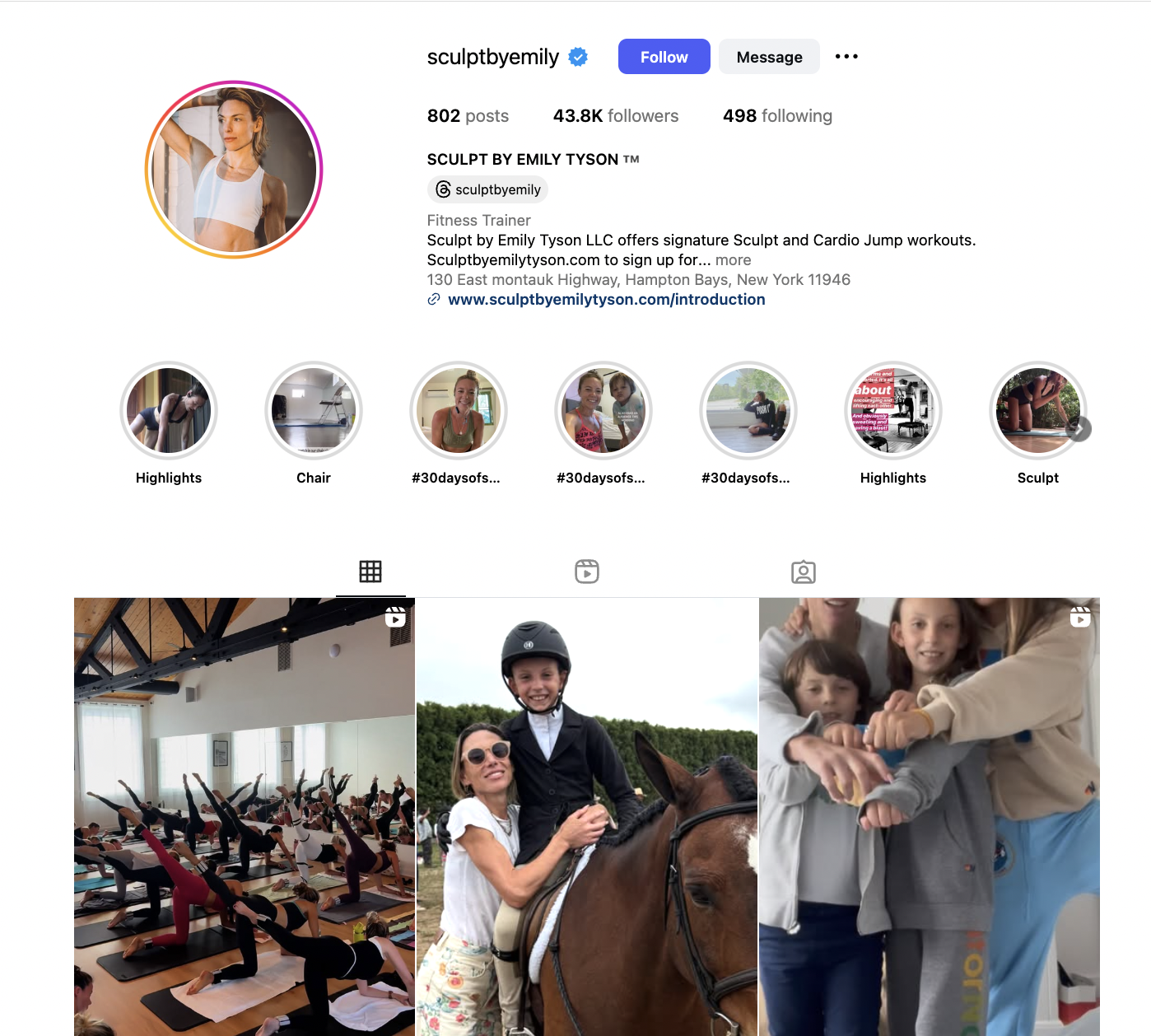
Take Emily Tyson’s post for example. She teaches in-person and virtual fitness classes and shares behind-the-scenes glimpses into her sessions. 

12. Make the Buying Process Frictionless

Even the best sales strategy won’t work if checkout is confusing. Test your own process on mobile — if it takes more than a couple of clicks, simplify it. Tools like MemberSpace make it easy to create smooth, mobile-friendly signups and instant access to your membership or digital products. The easier it is to buy, the faster people can start experiencing the value you’ve created for them.

Final Thoughts

Selling on social media doesn’t have to feel uncomfortable. When you view it as sharing something valuable that truly makes people’s lives easier, sales stop feeling like pressure and start feeling like service.

Learning how to sell to your social media audience is about showing up consistently, sharing stories, and inviting people into something you know will help them. Do that, and you’ll not only grow your business — you’ll also build a stronger, more connected community.

How to Grow on Social Media as a Membership Business Owner

Software Stack Editor · September 19, 2025 ·

Picture of Haiden Hibbert

Haiden Hibbert

I’m a Content Manager at MemberSpace helping entrepreneurs and creators sell digital products.

Every successful creator and membership business owner has one thing in common: an audience. Without people paying attention to your work, it’s tough to grow your business — no matter how great your content or community might be. And for most creators today, that audience lives on social media.

The tricky part? Social media can feel like a maze. There are endless platforms, constant algorithm changes, and so much noise competing for attention.

Here’s the good news: you don’t need millions of followers to build a thriving membership. What you do need is a thoughtful approach to growing the right audience — the people who are genuinely interested in what you offer. In this post, we’ll share simple, practical ways to grow your audience on social media and start turning those followers into members.

Why You Don’t Need a Huge Following to Grow on Social Media

A common myth is that you need tens of thousands of followers before you can start making money from your membership. The truth is, you don’t need massive numbers — you just need the right people.

Smaller audiences often convert better because the connection feels more personal. A fitness coach with 800 engaged Instagram followers who converts even 5% into paying members could earn more than someone with 10,000 disengaged followers.

If you’d like to dive deeper into this idea, check out our posts on Nano Influencers and Micro Influencers. Both show how creators with modest followings can build sustainable businesses by focusing on trust, not vanity metrics.

How to Choose the Best Social Media Platforms for Your Membership

Not every platform is right for every creator. Instead of spreading yourself thin, pick one or two places where your ideal members already spend time.

For example:

  • A career coach working with professionals may find LinkedIn more effective than TikTok.
  • A craft teacher might thrive on Instagram or Pinterest, where visuals are the focus.

The simplest way to decide? Ask your audience. A quick poll in your email newsletter or community can reveal where people actually hang out online.

Once you’ve chosen your platforms, make sure there’s a clear path from your social profile to your membership. With a tool like MemberSpace, you can link directly to gated content, courses, or a private community — giving followers an easy next step when they’re ready to go deeper.

What to Post on Social Media to Attract the Right Audience

One of the biggest mistakes creators make is treating social media like a billboard.

They post announcements, promotions, or random updates — and then wonder why nobody’s engaging. The truth is, people don’t follow you for ads. They follow you for connection.

Think of your content as a mix of value and personality.

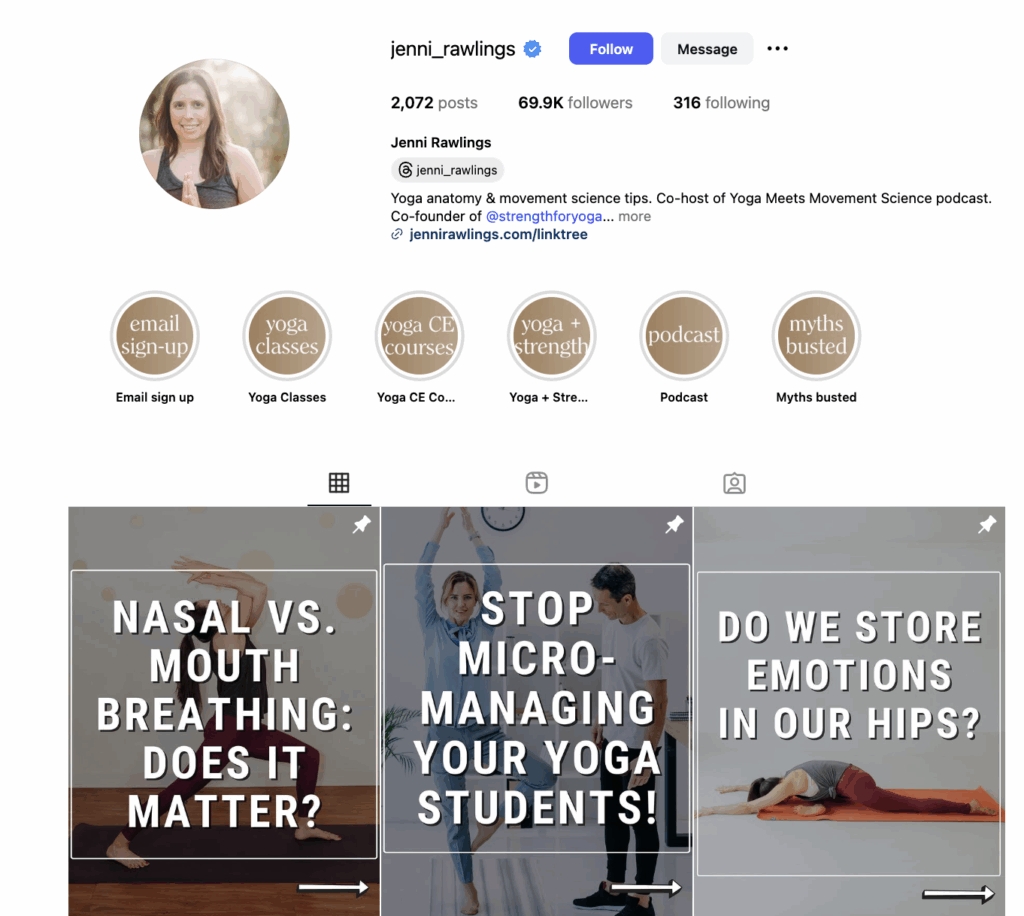
For example, if you run an online yoga membership like Jenni Rawlings, you might share a quick breathing exercise (value) alongside a story about how you discovered it during a stressful week (personality).

how to grow on social media example
For inspiration on how to use social media to grow your membership site, check out @jenni_rawlings on Instagram

That combination gives your audience something useful and reminds them there’s a real person behind the post.

Another simple way to build trust is by highlighting your members. Share a photo of someone in your community who’s made progress, or repost a testimonial. Not only does this celebrate them, but it also shows potential members what’s possible if they join.

The goal isn’t to post more often — it’s to post in a way that makes followers feel like they belong.

How to Stay Consistent on Social Media Without Burning Out

Consistency builds trust, and trust is what turns followers into members.

But posting every single day isn’t realistic for most creators. The key is finding a rhythm you can actually sustain.

One way to do this is by batching content. For instance, set aside one afternoon a week to create and schedule a few posts.

You might also create recurring themes — like Tip Tuesday or Behind‑the‑Scenes Friday — so you’re never starting from scratch.

And remember, not everything has to be public. With MemberSpace, you can share exclusive content with your paying members while keeping your social feed active with shorter previews or highlights.

Turn Followers Into Members

Social media is a great way to get people’s attention — but attention alone doesn’t pay the bills. To build a thriving membership business, you need to guide your followers from simply liking your posts to actually joining your community.

Here are a few ways to make that transition smoother:

  • Use simple calls-to-action. Instead of just posting content, invite people to take the next step. That might mean “Join my free email list,” “Grab this free resource,” or “Check out my membership community.”
  • Show what’s inside. Share sneak peeks of your membership — like behind‑the‑scenes content, member success stories, or a look at your community space — so followers can picture themselves as part of it.
  • Make it easy to join. Don’t bury your links. Keep your membership link in your bio, highlight it in Stories, or pin it to the top of your profile.

With MemberSpace, you can take the next step by selling access to a content hub directly on your website. That hub might include:

  • Digital resources like guides, templates, or downloads
  • Video lessons or past workshop replays
  • A library of exclusive blog posts or tutorials

Because everything lives on your site, your followers don’t have to jump between different platforms. MemberSpace handles the payment and access side, so you can focus on creating valuable resources that keep your members engaged.

Think of social media as the “front door,” and your content hub as the place where followers settle in and become long‑term members.

To learn more about how to turn followers to paid members, check out our video on Sam from The Micro Squad. 

Simple Social Media Strategies to Grow Your Membership

Growing on social media doesn’t have to mean chasing trends or posting 24/7.

It’s about building the right audience, showing up consistently, and inviting people into your membership.

Start small: pick one strategy from this post and put it into practice this week. Over time, those small steps will compound into real audience growth — and more members for your business.

How to run a stress-free Black Friday sale in your online business (with checklist!)

Software Stack Editor · September 19, 2025 ·

Love it or hate it, Black Friday is almost here. While everyone’s waiting for big brands to drop deals, I bet your audience would be just as thrilled to see something from you. Whether it’s a new product launch, a discount, or a special promotion, this is an incredible chance to take advantage of the shopping hype, boost sales, and grow your business.

In this article, I’ll break down an easy system you can use to run a Black Friday Cyber Monday sale in your online business that more or less runs on autopilot, including:

  • Why creators often miss out on Black Friday/Cyber Monday, and what you can do differently

  • 5 steps to run a smooth, low-drama promotion that actually works

  • A launch checklist you can use to make sure you’re ready, long before Black Friday rolls around

Like most things with running a business, pulling off a successful Black Friday sale comes down to good planning. So let’s do that together! Here’s everything you need to launch, promote, and run a Black Friday Cyber Monday sale in your business.

Podia has everything you need to build your online business, from websites and blogging to digital products and email marketing. Try Podia free for 30 days and launch the business you’ve always wanted to build.

Why most creators miss out on Black Friday

Black Friday has a way of sneaking up on you. One minute it’s August, and the next, everything’s pumpkin flavored and you’ve got 13,000 sale emails in your inbox. Blink, and you’ve completely missed your chance to give your business a boost.

A lot of creators skip Black Friday because they don’t think it’s relevant to them. But I want to challenge that — you don’t need to be a big corporation to run a sale, and we have tons of Podia creators who grow their revenue and client base during this big shopping season.

Other entrepreneurs forget about Black Friday, then scramble at the last minute, throwing something together and ending up with a messy, stressful promotion. And things can go sideways fast without a plan.

  • Tech breaks at checkout

  • You forget to add your coupon code to an email before it goes out

  • Half of your social media platforms get ignored

  • People don’t even know you’re running a sale until it’s too late

This is one big recipe for frustration, missed opportunities, and money left on the table while your competitors cash in.

Luckily, there’s an easy fix. You can set yourself up for success this Black Friday (and for any future sale or launch) using simple steps that take the stress out of the process and help you actually enjoy the weekend.

How to run a stress-free Black Friday sale in your online business

Running a good Black Friday sale comes down to planning — the more you’re able to set up and schedule in advance, the easier your sale window will be.

The steps below work for any promotion or launch you run, so don’t limit yourself to just Black Friday weekend. A lot of what we talk about can be done ahead of time, so you’re set up for a smooth, drama-free launch day, whether it’s for Black Friday, a summer sale, a New Year’s special, or any other big promotion that makes sense for your business.

One thing to note: As you work through the planning, keep showing up for your audience in the usual ways. Share free content, send newsletters, post blogs, and talk about what you’re creating. The more you do this, the more natural it all feels when you have something to sell.

And when launch day arrives, your audience will be just as excited as you are.

Step 1: Plan out what your sale will be

The first step to running a successful Black Friday/Cyber Monday sale is deciding what your promotion will actually be. The fun part is that it doesn’t have to be a “traditional” sale if you don’t want it to be. BFCM is simply a moment when more people are ready to buy. You get to decide how to show up.

What you offer depends on where you are in your business:

  • If you’re new to business and launching your first product, make this your big debut. If you struggle with procrastination, having a deadline with potential buyers can help you make the push from idea to finished product.

  • If you’re working on a new product or offer, use BFCM as the kickoff for a bigger program or course.

  • If you already have a library of products, create a bundle to give people more value while boosting your average order size.

Of course, you can always keep it simple with a discount ($5 off, 20% off). Or you can make it feel more exclusive, like offering a private coupon code to your email list without running a big public-facing sale.

Once you know the shape of your promotion, decide on these details upfront:

  • Which products are included and what do you need to do to get them ready for the big day?

  • What’s the discount or special offer, and are there any limitations (e.g., will you cap it after a certain number of uses)?

  • How long will the sale run? Just Friday, the full weekend, or all the way through Monday?

With these pieces in place, you’ll have a clear plan that keeps your messaging consistent and your launch stress-free.

Step 2: Set up marketing assets

Now that you know what you’re offering, it’s time to set up the marketing pieces that will bring people in. The goal here is to get everything ready in advance so when the sale goes live, you’re just answering questions, cheering people on, and enjoying launch day.

Start with your sales page. If you’re selling an existing product, you can use the same page you already have and add a banner or update the copy to let people know the sale is happening. If you’re offering something new or want a fresh look, create a custom landing page for your promotion.

Next, create the assets to announce your sale, launch, or promotion. You’ll use these assets wherever you normally connect with your audience:

  • Social posts (Instagram, TikTok, X, YouTube): Aim to post each day your sale is live on each platform you regularly use. To get your creative juices flowing, you can share pictures from your finished product, behind the scenes video clips, past customer testimonials, and an explanation of all the benefits people get when they join.

  • Blog posts: Create a longer-form blog post where you share details about your sale and why it’s worth buying now.

  • Email newsletters: Continue to share details of what you’re working on, so your audience is ready for sale day.

Tools like Canva make it easy to create graphics, and a simple doc works great for planning what you’ll say. Most social media platforms have a schedule-in-advance feature so you can go ahead and stage your posts now.

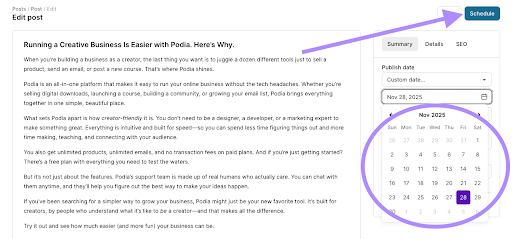
If you blog with Podia, you can also schedule your articles ahead of time, so they’re published automatically on your go-live day.

Schedule posts on Podia

Finally, draft a line or two for a call-to-action (CTA) banner on your website. When you run your sale, you’ll add this banner to your home page, so no one misses it, even if they’re not on your email list.

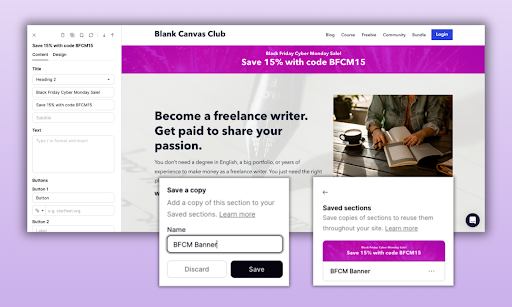
In Podia, you can create this banner in the website builder with a text section. Add a headline announcing your sale, add your coupon code, and save it as a reusable section.

Headline banner on website

Then, when launch day hits, drop it onto your homepage, blog, or anywhere else you want to grab attention.

Step 3: Write and schedule your emails

Email is the engine that powers your BFCM sale. You’ll use it to build excitement ahead of launch day, guide people through checkout, and remind them to grab the deal before it disappears.

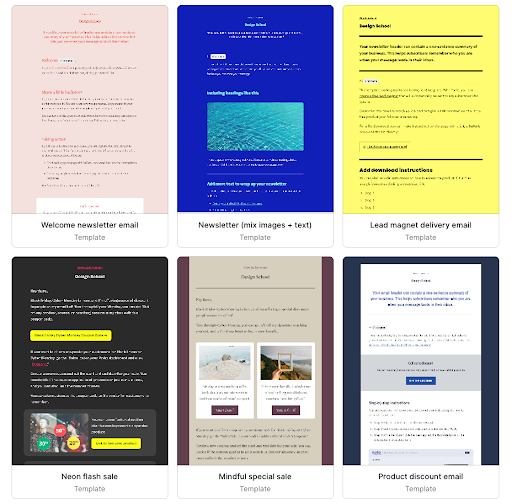
And the best part is that you can write everything ahead of time, schedule it, and let it run on autopilot while you focus on answering questions and connecting with buyers. (Podia even has flash sale email templates you can use for your messages, so you don’t have to design from scratch!)

Flash sale email templates on Podia

Here’s a simple lineup you can copy for your promotion:

Teaser #1 (about a week out): Let your audience know something exciting is coming. Add a call to action like “mark your calendars,” and maybe share something free (like a blog post, lesson, or resource) to give them a taste of your teaching style. Make sure to only send this to people who don’t already own the product you’re offering for sale.

Teaser #2 (the day before launch): Build anticipation with a case study, testimonial, or preview of what’s included. If your sale has limits (like “first 10 buyers”), let people know exactly when it starts so they can set their alarms.

Launch day: The big announcement! Share the sales page link, coupon code, and step-by-step instructions to make buying as easy as possible.

Reminder (mid-sale): Highlight what’s included again, maybe with a short video walkthrough or chapter/lesson sample. Keep the emphasis on what your buyer’s life will be like after they buy your product.

Testimonial (mid-sale): Share a story from a past customer or beta tester. If it’s a brand-new product, you can use testimonials from your other offers or your business in general to highlight your teaching style. Just make it clear where the praise is coming from.

Last chance (final day): Send a final reminder email a few hours before the doors close. Remind people what they’ll miss if they don’t act now.

Thank you (after the sale): Follow up with gratitude for buyers and for those who engaged with your emails. Share a helpful tip or resource as a thank-you gift to show appreciation that they’re part of your community, purchase or not.

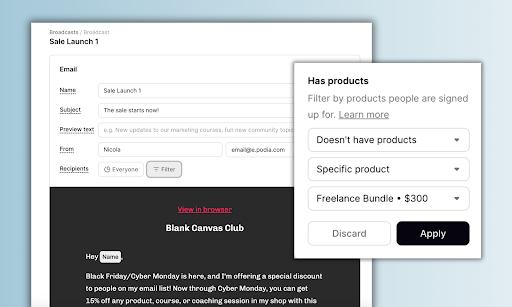
Pro tip: Always set your email filters so you’re not sending promo messages to people who already own the product.

In Podia, you can do this by setting up your email and clicking filter → has products → doesn’t have product → specific product → name of your sale item.

Set email filters

Read more about how to filter your audience in this help doc.

After you’ve set up your launch emails, your next task is to write your welcome sequence for people who purchase your product.

This is a short automation that kicks in once someone buys the product you’re promoting during your sale. As exciting as it is to get out there and reach new customers, it’s just as important to take care of those who do take the plunge.

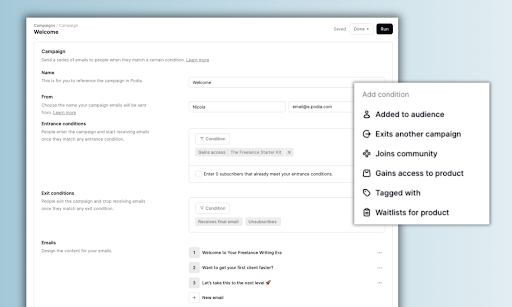
In Podia, you can set this up using the campaigns feature. Set the entrance condition to “Gains access to: Product name” and give each email a few days delay so they’re spaced out. Then you can go into each email and customize the message or add more information.

Campaigns feature on Podia

Here’s a simple and warm outline you can use as a jumping off point:

  • Email 1: Welcome them in, tell them about your business, and explain how to get started with their new product.

  • Email 2: Share a few tips for how to be successful in your program and let them know that they can respond to the email if they have any questions.

  • Email 3: (Add a few more days delay here to give people time to enjoy your product) Ask for a testimonial or review. You can use these stories for future launches.

That’s it! Set it all up now, and when launch day hits, your emails will go out like clockwork while you sip coffee and celebrate new sales rolling in.

Step 4: Test your tech

You’ve put in the work to plan your offer, make your marketing materials, and schedule your launch emails, so now it’s time to make sure everything runs smoothly when your sale goes live. This is where you connect the dots, publish your setup, and test it from start to finish so buyers have a seamless experience.

First, complete your product and publish it. You can keep it hidden until your actual sale launches, but publishing lets you double check that all your links and pages are working the way they should.

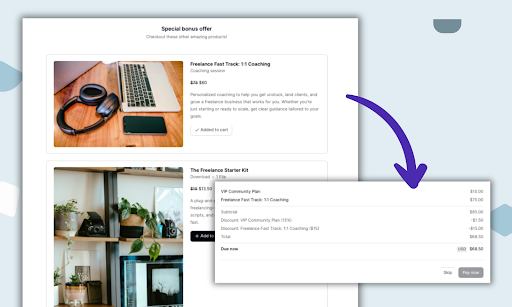
Next, add an upsell to your product. BFCM is prime time for boosting your order value, and with upsells, you can let your buyers grab a second related item during checkout for a discounted price. It’s a simple way to increase revenue with zero extra effort.

In Podia, you can add an upsell to your product in one click on the pricing page. See how to add an upsell to your product step by step here.

Add an upsell to a product

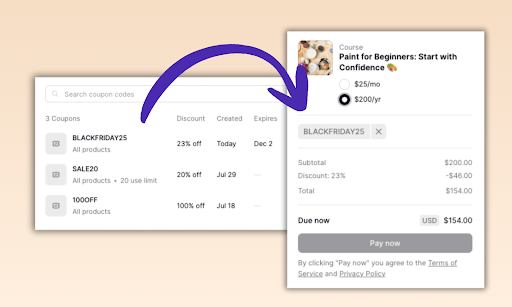
Set up your coupon. Go to the “Sales” tab in the Podia dashboard and click “Coupons” to set one up. You can customize which products the coupon applies to, what the discount should be, how long it’s valid, and how many times it can be used.

You can also customize the coupon code then copy and paste the code so people can type it in at checkout, or generate a special link that automatically applies the discount to the relevant pages.

Read more about how coupons work in Podia in this help doc.

customize coupon codes

Publish your sales page. Make sure the copy is final, images are in place, and the banner or promo details are crystal clear. Again, you can keep this hidden for now by not linking to it on your site until the sale goes live, but it’s nice to have everything ready to go in advance.

Then, check your links. Click through every button, email, and banner to confirm they lead where they should. Replace any placeholder text, paste in coupon codes, and give everything a final polish.

Finally, go through the checkout process yourself (or ask a friend) to make sure it’s smooth and clear. Better to catch hiccups now than on launch day when buyers are lining up at your virtual door.

Aim to have all this done the day before you launch at the latest, so you have time to make adjustments if needed. The key to a stress-free Black Friday/Cyber Monday is not having to get up at 3am to fix your coupon codes last minute.

Step 5: Launch day!

Today’s the day! You’ve scheduled your emails, prepped your posts, and polished your pages. Now it’s time to share your promotion with the world.

If you’re running this for Black Friday Cyber Monday, your sale will usually run from Friday through the end of the day on the following Monday. If you’re planning a different sale period, keep it short (a few days max). That way, you can keep the energy high and promote consistently without feeling like you’re nagging.

You’ve already done most of the prep work, so it’s just a matter of pressing “Go” on a few things:

  • If you’ve set your product to hidden, change it to “Visible.”

  • Add a big banner to your homepage and any other pages you promote regularly. (You’ve already written the copy for this in Step 2.)

  • Share your sales page in your social bios and link-in-bio.

  • If you didn’t schedule your blog posts and social posts in advance, press publish on your launch communications. Otherwise, they’ll go live on the schedule you set.

  • Stay present on social media to post reminders, answer questions, and celebrate each new buyer.

  • Keep an eye on your inbox for questions and support requests (someone will always misplace a coupon code — it’s part of the fun).

Add big banners on homepage

This is your chance to connect with your audience, keep the energy high, and enjoy the results of all your planning. Don’t forget to celebrate your hard work!

Your Black Friday sale checklist

To recap, here’s a checklist to prepare your store and marketing efforts for Black Friday Cyber Monday:

  • Choose which product will be part of your promotion

  • If launching a new product, make it and use your BFCM deadline to avoid procrastination

  • Add an upsell to your product to increase your order value

  • Set up your sales page

  • Set up your coupon code

  • Write a blog post promoting your sale and schedule it for launch day

  • Write and design (at least) four social media posts and schedule them for the launch period

  • Write and schedule an email for each day of your sale in your email software

  • Create an automated welcome sequence for new sign-ups

  • Check your email filters (don’t send promos to people who already bought)

  • Test your links and coupon code in a fresh browser

  • Add your sales page to your link-in-bio so it’s easy to find

  • Add a sale banner with the coupon code to your homepage

  • Link your product from relevant blog posts

  • On launch day, turn everything live

  • Answer questions quickly in emails and comments

  • Post in real time responding to FAQs

  • Thank your followers, supporters, and email list once the sale is done

And of course, have fun with it! This is a chance to reach more people and bump up your sales, which can put your business in a better position for months and years to come.

Drive sales during Black Friday Cyber Monday, the stress-free way

Running a sale can feel like a big production, but with a plan in place it’s really just a series of small, doable steps — and you’ve already mapped them out. Whether it’s Black Friday, a holiday promo, or a product launch of your own, you don’t have to do it alone.

Podia has your website, digital products, sales pages, email, and community all in one place, so you can spend less time wrangling tech and more time connecting with your customers. Start your 30-day free trial today and start planning your best launch yet.

FAQ

How does Black Friday Cyber Monday work?

Black Friday Cyber Monday (BFCM) is the shopping weekend that kicks off the holiday season in the U.S. It starts the Friday after Thanksgiving and runs through Monday. Businesses often run sales and discounts during this period to encourage people to shop for the upcoming holidays.

What are some Black Friday marketing strategies for creators?

The best BFCM marketing plans start before the weekend. Build anticipation with teaser emails and social posts, share a clear timeline for your promotion, and make sure your sales page, coupon codes, and checkout links are all tested ahead of time.

Throughout the promotion period, use a mix of your usual channels like email, social, and even blog posts so your audience can’t miss what you’re offering. Make sure you’re explaining how your program can address your audience’s pain points and how their life could be different after joining. Share testimonials and customer reviews to build trust and give followers a look behind the scenes at what’s included to build excitement.

What are some Black Friday sale ideas for small businesses?

It depends on what makes sense for your business goals, products, and lineup. A lot of businesses do a percentage discount or flat rate sale, like 20% off or $5 off any product. But you can also get creative with it by:

  • Launching a brand-new product on Black Friday
  • Offering bundles that give customers more value
  • Running an exclusive discount just for your email list (and encourage people to join beforehand so they don’t miss out)
  • Setting up a coupon with a limited number of uses to create urgency
  • Selling a product at normal price but adding on a free 1:1 coaching session as a special BFCM perk.

The key is to choose an offer that makes sense for your audience and business stage.

How to Make Money as a Micro Influencer (Beyond Brand Deals)

Software Stack Editor · September 17, 2025 ·

Picture of Haiden Hibbert

Haiden Hibbert

I’m a Content Manager at MemberSpace helping entrepreneurs and creators sell digital products.

Hitting 10,000 followers is a milestone. At that point, you’re considered a micro influencer — usually defined as someone with 10k–100k followers.

It’s an interesting stage. You’re big enough to get noticed by brands, but small enough that people still see you as approachable. The challenge? Figuring out how to turn that audience into steady income.

This guide will walk you through:

  • What being a micro influencer means
  • How micros differ from nanos
  • How much you can realistically earn
  • What it takes to grow into this role
  • The best ways to monetize (beyond brand deals)
  • Real examples of creators doing it well

What Is a Micro Influencer?

Think of micro influencers as the middle ground between your friend with 2,000 followers and the mega‑influencer with a million. 

They typically have around 10,000–100,000, are approachable and  relatable, and have strong engagement from their followers. 

micro influencer example
Emily Tyson is a fitness micro influencer with 44,000 followers

Micro influencers pop up in every niche:

  • A travel blogger with 60k Instagram followers posting city guides.
  • A fitness coach with 25k TikTok fans sharing daily workouts.
  • A productivity nerd with 40k YouTube subs teaching Notion hacks.
  • A finance creator with 15k newsletter readers breaking down money tips.

The magic isn’t just the numbers — it’s the trust.

The Difference Between Nano and Micro Influencers

Nano and micro influencers are often grouped together, but there are some key differences worth noting:

Type Follower Range Strengths Challenges
Nano Influencers 1k–10k Extremely high engagement, close community feel, very personal Smaller reach, slower scaling
Micro Influencers 10k–100k Balance of reach + authenticity, strong niche authority, attractive to brands More competition, need to maintain engagement as they grow
  • Nano influencers thrive on intimacy — their audiences often feel like friends.
  • Micro influencers have more reach, but still maintain relatability compared to macro or mega influencers.
  • Both groups can monetize effectively with digital products and memberships — the strategies just scale differently.

👉 Want to learn more about nano influencers? Check out our full guide: How to Make Money as a Nano Influencer
How Much Do Micro Influencers Make?

Earnings for micro influencers vary widely depending on niche, engagement, and monetization strategy.

  • Brand deals: On average, micro influencers can earn anywhere from $100–$500 per sponsored post at the lower end, to $1,000+ per post at the higher end of the range.
  • Affiliate marketing: Commissions can add up, especially in niches like fashion, beauty, and tech.
  • Digital products & memberships: This is where income becomes scalable. With 10k+ followers, even a small percentage of conversions can generate thousands in recurring revenue.

For example, if just 2% of a 20k audience buys a $50 product, that’s $20,000 in revenue.

How to Become a Micro Influencer

If you’re not there yet, here’s what helps most creators grow into the micro range:

  1. Get specific with your niche. Broad “lifestyle” content is harder to grow. Narrower niches (like “budget travel in Europe” or “strength training for new moms”) build faster.
  2. Show your personality. People connect with people, not just polished posts. Share parts of your life that make you relatable.
  3. Create something recurring. A weekly series, a Q&A day, or a format your audience comes to expect. Consistency builds recognition.
  4. Collaborate. Partner with other small creators for lives, challenges, or joint content. It’s a simple way to reach new audiences.
  5. Engage intentionally. Reply to comments, ask questions, and talk to your followers. It’s slow work, but it’s what builds community.
  6. Take the long view. Growth is usually steady, not explosive. Focus on building trust and engagement instead of chasing viral spikes.

How to Make Money as a Micro Influencer

There are several ways to monetize once you’ve built a micro‑sized audience:

  • Sponsored posts and brand partnerships — The most common route, but not always reliable.
  • Affiliate marketing — Share products you genuinely use and earn commissions.
  • Consulting or speaking — Leverage your authority in your niche.
  • Digital products and memberships — The most scalable, reliable option.

Why Digital Products and Memberships Work for Micro Influencers

With 10k–100k followers, you have both reach and trust. That means you can:

  • Sell courses, templates, or guides to help your audience solve problems.
  • Offer memberships or communities for deeper access and recurring income.
  • Launch higher‑ticket offers like coaching or group programs thanks to your niche authority.

This approach puts you in control. Instead of waiting for a brand to cut a check, you’re building your own business around your expertise.

How MemberSpace Helps Micro Influencers

Once you’ve built an audience, the smartest next step is creating a home base — a place where your followers can find your best content, buy your products, and become paying members. That’s exactly what MemberSpace gives you.

With MemberSpace, you can add a beautiful content hub right to your website. Think of it as your own private library where you can:

  • Upload courses, videos, guides, templates, or any digital resource
  • Organize everything into a clean, easy‑to‑navigate library
  • Decide what’s free and what’s paid
  • Sell access with one‑time payments, subscriptions, or bundles

And here’s the best part:

  • Already have a website? You can add your content hub in minutes — no redesign required.
  • Don’t have a website yet? We’ll create one for you, free. It’s fully customizable, so you can make it look and feel like your brand.

This way, instead of sending people off to random platforms, you’re keeping everything in one place — your place. Your audience doesn’t just follow you on social media; they know exactly where to go when they want to go deeper, buy your products, or join your community.


FAQs

What is a micro influencer?
A creator with 10,000–100,000 followers.

How much do micro influencers earn?
Anywhere from a few hundred dollars per sponsored post to thousands per month with digital products and memberships.

How do you become a micro influencer?
Pick a niche, create consistent content, engage with your audience, and grow steadily.

Can micro influencers earn a full‑time income?
Yes. Many do, especially when they build their own products or memberships.

Becoming a micro influencer isn’t just about hitting a follower milestone — it’s about using the audience you’ve built in a way that actually supports your life and work. Brand deals can be part of that, but the real stability comes when you own the relationship with your followers and create something they can come back to again and again.

That’s where a content hub makes all the difference. Instead of relying on social platforms that change their rules every week, you can have a space that’s yours — a library of your best work, packaged in a way that people are happy to pay for.

If you’re ready to take that step, MemberSpace makes it simple. You can add a content hub to your existing site or we’ll give you a free customizable website to get started. Either way, you’ll have everything you need to sell digital products, memberships, or courses directly to your audience.

👉 Sign up for MemberSpace today and start turning your micro influence into steady, reliable income.

Going beyond 1:1 sessions: How to sell online coaching to triple your income

Software Stack Editor · September 17, 2025 ·

As a coach, you must have given tons of advice to your clients: how to be happier, healthier, successful entrepreneurs, better parents, you name it. Now it’s your turn to get some advice on how to sell online coaching to grow your business, improve your services, and increase your impact. Online coaching isn’t doing too …

Continue

The post Going beyond 1:1 sessions: How to sell online coaching to triple your income appeared first on LearnWorlds.

How to write a winning course description: Examples and best practices

Software Stack Editor · September 17, 2025 ·

The first interaction a potential learner has with your course often comes in the form of a well-crafted course description. This description serves as a gateway to understanding the essence, content, and potential impact of your educational offering. Writing an effective class course description requires more than a simple enumeration of topics, though; it demands …

Continue

The post How to write a winning course description: Examples and best practices appeared first on LearnWorlds.

How are you using AI in customer education? [5-min survey]

Software Stack Editor · September 16, 2025 ·

AI is showing up in customer education, but the picture is still fragmented. Some teams are automating course creation. Others are using it to personalize learning or speed up assessments. A few are still watching from the sidelines. There’s momentum, but no shared map. That’s why we’re running a short survey to change that. If …

Continue

The post How are you using AI in customer education? [5-min survey] appeared first on LearnWorlds.

How Abagail Pumphrey built a 7-figure business on Teachable

Software Stack Editor · September 16, 2025 ·

Abagail Pumphrey didn’t plan to build one of the most durable creator businesses on the internet. After a layoff in March 2015, she gave herself 90 days to replace her income. It took just 30 days. 

“I made my first 100,000 in 8 months and then I doubled it 4 months later.” -Abagail Pumphrey, Founder & CEO of Boss Project

A year later, a five-car collision and a traumatic brain injury forced hard choices. Client work no longer fit a life with unpredictable energy. She pivoted to products that could sell while she recovered.

That shift became Boss Project’s edge. She went all-in on Teachable, built a deep catalog of courses and digital products, and bundled her best work into a membership that now drives roughly half of revenue.

“Teachable is the easiest, most streamlined online course platform out there.” -Abagail Pumphrey, Founder & CEO of Boss Project

Abagail’s Teachable journey at a glance

The turning point

[embedded content]

January 2016, she stopped taking clients to build the education side. In November 2016, the accident and TBI diagnosis confirmed the move away from services. 

She needed a business that was less about her personal bandwidth and more about systems, assets, and delivery that keep working when life is messy.

The early wins were small. A $500 co-launch here, a $2,000 webinar there. 

The first offer that truly clicked was Trello for Business, priced at $29. It cleared $8,000 in the first month and kept selling. 

Now, that very same course has crossed 10,000+ student enrollments and roughly $288,000 in sales. That one product taught a lesson that still guides Abagail’s approach. Small, installable wins beat sprawling curricula. Buyers want an outcome they can use today.

Why Abagail chose Teachable

Before Teachable, Abagail sold behind passworded pages and a brittle paywall that was easy to bypass. Checkout anxiety was real. 

She moved to Teachable for secure logins, clean checkout, access controls when refunds or payments fail, and simple ways to increase average order value without bolt-ons.

“You can go from idea to selling the same day.” -Abagail Pumphrey, Founder & CEO of Boss Project

She stayed because it kept working while her team focused on offers and customer success.

“It was one of the few systems that did not break during launches. Back then the fear was your checkout going down in the middle of a live push.” -Abagail Pumphrey, Founder & CEO of Boss Project

Related: Honest Teachable Review – Why I’m Loyal After 8 Years

Abagail’s secret sauce to success on Teachable

[embedded content]

Abagail’s success did not come from complex funnels or a massive ad budget. It came from a handful of repeatable moves: ship one small product that solves a narrow problem, give buyers a path into an all-access membership, keep the tech simple so you can publish more, and let owned media do the heavy lifting over time. 

When paid traffic gets expensive, she pauses. When life gets complicated, the business still runs because the systems are simple and the offers are clear.

Strategy 1: Launch an installable product under $100

Abagail’s breakout was a $29 system that delivers a same-day result. The promise is specific, the setup is fast, and the win is visible. That first month’s $8,000 did more than cover costs. It proved a pattern that Abagail would reuse across the catalog.

New buyers get a clear outcome in hours, then feel ready for deeper work.

“Smaller, faster wins beat 200 hours of content every time.” — Abagail Pumphrey, Founder & CEO of Boss Project

Take action

  • Pick one outcome your buyer can achieve in under an hour
  • Ship a sub-$100 product with one focused page and a five-email welcome
  • Add a short walkthrough and a checklist so the win happens today

Strategy 2: Compile your best products into a membership

Abagail’s Co-op membership bundles top courses, templates, and tools into one all-access subscription.

That single packaging decision stopped the month-to-month reset. Members get a home base. The team gets a clear rhythm to add value on schedule. 

When members asked for more depth, Abagail overhauled scope and moved many best-selling courses inside the Co-op. Join value rose. Retention improved. Revenue became more predictable. 

Today the membership carries a major share of company revenue, while sponsorships, courses, and affiliates round out the rest.

“We handle churn by staying close to what members ask for. We poll, we survey, and we ship.” -Abagail Pumphrey, Founder & CEO of Boss Project

Take action

  • Audit your three most requested assets and put them behind one membership
  • Announce one meaningful addition every month with a short demo or mini lesson
  • Track join rate, 90-day retention, and refund rate before and after scope changes

Strategy 3: Make your checkout page and process work in your favor

Abagail uses Teachable to handle the parts of the sale most creators push to add-ons. The goal is simple. Lift average order value and reduce failure points. 

Every checkout includes a tightly matched order bump. Order bumps in Abagail’s business have ranged from $11 to $77 and can attach at strong rates when the fit is right. 

A one-click upsell sits on the thank-you page so buyers can add a related resource without re-entering payment details. 

Teachable’s teachable:pay unlocks Apple Pay, Google Pay, PayPal, and Link out of the box, which helps on mobile. 

Payment plans and subscriptions remove friction for buyers who need flexibility. 

BackOffice takes care of collaborator and affiliate payouts and unlocks Buy Now, Pay Later when it fits the offer. 

Automated tax handling covers sales tax and VAT so the team does not need extra tools to stay compliant. The net result is a simpler stack, calmer launches, and more revenue per order.

“Most tweaks move numbers by one percent. A clean checkout and more traffic move everything.” -Abagail Pumphrey, Founder & CEO of Boss Project

Take action

  • Add an order bump to every checkout, priced at half the main offer or less
  • Place a one-click upsell on the thank-you page with a 60-second explainer
  • Turn on abandoned cart and review recovered revenue after each campaign
  • Use payment plans on mid-ticket offers so more buyers can start today

Strategy 4: Let owned media be the heartbeat of your funnel

The Strategy Hour podcast is the core of Boss Project’s marketing. 

Millions of downloads and a steady listener base give every launch a head start. Episodes teach ideas, share results, and send warm traffic to sales pages. 

Abagail pairs episodes with simple lead magnets and pulls the best clips into course lessons so students hear and then apply. The loop works even when ads are off. Trust builds in public, then converts inside Teachable.

“We publish at a steady clip. The podcast builds trust while the funnel does the work.” -Abagail Pumphrey, Founder & CEO of Boss Project

Take action

  • Pick one channel Abagail can show up on weekly and block time for it
  • Attach a downloadable from a top episode and deliver it through the Teachable school
  • Nurture new subscribers with seven short emails that teach one result and point to a clear offer

Strategy 5: Press pause on paid ads when CAC climbs

When acquisition costs rose, Abagail turned off Facebook and Instagram ads for the Co-op. Email, partner placements, and the podcast kept demand steady. 

When Abagail re-entered paid, budgets were capped, creatives taught a small win inside the ad, and every test had written targets for CPL and CPA. Paid is now a lever, not a lifeline. The business holds steady even when platforms change.

“We do not need to spend just to spend. We spend when the numbers make sense.” -Abagail Pumphrey, Founder & CEO of Boss Project

Take action

  • If CPMs spike, pause for two weeks and fix your first-impression assets
  • Restart with capped daily spend and a teaching-first creative concept
  • Hold each test to a target CPL and CPA and turn off what misses

Expert corner: How Abagail Pumphrey thinks about education

Abagail measures everything against one simple promise: fast, visible wins for real people with real constraints. The product can be small if the outcome lands big.

“Most creators overbuild. The tech simply needs to work so you can focus on serving your clients and customers.” -Abagail Pumphrey, Founder & CEO of Boss Project

Abagail is vocal about choosing reach over fiddly optimizations. Her stance is practical, not theoretical. Platform stability matters to Abagail because launch weeks are fragile. She has tested alternatives, taken the calls, and still stayed put. Abagail’s bias is toward tools that protect the student experience and reduce creator anxiety.

“I craved a place that would securely store my course and give students one login to access everything.” -Abagail Pumphrey

Under all of this is Abagail’s operating principle: keep the stack simple, keep promises small and clear, and keep shipping. The wins compound for students, and the revenue compounds for the business.

Looking ahead

Abagail plans to keep The Co-op at the center of Boss Project. 

The membership will continue to bundle the most requested courses with fresh templates and tools on a predictable cadence. Abagail will keep publishing The Strategy Hour to grow owned reach and will bring listeners into the school with practical lead magnets tied to each launch. 

On the sales side, Abagail will keep checkout simple and high converting with native bumps, upsells, and flexible payments, and will only re-test paid ads when acquisition costs line up with clear CPL and CPA targets. Most importantly, Abagail will keep shipping useful assets that help students get fast, visible wins. 

The plan is steady and specific. More small outcomes that stack into lasting results, all delivered through a Teachable school that stays reliable while the team focuses on students.

What to do next

Ready to get results like Abagail Pumphrey? Start small, ship fast, and keep your stack simple. You do not need a giant funnel to begin. You need one installable product, a clean checkout, and a weekly publishing habit. If you want to see how that looks in practice, follow Abagail’s work at Boss Project and listen to The Strategy Hour for real examples you can copy. Then put your first offer inside Teachable so the sale, the delivery, and the student experience live in one place.

Try Teachable yourself: ready to build your first offer and sell it the same day? Start your 7-day free trial and see how teachable:pay, order bumps, one-click upsells, and built-in reporting help you earn while you keep creating.

What tools do I really need to start an online business?

Software Stack Editor · September 16, 2025 ·

You’ve got an idea for an online business, and now it’s time to actually bring it to life.

The tricky part? If you search for what tools you “need,” you’ll find endless lists with dozens of apps, subscriptions, and complex platforms. Add them all up, and you could be paying hundreds of dollars every month before you’ve even made your first sale. Not ideal.

The truth is, you probably don’t need all that.

At Podia, we’ve seen thousands of solo business owners build amazing businesses with way fewer moving parts than you’d expect. In fact, you might only need one platform to get things off the ground.

In this post, I’ll walk you through the essentials. What you really need to start an online business is:

  • A website to tell people what you do

  • Digital products and courses to make money

  • Email marketing to keep in touch with your audience

Plus, I’ll share a simple game plan for growing your audience once you have those three things in place (because even the best tools on the planet won’t do much if no one’s visiting).

So let’s take a look at what you actually need to start your online business.

Quick note — Podia has your website, products, email marketing, and blogging all built into one tool, so you don’t have to juggle a ton of tech. Start your 30-day free trial today.

Right at the top, I want to address those long lists of things you “need to have” to build a business online — you know, the ones that make it seem like you need to be a tech expert or have a big budget before you even begin. You can spend weeks signing up for trials, connecting apps, and fiddling with settings without actually moving your idea forward.

Most creators don’t start their online business with investors or a giant team. They start with an idea, a laptop, and maybe a Saturday afternoon to finally make it real.

What you don’t need at this stage is a complicated setup that drains your energy (and your wallet) before you’ve even published your first page.

Your business isn’t supposed to start fully formed. It’s supposed to grow. We often see entrepreneurs begin with just one offer, then add more as they learn what their audience wants. Maybe you launch with a simple digital download, and six months later, you’re ready to add a course. Or you start with a newsletter, and later you’re ready to build a membership.

That’s why the best tool for you isn’t a huge stack of single-purpose apps. It’s an all-in-one platform that grows alongside your business, so you can keep things simple today while leaving the door open for tomorrow.

The simplest path forward is usually the strongest. Your business will grow and evolve, but the only way to learn what works is to get something live, then improve and build on it over time.

It starts with just three puzzle pieces.

#1 You need a website, ideally with landing pages and blogging

A website is your home base for your business on the internet. It’s where people can connect with you and learn about what you offer, and it also serves as a hub for your products, email list, and articles. With a website, you can keep everything organized in a space that you own.

When deciding where to build your website, there are a few things to look out for:

  • Easy to use: Your website should be easy to set up and update so you can make changes as your business grows. No need to call a developer just to change a picture or a few lines of text.

  • Customizable: Your website should look and feel like you, so customizations are a must. Look for a tool that lets you adjust your colors, fonts, layouts, and design elements to reflect your branding.

  • Connected to your products and email list: Your website is where you’ll tell people about your products and newsletter, so everything needs to play nicely together. If you’re using separate platforms, make sure they integrate together. Or keep things simple with an all-in-one website tool that also has your products and email out of the box (like Podia).

Example of Podia customizable website

In addition to connecting to your products, your website should also have sales pages and landing pages. This is where you’ll tell prospective buyers what your product includes and how it can help them reach their goals.

You’ll also want a website tool with blogging functionality. A blog gives you space to share your ideas with readers, and it also helps new people discover you through search engines. Every post you write is a chance to answer the exact questions your future customers are typing into Google.

But more importantly, it’s space to go deeper with your audience. By sharing helpful, high-quality posts, you build trust and show your expertise, which makes people more likely to buy when you offer a paid product.

Example of Podia blogging

See how to build your Podia website step by step over on our YouTube channel!

Once you have a website, the next step is creating and selling digital products. These come in all shapes and sizes, and some of the most popular product types are:

Digital products are the heart of your online business. They’re how you turn your ideas into income, and you’re not limited to just one. As your business grows, you’ll get new ideas and hear feedback from your audience.

Maybe you want to set up a community for bakers to share their best recipes, or a free vacation packing checklist to grow your email list. Maybe your productivity ebook is doing really well, so you want to transform it into a full-length course.

With the right tool, you can experiment and expand without hitting limits.

Example of Podia digital download

That’s where an all-in-one platform like Podia shines. You can upload files, build courses, create memberships, and set up community spaces and discussion forums for your customers.

You can make your products free, one-time purchases, or subscription-based. Podia also lets you add upsells, bundle products together, and offer free trials for your customers. Payment plans are easy to set up too, so your audience can pay in a way that works for them.

Podia integrates with Stripe and PayPal for payment processing, and we’ll handle checkout and product delivery so you can focus on building your business.

Example of Podia New Product set up

If you’re just starting out, I recommend beginning with a simple digital download because it’s quick to create, easy to share, and a great way to learn what your audience responds to. Plus, you can sell it unlimited times, so there’s no cap on what you could earn. Here’s how to set one up.

Bonus tools for making your digital products

Your products can be as simple or complex as you like. We’ve seen tons of successful creators record course videos on their phones, write ebooks in Word, and call it a day. But if you’re looking for tools to make product creation a bit easier, here are a few I recommend.

  • Canva: Canva is graphic design software that you can use to make visuals for your website, social media pages, blog posts, and products. They have templates that you can use, so it’s fast to make checklists, guides, ebooks, slide presentations, and other visual media for your business.
  • G Suite: Google Sheets, Docs, and Slides are a nice way to create products because you can invite collaborators to comment and edit during the building process, and you can share the finished product as a template that customers can download to their own Google accounts. (This works great for sharing spreadsheets since your customers can duplicate, add their own data, and go!)
  • iMovie: If you’re a Mac user, iMovie comes free on your computer and works well for basic video editing.
  • CapCut: If you want to edit videos on your phone, the CapCut app is a good choice.

#3 You need an email list and newsletter to stay in touch

Once you have your website and a plan for your digital products, the last piece of the puzzle is email marketing. Your email list is how you stay in touch with your biggest supporters — the people who’ve opted in to hear from you. It’s how you’ll send newsletters, build automated welcome sequences, run sales funnels, and keep your audience updated on new content or product launches.

Publish a new blog post or YouTube video? Let your email list know.

Launching a new product? They’ll be the first to hear about it.

Example of Podia welcome email sequence set up

At a basic level, your email marketing tool should make it easy to:

  • Collect and manage a list of people who’ve opted in

  • Offer sign-up opportunities through website forms and lead magnets

  • Send one-off emails, like updates or newsletters

  • Set up automated campaigns, like welcome sequences, sales funnels, or product launches

It’s also helpful to segment and tag your audience. That way, you can send targeted messages to people who meet certain criteria in your business. For example, you could share a discount code with people who haven’t bought your course yet, or send an exclusive note to those on a waitlist.

As your business grows, your email list will become one of your most powerful tools. Set it up from day one, add a sign-up form to your website, and get in the habit of sending consistent newsletters to your list, even if you only have a handful of subscribers. By the time you’re ready to launch new products, connecting with your audience will feel natural.

Example of Podia weekly newsletter set up

Read more about how to build an email newsletter that grows your business.

Bonus: You need a way to reach your audience

When you’re starting your online business, your website, digital products, and email list are all things you control. But even if everything is set up perfectly, your business won’t grow unless new people actually find your work.

That’s why there’s a fourth “bonus” puzzle piece: audience reach. This isn’t a tool you buy; it’s about putting your work in front of the right people. You can do this through social media, YouTube, blogging, or niche communities and forums. The key is choosing platforms that fit your strengths and interests.

For example:

  • If you love writing, lean into a blog. Share advice, tutorials, or stories that show your expertise.

  • If you love video, start a YouTube or TikTok channel. Short tutorials, behind-the-scenes looks, or quick tips can attract followers who are likely to be interested in your products.

  • If you like community interaction, take a look at forums like Reddit or Facebook Groups. Engaging directly with your audience helps you understand their needs and creates a natural place to share your products.

The key is to start simple and start creating. Aim to make 2–3 posts to get going: one introducing yourself and what you offer, another sharing your best advice, and maybe a third showcasing your product or a free resource. In your profile or bio area, make sure you include a link back to your website (and lead magnet, if you have one!) so that people can find more information about you.

Then make a plan to post a few times a week at a cadence that’s sustainable for you. Most social platforms will let you schedule out your posts in advance so you can create and plan in bulk when you’re feeling inspired.

At the end of the day, it’s less about which platform you pick and more about consistently providing value. By giving your audience useful content for free, you start building trust, connection, and interest — so when you launch your products, people are ready to buy.

For more info on reaching your audience, make sure to check out this workshop replay on our YouTube channel. We cover how to find your audience, get them onto your list, and get them excited about your upcoming products.

Many people overcomplicate starting an online business by trying to juggle a dozen different tools before they’ve even made their first sale. In reality, you only need three things to begin:

  • a website so people can find you

  • digital products to bring in revenue

  • an email list to stay in touch with followers and customers

With Podia, you can do all of that in one place. Build your website, create and sell products, and run your email marketing without wrangling multiple platforms or logins.

Your business will grow and evolve over time, but the simplest way to start is to take action today. Start your 30-day free trial of Podia and get your business up and running.

  • « Go to Previous Page
  • Page 1
  • Page 2
  • Page 3
  • Page 4
  • Interim pages omitted …
  • Page 35
  • Go to Next Page »

Get your Software Stack together. softwarestack.tech

Software Stack

© 2024–2025 - Software Stack is a trading name of SouthwestCIO Limited ac ompany registered in England & Wales 11319049

  • Knowledgebase
  • Home
  • About Us
  • Contact Us