• Skip to primary navigation
  • Skip to main content
software stack logo

Software Stack

Get your Software Stack together

  • Knowledgebase
    • All Categories
    • Accounting Software
    • Automation & Workflow Software
    • Customer Relationship Management
    • E-Commerce Shopfronts & Payments
    • Marketing Automation
    • Online Courses & Membership
    • Project Management
    • Surveys & Forms
    • Web Hosting
  • Home
  • About Us
  • Contact Us
  • Show Search
Hide Search

Email Marketing

7 Proven FOMO Marketing Strategies for SMBs

Software Stack Editor · August 18, 2025 ·

Customers take time to make buying decisions. They research options, compare prices and put off purchasing until later.

The fear of missing out (FOMO) speeds up this process. It creates urgency that encourages faster decision-making by highlighting limited availability or time-sensitive offers.

In this guide, you’ll find seven FOMO marketing strategies that work for small businesses. You’ll see examples from successful brands and learn how to use each approach to increase sales.

Key takeaways from FOMO marketing

  • Fear of missing out (FOMO) marketing drives immediate customer action through urgency and scarcity.

  • Successful FOMO campaigns accelerate the sales cycle with rapid engagement and demand.

  • Pipedrive’s Campaigns, Automations, Products and Activities help deliver and track FOMO-driven offers. Don’t miss out yourself – unlock Pipedrive with a free 14-day trial.

What is FOMO marketing and why does it matter?

FOMO marketing uses the fear of missing out to motivate customers to take immediate action and make more impulsive purchases.

It leverages psychological triggers like scarcity, urgency and social proof to make people feel like they might miss an opportunity if they don’t act quickly.

This emotional selling works because humans naturally want what they can’t have or might lose. When you tell customers an offer expires soon, their brain switches to active decision-making.

Using FOMO marketing drives three key consumer behaviors:

  1. It shortens the sales cycle by nudging customers to act faster

  2. It increases conversion rates by giving hesitant prospects a reason to act

  3. It creates buzz and engagement as customers share time-sensitive deals

The strategy works across industries and business sizes. Software companies use limited-time discounts, consulting firms offer exclusive workshops and restaurant owners promote special menus.

The key is to match the FOMO marketing technique to your audience and goals. For example, B2B buyers might respond better to early access opportunities, while B2C companies succeed more with flash promotions.

When you use it intentionally, FOMO marketing builds momentum and drives action.

It’s especially valuable for SMB sales, where creating urgency can help compete against larger players with bigger marketing budgets.

Recommended reading

https://www-cms.pipedriveassets.com/blog-assets/4_Sales-Motivation.jpeg

6 ways to hack sales psychology and sell better

7 FOMO marketing strategies your SMB can use to drive sales

These seven small business marketing strategies tap into different parts of FOMO psychology. Each approach creates a sense of urgency in its own way, giving you multiple options to test with your audience.

1. Create urgency with limited-time offers

Limited offers create urgency by putting a deadline on your deal. Customers know they need to act before the offer expires or they’ll pay full price.

This strategy gives procrastinators a clear reason to buy now. Instead of adding your product to their mental ‘maybe later’ list, they face a concrete deadline that forces a decision.

Example: McDonald’s McRib campaign drives massive demand

McDonald’s uses limited availability to create massive demand for the McRib sandwich. The company brings it back for short periods, never announcing when it’ll return or how long it’ll stay.

This approach turns a simple pork sandwich into a cultural phenomenon. Customers track locations on social media and drive long distances to find one before it disappears again.

The limited time makes people value it more than if it were always available.

How to use limited-time offers in your marketing

First, choose a product or service for which you can offer a discount. Set the sale price, choose a deadline and prepare all marketing content before you launch.

When you have an offering in mind, apply these best practices to drive customer engagement:

Limited-time offer best practices

Why it works

Choose offers that feel valuable but don’t hurt your margins

A 20% discount on a high-margin service works better than 50% off a low-margin product.

Set deadlines between 24 hours and a week

Flash sales (24 to 48 hours) create maximum urgency. Week-long sales give customers time to think while still feeling pressure.

Create specific deadlines like ‘ends 11:59 PM Tuesday’ rather than ‘ends soon’

Exact deadlines feel more real and push people to act. If it says ‘ends soon’, they might think there’s no pressure to act.

Make the regular price visible next to the sale price

Show customers what they’re saving with crossed-out original prices.

Have a clear reason for the deadline

Make the time limit feel natural, like an end-of-quarter sale or ‘anniversary weekend only’ sales promotion.

You can leverage a customer relationship management (CRM) system like Pipedrive to manage and automate your sales processes, including FOMO offers.

With Pipedrive’s Campaigns add-on, you can set up automated email sequences for limited-time offers. Build your sequence with three key messages:

  1. The initial offer announcement

  2. A mid-point reminder highlighting the discount amount

  3. A final ‘last chance’ email with urgent language

In the campaign builder, each email appears as a separate step that you can customize with subject lines, content and call-to-action (CTA) buttons.

Use the “Schedule for a specific time” feature to time these messages. After your initial email, delay for one or two days and send your reminder email. Add another delay for the final day.

2. Drive demand with scarcity tactics

Scarcity tactics work by restricting availability instead of time. You tell customers there are only so many items or spots available, showing them they’ll miss out if they don’t act.

When people think something might become unavailable, they value it higher and move faster to get it before someone else does. This strategy is particularly useful for e-commerce sites like Amazon, which show real-time stock levels on their stores.

Example: Clubhouse’s invite-only strategy

The audio-only social platform Clubhouse used an invite-only model to drive demand during its rise. New users could only join if an existing user sent an invite. The app was also only available on iOS, further limiting access.

FOMO marketing Clubhouse invite-only scarcity

The invite-only policy created a massive sense of FOMO. It made people feel like they were missing out on a new, important business networking opportunity. The scarcity of access drove Clubhouse’s early growth and helped it become a hot topic.

How to use scarcity tactics in your marketing

Find a product you can genuinely limit. The scarcity must be real to maintain your brand’s reputation.

Once you’ve chosen what to limit, use these tricks to drive demand:

Scarcity tactic best practices

Why it works

Show specific quantities like ‘7 left in stock’

Exact numbers feel more believable than vague phrases like ‘almost sold out’.

Limit access to premium services or consultation spots

Capping monthly client intake means service-based businesses can also drive scarcity.

Create product bundles available for short periods

Bundling slow-moving items with popular ones helps sell inventory while creating urgency.

Use geographic scarcity for local businesses

Making a product or service only available in one place makes it feel exclusive, especially for restaurants and local events.

Set enrolment caps for courses and programs

Educational content feels more valuable when spots are limited.

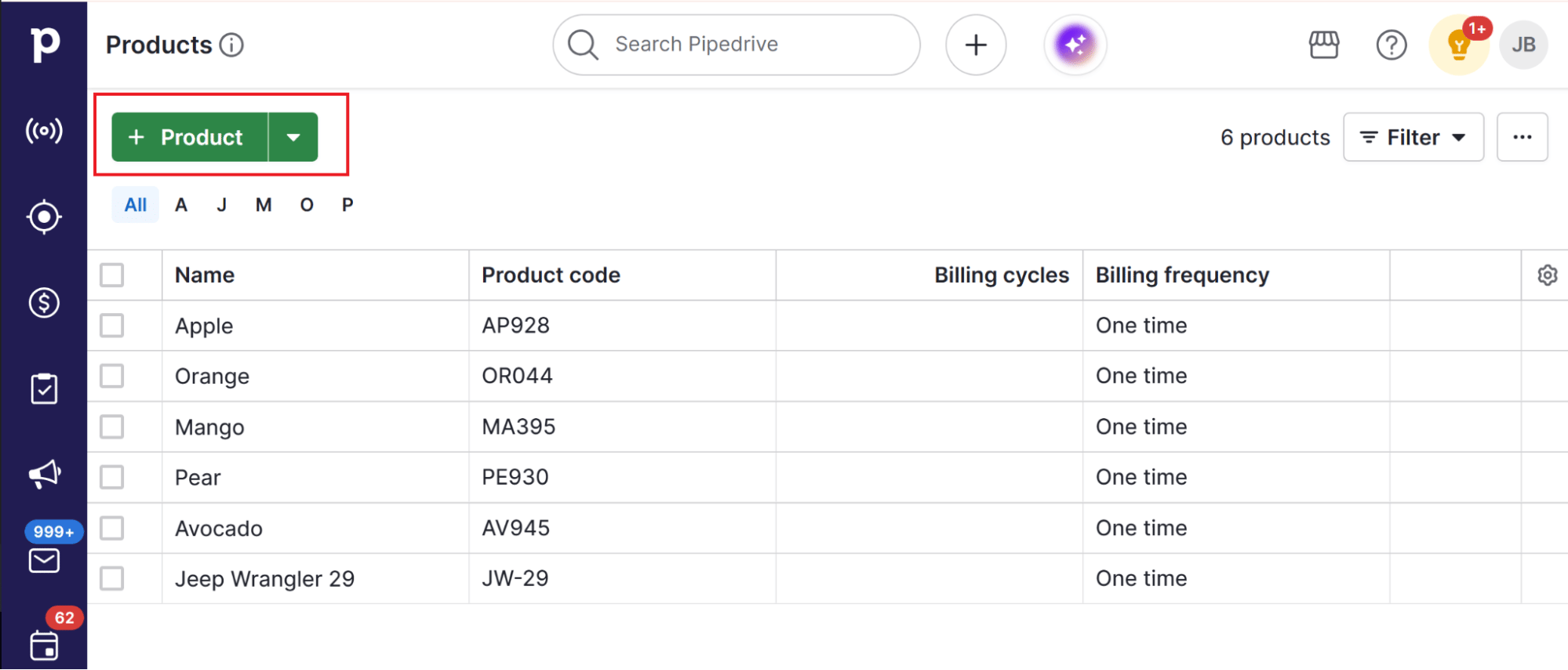
Pipedrive’s Products feature helps you manage scarcity campaigns.

First, navigate to the “Products” section and click “+ Product”. Enter the product name and set the total available quantity.

Add the scarcity limit to the name (e.g., ‘15 spots only’) so your team always sees the maximum number of sales.

Add your regular price in the main price field.
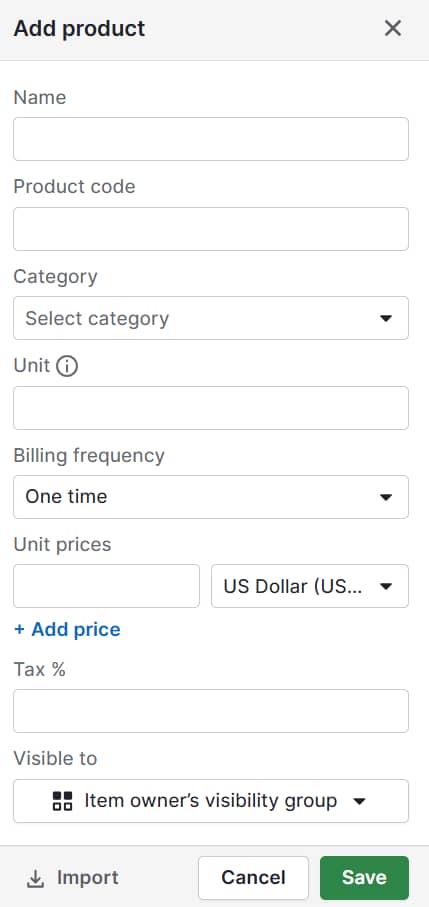
FOMO marketing Pipedrive Products feature

In the product detail view, click “+ Add variation” and name it something like ‘Early Bird Discount’. Set the discounted price here.
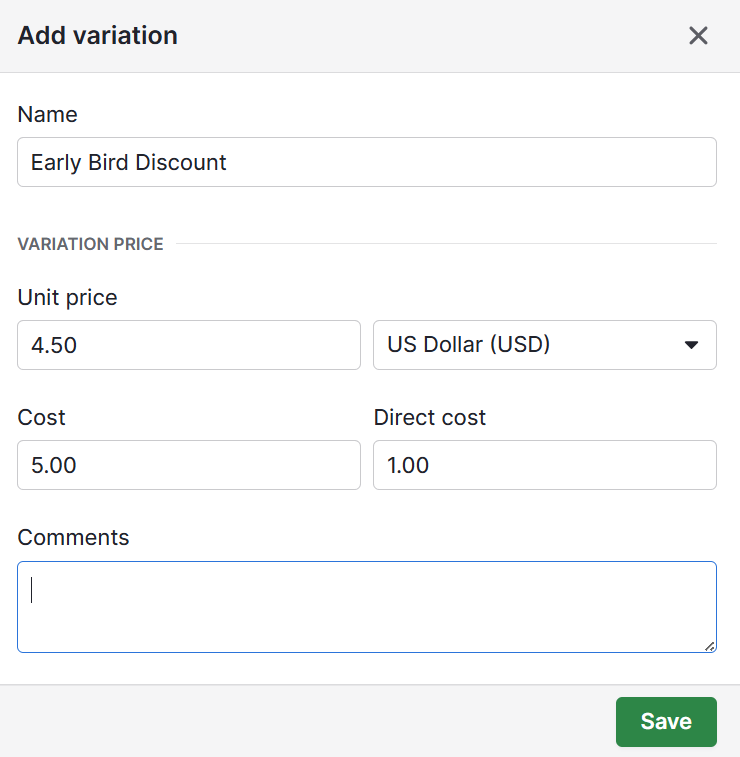
FOMO marketing Pipedrive price variation

In the product description, include all relevant details so your sales team can answer questions quickly.

When a salesperson creates a new deal for someone interested in your limited offering, they add the product.

FOMO marketing Pipedrive Products feature

The deal value automatically reflects the sale price, making it easy to track revenue from your scarcity campaign against its regular pricing.
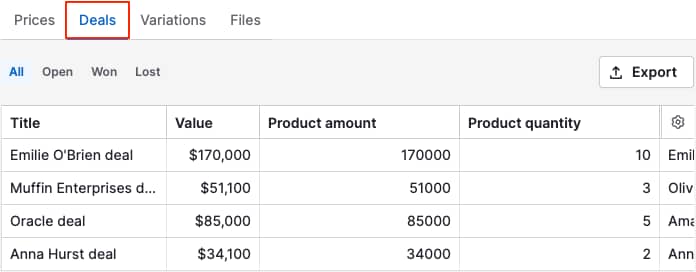
FOMO marketing Pipedrive Products prices

Track remaining spots by manually updating the unit quantity field each time you close a sale. If you started with 15 spots, change the quantity to 14 after your first booking, and so on.

Download Your Sales and Marketing Strategy Guide

Grow your business with our step-by-step guide (and template) for a combined sales and marketing strategy.

3. Build trust and desire with social proof

Social proof shows your customer base that others have already bought and benefited from your product. People who see positive testimonials and reviews feel more confident making the same purchasing decision.

This approach alleviates anxiety by showing that your offering is worth it. People naturally follow others, especially when they’re uncertain.

It’s useful for customer demographics that are more active on social media, like Gen Z and millennials.

Example: Booking.com drives urgency with real-time social proof

Booking.com uses multiple types of social proof to push travelers to book. The site shows each location’s rating and how many people viewed a hotel in a prominent place.
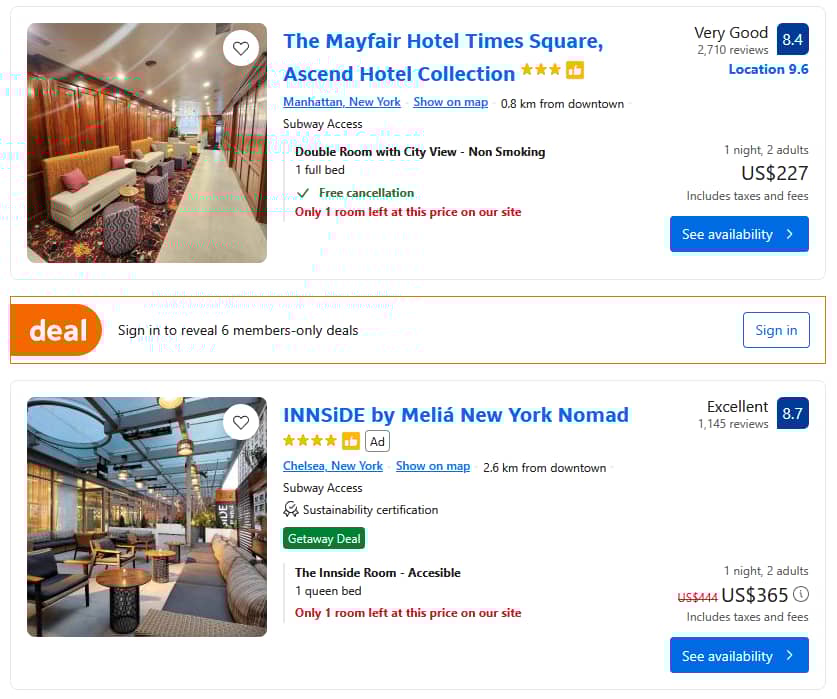
FOMO marketing booking.com example

It also displays messages like ‘3 other people are looking at this hotel right now’ and ‘only 2 rooms left at this price’.

These real-time updates create urgency by indicating active demand from other customers.

How to use social proof in your marketing

Start by collecting examples of sales success. Get testimonials, create customer stories and find usage statistics to showcase in your marketing.

Once you have social proof content, use these FOMO marketing tactics to drive action:

Social proof best practices

Why it works

Display specific customer numbers

Exact figures like ‘trusted by 3,000 businesses’ feel more credible than a vague ‘thousands of customers’.

Show recent customer activity

Real-time social proof highlights the level of demand you’re getting, showing customers they might miss out if they don’t act.

Feature testimonials from people who match your ideal customer profile

Customers trust recommendations from people with similar needs.

Include photo testimonials and video reviews

Visual proof feels more authentic than text-only testimonials.

Highlight social media mentions and user-generated content

Photos and videos from real customers are more relatable than polished content marketing.

Showcase endorsements or industry awards

A stamp of approval from a respected influencer or organization makes your brand look more legitimate.

Pipedrive’s Activities feature helps you track and collect social proof. After successful deals close, create activities to follow up and gather customer feedback.

Look for contacts with high email open rates, multiple purchases or frequent interactions with your team. Engaged customers like this are often more willing to share positive experiences.

Set up automated reminders to reach out to satisfied customers after a month or so. When you follow up, record any successful case studies in the “Notes” section of each customer’s contact record.

4. Offer exclusivity for high-value engagement

Exclusivity makes customers feel special. It gives them access to products and offers that aren’t available to everyone, creating a sense of belonging.

When you create an exclusive deal, you turn your brand into a desirable community that customers want to join.

Example: Sephora’s Beauty Insider program

Sephora’s Beauty Insider program is a tiered loyalty system that rewards customers with exclusive perks. Members get points for purchases, but exclusive access is the real draw.
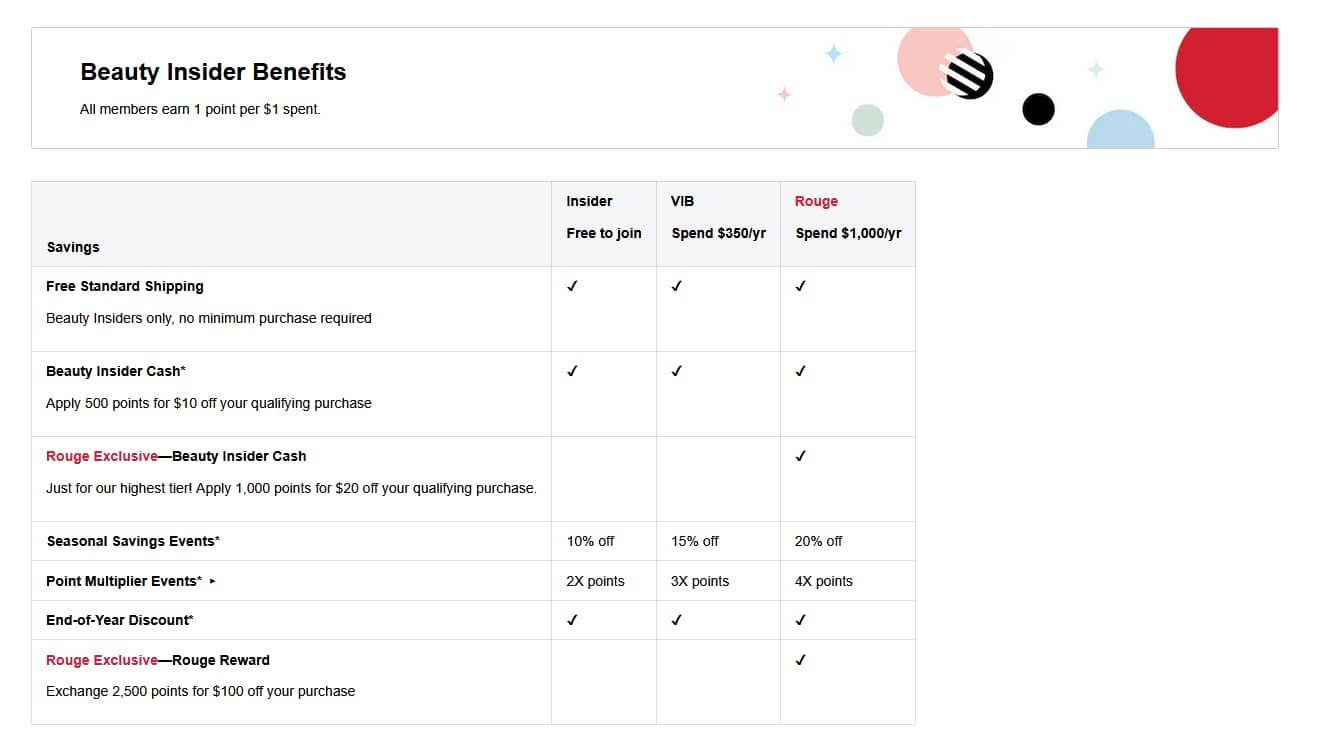
FOMO marketing Sephora example

Higher tiers unlock access to special events, new products and unique gifts, making top customers feel valued and encouraging others to spend more to reach the next level. This exclusivity creates loyal customers who keep purchasing from you.

How to offer exclusivity in your marketing

Find a suitable customer segment to target, like repeat customers or high spenders. Then, create an offer that recognizes and rewards them.

Common VIP criteria include:

  • Customers with a total lifetime value above a certain amount (e.g., over $1,000)

  • Clients who have bought from you multiple times (e.g., have more than three won deals)

  • Long-term customers who have been with you for more than a year

Once you’ve defined your VIP customers, use these tactics to create exclusive offers:

Exclusivity best practices

Why it works

Create a VIP loyalty program with tiered benefits

Rewards your best customers and incentivizes everyone to engage more and unlock better perks.

Grant early access to new products or sales

Makes members feel like insiders, creating urgency to buy before sales open to general customers.

Provide access to exclusive content or communities

Private forums and members-only content add value and strengthen your community.

Invite top customers to private events

Offers a unique experience that builds deep brand loyalty and advocacy.

Create limited-edition products for members only

Boost sales by combining exclusivity with scarcity, making the product a coveted status symbol.

Pipedrive’s Campaigns feature gives you the tools to find your most valuable customers and share exclusive experiences with them.

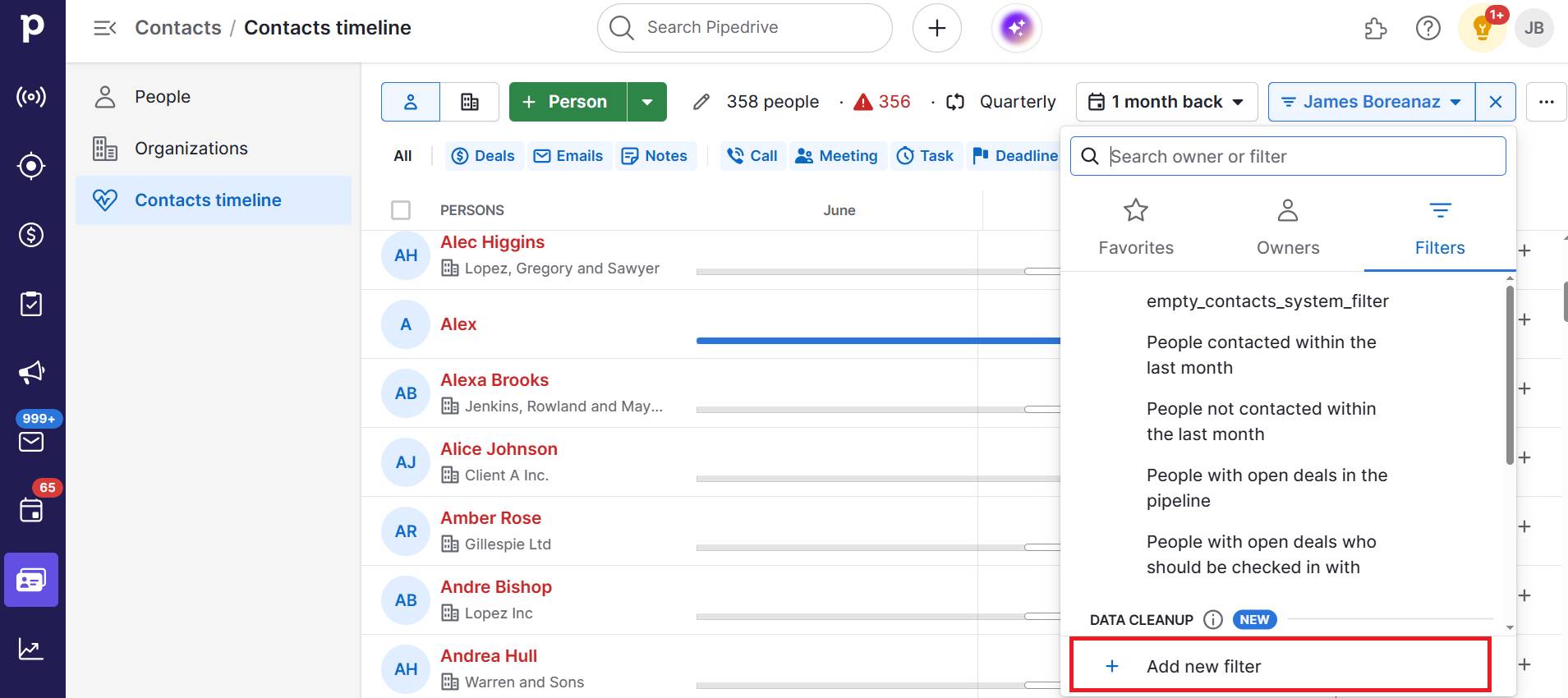
First, go to your contacts list and create a new filter.
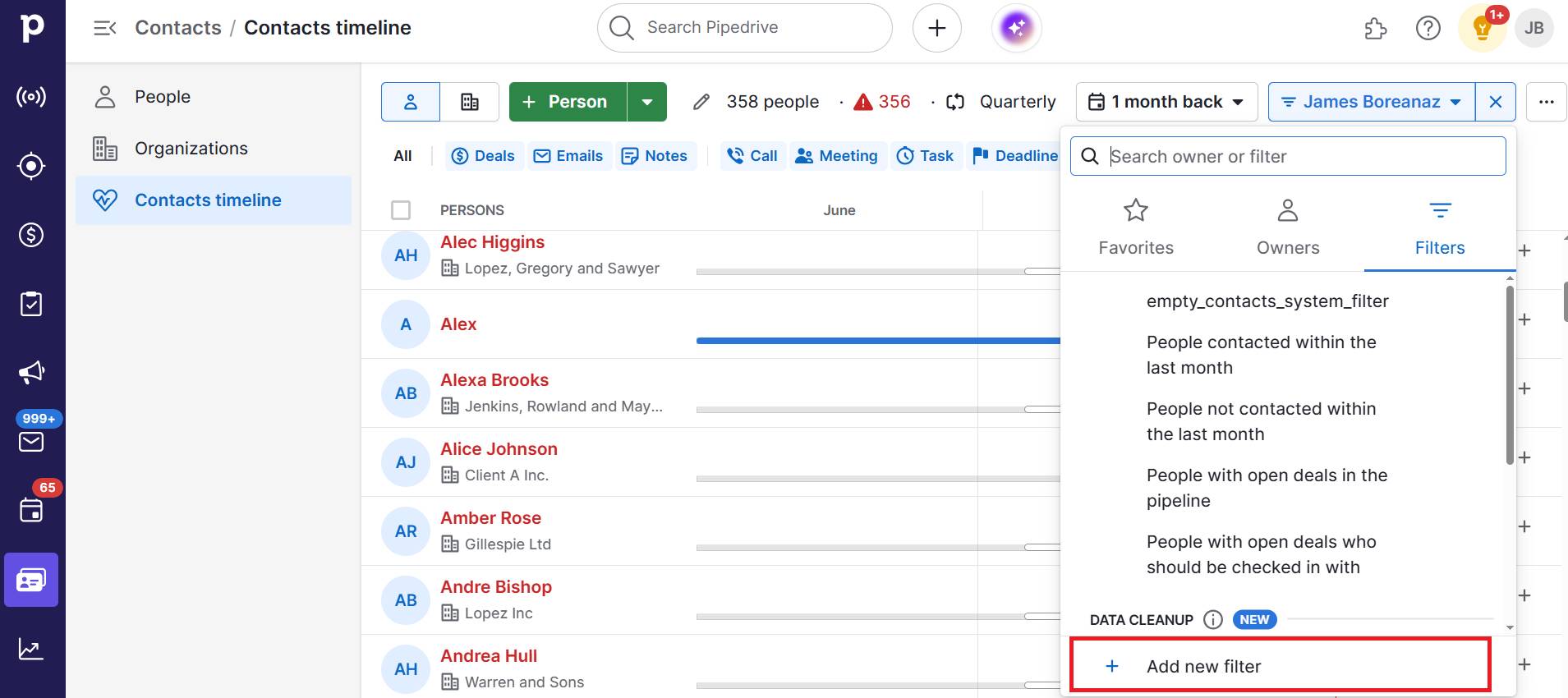
FOMO marketing Pipedrive Campaigns filters

Set the conditions based on the criteria you chose for your VIPs. For example, you could find high spenders by setting the filter condition to the “Total value of won deals”.
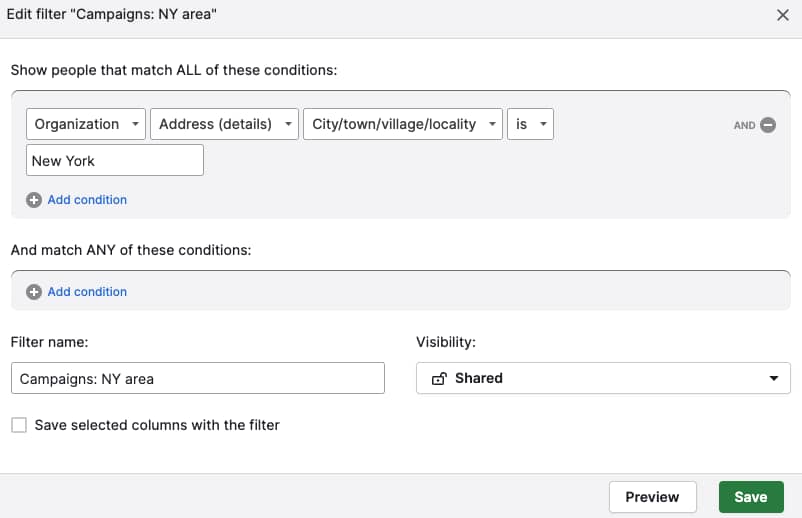
FOMO marketing Pipedrive Campaigns filter edits

Once you apply the filter, Pipedrive will show you who meets your criteria. Save this filter and give it a name, like ‘VIP Customer List’.

Create a new campaign and choose your VIP filter as the recipient. Use Pipedrive’s AI email writer to speed up this process. The email will only go out to that group when you hit send.

5. Use countdown timers and expiring content

Countdown timers create visual urgency. When people see the time literally ticking away, it triggers their fear of missing out and makes the time pressure impossible to ignore.

Expiring content, like Instagram Stories, leverages the same principle. Viewers know the content won’t be around forever, so they’re more likely to watch it right away.

Example: Best Buy’s “deal of the day” drives quick purchases

Best Buy is one of the best FOMO marketing examples. It has prominent daily countdown timers for deals, showing when each offer expires.

When the deal ends, Best Buy removes it entirely. Customers know that when the timer hits zero, the discount disappears forever.
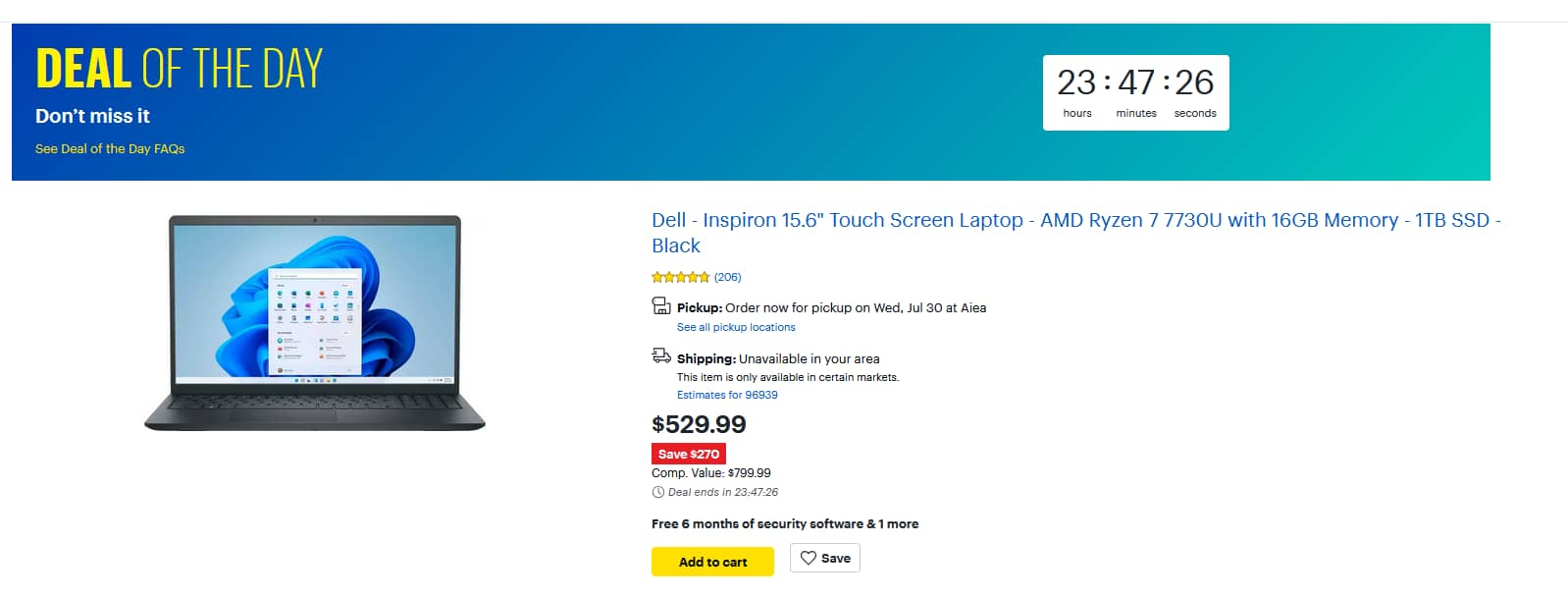
FOMO marketing Best Buy example

The timer element drives customers to make quick decisions rather than bookmarking deals for later.

How to use countdowns in your digital marketing

Come up with a few promotions and create deadlines you can stick to, then use these best practices to make the most of your countdowns:

Countdown timer best practices

Why it works

Add a banner timer to your website during a sale

The constantly clicking clock reminds customers that the opportunity is slipping away.

Embed a countdown timer in your promotional emails

It brings urgency to the customer’s inbox and makes your ‘last chance’ emails more effective.

Use Instagram or Facebook Stories for flash sales

The 24-hour lifespan of Stories is perfect for deals that only last one day and encourage daily check-ins.

Set an expiration timer on a customer’s shopping cart

Reduces cart abandonment by letting customers know their items will become a missed opportunity if they wait too long.

Use an exit-intent pop-up deal to convince customers to buy

Gives website visitors a reason to buy (like freebies or cheap shipping) if they stay on your store and complete their purchase.

Pipedrive’s workflow automation lets you trigger time-sensitive emails without lifting a finger. You can set up workflow triggers that send countdown emails based on deal stages or dates.

When someone shows interest in your offer, create a deal and let automatic workflows handle the follow-up sequence. Pipedrive will send your initial email, then trigger reminder messages at your chosen intervals.

Pipedrive’s Campaigns feature lets you build emails with HTML blocks for countdown timers. Simply copy and paste the HTML code from your third-party email marketing tool into Pipedrive’s HTML block.

6. Create anticipation with pre-launch waitlists

A pre-launch waitlist builds demand for a product before it’s even available. When you ask potential customers to sign up for a waitlist, you create a buzz.

This strategy’s bonus is that it gives you a ready-made email list of warm leads to market to on day one.

Example: Nintendo Switch generates massive pre-launch demand

Nintendo announced the new Switch console months before release and opened pre-orders with limited stock quantities. It built anticipation with carefully timed reveals and exclusive events leading up to launch.
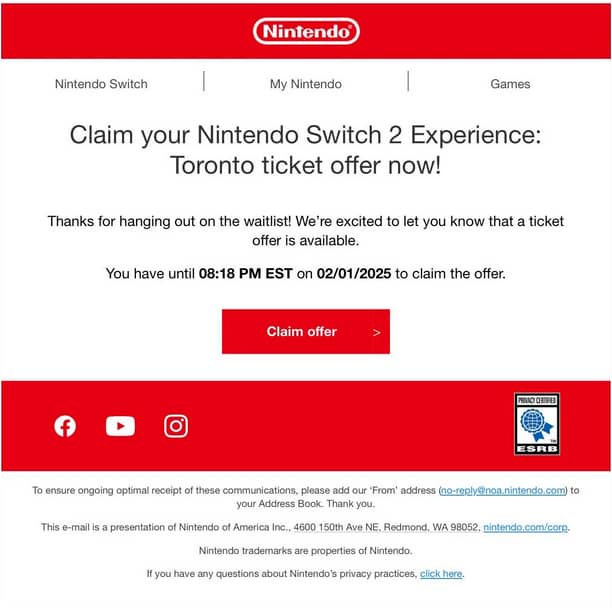
FOMO marketing Nintendo Switch example

Customer interactions in the lead-up also gave Nintendo valuable data about expected sales volumes, which helped plan production and marketing budgets.

How to use pre-launch waitlists in your marketing

Plan your waitlist campaign well before your product is ready. The goal is to build momentum so you can launch with a bang.

Use these sales tactics to build effective waitlists:

Pre-launch waitlist best practices

Why it works

Create a simple landing page with a clear value proposition

Clearly explains what exciting thing is coming and focuses on the single action of signing up.

Offer an incentive for joining the waitlist

Give customers a launch-day discount or limited beta access to encourage sign-ups.

Keep your waitlist engaged with regular updates

Send periodic emails and progress updates to keep your future product top-of-mind.

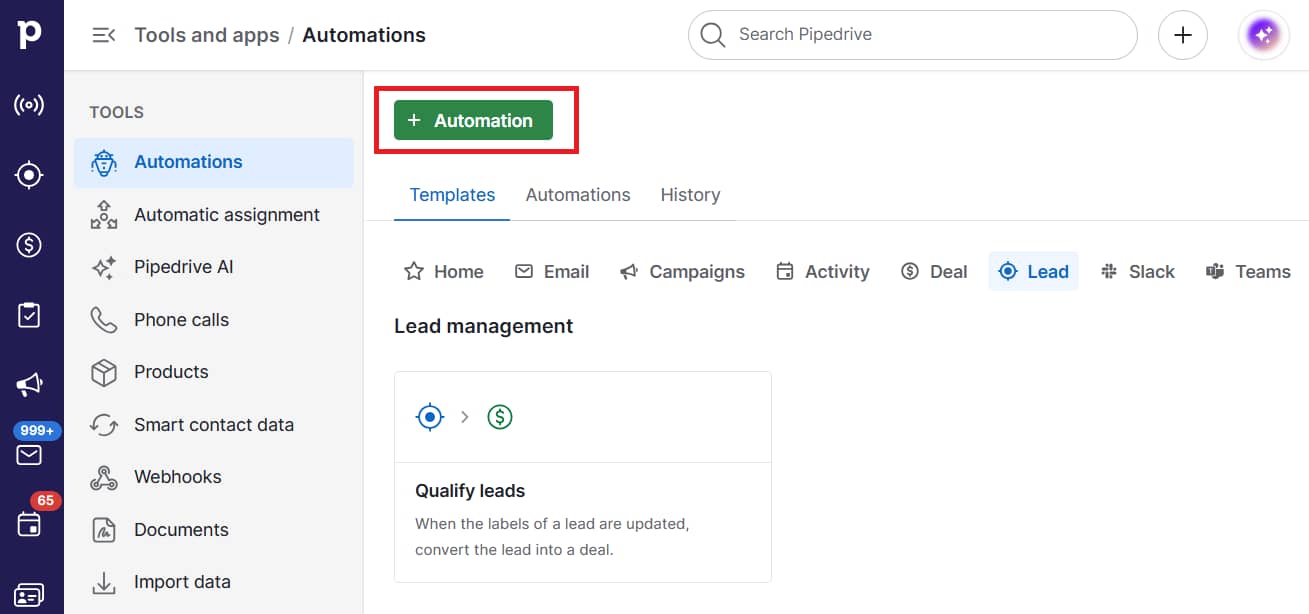
Pipedrive’s LeadBooster feature includes Web Forms, which lets you build customizable pages that sync with your CRM system.

Use Web Forms to add signup fields to your product pages or send them directly to customers via email or social media.

Set up custom fields in your forms to gather key information about your customers’ needs and preferences. Ask questions like ‘Which features are you excited about?’ to find out what your target audience wants most.

When a prospect submits a form, Pipedrive will automatically create a contact and send you an email notification.

You’ll be able to see their responses in real time, which will give you insights to guide your launch strategy and product management.

Recommended reading

https://www-cms.pipedriveassets.com/blog-assets/product-launch-emails.png

7 product launch email campaigns to start selling

7. Spark engagement with FOMO-driven contests and giveaways

Contests and giveaways tap into the fear of missing out on a valuable prize. As there are only a limited number of winners and a fixed time to enter, participants feel a strong urge to act quickly.

This strategy helps grow your audience, build brand awareness and generate leads – all while providing a fun customer experience.

Example: Glossier’s limited-edition giveaways

Glossier runs regular Instagram contests for exclusive products that customers can’t get elsewhere. To extend the contest’s reach, it sets entry requirements, such as sharing posts.

OMO marketing Glossier example

Glossier then announces winners publicly and showcases their prizes, which helps keep participation rates high in future giveaways.

How to use contests and giveaways in your marketing

Find something your audience wants but can’t get elsewhere. Custom or unique products create more FOMO than generic prizes like gift cards.

Once you’ve got a compelling prize, use these strategies to maximize engagement:

Contest and giveaway best practices

Why it works

Set clear entry deadlines

A limited entry time creates urgency and prevents people from forgetting your contest.

Require actions that expand your reach

Tagging friends and sharing posts grows your audience organically.

Announce winners publicly

Social proof shows the contest is legitimate and builds excitement for the next giveaway.

Create multiple ways to earn entries

Bonus entries for extra actions (like subscribing to your email newsletter) increase engagement.

Pipedrive’s Insights and Reports lets you build custom dashboards to track your giveaway results.

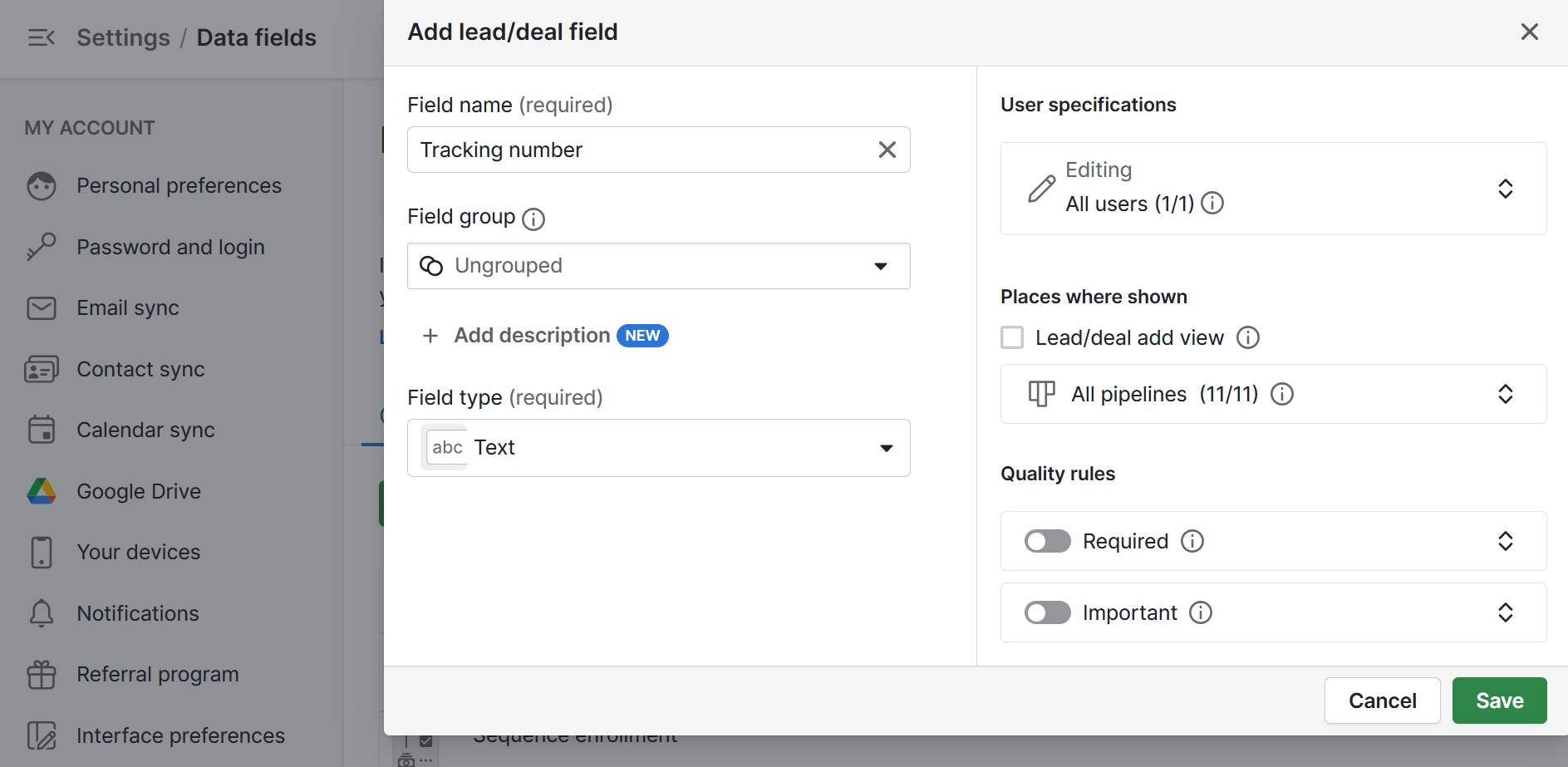
To enable tracking, go to “Company Settings” > “Data fields” and set up a custom source channel.
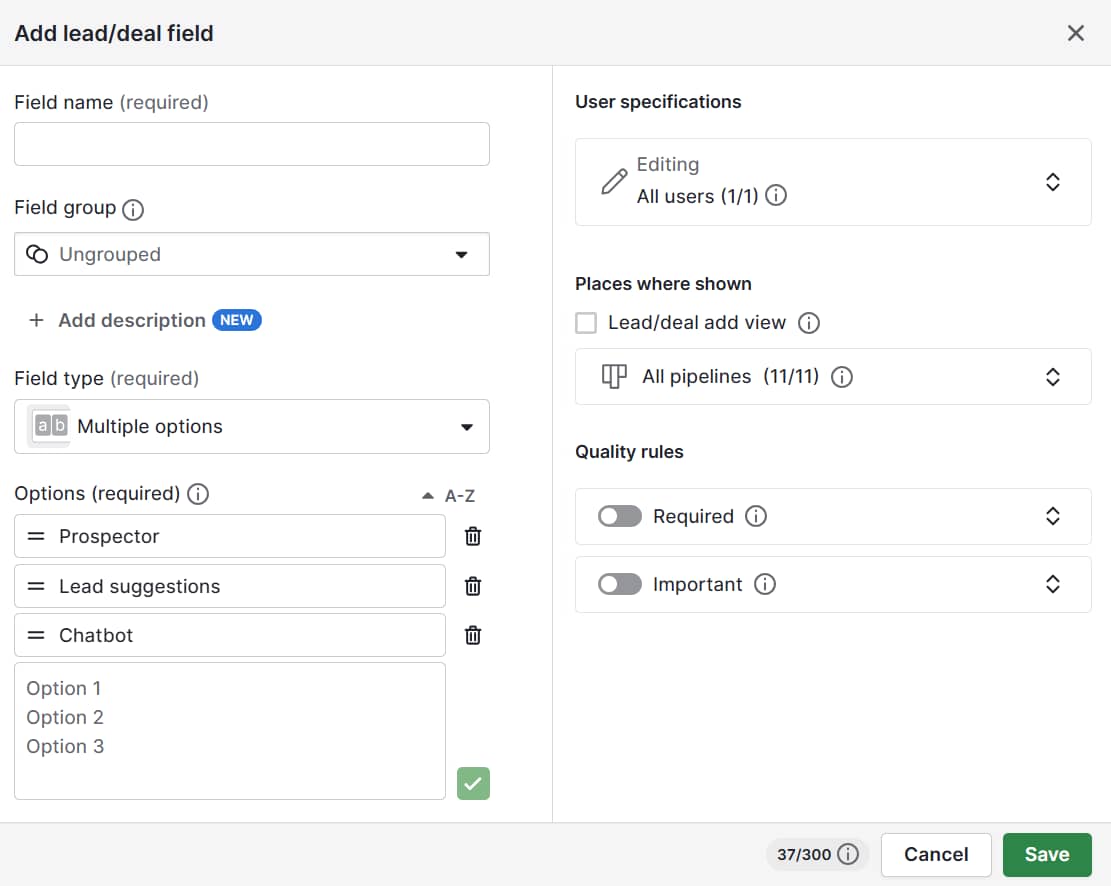
FOMO marketing Pipedrive source channel

Add a specific value like ‘Giveaway contest 19th July’. When you add new contacts from the giveaway, select this source channel so you know where they came from.

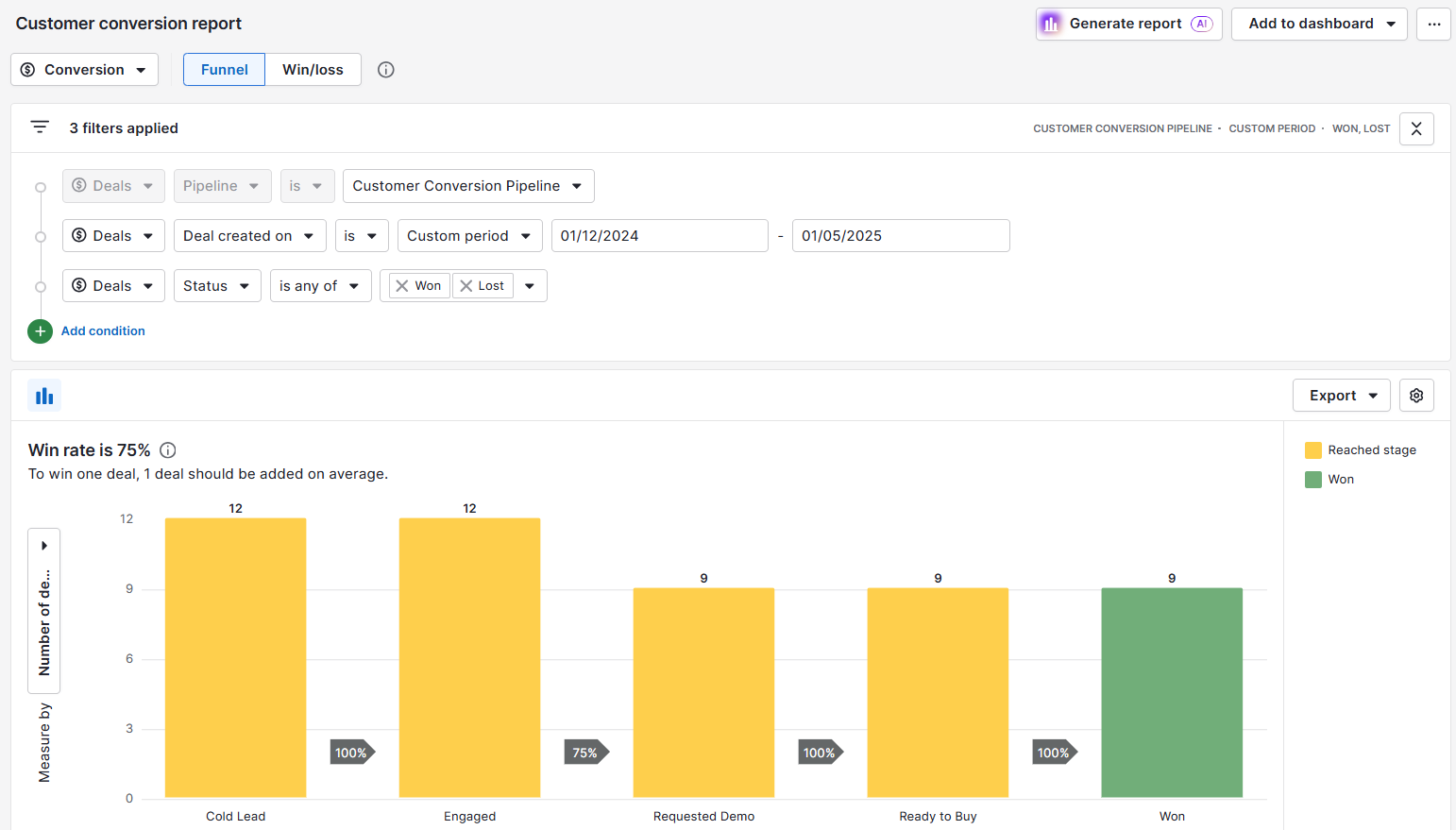
After you launch your giveaway, create a custom report to see how many leads came from your giveaway. Go to “Insights” and hit “+ Create” > “Report”.

In the report builder, find the “Filters” section and add a filter for your customer source channel.

When a sales rep creates a new deal from a contest entrant, the dashboard will update your charts.

FOMO marketing Pipedrive insights report

You’ll see the financial impact of your giveaway at a glance, giving you concrete data to prove the value of your marketing campaigns.

Recommended reading

https://www-cms.pipedriveassets.com/Psychographics-in-Marketing.png

Psychographics in marketing: the secret to messages that resonate

Final thoughts

Effective FOMO marketing helps customers make decisions when an offer genuinely benefits them. When you understand the psychology of urgency, you convert browsers into buyers.

Begin with one or two strategies that fit your audience, then measure the impact and refine your approach.

When you’re ready to put the power of FOMO marketing into action, use Pipedrive to bring your sales process together.

Start your 14-day free trial to see how it helps you capture leads and streamline FOMO marketing campaigns.


How to Say No to a Customer

Software Stack Editor · August 18, 2025 ·

Saying “no” to a customer can feel risky, but it’s a vital sales skill. Whether it’s a feature request, pricing pushback or timeline that’s out of scope, knowing how to decline while keeping the relationship intact is what separates good sales reps from great ones.

This guide explores when and how to say “no” in a way that builds credibility, avoids misalignment and earns long-term respect. It covers tactical phrasing tips, example scenarios, common missteps to avoid and how the right tools can support early expectation management.

Key Takeaways for how to say no to a customer

  • Saying “no” in sales sets boundaries, protects deal integrity and keeps solutions aligned with customer needs.

  • Handled well, it builds trust, prevents overpromising and focuses resources on the right opportunities.

  • Pipedrive helps by giving full deal visibility, tracking requests and spotting red flags early.

  • Equip your team to handle tough conversations – start your free 14-day trial of Pipedrive.

What does it mean to say no in sales?

Saying “no” in sales helps maintain alignment and protect the integrity of the deal, ensuring both sides stay focused on what truly adds value. It’s all about setting clear boundaries and managing expectations early, before they lead to churn, scope creep or unmet deliverables.

Often, it means pushing back on requests that compromise value or feasibility. That might include declining heavy discount demands, flagging timeline issues or explaining why a custom feature isn’t viable. It can also involve reframing the conversation to keep the solution aligned with the customer’s actual needs.

Handled with care, these moments build trust rather than tension. When sales reps combine transparency with empathy and suggest credible alternatives, they position themselves as long-term partners, not just vendors trying to close a deal.

When should you say no to a customer?

Knowing when to say “no” is just as important as knowing how. Not every deal is a good deal, and forcing alignment where there is none can lead to wider issues. Recognizing red flags early helps sales teams protect resources, maintain credibility and stay focused on opportunities.

There are several signs that suggest it may be time to pause or rethink a deal. One of the most common is when a customer asks for features that fall outside the product’s scope. Other red flags include vague or incompatible use cases, significant discount demands without long-term commitment or expectations that don’t match your standard offering.

Recognizing these patterns early helps sales teams avoid overpromising and protect resources for larger opportunities.

Agreeing can result in poor onboarding experiences, churn or resource strain that undermines profitability. Frameworks like BANT (budget, authority, need and timeline) or MEDDIC (metrics, economic buyer, decision criteria, decision process, identify pain and champion) help uncover misalignment early.

These frameworks give salespeople the confidence to say “no” when needed and focus on deals that are more likely to succeed.

The most important persuasion tool you have in your entire arsenal is integrity

– Zig Ziglar, sales trainer

Setting boundaries without damaging relationships

Saying “no” sets boundaries that preserve mutual value and support a healthier, more sustainable customer relationship.. Customers often respect a clear “no” more than a forced “yes”.

Keep it collaborative, not confrontational. Rather, be honest about what’s not possible and why. Provide a simple explanation, like focusing on core stability over new features, builds understanding and keeps trust intact.

As Spotio notes, 76% of B2B buyers expect personalized attention and solutions. Being honest about limitations strengthens credibility.

Recommended reading

https://www-cms.pipedriveassets.com/Overcoming-Sales-Objections.png

Overcoming Sales Objections: Plan, Persist, and Convert

Saying no to a customer: tips and best practices

Saying “no” in sales requires strategic skill – combining empathy, timing and clear communication to guide deals in the right direction. While it might feel uncomfortable at first, especially in a culture that rewards “yes”, knowing when and how to say “no” is critical for sustainable business growth.

Saying “no” is essential to building trust, protecting your team’s working capacity and ensuring customer satisfaction. It also helps qualify opportunities more effectively, preventing time spent on deals that are unlikely to convert or scale.

When handled effectively, saying “no” doesn’t harm relationships – it reinforces them by building credibility and setting clear expectations. It positions you as a credible partner who prioritises long-term outcomes over short-term wins and shows customers that you’re honest about what’s possible, that you care about setting them up for success and that you’re committed to delivering value, not just closing a deal.

In fast-moving sales cycles, clear boundaries often lead to clearer outcomes.

The art of leadership is saying no, not yes. It is very easy to say yes.”

– Sir Anthony Charles Lynton Blair, former United Kingdom Prime Minister and Executive Chairman of the Tony Blair Institute for Global Change

Frameworks for common pushbacks

Preparing for common objections helps reps respond with clarity and confidence. Instead of vague reassurances, a structured approach shows professionalism and builds trust.

These responses also create consistency across the team, making it easier to coach, track patterns and improve deal outcomes over time.

Customer Objection

Response Approach

Feature request outside of scope

Acknowledge the request, clarify current capabilities and suggest an alternative solution or workaround.

Request for pricing concessions

Reinforce the value behind pricing, explain the structure and redirect focus to long-term outcomes.

Compressed implementation timeline

Set clear expectations on delivery standards and outline a realistic schedule with defined milestones.

Misaligned or unsupported use case

Clarify intended use cases, highlight proven outcomes and recommend solutions better suited to their need.

Request to bypass standard process

Explain the process’s importance in ensuring quality and reliability. If possible, offer a flexible but compliant alternative.

Recommended reading

https://www-cms.pipedriveassets.com/Framework-CRM.png

How to build a framework for CRM success

Why saying no actually builds trust

Agreeing to every request can raise red flags. Buyers may start to doubt your promises or question whether your team can realistically deliver. Overcommitting early often leads to missed expectations later.

A well-timed “no” communicates confidence and credibility. It shows that you understand the limits of your product or service, respect the customer’s objectives and are focused on delivering real outcomes.

According to TrustPilot, millennial B2B buyers, who now make up 60% of tech purchasing decisions, specifically seek transparency from vendors. Buyers seek honesty more than a polished sales pitch.

When to escalate and when to walk away

Not every “no” needs to be final. When a valued customer requests a feature or adjustment, it may be worth escalating internally for review. A strategic response that leaves room for follow-up highlights you’re taking the request seriously while remaining transparent about current limitations.

Escalation is appropriate when the request aligns with the broader product vision, has revenue potential or represents an opportunity to strengthen a key account.

According to Prezentor’s The State of B2B Sales in 2023, 48% of sellers struggle to clearly communicate value to customers. Saying “no”, when used thoughtfully, helps sharpen the value conversation, focusing on what matters most and strengthening buyer trust.

However, if the request goes against core product fit, undermines your pricing model or involves behavior that strains your team, it may be best to walk away.

Respectfully declining protects your team’s resources and long-term credibility. The goal isn’t to close every deal, but to close the right ones.

How Pipedrive helps you say no more effectively

Saying “no” with confidence starts with having a clear picture of the deal. Pipedrive gives sales teams the visibility needed to assess fit early.

Pipedrive CRM enables tracking deal stages, stakeholders, objections and activity history in one central place. Documenting every conversation and request makes it easier to spot red flags before they escalate.

Pipedrive’s structure supports consistency. Sales reps can log feature requests, track scope changes and flag misalignment using custom fields. It creates a shared understanding across teams, helping avoid miscommunication during handoffs or renewals.

Features like activity tracking and goal-setting help automate reminders and keep everyone aligned.

With AI-powered insights and prioritization tools, reps can focus their time on the right opportunities. By identifying what aligns with product fit and business goals, teams are better equipped to protect their time, maintain trust and say “no” when it’s the right thing to do.

FAQ

  • Be honest and empathetic. Clearly explain why something isn’t possible and, when possible you can, offer an alternative. This shows transparency and reinforces your role as a trusted advisor.

  • If the fit isn’t right, communicate respectfully and stay solution-focused. Set boundaries, explain your reasons and suggest alternatives when appropriate to preserve trust.

Final thoughts

In sales, the ability to say “no” reflects confidence, experience and a commitment to long-term success. Setting boundaries clearly and confidently leads to more customer satisfaction and healthier deal pipelines. Reps who handle pushback effectively help customers stay focused on the right solutions and outcomes throughout the sales process.

The most respected sales professionals know when to push forward and when to pause. They don’t shy away from difficult conversations. Striking the right balance between empathy and decisiveness protects your business model while reinforcing your role as a trusted advisor.

With the right systems and culture in place, saying “no” becomes a strategic advantage. In a competitive market, teams that lead with clarity and integrity stand out.

How to Launch Smarter With Just One Funnel Page

Software Stack Editor · August 14, 2025 ·

The post How to Launch Smarter With Just One Funnel Page appeared first on ClickFunnels.

You’ve got a dream—a business idea you believe in and can’t stop thinking about. But before you invest weeks into logos, product tweaks, and building a full-blown website, there’s a smarter, faster way to find out if your idea has traction: launch a one-page sales funnel for your small business.

Why start there? Because the market doesn’t lie. You don’t need more opinions from friends or feedback loops that go nowhere. What you need is data: real clicks, real signups, real buyer behavior. That one page can show you if your idea has legs or if it’s time to shift gears before you pour in more time, money, or energy.

A one-page funnel isn’t just a shortcut. It’s a strategy. It gives you feedback before you invest too much time, energy, or money into something the market may not want. When you lead with results, not assumptions, you build smarter.

In this blog, we’ll walk you through validating your idea using a single funnel page. Stop guessing, start growing, and move one step closer to the business you’ve been dreaming about.

  • Why Traditional Validation Slows You Down
  • What Is a One-Page Funnel?
  • Why One Page Is Enough to Get Proof
  • What to Include on Your One-Page Funnel
    • Headline
    • Subheadline or Short Description
    • Visual or Video
    • Call-to-Action
    • Credibility Elements
  • Turn Small Actions into Big Results
  • Use A/B Testing to Find Your Winner
  • When to Scale Beyond One Page
  • Start Building What Works

Why Traditional Validation Slows You Down

The old way to test a business idea is long and complicated. You build a brand, set up a full website, launch social channels, and try to develop the product before you know whether anyone wants it.

This approach is slow, expensive, and risky. You get trapped in perfection mode before you’ve proven demand.

But here’s the truth: the market decides. And the fastest way to get their verdict is to give them something to respond to.

That’s where a one-page funnel comes in.

What Is a One-Page Funnel?

A one-page funnel is a focused page designed to test one thing: your core idea. Whether it’s a product, service, course, or offer, this page presents the value clearly and invites visitors to take a single action.

That action might be:

  • Signing up for a waitlist
  • Downloading a free lead magnet
  • Pre-ordering your offer
  • Booking a discovery call
  • Buying a low-ticket version of your offer

The goal is not to pitch everything. It’s to test one idea with one message for one audience. With an intuitive funnel builder, you can build this page in under an hour using templates proven to convert. You spend time learning, not designing.

Why One Page Is Enough to Get Proof

You don’t need a full funnel to discover if your idea works. You just need to answer three key questions:

  1. Are people clicking on your offer?
  2. Are they opting in, buying, or showing interest?
  3. Are they engaging with your messaging?

One funnel page gives you data on all of this, without the overhead of building an entire brand around an untested concept.

It removes the fluff and forces you to focus on what matters most: does it solve a problem people care about? If the answer is yes, you’ll know fast. If it’s no, you can pivot before wasting resources.

What to Include on Your One-Page Funnel

Your funnel page must do three things well: grab attention, build belief, and drive action. Here’s a breakdown of how to set up your one-page:

Headline

Start with a clear, benefit-driven hook that speaks to the problem you solve.

Subheadline or Short Description

Reinforce the outcome and offer.

Visual or Video

Show the concept, transformation, or product.

Call-to-Action

Provide one button or form that invites immediate engagement.

Credibility Elements

If available, include testimonials, stats, or social proof.

Avoid clutter. Keep the page tight and conversion-focused. You’re testing a signal, not building an empire (yet).

Turn Small Actions into Big Results

Not everyone will buy the first time they see your idea. That’s why you should define your funnel to capture micro-commitments.

An opt-in form, for example, tells you someone is interested enough to share their email. A click on your CTA shows curiosity. These small actions indicate real demand, even before money changes hands.

Once you’ve captured that interest, you can nurture the lead through email automation, retargeting, or follow-up pages inside your funnel builder.

These micro-wins give you momentum while you refine your bigger offer.

Use A/B Testing to Find Your Winner

Even with one funnel page, you can test variations. Try two headlines, test different CTAs, and swap in other visuals.

Your funnel builder should make it easy to A/B split test your page and see what performs best. This isn’t just about optimization. It’s about learning what resonates with your audience.

You don’t have to be perfect on the first try. But every test brings you closer to an idea that truly converts.

When to Scale Beyond One Page

Once your page is converting—meaning people are opting in, buying, or booking—you’ve got validation. That’s when you can confidently scale.

Now you can build the rest of your funnel:

  • Add upsells and downsells.
  • Layer in email automation.
  • Launch retargeting ads.
  • Build out a content or community platform.

But none of this should happen until your single-page test proves it’s worth doing. One funnel page is your MVP (minimum viable product). It’s your fastest path to market clarity.

Start Building What Works

Too many business ideas die in development. Not because they’re bad, but because they weren’t tested fast enough. Your idea deserves a real shot. A one-page sales funnel for your business startup gives it one that’s fast, focused, and feedback-driven.

You don’t need to launch big. You need to launch smart. You need to find out if your message moves people to act. If it does, the rest will follow.

Try ClickFunnels for Free Today!

Thanks for reading How to Launch Smarter With Just One Funnel Page which appeared first on ClickFunnels.

Optimize CRM Notes: Key Features and Benefits

Software Stack Editor · August 13, 2025 ·

Understanding the essential features that enhance customer relationship management (CRM) note-taking can help businesses optimize their processes and improve client interactions.

An effective CRM note system allows salespeople to quickly access the data they need and collaborate effortlessly.

In this guide, we’ll explore the key features of CRM note optimization, discuss the benefits of effective note management and help you choose the best note-taking CRM for your needs.

Key takeaways for CRM notes

  • CRM notes record customer and prospect interactions, keeping teams aligned and communication consistent

  • Optimized notes improve collaboration, speed onboarding and make follow-ups more effective

  • Pipedrive’s CRM notes link to deals and contacts, offer quick search and keep teams informed

  • See the difference for yourself – try Pipedrive’s CRM notes free for 14 days and elevate your sales process

What are CRM notes

CRM notes are a core function of customer relationship management (CRM) tools that enable users to document and store information about customer and prospect interactions. CRM notes also help ensure that every team member is informed and aligned, leading to more personalized, consistent and efficient customer service.

However, CRM notes do more than just record information. By keeping detailed records of each exchange, businesses can track the progress of customer engagements, anticipate future needs and respond more effectively to inquiries.

This level of attention to detail fosters customer trust and customer loyalty, ultimately contributing to higher customer satisfaction and retention rates.

Key features of CRM notes

Optimizing CRM notes involves key features that enhance the overall customer relationship management process, making it easier for sales teams to capture, access and utilize customer information.

The best CRM note features allow for automated data entry, meaning CRM tools can pull relevant data into notes automatically, saving time and reducing manual errors. Customizable templates also play a significant role, ensuring consistency in recorded details tailored to specific contact types.

By connecting notes to customer profiles, deals or appointments, contextual linking offers immediate context for a comprehensive view of interactions. This feature ensures that every piece of information is interconnected, giving sales teams a clearer understanding of all types of customers and engagements.

The ability to collaborate and share notes within the CRM fosters teamwork and ensures everyone is on the same page. Advanced search and filter functions make it easy to retrieve notes quickly based on keywords, dates or associated deals, improving overall efficiency.

By integrating these features, CRM notes become a powerful tool that drives efficiency and deepens customer intelligence, leading to improved performance across the board.

Note: According to a survey by Resco, 74% of companies say CRM technology gives better access to customer data, and 64% believe it improves relationship management.

Benefits of optimizing CRM notes

Optimizing CRM notes like those in Pipedrive can significantly boost sales teams’ productivity and efficiency. By meticulously curating these notes, teams ensure every customer interaction is logged with maximum detail and relevance. This thorough approach enables a deep understanding of customer behavior and preferences over time.

A key benefit is the advanced knowledge sharing that clear, concise best notes facilitate. Teams can seamlessly exchange insights about customers, fostering better collaboration. Detailed notes also pave the way for improved follow-ups, allowing sales representatives to tailor their communications more effectively, which can increase success rates.

Additionally, new team members can quickly get up to speed by reviewing the comprehensive historical notes for faster onboarding and integration.

The best notes CRM elevates customer assistance excellence. With a complete history of client meetings readily available, customer service teams can deliver more cohesive and personalized experiences. This rich historical context guarantees that future exchanges are informed by past engagements, making customers feel valued and understood.

Ultimately, Ultimately, effective CRM notes equip sales and customer success teams with the critical information they need for informed decision-making, leading to improved efficiency and business growth.

Recommended reading

https://www-cms.pipedriveassets.com/blog-assets/measure-and-track-entire-team_blog.jpg

How to measure and track your entire sales team’s performance

Best practices for CRM note management

Efficient CRM note management is exemplified by a sales team that consistently captures and accesses crucial customer information with ease.

Consistency is key. When every team member follows a standardized format for notes, it ensures clarity and easy retrieval. Clear documentation captures interaction trends and action items, enabling personalized and meaningful engagements.

Accessibility allows authorized team members to quickly access notes, ensuring a seamless customer experience. Timeliness in updating notes right after exchanges preserves accurate details, preventing any information from being lost.

Prioritizing urgent issues or follow-up actions in notes ensures that pressing customer needs are promptly addressed, showcasing your team’s responsiveness. Regular reviews keep data current and relevant, preventing outdated information from affecting customer connections.

By embracing these best practices, CRM notes become a powerful tool for nurturing customer relations and driving sustained growth and success.

Choosing the right CRM for note optimization

Selecting the right CRM solution to enhance note-taking efficiency is vital for business owners looking to keep organized and actionable customer records.

When considering CRM options, it’s essential to look for features that support effective note management. Pipedrive truly shines in this aspect, offering a user-friendly structure that allows thorough records for each contact to be added and retrieved easily.

Pipedrive supports seamless tracking of customer habits and historical communications, providing a comprehensive view of each customer. Its customizable fields enable businesses to tailor notes to specific needs, enhancing the information’s relevance and usability. The CRM system’s rich text capabilities ensure detailed and readily available notes.

Pipedrive also offers immediate visibility into past notes, helping teams maintain a cohesive and informed approach to customer service.

Choosing a CRM like Pipedrive, which blends intuitive note-taking features with robust customer management tools, can be critical in supporting business success for organizational progress.

Why Pipedrive’s CRM notes stand out

Pipedrive emerges as a highly effective tool for businesses prioritizing sales success. Pipedrive stands out for its clean, intuitive note interface, which is built for sales productivity.

The CRM’s notes system intelligently integrates with the sales pipeline, linking rich customer insights directly to deals and contacts. More than passive storage, the system contributes directly to pipeline visibility.

Pipedrive’s CRM notes are powerful tools for recording customers’ preferences and engagements, providing unparalleled access to their history. This access is vital for businesses that foster long-term client connections and provide consistent, high-quality interactions.

Moreover, Pipedrive CRM notes keep sales teams consistent and informed, nurturing a unified approach to customer service.

Feature

Benefit

Detailed notes

Enables recording comprehensive information.

Direct link to deals/contacts

Simplifies tracking of client history.

Enhances team alignment

Ensures a cohesive customer service approach.

Streamlines sales process

Assists in prioritizing next steps.

Pipedrive’s CRM notes equip business owners and sales professionals with the arsenal required for business growth, grounding every sales pitch in a well-documented context of customer data visibility.

Future trends in CRM note-taking

The future of CRM note-taking is intricately linked with advancements in AI technology. As AI algorithms become more proficient at understanding natural language, CRM tools will likely see a surge in predictive note-taking features.

These intelligent systems will be capable of preempting the needs of sales teams, suggesting note details and automating the entry of customer preferences. Consequently, sales representatives can focus more on personalized communications rather than manual data entry.

AI will also enable CRM platforms to analyze customer communication patterns to suggest future action items. Integrating AI in CRM note-taking saves time and provides deeper insights into customer data management, which can be used to refine business strategies.

More unified networking can reshape customer support teams, streamlining communications. Such improvements will also foster better revenue increases through a better understanding of customer records and history, paving the way for more intelligent and proactive customer service approaches.

Recommended reading

https://www-cms.pipedriveassets.com/AI-vs.-IA.png

AI vs. IA: How to tell the difference

Next steps for business growth

Growing businesses are always chasing progress. After establishing the groundwork, the following steps are crucial for sustained growth and success.

Here’s a concise guide to propelling your business forward:

  • Develop a strategic plan. A well-crafted sales strategy sets the stage for future endeavors. It involves setting clear objectives, outlining the path to achieving them and allocating resources efficiently.

  • Enhance customer relationships. Utilizing CRM systems like Pipedrive helps maintain detailed notes and track client needs. This ensures a personalized approach and fosters long-term loyalty.

  • Optimize operations. Evaluate internal processes and identify areas for improvement. Simplifying operations can increase sales efficiency and reduce costs.

  • Invest in marketing. Expand your reach through targeted and automated marketing campaigns. Understand your audience and adapt your sales pitch to resonate with them.

  • Pivot as needed. Stay on top of market trends and be ready to pivot. Offering new products or services can capture new market segments and drive innovation.

  • Measure and analyze. Consistently measure performance against your strategic plan. Use data to refine sales tactics and inform decision-making.

Following these steps helps to construct a robust foundation for future growth and adaptability.

Final thoughts

Pipedrive’s seamless integration with various aspects of customer relationship management speaks directly to the evolving needs of businesses and their customers. It provides a structured yet flexible framework that aligns with every client’s unique sales journey.

As CRM notes become increasingly pivotal in curating personalized experiences, leveraging intelligent tools like the ones Pipedrive offers becomes a business imperative. The platform’s intuitive design supports an enhanced approach to customer service, propelling business development.

The Best Traditional Marketing Methods for SMBs in 2025

Software Stack Editor · August 12, 2025 ·

Digital marketing might feel like the smart, cost-effective choice. But how do you stand out when every small business uses the same online tactics?

One of the main reasons traditional marketing methods are still so powerful is that so many companies overlook them in favor of newer tools, giving users a competitive advantage.

In this guide, you’ll learn which offline techniques still grab attention, how they support digital efforts and how to ensure you and your stakeholders see real sales results fast.

What is traditional marketing (and how does it differ from digital)?

Traditional marketing is any form of offline communication that aims to promote a business, brand or product. It includes classic methods that have persuaded buyers for decades, like:

  • TV ads

  • Billboards

  • Direct mail

  • Radio spots

  • Flyers

  • Cold calling

  • Promotional events

All these tactics push messages out to broad groups, most without expecting immediate feedback.

Many businesses still use traditional marketing channels because they’re familiar and tangible. Add some creativity and they can be memorable, too.

Take the Intuit TV commercial below. The software brand uses a relatable pain point (falling behind on admin), surreal imagery (computer-generated chickens) and a snappy tagline (“Get peace of mind. Get QuickBooks”) to stick in small business owners’ minds.

This traditional ad complements Intuit’s digital efforts. It’s part of a broader marketing strategy alongside social media, search engine optimization (SEO) and blog content.

Traditional vs. digital marketing: the key differences

While it’s unhelpful to treat traditional and digital marketing as competitors, knowing their key differences can help you understand how they complement one another so perfectly.

Here’s a speedy comparison based on cost, targeting, speed and measurement:

Aspect

Traditional marketing

Digital marketing

Cost

While usually more expensive upfront, it offers better value when scaled.

Cheaper to start with, followed by cost spikes in competitive markets.

Targeting

Works well for geographic or age-based targeting, though less precise overall.

Highly specific targeting, depending on platform rules and data access.

Speed

Slower to plan and produce, then runs with minimal input once live.

Quicker to launch, but often needs constant tweaking and updates.

Measurement

Tracks brand recall and responses, although data usually comes in after the fact.

Shows real-time performance through clicks, opens and other live marketing metrics.

So, while digital offers fast turnaround and precise targeting, traditional channels of marketing bring something different. The customer’s brand experience is often more memorable, and that kind of impact still matters in a crowded digital space.

When inboxes are full and social media timelines scroll endlessly, a well-designed brochure or a radio spot with personality can cut through. These and other traditional marketing examples give people a reason to pause and your brand space to stand out in today’s digital age.

Recommended reading

https://www-cms.pipedriveassets.com/Creative-brief-guide.png

How to write an effective creative brief (with free template)

Why traditional marketing tactics still matter in 2025

Offline marketing methods continue delivering strong results for clever, strategically-minded businesses. Rather than disappearing like many predicted, they’ve evolved to work alongside digital media and create more comprehensive marketing plans.

Here are the biggest reasons to invest in your traditional marketing strategy.

It provides a different kind of reach and trust

Traditional marketing techniques are familiar, visible and more trustworthy for some target audiences.

For example, a radio ad or flyer doesn’t rely on algorithms to be visible, and a printed handout can’t get buried in inbox spam.

These tangible formats carry weight, especially with customer demographics who value clear, direct communication. For example, Media Logic reports that over half of adults aged 65 to 73 read print newspapers or a combination of print and digital, and 83% listen to AM/FM radio.

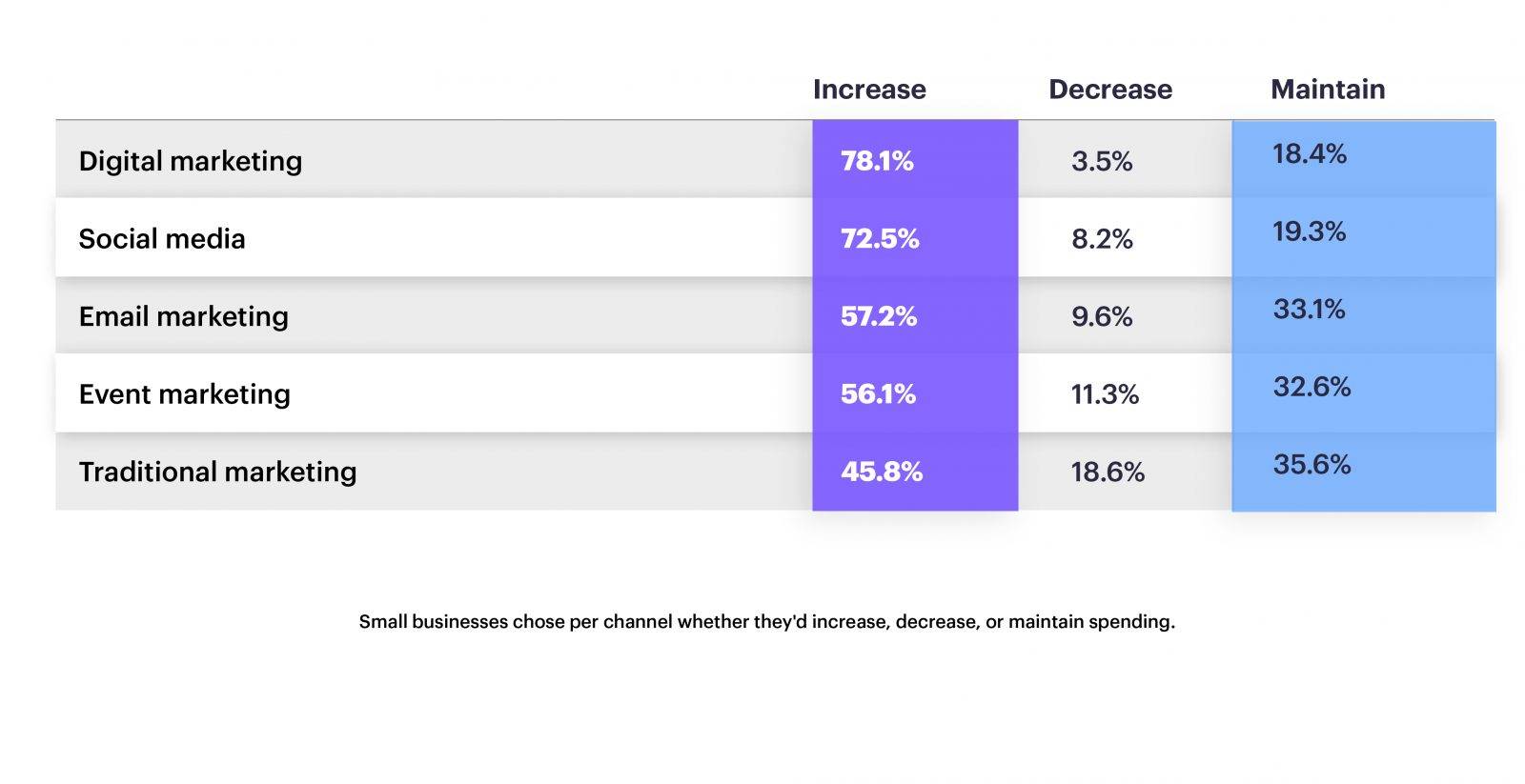
This circumstantial effectiveness explains why over a third of small business leaders plan to keep traditional marketing spending steady, and 45.8% will budget for more.

Traditional marketing methods investment survey

The same companies are spending more on digital tactics, too. At the same time, they know that dropping traditional methods altogether would cut their reach in an instant.

Four Steps to Finding the Right Leads Fast

Make instant improvements to your lead qualification process with this four-step guide full of actionable sales advice.

It works hand in hand with digital channels

Many digital tactics evolved from traditional ones. TV inspired display ads. Direct mail led to email marketing. Cold calling became social selling. It’s all connected, which is why old and new often work well together.

Smart marketing professionals and salespeople already use these links effectively. For example:

Combining traditional and digital like this creates smoother, more coherent customer journeys. It helps brands meet buyers wherever they are, online or off, reducing friction.

For example, MDL Marinas Group captured 900 email sign-ups in three weeks by adding QR codes to membership brochures. This simple method created a clear feedback loop: print → scan → digital nurture → measurable leads.

The director of sales and marketing, Tim Mayer, explained:

Within these packs, [the code] gives members access to a benefits area where they can find things like discounts on boat listings and brokerage. QR codes bridged the gap between traditional media and new ways of delivering information.

Not every tactic pairs perfectly. For example, a TV ad asking viewers to click a link will fall flat because there’s no way to interact. That’s why matching the channel to the message and goal is key.

Pro tip: Want to explore traditional channels without losing momentum on your digital efforts? Start with a small test campaign. Track the results, refine what works, then scale up with confidence.

6 traditional marketing methods that remain powerful

The following six marketing methods have proven their staying power by adapting to modern customer behaviors and integrating well with digital strategies. Here’s what each offers and how to use it well.

1. Print advertisements and promotional content

Putting your brand directly in customers’ hands, print is still one of the simplest ways to reach a local audience. Print mostly entails newspapers, magazines, flyers and brochures here, although more niche options – i.e., differentiators – include:

While digital ads are easily blocked or scrolled past, print ads and materials demand physical interaction and often stick around for longer. Distribute them in person at events, in-store or through the mail (see the next section for more information).

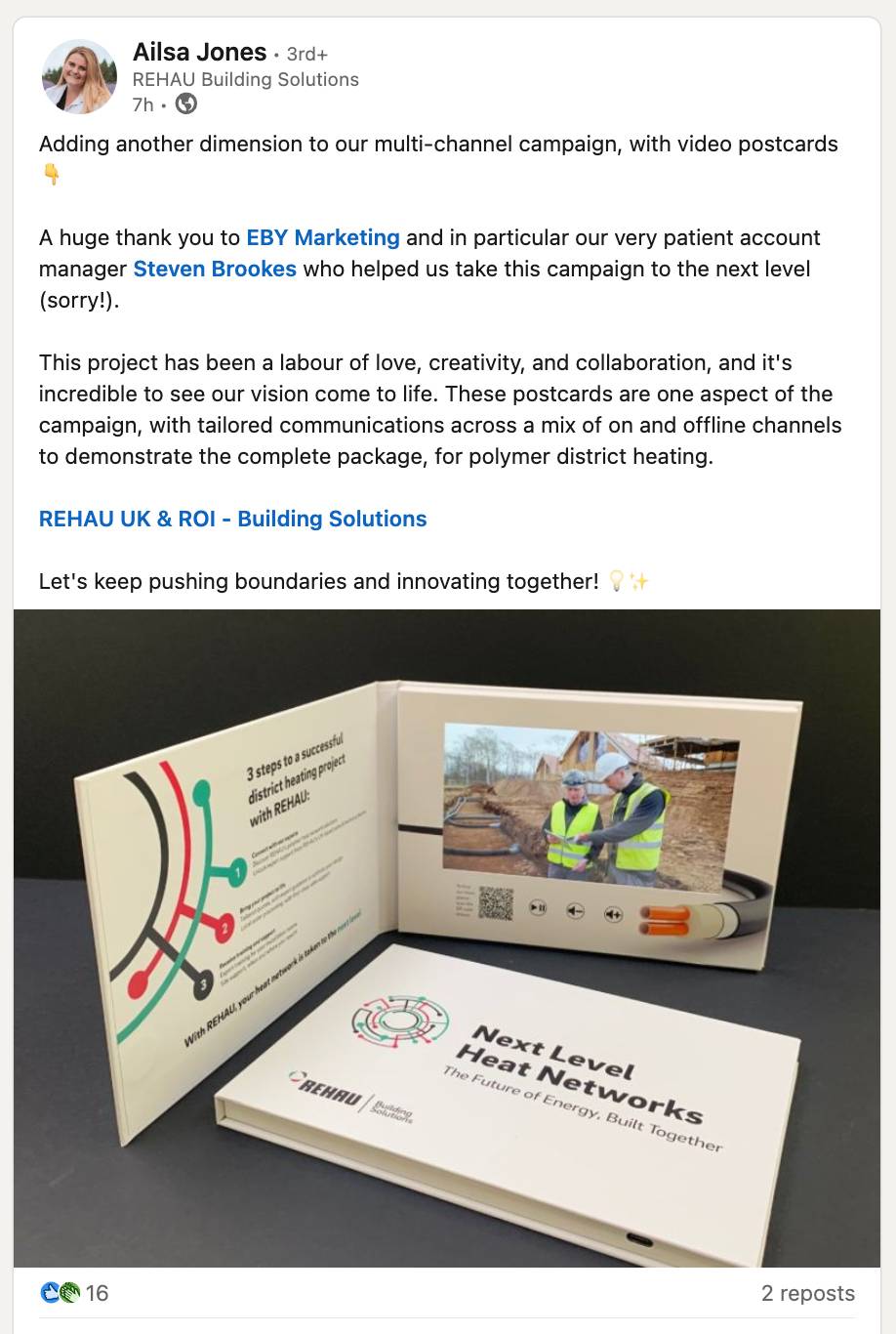
You can even get creative and weave digital tech directly into print media. Here’s an example of a building solutions firm using video postcards:

Traditional marketing methods REHAU video postcards

Being more expensive and larger than standard printed materials, these video postcards better suit smaller-scale campaigns and in-person delivery. Still, they’ll certainly help you stand out at a busy trade show.

Top tip: Use a QR code or short URL to link print to digital – they help monitor response rates and show what’s working. Pipedrive’s CRM lets you track where leads came from, even if the journey started with a flyer or brochure. Just tag the source and watch how those contacts move through your pipeline.

2. Direct mail marketing

Direct mail takes targeted messages straight to potential customers’ mailboxes. It can use any of those print materials just discussed, although some formats suit physical delivery more than others.

  • Postcards are lightweight, making them easy to store and cheap to send en masse. They’re also easily customizable using print companies like Vistaprint, MOO Print and even FedEx.

  • Brochures cost more to ship due to their size and weight, but are still highly customizable and can carry lots of information. Use them to nurture smaller pools of qualified leads, or even to help individual deals along.

  • Coupon books can quickly grow foot traffic, especially if you’re new to an area. Bulk-send welcome offers to grow brand awareness and entice new customers, then wow them into returning. Use off-peak discounts as part of flash sales to fill slow periods.

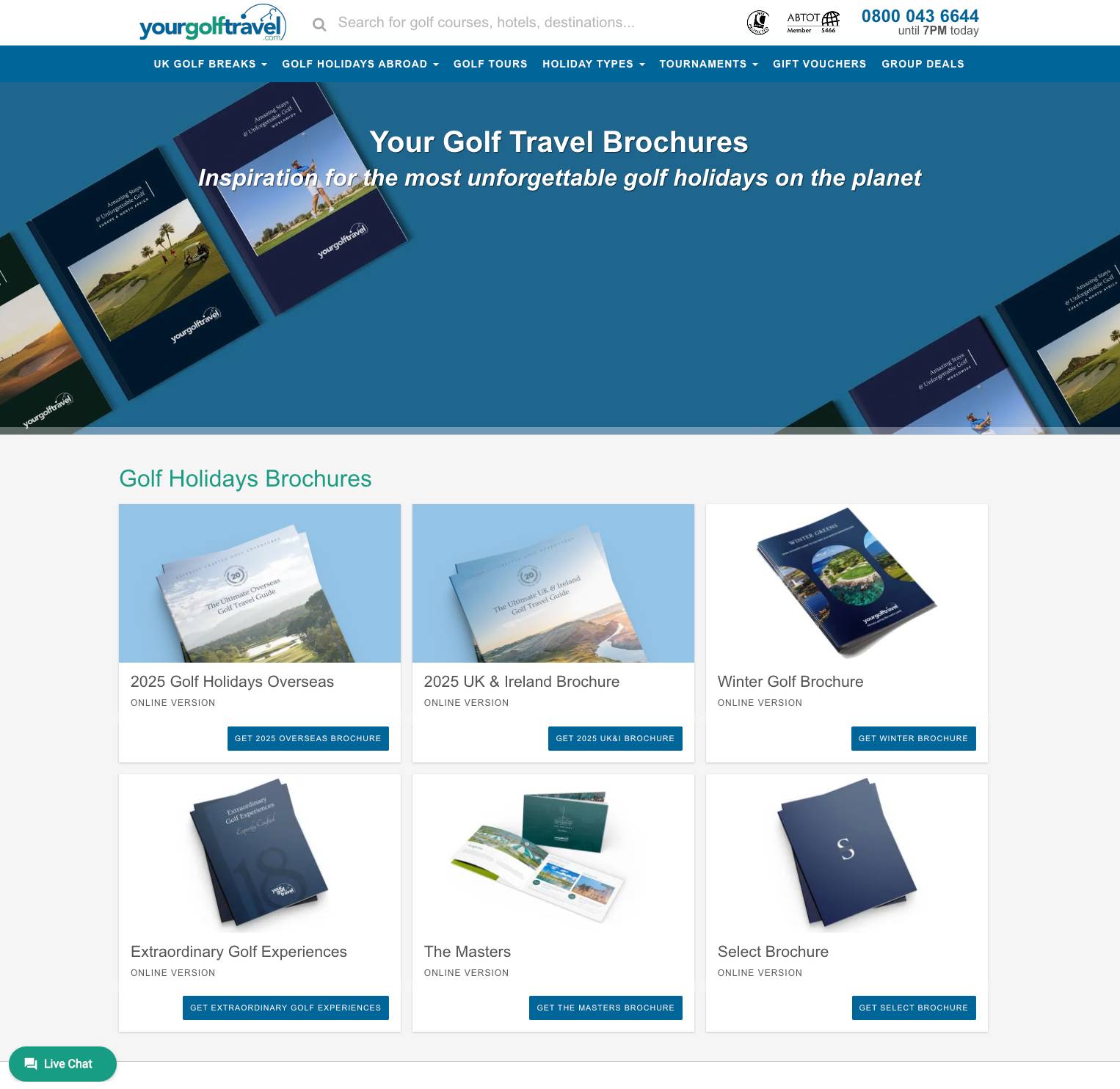
Your Golf Travel sent brochures to “tens of thousands” of golfers to generate interest in its trips and services. This marketing asset straddles traditional and digital, as it’s also available on the Your Golf Travel website.

Users who give their details can read this and various other guides in full, with a convenient live chat link in the bottom left corner to capture leads’ details:

Traditional marketing methods Your Golf Travel digital brochures

Delivered straight to golfers’ mailboxes, the physical brochures are hard to ignore. The digital versions give more info in a convenient, shareable format, viewable on a range of devices.

Top tip: Pay attention to what comes through your own door, at home or at work, because your audience will likely receive similar marketing material. What stands out? What makes you take mail straight to the trash? Use what you learn to craft something fresh and exciting with a super-clear message.

3. TV and radio advertising

You won’t beat TV and radio ads for reach. A place on the right channel at the right time puts your brand in front of thousands or even millions of prospective customers.

Precise targeting isn’t a strong point here, but you can still choose placement based on the likely audience. Here are a few examples:

  • Toy brands target families by advertising on kids’ TV

  • Hardware stores book morning slots on local radio to reach listeners planning their weekends

  • Retail banks advertise during weekday news bulletins, targeting working professionals who are interested in the economy

  • Car dealerships choose drive-time slots when commuters are listening

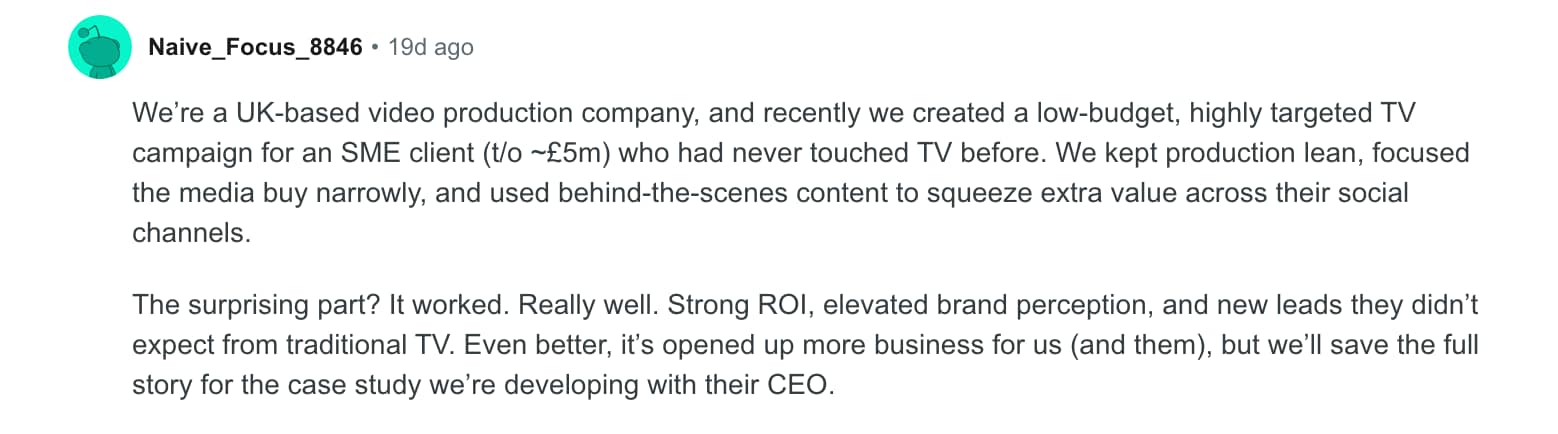
Worried about the cost of TV advertising? One Reddit user from a video production company told this reassuring story:

Traditional marketing methods SMB TV ads Reddit post

This case shows that even if you’ve always assumed TV was out of reach, support from the right production company could make it feasible.

Top tip: Keep messages short and consistent. Name your brand more than once to build familiarity without forcing it into every line – you’ll just put the audience off. Finish on a memorable call to action (CTA) that supports your digital marketing efforts, like “find us at [short URL]” or “follow us on [social media profile]”.

4. Billboards and outdoor advertising

Billboards and outdoor signs create unavoidable brand impressions for drivers and pedestrians.

Most companies build awareness with these large-format ads, and it works. However, you can also reinforce the messaging people see elsewhere, like on your website or social profiles.

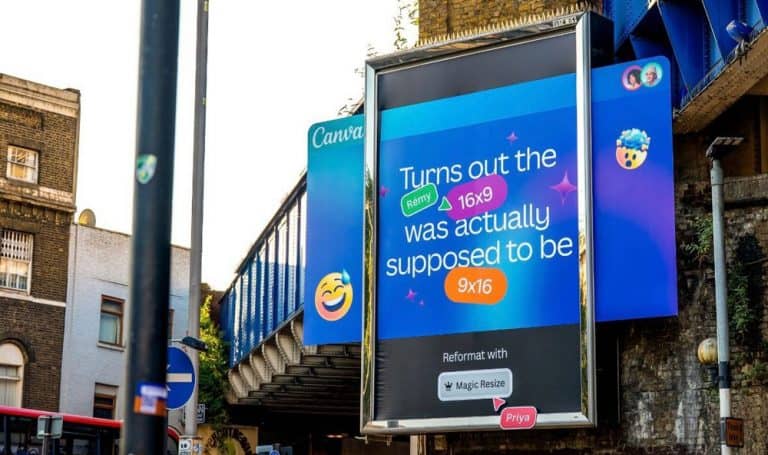
For example, Canva cleverly uses the limits of outdoor ad space to promote its beginner-friendly design software:

Traditional marketing methods Canva billboard

The ad’s unusual layout grabs attention, and its playful messaging shows off a key benefit: helping non-designers get content into the right aspect ratios. It doesn’t give everything away, but just enough to make anyone with design tasks think, “Hey, I have that issue, too”.

Top tip: Be bold and brief. Boldness catches eyes and sharp messaging gets your point across in minimal time. Stick to one simple idea for each outdoor ad, as passers-by will only have seconds to absorb it. The aim is to intrigue rather than force an entire sales pitch into one small space.

5. Face-to-face marketing

Face-to-face marketing generally happens at trade shows, networking events, in-store sales demos and community meet-ups. It can involve one-on-one conversations or speaking to a group.

Marketing to people in person allows them to read your body language and tone in real time, so they can decide whether to trust you much faster.

This immediacy can work for or against you. A great impression builds confidence, while a bad one lingers. That’s why it’s vital to focus on helping, not always selling – just like you would in a well-balanced content marketing strategy.

Let’s say you’re a cybersecurity sales consultant going to this networking event:

Traditional marketing methods CyberConnect meeting information

You have two options: pitch your latest package to everyone you meet or drop practical tips into informal chats.

The first option puts people off talking to you because buying isn’t what they came for. The second builds trust without the pressure. It may take weeks to forge a strong connection, though the impact lasts longer.

Top tip: Ask questions, share useful ideas and leave people with something to remember you by. While they may not need your service today, you’ll be front of mind when the right moment comes along. Log those interactions in your customer relationship management system straight after each event, so you can follow up with the right message at the right time.

Do you know one of the best ways to be memorable? Give out thoughtful business cards.

6. Business cards

Business cards still matter for networking because they create lasting connections beyond initial meetings. Well-designed cards with clear contact info make it easy for prospects to remember you and act later.

Below is the card Josie Ryan uses for her business Word Matters. It’s straight to the point, stating who she is, what the brand’s called and what it provides – all in simple dark text on a white background, subtly symbolic of a copywriter’s product.

Traditional marketing methods Josie Ryan business card

The QR code takes you straight to Josie’s website, which elaborates on all her services. The more this marketing tool is shared, the more traffic it can generate.

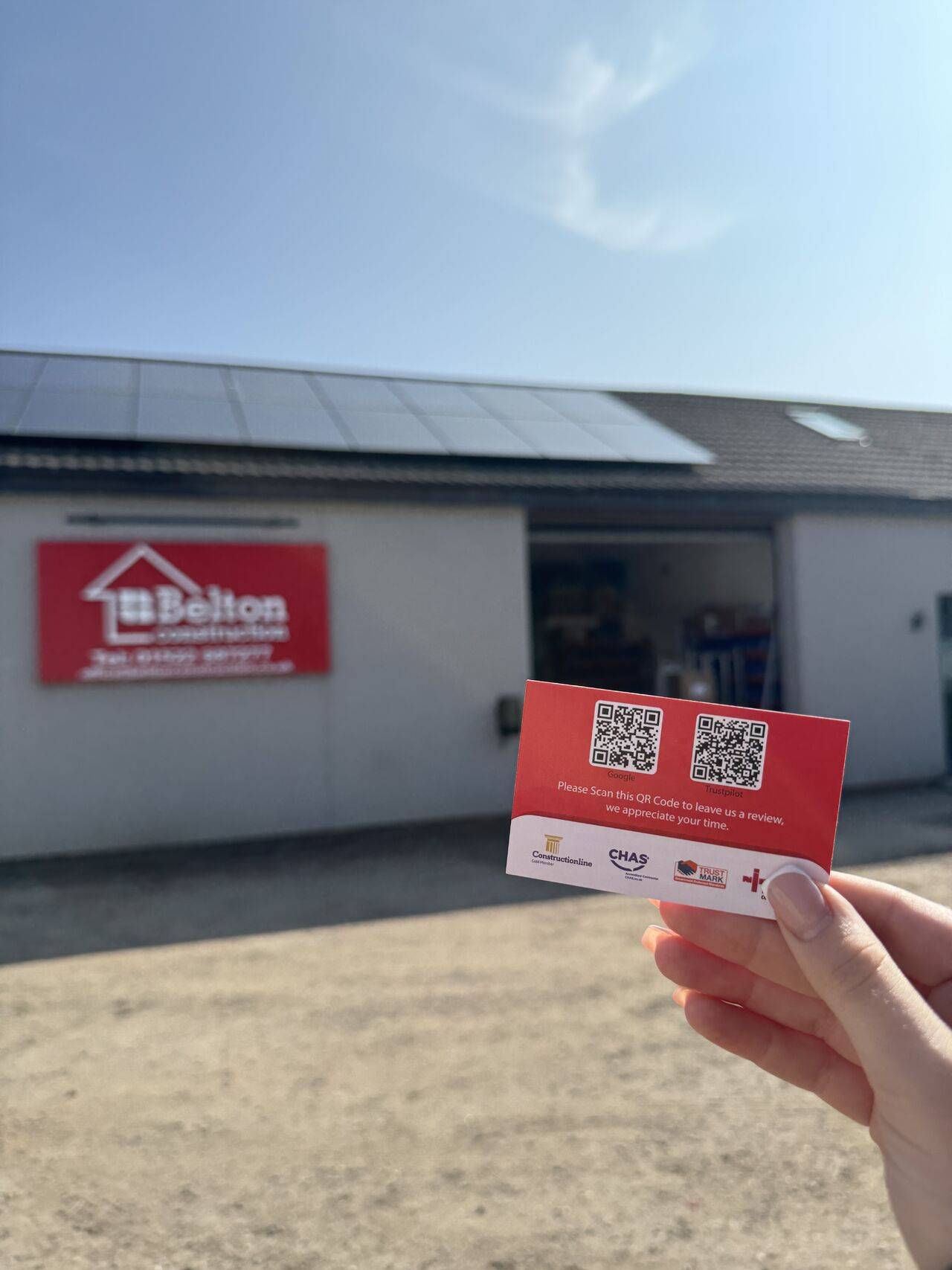
Traffic and interactions aren’t the only way to harness QR codes on business cards. Belton Construction is a small business that uses them to generate reviews from its customers:

Traditional marketing methods Belton Construction business card

It’s easier than ever to design your own business cards like these. Printing costs are also affordable for most small business owners and freelancers. Canva, Zazzle and Adobe are a few providers with intuitive design tools and integrated printing services.

Top tip: Make your card work harder by adding a QR code that serves a specific purpose. It could be driving website traffic, collecting reviews or booking meetings. Keep the design clean and professional while ensuring that the QR code has enough contrast and size to scan easily. Test it with a smartphone before printing.

4 easy ways to make traditional marketing more measurable

The biggest challenge of traditional advertising and marketing has always been tracking results, although modern tools make measurement much simpler than before.

Here are a few ideas for measuring traditional marketing approaches:

Tracking method

How it works and recommendations

QR codes and custom URLs

Create unique landing pages for each type of marketing campaign to see which tactics drive the most engagement. For example, use “yoursite.com/radio” for radio ads and “yoursite.com/postcard” for direct mail. Then, track visits, conversions and lead quality by source in a website analytics tool.

Unique phone numbers

Use different extensions or dedicated lines for radio and TV ads to identify which campaigns generate calls. Call tracking software can assign unique numbers to different campaigns automatically and provide detailed analytics.

In-person and promotion-specific tracking

Train your team to ask “How did you hear about us?” and log responses in your sales CRM. Use unique discount codes for different materials, like “RADIO15” for radio listeners or “CARD20” for business card recipients.

CRM integration

Track lead sources from first contact through final sale to see which traditional methods generate the highest-value customers. Modern CRMs make it easy to tag leads by source and follow their complete journey, showing true ROI by channel.

With the right tools and habits, you can track offline campaigns almost as confidently as digital ones. Just remember that the goal isn’t to get perfect outcomes every time. It’s far more important to get enough data to see what’s working, so you can keep improving the next round.

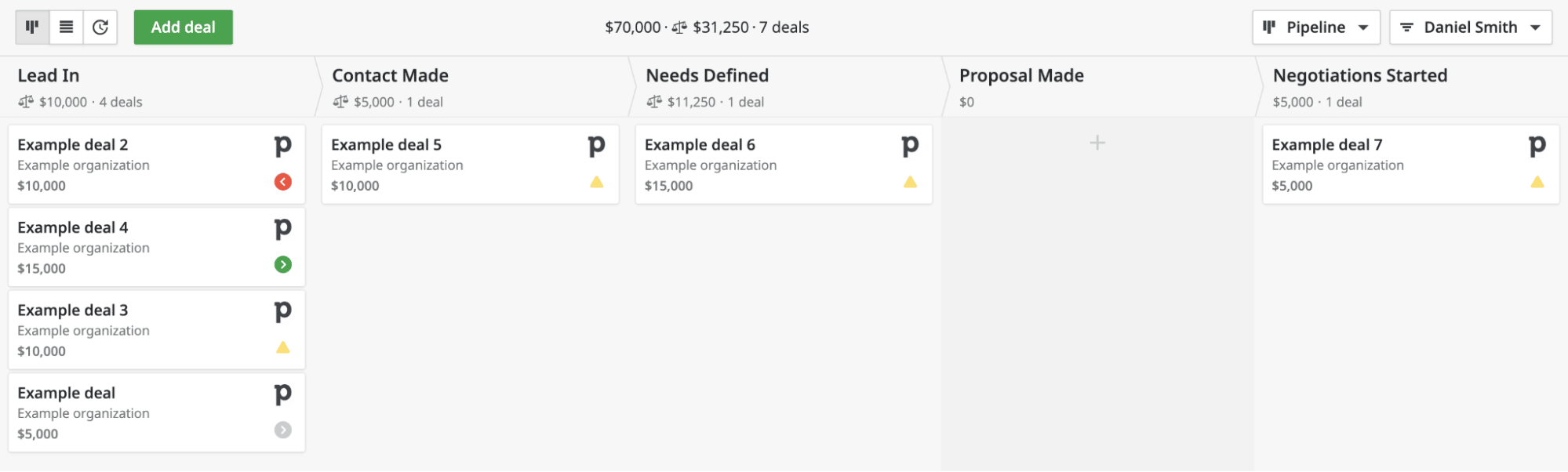
For example, if Pipedrive’s sales pipeline view (below) shows that leads from a printed brochure tend to drop off after visiting your site or contacting a sales rep, that’s a signal.

Traditional marketing methods Pipedrive pipeline view

Maybe the messaging doesn’t connect. Maybe the follow-up steps aren’t strong enough. Your CRM system helps you spot and fix those gaps before you overspend on the same mistakes.

Other ways you can use a CRM like Pipedrive to strengthen traditional marketing efforts are:

The more you connect your offline marketing efforts to your online sales software, the easier it is to double down on what gets the best results.

Recommended reading

https://www-cms.pipedriveassets.com/blog-assets/1164x609-1.jpg

How to track, measure and improve your team’s sales performance

Final thoughts

The key to successfully using traditional and online marketing is to think hybrid, not either-or.

Rely on traditional marketing campaigns to drive awareness and build trust. Then, guide prospects to digital touchpoints where you can nurture the relationships and track engagement.

This best-of-both-worlds approach delivers fantastic ROI by standing out and creating memorable brand experiences that stick with prospects longer.

Download Your Sales and Marketing Strategy Guide

Grow your business with our step-by-step guide (and template) for a combined sales and marketing strategy.

Your Dream Project Needs a Funnel to Grow

Software Stack Editor · August 12, 2025 ·

The post Your Dream Project Needs a Funnel to Grow appeared first on ClickFunnels.

You have something you’re passionate about building. Maybe it’s a course you want to sell, a consulting business you’re launching, or a product you’ve been developing for months. You’ve done the hard work of creating something valuable.

Now comes the more challenging part: getting people to buy it.

Most creators think they need more traffic or better marketing. But traffic without a system is just noise. What you actually need is a funnel that guides visitors from curiosity to purchase.

A funnel turns your scattered marketing efforts into a predictable system. It takes strangers who barely know you exist and walks them through becoming paying customers.

  • Why a Website Alone Won’t Grow Your Project
  • How Funnels Turn Visitors Into Progress
  • Create a Lead Magnet That Sparks Engagement
  • Use Email Follow-Up to Build Trust Over Time
  • Get People to Buy Your Dream Project
  • Keep Growing with Smart Follow-Up
  • Your Dream Deserves a Funnel That Works

Why a Website Alone Won’t Grow Your Project

Most creators build a website and expect people to figure out what to do next. They add an About page, list their services, and hope visitors understand the value.

But when someone lands on your site, they’re usually confused. They don’t know who you are, whether you can help them, or what step to take next. So they leave.

The solution to making them stick is creating a step-by-step journey that builds trust and leads people toward one specific action.

How Funnels Turn Visitors Into Progress

One of the hardest parts of launching any project is the feeling of standing still. You’re putting in effort, but nothing’s happening. Traffic trickles in. Sales stall. Interest fizzles.

A funnel solves these pains by giving you measurable movement. You can see exactly how many people opt-in and test which headlines convert. You can tweak the steps and watch your results improve. You build with data instead of guessing. And each improvement compounds your growth.

And with the right funnel software, all this progress happens in one dashboard. What’s more, an automated funnel system can keep this working around the clock. No more static site that waits for luck or for you to manually handle everything.

Create a Lead Magnet That Sparks Engagement

If your project is still early in its development, your first funnel should focus on one thing: capturing attention.

Begin with a lead magnet—a valuable, relevant piece of content that gives your audience a quick win or insight.

Think about what would make someone immediately interested in your project. It could be a chapter from your book, a video explaining your mission, or a cheat sheet that previews your method.

Once they download it, allow your lead generation funnel to nurture their interest and guide them toward working with you or supporting your project.

Use Email Follow-Up to Build Trust Over Time

Most people won’t buy from you or support your project after one visit to your website. They need to get to know you first.

Email sequences solve this problem by building rapport. After someone downloads your lead magnet, you send them a series of helpful emails over the next few weeks.

Share your story about why you started this project. Give readers useful tips related to your area of expertise. Show them what you’re working on behind the scenes.

Each email builds familiarity and trust. By the time you make an offer or ask for support, the person on the other end already feels like they know you.

Email marketing automation tools handle email drips for you. You write the emails once, and every new subscriber gets automatically pulled into the sequence.

Get People to Buy Your Dream Project

After people trust you through your emails, it’s time to sell them something. This is where your funnel helps turn subscribers into paying customers.

What you sell depends on your project. Maybe you’re launching a course, pre-selling a product, or asking for donations to fund your idea. Whatever it is, your funnel should make buying feel like the natural next step.

Your sales page should highlight what people get when they pay you. Show them the problem you solve and why your solution is worth their money.

The right funnel software makes your sales setup easy. You can build professional sales pages and checkout systems without needing technical skills.

Keep Growing with Smart Follow-Up

Your funnel doesn’t end at the purchase or opt-in. That’s just the beginning.

Use your funnel to:

  • Onboard new customers or supporters
  • Upsell into additional products or services
  • Invite your audience to share your mission with others

Scale your project with a post-action path. It’s how a one-time visitor becomes a lifetime advocate. And it’s how your dream turns into a movement.

Your Dream Deserves a Funnel That Works

It’s easy to get stuck perfecting your message, refining your visuals, or debating tech platforms. But none of that moves your dream forward like a funnel does.

A funnel gives you something concrete to build and test. It turns visitors into subscribers and subscribers into customers.

Don’t wait until everything feels ready. Start building your funnel now and let it teach you what your audience actually wants.

Try ClickFunnels for Free Today!

Thanks for reading Your Dream Project Needs a Funnel to Grow which appeared first on ClickFunnels.

The SMB Cause-Based Marketing Guide

Software Stack Editor · August 11, 2025 ·

Small businesses often want to support causes but worry about having enough budget or time to make a real impact.

A cause-based marketing strategy offers a solution by helping you connect purposefully with your audience in ways that fit your company’s size and values.

In this post, you’ll learn a five-step guide to building campaigns that fuel business growth while making a broader positive impact.

What is cause-based marketing?

Cause-based marketing means your business supports a social or environmental cause as part of your brand strategy.

This approach typically involves your for-profit business partnering with a nonprofit or supporting a cause you care about (e.g., sustainability, mental health or education).

Cause-based marketing is usually part of a broader corporate social responsibility (CSR) approach, where you aim to positively impact beyond profit by contributing to communities, industries or the planet.

For small and medium-sized businesses (SMBs), it’s a way to show what you stand for and build deeper customer trust (when done right) without a huge budget.

For example, software-as-a-service (SaaS) company Freemius ran a fundraiser for the nonprofit “Girls Who Code” for its 10th anniversary:

For 24 hours, the platform and participating members of its community donated 100% of revenue share to the nonprofit.

The campaign naturally fits Freemius’s mission to help more women enter tech and give back to the community.

As CEO, Vova Feldman, put it:

Supporting Girls Who Code aligns perfectly with our vision of a more diverse and innovative tech landscape. We believe diverse perspectives lead to better innovation, stronger companies and more impactful solutions.

Here are a few typical ways SMBs implement cause marketing:

  • Donate a portion of sales to a local nonprofit. Tie a product, day or campaign to a giving effort (e.g., “This month, 5% of sales go to [Nonprofit name]”.

  • Sponsor or host community events. Help fund or organize local events for causes that matter to your team or customers.

  • Launch limited-time products tied to a cause. Create a special item where proceeds benefit a mission (e.g., a welcome offer where all revenue goes to charity).

  • Run awareness campaigns on social issues. Use your content marketing or social media efforts to educate and spread awareness around topics your audience cares about.

  • Offer volunteer days and share the story. Let your team volunteer during work hours and highlight their impact publicly to humanize your brand and inspire others.

Authenticity is key, whether you partner with a nonprofit or champion a cause alone. Your efforts should always reflect your core values, not just follow trends.

Recommended reading

https://www-cms.pipedriveassets.com/Small-Business-Marketing.jpg

The ultimate guide to small business marketing: Strategies to boost your brand

Why is cause-related marketing so effective for SMBs?

Cause marketing works exceptionally well for small business owners because it feels personal and value-driven – qualities that buyers care deeply about today.

Most SMBs don’t focus on dominating a market. They’re trying to make a difference. Whether you’re helping local communities or pushing for more inclusion in your industry, customers notice and remember.

Here are three key reasons why it’s so powerful.

Builds trust and emotional loyalty

When your company genuinely supports a cause, it signals that you care about more than just profit. That consistency builds trust and customer loyalty.

However, it’s essential to be thoughtful. Buyers often flip-flop between wanting brands to speak out about social and political issues or remain quiet.

Research from Sprout Social in 2019 found that 70% of consumers wanted brands to speak publicly about important causes. More recent Gallup research indicates that only 38% of Americans now want companies to do so.

Let’s say you offer bookkeeping software. You may donate to local adult education programs and share free budgeting tips online.

Choose causes like these that align with your mission statement or community, and avoid getting involved in polarizing issues unless you’re truly committed. For SMBs, missteps can have a bigger impact and make it harder to rebuild their brand reputation.

Creates differentiation without needing a huge budget

Supporting a cause helps you stand out in a crowded market by showing what your business genuinely cares about.

Features and pricing often look the same in competitive business-to-business (B2B) markets. Cause-based marketing allows you to stand out, not by outspending, but by standing for something.

That positioning is compelling for small businesses competing with bigger, more established players.

Imagine a small HR software company that builds a cause campaign around fair hiring. They donate software to nonprofit organizations that help people from poorer communities enter the workforce.

This initiative sets them apart from larger competitors and positions them as a values-aligned partner for a new customer.

Download Your Sales and Marketing Strategy Guide

Grow your business with our step-by-step guide (and template) for a combined sales and marketing strategy.

Fuels organic marketing and word-of-mouth

Tying your brand to a meaningful cause fuels organic word-of-mouth and social sharing, positively impacting your bottom line.

Cause-based marketing creates a deeper story around your company, giving people additional reasons to talk about it.

This kind of attention is often more powerful (and affordable) for small businesses than paid ads. It can also earn media attention for extra exposure.

Take a small consultancy that runs a campaign during Pride Month, offering free audits to LGBTQ+ nonprofits.

The campaign sparks LinkedIn engagement, earns a few niche media mentions and brings in four inbound leads through community goodwill.

Recommended reading

https://www-cms.pipedriveassets.com/Delight-the-Customer.jpg

10 reliable ways to delight the customer and amplify customer loyalty

5 real-world examples of B2B cause marketing campaigns

B2B cause-based marketing examples align with broader brand values like sustainability or workforce development.

As B2B buying decisions often involve multiple stakeholders, they’re usually more strategic and relationship-driven. Campaigns frequently support long-term brand positioning, talent attraction and partnerships.

On the other hand, business-to-consumer (B2C) campaigns often become quick, emotional buying decisions.

A fashion brand might launch a limited-edition collection supporting breast cancer research, which prompts impulse purchases.

Here are five B2B cause marketing examples and what they support:

B2B company

Cause-related marketing campaign

Pipedrive

The Small Business Week spotlights SMBs driving sustainable growth to amplify the community and share real-world success stories.

Deloitte

The WorldClass Initiative aims to impact 100 million futures by 2030 by providing job skills, education and opportunities through pro bono work and partnerships.

Buffer

Transparent salaries support wage equality and fair pay, aligned with the brand’s honesty and openness values.

Cisco

The Networking Academy offers free tech training and certifications to underserved communities worldwide.

SAP

The neuroinclusion initiative creates targeted hiring and support programs for individuals on the autism spectrum.

Though these B2B cause-related marketing examples are from bigger companies, they’re all about long-term alignment. SMBs can still learn from them.

Choose a cause that reinforces your company’s mission, deepens customer trust and builds a brand that stands for more than just software or services.

Recommended reading

https://www-cms.pipedriveassets.com/B2B-Report-Guide-and-Best-Practices.png

The ultimate guide to B2B reporting: basics to best practices

How to create your own cause marketing strategy: step-by-step

Cause-based marketing doesn’t have to be overwhelming. By breaking it down into simple, actionable steps, you’ll build a campaign that truly resonates with your customers and drives results.

From choosing the right cause to tracking your impact, here are five steps to creating your strategy.

1. Identify a cause that aligns with your brand and values

The more aligned your cause is with your mission, product, team or customers, the more authentic and compelling your campaign will be.

Partner with a specific nonprofit or support a broader issue independently. What matters most is that it feels like a natural fit. Today’s buyers spot performative marketing a mile away.

When your cause aligns with your company’s identity, it builds trust and loyalty. Choose something that makes sense for your business.

A cybersecurity firm might support digital literacy programs for underserved students. Meanwhile, a coffee supplier might back reforestation efforts in coffee-growing regions or invest in fair-trade certification programs to support ethical farming.

Shaving brand Gillette has a long-standing partnership with men’s mental health nonprofit Movember:

Cause-based marketing Gillette Movember

Every November, men stop shaving and grow moustaches to raise awareness and drive donations for the charity.

Here’s how to choose the social causes that reflect your values and industry:

  • Look inward. What does your company care about beyond profit? Ask your team what causes they support personally.

  • Look outward. What issues matter to your community? Find out using a customer survey. There may already be a way your product indirectly supports a bigger mission.

  • Scan your history. Have you donated, volunteered or partnered with a cause in the past? Check if any charitable organizations have contacted you to suggest working together.

  • Check for overlap. Aim for a cause where your team’s passion and your business’s relevance meet (that’s your sweet spot).

Act with intention (not impulse) and support an issue that reflects your brand image.

2. Set clear goals and metrics

Successful cause marketing campaigns start with a goal that shapes everything, from messaging to channels and metrics.

Once you’ve chosen a good cause, decide what success looks like. For instance, you may want to raise brand awareness, drive donations or increase engagement. Without a clear objective, it’s easy for cause marketing initiatives to feel scattered or symbolic.

Let’s say a software company partners with a nonprofit to offer developer bootcamps for veterans.

The goal is to fund scholarships through a limited-time revenue share and encourage at least 10% of its customer base to participate.

Your primary goal could be to:

  • Raise awareness of an issue using LinkedIn and Instagram

  • Generate donations (from your business, customers or both) through a fundraising event

  • Drive sign-ups, trials or engagement tied to a point-of-sale campaign

  • Strengthen internal culture and employee morale with volunteering opportunities

  • Deepen advocacy or customer retention through sponsorship

Once you have a goal, define what success looks like in numbers. The same software company may measure success for its developer bootcamps by funds raised and engagement rates across email and social media.

Your goal metrics could include:

  • Raising $5,000 for a nonprofit

  • Reaching 1,000 people with an educational campaign

  • Logging 200 employee volunteer hours

  • Increasing social engagement by 20% during the campaign period

Measurable goals keep campaigns focused and help you evaluate real impact on your company and the charitable cause.

3. Involve your customers

Involvement builds a sense of shared purpose, whether letting customers vote on a cause, matching donations or highlighting their stories.

When people help shape your initiative or see themselves reflected in it, they’ll be more invested and likely to share it.

Imagine a fundraising customer relationship management (CRM) platform that asks users to vote on which of three education nonprofits will receive a year-end donation.

The provider also matches all user contributions for the top-voted organization, sharing impact stats along the way.

Customers feel seen and proud to support a brand that listens and gives back. This involvement drives positive word-of-mouth and long-term retention.

Graphic design platform Canva takes customer involvement even further by offering nonprofit users free access to its Pro plan:

Cause-based marketing Canva free nonprofits

Meaningful support like this builds goodwill and turns customers into loyal advocates for your brand.

Here are four ways to involve your customers:

  • Let them choose. Run a poll to select the nonprofit or cause your campaign supports.

  • Match their donations. Encourage giving by offering to match contributions dollar-for-dollar during a campaign period.

  • Share their stories. Invite people to submit experiences or testimonials related to the cause, then feature those customer stories in your marketing.

  • Create incentives. Tie donations or impact to customer actions (e.g., “For every sign-up, we donate $10 to [Nonprofit name]”).

Customer involvement boosts participation and turns your campaign into a two-way conversation, not just a company announcement.

4. Be transparent and specific

Specificity about your cause marketing efforts builds credibility and shows it’s not just a PR move.

Vague claims like “a portion of proceeds goes to charity” can feel performative. Being specific builds trust with your audience.

If you’re going to publicly support a cause, make sure people know how exactly. Let’s say you run a three-month campaign in which 5% of all annual plan sales go to a nonprofit supporting refugee job training.

Each month, you publish a short update on a dedicated landing page about how much you’ve raised and what those funds are going toward.

You increase trust and buy-in by sharing your impact, building brand loyalty.

Here’s how to stay transparent throughout your campaign:

  • Name the organization. Always state who you support or where the money goes to broader causes.

  • Quantify the impact. Share how much you’re donating, what percentage of sales or how the nonprofit uses the money.

  • Update regularly on results. Report back after the campaign with outcomes (e.g., funds raised, hours volunteered or people helped).

  • Avoid exaggeration. Stay honest instead of overstating your impact, even when the numbers are small.

Open communication holds you accountable while keeping your team and customers informed and invested.

5. Promote, measure and adjust your strategy

Even the most meaningful campaigns won’t drive impact if no one hears about them. Promotion helps you rally support, while reporting ensures your efforts achieve tangible outcomes.

Use clear, honest messaging to share:

Tracking results also allows you to refine your approach based on what works and doesn’t.

Imagine you’re a project management tool. You launch a corporate giving campaign to support remote learning nonprofits, promoting it with a homepage banner and weekly posts on your LinkedIn account with a unique hashtag.

Your goal metric is “total funds raised,” so when you reach it, you share a summary blog post with photos from your nonprofit partner.

Here are some typical ways to promote your campaign:

  • Email your audience to share the story behind the campaign, what you’re aiming to achieve and how they can help

  • Add a homepage feature to your website or an in-app message that explains the campaign

  • Use your social media platforms to post regular updates, behind-the-scenes stories or customer spotlights

  • Pitch local media (even small campaigns can still earn coverage, especially if there’s a strong human interest angle)

If things aren’t going as planned (maybe engagement is low or the message isn’t landing), don’t be afraid to pivot.

Adjust your messaging, clarify the impact or involve your audience in another way. A small shift mid-campaign can still make a big difference.

Recommended reading

https://www-cms.pipedriveassets.com/Marketing-Reporting.png

Marketing reporting: how to create reports that inform decisions

How to use Pipedrive to streamline cause-based marketing

Pipedrive’s powerful CRM system helps you plan, track and amplify your cause-based marketing efforts all from one place.

Start by tracking relationships with nonprofit partners as you would with key accounts. Use your CRM database to log meetings, assign tasks to your team and never miss a follow-up.

A CRM helps you see the big picture of cause-based marketing, from preparation to impact reporting.

Create custom pipelines to manage campaigns and track key milestones:

Cause-based marketing Pipedrive custom pipelines

For example, you could have stages like “Planning”, “Launched”, “Measuring impact” and “Complete”. This strategy keeps everyone aligned and helps avoid last-minute scrambles.

You don’t need to email every donor or supporter manually. Use Pipedrive’s Automations to inform and engage your audience without adding manual work:

Cause-based marketing Pipedrive workflow automations

Set up automated workflows to:

Use tags or custom fields to group contacts based on interest. For example, you might segment customers by who clicked on a sustainability campaign or donated to a specific initiative:

Cause-based marketing Pipedrive segmentation filter

By tailoring communications to those who engage in specific causes, you can personalize future messages or campaigns based on what matters to them.

Pipedrive’s reporting tools also show how your campaign affects engagement, referrals or sales.

Track whether email open rates spiked after the campaign or new leads came in through referrals and see them instantly reflected within user-friendly dashboards:

Cause-based marketing Pipedrive custom reporting

Measuring impact helps refine your strategy and prove the business case for doing good to stakeholders.

Whether you’re planning a donation drive or awareness push, use Pipedrive to run your mission-driven campaigns with the same care and structure as your core business.

Cause-based marketing FAQs

  • Cause-related advertising examples include campaigns where brands promote a social or environmental cause alongside their product or service.

    For example:

    Ads like these can be a win-win when the cause aligns closely with the brand’s values and actions.

  • Yes, you can select a corporate partner for cause marketing.

    Partnering with another purpose-driven business can amplify your impact, expand your reach and share resources like funding or audiences.

    For a successful partnership, ensure it feels authentic and benefits both the cause and your brand.

  • One of the first significant examples of cause marketing was a 1983 partnership between American Express and the Statue of Liberty Restoration project in New York City.

    Whenever customers used their AmEx card at checkout, the company donated a small amount to the cause.

    By boosting card usage and raising millions, this case study showed brands how to support causes and drive business simultaneously.

Final thoughts

For SMBs, cause-based marketing is one of the most potent ways to build trust, stand out and inspire word-of-mouth – all while supporting something that matters.

The most effective efforts start with an issue that aligns with your values and the right behind-the-scenes tools. With a CRM like Pipedrive, you’re not just managing campaigns. You’re building a reputation that sticks.

Best Brand Collaborations | What Is a Brand Partnership?

Software Stack Editor · August 11, 2025 ·

Brand collaborations are a smart way for your small-to-medium-sized business to challenge larger competitors. They help you tap into new markets, share marketing costs and build credibility by association.

In this guide, you’ll learn about the most effective types of company collaboration, see seven successful brand partnership examples and learn practical steps to launch your joint ventures.

What is a brand collaboration?

A brand collaboration occurs when two or more companies collaborate to achieve mutual or separate business goals. It can involve joint marketing campaigns, product launches, sponsorships or any other initiative that benefits all parties.

The best brand partnerships see companies combine their strengths and resources to create something more valuable than they could achieve alone.

For example, English fashion brand Wales Bonner began collaborating with sportswear company Adidas on limited-edition products in 2014.

Brand collaboration Adidas Wales Bonner product range

Wales Bonner, a relatively niche clothing brand, grows awareness through Adidas’ larger platform. Adidas generates hype by working with an emerging designer. It’s a win-win situation.

An example of a business-to-business (B2B) brand partnership is how software firms work together to integrate their products and improve customer experiences, like Pipedrive and Slack synchronizing to speed up users’ workflows.

Here are the main types of brand collaboration that startups and small businesses benefit from:

Brand collaboration type

How it works

Influencer partnerships

Brands work with content creators to reach new audiences

Cross-promotional campaigns

Companies market each other’s products through cross-promotion

Affiliate marketing programs

Partners earn commission for driving sales or leads

Content collaboration

Brands create joint content like co-hosted webinars or guides

Product co-creation

Companies develop new products or features together

Technology integrations

Software platforms connect to improve user experiences

The terms “brand collaboration” and “co-branding” overlap a lot. However, brand collaboration is generally the broad umbrella for all forms of joint ventures, while co-branding means openly creating new products together (like the Wales Bonner x Adidas example).

Note: “Brand collaboration”, “brand partnership” and “brand collab” are interchangeable terms.

The 3 main benefits of brand partnerships for SMBs

Companies willing to share resources and audiences can make marketing more cost-effective and expand customer bases fast.

Here are the most significant benefits of brand collaborations in more detail.

1. Reach new audiences cost-effectively

Brand collabs open the door to your partners’ audience, letting you access customer demographics or volumes you can’t reach through your website or social media platforms.

For example, as part of its Open for Business Fund, Wells Fargo promotes small business partners to over 140,000 Instagram followers.

This post features Cold Mountain Consulting, which has fewer than 500 followers on its account:

Brand collaboration Wells Fargo Instagram post

Sharing campaign costs makes ambitious marketing strategy ideas more feasible without stretching individual budgets. It could pull a television ad within budget, for example.

2. Build credibility through association

Trust transfer is the idea that buyers are more likely to trust your brand if another endorses it that they already know and respect. It helps enter new industries.

For instance, when action camera brand GoPro partnered with the US motorsports series, it gained trust from those organizations’ fan bases despite being in a different sector.

Trust transfer also helps startups. With the correct associations, young businesses can overcome early skepticism while building brand awareness.

Download Your Sales and Marketing Strategy Guide

Grow your business with our step-by-step guide (and template) for a combined sales and marketing strategy.

3. Drive sales through shared expertise

Working with complementary brands also benefits you from new skills, whether they’re abilities you don’t need long-term or haven’t had time to learn.

For example:

  • Coffee shops partner with local bakeries to serve high-quality food and drink together

  • Web design firms team up with hosting services to help clients get online faster

  • Accountants and legal professionals join to give SMB clients more complete support

Other borrowed skills small businesses find valuable include content creation, digital marketing and podcast production.

By pooling this knowledge, you can create better offers and more innovative campaigns. You’ll create smoother customer experiences, leading to more sales and loyalty.

Recommended reading

https://www-cms.pipedriveassets.com/Small-Business-Lead-Generation.png

Small business lead generation: top techniques to fill your pipeline

7 successful brand collaboration examples (and why they work)

One of the best ways to generate ideas for new brand collaborations is to see how other companies succeeded.

Here are seven examples of brand partnerships that helped B2B and B2C businesses, large and small, to grow audiences and revenue.

1. Pipedrive x Zapier: versatile automation without the hassle

Pipedrive and Zapier have combined forces to streamline users’ sales and general business workflows.

Teams with both tools can sync Pipedrive sales data across more than 5,000 popular apps, such as Gmail, Slack and Google Sheets. This unlocks the ability to trigger follow-ups or update deals from outside the customer relationship management (CRM) system interface.

This collaboration turns Pipedrive into a more comprehensive business hub.

Instead of constantly bouncing between sales tools and others, users can build Zaps to eliminate manual steps, like recording new events as activities or turning social media ad leads into Pipedrive contacts automatically.

Brand collaboration Pipedrive Zapier automations

This partnership lets salespeople focus on nurturing deals instead of switching tools or finding information. According to Gartner, 47% of digital workers struggle to find the information they need to perform their jobs. By sharing data, Pipedrive and Zapier solve that issue.

Why it works: The collaboration solves a common sales pain point where app-switching and manual data entry hinder productivity, negatively impacting deals.

Key SMB takeaway: List functions that your primary audience needs but that you can’t reasonably offer. Partner with providers of tools that fill those gaps simply and reliably.

2. Xero x Shopify: SaaS integration for e-commerce

Xero and Shopify created a software integration to connect their accounting and e-commerce functions. It allows business owners to automatically sync orders, track inventory and create financial reports from one interface.

Brand collaboration Xero Shopify illustration

This partnership is all about removing administrative friction for busy founders and managers. HBR researchers found the average digital worker loses four hours a week toggling tools. Xero and Shopify help them regain some of that time.

Why it works: Individually, these brands solve different problems for the same target audience of business owners. Together, their integration addresses a real shared challenge – manual data entry between systems.

Key SMB takeaway: Look for partnerships that solve genuine customer pain points rather than just expanding your reach. Sharing an audience is a great starting point.

3. HostGator: affiliate and reseller programs for web hosting

HostGator’s affiliate program lets content creators – like business owners and micro-influencers – earn commission for promoting its web hosting services to their networks.

The company’s reseller scheme goes deeper, letting IT consultants and agencies sell its services with a markup as their branded solutions (i.e., white-labelling).

Brand collaboration HostGator affiliate scheme

Other industries that suit affiliate and reseller programs are insurance, where independent brokers sell major providers’ policies, and travel, where agencies repackage flights and accommodation.

Why it works: This model helps HostGator find new customers through trusted local partners who already have niche audiences or strong client relationships. Its partners generate revenue without needing to spend big on hosting infrastructure.

Key SMB takeaway: Look for potential partners who serve your target audience on a smaller scale, such as freelancers, consultants, influencers or service providers.

Give them simple ways to integrate your services into their work and promote them effectively. That might mean an affiliate link with commission, or a white-labeled version of your service that they can bundle into what they already do.

Better understand your customers with our Buyer Persona Templates

Use these templates to ensure your solution always aligns with your customers’ interests and needs

4. Nike x Tiffany & Co: sportswear meets luxury

Nike and Tiffany & Co. launched a limited-edition product collaboration merging streetwear with high-end jewelry. They created exclusive sneakers and accessories targeting their target audiences’ (relatively small) cross-section.

Brand collaboration Nike and Tiffany announcement

This successful partnership generated massive hype across social media, with users rushing to discuss the unexpected collab and share imagery (the post above generated over 1.4 million likes). The products sold out quickly, raising both brands’ profiles.

Why it works: Both brand partners share premium positioning and lifestyle appeal but serve different demographics. The collaboration created exclusivity and novelty, and people didn’t need to buy to join the conversation.

Key SMB takeaway: Don’t restrict yourself to obvious industry matches. Shared brand values and target audience overlap matter more than direct product similarities.

5. McDonald’s x BTS: celebrity brand collaboration

McDonald’s partnered with the K-pop music group BTS to create a global campaign around a special meal combination: the “BTS Meal”.

Promoted heavily across TikTok and other social channels, the collaboration drove viral engagement, introducing younger consumers (i.e., BTS fans) to a legacy brand’s products.

Brand collaboration McDonalds and BTS promotion

Such a collaboration is a large-scale example of influencer marketing, with two established brands combining huge audiences to grow each other’s relevance further and reach.

Why it works: BTS’s massive, devoted fan base gave McDonald’s instant reach and engagement. The partnership felt authentic because it tied into both parties’ brand values around fun, energy and community.

Key SMB takeaway: Ensure influencer marketing collabs align naturally with both partners’ existing brand personalities. Look for overlaps in how you present in marketing content (e.g., tone of voice, visual style).

6. GoPro x Red Bull: long-term content marketing partnership

GoPro and Red Bull created a multi-year partnership yielding co-branded marketing campaigns, sponsorship deals, co-hosted events and more.

Both brands are deeply connected to adventure and action sports (thanks to previous marketing efforts and collaborations). They’ve consistently used that shared identity to engage audiences through high-energy, visually compelling content.

Here’s an example:

Brand collaboration GoPro Red Bull promotion

The brands’ products and branding often appear together (e.g., the action shot above), blurring the line between where one brand ends and the other begins. That level of overlap takes perfect alignment and close collaboration, but it pays off in cultural relevance and customer loyalty.

Why it works: Each brand plays a vital role in the other’s ongoing brand story. They consistently show up together, reinforcing shared values to make each feel more authentic to their action-sport-minded audience.

Key SMB takeaway: Explore ways of working with like-minded businesses beyond just one-off campaigns. With time and consistency, ongoing content collaboration can strengthen both brands in the audiences’ minds.

7. Pip Organic x Double Dutch x Little Moons: female business collective

Pip Organic, Double Dutch and Little Moons are three independent, women-led food-and-drink brands that ran a collaborative giveaway campaign during Women’s Month (March).

With backing from Buy Women Built, the growing brands offered a “mocktail bundle” of products in exchange for new followers, likes and shares on social media.

Brand collaboration Pip Organic Instagram post

Combining audiences was a low-cost, high-reach tactic to increase engagement fast, highlighting shared values around female entrepreneurship (i.e., strengthening their individual brand stories).

Why it works: These brands share an audience and a message: female-led, high-quality food retailers with a values-driven USP. Teaming up expanded their reach while building credibility through association.

Key SMB takeaway: Use your shared values to forge relationships with like-minded business owners. People love discussing their passions, and genuine connections can lead to helpful partnerships.

Recommended reading

https://www-cms.pipedriveassets.com/Women-in-Marketing.png

Women in marketing: 13 inspiring stories from female leaders

How to find and execute successful brand collaborations

Forming effective partnerships takes careful organization. Make the process manageable by breaking it into three simple stages: identifying collaborators, structuring the partnership and managing your relationship.

Here’s what to do at each step.

Step 1: Identify and contact potential collaboration partners

Start by mapping complementary brands that share your target audience but sell different products.

Look for companies where partnerships could create value for both sets of customers, rather than confusion in the marketplace (i.e., avoid working with direct competitors).

Prioritize these criteria:

  • Audience alignment and shared values. Your ideal collaborators serve the same customers in different ways. For example, an accounting software firm might partner with a document management app because they help management professionals but don’t compete for the same new users.

  • Complementary products. Do your products naturally work well together? Pipedrive’s CRM system integrates with Gmail because that’s how many salespeople communicate. Combining the two tools makes users’ lives easier.

  • Brand reputation and credibility. Choose brands whose reputations you’re happy to associate with, as distrust transfers like trust. Their negative press could easily hurt your business. Lots of poor reviews and confrontational social posts are clear red flags.

Reach out to the best candidate with a clear value proposition. Tell them why you think working together makes sense and what both parties will gain from a relationship.

If you both agree in principle, move to the next step. If not, contact the next name on your shortlist and go again.

Step 2: Structure your partnership

Set clear expectations to avoid misunderstandings. Define what you want to achieve so that you can both measure success once the collaboration’s underway.

Here’s what strong alignment looks like:

  • Clear goals and key performance indicators (KPIs). What does success look like? You may both want brand awareness or more leads, while your collaborator needs direct sales. Use these objectives to pick specific metrics to track, like website traffic or deals closed.

  • Communication expectations. Choose how you’ll communicate and share resources. Which channels work best, and how often will you use them? Will you pool audience research, or is that too sensitive? Schedule necessary meetings to give everyone notice.

  • Meeting the team. If the work involves others, get them together for an informal kick-off meeting. A team that knows each other will feel more comfortable raising issues and pitching ideas. A dedicated Slack or MS Teams channel will help.

Just like customer relationships, strong partnerships depend on clarity and trust. Start early so everyone stays on the same page as things progress.

Step 3: Manage and measure the relationship (with tech)

When the partnership goes live, treat it like any other valuable relationship: track, manage and keep working on it.

More specifically, use your CRM and project management systems to:

  • Log activity and monitor progress. Record key touchpoints, shared campaigns and any agreed milestones. It’ll help you stay aligned and avoid duplicate tasks.

  • Track results. Monitor performance using your agreed-upon KPIs (business-specific and shared). Most CRMs have dashboards for tracking conversions, deal value, etc.

  • Find opportunities (and issues). Check in regularly to share improvement ideas and discuss challenges. Both parties will have unique perspectives from which the other can learn.

  • Keep the relationship warm. The best brand collaborations don’t stop after a single campaign. Use your CRM to remind you of upcoming opportunities and stay in regular contact.

What’s a brand partnership without a clear view of its effectiveness? Pipedrive’s custom dashboards turn raw data from your collaborations into easily digestible, visual insights, like this

Brand collaboration Pipedrive brand management dashboard

Finally, recognize when a partnership doesn’t go smoothly. Even with the best intentions, a great plan can fall flat. The most helpful response is to reflect on what went well and learn from what didn’t.

Recommended reading

https://www-cms.pipedriveassets.com/Affiliate-Management-Software.png

Affiliate management software: features, benefits and 12 top tools

Brand collaboration FAQs

  • Successful partnerships depend more than anything else on compatibility and value.

    All parties should align on messaging and intention, have products that complement one another, and commit to improving customers’ lives.

    In a practical sense, success takes clear communication, carefully planned goals and the right supporting tools.

  • Brand collaborations involve multiple businesses, while influencer marketing pairs one business with an independent content creator.

    However, the two categories often overlap, especially in cases where one brand borrows the trust and reach of another (e.g., BTS influencing its fans to visit McDonald’s).

  • Treat brand collaborations like other formal business relationships, even based on friendship.

    Document partnership agreements clearly, with signatures from both parties. Include details on:

    Also, consider how business and customer data will be stored and shared between partners. A non-disclosure agreement (NDA) may be necessary if you’re sharing sensitive company information.

Final thoughts

Small businesses often focus so heavily on outperforming competitors that they forget there’s power in teaming up.

Brand partnerships are so much more than just opportunities to share audiences. They enable you to combine strengths. They help you solve customer problems effectively. Ultimately, they help you grow faster than you could solo.

Start by looking for overlapping customers and a straightforward way to add value. As your partnerships develop, CRM systems like Pipedrive can help you manage these relationships systematically, tracking partnership performance and nurturing long-term collaborations.

With the right approach, one small collaboration can open the door to significant opportunities.

Ultimate Logistics CRM Software Guide

Software Stack Editor · August 8, 2025 ·

Businesses that ship products handle hundreds of orders, customers and suppliers daily. With so much activity, it’s easy to lose track of shipments and miss deadlines.

A logistics CRM changes that by storing customer information and shipment details in one place. Your team can find the data they need for faster responses, better shipment tracking and smoother coordination between sales and operations.

This article shows you how a logistics CRM speeds up operations, the features that matter most and how to pick a system that supports your business as it grows.

What is CRM in logistics?

A logistics CRM is customer relationship management software designed for businesses that move goods. It helps companies streamline shipping operations while maintaining strong relationships throughout delivery.

Regular CRMs focus on sales conversations and deal tracking. Logistics CRMs are more specialized. They connect customer data with shipment info, delivery schedules and carrier details. You get the complete picture from order to delivery.

The main types of logistics CRM systems include:

Logistics CRM software

Key features and ideal users

All-in-one CRM systems

Includes sales tracking, basic shipping and customer management.

Best for: Small to medium-sized businesses, like an online retailer managing orders and deliveries

Specialized freight CRMs

Has freight-focused features like load planning, carrier management and customs tracking.

Best for: Freight brokers coordinating international shipments, like third-party service providers (3PLs)

E-commerce logistics CRMs

Focuses on online retail and return management and integrates with shopping and payment solutions.

Best for: Online stores like fashion brands tracking orders from multiple sales channels

Industry-specific CRM solutions

Has unique features depending on the niche, like compliance tools to meet regulations.

Best for: Transport industries for specialized companies that have particular requirements

Most logistics teams use these systems to answer customer questions faster, making it easier to spot problems before they happen and fix them quickly.

Note: Pipedrive is an all-in-one CRM system for small and medium businesses. It’s simple to set up and scale, covering everything from customer lifecycle management to deal tracking and basic logistics – without the extra cost of complex freight tools you’re unlikely to need.

5 ways a logistics CRM boosts your bottom line

A CRM for logistics companies cuts costs and increases revenue in ways you might not expect. Here’s how it directly impacts your profits and operational efficiency:

  • Faster customer service reduces complaints and refunds. When customers call about their shipment, you find their information instantly.

  • Automated follow-ups increase repeat orders. The system reminds you to contact customers after delivery, leading to more bookings and higher customer lifetime value.

  • Better inventory tracking prevents overstocking. You see which products move fastest and adjust orders accordingly. Better decision-making means better margins.

  • Route optimization saves fuel and time. Smart scheduling reduces delivery costs and gets products to customers faster.

  • Data insights reveal profitable opportunities. You see which customers spend the most and forecast demand. Then, you can focus your efforts where they pay off best.

Case study: Container Team (which provides mobile refrigeration and storage) uses Pipedrive to manage its logistics operations across two brands.

Pipedrive tracks stakeholder inquiries and routes leads so nothing falls through the cracks. Since switching to Pipedrive, Container Team has seen 18% revenue growth year-on-year and a 34% net profit increase.

Recommended reading

https://www-cms.pipedriveassets.com/Sales-Territory-Management-Tools.png

8 sales territory management tools to evaluate in 2025

Key features to look for in a logistics CRM system

The right logistics CRM should handle your day-to-day operations and customer interactions. Here are some features to look for:

Real-time shipment tracking and visibility

Real-time tracking connects your sales CRM to carrier systems like FedEx, UPS or local couriers. The system automatically pulls these carriers’ location updates and delivery status into one centralized dashboard.

You see where each package is without logging into different websites. A retailer can tell customers their order left this morning, preventing phone calls about missing deliveries.

Carrier management and rate comparison

Carrier management stores all your shipping partners’ contact details, service levels and pricing metrics in one database. Instead of calling different companies for quotes, the system shows you carrier rates side by side.

You can book the fastest or most cost-effective option with just a click. It’s a simple way for small businesses to compare overnight rates from carriers in seconds and save money by choosing the best deal.

Automated customer notifications

Email automation sends pre-written messages to customers when specific events happen. You can create templates for order confirmations, shipping alerts and delivery notifications. The CRM then triggers these emails when the tracking status changes.

For instance, here’s what it looks like to build email automations in Pipedrive:

Logistics CRM Pipedrive email automation

With this feature, a logistics business can automate notifications to keep customers informed on shipping and delivery status, reducing the volume of order-related support calls.

Proof of delivery and documentation management

Digital proof of delivery captures signatures and photos when drivers deliver packages. The system stores these files and links them to each order.

If a customer claims they didn’t receive their items, you can quickly access the delivery confirmation. Requiring signatures and photos helps protect your business from false claims and ensures accountability at the last mile.

Route optimization and planning tools

Route planning software calculates the most efficient driving paths for deliveries. You input delivery addresses, and the system considers traffic and delivery windows to create the shortest route.

With this feature, drivers follow GPS directions that save fuel and time. Businesses handling local deliveries can plan smarter routes, reduce driving time and complete more daily deliveries.

Customer portal access

Customer portals are secure websites where clients log in to view their order history, track shipments and download sales invoices.

Instead of contacting customer service, customers get a direct link to check their order status anytime, saving time on both sides.

Integration with logistics tools and warehousing systems

Integration connects your CRM to existing tools like accounting software, warehouse management systems (WMS) or enterprise resource planning (ERP) solutions.

When an order ships in your warehouse system, inventory levels update and customer notifications are sent. This automated process helps you manage orders, track inventory and generate invoices without manual data entry.

Mobile access for drivers and field teams

Mobile apps let drivers use smartphones or tablets to get digital signatures and photograph completed deliveries.

All information syncs instantly with your CRM system, so office staff see real-time updates. As ​​soon as a delivery is marked complete, your business can confirm it internally and automatically notify the customer.

Lead and opportunity management

While tailored for logistics, a CRM’s core strength remains managing sales and lead generation. For logistics companies, this means tracking potential clients and managing sales opportunities for new contracts.

Lead management tools help you follow potential customers through each stage of the sales process, showing you which prospects are most likely to convert and when deals are expected to close.

For example, a logistics company can track inquiries from manufacturers looking for shipping services and manage follow-ups, quotes and contract negotiations all in one place.

Download five free sales order templates

Use these free sales order templates to track deals, payments and orders from your customers and clients.

How to use Pipedrive as a logistics CRM

Pipedrive’s CRM is sales-focused, but its flexible features can be adapted to meet many logistics and supply chain management needs.

To fully grasp the CRM meaning in logistics, it’s essential to see how companies use this software to track shipments and keep customers satisfied.

Here’s how to set up and use Pipedrive effectively for logistics and supply chain operations.

1. Track customer orders and delivery requests

The foundation of logistics management is knowing where every order is at any given moment. Pipedrive’s visual pipeline is perfect for this.

Instead of tracking leads, you track shipments. First, create a new pipeline that mirrors your shipping process. You can name it “Order fulfillment” or “Shipping”.

Then, customize the stages to match your workflow, which could look something like this:

Each customer order becomes a “deal” that you move through this pipeline. When a new order comes in, you create a deal and place it in the “Order Received” stage.

From there, you can move it through each step of your logistics process to track and update its progress.

Logistics CRM Pipedrive visual pipeline

Next, use custom fields to store shipping information within the deal. Go to “Settings” > “Data fields” > “Add custom field” and create fields such as:

  • Tracking number (text field)

  • Shipping carrier (single option field)

  • Shipping address (address field)

  • Expected delivery date (date field)

  • Order ID (text field)

When someone calls about their package, your team can open the deal and share the information the customer needs.

Logistics CRM Pipedrive organization field

As the shipment progresses, drag and drop the deal to the next stage. Your team now has a real-time overview of all active orders.

2. Store carrier information in your database

Managing shipping partners is just as crucial as maintaining strong customer relationships. Pipedrive helps you handle both of them with ease.

Add each of your shipping partners as an “Organization” in Pipedrive. Inside each Organization, include key contacts from each organization as “Person” records.

Logistics CRM Pipedrive organizations

When you need to ship an order to a new location, you can filter your organizations to see which carriers service that area.

You can also use Pipedrive’s “Notes” feature to build a performance history. After each shipment, add a quick note to the carrier’s profile, like “July 29: Order #5678 delivered a day early” or “July 28: Order $5672 arrived damaged”.

Logistics CRM Pipedrive customer notes

Over time, you’ll have an invaluable record of reliability from each carrier.

3. Send automated shipping updates

Manually emailing customers at every step is time-consuming. Pipedrive’s workflow automation allows you to send automatic updates at key stages, seamlessly keeping customers informed.

First, create your library of shipping emails using Pipedrive’s built-in template system.

Write each template in the drag-and-drop email builder, then press “Save draft as template…” to store that template forever.

Logistics CRM Pipedrive email templates

You’ll want templates for all of your common scenarios, such as:

Pipedrive’s “merge fields” feature makes this even easier. These placeholders automatically pull details from your deal or contact records, saving time and reducing errors.

For example, instead of manually typing a tracking number, add [First Name] and [Deal Order ID] fields by pressing “Insert field”.

Logistics CRM Pipedrive insert field

When you send an email, Pipedrive automatically fills in the customer’s name and order ID from the custom fields you created in the last step.

Once your templates are ready, build simple automated workflows using triggers and actions. For example:

  • Trigger: A deal moves to the “Delivered” stage

  • Action: Send the “Delivery confirmation” email template to the customer

Logistics CRM workflow automation builder

This automation will save your sales team time and boost customer satisfaction with timely updates.

Note: If you need to write emails outside your standard templates, Pipedrive’s AI Email Writer helps you move even faster. Give it a simple prompt, like “write a polite email apologizing for the delay”. It’ll instantly create a draft you can review, edit and send.

4. Connect Pipedrive with shipping platforms and tools

Pipedrive becomes a powerful logistics hub when connected to the rest of your tech stack. By integrating it with your inventory, accounting and fulfillment systems, you extend its capabilities far beyond CRM.

Many essential tools offer direct, one-click integrations through the Pipedrive Marketplace, making setup fast and simple.

Key Pipedrive integrations for logistics include:

Third-party logistics app

Why it’s useful

MRPeasy: for small manufacturers

Connects production and inventory management to the Pipedrive pipeline.

Sync stock levels, create orders from deals and give your fulfillment team a bird’s-eye view.

Beeline Routes: for delivery fleets

Plan and optimize multi-stop delivery routes within Pipedrive.

Save fuel, time and money with your drivers.

Xero or QuickBooks: for accounting services

Create invoices when a deal moves to the “Delivered” stage.

Eliminate manual data entry and streamline your finances.

For tools not on the Marketplace, Zapier connects Pipedrive to thousands of other web apps without code.

For example, you can set up a Zap to automatically create a shipping order in ShipStation, a favorite among logistics companies, as soon as you drag a deal into the “Ready to Ship” stage. It’ll send the customer’s name and address to your shipping station, ready for a label.

Logistics CRM Pipedrive and Zapier workflows

E-commerce brands often integrate Pipedrive with Shopify to streamline operations.

When a customer places an order on Shopify, Zapier sends that data to Pipedrive, which creates a new deal in your sales pipeline. Your fulfillment team can see the new order and begin packing.

For more advanced or custom business needs, Pipedrive offers a well-documented application programming interface (API) that fully integrates with your internal systems.

Think of the API as a toolkit your developers can use to build custom connections. It allows you to sync Pipedrive with custom ERPs and anything else your workflow needs.

This level of control ensures Pipedrive easily scales with your business, no matter how complex your logistics operations become.

5. Manage customer relationships during shipping

When a customer completes a purchase, it’s only the beginning of their experience with your brand. The delivery phase is an opportunity to build trust and customer retention.

Pipedrive’s core functionality turns shipping into a world-class customer experience.

When a customer contacts you about their order, you need context. Pipedrive shows each customer’s contact timeline – every email, phone call, note and upcoming activity.

Logistics CRM Pipedrive contacts timeline

Imagine a customer calls for an update. Instead of putting them on hold and looking for information in different systems, your team will instantly see everything they need to respond quickly, confidently and professionally.

Use Pipedrive’s “Labels” to categorize your deals for even more clarity. For example, apply a red “Problem shipment” label to orders with issues or a green “VIP” label for high-value B2B clients.

Logistics CRM Pipedrive deal labels

These labels mean you can filter your pipeline and focus your attention where it is needed most.

Case study: Sendify (a digital freight forwarder) uses Pipedrive’s Leads Inbox to track customer engagement.

It set up custom pipelines for different sales approaches, which helped them see which methods worked best. The result was faster customer service and a more efficient sales cycle.

Recommended reading

https://www-cms.pipedriveassets.com/Inventory-sales-metrics-for-your-business.png

The ultimate guide to inventory sales metrics and why they’re important

How to choose the right logistics CRM for your business

The right CRM becomes the backbone of your logistics operations.

Here’s a simple guide to help you choose a system that fits your needs today and supports your business as it grows.

1. Start with your biggest bottleneck

Before you look at any software solutions, map out your current sales process. Where do things slow down? Which repetitive tasks frustrate your team most?

Here are three industry examples:

Logistics industry

Things to consider

E-commerce stores

Is your main challenge keeping customers informed?

Prioritize email automation and template features to set up automatic shipping notifications.

Small manufacturers

Is your biggest problem aligning production management with dispatch?

Look for a tool that integrates with your inventory management or manufacturing software.

Local transportation companies

Are your drivers using too much time and fuel?

You need a transport management system (TMS) with route planning or strong integration with a routing app.

Find out what type of software will solve your main problem to narrow your options.

If you’re using a platform like Pipedrive, you can create customizable pipelines to match your exact fulfillment process and spot bottlenecks early. For example, if orders get stuck at a particular stage, you’ll see them pile up, giving your team a chance to act before customers call.

2. Choose a system that will grow with you

The tool you choose needs to work for you now and when your order volume doubles next year. Find a flexible system rather than locking you into a single working method.

Can you easily add, remove or rename stages in your fulfillment pipeline? Can you create unlimited custom data fields to track the information that matters to your business?

Pipedrive lets you do all this without needing developer support. As your logistics operations expand from local to national shipping, you can add unlimited custom fields, pipeline stages and automation rules to reflect your new workflow.

Most growing businesses thrive with an adaptable CRM that they can mold to their evolving processes, rather than expensive enterprise software that needs consultants for every change.

3. Prioritize simplicity and team adoption

The best CRM for the logistics industry is the one your team will get maximum efficiency from. That’s why simplicity and usability should be top priorities.

Look for a platform with a free trial and give your team simple tests. For instance, can they create a new order and move it through the pipeline? Tools like Pipedrive include a visual drag-and-drop interface to make it easy for teams to move orders through stages, view real-time updates and stay aligned.

A clean interface signifies a well-designed system focusing on the user experience. High adoption means cleaner data, fewer mistakes and a better return on your investment.

4. Look beyond the monthly subscription price

When comparing logistics CRMs, the subscription is only part of the story. Be sure to factor in the total cost of ownership (TCO), including setup, data migration, team onboarding and ongoing support.

Some tools may seem affordable upfront but come with hidden costs, like hiring consultants for basic setup or customization. The most cost-effective solution is an intuitive platform that your team can set up and manage themselves.

For example, Pipedrive offers user-friendly setup guides, responsive support and a comprehensive knowledge base. Small businesses can quickly create a functional pipeline and implement automations without technical expertise. It keeps your costs and onboarding time low – without compromising on power.

Final thoughts

The right logistics CRM transforms your disorganized processes into a streamlined operation.

Start with the problem that takes up the most of your time each week. Focus on scalable systems that grow with your business without needing consultation whenever you want to make a change.

Start a 14-day free trial with Pipedrive and see how much easier it is to track every order and keep customers happy.

Essential GE McKinsey Matrix Guide

Software Stack Editor · August 7, 2025 ·

When your business offers several products or services, it’s crucial to decide where to focus your time and money. A framework for comparing different parts of your business brings the clarity you need to make confident decisions.

In this article, you’ll learn how the GE McKinsey Matrix helps. You’ll get a step-by-step guide to building your own matrix and see how it points you toward the best areas to invest, maintain or rethink.

What is the GE McKinsey Matrix?

The GE McKinsey Matrix is a framework for helping companies decide where to invest their money and effort.

McKinsey & Company, a global management consulting firm, developed the matrix for General Electric (GE). Today, hundreds of companies use this systematic approach to evaluate strategic business units (SBUs) like services, customer segments, regions or product lines.

The end goal is to figure out which ones have the best chance to succeed and which are doing well right now. The matrix uses a grid with nine boxes, like this:

GE McKinsey Matrix Pipedrive

To use the matrix, rate each business unit along two axes, giving it a ranking of low, medium or high. Here’s what the two axes mean:

Y-axis (vertical axis): industry attractiveness

X-axis (horizontal axis): competitive business unit strength

This asks:

This asks:

The two axes combine to help guide strategic business decisions:

  • If a business unit sits in a high industry attractiveness and high competitive strength position, it’s best to invest and grow. These areas have the most potential and are where the company is well-positioned to succeed.

  • If it lands somewhere in the middle, such as a strong competitive position in an unattractive industry, it needs careful judgment. Sometimes it’s worth maintaining one’s position, sometimes it’s worth trying to strengthen the business.

  • If a business unit is in a low industry attractiveness and low competitive strength position, it’s usually best to divest or exit. These areas have limited opportunities for business growth or improvement.

While the GE McKinsey Matrix helps business owners clarify where to focus their efforts, it may not suit every business. In the next section, you’ll decide if it makes sense for you.

Recommended reading

https://www-cms.pipedriveassets.com/Essential-competitive-analysis-guide.png

The essential guide to competitive analysis (including template)

Does your business need the GE McKinsey Matrix?

McKinsey originally designed the GE McKinsey Matrix for large corporations. However, in the right situation, it can be just as useful for small and medium-sized businesses (SMBs).

Use the table below to see if the matrix can support your small company:

The GE McKinsey Matrix is a good fit if…

It might not be the best fit if…

You have multiple distinct products, services or business lines.

You only offer one or two products or services.

You want to allocate resources strategically across different areas.

You don’t need to make big choices about where to focus at the moment.

You’re planning for growth or diversification and want to spot sales opportunities.

You lack market research or reliable data on your competitive position.

You need a structured, visual approach to compare markets and business strength.

You prefer to make strategic decisions based on simpler methods or financial reports.

You’re looking for a clear overview to guide strategic planning.

The matrix feels quite complex or time-consuming for your team right now.

If the matrix seems like a strong match for your business, here are some of the benefits you’ll reap:

  • It helps you manage limited resources. When time or money are tight, the matrix shows where to focus first so you don’t spread yourself too thin.

  • It promotes better decision-making. Instead of guessing, you look at real data to figure out which parts of the business deserve more attention.

  • It gets everyone on the same page. The matrix gives leaders a shared view of what matters most, making it easier to agree on the next best actions.

  • It breaks down complex decisions. If you offer different products or work in different markets, the matrix helps turn that complexity into clear, practical choices.

Once you’re confident the GE McKinsey Matrix is right for your business, create one of your own.

Note: The Boston Consulting Group (BCG) Matrix (or the Growth-Share Matrix) is another strategic planning tool you could consider. It focuses on market growth and market share to help you prioritize investment decisions and manage cash flow.

Step-by-step: how to build a GE McKinsey Matrix

While creating a GE McKinsey Matrix requires some preparation, it’s straightforward once you break it down. Follow these five steps to put it into practice.

1. Define your business units or product lines to get a clear picture

Before you can use the GE McKinsey Matrix, you need to get clear on which parts of your business you’re evaluating. For SMBs, this usually includes product lines, services, customer segments and regions.

Look at how you currently organize your business activities. For example:

If so, these are distinct areas of your business that you can use as business units. The key is that each unit should operate somewhat independently and could, in theory, succeed or struggle without directly impacting the others.

A customer relationship management (CRM) tool like Pipedrive makes this process clearer. Pipedrive’s deal labels feature lets you assign color-coded labels to each deal, so you can group and filter your deals by different categories.

GE McKinsey Matrix Pipedrive deal labels

The labels give you a quick visual overview of where your sales come from. It makes it easier to identify distinct business units to evaluate in the matrix, without having to guess or rely on messy spreadsheets.

Example: A B2B commercial furniture manufacturing company might label sales for different product lines like “Office Furniture for Corporates”, “Home Office Chairs” and “Workplace Accessories for Resellers”. Labels provide a simple, structured way to view product lines as business units within the matrix.

2. Assess industry attractiveness to see where there’s room to grow

Now that you’ve defined your business units, it’s time to assess how attractive each unit is in the market (where it sits on the Y-axis).

This doesn’t mean how well that unit is doing in your business. Rather, it’s about whether the market itself offers good potential for growth and profit.

For each business unit you identified, answer these questions to assess market attractiveness:

  • How big is the market? Look for industry reports or market research to estimate the total market size and potential.

  • Is the market growing, shrinking or staying the same? Check sales forecasts and recent trends in your sales data. A steady stream of new leads might suggest growth.

  • What’s the average profitability for businesses in this space? Look at industry benchmarks and your own revenue reporting to judge typical profit margins.

  • How competitive is it? Look at the number and strength of competitors and market share data. Check if competitors are fighting for share through heavy discounts or pricing promotions.

  • How easy is it for new competitors to enter? Consider barriers like regulation or cost. Gather customer feedback to show if buyers are open to switching providers.

Besides looking at the data, talk with your sales and marketing teams. They often have a good sense of which business units are thriving and which feel stagnant.

Download Your Sales and Marketing Strategy Guide

Grow your business with our step-by-step guide (and template) for a combined sales and marketing strategy.

Pipedrive’s Insights feature helps you create reports on how different products or services are performing. Here’s what reporting looks like in the CRM:

GE McKinsey Matrix Pipedrive Insights reports

Pipedrive’s insights and reporting functionality lets you see sales volume, total contract value and revenue trends at a glance.

Example: The furniture manufacturer uses Pipedrive Insights to find that home office chairs have increased sales to retail chains and driven good profit margins from bulk orders. Using this data, plus customer feedback and market research, it determines that home office chairs rank high on the attractive industry axis.

3. Gauge competitive strength to understand your position in the market

Now, it’s time to assess the competitive strength of each business unit (where it will sit on the X-axis).

In step two, you analyzed external market conditions affecting your business units. Now, use that same data to determine how well-positioned your company is to support each business unit’s success.

Answer:

  • How strong your brand equity? Use customer surveys and repeat purchase rates to gauge satisfaction. Ask your sales team if customers accept your prices or frequently ask for discounts – showing how much value customers place on your brand.

  • How loyal are your customers? Measure customer retention rates and how often people make repeat purchases. Customer loyalty suggests solid brand strength and may signal a sustainable competitive advantage.

  • What is your estimated market share? Compare your sales volume against industry reports or total market size estimates to approximate your share.

  • How efficient are your operations? Review profit margins to see how efficiently you manage costs and pricing. Higher margins often mean you operate efficiently or have pricing power, supporting a stronger competitive position.

  • How well does your sales team perform? Look at deal win rates and conversion rates to understand how effectively you close sales compared to past performance or targets.

Pipedrive’s deal conversion report provides detailed insights into how your deals progress through the sales pipeline.

GE McKinsey Matrix Pipedrive deal conversion report

The report helps you spot strengths and weaknesses in your sales process, giving a clearer picture of your business unit’s competitive position.

Example: The furniture brand uses Pipedrive’s Deal Conversion report to see that home office chairs frequently exceed wholesale sales objectives. Feedback from resellers also indicates strong demand for this product line. Using this data, the company concludes that home office chairs rank as high on the competitive strength axis.

4. Plot each business unit on the matrix to visualize your findings

Next, place each business unit on the matrix according to your scores for industry attractiveness and competitive strength. This visual helps you quickly see the strength of a business unit and which units need attention.

In the furniture company example, the manufacturer ranked home office chairs high in each category, so this business unit goes in the top left grid.

Say it has also assessed office accessories, ranking it as medium for industry attractiveness but low for competitive strength. This business unit would go in the middle grid on the right column.

GE McKinsey Matrix Pipedrive B2B example

It’s fine if multiple business units land in the same grid. Just label them clearly so it’s easy to see what’s what. To keep your matrix easy to understand and avoid crowding, it’s best to create separate grids for different types of business units.

Example: If the furniture manufacturer also wants to look at customer segments, it can set up an additional matrix rather than try to add to the product line grid.

5. Analyze placement and prioritize your next actions

After plotting your business units on the matrix, it’s time to interpret their positions and strategic implications. Here’s what each area generally means for your business strategy:

  • Top-left (high industry attractiveness, high competitive strength) units are your best opportunities. Focus investment here to grow and strengthen your market position.

  • Bottom-right (low industry attractiveness, low competitive strength) units usually drain resources with little chance to improve. Consider divesting or exiting these areas.

  • Middle or mixed position. For units that fall between extremes, carefully evaluate whether to maintain, improve or selectively invest depending on your goals and resources.

Example: To capitalize on home office chairs’ high ranking on both axes, the furniture firm invests in co-branded marketing campaigns with resellers targeting remote teams. It expands its product portfolio with new designs to capture more market share and grow profitability.

Office accessories fall in the middle zone: medium industry attractiveness but low competitive strength. The manufacturer focuses on improving product quality and customer support for resellers.

Whatever your plan of action, the ultimate measure of success is how these units perform in the market. Pipedrive’s pipeline view shows how well your sales strategy translates into customer actions.

GE McKinsey Matrix Pipedrive pipeline view

Using deal labels to tag business units lets you filter the pipeline by those specific units, helping you monitor sales progress related to each priority area from your matrix.

Real-time visibility shows you when to adjust tactics if sales don’t align with expectations, keeping your strategic plan grounded in real results.

Recommended reading

https://www-cms.pipedriveassets.com/blog-assets/sales-effectiveness.png

What is sales effectiveness? Metrics and improvement strategies

Pitfalls to avoid with the GE McKinsey Matrix

Even with a clear process, there are common pitfalls that can make your GE McKinsey Matrix less useful. Here’s what to watch for and how to avoid wasting time or making poor decisions:

Pitfall

How to avoid it

Overcomplicating the criteria

  • Don’t feel you need data to back up every single conclusion. Use what you have, and draw the most logical conclusion.

  • Focus on the key questions: Is this worth pursuing? Are we competitive here?

  • Whatever your approach to ranking, keep it consistent across all business units.

Using poor or subjective data

  • Use reliable sources where possible. Think sales reports, forecasts and market research.

  • Validate your assumptions with team insights, not just opinion.

  • Use Pipedrive’s dashboards and reports to pull data from your sales activity to give you an accurate, up-to-date view of your performance.

Failing to update the matrix

  • Revisit your matrix regularly. Think quarterly or when you launch new products, enter new markets or spot shifts in performance.

  • Use Pipedrive’s activity tracking and reporting tools to spot changes in deal progress and pipeline health early.

Assuming the matrix gives perfect answers

  • Use the matrix as a starting point for strategic conversations, not a rigid playbook.

  • Combine it with financial data, customer sentiment and broader strategy reviews to get the complete picture.

By overcoming these risks, your GE McKinsey Matrix can act as a strategic tool that makes reaching your business goals easier, not more complex.

Note: No single framework can perfectly cover every angle. To strengthen your portfolio analysis, consider using others such as Porter’s Five Forces, PESTEL and value chain analysis to get a fuller picture of your company’s core competencies.

Final thoughts

The GE McKinsey Matrix gives you a clear, structured approach to portfolio management and resource allocation. It helps you balance factors like market growth rate, industry profitability and competitive intensity so you can focus on the areas most likely to strengthen your business portfolio.

Planning is just the first step. Pipedrive helps you put those plans into action by giving you visibility over your sales pipeline and helping you track company progress. Start your free 14-day trial to set your road to success in motion.

Convert Appointment Bookings into Sales with Calendar Funnels

Software Stack Editor · August 7, 2025 ·

The post Convert Appointment Bookings into Sales with Calendar Funnels appeared first on ClickFunnels.

Someone books a call with you. Great!

But then they show up unprepared, ask basic questions, or say they need to think about it. Sound familiar?

The problem isn’t that you’re a bad salesperson. It’s that you haven’t prepared your potential customer for the conversation.

Most people think booking a call is the hard part. But getting someone on your calendar is easier than closing the sale with them. That’s where an appointment booking funnel comes in, turning your calls into a conversion machine.

An appointment booking funnel educates prospects before they talk to you. By the time they get on the call, they already know what you do, understand your process, and have a good idea of your pricing. You won’t waste another moment on a sales call once you learn these appointment booking funnel strategies.

  • Why Most Appointment Bookings Don’t Convert
  • What Happens Between Booking and Your Call
  • The Three Parts of an Appointment Booking Funnel
    • Part 1: A Booking Page That Qualifies Prospects
    • Part 2: An Application or Intake Form
    • Part 3: A Confirmation Page That Builds Excitement
  • What to Send Before the Call
    • The Welcome Email
    • The Evidence Email
    • The Preparation Email
  • Keep Prospects Engaged Until the Call Happens
  • Stop Hoping and Start Converting

Why Most Appointment Bookings Don’t Convert

Getting someone to schedule a call is easy. Converting that call into a sale is much harder.

The problem happens in the gap between booking and talking. Most people book a call when they’re curious or mildly interested. But when the call happens days later, their excitement has faded.

They show up cold. The questions they ask don’t portray deep interest. They need you to convince them all over again that they have a problem worth solving. This puts enormous pressure on you during the call to educate them, build trust, handle objections, and close within 30-60 minutes. No wonder so many calls end with “Let me think about it.”

An appointment booking funnel solves the stalemate by engaging prospects between booking and the call.

What Happens Between Booking and Your Call

The moment someone books a call with you, a timer starts. Every day that passes without contact is a day their interest cools off.

Most business owners send a calendar confirmation and do nothing else. A simple confirmation wastes the most essential part of the sales process—the in-between time.

Here’s what should happen instead. After someone books, they should immediately get content that builds excitement for the call. It could be a video explaining your process, case studies of successful clients, or a questionnaire that gets them thinking about their goals.

Engaging content keeps their energy hyped and educates them about what you do. By the time you talk, they’re prepared for a deeper conversation instead of a basic introduction.

The best part? You can make the entire process happen automatically with the right funnel software. You set it up once, and every prospect gets a personal, professional experience.

The Three Parts of an Appointment Booking Funnel

An effective appointment booking funnel has three distinct parts, each designed to move the right prospects closer to a productive conversation.

Part 1: A Booking Page That Qualifies Prospects

Don’t let just anyone schedule a call. Use your booking page to ask a few simple qualifying questions, like their biggest challenge or timeline. This weeds out tire kickers and ensures you’re only speaking with people who are a good potential fit.

Part 2: An Application or Intake Form

Once someone selects a time, direct them to a more detailed intake form. Ask about their goals, budget range, and what they’ve tried before. This gives you valuable context to personalize the call and signals they’re serious about solving their problem.

Part 3: A Confirmation Page That Builds Excitement

After the person books and completes the form, they land on your confirmation page. Don’t waste this real estate. Instead of a basic “You’re confirmed” message, build anticipation by:

  • Including a short thank-you video explaining what you’ll cover on the call.
  • Sharing a brief case study showing results for someone with a similar challenge.
  • Prompting them to think about key questions in advance so they arrive mentally prepared.

These funnel segments set the tone for a high-value conversation.

What to Send Before the Call

Between the time they book and the call, there’s a golden window to reinforce trust and increase show-up rates. Your pre-call emails should do three things: confirm, inspire, and prepare.

The Welcome Email

Start with a welcome email immediately after a customer books. Thank them for scheduling, and explain what happens next. Include a link to any preparation materials they should review.

The Evidence Email

Follow up with a case study email showing results from a similar client. This builds confidence in your ability to deliver and helps them visualize success.

The Preparation Email

Ensure they show up ready to engage. Send a preparation email 24 hours before the call. Remind them what you’ll discuss and ask them to think about specific questions.

The key is providing value in every message. You’re not just reminding the person about the call. You’re building trust and positioning yourself as the solution to their problem.

Keep Prospects Engaged Until the Call Happens

People book calls when they’re excited. But life gets busy.

By the time your call happens, their enthusiasm might have cooled off. Your job is to keep their energy high between booking and the actual call. Automated emails help you with that, keeping them engaged during the wait. Dripping relevant content through emails builds anticipation for your conversation.

Share a success story of a problem they mentioned in their application. Send them a short article or video that addresses their specific challenge. Ask them a thoughtful question that gets them thinking about their goals.

These touchpoints remind them why they booked the call and keep your solution at the top of their mind. When the call finally happens, they’re still excited to talk instead of wondering why they scheduled it in the first place.

Stop Hoping and Start Converting

If you’re still just sending calendar links and hoping prospects show up ready to buy, you’re making sales more complicated than they need to be.

An appointment booking funnel changes everything. Instead of cold prospects who need convincing, you get warm leads who already understand your value and want to work with you.

The difference is preparation. Your funnel educates, builds trust, and handles objections before the call ever happens. It makes closing feel natural instead of pushy.

But wait. There’s more. You can build this entire system with automated sales funnel software that handles everything from booking to follow-up without you managing each step manually. The sooner you build yours, the sooner you stop playing defense and start playing offense on your sales calls.

Build Your Appointment Page With ClickFunnels. Try for Free!

Thanks for reading Convert Appointment Bookings into Sales with Calendar Funnels which appeared first on ClickFunnels.

Pre-Qualify Coaching Leads Through Funnels Instead of Calls

Software Stack Editor · August 7, 2025 ·

The post Pre-Qualify Coaching Leads Through Funnels Instead of Calls appeared first on ClickFunnels.

You started coaching to help people change their lives. But if you’re like most coaches, your calendar is full of discovery calls with people who aren’t ready to buy, can’t afford your services, or just want free advice.

These unqualified calls waste your time and energy. You end up spending hours talking to people who will never become paying clients. Meanwhile, the serious prospects who actually want coaching get lost in the shuffle.

A coaching funnel can solve these problems by pre-qualifying leads before they ever book a call with you. It educates prospects, filters out time wasters, and ensures you only speak with people ready to invest in coaching.

  • The Problem with Traditional Discovery Calls
  • Funnels as a Filtering Mechanism
  • Build Your Pre-Qualification Funnel in 5 Key Stages
    • 1. Create a Lead Magnet
    • 2. Nurture and Educate
    • 3. Add an Application Form
    • 4. Show Your Process and Pricing
    • 5. Allow Call Booking (Optional)
  • Educate While You Qualify
  • Get Back Control of Your Calendar
  • Skip the Small Talk and Start Coaching
  • Fewer Calls, Better Clients

The Problem with Traditional Discovery Calls

The classic coaching model says you need to “hop on a free call” to see if someone’s a good fit. But how often have you spent 45 minutes only to realize the person:

  • Can’t afford your service
  • Doesn’t know what they want
  • Isn’t ready to commit
  • Is just shopping for free advice

That’s not sales. That’s burnout.

Your time is your most valuable asset. Every minute you spend on a call with someone who will never buy is time you’re not spending on high-leverage work.

Funnels as a Filtering Mechanism

A coaching funnel weeds out unqualified prospects before they waste your time. As people move through your funnel, only serious candidates make it to your calendar.

Your coaching funnel asks prospects to complete certain steps before they book time with you, like:

  • Watch a training video about your coaching method.
  • Fill out a detailed application about their goals.
  • Answer questions about their budget and timeline.
  • Complete an assessment or quiz.

People who want free advice are less likely to do this work. They’ll drop out and find someone else.

The prospects who do complete these steps are serious about coaching. When they finally get on a call with you, they already know what you do and how much it costs. You can focus on helping them instead of selling them.

Build Your Pre-Qualification Funnel in 5 Key Stages

Here’s how to structure a funnel that pre-qualifies leads before you ever say ‘Hello’:

1. Create a Lead Magnet

Offer something valuable that attracts your ideal coaching clients. Your offer could be a quiz about their biggest challenge, a training video on your method, or a PDF guide. Make it specific to the problem you solve.

2. Nurture and Educate

Follow up with emails or videos that show how you work. Share your coaching framework, tell your story, and explain your approach. This helps people understand if you’re the right fit for them.

3. Add an Application Form

Ask questions that separate serious prospects from browsers:

  • What specific result do you want from coaching?
  • What have you already tried to solve this problem?
  • What’s your budget and timeline for getting help?

Only people who fill this out completely can move to the next step.

4. Show Your Process and Pricing

Eliminate those who can’t afford you or don’t like your style by creating a short video explaining how your coaching works, what it costs, and what you expect from clients.

5. Allow Call Booking (Optional)

Only prospects who complete all the previous steps can access your calendar. By this point, they know what you do and how much it costs, and still want to talk.

With a sales funnel builder, you can set up this entire system on one platform without needing to stitch multiple tools together.

Educate While You Qualify

Savvy coaches use their funnels to educate prospects about their problems. Include a short video explaining why most people struggle with the issue you solve. Share a case study of a client who got results. Give them a simple framework they can try on their own.

When prospects learn from you before they pay you, they see you as the expert. They start thinking, “This person really gets it,” instead of “Is this coach any good?”

Pro tip: Include one piece of advice they can implement immediately. When it works, they’ll want more help from you.

Get Back Control of Your Calendar

When you spend time on calls qualifying every lead, your schedule controls you. You spend entire days doing discovery calls with people who will never buy.

A funnel changes this. You talk to fewer people but close more deals because the funnel has already warmed them up and confirmed they’re serious.

You can also set up automated follow-ups for people who aren’t ready yet. They stay on your email list until they’re ready to hire a coach. With the right automated sales funnel creator, this happens automatically without you managing each lead manually.

Skip the Small Talk and Start Coaching

A coaching funnel removes the friction from awkward discovery calls. Your ideal prospects don’t have to jump through hoops. They get a clear path to working with you. And you don’t have to wonder whether someone is serious. You’ve already filtered for action-takers.

Every step of the funnel is designed to guide, educate, and invite prospects forward. That’s why it works so well for coaches. It respects your time and theirs.

And once you’ve built it, it works 24/7—while you sleep, while you coach current clients, while you scale your business.

Fewer Calls, Better Clients

You deserve to work with clients who value your time and can afford your services. But right now, you’re probably talking to anyone who asks for a discovery call.

A coaching funnel changes this by screening prospects before they reach you. Only people who understand your value and have the budget to pay for coaching will make it to your calendar.

Stop wasting time on tire kickers and bargain hunters. Let your funnel bring you clients who are ready to invest.

Join Thousands of Degree-Free Entrepreneurs. Get Your Clickfunnels Account Now.

Thanks for reading Pre-Qualify Coaching Leads Through Funnels Instead of Calls which appeared first on ClickFunnels.

A Simple SMB Guide to Neuromarketing

Software Stack Editor · August 6, 2025 ·

Imagine knowing what triggers your prospects to say “yes” before they even realize it themselves, and how that would help your conversion rate.

That’s the promise of neuromarketing. It combines neuroscience with marketing strategies to learn how buyer behavior works, beyond what people claim in surveys and focus groups.

This guide explores neuromarketing from an SMB perspective, making it more accessible than ever. You’ll find a simple neuromarketing definition and practical ways to improve every interaction.

What is neuromarketing and how does it work?

Neuromarketing means learning how sales prospects make buying decisions by studying brain responses to marketing stimuli, then using those consumer preference insights to boost sales.

While traditional marketing research relies on self-reported data (e.g., customer surveys and focus groups), neuromarketing research goes deeper by using biometric tools to measure how the brain responds in real time. It’s more definitive and accurate as it gauges human brain activity that even buyers are unaware of.

Here are the most common neuromarketing techniques for SMB sales and what they assess:

Research method

What it measures and how marketers use it

Eye tracking

Measures: visual attention patterns, pupil dilation.

Use it to: optimize page layouts, ad placement and product packaging.

EEG (electroencephalography)

Measures: brainwave patterns and electrical activity between neurons (i.e., neural activity).

Use it to: track attention levels, emotional engagement and memory formation.

fMRI (functional magnetic resonance imaging) – i.e., brain imaging

Measures: blood flow changes in specific parts of the brain.

Use it to: identify areas activated by different marketing messages.

Facial coding

Measures: micro-expressions and facial movements.

Use it to: measure emotional responses to video content and commercials.

Heart rate monitoring

Measures: cardiovascular responses to stimuli (e.g., increased or decreased BPM).

Use it to: assess stress, excitement or calm triggered by marketing materials or sales tactics.

Galvanic skin response

Measures: changes in skin conductance.

Use it to: detect emotional intensity and subconscious reactions relating to marketing efforts.

For example, if eye tracking shows that people spot red “Buy Now” buttons faster than other colors, you could use that color to speed up purchases.

If facial coding reveals that your ideal customers smile more during product demos, you could move those scenes to the start of a video to boost engagement.

How neuromarketing works: the science of consumer decisions

Modern neuroscience recognizes that consumer decision-making happens across three distinct brain systems: neocortex, limbic and reptilian.

Neuromarketing brain area illustration

The systems work together via networks of neurons to determine whether someone is ready to buy a product (or complete another action). Each one requires a different marketing approach:

  • The neocortex is rational. It handles logical evaluation and conscious decision-making. Target this area using detailed product specs, competitor or item comparisons and logical arguments tied to your value proposition.

  • The limbic system is emotional. It processes feelings, relationships and social connections. To trigger this system, focus on brand storytelling and emotional benefits. Build customer relations instead of highlighting features.

  • The reptilian system is instinctive. It makes fast decisions about safety, security and other immediate needs. Cater to it with urgency and exclusivity, and offer clear visual cues pointing to trustworthiness or risk as a reason to buy.

Strong neuromarketing campaigns address all three brain systems at the same time.

For example, a social media video ad might tell a heartfelt story (limbic), promote a limited-time offer (reptilian) and show clear product benefits. When all brain areas agree, people are more likely to buy.

Want to Learn How to Influence Your Prospect’s Buying Decisions?

Get inside the head of your customers and take advantage of consumer psychology with this Psychological Selling Guide.

Why neuromarketing matters for marketers and sales teams

Studying brain activity shows you which ads, headlines, product designs or prices trigger emotional reactions that contribute to conversions.

This insight matters for marketers and sales teams because up to 95% of buying decisions happen subconsciously, according to Harvard Business School Professor Gerald Zaltman.

However, emotion-led marketing does more than drive one-off purchases. It also helps build lasting customer connections.

Marigold marketing strategist Simon Jeffs explained in a DMA article how those emotional connections translate to long-term value for your business:

Traditional loyalty is normally focused on keeping customers coming back through discount codes, vouchers and early access to launches, and so on. This is still something brands need to be good at. But if they step it up to the next level and form really meaningful connections with consumers, that’s when you start to build emotional loyalty.

The window that neuromarketing gives you into consumer behavior helps you engage, nurture and sell more effectively than competitors who don’t use it. Ironically, that makes it a no-brainer if you have the right tools and methodologies.

Recommended reading

https://www-cms.pipedriveassets.com/Sales-EQ.jpg

A guide to sales EQ: How to use emotional intelligence in sales

3 practical ways to apply neuromarketing (no lab coat needed)

Not a neuroscientist? Not a problem. You can still apply some basic consumer neuroscience principles to future marketing campaigns.
Here are three simple ways to strengthen your decision-making process.

1. A/B testing for emotional framing

Split testing is an easy way to simulate neuromarketing insights. If a particular headline or image triggers more engagement, it probably resonates more emotionally, even if users can’t say why.

To take that idea further, frame one variation around logic and another around emotion. For example, try these taglines for a campaign promoting cybersecurity products:

Logical tagline

“Save 25% with annual billing”

Emotional tagline

“Feel secure with year-round protection”

Then, use your website analytics software to track which version drives more clicks or customer conversions and apply what you learn to future messaging.

In a sales CRM like Pipedrive, you can tag leads by campaign or message type to see which emotional framing converts best. The Campaigns and Smart Docs features help you tailor follow-ups based on those insights.

Campaigns makes it easy to craft the perfect follow-up emails. Design your own content, pick a template or upload HTML from another tool:

Neuromarketing Pipedrive Campaigns email options

If your audience responds better to logic, use more product specs and tangible data in your content. If emotional variations emerge on top, focus on building and telling your brand story.

Alternatively, pitch a formal-looking font against a more playful one to see which gets the most clicks.

Top tip: As an intro to this type of marketing experimentation, check out our guide on AI A/B testing. You’ll find a simple step-by-step process for running your first tests along with a high-level definition.

2. Established eye-tracking principles for page layouts

Professional eye-tracking equipment costs thousands, but you can still apply established findings to improve your web page layouts.

Nielsen Norman Group research found that people often scan web pages in F-patterns or Z-patterns, focusing on upper-left areas first. Here are the results from one of its eye-tracking studies:

Neuromarketing eye-tracking examples

With that knowledge in mind, place key elements like headlines, CTAs and product visuals where customers’ attention naturally falls. Here’s how Contractbook’s homepage does it:

Neuromarketing Contractbook homepage

Notice the heading’s subtle alignment to the left, framed by a value proposition and two CTAs. The average visitor’s attention is most likely to go there, so Contractbook puts the most important elements right in front of them to increase engagement.

3. Facial expression analysis tools

Facial expression analysis helps marketing professionals understand how people react to content in real time, and it’s generally more accessible than other neurological research techniques.

Tools in this category use artificial intelligence (AI) to spot tiny changes in facial muscles that signal emotional responses. They can spot joy, surprise, confusion, frustration and most other reactions.

Use facial expression analyses to:

  • See how viewers respond to different ad concepts and roll out the most impactful version

  • Find confusing moments in your sales demos, so you can simplify them to reduce friction

  • Choose the most emotionally engaging thumbnail for your video content to boost views

For example, a sales webinar attendee raising their eyebrow could be showing interest. Another person curling their lip might show discomfort. Neither has to say a word because the software – trained on thousands of facial patterns to read emotions accurately – captures it all.

Popular facial coding tools include MorphCast, Realeyes, iMotions and Entropik, alongside many others. Here’s an example of MorphCast working in a Zoom call:

Neuromarketing Morphcast Zoom call

Accessible tech like the above empowers you to apply some of the same tactics as large, well-known brands, helping you achieve similar results without big-budget resources.

Recommended reading

https://www-cms.pipedriveassets.com/blog-assets/cognitive-bias-sales_200512_180202.png

What is cognitive bias? 7 biases that can make or break your sales

Real-world neuromarketing examples and studies

Many leading companies use neuromarketing techniques to test designs and make more fruitful business decisions. Here are three standout neuromarketing research examples to show what’s possible.

1. Coca-Cola vs. Pepsi: brand power on display

In one of the most famous neuromarketing studies, researchers used fMRI tech to measure consumers’ emotional reactions to samples of Coca-Cola and Pepsi.

The first test used unlabeled samples. Pepsi triggered stronger activity in the brain’s reward center, suggesting it was the favored brand.

In a second test using labeled samples, Coca-Cola activated the memory and emotion regions more intensely. Participants overwhelmingly preferred it.

These outcomes prove the value of a strong brand image. Brand associations live deep in the brain and can even override a product’s taste.

2. Hyundai: testing emotions with neuroimaging

Hyundai ran a neuromarketing study for its IONIQ 5 N vehicle to understand how people really feel about high-performance driving.

Drivers saw clips of the car in action while researchers tracked EEG brainwaves and heart rate data, looking for the moments triggering the most excitement.

Neuromarketing Hyundai EEG research form

The findings ultimately helped the automotive company’s marketers fine-tune their product content, emphasizing the sounds, speeds and sensations that sparked the strongest brain responses.

The neuromarketing campaign coincided with a 42% year-on-year spike in Hyundai’s US electric vehicle sales, hinting at the potential value of emotionally resonant marketing.

3. Alpitour: tailoring travel content to emotional reactions

In a trial titled “Ragione vs. Emozione” (Reason vs. Emotion), travel brand Alpitour used MorphCast’s facial coding tech to learn how people respond to different vacation offers.

Neuromarketing Alpitour facial coding demo

Participants viewed destination ads on a web page while their facial expressions were analyzed through their standard webcam. The goal was to detect emotions like happiness, surprise or disinterest without needing any verbal feedback.

When viewers showed stronger emotional responses to specific destinations (like a beach scene or mountain view), the platform adjusted the content they saw to match the sentiment.

The experiment helped the travel agency personalize the holiday experience from the very first interaction. By observing natural emotional reactions, the company made it easier for customers to discover trips they truly connected with and were more likely to book.

Note: Experience Alpitour’s neuromarketing trial using this MorphCast demo. It’s in Italian by default, but you can change the language with Google Chrome’s translation feature.

Ethical considerations: how to use neuromarketing responsibly

The powerful field of neuromarketing raises important questions about consumer privacy and free will.

Some critics argue that accessing subconscious responses gives marketers unfair advantages over consumers’ rational decision-making processes. The truth is, it depends on how you apply it.

Responsible neuromarketing provides​​ the data and sales outcomes you need without damaging trust. It focuses on accurately understanding customer needs, not exploiting psychological vulnerabilities.

The ultimate goal should be creating products and messages that genuinely serve people’s interests, not tricking them into unwanted purchases. It also means being transparent with customers about your neuromarketing methods and intentions.

For example:

Ethical neuromarketing

Unethical neuromarketing

Using emotional insights to improve clarity, relevance and genuine engagement.

Using emotional triggers to manipulate people into buying things they don’t need.

Being transparent about data use and getting clear permission before analysis.

Hiding data collection methods or tracking people without consent.

Highlighting actual value and positive outcomes to support informed decisions.

Exploiting fear or insecurity to increase conversions.

Avoiding tactics that take advantage of mental or emotional vulnerability.

Targeting vulnerable groups with high-pressure messaging (e.g., children, people in distress, etc.).

That Hyundai IONIC 5 N study is a solid example of ethical neuromarketing.

With full consent, the brand used brainwave and heart rate data to learn what people found most exciting so it could better meet their needs.

Crucially, it made the methodology and outcomes public. It had nothing to hide.

A transparent, insight-led approach shows how neuromarketing methods can improve customer experiences without compromising trust or sparking a backlash. Learn all about neuromarketing best practices in the next section.

Recommended reading

https://www-cms.pipedriveassets.com/Value-Selling_2023-01-06-174451_ltup.png

How to grow revenue with value selling (plus real brand examples)

Key takeaways: 3 simple neuromarketing tips for getting started

Neuromarketing doesn’t need to be complex or expensive. Here are some low-cost, high-impact ways to get started.

1. For fast wins with minimal investment: lean on existing neuromarketing research

Neuroscientists have spent years laying the groundwork that you can tap into cheaply or for free.

Use reputable studies to inform your first neuromarketing campaigns. A few early results, even small ones, should build your confidence and show what’s possible.

Nielsen’s eye-tracking research is a strong starting point, as you can apply it to all forms of content design. Pay for a comprehensive report covering three studies across 13 years ($98 for an individual license at the time of writing) or check out the group’s blog posts for helpful summaries.

2. For a deeper understanding without drowning in jargon: read neuromarketing books

The best books on neuromarketing make a complex topic feel accessible – just like this Pipedrive guide, but with more depth.

Look out for titles offering lots of real examples and practical methods. They’ll help you understand and apply the psychology behind sales and marketing decisions without needing a degree.

Well-reviewed options to sound out first include Neuromarketing by Leon Zurawicki, Buyology by Martin Lindstrom and The Buying Brain by A.K. Pradeep.

3. For neuromarketing on a small-business budget: choose free neuromarketing tools

Try marketing tools with neuromarketing features to build knowledge and get quick results. All of the following offer free plans, trials or both:

  • Hotjar. Track where people click and scroll on your site using heatmaps and session recordings. This tool is great for seeing where layout issues cause friction in the buyer journey. A free tier lets you track up to 35 daily sessions.

  • CoolTool. Test ad concepts, packaging designs and more on real viewers with easy-to-use eye-tracking, facial coding and survey functions. Reviewers describe a limited free tier, alongside paid plans for more advanced features.

  • MorphCast. Analyze emotional engagement through standard webcams when viewers watch videos or visit landing pages. A “Freepium” model offers full-feature access for limited periods.

For deeper insights, use Pipedrive’s Web Visitors add-on or connect tools like Hotjar to Pipedrive. Match webpage behavior with CRM activity to see what leads do before and after converting.

Here’s how Web Visitors presents recent site traffic:

Neuromarketing Pipedrive Web Visitors interface

Once you’ve earned a few data-informed wins, you’ll have a strong case for investing in more advanced neuromarketing technology.

Recommended reading

https://www-cms.pipedriveassets.com/blog-assets/best-sales-book.png

The 28 best sales books every salesperson should read in 2025

Final thoughts

The sooner you understand how your audience thinks, feels and decides, the sooner you can stop guessing and start truly connecting.

Neuromarketing provides that understanding, and as this guide shows, it doesn’t have to be complex or costly. With the latest tech and a little creativity, you can win more business with science – just like the Coca-Colas and Hyundais of this world.

Tools like Pipedrive make it easy to turn neuromarketing insights into action. Start tracking behavior, optimizing your messaging and aligning lead gen and nurturing with real sales results for meaningful impact.

Download Your Sales and Marketing Strategy Guide

Grow your business with our step-by-step guide (and template) for a combined sales and marketing strategy.

Experiential Marketing Guide for Small Businesses

Software Stack Editor · August 6, 2025 ·

TV

Thomas VerneyContent Manager, Pipedrive

It’s hard to stand out when you and your competitors use the same traditional marketing tactics. Experiential marketing gives small businesses another way to get noticed: by creating real interactions that people remember.

In this article, we’ll define experiential marketing, and you’ll learn how to use it to drive engagement and generate leads, even on a small budget. With practical ideas and tips on connecting campaigns to your customer relationship management (CRM) tool, you’ll leave with a clear plan you can act on.

What is experiential marketing (and why does it matter for small businesses)?

Experiential marketing definition: Experiential marketing is a way to connect with potential customers through in-person or interactive experiences.

Memorable experiences spark word of mouth and create a more personal connection with your company. When planned well, they can generate leads and open the door to future sales conversations.

These experiences (sometimes called brand activations) can be big and flashy. For example, take Red Bull’s “Stratos” space jump, in which a skydiver broke the sound barrier while millions watched in real time.

Experiential Marketing Red Bull Space Jump

Effective experiences can be smaller and more understated, like when Lipton offered shoppers a spray of water mist to cool down in a busy Auckland shopping mall.

For small businesses, engagement marketing is a way to differentiate themselves from competitors who only use traditional marketing, such as banner ads or social media posts.

Download Your Sales and Marketing Strategy Guide

Grow your business with our step-by-step guide (and template) for a combined sales and marketing strategy.

Practical experiential marketing ideas for small businesses

Experiential marketing doesn’t have to mean big budgets or complex productions.

Here are some affordable, actionable examples of experiential marketing tailored to SMBs, with tips to help maximize impact and keep costs low.

Type of experiential marketing

Tips to maximize your marketing efforts

Host a product or feature demo as a live virtual event

  • Focus on solving real customer pain points, not just showing features

  • Keep it interactive with a workshop element or a Q&A

  • Follow up with a replyreplay and tailored call-to-action (e.g., “book a call” or “upgrade your plan”) to increase customer engagement

Set up a pop-up shop or booth at a relevant community event

  • Choose locations where your ideal customers already are

  • Keep setup simple (e.g., use a branded tablecloth, offer samples and have a QR code to a landing page)

  • Optimize lead tracking by capturing emails on the spot with a giveaway or signup offer

Partner with a complementary tool or brand to co-host a short challenge or learning series

  • Pick a clear, simple outcome (e.g., “Grow your list in 5 days”)

  • Use email and social media to deliver daily prompts

  • Share leads or co-create content that lives on after the event

Launch a social media series where customers take over your Instagram or LinkedIn for a day

  • Pick loyal customers or relevant influencers and brief them clearly

  • Use a branded hashtag and reshare widely to reach different demographics

  • Highlight the most engaging stories in your newsletter or blog

Run a “build in public” week where you show real work behind the scenes

  • Share a mix of live marketing and recorded content

  • Frame it as transparent and customer-first

  • End with a CTA to give feedback or join a beta/test group

Offer a live office hours session where people can drop in for advice or help

  • Promote it as casual and helpful, not a sales pitch

  • Record and share useful snippets later, and use follow-up emails to move qualified leads into your pipeline

Create a simple virtual reality (VR) or augmented reality (AR) brand experience

  • Use low-cost tools like Mozilla Hubs or 360° video to create a virtual space that reflects your brand’s values

  • Let the customer experience it on their own device or with a headset

  • Keep it short and interactive, then follow up with a tailored offer or invite based on how people engaged

Surprise loyal customers with a thank-you note or small gift tied to a milestone

  • Use tools like Sendoso or postal mail to make it feel more personal

  • Tailor messaging to the recipient (e.g., “You’ve been with us one year”)

  • Include a scannable link to a bonus offer or content for brand ambassadors

These experiential marketing examples are flexible and don’t require large budgets – just creativity and a clear focus on the customer.

Note: In-person events may require more upfront investment but offer unique experiences. They create stronger emotional connections by letting people experience your brand with all their senses.

When planning, think beyond just the event itself. Consider how to extend the customer experience before and after, like sharing stories on social media or following up personally.

How to plan the best experiential marketing campaigns on a budget

Planning an immersive experience on a budget starts with knowing where to focus your time and resources. Follow these steps to keep costs low while making your campaign as effective as possible.

1. Set specific, measurable goals aligned with sales and marketing objectives

Deciding the outcome you want at the start of the process makes planning easier. Involve the sales team early so you can agree on a goal supporting marketing and sales priorities.

Get clear on what success looks like. For a product launch, is the goal to collect demo requests? Build hype and brand awareness? Drive email signups ahead of release?

Then define success in a measurable way. For example:

  • If you’re launching a new product, success might mean 50 demo bookings or 200 new email signups

  • If you’re reactivating dormant accounts, it might be reopening 10 deals currently marked as “stalled”

  • If you’re aiming for brand awareness, set metrics like social engagement or new contacts added to your CRM

Defining the outcome you want helps you design the experience to support it.

2. Identify and target the right audience using CRM data

Use your goal to determine how to segment your audience to align with that outcome. The more specific your targeting, the easier it is to tailor your campaign to those customers’ needs and interests, and the more effective your event marketing will be.

If your goal is to collect demo requests, focus on leads who have previously shown interest but haven’t booked. If you want to build brand awareness, your target audience might be broader, aimed at new contacts, inactive leads or colder segments who haven’t engaged much.

In Pipedrive, contact labels are a simple way to organize your audience into meaningful groups like “Warm Lead”, “Cold Lead”, “High-touch” or “Price-sensitive”. You can add and customize labels when creating or editing a contact.

Experiential marketing Pipedrive labels

Once your segments are labeled, you can:

  • Build automated workflows to follow up with each group

  • Export lists for outreach or event invites

  • Track campaign performance across different segments

Segments let you tailor your traditional advertising and outreach efforts so your campaign messages reach the right people at the right time.

3. Choose the right experiential format for your audience and goal

Now that you’ve defined your goal and selected a segment, choose a campaign format that suits both. The type of experience you offer should reflect what your audience needs at this moment and what will best move them toward your goal.

For example, cybersecurity company SentinelOne offers an interactive product demo that lets prospective buyers customize their exploration by use case. Different paths and interactive elements tailor the tour to the user’s needs and demonstrate the product’s range of functionality.

Experiential marketing SentinelOne demo

Here’s how different target audiences and goals can align with event formats:

  • Reaching cold leads to build brand awareness? Go with something easy to join and talk about, like a pop-up experience or a social media challenge.

  • Warming up mid-funnel leads? Try hands-on formats like live Q&As or interactive demos to help prospects see the value without a hard sell.

  • Converting hot leads or reactivating stalled deals? Make it personal. Offer invite-only workshops or strategy sessions that directly address prospects’ pain points.

Matching the type of experience to the prospect’s customer journey stage makes them more likely to engage. Once you decide on your goal, segments and format, you can use a laser-focused approach to minimize wasted resources.

4. Budget wisely by prioritizing high-impact, low-cost activities and exploring partnerships

Small budgets don’t have to limit your creativity, but require more focus. Start by listing all potential activities and breaking down the costs involved.

Consider not only direct expenses like venue rental and materials, but also indirect costs such as:

  • Promotion (like social media ads or billboards)

  • Technology (like software licenses or equipment rentals)

  • Time spent by your team planning and executing

Look for sponsorship or partnership opportunities to reduce costs. For example, a social media scheduling tool might partner with a photography studio to host a virtual or real-life workshop on content creation, split promotion costs and share audience reach.

You can use community spaces, like co-working hubs or local events, instead of paying for venues. Alternatively, set up your marketing experience at a trade show you’re already attending to maximize your return on investment (ROI).

Set spending limits for each activity, but keep some flexibility to adjust if opportunities arise or costs are higher than expected. Flexibility helps you focus resources where they’ll have the greatest impact without overspending.

Note: If your team is small or stretched thin, consider outsourcing tasks like event setup or content creation. Freelancers can help you access expertise and scale your brand experience without hiring full-time staff.

5. Prepare for execution with clear roles and simple promotional plans

Once your campaign plan is in place, focus on organizing the people and tasks needed to bring it to life. Start by assigning clear roles so everyone knows exactly what they’re responsible for.

For example:

  • The campaign lead should manage the overall timeline and make sure all parts stay on track

  • The creative lead should produce any handouts or presentation materials

  • The promotion owner should build and schedule outreach

  • The follow-up owner should be responsible for logging leads and triggering the right CRM workflows after the event

Build a simple campaign timeline. Include key dates for asset creation, email sends, internal reviews, the live event or activation and follow-up tasks. Allow enough time for promotion to build interest before the campaign goes live.

How Pipedrive can help

For outreach, Pipedrive’s Campaigns makes sending targeted emails to labeled segments easy. Draft a short series of messages that clearly explain the experience, who it’s for and how to join or attend.

You can track open and click-through rates directly in the tool and follow up with warm leads right from your CRM.

Experiential marketing Pipedrive campaign insights

A successful experiential marketing event doesn’t require a large team. It only requires a clear plan and a way to track and adjust as you go.

6. Plan post-event follow-up to capture leads and nurture relationships through CRM automation

Following up quickly is what turns an engaging experience into real results. Have a clear process to log any new contacts or engaged leads into your CRM as soon as the campaign wraps.

If you’re running a virtual event, use the webinar platform’s attendance report. If your event is in person, set up a QR code sign-in or a digital check-in sheet to get details in real time. Make sure every attendee and interaction is logged in your CRM.

How Pipedrive can help

In Pipedrive, you can tag leads based on their activity during the campaign and trigger automated email follow-ups.

Experiential marketing Pipedrive follow-up automations

For example, you might:

  • Tag attendees as “Engaged” and automatically send a thank-you email with next steps or a related offer

  • Tag no-shows and follow up with a replay or recap

  • Add a task for a sales rep to reach out personally if someone asks a specific question or requests more info

You can also use custom fields to capture details like the event name or digital marketing session attended, then build filters to track outcomes.

The more structured your follow-up, the easier it is to keep momentum going, turn interest into sales and increase customer loyalty.

Recommended reading

https://www-cms.pipedriveassets.com/Business-goals-frameworks.png

How to set and achieve business goals in 2025

Connecting experiential marketing to CRM and sales for measurable results

To get real business value from experiential marketing, track what happens after the follow-up. With Pipedrive, every new lead can be logged directly into your sales pipeline and segmented based on how they engaged.

Using custom fields like “Campaign Source” or “Event Name”, you can tag contacts with the specific campaign they responded to, making it easy to filter and monitor performance across different events.

Experiential marketing Pipedrive custom fields

This segmentation helps you automate personalized follow-ups and prioritize outreach based on engagement level. Additionally, tracking deals related to these campaigns reveals whether they have generated new business or reactivated stalled opportunities.

Connecting your experiential marketing to your CRM gives your team a clear process for effectively following up and measuring success based on data-driven insights.

Recommended reading

https://www-cms.pipedriveassets.com/Event-planner-CRM-guide.png

From chaos to control: an event planner’s guide to CRM

Final thoughts

For small and medium-sized businesses, experiential marketing is a way to make a lasting impression without needing a huge budget or complex resources.

Even simple digital experiences can lead to better brand loyalty and more qualified leads when done thoughtfully. You can turn those moments into real business growth by focusing on your customers’ needs and using smart tools to organize and follow up.

Ready to bring your experiential marketing strategies to life and measure their impact? Try Pipedrive free for 14 days and see how it can help you manage your leads and nurture those valuable connections.

7 Best Email Generators

Software Stack Editor · August 5, 2025 ·

Many marketers use email generators to keep up with demand for instant outreach messages and replies.

The latest AI tech and other tools can help you speed up email creation and improve the customer experience. However, as with any tool, you must understand how it works and how to use email generators properly for the best results.

In this article, we’ll explore the latest email generator technology and how you can employ it to scale your email marketing efforts effectively.

What is an AI email generator?

An AI email generator utilizes artificial intelligence to compose, personalize and optimize messages in less time.

The user provides a prompt with specific information like tone and length, and then the AI software creates drafts. Marketers can segment emails to particular demographics using the AI-generated email as a blueprint (more on that later).

Note: Third-party AI systems aren’t entirely secure. The tools use data to “learn”, and you don’t want company or customer information to leak. Avoid inputting sensitive data into your prompts as you develop emails.

Marketing automation software and email templates also help users improve their outreach. Email marketers and salespeople can combine established email marketing tools with AI technology to increase engagement and conversion rates.

Recommended reading

https://www-cms.pipedriveassets.com/blog-assets/email-lead-nurturing.png

How to Create an Automated Lead Nurturing Workflow that Converts Visitors

How email generators can help marketers and salespeople

AI email generators speed up the process of creating content, allowing marketers and salespeople to scale their workflows.

These tools can assist with every email marketing stage, from planning your campaign to optimizing existing emails.

Here are three ways an AI email generator can help.

1. Using AI to generate email campaigns

AI email generators can create entire emails with only a few prompts.

Marketers and salespeople input basic details like the type of email they want to send, key points to include and tone of voice. AI generators then use machine learning algorithms to generate relevant content, such as subject lines, body text and calls to action (CTAs).

Here’s an example of a promotional email from AI writing assistant Rytr:

AI email generator Rytr

Some AI tools go further. For example, ChatGPT can help you plan and draft entire email campaigns. Once you input relevant prompts, the tool suggests the content of each message.

AI email generator ChatGPT

These resources enable email marketers and salespeople to free up resources and focus on other, more strategic aspects of the business.

2. Using AI for email content personalization

When used correctly, AI can help you create messages that personalize every element, from the greeting to the email signature.

For example, segmentation has always been vital in email marketing. Dividing your audience based on specific characteristics such as demographics, interests and behavior lets you send them more relevant content. AI can help you create highly targeted and dynamic segments.

One of AI’s biggest strengths is its ability to process and analyze large amounts of data. Using it to assess customer behavior and interests allows marketers to segment their audience more precisely and effectively.

AI can also help you personalize by using predictive text. For example, Google’s Smart Compose offers suggestions tailored to your writing style as you type new emails.

Similarly, Gmail accounts offer Smart Reply, which uses machine learning to improve your email responses.

The latest email generators allow you to predict what will resonate with a specific audience and generate personalized content accordingly. AI can also create dynamic messages, changing the copy in existing emails based on individual customer behavior and interests.

A dynamic email might show different product recommendations based on a customer’s previous purchases or browsing behavior.

For example, Amazon keeps prospects engaged by recommending products specific to their browsing histories. The company analyzes past views and purchases and proposes similar items or titles for review.

Email generator Amazon dynamic email

Creating highly personalized emails helps marketers stand out in a crowded inbox and leads to higher conversion rates.

3. Using AI for email content optimization

AI email generators can also help marketers optimize existing emails, improving their effectiveness and driving better results.

Spelling and grammar assistants are among the most familiar uses of AI. Although these checks may seem basic, they help you create professional and effective emails.

A standard, old-school spell check isn’t going to find a correctly spelled word that’s misused.

AI tools analyze the context of your email to automatically correct spelling and grammar issues, ensuring your emails are error-free and polished.

For example, here’s AI writing assistant Grammarly in action:

Grammarly

AI can also help optimize after you hit send by analyzing data on open rates, click-through rates and other email engagement metrics. The results identify patterns you can use to improve email content and performance.

Insights may include the best time to send emails, which cold email subject lines are most effective and which types of content resonate with the target audience.

Real-time optimization can also improve current campaigns. For example, if open rates are lower than usual, AI might adjust the subject line or send time to enhance engagement.

AI helps email marketers achieve better results and drive business success by making it easier to identify and correct errors, improve content quality and optimize performance.

Heat up your cold emails with 25 customizable email templates

These cold email templates sourced from Pipedrive sales experts will help you scale your prospecting, drive more replies and stay out of those trash folders.

What about email address generators?

There are other types of email generators you should know about that create temporary or one-time email addresses.

Many people hesitate to give out their real email addresses, worrying they’ll get spam or unwanted notifications. As a result, if they’re signing up for a new service or trying to download a gated resource through a pop-up, they may use an address generator to create a random email address.

Some popular temporary email address generator tools include:

  • TrashMail

  • 10MinuteMail

  • YOPmail

  • Temp Mail

  • FakeMail

While features vary, each tool provides users with a temporary email address that’s automatically deleted after a specific period.

Marketers and salespeople may not use these tools themselves, but knowing whether your prospects use a fake email address generator is helpful. Messages sent to temporary or deleted email accounts may bounce, hurting conversion rates, damaging domain authority and potentially leading to emails being flagged as spam.

Keep your email deliverability high by periodically validating any emails on your list and blocklisting known temporary address domain names and email services. Dedicated tools like MailerCheck and ZeroBounce regularly check your list and flag “burner” emails before they do any damage.

Recommended reading

https://www-cms.pipedriveassets.com/blog-assets/email-list-hygiene.png

Why email hygiene matters plus 4 tips to keeping a clean list

How to use AI email generators effectively

AI isn’t a replacement for human creativity. Email content generators can’t write engaging copy without human input.

For example, in its blog post introducing the tool, OpenAI discussed ChatGPT’s limitations, including factually incorrect or wordy content.

To prevent potential issues from undermining your campaigns, always fact-check your emails and edit them to match your company’s tone of voice.

Remember that the results you get will largely depend on your input. Asking an AI tool to “write a sales email” without more information will generate a generic message.

Include details in your prompt, such as:

  • The email recipient

  • The purpose of your email

  • Relevant information about your product or service

  • The tone of voice

  • Any style and formatting preferences

These specifications will help prevent robotic-sounding emails and ensure your message stands out in the customer’s inbox.

AI tools still require effort and skill to achieve the best results, but email generators can help marketers and salespeople write first drafts and give them more time to fine-tune the content

Recommended reading

https://www-cms.pipedriveassets.com/Sales-Copy.jpg

From good to great: how to write sales copy that sells

7 top tools for email generation

Many tools are available to help marketers create high-quality emails that resonate with their target audience. Here are seven of the top options available now.

1. Pipedrive AI Email Writer

Ideal for integrating email generation with your CRM

Pipedrive AI email writer

Effective personalization involves more than using the recipient’s name. It means sending a relevant email that references the customer’s current situation.

Pipedrive’s AI email writer turns user prompts into high-quality sales emails, building valuable connections in less time.

Write a prompt for the type of content you want to produce, then choose the email’s tone, style and length. Finally, edit the results and hit send. This efficient process helps you engage prospects and keep the sales cycle moving.

In addition, Pipedrive offers an AI email summarizer that recaps conversations and keeps teams updated so you can send the perfect response to convert prospects faster.

Both tools allow you to leverage data from your existing customer relationship management (CRM) system for an efficient all-in-one solution that integrates with popular email clients like Gmail.com and Mailchimp.

2. ChatGPT

For versatile content generation

Chat GPT Email Generator tool

ChatGPT can generate emails and outline campaigns through its Chrome extension. Here’s how ChatGPT responds when asked how to use its technology for generating emails:

The ideal use case for using ChatGPT for email generation would be in situations where time is a critical factor and a personalized touch is not required. For example, ChatGPT could be used to generate form emails for customer service inquiries or automated responses to job applications. However, for more personal or nuanced communications, it may be better to rely on human input and editing to ensure the message is appropriate and effective.

Note that ChatGPT has downsides. The free tier of GPT-4o has usage rate limits that cap how many prompts you can try in a set time frame.

3. Grammarly

For sending out emails that match your brand

AI email generator Grammarly

Grammarly analyzes content using AI techniques like machine learning, deep learning and natural language processing.

One notable feature is the tone detector, which analyzes an email’s language and style. The app determines how the email will come across by examining word choice, phrasing, punctuation and capitalization.

For example, it may detect that the email sounds too formal, casual or potentially offensive. Use this information to make adjustments that ensure each email matches the company’s tone of voice.

4. Rytr

For generating emails and other content

AI email generator Rytr

Rytr is a straightforward email generator that allows users to create all kinds of AI-based content.

After confirming the use case, language, tone of voice and creativity level, type in the email’s purpose and any keywords to include.

5. Reply

For generating sales emails

AI email generator Reply

Reply is a sales engagement platform that enables teams to automate cold outreach across multiple channels.

Its AI Email Assistant includes many templates to get users started, along with access to the GPT-3 model to expand on ideas. As you edit the email, use the email quality check to calculate the likelihood of a response.

Reply’s AI agent Jason also promises personalization, with features like multi-channel automation, real-time B2B data and a deliverability toolkit.

6. Writer

For enterprises that need a specialized AI writing tool for the entire organization

AI email generator Writer

Writer is an AI tool that helps enterprise teams create company-specific writing. It “reads” through company content, facts and style guide to customize an AI model for the business.

Its features include an internal style guide and a library of approved snippets.

Writer integrates with standard writing tools like Google Docs, Outlook, Chrome and Word. Because the software is for enterprise use, it also complies with PCI-DSS, SOC 2 Type 2 and HIPAA.

7. Hyperise

For generating personalized images and videos

AI email generator Hyperise

Prospects and customers often see basic personalization in email text, meaning salespeople and marketers must go further to make an impact. One way to achieve this goal is to add original images and videos to emails.

Hyperise promises users “hyper-personalization”, meaning users can add dynamic text to an image or video. For example, send a photo of the company president holding a coffee cup with the potential customer’s name on it or link to a video with the business company logo on a whiteboard. Add interactive buttons and text-to-speech for increased personalization.

Recommended reading

https://www-cms.pipedriveassets.com/AI-Email-Management.png

AI email management: organize your inbox and reclaim time

Final thoughts

Writing sales and marketing emails is often complicated and time-consuming, but the right email generator software can speed up the process. However, these tools aren’t a replacement for creative thinking and strategic planning. They still need human input and oversight.

Explore the features and functionality of any email generator tools you use and set up proper guidelines for data security. Test the tools on a small scale before incorporating them into your larger email marketing campaigns to engage your audience and optimize results.

8 Effective CRM Supply Chain Management Tips for SMBs

Software Stack Editor · August 5, 2025 ·

When you run a small business, managing your supply chain feels overwhelming. You’ve got vendor contracts in one folder, inventory levels in a spreadsheet and delivery dates scattered in your emails.

A customer relationship management (CRM) system for supply chain management puts all this data in one place. You see your entire supply chain from a single dashboard.

In this guide, you’ll learn how CRMs help small and medium-sized businesses manage their supply chains. You’ll find the essential features to look for and see how Pipedrive keeps your operational efficiency on point.

What is CRM in supply chain management (SCM)?

Customer data is a powerful tool for supply chain management. Your CRM already tracks which products customers want, when they buy and how much they typically order.

With this data, you can figure out what to stock, when to reorder and which suppliers matter most to your business.

Here’s how your CRM software helps create a more customer-centric supply chain:

  • Use sales data to predict inventory needs. Your CRM collects valuable information about past purchases, customer preferences and sales trends. If you sold 200 units last quarter, you’ll probably need to stock similar levels next quarter.

  • Connect your sales pipeline to purchasing. CRMs generate sales forecasts that can guide inventory sales planning. When you link your forecasts with inventory management, you can stock the right products and prevent overstocking and stockouts.

  • Track which products your customers want. Understanding customer demand means you can tell suppliers what you’ll need. Because you both see what is coming, you can negotiate better deals and build stronger customer relations.

You can use a traditional CRM to gather data and improve supply chain operations. Some CRMs go even further, integrating with your supply chain software to keep everything together.

Traditional CRM vs. supply chain CRM

Here’s a comparison of how a traditional small business CRM supports your supply chain versus a CRM that integrates with other software:

Type

How it supports your supply chain

Traditional CRM

Export your sales data and manually update your inventory system.

Check customer demand in your CRM, then switch to a separate tool to place supplier orders.

Integrated supply chain CRM

Everything connects automatically.

When a customer places a large order, your system checks current stock levels and triggers reorder alerts if inventory runs low.

Traditional CRM focuses on lead generation, sales and marketing campaigns. A supply chain-integrated CRM uses the same data for purchasing, production and inventory. It gives you both CRM and supply chain management in one logistics system.
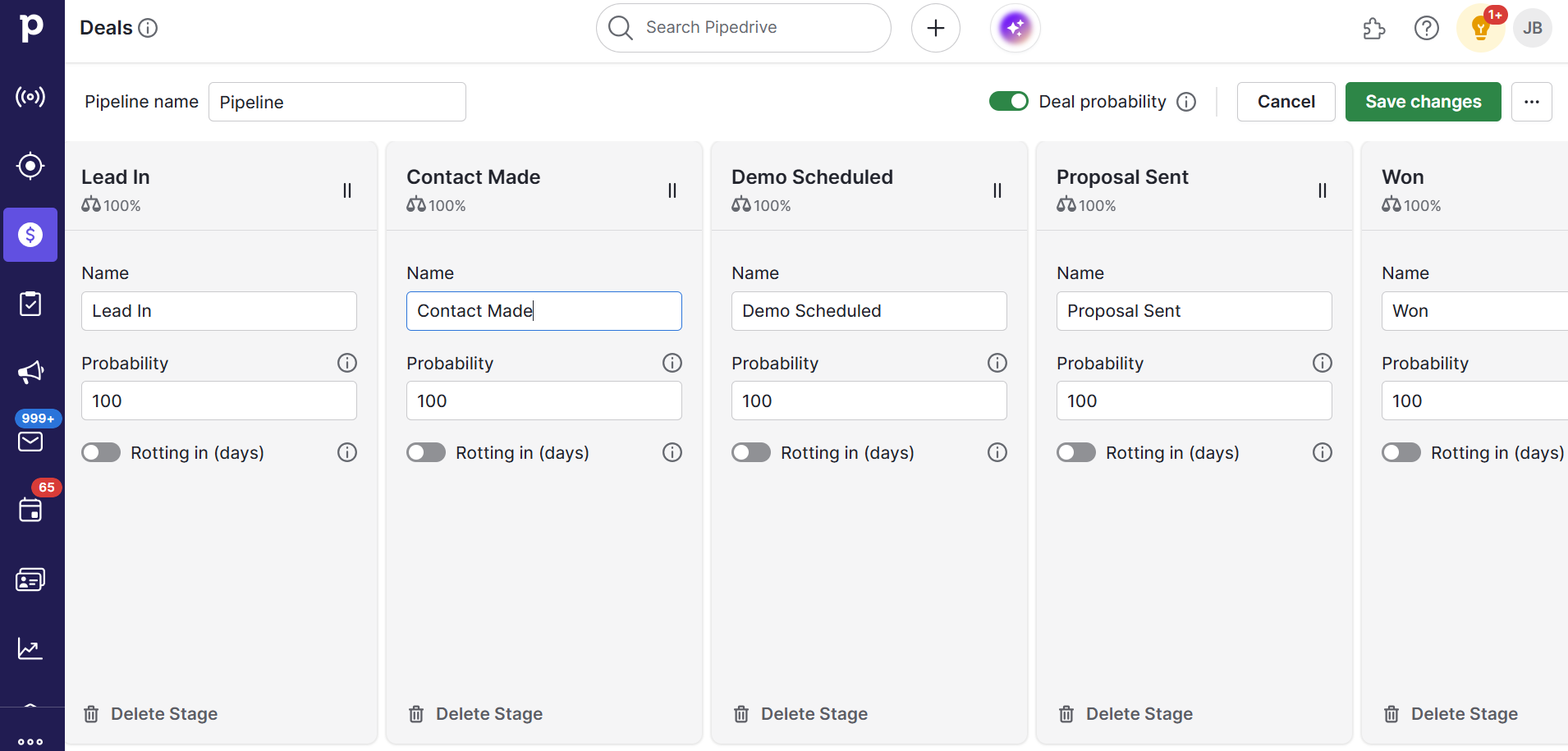
Pipedrive falls between these approaches. It’s a sales CRM that excels at tracking customer relationships and sales data and integrates with popular inventory management and e-commerce platforms.

You get the insights you need to improve your supply chain and you can connect with specialized tools to manage operations.
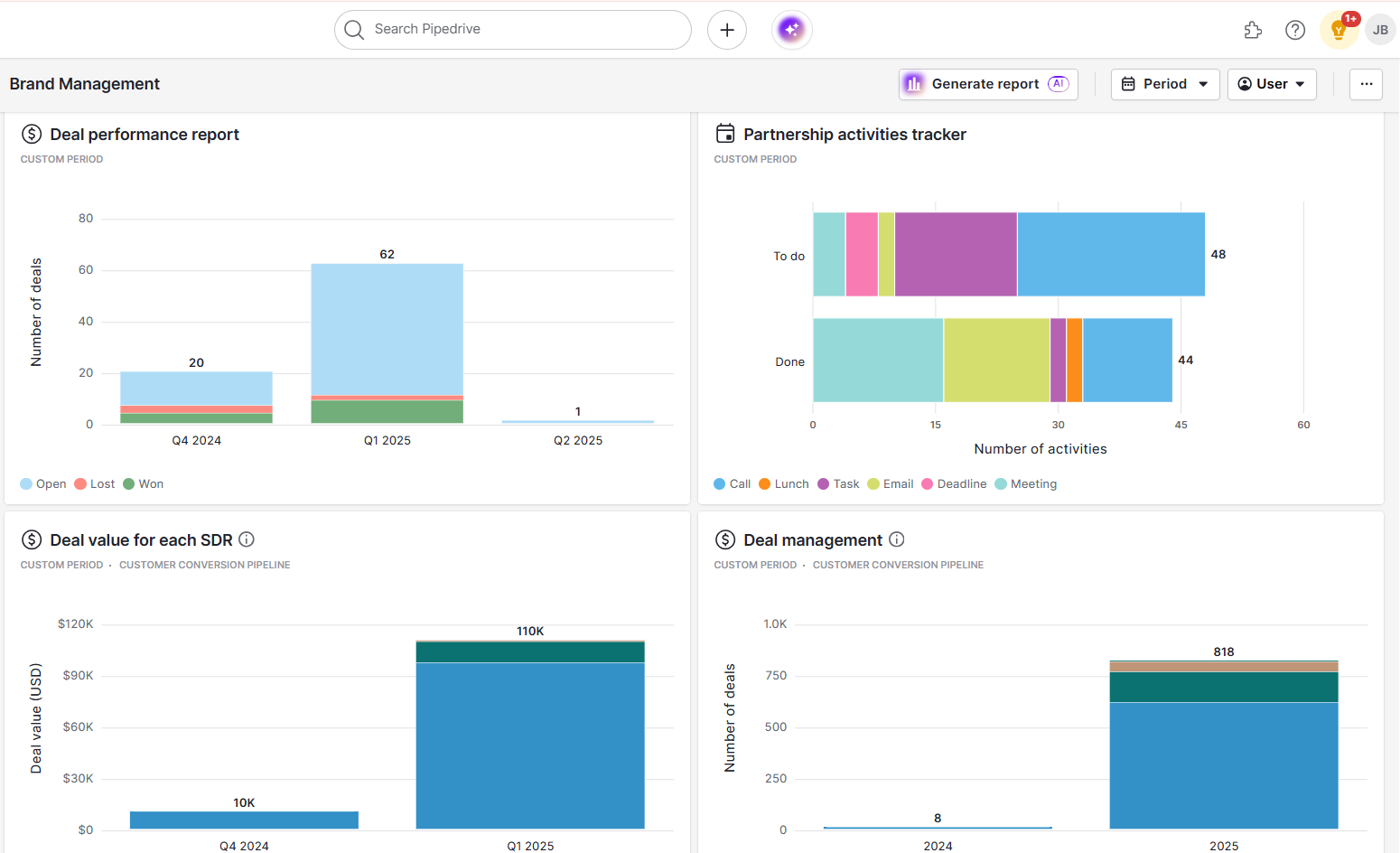
Recommended reading

https://www-cms.pipedriveassets.com/What-is-JIT-management.png

What JIT Management is and how to make it work

4 key benefits of using CRM for supply chain management

Small businesses struggle with SCM because their information lives on different platforms. A supply chain CRM system brings everything together, giving you a competitive advantage and improving profitability through:

  1. Better supplier relationships. Your CRM tracks every supplier. You see which ones always deliver on time and which ones cause problems. Then, you can build relationships with the good ones and find backups for when things go wrong.
  2. Smarter inventory planning. Instead of guessing what to order, you can see which products sell best and predict your needs. Better inventory planning means less cash tied up in slow-moving stock, which is critical when managing tight cash flows.

  3. Faster customer service. With everything in one system, you can answer inquiries quickly. If someone asks about an order, you can check stock, see delivery dates and give them accurate information immediately. Better service improves customer retention.

  4. Reduced costs and admin work. Automated processes do time-consuming work for you. Your CRM reminds you about supplier contracts that need renewing and creates sales reports instantly. You get more time to sell and grow your business.

Lowlander Beer is a powerful business success story using CRM. Because its sales data was not organized, the company had difficulty predicting demand and managing inventory.

To solve this, they moved everything into Pipedrive and cut the time to close sales by 75%. They even use Pipedrive to track point-of-sale materials like fridges and coasters per account, aligning marketing efforts with their overall supply chain.

The biggest challenge was that we were keeping our sales and revenue in different Excel sheets instead of tracking them in Pipedrive. We didn’t have clear insights into how much we sold weekly or which account managers were driving the most revenue.

Sam SierinkInside Sales Specialist

These benefits sound great in theory, but you need the right tools to make them happen. The good news is you don’t need enterprise software to start.

8 essential features for a CRM for supply chain management

When choosing a CRM platform to help with your supply chain, look for these functions:

Supply chain CRM feature

What it is and why it matters

1. Contact management

This feature stores suppliers and key contacts in an accessible place, so you always know who to reach out to

2. Communication tracking

A CRM logs every email, sales call and meeting with your suppliers so you can maintain strong relationships

3. Custom fields

Custom fields let you add specific data unique to your supply chain, beyond standard CRM fields

4. Reporting and analytics

Robust reporting tools mean you pull insights from your sales and customer interactions to forecast demand in real-time

5. Workflow automation

Automation streamlines repetitive tasks to save you time and prevent mistakes from manual data entry

6. Integration capabilities

A strong CRM syncs with other essential business software to avoid data silos and save you even more time

7. Activity management

Activity management lets you schedule and track supply chain-related tasks, preventing them from slipping through the cracks

8. Document management

Storing documents within your CRM means you can attach contracts and product specifications to the relevant records

These eight features will ensure your CRM can handle most SCM tasks. In the next section, you’ll learn how to use Pipedrive as an intuitive small business SCM system.

Download five free sales order templates

Use these free sales order templates to track deals, payments and orders from your customers and clients.

How to use Pipedrive’s CRM for supply chain management

Pipedrive’s CRM is a valuable tool for small businesses looking to manage their supply chain effectively.

Here’s how to set up Pipedrive as a supply chain command center.

1. Track supplier contact information and communication history

Keeping accurate supplier records helps your small business run smoothly. Pipedrive centralizes key supplier information so your supply chain is clear and easy to manage.

Start by creating an organization record for each supplier company you work with. Think of this like a digital profile for each vendor. Add these by pressing the “+ Organization” button from the list view of your people tab.

CRM in supply chain management Pipedrive organizations

Add “Person” records for your primary contacts, like their sales representative or account manager, inside each supplier’s record. This way, your team always knows exactly who to reach out to.

CRM for supply chain management Pipedrive contact

Your communication history with suppliers and distributors is as essential as their contact details. Every time you communicate with a supplier, log it in their Pipedrive record (even if it’s just a LinkedIn message).

CRM in supply chain management Pipedrive communication history

You’ll build a complete history of your conversations over time. Suppose you must recall a specific detail about a past order or a negotiation. In that case, you can quickly find it in the supplier’s profile.

2. Set up deal stages that reflect your order fulfillment process

Pipedrive’s visual pipelines are a powerful tool for tracking sales processes. You can extend this power beyond sales by creating a new pipeline that mirrors your product’s journey from a closed sale to delivery.

Start by creating a new pipeline in Pipedrive, separate from your main sales one. Name it something like “Order fulfillment” or “Product delivery”.

Create a series of deal stages within this new pipeline for each step your product takes after a customer buys it. Think about the actual physical or digital journey your product makes.

Your stages could look something like this:

  • Order Confirmed: the sale is final and the order details are ready

  • Inventory Allocated: you have confirmed the product’s availability from your stock

  • Picking and Packing: your team is gathering the items and preparing them for shipment

  • Shipped: the product has left your product warehouse or supplier and is on its way

  • Delivered: the customer has received their order

Drag and drop each deal (now representing a customer order) from one stage to the next as it progresses.

CRM in supply chain management Pipedrive visual pipeline

Every stakeholder will see where each order stands. They quickly spot bottlenecks and give customers accurate delivery updates when they ask.

Note: Don’t overlook supply risk management. Small businesses are vulnerable to supplier disruptions. Use your CRM to track backup suppliers for critical items. The goal is to spot issues before they affect business continuity.
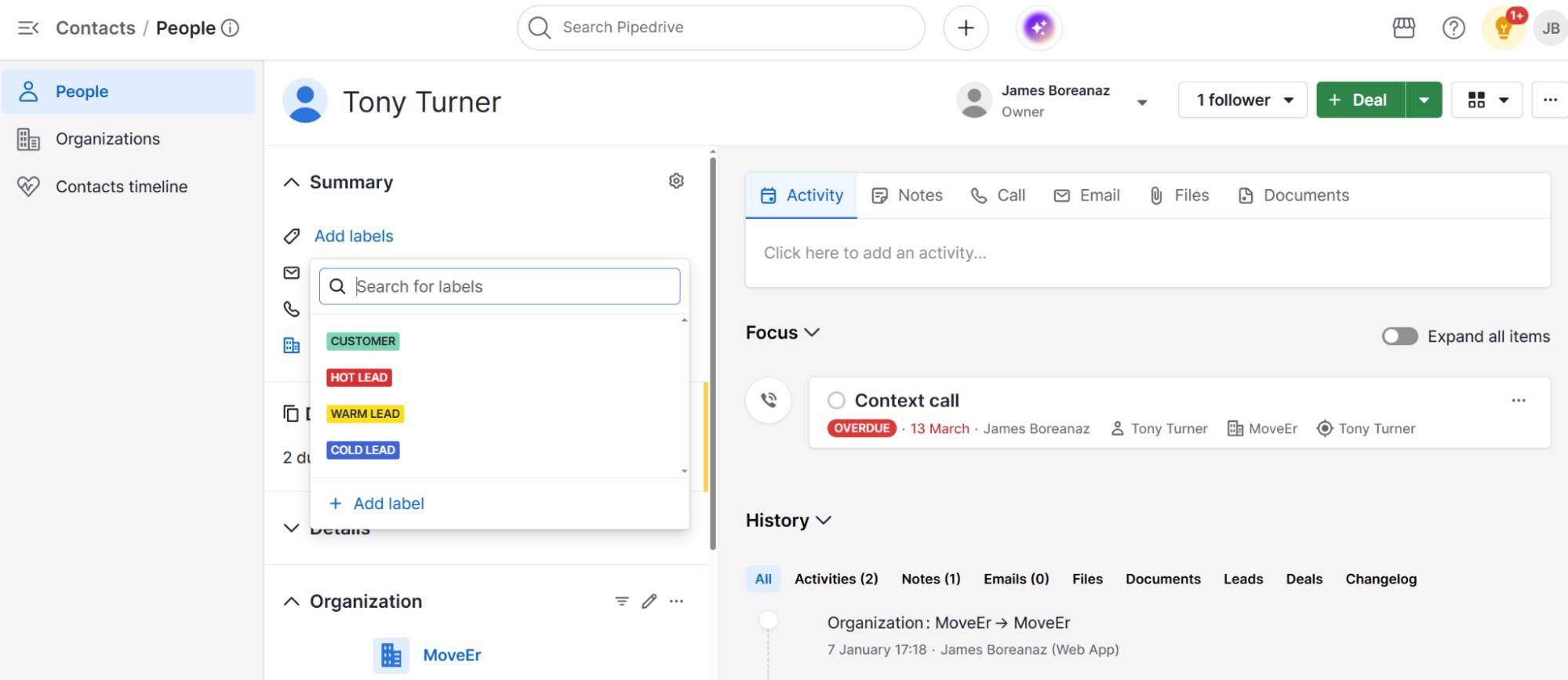
3. Monitor supplier performance and delivery schedules

Knowing which suppliers consistently deliver on time is essential. Late deliveries upset your customers and damage your business’s reputation.

Pipedrive helps you track the performance of each supplier over time,. This allowings you to spot patterns and know which suppliers to rely on for important orders.

For example, you might track component lead times from overseas suppliers. One supplier might consistently deliver in 14 days, while another often takes over a month.

Create custom fields in your supplier records to track key sales metrics, such as average delivery time and quality rating. Update these fields after each order to clearly see each supplier’s reliability.

Use Pipedrive’s Activities feature to monitor delivery schedules. When you order, create an activity for the expected delivery date. Set a reminder to check on the order if the due date approaches.

CRM in supply chain management Pipedrive Activities

You can also record delivery delays or issues by using notes within activities or the supplier’s profile.

CRM in supply chain management Pipedrive contact notes

Use the data you collect in Pipedrive to identify your most reliable suppliers. Over time, these insights help you strengthen your supply chain with dependable partnerships.

4. Use sales pipeline data to forecast inventory needs

You can use insights from the sales pipeline you build to make data-driven decisions about ordering.

If your sales forecasting software predicts more demand for an item, you’ll know to place a larger order with your supplier. If forecasts show a drop in sales for another product, you can reduce orders to avoid overstocking.

Pipedrive’s pipeline view shows you all your active sales deals and their expected close dates. Use this data to predict what finished products and raw materials you need and when.

Look at deals in your later stages. These deals will likely close, so you should prepare inventory for them. Seeing many deals in the last stages for a specific product is a good sign that you’ll need more soon.

CRM in supply chain management Pipedrive expected close date

Set up weighted forecasts using Pipedrive’s deal probability settings. Press “Set deal probability” and add one to each pipeline stage.

CRM in supply chain management Pipedrive deal probability

Start with something like 25% for “Initial contact”, 50% for “Proposal sent” and 75% for “Negotiation”.

Then, create a report for “Deal weighted value” to get a forecast that considers these probabilities.

CRM in supply chain management Pipedrive deal weighted value

This approach helps you avoid running out of popular items, which can lead to lost sales and unhappy customers. It also enables you to avoid having too much stock, which can tie up your cash and take up valuable storage space.

5. Set automated follow-ups for supplier contract renewals

Missing a renewal can mean higher prices or a break in your supply. Pipedrive helps you automate reminders so you never miss a critical date.

First, you need to track the contract end date for each supplier. In Pipedrive, go to your supplier’s organization record. Create a custom field called “Contract expiry date” and enter the date their agreement ends.

CRM in supply chain management Pipedrive custom fields

Once you’ve added the custom field, you’ll see it in each organization’s profile. Manually enter the contract end date for each supplier. You can also use filters to find suppliers with contracts ending soon.

CRM in supply chain management Pipedrive organizations filter

Finally, use Pipedrive’s workflow automation builder to get a notification via email one day before the contract expiry date.

CRM in supply chain management Pipedrive notification automation

To set Pipedrive up so you get notifications when activities are due, press the light bulb icon, then gear icon and choose “Manage notifications”.

CRM in supply chain management Pipedrive notifications

You can also use Pipedrive’s Activity Calendar for contract reviews. If your contract expires in December, schedule activities for October to start renewal discussions early.

For essential contracts, set multiple reminders. Create one activity 90 days before expiry to start discussions. Add another reminder at the 60–day mark for formal negotiations and a final one at 30 days to finalize terms.

Pipedrive’s reminders ensure you have plenty of time to review the contract, negotiate better terms or explore other suppliers. This feature helps you maintain favorable terms and avoid disruptions.

6. Track inventory levels and product information

While Pipedrive isn’t a full inventory system, its Products feature allows you to track stock and product details.

To use this functionality for product management, go to “Tools and apps” > “Products”.

CRM in supply chain management Pipedrive Products feature

Once enabled, select the “Products” icon on the main navigation bar. Press “+ Product” to add a new product, then include all the necessary details.

CRM in supply chain management Pipedrive Product details

Add custom categories for unique information that you want to store. Consider details that help your team handle the product, such as dimensions, weight or special instructions.

A useful field to add is “minimum reorder quantity”, which tells you how much stock you need before ordering more. You might also add “supplier SKU” to match the product code.

These custom fields help find crucial product information. Your sales team will know if an item is in stock before promising a delivery, and your operations team will also have all the information they need for packing and shipping.

7. Integrate with inventory management and e-commerce platforms

While its main strength is managing your sales pipeline, Pipedrive becomes even more powerful when you connect it with your other business systems.

The platform offers built-in integrations with relevant tools on the application Marketplace.

For example, it connects directly with MRPeasy, a cloud-based enterprise resource planning (ERP) solution that helps small manufacturers control production and scheduling.

CRM in supply chain management MRPeasy

You can also connect Pipedrive with e-commerce platforms like Shopify and WooCommerce.

When a new order comes in from an online sale, Pipedrive creates a new deal. It pushes customer and order details into your pipeline, helping your team see new sales and follow up with customers.

For many small businesses, Zapier is also an effective way to connect Pipedrive to other tools. It acts like a digital bridge, letting different apps “talk” to each other without coding.

Set up workflows (called Zaps) between Pipedrive and your inventory system. When you mark a deal “Won” in Pipedrive, a Zap can automatically trigger an action in an inventory management system like MRPeasy.

Note: Pipedrive offers a powerful Application Programming Interface (API) for businesses with specific needs. If you work with a developer, you can build custom connections between Pipedrive and nearly any other software.

8. Generate reports on customer demand patterns

Effective supply chain management depends on understanding what customers want and when they want it. With Pipedrive, you can spot customer behavior trends and optimize procurement.

Pipedrive offers robust reporting capabilities to understand customer purchasing habits. The Insights feature lets you create custom reports that show you how customers are buying. Pipedrive’s AI report generator can produce any desired report using a written prompt.

Click on the “Insights” tab in Pipedrive’s sidebar to build reports and see which products sell the most over a specific period.

These reports reveal customer demand patterns. You might discover that certain items sell better in summer, or that a particular product is popular with customers in a specific region.

This information is crucial for your supply chain because it helps you:

  • Plan purchases more accurately. If a report shows a product’s demand doubles in October, order extra stock in September.

  • Optimize production schedules. Manufacturers use this data to ramp up production of high-demand items at the right time.

  • Improve product development. Seeing what customers are buying guides decisions about new products to offer.

Regularly checking these reports helps you align your supply chain activities with what your customers are asking for. You’re more likely to have the right products available at the right time, improving customer satisfaction.

Recommended reading

https://www-cms.pipedriveassets.com/Essential-guide-to-operations-management.png

What is operations management and how can it help your business?

5 best practices for managing small business supply chains

Getting started with supply chain CRM can feel overwhelming, but you don’t need to do everything simultaneously.

Focus on the basics first, then build from there as your team gets comfortable with the system:

  1. Start with critical suppliers. Focus early efforts on the vendors you deal with the most. Experiment with your CRM’s tools and develop a manageable supply process before expanding to every supplier.

  2. Set up key performance indicators (KPIs). Define clear supply chain goals, such as on-time delivery percentage (aim for 95%+) and average order fulfillment time (target under 48 hours). Check these numbers often to see what’s working and what needs improvement.

  3. Train your team. Make sure everyone who needs to use your CRM knows how. Provide CRM onboarding for your sales team, operations staff and anyone involved in purchasing. Document each process so your staff uses the system more effectively.

  4. Prioritize data quality and audits. A CRM is only as good as the data in it. Regularly review your supplier and product portfolio. Update outdated information (like old contact details) and create a consistent process for how your team enters data.

  5. Gather customer feedback. Use your CRM to track feedback on product quality and customer experiences. Look for everyday customer needs (like faster delivery options) to boost customer loyalty and attract new customers.

As your needs evolve, remember that your supply chain is constantly changing. Regularly review your data, reports and workflows. Are your forecasts still accurate? Are your automated reminders effective? Is supplier performance improving or declining?

Be prepared to adjust your business processes and even your supplier relationships based on the insights you gain.

Recommended reading

https://www-cms.pipedriveassets.com/Production-management.png

What is production management? The definitive guide for business owners and prospective managers

Final thoughts

Using CRM for supply chain management helps small businesses avoid stockouts and strengthen supplier relationships.

Start with the customer data you already have. Over time, you’ll see improvements in inventory, ordering and deliveries.

Skip the Bio. Use a Book Funnel to Prove Your Expertise

Software Stack Editor · August 5, 2025 ·

The post Skip the Bio. Use a Book Funnel to Prove Your Expertise appeared first on ClickFunnels.

Did you recently create an “About Me” page filled with your credentials and experience?

We get it. You want people to see you’re qualified and trustworthy.

The only problem is that bios don’t really work. Most people skim past them without reading. Even when they do read, credentials don’t prove you can solve their specific problem.

A better option is to prove your expertise through a book funnel.

Whether you’re a coach, consultant, or service provider, book funnels help demonstrate your knowledge, all while attracting potential clients.

  • Book Funnels, Explained
  • The Power of “Buy-In” Authority
  • How to Craft a Book That Sells Your Expertise
  • Why Book Funnels Convert Better Than Freebies
  • Use Your Book to Drive High-Ticket Offers
  • Start Building Your Book Funnel Today
  • Show Your Expertise Instead of Talking About It

Book Funnels, Explained

A book funnel isn’t just a page that sells your book. It’s a complete system that turns your book into a customer acquisition tool.

Here’s the four-step process of how it works:

  1. You offer your book (free + shipping or low ticket) through a dedicated funnel.
  2. The visitor sees a compelling offer tied to the outcome they want.
  3. After they buy, you offer them something bigger, like a course or coaching.
  4. You follow up with emails to build the relationship and make more offers.

Each step builds on the last and helps you establish authority.

The Power of “Buy-In” Authority

When someone reads your book, something important happens. They experience your expertise firsthand. They see how you solve problems and get results. You build trust in a way that testimonials and credentials can’t match.

Reading your book changes how they see you. You go from being a stranger to being their trusted guide. When you later offer coaching or courses, it feels like the logical next step rather than a sales pitch.

The fact that they paid for your book matters too. They made a financial commitment, even if it was just a few dollars for shipping. This small purchase makes them more likely to consider bigger ones.

How to Craft a Book That Sells Your Expertise

Writing a book for a funnel is different from writing to get published. You need a book that positions you as the expert and leads readers toward your services.

Here’s what to include in a book built for a funnel:

  • Your story of discovering the solution
  • The key insight your audience needs to understand
  • Your step-by-step method or framework
  • Real examples that show it works
  • What readers should do next if they want your help

Keep it short and actionable. Readers should finish thinking, “This person really knows what they’re talking about.”

A sales funnel builder makes creating the entire system around your book easy. You can set up the order pages, upsells, and follow-up sequences even before the book is complete.

Why Book Funnels Convert Better Than Freebies

Free checklists and PDFs are everywhere, but a book feels more valuable to potential customers.

Because your customer already made a purchase from you (buying your low-cost book), they are much more likely to buy something else later.

After reading your book and getting results, they trust your methods. When you offer courses or coaching, they see it as getting more help from someone who has already delivered value.

Funnel-building software makes it easy to set up sequential selling opportunities. Everything happens automatically once you build it.

Use Your Book to Drive High-Ticket Offers

Your book positions you to sell coaching, consulting, and courses that cost thousands of dollars. When someone reads your book and gets results from your methods, they want to work with you directly.

In your book funnel, invite readers to:

  • Book a strategy call where you can sell your services
  • Apply for your coaching program with specific pricing
  • Join your mastermind or group program
  • Buy your online course as a stepping stone

Your audience is ready and more likely to pay for more help because your book has already demonstrated that your methods work.

Start Building Your Book Funnel Today

Write a 50-100 page book that teaches one specific method you use with clients. Set up a funnel that sells the book at a low cost (or free plus shipping), then offers your higher-tiered services afterward.

Use your funnel software to create order pages, thank you pages, and email sequences that automatically follow up with buyers. Start building these pages while you write.

Stop updating your bio page. Instead, focus on creating content that shows prospects exactly how you work and opens them up to buying more from you by creating a book funnel.

Show Your Expertise Instead of Talking About It

Tired of listing your degrees and hoping people think you’re qualified? There’s a better way.

A book funnel lets people experience your expertise. They see how you think and solve problems. They don’t just read about what you’ve done.

When someone gets help from your book, they already trust you. A book funnel is an excellent way to make selling your services easier and position yourself as an authority in your field.

Book – Traffic Secrets

Thanks for reading Skip the Bio. Use a Book Funnel to Prove Your Expertise which appeared first on ClickFunnels.

Should You Kickstart Your Business with a Funnel or a Website?

Software Stack Editor · August 5, 2025 ·

The post Should You Kickstart Your Business with a Funnel or a Website? appeared first on ClickFunnels.

You have a business idea, and you’re ready to go live. But there’s one big question: should you start with a website or launch with a funnel?

At first glance, the two might seem similar. Both live online. Both help people find you. But how they function and help you make money are vastly different.

Before investing in building a homepage, an About page, and multiple navigation tabs, you need to understand what helps a new business grow: focus, speed, and conversion. These are exactly what a funnel delivers.

In this guide, you’ll discover the key differences between websites and funnels, the pros and cons of each, and why starting with a funnel gives your business the momentum it needs to succeed.

  • What’s the Purpose of a Funnel vs. a Website?
  • Why Startups Should Choose Funnels Over Websites
  • When You Actually Need a Website
  • How to Get Started With Your First Funnel
    • Step 1: Pick One Specific Goal
    • Step 2: Choose The Right Tool
    • Step 3: Write Your Main Headline
    • Step 4: Explain the Outcome
    • Step 5: Add One Clear Button
    • Step 6: Put It Online
  • What to Expect After You Launch
  • Start With a Funnel, Build Your Website Later

What’s the Purpose of a Funnel vs. a Website?

Let’s start with the basics. A traditional website gives visitors many places to go. They can read about your company, browse your services, check out your blog, or click through multiple pages. Visitors decide their own path.

A funnel is different. It’s a guided customer journey with one goal: conversion. It moves your visitor through a step-by-step process, whether that’s collecting an email, selling a product, or booking a call.

Where a website gives people options, a funnel provides a clear path.

If you’re starting out, you don’t need “more information.” You need action. A funnel delivers that action.

Why Startups Should Choose Funnels Over Websites

You need results fast when launching a business. Starting from zero means your priority is building momentum through leads, sales, and honest customer feedback.

A funnel helps you:

  • Launch faster with fewer moving parts
  • Focus attention on one call to action
  • Collect data on what’s working (and what isn’t)
  • Guide every visitor toward a result that helps you grow

In contrast, a website often delays action. Visitors click around, browse different pages, and then leave. There’s no clear next step. When you’re new, you can’t afford to lose visitors.

Funnels give you feedback quickly. That speed helps you iterate, improve, and earn revenue while others are still perfecting their “About Us” copy.

When You Actually Need a Website

Websites have their place. They help establish authority, support organic traffic, and give returning customers a place to land. But for a brand-new business, they’re not the launchpad.

A website can enhance your presence, but only once your funnel works, you’ve validated your product, locked in your message, and proven you can convert cold traffic.

A complete website is a distraction when your business is in its early stages. It looks like progress, but it doesn’t actually move the needle on growth.

You’re better off building a lead generation funnel or sales page that gets people into your world.

How to Get Started With Your First Funnel

Ready to build your first funnel? Here’s what to do in six steps:

Step 1: Pick One Specific Goal

Know what you want to achieve. For example: “Get people to download my free guide and join my email list,” “Sell my $97 online course,” or “Get dentists to book a free consultation call.”

Step 2: Choose The Right Tool

A user-friendly funnel builder for business startups lets you build pages without coding. These tools have pre-made layouts you can customize with your own words and images.

Step 3: Write Your Main Headline

Focus on the outcome your audience wants. Your headline should make them think “That’s exactly what I need” within seconds of reading it.

Step 4: Explain the Outcome

Tell your audience exactly what happens when they take action. Be specific about the result they’ll achieve.

Step 5: Add One Clear Button

Use action words that match your goal. Give the audience multiple options, and they’ll choose none. Include only one option for one action.

Step 6: Put It Online

Don’t spend weeks “perfecting” your funnel. Launch it and see what happens. You’ll learn more from 10 real visitors than from 10 hours of planning.

What to Expect After You Launch

Your funnel is live. Now what?

Don’t expect immediate floods of traffic. Most new funnels start with a trickle of visitors. That’s normal and actually helpful because you can see what’s broken before hundreds of people hit your page.

Watch how many people take your desired action versus how many visit. If people are landing but not downloading your guide or buying your product, try changing your headline first. If that doesn’t help after 50 more visitors, test a different offer.

Wait for at least 100 visitors before making big changes. With fewer people, you’re guessing instead of using real feedback. When you do make changes, test one thing at a time, like your headline, button text, or offer, so you know what worked.

Your goal is to learn what resonates with your audience so you can improve and grow.

Start With a Funnel, Build Your Website Later

The question isn’t “Should I build a funnel or a website?” The better question is, “What will get me leads, sales, and data the fastest?”

The answer is the funnel.

A funnel gives you the framework to test your offer, validate your audience, and drive conversions from day one. It keeps your focus where it belongs: on the customer’s journey and the results they want.

Not all funneling software is created equal. When you choose a funnel builder that gets you up and funneling in a day, you gain results—the leads, the sales, the data—much faster.

Try ClickFunnels for Free, and Build Your Landing Page in Minutes

Thanks for reading Should You Kickstart Your Business with a Funnel or a Website? which appeared first on ClickFunnels.

Outbound Sales Calls & Script Examples

Software Stack Editor · August 4, 2025 ·

Outbound sales calls continue to drive B2B growth by giving teams direct access to potential buyers. Unlike passive marketing channels, outbound sales calls open real conversations that can qualify interest, uncover pain points and speed up deal cycles. The best results come not from sheer volume, but from timely outreach, relevant messaging and consistent follow-up.

This outbound sales guide breaks down what makes outbound calling effective. It includes practical script examples, tips for increasing connection rates and a look at how AI can scale personalized outreach without losing the human touch.

What are outbound sales calls

Outbound sales calls are direct calls made to potential customers who haven`t reached out first. Unlike inbound leads that come through referrals or sign-ups, outbound calls initiate contact, often using lead lists or targeted outreach based on company size, role or industry.

The goal of an outbound call is to spark interest, qualify the lead and move them toward the next step, such as booking a demo, sending a proposal or scheduling a follow-up. Effective sales reps do more than pitch. They listen carefully, tailor their message and focus on building long-term relationships.

Outbound calls remain one of the most direct ways for fast-moving sales teams to generate a suitable pipeline. Backed by structured customer relationship management (CRM) and a clear targeting strategy, they help businesses reach new markets, test messaging in real time and gather immediate feedback from prospects.

Recommended reading

https://www-cms.pipedriveassets.com/blog-assets/2400x1261-1_180618_204038.jpg

Perfect your sales calls with 3 simple time-saving tactics

Pick up the phone and call your dream client. Not only will it improve your results, but it will speed them along

– Anthony Iannarino, sales writer

Why outbound sales calls matter

Outbound sales calls let teams proactively drive pipeline growth rather than wait for leads to come in. They create opportunities to reach high-potential prospects early, often before competitors are even on the radar.

Being able to move swiftly is a significant benefit. Acting promptly after acquiring a lead creates a sense of progress, establishes a positive tone and improves the likelihood of a successful discussion.

In industries with long sales cycles or niche audiences, outbound calls also fill the gaps left by inconsistent inbound flow. Done right, they build awareness, create opportunities and put your brand top of mind before the buyer even starts searching.

As Mark Hunter notes, calls exchange more information than emails and build trust faster, making them especially effective for high-value conversations.

According to Trellus (2024), 57% of C-level executives prefer phone communication and 82% of business buyers are open to meetings with cold callers.

Recommended reading

https://www-cms.pipedriveassets.com/blog-assets/sales-call-planning.png

7 simple, effective pre-call planning tips for successful sales calls

How do you craft outreach scripts that convert?

Strong outbound sales scripts combine structure with a natural tone. Instead of sounding scripted, they feel timely and relevant. Referencing the prospect’s role, company activity or recent engagement shows the outreach is tailored – not a generic cold call.

The goal is to guide the conversation toward an easy next step. Open your script with a brief and applicable introduction. Acknowledge a recent initiative taken by the company or a prevalent obstacle in their field to establish a connection.

Next, provide a concise overview of how your solution can assist and the reasons why it is valuable for them to invest their time. Conclude with a straightforward call to action (CTA), such as arranging a consultation or reserving a demonstration.

That said, success rates are declining for teams relying on volume alone. According to Cognism, the average cold-calling success rate in 2025 is just 2.3%, nearly half the 2024 average of 4.82%. The shift highlights the importance of thoughtful outreach – where timing, relevance and personalization are key to breaking through.

Recommended reading

https://www-cms.pipedriveassets.com/blog-assets/New_Blog_PDAircall.jpg

Aircall’s 7 most important sales calling soft skills

How to increase outbound sales calls

Increasing outbound call volume begins with smarter lead management, not just faster dialing. Focus on leads who’ve recently interacted with your content, like downloading a guide or visiting high-intent pages. Reaching out within minutes of that activity significantly boosts your chances of connecting and qualifying the lead.

Equip teams with tools that remove friction. A CRM like Pipedrive can automate call lists, schedule reminders and provide contact context, reducing time spent on prep work. Integrations with click-to-call tools also eliminate manual dialing, helping reps maintain momentum throughout the day.

Use adaptable call scripts that respond to how the conversation unfolds. Adjusting your sales pitch based on a prospect’s reactions makes the call more relevant and improves your chances of securing a follow-up. As you gather insights, you can fine-tune scripts to better fit different buyer types or industries.

AI outbound sales calls: smarter, scalable outreach

Sales AI is reshaping outbound sales by making prospecting faster, more consistent and highly targeted. Smart dialers can prioritize high-intent leads, personalize openers using CRM insights and even book meetings automatically. The result is faster outreach and less friction during the critical early stages of the sales process.

AI tools now offer features like voicemail drops, sentiment analysis and sales follow-ups. These create more relevant conversations and reduce manual effort. Real-time optimization helps sales teams focus on what drives real results.

When used effectively, AI can boost outbound call performance by reducing manual tasks and helping reps focus on high-value conversations. Paired with a CR, AI supports a unified, data-driven sales approach.

Outbound sales call script breakdown

The table serves as a basic template and can be adapted according to vertical or customer persona.

Script element

Purpose

Opening line

Grab attention with relevant context, such as a recent download, industry trend or their specific role. A personalized opener shows the call is intentional.

Value proposition

Clearly state the core benefit your product or service offers, whether it’s saving time, reducing costs or improving efficiency. Keep it concise and aligned with their business goals.

Objection handling

Anticipate common objections, like timing or budget and respond confidently without being pushy. The goal is to lower resistance and keep the conversation moving forward.

Clear call to action

End with a low-friction ask, like scheduling a quick demo or sending over more details. A clear CTA gives the prospect a reason to continue the conversation.

Sample outbound call scripts

These examples show how script elements work together in real conversations. Each one can be tailored to your target industry, buyer persona or stage in the sales journey.

Warm inbound lead:

“Hi [Name], this is [Your Name] from [Company]. I saw you downloaded our [resource], were you looking to [solve X]?

We’ve helped teams in [their industry] reduce [pain point] by [benefit]. Would a 15-minute call next week work to explore this?”

Cold prospect in B2B SaaS:

“Hi [Name], I’m with [Company]. We help [industry] teams reduce response times and close more deals. I noticed your sales team is expanding; this might be a good fit.

Can I send over a quick overview and schedule a short intro call?”

Post-event or webinar attendee:

“Hi [Name], I saw you attended our session on [topic], glad you joined. Just wanted to check if [challenge] is something you’re working on right now.

If so, I’d love to share a few client results and see if it’s worth connecting.”

Each script maps naturally to the core components in the table above and can be refined through testing, feedback and personalization.

Recommended reading

https://www-cms.pipedriveassets.com/Cold-calling-script-templates.png

25 cold calling script templates and cold calling tips

Compliance note for AI calls

AI outbound calls offer efficiency and scalability, but they also face strict legal and ethical boundaries.

In regions like the US, laws such as the Telephone Consumer Protection Act (TCPA) regulate the use of automated voices, predictive dialers and AI messaging. Similar regulations exist globally, including General Data Protection Regulation (GDPR) in Europe and the Canadian Radio‑television and Telecommunications Commission (CRTC) rules in Canada. Failure to follow these rules can lead to significant fines and reputational damage.

Key risk areas include voice cloning, predictive dialers and calls made without documented consent. Even AI messages that sound human may be considered “artificial voice” under the TCPA if the recipient has not explicitly opted in.

To stay compliant, businesses should verify calling lists, honor national Do‑Not‑Call registries, include clear opt-out prompts and routinely audit AI scripts and workflows. Pairing automation with human review, especially for high-value contacts, adds an extra layer of protection while preserving outreach efficiency.

Recommended reading

https://www-cms.pipedriveassets.com/AI-Risk-Management.png

AI and risk management: understanding the benefits and best practices

Why Pipedrive for outbound sales calls

Pipedrive is built for outbound sales teams that need to manage high volumes with precision. Its visual pipelines, custom stages and intuitive contact tools help reps stay organized, focus their outreach and keep every lead on track.

With lead status, call results and activity history all in one place, teams can respond quickly and follow up with confidence.

Pipedrive’s automation tools reduce admin time and keep reps focused on selling. Tasks like scheduling follow-ups, logging calls or triggering emails can be automated based on pipeline movement or deal activity. The result is consistent outreach without added friction, especially valuable when reps are managing dozens of calls a day.

Recommended reading

https://www-cms.pipedriveassets.com/Sales-Calls-for-SMBs.png

A small business guide to AI for sales calls: top tools and best practices

AI automation delivers real-time suggestions based on deal activity. It surfaces stalled opportunities, recommends next steps and prompts timely follow-ups. For outbound teams aiming to scale while staying personal, Pipedrive keeps momentum high and the pipeline clear.

Final thoughts

Utilizing quickness, appropriateness and individualization in outbound sales calls continues to yield successful outcomes. Equipping representatives with adaptable scripts, enhanced by AI for more strategic targeting and follow-ups, enables them to make a stronger impact while maintaining a personal connection.

When combined with immediate data and analysis, each phone call presents a chance to learn. That ongoing cycle of feedback transforms outbound efforts into a scalable, data-driven asset for B2B and SaaS growth.

5 Essential Sales Agreement Tips for SMBs

Software Stack Editor · August 1, 2025 ·

Clear, well-structured sales agreements build stronger client relationships and help small and medium-sized businesses accelerate deal closures.

A watertight contract is essential for SMBs, where every sale counts. Clearly defined scopes and payment terms create more room for trust, support smoother collaboration and ensure timely transactions across every customer account.

In this article, you’ll learn how to write an effective sales agreement tailored to your small business. Explore what key elements to include and the different types of sales contracts, then use the customizable template to create your own.

What is a sales agreement?

Relying on verbal promises or vague documentation can lead to customer complaints, lost revenue and broken client trust. A sales agreement solves this problem by defining what each party expects. It protects both sides legally and provides a fallback if things go wrong.

This document typically outlines the terms and conditions of a sale between a buyer and a seller. Without it, you’re operating on guesswork.

Free sales agreement template for SMBs

Download Pipedrive’s customizable sales agreement template to create professional, reliable agreements easily.

The contract template includes key details like scope, payment terms and timelines. It covers all the necessary information for a smooth and transparent sales process.

Create professional sales contracts easily with Pipedrive’s sales agreement template

Download your free template

Why SMBs need solid sales agreements

With limited time and resources, SMBs can’t afford to leave sales agreements to chance. Clearly defined terms reduce miscommunication, delayed payments, legal disputes and lost revenue.

Take a closer look at some of the benefits of having a sales agreement in place.

Set clear expectations

Verbal agreements or vague email confirmations often lead to mismatched expectations. If a client says, “I thought that was included” and there’s no written scope, it’s hard to prove otherwise.

A sales agreement details exactly what you’re selling and when deliverables are due.

Clarity keeps everyone on the same page, meaning clients know what to expect and SMBs can spend time and resources on relevant tasks.

Setting expectations also builds trust. When clients see that your business is transparent and professional, they’re more likely to stick around, refer others and pay on time.

Keep your cash flow healthy

If a client delays payment or doesn’t settle, they derail your ability to manage payroll, do business with suppliers or fund other projects. A solid sales agreement states payment terms in black and white, ensuring clients pay invoices on time and keeping your cash flowing.

For example, the agreement spells out deposit requirements, milestone payments (partial payment on completion of a project stage), due dates and late penalties. As a result, clients can see upcoming payments and know when to issue the money.

Protect your business

Every business relationship starts with good intentions, but things don’t always go smoothly. A sales agreement acts as a safeguard when projects stall, clients go silent or expectations change.

If a client suddenly requests work outside the original scope, the agreement clarifies what it includes and whether you need a new quote to cover additional activity.

This process sets clear boundaries, ensuring your business doesn’t waste time and resources on extra, unpaid work.

Business sales agreements also clarify your liability. If something goes wrong with the product or service, the agreement defines what you’re responsible for.

For business owners of small companies without in-house legal teams, these built-in protections are a crucial layer of defense against costly legal disputes and damage to brand reputation.

Recommended reading

https://www-cms.pipedriveassets.com/Customer-Service-management.jpg

Everything you need to know about customer service management

What should a sales agreement include?

A strong sales agreement covers all the key details that protect your business and keep projects running smoothly. These details provide clarity for customers, prevent delays and keep your deals moving forward smoothly.

Here’s a breakdown of the essential components:

Parties involved

Full legal names and addresses of both the buyer and the seller.

SMB tip: Avoid confusion by using consistent business names across documents and systems.

Description of goods or services

An overview of the service or product you sell, including quantity, service scope and other specifications.

SMB tip: Be specific with your description. “Web development” is vague, but “five-page WordPress site with mobile optimization” is clear.

Pricing and payment terms

The total cost that your customers owe. Terms include deposits, payment schedules, accepted payment methods and late payment penalties.

SMB tip: Outline milestone payments for longer projects to improve cash flow.

Delivery terms or timeline

A breakdown of when and how you’ll deliver your product or service, including lead times, shipping terms (if applicable) and service start/end dates.

SMB tip: Add internal buffers for delivery delays and clarify who monitors overdue tasks.

Warranties and guarantees

An outline of what you guarantee (in terms of quality, functionality and performance) and for how long.

SMB tip: Keep warranties realistic. For example, offering a lifetime guarantee may not be sustainable.

Termination and cancellation clauses

Explain when and how either party can end the agreement. Specify written notice periods, refund rules and obligations upon termination.

SMB tip: Add protection for partial work completed if a client cancels mid-project.

Confidentiality and intellectual property (optional but important)

Clarify who owns intellectual property (like content, data or designs) once the deal is complete. Include a basic confidentiality clause to protect sensitive sales data and business information.

SMB tip: If you work with contractors or creatives, include clear ownership clauses that define who retains rights to the work, especially for logos, designs, copy or software.

Dispute resolution and legal jurisdiction

Define how your business handles disputes. For example, you might start with a mediation before proceeding to court (if necessary).

SMB tip: Choose your local jurisdiction to handle legal matters to avoid extra costs.

Sales agreements contain many moving parts, and staying on top of every edit and update can quickly overwhelm busy sales teams. A clear system helps minimize errors, keep information current and move deals forward without delays.

Pipedrive’s Smart Docs feature streamlines the entire process. Your team can create, send and track professional sales documents (like proposals and contracts) within the CRM.

Here’s an overview of how Smart Docs works:

The Smart Docs add-on ensures everyone works from the most up-to-date version for easy collaboration. It even lets customers sign documents electronically with eSignatures. That means fewer errors, faster turnaround times and a smoother path from proposal to closed deal.

How to write a sales agreement: 5 tips for SMBs

A well-crafted sales agreement is clear, comprehensive and legally sound, preventing scope creep and future legal headaches.

Here are five practical tips to help you draft sales agreements that protect your business, set the right expectations and build stronger client relationships.

Disclaimer: Pipedrive isn’t a legal services provider, and this content doesn’t constitute legal advice. Consider consulting a qualified professional to help you create a legally binding contract.

1. Ensure total clarity

Total clarity in a sales agreement means you and your client understand what you’re selling, what the product or service includes or excludes and when delivery will happen.

There’s no room for guesswork or assumptions, making it easier to keep projects on track and protect your working relationship.

Here’s how to build that clarity into every sales agreement:

  • Use precise language. Avoid vague terms and spell out what your product or services include. Instead of “Provide website support as needed”, say, “Provide up to 10 hours of website maintenance per month, including plugin updates and security checks”.

  • List exclusions explicitly. Define what you’re not responsible for to manage expectations and protect your time. For a web development project, you might say, “This agreement doesn’t include e-commerce functionality, ongoing SEO services or third-party content creation”.

  • Break down deliverables and deadlines. Use clear milestones, deadlines and delivery stages to reduce misunderstandings and keep everyone accountable. Instead of “Launch in July”, specify “Final delivery by July 25 after draft approval by July 10”.

Clear agreements also prevent scope creep, making it easier to enforce sales agreement terms and conditions if a dispute arises.

Note: Scope creep happens when a project grows beyond its original goals (often through extra tasks, last-minute changes or added requests) without an explicit agreement or additional payment. It can strain budgets, timelines and team capacity.

Imagine you’re halfway through delivering a website build and the client suddenly asks for an integration you didn’t discuss.

With a sales agreement, you can point to the agreed terms, explain the need for a change order and keep the project (and your margins) on track.

2. Use a customizable template

A customizable sales agreement template saves time, ensures consistency and helps you avoid errors from writing each contract from scratch.

For example, instead of rewriting your payment terms every time, you can start with a standard clause like “50% deposit due upfront, with the remaining 50% payable upon project completion”.

This process speeds up your workflow, reduces the chance of leaving out critical terms and gives every client a clear, professional agreement that aligns with your business standards.

Start with a strong base agreement that includes all the key sections (like scope, payment terms and timelines), then adjust the details for each client or project. This approach keeps your contracts professional and consistent while allowing flexibility for different deals.

Here’s how to make the most of your template:

  • Use clear formatting. Structure your template with clear section headings, bullet points and consistent language so it’s easy to navigate and edit. This simple formatting helps you work faster and makes your agreement easier for clients to digest.

  • Get your master template reviewed once. Hiring a lawyer for every contract isn’t realistic for most SMBs. Investing in a legal review of your master template can catch red flags and prevent costly mistakes down the line.

  • Create a version control system. Track edits to your template across different projects or clients. Monitoring these variations ensures you use the most up-to-date version and gives you a reliable paper trail if questions ever arise.

To manage your templates effectively, use tools like Pipedrive to store and organize your sales agreement templates directly in your client relationship management (CRM) system. That way, your entire sales team can quickly access contracts to speed up the process.

Here’s how Pipedrive’s CRM stores templates:

Sales agreement Pipedrive templates

The CRM also allows sales reps to record all sent and signed documents in a central place. They can keep tabs on which leads in the sales pipeline are ready to sign a sales agreement and which need more nurturing before closing the deal.

Download your free sales invoice templates here

Use these invoice templates for Google and Microsoft to get started

3. Write the agreement to fit your business

Your sales agreement should reflect how your business operates. When your contract mirrors your day-to-day operations, it’s easier to uphold, simpler for clients to understand and less likely to lead to disputes.

Imagine a small creative agency using a 15-page legal contract for a short-term branding project. The agreement includes clauses on data warehousing, arbitration across jurisdictions and complex indemnity language.

Clients feel overwhelmed, the sales funnel slows down and trust erodes before the work begins.

Here are some of the ways to ensure your agreement aligns with your business:

  • Match your delivery process. Describe your products or services to reflect how you deliver them. For example, if you offer ongoing support rather than one-time fixes, include terms that cover response times and scope for that support.

  • Use language your clients understand. Avoid overly technical or legalistic terms that could confuse clients. Use clear, simple language that sets realistic expectations and fosters transparency.

  • Include essential legal terms. Some clauses are must-haves to protect both parties, such as the terms of the sale, cancellation policies, liability limits and confidentiality agreements. Including these shows you take the business relationship seriously.

Remember: While it’s essential to tailor your sales agreement to your business, having a law firm review it ensures a legally binding document. This step can save you from costly disputes or loopholes later on.

4. Link customer payments to key milestones

Linking payments to milestones means aligning your income with tangible progress. The process gives you better cash flow control and reduces the risk of late or missed payments.

Instead of waiting until the end of a project to get paid in full, you receive smaller payments as you hit agreed-upon checkpoints.

For example, a B2B IT services provider might structure payments as:

  • 25% due upon contract signing

  • 35% due after system setup and initial testing

  • The remaining 40% due after final deployment and client approval

This milestone-based approach helps cover business costs along the way (like payroll and suppliers) and ensures the client stays engaged throughout the project. When client engagement is high, you get quicker feedback, faster sign-off and a smoother path to delivery.

Here are some tips for tying customer payments to key milestones:

  • Define clear, achievable milestones. Break the project into phases and link each to a payment. Each milestone should represent real progress that both you and the client can verify. For example, in a product management project, phases might include design approval, first draft or prototype delivery.

  • Be specific about payment timing. Use clear timelines like “50% due within five business days of signed approval on draft two”. This clarity removes confusion and helps keep the project on track.

  • Include penalties or late fees if needed. If late payments have caused issues in the past, include late fee terms to encourage customers to settle sales invoices on time. Even a small deterrent can keep things moving smoothly.

Centralizing payment information and client activity makes it easier to monitor milestones and payments. With everything in one place, you stay ahead of delays, follow up faster and maintain a healthy cash flow.

Stay organized by using Pipedrive’s CRM to track deals, attach key documents like signed agreements and monitor progress toward each milestone.

Here’s an example of how an invoice attachment appears in Pipedrive:

Sales agreement Pipedrive invoice attachment

Pipedrive’s invoicing feature also allows you to create, send and track invoices directly from the CRM. Invoice statuses update automatically under your deals, so you can instantly see upcoming or overdue payments.

To use the invoicing feature in Pipedrive, download the QuickBooks app directly from any deal:

sales agreement Pipedrive QuickBooks download

You can also add custom fields to view payment statuses and keep tabs on billed, due and overdue amounts.

Here’s an overview of how to add custom fields in Pipedrive:

With a complete view of every client’s status, you can manage timelines and invoicing without switching tools or losing visibility.

5. Plan for challenges and hurdles

Building clear procedures for delays, scope changes or breakdowns in sales communication helps you create a smoother path forward when things don’t go to plan. This preparation protects your time, preserves client relationships and reduces stress when unexpected issues arise.

Say that a new client goes quiet during a key review phase. Your agreement states that you pause project work after 10 business days of no response, with delivery dates and payment schedules adjusted accordingly.

With this contingency plan in your sales agreement, you’re not stuck waiting indefinitely or rushing to make up for lost time – both of which put pressure on your time and resources.

Here’s how to prepare for common challenges in your sales agreement:

  • Define what happens if timelines shift. Include a clause that outlines how to handle deadline extensions, whether that’s an agreed-upon notice period, revised delivery dates or additional fees if delays are client-driven.

  • Create a simple change request process. Outline how clients can request additional work, what information they need to provide and how you’ll price and schedule changes. This clarity prevents informal requests from derailing your scope.

  • Add buffer time around deadlines. Account for potential delays by building in realistic time frames for customer feedback, sign-off and delivery – keeping expectations in check and reducing pressure on your team.

Documenting these risks in your agreement reduces strain on your time and resources if challenges occur.

Recommended reading

https://www-cms.pipedriveassets.com/Risk-Management.png

Risk management: Definition, classifications, action plan for SMBs

3 types of sales agreements (plus samples)

Different business models need specific types of sales contracts. Choosing the right agreement helps you set clear expectations, protect your interests and close deals smoothly.

Here’s a breakdown of three common types, along with sales agreement contract PDF examples to show how each one works.

1. Product sales agreement

Use when selling physical goods. The contract covers the product description, quantity, price, delivery terms and warranties.

It’s ideal for SMBs selling inventory, retail items or manufactured goods.

Product sales agreement example: Georgia Tech Applied Research Corporation

2. Service sales agreement

This agreement is for selling services (like consulting, design, marketing or IT support) to customers. The contract outlines your work, when it’s due and how much you’ll get paid.

It’s best for consultants, freelancers, agencies or any business providing expertise or labor.

Service sales agreement sample: Career Step, LLC

3. Subscription or recurring sales agreement

Send a recurring revenue contract for ongoing services or products, like software subscriptions, maintenance or memberships. The agreement covers recurring billing terms, renewal policies, cancellation rights and service levels.

It suits businesses with repeat customers or ongoing offerings, such as SaaS companies.

Subscription or recurring sales agreement example: DealHub

Whether you’re selling products, services or subscriptions, choosing the right type of contract sets the foundation for successful relationships and faster sales.

Sales agreement FAQs

  • Here are some additional sections you can add to your SMB sales agreement if needed:

    • The entire agreement clause states that everything agreed upon is in the contract. Nothing outside the document is legally binding.

    • Any relevant governing laws that specify which state or country’s laws apply if there’s a dispute.

    • Severability to ensure the agreement stays valid even if one part is found unenforceable.

    • Addenda to add or update terms without rewriting the whole agreement.

  • A sales agreement generally focuses on the sale of goods and outlines the seller’s responsibilities, while a purchase agreement emphasizes the buyer’s obligations.

    A service agreement also covers services rather than goods. Both may include earnest money as a deposit to secure the deal.

  • A real estate sales agreement is a contract that details the purchase price, closing date and terms of a real estate transaction.

    This document outlines responsibilities for closing costs and the sale conditions. It legally binds the buyer and seller, ensuring clarity on property transfer terms, contingencies and obligations before the transaction closes.

  • A sales agreement is essential in real estate because it legally outlines the terms of the transaction, including the sale price, total purchase price and closing date.

    It also manages risk of loss, protecting both parties by outlining escrow arrangements and clarifying responsibility for liens or title issues.

Final thoughts

A well-crafted sales agreement sets clear expectations, protects your business, improves cash flow and builds client trust.

Get started with Pipedrive’s customizable sales agreement template to craft contracts that reflect your operations and ensure smooth deal execution.

Then, streamline the whole process using a CRM like Pipedrive. Store templates, track approvals and link sales documents to deals in one location, so sales reps can stay on top of timelines and keep deals moving forward.

  • « Go to Previous Page
  • Page 1
  • Interim pages omitted …
  • Page 4
  • Page 5
  • Page 6
  • Page 7
  • Page 8
  • Interim pages omitted …
  • Page 44
  • Go to Next Page »

Get your Software Stack together. softwarestack.tech

Software Stack

© 2024–2026 - Software Stack is a trading name of SouthwestCIO Limited ac ompany registered in England & Wales 11319049

  • Knowledgebase
  • Home
  • About Us
  • Contact Us