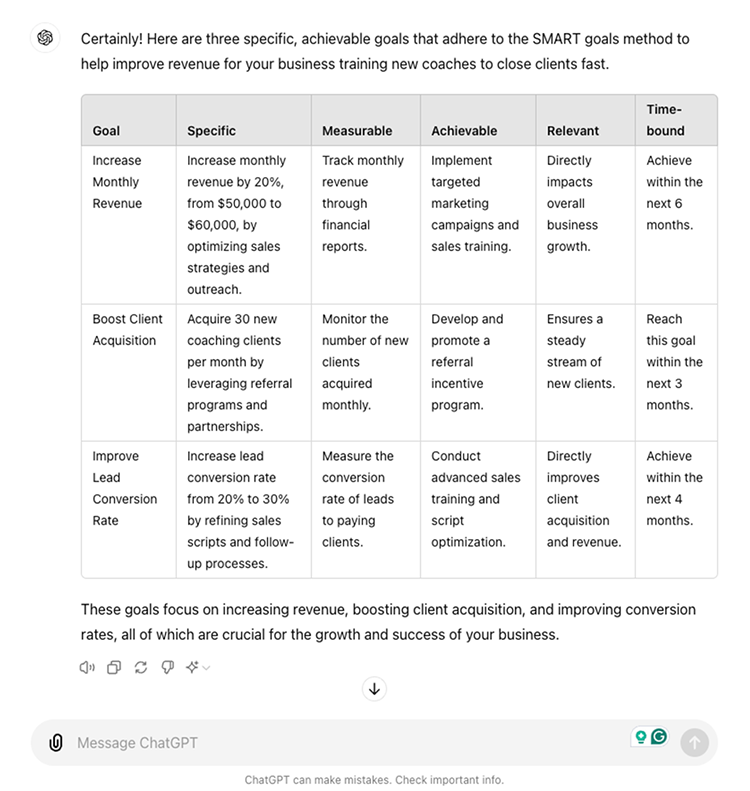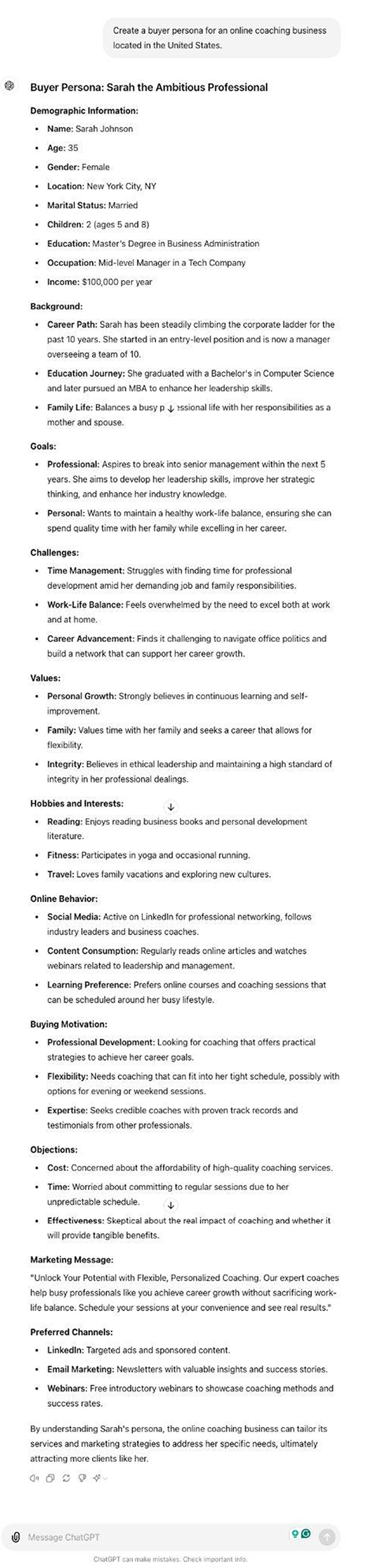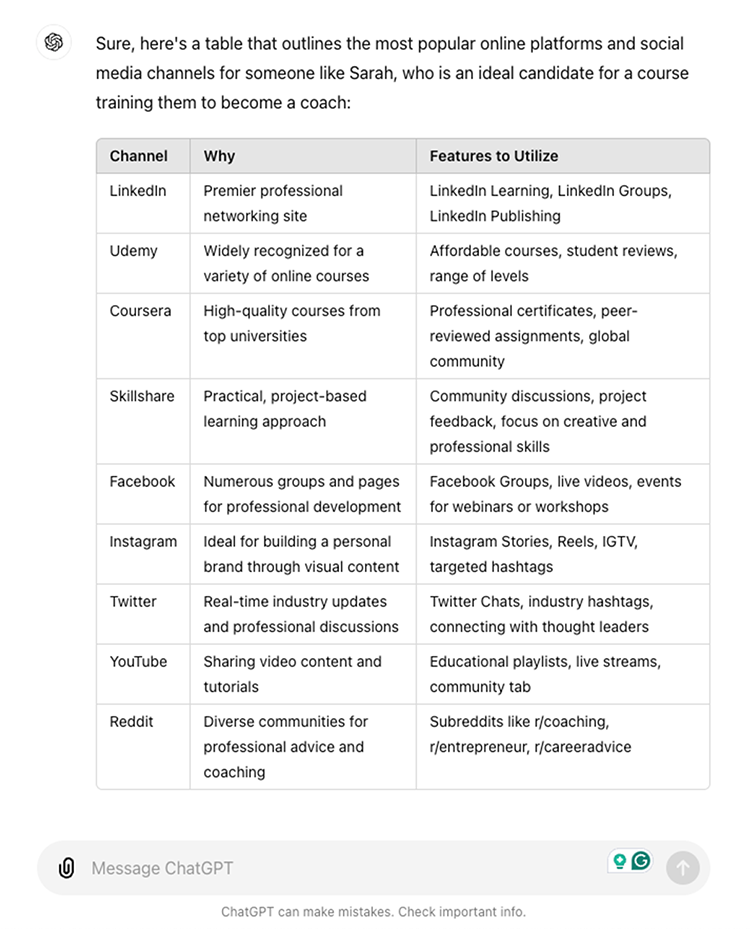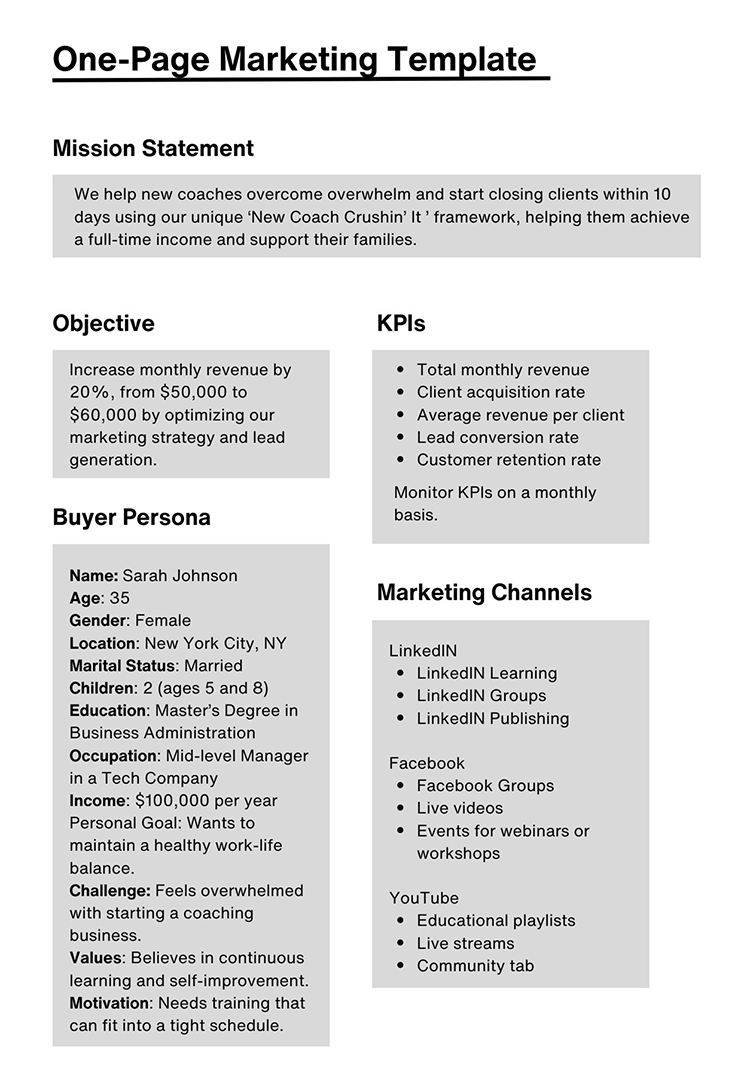
• Skip to primary navigation
  • Skip to main content
software stack logo

Software Stack

Get your Software Stack together

  • Knowledgebase
    • All Categories
    • Accounting Software
    • Automation & Workflow Software
    • Customer Relationship Management
    • E-Commerce Shopfronts & Payments
    • Marketing Automation
    • Online Courses & Membership
    • Project Management
    • Surveys & Forms
    • Web Hosting
  • Home
  • About Us
  • Contact Us
  • Show Search
Hide Search

Clickfunnels

How The Right AI Marketing Platform Can Help Your Business In 2024

Software Stack Editor · July 4, 2024 ·

The post How The Right AI Marketing Platform Can Help Your Business In 2024 appeared first on ClickFunnels.

Artificial intelligence can help you create more effective marketing campaigns, increase your content output, and make better, data-driven decisions.

But there are so many AI marketing platforms out there. So how can you choose the right software for your company?

Today we are going to take a look at the top 10 AI tools and discuss how you can use them to take your business to the next level!

Table of Contents:
  • What is AI?
  • What are the Main Benefits of Using AI in Your Business?
  • The Top 10 AI Tools That Can Help You Take Your Business to the Next Level
    • Best for Developing a Marketing Strategy: ChatGPT
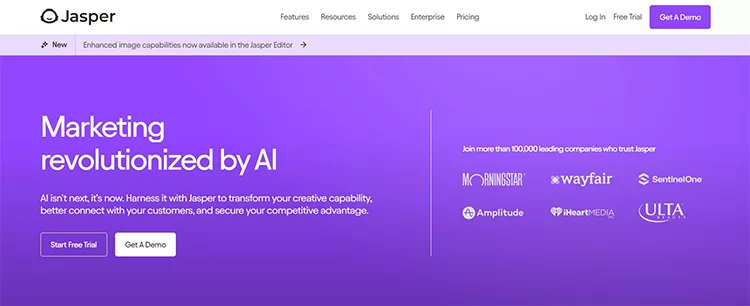
    • Best for Producing Marketing Content: Jasper
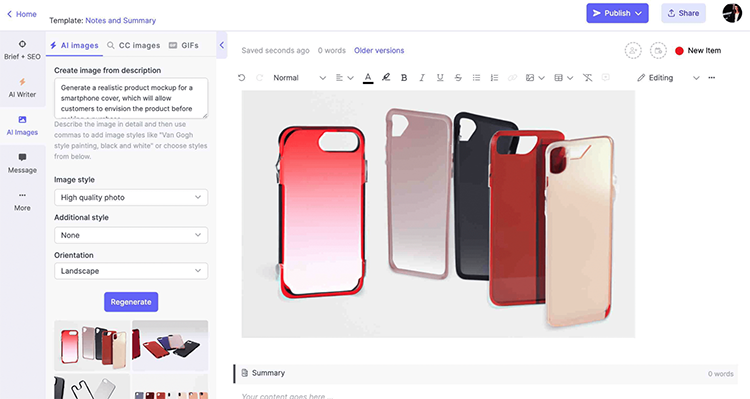
    • Best for Producing Marketing Visuals: Firefly
    • Best for Social Media Marketing: Flick
    • Best for Social Listening: Brand24
    • Best for Producing Short-Form Videos: Opus Clip
    • Best for Optimizing Ad Campaigns: Lemon AI
    • Best for Analyzing Customer Feedback: MonkeyLearn
    • Best for Business Analytics: Tableau
    • Best for Building Sales Funnels: ClickFunnels 2.0
  • Try ClickFunnels 2.0 Risk-Free!

What is AI?

“AI” stands for “artificial intelligence”.

It’s an umbrella term that refers to the machine’s ability to perform complex cognitive tasks.

At the time of writing, we are at what appears to be the peak of the most recent AI hype cycle that was kicked off by the astonishing success of Open AI’s ChatGPT.

If you are familiar with technological hype cycles, you probably know that the terms describing the overhyped technologies tend to gradually lose their meaning and turn into nebulous buzzwords.

In the last decade, this has happened with the terms “blockchain”, “crypto” and “Web3”. Now it’s happening with the term “AI”.

That’s why we recommend getting into the habit of using more precise terms to refer to specific technologies that fall under the “AI” umbrella. 

For example, if you are considering adding ChatGPT to your business workflow, don’t think about it as “AI”, think about it as a “large language model”.

This approach can help you see past the hype, accurately assess the capabilities and limitations of the technology in question, and make good business decisions. 

What are the Main Benefits of Using AI in Your Business?

Benefit #1: Increased Speed

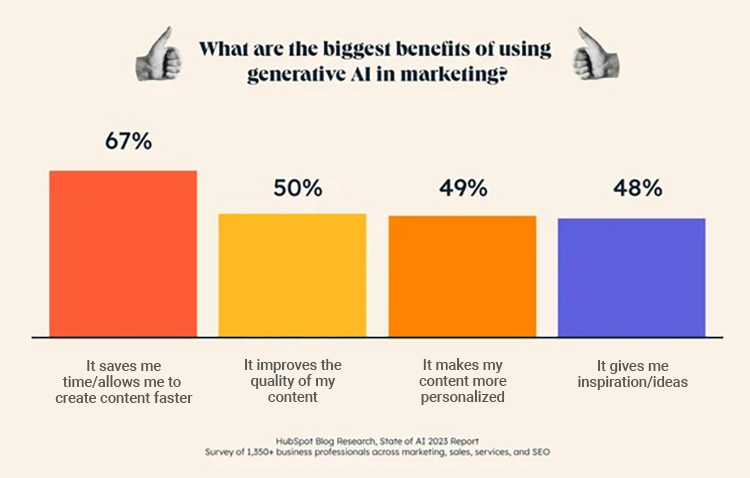
You can use AI, more specifically generative AI such as large language models and text-to-image generators, to get more done in less time.

These technologies can help you:

  • Develop a comprehensive marketing strategy and turn it into a step-by-step action plan that tells you what you need to do every day, every week, and every month in order to reach your business goals. 
  • Produce written marketing content such as social media posts, blog articles, video scripts, ad copy, email copy, landing page copy, sales page copy, website copy and more.
  • Produce visual marketing assets such as social media images, blog images, video thumbnails, ad images, landing page images, sales page images, product images and more.
  • Analyze your long-form videos, identify the most interesting moments, and turn them into short clips that you can then post on YouTube, TikTok, and Instagram. 

At the time of writing, these tasks cannot be completely automated due to the current limitations of generative AI.

However, if you learn to use these technologies effectively, you could potentially 10x your marketing content output. 

This can give you a competitive advantage over rival companies that haven’t incorporated AI in their business workflows yet.

Benefit #2: Decreased Expenses

Another benefit of using generative AI in your business is that it allows you to decrease your expenses by reducing your reliance on creative professionals.

For example, large language models and text-to-image generators can enable you to write articles, create images, and edit videos all by yourself, without having to hire writers, graphic designers or video editors.

At the time of writing, large language models and text-to-image generators can’t outperform creative professionals in terms of quality yet, but they can produce written content, visual content and video content that is “good enough” for business purposes.

This can be especially helpful for solopreneurs who are just starting out, can’t afford to hire anyone and therefore need to do everything themselves whether they want to or not. 

We recommend educating yourself on the phenomenon known as “hallucinations” so that you can better understand the limitations of large language models like ChatgPT. 

In short, they are inherently unreliable in terms of factual accuracy because sometimes they just make things up. This is a well-known problem in the field of artificial intelligence.

That means that if you are using these technologies to create written content, you shouldn’t publish it without manually fact-checking everything. If you don’t have the subject matter expertise to do so, you will need to hire someone who does.

Note that publishing inaccurate information can damage your brand image, attract negative media attention, and even get you in trouble with the law!

Benefit #3: Better Data Analysis 

You can also use AI, more specifically various machine learning techniques that were developed in the context of data science, to analyze vast quantities of data and extract actionable insights from it. 

For example, a machine learning technique known as text analysis can help you analyze all customer messages, emails, and support tickets that you have ever received and extract actionable insights that you can then implement in your business. 

Generative AI is getting all the media attention right now but it can be argued that improving the efficiency of business operations is where machine learning truly shines!

Reality Check: You Need to Understand Business Fundamentals to Use AI Tools Effectively!

One of the problems with the AI hype is that “AI” is being presented as a miracle solution that can solve all your problems. 

But while AI tools are indeed powerful, ultimately they are just that: tools.

And if you don’t understand business fundamentals, you won’t be able to use these tools effectively.

That’s why it’s so important to educate yourself on subjects like sales funnels, marketing, and copywriting. 

AI is not a replacement for business knowledge!

The Top 10 AI Tools That Can Help You Take Your Business to the Next Level

Another problem with the AI hype is that it can give you this vague feeling that you should start using “AI” in your business in order to not get left behind. That can lead to making bad decisions due to the fear of missing out. 

Instead, you want to be pragmatic about it: look at your existing workflow, see what tasks could be done more efficiently with AI, and then choose AI tools that are the most suitable for those tasks. 

That way, you will be using these tools to solve real problems, not just mindlessly hopping on the hype train!

Best for Developing a Marketing Strategy: ChatGPT
ChatGPT is a large language model with extremely broad capabilities.

One of the best ways to use it in the business context is to ask it to create a marketing strategy for your company based on your target audience, offer, resources, timeframe, and goals.

Once you have the high-level strategy, you can ask it to create an action plan with the tasks that you need to complete every day, every week, and every month in order to achieve your goals.

As we explained previously, large language models are prone to hallucinations, so you should take everything they say with a grain of salt.

But if you understand business fundamentals, you will be able to evaluate the suggested marketing strategy, make some adjustments, and use it to grow your business!

Best for Producing Marketing Content: Jasper
Jasper is an AI “copilot” that can help you produce marketing content and visuals.

It will give you access to 12 large language models, including the previously mentioned ChatGPT.

In case you are wondering why not just use these large language models directly, the answer is that Jasper was specifically designed for marketers.

If you aren’t that interested in playing around with AI, can’t be bothered to invest time in mastering prompt engineering, and just want to get things done, this is the right tool for you.

It offers prompt templates, content templates, team collaboration features, and more. In fact, you can use Jasper to generate an entire marketing campaign, the first drafts of all marketing assets included, with a single brief!

It’s also worth noting that this AI tool offers extensions for Chrome and Edge web browsers which can enable you to access its capabilities everywhere!

Best for Producing Marketing Visuals: Firefly
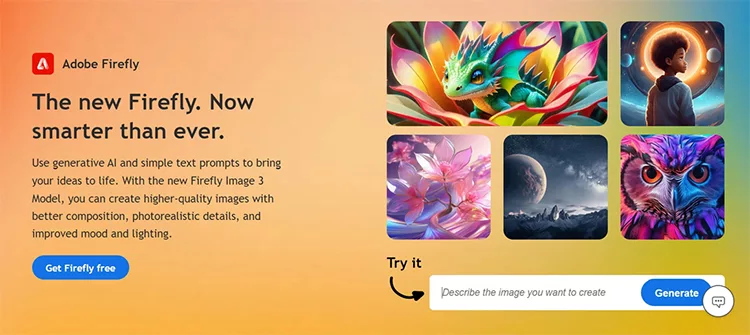
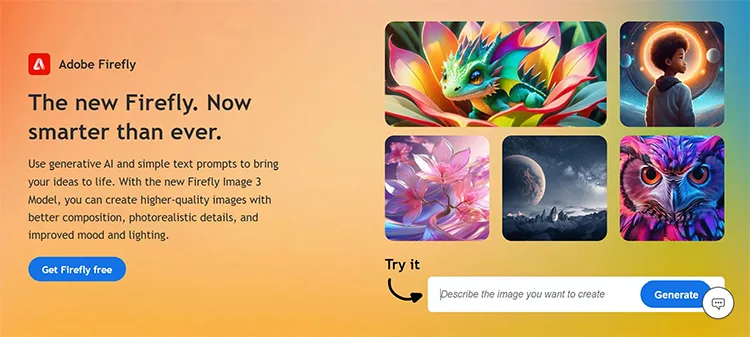
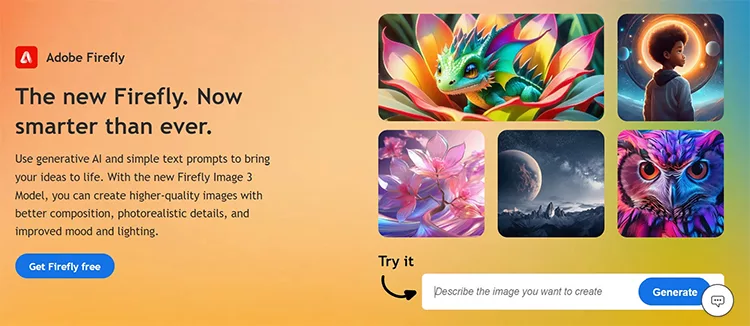
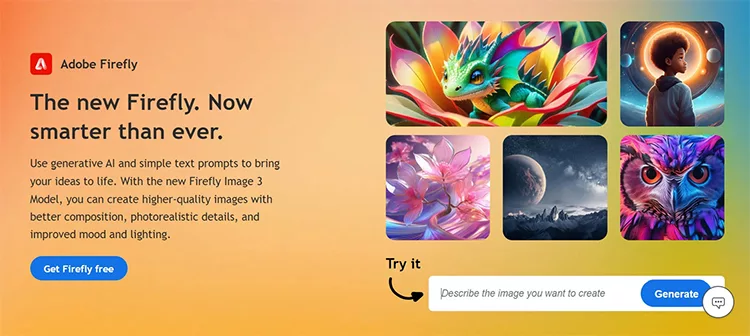
Adobe Firefly is an incredible text-to-image generator that you can use to produce marketing visuals. 

All you need to do is type in a prompt that describes what you have in mind and Firefly will generate an image based on those instructions. 

This tool also includes various image editing features. For example, you can easily expand the image, add or remove details, change the background, etc.

Firefly is easy to integrate with other apps in Adobe’s software suite. In fact, it powers some of the new features in Illustrator, Photoshop, and Lightroom. 

Finally, Adobe has made it clear that Firefly was trained on licensed data. This is important because there have already been several class-action lawsuits against software companies that trained their text-to-image generators on unlicensed data. 

At the time of writing, we are still in the “Wild West” phase of AI development where software companies are pushing the frontier of this technology and lawmakers are struggling to keep up with the latest advancements. That will inevitably come to an end eventually. 

We would argue that it’s best to play it safe and only use text-to-image generators that have been trained on licensed data. That way, once the laws governing AI use are put in place, you won’t have to worry about getting sued for copyright infringement!

Best for Social Media Marketing: Flick
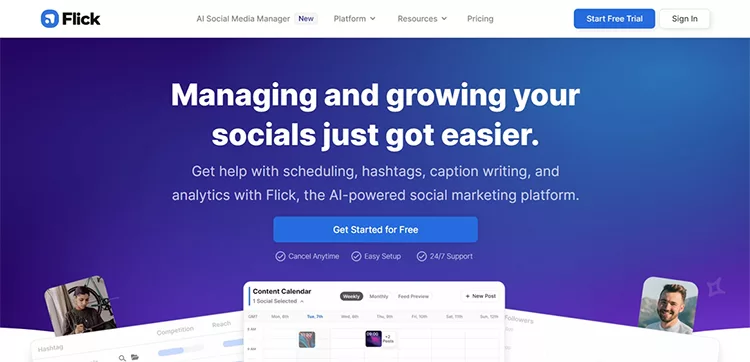
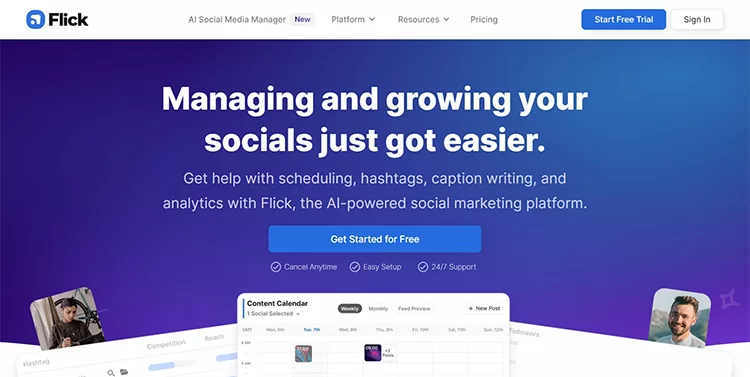
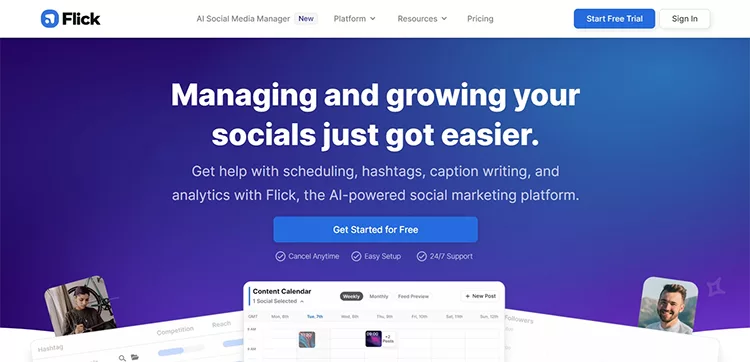
A web page from Flick promoting their AI-powered social marketing platform, highlighting features for scheduling, hashtags, caption writing, and analytics.

Flick is an AI social media marketing platform.

It enables you to use AI to generate content ideas, produce the content itself, and then schedule that content to be published on your chosen social media platforms. 

It works best for growing an Instagram following because it includes Instagram hashtag tools and detailed Instagram analytics that provide real-time reporting and actionable insights.

But it can also work well for promoting your brand on Facebook, LinkedIn and TikTok!

Best for Social Listening: Brand24
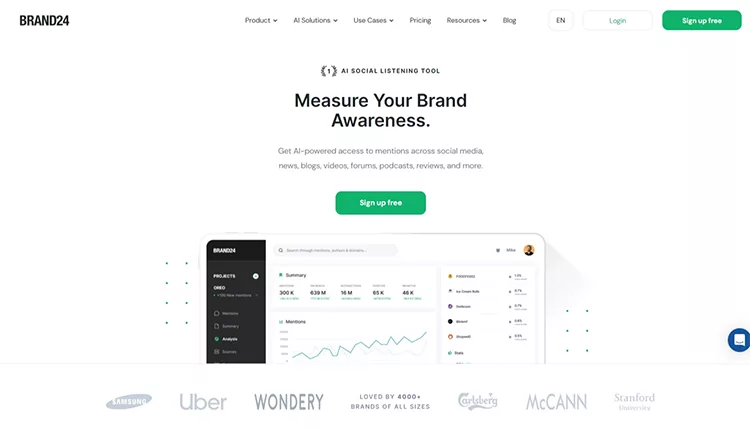
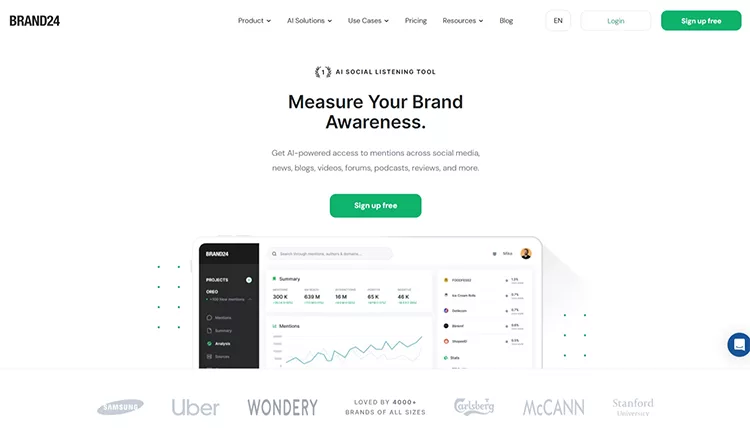
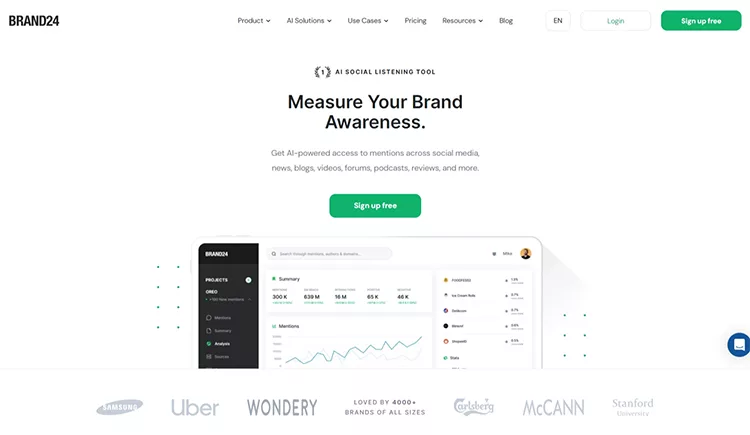
Brand24 is an AI social listening tool that you can use to manage your brand. 

It allows you to monitor brand mentions across various platforms and see them in one unified feed.

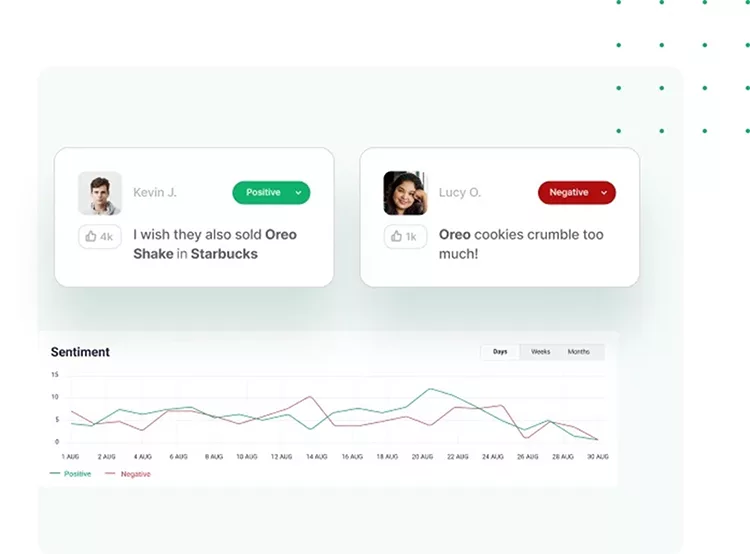
It also enables you to sort these mentions by positive, neutral, and negative sentiments and observe the changes in conversation volume.

You can even set custom alerts if you want to get notified about brand mentions!

Best for Producing Short-Form Videos: Opus Clip
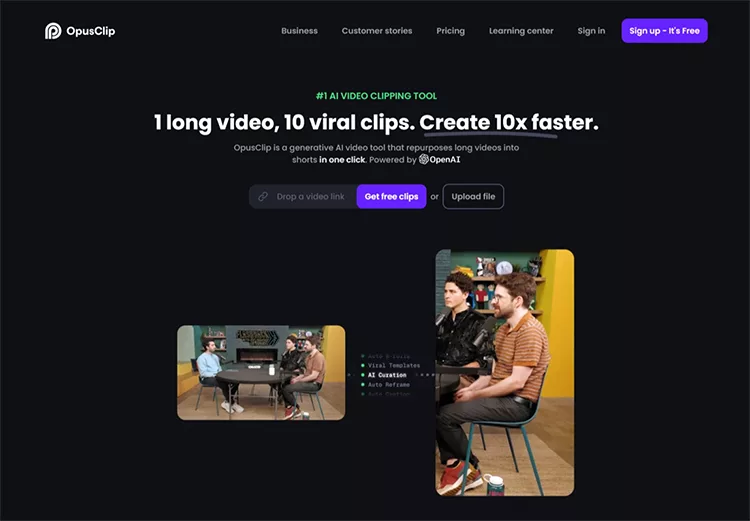
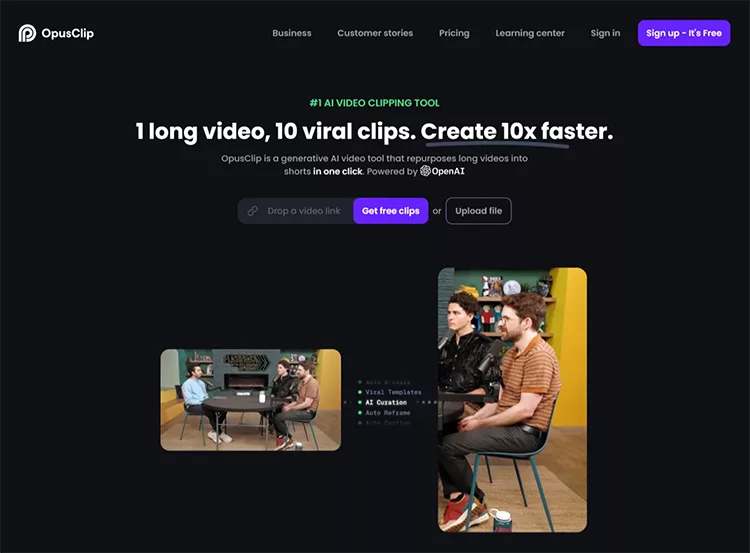
A screenshot of OpusClip's webpage highlighting its video clipping tool. The page has menus, a tagline about creating viral clips from long videos, and images of people using the product.

Opus Clip is an AI video tool that you can use to repurpose video content into short clips. 

It works like this: you either upload a video or link to a video that you want to repurpose, set the parameters and then let AI produce the clips. 

This tool can be incredibly helpful for brands that primarily focus on long-form video content such as podcast interviews, video essays, documentaries and so on.

Manually going over a 90-minute interview, identifying the most interesting moments, cutting them out, repurposing them into short clips, adding captions and subtitles, coming up with a title, etc. can take ages.

But Opus Clip can produce a bunch of shorts in less than 10 minutes. Sure, they probably won’t be perfect and might require a little bit of editing, but you will still save an insane amount of time!

Best for Optimizing Ad Campaigns: Lemon AI
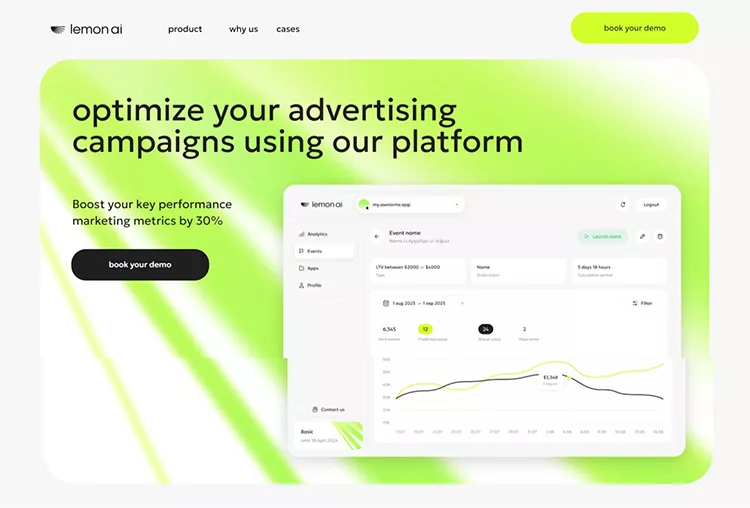
A digital interface with charts and metrics displayed on a screen promoting a platform called lemon.ai that optimizes advertising campaigns. The text highlights a 30% boost in key performance marketing metrics.

LemonAI is an AI tool designed to help you optimize your Google, Facebook, and Instagram advertising campaigns. 

First, you integrate it with your business analytics software, create prediction goals, and wait for the AI model to be trained on your data.

Then, you launch an ad campaign with smart ad optimization that is based on predictive analytics. 

The longer you use this AI model, the more data it will have to learn from and the more effective it will become.

This tool can help you improve some of the most important business metrics such as your customer acquisition cost (CAC), your customer lifetime value (CLV) and your churn rate.

Best for Analyzing Customer Feedback: MonkeyLearn
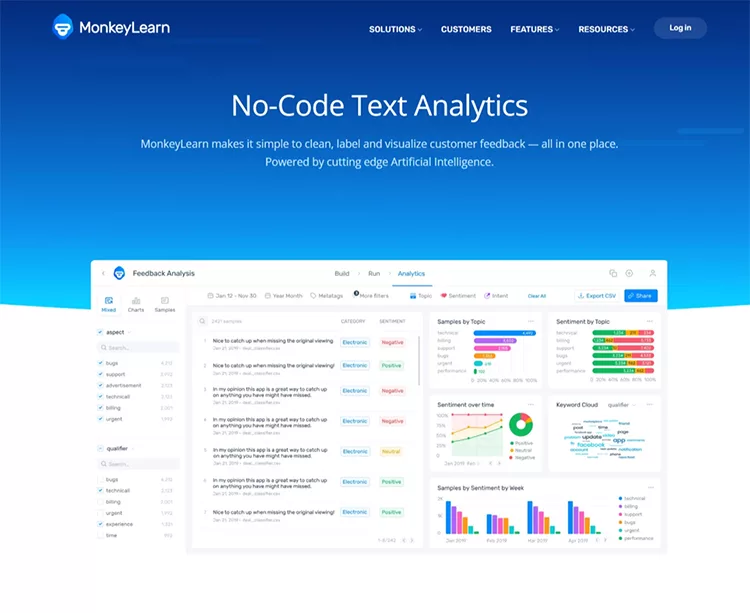
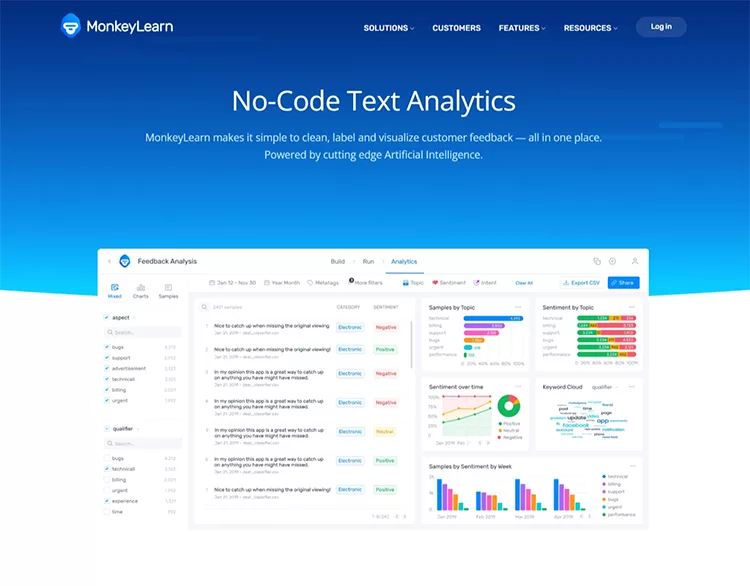
Screenshot of MonkeyLearn's No-Code Text Analytics interface showcasing feedback analysis with various graphs, visualizations, and categorized feedback data points.

MonkeyLearn is a text analytics app that makes it easy to collect all customer feedback in one place, analyze it, and extract actionable insights from it.

Data visualizations can help you understand the distribution of feedback by topic, the sentiment for each topic, changes in sentiment over time, and more.

You can then use that knowledge to improve customer service, prioritize the most important issues, and create a business development roadmap that is based on what your customers want the most. 

Best for Business Analytics: Tableau
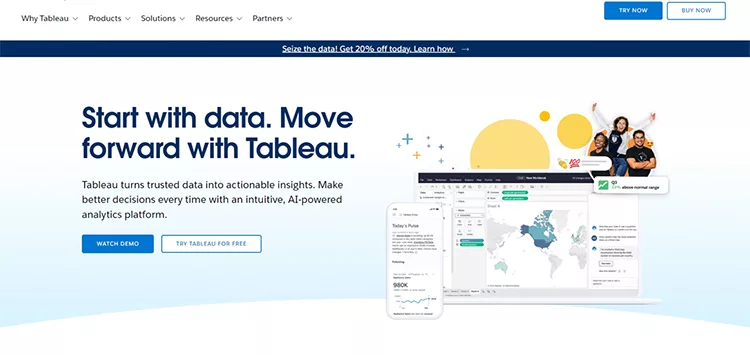
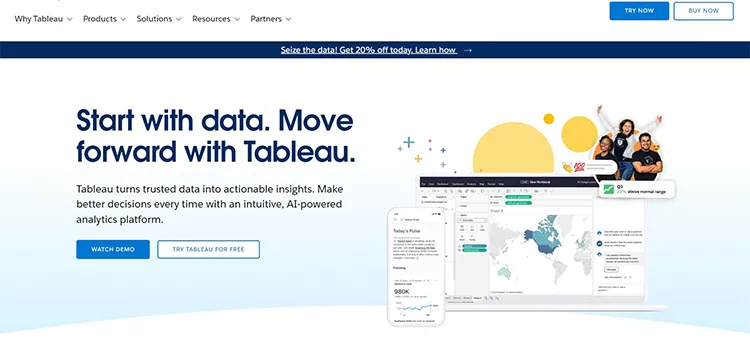
Tableau is an AI-powered business analytics platform that belongs to the Salesforce software suite.

It enables you to collect business data from various sources, analyze it, extract actionable insights from it and create beautiful visualizations that instantly convey the most important information to the stakeholders.

You can even ask Tableu’s AI chatbot questions such as “What caused the sudden increase in sales in the last weekend of July?” and you’ll get an answer that will help you better understand the data in question. 

This tool does have a steep learning curve but the interface is simple enough to navigate even if you don’t have a background in data science!

Best for Building Sales Funnels: ClickFunnels 2.0
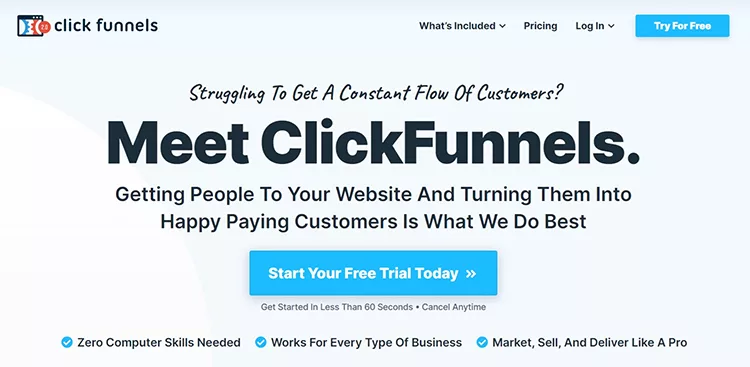
ClickFunnels webpage showing a promotional message for getting website visitors and turning them into customers, featuring a blue button to start a free trial.

ClickFunnels 2.0 is an all-in-one marketing platform that has everything you need to launch, manage, and grow your online business. We have recently added an AI sales funnel builder to it!

You can use our AI sales funnel builder to create a sales funnel for your business extremely fast, even if you have never built one before. It typically takes around 10-15 minutes. 

Once you have your sales funnel, you can import it to your ClickFunnels account, edit it with our page editor and set up an automated welcome sequence with our email marketing functionality.

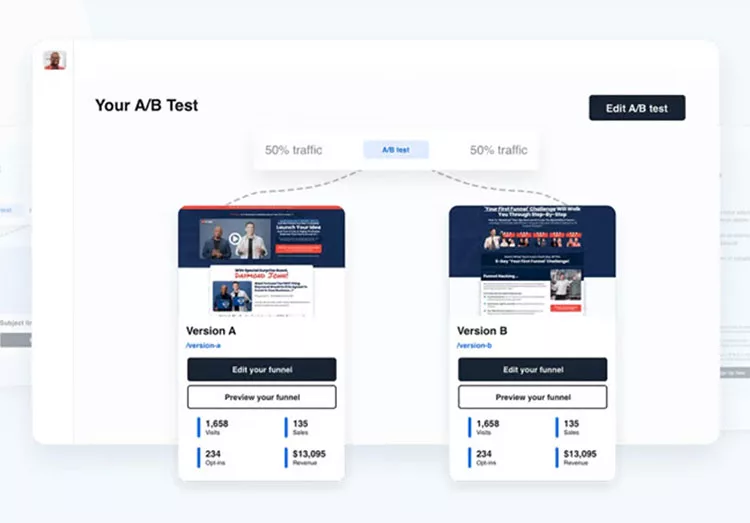
Then, once your sales funnel is live and you start driving traffic to it, you can optimize it with our A/B testing functionality.

A/B testing can help you maximize your sales, revenue, and profit!

Try ClickFunnels 2.0 Risk-Free!

Let’s be real:

We are biased in favor of our software.

So we understand if you take what we say about it with a grain of salt.

Fortunately, we have a free 14-day trial, so you don’t have to take our word for it. 

You can go and see ClickFunnels 2.0 for yourself without any risk!

So what are you waiting for? 🧐

Start Your Free Trial Today

Thanks for reading How The Right AI Marketing Platform Can Help Your Business In 2024 which appeared first on ClickFunnels.
The Top AI Marketing Companies Of 2024

Software Stack Editor · July 4, 2024 ·

The post The Top AI Marketing Companies Of 2024 appeared first on ClickFunnels.

Everyone is talking about how AI is going to revolutionize marketing.

In fact, it’s probably safe to say that businesses that fail to incorporate artificial intelligence into their marketing strategies are going to be left behind.

That’s why today we are going to take a look at the top AI companies and discuss how you can use their products to gain a competitive edge.

Table of Contents:
  • #1: OpenAI
  • #2: Adobe
  • #3: Jasper
  • #4: Flick
  • #5: Brand24
  • #6: Opus Clip
  • #7: ClickFunnels 2.0

#1: OpenAI

OpenAI is an artificial intelligence research organization whose mission is to develop safe and beneficial artificial general intelligence (AGI).

It was founded back in 2015 but only came to prominence in late 2022 when it launched its AI chatbot ChatGPT.

ChatGPT quickly became the fastest-growing consumer app in history, amassing over 100 million users in just two months after its launch.

This astonishing success kicked off the current AI hype cycle, started an AI arms race between the Big Tech companies, and got the attention of investors, lawmakers, and the general public alike.

Today, OpenAI has several serious competitors, most notably Google with its large language model Gemini, Meta with its large language model Llama, and Anthropic with its large language model Claude. 

However, the company remains the leader in the field of artificial intelligence, with the latest version of its flagship product, GPT-4o, widely considered to be state-of-the-art when it comes to large language models.

As a marketer, you can use ChatGPT to:

  • Brainstorm ideas for products and services, offers, and marketing campaigns.
  • Develop a marketing strategy based on your offer, resources, constraints, timeframe, and goals.
  • Turn that marketing strategy into an action plan that tells you what you need to do every day in order to achieve your goals.
  • Produce marketing content such as social media posts, blog articles, video scripts, lead magnets, landing and sales page copy, promotional emails and so on.
  • Analyze marketing metrics such as traffic numbers, conversion rates, sales, revenue, and profit to find optimization opportunities.

And if you want to get a general sense of the GPT-4o’s capabilities, consider watching its launch demo, which includes some pretty cool stuff:

At the time of writing, OpenAI offers three pricing plans for ChatGPT:

  • Free plan
  • Plus plan that costs $20/month
  • Team plan that costs $25/person/month

If you need more capabilities, you can contact the company about their Enterprise plan.

#2: Adobe

Adobe is one of the most respected brands when it comes to graphic design, photo editing, and video editing software.

In fact, tools like Photoshop, Lightroom, and Premiere are considered to be the industry standard among creative professionals.

Now the company has expanded its software suite by launching its own text-to-image generator, Firefly.

You can use it to produce marketing visuals such as social media images, blog post images, landing page and sales page images, ad creatives, video thumbnails, and more.

You can see some of its crazy capabilities in its launch video:

Firefly has three pricing plans:

  • Free plan
  • Premium plan that costs $4.99/month
  • Single Apps plan that starts at $9.99/month

It’s also included in the Creative Cloud All Apps plan which costs $59.99/month.

It’s worth noting that, unlike some of the other popular text-to-image generators, Firefly was trained on licensed data, which means that you won’t have to worry about potential legal risks associated with copyright!

#3: Jasper

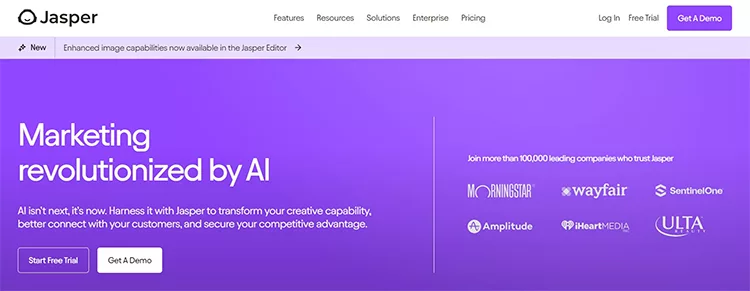
Screenshot of the Jasper website promoting AI-driven marketing solutions with options to start for free or get a demo. Several company logos are shown, indicating partnerships or endorsements.

Jasper is an AI marketing company that has its own AI engine.

This proprietary AI engine offers access to over a dozen large language models, including the most popular ones from OpenAI, Google, and Anthropic.

The main reason to use Jasper instead of a generic tool such as ChatGPT is that the former was developed for a specific use case: producing marketing content.

To be more precise, it has a wide range of use cases that all fall under the “marketing” umbrella, such as helping you write:

  • Personalized cold emails
  • Product descriptions
  • Responses to customer reviews
  • Short-form articles
  • Long-form articles
  • Video script outlines
  • Ad headlines

…and more!

Here are some of the Jasper’s most notable features:

Brand Knowledge

You can create a brand database that includes your products and services, your style guide, your brand voice, etc.

Then, once you ask Jasper to produce a specific piece of content for your company, say, a long-form blog post, it will be able to tap into this database to get the relevant information and make sure that the content stays on-brand.

Chatbot

If you are used to working with large language models directly and like the chatbot interface, you’ll be glad to hear that Jasper offers a chat feature that is similar to ChatGPT, Claude, and Gemini.

Prompt Library

Arguably, high-quality input is the most important factor when it comes to getting high-quality output from large language models.

That’s why prompt engineering is becoming a discipline in its own right, with online education platforms like Coursera and Udemy offering entire courses on this subject.

If you don’t have much experience with AI and aren’t sure how to construct effective prompts, there’s no need to worry: Jasper has you covered with its prompt library.

It features over 500 prompts for all kinds of use cases from creating buyer personas to coming up with ideas for TikTok videos to automating Twitter and LinkedIn.

Visuals

You can also use Jasper to create marketing visuals with its text-to-image generator.

While it’s unclear what data it was trained on, the company says that images generated with it are royalty-free and suitable for commercial use.

Campaigns

Jasper can help you create an entire marketing campaign, including the first drafts for all of its assets, with just one brief, all the while ensuring that everything remains on-brand.

Also, if you have a marketing team, know that this AI marketing platform has team collaboration features that make it easy for several people to work on multi-channel campaigns.

Extensions

Jasper offers extensions for Chrome and Edge browsers that allow you to access its features in the browser itself.

For example, if you want to use Jasper while composing emails in Gmail, these browser extensions can help you do that.

Jasper has three pricing plans:

  • Creator plan that costs $49/month
  • Pro plan that costs $69/month
  • Business plan with custom pricing

Both Creator and Pro plans offer a free 7-day trial. You can also get a 20% discount if you choose to pay annually!

#4: Flick

Flick is an AI social media marketing platform.

At the moment, you can use it to grow your presence on Facebook, Instagram, TikTok, and LinkedIn, with more platform choices to come in the future.

Here are some of the Flick’s most noteworthy features:

Content Lab

You can use AI to help you brainstorm content ideas, categorize those ideas, and save them for later.

Content Creation

You can also use AI to create the content itself, at least the first drafts of your social media posts.

In fact, you can take the ideas that you generated in the content lab and then easily turn them into posts with just a few clicks.

That can really speed up your content creation process!

Content Calendar

Flick allows you to create a content calendar where you can schedule content to be posted at a later date.

It’s also worth noting that when you are scheduling a social media post, you can choose which platforms to post it on. Multi-platform publishing can save you a lot of time!

Instagram Hashtags

Flick arguably works best for growing an Instagram following because it has several Instagram-specific features that can come in handy.

For example, before you schedule an Instagram post, you can browse Instagram hashtags, get detailed information on them, pick the ones that are the most relevant to your post, and add them to its caption. The right hashtags can help you increase your reach!

Instagram Analytics

Flick also has Instagram analytics that tracks over 20 different metrics and can help you better understand what resonates with your target audience.

Flick has three pricing plans:

  • Solo plan that costs £14/month
  • Pro plan that costs £30/month
  • Agency plan that costs £68/month

All three plans include a free 7-day trial. You can also get a 20% discount if you choose to pay annually!

#5: Brand24

Brand24 is an AI social listening tool that can help you monitor what people are saying about your brand and manage your brand image.

Here are some of its most noteworthy features:

Mentions Feed

You can set up a mentions feed for your company so that you can see all the mentions of your brand across various platforms in one place.

Discussion Volume Chart

The discussion volume chart provides an easy way to track the volume of conversations about your brand.

It can help you identify potential problems early on and address them before they escalate into a PR nightmare.

It can also help you notice when there’s an increased interest in your brand and capitalize on that.

Sentiment Analysis

Sentiment analysis allows you to track three types of sentiment: positive, neutral, and negative.

It’s another great way to spot potential problems early on so that you can address them pre-emptively.

It can also help you understand what your customers appreciate the most and make your marketing campaigns more persuasive by emphasizing those aspects of your product or service.

Mention Analytics

Brand24 offers detailed mention analytics that can provide more insight into who is talking about your brand, what they are saying, and what effect it has.

Mention Alerts

Finally, you can also set mention alerts.

That way, you’ll be notified via email or via an in-app notification when an individual or an organization who fits your criteria mentions your brand.

Say, if you want to get notified when a major media outlet mentions your company, you can set up a custom alert for that.

Brand24 has four pricing plans:

  • Individual plan that costs $99/month
  • Team plan that costs $179/month
  • Pro plan that costs $224/month
  • Enterprise plan that costs $499/month

All plans include a free 14-day trial. You can get up to 2 months for free if you choose to pay annually.

#6: Opus Clip

Opus Clip is an AI video tool that can help you repurpose long-form videos into short clips that you can then publish as YouTube shorts, TikToks, or Instagram reels.

Here are some of its most notable features:

Video Repurposing

All you need to do in order to repurpose a long-form video is upload that video or provide a link to it, set the parameters, and click a button.

Then AI will identify the best hooks, extract highlights, and rearrange them into cohesive short videos. It can even automatically add animated captions.

All that will probably take less than 10 minutes!

Video Editing

Once you have your shorts, you can edit them with Opus Clip editing tools.

You can even create brand templates with brand logos, custom color schemes, and custom fonts. That will speed up the editing process in the future.

AI B-Roll

You can automatically incorporate contextually relevant b-roll into your shorts, such as royalty-free stock footage or AI-generated visuals.

Opus Clip has three pricing plans:

  • Free plan
  • Starter plan that costs $9/month
  • Pro plan that costs $29/month

There is a free trial included in both Starter and Pro plans. You can save up to 67% if you choose to pay annually.

#7: ClickFunnels 2.0

An advertisement for ClickFunnels, offering services to convert website visitors into paying customers. Features include no computer skills needed, suitability for any business, and a free trial offer.

ClickFunnels 2.0 is an all-in-one marketing platform that provides everything you need to launch, manage, and grow your online business. We have recently added an AI sales funnel builder to it!

Here are some of our platform’s most notable features:

Website Builder

You can easily build a business website from scratch using our drag-and-drop website builder, even if you don’t have any web development or web design skills. 

Sales Funnel Builder

You can use our sales funnel builder to create various funnels for your business.

Our template library has funnel templates for all of the most popular use cases so all you need to do is pick one and customize it with our drag-and-drop page editor.

Alternatively, if you are an experienced funnel builder and want to create custom funnels from scratch, you can do that as well!

AI Sales Funnel Builder

We know that building a sales funnel might seem complicated if you have never done it before.

That’s why we decided to add an AI sales funnel builder to our software. It enables you to create a sales funnel for your business in just 10-15 minutes.

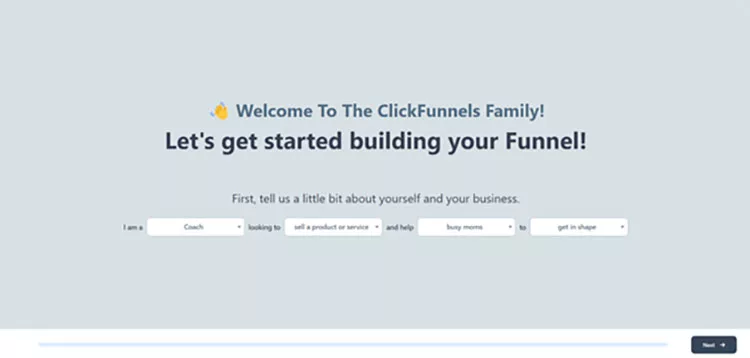
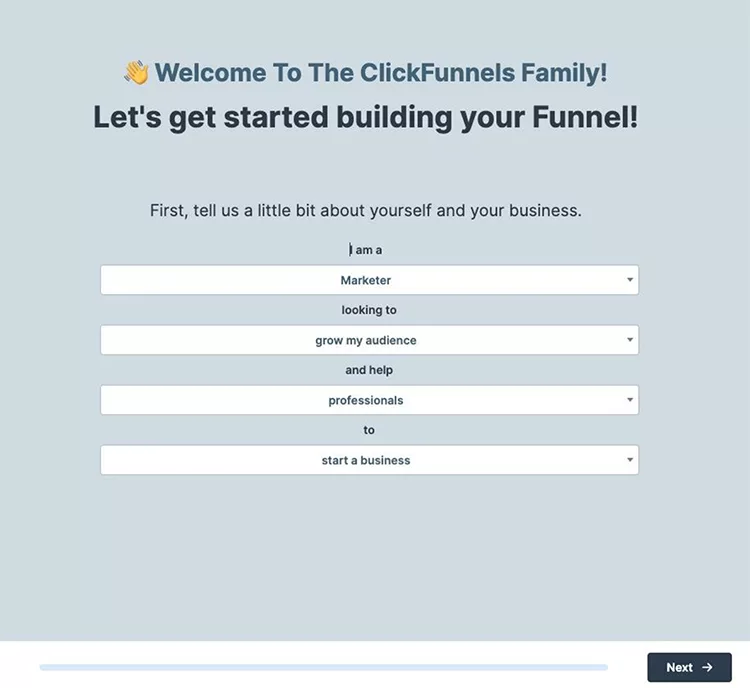
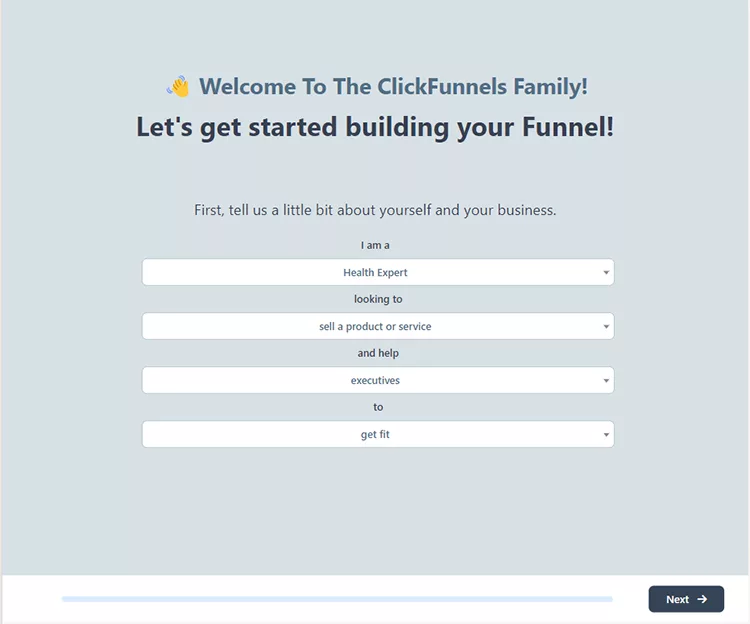
All you need to do is tell us a little bit about yourself and your company, choose a funnel template that makes the most sense for you, and decide on the key design elements such as the layout, color scheme, and images.

Then simply press the “Generate Funnel Now” button and our AI will build a sales funnel for you!

Email Marketing

Email marketing is an essential component of any well-designed sales funnel.

That’s why our software includes an email marketing functionality that you can use to grow your email list.

A/B Testing

Conversion rate optimization can help you maximize your sales, revenue, and profit.

That’s why our software includes an A/B testing functionality that you can use to optimize your entire funnel, from your offer to your landing page to your email copy to your sales page to your upsells, cross sells, and downsells.

ClickFunnels 2.0 is a Complete Online Marketing Solution!

ClickFunnels 2.0 also includes an e-commerce store builder, online course builder, membership site builder, customer relationship management system and much more.

It really is a complete online marketing solution!

ClickFunnels has two pricing plans:

  • Startup plan that costs $97/month
  • Pro plan that costs $297/month

Both plans include a free 14-day trial. You can also get a substantial discount if you choose to pay annually!

Try ClickFunnels 2.0 Risk-Free!

Let’s be real:

We are biased in favor of our software.

So we understand if you take what we say about it with a grain of salt.

Fortunately, we have a free 14-day trial, so you don’t have to take our word for it.

You can go and see ClickFunnels 2.0 for yourself without any risk!

So what are you waiting for? 🧐

Start Your Free Trial Today

Thanks for reading The Top AI Marketing Companies Of 2024 which appeared first on ClickFunnels.
How To Use AI For Small Business Marketing

Software Stack Editor · July 4, 2024 ·

The post How To Use AI For Small Business Marketing appeared first on ClickFunnels.

In the past, small businesses had to make important marketing decisions based on guesses and work with very limited resources.

But now, AI technology has changed the game!

With AI, even the smallest companies can go head-to-head with big corporations. You can open up a world of new opportunities to supercharge your marketing efforts — with ChatGPT, a brand new funnel builder we created, chatbots, and lots of other tools.

In this article, we’ll dive into the various ways AI can transform your marketing strategies. You’ll discover practical tips and insights on how to leverage AI to boost your business growth, optimize your marketing campaigns, and achieve a higher return on your investment.

Let’s dive in! 

1. Creating and Optimizing Marketing Funnels

Marketing funnels are a series of steps designed to guide potential customers through the buying journey, from initial awareness to final purchase.

These steps can include multiple pages or steps that guide people where you want them to go.

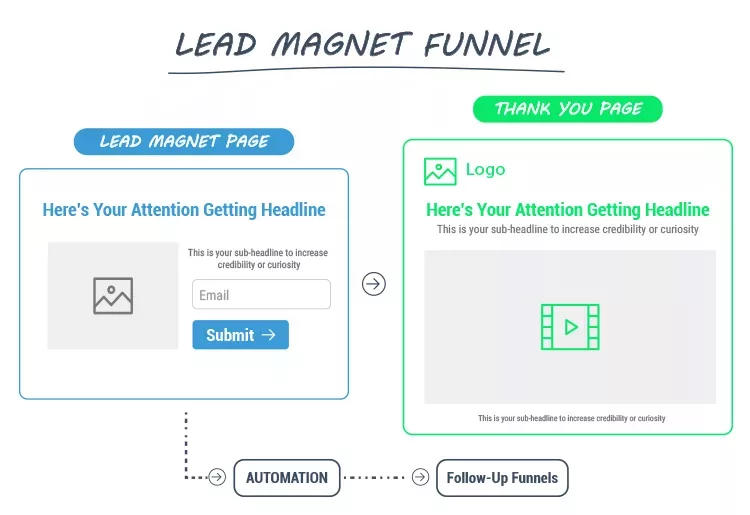
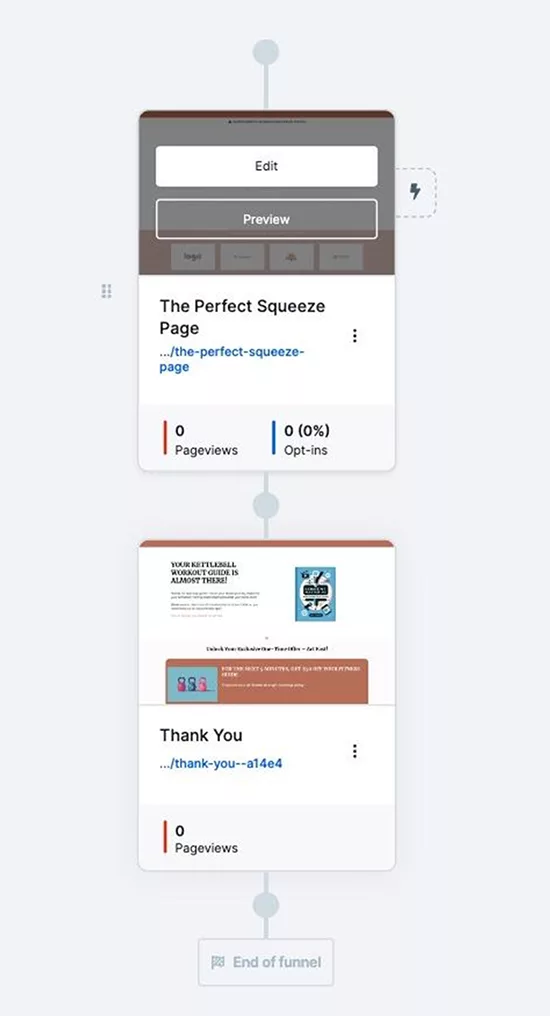
One of the simplest marketing funnels is the squeeze page funnel. It has only two steps — the page for snagging an email address and then the “Thank You” page. 

Diagram of a squeeze page funnel showing steps: the squeeze page collects email addresses, followed by a thank you page that includes a sub-headline and a video section.

Here’s an example… 

Of course, you can create much more complicated and sophisticated funnels (that’s what we help people do at ClickFunnels!) 

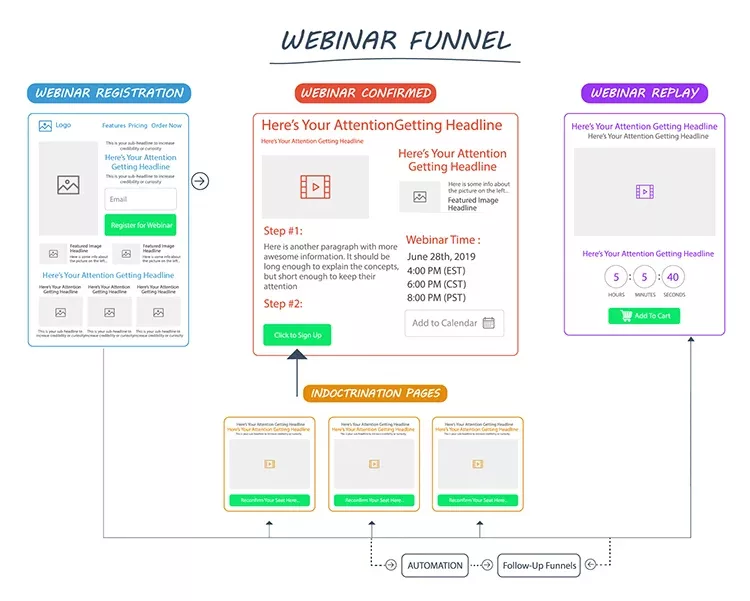
Like this Webinar funnel for example…

Flowchart showing a webinar funnel process with steps: Webinar Registration, Webinar Confirmed, Webinar Replay, and Indoctrination Pages. Each step has illustrative examples with text and buttons.

It really just depends on what you’re trying to do… get emails, make sales, book calls, or something else.

Now you used to have to create all of this on your own. You’d have to write the copy, create the designs, map out the funnel, and everything else. It took weeks or months.

But now you can do 90% of the work with AI 🙂

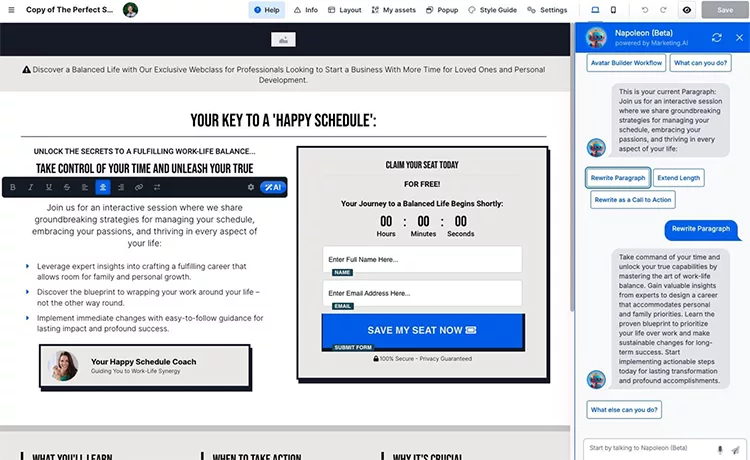
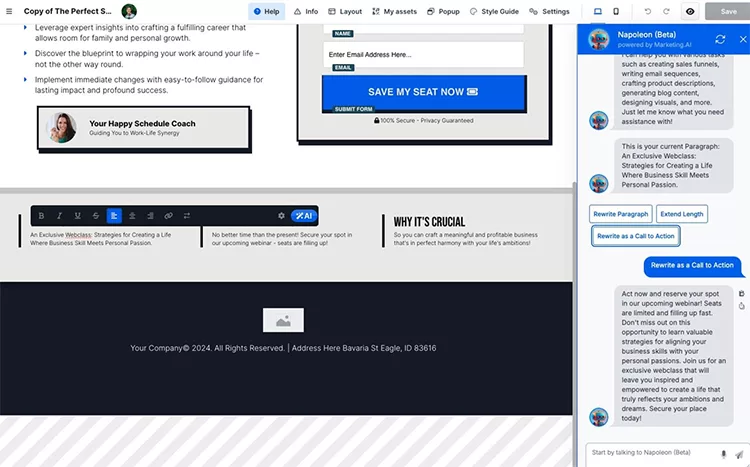
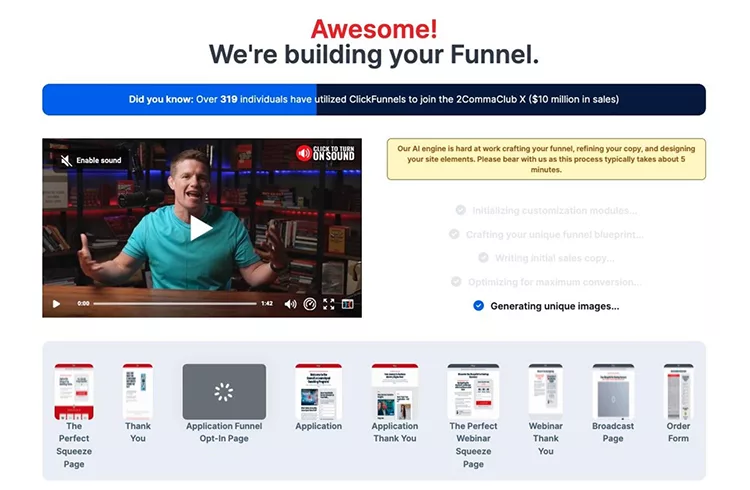
In fact, at ClickFunnels, we created an AI funnel builder that will ask you some questions and spit out a functional funnel. 

The benefits? 

  • No Prior Experience Required: If you’re new to digital marketing, setting up a sales funnel can feel overwhelming. The ClickFunnels Smart Funnel Builder provides step-by-step guidance, making it easy for anyone to create a professional funnel without needing extensive marketing knowledge.
  • Time-Saving: Traditionally, creating a sales funnel involves multiple steps, such as designing pages, writing copy, and setting up integrations. This process can be time-consuming and complex. The Smart AI Funnel Builder automates these tasks, allowing you to create a fully functional funnel in under 15 minutes.
  • Cost-Efficiency: With the Smart Funnel Builder, you get high-quality copywriting and design services included. This means you don’t need to hire additional professionals, saving you significant costs while still ensuring your funnel is effective and visually appealing.

Want to see how it works?

Let’s walk through it together! 

Go here and you can start building your AI funnel for free.

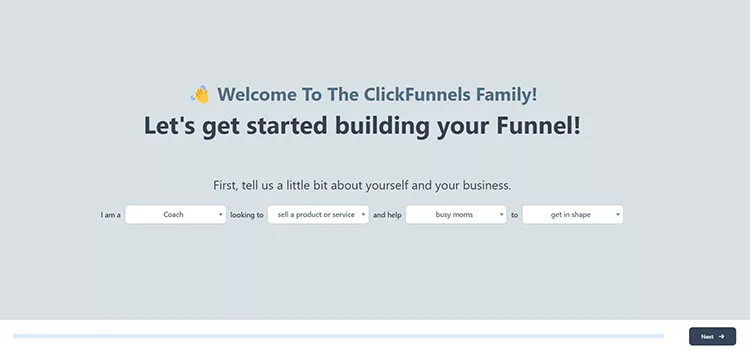
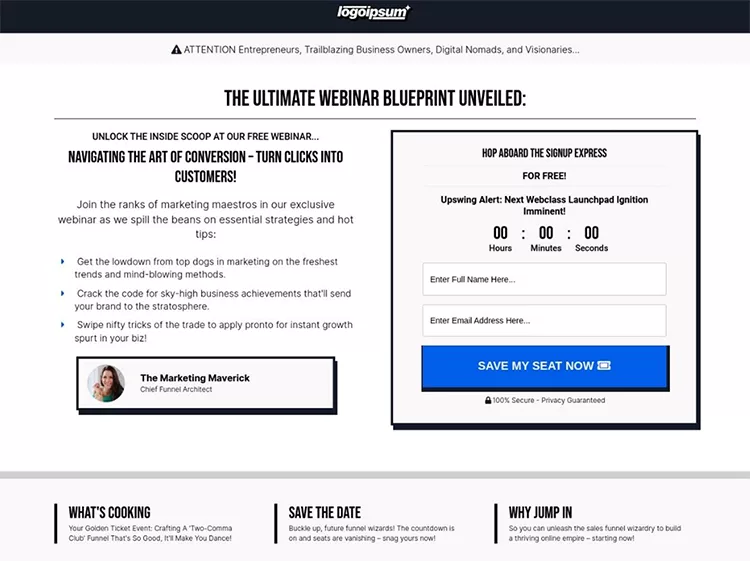
As I walk you through this, I’m going to imagine that I’m building a squeeze page for a fitness coach who’s offering a guide to his target audience: busy executives.  

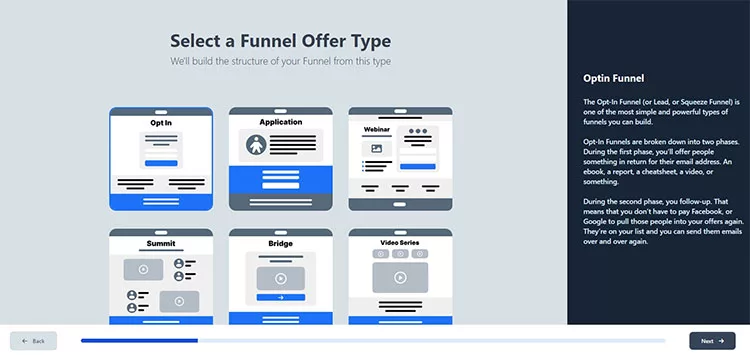
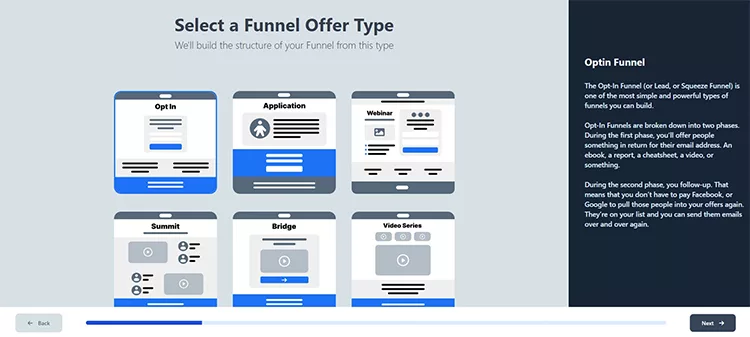
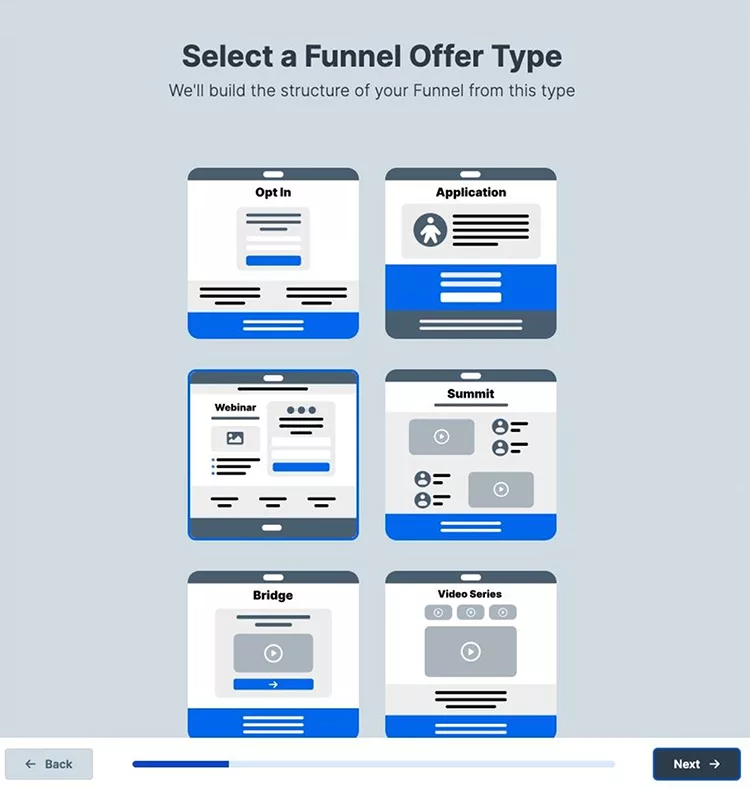
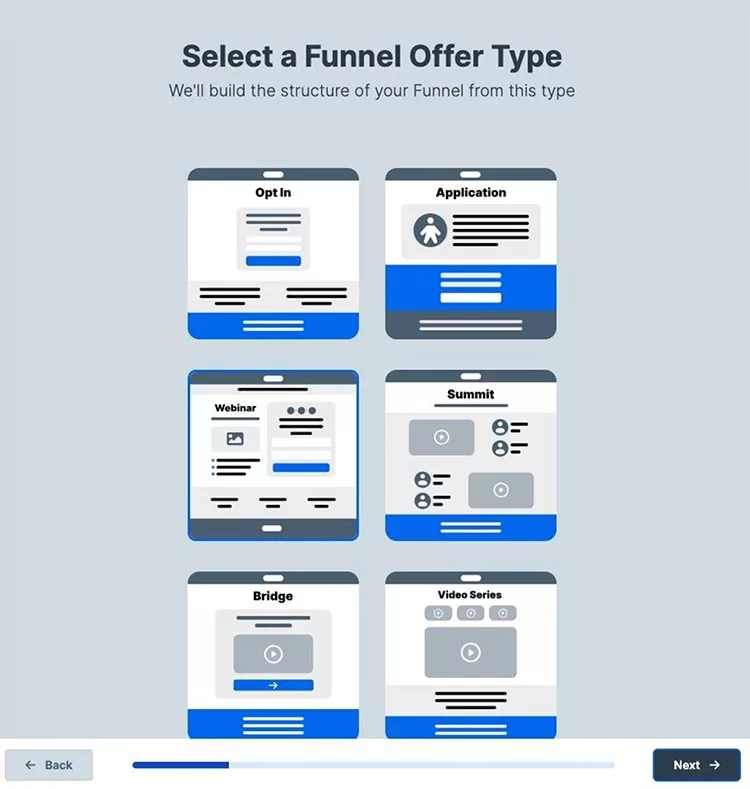
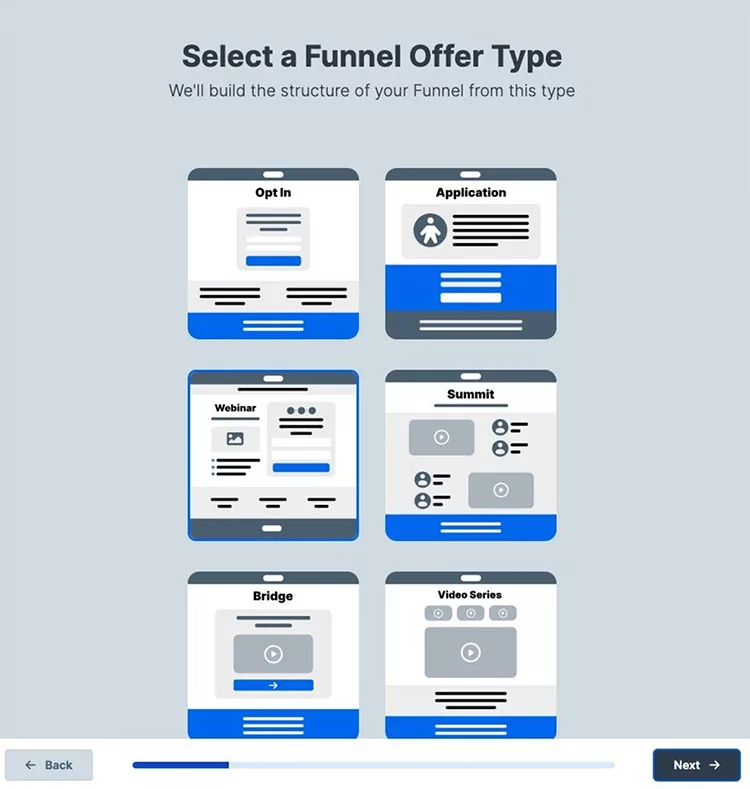
I’m going to select the “Optin Funnel” — same as the Squeeze Page Funnel. This will allow me to offer a gift to my target market in exchange for their email list. And once they’re on my email list, I can reach out to them whenever I want to for free! 

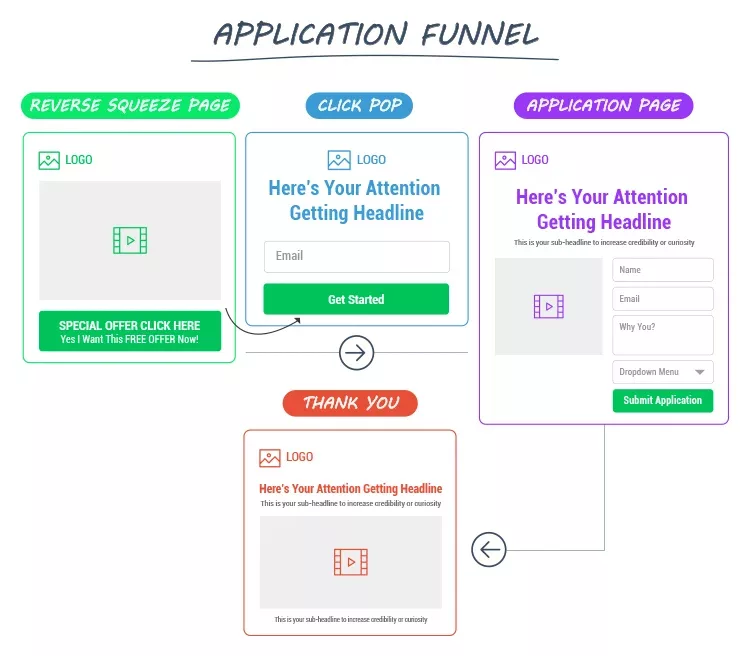
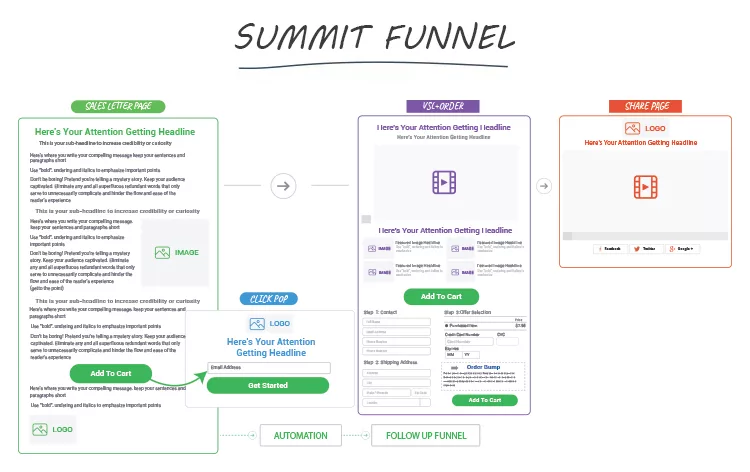
Six types of funnel offers are presented: Optin, Application, Webinar, Summit, Bridge, and Video Series. Each has a brief description and a representative graphic layout.

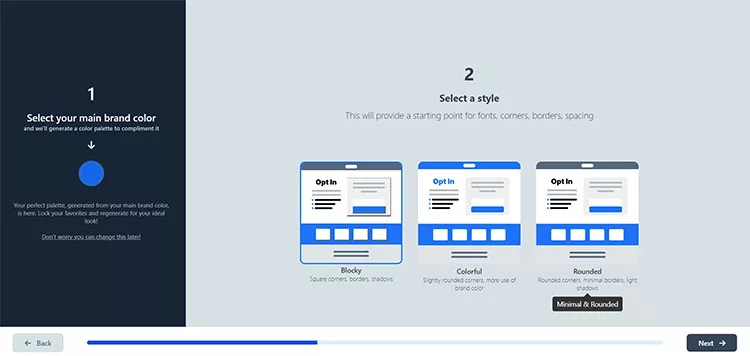
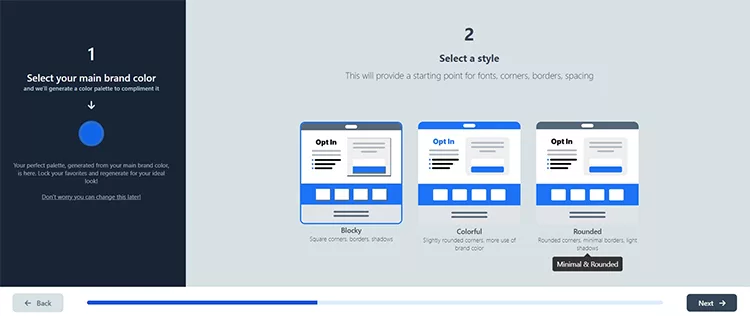
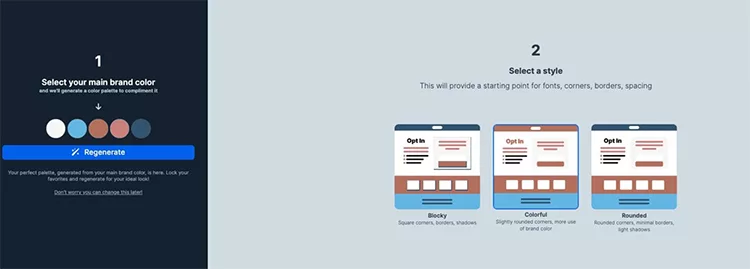
Then I’ll choose a brand color palette…

Interface for selecting a main brand color and style for a website. Shows color palette selection on the left and layout style options on the right.

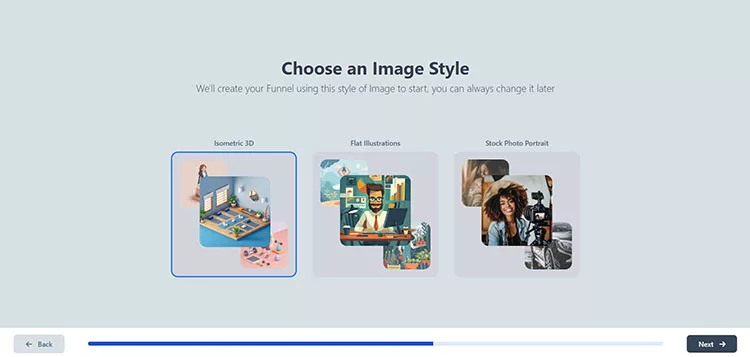
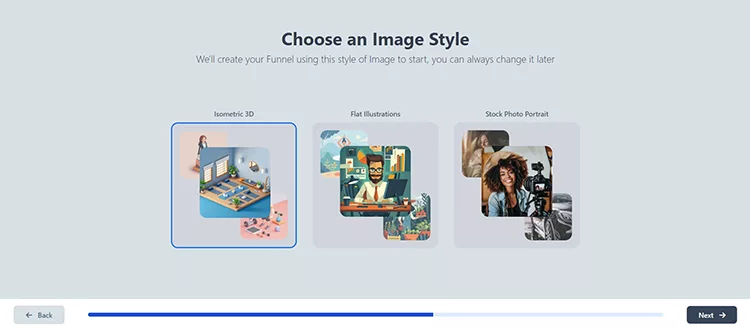
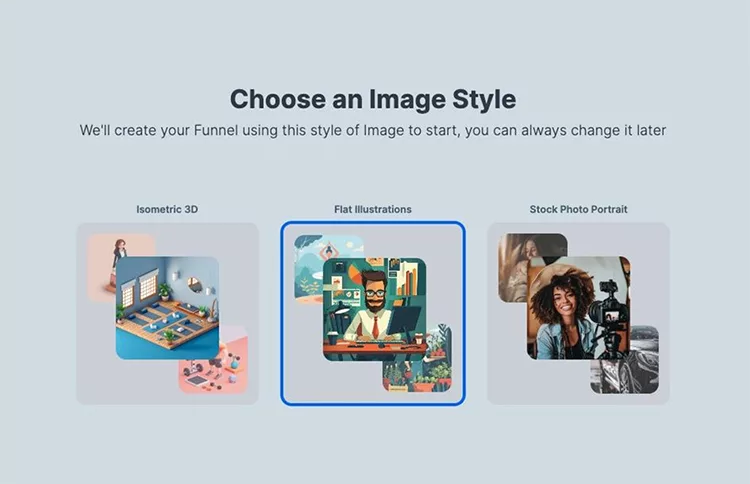
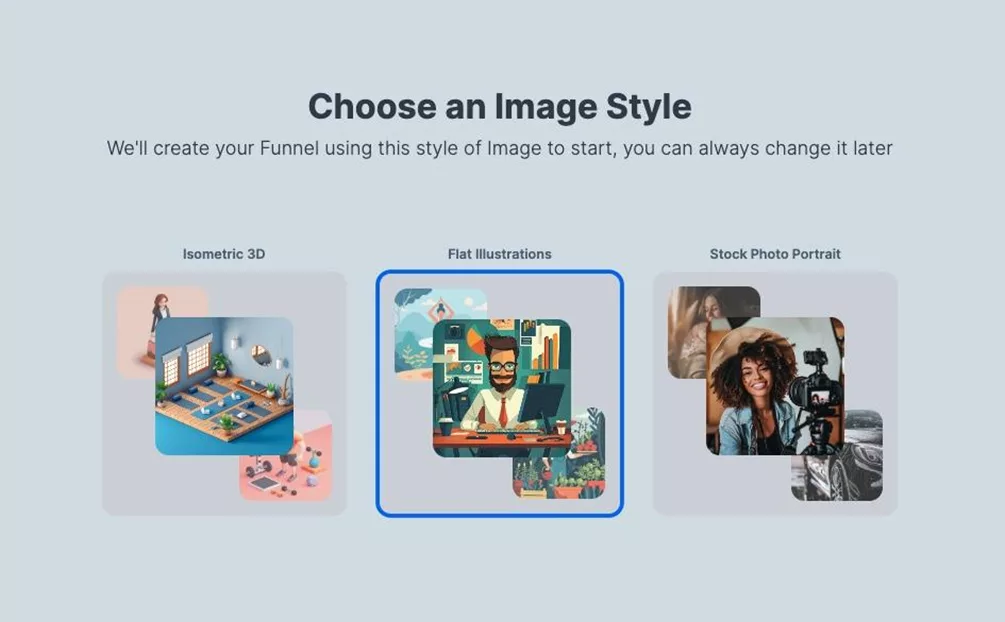
…and image style… 

An image showing three options for image style: Isometric 3D, Flat Illustrations, and Stock Photo Portrait, with the Flat Illustrations option highlighted.

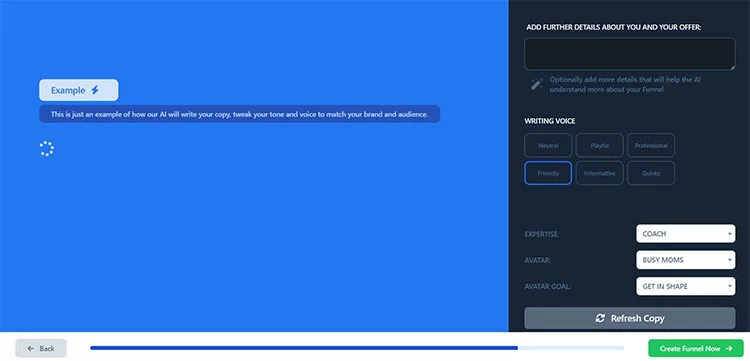
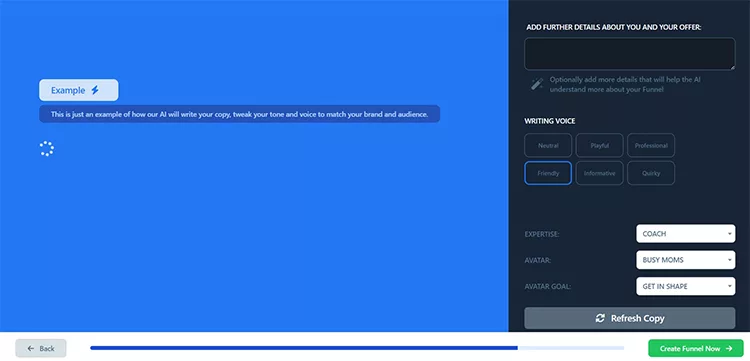
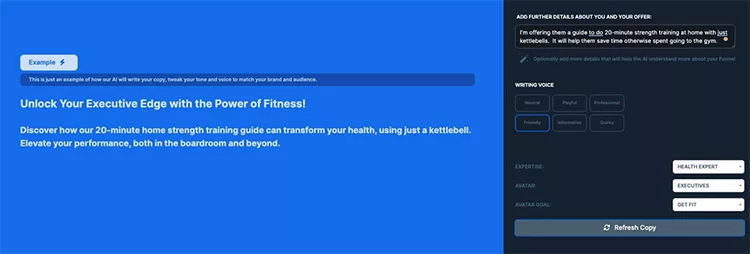
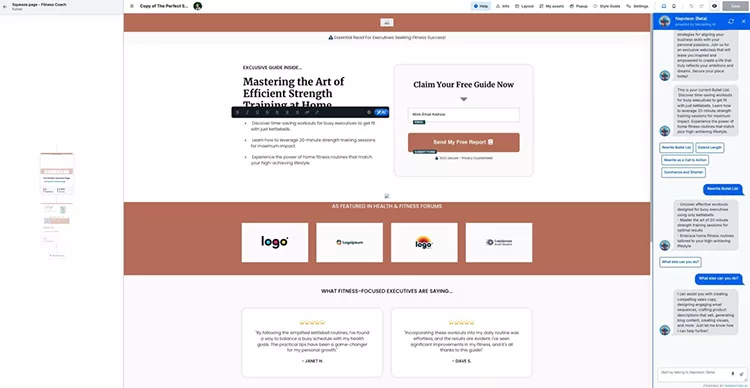
… and finally, I’ll provide some details about my offer and the style of copy that I want. The more information and details you provide the AI with here, the better job it’ll do of creating a sales funnel for you that makes sense. 

Text on a blue background promoting a 20-minute home strength training guide using a kettlebell. There is an example text section and a writing assistant sidebar.

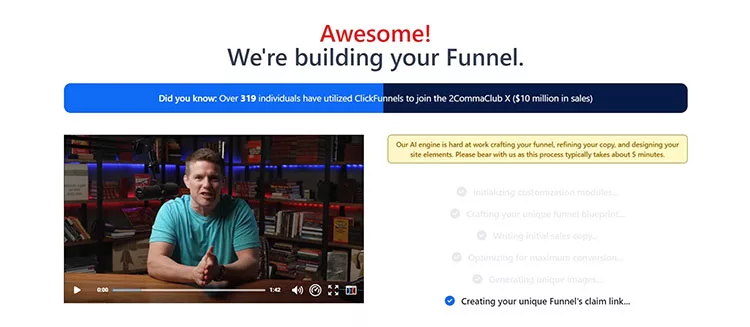
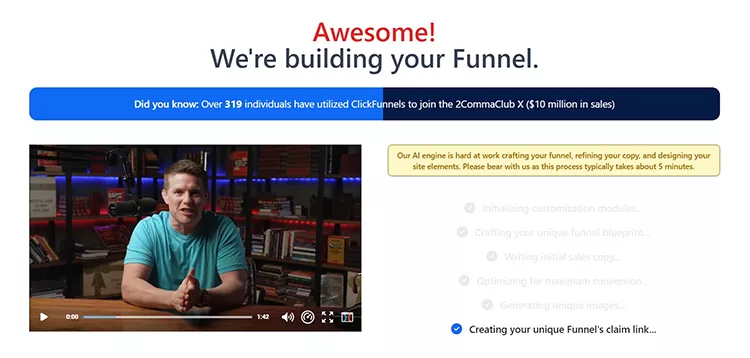
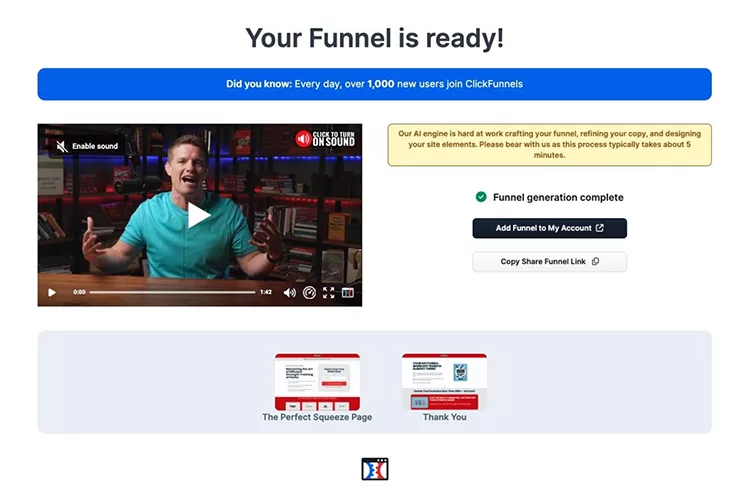
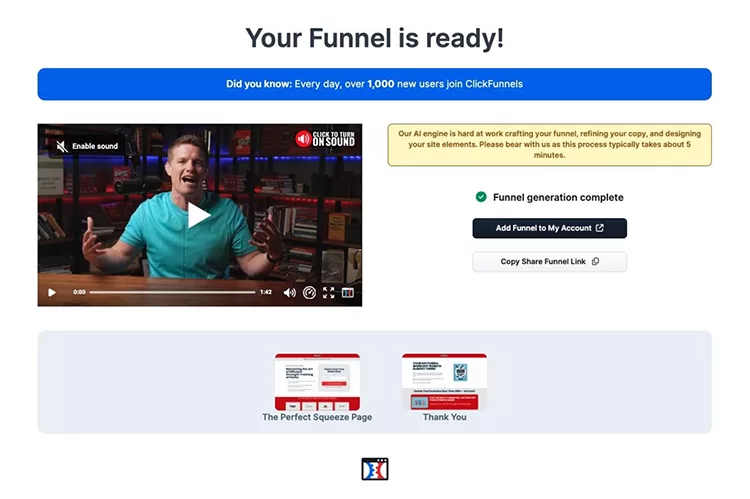
Then watch the quick video from Russell if you’re new to ClickFunnels. After that, you can either create a ClickFunnels account for free or login to your existing account. 

Screenshot of a ClickFunnels webpage displaying a video tutorial about funnel creation. There is a button to enable sound, and options to add the funnel to an account or copy the share funnel link.

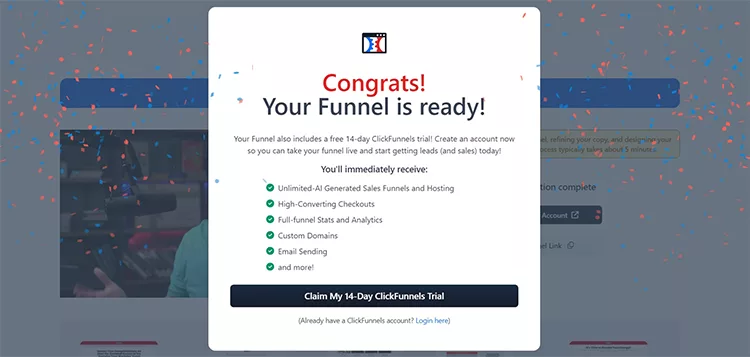
Once you do, you’ll be able to access your complete AI-built funnel.

You can edit each page, delete, or even add more pages/steps to the funnel. It’s fully customizable but now you have an almost complete funnel that will need only a few tweaks (or none at all!).

Try Our AI Funnel Builder For FREE Here!

2. Website Copy Using AI Writing Tools

Copywriting is a critical component of marketing. Words have the power to persuade potential customers to make a purchase. 

However, writing effective copy is a skill that not everyone possesses. Crafting compelling and convincing messages requires expertise and creativity, making it a daunting task for many small business owners.

Now, AI can act as your personal copywriter. 

While AI won’t generate copy out of thin air, it can significantly simplify the process once you provide it with detailed information about your product and ideal customer profile (ICP). By doing so, AI tools can offer a variety of copy options, saving you time and effort in the brainstorming process.

Creating Headlines With AI Writing Tools

Using AI writing tools like ChatGPT or Claude, you can generate captivating headlines by giving AI-specific prompts.

For Example:

“You are an expert copywriter hired to promote a new [product or service] that offers [unique selling point]. Create headlines that showcase this USP and make it irresistible to the target audience.”

Additionally, you can guide the AI in creating compelling headlines. Here are some effective headline formulas:

  • [Number] [Adjective] Ways to [Achieve Desired Result] That [Unexpected Benefit or Consequence]
  • How [Unusual or Surprising Tactic] Can Help You [Achieve Desired Outcome] in [Specific Timeframe]
  • The [Adjective] Guide to [Mastering Complex Skill or Topic] for [Target Audience]
  • [Number] [Profession or Industry] Secrets That Will [Benefit or Transform] Your [Aspect of Life]
  • Why [Common Belief or Practice] is [Surprisingly Counterproductive], and What to Do Instead
  • The [Timeframe] Challenge: [Number] Steps to [Achieving Ambitious Goal] While [Overcoming Obstacle]

When using AI to write a headline, it’s important to provide context about your target audience, product, unique selling point, and where you will use the headline. 

For instance, to create a headline for a lead magnet landing page offering accounting tips for small businesses, you could use the following prompt:

“Use this headline formula to create a headline for my landing page which offers a free PDF of 5 accounting tips for small businesses’ – [Number] [Adjective] Ways to [Achieve Desired Result] That [Unexpected Benefit or Consequence].”

An example response could be:

“5 Simple Ways to Optimize Your Accounting That Save Time and Boost Profits”

By leveraging AI writing tools, you can streamline the copywriting process, generate a variety of effective headlines, and focus on other critical aspects of your business.

Screenshot of a text box showing a formula for creating headlines and an example headline. The formula is explained in a green box at the top, and the example headline is below it in a white box.

Features and Benefits Section

You can also use it to create the “Features and Benefits” section of your landing page or emails…

For Example… 

“Imagine you are writing a features and benefits section for a [product or service] that caters to [target audience]. Identify 8 unique features that address the specific needs and challenges of this audience. For each feature, highlight how it makes their lives easier, more efficient, or more enjoyable. Use relatable examples and scenarios to illustrate the benefits.” 

We used it to create features and benefits for a salon run for kids & asked AI to give us the information in a table. Here’s what it produced. 

A table listing features and benefits of a children's hair salon, including themed decor, safe chairs, gaming stations, kid-friendly stylists, snacks, rewards program, and at-home haircare tips.

For Product Descriptions

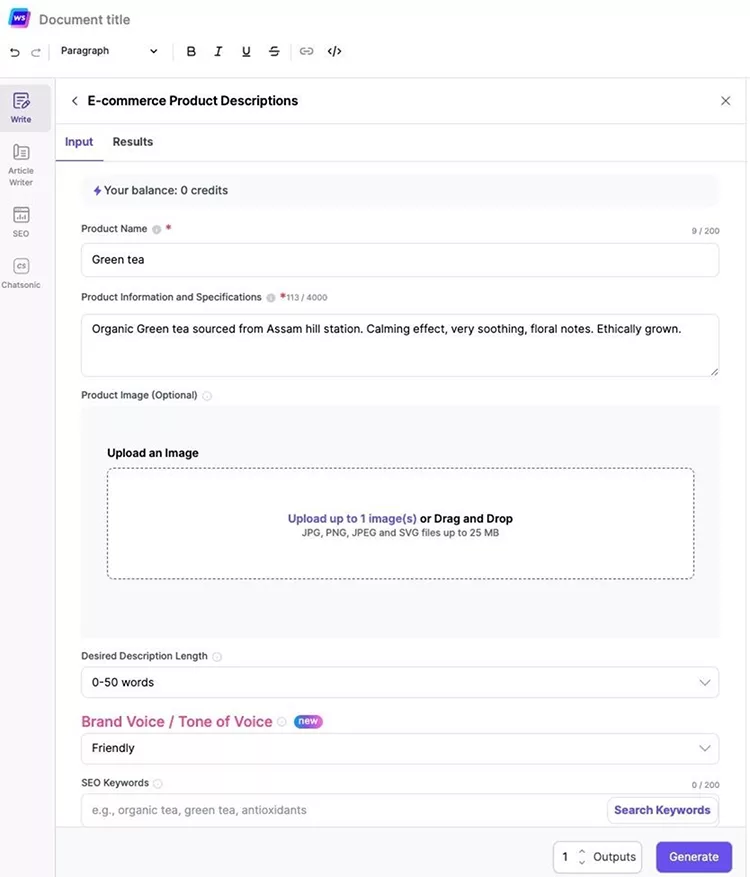
Have an e-commerce store or sell courses or eBooks? You could also use AI to write your product descriptions. 

Here’s a prompt to get you started.

  • Write a product description page for a [product type]. It needs to appeal to [audience type]. I want to highlight [features list].

You can also use special tools like copy.ai, or writesonic.  They have built-in fields where you enter your data and it will generate content for you.

This is what we did. 

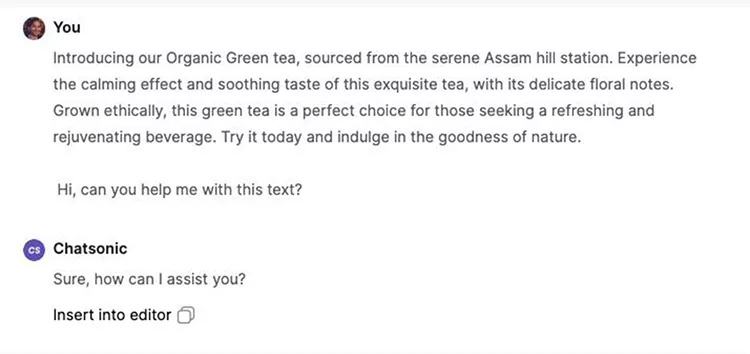
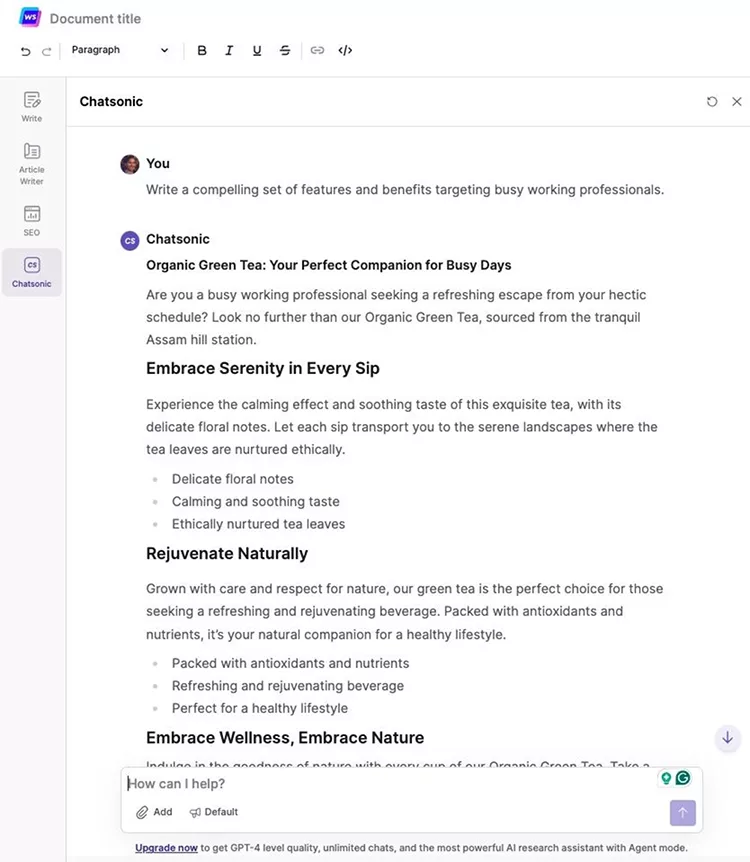
We can further chat with it to create more content… 

Copywriting used to take hours or days. But now it’s a lot quicker with AI. Keep in mind that you won’t get great copy right out of the gate… but with some tweaking and editing, it can make the copywriting process a lot faster. 

3. Content Idea Generation and Social Media Posts

One of the most challenging aspects of managing social media is consistently coming up with fresh and engaging ideas. This is essential for standing out, but with all the tasks on your plate, there simply isn’t enough time to brainstorm daily. 

Thankfully, AI can assist you with ideation and execution, saving you time and effort.

Generating Social Media Post Ideas With AI

AI can be a valuable tool for generating social media content ideas. By providing specific prompts, you can get a tailored list of post ideas that suit your business needs. Here’s an example prompt:

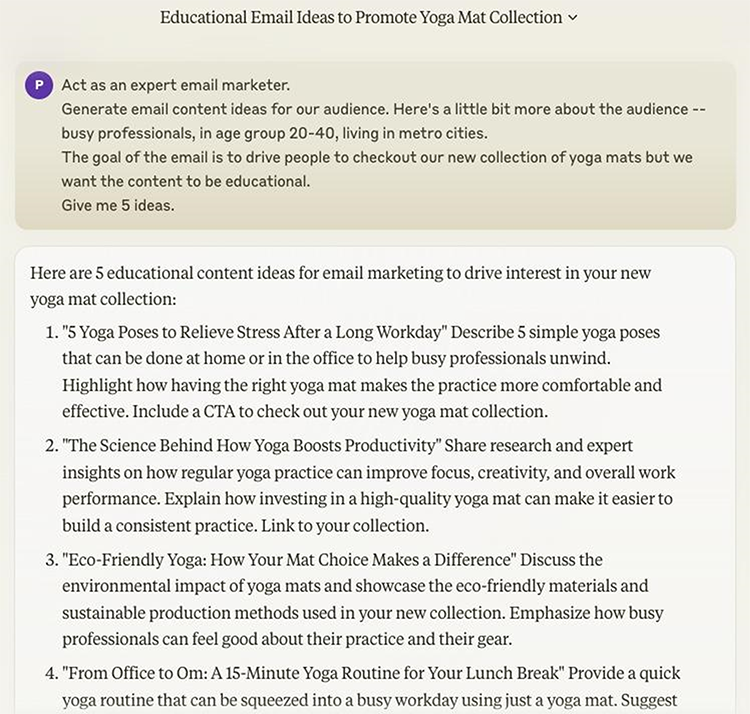
  • “Act as a social media manager. You’re running a coffee shop in London that caters to young professionals who are remote workers.  Create a list of 10 ideas for social media posts to educate, inform, or entertain our target audience.”

Of course, not everything that the AI spits out is going to be worth your time. So how do you know which ideas are actually… good?

Three ways… 

  • Assess whether the post idea aligns with your brand’s identity, values, and target audience. 
  • Evaluate the feasibility of executing the post idea within your available resources, time, and budget.
  • Assess whether the idea provides value to your audience, such as educating, entertaining, or inspiring them. Choose a mix of three for your week-long or month-long planning. Don’t just stick to one type. 

Let’s create a template of that prompt for ya… 

  • You are a social media manager for [Business Type] in [Location] that caters to [Target Audience]. Create a list of 10 ideas for social media posts to educate, inform, or entertain your target audience.

And if that’s not getting you the results you want, here are some more prompt ideas… 

  1. As a social media coordinator for a small [Service-based Business e.g. salon, repair shop, etc.] catering to [Target Demographic e.g. families, professionals, etc.] in [Location], provide 10 creative social media post concepts that educate customers about your offerings, share helpful tips related to your industry, and encourage interactions.
  2. You are a social media manager for a small [Business Type e.g. restaurant, boutique, etc.] in [Location]. Create a list of 10 social media post ideas that will engage your local customer base, showcase your products/services, and build brand awareness in the community.
  3. You manage social media for a small [Product-based Business e.g. bakery, craft store, etc.] targeting [Target Demographic] in [Location]. List out 10 unique social media post ideas that give a behind-the-scenes look at your business, promote new product launches, and run engaging campaigns or contests to boost sales. 

Writing Social Media Posts With AI

AI can also help in writing social media posts: from the ideas we get in the first phase of the process, choose one and ask AI to create content around it.

For Example: 

  • “From the social media post ideas you gave me, I want to go ahead with creating Coffee Trivia idea (Engage your audience with fun coffee trivia questions or facts about the history and origins of different coffee beans and brewing methods.)
  • Tell me 3 coffee trivias that are interesting. Don’t give me technical trivias that my audience — young professionals — can’t understand. They’re not coffee experts.”

Here was the output… 

Text discussing coffee trivia, including the world's most expensive coffee, historical views on coffee in Europe, and Finland's high coffee consumption.

That was a more detailed prompt. You can see an example of output when you use a simpler prompt. It’s important to keep in mind that if you want to talk to your target audience specifically, make your prompt as detailed as possible. 

A message celebrating International Coffee Day, highlighting the joy of different coffee types and encouraging sharing of coffee experiences. Includes hashtags like #InternationalCoffeeDay, #CoffeeLover, and #ButFirstCoffee.

Let’s add some more details to the prompt so we talk to the right audience. 

  • “I run a small coffee shop that uses an organic, fair-trade roast from Ethiopia. Our coffees have different notes you can choose from. Could you write an Instagram caption promoting our 10% off deal for International Coffee Day? Our target audience is young professionals who work remotely. Use a friendly tone.”
Announcement of International Coffee Day celebration with a 10% discount on organic, fair-trade coffee from Ethiopia. Includes remote work-friendly suggestions and discount code COFFEELOVE10.

See how much better that result is? 

When using AI, the magic happens in the details and information provided — give it as much information as you would give to an actual copywriter and you’ll get better results. 

Try Our AI Funnel Builder For FREE Here!

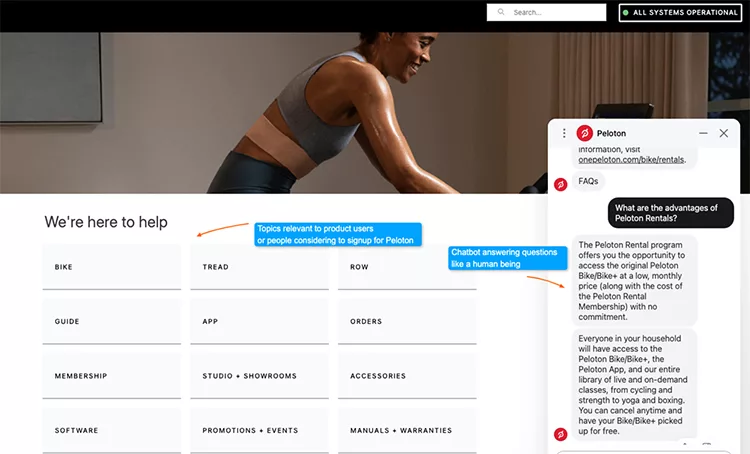
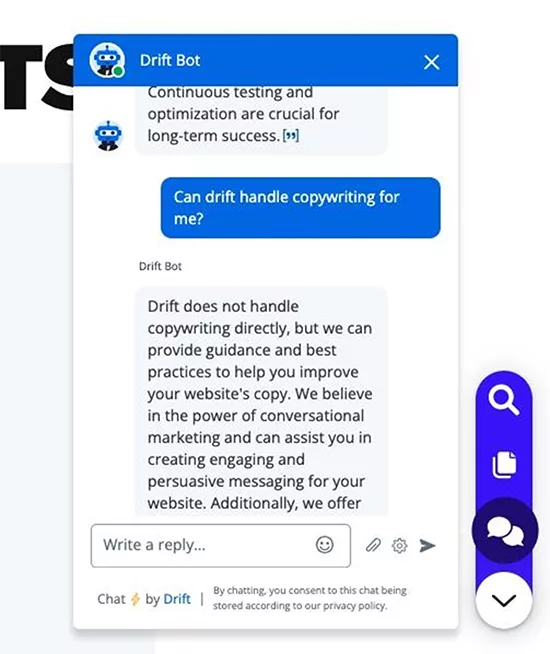
4. Chatbots for 24/7 Customer Support

Even if you own a small business, you probably have a website. And if that website is getting a consistent flow of traffic, then you might be able to benefit from a chatbot to add 24/7 customer support or sales. 

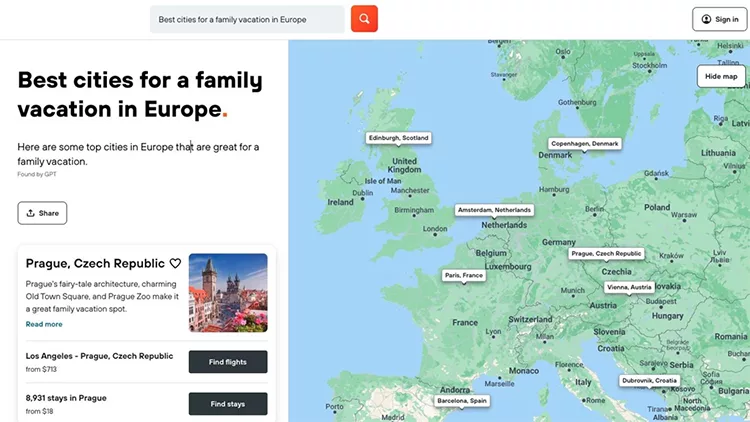
AI chatbots are super sophisticated now. They can even provide product recommendations or upsells. 

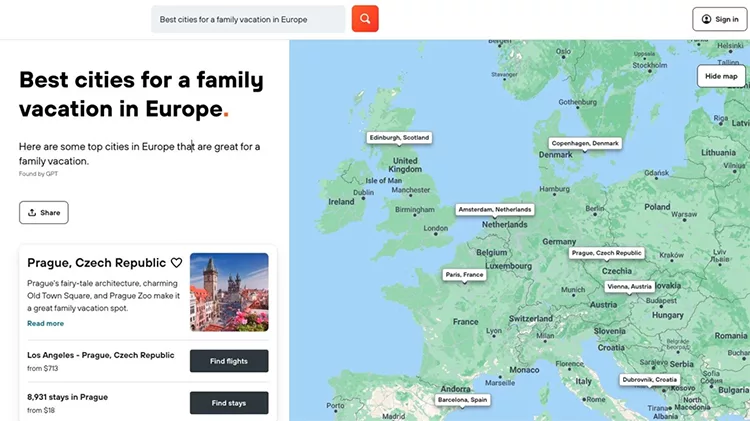
For example, we asked Kayak for recommendations for a family holiday in Europe and it recommended Prague.

Map of Europe highlighting cities recommended for a family vacation. The sidebar features Prague, Czech Republic with a small image of the city and options to find flights.

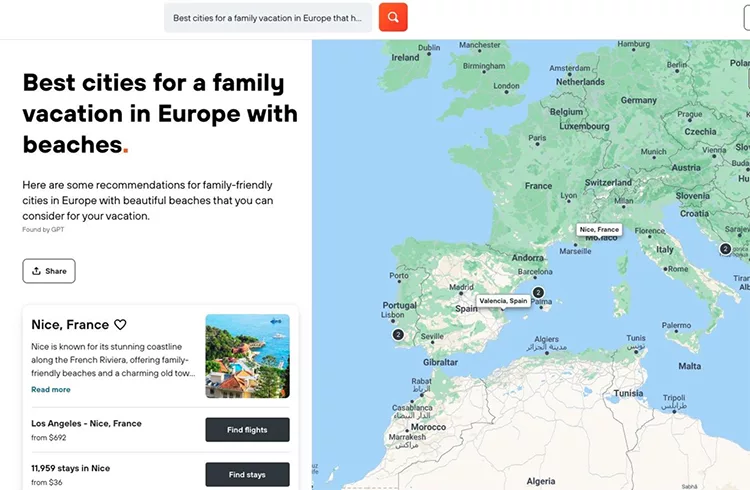
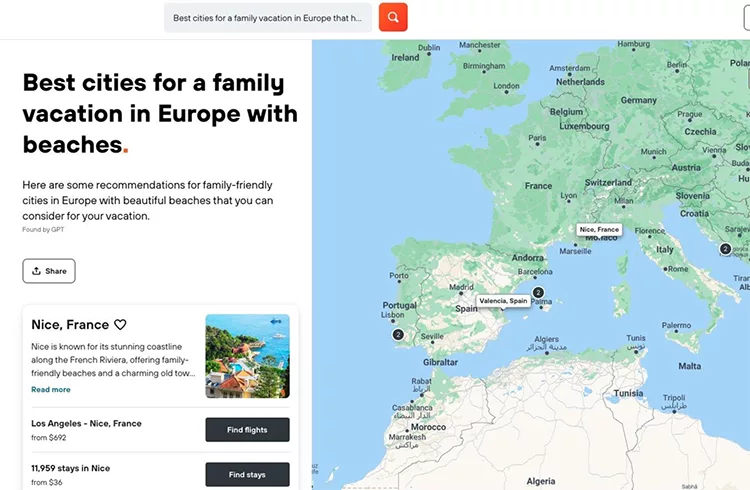
But we wanted to be more specific this time, so we asked for only beach cities…

Pretty cool, huh?

It’s easy to see how you could use this to your advantage — guiding customers through product features and benefits, or pointing them in the right direction. 

Peloton is doing this as well…

The advantages are numerous… 

  • 24/7 availability — serve customers anytime
  • Cost-effective — you already have the content, just need to feed it
  • Scalable — can do the work of hundreds of humans at a time
  • Highly personal — leading to better customer interaction, and more business

5. Create Videos to Boost Engagement

People are watching more video content than ever before. In fact, YouTube is one of the biggest search engines on the planet! 

In the awareness stage, engaging videos can capture attention and introduce your brand to potential customers. 

During the consideration stage, informative videos can educate and build trust by demonstrating the benefits and features of your products or services. 

At the decision stage, testimonial and case study videos can provide social proof and persuade prospects to choose your brand. 

Finally, in the retention stage, instructional or behind-the-scenes videos can keep customers engaged and loyal by offering additional value and fostering a deeper connection with your brand.

And now you can create videos with AI! 

For example, an e-commerce website can create product demo videos by writing scripts that outline the key features and benefits of each product, letting AI generate visually appealing videos that enhance the shopping experience…

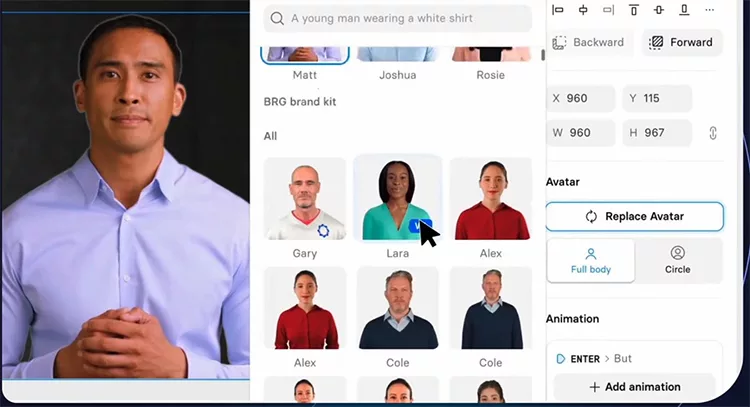
Or you could write the script and let any of the ‘stock’ voices or faces that come with Synthesia do the voice & video for you. Share these as ads, on your social media, or with your sales prospects. 

A person in a light blue shirt stands on the left. On the right, a digital interface displays various avatars with options to replace the avatar with different characters.

What’s not to like? 

  • You get a diverse range of content without the need for hiring voice actors or on-screen talent.
  • By using AI-generated voices and faces that align with your target audience, you can create more relatable and personalized video content for your website, fostering a stronger connection with your visitors and increasing the likelihood of conversions.

What’s Coming Next With AI?

I can’t tell the future — but I imagine the future of AI is bright… and that it’ll massively benefit small businesses. 

Because it lowers the cost and effort to be able to tackle big marketing campaigns. 

Above are some of the current ways you can use AI in your small business. But I’m sure there are others!

How are you using AI to market your small business? 

Let us know in the comments!

Try Our AI Funnel Builder For FREE Here!

Thanks for reading How To Use AI For Small Business Marketing which appeared first on ClickFunnels.
Create The Perfect AI Marketing Strategy In 2024

Software Stack Editor · July 4, 2024 ·

The post Create The Perfect AI Marketing Strategy In 2024 appeared first on ClickFunnels.

It’s probably safe to say that AI is going to revolutionize marketing. 

You need to learn how to harness the power of artificial intelligence if you want your business to remain competitive. There’s no way around that.

That being said, we have seen too many companies hop on the AI hype train without putting much thought into it.

This haphazard approach often leads to creating a bunch of new problems without solving the existing ones. AI can turn out to be a net negative if you don’t know what you are doing. 

That’s why today we want to discuss how to create an AI marketing strategy that will enable you to take your business to the next level!

Table of Contents:
  • A Word of Caution About Generative AI…
  • AI Marketing Strategy for New Businesses
    • Brainstorm With ChatGPT
    • Build Sales Funnels With ClickFunnels 2.0
    • Create Marketing Content With Jasper
    • Create Marketing Visuals With Firefly
    • Grow Your Social Media Following With Flick
  • AI Marketing Strategy for Growing Businesses
    • Generate Videos With Visla
    • Edit Videos With Descript
    • Repurpose Long-Form Videos With Opus Clip
  • AI Marketing Strategy for Established Businesses
    • Make Data-Driven Decisions With Tableau
    • Learn From Customer Feedback With MonkeyLearn
    • Manage Your Brand Image With Brand24
  • Try ClickFunnels 2.0 Risk-Free!

A Word of Caution About Generative AI…

Generative AI is all the rage now. And for a good reason!

Tools such as large language models, text-to-image generators, and text-to-video generators can help you produce the first drafts of your marketing assets in a matter of minutes. 

But if you want to use them in your business, you need to understand the phenomenon known as “hallucinations”. 

Large language models sometimes just make things up and confidently state them as facts. 

For example, if you ask a large language model like ChatGPT to give you an overview of scientific research on a specific subject, it might make up scientists and papers that do not exist or provide incorrect information about real scientists and real papers. 

This means that you cannot publish content generated by large language models without manually fact-checking all claims within it. Otherwise, you risk unintentionally spreading misinformation and damaging your brand as a result.

Meanwhile, when it comes to text-to-image generators and text-to-video generators, the output of these tools might include details that shouldn’t be there. 

For example, here’s a real photo of Scotland’s famous Glenfinnan Viaduct bridge:

A scenic view of a viaduct with multiple arches, spanning across a lush green valley and surrounded by rolling hills under a partly cloudy sky.

If you ask a text-to-image or a video-to-image generator to include a video of this bridge in their output, you might get something that looks similar but isn’t quite right.

For example, here’s a screenshot from a video generated by Sora that depicts the Glenfinnan Viaduct:

Steam locomotive with a plume of smoke pulling vintage red and cream passenger cars, traveling on a curved stone viaduct surrounded by green hills.

If you published an image or a video like that, Scottish people in your audience would probably wonder why there’s an additional railway on this iconic bridge.

Spotting hallucinations in AI-generated images and videos can be challenging because it requires attention to detail. But you should still do your best to ensure accuracy.

Note that complete marketing automation won’t be possible until hallucinations are solved. The unreliability of these tools means that there still needs to be at least one human in the process that can evaluate their output!

Now with all that out of the way, let’s discuss the AI marketing strategy that we recommend…

AI Marketing Strategy for New Businesses

Let’s say that you want to start an online business.

In that case, we recommend using AI to help you brainstorm ideas, build a sales funnel, produce marketing content, create marketing visuals, and grow your social media following. That is all you need to get your new business off the ground!

Brainstorm With ChatGPT

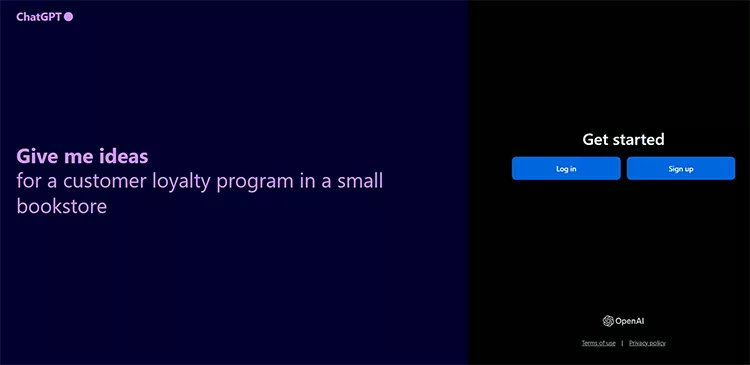
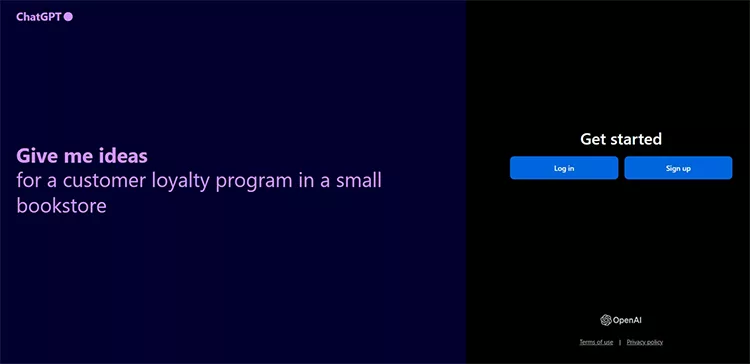
Image of a chatbot interface with a prompt asking for ideas for a customer loyalty program in a small bookstore. The screen has options to log in or sign up along with the “Get started” text.

Entrepreneurs often get stuck in the ideation phase. 

In fact, there are a lot of people out there who want to start an online business but don’t know what to sell!

We would argue that the best way to use ChatGPT in the business context is brainstorming. 

You can ask it to help you come up with ideas for a brand name, products and services, upsells, cross sells and downsells, marketing campaigns, etc. 

In all likelihood, the majority of ChatGPT’s ideas won’t be helpful. Some might even be nonsensical due to hallucinations. 

(To be fair, when we humans do brainstorming all by ourselves, we typically end up needing to discard most of our own ideas as well!)

However, ChatGPT can help you drastically speed up the ideation process. Coming up with 100 ideas by yourself can take a lot of time but large language models can do it in a matter of seconds. Even if 99 of those ideas are garbage, the one idea that’s actually viable can help you grow your business!

Note that ChatGPT has several different versions: GPT-3.5, GPT-4, and GPT-4o. We recommend using the latter for brainstorming. Why?

Because it’s the latest version that is lightyears ahead of the previous ones. There’s a huge difference in capabilities. 

Both the free plan and the paid plan only offer limited access to GPT-4o but the latter has 5x higher usage limits. 

Build Sales Funnels With ClickFunnels 2.0

Here at ClickFunnels, we believe that the best way to sell products and services online is to build a sales funnel for your business and then drive traffic to it with targeted marketing campaigns. 

Entrepreneurs tend to agree with our reasoning, especially once they read our co-founder Russell Brunson’s best-selling book.

But we noticed that they often never get around to actually building sales funnels. As a result, they end up leaving a ton of money on the table, especially as their companies grow!

Initially, it seemed baffling, but eventually, we realized that it all boiled down to feeling overwhelmed. If you have never built a sales funnel before, it might seem like a daunting task. And you know what? It’s understandable!

That’s why we decided to add an AI sales funnel builder to our platform. Now all you need to do is answer a few questions, click the “Create Funnel Now” button, and wait for AI to generate a sales funnel for you. It typically takes around 10-15 minutes.

This means that you can build a sales funnel for your business today if you want to, even if you have never done it before!

Create Marketing Content With Jasper

Screenshot of Jasper's website showcasing AI-driven marketing solutions, featuring a call to action to start a free trial, and displaying client logos such as Monday, Amplitude, and Wayfair.

You might be wondering why we recommended ChatGPT for brainstorming but not for content creation. After all, it can generate text, right?

It’s because there are other tools out there that have been designed specifically for the purpose of producing marketing content.

We recommend the AI marketing platform Jasper. It makes it easy to produce social media posts, blog articles, cold outreach emails, marketing emails, landing page copy, sales page copy, ad copy, and more. 

One notable feature is the brand knowledge database where you can store information about your products and services, your target audience, your brand voice, etc.

You only need to upload all this information once and then Jasper will be able to get the relevant details from this database whenever you ask it to generate marketing content for your business.

This means that you won’t have to repeat the same stuff every time you are using this app. Plus, there will be less need for editing because this database will help Jasper stay on-brand.

Another notable feature is campaign generation. You can upload a document that describes a marketing campaign and Jasper will generate the whole thing for you, including all the marketing assets. 

And sure, you will probably need to make some adjustments and do some editing before you launch that campaign, but being able to generate entire marketing campaigns just like that can help you save a ton of time. 

Finally, this app also includes team collaboration features, so if you want to launch an omnichannel marketing campaign where different people are responsible for different channels, you can make it happen with Jasper!

Create Marketing Visuals With Firefly

While you can use Jasper to create marketing visuals such as ad images, social media images, and blog post images, we recommend going with Adobe’s Firefly instead. Why?

Because not only is it an amazing text-to-image generator that you can easily integrate with other tools in Adobe’s software suite but it’s also been trained exclusively on licensed data and public domain data with expired copyright.

That means that you can use the images produced with this tool without worrying about copyright infringement. 

Keep in mind that there’s a possibility that lawmakers will eventually start cracking down on the companies that train their text-to-image generators on unlicensed data scraped from the Internet. 

In that case, the users of those products would likely be affected as well. It might become illegal to use images created with them for commercial purposes. 

Of course, no one knows what the future holds, but we believe that it’s best to play it safe. Why introduce unnecessary legal risks when you can simply use Firefly instead?

Grow Your Social Media Following With Flick

Social media marketing is a type of marketing that is the most accessible to entrepreneurs who are just starting out.

All you need to do is choose a platform, create a social media profile, and consistently post high-quality content. 

Of course, all that is easier said than done because life tends to get in the way. Next thing you know, you haven’t posted in six months and your social media profile looks like a ghost town. 

We would argue that this lack of consistency is the primary reason why entrepreneurs fail at social media marketing. 

That’s why we recommend Flick, an AI-powered social media marketing platform that enables you to generate ideas, produce content, and maintain a consistent publishing schedule.

Simply batch-create social media content for an entire month in a single day and schedule it to be published automatically. 

That way, no matter what curveballs life throws at you, your social media publishing schedule will remain unaffected!

AI Marketing Strategy for Growing Businesses

Okay, so you managed to get your business off the ground, you are consistently making sales and your revenue is steadily increasing. What should you do next?

It appears that people across the globe prefer the video medium over everything else, as evidenced by the growth of YouTube and TikTok in recent years.

In fact, video content is playing an increasingly important role even on social media platforms that used to be almost entirely text or image-driven, such as Facebook, Instagram, LinkedIn and Twitter.

That’s why we recommend incorporating video marketing into your overall marketing strategy once you start making some money with your business!

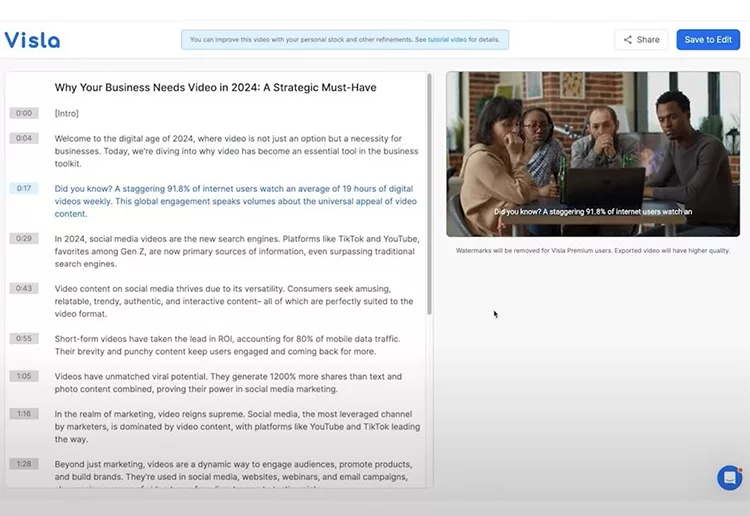
Generate Videos With Visla

A screenshot of Visla's Text to Video tool on a website. The tool uses AI to transform written content into videos, suitable for eBooks, articles, and product documents.

Did you know that you don’t even need actual video footage to produce videos with AI?

Visla offers an AI text-to-video generator that you can use to turn text prompts, blog articles, video scripts, product documents, and even entire eBooks into videos!

It’s also worth noting that this app also includes a wide range of video recording and editing features as well as a team collaboration functionality which makes it easy for several people to work on the same video.

Edit Videos With Descript

Something that people who don’t have video production experience tend to underestimate is how much editing is required to create a video that’s good enough to be published.

In fact, video editing used to be a real pain because industry-standard tools like Adobe’s Premier and Apple’s Final Cut Pro have a steep learning curve. 

Fortunately, AI tools like Descript have drastically simplified the video editing process and made it accessible to everyone.

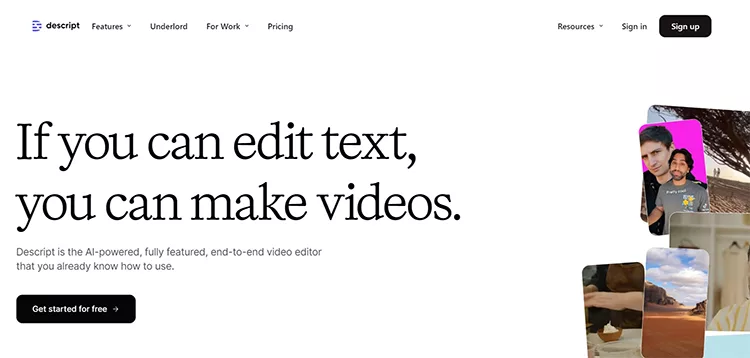
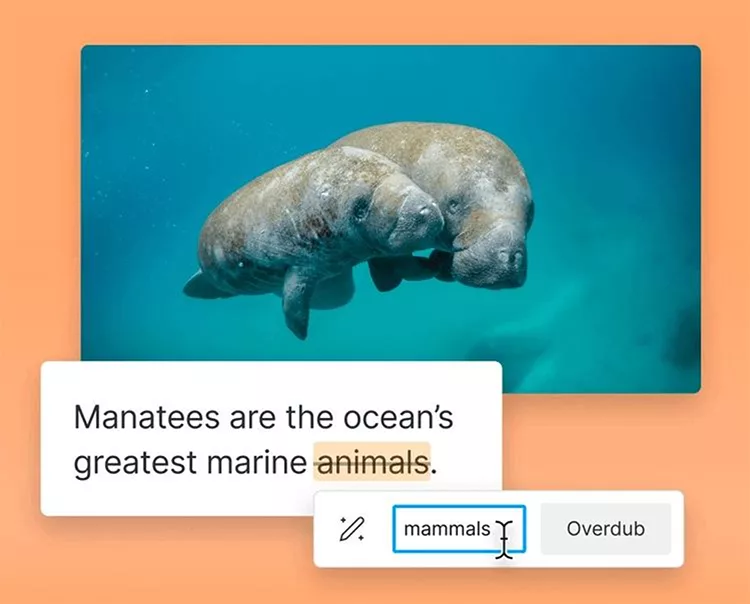
Descript’s most notable feature is text-to-video editing. Basically, if you know how to edit a text document in Google Docs, then you can easily edit videos with this app.

For example, if you want to cut something out, you can simply delete it from the video transcript and it will be removed from the footage as well. 

You can also use this tool to edit audio files the same way, which is great for those who have audio-only podcasts or want to clean up audio that they intend to overlay on video footage. 

Repurpose Long-Form Videos With Opus Clip

Screenshot of OpusClip website showing features of their AI video clipping tool, including a slogan and an image of two people in a discussion. Options to upload a video and sign up are visible.

The best video marketing strategy appears to be publishing long-form videos on YouTube and then repurposing them into short clips that you can publish on TikTok, Facebook, Instagram, and Twitter.

Repurposing long-form videos used to be a tedious process:

You had to watch the entire video, identify the best moments, cut them out, turn them into cohesive short clips, spice them up with some visual effects, and add captions to them before publishing. 

Now an AI tool like Opus Clip can do all that for you in less than 10 minutes. Simply upload a video or provide a link to it and it will produce a bunch of short clips.

You will probably still have to do some manual editing before you can publish them. But that shouldn’t take too much time with Opus Clip editing features that were designed specifically for editing short-form video content!

AI Marketing Strategy for Established Businesses

Once your business is established, it’s time to start using AI for data analysis and brand management. 

Make Data-Driven Decisions With Tableau

Screenshot of Tableau's website showcasing their data analytics platform with a text slogan, product options, and a view of the interface displaying a world map and various data visualizations.

You probably have a ton of historical data. 

You can use AI-powered business analytics software to analyze it so that you can optimize various business processes. That can help you increase your sales, revenue, and profit. 

Also, once you have a solid business analytics system in place, it will help you make data-driven decisions going forward.

Finally, while business analytics apps aren’t crystal balls, they can help you improve the accuracy of your sales forecasting.

We recommend Tableau. It’s a powerful AI tool that enables you to take advantage of various machine learning techniques developed specifically for data analysis!

Learn From Customer Feedback With MonkeyLearn

Screenshot of MonkeyLearn's No-Code Text Analytics dashboard displaying various data visualizations and text analysis tools for customer feedback powered by AI.

When you are just starting out, it’s easy to keep track of customer feedback and learn from it, even if you are receiving it via several different channels.

But as your business grows, so does the volume of social media comments, customer emails and support tickets. 

By the time your business is established, it becomes impossible to manually keep track of it all, much less analyze it and learn from it. 

MonkeyLearn is an app that enables you to use a machine learning technique called text analysis to analyze, monitor, and learn from customer feedback.

It can help you improve your product or service, provide better customer support, and create more effective marketing campaigns!

Manage Your Brand Image With Brand24

Screenshot of Brand24 webpage featuring a social listening tool tagline, sign-up button, and interface preview. Logos of popular brands like Uber and McCann are displayed at the bottom.

It’s true that when you are just starting out a few bad reviews can tank your business.

However, at that stage, you are doing everything yourself, so you are probably aware of disgruntled customers. You can reach out to them directly and do your best to resolve whatever it is that they are unhappy about. 

As your business grows, keeping track of disgruntled customers manually becomes impossible because of the sheer number of people that your company is serving.

Meanwhile, the viral nature of social media means that one person venting on Twitter can quickly escalate into a full-blown PR nightmare.

And the more well-known your company is, the more likely that is to happen.

Think about it:

No one cares if someone had a bad experience at an independent vacation house rental in a popular tourist destination. But if they complain about AirBnB? Everyone will jump in with their own AirBnB horror stories!

AirBnB is a good cautionary tale here because it shows that it doesn’t matter how dominant your company appears to be – if your customers are unhappy, eventually, it’s going to catch up with you. People who used to love the idea of renting apartments while traveling are rediscovering hotels!

That’s why brand management is so important for established businesses. You want to do everything you can to spot problems early on and address them immediately so that they won’t snowball until they get completely out of control. 

Brand24 is an AI-powered social media listening tool that can help you do that. You can use it to monitor and analyze brand mentions. There’s also a feature that allows you to set up custom alerts so that you would get notified if something important happens and be able to respond quickly. 

We recommend creating a new customer support role dedicated to brand management. That person should get notified about negative brand mentions and immediately reach out to the disgruntled customers, hear them out, and take measures to resolve their problems.

For example, if this customer support agent gets notified that someone is complaining about your product or service on Twitter, they should DM that person, ask them what happened, apologize for whatever it was that went wrong, thank them for their feedback, and give them a free voucher. That might be all it takes to de-escalate the situation.

The truth is that protecting your brand image is pretty straightforward if you are willing to allocate resources to it. Yes, having a full-time employee whose entire focus is brand management is expensive but it can help you avoid a ton of negative publicity!

Try ClickFunnels 2.0 Risk-Free!

Let’s be real:

We are biased in favor of our software. 

So we understand if you take what we say about it with a grain of salt.

Fortunately, we have a free 14-day trial, so you don’t have to take our word for it.

You can go and see ClickFunnels 2.0 for yourself without any risk!

So what are you waiting for? 🧐

Start Your Free Trial Today

Thanks for reading Create The Perfect AI Marketing Strategy In 2024 which appeared first on ClickFunnels.
How To Use AI Marketing Software To Transform Your Business

Software Stack Editor · July 4, 2024 ·

The post How To Use AI Marketing Software To Transform Your Business appeared first on ClickFunnels.

Some of the biggest companies, like Google, IBM, and Microsoft, are investing heavily in artificial intelligence (AI) and integrating it into their business processes.

But the exciting thing is that AI isn’t just for the tech giants. Businesses of all sizes can leverage AI marketing software to gain a competitive edge!

According to a survey from the Digital Marketing Institute, the number one way marketers and businesses are using AI is for the automation of routine tasks. Imagine the time and resources you could save by automating repetitive tasks that consume your daily schedule. Whether it’s handling customer queries, scheduling social media posts, or analyzing data…

But the potential of AI extends far beyond just automation. It can help you save time or money with virtually any marketing task you’re involved in. From enhancing your customer experience to optimizing your ad spend, the possibilities are endless.

If you’re unsure where to start, don’t worry.

We’ve prepared this blog to guide you through seven different ways to use AI in your marketing. Plus, we’ll reveal the most popular tools in each category, so you can implement these strategies right away.

Let’s dive in and explore how AI can revolutionize your marketing efforts!

Build Your Sales Funnel NOW With AI (Free)

What is AI Marketing Software?

AI marketing software refers to digital tools that are enhanced by artificial intelligence, allowing them to perform tasks that typically require human intelligence.

The nature of this software is complex and can feel overwhelming, but chances are you’ve already encountered AI in marketing without even realizing it.

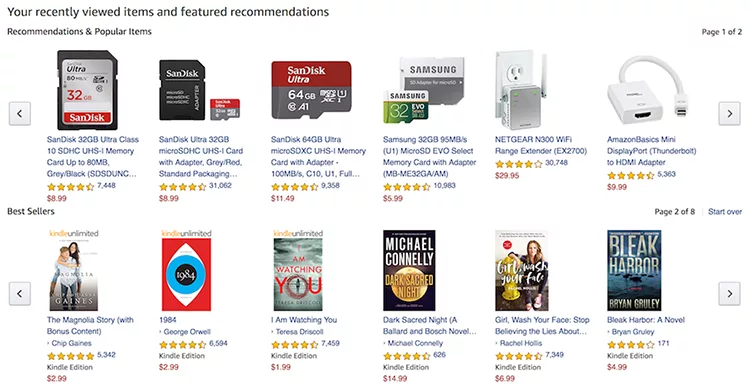
Take Amazon, for example.

Since the early 2000s, Amazon has been using AI technology to provide personalized product suggestions to its customers. This feature uses data from your past purchases and browsing history to recommend products you’re likely to be interested in, enhancing your shopping experience.

Screenshot of an Amazon page showing recommended items based on recent views. Products include memory cards, network devices, various books, and other electronics with prices and ratings displayed.

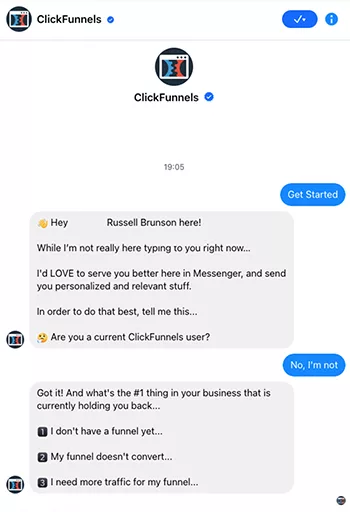
Another example is Facebook. In 2017, Facebook started allowing developers to build AI-powered chatbots. These chatbots help businesses initiate more conversations with customers without the significant time investment typically required for such engagement.

Screenshot of a Facebook Messenger chat with a ClickFunnels bot. The conversation starts with the bot introducing itself and asking the user about their ClickFunnels usage. The user responds they are not a user, and the bot asks what is holding their business back.

In the early 2000s and 2010s, the use of AI in marketing was mostly restricted to companies with large budgets or cutting-edge developers.

However, the landscape has changed dramatically.

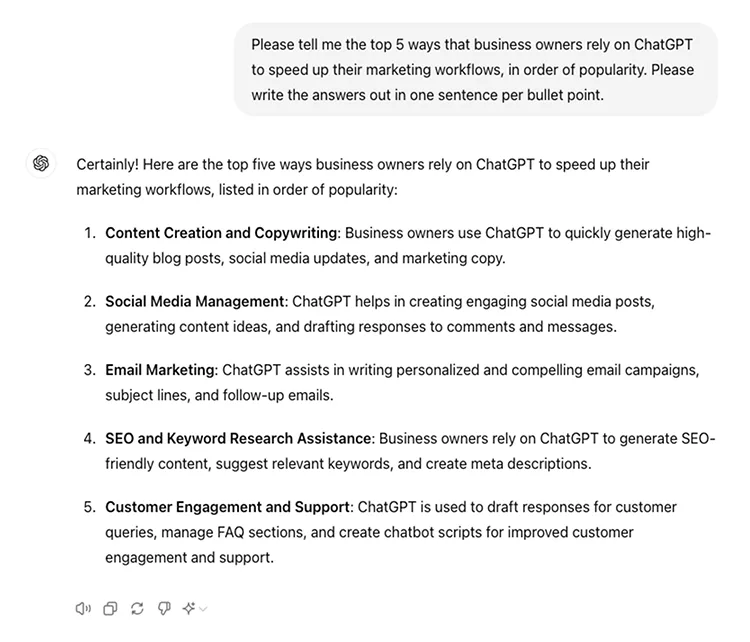
With the launch of user-friendly AI software like ChatGPT, there has been an explosion of AI-powered marketing tools that are accessible to everyone.

Even better, many of these tools are free at their most basic level, which means businesses of all sizes can take advantage of them. There are now thousands of tools specifically designed to help with various marketing tasks, from content creation and email marketing to customer service and data analysis.

This list will cover some of the most popular AI marketing tools available today…

  1. Smart Funnels — Build your sales funnels in just 10 minutes with an AI by just answering a few questions.
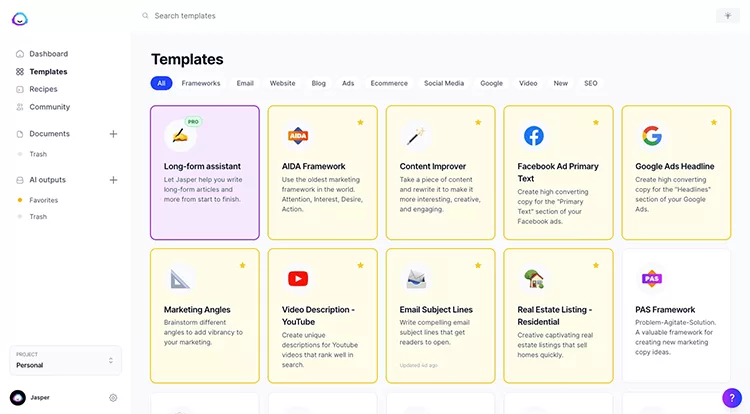
  2. Jasper — Helps with content creation, including blog posts, social media content, and marketing copy.
  3. Surfer SEO — Analyzes SERPs, provides insights on relevant keywords, and offers suggestions to improve content quality and rankings.
  4. Canva — Offers templates, stock photos, and easy editing tools for creating visually appealing content for social media, websites, and other platforms.
  5. Looka — Looka is an AI-powered logo design tool that helps businesses create professional brand identities.

However, it’s worth noting that there’s likely a tool out there for almost any marketing-related task you’re currently spending time on.

Whether you’re looking to automate routine tasks, enhance your customer interactions, or optimize your marketing strategies, AI can help you achieve your goals more efficiently.

Benefits of Using AI in Marketing

The core benefit of AI is that it helps business owners and marketers work faster. Any digital work that is repetitive, time-consuming, or based on patterns is ripe for being replaced by AI.

But that’s not the only way you can use AI software in your marketing.

Here’s what the Digital Marketing Institute found were the most popular ways businesses are leveraging AI, according to their survey:

  1. Automation of Routine Tasks (68%) AI excels at automating repetitive tasks, freeing up your time to focus on more strategic activities. For instance, AI can handle tasks like scheduling social media posts, sending out email newsletters, and managing customer support queries. By automating these routine tasks, you can ensure consistency and efficiency in your marketing efforts.
  2. Improved Customer Experience (46%) AI-powered tools can significantly enhance the customer experience by providing personalized and timely responses. For example, chatbots can handle customer inquiries 24/7, offering instant support and freeing up human agents to tackle more complex issues. This leads to faster resolution times and higher customer satisfaction.
  3. Improved Targeting and Segmentation (45%) AI can analyze vast amounts of data to identify patterns and segment your audience more effectively. This allows you to create more targeted marketing campaigns that resonate with specific segments of your audience, ultimately driving higher engagement and conversion rates.
  4. Enhanced Personalization (44%) Personalization is key to modern marketing, and AI can help you deliver personalized content and offers at scale. By analyzing customer behavior and preferences, AI can recommend products, create tailored content, and send personalized emails that are more likely to convert.
  5. Predictive Analysis (39%) AI’s predictive analysis capabilities enable you to forecast future trends and behaviors based on historical data. This can help you make more informed decisions about your marketing strategies, optimize your campaigns, and anticipate customer needs before they arise.

You may not know it, but there could be a perfect AI tool that instantly saves you hours each week or month. Or, you could find an AI tool that dramatically improves the performance of your marketing.

7 Ways to Use AI in Your Marketing

Below, we’ve outlined seven ways to take advantage of AI, complete with real-life examples of the most popular AI marketing software available right now to help you get started.

1. Funnel Building

Creating a sales funnel can be a complex and time-consuming process. However, this task has become significantly easier and more efficient. One of the leading tools in this space is Smart Funnels.

Smart Funnels is an AI-powered tool designed to simplify the process of building sales funnels. This tool helps you save time on several fronts, including writing copy, creating branding elements, and constructing the funnel itself.

With Smart Funnels, you can draft a complete sales funnel in less than 10 minutes!

  • Time-Saving: The primary advantage of Smart Funnels is its ability to significantly reduce the time required to build a sales funnel. What used to take hours or even days, can now be accomplished in mere minutes.
  • Automated Copywriting: Smart Funnels leverages AI to generate high-converting copy for your funnels. This means you don’t have to spend hours crafting the perfect message—Smart Funnels does it for you, ensuring your copy is optimized for conversions.
  • Seamless Branding: The tool also assists in creating cohesive and attractive branding for your funnels. Whether it’s choosing the right colors, fonts, or images, Smart Funnels ensures your brand is consistently represented across all stages of the funnel.
  • User-Friendly Interface: Even if you’re not tech-savvy, Smart Funnels’ intuitive interface makes it easy for anyone to create professional-looking sales funnels without any prior experience.

So how does it work?

Smart Funnels uses a combination of AI and user inputs to create a tailored funnel. Here’s a quick overview of the process:

  1. Input Your Goals: Start by entering the main goal of your funnel, such as generating leads, making sales, or increasing webinar sign-ups.
  2. Select a Template: Choose from a variety of pre-designed templates that fit your goal.
  3. Customize Content: Provide some basic information about your product or service, and the AI will generate persuasive copy and suggest design elements.
  4. Review and Launch: Review the generated funnel, make any necessary tweaks, and launch it. The entire process can be completed in under 10 minutes.

Click here to try it out for yourself!

Build Your Sales Funnel NOW With AI (Free)

2. Content Creation

AI tools have become indispensable for marketers and business owners.

These tools not only help in generating high-quality content quickly but also ensure that the content is relevant and engaging. Two of the most notable AI-powered content creation tools are Jasper.ai and ChatGPT.

Jasper.ai is renowned for its robust AI-powered copywriting capabilities. It stands out in a crowded market because of its ability to understand context and provide relevant content tailored to specific needs.

Key Features and Use Cases

  • Understanding Context: Jasper.ai excels in grasping the nuances of context, making it ideal for creating content that resonates with your target audience.
  • Versatile Templates: It offers a variety of templates to help you generate the exact type of content you need, whether it’s for email campaigns, product descriptions, or blog posts.
A screenshot of a template selection page. Various templates are visible, including Long-form assistant, ADA Framework, Content Improver, Facebook Ad Primary Text, and more, categorized by different uses.

Content Types

Jasper.ai can assist in writing:

  • Email Copy: Craft compelling email campaigns that engage and convert your audience.
  • Product Descriptions: Generate detailed and persuasive product descriptions that highlight key features and benefits.
  • Blog Posts: Create informative and engaging blog posts to drive traffic and establish thought leadership.
  • Landing Page Copy: Develop high-converting landing pages that capture leads and drive sales.
  • Sales Pages: Write persuasive sales pages that encourage visitors to take action.

ChatGPT is perhaps the most well-known AI software currently available. Its versatility makes it a powerful tool for enhancing various aspects of your marketing workflow.

Key Use Cases

  1. Content Creation: Use ChatGPT to generate ideas, draft blog posts, social media updates, and other content types quickly and efficiently.
  2. Audience Research: Conduct detailed audience research by asking ChatGPT to analyze trends, customer preferences, and market data.
  3. SEO Optimization: Improve your content’s search engine rankings by generating SEO-friendly headlines, meta descriptions, and keyword-rich content.
  4. Writing Product Descriptions: Craft engaging and accurate product descriptions that highlight key features and benefits.
  5. Creating Chatbots: Develop AI-powered chatbots for customer service, lead generation, and customer engagement.
  6. Creating Marketing Strategies: Get assistance in brainstorming and planning comprehensive marketing strategies.
  7. Generating Customer Surveys: Create insightful and targeted customer surveys to gather valuable feedback.
  8. Summarizing Information: Use ChatGPT to condense large amounts of information into key points, making it easier to digest and act upon.
A screenshot explaining the top five ways business owners use ChatGPT for marketing: content creation, social media management, email marketing, SEO, and customer engagement support.

Best Practices

While ChatGPT can significantly speed up your marketing workflows, it’s essential to remember that it’s best used as an assistant rather than a final content provider. Here are some tips for getting the most out of ChatGPT:

  • Prompt Engineering: The quality of the output depends heavily on the quality of your prompts. Spend time crafting detailed and specific prompts to get the best results.
  • Editing and Refining: Always review and edit the content generated by ChatGPT. AI can sometimes produce errors or “hallucinate” information, so human oversight is crucial.
  • Iterative Process: Use ChatGPT iteratively. Generate drafts, refine them based on your needs, and then polish the final content to ensure it meets your standards.

The use cases for ChatGPT are virtually endless, making it a versatile tool in any marketer’s toolkit. By integrating ChatGPT into your workflow, you can enhance productivity and focus more on strategic tasks.

By leveraging the power of AI tools like Jasper.ai and ChatGPT, you can streamline your content creation process, improve the quality of your marketing materials, and ultimately achieve better results in less time.

3. Editing

Editing is a crucial step in the content creation process.

Two popular AI-powered tools that can greatly assist in this phase are Grammarly and the Hemingway App.

Grammarly

A Grammarly document on the left suggests writing improvements. On the right, an email is being composed discussing details about a candidate for a position and advising a step for further action.

Grammarly is widely recognized for its comprehensive grammar and spell-checking capabilities. However, its functionalities extend far beyond basic proofreading.

Key Features and Use Cases
  • Grammar and Spelling Checks: Grammarly scans your text for grammatical errors and spelling mistakes, providing real-time corrections to ensure your content is flawless.
  • Enhanced Comprehension: It offers suggestions to rephrase your wording for better clarity and comprehension, making your content more accessible to your audience.
  • Versatile Integration: One of Grammarly’s standout features is its ability to integrate seamlessly with various platforms. You can install it on your computer or as a web browser extension and use it across multiple applications such as Gmail, Microsoft Word, Twitter, Apple Mail, WhatsApp, Google Docs, Facebook, and more. This integration allows you to receive content suggestions and corrections as you type, regardless of the platform.

By using Grammarly, you can enhance the quality of your writing, ensuring that your message is clear, concise, and free of errors.

Hemingway App

Screenshot of Hemingway App highlighting lengthy, complex sentences and common errors in a text, displaying color-coded suggestions and readability grade. The app also offers an AI assistant for corrections.

Named after the famous writer Ernest Hemingway, known for his concise and straightforward writing style, the Hemingway App helps you achieve similar clarity and brevity in your content.

Key Features and Use Cases
  • Readability Score: The Hemingway App provides a readability score based on U.S. educational grade levels. Many marketing resources recommend writing at a fourth-grade level to enhance comprehension, and Hemingway helps you achieve this by highlighting complex sentences and suggesting simpler alternatives.
  • Content Simplification: The app highlights long, convoluted sentences and common errors, helping you rewrite your content to make it more readable and engaging.
  • AI-Powered Rewriting: Hemingway uses AI to offer suggestions on how to simplify and clarify your text, ensuring your content is easy to understand.

Using the Hemingway App, you can streamline your writing, making it more accessible to a wider audience while maintaining the integrity of your message.

4. Chatbots & Customer Support

These tools can handle a multitude of tasks, from answering common queries to generating leads, thereby saving valuable time and resources.

Two standout tools in this category are Chatfuel and Reply.io.

Chatfuel

A chatbot flow diagram in Chatfuel's interface shows various interconnected blocks with options for actions like welcoming users, providing contact info, and answering queries, complete with lines indicating the flow path.

Chatfuel is one of the most popular AI-powered chatbot platforms available.

As an official partner with Meta, Chatfuel offers a robust and user-friendly solution for creating virtual personalities that can engage with customers in real-time.

Key Features and Use Cases
  • Personalized Chatbots: Chatfuel allows you to create a personalized chatbot through a drag-and-drop interface. This makes it easy to design a virtual assistant that can match your brand’s tone and personality.
  • Replacing FAQ Sections: Instead of having static FAQ pages, you can use Chatfuel to create interactive chatbots that provide instant answers to common questions, enhancing the user experience.
  • Lead Generation: Chatfuel chatbots can help bring leads into your sales funnel by engaging visitors, collecting contact information, and even qualifying leads based on their responses.
  • Time Savings: By automating responses to routine customer inquiries, Chatfuel saves you and your team significant time, allowing you to focus on more complex tasks.

Reply.io

A computer screen displaying an email draft for an outbound cold outreach campaign with suggestions on the right-hand side assessing email components like subject length and positivity.

Managing email communication can be a daunting task, especially when you have to respond to hundreds of emails each week. Reply.io addresses this challenge with its AI-powered sales email assistant.

Key Features and Use Cases
  • Automated Email Responses: Reply.io helps create compelling and personalized email responses, ensuring that each email is professional and engaging.
  • Outbound Email Campaigns: The tool can build and manage outbound cold email campaigns, automating the process of reaching out to potential clients.
  • Lead Scoring: Reply.io’s AI can score email responses to identify and flag potential leads, helping you prioritize follow-ups with high-value prospects.

With Reply.io, businesses can automate their email workflows, improve the efficiency of their outreach efforts, and ensure that no potential lead is overlooked.

5. Visual Content Creation

AI tools like Synthesia and Canva are making it easier than ever to create high-quality visual content without the need for advanced technical skills or expensive equipment.

Synthesia

Synthesia is the most popular AI video creation platform, renowned for its ability to generate professional videos, avatars, and voiceovers.

Key Features and Use Cases
  • AI-Generated Videos: Synthesia enables you to create professional-grade videos by generating video scripts using AI. This is particularly useful for businesses looking to produce video content without the need for microphones, recording equipment, or even appearing on camera.
  • Customizable Avatars: You can create personalized avatars that can deliver your message in a human-like manner, adding a personal touch to your videos.
  • Voiceovers: Synthesia offers high-quality AI-generated voiceovers, eliminating the need for voice actors and recording sessions.

Canva

Canva is already the leading graphic design platform, but its built-in AI features can further enhance your visual content creation.

Key Features and Use Cases
  • AI-Driven Image Generation: Canva’s AI tools allow you to describe the type of image you need, and the platform will generate examples that match your text, styles, and sizing requirements. This feature is perfect for creating unique and tailored visual content without the need for extensive design skills.
  • Design Templates: Canva offers a vast array of design templates for various purposes, from social media posts to presentations, making it easy to produce professional-looking graphics quickly.
  • User-Friendly Interface: With its intuitive drag-and-drop interface, Canva is accessible to users of all skill levels, enabling anyone to create stunning visual content.

6. Automation

Automation is a game-changer for businesses looking to streamline operations and reduce the workload associated with repetitive tasks.

Zapier is one of the leading AI-powered tools in the automation space, offering over 3,000 integrations that can save you significant time and effort.

Zapier

Zapier excels in connecting different applications and automating workflows, which it calls “zaps.” These zaps can automate a variety of tasks, ensuring that your business processes run smoothly and efficiently.

Key Features and Use Cases
  • Extensive Integrations: With more than 3,000 possible integrations, Zapier can connect a wide array of apps and services, enabling seamless data transfer and task automation.
  • Automation of Routine Tasks: Some useful zaps that can significantly improve your productivity include:
    • Social Media Sharing: Automatically share new blog posts to your chosen social media platforms. This ensures your content reaches a wider audience without requiring manual updates.
    • Lead Management: Automatically add new leads to your CRM whenever you generate contact information from ads, your website, or messaging apps. This keeps your sales pipeline updated in real time.
    • Email Automation: Automatically send welcome or thank-you emails when you get a new sign-up or purchase on your website. This enhances customer engagement and nurtures relationships from the start.
    • Customer Support: Automatically create a customer support ticket whenever you receive a complaint or request. This ensures timely responses and efficient issue resolution.
    • Task Scheduling: Automatically schedule new tasks from platforms like Notion or Trello into your calendar. This helps you stay organized and ensures that no task falls through the cracks.
How to Get Started with Zapier
  1. Sign Up: Create an account on Zapier and explore the available integrations.
  2. Choose Apps: Select the applications you want to connect, such as your CRM, email service provider, social media accounts, and project management tools.
  3. Create Zaps: Set up zaps by defining the triggers and actions for each automation. For example, a trigger could be a new lead captured, and the action could be adding that lead to your CRM.
  4. Test and Deploy: Test your zaps to ensure they work correctly, then deploy them to start automating your workflows.

7. Market Research & Monitoring

Staying ahead in the competitive business landscape requires constant market research and monitoring.

AI-powered tools like AnswerThePublic and Brand24 can provide invaluable insights and help you keep a pulse on market trends and brand perception.

AnswerThePublic

A circular data chart displaying questions about AI software. The chart includes metrics such as search volume, cost per click, and related questions segmented by different categories.

AnswerThePublic is an excellent tool for gaining insights into the types of questions people are asking on search engines and social media platforms. This can help you tailor your content and marketing strategies to better meet the needs of your audience.

Key Features and Use Cases
  • Search Insights: AnswerThePublic aggregates data from Google, YouTube, Bing, TikTok, and Amazon to show you what people are searching for. This helps you understand the interests and concerns of your target audience.
  • Personalization: You can customize the search results based on location and topic, allowing you to focus on specific markets or areas of interest.
  • Content Ideas: Use the insights to generate content ideas, such as blog posts, videos, and social media updates. This ensures your content is relevant and engaging.
  • Handling Objections: Identify common objections or concerns that people have and address them in your sales pages or FAQ sections. This can help improve your conversion rates by preemptively resolving potential customer issues.

Brand24

A sentiment analysis dashboard shows user feedback with one positive comment about Oreo Shake in Starbucks and one negative comment about Oreo cookies crumbling. Below is a sentiment trend graph.

Brand24 is a powerful tool for monitoring your brand’s online presence and managing your reputation. It continuously tracks various platforms and provides real-time alerts whenever your brand is mentioned.

Key Features and Use Cases
  • Comprehensive Monitoring: Brand24 monitors news sites, social media, blogs, forums, videos, and other online platforms. This extensive coverage ensures that you are aware of all mentions of your brand.
  • Sentiment Analysis: Its AI features analyze the sentiment of each mention, helping you understand whether the perception is positive, negative, or neutral. This allows you to gauge public opinion and respond accordingly.
  • Crisis Management: One of the best uses of Brand24 is to respond quickly to criticism or negative mentions. By addressing customer support issues promptly, you can prevent small problems from escalating into major crises.
  • Customer Engagement: Engage with your audience by responding to mentions and participating in conversations. This proactive approach can enhance your brand’s reputation and build stronger customer relationships.

Final Thoughts

AI marketing software offers significant benefits, primarily by saving time in your marketing workflows.

With its low cost, user-friendliness, and wide range of applications, AI is accessible to businesses of all sizes.

We’ve covered seven ways to integrate AI into your marketing:

  1. Funnel Building: Use Smart Funnels to quickly create effective sales funnels.
  2. Content Creation: Tools like Jasper.ai and ChatGPT help generate high-quality content.
  3. Editing: Grammarly and Hemingway App ensure your content is polished.
  4. Chatbots & Customer Support: Chatfuel and Reply.io automate customer interactions and email responses.
  5. Video and Graphic Content Creation: Synthesia and Canva simplify creating professional visual content.
  6. Automation: Zapier connects apps and automates workflows, saving time.
  7. Market Research & Monitoring: AnswerThePublic and Brand24 provide valuable insights and monitor your brand’s online presence.

Now it’s time to explore these tools and see how they can revolutionize your marketing efforts!

Build Your Sales Funnel NOW With AI (Free)

Thanks for reading How To Use AI Marketing Software To Transform Your Business which appeared first on ClickFunnels.
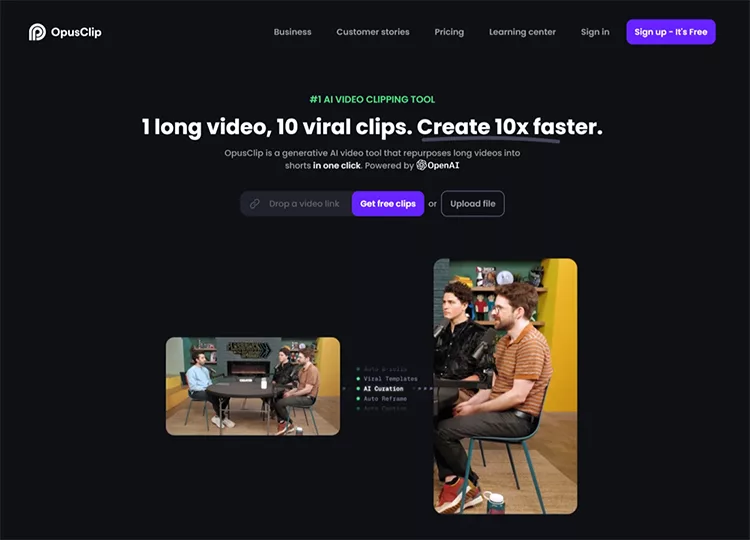
How To Create A Winning AI Marketing Plan

Software Stack Editor · July 4, 2024 ·

The post How To Create A Winning AI Marketing Plan appeared first on ClickFunnels.

As a business owner, you know that marketing is essential for driving revenue by generating leads and sales.

The key to effective marketing is having a well-crafted plan or strategy. But creating one can be daunting and time-consuming.

Imagine you could speed up the process without compromising quality?

In this post, we’ll explore five ways you can leverage AI to craft winning marketing plans. 

Let’s dive in!

The Use Cases of AI in Marketing

It’s estimated that 95% of companies are using AI to support their marketing efforts​.

However, the most popular use cases of AI aren’t typically for the strategic side of things. Here are the most common ways you can leverage AI in your marketing efforts…

Current use of AI in Marketing

SEO Content Creation

AI can assist you in finding content ideas, drafting headlines, creating outlines, and even writing drafts. This streamlines your content creation process, ensuring you have fresh, relevant content ready to publish.

Email Marketing

Drafting compelling subject lines and email copy can be time-consuming. AI tools can help you craft engaging emails that improve open rates and click-through rates, making your email campaigns more effective.

Copywriting

Use AI to generate landing page copy, sales page content, and identify customer pain points. This ensures your messaging resonates with your audience and drives conversions.

Social Media Post Creation & Scheduling

AI tools can create social media content and determine the optimal times to post. This enhances your social media presence and ensures your posts reach the maximum audience.

Chatbots

Implement AI-driven chatbots on your website, Messenger, WhatsApp, and other platforms. These chatbots provide instant customer support, improving user experience and engagement.

Ad Buying

Leverage AI for ad buying on platforms like Meta’s Advantage+ and Google Ads Performance Max. AI optimizes your ad spend, targeting the right audiences to maximize ROI.

Visual Creation

Tools like Canva and Synthesia use AI to help you create visually appealing graphics and videos, enhancing your marketing materials without needing advanced design skills.

Targeting and Segmentation

AI can suggest audience groups based on data, create patterns, and identify unengaged customers in your email lists. This helps you tailor your marketing efforts to different segments effectively.

Data Analytics

AI scores the quality of leads from inbound or outbound lead generation and uses tools like Google Analytics to understand user behavior. It can create summaries and auto-generate graphs, making data analysis more accessible.

Personalization

AI increases conversions through on-page website personalization, offering tailored experiences to each visitor based on their behavior and preferences.

All of these AI use cases will help you execute your marketing plan more efficiently. But what about the high-level strategy? Can AI help with that too?

Yes it can! And that’s what we’ll be talking about in this article 🙂

AI Can Build Your Funnel… For Free

Benefits of Creating a Marketing Plan With AI

AI is often used to speed up time-consuming creative tasks, but what about strategic planning? Here are five main ways AI can help you create a winning marketing plan:

Saving Time

AI accelerates the actual creation of the plan, automating repetitive tasks and allowing you to focus on strategy.

Suggestion of Best Practices

You can ask AI tools, like ChatGPT, to provide commonly used templates and best practices that you might not be familiar with.

Summarizing Data

AI can summarize documents and data into key points, making it easier to inform your marketing plan with the most relevant information.

Recommending Objectives

By asking for recommendations, AI can help you identify and refine the objectives you should focus on for your marketing strategy.

Structuring the Plan

AI can break down longer texts into summaries or more visually appealing formats, helping you present your plan more effectively.

One downside of AI is that its information is generalized. You can’t just ask a tool like ChatGPT to ‘create a marketing plan’ because it won’t understand the specific nuances of your business. However, the more direction and information you provide, the better the results.

Below, we’ll walk you through five ways to create a personalized and powerful marketing plan using AI.

How to Create a Marketing Plan With AI

Creating a marketing plan with AI can transform your strategy into a streamlined, data-driven powerhouse. Here are five steps to guide you through the process.

Step 1: Mission Statement

The first place to start with your AI-powered marketing plan is to determine your mission statement. This statement is your north star, defining your business, what you do, and who you serve. It sets the stage for everything that comes next.

Before using AI, make a mental or written note of the following four inputs:

  • Audience: Who is your audience?
  • Problem: What problem do you solve for them?
  • Solution: What’s your unique solution?
  • Impact: What’s the impact you have?

Now, turn to an AI like ChatGPT and use the following formulas to create your mission statement:

  • We [solution] so [impact]
  • We exist to [problem] by [solution] for [audience] so [impact]
  • We help [audience] to [problem] with our [solution]

For example, if you are a coaching business that trains new coaches to get clients, your inputs might be:

  • Audience: People new to coaching with expertise in a specific area.
  • Problem: Helping coaches overcome overwhelm and start closing new clients fast.
  • Solution: Our unique framework helps coaches get started and close clients in just 10 days.
  • Impact: Helping coaches transition from jobs they dislike to supporting their families with a full-time income.

To show you what this looks like, I typed the following prompt into ChatGPT…

  • “You are an expert marketer tasked with creating a powerful mission statement to be the ‘north star’ of an upcoming marketing plan. There are four inputs:
  • Audience
  • Problem
  • Solution
  • Impact
  • Please provide three separate mission statements based on the following formulas:
  • We [solution] so [impact].
  • We exist to [problem] by [solution] for [audience] so [impact].
  • We help [audience] to [problem] with our [solution].
  • Please write just one sentence of a maximum 20-25 words, and rewrite the inputs so they are short and compelling.”

Here’s what I got…

It’s unlikely you get the mission statement you’re looking for on the first attempt

For example, we got three more mission statements to choose from by asking ChatGPT to improve the one we liked the most…

The key with AI is to keep on making new commands to improve the results, until you find something you’re happy with

In our case, we improved the 3rd variation until we got this mission statement:

  • We help new coaches overcome overwhelm and start closing clients within 10 days using our unique ‘New Coach Crushin’ It ’ framework, helping them achieve a full-time income and support their families.

Step 2: Define Your Objectives & KPIs

The next critical part of your AI-driven marketing strategy is defining your objectives and KPIs. Here’s how they support your marketing plan:

Objectives set out the main purpose or goal you want to achieve. This could be a revenue target, a measurable impact, or a specific change you want to see. 

KPIs (Key Performance Indicators) are the metrics you’ll use to ensure you’re on the right track. These could include the number of orders, net profit, cost-per-lead in advertising, traffic numbers, or conversion rates.

SMART Goals: To ensure your objectives are effective, they should be SMART:

  • Specific: Clearly defined and focused
  • Measurable: Quantifiable to track progress
  • Achievable: Realistic and attainable
  • Relevant: Aligned with broader business goals
  • Time-bound: Set within a specific timeframe

For example, if you want to increase monthly revenue in the next six months, you can use ChatGPT to help define a SMART goal. Use the following prompt:

  • “I want to improve [area of improvement]. I need very specific, achievable goals that subscribe to the SMART goals method. Give me a plan with the best quality and in a table format.”

For example, here’s what happened using the example of our coaching businesses for new coaches:

Once you have your SMART goals, you can then determine the relevant KPIs. Here’s a prompt to help with that:

  • “I have a goal to increase monthly revenue. I want to track my monthly revenue through financial reports. Please suggest the 5 most important KPIs to measure success and how often I should monitor them.”

This approach ensures that your objectives are clear and actionable, and your KPIs provide the necessary insights to track progress and make informed decisions. By leveraging AI, you can streamline this process and create a robust framework for your marketing plan.

Step 3: Create Buyer Personas

The next step in a powerful marketing plan using AI is to leverage ChatGPT to create buyer personas. A buyer persona helps to focus your marketing plan so the messaging, strategy, and delivery are all appropriate for the people you’re trying to reach.

Start with a simple prompt:

  • “Create a buyer persona for a [business] located in [city, state, country].”

Here’s what we got when we did this for our online coaching business example based in the US.

As you can see it’s a comprehensive buyer persona, but it’s generic.

To refine this persona, continue the conversation by adding information you already know about your past or ideal clients. Ask ChatGPT more specific questions to enrich the persona.

Here are a ton of ideas. Feel free to cherry pick based on what you want to know…

Demographic Information:

  • What is the age range of your ideal customer?
  • What is their gender?
  • What is their marital status?
  • Do they have children? If so, how many and what ages?

Professional Background:

  • What is their job title and industry?
  • What is their level of education?
  • How many years of experience do they have in their field?
  • What skills and expertise do they possess?

Geographic Information:

  • Where do they live? (City, region, country)
  • Do they live in urban, suburban, or rural areas?

Financial Information:

  • What is their income level or salary range?
  • What is their household income?
  • What is their typical budget for products/services like yours?

Psychographic Information:

  • What are their hobbies and interests?
  • What values and beliefs are important to them?
  • What lifestyle choices do they make?
  • What are their personality traits?

Behavioral Information:

  • How do they spend their free time?
  • What types of products or services do they typically purchase?
  • What is their buying behavior (e.g., impulsive, thorough research, brand loyalty)?
  • How do they prefer to shop (online, in-store, mobile)?

Goals and Challenges:

  • What are their primary goals, both personal and professional?
  • What challenges or pain points are they facing?
  • How do they measure success in their personal and professional life?

Buying Journey:

  • How do they become aware of products/services like yours?
  • What sources of information do they trust when making purchasing decisions?
  • What criteria do they use to evaluate options?
  • What factors influence their final purchasing decision?

Media Consumption:

  • What social media platforms do they use?
  • What types of content do they consume (blogs, videos, podcasts)?
  • What websites or online communities do they visit regularly?
  • How do they prefer to receive information and updates (email, text, social media)?

Brand Perception:

  • What is their perception of your brand or similar brands?
  • What do they value most in a product or service (quality, price, customer service)?
  • How important is brand reputation in their purchasing decisions?

Customer Experience:

  • What type of customer service experience do they expect?
  • How do they prefer to interact with customer support (phone, email, chat)?
  • What makes them loyal to a brand or company?

Technology Use:

  • What devices do they use regularly (smartphones, tablets, laptops)?
  • How comfortable are they with technology and using digital tools?
  • What apps or software are essential to their daily routine?

To get even better results, consider collecting reviews about your products or services (or even from a close competitor) using LinkedIn, Google Reviews, G2, TrustPilot, and Yelp. Copy the data into a Google Sheet or Excel file.

Then, use a new prompt to enhance the buyer persona:

  • “Create a buyer persona with these customer testimonials in [language] for [product, service]. [Enter the customer reviews]”

By using this method, you’ll develop a highly detailed and accurate buyer persona that aligns with your real customer base, ensuring your marketing efforts are precisely targeted. 

AI Can Build Your Funnel… For Free

Step 4:  Choose Your Channels

Your AI marketing plan should include a list of the marketing channels you’ll use to reach your audience effectively. Here’s how to map out your channels strategically:

1. Identify Relevant Social Networks Determine which social networks are most relevant for your business. Consider both organic and paid strategies to maximize reach and engagement.

2. Use AI to Determine Channel Popularity Leverage ChatGPT to identify where your target audience spends their time online. Use the following prompt to get detailed insights: 

  • “What online platforms and social media channels are most popular for [buyer persona] in [location]. Provide answers in a table format with column headings ‘Channel’ ‘Why’ and ‘Features to Utilize’.”

3. Start Small to Avoid Overwhelm Initially, focus on 2-3 key channels. For example, you might start with Facebook for community engagement and LinkedIn for professional networking. This approach helps you manage your efforts without spreading too thin.

4. Develop Detailed Strategies for Each Platform Once you’ve chosen your channels, develop a detailed strategy for each. Here are a few tips:

  • Facebook: Utilize groups to build a community, create engaging live videos, and use targeted ads to reach specific demographics.
  • LinkedIn: Share insightful articles and posts that demonstrate your expertise, and use professional networking to connect with potential clients.
  • Instagram: Leverage visual content through stories and reels to create a strong brand presence and engage with your audience regularly.

5. Monitor and Adjust Use AI tools to monitor the performance of your campaigns on each channel. Track KPIs such as engagement rates, conversion rates, and ROI. Adjust your strategies based on these insights to optimize your marketing efforts continually.

By carefully selecting and strategically utilizing your marketing channels, you can ensure that your AI-powered marketing plan effectively reaches and engages your target audience, driving better results for your business.

Step 5: Create a One-Page Marketing Plan 

Now it’s time to bring everything together in a single-page marketing plan. This concise plan should include:

  • Your Mission Statement
  • Your Objective
  • Your KPIs
  • Your Buyer Persona
  • Your Marketing Channels

To design this quickly, grab a free template (we got one from Hubspot) and plug it into Canva. Fill in the blanks with the answers you’ve already generated from ChatGPT.

Using the example from our imaginary online coaching training business:

  1. Mission Statement: We help new coaches overcome overwhelm and start closing clients within 10 days using our unique ‘New Coach Crushin’ It’ framework, helping them achieve a full-time income and support their families.
  2. Objective: Increase monthly revenue by 20% in the next 6 months.
  3. KPIs: Monthly revenue, number of new clients, client retention rate, cost-per-lead, conversion rate.
  4. Buyer Persona: Aspiring coaches in the US with expertise in specific areas, looking to transition to full-time coaching.
  5. Marketing Channels: Facebook, LinkedIn, YouTube.
One-Page Marketing Template

As you can see, this basic template can be tailored to suit your branding colors and additional details. By using AI, you’ve created a comprehensive marketing plan in just a matter of minutes!

Final Thoughts: Using AI to Create a Marketing Plan

If you’re feeling overwhelmed, don’t have the time to create a marketing plan, or don’t know how, we’ve just broken down step-by-step how to create one using AI. But be aware of one thing: the results you get from AI like ChatGPT are generalized.

To get the best results, you need to keep asking questions and add in data specific to your business or research.

AI can provide a solid foundation, but it’s crucial to refine the outputs with your unique insights and data. This iterative process ensures that your marketing plan is not just generic but tailored to your specific needs and goals.

You can use the basic template we’ve provided and continue to add to it or design it as you wish. Customize it to reflect your brand’s identity and objectives. This flexibility allows you to adapt and evolve your marketing plan as your business grows and market conditions change.

Remember, the power of AI lies in its ability to process vast amounts of information quickly, but the human touch is what transforms that information into a strategic advantage. Keep experimenting, refining, and optimizing your plan.

AI Can Build Your Funnel… For Free

Thanks for reading How To Create A Winning AI Marketing Plan which appeared first on ClickFunnels.
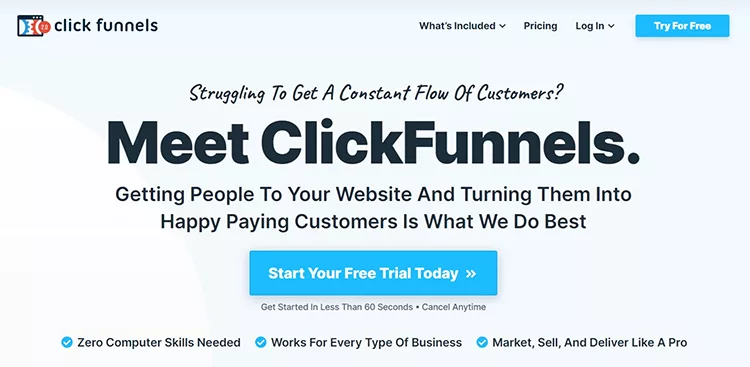
The Ultimate Guide to AI Marketing Automation for 2024

Software Stack Editor · July 1, 2024 ·

The post The Ultimate Guide to AI Marketing Automation for 2024 appeared first on ClickFunnels.
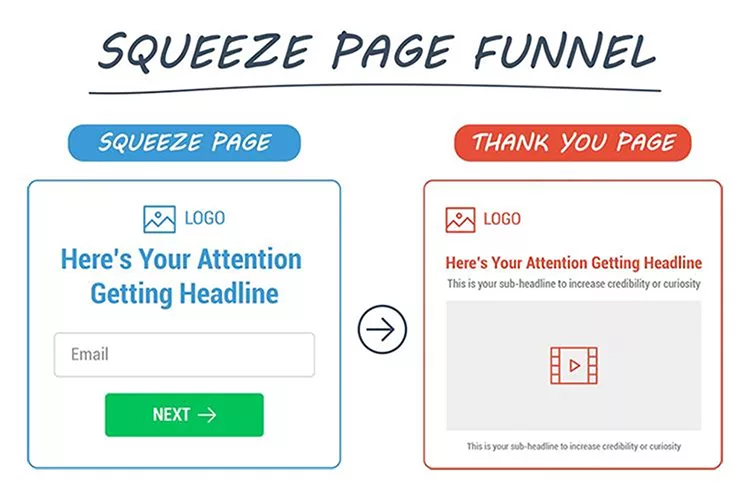
AI has taken the world by storm. 

Companies are rushing to implement artificial intelligence technologies in the hopes of gaining a competitive edge.

We hope that this guide to AI marketing automation will help you harness the power of artificial intelligence to grow your business!

Table of Contents:
  • Beware of the AI Hype Cycle!
  • Here’s What You Need to Know About AI
    • What is AI?
    • What is Generative AI?
    • What are Large Language Models (LLMs)?
    • What is the Black Box Problem?
    • What are the Practical Implications of the Black Box Problem?
  • Prompt Engineering: the Secret to Getting the Most out of Large Language Models
    • What is Prompt Engineering?
    • Jeff Su’s Prompt Engineering Formula
    • Prompt Example: Work Email
  • What Marketing Tasks Can You Automate With AI?
    • #1: Coming Up With Ideas
    • #2: Developing a Marketing Strategy
    • #3: Producing Marketing Content
    • #4: Producing Marketing Visuals
    • #5: Building Sales Funnels
    • #6: Marketing Personalization
    • #7: Analyzing Business Data
  • What Should You Include in Your AI Marketing Stack?
    • Large Language Model: ChatGPT
    • Text-to-Image Generator: Adobe Firefly
    • An All-in-One Marketing Platform: ClickFunnels 2.0
  • Try ClickFunnels 2.0 Risk-Free!

Beware of the AI Hype Cycle!

The field of artificial intelligence is notorious for its hype cycles.

A well-known computer programmer Glyph wrote a great article called “A Grand Unified Theory of the AI Hype Cycle” in which he goes over the 13 stages of the AI hype cycle. 

We would summarize the process that he described like this:

  1. There’s a big technological breakthrough that gets blown out of proportion.
  2. Investors start pouring money into everything that is even remotely related to artificial intelligence because they believe that the big breakthrough will revolutionize everything. 
  3. After several years it becomes clear that the big breakthrough was overhyped and the funding dries up.
  4. At that point, “AI winter” sets in until the next big breakthrough, when the cycle starts again. 

People who aren’t familiar with the history of AI and aren’t old enough to have witnessed the previous cycles are prone to falling for the hype because they aren’t aware that what they are seeing has happened before. 

Glyph pointed out that neural networks and symbolic reasoning went through a hype cycle in the 1950s, theorem provers in the 1960s, expert systems in the 1980s, fuzzy logic and hidden Markov models in the 1990s, and deep learning in the 2010s.

He emphasized that each of these breakthroughs produced genuinely useful technologies, it’s just that they didn’t live up to the unrealistic hype cycle expectations.

It seems quite likely that the same fate awaits large language models that are currently being touted as a miracle technology that will revolutionize everything. 

If you want to use artificial intelligence to grow your business, you need to be aware of AI hype cycles, keep a cool head if you find yourself in the midst of an AI craze and take time to understand the capabilities, limitations and practical applications of AI technologies!

Here’s What You Need to Know About AI

What is AI?

The term “artificial intelligence” – “AI” for short – refers to a machine’s ability to perform cognitive tasks. 

There’s an entire field of computer science dedicated to researching, designing, and improving artificial intelligence systems.

The greatest breakthroughs in the recent decade have come out of its machine learning subfield, particularly the area of research known as deep learning. 

Business consultant Eric Siegel who helps companies deploy machine learning has argued that the term “AI” is misleading because in the public consciousness, it’s inextricably linked with the concept that computer scientists call “AGI”.

“AGI” stands for “artificial general intelligence”: sentient machines that are either comparable to humans or surpass us in terms of general intelligence.

Here’s how he put it in his Harvard Business Review article “The AI Hype Cycle Is Distracting Companies”:

In his view, it would be better to drop the vague term “AI” altogether and simply use the more precise term “machine learning” when talking about technologies that implement it. 

We believe that adopting this approach when it comes to your own use of AI can help you stay grounded in reality, manage expectations, and make better business decisions. 

Get in the habit of using more precise computer science terms when referring to specific technologies and you will have a much easier time seeing past the AI hype!

A Venn diagram showing three nested circles labeled Artificial Intelligence, Machine Learning, and Deep Learning, with Deep Learning inside Machine Learning, and both inside Artificial Intelligence.

What is Generative AI?

Generative artificial intelligence is a type of deep learning system that is trained on a lot of data and “learns” to produce novel content in response to user queries. 

Note that “content” in this context can mean:

  • Text (e.g. ChatGPT)
  • Visual content (e.g. Dall-E)
  • Audio content (e.g. AudioCraft)
  • Video content (e.g. Sora)
  • Computer code (e.g. Copilot)

What are Large Language Models (LLMs)?

Large language models are a type of generative AI that works with textual data and can generate novel text in response to user queries. 

LLMs are moving beyond just text, though. For example, ChatGPT also has vision abilities (can recognize what you are showing it) and speech abilities (can talk to you in audio). 

What is the Black Box Problem?

Large language models are black boxes:

Computer scientists who created them can see the data that goes into them and the data that comes out of them but they cannot see what is happening inside of them.  

Consequently, no one really knows how LLMs work. 

This is called the black box problem. 

What are the Practical Implications of the Black Box Problem?

The black box problem isn’t just some interesting computer science trivia.

It has very real, practical implications when it comes to using large language models in the business context:

Large Language Model Output Cannot be Trusted

LLMs are known to “hallucinate: if you ask them a question, they might make up the answer. 

And since no one knows how they generate their output, to begin with, computer scientists cannot solve hallucinations and ensure their accuracy. 

What this means in practice is that you cannot use large language models for research, content creation or data analysis if you don’t have the means to then manually verify their output.

That is the primary reason why complete AI marketing automation is not possible at this point in time.

In theory, you could create an entirely automated workflow where ChatGPT would produce content for your business that would then be automatically published on your social media, your company blog, and your email newsletter.

In practice, though, that content would be riddled with hallucinations and it would be just a matter of time until people noticed that you are publishing inaccurate, misleading, or even outright dangerous information. 

Needless to say, that would be terrible for your brand image!

Large Language Model Behavior is Unpredictable

Since no one really knows how large language models generate their output, computer scientists cannot ensure that their behavior remains consistent, appropriate, and in line with social norms.

Say, ChatGPT once had an “episode” where it started spouting gibberish at its users completely out of nowhere.

For example, one person shared a screenshot of this incoherent response to a prompt asking about the Jackson family’s history:

While one should always remain skeptical of the veracity of any given screenshot since they are so easy to fake, OpenAI did acknowledge the issue in response to a flood of complaints from their users and scrambled to fix it. 

It’s also worth noting that incoherent responses are not the worst-case scenario when it comes to unhinged AI bot behavior. 

Back in 2016, Microsoft released its AI Twitter bot Tay but then had to take it down just 16 hours after its launch because it started tweeting offensive stuff, most notably denying the Holocaust. 

Amusingly, the company managed to accidentally release it again, which led to Tay tweeting about smoking pot in front of the police. Needless to say, it was quickly shut down, for good this time.

While large language models such as ChatGPT are much more advanced than the early AI bots like Tay, you never know what they might say. 

In practice, this means that using LLM-powered chatbots as shopping assistants or customer support agents is out of the question because they might start acting crazy out of the blue. 

Never allow them to interact with your customers directly!

Large Language Models are Vulnerable to “Jailbreaking”

In this context, the term “jailbreaking” means getting a large language model to do something that it’s not supposed to do.

That can mean getting it to say offensive stuff, producing misinformation on controversial subjects, giving you instructions for manufacturing illegal substances, and so on. 

Here’s how security expert Dr. Tim Muller explains jailbreaking with a real example of getting ChatGPT to produce flat earth misinformation:

Since no one really knows how LLMs work, computer scientists cannot predict their vulnerabilities in advance, which means that these apps are easy to jailbreak. 

In fact, there are a lot of AI enthusiasts out there who jailbreak LLMs as a hobby. They get to work the moment a new model is released and start posting screenshots on Twitter once they successfully jailbreak it, which typically happens in a matter of hours.

This is another reason why you should not use LLM-powered chatbots as shopping assistants or customer support agents: they are vulnerable to jailbreaking, especially to the so-called prompt injection attacks. 

That makes them a serious security risk!

Prompt Engineering: the Secret to Getting the Most out of Large Language Models

What is Prompt Engineering?

Prompt engineering is the process of designing large language model prompts in a way that elicits the desired output.  

Keep in mind that the quality of the prompt will determine the quality of the output. Garbage in, garbage out!

Jeff Su’s Prompt Engineering Formula

It’s probably safe to say that everyone who uses large language models on a regular basis eventually develops their own unique prompt engineering style.

But if you don’t have much experience with these tools yet, we recommend starting with Youtuber Jeff Su’s prompt formula:

It consists of six prompt components ranked in descending order of importance:

  1. Task: mandatory 
  2. Context: important 
  3. Exemplar: important
  4. Persona: nice-to-have
  5. Format: nice-to-have
  6. Tone: nice-to-have
A formula for a good output from ChatGPT or Bard is shown: personal + context + task + exemplar + format + tone.

Let’s take a closer look at each of these prompt components:

#1: Task

This component is the most important one.

If you remove everything else except for the task, the LLM will still attempt to complete it despite the vagueness of the prompt. 

Jeff Su advises always starting the task sentence with an action verb that describes the task: “write”, “analyze”, “generate”, etc.

He also recommends clearly articulating what is the end goal of that task!

#2: Context

Jeff Su advises asking yourself these three questions in order to figure out what information you should provide as context:

  1. What is your background?
  2. What does success look like?
  3. What environmental conditions need to be taken into account?

This should help you provide the LLM with enough context to generate a useful response. 

#3: Exemplar

LLMs tend to perform better if the prompt includes an example. 

You can provide concrete examples of the type of output that you want by uploading or copy-pasting a job resume, an email, a sales page, etc.

Alternatively, you can provide a general direction, such as a specific framework that the LLM should follow in their response. 

#4: Persona

Prompt engineering has a role-playing aspect to it: 

If you tell the LLM that it is an expert in a particular field, you are more likely to get helpful answers to questions related to that field. 

Jeff Su advises thinking of someone who you wish you could have immediate access to while working on this task and then telling the LLM that it is that person.

Note that LLMs can take on generic personas (e.g. a hiring manager), personas of famous individuals (e.g. Warren Buffet), and even personas of well-known fictional characters (e.g. Batman).  

#5: Format

You also want to specify how exactly you want the end result to look like. 

Simply describe how the LLM should format its response: a 500-word article, a summary with three key takeaways, a spreadsheet with specific categories, etc. 

#6: Tone

You can also ask the LLM to use a specific tone in its response: casual or formal, serious or playful, etc.

Jeff Su advises telling it the feeling that you are going for if you can’t remember the exact adjective to describe the tone that you have in mind. 

Prompt Example: Work Email

Here’s a prompt example from Jeff’s video that includes all six prompt components:

Slide showing instructions for writing an email about a successful Apple product launch. Includes sections for context, task, format, exemplars, and tone, emphasizing clear, concise, and friendly language.

If you want to see how prompt engineering affects the LLM output, you can start with just the task and then add other components one by one. That will help you understand why well-designed prompts are so important!

What Marketing Tasks Can You Automate With AI?

#1: Coming Up With Ideas

Large language models can be a great brainstorming tool.

If you know that you want to make money online but aren’t sure what to sell, you can ask them to help you come up with product or service ideas.

And if you already have a product or service, you can ask them to help you come up with ways to turn it into an irresistible offer. 

Finally, if you already have an irresistible offer that you want to promote, you can ask them to help you come up with ideas for marketing campaigns.

#2: Developing a Marketing Strategy

You can also ask large language models to create a marketing strategy for your business.

The more parameters you include in your prompt, the more viable that marketing strategy is going to be.

So make sure to specify things like the timeframe that you have in mind, the end goal that you hope to achieve, the resources that you have at your disposal, etc. 

Ideally, you want to get not just a high-level strategy but also a step-by-step action plan that tells you what you need to do every day in order to grow your business. 

Just make sure to fact-check any claims that large language models might make, exercise common sense when evaluating their suggestions, and rely on your own judgement regarding what to implement and what to discard. 

Keep in mind that in all likelihood, LLMs are stochastic parrots that don’t understand what they are saying, so you should never outsource your decision-making to them!

#3: Producing Marketing Content

Once you have a detailed marketing strategy, you can ask large language models to help you produce marketing content such as:

  • Social media posts
  • Blog articles
  • Video scripts
  • Lead magnets
  • Ad copy
  • Landing page copy
  • Email copy
  • Sales copy

…etc. 

Since large language model output cannot be trusted due to hallucinations, it’s important to treat the content that they produce as the first draft, not the final one.

Once you have that first draft, you need to manually edit it, fact-check it, and proofread it before you publish it!

#4: Producing Marketing Visuals

Once you have your marketing content, you can produce visuals for it with text-to-image generators.

That might include:

  • Social media images 
  • Blog article images 
  • Lead magnet images
  • Ad images
  • Landing page images
  • Sales page images

…etc. 

We want to caution against using popular tools like Dall-E, Midjourney, and Stable Diffusion for this, though. Why?

Because with some of these models, it’s unclear what data they have been trained on while with others, it’s already known that they were trained on unlicensed data. 

There are obvious ethical issues with training commercial text-to-image generators on the works of various visual artists without their consent.

Moreover, there are also potential legal implications of this questionable business practice that are important to consider. 

There have already been several class-action lawsuits by artists against the companies behind these tools.

As the law evolves to accommodate the advancements in artificial intelligence, the use of images generated with models that have been trained on unlicensed data might become illegal. 

That’s why we advise playing it safe and only using text-to-image models that have been trained on licensed data, such as Adobe Firefly. 

#5: Building Sales Funnels

We believe that the best way to maximize the ROI of your marketing efforts is to build a sales funnel for your business.

You can do that with ClickFunnels 2.0: 

  1. Use our AI sales funnel builder to create a sales funnel. It only takes 10-15 minutes!
  2. Edit your sales funnel with our drag-and-drop page editor.
  3. Optimize your sales funnel for conversions with our A/B testing functionality.  

This can help you make the most out of the traffic that you generate with your marketing campaigns!

Our AI sales funnel builder enables you to create a sales funnel for your business in just 10-15 minutes!

#6: Marketing Personalization

Machine learning software can analyze vast quantities of customer data such as browsing behavior, purchase history, email marketing metrics, etc., make predictions based on the patterns that it uncovers, and personalize marketing in a way that is optimized for conversions.

You know how Amazon sends you personalized product recommendation emails, shows you personalized recommendations based on your purchase history, and makes suggestions based on what other people with similar interests have bought?

Now thanks to the advancements in machine learning, you can do the same in your business!

#7: Analyzing Business Data

You can also use machine learning software to analyze your business data.

That can help you:

  • Uncover various optimization opportunities and enable you to get things done cheaper, faster and more efficiently. 
  • Identify customers that are at a high risk of churning with predictive analytics and then take pre-emptive measures to retain them. 
  • Improve the accuracy of your sales forecasts, set realistic sales targets, and stay on track until you reach them.

Consequently, machine learning data analysis might enable you to reduce your customer acquisition costs, increase customer lifetime value, and maximize both revenue and profit!

What Should You Include in Your AI Marketing Stack?

We would argue that a basic AI marketing stack should include:

  1. A large language model
  2. A text-to-image generator
  3. An all-in-one marketing platform

Here are our recommendations:

Large Language Model: ChatGPT

ChatGPT only costs $20/month at the time of writing.

That will give you access to GPT-3.5, GPT-4, and the latest GPT-4o version which is considered to be state-of-the-art. 

You will get access not just to the chat functionality but also to additional features such as file uploads, web browsing, data analysis, and vision. 

The paid plan includes access to the OpenAI’s text-to-image generator Dall-E. 

There’s also a free plan that currently uses GPT-3.5 and includes limited access to GPT-4o.

ChatGPT homepage displaying a black background with white text promoting productivity and inspiration through ChatGPT, alongside options to start now or download the app. Navigation links are at the top.

Text-to-Image Generator: Adobe Firefly

As we discussed previously, we recommend using text-to-image generators that have been trained on licensed data and therefore do not present legal risks related to copyright. 

We would argue that Adobe Firefly is the best option right now. Not only has it been trained on licensed data, it’s also easy to integrate with Adobe’s other tools such as Photoshop. 

At the time of writing, there’s a free individual plan, paid individual plans that range from $4.99/month to $59.99/month, and a business plan that costs $89.99/license. 

You can also contact the company if you want to learn more about their custom enterprise plan. 

Promotional image for Adobe Firefly showcasing AI-generated images. The text highlights enhanced features: better composition, photorealistic details, and lighting improvements. Button offers a free trial.

An All-in-One Marketing Platform: ClickFunnels 2.0

We already discussed the funnel building functionality of our software, including our AI sales funnel builder that enables you to create sales funnels for your business in just 10-15 minutes. 

Our software also features a website builder, an e-commerce store builder, an online course builder, a membership site builder, an email marketing functionality, a customer relationship management system, advanced business analytics, and more.

ClickFunnels 2.0 is a complete marketing platform that has everything you need to launch, manage, and grow your business!

Try ClickFunnels 2.0 Risk-Free!

Let’s be real:

We are biased in favor of our software. 

So we understand if you take what we say about it with a grain of salt.

Fortunately, we have a free 14-day trial, so you don’t have to take our word for it. 

You can go and see ClickFunnels 2.0 for yourself without any risk!

So what are you waiting for? 🧐

Start Your Free Trial Today

Thanks for reading The Ultimate Guide to AI Marketing Automation for 2024 which appeared first on ClickFunnels.
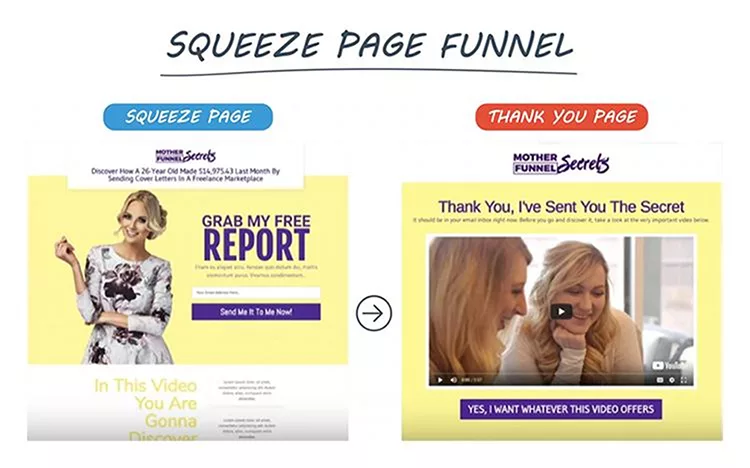
Elevate Your Marketing Game: Top AI Benefits to Embrace in 2024

Software Stack Editor · July 1, 2024 ·

The post Elevate Your Marketing Game: Top AI Benefits to Embrace in 2024 appeared first on ClickFunnels.
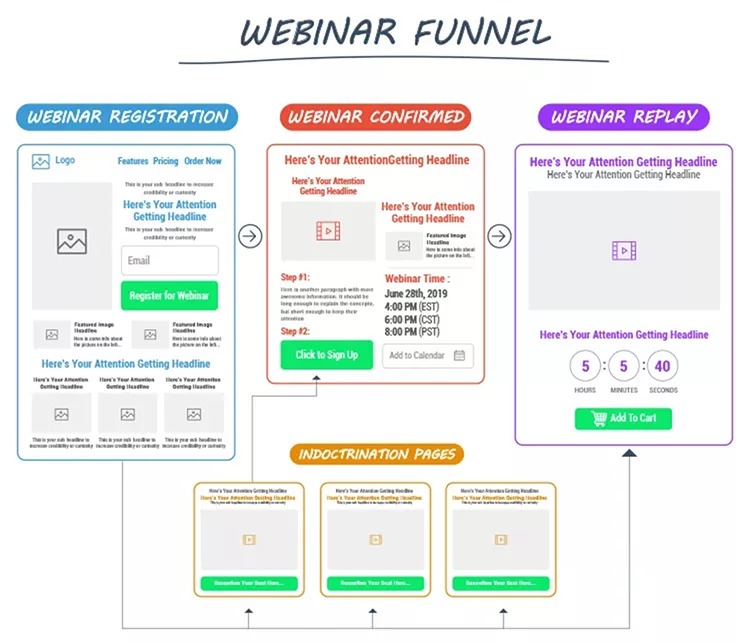
In the last few years, we have seen big breakthroughs in the field of artificial intelligence and the rise of large language models such as ChatGPT. 

But do these apps have a practical use in the business context or is AI just another flash-in-the-pan fad that everyone will forget the moment some new buzzword starts catching on?

Today we are going to discuss the benefits of using AI in marketing, share what we believe to be the best AI marketing stack, and explain how you can use it to grow your business!

Table of Contents:
  • What is Artificial Intelligence?
  • Top Benefits of Using Artificial Intelligence in Marketing 
    • #1: AI Can Help You Come Up With an Offer Idea
    • #2: AI Can Help You Develop a Marketing Strategy
    • #3: AI Can Help You Build Sales Funnels
    • #4: AI Can Help You Produce Content
    • #5: AI Can Help You Produce Images
    • #6: AI Can Help You Maximize Revenue
    • #7: AI Can Help You Forecast Sales
    • The Greatest Benefit of AI is SPEED!
  • Why ChatGPT + Adobe Firefly + ClickFunnels 2.0 is the Best AI Marketing Stack
    • What is ChatGPT?
    • What is Adobe Firefly?
    • What is ClickFunnels 2.0?
    • How to Use ChatGPT + Adobe Firefly + ClickFunnels 2.0 to Grow Your Business
  • Try ClickFunnels 2.0 Risk-Free!

What is Artificial Intelligence?

“Artificial intelligence” is an umbrella term that refers to a machine’s ability to perform complex cognitive tasks. 

Complex cognitive tasks include making decisions, solving novel problems that one hasn’t encountered before, and learning from previous experience. 

In this article, we will be primarily discussing what’s known as generative AI: a type of AI whose main purpose is to generate content. 

Specifically, we will focus on large language models (LLMs), which is a type of generative AI that is trained on massive quantities of textual data and can produce text in response to user queries. 

OpenAI’s ChatGPT, Anthropic’s Claude, and Google’s Gemini are all examples of large language models.

For the sake of simplicity, we will be using the terms “AI” and “large language model” interchangeably, unless specified otherwise. 

We hope that the computer scientists who may be reading this article will forgive us for this transgression!

Top Benefits of Using Artificial Intelligence in Marketing 

#1: AI Can Help You Come Up With an Offer Idea

Okay, so you know that you want to make money online, but you aren’t sure what to sell. Guess what?

You are not alone in this. Aspiring entrepreneurs often find themselves in this predicament.  

Fortunately, if you have access to the Internet, you also have access to large language models, so you can turn to AI for help. 

All you need to do is give an LLM such as ChatGPT clear instructions with a well-designed prompt and it will provide you with a list of offer ideas!

#2: AI Can Help You Develop a Marketing Strategy

Now that you have an offer idea, you can ask AI to help you develop a marketing strategy for it. 

The more specific your prompt, the more viable that marketing strategy will be.

We suggest including this information in your prompt:

  • Your offer
  • Your target audience
  • Your marketing budget
  • Your preferred marketing channels
  • Your profit goal for a specific time period

If you already have digital assets that you can leverage – a social media following, a YouTube channel, an email list, etc. – make sure to mention that in your prompt as well. 

AI will then create a marketing strategy based on the information that you provided!

#3: AI Can Help You Build Sales Funnels

The best way to get the most out of your marketing efforts is to build a sales funnel for your offer and then drive traffic to it. 

Of course, that’s easier said than done, especially if you have never built a sales funnel before. So where should you start?

We recommend using ClickFunnels 2.0 AI sales funnel builder. This tool enables you to create a sales funnel from scratch in just 10-15 minutes. 

Once you have your sales funnel, you can import it to your ClickFunnels account, edit it with our drag-and-drop editor, and then publish it online. 

And if you don’t have a ClickFunnels account yet, you can claim your free 14-day trial together with your sales funnel.

When our co-founders started building online businesses back in the 2000s, if you wanted to have a sales funnel, you had to either design it and code it yourself or pay someone to do it for you. 
Now all you need to do is answer a few questions, press the “Create Funnel Now” button and AI will generate a sales funnel for you in a matter of minutes. Incredible!

Screenshot of a ClickFunnels trial confirmation page congratulating the user on their funnel and detailing the trial's benefits, such as AI-generated sales funnels, custom domains, and analytics.

#4: AI Can Help You Produce Content

Large language models aren’t regular computer programs. Computer scientists who created them don’t understand how they work.

All they can see is the data that goes into these models and the data that comes out of them. No one knows what is happening inside. This is called the black box problem.

Since it’s unclear how large language models generate their output to begin with, it’s impossible to ensure its accuracy. 

In fact, they are known to “hallucinate”, meaning, make things up and confidently state them as facts. 

That’s why we recommend using large language models to create the first drafts of your content: blog articles, newsletter issues, social media posts, you name it. 

Once you have the AI-generated first draft for a piece of content, you want to manually edit it, fact-check it and proofread it before publishing it. 

Never skip fact-checking. Otherwise, you might end up publishing inaccurate, misleading or even outright dangerous information. 

That can lead to irreparable brand damage so it’s best to play it safe!

#5: AI Can Help You Produce Images

You can use generative AI tools like Dall-E, Stable Diffusion, and Midjourney to produce ads, infographics, images for your blog articles, and other visuals you may need for your business.  

There are some ethical and legal considerations here, though. You see, it’s not always clear what data models like that were trained on. 

There’s been a lot of speculation that some of the largest text-to-image models were created using unlicensed data, effectively stealing from the artists who produced the original works. 

In fact, in several cases, the use of unlicensed data was confirmed, which has raised questions about the legality of this approach to generative AI. 

There have already been a number of class-action lawsuits against generative AI companies by artists claiming copyright infringement. We can probably safely assume that we are going to see more of them in the future. 

In fact, lawyer Matthew Butterick has argued that every image a generative AI tool produces is an infringing, derivative work. 

There’s a possibility that using these tools might get you in legal trouble once the law catches up with the advances in artificial intelligence. 

There’s a way to take advantage of this technology without mistreating artists or risking lawsuits, though: you can use tools like Adobe Firefly that have been trained on licensed data!

A living room with a bright red sofa surrounded by various green plants, a wooden coffee table with potted plants, and a large window with light filtering through curtains.
This image was generated with Adobe Firefly using “a living room with a lot of plants with a red couch” prompt.

#6: AI Can Help You Maximize Revenue

So far we have been primarily focusing on the benefits of generative AI, especially large language models. 

But there also are other types of AI that can help you grow your business. For example, machine learning algorithms can be used to predict user behavior. 

Software that incorporates algorithms like that can enable you to:

  • Send personalized product recommendations to your customers based on their browsing and purchase histories.
  • Pitch personalized upsells and cross-sells to customers who are about to check out based on which offers are the most popular with that particular demographic. 
  • Identify customers that are at risk of churning and take pre-emptive measures to reengage them.

All that can help you maximize your revenue as your business grows. 

When you are just starting out, something like a 1% difference in churn may not seem like a big deal because you are working with relatively small numbers.

However, once your annual revenue is in the seven-figure range, reducing churn by just 1% can have a massive impact on your bottom line. 

We recommend implementing machine learning algorithms as early as you can. Otherwise, you risk leaving a lot of money on the table in the process of scaling your company!

#7: AI Can Help You Forecast Sales

Sales forecasting can be challenging because no one knows what the future holds. 

AI doesn’t know it either but it can help you improve the accuracy of your forecasts. After all, there’s been a lot of progress in data science, machine learning, and predictive analytics in recent years. 

So consider investing in predictive analytics software. Apps like that can analyze vast quantities of business data, uncover hidden patterns, and create complex future projections that take a wide range of factors into account.

It’s a much better approach to sales forecasting than doing everything manually!

The Greatest Benefit of AI is SPEED!

Ultimately, the greatest benefit of AI is speed.

It can help you come up with offer ideas, create marketing strategies, produce content and visuals, build sales funnels, and analyze data much faster than you would otherwise. 

This may not seem like that big of a deal on a day-to-day basis but increased speed of execution can have a drastic impact on your business in the long run because its results compound over time. 

For example, let’s say that your competitors are manually producing one blog post per week while you use AI to produce two blog posts of comparable quality.

Here’s how it’s going to play out over time:

  • After one year, they will have published 53 blog posts and you will have published 106.
  • After two years they will have published 106 blog posts while you will have published 212.
  • After three years they will have published 159 blog posts while you will have published 318.

Who do you think is going to be ahead in terms of brand recognition, organic traffic and sales after those three years?

The same principle of compounding competitive advantage applies to everything: 

If you can get things done faster than your competitors, you will be able to accomplish more than them and it won’t take you long to get ahead.

Keep up that speed and eventually, you will become the dominant player in your niche!

Why ChatGPT + Adobe Firefly + ClickFunnels 2.0 is the Best AI Marketing Stack

What is ChatGPT?

OpenAI launched its flagship chatbot ChatGPT in November 2022. 

It took the world by storm and became the fastest-growing consumer app in history, reaching 100 million users by January 2023, just a few months after its launch.

ChatGPT’s success kicked off the current AI hype cycle, attracted the attention of venture capitalists and led to an AI arms race between major tech companies.

It remains the most popular AI tool to this day. You can use it to brainstorm ideas, develop business strategies, and produce content. 

At the time of writing, GPT-3.5 is available for free, with some limited access to the latest version, GPT-4o.

You can always upgrade to the paid plan that costs $20/month and includes access to GPT-3.5, GPT-4, and GPT-4o, with a 5x higher limit for the latter.

The paid plan also includes Open AI’s text-to-image generator Dall-E that you can use to create images but we recommend Adobe Firefly for that.

What is Adobe Firefly?

Adobe Firefly is a text-to-image generator that was trained on licensed data. 

You can use it to create images without having to worry about the previously discussed ethical issues and legal risks associated with some of the other popular text-to-image generators. 

There’s a free plan that provides 25 generative credits every month. Once you run out of credits, you can either wait until they reset next month or upgrade to one of the paid plans that range from $4.99/month to $59.99/month. 

What is ClickFunnels 2.0?

When we launched ClickFunnels a decade ago, it was a funnel builder app that revolutionized online marketing. 

Today, sales funnels are still at the heart of what we do:

  • Don’t have anything to sell yet? You can use our AI sales funnel builder to create a simple opt-in funnel and start growing your email list. 
  • Already have a product or service to sell? You can use the same AI sales funnel builder to create a sales funnel for it. 
  • Want to build sales funnels from scratch? You can use our funnel editor to do that!

That being said, ClickFunnels 2.0 isn’t just a funnel builder, it’s an all-in-one marketing platform that has everything you need to launch, manage, and grow an online business. 

What’s best about it is that everything is available in one place: 

Sales funnels, websites, e-commerce stores, online courses, membership sites, email marketing, customer relationship management, A/B testing, business analytics…

No more patchwork solutions cobbled together with a bunch of different apps. You can do it all with our software!

How to Use ChatGPT + Adobe Firefly + ClickFunnels 2.0 to Grow Your Business

This AI marketing stack is all you need to start making money online:

  1. Use ChatGPT to come up with an offer idea.
  2. Use ChatGPT to develop a marketing strategy.
  3. Use ChatGPT to produce marketing content.
  4. Use Adobe Firefly to create marketing visuals.
  5. Use ClickFunnels 2.0 AI funnel builder to create a sales funnel.
  6. Use ClickFunnels 2.0 to convert leads into paying customers with email marketing.
  7. Use ClickFunnels 2.0 to manage and grow your business!

It has never been easier to start a business. 

You can do it in your free time, build a lucrative side hustle, and eventually go all-in once your business income exceeds your salary from your job. 

As our co-founder Russell Brunson loves to say: you are one funnel away from the life that you have always dreamed of!

Try ClickFunnels 2.0 Risk-Free!

Let’s be real:

We are biased in favor of our software. 

So we understand if you take what we say about it with a grain of salt.

Fortunately, we have a free 14-day trial, so you don’t have to take our word for it. 

You can go and see ClickFunnels 2.0 for yourself without any risk!

So what are you waiting for? 🧐

Start Your Free Trial Today

Thanks for reading Elevate Your Marketing Game: Top AI Benefits to Embrace in 2024 which appeared first on ClickFunnels.
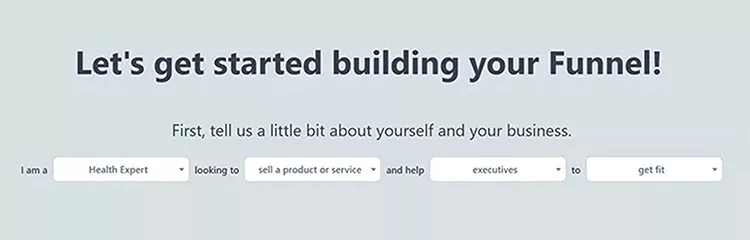
How To Create A Beautiful Landing Page With AI

Software Stack Editor · June 21, 2024 ·

The post How To Create A Beautiful Landing Page With AI appeared first on ClickFunnels.
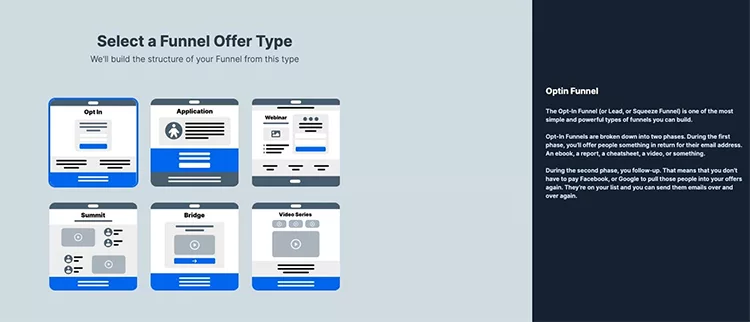
Need a landing page?

You can create one in a matter of minutes with our software. No web design or web development skills required!

But merely having a landing page is not enough if you want to make money online. You should also build a proper sales funnel for your business!

Table of Contents:
  • Big Picture: How Does Your Landing Page Fit into Your Overall Sales Funnel?
  • Create a Sales Funnel for Your Business With ClickFunnels 2.0 AI Sales Funnel Builder
  • Optimize Your Sales Funnel for Conversions With ClickFunnels 2.0 A/B Testing Functionality
  • Try ClickFunnels 2.0 Risk-Free!

Big Picture: How Does Your Landing Page Fit into Your Overall Sales Funnel?

What is a Sales Funnel?

A sales funnel is a system designed to convert visitors into leads, leads into customers and customers into repeat customers.

Every business in existence has a sales funnel of some sort, with the exception of VC-funded startups that prioritize growth over profitability.

However, these sales funnel often aren’t well-thought-out: typically, the business owner has either stumbled into something that works or is copying what appears to be working for their competitors.

The problem with this approach is that the business owner inevitably ends up leaving a lot of money on the table. So how can you build a sales funnel that allows you to maximize your revenue?

This is where the Value Ladder sales funnel comes in…

What is the Value Ladder Sales Funnel?

Our co-founder Russell Brunson is the creator of the Value Ladder sales funnel.

This sales funnel is based on three core ideas:

  1. Closing sales requires trust. This is true regardless of how much the offer in question costs. 
  2. The more expensive the offer, the more trust is required to close the sale. This means that it doesn’t make sense to start the relationship with the potential customer by pitching them your most expensive product or service. You haven’t built enough trust yet!
  3. The best way to build trust is to start small by offering free value, asking for the potential customer’s email address in exchange for it and then delivering what you promised. Once you have their email address, you can pitch them your least expensive offer, then a more expensive one and then finally the most expensive one. Obviously, the more expensive the offer, the more valuable it should be. Hence the name “Value Ladder”!

Here’s what the structure of the Value Ladder sales funnel looks like:

In our experience, the Value Ladder sales funnel is the most effective way to sell anything online because this funnel structure is the fastest way to build the trust required to close sales. 

And we aren’t saying that just because one of our co-founders came up with this idea. It’s the sales funnel that we used to grow our company from zero to $100M+ in annual revenue. The proof is in the pudding!

How Do Lead Generation Landing Pages Fit into the Value Ladder Sales Funnel?

When people use the term “landing page”, they are usually talking about leading generation landing pages.

Meaning, that the landing pages are designed to persuade the visitor to provide their contact details.

This is the Bait stage of the Value Ladder sales funnel where you offer the potential customer a freebie in exchange for their email address. It’s also known as the lead generation funnel.

If you want to make money online but don’t have anything to sell yet, we recommend setting up a simple lead generation funnel and driving traffic to it with social media marketing. Start building your email list ASAP. You can always monetize it later.

However, if you do have something to sell already, you need to build a Value Ladder sales funnel for your business!

Create a Sales Funnel for Your Business With ClickFunnels 2.0 AI Sales Funnel Builder

We added an AI sales funnel builder to ClickFunnels 2.0 to simplify the process of creating sales funnels. 

Here’s how it works:

Step #1: Tell Us About Yourself and Your Business

We start by asking you a few questions about yourself and your business. 

  • Who are you?
  • What do you want to do?
  • Who is your target audience?
  • What will you help them achieve?

Step #2: Select a Funnel

Then we ask you to choose a funnel template from these six options:

  • Optin funnel – This is the most popular lead generation funnel out there. It’s perfect for growing your email list, even if you don’t have anything to sell yet.
  • Application funnel – This lead generation funnel is designed to help you qualify leads. It’s perfect for businesses that sell high-touch products or services that require scheduling follow-up calls in order to close sales.
  • Webinar funnel – This is a sales funnel where you use a free webinar as your lead magnet and pitch your product or service at the end of it.
  • Summit funnel – This is a sales funnel where you organize an online summit with several speakers, invite people to register for the event for free, and then upsell them VIP tickets that include extra perks.
  • Bridge funnel – This sales funnel is popular among affiliate marketers because it allows you to create a “bridge” between your website and the sales page of the product that you are selling as an affiliate. That can help you provide context for your audience and pre-sell them on that product before sending them to its sales page.
  • Video series funnel – This sales funnel is also known as the product launch funnel and is designed to help you build anticipation before launching your product.

As you can see in the screenshot below, each funnel type is explained in detail, so it should be easy to determine which one of them makes the most sense for your business. 

Step #3: Select Your Main Brand Color and the Style of Your Funnel

Then we ask you to decide on

  • Your main brand color which will determine the color scheme of your funnel.
  • Your funnel style which will determine fonts, corners, borders, and spacing across your funnel.

Step #4: Select an Image Style for Your Funnel

Then we ask you to select an image style for your funnel from these three options:

  1. Isometric 3D illustrations
  2. Flat illustrations
  3. Stock photo portraits
Screen displaying three image style options: Isometric 3D, Flat Illustrations, and Stock Photo Portrait. The Isometric 3D option is currently selected.

Step #5: Provide More Details About Yourself and Your Business

Finally, if you want to, you can provide more details about yourself and your business and select a writing tone for your sales funnel copy. 

On this page, you will also see an example of AI-generated copy based on the information that you provided. You can tweak it until you are happy with it!

A webpage displaying an AI content generator interface, with options to adjust writing tone and voice. The main panel contains sample text, and the sidebar offers customization settings for the AI output.

Step #6: Click a Button and Wait for AI to Generate a Funnel for You!

Click the “Create Funnel Now” button and AI will generate a sales funnel for you in a matter of minutes!

Step #7: Claim Your Sales Funnel!

You can then claim your sales funnel and the complementary ClickFunnels 2.0 14-day FREE trial!

How Long Does it Take to Create a Funnel With ClickFunnels 2.0 AI Sales Funnel Builder?

It will probably take around 10-15 minutes in total.

Once you have your funnel, you can edit it with our visual drag-and-drop editor to make sure that everything is just the way you want it.

Once you are happy with it, it’s time to publish it and start driving traffic to it!

Optimize Your Sales Funnel for Conversions With ClickFunnels 2.0 A/B Testing Functionality

Once your sales funnel is up and running, you can use our A/B testing functionality to optimize it for conversions.

What is A/B Testing?

A/B testing is the primary conversion rate optimization method that digital marketers use to optimize landing pages for conversions.

How Does A/B Testing Work?

Step #1: Come Up With a Hypothesis

You should start by coming up with a hypothesis. 

For example, maybe you believe that a landing page with a red call-to-action button would convert better than a landing page with a green call-to-action button. 

Step #2: Design an Experiment to Test Your Hypothesis

Next, you want to create two variants of your landing page – variant A and variant B – which should be identical except for the element that you are testing.

For example, if you want to see which call-to-action button color works better, you should create two variants of your landing page, one with a red call-to-action button and the other with a green call-to-action button.

Step #3: Test Your Hypothesis!

Finally, once both variants of your landing page are live, it’s time to start driving traffic to them.

You should split your traffic in two and drive 50% of it to variant A and the other 50% to variant B. 

Let the experiment run until it reaches statistical significance and then evaluate the results. See which variant converted better. Was your hypothesis correct?

What Should You A/B Test?

Your Free Offer

Your free offer is the most important factor that will determine the conversion rate of your landing page. You can use A/B testing to experiment with various offers until you find a winning one!

Landing Page Design

Our template library includes landing page templates that have already been optimized for conversions.

However, we still recommend experimenting with various color schemes and call-to-action button colors.

Note that when it comes to call-to-action buttons, it’s not so much the color itself that matters but whether or not it stands out in the overall color scheme of your landing page!

Landing Page Copy

The headline is the most important element of your landing page copy so it makes sense to A/B test various headlines.

The subheadline is the second most important element of your landing page copy so you want to A/B test various subheadlines as well.

Your aim should be to find a winning headline + subheadline combination that resonates with your target audience!

Social Proof

Adding social proof to your landing page is one of the most reliable ways to increase its conversion rate. 

Consider experimenting with:

  • Endorsement quotes from well-known people in your niche
  • Testimonials from people who got great results with your free offer
  • “As Seen On” media badges

And if you don’t have any social proof to speak of yet, you should probably go out there and acquire some!

Images

Finally, using images to support your copy can also help you boost the conversion rate of your landing page.

If you have a personal brand, consider experimenting with these two types of images:

  • Photos of you where you come across as relatable, friendly, and trustworthy.
  • Photos of you where you come across as an authoritative expert (e.g. you giving a talk at an industry conference).

Meanwhile, if you have a company brand, consider experimenting with various aspirational images that represent something that your target audience wants to achieve.

For example, if your target audience is aspiring digital nomads who want to become location independent and travel the world, you can use an image of a person working on a laptop at a beach bar to represent that. 

Image showing an A/B test interface comparing two versions of a web page. Both versions display user engagement metrics including traffic allocation, opt-ins, sales, and total revenue.

Try ClickFunnels 2.0 Risk-Free!

Let’s be real:

We are biased in favor of our software. 

So we understand if you take what we say about it with a grain of salt.

Fortunately, we have a free 14-day trial, so you don’t have to take our word for it. 

You can go and see ClickFunnels 2.0 for yourself without any risk!

So what are you waiting for? 🧐

Start Your Free Trial Today

Thanks for reading How To Create A Beautiful Landing Page With AI which appeared first on ClickFunnels.
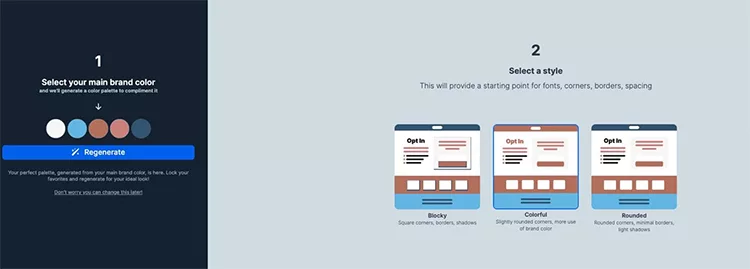
How To Use AI In Email Marketing – A Complete Guide

Software Stack Editor · June 21, 2024 ·

The post How To Use AI In Email Marketing – A Complete Guide appeared first on ClickFunnels.
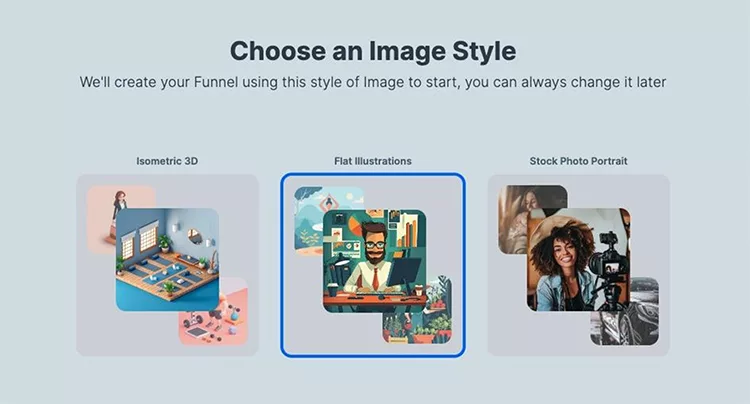
A few short years ago, using AI in marketing was something a lot of people talked about — but very few people actually did it successfully.

Today, though, generative AI has advanced far enough that using it as the foundation of your marketing materials is not only easy to do but incredibly effective, too.

To see what we mean, take a look at these stats:

Bar chart illustrating the benefits of using generative AI in marketing: 67% saves time, 50% improves content quality, 49% personalizes content, and 48% provides inspiration/ideas. Survey from HubSpot Blog Research.

More than 67% of people polled say that AI helps them save time by creating marketing assets even faster, while a staggering 50% say it improves the quality of their marketing.

Another ~50% say it helps make their content more personalized and gives them inspiration for new ideas to test in their marketing.

And if you’ve never tried AI, or you’re looking for ways to start using it more effectively, we’re going to break down exactly how to use it in your email marketing to drive more subscribers and sales.

By the time you’re done reading, you’ll understand how to dramatically improve your email marketing in less time and without having to hire an expensive copywriter or marketer.

Idea Generation 

When it comes to building email marketing campaigns, one of the most difficult parts has to be coming up with ideas for your emails.

Especially when you’re having to come up with new ideas on a regular basis.

With the help of AI, though, you have an endless supply of ideas ready to go.

You can either take them directly from your favorite AI tool or use what you get as inspiration.

To get started, there’s a few things you’ll need to provide:

  • Target audience: Define your target audience, including their demographics, interests, and pain points.
  • Email campaign goals: Specify the objectives of your email campaigns, such as driving sales, increasing engagement, or promoting a specific product or service.
  • Content categories or themes: Provide a list of content categories or themes that align with your brand and audience, such as educational content, product spotlights, customer success stories, or how-to guides.

You don’t necessarily have to give everything but you do want to be as detailed as possible.

The more you’re able to feed into the AI, the more you’ll get back and the more specific that output will be — from ideas to content.

For instance, here’s an example of a prompt you can run:

Educational Email Ideas to Promote Yoga Mat Collection. Five ideas listed: 1) 5 Yoga Poses to Relieve Stress After Work. 2) Science Behind How Yoga Boosts Productivity. 3) Eco-Friendly Yoga Mat. 4) How to Choose a Yoga Mat. 5) 5-Minute Yoga Office Routine.

To get started, here’s the prompt I used:

Act as an expert email marketer. 

Generate email content ideas for our audience. Here’s a little bit more about the audience — {{add audience details}}

The goal of the email is to {{goal}}  but we want the content to be {{content theme or category}}. 

Give me {{number of ideas you want}} ideas.

You can use the prompt for just about any type of email, too.

In this example, we asked AI to identify upcoming holidays and seasonal events related to our target audience — busy yoga-loving professionals.

We asked it to suggest email content ideas for each occasion.

Here’s what we got:

Text on identifying holidays and seasonal events for yoga professionals. Includes topics like International Yoga Day, Summer Solstice, Mental Health Awareness Month, and National Relaxation Day.

You can use the same prompt we used to start generating ideas for your own email campaigns.

(Or keep reading where we’ll show you how to make it even easier.)

Subject Line Optimization

A good subject line can make or break your email campaign.

When you get it right, your open rates go up and you get more opportunities to engage your subscribers and potentially convert their attention into new revenue.

If you miss the mark, though, your emails will get lost in the sea of spam in their inbox.

Unless you’re a seasoned copywriter, though, coming up with new subject line ideas can feel incredibly difficult.

But with AI you can save both time and energy, while also making sure you’re avoiding spammy words and (ultimately) improving your open rates.

To see how AI can help improve your subject lines, check out these emails from Calm:

They’re not terrible but they can definitely be better.

Now, let’s assume you want to use these emails for a different market segment — a younger audience who typically doesn’t mince their words.

You can ask AI to make them more relatable:

A list of four wellness tips with corresponding emojis, addressing issues such as toxic workplaces, improving sleep, meditating, and sleep hacks.

There’s a couple different ways you can use AI to improve your subject lines, too:

  • Generate subject line variations: Use AI to create multiple versions of a subject line based on a given theme or message. This can help you quickly develop a variety of options to test.
  • Optimize for length: Ask the AI to generate subject lines within specific character limits (e.g., 30-50 characters) to ensure they don’t get cut off on mobile devices.

We saw a bunch of emails from a newsletter that had incredibly long subject lines and asked AI to get to work on shortening them.

Here’s what they originally looked like:

Here’s the prompt that we used and the results we got:

You can see how much more effective the subject lines are — and how much shorter they are, too.

Some may not necessarily be perfect but you get a great starting point.

If you want to improve them even more, here are a couple ideas:

  • Add emojis: Have the AI incorporate relevant emojis into subject lines to make them more eye-catching and engaging. The AI can suggest appropriate emojis based on the subject matter.
  • Evaluate sentiment and tone: Use AI to analyze the sentiment and tone of your subject lines to ensure they align with your brand voice and evoke the desired emotion in your audience.

Writing Email Copy

Once you’ve used AI to start generating ideas, you can also use it to start writing the copy that you’ll be using in your emails.

Or, if you have customer reviews and feedback, you can use AI to identify common pain points, questions your audience has, or topics of interest that may make great emails.

A simple prompt you can use is:

“Analyze customer reviews and feedback to identify common pain points, questions, or topics of interest that can be used for email marketing.”

It can also be as simple as taking the most commonly asked questions related to your products or services on Google and feeding that into AI.

For example, Olipop, a soda brand recently sent me this email:

A mobile phone screen displays a webpage from OLIPOP with information about the drink, including FAQs about caffeine-free options, artificial sweeteners, soda taste comparison, and a promotional banner.

You can get started by feeding AI with your questions and details about your brand, products, or services, and ask it to give you answers.

To make the output as effective as possible, though, there are a few tips you’ll need to follow.

Tip #1: Provide clear, specific prompts to help guide the AI’s output.

As an example, an ineffective prompt would be: “Write an email about our new product.”

The prompt is vague and lacks specific details about the audience, the product, and the goal of the email, so the AI may generate content that is too weak or misses the mark.

A good prompt, though, would look something like this…

“Create an email targeted at [tech-savvy millennials] announcing the launch of our [new smart home security system]. Highlight the [advanced features, easy installation, and competitive pricing]. The goal is to encourage [pre-orders] and build [excitement for the product launch].”

Tip #2: Break down the email creation process into smaller, more focused tasks.

Instead of using a single, broad prompt like: “Write an email promoting our new yoga studio to local residents.”, you can break it down to generate each specific element separately.

  • Subject Line Prompt: “Generate 3 compelling subject lines for an email promoting a new yoga studio to local residents, focusing on the benefits of yoga and the studio’s unique features.”
  • Introduction Prompt: “Write an engaging opening paragraph for an email introducing our new yoga studio to local residents. Briefly mention the studio’s mission and how it aims to serve the community.”
  • Benefits of Yoga Prompt: “Create a section highlighting 3-4 key benefits of practicing yoga, such as stress relief, flexibility, and mental clarity. Tailor the benefits to the interests of local residents.”
  • Call-to-Action (CTA) Prompt: “Create a clear and persuasive CTA, encouraging local residents to visit our website, schedule a studio tour, or sign up for a trial class.”

Tip #3: Provide relevant information about your audience, goal, and challenges you’re solving.

Remember, the more information you can give to the AI, the better the output is going to be.

If you want to make your email content as effective as possible with less effort on your part, make sure you’re providing the following information:

  • Demographics (age, gender, location, etc.)
  • Psychographics (interests, values, lifestyle, etc.)
  • The primary objective of your email (inform, educate, promote, convert, etc.)
  • Specific desired actions or outcomes (sign-ups, purchases, engagement, etc.)
  • Pain points, challenges, or desires related to your product or service

Creating Visuals

As humans, we’re all visual creatures.

And when it comes to reading emails, visuals help bring us deeper into the message.

The challenge, though, comes when you start trying to create these visuals. It’s incredibly time-intensive, costly, and difficult to quickly get the images you’re looking for, especially if your email content changes at the last minute.

The solution is using AI to create the visuals for you.

It’s easy to do, too.

To get started, you’ll want to tell AI exactly what you’re looking for:

  1. Visual type: Specify the type of visual you need (e.g., header image, product image, infographic, GIF).
  2. Dimensions: Provide the required dimensions for the visual, ensuring it fits within your email template.
  3. Brand guidelines: Share your brand colors, fonts, logos, and any other relevant brand assets.
  4. Content and context: Describe the content and context of the email, including the main message, tone, and target audience.
  5. Style and mood: Specify the desired visual style (e.g., minimalistic, bold, playful) and the mood you want to convey (e.g., energetic, calm, professional).
  6. Key elements: List any specific elements or objects you want to include in the visual.

For example, we gave AI this prompt:

“Create a visual for my email where the topic is — A laugh a day keeps the doctor away. I want to show people laughing, and keep it mixed gender.”

Here’s what we got:

Newsletter screenshot from The Tonic featuring two sections: 'Lessons Learned After a Year of No Lies' with images of two speakers, and 'Read: A laugh a day keeps the doctor away' with an illustration of two people laughing.

You can pick and choose the style you want with ChatGPT or Midjourney:

The example above features the “analog film” style while the example below features the “pencil sketch” style.

Avoiding the Spam Filter

AI is also great for helping you avoid the dreaded spam filters.

When you use certain trigger words or phrases, email service providers (like Google and Yahoo) will automatically put your emails in the spam folder — so your audience never gets to see them.

AI algorithms can analyze your subject lines and body text to identify these potential spam triggers.

Machine learning models are dedicated to recognizing patterns and characteristics between emails that hit the inbox and those that hit the spam box.

Here’s an example:

Let’s ask AI if this email has a high chance of being marked as spam:

You can see from the output that this email has a high likelihood of landing in my spam box.

Which is exactly where I found it.

Let’s try another one:

Plugging it into the AI, let’s see if it returns the same result:

This one performed a lot better during the test, and I found it in my inbox.

For emails that may potentially get marked as spam, you can ask the AI for assistance with preventing that from happening:

Then you can continue testing and tweaking your subject lines and email copy until your emails have a low risk of being marked as spam, too.

AI-Powered Tools for Email Marketing

If you want to take your email marketing one step further, though, you can use ClickFunnels 2.0 which already has this functionality built-in.

With just a single click, you can start generating subject lines for your emails:

You can even ask our AI to write multiple different variants for A/B split testing:

Screenshot of an email marketing tool displaying the setup for a split test involving different subject lines and preheaders. A chat window on the right shows a conversation generating these email variants.

Then, once you have your subject lines, you can ask our AI to write your email copy:

Screenshot of a webpage with a ClickFunnels logo, a testimonial mentioning a person's journey from MLM to successful funnels, and an AI Paragraph Assistant tool displaying grammar and translation options.

Or, if you want something a bit more professional feeling, you can ask the AI to adapt:

Screenshot displaying an editing interface for a blog post about a successful individual in an MLM company, accompanied by text and a section for feedback and comments.

The end result is an email that will hit the inbox, attract attention, get opened and read, and drive clicks to your products and services.

Without having to be a high-level copywriter, designer, or technical wizard.

If you haven’t already experienced it and want to give it a full test run for 14 days, you can click here now to start your free ClickFunnels 2.0 trial now.

With these strategies, though, you can start creating winning email marketing campaigns using AI as the foundation and do it in far less time than you could yourself (or by hiring a team of people).

Try ClickFunnels FREE Today!

Thanks for reading How To Use AI In Email Marketing – A Complete Guide which appeared first on ClickFunnels.
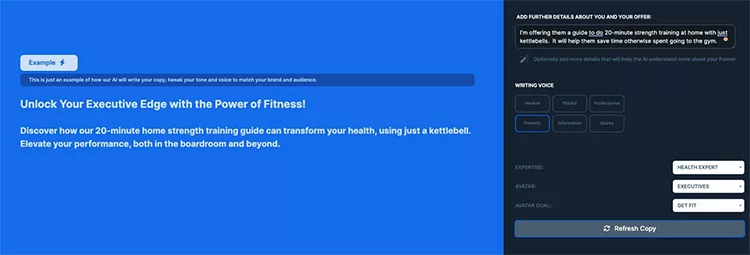
How To Create AI Marketing Content That Converts

Software Stack Editor · June 21, 2024 ·

The post How To Create AI Marketing Content That Converts appeared first on ClickFunnels.
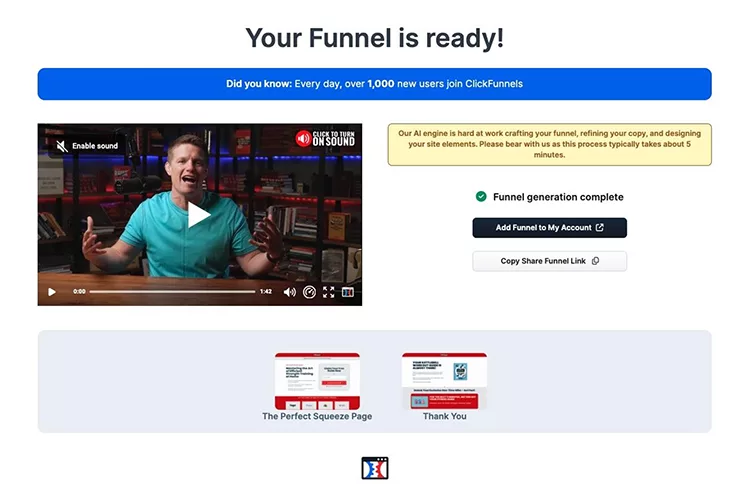
With the massive rise of artificial intelligence, it’s never been easier to create marketing content that converts.

Unfortunately, though, even though it’s never been easier, many marketers still aren’t using AI properly and aren’t getting the type of results they’re looking for.

Instead of turning out amazing content that drives clicks and conversions, they end up with boring, bland marketing materials that can’t get attention.

But when you understand what great marketing content should look like and you understand how to get AI to produce that type of content… it’s so much easier to drive real results in your business.

Which is what we’re going to cover in this guide.

Over the next few minutes, we’re going to give you practical tips to use these powerful tools so you understand exactly how to create AI marketing content that converts.

By the time you’re done reading, you’ll be able to stop churning out content that will never get read (or ranked on Google) and know how to use AI to start driving clicks, leads, signups, and new customers.

Optimize for User Intent

If you’ve never heard the term before, “user intent” helps you take advantage of the motive behind an internet user’s search or activity.

In other words, it helps you predict what they’re really after whenever they run a search on Google or land on your website or funnel.

When you understand a user’s intent, you can more closely match your content to that intent, helping them find exactly what they’re looking for.

The flip side of this is missing the mark and having them click the back button, feeling unfulfilled, and continuing to search.

To give you an example, let’s take a look at the search: how to brew coffee.

It would be easy to perceive their intent as possibly wanting to purchase coffee brewing equipment or supplies, or looking for new ways to make the particular coffee they want to brew.

Their actual intent, though, revolves around seeking information on the best techniques and methods for brewing a great cup of coffee at home.

This is important to understand because you want your content to be relevant and engaging.

You also want to make sure Google is going to serve your content up to people making the search.

Since Google is smart enough to understand user intent, their algorithms will be looking for specific words and phrases that alert them to your content matching the intention of the search.

If the user intent in your content doesn’t match the user intent of the person searching, the algorithm simply won’t serve your content to that part.

That’s a huge missed opportunity for you.

But if you write with the right intent, you have an opportunity to rank at the top of the search results.

Like this example:

If you write for the wrong user intent, though, you’ll be ranked way behind.

Check out this example of page 4 of the search results:

You can use AI to match the user intent for a piece of content, helping you avoid this major mistake.

To start, simply ask AI what the user intent looks like:

Screenshot of a webpage with a query about small business cash flow management and a detailed response explaining the purpose of such searches and potential areas of interest.

This is going to give you some insight into the intention behind the user’s search.

But you can take what is being output and dive even deeper into it, getting even more insight into the user intent.

To do that, you’ll want to provide AI with more information.

This is where understanding your audience plays a critical role.

In order to get more effective output, you’ll want to provide AI with your target audience demographics, like their age, gender, location, etc.

You’ll also want to provide different search queries related to the keyword that you’re attempting to create content for.

Then, provide as much context around your topic as you can.

If you provide the AI with information about your industry, your niche, or a specific problem that your audience is trying to overcome, the output you get will be significantly more usable.

You can also ask the AI tool to try again if you realize that the output doesn’t quite match what you know about the user intent.

The key, though, is understanding what the person is looking for when they perform the search.

When you can match your content to that person’s desires, your content will get way more traction.

Contextual Product Placements

Another major problem marketers face is publishing content for the sake of publishing content.

Even if it’s amazing and people love to read it, it’s still missing one key element: a conversion point.

The content only exists to be read.

When, in a perfect world, it’s there to grab someone’s attention, engage with them, showcase how you can help them solve a specific problem, and then offer a paid solution to that problem.

Most AI, though, won’t mention any products unless you directly instruct it to do it.

Then, when AI injects mentions about the products, they tend to feel awkward and out of place.

So instead of naturally flowing through the content and people feeling like your recommendations were organic, the recommendations tend to feel forced.

A good piece of content will not only engage your audience but also flow naturally enough to generate interest in the products or services you’re promoting.

It should be done contextually.

To help you see what this looks like in action, here’s an example.

I searched for “how to brew coffee”:

A webpage for Blue Bottle Coffee Lab explaining their pour-over method, detailing its benefits, process, and tips on brewing. A contextual product mention highlights the Blue Bottle dripper.

Inside of the article is a recommendation for a specific product that I might be interested in.

Even though my original intention was to find information that would teach me how to brew coffee, there are thousands of different products that could be recommended — that I might also be interested in.

In this example, the article I found helped me learn about pour-over coffee, its benefits, how to get the best flavor, and how to choose the best coffee for this specific method of brewing coffee.

It also mentioned a product that would help make brewing pour-over coffee even easier.

And it did it in a way that fits with the context of the rest[ of the article.

It didn’t feel out of place or forced.

Another blog that I read, though, didn’t do this.

They missed a major opportunity to promote a product or service — the conversion event.

So even though they grabbed my attention and got me to engage with the content they’ve published, they missed a huge opportunity to turn that attention into revenue.

Here’s what it looked like:

Screenshot of a web page from Trees Organic Coffee & Roasting House, detailing the Chemex pour over/drip coffee method. The text lists the Chemex features, brewing instructions, and cost.

With AI, when you’re using the right prompts, this is an easy problem to fix.

To give you an example, take a look at the prompt below.

I used it to modify the article from the website that missed an opportunity to convert my attention into new revenue.

Here’s what it looked like:

A screenshot of text instructions for writing a blog post about Chemex, providing details about the product, coffee brewing process, and mentioning a Trees grinder in 2-3 lines with specific features.

Here’s what the AI gave back:

Screenshot of a document describing the Trees grinder product, emphasizing its medium-coarse grind size, ease of use, and compatibility with Chemex coffee makers for a smooth and consistent coffee brew.

Major improvement.

Instead of just publishing content in hopes that the content ranks well in Google’s search results pages, the content now has a purpose: to drive revenue.

With a small tweak and the help of AI, a standard piece of content was turned into a conversion-focused piece of content that will also still rank in major search engines.

If you have content published on your website, blog, or funnel right now, and you aren’t taking advantage of the attention it’s generating, you can run it back through AI and ask it to provide contextual mentions of specific products or services you offer.

Use AI to Generate Eye-Catching Images

If you’re looking to take your content from “good” to “great”, adding eye-catching visuals is an easy way to do it.

In the past, you would either need to be a graphic designer or hire one and hope they understand the vision you have and can translate it into art that works in your content.

Today, though, you can use AI to create stunning visuals in your content and help immediately set it apart from your competition.

In just a few minutes, you can generate your images without being a graphic designer, just by plugging in a few prompts.

And the images that get generated are top-notch.

Take a look at Akiflow’s blog:

A grid with six colorful illustrated cards, each representing articles on productivity topics such as morning rituals, calendar alternatives, system overload, ADHD navigation, and work-life balance.

When you visit the blog, it’s pretty clear what their content is about and if you’re looking for something particular you can scan through the images and click on the blog post you want to read.

Or, if you sell physical products, you can use AI to generate product mockups for your content.

Here’s what’s possible with a tool called Narrato:

Four smartphone cases displayed upright on a light background. The cases are in various shades of red and clear, positioned side by side.

The key to generating these types of images, though, is the prompts that you feed into the AI.

To help you get started, here’s a couple prompt templates you can use:

Generate an image in the style of [Image Style], featuring a [Central Image] surrounded by [Supporting Visuals] that represent key aspects of [Topic]. Use a [Color Scheme] color palette and [Typography Style] to create a cohesive and compelling visual that reflects the value of my content.

Generate a realistic product mockup for [specify product], showcasing its [key features] in a [setting or environment]. Highlight the [unique selling points] and [benefits] to allow customers to envision the product before making a purchase.

For example, if you’re generating images for a blog post on the topic of email marketing, you could use a prompt similar to this:

Generate an image in the style of a flat vector illustration, showcasing a person opening an email with a magnifying glass, an email list, an engaging subject line, a personalized message, and an analytics chart in a grid layout format. Incorporate a blue and green color palette and use icons and bold typography.

To get even more specific, here’s an example of using AI to generate graphics in the yoga niche:

  1. Generate a serene image of a person practicing [yoga post] on a [beach/mountain/garden] at [sunrise/sunset]. Incorporate elements of nature, such as [trees/ocean/flowers] and use a soft, warm color palette to evoke a sense of tranquility and mindfulness.
  2. Create an image depicting the benefits of yoga, such as [increased flexibility, stress relief, improved balance]. Use a minimalist style with simple illustrations and a calming [color scheme] to communicate the positive effects of regular yoga practice.

Or, in the hospitality industry:

  1. Generate an inviting image of a [luxury hotel room/cozy bed and breakfast/modern hostel], showcasing the [unique amenities/design features/location]. Highlight the [comfortable bed, scenic views, stylish decor] and use a [warm/cool/vibrant] color palette to create an appealing and welcoming atmosphere.
  2. Create an image featuring a [delicious meal/cocktail/local specialty] from the [hotel restaurant/bar/nearby dining options]. Use appetizing colors and realistic textures to showcase the quality and appeal of the cuisine, enticing potential guests to book a stay.

And for a SaaS tool:

  1. Generate an image illustrating the [key benefits/features] of your SaaS tool, such as [automation, collaboration, analytics]. Use a clean, modern design style with bold colors and simple icons to communicate the efficiency and value of your software.
  2. Create a visual representation of your SaaS tool’s [user interface/dashboard], highlighting its [intuitive design, customization options, integrations]. Incorporate [brand colors, logos, and design elements] to reinforce brand recognition and showcase the user experience.

With these simple prompts, you eliminate the need for being a graphic designer — or hiring one — while getting eye-catching visuals for your content.

You can play around with the prompts, too, to test and tweak the outputs you get from Narrato.

If the image isn’t quite what you’re looking for, ask the AI to do it again with a few small adjustments until the image is ready to go.

Then plug it into your content and turn it from “good” to “great” without all the headaches.

Try ClickFunnels FREE Today!

Write Email Nurturing Content

Now, whether you realize it, or not, every email that you send to your audience is content, too.

And if you’ve sent emails for any length of time, you know a single email just won’t cut it.

You need to be regularly engaging with your audience.

One of the easiest ways to do this is with an email nurturing sequence that gets fired off when someone becomes a new subscriber or customer.

With the right sequence, you can keep people engaged, moving them through your customer journey without having to hire a copywriter or being an expert copywriter yourself.

If you’re new to nurture sequences or want to see an example, take a look at this:

A screenshot of an email inbox with multiple promotional emails related to the Calm app, offering discounts, free content, and premium membership activations.

The sequence above is from Calm and focuses on a mix of informational content, personal engagement, and weaving in promotional offers to help drive revenue.

All this happens while reinforcing the core values and offers of the Calm brand.

It can be done with AI, too.

Check out this prompt:

Text stating a business development expert's target audience is business coaches, with a focus on creating an email nurture sequence to guide business coaches towards scheduling a free consultation.

By telling AI what you do and who you serve, you can start building an email nurture sequence in just a few minutes.

The key things to cover here are what your business involves, who your target audience is, what they want to achieve or problems they want to solve, and then asking AI to generate a series of email topics to be used once they’ve taken whichever action you had them take.

You’ll also prompt the AI to generate an outline for each email with your goals built into it.

Once the outlines are generated you can either write them yourself or ask the AI to start filling out the outlines they’ve created, tweaking each as they’re output.

When I plugged that prompt into AI, here’s what got returned:

Image showing an email nurture sequence outline: includes an email introduction, key points from a guide, addressing common challenges, showcasing expertise, and providing additional value with specific subject lines and content themes.

This is a great starting point for a nurture sequence.

To get started, write down your target audience and how they’re going to join your email list. That could be via trial signup, downloading specific content, clicking an ad, etc.

Then write down your goals in the sequence. That could be selling your products and services, establishing a relationship with your audience, or other goals.

Finally, think about how many emails you want the AI to produce..

Then, once you have it written down, feed that into the AI inside of ClickFunnels 2.0 and take the sequence that’s been output and plug it into a fully automated nurture sequence.

If you haven’t already tried ClickFunnels 2.0, click here to start your free 14-day trial now.

A workflow diagram includes a trigger, a 1-day delay, an email template, a purchase decision, and branches to an end path or a 24-hour scarcity email based on the decision.

When you start your free trial, you’ll gain instant access to a library full of professionally designed email templates ready to plug your sequence into:

A screen displaying a selection of email templates, including order confirmation, music highlights, winter day, and promotional templates for podcasts and Black Friday sales.

Then you can edit each of the emails in your sequence with the built-in drag-and-drop visual editor:

Screenshot of an email template in an email editor showing a person typing on a laptop with customizable options on the right sidebar, including text properties and layout settings.

Based on your input, the subject line can be generated with just one click:

A computer screen showing an email composition interface with a chatbot named Napoleon (Beta) on the right. The chatbot offers writing assistance, including email subject lines and broadcast suggestions.

You can even ask our AI to write subject line variants to run A/B split tests to see which subject line performs the best:

Screenshot of an email marketing platform. Options for split testing and setting subject lines and preheaders are displayed. A conversation with an AI named Napoleon (Beta) suggests email subjects.

Then you can ask our AI to write the email content for you, based on the outline you provide:

Screenshot of a ClickFunnels page showing a funnel template. The page features text describing a consultant's success story and an AI paragraph assistant tool on the right side of the screen.

Here’s what it looks like when you ask the AI to write an email using a professional tone:

That’s better than most professional copywriters can put together and you don’t have to wait around for weeks (or even months) for a great copywriter to build the sequence for you.

You can give our AI a test run with a full-featured 14-day trial of ClickFunnels 2.0.

Click here to see how powerful it has become and start your free trial now.

Leverage Customer Insights

When it comes to producing “great” content, half the battle is understanding what your audience wants to see. The other half is delivering it in a way that’s engaging.

The best content is something that people can relate to, that’s been written from their perspective, with their needs and pain points in mind.

You can accomplish that by learning from what your potential customers are saying or what your actual customers say about products and services like yours.

To find this information, you’ll need to become a fly on the wall.

You can look at what your potential customers are saying by visiting places like Reddit, Youtube and Facebook comment sections, forums, Amazon reviews, etc.

To help you understand what this looks like, let’s assume you run a summer camp or blog for teenagers and you want to write content related to activities they can do in their free time or during holidays, but doing it in a way that helps with personal development.

Let’s take a look at Reddit using this example:

Reddit post by user DanielDubs88 in the r/productivity subreddit seeking advice on how to productively use ample free time in the summer, accompanied by an expression of gratitude for recent feedback received.

You can feed this content into AI tools to help you identify common pain points and questions your target audience has. That can then be turned into content that’s relevant to your audience.

The Reddit post above has a ton of comments, making it great for research:

A Reddit thread with users suggesting summer activities. Ideas include getting a summer job, helping neighbors for money, finding a volunteer role, or picking up hobbies like reading, gaming, or journaling.

But sifting through all of these comments is incredibly time-consuming.

Instead of sitting in front of a computer for hours trying to uncover gold nuggets, let’s ask AI to do the heavy lifting for us:

This is what the AI returned based on the prompt above:

List of 20 productive summer activities, including learning new skills, volunteering, exercising, starting projects, reading, cooking healthy meals, practicing arts, and engaging in creative writing.

This made the job of collecting ideas incredibly easy.

And each of these ideas can be fed back into AI to convert them into blog posts, emails, ads, video scripts, you name it.

Since the ideas are pulled directly from what people in your audience are already saying they’re looking for, you know the content will be highly relevant and engaging.

But with a combination of each of the strategies in this guide, you’ll be taking your content from “mediocre” or “good” to “great” with a few prompts and clicks of the mouse.

Then you can plug that content into your blog or funnel using a tool like ClickFunnels 2.0.

Try ClickFunnels FREE Today!

Thanks for reading How To Create AI Marketing Content That Converts which appeared first on ClickFunnels.
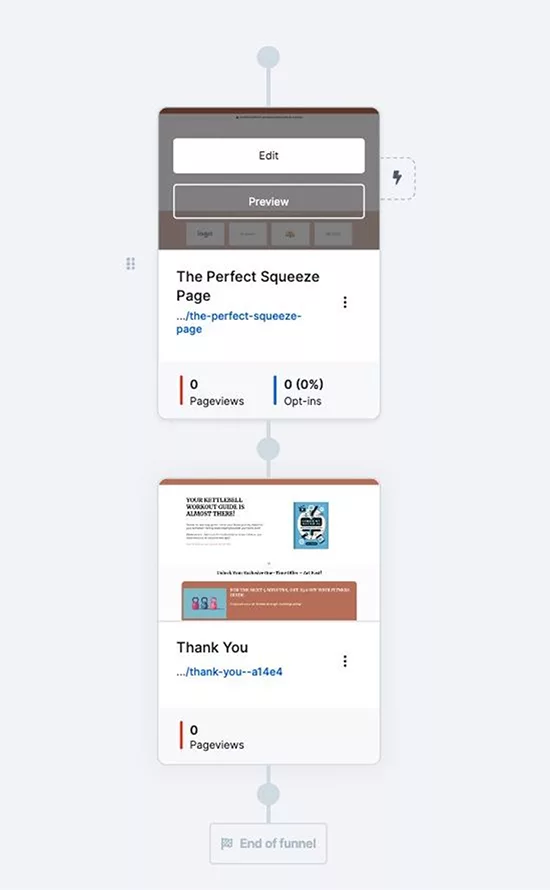
How To Create A Successful AI Marketing Funnel In 2024

Software Stack Editor · June 21, 2024 ·

The post How To Create A Successful AI Marketing Funnel In 2024 appeared first on ClickFunnels.
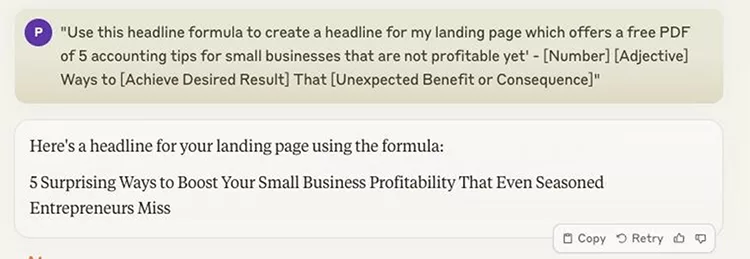
Want to maximize your revenue?

The best way to do that is to build a marketing funnel for your business. But where should you start?

Today we are going to explain how to create a successful marketing funnel with AI and walk you through the entire process!

Table of Contents:
  • What is a Marketing Funnel?
  • What is the Value Ladder Marketing Funnel?
  • The Six Most Popular Variations of the Value Ladder Marketing Funnel
  • How to Build a Value Ladder Marketing Funnel for Your Business With AI
  • How to Convert Leads into Paying Customers With Email Marketing
  • How to Drive Traffic to Your Value Ladder Marketing Funnel
  • How to Optimize Your Value Ladder Marketing Funnel With A/B Testing

What is a Marketing Funnel?

Marketing funnels are systems designed to convert potential customers into leads, leads into customers, and customers into repeat customers.

It’s worth noting that the term “marketing funnel” is synonymous with the more popular term “sales funnel”.

The terms “marketing funnel” and “sales funnel” can be used interchangeably.

What is the Value Ladder Marketing Funnel?

The Value Ladder is a marketing funnel that was created by our co-founder Russell Brunson. We used it to grow ClickFunnels to $100M+ in annual revenue!

The main idea behind it is this: you start the relationship with the potential customer with a free offer and then pitch them increasingly more valuable and more expensive offers as they progress through your sales funnel. 

So the potential customer starts their buyer’s journey at the bottom of your Value Ladder and then over time they ascend to the top of it where they have the opportunity to purchase your most valuable and most expensive product or service aka your Backend offer!

The Six Most Popular Variations of the Value Ladder Marketing Funnel

#1: Opt-in Funnel

The opt-in funnel, also known as the squeeze page funnel and the lead magnet funnel is the most popular marketing funnel out there. It works best for inexpensive, low-touch products that can be sold automatically via email.

It’s also a great option for those who know that they want to make money online but don’t have anything to sell yet. Remember, you don’t need to have a product or service to start growing your email list!

Diagram of a lead magnet funnel showing steps: Lead Magnet Page with headline, email input, and submit button leading to a Thank You Page with headline, video, and automation to follow-up funnels.

#2: Application Funnel

The application funnel enables you to qualify leads before reaching out to them.

It works best for expensive, high-touch products and services that require follow-up calls to close sales.

It’s especially worth considering if you offer custom pricing that depends on the scope of the project.

Diagram illustrating an application funnel process with four steps: Reverse Squeeze Page, Click Pop, Application Page, and Thank You, including fields for email, name, and dropdown selection.

#3: Webinar Funnel

The webinar funnel is an event funnel where you use a free webinar as your lead magnet and then pitch your product or service at the end of it.

It works best for mid-range offers that are low-touch and can be sold automatically via email, for example, productized services or online courses.

It can also work well for expensive, high-touch services. However, in that case, instead of pitching your service at the end of the webinar, you should encourage the attendees to book free consultation calls and then close sales at the end of those calls. 

Diagram of a webinar funnel detailing steps from registration to confirmation, indoctrination, and replay. It includes sections on webinar topics, sign-up actions, and subsequent automated follow-ups.

#4: Summit Funnel

The summit funnel is an event funnel where you host an online summit with multiple speakers.

You can either make the summit free and then pitch VIP tickets to the attendees after they register for the event or you can charge for the summit and then also upsell the VIP tickets.

VIP tickets should include various perks such as Q&A sessions with the speakers, recordings from the event, a workbook, etc.

Flowchart showing the Summit Funnel process with three pages: Sales Letter Page, VSL Order Page, and Share Page, each with text boxes, buttons, logos, and placeholders for images and videos.

#5: Bridge Funnel

The bridge funnel allows you to connect two different but related ideas. 

It works best for affiliate products because it enables you to give potential customers some context and pre-sell them on that product before sending them to its sales page. 

Diagram illustrating a bridge funnel process with three stages: squeeze page, bridge page, and next funnel. Includes call to action, headline, and automation flow.

#6: Video Series Funnel

The video series funnel, also known as the product launch funnel, is designed to help you launch a new product with a video series that consists of four videos.

In the first three videos, you introduce your upcoming product, provide social proof, and build anticipation with sneak peeks.

Then, in the last video, you announce the launch, add an element of urgency with a limited-time launch discount and end the video with a call to action encouraging people to buy your product. 

This funnel works best for mid-range, low-touch products that can be sold automatically via email.

How to Build a Value Ladder Marketing Funnel for Your Business With AI

Building a Value Ladder marketing funnel for your business has never been easier. 

With ClickFunnels 2.0 AI funnel builder, you can create one in just 10-15 minutes, even if you don’t have any web design or web development skills!

Here’s how it works:

Step #1: Tell Us About Yourself and Your Business

First, we’ll ask you to tell us who you are, what you are selling, and who is your target audience. This information will serve as the foundation for your sales funnel copy. 

Screenshot of a ClickFunnels welcome page asking users to select their role, goal, target audience, and desired outcome to start building a sales funnel.

Step #2: Select a Funnel Template That Makes the Most Sense for Your Business

Then, we’ll ask you to select a funnel template from the six most popular Value Ladder sales funnel variations that we discussed previously.

As you can see in the screenshot below, each funnel variation is explained in detail within the software itself in case you want to refresh your memory.

Screenshot of a selection screen for different funnel offer types: Optin, Application, Webinar, Summit, Bridge, and Video Series. The Optin Funnel option is highlighted with a detailed description on the right.

Step #3: Select Your Main Brand Color and the Design Style of Your Funnel

Then, we’ll ask you to select your main brand color, which will serve as the basis for the color scheme of your sales funnel.

We’ll also ask you to select a design style from three options: blocky style, colorful style, and rounded style.

The style you select will determine borders, corners, and shadows on the pages in your funnel as well as the use of your brand color. 

Step #4: Select an Image Style for Your Funnel

Then, we’ll ask you to select an image style for your sales funnel. 

You’ll be able to choose from three options: isometric 3D illustrations, flat illustrations and stock photo portraits. 

Step #5: Provide More Details and Select a Writing Voice

Then we’ll ask you to add more details about yourself and your offer. 

This is optional but the more information you provide to our AI, the more accurate the copy will be and the less editing you will need to do later. 

You’ll also be able to choose from six distinct writing voices: neutral, playful, professional, friendly, informative and quirky. Which one matches your brand voice the best?

Screenshot of AI copywriting tool interface with text input and various customization options such as writing tone, target audience, and expertise level.

Step #6: Click the “Create Funnel Now” Button and Let AI Build a Funnel for You!

That’s it.

All you need to do now is click the green “Create Funnel Now” button and let our AI build a funnel for you. Typically, this takes around 5 minutes.

Our co-founder Russell Brunson made a video where he explains how to edit your funnel inside ClickFunnels 2.0 in case this is the first time you are using our software.

Consider watching it while you are waiting for your funnel!

Video tutorial on building a sales funnel displayed on a webpage. The text highlights the success of other users and progress steps for completing the funnel creation.

Step #7: Claim Your Sales Funnel and Your FREE ClickFunnels 2.0 14-Day Trial!

If you already have a ClickFunnels 2.0 account, you can login and copy your sales funnel into your account.

If you don’t have a ClickFunnels 2.0 account yet, you can claim your FREE 14-day trial and create one.

Either way, your funnel is ready. Edit it with our drag-and-drop funnel editor, publish it, and start driving traffic to it!

Screenshot of a ClickFunnels confirmation screen congratulating the user on their funnel being ready. It mentions a 14-day trial and lists received benefits, with a button to claim the trial.

How to Convert Leads into Paying Customers With Email Marketing

Send Them This Confirmation Message

When a potential customer gives you their email address, the first thing you should do is send them a confirmation message.

In that message, you want to:

  • Confirm that they have successfully subscribed to your email list.
  • Let them know what they should expect from you going forward.
  • Ask them a question, encourage them to reply, and promise that you’ll read and respond to every email.

You can use your confirmation message for customer research by asking new subscribers what they are struggling with the most.

For example, if you are in the health and fitness niche, you can ask them what’s their #1 health and fitness challenge right now.

Copy-paste all responses into a spreadsheet. Over time, you’ll start noticing patterns. Use that to improve your offers, copy, and marketing.

Also, make sure to reply to every email from a new subscriber, especially if you promised to do so. It’s a great way to leave a positive first impression and start building trust.

Note that creating these back-and-forth interactions with new subscribers can also help you improve your deliverability. It sends a signal to email service providers like Gmail that people want to get emails from you!

Send Them This Welcome Sequence

Then you want to send them this welcome sequence at a frequency of one email per day. Send the first email immediately after the confirmation message.

Note that if you are selling a high-touch product or service, you can pitch it at the end of this email sequence and encourage the new subscriber to book a free consultation with you. 

That being said, we recommend creating an inexpensive, low-touch product specifically designed for the purpose of converting leads into paying customers.

In our experience, $7 eBooks are perfect for this!

Send Them a Weekly Newsletter

A weekly newsletter can be a great way to:

  1. Build trust and stay top of mind with your email subscribers by providing free value every week..
  2. Promote your products and services to your email subscribers without coming across as obnoxious.
  3. Let your email subscribers know about company news, upcoming launches, seasonal sales, etc.

We recommend reading our article “How to Grow an Email List Starting From Scratch” if you want to learn more about newsletters. 

How to Drive Traffic to Your Value Ladder Marketing Funnel

Social Media Marketing

Social media marketing can be a great way to generate organic traffic.

However, building a social media following takes time so you’ll probably need to put in 12-18 months of consistent work before you start gaining traction on your chosen platform. 

Consequently, using social media marketing as your primary marketing strategy makes the most sense if you have more time than money, especially if you also happen to be decent at writing. 

If you don’t know where to start, we recommend watching this video by Dan Koe:

Video Marketing

Video marketing can be another great way to generate organic traffic.

However, building an audience on platforms like YouTube and TikTok takes time, so you should be prepared to put in at least 36 months of consistent work before you start gaining traction. 

Moreover, producing video content is a more resource-intensive endeavor, and therefore your output volume is going to be lower. 

E.g. you can publish one solid tweet every day but you won’t be able to publish one solid YouTube video every day. 

Lower output volume means that it will take you longer to get good at creating video content. 

Finally, in order to produce video content, you’ll need video equipment, a space where to shoot videos, and video editing skills. 

Consequently, video marketing is best suited for those who have previous video production experience and either already own all the necessary video equipment or can get access to it for free. 

All that being said, it appears that a YouTube channel with long-form videos has more staying power than a social media following. 

At least that’s what popular YouTuber Vanessa Lau discovered after she came back from her one-year hiatus where she stopped posting on YouTube, TikTok, and Instagram altogether. 

It turned out that her YouTube channel was the least impacted by her lack of activity. Plus, her YouTube videos turned out to be what people missed the most while she was away!

So it seems that from the long-term perspective, building a YouTube channel can be a great business move.

If you don’t know where to start, we recommend watching this video by Vanessa Lau:

Paid Advertising

We have noticed that entrepreneurs who are just starting out tend to have an aversion to paid advertising even if they can afford it. But guess what?

Paid advertising is the quickest way to generate targeted traffic. It can help you validate your business idea, improve your offer based on market feedback, and optimize your sales funnel for conversions FAST.

Of course, if you don’t have a marketing budget, then paid advertising isn’t an option to begin with. That’s a completely different situation.

But if you do have the money for it, we recommend investing in paid advertising because it can help you get your business off the ground much faster than you could with organic traffic alone.

How to Optimize Your Value Ladder Marketing Funnel With A/B Testing

Once your marketing funnel is up and running, you can begin optimizing it with A/B testing..

A/B testing, also known as split testing, is a conversion rate optimization method that works like this:

  • You create two versions of the same thing that are identical except for the element that you are testing.
  • You drive the same amount of traffic to both versions.
  • You see which version has a higher conversion rate. 

For example, if you have two potential landing page headlines that you like, but aren’t sure which one you should go with, you can simply A/B test them and keep the winner. 

Our software allows you to test everything from ads to landing pages to emails to sales pages to upsells, cross sells, and downsells.

A/B testing can help you increase your conversion rates across the entire funnel, generate more revenue, and maximize profit!

Interface displaying results of an A/B test with two versions, A and B, comparing user metrics such as number of clicks, conversions, and revenue generated. Options to edit the A/B test are visible.

Try ClickFunnels 2.0 Risk-Free!

Let’s be real:

We are biased in favor of our software. 

So we understand if you take what we say about it with a grain of salt.

Fortunately, we have a free 14-day trial, so you don’t have to take our word for it. 

You can go and see ClickFunnels 2.0 for yourself without any risk!

So what are you waiting for? 🧐

Start Your Free Trial Today

Thanks for reading How To Create A Successful AI Marketing Funnel In 2024 which appeared first on ClickFunnels.
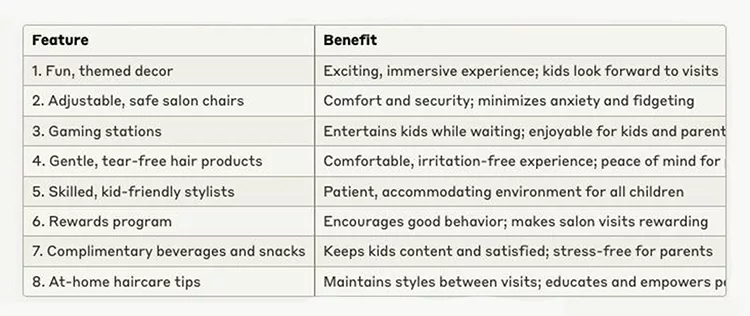
6 Killer AI Website Ideas You Should Try Right Now

Software Stack Editor · June 11, 2024 ·

The post 6 Killer AI Website Ideas You Should Try Right Now appeared first on ClickFunnels.
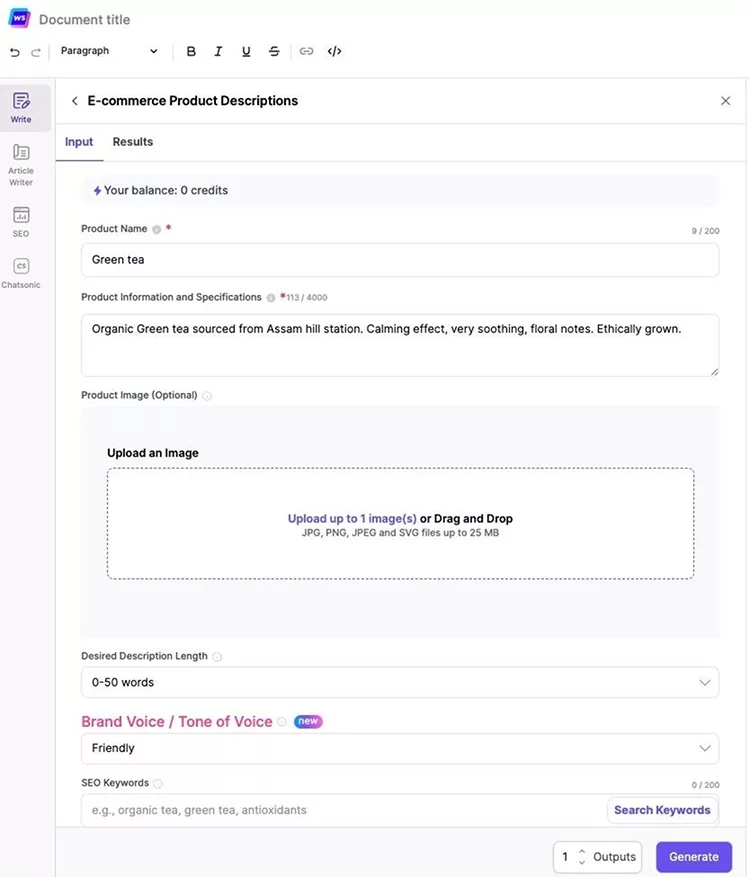
In the ‘ol days (like… a few years ago), you might’ve had to spend thousands of dollars or hundreds of hours to design your website, write the copy, create the brand assets…

But if there’s one thing that AI is doing, it’s making it easier for the little guys.

Now you can create a website with AI literally in 5 minutes — copy, branding, and design all included. 

(Try our AI funnel-builder free here).

You don’t have to spend hundreds of hours or know how to code. You can do all of it faster and easier with AI.

But… how? 

Here are 6 ideas you should try right now! 

Idea 1: Craft Website Copy Using AI Writing Tools

Think of AI as your copywriter, or partner. 

It won’t generate copy out of thin air. You’ll need to provide it with all the info about your product and target market. Once you do that, it will make your job easy by giving you a variety of options to choose from and saving you time in the brainstorming process.

Great copy today isn’t written solely by AI… but assisted by AI. 

Here are a few examples of prompts you can use to craft compelling headlines using ChatGPT.

“You are an expert copywriter hired to promote a new [product or service] that offers an unparalleled [unique selling point]. Create 10 headlines that showcase this USP and make it irresistible to the target audience. Use curiosity-inducing language and bold claims to grab attention and inspire action.”

Just plug in your specific info. And remember, the more specific you are the better the AI will do. Here’s another example… 

“You are a seasoned marketer tasked with promoting a revolutionary [product or service]. Its key benefit is [key benefit]. Generate 5 attention-grabbing headlines that highlight this benefit and create a sense of urgency for the target audience. Use powerful action verbs and tap into the audience’s desires and aspirations.” 

Those two prompts should get you started for brainstorming headlines and hooks.

But to get better results from the AI, you might also want to give it a proven headline formula to stick to (so it doesn’t go off the rails). For instance… 

  • Headline: “Say Goodbye to [Pain Point] with [Your Product/Service]”
  • Subheadline: “Experience the [key benefit] of our [product/service] and [desired outcome] like never before.” 

If we used AI to create a headline/subheadline combo for an ergonomic chair brand, here’s an example of what it might come up with… 

  • Headline: “Say Goodbye to Chronic Back Pain with Ergonomic Office Chairs
  • Subheadline: “Experience the unparalleled comfort of our adjustable chairs and work longer hours like never before.”

Here’s another formula you can give AI to get great copy…

  • Headline: “The [Adjective] Way to [Achieve Desired Result] with [Your Product/Service]” 
  • Subheadline: “[Benefit 1], [Benefit 2], and [Benefit 3] – all made possible by our [key feature/technology].” 

Here’s an example of what the result might look like if you were promoting a CRM.

  • Headline: “The Effortless Way to Manage Your Projects with Cloud-Based Software”
  • Subheadline: “Real-time collaboration, automated workflows, and intuitive interface – all made possible by our cutting-edge platform.”

Of course, headlines and subheadlines aren’t the only copy you need on your website or landing pages. You also probably want a features and benefits section. 

Here’s a prompt you can use to create a features and benefits section…

“Imagine you are writing a features and benefits section for a [product or service] that caters to [target audience]. Identify 8 unique features that address the specific needs and challenges of this audience. For each feature, highlight how it makes their lives easier, more efficient, or more enjoyable. Use relatable examples and scenarios to illustrate the benefits.” 

And here’s a prompt you can use for a product description… 

“Write a product description page for a [product type] . It needs to appeal to [audience type]. I want to highlight [features list].”

You can also use special tools like copy.ai, or writesonic.  They have built-in fields where you enter your data and it will generate content for you.

Screenshot of an e-commerce product description form for green tea, highlighting fields for product name, information, image upload, desired description length, tone of voice, and search keywords.

We went ahead and tested this ourselves.

Screenshot of a Chatsonic interface displaying a conversation about organic green tea sourced from Assam hill station, highlighting its benefits and flavor, along with an exchange on assistance with text.

We can further chat with it to create more content…

See how much faster this can help you generate copy for your website? 

It’s super useful.

But if you want to create your sales funnel in one fell swoop — copy, design, and images — then check out our free AI funnel builder. 

Idea 2: Generate AI Website Images

I think one of the most exciting things about AI is how good it is at designing and creating images. 

It used to cost quite a lot of money — for either a designer or a stock photo library — to craft images to bring your website to life. 

Not anymore! 

AI-generated images can be used as eye-catching hero images or background graphics on websites, helping to create a unique visual identity and enhance the overall design.

Here’s an image we generated for a website that offers a tool to host better meetings — we wanted to show a meeting taking place to connect with our target audience…

Screenshot of a digital media creation tool showing options for generating an illustration of a business meeting. The tool displays different styles and visual prompts on the left side.

Or imagine that we want to promote our green tea — we can use AI to generate images for us. Here’s an example when we used Canva. 

A woman with long hair is sipping a green beverage from a glass while seated in an outdoor setting with greenery in the background.

But that’s not all AI can do. 

If you own an e-commerce store, getting high-quality photos of your products can be really expensive. 

AI can create realistic, high-quality product images for online stores, reducing the need for costly photoshoots. This is particularly useful for showcasing products in different colors, styles, or configurations.

This is what  Pebblely generated…

A glass dropper bottle containing liquid is shown on both the left and right. The right image includes cut fruits like strawberries, apples, and a grapefruit next to the bottle.

Here’s another example from the same tool. Just upload an image of your product, tell the AI what setting you want, and it’ll do the rest.

A red SK-II bottle stands upright on rippling water with a pink background, demonstrating its features in a shallow depth of field. An arrow points to a box suggesting the combination of elements.

There are a ton of different AI image generators out there. Which one you use just depends on what you’re trying to accomplish. 

But rest assured! You don’t have to pay an arm and a leg to get high-quality images on your website anymore. 

Idea 3: Create Your Sales Funnel Using AI (Smart Funnels by ClickFunnels)

At ClickFunnels, we’ve been helping people build high-converting sales funnels for over a decade now. 

And thousands of our members have driven seven figures through their sales funnels! 

But there’s always been a bottleneck… 

Even with great software, creating a winning sales funnel can take a long time. You still needed to write the copy, create your branding, etc. to get it up and running. 

Creating a sales funnel is a time-intensive and effort-intensive process. It’s easy to make mistakes because of so many steps involved and so much copy and design work to do.

But now there’s an easier way. 

We created our “Smart Funnel” feature to help you create your funnel draft in less than 10 minutes…

  • This feature aims to make building effective sales funnels easier for you — all with pages, sign-up forms, copy, and design. 
  • Smart Funnel leverages AI to simplify and speed up the process of building high-converting sales funnels customized to your brand, offer type and goals. It provides an interactive, guided experience to create effective funnels without needing deep marketing/technical expertise.

So how does it work? 

It begins by collecting some key information about you and your business. This information will enable ClickFunnels to tailor the funnel building process to your goals. 

Click here and I’ll walk you through it!

In my example, I’m going to pretend that I want to build a squeeze page funnel as a fitness coach who’s offering a guide for busy executives to get in shape. 

First, I select my niche and my target market.

Then I select the type of funnel that I want to use. In this case, I’m going to use an opt-in funnel. But you might choose something else. On the right side you can see what each funnel is good for.

Remember when branding could take tons of time or cost thousands of dollars? Now you can just click on a color and our AI will automatically generate a palette that looks awesome.

A webpage interface shows steps to customize design: Step 1 allows selection of brand color, and Step 2 provides style options categorized as Blocky, Colorful, and Rounded.

Next you can choose an image style. I’m going to use flat illustrations.

The next part is important. You’re going to provide the AI with some additional info so it can write your copy for you. Provide a fair amount of information about your products or services, as well as the main pain points of your target market. The more specific information you include, the easier it’ll be for the AI to output high-quality copy.

Notice you can also change the tone of voice of the copy. If you click “Refresh Copy” it’ll show you an example on the left side of the screen. So feel free to play around until you find the style you like. 

A blue webpage displaying text promoting a 20-minute home strength training guide using a kettlebell. The text emphasizes improving health and performance in various settings.

Then it’ll just take a few minutes for your funnel to finish generating. You can watch the video from Russell on this page, which will explain what comes next.

A web page displaying a video tutorial for setting up an online funnel using ClickFunnels. The page includes stats about user growth, a call to action to finalize funnel setup, and two example templates.

If you already have a ClickFunnels account, then you can just log in and access your new funnel. If you’re new to ClickFunnels, then you can get a 14-day free trial. 

Either way, once you’re logged in, you can edit your funnel just like usual! Drag and drop any element anywhere on the page, change the copy, tweak the design, and lots more.

To further simplify, you can even use our AI chatbot, Napoleon. Click on any element on the page, and the bot will recognize that section. Then you can ask the bot to rewrite the copy, expand it, shorten it, or do pretty much anything else.

Cool, huh? 

At ClickFunnels, we’re all about trying to give boot-strapped entrepreneurs a leg up. And that’s why we’re so excited about these new opportunities that AI offers!

Click below to try our AI funnel builder for yourself.

Try Our AI Funnel Builder For Free!

Idea 4: Integrate AI-powered Chatbots for Customer Support

Marketing isn’t the only thing that AI is good at. You can also use an AI chatbot for customer support!

In fact, this is an area I expect AI to totally dominate in the coming years.

An AI chatbot can provide support to customers, product recommendations, and even recommend upsells or downsells.

For example, we asked Kayak for recommendations for family holiday in Europe…

A map of Europe highlighting cities recommended for family vacations. A sidebar features Prague with a small image of its landmarks, along with options to find flights and stays.

But we wanted to be more specific this time, so asked for only beach cities…

A webpage lists and maps the best cities in Europe for a family vacation with beaches. It features a description of Nice, France, and options to find flights and book stays. The map highlights European locations.

An AI can also guide customers through product features, and benefits, and help them to buy by answering any objections. Here’s a great example from Peleton…

A woman on a laptop while a chatbot about Peloton Rentals provides answers to FAQs. The webpage lists topics for Peloton users or potential sign-ups, such as classes, accessories, and warranties.

The advantages of using an AI chatbot on your site — for support and sales — are obvious…

  • 24/7 availability — serve customers anytime
  • Cost-effective — you already have the content, just need to feed it
  • Scalable — can do the work of hundreds of humans at a time
  • Highly personal — leading to better customer interaction, and more business

So give it a try! It’ll save you time and money… and it can even give your website visitors a better experience. 

Idea 5: Produce AI-Generated Videos

Here’s something crazy that maybe you didn’t know AI could do — create marketing videos for your website!

You can create studio-quality videos with just a script — AI can pick images from a stock image and video library to find the content that would make sense with your script.

The benefits?

AI-generated videos can save your business time and money by eliminating the need for expensive video production equipment and hiring professional videographers, allowing you to allocate resources to other areas of your website and business.

For example, with Visla, we could create product demo videos by writing scripts that outline the key features and benefits of each product, letting AI generate visually appealing videos that enhance the shopping experience.

A group of four people is sitting together at a table, engaging with a computer. They appear to be collaborating while a video on the screen presents business-related content involving video marketing.

Visla is one of many tools. But it has some amazing features. It can overdub words, change sentences, quickly fix errors in your website videos (so you don’t have to re-shoot), and lots more.

A software company could, for instance, use AI-powered video editing to update their website’s tutorial videos when new features are added or UI changes occur, ensuring that the content remains accurate and relevant without the need for a complete re-shoot.

Another super cool use case with AI video is talking heads. You can use tools like Synthesia to create sales or explainer videos that look human. You can choose a person to represent your business, write your scripts, and let any of the stock voices or faces create the video for you.

The possibilities are endless…

  • You get a diverse range of content without the need for hiring voice actors or on-screen talent.
  • By using AI-generated voices and faces that align with your target audience, you can create more relatable and personalized video content for your website, fostering a stronger connection with your visitors and increasing the likelihood of conversions.

Go try it out for yourself!

Idea 6: Automate Website Localization with AI Translation

A while back I was listening to a podcast with Mr. Beast (one of the biggest YouTubers on the planet). And I remember he mentioned that he was translating all of his videos into other languages to reach more audiences… and it was working really well!

The same strategy might work for you.

Because obviously if someone lands on your website but doesn’t speak your language… then they’re not going to be able to convert (even if they’re in your target market).

According to the CSA’s “Can’t Read Won’t Buy’’ study, 72.1% of consumers spend most or all of their time on websites in their own language.

Fortunately, AI makes it super easy!

Here’s an english version of a website.

And here’s a French version of the same website… 

This can improve your brand credibility — If you have a site in many languages, it shows that you’re running a global business. That positions you as a professional website, not something that will go out of business soon

And with AI translation…

  • Speed and efficiency are higher.
  • Accuracy is higher — it removes slang words that a native speaker might use which might not lend the right meaning to words.
  • Scalable — you can translate in as many languages as you want.
Screenshot of the Respond.io homepage with language selection menu expanded, showing flags for different languages and text offering conversion of conversations to customers. Navigation options are visible at the top.

There are lots of tools that allow you to do this — but it can also be as simple as copy and pasting your website copy into ChatGPT and asking for the translation. 

If you were to translate your website in 20 languages, imagine the number of translators and human hours required for that even a few years ago?

But AI will cost you anywhere from $20-$100 for 10,000 words — that’s enough to cover a couple of website pages in 2-3 languages.

Want to Learn More?

AI is so powerful.

And you can use it to create a high-converting website in less time… for less money. Above are 6 ideas you should try right now.

Plus, if you’re ready to create your entire sales funnel in under 10 minutes using AI, click the button below.

It’s 100% free!

Try Our AI Funnel Builder For Free!

Thanks for reading 6 Killer AI Website Ideas You Should Try Right Now which appeared first on ClickFunnels.
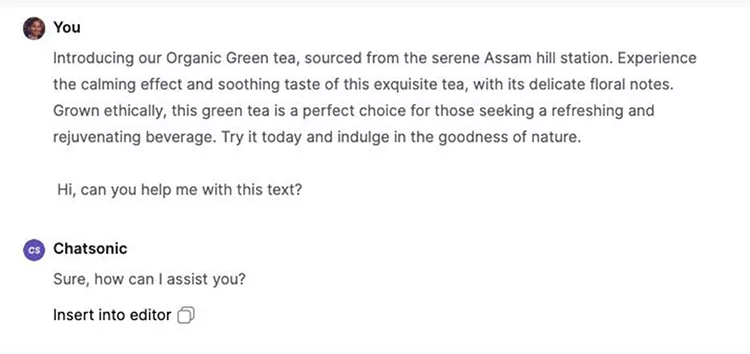
5 Ways AI Can Elevate Your Sales Copy

Software Stack Editor · June 10, 2024 ·

The post 5 Ways AI Can Elevate Your Sales Copy appeared first on ClickFunnels.
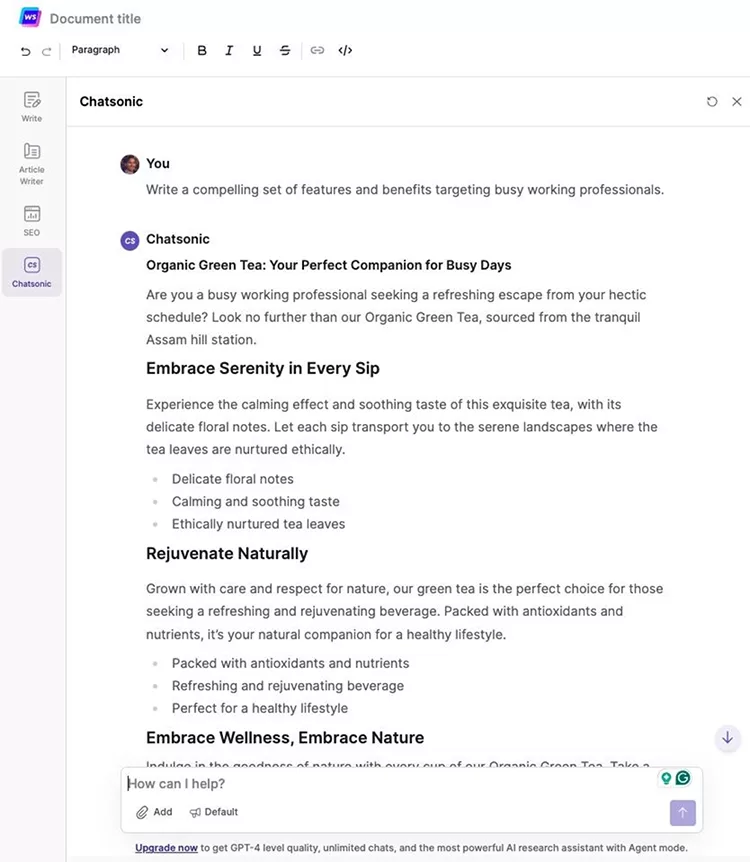
If you’ve been struggling with writing sales copy that converts or feel embarrassed because your competitor’s copy seems to catch so much more attention (and sales), you’re in luck.

In the past, you were required to be a high-level copywriter in order to compete.

Today, though, in 2024,  artificial intelligence has made writing high-level copy easier than ever.

So if you’re worried that you’ll never make more sales due to your copywriting skills or you want to take your existing skills and polish them up, AI can help.

It can make your life easier, make creating high-level copy even faster, and can help increase your conversions when you use it the right way.

Which is exactly what we’re going to cover in this guide.

By the time you’re done reading, you’ll understand how to tap into artificial intelligence to take your sales copy to the next level while saving time — and frustration.

To do that, there are 5 different strategies you can use right now.

1. Know Your ICP Better

When it comes to writing high-converting sales copy, there are two factors in play.

The first is understanding the sales psychology behind what makes people buy.

The second is understanding who you’re attempting to sell something to and what would make them want to buy what you’re offering them.

When you truly understand your ideal client profile (your ICP), you can overcome a lot of what people get wrong with the first one.

Artificial intelligence can help you understand your ICP better so that it’s easier for you to connect what you’re selling to why they want to buy.

The sales psychology, from that point, will take care of itself in most cases.

But knowing your ideal client profile starts with understanding their most pressing pain points and challenges.

Knowing this will help you position your product or service as the perfect solution to help solve those pain points and challenges.

With artificial intelligence, you can dig into your ideal client profile’s goals, and aspirations, and understand how they define success.

This is going to help you communicate the value of your product and service using terms that matter most to them.

You’ll be able to custom-tailor your messaging, ton, and offers to their specific needs.

To get started, you can prompt a tool like ChatGPT.

Here’s what a sample prompt could look like:

Leadership Ascent Coaching is seeking to better understand its ideal customer profile to create more effective sales copy and improve its marketing efforts. Here is info about the company:

  • Company Name: Leadership Ascent Coaching
  • Service Offering: Executive coaching services for mid-level to senior executives
  • Target Industries: Technology, Finance, and Healthcare
  • Geographic Focus: Major metropolitan areas in the United States

Help identify the key characteristics of our ideal customer: 

  • Demographics: Age range, education, income level
  • Professional Background: Job titles, experience, company size, decision-making authority
  • Goals and Aspirations: Career objectives, leadership development goals
  • Challenges and Pain Points: Common leadership challenges, skill gaps, work-life balance
  • Behavioral Traits: Communication style, learning preferences, values
  • Online Behavior: Social media usage, preferred content formats, industry event engagement
  • Purchasing Behavior: Previous coaching experience, selection criteria, budget allocation

When I plugged that prompt into ChatGPT, here’s what it gave me:

To help Leadership Ascent Coaching identify the key characteristics of its ideal customer, let’s break down each category:

Demographics

Age Range: 35-55 years old

Education: Bachelor’s degree minimum; many have advanced degrees (MBA, PhD)

Income Level: $100,000 – $250,000+ annually

Professional Background

Job Titles: Mid-level to senior executives such as Directors, Vice Presidents, and C-suite executives (CEO, CFO, CTO, etc.)

Experience: 10-25 years of professional experience, with at least 5 years in leadership roles

Company Size: Medium to large enterprises (500+ employees)

Decision-Making Authority: High; involved in strategic decisions and budgeting for professional development

Goals and Aspirations

Career Objectives: Advancement to higher executive roles, becoming influential leaders within their industry

Leadership Development Goals: Enhancing strategic thinking, improving team management skills, fostering innovation, and driving organizational change

Challenges and Pain Points

Common Leadership Challenges: Managing cross-functional teams, navigating organizational politics, leading through change, and developing a clear vision

Skill Gaps: Advanced leadership skills, strategic planning, emotional intelligence, and conflict resolution

Work-Life Balance: Balancing demanding work responsibilities with personal life, avoiding burnout

Behavioral Traits

Communication Style: Assertive, clear, and concise; values direct and transparent communication

Learning Preferences: Prefers personalized coaching sessions, values practical and actionable insights, enjoys interactive workshops and seminars

Values: Integrity, continuous improvement, results-oriented, and a commitment to personal and professional growth

Online Behavior

Social Media Usage: Active on LinkedIn and Twitter; follows industry influencers and participates in relevant groups and discussions

Preferred Content Formats: Articles, whitepapers, case studies, webinars, podcasts, and industry reports

Industry Event Engagement: Attends and speaks at industry conferences, participates in webinars and virtual summits

Purchasing Behavior

Previous Coaching Experience: Likely has had some form of executive coaching or leadership development training

Selection Criteria: Reputation and credentials of the coach, personalized approach, proven track record, testimonials, and case studies

Budget Allocation: Allocates a significant portion of their professional development budget towards executive coaching and leadership development programs

This comprehensive profile will help Leadership Ascent Coaching tailor its marketing and sales efforts to attract and engage its ideal customers effectively.

By using ChatGPT, we were able to better understand the target audience for Leadership Ascent Coaching. This will help get into the way their perfect ideal client profile acts and thinks so that the copy created for offers directed toward them is more effective.

If you want to make your copy more effective, understanding your ideal client profile better than they understand themselves is a great way to do it.

Try Our AI Funnel Builder For Free!

2. Analyze Reviews to Write Your Copy

Another great way to write better copy is by reading and analyzing reviews to understand exactly what made that person purchase the product or service.

Compared to marketing insight sessions, where you group people together and ask their thoughts, most people leave a review while being anonymous.

That means they are more open and free to say what they truly feel about a product.

What they like, what they don’t like, what was going on before they purchased, their experience after they purchased, and whether or not they would buy again.

This type of insight can be an absolute goldmine when you’re looking to improve your own copy.

And with artificial intelligence, these reviews can be analyzed for you, helping you uncover exactly what made someone purchase.

The AI tools can process a large volume of customer reviews and identify common themes, opinions, and emotions expressed by customers.

For example, Amazon uses AI to summarize all reviews for a product:

A product page displays customer reviews for leggings, highlighting their appearance, elasticity, comfort, and pockets. There are star ratings, images of the leggings, and some user-uploaded photos.

If you’re a seller or you’re using this technology for yourself, you can use the insights you gain by analyzing these reviews to better understand which features and aspects of your product or service that potential customers may value the most.

Then, by pushing these most compelling selling points in the copy you create, you can more effectively convert the attention that you’re getting with your ads.

For instance, let’s say you’re selling leggings and want to make sure people who see your ads are actually interested in buying your products.

Based on the screenshot above, using what you see in the AI summarization, you could write a headline along the lines of: 

“Experience Comfort, Stretchability, and Deep Pockets with Our Amazing Leggings”

Compare this to other types of headlines (the ones most people use) like:

Check Out Our Comfortable Leggings, 20% Off Now

The first headline relies on what customers have already said about why they purchased and what they loved about the product they purchased.

The second one, though, is more general in nature and focuses on using a discount to get people to buy.

While the second headline could work, and the discount helps seal the deal, it’s generally weaker than tapping into what motivates customers who may be interested in the leggings.

The first headline when combined with a discount code would be incredibly effective at driving new sales into your business — if you sold leggings.

As an alternative approach, you could take what you learn through having AI analyze reviews and focus on the versatility and value aspects that were mentioned.

A headline, in that case, would look something like this:

Versatile, High-Quality Leggings That Fit Any Body Type – Without Breaking the Bank

If a potential customer is worried that the leggings may not fit their specific body type or that the leggings will be too expensive to purchase multiple pairs, this headline addresses both objections.

But this information wouldn’t be available without you analyzing the reviews past customers have already left on products similar to the ones you’re selling.

And, unless you have hours and hours to spend, analyzing these reviews could take a ton of time without the help of artificial intelligence.

To get started with this strategy, you can gather a dozen reviews from past customers, ranging from 1-star up to 5-star so you have a good blend of what people were happy about — and what they were unhappy about.

Then you can plug those reviews into a tool like ChatGPT with the following prompt:

Attached is a dozen reviews from customers who have purchased products similar to ours. Please analyze each of these reviews to determine what people were looking for when they purchased, what they were happy with, and what could be improved about the products.

ChatGPT will produce a goldmine of information that you can use in your ads and sales copy.

It can also help you improve your product if you find out that you may be guilty of one of the things that kept people from buying — or that they were unhappy with your competitor’s product.

3. Grammar and Style Improvement

Now, something you won’t hear most copywriters talk about, and something some copywriters even say isn’t important, is grammar and style.

But when it comes to operating a professional brand that instills trust in its customers, well-written, error-free copy helps convey professionalism and attention to detail.

This, by itself, can help keep you from deteriorating the trust that you’re attempting to build with your audience and potential customers.

On top of that, a compelling writing style and tone can help you convey emotion, influence decision-making, and help persuade your readers to take action.

For example, let’s say you are building an online dog training service that offers virtual classes and personalized training plans.

Your core message is that your service can help dog owners train their pets more effectively, resulting in better, well-behaved, and happier dogs.

For your ideal customer profile, you may be looking at two different audiences.

The first would be busy, young professionals who may not necessarily have the time to effectively train their new dog.

The second could be older individuals, like senior citizens, who can’t properly manage an ill-behaved pet and need guidance on how to make their dog obey commands and remain obedient.

For these two examples, the style and tone that you use would be dramatically different.

For instance, with a younger demographic, you can get away with a more humorous, relatable style.

On the other hand, a more warm and empathetic style would resonate better with senior citizens.

By shifting your style and tone based on the demographic that you’re targeting, you can avoid offending certain people or having your message fall flat because it doesn’t resonate with another group.

Now, let’s say you plug a prompt into ChatGPT, asking it to give you recommendations:

Prompt 1: “Write humorous sales copy for an online dog training service targeting busy young professionals. Use a playful tone and relatable examples. Emphasize convenience and fast results.”

Here’s the result you can expect:

Result 1: “Hey there, busy pet parent! Is your furry bestie more of a couch-chewing, shoe-stealing rebel than a well-behaved pooch? Fear not, our online dog training is here to save the day (and your furniture)! With our convenient virtual classes and speedy results, you can transform your mischievous mutt into a model canine citizen – all while juggling your hectic lifestyle.”

If you’re communicating with senior dog owners, here’s what it would look like: 

Prompt 2: Create warm, empathetic sales copy for an online dog training service targeting senior dog owners. Use a gentle tone and acknowledge the special bond between owner and dog. Highlight the personalized approach and benefits of a well-behaved, happy dog.

Here’s the result you can expect:

Result 2:  “Dear devoted dog owner, we understand the incredible bond you share with your loyal companion. Our online dog training service is designed with you and your furry friend in mind. With our personalized approach and experienced trainers, we’ll help you strengthen your relationship and ensure your dog remains a well-behaved, happy part of your life. Enjoy the peace of mind that comes with having a gentle, obedient companion by your side. Join our caring community today and give your dog the gift of a fulfilling, joyful life.”

So the service you offer is still the same but, with AI, you’re able to effectively write two different styles of copy for two completely different audiences — and do it very quickly.

And when you’re crafting prompts, you want to consider the following elements:

  1. The desired style and tone (e.g., humorous, warm, informative).
  2. The target audience (e.g., busy young professionals, senior dog owners, new dog owners).
  3. Specific points to emphasize (e.g., convenience, personalized approach, expertise).
  4. The key benefits to highlight (e.g., fast results, strengthened bond, long-term behavioral improvements).

Each of these elements will help AI dial into exactly who you’re looking to attract with the copy, making the end result as usable as possible.

4. Competitor Insights

You can also use AI to analyze your competitors to identify opportunities to differentiate your offer from theirs and create unique copy based on that differentiation.

One of the ways you can do this is by going through their reviews on platforms like G2, Capterra, TrustPilot, or Google Reviews.

When you’re analyzing their reviews, you want to look for key phrases, topics, and themes that appear most frequently in your competitor’s sales copy.

This is going to help you identify their key selling points while identifying gaps in their messaging that you can capitalize on.

For example, let’s say you’re a competitor of a project management tool, Wrike.

Go to their Capterra/G2 page and check out some of the ‘dislikes’ people have mentioned.

A review of Wrike by a user named Joseph L., dated Feb 22, 2024, highlighting both pros and cons of the platform, including issues with manual work and notifications but praising its user-friendly nature.

Then you can feed these into an AI tool like ChatGPT.

You can use this prompt to start analyzing them:

“After reading these reviews, identify and list the top 5 dislikes or most important missing features of Wrike. Please organize them in order of significance based on the frequency and importance of the issues mentioned.”

Once you have the list, you can feed this information into the AI and ask it to generate a piece of copy that highlights how your product solves these specific problems.

Here’s an example of the prompt you can use:

“Write a concise piece of sales copy that addresses the following pain points mentioned in a competitor’s review:

  1. Complicated and not user-friendly interface
  2. Lack of formatting options in tasks
  3. Delayed or excessive notifications

Emphasize how our product solves these issues. Keep the copy brief and persuasive, as it will be part of a longer sales page.”

Then, here’s the result from the prompt:

“Tired of complicated project management tools? Our platform is designed with simplicity and ease of use in mind. With our intuitive interface, you’ll be up and running in no time, without the need for extensive training or support.

Stay organized and communicate effectively with our rich formatting options for tasks. Customize your notifications to stay informed without being overwhelmed, ensuring you never miss an important update.

Experience the difference of a project management tool built around your needs. Try our platform today and see how easy it can be to streamline your workflow and boost your productivity.”

If you’re looking to capture market share that your competition has already captured, using these prompts is a great way to set yourself apart.

This is especially true if the customers you’re trying to attract have used your competitor’s products and felt let down in some way.

Try Our AI Funnel Builder For Free!

5. Translate Features Into Benefits

In copywriting, there’s an old rule: “Features tell, benefits sell.”

And if you want people to resonate with your offers, you want to tie what they want into the benefits of what you deliver — instead of just laying out the features.

To help you understand the difference between the two, take a look at this sales page:

It’s packed full of features.

Video lectures, licensing, supporting materials, members-only discussion group.

Those are all great but they don’t actually speak to the benefits of having those features in the offer.

Why would someone care about each of those features and what is it about them that would make someone go from a “maybe” to a “yes” in the buying cycle?

This is something AI can help you with.

By telling it to help you write benefit-driven copy, it can uncover how someone would benefit from the feature that’s being given to them.

To do that, there are 4 things you want to do:

  • Create a detailed list of your product features
  • Describe your target audience, including their demographics and psychographics
  • Explain common pain points or needs of your audience
  • Request the AI to translate these features into specific, audience-focused benefits

Let’s use our example from above to create benefit-driven copy.

You can use this prompt:

“Translate this feature into benefits that address the needs of busy professionals seeking personal development. Feature: “8 Video lectures, with audio versions.”

Here’s the result you’ll get:

“With video and audio versions, you can learn on the go—during your commute, workout, or any downtime, fitting seamlessly into your busy schedule.”

By translating this feature into a benefit, the person reading the copy can start to visualize how that feature impacts their life.

If they’re a person on the go, having access to video and audio versions that they can listen to when they’re busy becomes a stronger selling point.

Choosing the Right AI Copywriting Tool

While we’ve featured ChatGPT in this guide, because it can be incredibly powerful when it’s used the right way, there are a lot of options available.

Unfortunately, though, not every tool is built in a way that focuses on marketing and sales copy.

A lot of the tools available aren’t very easy to use, either.

They give you a blank screen and, if you aren’t familiar with writing copy, you may end up lost and confused about where to start.

This is why ClickFunnels 2.0 features a new “Smart Funnel” that aims to make building effective sales funnels as easy as possible for you.

All of the pages you’ll need are included, from the pages themselves to the copy, images, forms, you name it.

The “Smart Funnel” provides an interactive, guided experience to create highly effective funnels without needing deep marketing or technical expertise.

The process begins by collecting some key information about you and your business:

A ClickFunnels welcome screen prompts the user to select their role (e.g., marketer) and objectives (e.g., grow my audience) from dropdown menus. A 'Next' button is located at the bottom right.

You can select from different funnel offer types, like optins, application, webinar, broadcast, etc.

The structure for the funnel is automatically built out for you based on proven templates for that funnel type:

A screenshot of a selection interface for building a funnel, with six options: Opt In, Application, Webinar, Summit, Bridge, and Video Series. Navigation buttons are at the bottom.

Then, the AI helps create engaging copy, refine the messaging, and design site elements that match your brand.

Based on a few inputs, here’s the landing page it generated:

Using the new Chatbot, ClickFunnels 2.0 users can quickly and easily harness the power of GPT AI to write their sales copy and content without having to leave the platform.

To do it, you can select any element on your page and ask Napoleon (ClickFunnels’ AI Chatbot) to start working on your copy.

You can change the tone, rewrite it, shorten it, or lengthen it:

Here’s another example:

A webpage editor is open displaying a draft of a landing page with text, images, and buttons. On the right, a side panel shows editing options for paragraphs and call-to-action sections.

Then, when Napoleon has helped you perfect the page and the copy, you can go live with the funnel and immediately begin driving traffic to it.

All of this happens by tapping into our more than two decades of experience selling hundreds of millions of dollars worth of products online.

Instead of spending years mastering all of this yourself, you can use ClickFunnels 2.0 and Napoleon to have it up and running in an afternoon.

To see how powerful it really is, click below.

Try Our AI Funnel Builder For Free!

Thanks for reading 5 Ways AI Can Elevate Your Sales Copy which appeared first on ClickFunnels.
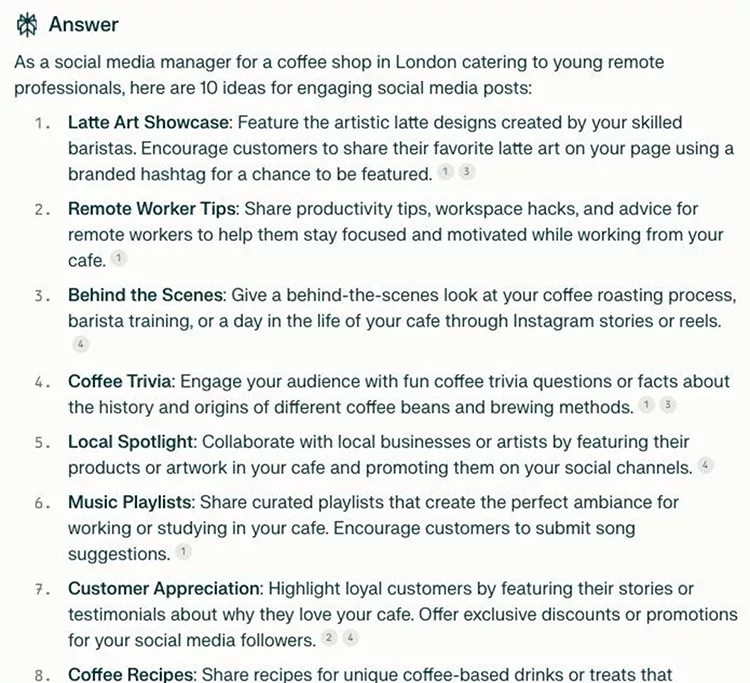
5 Ways An AI Website Builder Can Transform Your Business

Software Stack Editor · June 10, 2024 ·

The post 5 Ways An AI Website Builder Can Transform Your Business appeared first on ClickFunnels.
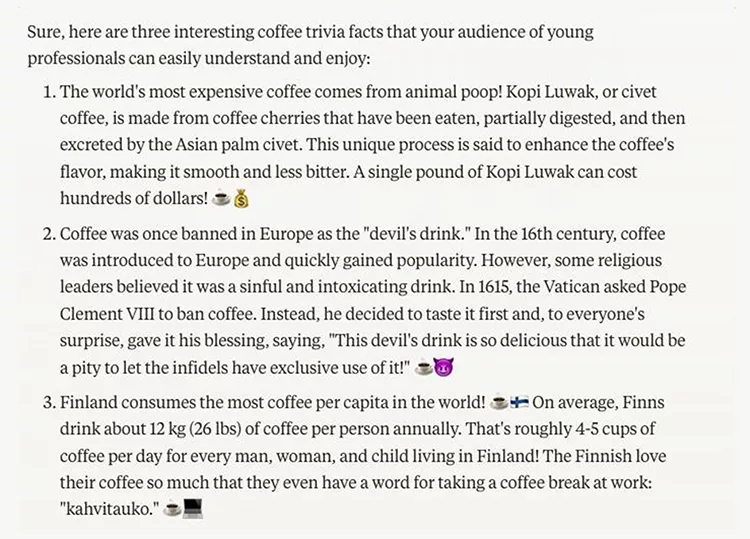
There’s no denying that building a website, especially if you aren’t a design pro or a technical wizard can feel like one of the hardest parts of starting or growing a business online.

But having a website for your business isn’t optional.

It’s a must-have if you’re looking to succeed.

So if you’re looking to save time and money while putting together an amazing website, artificial intelligence may be able to help.

AI website builders have come a long way when it comes to saving you time and making it easy to quickly experiment with different elements — without having to be a technical genius.

In this guide, we’re going to break down just how far they’ve come and how you can use an AI website builder to transform your business online.

How do AI Website Builders Work?

In the past, you needed to learn how to write code and how to design great visuals while making them all work together — while taking into account different devices, like laptops, desktops, and mobile.

Today, though, artificial intelligence can simplify that process for you, making it significantly easier to create and maintain your website.

With AI, you can input different preferences and information about your business, such as your industry, desired features, and design style, and then let an algorithm do the heavy lifting for you.

Then, the AI will analyze what you’ve input and begin generating a custom template tailored to those inputs and what you’ve said you need.

By using machine learning algorithms, the AI can suggest layouts, images, and content based on your industry and personal preferences.

Once completed, you can begin editing the content and layout to make it perfect for what you’re looking for.

The end result is a high-performing, professional website that’s been generated in a fraction of the time it would take a developer or designer to build it from scratch.

All while the artificial intelligence handles the heavy lifting, letting you focus on what you do best — running and growing your business.

Try Our AI Funnel Builder FREE Now!

Get Stunning Visuals, Without Graphic Design Skills

In terms of importance, the visuals you use on your website are just as important as the messaging you use to get people to take action.

You can have the most amazing copy and messaging in the world but if you put it onto a poorly designed website with bad visuals, your conversion rates will take a severe hit.

There’s an inherent trust involved when a visitor lands on your website and sees that you’ve taken the time to include high-quality visuals.

Good visuals help break up the text on your web pages and make your page less overwhelming while also guiding your visitor’s eyes where you want them to go.

The only problem, though, is that unless you’re a graphic designer and have a keen eye for detail, having these visuals designed for you can cost you hundreds (or even thousands) of dollars.

And attempting to create your own visuals from scratch can be incredibly time-consuming (not to mention frustrating), especially if you aren’t already confident in your design skills.

The solution here is using an AI website builder that can generate the visuals for you, making this process more cost-effective and efficient.

To give you an example of what’s possible, take a look at the Smart Funnel builder inside of ClickFunnels 2.0.

(Click here to give it a free test run)

We plugged in a description of the business and the target audience.

Here’s what it looked like:

Then, once the Smart Funnel AI went to work, it gave us 3 different options to choose from for the type of visual appeal we were going for.

Isometric 3D, Flat Illustrations, and Stock Photo Portraits:

Once we chose Flat Illustrations, the AI went to work and started creating the graphics we would be using on the landing page.

Here’s the graphics it generated:

An exercise guide with detailed illustrations, flexible training plans for any lifestyle, and nutrition tips for effective workouts and muscle recovery.

Looks good, right?

(A lot better than we could have done on our own!)

But it’s not just the Smart Funnel builder that’s capable of creating focused, high-quality visuals like the ones you see above.

Here’s an example of some visuals created by a tool called Framer:

A webpage in design mode featuring a layout with three columns, each containing text, icons, and images. An hourglass image and the number 500 are prominently displayed in multiple sections.

And if these visuals aren’t your style, all you have to do is adjust your input so that the AI knows more about what you’re looking for.

Then you can run the algorithm again to produce a new set of visuals based on what you learned or wanted to change with the first set.

The end result is a set of images that perfectly matches the look and feel you’re trying to achieve with your website while being visually appealing to the visitors who land on your site.

Generate High-Converting Copy and Content, Quickly

Another incredibly time-consuming part of the website-building process is writing high-converting copy.

Unless you’re an experienced copywriter or a great writer who truly understands the audience you serve, writing the copy for your website can be as equally as frustrating as the design and layout.

But if you know your audience well and your product is good, you can use artificial intelligence to sidestep the learning curve and produce great copy in a fraction of the time.

Without having to hire a copywriter who may not understand your audience & offer as well as you do.

AI can take your input and create amazing copy that resonates with your audience and helps entice them to take action with your business.

And tools like ChatGPT and Claude essentially give you a blank canvas to work from.

But, unfortunately, they don’t actually help you get started.

When you’re using tools like those, you’ll still need to understand what good copy looks like to ensure that what you’re putting on your pages is actually going to help you accomplish your goals.

With ChatGPT and Claude, you’ll need to provide prompts and guide the AI through creating what you want to create.

This can be hard to do if you’ve never written copy before.

But imagine being able to generate product descriptions that highlight your offer’s unique selling points, or blog posts that help grab attention, inform, and engage your readers — with just a few clicks.

And without having to be an expert copywriter.

That’s what is possible with AI-powered copywriting.

With it, you can create marketing materials that resonate with your audience and drive real results for your business without having to start from a blank canvas with a deep understanding of copywriting, marketing, and persuasion.

When you’re using a tool like the ClickFunnels 2.0 Smart Funnel builder, all you have to do is provide a bit of information about your business, audience, and offer, and let the AI do the rest.

Here’s an example of how simple it can be:

Registration form for ClickFunnels asking the user's role, purpose, target audience, and goal with dropdown selections filled as Health Expert, sell a product or service, executives, and get fit.

After plugging in a bit of information about our business, we were asked about the type of funnel we wanted to create.

Here, we chose the webinar funnel:

Then, the smart builder went to work.

It is understood that we’ll need a page created to accept registrations for our webinar.

Here’s the copy and page it created based on our inputs:

This happened in seconds — where it would have taken us hours to do it manually.

Then, in another AI website builder, we plugged in this prompt:

Here’s the copy it created that’s relevant to our target audience:

Brown background with text discussing mastering time management; includes a large number '500' and a briefcase icon. Mentions CEOs sharing time-saving secrets and highlights successful executives.

There are quite a few more advantages to using AI to write your copy for you, too.

For instance, AI website builders aren’t just generating copy that sounds good — they’re creating copy and content that is optimized for conversions.

From the ideal length and structure of your copy to the most effective phrases and calls-to-action, AI-generated content is designed to help guide your visitors toward taking the desired action.

Whether that’s making a purchase, subscribing to your newsletter, booking a consultation, whatever your goal is, AI-generated copy is created from the get-go with that goal being the entire focus.

For small businesses and startups that are budget-limited, this can completely eliminate the challenge of getting up and running as quickly as possible.

With AI website builders, though, you can easily update and refresh your website’s copy as your business evolves, ensuring that your site and funnels always feel current and relevant.

Try Our AI Funnel Builder FREE Now!

Experiment With Different Sales Funnels, Scale the Best Performers

Another great way to use an AI website builder is to analyze the performance of your funnels and help develop tests you can use to increase their conversions.

If you aren’t familiar with the term, a sales funnel is an extension of your website.

It’s a stripped-down version that guides people directly to the offers you make instead of letting them navigate through extra pages, like your contact page, blog posts, homepage, or other areas that could take their focus away from what you want them to do — convert into a new subscriber or customer.

With a sales funnel, in order to maximize its performance, you’ll need to experiment with different funnel and offer types.

For instance, if you run a coaching business, you might have two different types of funnels.

One might be a free webinar or masterclass while another could drive people directly to a paid workshop.

Your free webinar funnel would help people understand the problems they’re facing and give you an opportunity to show them how you can help solve those problems.

This would typically lead to them booking a sales call or directly purchasing one of your higher ticket offers or programs.

A paid workshop funnel, though, would help them solve a specific problem they’ve been struggling with while making it known that even more support is available through your other programs.

With this type of planning, there is no one-size-fits-all approach. You’ll want to test and experiment to figure out what works best with your audience and offers.

That presents a problem, though, because it means that you’ll need even more design, visuals, copy, and pages.

Which is where AI can help you experiment even faster.

With AI, you can create multiple different funnels without overthinking everything yourself.

Just input what you want and which funnel structure you want to test and let the algorithm go to work.

To give you an example, check out the ClickFunnels 2.0 Smart Funnel builder:

With the Smart Funnel builder, you can choose the type of funnel you want to create.

(Click here to give it a free test run)

For example, you can choose to build a squeeze funnel that makes it easier for you to drive people directly to your email list so you can stay in touch with them.

Here’s what it would look like when you use the Smart Funnel builder:

Then, if you wanted to test even more funnels, you could choose a webinar funnel, too:

The AI will create both funnels for you so you can focus on fine-tuning them to make them perfectly match your brand and offers.

Then you can start driving traffic to see which one performs better.

And all of this takes less than 10 minutes to fully build a funnel.

In theory, if you wanted one of each, it would take you less than an hour to build every type of funnel on the list.

Compare that to a human funnel builder, designer, and copywriter, who can take weeks (or even months) just to build a single funnel — and you start to see how epic AI has gotten.

With the ability to automate and optimize your funnels at scale, you can drive more conversions and revenue without having to invest countless hours into manual optimization.

Translate Your Site Into the Local Language of the Visitor

Artificial intelligence isn’t just used to build your website and funnels, either.

If you serve international audiences, it can help you cater to those audiences even easier.

You may have seen this in action before, too.

If you’ve ever been to a website that gave you the option to instantly translate the content or copy on the page and wondered how you can do the same for your website, an AI website builder is the answer.

A website screenshot showing IKEA's French homepage. Various categories like furniture, decoration, and kitchen are listed at the top. A Google Translate pop-up offers to translate the site from French to English.

It’s relatively easy to set up.

All you have to do is input the languages that you want to work with and the algorithm will do the translation work for you.

Here’s an example:

When you serve international audiences, this website localization can be huge for you.

By adapting your website’s content, design, and functionality to meet the linguistic, cultural, and functional expectations of a specific target market, you can open up new markets for your products and services.

The key, there, is getting the cultural and linguistic differences right.

With artificial intelligence, you can quickly and easily expand your reach into new markets without the delays and costs associated with traditional translation methods.

More importantly, though, localizing your website lets you analyze data based on search trends, user behavior, and cultural preferences.

AI-powered localization tools can help you automatically adapt your website’s content and design to resonate with each of your target markets.

This could include anything from recommending locally popular products and services to highlighting culturally relevant images and visual elements.

In the past, this was done via translation services.

Today, though, you can use artificial intelligence to make it as easy as installing a bit of code onto your website and funnel.

AI-Driven Chatbots for Customer Engagement

If you want to drive engagement on your website even higher, using a chatbot is a great way to stay connected with people who visit.

In the past, these needed to be operated by someone who could field the questions, provide answers, and guide your visitors where they needed to go.

With artificial intelligence, though, you can provide a live chatbot that’s available 24 hours per day, 7 days per week, and have it performing at a high level at all times.

Without sinking a ton of financial resources into it.

With an AI chatbot, you can use a separate service to plug one into your pages or use a website builder that offers them as an add-on.

If you’ve never experienced an AI chatbot before, or you’re curious how it can help serve you (and your visitors), there are quite a few benefits you can get from plugging in a bit of code.

One of the biggest is being able to personalize interactions your chatbot has with your visitors based on customer data and their personal preferences.

Long gone are the days of plugging in some generic responses and hoping they work for the majority of your visitors.

Now, chatbots are so real that people sometimes don’t realize they’re actually talking to a bot.

They’re able to provide product recommendations and upsell suggestions, helping you increase your revenue and average order value.

You can also use the chatbot to help guide customers through complex processes, such as account setup or troubleshooting.

Then, if needed, your chatbot can even escalate issues to a human support agent when needed.

To see what this all looks like in action, check this out.

We asked a chatbot on a website called Drift if it could help us with copywriting.

What you see below is NOT an FAQ stored in their chatbot database.

Instead, the chatbot can read all of the content on Drift’s website and use it to provide answers.

Here’s what it said:

Screenshot of a chat with Drift Bot. The user asks if Drift can handle copywriting. Drift Bot replies that they do not, but can offer guidance and best practices to improve the user's website copy.

Then here’s another example.

We asked the Kayak website chatbot for recommendations for a family holiday in Europe:

A map of Europe highlighting top family vacation destinations, including Paris, London, Rome, and Prague. A left panel features Prague with an image, flight, and accommodation options.

After seeing what it returned, we asked it to be more specific and only provide beach cities:

What it output were a few destinations that actually seem interesting for a family holiday.

And this all happened without human involvement.

Plus, these bots are available 24 hours per day, 7 days per week, so visitors can be served any time

They’re an incredibly cost-effective way to increase customer engagement on your website and, most times, you already have the content to plug in — you just need to plug it in.

An AI chatbot can do the work of hundreds of humans at a time, too, which can save you a ton of money when it comes to payroll each month.

Not to mention that the answers it provides are highly personal — which leads to better customer interaction and, ultimately, more business for you.

With each of these strategies combined, though, you can use artificial intelligence to quickly set up your website, have it fully functional, look great, and even be equipped with live support — without needing a large budget or being a technical wizard.

If you want to see just how powerful it can be, you can give the ClickFunnels 2.0 Smart Funnel builder a test run for a full 14-days, 100% free.

Click here to start your free trial now to experience just how far AI has come.

Try Our AI Funnel Builder FREE Now!

Thanks for reading 5 Ways An AI Website Builder Can Transform Your Business which appeared first on ClickFunnels.
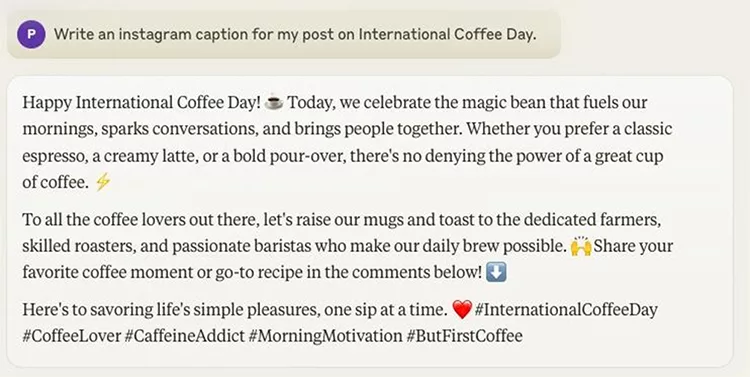
How Using AI Can Enhance Your Sales Pitches And Boost Conversions

Software Stack Editor · June 10, 2024 ·

The post How Using AI Can Enhance Your Sales Pitches And Boost Conversions appeared first on ClickFunnels.
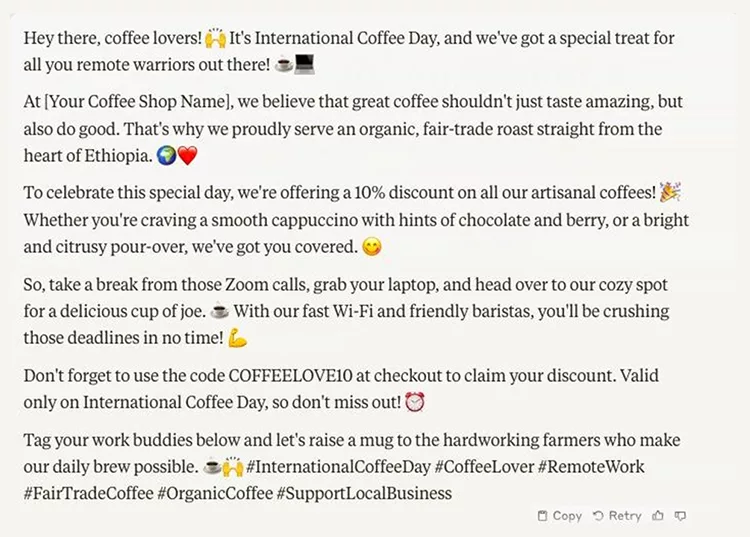
You’ve probably heard that artificial intelligence is rapidly expanding and growing exponentially, and you may be wondering how to use it with your sales pitches and funnels to maximize your potential. 

Well, just as the Internet changed the landscape of business and society in the early 2000s, sales teams and individuals who learn how to harness the power of AI are given a competitive advantage over their competitors.

But how can AI boost sales conversions, and how can you utilize AI to generate sales pitches that convert well? 

First and foremost, let’s discuss the crucial role of integrating AI into your sales funnels. 

It’s not just a trend but a necessity for sales professionals and entrepreneurs who want to stay ahead, and early adoption of this tech is critical to maintaining a competitive edge.

At ClickFunnels, we understand that finding and nurturing leads to become customers can already be challenging, especially in the ever-evolving landscape of digitally driven sales.

That is why, with our integrated sales funnels, incorporated with the power of AI, you can simplify the process to create seamless funnels highly optimized for converting and automating many other tasks.

AI provides teams and entrepreneurs with tools to simplify the sales process, improve conversions, and create better customer engagement. 

For instance, AI can automate lead generation and scoring, personalize email campaigns, and optimize sales funnels based on real-time data. 

The key benefits of incorporating AI into your sales pitch and funnels include: 

  • Personalization Scaled
  • Real-Time Data-Driven Insights
  • Efficient Lead Generation And Nurturing
  • Better CRM: Automation With Consistent Communication
  • Testing And Optimization
  • Enhanced Customer Experience
  • Predictive Analysis

By leveraging AI-generated sales pitches into your sales funnels, you’ll see significantly enhanced conversions, the ability to automate repetitive tasks, increased customer satisfaction, and, ultimately, more significant business growth.

Let’s examine how implementing AI into your sales strategies will boost your conversions and the benefits you receive with ClickFunnel’s new Smart Funnels tool.

1. Personalization Scaled

Three people analyzing a bar graph displayed on a large screen. One person is pointing to a high bar, another is looking at documents, and the third is gesturing towards the screen.

AI can allow you to personalize messaging to scale with minimal extra steps. 

By instantly integrating millions of data points, AI can analyze these various data points to understand user preferences and devise a personalized message that best resonates with every target in your sales funnel.

This personalization ability is easily scalable without any extra effort on your end. When you have specific messaging for every segmentation of your funnel, you will create better touchpoints and content that help your target move forward in their journey, ultimately leading to higher conversions. 

2. Real-Time Data-Driven Insights

Illustration of three people analyzing data on a large screen displaying charts, graphs, and data visualizations. One person stands with a notepad, one sits with a laptop, and one points at the screen.

Along with customizing and personalizing messaging, AI can track user behaviors, quickly understand their pain points, and instantaneously provide immediate solutions for those challenges.

Users of the ClickFunnels platform already know that it provides powerful analytics tools that help inform decisions by providing information on customer preferences, behaviors, and other vital metrics. Utilizing these data points has been proven to lead to better conversions. 

The integration of AI will allow you to track and analyze these data points faster and in real time. This will allow you to pivot your sales pitches to resonate more clearly and strongly with your target, leading to better conversions.

These insights instantly provide greater optimization while giving input about what pitches work and why, allowing you to optimize your sales funnels further. 

3. Efficient Lead Generation and Nurturing

Person seated at desk interacting with a touchscreen, surrounded by icons including charts, gears, and profiles, illustrating data analysis or project management.

Generating leads and nurturing them through your sales funnel can take time. 

With the new Smart Funnel tool, AI can swiftly identify potential new leads based on predetermined and historical data before prioritizing each based on their likelihood of conversion. 

This efficient process saves you time and effort, allowing you to focus on more strategic tasks converting.

Equipped with a list of probable conversions, AI can tailor pitches for each stage of the sales funnel and focus on high-potential leads, saving you time and money.

With these higher-probability leads, you can run more effective nurturing campaigns, further enhancing your conversion rates and sales.

4. Better CRM: Automation With Consistent Communication

Maintaining relationships, follow-ups, appointments, and important reminders can be challenging. 

The CRM tool with ClickFunnels is top-of-the-line for sales funnels and fueled with AI; you have better customer relationship management capabilities to automate data entry and customer interactions and provide valuable insights into your messaging. 

And with better insights into customer behaviors and preferences, you can shape content to resonate better with people in your sales funnels, leading to higher conversions. 

What’s more, an AI sales pitch generator will create and deliver highly personalized sales pitches for you automatically and consistently through every step of customer interaction and every channel, from social media and chatbots to email, so that no potential customer gets lost. 

Integrating AI in CRM and your sales pitches will reduce manual effort, reduce redundancies and loss, create a consistent brand message regardless of the platform, and generally free you up to focus on more critical tasks in your process.  

5. Testing and Optimization

A group of people standing next to a computer.

If you’ve been involved in digital sales for any period, you’re probably familiar with the tried-and-true optimization method: the standard A/B testing of running various similar messages to see what garners the best response rates. 

You also know this process can be tedious and time-consuming to create, implement, and analyze, during which you’re bound to lose some people in your sales funnel. 

However, AI’s power is instantaneous and can process millions of data points in a second. 

Utilizing the new Smart Funnel AI tool in your sales pitch generation will facilitate on-the-spot A/B testing and immediately implement those higher-performing pitches.

For example, AI can test different variations of a sales pitch, analyze the response rates, and automatically implement the best-performing version, all in real-time. 

With the ability to iterate on the spot and immediately improve your sales pitches, AI is a powerful tool to generate much higher conversions than traditional testing methods. 

6. Enhanced Customer Experience

Illustration of a person sitting at a desk, holding a smiley face sign. Surrounding them are emojis, rating stars, chat bubbles, a shopping cart icon, and a package on the desk.

The more insights you have into a customer’s pain points, interests, and behaviors, the better you can shape your pitches and messaging. 

Through testing methods and tracking, you can deeply understand your customer’s process and journey to personalize your pitch to them. 

ClickFunnels provides a customer-centric approach to sales funnels, including a dedicated Customer Center where your subscribers and paying members can access all their purchased materials. 

With AI assistance to collect customer insights and feedback, you can iterate your content and sales pitches to align with customer expectations, leading to more seamless interactions and enhancing customer experience. 

This process will enhance your customer experience. It involves AI collecting and analyzing all customer data so that their preferences and feedback are best implemented into your sales pitches for better resonance.

How AI uses natural language processing (NLP) to understand your customers’ needs and personalize will better equip them to address their concerns and emotional responses.

This improves customer service and enhances their overall customer experience, increasing conversion and retention rates. 

7. Predictive Analysis

Two people analyze data on a large screen. One person is standing and pointing at the screen. The other person is seated with a laptop on their lap. Bar and pie charts are displayed on the screen.

One of your greatest assets is gaining repeat customers; predictive analysis can help you assess who may be willing to repeat customers. 

The reasons that repeat customers matter are that repeat customers are shown to:

  • Spend more money
  • Easier and cheaper to sell to 
  • New customers cost more to acquire
  • Often, repeat customers will help promote your business
  • Long-term growth is built on retention

Predictive analysis utilizes multiple data points about a customer’s behaviors, such as historical behaviors, preferences, and purchasing patterns, to determine future interests and actions. 

Crafting sales pitches using predictive analysis will help you generate pitches that anticipate customer needs and interests before they arise.

This will allow you to engage with your target customers proactively and lead to higher conversion opportunities. 

Using AI in sales pitches will simplify the sales process, optimize your sales funnels for even higher results, and increase overall sales opportunities.

Combining efficiency, personalization, and data-driven decisions that lead to higher optimization will significantly increase your conversion rates. 

The ability to highly target each segment, deliver timely, consistent messaging and sales pitches that resonate with each customer in your funnel, and predict their future behaviors is a powerful tool in your toolbox as an entrepreneur, driving more growth opportunities and sales outcomes. 

Thanks for reading How Using AI Can Enhance Your Sales Pitches And Boost Conversions which appeared first on ClickFunnels.
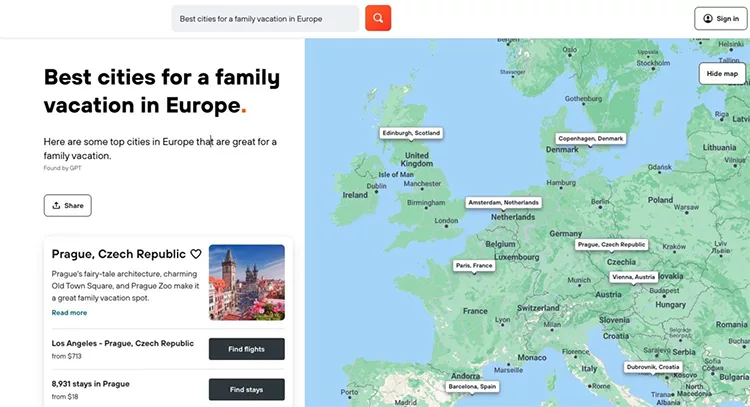
How To Use AI Sales & Marketing To Transform Your Business With ClickFunnels New Smart Funnels

Software Stack Editor · June 10, 2024 ·

The post How To Use AI Sales & Marketing To Transform Your Business With ClickFunnels New Smart Funnels appeared first on ClickFunnels.
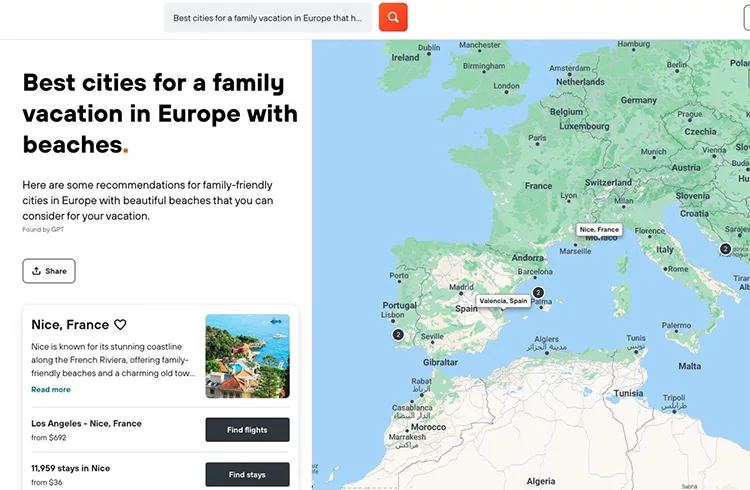
Discover how AI sales & marketing can revolutionize your business with intelligent strategies and real-time insights.

If you’re in the digital business or even traditional retail. In that case, finding tools and tactics that boost your operations, performance, and conversions can be a huge difference between succeeding and growing.

Just as the internet transformed the world of commerce, marketing, and sales opportunities, one of the most transformative innovations is the advent of AI, or artificial intelligence, in business. 

ClickFunnels is renowned for providing state-of-the-art sales funnels for businesses and entrepreneurs in every industry to attract potential customers to your website and drive into paying customers.

A ClickFunnels promotional webpage offering a 14-day free trial, highlighting ease of use, versatility for businesses, and effective customer conversion. The top banner mentions a special offer and challenge.

We understand that one of the most excellent innovative tools out there right now is utilizing AI. 

Equipping yourself with solutions and tools that give you a competitive advantage in the fast-paced world of online sales by harnessing and utilizing the power of AI is a surefire way to boost your business, increase your sales, and transform your business. 

But what exactly is AI, and why is it so powerful? 

Understanding how to utilize AI’s power means that you first need to understand what it is. 

Artificial Intelligence is defined as computer algorithms that can process and learn from data, much like a person, but at a much faster processing speed and power than a person would.

The prevalence and popularity of these algorithms is growing exponentially. As more organizations utilize AI in their operations, if you’re not one to adopt this powerful tech, you’ll find it increasingly difficult to keep up. 

AI can boost your company’s performance in several areas, from making operations more efficient to enhancing your marketing and improving your conversions, so learning the power of AI for sales and marketing is crucial. 

But don’t worry–if you don’t know where to begin, this guide is designed to help you understand the importance of AI in your sales and marketing and ways to utilize this powerful tool to boost your business. 

We’ll discuss AI’s importance for sales and marketing, how businesses and entrepreneurs can benefit from its implementation, and strategies for boosting overall conversions through more effective, optimized sales funnels. 

The Importance of AI for Sales and Marketing

Two people interact with a large screen displaying a friendly robot. One person sits at a control panel, while the other stands. Charts, graphs, and data are visible on the screen.

As more businesses seek a competitive advantage in the increasingly crowded and competitive online sales marketplace, AI can provide indispensable advantages, revolutionizing how businesses operate. 

Integrating AI into the sales process will heighten and accelerate your business’s sales cycles from acquisition to conversion, giving you more time and resources to dedicate elsewhere. 

What’s more, with better data and analytics, AI can help you optimize your messaging so that you can better target and reach every segment of your sales funnel, heightening your sales strategies and boosting their performance. 

From better decision-making to improved performance, AI allows businesses to streamline automated tasks, freeing up time and resources to devote to more important tasks. 

An example of how AI can improve your business performance is with customer information acquisition. When you run a campaign, collecting and entering customer information can be tedious, often with mistakes and redundancies that can slow down your ability to convert your target lead to a customer. 

AI will find, capture, and convert your target customers automatically and without errors, creating personalized touchpoints and offers that will further enhance your conversions. 

By improving the process, you can also create more personalized content at scale to enhance the customer experience and engagement. This will help improve retention rates for future offers and pitches and make your communications more impactful and resonate.

With the ability to create more personalized communication and touchpoints, you can create better-performing, high-converting sales funnels to accelerate your business growth at scale.

By injecting AI into your sales and marketing, your business can expect easier lead acquisition, quicker sales cycles, improved resource allocation, and develop better sales strategies that have better resonance and effectiveness. 

How AI Can Benefit Businesses of All Sizes

Illustration of a robot working on a laptop, holding a circular graph with a dollar sign. Various data charts and gears are displayed in the background. Stack of coins is placed beside the robot.

As you can see, the power and importance of utilizing AI in your business make understanding the benefits of this powerful tech a no-brainer. 

What was once the stuff of imagination and science fiction is becoming much more of a reality than ever before; in other words, the world of the future and robots taking over are much more a reality with AI than ever before.

Businesses of all sizes that adopt the benefits of utilizing this tech will give you a powerful tool to boost sales and make operations even more efficient. 

Moreover, AI will help you find, nurture, and convert customers, identifying additional revenue streams that will optimize your sales funnels, improve your marketing, and quickly scale your business.

Some of the critical areas that utilize the power of AI in business include; 

  • Automation of routine tasks
  • Enhanced insights into customer behaviors
  • Improved decision-making
  • Optimized sales funnels

Let’s examine how AI, specifically ClickFunnels’ new Smart Funnels tool, will improve all aspects of your business performance and customer engagement.

Automation of Routine Tasks

One of the most advantageous benefits of using AI in your business is the ability to automate many of your routine tasks. 

Need to set appointments, upload client information, and create reminders? Done for you. 

Do you need time to manage your customer data pool? Easily set your CRM and watch your outreach through multiple touchpoints operate with a simple button click. 

Automating your routine tasks allows you to set up powerful workflows to segment your marketing and reach each customer personally. 

You can also efficiently conduct A/B testing to optimize your results. 

AI has proven so influential in automating routine tasks that even fast-food franchises have started to utilize robots to take, process, upsell, and even make food orders, including making personalized suggestions based on prior customer behaviors. 

In fact, ClickFunnels workflows using the new Smart Funnels generated by AI will make your workflows so simple that you can collect leads, improve conversions, and grow sales on autopilot, making it easier than ever to scale your business faster. 

The reality is that AI has the power to improve efficiencies within your business operations that are impossible for humans to match.

Still, this benefit will help eliminate mundane, repetitive, and manual tasks, allowing you to rededicate resources for a more significant impact. 

For example, in software development, AI can reduce the labor needed to test data code in software programming, which frees developers to focus on more engaging tasks. 

Another example is customer relationship management, essential for real estate agents to build trust and rapport with potential clients. 

With AI tools like ClickFunnels’ CRM tool, real estate agents can build powerful landing pages with better reach and capture more leads. 

These landing pages will integrate with your CRM to have accurate data entry, automated interactions, engagement, appointment setting, and follow-up, freeing the agent to devote time to meeting with clients and writing contracts. 

Enhanced Insights Into Customer Behaviors

Another key area where AI can improve business performance is by collecting, processing, and analyzing large volumes of data about customer behaviors and preferences. 

Every touchpoint can be automatically A/B tested for optimal performance, and those insights can be immediately implemented into personalized messaging and offered for better conversions.

With more data and better analysis of those metrics, each aspect of your customer acquisition and segmentation will operate more efficiently and be better optimized for ultimate conversions, boosting your overall sales. 

As the algorithms analyze customer behaviors and preferences, they can create future touchpoints and offers immediately and in real-time based on predictive analytics. 

This is a complicated way of saying that AI can make offers that your customers will want before they know they want them. 

What is predictive analytics? In layman’s terms, predictive analytics is an aspect of advanced analytics that makes predictions about future outcomes based on historical data, such as consumer behavior and preferences. 

Businesses that can understand and utilize predictive analytics can provide customers with offers and solutions for every customer in every stage of the sales process. 

By utilizing this data, you can decrease unnecessary waste from trial-and-error, lower costs, boost productivity, and improve your overall decision-making processes.

Improved Decision-Making

With more data collected and processed faster, you’re able to pivot quickly and adroitly to offer quality offers to every segment of your sales funnel. 

The power of AI creates real-time reporting, giving you immediate results for campaigns, touchpoints in your marketing, and performance results for each aspect of your sales funnel. 

And armed with analytics from ClickFunnels, you can better track the performance of your online business, the aspects that are performing well, where it could be improved, and solutions to boost those areas for greater performance. 

In the past, performing all this collection and analysis before creating and implementing new strategies could take hours, days, weeks, and even years to perfect. 

But AI can do all that instantaneously, reducing labor hours and freeing up valuable resources to focus on other, more critical tasks. 

There’s a programming concept that garbage in equals garbage out, meaning that the outcomes of what is processed are only as good as what is inputted. 

AI can filter out unnecessary, redundant, and harmful data points to further optimize your sales funnel for better performance. 

The more effective data collection and processing, the better decision-making you have to enhance your sales and marketing strategies.

AI shortens sales cycles while improving messaging effectiveness. This will further enhance your decision-making toward additional strategies, improving overall performance. 

Optimized Sales Funnels

Finally, AI tools like ClickFunnels’ new Smart Funnels tool will help you create optimized sales funnels with personalized messaging for all your customers at every stage of their buying journey. 

Getting the most out of your sales funnels, improving performance for the short haul, and tracking the touchpoints that resonate the most will increase long-term growth and conversions, but those things take time and resources to develop and track accurately. 

This is where AI comes to the rescue. Like a superhero who arrives at just the right time, AI can supercharge your funnels for better engagement and increased conversions. 

Processing and analyzing large volumes of data with AI will provide crucial insights into tracking short—and long-term performance and results in real-time, gaining important insights into the overall performance of your funnels and ads. 

By equipping your decision-making with better analytics, you can create even more effective funnels, messaging, and offers to optimize funnel performance further and help your decision-making for future offers and campaigns. 

The power of AI will quickly test and create results that improve the performance of every aspect of your sales funnels, further enhancing performance and ultimately increasing your revenue. 

How AI Can Boost Your Sales Funnel Performance

A person using a smartphone sits on a pile of money alongside a cheerful robot, surrounded by financial symbols and a screen displaying a rising graph.

The integration of AI as a tool has revolutionized the opportunities entrepreneurs and businesses of all sizes have to improve performance and scale their growth quickly and easily.

By leveraging algorithms, dynamic machine learning, and the exponential power of real-time analytics, peak-performing sales funnels can significantly improve engagement and drive sales. 

AI can boost your sales funnel performance in a variety of ways, including:

A flowchart with five steps listed: Lead Generation, Qualifying Leads, Lead Nurturing, Assisting Sales, and Predictive Analysis. Each step is depicted in different colored circles on a horizontal line.
  • Lead generation
  • Qualifying leads
  • Lead nurturing
  • Assisting sales
  • Predictive analysis

Lead generation: Traditional lead generation can take time and resources, but AI can quickly analyze the type of messaging needed to attract leads that are most likely to convert.

Qualifying leads: Another area where AI can boost your funnel performance is with data-driven insights.

It can predict which types of leads are best suited for your products and offerings, allowing you to market to different segmentations, better qualify your leads, and further boost conversions.

Lead nurturing: One of the greatest benefits of implementing AI into your efforts is that, in the blink of an eye, AI can segment your leads and match each one with a personalized message that resonates with their customer behavior and preferences. 

It takes away the time and effort typical of lead nurturing without sacrificing the human element, letting you build your customer base and engagement. 

Assisting sales: By automating specific processes like data entry, information capture, and analyzing sales insights, AI can help you eliminate tedious tasks and focus on developing relationships and closing sales. 

Incorporating chatbots and virtual assistants into your sales funnels provides your customers with 24/7 access to premier customer service and support, and the customization available for you to create prompts will further help drive your funnel conversions. 

Predictive analysis: The ability to analyze vast amounts of historical data and then provide solutions based on user preference and intent will give you a huge advantage in delivering the type of content, products, and solutions your targets want. 

This will help you predict future outcomes in anticipation of their wants and needs. 

This aspect is a game-changer for targeting and retargeting efforts and gives entrepreneurs and marketers an incredible opportunity to be known as a problem-solver for their customers. 

Why Does Predictive Analysis Matter? 

Your better insights about what resonates with your target customers will help you strategize the types of content and offers to create, building better brand loyalty and customer engagement over time. 

This will be like rocket fuel for your marketing. The better your marketing, the greater your reach, leading to increased opportunities to convert that broader reach to buying customers.

Another critical factor is that when you incorporate the power of AI into your sales funnels, the insights you gain will help you better anticipate your customers’ needs and interests, create more personalized messaging through multiple touchpoints, and further increase your conversion opportunities. 

There are a few ways that AI, such as that built-in with ClickFunnels, can customize and personalize your messaging for greater reach and resonance, drastically improving your sales funnel performance. 

With ClickFunnels, you can quickly install and build a highly optimized sales funnel that allows you to create as broad a reach for your target customer as needed, tailor your messages to them, increase your conversions, and improve sales.

Another aspect that AI will boost your sales funnel performance is through predictive analytics so that you can build long-term growth by anticipating customer demand and interest and tailoring offers, products, and services to match your customer’s needs. 

The future is here. The power of AI in marketing and sales, from every touchpoint in a buyer’s journey through the sales funnel process, will improve performance and increase conversions, boosting a business’s sales and revenue.

If you’re interested in having the power of AI work for your sales funnel, ClickFunnel’s new AI-powered tool is a sure bet. 

Check out the new Smart Funnels tool for free and see how AI and ClickFunnels can propel your business forward!


Thanks for reading How To Use AI Sales & Marketing To Transform Your Business With ClickFunnels New Smart Funnels which appeared first on ClickFunnels.
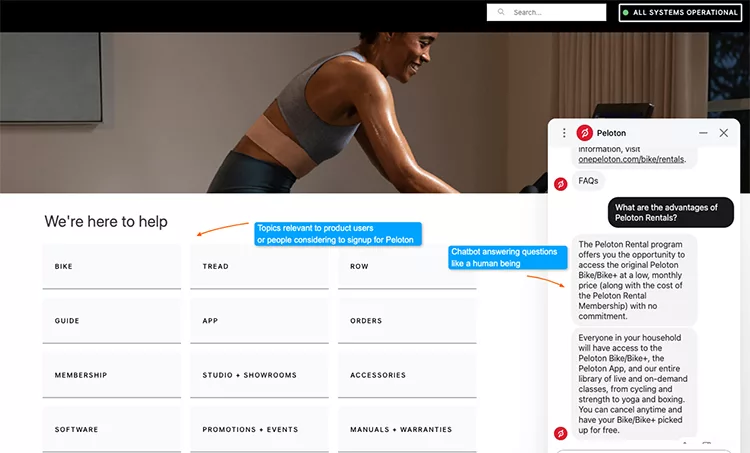
15 FAQs About AI Website Creation

Software Stack Editor · June 3, 2024 ·

The post 15 FAQs About AI Website Creation appeared first on ClickFunnels.
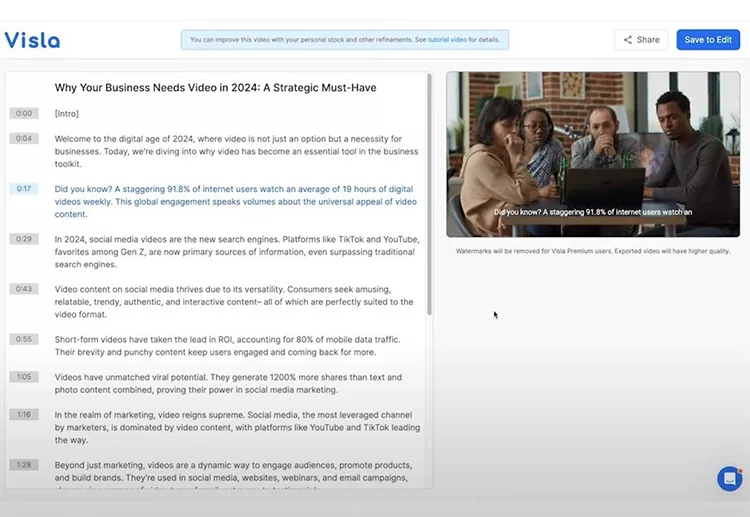
Today we are going to answer 15 frequently asked questions about AI website creation. 

We will start by discussing what you need to know about AI in general, then move on to what you need to know about AI website builders in particular and finally talk about AI sales funnel builders that you can use to launch your online business without a website.

You can either read this article in its entirety to get a comprehensive overview of this subject or use the table of contents to jump straight to the questions that interest you the most!

Table of Contents:
  • FAQ #1: What is AI?
  • FAQ #2: What is the Difference Between Specialized Artificial Intelligence and General Artificial Intelligence?
  • FAQ #3: What is Generative AI?
  • FAQ #4: What are Large Language Models?
  • FAQ #5: What are the Limitations of Large Language Models?
  • FAQ #6: What are AI Website Builders?
  • FAQ #7: How Do AI Website Builders Work?
  • FAQ #8: Do You Need to Know How to Code in Order to Create a Website With an AI Website Builder?
  • FAQ #9: What are the Advantages of Using an AI Website Builder Instead of a Regular Website Builder?
  • FAQ #10: What are the Limitations of AI Website Builders?
  • FAQ #11: How to Choose an AI Website Builder That’s Right for Your Business?
  • FAQ #12: What are AI Sales Funnel Builders?
  • FAQ #13: How Do AI Sales Funnel Builders Work?
  • FAQ #14: What are the Advantages of Using an AI Sales Funnel Builder Instead of a Regular Sales Funnel Builder?
  • FAQ #15: Should You Start by Building a Sales Funnel or by Building a Website?

FAQ #1: What is AI?

“AI” is short for “Artificial Intelligence”.

“Artificial intelligence” is a term that refers to machine intelligence, primarily their ability to learn from previous experiences and solve novel problems that they haven’t encountered before.

If you are interested in the current state of artificial intelligence research and want to learn how to use AI tools to maximize your productivity, you might want to consider taking Google’s AI Essentials course.

This course is meant for beginners so it doesn’t require any prior experience. It’s 9 hours long but you can complete it at your own pace.

Productivity YouTuber Jeff Su made a 10-minute summary of this course:.

FAQ #2: What is the Difference Between Specialized Artificial Intelligence and General Artificial Intelligence?

The term “artificial intelligence” might invoke images of sentient machines from movies like “The Matrix”, “Ex Machina” and “Her”.

That type of machine intelligence that is either comparable to humans or surpasses us in terms of general intelligence is called “general artificial intelligence”.

At this point in time, general artificial intelligence only exists in science fiction, although some prominent AI researchers believe that we might see the dawn of it within the next decade.

Meanwhile, the type of machine intelligence that we have now is called “specialized artificial intelligence”: AI that can perform well in either a single skill or across a range of skills but is not comparable to humans in terms of general intelligence.

For example, AI chess apps have surpassed us in chess a long time ago, but despite being able to beat the best chess players in the world these apps cannot do anything outside of that domain.

The current AI craze is fuelled by large language model breakthroughs that led to the creation of apps like ChatGPT.

Unlike AI chess apps, large language models can perform well across an extremely broad range of skills, from writing poems to coming up with recipes to coding websites. 

However, they are still specialized and not comparable to humans in terms of general intelligence. 

The reason why understanding this distinction between general artificial intelligence and specialized artificial intelligence is so important is that you need to have realistic expectations when it comes to AI. 

AI software that we have right now can help you become more productive if you learn how to use it properly, but you need to remember that these apps aren’t sentient machines from the movies!

FAQ #3: What is Generative AI?

As Helen Toner explains in her article “What Are Generative AI, Large Language Models, and Foundation Models?”: generative AI is a type of AI whose primary purpose is to generate content. 

She contrasts generative AI to other types of AI that have different primary functions such as data classification, data grouping and choosing actions. 

Examples of generative AI include some of the most popular AI apps out there such as ChatGPT, Dall-E and Copilot.

AI website builders tend to be powered by generative AI technologies that they use to generate code for websites based on the information that the users provide. 

FAQ #4: What are Large Language Models?

In her article, Helen Toner also explains that large language models (LLMs) are AI systems that work with language. In other words, they are a type of generative AI that can generate text. 

The most popular LLM is undoubtedly Open AI’s ChatGPT but there’s also Anthropic’s Claude and Google’s Gemini. 

Then there are various open source LLMs such as Meta’s LLaMA, Google’s BERT and BigScience’s BLOOM. 

If you want to learn more about LLMs, consider watching this introductory lecture by the computer scientist and one of the founding members of OpenAI Andrej Karpathy:

FAQ #5: What are the Limitations of Large Language Models?

The main issue with large language models is that no one knows how they work. 

Basically, AI researchers feed data to large language models, and then large language models spit out data back in response to user queries.

While the researchers can see the data that comes in and the data that comes out, they cannot see what is happening inside these large language models. LLMs are black boxes. 

Consequently, since the researchers who are working on large language models don’t understand how they generate data, they cannot ensure its accuracy and solve the problem known as “hallucinations”.

“Hallucinations” is the LLM tendency to just make things up and then confidently state them as facts, like when ChatGPT made up at least six court cases that did not exist. 

Moreover, researchers also cannot ensure that their LLMs will behave well when interacting with users. For example, back in February 2024, ChatGPT started spouting gibberish out of the blue. 

Finally, researchers are also unable to put reliable guardrails in place, which makes LLMs easy to jailbreak. Say, one Twitter user managed to persuade a ChatGPT-powered Chevy dealership chatbot to sell him a car for $1. 

And just to be clear:

We are using ChatGPT examples because it’s the most popular LLM out there, but these problems aren’t specific to ChatGPT, they are inherent to all LLMs due to the inscrutability of these AI systems.

In short, LLMs are completely unreliable and that is unlikely to change anytime soon, so if you want to use them in your business, you need to keep that in mind and act accordingly:

  1. Have a web developer manually inspect the code of your website if you are using an LLM-powered website builder.
  2. Make sure that all content generated by LLMs – website copy, sales copy, blog articles, etc. –  is fact-checked and edited by a human with relevant domain expertise.
  3.  Do not use LLMs in any capacity that would involve unsupervised interactions with customers. Meaning, no LLM-powered chatbots of any kind!

Remember, while the idea of complete automation may be appealing, that is simply not possible at this point in time due to current LLM limitations.

We still need humans to supervise LLMs!

FAQ #6: What are AI Website Builders?

AI website builders are apps that use artificial intelligence to generate websites.

There are two types of AI website builders out there:

  • Established website builders that added AI-powered features to their existing software.
  • New website builders that were designed as AI website builders and have been using AI from day one. 

Also, remember how back in 2017-2018 software companies started slapping the term “blockchain” on everything, even stuff that was completely unrelated to the blockchain technology? Well, the same is happening now with AI.

So beware of the “AI website builder” companies that don’t use artificial intelligence at all, yet feature the term “AI” in their marketing materials in an attempt to capitalize on the current AI hype!

FAQ #7: How Do AI Website Builders Work?

It’s probably safe to say that the vast majority of AI website builders are powered by popular LLMs, primarily by ChatGPT.

You see, creating your own LLM is extremely expensive due to the amount of computational resources required. 

For example, according to Wired, ChatGPT-4 was likely trained using trillions of words of text and thousands upon thousands of powerful computer chips. It’s estimated that the process cost over $100 million.

Needless to say, most software companies don’t have that kind of money lying around, so the only way they can add AI capabilities to their products is to integrate existing LLMs!

FAQ #8: Do You Need to Know How to Code in Order to Create a Website With an AI Website Builder?

No, you don’t.

The whole point of website builders is to enable people who don’t have any web development skills to build websites.

However, as we advised previously, if you are using an AI website builder then you might want to hire a web developer to manually inspect the code of your website just in case. 

FAQ #9: What are the Advantages of Using an AI Website Builder Instead of a Regular Website Builder?

The main advantage of using an AI website builder instead of a regular website builder is the speed of development. 

In order to create the first draft of your website with regular website builders, you need to choose a template, add pages, customize those pages, etc.

Meanwhile, with AI website builders, you can simply provide a prompt that describes what you have in mind and the software will generate the first draft of your website for you. 

Moreover, while regular website builders usually only handle the design and development of your website, AI website builders typically also generate the copy for it.

This means that AI website builders can enable you to create and deploy websites much faster than you would with regular website builders. 

That makes AI website builders particularly appealing to entrepreneurs who want to be able to quickly test various business ideas and to agencies that regularly need to build websites for their clients.

FAQ #10: What are the Limitations of AI Website Builders?

Since AI website builders tend to be powered by LLMs, all of the previously discussed LLM limitations apply to them. 

Meaning, if you want to use an AI website builder to create your website, you should:

  • Hire a web developer to manually inspect your website’s code just in case.
  • Carefully edit, fact-check, and proofread all AI-generated text such as website copy.
  • Make sure that AI-generated branding elements, such as the company logo, aren’t copyrighted. 

Also, if the website builder allows you to add an AI chatbot to your website, don’t do it. Never let LLM-powered chatbots interact with your customers unsupervised!

Note that you can still use chatbots if you want to, just make sure to go with the regular ones that you can program with conditional “if/then” logic. This approach can help you reduce customer support workload without running the risks associated with LLMs! 

FAQ #11: How to Choose an AI Website Builder That’s Right for Your Business?

Here are some of the factors that you might want to consider when evaluating various AI website builders:

  • Is this an established software company? It’s probably better to go with a well-known website builder that’s been around for years rather than a ChatGPT wrapper that launched last Tuesday. 
  • What features does this website builder offer? All AI website builders have the same core functionality that allows you to generate websites with AI. But you want to look at what additional features each app offers, whether you can benefit from those features, and how those features would fit into your overall business workflow. Generally speaking, it’s best to get all the features that you need from as few apps as possible, ideally from a single platform. 
  • What integrations does this website builder offer? AI website builders can vary wildly in terms of integrations: some don’t provide any integrations at all while others are easy to integrate with dozens of apps. You should also pay attention to whether or not a particular website builder provides a Zapier integration. Ideally, you want to use an AI website builder that can be easily integrated into your business workflow. 
  • What pricing plans does this website builder offer? AI website builders also vary a lot in terms of pricing: typically, the more features a website builder offers, the more expensive it is. It’s important to consider how the price of a given website builder would fit into your overall software budget. 
  • How do you like the user interface of this website builder? This is especially important if you intend to create more than one website. Consider signing up for free trials of several website builders to see how they compare in terms of user interface. 
  • What do other people say about this website builder? We also recommend checking out user reviews on websites like Capterra, TrustRadius, and G2.  Don’t put too much faith in YouTube reviews because they tend to either be sponsored or feature affiliate links, which means that content creators often have a financial incentive to promote specific website builders. 

FAQ #12: What are AI Sales Funnel Builders?

AI sales funnel builders are apps that use artificial intelligence to generate sales funnels. 

There are two types of AI sales funnel builders:

  • Established marketing platforms that harnessed AI to enhance their existing funnel-building functionalities. 
  • New funnel builder apps that were designed as AI funnel builders and have been using AI from day one. 

Also, just like with AI website builders, you need to be wary of “AI sales funnel builders” that don’t use AI at all and are just capitalizing on the current AI hype!

FAQ #13: How Do AI Sales Funnel Builders Work?

It’s probably safe to say that most AI sales funnel builders out there are powered by popular LLMs, primarily by ChatGPT. 

That is especially likely to be the case when it comes to AI sales funnel builders that generate not just the sales funnel itself but also its copy, as that functionality requires using generative AI.

Consequently, since AI sales funnel builders tend to be powered by LLMs, you need to keep the previously discussed LLM limitations in mind when using them.

Most importantly, you want to edit, fact-check, and proofread all AI-generated sales copy! 

FAQ #14: What are the Advantages of Using an AI Sales Funnel Builder Instead of a Regular Sales Funnel Builder?

The main advantage of using an AI sales funnel builder instead of a regular sales funnel builder is the speed at which you can create your funnels.

For example, you can generate the first draft of your sales funnel in just 10-15 minutes with our ClickFunnels 2.0 AI sales funnel builder. That kind of speed is not possible with regular sales funnel builders!

FAQ #15: Should You Start by Building a Sales Funnel or by Building a Website?

It’s true that you need a website if you want your business to be taken seriously in 2024. 

However, before you start worrying about that, you should make sure that there’s a demand for your product or service to begin with!

And the fastest way to do that is to build a sales funnel and start driving traffic to it with paid ads. 

This will allow you to get market feedback, learn if your offer resonates with your target audience, and determine whether it’s worth pursuing this business idea. 

If it turns out that your dream customers aren’t interested in your offer, you can drop that idea, come up with something better, build a sales funnel for it, and see if there’s demand for your new offer. 

In all likelihood, you will probably have to repeat this process several times until you find a winning offer. That’s completely normal and to be expected!

Fortunately, with our ClickFunnels 2.0 AI sales funnel builder, you can whip up new sales funnels really fast. 

That makes it easy to experiment with various ideas, test different offers and learn from market feedback. Keep at it until you develop an irresistible offer that has a product-market fit.

Once you are sure that your dream customers want what you’re selling, you can use ClickFunnels 2.0 website builder to create a website for your company so that it would look like a legitimate business!

A screen displaying a welcome message from ClickFunnels and a prompt to start building a sales funnel, with dropdown menus for user role, business type, target audience, and objectives.

With our AI sales funnel builder you can generate the first draft of your sales funnel in just 10-15 minutes!

Try ClickFunnels 2.0 Risk-Free!

Let’s be real:

We are biased in favor of our software. 

So we understand if you take what we say about it with a grain of salt.

Fortunately, we have a free 14-day trial, so you don’t have to take our word for it. 

You can go and see ClickFunnels 2.0 for yourself without any risk!

So what are you waiting for? 🧐

Start Your Free Trial Today

Thanks for reading 15 FAQs About AI Website Creation which appeared first on ClickFunnels.
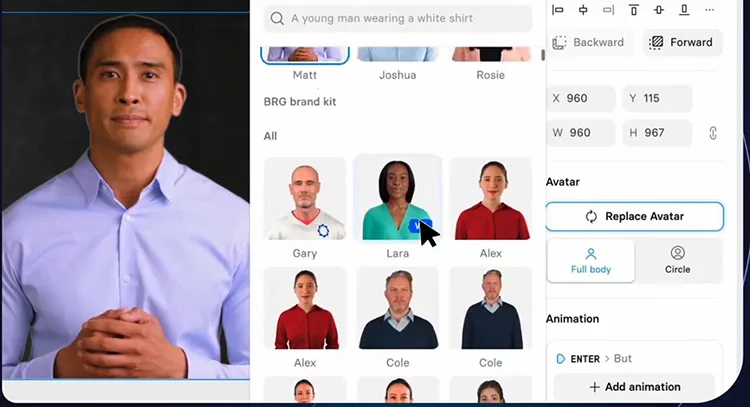
How To Clone Or Copy Your Website With An AI Tool

Software Stack Editor · May 29, 2024 ·

The post How To Clone Or Copy Your Website With An AI Tool appeared first on ClickFunnels.

Today we want to talk about using AI tools to clone or copy existing websites.

We will start by providing an overview of artificial intelligence: what AI is, what is the current state of AI technologies and what are the AI limitations that you need to be mindful of.

Then we are going to discuss AI website builders, the advantages of using them instead of regular website builders, and the pros and cons of cloning existing websites with these tools.

Finally, we will explain why we believe that you don’t need a website in order to make money online, why building one is probably a waste of time if you are just starting out, and what you should do instead!

Table of Contents:
  • What You Need to Know About Artificial Intelligence (AI)
    • What is Artificial Intelligence?
    • What’s the Difference Between General Artificial Intelligence and Specialized Artificial Intelligence?
    • What are Large Language Models?
    • What are the Limitations of Large Language Models?
    • Examples of Large Language Model Use Gone Wrong
    • How Should You Use Large Language Models in Your Business?
    • Never EVER Let Large Language Models Interact With Your Customers!
  • What You Need to Know About AI Website Builders
    • What are AI Website Builders?
    • What are the Advantages of Using an AI Website Builder Instead of a Regular Website Builder?
    • How Should You Use AI Website Builders in Your Business?
    • How to Clone an Existing Website With AI Website Builders
    • The Pros and Cons of Using AI Website Builders to Clone Existing Websites
  • How to Choose the Right AI Website Builder for Your Business
  • Hot Take: You Don’t Need a Website to Launch an Online Business!
  • Try ClickFunnels 2.0 Risk-Free!

What You Need to Know About Artificial Intelligence (AI)

Let’s start by going over the most important things that you need to know about artificial intelligence. 

We recommend reading this section in its entirety so that you have a solid understanding of the current state of AI technologies and their limitations. 

However, if you aren’t interested in this subject and want to get straight into AI website builders, you can simply skip to the next section.

What is Artificial Intelligence?

The term “artificial intelligence” – “AI” for short – refers to a machine’s ability to perform cognitive tasks such as learning from experience, solving novel problems, and making decisions. 

If you want to learn more about this subject, we recommend going through Google’s “AI Essentials” course that covers the current state of artificial intelligence technologies, their most common use cases in the business context, and their limitations that you need to be aware of. 

This course also covers prompt engineering – the best practices for creating prompts when working with large language models such as Google’s Gemini.

You can watch the first lecture on YouTube:

What’s the Difference Between General Artificial Intelligence and Specialized Artificial Intelligence?

It’s important to understand the distinction between general artificial intelligence and specialized artificial intelligence:

  • The term “general artificial intelligence” refers to machine intelligence that either matches or surpasses human intelligence. You may be familiar with this concept from TV shows like “Black Mirror” and movies like “The Matrix”, “Ex Machine” and “Her”. At this point in time, general artificial intelligence only exists in science fiction, though some computer scientists who specialize in AI argue that it might become a reality in the foreseeable future. 
  • The term “specialized artificial intelligence” refers to machine intelligence that can perform well in a specific cognitive skill or across a range of cognitive skills. Chess apps would be an example of the former, while large language models like ChatGPT would be an example of the latter. Software like this can outperform humans within its domain, but it cannot match or surpass human intelligence outside of it.

Software companies that use specialized artificial intelligence in their products are capitalizing on the fact that the general public associates the term “AI” with general artificial intelligence.

This is especially true for companies that sell access to chatbots powered by large language models.

For example, OpenAI, the company that created ChatGPT, has faced a massive backlash after seemingly intentionally using a voice similar to that of Scarlett Johansson’s to voice their chatbot without her consent.

Some people speculate that the reasoning behind this move was to create an association between ChatGPT and the sentient chatbot in the hit movie “Her” which was voiced by Johansson. 

That’s an especially egregious example but it can be argued that the current hype around AI is partially fuelled by marketing that hints at general artificial intelligence, even if the companies aren’t making such claims outright.

If you want to successfully use AI tools in your business, you need to stay grounded in reality. These apps may be impressive but they haven’t caught up with humans in terms of intelligence yet. And they are almost certainly not sentient. 

So don’t fall for all this science fiction marketing hype!

What are Large Language Models?

We have already mentioned large language models several times. But what are they?

Large language models (LLMs) are a type of generative AI – artificial intelligence whose primary purpose is to generate content – that works with language and can generate text in response to user queries. 

This is the technology behind cutting-edge AI software such as OpenAI’s ChatGPT, Anthropic’s Claude, and Google’s Gemini.

Andrej Karpathy is a computer scientist who specializes in AI research. He was one of the founding members of OpenAI.

If you want to learn more about LLMs, his one-hour lecture about the subject is probably the best place to start:

What are the Limitations of Large Language Models?

Here’s a quick summary of how large language models function at this point in time:

Data goes in -> Something happens within the large language model that we cannot see -> Data comes out.

In other words, no one really knows how LLMs work, not even the people who created them. These AI systems are mysterious black boxes!

For example, as AI Safety advocate Robert Miles put it, we basically have no idea how ChatGPT does what it does. The same goes for all other LLMs out there. 

Consequently, due to the inscrutability of these AI systems, the computer scientists who created them cannot ensure that their output is accurate.

This problem is known as “hallucinations”. Sometimes, the output of LLMs is correct, but other times, it’s either factually incorrect or just entirely made up. 

There’s an entire AI research subfield called interpretability that is dedicated to understanding how these artificial intelligence systems work.

For example, Anthropic is doing interpretability research on their own LLM, Claude, and publishing papers about it!

However, while we have seen some progress in interpretability in recent years, it appears to be highly unlikely that computer scientists will figure out how large language models work anytime soon. 

In fact, some AI skeptics argue that hallucinations are an inherent property of large language models and therefore cannot be fixed. According to them, hallucinations are a feature, not a bug!

Examples of Large Language Model Use Gone Wrong

Here are some examples of large language model use gone wrong:

  • Countless students around the world have turned in nonsensical essays written by ChatGPT.  
  • A lawyer in New York who used ChatGPT while representing a client got in trouble with the judge because ChatGPT made up a bunch of court cases that did not exist.
  • A supermarket chain in New Zealand introduced an LLM-powered meal planner app which then started providing deadly recipes to its users, such as a recipe for chlorine gas that it called an “aromatic water mix”.
  • Chevy dealership’s ChatGPT-powered chatbot sold a car for $1 to one of its users and stated that it was a legally binding agreement. .
  • Google’s experimental “AI Overview” search feature became a laughing stock when it started providing ridiculous responses to search queries, including advising its users to eat “at least one small rock per day” and explaining that although you cannot use gasoline to make spaghetti cook faster, you can use it to “make a spicy spaghetti dish”. 

And let’s not forget that time when ChatGPT started spouting pure gibberish at its users for no apparent reason!

Screenshot of a text that humorously suggests geologists at UC Berkeley recommend eating at least one small rock per day for minerals and vitamins, with suggestions on how to incorporate rocks into meals.

How Should You Use Large Language Models in Your Business?

Hallucinations make large language models completely unreliable: you cannot trust their output, especially when it comes to important tasks that can have serious consequences.

Practically speaking, this means that if you want to use large language models in the business context – or any other context, for that matter – you must ensure that their output is always fact-checked by a human with relevant domain expertise.

You can do it yourself if you have the requisite knowledge or you can outsource it to experts. What’s important is that there’s a human in the process that has the ability to spot hallucinations. 

The best way to take advantage of LLM-powered AI tools is to use them to generate the first draft of whatever it is that you need: a website, a blog article, a sales page copy, etc.

Once you have that first draft, someone needs to edit it, fact-check it, and proofread it before it goes live. 

This approach can help you drastically speed things up, especially if you take the time to master prompt engineering so that you can provide clear instructions to LLMs. 

Never EVER Let Large Language Models Interact With Your Customers!

If you want to use a chatbot to reduce the customer support workload, make sure to use a regular one, not an LLM-powered AI one.

Remember, LLMs are black boxes, their behavior is unpredictable and there’s no way to guarantee that they will provide accurate information to your customers.

Moreover, they might end up giving not just bad but outright dangerous advice, saying offensive stuff or just rambling incoherently. Would you hire someone this unstable for a customer support role? Probably not. 

Finally, there are quite a few people out there who love “jailbreaking” LLMs – getting these AI systems to behave in ways that they shouldn’t – and posting screenshots on Twitter. It’s a hobby for them.

If these jailbreaking enthusiasts catch wind that your chatbot is powered by an LLM, they are going to have a field day with it. Your company might end up going viral for all the wrong reasons as a result, like that Chevy dealership did when their chatbot sold a car for $1. 

Also, something to keep in mind here is that the general public only has a vague understanding of what “AI” is, so if your ChatGPT-powered chatbot does something outrageous, your customers are not going to blame OpenAI for it, they are going to blame you. 

In short, at this point in time, using LLM-powered chatbots in your business is just asking for trouble, so don’t do it!

What You Need to Know About AI Website Builders

What are AI Website Builders?

AI website builders are apps that use artificial intelligence to generate websites. It’s probably safe to say that most of them are powered by popular LLMs such as ChatGPT. 

What are the Advantages of Using an AI Website Builder Instead of a Regular Website Builder?

While you don’t need to know how to code in order to use regular website builders, you still have to make various design decisions in order to create the first draft of your website.

In contrast, with AI website builders, all you need to do is provide a prompt describing what kind of website you want and the software will generate the first draft of that website for you. 

The latter approach is a much faster way to create websites so the main advantage of using AI website builders is speed of development!

How Should You Use AI Website Builders in Your Business?

You should use them the same way you would use any LLM-powered software: 

Have it generate the first draft of your website for you, then use the website editor to customize it so it would match your brand.

We also recommend hiring a web developer to manually inspect the code of your website just to make sure that it doesn’t contain hallucinations that might cause problems later down the road. 

How to Clone an Existing Website With AI Website Builders

AI website builders that have a cloning functionality typically allow you to simply copy-paste the URL of the website that you want to clone and then generate a copy of that website for you that you can then customize. 

The Pros and Cons of Using AI Website Builders to Clone Existing Websites

The main pro of using an AI website builder to clone existing websites is the speed of development.

If you see a website design that you like, you don’t need to waste time recreating it yourself, you can simply copy-paste the URL and the AI website builder will do it for you.

However, this approach to building websites also has several cons that you need to take into consideration:

  • Ethical concerns – On the one hand, there’s that saying “Good artists copy, great artists steal”. On the other hand, outright plagiarizing someone else’s work is unethical. 
  • Reputational risks – If it comes out that you cloned a competitor’s website, you might get negative media coverage and have to deal with the ensuing public backlash. That might damage your brand.
  • Legal risks – You might get sued for copyright infringement if you clone a website whose design has been copyrighted (eg. if you clone a copyrighted WordPress theme). 

Also, it’s worth noting that when you are copying a website, you don’t have the context required to understand the reasoning behind its design.

You also don’t have access to the relevant business data so you can’t know how well that website is performing. It might look good but does it actually convert?

So you might end up copying a competitor’s design that won’t work for you or that isn’t even working for them to begin with. 

Keep in mind that imitating your competitors without understanding why they are doing what they are doing is a terrible idea. Why would you want to follow their lead instead of walking your own path?

Ultimately, we wouldn’t recommend cloning other people’s websites unless you intend to keep the same overall structure but change everything else to the point that the design becomes unrecognizable. 

But then wouldn’t it make more sense to simply use AI to generate the website that you want from scratch?

How to Choose the Right AI Website Builder for Your Business

There are so many AI website builders out there. So how can you choose one that’s right for your business?

All AI website builders offer functionality that allows you to generate websites using artificial intelligence. 

You want to look at what other features a given AI website builder offers, whether your business could benefit from those features and how would they fit into your overall business workflow. 

Speaking of your business workflow, you also want to look for integrations that would allow you to easily integrate a given AI website builder with various other apps that you are already using. Native integrations are ideal but at the very least there should be a Zapier integration. 

Pricing is another important factor but you shouldn’t simply compare the price tags of different apps and go with the cheapest option. Instead, ask yourself how would the cost of a given AI website builder fit into your overall software budget considering the features that this tool would provide.

User interface probably doesn’t matter that much if all you need is one website but if you intend to be building websites on a regular basis, then it’s something that you should pay attention to. 

In that case, it makes sense to sign up for free trials of several AI website builders so that you can play around with them and see which user interface you like the most. 

Also, before you make the final decision, you might want to check out customer reviews on websites like TrustRadius, Capterra and G2. That can reveal potential problems that you wouldn’t be able to spot during a free trial, such as subpar customer support. 

Hot Take: You Don’t Need a Website to Launch an Online Business!

We would argue that if you are just starting out, building a website is a waste of resources. Why?

Because you don’t even know if there’s a demand for your product or service!

Here’s what we advise doing instead:

  1. Create an offer
  2. Build a sales funnel for that offer
  3. Start driving traffic to that sales funnel with paid ads

This will enable you to quickly get market feedback, validate your business idea, and start generating revenue. 

Realistically, you will probably find that your initial offer doesn’t quite resonate with your target audience. 

In all likelihood, you will probably need to test several different offers until you find one that has a product-market fit.

Fortunately, ClickFunnels 2.0 includes an AI sales funnel builder that allows you to generate the first draft of your sales funnel in just 10-15 minutes.

Once you have that first draft, you can customize it with our funnel editor.

Then, once your sales funnel is live, you can use our A/B testing functionality to optimize it for conversions.

All this makes it easy to continue experimenting with various business ideas until you find a winning one.

Once you are sure that your dream customers want what you are selling, then you can create a website for your business with our website builder!

Welcome To The ClickFunnels Family! Let's get started building your Funnel! Dropdown menus asking for information about your role, business goals, target market, and your primary objective.

You can generate the first draft of your sales funnel in just 10-15 minutes with our AI sales funnel builder!

Try ClickFunnels 2.0 Risk-Free!

Let’s be real:

We are biased in favor of our software. 

So we understand if you take what we say about it with a grain of salt.

Fortunately, we have a free 14-day trial, so you don’t have to take our word for it. 

You can go and see ClickFunnels 2.0 for yourself without any risk!

So what are you waiting for? 🧐

Start Your Free Trial Today

Thanks for reading How To Clone Or Copy Your Website With An AI Tool which appeared first on ClickFunnels.

3 Ways AI Sales Technology Is Changing The Game

Software Stack Editor · May 22, 2024 ·

The post 3 Ways AI Sales Technology Is Changing The Game appeared first on ClickFunnels.
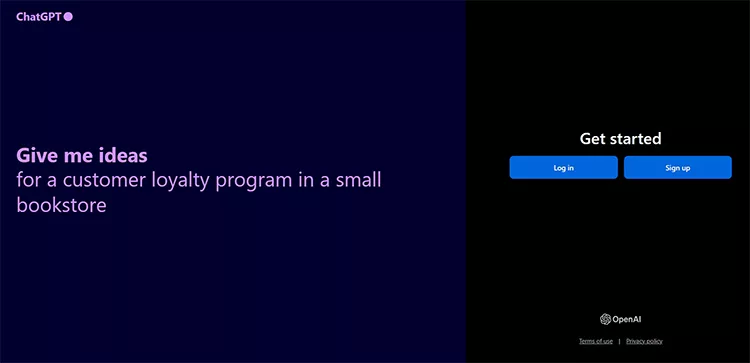
AI might turn out to be the greatest technological breakthrough of our age akin to the Industrial Revolution.

Today we are going to discuss how you can use AI sales technology to grow your business!

Table of Contents:
  • Introduction to AI
  • What You Need to Know About AI Sales Technology
  • How AI Sales Technology is Changing the Game
  • How ClickFunnels 2.0 AI Funnel Builder Can Help You Grow Your Business
  • Try ClickFunnels 2.0 Risk-Free!

Introduction to AI

We want to start by going over the most important things that you need to know about AI. Why?

Because if you don’t have a basic understanding of what AI is, how popular tools like ChatGPT work and what are their limitations, you might run into trouble. 

For example, when a Chevy dealership added a ChatGPT-powered chatbot to their website, they probably didn’t expect that online pranksters would start jailbreaking it for fun. Twitter user Chris Bakke even went viral for persuading the chatbot to sell him a car for $1!

A Twitter post from Chris Bakke featuring a humorous chat conversation. He barters a $1 deal for a 2024 Chevy Tahoe, exploiting a 'no take-backsies' policy from a dealership's chatbot.

No one who has a basic understanding of what ChatGPT is would ever use a ChatGPT-powered chatbot on their business website. Just because everyone else is doing it doesn’t mean that it’s a good idea!

That’s why you need to educate yourself on the subject of artificial intelligence. Otherwise, you might find yourself in a similar debacle!

What is AI?

“Artificial intelligence” is a term that refers to machine intelligence.

There’s some debate as to what exactly counts as “intelligence” when we are talking about computers. 

But generally speaking, experts seem to more or less agree that intelligence involves an ability to learn from previous experiences and solve problems that one hasn’t encountered before. 

It’s important to differentiate between specialized artificial intelligence and general artificial intelligence:

  • Specialized artificial intelligence is a term that refers to machines that are “intelligent” across a narrow range of skills (e.g. chess software that can beat the best chess players in the world but is completely useless when it comes to anything else). 
  • General artificial intelligence is a term that refers to machines that are “intelligent” across a broad range of skills and either match or surpass human general intelligence. In theory, AI doesn’t necessarily need to be sentient to be considered general, but in practice, when people talk about general artificial intelligence, there’s typically either an implicit or explicit assumption of sentience.

At this point in time, we only have specialized artificial intelligence. 

Large language models (LLMs) such as ChatGPT may be “intelligent” across an extremely broad range of skills but they are still considered to be a type of specialized artificial intelligence. 

Google has an online course that provides an overview of the field of artificial intelligence. If you want to learn more about this subject, consider investing a few hours in going through this course. It doesn’t require any technical skills!

Or you can watch this video to get the summary in 10 minutes:

What is Generative AI?

The current AI hype is fuelled by the recent breakthroughs in generative AI.

As Helen Toner explains in her article about the differences between generative AI, large language models and foundational models:

Here are some examples of popular generative AI tools:

  • ChatGPT (text generation)
  • Dall-E (image generation)
  • Vall-E (audio generation)
  • Sora (video generation)
  • Copilot (code generation)

Nowadays, when people talk about using AI sales technologies, they are typically talking about generative AI. 

What are Large Language Models (LLMs)?

Here’s how Helena Toner explains it:

A slide displays text about large language models in AI, explaining that they use more parameters for better performance and efficiency. The text mentions trends and the importance of advanced data and computation.

As Toner points out in her article, there’s some discussion regarding whether popular tools like ChatGPT should be described as “powered by LLMs” or as being LLMs themselves. For the sake of simplicity, we will be referring to them as “LLMs” in this article. 

If you want to learn more about LLMs, we recommend watching this introductory lecture by the computer scientist Andrej Karpathy, one of the founding members of OpenAI:

What are the Current Limitations of Large Language Models?

Here are the three key LLM limitations that you need to be aware of if you want to use these tools in your business:

LLMs are Black Boxes

This might come as a surprise but no one really knows how LLMs work.

These aren’t regular computer programs that were written by a team of software engineers who have access to all the code. 

Imagine that you have a black box that you can feed data to and that can spit out data back in response to user queries but you can’t see what’s going on inside it. That’s what LLMs are. 

To give a concrete example, no one really knows how ChatGPT works, not even the people at OpenAI who created it. 

It’s important to keep that in mind when you are working with LLMs because the inscrutability of these systems is a fundamental problem that various other issues stem from. 

Here’s how computer scientist Javier Viaña summarizes the dangers of relying on these black boxes:

LLMs Have a Tendency to “Hallucinate”

In practical terms, the most important LLM limitation that you need to understand is the phenomenon known as “hallucinations”, which is their tendency to just make things up and then confidently state them as facts. 

This means that you cannot blindly trust their output the way you’d trust a calculator’s output. If you ask an LLM a question, you need to verify that its answer is indeed correct. 

Same goes for using LLMs to create online content such as website copy, sales copy, blog articles and so on. You must make sure that the information in that content is accurate before publishing it.

Finally, you shouldn’t be using LLMs for anything that involves direct, unsupervised interactions with customers because there’s no way to know what these black boxes are going to say to them. 

LLMs might make offensive statements, provide incorrect information and potentially dangerous advice or just start spewing gibberish like ChatGPT did when it had some sort of an “episode” in February 2024.

While the laws that deal with the use of AI are still evolving, you don’t want to risk getting into legal trouble for something that an LLM said to one of your customers!

It’s also worth noting that quite a few computer scientists and software engineers argue that hallucinations are an inherent feature of LLMs and therefore cannot be fixed.

No one can foresee the future but if you hope that this problem is going to be solved anytime soon, it’s probably best not to hold your breath. 

LLMs are Easy to Jailbreak

In this context, the term “jailbreaking” means getting an LLM to do something that it shouldn’t, like reveal confidential information, make ludicrous suggestions or say racist stuff. 

Since computer scientists who create LLMs have no idea how these black boxes work, they cannot prevent jailbreaking, especially when AI enthusiasts on Twitter jump on this task the moment a new version of a popular LLM like ChatGPT is released. 

This means that if your app or chatbot is powered by an LLM, there’s a high likelihood that eventually, people will start trying to jailbreak it for fun, like in that Chevy case we discussed previously. 

Typically, these jailbreaking attempts are relatively harmless, but they can nevertheless cause brand damage, especially once they go viral. Say, would you trust a company whose meal planner app provides recipes that include chlorine gas, bleach and ant poison?

This is another reason why using LLMs for anything that involves direct, unsupervised interactions with customers is too risky. So don’t do it!

What You Need to Know About AI Sales Technology

What is AI Sales Technology?

We will be using the term “AI sales technology” to refer to any AI-powered technologies that can help you grow your business. 

Are AI Sales Technologies Powered by LLMs?

It’s probably safe to say that most AI apps out there are powered by LLMs such as ChatGPT.

If an AI app allows you to generate text, images, audio, video or code, then it’s probably just an LLM wrapper. 

Meaning, the underlying technology that powers it is one of the popular LLMs, but it’s “wrapped” with an interface that makes it easy for the user to get the result that they want. 

There’s nothing wrong with using wrappers like that in your business but you need to remember the LLM limitations that we just discussed.

Of course, not every AI sales technology falls under this category, which is why we recommend reaching out to software vendors directly if you aren’t sure if an app is powered by an LLM.

How AI Sales Technology is Changing the Game

1. AI Sales Technology Can Help You Build Sales Funnels FAST

Our co-founders Russell Brunson and Todd Dickerson both got into entrepreneurship in the early 2000s. 

Back then, building a sales funnel was a time-consuming, laborious and expensive endeavor: 

First, you had to hire a web designer to design each page in your funnel and then hire a web developer to build those pages. 

And once you had your sales funnel, you couldn’t just make changes to it yourself anytime you wanted, you had to pay a web developer to do it for you. 

That’s why our co-founders launched ClickFunnels in 2013: 

They wanted to provide small business owners with tools that would enable them to build and optimize sales funnels all by themselves. It was a revolutionary app that changed the way online marketing was done forever!

Now, more than a decade later, we want to take it to the next level with our AI sales funnel builder that we will be adding to our ClickFunnnels 2.0 platform soon.

Thanks to the recent advances in artificial intelligence, you don’t need to manually build sales funnels anymore, you can simply answer a few questions and AI will generate your sales funnel for you in 5-10 minutes!

2. AI Sales Technology Can Help You Overcome Writer’s Block

Generally speaking, when it comes to writing, producing the first draft is the greatest hurdle. There’s a reason why the term “writer’s block” is associated with staring at a blank page.

Once you have that first draft, no matter how bad its initial quality is, you can start editing it into shape. Remember, even Hemingway’s first drafts were terrible – he said as much himself. But that didn’t prevent him from receiving the Nobel Prize in literature!

That is why one of the most common pieces of writing advice is to complete the first draft as quickly as possible of course, if you ever had to write anything, you are probably well aware that this is easier said than done! 

Fortunately, with the advent of LLM-powered AI sales technology, you don’t have to agonize over first drafts anymore.

You can use AI to generate the first drafts of:

  • Sales copy
  • Blog articles
  • Social media posts

…etc. 

Once you have your first draft, all that’s left is fact-checking, editing, and proofreading. Then you are ready to publish!

While it’s not possible to completely automate the entire writing process yet – at least not if you want to avoid the risks associated with LLM hallucinations – using AI to help you create first drafts can save you a ton of time!

3. AI Sales Technology Can Help You Analyze Business Data and Uncover Actionable Insights 

Businesses are collecting unprecedented amounts of data:

Traffic metrics, marketing metrics, conversion rates, sales records, refund requests, churn, customer support tickets, etc. 

In theory, this should enable companies to make better, data-driven business decisions.

In practice, though, raw data in and of itself isn’t useful, it needs to be analyzed. And analyzing vast quantities of data can be challenging. 

However, AI can analyze your data for you, uncover actionable insights that you would not have been able to uncover yourself, and present those insights as prescriptive suggestions based on your business goals. 

Of course, if you want to use AI in this manner, you shouldn’t trust it blindly, especially if we are talking about LLMs. So make sure to manually verify AI claims whenever possible and only follow its advice if it makes sense to you. 

Also, know that you don’t have to use LLMs for data analysis, you can go with software that is based on other approaches to machine learning instead. 

Say, if you want to analyze large quantities of textual data, such as all customer support tickets, you can do so with text analytics apps that use a machine learning technique called text analysis. 

That can help you learn what the overall customer sentiment is, what are the most common issues, what features are the most requested, etc. 

Of course, text analytics apps aren’t perfect, so you shouldn’t blindly trust them either.

In fact, they might provide questionable insights due to data misinterpretation, data overfitting or data analysis heuristics that are too simplistic. .

But at least they won’t outright make things up like LLMs tend to do!

How ClickFunnels 2.0 AI Funnel Builder Can Help You Grow Your Business

Look:

If you don’t have a proper sales funnel yet, your top priority should be to get one up and running ASAP.

You can do that with our AI sales funnel builder:

  1. Answer some questions about your business, your product, and your target audience.
  2. Choose from six funnel types: the opt-in funnel, the application funnel, the webinar funnel, the summit funnel, the bridge funnel, and the video series funnel.

    (If you aren’t familiar with these funnel types, there’s no need to worry: each funnel comes with a short description that will help you pick the one that makes the most sense for your business.)

  3. Choose a color scheme, design style, and image style from the provided options.

Then, click a button and let our software generate a sales funnel for you, which should take around 5-10 minutes. 

Once you have your sales funnel, you can customize it with our visual editor and publish it online.

All this can be done in one evening so don’t procrastinate on it, don’t overthink it, and don’t hesitate to publish your funnel. It doesn’t have to be perfect, it just has to be live!

Try ClickFunnels 2.0 Risk-Free!

Let’s be real:

We are biased in favor of our software. 

So we understand if you take what we say about it with a grain of salt.

Fortunately, we have a free 14-day trial, so you don’t have to take our word for it. 

You can go and see ClickFunnels 2.0 for yourself without any risk!

So what are you waiting for? 🧐

Start Your Free Trial Today

Thanks for reading 3 Ways AI Sales Technology Is Changing The Game which appeared first on ClickFunnels.
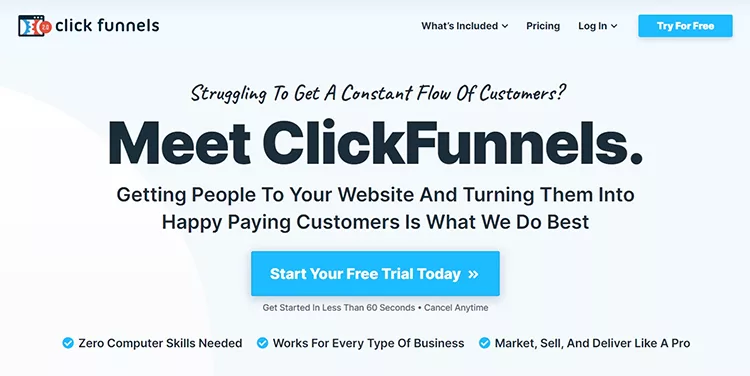
  • « Go to Previous Page
  • Page 1
  • Interim pages omitted …
  • Page 7
  • Page 8
  • Page 9
  • Page 10
  • Page 11
  • Go to Next Page »

Get your Software Stack together. softwarestack.tech
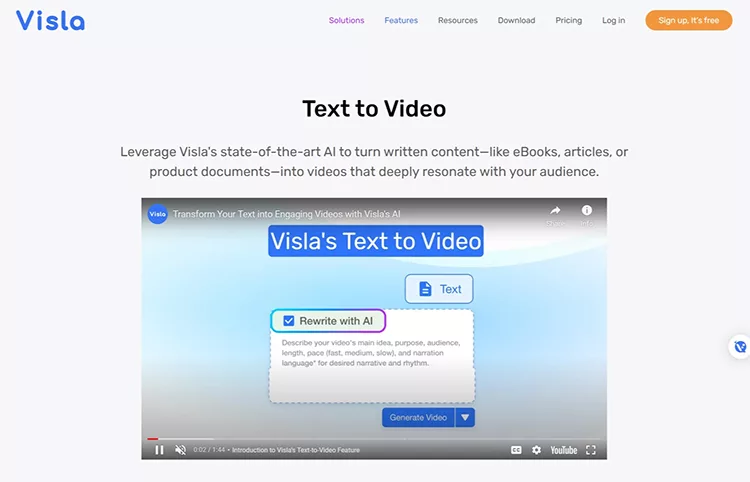
Software Stack

© 2024–2025 - Software Stack is a trading name of SouthwestCIO Limited ac ompany registered in England & Wales 11319049

  • Knowledgebase
  • Home
  • About Us
  • Contact Us