• Skip to primary navigation
  • Skip to main content
software stack logo

Software Stack

Get your Software Stack together

  • Knowledgebase
    • All Categories
    • Accounting Software
    • Automation & Workflow Software
    • Customer Relationship Management
    • E-Commerce Shopfronts & Payments
    • Marketing Automation
    • Online Courses & Membership
    • Project Management
    • Surveys & Forms
    • Web Hosting
  • Home
  • About Us
  • Contact Us
  • Show Search
Hide Search

Clickfunnels

Steps For Starting Your First Business As An Entrepreneur

Software Stack Editor · August 22, 2024 ·

The post Steps For Starting Your First Business As An Entrepreneur appeared first on ClickFunnels.

Thinking about trying your hand at entrepreneurship?

Today we are going to share a ten-step process that you can follow to get your first business off the ground!

Table of Contents:
  • Planning is Procrastination!
  • Step #1: Sort Out the Legal Stuff
  • Step #2: Limit Your Losses
  • Step #3: Use What You Have
  • Step #4: Choose a Business Model
  • Step #5: Decide on Your Target Audience
  • Step #6: Pick One Core Product or Service to Sell
  • Step #7: Create an Irresistible Offer
  • Step #8: Create an Upsell and a Cross Sell
  • Step #9: Build a Sales Funnel for Your Offer
  • Step #10: Start Driving Traffic to Your Sales Funnel!
  • Want to Learn How to Build Sales Funnels That CONVERT?

Planning is Procrastination!

Look:

Some planning can be helpful. 

However, aspiring entrepreneurs often end up stuck in analysis paralysis and waste weeks, months, or even years trying to come up with a perfect business strategy. 

Moreover, they tend to feel that they are being productive by doing research, reading books, and watching YouTube videos when in reality they haven’t moved even one step closer to realizing their entrepreneurial dreams. 

We believe that the main difference between “wantrepreneurs” and entrepreneurs is that the latter group has an action bias, which is a tendency to favor action over inaction. And the more successful the entrepreneur, the stronger their action bias. 

The truth is that building a business is not that complicated. You need an offer, a way to reach your target audience, and a persuasive sales pitch. That’s it.

So don’t fall into this trap of endless planning because it’s just a form of procrastination. 

Sure, do a little bit of research, maybe over the weekend. Then start selling something and see what happens!

Now, with all that out of the way, here’s a ten-step process that you can follow:

Step #1: Sort Out the Legal Stuff

Illustration of a smiling man in a suit holding a clipboard with a certificate. Surrounding him are symbols of the legal profession, including scales of justice, a gavel, law books, and checkmarks.

Before you do anything else, make sure that you can legally operate a business in your area. 

For example, if you want to open a business in the United States, check out the U.S. Small Business Administration website, your state and local government websites, and the IRS website. 

These resources should provide all the information that you need. However, if you can afford it, it might also be a good idea to consult a lawyer just in case.

Also, while you can do your own books, it’s better to outsource them to a professional, so don’t hesitate to hire an accountant if you have the money for it. 

If you intend to serve an international audience, you should also research the laws in the regions that you want to target and make sure that your company is compliant with them.

For example, if you are based in the United States but want to sell your products and services in Europe, your business will need to comply with the General Data Protection Regulation.

Step #2: Limit Your Losses
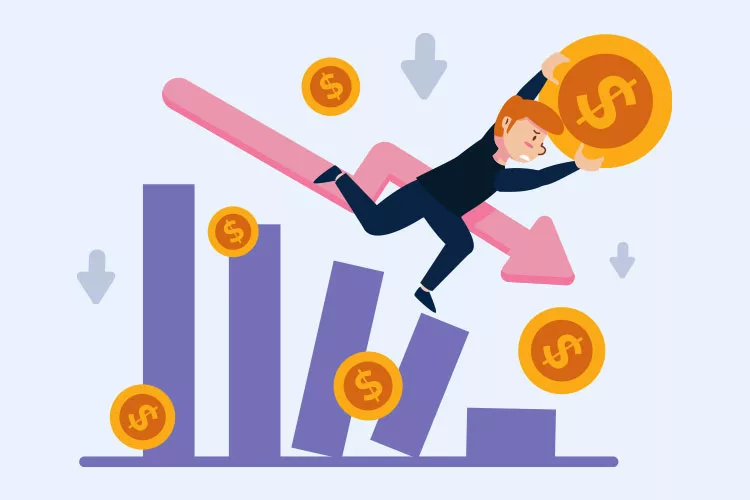
Illustration of a person in a black suit struggling to hold a coin while falling due to a downward pointing pink arrow, surrounded by descending bar graphs and dollar symbols.

Survivorship Bias

In popular culture, successful entrepreneurs are often portrayed as mad geniuses who take crazy risks and win big. And sure, there are some famous people who fit that description, but they are the exception, not the rule.

Something to keep in mind here is the survivorship bias: when it comes to risk-taking, we hear the stories of people whose wild gambles paid off, while the stories of those who crashed and burned fade into oblivion.

This can severely distort our perception of the role that risk-taking plays in business success and lead to making bad decisions.

Are Entrepreneurs Risk-Tolerant or Risk-Averse?

According to our observations, entrepreneurs who manage to build successful businesses tend to be more risk-tolerant than the average person, but they are also way more risk-averse than the popular culture would have you believe. 

They don’t quit their jobs, they don’t take out massive loans and they don’t bet the farm. Instead, they live below their means, put some money into savings every month, and work on their businesses on the side. 

Then, once they reach the point where the income from their businesses can cover their living expenses, they switch to working on their companies full-time. Typically, they build up a substantial emergency fund before taking the leap. 

Sometimes, they even do freelancing here and there or get gig economy jobs like delivering food just to have a source of income that will remain unaffected should the business revenue dry up for some reason!

Be Prepared for the Worst Case Scenario

We recommend taking an approach similar to what we just described because it will enable you to limit your losses.

Remember that in the United States, approximately 1 in 5 small businesses fail within a year. You need to be prepared for that possibility because delusional optimism can get you in serious trouble.

If you keep your job and start a side hustle that requires minimal upfront investment and has low maintenance expenses, the main risk is the opportunity costs related to the time that you put into it.

For example, if you work on your business in the evenings and during the weekends for an entire year, that’s a lot of time that you could have otherwise spent with your family and friends, pursuing hobbies or investing in your career.

Consequently, if your company fails despite your efforts, you might feel that you missed out on all that for nothing. That can be depressing.

However, it’s still a much better outcome than making a big gamble, losing everything, and then having to somehow rebuild your life from the ruins while also potentially dealing with serious mental health problems which are a common side effect of catastrophic business failures. 

Keep in mind that if you are prudent about risk management and make sure to limit your losses, you can continue building businesses indefinitely until hopefully one of them takes off. 

After all, just because your first attempt at it didn’t work out, it doesn’t mean that you need to give up on your dreams. Successful entrepreneurs often have entire graveyards of failed businesses behind them!

Step #3: Use What You Have
Three people are collaborating on a project with two laptops. Conceptual icons, including a lightbulb, gears, and a dollar sign, are around them, symbolizing ideas and productivity.

We have noticed that first-time entrepreneurs have a tendency to worry about what they lack: time, money, skills, whatever it may be. 

However, as our friend Alex Hormozi loves to say, the first rule of entrepreneurship is “use what you have”.

So examine the resources at your disposal:

  1. How much time can you allocate to working on your business?
  2. How much money can you spend on growing your business?
  3. What domain knowledge, skills, and connections can you leverage?

You want to figure out how to make the most out of what you have instead of attempting to copy people who are in completely different circumstances than you.

Remember, regardless of what situation you are in, you can find ways to leverage it as long as you are resourceful!

Step #4: Choose a Business Model
Two people stand near a presentation board with charts and graphics. One holds a clipboard while the other holds documents. A clock and gear icons are in the background.

First-time entrepreneurs also tend to put too much emphasis on coming up with innovative business ideas. 

We recommend being pragmatic about it instead: look at the business models that have low startup and maintenance costs, figure out which of these models is best-suited for leveraging the resources that you have, and then just go with it. 

Here are some of the business models that you might want to consider:

  • Services – Low startup costs and immediate cash flow but it can be difficult to scale. Suitable for pretty much anyone.
  • Coaching and consulting – Low startup costs and immediate cash flow. Best suited for those who have social proof that demonstrates that they know what they are talking about.
  • Info products – Low startup costs and easy to scale. Best suited for people who have domain expertise that they can package into an eBook or an online course.
  • SaaS – Low startup costs but can take ages to get off the ground. Best suited for software engineers and web developers. That being said, if you are willing to teach yourself how to code, you can make it work even if you don’t have a technical background. Check out Pieter Levels’ book “Make” if you want to learn more.
  • Ecommerce – Low startup costs if you go the dropshipping route but the industry is extremely competitive and the learning curve is steep. Best suited for people who have a high-stress tolerance because it can be a crazy emotional rollercoaster!

Keep in mind that choosing a business model isn’t an irreversible decision. Simply pick something from the list above and start selling. If you realize that you don’t like it, you can always move on to something else!

Step #5: Decide on Your Target Audience
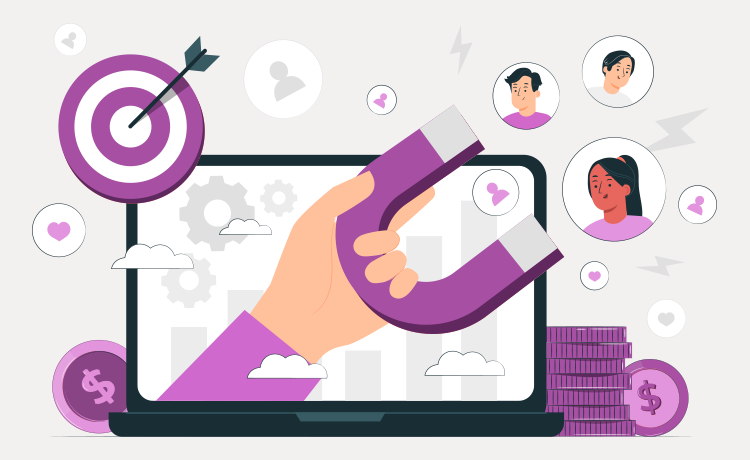
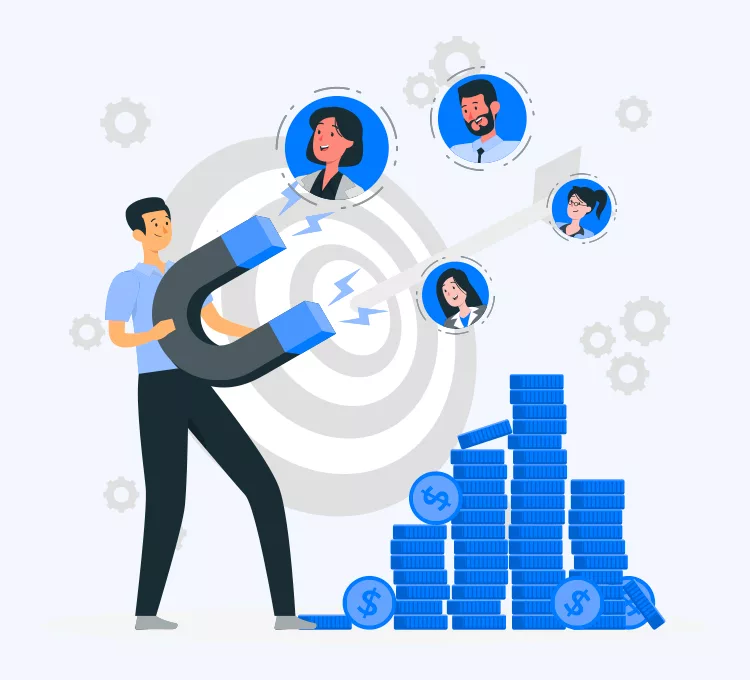
A person holding a magnet stands in front of a large smartphone screen, attracting icons of people, money, and engagement symbols, illustrating online marketing or social media influence.

You want to go after a demographic that:

  1. Has a problem that you can solve with your products and services
  2. Can afford to pay for your products and services
  3. Is willing to pay for your products and services

Know that your target audience is going to be one of the most important determining factors when it comes to how much money you will be able to make. 

For example, let’s say that you want to become a personal trainer and build a business around helping people lose weight. 

Both broke college students and affluent professionals could probably use your help. However, you will make way more money if you target the latter demographic!

Step #6: Pick One Core Product or Service to Sell
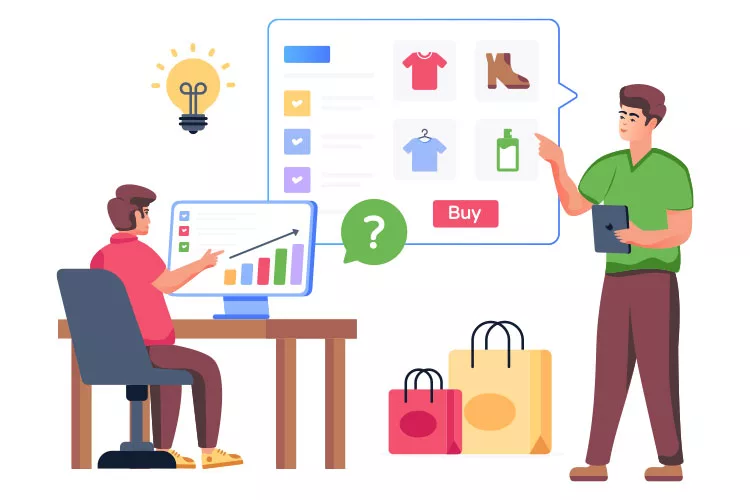
Two people discussing shopping options. One is seated at a computer with charts, while the other holds a tablet, and there are shopping bags on the floor.

We recommend starting with just one core product or service to sell because that will simplify things a lot. 

Write down all the problems that your dream customers are struggling with and think about which one of them is the most painful. 

Then sell something that can help them solve that problem!

Step #7: Create an Irresistible Offer
Now that you have a product or service to sell, you need to package it into an irresistible offer.

Here’s a formula that can help you with that:

High Value + Low Price + Low Risk = Irresistible Offer

Let’s take a look at each of these three variables:

  • High value – You can make your offer more valuable by throwing in various extras that don’t cost much to you but significantly increase its perceived value.
  • Low price – This is about the price relative to the perceived value. If you want to increase the former, you need to first increase the latter.
  • Low risk – Remove all financial risk from the buying decision process by offering a money-back guarantee. It can either be an unconditional one for 30 days after the purchase or a results-based one where if you fail to deliver specific results within a specific timeframe, the customer will get a refund.

Here’s a real story that illustrates the power of creating an irresistible offer:

Our co-founder Russell Brunson has sold all kinds of stuff throughout his entrepreneurial journey, from potato guns to supplements. 

At one point, he was selling supplements for $67 per bottle while his competitors were selling the exact same supplements for $19.95 per bottle. Pretty crazy, right?

Needless to say, Russell was making way more money than them. But what allowed him to charge so much?

Well, instead of merely selling a product, he was selling an offer. 

You see, he bundled that supplement bottle with a weight loss guide, a calorie tracker, and some other extras that didn’t cost much to produce but drastically increased the perceived value!

Step #8: Create an Upsell and a Cross Sell
Illustration of two women analyzing graphs and charts on a screen with financial symbols like a credit card, coins, currency notes, and upward and downward arrows.

Adding an upsell and a cross sell to your core offer can be a great way to increase your customer lifetime value.

This will enable you to spend more on customer acquisition and grow your business faster!

What is an Upsell?

An upsell is an offer that you present to the potential customer once they have accepted your core offer. It’s supposed to be an upgrade on it. 

McDonald’s “Would you like to supersize that?” is a classic example of an upsell. 

You can upsell:

  • A larger quantity of the same product
  • A higher-quality version of the same product or service
  • A monthly subscription for that product or service

..etc.

What’s important here is making sure that your upsell is a better deal than your core offer so that the potential customer would feel inclined to upgrade.

What is a Cross Sell?

A cross sell is also an offer that you present to the potential customer once they have accepted your core offer but it’s supposed to be complementary to it as opposed to being an upgrade on it.

McDonald’s “Would you like fries with that?” is a classic example of a cross sell.

You can cross sell:

  • Physical products
  • Digital products
  • Related services
  • Coaching
  • Consulting

What’s important here is making sure that your core offer and your cross sell are a great combination, just like burgers and fries!

Step #9: Build a Sales Funnel for Your Offer
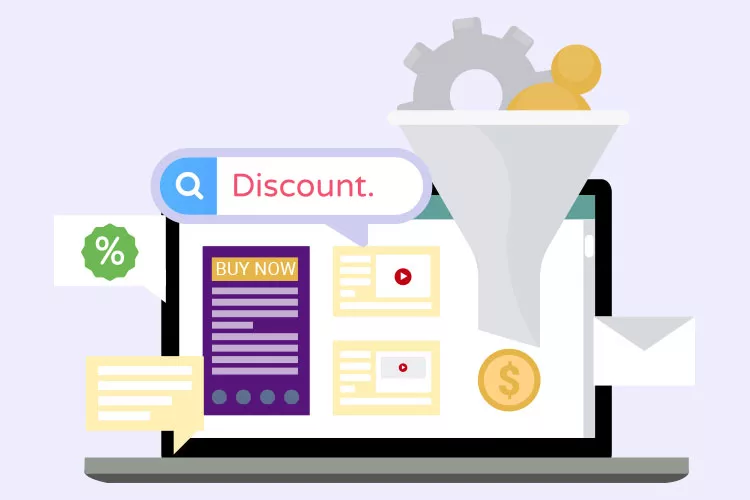
What is a Sales Funnel?

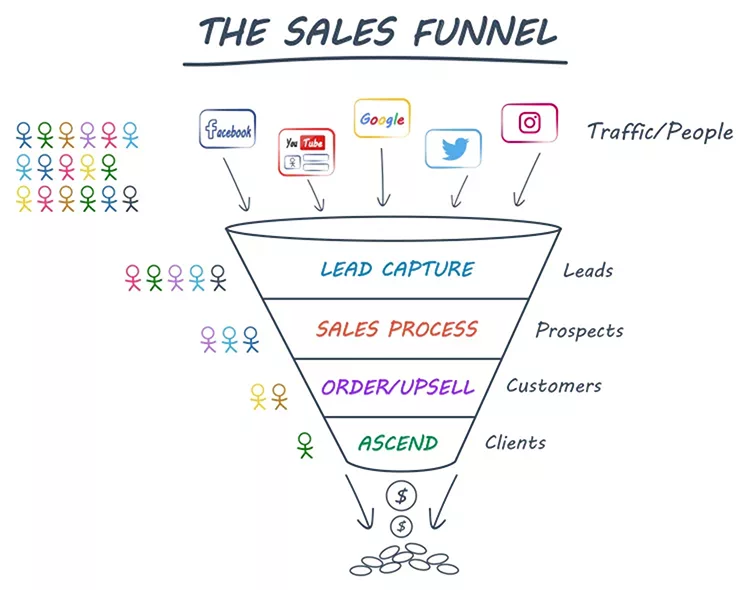
A sales funnel is a system for converting visitors into leads, leads into customers, and customers into repeat customers.

Building a sales funnel for your core offer and driving traffic to it is the best way to grow your business!

What is a Lead Magnet?

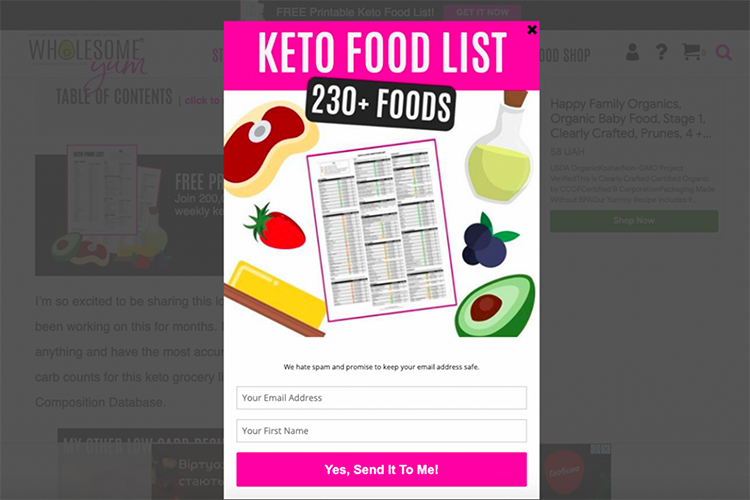
A lead magnet is a freebie that you offer to the potential customer in exchange for their email address. 

It serves three purposes:

  1. Helps you get the attention of your dream customers because everyone loves free stuff.
  2. Makes it easier to convert them into leads because you are offering them something that they want instead of just asking them to subscribe to your email list.
  3. Gives you an opportunity to prove yourself by providing free value before you pitch them your core offer.

If you want to learn how to create an effective lead magnet, we recommend watching this video by our friend Alex Hormozi:

How to Build a Squeeze Page Funnel

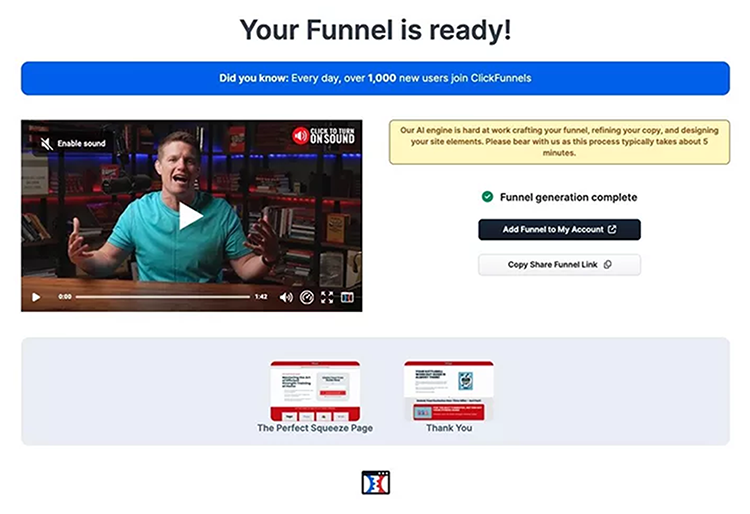
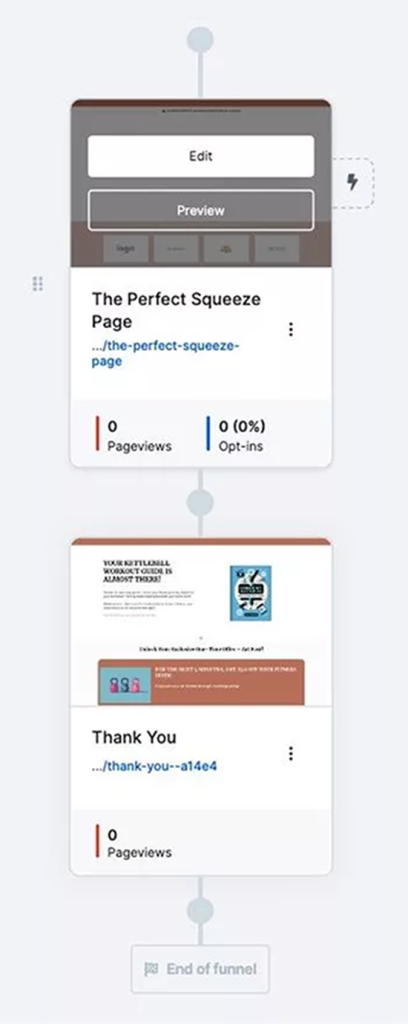
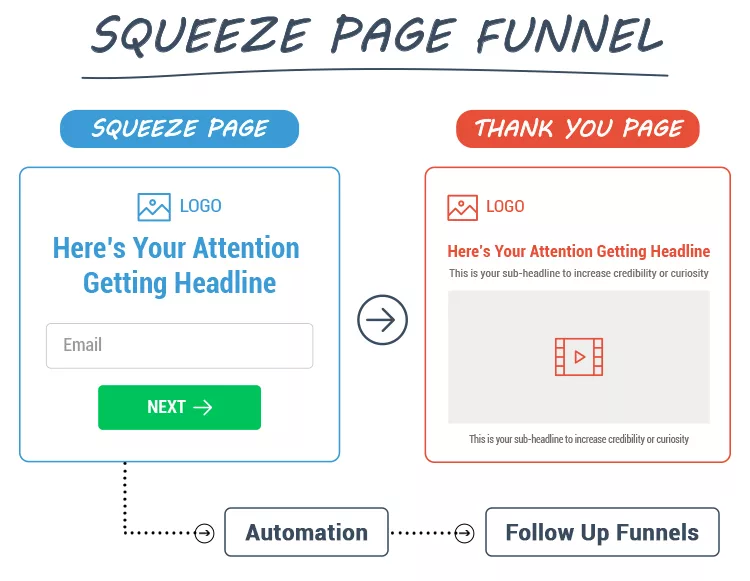
We recommend starting with a squeeze page funnel that looks like this:

  1. A squeeze page where you explain what your free offer is all about and ask the potential customer for their email address in exchange for your lead magnet.
  2. A thank you page where you thank the potential customer, provide instructions on how to access your lead magnet, and explain what they should expect next.
  3. A sales page for your core offer where you pitch them your main product or service.
  4. An upsell page where you pitch them your upsell.
  5. A cross sell page where you pitch them your cross sell.

It’s super easy to build with our software because ClickFunnels includes a proven squeeze page funnel template. 

You can customize it with our drag-and-drop editor and then add a sales page, an upsell page, and a cross sell page to it. We have templates for all those pages as well!

How to Convert Leads Into Paying Customers With Email Marketing

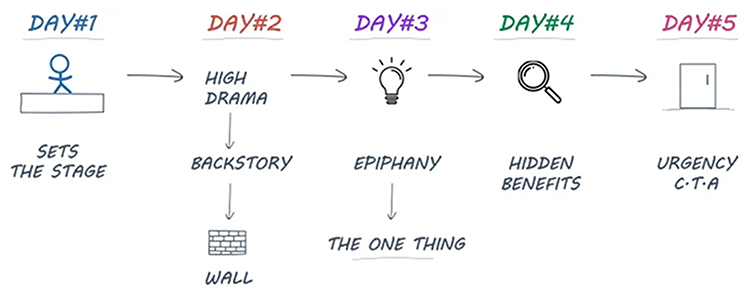
We recommend setting up this welcome sequence and automatically sending it to every new email subscriber:
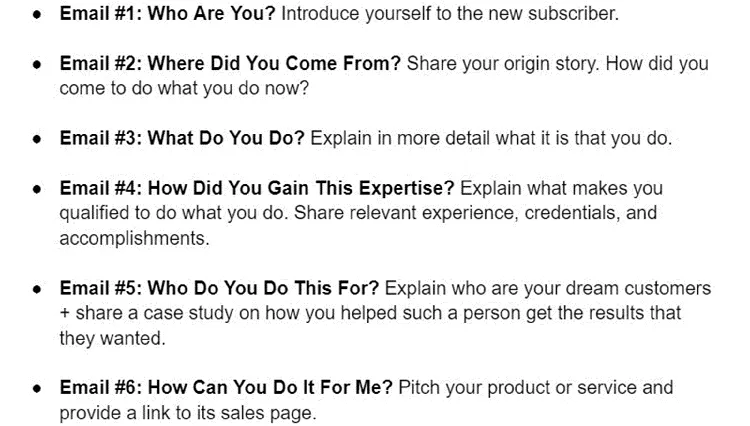
Send one email per day so that the entire sequence would take six days to complete. It’s super easy to set it all up with our email marketing functionality.

Step #10: Start Driving Traffic to Your Sales Funnel!
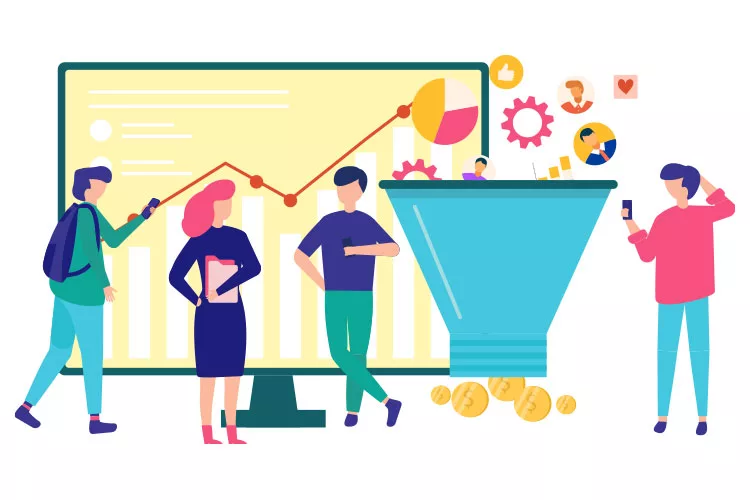
Illustration of people analyzing data on a large screen with a growing graph and converting it into money through a funnel.

Here are three marketing strategies that you can use to do that:

Social Media Marketing

Create a social media profile on your favorite platform, put a link to your squeeze page in your bio, and start publishing one high-quality post per day.

Make sure to always encourage discussion in the comment section and reply to every comment that you get.

Network with popular influencers and fellow up-and-comers in your niche by leaving thoughtful comments under their posts and regularly sharing their content with your audience. 

If you want to learn more about social media marketing, we recommend watching this video:

Video Marketing

Start a YouTube channel and add a link to your squeeze page to your homepage, your channel description, and your video descriptions. 

Upload one high-quality video per week. Focus on the content instead of production value. End each video by encouraging the viewer to check out the free offer in the description. 

Use OpusClip to cut up your regular videos into shorts and then publish those shorts both on YouTube and on TikTok. Also, share them on your social media. 

If you want to learn more about building a YouTube channel, we recommend watching this video:

Paid Advertising

Wait until a Udemy sale, buy a reputable Facebook ads course, and go through it to learn the basics.

Then, create an ad campaign designed to promote your free offer, start running it with a small daily budget, and use A/B testing to optimize it for conversions. Make sure that your campaign is profitable before scaling it. 

Once you get the hang of running ads on Facebook, you can begin expanding to other platforms by repeating the same process. 

Consider experimenting with Instagram, Twitter, YouTube, TikTok, and Google Search ads. You never know what will work best for your business!

Which Marketing Strategy Should You Use?

It depends on your budget.

If you can afford to run ads then it makes sense to use all three marketing strategies we just discussed.

This approach will help you get your business off the ground faster because paid advertising enables you to get immediate traffic. 

However, if you can’t afford to run ads then you will be limited to social media marketing and video marketing. 

This approach is going to be slower because it takes time to build an audience. But you can make it work if you commit to consistently publishing high-quality content!
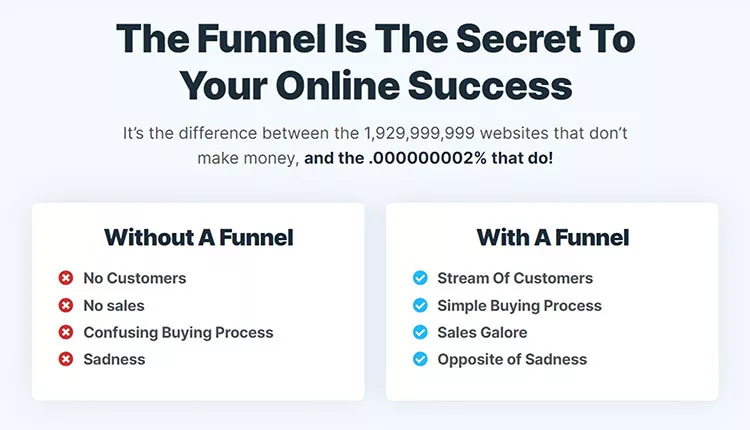
A comparison chart explaining the benefits of using a sales funnel for online success, highlighting differences in customer flow, simplicity of the buying process, and overall sales outcomes.

Want to Learn How to Build Sales Funnels That CONVERT?

Our co-founder Russell Brunson used sales funnels to take ClickFunnels from zero to $100M+ in annual revenue in less than a decade.

He is now widely considered to be one of the top sales funnel experts in the world. Want to learn from him?

His best-selling book “DotCom Secrets” is the best place to start because it covers everything you need to know in order to build sales funnels that convert. 

This book is available on Amazon where it has over 2,500 global ratings and a 4.7-star overall rating. 

But you can also get it directly from us for free… 

All we ask is that you pay for shipping!

So what are you waiting for? 🧐

Get “DotCom Secrets” for FREE!

Thanks for reading Steps For Starting Your First Business As An Entrepreneur which appeared first on ClickFunnels.
Affordable Marketing Tips For New Businesses

Software Stack Editor · August 20, 2024 ·

The post Affordable Marketing Tips For New Businesses appeared first on ClickFunnels.

So you launched a startup.

Now it’s time to start promoting your product. 

But what if you don’t have much of a marketing budget to speak of?

Today we are going to share three low-cost marketing ideas that can help you reach your dream customers!

Table of Contents:
  • Build a Sales Funnel First!
  • Low-Cost Marketing Idea #1: Cold Email 
  • Low-Cost Marketing Idea #2: Social Media Marketing
  • Low-Cost Marketing Idea #3: Email Marketing
  • Reality Check: Getting Your Startup Off the Ground is Going to Take Time!
  • Want to Learn How to Drive TARGETED TRAFFIC to Your Website and Sales Funnels?

Build a Sales Funnel First!

A sales funnel is a system designed to convert visitors into leads, leads into customers, and customers into repeat customers. If you haven’t built one for your startup yet, we recommend doing that first. 

Ideally, you want to create a lead magnet and use low-cost marketing strategies to drive traffic to its landing page.

Then, once potential customers give you their email addresses, you want to use email marketing to convert those leads into paying customers.

Finally, once they buy your product, you want to continue providing free value via email. This can do wonders for customer retention. 

That is the approach that we used to grow ClickFunnels from a bootstrapped startup to a nine-figure SaaS company. 

We are confident that it can help you grow your business as well!

Low-Cost Marketing Idea #1: Cold Email 

Illustration of an open envelope displaying an email symbol, with a chat bubble and paper airplane nearby, representing digital communication.

You may be familiar with Paul Graham’s essay “Do Things That Don’t Scale” in which he argues that founders have to be willing to do things that don’t scale if they want to get their startups off the ground.

We agree with his key points and would like to add that in our view, cold email is the best way to acquire your first users if you can’t afford paid advertising. 

Here’s what we recommend:

  1. Define your target audience using specific, clearly articulated criteria. 
  2. Hire a lead generation expert on Fiverr and ask them to compile a list of 100 leads that meet your dream customer criteria. 
  3. Set up a new email account and warm it up using Lemwarm. This will help you avoid spam filters. 
  4. Create the cold email template. You want to introduce yourself, summarize your value proposition and ask if the potential customer would be interested in scheduling a quick 15-minute call. Make sure to provide a link to your calendar so that they can book it immediately without having to engage in email back-and-forth with you. 
  5. Create the follow-up email templates. After your initial email, you want to follow up three times, then send a “breakup” email if you don’t get a response. In the breakup email, you should say that you won’t be following up with them again, but if they ever want to learn more about your product, they should feel free to reach out to you. Wish them all the best!
  6. Start cold emailing the leads on your lead list. Once you contact someone, send them a follow-up email once a week, and then after three follow-up emails send them the breakup email. If you send 10 cold emails per day, it should take you 38 days to go through your list of 100 leads, including the follow-up and breakup emails. 
  7. Make sure to track your cold email campaign. You can either do it with a spreadsheet or use a tool like Lemlist. What percentage of cold emails get responses, what percentage of those responses lead to calls, and what percentage of those calls result in sales?

Once you are done with your initial lead list, get 100 more leads from Fiverr and repeat the process, but change one variable, say, your cold email subject line. 

That will allow you to see what impact that variable has on your conversion rates. Keep in mind that systematic experimentation can help you optimize your email templates. 

Eventually, once you streamline the process, you want to gradually increase the number of emails that you send per day to 100. 

Generally speaking, if you send 100 cold emails with follow-ups, you should get at least 10 responses and at least 1 sale, so sending 3,000 cold emails per month should result in at least 30 sales. 

You probably won’t be able to scale cold outreach past 100 cold emails per day, but that should be enough to start generating some revenue, which you can then reinvest in more scalable marketing strategies.

Learn More

If you want to learn more about cold email, we recommend reading the “Cold Email Manifesto” by Alex Berman and Robert Indries. This book provides tons of helpful advice and includes several proven email templates!

Low-Cost Marketing Idea #2: Social Media Marketing

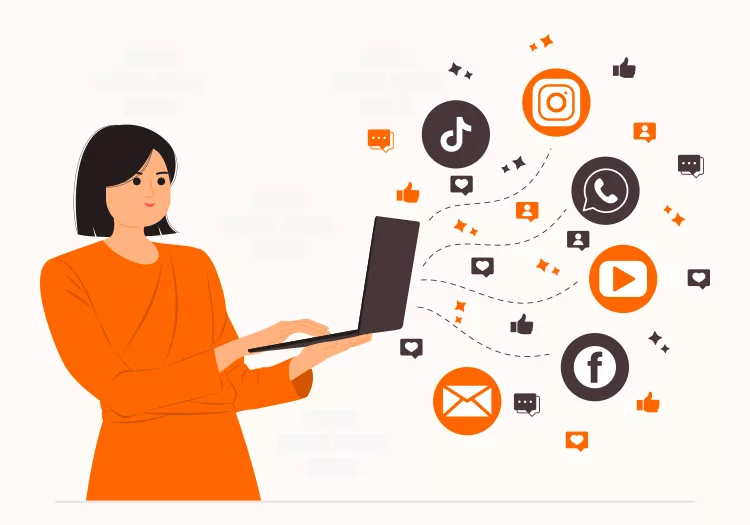
Illustration of a laptop with a rocket taking off from the screen surrounded by floating social media icons like Facebook, Twitter, Instagram, YouTube, and TikTok.

Social media marketing can be a great way to reach your dream customers, build trust with them, and direct them to your lead magnet landing page.

What’s more, you don’t need any money to get started, although investing in some social media marketing tools might be a good idea. 

We recommend building a following on one platform and then gradually expanding to other platforms over time. 

Regardless of the platform that you choose, the general principles that you should follow remain the same:

Promote Your Lead Magnet in Your Bio

You want to use the space in your bio to explain what your free offer is all about and direct people to its landing page. 

Typically, if someone follows you on social media and enjoys your content, it’s likely that they will eventually decide to check out your lead magnet. 

Consistently Publish High-Quality Content

Your social media content should be designed to help your dream customers solve various problems related to your niche. 

We recommend publishing one high-quality, original post per day, seven days a week. 

Set aside a few hours every month for creating social media content and then use Buffer or MeetEdgar to schedule your posts.

Make sure to reply to every comment that you get except for the troll comments. Set aside 15-30 minutes a day for this. 

When you notice a troll in your comment section, don’t engage with them and block them immediately!

Network With Prominent Influencers in Your Niche

Follow prominent influencers in your niche and leave one thoughtful comment under their posts every day. Set aside 15-30 minutes per day for this. 

Make sure to also regularly share their content with your own followers. Ideally, you want to add a thoughtful observation to it instead of merely reposting it. 

Say, if you are building a following on Twitter, it’s better to quote-tweet influencers rather than retweet them because that way you are adding extra value. 

If you keep this up, eventually these influencers will notice you, check out your profile, and potentially follow you if they like your content.

Once they are following you, they might start occasionally sharing your content with their audiences, which is where most of your early social media growth is going to come from. 

Network With Fellow Up-and-Comers in Your Niche

You should also network with people in your niche who are on the same level as you.

You can do that by leaving thoughtful comments under their posts and sharing their content with your followers.

Once you have a few public interactions with them, don’t be afraid to slide into their DMs and say hi. 

All this won’t help you much right now but these connections are long-term investments. 

In a few years, the vast majority of those people will have abandoned their social media profiles and moved on to something else, but a few of them will probably have substantial followings!

Build Goodwill by Helping People for Free

As your following grows, you’ll start getting DMs from your followers with questions that relate to your area of expertise. 

Reply to those messages, provide guidance, and share helpful resources. You can even offer to jump on a quick call if you have the time. 

Keep in mind that the more people you help for free, the more goodwill you are going to build!

Avoid Social Media Drama

Regardless of what niche you are in, there will always be people beefing with each other. 

In fact, this is incentivized by the algorithms because it generates engagement. However, getting involved in these beefs can backfire so it’s best to just stay out of it all. 

And if someone is trying to start drama with you, remember that you don’t need to engage with them. You can simply block them!

Stay Away from Controversial Topics

There’s no denying that political polarization is increasing, especially in the United States. 

It can be argued that social media is playing a role in this because the algorithms reward publishing polarizing content, a strategy colloquially known as “rage-baiting”. 

While rage-baiting does work, we don’t recommend it. From a purely pragmatic perspective, it’s best to stay away from controversial topics such as current events, politics, and religion unless taking a public stance on them is going to benefit your brand. 

Otherwise, you risk alienating potential customers who may disagree with you on some issue, but would still benefit from your product!

Make a Conscious Effort to Resist Audience Capture

Audience capture is a phenomenon where due to the extremely fast social media feedback loops content creators get radicalized by their audiences and lose sight of themselves. 

It seems that people who have addictive personalities are especially vulnerable to it so if you have struggled with addictions in the past, you need to be extremely careful about this. That being said, no one is safe. 

Pay attention to what behaviors get rewarded by your audience and ask yourself if you want to engage in those behaviors. Otherwise, you’ll start doing it by default, which can be a slippery slope. 

Say, if your regular content only gets a few likes, but then you post a hot take and it goes viral, you will probably feel the impulse to start posting more hot takes because you got rewarded for that behavior. 

But you should stop and ask yourself if posting hot takes is in alignment with who you want to be as a person, your business goals, and your vision for the future. Maybe it is, maybe it isn’t. What matters is that you make a conscious decision on how to proceed!

Learn More

If you want to learn more about social media marketing, we recommend watching this video by Dan Koe:

Low-Cost Marketing Idea #3: Email Marketing

Illustration of a large smartphone with an opened email envelope on the screen. Two people are standing beside it, one holding a megaphone and the other holding a smaller envelope icon.

Did you know that you can use an email newsletter as your lead magnet?

In fact, we would argue that in the current year, that may be the best way to convert social media followers into leads. 

Here’s what we recommend:

Come Up With a Newsletter Concept

You can draw inspiration from popular newsletters such as the Morning Brew, 5-Bullet Friday, and Reading List. 

The ideal publishing schedule will depend on your industry and your target audience but weekly newsletters seem to be the most common. 

Every issue of your newsletter should follow the same template so that your subscribers would know what to expect. 

Sharing your personal observations, industry news, and links to interesting content can all work well as long as they are relevant to your dream customers. 

Just make sure that your newsletter is skimmable: you want your subscribers to open it, quickly skim it, and then read it in full if something catches their eye. 

End Every Newsletter Issue With a Call to Action

We recommend adding either a “P.S.” section or a banner ad to the bottom of every newsletter issue and encouraging people to take the next step in your sales funnel (e.g. if you sell SaaS software, promote your free trial). 

That way, by the time your subscribers scroll down to it, they will have gotten some value out of that newsletter issue, so they probably won’t mind the promotional stuff even if they aren’t interested. 

Promote Your Newsletter on Social Media

Just like with any other lead magnet, you want to explain what your newsletter is all about in your bio and provide a link to its landing page. 

We also recommend posting a teaser of every upcoming issue the day before you publish it so that people who aren’t subscribed to your newsletter yet would have an opportunity to do so if they are interested in that content.

Learn More

If you want to learn more about growing an email newsletter, we recommend watching this video by Brian Dean:

Reality Check: Getting Your Startup Off the Ground is Going to Take Time!

Here’s something that you need to accept when it comes to low-cost marketing strategies: if you can’t afford to buy speed, you must be prepared to invest time and exercise patience. 

The reason why so many bootstrapped entrepreneurs who have promising products give up is simple: they aren’t willing to stick with it long enough to gain traction.

That’s why it’s so important to go into this with realistic expectations: it will probably take you a few years to get to the point where you make enough money with your business to start working on it full-time. 

So make sure that you have a day job that pays the bills and settle in for the long haul!

Want to Learn How to Drive TARGETED TRAFFIC to Your Website and Sales Funnels?

Our co-founder Russell Brunson used sales funnels to take ClickFunnels from zero to $100M+ in annual revenue in less than a decade. 

Needless to say, he had to drive a TON of targeted traffic to those sales funnels in order to achieve that. 

In his best-selling book “Traffic Secrets”, he shares proven marketing strategies that YOU can use to drive targeted traffic to YOUR website and sales funnels.

In this book, you’ll learn how to:

  • Find your dream customers online
  • Tap into other people’s distribution channels
  • Build an army of affiliates that will sell your product for you

…and so much more!

“Traffic Secrets” is available on Amazon where it has 2,500+ global ratings and a 4.7-star overall rating.

But you can also get it directly from us for free… 

All we ask is that you pay for shipping!

So what are you waiting for? 🧐

Get “Traffic Secrets” For FREE!

Thanks for reading Affordable Marketing Tips For New Businesses which appeared first on ClickFunnels.
How to Pick the Best Digital Tools for Your New Business

Software Stack Editor · August 20, 2024 ·

The post How to Pick the Best Digital Tools for Your New Business appeared first on ClickFunnels.

Every entrepreneur needs to build a software stack for their business.

That’s why today we are going to discuss how to choose the right digital tools for your startup…

Table of Contents:
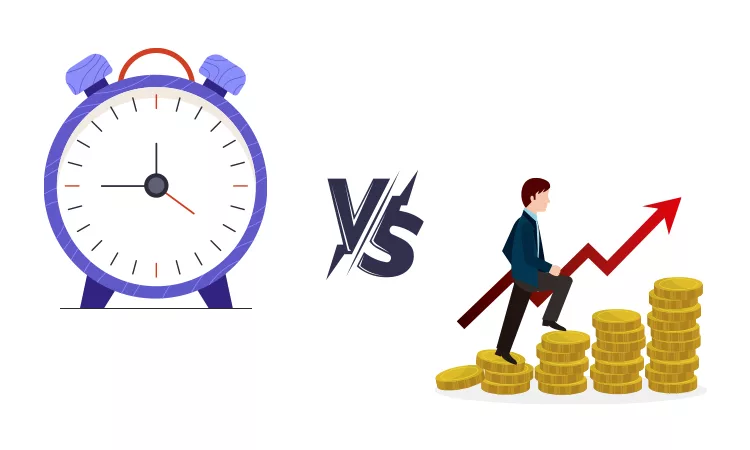
  • The Time vs. Money Trade-Off
  • Avoid Premature Optimization
  • What is Your Software Budget?
  • What Functionalities Do You Need?
  • Specialized Apps vs. All-in-One Marketing Platforms
  • Grow Your Startup With ClickFunnels!

The Time vs. Money Trade-Off

How to Pick the Best Digital Tools for Your New Business

There’s a trade-off between time and money: 

You can either spend more time and less money or you can spend less time and more money on completing any given task. 

For example, you don’t need to pay for a website builder in order to create a website for your startup – you can simply code everything from scratch. 

Of course, that is going to take time, especially if you don’t have any previous web development experience. 

Generally speaking, if you just launched your startup, you want to be as scrappy as possible, so the more stuff you can do yourself, the better. 

However, you also need to remember that time is a limited resource and there’s an opportunity cost to how you choose to spend it. 

As a founder, your top priority should be getting paying customers, so if investing in software can help you free up time for that, then you should probably do it if your budget allows it.

Say, if you can afford to pay for a website builder, then it probably makes sense to use one and set up your website in an hour or two instead of spending an entire day or maybe even several days coding one from scratch. 

Ultimately, when it comes to resource allocation, it’s an individual decision that is going to depend on what you have more: time or money. 

As our friend Alex Hormozi loves to say, the first rule of entrepreneurship is “use what you have”

So look at the resources at your disposal and figure out how to best leverage them to grow your startup!

Avoid Premature Optimization

A person holding a magnifying glass examines a webpage showing icons for global network, search, images, video, growth chart, and ideas.

“Premature optimization is the root of all evil” is a quote that is famous among software engineers. 

It comes from Donald Knuth’s legendary multi-volume work “The Art of Computer Programming.”

“The real problem is that programmers have spent far too much time worrying about efficiency in the wrong places and at the wrong times; premature optimization is the root of all evil (or at least most of it) in programming.”

We would argue that startup founders also have a tendency to fall into this trap, which can get in the way of business success. 

If you want to get your startup off the ground, you need to be prepared to do things that don’t scale, the most important of which is getting out there and acquiring users manually by any means necessary. 

However, that will inevitably involve dealing with a ton of rejection so you might start procrastinating on it by focusing on various tasks that are less important but more comfortable. 

Premature optimization is one of the ways in which procrastination can manifest: it’s easy to trick yourself into thinking that you are being productive when in reality you are just wasting time attempting to solve problems that don’t even exist yet. 

For example, you might start agonizing over building a perfect software stack, automating various business processes, making sure that your startup infrastructure can scale, etc. That might feel productive but it’s likely a waste of time.

So forget about optimizing stuff, put together a system that works for the stage you are at and start focusing on what actually matters: persuading your dream customers to pay for your product. 

As your startup grows, you’ll start hitting various bottlenecks, at which point you can begin streamlining your workflow based on real data. 

What is Your Software Budget?

A person holding a magnifying glass examines a webpage showing icons for global network, search, images, video, growth chart, and ideas.

Your budget is going to be your main constraint when choosing digital tools for your startup.

That’s why you need to get clear on how much money you can afford to spend on business software. 

Typically, B2B apps use a SaaS model where you pay a monthly subscription to get access to them, so it makes sense to think in terms of monthly expenditure. 

Most of those apps offer substantial discounts for users who choose to pay annually but we don’t recommend going that route until you are sure that you like the software in question. 

However, once you are happy with your software stack, renewing your subscriptions on an annual basis might make sense and can enable you to get the same functionalities for less money.

What Functionalities Do You Need?

You want to make a list of must-have functionalities that you are going to need to run your business. 

Here are some suggestions:

Website Builder Functionality

An illustration of two people using tools and devices to design and develop content on a large computer screen, with gears, icons, and documents around them, depicting web development and design.

Every startup needs a business website. 

As we already discussed, while you can code one from scratch yourself, it probably makes sense to use a website builder instead.

Website builders typically come with template libraries full of beautiful website templates and include drag-and-drop visual editors that you can use to customize those templates. 

There are also AI website builders that can generate an entire website for you in a matter of minutes based on a text prompt that describes what you have in mind!

Funnel Builder Functionality

A sales funnel is a system for converting visitors into leads, leads into customers, and customers into repeat customers. 

If you want to grow your startup as quickly as possible, the best way to do that is to build a sales funnel for your product and then drive traffic to it. 

Just like with your website, you can code your entire sales funnel from scratch yourself, but it probably makes more sense to use a funnel builder instead.

Typically, funnel builders come with a template library that features the most common sales funnel templates and provides a drag-and-drop page builder that you can use to customize those templates. 

Note that page design is extremely important when it comes to landing page and sales page conversion rates. 

Consequently, it’s best to use page templates that have been proven to work instead of getting creative yourself, assuming that your top priority is acquiring users!

Email Marketing Functionality

Illustration of two people standing near a giant computer monitor with an open envelope on the screen and a paper airplane flying out, representing email communication.

An engaged email list is one of the most valuable assets that a startup can have.

That’s why you will need an email marketing functionality that enables you to collect email addresses through opt-in forms, set up a welcome sequence, and send one-off broadcast emails to your subscribers. 

You might also want some more advanced features such as list segmentation, automated workflows, and A/B testing. 

Email Warm-Up Functionality

Illustration of a person sitting on a box using a laptop, with email icons, gears, and a globe symbol around, representing communication and technology concepts.

We would argue that cold email is the best way to acquire users in the early stages if you can’t afford to pay for ads. 

However, if you start sending cold emails from your main email account, you risk getting flagged as a spammer and being blacklisted by email service providers such as Gmail.

Moreover, if that email account is associated with your company’s domain name, email service providers might blacklist not just your email address but all email addresses associated with that domain. 

That’s why it’s best to create a new email account specifically for the purpose of cold email. But you can’t just go from zero to sending 100 emails per day. You need to warm up your account first. 

Email warm-up tools simulate regular back-and-forth messaging between your new email account and various established email accounts, which sends a signal to email service providers that you are a normal person and not a spammer. 

Typically, it takes a few weeks to warm up a new email account, but if you want to err on the side of caution, you can wait for a month before you start your cold email campaign.

Also, you still shouldn’t go from zero to 100 cold emails per day even once you warm up your email account. 

Start with just 10 cold emails and increase the quantity gradually by adding 10 more every day until you get to 100 cold emails per day!

Cold Email Management Functionality

A person at a desk using a laptop, with an image of an open envelope on a screen, surrounded by flying paper planes, representing email communication.

When you start your cold email campaign, you might be able to keep track of everything with a simple spreadsheet at first.

However, as you continue increasing the number of emails that you send, you will probably find yourself in need of cold email management software, especially once you begin getting responses from potential clients!

Customer Relationship Management Functionality

Two business professionals shaking hands, surrounded by icons depicting growth, communication, and achievement, signifying a successful collaboration or agreement.

If you decide to go the cold email route, you will also need a customer relationship management (CRM) functionality.

The core CRM feature is the sales pipeline overview that allows you to see everything in one place. 

On top of that, you might want additional features such as:

  •  An appointment booking calendar that enables potential customers to book appointments with you without the need for email back and forth.
  • Automated appointment reminders that can help ensure that everyone shows up at an agreed time.
  • A contact database where you can store notes on each lead and then easily look up those notes before getting on a call with them. 

Customer Support Functionality

While providing excellent customer support remains important throughout the entire business lifecycle, it’s absolutely essential for early-stage startups. Why?

Because if you just launched your company, it doesn’t have any momentum yet, acquiring users is an uphill struggle and your user base is so small that a few customers churning can have a noticeable impact on your revenue. 

Moreover, your brand reputation is extremely fragile, which means that negative publicity and bad customer reviews can have a disproportionate impact on it.

Finally, if you are acquiring users manually by cold emailing them and then getting on calls with them, the relationships you have with these customers are going to be more personal. 

That’s something that you need to keep in mind when it comes to customer support: if they don’t get a quick response from you when they need help, they will be more likely to get upset about it. 

All this means that you need to be prepared to go above and beyond with customer support if you want to retain users. 

It’s probably best to provide support both via email and via live chat on your website. Ideally, you want to set up notifications so that you’d get notified of new support tickets and could respond to these queries immediately!

A/B Testing Functionality

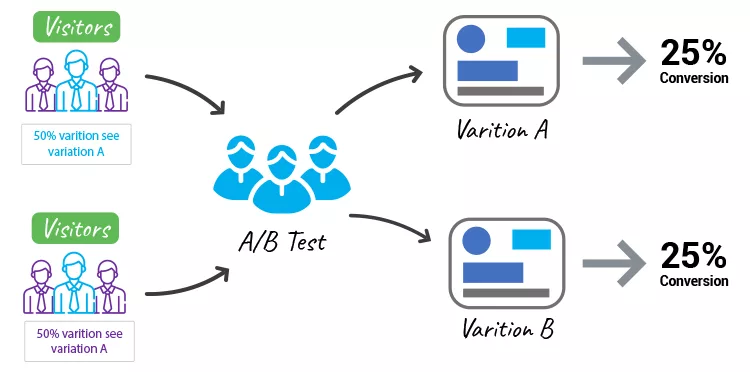
A/B testing, also known as split testing, is a conversion rate optimization method that works like this:

  1. You create two versions of something that are identical except for the element that you are testing.
  2. You drive the same amount of traffic to both versions. 
  3. You keep the version that converted better. 

For Example:

You can create two versions of your lead magnet landing page that are identical except for the headline, drive the same amount of traffic to both of them, and then keep the headline that converted better. 

Founders often get stuck in analysis paralysis and waste an enormous amount of time deliberating over various design, copy, and product decisions.

What we recommend doing instead is getting into a habit of running A/B tests, looking at the results, and making adjustments based on those results.

After all, why agonize over something like the call-to-action button color when you can simply run an experiment to see which color works best?

Business Analytics Functionality

Three individuals analyzing data: one seated with a laptop, another pointing at a large chart with colorful bar graphs, and the third standing while taking notes. Various charts and gears are in the background.

You want to have analytics in place right from the get-go so that you can start accumulating data as early as possible. 

Here are some of the metrics that you should be tracking:

  • Traffic sources and unique visitors 
  • Visitor-to-lead conversion rate 
  • Lead-to-customer conversion rate
  • Customer-to-repeat-customer conversion rate
  • Sales, revenue, and profit margins
  • Cancellations and churn rate 
  • Gross profit and net profit
  • Month-over-month growth 

Ideally, you want to use an analytics functionality that not only allows you to track and analyze business data but also enables you to run simulations and create future projections based on it. 

Specialized Apps vs. All-in-One Marketing Platforms

You have two options when it comes to building your software stack:

  1. Pay separately for a bunch of specialized apps and then use integrations to create a business workflow.
  2. Pay for an all-in-one marketing platform and get everything or at least most of what you need in one place.

Let’s take a look at the pros and cons of each option:

Specialized App Pros and Cons

Generally speaking, specialized apps tend to be better than all-in-one platforms when it comes to the functionalities that they focus on.

For example, a specialized email marketing app will probably offer better email marketing functionality than an all-in-one platform, which shouldn’t be surprising.

Consequently, if you pay for a bunch of different apps, the overall software quality will likely be higher than what you’d get from an all-in-one platform. 

However, getting all those specialized apps to play nicely with each other so that you can build a business workflow can prove to be quite a challenge.

Moreover, you can expect constant technical problems with this approach because there are so many moving parts. 

For example, your email marketing app might get an update that breaks its integration with your funnel builder, and the next thing you know your sales funnel isn’t working. 

Finally, when these technical issues occur, it can be hard to get them fixed because there’s often more than one company involved. 

Say, if your email marketing app update breaks its integration with your funnel builder, you might have to deal with customer support at both companies. Who is supposed to fix this situation?

All this may not seem like a big deal right now but consider that the larger your business grows, the more these technical issues are going to cost you in lost revenue!

All-in-One Marketing Platform Pros and Cons

Generally speaking, all-in-one marketing platforms are not as great as specialized apps when it comes to any particular functionality.

However, since you are getting all or at least most of the functionalities that you need in one place, it’s much easier to set everything up. 

Moreover, since there are fewer moving parts, you won’t have to deal with annoying technical problems as often.

And when such problems do arise, they are much easier to fix because you are only dealing with one company.

Of course, if you add a few specialized apps to your workflow on top of the all-in-one marketing platform, that is going to make things more complicated.

However, that’s still a much simpler and more robust setup than using a different app for every functionality that you need!

Grow Your Startup With ClickFunnels!

What is ClickFunnels?

ClickFunnels is an all-in-one marketing platform that has everything you need to launch, manage, and grow your online business!

What are ClickFunnels’ Most Notable Features?

ClickFunnels’ most notable features include:

  • A website builder functionality
  • A funnel builder functionality 
  • An email marketing functionality
  • A customer relationship management functionality
  • An A/B testing functionality
  • A business analytics functionality

As you can see, our software provides most of the functionalities that we discussed in this article!

How Much Does ClickFunnels Cost?

ClickFunnels has two pricing plans:

  • The Startup plan costs $97/month – It includes unlimited funnels, courses, members, contacts, pages, and domains. You can have 3 workspaces and 3 team members.
  • The Pro plan costs $297/month – It includes unlimited funnels, courses, members, contacts, pages, and domains. You can have 10 workspaces and 10 team members.

Both plans have a free 14-day trial.

By the way, if you decide that you like our software, make sure to check out our annual subscriptions. You can save money by paying yearly!

Comparison chart highlighting the benefits of using a sales funnel for online success versus not using one. The left side lists negative outcomes without a funnel, and the right side lists positive outcomes with a funnel.

Try ClickFunnels Risk-Free!

Let’s be real:

We are biased in favor of our software. 

So we understand if you take what we say about it with a grain of salt.

Fortunately, we have a free 14-day trial, so you don’t have to take our word for it. 

You can go and see ClickFunnels for yourself without any risk!

So what are you waiting for? 🧐

Start Your Free Trial Today

Thanks for reading How to Pick the Best Digital Tools for Your New Business which appeared first on ClickFunnels.
How to Use Data to Grow Your Business

Software Stack Editor · August 20, 2024 ·

The post How to Use Data to Grow Your Business appeared first on ClickFunnels.

You may have heard various thought leaders emphasize the importance of making data-driven decisions instead of relying on your gut feelings. 

That sounds great in theory but it’s not always clear how entrepreneurs are supposed to implement this advice in practice. 

That’s why today we are going to discuss five ways in which you can use analytics to grow your business…

Table of Contents:
  • #1: Zero-In on Your Most Profitable Customers
  • #2: Optimize Your Sales Funnel
  • #3: Increase Customer Lifetime Value
  • #4: Create More Accurate Future Projections
  • #5: Set Realistic Sales Targets

#1: Zero-In on Your Most Profitable Customers

Two businesspeople shake hands, surrounded by illustrations of money bags, stacks of coins, and a red upward arrow, symbolizing financial growth and partnership.

When you are just starting out, you don’t have any data so all you can do is make your best guess as to who your dream customers are and then market your products and services to them.

However, as your business grows and you start accumulating data, you should revise your definition of a dream customer based on which customers are the most profitable ones. 

It’s quite likely that if you look at your sales data, you’ll find a Pareto distribution where a minority of your customers are responsible for the majority of your revenue. 

You want to identify your most profitable customers, figure out what are the traits that they have in common, and create a dream customer persona based on those traits. 

Then, use that dream customer persona to improve the targeting of your marketing campaigns so that you can attract more customers who fit that profile!

#2: Optimize Your Sales Funnel

Illustration of people using a funnel to convert user icons into stacks of gold coins, symbolizing user acquisition or customer conversion.

First, you need to get the baseline conversion rates of your sales funnel, which you can do by driving traffic to it. 

Once you know what your visitor-to-lead, lead-to-customer, and customer-to-repeat-customer conversion rates are, you can start optimizing your sales funnel with A/B testing.

A/B testing, also known as split testing, is a conversion rate optimization method where you create two versions of the same page that are identical except for the variable that you are testing and then drive an equal amount of traffic to both versions to see which one converts better.

For example, if you want to optimize a particular page in your sales funnel, it makes sense to test a bunch of different headlines and then keep the winning one. 

The same goes for the page layout, color scheme, images, body copy, social proof, etc. You should test everything. 

Keep in mind that although you might feel that you know what’s going to convert the best, you don’t actually know until you put your hypothesis to the test and look at the results.

Generally speaking, the fewer assumptions you make and the more A/B tests you run, the better your sales funnel is going to convert and the more money you are going to make!

#3: Increase Customer Lifetime Value

Illustration of a man cheering atop a bar graph, a woman with a laptop, coins, a calculator, gear, and a chart with a rising trend line.

The ratio between your customer lifetime value and your customer acquisition cost is the most important business metric of them all. Why?

Because the more money you get from each customer, the more money you can spend on customer acquisition.

And, as Dan Kennedy put it, whoever can spend the most to acquire a customer wins. 

Here’s how he explained it to our co-founder Russell Brunson:

@russellbrunson

Whoever can spend the most money to acquire a customer wins #entrepreneur #entrepreneur101 #businessmotivation #entrepreneurjourney #russellbrunson

♬ original sound – Russell Brunson

But how can you use analytics to increase your customer lifetime value?

Improve Your Onboarding

First, look at the data related to onboarding. 

Analyze it and see if you can uncover patterns.

Is there anything that happens during the onboarding process that is likely to lead to that customer having a higher-than-average customer lifetime value?

Likewise, is there anything that happens during the onboarding process that is likely to lead to that customer having a lower-than-average customer value?

Once you identify the factors that have an impact on customer lifetime value, you want to optimize your onboarding process accordingly.

Pre-Emptively Counter Churn

Churn is the bane of all recurring revenue businesses. If you let it get out of control, it might not only offset growth but also lead to a decline in revenue and put your company at risk. 

That’s why it’s so important to be proactive about reducing it and take measures to counter it pre-emptively. 

Compare the data of customers who churn the earliest with the data of customers who churn the latest. What are the factors that make someone more likely to churn?

You will probably see people using your product less and less over time until they finally cancel their subscriptions, in which case you want to set up a system that allows you to detect a decline in usage and re-engage those customers before it’s too late.

You might also discover that it’s not that deep: maybe people’s credit cards expire, they forget to update their payment details and their subscriptions get canceled automatically without them even realizing it. 

You can prevent this by setting up a system for keeping track of credit card expiration dates and automatically reminding customers to renew their payment details before their cards expire. 

While churn is normal and inevitable, you can probably significantly reduce yours by simply identifying patterns and taking measures to address these issues before customers cancel their subscriptions!

Prioritize What’s Most Important to Your Customers

Sometimes business owners struggle to understand what is most important to their customers.

That can lead to them wasting resources on developing new features that no one cares about or even launching entirely new products that no one wants. 

Fortunately, you can use analytics to avoid that and prioritize stuff that actually matters to your customers instead.

Start by collecting usage data for your website, online store, or app, and then look at the heatmaps to see if people are using it the way you intended.

You might discover that they find some of the elements of your user interface confusing, in which case you want to make it easier to navigate. 

Then, look at which features your customers use the most and which features they use the least. 

You might find a Pareto distribution in feature usage: it may turn out that your customers primarily use a few key features and barely touch the rest. 

In that case, it makes sense to prioritize improving those key features and remove the rest of them to declutter your user interface. 

Finally, make sure that you save and catalog all customer feedback that you receive, regardless of the channel.

Social media posts and DMs, emails, customer support tickets, all of it should go into one centralized database.

Once you build that database, you can use text analytics software to make sense of all the feedback. It should help you understand what is most important to your customers!

#4: Create More Accurate Future Projections

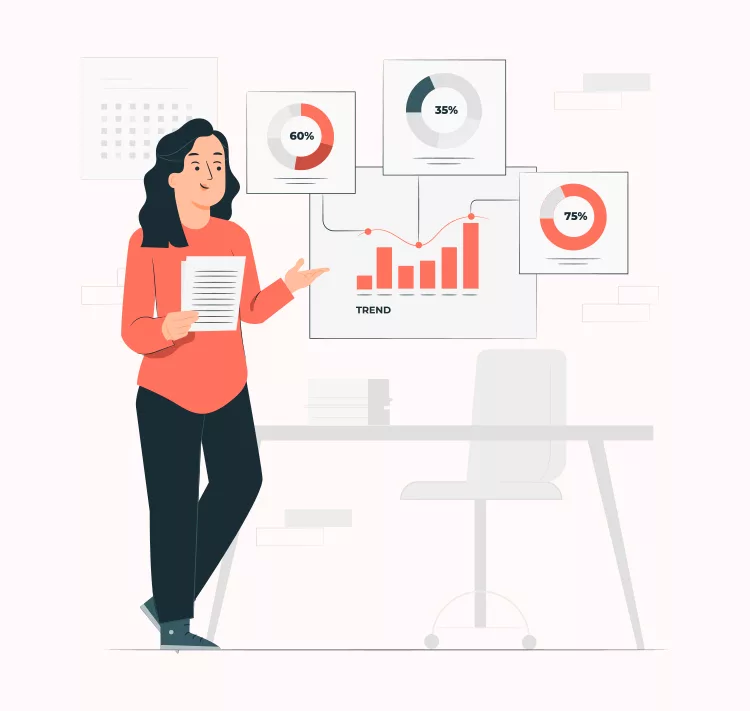
Three people engaged in a business setting: one operates a computer near a rocket, another points at a chart on a blackboard, and a third speaks through a megaphone. A lightbulb and paper planes are also shown.

If you want to build a sustainable business, you need to be strategic about it.

Analytics can help you with that because the more historical data you have, the more accurate future projections you can create.

Make sure to remove highly unusual, one-off events from your data before you start analyzing it because they can distort the patterns.

Say, if some celebrity randomly mentioned your product and it went viral because of that, you should exclude that spike in sales from your data because that is unlikely to happen again. 

However, if you paid an influencer to give you a shout-out and it resulted in a large number of sales, you should keep that spike in your data if you intend to continue using influencer marketing in the future. 

If you want to be conservative in your analysis – which we would recommend – you can include negative one-off events in your data while excluding the positive ones. This can help you prepare to weather bad luck without relying on good luck. 

Once you understand the patterns that are present in your historical data, you can start extrapolating them into the future.

There’s the obvious stuff like using the average churn rate, the average year-on-year growth, seasonal changes in sales, etc. to make predictions. But you can also create more sophisticated projections. 

For example, assuming that your conversion rates remain the same if you drive 3x more traffic to your sales funnel, that should lead to a 3x increase in sales. Pretty straightforward. But will that also lead to a 3x increase in the customer support load?

You can look at the historical data, extrapolate from the existing pattern, and use that to decide whether to hire more customer support agents. 

Of course, it goes without saying that no matter how powerful your data analysis software is, it’s not a crystal ball and you shouldn’t treat it as such. 

There’s always a possibility that a black swan event will change everything. No one knows what the future holds so it’s best to err on the side of caution and play it safe!

#5: Set Realistic Sales Targets

Two people are interacting with bar graphs and a target board, symbolizing business growth and strategic planning. Additional icons include money symbols, a clock, and a large chess piece.

You can also use analytics to set realistic sales targets.

First, look at the historical data and extrapolate from it to see what would be the most likely outcome if your salespeople simply continued doing what they have been doing so far. 

Then play with the numbers to see what might be possible if they pushed themselves a little bit.

For example, if we assume that the conversion rates are going to remain the same, then making 20% more cold calls should lead to 20% more meetings with clients and 20% more sales.

Setting an annual sales target based on that could motivate your salespeople to get out of their comfort zone. It may be a stretch goal but it should be achievable. 

Once you have your annual sales target, break it down into quarterly, monthly, and weekly targets. 

Then, create a sales plan that outlines the action steps that your salespeople should take every day, week, and month in order to hit those targets.

Finally, set up daily, weekly, monthly, and quarterly reviews to keep everyone accountable. 

These reviews will help your salespeople stay on track throughout the year until they reach their annual sales target. 

One quick note: before you do all this, run simulations based on historical data to see what would be the most likely downstream effects of your desired increase in sales. You need to make sure that your business can handle it!

Grow Your Business With ClickFunnels!

ClickFunnels is an all-in-one marketing platform that has everything you need to grow your business, including:

Sales Funnels

Our software features a library of proven sales funnel templates that you can customize with our drag-and-drop page editor.

And if you want to create a custom funnel from scratch, you can do that with our visual funnel builder. 

There’s also an email marketing functionality, so you won’t need to pay for a separate email marketing app!

A/B Testing

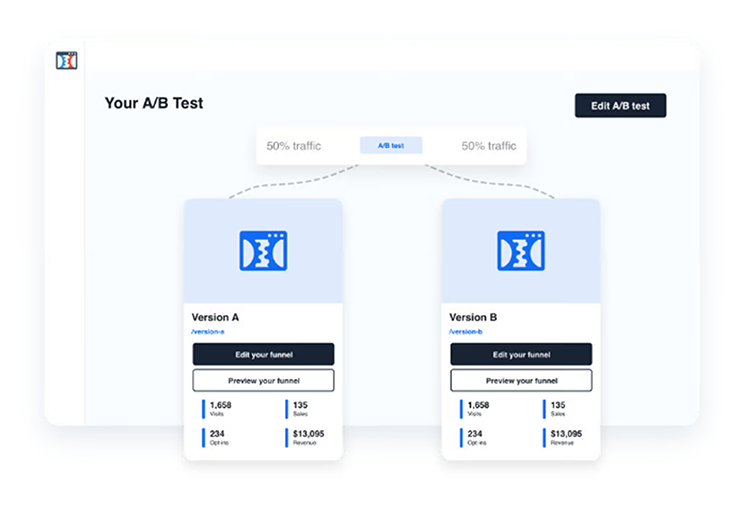
A webpage displaying an A/B test interface with two versions of a web page (Version A and Version B) for comparison. Traffic is split 50/50 between the two versions. Options to edit the A/B test are available.

Our A/B testing functionality enables you to optimize your entire sales funnel: from your landing pages to your emails to your sales pages to your downsells, upsellls, and cross-sells. 

What’s best is that you can test more than two versions of a given variable at the same time, which can help you optimize your sales funnel faster!

Analytics

A digital dashboard displays analytics including page impressions, total views, total signups, and conversion rate, with a line graph visualizing data trends over time. Other blurred sections are visible in the background.

Finally, you can use our analytics functionality to collect business data, analyze it, and create future projections! 

Try ClickFunnels Risk-Free!

Let’s be real:

We are biased in favor of our software. 

So we understand if you take what we say about it with a grain of salt.

Fortunately, we have a free 14-day trial, so you don’t have to take our word for it. 

You can go and see ClickFunnels for yourself without any risk!

So what are you waiting for? 🧐

Start Your Free Trial Today

Thanks for reading How to Use Data to Grow Your Business which appeared first on ClickFunnels.
Why Branding Matters for New Companies

Software Stack Editor · August 14, 2024 ·

The post Why Branding Matters for New Companies appeared first on ClickFunnels.

Everyone is talking about building a brand. 

But is branding really that important?

Yes, it is, especially for new businesses.

Here’s why…

Table of Contents:
  • Introduction to Branding
    • What is a Brand?
    • Weak Brand vs. Strong Brand
    • What is Branding?
  • Why is Branding So Important?
    • #1: Stand Out From the Competition
    • #2: Charge Premium Prices
    • #3: Make Your Business More Valuable
  • How to Start Building Your Brand
    • Get Clear On Your Values
    • Start Creating the Associations That You Want
    • Protect Your Brand Image at All Costs!
  • Want to Learn How to Turn Your Online Visitors Into LIFELONG CUSTOMERS?

Introduction to Branding

What is a Brand?

Illustration of a person holding design tools surrounded by branding elements such as a light bulb, target, color palette, and gears, indicating concepts of developing a brand identity.

You can think of your brand as the overall vibe of your company. 

The more that vibe resonates with your target audience, the easier it will be for you to grow your business!

Weak Brand vs. Strong Brand

Having a strong brand means that when people hear the name of your company, they immediately know what your business is all about.

Meanwhile, having a weak brand means that when people hear the name of your company, they either have no clue as to what it is that you do or they only have some vague general idea.

For example, think of all the small coffee shops that serve decent coffee and snacks but aren’t that memorable and feel kind of interchangeable with one another. They have weak brands. 

Now think about Starbucks. The logo, the atmosphere and the beverages that they serve probably come to mind immediately. You know exactly what you can expect if you go there. That’s a strong brand!

What is Branding?

Our friend Leila Hormozi defines a brand as an association between two or more things, which is a great way to think about it from a tactical perspective.

If you want to build a brand that resonates with your dream customers, you need to create associations between your company and the things that your target audience values. 

Branding is the process of creating those associations!

Why is Branding So Important?

Branding can help you:

#1: Stand Out From the Competition

It’s probably safe to say that you can increase your market share by strengthening your brand because it will help your company stand out from the competition. 

And the lower the barrier to entry in your industry, the more important branding becomes. Why?

Because a strong brand can serve as an economic moat (we’ll discuss this concept in more detail later in this article). 

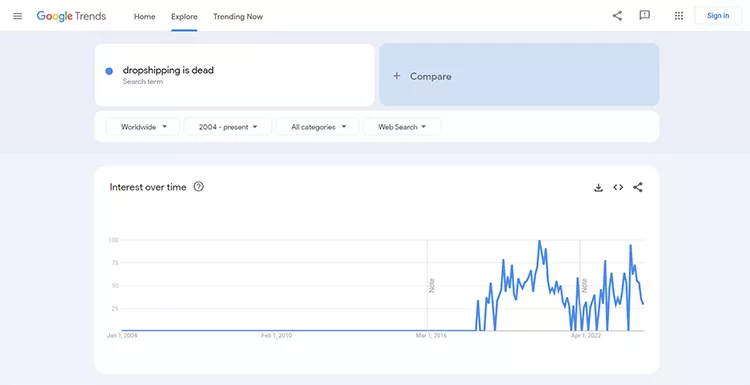
For example, anyone can start a dropshipping business, which makes it extremely competitive. However, most of those online stores are low-effort, look terrible, and have weak brands. 

Building a strong brand as a dropshipper can help you increase customer loyalty, bring in more revenue and improve your profit margins, all the while avoiding the dreaded “race to the bottom” dynamic!

#2: Charge Premium Prices

Generally speaking, the stronger your brand, the more you can charge for your products and services.

Apple is one of the best examples here: it has an incredibly strong brand that allows the company to charge much higher prices than its direct competitors. 

If someone wants to buy a laptop, chances are that they see laptops from companies like Asus, HP, and Dell as being more or less interchangeable and belonging to the same “generic laptop” category.

Consequently, if that’s what they are looking for, they will probably price shop and go with the most affordable option that has the specs that they need.

Meanwhile, that same person might see Apple laptops as belonging to a separate “Macbook” category. 

If they want not just a laptop but a Macbook, they might be willing to pay more for the same specs. Why?

Because Apple is associated with innovation, sleek design and affluence, so a Macbook might be an aspirational purchase. 

Basically, owning Apple products can make you look cool, which is why the company can charge premium prices. 

Of course, you shouldn’t blindly copy Apple’s approach to branding, especially if you are targeting a completely different demographic, because it can backfire. 

For example, when Ron Johnson, previously a senior vice president of retail operations at Apple, became the CEO of JC Penney, he decided to take a page from Apple’s playbook and turn JC Penney into a similarly hip and stylish brand.

Unfortunately, this decision resulted in one of the most infamous rebranding debacles in retail history: it alienated the company’s customer base, crashed its stock, and damaged its brand.

While learning from companies like Apple is important, you always need to ask yourself whether it makes sense to implement the same strategies in your business. Always put your dream customers first!

#3: Make Your Business More Valuable

It’s wise to set up your business in a way that makes it easy to sell should you ever decide to. 

That applies even if you don’t have any intention of selling it because you never know what the future may hold. 

The term “economic moat” is used to describe a competitive advantage that protects a company from rivals who want to steal its market share. 

There are various types of economic moats and brand identity is one of them. Generally speaking, the stronger the brand, the wider the moat and the less risky the business.

Consequently, if two businesses:

  1. Sell the same products or services
  2. Generate the same amount of revenue
  3. Have the same profit margins

…the one that has a stronger brand will have a higher valuation because buyers are willing to pay a premium for reduced risk. 

Building a brand can help you make your company much more valuable and enable you to make way more money in an exit event.

How to Start Building Your Brand

Get Clear On Your Values

There are universal values that all businesses should adhere to such as integrity, honesty, accountability, etc. 

But beyond that, you want to decide on the values that are important to you that you are going to use as guiding principles when it comes to making business decisions. What do you want your company to stand for?

Ideally, your personal values, your company values, and the values of your dream customers should match. 

Say, if you personally believe that family is what’s most important, run your business in a way that reflects those family values and cater to families with kids as your primary target audience, building a strong family-friendly brand should be pretty straightforward!

Start Creating the Associations That You Want

Now that you are clear on what your values are, it’s time to think about the associations that you want to create in the minds of your dream customers. 

For example, let’s say that you opened a restaurant and you want to build a family-friendly brand. 

Everything should reflect that: your social media posts, your marketing campaigns, your offers, your menu, your events, your interior design, etc. 

You want people to immediately get the vibe of “this is a great place to go out to eat as a family”. 

You also need to avoid associations that are incompatible with the family-friendly brand image.

For example, if you launch a special deal for tequila shots and start running an ad campaign for it, it’s going to weaken the existing “family-friendly” associations and create new “party place” associations. 

Branding isn’t rocket science: you just need to know the overall vibe that you are going for and then focus on creating associations that support it and avoiding associations that don’t. Simple!

Protect Your Brand Image at All Costs!

Something that you need to keep in mind when it comes to branding is that one mistake can be enough to destroy a brand that took years to build.

While it may be possible to repair a ruined brand image, that will require a lot of time, resources, and patience.

Also, if what happened was truly terrible, there might be no coming back from it. Your company might be done. 

That’s why it’s so important to protect your brand image:

Make Sure That the Values You Promote are Reflected in the Way You Conduct Yourself in Your Personal Life

The way you behave in your personal life is going to affect your brand image.

That’s why the alignment between your personal values, your company values and the values of your dream customers is so important.

After all, if you pretend to be someone you’re not, it’s going to come out eventually and damage your brand. 

For example, people don’t like cheaters in general, but you know who they hate even more? Hypocrites who preach family values while being unfaithful to their spouses. 

Of course, no one is saying that you have to be an angel to build a brand – we are all just flawed human beings after all – but you do need to avoid hypocrisy because it’s bound to backfire!

Make Sure That the Values You Promote are Reflected in the Way You Run Your Business

Say, if you promote family values, your company needs to be accommodating to employees who have kids.

That might mean offering generous maternity and paternity leaves, allowing your employees to take personal time off if their kids are sick, and having a work schedule that is conducive to normal family life.

Otherwise, if you preach family values while running a company that is hostile to people who have families, it’s going to come out eventually and damage your brand.

Don’t Lie to Your Customers, Employees and Investors

This is something that is extremely easy to avoid and yet so many entrepreneurs destroy both their personal reputations and their company brands by telling lies. 

Just don’t do it!

If You Make a Mistake, Take Accountability

People who are angry with you for messing up may be willing to forgive you if you admit that you were in the wrong.

However, if you dance around the issue, make excuses or throw someone else under the bus, you’ll just make the situation worse.

Go Out of Your Way to Make Things Right

You want to be proactive about this. 

Don’t wait until a disgruntled customer starts venting on social media. If something went wrong, reach out to them, apologize, and offer help.

That can be enough to diffuse situations that have the potential to snowball into PR nightmares!

Want to Learn How to Turn Your Online Visitors Into LIFELONG CUSTOMERS?

Our co-founder Russell Brunson used sales funnels to grow ClickFunnels from zero to $100M+ in annual revenue in less than a decade.

But there are plenty of entrepreneurs out there who use sales funnels and never see the business success that they hoped for.

In fact, there are a bunch of companies that sell funnel building software just like we do, but their annual revenue is nowhere near ours. 

So what did Russell do differently that enabled him to grow his business so fast and leave the competition in the dust?

He used storytelling to establish himself as an expert, create a movement, and build a community. 

And you can learn how to do the same by reading his best-selling book “Expert Secrets”!

This book is available on Amazon where it has over 1,900+ global ratings and a 4.7-star overall rating.

But you can also get it directly from us for free… 

All we ask is that you pay for shipping!

So what are you waiting for? 🧐

Get “Expert Secrets” for FREE!

Thanks for reading Why Branding Matters for New Companies which appeared first on ClickFunnels.
5 Steps For Creating Your First Digital Marketing Campaign

Software Stack Editor · August 9, 2024 ·

The post 5 Steps For Creating Your First Digital Marketing Campaign appeared first on ClickFunnels.

Launching your first digital marketing campaign can feel like stepping into uncharted territory. 

But don’t worry – you’re not alone in this journey. 

This guide will walk you through 5 practical steps to create your first digital marketing campaign, turning what might seem like a daunting task into a series of manageable actions. 

By the end, you’ll have the confidence and know-how to make your mark in the digital world. 

Let’s get started on bringing your brand to life online!

Get Hands-On Help Building Your FIRST Funnel!

What is a Digital Marketing Campaign?

A digital marketing campaign is a strategic online effort to achieve a specific business goal.

Think of it as a focused, time-bound project that uses various internet-based channels to connect with your target audience. Here’s what you need to know:

  • Purpose: It aims to accomplish a particular objective, such as increasing brand awareness, generating leads, or boosting sales.
  • Channels: It utilizes one or more digital platforms, like social media, email, websites, or search engines.
  • Target audience: It focuses on reaching and engaging a specific group of people who are likely interested in your product or service.
  • Timeframe: Unlike ongoing marketing efforts, a campaign has a defined start and end date.
  • Measurable results: It includes specific metrics to track success, allowing you to see what works and what doesn’t.

A digital marketing campaign is your way of telling your brand’s story to the right people, in the right places, at the right time — all through the power of digital technology.

3 Examples of Amazing Digital Marketing Campaigns

To give you an idea of what show-stopping digital marketing campaigns can look like, here are some real-world examples…

1. Dove — Campaign for Real Beauty

Dove’s “Campaign for Real Beauty” is one of the most iconic digital marketing campaigns, aimed at challenging the narrow standards of beauty portrayed by the media. 

The campaign featured real women of various ages, sizes, and ethnicities in its ads, promoting a broader and more inclusive definition of beauty. 

This campaign resonated emotionally with audiences, sparking global conversations about beauty standards and significantly strengthening customer loyalty to Dove. It also led to increased brand alignment with values of diversity and authenticity, demonstrating how emotionally engaging content can create powerful brand affinity.

2. Spotify — Wrapped

Four smartphone screens display Spotify Wrapped statistics against a red background with abstract designs. Comments on listening time, peak day of listening, and total minutes listened (50,869) appear.

Spotify’s “Wrapped” campaign is a brilliant example of data-driven storytelling. 

Every year, Spotify compiles users’ listening data to create personalized summaries of their music habits, which users can share on social media. 

This campaign not only drives user engagement by encouraging sharing but also reinforces Spotify’s customer-centric brand image. The 2020 Wrapped campaign saw a 31% increase in social media mentions and became a cultural moment that users eagerly anticipate annually.

3. Airbnb — Made Possible by Hosts

Airbnb’s “Made Possible by Hosts” campaign effectively utilized user-generated content (UGC) to highlight the unique experiences made possible by staying in Airbnb properties. 

The campaign featured real guest photos and stories, evoking emotional connections and showcasing the benefits of choosing Airbnb over traditional accommodations. This approach emphasized authenticity and community, helping to build trust and engagement with the brand. The campaign successfully translated into increased bookings and global reach​.

Get Hands-On Help Building Your FIRST Funnel!

6 Steps for Creating Your First Digital Marketing Campaign

You know what a digital marketing campaign is and what great campaigns look like. 

Now here are the 6 steps to create your own!

Step 1: Define Your Goal

Without a well-defined objective, you’re essentially navigating without a compass. 

Start by choosing a specific objective that aligns with your broader business goals. This could be increasing brand awareness, generating leads, boosting sales, or driving website traffic.

Make it SMART… 

Specific, Measurable, Achievable, Relevant, and Time-bound.

Instead of a vague goal like “improve conversions,” aim for something precise like “increase the conversion rate by 2% within the next quarter.” 

This specificity not only provides clear direction but also makes it easier to track progress and determine success.

Next, determine your Key Performance Indicator (KPI). 

That is, what are the actual metrics you’re going to track to determine success. 

While you should track multiple metrics, having one main KPI helps focus your efforts. For instance, if you’re running an email campaign, your primary KPI might be Click-Through Rate, with Open Rate and Unsubscribe Rate as secondary metrics.

Consider where your goal fits into your sales funnel:

  • Top of Funnel: Focus on reach and impressions
  • Middle of Funnel: Emphasize engagement and lead quality
  • Bottom of Funnel: Prioritize conversion rates and ROI

Align your goal with your available budget and resources. Estimate the required budget based on your goal – for example, calculate your target cost per acquisition. 

Assess your team’s capacity and the skills needed to achieve the goal. 

Finally, create a clear goal statement that combines all these elements. 

For Example: 

“Increase Product X sales by 15% (from 1000 to 1150 units) in Q4 through a targeted email and social media campaign, with a budget of $5000 and a target CPA of $33.” 

This statement provides a clear direction for your entire campaign.

Remember to establish checkpoints along the way. 

Break your goal into weekly or bi-weekly milestones and plan for a mid-campaign assessment. This allows you to track progress and make necessary adjustments.

Step 2: Identify Exactly WHO You Want to Target

Knowing precisely who you’re trying to reach is the key to crafting a message that resonates and choosing channels that actually reach your audience. 

This step is about creating a vivid, detailed customer avatar — a fictional representation of your ideal customer.

Start by gathering data about your existing customers or the type of customers you want to attract. Look at demographics like age, gender, location, income level, and education. 

But don’t stop there. 

Dive deeper into psychographics: their interests, values, lifestyle choices, and behaviors.

Ask yourself questions like:

  • What are their biggest challenges or pain points?
  • What are their goals and aspirations?
  • Where do they spend their time online?
  • What type of content do they consume?
  • Who influences their decisions?

Use a mix of data sources to build this profile. 

Analyze your customer database, conduct surveys, and leverage social media insights. 

Don’t shy away from actually talking to your customers or potential customers — their direct input can be invaluable.

Once you have this information, create a narrative around your avatar. Give them a name, a backstory, and flesh out their daily life. 

For Example,

“Marketing Manager Mike is a 35-year-old professional living in a suburban area. He’s tech-savvy, always looking for ways to improve his team’s productivity, and values work-life balance. He’s active on LinkedIn and frequently attends industry webinars.”

This detailed avatar serves multiple purposes:

→ It helps you craft messaging that speaks directly to your target audience’s needs and desires.

→ It guides your choice of marketing channels — you’ll know where your avatar spends their time online.

→ It informs the type of content you create — aligning with your avatar’s interests and preferences.

→ It helps in deciding on visuals and design elements that will appeal to this specific audience.

Step 3: Get Super Creative & Be Ambitious

In the world of marketing, playing it safe often means blending into the background. 

This step is about daring to be different, pushing boundaries, and creating something truly memorable. It’s time to let your imagination run wild and think beyond conventional marketing tactics.

Start by giving yourself permission to be bold. 

Forget about “best practices” for a moment and ask yourself, “What would make people sit up and take notice?” 

Remember, the campaigns that go viral or become talking points are rarely the ones that follow a standard formula.

Consider Old Spice and their “The Man Your Man Could Smell Like” campaign…

Or Burger King’s “Whopper Detour” — where they offered customers a Whopper for one penny if they ordered it while being near a McDonald’s location using their mobile app.

Or the “Taco Bell Hotel” where Taco Bell took over a Palm Springs hotel and turned it into a fully branded Taco Bell experience, complete with themed rooms, a menu filled with exclusive Taco Bell items, and various branded activities…

People relaxing and swimming in a clear blue pool surrounded by lounge chairs and vibrant murals on a sunny day.

These legends aren’t made by playing by the rules. 

Here are some brainstorming ideas… 

Look outside your industry for inspiration. Some of the most innovative campaigns come from cross-pollinating ideas from different fields. For example, a B2B software company might draw inspiration from interactive museum exhibits to create an engaging product demo.

Consider using unexpected platforms or combining channels in novel ways. Could you launch a TikTok challenge for a traditionally “serious” product? Or use augmented reality to bring your brand to life in surprising locations?

Think about creating experiences, not just advertisements. How can you involve your audience in a way that’s interactive and immersive? This could be anything from a virtual treasure hunt across social media platforms to a real-world event that ties into your digital campaign.

Don’t be afraid to inject humor, emotion, or even a bit of controversy (within reason) into your campaign. Emotional connections are powerful drivers of engagement and sharing. A campaign that makes people laugh, cry, or think deeply is more likely to be remembered and shared.

Challenge conventional wisdom in your industry. If everyone else is zigging, what happens if you zag? This could mean adopting a completely different tone, visual style, or message compared to your competitors.

Consider partnering with unexpected collaborators. Cross-brand partnerships, especially with companies outside your immediate industry, can lead to fresh, exciting campaigns that capture attention.

Brainstorm without limits first, then refine. Start with a “no bad ideas” session where you and your team throw out the wildest concepts you can think of. You can always scale back or adapt these ideas later, but starting from a place of unbridled creativity often leads to breakthrough concepts.

Get Hands-On Help Building Your FIRST Funnel!

Step 4: Create Your Schedule & Plan

Creating a solid schedule and plan is crucial for turning your creative ideas into reality. 

Start by working backward from your campaign end date, mapping out key milestones and deadlines. Break your campaign into phases: preparation, launch, ongoing management, and wrap-up.

Assign specific tasks to team members, ensuring everyone knows their responsibilities. 

Include buffer time for unexpected issues or last-minute changes. 

Create a content calendar detailing what will be published, where, and when. This should cover all your chosen channels – social media posts, email sends, blog articles, ad placements, etc.

Don’t forget to plan for pre-launch activities like building anticipation or teaser content. Also, schedule regular check-ins to monitor progress and make adjustments as needed.

Step 5: Review Your Results

Start by revisiting the goals and KPIs you set in Step 1. How close did you come to achieving them?

Look beyond the surface numbers. Dig into the data to understand what worked well and what didn’t. 

Which content pieces resonated most with your audience? Were there any unexpected trends or outcomes?

Compare your results against industry benchmarks and your own past performances. This context can help you understand if your creative approach paid off.

Don’t just focus on quantitative data. Gather qualitative feedback too — comments, shares, and customer feedback. These can provide valuable insights into how your campaign was perceived.

Finally, share the results and insights with your team and stakeholders. 

Celebrate successes and view any shortfalls as learning opportunities. Use this review process to continuously refine and improve your digital marketing efforts.

Final Thoughts on Building Your First Digital Marketing Campaign

Launching your first digital marketing campaign may seem daunting, but remember that every successful marketer started exactly where you are now. 

The key is to approach it as a learning experience, not just a business task.

Don’t be afraid to take calculated risks or think outside the box. The digital landscape rewards creativity and authenticity. 

Your unique perspective and willingness to try new things can set you apart in a crowded market. And click the link below if you want help building your first sales funnel…

Get Hands-On Help Building Your FIRST Funnel!

Thanks for reading 5 Steps For Creating Your First Digital Marketing Campaign which appeared first on ClickFunnels.
How AI Can Increase Your Sales & Conversions

Software Stack Editor · August 9, 2024 ·

The post How AI Can Increase Your Sales & Conversions appeared first on ClickFunnels.
One thing we at ClickFunnels understand is that entrepreneurs often have to wear many different hats, sometimes simultaneously.

And all those tasks can take a toll on your energy and your resources.

Even if you did everything right, you could still find your sales and conversions needing to catch up.

Because no matter how well you set up your touchpoints, craft engaging content, and optimize your sales funnel, testing, improving, and refining each of these aspects requires just as much time and energy to achieve maximum results.

In other words, getting all your tasks done on time and well enough to grow your revenue without sacrificing a large part of your personal life to achieve it can be challenging.

But what if you had a shortcut, a tool that could help you set up, optimize, and improve your sales funnels’ various touch points so that you had more time to devote to the things that matter most to you? 

That’s the promise of AI or Artificial Intelligence, a tool that can revolutionize your sales process, improve efficiency, and skyrocket conversions, giving you the confidence to embrace its potential. 

So, keep reading if you’re wondering how to increase your sales and improve your conversions. 

In this blog post, we have 7 ways AI can boost your sales and increase your conversions so that you have more free time and energy to devote to what’s most important to you.

What is Artificial Intelligence, Exactly?

More than a catchy buzzword, Artificial Intelligence, or AI as it’s commonly referred to, describes software and algorithms that can perceive their environment and use “machine” learning to take actions that create maximum results for programmed, defined goals. 

In other words, AI is software that is capable of calculating and learning the best processes and systems to achieve a specific outcome. 

As the algorithm learns the best pathways, it can refine the processes to make them even more effective in less time, making calculations much more efficient. 

Imagine setting a few directions on your computer, clicking enter, and making money. Well, utilizing AI in your sales funnels makes it that simple. 

This incredibly powerful tool is a game-changer for businesses of all sizes looking to grow, expand, and increase their sales. 

Integrating AI into your marketing, digital efforts, and sales will help you reduce redundancies, improve efficiencies, increase customer engagement, enhance customer experiences, and, most importantly, increase sales. 

That said, like all tools, they’re only as effective as your understanding of how to use them to their full capacity, so let’s explore how to best simplify, utilize, and use these new powerful tools to help you grow your sales and increase your conversions.

7 Ways That AI Can Boost Your Sales & Increase Conversions

AI can provide various benefits to entrepreneurs of all skills, experiences, and scale levels.

Here are the significant ways that AI can boost your sales & increase conversions:

  • Improved Personalization
  • Enhanced Customer Experience
  • Predictive Analysis
  • Instantaneously Optimizing Content
  • Streamlining Your Sales Funnels And Processes
  • Better Targeting And Lead Generation
  • Superior Segmentation

1. Improved Personalization

Imagine running your e-commerce store on auto-drive with improved results. 

With AI, you can program the algorithm to learn about your customers’ behaviors, browsing patterns, purchasing patterns, and other touchpoints, from blogs to social media content consumed, to customize specific product recommendations that match your customers’ purchasing interests. 

By instantly tracking and analyzing your customer’s online behavior and preferences, you can immediately provide solutions to their search interests that are generated uniquely for the visitor based on their past behaviors. 

The increased level of personalized recommendations and product placements vastly increases the likelihood of conversions because your target customer is presented with a customized recommendation that makes them feel valued and understood. 

The instantaneous nature of AI will help you quickly position content that is most relevant to your visitors, creating a truly unique experience for them that helps foster your reputation as an expert who has solutions for their needs. 

This personalization is a significant driver in user experience perception, and those are essential components toward driving better conversions. 

Recognizing the power of AI, ClickFunnels has created a new AI Sales Funnel Builder tool that allows you to automate your sales funnels, personalize your email campaigns, and create uniquely personalized messages and product recommendations for each of your customers. 

This will enable you to boost your sales while increasing your conversions effortlessly.

2. Enhanced Customer Experience

Illustration of a person holding a smiley face and giving a five-star rating while sitting at a table with a package, books, and speech bubbles around.

Speaking of enhancing the perception of your brand, building a personalized messaging system and touchpoints for every stage of your buyer’s journey, from first impression to moving them toward their purchasing decision and follow-up, will greatly enhance your customer’s experience. 

One area in which AI provides powerful solutions is creating and implementing AI chatbots. 

These algorithms can instantly interact with your customers to answer their issues and problems and provide 24/7 customer assistance and support. 

From frequently asked questions to processing orders and addressing complaints with personalized solutions, you can program your chatbots to address everything to fulfill your customers’ needs further. 

For example, if you’re a clothier in traditional retail, you’ll get questions about sizing items and returns. 

Chatbots can be programmed to anticipate and address these concerns quickly and efficiently, enhancing your customer’s experience, helping them perceive your brand positively, and driving future sales. 

Why is enhanced customer experience a factor in future sales, and why does it matter? 

Your offers’ LTV, or lifetime value, is one of the most important aspects of your long-term revenue growth.

That’s because it’s 10 times easier to sell to a returning customer than to generate a new sale, partly because a returning customer is already familiar with your brand and your products.

3. Predictive Analysis

Illustration of a man pointing at a rising line graph on a screen while another person works on a laptop. Various charts and financial symbols surround them.

One incredibly powerful aspect of AI is that it can instantaneously process and analyze thousands of data points and present personalized solutions for each individual in your sales funnel. 

Now, imagine being able to present a solution or product to a visitor before they even know they want or need that exact item. 

With AI, you can present products and solutions to your visitors that are tailor-made for them through predictive analysis. 

What is predictive analysis? 

Predictive analysis involves anticipating future needs and actions based on previous behaviors, preferences, and historical data to create individualized solutions. 

A good example of how this can be implemented in the real world is, imagine you have a subscription service. 

With AI and predictive analysis, you can determine which customers are about to cancel and create targeted retention strategies with personalized discounts and special offers that encourage them to retain their subscription packages. 

With ClickFunnels’ new AI Sales Funnel Builder, you’ll be better able to anticipate your customers’ and targets’ behaviors. This will allow you to create solutions instantly and entice your customers, generating better conversions.

4. Instantaneously Optimizing Content

A person with a laptop sitting in front of a large screen displaying various charts, graphs, and settings icons, representing data analysis and settings configuration.

With AI, you can instantaneously optimize your website, content creation, and distribution for maximum impact and results. 

Imagine having all your content in your sales funnels created instantly and customized for each visitor, with SEO taken care of and distributed through all your channels, including those optimized for your social channels. 

So, let’s say that you’re selling a digital solution for new entrepreneurs. 

With AI, you can immediately generate specific and unique content for each individual that meets them where they’re hanging out, whether it’s in your funnel, on a blog, or even on your social channels. 

This will assist your content creation, whether it’s generating blog posts, social media posts, or even ad copy. It will save you time and automatically optimize for better engagement, sharing, and conversions.

With ClickFunnels’ AI Sales Funnel Builder tool, you can generate all your content for maximum impact, further enhancing your customers’ experience regardless of where they are in their buyer’s journey.

5. Streamlining Your Sales Funnels and Processes

The beauty of AI is that it can easily automate routine tasks, including your sales funnels and processes. 

Whether you’re automating data entry, lead capture, lead scoring, and even follow-up emails, you’ll have more time to devote to higher-value activities like closing more deals and building long-term relationships. 

For example, as a software company, you can use AI to automate qualifying your leads and rank them based on their engagement with your various touchpoints and marketing materials. This makes it infinitely easier for your sales team reps to know which leads are ready to act and when. 

A system that can qualify your leads, rank them, and then provide you with a list of those who are ready to act will automatically boost your sales and increase conversions. 

It’s an intuitive CRM or Customer Relationship Management tool that makes finding, ranking, and closing your leads incredibly simple.

6. Better Targeting and Lead Generation

Illustration of a hand holding a magnet emerging from a laptop, attracting icons of people, coins, and targets, representing digital marketing and audience engagement.

With the power of AI, you can analyze incredible amounts of data to identify which leads are of higher quality than others and what leads are most likely ready to convert. 

This will immensely help your sales teams focus on building those relationships with your targets and prospects with the highest potential to convert, improving all your efforts and vastly improving your ROI or return on investment, whether it’s time or other resources. 

For example, suppose you’re in the B2B sphere. 

In that case, you can utilize ClickFunnels’ new AI Sales Funnel Builder tool to analyze visitor behaviors on your website and social media channels and their previous online behaviors to identify and target leads most likely to convert into paying customers. 

The instantaneous nature of AI will generate and optimize all the various channels and touchpoints that these targets interact with in your funnel, helping guide them toward a conversion.

7. Superior Segmentation

Illustration of a woman with a laptop pointing at a pie chart with portraits of people segmented in different sections.

AI can take even the most labor-intensive process of segmenting your targets and seamlessly create segmentation lists for optimal interaction and optimize them for greater effect and conversions. 

AI can quickly track and analyze past behaviors, user preferences, and behaviors to create segmentation lists for maximal effect. 

Tools like ClickFunnels AI Sales Builder tool can:

  • Analyze User Behaviors and Preferences
  • Create Real-Time Updates
  • Product Segmentation
  • Micro-Segmented Lists

Separately, each of these aspects can provide you with significant insights to create highly effective strategies, but when combined, these insights make a supremely effective opportunity.

Analyze User Behaviors and Preferences

AI can be utilized to track and analyze user preferences and behaviors across all platforms to create hyper-effective conversion and sales campaigns.

This will allow you to create segmented audiences based on demographics, engagement levels, past purchases, browsing habits, and other data, enabling you to develop highly effective targeted marketing strategies. 

Having tools that can instantly analyze user behavior and implement that data into your touch points across multiple channels will make your messaging and reach much more effective, boosting your conversion opportunity.

Create Real-Time Updates

As your target behaviors evolve, your segmentation strategies should follow accordingly. AI can automate the process of monitoring changes to your target audience’s behaviors and preferences to update your segmentation strategies and marketing efforts. 

This will enable you to create more relevant content creation product suggestions and quickly adapt to the changing landscape of your target audience’s interests and behaviors, keeping your sales and conversions ahead of the shifting trends. 

Real-time updates will allow you to launch a high-converting sales funnel and keep you ahead of changes that may decrease your sales and conversions. 

Instead, having AI handle the data collection and analytics before implementing changes in real time will increase your opportunities to boost sales and improve conversions.

Product Segmentation

Creating a predictive approach to your product offerings will significantly boost your sales & increase conversions, which is infinitely easier utilizing AI tools. 

These AI tools can track thousands of data points and provide segmentation lists of likely products your target audience will be most interested in and when they will most likely convert. 

Understanding which audience segments are most likely to make a purchase and the types of products they are most likely to consume will allow you to refocus your resources on these high-potential segmentation lists. 

Finally, having the power of predictive analysis with segmentation lists, you’ll offer better products and solutions for the right audiences while enhancing greater customer retention for future sales efforts.

Micro-Segmented Lists

One of the issues with segmenting your audiences is keeping track of who needs what solution and when. 

Too often, segmentation strategies take a broad approach, but with AI, you can easily create hyper-optimized micro-segmentation lists for conversions. 

Say, for example, that you are selling a physical product like women’s handbags. 

Traditional segmentation may focus on audience lists most likely to buy handbags. Still, with the power of AI, you can micro-segment your lists into various categories that are even higher performing. 

Instead of having a segmentation list for people interested in women’s handbags, your new AI micro-segmented lists may include audiences such as:

  • Handbags for overseas travel
  • Red (or any specific color) clutches for fine dining
  • Handbags for moms of newborns

The key here is to have micro-targeted lists that are extremely specific.

This micro-segmentation strategy will lower your overall reach and create greater opportunity, as you’re now targeting individuals interested in a specific product or solution.

Having a powerful, multifaceted tool like the new ClickFunnels AI Sales Funnel Builder will give entrepreneurs and digital marketers a huge advantage over their competitors.

The power of implementing AI into your marketing efforts can significantly boost your sales & increase conversions by creating a much more efficient and effective targeting strategy.

Utilizing AI in every aspect of your sales funnels can provide various benefits, including enhanced customer experiences, personalized content and calls to action, predictive analytics, and process automation.

Understanding the power of AI, ClickFunnels has created a new, extremely powerful tool for marketers and entrepreneurs of all skills and audience sizes.

The new AI Sales Funnel Builder tool will revolutionize your sales process, improve your efficiency, boost sales & improve conversions.

Sign up at ClickFunnels today for a FREE 14-day trial and discover how AI can revolutionize your sales process, improve efficiency, and skyrocket conversions.

Visit the ClickFunnels site today to start your free trial!

Thanks for reading How AI Can Increase Your Sales & Conversions which appeared first on ClickFunnels.
How To Create A Marketing Plan For Your Website

Software Stack Editor · August 5, 2024 ·

The post How To Create A Marketing Plan For Your Website appeared first on ClickFunnels.
AI is easily one of the most powerful marketing tools on the planet right now. 

It can make your marketing efforts faster, cheaper, and more effective. 

In this guide, we’ll show you how you can use AI to create (and execute) a marketing strategy for your website — whether it’s driving traffic or increasing conversions!

Let’s dive in. 

Build Your AI Sales Funnel Now For Free!

Step #1: Determine What You Want to Accomplish

Before diving into AI tools and fancy tech, let’s start with the basics: What do you actually want to achieve with your website’s marketing strategy? 

Having clear goals is crucial because it’ll guide every decision you make moving forward.

Here are some common objectives you might consider:

  • Increase website traffic: Are you looking to get more eyeballs on your site?
  • Boost conversions: Do you want to turn more visitors into customers or subscribers?
  • Improve engagement: Are you aiming to keep visitors on your site longer or interact more?
  • Enhance brand awareness: Is your goal to make your brand more recognizable in your industry?
  • Generate more leads: Are you focused on collecting contact information from potential customers?

Pro tip: Don’t try to tackle everything at once. Pick one or two primary goals to focus on initially.

Once you’ve identified your main objectives, it’s time to get SMART:

  • Specific: Define your goal clearly. Instead of “increase traffic,” aim for “increase organic traffic by 50%.”
  • Measurable: Make sure you can track your progress. Tools like Google Analytics can be your best friend here.
  • Achievable: Be ambitious, but realistic. Consider your resources and current performance.
  • Relevant: Ensure your goal aligns with your overall business objectives.
  • Time-bound: Set a deadline. “Increase conversions by 25% within the next 6 months.”

Remember, AI is a powerful tool, but it needs direction. By clearly defining your goals, you’re setting the stage for AI to work its magic in the most effective way possible.

Step #2: Get the Right Tools for the Job

There are TONS of AI marketing tools out there — and they all do different things. So here’s a list of the top AI tools you can use… and what they all do. 

1. ClickFunnels — For Sales Funnels

Advertisement for ClickFunnels, offering a service to convert website visitors into paying customers with a free trial sign-up option. Key features: No computer skills needed, works for any business, market and sell professionally.

We’ve been around for a while now — but we just recently added AI to our sales funnel software. 

In fact, you can build your funnel for FREE with AI by clicking here.

A ClickFunnels welcome screen inviting users to start building their sales funnels, with dropdown menus for selecting their role, business type, target audience, and desired time commitment.

Just answer some simple questions and you’ll have a sales funnel built in as little as five minutes. 

A sample marketing copy on a blue background promotes a neck and shoulder tension reliever. The right side features customization options for writing voice, expertise, avatar, and goal.

But that’s not all! 

Once you log in to your ClickFunnels account and go to your brand new funnel, you can ALSO make changes by just chatting with our AI assistant, Napoleon. 

Click on any element on the page, and the bot will recognize that section. Then you can ask the bot to rewrite the copy, expand it, shorten it, or change it in any particular way you like… 

Screenshot of a web page showing a guide on strength training at home, a form for a free guide request, logos of featured media, and testimonials from fitness influencers. Chat sidebar on the right.

So not only can you build your funnel with AI, but you can edit and optimize it with AI too! 

Pretty cool, huh? 

Click below to build your AI sales funnel right now for free. 

Build Your AI Sales Funnel Now For Free!

2. Jasper — For Blog Content

Screenshot of a template selection page with various options for content creation, including Dynamic Template, Documents, Content Summarizer, AIDA Framework, and Amazon Product Description.

Jasper is a great tool for creating blog content. And it’s SUPER user friendly. You can give it a topic, verify the outline, and then receive AI-written content. You can also edit that content or ask the AI to improve certain parts of it. 

Main Features:
  • Content Templates: Ready-to-use templates for blogs, ads, product descriptions, and social media.
  • Tone and Style: Adjust content tone and style to match your brand’s voice.
  • SEO Integration: Includes keywords and SEO suggestions for better search engine ranking.
  • Long-Form Content: Supports creating detailed articles and reports.
  • Collaboration: Allows multiple users to work together on content projects.
  • Multi-Language Support: Generates content in several languages for global reach.
  • Content Improvement: Offers grammar and readability checks to refine your text.

3. Copy.ai — For Copywriting

Copy.ai is a copywriting tool that helps you generate engaging content quickly. It offers various templates for marketing copy, product descriptions, social media posts, and blog content. Copy.ai is designed to make writing easier and more efficient, perfect for marketers, small businesses, and content creators.

Main Features:
  • Diverse Templates: Provides templates for ads, product descriptions, blogs, and social media.
  • Customization: Easily customize generated content to fit your brand’s voice and style.
  • Idea Generation: Helps brainstorm ideas for headlines, slogans, and content themes.
  • Time-Saving: Quickly produces quality copy, reducing the time spent on writing tasks.
  • Multi-Language Support: Generates content in multiple languages for a wider audience.
  • User-Friendly Interface: Simple and intuitive design, making it easy for anyone to use.

4. Seventh Sense — For Email Marketing 

A dashboard displaying contact engagement data. The top graph shows engagement trends over time, while the bottom heatmap highlights engagement activity by day and hour. Menu options are on the left.

Seventh Sense optimizes email marketing by determining the best times and frequencies to send emails based on individual user behavior. This personalization helps increase engagement and open rates, making your email campaigns more effective.

Main Features:
  • Send Time Optimization: Analyzes when recipients are most likely to engage with emails.
  • Frequency Optimization: Determines the ideal email sending frequency for each contact.
  • Behavioral Analytics: Tracks and analyzes user behavior to improve email performance.
  • Integration: Works seamlessly with popular email marketing platforms like HubSpot and Marketo.
  • Automation: Automates the process of optimizing send times and frequencies, saving time and effort.

5. Lately — For Repurposing Content

Lately helps you repurpose long-form content into multiple social media posts, saving time and effort. By analyzing your existing content, it generates engaging posts tailored to your audience, ensuring a consistent and active social media presence.

Main Features:
  • Content Repurposing: Transforms blogs, articles, and other long-form content into numerous social media posts.
  • AI-Driven Analysis: Analyze your content to create posts that resonate with your audience.
  • Scheduling: Easily schedule and manage posts across multiple social media platforms.
  • Consistency: Maintains a consistent voice and style across all posts.
  • Performance Tracking: Monitors engagement and performance of posts to refine future content.

6. Brandwatch — For Monitoring Customer Sentiment

Brandwatch helps you monitor customer sentiment and brand perception by analyzing social media conversations and other online content. It provides valuable insights into how your audience feels about your brand, products, and industry trends.

Main Features:
  • Sentiment Analysis: Tracks and analyzes customer sentiment across various online platforms.
  • Trend Monitoring: Identifies emerging trends and topics in your industry.
  • Competitive Analysis: Compares your brand’s performance and sentiment with competitors.
  • Custom Dashboards: Offers customizable dashboards to track specific metrics and KPIs.
  • Real-Time Alerts: Provides real-time alerts for significant changes in sentiment or mentions.

7. Emarsys — For Personalization

Emarsys helps businesses deliver personalized marketing experiences across multiple channels. By leveraging customer data and AI, Emarsys enables targeted, relevant marketing that enhances customer engagement and loyalty.

Main Features:
  • Omnichannel Marketing: Personalizes marketing efforts across email, mobile, social, and web channels.
  • Customer Segmentation: Uses AI to segment customers based on behavior and preferences.
  • Predictive Analytics: Forecasts customer behaviors to tailor marketing strategies.
  • Automation: Automates personalized marketing campaigns to save time and increase efficiency.
  • Real-Time Personalization: Delivers personalized content in real-time based on customer interactions.

8. Acquisio — For PPC Campaigns

A dashboard screen displaying a line graph and a data table with metrics like clicks, impressions, CTR, conversions, and costs for various advertising platforms, including Google Adwords and Facebook.

Acquisio optimizes pay-per-click (PPC) campaigns by automating bid adjustments and budget allocations. It uses machine learning to improve campaign performance, making PPC management more efficient and effective.

Main Features:
  • Bid Management: Automatically adjust bids to maximize ROI.
  • Budget Allocation: Optimizes budget distribution across campaigns and channels.
  • Performance Tracking: Monitors campaign performance with real-time analytics.
  • Multi-Channel Support: Manages PPC campaigns across multiple platforms, including Google, Bing, and Facebook.
  • Reporting: Generates detailed reports to help you understand and improve campaign performance.

9. MarketMuse — For SEO

MarketMuse improves your SEO by analyzing content and providing recommendations to enhance its quality and relevance. It uses AI to help you create authoritative, well-optimized content that ranks better on search engines.

Main Features:
  • Content Analysis: Evaluate your content to identify gaps and opportunities.
  • Topic Research: Suggest relevant topics and keywords to target.
  • Optimization Recommendations: Provides actionable suggestions to improve SEO performance.
  • Content Scoring: Scores your content against competitors to highlight areas for improvement.
  • Content Briefs: Generates detailed content briefs to guide writers in creating optimized content.

10. Drift — For Chatbot Sales

Screenshot of a chat with Drift University Bot. User asks about fall rolling admissions. Bot replies that admissions for the Computer Science undergraduate program start March 1st and offers a counselor.

Drift uses chatbots to engage with website visitors in real-time, qualifying leads, answering questions, and routing them to sales reps. This helps streamline the sales process and improves customer service by providing immediate assistance.

Main Features:
  • Lead Qualification: Automatically qualifies leads based on visitor interactions.
  • Real-Time Chat: Engages with visitors instantly through chat.
  • Routing: Directs qualified leads to the appropriate sales reps.
  • Customization: Allows customization of chatbot responses to fit your brand’s voice.
  • Analytics: Provides insights into chatbot performance and customer interactions.

11. Intercom — For Customer Support

Chat conversation with a bot. A user asks if they can change the date of their reservation. The bot provides instructions on how to change the reservation date.

Intercom enhances customer support by using AI to automate responses to common inquiries and provide instant assistance. This improves customer satisfaction and allows support teams to focus on more complex issues.

Main Features:
  • Automated Responses: Uses AI to provide instant answers to frequently asked questions.
  • Live Chat: Offers real-time chat support for customers.
  • User Segmentation: Segment users to provide personalized support based on their needs.
  • Integration: Integrates with various tools and platforms for seamless customer support.
  • Analytics: Tracks and analyzes customer interactions to improve support strategies.

12. Animoto — For Video Marketing

Animoto simplifies video marketing by allowing users to create professional-quality videos quickly and easily. It’s ideal for producing social media ads, product demos, and promotional videos without needing advanced video editing skills.

Main Features:
  • Easy-to-Use Templates: Offers a variety of customizable templates for different types of videos.
  • Drag-and-Drop Interface: User-friendly interface that makes video creation simple.
  • Music Library: Includes a library of licensed music tracks to enhance videos.
  • Brand Customization: Allows adding logos, colors, and fonts to match your brand.
  • Social Media Integration: Optimizes videos for different social media platforms.

Step #3: Implement Quality Control

While AI tools can supercharge your marketing efforts, it’s crucial to remember that they’re not infallible. 

Human oversight remains a vital component of any successful AI-driven strategy. Let’s explore how to implement quality control effectively without sacrificing the efficiency AI brings to the table.

Why Quality Control Matters

  • Brand consistency: AI might not always capture your brand’s unique voice or values.
  • Contextual understanding: AI can miss nuances or cultural references that humans easily grasp.
  • Accuracy: While rare, AI can sometimes produce factual errors or “hallucinations.”
  • Ethical considerations: Human judgment is essential to ensure your content aligns with ethical standards and avoids potential biases.

Practical Tips for Efficient Quality Control

  1. Set clear guidelines: Develop a comprehensive style guide and brand voice document. This will help both your AI tools and your human team stay aligned with your brand’s identity.
  2. Implement a tiered review system:
    • Low-risk content (e.g., social media posts): Quick human scan before publishing.
    • Medium-risk content (e.g., blog posts): Thorough review by a team member.
    • High-risk content (e.g., legal pages, major campaigns): Multiple reviews, including subject matter experts.
  3. Use AI-assisted editing tools: Leverage grammar and style checkers to catch basic errors quickly, allowing human reviewers to focus on higher-level issues.
  4. Conduct regular audits: Periodically review a sample of your AI-generated content to identify recurring issues or areas for improvement.
  5. Foster human-AI collaboration: Encourage your team to view AI as a partner, not a replacement. Train them to effectively prompt, edit, and refine AI-generated content.
  6. Implement feedback loops: Create a system where lessons learned from human reviews are fed back into your AI prompts or settings, continually improving output quality.
  7. Maintain a human touch: For crucial customer touchpoints (like responding to complaints or personalized outreach), ensure a human is always involved in the process.
  8. Stay informed: Keep up with developments in AI technology and potential issues. This knowledge will help you anticipate and prevent problems.

Balancing Efficiency and Quality

The key to successful quality control is finding the right balance between leveraging AI’s efficiency and ensuring human oversight. Here’s a simple framework to help:

  1. Assess risk: Categorize your content types by the potential impact on your brand or business.
  2. Allocate resources: Invest more human time in high-risk, high-impact content.
  3. Automate wisely: Use AI to handle routine tasks, freeing up human creativity for strategic thinking and nuanced communication.
  4. Continuously improve: Regularly review your process, adjusting the balance as your team becomes more adept at working with AI.

Remember, the goal isn’t to scrutinize every AI-generated comma. It’s to ensure that your AI-powered marketing strategy aligns with your brand’s voice, values, and objectives while maintaining the human touch that resonates with your audience.

Step #4: Analyze, Adapt, and Optimize Your AI Marketing Strategy

Now that you’ve implemented your AI-powered marketing strategy and set up quality control measures, it’s time to ensure your efforts are paying off. In this step, we’ll dive into how to analyze your results, adapt to insights, and continuously optimize your strategy.

1. Set Up Proper Tracking and Analytics

Before you can improve, you need to measure. Ensure you have robust analytics in place:

  • Use tools like Google Analytics, Adobe Analytics, or Mixpanel to track website performance.
  • Set up conversion tracking for all important actions on your site.
  • Implement UTM parameters to track the performance of individual campaigns or content pieces.
  • Consider using AI-powered analytics tools that can provide deeper insights and predictive analysis.

2. Identify Key Performance Indicators (KPIs)

Determine which metrics truly matter for your goals. Some examples include:

  • Traffic metrics: Unique visitors, page views, bounce rate
  • Engagement metrics: Time on site, pages per session, social shares
  • Conversion metrics: Lead generation, email sign-ups, sales
  • Content performance: Most viewed pages, top exit pages
  • AI-specific metrics: Accuracy of AI-generated content, human edit rates

Pro tip: Don’t get lost in vanity metrics. Focus on KPIs that directly relate to your business objectives.

3. Conduct A/B Testing With AI-Generated Content

Leverage AI to supercharge your A/B testing:

  • Use AI to generate multiple variations of headlines, ad copy, or email subject lines.
  • Implement A/B testing tools to compare AI-generated content against human-created content.
  • Test different AI-generated customer segments or personas.

Remember: The goal isn’t to prove AI is better, but to find what resonates best with your audience.

4. Interpret Data and Draw Actionable Insights

Don’t just collect data — understand it:

  • Look for patterns and trends in your KPIs over time.
  • Analyze how AI-driven campaigns perform compared to traditional methods.
  • Identify which types of AI-generated content perform best for different segments or channels.
  • Use AI-powered data visualization tools to spot insights you might miss in raw data.

5. Iterate and Refine Your AI Prompts and Strategies

Use your insights to improve:

  • Refine the prompts you give to AI tools based on what’s working best.
  • Adjust your content strategy based on top-performing topics or formats.
  • Optimize your marketing funnel, focusing AI efforts where they show the most impact.
  • Continuously update your ideal customer profiles based on AI-derived insights.

6. Balance Automation with Creative Experimentation

While AI can automate much of your marketing, don’t forget the human touch:

  • Reserve time and resources for creative campaigns that go beyond what AI typically produces.
  • Use AI-generated ideas as springboards for unique, out-of-the-box marketing initiatives.
  • Encourage your team to think critically about AI suggestions and to propose innovative alternatives.

7. Stay Agile and Embrace Continuous Learning

The world of AI is evolving rapidly. Stay ahead of the curve:

  • Keep an eye on emerging AI marketing technologies and trends.
  • Regularly train your team on new AI tools and best practices.
  • Be prepared to pivot your strategy as you learn what works best for your unique audience.

Final Thoughts on AI Marketing Strategy

AI is revolutionizing the marketing landscape, putting powerful capabilities at your fingertips regardless of your business size. 

While these AI tools are impressive, remember that your creativity and strategic thinking remain invaluable. The future of your AI-driven marketing is bright, with even more innovative possibilities awaiting you on the horizon. 

Remember, integrating AI into your marketing approach is an ongoing journey, not a one-time task. By thoughtfully balancing AI capabilities with your brand’s unique voice, you’re positioning yourself at the cutting edge of marketing. The future is here, and it’s smarter than ever.

Build Your AI Sales Funnel Now For Free!

Thanks for reading How To Create A Marketing Plan For Your Website which appeared first on ClickFunnels.
5 Great Tools That Can Supercharge Your Site Traffic

Software Stack Editor · August 2, 2024 ·

The post 5 Great Tools That Can Supercharge Your Site Traffic appeared first on ClickFunnels.

Want to get more traffic?

Today we are going to share five great tools that can help you with that!

Table of Contents:
  • 1: Ahrefs
  • 2: Clearscope
  • 3: Jasper
  • 4: MeetEdgar
  • 5: ClickFunnels

1: Ahrefs

Screenshot of the Ahrefs homepage with the text: 'Everything you need to rank higher & get more traffic'. Includes sign-up button and user statistics.

What is Ahrefs?

Ahrefs is a search engine optimization tool that is widely considered to be the industry standard by professional marketers who specialize in SEO. 

If you are serious about increasing your organic search traffic, you should consider investing in this software!

What are Ahrefs’ Most Notable Features?

Ahrefs has everything you need to create a winning SEO strategy:

  • A site explorer functionality that enables you to do competitive research. You can analyze your competitors’ keyword rankings, backlink profiles, and website authority.
  • A keyword explorer functionality that gives you access to an industry-leading keyword database.
  • A content explorer functionality that you can use to find content ideas and link building opportunities.
  • A site audit functionality that allows you to set up automated website scans to regularly check your website for potential SEO issues.
  • A rank tracker functionality that shows your progress when it comes to ranking for specific keywords.

There’s also a general dashboard that gives you a high-level overview of all your SEO projects, their performance, and their progress.

How Much Does Ahrefs Cost?

Ahrefs has four pricing plans. Here’s a quick overview:

  • The Lite plan starts at $129/month and includes the core Ahrefs functionality.
  • The Standard plan starts at $249/month and includes everything in the Lite plan, more Site Explorer, Keywords Explorer, and Rank Tracker features, several additional functionalities, and higher usage limits.
  • The Advanced plan starts at $449/month and includes everything in the Standard plan, plus more Site Explorer, Site Audit, and Rank Tracker features, several additional functionalities, and higher usage limits.
  • The Enterprise plan starts at $14,990/year and includes everything in the Advanced plan, more Site Audit and Report Builder features, several additional functionalities, and access to the Ahrefs API.

Note that if you choose to pay annually for Lite, Standard, or Advanced plans, you will get 2 months for free.

If you are a small business owner, going with the Lite plan probably makes the most sense. 

Ahrefs doesn’t seem to offer a free trial at the time of writing.

2: Clearscope

What is Clearscope?

Clearscope is an SEO writing tool that is extremely popular among professional marketers who specialize in search engine optimization.

While you don’t necessarily need this app, your competitors are probably using it, so it can help you keep up with them.

And if they aren’t, it might help you gain a competitive edge!

What are Clearscope’s Most Notable Features?

Clearscope’s main feature is its text editor that is designed to help you optimize your content for your target keyword. 

You can either write your article within it or copy-paste it from elsewhere. Either way, the app will show you:

  • The overall content grade. You want to get at least an A+ but it’s best to aim for A++, which is the highest grade possible.
  • The word count of your article and the typical word count of the articles that are currently ranking for your target keyword.
  • The readability level of your article and the typical readability level of the articles that are currently ranking for your target keyword.
  • A list of 100 semantic keywords. You will see how many times each semantic keyword is mentioned in your article, how many times it is typically mentioned in the articles that are currently ranking for your target keyword and how often it is used in the subheadlines of those articles.

Running your SEO content through Clearscope and optimizing it based on its suggestions can help you increase your chances of ranking for your target keyword.

How Much Does Clearscope Cost?

Clearscope has three pricing plans. Here’s a quick overview:

  • The Essential plan costs $189/month and includes 100 content inventory pages, 50 monitored queries, 50 keyword discoveries, and 20 content reports.
  • The Business plan costs $399/month and includes 300 content inventory pages, 150 monitored queries, 50 keyword discoveries, and 20 content reports. You also get a dedicated account manager.
  • The Enterprise plan has custom pricing and includes everything in the Business plan, plus a custom data pipeline, custom geotargeting, crawler whitelisting, and more.

It’s also worth noting that all plans include unlimited users, projects and AI content outlines. 

If you are a small business owner, going with the Essential plan probably makes the most sense.

Clearscope doesn’t seem to offer a free trial at the time of writing.

3: Jasper

What is Jasper?

Jasper is an AI marketing platform that can help you scale content production.

You can give it a prompt describing what you have in mind and AI will generate the first draft of that content for you!

What are Jasper’s Most Notable Features?

One big issue with using large language models like ChatGPT to create content is that they don’t remember your previous conversations.

This means that you have to give them all the relevant information about your business every time you want them to produce a piece of content for you. 

Meanwhile, with Jasper, you can upload that information into your company’s knowledge base so that its AI could access it. That way, you won’t have to repeat yourself. 

In addition to that, the output of large language models is largely determined by the input that you give them, which might make it difficult to get the results that you want if you aren’t familiar with prompt engineering.

However, Jasper includes a prompt library with more than 500 prompts, enabling you to get high-quality output from its AI. 

Say, if you want it to write an article for your company’s blog, you can simply use one of the prompts designed specifically for that task. 

Finally, if you enjoy working with large language models like ChatGPT because of their user interface, you will be pleased to learn that Jasper also allows you to chat with its AI!

How Much Does Jasper Cost?

Jasper has three pricing plans. Here’s a quick overview:

  • The Creator plan costs $49/month/seat and includes Jasper’s core functionality. It’s limited to one user and one brand voice.
  • The Pro plan costs $69/month/seat. It includes everything in the Creator plan but also enables you to build a company knowledge database with 10 assets, generate and edit images with AI, and collaborate with the members of your team. Instead of being limited to one brand voice, you can have three brand voices. While you get one user seat by default, you can add more if you want to, with five user seats being the limit.
  • The Business plan has custom pricing and includes everything in the Pro plan, plus a bunch of additional features that give you more control, insights, and security. This plan also comes with a dedicated account management team and premium tech support.

If you are a small business owner, going with the Pro plan probably makes the most sense.

There’s a free 7-day trial so you can check out Jasper without any risk and see how you like it!

4: MeetEdgar

Screenshot of MeetEdgar's website showing a woman leaning on a giant tablet displaying a social media calendar, promoting it as a fast, easy, and affordable social media scheduling tool.

What is MeetEdgar?

MeetEdgar is a social media marketing tool that you can use to schedule and publish your content. 

It’s probably safe to say that lack of consistency is the main reason why most entrepreneurs who attempt to build a following on social media fail at it. 

Using an app like MeetEdgar can help you remain consistent regardless of what life throws at you. 

Plus, it can enable you to increase your publishing frequency while maintaining the same content quality, which should lead to more followers, engagement, and traffic to your website!

What are MeetEdgar’s Most Notable Features?

MeetEdgar allows you to create a library of evergreen content. 

Say, if your social media marketing strategy includes sharing timeless quotes from books, you can upload all of them to your content library. 

Then, you can set up auto-scheduling, so that the app would start automatically scheduling and publishing these book quotes on your social media profiles without you having to do anything. 

This functionality can help you make the most out of the evergreen social media content you create!

How Much Does MeetEdgar Cost?

MeetEdgar has two pricing plans. Here’s a quick overview:

  • The Eddie plan costs $29.99/month and includes the core functionality of the app. You can have 5 social accounts and 20 team members. You get 10 weekly automations, 4 content categories, 15 AI credits, and unlimited scheduled posts.
  • The Edgar plan costs $49.99/month You can have 25 social accounts and 20 team members. You get 1,000 weekly automations, 50 AI credits, unlimited customized content categories, and unlimited scheduled posts.

It’s worth noting that if you decide to pay annually, you will get a substantial discount: the Eddie plan costs $299/year and the Edgar plan costs $499/year. 

MeetEdgar has a 7-day free trial after which you need to choose your plan. If you are a small business owner, going with the Eddie plan probably makes the most sense.

5: ClickFunnels

Advertisement for ClickFunnels, offering a service to convert website visitors into paying customers with a free trial sign-up option. Key features: No computer skills needed, works for any business, market and sell professionally.

What is ClickFunnels?

ClickFunnels is an all-in-one marketing platform that has everything you need to launch, manage and grow an online business.

What are ClickFunnels’ Most Notable Features?

You can use our software to convert visitors into email subscribers by offering them a lead magnet in exchange for their email addresses. But how will that help you increase your traffic?

Simple: once you have someone’s email address, you can use email marketing to get them to come back to your website. 

Say, if you just published a new article on your blog, you can let your email subscribers know about it by sending out a broadcast email that includes a link to it. Some people will click on the link, go to your website, and read it!

This may not seem like a big deal when you are just starting out and have a tiny email list, but just imagine how much traffic you’ll be able to generate once you grow your list to 100,000+ subscribers!

Of course, if you are an entrepreneur, the end goal isn’t getting more traffic, it’s increasing sales, revenue, and profit. 

That’s why sales funnels are at the core of what we do: our software is designed to help you convert visitors into leads, leads into customers, and customers into repeat customers. 

Getting people’s email addresses is just the first step!

How Much Does ClickFunnels Cost?

ClickFunnels has two pricing plans. Here’s a quick overview:

  • The Startup plan costs $97/month. You can have 3 brand workspaces and 3 team members. If you pay annually, you will save $194/year.
  • The Pro plan costs $297/month. You can have 10 brand workspaces and 10 team members. If you pay annually, you will save $594/year.

Both of these plans include a website builder, an e-commerce store builder, a sales funnel builder, an online course builder, a membership site builder, an email marketing functionality, a CRM functionality, an A/B testing functionality, and more.

If you are a small business owner, going with the Startup plan probably makes the most sense. We offer a free 14-day trial so you can check out our software without any risk!

Want to Learn How to Drive TARGETED TRAFFIC to Your Website and Sales Funnels?

Our co-founder Russell Brunson used sales funnels to take ClickFunnels from zero to $100M+ in annual revenue in less than a decade. 

Needless to say, he had to drive a TON of targeted traffic to those sales funnels in order to achieve that. 

In his best-selling book “Traffic Secrets”, he shares proven marketing strategies that YOU can use to drive targeted traffic to YOUR website and sales funnels.

In this book, you’ll learn how to:

  • Find your dream customers online
  • Tap into other people’s distribution channels
  • Build an army of affiliates that will sell your product for you

…and so much more!

“Traffic Secrets” is available on Amazon where it has 2,500+ global ratings and a 4.7-star overall rating.

But you can also get it directly from us for free… 

All we ask is that you pay for shipping!

So what are you waiting for? 🧐

Get “Traffic Secrets” For FREE!

Thanks for reading 5 Great Tools That Can Supercharge Your Site Traffic which appeared first on ClickFunnels.
16 Ways To Create An Awesome AI Website Layout That Converts

Software Stack Editor · July 30, 2024 ·

The post 16 Ways To Create An Awesome AI Website Layout That Converts appeared first on ClickFunnels.
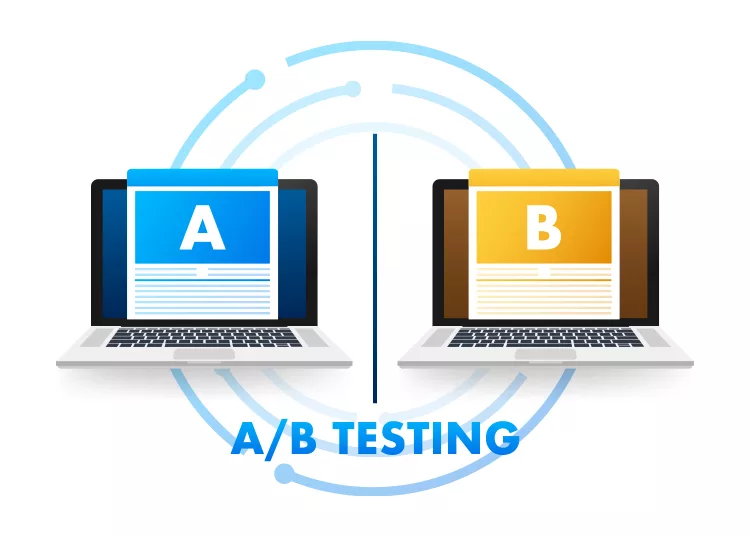
As the top-performing sales funnel builder, ClickFunnels is committed to helping you stay competitive in today’s digital landscape.

Long gone are the days when you could post a website as a digital business card, post a product, create a landing page, drive traffic to it, and generate sales.

Today, it requires a variety of strategies to not only stand out but thrive.

It can be a complicated process, from creating engaging content that helps generate leads and drive traffic to developing different touchpoints in your funnels and optimizing your messaging and landing pages to boost conversions.

And, to compete as a solopreneur, you know that most businesses have the built-in advantage of having whole design teams to test and optimize the layout of their websites already on hand, adding another level of complexity for you to stand out and be competitive.

But with the power of AI, your website layout can look great and be customized instantly to convert every visitor.

The rise of AI in everything can create more competitive landscapes, but it also provides entrepreneurs with the tools and techniques that traditionally require whole teams to replicate.

Understanding AI in Web Design

First, to truly harness the power of AI in web design, you need to understand what it means and what it can do.

AI is shorthand for Artificial Intelligence, which is based on the idea that algorithms can be programmed to learn and perform tasks that typically require human intelligence.

An example of AI that has become popular is the program known as ChatGPT, which is a research and content generation tool that uses machine learning tools from user behaviors, search terms, and published articles to generate content in a human tone and voice.

For web design, AI can enhance user experience, instantly personalize content, optimize content, and increase conversions.

AI works by training algorithms to recognize and analyze user behavior, preferences, past actions, and interactions to make timely and specific recommendations that match an individual’s criteria.

It can utilize “predictive behavior,” which describes how a user will act based on historical actions.

The idea of predictive behavior will allow you to greatly enhance your conversions by instantaneously providing the content and customized messaging that a user wants based on their previous history.

For example, utilizing the power of AI learning, you can program the algorithm to track and analyze user behavior, including browsing history, purchasing patterns, and demographics, to provide them with a customized product recommendation that suits what they are looking for, boosting your conversion opportunity.

Because the algorithm tracks individual user behaviors, it can customize recommendations and suggestions for each user. This would take a team dedicated to tracking, analyzing, and creating product suggestions.

This level of immediate and customized interactions dramatically improves every user experience on your website, essential to boosting conversions.

Another way that AI can skyrocket your website design is by optimizing your website speed.

Why does website speed matter? The slower it takes to load a page, the higher the bounce rate. A faster load time improves user experience, keeps people on your page longer, and can greatly improve conversion rates.

In fact, the slower a website load time, the greater the impact it has on conversion rates.

For every second it takes to load, conversion rates drop by over 4%!

AI can be utilized to analyze and optimize your website elements like images, videos, and other content that may impact load times so that your website performance and load times are at peak performance.

Another cool aspect is that AI tools can help you create more visually appealing layout designs that attract and keep visitors on your pages longer.

From color selection to layout composition and the typography you choose, AI can test and implement the top-performing options for your users to increase their overall time on your page and increase their engagement with your content.

Finally, another key benefit of using AI-powered tools in your website design is that you can use AI-generated dynamic content.

What is dynamic content?

Dynamic content is online content that can adjust and adapt to user preferences, interactions, and other behaviors in real time.

For example, it can show or recommend products based on previous search history, geolocation, and other aspects specific to individual search actions.

An example of dynamic content is a product recommendation based on a user’s browser history.

This allows the user to find and discover relevant products without having to search for a specific one themselves.

As we’ve discussed, AI in web design can offer many opportunities and benefits, but what exactly is AI in web design?

What is AI in Web Design?

AI in web design refers to the implementation of Artificial Intelligence that is integrated into web design to improve functionality, usability, and the overall user experience of a website, including through various aspects of web design, page layout, layout generation, and customized content to create greater personalization, engagement, and optimization.

Some of the benefits of implementing AI into your web design include:

  • Greater personalization
  • Automation of routine, mundane tasks
  • Improved user experience
  • Deeper data-driven decision making
  • Adaptability

Greater Personalization: AI can analyze user behavior and customize messaging in every touchpoint of your funnel for greater personalization.

Automation of Routine Mundane Tasks: Tasks that require a hands-on approach can be automated to free up more time and resources in your operations. From SEO to content resizing, AI can track and analyze user engagement to optimize your content without you having to do anything.

Improved User Experience: AI chatbots and customer service can provide instantaneous results that will enhance your users’ overall experience with your website.

Deeper Data-Driven Decision Making: Having the insights of every user on your website requires a team of people and hours of labor to accomplish what AI can track and analyze in seconds, helping inform every decision you need to make.

Adaptability: With a deeper understanding of your user’s behavior, you can quickly adapt and adjust your messaging and products to meet their interests with your offerings, greatly improving conversion opportunities.

By utilizing AI in web design, you can create beautiful, highly engaging layouts optimized for peak conversions.

At ClickFunnels, we know that finding peak conversions is the lifeblood of your business, so we’ve designed this handy guide to help you harness the power of AI for website design.

Here are 16 benefits that come from implementing an awesome AI website layout that converts:

  1. Use Design Tools Powered By AI
  2. Create A Personalized Experience
  3. Implement Chatbots
  4. Think Mobile
  5. Automate Your A/B Testing
  6. Create More Engaging Content
  7. Leverage Your Socials
  8. Easier Navigation
  9. Quickly Adapt Your Offerings With Machine Learning
  10. Optimize Website Load Speed
  11. Create Visually Appealing Content
  12. Utilize Dynamic Content
  13. Test Your CTAs
  14. Don’t Forget Voice Search Functions
  15. Continuously Analyze And Refine
  16. Improved SEO results

Whether you’re new to digital sales or experienced, improving your output and increasing your conversions is incredibly important. The ultimate goal is to find more efficient ways to achieve these results.

If you were to work on all 16 of these aspects to improve your conversions, it would require hours of labor and a team of experts dedicated to your outcome. 

But with AI, you can quickly and easily reap the benefits of building a highly converting website and a top-notch sales funnel to achieve your objectives.

Ready to get started? 

Keep reading and see how AI can make your website design layout top-converting.

1. Use Design Tools Powered by AI

Using AI-powered tools to design and optimize your website layout for conversions is essential to getting the most out of your website and sales funnels. By implementing AI into your design, your visitors will have an incredible experience and can easily navigate your site.

The new ClickFunnels AI Sales Funnel Builder tool will have everything you need to design and optimize the perfect sales funnel and website, maximizing your visitors’ conversion opportunities regardless of their buying journey stage.

From choosing your specific needs to the type of funnel you want to create and more, simply enter the details, and our AI algorithm will create the perfect website and sales funnel for optimal conversions.

2. Create a Personalized Experience

With AI-powered tools, you can track and analyze your visitor behaviors and preferences and quickly implement those insights into your website, increasing conversion opportunities.

Analyzing, tracking, and personalizing your visitor experience will greatly improve their user experience on your sites, providing them with a first-rate experience and offers that match each visitor’s unique interests and needs.

What used to take an entire team dedicated to tracking, analyzing, and implementing different strategies can now be done instantly with ClickFunnels AI Sales Funnel Builder, saving you time and resources that you can dedicate to other important tasks. 

3. Implement Chatbots

Implementing chatbots is another key aspect of building a website that converts using AI. Chatbots that instantly answer your visitors’ questions are a great way to provide outstanding customer service.

Combining AI analytics into your chatbots will further personalize the experience for your visitors. You can teach your chatbots to guide visitors through your sales funnels, further enhancing conversions.

4. Think Mobile

With over 4 hours spent online using mobile devices, optimizing your website for mobile is crucial to your success. Implementing AI tools into your website and optimizing for mobile is key to the success of your sales funnel.

In 2023, online sales through mobile devices were 171 billion dollars, with over 257 billion app downloads, making mobile an essential feature for your website and sales funnels.

5. Automate Your A/B Testing

With the ability to track each visitor and analyze their preferences, interests, and behaviors instantly, utilizing AI in your website design will allow you to immediately A/B test each pitch and touchpoint for every visitor in your sales funnel. 

By automating your A/B testing, you’ll increase your conversions in real time as the algorithm creates the perfect pitch for every visitor.

6. Create Engaging Content

AI tools can help you automate most tasks, including content creation. The only difference is that your content is highly optimized for greater effect with AI.

For example, you can use AI tools to automatically create prompts that create highly engaging content designed for conversions.

And, tied in with automated A/B testing, you can instantly generate content customized for every visitor at every stage of their buying journey in your sales funnel.

7. Leverage Your Socials

When people shop online, social proof is crucial in building trust in a brand, especially one that isn’t a household one.

Social proof is such a crucial component to building trust in your brand that over 73% of online shoppers rely on it to help them make a purchase decision.

Having ClickFunnels AI Sales Funnel Builder will allow you to quickly pull from your social media channels to provide personalized social proof for your visitors.

It will provide visitors with reviews, testimonials, and social proof targeted to the specific visitor, helping foster greater trust in your brand and your offerings.

8. Easier Navigation

By analyzing visitor behaviors and having AI implement predictive behaviors into your website design, you can better optimize your layout and content so visitors can quickly navigate your site.

This optimization of your visitors’ navigation will make it easier for them to find what they are looking for. Combining that ease of navigation with AI-powered layouts will give you incredible conversion opportunities.

9. Quickly Adapt Your Offerings With Machine Learning

ClickFunnels AI Sales Funnel Builder allows you to set your algorithm to learn what is important to your visitors and instantly adapt your offering for more personalized product recommendations.

The more personalized your offering, the greater your conversion opportunity, and having a powerful ally like ClickFunnels AI Sales Funnel Builder will track your user behavior and implement predictive analytics into each funnel, greatly enhancing your conversions.

10. Optimize Website Load Speed

One of the simplest yet often overlooked aspects of improving conversion rates is the load time of a website.

Load times significantly impact conversion opportunities.

For example, a site that loads in 1 second has 3x higher conversion rates, while a site that loads in 5 seconds has 5x the conversion rate than a site that loads in 10 seconds.

It’s simple: the faster your page loads, the more people stay on it, and the greater your opportunity.

AI tools can optimize load times by eliminating clunky integrations or images that slow down page speed.

This can increase bounce rates and lower conversions.

But with AI tools, you can streamline your webpage and create fast-loading optimized sites to improve conversions.

11. Create Visually Appealing Content

Quickly capturing your audience’s attention and interest can significantly boost your opportunity.

AI tools can streamline your content and web pages to immediately capture your visitor’s attention and create easier pathways for them to navigate, making it smoother to guide them through your sales funnels.

12. Utilize Dynamic Content

Imagine having a website with different content and personalized product offerings based on each visitor’s preferences.

With AI tools like the ClickFunnels AI Sales Funnel Builder, your website will present an individualized experience for every visitor.

For example, suppose you have a visitor from California browsing for a work solution and a visitor from Europe looking at vacation options. In that case, each visitor will have an individual experience without you having to change a thing.

It’s like having a unique website for every person who comes to your site simply by utilizing dynamic content through AI technology.

Dynamic content makes your website more personalized for visitors, which is crucial to higher conversions.

13. Test Your CTAs

A significant indicator of your success is whether people are converting, and one of the most important aspects of conversions is your CTAs or Call-To-Actions.

With the ClickFunnels AI Sales Funnel Builder tool, you can remember the difficult yet important task of A/B testing your CTAs.

The tool has built-in testing that goes through various CTAs to get the maximum performance from your CTAs, providing you with optimal conversion opportunities.

Look, you could have the best offer, but without a good CTA, your offer will be ignored or end up in abandoned carts, making your CTAs crucial for your success.

14. Don’t Forget Voice Search Functions

Providing your visitors with that ultimate experience includes offering voice search functions. With AI, it’ll be incredibly easy for them to search for and find what they’re looking for.

The speed of voice search drastically improves your user searches, further improving and enhancing their experience on your website and in your sales funnels.

As we’ve discussed earlier, the faster and easier it is for your visitors to search and find what they’re looking for, the greater their overall experience, further improving conversions.

15. Continuously Analyze And Refine

It’s been a long time since online sellers could create a website, set it up, and forget it while watching the sales pour in.

To be successful in today’s online marketplace, you’ll need to constantly improve, tweak, and refine your website, messaging, and sales funnels.

Even the world’s top retailer, Amazon, has changed its website over the years, from the first Amazon website launched to what you see today.

And Amazon’s secret?

They constantly analyze and refine what performs well and what is underperforming on their site.

But of course, they are one of the wealthiest corporations in the world and have a team of data analysts and designers on staff to do that work.

So, how can small businesses and entrepreneurs keep up? With AI.

By utilizing AI in your website design, you’ll have the power of a team behind you to track, analyze, and iterate your design based on what performs well from the push of a button.

16. Improved SEO Results

With AI-powered tools and analytics, adapting and improving your SEO quickly and instantaneously is a breeze.

As your target audience changes their search terms and behaviors, having a tool that can immediately change the content and optimize your sales funnel keeps you ahead of the competition, ranking higher and improving your conversions.

It’s simple: Set your parameters and have your AI track, learn, and optimize your website based on the constantly evolving search terms that your target is seeking.

Designing the perfect website layout for improved conversions is a constantly evolving process that requires extensive testing and refining to achieve optimal results.

With ClickFunnels new AI Sales Builder Funnel, you can design beautiful website layouts and sales funnels that are easy to build, launch, and iterate, helping you achieve your conversion goals.

If you’re looking for better results from your website and sales funnels, ClickFunnels has the sales builder tools you need to set up and launch your top-performing digital business.

With a FREE 14-day trial at ClickFunnels, you can get instant access to all the tools and the new AI Sales Funnel Builder.

Visit the ClickFunnels site today to start your free trial!

Thanks for reading 16 Ways To Create An Awesome AI Website Layout That Converts which appeared first on ClickFunnels.
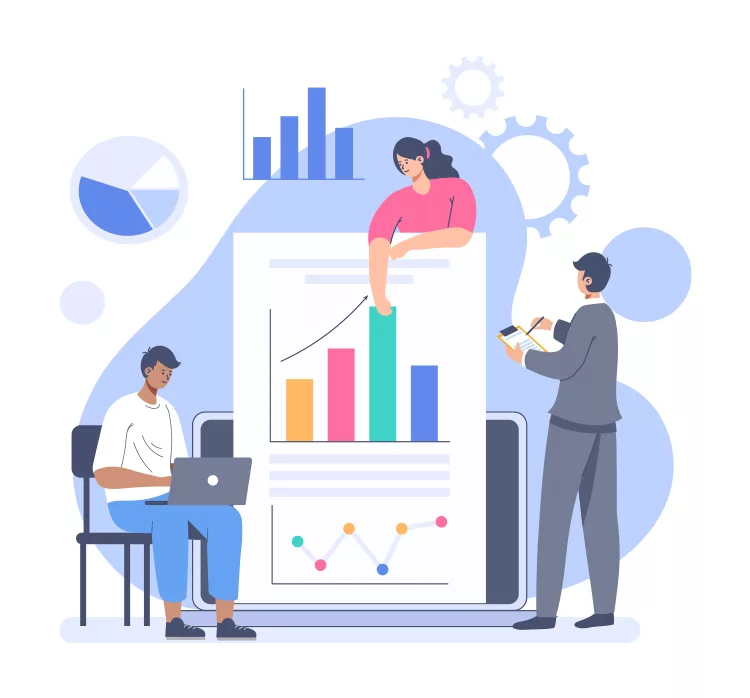
Automated Dropshipping – How To Master The Process In 2024

Software Stack Editor · July 30, 2024 ·

The post Automated Dropshipping – How To Master The Process In 2024 appeared first on ClickFunnels.
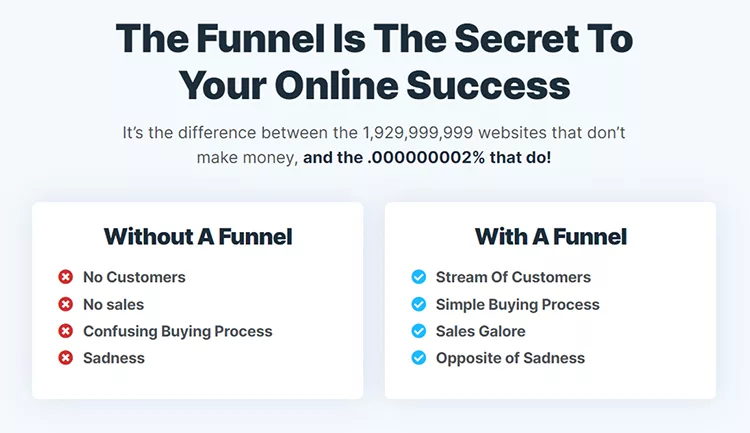
People have been talking about automated dropshipping for more than half a decade now. But is it really possible to completely automate your online store?

That’s exactly what we are going to discuss today!

Table of Contents:
  • What is Dropshipping?
  • What is Automated Dropshipping?
  • Automate Ideation With ChatGPT
  • Automate Content Production With Jasper
  • Automate Social Media Marketing With MeetEdgar
  • Automate Fulfillment With ClickFunnels + Zendrop

What is Dropshipping?

Dropshipping is an ecommerce fulfillment method where you don’t hold any inventory yourself.

Here’s how it works: when someone buys a product on your online store, that order is forwarded to your supplier, who then processes it and ships the product to the customer.

Since you don’t need to buy inventory in advance, launching a dropshipping store doesn’t require a large upfront investment.

Of course, you will still need to set everything up, which isn’t free. Plus, getting your dropshipping business off the ground will almost certainly require spending money on ads.

Still, dropshipping involves much less financial risk than going the white label or the private label route, which makes it particularly appealing for first-time entrepreneurs!

What is Automated Dropshipping?

Automated Dropshipping

We’ll be honest with you:

In our opinion, “automated dropshipping” is a misleading buzzword.

Wouldn’t it be great if you could launch a dropshipping store, automate it completely and then let it run on autopilot, making money while you sleep?

Yes, that would indeed be great, but the problem is that it is not possible at this point in time, nor is it likely to become possible anytime soon.

That being said, you can certainly use software to automate some tasks so that you would have more time to invest in growing your brand…

Automate Ideation With ChatGPT

Automate Ideation With ChatGPT

It’s probably safe to say that when people talk about AI, they are typically talking about generative AI, specifically, about large language models (LLMs).

The most popular LLM out there is undeniably OpenAI’s ChatGPT. It’s an extremely versatile chatbot that can help you with a wide range of tasks, from writing essays to creating a custom workout program to figuring out what to pack for your upcoming vacation abroad.

We would argue that the best way to use ChatGPT in the dropshipping context is ideation: it can help you brainstorm ideas for niches, products, marketing campaigns, etc.

For example, if you know that you want to go into the health and fitness industry, you can ask ChatGPT to give you a list of 100 niche ideas.

And if you don’t like the result – say, if it gave you a list of 100 products as opposed to 100 niches – you can simply clarify your instructions and ask it to repeat the task.

Once you pick a niche, you can ask ChatGPT to suggest some product ideas. Then, once you decide what products to sell, you can ask it to help you brainstorm ideas for marketing campaigns.

Of course, not every idea that this large language model comes up with is going to be brilliant. Some may even be ridiculous. That’s to be expected.

However, it can generate so many ideas in such a short period of time that the sheer quantity means that there will probably be at least a few promising ones.

The general rule of working with LLMs is that the quality of the input is going to largely determine the quality of the output, so you might want to invest some time in learning prompt engineering.

This video by the productivity YouTuber Jeff Su can help you with that:

We recommend using the latest GPT-4o version for ideation. Both the free plan and the premium plan that costs $20/month include access to it, but the latter has higher daily usage limits.

Also, ChatGPT is not the only powerful LLM out there, Anthropic’s Claude and Google’s Gemini have similar capabilities. You might want to consider experimenting with all three to see which one you like the best!

Automate Content Production With Jasper

Automate Content Production With Jasper

In theory, you can use ChatGPT to produce written content, but in practice, it’s much easier to do that with specialized AI marketing tools.

Our recommendation would be Jasper, an AI marketing platform that you can use to create product descriptions, landing page and sales page copy, ad copy, social media posts, blog articles and more.

In fact, it enables you to generate end-to-end marketing campaigns based on a single brief.

What’s especially great about this platform is that it allows you to create a company knowledge database with information about your industry, your niche, your target audience, your content guidelines, your brand voice, etc.

Whenever you ask AI to produce a piece of content, it will tap into that knowledge database. That way, you won’t have to repeat yourself every time you need something.

Here’s a quick overview of Jasper’s pricing plans:

  • The Creator plan that costs $49/month/seat. It includes 1 brand voice and the core functionality of the app.
  • The Pro plan that costs $69/month/seat. It includes everything in the Creator plan plus 3 brand voices, 10 knowledge assets, 3 instant campaigns, image generation and editing tools, collaboration tools and user management tools.
  • The Business plan that has custom pricing and includes everything in the Pro plan plus a bunch of features that provide additional control and security. There’s also premium customer support.

We would say that if you can afford it, then going with the Pro plan might make the most sense because it includes the aforementioned knowledge database functionality. You can use the free 7-day trial to check it out.

Jasper is powered by several large language models. If you want to be able to effectively use this AI marketing tool, you need to be aware of the phenomenon known as “hallucinations”.

Basically, large language models sometimes make things up and confidently state them as facts, which can range from getting some minor details wrong to producing texts that are completely nonsensical.

At the time of writing, computer scientists don’t know how to fix this problem so you cannot blindly trust LLM output. Unfortunately, that is unlikely to change anytime soon.

Here’s what that means in practice: someone needs to proofread AI-generated content and manually verify all factual claims within it prior to publication.

Otherwise, you risk publishing misinformation, which can damage your brand image!

Automate Social Media Marketing With MeetEdgar

Automate Social Media Marketing With MeetEdgar

MeetEdgar is a social media marketing tool that allows you to schedule and publish content on Facebook, Instagram, Twitter, LinkedIn and Pinterest.

It works especially well for evergreen content because you can create a content library and set up automated scheduling. You can use this feature to post links to your blog articles, YouTube videos, podcast interviews, etc.

Of course, if you have something time-sensitive to share, such as company news, sales announcements, product launch announcements, etc. you can schedule those posts manually.

This app also includes an AI assistant called Inky that you can use to produce written social media content. Alternatively, you can do it with either ChatGPT or with Jasper and then upload it to MeetEdgar.

Here’s a quick overview of MeetEdgar’s pricing plans:

  • The Eddie plan that costs $29.99/month if you choose to pay monthly or $299/year if you choose to pay annually. It includes 5 social accounts, unlimited scheduled posts, 10 weekly automations, 15 monthly AI credits and 4 content categories. You can have 20 team members.
  • The Edgar plan that costs $49.99/month if you choose to pay monthly or $499/year if you choose to pay annually. It includes 25 social accounts, unlimited scheduled posts, 1,000 weekly automations, 50 monthly AI credits and unlimited customizable content categories. You can have 20 team members.

It’s worth noting that both plans allow you to add more social media accounts for an additional fee as well as purchase extra AI credits.

There’s a free 7-day trial after after which you will need to choose a plan. Going with the Eddie plan probably makes the most sense, unless you are managing several ecommerce brands that each have their own social media profiles!

Automate Fulfillment With ClickFunnels + Zendrop

Automate Fulfillment With ClickFunnels + Zendrop

What is ClickFunnels?

Our software, ClickFunnels, is an all-in-one marketing platform that provides everything you need to launch, manage and grow an ecommerce business.

It includes an online store functionality, a library of store templates that have been optimized for conversions and a proven cart funnel template.

There’s also an email marketing functionality that you can use to collect customers’ email addresses and build your email list.

Having an email list will enable you to contact your customers directly whenever you want to promote a product, announce a limited-time sale or share exciting company news.

Finally, our A/B testing functionality can help you optimize your entire sales funnel for conversions and improve your profit margins.

By the way, building a cart funnel for your most popular product and then driving traffic to it with paid ads is the best way to grow an online store, so make sure to check out this video:

What is Zendrop?

Zendrop is one of the leading dropshipping apps that makes it easy for dropshippers to find reliable, US-based suppliers that process orders within 1-2 business days to ensure fast shipping times.

It has an automated fulfillment option. If you switch it on, the orders will be automatically fulfilled as they come in without you having to do anything.

There’s also the daily fulfillment option where you can batch incoming orders and fulfill them once a day.

Also, if you would rather fulfill orders one by one, you can do that as well. Fulfilling an order manually only takes a single click.

It’s also worth noting that the order data and tracking information are automatically sent to your store. Once the orders are shipped, the customers get an update.

Besides streamlined order processing and fulfillment, Zendrop also offers a bunch of other neat features.

For example, you can:

  • Use product packaging with your own custom branding
  • Add a Thank You card to every order
  • Create bundles and subscription boxes

…and more!

ClickFunnels + Zendrop

We decided to partner with Zendrop to make it as easy as possible for our users to start dropshipping.

You can build an online store with our software and then add products to it via our Zendrop integration.

Some people say that dropshipping is dead but we would argue that there has never been a better time to launch an ecommerce business.

After all, the ecommerce industry has been growing steadily for a decade, consumers have gotten used to shopping online and you can learn everything that you need to know for free.

Dropshipping is the best way to get into ecommerce, though you should do it with the intention of eventually transitioning to white label and then finally to private label.

Is it as easy as YouTube gurus make it out to be? Of course not. You are unlikely to be able to afford a Lamborghini anytime soon, despite what their video titles and thumbnails might suggest.

Realistically speaking, if you launch a dropshipping store today, it will probably take you around a decade to build an ecommerce brand that you can then sell for seven figures, assuming that you are starting from zero with no relevant experience or skills.

But it is doable and that’s what matters. Time is going to pass anyway. So why not put it to good use?

Try ClickFunnels Risk-Free!

Let’s be real:

We are biased in favor of our software.

So we understand if you take what we say about it with a grain of salt.

Fortunately, we have a free 14-day trial, so you don’t have to take our word for it.

You can go and see ClickFunnels for yourself without any risk!

So what are you waiting for? 🧐

Start Your Free Trial Today

Thanks for reading Automated Dropshipping – How To Master The Process In 2024 which appeared first on ClickFunnels.

9 Ways To Build Customer Relationships In The Early Business Stages

Software Stack Editor · July 26, 2024 ·

The post 9 Ways To Build Customer Relationships In The Early Business Stages appeared first on ClickFunnels.
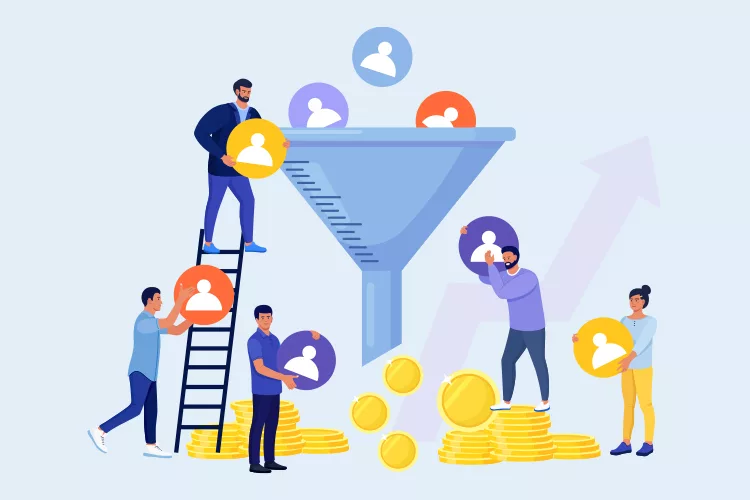
Paul Graham, best known as the founder of Y-Combinator, wrote a famous essay called “Do Things That Don’t Scale”.

According to him, contrary to the popular belief that startups either take off or they don’t, they take off because their founders make them take off. How? By doing things that don’t scale.

We would argue that this applies not just to startups but to new businesses in general, especially to the companies that sell products or services that already have a proven demand.

If there are businesses out there that are doing what you want to do, then it’s not a question of whether it’s possible to make it work, it’s a question of whether you will make it work.

Forget about “automation”, “building systems” and “scaling”. If you want to get your business off the ground, you need to be willing to do things that don’t scale.

Here are the nine best ways to build customer relationships in the early business stages…

Table of Contents:
  • #1: Acquire Customers Manually
  • #2: Be Social on Social Media
  • #3: Offer a Free Service as Your Lead Magnet
  • #4: Personally Welcome New Customers
  • #5: Personally Onboard New Customers
  • #6: Send Your Customers Progress Reports
  • #7: Reach Out to Inactive Customers
  • #8: Do Customer Support Yourself
  • #9: Conduct Customer Exit Interviews

#1: Acquire Customers Manually

Illustration of a person holding a large magnet attracting small portraits of professionals with a background of gears and a target, next to a stack of coins with dollar signs.

In his essay, Graham explains that the most common unscalable thing that startup founders have to do is recruit users manually.

He provides several examples:

  • Stripe founders would recruit users at Y-Combinator events
  • Airbnb founders would recruit users by going door to door in New York
  • Pinterest co-founder would recruit users at design conferences

Graham argues that one of the reasons why founders resist this approach is a combination of shyness and laziness.

They’d rather sit at home writing code than go where potential customers are, pitch their products to them, and get rejected by most of them.

Another reason is that they underestimate the power of compound growth: the numbers are so small at first that recruiting users manually doesn’t really seem worth the effort.

However, at Y-Combinator, Graham and his colleagues encourage startup founders to focus on the weekly growth rate as opposed to the absolute numbers.

If a startup grows by 10% each week, at first it may not seem like a big deal. Going from 100 users to 110 users is nothing to write home about.

However, if the founders can maintain that 10% weekly growth rate, they’ll have 14,000 users after a year. Now that is a big deal!

Graham’s target audience is startup founders but we would argue that his advice on acquiring customers manually can work well for all kinds of businesses.

In fact, depending on what you are selling, going door to door, attending industry events, and doing cold outreach may be the fastest way to get your business off the ground, especially if you can’t afford to spend money on ads!

#2: Be Social on Social Media

A woman in an orange outfit is using a laptop. Icons for various social media and communication apps, including Instagram, TikTok, WhatsApp, YouTube, Facebook, and email, appear around her.

Typically, entrepreneurs who want to build a social media following understand that they need to publish high-quality content every day, though they might struggle with staying consistent.

However, they tend to overlook the importance of interacting with their followers and networking with larger accounts because that is something that takes time, cannot be automated, and doesn’t scale.

But you can’t expect to build a following on social media if you aren’t willing to actually be social on it!

What we recommend is setting aside time every day – maybe half an hour, maybe an hour – to just hang out on your chosen platform and interact with people there.

First of all, if someone leaves a comment under one of your posts or sends you a DM, you should reply to it unless that person is a troll, in which case you should block them.

In addition to that, you want to use the search function and popular hashtags to find posts relevant to your niche and leave thoughtful comments that add value to the conversation.

Finally, make sure to follow the main influencers in your niche, leave thoughtful comments under their posts, and share their content with your followers.

Hopefully, they will notice you eventually, follow you back, and start occasionally sharing your content with their followers.

We would like to point out that there’s this weird cargo cult thinking that entrepreneurs sometimes fall into:

They see that influencers with massive followings don’t interact with other people much on social media and somehow come to the conclusion that acting similarly aloof will help them build a massive following as well.

Presumably, it’s an attempt to game social dynamics with the hope that acting the same way as high-status individuals will increase their own perceived status.

But the problem with this line of reasoning is that everyone can see that you have 87 followers. If you ignore comments and DMs, you won’t come across as having a high status, you will come across as arrogant. What a great way to alienate potential customers!

We recommend being generous with your time instead. If someone sends you a DM with a question that relates to your area of expertise, hop on a call with them and help them solve that problem for free. What do you have to lose?

Remember, the more free value you provide, the more trust and goodwill you are going to build and the easier it will be for you to convert social media followers into paying customers!

#3: Offer a Free Service as Your Lead Magnet

Illustration of a man and woman using smartphones near a large magnet, attracting likes and followers icons, symbolizing social media influence. The man has 125 followers, and the woman has 200 followers.

Lead magnets are freebies that you offer to potential customers in exchange for their email addresses.

Typically, businesses use digital lead magnets such as free reports, eBooks, and online courses because that makes it easy to scale lead generation.

However, if you are just starting out, we recommend offering a free service instead because people tend to see services as more valuable than info products.

Here are some ideas:

Lead Magnet for a Service Business

If you are providing services, you can offer a setup service for free and then sell a core service package.

For example, if you are a personal trainer, you can offer potential customers a free consultation + a custom workout program and then sell them a 3-month coaching package.

Lead Magnet for an Ecommerce Business

If you are selling physical goods, you can offer a free consultation where you help customers choose the right products.

For example, if you have a clothing store, you can offer a free style consultation and help customers put together an outfit.

Lead Magnet for a Software Business

If you are selling software, you can offer a free consultation where you help potential customers create a strategy for getting the results that they want and then sell them your software so that they can implement that strategy.

For example, if you run an email marketing startup, you can help potential customers create an email marketing strategy that they can then implement using your software.

Yes, this approach to lead magnets is time-consuming, requires a ton of work, and doesn’t scale.

But the more valuable your free offer, the more leads you are going to generate and the more sales you are going to make.

And what can be more valuable than working with potential customers one-on-one to help them solve problems that they are struggling with?

#4: Personally Welcome New Customers

Illustration of two people exchanging a package and money, with speech bubbles above them, symbolizing communication and transaction.

The exact way this is going to look will depend on your business model but the key here is to make new customers feel appreciated.

For example, in his essay, Graham mentions that Wufoo sent every new user a handwritten thank you note for as long as they could.

Simple gestures like that can do wonders for customer retention!

#5: Personally Onboard New Customers

You might learn that some people who are interested in your product or service don’t have the mental bandwidth to set everything up so that they can start using it.

There’s an easy solution to this: simply set up everything for them so that they won’t have to worry about it!

For example, in his essay, Graham mentions how the founders of Airbnb would help their users take photos of their properties.

Meanwhile, Stripe founders would ask their fellow entrepreneurs at startup events if they would like to try a beta version of Stripe.

If the answer was “yes”, the founders would ask for their laptops and set up Stripe accounts for them then and there. Apparently, this approach came to be known as the “Collinson installation”.

Sure, this approach to onboarding isn’t scalable, but it can help you get your first customers. After all, it worked for Airbnb and Stripe!

#6: Send Your Customers Progress Reports

A person holding a sheet of paper stands next to charts and graphs on a wall, indicating various percentages and trends in a work or office setting.

Once you are done with the onboarding, make sure to send your customers regular progress reports.

Here are some ideas:

  • If you provide services, keep your customers updated every step of the way so that they would know what’s going on at all times.
  • If you sell coaching, send your customers monthly reports that showcase the progress that they have made toward the results that they want.
  • If you sell software, send them monthly reports that showcase the results that they have achieved with your software.
  • If you sell online courses, send them weekly reports that showcase how much progress they have made towards completing the course.
  • If you run an e-commerce store, let the customers know that you have received their order, prepared it for shipping, shipped it, etc. Send them an email at each step.

These reports can be automated but we recommend doing them manually at first because that can help you better understand your customers, spot various issues that need to be addressed and streamline your business processes.

Keep in mind that people tend to be wary of new companies that lack social proof so if they don’t hear from you immediately after buying your product or service, they might get sketched out and ask for a refund.

That’s why it’s better to err on the side of overcommunicating rather than undercommunicating!

#7: Reach Out to Inactive Customers

Two men shake hands during an online meeting. One holds a tablet and wears a mask. Surrounding icons represent communication, tasks, and data.

If you sell subscriptions of any kind, you will notice that when some customers stop using your product or service, they don’t cancel their subscriptions.

You have two options when it comes to these inactive customers:

  1. Let them continue paying the subscription despite the fact that they are not using your product or service.
  2. Reach out to them, say that you have noticed that they are not using your product or service, and ask them if there’s anything you can help them with. Also, offer to cancel their subscription if they are not getting value out of it anymore.

It’s probably safe to say that most subscription businesses choose the former option because it makes more sense financially, at least from the short-term perspective.

However, we would argue that from the long-term perspective, you’d be better off going with the latter option because that will help you build goodwill with your customers.

It might turn out that there’s some problem that you can help them fix, or maybe they want to pause their subscription temporarily, or maybe they would like to cancel it altogether.

Whatever the case may be, the fact that you brought this to their attention will leave a good impression because no one likes finding some long-forgotten subscription on their bank statement!

#8: Do Customer Support Yourself

A person with a headset sits at a laptop, surrounded by icons of a clock, gears, messages, and a coffee cup, indicating 24/7 communication and support.

Business owners tend to hire a customer support representative or outsource customer support to an agency as soon as they can afford to.

But we want to encourage you to do customer support yourself for as long as you possibly can. Why?

Because handling support tickets can give you ground-level insights on what needs to be improved to make your product or service better.

Plus, nowadays people are so used to dealing with chatbots that merely getting a reply from a human can be a pleasant surprise, so you as the business owner answering customer support queries yourself is a surefire way to leave a good impression!

#9: Conduct Customer Exit Interviews

Illustration of a man and woman sitting across from each other at a desk with a laptop between them. The man is talking, and there's a speech bubble with a profile picture and text above him.

Finally, if you have a subscription business, churn is inevitable. It doesn’t matter how amazing your product or service is, some people are going to cancel their subscriptions.

We recommend reaching out to the customers who churn and asking them for feedback on what your company could be doing better.

If they send you some feedback, here’s what you want to do next:

  1. Thank them for their feedback and tell them that you would love to hear more.
  2. Ask them if they would be willing to hop on a 15-minute call with you.
  3. Send them a link to your calendar so that they can book the call at a time that’s most convenient for them.

People want to feel heard so getting customers to agree to do exit interviews might be easier than you think.

After the interview, give them a discount code in case they ever decide to come back, and wish them all the best.

Also, if they mention something specific that they want you to address, make sure to let them know once you do.

This will show them that you took their feedback seriously and left a good impression, increasing the likelihood of them coming back!

Want to Learn How to Turn Your Online Visitors Into LIFELONG CUSTOMERS?

Our co-founder Russell Brunson used sales funnels to grow ClickFunnels from zero to $100M+ in annual revenue in less than a decade.

But there are plenty of entrepreneurs out there who use sales funnels and never see the business success that they hoped for.

In fact, there are a bunch of companies that sell funnel building software just like we do, but their annual revenue is nowhere near ours.

So what did Russell do differently that enabled him to grow his business so fast and leave the competition in the dust?

He used storytelling to establish himself as an expert, create a movement, and build a community.

And you can learn how to do the same by reading his best-selling book “Expert Secrets”!

This book is available on Amazon where it has over 1,900 global ratings and a 4.7-star overall rating.

But you can also get it directly from us for free…

All we ask is that you pay for shipping!

So what are you waiting for? 🧐

Get “Expert Secrets” for FREE!

Thanks for reading 9 Ways To Build Customer Relationships In The Early Business Stages which appeared first on ClickFunnels.
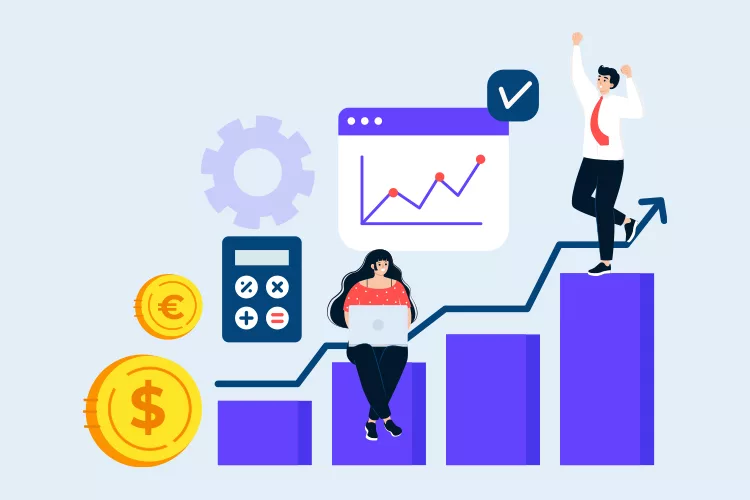
The Ultimate Guide To Building A Dropshipping Sales Funnel

Software Stack Editor · July 24, 2024 ·

The post The Ultimate Guide To Building A Dropshipping Sales Funnel appeared first on ClickFunnels.
Want to learn how to integrate your sales funnels with your dropshipping ecommerce store?

Let’s talk about that! 🙂

The Perfect Match of Sales Funnels & Dropshipping

Dropshipping and sales funnels are a match made in heaven.

On the one hand, dropshipping is one of those things that feels too good to be true — you sell ecommerce products, and someone else fulfills your orders and ships directly to your customer.

Flowchart depicting the order fulfillment process: Customer orders from Store, Store gets supplies from Supplier, Supplier delivers to Store, and Store sends delivery to Customer.

On the other hand, sales funnels help you actually sell those e-commerce products — they’re the difference between throwing up an e-commerce store and crossing your fingers… and actually finding your target market and getting them to buy.

Illustration of a sales funnel diagram showing traffic from social media leading to lead capture, sales process, order/upsell, and ascend stages, converting people into leads, prospects, customers, and clients.

With ClickFunnels, you can easily build sales funnels (now with AI). We now integrate directly with Zendrop — so that means you can build your sales funnels and source your products all basically in one place.

Cool, huh?

So let’s talk about the steps to successfully building a dropshipping sales funnel!

Get HELP Building Your Ecommerce Funnels Now!

Step #1: Getting Traffic

In today’s online world, you can’t build a business with traffic — I’m talking about website visitors and people entering your sales funnel.

How do you get the right people (i.e. your target market) to find out about your products… and then give them the opportunity to visit your sales funnel?

Here are the most proven ways to do that.

Search Engine Optimization

You’ve probably heard the term SEO thrown around before by your marketing friends.

The history of Search Engine Optimization (SEO) began in the mid-1990s with the advent of the first search engines.

But, the launch of Google in 1998 revolutionized SEO, introducing algorithms that prioritized relevance and quality.

The gist is this — you want to rank as high as possible in Google for relevant phrases. So if you sell basketball shoes, you’d likely want to rank for “best basketball shoes” and other similar phrases.

The great thing about SEO is that it organically drives traffic to your website and sales funnels — the more you invest in it, the more traffic it drives.

And that traffic lasts.

This article, for instance, has literally driven tens of thousands of visits to our ClickFunnels blog over the last 2-3 years…

That’s the best part. Once you write an article that ranks for one of your target keywords, it typically will rank for quite a long time. You might continue to get traffic from that article for years to come.

But… how do you actually optimize your site and funnel for search engines?

We have an SEO guide over here.

But here’s the “quick start” version!

Keyword Research:

  • Use tools like Google Keyword Planner, Ahrefs, or SEMrush
  • Identify key phrases your target audience is searching for

Create High-Quality Content:

  • Incorporate identified keywords naturally into your content (blog, landing pages, etc.)
  • Focus on relevance and value to your audience

Technical SEO:

  • Improve site speed
  • Ensure your site is mobile-friendly
  • Optimize meta tags, titles, and descriptions

Build Quality Backlinks:

  • Gain links from reputable, authoritative websites
  • Engage in guest blogging, collaborations, and partnerships

User Experience:

  • Ensure easy navigation
  • Provide engaging and informative content
  • Optimize site structure for better user engagement

Regular Content Updates:

  • Keep your content fresh and relevant
  • Update old articles with new information and insights

Monitor Performance:

  • Use tools like Google Analytics and Search Console
  • Track your site’s performance and traffic
  • Make data-driven adjustments to improve your SEO strategy

SEO can make a HUGE difference in how much traffic you drive to your website day-in and day-out — even if you’re only creating a few new blog posts every month, it’ll be worth it down the road!

Organic Social Media

It can be hard to get visibility for your brand on social media — but if you do it right, it’s still possible to build an audience and even drive traffic to your website.

Here’s a great example from Lululemon.

Two Instagram posts. Left: Woman in a white top and dark pants sitting on a cube, promoting Lululemon clothing. Right: Display of jewelry including a Baroque short necklace and a two-ways pearl chain.

They have 5 million followers on Instagram — so clearly it’s possible to still build an organic following as an ecommerce business.

Screenshot of the lululemon Instagram profile. The profile shows 3,571 posts, 4.9M followers, and 158 following. Highlights include Shorts, Align Dupe, Ways To Shop, Social Rules, Meditations, and IG Checkout.

Red Bull is another great example — they have 23 million followers.

But let me ask you this — what do these two brands have in common in their Instagram marketing?

The main commonality I see is that their content is…

  1. NOT over-the-top promotional…
  2. Super entertaining or valuable

Red Bull, for instance, posts crazy stunts by amazing humans — you’ll want to follow them even if you’re not a fan of their energy drink.

Lululemon actually posts quite a bit promoting their products, but in a way that feels natural and not pushy — plus their customers love their product so much that they don’t even care.

A collage of eight images featuring various people engaging in different sports and outdoor activities, with number of views displayed on each image.

Probably the best platforms right now for e-commerce brands are Instagram and TikTok — here are a few tips to get you started…

Focus on Quality Content: Ensure your posts are visually appealing and provide real value to your audience. Whether it’s educational, entertaining, or inspiring, high-quality content is key.

Consistency is Key: Regularly posting content keeps your audience engaged and helps in building a loyal following. Create a content calendar to stay organized and consistent.

Engage with Your Audience: Respond to comments, engage in conversations, and show appreciation for user-generated content. Building a community is essential for organic growth.

Leverage User-Generated Content: Encourage your customers to share their experiences with your products. This not only provides you with authentic content but also builds trust among potential customers.

A person holding a skincare serum bottle, with serum applied under one eye. The Instagram post mentions a partnership and describes the serum's benefits for anti-aging and hydration.

Utilize Hashtags Wisely: Research and use relevant hashtags to increase the reach of your posts. Don’t overdo it, but find a balance that maximizes visibility without appearing spammy.

Collaborate with Influencers: Partnering with influencers who align with your brand can help you reach a larger audience. Choose influencers whose followers are likely to be interested in your products.

Showcase Behind-the-Scenes Content: Give your audience a peek behind the curtain. Whether it’s product development, office culture, or events, behind-the-scenes content can humanize your brand.

Use Stories and Reels: These features on Instagram and TikTok can significantly boost your visibility. They are great for sharing quick updates, engaging content, and even promotions.

Analyze and Adapt: Regularly check your analytics to understand what type of content performs best. Use these insights to refine your strategy and improve your engagement.

Run Contests and Giveaways: Encourage user participation and attract new followers by hosting contests and giveaways. Ensure that the rules are simple and the prizes are enticing.

The Dream 100

If you’ve read Russell Brunson’s book, Traffic Secrets, then you’d be familiar with the concept of “The Dream 100”.

This is the main way Russell built ClickFunnels to be nearly a billion dollars… and it’s the way he’s building all of his other brands.

Check out this video.

Once you’ve identified who your dream customer is, the next step is to determine where they hang out online.

This will take a bit of research but it’ll be a thousand times worth it once you’re trying to drive traffic to your sales funnel.

Try to identify…

  • 10 websites and forums they spend time on
  • 15 active Facebook groups they participate in
  • 50 influencers they follow on Facebook and Instagram
  • 30 podcasts they listen to
  • 40 email newsletters they subscribe to

Make a list!

After you’ve built your sales funnel, you’ll infiltrate these online congregations to drive high-quality traffic.

You can do that through cold outreach, paying for visibility, or collaborative efforts. Get a free copy of Russell’s book, Traffic Secrets, to learn more about how this works!

Step #2: Building Your Email List

You might be wondering:

“Why do I need to build an email list? Can’t I just promote my business through SEO, Instagram, etc. and make sales that way?”

There are three really simple answers to that question…

1. Direct Communication:

When you have an email list, you have a direct line of communication with your audience. Unlike social media platforms where algorithms decide who sees your posts, emails go straight to the inboxes of your subscribers.

2. Ownership and Control:

Social media platforms and search engine algorithms are constantly changing. What works today might not work tomorrow. By building an email list, you own your audience. You are not at the mercy of external platforms that can change their rules or algorithms, potentially diminishing your reach.

3. Higher Conversion Rates:

Email marketing typically has higher conversion rates compared to other channels. When someone subscribes to your email list, they have already shown interest in your brand and what you offer.

Here’s how you can build your email lists organically and systematically turn subscribers into paying customers!

The Lead Magnet

You can think of a “lead magnet” as your “bribe to subscribe”. This is the free thing you give away to people in return for their email addresses.

At ClickFunnels, we use this quiz lead magnet on our blog homepage.

Here’s an example of what this might look like if you had a health food e-commerce store…

The idea is just to give your target market something super valuable for free — so that they’ll give you their email and you can add them to your email list.

Your lead magnet needs to be…

→ Highly relevant to your target audience’s interests or needs

→ Easy to consume and instantly valuable

→ Directly related to the products or services you offer

Of course, the next question is, what do you send to the people who give you their email addresses to turn them from subscribers into paying customers?

Keep reading!

The Soap Opera Sequence

A soap opera sequence is a series of emails that tells a story over several days or weeks. Each email leaves the reader wanting more and builds anticipation for the next email in the sequence. The emails are usually sent out at regular intervals and aim to create an emotional connection with the reader.

A five-day process flowchart: Day 1 sets the stage, Day 2 covers high drama and backstory, Day 3 leads to an epiphany, Day 4 reveals hidden benefits, and Day 5 emphasizes urgency and call-to-action.

This technique is especially useful in B2B email marketing because it helps you stand out from the crowd and establish a relationship with your subscribers. By creating a story that resonates with your audience, you can capture their attention and keep them engaged. It’s a great way to showcase your brand’s personality and values and naturally guide them toward purchasing your front-end product.

The soap opera sequence is also effective in building trust with your subscribers. By providing valuable information, insights, and tips through the story, you can demonstrate your expertise and establish yourself as a thought leader in your industry. This can lead to increased brand loyalty, customer retention, and ultimately, more sales.

So how do you do it?

The story typically revolves around a problem that your customer is facing, and how your product or service can help them overcome it.

The idea is to keep your customer engaged by telling an interesting story that piques their curiosity, and then offering your product or service as a solution to the problem they’re facing.

For example, let’s say you’re selling a weight loss program.

Your soap opera sequence might look something like this…

Email 1: The problem (e.g., “Are you frustrated with your weight loss efforts?”)

Email 2: The story (e.g., “I was in your shoes not too long ago…”)

Email 3: Introduce the solution (e.g., “This is what helped me finally lose the weight…”)

Email 4: The offer (e.g., “Here’s how you can get started with my program…”)

Email 5: The urgency/scarcity (e.g., “This offer won’t be available for much longer…”)

Soap opera sequences are a great way to keep your customers engaged, and they can be very effective in increasing sales.

If you want to see real examples, check out this guide.

Step #3: Creating Your Sales Funnel

Ok — so we’re driving traffic and we’re turning that traffic into leads on our email list. We even know we need to send them a Soap Opera Sequence to get them to buy for the first time.

But to get them to buy, we need to send them to a sales funnel!

Now you might just be tempted to send them straight to your storefront to let them browse… but don’t. Because it will very likely give them too many options and they might not buy.

Here’s how to think about it…

Your storefront is for your loyal customers — people who already love you, your products, and just want to keep buying from you.

Your funnels are for your new customers — these people have never bought from you before so it’s important to use funnels to focus on offering them one product at a time.

Here’s how to build your sales funnel!

Choose Your Style

The first step is to choose what “type” of sales funnel you’re going to use — there are a lot of different kinds.

You could do a webinar funnel — which includes some sort of free video training that leads into the product you’re offering…

A diagram illustrating a webinar funnel, including stages for registration, confirmation, replay, and indoctrination pages, with details like sample text, dates, times, and call-to-action buttons.

(These are SUPER effective)

Or you could do a product launch funnel if you’re releasing a brand new product to the market…

Diagram outlining a product launch funnel with four stages: three product launch pages and one order form, connected by automation arrows and leading to follow-up funnels.

Or you could do a video sales letter funnel — this is just your basic sales funnel but it includes a video at the top of each page.

Diagram of a video sales letter funnel showing three stages: Sales Letter Page, OTO (One-Time Offer) Page, and Offer Wall Page, each with sample layouts and transactional buttons.

Or — and this is one of our favorites, you could do a tripwire funnel — that lures people in with a heavy-discount and then makes money on the upsell.

Diagram outlining a 2-step tripwire funnel including pages for order (OTO), downsale, and offer wall, with arrows indicating the flow between them. Automation and follow-up funnels are noted.

If you want to see examples of all of these in action, check this out.

If you’re just getting started out, I highly recommend either the webinar funnel or the tripwire funnel — those are both super effective and proven to work in the e-commerce space.

Build it With AI

How do you build your sales funnel?

Now you used to have to create all of this on your own. You’d have to write the copy, create the designs, map out the funnel, and everything else. It took weeks or months.

But now you can do 90% of the work with AI 🙂

In fact, at ClickFunnels, we created an AI funnel builder that will ask you some questions and spit out a functional funnel.

The benefits?

  • No Prior Experience Required: If you’re new to digital marketing, setting up a sales funnel can feel overwhelming. The ClickFunnels Smart Funnel Builder provides step-by-step guidance, making it easy for anyone to create a professional funnel without needing extensive marketing knowledge.
  • Time-Saving: Traditionally, creating a sales funnel involves multiple steps, such as designing pages, writing copy, and setting up integrations. This process can be time-consuming and complex. The Smart AI Funnel Builder automates these tasks, allowing you to create a fully functional funnel in under 15 minutes.
  • Cost-Efficiency: With the Smart Funnel Builder, you get high-quality copywriting and design services included. This means you don’t need to hire additional professionals, saving you significant costs while still ensuring your funnel is effective and visually appealing.

Want to see how it works?

Let’s walk through it together!

Build Your AI Funnel NOW For Free!

As I walk you through this, I’m going to imagine that I’m building a squeeze page for a fitness coach who’s offering a guide to his target audience: busy executives.

Form on a website for building a funnel, asking users to input their profession, goal, target audience, and desired outcome. Example given: “I am a Health Expert looking to sell a product or service and help executives to get fit.”.

I’m going to select the “Optin Funnel” — the same as the Squeeze Page Funnel. This will allow me to offer a gift to my target market in exchange for their email list. And once they’re on my email list, I can reach out to them whenever I want to for free!

Image showing a selection menu for funnel offer types. Options include: Opt-in, Application, Webinar, Summit, Bridge, and Video Series. Also contains descriptive text about the Opt-in Funnel.

Then I’ll choose a brand color palette…

Step 1: Select your main brand color from options provided. Step 2: Choose a style from Blocky, Colorful, or Rounded for fonts, corners, and spacing. Image depicts interface for brand customization tool.

…and image style…

Image showing three image style options for funnel creation: Isometric 3D, Flat Illustrations (selected), and Stock Photo Portrait.

… and finally, I’ll provide some details about my offer and the style of copy that I want. The more information and details you provide the AI with here, the better job it’ll do of creating a sales funnel for you that makes sense.

Then watch the quick video from Russell if you’re new to ClickFunnels. After that, you can either create a ClickFunnels account for free or login to your existing account.

Once you do, you’ll be able to access your complete AI-built funnel.

You can edit each page, delete, or even add more pages/steps to the funnel. It’s fully customizable but now you have an almost complete funnel that will need only a few tweaks (or none at all!).

Cool, right? You can literally have your dropshipping funnel off the ground in the next 5 minutes!

Build Your AI Funnel NOW For Free!

Final Thoughts on Dropshipping & Sales Funnels

Dropshipping makes finding and sourcing products easy.

Sales funnels make selling easy.

It’s a match made in heaven 🙂

And with ClickFunnels — since we now integrate directly with Zendrop, you can build your sales funnels, your storefront, and source your products all in one place.

It’s never been easier to build a successful e-commerce store than it is right now.

If you want help, click the link below for a ridiculous offer!

Get HELP Building Your Ecommerce Funnels Now!

Thanks for reading The Ultimate Guide To Building A Dropshipping Sales Funnel which appeared first on ClickFunnels.
What Type Of Monthly Income Can Be Made With Dropshipping?

Software Stack Editor · July 23, 2024 ·

The post What Type Of Monthly Income Can Be Made With Dropshipping? appeared first on ClickFunnels.
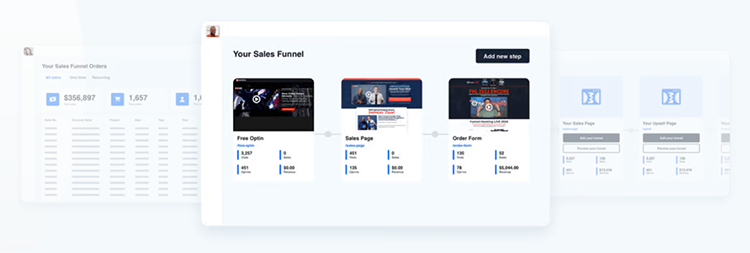
YouTube is full of “dropshipping millionaires” who are flexing their lifestyles and encouraging their viewers to launch their own dropshipping business.

But there are also plenty of people out there who claim that dropshipping is dead and that getting into it is simply not worth it anymore.

So is it still possible to make money with dropshipping or should you stay away from it and do something else instead?

That’s exactly what we are going to discuss today…

Table of Contents:
  • Is Making Money With Dropshipping as Easy as YouTube Gurus Make it Out to Be?
  • Is it Still Possible to Make Money With Dropshipping Or is Dropshipping Dead?
  • How to Get Ahead of the Competition and Make Money With Dropshipping
  • So What Type of Monthly Income Can be Made With Dropshipping?
  • Build Your Dropshipping Store With ClickFunnels + Zendrop!

Is Making Money With Dropshipping as Easy as YouTube Gurus Make it Out to Be?

If you watch a few videos about dropshipping on YouTube, the algorithm will start bombarding you with the dropshipping guru content.

You know what we are talking about young men in their 20s who are claiming to be dropshipping millionaires and want to teach you how to become one as well.

Considering the increasingly fantastical video titles and thumbnails in this niche, you’d be forgiven for thinking that these days everyone and their grandma has a Lamborghini that they bought with dropshipping money. 

But here’s what you need to understand: while these dropshipping gurus may or may not have successful e-commerce businesses, it’s probably safe to assume that their primary source of income is selling dropshipping courses.

Not to mention, given that quite a few of them have hundreds of thousands of subscribers on YouTube, they are probably also making money with ads, sponsorships, and affiliate partnerships. 

This means that these gurus have a financial incentive to paint a rosy picture of dropshipping and make you feel that you too can become a dropshipping millionaire in a short period of time.

While there’s no denying that this type of content can be both inspiring and entertaining, watching it can also lead to developing unrealistic expectations.

That’s why we want to start this article by discussing some of the problems with dropshipping that YouTube gurus tend to downplay:

Tons of Competition

Dropshipping is appealing because it has such a low barrier to entry.

However, if you can start a dropshipping business with very little money, so can everyone else.

That makes dropshipping extremely competitive: you might find yourself competing against hundreds or even thousands of online stores selling the exact same products as you.

Moreover, even if you can manage to stay ahead of the curve and discover winning products before anyone else, your competitors will probably catch on to it pretty soon and add those exact same products to their stores.

That’s why dropshipping gurus tend to keep their stores secret, assuming that those stores exist to begin with. With such a low barrier to entry, revealing what they sell would immediately lead to their niches getting flooded with copycats!

Low Profit Margins

Ecommerce in general has relatively low net profit margins that typically range between 10% and 30%.

It’s difficult to do better than that when you are selling physical products that need to be manufactured, warehoused, and shipped to the customers.

Additionally, some of those customers will inevitably decide to return the products that they bought.

In fact, according to the National Retail Federation, the average e-commerce return rate in 2023 was 17.6%.

Then there’s the issue of ads becoming more expensive over time. Whatever platform you are running ads on, you can expect the cost of those ads to increase in the future.

All e-commerce entrepreneurs have to deal with these problems, regardless of whether they sell dropshipped, white label, or private label products.

However, with dropshipping, maintaining healthy profit margins can be particularly challenging. Why?

When a myriad of online stores are selling the exact same products, it tends to lead to a “race to the bottom” dynamic where everyone starts competing on price.

You might find yourself in a situation where technically, you have a profitable online store but in reality, you are working yourself to death for so little money that you’d be better off getting a minimum-wage job at McDonald’s!

Slow Shipping

AliExpress, the most popular dropshipping marketplace in the world, is notorious for its horrendously slow shipping.

The average delivery time for its standard shipping is somewhere between 15 and 45 business days.

This is understandable given that the suppliers are primarily based in Asia while the customers are primarily based in Europe and North America.

However, those customers are used to buying stuff on Amazon and having it show up a few days later, so they might be confused as to why they have to wait ages for their purchases to arrive.

Ideally, if you intend to primarily target the American market, you want to source your products from suppliers that are based in the United States so that you can offer fast shipping. Our partner Zendrop can help you with that!

Lack of Control

With dropshipping, you don’t have control over the logistics but it’s your brand reputation that’s on the line.

After all, if someone buys the product from your online store, they are going to blame you if something goes wrong, not the supplier who messed up.

That can make building a respected e-commerce brand with a loyal customer base challenging.

Extreme Unpredictability

Finally, dropshipping tends to be extremely unpredictable:

  • Your winning product might sell like crazy for a few months but then the interest in it may fizzle out.
  • Your ad campaign might stop working because the ad prices increased and the campaign is no longer profitable.
  • You might wake up one day and find yourself banned from the social media platform that you were running ads on.
  • Your supplier might turn out to be sketchy. You may not even realize that they are scamming you until it’s too late.
  • You might get blacklisted by payment processors because of something your supplier did.

…etc.

You can have what seemed to be a great year and then still find yourself in the red at the end of it because something, somewhere went wrong unexpectedly!

Is it Still Possible to Make Money With Dropshipping Or is Dropshipping Dead?

Now let’s discuss the “dropshipping is dead” doom and gloom.

People have been wailing about the supposed death of dropshipping since 2017 when this trend started:

However, we would argue that this whole concept doesn’t really make sense when you think about it.

The e-commerce industry has been growing steadily for at least a decade now. So how can one of its main fulfillment methods be “dead”?

What’s dead is throwing together an online store with Shopify, adding a bunch of random AliExpress products to it, and then running mediocre Facebook ads in hopes of making a ton of money.

It’s debatable whether this approach to dropshipping was ever viable to begin with, but if it was then it certainly isn’t anymore. Why?

Because the consumers are becoming more savvy, the ads are more expensive and the market is more competitive.

But is it still possible to make money with dropshipping?

We believe that it is.

And here’s how…

How to Get Ahead of the Competition and Make Money With Dropshipping

Drop the “Get Rich Quick” Mindset

If you go into e-commerce with the hope of making a ton of money in a short period of time, you will almost certainly quit after a few months.

In fact, this is probably the most common reason why people fail at dropshipping: they start out with extremely unrealistic expectations, then get disillusioned and give up.

And honestly, we don’t blame them because, in our view, the dropshipping gurus set them up to fail by creating those unrealistic expectations to begin with.

But you are reading this article so you don’t have that excuse. Ultimately, the “get rich quick” mindset is a loser mindset. You need to drop it ASAP if you want to succeed in business!

Have a Long-Term Business Strategy

Consider broadening your time horizon to a decade. Why?

Because that is enough time to build an e-commerce business, grow it to seven figures in revenue, and potentially sell it for a life-changing amount of money.

You also want to create a long-term business strategy that can help you get to that seven-figure milestone.

Generally speaking, you should probably:

  1. Start with dropshipping because it’s the least risky option.
  2. Switch to white label so that you can take control of the logistics.
  3. Switch to private label so that you can offer unique products that are not available anywhere else.

We recommend this approach because private label is the apex of e-commerce: once you start selling your own products, your company becomes a legitimate brand in the eyes of your peers, potential investors, and potential buyers.

The transition from dropshipping from white label to private label will probably take years. You should expect it to be a long and challenging journey filled with all kinds of obstacles.

However, once it’s complete, you will be able to command a much higher price should you ever decide to sell your business!

Learn to Create Irresistible Offers

Anyone can sell dropshipped products.

That’s why if you want to get ahead of your competition, you need to learn how to create irresistible offers. But what does that mean?

Here’s an example:

Our co-founder Russell Brunson used to have a supplement company.

At one point, he was selling his supplements at $67 per bottle while his competitors were selling the exact same supplements for $19.95 per bottle.

Needless to say, Russell was making way more money than them. So what allowed him to charge more than 3x the price?

Well, while his competitors were selling those supplements as products, Russell created an offer instead.

Here’s how he explains it:

Use the Cart Funnel to Grow Your Store

We would argue that when it comes to growing an e-commerce business, the greatest challenge is converting new store visitors into paying customers. Why?

Because when someone clicks on your ad, goes to your store, and sees a whole bunch of different products, it can make them feel overwhelmed.

And what do people do when they feel overwhelmed? They hit the back button in their browser, leave and never come back.

It’s the paradox of choice phenomenon where the more options you present to someone, the more difficult it is for them to make a decision.

That’s why the best way to grow your online store is to create a cart funnel for your most popular product and then drive traffic to it with paid ads.

You can watch this video if you want to learn more:

Sell Digital Products

Selling digital products can help you increase your customer lifetime value, improve your net profit margins, and generate more revenue.

You can create an inexpensive digital product, build a sales funnel for it, and then cross sell physical products.

Say, if you have an outdoor gear and clothing store, you can create a $7 eBook for beginner hikers, then cross sell them hiking shoes, clothes, and equipment.

You can also create inexpensive digital products that teach customers how to best utilize specific physical products.

Say, if you sell travel backpacks, you can cross sell video guides on how to customize them, make the most out of their storage space, and keep them clean while traveling.

You can also use digital products to create irresistible offers.

For example, if you have a fitness equipment store, you can create offers that include not just the equipment itself but also video tutorials on how to use it and customizable workout programs that customers can print out and follow.

Say, you could create an offer that includes a grip strengthener + finger strengthener + power ball + video tutorials + a customizable forearms, wrists, and fingers workout program.

Utilize Email Marketing

When a new customer orders something from your online store, they have to provide their email address so that you can send them their receipt and order tracking details.

This gives you an opportunity to ask them if they want to receive emails from you. We recommend launching a weekly newsletter because that will give you an excuse to email them every week.

If they check that box, you can use email marketing to build trust, stay top of mind with them, and let them know about the offers that they might be interested in.

This can help you drastically increase your customer lifetime value!

Build Traffic-Generating Assets

Make sure to allocate some resources to building traffic-generating assets such as:

  • A social media following
  • A YouTube channel
  • A TikTok channel

Having these traffic-generating assets will help you diversify your traffic sources and reduce your reliance on paid ads, which will make your business more robust.

So What Type of Monthly Income Can be Made With Dropshipping?

The sky is the limit.

There are dropshipping stores out there that generate seven figures in annual revenue.

If we assume a net profit margin of 10%, then $1,000,000 in annual revenue would leave you with $100,000 in annual net profit.

That $100,000 in annual net profit works out to around $8,333 monthly net profit.

Of course, that’s just an example to illustrate how the numbers might look like once your store is bringing in that kind of revenue.

Also, we would argue that thinking in terms of monthly income is not optimal for entrepreneurs. Why?

Because it’s normal for revenue to fluctuate from month to month depending on various factors it makes much more sense to focus on annual net profit aka annual income instead.

We recommend setting an annual income goal and then calculating how much revenue you’d need to generate every year to reach that goal assuming a 10% net profit margin.

As your business grows, you should be able to improve your profit margins, but 10% net profit is a good starting number to use in your initial calculations.

Build Your Dropshipping Store With ClickFunnels + Zendrop!

Our software, ClickFunnels, includes everything you need to launch, manage, and grow an e-commerce business.

Moreover, our partnership with one of the leading dropshipping apps Zendrop makes it easy for you to find reliable US-based suppliers and add their products to your online store.

Building an e-commerce business has never been easier if you are serious about it and have a long-term mindset!

Try ClickFunnels Risk-Free!

Let’s be real:

We are biased in favor of our software.

So we understand if you take what we say about it with a grain of salt.

Fortunately, we have a free 14-day trial, so you don’t have to take our word for it.

You can go and see ClickFunnels for yourself without any risk!

So what are you waiting for? 🧐

Start Your Free Trial Today

Thanks for reading What Type Of Monthly Income Can Be Made With Dropshipping? which appeared first on ClickFunnels.
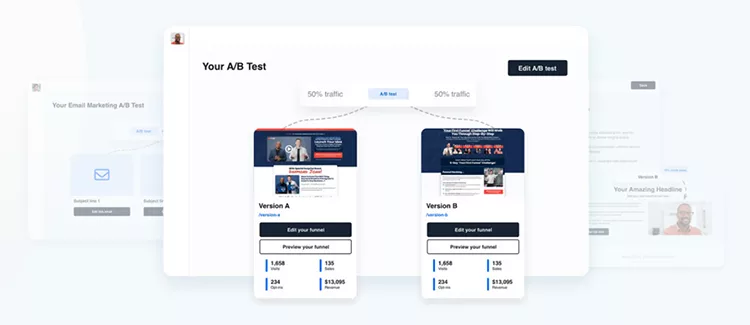
A Complete Guide To Starting A Dropshipping Business In 2024

Software Stack Editor · July 22, 2024 ·

The post A Complete Guide To Starting A Dropshipping Business In 2024 appeared first on ClickFunnels.
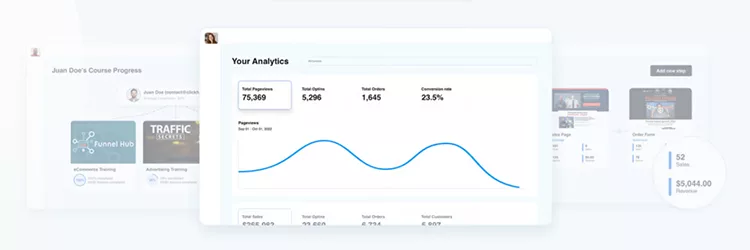
Some people are saying that dropshipping is dead but we would argue that it’s still a viable way to get into ecommerce.

Here’s our complete guide to starting a dropshipping business in 2024…

Table of Contents:
  • Introduction to Dropshipping
    • What is Dropshipping?
    • What are the Dropshipping Pros and Cons?
    • How Much Money Do You Need to Get Started With Dropshipping?
    • How Much Money Can You Make With Dropshipping?
    • Why Successful Dropshippers Eventually Move Away from Dropshipping
  • How to Start a Dropshipping Business
    • Step #1: Choose an Industry
    • Step #2: Niche Down
    • Step #3: Build Your Online Store
    • Step #4: Add Products to Your Store
    • Step #5: Build a Cart Funnel and Start Driving Traffic to It!
  • How to Grow Your Dropshipping Business
    • Step #1: Do More of What’s Already Working
    • Step #2: Expand to Other Paid Advertising Platforms
    • Step #3: Start Building Traffic-Generating Assets
  • How to Move Away From Dropshipping
    • Step #1: Hire an Industrial Designer to Help You Create Your Products
    • Step #2: Find a Reliable Manufacturer That Can Produce Your Products
    • Step #3: Gradually Switch Out All of Your Dropshipped Products With the Private Label Ones
  • Ecommerce Secret Sauce: Digital Products
  • A Word of Caution: Be Careful About Lifestyle Inflation Because Dropshipping Can Be Extremely Unpredictable!

Introduction to Dropshipping

What is Dropshipping?

E-commerce is a business model where you sell products online.

Dropshipping is an e-commerce fulfillment method where you don’t carry the inventory yourself.

Instead, when a customer places an order on your website, that order is forwarded to the product supplier who then ships the product to the customer.

Making the distinction between the business model (e-commerce) and the fulfillment method (dropshipping) is important.

If your goal is to build a successful ecommerce business then it doesn’t make sense to get attached to any particular fulfillment method!

What are the Dropshipping Pros and Cons?

There are a lot of business gurus on YouTube who promote dropshipping.

They present it as the be-all-end-all solution for aspiring entrepreneurs who want to build a location-independent business that would allow them to leave their 9-5, work from anywhere, and have a luxurious lifestyle.

The problem is that these gurus are painting a rosy picture of dropshipping in order to sell their expensive online courses.

The truth is that dropshipping, like any other e-commerce fulfillment method, has its pros and cons.

Dropshipping Pros

The main pro of dropshipping is that you don’t have to invest money in inventory upfront: you only pay for each product once someone buys it.

This means that if you don’t make any sales, you don’t have to pay anything to the suppliers. That drastically reduces the financial risk.

In addition to that, since the suppliers are handling manufacturing, warehousing and shipping, you don’t need to worry about any of that.

The suppliers can handle returns as well but it’s advisable to do it yourself. After all, if a customer has bought something from you, they will go to you for a refund.

But other than returns, all the logistics are taken care of, which means that you can focus on branding, marketing, and sales.

This combination of low financial risk and logistical support from the suppliers makes dropshipping the ideal fulfillment method for entrepreneurs who don’t have any previous e-commerce experience.

Dropshipping Cons

The main con of dropshipping is the lack of an economic moat.

An economic moat is a set of competitive advantages that protects your business from rivals that want to steal your market share.

Since pretty much anyone can launch an online store with dropshipping, you will always have to deal with competitors that are selling the exact same products that you do.

In fact, you might find that there are literally thousands of stores selling the exact same products as you.

Because it’s so difficult to differentiate yourself from the competition under those conditions, drop shippers often find themselves in a race to the bottom where they are competing on price alone.

Moreover, consumers are becoming increasingly tech-savvy, which means that more and more of them are running reverse image searches to see if they can buy the same products directly from the supplier.

So you might end up in competition not just with other dropshippers but also with the suppliers of your products. This is especially true if you are using AliExpress.

In addition to that, since the supplier is handling all the logistics, it means that you don’t have any control over the products, the packaging, or the customer experience.

However, the customers who bought these products from you are going to blame you if they are unhappy with their purchases.

Finally, since dropshipping suppliers tend to be based in Asia, the shipping times can be a problem if you are targeting European and North American markets.

Consider that consumers in these markets are used to shopping on Amazon and local online stores where they can expect their products to be delivered within a few days.

They might be put off if they order something from your store and then have to wait for a month to get it!

How Much Money Do You Need to Get Started With Dropshipping?

Can You Start a Dropshipping Business With $0?

There are a lot of business gurus on YouTube claiming that you can start dropshipping with $0.

In theory, that may be possible, but in practice, you’d likely struggle to make any sales if your budget is literally $0.

Also, realistically speaking, it will probably take you at least 6-12 months until you get the hang of this whole dropshipping thing and start making some profit.

If you are in a desperate situation and need money NOW, dropshipping is not a viable solution for that. Getting a job is a much better way to stabilize your finances.

How to Set Up Your Life So That You Could Win at Dropshipping

The truth is that e-commerce is a long game so if you are serious about it, you need to set up your life in a way that will enable you to pursue your entrepreneurial dreams regardless of how long it will take to turn them into reality.

What we recommend is cutting your living expenses to the bone, getting a job so that you would have a stable source of income, and saving up enough money so that you could survive for at least three months in case you lose that job.

Ideally, once all that is done, you want to have at least $500/month left over after paying all your bills. That’s your dropshipping money.

If you can’t get a job that pays you enough to have $500/month left over, consider working overtime or picking up an additional part-time job and saving up $6,000. That will cover 12 months of dropshipping expenses at the $500/month rate.

With this setup where you have a job, an emergency fund, and discretionary income that you can allocate to dropshipping, you should be able to stay in the e-commerce game indefinitely.

Financial stability will also help you think clearly, make good decisions, and focus on the long-term growth of your business.

Don’t Fall for the Hype: Setting Realistic Expectations

There’s a lot of selective honesty, questionable storytelling and outright lying in the dropshipping space because the real business model of the YouTube gurus is selling you their online courses.

It’s important to have realistic expectations. No, you probably won’t become a millionaire by age 19, go from homeless to rich in 27 days, build a seven-figure business in 3 months, or whatever the latest clickbait is.

In all likelihood, it will probably take you a few years to get to the point where you can quit your job and focus on your e-commerce business full-time without sacrificing your financial stability.

But once you achieve that, you will be able to be your own boss, set your own schedule, and work from anywhere, hopefully while also making enough money to have the lifestyle you want!

How Much Money Can You Make With Dropshipping?

Dropshipping profit margins typically range between 10% and 30%.

This means that if you generate $1,000,000 in annual revenue, you will probably be making between $100,000 and $300,000 in profit.

Realistically speaking, your profit margins are probably going to be closer to 10% than to 30% because of the aforementioned lack of the economic moat.

After all, it’s extremely difficult to charge premium prices when customers can get the exact same product elsewhere for less.

That being said, you can definitely build an e-commerce business that brings in six or even seven figures in profit by using dropshipping as your fulfillment method!

Why Successful Dropshippers Eventually Move Away from Dropshipping

Dropshipping can be a great way to get into e-commerce.

However, as we already explained, this fulfillment method has some serious problems, most notably the lack of economic moat.

That’s why successful dropshippers tend to eventually move away from dropshipping:

They start working with industrial designers to create unique products, find reliable manufacturers who can produce them, and then gradually switch out their dropshipped offers with their private label ones.

All that gives them much more control over their businesses and enables them to widen their economic moats by offering unique, high-quality products at premium prices with fast shipping.

We would argue that building a private label e-commerce brand that you can then sell for at least seven figures should be your goal right from the start!

How to Start a Dropshipping Business

Step #1: Choose an Industry

The approach to dropshipping that you see on YouTube isn’t sustainable because it revolves around “winning products” aka trend hopping.

While you can certainly make money that way, it’s important to understand the difference between capitalizing on temporary arbitrage opportunities and building a real business.

For example, back in the spring of 2017 fidget spinners were the hottest ecommerce trend, and dropshippers who caught that wave early made a ton of money.

However, since it was just a temporary arbitrage opportunity, that revenue quickly dried up because consumers lost interest and moved on.

We would argue that if you want to build a real e-commerce brand that you can eventually sell, trend hopping is a waste of resources.

After all, just like the fidget spinner craze, most of these trends only last a few months, so you’d probably be better off ignoring them entirely.

Instead, we recommend choosing an industry that you are already familiar with, launching an e-commerce store that sells products that have proven demand, and committing to making it work no matter what.

For example, if you love hiking and camping, going into the outdoor clothing and gear industry might be a good idea. Why?

Because:

  • You are already familiar with this industry as a consumer so you won’t have to learn everything from scratch.
  • You belong to your target audience which will make it much easier for you to create offers, copy and marketing campaigns that resonate with potential customers.
  • You are passionate about the outdoors which will help you stay consistent when building traffic-generating assets.

In theory, you could start an e-commerce business in some random industry that seems lucrative but you have no familiarity with.

In practice, though, why would you do that when you can instead go into an industry where you already have a bunch of advantages?

Keep in mind that building an e-commerce brand is going to be a long and arduous journey regardless of the industry that you choose.

However, if you have a genuine interest in something, it can help you endure the grind.

Ask yourself: am I okay with my entire life revolving around this industry for the next ten years?

That might help you put things in perspective!

Step #2: Niche Down

Okay, so now that you have decided on the industry, you want to niche down. What does that mean?

Choose a specific demographic that you are going to cater to initially. Ideally, it should be a demographic that you belong to yourself.

For example, if you are a female outdoor enthusiast, you could niche down to selling outdoor clothing and gear to women.

Generally speaking, the narrower your target audience, the easier it will be to get your business off the ground because you will be able to tailor everything to that particular demographic.

That’s why we recommend starting with the narrowest possible target audience and then gradually expanding from there!

Step #3: Build Your Online Store

You can easily build an online store with our software even if you don’t know how to code. Simply choose a store template and customize it with our drag-and-drop website editor.

Jakob’s Law is something to consider here. It’s a UX design principle which states that:

“Users spend most of their time on other sites. This means that users prefer your site to work the same way as all the other sites they already know.”

For example, if you are building an online store that sells outdoor clothing and gear, you want it to look similar to other online stores that sell outdoor clothing and gear because that’s what your target audience will expect.

Of course, we aren’t saying that you should straight up copy REI’s or Patagonia’s web design, but drawing inspiration from brands like that might be a good idea!

Step #4: Add Products to Your Store

We decided to partner with the dropshipping platform Zendrop to make it as easy as possible for you to find the right products and add them to your store.

Here’s how it works:

If you want to build a successful e-commerce business, it’s important to think in terms of offering solutions to problems as opposed to selling products.

For example, you can create a list of everything that a newbie hiker should take with them on an easy few-hour hike, go to Zendrop, find these products, and add them to your store.

Then you can use them to create a day hike bundle and market it to women who want to get into hiking but don’t know where to start.

That way, instead of selling a bunch of related products, you will be selling a solution to a specific problem that a subset of your target audience has.

You can do the same with clothing and equipment for longer hikes, camping trips, various weather conditions, etc.

Ideally, you want to order the various products that you are considering and test them so that you can pick the best ones.

Step #5: Build a Cart Funnel and Start Driving Traffic to It!

Now that you have added products to your store and created bundles that offer solutions to various problems, it’s time to build a cart funnel. What’s that?

It’s an e-commerce sales funnel designed to convert people in your target audience into paying customers by promoting your most popular offer.

Of course, since you just built your store, you don’t know which offer will be most popular, so choose the bundle that you believe is the most promising.

Once you have your cart funnel, start driving traffic to it with paid ads. Facebook, Instagram and TikTok ads can all work well.

In all likelihood, it will probably take a lot of experimenting to find the winning offer, optimize your cart funnel and figure out how to run ads profitably.

So don’t give up if it doesn’t work right away!

How to Grow Your Dropshipping Business

Okay, so how can you grow your business now that you are making some money with your dropshipping store?

Step #1: Do More of What’s Already Working

The easiest way to make more money is to do more of what’s already working. It’s the obvious solution but entrepreneurs often overlook it because it’s kind of boring.

Say, if you are driving traffic to your cart funnel with paid ads, can you 2x, 5x, or 10x your ad spend while remaining profitable?

In addition to that, you want to not just drive more traffic, but also optimize your cart funnel with A/B testing, which you can do with our software.

Max out your current customer acquisition channel first before worrying about adding more channels!

Step #2: Expand to Other Paid Advertising Platforms

All major social media platforms allow you to run ads so once you have mastered paid advertising on one of them, you can start expanding to others.

After all, you already know that your cart funnel is working. All you need to do now is figure out how to profitably drive traffic to it from several different platforms.

Step #3: Start Building Traffic-Generating Assets

Finally, you want to start allocating resources to building traffic-generating assets such as:

  • A social media following
  • An email newsletter
  • A YouTube channel
  • A TikTok channel
  • A company blog

We recommend building a social media following first, then leveraging it to launch and grow a weekly newsletter and then finally starting YouTube and TikTok channels.

As for the company blog, SEO has become extremely competitive, so generating organic traffic with it may be difficult.

However, you can write up comprehensive guides on various topics related to your niche, publish them on your blog, and promote them on your social media, newsletter, YouTube, and TikTok channels when appropriate.

Building these traffic-generating assets will take time, probably several years but eventually they will enable you to become less reliant on paid advertising.

Also, out of all these traffic-generating assets, an email newsletter is the most valuable one so growing it should be your priority!

How to Move Away From Dropshipping

Okay, so now that you have an established online store that’s doing well, it’s time to start moving away from dropshipping and into private-label e-commerce.

Step #1: Hire an Industrial Designer to Help You Create Your Products

Obviously, if you want to go from dropshipping to private label, you can’t just steal the designs of your dropshipped products and then sell them as your own.

You will need to hire an industrial designer to help you create similar but unique products that are better than the dropshipped ones.

It probably makes the most sense to start with your bestselling product. Say, if your bestselling product is a dropshipped hiking daypack, hire an industrial designer to help you create your own hiking daypack that’s better than the one you are selling right now.

Getting the design right will probably be a difficult process that will require a lot of product testing.

Fortunately, you have the contact details of the customers who have bought the dropshipped backpack so you can ask them for help.

Tell them that they will get to keep the test backpacks that you send them as well as the final version of your private label backpack in exchange for candid feedback.

People love free stuff so you should have no problem finding beta testers!

Step #2: Find a Reliable Manufacturer That Can Produce Your Products

First, you will need to decide between domestic and overseas manufacturing since both have their pros and cons.

Either way, you want to go and visit promising manufacturers in person, talk to the people in charge, and order samples to see whether they can follow the designs that you provided.

Look for manufacturers that have a relatively low minimum order quantity. If you are still in the testing phase, you don’t want to order more than a few hundred products at a time.

Also, be wary of manufacturers that offer extremely low prices because they are likely to engage in various unethical practices. You don’t want your brand to be associated with exploitation!

Step #3: Gradually Switch Out All of Your Dropshipped Products With the Private Label Ones

It will likely take you at least several years to move away from dropshipping by switching out all of your products one by one.

But once you are done with that, you will own a “real” e-commerce brand that you have complete control over!

Ecommerce Secret Sauce: Digital Products

We highly recommend reading our guide to customer acquisition because you need to make sure that your math is on point if you want to succeed with dropshipping.

There’s the obvious stuff that’s just basic common sense: your customer acquisition cost (CAC) cannot exceed your customer lifetime value (CLV) if you want to remain profitable.

And then there’s the principle that few understand: the one that can afford to spend the most to acquire a customer wins.

That’s something that our co-founder Russell Brunson learned from Dan Kennedy. Here’s how Kennedy explains it:

@russellbrunson

Whoever can spend the most money to acquire a customer wins #entrepreneur #entrepreneur101 #businessmotivation #entrepreneurjourney #russellbrunson

♬ original sound – Russell Brunson

But how can you outspend your rivals on customer acquisition when you are all dropshippers selling the same products by running ads?

Simple: if your competitors are only selling physical products, you can get ahead by selling both physical and digital ones.

For example, why not create an eBook guide for newbie hikers, price it at $7, and then add it to your day hike bundle cart funnel as a cross sell?

You can also do the reverse: build a book funnel for the eBook and then cross sell the day hike bundle.

That can help you increase your customer lifetime value. And the higher your customer lifetime value, the more money you can spend on customer acquisition!

A Word of Caution: Be Careful About Lifestyle Inflation Because Dropshipping Can Be Extremely Unpredictable!

Lifestyle inflation is a common trap that successful dropshippers fall into as they start making good money with their e-commerce businesses.

It seems that the ones who luck out and hit it big in less than a year are the most vulnerable to this temptation.

And it’s understandable: if you suddenly find yourself making more in a month than you used to make in a year when you were working a minimum-wage job, of course, you will want to upgrade your lifestyle!

Add to that all the dropshipping gurus who are flexing their homes, cars, and vacations on social media and you might even start feeling that you are missing out if you aren’t keeping up with them.

But the problem is that the world of dropshipping is a kind of Wild West of e-commerce where you can feel like you are printing money one month and then find yourself in the red the next month. It’s extremely unpredictable.

Consider that you might get scammed by a supplier, banned from social media, undercut by one of your myriad competitors, etc. These are all common occurrences. Something like that is bound to happen sooner or later.

Even entrepreneurs who have been dropshipping for years aren’t immune to all this. There are plenty of horror stories on YouTube where experienced dropshippers lost tens or even hundreds of thousands of dollars.

That’s why it’s unwise to inflate your lifestyle under the assumption that the gravy train is going to continue. It can stop at any time.

Of course, we aren’t saying that you should live like a pauper despite making a ton of money from your e-commerce store. It’s okay to go on a nice vacation now and then.

But you might want to hold off on taking on financial commitments that would significantly increase your living expenses: moving to a luxury apartment, buying an expensive car, etc.

Keep in mind that as your e-commerce business matures, the revenue is going to become much more predictable, especially once you move away from dropshipping to private label. You can always upgrade your lifestyle then!

Try ClickFunnels 2.0 Risk-Free!

Let’s be real:

We are biased in favor of our software.

So we understand if you take what we say about it with a grain of salt.

Fortunately, we have a free 14-day trial, so you don’t have to take our word for it.

You can go and see ClickFunnels 2.0 for yourself without any risk!

So what are you waiting for? 🧐

Start Your Free Trial Today

Thanks for reading A Complete Guide To Starting A Dropshipping Business In 2024 which appeared first on ClickFunnels.
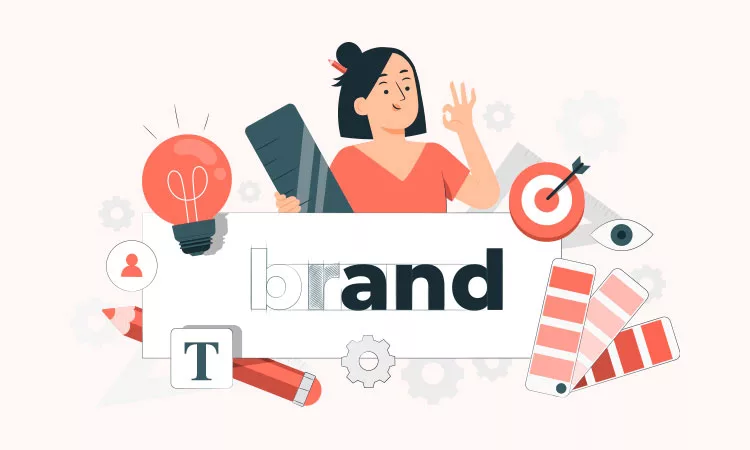
7 Ways To Generate Leads For Brand New Businesses

Software Stack Editor · July 19, 2024 ·

The post 7 Ways To Generate Leads For Brand New Businesses appeared first on ClickFunnels.
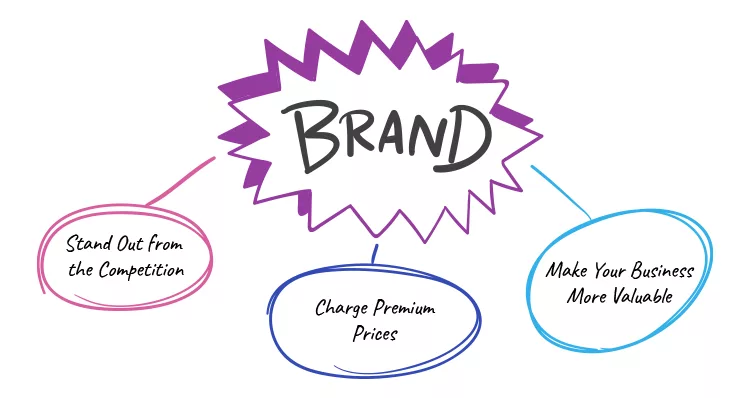
So you launched a business.

Now you need to start generating leads.

Today we are going to share seven ways to do that!

Table of Contents:
  • Introduction to Lead Generation
    • What is a Lead?
    • What is Lead Generation?
    • What is a Lead Generation Funnel?
    • What is a Lead Magnet?
    • What Visitor-to-Lead Conversion Rate Can You Expect?
    • What is the Easiest Way to Increase Sales?
  • How to Generate Leads for Your Brand New Business
    • #1: Homepage Funnel
    • #2: Squeeze Page Funnel
    • #3: Reverse Squeeze Page Funnel
    • #4: Survey Funnel
    • #5: Webinar Funnel
    • #6: Product Launch Funnel
    • #7: Free Plus Shipping Funnel
  • How to Drive Traffic to Your Lead Generation Funnels
    • #1: Social Media Marketing
    • #2: Video Marketing
    • #3: Paid Advertising
  • Try ClickFunnels Risk-Free!

Introduction to Lead Generation

Okay, so before we get into the main subject of this article, let’s review the basics of lead generation to make sure that we are all on the same page.

What is a Lead?

A lead is a potential customer who has:

  1. Indicated an interest in your product or service
  2. Provided their contact information

In the online marketing context, a potential customer becomes a lead once they give you their email address.

What is Lead Generation?

Lead generation is the process of converting potential customers into leads by persuading them to give you their contact details.

In the online marketing context, that typically means offering them some sort of a freebie in exchange for their email addresses.

What is a Lead Generation Funnel?

A lead generation funnel is a system designed to convert potential customers into leads.

It’s the first stage of the Value Ladder sales funnel that we call the Bait stage:

Diagram explaining the Value Ladder sales funnel with four stages: Bait, Frontend, Middle, and Backend, leading up to a continuity program. Each stage ascends in value and price.

Here’s how our co-founder Russell Brunson explains it:

What is a Lead Magnet?

A lead magnet is a freebie that you offer to the potential customer in exchange for their email address.

As our friend Alex Hormozi explains, it should be a complete solution to a narrowly defined problem that the potential customer is struggling with.

The reason why offering a complete solution, as opposed to a partial one, is so important is that it allows you to build trust that you can then capitalize on to sell your frontend offer (the next stage of the Value Ladder).

What exactly you should use as your lead magnet will depend on your business model but generally speaking, it should serve as a free sample of your Frontend offer:

  • If you run a restaurant, offer free food
  • If you provide services, offer a free service
  • If you sell a book, offer a free chapter
  • If you sell online courses, offer a free online course
  • If you sell software, offer a free trial

…etc. 

Keep in mind that the more valuable your lead magnet is, the easier it will be to convert potential customers into leads and then into paying customers!

What Visitor-to-Lead Conversion Rate Can You Expect?

Your visitor-to-lead conversion rate is going to depend on how good you are at creating free offers, building lead generation funnels, and driving targeted traffic to those funnels.

If you don’t have any previous experience with that, you can probably expect to see a visitor-to-lead conversion rate of around 10%.

Meaning, that out of every 100 people that visit your lead magnet landing page, 10 of them will give you their email addresses.

If your lead-to-customer conversion rate is also 10%, it means that out of those 10 leads, 1 of them will buy your product or service:

100 visitors -> 10 leads -> 1 customer. 

These numbers are not great but it’s a start.

As you get better at creating free offers, building funnels, and driving targeted traffic to those funnels, you should see your conversion rates increase. 

Hopefully, you’ll be able to double or triple them eventually!

What is the Easiest Way to Increase Sales?

If you have a sales funnel that is profitable, the easiest way to increase sales is to drive more traffic to it from the same source.

Assuming that the conversion rates remain the same, more traffic means more leads means more sales. It’s just simple math.

Alex Hormozi recommends asking yourself this question: what’s stopping you from doing 10x more of what’s already working?

New entrepreneurs often have a misguided belief that they need to come up with some crazy innovative stuff in order to grow their businesses.

But there’s a reason why seasoned entrepreneurs keep repeating the adage of “Do more of what’s already working”: it may be boring but it’s the easiest way to increase sales!

How to Generate Leads for Your Brand New Business

The best way to generate leads is to build a lead generation funnel and start driving traffic to it.

Here are the seven most popular lead generation funnels:

#1: Homepage Funnel

You probably already have a business website so it makes sense to start by optimizing it for lead generation.

And that’s what the homepage funnel is all about.

It consists of three pages:

  1. Your homepage where you promote your lead magnet above the fold so that it would be the first thing that the potential customer sees when they come to your website.
  2. An email pop-up where you ask the potential customer to provide their email address in order to get access to your lead magnet. 
  3. A thank you page where you thank potential customers and let them know what they should expect next.

This funnel can work well for any business that has a website!

Diagram of a homepage funnel process. It starts at the home page, moves to a click pop, then to a thank you page. There's a follow-up funnel and automation shown. Key sections are labeled.

#2: Squeeze Page Funnel

The squeeze page funnel is the most popular lead generation funnel out there.

It consists of two pages:

  1. A simple landing page is known as a squeeze page where you pitch your lead magnet.
  2. A thank you page where you thank potential customers and let them know what they should expect next.

This lead generation funnel is incredibly versatile: it can be a standalone website, a section on your website or just an email pop-up.

Once you have built a homepage funnel for your business, we recommend building a squeeze page funnel next. 

Diagram of a Squeeze Page Funnel showing a 'Squeeze Page' on the left with an email input and 'Next' button, leading to a 'Thank You Page' on the right. Includes automation and follow-up funnels.

#3: Reverse Squeeze Page Funnel

The reverse squeeze page funnel has the exact same structure as the regular squeeze page funnel. So what’s the difference between them?

With the reverse squeeze page funnel, you provide some free value upfront, without requiring the potential customer to give you their email address.

Typically, that is done with a free video that they can play right there on the squeeze page. 

This funnel works especially well for online course lead magnets because you can let the potential customer watch the first lesson on the squeeze page without having to opt in.

Then, if they want to get access to the rest of your free course, they can provide their email address.

Another way to go about it is to explain how to do something in your squeeze page video, then direct the potential customer to your lead magnet that can help them implement your advice (e.g. a meal plan, an exercise program, a printable workbook, etc).

Finally, you can explain how to do something in your squeeze page video and then use a free consultation with you as a lead magnet!

Diagram illustrating the reverse squeeze page funnel, with steps for the reverse squeeze page, automation, thank you page, and follow-up funnels.

#4: Survey Funnel

The survey funnel is a lead generation funnel designed to pre-qualify leads.

It has two pages:

  1. A survey page where you ask the potential customer questions that will help you determine whether they are a good match for your business.
  2. A thank you page where you thank the potential customer for taking the survey and let them know what they should expect next.

This funnel can help you save a ton of time if you are selling a high-touch product or service that requires you to manually reach out to leads, set up discovery calls and close sales on those calls. 

Consider including a multiple-choice question about the potential customer’s budget. That way, people who can’t afford your product or service will realize it and drop out of the survey.

Alternatively, if you are working on custom projects with variable, per-project pricing, you can ask the potential customer to describe the project that they have in mind and then input their budget for it. This will make it easy for you to determine whether you can help them.

#5: Webinar Funnel

The webinar funnel is a lead generation funnel where you use a free webinar as a lead magnet and then pitch your product or service at the end of it.

It works best for selling consulting, productized services, and online courses but it can also work well for selling software. 

In fact, our co-founder Russell Brunson used the webinar funnel to get our software company off the ground and still swears by it to this day:

This funnel consists of three pages:

  1. A webinar registration page where the potential customer can sign up for your webinar.
  2. A registration confirmation page where you confirm that the potential customer has successfully registered for the event.
  3. A webinar page where the potential customer can either attend your webinar live or watch the replay.

Depending on what you are selling, you will also need either a sales page where the potential customer can buy your product or service or an appointment booking page where the potential customer can schedule a free consultation.

We would like to emphasize that if you want your webinar to convert, you will have to provide genuinely valuable information so that the attendees will walk away feeling like they have learned something useful. 

Remember, just like any other lead magnet, your webinar needs to offer a complete solution to a narrowly defined problem.

Also, while it’s possible to automate this funnel, we recommend doing webinars live once a week for at least a year.

That will give you time to experiment, learn from the audience feedback and optimize your webinar script.

Once you are able to consistently convert at least 20% of your webinar attendees into paying customers, you can begin automating your funnel.

Flowchart showing a webinar funnel process with steps: Webinar Registration, Webinar Confirmed, Webinar Replay, and Indoctrination Pages. Each step has illustrative examples with text and buttons.

#6: Product Launch Funnel

The product launch funnel is designed to help you build anticipation for your upcoming product.

It has four pages:

  1. Video page #1: In this video, you want to tell a story about how you were struggling with the same problem as the potential customer and how you overcame it. Then, introduce your upcoming product as a solution to that problem. End the video by bringing up potential objections to buying and promise to address them in the next video.
  2. Video page #2: In this video, you want to address the potential objections just as you promised. Ideally, you should back up your claims with testimonials and case studies. End the video by hinting at how your product can help make the potential customer’s life better and promise to explain it in the next video.
  3. Video page #3: In this video, you want to explain how your product can help make the potential customer’s life better just as you promised. Encourage them to take a step back and look at the big picture. Help them visualize what your product can do for them. Ideally, you should back up your claims with testimonials and case studies. End the video by telling them that the product will become available for sale tomorrow and mention the exclusive launch bonuses that they won’t want to miss out on.
  4. Video page #4: In this video, you want to announce the launch of your product, make your sales pitch, and explain what’s included in the price. Make sure to emphasize the launch bonuses and encourage potential customers to buy your product now if they want to get all the extra stuff. Right below the video, you should have the order form so that they can make the purchase immediately without having to go anywhere.

If you want to launch a product to kickstart your brand new business, we recommend combining the squeeze page funnel with the product launch funnel.

First, create a lead magnet that is related to your upcoming product and use the squeeze page funnel to build your pre-launch email list.

If you are writing a book, you can use a free chapter as your lead magnet, build a squeeze page funnel for it, and then drive traffic to it. 

Then, email your subscribers at least once a week with updates, sneak peeks, etc. That will help you stay top of mind with them. 

Finally, once you are ready to launch your book, build a product launch funnel for it and start sending your subscribers one video per day so that the whole sequence would take four days to complete.

This approach works best for launching books, info products, and software but it can also work well for launching innovative physical products!

Flowchart showing a webinar funnel process with steps: Webinar Registration, Webinar Confirmed, Webinar Replay, and Indoctrination Pages. Each step has illustrative examples with text and buttons.

#7: Free Plus Shipping Funnel

The free plus shipping funnel is an advanced lead generation funnel where you use a physical product as your lead magnet and ask the potential customer to cover the shipping costs.

It has three pages:

  1. A sales page where you pitch your free product.
  2. A 2-step order form where the potential customer can make the purchase.
  3. A thank you page where you thank the customer and explain what they should expect next.

For example, our co-founder Russell Brunson wrote three best-selling books about online marketing:

  • “DotCom Secrets” (4.7 stars on Amazon with over 2,600 global ratings)
  • “Traffic Secrets” (4.7 stars on Amazon with over 2,500 global ratings)
  • “Expert Secrets” (4.7 stars on Amazon with over 2,000 global ratings)

You can get these books directly from us for free. All we ask is that you cover the shipping!

Here’s what the “DotCom Secrets” Value Ladder looks like:

We want to emphasize that our free plus shipping funnels are designed to generate leads for our software, info products, and masterminds. This is not about selling books.

In fact, if you are a writer and your book is your core product, then building a free plus shipping funnel for it doesn’t make sense. You’d be better off going with a simple squeeze page funnel where you use a free chapter as your lead magnet. 

However, if you are an entrepreneur, you might want to consider writing a book specifically for the purpose of generating leads for your business.

Ideally, you want to publish it on Amazon, send out review copies, and do a proper book launch with a product launch funnel.

Once you have a 4+ star rating and a bunch of reviews on Amazon, you can build a free plus shipping funnel for your book.

The reason why we advocate for publishing your book and getting reviews before building your funnel is because you want it to be a “real” book.

That way, the potential customers will feel like they are getting a great deal when you offer it to them for free.

Just make sure to find a reliable print-on-demand publisher so that you won’t have to order a bunch of copies in bulk and then store them and ship them yourself.

Needless to say, doing all that will take time, so perhaps this section is somewhat of a departure from our main subject of generating leads for a brand new business.

However, publishing a book can have outsized returns and help you establish yourself as a thought leader in your industry. 

That’s what Russell did with “DotCom Secrets” which he published 2 years after launching ClickFunnels. 
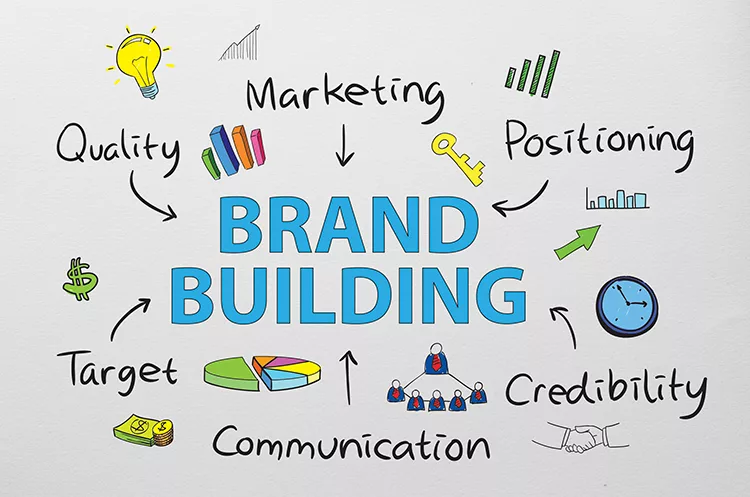
So it might make sense to set aside 30 to 60 minutes every day to work on your book. At that pace, it should be ready for publishing in 2-3 years. Then you can use it to take your business to the next level!

Build Lead Generation Funnels for Your Business With ClickFunnels!

Our software, ClickFunnels, includes a template library where you can find lead generation templates and more to get up and running faster.

We also have an email marketing functionality that you can use to start, manage, and grow your email list.

All you need to do to build a lead generation funnel for your business is choose a template, customize it with our drag-and-drop page editor, and set up email marketing for it.

Once all that is done and your funnel is live, it’s time to start generating leads!

How to Drive Traffic to Your Lead Generation Funnels

#1: Social Media Marketing

Social media marketing is the best option for entrepreneurs who don’t have much spare time or disposable income but still want to build a side hustle without having to pay for advertising.

Getting started with it doesn’t require any money: you can simply pick a social media platform, create a profile, and start posting.

However, you might want to consider investing in a social media scheduling tool like Buffer or MeetEdgar because planning, creating, and scheduling content in advance can help you stay consistent.

Consistency is the secret to success on social media. If you can commit to publishing high-quality content every day for at least 36 months, you will probably manage to build a substantial following. But how can you turn those followers into leads?

Simple: promote your lead magnet in your bio with a short description and a call to action. As your following grows, more and more people are going to click on that link to check out your free offer.

Consider watching this video if you want to learn more about building an audience on social media;

#2: Video Marketing

Video marketing is the best option for entrepreneurs who don’t have much money but do have a lot of free time and are comfortable with the idea of being on camera.

It’s a resource-intensive endeavor: to create a single YouTube video, you will need to find a promising keyword, do competitive research, write the script, shoot the video, edit it, create a thumbnail, upload it and then promote it as much as you can.

Consider watching this video if you want to learn more about starting a YouTube channel:

In terms of filming equipment, all you need is a smartphone with a decent camera, a good microphone, and a camera light.

As for the video production, we recommend Descript for video editing and Firefly for creating thumbnails.

Also, you can use Opus Clip to repurpose your YouTube videos into YouTube and TikTok shorts and Instagram reels.

You can generate leads by promoting your lead magnet in your channel description, your video descriptions, and the videos themselves. 

Building a following will probably take at least 36 months, assuming that you upload high-quality long-form videos once a week to YouTube and engaging shorts every day to TikTok.

#3: Paid Advertising

Paid advertising is best suited for entrepreneurs who don’t have much time but do have money that they are willing to invest in ads.

Something to consider here is that running ads is a skill that has a steep learning curve. Realistically, you’ll be losing money until you figure out how to make your ad campaigns work.

We recommend choosing a platform that makes the most sense for your business, finding a reputable course on how to run ads on it on Udemy, and going through that course. That will give you a basic understanding of how it all works.

Then, create an ad campaign designed to promote your lead magnet and start running it with a small daily budget. Experiment with different concepts, visuals and copy until your campaign is profitable.

And if you realize that your potential customers simply aren’t interested in your lead magnet, go back to the drawing board and come up with something better. You need a free offer that resonates with your target audience. 

In theory, paid advertising allows you to get immediate traffic, but in practice, it will probably take quite a while until you get the hang of it. However, once you do, generating leads will become much easier!

Try ClickFunnels Risk-Free!

Let’s be real:

We are biased in favor of our software. 

So we understand if you take what we say about it with a grain of salt.

Fortunately, we have a free 14-day trial, so you don’t have to take our word for it.

You can go and see ClickFunnels for yourself without any risk!

So what are you waiting for? 🧐

Start Your Free Trial Today

Thanks for reading 7 Ways To Generate Leads For Brand New Businesses which appeared first on ClickFunnels.
What Is Dropshipping & How Does It Work ( 2024 Guide)

Software Stack Editor · July 19, 2024 ·

The post What Is Dropshipping & How Does It Work ( 2024 Guide) appeared first on ClickFunnels.
You have heard about dropshipping. But how exactly does it work?

That’s what we are going to discuss in today’s article…

Table of Contents:
  • What is Dropshipping?
  • How Does Dropshipping Work?
  • How to Create a Dropshipping Store With ClickFunnels + Zendrop
  • How to Drive Traffic to Your Cart Funnel
  • How to Optimize Your Cart Funnel With A/B Testing
  • Try ClickFunnels Risk-Free!

What is Dropshipping?

E-commerce is a business model where you sell physical products online.

Dropshipping is an e-commerce fulfillment method where you don’t hold any inventory yourself.

How Does Dropshipping Work?

So how is it possible to sell physical products online without holding any inventory yourself?

Here’s how it works:

  1. Customers place orders on your online store
  2. Those orders are then forwarded to your suppliers
  3. Your suppliers ship the products to the customers

You only pay your suppliers for the products once the customers buy them. If you don’t make any sales, you don’t owe them anything!

How to Create a Dropshipping Store With ClickFunnels + Zendrop

Step #1: Choose an Industry

Ideally, you want to go into an industry that you have not just familiarity with, but also an active interest in. Why?

Because e-commerce is not a get-rich-quick scheme. If you want to build a sustainable business that you can eventually sell for a life-changing amount of money, it will probably take you 5-10 years to get there.

In theory, it’s possible to succeed in an industry that you have zero interest in, but in practice, that is extremely unlikely.

After all, very few people are capable of staying focused on something that they don’t care about for a long period of time.

That’s why we recommend looking at your current interests, figuring out which one has the most business potential and then going into that industry.

Unless you are into something extremely obscure like collecting 19th-century Norwegian post stamps, you can probably build a successful e-commerce business that revolves around one of your hobbies.

Say, if you are into fitness, there’s a ton of stuff that you could sell that’s related to it: clothes, accessories, equipment, etc. 

Step #2: Niche Down

You also need to niche down to a specific demographic. Why?

Because if you attempt to sell everything to everyone, you will find yourself competing with the largest brands in your industry.

Say, if you decided to launch a general fitness store, you would have to compete with companies like the French giant Decathlon.

That’s not a battle that you can win given that Decathlon has over 1,700 stores around the world. 

However, if you launched an online store that sold workout clothes to women who lift weights, you would have a much better chance at building a successful e-commerce business.

Think about it: with such a clear focus, you would be able to tailor everything – from products to sales copy to marketing – to that particular demographic.

That would help you carve out a market share for yourself. Maybe your store would even become the go-to online store for female weightlifters looking for gym wear.

Generally speaking, the narrower the niche, the better, but you need to make sure it’s large enough to sustain your business.

One of the most reliable ways to determine that is by looking at the competition. Are there any established companies in that niche that appear to be growing consistently?

We understand that the presence of competition may seem intimidating, but it’s actually a good sign: it means that there’s money to be made there!

Ideally, you want to target a demographic that you belong to yourself. That way, you’ll have the best insight into what’s important to your dream customers.

If you are a woman who is into weightlifting, then all else being equal, you’d probably have an advantage over a man who’s into weightlifting if both of you were to launch online stores that sold workout clothes for women who lift. You would understand what aspects of your product speak best to the women you are targeting firsthand.

That being said if you don’t belong to a particular demographic yourself but have access to people who do, then you might still be able to capitalize on the opportunity if you spot a gap in the market.

For example, if you are a male personal trainer who primarily coaches female weightlifters, launching an online store that sells workout clothes to women who lift might make sense. After all, you should have a pretty good understanding of what’s important to your target audience given that you work with that demographic as a coach.

In theory, it’s possible to build an e-commerce business by targeting an audience that you don’t belong to yourself, aren’t familiar with, and don’t have access to through your personal network.

In practice, though, that would be a terrible idea because you’d have to start completely from scratch, do comprehensive market research, and deal with all kinds of unknown unknowns. 

So why would you want to do that when you could make your life easier by capitalizing on all the advantages that you already have?

Step #3: Build Your Online Store

Our software, ClickFunnels, has an e-commerce functionality that you can use to build your online store.

All you need to do is pick a store template from our template library and customize it according to your needs with our drag-and-drop website editor!

Step #4: Add Products to Your Online Store

We decided to collaborate with one of the leading dropshipping apps Zendrop to make it as easy as possible for our users to dropship.

Zendrop gives you access to a network of US-based suppliers which is perfect if you intend to focus on the American market.

Sourcing your products locally ensures the fast shipping speed that your target audience is accustomed to: the products in the Zendrop catalog ship within 3-5 business days.

That’s a huge improvement over AliExpress’ dreaded 15 to 60 business days. Can you imagine ordering something online and then having to wait two months for it?

Anyway, once you have built your online store, you can integrate ClickFunnels with Zendrop and start adding products to it!

Step #5: Build a Cart Funnel for Your Most Promising Product

There’s a UX design principle called Jakob’s Law which states that:

“Users spend most of their time on other sites. This means that users prefer your site to work the same way as all the other sites they already know.”

In other words, you want your online store to look similar to other online stores in your niche because that’s what your target audience expects.

The problem is that online stores are designed to serve as digital catalogs that people can browse to find what they want.

That type of website layout works well for existing customers who are already familiar with the inventory but it can be overwhelming to potential customers who look at it and don’t even know where to start.

And that’s why you need a cart funnel if you are serious about growing your e-commerce business. It’s designed to convert people in your target audience into paying customers.

This funnel has four pages:

  1. A sales page for your most popular product.
  2. An upsell is an upgrade on your most popular product.
  3. A cross sell that is complementary to your most popular product.
  4. A thank you page where you thank the customer for purchasing and let them know what they should expect next.

Ideally, your thank you page should also feature an “offer wall”, meaning, a display of your other popular products. That way, if the customer wants to shop some more, they can easily do so.

Of course, if you just launched your online store, you probably don’t know what your most popular product will be. At this point, all you can do is give it your best guess.

Realistically speaking, you will probably have to build and test cart funnels for several different products until you find a winning one. 

Fortunately, ClickFunnels includes a cart funnel template that you can customize with our drag-and-drop page editor so building cart funnels with our software is a breeze!

How to Drive Traffic to Your Cart Funnel

Once you have your cart funnel, it’s time to start driving traffic to it. But what is the best way to do that?

It depends on the resources that you have at your disposal. Here’s a quick overview of the three most popular traffic generation options:

Social Media Marketing

Social media marketing is a great option if you want to build a dropshipping side hustle without having to spend money on promoting your products.

You can simply create a profile on the social media platform of your choice and start posting high-quality content that your dream customers might find interesting.

We recommend a publishing frequency of one post per day for the first 365 days. It might seem low but consider that it’s also easy to maintain. You can always increase it later.

You should also make an effort to reply to every single comment that you get in order to encourage discussion under your posts. One exception here is trolls. Ignore and block them.

Finally, you want to network with the social media influencers in your niche, which you can do by leaving thoughtful comments under their posts and sharing their content when they publish something that your followers might find interesting.

If you can keep that up for several years, you will probably build a sizable social media following!

Video Marketing

Video marketing is a great option if you want to build a dropshipping side hustle without having to spend too much money and are willing to invest a ton of time into making video content.

You don’t need fancy equipment to get started: your smartphone, a good quality microphone, and a camera light should be enough. 

There’s an AI tool called Descript that you can use to edit your videos. Basically, it allows you to edit the video by editing the transcript.

You can use another AI tool, Adobe’s Firefly, to create video thumbnails.

We recommend shooting long videos for YouTube and then repurposing them into YouTube and TikTok shorts, which is easy to do with an AI tool called Opus Clip. 

As for the publishing frequency, you want to upload at least once a week on YouTube and at least once a day on TikTok. Just make sure to maintain high content quality.

Your primary focus should probably be YouTube because long-form videos have more staying power, which makes a YouTube channel more valuable than a TikTok channel. 

However, it’s much easier to go viral on TikTok so neglecting that platform would be unwise. 

In fact, there’s a trend of drop shippers driving organic traffic to their stores with TikTok shorts that showcase their products. 

Consider creating several TikTok shorts like that for each of your products. You can use the “Hook, Story, Offer” copywriting framework to script them:

  1. Grab the viewer’s attention with a compelling hook.
  2. Tell them a captivating story that resonates with them on a deep emotional level.
  3. End with a call to action encouraging the viewer to visit your online store and get the product. Direct them to the link in your bio.

While virality is not something that you can predict, one big hit might be enough to get your store off the ground.

Your video marketing strategy shouldn’t depend on lucky breaks, though. It will probably take you several years to build audiences on YouTube and TikTok, so plan accordingly and go into it with realistic expectations.

Paid Advertising

Paid advertising is a great option if you want to grow your e-commerce business as quickly as possible and have money to spend on ads.

The best places to advertise dropshipped products are Facebook, Instagram, and TikTok, so we recommend starting with one of these platforms.

If you don’t know how to run ads on your chosen platform, Udemy has online courses on that.

You can simply pick the course that has the highest number of reviews. If you wait for one of Udemy’s sales, you should be able to buy it for less than $20.

Once you have learned the basics, you want to create an ad campaign designed to promote your most promising product. That’s how you will drive traffic to your cart funnel.

Start running your campaign with a small daily budget. Once the sales start coming in, do the math to see if it’s profitable. If you are making money with it, you can begin gradually increasing your daily budget.

Alternatively, if your campaign is not profitable, you can use A/B testing to optimize it. More on that in the next section.

Also, if you aren’t making any sales at all, then there are three possibilities: your targeting is off, your ads aren’t compelling or there’s no demand for your product.

If it’s the product that’s the problem then you will need to pick a new one, build a cart funnel for it, and start running ads. Repeat this process until you find a winning product!

How to Optimize Your Cart Funnel With A/B Testing

Our software has an A/B testing functionality that you can use to optimize your cart funnel for conversions once you are generating enough traffic. 

The idea behind A/B testing is simple: you create two variants of the same page that are identical except for the element that you are testing, drive the same amount of traffic to both variants, and see which variant converts better.

For example, when it comes to your cart funnel sales page, you might want to A/B test the headline, the subheadline, the product photo, the product description, the price, etc.

You can also A/B test the cart funnel itself by creating two variants of it that are identical except for the upsell or the cross sell. That can help you figure out which offers work best.

You should see the cart funnel that you built as a starting point for the conversion rate optimization process. Keep in mind that A/B testing can help you 2x, 5x, or even 10x your funnel profits!

A dashboard displaying an A/B test with two versions labeled A and B, each showing metrics for leads, customers, and revenue. Traffic is split equally between both versions.

Try ClickFunnels Risk-Free!

Let’s be real:

We are biased in favor of our software.

So we understand if you take what we say about it with a grain of salt.

Fortunately, we have a free 14-day trial, so you don’t have to take our word for it.

You can go and see ClickFunnels for yourself without any risk!

So what are you waiting for? 🧐

Start Your Free Trial Today

Thanks for reading What Is Dropshipping & How Does It Work ( 2024 Guide) which appeared first on ClickFunnels.

Dropshipping For Beginners – A Step By Step Guide

Software Stack Editor · July 9, 2024 ·

The post Dropshipping For Beginners – A Step By Step Guide appeared first on ClickFunnels.
Did you know that dropshipping actually started back in the late 19th century?

The roots of dropshipping can be traced back to mail-order businesses. 

Companies like Sears, Roebuck & Co. in the United States used catalogs to sell products to customers who lived in rural areas. These companies didn’t always stock all items but would fulfill orders by sourcing from suppliers after receiving a customer’s order.

Now? 

Dropshipping is a way for you to find, source, and send awesome products to your customers — all without leaving the comfort of your sofa.

Let’s talk about what dropshipping is — and exactly how you can use it to build a successful e-commerce business. 

What is Dropshipping?

Here’s our “official” definition: Dropshipping is a retail fulfillment method where a store doesn’t keep the products it sells in stock. Instead, when the store sells a product, it purchases the item from a third party and has it shipped directly to the customer. As a result, the merchant never sees or handles the product.

Flowchart depicting the order fulfillment process: Customer orders from Store, Store gets supplies from Supplier, Supplier delivers to Store, and Store sends delivery to Customer.

And yes, it’s just as awesome as it sounds. 

You don’t have to create the product or ship the product. All you have to do is sell the product.

In fact, you might be surprised to learn that 27% of online retailers use dropshipping in their business model.

Now you’re probably thinking, “That sounds too good to be true.” Is it really possible to just throw up an online store, sell, and let someone else take care of fulfillment? 

Yes. Yes it is. 

But as with anything, there are pros and cons. So let’s talk about them.

Pros & Cons of Dropshipping

Here are some of the main pros and cons you should be aware of with a dropshipping business.

Pros of Dropshipping

Low Startup Costs:

  • No need for a physical storefront or warehouse.
  • Minimal upfront investment as you don’t need to purchase inventory in advance.

Reduced Overhead:

  • No costs associated with managing or maintaining inventory.
  • Lower ongoing expenses like rent, utilities, and storage fees.

Wide Product Selection:

  • Ability to offer a wide range of products without the need to stock them.
  • Easier to test and add new products to your store.

Scalability:

  • Easier to scale your business as you don’t need to worry about inventory management.
  • Suppliers handle the shipping logistics, allowing you to focus on other aspects of your business.

Location Independence:

  • Operate your business from anywhere with an internet connection.
  • Flexibility to manage your business remotely.

Reduced Risk:

  • Lower financial risk as you only purchase products after making a sale.
  • Less risk of unsold inventory or overstock.

Focus on Marketing and Sales:

  • More time and resources to focus on marketing, customer service, and optimizing your online store.

Cons of Dropshipping

Lower Profit Margins:

  • Higher competition and reliance on suppliers can lead to lower profit margins.
  • May need to sell a high volume of products to achieve significant profits.

Inventory Issues:

  • No control over stock levels, leading to potential stockouts or backorders.
  • Difficulty in managing multiple suppliers’ inventory levels and availability.

Shipping Complexities:

  • Complex shipping logistics when dealing with multiple suppliers.
  • Potential higher shipping costs and longer delivery times can impact customer satisfaction.

Quality Control:

  • Less control over product quality and packaging.
  • Increased risk of receiving defective products or poor-quality items from suppliers.

Supplier Errors:

  • Mistakes made by suppliers, such as incorrect shipments or delays, can reflect poorly on your business.
  • Challenges in managing customer service issues related to supplier errors.

Branding Limitations:

  • Limited ability to brand products as your own.
  • Difficulty in creating a unique and memorable brand identity.

Customer Service Challenges:

  • Handling returns, exchanges, and refunds can be more complex and time-consuming.
  • Potential for dissatisfied customers if issues arise with suppliers.

Dependence on Suppliers:

  • Reliance on third-party suppliers for product availability, quality, and fulfillment.
  • Risk of suppliers changing terms, prices, or going out of business.

Build Your Dropshipping Store Now (FREE)!

How to Create an Ecommerce Store With Dropshipping

Now that you have a grasp of what dropshipping is… and the pros and cons of creating your own dropshipping store, I should mention that you can click here to build your dropping store for free — using ClickFunnels and Zendrop.

Pretty cool, huh?

Now let’s walk through the steps of how you can build a successful e-commerce store with dropshipping.

Step #1: Find Your “Blue Ocean”

This is the critical first step when you’re building any type of business — whether e-commerce, informational, or something else. 

You need to identify your “blue ocean”.

What is that? 

It’s an idea that Russell Brunson explained in his book, Expert Secrets (you can get a free copy at that link). 

You can think of a “red ocean” as one infested by sharks (i.e. competitors). There are already a lot of people in that spot and they are competing for food. 

But a “blue ocean” is a place where there’s not too much competition, a place with opportunity that is relatively unexploited. 

When you find your blue ocean, you make it 100 times easier to succeed! 

Here’s how you do it. 

Start by choosing a market: health, wealth, or relationship.

Then, choose a submarket, for which there are many — here are some examples…

  • Health —> Weight Loss, Strength Training, Nutrition
  • Wealth —> Investing, Real Estate, Finance
  • Relationships —> Dating Advice, Marriage Advice, Love

Once you’ve selected a submarket, go one layer deeper to find your niche (or your “blue ocean”).

This can be anything — here’s one example for each market path…

  • Health —> Weight Loss —> Personalized Meal Planning
  • Wealth —> Finance —> Paying Off Debt
  • Relationships —> Love —> Going Through Divorce

See how this works?

When you go a bit deeper, you’re able to identify a niche where you can operate without too much competition. 

There are a TON of people competing in the health niche, fewer people specifically in the weight loss niche, and even fewer in the personalized meal planning niche. 

It might be difficult to choose just one niche, but the more that you can do that… the easier it’s going to be when it comes to actually selling your e-commerce products.

Step #2: Create Your Branding & Messaging

The next step is to create your brand and your messaging. 

Why is this important? 

Because one of the things that make a product or e-commerce store POP is the brand or its vibe. Think of Liquid Death. 

That is literally just a can of water.

Heck — if I told you you should start a brand selling water in a can, you’d think I was crazy. There are already so many water brands that it’s ridiculous. To imagine that there might be more market share would seem nuts.

But there was. And there is.

Liquid Death has experienced significant growth since its inception. Recently, the company closed a $67 million funding round, bringing its valuation to $1.4 billion. This is a notable increase from its previous valuation of $700 million in October 2022​.

Pretty wild. 

But the question is WHY.

And the answer is that, although they’re just selling water, they’re doing it in a way no one else is — with “death metal” branding that a lot of people identify with.

This is a great example of how you can differentiate yourself with your branding — and create your own blue ocean that might not even exist yet.

Here are some questions to ask yourself…

1. What is your unique selling proposition (USP)?

What makes your product different from the competition? This could be the quality, the price, the customer service, or the branding itself. For Liquid Death, the USP is their unique, edgy branding.

2. Who is your target audience?

Who are you trying to reach? Understanding your audience helps tailor your branding and messaging to their preferences and needs. Liquid Death targets a specific demographic that appreciates unconventional and rebellious branding.

3. What is your brand’s story?

Every great brand has a story. What’s yours? How did your business come to be, and what are its core values? Liquid Death’s story revolves around breaking the mold of traditional bottled water brands and creating something that stands out in a crowded market.

4. How will you visually represent your brand?

What colors, logos, and design elements will you use? Your visual identity should align with your brand’s personality and appeal to your target audience. Liquid Death uses dark, bold imagery to match its “death metal” theme.

5. What tone and voice will you use in your messaging?

The way you communicate with your audience should be consistent and reflect your brand’s personality. Liquid Death’s tone is irreverent and bold, which resonates with its audience.

6. What platforms will you use to reach your audience?

Different platforms serve different purposes. Social media, websites, email marketing, and more all play a role in how you connect with your customers. Liquid Death has effectively used social media to amplify its unique voice and engage with its audience.

7. How will you build a community around your brand?

Community building is crucial for brand loyalty. How will you engage with your customers and make them feel like part of your brand’s journey? Liquid Death has fostered a strong community by aligning its brand with a lifestyle and culture.

When you’re creating your brand image, try to nail down…

  • Your slogan — Your slogan is a concise statement that captures the essence of your brand and what it stands for. It should be memorable, catchy, and convey the core message of your business. A good slogan differentiates your brand from competitors and leaves a lasting impression on your audience. For example, Nike’s “Just Do It” encapsulates the brand’s ethos of empowerment and action.
  • Your values — Your values define what your brand stands for and guide your business practices. They should reflect your company’s mission and ethical standards, influencing every decision you make. Clearly, articulated values help build trust with your audience and foster a loyal customer base. For instance, Patagonia’s commitment to environmental sustainability is a core value that resonates strongly with its customers.
  • Your name — Your brand name is the first thing people will notice about your business, so it should be unique, easy to remember, and reflective of your brand’s identity. A well-chosen name can set the tone for your brand and make it stand out in a crowded marketplace. Think of names like “Apple” or “Amazon” which are simple yet powerful, and evoke a sense of innovation and vastness respectively.
  • Your visual identity — Your visual identity includes your logo, color scheme, typography, and overall design aesthetic. It is the visual representation of your brand and should be consistent across all platforms and materials. A strong visual identity helps create a recognizable and professional image, making it easier for customers to connect with and remember your brand. For example, Coca-Cola’s red and white color scheme and distinctive script logo are instantly recognizable worldwide.

… and make it all align so that when people arrive on your website, it feels like something truly special and unique. 

The last thing you want is to feel like every other storefront in your niche! 

Step #3: Build Your Storefront

Just like you used to have to build and source your own products, you also used to have to design and code your own online storefront. 

But now it’s easy as pie. 

With ClickFunnels, you can use our AI Smart Funnels to create a funnel from scratch in less than 10 minutes — just answer a few questions. 

A webpage prompting users to get started building a funnel with dropdown options for selecting profession, intention, and target audience, culminating in a customizable goal field.

Even better, you can then use our AI assistant to help you with any changes you want to make to your funnel or website. 

We have an AI chatbot named Napoleon. Click on any element on the page, and the bot will recognize that section. Then you can ask the bot to rewrite the copy, expand it, shorten it, or change it in any particular way you like… 

Website homepage featuring a guide on efficient strength training at home, with a call-to-action button to claim a free guide. Lower section displays logos of affiliated companies and testimonials.

So not only can you build your funnel with AI — you can also refine it with AI!

Amazing, huh? 

And when it comes to dropshipping, ClickFunnels now fully integrates with Zendrop — one of the best dropshipping companies on the planet, that will give you access to list and sell literally millions of products on your e-commerce store. 

A dashboard on Zendrop's platform shows a sidebar with navigation options and a main area displaying various products, including handbags and accessories, with their prices and product information.

In other words, you don’t need to hire an expensive web developer or even go hunting for different dropshipping or website-building companies. 

With ClickFunnels & Zendrop, you’re taken care of 🙂

Just click below to sign up and get started — then come back here and we’ll finish up!

Build Your Dropshipping Store Now (FREE)!

By the way, if you feel a little confused and don’t know where to start, then go sign up for our One Funnel Away Challenge, where you can now take the “e-commerce” path to learn exactly how to sell one product with one traffic source and make (literally) millions of dollars. Learn more here.

Step #4: Drive Traffic

So you’ve got your storefront built and you’re ready to sell products!

Thing is… you need people to visit your store and buy. 

That’s called “traffic”. 

And there are a seemingly endless number of ways you can drive traffic to your e-commerce store. All of which are effective. 

But here are the main ways to learn about and consider!

Content Marketing — Social media is a great place to tell people about your products. If you post consistently on, say, Instagram and build a following… people will naturally want to learn more, they’ll visit your storefront, and they’ll even buy your products. The key is providing genuine value or entertainment for your audience, putting a link in your bio, and posting at least 1-2 times per day. You can learn more about Instagram marketing here. 

Three smartphones display Instagram posts. The first and third show a woman playing with a small brown dog. The middle shows a red floral dress.

SEO — SEO stands for “Search Engine Optimization” and it’s all about optimizing your content to rank in search engines like Google. The more you rank, the more traffic you drive organically (for free) to your website and storefront. If you sell tennis rackets, you’d want to rank for phrases like “best tennis rackets” in Google. Then you’re getting relevant traffic. You can learn more about SEO here. 

Advertisements — If you’ve got some money to spend, then you can get results a lot faster by running ads. The easiest places to do this are on Facebook or Google. They have easy-to-use platforms that allow you to get ads up and running in as little as 10 minutes. The key here is to make sure you’re targeting the right audience with your ads, that you have a good hook, and that your funnel is dialed in so you’re not wasting money. You can learn more about advertising here. 

Smartphone screen displaying a Facebook ad from Dollar Shave Club, featuring a razor and related images. Text states a comparison with Gillette and invites people to learn more about joining the club.

Sponsorships — Sponsorships are like a more “rogue” version of advertising. Instead of just running ads on the big platforms, you can find your own platforms where you want to run ads.

These could be email newsletters, blogs, specific websites, or even podcasts. It takes a bit more research because you have to find these places yourself… but you can get a lot more bang for your buck if you do it right. 

Promotional flyer for a free AI and ChatGPT workshop sponsored by Growth School, offering free registration for the first 100 people. The workshop includes AI tools and task automation.

Influencers — You’ve probably seen influencers promoting products on Instagram or TikTok before… that’s because it works! You can find influencers using our “Dream 100” strategy and then reach out to them and ask them what it’d cost for them to promote your products to their audience. 

Affiliate Marketing — Did you know you can get people to sell your products for you… and you only have to pay them a percentage when they make sales? This is called affiliate marketing. You can build your very own “affiliate army” to promote your products.

Diagram illustrating how affiliate marketing works: Affiliate promotes a product/service, customer clicks and converts, conversions are tracked, and company pays the affiliate a commission.

Step #5: Test Different Products

Once your store is up and running, it’s crucial to continually test different products to find what resonates most with your audience. Here’s how to approach this:

Start with a Small Selection:

Begin by offering a small variety of products related to your niche. This allows you to manage inventory better and understand customer preferences without overwhelming yourself.

Analyze Sales Data:

Use tools to track which products are selling and which aren’t. Pay attention to customer feedback, reviews, and return rates to gauge product success.

Run A/B Tests:

Experiment with different product descriptions, images, pricing, and promotional strategies. A/B testing can help you determine what variations lead to higher conversions.

A/B testing diagram showing visitors split equally between variation A and B, both leading to a 25% conversion rate.

Leverage Customer Feedback:

Engage with your customers through surveys or direct feedback channels to understand their needs and preferences. This can provide insights into potential product improvements or new offerings.

Rotate Products:

Regularly introduce new products and phase out underperforming ones. This keeps your inventory fresh and exciting for repeat customers while allowing you to find top sellers.

Utilize Social Media and Ads:

Promote different products through social media and paid advertising to see which items gain the most traction. Track engagement metrics to refine your marketing strategy.

Final Thoughts on Dropshipping

Dropshipping presents a fantastic entry point for new entrepreneurs due to its low startup costs and scalability. By focusing on marketing and sales while leveraging third-party suppliers for fulfillment, you can quickly set up and grow your business from anywhere.

However, it’s essential to be aware of the challenges, such as lower profit margins and reliance on suppliers. Success in dropshipping requires finding a unique niche (your “blue ocean”), creating a distinctive brand, and continually optimizing your strategies.

Drive traffic using a combination of content marketing, SEO, ads, and influencer partnerships. Tools like ClickFunnels and Zendrop can simplify the process, allowing you to concentrate on growing your business.

Stay adaptable, keep learning, and focus on building strong customer relationships to thrive in the dropshipping world.

Build Your Dropshipping Store Now (FREE)!

Thanks for reading Dropshipping For Beginners – A Step By Step Guide which appeared first on ClickFunnels.
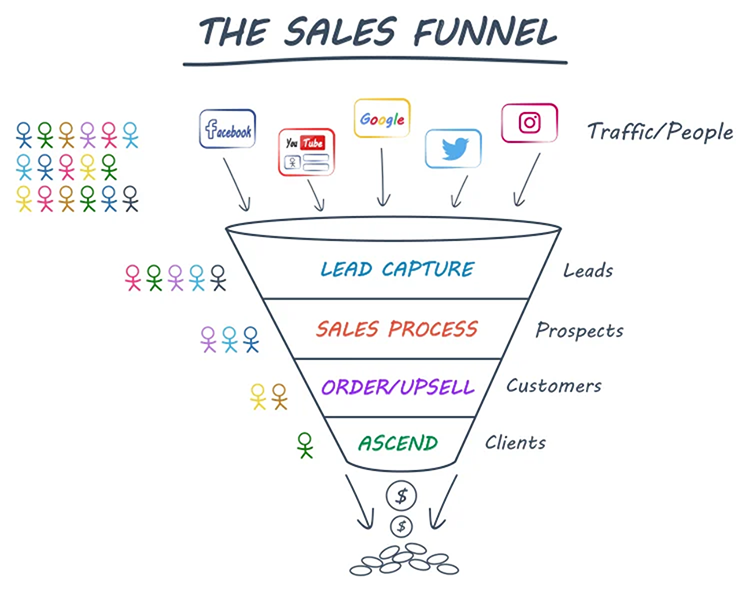
5 Easy Marketing Strategies For New Entrepreneurs

Software Stack Editor · July 9, 2024 ·

The post 5 Easy Marketing Strategies For New Entrepreneurs appeared first on ClickFunnels.
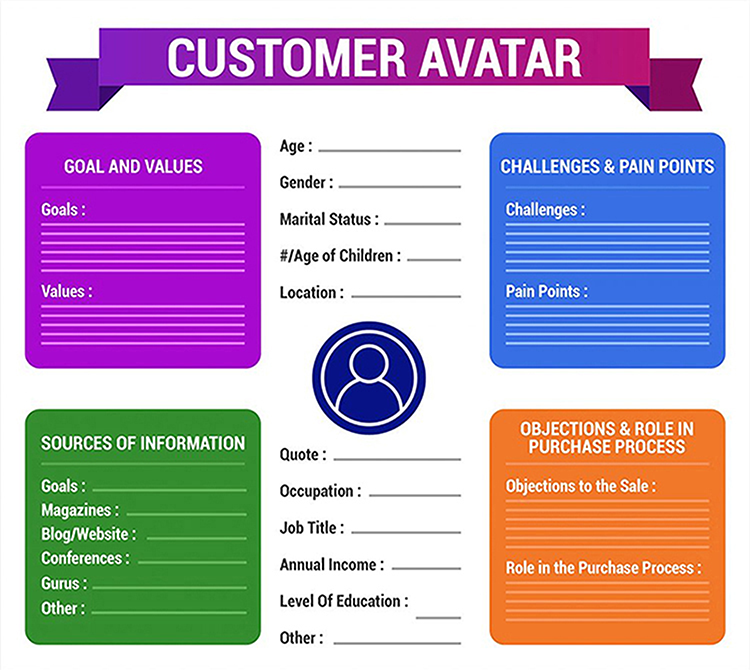
Wondering what is the best way to get your business off the ground?

Today we are going to share the top five marketing strategies for new entrepreneurs!

Table of Contents:
  • Marketing Strategy #1: Cold Email
  • Marketing Strategy #2: Social Media Marketing
  • Marketing Strategy #3: Email Marketing
  • Marketing Strategy #4: Video Marketing
  • Marketing Strategy #5: Paid Advertising

Marketing Strategy #1: Cold Email

Illustration of a laptop with an envelope icon on the screen, accompanied by a document and graphs, set against a blue background with clouds.

What is Cold Email?

Cold email is the practice of manually reaching out to potential customers via email to let them know about your product or service.

How to Use Cold Email to Grow Your Business

When it comes to cold email, one of the best resources out there is “The Cold Email Manifesto” by Alex Berman and Robert Indries.

We highly recommend reading the entire book but here’s a quick overview of the approach that the authors recommend:

  1. Register a new domain name that is similar to your main domain name and create a new email account associated with it.
  2. Use an email warm-up tool like Lemwarm to “warm up” your new email account by simulating back-and-forth messaging.
  3. Create a lead spreadsheet. You can compile it yourself but it probably makes more sense to pay someone on Fiverr to do it for you.
  4. Use proven cold email templates. The authors share their own templates in the book but we also recommend checking out Justin McGill’s templates that he used to grow his company from zero to $30k in recurring monthly revenue in just one year.
  5. Start with just 10 cold emails per day and then gradually increase that number until you are sending 100 cold emails per day. You can track it all in your lead spreadsheet but it probably makes more sense to invest in software that was designed for that such as Lemlist.

Once you get good at cold outreach, you should be able to schedule 10 discovery calls and close 1 sale for every 100 cold emails that you send.

What are the Advantages of Using Cold Email?

Cold email is super affordable.

It’s also relatively easy to master because you already know how to send emails, all you need to do is figure out how to get the attention of potential customers. 

Finally, it’s the fastest way to get paying customers if you can’t afford to spend money on marketing.

What are the Disadvantages of Using Cold Email?

Cold email is extremely time-consuming: sending 100 personalized emails will probably take you at least four hours. Assuming a 5-day workweek, that’s 20 hours spent on cold outreach alone.

Moreover, cold email is hard to scale. 100 cold emails per day is probably the upper limit of how many messages you can send per day without crossing into the spam territory. Some email service providers might start flagging your emails as spam way before that.

Keep in mind that while cold email is legal in most jurisdictions, spam is illegal in a lot of them, including the United States where each separate email is in violation of the CAN-SPAM and can result in penalties of up to $51,744.

Summary

Cold email is super affordable and relatively easy to master but it requires a ton of time and is hard to scale.

Consequently, this marketing strategy makes the most sense for new entrepreneurs who don’t have much money but do have a lot of free time, especially if they need to start generating revenue ASAP to pay the bills.

Marketing Strategy #2: Social Media Marketing

A smartphone surrounded by various app icons including social media, messaging, email, and multimedia, representing digital communication and online interaction.

What is Social Media Marketing?

Social media marketing is the practice of building a social media following and then leveraging it to sell your products and services.

How to Use Social Media Marketing to Grow Your Business

Here’s the approach that we recommend:

  1. Choose a social media platform that makes the most sense for your business.
  2. Create a content calendar that you can keep up with indefinitely. When it comes to content creation, quality is more important than quantity. The ideal publishing frequency varies from platform to platform but you should probably post at least one new piece of content every day. 
  3. Set aside time every month for batch-creating social media content for the next month. You can use AI tools like Jasper and Firefly to speed up the process. 
  4. Once you have the social media content for the next month, schedule it using tools like Buffer, MeetEdgar, or Flick.
  5. Set aside time every day for replying to comments. If you reply to each comment that you get, that will not only increase the engagement for that particular piece of content but also incentivize your followers to comment on your posts in the future.
  6. Set aside time every day for networking with other people in your niche. Share their content if you believe that it can benefit your followers, leave thoughtful comments under their posts, and eventually reach out to them via DMs to establish a more personal connection.
  7. Put a link to your lead magnet landing page in your bio with a one-sentence call to action. You don’t need to promote your free offer directly. Instead, simply focus on consistently publishing high-quality content. People who find your content valuable will probably decide to check out your lead magnet eventually. 

Consider watching this video if you want to learn more about building an audience on social media:

What are the Advantages of Using Social Media Marketing to Grow Your Business?

Social media marketing is free: no matter how broke you are, you can create a social media profile and start posting.

Also, if you focus on consistently publishing high-quality content and interacting with your followers, the algorithm will give you more and more exposure as time goes on because social media algorithms are designed to maximize engagement.

What are the Disadvantages of Using Social Media Marketing to Grow Your Business?

Building a social media following takes time.

You can probably do it in 2-3 years if you remain consistent. 

However, that first year can be pretty brutal. It’s challenging to stay optimistic when you have been posting high-quality content every day for several months but only managed to gain 136 followers. That’s why most people give up!

Summary

Social media marketing is super affordable, relatively easy to master, and doesn’t require that much time but you will need to consistently post high-quality content for several years in order to build a following.

Consequently, this marketing strategy makes the most sense for new entrepreneurs who have a job that pays the bills and some spare time that they can dedicate to growing their social media presence.

Marketing Strategy #3: Email Marketing

Illustration of a laptop displaying an envelope icon with surrounding icons representing notifications, financial transactions, and user profiles.

What is Email Marketing?

Email marketing is the practice of building an email list and then leveraging it to sell your products and services. 

How to Use Email Marketing to Grow Your Business

Here’s the approach we recommend:

  1. Come up with a concept for a weekly email newsletter. It should be something that your target audience would find interesting.
  2. Choose email marketing software for your weekly email newsletter. ConvertKit, Ghost, and Substack are all great options.
  3. Create a landing page for your weekly email newsletter. Carrd is a solid and affordable option.
  4. Set up a confirmation and deliverability welcome email where you confirm the subscription and tell the new subscriber what they should expect next.
  5. Set aside time every week to prepare the next newsletter issue. You don’t want to do this last minute so make sure that it’s ready to go at least one day in advance. 
  6. Leverage your social media following by promoting your newsletter in your bio and sharing a sneak peek of each issue one day before you send it out. 
  7. Focus on consistency. Your goal should be to never skip a single newsletter issue no matter what.
  8. Promote your products and services in the “P.S.” section of your newsletter. If you have a special announcement, you can make it in the body copy but that should be a once-in-a-blue-moon type of thing, not a weekly occurrence.

Consider watching this video if you want to learn more about building an email newsletter:

What are the Advantages of Using Email Marketing to Grow Your Business?

We would argue that email marketing is the best way to decrease your customer acquisition cost (CAC), increase customer lifetime value (LTV), and improve your profit margins.

What are the Disadvantages of Using Email Marketing to Grow Your Business?

You will need a marketing strategy for the newsletter itself. How do you intend to promote it?

Also, remember how we said that the first year on social media can be brutal due to extremely slow growth?

Well, it’s much easier to grow a social media following than it is to grow an email list so that’s something to keep in mind!

Summary

Email marketing is affordable, doesn’t take that much time, and is relatively easy to master but in order to grow your email list you will need a way to promote your newsletter.

Also, it will probably take you a few years to get to the point where your email list is large enough to generate substantial revenue.

Consequently, this marketing strategy makes the most sense for new entrepreneurs who have a job that pays the bills, some spare time to dedicate to their newsletter, and a marketing channel that they can use to promote it.

Generally speaking, if you are starting completely from scratch, it’s probably best to build a social media following first and then leverage it to launch a weekly newsletter!

Marketing Strategy #4: Video Marketing

What is Video Marketing?

Video marketing is the practice of using video content to build a following on platforms like YouTube and TikTok and then leveraging it to sell your products and services. 

How to Use Video Marketing to Grow Your Business

Here’s the approach we recommend:

  1. Take a look at the popular YouTube channels in your niche. What are their strengths and weaknesses? You want to find a way to bring something unique to the table.
  2. Invest in filming equipment. You can get away with shooting videos with your smartphone but a high-quality microphone is an absolute must. Also, get some camera lights because proper lighting makes a huge difference when it comes to production quality. 
  3. Invest in video editing software. We recommend going with AI tools like Descript and Opus Clip if you don’t have any prior video editing experience.
  4. Invest in an AI text-to-image generator. You are going to use it to create video thumbnails. We recommend Adobe Firefly
  5. Create a content schedule that you can keep up with indefinitely. Ideally, you want to post one video per week, on the same day every week.
  6. Set aside time for creating video content every week. Keep in mind that if you have never made videos before, you are probably severely underestimating how time-consuming it is. 
  7. Make sure to target a popular keyword with each video. You can find popular keywords by typing a generic keyword related to your niche into the YouTube search and looking at the search suggestions that come up.
  8. Do competitive research for your target keyword. Watch the top 3-5 videos that are ranking for it and read the comments. You want to find a way to make your video better.
  9. Shoot the video. Make sure to end each video with a call to action encouraging the viewer to check out your lead magnet or subscribe to your weekly email newsletter. 
  10. Edit the video with AI video editing software and create a thumbnail for it with an AI text-to-image generator. Ideally, your thumbnails should have a consistent aesthetic so that your subscribers would immediately recognize your videos in their subscription feeds.
  11. Upload the video. Don’t forget to take care of the boring technical stuff like adding tags.
  12. Publish the video. You want to reply to every comment that you get. This will help you create engagement. 
  13. Use Opus Clip to repurpose your video into short clips. Upload them to YouTube and TikTok. 
  14. Promote your new video on social media and in your weekly email newsletter!

Consider watching this video if you want to learn more about starting a YouTube channel:

What are the Advantages of Using Video Marketing to Grow Your Business?

It’s becoming clear that video is the preferred medium for people all around the world so we can probably safely assume that its relevance is only going to increase in the foreseeable future.

What are the Disadvantages of Using Video Marketing to Grow Your Business?

It will likely take you at least 2-3 years to amass a substantial following on YouTube.

Moreover, you are probably severely underestimating the amount of time, energy, and money required to build a popular YouTube channel!

Summary

Video marketing can enable you to capitalize on the ever-increasing popularity of this medium.

However, building a YouTube channel is not just a long-term project but also a resource-intensive endeavor.

Consequently, this marketing strategy makes the most sense for new entrepreneurs who have a job that pays the bills and are willing to invest a ton of time, energy and money in their YouTube channel.

Marketing Strategy #5: Paid Advertising

Illustration of a laptop showing graphs and data charts, surrounded by figures engaging with advertisements and currency symbols, set against a blue background.

What is Paid Advertising?

Paid advertising is the practice of promoting your offers with paid ads. In the online marketing context, that typically means running ads on Google Search and various social media platforms. 

How to Use Paid Advertising to Grow Your Business

Here’s what we recommend:

  1. Build a sales funnel for your business.
  2. Choose one social media platform to advertise on.
  3. Create an ad campaign designed to promote your lead magnet.
  4. Start running that ad campaign with a small daily budget.
  5. Optimize the campaign with split testing (also known as A/B testing). 
  6. Once you figure out how to run that campaign profitably, begin gradually increasing your daily budget. 
  7. Continue gradually increasing your campaign’s daily budget until you reach the point where you cannot scale it anymore.
  8. Once you have mastered paid advertising on one social media platform, you can start expanding to other platforms.

So to reiterate, you want to use paid advertising to drive traffic to your lead magnet landing page, not to the sales pages of your products and services. You can learn more about the reasoning behind this approach in our guide to customer acquisition. 

Also, if you want to learn how to run ads on your platform of choice, there are a lot of free videos on YouTube but we recommend waiting for the next Udemy’s sale and buying a course that has the best reviews. That should cost you around $10-$20.

What are the Advantages of Using Paid Advertising to Grow Your Business?

The main advantage of paid advertising is speed: it enables you to get traffic immediately, assuming that people click on your ads. 

Another advantage is targeting. Social media platforms have not just massive user bases but also incredible targeting functionalities. That enables you to reach potential customers regardless of who your target audience is.

Finally, there’s scalability. Ad campaigns are relatively easy to scale as long as you have the money for it. Want to double your sales? Simply double your ad spend!

Of course, at some point, this linear relationship is going to break down, but you can get pretty far by just throwing more money at a profitable ad campaign. 

What are the Disadvantages of Using Paid Advertising to Grow Your Business?

Paid advertising has a steep learning curve so you need to be okay with burning money until you get the hang of it. And that might take a while.

Also, if you want to use paid advertising to grow your business, you need to make sure that your math is on point. Otherwise, you might find yourself in the red really fast.

The most important number that you need to pay attention to is the customer acquisition cost (CAC) to customer lifetime value (LTV) ratio.

Consider watching this video if you want to learn more about the CAC: LTV metric:

Summary

Paid advertising can be a great way to get your business off the ground quickly but you need to know what you’re doing and have the budget for it.

Consequently, this marketing strategy makes the most sense for new entrepreneurs who have a lucrative job, want to invest some of that money into growing their side hustle, and don’t mind burning cash in order to learn how to run ads.

Want to Learn How to Drive TARGETED TRAFFIC to Your Website and Sales Funnels?

Our co-founder Russell Brunson used sales funnels to take ClickFunnels from zero to $100M+ in annual revenue in less than a decade.

Needless to say, he had to drive a TON of targeted traffic to those sales funnels in order to achieve that.

In his best-selling book “Traffic Secrets”, he shares proven marketing strategies that YOU can use to drive targeted traffic to YOUR website and sales funnels.

In this book, you’ll learn how to:

  • Find your dream customers online
  • Tap into other people’s distribution channels
  • Build an army of affiliates that will sell your product for you

…and so much more!

“Traffic Secrets” is available on Amazon where it has over 2,500 global ratings and a 4.7-star overall rating.

But you can also get it directly from us for free… 

All we ask is that you pay for shipping!

So what are you waiting for? 🧐

Get “Traffic Secrets” For FREE!

Thanks for reading 5 Easy Marketing Strategies For New Entrepreneurs which appeared first on ClickFunnels.
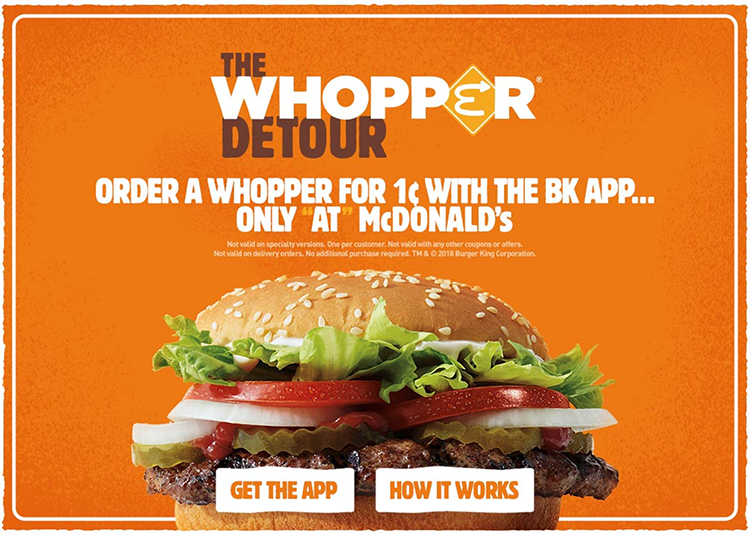
Our Top Selling Marketplace Funnels!

Software Stack Editor · July 4, 2024 ·

The post Our Top Selling Marketplace Funnels! appeared first on ClickFunnels.

Did you know that you can buy ready-made funnels on the ClickFunnels Marketplace?

Today we are going to explain how the ClickFunnels Marketplace works and show you its top-selling funnels!

Table of Contents:
  • Making Money Online is Easier Than You Think!
  • What is a Sales Funnel?
  • What is ClickFunnels 2.0?
  • What is the ClickFunnels Marketplace?
  • The Top 10 Bestselling Marketplace Funnels
    • #1: Real Estate Lead Generation Funnel
    • #2: Perfect Webinar Funnel
    • #3: Consultant/Coach/Speaker Hero Funnel
    • #4: Local Coffee Shop Website Template + Homepage Funnel
    • #5: Real Estate Lead Generation Funnel
    • #6: Website Template + Optin Funnel
    • #7: Online Course Membership Funnel
    • #8: Ecommerce Funnel
    • #9: Free Plus Shipping Tripwire Funnel
    • #10: Marketing Agency Application Funnel
  • Bonus: FREE Marketplace Funnels!
    • #1: Bridge Funnel (Breeze Theme)
    • #2: Product Launch Funnel (Rosie Theme)
    • #3: Sales Letter Funnel (Institute Theme)
  • Try ClickFunnels 2.0 Risk-Free!

Making Money Online is Easier Than You Think!

We have noticed that aspiring entrepreneurs who dream about making money online tend to overcomplicate it in their minds.

But in reality, this is all you need to start generating revenue:

  1. A product or service
  2. A sales funnel designed to sell that product or service
  3. A way to drive traffic to that sales funnel

That’s all there is to getting your business off the ground. You can start it as a side hustle and eventually scale it to full-time income. Pretty much anyone can make it work with some trial and error!

What is a Sales Funnel?

A sales funnel is a system designed to convert potential customers into leads, leads into customers and customers into repeat customers.

Here at ClickFunnels, we believe that the Value Ladder sales funnel is the most effective one.

Here’s how it works:

Diagram illustrating the Value Ladder sales funnel with stages: Frontend (least expensive product), Bait (lead magnet), Middle, and Backend (most expensive product). Recurring revenue is emphasized.

This sales funnel was created by our co-founder Russell Brunson.

We know that it works because that’s what we used to grow our company from zero to $100M+ in annual revenue. Plus, we have seen thousands upon thousands of ClickFunnels users successfully implement it in their own businesses!

If you want to learn more about the Value Ladder sales funnel, we recommend reading Russell’s best-selling book on the subject, “DotCom Secrets”. 

You can get it directly from us for FREE!

What is ClickFunnels 2.0?

Promotional webpage for ClickFunnels, offering a free trial to help convert website visitors into paying customers. Includes benefits such as zero computer skills needed and applicability to every type of business.

ClickFunnels 2.0 is an all-in-one marketing platform that has everything you need to launch, manage and grow an online business, including:

  • An AI sales funnel builder
  • High-converting funnel templates
  • A visual drag-and-drop page editor
  • A website builder and website templates
  • An e-commerce store builder and e-commerce store templates
  • An online course builder and online course templates
  • A membership site builder and a membership site management functionality
  • A customer relationship management (CRM) system
  • An email marketing functionality
  • An A/B testing functionality
  • Advanced business analytics

Our goal was to create software that business owners could use throughout their entire entrepreneurial journeys, from making their first dollar online to crossing seven figures in revenue and beyond.

We believe that we succeeded because our users range from people who are just starting out to seasoned entrepreneurs who have generated $10M+ in revenue within the sales funnels that they built with our app!

What is the ClickFunnels Marketplace?

The ClickFunnels Marketplace is a platform where you can buy ready-made funnel templates and hire experts to create custom funnels for you.

For example, let’s say that you wrote an eBook.

You know that you need to build a sales funnel for it but you have never built one before so you feel overwhelmed. Well, guess what?

You can go to the ClickFunnels Marketplace and purchase a funnel template that was specifically designed for selling eBooks.

Then, you can import that funnel template into your ClickFunnels account, customize it with our drag-and-drop page editor, and set up an email sequence designed to sell your eBook. Once that’s done, it’s time to publish your funnel and start driving traffic to it!

ClickFunnels Marketplace offers funnel templates for all kinds of businesses. You can find templates for authors, personal trainers, coaches, consultants, coffee shops beauty salons, real estate agencies, digital marketing agencies, e-commerce stores, software companies, info product companies, you name it.

This means that you can probably find a funnel designed specifically for the type of business that you have!

The Top 10 Bestselling Marketplace Funnels

#1: Real Estate Lead Generation Funnel

Screenshot of a webpage showing a real estate listing lead generation funnel and bonuses for sale at $47 by Primo Funnels on Clickfunnels. The page includes images of real estate website templates.

This package includes:

  • A 3-page lead generation funnel
  • Four additional page templates for the About Us, Contact, Privacy Policy, and Terms of Service pages
  • Video with customization instructions
  • Custom CSS

Buy the Real Estate Lead Generation Funnel!

#2: Perfect Webinar Funnel

This package includes:

  • Russell’s famous 3-page webinar funnel. It has probably made him more money than any other funnel!
  • Several email sequences were designed to convert the webinar attendees into paying customers.

Buy the Perfect Webinar Funnel!

#3: Consultant/Coach/Speaker Hero Funnel

Screenshot of a webpage promoting a consultant, coach, and speaker funnel product with an advertised 48.3% opt-in rate for $147, showcasing images of the consultant, product features, and testimonials.

This package includes:

  • A 3-page hero funnel
  • Several email sequences designed to convert leads into paying customers
  • A quick set-up guide with video tutorials

Buy the Consultant/Coach/Speaker Hero Funnel!

#4: Local Coffee Shop Website Template + Homepage Funnel

This package includes:

  • A one-page template for a local coffee shop website
  • A homepage funnel

Buy the Local Coffee Shop Website Template + Homepage Funnel!

#5: Real Estate Lead Generation Funnel

This package includes:

  • A 2-page lead generation funnel for real estate businesses

Buy the Real Estate Lead Generation Funnel!

#6: Website Template + Optin Funnel

This package includes:

  • A 5-page website template
  • An opt-in funnel template

Buy the Website Template + Optin Funnel!

#7: Online Course Membership Funnel

This package includes:

  • A 4-page online course membership funnel
  • A conversion-boosting email sequence
  • An abandoned cart email sequence
  • A win-back email sequence
  • A set-up guide with video tutorials

Buy the Online Course Membership Funnel!

#8: Ecommerce Funnel

This package includes:

  • A 3-page ecommerce funnel
  • An abandoned cart email sequence
  • An upsell email sequence

Buy the Ecommerce Funnel!

#9: Free Plus Shipping Tripwire Funnel

A screenshot of a sales page on ClickFunnels promoting a free product with shipping, bonus email sequences, and a 2-step tripwire funnel, priced at $147. Includes options to buy the template.

This package includes:

  • A 4-page free + shipping tripwire funnel
  • A conversion-boosting email sequence
  • A regular cart abandonment email sequence
  • An upsell cart abandonment email sequence
  • A set-up guide with video tutorials

Buy the Free + Shipping Tripwire Funnel!

#10: Marketing Agency Application Funnel

This package includes:

  • A 4-page application funnel
  • A conversion-boosting email sequence
  • A set-up guide with video tutorials

Buy the Marketing Agency Application Funnel!

Bonus: FREE Marketplace Funnels!

If you are just starting out and the money is tight, you may be hesitant to invest in a premium funnel template. No problem!

Our marketplace offers a bunch of free templates as well. Here are the three most popular ones:

#1: Bridge Funnel (Breeze Theme)

This package includes:

  • A 2-page bridge funnel

Get This Bridge Funnel for FREE!

#2: Product Launch Funnel (Rosie Theme)

This package includes:

  •  A 4-page product launch funnel

Get This Product Launch Funnel for FREE!

#3: Sales Letter Funnel (Institute Theme)

This package includes:

  • A 4-page sales letter funnel

Get This Sales Letter Funnel for FREE!

Try ClickFunnels 2.0 Risk-Free!

Let’s be real:

We are biased in favor of our software.

So we understand if you take what we say about it with a grain of salt.

Fortunately, we have a free 14-day trial, so you don’t have to take our word for it.

You can go and see ClickFunnels 2.0 for yourself without any risk!

So what are you waiting for? 🧐

Start Your Free Trial Today

Thanks for reading Our Top Selling Marketplace Funnels! which appeared first on ClickFunnels.
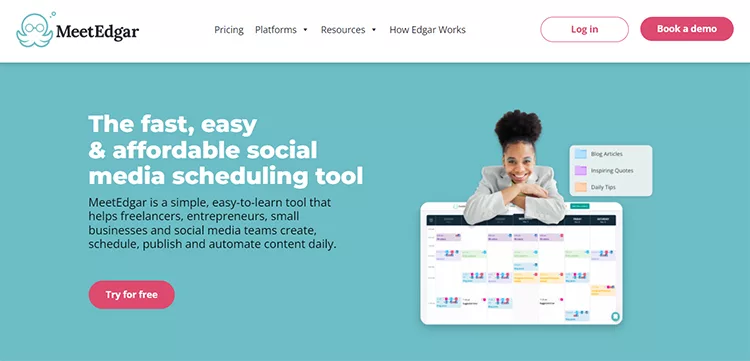
  • « Go to Previous Page
  • Page 1
  • Interim pages omitted …
  • Page 6
  • Page 7
  • Page 8
  • Page 9
  • Page 10
  • Page 11
  • Go to Next Page »

Get your Software Stack together. softwarestack.tech
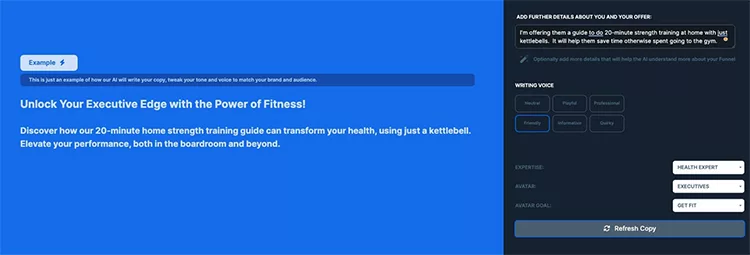
Software Stack

© 2024–2025 - Software Stack is a trading name of SouthwestCIO Limited ac ompany registered in England & Wales 11319049

  • Knowledgebase
  • Home
  • About Us
  • Contact Us