• Skip to primary navigation
  • Skip to main content
software stack logo

Software Stack

Get your Software Stack together

  • Knowledgebase
    • All Categories
    • Accounting Software
    • Automation & Workflow Software
    • Customer Relationship Management
    • E-Commerce Shopfronts & Payments
    • Marketing Automation
    • Online Courses & Membership
    • Project Management
    • Surveys & Forms
    • Web Hosting
  • Home
  • About Us
  • Contact Us
  • Show Search
Hide Search

Clickfunnels

Tips To Tackle Common Startup Problems

Software Stack Editor · October 15, 2024 ·

The post Tips To Tackle Common Startup Problems appeared first on ClickFunnels.

Entrepreneurship has become so glamorized in our culture that it’s easy to underestimate just how hard it is to get a startup off the ground.

We are constantly bombarded with success stories of founders who have made millions – or, in some cases, billions – of dollars with their startups.

It’s important to remember survivorship bias here: if we only look at the successes without also looking at the failures, we will develop an inaccurate perception of reality. And the reality is that 90% of startups fail.

However, if your dream is to build a successful startup, you shouldn’t let that statistic demoralize you. It’s not something that is completely outside of your control like winning a lottery.

In the world of entrepreneurship, your behavior has a significant impact on your outcomes. You can increase your odds of success by taking the right actions.

That’s why today we want to share the seven key strategies that can help you overcome common startup challenges…

Table of Contents:
  • Strategy #1: Bootstrap Instead of Seeking Funding
  • Strategy #2: Focus on Something That Already Has Proven Demand
  • Strategy #3: Sell Painkillers, Not Vitamins
  • Strategy #4: Understand That the Only Way to Validate Your Product is to Build it and Charge for it
  • Strategy #5: Build MVPs as Fast as You Can
  • Strategy #6: Get Your First Users With Cold Outreach
  • Strategy #7: Build a Sales Funnel for Your Product

Strategy #1: Bootstrap Instead of Seeking Funding

VC-funded startups that are coming out of Silicon Valley get the most media attention so it’s understandable if you believe that the only way to succeed is to get funding.

However, we encourage you to examine that assumption. There’s an entire subculture of software entrepreneurs who are bootstrapping their startups without bringing in outside investors.

These software entrepreneurs call themselves “indie hackers”, have an ethos of scrappiness, and aim to build self-sustaining, profitable businesses.

Typically, indie hackers either have regular jobs and build their startups as side hustles or save up money from their salaries and then use it as a “runway” to focus on their startups full-time.

There’s also a huge overlap between the indie hacker subculture and the digital nomad subculture: indie hackers often move to low-cost-of-living countries in order to extend their runways.

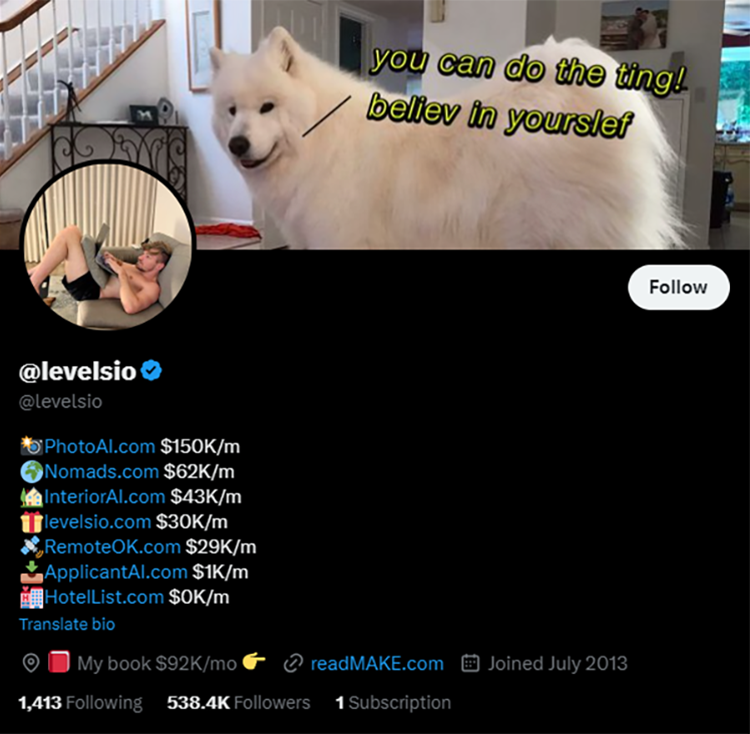
The most successful entrepreneur in that scene is undeniably Pieter Levels. At the time of writing, he’s generating over $350k/month in revenue. That’s more than $4.2M per year!

Levels is an extreme outlier but there are plenty of indie hackers out there who are making six figures with their bootstrapped startups.

Of course, survivorship bias applies here as well. If you start following the indie hacker scene on Twitter, seeing all those success stories can make you believe that everyone except you is making tons of money with apps that they built over the weekend.

That’s why it’s important to temper your expectations. “Ask HN: Starting a business is way harder than Twitter-bros claim. Any advice?” post on Hacker News is probably more representative of the average aspiring software entrepreneur experience than what you see on Twitter.

Also, some people who pursue this dream develop severe mental health problems and burnout.

You might want to read “I am done. I give up” on Hacker News. This post was written by an aspiring entrepreneur who gave up after three failed attempts at building a startup and spending some time institutionalized.

All that being said, the indie hacker approach is the least risky way to build software startups. If that’s what you want to do, it might make sense to explore this path instead of seeking funding.

Of course, if you have an idea for a hardware startup or a biotech startup, then it’s an entirely different situation. It might not be possible to build it without raising capital. You will need to seek funding in that case.

Strategy #2: Focus on Something That Already Has Proven Demand

The startup world is obsessed with “innovation”, “disruption” and “going from zero to one”. But we would argue that it’s leading aspiring entrepreneurs astray.

If you already have a big idea that you want to pursue and you know that you will regret it if you don’t, then by all means do that if you are willing to take on the associated risks. Who are we to tell you that you shouldn’t?

But if you want to build a sustainable business in order to create a better life for yourself and your loved ones, innovation is not the best path towards realizing that dream.

You’ll have much higher odds of success if you take something that already has proven demand and figure out how to make it better.

For example, when Nathan Barry launched ConvertKit back in 2013, there were plenty of email marketing apps already.

However, the big players in that space like MailChimp and Aweber were offering generic solutions. They were okay tools that got the job done but left much to be desired when it came to specific use cases.

That’s where Barry saw an opportunity. As a blogger, he knew what the popular email marketing apps lacked for that particular use case, so he decided to focus on making ConvertKit the best email marketing tool for bloggers. Over time, he expanded his target audience to all kinds of online creators.

Now, more than a decade later, his company is generating eight figures. At the time of writing, its monthly recurring revenue is $3.5M+, which adds up to $42M+ in annual recurring revenue.

We recommend following a similar strategy: pick something that has proven demand, niche down to a specific, clearly-defined demographic, and then focus on creating the best product for that particular use case. You can always expand your target audience later if there’s a need for that!

Strategy #3: Sell Painkillers, Not Vitamins

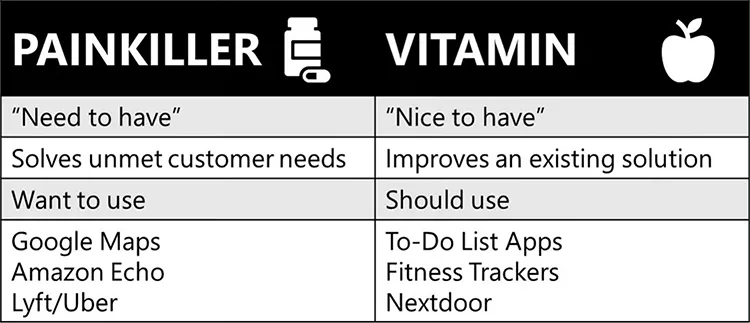
Marc Louvion, an indie hacker who makes nearly $60k/month with his apps at the time of writing, explained the difference between “painkiller” products and “vitamin” products on his blog.

He shared that once he spent an entire year working on a gamified habit tracker called Habits Garden. Despite having 10,000 accounts and a ton of happy users, this app was making less than $400/month.

Meanwhile, one of his other products, his now-discontinued escape room marketing tool called VirallyBot, was making $600/month, despite the fact that at the time, Louvion hadn’t touched it for several years.

According to him, the key difference between these two apps was this:

  •  VirallyBot was a must-have “painkiller” product that addressed a painful problem (escape rooms need marketing).
  • Habit Garden was a nice-to-have “vitamin” product (it’s cool to track habits). 

He argued that if you want to reach profitability faster, you should focus on building painkiller products instead of vitamin ones!
Strategy #4: Understand That the Only Way to Validate Your Product is to Build it and Charge for it

Dan Norris’ article “Is Startup Validation Bullshit?” is well worth a read.

In that article, Norris questioned some of the approaches to idea validation that were popular at the time when it was published.

He also shared his experiences with his app Informly and what he learned from them.

Here are some of the key takeaways:

  • People saying that they like your idea doesn’t mean that it’s a good idea. Dan got a ton of positive feedback from those around him.
  • Thought leaders saying that they like your idea doesn’t mean that it’s a good idea. Dan got positive feedback from a famous venture capitalist.
  • Building a pre-launch email list doesn’t mean that it’s a good idea. Dan had a pre-launch email list with more than 1,000 subscribers.
  • Getting free users doesn’t mean that it’s a good idea. Informly had 4,000+ free users but only 15 of them converted into paying customers.
  • Favorable media coverage doesn’t mean that it’s a good idea. Informly was covered by several popular tech websites, including Mashable and The Next Web.

At the time, everything was seemingly indicating that Informly was destined to be a success but it still failed despite all that.

In our view, the most important lesson here is that ultimately, the only product validation that counts is people paying for your product and using it!

Strategy #5: Build MVPs as Fast as You Can

The concept of a minimum viable product (MVP) was popularized by Eric Ries in his 2011 book “The Lean Startup”.

An MVP is supposed to be the minimum viable version of your product that only has the core functionality needed to provide value to the user.

One of the most notable differences between how VC-funded entrepreneurs approach creating software and how indie hackers approach it is the speed at which they build MVPs.

VC-funded entrepreneurs tend to take months to launch their MVPs while indie hackers do it in weeks, days, and in some cases, hours.

For example, once Nico Jeannen saw a tweet where someone said that they would pay for an app that allowed them to enhance the picture quality of old photos.

Jeannen already knew how to do it because he had previously edited old photos for his mom using AI. So he decided to build an MVP for an AI photo editing app.

He saw that tweet early in the morning and challenged himself to launch an MVP by 7 PM because he already had plans for that evening. Guess what?

He started working on it at 7.45 AM and managed to not only launch PhotoRestore but also make the first sale by 1.40 PM!
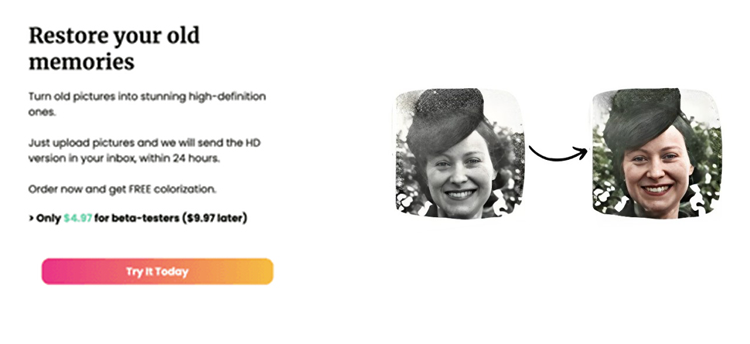
Ad for a photo restoration service showing a comparison of an old black and white photo and its restored color version, with pricing details for early access.

Jeannen’s MVP was a landing page advertising a photo editing service where he would edit the customers’ photos himself and send them the HD version within 24 hours.

He intended to turn PhotoRestore into a software product if he saw enough demand for it. In around two weeks, this service made $39.78. It has since been discontinued.
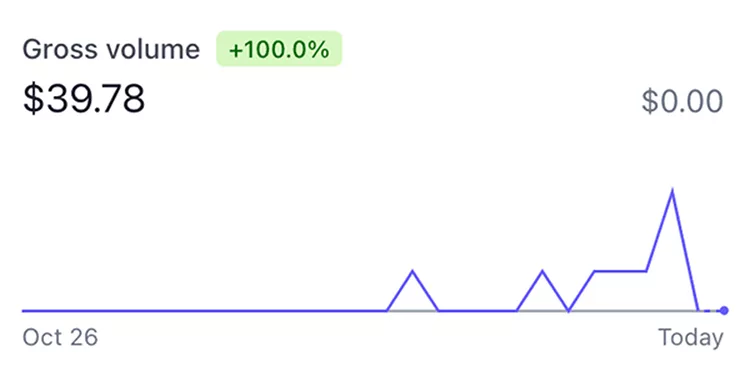
Line graph showing a gross volume of $39.78 from October 26 to today, with a 100% increase. Peaks and troughs lead to a final value of $0.00.

While PhotoRestore did not become a success, it’s a great example of how indie hackers build and launch MVPs at breakneck speed.

The reasoning behind it is simple: if you keep building products, eventually some of them will take off.

This approach does seem to work:

  • Pieter Levels built 70+ products in the last decade
  • Marc Louvion built 23 products in the last few years
  • Nico Jeannen built 17 products in just one year

We should once again remember survivorship bias here. There probably are quite a few people out there who built a bunch of products in a short period of time and still failed.

However, if you want to make it as an indie hacker, this seems to be the best way to go about it. Luck is an important factor and the more times you roll the dice, the more likely you will be to succeed!

Strategy #6: Get Your First Users With Cold Outreach

The greatest challenge for any new startup is customer acquisition. So how can you get your first users?

We would argue that the best way to do that is cold outreach:

Cold Calls

If your startup is in the B2B space, cold calling probably makes the most sense.

Go on Fiverr, find a lead generation expert, and ask them to compile a list of 100 leads based on your criteria (industry, company size, annual revenue, etc.)

That list should include the phone number and the email address of each company’s founder or CEO.

(Unless you want to target a different decision-maker. For example, if you are selling something super technical, it might make more sense to cold-call the CTO).

Once you have your lead list, start calling the decision-makers. You can use this cold calling framework:

It’s impossible to predict what your conversion rates are going to be but a good initial target that you can aim for is 1 sale for every 100 cold calls!

Cold Email

Cold email can be another great way to acquire customers in the early stages.

For example, Justin McGill used cold email to grow his startup LeadFuze from zero to $30k in annual revenue in one year.

His cold email template was based on a “QVC” formula:

  1. Question – Lead with a question that is somehow related to your business.
  2. Value proposition – Explain how your product can help make their lives better. What’s in it for them?
  3. Call to action – Ask them if they would be interested in seeing a product demo.

Here’s a sample cold email that follows this formula:
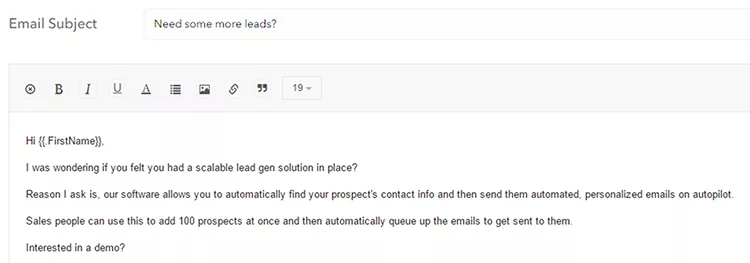
Screenshot of an email draft offering a lead generation solution with automated, personalized emails. The draft includes an invitation for a demo.

A few days after that initial cold email, McGill would follow up and then continue following up once a week until he got a yes or no answer.

It’s worth noting that he would add this P.S. section to all his emails to provide the prospect with a way to opt out:

Cold Social Media DMs

All major social media platforms allow their users to send direct messages to other users, which means that you can also do cold outreach via social media DMs.

That being said, you’ll probably have more success if you use social media marketing to build a following and then DM people who already know who you are.

Strategy #7: Build a Sales Funnel for Your Product

Our co-founders Russell Brunson and Todd Dickerson launched ClickFunnels back in 2013.

In just five years, they bootstrapped their software startup to $100M+ in annual revenue. So how did they do it?

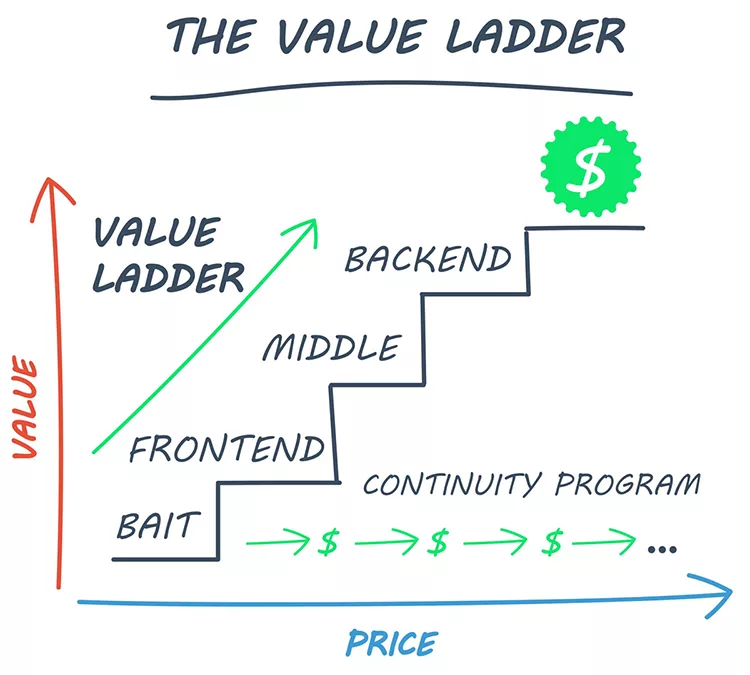
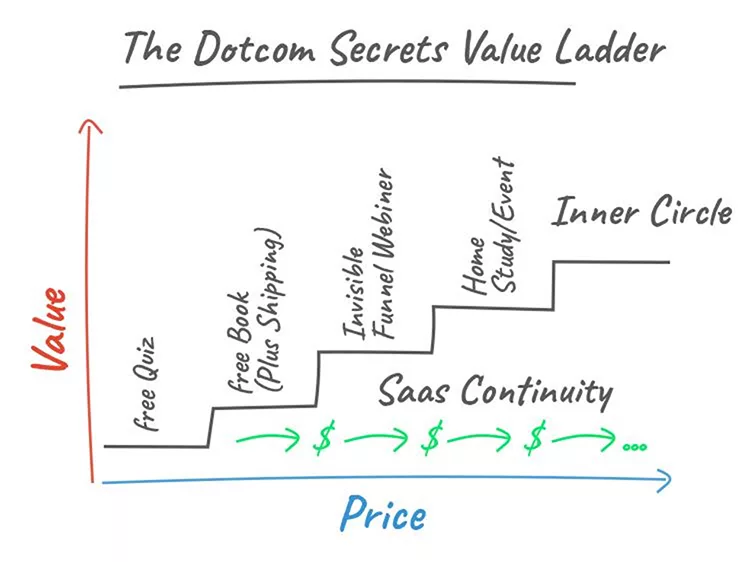
Their secret was the Value Ladder sales funnel that was developed by Russell:
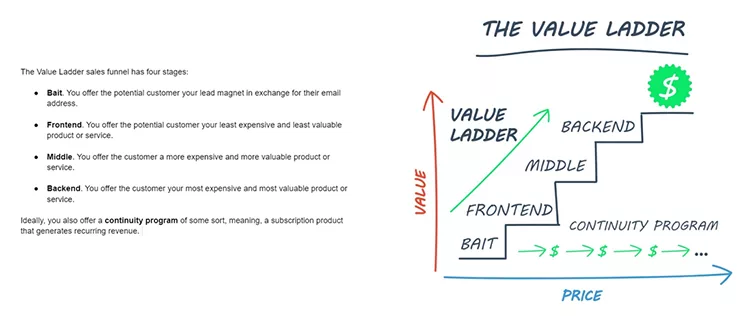
Diagram of a value ladder showing four stages: Bait, Frontend, Middle, Backend. Arrows indicate increasing value and price. Continuity program is suggested for recurring revenue.

If you have already validated your product idea by getting your first customers, we recommend building a Value Ladder sales funnel for your business.

We believe that this is the best way to sell software. It can help you grow your startup faster than you ever thought possible!

Want to Learn How to Build Sales Funnels That CONVERT?

Our co-founder Russell Brunson used sales funnels to take ClickFunnels from zero to $100M+ in annual revenue in just five years.

He is now widely considered to be one of the top sales funnel experts in the world. Want to learn from him?

His best-selling book “DotCom Secrets” is the best place to start because it covers everything you need to know in order to build sales funnels that convert.

This book is available on Amazon where it has over 2,500 global ratings and a 4.7-star overall rating.

But you can also get it directly from us for free…

All we ask is that you pay for shipping!

So what are you waiting for? 🧐

Get “DotCom Secrets” for FREE!

Thanks for reading Tips To Tackle Common Startup Problems which appeared first on ClickFunnels.
How To Write Content For Your Audience

Software Stack Editor · October 3, 2024 ·

The post How To Write Content For Your Audience appeared first on ClickFunnels.

Ever heard the story of how Product Hunt got started?

The platform gained its first 2,000 users in under a month – thanks to just two blog posts.

Ten years later, it’s one of the best-known platforms for startups and generates an annual revenue in the high seven figures.

It’s proof that when content is done right, it can have a huge impact.

Even if you’re starting from scratch.

But how do you craft content that engages your audience and drives the actions you want?

In this post, we’re sharing 12 genius ways to write engaging content for your audience, with real-life examples.

Let’s dive in!

Benefits of Using Engaging Content as Part of Your Marketing

Historically, businesses could survive without “content” as we know it today.

Before the rise of digital marketing and the Internet businesses relied on location, word-of-mouth and face-to-face interactions.

We’re talking about businesses that had a shopfront on ‘Main Street’ or ‘Downtown’.

Their location was enough to bring in new customers. (And sometimes traditional forms of advertising like Yellow Pages, flyers or newspaper ads.)

Today, there are still businesses that can survive without content marketing:

  • Highly localized services (e.g., street vendors, small local shops, or certain tradespeople) may rely on foot traffic, community reputation, and customer referrals rather than digital content.
  • Certain monopolies or industries where the product or service is in high demand with few competitors may not need to market themselves as aggressively. Utilities like water or energy suppliers often fall into this category.
  • Luxury brands that cultivate exclusivity sometimes limit their content to a select, controlled few channels to maintain an aura of inaccessibility rather than mass-market campaigns.

If You’re Looking to Build One of These Businesses Below, You’re Going to Need Content

It’s all very well for businesses that can survive without online content.

But what about the rest of us?

If you’re looking to build a business online, you’re going to need content to stand out, build your brand and win new customers.

Here are the types of online businesses that are popular among ClickFunnels users, where engaging online content is critical for success:

  1. SaaS (Software as a Service) – Businesses that provide cloud-based software solutions to solve various user problems. They rely heavily on content to showcase features, educate users, and build trust.
  2. E-commerce Stores – Businesses selling physical or digital products online. Content is vital for product descriptions, customer education, reviews, and marketing funnels.
  3. Online Courses & Digital Education – Entrepreneurs who create and sell online courses rely on content to establish expertise, attract students, and nurture leads through value-driven blog posts and email marketing.
  4. Coaching Services – Life coaches, business coaches, or health coaches depend on content to demonstrate their value, share testimonials, and engage potential clients.
  5. Consulting Agencies – Consultants in marketing, sales, or tech industries use content to position themselves as thought leaders, educate prospects, and drive inquiries for their services.
  6. Membership Sites – These platforms offer premium content to paying members, including exclusive articles, videos, or webinars. Engaging content is the core product of this model.
  7. Affiliate Marketing – Marketers who earn commissions by promoting other people’s products need constant, fresh content to attract and convert an audience through blogs, reviews, and email campaigns.
  8. Freelancing Platforms – Businesses offering freelance or gig services, such as copywriting or web design, use content to build credibility, share portfolios, and attract new clients.

5 Stats About the Power of Engaging Content

Each of the online businesses above relies on engaging content to build their brand, attract customers, and scale.

In fact, sometimes engaging content is the most powerful form of marketing they engage in.

It has key advantages over other types of advertising, like paid ads.

Take a look at these stats about the impact of engaging content:

  • Content marketing costs only 28% as much as outbound marketing and generates three times more leads (Respona).
  • 44% of users consume 3-5 pieces of content before engaging with a business (Respona).
  • The three most popular content formats are how-tos, news, and guides (Statista).
  • 70% of users prefer receiving information from blogs rather than advertisements (Ahrefs).
  • Almost 50% of buyers read a company’s blog when making purchase decisions (HubSpot).

How do You Write Good Content?

So what actually is engaging content?

Here’s a definition.

Engaging content is helpful, useful content that genuinely educates and helps people solve problems. It provides value by addressing the needs of your audience, making them more likely to trust and interact with your brand.

It’s important to distinguish between viral content and content that drives action.

Many businesses mistakenly think that viral content is automatically good content. While viral content may get a lot of views, what truly matters is creating content that builds your brand and brings in new customers.

10 Top Quotes About Engaging Content

So how do you create content that’s both useful and drives action?

Let’s look at what a few content marketing experts have to say about engaging content.

  • ​​Ann Handley – “You need to create ridiculously good content—content that is useful, enjoyable, and inspired.”
  • Andrew Davis – “Content builds relationships. Relationships are built on trust. Trust drives revenue.”
  • Marcus Sheridan – “Great content is the best sales tool in the world.”
  • Ellen Gomes – “One of the best ways to sabotage content is to not tie it to your goals. Know why you’re creating content.”
  • Brian Clark – “These days, people want to learn before they buy, be educated instead of pitched.”
  • Tim Ferriss – “People don’t like being sold products, but we all like being told stories.”
  • Seth Godin – “Selling to people who actually want to hear from you is more effective than interrupting strangers who don’t.”
  • Leo Burnett – “What helps people, helps business.”
  • Rand Fishkin – “Best way to sell something: don’t sell anything. Earn the awareness, respect, & trust of those who might buy.”
  • Jay Baer – “Make your marketing so useful people would pay for it.”

Where Will Publish Your Engaging Content?

Engaging content can be applied to formats like video and podcasts. But this post is specifically about writing great content.

So, you’ll most likely be looking at a handful of publishing platforms and formats.

Here are the most popular places where online businesses (especially those run by ClickFunnels users) place their content:

1. Blogs – Found on their own websites or through guest blogging, blogs are crucial for SEO, establishing expertise, and driving organic traffic.

2. Social Media Platforms:

  • Facebook – For building communities, running ads, and engaging directly with customers.
  • Instagram – Great for e-commerce, coaching, and personal branding through visuals and stories.
  • LinkedIn – Important for B2B SaaS, consulting, and professional services to share insights and connect with industry professionals.
  • TikTok – Increasingly used by e-commerce and personal brands for viral content and product promotion.

3. Email Newsletters – Essential for nurturing leads, offering value-driven content, and promoting products or services directly to subscribers.

4. Lead Magnets – Content such as reports, interviews or guides specifically designed for conversions, such as collecting leads.

5. Online Communities (Facebook Groups, Discord, Reddit) – Places for engaging with customers, offering support, and building loyal communities around a brand or service.

12 Real-life Examples of Engaging Content

Rather than giving you theories, we wanted to share real-life examples of engaging content with you.

Each example contains more lessons in them than we can cover in this blog.

But hopefully, you’ll find one example that directly relates to the business you’re looking to build. Use that example as your roadmap for success with engaging content.

Let’s go!

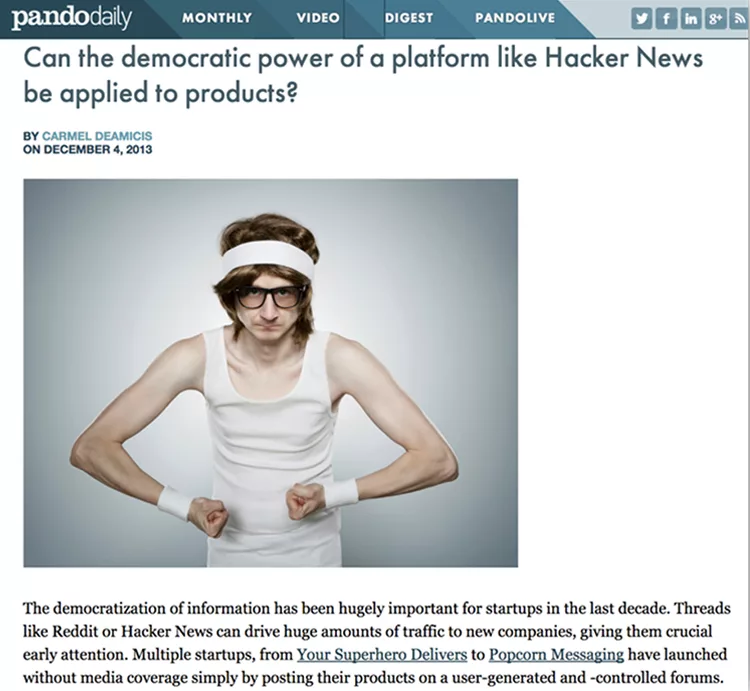
Person in athletic gear poses with a determined expression, set against a plain backdrop. Text discusses the influence of platforms like Hacker News on product marketing.

1. How Product Hunt Used 2 Blogs to Get it’s First 2,000 Users

Type Of Engaging Content: Blog

Key Result: First 2,000 users

Backstory: Product Hunt acquired its first 2,000 users through strategic guest posts and personalized outreach. Ryan Hoover, the founder, wrote two key blog posts—one for FastCompany and another called “PandoDaily”—to capture the attention of tech enthusiasts and startup communities. These blog posts explained the vision for Product Hunt, attracting early adopters. Hoover also leveraged personal connections, sending private invitations to startup founders and influencers to contribute and share feedback. This created a sense of exclusivity and involvement, helping to build a loyal early community before the platform’s official launch. By focusing on personalized outreach and community building, Product Hunt grew organically and rapidly.

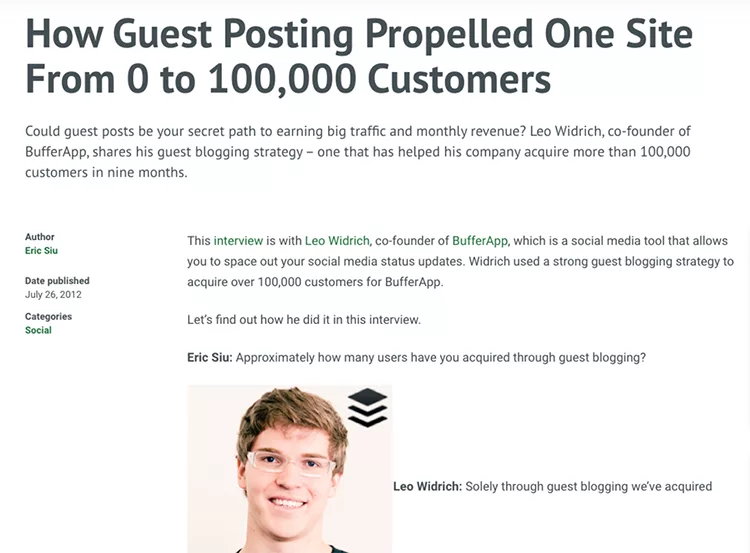
Screenshot of an interview with Leo Widrich discussing how guest blogging helped BufferApp gain 100,000 customers.

2. How Buffer Used Guest Blogs to Get 100,000 Customers

Type Of Engaging Content: Blog

Key Result: 100,000 customers in 9 months

Backstory: Buffer’s co-founder, Leo Widrich, leveraged guest blogging as a core strategy to grow the company’s user base. Over a period of 9 months, Widrich wrote around 150 guest posts across various blogs and websites. Although the initial posts barely drove traffic, consistency paid off, with the strategy eventually attracting 100,000 customers. Widrich focused on signing up users rather than just driving traffic, with guest blogging accounting for nearly all of Buffer’s early user acquisition. The posts provided valuable content, promoted Buffer’s unique scheduling tool, and built crucial relationships in the social media and tech communities. This helped to organically spread awareness and grow Buffer’s customer base.

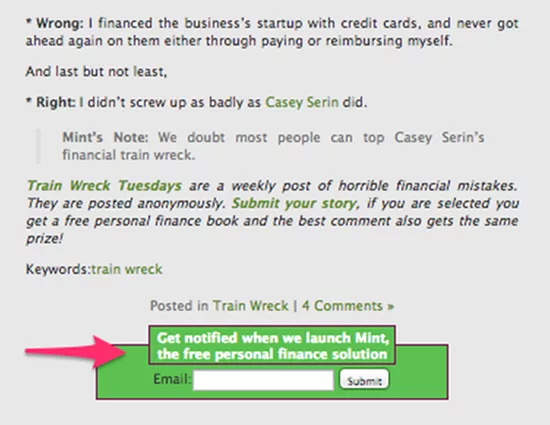
Screenshot of a blog post discussing financial mistakes and promoting Mint's personal finance solution with an email signup form for notifications.

3. How Mint Used a Personal Finance Blog to Get 20,000–30,000 Beta Signups

Type Of Engaging Content: Blog

Key Result: 20,000–30,000 beta signups

Backstory: Nine months before the official launch of Mint, founder Aaron Patzer started a personal finance blog as a cost-effective marketing strategy. Mint created unique content, such as “Train Wreck Tuesdays,” which highlighted readers’ financial disasters, making others feel better about their own finances. Another feature, “What’s in Your Wallet,” featured tech celebrities and personal finance bloggers discussing their financial tools. Mint’s blog posts heavily featured guest content from other personal finance bloggers, who would cross-link back to Mint, driving traffic to their site. This blog ended up generating more traffic than its established competitors. To convert this audience, Mint added a call to action promising early beta access, which helped them capture 20,000 to 30,000 email signups. They further incentivized bloggers by offering special VIP beta access if they added a Mint badge to their sites, resulting in 600 backlinks, and boosting SEO and traffic.

Graph showing website analytics for plausible.io from March 16 to June 30, with metrics on unique visitors, total pageviews, bounce rate, and visit duration. Prominent visitor spike noted.

4. How Plausible Analytics Used Blog Posts and Community Engagement to Grow to $2,750 MRR in 135 Days

Type Of Engaging Content: Blog and Community Engagement

Key Result: $2,750 MRR and 427 paying subscribers

Backstory: Plausible Analytics, a privacy-focused alternative to Google Analytics, achieved remarkable growth without paid advertising, affiliate marketing, or sponsorships. By publishing useful blog posts addressing pain points in web analytics and engaging with communities on platforms like Hacker News, Twitter, and Reddit, they saw a 2,200% increase in visitors and significant growth in paying subscribers (427) over 135 days. Blog posts tackled issues like privacy and user tracking, making them relevant to a growing market. Plausible also actively participated in discussions, published guest posts, and reached out to relevant audiences via cold outreach, leveraging organic methods to boost their subscriber base and build trust.

5. How Coding Sans Used an Industry Report to Double Their Website Traffic

Type Of Engaging Content: Industry Report

Key Result: Traffic doubled and $300,000 in new projects

Backstory: Coding Sans, a small software development agency, aimed to build trust and generate quality engagement online. In 2017, they launched their State of Software Development report, an annual, gated industry survey report exploring trends and challenges in software development. This report, which took 260 hours to create, became a key asset for driving backlinks, shares, and leads. In its first year, traffic to the Coding Sans website doubled, and the report’s popularity continued to grow. By 2019, it had accumulated 26,700 visits, over 5,000 downloads, and 291 backlinks, leading to an estimated $300,000 in new projects attributed to the report’s indirect impact. The effort paid off significantly by building authority and engaging their target audience.

A collage of Instagram stories showcases travel scenes such as tropical foliage, musicians, aurora borealis, and a serene lakeside, with prompts asking about Stewart board travel experiences.

6. How Stewart Surfboards Used Instagram to Boost Engagement and Sales

Type Of Engaging Content: Consumer-Generated Instagram Content

Key Result: 272% increase in story views and direct sales

Backstory: Stewart Surfboards, a handcrafted surfboard brand, wanted to transform its image from “dad boards” to “family legacy boards” by targeting its audience of middle-aged “surfer dads.” They implemented a consumer-generated content strategy on Instagram, encouraging users to share photos of their Stewart boards in exotic locations. The brand leveraged Instagram Stories to repost user content, adding engagement with features like Instagram’s “ask-a-question.” This interactive campaign asked followers, “Where has your Stewart board taken you?”. During the launch phase, Stewart saw direct sales from social media for the first time.

A keyword ranking table and a line graph showing organic traffic trends with labeled orange and blue sections, and explanatory text about organic keywords and traffic for the last year.

7. How LogoMaker Used Keyword-Focused Blog Content to Boost Revenue by 548%

Type Of Engaging Content: Blog and How-To Guides

Key Result: 548% increase in revenue year-over-year

Backstory: LogoMaker, a DIY logo design platform, targeted small business owners and startups by creating keyword-driven blog content focused on logo design, branding, and startup advice. Their blog topics, such as the use of colors, shapes, and fonts in logo design, were designed to rank well in search results and offer practical value to their audience. In addition to logo-related posts, the company featured how-to guides on topics like business naming and trademarking. A content plan designed for longevity helped sustain traffic, with older articles like a 2012 post on creating a Gmail signature still receiving 5,000 monthly visits. This content strategy resulted in a 47% increase in blog sessions, a 49% increase in new users, and a 548% increase in revenue year-over-year.

8. How FounderOS Used LinkedIn to Drive $200,000 in MRR

Type Of Engaging Content: Social Media

Key Result: 639,643 LinkedIn followers and $200,000 in MRR

Backstory: Founder Matt Gray of Founder OS grew his LinkedIn presence from zero to over 639,643 followers, generating $200,000 in monthly recurring revenue (MRR) from the platform without any paid ads. Gray focused on sharing consistent, value-driven content using specific post formats like long-form lists, carousels, and hook-stacking posts to engage his audience. By posting regularly and optimizing his profile as a lead generator, Matt attracted new followers at a rate of over 112,341 per month. He also built relationships with other LinkedIn creators to expand his reach. This organic content funnel became a core engine behind Founder OS’s growth.

Webpage showcasing an article about starting a $48K/year sneaker newsletter. Includes author Casey Woodard, business details, and sections on business tools and resources.

9. How KickFlips Used a Newsletter to Grow to $48,000/year in Revenue

Type Of Engaging Content: Newsletter and Discord Community

Key Result: $4,000/month in revenue

Backstory: Casey Woodard launched KickFlips, an email newsletter, and Discord community for sneakerheads, which tracks limited-edition sneaker and streetwear releases that can be resold for significant profit. KickFlips sends out emails on every drop day, informing subscribers where to buy and how to resell these high-demand items. The free version of the newsletter offers basic updates, while the paid Pro version provides exclusive insights on even more profitable items like gaming consoles and graphics cards. KickFlips grew quickly, generating $4,000 per month in revenue by helping subscribers flip items for profit with useful content. The combination of targeted, value-packed email content and a supportive Discord community has allowed KickFlips to carve out a profitable niche in the reselling space.

10. How Exploding Ideas Used Reddit to Grow to 5,000 Subscribers in 3 Months

Type Of Engaging Content: Online Communities

Key Result: 5,000 subscribers and profitable within 3 months, using Reddit

Backstory: Eric Lam, founder of ExplodingIdeas.co, launched a weekly newsletter that explores startup ideas and emerging trends for side hustles. By targeting Reddit communities and offering high-value insights into profitable business opportunities, Lam quickly gained 1,000 subscribers in 12 days with $0 in customer acquisition costs. After three months, the newsletter grew to 5,000 subscribers, and Lam introduced paid features, including deep business idea insights. The newsletter became profitable within four months, thanks to organic growth through Reddit and personalized engagement with subscribers. Eric’s focus on addressing subscriber needs helped build a loyal audience and generate revenue from consulting and sponsorship deals.

11. How Content Mavericks Used One Blog Post to Land a $100,000 Job

Type Of Engaging Content: Blog Post

Key Result: $100,000 in revenue with $688.71 in ad spend

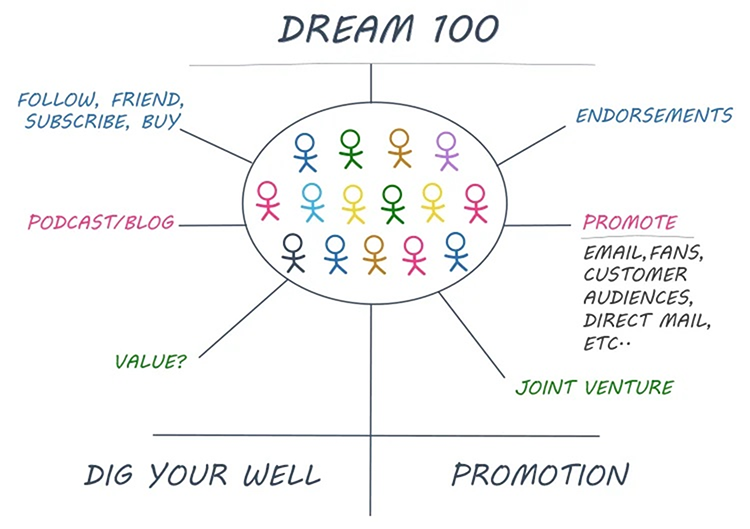
Backstory: Chris Von Wilpert, founder of Content Mavericks, used a blog post as a strategic tool to land high-value clients for his content marketing business. Chris wrote a detailed case study that reverse-engineered the content marketing strategies of HubSpot and targeted his Dream 100 clients in the SaaS space. By promoting the post through influencer outreach, the blog post generated over 1,000 leads. This single piece of content helped Chris land a $100,000 job at AppSumo, proving the power of combining targeted content creation with strategic promotion to build high-quality leads and clients.

12. How Dan Koe Used Newsletters and Content Repurposing to Build a $2.6M Solopreneur Business

Type Of Engaging Content: Newsletters and Social Media

Key Result: $208K in monthly revenue

Backstory: Dan Koe, a solopreneur, built a business generating $2.6 million annually by leveraging newsletters and a content repurposing strategy for social media. Starting as a freelancer, he grew his brand by offering free long-form newsletter content and courses while focusing on short-form content repurposed for social platforms like Twitter, Instagram, and LinkedIn. This strategy allowed him to expand his audience to 2.6 million followers. His paid offerings include a membership program, Modern Mastery HQ, and courses like Digital Economics, which range from $150 to $8,000. Dan’s focus on continuous learning and community building has made his business a success with a 98% profit margin.

Tips to Measure the Results of Your Engaging Content

Hopefully, the examples above have sparked inspiration and shown you the power of well-crafted content.

But the key to driving real success lies in defining and working toward specific goals.

Creating engaging content is only one part of the puzzle – you need to know how to measure its impact effectively.

Here are some metrics you might focus on to track the success of your content:

  • Newsletter subscribers: How many new subscribers are you gaining from your content?
  • Social media followers: Are your social posts leading to a growth in followers across platforms?
  • Free trial signups: Is your content driving people to take advantage of a free trial for your product?
  • Conversion rate: How well does your content lead visitors to take action, like signing up or making a purchase?
  • Revenue: Is your content helping you generate sales and grow your business?
  • Paying customers: Are readers moving from free trials to paid customers?
  • Engagement: Are readers interacting with your content (comments, shares, likes)?
  • Referral traffic: How much of your web traffic is being driven by your content shared on social media or other sites?
  • Time on page: How long are visitors staying on your blog posts or articles?
  • Lead generation: How many qualified leads are you gaining from your content?

The next question is…

How will you actually track these metrics and build the system to collect subscribers, manage payments, and nurture leads?

This is where ClickFunnels becomes your ultimate solution.

ClickFunnels is an all-in-one platform that allows you to build and optimize every stage of your content and sales funnel.

Here’s how it can help you:

  • Email collection and automation: Use ClickFunnels to create landing pages that capture email addresses and nurture your newsletter subscribers with automated email sequences.
  • Social media integration: Connect your ClickFunnels pages to your social platforms to track and grow your follower base directly from your content.
  • Lead generation: Build optimized funnels that guide visitors from initial interest (via blog or social content) to becoming paying customers.
  • Sales and payment systems: ClickFunnels integrates payment gateways, making it easy to collect payments from customers who are ready to purchase.
  • Conversion tracking: Monitor your free trial signups, conversion rates, and revenue growth in real time with ClickFunnels’ built-in analytics tools.
  • Split testing: Test different versions of your content pages and funnels to find what works best for increasing conversions and driving results.

By using ClickFunnels, you’ll have a comprehensive system to create engaging content and drive actions.

You’ll also be able to measure its effectiveness easily.

And ultimately you can use it to continually scale your content and revenue side-by-side.

Try ClickFunnels Free for 14 Days

Final Thoughts: Writing Engaging Content for Your Online Audience

In conclusion, creating engaging content is a powerful way to grow your online business and connect with your audience.

We’ve seen how powerful it is through the various examples shared in this post.

Whether it’s blog posts, newsletters, or social media strategies, the key is to be intentional and track your progress toward specific goals.

Focus on the metrics that matter most to your business such as: growing your newsletter, increasing free trials, or driving revenue.

The good news is that you don’t have to build this process manually.

With tools like ClickFunnels, you can manage everything from capturing leads to tracking conversions and collecting payments, all within one platform.

Now it’s time to take action, apply these strategies, and watch your content deliver real results.

Try ClickFunnels Free for 14 Days

Thanks for reading How To Write Content For Your Audience which appeared first on ClickFunnels.
Quick Ways To Make Money Fast

Software Stack Editor · October 3, 2024 ·

The post Quick Ways To Make Money Fast appeared first on ClickFunnels.

Need to make money ASAP?

Today we are going to discuss five ways to do that…

Table of Contents:
  • Start With Your Mindset
  • #1: Get a Gig Economy Job
  • #2: Get a Temporary Seasonal Job
  • #3: Get a Minimum-Wage Job
  • #4: Start a Local Service Business
  • #5: Start a Freelance Business

Start With Your Mindset

Oftentimes, what prevents people from making money is not the lack of opportunities but their own attitude.

That’s why we want to begin this article by discussing the mindset that you will need in order to make it as soon as possible.

Be Realistic

It’s important to understand that desperation makes you vulnerable.

There are a lot of grifters out there who peddle various get-rich-quick schemes.

You want to stay clear of anyone who is saying that they can teach you how to make a ton of money in a short period of time.

It’s much better to be realistic: if you are in a difficult financial situation, the fastest way out of it is to get a full-time job and also have a side hustle on top of it.

If you do that, you should be able to get some money coming in within a month and hopefully stabilize your finances in three to six months.

Also, if your situation is so dire that you don’t know whether you’ll be able to afford food and shelter, you need to seek help from family, friends, religious organizations, charities or governmental institutions immediately.

Keep in mind that it’s going to be extremely difficult to get back on your feet if you are homeless and starving, so you need to avoid that at all costs. And if you are already there, you should focus on securing food and shelter first before you start looking for work!

Accept the Fact That You Might Need to Sacrifice Status

Humans are social animals and as such we are wired to be concerned about status. This desire to be respected by others can get in the way of making money, though.

People who don’t have a source of income are often unwilling to go with the most obvious solution – which is to get a minimum-wage job – because they are afraid of what their peers are going to think.

After all, McDonald’s is always hiring but if you are terrified that someone from your social circles will see you working there, you might find yourself engaging in all kinds of mental gymnastics in order to avoid seriously considering that option.

And it’s completely understandable. There’s no denying that losing status can be painful. However, learning not to care about it can become your superpower.

Perhaps Sam Altman’s essay “How To Be Successful” can provide some food for thought here, especially the section about being internally driven.

He argues that most people are externally driven and do what they do because they want to impress others.

According to Altman, being externally driven is bad for two reasons:

  1. It makes you care more about what other people think, which can influence your career decisions and prevent you from doing truly interesting work.
  2. It makes you focused on playing competitive games and keeping up with your peers, which can lead to miscalculating risks when making decisions.

Interestingly, he argues that smart people are especially vulnerable to being externally driven, which is why they need to work super hard to avoid it.

If you are an intelligent and ambitious person who has fallen on hard times, working low-status jobs can be a great opportunity to practice caring less about what people think and become more internally driven!

Drop Your Sense of Entitlement

As we go through our lives, it’s easy to develop a sense of entitlement without even realizing it, which only becomes apparent when it is challenged by our external conditions.

This unexamined sense of entitlement is another common obstacle that prevents people from making money as quickly as possible.

If you subconsciously believe that you are entitled to a certain kind of work, a certain kind of pay and a certain kind of schedule, you will hesitate to do whatever it takes to get some money coming in ASAP.

In fact, you might find yourself ignoring the obvious solutions that are right in front of you and waiting for the opportunities that you believe you “deserve” while the clock is ticking and your financial situation is getting worse.

Moreover, this sense of entitlement can make it much more difficult to take advantage of the opportunities that you do have.

For example, if you get a job that you believe is beneath you, you will probably struggle to fit in, won’t do good work, and might even get fired.

Finally, this idea that you “deserve” so much more than what you currently have will make you feel fed up, resentful, and angry. Entitlement is bad for your mental health so it’s best to just drop it.

Here’s how our friend Alex Hormozi explains it:

Be Prepared to Work More Than 40 Hours a Week

As we already mentioned, the fastest way to dig yourself out of a financial hole is to get a full-time job and then add a side hustle on top of it. That will probably add up to around 60 hours per week.

That is not sustainable in the long run but doing it for three to six months can help you stabilize your situation so that you could then scale back to the regular 40-hour work week.

Of course, not everyone can do that. If your health, familial responsibilities, or something else is preventing you from working that much, this advice won’t be applicable.

Make Sure That You Take Care of Your Health!

Realistically speaking, if you start working 60 hours a week, your health is going to suffer. There’s no way around that.

However, that makes it extremely important to take care of yourself so that you can minimize the damage.

Here’s some basic stuff that can help you survive the grind:

  • Getting enough sleep
  • Eating enough calories
  • Eating enough protein
  • Watching your caffeine consumption
  • Refraining from alcohol and partying
  • Taking time to wind down at the end of each day
  • Doing chores, running errands, and then just lounging around on your days off so that you could maximize recovery.

Obviously, doing all that may not always be possible if you are juggling a full-time job and a part-time job or a side hustle. Sometimes you simply won’t have enough time due to your work schedule.

However, if you are serious about stabilizing your finances, you need to be willing to go into “sleep, eat, work” mode until it’s done. Remove everything else from your life. That will make it much easier for you to get through it.

Okay, now with all that out of the way, here are some ideas on how to make money as soon as possible…

#1: Get a Gig Economy Job

A person sitting with a laptop and a person standing with a phone, observing cryptocurrency and stock charts, with coins stacked below.

What is the Gig Economy?

The term “gig economy” refers to a labor market where companies hire workers on a freelance basis to do various tasks that are often referred to as “gigs”.

This type of work is typically facilitated via tech platforms that connect the companies, the gig workers, and the customers.

Local Gig Economy Jobs

If you live in an urban location and have a driver’s license and a car, you may be able to find work as a rideshare driver for companies like Uber and Lyft or their local equivalents.

Alternatively, you may find work as a delivery courier for companies like DoorDash, Deliveroo or their local equivalents. You don’t even need a car for that, you can use a bicycle or a scooter to deliver food.

Just remember that you will need to handle your own taxes, health insurance, vehicle insurance, etc. There are also vehicle maintenance costs. Finally, if you are driving a car, you’ll have to pay for gas as well.

That’s why it’s important to do the math, calculate how much money you will be left with once everything is accounted for and decide whether doing this type of work makes sense from a financial perspective.

Something to keep in mind here is that driving any vehicle is going to put wear and tear on it and if you do it long enough, you’ll have to pay for repairs and eventually replace it.

This means that the longer you work as a rideshare driver or delivery courier, the less profitable it becomes due to the expenses associated with the wear and tear on your vehicle.

Remote Gig Economy Jobs

You might also be able to find remote gig economy work.

The most popular platform for that is Amazon’s Mechanical Turk but there’s also Prolific, CloudResearch, and others.

Businesses use these platforms to find people who can do tasks like labeling AI training data, doing usability testing, filling out market research surveys, and so on.

Meanwhile, academics use them to find participants for their scientific studies that are based on surveys.

Typically, these tasks don’t take much time to complete. For example, according to Amazon, most tasks on Mechanical Turk can be done in less than five minutes.

People who do this type of work usually sign up for several platforms so that they can do it full-time.

It used to be possible to make $1,500/month this way but it appears that things have been going downhill since the Covid-19 pandemic.

Nowadays, you can expect to make $5-10 per day if you work exclusively on Mechanical Turk and maybe $15 per day if you work across several platforms.

This means that if you do it full-time without days off, you might be able to make between $150 and $600 per month.

If you live in a developed country, it’s probably not worth your time because you would likely make more money by getting a minimum-wage job.

However, if you live in a developing country where the minimum wage is within that range, then it might be an option worth considering.

If you want to learn more, check out the MTurk subreddit where Mechanical Turk veterans and newcomers alike share their experiences on that platform.

Future Opportunities

Local gig economy jobs can be a great way to make extra cash when you need it, especially if you have a lot of free time.

Meanwhile, remote gig economy jobs can be an appealing alternative to minimum-wage jobs if you live in a developing country.

However, we can probably safely assume that the profitability of doing this type of work is going to continue decreasing.

So don’t hesitate to participate in the gig economy if you want to make some money but don’t get too comfortable because there’s no future in it. Never stop looking for better opportunities!

#2: Get a Temporary Seasonal Job

A person sitting with a laptop and a person standing with a phone, observing cryptocurrency and stock charts, with coins stacked below.

What is a Temporary Seasonal Job?

A temporary seasonal job is a job that offers a short-term contract for the peak season of a particular industry.

Types of Temporary Seasonal Jobs

Retail Warehousing and Delivery Jobs

Businesses involved in retail warehousing and delivery tend to hire temporary workers in the run-up to the winter holidays.

For example, in September 2023, Amazon announced that it was hiring 250,000 temporary employees for the holiday season.

Hospitality and Catering Jobs

Catering agencies that provide waiting staff for various events start hiring temporary workers in September and continue doing so until Christmas.

This means that you can always find work in the hospitality industry in October, November and especially December when companies are throwing their Christmas parties.

January, February, and to some extent March is the low season after which catering agencies start hiring temporary workers again in April.

You should be able to find work from May to July because of all the weddings and summer events.

Then you can expect it to be quiet from August to October when the cycle starts again.

Vacation Destination Jobs

Popular vacation destinations typically have an on-season when they are crazy busy and an off-season when they look like ghost towns.

It’s usually easy to find temporary work during the on-season because everyone is hiring: the hotels, the restaurants, the souvenir shops, even the supermarkets!

How to Get a Temporary Seasonal Job

With retail warehousing and delivery jobs, it’s best to either apply via the company’s website or respond to the job ads on local online job boards.

The same goes for hospitality and catering jobs: you can either go to the websites of local catering agencies and apply there or you can respond to their ads on local online job boards.

Meanwhile, with vacation destination jobs, check to see if any of the big chain hotels, restaurants and supermarkets are looking for temporary workers.

Also, if you live relatively close to that destination, it might make sense to go there at the very beginning of the on-season and spend a day handing out your CVs to local businesses. This approach may be old-fashioned but it still works!

Future Opportunities

Finding reliable temporary workers can be difficult so if you do a good job you will probably have an opportunity to come back next year.

Also, in some cases, seasonal work can be a stepping stone towards full-time, regular employment. For example, Amazon is known for extending full-time job offers to some of its temporary employees.

Meanwhile, in the hospitality industry, if you leave a great impression on the managers at a particular venue, they might offer you a full-time waiting job the next time they have an open position.

After all, it makes more sense for them to hire someone who has already proven themselves than to take chances on random people.

There might also be opportunities for advancement within the catering agencies. It’s quite common to see people in administrative roles who started out as waiters and waitresses!

#3: Get a Minimum-Wage Job

Two people in an office setting with a laptop, gears, coins, a calendar, and a wallet with cash, suggesting financial management or planning.

What is a Minimum-Wage Job?

A minimum-wage job is a job that pays the legally mandated minimum wage.

If you don’t know what the minimum wage is in your country, you should be able to easily find that information online.

Types of Minimum-Wage Jobs

Minimum-wage jobs tend to revolve around doing straightforward, repetitive tasks that don’t require formal qualifications, extensive training, or prior experience.

The most common types of minimum-wage jobs include:

  • Warehouse jobs
  • Cleaning jobs
  • Retail jobs
  • Supermarket jobs
  • Waiting jobs
  • Bar jobs
  • Fast food jobs

Arguably, waiting and bar jobs are the best option if you need to make money as quickly as possible, assuming that you live in a country where it’s customary to leave tips.

However, it’s also important to take your strengths and weaknesses into consideration. What type of minimum-wage job can you see yourself excelling at?

How to Get a Minimum-Wage Job

It depends on the type of job that you are interested in but minimum-wage jobs can be found everywhere.

Big chains usually have a “Careers” section on their websites and encourage people to apply directly.

Meanwhile, smaller companies tend to post ads on local online job boards and expect you to apply that way.

You can also find work by handing out your CVs to local businesses. Simply walk in, ask to talk to the manager, and give them your CV.

This strategy can be especially effective for landing a job at a small restaurant or bar because places like that usually don’t have a streamlined hiring process.

That being said, it can also help you get a job at a chain restaurant. Some managers prefer to hire walk-in applicants!

Future Opportunities

This varies depending on the employer but it’s pretty common for new employees who do good work to get promoted to a supervisor position within a year.

Moreover, some companies are known for hiring from within and providing a legitimate career path for those who are interested in that.

McDonald’s is a good example of this. If you get a minimum-wage job there, you may be able to rise through the ranks until you reach the regional manager position, which can be a six-figure job in some countries.

Of course, that would be predicated on you excelling at each role and would likely take at least a decade. Still, it can be a good opportunity, especially if your ultimate career goal is to have a high-paying, white-collar job.

Finally, working a minimum-wage job, especially one that cannot be easily automated, provides an opportunity to learn marketable skills that might come in handy in the future.

Sure, minimum-wage jobs are low-skilled jobs, but the managers still prefer to hire people who have done something similar before.

This means that if you ever find yourself in a precarious financial situation again, you will be able to fall back on your previous experience and get another minimum-wage job!

#4: Start a Local Service Business

Illustration of a person at a desk with a laptop, a large hand offering money, a storefront with an awning, a light bulb, and a stack of coins with a dollar symbol.

What is a Local Service Business?

A local service business is a business that provides services to customers located in a particular geographical area.

Types of Local Service Businesses

The most common types of local service businesses include:

  • House cleaning businesses
  • Landscaping businesses
  • Painting businesses
  • Laundry businesses
  • Catering businesses
  • Moving businesses
  • Trade businesses

How to Start a Local Service Business

Take stock of your strengths, your existing skills, and the resources at your disposal. Make a list of services that you can begin providing immediately. Identify which service will allow you to make the most money. That’s what you should focus on.

Then, design simple black and white flyers for your business. Explain what service you are offering, list pricing information and provide your contact details. Consider getting a Google Voice phone number for this.

A6 is probably the best size for these flyers because it will enable you to get four flyers out of one regular A4 sheet of paper. That can help you keep the printing costs down.

If you don’t have a printer at home, do some research and see who is offering printing services near you. Typically, you can print stuff at libraries, Internet cafes, and stationery stores.

Ideally, you want to distribute at least 100 flyers per day. If you have A6-size flyers, that’s 25 sheets of paper. Meaning, you’ll need to print out 750 sheets of paper every month.

In the first month, you might want to print your flyers in three separate batches of 250 sheets, which will produce 1,000 flyers per batch. This will allow you to spread out printing expenses and minimize dumb mistakes.

Do these three batches at three different printing places. When you are there, ask about volume discounts. How much would it cost to print out 1,000 sheets of paper at once?

See who can offer you the best price and go to them once you are done with your initial three batches and need flyers for the next month.

Generally speaking, out of every 1,000 flyers that you distribute, you can probably expect to get 10 leads and 1 paying customers.

This means that if you distribute 100 flyers per day, meaning 3,000 flyers per month, you should be able to get at least 3 paying customers in your first month.

How to Grow Your Local Service Business

The most straightforward way to grow your local service business is to simply do more of what’s already working.

Start increasing your daily flyer distribution target and continue doing so until you hit the ceiling due to time constraints.

By the way, did you know that people who get paid to distribute flyers do 1,000 per day? It takes them about 8-10 hours. Just saying.

Also, if you improve the copy of your flyers, you may be able to get more leads from the same amount of flyers.

Our friend Jim Edwards, who is a world-class copywriter, wrote his book “Copywriting Secrets” for business owners who want to learn copywriting. We highly recommend reading it.

You can buy “Copywriting Secrets” on Amazon where it has more than 1,900 global ratings and a 4.7-star overall rating. But you can also get it directly from Jim for free. All he asks is that you pay for shipping!

In addition to that, if you improve your sales skills, you may be able to close more leads that you are getting from your flyers.

Reading Robert Cialdini’s “Influence” can help you understand the key principles of persuasion. Just make sure that you get the new and expanded edition.

Meanwhile, Brian Tracy’s “The Psychology of Selling” is a classic introduction to sales and a great way to learn the basics.

You might also want to read Daniel H. Pink’s “To Sell Is Human” because it deals with selling in the digital age.

Finally, if you focus on doing excellent work, eventually you’ll start getting referrals. As time goes on, word-of-mouth will likely become the main driver of growth!

Future Opportunities

In popular culture, entrepreneurship is associated with tech startups from Silicon Valley, but the reality is that local service businesses have much better odds of success.

Serial entrepreneur Nick Huber talks about this a lot. In his view, the Shark Tank and Tech Crunch culture is ruining the spirit of low-risk entrepreneurship:

“In college, I connected with a lot of other entrepreneurs, and of the 20 or so people pursuing tech and “new idea” startups, not one succeeded. They all went and got real jobs.”

Meanwhile, he started his storage business by letting his fellow students keep their stuff in his room and has since grown it to 62 locations in 11 states.

There are tons of opportunities like that in industries that are not glamorous. It’s possible to grow a humble local service business to six figures in annual net profit. You might even be able to eventually sell it for seven figures.

If you are interested in entrepreneurship and want to learn more about the potential of local service businesses, we recommend checking out Nick Huber’s website where he discusses “sweaty startups”.

#5: Start a Freelance Business

A person sits on a bean bag working on a laptop. A monitor displays charts and a KPI dashboard. Nearby are a red mug, a bookshelf, a pie chart, and a clipboard with notes.

What is a Freelance Business?

A freelance business is the self-employed equivalent of having a remote job.

Freelancing can be especially appealing for people who are based in low-cost-of-living areas where the money they make remotely goes a long way.

It can also be a great option for those who are housebound due to disabilities or health problems.

Types of Freelance Businesses

Typically, freelance businesses revolve around skills like:

  • Software development
  • UX and UI design
  • Graphic design
  • Content writing
  • Technical writing
  • Copywriting
  • Paid advertising
  • SEO

…etc.

Don’t have a marketable skill but want to start freelancing?

We recommend learning copywriting. Of all freelance writers, copywriters are the highest-paid.

Again, Jim Edward’s book “Copywriting Secrets” covers all the basics so we highly recommend reading it. You can get it for free if you pay for shipping!

How to Start a Freelance Business

The best way to get your freelance business off the ground is to:

  1. Clearly define your dream clients
  2. Make a list of leads that meet your dream client criteria
  3. Start cold emailing those leads and pitching your services

We recommend getting some social proof first, though.

You can do that by working for free. For example, if you want to be an email copywriter who works with B2B SaaS businesses, start writing email copy for companies that fit that description. You don’t need permission for this, just do it and send it to them for free.

If they decide to use your copy and it converts well, ask them if it would be okay to include it in your portfolio. Now you have something that you can show to potential clients!

How to Grow Your Freelance Business

It’s possible to grow your freelance business to six figures in annual net profit via cold email alone.

That being said, this approach to lead generation can be extremely time-consuming, so you might want to move away from it eventually.

You can do that by building a lead generation funnel for your business and driving paid traffic to it.

Also, if your clients are happy with your work, you will probably start getting referrals eventually!

Future Opportunities

Successful freelancers can make low six figures in annual net profit.

Also, once you have a track record of delivering great results for your clients, you can package your knowledge into an info product.

Info products like eBooks and online courses have extremely high profit margins so you may be able to create an additional five-figure or even six-figure stream of income that way.

Finally, you can transition from freelancing to running an agency. Building an agency is a notoriously difficult endeavor but if you succeed at it, you might be able to reach mid-to-high six figures in annual net profit.

Something to consider here is that a successful agency is an asset that can be sold. While agency valuations tend to be pretty low compared to more lucrative business models, it is nevertheless possible to have a seven-figure exit!

Want to Learn How to Write Copy That CONVERTS?

You can have the best product or service in the world but guess what?

If you can’t convey its value to your dream customers, you will lose out to competitors with inferior products or services but better copy. Sad but true.

That’s why if you are serious about building a business, you need to learn copywriting.

In fact, we would argue that it’s the single most important entrepreneurial skill.

Our friend Jim Edwards wrote a best-selling book “Copywriting Secrets” for busy entrepreneurs just like you.

In this book, he covers everything you need to know in order to start writing copy that CONVERTS.

“Copywriting Secrets” is available on Amazon where it has over 1,900 global ratings and a 4.7-star overall rating.

But you can also get it directly from Jim for free.

All he asks is that you cover the shipping!

So what are you waiting for? 🧐

Get “Copywriting Secrets” for FREE!

Thanks for reading Quick Ways To Make Money Fast which appeared first on ClickFunnels.
How To Build A Minimum Viable Product On A Budget

Software Stack Editor · October 3, 2024 ·

The post How To Build A Minimum Viable Product On A Budget appeared first on ClickFunnels.

Every entrepreneur dreams of launching their business idea to success, wealth, and a positive impact on their target audience.

But, not all entrepreneurs have the capital and resources to turn their ideas into reality.

Here’s where the minimum viable product (MVP) comes into play.

The MVP is a way for you to validate your business idea before you commit to it long-term. What’s even better, is that you could build and test an MVP on a limited budget.

In this blog, I’ll show you one of the most powerful methods to build your MVP without draining your wallet.

And here’s a hint.

This exact method helped launch a business that was sold for $1.2 billion just ten years later.

Let’s dive in.

Building a Business Without Capital

A lot of us have brilliant ideas for starting a successful business.

But very few people actually act on it.

It’s likely you get stuck thinking something along the lines of: “It’s a great idea, but can I really build a business without capital?”

You should know that ClickFunnels was built for people exactly like you.

Russell Brunson, the co-founder, started every episode of his influential Marketing Secrets podcast with this message:

“So, the big question is this. How are entrepreneurs like us, who didn’t cheat and take on venture capital, who are spending money from our own pockets, how do we market in a way that lets us get our own products and our services and the things that we believe in, out into the world, and yet still remain profitable?”

This approach took ClickFunnels to $100 million in revenue within three years—without a penny of venture capital.

The answer is clear: yes, you can build a business without capital.

And ClickFunnels exists to help you do just that.

Testing Your Business Idea With an MVP

If you’re reading this, it’s because you’re aware of the concept of the minimum viable product (MVP).

And in particular, how it’s a way for you to test your business idea without breaking the bank.

First, let’s look at what the purpose of the MVP is.

What’s the Purpose of an MVP?

An MVP is a basic version of your product with just enough features to test your concept with real users.

Unlike the traditional route of fully developing a product before launch, an MVP lets you get early feedback from users to refine your idea.

It’s the perfect way to see if your concept resonates with your market before spending time and money on a full-fledged launch.

The 5 Main Different Kinds of MVP

There are many different ways to create a Minimum Viable Product (MVP).

Each of them allows you to gauge interest, gather feedback, and refine your product idea before diving into full-scale development.

But they do it through different methods.

Let’s dive into five of the most common MVP methods, highlighting their benefits, drawbacks, and some real-world examples.

1. Product Explainer MVP

A product explainer MVP is one of the simplest and most cost-effective ways to test a product idea.

With this method, you create a compelling video that presents your product concept to a targeted audience and asks for their interest. Usually, you collect responses in the form of pre-orders, sign-ups, or feedback.

This approach allows you to gauge demand without even building out the full product or even having a website.

You can also track viewer metrics and responses to see how well your idea resonates with your target market.

Benefits: Quick to implement and low-cost. Allows for easy A/B testing of different product ideas or messaging.

Negatives: Not full validation, as you’re not always charging at this stage, this getting feedback or sign-ups.

Famous Example: Dropbox used a product explainer video to test its concept. Before the product was fully developed, founder Drew Houston created a short explainer video and emailed it to potential users. The response helped validate the idea and secure funding for further development.

2. Single-Feature App MVP

A single-feature app MVP focuses on developing just one core functionality of a product.

Instead of building an entire, feature-rich product, you hone in on one key aspect that solves the primary problem for your users.

This method allows you to release the product faster, gather focused feedback, and iterate on the single feature before adding more complexity.

Benefits: Allows you to test an important feature without getting bogged down in developing an entire product. Speeds up time to market and reduces development costs.

Negatives: This can result in a narrow view of customer needs if only one feature is tested.

Famous Example: WhatsApp began in 2009 as a simple app designed to display statuses in a phone’s Contacts menu, showing whether a person was at work or on a call. However, when push notifications were introduced by Apple, users started using the app to send quick status updates, which evolved into instant messaging. Over time, the app expanded its features to include group chats, voice calls, and video calls.

3. Concierge MVP

With a concierge MVP, instead of using technology to automate services, you manually provide the service to your customers.

This MVP method is ideal for testing service-based products where the personal touch is important.

By manually handling every part of the customer experience, you gather insights into customer preferences, problems, and opportunities for automation or scaling later.

Benefits: Allows for personalized customer experiences and deep insights into their needs and pain points. Helps build a loyal customer base.

Negatives: It’s time-consuming and labor-intensive, so it can’t scale quickly.

Famous Example: Airbnb started with what you could consider a concierge MVP. Founders Brian Chesky and Joe Gebbia manually rented out air mattresses in their apartment to test if people would pay for short-term lodging in strangers’ homes. The positive feedback from the guests validated the idea before they started working on the full platform.

4. Preorder Campaign MVP

A preorder campaign MVP is a powerful way to validate a product idea by asking customers to pay for it before it’s even built.

This approach works particularly well for physical products or new product lines.

It allows you to gauge demand while securing upfront funding. 

If people are willing to pay for something that hasn’t been built yet, it’s a strong signal that the market values your idea.

Benefits: Generates immediate revenue and validates customer demand before you spend time and money on product development.

Negatives: If you fail to deliver on your promise, you risk damaging your reputation and losing customer trust.

Example: Pebble Watch, one of the early successes on Kickstarter, used a preorder campaign MVP to raise over $10 million in funding. They tested demand for their smartwatch by asking customers to preorder it through the platform, using the funds raised to build the product.

5. Wizard of Oz MVP

The Wizard of Oz MVP involves creating the appearance of a fully functioning product, but everything is done manually. The goal is to present the illusion of automation and a seamless product experience, while you handle the work yourself. This method allows you to gather valuable feedback on how customers interact with your product without committing to building out a fully developed system.

Benefits: Allows for quick testing and iteration without heavy development costs. You get to understand customer behaviors and needs before scaling.

Negatives: Not scalable in the long run, and customers may feel deceived if they learn that the product isn’t fully developed.

Example: Zappos is the classic example of a Wizard of Oz MVP. Founder Nick Swinmurn tested the idea of selling shoes online by posting photos of shoes from local stores. When a customer placed an order, he would personally go to the store, buy the shoes, and ship them. Over time, Zappos built the infrastructure needed to scale into the billion-dollar company it became.

In this post, we’re focusing on the Wizard of Oz MVP.

Why?

Because it’s the best method to create an MVP on a budget that also fully validates your business idea. Customers buy believing the product comes from a fully operational business.

Once validated, all you need to do is scale.

It’s a personal favorite of thousands of ClickFunnels users—this is because our plug-and-play funnels help you build a professional-looking website & product in a question of hours.

Let’s explore how it works below.

7 Steps to Building Your MVP Using the ‘Wizard of Oz’ Method

Below, we’ll look at how Nick Swinmurn founded Zappos in 1999 using the Wizard of Oz MVP strategy.

Just ten years later, he sold the company to Amazon for $1.2 billion. This method is perfect for founders working on a shoestring budget.

Here are the four steps that helped Nick bring Zappos to life.

1. Find a Compelling Problem to Solve

The first step in the Wizard of Oz method is identifying a real, pressing problem.

You might already know what this problem is for your own business idea. But let’s dig into Nick’s story.

In 1997, Nick took a job working at Autoweb which was an online car-buying service. He specifically took the job because he wanted to start a business that could capitalize on the growth of the Internet.

Two years later he saw the opportunity.

Nick went to the mall on the hunt for a pair of brown Airwalk Desert Chukka boots.

Here’s what happened:

  • One store had the brand, but not the size
  • Another store had the size, but not the color
  • A third store was out of stock

This sparked the idea of an online shoe store.

Nick realized that, like him, thousands of shoppers must be frustrated by the limited selection in physical stores.

Tips for Finding A Compelling Problem

  • Look for frustrations in daily life
  • Focus on limitations that traditional vendors in the industry can’t overcome
  • Identify markets with high demand and limited supply
  • Listen to your own needs – often, if you want it, others will too

2. Analyze the Competition

Before jumping into a solution, Nick needed to understand the landscape.

He looked around and realized that no one was effectively solving the problem of limited shoe selection in physical stores.

At the time, shopping for shoes was still primarily an in-person experience. But malls carried only a small variety of styles, colors, and sizes.

So Nick discovered an intriguing fact: 5% of all shoes sold in the U.S. were already being bought through mail-order catalogs.

This meant that 1 in 20 sales happened without a customer trying them on first.

If shoppers were willing to buy shoes through mail catalogs, there was potential for a more modern, efficient solution.

This realization laid the foundation for what would become Zappos.

Tips for Analyzing Your Competition:

  • Look for market gaps where consumer needs are unmet.
  • Research alternative solutions that already exist, even in low-tech forms.
  • Pay attention to small but telling data points – like Nick’s discovery of the 5% mail-order shoe sales.
  • Talk to potential customers to learn about their frustrations with current solutions.
  • Identify industries that are resistant to change and innovate within them.
Screenshot of Zappos website showcasing shoe categories, customer service options, featured brands like Bostonian and Sudini, and a promotion for free shipping and no sales tax.

3. Play to Your Strengths

One of the key reasons Nick Swinmurn succeeded with Zappos was that he played to his strengths.

Before launching Zappos, Nick had already worked at an Internet startup called Autoweb, an online car-buying service.

This experience gave him invaluable knowledge about selling products online.

When the opportunity came to solve the problem of limited shoe availability, Nick’s skills aligned with the task.

It’s important to note that Zappos is an extreme example of everything going right. Not every MVP or startup will see such a smooth path to success.

Often, startups fail because the founder lacks experience in the industry or with the product they’re trying to launch.

Tips for Playing to Your Strengths:

  • Choose an industry or product that aligns with your existing skills or experience.
  • If you don’t have experience, partner with someone who does.
  • Leverage past work experience to give your MVP the best chance at success.
  • Be honest about your limitations and seek out mentors or advisors to fill knowledge gaps.
  • Focus on industries where you have inside knowledge of customer pain points and market needs.

4. Come Up With a Valuable Solution

Once Nick understood the gap in the market, he came up with a solution that harnessed the power of the Internet to solve this problem in a more effective way.

The Internet was still relatively new in the late 1990s.

So Nick’s idea was simple: instead of forcing customers to drive to multiple stores and settle for whatever was available, he would build a website where they could browse a vast selection of shoes from their homes.

By leveraging the Internet, Nick could offer more variety than any physical store ever could.

Customers could easily find the shoes they wanted in the right size and color, and have them shipped directly to their doorsteps.

This approach solved a major problem for consumers and provided the convenience they didn’t even know they needed yet.

Tips for Coming Up With A Valuable Solution:

  • Use emerging technologies to solve problems in a way that current methods can’t.
  • Focus on convenience – how can you make life easier for your customers?
  • Offer variety or personalization that physical or traditional businesses can’t match.
  • Think about how your solution can meet customers where they already are – whether online or elsewhere.
  • Create a seamless customer experience, from discovery to purchase, to keep them coming back.

5. Validate the Idea at Little-to-No Upfront Cost

Here’s where the magic of the Wizard of Oz MVP comes in.

You give your target audience the illusion of a fully developed product, even though you’re handling everything manually behind the scenes.

Nick went to Footwear Etc. in Sunnyvale, California, and proposed a deal: He asked to photograph and sell the store’s shoes online. If someone bought a pair, he’d come in and purchase them at full price.

A win-win situation.

The store agreed and Nick soon started getting orders.

He was sourcing the products, posting them online, handling shipping and customer service all by himself.

Validating Your Business Idea

  • Don’t invest in inventory – validate first
  • Test on a small scale to reduce risk
  • Get feedback from customers as soon as possible
  • Track key metrics to see if demand is real
  • Keep it simple and low-cost at first

6. Set a Goal for Validation

As orders started coming in, Nick Swinmurn realized that his idea had crossed an important threshold: The order volume kept growing.

Nick proved that people were willing to buy shoes online.

Validation is one of the most critical milestones in building an MVP.

For Nick, the increasing number of orders was proof that his concept worked. He knew he was on to something when he saw consistent demand from customers who trusted an online platform for their shoe purchases.

This was a clear signal that it was time to take the next step: scaling the business.

Tips for Setting a Goal for Validation:

  • Set a clear target for what constitutes product validation (e.g., consistent sales or repeat customers).
  • Use feedback from early customers to refine your product.
  • Focus on validating demand before scaling up operations.
  • Track key metrics like customer satisfaction and return rates to ensure your model works.
  • Be prepared to pivot if early feedback suggests changes are needed.

7. Scaling Your Revenue

Once Nick realized his MVP was validated, the next challenge was scaling the business to meet growing demand.

He couldn’t continue running the business by himself.

To scale Zappos, Nick raised money from personal sources, including friends, co-workers, and even his chiropractor.

However, the real turning point came when he pitched to the VC firm Venture Frogs, where he met Tony Hsieh. Tony saw the potential in Zappos and eventually became the CEO, helping Nick take the business to new heights.

The result?

A company that grew so successful it was acquired by Amazon for $1.2 billion.

Nick’s Wizard of Oz MVP method not only validated his product but also laid the foundation for scaling in a way that didn’t require upfront capital.

Tips for Scaling Your Revenue:

  • Use early profits to reinvest in growing the business.
  • Pitch to investors only after you’ve validated your product.
  • Scale only when demand justifies the expansion.
  • Maintain your focus on customer satisfaction as you grow.
  • Diversify your funding sources – start with personal networks before seeking venture capital.

How to Save Time & Money in Making a Website and Taking Payments

We’ve just seen a powerful way to build an MVP and validate your business idea.

But you might be asking yourself.

If you don’t have web design knowledge, how are you going to create a website that accepts payments on a budget?

Enter ClickFunnels.

It’s one thing to come up with an idea and figure out the logistics, but you still need a professional site that can take legal, and secure payments quickly and effectively.

With ClickFunnels, you can set up a fully functional website in hours.

Here are some of the benefits of using ClickFunnels:

  • Set up a sales funnel and start accepting payments within hours
  • No need to hire developers or web designers – everything is drag-and-drop
  • Integrates with major payment gateways for secure transactions
  • Customizable templates for any type of product or service
  • 14-day free trial to get started without risk

Try ClickFunnels Free for 14 Days

Final Thoughts: Building an MVP On a Budget

Nick Swinmurn’s Zappos story is a perfect example of how to launch a billion-dollar business starting with little more than an idea.

This was possible by using the Wizard of Oz MVP strategy.

It demonstrates that you don’t need a huge budget to get started – you just need the right process.

By validating your idea and growing smartly you can build something big.

To help you test your idea and start taking payments as soon as possible, don’t forget to check out ClickFunnels.

Click below to take advantage of ClickFunnels’ free 14-day trial and launch your MVP today.

Try ClickFunnels Free for 14 Days

Thanks for reading How To Build A Minimum Viable Product On A Budget which appeared first on ClickFunnels.
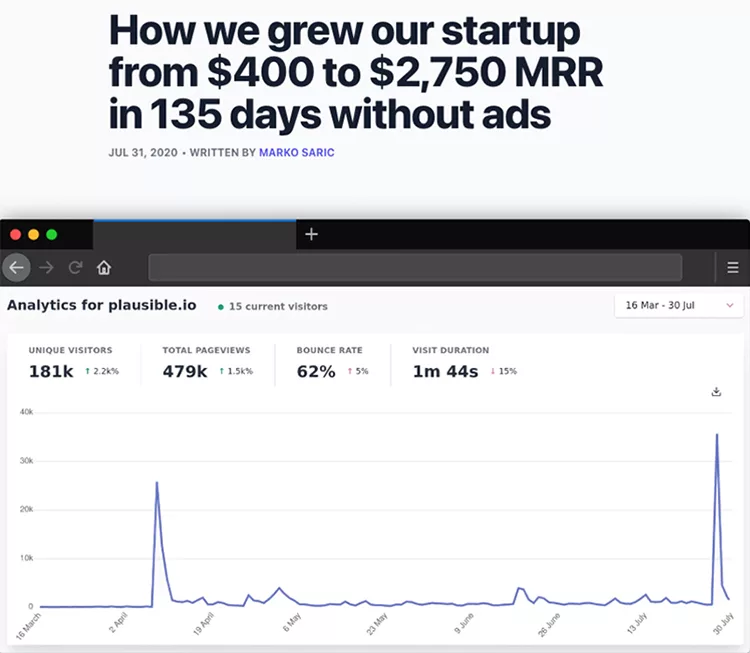
Effective Customer Feedback Strategy For Startups

Software Stack Editor · September 27, 2024 ·

The post Effective Customer Feedback Strategy For Startups appeared first on ClickFunnels.

Is your business relatively new?

Then the odds are high that you still have some misconceptions about what matters to your dream customers. And that’s okay!

As entrepreneurs, we all start out by making our best guess as to what will resonate with our target audience and then calibrate our approach over time based on customer feedback. 

In fact, the more customer feedback you get, the faster you’ll be able to iterate and the sooner you’ll find product-market fit. 

That’s why today we are going to discuss how to gather and analyze customer feedback in the early stages…

Table of Contents:
  • Why You Should Adopt the Lean Startup Methodology
  • Implicit Customer Feedback vs. Explicit Customer Feedback
  • How to Gather and Analyze Implicit Customer Feedback
  • How to Gather and Analyze Explicit Customer Feedback
  • Word-of-Mouth: The Dark Matter of Business

Why You Should Adopt the Lean Startup Methodology

What is a Lean Startup?

Lean startup is a business methodology that focuses on quickly validating ideas through the shortest possible product development cycles.

It applies the principles of Japanese lean manufacturing philosophy to building software startups.

This approach was originally developed by Steve Blank, the author of the 2005 book “The Four Steps to the Epiphany”.

Then, it was popularized by Eric Ries, the author of the now-classic book “The Lean Startup” which was published in 2011.

Eric Ries popularized the lean startup methodology with his 2011 book “The Lean Startup”.

Arguably, Peter Levels’ book “Make” is the successor to “The Lean Startup”. It was published in 2018 and primarily focuses on building software products as a bootstrapped solopreneur. 

We are going to discuss some of the key principles of this methodology in the subsequent sections, but we recommend reading the books if you want to get the full picture. 

Also, while these books focus on software startups, the general principles can be applied to other types of businesses, so don’t disregard this methodology just because you aren’t selling software!

What is a Minimum Viable Product?

The minimum viable product  – also known as “MVP” – is probably the most important concept in the Lean Startup methodology.

You want to build a product that has the core functionality required to solve the problem and that it addresses as quickly as possible, and then put it in front of your dream customers.

This is especially important in the startup context where entrepreneurs tend to focus on innovative business ideas.

After all, if you want to do something that has never been done before, it’s wise to validate your idea with an MVP to see whether there’s any demand for what you have in mind.

Otherwise, you risk pouring a ton of time, energy, and money into something that was doomed from the start!

However, the concept of an MVP can also be applied in the context of regular businesses that offer products or services that already have proven demand.

In that case, instead of using this approach to validate the business idea itself, you can use it to launch your business quickly so that you can start learning from customer feedback ASAP.

For example, we know someone who has an established mattress-cleaning business that he operates with his co-founder.

Their company has a website, that shows up on Google for related keywords, they use special equipment and chemicals, offer a range of services, and even sell anti-allergic mattress covers. In other words, it’s a “proper” business.

However, it all started with him going door-to-door offering people to clean their mattresses and then doing it with a regular vacuum cleaner that he already had at home.

That can be considered a “minimum viable service”, the service business equivalent of the “minimum viable product”. Not glamorous but it worked!

Another example could be the people who dream about opening a restaurant but start with a food truck instead, which allows them to get into the food industry with less risk.

Their initial food truck menu is their “minimum viable product” that they can then iterate on based on customer feedback.

Regardless of what your business model is, think about how you can create a minimum viable version of your product or service and then start selling it and learning from customer feedback!

The Build-Measure-Learn Feedback Loop

Another important concept is the “Build-Measure-Learn” feedback loop that describes the lean startup approach to product development. 

The first cycle of this loop is building an MVP, putting it out there, and getting customer feedback. But it doesn’t end there.

You then take that feedback, make adjustments to your product, and put the updated version of it out there.

Then you take the new feedback, make adjustments to your product again, and put it out there again. And so on and so forth. It never ends!

Flowchart demonstrating the iterative process of MVP development, incorporating planning, analysis, design, implementation, testing, evaluation, and feedback in three cycles.
The never-ending “build-measure-learn” feedback loop. Image source: “Harvard Business Review”

This is arguably the least risky approach to business. Why?

Because instead of making big changes based on unproven ideas you make a small change, get customer feedback, and then adjust accordingly.

That way, when you fail, you fail small, which means that you can stay in the game and keep improving your product or service!

Implicit Customer Feedback vs. Explicit Customer Feedback

Customer feedback – the feedback that you get from potential and existing customers – can be broken down into two categories:

  1. Implicit customer feedback
  2. Explicit customer feedback

But what’s the difference between them?

Implicit Customer Feedback

Implicit customer feedback is their observable behavior.

That includes whether or not they buy your product or service, how they use it, how often they use it, for how long they use it, whether they buy something else from you, etc.

Explicit Customer Feedback

Explicit customer feedback is what people say about your product or service.

That includes customer support queries, customer reviews, customer survey responses, customer interview answers, social media posts, review articles, review videos, etc.

Which Type of Feedback is More Valuable?

Implicit feedback is more valuable than explicit feedback. Why?

Because behavior is typically a more accurate reflection of how someone really feels than their words. This is especially true if the former is inconsistent with the latter.

Explicit feedback can be valuable as well but you should always give more weight to implicit feedback when making business decisions!

How to Gather and Analyze Implicit Customer Feedback

Pitch Your Product or Service to Your Dream Customers

Aspiring entrepreneurs often ask people questions like “Would you pay for something like this?” as a way to validate their ideas.

There are two problems with this approach, though:

  1. People sometimes say things that they don’t mean in an attempt to be polite, protect their feelings, or avoid conflict.
  2. People often don’t know what they want and cannot accurately predict their future behavior.

If you interpret them saying that they would totally buy your product as both a guarantee that they will indeed buy it and as a general sign that there’s a demand for it, you might be in for a rude awakening once you launch it.

In addition to that, it’s worth noting that what beta testers and free users say also may not be an accurate reflection of market demand.

For example, here is some of the feedback that Dan Norris received regarding his app Informly:

Despite getting 4,000+ free users, Dan only managed to convert 15 of them into paying customers. Informly failed.

Ultimately, the only way to validate a business idea is to create an MVP, put it in front of your target audience, and charge for it. Are your dream customers willing to pay you? That’s what matters!

Observe How Customers Use Your Product

You also want to collect as much product usage data as you can.

It will show you:

  • Where customers tend to drop off during the onboarding process. Fixing those issues can help you improve retention.
  • Which features do your customers use the most? You should prioritize them in your product development roadmap.
  • Which features do your customers use the least? You might want to consider removing them altogether. Having fewer features can help you improve your user interface.
  • Whether your customers understand how to use your product. You are probably too close to it to accurately estimate how intuitive its user interface is. Data might reveal that what is obvious to you seems confusing to your customers!

If you are selling physical products and therefore can’t track usage data, you might want to invest in a focus group so that you can at least observe how people in your target audience use them.

Your focus group activities should resemble the actual use cases of your products as closely as possible. Say, if you sell hiking backpacks, take your focus group participants on a hike. That can help reveal various issues that you weren’t aware of!

Monitor the Customer-to-Repeat-Customer Conversion Rate

The customer-to-repeat customer conversion rate is an important metric if you want to gauge how happy your customers are with your product or service.

If you have no problem converting visitors into leads and then converting those leads into customers but struggle to convert those customers into repeat customers, that’s a bad sign.

Typically, it indicates that you are great at marketing and sales but the product or service itself is a let-down.

Considering this possibility may be unpleasant but it’s also necessary. If that’s indeed what the problem is, you need to fix it ASAP before the negative word-of-mouth starts gaining momentum!

Pay Close Attention to Returns, Refunds and Churn

Return rate, refund rate, and churn rate are also great metrics for estimating how happy your customers are with your product or service.

You will never get these rates down to zero, but if yours are way above the industry average, it’s likely that there’s a quality issue that needs to be addressed.

A quick note on e-commerce returns, though: it’s becoming increasingly popular to just order a bunch of stuff, see which products you like, and then return the rest.

This is especially true in the clothing and shoes industries because customers might want to try things on before making the final decision.

That’s why if you have an e-commerce business, you should look not just at the return rate itself but also at the return patterns.

For example, if people keep ordering a particular dress and then returning it, there’s probably some sort of a quality problem with that dress.

However, if people keep ordering a particular dress in several different colors and then returning some while keeping others, then they probably just wanted to try them on and there’s nothing to worry about!

How to Gather and Analyze Explicit Customer Feedback

Catalog Unsolicited Customer Feedback

Sometimes people will just email you, DM you, or tag you unprompted to let you know what they think about your product or service.

Make sure to catalog this feedback in some sort of centralized database so that you can analyze it later once you accumulate a lot of it.

Catalog Customer Support Queries

Start cataloging customer support queries as soon as you start receiving them so that you can begin identifying patterns as early as possible. This will help you prioritize the most pressing problems.

Conduct Customer Surveys

Customer surveys can be a good way to solicit feedback.

The simplest possible survey is an automated email with one question where you ask the customer how they like your product or service and encourage them to answer it by clicking a smiley face, a neutral face, or a frowny face.

If you want to do a more extensive customer survey, you should let the customers know how long it will take to complete and also offer them a reward of some sort to motivate them.

Note that Amazon gift cards might work better as rewards than freebies from your company.

Conduct Customer Interviews

Customer interviews are also a good way to solicit feedback.

Ideally, you want to interview both happy and unhappy customers.

Interviewing happy customers can help you understand the strengths of your product or service so that you can double down on them.

You can recruit happy customers for interviews by reaching out to people who have:

  • Been doing business with you for a while
  • Provided positive feedback in a survey
  • Expressed positive sentiments on social media

Meanwhile, interviewing unhappy customers can help you understand the weaknesses of your product or service so that you can address them.

You can recruit unhappy customers for interviews by reaching out to people who have:

  • Churned faster than usual
  • Were noticeably angry in a customer support interaction
  • Have expressed negative sentiments on social media

Of course, when it comes to unhappy customers, especially the ones who are angry about something, you need to tread carefully so that you won’t upset them even more.

You want to validate their complaint, reassure them that you are taking the matter seriously, and say that you would like to hear about what happened in more detail so that you could ensure that it doesn’t happen again.

Not only can this approach help you get valuable feedback but it can also be a great way to make the unhappy customer feel heard and de-escalate the situation!

Pay Attention to Customer Reviews

Pay attention to customer reviews on both your own website and on third-party review websites if they exist in your industry (e.g. Capterra, TrustRadius, and G2 for software).

Generally speaking, you are probably going to find the most valuable feedback in the 3-star reviews because reviewers who give your product or service that rating are likely to provide a fair assessment of both its strengths and weaknesses.

Meanwhile, 1-star and 2-star reviews tend to be dominated by people who weren’t in the target audience to begin with, didn’t understand what was included in the price or were unhappy about something unrelated to the product quality (e.g. their package got lost en route).

Of course, if there’s some specific issue that keeps coming up in these 1-star and 2-star reviews, it needs to be addressed!

Monitor Brand Mentions

You can use brand monitoring software to get phone or email notifications whenever someone mentions your brand online.

Eventually, that will become unsustainable, but it can work really well in the early stages when you are still only getting a few mentions a day at most.

When you see someone mention your brand, make sure to reach out to them.

If the feedback is positive, thank them and give them some type of freebie.

If the feedback is negative, thank them, validate them, and see what you can do to make things right… And also give them some type of freebie!

Never Argue With Your Customers!

The absolute worst thing you can do when you receive negative feedback is get defensive and start arguing with your customers.

First of all, the chances are that the criticism you are getting is valid, especially if a bunch of people are saying the same thing.

In that situation, arguing with them is going to make you look terrible and alienate both existing and potential customers.

Secondly, if the customer is complaining about something that is legitimately their own fault, arguing with them is still not a good look.

Instead, you want to respond to them in a professional manner: thank them for their feedback and give them a refund or a replacement or whatever is needed to solve the problem.

That way, you’ll both de-escalate the situation and leave a positive impression on the observers who can see that the person you are dealing with is obviously in the wrong.

Of course, there are situations where you need to draw a line, for example, when a customer is being abusive to your staff.

But even then you shouldn’t argue with them. Instead, politely give them a refund and make it clear that you won’t do business with them again because their behavior is unacceptable!

Word-of-Mouth: The Dark Matter of Business

You may be familiar with the dark matter concept in physics: scientists cannot observe it directly but they believe that it exists because they can see its influence on what they can observe.

Word-of-mouth is the dark matter of business. You cannot observe it directly because most of it happens in private conversations between family members, friends, and colleagues.

However, you can observe its influence on various business metrics, most notably on the relationship between your marketing spend and sales:

  • If you have positive word-of-mouth, you will see an increase in sales that cannot be attributed to an increase in marketing spend.
  • If you have neutral word-of-mouth, you will have to maintain the same marketing spend to get the same number of sales.
  • If you have negative word-of-mouth, you will have to increase your marketing spend to get the same number of sales.

Keep in mind that the vast majority of people don’t send businesses feedback, leave customer reviews, or share their thoughts on social media.

That applies regardless of whether they are happy or unhappy with the product or service in question, though unhappy customers tend to be more vocal.

That’s why if you want to get the full picture, you need to not only look at what you can see but also try to infer what you cannot see, most importantly the word-of-mouth sentiment!

Grow Your Business FAST With ClickFunnels!

ClickFunnels webpage offering a free trial, emphasizing customer conversion and listing benefits like no computer skills needed and applicability to any business type.

ClickFunnels is an all-in-one marketing platform that has everything you need to launch, manage, and grow an online business.

It includes:

  • A website builder
  • A sales funnel builder
  • An e-commerce functionality
  • An email marketing functionality 
  • An online course functionality
  • A membership site functionality
  • A CRM functionality
  • An A/B testing functionality
  • A business analytics functionality

…and more!

2,331 ClickFunnels users have generated more than $1,000,000 in revenue within the sales funnels that they built with our software. Will you be our next success story?

Try ClickFunnels Risk-Free!

Let’s be real:

We are biased in favor of our software.

So we understand if you take what we say about it with a grain of salt.

Fortunately, we have a free 14-day trial, so you don’t have to take our word for it.

You can go and see ClickFunnels for yourself without any risk!

So what are you waiting for? 🧐

Start Your Free Trial Today

P.S. Here’s What Our Customers Say About ClickFunnels…

A person in a suit next to a testimonial about hosting webinars and generating revenue with ClickFunnels.
Smiling person sitting, testimonial praising ClickFunnels for business growth, highlighting sales boost from $0 to over $130,000 in six weeks with added options and freedom.
Smiling man next to a testimonial about ClickFunnels, describing lead generation success attributed to using the service.
A person smiling next to a testimonial about ClickFunnels, praising its ease of use compared to other tools for membership, landing pages, and order forms.
A man stands outside, smiling. Next to him, a testimonial praises ClickFunnels for its ease of use in creating an ecommerce website and accessing customer data.

Thanks for reading Effective Customer Feedback Strategy For Startups which appeared first on ClickFunnels.
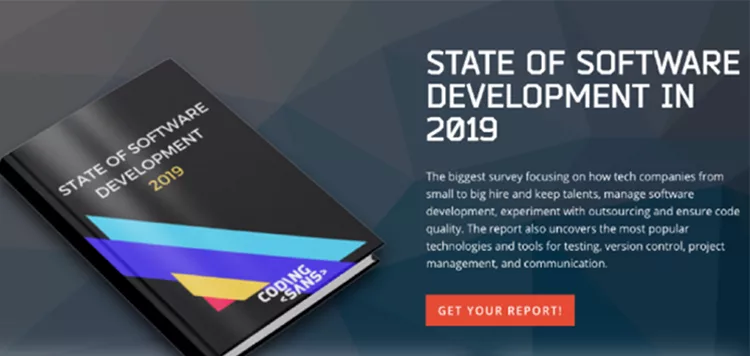
Making Money Without A Job

Software Stack Editor · September 27, 2024 ·

The post Making Money Without A Job appeared first on ClickFunnels.

Imagine waking up, checking your bank balance, and realizing you have enough money to see the whole month out – and then some.

You haven’t even gotten out of bed yet.

The best part?

You don’t have to.

You could take the day off if you really felt like it and the money would keep rolling in. You’d have no boss calling and asking where you are.

This lifestyle isn’t just a fantasy.

Traditional 9-5 jobs are no longer the only path to financial stability. But while making money without a job is possible, it’s not easy.

If you want to be successful, you need to do it right.

Below, we’re going to go over 8 ways to make money without a job with real-life examples of how people used each of them to make $1 million or more.

How to Make Money With No Job

Here’s a quick story about Russell Brunson, the co-founder of ClickFunnels.

He got married while at Boise State University trying to make it as a wrestler, but his passion for wrestling didn’t pay the bills.

His wife had to work to support the both of them.

That didn’t sit right with him.

Russell wanted to start making money but in a way that would let him keep wrestling and be in charge of his own schedule.

So, he tried everything:

  • Selling on eBay
  • Selling on Craigslist
  • Getting into affiliate marketing

But nothing worked.

The First ‘Online Course’ That Made Russell Brunson $3,000

Then one day during spring break, Russell and his friend built a potato gun just for fun.

They had a blast.

And suddenly it hit him: what if he could turn building potato guns into a business?

He filmed himself and his friend assembling the potato guns and turning it into a DVD. They sold it using Google Ads and made $3,000 in the first month. When they added extra products, like the actual materials to build the guns, they started making even more.

The process of turning ideas & information into online money set the foundation for the ClickFunnels platform.

Today, it helps over 100,000 people the world over to:

  • Have financial security
  • Earn money without a 9-5 job
  • Spend more time on their passions & interests

Having a job is no longer the only way to achieve these goals.

The potato gun story is a bizarre product to sell. But it demonstrates the fact that you can sell almost anything online and make enough money without a regular 9-5.

How do You Choose What You Should Sell Online?

If you’ve gotten this far, you’re probably excited about the idea of making money without a job. 

But you might also feel overwhelmed. 

Maybe you’ve tried something before only to see it fail. Or maybe you’re worried about picking the wrong path and wasting months going in circles.

And it’s a valid concern. 

Think about Russell Brunson’s potato gun story. 

He eventually made thousands of dollars selling that course, but that success didn’t come overnight. 

So, the real question is: how do you make sure you start in the right place? 

You need to pick something that will work and keep you motivated through the inevitable challenges.

The Secret to Making Serious Money Online – Without a ‘Regular’ Job

The potato gun story comes straight from Russell Brunson’s book Expert Secrets.

In the book, he explains how info products are one of the most profitable ways to make money online today.

The info product or digital education market is expected to explode to a valuation of $67 billion in 2028 – and is one of the fastest growing in the world.

Russell Brunson says there are two ways info products can work in a business

  1. You can either sell the info product itself 
  2. Or you can use the info product to generate leads for an existing business

Since you’re likely starting from scratch without a pre-existing business, we’ll focus on creative ways to sell info products from the ground up.

Below, you’ll find 8 proven methods to help you start making money with info products, and each one is backed by real-life ClickFunnels users who turned it into $1 million or more.

No job required.

Just creativity, dedication, and the power of selling info products online.

Now, let’s dive into these methods and start building your path to financial freedom.

Bar chart showing the digital education market forecast from 2022 to 2028, with a CAGR of 28%. Market grows from $14.9B in 2022 to $66.7B in 2028, segmented by region.

1. Online Courses

Product

A series of videos that teach a skill or provide niche information, delivered via an online platform.

Business Model

Sell access to the online course via a one-time payment or subscription.

How it Works

Online courses are typically priced anywhere from $50 to $2,000, depending on the complexity and value of the subject matter. These courses are often sold through funnels, where free content (like webinars or free lessons) leads potential customers to purchase the full course. You can promote the course through advertising or by leveraging social media or a blog. Also, courses can lead to upsells like coaching services or advanced workshops. To succeed, it’s important to have expertise in something that other people want to learn. Popular online courses include business training, personal development, fitness, and technical skills.

Example

Russell Brunson, co-founder of ClickFunnels, launched his How to Make a Potato Gun course as one of his first ventures into info products. He created video tutorials that taught people how to build their own potato guns. As a college student, he and his friend made $3,000 in their first month. The original course was actually a DVD – i.e. not a digital product – but it shows how you can make money without a job selling almost anything.

A person excitedly explains earning $3,000 through online selling, promoting learning about sales funnels via messaging or commenting in a social media post.

2. Public Domain Products

Product

Repurposed content from the public domain, such as old books or manuscripts, converted into new formats like audiobooks or eBooks.

Business Model

Sell access to repurposed public domain content via a one-time fee or as part of a package.

How it Works

Public domain products can be created by finding content that no longer has copyright restrictions and transforming it into new formats. Pricing can range from a few dollars to several hundred depending on the uniqueness and value of the product. Public domain products can also serve as bonuses, lead magnets, or upsells for other offers. Leveraging your knowledge of a particular field or era can help create a more appealing product. Examples include republishing classic literature, creating new commentaries, or producing audiobooks.

Example

Russell Brunson also ventured into public domain products with his Secrets of Success books. Since 2023, he’s been republishing works from the New Thought movement, including authors like Napoleon Hill, Charles F. Haanel, Orison Swett Marden, and more. Although it was just launched in October 2023, Brunson paid over $10,000 to acquire a rare edition of just one book. The potential for profit in the public domain niche is vast as you can, in theory, get the original content free. You don’t even need to be an expert yourself – but you do need to understand what might be appealing to your target audience.

3. Podcasting

Product

A digital audio show is available to listeners through platforms like Spotify, Apple Podcasts, or your own website.

Business Model

Monetize through sponsorships, paid subscriptions, or by promoting your own products/services.

How it Works

Podcasts usually generate income through sponsorship deals: brands pay you to mention their product during the show. However many podcasters offer premium episodes or memberships for access to exclusive content. Building a loyal audience is key, and this can be done through consistent, high-quality content. It’s important to build on your expertise to provide value in a specific niche, whether it’s business, personal growth, or entertainment.

Example

John Lee Dumas created the Entrepreneurs on Fire podcast, where he interviews successful entrepreneurs and offers value-packed content. The podcast, launched in 2012, has generated over $27 million through courses, books and sponsorships. The website has an ongoing income report which shows a breakdown of income sources. In August 2024, the podcast had made $1.2 million in the year to date with 86% coming from sponsorships, and the rest from info products & affiliates. John Lee Dumas is one of hundreds of entrepreneurs who’ve earned a ClickFunnels 2 Comma Club Award for generating $1 million on the platform.

4. Licensing

Product

Selling the rights to use your intellectual property (such as your course, brand, or materials) to others.

Business Model

Generate income by licensing your content or brand to other companies for a fee or percentage of sales.

How it Works

Licensing allows you to monetize content or intellectual property you’ve already created by allowing others to use it, in exchange for payment. For example, you could license your course content to be taught by other trainers. Or you could productize a unique business model and sell it to someone else, for them to implement just like you did. Licensing agreements can provide a steady stream of passive income, but they require strong expertise and a proven product or brand that others would want to use. This model is particularly popular in fields like education, software, and creative works.

Example

Alex Hormozi, founder of GymLaunch, built a business around licensing a model that helps gyms scale their revenue. He sold advertising templates, meal plans, sales scripts, and other niche-specific tools to over 4,500 gyms across 13 countries. In its first 12 months, GymLaunch made $17 million in profit. Hormozi is another ClickFunnels 2 Comma Club Award winner, as he used the platform to sell his licensing deals.

5. Tiny Challenges

Product

Short-term challenges that guide participants through a transformation, such as fitness goals or productivity boosts.

Business Model

Charge a one-time fee for joining the challenge, and sell additional products through upsells after the challenge ends.

How it Works

Tiny challenges are designed to create a small but significant transformation for participants in a short time. They’re a great entry-level offer for new online coaches. Challenges build trust and demonstrate results, which makes participants much more likely to buy higher-ticket offers like coaching programs or premium courses afterward. But you can make an income just from the tiny challenges themselves. As a coach or expert, your challenge should align with your area of expertise to attract participants. Popular examples include fitness, diet, or business growth challenges.

Example

Richmond Dinh built his online coaching business by teaching others how to run 5-day ‘tiny challenges,’ positioning them as an entry point to full coaching programs. His method has been highly successful, earning him a 2 Comma Club “X” Award for generating over $10 million through a ClickFunnels funnel. This proves that tiny challenges can create large revenue streams with the right strategy.

6. Ebooks and Audiobooks

Product

A digital book or audiobook providing detailed knowledge or insights on a specific subject.

Business Model

Sell eBooks or audiobooks as standalone products directly to customers.

How it Works

Ebooks and audiobooks are relatively easy to create and can be priced anywhere from $5 to $100, depending on the niche and value of the content. After selling an eBook or audiobook, you can upsell higher-priced products like coaching sessions or digital courses. To succeed with eBooks, focus on leveraging your expertise to provide deep insights on topics you know well or have researched thoroughly. Popular eBook topics include personal finance, self-help, fitness, and business strategies.

Example

Russell Brunson turned a transcript from an interview with Vince James, a businessman who made $100 million in 23 months, into an audiobook titled The 12-Month Millionaire. He sold the audiobook along with an upsell for a physical copy, generating his first $1 million sales funnel using ClickFunnels. This demonstrates the potential of repurposing existing content into profitable e-books or audiobooks.

7. Membership Sites

Product

A platform offering exclusive content or services to members who pay a monthly or yearly subscription fee.

Business Model

Generate recurring income through subscription payments.

How it Works

Membership sites provide ongoing value in exchange for a recurring fee, typically ranging from $20 to $100 per month. The key to success is consistently delivering fresh, high-quality content or services, such as courses, webinars or downloadable resources. You can create multiple tiers of access, with higher-paying members receiving more personalized support. Membership sites work best when you leverage your expertise to attract an audience looking for continual learning or guidance. Popular examples include fitness coaching, business mentorship or specialized training communities.

Example

Liz Benny, known as ‘The Queen of Kapow,’ created The Kapow Club, a membership site offering weekly calls on marketing and mindset for $97 per month. Through her life coaching business, she attracted people looking to advance their careers and has earned over $1 million using ClickFunnels, proving that membership sites can generate significant recurring revenue.

8. Templates, Guides or Planners

Product

Digital or printable templates, guides, or planners for various tasks, such as budgeting, planning or design work.

Business Model

Sell templates or planners as one-time purchases or part of a bundle.

How it Works

Templates, guides, and planners are quick to create and can be sold for $5 to $100 each. They save customers time by providing ready-made solutions, whether it’s a financial planner, social media content calendar, or design presets. To succeed, use your expertise to create highly functional, well-designed solutions that save your target audience time or money in their day-to-day work.

Example

Cole Humphus started with a photography blog and scaled it into a successful business by selling photography guides, tools, and presets. His templates and tools helped photographers improve their craft. Cole is another ClickFunnels 2 Comma Club Award winner as he earned over $1 million through this niche. Later, Cole sold his blog to a photography software company, showing the potential of niche templates and planners as profitable info products.

Man holding a camera stands in front of a promotional banner for photo training courses.

What Platform Are You Going to Use to Actually Sell Info Products?

So, you’ve had a spark of inspiration. 

Maybe you know exactly what kind of info product you want to sell, or you’re still weighing your options. 

But one big question is probably hanging over your head: How are you actually going to sell your info products?

This is where many people get stuck.

Luckily, platforms like ClickFunnels exist to make the process a whole lot easier.

ClickFunnels is a tool designed for people like you – people who want to build a business fast, without getting bogged down by technical details. Whether it’s an online course, eBook, or subscription-based membership site, ClickFunnels provides plug-and-play funnels that you can customize to sell all of the info products we’ve just talked about.

Here are some benefits of using ClickFunnels:

  • Quick setup with no coding required: Build your sales funnel in minutes using ready-made templates.
  • Optimized for conversions: Every page is designed to lead customers step-by-step toward purchasing your product.
  • Seamless integration: Connect payment gateways, email marketing tools, and membership sites with just a few clicks.
  • Scalable for growth: Start small and add upsells, cross-sells, and additional products as you grow.
  • Start for free: ClickFunnels offers a free trial, so you can test out the platform before committing to a paid plan.

With ClickFunnels, you have everything you need to turn your idea into a full-fledged online business.

Try ClickFunnels For Free!

Final Thoughts: How to Make Money With No Job

In today’s world, making money without a job is not only possible, it’s becoming more profitable than ever.

From online courses and eBooks to public domain products and membership sites, there are countless creative ways to build a business that earns you real income – all from the comfort of your home.

 And the best part? 

You can be your own boss, working on your own schedule with unlimited earning potential.

We’ve looked at several examples of people who have taken these ideas and turned them into six- and seven-figure businesses, using platforms like ClickFunnels to make it all happen.

Whether you want to:

  • sell a digital course
  • start a podcast
  • create a 5-day challenge
  • republish a niche book from the public domain
  • teach people to make potato guns

ClickFunnels is a tool that makes it easy to launch and grow your business. 

With plug-and-play funnels, optimized pages, and the ability to start for free it’s the perfect platform for turning your ideas into profit.

So, if you’re ready to stop relying on a job for financial stability and start building your own future, there’s never been a better time.

Dive into the world of info products, and create a new boss-free life for yourself!

Try ClickFunnels For Free!

Thanks for reading Making Money Without A Job which appeared first on ClickFunnels.
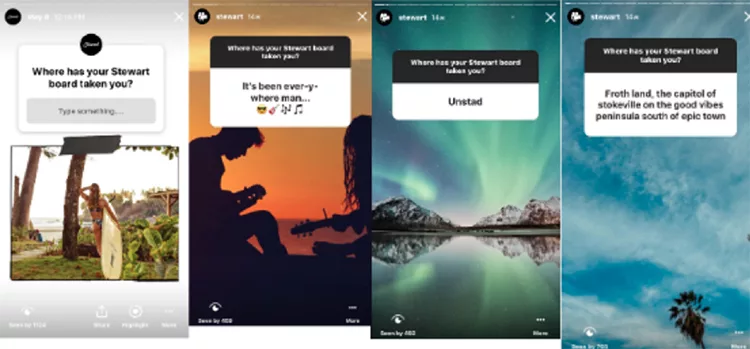
Simple Steps To Create An Effective Business Proposal

Software Stack Editor · September 27, 2024 ·

The post Simple Steps To Create An Effective Business Proposal appeared first on ClickFunnels.

Want to learn how to craft effective business proposals that will help you close more sales?

That’s exactly what we are going to discuss today!

Table of Contents:
  • What is a Business Proposal?
  • Step #1: Do Customer Research
  • Step #2: Get Clear on the Value That You are Offering
  • Step #3: Gather as Much Social Proof as You Possibly Can
  • Step #4: Make Sure That You do Everything Right in the Lead-Up to Submitting Your Business Proposal
  • Step #5: Research That Particular Sales Prospect
  • Step #6: Create an Outline for Your Business Proposal
  • Step #7: Write the Copy for Your Business Proposal
  • Step #8: Design Your Business Proposal
  • Step #9: Submit Your Business Proposal
  • Step #10: Make Sure to Follow Up!

What is a Business Proposal?

A business proposal is a document that:

  • Explain who you are.
  • Outlines how you can help that sales prospect solve a specific problem.
  • Provides pricing information that includes both the total cost of the project and a line item breakdown. 

Typically, business proposals are professionally designed A4-size booklets. They shouldn’t be confused with promotional pamphlets, though. What’s the difference?

Pamphlets are marketing assets. Their purpose is to promote your business by providing general information about your products and services.

Proposals are sales assets. Their purpose is to help you close sales by explaining to sales prospects how you can help them solve specific problems that they are struggling with. 

Each proposal needs to be custom-tailored for that particular sales prospect. Generally speaking, the more customized your proposal, the easier it will be to close the sale. 

Now, with all that out of the way, here are the ten steps that you need to follow if you want to create an effective business proposal…

Step #1: Do Customer Research

Ultimately, crafting an effective business proposal is a copywriting challenge.

And the better you understand your target audience, the better you will be at writing copy that converts.

That’s why if you want to write a persuasive business proposal, you need to start with customer research.

Clearly Define Your Dream Customers

First, you want to clearly define your dream customers.

Given that you are interested in learning how to write effective business proposals, we are going to assume that you are in the B2B space.

That means that your dream customers are going to be businesses. You want to define them using criteria such as the industry they are in, the number of employees they have, and their annual revenue.

Once you know who your dream customers are, it’s time to research how companies like that work, what are the problems that they tend to struggle with and what are the most popular solutions to those problems.

Identify the Decision-Makers

Second, you want to identify the decision-makers within those companies. Who has the authority to accept your business proposals?

These are the main people that you will need to persuade and the primary target audience of your proposals.

You want to understand the incentive structure that they are operating under, the challenges that they are dealing with on a daily basis, and how they see the specific problem that your product or service addresses.

Ideally, you should find a way to chat with people like that one-on-one so that you can better understand their perspective.

Consider going to industry events that these decision-makers attend and striking up casual conversions with them. Don’t try to sell them anything, just show interest in what they do, ask questions, and let them speak.

If that’s not possible, figure out where these decision-makers hang out online and observe the conversations happening there.

If you can’t access their hangout spaces, then go on LinkedIn and make a list of people who fit the decision-maker profile. Then, go through their social media, blogs, podcasts, etc. That might help you understand what matters the most to them.

Also, figure out what type of content these decision-makers consume and start consuming it yourself – follow the same thought leaders, listen to the same podcasts, read the same books, etc. That can give you some context as to what headspace they are in.

Identify the Stakeholders

Generally speaking, the larger the company, the more people are involved in purchase decisions.

You might need to first pass through one or more lower-level stakeholders in order to get it in front of the ultimate decision-maker.

These lower-level stakeholders are the secondary target audience of your business proposal so you need to research them as well.

Again, it’s best to talk to them one-on-one, but if that’s not possible, you can learn a lot from their online presence and the content that they consume.

Why is This So Complicated?

If you think all this sounds complicated, that’s because B2B sales are complicated.

Yes, you need to be able to convey how your product or service will help the company achieve its business goals.

But it’s not the company itself that is going to approve or reject your proposal, it’s the decision-maker who has their own motivations, challenges, and incentives.

Moreover, the motivations, challenges, and incentives of the decision-maker may not be the same as those of the lower-level stakeholders.

And you will have to persuade the stakeholders first in order to get the opportunity to present your proposal to the decision-maker.

Unfortunately, when you are selling to businesses, this complexity is unavoidable so you will need to learn how to navigate it. There’s just no way around it!

Step #2: Get Clear on the Value That You are Offering

A man and woman exchange a large dollar symbol. Nearby are a bill, shopping bag, boxes, and coins. An upward arrow in the background suggests financial growth or successful business.

You want to get clear on the value that you can offer to:

  • Companies: How will your product or service help improve the company’s bottom line?
  • Decision-makers: How will it make the decision-maker’s life better?
  • Lower-level stakeholders: How will it make the stakeholders’ lives better?

In your proposal, you should lead with the value that you can offer to the company while also signaling the value that you can offer to the decision-maker.

As for the lower-level stakeholders, you need to make sure that they can understand your proposal and that forwarding it to the decision-maker will make them look good.

Step #3: Gather as Much Social Proof as You Possibly Can

Social proof is the evidence that other people trust you.

The more social proof you can present to sales prospects, the easier it will be to close sales.

Here are the three most powerful types of social proof:

Customer Testimonials

Always ask happy customers to leave you testimonials.

Ideally, these testimonials should include the customer’s photo, their full name, their job title, and the specific result that they got thanks to your product or service.

Obviously, before you start using someone’s testimonial on your website, marketing materials, and sales materials, you should show it to that customer to make sure that they are happy with it.

Also, note that for a testimonial to be effective, it needs to not only be real but also look real. Including identifying information about the customer helps with that, which is why we are recommending it.

If testimonials that you use include customers’ photos, full names, and job titles, potential customers can easily verify that these are real people by looking them up on LinkedIn.

They probably won’t do that but the fact that they could will nevertheless have a reassuring effect!

Customer Case Studies

Customer case studies are even better than testimonials because they explain how your product or service helped that customer get a specific result.

Of course, producing them requires a much larger time investment, both from you and from the customer.

Consequently, it’s probably best to only do case studies about the customers that got the most impressive results.

Ideally, you want to have at least one case study for each customer segment that you serve.

Endorsements From Well-Known People

Finally, if you can get an endorsement from a well-known person in your niche, that may also boost your credibility in the eyes of potential customers.

That person doesn’t have to be a celebrity. However, in order for this approach to work, they need to be someone that your potential customers recognize, respect, and look up to.

Consider reaching out to these well-known people and offering your products and services for free. Then, if they get good results, ask for a testimonial. If you get a testimonial, ask them if it would be okay to write up a case study.

Step #4: Make Sure That You do Everything Right in the Lead-Up to Submitting Your Business Proposal

Illustration of people interacting with a large smartphone showing profiles and messages. Icons of email, chat, and documents surround them, depicting communication and online networking.

Think about a marriage proposal.

Is it the proposal itself that is the determining factor in whether the woman says yes or no?

Or would it be fair to say that everything that happens before the proposal – the first interaction, the first date, the courtship – matters way more?

Well, it’s the same with business proposals. You need to do everything right in the lead-up to submitting your proposal if you want it to stand a chance of being accepted.

That includes presenting yourself in a professional manner, having a good reputation in your industry, leaving a great first impression, doing what you said you would do, being punctual, and so on.

Keep in mind that if you mess up in one of the earlier stages, you might not even get the opportunity to submit your business proposal, just like fumbling on the first date means that you won’t have an opportunity to make a marriage proposal.

Sure, your business proposal itself also matters, just like marriage proposals matter, but it’s not what’s most important!

Step #5: Research That Particular Sales Prospect

Before you reach out to a particular sales prospect, you want to research the company itself, the lower-level stakeholders and the decision-maker.

That will make everything easier, from the first interaction to writing the proposal to closing the sale.

Learning the basics of open-source intelligence – OSINT for short – can be super helpful here.

OSINT is the collection and analysis of data gathered from publicly available sources.

That might include the company’s website and its social media profiles, employee social media profiles, customer reviews, press coverage, public records, etc.

Here’s a 5-hour OSINT course that you can watch for free on YouTube:

Open-source intelligence can help you get a better picture of what’s going on at the company, what are its current challenges and what is on the minds of the people that you will need to persuade in order to close the sale.

Your research might also reveal that this company may not be a good sales prospect for your business: maybe it’s in a precarious financial situation, or in turmoil due to a recent change in leadership, or just signed a deal with one of your competitors.

In that case, you’ll be glad that you did your homework and didn’t waste time pursuing something that was extremely unlikely to work out!

Step #6: Create an Outline for Your Business Proposal

Two people discuss a presentation with charts and social media icons on a board.

Once you are done researching that particular sales prospect, gather all the information that you are going to need and create an outline for your business proposal.

We recommend following this structure:

  1. Cover page: It should explain what type of business proposal this is, who this proposal is for and who prepared it.
  2. Table of contents: If you intend to submit your proposal in a digital format, make sure that the table of contents is clickable and can be used to navigate the document.
  3. Executive summary: This is where you should summarize what your proposal is about: what is the problem, what is the solution, and why the customer should hire you.
  4. Problem statement: Clearly define the problem that you are offering to solve with your product or service.
  5. Solution statement: Explain how you intend to solve that problem with your product or service.
  6. Methodology overview: Break down the step-by-step process that you are going to use to solve that problem.
  7. Timeline with milestones: Provide the timeline for the project with concrete deliverables and deadlines for those deliverables.
  8. Pricing information: Share the total cost of the project and break it down into specific line items.
  9. Terms and conditions: Give an overview of your terms and conditions, most importantly what kind of payment schedule you expect.
  10. Case studies: Provide at least one case study that demonstrates how you helped a similar company solve the same problem using the same methodology.

Each of these should be a separate page, so your proposal should be at least 10 pages long.

Also, business proposals sometimes include contracts but we recommend sending the contract separately after your proposal has been accepted.

Step #7: Write the Copy for Your Business Proposal

Diagram showing three steps: Focus on Them, Provide Social Proof, End with a Clear Call to Action.

Look, we’ll be blunt:

The copy of most business proposals is terrible. Even junior copywriters would be embarrassed by it.

But that’s good news for you: it means that you can stand out from the competition by following basic copywriting principles!

Focus on Them

Here’s something that you need to understand about persuasion: no one cares about you, they only care about what you can do for them.

Everything in your business proposal should be written with the intention of helping the decision-makers see how they would benefit from buying your product or service.

So don’t ramble about how amazing you are, focus on what’s in it for them!

Provide Social Proof

Social proof tends to be underutilized in business proposals.

You want to showcase your most impressive social proof on the executive summary page: mention it in the copy and also display customer testimonials.

Then, at the end of your proposal, you want to feature at least one case study, but ideally, you should have three.

Also, if you can find a way to incorporate social proof into other pages, you should do that as well.

Remember, the more social proof you provide, the more persuasive your copy is going to be!

End With a Clear Call-to-Action

If the sales prospect decides to accept your business proposal and wants to move forward, what is the next step that you want them to take?

You should make that crystal clear by ending your proposal with a call to action.

For example, if you want them to schedule a call with you, you can provide a link to your appointment calendar and encourage them to book it.

Step #8: Design Your Business Proposal

Three people engaged in a discussion with charts and graphs displayed. One person is sitting with a laptop, while the other two stand, one holding a book, the other a briefcase.

Nowadays, companies expect professionally designed business proposals.

Fortunately, there are tons of beautiful templates out there that you can use. Consider checking out:

  • Adobe’s business proposal templates
  • Canva’s business proposal templates
  • Visme’s business proposal templates

Also, if you want a custom business proposal design, you can find freelance graphic designers who specialize in that on Fiverr or UpWork!

Step #9: Submit Your Business Proposal

Two people shaking hands in front of business graphics, charts, and documents with envelopes and gears, symbolizing a business agreement.

Once your proposal is done, submit it to your contact at the company.

Ask them to give you a timeframe within which you should expect to get a response and tell them that you are going to follow up by the end of it.

Also, add a “P.S.” section to your email with a link to your appointment calendar and tell them that if they have any questions after reading your proposal, you would be happy to get on a call and answer them.

Step #10: Make Sure to Follow Up!

A person interacts with digital profiles and settings icons on a screen, featuring headshots and a checkmark.

Everyone is overwhelmed these days so your contact at the company might not find the time to read your proposal or they might simply forget about it altogether.

If you don’t hear from them within the timeframe that they provided, there’s no need to take it personally. Simply send them a follow-up email, just like you said you would. Keep following up every week until they respond.

If they say that they need more time, ask them for a timeframe and then follow up again at the end of it. Keep following up until you get a yes or no answer regarding your business proposal.

Also, add a P.S. section to all your follow-up emails and say something along the lines of “P.S. If you want me to stop following up – just let me know!”.

We learned this trick from LeadFuze’s founder Justin McGill. This P.S. section is like an unsubscribe link but for business emails. It enables you to be proactive about following up while also being respectful and giving the other person a way to opt out!

Want to Learn How to Write Copy That CONVERTS?

You can have the best product or service in the world but guess what?

If you can’t convey its value to your dream customers, you will lose out to competitors with inferior products and services but better copy. Sad but true.

That’s why if you are serious about building a business, you need to learn copywriting.

In fact, we would argue that it’s the single most important entrepreneurial skill.

Our friend Jim Edwards wrote a best-selling book “Copywriting Secrets” for busy entrepreneurs just like you.

In this book, he covers everything you need to know in order to start writing copy that CONVERTS.

“Copywriting Secrets” is available on Amazon where it has over 1,800 ratings and a 4.7-star global rating.

But you can also get it directly from Jim for free.

All he asks is that you cover the shipping!

So what are you waiting for? 🧐

Get “Copywriting Secrets” for FREE!

Thanks for reading Simple Steps To Create An Effective Business Proposal which appeared first on ClickFunnels.
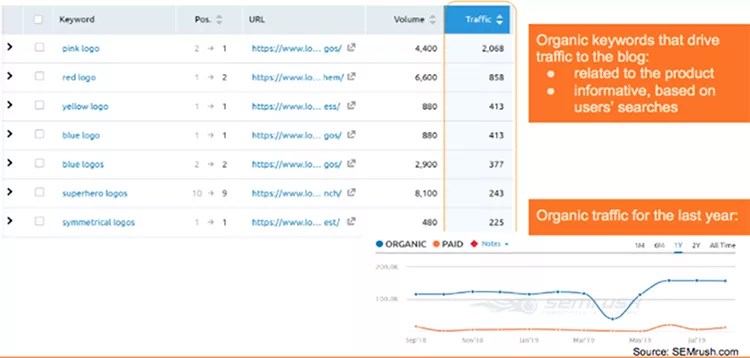
Quick Ways To Earn Money Fast

Software Stack Editor · September 27, 2024 ·

The post Quick Ways To Earn Money Fast appeared first on ClickFunnels.
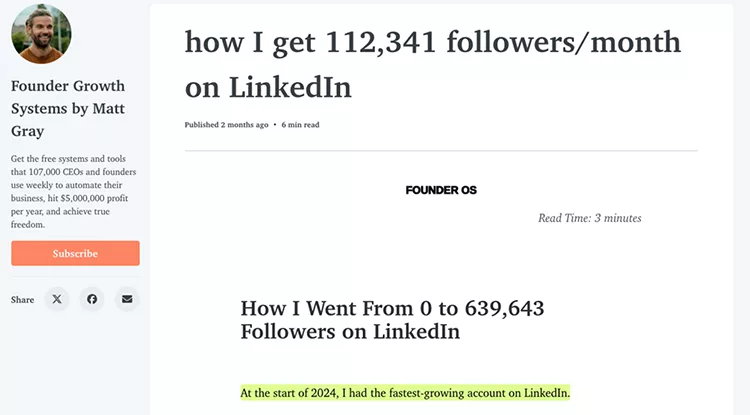
Need to make money ASAP?

Today we are going to share seven ways to do it!

Table of Contents:
  • Reality Check: You Probably Won’t be Able to Make Money Overnight
  • #1: Sell Old Stuff That You Don’t Need Anymore
  • #2: Become an Airbnb Host
  • #3: Get a Gig Economy Job
  • #4: Get a Minimum-Wage Job
  • #5: Get a Temporary Seasonal Job
  • #6: Start a Local Service Business
  • #7: Start a Freelancing Business

Reality Check: You Probably Won’t be Able to Make Money Overnight

Look, we’ll be real with you:

You shouldn’t count on making money literally overnight because that is extremely unlikely to happen. Don’t listen to people who tell you otherwise because they are just preying on your desperation. 

If your situation is so dire that you aren’t sure if you are going to be able to meet your basic needs, your best bet is to seek help from family, friends, religious institutions, charities, or governmental organizations, whatever is available to you. 

However, if you aren’t worried about food and shelter and just need extra cash for whatever reason, you can probably make some within a month and establish a stable source of income within three months. 

Also, it’s important to be realistic about the workload that you should expect: the more money you need, the more you will have to work, especially if you need it within a relatively short timeframe. 

Depending on your circumstances, it might make sense to go beyond the regular 40 hours per week, which you may be able to accomplish by combining several ways to make money instead of focusing on just one. 

We don’t recommend doing that for an extended period of time because it can lead to burnout. But working like crazy for a few months might help you reach your short-term financial goals faster, assuming that your health allows it. 

Now, with all that out of the way, here are seven ways to make money as quickly as possible…

#1: Sell Old Stuff That You Don’t Need Anymore

We all tend to accumulate clutter as we go through our lives.

Arguably, the fastest way to make money is to take inventory of that clutter, determine what can be sold, and then put it for sale online.

Consider selling your old:

  • Books
  • Clothes
  • Handbags
  • Accessories
  • Electronics
  • Hobby equipment

…etc.

You might be able to make a few hundred bucks this way depending on what kind of stuff you have lying around and collecting dust!

#2: Become an Airbnb Host

If you have a space that can be rented out, you might want to consider becoming an Airbnb host. Just make sure to comply with the local laws.

You can rent out:

  • An entire house or apartment
  • A room in a house or apartment 
  • A separate space on the same property (e.g. a guest house, a caravan, a tent cabin, etc.) 

Obviously, this strategy is going to be the most viable in touristy places, especially in expensive locations.

Just know that being an Airbnb host is not all unicorns and rainbows. You need to ask yourself if you are prepared to deal with terrible guests that you will inevitably encounter at some point if you remain on the platform long enough.

You may want to check out Airbnb Hell, a website that catalogs uncensored stories from both guests and hosts and lists reasons why you shouldn’t use Airbnb.

Also, if you are thinking about letting strangers stay at the place where you are currently living, it’s important to consider the safety risks that come with that, especially if you have a family!

Three small tents set up in an indoor room with tables and chairs on a wooden floor.
This $85/night Airbnb listing in Central London went viral and was quickly removed but then came back with an increased price of $100/night. There was also a $17/day service fee! Image source: Airbnb.

#3: Get a Gig Economy Job

The ever-growing gig economy has received a lot of criticism over the last decade over its poor working conditions, questionable compensation structures, and lack of employment benefits.

That criticism has merit. Doing this type of work probably isn’t a viable path to long-term financial security. However, it can provide a temporary boost in income when you need it. 

The most obvious way to make extra cash within the gig economy is to work as a driver for rideshare apps like Uber or as a courier for food delivery apps like DoorDash.

If you are considering going this route, make sure to calculate how much money you’ll be left with after everything is accounted for including vehicle maintenance and insurance, gas, taxes, etc.

Then there’s the remote gig economy work. For example, on Amazon’s Mechanical Turk platform, you can get paid to fill out marketing research surveys, categorize data for AI training, and participate in scientific studies.

However, the consensus among the Mechanical Turk veterans seems to be that the platform has declined significantly since the late 2010s. You are unlikely to make more than $5-10 per day, even working full-time.

It’s also possible to work across several platforms like that, say, Mechanical Turk, Prolific, and CloudResearch, but even then you are unlikely to make more than $15-20/day.

Consequently, going this route makes the most sense for people based in low-cost-of-living countries. Ask yourself: what will enable you to make more money, working on these platforms or getting a minimum-wage job?

Also, keep in mind that there’s an approval process, you can’t just start working immediately. Plus, your access to gigs, especially the high-paying ones, will be limited at first.

This means that the timeline from signing up for these platforms to reliably making a few hundred bucks per month can be somewhat unpredictable!

#4: Get a Minimum-Wage Job

Generally speaking, minimum-wage jobs are easy to get because they typically don’t require any qualifications, aren’t that appealing, and have a high employee turnover.

If you need to establish a stable source of income as quickly as possible, getting a minimum-wage job may be the most straightforward solution.

Consider applying for:

  • Cleaning jobs 
  • Retail jobs 
  • Fast food jobs
  • Waiting staff jobs 
  • Barista jobs

…etc.

Something that you may not be aware of if you haven’t worked these types of jobs before is that they often offer opportunities for career progression.

Obviously, that varies from company to company, but if you show up on time, do good work, and get along with your co-workers, you may be able to get a promotion to a supervisor within a year.

That is especially true for jobs that tend to be primarily done by young people. When you are competing against teenagers and college kids, it’s easy to stand out as a good employee by simply doing the basics!

#5: Get a Temporary Seasonal Job

If you already have a full-time job, you can get a part-time temporary seasonal job on top of it.

That will likely require working around 60 hours per week but if you can handle it then it might be a great way to make some extra cash.

What kind of seasonal jobs will be available to you is going to depend on your location.

For example, if you live in a country that celebrates winter holidays, you should be able to find temporary work in the hospitality industry from the middle of October to the end of December. Catering agencies are always hiring around that time because it’s their peak season.

It’s also worth noting that getting a temporary seasonal job may provide an opportunity to transition into a full-time, permanent position at the same company if you do good work.

Say, every year, Amazon hires temporary warehouse workers during the run-up to the winter holidays and then offers some of them permanent positions.

So if you want a regular full-time job but the businesses around you are hiring temporary workers right now, it might be worth considering going this route just to get your foot in the door!

#6: Start a Local Service Business

Starting a local service business can be a great way to make quick cash because typically, once you finish the job, customers pay you that same day.

What Service Should You Offer?

If you need to start making money as soon as possible, offer a service that you can begin providing immediately.

Here are some ideas:

  • Lawn mowing service
  • Snow clearing service 
  • Mattress-cleaning service
  • House cleaning service
  • Residential moving service
  • Laundry pick-up and delivery service 

All these have a “minimum viable service” version, the service business equivalent of the minimum viable product. You don’t need special equipment, you just need to be willing to do the work.

Want some inspiration? Rapper 50 Cent once spotted a money-making opportunity after a blizzard and started going door-to-door, offering his neighbors to shovel snow at a rate of $100 per house.

He got so much work that way that he had to hire a few neighborhood kids as his “employees” to get everything done!

A person is shoveling snow next to a parked car on a snowy street.
Rapper 50 Cent shoveling snow at a rate of $100 per house. Image source: Huffington Post

How to Get Your First Customers

You can get your first customers with these old-fashioned marketing strategies:

Go Door-to-Door

Yes, this approach still works, especially if you learn the basic sales principles.

Consider reading “The Psychology of Selling” by Brian Tracy. It’s a classic sales book that is a great introduction to the subject.

Distribute Flyers

Design a simple black-and-white flyer that explains what you are offering, what your rate is, and how to contact you.

The size of a standard sheet of paper is A4. If you use the A6 size for your flyers, you’ll be able to get four of them out of one sheet of paper.

If you don’t have a printer at home, look for places nearby that offer printing services with volume discounts.

If you don’t feel comfortable putting your personal phone number out there, you can set up a Google Voice number and automatically forward calls to your phone.

Generally speaking, you can probably expect to get 1 lead for every 100 flyers that you distribute.

Learning some basic copywriting can help you increase your flyer conversion rate, though. We recommend reading “Copywriting Secrets” by our friend Jim Edwards. You can get it for free, all he asks is that you pay for shipping.

Of course, not all of those leads are going to become customers, but if you can convert at least 10% of them, you’ll get at least 1 customer for every 1,000 flyers that you distribute.

That may seem like a lot of work to get a single customer, but keep in mind that if you do a good job, they might become a regular and may even recommend you to their family and friends.

So yes, getting customers is going to require a lot of work in the beginning when no one knows you exist, but it will become easier once your business starts gaining momentum.

Post Ads on Local Community Notice Boards

You can probably find community notice boards nearby in places like grocery stores, cafes, libraries, etc.

Create ads for your business and post them there. You can use the same A6 size as for flyers, but make the font larger. Also, consider printing your ads on colorful paper so that they would draw more attention.

How to Grow Your Local Service Business

Once you have some money coming in, you can begin reinvesting it in growing your business:

  • Do more of what works until you hit the ceiling. Did you get good results by distributing 100 flyers per day? Cool, start doing 200 per day. Keep increasing that number until it becomes unfeasible due to time constraints.
  • Build a company website designed to rank for relevant keywords such as “[your service] [your location]” (e.g. “lawn mowing London”). You will need to learn the basics of local SEO if you want to get organic traffic from Google.
  • Build a sales funnel for your business. We recommend reading our co-founder Russell Brunson’s book “DotCom Secrets” if you want to learn how to build sales funnels that convert. You can get it for free directly from us, all we ask is that you cover the shipping!
  • Start driving traffic to your sales funnel with local Google ads. These are the ads that are shown at the top of search results for specific keywords. You can learn the basics by getting a Google Ads course on Udemy. Wait until the next sale and you should be able to buy it for less than $20.

#7: Start a Freelancing Business

If you have at least one marketable skill, freelancing can be a great way to make some extra money.

What Service Should You Offer?

Take inventory of your skills and figure out which skill would provide the most value to businesses if you offered it as a service.

Here are some ideas:

  • Paid advertising
  • Search engine optimization
  • Social media marketing 
  • Backend development
  • Frontend development 
  • User experience design 
  • User interface design
  • Content writing
  • Copywriting
  • Video editing

All these skills are in high demand. You can make decent money with any of them, especially if you are good at what you do!

How to Build a Portfolio

It’s extremely difficult to get hired as a freelancer if you don’t have any work samples. That’s why your first priority should be to build a portfolio.

One way to do that is to work on your own projects and then show those projects to potential clients.

No one is preventing you from starting your own blog, publishing your own videos on YouTube and TikTok, building your own web apps, etc.

Another way to do it is to create something and give it to potential clients for free. If they decide to use it, ask if it’s okay to add it to your portfolio.

For example, if you want to build an email copywriting portfolio, start writing email sequences for businesses in your target audience for free.

There’s no need to ask permission, just do it and send it to them. Worst case scenario, they won’t use it. Best case scenario, it will lead to paid work!

How to Get Your First Clients

The best way to get your first freelancing clients is cold email:

  1. Create a new email account specifically for cold emails and use an email warm-up tool like Lemwarm to warm it up.
  2. Hire a lead generation expert on Fiverr and ask them to compile a list of 100 leads based on your dream customer criteria.
  3. Pick a proven cold email template and follow-up email templates. We recommend the ones provided in “The Cold Email Manifesto” book.
  4. Start going through your lead list at a pace of 3 cold emails per day. That way, it will take you a little bit more than a month to reach out to everyone on it.
  5. Keep track of all emails, responses, and follow-ups. You can either use a simple spreadsheet for this or specialized software like Lemlist.
  6. If those initial leads were high-quality, meaning that they met your criteria and the provided details were accurate, go to the same lead generation expert and get 1,000 more leads.
  7. Continue sending 3 cold emails per day but start optimizing your template by making one tweak per 100 emails. Look at the data to see what works best and what doesn’t.

The pace we are recommending is super slow as far as cold outreach goes.

However, it’s best to put a lot of effort into each message and really customize it, which takes time. Sending copy-paste emails doesn’t work and might get you flagged as a spammer by your email service provider.

How to Scale Your Freelance Business

The best way to scale your freelance business is to:

  1. Productize it – Instead of offering different services at different rates to different clients, create clearly defined service packages and list the pricing on your website.
  2. Build a sales funnel for it – Again, we recommend reading our co-founder Russell Brunson’s book “DotCom Secrets” if you want to learn how to build sales funnels that convert.
  3. Start driving traffic to your sales funnel with Facebook ads – You can learn the basics by getting a Facebook ads course on Udemy. If you wait until the next Udemy sale, you should be able to buy it for less than $20.

By the way, Meta, the company that owns Facebook, allows people to browse ads that are currently running on its properties.

You can learn a lot by going to its ad library and looking at the ads that are targeting various keywords related to the service that you are offering.

Keep in mind that the longer the ad has been running, the more likely it is that the campaign is profitable!

Want to Learn How to Build Sales Funnels That CONVERT?

Our co-founder Russell Brunson used sales funnels to take ClickFunnels from zero to $100M+ in annual revenue in less than a decade.

He is now widely considered to be one of the top sales funnel experts in the world. Want to learn from him?

His best-selling book “DotCom Secrets” is the best place to start because it covers everything you need to know in order to build sales funnels that convert.

This book is available on Amazon where it has over 2,500 global ratings and a 4.7-star overall rating.

But you can also get it directly from us for free…

All we ask is that you pay for shipping!

So what are you waiting for? 🧐

Get “DotCom Secrets” for FREE!

Thanks for reading Quick Ways To Earn Money Fast which appeared first on ClickFunnels.
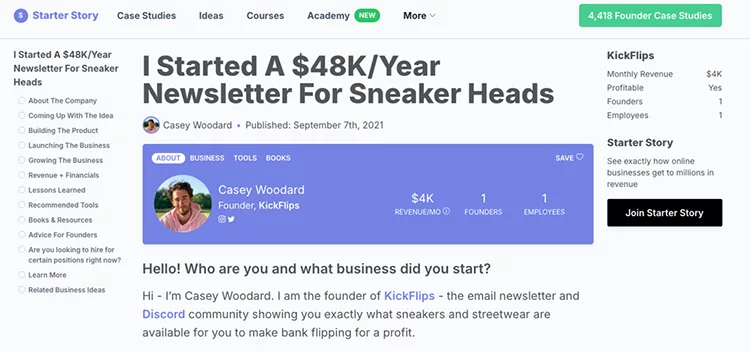
How To Build An Effective Business Model For Startups

Software Stack Editor · September 26, 2024 ·

The post How To Build An Effective Business Model For Startups appeared first on ClickFunnels.
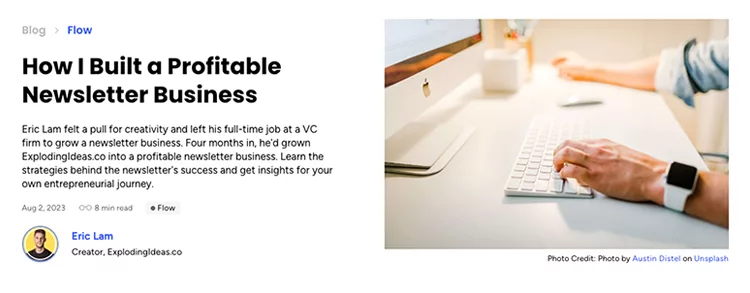
Looking to scale your startup?

Then you’re about to discover the most important element in every business’ success: the business model.

A business plan outlines a company’s goals and strategies. But a business model is how they’re going to monetize their products or services.

Arguably, the business model is more important.

How will you achieve your goals if you don’t know how you’ll make money?

By the end of this article, you’ll understand how to create a simple but effective business model for your startup.

And you’ll also know what to fix when it’s not working.

Why Startups Die Without a Business Model

A business model is the way a company makes money.

It explains who you’re selling to, what you’re offering, and how you’re getting paid.

The business model is one of the most crucial elements in any startup. Without a business model, you can’t make money. And without a good business model, you can’t scale.

For example, let’s say you’ve built a shiny new app.

You decide your main goal is to get to 1 million users without worrying about how you’ll actually make money. You hit your target but soon when you try to monetize the app you aren’t generating enough revenue to stay afloat.

This is not just a thought experiment.

Take a look at three startups that went viral but couldn’t find a good business model:

  • Yo (2014-2016)
  • Yo was a viral app that let users send the word “yo” to friends. It quickly gained popularity on Product Hunt, but the founder, Or Arbel, admitted his biggest mistake was “not charging customers from day one.” Once investors saw there was no revenue, funding dried up, and the app shut down.
  • HQ Trivia (2017-2020)
  • It attracted over 2.3 million players with live trivia games, but the founder, Rus Yusupov, admitted they were still “solidifying their business model” when investors pulled out. Despite its viral success, HQ Trivia couldn’t figure out how to make money and eventually had to close.
  • Vine (2013-2016)
  • The popular short-form video app, saw similar issues. Vine allowed users to create 6-second looping videos and grew quickly – it attracted popular creators like Logan Paul and Daniel Dobrik. But without a strong business model, it couldn’t monetize its user base. Twitter, which acquired Vine in 2012, shut it down in 2017 due to increasing competition and the inability to generate sustainable revenue.

In all of these cases, the lack of a well-defined business model led to failure.

No business model = no business.

Below, we’ll walk you through a simple business model framework to help you avoid this fate.

An Effective Business Model Template

Scaling a startup to millions of dollars in revenue is exciting, but it’s not easy. Managing that money flow can be complex.

But the essence of a business model is simple.

Here’s a proven business model template from The Value Engineers, incorporating elements from academic research on the topic. It breaks down into four key elements:

  1. The value proposition: What are you offering? Who is it for? What makes your offer unique?
  2. The value network: Who are the key partners involved in delivering this value?
  3. The revenue model: How does the business make money? What cash flows are involved?
  4. The delivery model: How is your product or service delivered to customers?

You don’t need to write a long business plan to answer these. Short, clear sentences will do the job.

At its core, these are the four main factors that determine the strength of your business model.

Below, we’ll look at how some of the world’s top companies have their business models condensed into this simple template.

10 of the Most Profitable Business Models for Startups

Now that we’ve seen the template, let’s put it into action.

Below, we’ll dive into some of the most profitable business models by looking at real-world examples of successful startups.

Although a business model is more than just a revenue model we’ll categorize the following examples based on how they charge customers.

Remember, there are always more factors at play.

1. ClickFunnels (Tiered Subscription Fee)

Pricing page of ClickFunnels featuring two plans: Startup ($81/month) and Pro ($248/month), both with a free 14-day trial. Plans include unlimited courses, modules, and domains with varying workspaces and team members.

The Value Proposition:

  • ClickFunnels offers an all-in-one platform for creating marketing funnels, websites, and sales pages.
  • ClickFunnels offers tools for businesses to increase conversions and sales.
  • ClickFunnels is part of an ecosystem that includes live seminars, resources, training, and niche-specific funnels to help users grow their businesses.
  • ClickFunnels is constantly adding new features to help users stay ahead.

The Value Network:

  • Entrepreneurs, marketers, and online businesses
  • Payment processors
  • Third-party integrations (e.g., email marketing tools, CRM platforms)
  • Developers and tech partners

The Revenue Model:

  • Tiered subscription fee: ClickFunnels offers a basic subscription for startups and a higher-priced tier with additional features for larger businesses.

The Delivery Model:

  • Cloud-based platform accessible through the web, with integrations and tools for building and managing online sales funnels.

2. Netflix (Flat Subscription Fee)

Table displaying three subscription plans: Basic ($7.99), Standard ($10.99), and Premium ($13.99). Premium plan includes Ultra HD, more screens, and other features not available in Basic or Standard plans.

The Value Proposition:

  • Netflix offers global on-demand video streaming at any place, any time, on any device
  • Netflix has a large content library with original high–quality content
  • Netflix provides personalized recommendations

The Value Network:

  • Content producers
  • UP holders
  • Rights clearing organizations
  • Investors
  • Competitors

The Revenue Model:

  • Flat monthly subscription fee: Netflix originally charged a flat monthly fee, though they introduced a tiered structure that includes ad-free viewing and the ability to share the subscription with extra members. This was to cut down on password sharing.

The Delivery Model:

  • Streaming

3. Amazon Web Services (AWS) (Pay-Per-Use)

The Value Proposition:

  • AWS offers cloud computing services like storage, databases, and machine learning on a pay-as-you-go basis
  • Flexible, scalable, and cost-effective for businesses of all sizes
  • High reliability and security for critical infrastructure

The Value Network:

  • Developers and tech companies
  • Hardware and software vendors
  • Data centers
  • Service integrators and consulting partners
  • Global regulatory authorities (for data compliance)

The Revenue Model:

  • Pay-per-use model: customers are charged based on their usage of computing resources (e.g., storage, processing power, data transfers).

The Delivery Model:

  • Cloud-based delivery through a web-based platform, accessible globally

4. Facebook (Advertising-Based)

The Value Proposition:

  • Facebook offers a free social media platform for connecting with friends, family and communities.
  • Tools for businesses to reach and engage with their target audience through targeted advertising.
  • Personalized user experience based on interests, activities, and behaviors.

The Value Network:

  • Users
  • Advertisers (businesses targeting specific demographics)
  • Content creators (media companies, influencers)
  • Developers (third-party apps and services integrated with Facebook)

The Revenue Model:

  • Free for users: Facebook generates revenue through advertisers who pay for targeted ads.

The Delivery Model:

  • Social media platform accessible via apps and web browsers

5. Airbnb (Commission-Based)

The Value Proposition:

  • Airbnb provides a platform for people to list, discover, and book accommodations globally.
  • Unique and personalized stays are often cheaper than hotels.
  • Hosts can earn money by renting out their homes or spare rooms.

The Value Network:

  • Hosts (property owners)
  • Guests (travelers)
  • Local governments (compliance and regulations)
  • Insurance companies
  • Payment processors

The Revenue Model:

  • Commission-based: Airbnb takes a percentage from both the host and the guest for each booking.

The Delivery Model:

  • Marketplace platform available via apps and the web, facilitating bookings and payments.

6. PayPal (Transaction Fee)

Screenshot of the PayPal Merchant Fees webpage showing a list of fees categories for consumers and merchants, a link to download a printable PDF, and the update date of August 14, 2024.

The Value Proposition:

  • PayPal offers a secure and easy way for individuals and businesses to send and receive payments online.
  • International payment transfers with currency conversion.
  • Fraud protection and buyer/seller security guarantees.

The Value Network:

  • Banks and financial institutions
  • Merchants (e-commerce platforms, individual sellers)
  • Consumers
  • Regulatory bodies
  • Developers (for PayPal integrations in websites and apps)

The Revenue Model:

  • PayPal charges a percentage-based transaction fee to merchants for each sale processed through its platform.

The Delivery Model:

  • Online payment platform integrated into e-commerce sites and apps, with a web and mobile interface for users.

7. Etsy (Marketplace/Platform Fee)

A screenshot of Etsy's Fees & Payments Policy page. It includes a table of contents detailing various sections like types of fees, transaction fees, and payment accounts.

The Value Proposition:

  • Etsy offers a marketplace for creative entrepreneurs to sell handmade, vintage, and unique items globally.
  • Easy-to-use platform for small businesses to reach a large audience.
  • Buyers get access to one-of-a-kind products with a personal touch.

The Value Network:

  • Sellers (artists, craftsmen, vintage item collectors)
  • Buyers
  • Payment processors
  • Logistics companies (shipping and delivery)
  • Community of creators and buyers

The Revenue Model:

  • Etsy charges a listing fee to sellers and takes a commission (transaction fee) when an item is sold.

The Delivery Model:

  • Marketplace platform available via website and apps, with integrated payment and shipping solutions.

8. Microsoft (Licensing)

The Value Proposition:

  • Microsoft offers software and tools, like Windows and Microsoft Office, to businesses and individuals.
  • Productivity software for personal, educational, and business use.
  • Frequent updates and support for users, ensuring security and new features.

The Value Network:

  • Corporate customers and consumers
  • Software developers and hardware manufacturers (PC and device makers)
  • Channel partners (resellers, system integrators)
  • Competitors (Google, Apple, etc.)

The Revenue Model:

  • Licensing model: Microsoft charges per-user or per-device licensing fees for its software.

The Delivery Model:

  • Software is delivered as downloads or pre-installed on devices, with subscriptions available for cloud-based versions like Microsoft 365.

9. Amazon Associates (Affiliate Marketing)

Screenshot of the Amazon Associates Program Standard Commission Income Statement page, showing income rates for specific product categories.

The Value Proposition:

  • Amazon Associates offers a way for individuals and businesses to earn money by promoting Amazon products through affiliate links.
  • Affiliates earn a commission on every sale generated through their unique referral links.
  • Access to a vast product catalog and easy-to-use link-building tools.

The Value Network:

  • Affiliates (bloggers, websites, social media influencers)
  • Amazon (retailer)
  • Consumers (those purchasing products)
  • Merchants (selling products on Amazon)

The Revenue Model:

  • Commission-based: Amazon pays affiliates a percentage of sales made through their referral links.

The Delivery Model:

  • Affiliate programs are managed online through Amazon’s dashboard, with tracking and reporting tools available for affiliates.

10. Spotify (Freemium)

Spotify homepage offering a one-month free trial for Premium Individual plans, featuring options to learn more about the plans and user support in the menu, with music album covers displayed on the right.

The Value Proposition:

  • Spotify offers music streaming anytime, anywhere on any device.
  • Free access to a vast library of music with ads.
  • Premium subscribers get ad-free listening, offline playback, and better sound quality.
  • Personalized playlists and recommendations based on user preferences.

The Value Network:

  • Music creators and record labels
  • Advertisers (for free users)
  • Payment processors (for premium subscriptions)
  • Hardware partners (e.g., smart speakers, mobile devices)
  • Competitors (Apple Music, Tidal, YouTube Music)

The Revenue Model:

  • Freemium model: free users with ads and premium users with a monthly subscription fee.

The Delivery Model:

  • Streaming through apps on mobile, desktop, smart speakers, and other connected devices.

How Flexible Should You Be With Your Business Model?

If you’re reading this, you’re likely still figuring out your business model.

So, here’s the big question: After creating your business model, how strictly should you stick to it?

There are strong opinions on both sides of this debate.

  • Flexible Business Models – Some argue that a business model will “figure itself out” as you grow. If you get too caught up in the details, you might never get to making actual revenue. For example, Twitter co-founder Evan Williams admitted that he didn’t know how to make money from Twitter even three years after its launch. Yet, he didn’t seem too worried. He focused more on user engagement and satisfaction. Despite struggling with its revenue model, Twitter was still bought by Elon Musk for $44 billion in 2022.
  • Fixed Business Models – On the other hand, some insist that having a rock-solid business model is essential from day one. Jeff Bezos, founder of Amazon, famously sketched out Amazon’s business plan and model during a road trip. He planned out every detail, including the decision to sell books via a marketplace model. This structure was used in Amazon’s early days and even during its IPO. Only after validating that business model did Bezos begin expanding Amazon’s offerings.

So, which approach is right? 

The truth is, that the best strategy is to have a business model but stay flexible. 

Be prepared to pivot if it’s not working. Some of the world’s most successful startups pivoted – even after getting funding and investment.

How ClickFunnels Helps Startups Like You Stay Flexible

ClickFunnels is an ideal tool for startups that need flexibility.

It allows you to test different business models without needing expensive developers or infrastructure changes.

Here’s how:

  1. Rapid Funnel Creation: Quickly set up different sales funnels to test various revenue models.
  2. A/B Testing: Easily run A/B tests to see what type of offers or pricing models work best.
  3. Customizable Payment Options: You can easily switch between subscription, one-time payments, or pay-per-use models.
  4. Integrated Email Marketing: Seamlessly update your marketing based on changes to your model and funnel.
  5. Analytics Dashboard: Track real-time data to measure how successful each business model experiment is.

With ClickFunnels, startups can adjust, tweak, and refine their approach without major disruptions, making it perfect for testing new business models.

Not sure if it’s for you yet?

Don’t worry, you can take advantage of our introductory offer to try ClickFunnels free for 14 days.

Try ClickFunnels for Free!

Final Thoughts

Building a startup without a business model is like driving blindfolded. You might get somewhere, but it’s not likely where you want to be.

A business model gives you direction, focus, and, most importantly, a way to make money.

We’ve walked you through the TVE business model template, which is simple but powerful. 

We also explored examples of how companies like Spotify, Airbnb, and PayPal fit into this template. Each business model was tailored to fit their revenue strategies and delivery methods.

Finally, we made a compelling case for using ClickFunnels to help your startup remain flexible and adaptive. 

It offers tools like rapid funnel creation, A/B testing, and a customizable payment system, which are essential when pivoting your business model.

Remember, a business model isn’t set in stone. 

The most successful businesses adjust and refine their models until they find what works. And with tools like ClickFunnels, you can easily make those adjustments without losing momentum.

Try ClickFunnels for Free!

Thanks for reading How To Build An Effective Business Model For Startups which appeared first on ClickFunnels.
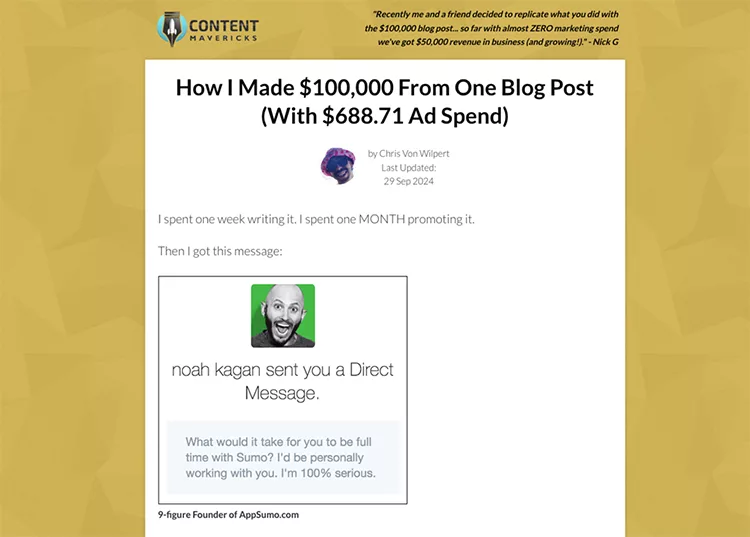
Affordable Solutions For Startups And Entrepreneurs

Software Stack Editor · September 23, 2024 ·

The post Affordable Solutions For Startups And Entrepreneurs appeared first on ClickFunnels.
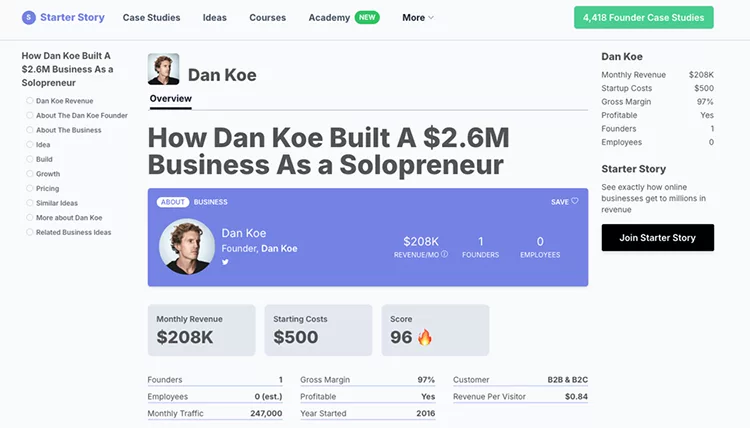
Finding affordable and effective solutions in business goes a long way, especially for startups and entrepreneurs working on a limited budget and with fewer resources than the “big guys.”

If that sounds like you, how do you compete with a corporation with unlimited resources, labor, and money? 

You achieve this by being more flexible, adaptive, and smarter than those other guys. 

Look, being big isn’t always a better option. Different departments have to communicate and sign off with each other, department heads may not always prioritize a task in the same way, and there is just too much bureaucratic red tape to be efficient. 

But as a small business, you probably already realized that. 

To be competitive as a small business, you’ll need to explore innovative ways to save you time and money without sacrificing the quality of your brand. 

One of the most effective strategies is to incorporate tools and systems that help automate repetitive but important tasks so that you have the time and resources to allocate to other important tasks.

A platform like ClickFunnels is designed to help businesses large and small automate processes such as sales funnels, CRM, social media, and more to improve their effectiveness and save money on business operations. 

By leveraging tools like ClickFunnels, you, as a small business, can have a suite of tools to help you automate tasks, reduce potential manual errors, and save on operational costs. 

If you’re looking for resources and tips on saving money on business operations, keep reading and see this list of 10 ways to leverage these smart tools to your advantage.

10 Genius Ways to Save Money on Business Operations

Finding the right solution can be challenging When looking for tips, tricks, and resources to lower your business expenses without sacrificing your quality and productivity. But with our guide, you can discover effective strategies to save money on business operations and boost profitability.

  • Automate Sales Funnels
  • Outsource Repetitive Tasks
  • Utilize Chatbots To Improve Customer Service
  • Optimize Team Workflow
  • Consolidate Your Marketing Efforts
  • Implement Cloud-Based Storage
  • Electronically Invoice
  • Enhanced Customer Experience
  • Utilize Better HR Solutions And Onboarding Strategies
  • Online Financial Management Tools

1. Automate Sales Funnels

Driving revenue is the key, and utilizing an effective sales funnel is the solution. 

That said, setting up and managing your sales funnel can be time-consuming, and small businesses may lack this resource. 

A tool like ClickFunnels, with its optimized templates, can help you generate leads, drive customers toward a buying decision, and create more sales for you. 

What’s more, the suite of available tools includes automated email sequences, landing pages, blog posts, upsells, and more that work on autopilot, saving you time and ensuring you don’t lose a lead. 

Plus, you can improve your campaigns through A/B testing tools to continuously improve your funnels and increase conversions. 

Once you introduce an automated sales funnel into your systems, you can generate leads that convert without doing the heavy lifting daily, saving you time and other resources you can spend elsewhere.

How it Saves You Money:

By incorporating a tool like ClickFunnels that can provide you with highly converting sales funnels, you’ll save a lot of money in the following ways:

  • A reduction in hiring marketing staff and having to pay for additional campaigns that may or may not work.
  • Minimizes the potential for manual errors by automating crucial steps in the sales process.
  • Increases conversions and revenue by providing an automated, consistent system to nurture leads and create effective follow-ups.

2. Outsource Repetitive Tasks

Illustration of two people working on laptops, with icons around them depicting software development concepts such as idea, settings, and cloud storage, all connected by a circular arrow.

Handling day-to-day operations and routine administrative tasks can be a significant expense, 

Hiring outside help through outsourcing can save you a ton of money. A virtual assistant can handle customer service, appointment scheduling, email management, and other tasks for a fraction of the cost of hiring the personnel to do it in-house. 

There are numerous outsourcing platforms like Fiverr and Upwork where you can find an affordable and capable VA to perform these tasks remotely. 

When you provide the right direction and guidance, a VA can significantly reduce the workload on your team at a much cheaper cost, allowing your team to focus on higher-value tasks and activities.

How it Saves Money:

  • Eliminates a need to hire, train, and pay for full-time salaries and benefits.
  • Reduces the need for added office space, maintenance, and other in-office costs.
  • Creates greater flexibility to scale and grow your team as needed.

3. Utilize Chatbots to Improve Customer Service

The key to any new business and even established brands is to provide excellent customer service. However, staffing each department can be an expensive undertaking that many entrepreneurs may see as a luxury they cannot afford.

The reality is that there are solutions through AI and chatbots that can be integrated into your website that are programmed to handle common customer inquiries, guide users through the various stages of the sales funnels, and even help answer common questions and troubleshoot basic issues.

By incorporating chatbots, you can automate them to answer common FAQs, help resolve basic issues, and collect feedback all without hands-on human interaction. This will save you time and other resources while your customers have 24/7 instant responses that can improve the customer experience and increase retention.

How it Saves Money:

  • Reduces the need to hire and staff large teams dedicated to customer support.
  • Provides better customer experience with 24/7 support without driving up labor costs.
  • Improves response times and efficiency by handling routine and common inquiries instantly.

4. Optimize Team Workflow

Two people working on laptops with icons representing agile project management, including a clock, graphs, light bulb, and box, surrounded by arrows symbolizing iterative processes.

Juggling multiple tasks can be a challenge that leads to missed deadlines, confusion, and poor resource allocation. Utilizing tools that help automate team workflows will help keep you on time, aligned, and on track, and to market more efficiently while hitting every beat. 

With automated workflows, you’ll be able to market 24/7, create more personalized messaging that leads to better customer engagement and better audience segmentation that leads to greater conversions, stay on task and on time, and properly allocate resources. 

These tools will help reduce inefficiencies like duplication of tasks, ensuring you stay on budget.

How it Saves Money:

  • Improving productivity by a reduction of time dedicated to manually managing projects.
  • Minimize and reduce errors and redundancies leading to unnecessary project delays.
  • Limit the size of staffing requirements needed to oversee project management.
  • Improve customer experience through more efficient and personalized communication touchpoints.

5. Consolidate Your Marketing Efforts

Two people discussing social media marketing strategies, with charts and icons from various platforms displayed on a board. One stands and gestures, while the other sits with a laptop.

When multiple projects and marketing campaigns occur simultaneously, this can create confusion and redundancies that impact your bottom line.

To keep your marketing efforts seamless and aligned, utilizing a platform like ClickFunnels, which is designed as an all-in-one solution, can help you assign tasks and be notified when they’re completed to essential tools like a dedicated CRM that you can easily incorporate with your marketing efforts.

How it Saves Money:

  • It improves team productivity by reducing the time needed to manage different projects manually.
  • Eliminates the risk of costly project delays caused by miscommunication and redundancies.
  • Lowers your payroll by reducing your staffing needs to oversee marketing.

6. Implement Cloud-Based Storage

Illustration of a cloud storage system connecting to servers. The cloud is linked to a central database that communicates with two sets of servers represented by stacks of green and blue books.

With traditional data storage, you have to factor in hardware, maintenance, and security, which can quickly add up to a large expense.

By switching to a cloud-based storage solution like Dropbox or the Google suite of tools, you can securely store data in one place without the added costs associated with traditional storage. 

Also, cloud storage provides entrepreneurs and businesses with reduced IT infrastructure costs while allowing your team to collaborate on files anywhere.

How it Saves Money:

  • Eliminates the need to house, maintain, and operate physical servers.
  • Lowers the risk of potential security and data breaches with more secure cloud-based security services.
  • Dramatically increases your team’s collaboration and efficiency by allowing for remote access.

7. Electronically Invoice

Illustration of a computer screen displaying an invoice, accompanied by a calculator, a wallet with cash and credit cards, an envelope, and a gear icon in the background.

Paper invoicing can be labor intensive, slow, and prone to mistakes, which can lead to delayed payments and, ultimately, cash flow problems for your business. 

Switching to third-party apps and tools like QuickBooks and FreshBooks will allow you to streamline your accounting and billing processes and help you get paid faster. 

With these ClickFunnels, you can quickly integrate third-party apps to send invoices, track payments, and set automatic reminders for follow-up to speed up your payment process.

How it Saves Money:

  • Lowers the time it takes to invoice while reducing potential errors that can slow payments manually.
  • Increases the speed of payment, improving your cash flow.
  • Reduces costly mistakes and errors that can delay payments or resolve disputes.

8. Enhanced Customer Experience

A woman sits at a desk with a laptop surrounded by social media icons representing likes, stars, and comments. She is placing a star on a virtual review.

Using a platform like ClickFunnels and inclusive analytics tools will illuminate customer behavior and preferences, giving you valuable data and insights to iterate and improve your campaigns. 

By understanding your customers’ interests in-depth, you can create better touchpoints and products that pique their interest and address their concerns. 

You can create and foster a sense of community around your brand to help you establish a long-term relationship with your potential customers.

This data-driven approach can create a better targeting system and improve customers’ experiences with your brand, sales funnels, and campaigns.

With the implementation of ClickFunnels’ new Smart Funnels, you can incorporate this data using the power of Artificial Intelligence to create personalized touchpoints in real time and highly converting campaigns.

How it Saves Money:

  • It helps you gain valuable insights into your potential customers’ wants, interests, and behaviors, enabling you to create the ideal product and solution without costly testing.
  • Enhances the customer experience by providing more personalized messaging and product suggestions.

9. Access Better HR Solutions and Onboarding Strategies

Illustration of a human resources professional standing next to HR-related documents, a computer, clipboard, and cogwheels, symbolizing HR processes and tools.

It’s said that employees don’t quit a job; they quit their employer. 

Reducing employee turnover is a challenge that can be an expensive drain on resources, especially when considering what it takes to recruit, train, and onboard a new employee. Investing in a better HR solution and developing stronger onboarding strategies significantly reduce these costs.

You can access tools like Lessonly to help you create scalable onboarding strategies and training programs designed to give each new employee exactly what they need when they need it.

When you provide employees with better training and the knowledge needed, you can improve their job satisfaction, greatly enhancing employee retention without adding the costs of rehiring and employing more new personnel.

How it Saves Money:

  • Better training increases job satisfaction, lowering turnover.
  • Enhances higher productivity through improved employee productivity.
  • Standardizes the process, which lowers the need for constant training, reducing your costs of managing staff.

10. Online Financial Management Tools

Illustration of two people discussing financial data, with charts and a dollar symbol on a large screen. One person is seated with a laptop, while the other is standing and pointing at a chart.

Managing cash flows, payment processing, and accounts payable can be a whole department in itself. But for small businesses and entrepreneurs looking to bootstrap and save money on business operations, utilizing software designed to handle all those accounting and payment processes should free up your time.

With ClickFunnels, users have third-party payment integrations, so whether you’re using PayPal, Stripe, or another payment system, your sales funnels will drive your customers to a seamless payment system, guaranteeing you get paid on time.

From automating bookkeeping to tracking your expenses and even generating financial reports in time, utilizing payment and financial management software will help you avoid mistakes that cost you money while also saving you time.

How it Saves Money:

  • Provide instantaneous financial reports and insights to prevent unnecessary cash flow issues.
  • Automating bookkeeping and other payment processes reduces staffing needs, reducing the need for a full-time accountant.
  • Have detailed financial reporting instantly to improve your decision-making, saving you time and other resources.

Integrating all these different strategies, tools, and software can be daunting, but ClickFunnels offers seamless integrations with the tools you already use to simplify functionality for you and your customers.

The ease and speed of processing payments through ClickFunnels will reduce unnecessary staffing costs and transaction fees, providing savings with every sale and enhancing your customer’s overall experience without any additional costs.

In Conclusion

Saving money on a business is essential, and one of the easiest and most effective ways to do so is to consider areas where you can cut expenses through your business operations by automating your most repetitive tasks.

If you’re looking for more ways how to save money on business operations, check out the ClickFunnels blog for detailed articles for marketers, entrepreneurs, and small businesses of every type. 

With ClickFunnels, you’ll get the perfect sales funnel for every campaign, so give it a try. Even better, you can start for FREE with a 14-day trial and see how the power of ClickFunnels will help you save money on business operations, large and small.

Check Out ClickFunnels Free Trial Today!

Thanks for reading Affordable Solutions For Startups And Entrepreneurs which appeared first on ClickFunnels.
Essential Tips For Success And Growth

Software Stack Editor · September 23, 2024 ·

The post Essential Tips For Success And Growth appeared first on ClickFunnels.
Customer service is extremely important regardless of what business stage you are in.

However, if your business is new, there’s very little margin for error. Acquiring your first customers is an uphill battle so every single one of them matters.

Moreover, your brand reputation is so fragile at that point that even a few bad reviews might be enough to tank your company.

That’s why you can’t afford to let anyone down. So how can you keep your customers happy in those early days?

Table of Contents:
  • Make Customer Service Your Top Priority
  • Set Clear Expectations Right From the Start
  • Personally Welcome New Customers
  • Create a Great Onboarding Experience
  • Set Everything Up Yourself if You Have to
  • Respond to Customer Support Queries in a Timely Manner
  • Solicit and Implement Customer Feedback
  • Send Hand-Written Thank You Notes to Your Customers

Make Customer Service Your Top Priority

A man leans on a large pile of assorted shoes while looking at the camera.
As the CEO of Zappos, Tony Hsieh was known for his relentless focus on customer service. He even wrote a book about it called “Delivering Happiness”. Image source: Harvard Business Review

It’s way too common for entrepreneurs to see customer service as an afterthought that isn’t worth pouring resources into.

Often, they aren’t even aware of this mindset because it tends to be implicit rather than explicit.

You may genuinely believe that you care about your customers but your true priorities are shown by how you allocate your resources.

So if customer service only gets scraps, you are not giving it the attention it deserves.

We recommend reading “How I Did It: Zappos’s CEO on Going to Extremes for Customers”.

In this case study, Tony Hsieh explains why they prioritized customer service at Zappos:

“Our philosophy has been that most of the money we might ordinarily have spent on advertising should be invested in customer service, so that our customers will do the marketing for us through word of mouth.”

He details the lengths that they went to in order to provide excellent customer service, including relocating the entire company from San Fransico to Las Vegas, a drastic move that cost half a million dollars. 

And in case you are wondering why they couldn’t simply outsource it:

“We were reluctant to outsource the call center, because we’d had bad experiences with outsourcing in the past. In fact, one of the big lessons of Zappos’s first few years was that it never makes sense to outsource your core competency, especially if your aim is to be maniacal about customer service.”

The quote above reveals something important about the company’s attitude towards customer service: their aim was to be “maniacal” about it. We believe that this should be the main takeaway from the case study. 

After all, if you have a new business, your resources are probably limited, so you won’t be able to implement most of what Hsieh talks about. But what you can do is make customer service your top priority, just like Zappos did!

Set Clear Expectations Right From the Start

New business owners sometimes make the mistake of overselling their products and services.

They do that in their marketing materials, during sales calls, and when interacting with potential customers face-to-face. Anything to get a sale. 

That is shortsighted because it inevitably leads to having a bunch of unhappy customers who are angry at you because they feel that you misled them.

That’s why it’s so important to set clear expectations right from the start:

  • Make sure that you are accurately representing your product or service. Avoid using clickbait headlines, making bombastic claims, and telling wild tales. Yes, you want your copy to be persuasive, but it also needs to be realistic.
  • Be honest about the current state of your product. If it’s still in development, be upfront about it. What features are currently available? Not “soon”, but right now?
  • Put the interests of potential customers first. If you talk to someone who is interested in your product or service and realize that it’s not the right fit for them, be honest about it and recommend a better solution if you are aware of one, even if that means sending them to a competitor.

Doing these three things can help you protect your brand’s reputation, reduce churn and build goodwill!

Personally Welcome New Customers

Personally send every new customer an email where you introduce yourself, thank them for their purchase, and encourage them to reach out to you if they need any help.

Just make sure to differentiate this email from the automated onboarding emails. You can do that with a casual subject line, something like “Hey there – just wanted to say hi!”.

Create a Great Onboarding Experience

Here are three things that you can do to improve your onboarding experience:

  1. Make the setup process as simple as possible and only include the steps that are absolutely necessary. Everything else can wait.
  2. Keep the customer updated at each step. This is especially important for service and ecommerce businesses. If someone places an order and doesn’t hear back from you, they might start getting antsy and request a refund!
  3. Guide the customer towards their first win. You should aim to get them their first result as quickly as possible.

We also recommend reading “The Elements of User Onboarding” by Samuel Hulick.

This book focuses on customer onboarding in the SaaS context, but some of the general principles can be applied to other types of businesses as well.

A yellow sticky note with a 9-step list of actions in black text. Steps 1, 2, 4, 6, 8 are crossed out, and the corrected steps are written next to them. Steps 5, 7, and 9 are not crossed out.
An example of how to simplify onboarding to get the new user their first win as quickly as possible. Image source: “The Elements of User Onboarding”

Set Everything Up Yourself if You Have to

Y-Combinator is one of the best-known startup accelerators in the world. 

One of the techniques that they are teaching their founders is the so-called “Collinson Installation”. 

It’s named after the Collinson brothers who would ask people at Y-Combinator events if they’d be interested in trying Stripe. Whenever someone said yes, the brothers would respond with “Right then, give me your laptop” and set them up on the spot. 

Keep in mind that people who are interested in your product or service don’t always have the mental bandwidth to set everything up themselves. They might start procrastinating on it or simply forget about it. 

That’s why it often makes more sense to just do it for them. Of course, you won’t be able to keep this up forever, but this approach can work well in the early stages!

Respond to Customer Support Queries in a Timely Manner

People are used to dealing with large companies that offer customer support 24/7/365. 

However, new businesses typically don’t have the resources to provide customer support around the clock. So how can you meet the customers’ expectations? 

That is going to depend on how critical your product or service is. 

If your customers are relying on you to help them with something that is absolutely essential, you will need to set notifications on your phone and be on call until you can afford to start hiring customer support agents. There’s just no way around it. 

However, if your product or service isn’t essential, then you should be able to maintain a more sane work schedule. 

Make it clear on your website what your office hours are and provide a timeframe within which the customers can expect to get a response (e.g. one business day). 

Generally speaking, the reason people start freaking out when they don’t get an immediate response is not the lack of response itself, but the sense of uncertainty and feeling ignored. 

For example, if someone submits a customer support ticket on a Friday evening and they don’t hear back from you for the entire weekend, they might start spamming you with increasingly angry messages. 

However, if that same person knows that you finish work at 5 PM on Friday and start again at 9 AM on Monday, they probably won’t freak out because they will expect to get a response on Monday.

Solicit and Implement Customer Feedback

If your business is still in its early stages, you probably have some misconceptions about what matters the most to your customers.

That’s why it’s so important to proactively solicit customer feedback. You can do that in several ways:

  • Ask new customers what they are currently struggling with in your welcome email.
  • When you resolve a customer support request, assuming that the interaction was positive, ask that customer what they like the most about your product or service.
  • Conduct interviews with your most loyal customers in order to understand why they continue doing business with you.
  • Conduct interviews with customers who cancel in order to understand why they decided to leave.
  • Monitor brand mentions across the web and pay attention to customer reviews. What are people saying about your product or service?

You want to store all this data in some sort of a centralized database so that you can analyze it later. Notion can work well for this. Over time, patterns will begin to emerge!

Send Hand-Written Thank You Notes to Your Customers

Wufoo famously sends their customers hand-written thank you notes by mail. 

At first, they would send a thank you note to each new user, which they did for as long as they could until eventually it became unsustainable. 

Now, nearly two decades later, they still take time each week to write and send thank you notes to a handful of customers. It has become a company tradition!

Hand-written thank you note from one of the developers at Wufoo. Image source: ZURB

This proved to be an effective way to improve customer retention. Apparently, customers who received hand-written thank you notes were much less likely to churn than the ones who didn’t. 

Considering that in the early stages, every single customer matters, taking a page from Wufoo’s playbook and experimenting with hand-written thank you notes might be a good idea!

Grow Your New Business FAST With ClickFunnels!

Promotional text for ClickFunnels offering services to drive website traffic and convert visitors to customers. Includes a free trial button and highlights zero computer skills needed and adaptability for any business.

ClickFunnels is an all-in-one marketing platform that has everything you need to launch, manage, and grow an online business, including:

  • A website builder that you can use to create a website that is optimized for lead generation.
  • An e-commerce functionality that you can use to launch an online store. 
  • A sales funnel builder that you can use to build sales funnels for your business.
  • An email marketing functionality that you can use to grow your email list.
  • A CRM functionality that you can use to keep track of everything that is happening in your sales pipeline.
  • An online course functionality that you can use to create and sell online courses.
  • A membership site functionality that you can use to create an exclusive online community.
  • An A/B testing functionality that you can use to optimize your sales funnels for conversions.
  • A business analytics functionality that you can use to collect data, analyze it and make future predictions based on it.

Try ClickFunnels Risk-Free!

Let’s be real:

We are biased in favor of our software.

So we understand if you take what we say about it with a grain of salt.

Fortunately, we have a free 14-day trial, so you don’t have to take our word for it.

You can go and see ClickFunnels for yourself without any risk!

So what are you waiting for? 🧐

Start Your Free Trial Today!

P.S. Here’s What Our Customers Say About ClickFunnels…

A customer testimonial for ClickFunnels highlighting significant business growth, featuring a person sitting cross-legged and smiling. The testimonial mentions switching from Shopify and achieving $130,000 in six weeks.
A man wearing glasses and a checkered shirt smiles. Next to him is a testimonial praising ClickFunnels for generating 400-500 leads monthly over 18 months.
Portrait of a smiling woman next to a testimonial praising ClickFunnels for simplifying tasks like managing membership software and landing pages. The testimonial is attributed to a verified user.
A testimonial with a photo of a man beside a quote explaining his positive experience with ClickFunnels, highlighting the ease of building an ecommerce site and gaining access to customer data.

Thanks for reading Essential Tips For Success And Growth which appeared first on ClickFunnels.

10 Affordable Tools To Help Your Business

Software Stack Editor · September 23, 2024 ·

The post 10 Affordable Tools To Help Your Business appeared first on ClickFunnels.
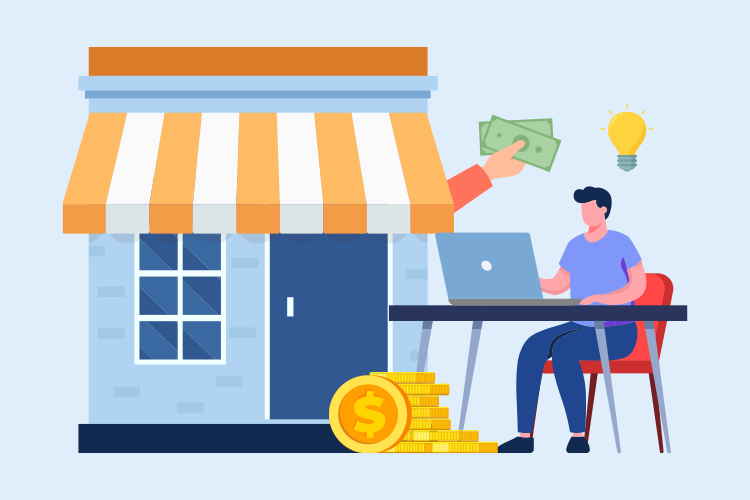
Remember when you had to break the bank just to get your business off the ground?

Those days are long gone.

You don’t need a fortune to access powerful business tools. In fact, some of the most game-changing solutions out there won’t cost you an arm and a leg.

But here’s the kicker – with so many options floating around, how do you separate the wheat from the chaff?

In this guide, we’ll walk you through our top picks for affordable business tools that pack a serious punch. And the best part? You won’t have to sell a kidney to afford them.

1. ClickFunnels — Only $81/Month

Low Cost Business Tools That Can Totally Change Your Business

There’s no shortage of cheap digital tools in the online world — you have this for email, that for hosting, and another for your ecom storefront.

But there is a shortage of tools that bring all those things into one place.

That’s where ClickFunnels comes in. 

It gives you everything you need to build, manage, and grow your online business — including sales funnels, websites, email marketing, and lots more.

ClickFunnels isn’t just another tool — it’s the Swiss Army knife of online business. 

For just $81 a month (that’s less than your coffee habit, admit it), you get a full suite of tools that can transform your digital presence.

So, what’s in the box?

Sales Funnels: Say goodbye to scattered web pages. ClickFunnels guides your customers through a smooth, conversion-optimized journey. It’s like having a digital salesperson working 24/7.

Website Builder: No coding? No problem. Our drag-and-drop editor makes creating stunning websites easier than assembling IKEA furniture (and way more fun).

Email Marketing: Keep your customers coming back for more with powerful email automation.

Online Courses and Membership Sites: Got knowledge to share? Turn it into cold, hard cash with easy-to-create courses and membership areas.

Screenshot of an online course dashboard showing a welcome message, a smiling instructor, and locked modules for a course.

Analytics: Because guessing is for weather forecasts, not business decisions. Get clear insights into what’s working and what’s not.

A screenshot of analytics showing total page views of 75,309, total users of 5,286, total orders of 1,445, and a conversion rate of 23.5%. Two additional blurred images are visible in the background.

A/B Testing: Because sometimes you need to test the waters before diving in. Split test everything from headlines to entire pages.

A software interface showing an A/B test setup with two distinct versions labeled A and B, each with different designs and traffic allocations.

Smart Checkout: Boost your average order value faster.

A screenshot of an online checkout page showing fields for contact information, cart details with items, shipping cost, and total payment, with buttons for continuing to payment and upgrading plan.

CRM: Keep tabs on your contacts, appointments, and deals.

Workflows: Automate your marketing.

A user interface shows categorized segments: new sign-ins, new buyers, cart abandoners, and coaching members with respective lists of leads underneath each category.

Global Products: Create once, sell anywhere. It’s like copy-pasting but for your entire product catalog.

Screenshot of a web interface showing a form to create a new product with sections for product name, pricing, variants, visibility settings, affiliate commissions, and organization details.

Community Features: Build a thriving tribe around your brand.

API & Webhooks: For the tech-savvy folks, integrate ClickFunnels with your existing stack.

A screenshot of a software interface showing a user's profile, options to adjust inventory in ShipStation, send emails to customer support, and retrieve purchase information.

Store Funnels: Selling physical products? Ship and fulfill orders without breaking a sweat.

A web interface displaying forms for creating a new product, editing a collection, and reviewing a shopping cart. The forms include fields for product name, pricing, variants, visibility, and affiliate commissions.

Blog: Position yourself as an industry expert.

A user interface for creating a new blog post, displaying fields for blog title, summary, and content, with options for visibility, scheduling, and adding a featured image on a computer screen.

And much more… 

But here’s the kicker — ClickFunnels isn’t just about features. It’s about results. 

Businesses of all sizes have used ClickFunnels to skyrocket their online presence and profits.

A well-oiled funnel is the difference between being a needle in the haystack and being the magnet that pulls customers in. And at $81 a month, ClickFunnels isn’t just affordable — it’s a steal.

Try ClickFunnels Free Today!

2. Voomly — Only $19/Month

Screenshot of a Voomly advertisement featuring a video player with a man speaking, and promotional text encouraging users to turn videos into sales funnels by using Voomly's services.

Video content is king. But creating videos is only half the battle — hosting, optimizing, and leveraging them for business growth is where Voomly shines.

Voomly is a comprehensive video marketing solution that can significantly boost your online presence and conversion rates.

Here’s what Voomly brings to the table:

Cost-Effective Video Hosting: Voomly offers high-quality video streaming at a fraction of the cost of other platforms. They use the same content delivery network as major players like Amazon Prime and Hulu, ensuring smooth playback without buffering issues.

Interactive Video Features: Transform passive viewers into active participants with features like in-video email capture, interactive surveys, and call-to-action buttons. This allows you to build your email list and guide viewers through a customized journey based on their responses.

Advanced Analytics: Gain deep insights into your video performance with detailed analytics. Track views, engagement rates, and viewer behavior to optimize your content strategy.

Custom Branding: Make your videos stand out with a branded player. Customize colors, add your logo, and create a cohesive brand experience for your audience.

Video Funnels: Create tailored video experiences that guide viewers towards specific actions, whether it’s making a purchase, signing up for a newsletter, or booking a consultation.

Fast Load Times: Voomly boasts some of the fastest load times in the industry, which is crucial for keeping viewers engaged and improving your site’s overall performance.

Screenshot of a GTmetrix performance report for a website. Performance score is 81%, Structure score is 91%, and Largest Contentful Paint is 1.8s. Total Blocking Time is 242ms.

Secure Hosting: Keep your content safe with SSL/TLS encryption and other advanced security features.

Voomly also offers a suite of video creation tools as part of their package, including Doodly for whiteboard animations, Toonly for cartoon explainer videos, and Talkia for text-to-speech voiceovers.

I’ll share more about these tools below!

Try Voomly Today For Free!

3. Geru — Only $37/Month

Launching a successful sales funnel can be a costly game of trial and error. 

Geru changes this by allowing you to simulate and optimize your funnels before you invest a single dollar in building them.

Here’s how.

Funnel Mapping: Use Geru’s drag-and-drop interface to visually map out your sales funnels, from landing pages to upsells and backend offers.

A man presents a flowchart on a wall-mounted screen to two seated individuals in a meeting room.

Profitability Simulation: Input your projected conversion rates, product prices, traffic costs, and other variables to simulate the potential profitability of your funnel.

Pre-made Funnel Library: Access over 30 proven funnel blueprints across various industries and business models, saving you time and providing inspiration.

Scenario Testing: Run “what-if” scenarios to see how changes in pricing, traffic costs, or conversion rates might impact your bottom line.

Detailed Reporting: Get comprehensive reports on key metrics like Revenue, Profit, Average Order Value (AOV), Cost Per Acquisition (CPA), and Customer Lifetime Value (LTV).

Agency Tools: Create visual funnel maps and potential ROI projections to impress clients and win more business.

Geru is particularly valuable for:

  1. Entrepreneurs launching new products or services
  2. Digital marketers optimizing existing funnels
  3. Agencies pitching funnel strategies to clients
  4. E-commerce businesses planning promotional campaigns

By allowing you to test and refine your funnel strategy before implementation, Geru can save you significant time and money. It helps you identify potential issues, optimize your offer structure, and ensure your funnel is set up for profitability from day one.

Try Geru For Free Today!

4. Doodly — Only $49/Month

Engaging visuals can make all the difference. 

Doodly offers a simple yet powerful solution for creating professional-looking whiteboard animation videos, even if you have no design or technical skills.

Here’s how! 

Easy-to-Use Interface: Drag-and-drop functionality allows you to create animations quickly and easily.

Multiple Board Types: Create videos on whiteboard, blackboard, glassboard, and even green screen backgrounds.

Custom Image Import: Use Doodly’s Smart Draw technology to animate your own imported images.

A partially drawn image of a person sitting at a desk with another hand-drawn silhouette being outlined in a circular inset.

Vast Asset Library: Access thousands of custom-drawn characters, props, and scenes covering various topics and niches.

A laptop displaying graphic design software, surrounded by black-and-white illustrations of a person running, a chair, desk, phone, books, money symbol, easel, bed, and dresser.

Voice-over Integration: Record or import voice-overs directly within the software and easily sync them to your animations.

Royalty-Free Music: Choose from a selection of background tracks to enhance your videos.

Multi-Platform Compatibility: Install and use Doodly on both Mac and PC.

Regular Updates: Benefit from frequent software updates with new features and improvements.

Doodly is particularly useful for:

  1. Marketers creating engaging video content for social media or ads
  2. Educators developing visual aids for lessons or online courses
  3. Businesses explaining complex concepts or products to customers
  4. YouTubers looking to enhance their video content
  5. Non-profit organizations creating compelling campaign videos

By allowing you to create professional-looking animated videos without the need for extensive design skills or expensive outsourcing, Doodly can significantly boost your content creation capabilities. These engaging animations can help increase viewer retention, improve information recall, and ultimately drive better results for your marketing or educational efforts.

Try Doodly Free Today!

5. Toonly — Only $49/Month

Capturing and maintaining audience attention is crucial. Toonly offers a user-friendly solution for creating engaging animated explainer videos, even for those with no design or technical expertise.

Here’s how!

Intuitive Drag-and-Drop Interface: Create professional-looking animated videos with simple point-and-click actions.

A computer screen displays animation software with a holiday scene in progress, showing a decorated fireplace and tree. A female character stands beside the screen, appearing to present the project.

Extensive Asset Library: Access a vast collection of custom-drawn characters, props, and backgrounds covering various topics and niches.

A screenshot of the Toonly animation software interface showing options for characters, backgrounds, props, and audio tracks. Highlights include 30 characters, 81 backgrounds/scenes, and 20 audio tracks.

Premade Scenes: Get started quickly with ready-to-use scenes combining backgrounds, characters, and props.

Voice-over Integration: Record or import voice-overs directly within the software and easily sync them to your animations.

Royalty-Free Music: Choose from a selection of background tracks to enhance your videos.

Multi-Platform Compatibility: Install and use Toonly on both Mac and PC.

Regular Updates: Benefit from ongoing software updates with new features and improvements based on user feedback.

Toonly is particularly useful for:

  1. Small business owners and service providers looking to introduce their offerings
  2. E-commerce store owners aiming to showcase products in an engaging way
  3. Digital marketers create attention-grabbing ads and social media content
  4. B2B companies explaining complex products or services
  5. Trainers and presenters seeking to enhance their educational materials
  6. Non-profit organizations crafting compelling stories for fundraising

Animated explainer videos created with Toonly can be used effectively across various platforms:

  • Website and landing pages to reduce bounce rates and increase engagement
  • Social media channels to boost shares and attract new followers
  • Sales videos to present products or services in an appealing way
  • Email marketing campaigns to improve open and click-through rates
  • Crowdfunding campaigns to stand out and increase funding success

Try Toonly Free Today!

6. Talkia — Only $49/Month

Screenshot of the Talkia website highlighting its feature to create voiceovers in multiple languages, with options including English, Chinese, Spanish, Russian, and French.

High-quality voiceovers can significantly enhance the impact of your videos.

Talkia offers an affordable and user-friendly solution for creating professional-sounding voiceovers without the need for voice actors or recording equipment.

Key Features of Talkia:

Advanced Text-to-Speech Technology: Utilizes WaveNet technology, also used by Google and Amazon, to create lifelike voices.

A laptop displaying a voiceover interface next to a tablet showing an animated scene with two characters cooking. The tablet has a blue notification icon.

Diverse Voice Library: Offers a wide range of male and female voices, including different accents and even children’s voices.

Multiple Language Support: Create voiceovers in various languages, enabling international marketing efforts.

Customization Options: Adjust speaking rate, pitch, pauses, and emphasis to fine-tune your voiceovers.

Background Music Integration: Add background music from a library of tracks to enhance your voiceovers.

Easy-to-Use Interface: Simple text input and voice selection process for quick voiceover creation.

Multi-Platform Compatibility: Works on both Mac and PC and exports MP3 files compatible with all major video editing software.

Talkia is particularly useful for:

  1. Digital marketers creating Video Sales Letters (VSLs) and promotional content
  2. Content creators producing educational and training videos
  3. Authors looking to create audiobooks cost-effectively
  4. Businesses developing multilingual marketing materials
  5. Website owners adding narrated videos to their sites
  6. Social media marketers creating engaging video content

By enabling the creation of professional-sounding voiceovers without the need for expensive voice actors or recording equipment, Talkia can significantly enhance your content creation capabilities. These voiceovers can help increase viewer engagement, improve information retention, and ultimately drive better results for your marketing or educational efforts.

Try Talkia Today Free!

7. People Builder — Only $49/Month

Have you ever struggled to find the perfect characters for your whiteboard animations? 

People Builder might just be the solution you’ve been looking for. This innovative software is designed to work seamlessly with Doodly, allowing you to create custom characters that perfectly match your vision.

What sets People Builder apart?

Unparalleled Customization: With a staggering 52 million unique character combinations, you’re only limited by your imagination. Adjust age, gender, skin tone, body size, facial expressions, and outfits to create characters that truly resonate with your audience.

A laptop screen displaying a character design interface with various customization panels for body, face, and legs. The central character is a person jumping with arms raised.

User-Friendly Interface: Even if you’re not tech-savvy, you’ll find People Builder intuitive and easy to use. The four-step character creation process is straightforward and fun.

Doodly-Ready Characters: Each character comes complete with pre-made draw paths, ensuring they integrate perfectly into your Doodly videos without any extra work on your part.

Versatile Output: Export your creations as JPEG, PNG, WebP, or DAS files, making them compatible not just with Doodly, but with a wide range of video software.

A laptop screen displays an application for creating cartoon avatars, with various character elements and options. An avatar stands in front of the screen, surrounded by drawn people in different poses.

This tool is a game-changer for anyone creating whiteboard animations, but it’s especially valuable for:

  1. Marketers looking to create relatable characters for their target audience
  2. Educators needing diverse representations in their instructional videos
  3. Course creators wanting to add a personal touch to their content
  4. Storytellers aiming to bring their narratives to life visually

The ability to create characters that reflect your specific audience can significantly boost engagement and relatability in your videos. Whether you’re explaining a complex concept, selling a product, or telling a story, having the right characters can make all the difference.

A unique feature worth highlighting is the 130 different character poses available. This allows you to depict a wide range of actions and emotions, from a businessperson working at a desk to someone jumping for joy.

Try People Builder Today Free!

8. Pyks — Only $49/Month

First impressions are everything. That’s where Pyks comes in — a game-changing graphic design tool that puts professional-quality visuals at your fingertips.

What sets Pyks apart?

Simplicity meets sophistication: Forget complex design software. Pyks offers an intuitive interface that anyone can master, without sacrificing quality.

Template treasure trove: With a vast library of professionally designed templates spanning 23 genres, you’ll find the perfect starting point for any project.

A person with a ponytail standing before computer screens displaying various product pages. Visible products include supplements, tea, a book, and a gift card.

Customization king: From eBook covers to product labels, Pyks lets you tailor designs to your brand with ease.

Image arsenal: Access over 1.5 million royalty-free images, clip art, and stock photos to elevate your designs.

Who’s it for?

Pyks is a versatile tool that caters to:

  1. Authors looking to create eye-catching book covers
  2. Course creators needing professional-looking course materials
  3. Digital marketers crafting lead magnets and promotional graphics
  4. Software developers wanting to visualize their products
  5. Supplement sellers aiming to design attractive product packaging

Key features:

  • 40 different types of eCovers
  • User-friendly photo editing tools
  • Special text effects for standout designs
  • Background customization options
  • Regular software updates

By putting professional-grade design tools in your hands, Pyks helps you:

  • Save time and money on freelance designers
  • Maintain consistent branding across all your visuals
  • Quickly iterate and test different designs
  • Increase perceived value of your products

Whether you’re an established brand or just starting out, Pyks empowers you to create visuals that capture attention, convey quality, and ultimately drive more sales.

Try Pyks Free Today!

9. Magnetic Marketing — Free

Screenshot of a webpage featuring a video, form for contact and shipping information, and a promotional banner for a free gift aimed at increasing income. The banner text highlights collaboration with well-known marketers.

Magnetic Marketing is a comprehensive marketing education program that combines the timeless wisdom of Dan Kennedy with the modern digital marketing expertise of Russell Brunson. 

It’s not software, but rather a treasure trove of marketing knowledge delivered through multiple channels.

Key Components:

  1. NO B.S. Magnetic Marketing Newsletter: A monthly physical newsletter packed with marketing and business strategies.
  2. Behind The Scenes Walkthroughs: A complementary newsletter providing real-world examples of marketing campaigns and their results.
  3. Extensive Bonus Materials: Including courses, live event recordings, and books covering various aspects of marketing and business growth.

Who is it for?

  • Entrepreneurs and business owners looking to improve their marketing skills
  • Marketers seeking to stay updated with both timeless principles and current trends
  • Anyone interested in learning from two of the most respected names in direct response marketing

Value Proposition:

  • Learn from Marketing Legends: Get direct access to the knowledge of Dan Kennedy and Russell Brunson.
  • Practical, Actionable Advice: Receive strategies you can implement immediately in your business.
  • Continuous Learning: Regular newsletters ensure you’re always up-to-date with the latest marketing insights.
  • Comprehensive Resources: From books to video courses, cover all aspects of marketing and business growth.

By subscribing to Magnetic Marketing, you’re investing in an ongoing marketing education that can transform your business and marketing approach.

Try Magnetic Marketing Today Free!

10. Secrets of Success — Free

Secrets of Success is a mastermind community that brings together high-performers and aspiring achievers who are committed to personal growth and success across all areas of life.

Key Components:

  1. Monthly Book Club: Curated by Russell Brunson, featuring in-depth discussions on rare and impactful books.
  2. Exclusive Content Library: Access to rare, unpublished works from thought leaders of the ‘New Thought Movement’.
  3. The Secrets of Success Masterclass: A foundational course to help members establish their path to success.
  4. Nightingale Conant’s Greatest Hits: Access to a vast library of self-development content, including 7,000 never-before-released tracks from Earl Nightingale.
  5. Affiliate Program: Opportunity for members to earn commissions by referring others to the community.

Who is it for?

  • Entrepreneurs and business leaders seeking continuous personal growth
  • Individuals passionate about self-improvement and success principles
  • Those interested in rare, historical personal development content
  • Anyone looking to be part of a community of like-minded, ambitious individuals

Value Proposition:

  • Access to Rare Knowledge: Gain insights from hard-to-find and never-before-published works of renowned thought leaders.
  • Community of High Achievers: Connect with and learn from other success-oriented individuals.
  • Curated Learning Experience: Benefit from Russell Brunson’s expertise in selecting and interpreting impactful content.
  • Holistic Approach to Success: Focus on improving all aspects of life, not just business or finances.

By joining Secrets of Success, you’re investing in your personal growth and joining an exclusive community of like-minded individuals committed to achieving extraordinary success.

Try Secrets of Success Today Free!

Final Thoughts

Having access to the right tools can make all the difference in your business’s success. 

From ClickFunnels’ comprehensive marketing platform to Voomly’s video marketing solutions, and from Doodly’s whiteboard animations to Talkia’s text-to-speech capabilities, each of these low-cost tools offers unique features that can help elevate your marketing efforts and streamline your operations.

However, tools are only part of the equation.

As the Secrets of Success community reminds us, personal development and a growth mindset are equally crucial for long-term success.

By combining powerful, affordable business tools with continuous learning and self-improvement, you’ll be well-equipped to face the challenges of entrepreneurship and achieve your business goals.

Thanks for reading 10 Affordable Tools To Help Your Business which appeared first on ClickFunnels.

Startup’s – Key Skills You Need To Master

Software Stack Editor · September 18, 2024 ·

The post Startup’s – Key Skills You Need To Master appeared first on ClickFunnels.
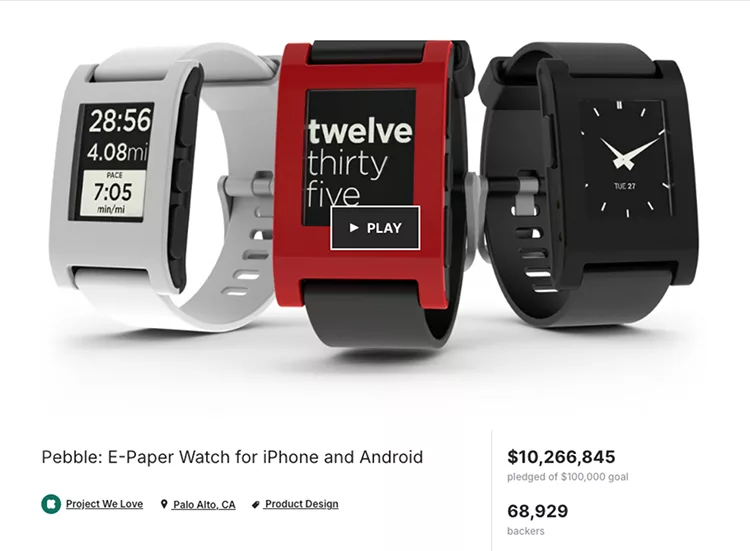
Want to launch a startup?

It can be helpful to think about it in terms of the skill stack that you will need in order to get it off the ground. 

That’s why today we want to discuss the three most crucial skills: creating products, marketing them and selling them. If you can master them, you’ll have a much better chance of success. 

Of course, you don’t necessarily need to have all three skills yourself. You can also bring in a co-founder. Alternatively, you can raise funding and use that money to build a team. Or you can do both!

However, navigating all that may prove to be more headache than it’s worth, especially if you don’t have any previous business experience and therefore don’t know what you’re doing.

Frankly, it’s probably best to learn how to do everything yourself so that you could maintain 100% equity in your business. 

That’s why in this article we are going to assume that it’s just you in the beginning and focus on what you need to make it work as a solopreneur. 

Once you start generating revenue, you can reinvest that money in your startup by hiring employees, outsourcing to freelancers, and working with agencies!

Table of Contents:
  • Skill #1: Creating Products
  • Skill #2: Marketing Products
  • Skill #3: Selling Products

Skill #1: Creating Products

Hardware Startups vs. Software Startups

Startups tend to fall into one of these two categories:

  1. Hardware startups
  2. Software startups

Focusing on hardware is probably out of the question unless you are either independently wealthy or able to raise funding.

This means that you are left with software. Fortunately, it’s possible to build software products entirely on your own, in your free time, with very little money.

Meet Indie Hackers

We would argue that bootstrapping software startups is the best path for aspiring entrepreneurs because the downside is limited but the upside isn’t. 

This is known as “indie hacking” and the indie hacker scene has produced countless success stories over the last decade or so.

Pieter Levels is generating more than $400k in monthly revenue across all his projects. Source: X formerly known as Twitter.

Its superstar is the Dutch entrepreneur Pieter Levels.

He started out back in 2014 with his “12 Startups in 12 Months” challenge. 

His 4th product, Nomad List, took off and his 7th product, Remote OK, was also a success. It appears that he stopped the challenge at that point to focus on growing these two startups.

Since then, he has shipped more than 70 products, the vast majority of which have failed.

However, the ones that succeeded are generating more than $400k in total monthly revenue at the time of writing. That adds up to more than $4.8M in total annual revenue!

A person with a surprised expression is holding an electronic display showing the number $1,001,643.
Marc Louvion went from getting fired in 2021 to reaching $1M in total revenue in 2024. Source: Marc Lou’s blog.

Meanwhile, the most impressive recent story in this scene is arguably that of Marc Louvion, a French entrepreneur who:

  • Got fired in 2021
  • Built 21 products in 2 years
  • Went from zero to $65k in monthly revenue in those same 2 years

In August 2024, Marc crossed the $1M in total revenue milestone!

Andrey Azimov celebrates achieving his goal of $1,000 in monthly recurring revenue after building 7 apps in 14 months. Source: Andrey Azimov’s blog.

Then there’s the story of Andrey Azimov, a Ukrainian entrepreneur who quit his job in 2018 and moved to Southeast Asia to build software products. His goal was to reach $1,000 in monthly recurring revenue in one year.

The reason he chose that number as his target was that $1k per month was enough to pay for his living expenses.

He knew that if he could consistently make that much money with his software, he would be able to continue pursuing his entrepreneurial dreams. Meanwhile, failure meant having to go home and get a job.

Andrey called this challenge his “Hardcore Year”. Throughout that year, he built 7 apps, one of which was acquired. He reached his goal in 14 months and has been a full-time solopreneur ever since!

We shared these three success stories to show you what’s possible. You can find more inspiration on the Indie Hackers podcast!

What Skills do You Need to Create SaaS Products?

If you want to build SaaS products that generate recurring monthly revenue, you will need to learn web development.

There are a ton of great resources out there, but if we had to choose one, it would probably be the online learning platform Udemy. 

We recommend waiting for one of Udemy’s sales and getting these web development courses, which should cost you less than $100 in total:

  • “The Complete Web Development Bootcamp for 2024” by Angela Yu
  • “The Web Developer Bootcamp 2024” by Colt Steele
  • HTML and CSS course + Javascript course by Jonas Schmedtmann

Sometimes, people start a web development course, struggle to keep up with it, and then come to the conclusion that they must be terrible at coding and give up.

However, when that happens, it’s often because the teaching style of that particular instructor simply doesn’t work for them.

That’s why you want to check out several different courses that cover the basics of web development before committing to one of them.

Go through the first few lessons of each course, see which instructor’s teaching style resonates the most with you and then focus on completing their course.

You will also need to learn user interface (UI) and user experience (UX) design. Here are some of the most popular Udemy courses:

  • “Complete Web & Mobile Designer” by Andrei Neagoie and Daniel Schifano
  • “Figma UI UX Design Essentials” by Daniel Walter Scott
  • “DESIGN RULES: Principles + Practices for Great UI Design” by Joe Natoli

Again, we recommend getting all of them on sale, so that you could see which instructor’s teaching style works best for you.

Make sure to read Udemy’s refund policy if you intend to request a refund for some of the courses because there are some restrictions.

How to Ship Software Products FAST

Something that successful indie hackers tend to have in common is that they ship their software products extremely fast. 

For example, Pieter Levels has shipped more than 70 products in the last decade, Marc Louvion shipped 21 in 2 years and Andrey Azimov shipped 7 in 14 months. But how did they do it?

Ultimately, you need to learn to build minimum viable products (MVPs), which can be a challenge if you are a perfectionist.

Pieter Levels explains how to do it in his book “Make”. In our view, it’s the best resource for aspiring indie hackers!

Skill #2: Marketing Products

Marketing is how you let your dream customers know that your product exists. So where should you start?

First, we recommend reading Paul Graham’s essay “Do Things That Don’t Scale” because it will provide some perspective.

Graham is a co-founder of Y-Combinator, one of the best-known startup accelerators in the world. In his essay, he uses startups that he invested in as examples, but the same principles apply to indie startups as well.

His main point is that if you want to get your startup off the ground, you need to be prepared to do things that don’t scale.

This stands in stark contrast with the wantrepreneurial obsession with “systems”, “processes” and “SOPs”. Don’t waste time worrying about scaling when there’s nothing to scale yet!

With that out of the way, here are three marketing strategies that you might want to consider:

Cold Email

An illustration of an open envelope with an '@' symbol on the letter inside. A paper plane and a message icon are in the background.

If you don’t have much money but do have a lot of free time, cold email can be a great way to acquire your first users, especially if you sell B2B software. 

You can learn the basics by reading this cold email overview by Justin McGill.

Justin, who is the founder of LeadFuze, used this marketing strategy to grow his startup from zero to $30k in monthly recurring revenue in just one year!

Social Media Marketing

Illustration of a smartphone with a hand holding a megaphone emerging from the screen, surrounded by various social media icons including LinkedIn, Twitter, Pinterest, Instagram, WhatsApp, and Facebook.

Social media marketing is another great way to promote your product when you can’t afford to spend money on ads but have some free time. 

In the indie hacker scene, there’s a “build in public” trend where founders are documenting their entrepreneurial journeys on Twitter, revenue numbers included.

For example, Pieter Levels has over half a million followers at the time of writing. He built that following primarily by tweeting about the stuff he’s working on. 

However, it’s important to remember that he started ten years ago when this niche was less crowded. This strategy is not as effective as it used to be. 

Copycats are also a legitimate concern. Some people will shamelessly clone your product if they see that your startup is doing well. 

You would probably be better off creating content that is targeted towards your dream customers as opposed to fellow indie hackers.

Also, keep in mind that you don’t need a huge following to grow your business, you just need to get the attention of people who might be willing to pay for your product and earn their trust.

And if you regularly post content that provides value to those people, eventually the algorithm will start recommending your profile to them, which will make everything much easier. 

Consider watching this video by our friend Alex Hormozi where he shares a story about an entrepreneur who makes nearly $1M a year in profit with less than 6,000 Instagram followers:

Paid Advertising

A person is sitting with a laptop, surrounded by digital marketing elements like charts, graphs, and symbols representing ads and earnings.

Finally, if you have more money than time, marketing your product with paid advertising might be the way to go. 

Think about whether it makes the most sense to advertise on Google, Facebook, or LinkedIn.

Then, wait for a Udemy sale and buy a course that teaches how to run ads on your chosen platform.

Go through that course to learn the basics and then start running, optimizing, and scaling ad campaigns. 

Just know that you’ll inevitably end up burning money until you figure out how to run ads profitably. Consider it a tuition fee!

Skill #3: Selling Products

Getting your dream customers’ attention is not enough. You will also need to persuade them to buy your product. 

That can be broken down into these two skills:

Sales

Sales are about talking to potential customers directly, whether in person, on the phone, or via Zoom calls. 

If you don’t have any previous sales experience, that will probably feel super awkward at first, especially if you are not a “people person”. 

It might be tempting to tell yourself that you don’t need to study sales because nowadays you can simply learn copywriting instead.

However, as Paul Graham explains in his aforementioned essay “Do Things That Don’t Scale”, startup founders often need to acquire their first users manually.

For example, Airbnb founders literally went door to door in New York to recruit hosts for their platform. 

So you probably do need to learn how to sell, especially if you want to give yourself the best chance at success.

 Patrick Dang’s videos are a good place to start. Here’s one on SaaS sales:

Also, you might want to check out “Founding Sales: The Early Stage Go-to-Market Handbook” by Peter Kazanjy, the founder of Atrium. 

This book covers selling as a founder in the early stages of your startup, including going from zero to your first 30 users!

Copywriting

Copywriting is about persuasion via the written word.

Our co-founder Russell Brunson has used sales funnels to grow ClickFunnels from zero to $100M+ in annual revenue. 

You’d think that he’d say that it was sales funnels that made him rich, right? Wrong!

“Copywriting is what made me rich…

It has more impact on how much money you make with your company than anything else,” explains Russell.

You can have the best product in the world but if you can’t convey its value to your dream customers, you will lose out to competitors with inferior products but better copy. Sad but true. 

That’s why, if you are serious about building a business, you need to learn copywriting. In fact, we would argue that it’s the most important entrepreneurial skill of them all!

Get “Copywriting Secrets” for FREE!

Want to Learn How to Write Copy That CONVERTS?

Our friend Jim Edwards wrote a best-selling book “Copywriting Secrets” for busy entrepreneurs just like you.

In this book, he covers everything you need to know in order to start writing copy that CONVERTS. 

“Copywriting Secrets” is available on Amazon where it has over 1,800 global ratings and a 4.7-star overall rating.

But you can also get it directly from Jim for free.

All he asks is that you cover the shipping!

So what are you waiting for? 🧐

Get “Copywriting Secrets” for FREE!

Thanks for reading Startup’s – Key Skills You Need To Master which appeared first on ClickFunnels.
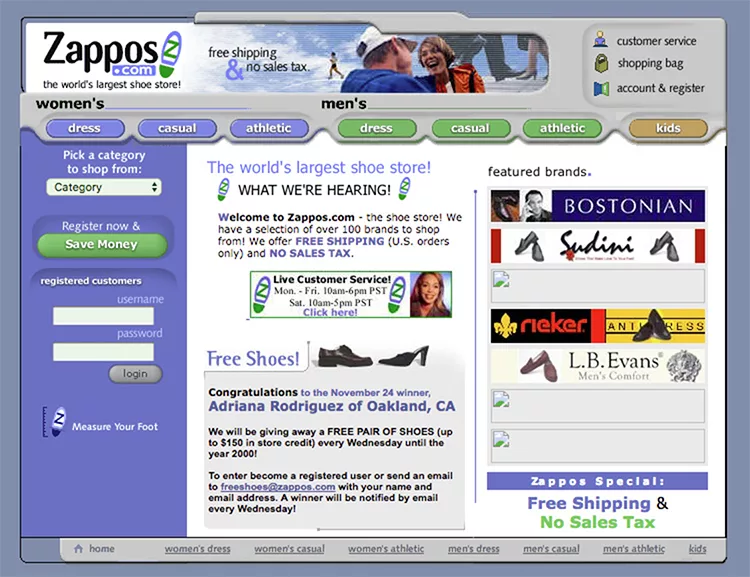
What Is The Your First Funnel Challenge?

Software Stack Editor · September 12, 2024 ·

The post What Is The Your First Funnel Challenge? appeared first on ClickFunnels.
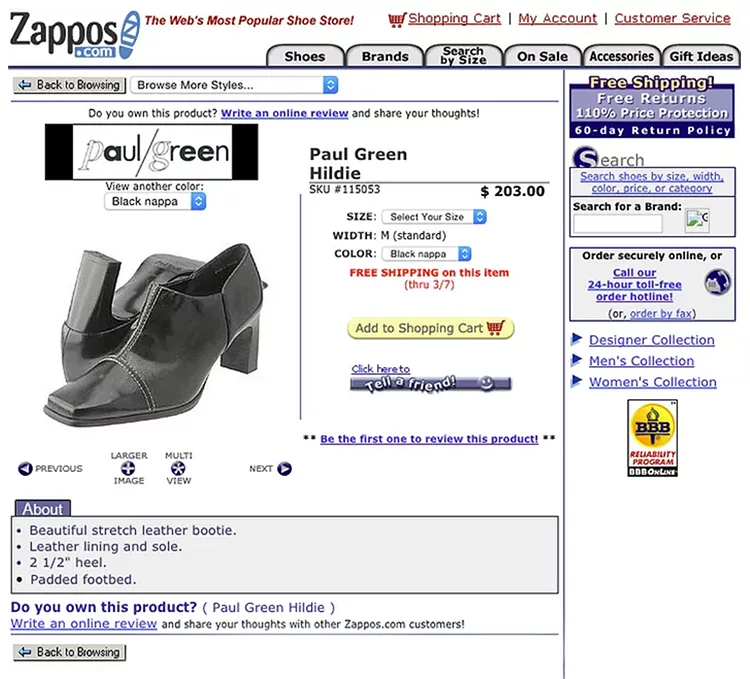
Have a business idea that you’re dying to get out into the world…

… but don’t know where to start? 

First Funnel Challenge

Russell Brunson’s Your First Funnel Challenge is a 5-day online boot camp where you’ll launch your first (or next) business idea side-by-side with real-world entrepreneurs… without taking on a mountain of debt or getting stuck in “analysis paralysis”. 

First Funnel Challenge

Here’s everything you need to know.

The Gameplan

Here’s the 5-day game plan…

Day 1 – Funnel Hacking

Each day is jam-packed with lessons to learn and actions to take.

Day 1 is no exception.

We’re going to unveil the most successful types of sales funnels in the online world today (this is changing all the time… so you’ll learn something new even if you’re uber familiar with sales funnels).

We’ll then help you determine which of these killer funnels is best for your specific business idea (whether it’s in finance, eComm, coaching, info products, biz opp, or some other niche) — and you’ll “ethically steal” the perfect funnel for your own purposes.

Additionally, you’re going to work with two superheroes in the funnel building world on Day 1.

Jamie Cross went from selling her soap at local farmer’s markets to building an online eCommerce empire, entirely bootstrapped — she even joined our Two Comma Club.

Stacey & Paul Martino are saving marriages with coaching funnels. And you’re going to learn exactly how they maintain a steady stream of high-paying clients (this is critical info for coaches).

Join The ‘Your First Funnel’ Challenge!

Day 2 – Your First Funnel

On Day 2, we’re going to show you the first funnel that every business (no matter your industry) should start with. And then we’re going to plug stuff into your funnels so it’s ready to go live ASAP.

We’re making it super simple… so you can take action and get real results.

We’ll also talk about how you can craft irresistible headlines and the five core follow-up emails that every funnel requires on the back end (you can write all of them in a single sitting).

Plus, you’re going to work with a few more amazing people on Day 2.

Garret J. White is a legend in the ClickFunnels community. He’s our most requested speaker by far because he spits fire whenever he takes the stage. On Day 2, Garret will teach you how he uses funnels to transform men’s lives all around the world.

Annie Grace has built an online empire helping people overcome their dependence on alcohol. On Day 2, she’s going to show the “hourglass funnel” she uses to attract her dream customers… so she doesn’t have to chase them.

Join The ‘Your First Funnel’ Challenge!

Day 3 – Hook, Story, Offer

Day 3 is a doozy.

We’re going to show you the secret behind how ClickFunnels went from a simple idea inside of Russell’s head… to the multi-million $$$ empire it is today.

It’s all about storytelling.

We’ll teach you how to find your unique hook, tell a compelling story that resonates with your core audience, and position your offer so that you can make as many sales as possible.

You’ll get to work with…

Stephen J. Larsen started as a freelance funnel builder learning the ropes. Now he’s got a massive funnel-building empire. He’s going to teach you how to transform your funnel-building skills(that you learned the previous days) into a massive profit-generating opportunity.

Kristine Mirelle (a.k.a. the “music hustler”) is a professional musician, 2-Comma Club Winner, and founder of Laugh My Ads Off. She teaches businesses how to create hilarious ads that grab attention and get conversions. And that’s what she’s going to show YOU how to do.

Join The ‘Your First Funnel’ Challenge!

Day 4 – Irresistible Ads

What’s a killer funnel without high-quality traffic?

On Day 4, we’re giving your our most closely held secrets about how to drive hordes of dream customers to your funnel.

You’ll unearth a “honey hole” of golden customers who are LOOKING for your offer, learn how to bring in customers like clockwork, and create high-converting, low-cost ads.

Plus, you’re going to work alongside…

Stephen J. Larsen started as a freelance funnel builder learning the ropes. Now he’s got a massive funnel-building empire. He’s going to teach you how to transform your funnel-building skills(that you learned the previous days) into a massive profit-generating opportunity.

Eileen Wilder had no idea what a funnel was just two years ago… and now she’s a multiple 2-Comma Club Winner! She’s going to teach you how ANYONE can add a virtual high ticket offer to their funnel for a MASSIVE boost in sales!

Join The ‘Your First Funnel’ Challenge!

Day 5 – DO it NOW!

Now we’re crossing the finish line.

On Day 5, we’ll help you eliminate your limiting beliefs, teach you how to stack your offer to increase your average order value, and tell you a story that will inspire you to keep taking action.

You’re going to hear from…

Daymond John, shark tank legend, is going to go LIVE and share his own story on how he “bootstrapped” his way to success!

Join the Your First Funnel Challenge

Join The ‘Your First Funnel’ Challenge!

Here’s What to Expect From Your First Funnel Challenge 

So… what is this challenge going to require of you? What results can you expect to get from it?

Here’s what you can expect.

Your Mind is a Sponge…

You’re going to be taking in a LOT of information over these 5 days. You’ll be learning from some of the best minds in the entrepreneurial world… and it’s important to attend every session ready to take notes!

Take Massive Action…

You’ll need to put in the work to get results from this challenge. But don’t worry, we’ll be there with you every step of the way to help you take massive action and get results!

Get Everything You Need…

You’re going to get everything you need to build and bootstrap your business idea from scratch. The know-how, the mindset, the tools, and tactics — all of it, from real-world entrepreneurs who are living the life you want to live!

Funnel Hackers UNITE…

By signing up for this challenge, you’re going to be joining a community of entrepreneurs who are committed to taking their businesses to the next level.

Change Your Life…

It might sound cliche… but this challenge has the potential to change the trajectory of your life. More freedom. More impact. More fun making money the way you want to make money. We’ve seen it happen time and time again, and we know it can happen for you, too!

Who is Your First Funnel Challenge for? 

The Your First Funnel Challenge is for anyone who wants to build a business online.

If you’re an aspiring entrepreneur with an idea for a business, but you don’t know how to get started… this challenge is for you.

If you’re struggling to get traction with your online business, and you’re looking for a way to get things moving in the right direction… this challenge is for you.

If you’re fed up with your 9-to-5 job and you’re ready to take control of your life and your income… this challenge is for you.

The Your First Funnel Challenge is for anyone who is ready to take their business (or sapling idea) to the next level. 

If that’s you, then sign up!

Who is Your First Funnel Challenge NOT for?

If you’re the type of person who likes to sit on the sidelines and watch others take action… this challenge is NOT for you. 

If you’re not willing to put in the work to see results… this challenge is NOT for you. 

The Your First Funnel Challenge is NOT for people who are not ready to change their lives. 

If you’re happy with where you’re at in life, and you don’t want to rock the boat… this challenge is NOT for you. 

But if you’re ready for a change, and you’re ready to take massive action to see results… then sign up for the challenge now!

How Long is Your First Funnel Challenge? 

5 days. 1 hour each day.

Why?

Because we didn’t leave any fat on the bone (most long challenges could easily be cut down to less if they focused on action and execution).

It’s going to be an exciting and thrilling five days.

Make sure you set aside the necessary time and energy to take action!

But Wait! There’s More…

You know us…

At ClickFunnels, we love to blow your socks off with mind-boggling bonuses. We want to make the Your First Funnel Challenge an absolute no-brainer, value bomb.

So…

Here’s the other cool stuff you’re going to get!

Bonus #1: The World’s Greatest Funnel Builders

What if you got to sit at the feet of some of the world’s greatest funnel builders as they told you their deepest secrets of success?

That alone would be worth tens of thousands of dollars!

Dean Graziosi

Dean Graziosi

Dean Graziosi is a multiple New York Times bestselling author, entrepreneur, trainer, and infomercial legend! For over 25 years, Dean has dedicated his life to helping entrepreneurs create the life and freedom they crave.

Grant Cardone

Grant Cardone

Grant Cardone is a best-selling author of The 10X Rule and If You’re Not First, You’re Last, as well as a marketing trainer, entrepreneur, and real estate mogul.

Grant will show you how to apply the 10X Rule to every part of your life so you can live a life of freedom, happiness, and wealth!

Myron Golden

Myron Golden

Myron Golden, Ph.D. is one of the most in-demand speakers and trainers in sales, marketing, and business development in the world— helping men and women get what they’re actually worth!

Todd Brown

Todd Brown

One of the top funnel builders and marketing legends in the world, Todd Brown has worked and consulted with titans of direct response marketing, including businesses such as Agora. 

He’ll be teaching how to develop YOUR “big idea” so you, your brand, and your offer can stand out even in a saturated market!

Russell Brunson

Russell Brunson

Hey, that’s our founder! Now that you have a funnel live, Russell will show you the “One Funnel Away” process that can help take your funnel to the next level and potentially break through the 1 MM in sales and achieve a 2-Comma Club Award at Funnel Hacking LIVE!

Bonus #2: No Product? No Problem

Wish you could build a baller business… but don’t have a great product idea?

This bonus is going to solve that for you.

Attend this exclusive one-day event where you’ll learn the secrets behind how serial entrepreneurs come up with an endless stream of great business ideas. Specifically, you’ll learn from…

Keala Kanae & Anthony Morrison

Keala Kanae and Anthony Morrison are two of our top ClickFunnels super affiliates who have won multiple 2-Comma Club Awards and continue to generate thousands ClickFunnels trials per day.

They’ll show you how they use funnels to promote other people’s products for big, fat commissions, and how you can ethically steal their secrets for your own funnel and start producing sales practically overnight!

Bonus #3: Your Winning Funnel

Every industry is different. Every niche is different. Every offer is different.

So how would you like to get THE BEST funnel that works for your specific business idea?

That’s what we’re going to give you — all you have to do is plug in your copy and offer, then flip the switch.

We invited the TOP EXPERTS of their field to show us the exact funnel that CRUSHES it for them.

And the crazy part is, they’re going to GIVE YOU their highest performing funnels.

Here’s the line-up of funnel experts coming to teach…

Jeff Walker

Jeff Walker

Jeff Walker is the KING of the product launch funnel. He’ll show you the “dos and don’ts” of this type of funnel, and how to win big every time you launch a new product.

Trey Lewellyn

Trey Lewellyn

Trey Lewellyn is a Jedi Master when it comes to high-converting eComm funnels… and he rarely allows anyone to see what goes on behind closed doors. He’ll show us how he uses advertorials to test and find winning offers… and when it’s time to scale scale scale!

Pedro Adao

Pedro Adao

Pedro Adao is an 8-figure business owner and the #1 go-to industry expert when it comes to “challenge funnels.” He’ll show you how to “niche down” and create a challenge funnel that attracts YOUR TARGET BUYERS to your offer!

Dan Henry

Dan Henry

Dan Henry is a multiple 2-Comma Club Award winner and 8-figure business owner that has helped THOUSANDS of everyday entrepreneurs charge more!!! He’ll be showing you how to easily create high-converting webinar funnels.

Gabe Schillinger

Gabe Schillinger is a 2-Comma Club Award winner and music producer that’s worked with names like Snoop Dogg and Kendrick Lamar. He’ll show you how to expertly craft contest funnels to grow your business, no matter the type of business you’re in!

Stephen J. Larsen

Stephen J. Larsen

Stephen Larsen will join us once again, but this time, he’ll show you how to build an affiliate/networking marketing funnel that can help scale your business to the moon! (THIS type of funnel is level 10 critical to learn if you want to go from 0 to FAT STACKS OF GREEN in as little time as possible!!)

Perry Belcher

Perry Belcher

Perry Belcher is an 8-figure business owner, investor, coach, trainer, consultant, and marketing LEGEND! He’ll show you how to use “trip-wire funnels” to gain an AVALANCHE of ready-to-buy customers!

How Much Does the Your First Funnel Challenge Cost?

The Your First Funnel Challenge is only $47. We don’t want anything to stand in your way of having a successful funnel business, so we’re giving you access to everything you need to get started.

What’s the catch? 

Well, you are going to have to put in the work to watch the lessons and do the homework if you want to see results — there’s no way around it. 

Also, there’s an add-on option where you can buy a VIP seat for $29. This gives you recordings, a coach to help you implement, answer your questions, and NOT procrastinate. It’s a fantastic deal if you want the upgrade… (usually coaching like this costs hundreds)… we probably should have charged more. But, hey, we’re here to see you succeed! And we know that this will give you your best shot.

Awesome results require awesome action. 

But we’ll be there with you every step of the way, cheering you on and supporting you as you build the business (and life) of your dreams. 

So what are you waiting for?

Join The ‘Your First Funnel’ Challenge!

Thanks for reading What Is The Your First Funnel Challenge? which appeared first on ClickFunnels.
Networking Strategies For Startup Success

Software Stack Editor · September 9, 2024 ·

The post Networking Strategies For Startup Success appeared first on ClickFunnels.
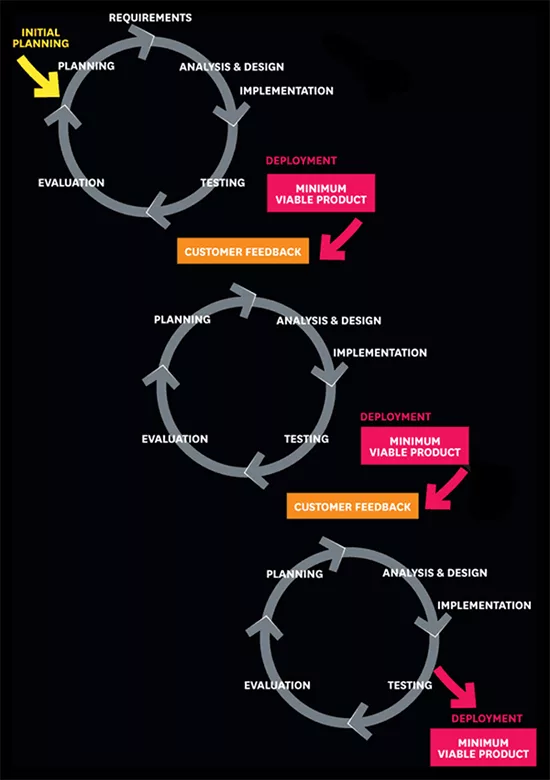
In today’s digital age, networking might seem old-fashioned. 

Why spend time on face-to-face interactions when you can reach thousands of people with a single click? 

Yet, you’re here reading this because you understand there’s immense value in building genuine connections. 

And you’re absolutely right.

Networking remains a crucial component of success for startup founders. 

In fact, a study in Forbes found that 78% of startups attribute their initial success to strong networking efforts, which helped them land their first big clients or secure vital funding.

In this blog post, we’re going to explore six essential steps that will guide you through networking your way to startup success. 

By the end, you’ll have a clear roadmap.

Let’s get into it!

1. Be Interested in Others

Illustration of a man and a woman engaged in a conversation, with speech bubbles indicating dialogue. A rocket and gear icons are in the background, representing innovation and teamwork.

It’s natural to approach networking with a focus on personal gain.

After all, you’re here because you see the benefits that strong connections can bring to your startup.

There’s no shame in that. 

But, to be truly successful with networking, you need a different mindset.

Many angel investors express frustration about founders who reach out without showing genuine interest in the person they’re contacting or in what they do.

Erik Huberman, the Founder and CEO of Hawke Media and an avid angel investor, encapsulates this sentiment perfectly: 

“Doing no research into what I invest in and just sending me a deck cold shows you are just spraying and praying, and I don’t want to invest in someone that isn’t intentional with who they take money from.”

The same is true if you’re networking to find clients for your products or services.

If you’re only interested in what you have to gain, you’re going to fail.

The ‘Benjamin Franklin Effect’

The key to successful networking is to show an interest in others. 

One way to achieve this is by using a psychology technique known as the Benjamin Franklin Effect. 

The backstory of this effect goes back to Franklin’s time when he wanted to win over a rival legislator. 

Instead of offering a favor, Franklin asked to borrow a rare book from him. 

The rival, flattered by the request, lent Franklin the book and the two ended up becoming friends.

The psychology behind this effect suggests that when someone does a favor for you, they are more likely to have positive feelings towards you. 

It sounds a little weird, but it works.

Applying this to networking means that instead of leading with your business needs, you could start by asking for advice or insight.

(Obviously, don’t ask for something that will cost too much time or money.)

Using the Benjamin Franklin Effect can help you do your research, reach out in a genuine way, and build trust with someone before ever discussing your business or what you’re looking for. 

This approach not only makes your connections more meaningful but also more beneficial in the long run.

10 Networking Quotes From Top Founders, Investors, Entrepreneurs & Authors

Next, we’ll look at ten quotes about the importance of putting others first when networking.

These insights will further emphasize why leading with authenticity is the foundation for long-term success in the startup world.

Here they are:

  • Reid Hoffman (Co-founder of LinkedIn):

    “Your network is the people who want to help you, and you want to help them, and that’s really powerful.”

  • Dale Carnegie (Bestselling Author):

    “You can close more business in two months by becoming interested in other people than you can in two years by trying to get people interested in you.”

  • Mark Cuban (Investor):

    “Business happens over years and years. Value is measured in the total upside of a business relationship, not by how much you squeezed out in any one deal.”

  • Keith Ferrazzi (Author and Entrepreneur):

    “The currency of real networking is not greed but generosity.”

  • Gina Romero (Entrepreneur):

    “A really important part of networking is actually about what you bring to the table-not just what you want to get out of it. Contribution is a big part of networking success.”

  • Seth Godin (Marketer and Author):

    “Networking that matters is helping people achieve their goals”

  • Simon Sinek (Inspirational Speaker):

    “The true value of networking doesn’t come from how many people we can meet but rather how many people we can introduce to others.”

  • Richard Branson (Founder of Virgin Group):

    “Succeeding in business is all about making connections.”

  • Bob Burg (Bestselling Author):

    “The successful networkers I know, the ones receiving tons of referrals and feeling truly happy about themselves, continually put the other person’s needs ahead of their own.”

  • Gary Vaynerchuk (Entrepreneur and Investor):

    “Provide 51% of the value in a relationship, whether it’s with an employee, a client, or a stranger.”

2. Following Up

Illustration of three people collaborating to reach a goal. One person holds a light bulb, another assembles puzzle pieces, and another pushes a large arrow upwards. Various icons surround them.

It’s hard to measure networking success in immediate results, like landing a sales call or securing an investment pitch right after a conversation. 

And that’s okay.

Because that’s not what we’re aiming for.

The goal of networking is to deepen relationships with the long-term potential for those connections to eventually lead to sales, partnerships, or other opportunities. 

So you might be wondering: 

“How do I measure something like relationship-building, and how do I know that I’m moving toward my goals?” 

And the answer lies in having a solid follow-up strategy.

Take John Corcoran, Co-founder of Rise25 Media, as an example. 

He has a strategy of categorizing your follow-up leads into four buckets: 

  • 30 days
  • 60 days
  • 6 months
  • 12 months

People who have the potential to turn into a sale or other benefit should go into the 30-day bucket – so you can follow up with them in 30 days or less.

Others who don’t have the same potential can go into the 12-month bucket. You still follow up with them, but don’t spend so much time on it.

And now the next question…

What should you say in these follow-ups? 

Corcoran says it’s about delivering value first:

“Before you get to the point of drafting the follow-up message, what I try and do is feel out whether there’s potential here…and looking for ways in which you can deliver value to that person, especially if it’s something that doesn’t require a huge input of your time.”

This value doesn’t even have to be related to your business. 

It could be anything. 

The key is to find ways to deepen the relationship and build trust and connection.

Follow-up Wisdom From ‘The Pursuit of Happyness’

There’s a scene in The Pursuit of Happyness, where Will Smith’s character, Chris Gardner, tries to build rapport with a top-level pension fund CEO, Walter Ribbon.

In the movie, Chris gets an opportunity to go with Walter to watch a San Francisco 49ers game.

During the game, Chris makes his business pitch to Walter and it falls flat.

But that’s not the end of the story.

Chris meets several wealthy people during the game and follows up with them, converting a number into important clients.

That’s the essence of networking.

You build relationships that, over time, lead to opportunities that you couldn’t have imagined at first.

So how can you stay on top of following up with your own potential leads?

To help you manage and track these valuable connections, consider using tools like ClickFunnels as your CRM and email platform. 

With ClickFunnels, you can set up automated follow-up emails and messages, keeping your network engaged over time. 

Plus, you can easily track which contacts turn into sales, investments, or other key outcomes, ensuring that your networking efforts are always moving you closer to success.

Start Your 14-Day ClickFunnels Free Trial Now!

3. Leverage Existing Connections

Illustration of a person sitting on a large user icon in front of a laptop, surrounded by icons representing notifications, settings, search, and chat, depicting online communication and data management.

Now that we’ve covered your approach to networking and how to follow up effectively, it’s time to dive into the actual process of finding people to connect with. 

Steps 3 through 7 will focus on how to do this.

One of the most valuable and easy-to-reach resources you have is your existing network. 

Whether from previous jobs, educational experiences, or personal connections, you likely know people who can either directly help you or introduce you to others who can. 

These existing connections can be a goldmine for networking.

Here’s how to leverage them.

When reaching out to these individuals, start by reminding them of your shared history or how you know each other. 

Be clear about why you’re reaching out. 

But, it’s crucial to approach these conversations with value in mind. Offer something in return, such as insights, advice, or support. 

Always be prepared to accept a polite ‘no,’ and make sure your request doesn’t come across as demanding or presumptive. 

Maintaining a positive relationship is more important than any new introduction.

By leveraging your existing connections thoughtfully and respectfully, you’ll be better positioned to expand your network and unlock new opportunities for your startup.

4. Attend Industry Events

A woman is presenting to an audience in a room, with environmental graphics and data charts on screens behind her. An attendee holding a microphone stands up to ask a question.

Attending industry events can be a powerful way to connect with the exact people who can help your startup succeed.

These events gather professionals from your industry in one place, making them a prime opportunity to meet potential clients, investors, or strategic partners who share your interests and goals.

They can be offline or online.

It’s natural to feel a bit apprehensive about attending such events. 

You might worry about being overwhelmed by the crowd, not knowing what to say, or feeling out of place among more experienced professionals. 

These fears are common. 

But they can be managed effectively by applying the strategies we’ve discussed earlier. 

Remember the three steps we’ve outlined:

  • Start conversations.
  • Ask questions to assess how valuable the person could be for your goals.
  • Place them into one of your follow-up buckets (30 days, 60 days, 6 months, or 12 months).
  • Deliver value in your follow-up, whether it’s through advice, a helpful resource, or just a thoughtful message that keeps the relationship warm.

Keep in mind that each conversation you start is a potential gateway to a new opportunity, and every connection you make can be a stepping stone toward your startup’s growth.

And a reminder: tools like ClickFunnels can be invaluable for your networking.

Use ClickFunnels as your CRM to keep track of all the new contacts you meet, categorize them into follow-up buckets, and set up automated follow-up emails.

 This way, no connection slips through the cracks.

You’ll be able to monitor which ones eventually lead to the outcomes you’re aiming for, whether that’s investment, new clients, or strategic partnerships.

Start Your 14-Day ClickFunnels Free Trial Now!

5. Be Active Online

Illustration of a person using a smartphone while sitting on a sofa, with a screen displaying a work online network including different profiles, a mailbox icon, and a globe symbol indicating global connectivity.

In today’s digital world, being active online is crucial for effective networking. 

One powerful strategy to guide your online networking efforts is Russell Brunson’s concept of the Dream 100, introduced in his book Traffic Secrets. 

The Dream 100 is a targeted approach to networking that helps you identify and build relationships with the top 100 people who could have the biggest impact on your business – whether as clients, partners, or influencers.

To create your own Dream 100, start by identifying the individuals or entities that are most influential in your industry or niche. 

These could be key clients you want to land, influencers who can promote your product, or potential partners who can help you grow. 

Once you have your list, the goal is to “work your way in”.

This means gradually building relationships with these people over time.

Here’s a 60-day strategy to successfully network with your Dream 100:

Days 1-14: Find, Follow, & Engage With the Right Person

  • Identify the person you should be trying to connect with on each platform.
  • After identifying these key figures, subscribe to their content, follow them on all social channels, and start engaging with their posts.
  • Engage with their content in comments or shares.
  • Your goal during these first two weeks is to get noticed and establish yourself as a consistent, supportive presence.

Days 15-30: Contacting the Dream 100 (No Pitches Allowed)

  • Now, reach out directly via email or direct message.
  • Don’t pitch anything, just build rapport.
  • Start a conversation by asking a question about their content, sharing how they’ve impacted you, seeking advice, or similar.
  • Your goal during these two weeks should be on establishing an authentic connection, rather than pushing your agenda.

Days 31-60: Deepening the Relationship

  • Over the next month, deepen the relationships you’ve begun to build.
  • Continue conversations, offering value, and don’t make any requests too early.
  • Gradually, as trust is built, opportunities for collaboration or support will arise naturally.
  • Your goal is just to build that trust.

Days 60+: Promote Your Product or Service

  • Now that you’ve laid the groundwork, you can begin to introduce your product or your pitch.
  • If you’ve done the first 60 days successfully, you should know what interests the person in your Dream 100.
  • So you should be able to make your request in a way that still gives more value than it asks.

For more insights on how to build and leverage your Dream 100, check out Russell Brunson’s Traffic Secrets.

You’ll find detailed strategies for driving traffic and scaling your business online.

6. Start Talking to Everybody

Three people engaging in a discussion in an office setting, with charts and graphs displayed on screens behind them.

In your daily life you’re constantly surrounded by opportunities to connect with people. 

Whether you’re at a coffee shop, standing in line at the grocery store, or chatting with someone at the gym, you never know who might have a need you can solve.

A perfect example is how Salesforce, now a multi-billion dollar leader in the CRM industry with annual revenue surpassing $31 billion, won its first customers in the most unexpected places.

One of them was literally standing in line at a shop.

If this doesn’t inspire you to start networking with everybody you meet… then I don’t know what will!

The Salesforce Story: How a Chance Encounter Led to a First Customer

Marc Benioff, the founder of Salesforce, shares this story in his book Behind the Cloud.

In the early days of Salesforce, they struggled to make sales, so everyone in the company was encouraged to reach out to anyone they knew.

Diane Mark, a product manager at Salesforce, was standing in line at Mollie Stone’s market when she bumped into a former colleague.

She struck up conversation and asked him what his company used to manage its sales process. 

He said their current system was a ‘mess’.

Diane quickly arranged a meeting with iSyndicate’s executives and, not long after, they signed on as Salesforce’s second customer. 

So there you go. 

You never know who you might meet, and every conversation holds the potential to lead to a meaningful connection or business opportunity. 

Now that you have a strategy and a follow-up system in place, you’ll be prepared to turn these chance encounters into lasting relationships that could significantly benefit your startup.

All it takes is a conversation to find out!

Final Thoughts on Networking Your Way to Startup Success

Networking might seem like an outdated method for growing a business. 

With so many modern techniques available, why rely on something as old-school as networking? 

The answer is simple: networking has stood the test of time for a reason—it works.

In fact, networking is the foundation upon which all other marketing and client acquisition strategies are built. 

Whether you’re leveraging social media, email campaigns, or content marketing, the relationships you build through networking are what fuel these efforts. 

And there’s one other thing.

Networking is one of the few marketing techniques you can do for free, anywhere, and at any time. 

In this blog post, you’ve seen simple steps to:

  • Be interested in others
  • Have a follow-up strategy
  • Leverage your existing connections
  • Attend industry events
  • Engage online with intention
  • Talk to everyone you meet

Incorporating the above into your marketing strategy will help you lay the groundwork for sustainable, long-term success.

Now, go out there and start building those connections.

You never know which one could be the key to your next big breakthrough!

Start Your 14-Day ClickFunnels Free Trial Now!

Thanks for reading Networking Strategies For Startup Success which appeared first on ClickFunnels.
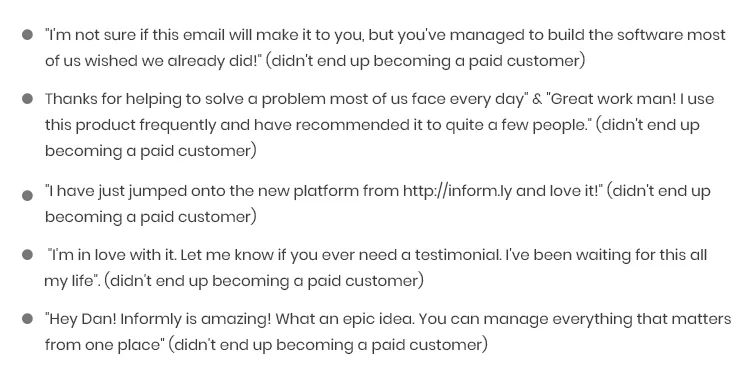
Strategies to Market Your Startup Successfully

Software Stack Editor · September 9, 2024 ·

The post Strategies to Market Your Startup Successfully appeared first on ClickFunnels.
Starting a business is exciting, but getting it noticed? 

That’s the real challenge. 

Effective marketing can make or break your startup. But don’t worry — we’ve got your back.

In this article, we’ll explore 6 killer tactics to skyrocket your startup’s visibility and growth. From understanding your audience to leveraging cutting-edge digital strategies, these tips will help you stand out and connect with potential customers.

Ready to supercharge your startup’s marketing? Let’s dive in!

Tip #1: Understand Your Target Audience

You’ve got a great product or service, but do you know who it’s for?

Understanding your target audience is like having a secret weapon in your marketing arsenal. It’s not just about knowing their age or location — it’s about diving deep into their world.

You want to know them better than they know themselves.

Think about it: What keeps your ideal customer up at night? What are their dreams, fears, and frustrations? When you truly understand your audience, you can speak their language and offer solutions that resonate on a personal level.

Here’s how to get started:

Create a Detailed Buyer Persona

Imagine your ideal customer. Give them a name, a job, hobbies, and challenges. The more specific, the better. For example, “Tech-Savvy Tom” might be a 35-year-old software developer who struggles with work-life balance and loves trying new productivity apps.

  • Interview a friend who fits your ideal customer profile
  • Create a “day in the life” storyboard for your persona
  • Role-play as your persona in a team meeting
A customer avatar template with sections for personal information, goals, values, challenges, pain points, information sources, and objections in the purchase process.

Conduct Surveys and Interviews

Don’t just guess what your audience wants — ask them! Use tools like SurveyMonkey or even simple Google Forms to gather insights. Better yet, hop on calls with potential customers. Their words are gold for your marketing efforts.

  • Call 10 past customers and spend 20 minutes chatting with them
  • Host a virtual “coffee break” with potential customers
  • Create a quick poll on your Instagram or LinkedIn story

Analyze Your Competition

Check out what your competitors are doing. Who are they targeting? What pain points are they addressing? This can give you valuable insights and help you find gaps in the market.

  • Sign up for your top 3 competitors’ email lists
  • Attend a competitor’s webinar or event as a “secret shopper”
  • Analyze the top 5 reviews of your competitors’ products

Use Social Media Listening

Platforms like Twitter, Reddit, and industry forums are treasure troves of information. See what conversations your potential customers are having. What problems are they discussing? What solutions are they seeking?

  • Spend an hour in relevant Facebook Groups, noting common questions
  • Set up Google Alerts for key industry terms and customer pain points
  • Join a Twitter chat related to your industry

Bonus Tip: Identify Your Place Among the “Three Markets”

Virtually all products fall somewhere into these three markets: health, wealth, and relationships. Niche down two more levels to identify your unique place in the market and discover exactly who you serve. 

Here’s one example for each market path…

  • Health —> Weight Loss —> Personalized Meal Planning
  • Wealth —> Finance —> Paying Off Debt
  • Relationships —> Love —> Going Through Divorce

Understanding your audience isn’t a one-and-done deal. 

It’s an ongoing process. As your startup grows and evolves, so will your audience. Keep listening, keep learning, and keep refining your approach.

By truly understanding your target audience, you’ll be able to create marketing messages that hit home, develop products that solve real problems, and build a loyal customer base that will help your startup thrive.

Tip #2: Create an Attractive Character

Ever wonder why some brands just click with their audience? It’s not just about what they’re selling — it’s about who’s doing the selling. 

Enter the “Attractive Character” — your secret weapon for connecting with your target market.

What’s an Attractive Character, you ask? It’s not about looks, but about relatability. It’s a persona that embodies your brand and resonates with your audience. 

Think Flo from Progressive or the Geico Gecko. These characters make us feel something, and that’s exactly what you want for your startup.

Here are three quick ways to bring your Attractive Character to life:

Choose Your Character Type

When it comes to a character of a story, there are three main archetypes you can choose from… 

  • The Leader: Be the Tony Robbins of your industry
  • The Adventurer: Channel your inner Alex Hormozi and showcase your journey
  • The Reluctant Hero: Share your humble beginnings and surprising success (like Russell Brunson!)

Craft a Compelling Backstory

Here’s a great example of a backstory we created for ClickFunnels and posted a few years ago.

  1. Write a 5-minute “origin story” for your character
  2. Identify 3 key turning points in their journey
  3. Share a relatable struggle they’ve overcome

Integrate Your Character Everywhere

Once you’ve created your attractive character, you want your target market to start seeing them everywhere. On your social pages. On your YouTube channel. In your emails. The more they see them and hear from them, the more they’re going to connect with them.

  • Create a signature email sign-off that reflects their personality
  • Design a cartoon avatar for social media profiles
  • Record a short video introducing your character to your audience

Remember, your Attractive Character is the face of your brand. They’re not just selling a product — they’re sharing a story, a journey, and a vision that your audience can connect with.

Remember Colonel Sanders…

Left: Logo featuring a stylized portrait of a man with glasses and a goatee. Right: Photograph of an elderly man with glasses, white hair, a goatee, wearing a white suit and a black bow tie.

Or the Old Spice Guy…

A shirtless man standing indoors holding a split football with a deodorant inside in one hand and a red stick in the other hand.

Or Steve Jobs…

A man wearing glasses and a black turtleneck speaks while gesturing with one hand and holding a small object in the other.

That’s what you’re trying to do 🙂

Tip #3: Leverage Content Marketing

Content is king — and for startups, it’s your secret weapon. 

Content marketing isn’t just about churning out blog posts; it’s about providing value, building trust, and positioning your startup as an industry leader. 

Plus, it’s a fantastic way to showcase your newly created Attractive Character!

Here’s how you can leverage content marketing to skyrocket your startup’s visibility:

Diversify Your Content Types

Screenshot of a marketing secrets webpage featuring a headline about generating monthly revenue, a man holding books, an email signup form, and a section promoting books and free trials.

Your audience consumes information in various formats. 

By diversifying your content types, you’re not only catering to different preferences but also maximizing your reach. Each format offers unique advantages: podcasts allow for in-depth discussions, videos can demonstrate complex ideas visually, and infographics make data digestible at a glance. 

By mixing it up, you keep your content fresh and engaging for your audience.

  • Create a weekly podcast where your Attractive Character interviews industry experts
  • Start a YouTube channel with quick tips related to your product or service
  • Design eye-catching infographics that simplify complex concepts in your field

Pro-Tip: If you don’t have the time or budget to mix it up, focus exclusively on where your target market spends the most time.

Embrace the Power of Storytelling

Humans are hardwired for stories. They capture our attention, evoke emotions, and make information memorable. 

In the context of your startup, storytelling can transform dry facts and figures into compelling narratives that resonate with your audience. By sharing your journey, celebrating customer successes, and even using creative formats like comics, you’re not just informing — you’re connecting on a deeper level.

  • Write a series of blog posts chronicling your startup’s journey
  • Share customer success stories in a “before and after” format
  • Create a comic strip featuring your Attractive Character solving common industry problems

Engage and Interact with Your Audience

Content marketing isn’t a one-way street. It’s about starting conversations and building a community around your brand.

Interactive content and open communication channels show that you value your audience’s input, which can turn casual readers into devoted brand advocates.

  • Host a monthly “Ask Me Anything” (AMA) session on Reddit or your own platform
  • Create interactive content like quizzes or polls related to your industry
  • Encourage and respond to comments on your blog and social media posts

Remember, consistency is key in content marketing. It’s better to publish quality content regularly than to overwhelm yourself trying to do everything at once.

Tip #4: Utilize Email Marketing

Email remains the unsung hero. It’s personal, direct, and incredibly effective when done right. 

For startups, email marketing is having a direct line to your audience’s inbox — a powerful tool for nurturing leads, building relationships, and driving conversions.

Let’s dive deep into how you can harness the power of email marketing to boost your startup’s growth:

Master the Soap Opera Sequence

A five-day plan: Day 1 sets the stage, Day 2 presents high drama and backstory, Day 3 has an epiphany, Day 4 reveals hidden benefits, Day 5 focuses on urgency and call-to-action.

The Soap Opera Sequence is a game-changer in email marketing. It’s a series of five emails designed to hook your audience and keep them eagerly awaiting your next message — just like a thrilling TV series. This sequence builds curiosity, creates emotional connections, and ultimately leads to a sale.

Here’s how to craft a compelling Soap Opera Sequence:

  • Email 1 (Set the Stage): Introduce the backstory and set up the problem. For example, “I was a struggling entrepreneur, drowning in debt…”
  • Email 2 (High Drama): Share a big struggle or challenge you faced. “Then, my biggest client fired me, and I hit rock bottom…”
  • Email 3 (Epiphany): Reveal the ‘aha’ moment that led to your solution. “That’s when I discovered the secret that turned everything around…”
  • Email 4 (Hidden Benefits): Showcase unexpected advantages of your solution. “Not only did I save my business, but I also found time to travel the world…”
  • Email 5 (Urgency and CTA): Create a sense of urgency and call readers to action. “This opportunity is only available for the next 48 hours…”

The key to a successful Soap Opera Sequence is to maintain high emotional engagement throughout. Use cliffhangers at the end of each email to keep your readers eager for the next installment.

Implement Seinfeld Emails

Named after the TV show famous for being “about nothing,” Seinfeld emails are all about consistency and entertainment. These are regular, often daily, emails that share stories, observations, or insights from your day-to-day life, subtly tying them back to your business or product.

Here’s how to make Seinfeld emails work for your startup:

  1. Consistency is key: Commit to a regular schedule, whether it’s daily, three times a week, or weekly.
  2. Keep it light: These emails should be easy to read and entertaining. Think of them as a coffee break in your subscriber’s day.
  3. Find the business angle: Always tie your story back to a business lesson or your product, but do it subtly.
  4. Be authentic: Share real stories and experiences. Your authenticity will help build stronger connections with your audience.

Examples of Seinfeld emails:

  • “What my dog taught me about customer loyalty…”
  • “The productivity hack I learned from getting stuck in traffic…”
  • “Why my failed soufflé reminds me of our latest product feature…”

Optimize for Engagement and Conversions

While building relationships is crucial, the ultimate goal of your email marketing is to drive engagement and conversions. 

Your emails should be optimized to keep readers interested and guide them towards taking action.

Here are some strategies to boost engagement and conversions:

  • Craft irresistible subject lines: Use intrigue, urgency, or curiosity to get subscribers to open your emails. For example, “The weird trick that doubled our sales” or “Oops, I wasn’t supposed to share this…”
  • Personalization: Use your subscriber’s name and tailor content based on their interests or past behavior.
  • Segmentation: Divide your email list based on demographics, behavior, or preferences to send more targeted, relevant emails.
  • Clear CTAs: Every email should have a clear purpose and a compelling call-to-action. Make it obvious what you want the reader to do next.
  • Mobile optimization: Ensure your emails look great on mobile devices, as that’s where many people check their email.
  • A/B testing: Regularly test different elements of your emails (subject lines, CTAs, send times) to continually improve performance.

Build and Maintain a Quality Email List

Your email marketing is only as good as your list. Focus on attracting and retaining subscribers who are genuinely interested in what you have to offer.

Here’s how to build and maintain a quality list:

  • Create valuable lead magnets: Offer something irresistible in exchange for email sign-ups,  like an ebook, webinar, or exclusive content.
  • Use exit-intent popups: Capture leaving visitors with a well-timed popup offering your lead magnet.
  • Run contests or giveaways: Organize events that require email submission to enter, but ensure they attract your target audience.
  • Regular list cleaning: Remove inactive subscribers periodically to maintain a healthy, engaged list.
  • Double opt-in: Use this method to ensure you’re getting quality, interested subscribers.

Remember, email marketing is not about bombarding your list with sales pitches. It’s about providing consistent value, entertaining your audience, and building trust over time.

Oh — and in case you’re wondering what software to use, you can build sales funnels, host your website, and even build an email list and send emails with ClickFunnels! Click below to get a free trial.

Try ClickFunnels FREE Today!

Tip #5: Optimize for Search Engines

In the digital marketplace, being found is half the battle.

Search Engine Optimization (SEO) is your secret weapon to ensure your startup appears in front of potential customers when they’re looking for solutions you offer.

In fact, we are literally driving over 200,000 visits to our website per month purely through search traffic here at ClickFunnels!

A dashboard displays website metrics, including authority score, search traffic, paid traffic, backlines, and data distribution by country with a traffic trend graph spanning several months.

I don’t mean to get too technical on you, but that’s what SEO is all about. So bookmark this page and review it before putting out content!

Technical SEO Fundamentals

Before anything else, you need to ensure your website’s technical foundation is solid:

Site Speed Optimization:

  • Use Google’s PageSpeed Insights to analyze your site
  • Compress images using tools like TinyPNG
  • Implement browser caching with plugins or .htaccess file modifications
  • Minify CSS, JavaScript, and HTML

Mobile Responsiveness:

  • Use Google’s Mobile-Friendly Test to check your site
  • Implement responsive design using CSS media queries
  • Ensure touch elements are properly sized and spaced

XML Sitemap:

  • Generate a sitemap using tools like XML-Sitemaps.com
  • Submit your sitemap to Google Search Console and Bing Webmaster Tools

Robots.txt:

  • Create a robots.txt file to guide search engine crawlers
  • Use it to disallow crawling of duplicate content or private areas

On-Page SEO Tactics

Once your technical foundation is set, focus on optimizing individual pages:

Title Tags:

  • Keep titles under 60 characters
  • Include your primary keyword near the beginning
  • Make each title unique and descriptive

Meta Descriptions:

  • Aim for 150-160 characters
  • Include your primary keyword naturally
  • Write compelling copy to encourage click-throughs

Header Tags:

  • Use H1 for your main title (only one per page)
  • Structure content with H2, H3, etc. subheadings
  • Include relevant keywords in headers where natural

Content Optimization:

  • Aim for at least 300 words per page for thin content
  • Include your primary keyword in the first 100 words
  • Use related keywords and synonyms throughout
  • Implement schema markup for rich snippets (use Schema.org)

Content Strategy for SEO

Content is king in SEO. Here’s how to create SEO-friendly content:

Keyword Research:

  • Use tools like SEMrush or Ahrefs to find relevant keywords
  • Focus on long-tail keywords with lower competition
  • Analyze search intent behind keywords (informational, transactional, etc.)

Content Creation:

  • Develop a content calendar based on your keyword research
  • Create in-depth, authoritative content (aim for 1500+ words for pillar content)
  • Use the skyscraper technique to improve upon existing top-ranking content

Internal Linking:

  • Link between related pages on your site
  • Use descriptive anchor text for internal links
  • Create topic clusters with pillar pages and related content

Technical SEO Advanced Tactics

For those ready to dive deeper, here are some advanced tactics:

Implement SSL (HTTPS):

  • Obtain an SSL certificate (Let’s Encrypt offers free certificates)
  • Ensure proper redirects from HTTP to HTTPS

Optimize for Core Web Vitals:

  • Focus on Largest Contentful Paint (LCP), First Input Delay (FID), and Cumulative Layout Shift (CLS)
  • Use Chrome User Experience Report for real-world data

Implement Accelerated Mobile Pages (AMP):

  • Use the AMP framework for lightning-fast mobile pages
  • Validate AMP pages using Google’s AMP Test

Structured Data Markup:

  • Implement JSON-LD for key information like business details, products, and FAQs
  • Use Google’s Structured Data Testing Tool to validate your markup

Link Building Strategies

Finally, focus on building high-quality backlinks:

  • Create linkable assets (infographics, original research, tools)
  • Reach out to industry influencers and bloggers for collaborations
  • Leverage broken link building by finding and replacing dead links in your niche
  • Use HARO (Help a Reporter Out) to become a source for journalists

Remember, SEO is a long-term game. Be patient, and consistent, and always prioritize providing value to your users.

Tip #6: Follow the Dream 100 Method

Ever feel like you’re shouting into the void with your marketing efforts? 

Enter the Dream 100 method — a game-changing strategy that can skyrocket your startup’s visibility and growth. Created by Chet Holmes and popularized by ClickFunnels’ founder Russell Brunson, this method is all about strategically tapping into existing audiences.

Let’s break it down and get tactical:

Identify Your Dream 100

The first step is creating a list of the top 100 places where your ideal customers are already hanging out online. Think big, but be specific:

  • 10 websites and forums in your niche
  • 15 active Facebook groups where your audience congregates
  • 50 influencers on platforms like Instagram and TikTok
  • 30 podcasts your ideal customer listens to
  • 40 email newsletters they might subscribe to
  • 20 blogs they read regularly
  • 20 YouTube channels they watch

Pro Tip: Use a spreadsheet to organize your Dream 100. Include columns for the platform, contact person, and your progress in connecting with them.

Build Your Foundation

Before you start reaching out, make sure you have two crucial elements in place:

A Clear Customer Avatar: Know exactly who you’re targeting. What are their pain points? What solutions are they seeking?

A Compelling Lead Magnet: Create something irresistible that your dream customers would love to get for free or at a low cost. This could be an eBook, a mini-course, or a valuable tool.

Option A: Work Your Way in

Now comes the fun part — connecting with your Dream 100. Here’s a step-by-step approach:

Days 1-14:

  • Follow all your Dream 100 on social media
  • Engage genuinely with their content (comment, share, like)
  • Start becoming a familiar face in their community

Days 15-30:

  • Reach out via email or DM with a personal message
  • Don’t pitch anything yet! Ask a thoughtful question or share how their work has impacted you
  • Focus on building a real relationship

Days 31-60:

  • If you’ve built a good rapport, share your product or service
  • Offer it to them for free — no strings attached
  • If they love it, propose a mutually beneficial promotion arrangement

Remember: Authenticity is key. Don’t use templated messages or push for a quick sale. Build real relationships.

Option B: Buy Your Way in

For those Dream 100 contacts you can’t connect with organically, there’s always the option to buy your way in:

  • Sponsorships: Many podcasts, newsletters, and YouTube channels offer sponsorship opportunities.
  • Paid Ads: Use platforms like Facebook or Instagram to target the followers of your Dream 100.
  • Influencer Marketing: Some influencers have set rates for product promotions.

Leverage ClickFunnels for Your Dream 100 Campaign

ClickFunnels can be a powerful ally in your Dream 100 strategy:

  • Create Landing Pages: Build specific landing pages for each Dream 100 partnership.
  • Email Sequences: Set up automated follow-up sequences for leads from different Dream 100 sources.
  • Track Performance: Use ClickFunnels’ analytics to see which Dream 100 partnerships are driving the best results.

Try ClickFunnels FREE Today!

Follow Up and Scale

Once you start seeing success with your Dream 100:

  • Send a Soap Opera Email sequence to new leads, guiding them toward your offer.
  • Continue nurturing relationships with your Dream 100 partners.
  • Analyze your results and double down on what’s working.

The Dream 100 method isn’t a one-time tactic — it’s an ongoing strategy. Keep refining your list, building relationships, and providing value to both your partners and your audience.

Final Thoughts on Marketing Your Startup

Marketing your startup isn’t about following a rigid playbook — it’s about smart strategy and consistent execution. 

The digital landscape evolves rapidly, and what works today might need tweaking tomorrow. Embrace a mindset of continuous learning and optimization. 

Most importantly, don’t lose sight of why you started your business. 

Your passion and purpose should fuel your marketing efforts. Authenticity can be your greatest differentiator in a crowded market.

With the strategies we’ve discussed and tools like ClickFunnels at your disposal, you’re well-equipped to make a significant impact. Your startup has something unique to offer — now it’s time to let the world know.

Try ClickFunnels FREE Today!

Thanks for reading Strategies to Market Your Startup Successfully which appeared first on ClickFunnels.
How To Launch Your First Online Business

Software Stack Editor · September 9, 2024 ·

The post How To Launch Your First Online Business appeared first on ClickFunnels.
Learn how to build a successful online business as a launchapreneur with expert tips and strategies. Perfect for new entrepreneurs.

What’s a launchapreneur, you may ask?

Whether you’re looking to start a side hustle from your regular job or find a way to achieve financial freedom for yourself and your family, starting an online business can be the ultimate opportunity.

A launchapreneur is an entrepreneur who specializes in serial launching online businesses.

In other words, a launchapreneur is an individual who creates and launches multiple digital businesses to sell to others.

An entrepreneur has the mindset of trying to fill a need and provide a solution they perceive in the market. They are willing to take the risk to see their solutions come to light.

For example, a launchapreneur may create several digital businesses that are knowledge-based on a series of a specific topic or a variety of topics, including courses, e-books, and pieces of training.

These various businesses could be interrelated or stand-alone and diversified to a wider portfolio of digital companies.

If you want to create, build, and launch your digital business, achieve financial freedom, and take control of your daily life, being a launchapreneur is your opportunity.

Ready to take action and take control?

This step-by-step guide will help you build a successful online business as a launchapreneur.

7 Steps to Create, Build, and Launch a Successful Digital Launchapreneur Business

In your social media feed and on blogs, there are countless success stories about entrepreneurs who built thriving businesses to achieve their dreams.

With the tools available today, financial and personal freedom is within reach for anyone looking to achieve it.

And if you’re wondering how they got so lucky and if you could do the same, the answer is yes!

First, understand that while there is a little luck involved with any successful venture, the reality is that those individuals who have achieved success did so by having a plan, working hard, taking the risk to get started, and trusting in themselves.

So ask yourself: Are you ready to take the leap and achieve what you have only dreamed of? If you answered yes, then keep reading.

Now that you’re ready to take the next step, how do you go from aspiring businessperson to successful entrepreneur?

The answer is to transform yourself into a launchapreneur and an entrepreneur who knows how to launch, scale, and sustain a digital business using all the tools and resources like ClickFunnels.
What’s ClickFunnels? ClickFunnels is software that helps entrepreneurs build, launch, scale, and maintain successful sales funnels and pages and create the type of successful online businesses they dream of.

To build a successful online business as a launchapreneur, 7 steps are guaranteed to help you achieve the results you dream of, giving you more of what you want and the freedom you deserve.

Those 7 steps to achieve success as an online launchapreneur include:

Table of Contents:
  • Step #1: Identify Your Niche and Target Audience
  • Step #2: Validate Your Business Idea
  • Step #3: Build Your Brand and Online Presence
  • Step #4: Develop a High-Converting Sales Funnel
  • Step #5: Drive Traffic to Your Sales Funnel
  • Step #6: Optimize and Scale Your Business
  • Step #7: Build and Nurture Relationships with Customers

Step #1: Identify Your Niche and Target Audience

Illustration of a woman analyzing target audience data on a smartphone with icons representing different audience segments and gears indicating planning or organization.

For any business to succeed, starting from the gates, you must identify what you plan to offer and who you’re trying to sell to.

Identifying your niche allows you to focus on a specific market you’re trying to serve. Your target audience is the people and other businesses most likely to benefit from your offers.

To identify your niche, consider the following:

Interests and Passion: What is it that you’re interested in, have some knowledge about, and that you can provide a solution to a common issue?

Don’t worry – you don’t need to be the world’s leading expert; you only need more knowledge than your target audience.

Skills and Expertise: What expertise do you have about your particular interest or passion? What unique skills do you have that you can offer to help others who may have similar interests and passions but need to be more experienced?

Market Demand: After you identify what your interests, passions, and expertise are, you’ll want to analyze whether there’s a market demand or not.

For example, if you’re teaching a tutorial on oil changes for your car, a long-form e-book may not be in demand, but you could launch a DIY channel that offers affiliate marketing and other products to promote.

As you identify what you’ll offer and who would benefit most, you can begin creating content that addresses the pain points and showcases your solutions. 

This process is known as creating a sales funnel, which is your various touch points with your target audience as you motivate them to make a purchasing decision. 

Converting your visitors into paying customers is the name of the game and is the primary function of a sales funnel. A tool like ClickFunnels sales funnel will help you optimize your conversion opportunities.

Competition: Consider potential competitors in the market. What are they offering and not offering? By understanding your competition, you can fill a gap in the market for your audience. 

Finally, once you’ve identified your niche, define your ideal customer. 

Who would benefit from your products, and what do they need for them to succeed? 

By defining your ideal customer, you can create more relevant products and solutions and the type of content that resonates with them.

Step #2: Validate Your Business Idea

Illustration of two business professionals discussing growth, surrounded by gears, charts, social profiles, a lightbulb, an envelope, and chat bubbles, symbolizing teamwork and innovation.

Successful entrepreneurs know it’s crucial to validate their ideas before entering any business and launching a product. 

If you jump headfirst into a pool, you could hit your head, and in business, without validating your idea, you could end up with a different type of pain, wasting a lot of time, money, and other resources. 

By validating your idea, you know what your target market is willing to purchase and what the market will support. 

How do you validate your idea and get to a launch quickly? Here’s how:

Surveys and Polls: Surveys and polls are great ways to get feedback from and engage with your target audience. They make your target audience feel seen and heard, which can go a long way toward creating trust in your brand. 

In your polls and surveys, ask what your audience needs, their pain points, their preferences, and their willingness to pay for a product or solution. 

Pre-Sales: A good way to test your idea (and generate a little seed money) is to offer up pre-sales of your product. This is a good way to test and gauge your audience’s interest in your offer and will provide you with valuable insights into the type of offer and the right price point. 

Minimum Viable Products (MVPs): In digital business, launching multiple products and creating add-ons or upgrades is easy, so start with the minimum. Launch a simplified version of your product and gather feedback to include in your upgrade before your full launch.

Competitor Analysis: As you decipher how you will position yourself in the market, one thing to also consider is what your competitors offer. Is there a hole you can fill, or at a better price to help differentiate you from your competition?

Step #3: Build Your Brand and Online Presence

As you prepare your launchapreneur business to succeed, you’ll want to create a trusted, recognizable brand and foster an online presence. 

Your brand is your identity. Think about the ones you know, like Apple. Their packaging and sleek design have created an identity that people want to be a part of; it’s a community dedicated to a brand.

There are various ways to create a brand, from a logo to a website and social media. The key is ensuring all your efforts have a recognizable brand and tone. 

Create Your Identity: Develop and make it cohesive with your logo, color scheme, and other design elements. Focus your identity to reflect your niche and market to resonate with your target audience. 

Have a Website: Your website can be your key source of revenue, a digital storefront, and an online business card. Make it professional, cohesive with your brand identity, and user-friendly with fast load times.

Why do page load times matter? The longer a page takes to load, the more likely a visitor (and potential customer) will leave. 

Speed is the key to online conversions. Consider incorporating AI into your website design to improve efficiency and eliminate any issues that may slow down page load times. 

With AI, you’ll gain speed for both your web page load times and how your customers experience your site, creating a better user experience. 

Be Social (Media) Savvy: As you build your brand and want to expand your reach, one of the most important things you can do is interact and engage with your audience where they hang out. If your target audience is TikTok, you must become savvy enough to create short, engaging videos that resonate with them. 

But if they enjoy being on Facebook, create snappy posts, like and share relevant content, and include a link to your site. 

Content Marketing: Create high-quality content that your audience will enjoy, educate them, and inspire them to take action. 

This could be through short videos, blog posts, infographics, or even podcasts that help position you as an expert and authority.

With tools provided by ClickFunnels, you can incorporate all your touchpoints, from a beautifully designed website to blog posts to social media and other content marketing, into an all-in-one solution.

Step #4: Develop a High-Converting Sales Funnel

Illustration of a sales funnel labeled Awareness, Interest, Desire, Action. A man with a megaphone and a woman on a ladder are shown near the funnel with coins and charts, representing marketing concepts.

To be a successful launchapreneur, you’ll need to engage with your target audience in the different phases of their purchasing decision. 

That means you’ll need a lot of content to help inform and engage with them, whether they’re just learning about your brand, starting to look for solutions, or are ready to make a purchase. 

Identifying and motivating visitors to customers is known as a sales funnel, and a well-optimized sales funnel is crucial for converting your leads into paying customers. 

This is where ClickFunnels comes in.

ClickFunnels is the leader in providing entrepreneurs of all experience levels with all-in-one tools to create, build, and nurture visitors through the optimal sales funnel without needing any technical or coding skills. 

With ClickFunnels, you can easily capture, nurture, and convert your leads more effectively. 

Simply, you can:

  • Create a lead magnet
  • Have a high-converting landing page
  • Launch an email sequence
  • Create sales pages
  • Optimized order forms
  • Thank you follow-up pages

Step #5: Drive Traffic to Your Sales Funnel

A computer screen displays various digital marketing icons including social media, emails, and analytics, with a funnel and dollar signs indicating conversion and revenue growth.

Once you’ve built your sales funnel, the next step is to drive traffic to your website and funnels. 

With the ClickFunnels sales funnels, a lot of that SEO is already included, so driving traffic is easier than creating it alone. 

To generate and drive traffic to your sales funnels, use these traffic gen strategies:

Search Engine Optimization (SEO): Focus your content on keywords that are relevant to your target audience and niche and provide value to your visitors. 

Validating your idea through surveys and polls and engaging with your audience on their preferred platforms will give you a ton of insights into what motivates and drives them and help inform your content creation, which in turn will drive traffic to your sites better. 

Paid Ads: Paid ads can quickly bring a large traffic volume to your site. Google ads, Facebook Ads, and other social media ads can be powerful tools to boost your traffic, but they can also be expensive if you target the wrong keywords. So, develop your paid ad strategy by testing and refining your search. 

Social Media Marketing: Another key is to promote your brand and products on social media to engage with your audience. The key is to build online relationships and create a community with your audience because customers don’t want to be sold something but will spend money if they feel a connection to a product, brand, or service. 

Email Marketing: A great way to launch successfully is to have and leverage an email list. You can use your email list to drive traffic to your sales funnels, provide exclusive content, and even promote deals and incentives to keep your audience engaged and interacting with your brand. 

Affiliate Marketing: Affiliate marketing is a system where you partner with others who can promote your products and services in exchange for a commission. 

Affiliates will expand your reach and provide your brand with added trust since the content is being shared by a different brand that already has that goodwill with its audience.

Step #6: Optimize and Scale Your Business

Two people discuss data analysis in front of a bar chart on a large screen. Various icons, such as a lightbulb, chat bubbles, and gears, surround them. Coins are stacked at the base of the screen.

Building a successful online business as a launchapreneur takes more than creating and launching a product. You’ll want to optimize each product and then scale your operations. This process will involve A/B testing, analyzing data, getting customer feedback, iterating and improving your products, and eventually offering more products.

A/B Test: Test two similar products to see which performs better. This A/B testing will provide valuable insights into the performance of your products, designs, presentations, and sales funnels. 

Analyze Insights: Use analytics tools to decipher what is performing well and what isn’t to make better-informed decisions moving forward. 

Get Feedback: Gather insights from your customers about what they like and would like to see improved. This is another validation technique for improving your offerings. 

Offer More Products: As you grow your business, consider expanding your product line with complementary products and upsells.

It can be a lot to take on, so you want to create systems you can automate and outsource. Having ClickFunnels tools will help you automate repetitive tasks like email marketing and social media posting and collect feedback to improve your conversions.

Step #7: Build and Nurture Relationships with Customers

Two people discuss data analysis in front of a bar chart on a large screen. Various icons, such as a lightbulb, chat bubbles, and gears, surround them. Coins are stacked at the base of the screen.

Finally, the most important step to building a successful online business as a launchapreneur is building and nurturing relationships with your target audience and customers. 

Building strong relationships is key to increasing trust in your brand and is foundational for long-term success. Satisfied customers will be more likely to make a second and further purchase from a brand they know and like and become advocates for your brand to refer to others. 

To build trust and nurture relationships with your customers, you should focus on providing excellent value and customer service, which will create an atmosphere of repeat business. 

Your focus on exceptional service and customer experience should be at every stage of the buying process, from when they select a buying option to having a dedicated follow-up process to differentiate yourself from your competition. 

You can utilize AI tools like chatbots to help make the buying process easier and instantly answer any questions or concerns.

If you’re considering starting a business, it’s always been challenging. This guide on How To Build A Successful Online Business As A Launchapreneur was designed to help you understand that with the right tools, like ClickFunnels, you can build, launch, and scale numerous businesses quickly.

Try ClickFunnels Risk-Free!

ClickFunnels can help you set up a website, build sales funnels, generate and nurture leads, and optimize conversions, all from the same platform.

Even better, ClickFunnels offers a risk-free 14-day FREE trial that includes all the tools and community you need to launch a successful business online.

Get Your Free 14-day Trial Today!

Thanks for reading How To Launch Your First Online Business which appeared first on ClickFunnels.
A Beginners Guide to Conversion Rate Optimization

Software Stack Editor · September 2, 2024 ·

The post A Beginners Guide to Conversion Rate Optimization appeared first on ClickFunnels.
Online marketing is about generating traffic. But how can you make the most out of that traffic?

This is where conversion rate optimization comes in. Today we are going to discuss how you can use it to convert:

  • More visitors into leads
  • More leads into customers
  • More customers into repeat customers

Here’s our complete conversion rate optimization guide for beginners….

Table of Contents:
  • What is a Conversion Rate?
  • Sales Funnel Conversion Rates
  • What is Conversion Rate Optimization?
  • Why is Conversion Rate Optimization Important?
  • The #1 Principle of Conversion Rate Optimization
  • Why You Need to Build a Value Ladder Sales Funnel for Your Business if You Want to Maximize Conversions
  • The Top 5 Factors That Affect Conversion Rates
  • How to Use A/B Testing to Optimize Your Sales Funnel for Conversions
  • Want to Learn How to Build Sales Funnels That CONVERT?

What is a Conversion Rate?

Conversion rate is a metric that shows what percentage of people who were exposed to a call to action ended up taking that action (“converting”).

You can calculate conversion rates using this formula:

(Total Number of Conversions / Total Visitors) x 100 = Conversion Rate

For example, if 100 people visited your sales page and 10 of them bought your product, the conversion rate of that sales page is 10%:

(10 / 100) x 100 = 10%

Sales Funnel Conversion Rates

A sales funnel is a system for converting visitors into leads, leads into customers, and customers into repeat customers.

It’s important to track the conversion rates of each stage of your sales funnel as well as its overall conversion rate.

Impression-to-Click Conversion Rate

Ad impressions is a paid advertising metric that shows the number of times people have seen your ad.

Typically, at least 30% of the ad needs to be visible on the user’s feed for at least 1 second for it to be counted as an impression, though this varies from platform to platform.

The impression-to-click conversion rate shows what percentage of ad impressions converted into ad clicks.

Visitor-to-Lead Conversion Rate

A lead is a potential customer who has given you their contact details.

The visitor-to-lead conversion rate shows what percentage of people who visited your website or landing page converted into leads by giving you their email addresses.

Lead-to-Customer Conversion Rate

The lead-to-customer conversion rate shows what percentage of leads converted into paying customers by purchasing something.

Customer-to-Repeat-Customer Conversion Rate

The customer-to-repeat-customer conversion rate shows what percentage of first-time customers converted into repeat customers by making a second purchase.

Downsell Conversion Rate

A downsell is an offer that you present to the potential customer after they have declined your core offer. It’s supposed to be a downgrade from it.

The downsell conversion rate shows what percentage of people who were presented with a downsell purchased it.

Upsell Conversion Rate

An upsell is an offer that you present to the potential customer after they have accepted your core offer. It’s supposed to be an upgrade on it.

The upsell conversion rate shows what percentage of people who were presented with an upsell purchased it.

Cross Sell Conversion Rate

A cross sell is also an offer that you present to the potential customer after they have accepted your core offer, but instead of being an upgrade on it, it’s supposed to be complementary to it.

The cross sell conversion rate shows what percentage of people who were presented with a cross sell purchased it.

Overall Sales Funnel Conversion Rate

The overall sales funnel conversion rate shows what percentage of people who visited your website or landing page ended up converting into paying customers.

In other words: your visitor-to-customer conversion rate is your overall sales funnel conversion rate!

What is Conversion Rate Optimization?

Conversion rate optimization is the process of systematically making adjustments to web pages with the goal of increasing their conversion rates.

The primary conversion rate optimization method that marketers use is A/B testing, which we are going to discuss later in this article.

Why is Conversion Rate Optimization Important?

Conversion rate optimization enables you to make the most out of the traffic that you are getting, maximize your revenue, and improve your profit margins.

And the more your business grows, the more important conversion rate optimization becomes!

Example: Increasing the Visitor-to-Customer Conversion Rate by 1%

Let’s say that you get 1,000 visitors per month and your sales funnel conversion rate is 10%, which means that you make 100 sales per month.

If you increase your sales funnel conversion rate by 1% so that it would be 11%, you’ll make 110 sales per month with the same amount of traffic. Sure, it’s an improvement, but it may not feel particularly meaningful.

Let’s imagine that as your business grows, it eventually reaches the point where you are getting 100,000 visitors per month.

In that case:

  •  A 10% sales funnel conversion rate would result in 10,000 sales per month
  • An 11% sales funnel conversion rate would result in 11,000 sales per month

Now that 1% increase in conversion rate means 1,000 extra sales every month and has a significant impact on your bottom line!

Don’t Wait Until You Are Getting a Ton of Traffic to Optimize Your Sales Funnel for Conversions!

If you aren’t getting much traffic at the moment, you may feel tempted to procrastinate on conversion rate optimization.

However, we would advise doing the opposite: start optimizing your sales funnel for conversions as early as possible because that will enable you to reap the most benefits.

This is especially true if you already have product-market fit and intend to continue selling more or less the same offer indefinitely. 

If that’s the case, even a 1% increase in your sales funnel conversion rate early on is going to translate to a ton of extra sales, revenue, and profit over time as your business grows.

Sure, that 1% increase may not seem like a big deal now, but think about how much money it can add up to over 3, 5, or 10 years!

And just to be clear: we are using 1% as an example to make a point. You can probably increase your sales funnel conversion rate by at least 10% if you haven’t done any conversion rate optimization before!

The #1 Principle of Conversion Rate Optimization

Here’s the most important conversion rate optimization principle that you need to understand:

Every page should be designed with a single conversion goal in mind.

Anything that can distract the visitor from that conversion goal is going to lower the conversion rate.

Note that you can have several calls to action but they should all serve the same conversion goal!

Example: ClickFunnels Website

The conversion goal of our website is to convert visitors into leads by persuading them to sign up for our free trial.

On our homepage, you can see two call-to-action buttons above the fold: “Try For Free” and “Start Your Free Trial Today”. 

ClickFunnels homepage featuring a call-to-action for a free trial, highlighting benefits such as zero computer skills needed and effective marketing, selling, and delivery.

As you scroll down, you’ll see more “Start Your Free Trial Today” buttons. So we have a whole bunch of calls to action on our homepage but they are all serving the same conversion goal.

In fact, if you use the navigation bar to explore our website, you’ll find that every page features “Start Your Free Trial Today” buttons.

You know that saying “All roads lead to Rome”? Well, in the case of our website, all roads lead to the conversion goal: getting people to sign up for our free trial. 

The only exceptions to this are some of the pages in the footer that have different conversion goals. Say, on our affiliate program page, the goal is to persuade people to become our affiliates.

We recommend using the same approach in your business: decide on the conversion goal and then build your entire website around it.

Generally speaking, the best conversion goal for most websites is lead generation, so consider optimizing yours for converting visitors into leads!

Why You Need to Build a Value Ladder Sales Funnel for Your Business if You Want to Maximize Conversions

What is the Value Ladder Sales Funnel?

We believe that building a Value Ladder sales funnel for your business is the single best thing that you can do to increase conversions.

This sales funnel was created by our co-founder Russell Brunson who then used it to take ClickFunnels from zero to $100M+ in annual revenue.

Its structure looks like this:

A value ladder graph displays increasing value and price levels from baited entry offers to frontend, middle, backend, and continuity programs, represented as steps.

The Bait Stage

You start by offering the potential customer something for free in exchange for their email address.

It can be a free guide, a free service, a free trial, etc. What matters is that it provides a solution to a problem that they are struggling with.

This freebie is known as a lead magnet and it serves three purposes.

It helps you to:

  1. Get the potential customer’s attention
  2. Persuade them to give you their email address
  3. Build trust by providing value

Once the potential customer gives you their email address, they become a lead and enter your sales funnel.

The Frontend Stage

Now you can start selling them your products and services via email marketing.

However, instead of throwing random sales pitches at them and hoping that they’ll buy something, you want to present them with your least valuable and least expensive offer. Why?

Because that’s the best way to capitalize on the trust that you built with your lead magnet.

Ideally, you want to charge $7 for your Frontend Offer, as that will put it within the impulse buy range. Once a lead purchases it, they become a customer!

The Middle Stage

Next, you want to pitch them your Middle Offer, which should be more expensive and more valuable.

Ideally, you want to pick a price point that ends with the number 7 and keep it under $100.

If they buy your Middle Offer, they become a repeat customer!

The Backend Stage

Finally, you want to pitch them your most expensive offer.

While the jumps in price were relatively small from the Bait to the Frontend Offer to the Middle Offer, the jump from the Middle Offer to the Backend Offer can be much larger.

Say, if your Middle Offer costs $97, it’s okay to price your Backend Offer at $997. Of course, if you want to charge a high price, you need to make sure that you provide commensurate value.

Very few people who enter your sales funnel are going to buy your Backend Offer but those who do are probably going to generate the majority of your revenue.

Think about it: if your Frontend Offer is priced at $7 and your Backend Offer is priced at $997, you would need to make 143 sales of the former to exceed the revenue that you would generate with just one sale of the latter.

This is what online marketers mean when they say that the money is in the backend!

There Needs to be a Logical Progression From One Offer to the Next!

The Value Ladder sales funnel isn’t just about the progression from your least expensive offer to your most expensive offer.

There also needs to be a logical progression: at each stage of your sales funnel, the subsequent offer should seem like the obvious next step!

Example: Weight Loss Value Ladder

Let’s say that you are in the health and fitness industry and specialize in helping people lose weight and build muscle.

You can create a lead magnet that provides the most important information that someone who wants to lose weight needs to know. That’s your Bait.

Then, you can pitch the potential customer a one-on-one consultation and a personalized weight loss plan for three months. That’s your Frontend Offer.

Then, you can pitch them a coaching package that includes one consultation per week for three months where you will keep them accountable and help them follow through with their personalized weight loss plan. That’s your Middle Offer.

Then, you can pitch them a coaching package that includes a personalized weight loss plan for an entire year and one consultation per week for the same duration of time. That’s your Backend Offer.

Alternatively, if the customer didn’t have much weight to lose and they got down to their ideal weight within three months, you can direct them to your muscle-building Value Ladder, which should have a similar structure as your weight-loss Value Ladder.

Keep in mind that the more seamless the progression from one offer to the next, the higher your conversion rates are going to be!

Why Does the Value Ladder Sales Funnel Work So Well?

Closing a sale requires trust.

And the more expensive the offer, the more trust you will need to sell it.

The Value Ladder sales funnel enables you to gradually build that trust until you get to the point where you have enough of it to sell your most expensive offer.

For example, here’s one of our sales funnels:

At the bottom of this Value Ladder, we have a free quiz that provides a little bit of value in exchange for an email address.

At the top of it, we have our co-founder Russell Brunson’s Inner Circle mastermind that provides a TON of value and costs between $50,000/year and $250,000/year.

Russell is a great salesman but if he started pitching his mastermind to random people who have never heard of him, they would probably think that he’s some kind of lunatic.

However, the Value Ladder sales funnel enables him to gradually build trust with our existing customers that he can then capitalize on to sell Inner Circle memberships.

In fact, this mastermind gets so much interest that it’s now application-only because the spots are limited!

Again, we believe that building a Value Ladder sales funnel for your business is the single best thing you can do to increase your conversions.

So make sure to put one in place before you worry about anything else!

The Top 5 Factors That Affect Conversion Rates

Okay, now let’s get into the nitty-gritty of conversion rate optimization.

There are five key factors that affect web page conversion rates:

Factor #1: Offer

It’s not enough to have products and services to sell.

If you want to maximize your conversions, you need to package those products and services into offers that appeal to your dream customers.

Here’s our formula for creating an irresistible offer:

High Value + Low Price – Financial Risk = Irresistible Offer

If you get this right, the potential customer will feel that you are offering them an amazing deal and will be inclined to take the leap because they don’t have anything to lose by doing so.

Let’s take a closer look at each of these three variables:

High Value

“High value” isn’t about the objective value, it’s about the perceived value of your offer.

One of the best ways to increase it is to throw in a few info products as bonuses.

Templates, cheat sheets, guides, video master classes, and online courses can all work well here because they have high-profit margins.

For example, if you have an e-commerce business that sells sandwich makers, you can bundle them with an eBook that includes recipes for all kinds of sandwiches and a video course that shows how to make those sandwiches.

Another way to increase the perceived value of your offer is to bundle together everything that the customer needs to solve a specific problem.

For example, if you have an e-commerce business that sells women’s work clothing, you can create an offer that includes a classic shirt, a pencil skirt, and a pair of ballerina flats.

That way, your customers will be able to purchase an entire office outfit with one click instead of having to buy everything separately. Remember, everyone is feeling overwhelmed these days, so people are willing to pay more for convenience!

Finally, if you are selling information products such as books or video courses, you can increase the perceived value of your offer by including a one-on-one consultation with you.

For example, if you are selling an online course about search engine optimization for businesses, you can include an SEO consultation in your offer.

Low Price

“Low price” is not about the absolute price, it’s about the price relative to the value.

This means that the more you increase the perceived value of your offer, the more you can increase its price.

However, the price should still seem low compared to the value. You want the customer to feel that they are getting an amazing deal!

Financial Risk

You want to remove all financial risk from the buying decision.

One way to do that is to offer an unconditional, no-questions-asked money-back guarantee that is valid for a clearly defined period of time after the purchase.

30-day, 60-day and 90-day money-back guarantees can all work well. Generally speaking, the longer the guarantee period, the higher the conversion rate.

Another way to remove financial risk is to use results-based pricing. You can either charge per deliverable or set a specific target where if you fail to achieve it, the customer doesn’t have to pay anything.

Factor #2: Design

When it comes to page design, the first thing you need to consider is Jakob’s Law, a UX design principle which states that:

“Users spend most of their time on other sites. This means that users prefer your site to work the same way as all the other sites they already know.”

In other words:

  • If you run a SaaS company, you want your website to look similar to the websites of other SaaS companies.
  • If you have an e-commerce store, you want it to look similar to other e-commerce stores.
  • If you have a blog, you want it to look similar to other blogs.

…etc.

That way, when visitors arrive at your website, they will immediately know how to get around it.

As for the landing pages and sales pages, we recommend using proven templates – such as the ones in our template library – instead of designing them from scratch.

Finally, you should direct people’s attention to the calls to action. Select a color that stands out in your overall color scheme and then use it exclusively for the call-to-action buttons. That way, people’s eyes will be immediately drawn to them!

Factor #3: Copy

“Copy” is the text on the page.

The most important copy element of them all is the headline. Its purpose is to grab the visitor’s attention.

Then there’s the subheadline. Its purpose is to provide a summary of what is included in your offer.

If you get both the headline and the subheadline right, you will be able to convey the most important information about your offer in just a few seconds.

If the visitor belongs to your target audience, that should be enough to get them to stay on the page and continue reading.

The rest of the copy should emphasize the benefits of your offer, explain its features and pre-emptively address potential objections.

If you want to learn how to write copy that converts, we highly recommend reading our friend Jim Edward’s book “Copywriting Secrets”.

It’s available on Amazon where it has more than 1,900 global ratings and an overall rating of 4.7 stars.

However, you can also get it directly from Jim for free. All he asks is that you cover the shipping!

Factor #4: Social Proof

Social proof is the evidence that other people trust you:

  • Credentials
  • Accomplishments
  • Media Mentions
  • Influencer endorsements
  • Customer testimonials

…etc.

Generally speaking, adding social proof to a page is one of the best ways to increase its conversion rate. Typically, the more impressive the social proof, the larger the boost!

Factor #5: Traffic

Sometimes, when a page doesn’t convert, the problem is not the page itself but the traffic that you are driving to it.

For example, if you sell a muscle-building program for young men, but the traffic you drive to its sales page primarily consists of elderly women, you can have the best sales page in the world and it still won’t convert.

While this is a ludicrous example that we are using just to make a point, you’d be surprised by how often traffic is the main issue behind low conversion rates.

Ask yourself this: are the people that you are targeting with your marketing campaigns your dream customers?

How to Use A/B Testing to Optimize Your Sales Funnel for Conversions

A/B testing, also known as split testing, is the most popular conversion rate optimization method.

Here’s how it works:

Step #1: Pick Something to Experiment With

First, you want to choose an offer, design, or copy element that you are going to experiment with.

It’s best to start with the element that is the most likely to have a noticeable impact on your conversion rate.

For example, when it comes to landing page design, assuming that you are using a proven template, that element is probably the call-to-action buttons.

Experimenting with their size, color, and number can help you increase your conversion rate!

Step #2: Come Up With a Hypothesis

You can just start testing random changes to see what happens.

However, there’s an infinite number of element variations that you could test, so this approach of throwing spaghetti at a wall to see if something sticks is not the best way to go about conversion rate optimization.

Instead, once you decide on the element that you are going to experiment with, you want to create a hypothesis.

For example, maybe you believe that a red call-to-action button will convert better than a green call-to-action button because it stands out more in the color scheme of your page.

Formulating hypotheses before running experiments will help you better allocate your resources, increase your conversion rates faster, and develop an intuition for conversion rate optimization.

Step #3: Create the Version A and the Version B

You will need two versions of the same page to test your hypothesis.

They should be identical except for the element that you are experimenting with. 

For example, if you want to see whether the red or the green call-to-action button converts better, you should create two versions of the page that you are testing:

  1. Version A with a green call-to-action button
  2. Version B with a red call-to-action button

We want to emphasize that it’s extremely important to make sure that there’s only one difference between the two versions. Why?

Because if there are more differences and one version converts better than the other, you won’t know what caused that.

A/B testing only works if you isolate the variable that you are experimenting with!

Step #4: Test Your Hypothesis

Once you have your version A and version B, it’s time to test your hypothesis. You can do that by driving the same amount of traffic to both versions.

Something to keep in mind here is the concept of statistical significance. 

In the context of A/B testing, it shows the likelihood that the difference in the conversion rates between the two versions is caused by the variable being tested as opposed to just being random.

It’s advisable to run the experiment until you reach 95% statistical significance, meaning until there’s a 95% chance that the difference in the conversion rates between version A and version B is caused by whatever it is that you are testing. 

You don’t need to worry about the math here because any decent A/B testing app is going to calculate statistical significance for you and tell you when you can stop your experiment.

Step #5: Keep the Winning Version

Once your experiment reaches 95% statistical significance, it’s time to stop it and evaluate the results. Which version converted better? That’s the one that you want to keep!

Always be Testing!

Realistically, the vast majority of your A/B tests won’t produce impressive results, especially once you are done with the low-hanging fruit.

However, even tiny conversion rate increases can add up over time and have a significant impact on your bottom line.

Also, the more experiments you run, the more likely you will be to stumble upon some big wins that lead to drastic conversion rate increases.

That’s why we recommend adopting the “Always Be Testing” mindset: you want to always have at least one A/B test running!

Want to Learn How to Build Sales Funnels That CONVERT?

Our co-founder Russell Brunson used sales funnels to take ClickFunnels from zero to $100M+ in annual revenue in less than a decade.

He is now widely considered to be one of the top sales funnel experts in the world. Want to learn from him?

His best-selling book “DotCom Secrets” is the best place to start because it covers everything you need to know in order to build sales funnels that convert.

This book is available on Amazon where it has over 2,500 global ratings and a 4.7-star overall rating.

But you can also get it directly from us for free…

All we ask is that you pay for shipping!

So what are you waiting for? 🧐

Get “DotCom Secrets” for FREE!

Thanks for reading A Beginners Guide to Conversion Rate Optimization which appeared first on ClickFunnels.
5 Tips – Starting A Business From Scratch For Beginners

Software Stack Editor · August 29, 2024 ·

The post 5 Tips – Starting A Business From Scratch For Beginners appeared first on ClickFunnels.

Have you ever had an amazing business idea?

So many people come up with great ideas, share them with friends or family, and then talk about what life could be like.

For most people, talking is where the journey ends.

But you’re different.

If you’re reading this, you’re the 1% who are serious about making your business idea more than just a conversation. You want to take action. You want to change something in your life.

In this post, I’ve listed out the 5 most powerful tips to launch a business and start getting customers or sales.

I’m not going to sugarcoat it – building a business from scratch requires hard work. But if you’re serious about your business idea, this blog post is your fast track for actually making it happen.

So, let’s dive into our top 5 tips for starting a business from scratch as a beginner!

1. Identify Your Dream Customers

The 5 tips in this blog post come straight from Russell Brunson, the co-founder of ClickFunnels.
If you don’t already know, ClickFunnels has over 100,000 active customers and many of them started from scratch to build multi-million dollar businesses.

So there are fewer people more qualified on this subject than Russell.

The #1 Mistake Entrepreneurs Make

In Russell’s book Traffic Secrets, he talks about the biggest mistake that entrepreneurs make. 

Here it is.

Too many entrepreneurs get so excited about their business idea or vision that they forget the people who actually make a business successful: the customers.

Hear me out.

I’m not saying you should get rid of your vision. In fact, I’m about to teach you how to harness that vision and turn it into the life-changing business you’re dreaming of. 

And that starts with identifying your dream customers first.

Here’s Russell:

“[Entrepreneurs] believe that if they build a great product, or create an amazing company, the customers will automatically follow. I see entrepreneurs who will invest every last penny they have to create the products and services they think will change the world without ever considering who their dream customers are or how they’re going to reach them.”

And it’s not just Russell who believes this.

Check out these quotes from some of the most successful business people in the world.

  • Jeff Bezos, Founder of Amazon:

    “We’re not competitor-obsessed, we’re customer-obsessed. We start with what the customer needs and we work backwards.”
  • Sam Walton, Founder of Walmart:

    “There is only one boss. The customer. And he can fire everybody in the company from the chairman on down, simply by spending his money somewhere else.”
  • Steve Jobs, Co-Founder of Apple:

    “You’ve got to start with the customer experience and work back toward the technology – not the other way around.”

Instead of diving headfirst into building a product or service, you need to ask yourself one critical question:

  • Who is your dream customer?

A lot of the time, your dream customer is someone who’s just like you. 

They’re people you understand deeply or they’re members of a community you’re also a part of. 

If you’ve come up with a business idea yourself, it’s likely a solution to a problem you’ve faced in your own life. 

And that’s the best kind of business to start – one that solves a problem you know intimately.

Creating Your Customer Avatar

So, how do you figure out who your dream customer is?

Start by filling out the ClickFunnels customer avatar template below.

A customer avatar template with sections for goals, values, demographics, challenges, pain points, sources of information, objections, and purchasing roles. Center has a user icon.

This tool will help you clarify who your dream customers are, what they care about, and where you can find them. 

The more specific you can be, the better your chances of reaching and connecting with the people who will become the lifeblood of your business.

If your business idea is more like a brick-and-mortar business, where your customers are only going to be those in a local area, the same applies. 

Perhaps instead of looking at magazines or blogs & websites you can think about:

  • NextDoor communities
  • Local Facebook Groups
  • Local newspapers
  • Restaurants, bars, or coffee shops where they hang out
  • Neighborhoods where they live

Building out a customer avatar may seem like a tedious place to start.

But I promise you this is the best foundation block to build your business on – and will help you nail Tip #2 way faster.

Click Here to Get Traffic Secrets for Free!

2. Find an Unmet Desire

All businesses, whether they sell a product or service, exist for one simple reason: to solve problems. 

Usually, the problem manifests because someone has an unmet desire in their life.

That’s the driving force behind why people want to buy. 

Yet, many businesses fail because they only look inward at their products or services, never truly understanding the people who will buy from them.

So, how do you figure out what your dream customers really want?

As Russell Brunson explains in Traffic Secrets, there are only three core desires that drive every purchase:

  • Health
  • Wealth
  • Relationships

Here’s Russell:

“When people purchase any product from anyone, they’re hoping to get a certain result in one of these three areas of their lives.”

A Venn diagram illustrates 3 core markets/desires: Wealth, Health, and Relationships, represented with stick figures and relevant symbols. It highlights that people purchase products to achieve these desires.

So, how does this apply to your dream customers?

First, you need to determine which of these three core desire buckets your dream customers are focused on. Is their primary desire to improve their health, increase their wealth, or enhance their relationships?

To illustrate how powerful these core desires are, let’s look at five famous slogans from businesses that sell billions of dollars by marketing to one of these desires:

  • Gillette – “The Best a Man Can Get”: This iconic slogan isn’t just about shaving; it’s about relationships. It speaks to the desire for men to look and feel their best, which ties directly into their relationships with others.
  • Apple – “Think Different”: This campaign appeals to the desire for wealth – not just in terms of money, but in creating and being part of something innovative and revolutionary, which can lead to greater success.
  • Nike – “Just Do It”: Nike taps into the desire for health. It’s not just about selling shoes; it’s about inspiring people to take control of their physical well-being and push themselves to achieve more.
  • L’Oréal – “Because You’re Worth It”: This slogan is about relationships, particularly the relationship one has with oneself. It encourages self-confidence and self-care, which resonates deeply with consumers looking to feel good about themselves.
  • De Beers – “A Diamond is Forever”: This classic slogan appeals to the desire for relationships, symbolizing eternal love and commitment through the purchase of diamonds.

While your product or service may touch on multiple desires, your marketing message should focus on just one of these core desires. 

This laser focus ensures that your message resonates deeply with your dream customers.

Joining Your Dream Customers in Their Own Conversations

Not sure which of the three desires your dream customers want?

Do some research. 

Go back to your customer avatar document and search through forums, websites, social media groups, or other sources of information where your potential customers hang out. 

Make a list of at least a dozen things they’re saying or thinking.

For example, in Traffic Secrets, Russell provides examples of phrases people use that reflect the pursuit of their desires. 

He splits the phrases into two columns:

  • Moving away from pain
  • Moving toward pleasure

This is one of the most powerful uses of your time if you’re looking to start a business from scratch.

It might seem tedious, but trust me, it will pay off in the next section as we delve deeper into crafting a message that grabs your audience’s attention.

Click Here to Get Traffic Secrets for Free!

3. Throw Out Hooks

One of the most powerful concepts in Traffic Secrets is Russell Brunson’s Hook, Story & Offer framework.

 Whenever Russell hears someone say their business isn’t making any sales, he almost always traces the problem back to one of these three areas. 

Most of the time, it’s an issue with the hook.

Often, the root cause is that the business owner hasn’t done their homework in the first two sections—identifying their dream customer and finding an unmet desire. 

But now that you’ve done that, you’re ready to create compelling hooks that grab attention and drive engagement.

Understanding the Hook

So, what exactly is a hook? 

A hook is the first sentence that pulls your audience in. 

The purpose of the hook is to get someone to stop what they’re doing and pay attention to your message. 

Without a strong hook, even the best stories and offers will go unnoticed.

Let’s look at some examples of hooks in different formats:

  • Emails: A subject line that piques curiosity, such as “The one thing that everyone gets wrong when starting a business…”
  • Instagram posts: A bold opening line like, “Ever wonder why your morning routine is ruining your day?”
  • Facebook posts: An eye-catching statement, “I doubled my income in 30 days—here’s how you can too.”
  • YouTube thumbnails: A thumbnail with a shocking image and text overlay like, “This mistake cost me $10,000!”
  • SMS: A quick, attention-grabbing text, “Limited time offer—Don’t miss out on 50% off!”

In addition to these online hooks, businesses have been using offline hooks for decades. 

Think about the end-cap displays in supermarkets that showcase “limited time” products, or the giant banners you see in stores promoting a flash sale. 

These hooks are designed to catch your attention as you walk by, making you stop and take notice.

Basically, anything that grabs your attention is a hook.

Creating Your Own Hooks

Now it’s time to create hooks of your own. 

The key is to base your hooks on the exact sentences your dream customers are saying, which you identified in the previous section. 

Whether they’re moving away from pain or towards pleasure, your hooks should speak directly to these emotions.

Here are five examples of ads from successful businesses where the hook clearly taps into one of the three core desires (health, wealth, relationships) and aligns with the customer’s movement away from pain or towards pleasure:

1. Sabri Suby – “This FLOODED my business with clients”…**: This Facebook Ads hook from leading Australian marketer Sabri Suby speaks to any business owner trying to move away from the pain of having not enough clients and sales. This clearly taps into the ‘wealth’ desire bucket.

Image of a Facebook ad by Russell Brunson promoting a free masterclass on launching an info-product business, featuring a link to learn more. The masterclass claims to reveal the #1 secret to success.

2. Russell Brunson – “Want to learn the #1 secret you’re probably missing when it comes to launching your online business”: This hook from Russell Brunson, the ClickFunnels co-founder, talks to anyone looking to start an online business. Another hook tapping into the ‘wealth’ desire bucket.

3. MindValley – “So many of us are drenched in stress and we don’t even realize that there could be any other way to live a life.”: Mindvalley is a nine-figure business in the online health and wellness industry. This hook speaks directly to anyone experiencing stress or anxiety in their lives and taps into the ‘health’ desire bucket.

4. Kayla Itsines – “Short workouts you can do AT HOME, so that you can get on with your busy day!”: Kayla Itsines is the co-creator of the Sweat app, which offers a variety of online fitness programs and is one of the highest-grossing fitness apps globally. This hook speaks to dream customers who struggle to find the time for exercise but still want to improve their health.

5. Matthew Hussey – “Afraid you’ll stay single for the rest of your life?”: Matthew Hussey is one of the biggest in the relationship industry online. This hook taps into the desire for better relationships, but talking about the pain someone feels that they’ll be single for good.

Practicing Your Hooks

The hook is everything when it comes to grabbing attention.

 A strong hook also filters out anyone who isn’t your dream customer and speaks directly to the people you’re looking to help. 

So how to get started?

To practice creating hooks, go into forums or groups where your dream customers are active and start engaging with them. 

You don’t even need to sell anything at this stage.

Just start a conversation. 

See if you can get likes or comments on a post. 

Once you can grab your dream customers’ attention, you can lead them through the story and ultimately to the offer. 

But it all starts with a great hook.

4. Tell a Story

After you’ve caught someone’s attention with a compelling hook, you can’t just jump straight into making your offer. 

That’s like proposing marriage on the first date.

It’s too much, too soon. 

Instead, you need to warm your dream customer up with a story to get them into the right state of mind to consider buying.

Russell Brunson explains exactly how to do this in his book Expert Secrets with the Epiphany Bridge script.

The core idea is simple but powerful: people don’t buy on logic—they buy on emotion. 

To get someone to understand your big idea or vision, you can’t just show them the product and expect them to feel the same way you do. 

You need to create an emotional connection.

Let’s say you’ve thrown out a hook that appeals to a specific dream customer who is moving towards something they really want.

You need to tell a convincing story about how you, or someone they can relate to, achieved that same outcome. 

This story acts as a ‘bridge’.

Here are five examples of businesses that have effectively used an Epiphany Bridge story to sell a product or service:

  1. Subway – Jared Fogle’s Weight Loss Story: Subway famously used the story of Jared Fogle, who lost a significant amount of weight by eating Subway sandwiches. His personal journey resonated with many and made the idea of eating healthier with Subway sandwiches relatable and achievable.
  2. Proactiv – Celebrity Success Stories: Proactiv has used the stories of celebrities like Jessica Simpson and Kendall Jenner, who struggled with acne and found success with Proactiv. These stories make the product relatable and demonstrate its effectiveness through real-life experiences.
  3. Peloton – Customer Transformation Stories: Peloton frequently shares stories of its users who have undergone significant physical and mental transformations using their equipment and classes. These stories create an emotional connection with potential customers who are looking for similar results.
  4. Apple – “Think Different” Campaign: Apple’s “Think Different” campaign didn’t just sell computers; it sold the idea of being innovative and revolutionary, telling the stories of iconic figures like Albert Einstein and Mahatma Gandhi. This connected with customers who saw themselves as visionaries or disruptors.
  5. TOMS – One for One Movement: TOMS used the story of its founder, Blake Mycoskie, and his mission to provide shoes to children in need. Every time a customer bought a pair of shoes, TOMS would donate another pair to someone in need. This story resonated with consumers who wanted to make a difference, driving both sales and social impact.

To practice this, start adding a story to the hooks you’ve been making. 

Talk about how you, or a believable character, achieved the result your audience is looking for in a way that gets them emotionally invested. 

If you start getting responses like “How can I do that?” or “Can you show me more?” then you know you’ve successfully connected with your audience.

Now you’re ready for the final stage of starting a business from scratch!

5. Make an Offer

The last piece of the puzzle is making an offer. 

This is the third step in the Hook, Story, Offer framework.

  • The hook grabs attention
  • The story keeps the person engaged and gets them emotionally invested
  • The offer is what gets them to take action

In his book Traffic Secrets, Russell Brunson says that if people are engaging with your hooks and stories but aren’t buying or doing what you want, then you need to increase the value of your offer. 

As the legendary marketer Dan Kennedy used to say, “Make an offer so good that people feel stupid saying no.”

There are several ways to increase the value of your offer:

  1. Pricing Strategies: You can create tiered pricing options that provide more value at different levels. For example, offering a basic package, a premium package with extra features, and an exclusive package with one-on-one coaching.
  2. Guarantees: Offering a money-back guarantee or a satisfaction guarantee can reduce the perceived risk for your customers, making them more likely to take action. For example, a 30-day money-back guarantee if they’re not satisfied with the results.
  3. Bonuses: Adding additional bonuses can make your offer more attractive. These could include extra resources, access to a private community, or a free consultation. For instance, if you’re selling an online course, you might include a bonus eBook or a series of follow-up webinars.
  4. Scarcity and Urgency: Limited-time offers or exclusive deals create a sense of urgency, encouraging people to act quickly. For example, offering a special discount for the first 100 customers or a bonus that’s only available for the next 48 hours.
  5. Testimonials and Case Studies: Showcasing success stories and testimonials from satisfied customers can significantly increase the perceived value of your offer by providing social proof.

To practice making offers, start small. 

Your offer doesn’t have to involve money at first. 

You could try to get someone to sign up for a free call, fill out a survey, download a lead magnet, or join your newsletter. This will help you understand what works and refine your approach.

But don’t be discouraged—many successful entrepreneurs started by offering their services for free to build experience and rapport. 

Here are a few examples:

  • Alex Hormozi: Alex Hormozi, now a successful entrepreneur and author, started by offering free fitness consulting services. He provided his expertise to gyms for free, which helped him build a track record and eventually scale his business, Gym Launch, into a multi-million-dollar company.
  • Tony Robbins: Tony Robbins, one of the most famous life coaches in the world, initially started by offering free coaching sessions. He wanted to practice and refine his techniques, which eventually led to paid clients and the launch of his global personal development empire.
  • Gary Vaynerchuk: Before becoming a well-known entrepreneur and social media guru, Gary Vaynerchuk offered free advice and consulting to build his personal brand. He spent years providing free content and advice on wine and social media, which helped him grow his following and eventually led to lucrative business opportunities.

If you can’t even get someone to take up an offer that costs nothing, you’ll have a hard time convincing people to buy your paid offers. 

Oh, and by the way…

If you want a quick and easy way to do any of the things mentioned above, then check out ClickFunnels. 
With ClickFunnels, you can quickly build a professional-looking website, create landing pages that capture leads, and set up automated email sequences to nurture your prospects—all without needing any technical skills. 

It’s the perfect tool for entrepreneurs who want to start a business from scratch and grow it into something profitable.

Try ClickFunnels Free for 14 Days!

Final Thoughts on Starting a Business From Scratch for Beginners

A lot of content out there makes starting a business seem incredibly complex and daunting. 

You’ll hear about all the regulations, the need for investments and capital, patents, and business protection. 

While these things are important, they aren’t what truly builds a business.

Building a business is simple at its core. 

It’s about throwing out a good hook, telling a compelling story, and making a strong offer. 

That’s it.

These are the only three variables you really need to focus on to start a business from scratch. 

Get these right, and you’ll be well on your way to building something successful. 

So don’t get overwhelmed by all the noise—focus on mastering your hook, story, and offer, and the rest will follow!

Thanks for reading 5 Tips – Starting A Business From Scratch For Beginners which appeared first on ClickFunnels.
Essential Steps For Starting A Business

Software Stack Editor · August 23, 2024 ·

The post Essential Steps For Starting A Business appeared first on ClickFunnels.
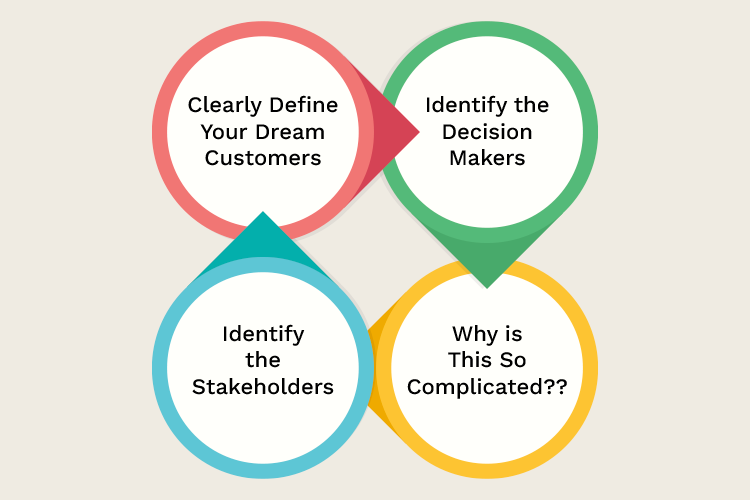
Launching your own business is one of the most exciting adventures you can have in life. 

It’s not just about making money; it’s about creating a better life for yourself and your loved ones. 

But the journey is not easy. 

Studies suggest that 87.7% of entrepreneurs struggle with mental health issues due to the stress and pressure of running a business. 

So what if there was a smoother path to success? 

ClickFunnels co-founder Russell Brunson discovered exactly this after years of exhaustion as an entrepreneur. In his book DotCom Secrets, he talks about finally finding success and fulfillment by asking four key questions before launching any new product or service. 

These questions form what he calls the ‘Secret Formula’. 

Below, we’ll explore these questions and provide actionable tips to help you launch a successful business you’ll also love working on. 

Get ready to unlock the secrets to building a business that transforms your life!

What is the ‘Secret Formula’ to Launching a Business?

After Russell created the Secret Formula, he began using these four questions with his private coaching clients. 

These were high-level clients who invested $25,000 a day to work with Russell.

Luckily for you, we’re diving into these questions today and it won’t cost you a cent!

The four questions that make up the Secret Formula are: 

  1. Who is your dream customer? 
  2. Where are they congregating? 
  3. What bait will you use to attract them? 
  4. What’s the result you want to give them? 

That’s it.

That’s the secret formula.

The answers to these questions will literally determine the success or failure of your business launch. 

In the sections below, we’ll explore each question in detail, offering practical and actionable tips to help you answer them effectively and keep your business on the path to success.

Step #1: Who is Your Dream Customer?

Most people who start a business begin with an idea for a product or service. 

Let me guess — that’s exactly how you started, right? 

But here’s the thing: it’s the wrong way to begin.

Instead, you need to start by thinking about your dream customers and considering what they want. 

Take a quick look at a few examples of businesses that initially launched a product or service and completely failed – until they shifted their focus to understanding their dream customers and how best to serve them.

Post-it Notes: From Failed Adhesive to Office Essential

A package of Post-it notes in various colors, with labeling in English, French, and Spanish, indicating 100 sheets per pad and dimensions of 1 3/8 in x 1 7/8 in (34.9 mm x 47.6 mm).

Post-it Notes began as a complete failure.

It was originally developed as a weak adhesive that no one seemed to need. The product only found success when 3M realized that their dream customers were office workers who needed a simple way to organize and communicate. 

By repositioning the product as a tool for note-taking and reminders, Post-it Notes became indispensable in offices worldwide, leading to annual sales exceeding $1 billion.

Slack: From Failed Video Game to Workplace Communication Powerhouse

A computer screen and a smartphone display the Slack application interface, featuring a list of channels and conversations. The Slack logo is shown in the upper right corner.

Slack started as a failed video game development project called Glitch.

The game found a small group of raving fans. But the majority of players didn’t like the game and the creator, Stewart Butterfield, and his team, struggled to grow revenue.

But while working on the game, Butterfield created an in-house communication tool that helped streamline their workflow. His team realized that their true dream customers were not gamers, but businesses that needed better internal communication tools. 

After pivoting to focus on workplace messaging, Slack became a massive success, growing to over 12 million daily active users by 2020 and generating $902 million in revenue that same year.

Starbucks: From Coffee Bean Retailer to Global Coffeehouse Brand

Starbucks originally failed to gain traction as a coffee bean retailer, with customers uninterested in brewing high-quality coffee at home.

The company pivoted when it realized that its dream customers were actually looking for a social experience around coffee.

By transforming into a coffeehouse that offered a “third place” between home and work, Starbucks grew to over 30,000 stores worldwide and reported $32 billion in revenue in 2022.

The ‘Magic’ of Launching Your Product to an Audience You Know Will Buy

Quick note.

I’m not saying that you should scrap your business idea.

What I’m saying is that defining your dream customer, figuring out the problems they want to solve, and matching your product to the solution will help you reach success faster.

When you get this right, magic literally happens right out the gate.

Here’s a couple exams of businesses who built their product or service idea around their dream customers first, and then experienced miracles when launching their business.

Airbnb: Helping Homeowners Make Extra Cash and Revolutionizing the Rentals Industry

A mobile phone screen displaying three different accommodation options: a house in Wisconsin, a tent in Utah, and a treehouse in New Zealand, with details and prices for each.

Airbnb began with a clear focus on their dream customers – homeowners looking to earn extra income. 

The co-founder, Brian Chesky, understood the audience’s problems because he had rented out an air mattress in his shared flat to make some money. His guests loved the experience, and the business grew organically from there.

AirBnb struggled to get investors interested at first. They thought the idea posed safety issues — at first, the idea was to rent out a room while owners were still there.

But Airbnb quickly gained traction among its target audience.

This customer-first approach helped Airbnb grow rapidly, reaching over 6 million listings in more than 100,000 cities by 2020, with the company valued at over $100 billion by the time it went public.

Peloton: Catering to Fitness Enthusiasts With a Premium Home Workout Experience

A stationary exercise bike with a screen is set up in a minimalist room with a striped ottoman and a wooden chair.

Peloton identified their dream customers as fitness enthusiasts who craved the energy and community of live workouts but wanted the convenience of exercising at home. 

By developing high-quality exercise equipment paired with live-streamed and on-demand classes, Peloton created a unique, tailored experience that resonated deeply with the target audience. 

This focused approach led to rapid success, with Peloton reaching over 1.4 million subscribers and generating $1.8 billion in revenue by 2020, just eight years after launching.

Dropbox: Simplifying File Storage for the Everyday User

Dropbox was founded after Drew Houston, the company’s founder, grew frustrated with not being able to access important files while commuting by bus.

He kept forgetting his USB stick.

This led him to create a cloud storage solution that would allow people like him to access their files from anywhere.

Dropbox was built with a clear understanding of its dream customers – everyday computer users frustrated with managing and sharing files across different devices.

Within just two years of launching, Dropbox reached 50 million users. By 2017, the company was generating over $1 billion in annual revenue and made its place as a leader in the cloud storage industry.

How to Shape Your Business Launch Around Your Dream Customers

So…how can you get your business off to a successful launch like that?

The easiest way is with a customer avatar.

In the video below, one of ClickFunnels’ top affiliates John Lee Dumas talks about how defining his customer avatar helps him create products that sell.

It really helps you to map out your dream customer in a document you can come back to for reference.

Here’s an example of what a customer avatar document, based on John Lee Dumas’ insights, might look like.

This is just a random example. 

But you can expand upon this basic customer avatar to tune in to your dream buyer.

Now let’s move on to step two, where we figure out where our dream customers hang out online.

Step #2: Where are They Congregating?

Now that you’ve identified your dream customer and matched your product to their pains and dreams…

You need to actually find your dream customers online.

Too many businesses have failed because they launched a great product or service that solves the real problems of a group of people… but they just couldn’t get in front of them.

Take a look at these examples below.

Juicero: A Premium Product That Didn’t Reach Health-Conscious Consumers

Juicero was a high-tech juicing machine that failed to succeed.

It was probably a great product… but it never effectively reached its intended audience of health-conscious consumers who valued convenience and fresh produce. 

Instead of targeting digital platforms where this audience congregates – like Instagram and health-focused blogs – Juicero focused on general media coverage and high-end retail placements. 

This disconnect never reached the kinds of people who would see the value in spending $400 on a juicer, which would save them time in their own daily juicing routines.

As a result, Juicero shut down in 2017 after failing to generate sustainable sales.

Quibi: Missing the Mark With Mobile-First Millennials

Quibi was designed to provide high-quality, short-form video content for mobile users.

But it struggled to reach its target audience of millennials who are already engaged on platforms like TikTok, YouTube, and Instagram.

Quibi was instead advertised on traditional media channels like TV and billboards. Had it targeted its ideal audience where it actually was… it could have been a better success.

However, after spending nearly $2 billion on the project, Quibi shut down just six months after its launch in 2020 due to low subscriber numbers.

Google Glass: Failing to Engage Early Adopters in Tech Communities

Google Glass was an amazing product that displayed information through a device resembling eyeglasses.

It had new features like augmented reality and voice control.

But instead of focusing on digital platforms where dream customers congregated – like tech forums, Reddit, and specialized tech blogs – Google Glass was marketed through mainstream media and high-profile public demonstrations. 

This approach didn’t work. The mass-market consumer didn’t really see the value in the fancy features.

Google Glass was discontinued in 2015 after poor sales and privacy concerns.

How to Find Your Dream Customers and Advertise Only to Them

Step two to launching a successful business is finding out where your dream customers are, so you can get in front of them.

You’ll not only get sales more easily…but you’ll avoid wasting money on failing ads.

This is important. In the examples above, it probably wasn’t the product that flopped – it was because the product wasn’t put in front of dream customers.

We wrote about finding where your customers are in this post about the Dream 100.

To help you target your dream customers, start by finding the digital spaces where they are right now. I recommend you list out these spaces one by one and find the following:

  • 10 websites and forums
  • 15 active Facebook groups
  • 50 influencers on Facebook & Instagram
  • 30 podcasts
  • 40 email newsletters
  • 20 blogs
  • 20 YouTube Channels

Here’s a cheat sheet you might want to use to help you get there.

I know it sounds like a lot.

But this is an exercise that will pay off in huge rewards when you come to actually launch your business.

Take a look at how the businesses below leveraged pre-existing communities online to launch a successful business.

Craftsy: Harnessing the Power of Communities for Rapid Growth

Craftsy quickly found success by targeting its dream customers – craft enthusiasts – on platforms where they were already active. 

To gain their first 1,000 customers, the company focused on Facebook groups dedicated to popular categories like quilting. They also partnered with sources running quilting newsletters, helping them monetize by introducing Craftsy to their audiences. 

Craftsy rapidly expanded its reach, growing to over 8 million people segmented across various clubs, and turning into a $24 million business.

HelloFresh: Leveraging Podcasts to Reach a Hungry Audience

HelloFresh homepage featuring a promotion for free breakfast for life, 10 free meals, first box free, and a picture of prepared meals including a bowl and bagels.
In 2020, while other meal kit companies like Blue Apron were struggling with the pandemic, HelloFresh added 1 million new customers in the first quarter alone. 

How?

HelloFresh’s success was driven by a strategic focus on lifestyle, motherhood, and cooking influencers, as well as targeted podcast sponsorships. 

The company offered special discounts and shared personal experiences of cooking with their kits on podcasts their dream customers listened to – busy individuals who valued healthy and convenient meals.
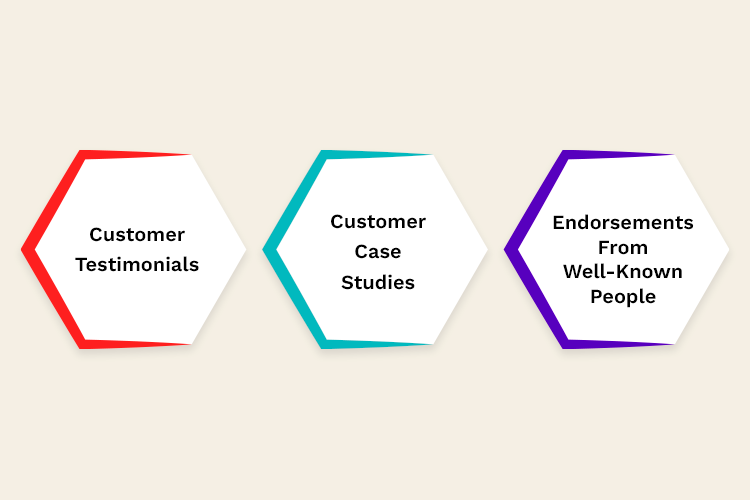
This strategy led to a 50% increase in new customers during the campaign, proving the power of targeted marketing to an engaged and loyal audience.

MVMT: Harnessing Instagram Influencers for Explosive Growth

A man in a short-sleeved shirt leans on a wooden counter outside a café, resting his head on his hand and looking into the distance. Numerous comments and engagements are visible on the Instagram post.

MVMT, the stylish watch and accessories brand, skyrocketed from $0 to a $100 million exit in just five years by strategically partnering with Instagram influencers. 
By focusing on their dream customers – young, fashion-conscious individuals – MVMT used influencers to advertise their products.

This approach allowed them to grow their influencer channel 7X, resulting in over 100,000 discount codes and affiliate conversions. During the campaign, their partner influencers created more than 39,000 pieces of content. 

This influencer-driven strategy helped move MVMT to rapid success, transforming the brand into a social media sensation and a leader in the direct-to-consumer market.

See how powerful this can be?

When you find out where your target audience congregates, then you don’t need to focus on building a platform yourself.

You just advertise on a platform someone else has built.

Now let’s move on to the third step, where you’ll learn how to attract customers on these platforms and launch your business successfully.

Step #3: What Bait Will You Use to Attract Them?

The next step is to consider the bait you’re going to use to bring your dream clients into your world and get them interested in your products or services. 

You’ve probably heard of this type of bait referred to as a lead magnet. 

But before we dive deeper, let’s take a step back. 

You might be wondering: if you’ve already defined your dream customer and know where to find them, why not just get them to buy your product or service right away? 

The truth is, it’s not always that straightforward. 

Even some of the most established companies with well-known products still use some form of bait to attract potential customers, get them to explore their offerings, and ultimately make a purchase. 

Let’s look at a couple of examples.

McDonald’s: Baiting Customers With Free or Discounted Food Items

A promotion offers free medium fries with a $1 minimum purchase through the McDonald's app.

McDonald’s usually offers free or heavily discounted items, like free fries or a $1 coffee, when customers download and use their mobile app. 

These offers encourage customers to try the app and place orders through it, where they are exposed to additional menu items and deals. 

The convenience and savings often lead to repeat purchases, increasing customer loyalty.

Amazon Prime: Free 30-Day Trial to Reel Customers in

Amazon Prime advertisement offering a 30-day free trial for new members, highlighting benefits like free delivery and award-winning TV. Options to start the trial or explore other plans are provided.

Amazon offers a free 30-day trial of its Prime membership as its own lead magnet.

The 30-day trial includes benefits like free shipping, access to Prime Video, and exclusive deals. 

The trial is designed to showcase the value of Prime membership, making it hard for users to give up these perks once the trial ends.

And this converts them into long-term paying members.

Dyson: Risk-Free Trial Period & Free Returns on Expensive Appliances

Screenshot of a website for Dyson Gen5 Vacuums showing two vacuum models and details about warranty, pricing, free shipping, and a money-back guarantee.

Dyson also offers a risk-free 30-day trial on their high-end home products, such as vacuum cleaners and air purifiers. 

Customers can purchase a product, use it at home, and return it within 30 days for a full refund if they don’t like it.

This is a powerful lead magnet. There’s no risk for the consumer to spend money.

And while it’s a potential risk for Dyson…it allows consumers to check out the quality and performance of Dyson products firsthand.

This leads to increased sales and customer confidence in the brand.

Warby Parker: Selling Glasses With a Free Home Try-On Program

A black box with compartments holds eyeglasses and includes instructions for a home try-on kit. Four pairs of glasses and a rubber band ball are placed around the box.

Warby Parker allows customers to select up to five pairs of eyeglasses to try on at home for free for five days. 

This is a creative lead magnet.

It makes it easy for customers to test different styles and fits without any obligation to purchase. 

The convenience and personalized experience often lead to customers buying at least one pair after the trial period, increasing sales and customer satisfaction.

Levi’s: Generating Leads With a 20% off First Purchase for Email Sign-Up

Levi's website banner promoting 20% off and free shipping for signing up for emails. Navigation options include Men, Women, Kids, Sale, and Warehouse Event. A sign-up form is displayed.

Pretty much all e-commerce websites offer you a discount just by signing up to the mailing list.

Levi’s does the same, offering new customers by offering 20% off their first purchase when they sign up for the brand’s email newsletter. 

This lead magnet makes it easier to get a sale off first-time customers.

Additionally, by signing up, customers receive regular updates on new products, sales, and exclusive offers, keeping them engaged with the brand and encouraging future purchases.

15 Different Kinds of Lead Magnets for You to Use

See how the lead magnet works?

Using a lead magnet helps you increase the number of sales you get from the same number of people, and that’s important for a successful business launch.

So how can you get started building a lead magnet?

There are many different types of lead magnets, and the best one will depend on the product or service you’re looking to sell.

Here’s a breakdown of 15 different kinds of lead magnets to help you choose the right one for you.

1. Free Trial

Example: A SaaS company offers a 14-day free trial to let users explore premium features of their project management tool.

2. Discount Code

Example: An online clothing retailer provides a 15% off coupon for first-time buyers who sign up for their newsletter.

3. Free Shipping

Example: A home goods store offers free shipping on all orders for customers who join their loyalty program.

4. Ebook/Guide

Example: A digital marketing agency offers a free ebook on “10 Ways to Boost Your Website Traffic” in exchange for an email address.

5. Webinar/Workshop

Example: A financial consulting firm hosts a free online workshop on “How to Invest Wisely During Market Volatility.”

6. Free Sample

Example: A skincare brand offers a free sample of their best-selling moisturizer with sign-up for their email list.

7. Exclusive Content

Example: A news publication provides access to a special report on “Emerging Trends in AI” for users who subscribe to their email updates.

8. Template/Checklist

Example: A productivity app offers a downloadable daily planner template to help users organize their tasks effectively.

9. Quiz/Assessment

Example: A fitness brand provides a free “Find Your Ideal Workout Plan” quiz that recommends products based on the results.

10. Contest/Giveaway Entry

Example: A fashion brand offers entry into a giveaway for a $500 shopping spree in exchange for following them on social media.

11. Free Consultation

Example: A real estate agent offers a free 30-minute consultation to discuss home buying or selling strategies.

12. Access to Exclusive Sale

Example: A luxury fashion retailer offers early access to a seasonal sale for customers who join their VIP email list.

13. Early Access to Products

Example: A tech gadget company provides early access to new product releases for users who sign up for their email notifications.

14. Recipe Book or Meal Plan

Example: A health food brand offers a free downloadable recipe book featuring meals made with their products.

15. Video Tutorial Series

Example: A home improvement store offers a free series of video tutorials on DIY home renovation projects to email subscribers.

You can read more about creating a lead magnet here.

So how do you know what lead magnet is best to bait your dream customers?

Most of the time, if you’re not clear on your lead magnet, it’s because you’re not clear enough yet on your dream customer.

So go back to step 1.

In fact, in the book DotCom Secrets, Russell Brunson describes the power of the bait to attract only dream customers…and finds out that the more you define your dream customers, the easier it becomes to get them to purchase your products or services.

Here’s Russell:

As my company moved away from selling to beginners and toward attracting dream clients, our first step was to create new bait that would attract “Mike” or “Julie.” So we created a book called DotCom Secrets Labs: 108 Proven Split Test Winners. This bait worked great for us, because most beginners don’t know what a split test is. But we KNEW that Julie and Mike (our DREAM customers) would know what these terms mean and they would be hungry to get their hands on the book. Within days of launching this new offer, we had thousands of dream clients lining up to work with us. When you find out what your dream clients want, it becomes very easy to attract them.

If you want to check out DotCom Secrets in full, then you can currently get the book for free (just handle shipping).

Check the offer out below

Get DotCom Secrets Here For FREE!

Step #4: What Results do You Want to Provide for Them?

One of the most powerful insights in DotCom Secrets is this sentence from Russell Brunson:

“A business is NOT about products and services. A business is about what result you can get for your clients.”

Ultimately, a successful business is not so much about the product or service itself.

It’s about the transformation the products or services create for customers.

Think about it.

Some of the greatest products and services place more emphasis on the ultimate transformation than on the product itself.

Take a look at these examples…and you’ll instantly understand this in a new way.

Nike: “Just do it.”

Nike’s slogan doesn’t mention shoes, apparel, or sports equipment. 

Instead, it speaks to the transformative power of motivation, empowerment, and the ability to overcome challenges. 

The message is about achieving personal greatness and pushing beyond limits, with Nike products being the tools to help you do that.

Apple: “Think Different.”

Apple’s iconic slogan doesn’t describe the features of their computers, phones, or other devices. 

Instead, it promises a transformation in the way you think, create, and interact with the world. 

Apple products are positioned as enablers of innovation and creativity, appealing to those who see themselves as trailblazers or visionaries.

L’Oréal: “Because You’re Worth it.”

L’Oréal’s slogan focuses on the customer’s self-esteem and confidence, rather than the cosmetics themselves.

It suggests that using their beauty products is a way to affirm one’s self-worth and embrace personal beauty, making the purchase feel like an investment in yourself.

Red Bull: “Gives You Wings.”

Red Bull’s famous slogan doesn’t directly reference the energy drink itself. 

Instead, it conveys a transformation, promising that the drink will energize you and give you the metaphorical “wings” to achieve more, be more alert, and take on challenges with greater vigor.

Coca-Cola: “Open Happiness.”

Coca-Cola’s message isn’t about the soda’s taste or ingredients.

It’s about the emotional experience it promises. 

“Open Happiness” suggests that by drinking Coca-Cola, you’re unlocking moments of joy, connection, and satisfaction.

How to Give Your Dream Customers What They Want

Defining the end result ultimately comes back to step 1: the customer avatar.

You should deeply understand the pains of your dream customer…and be able to see what their dream future looks like.

But how do you actually use this desired result to help launch your successful business?

Ultimately, this last step will help you most when writing copy that brings people into your lead magnets, funnels & higher priced products & services.

For example, you’ll make promises of the results in your:

  1. Headlines
  2. Subheadlines
  3. Hero Image/Video
  4. Ad Copy
  5. Benefit Bullets
  6. Customer Testimonials
  7. Before-and-After Photos
  8. Call to Action (CTA)
  9. Value Proposition
  10. Landing Page Copy
  11. Email Opt-In Offer
  12. Lead Magnet
  13. Guarantee/Promise
  14. Sales Video or Explainer Video
  15. Success Stories/Case Studies
  16. Social Proof
  17. Product Page Description
  18. Exit-Intent Popup
  19. Onboarding Emails
  20. Follow-Up and Upsell Messages

Feel a little overwhelmed?

Don’t be!

ClickFunnels actually just released Marketing.AI, an AI-powered marketing platform. It helps ClickFunnels users use AI to write their sales copy and content in seconds.

All you have to do is click this link to start building an AI-powered sales funnel.

You then input some basic details about you, your products or services, your dream audience and the results they want to get.

Then, you can choose from different funnels you want to build, based on your lead magnet and end product.

Then, you can quickly build your funnel using the drag and drop interface.

A screen presents options to select a main brand color and to pick a design style from Blocky, Colorful, or Rounded, each with different design element features.

On each page, you can use AI’s help to get the right message across.

You can also choose a specific writing voice to speak the kind of language that your dream audience understands.

Screenshot of a blue marketing webpage promoting a 20-minute home strength training guide using a kettlebell to enhance performance. The page includes an example of copy for executive fitness.

And that’s it!

Within minutes, your funnel will be ready.

On the last page, you’ll be asked to sign into your ClickFunnels account. 

If you don’t have one, you can create a new trial via our 14-day free trial.

Try Our AI Funnel Builder for Free!

Final Thoughts on Successfully Launching a Business

​​A lot of the content you come across about launching a business online tends to focus solely on administrative tasks.

The structure is something like: 

  1. Choose a business structure
  2. Registering your business 
  3. Get a federal and state tax ID 
  4. Obtain licenses and permits
  5. Open a business bank account

While these steps are necessary for launching a business, none of them can guarantee your success.

It’s like expecting a gym membership to get you in shape by itself.

Unfortunately, success is never guaranteed.

That’s why this blog post focused more on the psychology behind launching a business, because this is where the real determinant of your business success lies. 

These four steps might seem time-consuming right now. But they will save you weeks, months, and even years of hardship by helping you get a head start. 

Trust me, you’ll thank yourself later. 

Good luck with launching your successful business!

Try Our AI Funnel Builder for Free!

Thanks for reading Essential Steps For Starting A Business which appeared first on ClickFunnels.
  • « Go to Previous Page
  • Page 1
  • Interim pages omitted …
  • Page 5
  • Page 6
  • Page 7
  • Page 8
  • Page 9
  • Interim pages omitted …
  • Page 11
  • Go to Next Page »

Get your Software Stack together. softwarestack.tech
Software Stack

© 2024–2025 - Software Stack is a trading name of SouthwestCIO Limited ac ompany registered in England & Wales 11319049

  • Knowledgebase
  • Home
  • About Us
  • Contact Us