• Skip to primary navigation
  • Skip to main content
software stack logo

Software Stack

Get your Software Stack together

  • Knowledgebase
    • All Categories
    • Accounting Software
    • Automation & Workflow Software
    • Customer Relationship Management
    • E-Commerce Shopfronts & Payments
    • Marketing Automation
    • Online Courses & Membership
    • Project Management
    • Surveys & Forms
    • Web Hosting
  • Home
  • About Us
  • Contact Us
  • Show Search
Hide Search

Clickfunnels

5 Examples Of High Converting AI Powered Websites

Software Stack Editor · May 20, 2024 ·

The post 5 Examples Of High Converting AI Powered Websites appeared first on ClickFunnels.

With more and more money being thrown at artificial intelligence, life is getting easier and easier.

Especially when you own an online business.

From being able to create content like blog posts, emails, and even sales pages and video sales letters, to helping you understand your target audience better, AI has secured its place in digital marketing.

One area that many people don’t realize is possible yet, though, is AI-powered websites.

With the right tools, you can create full funnels and websites without having to be a web designer, developer, programmer, or master copywriter.

In this guide, we’re going to introduce you to 5 of the most powerful high-converting AI-powered website builders so you can see exactly what’s possible.

Before we get into them, though…

What is an AI Powered Website?

At the core, an AI-powered website is a website built using powerful algorithms to put together both the code for the layout, the design elements, and the content your visitors will see.

In layman’s terms, an AI-generated website can help provide a more personalized experience for your audience, by using content tailored to their specific questions and concerns as well as a visually appealing design.

Instead of staring at a blank canvas trying to figure out what to do, you can provide AI with basic information about your business, your target audience, and the end goal for your website.

Then, AI will use the data you’ve provided, along with its vast understanding of web design, to create a unique website layout, complete with all of your branding.

From the color schemes you want to use, to the fonts, and navigation structure, AI can create the perfect website for both you and your audience in far less time than it would take you to create it yourself.

As you’ll soon see, it can even populate your website with the most relevant images to help make your visitor’s experience even more personalized.

Do You Need an Ai Powered Website?

This ultimately depends on you, your experience, and your goals.

For most people reading this guide, the answer is a simple “yes”.

If you don’t have web design or development experience, or you aren’t a master copywriter or a graphic designer, chances are high that an AI-powered website could be exactly what you need.

To figure out whether or not it makes more sense to hire out the task or use AI to build it yourself, though, take a second to assess your own skill level in a few different areas.

Your Website Building Skills

If you’re someone who has limited technical or design skills, using an AI-powered website could be a solution to most of your problems.

However, if you’re comfortable with building websites or using traditional website building tools, and you have the necessary design skills, you probably won’t need an AI-powered website unless you just want to save more time.

Your Time Constraints

This leads us to the next one — if you need to quickly and efficiently get your website up and running an AI-powered website can do it for you.

If you aren’t going to be launching for a few months, though, you’ll have time to use a traditional website builder to ensure your website is exactly what you’re trying to accomplish.

Your Budget

An AI-powered website can offer you a cost-effective solution when you compare it to hiring a professional web development or design team.

If budget isn’t a concern, though, and you prefer a fully customized website, you may choose to go the traditional route with a web development or design team.

Your Website’s Complexity

If you need a fairly simple, straightforward website, you can use an AI-powered website tool to meet most of your needs.

However, if you’re looking for something more customized or complex, with unique features and integrations, a traditional approach will be the route you want to take.

Your Desire for Control

An AI-powered website will provide you with a guided, more streamlined process, but tends to offer you less granular control over the design and layout.

On the other hand, if you prefer to have more control over every aspect of the website’s design and functionality, the traditional website-building methods will probably work better for you.

After taking each of these into consideration, if you’ve decided that using an AI-powered website tool is more along the lines of what you want and need, here are 5 examples of high-converting AI-powered websites to help get your creative wheels spinning.

ClickFunnels 

With all of the updates ClickFunnels is making, one of the biggest (and probably most important to you reading this guide) is the new “Smart Funnel”.

It’s a feature that aims to make building an effective and high-converting sales funnel easier for you, with all pages included — from the signup form, to the thank you page, sales pages, and more.

The Smart Funnel leverages AI to simplify the process and speed up how quickly you’re able to build a high-converting sales funnel that’s fully customized to your brand, offer, and goals.

It gives you an interactive and guided experience to create your funnels without needing a high level of marketing or technical expertise.

The Smart Funnel process begins by collecting key information from you about your brand, your offer, and your overall business goals.

This information will help the ClickFunnels AI tailor the design process specifically to what you need.
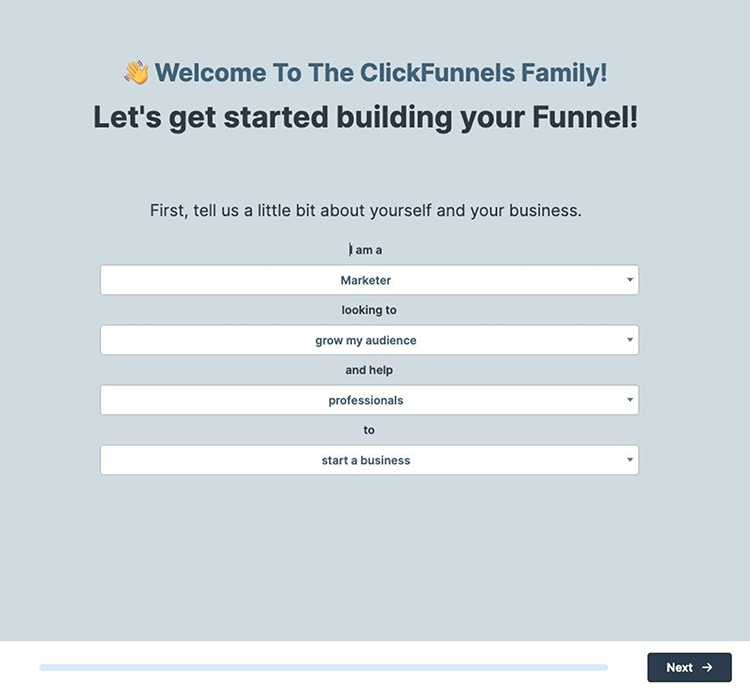
When you use it, it will guide you through a step-by-step building process that starts with selecting your main brand colors which is then used to generate a complimentary color palette.
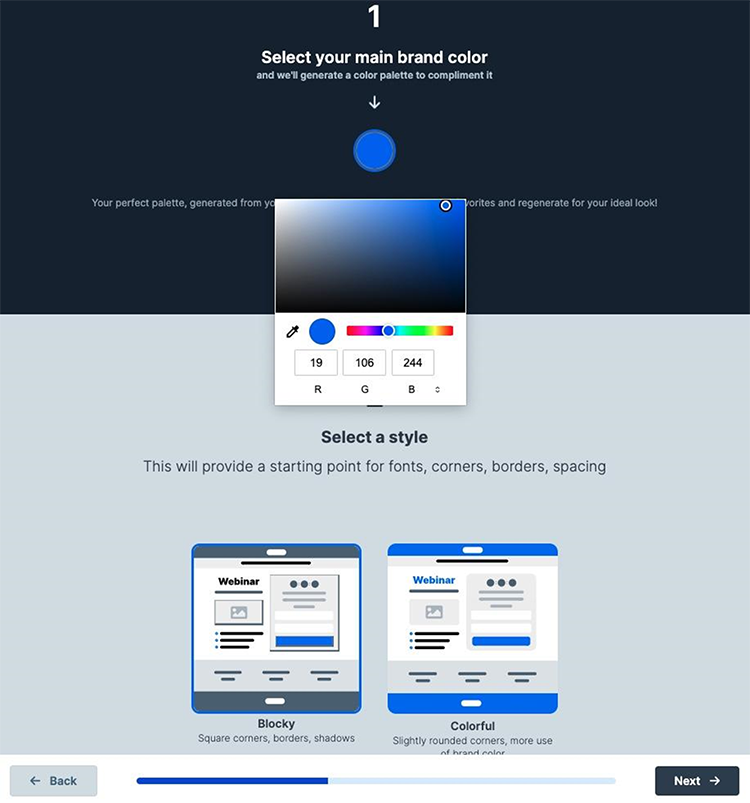
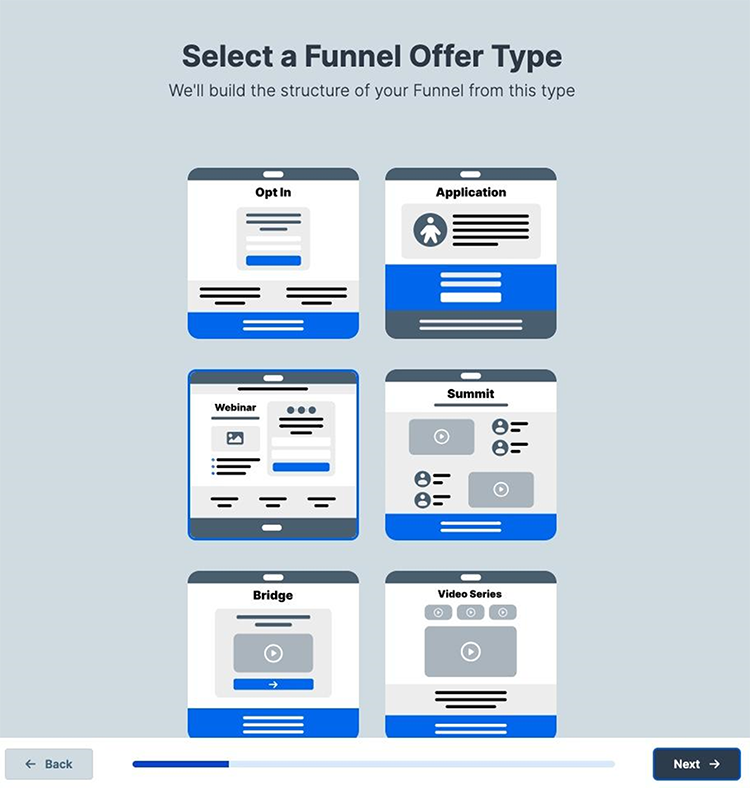
You can select from a wide range of funnel types, like an opt-in funnel, application funnel, webinar funnel, broadcast funnel, and a host of other types.

The structure is then automatically built out using the information you’ve provided and selected.
Then, the AI will help with creating engaging copy, refining the messaging, and designing site elements that perfectly match your brand.

This enables the creation of a unique, fully customized funnel blueprint in just a few minutes.

The AI will generate the initial sales copy you can use while allowing for optimization to ensure you’re getting the highest conversions possible.

It will also automatically generate unique images and design assets that align with your brand and style.
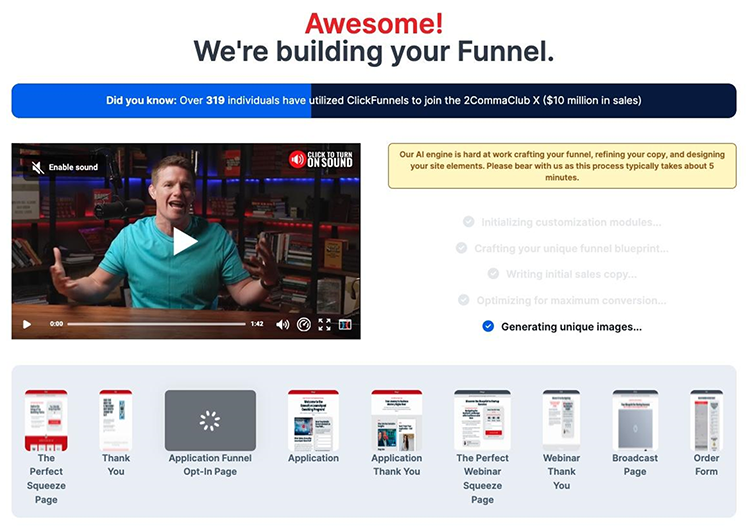
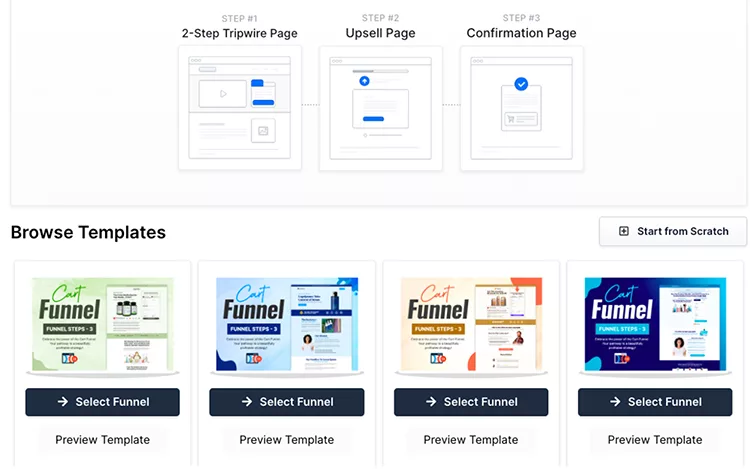
Screenshot of a webpage from a funnel-building software showing a man speaking in a video, alongside progress steps, a statistic about users, and various funnel templates.

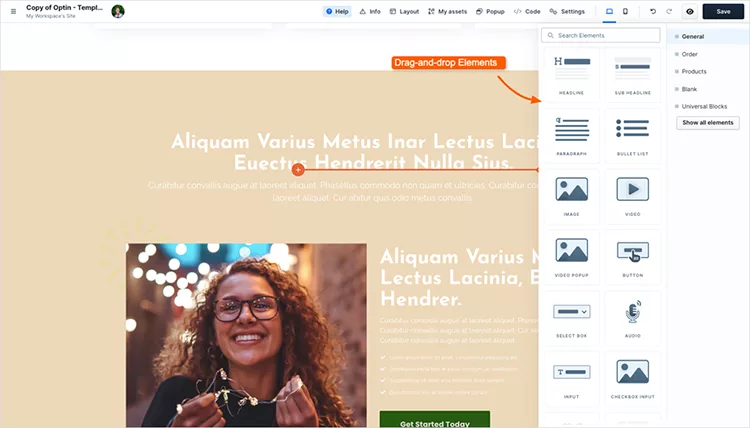
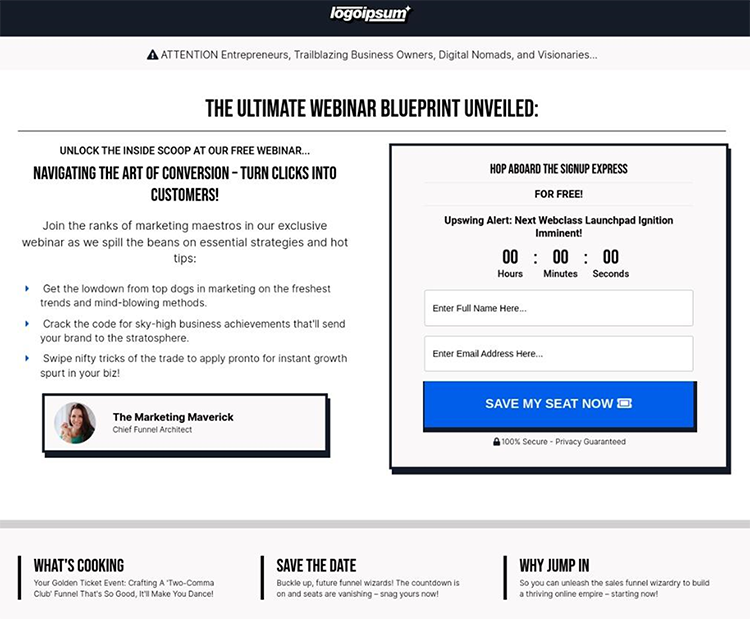
Once it’s completed, here’s what the landing page that it generated looks like:
Screenshot of a webpage from a funnel-building software showing a man speaking in a video, alongside progress steps, a statistic about users, and various funnel templates.

This all happens without you needing to hire a web design or development team, too.

Pretty slick!

Try The AI Funnel Builder For Free!

Why Should You Choose it?

With the ClickFunnels Smart Funnel, you get a full-funnel build that is designed to attract your audience and drive sales or conversions.

You don’t need to be a technical wizard to use it. No technical expertise is required.

Even the most difficult aspect of building a funnel is handled by AI. With the Smart Funnel, you don’t have to write a single word of copy.

Pricing

With ClickFunnels, you can get started for as little as $147 per month if you’re subscribing to a monthly plan. With a yearly plan, the cost drops to only $127 per month and includes everything you need to have your first funnel up and running, ready to drive traffic to.
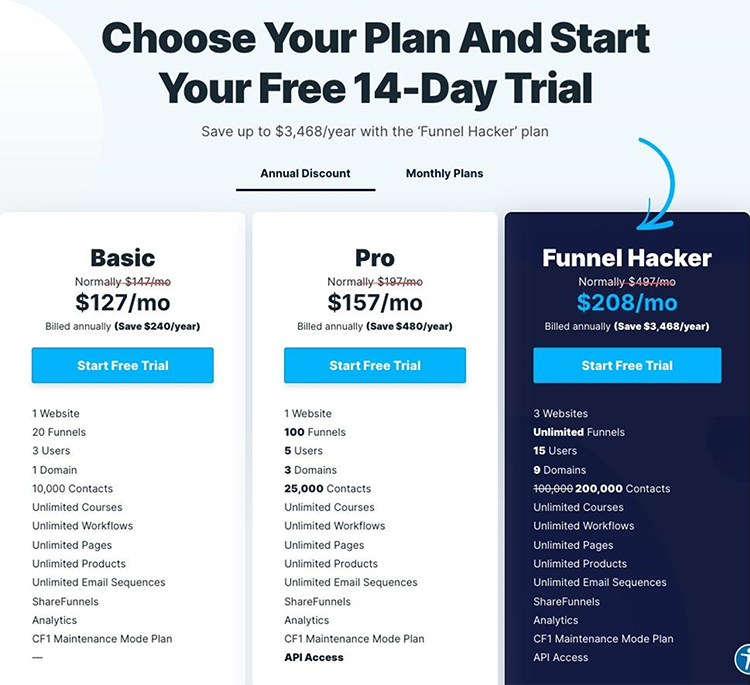
A pricing comparison chart showcasing three plans: Basic for $127/month, Pro for $157/month, and Funnel Hacker for $208/month, all with features listed and a free 14-day trial option.

If you’re not already a ClickFunnels 2.0 user, you can click here now to start your free 14-day trial.

Wix

The Wix AI-powered website builder lets you speak with a “chat assistant” to tell it what you’re looking for. Then, the chat assistant will start working behind the scenes to put together your website for you.

Features 

With Wix, you can use the chatbot-based website creator tool to answer specific questions about your business and goals. Then the AI will generate a tailored website for you.
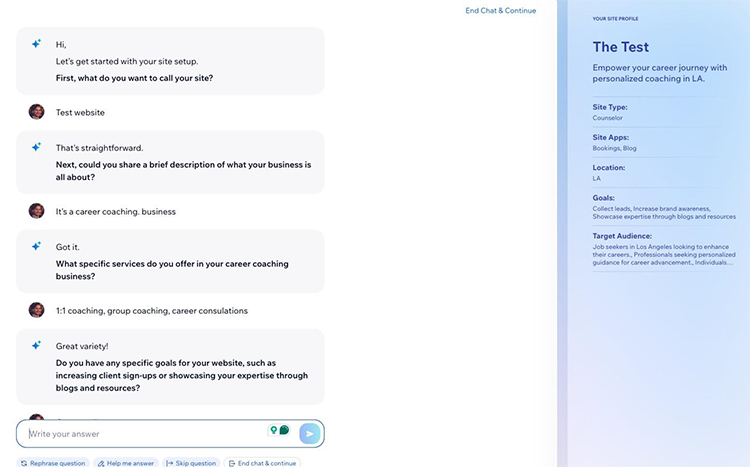
Once the website is spun up, if you’d like to make changes, you can ask the AI to regenerate the site for you or tweak specific elements of the design.
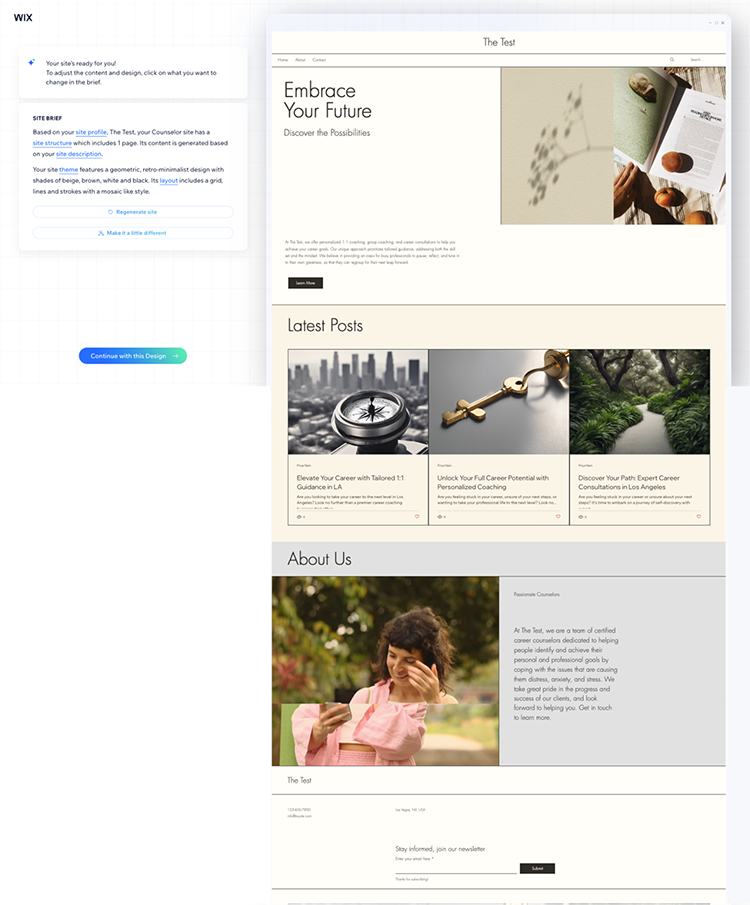
A webpage template with sections for embracing the future, latest posts with images, and an about us section featuring a person standing outdoors.

The AI builder will create custom headers, images, and text based on your input.

Then, the drag-and-drop visual editor will let you easily customize and fine-tune the AI-generated website using Wix’s intuitive editor.

When it comes to writing content, Wix’s editor includes AI tools to help you create new product descriptions, website copy, and images.

Pros

Wix provides a user-friendly interface. Their website builder is fairly easy to use, even for those with limited technical skills.

It’s also fairly fast. You can create a functional website in around 10 minutes using the AI builder.

And while the AI generates the initial design, you can use Wix’s built-in editor to change and customize the website based on what you need from it.

Cons 

The downside, though, is that Wix’s AI builder will use stock content and images.

These images act as placeholders so you’ll need to replace them with your own before you go live.

The AI builder is also not suitable for more complex websites.

Wix’s AI builder is great for creating simple, straightforward websites quickly. However, if you require a more complex site with advanced features, custom integrations, or unique functionality, the AI builder may not be the best choice.

In cases like these, you may need to rely more heavily on Wix’s traditional drag-and-drop editor or consider using a different website-building solution.

Wix AI Website Builder Pricing

With Wix, you can get started for as little as $11 per month.

It’s worth noting, though, that this plan is extremely limited and designed to get you to purchase one of the higher tiered, more expensive plans.
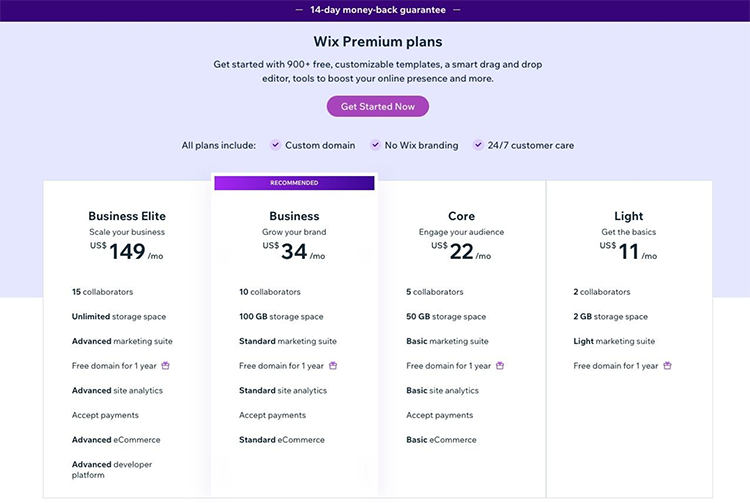
A screenshot of Wix Premium plans comparison table showing four plans: Business Elite ($149/month), Business ($34/month), Core ($22/month), and Get the Basics ($12/month), with different features listed.

Wix AI Builder Review

The Wix ADI is designed to help you get a basic website up and running as quickly as possible.

However, the AI builder isn’t nearly as flexible as their drag-and-drop editor.

If you’re limited on time or do not have design and technical expertise, the Wix AI builder may not necessarily be the solution you’re looking for.

On the other hand, if all you’re looking for is a basic business website that acts like a digital business card, the Wix AI builder can get you up and running fairly quickly.

Jimdo

The Jimdo AI builder starts by asking you a handful of questions.

These questions help guide the design of your website and are relatively simple to answer because you’re given a host of options to choose from.

Think about it like a designer or developer taking the input you give them and then outputting it into a website based on your feedback.

Here’s a small sample of what you can expect with the questions:
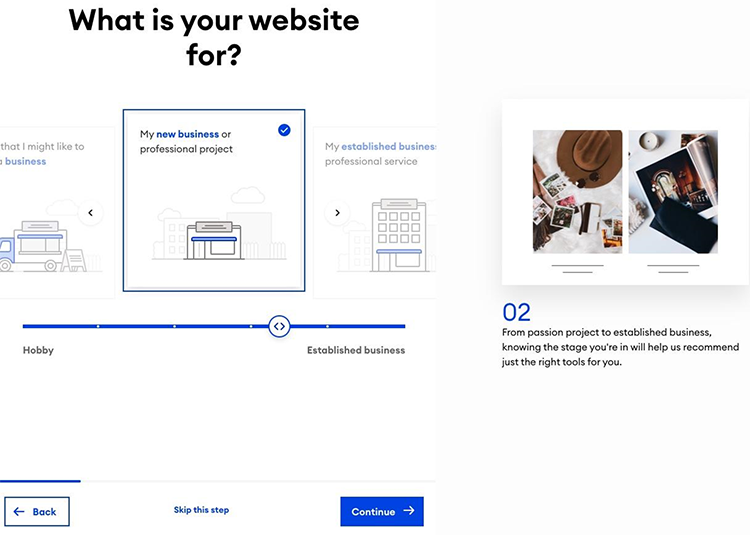
Each question is focused on building a website specifically for you:
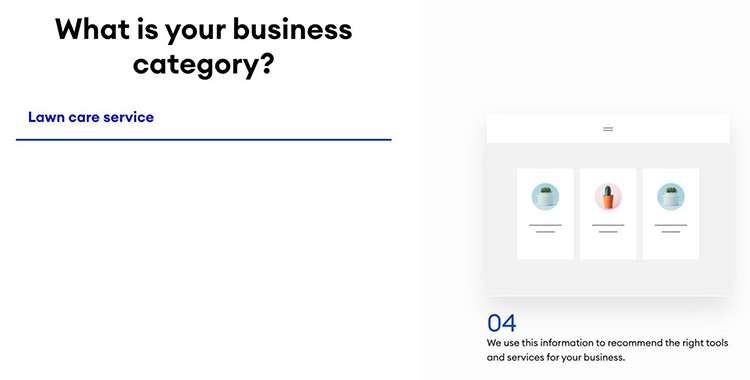
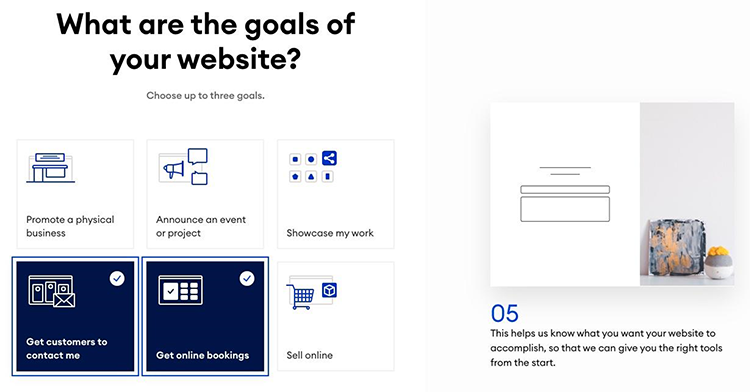
You can input your goals and have pages built around those goals:
Then you can choose your brand colors:
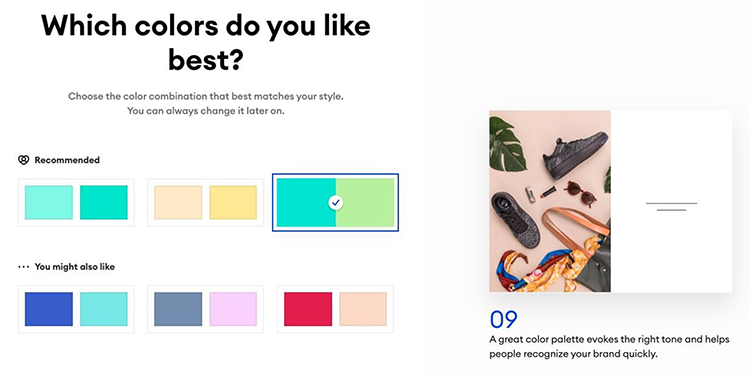
A webpage asking users to choose their favorite color combination. It features recommended and suggested color palettes, accompanied by a picture of various items including clothing and accessories.

Finally, you get a website within a few seconds — significantly faster than Wix:
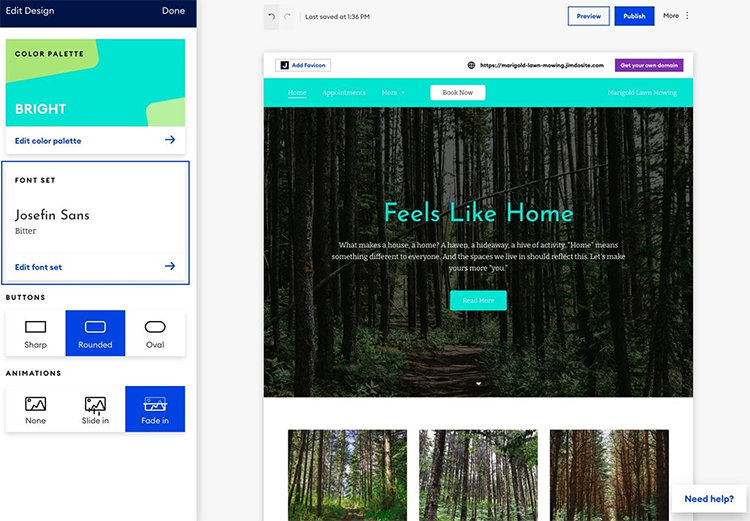
Once your design is produced, you can begin editing it using a drag-and-drop editor:
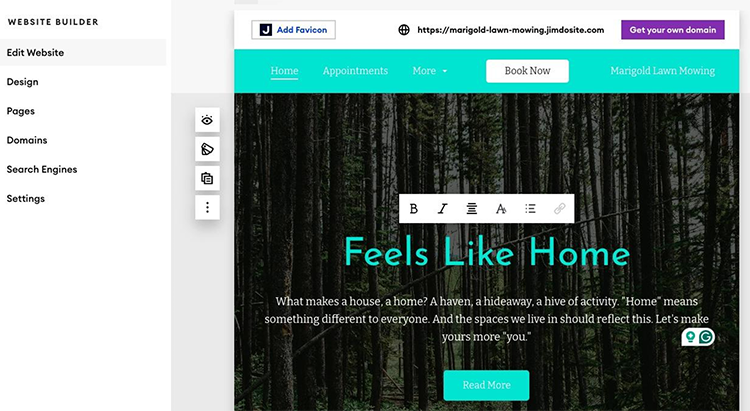
Features

With Jimdo, you get built-in SEO optimization.

The AI builder creates websites with search engine optimization in mind, helping increase your website’s visibility in search engines like Google, Yahoo, and Bing.

It also gives you analytics to help track the performance over time.

The built-in analytics tools can help you monitor the website’s performance, track your visitor’s behavior, and make data-driven decisions.

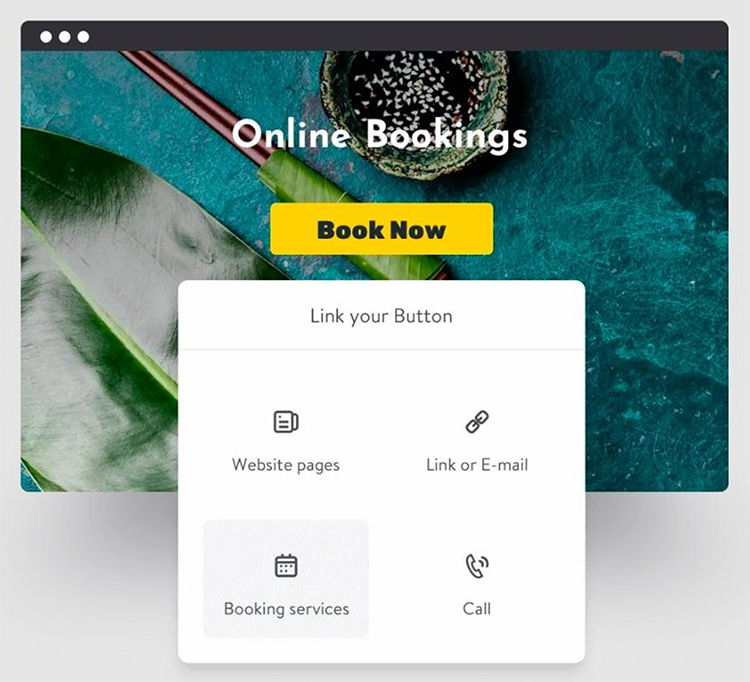
You can also use the built-in appointment scheduling functions to book calls and accept appointments directly through your website.

Then, you can offer classes and tickets to your digital events, too.
Pros

The Jimdo AI builder is fairly easy to use.

It also provides you with copyright-free photos, giving you free access to a huge database of photos in most industries.

The responsive designs that the AI builder produces look good on phones, tablets, and computers, too.

Cons

One of the biggest downsides of the Jimdo editor is that you can’t embed HTML into your AI-created website.

Jimdo also lacks features like blogging functionality, password protection for your pages, and an external app marketplace that could offer you additional options to extend your website’s capabilities.

On top of that, you’re given strict limits on the number of pages you’re allowed with the Free and Start plans which can be a drawback for you if you want to simply test the service or you require a more extensive website structure.

Many other website builders on the market today offer you the flexibility to create unlimited pages.

Pricing

With Jimdo, you can get started free with the “Play” tier.

However, with the more expensive “Unlimited” tier, you get access to unlimited storage, design analysis, and premium support, making it a more attractive option.

With the free plan, you can get started and test most of what Jimdo has to offer. However, if you require a more extensive website, you’ll be forced to upgrade to a higher tier.
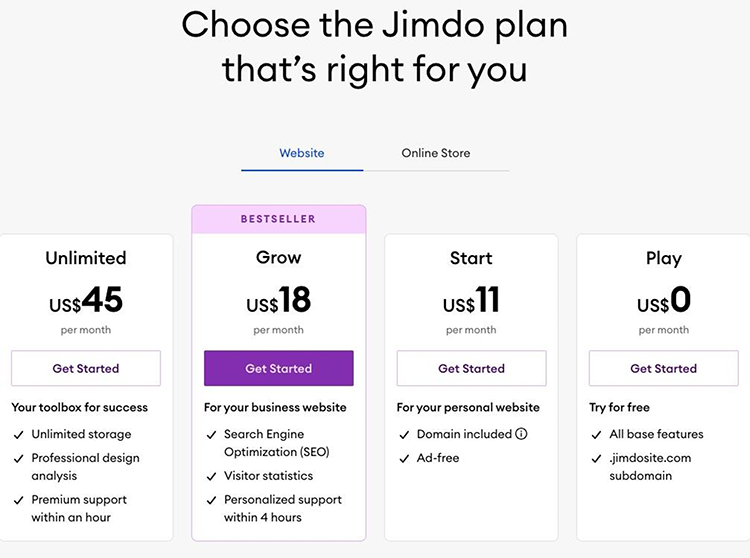
Pricing plan options for Jimdo: Unlimited at $45/month, Grow at $18/month, Start at $11/month, and Play at $0/month, each offering varying features for websites and online stores.

Jimdo Review

The entire process from conception to creation is fairly simple and straightforward with the built-in questionnaire.

Answering these questions will give Jimdo the input needed to create multiple different websites.

Jimdo’s process is relatively strict and doesn’t give users a ton of customization options but does provide built-in SEO and royalty-free photos on the paid tiers.

Framer Website Builder

With Framer, when you give it a prompt (like ChatGPT), you can begin creating your website..
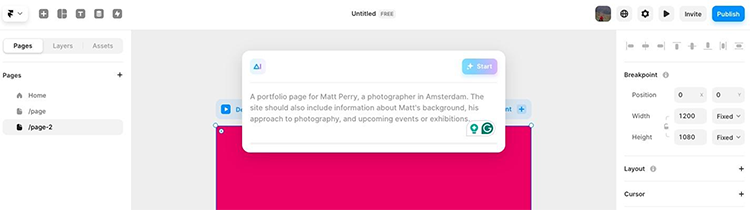
Screenshot of a web design tool displaying a portfolio page layout for a photographer named Matt Perry. The page includes a brief description of Matt's work and suggestions for content.

Once prompted, it will create the draft website for you and show you how it will look on multiple device types, like phones, tablets, and desktop computers.
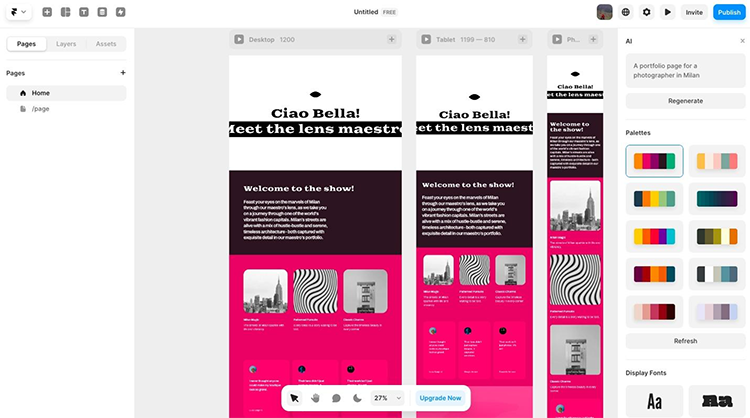
You can then review the AI-generated design and make any changes or customizations that you need using the built-in intuitive design and editing tools.

Features

With Framer, you can easily design expressive animations, adding effects to your website with just a few clients. This can help capture your audience’s attention whenever they land on your website.

Framer also gives you a wide range of localization options, letting you create website content in any language that you choose.
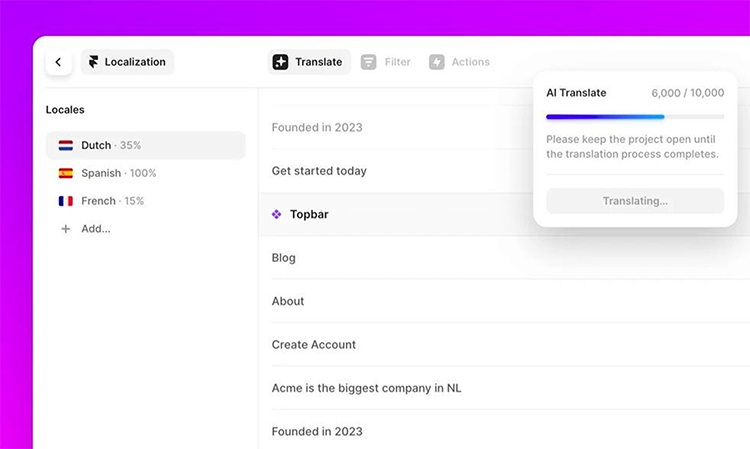
Screenshot of a translation interface showing progress of automatic translation. The interface lists sections like Topbar, Blog, and About, with translation status for Dutch, Spanish, and French.

With the built-in content tool, you can use AI to seamlessly rewrite content.

Framer gives you a variety of different pre-made website sections that you can pick from and fully customize to suit what you need. This makes building your website quick and easy.

The AI can help you come up with images and copy for your website based on what you tell it about your business, idea, or offer.

Then, you can change the colors, fonts, and overall look and feel of your website to match your brand’s style and personality.

Each website built with Framer is optimized and responsive for phones, tablets, and computers.

And if you want to add extra features to your website, like a blog or website, Framer has built-in tools to help you accomplish these goals.

You can also easily connect your website to a domain name that you own.

Pros

Framer gives you fully customizable design elements, like your colors, font, and website layout.

The responsive designs ensure that your website looks great on all devices.

With built-in tools, you can add eCommerce functionality, blogs, and other features.

Cons

Even though Framer is designed to be user-friendly, it can still take some time to learn how to use all of the features and make your website look just right.

Depending on the plan you choose, Framer could be more expensive than some of the other website-building tools available today.

And since AI is working from templates and preset design ideas and elements, most of the websites that it produces will look and feel like other websites made by Framer.

Pricing

With Framer, you can get started on a free plan that gives you a subdomain but also includes Framer branding and logos.

Then, as you move up in tiers, you can remove the branding and gain access to more features.

With the free plan, you’ll miss out on key features but you’ll be able to effectively test the builder.
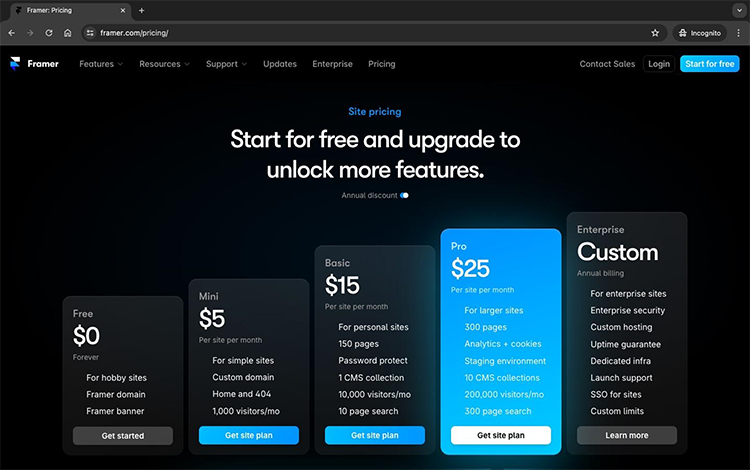
Pricing page of Framer showing subscription tiers: Free ($0), Mini ($5/month), Basic ($15/month), Pro ($25/month), and Enterprise (Custom pricing) plans, each with various features and benefits.

Framer Review

If you’re not a tech genius or web development wizard, Framer can have your website up and running with a single prompt and a few minutes of the AI working behind the scenes.

While the websites look great and are functional, though, the website generated by Framer will typically look and feel like every other website the AI has created.

You can edit the content and colors to match the look and feel of your brand and get started for free. It’s worth noting, though, that if you need more advanced features, you’ll want to upgrade to a paid plan.

Hocoos

Hocoos is another new AI website builder that will have you start by sharing your ideas through a short questionnaire.

Based on your answers, Hocoos will generate a website for you that closely matches your inputs.

Each of the questions are based around understanding your business, offers, and what you want the website to do better.
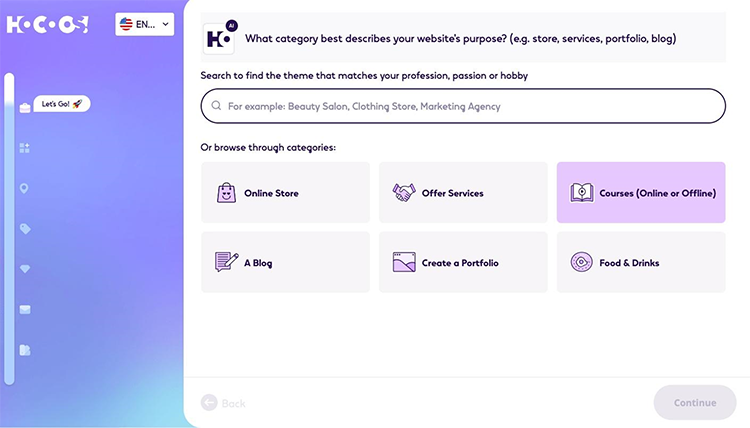
A website builder interface asking for the website's purpose. Options include Online Store, Offer Services, Courses (Online or Offline), a Blog, Create a Portfolio, and Food & Drinks.

You’re given a set of options you can choose from and if the one you’re looking for isn’t available, you can search or input your own answers.
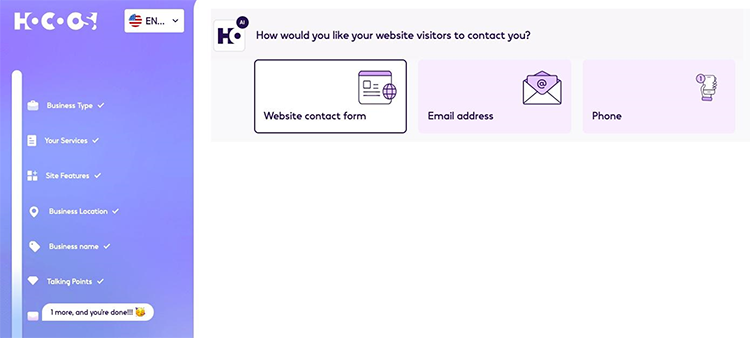
Then, the AI will generate 3 different options. You can choose anyone to proceed.
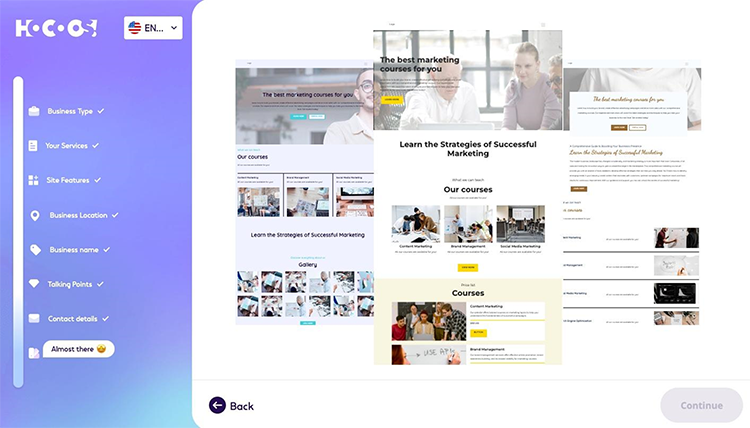
Screenshot of a website builder interface displaying various marketing course templates. The sidebar shows menu items such as Business Type, Your Services, Site Features, and more.

Once the website is built, you can change the font, copy, images, and even your color palette.
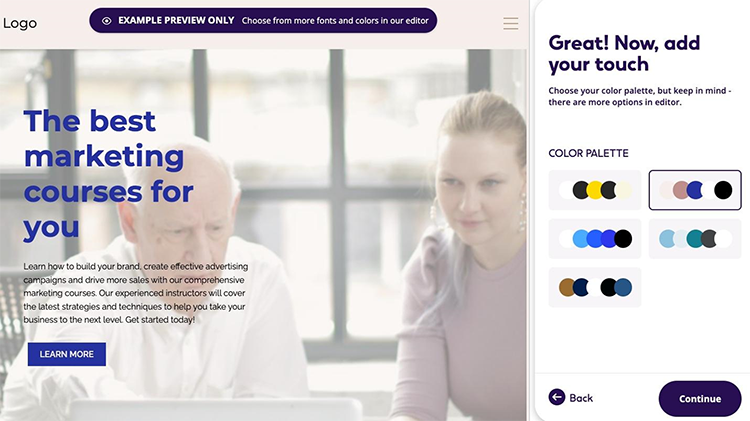
Screenshot of a marketing course website editor interface. The editor displays text, image options, and color palette choices. Two people are visible working on a laptop in the example section.

Features

Hocoos features fully AI-driven website creation and uses artificial intelligence to provide you with a personalized website based on your answers to 8 simple questions.

This eliminates the need for manual coding and design skills.

Through personalized inspiration, the AI can even suggest blog topics that are tailored to your business, helping you create engaging content that resonates with your target audience.

With a built-in AI logo generator, you can create a unique, professional logo in a few seconds, helping you establish a strong brand identity.

User-friendly editing with the built-in Hocoos Wizard helps simplify the process by reducing the time and effort needed to get up and running.

With AI content creation, you can have distinctive, engaging blog posts based on user-selected topics and titles plugged into your blog within a few clicks.

Pros

With Hocoos, there’s no technical knowledge required. It eliminates the need for you to have coding or design skills, making it accessible to most people.

It also saves a ton of time by automating various aspects of the website design process, such as development and content generation.

You’re able to customize the final website to help suit your specific needs and preferences.

Cons

In order to answer the questions at the beginning of the process, you’ll need to have an in-depth understanding of your business and goals.

The built-in user interface that you’ll use to edit your website can feel a bit cluttered.

The designs that Hocoos offers are usable but are not what would be considered “top-notch”.

Pricing 

Hocoos currently offers a free solution so you can give their software a test run without any risk.

However, like others on this list, you’ll need to upgrade to a paid plan in order to access all of the features that Hocoos has to offer.

Hocoos Review

Hocoos is a decent alternative to some of the other options on this list, based on its ability to customize your website based on the industry you’re in and the offers you have.

However, since it is limited in functionality unless you pay for an account, you may not be able to get the full experience without upgrading your account.

Conclusion

When it comes to high-converting AI-powered website builders, you have quite a few options.

As you’ve seen, though, fully experiencing those options without paying money isn’t something that’s currently being offered.

If you’re looking to build a high-powered AI-based website that lets you get up and running without messing with code or being a tech wizard, you may want to consider trying ClickFunnels 2.0.

You can give it a full test run for 14 days without any limitations.

When you click here to start your free trial, you’ll be able to test and use every aspect of ClickFunnels without worrying about running into issues because you aren’t on a paid tier.

Then, once you get the full experience, we’re confident you’ll want to stay a member and keep building and growing with the ClickFunnels suite of business and marketing tools.

Try Our AI Funnel Builder For Free!

Thanks for reading 5 Examples Of High Converting AI Powered Websites which appeared first on ClickFunnels.

What Is An AI Sales Generator & How Can It Help You?

Software Stack Editor · May 20, 2024 ·

The post What Is An AI Sales Generator & How Can It Help You? appeared first on ClickFunnels.

Everyone is talking about AI.

But how can you use it to grow your business?

Today we are going to discuss what AI is, what are its current limitations and how using an AI sales generator can help you make more money!

Table of Contents:
  • What is AI?
  • What are the Current Limitations of AI?
  • What is an AI Sales Generator?
  • What are the Current Limitations of AI Sales Generators?
  • What are AI Sales Generators Good for?
  • ClickFunnels AI Funnel Builder
  • How Can You Use Our AI Funnel Builder to Grow Your Business?
  • Try ClickFunnels 2.0 Risk-Free!

What is AI?

A person in glasses interacts with a robot, pressing a button on its chest. The robot has a smiling face and is surrounded by icons indicating power, settings, and brain activity. A laptop is on a nearby table.

The term “artificial intelligence” refers to machine intelligence that enables those machines to solve problems, learn from previous experiences, and navigate their environment. 

In popular culture, when people use this term, they are often talking about general artificial intelligence aka sentient machines that we are all familiar with from science fiction novels, movies, and TV shows. 

However, what we have at the moment is specialized artificial intelligence, meaning, artificial intelligence systems that can perform specific tasks well. 

Say, artificial intelligence systems designed to play chess are impossible to beat barring some unexpected blindposts. 

However, despite having surpassed humans in this specific skill, they are completely useless in all other domains. 

Large language models (LLMs) such as ChatGPT can perform well across a much broader range of skills, which is why they are considered to be a breakthrough. However, they are still specialized. 

If you want to get a better understanding of the current state of artificial intelligence you might want to consider taking Google’s free artificial intelligence course.

Productivity YouTuber Jeff Su has made a helpful 10-minute summary of it:

What are the Current Limitations of AI?

If you want to harness the power of artificial intelligence to grow your business, you need to understand its current limitations, specifically the current limitations of large language models (LLMs) that power popular AI apps. 

Large Language Models are Black Boxes

People tend to assume that large language models such as ChatGPT are regular computer programs written by software engineers.

However, that is not the case. LLMs are black boxes that we feed data to, then something happens inside them that we can’t see and then they spit out data as responses to user prompts. 

This might sound crazy but no one really knows how large language models work, including the people who created them. 

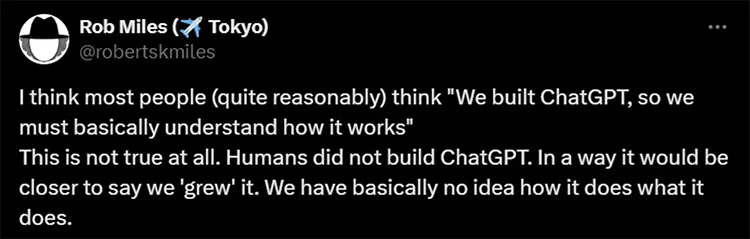
As AI safety expert Robert Miles explained, humans didn’t build ChatGPT – it would be more accurate to say that we grew it:

While this whole “black box” thing may seem like an interesting but ultimately irrelevant technical detail, it’s actually crucial for understanding the practical limitations of large language models.

For example, the phenomenon known as “hallucinations”…

Hallucinations

People tend to assume that large language models such as ChatGPT are basically a more convenient Google. You ask a question, and ChatGPT answers it. Great, right?

But the problem is that ChatGPT “hallucinates”: it can give you an answer that is incorrect or even entirely made up. 

This isn’t a big deal if you have the domain expertise to distinguish truth from hallucinations or have the time to manually fact-check what ChatGPT told you. However, if you just take ChatGPT at its word, you might run into trouble. 

For example, one lawyer who used ChatGPT ended up submitting a court filing that cited at least six cases that did not exist. As you might imagine, that did not go well. 

At the moment, since no one knows how large language models work, hallucinations are a problem that cannot be solved. 

This means that if you want to use AI to produce written content or sales copy, you need to make sure that the information is correct!

Lack of Sentience

People also tend to assume – either consciously or unconsciously – that large language models such as ChatGPT possess some degree of sentience.

It’s understandable:

  1. Humans have an evolved tendency to anthropomorphize, perceive agency, and ascribe sentience to the world around us. There’s even an entire school of philosophy called panpsychism that argues that everything is sentient to some degree!
  2. Both AI experts and regular people alike tend to use anthropomorphic language when talking about artificial intelligence. You can see us doing it in this article!
  3. We are all used to chatting with other people via text messages, chat apps, and social media. 

When you consider these three factors, it shouldn’t be surprising that a lot of people perceive artificial intelligence systems as sentient, develop emotional attachments to them, and in some cases even fall in love with chatbots such as Replika!

And this isn’t limited to regular folks. Sometimes, even the experts who are working on these systems come to see them as sentient. 

For example, back in 2022, Google fired a software engineer Blake Lemoine who went public with his claim that the company’s AI system called LaMDA was conscious. 

However, this claim was largely dismissed by the AI community. Gary Marcus, a cognitive scientist best known for his research on the intersection between neuroscience and artificial intelligence, even debated Lemoine on this issue. 

While there is some disagreement regarding whether or not the current LLMs are sentient, the mainstream view is that they aren’t. Though again, they are black boxes so no one really knows!

“Okay, this is all very interesting, but what does it have to do with growing a business?” you might be wondering.

Well, if you want to use AI to grow your business, you need to make a conscious effort to keep this human tendency to anthropomorphize in check.

In all likelihood, at this point in time, LLMs probably do not “understand” anything, even if it sometimes seems like they do. 

For example, if you tell a human to draw “salmon in the river”, they will almost certainly interpret it as you asking them to draw live salmon fish swimming in the river.

But if you ask Dall-E to do that, you might get something like this:

“Salmon in the river” is now somewhat of a meme in the AI community, though some people have called the veracity of these images into question, arguing that the prompt used to create them must have been different. 

But our point here is that you cannot trust LLMs the way you’d trust another human being because the implicit understanding that we take for granted when we are interacting with other people simply isn’t there.

So remember these “salmon in the river” images if you ever feel tempted to turn to ChatGPT for business advice!

What is an AI Sales Generator?

Illustration of a robot and a woman interacting with financial data, coin stacks, and a dollar coin, with charts and a laptop, symbolizing financial technology and automation.

The term “AI sales generator” is an umbrella term that refers to software that uses artificial intelligence technologies to generate:

  • Sales scripts
  • Sales copy
  • Sales funnels

…etc. 

What are the Current Limitations of AI Sales Generators?

The exact limitations of a given AI sales generator are determined by its design, the underlying artificial intelligence technology that powers it, and its intended use case.

However, all AI sales generators are subject to the previously discussed artificial intelligence limitations that we are facing at this point in time. 

In practice, that means that even the most sophisticated AI sales generator cannot completely replace humans.

Meaning:

  • AI sales generators that generate sales scripts can’t completely replace sales reps.
  • AI sales generators that generate sales copy can’t completely replace copywriters.
  • AI sales generators that generate sales funnels can’t completely replace funnel experts.

…etc. 

Remember, these AI apps don’t “understand” what they are creating, which is why their output needs to be analyzed, edited, and optimized by humans with the relevant domain expertise.

However, if you are just starting out and can’t afford to outsource specific tasks such as writing copy to experts, AI sales generators can help you complete those tasks!

What are AI Sales Generators Good for?

The best way to think about AI sales generators is to see them as tools that can help you quickly create the first draft of whatever it is that you need. 

Meaning, you can use AI sales generators to produce the first drafts of:

  • Sales scripts
  • Sales copy
  • Sales funnels

…etc. 

That can be extremely valuable because it’s much easier to take something that already exists and edit it than it is to create that same thing from scratch. AI sales generators can save you a ton of time!

ClickFunnels AI Funnel Builder

Our AI funnel builder can help you generate the first draft of your sales funnel in less than 10 minutes.

This AI sales generator is super easy to use because it follows a simple step-by-step process:

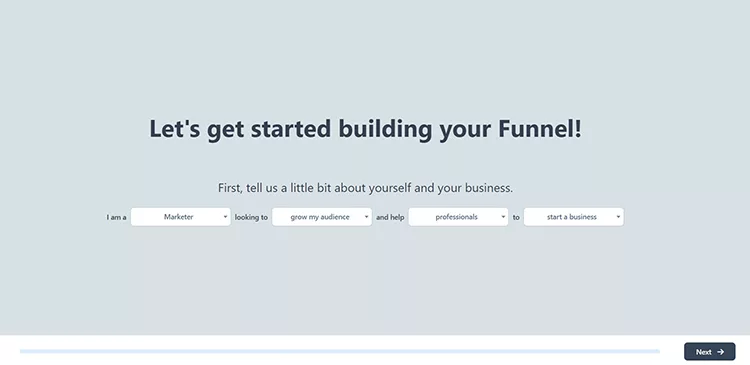
  1. Tell us a little bit about yourself and your business.
  2. Select from six popular funnel types. If you aren’t familiar with them, there’s no need to worry: each funnel type is explained!
  3. Select your main brand color which will determine the color scheme of the pages in your funnel and your design style which will determine details like fonts, spacing, borders and corners.
  4. Choose from three image styles: isometric 3D style, flat illustrations and stock photos.
  5. Add more details about your offer and choose a writing style that matches your brand voice.

Then click a button and our AI sales generator will generate a sales funnel for you. It really is that easy!

How Can You Use Our AI Funnel Builder to Grow Your Business?

One of the most common mistakes that we see entrepreneurs make when it comes to building sales funnels is a lack of speed.

They take ages to decide on a funnel type, then waste time endlessly tinkering with design, and then struggle to write copy due to writer’s block…

Meanwhile, their competitors are out there running marketing campaigns, making sales, and stealing their customers!

Seriously, enough with this tortured artist mentality, you need to get your sales funnel up and running ASAP. 

Use our AI funnel builder to generate the first draft of your funnel, edit it with our visual editor and make it available online immediately. You can do all that in one evening. Don’t overthink it. Just do it. 

Once you have your sales funnel, it’s time to start driving traffic to it. Now you’re in the game! 😎

Try ClickFunnels 2.0 Risk-Free!

A promotional banner for ClickFunnels, highlighting its service to convert website visitors into paying customers. It offers a free trial with no coding skills needed and claims to suit all business types.

Let’s be real:

We are biased in favor of our software. 

So we understand if you take what we say about it with a grain of salt.

Fortunately, we have a free 14-day trial, so you don’t have to take our word for it. 

You can go and see ClickFunnels 2.0 for yourself without any risk!

So what are you waiting for? 🧐

Start Your Free Trial Today

Thanks for reading What Is An AI Sales Generator & How Can It Help You? which appeared first on ClickFunnels.

Unlocking The Secrets For Success In Today’s Real Estate Market

Software Stack Editor · May 14, 2024 ·

The post Unlocking The Secrets For Success In Today’s Real Estate Market appeared first on ClickFunnels.

The real estate market’s ever-changing status, such as problems with available inventory and changing financing rules, can make it challenging for a real estate agent to succeed. 

This is more true than ever, especially in light of recent lawsuits that fundamentally changed the terms of sellers’ versus buyers’ agreements and commission splits in transactions. Being able to pivot and adapt your strategy is a must for all agents. 

The settlement in 2024 between NAR, the National Association of Realtors, and home sellers who had sued in protest of having to pay a guaranteed commission to buyers’ agents was reached, and the implications are that it will fundamentally change the scope and practice of real estate transactions moving forward. 

The agreement between NAR and home sellers, who claimed that the commission split required excessive fees to be paid for the seller, is expected to bring about immediate and significant price relief in the real estate market moving forward.

In light of this settlement and the rigors of the real estate market, succeeding as an agent will require having a solid set of sales techniques and tactics. It will be even more important to stand out from the competition to represent sellers and showcase your expertise to secure contracts for payment to represent buyers.  

To navigate the waters of competitive real estate, you’ll need a comprehensive strategy to stand out and succeed in an industry where so many other agents fail. 

There are four key elements that separate successful real estate agents from all the others. 

These include in-depth knowledge, great relationship-building skills, mastery of various sales techniques, and the ability to utilize technology to optimize their potential to land a client. 

Those four elements include:

  • Understand The Evolving Market
  • Develop Relationships
  • Master Sales Techniques For The Buyer And Seller Agreements
  • Embracing A Dedicated Sales Funnel

Let’s examine each of these four elements in greater detail and help unlock the secrets to your success. 

1. Understand the Evolving Market

Two people analyzing financial graphs and charts. One person is sitting at a desk with a laptop, and the other is standing holding a bar chart. Various financial symbols and graphs are in the background.

To stand out from the other agents, you’ll need to develop a deep understanding of the local market and evolving industry trends. 

You’ll want to stay current on local daily sales sheets, recent developments impacting sales like limited inventory, recent business news–employment opportunities can affect local prices–and seasonal impacts such as high school graduations and military deployments that can impact interest for buyers and sellers.

Once you’ve developed an in-depth understanding, you’ll want to build your reputation by showcasing an in-depth knowledge of what is selling and how much. This, as well as external local conditions that may impact sales, can help you establish yourself as an expert. 

When you apply that knowledge to more significant factors that may impact the market, such as interest rate changes, fluctuations in mortgage rates, and other national economic indicators, you will help establish and develop a reputation as a real estate expert. 

One way to showcase your expertise is to provide content that people looking for a knowledgeable agent will search for. 

There are multiple channels to publish content to showcase your knowledge, and creating and publishing content that helps paint you in the best light is a process known as content marketing. 

Content marketing is a form of informational marketing that showcases your abilities and knowledge so potential customers can benefit from your expertise. 

There are multiple channels for content marketing, and the key is to find a platform that is best for how your ideal customers consume content.

For older customers, blogs and in-person events like a meet-and-greet first-time home-buyer or VA event are good ideas.

For younger, hipper potential customers, making snappy, engaging short videos like TikTok, Instagram Stories, or hosting Facebook live events may be best. 

You can create and publish your content on a variety of platforms ranging from: 

  • Blog posts
  • YouTube videos that answer frequently asked questions
  • TikTok, Instagram Stories, and other short videos
  • Facebook and other social media posts
  • In-person events and happy hours

Having a diverse, multi-touch strategy that includes different types of content and platforms to distribute your content is ideal. 

Still, it will take a lot of time and effort to craft, create, publish, and disseminate your content for the broadest reach and impact. And for most agents, much of your marketing efforts fall on your shoulders unless you have a team dedicated to marketing for you. 

But if you’re like most agents who live by a DIY ethos, you’ll want an all-in-one, customizable tool for all your content marketing efforts. 

ClickFunnels 2.0 is ideal for the solopreneur and real estate agent with multiple hats. 

From providing easy-to-install and use blog page-building tools that seamlessly integrate with your sales funnels, landing pages, website builder tools, and more, ClickFunnels 2.0 offers simple solutions to create content that showcases your expertise in minutes quickly.

Creating content you can publish and distribute through multiple channels will help you highlight your knowledge of an ever-evolving market, further developing your reputation as the go-to real estate agent in your local market. 

2. Master Sales Techniques for the Buyer and Seller Agreements

A woman standing and pointing at a presentation board with a profile page displayed, while a man sits at a desk with a laptop, both engaged in a discussion.

Another way to unlock your potential success as a real estate agent is to showcase your expertise by mastering the various contracts and other selling techniques for both a buyer and seller agreement.

Since the NAR settlement, agents on both sides of the transaction will have to negotiate their commission, often from opposite sides.

Buyer agents will need to pitch their services and have a contract that, by representing the buyer, they will receive a sales commission for their work.

In contrast, a seller’s agent will see a cut in the number of seller commissions, with agents underbidding their services versus those of other agents competing to represent the seller.

To stand out against all these factors and the other agents, you’ll want to master the negotiations and sales techniques to represent a seller or buyer in the same transaction.

3. Develop and Nurture Relationships

Illustration of two smartphone screens with human figures exchanging documents and shaking hands, symbolizing business collaboration. Gears, graphs, and paper planes indicate progress and connectivity.

Real estate is one of the most significant purchases people will make in their lifetimes, and because of this, people want to work with an agent they feel they can trust. 

Producing content showcasing your understanding and experience is only part of growing your business and mastering the sales techniques needed to succeed in the competitive world of real estate. 

One thing to keep in mind is that since real estate is a relationship business, developing and nurturing relationships with past and potential clients is one of the more essential techniques to master.

To do this successfully, you’ll want to create content that answers your potential customers’ interests and concerns but to make the most impact with your information, you must personalize the information you provide them. 

The more personalized your content and messaging, the greater its effect on your target client can and will be. 

However, managing all the details, information, needs, and other points of interest with all your clients and potential clients will take a lot of time and resources.

With a dedicated Customer Relationship Management, or CRM, tool, you can upload significant events, details, and facts about your client base and use that information to tailor your content for each segmentation of your database. 

For example, if your client list includes engaged, about to marry, or newly married couples, you can create content that celebrates each situation and event in their lives.

Keep in mind that since real estate is the single most significant purchase in most people’s lives, clients want to have the utmost trust that the agent is working for them and in their best interests.

Building that trust through your content creation and personalizing it with a CRM will help you manage all those details and make all your touchpoints memorable for your clients. 

Finding new clients is excellent, but often, success in real estate is built on multiple transactions from the same client, whether it be buying a new home as the family grows, selling for a smaller, more manageable space as clients age, or simply getting referrals from your past clients who are enthusiastic supporters from their experiences with your services.

A CRM is crucial to this.

Running a CRM is often a nearly full-time job, and as a solo agent, reaching out, developing, and nurturing relationships can be exhausting. 

That is why ClickFunnels provides a state-of-the-art CRM so that you can coordinate your appointment schedules, manage every stage of your client’s home buying, search, and selling journey, and never miss a significant moment or detail, further developing your relationships. 

Some ways you can develop and nurture relationships are:

  • Use content to highlight trends in the local market
  • Showcase your understanding of the benefits of homeownership for buyers and sellers
  • Ask open-ended questions and offer solutions to their challenges 
  • Be consistent in your communications with them
  • Make your efforts personalized; know the who, why, where, and why of each client

If you master your relationship-building skills, you’ll skyrocket your real estate business. 

4. Embrace a Dedicated Sales Funnel

A funnel diagram divided into four labeled stages: Awareness at the top, followed by Interest, Decision, and Action at the bottom. Each stage is depicted in a different color from red to green.

Another crucial element to unlocking your real estate potential is embracing a dedicated sales funnel to assist you in every facet of your operation.

A sales funnel identifies the various stages of a potential client’s journey, from awareness to interest, decision, and action. 

These stages are part of a marketing concept known as AIDA and describe various touchpoints before a potential client acts.

These stages of a sales funnel are:

Awareness: When a client or target becomes aware of your brand, services, or products. This is the earliest and highest volume of people that you may come into contact with, and your messaging should be designed to cast as wide a net as possible.

Interest: A developing interest in the products and services you offer. This stage is often where most people will operate in your sales funnel until you provide enough solutions and motivation for them to move to the next stage.

Decision: The third stage is the decision-making stage. At this point of the funnel, your targets have become aware of your offers, services, and products and are generally interested. 

The content and touchpoints you provide at this stage will motivate them to decide whether it’s a yes, a not-right-now, or a no. 

Action: The final stage, the “closure” stage, is the action. 

After helping your targets move through the various sales funnel stages, they are now ready to act. In real estate, you’ll get the contract to sell, or in light of the NAR settlement, you’ll get a buyer’s contract signed and start showing homes. 

Understanding these four steps of the client’s journey, you can craft and create different types of content that address concerns and interests and help nudge them toward the end stage of taking action. 

To do this effectively, you’ll want to incorporate various tools and techniques, such as running a blog on contemporary issues in the market or having a social media page with trendy, snappy videos that showcase homes and decor or Q&A posts that showcase your understanding and expertise in various stages of real estate and homeownership.

These things can take a lot of time, energy, and resources to pull off well, and since you’re realistically a team of one (or maybe two) agents, doing all these things consistently well can be challenging. 

A dedicated sales funnel that integrates all your various needs, from CRM to blog-building tools, and incorporating social media will be essential to unlocking your success.

With a dedicated sales funnel incorporates all the various touchpoints and content you have and helps move the target clients along to making a decision and ultimately acting, which in this case is using your services to buy or sell a home or other real estate transaction.

With an all-in-one solution like ClickFunnels 2.0, you’ll have the tools you need at your fingertips, making it easy to create, edit, publish, and update highly optimized content to move your target clients along in their process. 

Having a strategy that can identify and adapt to the quickly evolving real estate industry and innovative tools that leverage these changes is what separates successful agents from those who are no longer in the business. 

Understanding the needs of buyers and sellers and communicating with them effectively so that you can stand out as a local real estate expert requires a dedicated sales funnel, which only ClickFunnels 2.0 provides. 

By incorporating these tools, investing in education, staying up-to-date on all the recent trends in the real estate market, and having personalized communication tools like a CRM, you can unlock the secrets to success and transform your real estate career.

The suite of tools available at ClickFunnels 2.0 is designed to help agents unlock their potential and success in the competitive world of real estate.

If you’re ready to launch your real estate career into the stratosphere, try ClickFunnels FREE for 14 days and see how the state-of-the-art solutions and sales funnels will boost your real estate career. 

Thanks for reading Unlocking The Secrets For Success In Today’s Real Estate Market which appeared first on ClickFunnels.

7 Recruitment Marketing Strategies For Success In 2024

Software Stack Editor · May 6, 2024 ·

The post 7 Recruitment Marketing Strategies For Success In 2024 appeared first on ClickFunnels.

Wondering how to attract promising job candidates?

Today we are going to share seven recruitment marketing strategies that can help you with that…

Table of Contents:
  • What is Recruitment Marketing?
  • How to Build an Employer Brand
  • Recruitment Marketing Strategy #1: Blogging
  • Recruitment Marketing Strategy #2: Jobs Newsletter
  • Recruitment Marketing Strategy  #3: Social Media Marketing
  • Recruitment Marketing Strategy #4: Social Media Advertising
  • Recruitment Marketing Strategy #5: Podcast Advertising
  • Recruitment Marketing Strategy #6: Posting Ads on Job Boards
  • Recruitment Marketing Strategy #7: Cold Outreach
  • Our Top 3 Recruitment Marketing Pro Tips 
  • Want to Learn How to Drive TARGETED TRAFFIC to Your Website and Sales Funnels?

What is Recruitment Marketing?

Recruitment marketing is a popular approach to recruitment that revolves around using marketing strategies and tactics to attract promising candidates. 

How to Build an Employer Brand

One of the most important recruitment marketing concepts is building an employer brand designed to attract your dream candidates.

Here’s what that means in practice:

Protecting Your Brand’s Reputation

If your company is constantly involved in scandals, people who are serious about their careers will not want to work there. 

The easiest way to avoid PR nightmares is to create a healthy company culture, treat people with respect and refuse to tolerate bad behavior in the workplace. 

Sure, you will probably still have to deal with an occasional disgruntled employee, that’s just part and parcel of running a company.

But that shouldn’t cause serious problems if these are isolated one-off incidents that aren’t indicative of systemic issues within your organization. 

In fact, if the vast majority of your employees are happy with the way you treat them, then they might even speak out in your defense should your company ever come under fire!

Being Consistent When it Comes to Your Brand’s Values

You want to get clear about your company’s values, broadcast those values to the world, and make sure that they are reflected in the way you run your business. 

Say, if family values are a part of your brand, then you need to make sure that your company offers a family-friendly work environment. 

In practice, that might mean a 40-hour work week with a regular 9 to 5 schedule and no expectation of doing overtime, generous maternity and paternity leaves, and unpaid time off in case your employees need to attend to family-related matters (e.g. take care of a sick child that caught the flu).  

All that will help you attract people with kids who are looking for stable employment in a company that offers the work-life balance that they need.

However, if you preach family values but then expect your employees to work 60 hours a week, only provide the bare minimum maternity and paternity leaves, and show zero understanding when someone needs to take time off to attend to family-related matters, you are going to come across as a hypocrite. 

Moreover, if you attract people with kids by preaching family values but then your company turns out to not be family-friendly at all, you’ll have a high employee turnover because new hires will keep quitting once they realize that you pulled a bait-and-switch on them. 

Finally, you’ll probably eventually end up attracting negative media coverage because the general public hates hypocrisy and loves to see brands that don’t practice what they preach get exposed. This is a serious reputational risk!

And just to be clear, this was just an example, we aren’t saying that your company should adopt family values.

The point is that whatever your brand values are, they need to be reflected in your messaging, company culture, and day-to-day operations!

Offering Competitive Compensation Packages

Top performers have a ton of options, so if you want to attract them to your company, you need to offer competitive compensation packages.

Of course, there are other factors that influence people’s career decisions, such as believing in the company’s mission, opportunities to work on interesting problems, work-life balance, and so on. 

But these factors aren’t as important as business owners tend to believe. Ultimately, people need to support their families, pay their mortgages, and save for retirement. And all that costs money. 

Your competitors are probably paying their employees as little as they can get away with because that’s the default way of running a business. 

This presents an opportunity for you: if you adopt a strategy of paying more than the industry average, you will have a much easier time attracting promising candidates. 

So do the math to see how much you can afford to pay for each job role while still maintaining healthy profit margins and start offering competitive compensation packages!

Recruitment Marketing Strategy #1: Blogging

Illustration of a person sitting on a large notebook with a pen, typing on a laptop. An oversized smartphone displays a rolled-up blog screen, surrounded by icons for comments, social media, and wifi.

You can use your company blog to bolster your employer brand. 

Here are some ideas:

  • Have a monthly feature dedicated to showcasing the perks of working at your company. It can include employee interviews, interesting company news, company retreat recaps, etc.
  • If the focus of your blog is business-related topics, you can use your company as an example to illustrate the principles that you are talking about. It’s an opportunity to broadcast your values. 
  • When you have a job opening, post the job ad on your blog. This will allow you to tap into your own audience first before expanding your search. Given that these people are already reading your blog, they are more likely to share your values than the average job seeker.

Also, if you as a business owner have a personal blog where you share your insights about entrepreneurship, you can discuss the way you run your company there.

That will provide value to your audience of fellow entrepreneurs while also strengthening your employer brand.

Nathan Barry, the founder of ConvertKit, does this well on his personal blog. Check out his article “Profit Sharing For Bootstrapped Startups” if you want to see an example of what we are talking about. 

Recruitment Marketing Strategy #2: Jobs Newsletter

Consider having a dedicated jobs newsletter that people can sign up for in order to get notified about new job openings. Add opt-in forms to your “Careers” page and to relevant blog posts.

This can help you build an email list of people who are interested in working at your company so that you could reach out to them whenever you are hiring. 

Recruitment Marketing Strategy  #3: Social Media Marketing

A smartphone surrounded by various app icons including social media, messaging, email, and multimedia, representing digital communication and online interaction.

Social media marketing is another great way to bolster your employer brand. 

LinkedIn is the biggest professional social network in the world so it’s the obvious place to start if you want to attract promising candidates. 

In fact, you can use it specifically for that purpose instead of trying to appeal to potential customers like you would on other platforms. 

Here are some ideas on what to share on LinkedIn:

  • Industry news, the latest trends, and comments on important developments. 
  • Advice on how to build a career in your industry. What would you advise a friend or a family member that wants to succeed in it?
  • Advice on how to stand out when applying for jobs. As a business owner, you understand the hiring process from the employer’s perspective so your insights can be really valuable to job seekers. 
  • Content that showcases the perks of working at your company This can mean employee interviews, “Day in the Life Of” style vlogs, photos and videos from company retreats, etc. 
  • Job ads for open positions. 

You’ll probably start getting connection requests and cold direct messages from people interested in working at your company. 

If they seem like a good fit for a current job opening, encourage them to apply for that position. 

Alternatively, invite them to sign up for your jobs newsletter and ask them if they want to be added to your candidate database (more on that later).

Also, if you notice someone interacting with your content a lot, you can send them a direct message to say hi and learn more about them. 

They might be interested in working for your company or might know someone else who is. It’s always good to make new connections!

As for the other platforms, we recommend incorporating some recruitment content in your overall social media marketing strategy so that it would make up around 5% of your total social media output outside of LinkedIn. 

Recruitment Marketing Strategy #4: Social Media Advertising

Illustration of a person with a megaphone, a smartphone displaying a screen with a large megaphone, and icons for Facebook, Twitter, and Instagram.

You can also run social media ads to drive traffic directly to your job application page. 

Again, LinkedIn is probably the best place to start because it makes it easy to target potential candidates who have the education, experience and skills required for that particular role. 

Moreover, since it’s a professional social network, people are already thinking about their careers when they are using it so they are likely to be more receptive to ads related to that. 

In other words, it’s easier to get the potential candidate’s attention when they are browsing LinkedIn looking for career advancement opportunities than it is to get their attention when they are scrolling Facebook looking for cat videos and memes.

That being said, LinkedIn seems to be less popular among blue-collar workers so if you are hiring for a blue-collar role, running ads on Facebook might make more sense. 

Recruitment Marketing Strategy #5: Podcast Advertising

Illustration of a person wearing headphones, speaking into a microphone at a desk, with a large smartphone displaying a microphone icon and a play button in the background.

It seems that these days you can find a podcast about pretty much any subject imaginable. 

This means that regardless of what job role you are hiring for, you can probably find a podcast that caters to people in that occupation. 

Consider doing some research, identifying podcasts that potential candidates might be listening to, and then reaching out to the host(s) to see if you can work out an advertising deal where they read out your job ad at the beginning of the show. 

If you get high-quality applications that way, you can start running ads on those podcasts whenever you have a job opening.

Just make sure to create a unique link for each podcast so that you can track how many applicants they are sending your way.

Otherwise, if you ask all hosts to share the same link with their listeners, it may be difficult to evaluate the effectiveness of these advertising campaigns. 

Recruitment Marketing Strategy #6: Posting Ads on Job Boards

You can also post ads on job boards whenever you have a new job opening. 

Ideally, you want to target specialized boards because they tend to attract more qualified applicants. 

For example, if you are looking to hire a writer, consider posting ads on the ProBlogger job board, the Best Writing job board, and Freelance Writing Jobs. 

Writers from all around the world are checking these websites daily so you will probably get a ton of applications.

(We’ll discuss how to reduce the quantity and improve the quality of job applications later in this article). 

You can also post ads on general freelance job boards such as Upwork, remote work job boards like Dynamite Jobs and RemoteOK, and even on Craiglist.

Use the same process for all job openings: see if there are any specialized job boards, post ads there, and then also post some ads on more general job boards to cast a wider net.

Recruitment Marketing Strategy #7: Cold Outreach

Illustration of two people communicating virtually. One person is working on a laptop, the other is holding a smartphone. Speech bubbles indicate conversation.

Finally, you can use cold outreach to contact potential candidates and invite them to apply for the job. 

LinkedIn is probably the best place for this because people are used to getting messages like that on this platform. 

Moreover, if you have mutual connections with the person you are reaching out to, that can serve as social proof and give you some credibility in their eyes. 

Plus, if they aren’t looking for a new job at the moment, you can still add them to your network and stay in touch in case something changes in the future.

You can also use direct messages to do cold outreach on other social media platforms but you need to be more cautious because what’s appropriate on LinkedIn may not always be appropriate on Facebook or Instagram.

If someone is using social media for personal purposes, then it’s probably not a good idea to contact them there. See if you can find their email address and send them an email instead. 

But if they have a professional social media presence, then sending them a direct message is probably okay. 

Also, if you are casually browsing the web and come across someone who does good work, find their email address and reach out to them. 

Say hi, introduce yourself, and tell them that you like their work. Everyone loves compliments so a message like that will probably be received positively. 

It doesn’t cost you anything and it can help you make new connections. Who knows, maybe the next time that person is looking for a job, they will remember your email and reach out to you!

Our Top 3 Recruitment Marketing Pro Tips 

Ask Domain Experts to Review Your Job Ads

Typically, job ads are created by the HR team since they are the ones responsible for recruitment.

But here’s the problem with that: HR people usually aren’t that familiar with the job roles that they are hiring for. 

Sure, they have a general understanding of what each role entails but they probably don’t know the details.

This can lead to them creating job ads with requirements that are ludicrous. 

For example, tech workers often joke about job ads that require five years of experience in working with a technology that only came out three years ago. 

Needless to say, you want to avoid blunders like that because they are embarrassing, make your company look bad, and drive away competent candidates. 

Of course, you can’t expect someone who works in HR to know what year a particular programming framework became available. 

That’s why it makes sense to ask domain experts to review job ads before posting them.

Say, if you want to hire a junior developer, let the HR team write the ad but then ask a senior developer to review it. 

Include an Obstacle in Your Job Ad

Anyone who has ever posted a job ad on one of the popular job boards knows that you immediately get flooded with applications by people who clearly haven’t even read your ad.

Sifting through all those low-quality applications to find suitable candidates can be incredibly time-consuming. 

That’s why we recommend including an obstacle in your job ad so that you can reduce the application quantity and increase their quality. 

For example, if the candidates are applying via email, you can ask them to include some random words such as  “pineapple” in the subject line. 

Alternatively, you can ask them to film a short video explaining why they are a good candidate for this job, upload it to a video hosting platform, and include a link to it in their application. 

Then you can start sifting through applications by immediately filtering out everyone that failed to include that random word in the subject line or make a video and link to it. 

By the way, if the job that you are hiring for doesn’t require being on camera then it might be best to not watch the videos that the candidates submitted. Why?

Because if someone is awkward on camera it might make you biased against them without you even realizing it. 

But does it really matter if a person who is applying for a software engineering role is mumbling in their application video? Probably not. 

What matters is that they cared about their application enough to submit that video in the first place. You presented an obstacle, they overcame that obstacle. Now you can look at their application to see if they are qualified for the job!

Build a Candidate Database

Finally, if you are investing resources in attracting high-quality candidates, it makes sense to build a candidate database that you can then tap into in the future. 

If you are a small business owner and you are handling recruitment yourself, then it probably doesn’t need to be a formal thing.

You can just keep a list of promising candidates in a note-taking app and reach out to them the next time you are hiring. 

But if someone else is handling the recruitment process, you need to think carefully about how you approach building a candidate database, especially when it comes to legal considerations.

You will probably need an opt-in process, an opt-out process, and a privacy policy for your database that complies with the laws of the jurisdiction that your business is operating in. 

It doesn’t have to be complicated but it does have to be legal!

Want to Learn How to Drive TARGETED TRAFFIC to Your Website and Sales Funnels?

Our co-founder Russell Brunson used sales funnels to take ClickFunnels from zero to $100M+ in annual revenue in less than a decade. 

Needless to say, he had to drive a TON of targeted traffic to those sales funnels in order to achieve that. 

In his best-selling book “Traffic Secrets”, he shares proven marketing strategies that YOU can use to drive targeted traffic to YOUR website and sales funnels.

In this book, you’ll learn how to:

  • Find your dream customers online
  • Tap into other people’s distribution channels
  • Build an army of affiliates that will sell your product to you

…and so much more!

“Traffic Secrets” is available on Amazon where it has over 2,500 global ratings and a 4.7-star overall rating.

But you can also get it directly from us for free… 

All we ask is that you pay for shipping!

So what are you waiting for? 🧐

Get “Traffic Secrets” For FREE!

Thanks for reading 7 Recruitment Marketing Strategies For Success In 2024 which appeared first on ClickFunnels.
Creating A Sales Strategy Framework That Crushes It In 2024

Software Stack Editor · May 6, 2024 ·

The post Creating A Sales Strategy Framework That Crushes It In 2024 appeared first on ClickFunnels.

Want to grow your business in 2024?

Then you need to develop a sales strategy framework that can help you achieve your goals. 

Here are the seven key factors that you should take into consideration if you want your sales strategy framework to be effective:

Table of Contents:
  • #1: Your Target Audience
  • #2: Your Products or Services
  • #3: Your Pricing
  • #4: Your Sales Funnel
  • #5: Your Marketing Strategy
  • #6: Your Business Workflow
  • #7: Your Sales Targets
  • Want to Learn How to Build Sales Funnels that CONVERT? 

#1: Your Target Audience

Why Choosing Your Target Audience is the Most Important Business Decision You’ll Ever Make

Your target audience is likely going to be the main limiting factor when it comes to growing your business. 

For example, let’s say that you are a personal trainer and you have to choose between these two target audiences:

  • Broke college kids who want to get in shape
  • Affluent tech workers who want to get in shape

The former demographic barely has enough money to afford ramen noodles, the latter demographic makes six figures a year. 

Who do you think will be easier to close, pay you a higher rate, and stay with you longer?

You’d be surprised by how often entrepreneurs don’t think things through, choose the wrong target audience, and then wonder why growing their business is such an uphill battle!

How to Choose the Right Target Audience for Your Business

Here are the three key criteria that you want to consider when choosing a target audience:

  1. Do these people have a painful problem that you can help solve?
  2. Do these people have enough disposable income to pay for a solution?
  3. Are these people willing to pay for a solution?

You want to go after a demographic that meets all three criteria!

How to Create a Dream Customer Profile

Once you have a general idea of who your target audience is, you want to create a dream customer profile. 

Here’s what it should include:

  • Their demographic traits such as their gender, age, education level, occupation, job title, etc. 
  • Their psychographic traits such as their personal goals, professional goals, value system, political affiliation, religious beliefs, etc. 
  • What online influencers they are already following. We are using the word “influencer” loosely here. You want to know who they look up to!

Getting clear about all that will help you to zero in on your target audience in your marketing campaigns. 

How to Do Customer Research

Entrepreneurs have a tendency to overestimate how well they understand their dream customers. This can lead to all kinds of mistakes, including expensive ones!

That’s why we recommend doing extensive customer research regardless of how much you think you already know about your target audience.

Consider:

  • Subscribing to relevant subreddits
  • Registering to relevant online forums
  • Watching relevant YouTube channels
  • Listening to relevant podcasts
  • Following relevant social media influencers

…etc.

Doing all that can help you get a better understanding of what truly matters to your dream customers!

How to Proactively Solicit Customer Feedback

Finally, you want to proactively solicit feedback from both happy and unhappy customers. 

In the case of the former, consider reaching out to repeat customers and interviewing them to learn what makes them want to continue doing business with you.  You can offer them a freebie or a discount in exchange for their time.

In the case of the latter, consider reaching out to customers who have either requested a refund or canceled their subscription and interviewing them to learn why they did that. You can offer them an Amazon gift card in exchange for their time. 

Obviously, you need to be cautious about how you approach unhappy customers because if they are upset with you, it’s not a good idea to aggravate them further.

But showing sincere interest in hearing their perspective, letting them vent, and apologizing if something has gone wrong can help you diffuse the situation and ensure that you part on good terms. 

When you are just starting out, you can do all this manually but as your business grows that may become unfeasible. 

Eventually, you want to automate the process of gathering customer feedback as much as possible. 

#2: Your Products or Services

Generally speaking, the more painful the problem, the easier it will be to sell a solution to it. 

Software entrepreneur Marc Lou uses the analogy of vitamins vs. painkillers where he differentiates between nice-to-have products (vitamins) and must-have products (painkillers).

One of the lessons he learned from building nine products was to swap vitamins for painkillers:

A slide with title “4. Swap Vitamins for Painkillers.” Text: “100,000 visitors on my nice-to-have product website made $6,000. 100,000 visitors on my must-have product website made $100,000.” and other content.

That being said, it’s possible to build a business by selling nice-to-have products, but it’s going to be much more challenging. 

Entertainment is a good example of this: books, computer games, live performances, etc. are not must-haves, yet people still pay for them. 

However, making a living as a writer, indie game developer or performer is notoriously difficult. The “starving artist” archetype exists for a reason!

Of course, if you are really passionate about something that falls in the “nice-to-have” category, then it might make sense to choose that path regardless.

But if your primary goal is to make money, then it’s better to identify the most painful problem that you can solve and then sell that solution as either a product or a service!

#3: Your Pricing

There’s this popular belief that you should charge as much as you can for your products and services. But is that really a good pricing strategy?

Nathan Barry, the founder of ConvertKit, has shared some interesting thoughts on this subject in his article “How the Gap Between Value and Price Affects Goodwill”.

In that article, he explained that the difference between the price the consumer pays and the value they receive is called consumer surplus:

He then argued that consumer surplus is what creates customer goodwill and illustrated this idea by comparing two apps that his company was using at the time: Basecamp and Segment.

Back then, Basecamp was charging a flat fee of just $100/month, creating a massive consumer surplus:

Meanwhile, Segment was providing more and more value but also charging more and more for their software, leaving no consumer surplus at all.

In fact, Barry admitted that as a result of this pricing strategy, he and his team ended up resenting the company, which may be representative of the general sentiment among Segment users at the time. 

Bar chart comparing value and price, showing that the segment offers significant value but also charges a premium price.

Finally, he argued that despite being a somewhat vague concept, goodwill actually has tangible benefits such as more referrals, faster organic growth and lower churn. 

Barry concluded his article with this advice to business owners:

A graphic with text discussing the balance between price and value for customers, emphasizing the importance of smart segmenting and solid pricing strategy for creating goodwill and a healthy business foundation.

#4: Your Sales Funnel

A sales funnel is a system designed to convert visitors into leads, leads into customers and customers into repeat customers.

You want to build a sales funnel for your business before you start marketing your products and services because that will allow you to make the most out of the traffic that you generate.

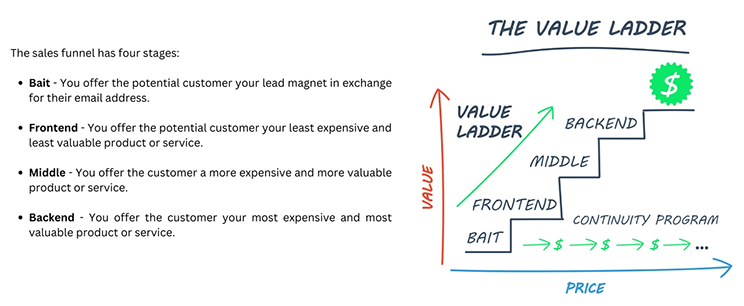
There are several popular sales funnel models out there but we recommend going with the Value Ladder sales funnel. It’s what we used to grow our company from zero to nine figures in annual revenue!

Here’s what the Value Ladder sales funnel looks like:

Diagram explaining the four stages of a sales funnel: Bait, Frontend, Middle, and Backend, with a corresponding visual of a value ladder moving from less valuable to more valuable offers.

The main idea here is this:

You should start by pitching a free offer where you give the potential customer a free product or provide a free service in exchange for their email address.

Then, once you have their email address you should use email marketing to pitch them increasingly more expensive and valuable offers.

Ideally, you want to design each offer with consumer surplus in mind, so that the customer would always feel that they are getting a great deal. 

This approach will enable you to gradually build trust over time so that you can eventually pitch them your most expensive and most valuable offer!

Example: The “DotCom Secrets” Value Ladder

Here’s one of our sales funnels that follows the Value Ladder structure:

As you can see, we start by inviting potential customers to take a free quiz and then guide them through our sales funnel.

At each stage, more and more people drop off, but eventually, some of them reach the top of our Value Ladder where we invite them to apply to the Inner Circle mastermind which costs between $50,000 and $250,000 per year.

“The Money is in the Backend”

“The money is in the backend” is one of the most important principles that you need to understand if you want to grow your business. 

For example, we have some entry-level (Frontend) products like “Perfect Webinar Secrets” that cost just $7. 

At that price point, we would have to make between 7,143 and 35,715 sales every year to match the annual revenue that we generate by selling a single Inner Circle mastermind membership. See how the money is in the backend?

But we can’t just ask people to pay us between $50,000 and $250,000 per year right out of the gate. They would think that we are insane!

That’s why we need a Value Ladder sales funnel: so that eventually we would be able to make some serious money at the Backend stage of it. 

This approach is what allowed us to become the dominant player in our niche. There are plenty of funnel builder apps out there. Are any of them generating $100M+ in annual revenue? 

Not to the best of our knowledge!

What Could You Achieve With the Value Ladder Sales Funnel?

We aren’t saying all this to brag, we are saying it to show you what’s possible. 

This is what we have achieved with the Value Ladder sales funnel. Now take a moment to imagine what you could achieve with it…

As our co-founder Russell loves to say, you are just one funnel away from the life that you always wanted! 

#5: Your Marketing Strategy

It’s not enough to have a sales funnel.

You also need to figure out how to consistently drive high-quality traffic to it. 

High-Quality Traffic vs. Low-Quality Traffic

All traffic can be divided into high-quality traffic and low-quality traffic:

  • High-quality traffic is your dream customers
  • Low-quality traffic is everyone else

When you are designing marketing campaigns, it’s important to take traffic quality into consideration.

Otherwise, you might end up in a situation where you are able to generate a lot of traffic but then struggle to convert those visitors into leads and paying customers. 

Remember that in and of itself traffic is a vanity metric, what really matters is sales, revenue, and profit!

Paid Traffic vs. Organic Traffic

It’s also important to understand the difference between paid and organic traffic:

  • Paid traffic is the traffic that you pay for directly, typically by spending money on ads or influencer marketing. 
  • Organic traffic is the traffic that you pay for indirectly, typically by investing resources into building a traffic-generating asset (e.g. a social media following, a blog, a newsletter, a YouTube channel, a podcast, etc.) 

As you can see, you will have to pay for traffic either way, whether with your money or with your time. There’s no such thing as “free traffic”!

Should You Focus on Paid or Organic Traffic?

What you should focus on will largely depend on which resource you have more of, time or money. 

We would argue that it’s best to start with paid advertising because that’s the fastest way to get your free offer in front of your dream customers. 

But if you can’t afford to pay for ads then you might want to focus on social media marketing instead. 

It will probably take you 1-2 years of consistently posting high-quality content to build a social media following that you can then monetize.

In the meantime, you can use cold email to reach out to potential customers directly and then pitch them your products and services. This is probably more appropriate for B2B businesses, though. 

If you are in the B2C space and reaching out to potential customers directly doesn’t make sense, then it’s probably best to have a day job that allows you to pay the bills while you grow your business on the side. 

#6: Your Business Workflow

Once you start making sales you want to look for ways to streamline your business workflow as much as possible.

How exactly will that look is going to depend on your business model but we recommend documenting every single task that you do and then analyzing that task list to see what can be automated. 

Consider setting up a customer relationship management (CRM) system, using integrations and taking advantage of webhooks.

Once you have automated everything that can be automated, consider outsourcing some of the remaining repetitive tasks to freelancers. 

Finally, consider hiring part-time or full-time employees, potentially extending job offers to the freelancers who have proven themselves.

#7: Your Sales Targets

This may be a somewhat controversial take but we don’t recommend setting sales targets if you just launched your business. Why?

Because you don’t have any historical data that you could use for sales forecasting There’s no way to know what’s realistic and what’s not.

Moreover, your priority right now should be to find a product-market fit, optimize your sales funnel, and streamline your business workflow. 

Setting a sales target at this point would be unwise because you want to keep an open mind so that you could pivot if you need to. 

Once the situation stabilizes and you find your footing, then you can begin analyzing your historical data, creating sales forecasts and setting sales targets. You can do all that with our analytics!

Want to Learn How to Build Sales Funnels that CONVERT? 

Our co-founder Russell Brunson used sales funnels to take ClickFunnels from zero to $100M+ in annual revenue in less than a decade.

He is now widely considered to be one of the top sales funnel experts in the world. Want to learn from him?

His best-selling book “DotCom Secrets” is the best place to start because it covers everything you need to know in order to build sales funnels that convert. 

This book is available on Amazon where it has over 2,500 global ratings and a 4.7-star overall rating. 

But you can also get it directly from us for free… 

All we ask is that you pay for shipping!

So what are you waiting for? 🧐

Get “DotCom Secrets” for FREE!

Thanks for reading Creating A Sales Strategy Framework That Crushes It In 2024 which appeared first on ClickFunnels.
Top 3 Marketing Strategies For Travel Agencies In 2024

Software Stack Editor · May 6, 2024 ·

The post Top 3 Marketing Strategies For Travel Agencies In 2024 appeared first on ClickFunnels.

Want to grow your travel agency in 2024?

Today we are going to discuss the top three travel agency marketing strategies that can help you do that…

Table of Contents:
  • Why You Should Build a Sales Funnel First
  • What is the Value Ladder Sales Funnel?
  • Completely Automated vs. Partially Automated Sales Funnels
  • How Many Sales Funnels Does Your Travel Agency Need?
  • How to Create Lead Magnets for Your Travel Agency
  • How to Build Squeeze Page Funnels for Your Travel Agency 
  • How to Drive Traffic to Your Sales Funnels With Our Top 3 Travel Agency Marketing Strategies
  • Bonus Marketing Strategy: Launching a Weekly Travel Newsletter
  • Want to Learn How to Build Sales Funnels that CONVERT? 

Why You Should Build a Sales Funnel First

Marketing is about generating traffic.

But if you want to grow your travel agency, merely doing that won’t be enough.

You need to build a system for converting those visitors into leads, leads into customers, and customers into repeat customers. 

A well-designed sales funnel can help you maximize sales, revenue, and profit, enabling you to make the most out of the traffic that you get!

What is the Value Ladder Sales Funnel?

We recommend using the Value Ladder sales funnel to grow your travel agency.

This funnel is based on three key ideas:

  • You need trust to close sales.
  • The more expensive your product or service, the more trust you will need to sell it.
  •  Trust can only be built gradually over an extended period of time. 

And here’s how that looks like in practice:

A diagram of a lead generation.

Completely Automated vs. Partially Automated Sales Funnels

The Value Ladder sales funnel can be either completely or partially automated.

In the former case, you can use a digital lead magnet as bait and then pitch your Frontend offer to the potential customer via email marketing.

In the latter case, you can use a digital lead magnet as bait, then use email marketing to invite the potential customer to book a free consultation with you and pitch your Frontend offer at the end of that consultation. 

Which approach you should take will depend on whether you are selling low-touch offers or high-touch offers.

Say, if you are selling all-inclusive vacation packages that either aren’t customizable at all or have predetermined customization options, it probably makes more sense to build completely automated sales funnels.

Meanwhile, if you are selling custom vacation packages that you tailor to the needs, interests and constraints of each customer, then it probably makes more sense to build partially automated sales funnels.

Also, if you just launched your travel agency, then building partially automated sales funnels might make sense even if you are selling low-touch offers. Why?

Because this approach gives you an opportunity to talk to potential customers one-on-one and learn more about what’s important to them. 

You can then use that knowledge to improve your offers, copywriting, and marketing!

How Many Sales Funnels Does Your Travel Agency Need?

It’s probably safe to say that people who want to go on vacation typically know what travel destinations they are interested in. 

That’s why it makes sense to build a separate sales funnel for each destination that your travel agency covers. 

This will allow you to target potential customers who are already interested in those destinations!

How to Create Lead Magnets for Your Travel Agency

A lead magnet is a freebie that you offer to the potential customer in exchange for their email address. 

It’s important to understand that a lead magnet shouldn’t just serve as bait that you use to attract potential customers.

It should also help you build trust so that you could then capitalize on it to sell them your Frontend offer. 

The best way to achieve that is to provide a solution to a problem that your potential customers are struggling with that is related to the problem that your Frontend offer addresses. 

As we just discussed, it’s probably best to create a separate sales funnel for each destination that you cover.

If you decide to take that approach then you can use free destination guides that potential customers can download in PDF format as your lead magnets.

Example: An All-Inclusive Trip to Florence, Italy

Let’s say that one of the destinations that you cover is Florence, Italy. 

People who have never been to Florence but want to visit it will probably start planning their trip by doing online research. 

If you can offer them a comprehensive guide to Florence for free, they will probably be interested in it because that will save them time. 

Then, once you have their email addresses, you can either pitch them an all-inclusive trip to Florence via email or invite them to book a free consultation with you and then pitch it at the end of that consultation. 

See how in this case the lead magnet helps to not just attract the potential customers but also build trust and set the stage for your Frontend offer pitch?

How to Build Squeeze Page Funnels for Your Travel Agency 

The squeeze page funnel is the simplest and probably the most popular sales funnel that can work well for any business, including travel agencies.

The Squeeze Page Funnel Structure

Your squeeze page funnels should consist of three pages:

  1. Your lead magnet landing page is where you present your free destination guide and ask the potential customer for their email address in exchange for it. 
  2. Your thank you page where you thank the potential customer and explain how they can download their free destination guide. 
  3. Your sales page where the potential customer can purchase your Frontend offer travel package. 

You can easily build a sales funnel like that with ClickFunnels 2.0!

The Automated 6-Email Welcome Sequence

We recommend setting up an automated welcome sequence.

Here’s a proven template that you can follow:

A list of email titles and descriptions in a marketing sequence. Emails cover introduction, origin story, expertise, target audience, case study, and product/service pitch.

So when the potential customer gives you their email address, that should trigger this welcome sequence.

Send them the first email immediately and then the rest of the sequence at a frequency of one email per day. You can set it all up with our software. 

This will remind the potential customer about your lead magnet, give them time to check it out and allow you to build more trust before you pitch them your Frontend offer.

Note that this sequence can work well for both personal brands and company brands so customize it according to your travel agency’s branding. 

But What if You Are Selling High-Touch Travel Services?

You can use the squeeze page funnel to sell both low-touch and high-touch offers. 

In the latter case, instead of pitching your Frontend offer at the end of your welcome sequence, you want to invite the potential customer to book a call with you.

Then, once you get them on a call, ask questions designed to help you learn more about their needs, interests, and constraints. 

You already know which destination they are interested in but now you should take time to understand what kind of trip they have in mind. 

If you believe that you can help them organize that trip then pitch your Frontend offer at the end of the call!

How to Drive Traffic to Your Sales Funnels With Our Top 3 Travel Agency Marketing Strategies

Once you have your sales funnels all setup, it’s time to start driving traffic to them. But how can you do that?

Travel Agency Marketing Strategy #1: Google Search Ads

Google Search ads are the ads that you see displayed above the search results. 

They allow you to target specific keywords and therefore can be a great way to promote your lead magnets to people who are already actively looking for information about that particular travel destination.

Let’s continue with our previous example of a Florence travel guide lead magnet. How can you put it in front of people who are interested in visiting that city?

You can run an ad campaign targeting keywords such as “best things to do in Florence”.

The ad itself should emphasize that you are offering a FREE travel guide that covers the best things to do in Florence. 

Once a potential customer clicks on your ad, you should take them to your lead magnet landing page.

Here are some helpful resources if you want to learn more about Google Search ads:

  • “Your Guide to Google Ads” by Google. This is the official guide so you can be sure that the information in it is going to be accurate.
  • “A Beginner-Friendly Guide to Google Ads in 2024” by Michelle Martin on Hootsuite’s blog. This is a great article if you want to get an overview of how Google Ads works. 
  • Google Ads courses on Udemy. This platform has several reputable Google Ads courses with thousands of customer reviews. You can wait until the next Udemy sale and get one of them for less than $20. 

Travel Agency Marketing Strategy #2: Facebook Ads

Facebook may not be as in vogue as it used to be in the late 2000s – early 2010s but it’s still the biggest social media platform out there that has more than 3 billion users at the time of writing. 

This means that whoever your dream customers are, you can almost certainly reach them with Facebook ads.

While this platform does offer incredible ad targeting capabilities, figuring out who exactly you should target might take some experimentation because it’s not as obvious as it is with Google Search ads.

It’s probably best to start off by targeting people who fit your dream customer profile in terms of demographic traits and who have expressed an interest in that travel destination in some way.

For example, you can start promoting your free Florence guide by targeting people who belong to groups related to the city of Florence, the region of Tuscany, and just Italy in general. 

Then, once your ad campaign is up and running, you can begin calibrating your targeting based on the analytics data. 

Here are some helpful resources if you want to learn more about Facebook ads:

  • Meta’s Ad Library. Meta is the company that owns both Facebook and Instagram. You can use its ad library to see what ads are currently running on these platforms. It’s a great place for doing competitive research!
  • “How to Advertise on Facebook + Strategies [Complete Guide]” by Jacqueline Zote on Sprout Social’s blog. This is a great article if you want to get an overview of how Facebook ads work.
  • Facebook Ads courses on Udemy. There are a bunch of reputable ones with thousands of customer reviews. You can wait for the next Udemy sale to pick up a course for less than $20. 

Travel Agency Marketing Strategy #3: Influencer Marketing

You might also want to consider experimenting with influencer marketing where you offer influencers free trips in exchange for shoutouts.

These shoutouts should include a call to action encouraging their followers to go and check out your lead magnet and a link to its landing page.

For example, if you offer influencers free trips to Florence in exchange for shoutouts, they should direct people to your free Florence travel guide. 

Make sure that you give each influencer a special link so that you can track how much traffic they are sending your way. 

Ideally, you want to look for promising influencers, negotiate short-term deals with them to see what kind of results they can produce, and then build long-term partnerships with the ones that can reliably drive traffic to your sales funnels. 

Keep in mind that as the influencer marketing industry is maturing, bartering products and services in exchange for shoutouts is becoming less and less acceptable.

After all, now that “influencer” is a legitimate full-time occupation, influencers want to get paid for what they do. And understandably so!

Fortunately, everyone loves free trips so you should still be able to barter initially, but you will probably need to start paying in order to form long-term partnerships.

Here are some helpful resources if you want to learn more about influencer marketing;

  • “The State of Influencer Marketing 2024: Benchmark Report” by Werner Geyser on Influencer Marketing Hub’s website. This report can help you get a better understanding of the influencer marketing industry. 
  • “The Definitive Guide to Influencer Marketing – Everything You Need to Know” by Werner Geyser on Influencer Marketing Hub’s blog. This is a great overview of everything you need to know in order to get started with influencer marketing. 

Warning: Be Prepared to Lose Money!

Marketing is a skill.

And just like with any other skill, you can only master it via trial and error.

What this means in practice is that you will inevitably end up losing money until you figure out how to make Google Search ads, Facebook ads, and influencer marketing work for your travel agency.

That’s why it’s wise to set aside a “learning budget” aka money that you are willing to lose in order to learn these skills. 

We also recommend looking into a marketing methodology known as agile marketing where you:

  1. Come up with an idea for a marketing campaign.
  2. Create and launch a minimum viable version of that marketing campaign as quickly as possible.
  3. Observe how your target audience responds to it and then proceed accordingly: either drop that campaign or start optimizing it.

This approach allows you to start small, get market feedback and then gradually scale what works.

Agile marketing won’t protect you from having to pay a “tuition fee” aka burn money until you learn how to run profitable marketing campaigns. But it can help you minimize your losses as much as possible!

Bonus Marketing Strategy: Launching a Weekly Travel Newsletter

Launching a weekly travel newsletter can be a great way to build an audience that you can then promote your travel services to. 

Here’s what Brian Dean, an entrepreneur who has grown his newsletter to 90,000+ subscribers, advises when it comes to running newsletters:

Create a Branded Newsletter

Your newsletter should have its own unique brand that is separate from your main brand. That will make it easier to remember which can help growth via word-of-mouth.

Have a Unique Newsletter Template

Every issue should follow the same template so that your subscribers would know what to expect. 

Focus on providing bite-sized value: you want people to be able to quickly skim your newsletter and get something out of it. 

Send a “Confirmation and Deliverability (CD)” Welcome Message

When someone signs up for your newsletter, you should immediately send them a “CD” welcome message.

First, you want to confirm that they made the right decision by signing up for your newsletter and remind them what value they can expect from it. 

Second, you want to:

  1. Ask them to move the email from the “Promotions” tab in Gmail to the “Primary” tab.
  2. End your email with a question and encourage them to reply to it.

Subscribers moving your welcome message to the “Primary” tab and replying to it will let Gmail know that people want to read your newsletter. This should help with deliverability in the future!

Have a Consistent Publishing Schedule 

You want to send your newsletter on the same day at the same time every week. 

This will help your subscribers develop a habit of reading your newsletter so that it will become a part of their weekly routine. 

Don’t Miss a Single Issue!

If you fail to send your newsletter at the expected time even once, that can be enough for your subscribers to break the habit of reading it. 

It can also make them feel disappointed if they were looking forward to it. 

So make sure that you don’t miss a single issue!

It’s probably best to go with the link roundup format where every week you send your subscribers links to interesting travel-related content from around the web (articles, podcasts, videos, etc.).

As for promoting your travel services, you can either do it in the “P.S.” section or place a banner ad at the bottom of your newsletter.

Keep in mind that if someone regularly reads your newsletter, they will probably check out your offers eventually anyway so there’s no need to be overly promotional in every issue!

Want to Learn How to Build Sales Funnels that CONVERT? 

Our co-founder Russell Brunson used sales funnels to take ClickFunnels from zero to $100M+ in annual revenue in less than a decade.

He is now widely considered to be one of the top sales funnel experts in the world. Want to learn from him?

His best-selling book “DotCom Secrets” is the best place to start because it covers everything you need to know in order to build sales funnels that convert. 

This book is available on Amazon where it has over 2,500 global ratings and a 4.7-star overall rating. 

But you can also get it directly from us for free… 

All we ask is that you pay for shipping!

So what are you waiting for? 🧐

Get “DotCom Secrets” for FREE!

Thanks for reading Top 3 Marketing Strategies For Travel Agencies In 2024 which appeared first on ClickFunnels.
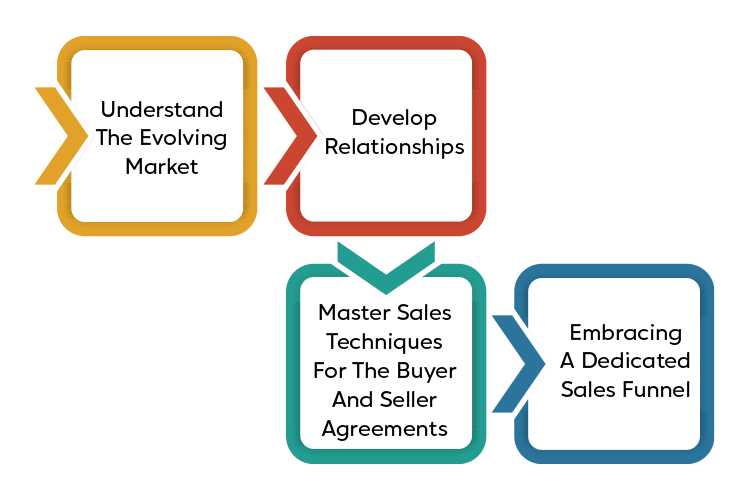
Top 3 Strategies To Effectively Market Your Website

Software Stack Editor · April 30, 2024 ·

The post Top 3 Strategies To Effectively Market Your Website appeared first on ClickFunnels.

Today we are going to share our top three marketing strategies that you can use to drive traffic to your business website!

Table of Contents:
  • Website Marketing Strategy #1: Search Engine Optimization (SEO)
    • What is Search Engine Optimization?
    • Why You Need to Sort Out Your Technical SEO First
    • The Four Types of Keywords
    • How to Find Promising Keywords
    • Target Keywords that You Can Realistically Rank For
    • How to do Competitive Research
    • How to Create SEO Content
    • Don’t Fall Into the “Optimization for the Sake of Optimization” Trap!
    • How to Build Backlinks to Your SEO Content
    • Recommendation: Ahrefs’ Free “Blogging for Business” Course
  • Website Marketing Strategy #2: Social Media Marketing
    • What is Social Media Marketing?
    • Which Social Media Platform Should You Choose?
    • What Should You Post on Social Media?
    • How to Increase Engagement on Social Media
    • How to Stay Consistent Long Enough to Build a Social Media Following
  • Website Marketing Strategy #3: YouTube Marketing
    • What is YouTube Marketing?
    • What Equipment Do You Need in Order to Start Shooting YouTube Videos?
    • How to Build a YouTube Channel in 2024
    • Don’t Worry Too Much About Production Quality: It’s the Content of Your Video that Matters!
    • Recommendation: Vanessa Lau’s Video on Starting a YouTube Channel
  • Want to Learn How to Drive TARGETED TRAFFIC to Your Website and Sales Funnels?

Website Marketing Strategy #1: Search Engine Optimization (SEO)

What is Search Engine Optimization?

Search engine optimization is a marketing strategy that revolves around optimizing websites and web pages for the purpose of attracting organic search traffic from Google.

Why You Need to Sort Out Your Technical SEO First

When people think about SEO, they typically think about keywords, content, and backlinks.

But before you start focusing on all of that you need to make sure that your technical SEO is on point. Why?

Because if your technical SEO is off, Google might penalize you by downranking your website.

Moreover, if your technical SEO is a complete mess, Google may not be able to crawl your website and index it so it won’t show up in the search results at all.

We recommend reading Backlinko’s “Technical SEO: The Definitive Guide”, checking your website for potential technical SEO issues, and then fixing those issues before you move on to creating content and building links.

And yes, all this technical stuff can be really boring, but it’s also really important if you are serious about SEO!

The Four Types of Keywords

There are four main types of keywords:

  • Informational keywords that people use to find information about a particular topic
  • Navigational keywords that people use to find a link to a particular website or web page
  • Commercial keywords that people use to research potential purchases
  • Transactional keywords that people use to find websites that sell something that they want to buy.

It’s probably safe to say that informational keywords are the most common type of keyword and transactional keywords are the least common one.

You can probably see that reflected in your own experience with using search engines: if you are like most people, you primarily use them to find information about topics that interest you. 

Consequently, if you want to attract your dream customers to your website, targeting informational keywords that are relevant to them will give you the best shot at success.

Of course, other types of keywords have their place as well, but your SEO strategy should probably be primarily focused on ranking for the informational ones!

How to Find Promising Keywords

Not all keywords are made equal.

If you want to succeed with SEO, you need to pick the right ones. But how can you find them?

There are plenty of free keyword research tools but we recommend investing in Ahrefs. 

It’s not cheap but it’s arguably the best SEO tool out there and is widely considered to be the industry standard by online marketers.

We recommend watching this video that can help you learn the basics of keyword research in just ten minutes:

Target Keywords that You Can Realistically Rank For

We want to emphasize the importance of targeting keywords that you can realistically rank for. Compete with websites that have a domain authority similar to yours.

You can use Ahref’s free Website Authority Checker to see the domain authority, the number of backlinks and the number of linking sites of any given website, including yours.

It’s best to start by targeting low-volume, low-competition keywords that the big players in your niche are ignoring.

If the websites that are currently ranking for those keywords have low domain authority, you might have a shot at outranking them. 

If you patiently build your own domain authority, over time you’ll be able to target more and more competitive keywords!

How to do Competitive Research

Once you have chosen a target keyword, you want to read everything on the first page of search results. Why?

Because in order to get to the first page, you will need to push out one of those articles. 

And if you want Google to give you someone else’s spot, your content needs to be better than theirs. 

So ask yourself this: how can you make your content better than everything that is currently ranking for your target keyword?

How to Create SEO Content

First and foremost you need to make sure that your SEO content meets the search intent, whatever that search intent may be.

So ask yourself what people are looking for when they type your target keyword into Google and then make sure that your content provides that.

Next, as we explained in the previous section, your content needs to be better than everything that’s currently ranking on the first page for that keyword. But how can you achieve that?

Here are some ideas:

  • You could make your content more comprehensive by covering the subject in more detail – Note that this isn’t the same thing as unnecessarily padding the word count!
  • You could make your content more readable by breaking up the text with subheadings, sub-subheadings, bullet points, numbered lists, and images.
  • You could make your content more data-driven by citing relevant statistics and research. 
  • You could make your content more unique by sharing your own experiences, relevant data and original images.
  • You could make your content more engaging by letting your personality shine through in your writing.

Ideally, you want to do all of the above whenever possible. Really go the extra mile to create great content that exceeds all expectations.

Finally, you want to optimize your SEO content with a content optimization tool like Clearscope or Surfer. 

Don’t Fall Into the “Optimization for the Sake of Optimization” Trap!

Suggestions provided by tools like Clearscope and Surfer are based on the content that’s currently ranking for that keyword.

The reasoning behind that goes like this: if the content that’s currently ranking has certain attributes, then creating content with the same attributes should help you rank as well. 

That is all well and good until optimization starts getting in the way of meeting the search intent.

Runaway word counts are a good example of this phenomenon. One person writes a long article and ranks on the first page, other people see that and start writing long articles as well, then optimization tools pick up on that and start recommending this approach to their users.

Next thing you know, the first page of search results is full of rambling articles that take ages to get to the point. But that’s not what people who type that keyword into Google are looking for!

(Cooking articles that consist of a 2,000+ word autobiographical essay and a <500-word recipe are a meme at this point. Just tell us how to make chicken pasta!!).

Meanwhile, Google’s search algorithm is believed to be primarily optimizing for meeting the search intent, so it eventually catches on to this and starts downranking articles like that. 

In short: people who optimize for anything other than meeting the search intent always lose in the long run.

That’s why you should use search intent as your North Star and ignore content optimization suggestions that might get in the way of meeting it!

How to Build Backlinks to Your SEO Content

It may be tempting to write a great article, publish it on your blog, and then just leave it at that. 

But then you’ll almost certainly fail to rank on the first page of search results for your target keyword, regardless of how good your blog post is. Why?

Because publishing high-quality content is not enough anymore, you need to also build as many high-quality backlinks to that content as you can. So how can you do that?

Hire a Marketing Agency that Specializes in Link Building

Arguably, the most straightforward way to get backlinks is to simply hire a marketing agency that specializes in link building. 

You just need to make sure that this agency uses whitehat link-building techniques that are approved by Google and that the links they provide are high-quality links from reputable websites.

Something to keep in mind here is that low-quality links from sketchy websites can get you in trouble with Google so you need to be really careful and do your due diligence!

Write Guest Posts for Other Websites

Adam Enfroy, who came to prominence in the SEO scene by making $1 million in less than two years with his blog, is one of the best link builders out there.

Initially, he got his blog off the ground with an aggressive guest posting campaign where he published 85 guest posts in just one year.

Here’s how he did it:

However, as he discusses in his article about guest posting, things have changed since then because Google rolled out several important search algorithm updates.

Predictably, these updates were designed to better meet search intent, which led to a lot of keyword salad content getting downranked.

Enfroy emphasizes the importance of a human-first approach to guest posting:

Two images of persons working on laptops. The top image shows someone typing on a laptop with a notebook beside. The bottom image shows someone using a laptop at a coffee shop with a cup of coffee. Text on the right explains the importance of creating quality guest posts for SEO and Google's search algorithm.

Besides making sure that your content is actually helpful, you also need to be careful when it comes to what websites you choose to guest post on.

Basically, if a website has a bad reputation in the eyes of Google, then guest posting on it and linking back to your site will damage your reputation by association.

Interestingly, it’s not just the obviously sketchy websites that you need to be wary of, it’s also seemingly legitimate websites that are gaming the system behind the scenes.

That’s why in his article Enfroy goes into detail on how to evaluate potential guest posting opportunities, how to choose the right ones for you, and what red flags to look out for so that you can protect your reputation.

In short, guest posting can still work well in 2024, but you need to be much more strategic about it because the old “spray and pray” approach is not only outdated but can seriously backfire!

We recommend reading Enfroy’s article about guest posting because it contains up-to-date information and is written by someone who has a proven track record of success with this link-building method:

“Guest Blogging: 7 Steps to Get More Traffic and Links in 2024”

Create “Link Bait” Content for Your Own Website

Finally, if you create content for your own website that other people want to link to, you might be able to build some links passively.

It’s probably safe to say that the vast majority of written content online is produced by freelance writers who are either publishing it under their own names or ghostwriting for someone else.

Typically, these freelance writers are expected to include real-world examples, recent statistics, and relevant images in their articles.

Of course, they are also expected to cite their sources, meaning, they need to link back to websites that originally published those real-world examples, statistics, and images.

Consequently, freelance writers are always searching for material that they can use in their work. If you can provide that material, they will give you backlinks.

That can mean:

  • Sharing your experiences
  • Publishing original research
  • Creating helpful images

What’s important is that you produce something unique that freelance writers can then use to make their own content better!

Recommendation: Ahrefs’ Free “Blogging for Business” Course

If you are serious about search engine optimization, we recommend going through Ahref’s free “Blogging for Business” course that’s available on YouTube:

Website Marketing Strategy #2: Social Media Marketing

Illustration of a smartphone with a hand holding a megaphone emerging from its screen. Social media icons such as Instagram, Twitter, LinkedIn, Pinterest, WhatsApp, and Facebook are displayed around it.

What is Social Media Marketing?

Social media marketing is a marketing strategy that revolves around building a social media following and then using it to promote your products and services.

Which Social Media Platform Should You Choose?

We recommend focusing on one social media platform, building a following there, and only then expanding to other platforms.

Here are some of the factors that you should take into consideration when choosing a platform:

Your Natural Talents

Social media platforms tend to be either text, image, or video-driven.

If you have a natural talent for one of these mediums, it might make sense to choose a platform that will allow you to capitalize on that.

Your Existing Skills

You can always learn the skills that you need in order to succeed on a particular social media platform.

That being said, it’s probably better to start with a platform that allows you to leverage the skills that you already have.

Your Resources

The three key resources that you should consider are:

  1. Time
  2. Energy
  3. Money

Also take stock of your talents, skills, experience, accomplishments, connections, and anything else that you might be able to leverage in order to build a social media following.

You want to choose a platform that will allow you to make the most out of what you have!

Your Products and Services

If you are selling digital products that are created using a particular medium, then it’s probably best to promote them using that same medium.

Say, if you run a paid email newsletter or sell ebooks, then Twitter might be the best place to promote them because it’s a text-driven platform.

Meanwhile, if you are selling online courses with video content, then YouTube might be a better option because it’s a video-driven platform.

There’s a huge overlap between the user bases of the major social media sites so these aren’t completely different pools of potential customers.

However, it’s probably safe to say that people tend to favor the platforms that are driven by their preferred medium.

That’s why text-based digital products are likely to be more appealing to Twitter users and video-based digital products are likely to be more appealing to YouTube users!

Your Target Audience

You can use Statista to look up the demographic breakdowns of various social media platforms and learn which platform is favored by your target audience.

That being said, you can probably reach your dream customers anywhere.

For example, Facebook has a reputation of being a place dominated by Boomers, but in reality, around 60% of Facebook’s user base in the United States is Gen Z and Millennials.

A bar graph showing the share of users by age group: 18-24 (18.8%), 25-34 (24.4%), 35-44 (18.8%), 45-54 (14.1%), 55-64 (11.6%), and 65+ (12.1%).

So it’s less about picking the platform with the highest percentage of users that meet your dream customer profile and more about picking a platform that allows you to play to your strengths and that you can stick with for the long haul!

What Should You Post on Social Media?

Okay, so now that you picked a social media platform, the next question is what should you post on it?

Here’s what we recommend including in your content strategy:

  • Educational content that provides helpful information – That can mean sharing tips, blog articles, how-to videos, etc.
  • Entertaining content that is relatable, interesting, or funny – That can mean telling stories from your own life, sharing links to interesting content from around the web, posting amusing memes, etc.
  • Promotional content that showcases your products and services – That can mean sharing news about upcoming launches, letting your followers know about special offers, and posting social proof such as customer testimonials and case studies. 

It’s probably best to primarily focus on educational content, regularly sprinkle in some entertaining content and directly promote your products and services once in a blue moon when you have some special offer.

Something to keep in mind here is that people who follow you on social media will probably eventually check out your products and services of their own volition. There’s no need to badger them with sales pitches!

How to Increase Engagement on Social Media

It’s widely believed that engagement is the primary metric that social media algorithms are optimizing for. 

This means that the more engagement you can generate, the more likely your profile is to get boosted by the algorithm. So how can you do that?

We recommend ending each post with a question and encouraging your followers to let you know what they think in the comments.

Then, make sure to like and reply to every comment that you get, as that will encourage more discussion and incentivize your followers to continue commenting on your posts in the future.

One exception here is online trolls: if someone says something nasty in your comments, it’s best to completely ignore them.

Don’t feed the trolls by arguing with them. They are seeking attention so if you refuse to provide it they will eventually give up and go look for it elsewhere.

Also, we recommend blocking trolls immediately so that they won’t be able to comment on your posts anymore.

Remember that as a content creator, you have an obligation to your audience to make sure that conversations in the comment section remain civilized.

Polite disagreement and constructive criticism are fine but unhinged behavior shouldn’t be tolerated!

How to Stay Consistent Long Enough to Build a Social Media Following

The most common reason why entrepreneurs fail at social media marketing is a lack of consistency. 

It’s easy to post regularly for a few weeks but what happens when life inevitably starts getting in the way?

Most people start posting less and less frequently until they stop altogether, abandon their profiles, and move on to something else.

That’s why it’s so important to create a content strategy that will enable you to stay consistent long enough to build a social media following.

Here’s what we recommend:

  1. Have a publishing schedule that you can keep up with indefinitely – You can start with just one post per day, seven days a week for a year.
  2. Set aside time every week for creating and scheduling social media content – This should be a regular time slot in your calendar.
  3. Set aside time every day for replying to comments – It’s probably best to do it at the end of your workday because it can be distracting.

Finally, make a commitment to stick with your content schedule no matter what for at least a year.

The longer the timeframe that you commit to, the higher the probability of success will be, provided that you actually keep that commitment.

In fact, if you can manage to consistently post high-quality content for a decade, you will almost certainly amass a substantial social media following. It’s really that simple!

Website Marketing Strategy #3: YouTube Marketing

What is YouTube Marketing?

YouTube marketing is a marketing strategy that revolves around building a YouTube channel and then using it to promote your products and services.

It’s a subcategory of social media marketing but we decided to discuss it separately because there’s so much to cover.

What Equipment Do You Need in Order to Start Shooting YouTube Videos?

It might seem counterintuitive but when it comes to video content, audio quality is more important than video quality.

That’s why the most important piece of equipment that you need in order to start shooting videos is a professional-grade microphone.

As for what you should use to film your videos, your smartphone camera is probably good enough to do the job.

You might also want to get a tripod for your smartphone, especially if you intend to film everything by yourself.

Finally, consider investing in some camera lights. Even a simple ring light can make your videos look much better.

We would caution against spending a ton of money on equipment and recommend starting with a minimum viable setup!

How to Build a YouTube Channel in 2024

It’s still possible to build a YouTube channel in 2024 but you need to be strategic about it.

You want to make sure that each video you make targets a popular keyword that your dream customers are searching for on YouTube.

Here’s a quick overview of the video production process:

  • Keyword research – Start with a generic keyword related to your niche. Type it into YouTube’s search and look at the search suggestions that come up. Pick one of these search suggestions as your target keyword.
  • Competitive research – Watch the top three videos that are currently ranking for your target keyword and read through the comments. Figure out how you can make your video better.
  • Scripting the video – We recommend using the “Hook, Story, Offer” copywriting framework for this. Make sure that your video meets the search intent.
  • Shooting the video – You can build a basic filming set at home and shoot the video with your smartphone.
  • Editing the video – You can either edit the video yourself or outsource it to a freelance video editor.
  • Creating the thumbnail – You can either create the thumbnail yourself or outsource it to a freelance graphic designer.
  • Publishing the video – Make sure that the video title, the video description and the video tags are all optimized for your target keyword.
  • Promoting the video – If you have a social media following on another platform you can use it to promote your YouTube videos.

You can learn the skills you need on Udemy. Wait for one of the company’s seasonal sales and buy an online course.

Alternatively, if you want to outsource various video production tasks to freelancers, you can find them on Upwork and Fiverr.

As for the publishing schedule, you want to figure out what publishing schedule will allow you to post new videos regularly while maintaining content quality.

Don’t Worry Too Much About Production Quality: It’s the Content of Your Video that Matters!

If you don’t have any previous video production experience, then your first few videos will probably look terrible. And that’s okay.

The truth is that as long as the video has genuinely helpful content and high-quality audio, the viewers will almost certainly be willing to overlook low production value.

In general, if you continue making videos, you’ll get better at it and your production quality will improve as a result. So don’t overthink it!

Recommendation: Vanessa Lau’s Video on Starting a YouTube Channel

If you want to learn more about what it takes to build a successful YouTube channel from scratch, we recommend watching this video by Vanessa Lau:

Want to Learn How to Drive TARGETED TRAFFIC to Your Website and Sales Funnels?

Our co-founder Russell Brunson used sales funnels to take ClickFunnels from zero to $100M+ in annual revenue in less than a decade. 

Needless to say, he had to drive a TON of targeted traffic to those sales funnels in order to achieve that. 

In his best-selling book “Traffic Secrets”, he shares proven marketing strategies that YOU can use to drive targeted traffic to YOUR website and sales funnels.

In this book, you’ll learn how to:

  • Find your dream customers online
  • Tap into other people’s distribution channels
  • Build an army of affiliates that will sell your product for you

…and so much more!

“Traffic Secrets” is available on Amazon where it has over 2,500 global ratings and a 4.7-star overall rating.

But you can also get it directly from us for free… 

All we ask is that you pay for shipping!

So what are you waiting for? 🧐

Get “Traffic Secrets” For FREE!

Thanks for reading Top 3 Strategies To Effectively Market Your Website which appeared first on ClickFunnels.
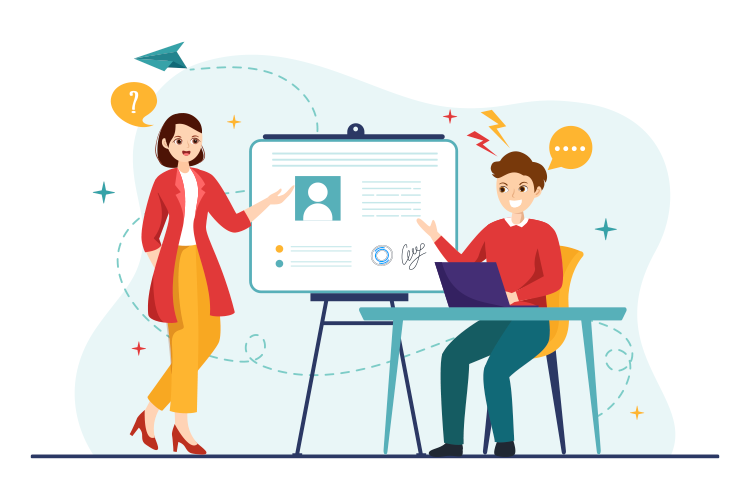
7 Secrets To Improve Your Sales Conversion Rate In 2024

Software Stack Editor · April 30, 2024 ·

The post 7 Secrets To Improve Your Sales Conversion Rate In 2024 appeared first on ClickFunnels.

Want to make more sales?

The best place to start is improving your sales conversion rate so that you could make the most out of the traffic that you are currently getting.

Today we are going to share seven tips that can help you do that…

Table of Contents:
  • What is a Conversion Rate?
  • What is a Sales Conversion Rate?
  • Why is Optimizing Your Sales Conversion Rates So Important?
  • Attention: Seemingly Insignificant Increases in Your Sales Conversion Rate Can Add Up to a LOT of Money Over an Extended Period of Time!
  • Our 7 Best Tips for Improving Your Sales Conversion Rate
  • Want to Learn How to Build Sales Funnels that CONVERT?

What is a Conversion Rate?

A conversion rate is a metric that shows what percentage of the people who were exposed to your call to action took the action that you wanted them to take (converted). 

Here’s a simple formula that you can use to calculate any conversion rate:

The Total Number of People Who Took That Action / The Total Number of People Who Were Exposed to Your Call to Action x 100 = Your Conversion Rate

What is a Sales Conversion Rate?

A sales conversion rate is a metric that shows what percentage of the people who were exposed to your sales call to action ended up buying your product or service.

Here’s the formula that you can use to calculate your sales conversion rate:

The Total Number of People Who Bought Your Product or Service / The Total Number of People Who Were Exposed to Your Sales Call to Action for That Product or Service x 100 = Your Sales Conversion Rate

For example, if 387 people visited your sales page and 23 of them bought your product or service, the conversion rate of that sales page is 5.94%. Why?

Because:

23 / 387 x 100 = 5.94%

It’s important to understand how conversion rates are calculated but you probably won’t need to do it yourself because marketing apps will automatically calculate them for you!

Why is Optimizing Your Sales Conversion Rates So Important?

Imagine this:

You have a leaky bucket.

And you need to fill that bucket with water.

Would you just start pouring more and more water into it hoping that it will fill up eventually?

Or would you fix the leaks first and only then start pouring water into it?

It’s obvious that the latter approach makes more sense, yet entrepreneurs often engage in the business equivalent of pouring water into a leaky bucket.

They drive more and more traffic to their sales funnels that aren’t converting. Wouldn’t it make more sense to improve the conversion rates first?

You see, regardless of whether it’s “organic” or “paid”, traffic is expensive: you are always paying for it with your time, energy and money. 

That’s why it’s so important to optimize your sales funnel for conversions and make sure that you are making the most of that traffic. Otherwise, you are wasting your marketing budget!

Attention: Seemingly Insignificant Increases in Your Sales Conversion Rate Can Add Up to a LOT of Money Over an Extended Period of Time!

When it comes to conversion rate optimization, the big wins tend to get the most publicity: there are always crazy stories floating around about some small tweaks that drastically increase conversions. 

The most famous example of this is probably Performable’s A/B test where they tested a green call-to-action button against a red call-to-action button. They weren’t expecting much but the page with the red button converted 21% better!

However, the everyday reality of conversion rate optimization is much more mundane: 

Most A/B tests lead nowhere and when they do produce a noticeable change in the conversion rate, that change is typically so small that it may seem insignificant. Big wins are extremely rare.

But it’s important to understand that those seemingly insignificant changes may not be that insignificant after all.

In fact, they can add up to a lot of money over an extended period of time!

Example: 5.94% Conversion Rate vs. 10% Conversion Rate

Let’s continue with the previous example of a 5.94% conversion rate. 

If you send 10,000 visitors to your sales page every month, you’ll make 594 sales per month and a total of 7,128 sales per year.

But if you can increase your conversion rate to 10%, you’ll make 1,000 sales per month and a total of 12,000 sales per year. That’s 4,872 extra sales per year!

Now look at how this plays out over ten years:

  • With a 5.94% conversion rate and 10,000 monthly visitors, you’ll make 7,128 sales per year or a total of 71,280 sales in a decade
  • With a 10% conversion rate and 10,000 monthly visitors, you’ll make 1,200 sales per year and a total of 120,000 sales in a decade.

That’s an extra 48,720 sales over the course of ten years with the same traffic!

Of course, while going from a 5.94% conversion rate to 10% may not seem like a big deal at first glance, this is actually a 68.35% increase in the conversion rate.

But you can probably achieve that through continuous conversion rate optimization: a several percent increase here and a several percent increase there can add up to a substantial conversion rate increase over time. 

Also, if you haven’t done any conversion rate optimization before then it’s probably safe to say that you could realistically boost your conversion rate even more than that!

(Note that this was just a theoretical example meant to illustrate the point so we intentionally made it simplistic!)

Our 7 Best Tips for Improving Your Sales Conversion Rate

#1: Build a Value Ladder Sales Funnel for Your Business

Human relationships tend to revolve around trust, which is built gradually over an extended period of time.

For example:

  • You wouldn’t expect to immediately become best friends with someone you just met
  • You wouldn’t propose to a love interest on the first date
  • You wouldn’t demand to be given a senior role at work when you don’t have any relevant experience.

Most people who are capable of functioning in social situations understand this intuitively.

And yet it’s easy to forget this once you start a business: it’s so common for entrepreneurs to drive cold traffic to their sales pages and hope for the best.

If that’s what you are currently doing then you can almost certainly increase your sales conversion rates by simply building a Value Ladder sales funnel for your business and driving traffic to it instead.

A diagram explains the four stages of a sales funnel: Bait, Frontend, Middle, and Backend. It shows a value ladder, which ascends with increasing price and value from Bait to Backend.

This approach to selling is based on one simple idea:

The more expensive your offer, the more trust you will need to close the sale.

So it makes sense to start by offering the potential customer a freebie and then gradually build trust by asking for increasingly more investment and providing increasingly more value at each stage of your sales funnel.

If the customer feels that they got a good deal, they will be open to checking out your next offer, so it’s important to exceed their expectations at every stage of the funnel if you want them to reach the top of your Value Ladder.

For example, our co-founder Russell Brunson charges between $50,000/year and $250,000 per year for his Inner Circle mastermind.

Despite the high price, this mastermind is so popular that it’s application-only and has strict revenue requirements. So how does Russell persuade people to pay him that much money not just once but every year?

He uses Value Ladder sales funnels. 

For example:

If you are patient, start by providing free value and then gradually build trust over time, the sky’s the limit when it comes to how much money you can make!

#2: Make Sure that Your Value Ladder Follows a Logical Progression

Generally speaking, it’s probably safe to say that even the most basic Value Ladder sales funnel will convert better than driving cold traffic directly to your sales pages.

That being said, if you want to get the most out of your Value Ladder, you need to make sure that it follows a logical progression. What do we mean by that?

At every stage of your sales funnel, you want to help your dream customers solve a problem that they are struggling with, which should then unlock a new problem that they need to deal with, which you can then help solve at the next stage.

In other words: there needs to be a logical progression from one offer to the next all the way to the top of your Value Ladder!

Example: Weight Loss Niche Value Ladder

Say, if you are in the weight loss niche, you could structure your sales funnel like this:

  • A lead magnet with a 30-day weight loss plan that the potential customer can adjust based on their gender, age, and measurements. This is the Bait stage. 
  • An ebook that provides a comprehensive weight loss plan for an entire year that they can adjust based on their gender, age, and measurements. This is the Frontend stage.
  • A personal one-on-one consultation where you give them advice on how to implement what they learned in the ebook. This is the Middle stage.
  • A year-long one-on-one personal training program where you help them set a realistic weight loss goal, keep them accountable, and troubleshoot problems as they arise. This is the Backend stage. 

You can also create a membership website so that your customers would have a community where they can hang out with other people on the same weight loss journey. This is the continuity program.

So you start by helping them create a weight loss plan for just one month, then help them create a weight loss plan for the entire year, then help them tailor that plan to their particular situation and then help them stay on track by keeping them accountable throughout that year. 

See how there’s a logical progression?

#3: Have a Lead Magnet that Exceeds all Expectations

Your lead magnet is your one opportunity to prove your expertise to your dream customers. 

If they are blown away by the quality of your lead magnet, it will be much easier for you to persuade them to buy your Frontend offer. 

Meanwhile, if they find your lead magnet disappointing, they will assume that your paid offers are going to be disappointing as well.

That’s why it’s so important to make sure that your lead magnet exceeds all expectations. 

Something that we see way too often is entrepreneurs using low-quality lead magnets because they can’t be bothered to invest in a product or service that they are going to give away for free. 

But this low-effort approach to lead magnets is penny-wise and pound-foolish because it creates problems in the Frontend stage of the Value Ladder sales funnel.

So what’s the point of spending all that money to acquire leads if you can’t convert them into paying customers?

Here’s a helpful way to think about free offers: ask yourself how difficult it would be for you to sell your lead magnet. 

If your dream customers would happily pay should you ever choose to charge for it then it’s probably safe to say that you have a solid lead magnet.

However, if you can’t imagine your dream customers actually paying for it, then your lead magnet probably isn’t good enough yet!

#4: Create an Irresistible Frontend Offer that Only Costs $7

It’s relatively easy to persuade people to give you their email addresses if you have an appealing lead magnet.

But persuading them to give you their hard-earned money is much more challenging. So what’s the best way to convert leads into paying customers?

We recommend creating a digital product designed specifically for that purpose and pricing it at $7. Ebooks, video classes, and webinars are all great Frontend offer formats!

You also want to provide an unconditional 30-day money-back guarantee and display it prominently next to the “Buy” button. 

All this should help you increase your sales conversion rate because the price point is low to begin with and the money-back guarantee eliminates the financial risk entirely. 

Worst case scenario, if the customer doesn’t like your Frontend product, they can simply ask for a refund!

(They probably won’t, though. People typically can’t be bothered to refund $7 purchases.)

Of course, you can use a more expensive product or service as your Frontend offer, but it will probably have a lower conversion rate than a $7 ebook with a money-back guarantee.

#5: Add Downsells to Your Middle and Backend Offers

A downsell is an offer that you pitch to the potential customer if they reject your initial offer. You can think of it as a downgrade from it. 

We recommend creating digital downsells that cost $7 for your Middle and Backend offers. 

These should be new products that are specifically designed for that purpose and make sense as downgrades!

Example: Middle Offer + Downsell in the Dating and Relationships Niche

Let’s say that your niche is dating and relationships.

Your Middle offer is an online course about online dating that costs $257. 

If someone checks out its sales page but decides that they aren’t ready to buy yet, that tells you that they are probably interested in learning more about online dating but may be hesitant to spend that much money on an online course.

So why not downsell a $7 ebook that explains how to optimize one’s online dating profiles on all of the major dating apps?

If they are about to leave your sales page anyway, you don’t have anything to lose by pitching this downsell. 

Some people will probably take you up on this offer and buy the ebook. That’s the extra revenue that you would have left on the table had you not pitched them your downsell.

Moreover, if they like your $7 ebook about optimizing dating profiles, they will probably be more open to purchasing your $257 course about online dating in the future. 

Consequently, this downsell should help you not only make some extra money from the ebook sales but also to eventually increase your online course sales!

#6: Improve Your Copy

It’s not enough to have great products and services, you also need to know how to sell them. 

That’s why another great way to increase your sales conversion rates is to improve your copy across your entire sales funnel.

Make Your Headlines More Compelling

The headline is the most important element of any copy so we recommend starting there. But how can you make your headlines more compelling?

That will depend on the offer in question but in general, you want to make sure that your headline clearly conveys the key benefit of it. How will your product or service make the potential customer’s life better?

Also, if your offer is an info product, you want to add curiosity to your headline: convey the key benefit but don’t reveal the exact method.

That way, people who want that key benefit will feel compelled to get your info product just so that they can learn your method!

Use the “Hook, Story, Offer” Copywriting Framework

We recommend structuring your copy like this:

  • Start by hooking your dream customers with a compelling headline
  • Then tell them a captivating story that resonates with them on an emotional level
  • Finally, transition from your story to your sales pitch and then to the call to action.

We use this simple framework in most of our copy and it has worked really well for us. It might work well for you, too!

Provide as Much Social Proof as You Can!

Social proof is indications that other people trust you: reviews, testimonials, customer case studies, endorsements from well-known people, relevant credentials, industry awards, media coverage, etc.

It’s important to understand that what other people say about you, your company and your products is much more persuasive than what you say. Why?

Because potential customers know that you are biased when it comes to all of that so they understandably take what you have to say about it with a grain of salt.

That’s why you should provide as much social proof as you can at every stage of your sales funnel. It can help you drastically increase your conversion rates!

#7: Optimize Your Sales Funnel With A/B Testing

Everything that we discussed in this article is just guidelines.

You shouldn’t take any of our advice as gospel because we can’t possibly know what’s going to work for your business.

In fact, you can’t possibly know what’s going to work for your business either until you A/B test it. Until then, you are just guessing what might work!

That’s why our final recommendation is to spend less time thinking about your ideas and more time testing them.

That’s the fastest way to increase your sales conversion rates!

Want to Learn How to Build Sales Funnels that CONVERT?

Our co-founder Russell Brunson used sales funnels to take ClickFunnels from zero to $100M+ in annual revenue in less than a decade.

He is now widely considered to be one of the top sales funnel experts in the world. Want to learn from him?

His best-selling book “DotCom Secrets” is the best place to start because it covers everything you need to know in order to build sales funnels that convert. 

This book is available on Amazon where it has over 2,500 global ratings and a 4.7-star overall rating. 

But you can also get it directly from us for free… 

All we ask is that you pay for shipping!

So what are you waiting for? 🧐

Get “DotCom Secrets” for FREE!

Thanks for reading 7 Secrets To Improve Your Sales Conversion Rate In 2024 which appeared first on ClickFunnels.
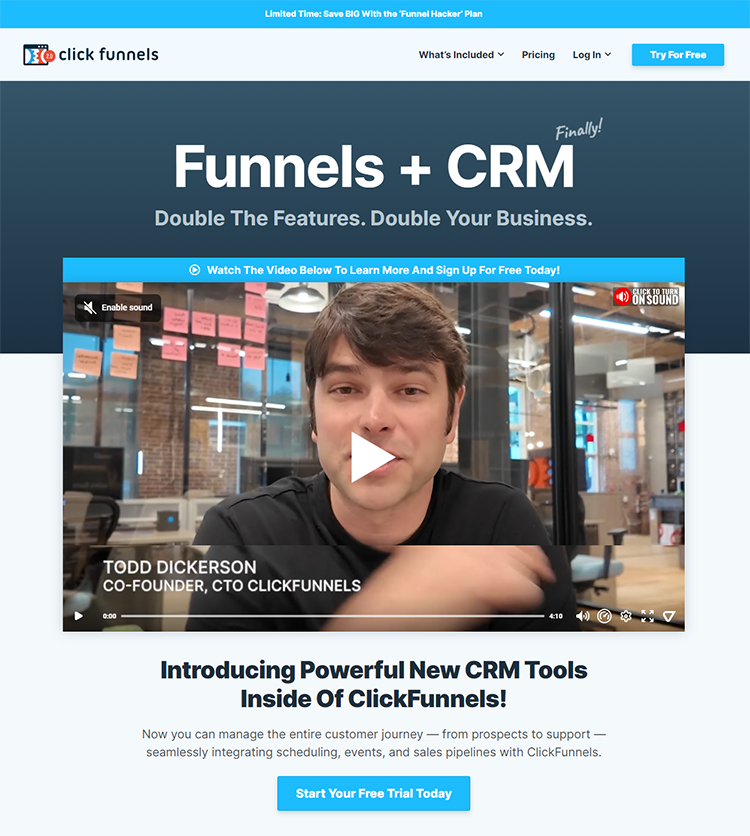
4 High Converting Squeeze Page Templates

Software Stack Editor · April 30, 2024 ·

The post 4 High Converting Squeeze Page Templates appeared first on ClickFunnels.
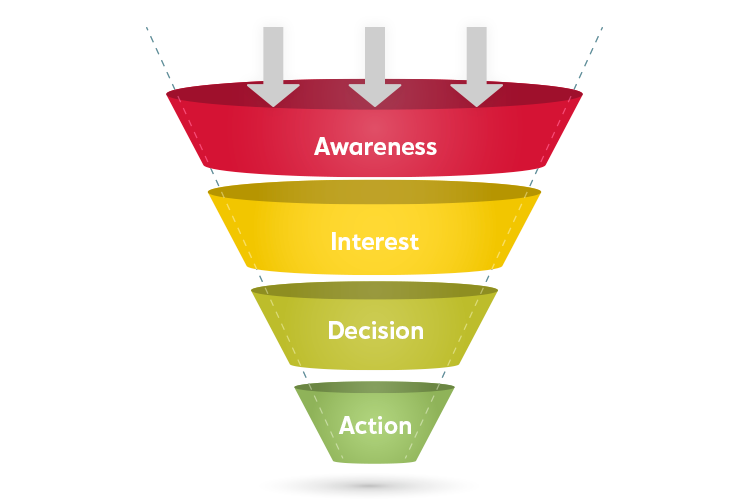
One of THE best ways to grow your business online is through building an email list.

It’s traffic that you control and traffic that you can contact without having to worry about algorithms, what you say, or when you say it.

What most entrepreneurs will run into, though, is the problem of getting MORE subscribers on their list.

Whether it’s a question of profitability — because if you aren’t getting enough emails through your paid advertising campaigns, it’s impossible to be profitable — or a question of scaling your business…

There’s going to come a time when you shift your focus on increasing conversions on your squeeze pages.

This is especially true if you’re driving traffic to your homepage right now, instead of driving new traffic directly to a squeeze page.

In this guide, we’re going to help solve the problem of increasing your conversions while making the process as easy as possible for you.

We’re going to show you 6 different high-converting squeeze page templates that you can plug into your business right now.

So whether you’re trying to make paid advertising profitable or you want to squeeze (no pun intended) every last customer out of your already-profitable campaigns, keep reading.

By the time you’re done, you’ll have 6 different ready-to-go squeeze page templates that you can start using right now — or the inspiration needed to start creating your own fully customized squeeze page.

Before we get into the templates, though… we need to address the elephant in the room.

What is a Squeeze Page?

A squeeze page, if you’re unfamiliar with the term, is a page on your website that focuses on driving visitors to opt into your email list.

This gives you the opportunity to reach out to them in the future with new or existing offers.

A good, high-converting squeeze page will also help you escalate people through your funnel.

They’ll come in at the top of your funnel — where they’re most unaware of the problems you can help them solve — and bring them one step closer to being converted into a new customer.

These types of pages work extremely well for growing your email list.

They tend to be a relatively low-risk “ask” in terms of getting your new visitor to do something — which, in this case, means exchanging their email address for a free bait or lead magnet.

Since the pages are incredibly simplistic in nature, it means there are no other distractions to keep them from wanting to move forward.

There’s no navigation menu or other areas where they can visit that would take their attention away from what you want them to do.

It’s also easy for them to move forward and get the thing that you’re offering them.

By inputting their email address, they can instantly receive the gift you’re giving them.

A squeeze page is a super simple way to achieve the highest conversion rates possible when your focus shifts to growing your email list even faster.

To get started with your own, you can usually offer something like a free download, a newsletter, a training video, a portion of your offer, or any other “bait” or incentive that you think would make people want to give you their email address.

To help get your creative wheels spinning, check out this squeeze page:

In this example, visitors are offered a free bait that shows them the 21 most powerful questions they can ask their coaching clients to make it easier for them to experience real breakthroughs.

For your own squeeze page, think about an offer that’s simple for you to put together and deliver on without being involved in what your visitors will want to receive.

This can involve a bit of testing and tweaking but the end result is 100% worth the effort.

By using the right bait, you can increase your conversion rates on your squeeze pages to 20%, 30%, 40%, or even 50% (or more) in some cases.

That means you get more people onto your email list — which, if you’re paying for that traffic means you’re turning an even higher profit and potentially saving failing ad campaigns.

Difference Between a Squeeze Page, Landing Page, and Website Homepage?

Now, there is still a bit of confusion around what a squeeze page actually is and how it isn’t actually a landing page or your homepage.

Many people want to turn their homepage or landing pages into a squeeze page but their roles are incredibly different.

A homepage, for instance, acts as the hub to the rest of your website or business.

When you’re looking to grow your email list, giving people too many options or places to go on your website defeats the purpose.

To give you some context, most homepage CTAs typically convert around 1% to 2%.

That means 1 or 2 of every 100 visitors that land on your homepage will actually give you their email.

When you compare that to a squeeze page where 30%, 40%, or even 50% of people will give you their email (because they have only one place to go), the difference is pretty significant.

A landing page, on the other hand, tends to be a more refined version of your homepage.

This can be a sales letter, a blog post, or another piece of content that has an overall goal of converting people into a new customer or email subscriber, but usually still contains other links.

Those links may point to other blog posts, or contain your navigation menu, but they’re all avenues for your visitors to do something other than subscribe to your email list.

A squeeze page, though, is a stripped-down version that gives visitors only two options: either subscribe and receive your free gift or close the page.

To help you see what this looks like in motion, check out these examples:

The above screenshot is a squeeze page.

You can see there are only two things to do — either subscribe and join the First Funnel Challenge for free.

Or close the webpage.

The content on the squeeze page is incredibly focused on showcasing the benefits of joining the First Funnel Challenge without including anything that isn’t needed — like website navigation.

Now, to see the difference, check out this landing page:

The landing page provides more real estate and more opportunities to convert people into a new sale.

In the example above, rather than just attempting to collect an email address, the landing page is making a bigger ask — asking people to become paying customers.

This means there is more selling involved.

While a squeeze page offers free bait and doesn’t need a ton of convincing, asking someone to become a customer requires a bit more context.

Conversion rates on a landing page may be anywhere from 5% to 10%, depending on how well you sell the opportunity to your visitors.

Then there’s your website homepage:

Your website homepage, being the hub of your website, gives people a bunch of options.

In the example above, people can click through to see what all is included in their ClickFunnels subscription, different pricing tiers, and the ability to log into their account and try it for free.

(If you aren’t already a ClickFunnels 2.0 member, click here to start your free trial now.)

At the bottom of the homepage, people can also browse through blog posts, become an affiliate for ClickFunnels, contact the team, and have a wide range of other options to click through.

These options, while hugely beneficial for introducing people to your world, also take away from your goal of quickly and effectively growing your email list.

When that becomes your biggest goal, you want to keep things as simple as possible.

Try ClickFunnels FREE Today!

Key Elements of a Squeeze Page

With your squeeze page having one singular goal — to help quickly grow your email list — there are really only a few key elements that you need to have in place.

Because, remember, the more elements you add to the page, the more opportunities you have to confuse your prospects or give them other avenues they can take.

If the goal is to convert them into an email subscriber, they should have only two avenues.

One is to grab the gift you’re offering them in exchange for their email address.

The other is closing the page.

To accomplish that, there are 5 things you want to have in place.

Element #1: A Headline

Your headline is, arguably, one of the most important parts of any squeeze page.

It’s the biggest opportunity you have to grab people’s attention, let them know what’s in it for them if they keep reading, and keep them engaged with the page.

To ensure your headline is as effective as possible — and that people understand what’s in it for them if they keep reading — make sure it is benefit-driven.

A simple way to do that is to include a “so you can” statement.

For instance, if your squeeze page is giving away a free guide on how to lose 10 pounds before summer, your headline could look something like…

“Learn How To Lose 10 Pounds Before Summer So You Can Feel Confident In Your Bikini Body.”

Another formula you can use is “Get [Benefit] In [Timeframe] Without [Common Obstacle].”

As an example, “Grab Your Free Copy To Learn How To Lose 10 Pounds In 4 Weeks Without Gym Equipment.”

Your creativity is the limit here, though.

As long as you’re focusing on what they’re getting plus the benefit of getting it, if what you’re offering is something that people want, they will give you their email address in exchange for the free gift.

Check out how we do it with the First Funnel Challenge squeeze page:

Here’s another example from Stu Mclaren:

In this example, Stu is using the hook of providing free secrets to people who are interested in converting their knowledge into recurring revenue.

When it comes to writing your headlines, ask yourself if someone in your audience would say “heck yes!” to your offer.

If they would, it’s worth testing on your squeeze page.

If you doubt whether or not they would, you can keep tweaking it until you get it just right and then move on to the next element needed to make your squeeze page convert at a higher rate.

Element #2: A Description

The description you use on your squeeze page gives you another opportunity to dive deeper into the benefits your visitors will get when they take you up on your offer.

You can break down more about the offer, itself, or go further into the benefits.

You can also lay out what people can expect to happen once they exchange their email addresses.

Here’s an example of a great use of the description element:

When it comes to writing your description, remember the overarching goal for your squeeze page: to keep things short, sweet, simple, and straight to the point.

As a general rule of thumb, if the copy on your squeeze page is more than 200 words long, between your headline and description, head back to the drawing board.

You want it to be as impactful as possible — which means making it extremely easy to read and glaringly obvious what’s in it for your visitors if they decide to move forward.

When you get this right, your squeeze page will convert at a higher rate.

Element #3: Images

The next element you want to include on your squeeze page is a high-quality image that helps grab attention.

Many times, people will look at your image before they look at your headline.

With the right image, you give yourself a chance to keep them on the page — and read your headline so they understand what they’re going to get.

A bad image, though, tends to have the opposite effect.

While people may scan past a bad image and still read the headline, you’ve essentially wasted a key element on your squeeze page if you aren’t using an image that’s in alignment with your message.

To keep that from happening, you want to use high-resolution, clear images of what the customer will get.

Here’s an example of a great squeeze page image for Copywriting Secrets:

The image above helps visitors to the page visualize having a copy of the book in their possession.

If your product is more intangible, though, you can use an extension of your headline to grab and keep attention or include things like course snapshots, mockups, testimonials, or a picture of the instructor.

The Tonic uses a screenshot of one of their emails on a mobile device:

This helps visitors see what they’re going to get when they subscribe.

Likewise, here’s an example from Your First Funnel Challenge:

In this example, a picture of Russell Brunson teaching the class is used to help get people excited.

Element #4: A Signup Form

After you have each of the first 3 key elements in place, the next must-have is a signup form.

After all, you’re putting in a bunch of work to get people onto the page and then grab and keep their attention, so you want to include a way for them to actually subscribe to your email list.

On your signup form, though, you want to stick with the main goal: keep it simple.

Remember, all you really need for someone to move forward is an email address.

The more information you ask from them, the lower your conversions will be.

With that in mind, if you absolutely need to, you can ask for their first name, as well.

Check out this example to see what it looks like:

You can see she isn’t asking for a ton of information.

Instead, just a name and email is all a visitor will need to enter in order to grab a free copy of the eBook.

If she was asking for everything from first name and email to last name, address, and phone number, fewer people would be interested in grabbing a copy — dramatically lowering the conversion rate.

Element #5: A Call to Action

Finally, you want to make sure you’re telling people what they need to do in order to move forward.

A simple, straightforward, and clear call to action is more than enough.

Something along the lines of “Enter Your Email Below To Get Started” with a button that says “Click Here To Grab Your Free Copy” works great if you’re giving away a free eBook.

The key here is making sure you aren’t just assuming people will know what to do next.

Explicitly give them instructions so they know how to proceed.

Each of these elements, in combination, work together to immediately grab people’s attention, keep their attention so they understand what’s in it for them, and then tell them what to do next.

When you get this right, your squeeze page will convert significantly higher than a landing page and definitely higher than your sales page.

4 High Converting Squeeze Page Examples

Now that you understand exactly what goes into a high-converting squeeze page, it’s time to begin creating your own.

Listed below are 6 different examples to help you get started. Each example is based on a different free giveaway.

Free PDF

A free PDF is one of the most common baits you can use to get new email subscribers.

It’s also one of the simplest types of squeeze pages you can put together.

All you really need is a headline, subheadline, image, bullet points, and a CTA.

Like this example:

When a user clicks the CTA button, they’ll be able to enter their information:

Then, once someone enters their email, they’ll be taken to a thank you page where they can download the guide you’ve promised them:

Free guides and PDFs make amazing bait because your user will get something tangible in exchange for subscribing to your email list.

And they’re incredibly easy to create on your own.

For instance, inside of ClickFunnels 2.0, you can have your new squeeze page created and ready to start accepting emails fairly quickly, without being a developer.

To see what we mean, click here to start your free ClickFunnels 2.0 trial now.

Then, once you login to your dashboard, you can start choosing from the type of funnel you want to build:

In this case, we’re going to use a “Lead ‘Squeeze’ Funnel”.

Once you choose the template, you’ll see both pages you need to make it work:

You can begin to edit the flow of the funnel as well as the pages, themselves, using our built-in drag-and-drop editor:

You can also add even more pages to your funnel if you want to while creating automations and conditional flows to send out specific emails — without the complications and tech headaches.

The end result is a ready-to-run squeeze page funnel you can use to start growing your email list.

Try ClickFunnels FREE Today!

Newsletter

Newsletters are becoming more and more common again.

And, with them, a demand for newsletter squeeze page templates has picked up.

If you currently run a newsletter, you can take a lot from the example below:

Infographic promoting an agency newsletter on cash flow, featuring testimonials and quotes from satisfied readers describing their positive experiences with the content.

This example takes advantage of the elements we’ve already touched on but takes them one step further. It also includes a list of testimonials from people who receive the newsletter.

This addition of social proof can have a HUGE impact on your conversion rates.

Masterclass

A free masterclass or webinar is another great way to grow your email list.

When you host the masterclass, you’re creating an incredibly valuable asset that educates and entertains your audience.

This can help increase your engagement rate on the emails you send — and gives you an opportunity to sell a program, course, mentorship, or other type of product at the end of the masterclass, itself.

Here’s a great example of a free masterclass squeeze page:

Screenshot of an online course page featuring an instructor with various testimonials, course previews, and a detailed course description about managing focus and distraction.

The big thing you’ll notice is that there’s more real estate to use where you can include social proof (like the newsletter example) while also including bullet points that break down what people will learn.

Using curiosity-driven copy on these bullet points can help you entice people to subscribe and watch the masterclass on the next page.

Email Course

When your goal is to grow your email list AND condition people to open and read your emails, using a free email course as your bait is a great way to accomplish both goals.

People will be incentivized to subscribe to your list in exchange for the course itself.

Then, because the course is delivered email-by-email, you’re teaching people to start looking out for your emails and showing them that opening and reading them is a great use of their time.

Down the road, when you’re running promotions or doing a launch, having a high engagement rate can dramatically increase your sales volume.

This type of squeeze page is extremely simple to create, too.

Here’s an example from the Part-Time YouTuber Crash Course:

It includes each of the elements we’ve discussed.

A great call to action, the main benefit, an image of the creator, a description that reiterates the direct benefit, a simple signup form, and a bit of social proof with a strong call to action.

You can plug each of those same elements into your own email course and create a high-converting squeeze page similar to this example with ClickFunnels 2.0.

If you haven’t already, click here to start your free 14-day trial now.

When you do, you’ll be able to have your squeeze page up, running, and ready to collect emails with just a few simple mouse clicks — without being a tech developer OR having to hire one.

Try ClickFunnels FREE Today!

Thanks for reading 4 High Converting Squeeze Page Templates which appeared first on ClickFunnels.
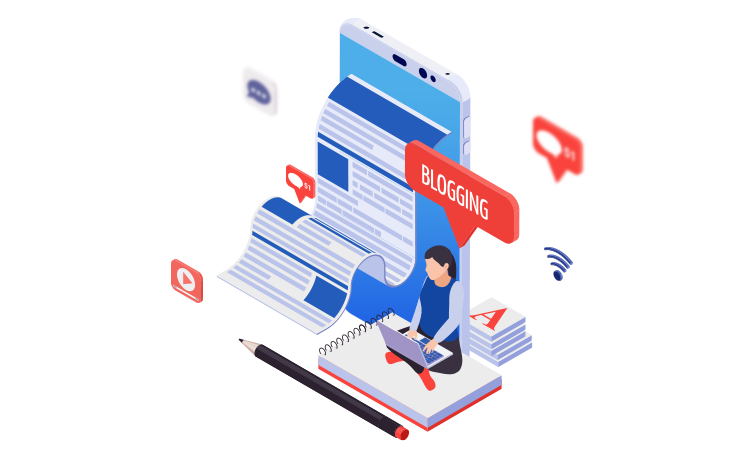
Sales Funnel Optimization – 6 Strategies To Increase Conversions

Software Stack Editor · April 30, 2024 ·

The post Sales Funnel Optimization – 6 Strategies To Increase Conversions appeared first on ClickFunnels.
There’s going to come a point in time when you’re ready to start squeezing every last bit of potential out of the funnel you’ve built.

And when it comes to sales funnel optimization, increasing your conversion rates tends to be part art, part science.

There are certain things you can do that have been proven over, and over again to help you drive more subscribers and sales through your funnel.

In this guide, we’re going to break down both the art and science behind achieving that goal while breaking down exactly why each optimization strategy works the way it does.

By the time you’re done reading, you’ll have 6 key strategies you can use right now to increase conversions.

You can skip straight to the strategies but, if you’re new here, it’s worth taking a second to understand the major difference between a sales funnel and other types of funnels — so you understand exactly why you’re making each of the optimizations we recommend.

What is a Sales Funnel?

A sales funnel, if you’re unfamiliar with the term, is a tool that businesses use to help streamline their sales process and convert new leads into sales, drive increased revenue, and improve their ROI from online marketing strategies — like paid advertising campaigns.

To truly understand the concept of what a sales funnel is — and isn’t — it’s worth taking a look at an actual funnel you would use to pour liquid.

At the top, the widest point, a large amount of liquid goes in. Then, at the bottom, the liquid is funneled into a smaller container.

In terms of business, the top of the funnel (TOF) is where traffic and audiences enter a business — similar to the front door if they had a brick & mortar shop.

This is an audience’s first engagement point with a business’s sales process.

The larger opening is the first engagement point for potential customers. Then, as those potential customers work down to the smaller exit of the funnel, touchpoints are added that help increase the know, like, and trust factor.

Now, you may have heard the term “marketing funnel” before. A marketing funnel is NOT a sales funnel.

The way they engage an audience is different.

A marketing funnel is focused on generating awareness — at the top of funnel stage — by targeting a specific demographic of people who may want to engage with your company.

The sales funnel, though, takes the engagement you’ve already generated and begins moving it through the offer and consideration stages of the sales process.

The goal of a marketing funnel is to generate attention while the goal of a sales funnel is to convert that attention into, you guessed it, sales and revenue.

A sales funnel expedites how quickly you’re able to grab someone’s attention and convert them into a new customer, especially when your business has a shorter sales cycle.

That means any optimizations you’re doing should be focused on decreasing the length of time it takes to convert someone’s attention into becoming a new customer.

Each of the strategies below can help you accomplish that mission.

Strategy #1: Create Dedicated Landing Pages

One of the most common mistakes people make with their marketing and sales funnels is thinking they can just run ads and people will buy.

While that may work in some cases, there’s a much better approach you can take.

For instance, when you’re driving traffic to a landing page, getting your message custom-targeted specifically to the person you’re targeting will dramatically increase your conversion rates.

To see what we mean, think about the freelance writing market for a second.

When it comes to freelance writing, the career path can be attractive to a wide range of people.

From stay-at-home moms looking to add additional income to their families, to school teachers during the summer months, to bloggers who want to get paid for their writing, and even people who never realized freelance writing as a career is a thing.

While you could target each of these people with a funnel tailored to teaching them about freelance writing, the potential, and how to do it…

A far more effective approach would be to target it specifically to who they are.

The message that would attract a stay-at-home mom is similar to what a school teacher during the summer would respond to.

But drilling down into them and making them even more specific will increase your conversion rates from your ad to the final sale.

To give you an example, a stay-at-home mom may respond better to a message that’s tailored to “adding extra income to your family’s reserves” while a school teacher during the summer may respond better to a message that’s along the lines of “making ends meet while school is out for the summer”.

Then a freelance blogger might respond better to a message along the lines of “get paid for your blogging skills before your blog takes off” while someone who is brand new to freelance writing may respond better to a message like “did you know you could get paid for your writing skills?”.

Each of these messages, when put onto their own dedicated landing page, would make the overall sales funnel far more effective than it would be if it targeted a general audience.

Similarly, if you’re going straight for the sale, you can use dedicated landing pages with specific triggers built into them that would help entice someone on the fence to take you up on your offer.

Check out the example below to see what we mean:

Screenshot of a Vahdam ad offering a spice kit with a 30% discount. The ad highlights features of the product and the offer, with annotated notes pointing out elements like non-clickable areas and CTA buttons.

In this example, Vadham is offering a 30% discount that’s only being sent exclusively to people who opted in for one of their earlier launch offers.

By making this offer exclusive and not available to the public, while offering such a hefty discount, people who have already purchased Vadham spices are more inclined to purchase again.

And when you’re making an offer like this, it’s better to send people to a landing page with the specific offer’s details on it than it is to drive them to your full website.

Since website pages can be distracting with all the other buttons and navigation menus, it creates opportunities for people to begin wandering around instead of accepting your offer.

With a dedicated landing page, you can also effectively track the impact of the campaign you’re running.

Likewise, once the campaign has been completed, you can simply shut the landing page down without negatively impacting your website, as a whole.

You can create these landing pages inside of ClickFunnels 2.0, too, without having to rely on a tech team or web developer to help you do it.

With the built-in funnel templates, it’s easy to launch your landing pages and start driving traffic directly to them.

If you haven’t already tried it, click here to start your free 14-day ClickFunnels 2.0 trial now to experience just how easy it can be.

Then, when you log into your dashboard, you’ll be able to start creating your custom landing pages.

To customize them, you can begin editing anything on the template using the built-in drag-and-drop visual editor.

And if you want even deeper customizations, you can also fully edit the code underneath.

A webpage editor open with a template for a digital marketing landing page. The page features a headline, subheadline, green call-to-action button, and an image of a smiling person pointing to the text.

The end result is a dedicated landing page that will help increase your conversion rates and drive more revenue into your business.

Try ClickFunnels FREE Today!

Strategy #2: Create a Waitlist

Another great sales funnel optimization strategy you can use is creating a waitlist for your launches.

If you only launch a few times a year — or are planning to launch a new, fresh product — creating a landing page to collect email addresses and build an email list of people interested in your launch can be incredibly effective.

With a launch list, you can notify them when your next launch will happen or when your new product will be available for them to try.

Since people subscribing to a launch list tend to be a warmer audience and have already shown they’re interested, your conversion rate will be significantly higher than launching to a cold list.

A waitlist also creates a sense of urgency in people when they know that once the product is available it may be in limited quantity or that they may get first access to it.

This urgency can help drive quicker decision-making and purchases when you do finally launch.

Here’s an example of what this looks like in action:

With a relatively simple and straightforward approach, you can start building an email list solely with people who have already expressed their interest in your offer.

Strategy #3: Upsell & Cross-sell

When it comes to driving more sales and revenue into your business, one of the easiest sales you will make happens after someone has already purchased something.

And when you make the process of buying something else as seamless as possible, you can dramatically improve your funnel’s ROI.

By upselling and cross-selling products that are in alignment with the initial product you’ve sold, you can significantly reduce your customer acquisition cost while also boosting your average order value.

Upselling, if you’ve never heard the term before, refers to encouraging someone to purchase a higher-end comparable product.

For instance, let’s say you’re selling an eBook for $7.

Then, to make people’s lives even easier and make it more convenient for them to consume the content, you could offer them an audiobook version as an upsell for $27.

You’re selling them an additional benefit or increased value after they’ve already made the decision to purchase your initial offer.

Cross-selling, on the other hand, refers to identifying products that help satisfy complementary needs that may be left unfulfilled by the original product.

A great example of this would be someone purchasing a how-to on getting started with email marketing.

A cross-sell would be offering them a tool like ClickFunnels 2.0 to help make their email marketing journey even easier.

To see what it looks like in action, check out this example:

In this example, the supplement company is using the concept of momentum of purchase to help drive more sales.

They’re making a limited-time offer to prospects in order to increase their average order value.

Chances are high that if someone purchases their supplements they’ll want to increase their supply from 1 month to 3 months.

By giving them the option to save money while increasing their supply, the customer gets what they want at a discount while the business gets what they want — in the form of a new customer and more products sold.

Implementing this strategy into your own sales funnel is a fairly easy process.

With built-in upsell funnel templates inside of ClickFunnels 2.0, you can have your upsells and cross-sells ready to quickly push to your audience.

Once you’ve mapped out your funnel, you can begin using the drag-and-drop editor to make your sales pages perfectly match your brand and offers.

All of this can be created directly inside ClickFunnels 2.0 without having to be a tech wizard or relying on a development team that can take forever.

A webpage displays a selection of eight templates for creating marketing pages, including options for sales pages, webinar opt-ins, and more.

You can also fully automate your email marketing in case someone doesn’t take you up on the upsell or cross-sell offer during their initial journey through your funnel.

This gives you an opportunity to keep them engaged while reminding them about the offer you made.

Like our landing page editor, you can edit your emails and sequences using the built-in drag-and-drop editor to achieve the perfect look and feel that matches your branding.

You can give these features a try for free for 14 days by clicking here now.

Try ClickFunnels FREE Today!

Strategy #4: Add Testimonials & Social Proof

One of the easiest ways to increase your conversion rate while you’re optimizing your funnel is by introducing testimonials and social proof.

When people see their thoughts and beliefs validated by someone else who has used the product you’re selling, it dramatically increases the chances they’ll want to buy it, too.

This social proof helps them see the offer as more valuable and trustworthy, helping you convert more people into new customers.

There’s different types of social proof you can use, too.

For instance, you can use the classic testimonial:

Three testimonials endorse ClickFunnels on a webpage. Each features a photo, star rating, name, user status, and a brief review highlighting positive experiences and successful outcomes using the product.

When you’re using testimonials, though, you don’t want to include anything and everything.

You want your testimonials to be focused on the thoughts and feelings new potential customers may be having toward your offer.

So if they have a common objection to purchasing it, using testimonials that specifically address how the person had the same objection and what happened after can be effective.

Likewise, if a new potential customer believes a certain thing about a feature or benefit and one of your testimonials touches on the person feeling that same thing, it’s likely the new customer will convert.

You can also use case studies as social proof:

Graph showing the growth of Izzy Sealey's YouTube channel from zero to over 300k subscribers, with annotations highlighting key milestones: starting the channel, consistent video posting, and rapid increase.

Case studies help break down the journey that the customer will go on once they buy the offer.

You can also use press mentions if you have them:

A good press mention can help build instant credibility and validation for your offer, especially if it’s from a publication that your potential customers are familiar with.

Expert endorsements can be used with great effect:

Promotional image featuring a male chef in a white shirt and green apron. He endorses Vahdam India's Single Origin Spices, stating their quality and his reluctance to replace them. Text and brand logos included.

With expert endorsements, it’s not always about quantity. 

Sometimes, having just a single endorsement from a well-respected expert in your field can be more powerful than dozens of testimonials from less-known users.

If you can get an expert to vouch for your product or service, it significantly boosts credibility.

Another great way to boost credibility is with user-generated content, or UGC:

When you encourage and showcase user-generated content, new potential customers can relate to the stories they’re hearing and get to see how other people are using the product and benefiting from it.

This could be anything from photos of your customers using your products to short video testimonials.

As you use this strategy, you’re getting a combination of testimonials, which are great social proof, while also getting new content that can quickly engage your users.

Another strategy is using quantitative social proof:

Social proof like testimonials tend to be more qualitative in nature.

Using numbers in your proof, though, can be a powerful persuasion tool.

For instance, if you have impressive stats, like “Helped over 10,000 businesses grow.” or “Rated 4.9 out of 5 from over 5,000 reviews.”, you’ll want to highlight that.

The key to making social proof work, though, is using the right type at the right time.

You’ll want to make sure you’re showing real faces and credentials from people who have left the testimonial.

You’ll also want to avoid using generic testimonials like “The product is great!” and, instead, showcase before-and-after stories or real-world scenarios.

If it’s a weight loss product, showcasing the transformation can be incredibly powerful.

A person in traditional Mongolian attire is featured next to text discussing their content reaching 1 million people in Mongolia, emphasizing the significance given the country's 3 million population.

Here’s a great example of showcasing real-world stories:

A collage featuring six individuals discussing their success stories after joining a business school program, along with their names, job titles, and quotes about their achievements and experiences.

You don’t have to just create a testimonial “dump”, though, where you’re plugging all of your testimonials into the same section on your page.

You can also sprinkle them throughout the page in key areas:

Image shows two marketing modules. Module 1: How to Maximize Your Profits. Module 2: Create Irresistible Offers. Each module details benefits and includes quotes from satisfied users mentoring the program’s success.

This means, if you’re selling a weight loss offer and are talking about how easy the diet is to follow, including a testimonial around how easy the diet was to follow in that specific section works great.

You can also sprinkle them into your frequently asked questions using the same approach:

A FAQs section with a question about whether B-School works for those without a business. Below is a positive testimonial from Karen Taylor, mentioning her product launch and gratitude.

When you’re using social proof and testimonials on your product and offer pages, you can dramatically increase your conversion rates.

Strategy #5: Tweak & Test Your Call to Action

The call to action (or CTA) you use on your pages can help drive more new customers to take action.

If you want to test new types of CTAs, take the traditional call to action (something along the lines of “Buy Now” or “Sign Up”) and tie it directly to a benefit.

This type of “call to value” CTA can help highlight the benefits that a user will receive when they decide to move forward.

For instance, instead of saying “Shop Now”, you can use a call-to-value like “Upgrade Your Work From Home Setup” to help make it clear what a user will receive — instead of just receiving the product.

Here’s an example that uses a call-to-value CTA:

In the example below, the soap is promising that customers will “smell like a champion”:

This company is selling spices by telling people to upgrade their spice cabinet:

You’ll want to test and tweak different benefits to see which one resonates best with your audience.

Then, you’ll want to make sure your CTAs actually stand out visually.

This doesn’t mean simply using a contrasting color and calling it a day.

You also need to position it so it’s where the viewer’s eye naturally lands as they’re consuming the copy in your message.

Then, you can add supporting statements to make your CTA even more effective:

Advertisement for a spice set featuring nine farm-fresh spices from India. Claims to enhance flavors, offers experiments with over 30 cuisines, and guarantees freshness. Includes a 30% discount offer.

These supporting statements can help address potential objections and provide extra assurance.

For example, with a “Shop Now” CTA, you can accompany the CTA with a supporting statement like “Free Shipping” or a guarantee.

When you combine these strategies together, the social proof you include on your pages can help drive even more new customers to your business.

Strategy #6: A/B Testing

Finally, as you’re implementing each of these strategies, you’ll want to start A/B split testing.

A/B/ split testing, if you’re unfamiliar, means making a change on your funnel and then driving traffic to it while comparing results to the original version of the funnel.

Diagram illustrating an A/B test showing two groups of people directed to separate landing pages, with Page A yielding 20% conversion and Page B yielding 40% conversion.

To run a successful split test, you’ll want to start with a hypothesis.

This is the idea that if you change one element on the page that it will generate a positive outcome because of a specific reason.

For example, if you change your headline text from “Our Product Rocks” to something along the lines of “Increase Your Efficiency With Our Product”, then the clickthrough rate may increase because it more directly communicates the benefit to the user.

Or, if you changed your CTA color from gray to red, conversions might increase because the red CTA grabs more attention.

Or, if you change the layout to place your testimonials closer to the CTA then you may drive more conversions because the social proof is fresh in your visitor’s mind.

The key to making split testing work is to test the right elements.

Here’s a small list of what you can test in a funnel:

  • Headlines and Subheadlines: Test the impact of direct versus indirect headlines, or how well different benefits or features resonate with your audience.
  • Call-to-Action (CTA): Experiment with the wording of the CTA, its color, size, and its placement on the page. Each change could impact its visibility and effectiveness.
  • Layout and Design: Test different layouts to see which ones enhance understanding and guide the visitor’s journey more effectively. Experiment with element placement, color schemes, whitespace usage, etc.
  • Images: Images: Test different types of images (realistic, illustrative, professional, user-generated, etc.) to see which ones increase engagement and trust.
  • Copy: Test different tones (formal, casual, humorous, etc.), lengths (long-form, bullet points, short and punchy, etc.), and types of information provided.

You can also test multiple ideas at once if you believe they’ll all add to a greater lift in conversions:

In this example, we’re testing multiple different elements — from the image used, to the color of fonts, the layout of the page, and even the CTA.

Above is the control that we tested against, and below is the variation:

In most cases, you would need a developer and designer to help you run split tests.

With ClickFunnels 2.0, though, A/B split testing is built in:

With just a few clicks, you can start dividing traffic between your control and your variation to see which tests and ideas will perform at a higher level.

You can test each of the different optimization strategies we’ve given you in this guide.

When put together, you can dramatically increase your conversion rates.

And you can do it all in ClickFunnels 2.0 — without hiring a slow, expensive web development team.

To see what we mean, click here now to start your free 14-day trial.

Try ClickFunnels FREE Today!

Thanks for reading Sales Funnel Optimization – 6 Strategies To Increase Conversions which appeared first on ClickFunnels.
7 Secrets To Optimize Your Sales Process In 2024

Software Stack Editor · April 24, 2024 ·

The post 7 Secrets To Optimize Your Sales Process In 2024 appeared first on ClickFunnels.
Want to make more sales in 2024?

Today we are going to share seven secrets that can help you optimize your sales process!

Table of Contents:
  • Secret #1: Do More of What’s Already Working!
  • Secret #2: Improve the Targeting of Your Marketing Campaigns
  • Secret #3: Build a Value Ladder Sales Funnel
  • Secret #4: Add Downsells, Upsells and Cross Sells to Your Core Offers
  • Secret #5: Provide as Much Social Proof as You Can
  • Secret #6: Improve Your Copy
  • Secret #7: Use A/B Testing to Optimize Your Sales Funnel

Secret #1: Do More of What’s Already Working!

How are You Closing Sales Right Now?

Entrepreneurs tend to love novelty.

So when you decide that you want to increase sales, it may be tempting to start coming up with all kinds of crazy ideas.

But here’s what we recommend doing first:

  1. Look at what’s already working
  2. Do more of that

And sure, that’s not as exciting as chasing trends and looking for ways to incorporate “blockchain”, “NFTs”, “AI” or whatever else is the latest buzzword into your business….

But it’s the most straightforward way to increase sales!

Thought Experiment: Can You Do 10X More of What is Already Working?

Our friend Alex Hormozi advises asking yourself this: what’s stopping you from doing 10x more of what’s already working?

After all, if we assume that your conversion rates stay the same as you increase the key input by 10x, then that should result in a corresponding 10x increase in the output (sales).

Of course, you may not be able to scale what’s already working by 10x due to various constraints but it’s a good thought experiment that can help you gain clarity on how to grow your business!

Play With the Numbers to See By How Much You Can Scale the Key Input

Here are some of the factors that you need to take into consideration when you are thinking about scaling the key input:

  • Time constraints
  • Financial constraints
  • Infrastructure constraints

Example: Scaling Cold Calls by 10x

If you have a sales team that generates leads via cold calling, then in theory, increasing the number of cold calls by 10x should lead to a corresponding 10x increase in sales, assuming the conversion rates stay the same.

In practice, however, that means that your salespeople will need to spend 10x more time not just on cold calls but also on discovery calls and product demos. Can their current work schedule accommodate that?

Moreover, a 10x increase in sales also means a 10x increase in customer support requests. Can your customer support team handle that?

Finally, a 10x increase in sales also means a 10x increase in infrastructure demands. Can your existing infrastructure withstand that?

Of course, these issues can be addressed by hiring more people and investing in better infrastructure. But do you have money for that?

We recommend playing with the numbers to see what would likely happen if you were to increase the key input by different multiples.

Of course, no model is perfect, forecasting sales is difficult and the downstream effects of scaling the key input can be unexpected.

But the potential problems described above are entirely predictable if you take a moment to think things through!

Word of Caution: Scale Gradually!

Once you figure out how much you can realistically scale the key input, we recommend being cautious and scaling it gradually even if everything looks good on paper. Why?

Because the more complex your business workflow, the more likely it is that something will unexpectedly break down during the scaling process.

And even if your workflow is as simple as it gets, you will still probably encounter unexpected problems.  Increasing the pressure on the system often reveals the hitherto hidden weaknesses. 

Scaling gradually allows you to notice these issues and address them before they get out of hand and everything starts devolving into chaos!

Secret #2: Improve the Targeting of Your Marketing Campaigns

Low-Quality Leads vs. High-Quality Leads

Leads can be divided into two categories:

  • Low-quality leads that are unlikely to convert into paying customers
  • High-quality leads that are likely to convert into paying customers

The term “quality” here refers to the likelihood of converting into a paying customer and isn’t meant as a negative judgment on the person in question.

Improving the targeting of your marketing campaigns can help you attract fewer low-quality leads and more high-quality leads!

What Do Low-Quality Leads Tend to Have in Common?

Look at your business data.

What do leads that are unlikely to convert into paying customers tend to have in common?

Once you identify those common traits, you want to create a demographic profile of a low-quality lead and then exclude people who fit that profile from your marketing campaigns.

Here’s something to consider:

If a particular demographic is converting into leads but not into paying customers, it’s probably because what you have to offer catches their attention at first but ultimately doesn’t appeal to them.

Consequently, you wouldn’t be doing these people any favors by continuing to target them when you know full well that your products and services simply aren’t a good match for them.

So there’s no need to feel bad for excluding them from your marketing campaigns. There’s probably someone out there that can serve that demographic much better than you can!

What Do High-Quality Leads Tend to Have in Common?

Now look at your business data again.

What do high-quality leads that are likely to convert into paying customers tend to have in common?

Once you identify those common traits, you want to create a demographic profile of a high-quality lead and then use that profile to improve the targeting of your marketing campaigns so that you could attract more high-quality leads.

What Do Your Most Lucrative Customers Have in Common?

Finally, consider analyzing your sales data to see whether it follows the Pareto distribution where the minority of your customers is bringing the majority of your revenue.

This distribution is named after the Pareto principle, also known as the 80/20 rule, which states that for many outcomes, around 80% of the consequences come from around 20% of the causes.

The Pareto principle and the Pareto distribution are related but distinct concepts so you may find a Pareto distribution with a ratio other than 80/20. 

Regardless of the exact ratio, if you see this distribution in your sales data, you want to figure out what these lucrative customers have in common.

Then, create a demographic profile of a lucrative customer and use that profile to improve the targeting of your marketing campaigns so that you can attract more customers like that!

Secret #3: Build a Value Ladder Sales Funnel

What is a Sales Funnel?

A sales funnel is a system designed to convert visitors into leads, leads into customers, and customers into repeat customers. 

What is the Value Ladder Sales Funnel?

The more expensive your product or service, the more trust you will need in order to close the sale. So how can you build that trust?

This is where the Value Ladder sales funnel comes in:

At each stage of this sales funnel, you ask for increasingly more investment and then provide increasingly more value in return, until you build enough trust to pitch your most valuable and most expensive offer.

This approach allows our co-founder Russell Brunson to charge between $50,000/year and $250,000/year for his Inner Circle masterminds. 

He doesn’t go around pitching these masterminds to random people who have never heard of him before. They would think that he’s some kind of lunatic!

Instead, he starts off by offering our dream customers various lead magnets in exchange for their email addresses and then guides them through our entire Value Ladder sales funnel.

By the time they reach the top of our Value Ladder, they might be interested in applying to Inner Circle. Yes, it’s application-only!

Do you see how powerful this sales funnel can be?

How to Build a Value Ladder Sales Funnel for Your Business

Step #1: Create a Lead Magnet

A lead magnet is a freebie that you offer to the potential customer in exchange for their email address.

We recommend using either a free service or a free digital product as your lead magnet.

The former approach gives you an opportunity to interact with potential customers directly, help them solve a problem that they have, and then pitch them a subscription for that same service, a more expensive service or a complete service package.

Meanwhile, the latter approach doesn’t provide an opportunity to interact with potential customers directly but once you have their email addresses you can pitch them your products or services via automated email sequences. More on that later. 

In general, service lead magnets tend to work better for service businesses and digital product lead magnets tend to work better for info product, e-commerce, and software businesses. 

Step #2: Build a Squeeze Page Funnel

The next step is to build a squeeze page funnel for your lead magnet.

We recommend using ClickFunnels 2.0 for this. Our software includes a proven squeeze page funnel template. All you need to do is customize it!

Step #3: Set Up an Automated Six-Email Welcome Sequence

If you are using a digital product lead magnet, once the potential customer gives you their email address, you want to send them this welcome sequence:

This gives you an opportunity to build more trust before you pitch your paid offer!

Secret #4: Add Downsells, Upsells and Cross Sells to Your Core Offers

Adding downsells, upsells and cross sells to your core offers can help you maximize your average order value (AOV), your customer lifetime value (CLV) and your revenue.

What is a Downsell?

A downsell is an offer that you pitch to the potential customer if they reject your initial offer.

It should be less valuable and less expensive. You can think of it as a downgrade from the original offer.

Note that you need a separate offer for this. Discounting your original offer is a bad idea. It will make you look desperate!

What is an Upsell?

An upsell is an offer that you pitch to the potential customer once they have accepted your initial offer.

It should be more valuable and more expensive. You can think of it as an upgrade on the original offer. 

Upsells typically involve offering more of the same but at a better price, the classic example is McDonald’s infamous “Would you like to supersize that?”.

What is a Cross Sell?

A cross sell is also an offer that you pitch to the potential customer once they have accepted your initial offer. 

However, while upsells are upgrades on the original offer, cross sells are products and services that are complementary to it.

The classic example of a cross sell is McDonald’s famous “Would you like fries with that?”.

Pro Tip: Create Digital Downsells and Cross Sells

Digital products have insanely high-profit margins, are relatively easy to produce, and can be delivered to the customer immediately.

That’s why adding digital downsells and cross sells to your sales funnel can be a great way to improve your bottom line.

Say, if someone is about to order a physical product from your e-commerce store and you cross sell a $7 ebook or a video class related to that product, they might add it to their cart because why not, it’s just seven bucks.

But those seven bucks are nothing to scoff at because that cross sell might help you cover your customer acquisition costs!

How Many Additional Offers Should You Have?

We recommend adding a downsell, an upsell, and a cross sell to each of your core offers.

Secret #5: Provide as Much Social Proof as You Can

The term “social proof” refers to indications that other people trust you. 

Direct social proof is related to the specific offer in question, such as customer reviews, testimonials, and case studies.

Indirect social proof can be related to you as a person: your accomplishments, credentials, endorsements from the thought leaders in your niche, etc.

It can also be related to your company as a business: the number of customers you have, the most notable customers, industry awards, media coverage, endorsements from the thought leaders in your niche, etc. 

Social proof can help you increase your conversion rates so make sure to provide as much of it as you can all throughout your sales funnel!

Secret #6: Improve Your Copy

Spend Most of Your Copywriting Time on Your Headlines

The headline is the most important element of any copy. Why?

Because if you fail to grab the attention of your dream customers, then the rest of the copy doesn’t matter because they are not going to read it anyway.

Consequently, when you are writing copy, you should spend most of your time crafting a compelling headline!

Implement the “Hook, Story, Offer” Copywriting Framework

Here’s the copywriting framework that we use in all of our copy:

  1. We hook our dream customers with a compelling headline
  2. We tell them an engaging story that resonates with them on an emotional level
  3. We transition from the story to our offer and then to the call to action

We recommend experimenting with this framework in your own copy. You might be surprised by how effective it can be!

Add More Curiosity to Your Copy!

Adding more curiosity to your copy can do wonders for your conversion rates.

You want to give away enough information to intrigue your dream customers but not so much that they think that they have you all figured out and lose interest.

Our co-founder Russell Brunson once helped a friend to:

  • Decrease his cost per acquisition from $24.85 to $5.84 (!!!)
  • Increase his show-up rate from 22.4% to 31.7%

…by simply adding more curiosity to his landing page headline. Pretty crazy!

Secret #7: Use A/B Testing to Optimize Your Sales Funnel

What is A/B Testing?

A/B testing, also known as split testing, is the most popular conversion rate optimization technique.

The main idea is this: you create two variants of something that are identical except for the one variable that you are testing, drive the same amount of traffic to both variants, and then see which variant converts better.

What Should You A/B Test?

You should A/B test your:

  • Offers
  • Copy
  • Design

…across your entire sales funnel.

In general, it’s best to start with the variable that is the most likely to have an impact on the conversion rate and then continue testing other variables in the descending order of likelihood.

For example, as we already discussed, the headline is the most important element of any copy, so if you want to optimize your copy, you should probably start by A/B testing your headlines.

Do You Need to Understand Statistics to Run A/B Tests?

We recommend reading up on the statistics of A/B testing because that will help you design A/B tests and interpret their results.

You don’t need to be able to do the math yourself because A/B testing software will do all that for you.

But it’s important to understand the key concepts such as statistical significance!

Want to Learn How to Build Sales Funnels that CONVERT?

Our co-founder Russell Brunson used sales funnels to take ClickFunnels from zero to $100M+ in annual revenue in less than a decade.

He is now widely considered to be one of the top sales funnel experts in the world. Want to learn from him?

His best-selling book “DotCom Secrets” is the best place to start because it covers everything you need to know in order to build sales funnels that convert.

This book is available on Amazon where it has over 2,500 global ratings and a 4.7-star overall rating.

But you can also get it directly from us for free… 

All we ask is that you pay for shipping!

So what are you waiting for? 🧐

Get “DotCom Secrets” for FREE!

Thanks for reading 7 Secrets To Optimize Your Sales Process In 2024 which appeared first on ClickFunnels.
Social Media Marketing: 10 Killer Strategies For Success

Software Stack Editor · April 24, 2024 ·

The post Social Media Marketing: 10 Killer Strategies For Success appeared first on ClickFunnels.

Want to build a social media following?

Today we are going to share ten killer social media marketing strategies that can help you do that!

Table of Contents:
  • The Key to Success on Social Media
  • Do This Before You Start Building a Social Media Following
  • Our Top 10 Social Media Marketing Strategies that You Can Use to Build a Social Media Following

The Key to Success on Social Media 🔑

There are several factors that determine how well you are going to do on social media but the single most important one is consistency.

We would argue that when it comes to building a social media following, the most common pattern looks like this:

  1. Someone gets excited about the opportunities that social media provides
  2. They create a social media profile and start frantically posting at a pace that is unsustainable in the long run
  3. As time goes on, their enthusiasm starts waning and their posting frequency starts decreasing until it tapers off completely.

This process can last a few weeks, a few months, maybe even a year in some cases, but the end result is always the same: yet another abandoned social media profile that hasn’t been updated in ages.

Needless to say, this means that all the time, energy, and money that person put into it ended up being wasted. So what was even the point of creating that profile in the first place?

That’s why if you want to build a social media following, you need to go into it with a clear strategy, a sustainable content schedule, and a serious long-term commitment. Otherwise, you’ll get distracted and give up, like so many have before you.

Here are some good news, though:

If you commit to posting high-quality content on a regular schedule for at least five years and actually keep that commitment, you will probably succeed at building a social media following!

Do This Before You Start Building a Social Media Following

Here are the three things that you should do before you start building a social media following:

Protect Your Personal Information

One of the problems with social media is that we can all see the upside of having a massive following but the downside often remains hidden from the public.

Entrepreneur, investor, and best-selling author Tim Ferriss discusses this in his article “11 Reasons Not to Become Famous”.

He argues that the more your audience grows, the more likely you are to encounter mentally unstable and potentially dangerous individuals. Why?

Because that’s simply how statistics work: at a population level, people like that are extremely rare, but the larger the sample size, the more likely they are to be found in that sample. And once you reach a certain sample size it becomes inevitable.

The problems he discusses in the article include receiving death threats, dealing with stalkers, harassment of family members and friends and even a kidnapping attempt!

It’s tempting to think that you’ll never have to deal with scary stuff like this, but you almost certainly will if your following becomes large enough.

In fact, it doesn’t even have to be that large…

As Tim puts it:

A text graphic with a message about online followers. It includes hypothetical questions about follower behavior, suggesting that some followers might be in bad moods or inclined to lash out.

That’s why we strongly advise taking measures to protect your privacy before you start building a social media following.

You want to make it as hard as possible for random strangers to find out where you live, what places you frequent, and your current location. 

Moreover, you need to think carefully about how much of your personal life you want to share with your followers because mentioning family and friends can make them a target as well.

Check out Michael Bazell’s books:

  • “OSINT Techniques: Resources for Uncovering Online Information” – This book can help you learn the basics of gathering information about someone using only publicly available sources. You can then use these techniques on yourself to see what’s already out there. 
  • “Extreme Privacy: What It Takes to Disappear” – This book can help you learn how to hide the information that you don’t want to be publicly available.

Of course, not everything in Bazell’s books will apply to someone who wants to build a social media following since you can’t just disappear off the Internet in that case.

But you need to get proactive about protecting your privacy now. Don’t wait until some psychotic individual starts banging on your door!

Clean Up Your Online Presence

Once you have taken measures to protect yourself from violent threats, the next step is to clean up your online presence so that you can minimize reputational and brand damage risks.

It’s probably safe to say that everyone who has been actively using social media for an extended period of time has posted something that they are not proud of at some point.

Dumb arguments with strangers, drunken “woe is me” ramblings, passive-aggressive jibes at your ex, controversial political opinions that you have since moved on from, insane conspiracy theories that made sense at the time…

Whatever is out there, you need to go and clean it all up before you start building a social media following. Why?

Because as your social media following grows, you will inevitably upset some amateur sleuths with stalkerish tendencies and too much time on their hands who will then start looking for compromising material.

If they find something, depending on how compromising it is, they will use it to either publicly mock you or to send the social media outrage mob after you. 

This can lead to reputational and brand damage, even if the “compromising material” in question is something completely innocuous, like an unflattering photo from a high school party. 

So make sure that there’s nothing to find!

Build a Sales Funnel for Your Business

Okay, now that we are done with risk management, let’s talk about business.

You’d be surprised by how many social media influencers with substantial social media followings are flat-out broke and struggle to pay the bills. How is that possible?

Because the number of followers you have is a vanity metric. What matters is whether you can reliably convert those followers into leads and then into customers.

This is where sales funnels come in…

What is a Sales Funnel?

A sales funnel is a system designed to convert visitors into leads, leads into customers and customers into repeat customers.

What is the Squeeze Page Funnel?

The squeeze page funnel has three pages:

  1. A squeeze page where you pitch your lead magnet and ask the potential customer for their email address in exchange for it
  2. A thank you page where you thank the potential customer for subscribing to your email list, explain how they can access your lead magnet, and tell them what they can expect from you in the future
  3. A sales page where you pitch your product or service and encourage the potential customer to buy it.

You want to set up a squeeze page funnel for your business before you start building a social media following so that you can start monetizing your audience right from the get-go.

How to Set Up a Squeeze Page Funnel for Your Business

Step #1: Create a Lead Magnet

A lead magnet is a freebie that you offer to the potential customer in exchange for their email address.

Here are the three most popular types of lead magnets:

  • Service lead magnets
  • Info product lead magnets
  • Physical product lead magnets

In general, if you are just starting out, especially if you are selling a service, using a service-based lead magnet probably makes the most sense.

Consider offering a free consultation. This will give you an opportunity to talk to potential customers, learn more about their needs, and pitch them your services.

Alternatively, you can offer one of your services for free and then pitch them a more expensive service or a service package.

Of course, at some point, this approach will become unfeasible due to time constraints.

This is why you want to eventually progress to offering an info product lead magnet such as an ebook, a video class, or a webinar.

As for the physical lead magnets, there’s the “FREE + Shipping” approach where you offer a free physical product but ask the potential customer to cover the shipping.

For example, our co-founder Russell Brunson has written three best-selling books collectively known as “The Secrets Trilogy” that we use as physical lead magnets:

  • “DotCom Secrets”
  • “Expert Secrets”
  • “Traffic Secrets”

Physical lead magnets can work well but they are the riskiest type of lead magnet because they are the most expensive.

We don’t recommend this approach for beginners because of the financial risk involved!

Step #2: Build a Squeeze Page Funnel

You can use ClickFunnels 2.0 to build your squeeze page funnel.

Our template library includes a squeeze page funnel template that has been optimized for conversions.

All you need to do is customize it with our visual drag-and-drop page editor!

Step #3: Set Up an Automated Welcome Sequence

So how do you pitch your product or service to the potential customer once you get their email address?

If your lead magnet is a free service then that gives you an opportunity to pitch them directly after you provide that service.

But if you are using an info product or a physical product lead magnet, you will need to pitch them via email.

In that case, we recommend setting up this automated email sequence and sending it to every new subscriber:

Send one email per day so that the entire sequence would take six days to complete. This will give you time to build more trust, which should make it easier to close the sale!

Use Social Media Marketing to Drive Traffic to Your Sales Funnel!

Ultimately, social media marketing is not about building a social media following, it’s about generating organic traffic. But where should you drive that traffic?

The answer is simple: you should drive it to your squeeze page funnel so that you could convert your followers into leads and then into customers!

Our Top 10 Social Media Marketing Strategies that You Can Use to Build a Social Media Following

Social Media Marketing Strategy #1: Choose a Platform that Allows You to Capitalize on Your Strengths

We recommend focusing on one social media platform, building a following there and then gradually expanding to other platforms. But which platform should you start with?

There’s no one-size-fits-all answer here because it all depends on what you are naturally good at, what skills you have, and what resources you have access to.

Generally speaking:

  • Instagram is the best place for people who are photogenic, lead an appealing lifestyle and have photography and modeling skills that they can use to showcase that lifestyle and inspire their target audience.
  • Twitter is the best platform for people who are intellectually inclined, have a knack for writing, and possess knowledge that can help their target audience.
  • LinkedIn is the best platform for people who are professionally accomplished, good at networking, and have career insights that can help their target audience.
  • TikTok is the best platform for people who are natural in front of a camera, possess video scripting, filming, and editing skills, have access to the necessary equipment, and are good at creating short, snappy videos with viral potential.
  • YouTube is the best platform for people who are naturals in front of a camera, possess video scripting, filming, and editing skills, have access to the necessary equipment, and are good at creating longer videos that provide a comprehensive overview of the subject.

Of course, these are just the general guidelines, you don’t necessarily need to have the aforementioned personal attributes, skills, and resources to succeed on a particular platform.

In fact, a lot of what seems like a natural talent at first glance may be the result of years and years of practice at a particular set of skills.

If you look at the early content of popular influencers, you’ll often see boring tweets, awkward photos, and rambling videos.

They likely weren’t that much better at it than you when they started, they simply kept doing it so their skills kept improving.

That being said, it’s probably best to start building your social media following on a platform that allows you to capitalize on your strengths, whatever those strengths may be!

Social Media Marketing Strategy #2: Do Competitive Research, Find a Gap in the Market and Develop Your Unique Selling Proposition

Once you have decided on a platform, don’t start posting on it immediately, do some competitive research first.

You want to look at your direct competitors and analyze their content to find a gap in the market. What’s missing?

Here are some ideas:

  • Everyone is posting low-effort hot takes? Consider sharing thoughtful analysis instead
  • Everyone is posting their unsubstantiated personal opinions? Consider sharing scientific research instead
  • Everyone is rehashing old strategies and tactics from a decade ago that simply don’t work anymore? Consider discussing what has changed since then and sharing what works now instead.

…etc.

It may be tempting to look at what others are doing, assume that it’s the only way to do it, and then blindly follow the crowd.

But the problem with this strategy is that you will end up being just another dime-a-dozen influencer posting the same stuff as everyone else.

And sure, you can build a following that way, but it’s going to be difficult because doing what everyone else is doing makes you forgettable.

That’s why you want to find a way to differentiate yourself from your competition and develop your unique selling proposition. 

What are you bringing to the table that people can’t easily get elsewhere?

Social Media Marketing Strategy #3: Create a Content Strategy

Okay, so now that you have your unique selling proposition, it’s time to create a content strategy.

Here’s what it should include:

  • Your core message – What are the values that you want to promote?
  • Your hobbies and interests – What are the hobbies and interests you have that either make you relatable because they are common or help you stand out because they are unusual?
  • Throwing rocks at the competition – What are the widely accepted dogmas in your niche that you reject? You can challenge these dogmas without naming names. Don’t go after individuals, go after bad ideas.

Again, you don’t want to blindly follow the crowd because the more authentic you are and the more you lean into what makes you unique, the easier it will be for you to differentiate yourself from the competition!

Social Media Marketing Strategy #4: Create a Content Schedule that You Can Keep Up Indefinitely

We recommend starting with just one post per day, seven days per week and making those daily posts really good.

This may seem like an absurdly low posting frequency, but as we explained earlier, the most important factor when it comes to social media success is consistency.

So it’s better to start with just one daily post and then start increasing your posting frequency gradually to reduce the chances of you burning out and giving up.

Here’s the most straightforward way to make sure that you stay on track and don’t get distracted:

  1. Set aside time for creating content every week – Ideally, this should be a regular time slot that you automatically block out in your calendar
  2. Write the posts for the next week in one batch – Focus on creating high-quality content
  3. Schedule them using a social media scheduling app – You can use MeetEdgar or Buffer for this.

If you post once a day for an entire year without skipping a single day and keep the content quality high, that’s 365 high-quality posts. Make that your goal.

Once that first year is over, you can increase the posting frequency to two posts per day the next year and then to three posts per day the year after that.

Just remember that it’s important to maintain the same content quality as you increase your posting frequency!

Social Media Marketing Strategy #5: Encourage Discussion in the Comments

Engagement is presumed to be the primary metric that social media algorithms are optimizing for. So how can you increase it?

Obviously, the most important thing is to consistently post high-quality content that people want to discuss and share.

But you should also proactively encourage discussions in the comments under your posts.

You can do so by ending your posts with a question and asking your followers to let you know what they think!

Social Media Marketing Strategy #6: Reply to Every Comment that You Get

You want to reply to every comment that you get unless that person is acting in an uncivilized manner.

Consider it from the behavioral psychology perspective of using reward and punishment to influence behavior:

When people comment on your social media posts, they do so because they hope to get attention that way.

If you give them attention by replying to their comments, they get what they want and feel good. That makes them more likely to comment in the future. 

Meanwhile, if you deny them attention by ignoring them, they don’t get what they want and feel bad. That makes them less likely to comment in the future. 

That’s also why the best strategy when it comes to dealing with social media trolls is to completely ignore them. 

Remember, what they want is attention, regardless of whether it’s good or bad. 

So if they insult you and you insult them back, you give them what they want and they will come back for more. 

Meanwhile, if you completely ignore them, they will eventually give up and go seek attention elsewhere!

Social Media Marketing Strategy #7: Post Social Proof

You want to gather social proof and post it on social media.

That can mean:

  • Sharing unsolicited social media posts from happy customers – You can use social media listening tools to keep an eye on what people are saying about your brand.
  • Asking happy customers for testimonials and sharing those testimonials on social media – Feature a link to the customer’s profile on that same platform whenever possible. That will reassure your followers that these happy customers are real people!
  • Writing case studies about happy customers, publishing them on your website, and then sharing links to those case studies on social media.

…etc.

The goal here is to use social proof to demonstrate that you can deliver the results that your dream customers want!

Social Media Marketing Strategy #8: Promote Your Lead Magnet But Don’t Be Obnoxious About It

We already explained that you should use social media marketing to drive traffic from social media to your sales funnel. But how exactly can you do that?

You want to promote your lead magnet in your bio with a short description that conveys its value, a call to action encouraging your followers to get it, and a link to its landing page. 

You also want to promote it in your posts but it’s important to be careful and not overdo it. Otherwise, you might end up coming across as obnoxious and alienating your followers. 

If you decide to follow our recommended one post per day for a year schedule, consider promoting your lead magnet once a week.

So your weekly content would be six regular posts designed to provide value to your dream customers and then one post designed to promote your lead magnet.

Ideally, these promotional posts should also provide value in and of themselves, so that followers who have already given you their email addresses in exchange for your lead magnet would still benefit from seeing them.

You want to share something interesting that somehow relates to the problem that your lead magnet addresses and then transition into the lead magnet pitch and finally into the call to action. 

We would advise against using copy-paste promotional posts because your followers will quickly grow tired of seeing them every week.

Keep in mind that if someone follows you on social media and likes your content, they will probably check out your lead magnet eventually. You don’t need to badger them about it!

Social Media Marketing Strategy #9: Steer Clear of Controversial Topics

Social media is a high-conflict environment where conversations about controversial topics such as current events, politics, and religion can quickly get out of hand. 

That’s why we recommend steering clear of all that unless discussing these topics is a part of your brand strategy and makes sense in the context of your niche. 

Otherwise, keep your hot takes to yourself!

Social Media Marketing Strategy #10: Use Data to Optimize Your Approach

It’s going to take a while until you accumulate enough data to start identifying patterns.

But once you get to that point, you want to begin gradually optimizing your social media strategy based on those patterns. 

Just be mindful of the phenomenon known as “audience capture”. It’s when content creators start optimizing for likes at the expense of everything else and end up drifting further and further away from their original message.

That can be a really dangerous path to go down so make sure that you stay true to your values as your social media following grows!

Want to Learn How to Drive TARGETED TRAFFIC to Your Website and Sales Funnels?

Our co-founder Russell Brunson used sales funnels to take ClickFunnels from zero to $100M+ in annual revenue in less than a decade.

Needless to say, he had to drive a TON of targeted traffic to those sales funnels in order to achieve that. 

In his best-selling book “Traffic Secrets”, he shares proven marketing strategies that YOU can use to drive targeted traffic to YOUR website and sales funnels.

In this book, you’ll learn how to:

  • Find your dream customers online
  • Tap into other people’s distribution channels
  • Build an army of affiliates that will sell your product for you

…and so much more!

“Traffic Secrets” is available on Amazon where it has over 2,500 global ratings and a 4.7-star overall rating.

But you can also get it directly from us for free… 

All we ask is that you pay for shipping!

So what are you waiting for? 🧐

Get “Traffic Secrets” For FREE!

Thanks for reading Social Media Marketing: 10 Killer Strategies For Success which appeared first on ClickFunnels.
Marketing Strategies For Startups: The Ultimate Playlist

Software Stack Editor · April 23, 2024 ·

The post Marketing Strategies For Startups: The Ultimate Playlist appeared first on ClickFunnels.
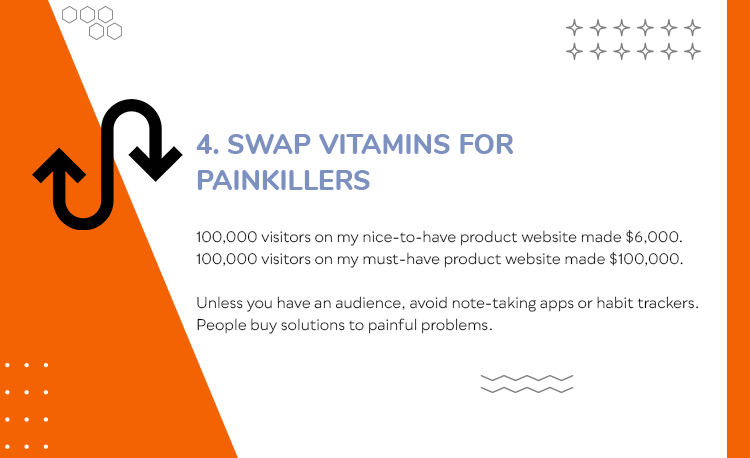
In the ever-evolving world of entrepreneurship, it can be challenging to launch your startup effectively to attract the most attention and grow your audience.

Moreover, most startups are limited in resources ranging from time to treasure, which can be allocated to create the dynamic growth that a new business needs to thrive.

Amidst this backdrop, startups need to develop a comprehensive strategy to increase their reach and growth that is beneficial for your resources and crucial for a startup’s survival.

This guide is for startups of all shapes and sizes and in any niche. It alleviates the concerns associated with the pressure of growing a business while operating on a limited and finite amount of time and energy needed to guarantee growth.

Why Startups Need a Marketing Strategy

Suppose you’re curious why marketing strategies for startups may be important. In that case, you need a detailed marketing strategy because, without one, you’re leaving the opportunity for success to random chance and luck.

For a startup to succeed, standing out in a crowded, competitive field is crucial. To guarantee that possibility, startups will need to offer more than superior service and products.

To guarantee growth, a startup will need a well-crafted marketing strategy that acts as a roadmap and guides it to achieve its objectives while effectively connecting with the target audience.

Connecting effectively with its target audience can be the difference between a startup’s sustainable growth and becoming just another statistic.

With a clear outline for developing an effective way to find, reach, and engage with your target audience, you can prudently grow as a startup without having to outspend or try to keep up with more established brands.

Instead, your startup can significantly impact and provide the desired result with creative thinking and deliberate planning.

The key is to utilize a concept known as growth hacking, which promotes your business through every channel of your business and is not just limited to your marketing strategy for startups.

Growth hacking is a technique that can help your startup gain massive traction and build sustainable growth. However, to succeed, you must implement a detailed plan that includes a high volume of engagement and multiple touchpoints with your target audience.

As a startup, looking for a solution to many tasks and things you need to get done can be overwhelming. There’s a lot of noise about how to complete task “XYZ” and promises of tools and platforms to help your startup grow, but often these fall flat on their face.

There is an exception to that, however. It is an all-inclusive solution for startups of all sizes to succeed, and that solution is ClickFunnels.

Renowned for simplicity and optimal effectiveness, ClickFunnels empowers startups to quickly generate seamless sales funnels that help generate leads, nurture them, and increase conversions.

By equipping startups with the tools necessary to maximize digital marketing efforts, ClickFunnels gives startups a leg to stand on that is far above the competition.

1. Establish SMART Goals

Illustration of a person pointing to a target labeled with SMART goals: Specific, Measurable, Achievable, Relevant, Time-bound. A lightbulb and a checkmark are also present in the image.

So now that you understand why a marketing strategy for startups is essential for them to compete, the next question is how do you create one that is effective yet feasible to meet the demands that startups have on their labor and capital?

The most effective concept to implement is to create a marketing plan using SMART goals to help you define the how, where, and who you are targeting through your marketing efforts.

By defining your goals into specific objectives, you outline what needs to be prioritized and how to utilize limited resources best to accomplish those tasks.

A SMART goal is an acronym that stands for:

  • Smart and Specific
  • Measurable
  • Achievable
  • Relevant
  • Time-bound

Examples of a SMART goal could be something simple such as:

  • Grow organic traffic to a landing page by 3X in April
  • Create 20 new leads for a real estate tech company for the Q1

The purpose here is to have something tangible and a defined timeline for accomplishing it so that you can dedicate resources and time to seeing it through.

Because most startups are limited in labor and time, people often have to wear multiple hats for anything to get done, so establishing SMART goals can help you be more efficient in your planning and resource allocation.

So, let’s examine each of these categories a little more to understand their meaning and value better for your marketing strategies for startups.

Smart: SMART goals start with the idea that they must be essential and realistic to your organization. They should be specific and crucial to your operations or growth, such as finding new leads to convert to sales.

Measurable: Measurable means that your goals should be something you can quantify, like finding 5 new business partners for life insurance agents or 3 new sellers to get under contract if you’re a real estate agent.

Achievable: When you strategize your goals and objectives, you need to make the outcomes achievable, meaning they should be realistic, perhaps even conservative.

For example, if you’re selling a personal finance tool and want it to eventually become an industry leader, it’s ridiculous to say that you want to sell $1 billion by the end of the year.

However, if you say you want to start a subscription service and increase your subscriber base to 100 people, that’s much more realistic and achievable.

Relevant: When you outline your goals, they should be appropriate to what you’re selling, able to be measured accurately, and achievable within the time you want to achieve them.

You’ll also want your goals to be relevant to your current situation, such as if you are a small craft brewery and want to expand your distribution by offering your beer at other locations.

When considering your SMART goals, you won’t create a goal focusing on selling your beer at supermarkets. You’d want to focus on local neighborhood spots where people can identify with your brand.

Time-bound: The final piece of the SMART goals puzzle is to have a time frame in mind. Setting a time frame to accomplish it is essential if you’re trying to grow your business realistically and measurably.

Let’s say that you’re trying to generate leads for a new product offering that compliments what existing customers already utilize.

In that case, you’d want to market, promote, and generate leads from those existing customers within a specific time frame, say a couple of months, half a year, or one year.

And since you’re marketing to existing customers, your efforts will be better received than if you were going cold, making it more realistic to achieve your goal in the time allocated.

Once you have SMART goals in mind, the next step is to implement those strategies by putting them into action.

Building a referral network is one such way to develop your marketing strategy and see success.

2. Have a Clear Message

As a startup, you’re excited about your products and services and probably spend a lot of time spitballing ideas for the perfect brand and slogan.

Stop this.

While thinking about your product and devising a slogan or branding around it can yield some good results, the problem is that your potential customers need to learn who you are and what you are offering. 

So start there.

As a startup, use the KISS-it method. KISS is an acronym that stands for:

  • Keep
  • It
  • Simple
  • Silly

Instead of devising the next great marketing campaign, devote your attention and creative efforts to explaining in a simple, compelling way what your product is, how it will benefit users, and why they should buy it from you.

There is beauty in simplicity.

For example, take McDonald’s. While the fast food chain has multiple food offerings, they’re all built around the world-renowned hamburger brand.

In other words, don’t try to do more than you can. Simply state what you offer clearly and build your marketing outreach and lead-generation strategies.

3. Build a Referral Network

Four individuals are depicted beneath a web of interconnected icons representing tasks and communication, including a magnifying glass, timer, notebook, trophy, briefcase, emails, and more.

Building a referral network is one of the fastest and easiest ways to grow your business using a strategic approach.

A referral network is a system where customers (and social media influencers) promote your product to their sphere of influence for you. A sphere, as it’s referred to, is the group of people that you know and who value your opinion.

So why should a referral network be considered part of your strategy?

The reason is that over 85% of people say that building trust in a business is crucial to whether they want to do business with it.

And what’s more, people trust personal recommendations by a margin of 8-out-of-10 before they purchase something digitally.

Whether it’s a new product launch, exciting industry news that you can share to showcase your knowledge and expertise, or something to highlight in your company, having others promote and share those points to their sphere can work like magic in expanding your reach. 

One way to build a referral network is to reach out to established influencers aligning with your products and your startup’s mission. 

For example, if you’re launching a startup in the cooking industry that provides easy-to-follow menu guides and recipes, finding an influencer willing to share your new product with their sphere should provide a notable bump in traffic, followers, and potential sales. 

And don’t just trust your gut; there are all types of influencers, from celebrity endorsements (which will probably cost upfront or on residuals) to minor niche social media personalities, industry or community leaders, local cookbook authors, and more.

So be creative and spread a wide net toward people with a following of all shapes and sizes that may align with your niche.

Partnering with niche influencers can be advantageous for both your startup and their brand.

You get access to someone else’s audience and gain immediate credibility through their recommendation.

For their brand, they can be perceived as more influential and reputable as they grow as well.

Do a little research online to find the right fit and type of influencer to reach out to. Check out social media platforms like Facebook, Instagram, Twitter, YouTube, and TikTok using relevant hashtags related to your startup’s offering and find who may:

  • Be in alignment with your brand and
  • have a following that you would like to have a touchpoint with

Remember that when you’re partnering with someone else, it’s easy to get distracted by numbers, so don’t consider their follower count. Bots and fake accounts can sway and buoy followers.

Instead, look at user engagement, comments, and shares as the accurate equity you want to tap into.

When you reach out to create a referral network, keep in mind the principle of reciprocity in social psychology.

Reciprocity is an essential building block of society. The principle, as related here, is one in which you offer something of value to your partner in return for access to their audience.

Operating by this principle, which states that individuals are more prone to reciprocate behaviors others have done to them, can significantly impact your growth opportunities.

In other words, as a philosophy for marketing strategies for startups, treat people the way you want them to treat you, and you should be able to create mutually beneficial partnerships for them and your startup.

4. Create Multiple Touchpoints

A central icon of a hand touching a circuit board with surrounding circles labeled CRM Solutions, Multi-integrations, Page Builder, Blog Builder, Customer Center, and Email Marketing linked by arrows.

Another critical aspect of building an effective marketing strategy, especially on a startup’s budget, is creating a system that allows you to have multiple touchpoints with your target audience.

Only some consume information and content the same way. Some people prefer long-form blog posts that dive into greater detail than a short tweet, while others may prefer a tutorial video on YouTube.

Others may consume content on their phones, meaning short-form videos may be best.

The key is having multiple options to communicate your messaging and marketing.

Researching and creating a strategic distribution plan to reach your audience is crucial in any marketing effort.

However, on a startup budget, this can only be challenging without all-in-one solutions like ClickFunnels 2.0, which provides a full suite of services and tools to help you find, nurture, and convert your target customers.

Here are just a few of the tools available with ClickFunnels 2.0.

  • CRM solutions
  • Email marketing
  • Customer Center
  • Blog builder
  • Page Builder
  • Multi-integrations

Discuss these tools in greater detail and determine whether the all-in-one solution is best for you.

CRM Solutions

Screenshot of a ClickFunnels webpage promoting a new CRM tool, featuring a video of a man speaking and a call to action button for starting a free trial.

The most apparent feature of a CRM tool is its ability to easily and quickly collect and maintain relationships with target customers.

ClickFunnels provides a tool that reduces redundancies while streamlining data entry and providing outstanding project management and workflows.

Why does a CRM matter?

For a startup, collecting data like personal contact information and personal information like birthdays or other significant data points can help you shape and guide all the rest of your marketing touchpoints, whether it’s personalizing messages or helping to see trends and other everyday things between customers.

You can then implement these data points into other marketing efforts.

When you have a good CRM, you can automate many different tasks and make better content that suits what each segmentation of your marketing research shows you.

Email Marketing

Part of your marketing strategy is spent on finding new leads, but being able to stay in contact regularly with your target customers can be a significant opportunity for better engagement and future conversions.

The ClickFunnels email marketing functionality provides startups with an easy solution to send emails to their list, whether for a drip campaign, notifications and promotions, or building and maintaining relationships.

The easy-to-use tool includes every ClickFunnels service, helping you automate your lead generation and nurturing efforts without unnecessary third-party apps.

Eliminating third-party apps provides small startups with a seamless opportunity to save time, money, and labor on extending outreach and other marketing touchpoints.

Customer Center

Screenshot of ClickFunnels website promoting their all-in-one customer center feature with a headline, a call-to-action button for a free trial, and a visual representation of the customer center interface.

As a startup, finding and nurturing your target audience and converting them to customers is challenging enough, so the last thing you need is some glitch in your future marketing and retargeting that drives them away.

Suppose you’re running a membership, subscription service, or online course. In that case, if it’s difficult for your customers to access their purchased content, you will get many unsatisfied customers.

But with ClickFunnels, we make it simple for your customers to access their purchased content with our Customer Center.

The Customer Center will organize and deliver all your training, courses, bonuses, and special features in one organized hub that they can quickly access.

With the easy-to-customize feature, branding your Customer Center for even better recognition is simple.

Also, the intelligent dashboard automatically adds content based on every customer’s purchase history, simplifying the backend so that you don’t have to monitor or grant access every single time.

ClickFunnels 2.0 provides you with more marketing opportunities to target your customers with new services, product updates, add-on features, events, and other products that they may be interested in.

This way, you can continually market your products and services to your customers.

Blog Builder

A company blog is one of a startup’s most efficient, cost-effective marketing tools.

A blog allows you to create content to educate, motivate, and engage your customer base. It helps you establish your expertise and provides your customers with opportunities they may miss otherwise.

Additionally, a blog is a great mechanism to create organic traffic that you can drive to your sales funnels, websites, or e-commerce stores. By publishing continuously valuable, educational, and engaging content to inform your target customers about your brand and offerings, establishing your authority regardless of whatever niche you’re operating in.

Once you have an established blog, you can utilize the content to direct your customers toward various sales funnels.

You can also repurpose your content for social media, further building your brand, expanding your reach, and turning that additional exposure and traffic into conversions.

The Blog Builder tool with ClickFunnels makes creating and customizing your blog simple. You can have beautiful pages integrated with all the features and tools to maximize your sales funnels in no time.

Page Builder

ClickFunnels website interface showcasing a CTA button to start a free trial. Features include customizable website templates and a dashboard display.

Creating a front-facing webpage that demonstrates your expertise and highlights your products can be complicated if you don’t have the coding skills to build one.

Even then, interactions with various other features and integrations, from social media to e-commerce, can be glitchy, slowing load times and frustrating your customers.

ClickFunnels 2.0 provides an easy-to-implement and install page builder that eliminates third-party integrations that can cause load time delays and 404 error results, which can turn a potential customer off.

To optimize your sales funnel performance, simply choose a page template from the ClickFunnels library and customize it based on your needs and interests.

With the analytics tools included, you can get real-time metrics of performance customer interactions to immediately see what is performing well and what customer behaviors are in your sales funnels to further market to them.

Multi-integrations

When devising your marketing objectives, you’ll often need to utilize outside apps and tools to help you.

Whether utilizing time management tools and other third-party apps like CRM, social media integrations, and more, the issue is often that these third-party apps can be glitchy, unreliable, or slow your page’s load time.

And why are those issues something you need to consider?

Because for every interaction a customer has in your sales funnel as a startup, you’re building a reputation with them. And leaving a bad taste in your customers’ mouths, especially when trying to build your brand, can submarine your efforts.

Often, the more apps and tools that need to communicate with your software, the greater disruptions that occur for the user. Having seamless integrations for all your tools and apps that are already in-house is the ideal arrangement.

For example, look at Apple computers and their ecosystem.

All of Apple’s hardware and software are integrated for seamless interactions, eliminating glitches, slow load times or other issues that some other computer companies (and users) experience regularly.

This improved functionality is one reason, among many, that Apple has created and fostered fierce brand loyalty among its users.

This is where ClickFunnels also provides an advantage. ClickFunnels offers multi-integrations so that even third-party apps are recognized as native to the sales funnel, helping streamline their usage and eliminate potential disruptions on the user’s end.

Every potential hiccup in your customer’s interaction with your brand can result in lost conversions, so having integrations that run smoothly and don’t slow down page load times is crucial to enhancing your customers’ user experience and, ultimately, their perception of your brand.

5. Partnerships and Collaborations

Illustration of two large hands shaking, with a man using a megaphone on the left and another man sitting on a gear with a laptop on the right. A paper plane flies in the background.

Finally, one of the biggest challenges startups face is the finite availability of resources, whether labor, capital, or other resources. 

A simple hack for marketing strategies for startups that can generate significant returns on investment is to create partnerships and collaborations with entities and companies that align with their target market and overall business philosophy.

By partnering and collaborating with similar entities, you can achieve a much wider reach at a much lower cost than marketing on your own.

Collaborations and partnerships are a great way to generate brand recognition through leveraging their customer and target list, helping expose your brand to people that:

  • You may not find it on your own
  • May not be aware of your offer
  • People who would be interested in your offer, but it would take a while to find and convert them

If you’re looking for more marketing strategies for startups, check out the ClickFunnels blog. It offers a ton of free resources and topics, including lead generation, discussions on relevant topics like AI and more.

But if you’re ready to build high-converting sales funnels with all the tools you may need to succeed, try ClickFunnels for FREE today!

Thanks for reading Marketing Strategies For Startups: The Ultimate Playlist which appeared first on ClickFunnels.
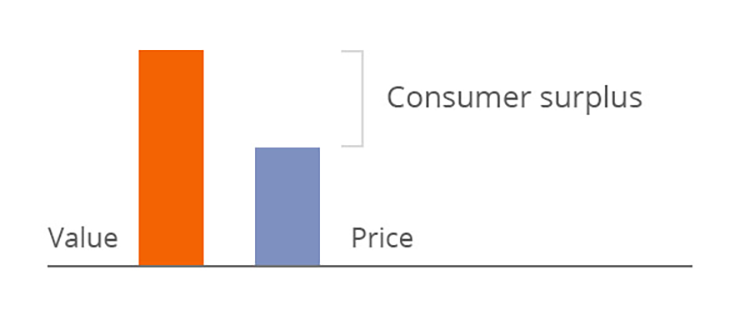
7 Small Business Marketing Ideas

Software Stack Editor · April 19, 2024 ·

The post 7 Small Business Marketing Ideas appeared first on ClickFunnels.
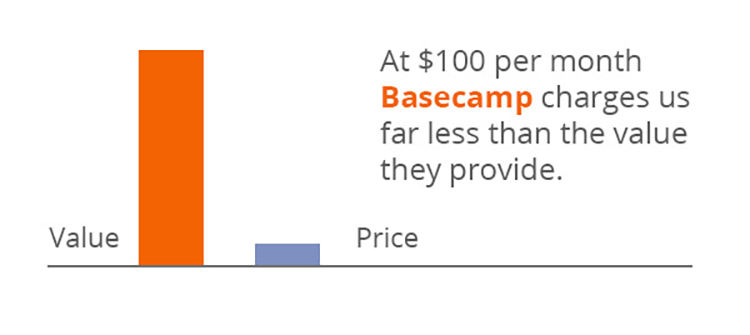
Whether you’ve already started your small business — or you’re looking at starting one — I can tell you that developing a strong online presence is absolutely critical.

Today, it doesn’t matter what business you’re in, nearly every single one of your customers will be looking for businesses like yours online.

To help you develop that online presence, we’ve put together 7 small business marketing ideas that have been proven to generate attention and convert that attention into new customers.

If you’re a new small business owner, or you’re thinking about starting one, have no fear.

We’re here to help you create a strategy that will boost your online presence without making you feel overwhelmed and stressed out.

By the time you’re done reading this guide, you’ll have a clear-cut plan for marketing your small business.

And that plan starts with…

Email Marketing

Picture this.

You’re hosting an upcoming event. Or launching a new product. Or running a special discount.

What’s the easiest way to let ALL of your customers know about it?

Simply send them an email notifying them.

When it comes to small business marketing ideas, email marketing is one of the ONLY ways you can maintain a direct line of contact with ALL of your customers at the same time.

Social media can’t do that because the algorithms pick and choose who sees what and when.

Search engines only work when someone is actively searching for your business.

That means you’ll want to start building your email list and using email marketing immediately.

When you do, you can contact them with WHATEVER you want, knowing (when you’ve set it up properly) that you’ll hit their inbox and bring them back to your business.

To get started, there are a few things you’ll need to do.

The first is having a physical signup sheet at the counter in your business where walk-ins can provide their email addresses.

In order to entice them to give you their email, you may need to incentivize their subscription with a one-time discount code or another type of attractive perk.

Then, it’s time to take it online.

As you’re building your list, you’ll want to notify people on social media what they’ll get if they subscribe.

For instance, Ramit Sethi invited people to join his newsletter:

A person is seated at a table with notes and a pen. Behind, a grey wall is visible. Text on the right discusses a daily newsletter and includes a link in the bio for signing up.

You can also take advantage of your bio on your social media profiles:

Instagram profile of The Whole Truth Foods, a health and wellness website, showcasing a banner with 250K followers, 248 following, and promoting clean snacks and a newsletter subscription.

After you start taking advantage of social media, you’re going to need somewhere for your visitors to go where they can give you their email address.

That’s where a landing page comes in.

A landing page, if you’re unfamiliar, is a page on your website with an email subscription form where you can collect emails — and incentivize people with a special bonus.

For instance, here’s how Alex Cattoni does it:

Here’s another great example of a landing page with an email subscription form:

The second part of this strategy revolves around sending emails to your list.

There are quite a few different emails you can send, too.

Like notifying them of an upcoming product launch:

A person in blue sweater and flared jeans holds a sunflower stem. Surrounding are sunflowers. Text introduces Hint Denim Co.'s mini collection launch, highlights features, support, limited stock, and a promo offer.

Or notifying them of new sales and promotions:

A promotional banner for a food and fitness website featuring a whole sale event from 8-10 August. Discount codes, product images, and an advertisement for an AI chatbot named Truth GPT are displayed.

Staying in touch with them in case they abandon their online shopping cart:

Or sending education emails with a soft pitch for your existing product lineup:

Infographic by OLIPOP featuring Amy Goodson offering pre and post-workout snack tips and the benefits of functional foods. Sections show snacks, hydration tips, and the importance of nutrient timing.

And unless you’re a web designer and developer, you’ll want to use software to make this process easy.

A tool like ClickFunnels 2.0 is a GREAT way to save a ton of time (and money) while establishing your online presence and building your email list.

With it, you can have your email subscription forms up and running in as little as an hour.

If you’re not already using it, you can click here to start your free 14-day trial and begin creating your email subscription forms and landing pages now.

When you do, you’ll be able to choose from a wide variety of funnel templates:

For collecting emails, you can use a basic squeeze page and thank you page template:

Try ClickFunnels FREE Today!

For instance, let’s say you operate a canine retreat.

If you wanted to entice people to subscribe to your email list, you could offer a full day free trial so they get to experience the retreat before becoming a paid client.

Here’s what your squeeze page funnel would look like:

Promotional image for a canine retreat offering a free day trial for dogs. The image features a smiling dog and a sign-up form asking for the dog's name and the owner's email address and name.

Then, after someone enters their email and subscribes, they’ll be taken to your thank you page:

A cheerful dog with its tongue out above a thank you message welcoming users and providing instructions for checking their email for a welcome message and exploring the website.

Then, once you’ve put together your squeeze funnel, landing page, and thank you page using the professionally designed templates inside of ClickFunnels 2.0, you can begin sharing them.

You can use a QR code inside your physical business that people can scan and be taken directly to your signup page, or share it across your social media profiles.

To get started, click here to begin your free 14-day ClickFunnels 2.0 trial now.

Hosting Webinars

Hosting webinars is one of THE most effective ways to generate a ton of buzz for your business.

When used for product launches, event hostings, seasonal promotions, and to announce the launch of your new business, they can help drive new customers through your doors.

And if you aren’t familiar, a webinar is an online presentation where you’re showcasing what you’re doing, why it matters to people, and what steps they can take next to get involved.

They work so well because they offer value first and build trust as you’re connecting with your audience.

They also help you drive more subscribers onto your email list by having people register for your webinar in advance of it going live.

At first glance, hosting a webinar can seem like a daunting task.

But when you start digging deeper into the process, you start to realize that it doesn’t have to be stressful and overwhelming.

To get started hosting your first webinar, there’s really only a few things you need.

The first is a landing page where you can promote your free webinar and start collecting email addresses.

The second is a registration page where people can input their information and create a calendar invite for the date and time of the event.

Finally, you’ll need a series of followup emails that help keep people engaged and remind them of the upcoming date and time of the event.

With these 3 things in place, you can have your first webinar funnel set up in a few short hours.

Here’s how to do it.

The first step is planning out how you’re going to get attention and generate buzz for the webinar.

The most common strategy used here is social media marketing.

Here’s an example of an ad from a recent MindValley webinar announcement:

Advertisement for a 1.5-hour Mindvalley Business Coaching Masterclass, offering a free access to become a certified business coach. Includes an image of two individuals and details about the class.

While ads like the one you see above are incredibly effective for driving new visitors to your registration page, you can also email your existing list — if you’ve already started building one.

You can use a series of automated emails to let people know what’s coming, how to get involved when it’s going to happen, and what’s in it for them when they register.

Here’s an example of an automated sequence that’s sent out for the MindValley webinar:

Then, when you’ve gotten people’s attention and shown them why they should register, they can visit the landing page you’ve created in ClickFunnels.

Here’s an example landing page from the MindValley campaign:

Promotional image for a Mindvalley masterclass with Vishen Lakhiani and Ajit Nawalkha on becoming a certified business coach. Event details: Tuesday, 9th April, 9 AM Los Angeles / 5 PM London. Registration form included.

When people enter their information and register, they’ll get added to an automated follow-up sequence that keeps them interested and engaged leading up to the event.

And all this can be done within a few mouse clicks when you’re using ClickFunnels 2.0.

To get started building your webinar funnel, click here to begin your free 14-day trial now.

When you’re in ClickFunnels, you can choose the webinar flow template to begin.

It will contain 3 key pages:

Three-step webinar registration process diagram: Step 1 shows the Webinar Register Page, Step 2 shows the Webinar Confirmation page, and Step 3 shows the Webinar Watch Page.

The pre-built funnel template will host your registration page, the confirmation page that includes details on the event, and the watch page where people will be able to see your presentation.

Then you can edit the pages using our built-in drag-and-drop editor:

A man stands smiling in front of a text-heavy promotional banner for a webinar about creating webinar funnels and generating leads. The banner provides details about the webinar's time and date.

Once you have the pages edited so they perfectly match your brand and the goals of your webinar, you can begin putting together the automated sequence of emails that your registrants will receive.

To do this, you can use the built-in ClickFunnels Workflows:

A workflow automation diagram featuring a trigger, delay, email template, and decision branch for purchase. Post-purchase leads to end path; non-purchase triggers a 24-hour scarcity event.

And, like our landing page designer, you can use drag-and-drop editors to pick and choose when and how you want the emails sent using built-in triggers.

You can also fully edit each of the emails so they match your brand’s design:

After you’ve put together your webinar funnel pages and your automated email sequence, you’re ready to start promoting your event on social media, your blog, email list, or any other traffic source that you’re currently marketing to.

This brings us to the next strategy that works amazingly well for small businesses.

Try ClickFunnels FREE Today!

Using Content Marketing

If you want to drive free, organic traffic to your business without spending money on ads then you need to start using content marketing.

The content you use to promote your business can be anything from written blog posts and emails, to video content on platforms like YouTube (or even your own blog), podcasts, you name it.

If people are actively searching for anything related to your products and services, you should work to capture their mind space with your content so you can engage with them later — in an effort to convert them into a new customer for your business.

For example, if you search for questions related to dog groom, here’s what you’ll see:

When you perform the search, Google presents you with a list of blogs.

The top blog that’s featured has a list of different grooming techniques for pugs.

If you click that link, you’ll be taken to the blog post where you can learn more:

A pug in a bathtub wearing a pink shower cap. The page describes the importance of bathing pugs, recommending hypoallergenic shampoo and tips for drying and managing their coat.

Then, you’ll be introduced to different grooming products you may be able to use:

This strategy doesn’t just work for written content, either.

Since Google owns YouTube, you can capitalize on this partnership by creating videos and getting them to rank in Google’s search results page.

Take a look below to see what we mean:

Because Google owns YouTube, YouTube videos are given favor in the search results pages.

That means you can create written content on your blog and then create a video using the same keywords you targeted with your blog post and show up twice.

If you own a dog grooming business, especially if you focus on grooming pugs, this gives you a massive opportunity to capture the attention of people who are actively searching for solutions to a problem.

As a general rule of thumb, search engine traffic tends to be some of the highest-converting traffic you can drive to your business — so definitely do not sleep on it.

With content marketing, you can get in front of them.

To get started with this strategy, though, and avoid making it too complicated, there’s a bit of research that you’ll want to do.

For instance, you want to take a second to think about the questions your customers ask you.

If your customers are asking you specific questions, chances are high that they’ve also entered those same questions into Google while looking for answers.

Then, you’ll want to spend a bit of time researching your competitors.

You can take a look at their blogs to see which types of content they’re creating, and what topics they’re covering, and then put together a plan for your own content based on what you find.

Finally, you can take a look at forums like Reddit to see what questions people are typically asking.

With forums, you can get involved and answer their questions directly or you can take those questions and turn your answers into content for your blog.

When you get this strategy right, you’ll begin developing a consistent stream of new traffic to your business website — which can be converted into new customers in your business.

Tapping Into Referral Marketing

Once you have the foundations laid, you can start relying on your new customers to bring more business to you.

Tapping into referral marketing is a GREAT way to get more traction and grow your business.

The key with this strategy, though, is making sure your existing customers have a way to refer your business to other people — AND that you’re doing what you can to turn them into loyal advocates.

With referral marketing, whenever a customer is in a conversation with someone they know and they ask about their experience with a business… or ask for a recommendation to a business similar to yours, your customer can let them know about their experience with you.

If it was a good experience, chances are high that the person they recommended you to will check you out and potentially become a new customer.

This is, essentially, free marketing.

And when you really want to level up your referral marketing game, you can even incentivize people to recommend your business to others.

Check out how The Tonic does it:

Referral program advertisement showing rewards for sharing The Tonic newsletter: Sunday insider email, 101 Lessons eBook, The Tonic Journal, free shoutout, and reMarkable tablet.

Whenever someone recommends The Tonic to their friends or colleagues, their referrals are tracked.

After a certain number of referrals have been sent over, they’ll be able to start receiving special bonuses.

This can be one of THE most effective marketing strategies you’ll use in your business because recommendations like this come with an innate, built-in trust and social proof.

It also lets you acquire customers without spending any more money.

Those are both complete game changers for a small business.

Now, to get started using this strategy, you need to implement a couple incentives.

You want one available for the person making the recommendation — and another incentive available for the person receiving the recommendation.

Then, once you have both incentives in mind, you can start building a page that makes it easy for people to recommend your business.

This can be done in ClickFunnels 2.0 — you can get started free with a 14-day trial by clicking here.

After you’ve built the page, you can begin to promote it.

To help you get started, here’s another example of a great referral landing page:

You’ll also want to include your referral program marketing materials inside of the packaging you used to sell your products:

Then, remind your customers that the program exists with periodic emails:

Once you have this in place, remember, a happy customer will refer other happy customers.

That means you want to make sure you’re taking care of people who come into your business — so you can turn your existing customers into long-term, loyal advocates.

Hanging Out With Your Customers

Right now, there are communities online where your future customers are already hanging out.

When you get into those communities, you can start raising awareness for your business and building credibility with those future customers.

And all you have to do is get involved in the conversation that’s already happening.

For instance, you can post valuable content related to your industry, products, and services.

Or you can provide key insights and participate in the discussion that happens after you share them.

To give you an example, check out this post:

Screenshot of a Shopify article discussing zero budget marketing strategies, highlighting influencer marketing steps and featuring images of example influencer strategies and tools.

When you look closely at it, the one thing you’ll notice is that it isn’t spammy or promotional.

This is the biggest mistake most small business owners make when they’re trying to use this strategy.

They’ll jump into communities and start posting ads for the products or services.

Then wonder why they got kicked out.

Don’t do that.

Instead, make sure you’re actually adding value and joining in on the conversation.

In the example above, you’ll notice that it’s a “Shopify Zero Marketing Budget” community.

It’s a place where eCommerce business owners are hanging out which are the perfect target audience for a tool that helps people do influencer marketing.

Rather than posting an ad about the tool, the business owner created a piece of content that lends insights into how to get the most out of influencer marketing.

Then, if people are interested, they’ll start researching the tool’s creator — and potentially buying it.

Here’s another example of someone selling their services… without selling:

A Facebook post by Zoltan Mathias from 9 November 2023 discusses optimizing shopping carts with in-cart recommendations and a free shipping progress bar. An example cart totaling £16 is shown.

In this post, the creator is providing some value and encouraging people to connect.

These people first become leads and then become customers.

The key to getting this right is making sure you’re identifying the right communities.

Here’s a quick rundown on how to find some:

Forum Type Platform Examples
Tech & Startups Reddit (r/startups, r/Entrepreneur), Hacker News
Health & Wellness Reddit (r/fitness, r/nutrition), Facebook Groups
Beauty & Fashion Reddit (r/beauty, r/makeupaddiction), Facebook Groups
Gaming Reddit (r/gaming, r/pcgaming), Discord Servers
Professional & Industry Specific LinkedIn Groups, Industry-specific forums (e.g., Stack Overflow for developers)

Then, once you’ve identified the communities you want to join, you’ll need to come up with ideas for content that will add to the conversation.

To make it easy, here are a few quick examples:

  • Tech & Startups: “5 Common Pitfalls When Launching Your Tech Startup and How to Avoid Them – would love to hear your thoughts and any lessons learned you might have!”
  • Health & Wellness: “Compiled a list of nutrient-dense recipes for busy professionals. Tried incorporating [Your Product] in a few and the results were surprising. Feedback?”
  • Beauty & Fashion: “Exploring sustainable fashion trends for 2023. Recently tried out a new eco-friendly fabric for our upcoming line – thoughts on sustainability in fashion?”
  • Gaming: “Developed a tool that helps optimize gaming setups for better performance. Tested it on [popular game], here’s what I found. Would love your input!”

Being Present on Google My Business

Remember earlier when we mentioned that your future customers are already searching for you?

If you’re a local business, that means they’re going to be seeing Google My Business listings for businesses just like yours.

If you aren’t already utilizing this free service, those future customers will end up with your competition.

And if you aren’t familiar with Google My Business, it’s a free tool that lets you manage how your business information appears across Google, including Google Search and Google Maps.

By verifying and editing your information, you can make it easier for customers to find you.

Check out our Google My Business listing below:

Screenshot of a business profile for ClickFunnels, a software company located at 3443 W Bavaria St, Eagle, ID 83616, United States, with 4.9 average rating from 1,078 Google reviews and contact number +1 208-323-9451.

Then, when one of your future customers is searching for businesses like yours, your business will appear in the search results — making it incredibly easy for them to find you.

For instance, check out what shows up when you search for a florist in NYC:

Google search results page listing four florists in New York with their ratings, addresses, phone numbers, opening hours, and some photos of flowers. The first result is a sponsored listing.

When someone searches, they’ll get to see reviews and ratings for social proof.

 To get started with this strategy, you’ll need to create your profile at https://google.com/business.

You’ll need to make sure you fill out all of the details — contact details, reviews, photos, location, what you serve, pricing, etc.

You also want to make sure you include photos to showcase your products and services.

For example, here’s a great restaurant listing:

 Here’s another example from a local landscaping company:

Google search results for landscapers near NYC. Results include Metropolitan Garden Design, New York Plantings Garden Designers & Landscape Contractors NYC, and Anthony & Sons Landscapers.

Then, to help boost your listing, make sure you’re responding to ALL reviews:

A 5-star review by Jeremy Murphy praising a garden design service for their astro turf installation, followed by a thankful response from the owner. The review text is positive and detailed.

…even if they’re bad:

A 1-star review by Candy Edelbaum mentions poor service on an irrigation system. The owner responds, apologizes, and offers further assistance.

Implementing Loyalty Programs

Another great strategy you can use to grow your small business is a loyalty program.

Since it’s often more costly to acquire a new customer than it is to retain an existing one, offering loyalty programs to your existing customers can keep them coming back to your business in the future.

By offering incentives for repeat purchases, you get to ensure steady business growth.

Then, you get more word-of-mouth referrals since people are getting more bang for their buck with your active loyalty programs.

It’s a win-win situation.

And there are different types of loyalty programs you can run.

Stamp Cards: Offer a card where after a certain number of purchases (e.g., 9 coffees), the next one is free, like the example below:

Points System: For every purchase, customers accumulate points. After accumulating a certain number, they can redeem them for a free item:

A chart showing Starbucks Rewards: 20 stars for a drink size upgrade, 40 for $2 off, 60 for a free drink, 100 for $10 off, and 160 for either $20 off or three free drinks.

Subscription Model: Allow customers to pay a monthly fee for a daily brew. This guarantees regular visits and a steady income.

Exclusive Member Days: On specific days or hours, loyalty members can get additional points, special discounts, or unique offerings.

Skip-the-Line Privileges: Allow your most loyal customers the benefit of skipping the line during rush hours.

Early Access: Provide loyalty members with early access to new flavors, seasonal drinks, or limited-time offers.

Advertisement displaying two Starbucks Refreshers drinks: Mango Dragonfruit with Lemonade and Strawberry Açaí with Lemonade. It highlights member-exclusive early access from May 31 to June 6 via mobile order.

Special Member Events: Organize occasional events like tasting sessions, coffee brewing classes, or cafe nights exclusive for loyalty members.

Depending on the products and services you offer, get creative with the way you incentivize your long-term, loyal customers to keep coming back to your business.

When you combine your loyalty program with the other small business marketing strategies on this list, though, you can start to experience consistent growth year-over-year.

The key, though, is laying the right foundations.

To ensure long-term success, you want to make sure your future customers can find you online — and that you’re collecting their information so you can stay in touch with them.

If you don’t already have landing pages in place, you’ll want to give ClickFunnels 2.0 a try.

You can click here now to start your free 14-day trial.

Then implement each of the strategies in this guide, driving people to your brand new landing pages.

Try ClickFunnels FREE Today!

Thanks for reading 7 Small Business Marketing Ideas which appeared first on ClickFunnels.
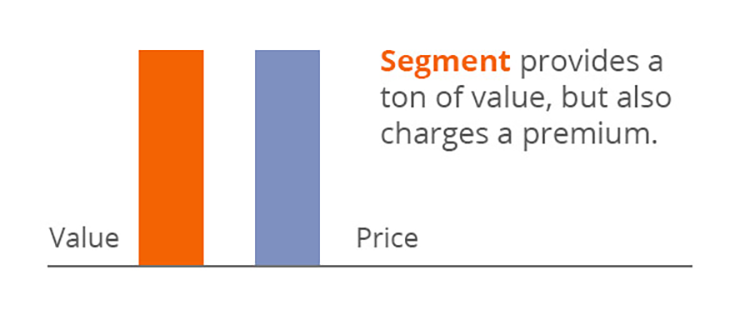
5 Copywriting Tips For Social Media Success

Software Stack Editor · April 18, 2024 ·

The post 5 Copywriting Tips For Social Media Success appeared first on ClickFunnels.
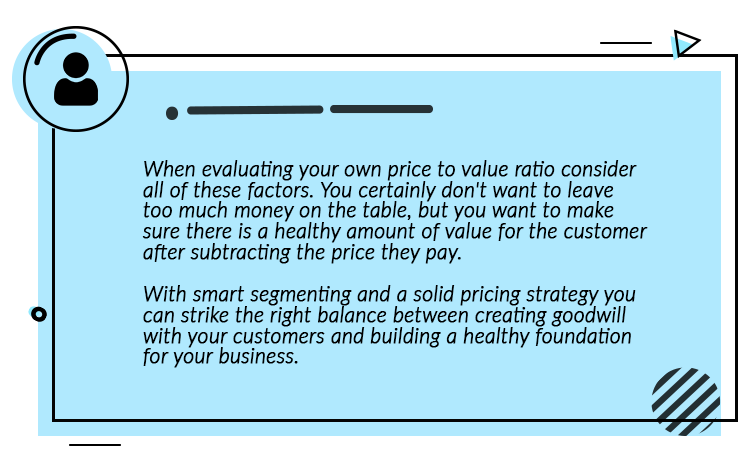
When it comes to social media marketing, many people believe it’s all in the images you use.

And while those are great for grabbing initial attention, it’s the copy you use that will keep people engaged — and get them to move forward and take the action you want them to take.

The image is what will get people to stop scrolling.

But your copy is what conveys the message and your call to action.

If you want to make your copywriting as effective as possible on social media, this guide will help.

We’re going to break down 5 copywriting tips that will help you write like you want WHILE generating interest from your target audience… and driving them to take action.

Tip #1: Create a Strong Hook

A hook is what draws people in and keeps them reading.

By using an opening line or statement that engages, you’re giving them another reason to keep reading after you grab their attention with your image.

This is critical because social media is heavily saturated and, if you want people to stop scrolling, you need to immediately hook them in and show them why they should stay engaged.

There’s a handful of different ways you can create a strong hook.

Asking a Question… Then Sharing a Personal Experience

One of THE easiest ways to get someone to stop scrolling and pay attention is by simply asking a question that you already know the answer to.

Check out this example from Ramit Sethi:

A man with a gray beard and short dark hair wearing a blue sweater is sitting against a tiled wall. Text with social media post details are visible on the right.

In this example, Ramit opens with the question… “What would you do if you made almost $300k by investing in one stock?”

If you were interested in making money or investing in the stock market, chances are you’re going to stop scrolling.

This type of headline triggers a response in people to either continue reading to see what Ramit is talking about or to give their own answer to what they would do if they made $300,000 by investing in a single stock.

Opening With a Compelling Offer

Another great way to stop the scroll and engage your audience is by making an offer that you know people in your audience are already looking for.

Check out this example from Jenni Gritters:

Jenni uses a combination of a question to interrupt the scroll while laying out exactly what’s in it for her audience if they keep reading.

In this case, she’s letting freelancers in on the why and how of recurring revenue and how it changes their feelings about their business.

If a freelancer was currently struggling and believed that recurring income was the way for them to feel better about their business, chances are high they’re going to click through and subscribe.

Adding Value

If you want people to start recognizing your brand and stopping their scroll when they see your name, a great way to do it is by adding value with your posts.

Check out how Sunsama does it:

A tweet by Sunsama offers break ideas such as tending to a plant and stretches. It includes a graph showing improved task focus after taking a break compared to when tired. Link for a free trial provided.

In this example, Sunsama is focused on helping people take a break from social media while being as effective as possible.

They’re showing people that taking periodic breaks will actually help them get more done without feeling as run down during the day.

By giving people a handful of examples of ways to do this, they’re adding value to a person’s life and then asking them to take action if they want more.

Addressing a Common Fear or Insecurity

Tapping into the common fears and insecurities your audience has is another great way to get them to stop and engage with your content.

It’s also one of the best ways to get them focused on solving the problem you can help them solve.

To see what we mean, check out this example from Ramit Sethi:

A man wearing headphones speaks into a microphone in a social media post discussing personal finance. Text includes a breakdown of spending categories: fixed costs, investments, guilt-free spending, and saving tips.

If people in his audience have ever told themselves that they’re not good with money, or that they can’t afford it, or that they’ll save money now so they can do something later, this post will hit home.

When you understand the fears and insecurities your audience is dealing with, and you have a solution to those, using them as a hook in your copy can be incredibly effective.

Reverse Psychology

If you tell someone not to do something, you can paradoxically pique their curiosity and motivate them to do the very thing they were instructed against.

This insanely powerful human urge, when used the right way, can keep people locked into your posts.

The key, though, is using it the right way.

Check out how Cole Shafer used reverse psychology:

The image he uses makes people stop and think about the message he’s trying to convey.

By getting people to do the opposite of what he said — and keep reading further — and then stop and examine the image, the algorithm sees that the person wants to see this type of content.

That means the audience will continue getting served content from Cole in the future.

Promising Multiple Valuable Insights

In the same vein as providing value with your hook, you can also promise to provide multiple valuable insights to grab people’s attention.

To see it in action, check out this example from Plum:

LinkedIn post by Plum listing nine workplace-related topics, each by a different author, covering various subjects like leadership, productivity, remote work, and bias.

You can see that Plum is promising to give people 9 takes on work that makes them think.

As an additional bonus, they’re even providing one that made them chuckle a bit.

This “listicle” type of social media copywriting is incredibly effective for keeping people engaged, showing them you understand what they’re thinking, and giving you an opportunity to help them.

Rather than give people the key takeaways, though, you can see that Plum is teasing what is in store for people if they keep swiping to see more.

Tapping Into Current Trends or Events (Newsjacking)

Tapping into current events and trends, or Newsjacking is a great way to inject some personality into your social media copywriting while also grabbing attention.

This is especially true if the current trends or events are affecting your audience in some way.

To see what we mean, take a look at this example from Alex Cattoni:

A social media post by Alex Cattoni discusses mass layoffs in 2024, offering steps to protect yourself. The post includes an image of Alex with text highlighting various companies involved in layoffs.

Because freelancing has seen such a massive uptick in interest over the last few years, Alex knows that talking about it will grab the attention of people who haven’t already jumped in and started.

Since layoffs can leave people in a terrible situation, getting into freelancing can be a great way to secure their “job” and keep their financial house in order — even if they’ve been laid off.

The example above is a great showcase for tapping into that current trend and using it to show people there’s an alternative strategy available.

Try ClickFunnels FREE Today!

Tip #2 – Include a CTA

Now, once you’ve stopped people’s scroll with a great image and have kept their attention with great copywriting, the next step is making sure you have a CTA included.

If you’re not aware, a CTA is a “call to action” — it’s what tells people what they should do next.

A good CTA helps guide your audience on the next steps they can take, whether it’s visiting a website, signing up for a newsletter, or making a purchase.

Because social media isn’t just for “fun”, the copy you create needs to serve a purpose for your business.

There’s a wide range of CTAs you can use for your social media posts, too.

Direct CTA

A direct CTA provides clear, straightforward instructions on the action you want your audience to take.

CTAs like “Click the link in our bio to learn more!” and “Shop now by visiting our website!” are examples of direct calls to action.

Here’s another example of a social media posting using a direct CTA:

Screenshot of a webpage listing ineffective marketing tactics and promoting an e-commerce checklist available via a link. The webpage shows a literal checklist on a laptop screen.

With a direct CTA, you can explicitly tell people what to do next:

Screenshot of a promotional graphic offering a step-by-step guide to succeeding on YouTube. The image includes a list of benefits, a call-to-action button, and a person standing in front of a microphone.

Or you can make it a softer CTA:

Benefit-Driven CTA

A benefit-driven call to action focuses on telling the user what they’re going to gain by taking the action.

This type of CTA can be anything from “Sign up for exclusive access to our sale!” to “Download the guide to start improving your skills today!”.

The key with a benefit-driven CTA, though, is making sure that the benefit your audience will receive is one that actually matters to them.

Engagement-Driven CTA

An engagement-driven call to action encourages users to interact with your content.

These can be as simple as “Like if you agree and comment with your thoughts!” or “Share this with someone who needs to see it!”

When you’re using engagement-driven CTA, remember that you want your audience to feel good about engaging with your content before they consider sharing it with their network.

Here’s a great example of an engagement-driven CTA:

A woman in a floral dress and hat stands on a grassy field, facing away from the camera, with cherry blossoms in the background. Instagram post details a clothing collaboration and launch success.

Curiosity-Based CTA

A curiosity-based call to action uses questions to encourage responses and engagement.

Think about a CTA along the lines of “What do you think? Drop a comment below!” or “Have you experienced this? Tell us your story!”

The key to these calls to action is to make sure the copy surrounding the CTA is something that people hold internal opinions or feelings about.

Check out this example to see what we mean:

Social media post by Rho Thomas mentioning upcoming podcast episode, seeking questions from followers on various topics, due by April 12, with a link for submitting questions. Episode release date is April 19.

Urgency-Driven CTA

An urgency-driven call to action focuses on prompting immediate action by implying a limited time or limited quantity.

For example, when you’re inducing urgency, you can use a CTA along the lines of “Offer ends tonight, don’t miss out!” or “Limited spots available. Register now!”.

Tip #3 – Inject Your Brand’s Personality

When you’re trying to drive engagement and sales from social media, you need to remember that people are using social media to be informed, educated, or entertained.

That means you’ll want to inject a bit of your brand’s personality if you’re going to keep them engaged with your content.

To see what we mean, here’s a casual, fun example from Garza:

Split image promoting new Graza cooklet with sauces and food. Left side shows cooklet cover and two bottles of sauce. Right side shows hands holding cooklet, with sandwiches, chips, and drink on a table.

Here’s another example from ClickFunnels that’s more enthusiastic, informal, and persuasive:

Image of a social media post by Clickfunnels about the new features in ClickFunnels 2.0, including an enhanced analytics dashboard and a custom order page design. The post includes a 3D graphic with gears.

Or, like this example from Wendy’s, your copy can be humorous and relatable:

Paynter Jackets chooses a more conversational and intimate tone to establish a close, personal relationship with their audience:

Two hands holding red and white sew-on patches from Paynterjacket's Limited Edition Batch №7. The patches feature illustrations and text, with one referencing a New York Times feature.

When choosing the right tone for your brand’s social media presence, consider these dimensions:

Dimension Casual End Formal End
Formality Informal, Conversational Formal, Professional
Approachability Friendly, Inviting Authoritative, Expert
Enthusiasm Excited, Energetic Measured, Composed
Transparency Open and Direct Mysterious, Intriguing
Humor Funny, Comical Witty, Subtle
Respectfulness Irreverent, Challenging Reverent, Respectful
Optimism Positive, Inspirational Realistic, Pragmatic
Personality Personable, Relatable Corporate, Neutral

And, remember, when you’re crafting your social media CTAs, it’s important to direct users to a conversion-focused destination, like a sales funnel.

Platforms like ClickFunnels make it easy to create high-converting funnels that you can directly link to from your social media CTAs, maximizing the effectiveness of your copywriting.

With it, you can choose from pre-built, professionally designed landing page templates:

A webpage displaying six different types of sales funnel templates: Collect leads, Sell your product, Start a challenge, Host a webinar, Video sales letter, and Other Funnels.

You can set the flow of your funnel to take your visitors from completely unaware to becoming an actively engaged, loyal customer:

A webpage displays a 3-step funnel process diagram (2-Step Tripwire Page, Upsell Page, Confirmation Page) above a section for browsing and selecting various funnel templates.

Then, to ensure your landing pages match your brand perfectly, you can edit each page using our built-in drag-and-drop editor:

Screenshot of a website editor displaying a template with placeholder text and metadata. Various drag-and-drop elements like header, image, video are listed on the right sidebar.

If you aren’t already driving your social media traffic to a conversion-focused, don’t keep letting high-quality traffic leak through your fingers.

Click here to start your free 14-day trial of ClickFunnels 2.0 now.

Tip #4 – Format Your Copy for Readability

To make your copy as effective as possible, you need to make sure it’s readable.

If you post a wall of text to social media, you can guarantee that anyone attempting to read it is going to quickly tune out and start looking for the next post that catches their attention.

When your copy is easy to read, though, the audience is more likely to absorb the message, respond to your CTA, and remember the content later.

To see the difference, check out this example of bad formatting:

Text document describing a marketing professional's data dashboard, its key features, and why it's an important tool for internal communication and performance tracking within a company.

Can you imagine how hard that is to read while staying focused?

To avoid making this same mistake, make sure you’re breaking your copy into short, concise paragraphs, or even single lines, to create breathing room and help important points stand out.

Take a look at this example to see how much easier it is to read:

And this one:

You can also use text formatting to show emphasis on specific parts:

A LinkedIn post by Megan Morreale discussing career obstacles, particularly learning content creation for B2B, including points on problems faced and solutions implemented.

And, when used sparingly, a few emojis can really help you grab attention:

Tip #5 – Don’t Underestimate the Hashtags

Now, for our final tip on improving your social media copywriting skills, you want to make sure you aren’t forgetting about hashtags.

They help link your content to broader conversations, trending topics, and to interest-based communities, dramatically expanding your reach.

They also help categorize your content, making it discoverable to people who are searching for or following specific hashtags.

To get started, you can use branded hashtags by creating a hashtag specifically for your campaigns or general branding efforts:

A partially open unsealed box appears next to a section of a social media post from Shopify, inviting merchants to share their business operations using a specific hashtag. One user comment is visible below.

You can also use a mix of generic and specific hashtags:

A man in a gym performing a shoulder exercise with dumbbells. The background shows gym equipment and the man appears focused on his workout.

When you’re using hashtags, you can include them organically within the body of the copy where it makes sense, or you can list them at the end of the post.

Here’s an example of mixing it up:

You can see Jamie included #freelancing in the middle of his post and then included #selfemployed, #TalkToClients, #Business, and #Freelancer at the end, helping him show up for relevant searches.

Remember, though, the backbone of every piece of copy you create for social media revolves around getting people to take action.

And, in most cases, that means getting them to click a link that takes them away from social media so you get an opportunity to convert them into a new subscriber or customer.

If you want to do that as effectively as possible and convert as many people as possible into new subscribers and customers for your business, make sure you’re using a tool like ClickFunnels 2.0.

It will help you capture more of the attention you’re generating on social media and give you more control over how you interact with your audience as you’re building it.

If you haven’t already, click here now to start your free 14-day ClickFunnels 2.0 trial.

Try ClickFunnels FREE Today!

Thanks for reading 5 Copywriting Tips For Social Media Success which appeared first on ClickFunnels.
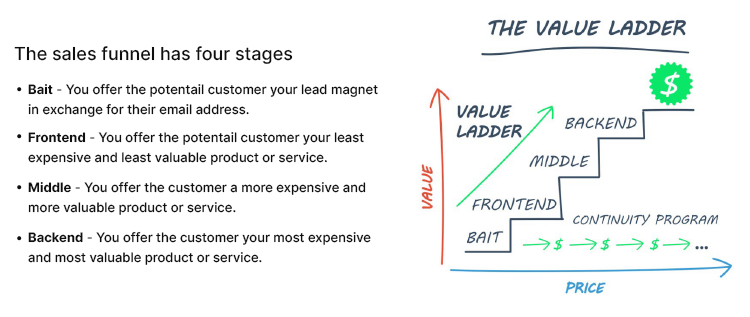
7 Real Estate Marketing Strategies To Crush It In 2024

Software Stack Editor · April 16, 2024 ·

The post 7 Real Estate Marketing Strategies To Crush It In 2024 appeared first on ClickFunnels.
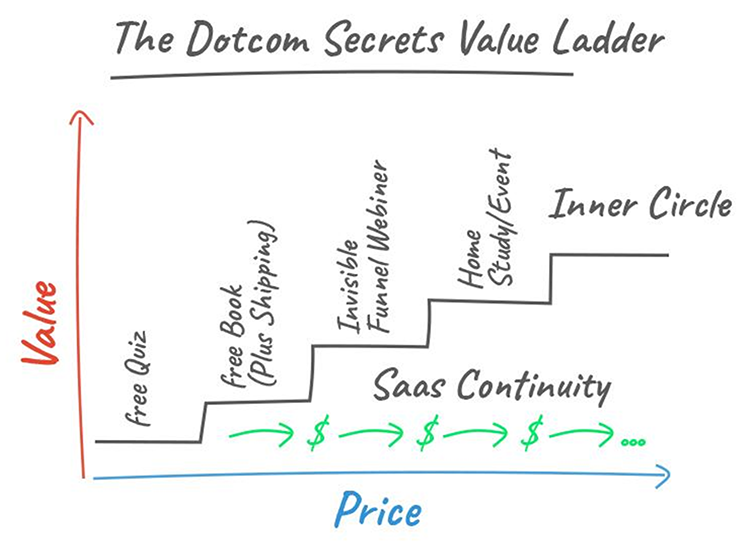
Want to sell more properties in 2024?

Here are seven real estate marketing strategies that can help you with that…

Table of Contents:
  • Real Estate Marketing Strategy #1: Niche Down
  • Real Estate Marketing Strategy #2: Conduct Extensive Buyer Research
  • Real Estate Marketing Strategy #3: Create a Business Website
  • Real Estate Marketing Strategy #4: Feature Buyer Testimonials and Case Studies on Your Website
  • Real Estate Marketing Strategy #5: Start a Blog
  • Real Estate Marketing Strategy #6: Build a Quote Funnel
  • Real Estate Marketing Strategy #7: Use Paid Advertising

Real Estate Marketing Strategy #1: Niche Down

Illustration of a person analyzing data on a laptop with a target board and a loudspeaker, symbolizing goal setting and marketing strategy. Various charts and graphs are also displayed.

Here’s something that you need to understand about marketing:

If you try to appeal to everyone, you’ll end up appealing to no one.

That’s why it’s so important to niche down and specialize in serving a specific demographic!

Decide Between Residential vs. Commercial Real Estate

First, you need to choose what you are going to focus on:

  • Residential real estate
  • Commercial real estate

Attempting to do both is unwise because you’ll spread yourself too thin and fail to develop real expertise in either of them. So pick one!

Focus on Serving a Specific Target Demographic Instead of Selling Properties in a Particular Geographical Area

Realtors often specialize in selling properties in a particular geographical area but we would argue that it’s not the best approach. Why?

Because prospective buyers who are completely different may be looking for properties in the same area.

When it comes to commercial real estate, that can mean anything from mom-and-pop businesses to startups to mid-size companies and large corporations.

And when it comes to residential real estate, that can mean anyone from young single people to families with kids to elderly citizens. 

The problem is that all these prospective buyers have different needs, desires and interests, are operating under different sets of constraints and are struggling with different problems. 

That’s why we recommend narrowing your focus to a single, clearly defined demographic instead of trying to sell properties to anyone and everyone who happens to be interested in that particular geographical area!

Your Best Option: Choose a Target Demographic That You Belong to Right Now or Have Belonged to in the Past

In general, it’s best to focus on a demographic that you either belong to right now or have belonged to in the past. Why?

Because the more familiar you are with that market segment, the easier it will be for you to understand your dream buyers.

Say, if you have children yourself, then you’ll have a much easier time understanding the needs, desires and interests of families with kids, as well as the set of constraints that they are operating under and the problems that they are struggling with.

Your Second Best Option: Choose a Target Demographic that You are Familiar With

In case targeting a demographic that you belong to right now or have belonged to in the past is not possible, the second best option is to go after a demographic that you are more familiar with than the average realtor. 

For example, if you have a large extended family with a lot of elderly people, you may understand the elderly better than the average realtor, which would give you a competitive advantage when selling properties to senior citizens.

Stay Away From Demographics that You Have Zero Familiarity With!

We recommend steering clear of demographics with which you have no familiarity at all, no matter how lucrative the opportunity may seem on paper. Why?

Because if you choose to go after such a demographic, you will likely need to spend an inordinate amount of time on buyer research just to reach the baseline level of market knowledge that all your competitors already possess.

So why would you want to start at such a massive disadvantage?

Real Estate Marketing Strategy #2: Conduct Extensive Buyer Research

Illustration of a man with a magnifying glass analyzing a pie chart, a woman sitting on a floating percentage symbol, a stopwatch, stacked coins, shopping basket, and upward arrow in the background.

Once you know who exactly your dream buyers are, you want to conduct extensive buyer research. Why?

Because the most effective marketers are the ones that understand their target audiences the best. 

Buyer research will help you design effective marketing campaigns, write persuasive copy and build sales funnels that convert!

Don’t Be Presumptuous: You Probably Don’t Understand Your Dream Buyers As Well as You Think You Do!

In general, the more familiar you are with your target demographic, the less time you’ll need to spend on buyer research.

However, even if you are extremely familiar with it, you shouldn’t be presumptuous and assume that you know everything that there is to know about your dream buyers.

If you belong to that target demographic yourself, it’s worth remembering the false consensus effect:

“In psychology, the false consensus effect, also known as consensus bias, is a pervasive cognitive bias that causes people to see their own behavioral choices and judgments as relatively common and appropriate to existing circumstances.

This means that you may be overestimating how representative of that demographic you are. Outliers often fail to realize that they are outliers.

And if you belonged to your target demographic in the past but don’t anymore, then you may be unaware of various new developments that might be influencing the decision-making process of your dream buyers. 

Finally, if you are familiar with that demographic but have never belonged to it yourself, then you are almost certainly missing something important!

The 3 Types of Buyer Research that You Should Conduct

Talk to People Who Belong to Your Target Demographic One-on-One

Take a look at your extended social network. Do any of your family members, friends or acquaintances fit your dream buyer profile?

See if you can strike up conversations with those people and chat with them in an informal capacity. 

Don’t pitch them your real estate services, simply ask questions and listen to what they have to say. You might be surprised by how much you can learn this way!

Conduct Online Buyer Research

On top of talking to your dream buyers one-on-one, you also want to conduct online buyer research. 

That can mean:

  • Joining Facebook groups
  • Subscribing to subreddits
  • Registering to online forums
  • Reading blogs
  • Watching YouTube and TikTok videos
  • Following influencers
  • Keeping an eye on popular hashtags

…etc.

Note that communities, content and influencers don’t have to be focused on real estate, what matters is that they are catering to the same demographic that you are targeting.

Ask People Who Have Already Bought Properties From You What Were the Most Important Factors in Their Decision to Buy

Finally, when you close sales, you want to ask those buyers what were the most important factors in their decision to buy those properties. 

You might find that what you thought was most important to them wasn’t what was actually most important. 

All this buyer research will help you understand your target demographic better and improve your marketing, copy and sales pitches.

Case Study: $120,000 to $200,000 Condominiums for Downsizers

Bob Moesta, an innovation consultant, was once hired by a building company to help them sell more condominiums in the $120,000 to $200,000 price range.

The company was targeting downsizers, primarily divorced single parents, empty nesters and retirees.

But the problem was that despite making these condos really nice with various luxury touches, hosting focus groups with prospective buyers and implementing their suggestions and pouring resources into marketing, they struggled to close sales.

When Moesta came on board, he decided that instead of wasting time speculating about why people weren’t buying these condominiums, he would talk to those who did buy them to learn more about their decision-making process.

It turned out that there wasn’t a clear buyer profile beyond all of them being downsizers. Nor was there a distinct set of features that all of them valued. 

But something unexpected emerged: the dining room table came up over and over and over again in these interviews.

“People kept saying, ‘As soon as I figured out what to do with my dining room table, then I was free to move,’” recalls Moesta.

The dining room tables in question were well-worn, outdated pieces of furniture, so he and his colleagues couldn’t understand why buyers were so fixated on them. It seemed bizarre. 

But then, as Moesta was sitting at his own dining room table, it suddenly dawned on him:

“Every birthday was spent around that table. Every holiday. Homework was spread out on it. The table represented family.”

Downsizers felt anxiety about giving up something that had such profound meaning to them so their buying decision often depended on whether or not they could figure out what to do with their dining room table. 

Once Moesta realized that, he helped the building company adjust their business strategy to accommodate it and their condominium sales shot up!

Real Estate Marketing Strategy #3: Create a Business Website

Three individuals are interacting with analytics and data visualization software displayed on an oversized laptop screen.

In 2024, if you have a real estate business, you need to have a website.

If you don’t have one, not only will you miss out on various business opportunities but you will also risk looking sketchy in the eyes of prospective clients!

You can easily create a website for your business with the website builder that’s included in our software. 

All you need to do is pick a website template from our template library, customize it according to your needs with our drag-and-drop website editor and then add content to it.

What makes our website builder different is that our focus isn’t aesthetics, it’s conversions.

We want to help you build a website that is optimized for lead generation so that you could convert visitors into leads and then eventually into buyers!

Three individuals are interacting with analytics and data visualization software displayed on an oversized laptop screen.

Real Estate Marketing Strategy #4: Feature Buyer Testimonials and Case Studies on Your Website

Illustration of two people shopping online. A woman holds shopping bags while a man pushes a cart. A giant laptop screen in the background displays star ratings and user comments.

Once you have a website, you need to add social proof to it so that prospective buyers would know that you are legit.

Buyer Testimonials

Customer testimonials, like the one you see above, work well as social proof, especially if they include:

  1. The client’s full name and photo
  2. The exact result that you helped that client achieve

The reason why these details are important is that they help reassure potential customers that this is a real testimonial from a real person.

Gathering buyer testimonials that you can then feature on your website and in your marketing materials should be a part of your business process. Just closed a sale?

Ask that buyer for a testimonial!

Buyer Case Studies

We also recommend investing in buyer case studies that you can then feature on your website.

Both written and video case studies can work well, although the latter medium tends to be more persuasive.

You can take a look at the customer case studies that we have on our website if you need inspiration. Say, here are some local business case studies.

Real Estate Marketing Strategy #5: Start a Blog

Illustration of a man holding a pencil and a woman sitting, both near a large laptop screen displaying a blog.

Building a blog can be a great way to get organic search traffic from Google. 

Here’s a quick overview of the process for creating content that stands a chance of ranking on the first page of Google’s search results for its target keyword:

  1. Do keyword research
  2. Create SEO content
  3. Build backlinks to that SEO content

Let’s take a closer look at each of these steps:

Do Keyword Research

Start by doing keyword research to find a promising keyword that you can realistically rank for. We recommend using Ahrefs for this. 

Something to keep in mind here is that you want to target keywords that your dream buyers would be using. 

Remember, the goal here is not just to get traffic, it’s to get targeted traffic that you can then convert into leads and eventually into buyers!

Create SEO Content

SEO content is the content that you create specifically for the purpose of ranking on the first page of Google for a particular keyword. 

Once you have found a promising keyword, the next step is to create a blog post designed to rank for it!

Focus on Meeting the Search Intent

We can probably safely assume that Google’s search algorithm is optimized for helping the user find content that best meets their search intent.

Consequently, if you want Google’s search algorithm to give you a spot on the first page of search results, you need to make sure that your article meets the search intent of that keyword.

One of the most common SEO mistakes is getting caught up in the “optimization for the sake of optimization” trap where bloggers start optimizing their content for similarity to what’s currently ranking for that keyword as opposed to optimizing it for meeting the search intent. 

This approach tends to result in bloated, unnecessarily long keyword salad articles that no one wants to read. Content like that can reach the first page but it won’t stay there for long because Google will eventually catch on to it and downrank it. It’s not sustainable. 

That’s why you should always use search intent as your North Star when creating SEO content. 

Ask yourself: when someone types this keyword into Google, what information are they looking for?

Then provide that information in your blog post!

Create the Best Piece of Content for that Keyword

You will need to push out one of the articles that are currently ranking for your target keyword if you want to get to the first page. So how can you do that?

In addition to meeting the search intent, you must ensure that your content is better than that of your competitors.

Otherwise, what reason would Google have to give you someone else’s spot on the first page of search results?

That’s why your aim should be to create the best piece of content out there for that particular keyword!

Build Backlinks to that SEO Content

It’s important to understand that creating great SEO content isn’t enough to rank on the first page of Google’s search results in 2024. Why?

Because one of the primary factors that Google’s search algorithm uses to decide which content to prioritize when ranking search results is backlinks.

Basically, the more websites link to your article, the more likely it is that the article is good and not some low-quality trash. 

Moreover, the more websites link to your website, the more likely it is that it’s a legitimate website and not just some scam. 

Not all backlinks are made equal, though.

Google’s search algorithm gives more weight to backlinks that are coming from:

  1. Authoritative general websites such as major media outlets
  2. Authoritative niche websites in your niche and related niches such as popular blogs

Say, if you specialize in helping aspiring off-grid homesteaders find off-grid properties in the Canadian wilderness, backlinks from major media outlets and from popular websites in the homesteading niche will be the most valuable. 

The best way to build backlinks is through guest blogging, also known as guest posting, where you write articles for other websites for free in exchange for backlinks back to your website. 

Typically, you get one backlink in your author bio and can include 1-2 more backlinks in the content itself provided that they are relevant to the subject of your guest post.

Adam Enfroy came to prominence when he made over $1,000,000 from his blog in just 2 years. 

He got his blog off the ground through an aggressive guest posting campaign where he published 80+ guest posts in just one year to build backlinks.

Here’s his link building strategy:

You can also outsource link building to SEO agencies that specialize in that. 

Just be careful and make sure that the backlinks are from authoritative websites and are built using white hat SEO practices that are approved by Google. 

Keep in mind that backlinks from sketchy websites built with black hat methods can damage your website’s authority!

Recommendation: Ahrefs’ “Blogging for Business” Course (Free)

If you are serious about using search engine optimization to attract prospective buyers, we recommend going through Ahrefs’ “Blogging for Business” course.

It’s completely free and publicly available on YouTube:

Real Estate Marketing Strategy #6: Build a Quote Funnel

Diagram of a quote funnel showing a survey page leading to automation, which then directs to follow-up funnels. The survey page includes multiple-choice questions for user engagement.

We recommend using a quote funnel to convert website visitors into leads and then eventually into buyers. 

A quote funnel is a partially automated sales funnel that consists of three pages:

  1. A survey page where you ask the prospective buyer questions designed to get the information you need to create a custom quote
  2. A thank you page where you thank the prospective buyer for filling out the survey and ask them for their email address so that you could send them their quote
  3. An appointment booking page where the prospective buyer can book a free 30-minute consultation call with you

When you send them the email with their quote, end it by encouraging them to book a free consultation call and direct them to your appointment booking page. 

Then, if you believe that you can help that person find what they are looking for, pitch them your realtor services at the end of that free consultation call. 

You can easily build this funnel with our software which includes a survey funnel template and a visual funnel editor that you can use to customize that template. 

Once you have your quote funnel, promote it on your website by adding a “Get a Custom Quote” tab to your website’s navigation bar and displaying “Get a Custom Quote” banners at the bottom of your blog articles.

Real Estate Marketing Strategy #7: Use Paid Advertising

Illustration of a person with a megaphone next to a laptop displaying a large arrow cursor and a dollar sign, with stacks of coins.

You can also use paid advertising to drive traffic directly to your quote funnel. 

Facebook has great ad targeting capabilities that can help you zero in on your dream buyers.

There’s also a publicly available ad library that allows you to browse ads that are currently targeting a specific keyword. You can use it to see what your competitors are up to.

Meanwhile, Google allows you to target specific keywords with its search ads which can help you reach prospective buyers who are actively looking for information related to the type of property that you sell. 

You can find reputable Facebook ads and Google ads courses on Udemy. If you wait until the next sale, you should be able to get a course for less than $20. 

A word of caution, though: it’s extremely easy to lose money on ads when you don’t know what you are doing. 

In fact, if you want to get into paid advertising, you should set aside a “learning budget” aka money that you are willing to burn in order to learn how to run ads. 

Alternatively, you can outsource paid advertising to a marketing agency that specializes in it.

Want to Learn How to Build Sales Funnels That CONVERT?

Our co-founder Russell Brunson used sales funnels to take ClickFunnels from zero to $100M+ in annual revenue in less than a decade.

He is now widely considered to be one of the top sales funnel experts in the world. Want to learn from him?

His best-selling book “DotCom Secrets” is the best place to start because it covers everything you need to know in order to build sales funnels that convert. 

This book is available on Amazon where it has over 2,500 global ratings and a 4.7-star overall rating. 

But you can also get it directly from us for free… 

All we ask is that you pay for shipping!

So what are you waiting for? 🧐

@russellbrunson

They say you shouldn’t pick favorites… But this book is my favorite in the secrets trilogy 🙂

♬ original sound – Russell Brunson – Russell Brunson

Get “DotCom Secrets” for FREE!

Thanks for reading 7 Real Estate Marketing Strategies To Crush It In 2024 which appeared first on ClickFunnels.
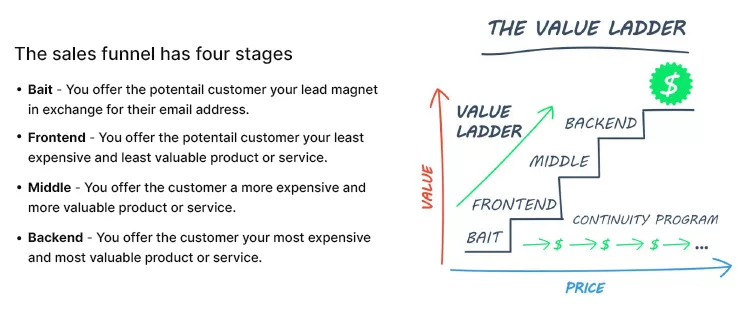
44 ChatGPT Prompts To Help You Make Money

Software Stack Editor · April 12, 2024 ·

The post 44 ChatGPT Prompts To Help You Make Money appeared first on ClickFunnels.
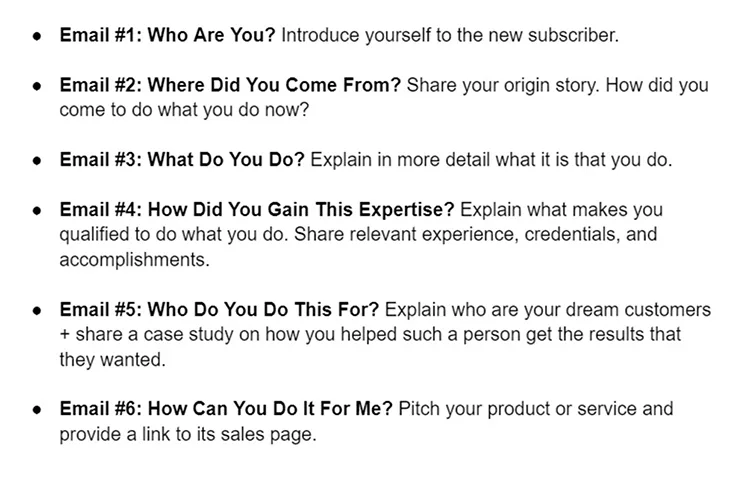
The rise of AI is upon us. It’s here and it’s unavoidable. Today these systems seem novel. New. Innovative. But who knows what tomorrow holds? Who knows where the future will take us? Is some Cyberdyne-esque future in the making? Or will humans learn to embrace AI and use it to advance civilization quickly? Time will tell. Meanwhile, AI systems like ChatGPT allow us to enhance and speed up our work. They help increase efficiency and boost output.

However, systems like this are only as good as the prompts you feed them. If you feed ChatGPT the wrong prompts, you’ll get lukewarm answers. Feed it the right prompts and you may just find that proverbial pot of gold at the end of the rainbow. So the real question is this. What ChatGPT prompts work best? Which ones help you make money? Lots and lots of money. And how do you structure a ChatGPT prompt the right way to get the right answer you’re looking for?

The answer isn’t as complex as you think. There isn’t some advanced AI prompt engineering at work here. To make money with ChatGPT you must understand some of the parts and pieces that create great prompts. When you understand how to create crystal-clear ChatGPT prompts, you’ll notice a world of difference. The right prompt can help you make money, grow your business, boost your revenue, increase conversions, get customers to spend more, enhance your health, and so on.

How To Write ChatGPT Prompts

Want to learn how to write ChatGPT prompts the right way? Yes, there is a right way and a wrong way. Publicly available AI systems like ChatGPT are only as good as the prompts you feed them. Feed them the wrong prompts and you’ll get questionable answers at best. But if you feed them the right prompts, it could open up new worlds of knowledge and insight that may exponentially increase the quality of your business and your life. Yes, it’s that powerful.

So how do you write ChatGPT prompts the right way? How do you create prompts that elicit the best and most useful responses? To do that you must adhere to four overarching rules. These rules will help ChatGPT conjure up the most relevant and helpful advice. Follow these rules and your prompts will spit out drool-worthy results sure to catapult your knowledge and wisdom in any area of life.

Rule I—Be Clear & Specific

To start it’s simple. You must be very specific and clear. Do not muddy your words. Don’t use abstract concepts or confusing language. Be very clear. Very specific. Direct and to the point. The better you can do that the better your results. ChatGPT thrives on specificity and clarity. So if you want to make real money be real clear and be specific.

Rule II—Use Verbs In Your ChatGPT Prompts

ChatGPT prompts that describe an action will elicit the best response. For example, words like “Write”, “Create”, “Outline”, “List”, “Describe”, and so on work best. Why? Because you want ChatGPT to perform a specific function to give you the best type of information. That doesn’t mean your prompt has to start with that word. It only means you use that word within the prompt to elicit the action.

Rule III—Provide Context For Best Results

Context is important. It provides a backdrop. It delivers an understanding of the existing framework. It’s the difference between an okay answer and an excellent answer. Context describes things like current resources, situations, skills, characteristics, and any other details. It allows ChatGPT to give you the best possible answer.

Rule IV—Input Constraints

You can feed ChatGPT constraints to deliver the results you’re after. For example, you could limit it to writing only a certain number of words or paragraphs. You could tell it to write in a specific style. You could have it assume a certain role or speak in a specific tone. If you’re trying to achieve a goal, your constraint could be time. For example, if you need to make money fast, your constraint could be to do it in a certain number of weeks or months. Constraints are important because they’ll help to deliver the best and most accurate result that you’re after.

Can ChatGPT Prompts Help You Make Money?

Want to make money? Lots of money? Sure. Everyone does, right? Yes. Systems like ChatGPT can help you make money (amongst other things). But only if you take that information and do something with it. If you take action. Do the work. Put in the effort. Information is power when used the right way. You use every ChatGPT prompt under the sun but if you don’t actually take action on that information it’s useless. That makes sense, right? So where do we begin?

15 ChatGPT Prompts For Business

If you’re in business or interested in starting a business, ChatGPT can give you ideas and knowledge to help you start making money fast. Whether you want to start an online business, a side hustle, to make money working from home or while traveling, to buy a boring business, or launch a fledgling small business, ChatGPT can help provide an action plan.

1—What are the best online business ideas I can start in [industry] with only [money] and [hours per day] to devote to it? Create a detailed list of at least 10 items.

2—Act like a world-famous entrepreneur. Tell me the fastest way I can acquire customers for my business. I own a [business type] and I sell [product or service description]. List out 10 detailed strategies I can use to acquire customers profitably.

3—I only have [money amount] and I want to start a business that makes money fast. List out at least 10 small business ideas that I can launch from [city]. And tell me why they are good options.

4—What is the best service that I can launch in [city] that has the highest profit margins? Create a list of at least 10 different services I can provide to either businesses or consumers.

5—I have a business in [industry] in [city]. I need to accumulate more reviews for my business. How can I get more authentic reviews quickly to grow my business fast? Provide a list of at least 10 different ideas.

6—I want to create a lead magnet for my business. I have a business in [industry] and I need to acquire more customers at a lower cost. Give me 10 different lead magnet ideas for my business.

7—I want to start a business selling [product or service type] in the [industry]. What are the best SEO keywords I can use to organically rank my website quickly? Provide a list of at least 10 different ideas.

8—Act like a top business strategist. Analyze the top 5 competitors in the [industry] and explain how I can better compete with them in my business. List out at least 10 different strategies I can employ to grow my business fast.

9—Provide a list of at least 10 creative business names and taglines that I can use for my future business in the [industry]. Make sure that none of the names impede on existing trademarks.

10—Act like a celebrated business consultant and provide at least 5 strategies for pricing that I can use to sell [product or service type] in the [industry]. Explain the best ways that I can approach this with [amount of money] to spend to acquire customers profitably.

11—My business sells [products or service description] in the [industry] and I want to reach more customers. My ideal customer is [describe customer]. List out 10 ways that I can reach my target customer profitably to increase sales and revenue.

12—Act like a business consultant who consults with the biggest companies in the world. I want to scale my business in the [industry] selling [product or service description]. Give me 10 strategies that I can use to scale my business fast.

13—I want to better retain my employees in my business selling [product or service description] in the [industry]. List out 10 strategies that I can use to ensure that I don’t have a high turnover rate of employees and that they stick around for a long time.

14—I want to use affiliates to grow my business fast. Please describe the best affiliate program structure that I can implement for my business selling [product or service description] in the [industry]. And list out at least 10 strategies for attracting affiliates.

15—You are a high-level business strategist with decades of experience. List out at least 10 different methods that I can use to get customers to spend more money. My business is in the [industry] selling [product or service description].

16 ChatGPT Prompts For Online Marketing

To make money online you must understand how to solve problems. It sounds very basic. I know. But it’s far from that. Solving problems can come in many forms. And the bigger the problem you solve, the more money you can make. It doesn’t matter if you’re a stay-at-home mom, a web developer, a graphic designer, an entrepreneur, or anything else. What matters is the size of the problems you solve and how well you solve them.

1—What is the best marketing funnel type I can launch in [industry] selling [product or service description] to make money quickly? Provide a list of at least 10 different marketing funnels that I can use and how best to use them.

2—Act like a marketing consultant. Tell me the best upsell that I can create in the [industry] selling [product or service description]. Provide a list of 10 different digital or physical items that I can upsell to my customers.

3—I want to grow my email list fast in the [industry] selling [product or service description]. I currently have an email list of [number of subscribers] and send [number of emails per day/week/month]. Give me at least 10 curiosity-filled headlines that will get people to click.

4—I need to create an overarching “domino statement” for a webinar in the [industry] selling [product or service description]. Give me at least 10 ideas.

5—I want to make money as a marketing consultant. Give me at least 10 cold email opens that I can send to local businesses to get them to hire me to work on their digital marketing.

6—I want to create a membership site to make money. Give me 10 membership site ideas for the [industry]. Then, tell me how much money I should charge to ensure a high stick rate.

7—Act like an ad consultant. I want to run paid ads to an offer for a company in the [industry] that sells [product or service description]. Give me 10 offer ideas that combine both physical and digital products and a strategy for pricing them.

8—I want to create a subscription offer in the [industry]. The company already sells [product or service description] and I want to add a subscription to their lineup. List out 10 ideas for subscriptions and the amount of money to charge for them.

9—I want to launch a newsletter to email subscribers in the [industry]. There are currently [number of subscribers] already on the list and emails are being sent [amount of emails sent per day/week/month]. Give me 10 newsletter ideas for a company that sells [product or service description].

10—Act like a high-level business consultant who consults for Fortune 500 companies. I want to create a high-ticket digital product in the [industry] for a company that’s already selling [product or service description]. List out 10 different ideas for digital products to make money fast.

11—I want to launch a coaching service in the [industry]. Give me 10 marketing strategies for attracting new high-ticket coaching clients.

12—Act like a marketing strategist. I want to drive organic traffic via search engine optimization in the [industry]. The company is selling [product or service description]. Help me identify at least 10 high-volume keywords to rank for.

13—Create a one-minute script for a video ad in the [industry] for a company selling [product or service description]. The video must use the Pain-Agitation-Solution framework of copywriting. The problem that we are solving is [problem description] for [target customer].

14—List out at least 10 different ideas for a product launch for a company in the [industry] selling [product or service description]. The product launch must solve [problem] and be geared toward [target customer].

15—Create a 5-day email sequence for new subscribers to an email list for a company in [industry] selling [product or service description]. Use the concepts and principles discussed in Dot Com Secrets by Russell Brunson.

16—Create a webinar outline based on the principles discussed in Perfect Secrets by Russell Brunson. I need to know the three limiting beliefs for the vehicle, internal and external beliefs for a company selling [product or service description] in the [industry].

13 ChatGPT Prompts To Make Money In Social Media

The world is interconnected. And it’s all thanks to social media. It allows you to connect with anyone in an instant. They can be halfway around the world or just a few blocks away. Billions of people use it every single day to consume content. But the ones who make money on social media are not the consumers of content. It’s the producers of content. And the most impactful producers always have a link out to a hero funnel or other type of lead generation funnel.

1—Act like a social media strategist. Create 10 impactful Instagram descriptions for posts in the tone of [Instagram account]. They should be crafted to help me attract people who are experiencing [describe problem] who are [target customer].

2—Write a list of 10 viral Instagram Reels story ideas that I can create to help promote [describe product or service being sold]. Also provide me with high-volume hashtags I can use that apply to the [industry].

3—Create a captivating hero funnel landing page layout complete with headline, sub-headline, and call-to-action button text. Also provide ideas I can use for images that create curiosity.

4—Provide a list of at least 10 Facebook groups in the [industry] where I can deliver valuable content to the group and to solidify my place as an authority. I want to eventually sell [product or service] description to those participants.

5—Create a list of 10 YouTube video ideas I can create that address [problem] for [target customer]. Provide a brief summary of the videos and create a short description that I can use in them.

6—Write a list of 10 ways that I can generate leads from Instagram. I am in the [industry] and sell [product or service description].

7—Create a list of 10 TikTok post ideas that I can create in the [industry] to help me better sell my [product or service description]. Create a description and hashtags that I can use for each one.

8—Act like a social media strategist. Create a 30-day calendar of posts with detailed ideas that would combine posting on Facebook, Instagram and TikTok.

9—Write a 30-second script for a social media video for the [industry] that helps to solve [problem] for [target customer]. Also create a description and hashtags for the video.

10—Provide a list of at least 20 cold direct-message approaches that I can send to people on social media to get them to buy [product or service] that I’m selling.

11—You are a social media strategist. Create an outline for how best to approach influencers to get them to market [product or service description]. Also create a list of the top 10 influencers in [industry] that might be interested.

12—Create 10 different LinkedIn post ideas to help me better sell [product or service description] in the [industry]. They should be designed to address [problem] for [target customer] to better establish myself as an authority.

13—Provide a list of at least 10 different Pinterest Pin photos or post ideas for [industry] so that I can better sell [product or service description]. Add descriptions and hashtags for each.

Thanks for reading 44 ChatGPT Prompts To Help You Make Money which appeared first on ClickFunnels.
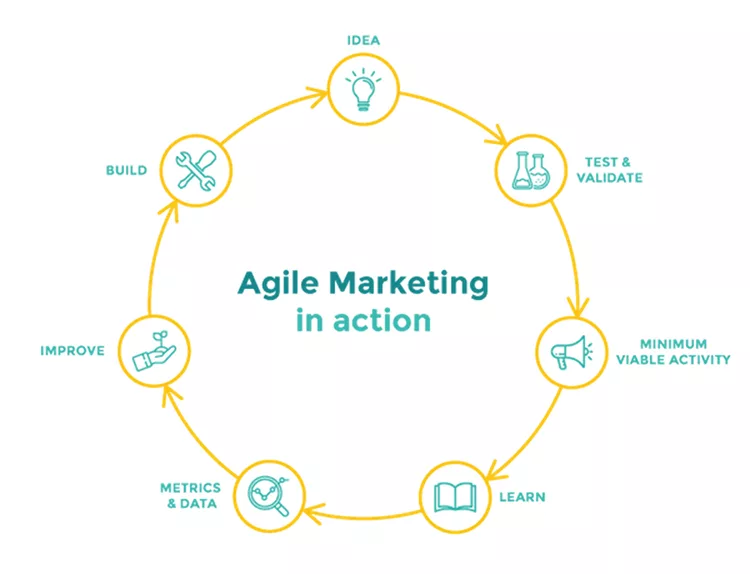
33 Profitable Work From Home Business Ideas

Software Stack Editor · April 8, 2024 ·

The post 33 Profitable Work From Home Business Ideas appeared first on ClickFunnels.
You’ve long had a dream—a burning desire. The dream to be your own boss. To call the shots. It’s been with you since you can remember. It’s the dream of freedom. The freedom to work from home or on the road. The freedom to have more time to spend with loved ones. To make money—real money—so that you can finally exit survival mode. But this dream of yours is dwindling. Fading. It’s disappearing slowly into the abyss. And with each passing day, this dream of taking life by the horns and being your own boss is dying a slow and steady death.

But it’s never too late to turn your dreams into reality. It’s never too late to decide one moment that enough is enough. It only takes a single instant. In that instant, life can change forever. In that instant, you can make a decision. A decision that enough is enough. One that triggers a chain reaction to finally extricate yourself from a depleting 9-to-5 job. It only takes an instant to decide to start a business. A real business. One that allows you to make money in your sleep or while traveling the world. A business that allows you to be your own boss and finally call the shots.

Picture that for a moment. Freedom. True freedom. It’s not a pipe dream. It can be your reality—anyone’s reality. As long as you want it badly enough. But that doesn’t mean you’ll up and quit your day job tomorrow. It doesn’t mean you can just throw all your obligations to the wind, right? What would you do? Where would you start? How can you build a business working from home? One that can make you enough money to not just survive but to thrive? One that can help you cover your bills and finally give you a chance to breathe again?

How To Work From Home

Most dream of working from home. But most don’t know where to begin. What type of business would you start? How would you make money? Would you sell a product or a service? Where do you even begin? The answer is this. Find a way to solve a problem that someone is experiencing. Solve that problem so well that people flock to you for the solution. It has to be a problem big enough that people are willing to pay you handsomely to solve it. We’re not talking about tiny problems here. Everyone can solve tiny problems.

The bigger the problem you can solve the more money you can make. It doesn’t matter if you’re working from an office or your home. It doesn’t matter where you live or where you’re from. What matters is your ability to solve that problem. That’s where you begin. You begin at the intersection of the problem. What type of problems can you solve? Where do your skills begin and end? This isn’t about just having the confidence to solve the problem. You must actually be able to solve it and solve it well. And the better you can solve it the more money you can make.

The best part is this. You can typically solve problems from anywhere. It doesn’t require you to be in a specific location to solve a problem. That’s the beauty of working from home. The Internet allows us the freedom to live and work anywhere. That’s not the hard part. The hard part is defining the problem and finding the people experiencing that problem. Then, you must convince those people that you can actually solve their problem. But if you can do that then you have yourself a business. It all starts there. Pick the problem and find the people experiencing that problem. Then go all in.

1—Marketing Funnel Consultant

All businesses need marketing funnels. Every single one. What is a marketing funnel? It’s an ecosystem. Marketing funnels allow companies to generate leads and increase sales. They take customers on a predefined journey. It simplifies the entire lead generation and customer acquisition process. That’s why every company needs a marketing funnel. It’s a problem some companies don’t even know they have. Some still have websites and don’t know better. But marketing funnels are the key. And you can build an entire consulting business around it.

2—Lead Magnet Creator

Lead magnets allow you to prove that you can solve problems for customers. They’re used to help generate leads and establish a person as an authority. And you can build an entire business working from home just by creating lead magnets for others. Lead magnets can come in many forms. They can be written lead magnets, audio lead magnets, videos, free trials, and more. The point is that it must help to solve a specific problem that a prospect is experiencing. And lead magnets are typically offered for free within a lead generation funnel. Prospects exchange their contact details for the free lead magnet.

3—Landing Page Designer

Landing pages are an important part of any business. But most companies struggle with creating high-converting landing pages. Landing pages must look nice and be easy to consume. That’s because they’re at the basis of every critical business operation. Landing pages are part of every process that a company has to attract, convert, and retain its customers. And every business knows the importance of landing pages. You can make money creating landing pages for specific businesses. And you can also create landing pages as part of entire funnels and sell them in the funnel marketplace. This allows you to generate passive income from your landing page designs.

4—Online Course Creator

You can create an entire business around online courses. And you can do it from anywhere. That’s the beauty of the online education world. You can create and sell your courses to make money online. What type of online courses should you create? Get specific. Dig deep into the problem that your prospect is experiencing. And create a course that helps to solve that problem in a very detailed way. Go above and beyond. Give them all the knowledge and tools they could need to solve that problem. If you can do that, you can succeed with online courses.

5—Membership Sites

You can build a business working from home by creating a membership site. Take a topic or a specific problem that people are experiencing and create a membership site around that. Membership sites are constantly updated with fresh content and new information. They take time and energy. But it’s worthwhile because membership sites deliver recurring revenue. Customers pay month after month without fail. That means you’ll spend less time finding new customers. Instead, you’ll spend more time delivering value to existing customers.

6—Email Marketing Business

Email marketing is vital in business. If you’re not marketing via email you’re wasting your time. But the problem is this. Most companies are bad at email marketing. They don’t know what it takes to make money with emails. But the truth is that email marketing takes effort. It takes storytelling. And it takes being vulnerable with your audience. Is it easy? No. But it is well worth it. If you’re a good writer, you can help other companies make money in email marketing. Many don’t invest enough in email marketing. But emails offer the highest return on investment of any marketing activity.

7—Copywriting

Copywriting is a high-level skill that can make you money from home. The top copywriters in the world get paid a lot of money to produce high-level copy. That’s why this makes a great business model. Especially if you’re a good copywriter. Copywriting is different than writing because the skill zeros in on conversions. You must be able to speak to the prospect and their problem. The best copywriting identifies the problem and agitates it before presenting a solution. And it does it in a way that helps convey that their solution not only works for others but will also work for them.

8—Digital Products

Digital products come in all shapes and flavors. They can vary by medium and format. Some digital products can be cheat sheets or checklists. Others can be tools or video series. But the real draw of digital products is that they’re digital. They require no manufacturing or production time aside from creating it once. After you’ve created a digital product you can sell it again and again. Your inventory is virtually limitless. And as long as those digital products solve real problems, you can make money selling them day and night. That’s why digital products make a great work-from-home business idea.

9—Social Media Consultant

Many people rely on social media for an income. It’s used by businesses around the world to increase exposure and generate sales. Meaning that if you’re good at social media, consider helping other companies to increase their brand awareness on social media. You can promote your services on different platforms and use social media to make money. To find clients, you should create a hero funnel and link it to your profile. A hero funnel is a way for you to generate leads on social media when people click the link in your profile. Use other tactics like direct messaging and other outreach to find your first few clients.

10—Vacation Rental Management

You can run a vacation rental management business while working from home. And you can do this even if you don’t live in a vacation hotspot. Vacation rentals are everywhere. You can easily discover local listings and work with those owners to manage their rentals. While it does take some time and effort to get things going, it’s a lucrative industry. Vacation rental managers can secure anywhere from 20 to 40% commissions on gross rental rates. The best part? You don’t need a real estate license to be a vacation rental manager. You do need to understand how the process works and secure contracts with existing listings.

11—Web Developer

Many web developers earn a lot of money because this skill is in high demand. It’s easy to build a web development business from home. That’s because it doesn’t require you to be physically present. Most web developers work remotely and deal with clients halfway around the world. To find clients, use some of the popular freelancing websites like Upwork and Freelancer. You’ll need to secure great reviews and feedback to succeed. So it will take you time. But if you’re a web developer, there’s no reason why you shouldn’t be working for yourself.

12—Bookkeeper

Every business needs bookkeeping. If you’re good with numbers, consider setting this up as a home-based business. Bookkeeping doesn’t require tons of many hours. Especially when you’re working with small businesses. You can launch a bookkeeping business on a shoestring budget and promote it with a simple lead generation funnel. Stick to one specific type of client such as business owners. Bookkeeping also provides recurring revenue because every business needs its books looked after regularly. If you know how to use the prevailing software platforms, even better.

13—Business Flipper

Did you know that you can go out there and buy businesses only to later resell them? Yes. You can flip all kinds of businesses. And it doesn’t require a huge amount of upfront capital. That doesn’t mean you’ll acquire a business for free. You can if you’re savvy but I wouldn’t count on it. But you can use existing platforms like Flippa or Empire Flippers to find existing businesses that are cash-flowing. Once you acquire the business you can enhance its sales and marketing to increase its revenue. Then, you can turn around and resell the business. You can also buy boring businesses and other small businesses in your local area.

14—Coaching

If you’re an expert in your field consider coaching others. This is a great business to run from home. You can either choose group coaching and take the one-to-many approach or you can do private coaching. To scale your coaching business, you must reach as many people as you can at the same time. To do that you will need an application funnel. An application funnel allows you to accept applications from people looking to work with you. They’ll fill out a form and pre-qualify themselves. Then, you can weed through anyone who doesn’t fit your criteria.

15—Consulting

Consultants help others solve problems by taking a hands-on approach. Some consultants solve the problem for the customer. Others provide a solution that the customer can implement. Either way, you must be good at solving specific types of problems for specific types of people. Can you make money as a consultant working from home? Yes. You can consult virtually or provide a service that helps businesses or individuals solve problems. And you can do it on the Internet and meet virtually. To attract clients, create an in-depth lead magnet and place it inside of a lead generation funnel. Then, drive traffic to that funnel by posting on social media, creating videos, blogging, and running ads.

16—Video Editing

The world is turning to video. It’s the medium of choice today. And platforms everywhere are embracing video. That gives video editors a great opportunity to create a work-from-home business doing video editing. If you’re at all interested in video editing, you should consider this. It doesn’t mean you need to be a creative genius. You only need to understand how to edit videos the right way. Video editing involves storytelling and understanding how to make a video flow and be engaging. It’s not always simple. But with practice, almost anyone can get very good at this.

17—Graphic Designer

You’re in luck if you’re a graphic designer and you want to work from home. That’s because every company needs graphic design services. That’s also why you can quickly build a graphic design business working from anywhere. Carve out a good niche and focus on that one area. For example, if you’re really good at designing logos then focus on that. If you’re great at doing brochures, then offer that. Stick to one specific service as your base-level service then build everything else up over that.

18—Webinar Builder

Webinars are presentations designed to help sell premium products and high-ticket services. These presentations allow you to break false beliefs. False beliefs are the stories that we tell ourselves that hold us back from buying things. They’re based on our experiences and beliefs. All beliefs are formed over time. But those beliefs can stand in the way of purchasing a particular product or service. Webinars help to break those false beliefs by replacing them with new stories. Many companies understand the power of webinars but don’t know where to start. You can learn how to structure the perfect webinar here.

19—Self-Published Author

You can be a self-published author in an instant. You don’t need approval or permission from anyone. All you need to do is learn how to write a book. If you want that book to sell, it must be well-written and engaging. But anyone can become a self-published author. All you need is to create an account at Kindle Direct Publishing. Simply publish a book there on any topic. Research topics that are in demand and create a great book that solves a real problem. The best part? You can make money as an author in your sleep or while traveling. You can do it from home or abroad. It’ll take time but it’ll be well worth the wait.

20—Search Engine Optimization

Search Engine Optimization (SEO) is a skill that drives highly relevant organic traffic to websites. Most companies spend a lot of money on ads to drive traffic. That’s what makes SEO a very sought-after service. It’s free and organic. If you’re good at SEO, consider providing this as a service for companies who need it most. But don’t provide the service before you really understand how to do SEO the right. Not by cutting corners or using shady tricks to rank. Real SEO must be done the right way.

21—Paid Search Engine Marketing

Another work-from-home business you can do is paid search engine marketing. Search Engine Marketing (SEM) is a service that involves running and managing paid ads. Paid ads are used to drive traffic, generate leads and make sales. Every company runs paid ads to some extent. If you understand the various ad platforms, you could offer this as a service. If you’re really good at it, you could make a lot of money fast. That’s because successful ads can directly impact a company’s bottom line fast.

22—ATM Business

ATMs are everywhere. That’s because people still need cash. And sometimes ATMs aren’t easy to find in certain places. That’s what makes ATM businesses so lucrative. When you place an ATM in the right location you can make a lot of money. ATMs pay out a percentage of the transaction. It’s baked into the fee. So if you can place an ATM in the right location, it might generate thousands of transactions weekly. And you can find many ATM providers you can work with. All you need to do is find the right location and strike a deal with the business owner to place the ATM there.

23—Vending Machines

Vending machines offer another great opportunity for working from home. That’s because vending machine businesses have a low barrier to entry. Most vending machines do not cost that much money. And if you put it in the right location they can generate profit immediately. That doesn’t mean the business is easy. It only means that the process is simple. You’ll need to find the right locations. You’ll also need to provide timely restocking.

24—Live Streamer

Live streaming is increasingly popular today. You can use many platforms to do it. Kick, Twitch, TikTok, and other platforms are used heavily by live streamers to make money. Live streaming means that you’re live and in front of your camera. That could be at your desktop or your phone. It takes time to build an audience and make money live streaming. You also must be entertaining and engaging to hold your audience’s attention for long periods.

25—Network Marketing

Network marketing is an industry that sometimes gets a bad rap. However, network marketing is a great way to make money while working from home. This is ideal for stay-at-home moms or dads who are at home most of the time. It’s very similar to affiliate marketing except it is often structured a little bit differently. While the top earners do make a lot of money, most others struggle with network marketing. That doesn’t mean you won’t succeed. But if you already have a list or an audience of some type somewhere, you’ll have a big advantage over others.

26—Automation Guru

Various systems exist in business today. They’re used concurrently to generate leads and make sales. Sometimes those systems are not designed to talk to one another. Other times employees must bring all that data into one repository to track key performance metrics. If you understand how to make systems speak to each other, you could become an automation guru. You could use systems like Zapier to integrate systems and automatically bring that data into places like Google Sheets. Find a way to create a valuable lead magnet around this problem to attract the right type of clients. Then, sell them your automation services.

27—Dog Walker

A simple work-from-home job or business is a dog walker. You can use popular apps like Rover to find clients with ease. People adore their dogs but don’t always have the time to spend walking them. They have busy schedules and lots of things going on. That’s what makes this such an attractive niche. The work is simple and you can find recurring clients with ease. If people are happy with your service, they’ll hire you again and again. This can also lead to things like pet sitting while dog parents are away on vacation. Set up an account on Rover and start hunting for clients today.

28—Care Giver

Caregivers provide services to others in need. For example, you could babysit for parents with small children, provide elderly care, and more. You could also do house sitting and various other things. To start as a caregiver, you can register on a site like Care.com. This gives you access to clients in need of care. You’ll need to gather great feedback and ratings to get the best gigs. And you’ll need to pass background checks on most platforms before you can provide these services. But it is well worth it. That’s because it’s an easy work-from-home business you can start in a single weekend.

29—Affiliate Marketing

Affiliate marketing is a great business to start. Especially when you have an existing audience. If you have an email list you can use it to make money as an affiliate. If you don’t have an email list but you have an audience elsewhere, you can still succeed with affiliate marketing. For example, if you have a large following on TikTok or Instagram, it can help you get your message out to the right people. Even then, you must approach affiliate marketing with caution. Be careful not to spam affiliate links. You should use a bridge funnel and offer a free lead magnet to attract people into your world. Then, begin building rapport with email marketing. Eventually, you can start promoting affiliate offers. But not before delivering some value first.

30—Print-on-Demand

Print-on-demand (POD) businesses are very popular today. Two platforms exist that enable you to sell POD products. Those are Printful and Printify. POD is a great way to work from home because all you need to do is create the designs for the products. You don’t need to do the printing or embroidering. There’s no warehousing or shipping. You simply create the designs and ensure you find people to buy those products. The POD platform does everything else. And you take the profit as your pay. This is ideal for merchandising and brands to quickly roll out apparel and other items with their imagery.

31—Amazon Private Label Business

Everyone knows that Amazon is the world’s largest store. They have countless products for sale and generate untold amounts of money in sales. But not everyone knows that 60% of those products are sold by third-party sellers. They make up the bulk of products on Amazon. And the best part is this. Almost anyone can launch an Amazon private-label business. Private Label simply means that you’re creating a brand of products sold on Amazon. You’re not reselling existing products. To do this, you need to have a great product idea, produce the inventory, ship it to Amazon, then start selling it. Is it easy? Nope. You need to collect reviews, run Amazon PPC ads, and manage inventory. It takes time and effort. But in the long run it is worth it.

32—Online Tutoring

Today, you can tutor people from around the world online. You can do it from the comfort of your home or while traveling abroad. Online tutoring allows you to teach a skill or another language to others and get paid for doing it. If you’re skilled in a specific subject or know a musical instrument, then consider doing online tutoring. You can use any of the popular online tutoring websites out there. Tutor.com, Varsity Tutors, and many others exist. They all allow you to tutor students in a variety of different areas. You’ll need to gather great reviews and feedback to get the best gigs. And you’ll need a good internet connection wherever you might be.

33—Freelancer

You can build an entire work-from-home business as a freelancer. And you can make a lot of money doing it. Freelancing means that you do remote jobs for people working from home. It allows you to make money from your laptop. You can do all types of freelancing. Whatever your skill level is and whatever area you can think of, there’s an opportunity to freelance there. You can use Upwork, Freelancer, Fiverr, and many other platforms to find clients. You’ll need to hustle in the beginning. But that’s just like everything else. Stick to it and you can turn this into a real business.

Thanks for reading 33 Profitable Work From Home Business Ideas which appeared first on ClickFunnels.
23 Highest Earning Online Businesses

Software Stack Editor · April 3, 2024 ·

The post 23 Highest Earning Online Businesses appeared first on ClickFunnels.
You’re in the midst of a storm. A torrent. It’s sweeping you away. Encircling you. Pinning you down. There’s no break in the winds. No chance you can escape. And how could you? Your entire family is relying on you. Right now, that storm is causing chaos in your life. After all, that’s what happens when you run out of money, right? It’s a constant struggle just to survive.

The truth? You’re at the end of your rope. You can’t just wait for the storm to pass any longer. If you don’t learn to dance in the rain your life will always remain the same. That’s why the job you have isn’t cutting it. There’s never enough money left at the end of the month. The goal? Start an online business and make real money. Not the kind of money you’re making now. I’m talking about unhinged money. An avalanche of cash. A tsunami of racks on racks—the kind of money that dreams are made of.

You’ve always wanted an online business. But where you do begin? How do you start an online business and exit survival mode? And what online businesses earn the most amount of money? Look, it won’t be easy. I won’t sit here and try to convince you otherwise. That’s because owning an online business brings another set of headaches. A different set of problems. But at this point, you would welcome those with open arms. Right?

While you can start many online businesses, some won’t make you much money while others will. The goal is to start the right business so that you can earn a substantial amount of money. Sometimes it’s not just about the type of business you start. It’s about the approach. The trick is to find a way to generate leads and make sales profitably. If you can do that, the world is your oyster.

What Is An Online Business?

An online business is your ticket. It’s your ticket to a better life. A ticket out of the storm. Freedom from all the chaos. Online businesses offer a pathway to your dreams because you no longer have to suffer through a 9-to-5 that you can’t stand. You no longer have to deal with all the headaches of working for a boss who doesn’t appreciate you even exist. And for what? For pennies? So you can just barely scrape by in life? Nope. There’s a better way to earn.

Starting an online business isn’t the easiest path to your dreams. But it does offer you the freedom to make money. Real money. Money you can make in your sleep or from your phone. Online businesses give you the freedom to earn money from your laptop while traveling to some remote destination. That’s because you’re the boss. You call the shots. That doesn’t mean an online business is easy. It’s not. But it is well worth it.

The question you have to ask yourself is this. What excites you? What are you passionate about? We’re not just talking about starting a boring business here. After all, you’re a budding entrepreneur. A future small-business owner. You don’t want a side hustle. You want a main hustle. And while you can start many online businesses, not all of them will help you make lots of money.

The trick is to pick an online business with high margins. This isn’t just about selling trinkets or low-cost items. This is about selling premium products and high-ticket services that will make you real money. So exactly what kind of business should it be? It could be any kind. The trick? Start an online business focused on solving real problems that real people are experiencing. If you can do that successfully and scale up, you’ll likely never have to worry about money again for a very long time.

1—Digital Products

Digital products make the best type of online business. Why? Because they require zero inventory. There’s no production or overhead involved. You can start making money with digital products right away. And all it takes is the knowledge inside of your head. That doesn’t mean it’s easy. But there is a simple process to creating and selling digital products by using marketing funnels. Create your digital products to solve a specific problem that a specific person is experiencing. That’s the underlying strategy to succeeding with a digital products business.

2—Sales Funnels

Every online business needs a sales funnel. Sales funnels are the secret to making real money online. Sales funnels can help you generate leads, increase sales and revenue, boost average order value and more. But you can also build sales funnels for others. And you can turn that into a business. You can design sales funnels and sell them in the funnel marketplace to generate passive income. And this requires no coding skills. You just use a drag-and-drop editor and premade templates to create the designs. Then, you offer them for sale in the funnel marketplace.

3—Digital Marketing

Digital marketing means many things. Today, all marketing is digital in one way or another. But the mediums differ. You could be a digital marketer who designs landing pages or does graphic design. Digital marketing could also mean someone who integrates systems using Zapier to help companies better track their marketing activities. It could also mean that you’re managing a Facebook group or doing other forms of organic marketing. The point is that companies need digital marketing to grow their businesses. And you can offer that service to others all day and night.

4—Copywriting

Copywriting is one of the highest-paying skills you could have. If you’re a writer, consider starting a copywriting service. These online businesses help others attract more leads and make more sales. And the best copywriters in the world know exactly what levers to pull to get people to take action. After all, people won’t always take action on their own. Sometimes, you have to give them a reason to act. Copywriters can help create ads, write sales letters, optimize landing pages, and so much more. This is by far one of the highest-earning businesses you could start.

5—Online Courses

Can you turn a course into an online business? Yes. You absolutely can. And some course creators take things to the next level. They build many online courses to help people solve many types of problems in their industry. Online courses can make you a lot of money. Especially if done the right way. And they’re not complicated to build. You can use an existing platform like Udemy or Teachable. You can also use an online course builder platform to build a more customized experience. There’s no coding involved and you’ll make much more money than using any of the traditional platforms. Either way, online courses are a great way to make money fast.

6—Coaching

Coaches help others achieve their dreams. For some people, this is their calling. They have a desire to help others. And coaching businesses can make a lot of money. Especially when you set this up the right way. Coaching requires a good lead-generation strategy. You need some way of bringing in qualified leads. That means you need a drool-worthy lead magnet. Plus, you’ll need some type of application funnel to allow prospects to apply to work with you. This helps put you in the driver’s seat. You can do group coaching or private coaching. It’s up to you. Build out a solid lead generation ecosystem so that you’re constantly getting in fresh names every single day.

7—Consulting Business

Consulting businesses generate a lot of income. Especially when the consultant understands how to solve complex business problems and has experience solving them. If you’re an expert in a field that can help businesses scale and make more money, then consider starting a consulting business. Consulting does not require your physical presence. But it does require you to understand the nuances of complex business problems. Things like lead generation, sales, conversions, traffic, growth, and more. You can make a lot of money as a consultant if you know what you’re doing.

8—Webinars

Most people don’t know what webinars are. But the concept is simple. At its core, a webinar is just a presentation. It’s designed to help sell premium products and high-ticket services to audiences. They’re used to break false beliefs prospects hold that stop them from buying what you’re selling. Webinars are typically 90 minutes and longer. However, some webinars are shorter. You can build an entire online business on the back of a webinar. After all, ClickFunnels used webinars to generate over $100 million in annual sales. That doesn’t mean it’s easy. But there is a simple process. You can learn more about how webinars work here.

9—Social Media

Another online business you can start is in social media. Social media management agencies make a lot of money by helping other companies increase visibility across social platforms. If you’re good at social media then consider doing this. You can also do other things on social media such as work to build a solid following in a specific niche. Then, you can use that following to sell them products and services, send them affiliate offers, and even get brand deals. Either way you approach this, you must have a hero funnel attached to your social media profiles. Hero funnels help you generate leads so that you can bring social media followers onto your email list.

10—Short-Form Video Editor

Short-form videos are taking over on the Internet. Companies are using this style of videos to attract new customers and clients. But not all companies have mastered the art of videos in short form. That’s where you come in. If you’re a skilled video editor (or are willing to learn) you can create short-form videos and turn this into an online business. You could create an all-you-can-eat service where you do unlimited short-form videos for a set fee. The best part? You can use many online tools to help streamline this process. That doesn’t mean you’re not doing the work yourself. It requires creativity and the proper inputs to create high-quality short-form videos. But it’s far easier today than it once was.

11—Search Engine Optimization

Many companies struggle with Search Engine Optimization (SEO). After all, SEO is hard. Everyone knows that, right? But SEO is also the single most powerful marketing activity that generates the most return on investment behind email marketing. That’s a bold statement. But think of it this way. Everyone knows that it’s incredibly hard to rank. And they also know that listings at the top of results are the most relevant. In fact, organic traffic drives the highest conversions of any type of traffic for a reason. That’s because it’s highly relevant and laser-focused. You could start an SEO business online and make a lot of money as long as you take the right approach and don’t look for shortcuts.

12—Real Estate

Real estate creates the most millionaires of any industry. By far, this is one of the best types of businesses you can start. That’s because you can make money in real estate in so many different ways. But the best way is to start with real estate wholesaling. Especially here in the United States. Wholesaling real estate just means that you’re finding properties at a big discount. You do this by looking for distressed sellers and distressed properties. These properties are not in great condition. And the sellers are highly motivated to offload their properties. You simply put these properties under contract, and then flip them to cash buyers for a profit. You could also do things like fix-and-flips, multi-family real estate, long-term rentals, vacation rentals, and more.

13—YouTube

YouTube is one of the most difficult ways you can make money online. That’s because it takes a long time to gain traction on YouTube. But it’s also one of the highest-earning marketing channels out there. Yes, it takes a long time to gain traction on YouTube. But once you do, the sky is the limit. You can use YouTube to sell products or services once you build a substantial audience. You can also use it for affiliate marketing and a million other things. YouTube allows you to build a global brand because YouTube is everywhere. You also don’t need to show your face. Plenty of faceless YouTube channels exist that are making millions of dollars per year.

14—Affiliate Marketing

Affiliate marketing allows you to make money while helping other brands promote their products and services. It isn’t easy to make money as an affiliate. You need an established audience to succeed. You must have some form of an email list that you can market to. If you don’t have an email list, you should have a following somewhere. It could be on social media, YouTube, or elsewhere. As a last resort, you could use paid ads to make money in affiliate marketing. Either way, you’ll need a bridge page to collect the contact details of prospects before forwarding them to the affiliate offer. This way, you can market to them again and again in the future.

15—Paid Ads

Paid ads offer another avenue for you to earn money with an online business. If you understand paid ads, then consider doing this. That’s because most companies struggle with paid ads. Since privacy is changing and it’s now harder to track users around the web, paid ads are becoming increasingly complex. It’s hard for businesses to navigate all of these complexities. If you’re skilled at paid ads, you could help businesses increase traffic, leads, and sales. In turn, you could make a lot of money doing it. Especially if you’re good at it.

16—Email Marketing

Email marketing is the Holy Grail of all marketing activities. That’s because it produces the highest return on investment. Once a prospect is on your email list, you can sell to them again and again. And the businesses that understand how to leverage the power of storytelling through emails win. Stories allow you to build a bond with the prospect. They create rapport. You could easily help other companies that are struggling with email marketing by charging them for this service. Especially if you’re a good writer. The best part? All you need are a few clients to make a considerable amount of recurring revenue in email marketing.

17—Blogging

Blogging is not an easy online business to start. To build a successful blog takes time. But if you’re passionate about writing, you could start blogging on different platforms. You don’t need to start with a custom domain WordPress installation. You could begin blogging on Medium. But to make real money blogging you should have a WordPress blog setup. Pick a niche and really go after that niche. Build lots of highly valuable content that is very useful for people. It takes time and a lot of effort. But in the end, it’s well worth it because once your blog has a lot of traffic, you can earn in many different ways. You can sell digital products, make money from ads, do affiliate marketing, and so on.

18—Web Development

Web development is still one of the best skills that you can have. Web developers can make a lot of money by helping other companies build sites and interactive systems. You can find clients on sites like Upwork, Freelancer, and Fiverr. While it takes time to build your profile, you can run this online business from just about anywhere in the world. You can use it to make money while traveling or from home anywhere you might be. Of course, you do need to be passionate about web development. That’s because it takes time to understand how to code the right way.

19—Print-on-Demand (POD)

Print-on-demand (POD) allows you to sell physical products without ever producing them. Most people use POD to sell merchandise like apparel. But you can use it to sell many things. For example, you can sell mugs, phone covers, pillowcases, and more with POD. You’ll need some sort of brand and imagery first. For that, you’ll need to hire a designer. The best part is this. Costs for running a POD business are very low. That’s because you don’t need any expensive machinery, warehousing, or employees to run your business. Just use one of the established POD platforms like Printful or Printify to launch your POD business. All you need to do is focus on getting people to buy what you’re selling.

20—Build Apps

You can create an entire online business around building apps. The best part? You don’t even need to know how to code or create apps. That’s because you can use many no-code app platforms to build the entire app. You’ll need to be savvy in understanding user interfaces. And you’ll also need to understand how to find clients. That’s about it. If you can do those things you can create a business around building apps for other companies. After all, apps are still a very important part of any company’s ecosystem. Think about it this way. Apps give companies access to billions of people around the world. If you can help a company build an app, you can certainly make money.

21—Theme Designers

Website themes are still a thing. Even if websites are dying, companies are still building them. That’s where you come in. You can create an entire online business around website themes. You can design and build themes, and sell them on platforms like Envato or Monster Templates. These can be website themes, WordPress themes, skins, and so on. If you’re a good designer, then consider starting a business around theme design. Plus, selling themes will give you passive income. That means you’re doing the work once and getting paid every time someone buys your theme.

22—Private Label Brand

Most of the products sold on Amazon are sold by third-party sellers under private label brands. Private Label just means that you’re branding a line of products to your company. You can create a private label brand around any type of product and sell it on Amazon. All you have to do is sign up as a seller at Amazon Seller Central. Then, find a product and a good supplier. Yes, there are a lot of steps in between this and actually making money selling on Amazon. But it is well worth it. After all, there’s massive buyer intention on Amazon. Meaning that everyone who visits Amazon is going there to buy something. It’s unlike typical search engines.

23—Handmade Products

If you love creating handmade products, then consider starting an online business selling handmade items. That doesn’t mean you need to sell low-cost items. You could sell high-end pieces of jewelry or other customized items. If you’re passionate about this, consider using one of the popular platforms like Etsy or Handmade to sell your items. You’ll need to run ads and consider photos, descriptions, and producing inventory. It’ll also take time to collect enough reviews to give you some momentum. But if you’re passionate about it, then this could be the ticket for you.

Is It Hard To Start An Online Business?

Starting an online business requires less resources than a physical business. But that doesn’t make it easier. An online business is still a business at the end of the day. And the fastest way to launch and scale a business online is by using sales funnels. Sales funnels help you generate leads and acquire customers faster than any other method out there. Learn how to build a sales funnel to help grow your business fast.

Where Do You Find Customers For Your Online Business?

It doesn’t matter what kind of business you start you need a way to generate leads. To do that you need to build a lead generation funnel with some kind of lead magnet at the front end. Lead magnets solve part of the problem a prospect is experiencing. And they gladly exchange their contact information for free access to the lead magnet. Your lead magnet should be so good that you feel strange giving it away for free.

Thanks for reading 23 Highest Earning Online Businesses which appeared first on ClickFunnels.
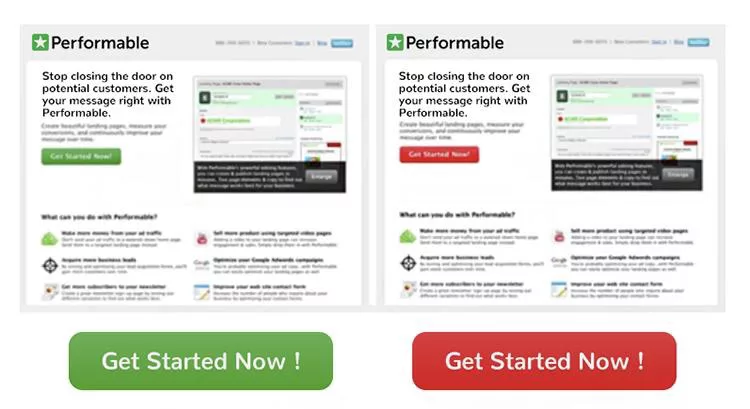
15 Remote Jobs To Make Money Working From Home

Software Stack Editor · April 1, 2024 ·

The post 15 Remote Jobs To Make Money Working From Home appeared first on ClickFunnels.
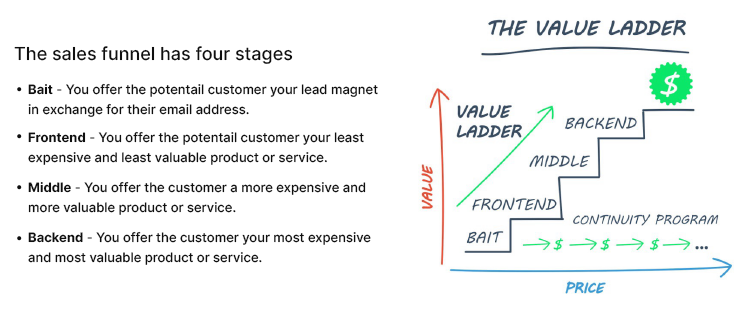
We’re in the midst of a revolution. A seismic shift. It’s been underway for years now. But the pace of change has intensified. And the meaning of work is no longer the same as it used to be. Thanks to this thing we call the Internet, we can find remote jobs at some of the top companies in the world while living anywhere we please.

We no longer have to suffer or sacrifice for a standard of living that doesn’t meet our expectations. We no longer have to commute for hours a day just have a decent place to live. Nope. Not at all. Today, we can easily find remote jobs that allow us to make money working from home or while traveling the world. You can be on a tropical island and sink your feet in warm sugary-white sands, or be on a farm in a rural village halfway across the world. It doesn’t matter.

The Internet delivers convenience and real-time communications to people everywhere. That means we can work remote jobs and live in a place that affords us a higher standard of living. But what does it mean to work a remote job? And how do you find the best work-from-home jobs or work-from-abroad jobs out there?

The truth? An endless number of remote jobs exist that allow us to work from home and make money online from anywhere. But how hard is it to find these jobs? And how do you set yourself apart from others who are vying for the same positions? I won’t sit here and tell you that it’s easy. But it is simple. The one thing you must understand is that remote jobs require discipline. If you don’t have the discipline to work remotely, you’ll find it hard to stay on track and get your work done.

What Is A Remote Job?

Remote jobs allow you to work from anywhere in almost any occupation. Today, remote jobs are more common than not. In fact, most of the best organizations have entire teams of skilled remote workers. After all, most work today doesn’t require you to be physically present. Since almost every business system originates online, you can do your job working from home or abroad in almost every industry & niche.

Most people think that remote jobs offer low pay. But that’s not the case. In fact, some of the top remote jobs pay a higher salary than some of their on-location counterparts. Why? It’s because some of the top talent in the world get to pick and choose where they want to work. And sometimes, they can’t easily be in the physical location where the company is located.

Working remotely is an advantage. Not a disadvantage. You just need to know where to look for the best remote jobs. It’s not just about working from home. Today, we want the freedom to work while traveling and to make money from our phones. It’s that laptop lifestyle that has us fixated on seeing the world. After all, life isn’t slowing down for us one bit, right?

How To Find Remote Jobs

You can find remote jobs on many of the popular job platforms. For example, you can use Indeed to find work-from-home jobs. You can also use Monster Jobs, Zip Recruiter, Flex Jobs, LinkedIn and more. You can even use X.com’s new job search system, which gives you access to millions of jobs. And you can also use your social media accounts to let people know that you’re open to work.

However, you don’t need to search on your own. You can also easily find headhunters to help you find great remote jobs. Headhunters get paid on performance. And depending on the type of job you’re looking for, that often means a lot of money for the headhunter. But it also gives you peace of mind and allows you to rest and relax feeling assured that someone is out there searching for you.

Should You Work A Remote Job Or Work For Yourself?

Most people can’t imagine working for themselves. They can’t imagine being self-employed. But so many people are doing it. And successfully. Remote jobs can be rewarding when you can find the right one. If you can’t, it’ll seem like a struggle. That’s why working for yourself should always be on the table. The question is, what kind of business would you start?

It all depends on your skills. I won’t tell you what type of business you should start. I would only tell you to go where the money flows. Where are people spending the most amount of money? What problems can you solve at a high level that people will be willing to pay you for? Those are the questions you should ask. Think about it this way. When you find a remote job, that company is looking for employees who can solve problems in a specific area of their business. That’s all.
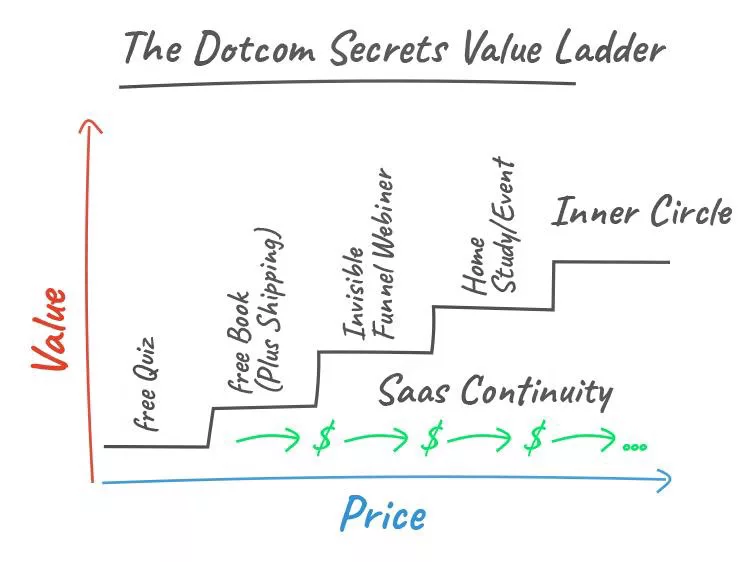
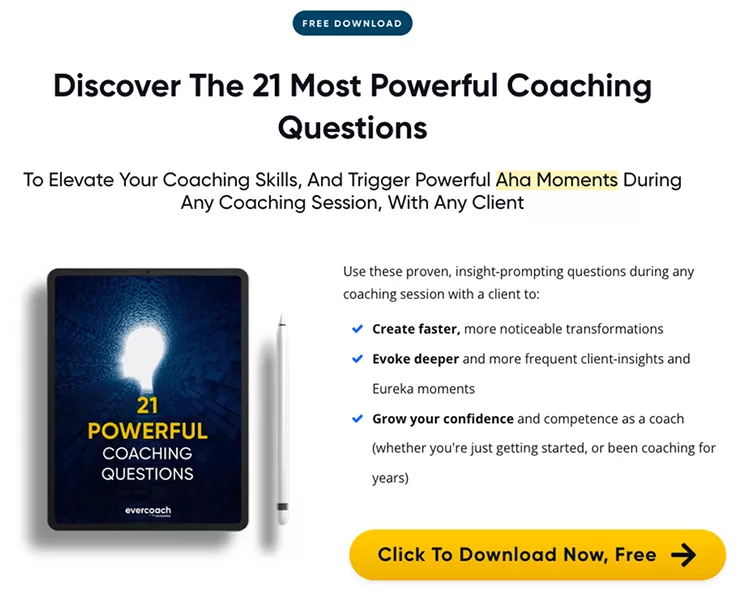
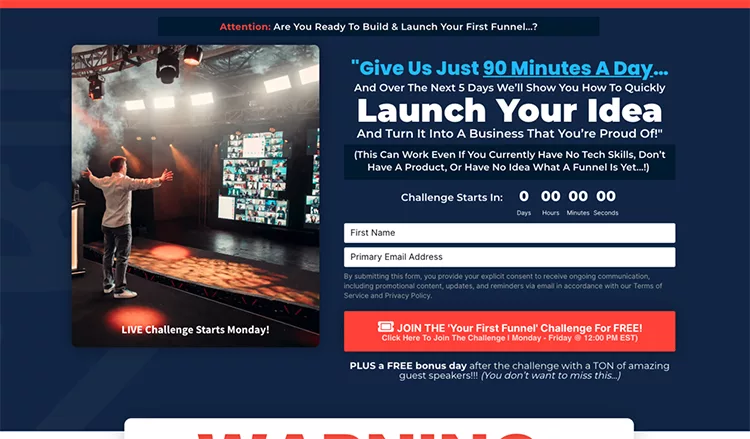
Either way you look at it, don’t start by selling inexpensive items. That won’t help you make a lot of money or make it fast at all. Aim higher. Go after big problems that you can solve. Even if you do it on the side. And whatever you do, make sure you build a sales funnel to grow that business fast. Sales funnels (aka marketing funnels) are the most powerful way that anyone can grow their business and make money online. Period.

1—Customer Service Jobs

The most obvious type of remote job is customer service. Every company needs skilled customer service reps. If you’re fluent in English and skilled with typical productivity programs, you can easily secure a customer service job. Customer service requires great communication skills. So if you can effectively communicate with others then consider getting a job in customer service.

While most customer service remote jobs don’t allow you to set your own hours, it does give you location freedom. You can work from anywhere as long as you’re available during typical business hours. Even if you live halfway across the world on another continent. That’s the beauty of customer service. But this work is demanding. Especially when you’re dealing with unruly customers.

2—Social Media Jobs

Social media allows you to work from anywhere in the world. This doesn’t just mean you need to get a remote job working for another company. You can do social media for others and still get paid. Either way, if you’re good at social media you should consider this. Especially if you’re interested in doing social media management and running an agency.

Remote jobs in social media run the gamut. You could be in charge of posting new content every day. It might mean that you need to create short-form videos or write great descriptions and post them with photos. It could mean managing a TikTok shop or driving traffic to offers using swipe-up stories. And it could mean many other things.

3—Affiliate Marketing

Every company needs to have an affiliate program if they don’t already have one. That’s because affiliates can drive a lot of sales by tapping into existing audiences. Especially when you’re dealing with super affiliates. You can also find many remote jobs in the affiliate marketing space. You could find something working for one of the big affiliate platforms like Rakuten, CJ Affiliate, ClickBank and others.

Plus, you can also do affiliate marketing by just becoming an affiliate for top companies. For example, our affiliate program has paid out over $140 million to affiliates. To really succeed as an affiliate, you need to build a bridge page that helps you build your email list. Email lists are the most important asset that you can have. Especially in the affiliate space.

4—Phone Sales

Phone sales (also known as telemarketing) is a remote job that could earn you a lot of money. Especially if you’re good on the phone. If you can build rapport and really understand how to listen to prospects, you could do well in telemarketing. Most telemarketers do get a bad rap. After all, it’s a taxing industry that does involve speaking to rude people at times. But then again, most people don’t like being disturbed by sales calls.

However, if you’re good on the phone, this is absolutely one remote job you should consider. You have the potential to earn both a fixed salary and commissions when you sell on the phone. Many companies will gladly pay you a commission on sales. That means that if you’re really good, you could make a lot of money in telemarketing.

5—Writing Jobs

If you’re a copywriter or you’re a skilled writer in another area, you could easily find a remote job in writing. You can write for companies near and far. And you can do it from anywhere in the world. The best part is that you can even mostly do this from your phone. Meaning that you can write content easily on your phone that you can then insert into any business system necessary.

So what types of writing jobs can you find? You can find a job copywriting sales letters, ad verbiage, product descriptions, landing pages, sales funnel upsells, email communications, and more. You can help companies write content for newsletters, ghostwrite books and manuals, and so much more. The options are endless.

6—Web Development

Web developers can make a lot of money working remotely. Everyone knows that. If you’re a skilled web developer, you can live anywhere and earn a good living. You don’t need to be in the United States. You can be on an entirely different continent. As long as you’re a good web developer, you’ll easily find endless opportunities to earn.

Web developers can also monetize their skills in other ways. You don’t only need to get a remote job. You can build online courses about web development, tutor others directly, write books about it, and more. It’s not just about getting a paycheck every single month from a company. Instead, find ways you can leverage time by turning your knowledge and skills into sellable digital products.

7—Graphic Design

Graphic designers can make money working remotely for companies everywhere. Even though AI is starting to take over, companies still need graphic designers (and will likely well into the future). That’s because there’s nothing better than having someone skilled in graphic design to really tackle design-related problems.

Graphic designers can do many things from logos, to brochure designs, sales funnel graphics, print design, manuals, and more. Make sure you have a good graphic design portfolio somewhere online. Today, most graphic designers use Behance to represent their portfolio. Put your best work there and ensure you include a link in your resume when applying for jobs.

8—Prompt Engineering

Prompt engineering is a growing field that will likely increase in size. Especially before artificial general intelligence (AGI) arrives. AGI will likely put an end to most prompt engineering. That’s because AGI will better understand how to serve our needs. Until then, prompt engineering is vital. If you know how to ask the right questions from AI systems like ChatGPT and Grok, you could easily work as a prompt engineer.

To get the best prompt engineering remote jobs, you should have experience in coding and AI systems. If you do have some experience, then great. If you don’t, you can easily learn by watching YouTube videos or consuming online courses geared toward teaching these skills. Spend lots of time asking questions in different ways to see how the answers vary. That will give you deep insight into how your prompts can serve the best solutions to any problems.

9—Search Engine Optimization

Search Engine Optimization (SEO) is a vital skill that most companies desperately fail at. That’s because SEO is hard. It takes time and hard work. You must know how to do SEO the right way or else it could lead to disastrous results. The trouble? Most major updates to SEO take months to do with very little results. That’s why you could be doing the wrong thing for months and only later find out down the road. Companies understand the importance of this and some invest heavily in SEO.

Most people approach SEO the wrong way. They look for shortcuts and hacks. Instead, you must deliver real value. If you understand how to do that, you can excel in any SEO-related remote job. It takes consistent effort and determination. And it also takes understanding all the ups and downs of how the algorithm works and not trying to chase after shortcuts and deceptive strategies.

10—Real Estate

Real estate is a great way to make money no matter where you’re from. Plus, you can make money in real estate without risking your capital or your credit. You can do that by doing real estate wholesaling. Wholesaling is the art of finding distressed sellers and properties that you can get under contract for well below market value. Then, flipping those contracts to cash buyers.

Many remote jobs exist in real estate as well. That’s because real estate agents are always on the hunt for seller leads. They’re also always looking for ways that they can market and promote existing properties to find the right buyers. If you understand real estate and marketing, consider looking for a remote job in this industry.

11—Virtual Assistant Jobs

One of the most straightforward remote job types are virtual assistant jobs. Virtual assistants are there to help businesses with time-consuming tasks that can easily be outsourced. Because of that, virtual assistants don’t make a lot of money. But if you’re looking for a job that’s straightforward and doesn’t require a lot of qualifications to do, then this is it.

Keep in mind that most virtual assistant jobs are typically outsourced overseas. That means that it’s easy to find lots of these job types online.

12—Data Entry Jobs

Data entry tasks are often straightforward. If you’re good at typing and you have great organizational skills, then consider this remote job. Data entry tasks are usually simple. They’re not complicated and don’t require a lot of creative thinking. It simply means putting your head down and doing the work. Data entry exists in every industry. That’s because every business is data-driven.

Some companies rely more heavily on data than others. They use that data to make vital decisions about marketing, sales, conversions, and more. It often means combining data from multiple systems or across multiple channels into one area. This allows companies to make more informed decisions in every aspect of their business.

13—Transcription

Transcription is popular in a few industries. But it’s primarily something used in the insurance and legal fields. That’s because much of what’s recorded on phone calls and in proceedings must be transcribed to get them on paper. That’s where transcription comes into play. Yes, automated transcription systems exist. But they’re not always spot-on accurate.

Companies will continue to turn to manual transcriptions, especially where it counts. That’s because they can’t risk having something incorrectly transcribed. While AI systems can do some of this, they can also make mistakes. You can find plenty of remote transcription jobs because transcribing primarily relies on accuracy and effort. If you’re quick and you’re accurate, you’ll excel here.

14—Engineering Jobs

Some of the best remote jobs you can find are engineering jobs. They’re also some of the highest-paying jobs. That’s because engineers play a vital role in the growth of companies. They work on systems and tasks that are integral to a company’s survival. And really good engineers can live and work from anywhere in the world, but still make a lot of money.

What type of engineering jobs can you find remotely? IT systems engineers, network engineers, hardware engineers, software engineers, and more. Whatever type of engineering you’re good at can likely produce a substantial amount of income. You can also use headhunters to find the best jobs with the highest pay.

15—Data Analysis

Data analysis is an important role that companies are always hiring for. That’s because the data that comes into a business is important. It helps lead to crucial business decisions. If you understand how to analyze data, you can find remote work doing data analysis. For example, if you understand how to analyze traffic data, sales data, marketing data, software data, and so on, you could find a data analysis job.

You can search for this on any of the popular job sites or you can find a headhunter to help you. Sometimes, headhunters are not willing to help find people jobs. Especially when their pay is too low. But data analysis is an area where headhunters will gladly want to help. That’s because these are some of the highest-paying jobs you can find. Especially when you’re working for some of the big-named companies out there.

Thanks for reading 15 Remote Jobs To Make Money Working From Home which appeared first on ClickFunnels.
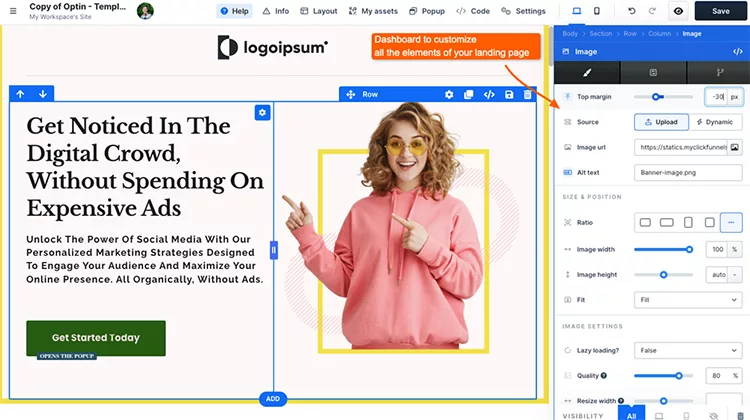
  • « Go to Previous Page
  • Page 1
  • Interim pages omitted …
  • Page 8
  • Page 9
  • Page 10
  • Page 11
  • Go to Next Page »

Get your Software Stack together. softwarestack.tech
Software Stack

© 2024–2025 - Software Stack is a trading name of SouthwestCIO Limited ac ompany registered in England & Wales 11319049

  • Knowledgebase
  • Home
  • About Us
  • Contact Us