• Skip to primary navigation
  • Skip to main content
software stack logo

Software Stack

Get your Software Stack together

  • Knowledgebase
    • All Categories
    • Accounting Software
    • Automation & Workflow Software
    • Customer Relationship Management
    • E-Commerce Shopfronts & Payments
    • Marketing Automation
    • Online Courses & Membership
    • Project Management
    • Surveys & Forms
    • Web Hosting
  • Home
  • About Us
  • Contact Us
  • Show Search
Hide Search

CRM

7 Nimble CRM Alternatives for 2024 (and beyond)

Software Stack Editor · February 29, 2024 ·

Ever wondered if there’s a CRM out there that’s just right for your business beyond the popular Nimble CRM? The world of CRM solutions is huge, with each system offering unique features to help manage your customer relationships and sales processes. Let’s check some of the top alternatives to Nimble CRM so that you can make an informed decision.

What is Nimble CRM

Nimble CRM is a flexible customer relationship management platform tailored for small businesses and business professionals. It excels in bringing together customer data, contact management, and social media interactions into one streamlined environment. With its focus on enhancing business relationships and improving the sales process, Nimble CRM is a smart choice for those seeking a CRM with comprehensive features at an affordable price.

Key features of Nimble CRM

  • Social media integration: Connects directly with social media platforms, allowing businesses to engage with customers and gather valuable insights.
  • Email marketing automation: Features to automate outreach and follow-ups, saving time for the sales team and ensuring consistent communication with prospects.
  • Lead management: Tools for tracking and nurturing leads through the sales pipeline, enhancing the chances of converting prospects into customers.
  • Sales automation: Simplifies the sales process by automating repetitive tasks, allowing the sales team to focus on closing deals.
  • Customizable sales reports: Provides in-depth analysis of sales activities, helping businesses understand performance and identify areas for improvement.
  • Integration with popular apps: Nimble integrates seamlessly with other tools and services, including Google Workspace and Microsoft Dynamics, for a unified view of all your contacts and communication histories.
  • Contact management: Offers efficient management of contact details, with a high limit on contacts and features for updating and exporting contacts easily.
  • Smart CRM features: Includes Nimble Prospector for quick access to contact details and insights, alongside tools for managing multiple sales pipelines and deal tracking.

Why should you look for Nimble CRM alternatives

Nimble CRM is known for its robust contact management and seamless integration with social media platforms, making it a popular choice among small businesses. However, several considerations might lead you to explore alternatives.

Confusing add-on structure

Nimble CRM’s array of add-ons offers extended functionality but can be confusing for users to navigate. Determining which add-ons are necessary for your business needs can be challenging, potentially leading to either underutilization or unnecessary expenses.

Limited file storage

With only 2GB of file storage available, businesses with substantial file storage needs might find Nimble CRM limiting. This constraint could impact the management and accessibility of important customer data and communication histories.

Integration limitations

While Nimble integrates seamlessly with Microsoft 365 and Google Workspace, its integration capabilities with other platforms and services are limited. Businesses utilizing a broader tech stack may find this restrictive, hindering their ability to maintain a unified system for all their operations.

Steep learning curve

Nimble CRM offers a wealth of features, from managing sales pipelines to tracking customer interactions across social media. However, the platform’s comprehensive capabilities come with a steep learning curve, which might be daunting for businesses without the time or resources for extensive training.

Pricing considerations

Starting at $25 per user per month, Nimble’s pricing plan is competitive. Yet, businesses should be aware of potential additional costs for syncing tools and the limitations posed by the plan in terms of customization and advanced features, which could lead to higher overall expenses.

Contact management limitations

While Nimble CRM excels in contact management, businesses with extensive contact lists might encounter limitations. The platform’s structure for managing and updating contacts, especially when dealing with multiple pipelines and large volumes of customer data, may require additional effort and resources to maintain efficiency.

For companies facing these challenges with Nimble CRM, looking into alternatives could offer solutions that better match their specific requirements. Whether it’s a need for more intuitive task management, greater storage capacity, broader integration options, or better customer support – a few alternatives listed below will fill that gap.

Best Alternative to Nimble App

1. Capsule

Capsule stands out as a straightforward CRM tool aimed at enhancing business relationships and streamlining sales pipeline management for companies.

It’s designed with a focus on simplicity, making it a solid choice for businesses of all sizes looking to efficiently organize customer interactions and sales activities.

Key features of Capsule CRM:

  • Efficient contact management: Capsule ensures your customer details are neatly organized and easily accessible, streamlining the process of managing your contacts.
  • Visual sales pipeline management: Offers a clear visual representation of your deals, allowing for easy tracking of progress through different stages.
  • Task management capabilities: Capsule aids in the organization and delegation of tasks, ensuring that follow-ups with prospects and client commitments are never overlooked.
  • Highly customizable: Tailor Capsule to fit your specific business needs with customizable tags, fields, and dashboards for storing vital information exactly how you want.
  • In-depth reporting and analytics: Gain valuable insights into your business’s performance with detailed reports and analytics.
  • Email integration: With seamless integration capabilities with email services like Gmail, Capsule simplifies the tracking and organization of email communications with contacts.
  • Mobile accessibility: The mobile app allows for CRM management on the move, ensuring you have access to full functionality wherever you are.
  • Commitment to data security: Capsule’s SOC 2 Type II accreditation underscores its serious approach to data privacy and security, making it a trustworthy choice for handling sensitive customer information.
  • App integrations: Enhance Capsule’s utility with robust integrations with popular applications such as G Suite and Mailchimp, making it a versatile tool for businesses.
  • Advanced contact segmentation: Utilize advanced filtering and list creation tools for effective segmentation and management of your contacts and sales data.

Advantages of using Capsule CRM:

  • Ease of use: Known for its user-friendly interface, Capsule CRM is accessible to users of all technological proficiencies.
  • Customization and adaptability: The platform’s high degree of customization meets a wide range of business processes and requirements.
  • Exceptional customer support: Capsule is frequently lauded for its responsive and supportive customer service team.
  • Efficient sales pipeline visualization: Its visual sales pipeline is highly effective for deal management and sales forecasting.
  • Seamless integration with other tools: The ability to integrate smoothly with other software, such as Xero, amplifies Capsule’s functionality for businesses.

Capsule CRM emerges as a user-friendly, customizable solution for businesses aiming to optimize their customer relationship management and sales processes.

With its range of features designed to save time, improve communication, and enhance data security, Capsule CRM positions itself as a smart CRM choice for companies looking to maintain strong business relationships and achieve customer satisfaction.

User reviews

  • Robert M. (Mid-Market): “Capsule has been an amazing addition to our business. It’s fully customizable, user-friendly, and the customer support is timely and efficient. The integration with email and the to-do list feature is invaluable for organizing my day.”
  • Julie P. (Small-Business): “Capsule offers an excellent range of features – from the simplicity of inputting information to task management and brilliant customer service. The tag facility and email integration are invaluable.”
  • Lewis N. (Small-Business): “Capsule CRM is seamless, fast, and constantly updating with useful features. The integration with Xero is fantastic, and customer service is quick to respond.”

Best for

  • Small to medium-sized businesses: Capsule is the go-to CRM for smaller enterprises that value simplicity and efficiency. It’s ready to use right out of the box, offering all the essential features without the complexity.
  • Sales teams: With its robust pipeline management, sales analytics, and lead tracking capabilities, Capsule is a boon for sales teams aiming to optimize their processes and boost performance.
  • Businesses seeking customization: For companies that need a CRM solution tailored to their unique requirements, Capsule’s customizable fields and integrations make it a perfect fit.
  • Companies looking for strong integration: Capsule shines for businesses in need of a CRM that works harmoniously with other applications, enhancing workflow and data coherence.
  • Organizations focusing on email marketing: Capsule stands out for businesses leveraging email marketing, thanks to its powerful email integrations and capabilities for managing communications effectively.

Pricing

Small businesses can take advantage of Capsule’s free CRM plan for up to two users. The Professional plan provides excellent value for a comprehensive CRM solution, especially with annual plans. Check out Capsule’s pricing plans.

2. Zoho CRM

Zoho CRM stands out as a versatile customer relationship management tool, packed with features aimed at enhancing sales automation, marketing automation, and customer engagement.

Key features

  • Comprehensive sales dashboard
  • Sophisticated automation capabilities
  • Tailored workflow automation
  • Tools to enhance lead generation
  • Seamless integration with Zoho’s marketing automation platforms

Considerations and challenges

  • Complex setup: Getting started with Zoho CRM can be daunting due to its need for significant customization and setup time.
  • Update delays: As part of the broader Zoho app ecosystem, updates and new features for Zoho CRM may not be as prompt as users would like.
  • Storage limitations: On its premium plan, Zoho CRM offers only 5GB of storage per user, which may not meet the needs of businesses with extensive data storage requirements.

Pricing

Zoho CRM’s pricing is structured to accommodate a range of business sizes, with plans ranging from $18 to $55 per user per month. It’s important to note that while monthly plans offer flexibility, they may come at a higher cost compared to annual subscriptions. Additionally, businesses should consider the potential extra costs for customization and initial setup.

3. Nutshell CRM

Nutshell CRM offers a full suite of features tailored for small businesses and sales teams, marking its place as a notable alternative in the CRM market.

Key features

  • Advanced marketing automation platform
  • User-friendly drag and drop interface
  • Comprehensive lead generation marketing hub
  • Efficient sales CRM management
  • Integrated email marketing platform
  • Access to a dedicated account manager in premium plans

Considerations and challenges

  • Complex billing from add-ons: The wide array of customizable add-ons in Nutshell CRM, while beneficial for tailoring the platform to specific needs, can complicate the billing process, potentially leading to confusion.
  • Lack of Xero integration: Nutshell shares a common shortfall with some CRMs by not offering native integration with Xero, posing challenges for businesses that depend on seamless financial management.
  • Restricted API access on basic plans: API support in Nutshell is limited to more expensive plans, which may hinder smaller businesses or those on basic plans from achieving desired scalability and flexibility by integrating with other software.

Pricing

Nutshell provides a 14-day free trial, allowing businesses to explore its capabilities. Its pricing structure is designed to be accessible, starting at $16 per month for the basic package, catering to the needs of small to medium-sized enterprises.

4. Copper CRM

Copper CRM stands out for its deep integration with Google Workspace, making it a top pick for those already using Google’s suite of services.

Key features

  • Seamless Google Workspace integration
  • Detailed sales analytics
  • Customizable team access levels
  • Wide range of app integrations
  • Automated scheduling for calls, meetings, and tasks

Considerations and challenges

  • Contact capacity limits on basic plans: With a cap of 2,500 contacts for its entry-level plans and up to 15,000 for premium ones, Copper might not suit businesses with larger networks. This is a stark contrast to alternatives like Capsule, which supports up to 240,000 contacts for a comparable cost.
  • Integration features limited to premium plans: Copper reserves its full integration capabilities for users on the Professional plan or higher, leaving those on basic plans to find workarounds through Zapier. Such a setup is less flexible and cost-effective than Capsule, which offers broader integration options at more accessible price points.
  • Higher pricing for advanced features: The professional plan of Copper, despite offering advanced functionalities, comes at a higher price compared to similar offerings from competitors like Capsule. It’s posing a potential barrier for budget-sensitive businesses or startups looking for comprehensive features without a hefty price tag.

Pricing

Starting at $29 per user per month, Copper CRM’s pricing can quickly increase for teams needing more sophisticated capabilities, especially when opting for monthly billing over annual commitments.

5. Pipeline CRM

Pipeline CRM is recognized for its simplicity and effectiveness in boosting sales team productivity.

It’s particularly favored by small businesses and sales and marketing teams as a strong alternative to other CRM systems.

Key features

  • Efficient lead management
  • Streamlined sales pipeline management
  • Comprehensive email marketing tools
  • Advanced automation capabilities
  • Tailored custom reports
  • Wide CRM software integrations
  • Intuitive drag and drop interface

Considerations and challenges

  • Sales pipeline limitations: Pipeline CRM limits users to a maximum of five sales pipelines across all plans. This restriction can be a hurdle for larger companies or those with varied product offerings needing more pipelines for different sales activities and customer groups.
  • Email template access: Only available on the top-tier plan, this constraint could limit the effectiveness and growth of email marketing campaigns for users on more basic plans.
  • Lack of Xero integration: Without direct integration with Xero, businesses that use this accounting software might face additional manual work. Such a gap requires alternative methods or third-party tools to bridge the systems.

Pricing

PipelineDeals CRM invites users to start with a free 14-day trial. Its pricing begins at $29 per month, presenting a cost-effective option for businesses mindful of their budget while seeking comprehensive CRM features.

6. Monday CRM

Monday CRM, an extension of the acclaimed project management tool Monday.com, is crafted to enhance customer relationship management.

It aims to make sales pipelines more efficient and boost team collaboration.

Key features

  • Effective contact management
  • Accurate sales forecasting
  • Enhanced team collaboration
  • Efficient task management
  • Streamlined automated workflows
  • Tailored customizable dashboards
  • SMS marketing capabilities

Considerations and challenges

  • Lack of a free version: Unlike some CRM systems that offer a free version indefinitely, Monday CRM requires users to select a paid plan after the trial period ends.
  • No integrations on the Basic plan: Users on the Basic plan miss out on integration features, crucial for connecting the CRM with other platforms and tools.
  • Restricted features on lower-tier plans: The functionalities available in Monday CRM’s more affordable plans are limited. Essential features, such as Google Calendar sync, are only included in pricier plans.

Pricing

The cost of Monday CRM varies, and while it brings a suite of features to the table, the price point can be a significant factor for small businesses or those watching their budget closely. The more advanced features and integrations are locked behind higher-priced plans, potentially putting them out of reach for some.

7. Insightly CRM

Insightly CRM is known for its comprehensive project management features and seamless integration capabilities, positioning it as a formidable alternative in the CRM landscape.

Key features

  • Integrated project management
  • Enhanced reporting and customizable dashboards
  • Flexible workflow automation
  • Integrated email marketing campaigns
  • Efficient lead and contact management

Considerations and challenges

  • Contact limit on the premium plan: The highest-tier plan of Insightly CRM limits contacts to 25,000, a constraint for businesses with extensive customer databases or those experiencing rapid growth.
  • Custom field limitations: Insightly allows for up to 500 custom fields, which may not suffice for organizations that depend on a high level of customization to track detailed customer information.
  • Integration via AppConnect: To integrate with other systems, Insightly uses its AppConnect platform, potentially complicating the integration process for some users.

Pricing

While Insightly CRM provides a free plan with basic features, the cost can escalate to $99 per user per month for access to its full suite of advanced functionalities. For those closely watching their budgets, exploring other alternatives might be advisable.

How to choose the right alternative to Nimble CRM

Selecting the right CRM for your company demands careful consideration and a thorough nimble review of available options. Choosing Nimble or another CRM should align with your business’s unique needs, from managing calendar appointments and group messages to updating contacts and integrating email inboxes in one environment.

Consider what makes Nimble stand out, such as its nominal incentive programs, and how it integrates with other apps, your company name’s presence on platforms like Twitter, and the overall efficiency it offers to your operations.

Below, you’ll find a handy checklist for you to follow.

Assessing your business needs

Before diving into alternatives, pinpoint what your business requires from a CRM. Does your team prioritize sales automation, or is customer support your main focus? For instance, if Nimble CRM’s social CRM capabilities attracted you for their seamless integration with social media platforms, consider CRMs like Zoho or Salesforce that offer similar features. Understanding your needs ensures you choose a CRM that aligns with your business plan and goals.

Evaluating integration capabilities

A CRM’s value significantly increases with its ability to integrate seamlessly with other software your business uses. If Nimble integrates well with your current stack but lacks in some areas, look for alternatives that cover these gaps without sacrificing integration quality. For businesses heavily invested in Microsoft products, Microsoft Dynamics could offer a more cohesive experience, syncing contacts and communication histories effortlessly.

Considering scalability

Small businesses and startups need CRMs that grow with them. While Nimble CRM caters well to small businesses, its contact limits might hinder scaling efforts. Evaluate CRMs that offer more contacts and scalability options without a steep price increase. CRMs like HubSpot or Zoho CRM provide scalable solutions with free crm features for small businesses, ensuring you don’t pay for more than you need as you grow.

Prioritizing user experience

The best CRM is one that your team will use. User experience, including ease of use, mobile app availability, and customization options, plays a crucial role in adoption rates. A smart CRM offers an intuitive interface and customization through custom fields, making it adaptable to various business processes. Platforms like Copper CRM are known for their user-friendly design and could save time on training and implementation.

Analyzing customer support quality

Great customer support can make a significant difference, especially during the onboarding process or when issues arise. Read nimble reviews and compare them with feedback on other CRMs to gauge vendor response times and support quality. A CRM known for its responsive customer support, like Salesforce, ensures you have the assistance needed to tackle any challenges efficiently.

Reviewing pricing and value

Cost is a critical factor, especially for small businesses. Assess the pricing plans of potential Nimble alternatives, keeping an eye out for hidden costs like additional fees for premium features or integrations. Some CRMs offer a free trial, allowing you to test all the features before committing. This period is invaluable for determining whether the CRM fits your budget and delivers on its promises.

Checking reviews and testimonials

Lastly, an honest review can reveal insights not found in product descriptions. Look for reviews submitted organically by businesses similar to yours to understand how the CRM performs in real-world scenarios. Pay attention to comments on software reliability, customer satisfaction, and any cons nimble users have encountered. This research ensures you choose a CRM celebrated for its strengths and aware of its limitations.

Leveraging social media integration

For businesses leveraging social media platforms to enhance business relationships, choosing a CRM that integrates seamlessly with these channels is crucial. Nimble CRM shines here, but alternatives like Salesforce and HubSpot also offer robust social media integration. Ensure the CRM you consider can pull contact details from social platforms, allowing for enriched customer profiles and more engaging interactions.

Mobile accessibility for on-the-go management

A mobile app isn’t just an add-on; it’s a necessity for sales teams and business owners who manage their operations on the move. Look for a CRM that offers a comprehensive mobile app, enabling you to update contacts, schedule calendar appointments, and access customer information anytime, anywhere. This feature is particularly beneficial for small businesses that need to stay agile and responsive.

The importance of a free trial

A free trial offers a risk-free way to explore a CRM’s features and usability. Before committing to a subscription, test the CRM to ensure it meets your needs for managing contact details, automating workflows, and integrating with other apps your company uses. CRMs like Zoho and Microsoft Dynamics often provide a free trial period, giving you a glimpse into how the software can benefit your business.

Considering the ecosystem and additional apps

When choosing a CRM, consider the ecosystem it’s part of. For instance, Microsoft Dynamics integrates seamlessly with other Microsoft products, offering a unified experience that can save time and enhance productivity. Evaluate how well the CRM integrates with email inboxes, marketing platforms, Twitter account, and other software tools your company relies on, ensuring a cohesive and efficient workflow.

Evaluating incentives and offers

Some CRMs, including Nimble CRM, provide nominal incentives or special offers to new customers. These can range from discounted pricing for the first few months to additional features at no extra cost. While these offers are attractive, ensure the CRM’s long-term benefits align with your business’s needs. Look beyond the initial incentive to the CRM’s ability to grow with your business, its feature set, and how well it supports your operational goals.

Key takeaways

  • Nimble CRM excels in integrating social media platforms, enhancing customer engagement.
  • Smart CRM solutions like Microsoft Dynamics offer extensive customization and integration capabilities.
  • A free trial is essential for assessing a CRM’s fit with your business needs before commitment.
  • Small businesses benefit significantly from CRMs that offer scalability and flexibility.
  • The ability to update contacts efficiently is crucial for maintaining accurate customer details.
  • Nimble offers and nominal incentives can provide initial cost savings for new adopters.
  • Honest reviews are invaluable for understanding a CRM’s real-world application and performance.
  • Integration with email inboxes and other apps ensures a streamlined workflow.
  • The choice of CRM should reflect the company’s size, with different features suited for small businesses versus larger enterprises.
  • Many smart CRMs offer robust data management and analytics tools, essential for informed decision-making.

Conclusion

Choosing the right CRM involves balancing features, integration capabilities, and cost. Both Nimble CRM and alternatives cater to different aspects of business operations, from contact management to marketing automation. You don’t need many CRMs, though – you just need one that delivers.

Ultimately, the best CRM for your business enhances customer relationships, integrates seamlessly with your existing tools, and grows with your company.

FAQ

Nimble CRM streamlines customer relationship management by integrating social media, providing detailed contact insights, and enhancing sales and marketing efforts through efficient task and pipeline management.

No, Nimble is not free. It offers a paid subscription model but provides a
14-day free trial to test its features before committing to a plan.

The Nimble app allows users to manage contacts, sales pipelines, and tasks on
the go, ensuring efficient customer relationship management and team
collaboration from anywhere.

A nimble company is agile and adaptable, capable of responding quickly to
market changes and customer needs, often leveraging tools like Nimble CRM to
maintain competitive edge and foster strong business relationships.

Yes, Nimble CRM is highly regarded for its ease of use, integration with
social media, and comprehensive features that support sales, marketing, and
customer engagement efforts effectively.

Small to medium-sized businesses, sales teams, and marketing professionals use
Nimble CRM to organize their customer information, streamline sales processes,
and enhance engagement strategies.

No, Nimble is an independent CRM platform and not part of Salesforce. It
serves as an alternative to Salesforce, offering different features and
pricing structures.

The top CRM varies based on specific business needs, but Salesforce is often
cited as a leading CRM due to its extensive features, scalability, and market
presence.

To use Nimble CRM, start by importing your contacts, then utilize its features
like sales pipeline management, task scheduling, and social media integration
to enhance customer relationships and drive sales.

Business professionals can manage customer data with CRM by centralizing contact details, tracking interactions, automating communication, and analyzing customer behavior to tailor marketing and sales strategies effectively.

Enhancing Capsule’s security: email verification on sign in

Software Stack Editor · February 28, 2024 ·

We’re making some important changes to the way you log into Capsule and we want to ensure you’re up to speed on all the details. Here’s what you need to know:

Email verification on sign in?

We’re stepping up security by introducing an additional layer to your login process. From now on, when you log into your account or start using a new browser, you might be prompted to complete an extra step.

This is designed to safeguard your account and your valuable business data from various threats out there such as password reuse on different services, your computer being attacked by malware or your password being disclosed (e.g. someone sees your password while looking over your shoulder at a cafe).

How does email verification work?

The first time you log in on a new browser, Capsule will send you a verification code via email. You’ll use this code to finalize your login. You’ll only need to do this once a year, upon changing browsers, or if we detect any suspicious activity on your account.

However, if you’ve already enabled Two-Factor Authentication (2FA) or set up Single Sign-On (SSO) with Google Workspace or Microsoft 365, you won’t need to go through email verification.

Three tips to improve your password security

Now, the big question: how can you step up your password security to complement these changes? Here are three tips:

1. Avoid password reuse

One common way passwords are compromised is through what is called “credential-stuffing” attacks. This is where you reuse your login details on multiple services. If these login details ever become public it’s easy for hackers to try those login details on many different services.

2. Embrace password managers

It’s easy to say don’t reuse passwords but it’s difficult to remember them all! Consider using a password manager like 1Password or iCloud Keychain to remember all your passwords and help you create complex passwords that are really hard to guess.

3. Implement Multi-Factor Authentication (MFA)

MFA adds an extra layer of security and is an even better way of protecting your login as it requires multiple forms of verification, such as something you know (password), something you have (e.g., a phone application), or something you are (biometric data like a scan of your face or fingerprint).

We offer the option of using an application on your phone like Google Authenticator or Authy to generate codes that provide an extra layer of security to your account.

Got questions or need assistance? Don’t hesitate to reach out to our support team.

Email Marketing Metrics

Software Stack Editor · February 27, 2024 ·

image

To judge the effectiveness of a marketing campaign and track email performance, marketers often look at conversion. However, there are numerous other specific metrics that all feed into your conversion rate and thus must be measured in your email marketing campaigns.

By observing these metrics and comparing them to email marketing benchmarks and your business’s specific key performance indicators (KPIs), you can see which areas are performing well and which need improvement.

In this article, we’ll explain nine of the most important email marketing metrics to measure, what factors impact these email metrics and what they can tell you about your email marketing strategy.

Bounce rate

Your email bounce rate tells you the percentage of your emails that never made it to the recipient’s inbox. There are two types of bounce rates: hard bounces and soft bounces.

Hard bounces can mean your email didn’t make it past a subscriber’s spam filter or that the email address is fake or inactive. This type of bounce is permanent and sends a major red flag to internet service providers (ISPs). Fortunately, most email marketing automation tools will remove bounced email addresses from future sends.

Soft bounces can mean your email didn’t make it to the inbox because it’s full or there’s a file in your email that’s too large. This type of bounce is temporary and many email service providers will continue to try and deliver your email over the following days.

Bounces are inevitable, especially as your list grows and the number of emails you send increases. Even though soft bounces aren’t always under your control, a high bounce rate affects your sender reputation and domain health, which in turn affects your email deliverability rate and email campaign metrics.

To avoid this, practice good email list hygiene by removing inactive subscribers from your email list and using a double opt-in (i.e. where subscribers must open an email from you and click a button to confirm their email address before officially joining your list).

Deliverability rate

Your deliverability rate is the percentage of emails you sent that made it to your subscribers’ inbox. Deliverability rate does not include the emails that landed in the spam folder (that’s delivery rate).

There are a variety of factors that influence this email metric, including keeping an eye on your sender reputation and making sure your domain isn’t on any block lists. The easiest way to ensure a high deliverability rate is to only send marketing emails to people who have opted into your list.

Start planning your email marketing campaign now

Click the button to receive a free email marketing campaign planner ebook

Open rate

Your email open rate is the percentage of emails delivered that were then opened. It only includes unique opens rather than repeat opens. It’s impacted by three things: your deliverability rate, your subject line and preview text and your time of sending.

If your open rate seems low, first check your email deliverability. If that looks normal, it’s most likely an unengaging subject line or the fact that you’re sending at the wrong time of day (i.e. when your subscribers are least active). Consider A/B testing these two things, as well as any other component of your emails you’d like to optimize, such as promotions or calls to action (CTAs).

Spam complaint rate

Your spam complaint rate is the number of people who reported your emails as spam out of how many were delivered to subscribers’ inboxes. Similar to bounces, spam complaints are very detrimental to your email deliverability and an important email campaign metrics to keep an eye on.

There are many ways to avoid this, primarily by only sending emails to people who have opted in and sending content that’s relevant to your target audience and audience segments.

Additionally, placing a clearly marked unsubscribe link in your emails can help mitigate spam complaints from annoyed subscribers. Visible unsubscribe links are also required by law according to the CAN-SPAM Act and GPDR, so make sure to include them to remain compliant.

Click-through rate

Click-through rate (CTR) is the number of clicks l out of the total number of emails delivered. This email marketing metric helps you measure your email’s performance as it relates to engagement.

It’s possible for your CTR to be impacted by how many people open your emails, but that’s not always the case. For example, an email campaign can have a very high open rate and a low or non-existent CTR. That would mean your subject line was attention-grabbing, but your email content didn’t measure up.

To improve your click rate, make sure your emails are optimized and formatted correctly for mobile devices.

CTR is not to be confused with click-to-open rate (CTOR). CTOR is the percentage of those who opened your email who also clicked on it. CTR simply tells you how many people clicked your emails out of how many you sent.

List growth rate

List growth rate tells you how quickly your list is growing (or not growing) over a certain period. To measure list growth rate accurately, take the number of new email subscribers over time minus the number of unsubscribes and spam complaints in the same time period. Divide by the total number of subscribers to get the final number.

A dip or lag in this email metric can mean several things, including a high unsubscribe rate.

If your unsubscribe rate hasn’t increased, consider checking your lead generation offers. Customer needs and desires change, so what once might have been an attractive freebie or giveaway in exchange for one’s email address may no longer be as enticing.

Conversion rate

Your conversion rate is the percentage of people who have taken a desired action. This could be making a purchase, or simply clicking the “Read more” button on a blog post snippet. It’s up to you and your business what you’ll record as a conversion.

Creating a good email content plan with relevant, on-brand messaging that resonates with subscribers is one way to ensure high conversion rates. Including a compelling offer in your promotional emails and including a single, prominent call-to-action (CTA) button are others.

Revenue per subscriber

Revenue per subscriber tells you how much revenue, on average, is generated from a single subscriber. Since return on investment is an important goal, this metric helps you understand whether email marketing is a high-yielding channel for your business.

This email metric can also help marketing teams make a business case for their email marketing efforts, even if other metrics are below your benchmarks.

In ecommerce, measuring revenue per subscriber can help you gauge which products you should run promotional emails campaigns for. Ifyour email engagement and conversion rates are high but you want a higher ROI for your promotional email efforts, you could consider promoting products with a higher average order value (AOV). Keep in mind that conversion rates might decrease if you do this, but your overall revenue may increase.

Unsubscribe rate

Your unsubscribe rate is the percentage of people that remove themselves from your subscriber list in a given period. A high unsubscribe rate usually comes down to your email content.

Setting clear expectations on your landing page or email sign-up form and sending a welcome email (or series of welcome emails) can help to keep your unsubscribe rate low.

List segmentation can also help. This is when you group your subscribers into segments based on various factors, including the type of content they want to receive or are most likely to find engaging. Creating relevant, valuable content for each list will take more time and effort, but parts of the process can be automated via email marketing platforms.

No matter how you execute it, segmentation can drastically reduce unsubscribes and increase conversion rates.

Final thoughts

Being data-driven isn’t helpful if your email marketing strategy is dictated by irrelevant metrics. The same can be said for your overall digital marketing strategy.

The nine email marketing metrics above provide a helpful starting point to gauge the success of your email marketing efforts.

Crafting your email marketing strategy based on data from your email marketing platform’s dashboard is a great foundation, but don’t be afraid to experiment and test new things with your audience.

The ultimate guide to managing upwards: How can it boost your working relationships?

Software Stack Editor · February 27, 2024 ·

For most, managing in the workplace seems like a one-way street. But this method often means that direct reports don’t explore their full potential.

When done right, managing up helps your boss improve their managing skills and better support their employees. This can help your whole team to develop, hit their targets, and improve their day-to-day working relationship with your boss.

In this blog, we’ll look at what it means, why it’s important, and how you can start managing upwards.

What is managing up?

Managing up refers to direct reports working proactively to build positive working relationships with management. It’s about understanding their preferences and priorities as well as their working and communication styles.

It requires a set of skills and behaviors that form a mutually beneficial and productive working relationship. By understanding your boss or manager’s style and needs through effective communication, you can find ways to make their job easier by standing out as a proactive and valuable employee.

What are the benefits of managing up?

Managing up creates a great working relationship between you and senior team leaders. There a range of benefits that come from having a healthy relationship with your boss including:

Enhanced communication

The first sign of effective upward management is improved communication. Understanding your supervisor’s communication style helps you tailor your conversations more effectively,whether that’s through emails, video calls, face-to-face or a team meeting.

Poor communication can cause workplace conflict leading to low morale and poor productivity. One study found that large companies lose around $62.4 million per year due to bad communication, while smaller companies (100 employees and under) lose an average of $420,000.

Better trust and confidence

Every boss will have their own goals or targets that they personally need to hit. As a direct report, it can be beneficial to align with these objectives to show your interest and commitment to the success of the company.

Workers who consistently deliver high-quality work build their boss’s confidence in their ability. When your boss and superiors trust and believe in your work, they’re more likely to rely on you for more important tasks and responsibilities.

Career development

Managing up requires important business skills like leadership, strategic thinking, and adaptability. These are crucial for career development as they show that you have what it takes to move into a higher-up position.

Building a positive relationship with your senior team leader can open doors to new networking and job opportunities both in your organization and outside it. It also can lead to mentorship opportunities to help you hone your current skills.

Better working relationships

Everyone wants a good working relationship, whether with their boss or peers within their team. Managing up helps foster positive relationships and a collaborative environment where everyone can best understand and support one another.

Better cohesion between colleagues fosters a positive workplace culture by creating a sense of unity and shared understanding.

Recognition and visibility

When your work aligns with your boss’s goals, your contribution is more likely to be recognized and appreciated. This recognition can lead to promotions and involvement in high-profile projects resulting in further career development.

Actively seeking feedback from your boss or supervisor can help with this alignment as it creates an opportunity for them to share constructive and actionable feedback. This proactive approach also demonstrates your commitment to professional improvement, ultimately boosting your working reputation.

Organizational success

Managing up helps ensure that individual efforts are aligned with broader organizational strategies. When employees feel aligned with a company’s goals and strategies they become more efficient and effective workers. This leads to positive feedback which can boost their levels of job satisfaction.

When employees feel that their manager values their work they’re more likely to work in a sustained way to maintain success. When a person has a good working relationship with their manager it’s a win-win for both their personal and work life. Good relationships are a big part of a positive work culture and when managers value their workers it boosts their self-esteem.

Adaptability and resilience

Managing up requires staying up to date with changes in the workplace. An adaptable employee can embrace the changes required to overcome future challenges and adapt their current strategy.

Anticipating your supervisor’s future needs and adapting to them effectively demonstrates resilience. This is a hugely sought-after skill that makes them a great employee.

How to manage up

Consider the needs of a manager

Ask yourself what is top of mind for your senior leaders. Are there particular goals your department needs to hit? Or is there an ongoing project that you know requires extra focus and attention?

Take a moment to consider things from your boss’s point of view, like are there any priorities that you can help to alleviate their workload? This kind of assistance not only frees up more time but highlights the success of your team to other departments.

Ask questions

Think of your boss as an informational resource. Asking key questions about their role can give you excellent insight into how you can better support them as a direct report.

Timing is critical, so try and pick a moment when they’re not busy or stressed. When choosing the right questions to ask, consider what it is that you need more clarity on.

An example of questions you could ask include:

  • What is your workday like?
  • What are you currently worried about?
  • What could you use help with?
  • How do my goals support yours?
  • What else can I help with?

Timing is critical, so look for a gap when they have time to talk. A good time to ask these questions is during your one-to-ones or performance reviews.

Determine communication style

Every boss is different, that’s why it’s important to analyze the things that make them unique. While your old boss may have preferred to communicate via email, your current one might prefer to talk face-to-face.

There are a few ways you can try and determine their preferred method:

  • Observe Preferred Channels: Note if your boss prefers emails, face-to-face, or phone calls.
  • Consider Tone and Formality: Analyze the level of formality and tone used in their messages.
  • Notice Response Time: Observe how quickly your boss responds across different forms of communication.
  • Consider preferred communication methods: Would they prefer to catch up over an email or a face-to-face discussion
  • Ask for feedback: Seek input on your communication style to adapt to suit theirs.
  • Understand decision-making preferences: Observe how they make decisions and communicate outcomes.
  • Consider personality traits: Are they more introverted or extroverted? This could play a big part in their preferred method.
  • Review past interactions: Look for patterns in past interactions and assess which were most successful.
  • Listen actively: Pay attention to language, key points, and non-verbal cues during conversations.

Foster a productive working relationship

It’s not just about building a good rapport, a boss needs someone who can share ideas and collaborate when participating in group projects. Acting as a barometer for the team’s current needs can help highlight the health of your department and what things can be improved internally. Highlighting these issues early can help your boss adapt and solve an issue before it becomes a real problem.

For example, you may already know that your team won’t meet a set deadline, so giving your boss an early heads-up will allow them to intervene and either help or set a later deadline.

Keep a paper trail

In a world of virtual communication, conversational nuances can be easily misunderstood. Aim to summarize phone or virtual discussions in concise emails or project notes to ensure clarity.

This helps avoid any potential misunderstandings and keeps everything professional.

Identify optimal response times

Understand your boss’s peak productivity times. If they’re more productive in the morning, aim to address issues early on in the work day. If they’re a night owl, late-night emails may be more appropriate.

This will help you get on the right footing with your managers and show that you respect their time.

Wrapping up

Fostering a good working relationship can help highlight your value to your boss. By aligning your goals and working to anticipate their needs you can manage up effectively. Happy managers are more willing to help you take the next steps in your career by guiding and supporting your work, making it a win-win for both you and senior leaders.

Communication is key in every part of an organization. Discover how to improve your communications and help both you and your manager succeed with a free 14-day trial with Capsule CRM.

How CRM can help with decision-making

Software Stack Editor · February 23, 2024 ·

In a highly competitive business market, companies are always looking for ways to stay ahead. A CRM platform (customer relationship management) can provide valuable insights into your customer relationships to drive your decision-making process and help build competitive advantage.

When it comes to decision-making, speed is key. You want to stay ahead of your competitors and drive growth, but how can you ensure that you’re making the right choices? A CRM helps you keep data consistent, so you can analyze it efficiently and then make informed, effective decisions quickly.

In this blog, we’ll explore how a CRM can help businesses manage customer data, drive sales growth, and help facilitate better decision-making.

A quick summary of CRM software

CRM software, formally known as customer relationship management software, is a tool that helps to improve customer satisfaction and loyalty by helping companies effectively manage their customer interactions. CRM software is an essential tool that helps sales and marketing teams streamline processes, track customer data, and automate workflows.

CRM systems help to enhance the customer experience, manage sales, and retain customers making it an essential part of any successful business strategy.

Discover more about what a CRM is and how it can help your business with our ultimate guide.

How can CRM boost data-driven decision-making?

A CRM is a crucial tool for any business looking to utilize data-driven decision-making. Without one, companies may struggle to accurately track the customer lifecycle as they’re unable to manage data across multiple sources or stages of a relationship.

With detailed analytics and real-time data, both large and small businesses can improve efficiency. Let’s explore these benefits in more detail.

Understanding customer behavior

A key feature of CRM software is analyzing customer data. Your business likely has a diverse customer base so you want to collect, store, and analyze as much data as possible on customer behavior.

This includes purchase history, product preferences, and customer feedback. Analyzing historical data helps you understand customer needs more effectively, meaning you can make more informed decisions about future product development, marketing campaigns, and sales tactics.

Sales performance analysis

CRM tools can help you reach more potential customers by supporting your pipeline management strategies. CRM software provides detailed analytics on your company’s sales performance helping you track metrics like sales growth, conversion rates, and the length of your sales cycle.

With this data, you can more set realistic sales targets and identify areas of improvement. This can help improve efficiency across your sales teams resulting in long-term success.

Forecasting market analysis

Identifying the needs of a growing and diverse market can be a challenge for many businesses. Customer information is priceless, especially when you’re looking for ways to improve your decision-making process.

Historical data on customer behavior and market trends can help you generate more accurate sales forecasts and market analysis reports. With these insights, your sales and marketing teams can make better decisions when prioritizing tasks, planning, and building marketing and sales strategies.

Improved customer segmentation

A CRM platform helps you segment your customer base into distinct groups more easily. This could be based on factors like buying behavior, product preferences, industry, or other broader demographics.

This helps you identify the important aspects of a customer’s previous interaction history helping businesses create more targeted marketing campaigns and creates more relevance through personalized sales approaches.

Maximize customer lifetime value (CLV)

Loyal customers are one of a company’s most valuable assets. They act as champions for your business by promoting your product and sharing their great experience with your brand. It also usually costs less to retain a customer than it does to attract a new one.

Using CRM analytics to accurately track your company’s interactions with customers helps you determine what helps boost customer loyalty and by definition revenue. By allowing businesses to track this customer data they can better support their clients, improve relationships, and increase CLV.

Evaluating marketing ROI

Customer relationship management (CRM) software can help you track the results of marketing campaigns with ease. It helps streamline business processes by tracking all your valuable metrics in one place.

CRM data like customer engagement, conversion rates, and ROI are all crucial for marketing teams assessing the effectiveness of their marketing campaigns. Without these valuable insights into their marketing strategies, business leaders may struggle to accurately allocate resources.

Sales Pipeline Visibility

Any good sales rep knows the importance of managing your leads in an easy-to-manage space. CRM systems easily provide visibility into the sales pipeline, allowing businesses to track the progress of leads and opportunities.

This holistic view can help you identify key performance indicators (KPIs) so you can assess the health of your pipeline at a glance. It also helps you choose what KPIs and sales metrics matter to you most so you can ensure you’re tracking your sales and marketing efforts effectively.

Enhance customer relationships

CRM analytics give you a 360-view of your customer data so you can understand how your customers think. Sales teams can use their CRM system to keep detailed notes about their customer interactions to anticipate future needs better and improve customer service processes.

Teams might note important customer information like when they most prefer to be contacted, or whether they prefer phone calls to emails. All of these details can improve customer satisfaction as it shows that you take the time to remember these crucial details.

Improved supplier and partner relationships

CRM technology is about more than just keeping track of your customers. You can also use a CRM system to manage your supplier and partner relationships. By managing your data effectively you can utilize data-driven decision-making to make informed decisions about suppliers and negotiate contracts.

Data security is also crucial when managing B2B relationships. So ensure that you select a CRM tool that places importance on protecting user data.

Selecting the best CRM software for your business

Every business is different. They each have unique workflows and data needs, meaning you need a tool that can adapt and grow alongside your business.

Capsule CRM can be customized to help you create a CRM system that meets your unique business needs.

Constantly switching between applications? Capsule’s range of integrations, gives you access to the tools you use every day all in one place. No need to switch between apps, instead you can access everything in one place.

Discover how Capsule can support your needs with your free 14-day trial.

Webinar: KPIs for sellers in 2024 in association with Plecto

Software Stack Editor · February 22, 2024 ·

This Capsule webinar was a panel discussion with Flemming Stein, CEO of Plecto, Michael Hanson, founder and CEO of Growth Genie and Dale Dupree, founder and CSO of The Sales Rebellion.

The session was a wide-ranging discussion about the key indicators you should focus on to ensure success for your sales in 2024.

Key points covered include:

  • How to measure success for your sales team.
  • How often you should be reviewing pipelines with sales teams.
  • How you can ensure a pipeline is being managed effectively.

Stay updated with Capsule by signing up for our newsletter

Webinar: AI and ChatGPT prompts for beginners with Luis Sousa

Software Stack Editor · January 26, 2024 ·

Pipedrive Dark Theme

Software Stack Editor · January 15, 2024 ·

image

Turn on the dark theme in Pipedrive for a new, low-brightness CRM experience.

We’re currently rolling out the dark theme to all users. Once you have access, you’ll be able to select between three theme options in Pipedrive:

  • Light theme – Pipedrive’s original color palette

  • Dark theme – a new, less bright interface

  • System theme – match Pipedrive’s theme to your device settings

Why has Pipedrive introduced a dark theme?

We’re always looking to improve Pipedrive and many of our customers have suggested adding a dark theme.

Staring at a bright screen, especially when working at night, can become uncomfortable. The new dark theme, which uses a subdued palette and reverses the black-and-white ratio of our Pipedrive UI, reduces brightness levels.

Who can use the dark theme?

The dark theme option will be available on all plans and to all users. Admins won’t have permission to set account-wide dark or light theme settings – each user selects the theme they prefer.

Users can easily switch between themes if they prefer the light theme during the day and the dark theme at night or in low-light conditions.

How do I switch on the dark theme?

When you have access, go to Account > Personal preferences > Interface preferences. Under the Appearance subheading, select Theme and use the drop-down menu to make the switch!

Contact Detail View

Software Stack Editor · January 11, 2024 ·

image

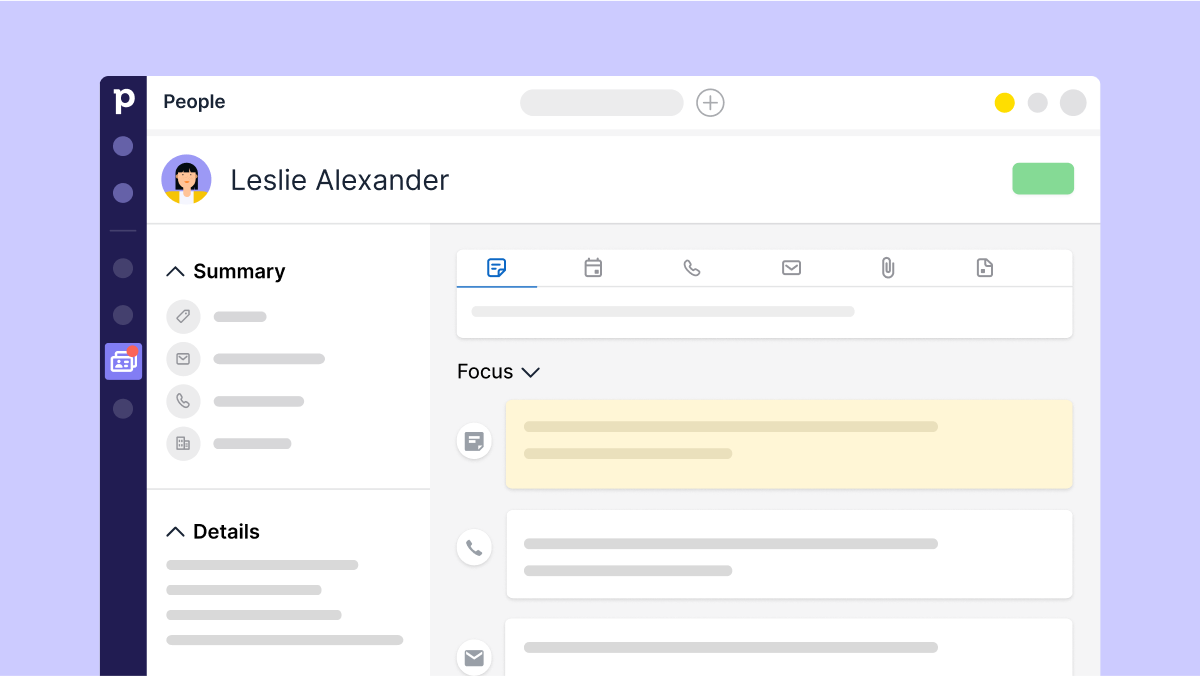
We’re rolling out a refreshed contact detail view to all our customers, with a new summary panel at the top of the sidebar, new scrolling options and collapsible categories in the sidebar and main section.

Why has the contact detail view changed?

We’ve updated the design of the contact detail view to align it with our new deal detail view, improve visibility and give users more control over what they see.

How has the contact detail view changed?

Here are all the key changes:

  • A new summary panel at the top of the sidebar that captures useful contact information: email addresses, phone numbers, linked organizations or people and user-added labels

  • Individual scroll bars for the main section and sidebar that make it easier to navigate to the information you want to see

  • Added collapsible sections to help you hide distractions and focus on what matters most

Some users have opted into the new contact detail view already, but we’ll be rolling it out to all users over the next few weeks.

The ultimate 2024 corporate gift ideas guide

Software Stack Editor · December 6, 2023 ·

The season of giving is nearly here – and what better way to show your appreciation than with a thoughtful gift?

Gift-giving is a great way to strengthen your professional relationships whether it is with your employees, clients, or partners. But it has to be done right, otherwise, you could be having some awkward conversations come the new year.

In this blog post we’ll help you understand what makes a good corporate gift, why they’re important as well as the legal things you need to know about gift giving. We’ll also take a look at some of the best gift ideas to suit any recipient and budget.

Why are corporate gifts important?

Gift-giving is one of the best ways to show appreciation. Whether you’re rewarding an employee for their hard work, a client for their loyalty, or a vendor for helping you through a busy period.

Choosing the right corporate gift can be a challenge. It should be a thoughtful token of appreciation, but also general enough to remain professional and not cause offense.

Whether internally or externally gifted, it’s crucial to always consider your audience. You want to ensure that whoever receives it has a smile on their face.

Benefits of corporate gifting

There are a few key benefits to corporate gifting. But the specifics will depend on who you’re sending the gift to.

Most companies will send gifts around the holiday season, particularly to their employees, vendors and clients. However, each is done for a different purpose such as:

  • To build brand awareness
  • Reward loyal partnerships
  • Strengthen trust between parties
  • Promote your products and services.

Legal corporate gifting rules

Giving a gift should be easy, right? Well, that’s not always the case – not in the corporate world, anyway.. Some industries have strict rules when it comes to corporate gifting.

The business world is increasingly concerned with ethics and transparency. So, many businesses have gift-giving policies to avoid any potential claims of bribery, favoritism or conflicts of interest.

Ethics are most consider in these industries:

  • Financial services
  • Public sector
  • Tech
  • Pharmaceuticals
  • Non-profit organizations
  • News and media

But don’t let these rules put you off. Corporate gifting still has a range of benefits, just make sure you review ethics and bribery beforehand. You can do this by speaking directly to the company or any key contacts that you have relationships with. Most employees should be briefed by their HR and legal team on what gifting is and isn’t acceptable.

Are corporate gifts tax deductible?

There are a few tax implications that you need to consider when giving gifts to clients. So, before you go crazy with your generous holiday spirit, make sure you avoid any costly mistakes.

The IRS states that if a corporate gift is given during the course of trade or business then the gift may qualify for a tax deduction. But there are some limitations.

US tax law states that you can deduct $25 for business gifts during the tax year. There is no limit to how many people can receive a gift but there is a limit of $25 deductible per individual.

The giving and receiving of promotional gifts, like pens and t-shirts, is not deductible as it falls under advertising expenses. Items that aren’t tax deductible include:

  • Gifts with values less than ​$4
  • Items with an organization’s name permanently imprinted on them
  • Items identical to those that the organization distributes or sells.

Common examples of these include pens, plastic bags, cases, or gift sets. Only gifts that are clearly a sign of an appreciated business relationship are tax-deductible.

Incidental costs

Incidental costs are any fees incurred as a result of giving corporate gifts. These are excluded from the ​$25​ limit. Some examples of incidental costs include:

  • Engraving
  • Packaging
  • Mailing
  • Insurance

Costs are only considered incidental if they don’t add significant value. For example, gift wrapping costs may be excluded, but buying an expensive basket to display a gift likely won’t.

How to find the perfect corporate gift

Finding the perfect gift takes time and consideration. There are hundreds of sites offering the best corporate gift but there are a few things you need to consider when choosing the right gift.

The four things you need to consider are:

  • Personalization: Does the gift fit the person?
  • Quality: Is the product a gimmick or something that will easily break?
  • Purpose: Is this something that can be used or displayed regularly?
  • Over promotion: Does this gift have a purpose other than purely advertising your service?

The best corporate gifts for 2024

Every business relationship is different, so it can be hard to find a perfect gift that fits your preference and budget. To make things easier we’ve compiled a list of the best corporate gifts on the market.

So take a look and find the hot ticket item that everyone in the office will be fighting over.

Under $25

Luxury chocolate gift box

You’ll struggle to find anyone who doesn’t enjoy these beautifully wrapped truffles. Each box has a range of alcoholic and non-alcoholic treats which can be altered depending on your preference.

The simple design allows space for your branding to pop, making it a memorable gift at an even more memorable price. They even have a full vegan selection so there’s truly something for everyone.

Coffee subscription

Coffee is the lifeblood of most workplaces. So, why not give them a treat they can enjoy year-round?

Coffee subscriptions can be a real morale boost and it gives everyone a chance to find their favorite blend and roast. Just watch out for anyone fighting over the last few beans!

Notebook

The recipient of this notebook will want to take it with them wherever they go. And not just because it’s handy – it’s stylish too.

The pages are numbered and lined meaning they’re ready whenever inspiration hits. And there’s even a handy pocket that lets you hold onto important paperwork. With so many colors to choose from, you’ll be sure to find the perfect one for anyone in your life.

Reusable digital notepad

Looking for a more sustainable way to take notes? This reusable digital notepad allows you to jot notes how you normally would and then send them to your mobile device.

It also helps you keep confidential notes private, avoiding the need to print and you never have to worry about running out of pages.

Bluetooth item finder

Know someone who struggles to keep track of their essentials? These handy Bluetooth tags can attach to anything from keys to bags to headphones.

They connect with any personal or smart home device, you’ll then be able to track their location in an app and they even give off a sound to help you locate your item quickly and easily.
Under $50

YETI travel mug

This multifunction travel mug is perfect for anyone on the go, whether you’re looking to keep your coffee warm or iced tea cool.

It’s leak-resistant lid helps you avoid any embarrassing spills and its sleek design makes it a hit with everyone.

Trekking pack

Know someone who’s a huge fan of the great outdoors? Give them a gift they’ll love with this customizable trek pack.

This high-quality kit is fashionable, waterproof and even comes with some eco toiletries they can use while out on the trail. What’s better is you can add your logo so everyone else out there will know your brand.

TravelCard Plus

This power bank is small but mighty! The TravelCard Plus is the size of a credit card making it one of the smallest and lightest power banks available.

Equipped with a USB-C PD port, USB-C and lightning cable it can charge a range of devices with a 3,000 mAh rated capacity.

Sony wireless headphones

Perfect for remote work or listening to music and podcasts on the commute, these wireless headphones are powerful and compact. Boasting a range of colors, they have excellent battery life and a crisp sound quality.

The headphones are quick charging but with a 50-hour battery life, they can easily run for days at a time.

Rechargeable hand warmer

It’s getting cold outside, and this rechargeable hand warmer is a treat for anyone who wants to avoid the chill.

It’s small and compact but packs a punch. The battery lasts for up to three hours and heats up to its maximum temperature in less than two minutes.

Under $100

iLOLA Tea Disc Essentials Set

A perfect gift for any tea lover. The iLOLA tea set allows you to personalize your gift with a choice of any two teas from their collection.

It also comes with a 1920s-style tea infuser and iLOLA thermos so you can brew a perfect cup, every time, wherever you are.

Chic coffee table books

Coffee table books are a great way to add a touch of style to a space. And with so many different topics on offer, it’s easy to find one to suit every taste.

Whether it’s fashion, football or food there’s something for everyone and a huge range of prices to fit every budget.

Money plant

Money plants have often been seen as a symbol of luck, wealth and prosperity. Despite their intricate look and braided stems, they’re very easy to care for.

It even comes with a white-gray Ecopot that helps to prevent overwatering meaning it’s ready to decorate any space.

Personalized embossed drink dispenser

What better way to unwind after a long day than with a drink from your personalized dispenser. Made from 100% pine, this dispenser is customizable allowing you to add a name, company or brand.

Its classic style makes it a welcome addition to any office that’ll have everyone fighting over it come 5 pm on a Friday!

Skyline etched tumblers

These fine-quality glasses can display a range of hand-sketched city skylines from across the globe.

You can even customize them to include your workspace in the skyline making them a perfect reminder of how your business fits within the city you love.

Conclusion

Corporate gifts are a great way to build professional relationships. But finding the right gift is only part of the puzzle. Different companies have different rules when it comes to receiving corporate gifts, so be prepared to share an item’s value or even provide receipts.

Don’t let the technical side of corporate gifting get you down. At its heart, corporate gifting is all about building relationships with clients.

Client relationships are key to business success. That’s why so many companies use a CRM to manage their customer interactions with ease.

Try Capsule CRM free for 14 days and see how it can help you manage your customer relationships.

Webinar: Social selling masterclass with Alexander Low

Software Stack Editor · December 5, 2023 ·

Our Capsule webinar about Social Selling was held with Alexander Low, founder of DCM Insights. In it, Alexander focussed on the art of social selling on the world’s largest professional network and also shared value insight about how to elevate your social selling game on LinkedIn.

Key points covered include:

  • How to craft a compelling and professional linkedIn profile.
  • Proven techniques to expand your linkedIn network and create meaningful connections that lead to sales.
  • Using content to engage with your target audience.

Webinar: Video selling masterclass with Morgan J Ingram

Software Stack Editor · November 17, 2023 ·

Our second Capsule webinar was a video selling masterclass with Morgan J Ingram, founder of Ascension Media Productions. Morgan outlined the art and science of harnessing the power of video to amplify your sales and drive your revenue.

In the webinar Morgan covers:

  • How to strategically incorporate video into your sales process.
  • Crafting compelling and persuasive video content that captures attention, communicates value and prompts action.
  • Offering consumers the medium they want.
  • The key elements that lead to higher conversion rates and ultimately boost your sales success.

The complete guide to project management for architects

Software Stack Editor · October 11, 2023 ·

The world of architecture is filled with awe-inspiring creativity and innovation. However, behind every breathtaking structure and innovative design, is a range of challenges and complexities.

Project management for architects is no easy feat. You need to balance aesthetics with functionality, all while keeping on the right side of strict regulations and staying within your budget.

It may not be the most exciting part of running an architecture firm, but good project management is a vital part of the process.

In this article, we’ll delve into the intricacies of project management in architecture firms. You’ll learn the essential skills, recommended tools and best practices to ensure every project is a resounding success.

The challenges of project management in architecture firms

While many think that being an architect is all about creativity and following your vision, it’s likely they don’t appreciate just how much project management is going on behind the scenes.

Architectural projects often span multiple years and involve numerous stakeholders. Keeping a complex, multi-year project on track requires meticulous organization and communication.

Without diligent project management, delays and cost overruns can quickly spiral out of control.

Then there’s the human element to consider. You need to collaborate with clients, engineers, contractors and others daily. Each one of those stakeholders has their own different concerns and priorities, which you need to take into account and balance.

Varying project delivery methods also complicate matters. Some projects are design-bid-build while others are design-build or CM at risk.

Each method comes with different concerns and criteria to consider.

Then there are the seemingly endless factors that are completely outside of your control. Weather conditions, availability of materials and fluctuating costs have the potential to throw your project off your carefully planned tracks.

Essential skills for effective project management

To successfully manage projects in an architecture firm, managers need the right abilities. The following skills are critical to keeping your project on track.

Communication

Good communication is the cornerstone of any project. In architecture firms, this involves articulating your design concepts, addressing client concerns and facilitating collaboration between different teams.

Project managers must be adept at listening, translating ideas, resolving conflicts and providing frequent updates.

Strong writing skills also allow project managers to craft sharp documentation. Be clear and concise in your communication, avoiding any unnecessary jargon or overly complex language.

Time management

With multiple projects running simultaneously and tight deadlines looming, architects must be comfortable managing a complex to-do list. Keeping on top of your time requires efficient schedules that minimize delays.

Undoubtedly there’ll be some tasks that you simply have to deal with personally, but trying to tackle everything by yourself is impossible. Instead, get comfortable with delegating or deferring any low-priority tasks.

Problem-solving

Unforeseen challenges are par for the course in architectural projects. The ability to adapt to changing circumstances — whether that’s new information, regulatory updates or client requests — enables you to keep the project aligned with its objectives.

Get comfortable with using different decision-making models. For example, if a project falls behind schedule, the project manager could conduct a SWOT analysis to identify the best path forward:

  • Strengths: The technical skills of the team, innovative design solutions
  • Weaknesses: Underestimating the permitting process timeline, lack of client input
  • Opportunities: Fast-track permitting, modular construction methods
  • Threats: Client dissatisfaction, going over budget

The SWOT framework helps the project manager pinpoint the cause of any challenges by formally analyzing the project from multiple angles. This evaluation can help architects to find relevant solutions

Financial literacy

Budgetary constraints are a constant challenge in project management. You need to be comfortable managing costs, negotiating contracts and keeping every project financially viable.

Creating accurate project budgets is crucial. Project managers must have analytical skills to develop precise cost estimates and budgets. As the project unfolds, they also need budget management skills to track expenses and detect any discrepancies.

Monitor financial performance using key metrics like ROI, profit margin and cash flow.

### Emotional intelligence

While often overlooked, emotional intelligence is crucial for managing team dynamics, resolving conflicts and creating a harmonious working environment.

Emotional intelligence can be broken down into four key competencies:

  • Self-awareness
  • Self-management
  • Social awareness
  • Relationship management

By understanding and managing yourself, you’ll be in a better position to understand and respond to the emotional needs of team members, clients and stakeholders, fostering positive relationships and collaboration.

If you’re still relying exclusively on pen and paper to manage your projects, it’s time for an upgrade. There are plenty of digital tools and apps you can use to streamline project management, with options for every budget. Here are some of the different types of software that can enhance efficiency and productivity in architecture firms.

Task management tools

Each project is a series of related tasks; these tools help you organize and track those tasks, enabling you to monitor progress, allocate resources and meet deadlines.

The best task management software allows you to get a quick overview of even the most complex project, showing you at a glance where you are, your next steps and key responsibilities for those tasks.

Top task management tools:

Collaboration platforms

We’ve already seen that communication is a key skill for project management. These platforms help foster communication and collaboration among team members, clients and stakeholders, ensuring everyone is on the same page. Whether it’s sharing the latest guidelines with the team or checking in with the client, collaboration platforms make it easier to keep in touch and share vital information.

Top collaboration tools:

Document management systems

Even the simplest architectural projects have a mountain of paperwork. Storing project documents in a searchable, shareable database makes managing this task little more manageable.

A centralized repository for all your requests for information (RFIs), change orders and specifications can save you a lot of time and headaches.

Top document management systems:

Time tracking software

Ever get to the end of the week and wonder where all that time went? Time tracking tools show you how much time you and your team spent on various tasks, providing insights into productivity and showing where you might need more resources.

Top time tracking software:

Customer relationship management systems

One of the core components of any project is the people — your relationships with clients, contractors and more all have a significant impact. With the right customer relationship management (CRM) software, you can manage every aspect of those relationships, from reaching out to potential clients to successful project management.

Better yet, the best project management CRMs come with many of the other features we’ve already discussed above. For example, Capsule CRM helps architects with:

  • Refined task management and record-keeping
  • Improved team communication
  • Efficient talent management
  • Better financial management
  • Meaningful client relationships

Capsule comes with dashboards and reports to track progress, along with a robust mobile app to keep your team connected wherever they are. It also integrates with your other favorite apps, connecting your tools and sharing data for maximum efficiency.

Learn more about how a CRM for architects can benefit your firm today.

Best practices for architectural project management

Even with the right skills and software, you can’t guarantee a positive outcome for every project. Still, adhering to the following best practices will significantly increase your chance of completing your next architectural project.

Regular check-ins

Things can change quickly in any project; the sooner you find out about those changes, the better. Regular check-ins with the team and stakeholders foster collaboration and enables you to address any concerns promptly.

Keep the communication going even after you’ve completed the project with post-project reviews. Looking back at what went well (and what didn’t) can provide valuable lessons that will help you optimize your processes.

Comprehensive documentation

Maintaining detailed documentation of every aspect of the project, from design drafts to contractual agreements, ensures transparency and serves as a reference point for future projects.

Store all project documents like sketches, blueprints, models, specifications, submittals, RFIs and more in a central, shareable repository. This way, you always have the information you need to hand.

Documentation should begin in the planning phases, with extensive notes on project scope, deliverables, budgets, schedules, requirements and key stakeholder contacts.

As the project progresses, diligently document all meetings, communications, decisions, change orders, problems and solutions. Details like meeting attendees, key discussion points and assigned action items improve accountability.

Proactive risk management

Identifying potential risks early on and developing contingency plans can make unforeseen challenges easier to deal with. This approach can help your team pivot quickly if needed.

During the planning phase, conduct a thorough risk analysis to identify any vulnerabilities in the schedule, budget, scope, resources, technology needs or regulatory issues.

Develop risk management plans detailing how each high-probability risk will be addressed if it arises. Then, as the project progresses, regularly re-assess for new risks and monitor existing ones.

Having preemptive contingency plans allows for smooth, stress-free project management. For example, if permitting is delayed, you can have fast-track alternatives ready. If materials costs spike, you know exactly what other options are available

Continuous learning

To remain adaptable and innovative, it’s important to embrace a culture of continuous learning. This involves staying abreast of industry trends, technological advancements and regulatory changes.

Provide opportunities like conference attendance, courses and reading materials for team members to continuously expand their knowledge. Bring in experts for “lunch and learn” sessions to share insights.

Regularly re-evaluating tools, workflows and best practices keeps your project management strategies fresh and optimized. The field evolves quickly, so firms that commit to continuous learning will always lead the pack.

Conclusion

Effective project management is imperative for architecture firms, but it’s still just one piece of the puzzle. Beyond strong project management, firms must maintain top-tier designs, innovative solutions and client relationships.

While project management is crucial, it’s also important to think long-term about your team, capabilities and vision. The role of an architect is constantly evolving, and staying up to date with societal needs, ethical considerations and global trends is paramount.

Discover more about how a CRM can help your firm manage current and future projects. You can enjoy a 14-day free trial, and see how Capsule’s features can save you time and offer peace of mind.

Frequently Asked Questions (FAQs)

For architecture project management software, key features include robust resource management, project documentation tools, and specific functionalities for managing architectural projects efficiently.

Architecture project management software is tailored to the specific needs of
managing architectural projects, including specialized tools for design,
collaboration, and tracking project progress in the architectural context.

In engineering firms, an effective project management tool should offer
capabilities to track tasks, manage project documentation, and facilitate
collaboration among the project team, both on desktop and mobile apps.

Yes, project management software with collaboration tools can significantly
enhance teamwork and communication, ensuring all members of the project team
are aligned and informed about project progress.

A task management tool helps in organizing and prioritizing project management
tasks, ensuring that each aspect of the project is addressed timely and
efficiently.

Project management skills, such as organization, communication, and resource
management, are crucial for successfully managing architecture projects,
ensuring that they are completed on time and within budget.

Project management professionals should consider software that offers a
comprehensive project management solution, including features for task
management, resource allocation, and progress tracking specific to
architecture projects.

Project management software assists architecture firms by providing tools to
plan, execute, and monitor all aspects of architectural projects, from initial
design to completion.

Some popular project management software options for architecture include
tools specifically designed for the industry, offering features tailored to
the unique needs of managing architectural projects.

Integrating a structured project management process in software helps architecture projects stay on track, ensures efficient resource use, and maintains clear communication among all stakeholders.

*2024 UPDATE* 10+ best free AI tools for businesses

Software Stack Editor · September 29, 2023 ·

Everyone is talking about AI. Artificial intelligence has changed the way many businesses operate, helping them to work smarter, not harder. AI tools can help companies automate and streamline processes across multiple departments. This in turn can boost efficiency and productivity.

There are hundreds of tools out there and each of them varies in both features and price. With so much choice, it can be easy to get overwhelmed. But don’t let the sheer volume of available options scare you off. There are plenty of ways to integrate AI into daily business life, without spending a small fortune. And to help you we’ve detailed 10 free AI tools that solve common business problems, from content creation to note-taking.

AI algorithms are often utilized in business tools to make them more efficient and boost productivity. To do so, they utilize artificial intelligence (AI) and machine learning (ML) to streamline complex processes and simplify problems.

Advancements in natural language processing (NLP) and deep learning have only increased AI’s popularity. Complex algorithms are helping organizations optimize their workflows, increasing business productivity.

Some businesses are still unsure about how AI can improve productivity. These tools offer the opportunity to streamline operations and enhance efficiency making difficult tasks simple and quick.

Let’s look at these benefits in more detail.

Increase productivity

Businesses move fast, so they need tech that can keep up. AI tools are capable of handling huge data sets and can complete repetitive tasks with little to no mistakes.

This limits the amount of human error and allows your employees to spend more time on creative projects instead of menial tasks.

Streamline processes

AI can analyze data quickly and accurately. This allows for better decision-making, saving businesses both time and money. AI can help businesses spot bottlenecks and inefficiencies.

If an organization can identify productivity slumps, then business leaders can find ways to address these issues. In turn, they’ll see higher levels of business activity and cost savings.

Avoid human error

Unlike human employees, AI rarely makes mistakes. Repetitive tasks can lead to errors but with AI you can optimize these processes and minimize this risk.

Artificial intelligence is capable of mundane tasks like data entry, answering customer queries, and inventory management. This means your staff can save time and focus on more important projects that require a human approach.

Enhance customer experiences

AI tools can improve the efficiency of customer service. Customer support chatbots work 24/7 to help customers get answers to common questions quickly. It can deliver exceptional customer experiences, exceed expectations, and help you stay ahead of the competition.

Chatbots can analyze customer feedback and assess the mood of the person it’s interacting with. This frees up your team to deal with more complex customer issues saving you time and improving productivity.

While useful, free AI tools do come with some limitations, especially compared to their paid counterparts. Most AI tool providers offer a free and paid version of the product and without a subscription, you may miss out on some important features.

It’s important to understand that while free tools may not offer all the features of paid options, they can still be valuable for businesses. Businesses should carefully consider the limitations of free AI tools and determine how they can best leverage them to enhance their operations.

Now you’ve seen the benefits, it’s time to look at the best free AI tools available to businesses.

ChatGPT

ChatGPT is one of the most popular AI tools available. Its simple interface makes it easy to use and it has quickly become commonplace in workplaces across the world.

This free AI chat tool uses NLP and ML to generate simple and human-like responses from user prompts, making it a great tool for content creation. It uses intuitive machine learning platform mechanisms, and transformer neural networks to predict and generate content based on what’s been fed into it. Marketers can use it as a co-pilot when writing content, aid with interview prep with clients and build sales emails.

It also can automate multiple customer service tasks simultaneously. ChatGPT can streamline communications by supporting chatbots by helping them to handle multiple conversations simultaneously. Answering numerous customer questions and queries, quickly and efficiently can lower costs and streamline operations.

ChatGPTs powerful knoweldge extraction tools and machine learning models are always developing. As a user, you’ll be able to enjoy new, improved versions regularly – making ChatGPT an invaluable tool in a marketer’s toolkit.

Rating: 9/10

Jasper.ai

Jasper.ai is an AI copywriting tool designed to help create high-quality written content. Its NLP algorithm allows you to customize the tone and voice of your copy to match your brand guidelines. Not only does it speed up content creation, but it also actively works to improve your writing by making suggestions and improvements.

Jasper has a range of uses, making it great for content creation. It can create clear and well-written content, in over 26 languages, quickly and easily. This makes it a great tool for writing whitepapers and long-form content like eBbooks that can be marketed globally.

It also works to boost your search engine result page rankings (SERPs) by integrating with tools like SurferSEO and Google Chrome. This can increase productivity by boosting your output, saving you both time and money.

However, it does have a few cons. Jasper sometimes repeats words and phrases, meaning content needs to be checked closely for potential errors.

Rating: 7/10

Grammarly

Grammarly uses AI to optimize your writing. It checks for grammar, punctuation, and spelling errors. It also suggests ways to make your writing clearer and more precise.

It accelerates writing tasks and allows you to champion your brand voice by selecting specifics around tone.

Utilizing a tool that constantly evaluates your writing can save you time by simplifying the editing process.

It works to identify errors that could make you look unprofessional and helps ensure that your content is succinct and high-quality. It offers a browser extension that can check other collateral. This makes it easier to check errors on a multitude of platforms including sales emails.

Rating: 8/10

PhotoRoom

Not a whizz when it comes to Photoshop? PhotoRoom is an easy-to-use tool that can help you edit images on the fly. It uses an AI algorithm to spot objects within a photo and allows you to move or remove these elements.

Popular with e-commerce businesses, marketers, and graphic designers, PhotoRoom helps you create professional-looking images in a snap. Its user-friendly interface offers a range of editing options so you can let your imagination run wild.

The free version allows you to edit five images each month and does limit the number of advanced features available. The paid version however allows you access all features including high-quality image export, color adjustment and customer watermarking.

Rating: 6/10

Designs.ai

Now you’ve edited your photo, it’s time to get it posted! Designs.ai offers various features to help you create visually appealing images and designs. Whether you’re looking to create a logo, social media post, presentation, complete video sequence or video animation, Designs.ai allows you to generate images based on what you upload.

It also provides more advanced editing tools like text formatting and object placement – so you can get the best design every time without splashing out on expensive software.

The free version allows you to create ten designs per month, with the help of their basic design features, templates and watermarks. The paid version offers unlimited access to all features and templates from $39 a month.

Rating: 6/10

Synthesia

Synthesia makes video creation a breeze. It offers a huge library of pre-built video templates that can be customized with different text, images, animations, and AI-generated video.

Synthesia.io saves you time and resources by creating excellent content without the need to start from scratch. Its algorithm uses AI to generate video content, custom AI avatars and video templates that match your specific needs. It also provides a wide range of language features that can help you reach international audiences.

The free version allows you to create minute-long videos and utilize their AI avatars. However longer videos with more complex features will require a subscription fee.

Rating: 7/10

Descript

Descript combines audio and video editing into one easy-to-use free AI tool. It offers a range of complex editing tools such as noise reduction, video stabilization, plus EQ and compression.

Descript has incredible transcribing capabilities. It uses AI to transcribe audio and video recordings, allowing you to easily edit your script. It’s as simple as editing a word document, changes you make to the text are copied over to the video almost instantly. This means that you can edit the transcript directly, making it easy to remove filler words, rearrange sentences, and more.

It can assist with a range of content creation issues thanks to its varied AI tools. Including greenscreen effects, voiceover dub and eye contact repositioning.

Our only complaint is the time restrictions, a free package only allows you one hour worth of transcription and video editing per month.

Rating: 9/10

AnswerThePublic

Want to find out exactly what’s on the minds of your customers? AnswerThePublic can help. It’s a keyword research and blog idea generator tool. It uses search engine autocomplete data to generate long-tail keyword ideas that directly target specific audiences.

It allows marketing teams to generate fresh and relevant ideas that put them ahead of their competitors. Businesses can ask specific questions and identify the phrases that their target demographic is searching for. This helps them to directly communicate with their ideal customer profile (ICP).

Its ability to utilize such a large pool of data is incredible, and its keyword suggestion tools help inspire unique and creative topics. However, it can be tricky to get the hang of and the interface isn’t the friendliest on the list.

Rating: 8/10

Murf

Murf is an AI-powered voiceover platform built to enhance audio content production. It works by creating AI-generated voices that work perfectly with social media videos, tutorials, podcasts, or any other audio project.

Its user-friendly platform provides a seamless experience that maximizes productivity. To get started, all you need is a script. Murf does the rest and creates a professional-sounding voiceover in minutes.

The free version allows up to 10 minutes of audio creation including transcribing and AI voice generation. It also allows three users to work simultaneously, meaning teams can easily collaborate on projects.

Rating: 9/10

Fireflies

Minute-taking can be tedious – and it’s hard to actively engage in a meeting while simultaneously taking notes. Fireflies solves this problem by identifying important moments in a meeting and transcribing them in real-time. It allows you to search and analyze transcripts to find valuable information and insights.

It integrates seamlessly with popular platforms like Zoom and Google Meet allowing for easy collaboration. The AI tool helps support effortless collaboration by allowing you to share detailed meeting highlights across your team and business.

The free edition allows you to clip soundbites and provides automated summaries of each business. It allows 800 minutes of storage meaning you can make the most of your valuable team interactions. However, you will need a subscription to ensure full integration with your company’s software such as your CRM.

Rating: 7/10

Gemini (previously Google Bard)

Gemini is a free AI tool from Google that helps you find and understand big ideas and information. It’s one of the best platforms out there for taking in lots of data and giving back useful insights. Because it’s a free AI tool, anyone looking to get smarter or stay ahead can use it without paying anything.

This AI tool simplifies complex data, making it user-friendly while providing deep, actionable insights. It brings together lots of information in a way that’s easy to get. Even though it might take a little bit of time to learn how to use it well, it’s worth it. Once you get the hang of it, you’ll find Gemini super helpful for work, research, or just learning new things on your own.

Rating: 9/10

Dall-e

One of the best free AI tools, Dall-E is an advanced AI image generator that excels in turning text prompts into visually captivating AI images. Its core strength is its ability to generate stunning images, seamlessly blending creativity and technology.

As a leading tool in image generation, Dall-E makes image editing and image creation easy, enabling users to produce high-quality content quickly. The tool’s intuitive interface allows anyone to create intricate and detailed visuals without any real training.

Ideal for professionals and hobbyists, Dall-E is redefining the boundaries of digital art and design. It allows not only for creating content, but also works as a photo restoration tool. With its unmatched proficiency in creating diverse and intricate AI images, Dall-E is essential for anyone looking to elevate their visual content.

One of the key features missing, though, is the lack of photo editing options built-in directly in the Dall E art generator. But it’s probably just a matter of time before it’s implemented, though.

Rating: 8/10

Copy AI

[Copy AI] (https://www.copy.ai/tools) is a free AI copywriting tool that has transformed how we approach content creation in marketing strategies. Its paid version offers more features, but in the free plan, marketers can quickly turn their idea generation into tangible content.

Its advanced AI writer adapts to numerous writing styles so that the quality output is consistent and tailored to specific needs.

This tool excels in its ability to generate high-quality content swiftly, offering a seamless solution for businesses and individuals aiming to elevate their content strategy.

With Copy AI, crafting compelling narratives and engaging copy is simplified, allowing users to produce superior content that resonates with their audience. As a result, Copy AI has become a go-to resource for anyone looking to enhance their writing with efficiency and creativity.

Rating: 8/10

Invideo

Invideo is redefining traditional video production by integrating multiple AI models into its platform. This makes creating videos that captivate and engage easier than ever – all without signing up.

This tool stands out by offering a streamlined approach to crafting engaging videos, blending storytelling with the precision of AI technology.

Its robust AI model, enables InVideo users to navigate the complexities of video creation, transforming raw ideas into polished, professional outputs.

It simplifies the video production process, allowing creators to focus on creativity rather than technicalities.

As a result, Invideo is becoming an essential tool for individuals and businesses looking to produce high-quality videos with little effort.

Rating: 7/10

Beatoven AI

Beatoven AI is as a transformative force in music production, standing out among the best free AI tools available today.

It harnesses generative AI tools to revolutionize audio editing, enabling creators to produce complex audio files easily.

As a free AI tool, Beatoven AI democratizes music creation, offering novices and seasoned musicians access to sophisticated music production AI features without financial barriers.

Its intuitive platform simplifies creating and manipulating audio files, making high-quality music production accessible to everyone.

With Beatoven AI, the power of generative AI is at your fingertips, making it an indispensable asset for people looking to explore the frontiers of audio creativity.

Rating: 8/10

Codeium AI

Codeium AI is a revolutionary software development assistant and we reckon it’s one of the best free ai tools. It uses AI to tackle issues that usually need human intelligence.

It’s a handy tool for data analysis, enabling developers and data scientists alike to build predictive models with unprecedented ease.

Codeium AI’s advanced algorithms provide a platform for users to automate repetitive tasks. This makes it especially valuable for those with varying levels of coding expertise, from beginners seeking to deepen their understanding to experts aiming to expedite their workflow.

Through simplifying complex coding tasks, Codeium AI democratizes the development process and allows more individuals to contribute to innovation and problem-solving in technology.

Rating: 9/10

AI tools aren’t one size fits all. That’s why it’s important to take your time researching and evaluating each platform and how it may benefit your organization.

You want to find tools that are compatible with your team, business, and current software. That way you can make the most of these tools and use them to help you develop your organization.

Implementing new AI tools doesn’t happen overnight. You need to create a clear plan of action that highlights how it can be utilized. This helps your team to better understand the importance of utilizing these tools to maximize productivity.

You can manage this process by following four simple steps:

  • Evaluate business needs
  • Compare platforms
  • Creating a training plan
  • Assess and improve

Let’s explore these steps in more detail.

Evaluating business needs

Before selecting an AI tool, you need to assess what areas of your business need the most support. Look for bottlenecks in productivity, company pain points, and any general inefficiencies.

What problems is your business experiencing? Is customer service slow or does content creation need a boost? Consult with relevant stakeholders in all departments and speak to employees at every level. Everyone in your company can provide unique and valuable insight into the common problems they’re facing and provide opportunities to streamline these issues.

Comparing platforms

Research is crucial when it comes to AI. Artificial intelligence has a range of abilities and opportunities but not all of them will be useful to you and your business. Before diving in, take time to explore what’s out there.

You will need to implement training on how to use these platforms, so you want to ensure it’s easy to use. Consider things like user interface and troubleshooting resources to assess how difficult these platforms will be to maintain.

Create a detailed training plan

It takes time to adjust to new working practices. To successfully implement AI in your business you need to create a detailed plan that explores how you will manage this.

Begin with weekly training sessions that cover individual features within the software. Explain how the technology integrates with the platforms you currently use like your CMS or CRM. You should use day-to-day, relatable, business pain points as examples to support your training. That way your employees can see the specific benefits and improve overall integration.

Assess and improve

A business and its needs are always changing. That’s why it’s crucial to review your AI tools periodically. Check to see whether the new tools have actively improved productivity and assess how well employees have taken to the new processes.

If take-up is slow or you’re still facing issues, evaluate why. Maybe it wasn’t the right fit, or maybe training could’ve been more extensive.

It may be that the tool doesn’t integrate well with your other software. Knowing the issue is the first step toward finding a solution.

The future of AI

AI is continuing to grow in popularity, and no one knows for sure what it will mean for the future of business. What seemed impossible just a few years ago, is now well within the capabilities of new AI tools.

As technology evolves so will AI. Tools will become more efficient, accurate, and quicker and the number of features will continue to grow. Some experts have even predicted that AI will take digital technology out of the two-dimensional screen form and become part of the physical environment surrounding an individual.

While this seems like science fiction, it does offer insight into the extensive world that AI has the potential to create. However, for now, we should enjoy the benefits it’s already brought us when enhancing chatbots and image software.

Conclusion

Incorporating AI tools into your business day-to-day provides a range of advantages. From streamlining communication to enhancing content creation and video production. AI tools have the potential to revolutionize the way you operate and help you stay ahead in an increasingly competitive market.

But before choosing, you need to carefully evaluate your needs and consider factors such as compatibility, user-friendliness, and adoption rate. The right software is crucial for business growth, whether it’s an AI tool or a CRM program. Take the time to explore how it can help you.

Try Capsule CRM for 14 days for free to see how it can help support you.

Free AI tools: Frequently asked questions

Among the best free AI tools for content creation are AI writing assistants like OpenAI’s tools, which can help generate marketing copy, blog posts, and even Instagram captions. For visual content, Microsoft Bing Image Creator and AI image generators can create realistic images and art. For video content, free AI video generators and editors can assist in creating professional-looking videos, making them a cost-effective solution for marketing campaigns and YouTube videos.

Absolutely! Free AI tools are designed with user-friendly interfaces, making
them accessible even to those with limited technical knowledge. Tools like
Notion AI and conversational AI models can perform tasks like writing process
automation, maintaining high accuracy, and powerful knowledge extraction, all
within a few seconds and without the need for deep technical expertise.

Yes, there are several free AI tools tailored for marketing and copywriting.
These include AI-powered copywriting tools that can generate marketing copy,
product descriptions, and even catchy LinkedIn headlines. These tools leverage
machine learning algorithms to understand the context and create content that
resonates with the target audience.

Free AI tools for image and video creation, like Microsoft Designer and
various AI image creators, use advanced AI models and machine learning
algorithms to create realistic images and professional-looking videos. They
can transform low-quality images into high-resolution visuals or assist in
video creation by providing templates and easy-to-use editing features.

Yes, there are free AI tools available that cater to more artistic endeavors.
AI art generators and music creation tools can help users create music and
art, leveraging AI technology to inspire creativity in projects. These tools
often come with options to customize the output, allowing for unique and
personalized creations.

Free AI tools offer a cost-effective solution for start-ups and individual
projects. They provide access to advanced AI technology, like machine learning
and AI models, without the cost barrier. This allows start-ups and individuals
to explore innovative ideas, from video creation to AI writing, and apply
these tools in their marketing campaigns or in developing new products and
services.

While free AI tools offer a wide range of functionalities, they may have some limitations compared to their paid counterparts. These could include limits on the number of uses, lower processing speeds, or reduced features. However, for many users, especially those needing AI tools for occasional tasks or smaller projects, free versions are often sufficient and provide a valuable, cost-effective solution.

Follow-Up Email | How to Write a Follow-Up Email

Software Stack Editor · September 26, 2023 ·

image

How long do you normally wait to follow up on a lead?

When it comes to closing a sale via email, timing is everything. How long do you normally wait before following up on a lead? And what subject lines do you find most effective? 

According to Robert Clay from Marketing Wizdom, only 2% of leads close after the first meeting. Therefore, sending a follow-up email is vital for making more sales. Your initial pitch has laid the foundations, whereas the process that follows is what closes the deal. 

A study by Velocify found that 93% of converted leads are reached by the sixth contact attempt after the initial discussion. It’s no secret that many salespeople give up long before this point, meaning there are substantial missed opportunities which, with a little perseverance, could have been grasped. Furthermore, the type of follow-up email you send matters. 

Some salespeople use a classic ‘good housekeeping’ tactic, asking the prospect if it’s time to close their file. This often prompts the prospect into responding, either with a confirmation that he or she isn’t interested, or with a question that sparks further conversation and, hopefully, a sale. 

Another common method is to offer a gift or piece of valuable information, motivating the prospect to open the email and respond accordingly. No matter what method you prefer to use, it’s important that your email has personality and gives the prospect enough value that they feel motivated to take action.

A successful salesperson will often use follow-up email templates to convert sales. Do you use an email template? And if so, which one do you find the most effective and how does timing influence your success rates?

Click here to discover a variety of tried-and-tested email templates you can use to close your next sale.

How to align sales and marketing (and leaders viewpoints)

Software Stack Editor · September 4, 2023 ·

“Sales and marketing teams should pull in the same direction and help each other achieve their goals.”

How many times have you heard something like that being bandied around in a meeting with your CEO, business leader, or some sort of motivational speaker?

But you know what the reality really is. Marketing is obsessed with building brand awareness, slowly building their pipeline, and passing down low-quality leads to your sales team. And for the long-suffering Marketing Managers in the back, your sales team is constantly asking you where their leads are.

Both sales and marketing face unique pressures. But, as wishy-washy as this might sound, businesses will only grow when sales and marketing move together as one cohesive unit.

And there’s data to prove it too. There’s a dizzying array of stats on this page from LXAhub but these are the most important:

  • businesses with aligned sales and marketing teams are up to 67% more efficient at closing deals
  • aligned sales and marketing teams can achieve up to 38% win rates

Ready to bring your sales and marketing teams together and crush more deals, and boost your bottom line? We’ll tell you how in this blog post.

Defining sales, marketing and alignment

Let’s clear up exactly what sales and marketing do, how they operate, and what their priorities are. This’ll make it easier to understand where friction might occur, where there’s common ground and how you might be able to bring the two teams together.

Marketing function

A marketing team is a group of individuals responsible for planning, creating and tracking marketing activity across an organization.

Its primary goal is to generate as many sales opportunities as possible. Marketing does this by:

  • making individuals and businesses familiar with your brand name
  • helping people understand the value of your product and service
  • converting these prospects into customers
  • continuing to build long-term relationships with customers.

Sales Opinion

“It’s often the case that marketing sees lead generation as a byproduct of
good brand, social, and website work. Instead, if they considered reverse
engineering what sales really need: What quality does the lead need to be?
Which personas are ready to buy? How do we better qualify leads?

Adopting this approach will result in fewer, well-optimized funnels, less
work for marketing and better results for sales.”

Your marketing team typically oversees activities that promote your products and services to customers and generate brand awareness and leads.

However, responsibilities go further, as marketing also conducts market research, identifies target audiences, identifies leads, and anticipates customer needs.

As Penpoin explains, a marketing team will develop a brand’s unique selling proposition, set pricing and develop product strategies.

Sales function

While marketing generates sales opportunities, the sales team is responsible for actually selling them to the people who may be interested in a product/service.

Core tasks will include vetting leads, educating prospects on the benefits or value of your products or services, and closing deals through persuasion and traditional sales activities.

Sales teams are often under pressure to hit sales targets and ensure sufficient revenue is coming in.

Sales Opinion

“If they are well qualified by marketing (ie. the definition of an MQL is
clearly understood by both teams, and stage gates are implemented to block
low-quality MQLs from hitting the sales desk), then the process of taking a
lead from MQL -> SQL is easier, cheaper, and takes less time.

This impacts all the important marketing performance metrics (which often
aren’t even tracked or seen as important by marketing leadership) – CPL,
CPA, pipeline velocity (time in stage), conversion rate (MQL -> SQL ->
Closed Won rates). Marketing doesn’t think they are responsible for the SQL
-> Close rate, but guess what? They are directly responsible for bad rates
if they offer up poor quality MQLs to work with.”

Marketing Opinion

“In my experience, when I’ve worked with some sales teams, they haven’t been
interested in helping set up the process to generate and qualify leads

Many simply want the hot leads that are ready to go because they have a
number to hit. This typically reflects the overall approach of the business
– quite old school, not particularly tech-savvy, and resistant to change.

It’s my experience that the most rewarding engagements have been with
individuals from sales teams. It’s much harder to deal with a team or a
group. As a marketer, you have to be quite mentally strong to go into that
scenario.

Collaboration in most environments I’ve worked in has been passed to the
marketing team to drive – ‘sales have enough on their plate hitting the
number without having to drive the process or cultural change.’ That can be
frustrating to deal with.”

Sales and marketing alignment

According to an article for HubSpot, sales and marketing alignment, or “smarketing”, is a shared framework of strategies and goals for the sales and marketing departments.

Alignment is characterized by continuous communication between the two departments, as well as a joint effort to work towards shared objectives and provide assistance to one another.

The primary basis for alignment between sales and marketing is their shared goals of attracting customers, generating revenue and achieving profitability.

Sales and Marketing Opinion

Both Steve and Dan think that for sales and marketing alignment to be most
effective, there needs to be more than just one meeting a month, with both
teams owning the agenda and contributing to it.

Dan found that ABM campaigns are usually the best way to earn sales and
marketing alignment, because of the buy-in required from both teams and
potential deal value.

Why sales and marketing should work together

For businesses to invest the necessary time and effort into aligning sales and marketing, stepping back to and fully understanding why alignment is valuable. Similarly, given that each department faces its own pressures, leaders must also understand why alignment is so valuable and the strategic benefits it can bring.

Research is clear on the issue of alignment. Studies carried out by Marketing Profs show that organizations that achieve sales and marketing alignment enjoy 38% higher win rates and 36% higher customer retention rates. Conversely, misalignment is worth at least a 10% hit to annual revenue.

Sales Opinion

“Win rate, higher customer retention rate and revenue loss – these are
typically performance metrics that the sales leader is responsible for.
Sales heads roll when win rates dip, customers churn, and revenue targets
aren’t met.

My view is that these stats clearly show that marketing is equally culpable
and should be equally responsible for helping sales achieve those goals.
Many marketing leaders say they want these metrics to grow, but are they
willing to put their job on the line for it?

In my experience, marketing leaders don’t want to be measured on anything
beyond mid-funnel, therefore, they aren’t willing to commit to revenue,
profit, or CSAT KPIs.

If we want to all achieve the same results, put your money where your mouth
is. Didn’t hit revenue this quarter? Look further up the funnel than the
sales-owned processes to see if the top-of-funnel metrics were sufficient to
support a successful sales quarter.”

The Moments of Trust report published by LinkedIn found that 87% of sales and marketing leaders say collaboration between both teams is key to business growth, while 85% say this is the single biggest opportunity for businesses looking to improve performance.

90% believe aligning sales and marketing messages and initiatives positively impacts the customer experience too.

Marketing Opinion

“I’ve found that the alignment on messaging doesn’t quite happen. For
example, it usually gets handled within the marketing team, or outsourced to
an agency.

Also, timing is often key. Strategy reviews within marketing often happen in
isolation, and aside from the initial situational analysis don’t take an
outward view.

There needs to be a collaboration with sales at this point to be truly
strategic.”

Although sales and marketing are responsible for different parts of the sales funnel, they both ultimately want the same outcomes: more sales, more revenue, more profit, higher customer satisfaction levels, higher retention of existing customers, more referrals from satisfied customers, and greater business growth. For these reasons, it makes sense that the two departments should be aligned.

Also, there’s a significant crossover between the two departments’ responsibilities and activities. For instance, in most modern sales organizations, responsibility for generating leads is shared between the two departments, rather than the sole responsibility of one or the other.

How alignment benefits marketing

One of the biggest ways alignment helps marketing is centered around content production. Many organizations don’t realize the value or importance of content.

It can be used at the top of the funnel to attract and encourage prospective customers to engage with your organization. And for the bottom of the funnel, content is essential to help sales executives close deals.

According to a study by the Content Marketing Institute, 60 to 80% of all marketing content generated for sales teams ultimately goes unused.

Marketing Opinion

“I’d also say that a lot of the data generated from lead gen can also go
unused if it’s not handled in a transparent way. Many, many instances of
passing data over for opens and clicks, and no tangible way of measuring
follow-up. This is where tech comes in.”

Often this is because of misalignment between sales and marketing, and a poor understanding of content marketing, as well as sales requirements.

Sales and marketing alignment can reduce the time wasted by marketing on unused content. Improvements to communication can prevent instances where sales teams are unaware of content, while sales teams can also communicate their own needs more effectively.

Marketing teams should do more to educate sales teams on the importance and value of content marketing, and how it can be used as a tool to generate leads.

Learning what works and does not work for sales teams can also help marketing teams to tweak their messaging, based on real-world responses.

Sales and Marketing Opinion

Steve and Dan think this is important and something that both sales and marketing functions do poorly.

Steve: “I think sales are guilty of not recording customer
feedback in a format that’s useful for marketing, or not recording it at
all. Let’s face it: most CRM opportunity records don’t even have the right
close dates and deal values, let alone detailed customer insight/feedback
that can help marketing refine their messaging.”

Dan: “Marketing is often guilty of doing their value prop
research and messaging work in complete isolation, or are scared to get
involved in customer relationships in case they cause churn.

This means their view of the customer challenges/needs is misaligned with
the reality of what sales reps hear on the phone every day, and the content
marketing produces isn’t compelling enough to attract the most engaged
leads.”

How alignment benefits sales

Sales teams benefit significantly from alignment with the marketing department. By working closely with the marketing team, sales reps can gain a better understanding of who they should be targeting efforts towards and what messages they should be using to maximize success.

Through close communication, marketing teams can better understand some of the challenges that sales reps face on a day-to-day basis. This allows marketing to work on the kinds of content that will help sales teams to close more deals.

In many cases, marketing departments gain valuable information about leads that the sales team could really benefit from. Therefore, a process needs to be in place so that this information can be passed along before a sales rep makes their pitch.

Marketing Opinion

“I think it’s important to add here, the ‘how’ you share information, and
the process you decide on, is extremely important.

Many salespeople that I’ve worked with have distinct routines and have
specific way of tackling their leads. You have to remember to be tactful,
considerate of their needs and deploy the right approach to get them to
really buy into the information-sharing process, but crucially, not a big
drain on their time and easy to do.”

For example, marketing teams may know how a lead ended up on the company website, or what problem they are trying to solve. They may also know about the lead’s preference, like how they should be contacted and at what times.

Aligned teams share this kind of information, and this enables sales teams to tailor their strategy and messaging accordingly, resulting in more deals closing.

Why do sales and marketing become misaligned?

Lack of communication is at the heart of misaligned sales and marketing teams. If the two departments aren’t in constant communication and if they do not take an active interest in one another’s success, they are quickly going to find themselves going in different directions.

Marcello Grande points out in an article published on LinkedIn Pulse, that some of the biggest causes of misalignment are because sales and marketing often have different priorities, use different metrics, and have different incentives. This is why strategic alignment is necessary.

Many other alignment problems can be boiled down, to simply that sales and marketing often lack a unified narrative. They don’t share the same vision, or they see the products and services they are selling differently, and this manifests in the way they communicate with existing and potential customers.

Sales Opinion

“Alignment should be owned by the CMO and CRO, but it should be supported by
the CEO and the board. This is a major strategic issue for any business, and
it needs the full-throated backing of senior leaders across the business for
alignment to succeed.”

Both departments may provide messaging to leads without consulting with one another and this can result in inconsistencies and confusion.

For example, marketing may promote a product or service in one way, and then sales may try to close the deal by using entirely different messaging.

The outcome of this could be that a prospect becomes confused about exactly what they’re buying and backs out of the deal. If messaging was unified, the deal would have closed.

Sales Opinion

“I don’t necessarily agree that if messaging was unified a deal would have
closed. The reason this happens is that marketing is broadcasting, sales are
consultative.

I think It’s ok for marketing to use one message in their campaigns, and for
sales to change tact further down the funnel. The reason they are changing
tact is that sales can question and adapt their messaging to the customer’s
needs.

The important thing is the feedback loop. If sales find that 90% of the
leads are actually in need of a different product/service, and this info is
fed back to marketing, then marketing can adapt their messaging. Even
better, marketing can create funnels that are adaptive to lead-generated
information. Eg. Choose your own adventure-style marketing that ascertains
the lead’s needs before presenting any solutions. These will be much more
qualified and likely to close when they hit the sales desk further down the
funnel.”

Marketing Opinion

“I always get the sense that one department always thinks they can do the
other’s job. This is of course total nonsense. Making sales is as tough as
it gets, and there is way more that goes into messaging and brand
development than breaking out the crayons for 30 mins.”

Finally, sales and marketing teams may also have to report to different senior executives and this can also lead to issues with alignment.

How to encourage sales and marketing alignment

Below, you’ll find some tips that can help you to keep sales and marketing on the same page.

1. Agree on shared goals, terms and metrics

You should try to agree some shared goals. Try to make these targets as specific as possible and ensure they’re measurable. Sales and marketing should also agree on some shared metrics, while lead scoring needs to be standardized across the two functions, with both teams agreeing on how leads should be scored.

Try to agree on areas for improvement and work together to achieve them. This could be increasing the number of qualified leads generated, or increasing closed deals. Both departments can contribute to achieving these objectives.

Research published by Adobe illustrates that most businesses don’t have a definition of a qualified lead that sales and marketing have formally agreed to. For full alignment, you should define terms like marketing qualified lead, sales qualified lead, etc, so that there’s no room for confusion.

2. Define the roles of sales and marketing

You should clearly define the roles of sales and marketing. Although some degree of overlap is inevitable, in general, marketing should be concerned with activities related to the top of the sales funnel, while sales should be concerned with activities related to the bottom of the sales funnel.

There are some activities that’ll need to be defined more carefully. For instance, who is responsible for lead scoring? How much responsibility, if any, does sales have for content creation?

Knowing exactly what each department is responsible for can help to reduce confusion and tension. It can also decrease the time that’s wasted on activities that have already been carried out by someone else.

3. Collaborate on marketing content creation

Creating sales and marketing content typically falls under the marketing team. However, some of this content should serve the sales team, so working closely with the sales team makes sense.

Marketing teams need to know what messages are successful for sales reps and which messages aren’t working as well. It’s also important for sales to tell marketing the common questions they receive from prospects, because it may be possible to answer these earlier in the process through marketing content.

Creating a unified narrative is important. Both departments should be clear on what’s being sold, what the product or service is intended to do, who can benefit from it, and the overarching brand story to tell leads and existing customers.

4. Make use of cross-departmental shadowing

Another great way to ensure your sales and marketing teams are aligned is to make use of cross-departmental shadowing.

Harvard Business Review outlines, it can be useful for marketing team members to shadow sales calls regularly and even to attend some sales meetings, so that they can understand prospect challenges better.

Shadowing the other department can help teams to understand the challenges they face. In the case of marketing departments, understanding the sales process and the realities of current sales efforts can help with creating sales content.

It also gives marketing an opportunity to provide useful information on the kind of messaging sales reps can use to boost success rates.

5. Commit to sharing progress at meetings

A key part of how to align sales and marketing involves continually sharing progress, insights and analysis. While alignment requires shared goals and objectives, both departments still create their own reports, carry out their own analysis, and have results they can share with the other team.

It’s difficult to overstate the importance of constant communication if true alignment is to be achieved and a great way to facilitate this is to commit to regular meetings between senior figures in sales and marketing.

During these meetings, both departments should highlight their results and progress, share any useful insights and analysis, and be clear on any problems they are facing. It is also important for both sales and marketing to be clear if they need something from the other department, or if they feel changes are needed.

Achieving sales and marketing alignment

There are no simple answers for how to align sales and marketing, as alignment is a continuous process. Nevertheless, at the very heart of the issue, communication channels need to be open, the two departments need to be sharing progress, insights and challenges, and there must be shared and agreed goals and metrics.

Click here to learn more about Capsule CRM, which serves as a CRM and project management tool. This can be really useful for sales and marketing alignment, allowing information to be shared more easily while increasing overall transparency. You can get started by accessing a 14-day free trial today.

Sales and marketing alignment: Frequently asked questions

Sales and marketing alignment can be achieved through regular meetings, shared goals, and understanding each other’s processes. This collaboration is essential for driving revenue growth and improving the customer experience.

Misalignment between sales and marketing can lead to underutilized sales
content, inefficient lead generation, and a stagnation in the organization’s
annual revenue.

Aligning sales and marketing ensures that marketing efforts are targeted and
effective, leading to the generation of more qualified leads that are likely
to convert into sales.

Sales enablement teams provide critical support by developing sales content,
tools, and training that help the sales department execute marketing
initiatives more effectively.

Marketing leaders can support successful sales by understanding the sales
process, providing relevant marketing data, and aligning marketing strategies
with the sales team’s objectives.

Key performance indicators for alignment include the number of sales-qualified
leads, conversion rates, and the impact on revenue growth.

Regular meetings help both teams stay aligned on goals, understand the
customer journey better, and refine marketing and sales strategies to improve
the buying process for potential customers.

To overcome marketing misalignment, organizations should focus on clear
communication, shared KPIs, and integrating marketing automation tools for
better coordination between teams.

Understanding the sales process helps marketing teams create more effective
marketing initiatives and content that directly support sales and contribute
to critical business growth.

Marketing professionals can analyze marketing data to identify trends, understand customer needs, and tailor marketing strategies to directly support sales objectives and lead generation.

60+ best ChatGPT prompts for sales and marketing (and how to use them)

Software Stack Editor · August 1, 2023 ·

ChatGPT, an AI platform powered by a large language learning model has emerged as the frontrunner in the race for AI supremacy.

But as it stands, to get the most out of AI, you need to learn how to prompt it.

Prompts help you give the AI tool you’re using specific instructions on what you want to get out of it.

Whether you’re using ChatGPT to generate some email comms; Midjourney to create photo-realistic digital art; or Boomy to craft an AI tune, the right prompt will help you get better results in all these use cases.

In this blog post, we’ll teach you what a prompt is, how best to structure your own and round up some of the best ones we’ve seen.

[Editors note: if you fancy yourself a bit of a prompt engineer, skip to our top prompts here.]

What are ChatGPT prompts?

ChatGPT prompts are a way to communicate with an artificial intelligence system, to get a desired response or generate specific content. It’s like giving instructions or asking a question to an intelligent program.

When you provide a prompt, you’re giving the AI some context or information to work with. This helps guide its understanding and influences the type of response it generates.

The prompt can be a sentence, a paragraph, or even a longer piece of text.

For example, if you want to generate a short story about a detective solving a mysterious crime, you could give a prompt like:

“In a small town, Detective Foxton was called to investigate a strange murder case.”

Based on that prompt, ChatGPT will then continue the story with its own creative input.

It’s important to note that the quality and accuracy of the AI’s response depends on various factors, including the training it has received, the available data, and the complexity of the task.

How to use ChatGPT prompts

It’s really straightforward to start using ChatGPT. The trick is in learning how to master them. Here’s a step-by-step guide on how you can start using them:

  1. Identify an AI-powered tool: Do some desk research and find an AI tool that’s easy to use. There are plenty of options online, but we use ChatGPT at Caspule, as we think it’s the best general-use AI available right now.

  2. Determine your goal: Decide what you want to achieve with the AI. Do you need help writing a story, generating ideas, answering questions, or something else? Having a clear objective helps formulate an appropriate prompt.

  3. Write your prompt: Type a prompt that clearly communicates your intention or the information you want the ChatGPT to work with. Keep it concise and specific. If you’re unsure, you can also provide some examples or additional context to guide the AI’s response.

  4. Submit the prompt: Once you’ve written your prompt, submit it to the ChatGPT

  5. Review and refine: After the AI generates a response, look through it to see if it’s any good. If needed, you can refine or modify your prompt to get a better outcome. Iteration helps when fine-tuning ChatGPT’s output.

  6. Evaluate results critically: Remember, AI-generated content may not always be perfect or error-free. It can suffer from hallucinations, a phenomenon where the AI conjures up falsehoods to complete its task. Be critical, and thoroughly assess any output.

Tips for getting the most out of your ChatGPT prompts

Experimenting with what you input into ChatGPT is crucial to understanding its capabilities and expanding its use cases. Here are some initial tips on how to do this:

Talk to the AI as if you’re speaking to a person

So, it might feel uncomfortable initially to treat this piece of tech as a person – but hear us out!

When you’re constructing prompts, consider the little nuances, quips and anecdotes you use to embellish things you’d say to a person.

They give context, provide clarity and help articulate your point. Do this with ChatGPT or whatever AI you’re using.

These little details help it understand what it is you’re asking it and it will produce better results.

Context is key

ChatGPT and other large language model AIs are smart enough to understand context.

Here’s an example. In the image below, I’ve asked ChatGPT to ‘Give me a 10k training plan’.

In its answer, ChatGPT has made some assumptions. It said:

“Certainly! Here’s a 10K training plan that spans over a period of 12 weeks. It’s designed to gradually increase your running endurance and prepare you for a 10K race. This plan assumes that you have a basic level of fitness and can comfortably run at least 2-3 miles (3-5 kilometers) without any issues”

But what if you’ve already got a good base level of fitness and want to run a 10k in six weeks’ time?

Let’s try this prompt:

‘I want a 10k training plan for someone that’s got a good base level of fitness. They do some light weight lifting in the gym once a week and they can run a 5k in 26 minutes. The training plan needs to span six weeks.’

As you can see from the picture above, compared to the first result, ChatGPT has produced a six-week plan, that’s more suitable to the suggested fitness level.

It was a simple case of giving it more detail, and more context around what we wanted from it.

Another example, specifically for sales professionals, I asked our AI Content Assistant (which uses the ChatGPT API) to ‘Write me a 100-word prospect email for a company that sells turtles’

Here’s the result:

Subject: Discover Tranquility with Captivating Turtle Companions

Dear [Prospect’s Name],

At [Company Name], we specialize in offering captivating turtle companions that bring charm and tranquility to your living space. Our exquisite collection features ethically sourced and expertly cared-for turtle species.

Immerse yourself in their enchanting world, from vibrant red-eared sliders to majestic diamondback terrapins. Our knowledgeable team will assist you in finding the perfect turtle companion to suit your preferences and lifestyle.

Enhance your space with the delightful presence of our remarkable turtles. Experience the joy they bring firsthand by visiting [website URL] or contacting us at [contact information].

Find serenity with our enchanting turtles today!

Best regards,

Your Name
Your Title
Company Name
Contact Information

But once again, this email doesn’t quite hit the mark. What if we’re selling to a logistics company based in Kansas? What if we know that the prospect likes Sea Turtles? And what if we know they’ve attended a conference in the past?

Here’s the next prompt:

“Write me a 100-word prospect email for a company that sells turtles. The company you’re selling to is based in Kansas, we know that the prospect likes sea turtles. They’ve attended a big sealife conference on the 6th June 2022.”

Subject: Exclusive Offer: Discover Sea Turtles in Kansas!

Dear [Prospect’s Name],

As a fellow marine life enthusiast who attended the sealife conference on June 6th, 2022, I wanted to share an exciting opportunity. [Company Name] has expanded to Kansas, bringing captivating sea turtles closer to you.

Our commitment to ethical sourcing ensures their well-being. To celebrate, we offer an exclusive 15% off your first sea turtle purchase.

Experience the magic of sea turtles in the heart of Kansas!

Let’s discuss this opportunity further and answer your questions. Together, we can create a lasting connection between you and these awe-inspiring creatures.

Warm regards,

Your Name
Your Title
Company Name
Contact Information

While this writer takes more scrupulous eye when producing that sort of copy, the premise is clear: adding context to a prompt gave the email a much wider, more refined scope.

So, in essence, embellish your prompts with context. Use specific, simple-to-understand language and articulate any useful information.

Get the AI to assume a persona

Feeling uncomfortable about anthropomorphizing AI yet? Well, prepare to feel more uncomfortable: you get really good results if you ask it to adopt human characteristics.

For instance, you could prompt it to write a piece like a pirate, write tweets like Elon Musk, or if you were doing some market research, you could ask it to act like a member of your prospective buying committee.

Here’s an example of the output from ChatGPT when I asked it the following:

Pretend you’re a marketing manager at a small business with 25 employees. You don’t have CRM. What things would you be looking for if you were considering a CRM system?

As you can see from its output, while it is generalized, many of the points it makes are accurate.
While ChatGPT has practical uses, it also has an almost complete repository of humanity at its silicon-laced fingertips. This prompt utilizes its literary prowess to produce a rather unnerving result.

The prompt: Write me a cautionary tale about AI in the style of William Shakespeare in about 250 words

To summarize, to hone in your results and to articulate complex points simply, ask AI to adopt a persona – you won’t regret it!

Rein the AI in

In our many interactions with AI, we’ve noticed it does have a tendency to run away with itself sometimes. And we’re not alone.

Reddit is awash with examples. This post from May 2023 talks about how the longer a conversation with ChatGPT goes on, the worse its responses get.

In his blog post, Bernard Marr, a futurist and thought leader, talks about AI hallucination. In his post, he describes hallucinations as “…the generation of outputs that may sound plausible but are either factually incorrect or unrelated to the given context.

“These outputs often emerge from the AI model’s inherent biases, lack of real-world understanding, or training data limitations. In other words, the AI system “hallucinates” information that it has not been explicitly trained on, leading to unreliable or misleading responses.”

So how do you mitigate these issues?

Well, unfortunately, while AI does automate a lot of manual tasks, as of right now, it isn’t perfect, so you need to carefully scrutinize anything it outputs.

Fact check any content. Check customer emails and if you start to see the quality of its responses degrade over time, like the example we posted above, remind the AI what the purpose of the initial query was.

The best ChatGPT prompts

To create this article, we’ve trawled the internet (so you don’t have to) to find some of the best prompts around.

This list is not definitive, but it should be enough to get you started with AI.

Top 5 prompts

#1 – The ultimate prompt
Let’s start with the big guns: this prompt is one of the best. It allows you to create better-quality prompts, by instructing the ChatGPT to tease detailed information out of you, the user, to improve the quality of its output.

Once it arrives at a quality prompt, simply execute it and scrutinize the results.

“I want you to become my Prompt engineer. Your goal is to help me craft the best possible prompt for my needs.

The prompt will be used by you, ChatGPT. You will follow the following process:

  1. Your first response will be to ask me what the prompt should be about. I will provide my answer, but we will need to improve it through continual iterations by going through the next steps.

  2. Based on my input, you will generate 2 sections, a) Revised prompt (provide your rewritten prompt, it should be clear, concise, and easily understood by you), b) Questions (ask any relevant questions pertaining to what additional information is needed from me to improve the prompt).

  3. We will continue this iterative process with me providing additional information to you and you updating the prompt in the Revised prompt section until I say we are done.”

#2 – Midjourney prompt maker
Midjourney is one of a few text-to-input AI art creators. It takes text instructions and generates imagery based on that. Like ChatGPT, it relies on text-based prompts to generate results.

The quality of the final image very much depends on what you tell Midjourney and the nuance of what you tell it.

MagitekZed has created this prompt generator that produces excellent-quality images. You simply cut and paste the prompt into ChatGPT and then follow the instructions.

Here are a few examples of images and their respective Midjourney prompts:

#3 – Top tier cold email prompt
As a sales professional, you’ll always be drafting email communication to your prospects and customers.

Use this prompt to brainstorm ideas for a top-tier cold email and then adjust and amend them as you need accordingly:
“I need a cold email idea that will engage my [ideal customer persona] with a unique and compelling perspective on [subject] and persuade them to take [desired action] on my [your website/product].”

#4 – Brainstorm blog posts prompt
One of the biggest barriers to writing a blog post is the so-called ‘blank page’ moment, where you can’t think of what to write, or even how to write it.

Thankfully, there’s even a prompt for that now:

“Can you provide me with some ideas for blog posts about [topic of your choice]?”

#5 – Embrace the role play
In sales, dealing with objections is one of the biggest challenges a salesperson can face.

By feeding ChatGPT details about your product and your business, and a scenario you wish to rehearse, you can practice how to handle some of the common objections and devise strategies to overcome them. The prompt:

“Pretend you are a lead who doesn’t see the immediate value of our CRM product. I’ll address your concerns and demonstrate their importance.“

Our ultimate list of ChatGPT prompts

We’ve scraped the web and found some of the best ChatGPT prompts for you to use.

They’re divided up by the typical use cases sales and marketing professionals have day-to-day.

And it’s worth booking marking this page – we’ll keep this list updated with new prompts, as and when we find them.

Editors note: Last updated 05/12/2023

Cold email prompts

  1. “Generate a cold email idea that will engage my [ideal customer persona] with a unique and compelling perspective on [subject] and persuade them to take [desired action] on my [your website/product].”
  2. “Create a cold email idea that will establish trust and credibility with my [ideal customer persona] by showcasing the expertise and professionalism of my [your company/brand].”
  3. “Create cold email idea that will provide a unique and compelling offer to my [ideal customer persona] and persuade them to take [desired action] with a sense of urgency and exclusivity.”
  4. “I’m looking for a cold email idea that will showcase the benefits and value of my [product/service] to my [ideal customer persona] and persuade them to make a purchase with a strong call-to-action.”
  5. “I need a cold email idea that will use a personalized and targeted approach to engage my [ideal customer persona] and persuade them to take [desired action] with a clear and compelling message.”
  6. “I need a cold email idea that will provide a behind-the-scenes look at my [company/brand] and persuade my [ideal customer persona] to take [desired action] with a sense of authenticity and relatability.”
  7. “I’m looking for a cold email idea that will provide a step-by-step guide on how to use my [product/service] and persuade my [ideal customer persona] to make a purchase with clear and compelling instructions.”
  8. “I need a cold email idea that will demonstrate how my [product/service] can solve the specific pain points and needs of my [ideal customer persona] in a relatable and engaging way.”
  9. “I’m looking for a cold email idea that will showcase the unique selling points of my [product/service] and persuade my [ideal customer persona] to make a purchase with a sense of urgency and exclusive offers.”
  10. “I need a cold email idea that will compare my [product/service] to similar options on the market and persuade my [ideal customer persona] to choose us with clear and compelling evidence.”
  11. “I’m looking for a cold email idea that will draw in my [ideal customer persona] with a relatable and authentic message, and then persuade them to take [desired action] with a strong call-to-action and compelling visuals.”
  12. “I need a cold email idea that will provide valuable and relevant information to my [ideal customer persona] about [subject] and persuade them to take [desired action] with a clear and compelling message.”
  13. “I’m looking for a cold email idea that will overcome objections and concerns my [ideal customer persona] may have about my [product/service] and convince them to take [desired action] with a sense of urgency.”
  14. “I need a cold email idea that will establish credibility and authority with my [ideal customer persona] by showcasing the success stories of previous customers who have used my [product/service].”
  15. “I’m looking for a cold email idea that will attract the attention of my [ideal customer persona] and persuade them to take [desired action] with a unique and compelling subject line.”

General marketing prompts

  1. Write a minute-long script for an advertisement about [product or service or company]
  2. Write a product description for my [product or service or company]
  3. Suggest inexpensive ways I can promote my [company] with/without using [Media channel]
  4. How can I obtain high-quality backlinks to raise the SEO of [Website name]
  5. Make 5 distinct CTA messages and buttons for [Your product]
  6. Create a [social media] campaign plan for launching an [your product], aimed at [ Your target audience]
  7. Analyze these below metrics to improve email open rates for a fashion brand paste metrics]
  8. Write follow-up emails to people who attended my [webinar topic] webinar
  9. Structure a weekly [newsletter topic] newsletter
  10. Make a post showcasing the benefits of using our product [product name] for [specific problem/issue].
  11. Generate 5 creative ways to use Instagram Reels for [your product or service or company]
  12. Create a social media post that targets [the specific audience] and explains how our product [product name] can help them.
  13. Create a personalized email greeting for a VIP customer
  14. Write a list of 5 YouTube video ideas for [your product or company]
  15. Create two Google Ads in an RSA format (using multiple headlines and descriptions) for an A/B test for “Your product”.
  16. Write a 160-character meta description for my blog post about [topic].

Copywriting prompts

  1. What is the AIDA model and how can it be used in copywriting?
  2. How can I use the PAS formula to create persuasive copy?
  3. What is the difference between a feature and a benefit in copywriting?
  4. How can I use storytelling in my copywriting to connect with my audience?
  5. What are some common copywriting formulas and how can they be used?
  6. How can I use social proof in my copywriting to build trust with my audience?
  7. What are some best practices for writing headlines in copywriting?
  8. How can I use emotional appeals in my copywriting to create a strong connection with my audience?
  9. What is the difference between direct response copywriting and brand copywriting?
  10. How can I use scarcity and urgency in my copywriting to increase conversions?
  11. How can I use the problem-agitate-solve method in my copywriting?
  12. What are some common copywriting mistakes to avoid?
  13. How can I use power words in my copywriting to increase conversions?
  14. What is the difference between long-form and short-form copywriting?
  15. How can I use customer testimonials in my copywriting to build trust with my audience?
  16. What is the difference between copywriting for web vs copywriting for print?
  17. How can I use storytelling in my copywriting to increase conversions?
  18. How can I use the before-after-bridge method in my copywriting?
  19. What is the difference between copywriting for B2C vs B2B?
  20. How can I use the inverted pyramid method in my copywriting?
  21. How can I use the power of specificity in my copywriting to increase conversions?
  22. How can I use the power of the senses in my copywriting to create an emotional connection with my audience?
  23. What are some lesser-known copywriting techniques that can be used to increase conversions?
  24. How can I use humor in my copywriting to connect with my audience?
  25. Can you give me an example of a successful copywriting campaign that was unexpected or unconventional?
  26. How can I use sensory language in my copywriting to create a stronger emotional connection with my audience?

Start using ChatGPT prompts today

Mastering prompts is an essential skill in harnessing the power of AI for sales and marketing purposes. With practice, experimentation, and thoughtful refinement, you can leverage ChatGPT and other AI tools to achieve better outcomes and drive success in your sales and marketing efforts.

Click here to learn more about Capsule CRM and access a 14-day free trial.

Best ChatGPT prompts: Frequently asked questions

To optimize ChatGPT prompts for target audience engagement on social media platforms, it’s important to develop key messages that resonate with your audience. Use prompt engineering to create prompts that generate ideas for engaging and creative scripts or social media posts. For instance, prompts can be tailored to generate Pinterest board ideas or unique selling points for an advertising campaign, ensuring they align with the interests and pain points of your existing customers.

Some of the best ChatGPT prompts for customer service agents include those
that help in handling angry customers, generating empathetic responses to
customer complaints, or providing suggestions for improved user engagement.
For example, a prompt could be, “Generate a polite and understanding response
to a customer complaint about a delayed shipment,” which helps agents maintain
positive customer interactions.

Absolutely! ChatGPT prompts can be incredibly useful in creative writing. By
using prompts like, “Generate a plot for a science fiction novel set in a
dystopian future,” or “Write powerful and meaningful lyrics for a song about
overcoming challenges,” writers can leverage ChatGPT’s natural language
processing capabilities to spark creative ideas and develop compelling
narratives or lyrics.

ChatGPT prompts can be a valuable tool in educational settings, especially for
middle and high school students. Prompts can be designed to generate responses
for interactive online learning, help with web development projects, or even
write Python code for beginner coding classes. For instance, a prompt like,
“Explain the concept of photosynthesis to middle school students in an
engaging way,” can make learning more interactive and fun.

Yes, there are ChatGPT prompts specifically useful for web and software
development. These prompts can assist in generating Python code, offering
suggestions for website development tools, or even providing ideas for user
feedback implementation. For example, a prompt like, “Write a Python code
snippet for a basic to-do list application,” can be a great starting point for
developers.

ChatGPT prompts can indeed be used for professional development. For sales
professionals, prompts can be crafted to develop a sales script that addresses
customer pain points and highlights a product’s unique selling points. For
tech professionals, prompts like, “Suggest a basic outline for developing a
speech recognition system,” can provide a starting point for complex projects.

ChatGPT prompts can be strategically used to enhance user engagement and gather valuable feedback for businesses. For example, prompts can be created to generate ideas for an engaging blog post or to develop a customer survey. Additionally, prompts like, “Create a script for collecting user feedback through Google Tag Manager,” can help businesses in gathering actionable insights.

QuickBooks CRM integrations – what no one else tells you

Software Stack Editor · January 23, 2023 ·

When we ask our customers what they need when integrating QuickBooks with their CRM it’s that both CRM and integration should be quick to set up and easy to use, the sync should be seamless and this should save time and give more clarity into the business.

A lot of CRMs claim to have a QuickBooks integration. But be careful, not all integrations are easy to set up or have the features you need. Many only integrate through a third-party app, meaning extra costs. You’ll want to pick one that’s easy to set up, easy to use but that also does everything you need it to.

First, let’s take a look at the benefits of integrating QuickBooks with a CRM, and then we’ll look at some of the best CRMs that integrate with QuickBooks & QuickBooks Online, and how customers rated them.

The benefits of integrating QuickBooks with a CRM

QuickBooks organizes your business finances helping you track purchases and payments, and how your business is doing financially. But it doesn’t actively help you manage your leads and customers. Therefore, when you want to start increasing sales and deliver a personalized service to your customers, it’s important to connect QuickBooks with a CRM.

QuickBooks Online isn’t optimized for customer relations

QuickBooks organizes your business finances helping you track purchases and payments, and how your business is doing financially. But it doesn’t do a lot to help you manage your leads and customers. Therefore, when you want to start increasing sales and deliver a personalized service to your customers, it’s important to connect QuickBooks with a CRM.

When you do this, it will make what you know about your customers spring to life. You’ll know where they’re at in the buying process. You’ll be able to record communication preferences and record a conversation history. You’ll be able to make sure someone on your team is responsible for that relationship. And this is a 360-degree view that everyone on your team can see.

You’ll experience a shorter sales cycle

QuickBooks can feel clunky when there are too many people involved. It can even lead to bottlenecking during the invoice and estimate phase. When you aren’t meeting the demands of your sales cycle, it’s a sign you need a dedicated CRM.
When you integrate QuickBooks with a CRM, you’ll be able to quote and follow-up with prospects immediately. This will speed up the sales cycle and lock-in new customers before they take their business elsewhere.

You can skip multiple data entries

Limiting the amount of data entry is imperative for any business operation. When you integrate a CRM, you can enter customer, lead, and vendor information only once—syncing it with your QuickBooks account.

Entering this data only once is not only convenient, but it cuts down the chance of data entry errors.

Only put paying customers on the books

Managing a handful of leads in QuickBooks can get messy. While converting every prospect is a nice thought, it’s not a reality. When you keep your potential leads separate from your current business, your productivity will increase, and your accountant will be grateful.

CRMs help business owners see the big picture

Integrated CRM software will offer a comprehensive view of customer data that QuickBooks can’t provide. Most platforms will include a 360-degree view of open estimates, balances, refunds, payments, orders, receipts and other pertinent information. When you have access to all of this information on a single application, you can wield it to speed up deals, prevent delayed payments, and address future needs.

Everyone will have secure access

Rightfully so, some organizations don’t want to make their accounting data public to every member of the team. Using an integrated CRM allows teams to access and share lead lists without everyone having access to QuickBooks. Team members can use an integrated CRM to create and send estimates to customers, speed up every aspect of the sales cycle, and improve the overall customer experience.

CRM platforms can even mirror this data in QuickBooks and create rules to empower or limit individual permissions. The ease of access can allow business owners to delegate tasks, maintain control, and save time.

7 CRMs that integrate with QuickBooks

Now that we’ve mentioned what you’ll get out of choosing a CRM that connects with QuickBooks, let’s take a look at the best rated CRMs.

1. Capsule

Capsule is a smart, simple CRM that’s easy-to-use but also highly customizable to different businesses’ needs. The QuickBooks Online integration that Capsule offers is slick, quick to install, and easy to use. Recent reviews are positive and praise Capsule for how easy the integration is to set up and sync.

“

Capsule really makes your life easier and is a great and efficient way to
manage customers. It also ensures that you don’t miss a step when managing
customers and your work flow. Using the app is simple and intuitive, which
means you can get on and do the things you enjoy.

”

If you already have customers and suppliers in QuickBooks Online and are looking to get started quickly with a CRM then this integration will auto-import those contacts in just a few clicks. Once connected you’ll be able to add sales opportunities to those contacts, track communications, and nurture those relationships.

Once you’re up and running you can choose which contacts to sync so QuickBooks Online isn’t cluttered with leads and email marketing contacts. Capsule will then automatically update records in QuickBooks Online.

As those sales start coming in you can easily create an invoice once a sale is complete. A seamless link from Capsule pre-populates the invoice form inside QuickBooks Online.

So exactly what financial information can you see inside Capsule? You’ll be able to see estimates and quotes as well as lifetime customer value (LTV), invoice history, and value of overdue or outstanding amounts – right alongside contact details and communication history. This makes it easy to get a complete overview of your customers and their accounts.

Most suitable for: QuickBooks users looking to get started quickly and easily with an affordable CRM and sales teams looking for a less complex, flexible CRM that integrates seamlessly with accounting solutions such as QuickBooks.

QuickBooks Marketplace Rating: 4.5/5 (53 ratings)

Capterra: ranked in 2022 Capterra Shortlist for CRM Software as an Emerging Favorite with an overall score of 82.

Ready to start a free 14 day trial of Capsule?

Visit the QuickBooks Marketplace and use the “Get app now” button to get started today.

2. Method

Method is tightly integrated with QuickBooks and works with all versions of QuickBooks, even QuickBooks Desktop versions. Method syncs most QuickBooks records to the CRM including customers, invoices, and payments. Estimates and invoices can easily be created within Method.

Recent reviews mention Method’s great customer support.

“

Their team is very knowledgeable about their solution and are very hands-on
and quick to provide support. Great App!

”

If you need this level of integration with QuickBooks it’s a good choice but the complexity does come at a cost as it’s one of the more complex CRMs to master and customize, and it’s also one of the more expensive options on this list.

Most suitable for: Businesses that use QuickBooks extensively and are willing to invest time and money in the customization possibilities.

QuickBooks Marketplace Rating: 4.8/5 (1607 ratings)

Capterra: ranked in 2022 Capterra Shortlist for CRM Software as an Emerging Favorite with an overall score of 74.

3. Insightly

Insightly’s signup flow isn’t as seamless as Capsule or Method. With the other two integrations you can quickly sign up from the QuickBooks App Marketplace but with Insightly you first have to sign up for an Insightly account and then install and connect the QuickBooks integration within Insightly.

Recent reviews are generally negative and many reviews focus on cost, support, and lack of true integration.

“

There was no support, unless I paid double the list price. The app does not
have true QBO integration. You have manually input the contacts into
Insightly.

”

Once the integration is connected you then have to manually link contacts between Insightly and QuickBooks Online – it’s not automatic. When you have linked data, you’ll be able to see financial information about customers such as LTV, invoice history, estimates, and value of overdue or outstanding amounts. The thing is though that once this link is set up the data isn’t kept in sync. That’s not the only thing lacking – there’s not an easy way to create invoices either. If having an integration that is easy to set up and that is kept in sync is essential for your business then it might be best looking for another CRM.

Like the other CRMs on our list, Insightly will give you the complete history of a customer so your team will be able to get a deeper understanding of who they’re dealing with and offers a suite of marketing and project management tools (at a cost).

Most suitable for: Companies that want project management features in their CRM platform and where budget isn’t as much as a concern.

QuickBooks Marketplace Rating: 4.4/5 (232 ratings)

Capterra: ranked in 2022 Capterra Shortlist for CRM Software as an Established Player with an overall score of 77.

4. Salesforce

Intuit has recently released their own integration between Salesforce and QuickBooks. The integration focuses on automatically creating invoices when a sales opportunity is won. This is a narrow focus, and as a result, you miss out on the functionality that other CRMs offer such as synchronization of customer data, and a 360-degree view of the customer record in the CRM. This limited functionality has already been noted in the first review in the marketplace.

“

The connector works as intended and does it’s job well. This will be a very
useful tool once the functionality is expanded.

”

Most suitable for: Businesses with deep pockets that want the complexity of Salesforce and don’t mind the limited functionality of the QuickBooks integration

QuickBooks Marketplace Rating: 2.6 (9 ratings)

Capterra: ranked in 2022 Capterra Shortlist for CRM Software as a Top Performer with an overall score of 96.

5. Copper

While Copper’s integration isn’t listed on the QuickBooks Online marketplace, it does seem fairly easy to set up, with some customization options around how much information is displayed. What it doesn’t do however is pull in any contact data from QuickBooks itself – so unless you already have decided to use Copper as your CRM first and have contacts in there then the integration won’t do much.

The integration itself displays information similar to the other CRMs we’ve mentioned. QuickBooks invoices associated with a lead, person, company, or opportunity in a section next to that record. It might seem surprising then that there’s no way to easily create an invoice or estimate.

Most suitable for: Companies that don’t mind putting in the extra effort to manually keep customer records updated in both systems.

QuickBooks Marketplace Rating: Does not feature on the marketplace.

Capterra: ranked in 2022 Capterra Shortlist for CRM Software as an Emerging Favorite with an overall score of 81.

6. HubSpot

HubSpot’s integration is listed on the QuickBooks online marketplace but it has been built via a third party. That doesn’t necessarily mean it’s bad or not as good as a native integration but it does mean that you will have to pay extra for the integration (SyncQ’s prices start at $29/QucikBooks company/month). And unless you’ve already decided that this is the right combination for you, it doesn’t give you a lot of room to give it a try before you buy. It’s hard to evaluate this integration based on testimonials as it’s only received one review so far.

That being said, the integration delivers similar functionality to what you get from Capsule and Method: it brings in estimates and quotes, you can easily create an invoice once a sale is complete, brings in accounting data such as lifetime value and invoice status, and syncs contacts. With Capsule and Method, you don’t have to pay extra to take advantage of using the integration whereas with HubSpot you do.

Most suitable for: Businesses that don’t necessarily want to hook everything up with their QuickBooks Online account straight away and want a while to play around with a CRM on its own before deciding if it’s right for them.

QuickBooks Marketplace Rating: 3.6/5 (17 ratings)

Capterra: ranked in 2022 Capterra Shortlist for CRM Software as an Emerging Favorite with an overall score of 83.

7. Pipedrive

The Pipedrive integration is very similar to HubSpot’s and is built by the same third-party developer. So again you’re going to have to pay not only for your CRM subscription but also for the integration on top of that (SyncQ’s prices start at $15/user/month).

Again the functionality is similar to what you would expect: it brings in estimates and quotes, you can create an invoice after a sale is complete, it brings in accounting data such as lifetime value and invoice status, and syncs contacts. However, there’s quite a bit of manual setup and configuration – probably why the integration receives positive feedback for support – as this is necessary to get the integration set up correctly.

Most suitable for: Sales-focussed businesses who have already played around with Pipedrive and aren’t daunted by the prospect of manually configuring an integration.

QuickBooks Marketplace Rating: 4.1/5 (35 ratings)

Capterra: ranked in 2022 Capterra Shortlist for CRM Software as a Top Performer with an overall score of 85.

Choose the CRM that’s best for your business first

Integrating your accounting software with your CRM is important to get a complete picture of your customers. That’s why so many CRMs these days do have an accounting integration and in some way, many are offering an integration with QuickBooks Online.

And if you do use QuickBooks it’s important that not only does your chosen CRM have an integration, but this integration must do what you need it to – offer more insight into your customers and accounts, saves time when creating invoices, and saves time on data input. If you keep this bigger picture in mind, you’ll find the CRM with features that are right for your business and one that your team will actually use.

CRM for Quickbooks: Frequently asked questions

The best CRM for QuickBooks integration should offer seamless connectivity with QuickBooks accounting software, ensuring that customer data and financial details are synchronized efficiently. This integration helps in managing customer accounts and financial data in one place, reducing the need for double data entry and improving the accuracy of customer data management.

CRM QuickBooks integration streamlines the sales process by providing the
sales team with comprehensive customer information and financial data directly
from QuickBooks. This integration allows for better customer relationship
management, as sales representatives can access complete customer data,
including past purchase history and payment details, leading to more informed
sales strategies and improved customer satisfaction.

Yes, integrating a CRM platform with QuickBooks significantly reduces the need
for data entry. Since customer information and financial transactions are
automatically synced between the CRM system and QuickBooks, it eliminates the
redundancy of double data entry, saving time and reducing the likelihood of
errors.

Zoho CRM, when integrated with QuickBooks, offers robust customer data
management and sales automation capabilities. This combination allows
businesses to manage their customer relationships more effectively, with Zoho
CRM handling the customer engagement and sales process, while QuickBooks
manages the accounting and financial aspects. This integration ensures a
holistic view of customer interactions and transactions.

CRM integration with QuickBooks enhances customer support by providing the
customer support team with immediate access to customer accounts and
transaction history from QuickBooks. This comprehensive view enables support
teams to resolve queries and issues more effectively, leading to higher
customer satisfaction.

Businesses should look for a CRM that specifically advertises QuickBooks
integration or is known to integrate with QuickBooks seamlessly. Features to
look for include the ability to sync customer data, sales information, and
financial records between the CRM platform and QuickBooks, as well as tools
for sales automation and customer data management that complement QuickBooks’
capabilities.

For QuickBooks Enterprise users, CRMs like Zoho CRM or other specialized CRM platforms that offer dedicated QuickBooks integration are recommended. These CRMs are designed to handle the complex needs of QuickBooks Enterprise users, ensuring that customer relationships and accounting data are managed efficiently and effectively.

Cold Calling Scripts: 25 Script Examples & Call Tips

Software Stack Editor · October 3, 2022 ·

Cold Calling Scripts: 25 Script Examples & Call Tips | Pipedrive

Cold Calling Script
Topics

What is a cold call?

Part 1: B2B cold calling scripts to generate high-value appointments

Part 2: SaaS cold calling scripts for new user acquisition

Part 3: Real estate industry cold calling scripts

Part 4: Seven effective cold calling tips

With the help of leading sales experts who have years of sales call experience, we’ve prepared 25 cold calling templates (with tips) to implement into your cold calling processes right now.

Sales development reps looking to up their game will learn from these effective cold calling scripts and tips to boost their cold calling conversion rates.

Seasoned sales managers will find plenty of actionable information to refine and optimize their processes, and lead their salespeople to greater success.

What is a cold call?

Before jumping into how to cold call, let’s review the definition of this particular type of sales call.

What is cold calling?

Cold calling is a sales technique where a salesperson makes first-time calls to leads who have not expressed interest in their product or service before. Even though the lead might not be aware of the salesperson’s brand, a good cold call is made to someone who is likely to have an interest in or benefit from the product – specifically a lead who fits the rep’s ideal buyer persona.

That’s the meaning of cold calling in sales specifically and answers the question, “What is cold calling in sales?”

That’s because, in this article, we’re focusing on the art of cold calling through telemarketing. However, although cold calls can also refer to in-person contact visits, the meaning is pretty similar in any industry as, like is a sales cold call, the goal is to get the person you’re calling interested in what you have to say and offer.

Part 1: B2B cold calling scripts to generate high-value appointments

CEO Meeting

No matter what industry you’re in, you can tailor these cold calling guide scripts to increase your success rate and boost your quotas.

You can apply these cold calling techniques to all industries, from SaaS to enterprise solutions – there are even some suitable call center scripting examples.

1. Provide your prospect with options

Instead of assuming which profile her prospects fit into, Jessica Magoch, CEO of JPM Partners, utilizes a “choose your own adventure” approach.

Hi, this is Jess from the Virtual Sales Academy. How are you?

We’re working on some solutions to help you recruit and train a new generation of salespeople. Is that something you’d like to hear more about?

(If ‘yes.’)

There are two ways companies work with us. We can either help them find salespeople for a percentage of the base salary, or help them train new salespeople with our online, on-demand, virtual sales training programs that teach them how to take prospects from curious to client. Which one would you want to hear most about?

(they choose one or the other.)

Awesome. Can I ask you a few questions first?

(I ask them qualifying questions so I know what to present.)

I’ll tell you a bit more and then, if it makes sense, we’ll set up an appointment before we get off our call today to go over it in more detail. Sound good?

From there I tell them more about the program, just enough for them to agree to set up an appointment, and then go into my appointment setting script.

This is clever, as it elicits a “micro-yes” from the prospect early in the call. By providing prospects with a choice, they’ll invest in you and the message you have to share.

2. Working with gatekeepers

Getting past gatekeepers can be an art in itself.

But don’t just assume you deserve to be connected to the decision maker. Instead, play to the gatekeeper’s better nature with this carefully crafted sample script:

Hello, my name is James. I was wondering if you could help me. I looked on the [COMPANY] LinkedIn page but I couldn’t find your name. Are you usually the person who answers the phone? I’d feel much better if I knew your name before I asked for a favor.

(Repeat the gatekeeper’s name and thank them).

I’d like to speak with [NAME OF PROSPECT]/person in charge of X. What’s the best way to make that happen?

Here, you’re working with the gatekeeper instead of treating them as an obstacle. Build rapport as you would your prospects.

3. “A friend sent me”

What’s the best way to turn a cold call into a warm one?

The answer: Tell them that a mutual connection suggested you speak to them.

Hi [NAME],

Mike and I are seeing great results with [CLIENT COMPANY]’s marketing automation at the moment and when talking about who else would benefit, your name came up.

Congratulations on [securing investment/new acquisition/other personalization]. What you’re doing at [PROSPECT COMPANY] is impressive!

I’d love to show you how we’ve helped Mike generate [RESULT] and how we may be able to do the same for you. Would this be of interest?

This is a great phone script for scheduling appointments, so from here, go ahead and set the appointment like you usually would.

Of course, it’s likely you’re going to get a few questions here. Go through your usual process. When in doubt, suggest they speak to “Mike,” your mutual contact, for more information.

4. Leaving a voicemail

You’re not always going to get through to your prospect right away.

They might be on the move, in a meeting, or simply focusing on their work.

This script from Bob Bentz, President of ATS Mobile and Purplegator, is a voicemail to leave when this happens.

Hello, [NAME]. This is Bob Bentz with ATS Mobile.

The reason for my call is I have an idea on how to possibly help you improve the troublesome process of recruiting employees, especially nurses. I wanted to see if it would make sense for us to have a quick conversation to find out more about it.

I can be reached at [YOUR PHONE NUMBER].

Again, my name is Bob Bentz with ATS Mobile at [YOUR PHONE NUMBER].

Thanks, [NAME].

This reads just like a cold email. It’s short, gets to the point and tells the prospect exactly what to do next.

This isn’t the only way you can apply cold email principles to cold calls. Try experimenting with different approaches to see what gets the best response rate. It should never be cold calls vs. cold emails, you should constantly be using learnings from one tactic to improve the other.

5. Use a hyper-personalized opener

In most cases, there’s a huge amount of insight available on your prospects through social media.

LinkedIn is a salesperson’s best friend for a reason. Use this insight to open the call and build familiarity from the get-go.

  • I notice you used to work at [PAST COMPANY], how did you find the culture there?
  • A friend of mine also went to [UNIVERSITY], what did you study there?
  • I see you’ve risen through the ranks from SDR to account manager at [CURRENT COMPANY], how did you get noticed by senior management?

If they open up, continue the conversation for a little longer. Otherwise, get back on track and keep your goal in mind.

6. “I don’t have time”

This is usually a polite way of saying “you’re just not important enough right now.”

So, how do you deal with this?

Show them you have something valuable that’s worth their time.

Here’s an effective response to handle this objection:

I understand this may not be a top priority right now, or perhaps you don’t see the value. Several people have said the same, but once we had a brief discussion they were thrilled to learn more. Give me two minutes of your time and I promise you’ll be clear on whether or not this is a good use of your time.

Here, you’re acknowledging their time is valuable while explaining the next step takes only a little investment. The two minutes it takes to make an informed decision is usually worth it.

7. Ask leading questions

Other than the information on their LinkedIn profile, it’s unlikely you’ll know much about your prospect on the initial cold call.

After you’ve introduced yourself and built some rapport, ask questions that elicit specific information from your prospects. These can include:

  • What are the biggest challenges in your role right now?
  • Which tools and solutions are you using to help you with X?
  • What was the deciding factor to hire new SDRs at [COMPANY]?

These questions get your prospects to fill in the knowledge gaps.

Not only will it allow you to tailor the rest of the conversation, but also provide qualitative insights to enrich your buyer personas.

8. Becoming a familiar name

These days, a multi-channel approach can help you build familiarity and turn a cold call into a warm call which will eventually become a prospect who moves through your sales funnel.

For the sake of this example, let’s say you’ve already reached out via email. Use a cold call script like the following to speed up the relationship-building process:

Hi [NAME], it’s James here calling from Pipedrive. I sent you an email last Thursday, did you have a chance to read it?

[PERSONALIZE BASED ON RESPONSE]

The reason I emailed is that I noticed you’re in charge of the sales processes and operations at [COMPANY]. Is that right?

From here, move into your value proposition, address any objections and secure the appointment.

9. Voicemail follow-up

If you’ve already left a voicemail, then chances are they’re now aware of who you are. Use this script to follow-up after the fact:

Hi [NAME], I left a voice message last week regarding X and thought I’d see if now was a good time to reach out.

To remind you, we [STATE YOUR VALUE PROPOSITION]. I’d love to show you how you can generate [RESULT].

Would you like to schedule a call to learn more?

Here, you’re simply referring to the voicemail you left and repeating your offer. The next step is to lead into your usual cold calling script.

10. The detail-oriented follow-up

Let’s say a prospect was genuinely busy and asked you to call back.

You’ve already told them why you’re calling, and you may have even emailed to provide context for the next time you call.

If this is the case, use this script to follow up:

Hi [NAME], I’m calling back as requested. I hope now is still a good time, did you have a chance to check out my email?

Great! As I mentioned, we help [PERSONAS] like you generate [RESULT]. As agreed, this is a quick two-minute call to see if we might be a good fit. Do you mind if I ask you a few questions to understand more about your needs and see how we might be a fit to work together?

From here, you can ask your leading questions or go through your usual qualifying process to assess if there’s a good fit.

This isn’t a full discovery call. You’re simply resuming the beginning of the sales process. You adapt to your prospect’s schedule while adding as much value as possible.

Part 2: SaaS cold calling scripts for new user acquisition

When it comes to SaaS, or any B2B subscription service, your goals will likely involve generating trials, demos and users.

This cold calling guide is designed to help you increase these outcomes. You’ll find several effective cold calling scripts for a number of situations.

11. Generating user referrals

Use cold calling as a tool to generate referrals. Start by identifying your best users. These include:

  • Advocates of your brand and content (look for top sharers on social media)
  • Users of your software on a daily basis (talk to product teams)
  • Customers who have generated great results (talk to customer success teams)
  • Customers who have been with you for six months to a year (or more)

Once identified, pick up the phone and hit them with this example cold call script:

Hi [NAME],

It’s James from Pipedrive, I noticed [you’re a huge fan of our content/you’ve seen some great results from using our platform/other personalization] and wondered if could ask a quick favor:

Do you know of anyone else in [INDUSTRY] who would see great results from using our platform? We’d offer your friend an extended trial period, as well as X amount off your monthly subscription for each friend you refer.

Can you think of anyone who would benefit from using our platform?

Personalize this with the incentive you offer for your referral systems. Make sure you have a way of rewarding both your current customer and the friend they refer.

12. Tie new hires to product needs

There are various signals that may show a prospect or target account have a need for what you offer, such as a new hire for a specific role.

Here, Eric Quanstrom, CMO of KiteDesk, provides the perfect script to use when reaching out:

Hi [NAME].

My name is Eric from KiteDesk, and the reason I’m calling is that I noticed you were hiring new SDRs from [NAME OF JOB SITE]. You’re most likely hiring to solve the problem of needing more meetings, and I wanted to let you know we offer a prospecting platform designed to get your current team more qualified meetings.

It would be worth a 10-minute chat to see if we’re a fit before you take your next interview. We can even show you how you can see email and contact info displayed, instantly.

13. PersistIQ’s process for building rapport

Brandon Redlinger, Head of Growth at PersistIQ, has provided this framework to follow when cold calling potential new customers, which includes an outbound sales call script sample::

  1. Get their attention by using their name. Start off by saying “Hi, [NAME],” in a warm and welcoming tone, then proceed directly to Step 2. Notice I didn’t say, “Hi, [NAME], how are you today?” because it gives your prospect a chance to jump in and disrupt your flow. Cold calls are all about taking control in the beginning.
  2. Identify yourself. “My name is Brandon with PersistIQ.” This is pretty straightforward, you need to tell them who you are.
  3. Tell them why you’re calling. “The reason I’m calling is to get some time on your calendar.” Diving right in demonstrates that you’re a professional. Save the small talk for your follow-up calls after you’ve already built the relationship.
  4. Build a bridge. This statement connects the reason you’re calling with why they should care. “I just noticed on your site that you’re hiring 10 new sales reps this quarter. Several companies in the [INDUSTRY] are already using PersistIQ to help their current sales development team get more conversations started and meetings booked. They are also able to cut new rep ramp time in half.”
  5. Ask for what you want and shut up. “I thought the best place to start is to schedule a sales meeting to learn about your outbound sales challenges and goals. Do you have time on Wednesday or Thursday afternoon around 10 AM?” Ultimately, our goal is to set meetings with prospects because we’re calling on a more targeted list. However, if you’re calling on a less qualified list, then your ask may be for a piece of information that qualifies the lead.

This is a straightforward approach that respects the prospect’s intelligence and time, and will likely be appreciated and work in your favor.

It offers something many decision makers want from a cold call: no tricks, just the opportunity to say “yes” or “no”.

14. The one-sentence value proposition

SaaS products are usually appealing due to their self-serve nature: taking action is often frictionless.

Take this philosophy and apply it to your cold calling scripts.

How? Instead of bombarding your prospect with information, give them a one-sentence value proposition.

Here’s how we’d do it for Pipedrive:

Hi [NAME], this is James from Pipedrive. I’m calling sales-driven organizations in our industry to see if they’d benefit from our solution.

To put what we do in a single sentence, we help sales managers empower their reps to become unstoppable by providing a CRM for maximizing the outputs from their sales process.

Is this something that would be of interest to you?

From here, you’d move to the qualification process.

15. Qualifying your SaaS prospects

Cold calling has a problem.

The prospect really has no way of knowing if what you have to offer would be of interest or not.

Even if you’re the perfect fit, they don’t know you or trust you… yet.

To get around this, ask the same questions you’d ask after a “yes” when you hear “no.” In other words, qualifying questions can also be used as objection handling questions.

These questions include:

  • What are your biggest challenges in [ROLE]?
  • Are you looking for a solution to this challenge? Why/why not?
  • What does your current X process look like?
  • What software and solutions are you currently using for X?
  • Why did you decide to invest in those tools and solutions?
  • What results do you hope to achieve in the next 6 months?

When handling objections, avoid the usual qualification questions (who is the decision maker, what is your budget, etc.).

The goal is to elicit enough information to show them the value you and your solution can provide.

With this insight, you can steer the conversation and demonstrate how you can help them based on their specific challenges and needs.

Heat up your cold emails with 25 customizable email templates

These cold email templates sourced from Pipedrive sales experts will help you scale your prospecting, drive more replies and stay out of those trash folders.

Part 3: Real estate industry cold calling scripts

Real Estate Cold Calling

So, you’re looking to build your reputation, generate appointments and, ultimately, sell homes. Just like the example scripts shared in parts 1 and 2, these cold calling guide scripts are aimed to help you add value to your community. Most importantly, they’ll help you get you more real estate clients.

16. Forcing a quick response

When it comes to cold calling, real estate agents often need to get to the point quickly.

Here’s a real estate cold calling script that does just that:

Hi, this is Natasha Smith from Exploration Homes. My company currently has buyers looking for a home in the [AREA] neighborhood. Tell me, are you considering selling your home now or in the near future?

It’s quick and, most importantly, it’s clear. The homeowner on the other side of the phone knows exactly what the call is about.

It also forces a quick “yes” or “no” response.

If the answer is “yes,” you can go through your usual process. If it’s a “no,” then you can make arrangements to follow up in the future and move on.

17. The community champion

Instead of positioning yourself as a salesperson, become a champion for your community by putting it first. This sample sales script demonstrates this perfectly:

Hi [NAME], this is James from Exploration Homes. I’ve been living in the [LOCATION] area for over 20 years and love my town. As a new agent with a specialization in the local market, if I could find suitable buyers for your home in the next 30 days, would you be open to meeting with me?

This sample script will elicit the usual “yes” or “no” responses but is also likely to start a conversation about your local area.

You’re likely to hear questions such as, “where did you go to school?”

Even if they’re not ready to sell, you’ll build a relationship for when they are and there’s a real potential to collect referrals.

18. On a mission

Similar to the above, this script positions you away from “salesperson” and more towards “trusted authority.”

In this example script, you’re telling a story:

Hi [NAME], this is James from Exploration Homes. I’ve made it my mission to help 100 people move into their dream home by [DATE]. I truly believe I can help you find your ideal home as quickly as possible. Is this something you’d be open to exploring?

This demonstrates that you’re on a journey, and people will want to learn more about the story so far.

Not to mention how you’ve already helped other sellers, which can quickly build trust.

Turn talk into action with these cold calling scripts

Download these customizable cold calling scripts to convert more conversations into qualified leads

Part 4: Seven effective cold calling tips

Cold Calling Tips

We’ve covered several example scripts you can take away and adapt to your own sales processes.

But blindly following scripts won’t help you become a top salesperson. When it comes to the art of cold calling, you’ve also got to generate insight and follow best practices. Let’s dig into seven of our most effective cold calling tips to help you make sales calls.

1. Deep research for hyper-personalization

Magnifying glass and bar graphs

It’s far easier to build rapport by knowing what your prospect is up to and which segments they fall into.

But you need the right insights to fuel that personalization.

This task can take some time, so make sure you start at the beginning of the day when you’re planning your contact activities to keep information fresh and top-of-mind.

Start by looking at their LinkedIn profile for:

  • Groups they’re actively engaged in
  • Influencers they follow
  • Recent changes in employment (new role or promotion)
  • Content they’ve created or engaged with
  • Education, volunteering and where they live

For example, one prospect is a fan of Gary Vaynerchuk:

LinkedIn Followers list including Gary Vaynerchuk

Using this insight, you can personalize the cold call around macro-business strategies, or even mention a recent piece of content Gary has put out.

If you’re reaching out to senior decision-makers, then it’s likely they’re creating content of their own.

A quick search on Google will show you what they’re doing to build their own personal brand:

Marc Poirier google search

Check out their Twitter profile. If they’re creating their own content, they’re likely sharing it here:

Sujan Patel tweet

Now you have this insight, you can open the call with flattery by focusing on the topics that matter most to them.

But you can also use it to turn a cold call into a warm one. Simply follow this process:

  1. Take the time to identify your biggest opportunities
  2. Look for the content they create and engage with it
  3. Share, add comments and get involved in their conversations on social

If you’re in the EU, or contacting someone inside the EU, this approach has the added advantage of ensuring that your cold calling efforts are GDPR compliant, as you’ll know that you are using this data to pursue legitimate interests.

2. Create a structured outline

A structured outline

What if you want to create your own email templates? You need to follow best practices and create a proven outline.

Here are the building blocks of a good cold calling script:

  1. Introduction: Keep it short and simple. Start by saying who you are and where you’re calling from. If necessary, ask if you’re talking to the right person before moving on.
  2. Opener: If you’re going down the personalized route, create a bridge between the intro and the reason for calling by mentioning something you have in common. See “Use a hyper-personalized opener” in “Part 1” for more on this.
  3. Reason for calling: Why are you calling? What have you got to offer? In many of the scripts shared in this article, you’ll see they get straight to the point. Use this approach to show how you can help your prospect.
  4. Value proposition: Move into talking about your value proposition and offer. Mention which companies you work with, results you’ve generated and what makes you different from the competition.
  5. Questions: Ask them if they’re interested, or use leading questions to qualify your prospects.
  6. Close: What’s the next step? Is it to book a demo? An in-person appointment? Be clear on what action you want to take next and lead the prospect towards this.

Alternatively, you can mix and match the scripts shared throughout this guide.

3. Build an environment to focus

Environment to focus

You’ve made five calls and now you’re itching to get up to make a coffee, check Facebook or chat with your fellow sales peers.

How do you fight these distractions?

Create a better environment that helps you get in the zone.

First, set yourself some personal goals. For example:

  1. Make calls between 9 AM and 11 AM each day
  2. Make 30 calls each session before getting up
  3. Reward yourself with coffee or a quick browse of your social feeds once you’ve hit your number

Of course, you’ll need to achieve your goal a number of times to ensure you meet the quota. But batching these cold calling sessions will help you stay focused.

If necessary, take yourself out of your usual environment altogether. If your workplace has private rooms then use them whenever you can.

4. Cold calling for learning

Cold Calling for Learning

Just like any sales skill, you’re not going to become a cold-calling master overnight. Instead of focusing on the results, prioritize your goals around learning.

Reflect on your call and figure out what you can do better next time.

Everyone has their sticking points. Find yours by looking at your scripts and seeing where most people are objecting or shutting off.

Speaking of scripts, make sure you stick to yours – especially in the early days. Proven cold call example scripts are created based on proven results. Follow a proven script until you feel more comfortable and it begins to flow.

Once you know your sticking point(s), rewrite that particular part of the script. Test a completely new approach:

  • Try new value propositions
  • Test new methods of personalization
  • Use a close that asks for a lower investment (30-minute call vs. in-person meeting)

Follow this process until you can get through your entire script for more than half your cold calls.

Also, analyze the quality of your open-ended questions. The better the question, the more your lead or prospect will talk.

Finally, utilize the power of call recording. Listen back to your calls and watch out for where you can do better. This includes how you say things as well as what you say.

5. Prepare for objections

Preparing for objections

Objection handling is an accepted part of the sales game. Cold calling, however, can throw you some tough ones.

Which is why you need to prepare for as many objections as possible, and don’t see unfruitful cold calls as a failure on your part.

Get experience: the more calls you make, the more patterns you’ll notice in each objection.

Here are some common objections and how to handle them:

  • “I don’t have time to talk:” The prospect wants to get you off the phone as soon as possible. Ask them when the best time is for a three-minute call. By offering a short amount of time, it sets expectations and provides a low level of investment.
  • “Let’s talk in a month:” This will happen when a prospect can’t make a decision, often because they need to run things by other senior decision makers. When this happens, ask who will be involved, if you can join in and what you’d need to bring along with you.
  • “Send an email:” Another classic to get you off the phone. Simply ask them what information to include when you email them. Then, follow up with a series of qualification questions. This will slowly get the prospect invested in the conversation.

Many prospects will ask for more information (like asking for a sales follow-up email). This signals you’re not a priority for them, which means you’ve got to show them you’re worth their time.

You can do this by slowly getting them invested. Start with a simple request (such as their email address).

Once they’ve provided a smaller piece of information, ask a relevant question. For example, you could ask them what their current marketing tech stack looks like (if you’re selling a MarTech solution).

From here, you can try your luck with some follow-up questions based on their response. This requires you to really listen and ask questions to get the conversation going. People usually like talking about their jobs and challenges, which can be far more effective than going for a hard sell.

Finally, get to the close. Acknowledge the fact that they’ve said they don’t have time, but aim to get an appointment in the diary. Tie their pain points with your value proposition and show them how you can help them solve it. If they still insist on the email, thank them for their time and send it away.

6. Timing & trigger events

Timing trigger events

Timing is a massive factor for any sales channel, not just cold calling. But the timing of your cold calls is certainly a huge factor in their success.

The time of day you pick up the phone will determine your pick-up rate (and thus, your success rate).

To help you optimize the time of day you make these calls, it’s good to look at some benchmarks. According to research conducted by InsightSquared, the best time to make cold calls is between 10 AM and 4 PM:

  • Response rates are optimum at around 10 AM
  • There’s a clear drop-off in the afternoon
  • Leads are “less alert” to sales calls after 5 PM

While research like this is useful, each industry will be different.

Which is why it’s important to figure out when your prospects respond to sales calls.

You can track this manually with a sales dashboard, or use your sales technology stack to collect and analyze data.

Then there are “trigger events.” These are events that happen within a target organization or a prospect’s career that provides the best opportunity to call.

Trigger events include:

  • New enterprise clients: Many companies make the acquisition of large accounts a PR event. Take advantage of this by congratulating your prospect on their big win.
  • Acquisitions and mergers: Another reason to call and congratulate. Even better, if this happens to an existing customer, it provides an opportunity for introductions up the chain.
  • New hires: Someone who fits your buyer persona has just joined a target account. They’re going to want to prove their worth and try out new products and solutions.
  • Funding: Not only can you congratulate them on securing new investment, but it’s an indication of an expanded budget to play with – a budget they can invest in your product or service.

You should also monitor behavioral triggers.

For example, when someone opens your emails a certain amount of times, or when a company has visited your website on numerous occasions. You can use a tool like Campaigns or Leadfeeder to capture this information, which integrates with Pipedrive on our Marketplace.

7. How to crush your cold call

Crush your cold call

To wrap things up, let’s talk about how to be an effective salesperson on sales calls:

  1. Lead with your goal: Always have your eye on the prize. If your goal is to secure appointments or demos, then keep this in mind. This will help you stay motivated and focused during your calls.
  2. Use open-ended questions: Keep sales calls conversation, rather than a one-way dialog. Think “What do you look for in a CRM” instead of “Would you be willing to try a new CRM?”
  3. It’s all about them: Don’t focus on yourself, your product or solution. Get them talking about their interests, their role and their challenges. Not only will this make them feel good, it’ll provide all the insight you need to provide them the right experience.
  4. Include social proof: In order to build trust, you need to prove results. Dropping social proof points shows the prospect that you’ve already helped other people. Do this with case studies, statistics and name-dropping your largest accounts.
  5. Be aware of tonality: Your voice (or the nature of the way you talk) will stay consistent. That’s your personality at play. But you can learn to change your tone according to the situation. If your prospect sounds confused, try to simplify your language and educate. If your prospect sounds rushed, try to be snappy and stick to shorter questions and explanations. Be the conversational chameleon when you cold call.
  6. Learn to listen: Remember, the call is about your prospect, not you. Stop talking at your prospects and listen to what they have to say. Demonstrate that you’re taking an interest by asking specific follow-up questions based on what they say.
  7. Be prepared to take a call: Of course, sometimes you’ll be at the end of a call. Here’s a sample script for answering phone calls as a salesperson: “Hello, thank you for calling [your company]. My name is [your name], your dedicated sales representative. How can I assist you today?”
  8. Always be improving: Persuading prospects to become customers is a skill. Record what doesn’t work and what does on your calls and you can perfect the art of cold calling.

Sometimes it’s hard to overcome your fear of cold calling but it’s important to be positive. Objections, getting shot down and dealing with irate prospects, cold calling is enough to challenge anybody’s character but by keeping a positive outlook, you’re more likely to succeed.

Turn talk Into action with these cold calling scripts

Download these customizable cold calling scripts to convert more conversations into qualified leads

Driving business growth

Recommended

Pipedrive and Zapier: Transforming Leads into Action

Software Stack Editor · February 17, 2021 ·

image

There are dozens of ways to use Pipedrive and Zapier to automate your lead nurturing process and drive the hottest prospects through your funnel.

Take advantage of Pipedrive’s lead generation toolset

You can also automate lead generation just using Pipedrive using our Automations feature and add-ons.

Last year, we launched many new features to help you generate more high-quality leads. Our LeadBooster add-on now comes with four great tools:

  • Prospector
  • Web Forms
  • Chatbot
  • Live Chat

There’s also our additional Web Visitors add-on, which enables you to discover which previously anonymous organizations are visiting your website. Both of these add-ons easily connect to your Leads Inbox, a new section in Pipedrive that helps you manage leads and focus on the ones that are most likely to convert.

When you set up your LeadBooster’s Chatbot, you just need to select “Leads” as the save location of your playbook and every new lead Chatbot finds will go straight to your Leads Inbox.

You can also do the same with Web Forms, so that anyone who fills out one of your forms gets added to your Leads Inbox.

Furthermore, using Automations, you can automatically have an email sent or an activity scheduled when a lead is added, updated or deleted within your Leads Inbox. Alternatively, you can guarantee a lead is created when a trigger is met, such as when a deal is won or lost.

There are dozens of ways you can integrate Pipedrive and Zapier to automate your sales processes, especially when your team works remotely. Use a combination of all these features plus Zapier to fully automate your entire lead generation and management process in limitless ways.

This article was published on February 17, 2021. Product descriptions were correct at the time of publishing.

  • « Go to Previous Page
  • Page 1
  • Interim pages omitted …
  • Page 94
  • Page 95
  • Page 96
  • Page 97
  • Go to Next Page »

Get your Software Stack together. softwarestack.tech

Software Stack

© 2024–2026 - Software Stack is a trading name of SouthwestCIO Limited ac ompany registered in England & Wales 11319049

  • Knowledgebase
  • Home
  • About Us
  • Contact Us