• Skip to primary navigation
  • Skip to main content
software stack logo

Software Stack

Get your Software Stack together

  • Knowledgebase
    • All Categories
    • Accounting Software
    • Automation & Workflow Software
    • Customer Relationship Management
    • E-Commerce Shopfronts & Payments
    • Marketing Automation
    • Online Courses & Membership
    • Project Management
    • Surveys & Forms
    • Web Hosting
  • Home
  • About Us
  • Contact Us
  • Show Search
Hide Search

CRM

25 Must-Have Qualities in the Salespeople You Hire

Software Stack Editor · March 25, 2024 ·

25 Must-Have Qualities in the Salespeople You Hire | Pipedrive

25 Qualities Salespeople
Topics

Traits of those who take action (and action = sales)

Inner traits of an ethical salesperson

Traits of a good deal-closer

The number 1 most important trait the best salespeople share

Make sure you hire an optimistic salesperson

A more efficient hiring process gives you more precious time

In an increasingly competitive marketplace, the sales team is continually expected to perform.

Nobody feels this pressure more than the sales manager. They are the ones expected to drive their sales force to quota-shattering greatness, quarter after quarter.

As your sales team begins to scale, it’s up to the sales team lead or the hiring manager to know what makes up the qualities of a good salesperson so they can hire top salespeople for their team.

When evaluating sales talent, you need to assess the candidate’s cultural fit. The decision will ultimately be made by taking into account more than just the skills of a successful salesperson and their record of hitting targets – you want to make sure they have the right attitude and character traits for your company so they will mesh well with your team.

In this article, we’re going to explain how to find and understand these traits and why they are important. We’ll also give you some practical interview ideas to help streamline your hiring process – this list of 25 qualities to search for in your next sales hire will make your final decisions so much easier.

We wrap up the article by sharing the absolute number one character trait you need to prioritize for all of your future sales hires, so stick around for number 25! So, what makes a good salesperson? Read on to find out…

Traits of those who take action (and action = sales)

1. Ambitious: You want someone who wants to grow in this position (as well as thrive in the sales world). Ask what they see themselves doing in one year, three years and five years – what does it look like?

2. Passionate: Passion sells, clients can feel it and you want your team members to genuinely believe in what they are selling. Ask why they want to sell your product and what it means to them.

3. Bold: Find a salesperson who isn’t afraid to make the call, hit the C-suite or get on stage. Ask them how they would feel about delivering an elevator speech to the entire sales team. Do they jump on it?

4. Tenacious: You want an optimist who won’t back down and won’t take no for an answer. Tell them why you don’t think they are a good fit for the job, and see if they fight to change your mind.

5. Assertive: Salespeople can’t be shrinking violets. Ask how they would handle returning a meal that wasn’t good.

6. Confident: Attitude is everything. Ask them to sell you something on the spot by handing them a pen and saying “sell me this pen!”. This answer showcases their communication skills, too, as you’ll get a preview of how they’d structure a sales pitch.

7. Motivated: You can forget about reaching quota without this. Ask “What is your WHY?”. Do they enjoy fulfilling clients’ needs by helping them find the right solution? Do they thrive off of talking to people and building relationships?

8. Driven: This is what puts motivation into action. After asking them their “why” ask them what they DID once they determined their purpose. What pushed them to action?

9. Competitive: Competition is what drives people to greatness. Tell them the top performers’ numbers and ask if they think they can beat them. After all, you’re looking to hire top salespeople that crave coming in first place, not average reps that settle for “just enough is good enough”.

Inner traits of an ethical salesperson

10. Courteous: This one gives you insights into their personality traits. See if they thank you right after the interview (extra points for a handwritten letter).

11. Honest: You want people you can trust with your firm and your clients. Ask what they would do in a “grey area” scenario, where they could get away with fudging the numbers on a small deal. (If they can’t be trusted in small things, can they be trusted with big things?).

12. Helpful: This helps you uncover their customer service skills. Ask what they did the last time one of their clients had a challenge with their product or service. This answer will shed light on how they manage customer needs and if they will be successful at overcoming challenges and building lasting relationships.

13. Humble: Egomaniacs can destroy a sales team and karma usually has a way of catching up with them. Ask them about previous team accomplishments and if they give credit to others. Individual wins are important, but collaboration is key to any successful sales process.

14. Healthy: Sales is stressful and you want someone who won’t break down and is capable of maintaining a positive attitude. Ask them what they do to reduce stress.

15. Caring: Empathy puts you on the same side of the table as the prospect. Ask if they’ve previously volunteered anywhere.

Traits of a good deal-closer

16. Intelligence “book smarts”: The smart take from the strong. Ask what their greatest educational achievement was and why.

17. Intelligence “street smarts”: Make sure they have common sense. You don’t want pushovers. Tell them an obviously fabricated story and see if they pick up on it. Play it off if they do. Run if they don’t!

18. Awareness: Are they able to take the measure of a person? Read a room? Ask them a question about the person who walked them back to your office. If you’re a remote company, ask them about the person at your company they first spoke to on the phone or via video. Did they pay attention and can they answer?

19. Inquisitive: Inquisitive salespeople uncover needs and pain points. Do they ask more than just cursory questions about the position? See if they ask about your career track with the firm.

20. Organized: Cluttered workspace = cluttered mind = distractions = no sales. Ask them how they manage their time. What’s their system? Do they have a system? How do they handle multitasking?

21. Analytical: Very helpful for complex sales. Question them about a challenging sale you worked on. Do they ask for more info or more data to help determine an answer? Not only does this shed light on their problem-solving skills, but it also tests to see if they have good listening skills. How well did they understand your previous challenging sales story? Are they capable of active listening under pressure?

22. Learner: Great salespeople are always looking to improve and get better. Ask them about the last book they read or class they took. Top sales reps encompass adaptability and a hunger to constantly level up their skills.

23. Social IRL: Do they like people and are they known outside of their circle? What do they do in their community? Good relationships IRL often translate to strong customer relationships at work.

24. Social Online: Are they good at social selling? Ask what platforms they’re on. How often do they post and engage with followers/connections?

The number 1 most important trait the best salespeople share

No clickbait here, let’s get straight to the point.

25. Optimism

The best salespeople almost exclusively share one key trait.

Regardless of the situation, successful salespeople remain positive.

A seminal study completed by psychologist Dr. Martin Seligman was produced on behalf of insurance company, Met Life in the 1980s to help them improve their hiring processes. They were spending huge sums training new salespeople, but over half of their agents quit within their first year.

Dr. Seligman specialized in the study of optimism and positive psychology. He created an optimism screening test and followed around 1500 new Met Life sales professionals over a 12 month period.

The result?

Those with an optimistic outlook outsold pessimists by as much as 21% in the first year and 57% in the second. Those with rankings in the top 10% of scores sold 88% more insurance than those in the bottom 10%.

Make sure you hire an optimistic salesperson

Does your candidate believe that no matter what happened on the last call or pitch or meeting, that the next one will be better?

Do they truly believe in themselves and their ability against all odds?

A salesperson without fierce optimism is someone who is defeated after their first inevitable failure. You want someone who will dust off the rejection, pick themselves up, and attack their next target with a positive outlook

Failure is part of sales. How your salesperson reacts to that failure is critically linked to your long term success.

A more efficient hiring process gives you more precious time

Your job is tough enough, monitoring your CRM to track daily numbers, keeping up with sales reports and making sure your reps have a healthy sales pipeline – especially if they are working remote or in the field.

Sales managers live in an increasingly metrics-driven environment where there’s never-ending pressure to be more efficient, yet the hiring process remains a neglected area.

With this “cheat sheet” you will be able to save time during the interview process and make sure you make the right hiring decision for your company. The costs and lost time associated with making the wrong hire can be a serious productivity clamp. Instead of driving more leads, sales and profits, you’ll find yourself stuck managing internal HR problems.

Use this list to trigger your candidate to open up and share their thoughts so you can determine if they’ve got the makings of the next sales superstar for your growing sales team.

Once you’ve added new sales reps to your team, you’re going to want to make sure they are well trained so that they achieve sales success at speed. One of the best ways to ramp up your new hire is to sign up for our free two-week email course called the Sales Pipeline Course where our co-founder Timo Rein teaches you a series of simple, practical and actionable lessons on how to make more sales.

Seal more deals with your free sales communication handbook

Learn to master your sales conversations with this 25-page e-book. Expect expert advice to help you level up your soft skills and boost your conversion rates.

Driving business growth

Recommended

SEO for lead generation: Powerful strategies to drive Traffic and convert Leads

Software Stack Editor · March 25, 2024 ·

Think of SEO as the special spice mix that not only makes your website more palatable to search engines but also irresistible to potential leads. It’s about understanding what makes search engines and your target audience tick, then using this insight to optimize your web presence for valuable search results and queries – and ultimately, attract more leads. This blog post is your roadmap to explore how you can turbocharge your SEO lead generation.

Breaking down SEO and its effect on lead generation

Search Engine Optimization, or SEO, can significantly boost your digital marketing and lead generation efforts when employed strategically. But it’s not just about being noticed. With SEO, you aim to attract the right kind of visitors – those with a high level of intent, that are genuinely interested in your services or products.

This is a key aspect of using SEO for lead generation. Success in these aspects makes your site rank higher in search results, which boosts your visibility:

Keywords: Relevant keywords are the terms and phrases potential customers input in their search queries. Properly incorporating them into your website and content tells search engines what subjects you cover, helping them index your pages correctly.

Content: High-quality content that provides value to your target audience is pivotal in any SEO strategy. It serves to answer their questions, catering to their needs and driving both traffic and engagement.

Backlinks: These are links from other websites to yours. In the eyes of search engines, they serve as a validation of your site’s value and credibility, subsequently boosting your ranking.

1. Targeted Keyword Research for Lead Generation

Selecting the appropriate keywords is like knocking on the correct doors; it ensures that you connect with the audience that is important to your business.

Effective Keyword Research Methods:

Understand search intent: Tailor your content based on what stage searchers are in their buyer journey—whether they’re looking for information, comparing products, or ready to purchase.

Use the right tools: Make use of platforms like Google Keyword Planner or modern SEO tools you can explore and compare at top10seosoftware.com to understand keyword trends and relevance to your target audience. They can help you conduct keyword research thoroughly.

Target long-tail keywords: These specific keyword phrases, also known as transactional keywords, have lower search volumes but higher conversion rates due to their targeted nature. Just remember to create content for various stages of the funnel, as they’ll be generating leads, not only web traffic.

Adding selected keywords to your website content, titles, meta descriptions, and URLs increases visibility. But remember, avoid cramming in too much to maintain a user-friendly approach that won’t hamper your SEO efforts.

#2. Creating Actionable Content

Firstly, creating engaging, relevant content is paramount in SEO for lead generation. But the crucial aspect here is not just about generating search traffic, but about getting the right kind of organic traffic. This means creating content that provides valuable solutions or insights for users actively searching for products or services that you offer.

High-converting content strategies:

Address your Audience’s Problems: Use your content to solve problems and answer your target audience questions. Let your keyword research and understanding of search intent guide you.

Optimize for user experience: Make your content easy and fun to read. Use breaking headlines, short paragraphs, bullet points, and multimedia elements.

Use a content calendar: Scheduling your content ensures a steady stream of fresh media, a crucial factor in increasing and maintaining website visitors’ engagement.

Creating content should be a skillful exercise, neatly mixing storytelling with SEO strategies. By doing so, you have higher chances of not only attracting but also converting visitors into viable leads.

#3. Fine-tuning on-page SEO

This key factor significantly contributes to making your website simplistic and comprehensible for search engines. By embracing the right strategies, you can boost your website’s effectiveness, increase lead generation and guarantee a seamless experience for your users.

Handy Tips for On-Page SEO:

Polish your title tags and meta descriptions: Incorporating your target keywords here can help increase clicks from search results.

Employ header tags: Headers like H1, H2, and so forth, structure your content, offering clear navigation for search engines and visitors.

Quick page load time: Fast loading enhances user experience and ups your rankings. Things like image optimization and server response time optimization can help speed up your website.

4. Grow your authority with off-page SEO

Off-page SEO boosts your website’s authority and aids in attracting leads with SEO. This process involves getting good-quality backlinks, being active on social media, and participating in online industry-related forums.

Upgrading Your Off-Page SEO:

Use social media: Social media may not directly boost your site’s ranking, but it can increase your content’s reach and possibly attract more backlinks.

Participate in online groups: Active involvement in relevant online communities can raise your website’s profile and bring more visitors.

Acquire good backlinks: Links from reputable sites to yours boost your website’s standing with search engines. To earn these links, offer valuable content and consider writing posts for other sites.

Fix broken links: When you find a dead link, you should request to share content from your site that fits in with the original topic. You ask the website owner to replace the dead link with a link to your content. This method benefits everyone, as it improves the overall user experience on their site and gives you a valuable backlink.

It’s important to consistently produce valuable content on your web pages and engage with your desired community. When you pair authority building with on-page SEO, you create a comprehensive strategy that attracts more leads.

5. Use local SEO to find local leads

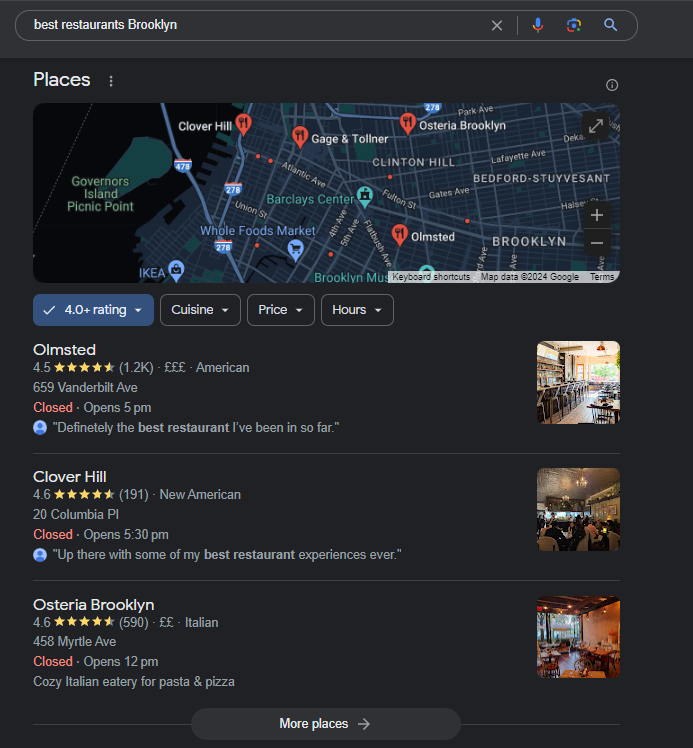
Alt: Local search of restaurants in Alicante, Spain (February 2024)
Are you aware that nearly half (46%) of all Google searches are seeking local information? If you run a local business, leveraging local SEO practices can dramatically boost your lead generation and conversion rates.

This involves perfecting your Google Business Profile listing, actively cultivating and responding to reviews, and maintaining consistent NAP (Name, Address, and Phone Number) across all platforms. With these local SEO efforts, your business becomes much more visible in local search results—significantly enhancing your opportunities for lead generation.

Leveraging local SEO for more leads

**Optimizing your Google Business Profile: It’s essential that you claim your Google Business Profile listing, verify it, and ensure that all information, from operating hours to product descriptions and images, is accurate and comprehensive. This step is crucial in attracting leads with SEO.

Encourage and respond to reviews: Actively encourage satisfied clients to leave positive reviews and always respond professionally to both positive and negative reviews on your Google Business Profile. This practice not only boosts engagement but also instills trust in potential leads.

Keep Your NAP Uniform: Make sure your business’s Name, Address, and Phone Number (NAP) are the same on all online platforms. This consistency helps search engines see your business as legit, boosting your local SEO.

6. Evaluate The Success of Your SEO and Lead Generation

Finally, measuring your SEO and digital marketing metrics via professional tools can give valuable insights into your website’s performance and areas of improvement. Regular tracking and tweaking can help you continuously refine your SEO strategies for leads, ensuring lasting results for your lead generation.

Important Metrics for Checking SEO Campaign:

Track traffic and rankings: Tools like Google Analytics help to keep an eye on your organic traffic and search engine ranking for targeted keywords. This will give you an idea of how visible you are and what needs improvement.

Check conversion rates: The ultimate goal of SEO lead generation is to convert more leads, so see how many visitors are doing what you want them to do (like filling out forms or making purchases).

Use Google Search Console: This tool provides data on your site’s performance in Google search results. It can highlight issues that might be affecting your rankings and give insights into how users find your website.

In summary

Half of all marketers consider lead generation a top priority in their marketing campaigns. Employing effective SEO lead strategies can drastically transform your online presence and ability to capture leads.

Remember, the art of SEO for lead generation is not merely about attracting traffic but about appealing to potential customers. With the right approach and persistent refinement, your efforts to generate leads with SEO tips are certain to reward your business with a rich pool of high-quality leads.

Personalization at scale: How to connect personally with a mass audience

Software Stack Editor · March 25, 2024 ·

Every company wants their marketing efforts to stand out from their competitors. The best marketing campaigns connect with their audience by targeting their needs and creating bespoke messaging.

Personalized marketing isn’t new, but many companies struggle to make their efforts count. Personalization at scale goes beyond simply identifying your customers by name, you need to segment your audience thoroughly.

In this article, we’ll explain what personalization at scale is, its benefits, and how it can lead to higher customer engagement, revenue, and ROI.

What is personalized marketing?

Personalized marketing is a strategy that involves tailoring marketing efforts and messages to specific individuals or groups. These groups are created based on their characteristics, interests, preferences, behavior, and demographics.

This strategy requires data and technology to create customized experiences for consumers. When done correctly it can boost engagement and ultimately drive conversion and customer satisfaction. Personalized marketing can be done across a range of marketing channels including social media, website content, email marketing and product recommendations.

What is personalization at scale?

Personalization at scale refers to companies delivering tailored and targeted marketing to a large audience or customer base. This content is created in line with your collected customer data meaning every customer receives content that’s tailored to their specific needs.

This approach requires automation technology to do the heavy lifting as companies need to share their specialized and individual content with a wide range of consumers.

What are the benefits of personalized marketing?

Personalized marketing comes with a host of benefits, from understanding customer pain points to improving customer relationships and improving success rates.

Let’s explore the benefits of personalized marketing strategies in more detail.

Drive revenue

Personalized marketing is a more cost-effective strategy compared to traditional advertising as you’re almost guaranteed to receive a higher level of engagement. When you send out general marketing communications, some, if not most, of your audience will likely have no interest or use for the product.

Not only is this a waste of resources, but it also limits your potential return on investment (ROI). Personalized recommendations can drive customers to spend more, in fact almost half of shoppers have said that they have made impulse purchases based on brand suggestions.

One study found that personalized marketing can increase sales by up to 10% and increase marketing ROI eight times; making it a no-brainer for businesses.

Improved customer experience

When customers know you understand their needs, they’re more likely to trust you and your business. By creating personalized experiences you’re showing customers that you identify with their pain points making the whole customer journey simple.

This approach changes the buying process from a typical transaction into a strong customer relationship. When customers trust you they’ll trust your recommendations and believe that you truly understand their needs.

Increase customer loyalty and retention

When customers feel heard and understood, they’re more likely to feel valued. Personalized experiences help improve the overall customer journey, increase customer loyalty, and encourage positive word-of-mouth.

65% of a company’s business comes from repeat customers, which is why keeping your consumer base happy is crucial. Personalization can help you earn the loyalty of your customers. In fact, 80% of self-identified frequent shoppers choose to buy from brands that provide personalized shopping experiences.

Personalized marketing trends

Personalized marketing has gone way beyond simply using a customer’s name. The average consumer sees 1,700 advertisements each month, and a personalization strategy is key to cutting through this noise and reaching your target market.

Other emerging trends include:

  • 45% of Millennials and Gen-Z want more personalized shopping experiences
  • Personalized services are the third-most sought-after e-commerce tactic
  • A 50% increase in email open rates for emails with personalized subject lines
  • 70% of shoppers only respond to marketing materials tailored to their interests
  • 75% of consumers are more likely to buy after receiving personalized recommendations.

What are some examples of personalized marketing strategies?

Targeted emails

Personalized emails are a great way to reach your target audience. Marketers can create and send bespoke emails to different customer segments and audiences depending on their demographics.

Marketers rely on valuable first-party data to segment their audience. They may collect customer data via sign-up forms, newsletters, or gated content and use this to determine what marketing messages to send to each group.

Fear of missing out (FOMO)

Customers hate missing out – so make the most of it! Some companies choose to capitalize on this by how many people are viewing their products or have bought it recently.

E-commerce sites incorporate FOMO through personalized messaging to try and convince customers to make a purchase. It lightly pressures the potential buyer to purchase to avoid missing out on a trending product.

Account-based marketing (ABM)

Account-based marketing is a common B2B strategy that involves sales and marketing teams tailoring a specific pitch to an organization. While traditional marketing strategies focus on casting a wide net, an ABM strategy targets specifically chosen clients.

A big part of this strategy involves selecting ideal candidates. The process can be expensive but the chances of conversion are much higher leading to better overall profits.

Product recommendations

Product recommendations rely on data collection to determine the type of product, service, or offer a user will most likely be interested in and tailor their recommendations accordingly.

Typically used by e-commerce and entertainment platforms. For example, if a user frequently uses a video streaming platform to watch comedies, the platform will continue to suggest related content that they’ll likely enjoy. This allows customers to filter through these choices and make a more informed decision with more chance of success.

Social media marketing

Social media platforms are a key marketing channel for many businesses. It’s a way for digital marketers to manage their customer interactions by having direct conversations with customers.

Highly personalized marketing messaging helps marketers collect worthwhile responses. This detailed customer data can help you improve communication and drive conversions.

Challenges with personalized marketing

Gathering data without hassling customers

Customer data is a crucial component of creating a personalized marketing strategy. You must have enough information to accurately predict how someone will respond to a certain product, service, or scenario. A customer relationship management system (CRM) can make storing the data simple but you need to look to find ways to collect it that don’t have too big an impact on your client base.

There are two main ways that companies gather data:

  1. Web analytics: These are pieces of code on your site that track what products your customers look at while online. While the code doesn’t have any effect on the customer experience, some people don’t like seeing ads for products that they have recently viewed or interacted with.

  2. Customer surveys and forms: These are much more transparent so customers often feel more comfortable interacting with them. They can sometimes be time-consuming, so you may find that participants fail to complete longer forms.

There is no one right way to go about data collection. Instead, you need to assess what works best for your company and customers. Sourcing the right data is very important, so it may take time to find the method that works for you.

Find the right balance

While some customers appreciate brands that target them and their interests, it’s important not to overdo it. Some companies like to utilize retargeted ads to speak to their customers, however, only 6% of consumers enjoy this approach.

It’s important to strike the right balance to show that any personalized content you’re providing has value, and isn’t just an excuse to excessively advertise. Your personalized marketing strategy should also respect prospect privacy but avoid mentioning it so much that your audience begins to get worried about their confidentiality.

Allocate resources effectively

Developing an effective personalized marketing strategy takes time, work hours, and funds but you also need the right tools. Marketing automation tools can do a lot of the heavy lifting for you, reducing the amount of time your staff spends planning and actioning your strategy.

Marketing automation technology needs to be planned, targeted, and tracked. Tech can handle mundane and repetitive tasks like consolidating and storing data so you and your team can focus on the big-picture stuff like project management.

CRM tools help you to keep track of your funnel so you can plan your resource allocation more effectively.

How to implement personalization at scale

Centralize your customer data

The first step is to collate all your customer data sources into one easy-to-access space, like a CRM. You want to have enough data to plot the customer journey, without this, you will struggle to scale your personalization strategy.

To make the most of your data you need to consider:

Single customer view

This is a comprehensive database that contains each of your customer profiles including their purchase history, site activity, and product recommendations. This approach helps businesses to gain a complete understanding of their customers to help them create targeted audience segments.

Without a single customer view, achieving personalized experiences is almost impossible.

Commerce data

E-commerce personalization requires a combination of customer and product data, often referred to as commerce data. By integrating customer data such as clothing size with information about specific products, businesses can serve hyper-personalized product recommendations.

Commerce data is the key element you need to implement personalization across your customer journeys.

Create an omnichannel strategy

An omnichannel strategy helps you to deliver personalized interactions across all customer touchpoints and integrate all your marketing channels.

This all-inclusive strategy helps you tailor your customer journey based on real-time triggers, customer segments, conditions, and integrated marketing channels (including email and SMS). You can use these triggers to share personalized offers that convert.

Leverage AI and automation

AI and machine learning tools can automate manual tasks, streamlining processes like lead management, retargeting, and personalized content creation across all your marketing channels.

Practical uses include:

  1. Automated welcome sequence: Tailoring onboarding experiences for prospects and new customers through highly targeted and personalized welcome emails.

  2. Product recommendations: Providing relevant suggestions for products to inspire additional purchases across different touchpoints, including top-seller recommendations, rating-based recommendations, and cross-sell recommendations.

Conclusion

Customers expect a personal touch from businesses. When implemented right, a personalized marketing strategy could be the difference between a one-off sale and a lifetime customer.

Striking the right balance is key. You want your customers to know that you value them, but come on too strong and they could find your approach annoying.

The first step to any personalized marketing journey is managing customer data. Companies with a successful personalized marketing strategy invest in the right tools to streamline their processes.

Capsule CRM helps you store all your essential customer info in one easy-to-access account, so you can have everything you need at your fingertips.

Find out how Capsule CRM can help your personalized marketing strategy by trying it free for 14 days.

Free Sales Pipeline Template for Excel

Software Stack Editor · March 25, 2024 ·

Free Sales Pipeline Template for Excel | Pipedrive

sales pipeline template
Topics

Download our sales pipeline template

What is a sales pipeline?

Why you need a sales pipeline

When to use a spreadsheet as a sales pipeline template

When to use a CRM for sales pipeline management

What goes into a sales pipeline?

What happens next?

Final thoughts

A sales pipeline gives salespeople a visual overview of where prospects are in the buying journey. However, a pipeline can only be fully effective when properly managed.

In one study, Vantage Point found that 56% of respondents rated their effectiveness at managing pipelines as poor or neutral. Considering that effective sales pipeline management leads to a 15% increase in revenue, according to Vantage Point’s study, it’s critical to get it right. There is a clear gap between understanding how beneficial a sales pipeline is and properly implementing one.

In this article, you’ll learn why you need a sales pipeline, how using a spreadsheet is a great sales pipeline template to start with (but will need to be replaced in the long run), how you can get organized with free sales pipeline templates (and how to make the switch to a CRM) and exactly what goes into an efficient sales pipeline.

Before we go any further, our team of sales experts has created a sales pipeline template to help you get started.

Download and try out this 100% free and effective sales pipeline template now, which you can refer back to as you read through our guide.

This spreadsheet is tailor-made by our team of sales experts, but you can adjust and customize them in any way you see fit. Just download it, enter your contact and deal details and watch all the work get done for you.

Download our sales pipeline template

Before we go any further, our team of sales experts has created a sales pipeline template – sometimes also known as a sales funnel template – to help you get started.

Download and try out this free and effective sales pipeline template now. You can refer back to it as you read through our guide.

This spreadsheet was tailor-made by our team of sales experts but you can adjust and customize it in any way you see fit. Just download it, enter your contact and deal details and watch it work for you.

Get organized with your free sales pipeline excel template

Looking for a more streamlined way to manage your sales? Download this free sales pipeline template and test it out now.

Even this basic sales funnel Excel template can lead you toward more revenue. A Vantage Point study found that effective sales pipeline management increases revenue by as much as 15%.

What is a sales pipeline?

A sales pipeline is an organized way to visualize and keep track of sales leads or prospects as they move through the buying journey.

From “lead generation” to “deal won”, each stage in the pipeline is clearly defined. This increased visibility helps to streamline your sales operation, ultimately decreasing churn and maximizing conversions.

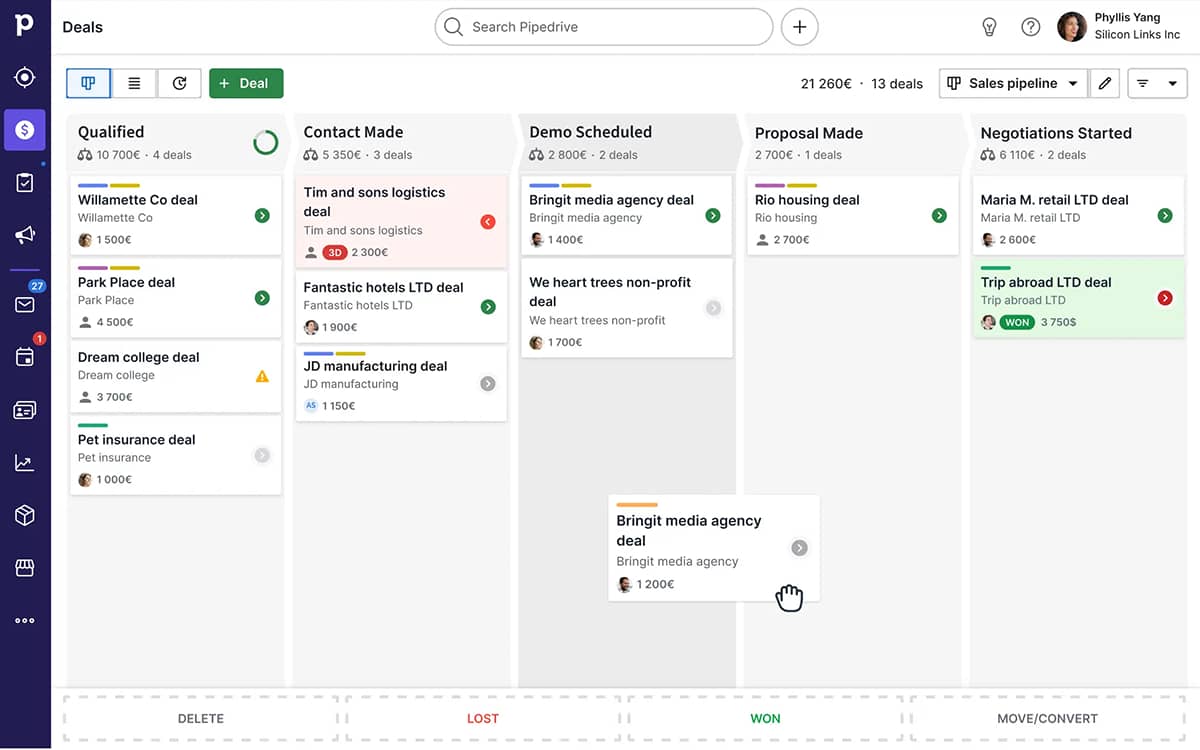
For some context, here’s what the pipeline view looks like in Pipedrive:

Pipedrive pipeline view

Pipeline trackers give you an easy-to-digest, real-time overview of teams performance.

For example, if one salesperson outperforms the rest of your team members, you can evaluate that rep’s actions and implement the same sales tactics teamwide. The same is true for stopping actions that don’t yield results.

Pipeline trackers give you an easy-to-digest, real-time overview of teams performance.

For example, if one salesperson outperforms the rest of your team members, you can evaluate that rep’s actions and implement the same sales tactics teamwide. The same is true for stopping actions that don’t yield results.

Pipelines also help busy salespeople stay organized. By glancing at their pipeline, reps can easily see exactly where each deal is and what activity comes next. The results are increased productivity and improved sales performance.

Many people visualize their sales pipeline as a funnel, which leads to a common misconception that sales pipelines and sales funnels are always interchangeable. While both give you an overview of the sales process and its various stages, the approach and objective differ slightly:

Sales pipeline Sales funnel

Shows the deal size and actions needed to move specific prospects through the buying journey.

Shows the overall number of leads moving through your process and where they drop off, giving you a conversion rate for each stage.

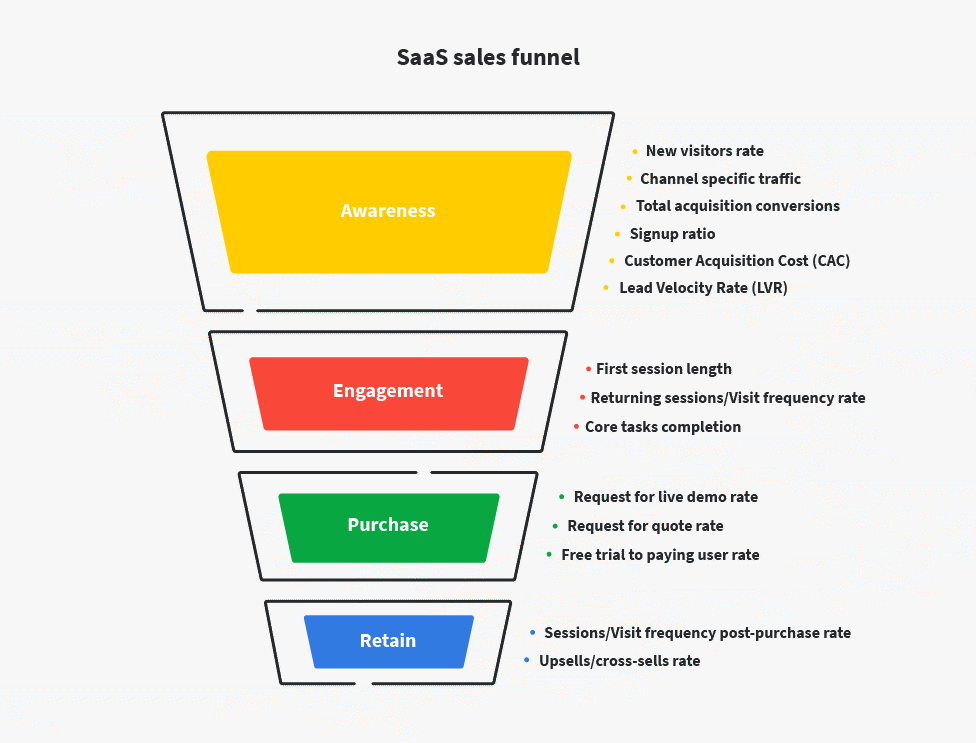
In addition, a pipeline presents the salesperson’s perspective, while a funnel focuses on the buyer’s viewpoint. Here’s an example of a software-as-a-service (SaaS) sales funnel:

SaaS Sales Funnel Template

Both pipelines and funnels are useful tools for understanding and improving your sales process. However, the sales pipeline is the best choice for a snapshot of where deals are in your process and your reps’ ideal next steps.

Why you need a sales pipeline

Your business already has a pipeline, whether you know it or not. This is because your team members follow similar procedures whenever interacting with leads and prospects.

However, actively documenting your sales cycle and processes can help your reps organize new leads coming into the funnel and track specific actions. For example, reps can pinpoint the moment a lead is qualified, or exactly how many times and through what channels they’ve contacted their prospects.

Detailing such sales activities removes guesswork and encourages a more structured process at all stages. A pipeline is a way to reflect these activities via sales pipeline stages so that they become trackable. This motivates your reps to take relevant, measured actions, rather than broad, boundless steps.

Recommended reading

https://www-cms.pipedriveassets.com/blog-assets/sales-objectives-examples.jpg

Sales objectives: Examples that will motivate your team

By collating key information and sales data, salespeople can easily identify which leads need nurturing. This helps them prioritize who to reach out to, when to schedule meetings, when to follow up and what steps they need to take to move the deal forward.

They can also more easily weed out hot leads from cold leads, reducing time wasted trying to sell to a potential customer who doesn’t fit the ideal customer profile (ICP).

Ultimately, a well-managed, documented, accessible pipeline enables you to optimize and automate your processes. It helps you set realistic goals and choose key metrics to track, reduce bottlenecks, improve your sales results and increase revenue.

When to use a spreadsheet as a sales pipeline template

It’s easy to become overwhelmed by the abundance of sales tools available. While a dedicated CRM solution offers many benefits, a sales manager who oversees a small team with a handful of deals may be able to manage their sales process with a straightforward sales pipeline template – at least to start.

If you’ve been tracking your pipeline on a piece of paper or in your head, moving to an Excel spreadsheet or Google Sheets document is a welcome upgrade. Spreadsheets are a great initial tool for handling your team’s deal data, including deal size, sales stage, profitability, weighted sales forecast and key prospect information.

Within your spreadsheet pipeline, it’s easy to see a high-level overview of all current deals and make data-driven decisions. This will help you track your team’s progress and streamline your daily processes, freeing up valuable time and energy that you can put back into managing your team.

Effective sales management calls for equal focus on sales operations, strategy and analysis. Getting bogged down by slow processes in one area takes valuable attention away from the other two.

One of the biggest benefits is that a spreadsheet completes calculations for you. This becomes crucial as you scale, especially if your team handles multiple deals in various stages with different probabilities of closing.

At the same time, it also helps you keep a pulse on your sales process. In one fell swoop, you can track all reps’ sales activities and progress, as well as deal sizes and sales forecasts.

You can also tailor the sales pipeline template to your unique business requirements. Adding stages and modifying formulas to suit your process and prospects’ behaviors is straightforward with most spreadsheet tools.

The best thing about spreadsheets is that they’re free to create. Even if you don’t have Microsoft Excel, there are plenty of free alternatives, such as Open Office and Google Sheets.

Note: If you use other Microsoft tools like Word and Outlook, your pricing tier likely already includes Excel – even if you’re not currently using it. Check your package before spending any more money.

When to use a CRM for sales pipeline management

If you’re managing a team with many deals to handle, you should consider using dedicated sales tracking software, such as a CRM tool.

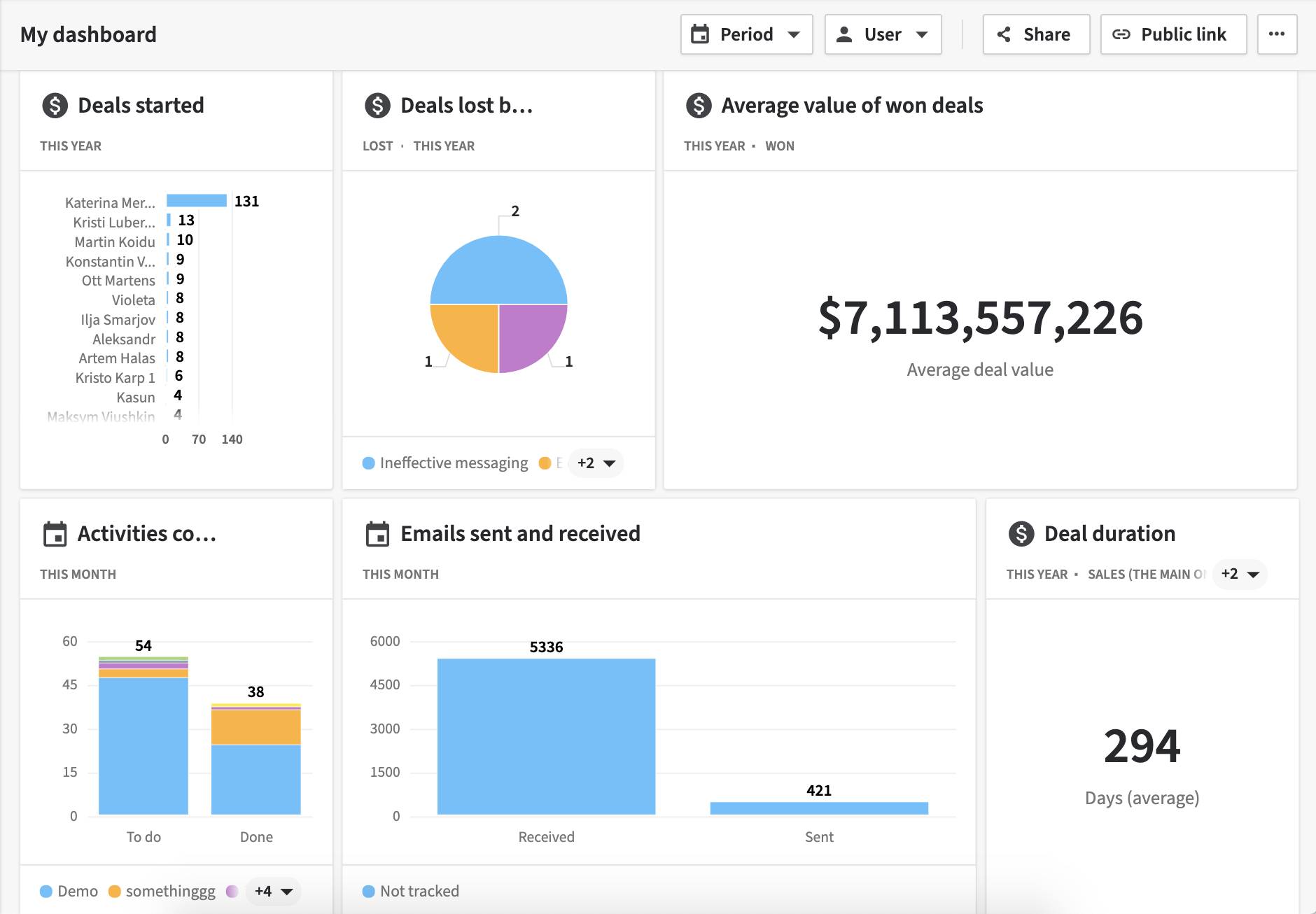
A CRM gives you access to advanced reporting and analytics, helps your team collaborate on deals and grants you a deeper understanding of your progress toward benchmarks and goals. Some CRM’s even offer customizable dashboard templates that make pipeline insights extra accessible.

My dashboard Pipedrive

As your team grows, it’s crucial to document leads and prospects in an organized fashion.

Salespeople must be able to quickly sort through individual and teamwide records to track sales and find the information they need. Cloud-based CRMs like Pipedrive help you ensure data is inputted correctly. Many also integrate with email platforms and calendars to automatically update records as prospects move through the pipeline.

Even if you’re running a startup or a small business, switching to a CRM from a spreadsheet can have huge benefits. AGT Engineering & Operations grew its revenue by 161% in the first two years after making the switch, while Mybanker was able to triple its sales team thanks to new business.

Whatever your situation, moving to a CRM with tons of integrations like Pipedrive can have huge benefits.

Having a powerful CRM tool such as Pipedrive in our arsenal has been essential to the success of our sales team. With its easy-to-use and well-designed interface, it definitely keeps us organized and on track!

Kristel KruustükFounder & Chief Testing Officer, Testlio

Additionally, you can access and update a CRM from both desktop and mobile devices. This allows reps to input new information on the go, further improving timeliness, accountability and collaboration.

Sales pipeline spreadsheets

Pros Cons

A good start for small teams

Harder to keep data accurate across teams

You can set up formulas and create basic graphs and bar charts

Performance struggles with high data volumes

Gives a high-level overview of the sales process

May struggle when multiple people access it

Many people are familiar with the main spreadsheet tools

No built-in automations

Easy to export data

Harder to scale as your business grows

Free

Not designed with sales pipeline management in mind

Risk of data corruption

What goes into a sales pipeline?

When setting up your pipeline, document the main steps your team goes through for each sale.

Hitting annual targets or closing a big deal can seem overwhelming, but breaking the process into individual steps helps you form a roadmap.

Clear-cut, step-by-step guides help your reps visualize and achieve their goals. Plus, it will improve your sales pipeline management processes as you can monitor tangible steps to evaluate individual and overall performance.

Recommended reading

https://www-cms.pipedriveassets.com/blog-assets/activity-based-sales.png

The Ultimate Guide to Activity-Based Selling: What, Why, and How

Pay special attention to the most impactful steps. Don’t worry too much about creating the perfect pipeline for your first iteration. Your pipeline is a living document and will change as your process evolves.

At this stage, you should get input from the whole sales team. Remember, they’ll be the ones using and updating the pipeline. This involvement will encourage them to invest in the project’s short and long-term success.

While your pipeline may end up looking different, we’ve found there are several basic components that make up an effective sales pipeline. Here’s the information you’ll need.

Basic details

The first two columns in the spreadsheet are for the “deal name” and “contact name”. Don’t take these for granted.

If one of your sales reps has to take over someone else’s activities, you don’t want to lose a deal because nobody knows who to contact.

Who’s your point of contact? Are there multiple contacts? Have you confirmed you’re talking to the right person or is there someone else at the company in a better position to deal with you?

Make sure your salespeople know to include every little detail, no matter how small it seems. This also doubles as an effective training strategy for prospecting and qualifying. The best sales reps master the art of gathering detailed information early to avoid wasting efforts on low-value customers.

Sales stage

The “sales stage” (or “deal stage”) helps you identify where prospects are in the buying journey.

What deal stages will you need for your business? By now, you’ve reviewed your sales process and workflows with your team (see above) and know the individual steps reps go through to close deals.

Many of these are straightforward, such as booking a call or sending a sales proposal. Other steps may be more complex and need further clarification.

For example, contacting a lead may involve multiple touchpoints across different platforms (e.g., social media channels like LinkedIn or email), and qualifying a lead may require weighing several factors.

To avoid confusion, ensure all stages are clear and specific so any reps handling the deal know when to move it along in the pipeline. That might mean breaking a complex stage into more manageable steps. However, avoid having so many steps that your team spends more time updating the pipeline than selling.

For our template, we’ve included these default stages.

  • Idea: The prospect is identified as an ideal fit for your product or service

  • Contacted: A rep has reached out to the prospect

  • Proposal sent: The prospect has shown interest and received a proposal

  • Terms negotiated: You’ve negotiated the terms of the contract

  • Verbal yes: The prospect has agreed to the proposal, now they just need to sign

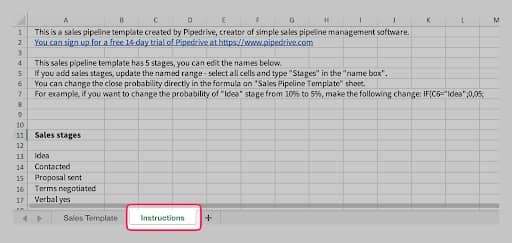
You can modify these stages by opening the “Instructions” tab in the spreadsheet and changing the stage name.

Excel spreadsheet Pipeline

You can also add additional stages through the “Name Manager”. This makes each stage available through the relevant drop-down menu, ensuring your team consistently records the same stages.

Deal size

How much is the deal worth? Hopefully, you can use an exact figure. If you don’t know the exact deal size yet, use your average deal size as a placeholder.

That said, ensure your salespeople know to update this figure if and when new information arises. It’s key to keep it up-to-date so your forecasting is as accurate as possible.

Probability

A deal isn’t closed until the prospect makes the purchase. In the template, each sales stage is assigned a win probability. The further a deal is in the sales process, the better the chance it’ll close.

For example, contacted leads have a 25% probability of closing, while those who give a “verbal yes” have a 90% probability. The spreadsheet then auto-fills the probability depending on the stage.

You’ll likely need to change the probabilities to reflect your business. For example, a low-ticket item is often more likely to close than a high-ticket enterprise solution.

This is a simple matter of changing the formula in the appropriate cell. For the most accurate results, base your formula on past sales data rather than guesswork.

Recommended reading

https://www-cms.pipedriveassets.com/blog-assets/sales-metrics.png

Sales metrics: Definition, examples and recommendations

Weighted forecast

One of the advantages of a well-managed pipeline is the ability to forecast your future sales. Knowing how much revenue you can expect in a quarter enables you to make smart business decisions and focus your attention in the right places.

Rather than trying to guess, opportunity stage forecasting uses the pipeline details we’ve already filled in to predict your total revenue.

Your pipeline’s forecast calculation is automatic, considering both the deal size and the close probability. This helps you avoid being distractions from massive deals with low chances of closing. You can focus on the highest quality sales opportunities.

Expected close date

For your forecast to be useful, you also need to know when deals are likely to close.

Unfortunately, this isn’t easy. Many reps and prospects underestimate how long deals take to close. In addition, the more people involved in the purchasing decision, the more difficult it is to come up with an accurate date.

The best way to estimate the close date is to look at your previous deals and see how long they took to close. Even then, the date will almost certainly change as the deal progresses. Still, it’s important to keep a target date in mind as this encourages your reps to keep the deal moving. It’s all too easy to lose track and neglect a “sure” deal.

Contact

Contact is relatively straightforward. Who’s managing the deal from your side? The answer may change as the sale progresses (e.g., transferring from a sales development representative to an account manager), so keep this up-to-date.

Tracking who’s handling each deal enables you to measure team performance and distribute deals properly.

Recommended reading

https://www-cms.pipedriveassets.com/Lead-distribution.jpg

Lead distribution: The ultimate guide

What happens next?

You should always know what has to happen next. How can you get the prospect from their current stage to the next one? For example, a prospect in the “idea” stage needs contact from a rep. A “contacted” prospect will likely need a follow-up message.

Like the sales stages, the next steps need to be clear. Anyone should be able to look at the designated next step and know what is required to progress. These shouldn’t be complicated but don’t be afraid to get specific. “Follow-up email by 10/06” is a lot clearer than just saying you need to “Follow-up”.

Monitoring the planned next steps encourages your team to be proactive.

Final thoughts

Effectively managing your sales pipeline is a key step to improving your overall sales process and revenue growth. The best part is that it doesn’t have to be complicated.

A simple spreadsheet template can give you everything you need to stay organized, identify areas for improvement and manage your team more efficiently.

Get organized with your free sales pipeline excel template

Want to simplify the way you manage sales? Download this free sales pipeline template and test it out now.

Driving business growth

Recommended

Overcoming Sales Objections: Plan, Persist & Convert

Software Stack Editor · March 25, 2024 ·

Overcoming Sales Objections: Plan, Persist & Convert | Pipedrive

Overcoming Objections in Sales
Topics

How to train reps to deal with sale objections

Encourage proactive losing

Anticipating and preparing for objections

Stay calm when overcoming objections in sales

Increase your sales stamina

Give your team feedback

How to overcome the biggest objections in the sales world

Price: when budget is tight

Time: when workloads are heavy

The “I need to think about it” objection

The “Let’s do next quarter” objection

The “Thanks so much, I will contact you later” objection

The “Email me more information” objection

The “I don’t have time to talk right now” objection

Competition: when they’re leaning towards someone else

Trust: when they’re skeptical about you

Why trust is a tough barrier if you’re a startup

Change: when they’re happy with the status quo

Authority: when they don’t have the purchasing power

Need: when they don’t see the value of your product/service

Conclusion: Handling Sales Objections

Sales objections are the reasons why your prospects can’t or won’t buy your product or service. This could be for many reasons. Maybe they don’t have room for your product in their budget. Some prospects will tell you they don’t need your product. Others will say they don’t trust your company. These are just a few of the most common objections salespeople come across.

But you can’t afford to give up on a potential sale so quickly.

It’s your job to reframe the perspective of your potential customer and teach your team about properly handling sales objections.

Luckily, if you can identify your lead’s sales objection you can get critical insight into the exact pain point you need to overcome. The best salespeople see objections as a positive opportunity to tailor their pitch and zero in on the factors that will make or break the deal.

There are almost always ways to address your prospect’s concerns if you approach the objection in the right way.

On the flipside, certain objections can act as an effective lead qualification tool for your sales team. They allow you to weed out the low-value leads early and can help to build trust with realistic prospects.

In this guide, you’ll learn exactly how to overcome sales objections, especially the most common, including:

  • Price: If price objections are your main issue, you might need to better qualify your leads. However, smart sales professionals know that a budget doesn’t have to be a dealbreaker.
  • Time: This type of objection will test your sales skills, especially on the phone. Your relationship management and conversational prowess is vital.
  • Competition: If the lead is using a competitor, it means they have a need for your product. Now it’s your job to prove your product/service is a better option.
  • Trust: If you’re a new company, make sure you have some testimonials ready. Buyers want to see a solid track record. Your empathy is just as important.
  • Change: When the lead is reluctant to switch, you need to use your sales pitch to show them the benefits and highlight what that means for their business.
  • Authority: Make sure from the start that you’re dealing with a decision-maker. Don’t allow anyone else to deliver your sales pitch to the final buyer.
  • Need: If the prospect thinks they don’t need your product, it’s up to you to reframe the conversation and change their perspective if you still think you can add value for them.

Read on to learn exactly how you can take advantage of all these sales objection solutions. But first, you need to know how to prepare for managing objections.

How to train reps to deal with sale objections

An objection in almost any part of life is an irritating, unwanted roadblock. In sales it’s the opposite.

An objection gives you a precious opportunity to understand your potential buyer’s struggles, target their specific needs and build stronger relationships.

A question or objection is a crystal clear insight into the pain point you can solve.

Most salespeople are selling similar products to similar audiences again and again and again. If you want to increase your efficiency and your conversion rate, it’s time to create an action plan for overcoming sales objections and get ahead of the curveballs you might have to face. Here’s how you do it…

Encourage proactive losing

What happens when an objection is valid?

Your solution isn’t for everyone, and not everyone is your ideal customer. Use common sales objections as a way to qualify leads in your pipeline, and understand what your ideal potential client looks like. You need a process to help you find and drop the worst prospects quickly, so you can focus your efforts on those with the best chance of turning into an ideal customer.

As Napoleon Hill (author of Think and Grow Rich) said, “The best way to sell yourself to others is first to sell the others to yourself.”

By following this advice you’ll find it far easier to maintain a clean sales pipeline and help your team focus without the fear of missing targets.

According to Lincoln Murphy’s Ideal Customer Profile Framework, your ideal customer is:

  • Ready: they have a problem they need to solve
  • Willing: they are ready to take action to solve that problem
  • Able: they have the budget and authority to solve that problem

If your prospects hold these traits, handling their sales objections will help you identify them and tailor communications to their specific needs, their sales objections shouldn’t be insurmountable if you qualify your leads correctly.

When your lead qualification process is humming, the nature of the objections you’re likely to encounter should be reasonably similar.

If your lead is not ready, willing and able, think about the situation in two ways:

  • The customer’s perspective: will they really benefit from your product or service? Will it make a genuine difference to the business and bring better chances of success?
  • Your company’s perspective: Will you benefit from having them as a customer? Will they happily keep paying for your offering or do you think, as a customer, this prospect would be more trouble than they are worth?

The best sales teams turn reactive losing into proactive losing.

Sales isn’t about tricking people into buying something they don’t need, won’t use or will regret. The sooner you match yourself up with an ideal lead and ditch a poor candidate, the better your conversion rates.
When objections lead your team to believe there isn’t a true fit between a prospect and your company, make sure you reinforce this positive lead qualification decision.

Want to Learn How to Influence Your Prospect’s Buying Decisions?

Get inside the head of your customers and take advantage of consumer psychology with this Psychological Selling Guide.

Anticipating and preparing for objections

Merely hoping sales objections won’t happen is the worst plan for managing sales objections. When your lead’s objections do come up (and they will), you have no plan in response.

And the best thing you can do?

Have a plan for any likely objection so you know exactly how to approach your response immediately.

There are many factors that influence sales objections. Different markets, product tiers, price ranges and decision-making authorities must be addressed when you are talking to prospects.

One way to do this is to make these specific objections part of your sales training program. You don’t have to overcomplicate things, you just need to be proactive in your preparation. Here’s a simple process you can work through over the next few days to futureproof your objection-handling.

  • Write a list of the most common sales objections you hear every day
  • Come up with a plan on how to debunk them
  • Look at past lost opportunities, call transcripts and emails
  • Prep a shortlist—you should end up with at least 10-20 of the most common sales objections your team is receiving
  • Figure out why you couldn’t overcome the objection then, and what you should be doing differently in the future
  • Develop an outline for a script any team member could use to overcome an objection with an effective and consistent sales pitch

Stay calm when overcoming objections in sales

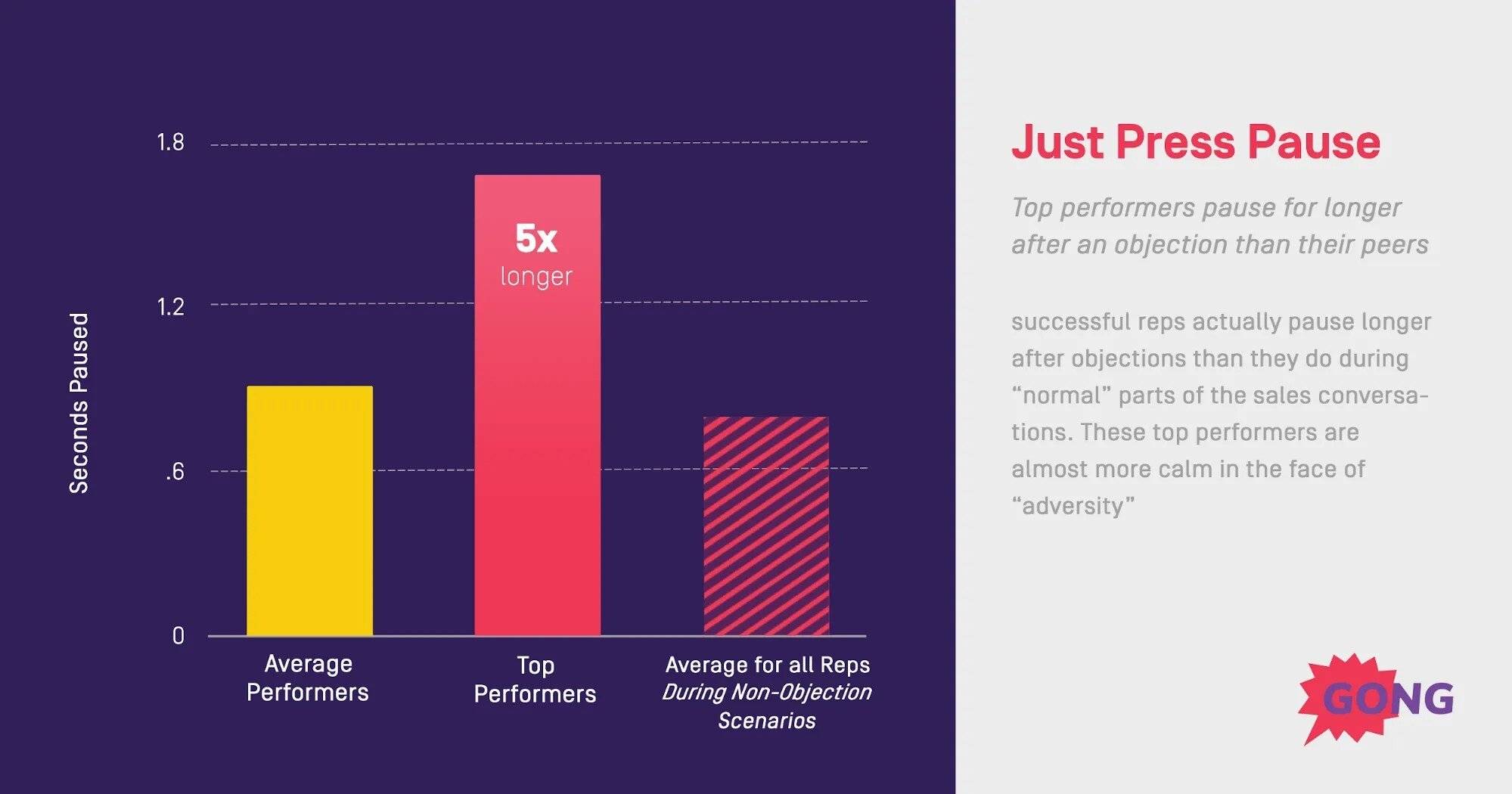
A study by intelligence conversation platform Gong found sales reps who stay calm when they’re hit with sales objections are more successful in closing a prospect.

What does this mean for your sales team? Stay calm, take a breath and make sure you really listened to your prospect after being thrown an objection. A confident brush-off might influence your prospect’s relationship with you more than you think.

Successful sellers actually pause longer after objections than they do during ‘normal’ parts of the sales conversation. Instead of jumping into defense mode or trying to overwhelm the prospect with how good their product is, top performers slow down and show a sense of calm in the face of adversity.

Bar graph showing how top sales performers pause for longer after a sales objection.

Gong found average performers basically interrupted their customers and overwhelmed them with information and follow-up questions when they were trying to overcome an objection.

Average performers tend to interrupt their prospect and overwhelm them with an onslaught of words per minute. Top performers don’t necessarily talk slower, they just maintain their pace and show their prospect a sense of calm:

Graph showcasing how top performers speak slower after an objection than average performers.

How can you teach your team to stay calm in the face of an objection?

A good place to start is by having your sales reps practice making cold calls to each other in the office. This will teach them to make cold calls with more confidence. Plus, they can practice overcoming objections on a colleague rather than a real-life prospect.

Split your sales team up into pairs and have one rep call with the speaker activated, while the other writes down constructive feedback for their partner.

Increase your sales stamina

How many different ways can you describe the value of your product?

To close a deal, you need sales stamina. This means developing an endless stream of ideas to help you sell your product to a customer. Remember that anger or aggression almost never works. Build up your stamina––you must maintain calm and demonstrate your empathy, especially when the prospect is playing hard to get.

If your sales team is struggling to come up with more than a handful of ways to sell a product, regroup and try pooling everyone’s ideas together. Gather your sales reps into a group and get them to list their descriptions and highlights of a product until they run out of ideas. Analyze what helped you close your most valuable deals and try to pinpoint the factors you can replicate.

Give your team feedback

Everybody needs feedback, and it’s important to continuously provide your team with guidance to improve and maintain their selling standards.

Because you’ve created a list of common objections for your team, you can create a practice of checking in with your team on a monthly basis. Don’t just set up a plan for overcoming common sales objections with your team without following through to ensure correct execution.

Ask them which objections they encountered in the last sales cycle and have them walk you through the outcomes. Give feedback and update your list with any new objections. Tweak the messaging in your templated responses to keep your team focused on improvements. This documentation can act as an invaluable training manual for your induction process in the future.

Mountain range with a green flag with a dollar sign on it.

How to overcome the biggest objections in the sales world

Let’s get into the actual objections you’re hearing from prospects on a daily basis.

Whether it’s about budget or a need for your product, there are always ways to overcome a sales objection and close a deal.

Price: when budget is tight

The easiest way to avoid a price objections is to make sure you are qualifying your leads properly.

If you believe the prospect truly is on a budget restriction and they aren’t close to affording the product, their objection may be genuine. It’s best to flag these prospects as a cold lead and not waste a lot of time trying to find an innovative way for them to afford a purchase.

Let them down easy, show that you still think they might find value in your solution in the future, then file them away in your CRM as a cold lead to contact later by saying:

“Thanks for letting me know. We don’t expect you to buy the product right now, but I would like the opportunity to share what we are doing and see if it’s valuable to your company. I’ll schedule a check-in with you later in the year.”

On the flipside, using price as an objection might mean your prospect does have the budget, but they simply aren’t convinced your product will bring them enough value to purchase.

When price or budget is raised as an objection from an already qualified lead, you have yourself a problem. Either you haven’t qualified your lead correctly (you should know by now whether they have enough funding) or perhaps your lead is trying to find a convenient excuse to cover their uncertainty or get you to lower your price.

If you’ve already determined that your lead does have sufficient budget during your lead qualification process, don’t be fooled when your prospect claims…

  • “I don’t have enough budget”
  • “It is too expensive”
  • “I can find a cheaper alternative”

Be assertive and remind the lead of earlier discussions when they expressed their need and their budget.

You need to reframe the conversation to focus on value instead of cost.

Unless your lead has a drastically reduced budget, price is only a dealbreaker if you can’t convey that the value of your offering exceeds the price.

So how do you reconnect with the lead and reshape their perception of value? Figure out the root of the pricing issue. Tackle this by diving deeper into the objection by asking:

  • “Are you currently using a solution in [your industry]? How much are you spending on it?”
  • “You let me know earlier that you have a need in this area. ?”
  • “I understand. Let me ask you: if price were not an issue on this, is this something you would move forward with today?”

Asking these questions will give you a better understanding of why pricing is an issue with your prospect. Once you get a clear picture of their situation, it will be easier to plan your next step.

Tell them that you understand their situation:

“Your concerns are very reasonable, I get it, it makes sense. I want to make sure you get a return with this offer.”

Let your prospect know that you’re invested with them on their journey. Guide them and tell them how you’re going to get them there with your product:

“I’ve seen huge successes with customers who have implemented [your solution]. These features are the reason [your client] just signed with us last month to achieve [goal one] and [goal two] and has seen substantial progress. Since you mentioned [goal one] and [goal two] as your challenges the last time we spoke, it would be great to talk to you about the added value these features offer your business.”

Talking about price can be touchy, so it’s best to not bring it up as one of the first points when talking to a prospect. This gives them the chance to use price objections as an excuse before you get the chance to outline the value of your product.

If you wait until you’ve already talked your prospect through your product and shown them how it can help their business before you mention price, they’re more likely to already be invested in purchasing it.

Once they see the benefits of your product, price is less likely to impact their buying decision.

Time: when workloads are heavy

The best way to handle a sales objection is to work with your prospect to try and understand their buying time frame.

Versions of this objection include:

  • “I need to think about it”
  • “I won’t buy it now, but maybe next quarter”
  • “Sorry, I’m busy right now, I will contact you later”

You may also be handed the brutal “I don’t have time to talk to you” line. Let’s break down each of these to understand the motive behind them and how to address them as they arise.

The “I need to think about it” objection

If a prospect needs to think about buying from you, it often means uncertainty about the value your solution can deliver. Don’t encourage this kind of ‘unsupervised thinking’. Instead, find out where the uncertainty lies.

Refer back to your previous conversations, re-establish common ground and offer to explain your value proposition in clearer terms. One way to do this is to respond with something such as:

“Sure, I get it. Based on what we talked about before, I understood that you’re particularly focused on (most important pain point). If you don’t mind me asking, what do you feel you need to think about most?”

A response like this can build stronger rapport with your prospect, as it demonstrates confidence in your solution.

If you covered your tracks during the qualification process, then this will be less a rejection and more an obstacle you’ll need to overcome to reach the sale. However, you may come across a hard stop for one of two reasons:

  1. The prospect needs approval or input from another stakeholder
  2. The sale involves a large investment or requires a huge amount of change

Get an idea of how the sale might progress by asking your prospect how they feel about your solution. Ask them if there’s something you can do to help them communicate the value with their bosses. Give them what they need, and empower them to reach their goals.

The “Let’s do next quarter” objection

This objection implies something needs to change in order to invest in and implement your solution.

Find out what has changed that has caused such a shift in priority. These can include shake-ups in internal organizational structure, a decision maker leaving the business or other business objectives taking priority.

To handle this objection, refer back to the conversations you had earlier in the sales process. Identify objective truths the prospect shared with you. Contrast this truth against the objection to illustrate the pain of not taking action. One way of doing this is as follows:

“You said before that (X problem) was something that needs to be addressed. Does this mean you’re happy to “live with them,” or do you plan to deal with these problems on your own somehow? This will just help me understand more about your approach and how I can make sure we’re in a position to help you.”

Lead the prospect to a favorable conclusion. Don’t force it upon them, but also realize that this could be a “throwaway” objection to politely postpone the conversation. Ask the prospect “why next quarter” and, if they provide a legitimate response, use this to start a new line of dialogue.

The “Thanks so much, I will contact you later” objection

This objection is so vague that making assumptions might kill the sale. The best response to this provides clarity on the objection while demonstrating you’re honest and straightforward:

“No problem. Just one question before we wrap up, do you actually want to continue this conversation?”

This will encourage honesty, and elicit a direct response from your prospect. Ask them if they truly believe your solution can solve their problem. Express that an honest answer will help you serve the prospect effectively, or save you time. Good or bad, you need clarity here.

If the prospect shows some red flags against your qualification criteria, you can move on feeling confident that any extra time spent would be time wasted.

If you get a more positive response, you’ve shown that you mean business and you’ve established a more level playing field without pretenses.

The “Email me more information” objection

Every salesperson receives this objection early on in their career. And it can often be an excuse for the prospect to end the conversation.

Clarify the needs and challenges they raised during the conversation. Paraphrase what you talked about and focus on objective truths. Encourage the prospect to be honest with you.

If they’re asking questions about your solution, or things they need clarity on, this is usually a good sign. It gives you a second chance to give a clearer sales pitch that addresses these areas.

When receiving this sales objection during the discovery phase, you should take it at face value. Here, having a strong follow-up process will make sure the conversation continues.

There are two practical ways to respond depending on which phase of the buyer journey you encounter the objection:

  1. During discovery: “I’d be happy to, but I don’t want to burden your inbox with anything you don’t need. Can you let me know exactly what info you would like? It’s my job to explain things perfectly.“
  2. During the pitch: “Before I do that, can I ask what you need? I should have given you the info you needed before this point. What do you think I’ve missed out on?”

Finally, make sure you control the pitch at every touch point. If the information is going to be used to share with other decision makers, push for a sales meeting where you can run through your pitch or demo with those stakeholders present.

The “I don’t have time to talk right now” objection

It’s important to respect your prospect’s time. As a salesperson, a lack of empathy can burn any rapport you’ve established. If this happens during the prospecting or discovery phase, let them know you’ll try another time. However, make sure you agree on a specific time.

If you get a sense the prospect is frustrated, end the call as quickly as possible without pushing for another time. Simply make a note to call back another day.

When at the pitch or demo stage, a scheduled meeting will have been agreed by both parties in advance. If the prospect is late or something else has come up, don’t shorten the meeting. Your offer deserves the time it needs to deliver value to your prospect.

Need help phrasing this response? Here’s a template you can use when this objection arises:

“I totally understand that you’re busy and you don’t have the full time available for the meeting today, but I think it would be unprofessional of me to condense what I have planned. Let’s get a new time when you have the entire time slot available so we can go through the proposal in detail. It’s my responsibility to explain exactly what we can provide for you. When should we reschedule?”

If your prospect makes a habit of being too busy to take your call, it’s not a promising pattern. It suggests your prospect isn’t serious about your solution or the problem it solves.

Pipedrive’s Contacts Timeline can help your team gauge the history of their activities with a specific contact and enables salespeople to tackle objections in an informed and tailored way.

two people pulling on a rope with a green dollar sign flag in the middle.

Competition: when they’re leaning towards someone else

It might not seem like it, but prospects objecting because a competitor is their current provider is a great thing.

It means your prospect already understands the value of your solution, and they’re willing to invest in a product in your field. This is a great opportunity for your sales team. It also means you qualified your leads correctly.

Once you’ve figured out a prospect is hesitant to talk to you further because they’re with a competitor, you need to plan your next steps carefully.

The first thing to do is figure out the weaknesses of the competitor’s product, and pit them against the biggest strengths of yours. Do your proper research on the current situation.

You can then debunk their objection with something like:

  • “I’m glad you’re already working with a provider, because I’m confident we can help you with [goal one] and [goal two] even more. What do your results look like so far?”

You might want to dive deeper into your prospect’s overall satisfaction with the competitor’s product, and see if you can spot any holes with their overall satisfaction:

  • “Why did you choose this service? What is working well? What isn’t?”
  • “How do you feel about being in a contract?”

Asking a prospect to break down exactly what it’s like working with your competitor can prompt them to think about aspects they don’t like that they might not have thought about before.

Be patient with this one and let the prospect think out their thoughts properly. Leaving them in an uncomfortable silence can prompt them to offer up a negative comment or concern.

Then, it’s time to start sewing the seeds of doubt in your prospect’s mind about whether or not your competitor really is the best provider for the service.

Paint a picture for the prospect of how their workflow will look and how it will change for the better when your product is involved.

Do this by:

  • Highlighting the unique benefits your product has, that nobody else offers
  • Mentioning a case study from someone who has switched to your product after using the competitor your prospect is currently with. Any data or ROI to back up this point will tip the scales in your favor, social proof is gold.
  • Listing other businesses who are in the same field as your prospect who have used your product successfully

Unfortunately, dealing with this particular objection does have some barriers that are sometimes too large to overcome.

The two main reasons a prospect will be resistant to dropping your competitor and coming on board with you will revolve around contracts and training:

  • Many companies, particularly in the SaaS space, will lock clients into contracts that last for months or years. If a prospect’s contract doesn’t end for another two years, it’s almost impossible to overcome this objection (unless you’re willing to buy them out)
  • The prospect may be hesitant to switch to your service as they might have invested a lot of time, and therefore money, in training their staff how to use their current software or product/service

So, how do you tackle these objections?

You flag the prospect as a warm lead and create a follow-up plan (sales cadence):

A representation of a sales contact plan from April-June

Make a plan to follow up with the prospect either every month (or quarter) to touch base and see where they’re at with their business. It’s a great chance to keep your business and product at the top of the prospect’s mind, and you can use it as an excuse to give your prospect an update on any new features you’ve added to your product.

When they’re looking to switch up their product, who do you think they’re going to call? You!

Trust: when they’re skeptical about you

Sales objections around trust will be handed to you in different ways, from skepticism about how long you’ve been in business to your company’s reputation.

Your prospect might be concerned simply by the fact that the offer is coming from your company for a few different reasons.

Most of the time, the objection will look like this:

  • “I don’t know if I’m prepared to commit to an investment just yet”
  • “I’ve had a bad experience with your company before”
  • “Your company is much smaller than [competitor]”
  • “I’ve never heard of your company”

This is the time where your sales team must position your company in a positive light. After all, around nine in 10 adults prefer to buy from an established brand when purchasing financial services, medical care, or consumer electronics:

Chart showing the percentage of customers in the U.S., U.K., and Canada who prefer to buy from established brands.

And when it comes to sales, stats show that the odds are even more stacked against you: a study found that 60% of B2B buyers question the integrity of sales reps.

So, when a prospect throws up a trust objection, what they’re really saying is, they want more information and reassurance that your product is going to work for them. As the salesperson, it is your job to provide that.

After you hear a trust objection, take a deep breath and tell the prospect:

  • “That’s completely valid. We’re a [type of company] that helps [target audience] do [outcome], and we’ve so far helped [customer one], [customer two] and [customer three] exceed their [another outcome].”
  • “I’m really sorry you’ve had that experience. Good news is we’ve taken action and updated [product] in order to [outcome], so I’m confident you’d see a positive result with [offering] this time.”

The only way of defeating a sales objection about trust is to show your prospect that your product can get them real results. Pull out case studies, success stories and social proof from your current customers to show your prospect. These offer objective proof to your prospect that your product works.

If they’re objecting over email, have some links ready to the case studies on your website so you can send them over straight away.

Why trust is a tough barrier if you’re a startup

If you’re a startup company, overcoming a trust objection will be one of the toughest barriers you’ll come across with prospects.

You’re brand new and likely haven’t built up a backlog of shiny case studies. Then there’s the challenge that prospects have never heard of you before.

This SurveyMonkey study found brand trust plays a crucial role in a customer’s purchase decisions. Consumers would almost always choose to hand their money over to an established brand over a startup brand.

Results of a SurveyMonkey study showing that 80% of customers are more likely to trust a brand that has been around for a long time.

The best way to overcome this? Find early adopters who believe in what you believe. Whether that’s through a different way of doing things or through your content, focus on finding the people who align with why you’re in business in the first place. You can also focus on lower prices if you offer better deals than larger companies.

Change: when they’re happy with the status quo

When it comes to change, your prospect might object to your product out of fear.

A sales objection around change can look like this:

  • Your prospect may not be top dog in the company and they know that they will be held accountable for switching to a new product
  • Your prospect is adamant they won’t be able to talk to other colleagues around to the product offering
  • Your prospect is content with their old ways and is putting up a barrier to your offer
  • Your prospect doubts how successful switching to your product will be
  • Your prospect had issues with a switch before, so how would your offer be any different?

These are big sales objections to overcome, but talking your potential buyer out of their fear of change isn’t impossible. It just takes time and patience to hit the right nerve.

There are a few steps you can take to overcome a fear of change.

1. Take away any surprises with customer support

If you’re trying to bring a prospect on board who has shown a big fear of change, you need to assure them that your company’s customer support and training will be with them for anything they need.

Show your prospect your support will be top-notch—not only at the beginning of their contract, but right up until the end of it. Using customer testimonials about how great your customer support offering is will help you hammer home this point.

2. Show your prospect that you’ve helped others

Chances are, the prospect you’re trying to close isn’t the first for your company. Use your current client base to your advantage and show them off to your prospect. Let them see how happy your clients are working with your product.

Even if you’ve only managed to get a handful of customers to share their success stories with you, use these stories to show your prospect that a client saw their profit margins increase because your product helped them. Or, highlight how much time your product was able to save a company, so they could focus on more important tasks.

Whether you use a case study or a customer testimonial, make sure it highlights how using your product has helped the customer to reach their business goals.

If they don’t exist, talk to customer success or check your sales dashboards to find out if there are any customers who have managed to achieve more with your product. Research shows social proof goes a long way when it comes to sales.

3. Predict the impact your product will have on their business

Demonstrating the value of your product is one of the best ways to get prospects to overcome their fear. If you can show them the possible savings they’ll get from using your product, or a projected increase in revenue, they’re going to start listening to what you have to say.

How do you make these projections? By using the groundwork you’ve already put into your prospect.

All the pre-call planning, face-to-face meetings and endless phone calls provide valuable insight into their business goals. Use it to project a future vision into their minds about where their company could be… with the help of your product.

Head with a crown on it in the foreground, a green dollar sign hanging on a hanger in the background.

Authority: when they don’t have the purchasing power

One of the easiest sales objections to deal with isn’t an objection at its core. It’s simply a cue to be redirected to the right person.

Sometimes, you’ll spend a lot of time trying to win a prospect over, only to find out that they don’t actually have the authority to make purchasing decisions within a company.

If you’ve qualified this lead, you can overcome this objection by asking to be put in touch with a key stakeholder:

  • “Can I get the name of the right person to talk to? Can you kindly connect me with him/her?”
  • “Can I answer any of your questions before you meet with [other stakeholders]? Can you think of anything they will want to know first?”
  • “I’d love to meet with both/all of you and get a chance to answer any questions and concerns you might have.”

The last line, about getting to know the key stakeholder and the prospect you’ve already invested time into, is a great way to show the company that you genuinely care about the ways you can help them, not just sell to them.

But sometimes overcoming authority objections isn’t about getting in touch with any key stakeholder, it’s about talking to the right key stakeholder.

To skip past authority objections, you need to make contact with the highest level of decision maker in your prospect’s office that’s relevant to your product.

For example, if you’re trying to sell a piece of $200 software, you probably don’t need to reach out to a company’s CEO. Chances are, a lot of lower level stakeholders will have the purchasing power to buy the software, so contact them instead.

However, if you’re trying to sell a $20,000 full software solution to a company, you’re probably going to need a key decision maker like a CTO, CMO or even CEO to sign off.

What you don’t want to do is invest your time in a company’s decision influencer. Not only do they not have the power to spend company money, but they can’t sign a contract or cut a PO.

A company influencer isn’t normally assigned any money in a company budget for their own spending. Or, if they are given money, it’s normally not enough to make a meaningful purchase anyway.

Need: when they don’t see the value of your product/service

If a prospect tells you that they don’t need your product, the only way to overcome the sales objection is by showing your prospect how much value you can add to their business.

Overcoming an objection in sales that’s about need stems back to our earlier point about the importance of qualifying your lead.

You might be hitting a wall if you hear:

  • “I don’t need this solution”
  • “My current supplier does what I need”
  • “This is not a priority”

If you’ve already done the legwork and you’re sure this is the right lead for your solution, you’re either not playing towards their pain points and priorities, or you haven’t yet uncovered their real concerns and challenges.

A tough mountain to climb when it comes to prospect needs, especially with SaaS products, is overcoming the “is this just a nice thing to have?” question. A prospect needs to be sold on your product addressing an urgent need.

If your prospect has a genuine need for the product, selling them on it should be easy. The same model applies for higher priced products if your target prospect is a larger enterprise—if they see a need, they won’t blink at purchasing.

But what does matter is having your prospect viewing your product as a priority. When a customer’s needs move from “nice to have” to “must have,” their priority to purchase changes.

The way to get your prospect to fluctuate into the “must have” field is by helping them understand the impact your product will have on their pain point, at the right time.

If you take time to understand your prospect’s current situation and keep in contact with them about how your product can solve their problems, you can push their need for your product into a priority. This is when your prospect will start to consider buying.

To do that, ask them questions like:

  • “If you could improve one thing about [challenge in their work that your solution covers], what would it be?”
  • ”How have you tackled [challenge] so far? How much time/energy/resources does it generally take you to do that?”

Once you learn where they struggle, paint a picture of bridging that with your offering by going deep into the outcome of using your product or service.

Always instill a sense of urgency that their problem really does need to be fixed (pushing the priority focus) and your product is the best way to help them do just that.

  • How to overcome objections in sales

    Still wondering how to deal with objections in sales? Listen actively to understand the concern, empathize with the customer’s perspective, validate their point and address objections with relevant information. Use the objection-handling techniques above, but also provide alternatives within your portfolio, share success stories and focus on value to overcome objections and guide the conversation positively. All these tips will help you understand how to handle objections in sales.

  • What are the steps to overcome sales objections?

    Here is a quick run down of the steps covered in this article.

    1. Handle objections proactively. Anticipate objections and address them proactively during your pitch.

    2. Listen actively. Pay close attention to objections and ask probing questions to understand the underlying concerns.

    3. Empathize and acknowledge. Show empathy and validate the objection to build rapport and trust with the prospect.

    4. Address benefits. Highlight the benefits and value of your product/service that directly counter the objection.

    5. Provide evidence. Share case studies, testimonials or statistics that back up your claims and address potential doubts.

    6. Offer a tailored solution. Offer a custom solution that aligns with the prospect’s specific needs and objections.

    7. Trial or demo. Suggest a trial or demo to let prospects experience the benefits firsthand, reducing objections.

    8. Create urgency. Present time-sensitive offers to encourage faster decision-making and overcome hesitations.

    9. Follow-up and persist. Stay engaged and follow up manner to overcome objections and close the sale.

Conclusion: Handling Sales Objections

Overcoming sales objections isn’t impossible. In fact, sales objections open up doors to understanding your prospect more and learning about their pain points.

The more you learn about a prospect, the easier it is for you to build trust and show them that your product is there to help their business. By building a plan to tackle any common sales objections you come across, you’re already one step ahead when you’re faced with them on a pitch.

Start to think about sales objections in a different way and look at them as opportunities to:

  • Make sure your leads are qualified and perfect for your solution
  • Personalize all correspondence based on their concerns, history and experiences
  • Build rapport and create a long-term customer relationship

Don’t just focus on overcoming the objection. Stay calm, stick to your plan and don’t be afraid to let leads go if they aren’t a good fit for your product.

With Pipedrive you can track the sales objections that your team encounters easily, by customizing the reasons that pop up when deals are lost. This will help give you insight on the objections your reps are facing most frequently, so you can tweak your sales process to tackle them.

Start your free 14-day trial of Pipedrive today.

Want to Learn How to Influence Your Prospect’s Buying Decisions?

Get inside the head of your customers and take advantage of consumer psychology with this Psychological Selling Guide.

Driving business growth

Recommended

How to Give Off Good Boss Energy, According to 8 HubSpot Leaders

Software Stack Editor · March 25, 2024 ·

We all know “good boss energy” when we see it.

Maybe it’s the boss who begins each 1:1 by checking-in with you, human to human. Or, perhaps it’s the boss who goes out of her way to find new growth opportunities for you.

Act Like a Leader, Think Like a Leader: Data from 500+ Marketing Executives on How to Get Ahead in 2023

Sometimes, those qualities can be difficult to pin down. That’s why I spoke with nine HubSpot leaders about how they foster good boss energy in their roles — and how you can, too.

What is “Good Boss Energy”?

The term was started by HubSpot’s Social team as an opportunity to introduce positivity when it comes to discussing corporate culture on social media.

Leslie Green, former Managing Editor of Brand Social at HubSpot, told me, “#CorporateTok is the internet’s favorite work-vent venue. We saw a huge opportunity to flip the script on corporate negativity and celebrate all things ‘good work’ and ‘good leadership’ by introducing ‘Good Boss Energy.'”

@hubspot “Today, I will embody Good Boss Energy”. Repeat these daily affirmations to bring GBE to your office. ☕
#hubspot
#goodbossenergy
#corporatetok
♬ original sound – HubSpot

She continues, “Good Boss Energy is our Culture Code in action. HubSpot’s culture is driven by a shared passion for our mission and metrics. 

Good Boss Energy highlights the importance of authenticity in leadership and having HEART (being Humble, Empathetic, Adaptable, Remarkable, and Transparent.)”

How to Give Off Good Boss Energy, According to HubSpot Leaders

1. Having good boss energy means having good people energy.

Resa Gooding, a Principal Manager on the Customer Success team, told me about a time when two of her direct reports resigned at the same time.

Admittedly, this made her question whether she was, in fact, giving off “good boss energy”. If she was, why would those employees leave?

However, she realized her direct reports weren’t leaving her … They were leaving their jobs.

how to give off good boss energy according to resa gooding

“Both individuals were very smart and good at what they did, and I believe my role was to help them work on other aspects of themselves that would empower them to become risk-takers,” Gooding said.

She continues, “In the end I consider my ‘good boss energy’ to be really a translation of ‘good PEOPLE energy’. We need to remember that whether you are a boss or individual contributor, our purpose should be to leave everyone we come into contact with better off than when we met them.”

2. Having good boss energy requires you to listen well.

Kyle Denhoff, Director of Marketing for HubSpot’s Media team, believes that being a great listener helps him give off good boss energy.

He told me, “I pride myself on this. My mother is a clinical social worker and she taught me how to listen to people and truly understand how they see the world. While many leaders have skills and experience to direct the team, the best leaders listen first.”

He adds, “You’ll want to meet with team members 1:1 and ask thoughtful questions. Get to know them as a person, and try to understand their pain points and motivations. Be an active listener and ask follow-up questions.” 

Once you have this skill, you will notice that your team members trust you more.”

Irina Rosenblit, Senior Director of Partner Development, agrees that listening well is a major component of good boss energy. 

Rosenblit adds, “I also find it valuable to be vulnerable and acknowledge what body language you’re observing or if you’re picking up on things not being said as a way of opening the door for team members to be more open with their reservations.”

Practicing active listening takes time, but it’s a vital skill for building any good workplace relationship.

3. To have good boss energy, show empathy.

Katie Walsh, HubSpot’s Sales Director, feels that empathy is key when it comes to good boss energy. 

She says, “You need to step outside of the numbers and the data and remember it’s all about your people. If you genuinely care about your people, they feel it and appreciate it.

Then, as a leader, you can lean into that emotion to ignite a fire within your people to help them achieve what they once thought was impossible.”

It’s a misconception that strong leaders shouldn’t be too compassionate towards their employees for fear of being seen as ‘weak’. However, a recent survey found that 80% of CEOs believe empathy is a key driver of success.

4. Being a good boss requires you — sometimes — to entertain the possibility that you might not be one.

Humility is a core principle of good leadership.

Principal Manager, Mid-Market Sales, Raleigh Dugal told me, “Being a good boss probably starts with entertaining the possibility that you might not be one. 

I’m leading a relatively large number of direct reports at any given time who are all going through their own individual stressors and celebrations, trials, successes, failures, and the appropriate (or not so appropriate) emotions that accompany them.”

how to give off good boss energy according to raleigh dugal

He continues, “Trying to be mindful of where people are coming from during any given engagement is crucial — maybe they had a tough day and aren’t ready to hear any feedback today, maybe they really need to just vent about stuff not even related to work. 

Or maybe they need a deep dive on a problem they’ve been trying to solve for weeks and you need to sideline less urgent items.”

Dugal adds, “If you operate under the assumption that you won’t always, or even often, get everything right, that’s going to support a professional environment built on trust.”

5. To demonstrate good boss energy, test out strategies that help them feel challenged and empowered, like “voluntelling”.

Holly Park, Principal Manager of Customer Onboarding, told me, “Of all the strategies I employ as a manager to release this potential, the one that comes up most often from former team members is my ability to ‘voluntell’ them for special assignments. 

Apparently, I have a way of volunteering my team members for a stretch project that feels both empowering and challenging. It is in that discomfort that my team members grow.”

She continues, “How do I go about matching team member potential to opportunity? I keep a very short list of skills and ambitions of my direct reports and even their direct reports. That way, when I hear of an opportunity, I can do the matching in my head.”

In other words: Be thoughtful and intentional about identifying areas for improvement for your employees, and find projects that help them flex that muscle.

6. To exude good boss energy, be authentic.

Paul Weston, Senior Director of Product for HubSpot’s Service Hub, believes that authenticity is the key to being a good leader.

He says, “Don’t we all have imposter syndrome from time-to-time? I’m at my best when I’m just being myself, not overthinking or ‘acting’ like a leader. 

In that sense, authenticity is key. I think that people appreciate that realness, positivity, and reliability. Over time, this leads to trust and psychological safety as relationships grow.”

Weston adds, “My team knows that I’m always available to work through hard problems together, and willing to get my hands dirty. Even when work gets busy, I make room for async catch ups, quick Zoom calls, or a whiteboard session. 

The truth is that building great relationships takes time and a lot of behind-the-scenes hard work. Throughout it all, it’s important to lead with humility, clear expectations, and positive ‘we’ve got this’ energy.”

7. To give off good boss energy, be direct.

Kyle Denhoff told me that one of the most important components of a strong leader is someone who can be direct with his or her team.

He told me, “Whether it is positive or constructive feedback, it’s always best to be direct. Give people feedback in the moment. Help them understand the ‘why’ behind the feedback. If you would like to see a change in behavior or output, coach them by setting clear expectations.”

He adds, “Everyone wants to succeed and they appreciate when you help them move forward. I personally like to coach people by showing them ‘what good looks like’ — provide them with an industry example or show them something you have done in the past. Side-by-side is best.”

Being direct and offering constructive feedback can feel challenging, but this will ultimately help your team members continue to feel engaged and challenged in the workplace.

8. To give off good boss energy, check-in with your team’s well-being.

At the beginning of each 1:1, my manager starts with, “So, how are you feeling this week?”

I love this question. My answer — whether it be stressed, productive, overwhelmed, or excited — tells my manager what I need and how she can support me.

Similarly, Alanah Joseph, HubSpot’s Head of Creator Partnerships, believes it’s vital to allow her direct reports to make mistakes and be human, and she sees it as her responsibility to give them (and herself) plenty of grace.

how to give off good boss energy according to alanah joseph

As she puts it, “Being a ‘good boss’ has never been my goal. Instead, it results from a lot of self-work and my daily practice of giving myself grace. 

In battling my own perfectionism, I’ve heightened my self-awareness around my own humanness. I am allowed to make mistakes. Bad days are never ideal, but everyone has them. Learning curves are exciting because you’re developing new skills, but inevitably you will fail along the way.”

She adds, “The best thing I can do for my team is to be transparent and afford them the grace that I give to myself. My gut feeling is that if you ask your team to do their best, but provide a safe environment for people to be human, you will end up with a high-performing team. So far it’s worked for me.”

For Joseph, this includes starting each of her weekly team meetings with “Red light, green light,” as a wellness check: 

  • Green light means you’re doing great, feeling motivated, and ready to tackle the week. 
  • Yellow light means you’re close to bandwidth or you need additional support.
  • Red light means for whatever reason (no need to disclose), you can’t do your full workload that week.

What “Good Boss Energy” Means to HubSpotters

When I was collecting submissions on which HubSpot leaders’ exemplify “good boss energy”, I also got some fantastic responses from HubSpotters on why their manager had good boss energy.

For instance, Megan Scott, a Mid-Market Growth Specialist, recommended her manager Raleigh Dugal because, as she puts it, “There was one point when I felt like I was being high maintenance on his already packed calendar. He reminded me that out of all his responsibilities, helping me succeed was his top priority.”

Similarly, Principal Customer Onboarding Specialist, Bridget Donelson, says:

“Amanda Volk is my manager and she is amazing! She has super good boss energy. Examples of her awesome boss energy:

  • Always being available for me to ask a question and NEVER dropping the ball.
  • Commenting back to me on a Sunday night when I say I will be late to start on Monday.
  • Having my back 100% and bolstering my confidence when I am experiencing imposter syndrome.
  • Being able to be myself with her and bring all of my energy!
  • Doing a psych safety check in weekly and increasing her 1:1s with me when I was having a rough time.
  • Always asking about my kids and husband (caring about me as a person)
  • Offering constructive feedback and helping me create a plan for growth and development in my role mastery.  Plus, being able to admit to my weaker areas without worries of negative repercussions!
  • Celebrating my achievements with me and posting recognition in our team channel.”

The Bottom Line About GBE

Ultimately, giving off good boss energy takes time, effort, and intentionality to do effectively, but it pays off. 

It inspires your team to take bigger risks, encourages them to be more engaged and excited about the work at-hand, and lets them know they can feel comfortable being honest with you when mistakes arise.

New call-to-action

The ‘March Madness’ Effect on Company Culture — Win or Bust?

Software Stack Editor · March 25, 2024 ·

Welcome to HubSpot Perspectives, a series where HubSpotters weigh in on the latest conversations in business and marketing.

OK, admit it. Have you watched a March Madness game during work hours? I may or may not have had a game on in the background working from home.

And I’m not alone. According to a recent study, over half of fans (51%) watch March Madness on the job.

This is a big reason why some say the tournament draws negatively on worker productivity. However, others argue that companies should embrace the madness for the good of company culture.

Many already have, and employees are taking full advantage. Let’s unpack why.

Download Now: Free Company Culture Code Template

Featured Voices:

  • Kathryn Morris, Senior Project Manager at HubSpot
  • Shadé Olasimbo, Senior Video Producer at HubSpot
  • Stephen Fiske, Head of Video at HubSpot

Why are employees joining work leagues?

It’s a good question considering this year’s numbers at HubSpot. Nearly 300 people are participating in the Men’s Bracket Games, and over 160 are participating in the Women’s Bracket Games.

For Kathryn Morris, Senior Project Manager at HubSpot, this is the first year she’s joined a March Madness tournament, ever.

“I decided to join because it was presented as a fun, lighthearted way to watch the tournament and enjoy it with other HubSpotters,” says Kathryn. “The excitement of potentially winning a prize is also a draw.”

And she’s not alone. According to Statista, estimated bracket participation has increased by 41% since 2019.

Another HubSpotter has a more personal connection to the games.

“I used to work in college athletics, so March Madness was a part of my life, literally. I would be on the road for a lot of March. So when I left sports, I needed to connect with what I missed being a part of,” says Shadé Olasimbo, Senior Video Producer at HubSpot.

“Being a part of a bracket challenge (or sometimes organizing them) was always a no-brainer for me.”

march madness company culture quote, Stephen Fiske

And for Stephen Fiske, Head of Video at HubSpot, the spirit of competition and opportunity to connect with colleagues were big draws for joining in.

“I know absolutely nothing about college basketball, but anything can happen in March Madness, so I’d like to think I have a (very) small chance at winning it all,” says Stephen.

“And I always enjoy some friendly competition with coworkers, especially with people who I don’t work with on a regular basis.”

So do 80% of employees who also believe it’s beneficial to have a little “healthy competition” at work.

There seems to be a common theme throughout each of these perspectives: connection.

March Madness creates connection.

This optimistic aspect of work leagues is the main argument against concerns around productivity. And HubSpotters agree that March Madness does have a positive impact on company culture.

“It gives people something to rally around, chat about, but also as a College Ball fan, it’s a way to connect with people who might not be as into the sport as I am,” says Shadé. “Filling out a bracket, having it crumble in front of you, and commiserating with colleagues over it is all part of the fun.”

Stephen adds, “It’s a great way to encourage people on different teams, who don’t typically cross paths at work, to chat and exchange some friendly banter.”

march madness company culture quote, Shadé Olasimbo

Considering 63% of fans are actually filling out a bracket with their colleagues, it’s clear there’s a sense of community that comes along with the games.

March Madness also empowers employees to take a (mental) load off.

“I think March Madness is good,” says Kathryn. “We get to interact with new people, and chat about non-work related topics in a low stakes environment. It’s a nice mental break from work focused activities.”

Zipdo found that 85% of employees believe workplace environment affects their mood and productivity. Creating connection and good vibes through March Madness may just be a small win for your employees.

There’s magic in the madness.

There’s a good chance employees are going to watch the tournament at work whether they’re participating in a company league or not.

Here’s my take: I’d say three weeks of distraction is worth embracing if it means fostering relationships and building long-term morale.

Bonus: Who’s taking it all this year?

We couldn’t come all this way without telling you who we picked to win the trophy:

  • Kathryn’s picks: UConn (Men’s), Iowa (Women’s)
  • Shadé’s picks: UConn (Men’s), South Carolina (Women’s)
  • Stephen’s picks: UConn (Men’s), Iowa (Women’s)
  • Alana’s picks: Houston (Men’s), South Carolina (Women’s)

Can’t wait to see how this all plays out.

Want to hear our thoughts about a specific topic? Drop your idea in this form, and we may just feature it in an upcoming post.

company culture template

Hiring Salespeople | Sales Team Recruitment Strategy

Software Stack Editor · March 25, 2024 ·

From deciding if it’s the right time to hire salespeople to identifying dynamic candidates, a hiring strategy helps you make recruitment decisions based on what’s best for your business.

Your hiring strategy will also have a larger, company-wide impact: A watertight sales hiring strategy will reduce turnover, save you money and enable you to cultivate a first-rate, revenue-producing sales team.

In fact, LinkedIn’s 2020 State of Sales Report found that top-performing sales reps are more likely to spend time training with sales managers.

In this post, we’re going to take a deeper look at how sales recruitment has changed in the recent past, why a strategy for hiring the best salespeople and sales managers is important and outline the nine steps to building a refined sales hiring strategy.

The way we hire for sales has changed

In 2019, University of Pennsylvania Human Resources specialist Peter Cappelli made a somber observation: Businesses have never hired as many people or spent as much money on the hiring process as they do today. But, we’re doing a terrible job at hiring and retaining the right people.

In fact, a 2018 Sales Talent Study found the average attrition rate for sales reps is historically low at just 16%. The study also found that it takes sales reps an entire year to reach full productivity.

So, what’s going wrong? Capelli writes that companies used to concentrate more on internal development processes and promotions to fill vacancies. Now, they’ve shifted their focus to sourcing candidates externally.

In theory, this method should save time and money: The skilled candidate requires less training and will be ready to contribute from day one. In practice, these outside workers have proven difficult to find. This is because as technology becomes more complex, finding qualified candidates with applicable experience is a challenge. Also, these reps often demand higher compensation, putting them at risk of being poached by a competitor who places a better offer.

And, once employers do find the perfect candidate, they are incredibly difficult to keep. Why is this? Ironically, 45% of salespeople report leaving their jobs because of a lack of opportunity advancement within the company.

So, sales teams cut down internal promotions and new hires are difficult to retain because they feel there’s little room to climb the company ladder.

But, that’s only one of the reasons sales hires are difficult to retain.

How have buying processes changed?

The advent of the Internet put product information at your prospects’ fingertips. Since then, sales reps have had to focus on why and how their product or service is a superior solution to the competition; requiring them to analyze data and think more strategically than reps of the past.

This has forced today’s sales leaders to turn to strategies and sales methodologies that attract reps who match the new buying process.

Yet, new hiring strategies do still consider certain key aspects of a sales rep’s role, like developing leads, qualifying prospects and adapting to different buyer motivations as essential. On the flip side, these skills are now expected in candidates.

The sales skills from two decades ago that were regarded as strengths have become today’s minimum skill requirements. For example, ‘develops sales leads’ was a requirement in 30% of sales job profiles before 2000, but only in 8% by 2014.

Retaining top talent

It’s estimated that the turnover of salespeople in the U.S. sits at 27%, which is twice the rate of the country’s overall labor turnover average. One study found it can cost a company as much as $240k to recruit, hire and onboard a new rep.

Because today’s buying process demands adapted competencies, sales managers must elevate their internal engagement efforts. While many reps leave jobs due to a lack of promotion opportunities, others leave because they feel like mice on a wheel.

As a sales manager, it’s key to focus on professional growth and development and act as a coach to your team. You must concentrate on creating challenges and opportunities to help your reps expand their knowledge and become better each day.

Ask yourself if your employees are engaged, challenged, inspired and feel a sense of camaraderie within a positive workplace culture that you’ve worked hard to cultivate.

The best way to achieve success is by starting at the beginning: with a strong recruitment and onboarding strategy.

Sales hiring strategy: Why is it important?

Without a strategy for hiring the right salespeople, you risk making a bad hire and ending up in a costly cycle of consistent turnover.

A watertight sales strategy can help retain sales hires and, in return, significantly influence your company’s bottom line.

For many businesses, hiring mistakes are unaffordable. According to the Harvard Business Review study mentioned at the start of this article, turnover can also have a direct impact on your company’s sales. Unfilled sales positions take time to refill, and even when you do find the right hire, the new salesperson must learn the ropes and build client relationships. All the while, your sales goals are suffering.

Jim Vaselopulos, the author of The Leadership Podcast, insists companies can avoid this mistake. He says there are eight behaviors he correlates with hiring salespeople:

  1. Curiosity: The tendency to identify, question and pursue answers
  2. Feedback: The desire and ability to receive and quickly process feedback
  3. Motivation: Comfort in understanding what truly motivates themselves and others
  4. Listening: The ability to listen for why, in addition to what, how and when
  5. Empathy: The ability to sincerely and authentically identify with a prospect’s emotions
  6. Closure: The ability to know when to hang on and when to let go
  7. Growth Mindset: The outlook that enables increased levels of achievement
  8. Timing: The understanding of when urgency is required and when to be patient

“It is possible to screen for these behaviors with well-constructed questions, creating situations that enable a sales candidate to actively demonstrate them,” he says.

It’s these steps, questions, situations and demonstrations, along with a structured hiring pipeline and retention plan, that form the foundational components of the perfect sales hiring strategy.

Asking potential sales reps pointed interview questions can help you identify their experiences, goals, priorities, work-ethic and personality; all essential pieces of the hiring puzzle. To learn more about what types of questions to ask and what information they can help you to uncover, read our article on the best sales interview questions and answers that you want to hear.

We will dive deeper into how to develop these questions in the third step below.

Hiring Sales People Interview

Nine steps to building the perfect strategy for hiring salespeople

Step 1: Knowing the right time to hire

The backbone of any successful sales hiring strategy requires team leaders to hire sales reps at the right time.

Before beginning the hiring process, it’s crucial that you are up to date with the latest trends and patterns both in the sales world at large and within your own company. Staying apprised of these cues and creating an accurate demand forecast will help you to discern whether or not it’s a good time to bring in more reps.

Keep an eye out for:

  • Progress from your initial sales hires. Only once you start to see results should you consider adding more people to your team.
  • Not enough time in the day. If your data shows that your reps don’t have enough time in their day to follow up on leads, or are booking more demos than they can handle, you may need more hands on deck.
  • Projected growth. As your company grows, you may set new objectives and goals that are beyond your current team’s capabilities. If that’s the case, it’s time to expand.
  • Complicated buying processes. New buying processes associated with your most recent products and services may require skills your incumbent reps don’t have. While implementing new sales methodologies are helpful, finding new talent may be the best answer.

Long story short: Only hire when your data and trends back up the need for more sales reps.

However, it’s also important to remember that there are circumstances outside your business, or even your industry, that could affect hiring, such as the COVID-19 pandemic. Jump to our section at the end, for guidance on how you can manage recruitment during global health or financial crises.

As well as knowing the right time to hire, one of the most important factors in any successful sales recruitment strategy is knowing where to recruit salespeople from. It’s important to focus on sourcing candidates internally, as they often require less training and will be ready to contribute from day one.

There are many avenues to consider when recruiting salespeople, including job boards, social media, industry events and referrals. Using a combination of these methods will give you the widest reach when recruiting.

Step 2: Build a hiring profile for your company

Once it becomes clear that you need more people on your sales team, you’ll need to build a hiring profile.

A hiring profile identifies the type of reps you want on your team, from ideal skills to their overall background and experience. It’s important that the profile is specific to what your company deems relevant experience, rather than painting a profile in broad strokes. After all, selling an Enterprise SaaS product is an entirely different ball game to selling insurance.

Your hiring profile should move away from fluffy language like “high performing”, and instead focus on a type of sales rep that has experience in:

  • Selling to a specific field. A sales rep who has sold financial products will have a different skillset and knowledge to someone who has sold health care or insurance.
  • Talking about technology/software services. Tech is nuanced and these reps need to be able to expertly explain complicated systems in a digestible way.
  • Working in a cross-functional role. A rep that knows how to multitask and juggle various responsibilities may prove invaluable.
  • Using a tool or application. Finding reps who are familiar with the sales tools your team uses will reduce onboarding time.
  • Inside vs. outside reps. Inside and outside selling requires different strategies and experience. Make sure you hire the right rep for the role.

It’s important your hiring profile reflects your entire sales ecosystem. The closer a rep’s profile is to your ideal sales hire, the easier it will be for them to grasp your product and fit into your company.

Hiring Sales People Outside

Step 3: Develop questions and techniques

Developing an interviewing strategy that measures your candidate’s unique traits is the next step in making sure your hires are a good fit for your company.

A talent acquisition study commissioned by Glassdoor found that 69% of companies blamed broken interview processes as the reason why they were unable to hire quality reps. It also found companies without a standardized interviewing process are five times more likely to make a bad hiring choice than those who have a clear-cut strategy in place.

There are some obvious traits that a prospective member of your sales team should embody, like the ability to communicate well and have enthusiasm for selling. But it’s essential that the candidate has an understanding of buyer behavior and building relationships with prospects as well.

Start by asking some introductory questions, such as:

  • What was your role in a previous sales process that succeeded?
  • How would you describe your process when you’re communicating with a prospect?
  • Think about a time when you failed to reach a sales milestone or quota. How did you overcome it and what did that teach you?
  • If you had to pick a part of your job role that was more important, would you choose making your quota or keeping a client happy?

You should then look at their mentality behind selling and their approach to their work by asking questions like:

  • When have you given up on trying to close a prospect and why?
  • What are some common hurdles you face in this position? How do you handle them?
  • What do you find most rewarding about working in the world of sales?
  • Tell me about a past experience that you can look back on proudly.
  • What team environment have you been involved in that highlights your competitive streak and how have you used that experience to help your approach to selling?

Gain a deeper understanding of their goals and interests, as well as their approach to the intricacies of selling. Head of Sales at Recruitee, Lodewijk de Stoppelaar, takes this step even further by keeping interview scorecards. He recommends making a scorecard with seven characteristics of what you’re looking for in your next sales hire.

“They [the scorecards] help you keep track of interview assessments in real time; otherwise, you may forget important details about the interview,” he said.


Step 4: Create a winning job description

A common mistake that companies make when creating a job description is trying to explain every single part of the job role. Instead of overwhelming the applicant with a tidal wave of information, it’s much better to write a job description that’s clear and concise.

Explain the job and its responsibilities clearly, covering:

  • Key tasks and responsibilities
  • Your company’s product/service
  • The hire’s earning potential
  • The culture/vision of your company and how the candidate will be expected to fit in with your team

Go into detail about objectives, daily/monthly responsibilities and preferred skills/qualifications when hiring sales reps.

Make sure to summarize your company and the role in a way that attracts your ideal candidate. It should be written in your company’s tone of voice and imbued with the enthusiasm, excitement and drive of a sales rep. After reading it, the applicant should feel excited to join a team that’s aspiring to achieve greatness.

Here’s a made-up example of what the job role summary section could look like for a business selling a SaaS tool to help short-term rental managers maximize revenue and improve ratings:

In general, make sure to use active verbs and adjectives to build excitement. Highlight the unique company culture and make the position stand out from the crowd.

Step 5: Know what qualities you’re looking for when hiring salespeople

Sales experience matters when it comes to picking the right candidate, but what other qualities should you look for in a sales hire?

Don’t confuse this step with earlier parts of the strategy that focus on the company’s hiring profile. The qualities you’re looking for in good candidates means focusing on what traits they possess that aren’t found on their CV.

Is the candidate coachable? Are they independently resourceful? As good as a sales rep is on paper, they need to be open to training and navigating difficult situations by themselves. If not, it can cause problems down the line.

Try to deduce if your candidate has qualities such as:

  • Resourcefulness. How good is the candidate at figuring things out? Have they held a position before, perhaps in a startup environment, where they’ve been required to think on their feet?
  • Coachability. If you can’t coach a sales rep to get better, it’s going to be an uphill battle to make them a success. There is possibly nothing worse than a sales rep who thinks they know everything already. Past indicators of coachability could be their involvement in sports and their school subjects (for example, music lessons).
  • Resilience. Even the best sales reps in the world don’t win every deal in their pipeline. A good sales rep needs to be an optimist. Ask them how they’ve overcome past failures in their career and see how they answer—either with optimism or pessimism.
  • Teamwork. A sales team can only meet its goals if every sales rep is working towards the group objectives as well as individual accolades. If a rep is hesitant to share information, feedback and sales tips with other team members, you’re going to have a problem
  • Ambition. However, a little competitiveness is no bad thing. Look for candidates with the drive to succeed and a desire to do well in the role. Asking about their career ambitions is a good way to start, but you could discover more by asking them what they want from the role.
Hiring Sales People Pipeline

Step 6: Build a pipeline that works for your candidates

When hiring sales reps, you need to make the recruitment process appeal to them and encourage them to take an interest in the position.

Part of this requires you to put your job advertisements on the sites where they spend their time. The first and obvious place is a site where most sales reps (constantly) are: LinkedIn.

Most LinkedIn profiles have direct contact information that you can use to contact a candidate, and LinkedIn Recruiter makes it even easier to narrow your search based on skills and location.

However, LinkedIn is a big pond when it comes to sales professionals, so you should also think outside the box. Job boards like SalesHeads and SalesGravy can put your job ad in front of the right people. If you’re a startup company, you can look at using a site like AngelList, which allows companies to advertise their jobs for free.

Finally, sales leaders should be tapping into their networks and reaching out to other organizations to ask for referrals. Sending out a quick email to connections and asking if they know anyone who might be suitable for the role is a great way to attract candidates.

Once you do begin to acquire a list of candidates, a good CRM can help you stay organized by creating a hiring funnel that allows you to have an overview of how many candidates you have in your recruitment process.

Step 7: Try before you buy and put your candidates through a test

Before sending out an offer to any candidate, it’s important to test out their abilities.

As good as a candidate may appear on paper, or in an interview, nothing shows their true capabilities like a real-life test. For example, if you are a tech company, you may ask a rep what their favorite tech product is and why.

While they give their answer, listen for how they describe the product, their explanation of why it’s great, and their reasoning for how it’s enhanced their life. By the end, if you feel like you want to learn more about, or even buy, the product they described, you know they’ve succeeded. This will also help you discern how quick-witted they are and detect their ability to emotionally connect with an audience.

You can also give your applicants a written test. Because sales reps send so many written communications, it’s important to check their written skills in tandem with their verbal dexterity.

A written test can be as simple as a rep typing the answer to, “What did you learn in school or your past sales role(s) that will help you in this role and why?” Or, if you want to make it more specific to the job at hand, show them an email from a lead and ask them to respond to it. Look for candidates who respond not only with excellent written skills, but who turn the customer engagement into an opportunity (i.e. keeping the lines of communication open).

Beyond tests, you can also put your potential hires through a mock sales call. You can get a feel for their selling abilities and understanding of the industry by asking them questions like:

  • Describe your ideal sales funnel and how you closed an important deal?
  • What traits did the prospects in that deal have, and how could you have used that experience to scale your processes?
  • What are the current competitive characteristics of [company’s market]?
  • What would you do to achieve higher conversion rates in the company’s sales funnel?

Asking tough questions can expose flaws in a candidate’s understanding of the job role. Considering the cost of making a bad hire, it’s best to do this before a contract is signed.

Step 8: Assess strong candidates against each other

One of the hardest tasks is choosing between two strong candidates. There is one final test that you can do to separate the best from the good: a coaching test.

One of the most important qualities of a good sales rep is their ability to take constructive criticism and grow from it. A rep can look great on paper, be quick on their feet and be able to sell your product to just about anyone, but if one mistake throws their entire performance, that is a huge red flag.

You need reps on your team who are resilient, can take direction, and who want to improve even if they are already at the top of their game.

The best way to find these allstars is by critiquing their answers to the verbal and written tests you gave them and seeing how they respond.

The idea is to put them under pressure and watch how they deal with criticism. If they become defensive and upset from your feedback, imagine how they’ll feel if they are told “no” all day from leads.

Sales reps need to be strong-willed and understand that they are playing the long game. Using this tactic at the end of your interviewing process will help you understand who can take the heat and who will show up every day ready to put their best foot forward.

Step 9: Extend an offer to the best candidate and focus on retention

If the candidate has ticked all the boxes, it’s time to offer them the job.

Remember, hiring is a two-way street. Even though you’re hoping to get the sales rep to join your team, you still have to convince them that your company is the best place for them to be. You must use the job offer to highlight why the job is a good fit for them, and clearly outline their compensation package and perks of the position.

Most importantly, make sure your offer hits their inbox in a timely fashion. Aaron Wallis Sales Recruitment Managing Director, Rob Scott, suggests sending out a written offer within 24 hours of a final interview (or, at the very latest, within 72 hours).

Don’t let good hires slip through your fingertips by offering them a competitive compensation plan. Employees who feel valued are more likely to work harder and stay longer, which saves your business time and money on employee turnover. If you don’t have a watertight plan in place, you can build one using this guide to effective sales commission and compensation plans.

If the offer is accepted, the last step of your sales hiring strategy needs to be retention.

A solid onboarding and retention strategy can plug the holes in your sales team and help keep your new hires around for longer. Onboarding shouldn’t leave your new sales reps feeling like they’ve been thrown in the deep end. On the contrary, they should be empowered within their initial months at your company.

Use the new sales rep’s first days and weeks at the company to introduce them to team leaders and other sales reps, as well as submerging them in your culture. If your team is in-house, they should get a tour of the building and set up with their workstation.

Once your sales rep is comfortable, you can start to involve them in your sales processes. Giving them information about your products and services as well as passing along a sales playbook enables them to start selling quicker.

What do I look for when hiring salespeople

We asked some sales professionals about what they looked for in a good salesperson and why.

Jon Dion

VP Sales, Enterprise at Emsi.

“I look for integrity, passion, dedication to independent learning, commitment to quality, emotional maturity, and that the person has a motivation outside of work that will fuel them to push hard while at work.”

Kaden Smith

Sales Manager at NetDocuments.

“The top thing I look for when hiring salespeople is a solid work ethic. I can train you to be good at presenting a product, but I can’t make you have the personality type to work hard/be consistent.”

Craig Bryant

Senior Sales Manager at Adverity.

“If I’m speaking to a candidate, my focus is on trying to establish cultural fit and a key aspect of that is personal motivation. Why do you want to work here? When I ask that question, I’m not looking for a particular response, just one that resonates with me, my team and/or my organization as a whole. Their answer could relate to career ambitions, working in a certain industry or being more ideologically focussed, i.e. I enjoy meeting people or helping others solve problems.

“If I feel that resonance, then chances are the candidate will fit in, contribute to the working environment I’m trying to create and be a good employee and a successful hire. For me, experience is secondary in importance to all of this.”

Harry Hibbert

Sales Manager at Aptitude Software.

“I’d want them to be empathetic, a social chameleon and to have a track record with substance (i.e. proof that it’s real with exciting war stories that have tangible results over a long period of time). If you’re recruiting a grad or a more junior salesperson, then the last one will have to be substituted for something different in the previous 5 years.”

Hiring during a crisis

As we’ve seen, the first step of a rigorous recruitment process is making sure you know when to hire. During an event like the COVID-19 crisis, economic uncertainty, health concerns and government measures can all affect businesses.

Firstly, if you need to stop hiring due to economic or health effects, announce a hiring freeze to your company and make sure everyone understands the reasons and ramifications.

If you need to keep hiring, then communicate with employees how they can take the necessary precautions and provide them with the tools to do so.

Plenty of companies already conduct candidate interviews over a video call, but make sure that all staff carrying them out have the necessary tools at home. Also, let candidates know well ahead of time that you will be conducting interviews over a video call.

You also need to consider the onboarding process. You may be able to continue hiring people, but if new employees require one-to-one training or special equipment, have a system in place to provide it while your workforce is working from home, and take the costs of posting equipment to them into account.

If you decide to continue managing a remote sales force indefinitely, our guide on remote selling has tips and techniques on how to improve your team’s productivity, your sales process and communication all without having to leave your desk.

Final thoughts

Hiring the right sales reps can make an immense impact on your company’s overall success; from revenue growth to retention.

Inbound sales vs. outbound Sales: Key differences

Software Stack Editor · March 22, 2024 ·

You might have heard about inbound sales and outbound sales. A business that wants to run an efficient sales strategy should know what both methods bring.

Some brands succeed with inbound sales. Others find outbound sales is a better fit for them. A mix of the two is a worthwhile consideration.

Using real-life examples to explain inbound and outbound sales as a concept should help to bring this topic to life.

Examples of inbound sales

Inbound sales occur when the customer approaches the business without direct contact from the sales team. For instance, word of mouth or an ad they hear on the radio drives a potential buyer to enter the awareness stage.

An inbound sales process and marketing involves creating promotional material and distribution across different channels.

1. Selling from content marketing

Imagine potential customers thinking about a trip to Japan. They discovered a blog that produces regular content covering different things tourists can do in Japan.

The content is so good that the person who discovered the blog becomes a regular reader. This is where their buyer’s journey begins.

Over time, the prospect saves enough money and can finally afford to travel to Japan. The blogger offers exclusive travel deals because they collaborate with a travel agency.

Blog readers become active buyers because all the time spent consuming content leads them to decide how to plan their trip.

2. Selling from Google Ads

Search engine adverts are the most straightforward example of inbound sales. You enter a keyword looking for goods or services, such as local flower delivery shops or cafeterias. Google or another search engine shows results to choose from, both organic and paid for. Paid adverts tend to be at the top of the page.

The sales process starts with the search and finishes with a conversion after clicking on an ad and getting redirected to a landing page where you can purchase the goods or services.

3. Selling from referral

Referrals could be an online conversation where two people discuss the best video games they’ve played this year. If you are into video games, you could use the discussion as a reference and buy these video games yourself.

Another example is custom print-on-demand merchandise. You meet friends wearing a cool T-shirt and ask them where you could get one for yourself.

In a sense, the friends become sales reps, explaining where they got the merch. Except they didn’t have to bother with a sales pitch. You, as a customer, took the initiative and asked them.

4. Selling from social media marketing

Many brands use social media to create marketing materials like static image ads or videos. Relevant content gets discovered by new customers. The target audience then enters a consideration stage, looking at the ads.

If they like what they see, they will become interested prospects and start their buying journey. This way, the marketing activity by the marketing team on social media translates into inbound sales.

Examples of outbound sales

Outbound selling requires direct involvement from a sales rep to offer a product or service directly to a lead. Outbound leads don’t usually express interest in a good or service, so attracting potential customers can be tricky.

To seek qualified leads, sales reps utilize cold calling, traditional sales methods, email marketing, social media, and other outbound sales tactics.

It’s all about convincing potential buyers to become interested. Passive buyers might not even know about their current pain points, but a good sales rep can persuade a potential customer by playing their cards right.

1. Social selling

Selling on social media doesn’t start and end with an inbound sales strategy. Outbound marketing strategies also revolve around LinkedIn, Facebook, Instagram, and other social media platforms.

Sales reps reach out to business owners or regular people for an initial contact. If the prospect is interested, the next step is to arrange a call or a meeting in person to discuss the details and close the deal.

2. Cold outreach

Cold outreach via emails or phone calls is quite popular. Let’s say that a sales rep from a company that builds custom gaming computers has a list of qualified leads—a demographic that is into gaming and prefers PCs over consoles.

The outbound sales process continues with a call or an email inquiring about a lead’s interest in upgrading their current gaming computer. The sales representative delivers a pitch and either fails or succeeds.

3. Live events

Live events, such as trade shows, are a bit of a mix as far as inbound sales and outbound sales go. From one perspective, it is up to the business to showcase its goods or services and present them in a way to attract potential customers.

On the other hand, people who visit these trade shows can be considered inbound leads. After all, they are interested enough to come. Still, it’s mostly up to the sales professionals to do their magic and establish a sales relationship that leads to sales opportunities and conversions.

4. Door-to-door sales

As far as outbound sales strategies go, door-to-door is a rather outdated concept. Sales representatives don’t really qualify leads. They just go from one door to another, hoping that their sales methodology brings results.

Advantages and disadvantages of inbound sales and outbound sales

Here are the lists of the advantages and disadvantages of inbound sales and outbound sales.

Inbound sales advantages

1. Smooth sales funnel

The inbound sales funnel is less complicated because leads reach out to the business rather than the other way around. Every prospect is already a potential customer. An inbound salesperson has to push the prospect in the right direction.

2. Brand awareness increase

Inbound sales marketing encourages word of mouth in real life and various online platforms. Solid results lead to raising brand awareness, which can help with generating leads even further.

3. Reach to modern buyers

Modern buyers have a tendency to look for solutions themselves. Inbound marketing allows them to look up problems online and get redirected to a landing page that offers a way to solve a problem.

Outbound marketing methods like cold calling or door-to-door sales are not considered particularly efficient nowadays, so it’s a clear area where inbound sales have an edge.

Inbound sales disadvantages

1. Time investment

Time investment, particularly for small businesses, poses a challenge when crafting inbound marketing strategies. Differentiating personas, identifying their challenges and thinking of ways to present your brand’s values are not as easy as one might think.

2. Dealing with content overflow

Content overflow is another example of a problem that inbound marketers have to consider. The internet is saturated with all kinds of content, so crafting something unique may be a noticeable obstacle. Even more so when you have to stick to a content schedule and publish something on a regular basis.

3. Resources for sales and marketing teams

Inbound sales involves both sales and marketing teams. There might be instances when the two clash due to poor alignment. Finding success is more or less impossible if the two teams cannot coexist.

Outbound sales advantages

1. Quick ROI

Many businesses consider return on investment a crucial metric. Outbound sales professionals can quickly get a lead and close it, which brings a significant ROI.

2. Direct control for the sales team

Sales reps are in direct control. They decide how to do the job and don’t have to rely on a marketing team that produces materials.

3. Direct interaction with prospects

Direct interaction with prospects is another solid advantage. It’s easier to determine a course of action when you talk to a prospect in person or on the phone, for example. Being in control puts the sales rep in charge.

Outbound sales disadvantages

1. Prospects might get annoyed

Plenty of prospects find outbound sales annoying. They don’t want to receive phone calls or see sales reps at their door. There’s no telling how angry a prospect might get since the sales reps don’t know potential customers in person.

2. Tricky to scale

Scaling is tricky because outbound marketing requires a sheer number of direct interactions with potential leads. Businesses that struggle to find a decent budget are bound to bottleneck sooner rather than later.

3. Biases in feedback

Feedback management helps brands evaluate whether the currently implemented strategies bring value or not.

For outbound sales representatives, they operate independently for the most part. Hence, they might be biased in how they view their work. Feedback from outbound sales reps isn’t always genuine.

Similarities and differences between inbound sales and outbound sales

Understanding the similarities and differences between inbound sales and outbound sales ought to help decide which of the two you should use.

1. Target audience

As far as the target audience goes, both inbound sales and outbound sales aim to target ideal customers.

The difference comes in the context of accessibility. Inbound sales have much more reach because marketers create the material for a wider audience.

Meanwhile, outbound sales strategies involve targeting specific individuals, which takes more time and preparation.

2. Business size

Both inbound sales and outbound sales are fine for businesses of any size. It comes down to preference and business types.

For example, B2C brands usually sell commoditized or lower-priced products or services, so they target a wide audience and use inbound sales.

Alternatively, B2B companies operate in long business cycles with smaller target audiences. They tend to ignore inbound sales methodology and focus on a narrower targeted demographic.

3. Potential to scale

As one would assume, inbound sales and outbound sales both offer the potential for a business to scale.

In the case of inbound sales, it grows with the business itself. Inbound salespeople and marketers don’t necessarily have to write ten more social media copies if there are more customers buying via social media. That one copy every week will do just fine if its quality remains solid.

Unfortunately, the same cannot be said about outbound sales. Unlike inbound sales, outbound marketing requires direct impact from the sales reps to generate leads and nurture customers.

Reaching higher quality leads can become tricky with insufficient resources too, since you must dedicate them to scaling sales teams and other aspects.

Having said that, there are tools like Capsule that make customer management easier. Leaving the customer relationship management part in the hands of automation tools is a solid piece of advice. Capsule keeps you focussed on what you need to do and measures it, enabling businesses to make more informed business decisions.

Wrapping up

To sum everything up, inbound sales and outbound sales have a lot to offer to small or large businesses. The approaches bring advantages and disadvantages.

Picking one of the two is a sound option, but mixing both methods is a decent alternative. Ultimately, it comes down to a brand’s goals and budget.

Diving Deep Into Marketing in Construction (My Takeaways)

Software Stack Editor · March 21, 2024 ·

As the pandemic surged in 2020, people stayed home, and demand for home improvement services went through the roof. Construction companies swooped in and launched targeted marketing campaigns.

One example is Brett Landscaping, which sold almost its stock of higher-priced porcelain paving products.

Fast forward to 2024, people are at work. The economic outlook is grim, and interest rates and inflation are high. These factors have led to one outcome: declining interest in construction and home improvements.

Our yearly business recap shows the construction industry saw decreases in customer acquisition metrics. Inbound leads are down by 3.8%, web conversions by 0.65%, and web traffic by 6.84%.

Despite these challenges, now is the best time to double down on your construction company’s marketing efforts. As Warren Buffett famously said, “Be fearful when others are greedy, and be greedy when others are fearful.”

In this article, I’ll discuss 13 marketing strategies you can use to find and acquire clients for your construction company.

Download Now: Free Marketing Plan Template [Get Your Copy]

Construction Services Marketing Strategies

Below are 13 marketing strategies you can use to generate leads and clients for your construction company.

1. Create a helpful website that communicates your value.

A few months ago, I stumbled upon a Reddit post about a business owner who wanted to build a construction website. The person said, “I just want to show some pics of work I’ve done as well as a little contact me section.”

construction redditImage source

Pictures of work and a “contact me” section alone aren’t enough to make a construction website.

From my experience, sites like this don’t deliver the desired results because they don’t communicate your value effectively. Beyond your portfolio and contact info, your website should show your services, testimonials, and case studies.

Take Turner Construction, for instance. The elegantly designed website provides information about the company, services, projects, etc.

Image source

Besides its design, I like this website because of its performance and fast-loading pages, which let users quickly see the content they want.

Turner Construction also has superb site health.

According to Ubersuggest, it doesn’t have a single SEO issue.

Image source

This means the website is SEO-friendly, uses proper meta tags, has well-formatted URLs, has no broken links, uses image alt text, etc.

Put these qualities of Turner Construction together, and you have a formidable site with great odds of ranking high in search engines.

Takeaway

Websites that work don’t have just pages. They have helpful web pages, social proof, attractive design, persuasive writing, and SEO implementation.

These qualities give leads a memorable user experience and can help bolster your conversion rates.
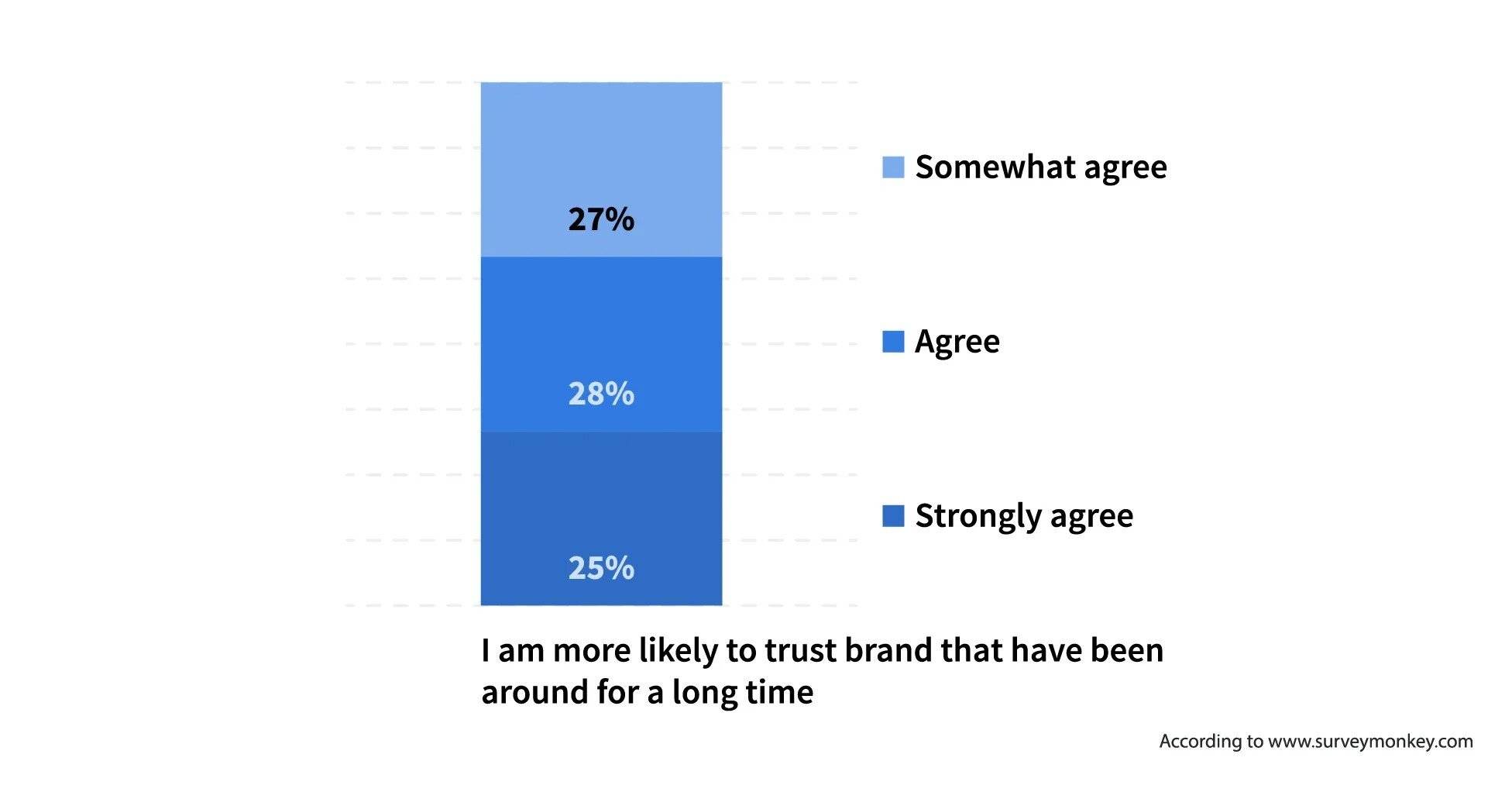
 

2. Build awareness with SEO content.

Author of Sticky Branding Jeremy Miller says, “Only 3% of your prospects are ready to buy now.”

The remaining 97% are not in purchase mode or don’t need your solution yet. Instead of considering them lost opportunities, a better strategy is to build brand awareness with SEO content.

Your goal? Educate your audience. Establish authority. Build trust. Win clients who search for information related to your services.

AFT Construction is one brand that milks its SEO content to build brand awareness. For instance, their article on Kerf door jambs ranks #1 for Kerf door jambs on Google.

Image source

But it wasn’t always this way.

According to Semrush, the article took about five months to take off and snag almost everyone who searched for Kerf door jambs.

Besides the organic visitors, this post ranks for 227 keywords.

What’s even more interesting is the $772 traffic cost that AFT saves monthly from this post.

If AFT has 100 other posts like this, they’ll save $77,200 in Google Ads costs. Add the leads that could come from these posts, and it’s easy to see why SEO content is immensely beneficial for construction companies.

Takeaway

A website is worth it only when people know it exists. One of the cheapest ways to give visibility to your site is by publishing SEO content. Remember to identify keywords that relate to your audience’s needs when creating SEO content.

Also, recognize that SEO content takes months to drive results and bring clients to your business.

3. Set up a Google Business Profile.

According to a Bright Local Survey, 98% of consumers use the Internet to find information about local businesses. One popular directory these consumers use is the Google Business Profile.

Creating or claiming your business on Google means you won’t lose revenue from people searching for you locally.

For instance, I searched for commercial construction service companies in New York, and here are the top results:

This result gives me an overview of three companies, including their address, reviews, phone numbers, business hours, and core services. I can decide who to call from this information without visiting their website.

Optimizing your Google Business Profile requires many moving parts, but here’s a snapshot of how to do it:

  • Create or sign in to your Google Business Profile with your Google Account.
  • Click “Add Location” and fill out your business information.
  • Verify your business by mail or phone.
  • Optimize your profile by adding high-quality photos of your projects and updating your business hours.

Takeaway

A Google Business Profile (GBP) increases the visibility of your business in your locality. It also helps prospects to find your contact info and make a quick call. However, one GBP element you must address is your reviews.

Many customers trust Google reviews, so encourage your clients to leave positive reviews on your GBP profile. Also, respond to both positive and negative reviews.


4. Join local directories.

Your Google Business Profile is one of many local directories like Yelp and Angie’s List. These platforms allow potential customers in your area to discover your construction company.

If I was a Yelp user, I could search for construction services in San Francisco and find several companies. With over 95 reviews and a 4.7-star rating, Prosper Construction Development stands out as a great company to work with.

Besides popular directories, Houzz, HomeAdvisor, and BuildZoom are specific for promoting construction businesses. After listing your business in a directory, you also need to optimize it to rank high in the search.

Here are some tips for doing that:

  • Submit your business information to many relevant directories.
  • Keep your listings complete, accurate, and up-to-date. Provide your company name, address, phone number, website, available hours, and services.
  • Include high-quality photos and videos of your work.
  • Get positive reviews from your customers.
  • Respond to all reviews, both positive and negative.
  • Engage with potential customers on online directories.

Takeaway

Leveraging local directories provides visibility to your business. Like your Google Business Profile, you must build reviews on these directories by providing excellent service. Also, respond to any negative feedback.

5. Be active on social media.

Many brands used to overlook social media. Today, the perception has changed. Founders and CEOs are now in charge of promoting their businesses and generating leads on social media platforms.

Brendan Bechtel, the Chairperson and CEO at Bechtel Corporation, excels at this. He uses his LinkedIn profile to share updates about the company’s projects. The example below has a massive 2,104 reactions, 56 comments, and 35 reposts.

This post can get the company a truckload of brand awareness.

Experience has taught me that the daily creation of fresh content for social media is difficult. For this reason, I’d advise you to repost your CEO‘s or employees’ thoughts on your company page — especially those going viral.

This will help you humanize your brand, build trust, and show expertise. Again, Bechtel Corporation does a great job with this.

Remember to tailor your content to different platforms when posting content on social media.

For instance, LinkedIn is great for sharing industry insights, blog posts, case studies, and testimonials.

Facebook and Instagram work well for showcasing your stunning projects, behind-the-scenes, how-to videos, and community service.

Twitter is great for joining relevant discussions, sharing tips, and engaging with industry professionals.

Takeaway

Social media marketing is all about building a connection with your audience by publishing thoughtful content. CEOs of various companies lead the charge, hoping their employees do the same.

If you’re over a one-person team, a great way to get your team in line is to incentivize them and publish content that drives the collective growth of employees and the company’s revenue.

6. Run Pay-Per-Click (PPC) campaigns.

Getting your company’s website on the coveted Google first page is a game-changer for attracting clients. The catch? SEO takes time to drive results. Remember the article about “Kerf door jambs?”

It took about five months before it became the first result.

I’d advise you to run PPC marketing campaigns like Google Ads to cover this time. This can help you rank at the top of Google’s sponsored search results.

For instance, while the keyword “construction service company” gets 90 searches monthly, its paid difficulty (32) shows it’s highly competitive to rank for. Also, it costs a whopping $9.18 per click.

It makes sense to bid for keywords in your local area to keep your costs low and targeting narrow. This improves your odds of getting a top spot when people search for your services.

For instance, a keyword like “construction service company in Boston” is easy to rank because it has a low search volume and CPC.

Takeaway

Google Ads is an excellent way to increase brand awareness quickly and get ready-to-buy leads for your construction firm. But to get more leads at lower costs, ensure you track, analyze, and optimize your ad campaigns.

7. Leverage email marketing.

Recent stats show email marketing generates $36 for every $1 spent. This makes it a cost-effective channel for developing and nurturing leads until they become paying clients.

Email-only works when you have a quality email list, i.e., a database of people who subscribed to receive communications from your company.

One effective way to build an email list is adding a form on your website — something I’ve noticed most construction websites don’t have. Newsflash: a bare form is not even enough.

To capture leads, you need to incentivize visitors with valuable freebies like an e-book, a guide, or a free consultation in exchange for their contact information.

This prevents you from losing potential customers who might leave without taking action. Here’s an example of an e-book I consider valuable from AFT construction:

Takeaway

Brilliant email marketing campaigns have the potential to transform your construction business. Pay attention to metrics such as open, click, and unsubscribe rates to gauge the success of your campaigns.

Also, while it’s tempting, buying an email list is never a good idea. Your best bet is to take the time to build your mailing list.

8. Ask for referrals from past clients.

Customers you satisfy will happily share their positive experiences and recommend your company to others.

A Nielson study reveals that 88% of consumers trust recommendations from people they know over other forms of advertising. Your referral network could also include other businesses.

Below are some referral marketing tips for your construction business:

  • Appreciate your clients for every referral they send.
  • Always ask for a referral after completing a project successfully.
  • Consider offering incentives like a discount on future services or a referral bonus.
  • Make it easy for your clients to provide referrals by suggesting how they can recommend your construction business.

Takeaway

Referral marketing is a powerful tool for growing your customers. But it can’t work if you don’t ask. As you consistently deliver exceptional service, ask your customers, “Think you might know someone interested in our product/service?”

9. Build social proof.

In the construction industry, showcasing your projects is vital to client acquisition. But beyond the pictures of fancy buildings, future clients want to know if you can deliver on time, on schedule, and within budget.

These are further proof of your expertise, and it’s where social proof shines.

Social proof is a great way to show prospective clients that your company can handle their projects based on stakeholder needs.

One way to build social proof is by creating case studies of successful past projects. Describe the challenges you faced, the solutions you provided, and the positive outcomes.

For example, Hoar Construction has over 20 completed project case studies on its website. They also include before and after images and videos to show the construction process from start to finish.

Other ways to build social proof include displaying positive reviews or testimonials and showing off industry awards and certifications on your website.

Takeaway

Building social proof requires time, patience, and consistent effort. Focus on delivering exceptional service, maintaining positive client relationships, and actively seeking testimonials.

Doing this helps your company attract more clients, stand out from competitors, and establish a strong reputation.

10. Create and promote more video content.

Video marketing has become increasingly popular in recent years. Wyzowl’s State of Video Marketing reveals that 91% of businesses use video as a marketing tool — an all-time high and a significant jump from previous years.

This data shows that creating video content, especially in the construction industry where visuals reign supreme, is an excellent way to increase awareness, engage your audience, and attract new clients.

Examples of video content you can create include:

  • Video testimonials of happy clients.
  • Behind the scenes of your staff at work.
  • Stunning and completed construction projects.
  • Time-lapse videos to capture an entire construction project.
  • Video case studies that highlight completed projects, challenges, and solutions.

I love how The Quorum Group uses high-quality videos to promote the company’s projects and employees. Blending innovation and storytelling, their eye-catching videos increase awareness and generate engagement.

For example, the Instagram video below has over 200k likes and 1400 comments.


View this post on Instagram


A post shared by The Quorum Group (@quorumgroup)

Besides getting the attention of potential clients, it shows future employees that Quorum Group may be a great place to work.

Takeaway

Video marketing is a powerful tool for promoting your construction company. It helps you establish brand authority and stand out in this cutthroat industry. But creating video content isn’t enough.

Promote them across different online channels. That’s the optimum way to increase brand awareness, reach a wider audience, and attract potential clients.

11. Join relevant associations and groups.

Associations and groups let you connect with like-minded individuals in the construction industry. This can lead to new partnerships, collaborations, and business opportunities.

You also get exclusive access to industry resources, networking events, and workshops that could be valuable to your company.

Displaying your membership certificates also shows your commitment to professional standards and ethics. You can do this on your website, social media platforms, and marketing materials.


Image Source
Title: Membership certificates in a construction website

Some examples of U.S. construction associations include:

  • American Institute of Architects (AIA).
  • American Subcontractors Association (ASA).
  • National Association of Home Builders (NAHB).
  • Associated General Contractors of America (AGC).
  • National Association of Women in Construction (NAWIC).

Takeaway

Joining associations and groups and getting a membership certificate is half the battle. The other half is gaining visibility, networking opportunities, and referrals. You can do this by contributing to the body’s goals.

Another innovative way is to share your thoughts about the body on social media. How did you join them? Why did you join? What have you learned? What benefits have you gotten? You get my drift, right?

Doing these establishes you as a credible and active participant and makes you visible to notable industry players.

12. Consider influencer marketing.

Influencer marketing isn’t just for those in the fashion, beauty, and lifestyle industry. Construction businesses can also use it to reach a wider audience and generate quality leads.

When selecting influencers, look for those with ultra-specific characteristics: large following, engaged audience, similar audience to yours, and alignment with your brand values.

Partnering with influencers can take various forms, such as sponsored content or social media takeovers to promote your products, services, or projects.

Takeaway

Influencer marketing in the construction industry requires a more targeted approach. To make it work, you must identify influencers genuinely interested in construction-related topics and agree on specific campaign goals.

13. Attend local networking events and trade shows.

Local networking events and trade shows help you connect with potential clients, partners, and industry experts. These events also allow firms to showcase their portfolio, discover industry trends, and stay up-to-date on best practices.

Here are some tips to make the most out of participating in these events:

  • Join panels or presentations to share your expertise and establish authority as a thought leader in the industry.
  • Sponsor the event to gain increased visibility and brand exposure.
  • Use social media to promote your participation and engage with other attendees online.
  • Network with other industry professionals and potential clients and offer value.
  • Follow up with individuals you meet at the event and send personalized emails to maintain the relationship.

Some popular construction events in the U.S. include:

  • National Association of Home Builders (NAHB) International Builders’ Show.
  • Associated General Contractors of America (AGC) Annual Convention.
  • World of Concrete.
  • Greenbuild International Conference & Expo.

Takeaway

Events and trade shows are excellent ways to meet potential new clients.

Attending them also gives you a shot at boosting your brand awareness, getting referrals, networking, and growing your company. Making them a part of your marketing plan will be a plus.

Construction Services Marketing Ideas

The goal of any campaign is to position your company as a reliable and trusted choice for construction-related services. To market your product and services, you can explore four construction services marketing ideas.

Idea 1: Set up a lead generation campaign.

Relying solely on referrals and networking events to get clients won’t cut it. You need a targeted lead generation campaign that brings in a steady source of high-quality leads for your company. This way, your sales pipeline never runs dry.

How to Execute

  • Identify your target audience and their pain points
  • Create valuable content such as e-books, guides, whitepapers, or free consultations that address those pain points
  • Offer this content in exchange for their email address
  • Set up drip email marketing campaigns to nurture these leads with relevant, engaging content
  • Promote your lead generation campaign on your website, social media, and paid ads
  • Track and analyze the performance of your lead gen campaign
  • Optimize to achieve better results

Idea 2: Host a local event

Organize a local event to display your construction products and services to your targeted audience. It’s also a great way to increase awareness, reach a wider audience, and generate quality leads.

How to Execute

  • Plan the event logistics, such as choosing a location, date, and venue
  • Create materials like flyers, social media graphics, and emails to promote the event and attract attendees
  • Develop an event agenda, including presentations, live demos, and opportunities for attendees to interact or ask questions
  • Use landing pages to collect contact information from attendees
  • Follow up with attendees after the event with personalized emails, offering additional information, discounts, or exclusive offers
  • Nurture leads from the event to stay top-of-mind with potential clients

Idea 3: Partner with businesses in similar industries

Collaborating with businesses in similar sectors helps your company reach new audiences.

For example, you could join forces with an interior design or landscaping company. This way, you can create joint marketing campaigns, co-host events, or offer bundled packages that combine your services with theirs.

This partnership allows you to tap into each other’s customer base and cross-promote your products. It also adds value to your offerings, making them more appealing to potential customers.

How to Execute

  • Identify businesses in related industries that could complement your services.
  • Reach out to them and propose a partnership or collaboration
  • Create joint marketing materials and campaigns that highlight the synergy between your services
  • Offer special discounts or incentives for customers who use both of your services
  • Track the campaign’s performance and make adjustments as needed to optimize the results

Idea 4: Engage in community events and sponsorships

What better way to give back to your community than to participate in events or sponsor local initiatives? This helps to increase brand visibility and establish your company as a trusted community partner.

How to Execute

  • Research and identify community events and initiatives that align with your company’s values
  • Reach out to organizers or local organizations to inquire about sponsorship opportunities.
  • Promote events through digital and traditional channels to create more awareness.
  • Take part in the event and engage with attendees to build connections
  • Prominently display your brand materials at these events to increase awareness
  • Collect contact information from potential clients and follow up promptly
  • Evaluate the success of your sponsorship campaign and optimize for future community engagement

Remember to track and analyze the performance of your marketing campaigns and make adjustments as needed to optimize your results. You can try HubSpot’s marketing automation tool to get started today.

What I Learned: My Overall Assessment of Construction Marketing

Clients are the lifeblood of successful construction businesses.

But to get them, you need a marketing strategy that effectively promotes your construction services. While every tactic may not apply to you, it’s essential to determine the most effective ones for your business.

New Call-to-action

230 ChatGPT Prompts Marketers Should Use

Software Stack Editor · March 20, 2024 ·

ChatGPT is generating a lot of buzz in the marketing industry, and if you‘re a marketer, you’re probably wondering how to use the technology to its full potential.

Fortunately, I’ve compiled a list of 190 prompts to enter into ChatGPT to take the guesswork out of figuring out how to use the AI.

If you‘re unfamiliar with ChatGPT, here’s what you need to know.

Download Now: 100 ChatGPT Prompts for Marketers [Free Guide]

What is ChatGPT?

65 ChatGPT Prompts for Marketing

How to Use These Marketing ChatGPT Prompts

25 ChatGPT Prompts for Business

27 ChatGPT Prompts for Content Creation and Social Media

9 ChatGPT Prompts for Analytics

25 ChatGPT Prompts for Email Campaigns

25 ChatGPT Prompts for Resume

11 ChatGPT Prompts for Ecommerce

23 ChatGPT Prompts for Customer Service

20 ChatGPT Prompts for Sales

What is ChatGPT?

ChatGPT is a publicly accessible tool owned by OpenAI. It uses natural language processing to pull information from around the web to answer search queries and fulfill content requests.

ChatGPT’s answers are original and have not been copied and pasted from the web.

Aside from a paid subscription version called ChatGPT Plus, the tool is free.

ChatGPT is one of the latest developments in AI tools. Suppose you‘re looking for other ways to integrate AI into your marketing workflow.

In that case, you may be interested in HubSpot’s suite of generative AI tools to help you ideate, create, and share remarkable content quickly and efficiently.

Now, let’s get into the wide range of prompts you can use to get the most out of ChatGPT.

65 ChatGPT Prompts for Marketing

  1. “List [number] ideas for blog posts about [topic].”
  2. “Write a minute-long advertisement script about [product, service, or company].”
  3. “Create a three-month social media campaign calendar for our product to [insert goal] and mention the channels we should focus on.”
  4. “List [number] viral Instagram Reels ideas about [company, product, or service].”
  5. “Generate [number] of viral TikTok ideas about [company, product, or service].”
  6. “Create three call-to-action button ideas based on the contents of this blog post.” Then, paste in the content.
  7. “Create an advertising campaign about [company, product, or service] targeting [target audience]. Include key messages and slogans and choose the best media channels for promotions.”
  8. “Write [number] Google Ad headlines from [URL].”
  9. “List common challenges faced by [buyer persona description].”
  10. “List the key marketing segments in [industry]. Which segment has the biggest opportunity for our [company, group, organization, business]?”
  11. “Write marketing copy to make my marketing emails more engaging. The copy must be about our [product, service, or company].”
  12. “Write an email subject line convincing potential customers to switch our service.”
  13. “What are 10 main points crucial to marketers trying to acquire new customers?”
  14. “Generate an AIDA for [product or service].”
  15. “Write five tweets to generate interest in [product, company, or service].”
  16. “Write a promotional LinkedIn post about [product or service].”
  17. “Write three seconds of Facebook Ad copy about [product or service].”
  18. “Write a press release about our upcoming event. Include the event’s date, time, location, and purpose.” Make sure to give ChatGPT the necessary details.
  19. “Generate five different YouTube descriptions for our video about [topic].”
  20. “Generate questions for a Facebook poll about [topic].
  21. “What marketing channels have the highest ROI?”
  22. “List ways to market my brand on TikTok.”
  23. “How can influencer marketing generate leads?”
  24. “What marketing tactics should I leverage to reach my target audience.” Make sure to describe your target audience.
  25. “What marketing channels have the lowest ROI?”
  26. “This email is to [audience]. Please rewrite it with [another audience] in mind. Their pain points are [pain points.] Be sure to keep the tone similar.” Then, paste into the email.
  27. “Take this blog post and turn it into 10 Twitter posts and four LinkedIn posts.” Then, paste in the blog post.
  28. “Turn this LinkedIn post into an email to [audience].” Paste in post content.
  29. “How can I turn this blog post into an infographic. Please give me an outline.” Then, paste in the blog post content.
  30. “I’m writing an email about [topic] to [audience]. Give me five key talking points.”
  31. “I need to A/B test subject lines for this email. Give me 10 subject line ideas and 10 pre-headers.” Then, paste in the email. 
  32. “What are the biggest pain points of [audience] in [industry]?”
  33. “I am a [title] in a [describe company] that sells [product/service type]. We market to [audience] whose pain points are [list pain points]. What objections are they likely to have?”
  34. “Give me 5 blog titles for a post about [insert subject] for [audience].”
  35. “Write a 30-second script for an explainer video about [product] that [what the product does.]
  36. “Here’s a 30-second explainer video script for our [product] that [what the product does] for [audience type]. Please give me a list of some of the different shots or animations I should include.” Paste in the script.
  37. “Here’s our latest whitepaper. We primarily market using [channels]. Give me at least 15 ideas for how we can repurpose this and turn it into a multichannel campaign.” Then, upload the whitepaper.
  38. “We’re a [type of company] launching a new [what you’re launching] in three months and need to start building out the runway. Our audience is [describe audience]. Give me an outline for what we need to do for a successful launch.”
  39. “Here’s our launch outline. Please create a marketing calendar for the different stages and milestones we’ll need to reach.” Then, upload the launch outline.
  40. “We goofed. [Describe what happened.] Give me an outline for an email and social media posts to explain what happened, apologize, and share what we’re doing to fix it.”
  41. “These are our three strategic priorities for this year [list them]. What are some KPIs to consider as we measure success?”
  42. “These are our three strategic priorities for this year [list them]. What tactics can we use to reach these goals?”
  43. “Here’s a transcript of me talking about my onboarding process. Please help me outline a document I can share with clients to communicate it to them.”
  44. “I’m creating a re-engagement campaign. Give me six ideas for emails I can send to re-engage people who haven’t opened an email in the last nine months.”
  45. “My company is known for [value prop]. Give me 10 blog post ideas that can communicate this to our audience.”
  46. “My company is known for [value prop]. What are four ways I can communicate this expertise in our proposals?”
  47. “Most of my business comes from referrals. Help me create referral language I can give to past clients and referral partners that make it easy for them to send me business. I need three versions: 1. a single sentence; 2. an email; and 3. a social media post.”
  48. “I need to get more reviews. Please help me create a campaign that asks clients for referrals.”
  49. “Help me write a script for a 30-minute workshop on what parents need to know about helping their kids get scholarships.”
  50. “Here’s my script for my upcoming training. Help me turn it into a checklist I can use as a free giveaway.” Then, upload the script.
  51. “Here are the five key takeaways for this webinar I’m teaching. [List the takeaways.] Help me turn it into a marketing outline to get people to come to the webinar.”
  52. “I need to create a sales sequence for the people who attend my webinar. Please give me an outline for those emails so I can convert them.”
  53. “Give me six headline ideas for a landing page about [product name] for [audience].”
  54. “Write a conclusion for my blog post.” Then, paste in the blog post.
  55. “Help me write a creative brief for developing a new logo so I can hand it over to my designer.”
  56. “Here’s a transcript from a recent call about client experience. Please use it to outline two blog posts: one focused on benefits to clients, the other focused on teaching other people in my industry about the importance of building a client experience.” Upload the transcript.
  57. “What’s another way to say “feeling the pressure”? Give me email subject lines for [audience] that speak to those pain points.”
  58. “Help me plan a photo and video shoot for a hot tub and sauna company that emphasizes the lifestyle.”
  59. “Help me write an email to potential clients that draws parallels between March Madness and home building and urges them to contact us for a consult.”
  60. “Give me some playful marketing language for a May email and social media campaign for a gardening store that’s tied into seasonality. I’d like five campaign ideas.”
  61. “I’m creating a new coaching offer targeted to online businesses. Here are details on the program [insert details]. Please give me 10 name and tagline ideas.”
  62. “We’re closing our showroom for a few weeks due to a family medical emergency. Please give me some copy for emails, a door sign, and social media posts to communicate this.”
  63. “Here are our current mission and values statements [insert statements]. Help me develop four ideas for messaging I can use to bring this into our marketing campaigns and operational communications.”
  64. “You’re an HR professional stressing out about employee turnover who feels like you’re going through the motions. What are 10 of your biggest pain points?”
  65. “You often hear ‘it will calm down next week’ from your clients. What are 10 other things that busy and burned-out people might say? Please also outline how a [describe your company] can help them solve each of these problems.”

Once you have all the ideas, need help putting them together? HubSpot’s FREE AI Email Writer makes it easy to generate more emails in less time. Try it here.

How to Use These Marketing ChatGPT Prompts

ChatGPT is a fantastic tool, but it’s just that, a tool. So, like any tool, to use it effectively, you have to understand how it works and what you can do. Here are six tips for making these marketing ChatGPT prompts work for you.


1. Understand what kind of output you want.

Garbage in, garbage out definitely applies here. So before you even dive into any of these prompts, make sure you have a good understanding of what it is you even want to accomplish.

If, for example, you’re asking it to create a landing page, make sure you know what a good landing page should look like so you can be hyper-clear in the beginning. You can also be clear in your feedback to ChatGPT as you refine its responses.

2. Give it a job.

Make sure the ChatGPT knows what its role is and what you’re trying to create. Tell it, “You’re an expert ____ (role) creating a _____ (what you’re creating) for your audience of (describe audience).”

I’ve found that this approach provides the context and helps get the output you want. What’s more, because you understand the kind of output you want (step one), you can better describe the job you want ChatGPT to do.

3. Offer as much detail as you can.

When I say be as detailed as possible, I mean go overboard here. ChatGPT is a robot, a smart robot, but a robot. You have to spell out what you’re looking for. Things I always recommend people consider:

  • Any messaging or tone of voice guidelines.
  • Information you have about your target audience.
  • Specific outcomes you want it to provide, like “I need X versions of this headline or subject line.”
  • Anything you might include if you were tasking this to a team member.

Don’t be afraid to ask ChatGPT if there’s any additional information it needs. If anything seems missing, you can always add details later OR go back to the drawing board and start over.

If you’re providing a lot of information and hitting enter multiple times, consider including a note at the end, “Please don’t start yet. I’m dropping more information next. Please just say, ‘Got it,’ and I’ll add the next bit of information.”

4. Get granular and specific.

Ask questions that get right to the point. Don’t be generic here. Instead of asking, “What marketing tactics should I consider?” try a query that’s more specific.

You might consider saying, “My audience of _____ (describe your audience) has responded well to messages and campaigns about how to solve XYZ problem. My company does ______ (explain your value prop). What are some related ideas I could try?”

Let’s try another example. Granted, this isn’t marketing-focused, but it gives you an idea of the specificity.

“Give me a kid-friendly meal plan for five days” will give you five days of breakfast, lunch, dinner, and a snack based on foods you may or may not have or want to eat.

Instead, when you give it more context, it can help you create exactly what you’re looking for.

“I have chicken breast, salmon, and ground beef in the freezer and eggs in the fridge. I also have lots of veggies and a full dry pantry. Please give me a five-day dinner plan with Mediterranean-inspired, kid-friendly meals I can make in 30 minutes or less.”

The prompt above leads to five meal ideas, complete with ingredients and a recipe, which is much easier to use. You can use the same principles in your marketing.

5. Give helpful feedback.

If ChatGPT delivers a hot load of garbage, don’t say, “Nope, that’s not it. Try again.”

Give it the same context and type of feedback that you’d share with someone on your team. “The idea is right on, but your tone is far too formal. Try again, cutting the number of words in half and keeping things more casual yet professional.”

You can also say something like, “This completely misses the mark. I think we need to focus on ____ outcome instead.” Or you might say, “Let’s try that again. Can you give me a version that

Or if it’s spot on, say, “That’s spot on. I really like the tone, cadence, message, etc. Let’s keep going.”

6. Don’t trust it farther than you can throw it.

Because ChatGPT is designed to sound human, it often creates language that sounds good or seems logical or reasonable. The only problem? That means ChatGPT is also notorious for making up facts and statistics, so always double- or triple-check anything it spits out.

9 Statistics About AI and Marketing

Generative AI may be the new kid on the marketing block, but since GPT-4 dropped in March 2023, I’ve seen huge changes in how marketers use AI to improve and streamline productivity. And, based on HubSpot’s recent State of AI report, most marketers seem to agree.

  • 35% of marketers report using AI-driven tools in their day-to-day roles.
  • 90% believe that AI makes it easier to spend less time on manual tasks, with 88% agreeing that AI frees them up to focus on the most important parts of their roles.
  • 77% believe that AI helps pull insights from data that they otherwise wouldn’t be able to find.
  • 68% believe that people should use AI and automation but avoid becoming overly reliant on it.
  • Across the board, people say that AI and automation saves them 1 hour and 49 minutes every day.
  • The number 1 benefit marketers see in AI and automation is that it makes them more effective in their jobs. Increased productivity and less time on manual tasks make up numbers 2 and 3, respectively.
  • 89% of all marketers who use generative AI consider it effective for content creation.
  • 97% of all marketers who use generative AI consider it effective for data analysis.
  • The two most effective strategies for prompting generative AI are experimenting with different prompts to see what works best for your specific use case (#1) and providing relevant context or background information in your prompt (#2).

25 ChatGPT Prompts for Business

  1. “What are the top trends in [your industry] for 2023?”
  2. “What are the most important metrics to measure the success of our business?”
  3. “List ways to reduce cost and increase profitability.”
  4. “How can we use social media to increase brand awareness?”
  5. “How can we improve search engine optimization for our business?”
  6. “How can we improve our customer service experience?”
  7. “What are some ways we can boost productivity and employee engagement?”
  8. “What are the best tools for budgeting?”
  9. “How can A/B testing improve our website’s performance?”
  10. “How can we use automation to simplify our marketing and sales tactics?”
  11. “List the ways we can use a webinar to increase brand awareness and leads.”
  12. “What are the best practices for creating a strong company culture?”
  13. “Generate ways to use virtual tours to showcase products and services.”
  14. “List the benefits of using a digital asset management tool to organize and share company assets.”
  15. “List the benefits of using a customer journey mapping tool to improve the customer experience.”
  16. “Generate different ways to use augmented reality to enhance our [product or service].”
  17. “How can blockchain technology improve business processes and boost security?”
  18. “List the different ways we can implement a customer loyalty program to increase sales and retain customers.”
  19. “How can we use customer testimonials to boost our brand’s trust and credibility?”
  20. “What are some customer onboarding best practices?”
  21. “What are some employee onboarding best practices?”
  22. “What are common mistakes start-up companies often make?”
  23. “How can I boost employee retention?”
  24. “What are best practices in maintaining high morale within your organization?”
  25. “What are best practices for start-up businesses?”

27 ChatGPT Prompts for Content Creation and Social Media

  1. “Write an 800-word blog post about [subject], and include the following keywords in the headline, subheading, and body paragraphs.” Then, list the keywords you want ChatGPT to include.
  2. “Write a list of blog titles that include statistics on [topic].”
  3. “Write a YouTube video script about [product, blog, company, etc.].”
  4. “Write a 100-word Instagram caption about [topic] in an informative and friendly tone and include relevant hashtags.”
  5. “Write 10 YouTube headlines about [topic] and include the words [keywords].”
  6. “Generate a Twitter thread about [topic].”
  7. “Analyze this blog post for plagiarism.”
  8. “Check this blog post for spelling and grammar mistakes.”
  9. “Generate five ideas for YouTube videos about [topic, industry, company, service, product, etc.].”
  10. “Create a script for a web series that educates viewers about [topic].”
  11. “Write a script for an hour-long podcast episode about [topic].”
  12. “Write an engaging script for a virtual product launch.”
  13. Generate a simple, high-quality image for social media for a [type] company. The goal of the image must be to acquire new customers.”
  14. “Translate the following company into [language]: [copy].”
  15. “Write an outline for a blog post about [topic]. Include the keywords [keywords] in the headline and subheadings.”
  16. “Build a reader persona for [page description].”
  17. “Make the following copy more creative: [copy].”
  18. “Simply the following copy to make it easy for Grade 3 children to read.”
  19. “Rephrase the following copy.”
  20. “Write an engaging video script about [topic].”
  21. “What are YouTube marketing best practices?”
  22. “What are common mistakes marketers make in content creation?
  23. “What are best practices when marketing on Instagram?”
  24. “How can companies find influencers to collaborate with?”
  25. “What are the benefits of influencer marketing?
  26. “List five ways to generate leads from YouTube.”
  27. “List ways to convince customers to buy a product via Instagram.”

9 ChatGPT Prompts for Analytics

  1. “What are the most important KPIs for [industry].”
  2. “Write a SWOT analysis for our website traffic.”
  3. “What is a good bounce rate for our website?”
  4. “How do we boost leads on our website?”
  5. “What are the best website analytics tools?”
  6. “How can I track my company’s analytics on social media?”
  7. “How did I determine which channel generates the most web traffic for my brand?”
  8. “What social media platform generates the most leads?”
  9. “How can I optimize my website to rank higher in SERPs?


25 ChatGPT Prompts for Email Campaigns

  1. “Generate [number] subject lines for an email campaign about [product or service.].”
  2. “Write [number] holiday-themed subject lines about clothes shopping.”
  3. “What are the best subject lines to increase open rates?”
  4. “What are best practices for writing an engaging email subject line?”
  5. “Write 10 post-purchase email subject lines for [company].”
  6. “Write the body copy for a promotional email campaign about [company] spring sale. Write in an upbeat and friendly tone.”
  7. “Write a follow-up email for [your brand] with the subject line: [your subject line].”
  8. “Write an outline for a weekly email newsletter from [brand] to [target audience]. Include an intro, main point, conclusion, and call-to-action in the outline.”
  9. “What are best practices for writing engaging email copy for a marketing campaign?”
  10. “List five topics I should write about in my next email newsletter.”
  11. “How can I avoid my emails being marked as spam?”
  12. “How can I improve my sender reputation?”
  13. “How can I ensure my emails are easy to read and navigate on mobile devices?”
  14. “How can I make my emails load faster on mobile devices?”
  15. “How should I format my images and media to load properly on mobile devices?”
  16. “List the most common reasons emails are not delivered to the inbox.”
  17. “List the best practices for optimizing an email for mobile devices.”
  18. “What are the most common reasons customers unsubscribe from email lists?”
  19. “What are some of the best tools to manage marketing email lists?”
  20. “How can I boost email subscribers?”
  21. “How can I get off the email blacklist?”
  22. “How can I improve my business’ email list?”
  23. “What factors can decrease email open rates?”
  24. “What factors can boost email open rates?
  25. “List the top five email marketing tools.”

25 ChatGPT Prompts for Resume

  1. “Write a summary showcasing my skills and experiences relevant to a Social Media Manager role.”
  2. “Generate a summary highlighting my past achievements.”
  3. “Craft summary demonstrating my ability to [skill.”
  4. “Generate five bullet points highlighting achievements in [field].”
  5. “Create bullet points about my most recent [job title] role highlighting my achievements.”
  6. “Generate bullet points showcasing my ability to [skill.]”
  7. “How can I make my resume stand out against other candidates?”
  8. “What are common mistakes job seekers make on their resumes?”
  9. “What are some resume best practices to improve my job search?”
  10. “What are common formatting mistakes I should avoid in my resume?”
  11. “Copyedit my resume for any spelling or grammatical errors.”
  12. “What are some [industry] resume best practices?”
  13. “What resume design tools can I use to make my resume stand out?”
  14. “Review my resume and suggest improvement and edits.”
  15. “What are the most important keywords for applicant tracking systems to include in my resume.”
  16. “How can I make my resume more concise?”
  17. “What should I include on my resume if I’m applying in [specific industry].”
  18. “How do I tailor my resume to specific job postings?”
  19. “How can I make my resume more visually appealing?”
  20. “How can I make my resume more visually appealing?”
  21. “How can I get my resume directly to the hiring manager?”
  22. “How soon after submitting my resume should I follow up on a job posting?”
  23. “What should I include on a marketing resume?”
  24. “Based on this job description, what words should I include in my resume?”
  25. “How do I condense my [number] years of experience into a one-page resume?”

11 ChatGPT Prompts for Ecommerce

  1. “Write a description for a [product type] and include [product attributes] and [keywords].”
  2. “Generate a list of 20 audience demographics that would benefit from a [product or service].”
  3. “Think like an ecommerce expert and write 10 frequently asked questions for [your website name and URL.”
  4. “Think like an ecommerce SEO expert and write a meta tile for [your brand name] in the [inser industry] industry.”
  5. “Behave like an ecommerce SEO expert and write a meta tile for [ product name] from the [industry name] industry.”
  6. “Write a title page for [ecommerce website URL] and include [keywords].”
  7. “Write a meta description for [ecommerce website URL].”
  8. “Craft informative content for our ecommerce About Us page.”
  9. “Act as an ecommerce expert and craft a product collection description for the [product] from [brand].”
  10. “Act as an ecommerce merchandising specialist and draft a product title for [product] from [brand].”
  11. “Create an ecommerce campaign for [product, brand, or service].”

23 ChatGPT Prompts for Customer Service

  1. “What’s the best way to reach out to potential customers?”
  2. “Generate a list of ways to improve customer service?”
  3. “Create a template for an email response to customers inquiring about [product].”
  4. “Write a customer service email that addresses the following pain point.”
  5. “Generate five helpful suggestions for customers struggling with using [product].”
  6. “What are the most frequently asked questions about our [product, service, company, brand]?”
  7. “Generate a list of common issues customers have with [product name] and provide solutions for them.”
  8. “Write four personalized messages for customers asking about our [product] in a friendly tone.”
  9. “Generate 10 chatbot prompts related to our [product].”
  10. “Create a help page that explains how to use [product].”
  11. “List 10 phrases customer service agents can use to show empathy.”
  12. “Provide a template to explain standard retail return policy.”
  13. “Rewrite this paragraph to sound more friendly: [paragraph].”
  14. “Chat as if you’re a customer who can’t log into their account.”
  15. “Summarize the following knowledge base article to give step-by-step instructions.”
  16. “Write five questions for a customer experience survey.”
  17. “List the qualities of good customer service.”
  18. “What are customer service mistakes companies often make?”
  19. “How can I streamline the customer service process without losing customers?”
  20. “What’s a friendly way to respond to this message from a customer?”
  21. “Act as a customer service representative and answer the following question: [question].”
  22. “List five different ways a chatbot can greet customers.”
  23. “List five ways a chatbot can say goodbye to a customer.”

20 ChatGPT Prompts for Sales

  1. “What are cross-selling opportunities available for my [type] business?”
  2. “What are some creative ways to generate leads?”
  3. “Create a personalized sale email for potential customers. Include [topic, brand name, promo offers, etc.].”
  4. “What product customization would you recommend for this customer?” Include customer details in the prompt.”
  5. “List 10 keywords people might use when searching for our [product].”
  6. “Create five persuasive points to encourage customers to buy our [product].”
  7. “List three compelling reasons our customers should buy [product or service].”
  8. “List [number] personal branding types I can use for social selling.”
  9. “What kind of content categories and topics can I create for social selling on Instagram?”
  10. “Write a sales landing page description for [product].”
  11. “Write a cold email to a prospective customer introducing my [company or organization] and how it can benefit them using [selling points].”
  12. “Write a sales pitch about [product].”
  13. “Act as a salesperson and market [product or service] to me.”
  14. “Act as a salesperson and answer this question about [product or service].”
  15. “Write the text for a social media ad highlighting the [product or service]. Highlight paint-point-specific questions.”
  16. “Generate five buyer personas I should include in my cold outreach.”
  17. “List five personal branding archetypes I could use for social selling on LinkedIn.”
  18. “Generate a script to use when cold-calling start-up founders in my area.”
  19. “Craft an answer to this sales question.”
  20. “What questions should I ask potential buyers to uncover pain points and priorities to decide if they are a sales-qualified lead for my product?”

Using ChatGPT in Marketing

Generative AI tools like ChatGPT have the power to change everything about the way we market. I’ve already seen huge time savings when it comes to analyzing transcript and brainstorming.

And, I suspect we’re only seeing the tip of the iceberg.

However, a word of caution: ChatGPT has a ton of potential as a tool, but it’s still just a tool, which means you have to know how to use it. That’s why we’ve provided this article.

When you use the prompts here, you’ll have a leg up when it comes to knowing how to create a prompt to build out marketing campaigns, answer pressing sales questions, and free up time so you can focus on the more creative aspects of marketing.

Now that you know the prompts, it’s your turn. Time to dive in and experiment with ChatGPT to see how it fits into your marketing processes.

New call-to-action

How to Do A/B Testing: 15 Steps for the Perfect Split Test

Software Stack Editor · March 19, 2024 ·

So, you want to discover what truly works for your audience, and you’ve heard about this mythical form of marketing testing. But you have questions like: “What is A/B testing in marketing, anyway?” and “Why does it matter?”

Don’t worry! You’ll get all the answers to your burning questions. I’ll even tell you the second answer straight away…

Free Download: A/B Testing Guide and Kit

When marketers like us create landing pages, write email copy, or design call-to-action buttons, it can be tempting to use our intuition to predict what will make people click and connect.

But as anyone who’s been in marketing for a minute will tell you, always expect the unexpected. So, instead of basing marketing decisions on a “feeling,” you’re much better off running an A/B test to see what the data says.

Keep reading to learn how to conduct the entire A/B testing process before, during, and after data collection so you can make the best decisions based on your results.

Table of Contents

  • What is A/B testing?
  • History of A/B Testing
  • Why is A/B Testing important?
  • How does A/B testing work?
  • A/B Testing in Marketing
  • What does A/B testing involve?
  • A/B Testing Goals
  • How to Design an A/B Test
  • How to Conduct A/B Testing
  • How to Read A/B Testing Results
  • A/B Testing Examples
  • 10 A/B Testing Tips from Marketing Examples


If you’re a visual learner, never fear: This video walks you through everything you need to know. 

History of A/B Testing

It’s hard to track down the “true” origins of A/B testing. However, in terms of marketing, A/B testing — albeit in its initial and imperfect form — arguably started with American advertiser and author Claude Hopkins. Hopkins tested his ad campaigns using promotional coupons.

Still, Hopkins’ “Scientific Advertising” process didn’t include the key principles we use in A/B testing today. We have 20th-century biologist Ronald Fisher to thank for those. Fisher, who defined statistical significance and developed the null hypothesis, helped to make A/B testing more reliable.

That said, the marketing A/B testing we know and love today started in the 1960s and ‘70s. It was also used to test direct response campaign methods. Another key marketing moment came to us in 2000. At this time, Google engineers ran their first A/B test. (They wanted to know the best number of results to display on the search engine results page.)

Why is A/B testing important?

A/B testing has many benefits to a marketing team, depending on what you decide to test. For example, there is a limitless list of items you can test to determine the overall impact on your bottom line. But you shouldn’t sleep on using A/B testing to find out exactly what your audience responds best to either. Let’s learn more.

You Can Find Ways To Improve Your Bottom Line

Let’s say you employ a content creator with a $50,000/year salary. This content creator publishes five articles weekly for the company blog, totaling 260 articles per year.

If the average post on the company’s blog generates 10 leads, you could say it costs just over $192 to generate 10 leads for the business ($50,000 salary ÷ 260 articles = $192 per article). That’s a solid chunk of change.

Now, if you ask this content creator to spend two days developing an A/B test on one article, instead of writing two posts in that time, you might burn $192, as you’re publishing fewer articles.

But, if that A/B test finds you can increase conversion rates from 10 to 20 leads, you just spent $192 to potentially double the number of customers your business gets from your blog.

… in a Low Cost, High Reward Way

If the test fails, of course, you lost $192 — but now you can make your next A/B test even more educated. If that second test succeeds, you ultimately spent $384 to double your company’s revenue.

No matter how many times your A/B test fails, its eventual success will almost always outweigh the cost of conducting it.

You can run many types of split tests to make the experiment worth it in the end. Above all, these tests are valuable to a business because they’re low in cost but high in reward.

You Can Find Out What Works for Your Audience

A/B testing can be valuable because different audiences behave, well, differently. Something that works for one company may not necessarily work for another.

Let’s take an unlikely B2B marketing tactic as an example. I was looking through HubSpot’s 2024 Industry Trends Report data for an article last week. I noticed that 10% of B2B marketers planned to decrease their investment in NFTs as part of their strategy in 2024.

My first thought was, “Huh, NFTs in B2B?”

Then it hit me. To have that decrease, B2B marketers must’ve been using NFTs in the first place. Even more surprising than this revelation was that 34% of marketers plan to increase investment in NFTs as part of their B2B strategy.

That’s just one example of why conversion rate optimization (CRO) experts hate the term “best practices.” Because that “best practice”? Well, it may not actually be the best practice for you.

Buuut, this kind of testing can be complex if you’re not careful. So, let’s review how A/B testing works to ensure you don’t make incorrect assumptions about what your audience likes.

How does A/B testing work?

To run an A/B test, you need to create two different versions of one piece of content, with changes to a single variable.

Then, you’ll show these two versions to two similarly-sized audiences and analyze which one performed better over a specific period. But remember, the testing period should be long enough to make accurate conclusions about your results.

An image showing an A/B test with a control and variation group

Image Source

A/B testing helps marketers observe how one version of a piece of marketing content performs alongside another. Here are two types of A/B tests you might conduct to increase your website’s conversion rate.

Example 1: User Experience Test

Perhaps you want to see if moving a certain call-to-action (CTA) button to the top of your homepage instead of keeping it in the sidebar will improve its click-through rate.

To A/B test this theory, you’d create another, alternative web page that uses the new CTA placement.

The existing design with the sidebar CTA — or the “control” — is version A. Version B with the CTA at the top is the “challenger.” Then, you’d test these two versions by showing each to a predetermined percentage of site visitors.

Ideally, the percentage of visitors seeing either version is the same.

Learn how to easily A/B test a component of your website with HubSpot’s Marketing Hub.

Example 2: Design Test

Perhaps you want to find out if changing the color of your CTA button can increase its click-through rate.

To A/B test this theory, you’d design an alternative CTA button with a different button color that leads to the same landing page as the control.

If you usually use a red CTA button in your marketing content, and the green variation receives more clicks after your A/B test, this could merit changing the default color of your CTA buttons to green from now on.

To learn more about A/B testing, download our free introductory guide here.

A/B Testing in Marketing

Here are some elements you might decide to test in your marketing campaigns:

  • Subject lines.
  • CTAs.
  • Headers.
  • Titles.
  • Fonts and colors.
  • Product images.
  • Blog graphics.
  • Body copy.
  • Navigation.
  • Opt-in forms.

Of course, this list is not exhaustive. Your options are countless and differ depending on the type of marketing campaign you’re A/B testing. (Blog graphics typically won’t apply to email campaigns, for example. But product images can apply to both email and blog testing.)

An image showing the results of A/B website testing

Image Source

But let’s say you wanted to test how different subject lines impacted an email marketing campaign’s conversion rates. What would you need to get started?

What does A/B testing involve?

Here’s what you’ll need to run a successful A/B test.

  • A campaign: You’ll need to pick a marketing campaign (i.e., a newsletter, landing page, or email) that’s already live. We’re going with email.
  • What you want to test: You’ll need to pick the element(s) you wish to A/B test. In this case, that would be the subject line used in an email marketing campaign. But you can test all manner of things, even down to font size and CTA button color. Remember, though, if you want accurate measurements, only test one element at a time.
  • Your goals: Are you testing for the sake of it? Or do you have well-defined goals? Ideally, your A/B testing should link to your revenue goals. (So, discovering which campaign has a better impact on revenue success.) To track success, you’ll need to select the right metrics. For revenue, you’d track metrics like sales, sign-ups, and clicks.

A/B Testing Goals

A/B testing can tell you a lot about how your intended audience behaves and interacts with your marketing campaign.

Not only does A/B testing help determine your audience’s behavior, but the results of the tests can help determine your next marketing goals.

Here are some common goals marketers have for their business when A/B testing.

Increased Website Traffic

You’ll want to use A/B testing to help you find the right wording for your website titles so you can catch your audience’s attention.

Testing different blog or web page titles can change the number of people who click on that hyperlinked title to get to your website. This can increase website traffic.

Providing it’s relevant, an increase in web traffic is a good thing! More traffic usually means more sales.

Higher Conversion Rate

Not only does A/B testing help drive traffic to your website, it can also help boost conversion rates.

Testing different locations, colors, or even anchor text on your CTAs can change the number of people who click these CTAs to get to a landing page.

This can increase the number of people who fill out forms on your website, submit their contact info to you, and “convert” into a lead.

Lower Bounce Rate

A/B testing can help determine what’s driving traffic away from your website. Maybe the feel of your website doesn’t vibe with your audience. Or perhaps the colors clash, leaving a bad taste in your target audience’s mouth.

If your website visitors leave (or “bounce”) quickly after visiting your website, testing different blog post introductions, fonts, or featured images can retain visitors.

Perfect Product Images

You know you have the perfect product or service to offer your audience. But, how do you know you’ve picked the right product image to convey what you have to offer?

Use A/B testing to determine which product image best catches the attention of your intended audience. Compare the images against each other and pick the one with the highest sales rate.

Lower Cart Abandonment

Ecommerce businesses see an average of 70% of customers leave their website with items in their shopping cart. This is known as “shopping cart abandonment” and is, of course, detrimental to any online store.

Testing different product photos, check-out page designs, and even where shipping costs are displayed can lower this abandonment rate.

Now, let’s examine a checklist for setting up, running, and measuring an A/B test.

How to Design an A/B Test

Designing an A/B test can seem like a complicated task at first. But, trust us — it’s simple.

The key to designing a successful A/B test is to determine which elements of your blog, website, or ad campaign can be compared and contrasted against a new or different version.

Before you jump into testing all the elements of your marketing campaign, check out these A/B testing best practices.

Test appropriate items.

List elements that could influence how your target audience interacts with your ads or website. Specifically, consider which elements of your website or ad campaign influence a sale or conversion.

Be sure the elements you choose are appropriate and can be modified for testing purposes.

For example, you might test which fonts or images best grab your audience’s attention in a Facebook ad campaign. Or, you might pilot two pages to determine which keeps visitors on your website longer.

Pro tip: Choose appropriate test items by listing elements that affect your overall sales or lead conversion, and then prioritize them.

Determine the correct sample size.

The sample size of your A/B test can have a large impact on the results — and sometimes, that is not a good thing. A sample size that is too small will skew the results.

Make sure your sample size is large enough to yield accurate results. Use tools like a sample size calculator to help you figure out the correct number of interactions or visitors to your website or participants in your campaign you need to obtain the best result.

Check your data.

A sound split test will yield statistically significant and reliable results. In other words, the results of your A/B test are not influenced by randomness or chance. But, how can you be sure your results are statistically significant and reliable?

Just like determining sample size, tools are available to help verify your data.

Tools, such as Convertize’s AB Test Significance Calculator, allow users to plug in traffic data and conversion rates of variables and select the desired level of confidence.

The higher the statistical significance achieved, the less you can expect the data to occur by chance.

Pro tip: Ensure your data is statistically significant and reliable by using tools like A/B test significance calculators.

Schedule your tests.

When comparing variables, keeping the rest of your controls the same is important — including when you schedule to run your tests.

If you’re in the ecommerce space, you’ll need to take holiday sales into consideration.

For example, if you run an A/B test on the control during a peak sales time, the traffic to your website and your sales may be higher than the variable you tested in an “off week.”

To ensure the accuracy of your split tests, pick a comparable timeframe for both tested elements. Be sure to run your campaigns for the same length of time, too, to get the best, most accurate results.

Pro tip: Choose a timeframe when you can expect similar traffic to both portions of your split test.

Test only one element.

Each variable of your website or ad campaign can significantly impact your intended audience’s behavior. That’s why looking at just one element at a time is important when conducting A/B tests.

Attempting to test multiple elements in the same A/B test will yield unreliable results. With unreliable results, you won’t know which element had the biggest impact on consumer behavior.

Be sure to design your split test for just one element of your ad campaign or website.

Pro tip: Don’t try to test multiple elements at once. A good A/B test will be designed to test only one element at a time.

Analyze the data.

As a marketer, you might have an idea of how your target audience behaves with your campaign and web pages. A/B testing can give you a better indication of how consumers really interact with your sites.

After testing is complete, take some time to thoroughly analyze the data. You might be surprised to find that what you thought was working for your campaigns was less effective than you initially thought.

Pro tip: Accurate and reliable data may tell a different story than you first imagined. Use the data to help plan or make changes to your campaigns.

How to Conduct A/B Testing

Follow along with our free A/B testing kit with everything you need to run A/B testing, including a test tracking template, a how-to guide for instruction and inspiration, and a statistical significance calculator to see if your tests were wins, losses, or inconclusive.

how to conduct an ab testBefore the A/B Test

Let’s cover the steps to take before you start your A/B test.

1. Pick one variable to test.

As you optimize your web pages and emails, you’ll find there are many variables you want to test. But to evaluate effectiveness, you’ll want to isolate one independent variable and measure its performance.

Otherwise, you can’t be sure which variable was responsible for changes in performance.

You can test more than one variable for a single web page or email — just be sure you’re testing them one at a time.

To determine your variable, look at the elements in your marketing resources and their possible alternatives for design, wording, and layout. You may also test email subject lines, sender names, and different ways to personalize your emails.

Pro tip: You can use HubSpot’s AI Email Writer to write email copy for different audiences. The software is built into HubSpot’s marketing and sales tools.

Keep in mind that even simple changes, like changing the image in your email or the words on your CTA button, can drive big improvements. In fact, these sorts of changes are usually easier to measure than the bigger ones.

Note: Sometimes, testing multiple variables rather than a single variable makes more sense. This is called multivariate testing.

If you’re wondering whether you should run an A/B test versus a multivariate test, here’s a helpful article from Optimizely that compares the processes.

2. Identify your goal.

Although you’ll measure several metrics during any one test, choose a primary metric to focus on before you run the test. In fact, do it before you even set up the second variation.

This is your dependent variable, which changes based on how you manipulate the independent variable.

Think about where you want this dependent variable to be at the end of the split test. You might even state an official hypothesis and examine your results based on this prediction.

If you wait until afterward to think about which metrics are important to you, what your goals are, and how the changes you’re proposing might affect user behavior, then you may not set up the test in the most effective way.

3. Create a ‘control’ and a ‘challenger.’

You now have your independent variable, your dependent variable, and your desired outcome. Use this information to set up the unaltered version of whatever you’re testing as your control scenario.

If you’re testing a web page, this is the unaltered page as it exists already. If you’re testing a landing page, this would be the landing page design and copy you would normally use.

From there, build a challenger — the altered website, landing page, or email that you’ll test against your control.

For example, if you’re wondering whether adding a testimonial to a landing page would make a difference in conversions, set up your control page with no testimonials. Then, create your challenger with a testimonial.

4. Split your sample groups equally and randomly.

For tests where you have more control over the audience — like with emails — you need to test with two or more equal audiences to have conclusive results.

How you do this will vary depending on the A/B testing tool you use. Suppose you’re a HubSpot Enterprise customer conducting an A/B test on an email, for example.

HubSpot will automatically split traffic to your variations so that each variation gets a random sampling of visitors.

5. Determine your sample size (if applicable).


How you determine your sample size will also vary depending on your A/B testing tool, as well as the type of A/B test you’re running.

If you’re A/B testing an email, you’ll probably want to send an A/B test to a subset of your list large enough to achieve statistically significant results.

Eventually, you’ll pick a winner to send to the rest of the list. (See “The Science of Split Testing” ebook at the end of this article for more.)

If you’re a HubSpot Enterprise customer, you’ll have some help determining the size of your sample group using a slider.

It’ll let you do a 50/50 A/B test of any sample size — although all other sample splits require a list of at least 1,000 recipients.

What is A/B testing in marketing? HubSpot’s slider for sample size grouping

Image Source

If you’re testing something that doesn’t have a finite audience, like a web page, then how long you keep your test running will directly affect your sample size.

You’ll need to let your test run long enough to obtain a substantial number of views. Otherwise, it will be hard to tell whether there was a statistically significant difference between variations.

6. Decide how significant your results need to be.

Once you’ve picked your goal metric, think about how significant your results need to be to justify choosing one variation over another.

Statistical significance is a super important part of the A/B testing process that’s often misunderstood. If you need a refresher, I recommend reading this blog post on statistical significance from a marketing standpoint.

The higher the percentage of your confidence level, the more sure you can be about your results. In most cases, you’ll want a confidence level of 95% minimum, especially if the experiment was time-intensive.

However, sometimes, it makes sense to use a lower confidence rate if you don’t need the test to be as stringent.

Matt Rheault, a senior software engineer at HubSpot, thinks of statistical significance like placing a bet.

What odds are you comfortable placing a bet on? Saying, “I’m 80% sure this is the right design, and I’m willing to bet everything on it,” is similar to running an A/B test to 80% significance and then declaring a winner.

Rheault also says you’ll likely want a higher confidence threshold when testing for something that only slightly improves the conversion rate. Why? Because random variance is more likely to play a bigger role.

“An example where we could feel safer lowering our confidence threshold is an experiment that will likely improve conversion rate by 10% or more, such as a redesigned hero section,” he explained.

“The takeaway here is that the more radical the change, the less scientific we need to be process-wise. The more specific the change (button color, microcopy, etc.), the more scientific we should be because the change is less likely to have a large and noticeable impact on conversion rate,” Rheault says.

7. Make sure you’re only running one test at a time on any campaign.

Testing more than one thing for a single campaign can complicate results.

For example, if you A/B test an email campaign that directs to a landing page while you’re A/B testing that landing page, how can you know which change caused the increase in leads?

During the A/B Test

Let’s cover the steps to take during your A/B test.

8. Use an A/B testing tool.

To do an A/B test on your website or in an email, you’ll need to use an A/B testing tool.

If you’re a HubSpot Enterprise customer, the HubSpot software has features that let you A/B test emails (learn how here), CTAs (learn how here), and landing pages (learn how here).

For non-HubSpot Enterprise customers, other options include Google Analytics, which lets you A/B test up to 10 full versions of a single web page and compare their performance using a random sample of users.

9. Test both variations simultaneously.

Timing plays a significant role in your marketing campaign’s results, whether it’s the time of day, day of the week, or month of the year.

If you were to run version A for one month and version B a month later, how would you know whether the performance change was caused by the different design or the different month?

When running A/B tests, you must run the two variations simultaneously. Otherwise, you may be left second-guessing your results.

The only exception is if you’re testing timing, like finding the optimal times for sending emails.

Depending on what your business offers and who your subscribers are, the optimal time for subscriber engagement can vary significantly by industry and target market.

10. Give the A/B test enough time to produce useful data.

Again, you’ll want to make sure that you let your test run long enough to obtain a substantial sample size. Otherwise, it’ll be hard to tell whether the two variations had a statistically significant difference.

How long is long enough? Depending on your company and how you execute the A/B test, getting statistically significant results could happen in hours… or days… or weeks.

A big part of how long it takes to get statistically significant results is how much traffic you get — so if your business doesn’t get a lot of traffic to your website, it’ll take much longer to run an A/B test.

Read this blog post to learn more about sample size and timing.

11. Ask for feedback from real users.

A/B testing has a lot to do with quantitative data… but that won’t necessarily help you understand why people take certain actions over others. While you’re running your A/B test, why not collect qualitative feedback from real users?

A survey or poll is one of the best ways to ask people for their opinions.

You might add an exit survey on your site that asks visitors why they didn’t click on a certain CTA or one on your thank-you pages that asks visitors why they clicked a button or filled out a form.

For example, you might find that many people clicked on a CTA leading them to an ebook, but once they saw the price, they didn’t convert.

That kind of information will give you a lot of insight into why your users behave in certain ways.

After the A/B Test

Finally, let’s cover the steps to take after your A/B test.

12. Focus on your goal metric.

Again, although you’ll be measuring multiple metrics, focus on that primary goal metric when you do your analysis.

For example, if you tested two variations of an email and chose leads as your primary metric, don’t get caught up on click-through rates.

You might see a high click-through rate and poor conversions, in which case you might choose the variation that had a lower click-through rate in the end.

13. Measure the significance of your results using our A/B testing calculator.

Now that you’ve determined which variation performs the best, it’s time to determine whether your results are statistically significant. In other words, are they enough to justify a change?

To find out, you’ll need to conduct a test of statistical significance. You could do that manually, or you could just plug in the results from your experiment to our free A/B testing calculator. (The calculator comes as part of our free A/B testing kit.)

You’ll be prompted to input your result into the red cells for each variation you tested. The results in the template are for either “Visitors” or “Conversions.” Still, you can customize these headings for other types of results.

You’ll then see a series of automated calculations based on your inputs. From there, the calculator will determine statistical significance.

An image showing HubSpot’s free A/B testing calculator

Image Source

14. Take action based on your results.

If one variation is statistically better than the other, you have a winner. Complete your test by disabling the losing variation in your A/B testing tool.

If neither variation is significant, the variable you tested didn’t impact results, and you’ll have to mark the test as inconclusive. In this case, stick with the original variation or run another test. You can use failed data to help you figure out a new iteration on your new test.

While A/B tests help you impact results on a case-by-case basis, you can also apply the lessons you learn from each test to future efforts.

For example, suppose you’ve conducted A/B tests in your email marketing and have repeatedly found that using numbers in email subject lines generates better clickthrough rates. In that case, consider using that tactic in more of your emails.

15. Plan your next A/B test.

The A/B test you just finished may have helped you discover a new way to make your marketing content more effective — but don’t stop there. There’s always room for more optimization.

You can even try conducting an A/B test on another feature of the same web page or email you just did a test on.

For example, if you just tested a headline on a landing page, why not do a new test on the body copy? Or a color scheme? Or images? Always keep an eye out for opportunities to increase conversion rates and leads.

You can use HubSpot’s A/B Test Tracking Kit to plan and organize your experiments.

An image showing HubSpot’s free A/B Test Tracking Kit

Download This Template Now

How to Read A/B Testing Results

As a marketer, you know the value of automation. Given this, you likely use software that handles the A/B test calculations for you — a huge help. But, after the calculations are done, you need to know how to read your results. Let’s go over how.

1. Check your goal metric.

The first step in reading your A/B test results is looking at your goal metric, which is usually conversion rate.

After you’ve plugged your results into your A/B testing calculator, you’ll get two results for each version you’re testing. You’ll also get a significant result for each of your variations.

2. Compare your conversion rates.

By looking at your results, you’ll likely be able to tell if one of your variations performed better than the other. However, the true test of success is whether your results are statistically significant.

For example, variation A had a 16.04% conversion rate. Variation B had a 16.02% conversion rate, and your confidence interval of statistical significance is 95%. Variation A has a higher conversion rate, but the results are not statistically significant, meaning that variation A won’t significantly improve your overall conversion rate.

3. Segment your audiences for further insights.

Regardless of significance, it’s valuable to break down your results by audience segment to understand how each key area responded to your variations. Common variables for segmenting audiences are:

  • Visitor type, or which version performed best for new visitors versus repeat visitors.
  • Device type, or which version performed best on mobile versus desktop.
  • Traffic source, or which version performed best based on where traffic to your two variations originated.

Let’s go over some examples of A/B experiments you could run for your business.

A/B Testing Examples

We’ve discussed how A/B tests are used in marketing and how to conduct one — but how do they actually look in practice?

As you might guess, we run many A/B tests to increase engagement and drive conversions across our platform. Here are five examples of A/B tests to inspire your own experiments.

1. Site Search

Site search bars help users quickly find what they’re after on a particular website. HubSpot found from previous analysis that visitors who interacted with its site search bar were more likely to convert on a blog post. So, we ran an A/B test to increase engagement with the search bar.

In this test, search bar functionality was the independent variable, and views on the content offer thank you page was the dependent variable. We used one control condition and three challenger conditions in the experiment.

The search bar remained unchanged in the control condition (variant A).

AB testing example: variant A of the hubspot blog search blog AB test

In variant B, the search bar was larger and more visually prominent, and the placeholder text was set to “search by topic.”

AB testing example: variant B of the hubspot blog search blog AB test

Variant C appeared identical to variant B but only searched the HubSpot Blog rather than the entire website.

In variant D, the search bar was larger, but the placeholder text was set to “search the blog.” This variant also searched only the HubSpot Blog.

AB testing example: variant D of the hubspot blog search blog AB testImage Source

We found variant D to be the most effective: It increased conversions by 3.4% over the control and increased the percentage of users who used the search bar by 6.5%.

2. Mobile CTAs

HubSpot uses several CTAs for content offers in our blog posts, including ones in the body of the post as well as at the bottom of the page. We test these CTAs extensively to optimize their performance.

We ran an A/B test for our mobile users to see which type of bottom-of-page CTA converted best.

For our independent variable, we altered the design of the CTA bar. Specifically, we used one control and three challengers in our test. We used pageviews on the CTA thank you page and CTA clicks for our dependent variables.

The control condition included our normal placement of CTAs at the bottom of posts. In variant B, the CTA had no close or minimize option.


AB testing example: variant B of the hubspot blog mobile CTA AB test

In variant C, mobile readers could close the CTA by tapping an X icon. Once it was closed out, it wouldn’t reappear.

variant C of the hubspot blog mobile CTA AB testImage Source

In variant D, we included an option to minimize the CTA with an up/down caret.

variant D of the hubspot blog mobile CTA AB testImage Source

Our tests found all variants to be successful. Variant D was the most successful, with a 14.6% increase in conversions over the control. This was followed by variant C with an 11.4% increase and variant B with a 7.9% increase.

3. Author CTAs

In another CTA experiment, HubSpot tested whether adding the word “free” and other descriptive language to author CTAs at the top of blog posts would increase content leads.

Past research suggested that using “free” in CTA text would drive more conversions and that text specifying the type of content offered would help SEO. In the test, the independent variable was CTA text, and the main dependent variable was conversion rate on content offer forms.

In the control condition, the author CTA text was unchanged (see the orange button in the image below).

AB testing example: control CTA for the hubspot blog CTA AB test

In variant B, the word “free” was added to the CTA text.

abtesting_15

In variant C, descriptive wording was added to the CTA text in addition to “free.”

variant C of the hubspot blog CTA AB test

Interestingly, variant B saw a loss in form submissions, down by 14% compared to the control. This was unexpected, as including “free” in content offer text is widely considered a best practice.

Meanwhile, form submissions in variant C outperformed the control by 4%. It was concluded that adding descriptive text to the author CTA helped users understand the offer and thus made them more likely to download.

4. Blog Table of Contents

To help users better navigate the blog, HubSpot tested a new Table of Contents (TOC) module. The goal was to improve user experience by presenting readers with their desired content more quickly. We also tested whether adding a CTA to this TOC module would increase conversions.

The independent variable of this A/B test was the inclusion and type of TOC module in blog posts. The dependent variables were conversion rate on content offer form submissions and clicks on the CTA inside the TOC module.

The control condition did not include the new TOC module — control posts either had no table of contents or a simple bulleted list of anchor links within the body of the post near the top of the article (pictured below).

AB testing example: control for the hubspot blog chapter module AB testIn variant B, the new TOC module was added to blog posts. This module was sticky, meaning it remained onscreen as users scrolled down the page. Variant B also included a content offer CTA at the bottom of the module.

variant B of the hubspot blog chapter module AB test

Variant C included an identical module to variant B but with the CTA removed.

variant B of the hubspot blog chapter module AB test

Variant C included an identical module to variant B but with the CTA removed.

variant C of the hubspot blog chapter module AB testImage Source

Both variants B and C did not increase the conversion rate on blog posts. The control condition outperformed variant B by 7% and performed equally with variant C. Also, few users interacted with the new TOC module or the CTA inside the module.

5. Review Notifications

To determine the best way of gathering customer reviews, we ran a split test of email notifications versus in-app notifications.

Here, the independent variable was the type of notification, and the dependent variable was the percentage of those who left a review out of all those who opened the notification.

In the control, HubSpot sent a plain text email notification asking users to leave a review. In variant B, HubSpot sent an email with a certificate image including the user’s name.

variant B of the hubspot notification AB test

For variant C, HubSpot sent users an in-app notification.

variant C of the hubspot notification AB test

Ultimately, both emails performed similarly and outperformed the in-app notifications. About 25% of users who opened an email left a review versus the 10.3% who opened in-app notifications. Emails were also more often opened by users.

10 A/B Testing Tips From Marketing Experts

I spoke to nine marketing experts from across disciplines to get their tips on A/B testing.

1. Clearly define your goals and metrics first.

“In my experience, the number one tip for A/B testing in marketing is to clearly define your goals and metrics before conducting any tests,” says Noel Griffith, CMO at SupplyGem.

Griffith explains that this means having a solid understanding of what you want to achieve with your test and how you will measure its success. This matters because, without clear goals, it’s easy to get lost in the data and draw incorrect conclusions.

For example, Griffith says, if you’re testing two different email subject lines, your goal could be to increase open rates.

“By clearly defining this goal and setting a specific metric to measure success (e.g., a 10% increase in open rates), you can effectively evaluate the performance of each variant and make data-driven decisions,” says Griffith.

Aside from helping you focus your testing efforts, Noel explains that having clear goals also means you can accurately interpret the results and apply them to improve your marketing strategies.

2. Test only ONE thing during each A/B test.

“This is the most important tip for A/B marketing from my perspective… Always decide on one thing to test for each individual A/B test,” says Hanna Feltges, growth marketing manager at Niceboard.

For example, when A/B testing button placement in emails, Feltges makes sure the only difference between these two emails is the button placement. No difference should be in the subject line, copy, or images, as this could skew the results and make the test invalid.

Feltges applies the same principle to metrics by choosing one metric to evaluate test results

“For emails, I will select a winner based on a predefined metric, such as CTR, open rate, reply rate, etc. In my example of the button placement, I would select CTR as my deciding metric and evaluate the results based on this metric,” Feltges says.

3. Start with a hypothesis to prove or disprove.

Another similarly important tip for A/B testing is to start with a hypothesis. The goal of each A/B test is then to prove the hypothesis right or wrong, Feltges notes.

For example, Feltges poses testing two different subject lines for a cold outreach email. Her hypothesis here is: “Having a subject line with the prospect’s first name will lead to higher open rates than a subject line without the prospect’s first name,” she says.

Now, she can run multiple tests with the same hypothesis and can then evaluate if the statement is true or not.

Feltges explains that the idea here is that marketers often draw quick conclusions from A/B tests, such as “Having the first name in the subject line performs better.” But that is not 100% true. A/B tests are all about being precise and specific in the results.

4. Track key test details for accurate planning and analysis.

“I keep a running log of how long my A/B tests for SEO took, and I make sure to track critical metrics like the statistical significance rate that was reached,” says NamePepper Founder Dave VerMeer.

VerMeer explains that the log is organized in a spreadsheet that includes other columns for things like:

  • The type of test.
  • Details about what was tested.
  • Dates.

“If I notice any factors that could have influenced the test, I note those as well,” he adds. Other factors could be a competitor having a special event or something that happened in the news and caused a traffic spike.

“I check the log whenever I’m planning a series of A/B tests. For example, it lets me see trends and forecast how the seasonality may affect the test period lengths. Then I adjust the test schedule accordingly,” VerMeer says.

According to VerMeer, this form of tracking is also helpful for setting realistic expectations and providing clues as to why a test result did or didn’t match up with past performance.

5. Test often…

When I spoke to Gabriel Gan, head of editorial for In Real Life Malaysia, for my guide on running an email marketing audit, he set out two main rules for A/B testing. For the A/B testing email, Gan recommends setting email A as the incumbent and email B as the contender.

Like Hanna, Gabriel emphasizes changing only one variable at a time. “For example, in email B, when testing open rates, only tweak the subject line and not the preview,” says Gan.

That’s because if you have more than one variable changed from the old email, “it’s almost impossible to determine which new addition you made has contributed to the improvement in OPR/CTR.”

Aside from only changing one variable at a time, Gan recommends testing often until you find out what works and what doesn’t.

“There’s a perception that once you set up your email list and create a template for your emails, you can ‘set it and forget it.’” Gan says. “But now, with the power of A/B testing, with just a few rounds of testing your headlines, visuals, copy, offer, call-to-action, etc., you can find out what your audience loves, do more of it, and improve your conversion rates twofold or threefold.”

6. …But don’t feel like you need to test everything.

“My top tip for A/B testing is only to use it strategically,” says Joe Kevens, director of demand generation at PartnerStack and the founder of B2B SaaS Reviews. Kevens explains that “strategically” means that only some things warrant an A/B test due to the time and resources it consumes.

“I’ve learned from experience that testing minor elements like CTA button colors can be a waste of time and effort (unless you work at Amazon or some mega-corporation that gets a gazillion page visits, and a minor change can make a meaningful impact),” Kevens says.

Kevens recommends that instead, it’s more beneficial to concentrate on high-impact areas such as homepage layouts, demo or trial pages, and high-profile marketing messages. That’s because these elements have a better shot to impact conversion rates and overall user experience.

Kevens reminds us that “A/B testing can be powerful, but its effectiveness comes from focusing on changes that can significantly impact your business outcomes.”

7. Use segmentation to micro-identify winning elements.

“When using A/B testing in marketing, don’t limit your target audience to just one set of parameters,” says Brian David Crane, founder and CMO of Spread Great Ideas.

Crane recommends using criteria like demographics, user behavior, past interactions, and buying history to experiment with A/B testing of these different segments. You can then filter the winning strategy for each segment.

“We use core metrics like click-through rates, bounce rates, and customer lifetime value to identify the combination that converts the most,” explains Crane.

8. Leverage micro-conversions for granular insights.

“I know that it’s common to focus on macro-conversions, such as sales or sign-ups, in A/B testing. However, my top tip is to also pay attention to micro-conversions,” says Laia Quintana, head of marketing and sales at TeamUp.

Quintana explains that micro-conversions are smaller actions users take before completing a macro-conversion. They could be actions like clicking on a product image, spending a certain amount of time on a page, or watching a promotional video.

But why are these micro-conversions important? Quintana states, “They provide granular insights into user behavior and can help identify potential roadblocks in the conversion path.”

For example, if users spend a lot of time on a product page but do not add items to their cart, there might be an issue with the page layout or information clarity. By A/B testing different elements on the page, you can identify and rectify these issues to improve the overall conversion rate.

“Moreover, tracking micro-conversions allows you to segment your audience more effectively. You can identify which actions are most indicative of a user eventually making a purchase and then tailor your marketing efforts to encourage those actions. This level of detail in your A/B testing can significantly enhance the effectiveness of your marketing strategy,” says Quintana.

9. Running LinkedIn Ads? Start with five different versions and A/B test them.

“A best practice when running LinkedIn Ads is to start a campaign with five different versions of your ad,” says Hristina Stefanova, head of marketing operations at Goose’n’Moose. Stefanova reminds us that it’s important to tweak just one variable at a time across each version.

For a recent campaign, Stefanova started with five ad variations — four using different hero images and three having the CTA tweaked.

“I let the campaign run with all five variations for a week. At that point, there were two clearly great performing ads, so I paused the other three and continued running the campaign with the two best-performing ones,” says Stefanova.

According to Stefanova, the two ads performed best and had the lowest CPC. The A/B testing exercise helped not only the specific campaign but also helped her to better understand what attracts their target audience.

So what’s next? “Images with people in them are better received, so for upcoming campaigns, I am focusing right away on producing the right imagery. All backed up by real performance data thanks to A/B testing,” Stefanova says.

10. Running SEO A/B tests? Do this with your test and control group URLs.

“Given that the SEO space is constantly evolving, it’s getting increasingly difficult to run any sort of experiments and get reliable and statistically significant results. This is especially true when running SEO A/B tests,” says Ryan Jones, marketing manager at SEOTesting.

Luckily, Jones explains that you can do things to mitigate this and make sure that any SEO A/B tests you run now — and in the future — are reliable. You can then use the tests as a “North Star” when making larger-scale changes to your site.

“My number one tip would be to ensure that your control group and test group of URLs contain as identical URLs as you can make them. For example, if you’re running an A/B test on your PLP pages as an ecommerce site, choose PLPs from the same product type and with the same traffic levels. This way, you can ensure that your test data will be reliable,” says Jones.

Why does this matter? “Perhaps the number one thing that ‘messes’ with A/B test data is control and variant groups that are too dissimilar. But by ensuring you are testing against statistically similar URLs, you can mitigate this better than anything else,” Jones says.

Start A/B Testing Today

A/B testing allows you to get to the truth of what content and marketing your audience wants to see. With HubSpot’s Campaign Assistant, you’ll be able to generate copy for landing pages, emails, or ads that can be used for A/B testing.

Learn how to best carry out some of the steps above using the free ebook below.

Editor’s note: This post was originally published in May 2016 and has been updated for comprehensiveness.

abtesting_0


Endless integration opportunities with Zapier

Software Stack Editor · March 19, 2024 ·

While Capsule has many native integrations with services such as Xero, Gmail and Microsoft.

Zapier, however, offers integrations for many other tools and apps for common as well as more bespoke and niche use cases.

In this blog post, we’ll cover the most common.

What is Zapier?

Zapier is an integration platform that connects Capsule with over 2,000 other popular apps. Whether you’re using Google Sheets, Slack,
Mailchimp, WooCommerce or something else entirely, Zapier connects Capsule with your favorite tools. And the best part? No coding is necessary and its drag and drop interface makes it extremely easy to use.

Automate your workflows

With Capsule and Zapier integrated, you can automate repetitive tasks and build custom workflows. Here are just a few examples of what you can do:

  • Import sales opportunities and projects from Google Sheets into Capsule: Eliminate manual data entry. With Zapier, you can automatically sync your Google Sheets with Capsule, ensuring that your sales opportunities and projects are always up-to-date

  • Add new WooCommerce orders to Capsule as new contacts: Streamline your e-commerce operations by automatically adding new WooCommerce orders as contacts in Capsule.

  • Send offline conversion to Google Ads for new or updated contact in Capsule: Enhance your understanding of advertising efforts by sending offline conversion data to Google Ads for any new or updated contacts. Optimize your marketing measurement with ease.

  • Send funnel events to Facebook conversions from Capsule: Boost your marketing effectiveness by sending funnel events from Capsule to Facebook Conversions. Optimize your campaigns and drive better results with ease.

  • Add contacts from a Fireflies.ai call to Capsule if they don’t already exist: Automatically add new contacts from Fireflies.ai call, ensuring Capsule is always up-to-date with the latest contacts.

  • Create opportunities in Capsule from a Squarespace form submission: Capture leads effortlessly by generating opportunities in Capsule directly from Squarespace form submissions.

Effortless setup

Setting up Capsule with Zapier is a breeze. No need to involve multiple team members or spend hours on configuration. With Zapier’s intuitive interface, you can connect Capsule to other apps with just a few clicks. It’s that simple. To see just how easy it is check out this article that shows you how to add Facebook leads to Capsule with Zapier.

Start automating today

The Capsule and Zapier integration is a game-changer for businesses looking to improve their business processes. Whether you’re a solopreneur or a team of professionals, Zapier ensures connectivity between Capsule and your favorite apps, allowing you to automate tasks and build custom workflows with ease.

Get started with Capsule and Zapier today. Capsule offers a free plan for up to two users and a 14-day free trial for paid plans. Zapier offers a free forever plan for core features and a free trial for premium features.

11 Recommendations for Marketers in 2024 [New Data]

Software Stack Editor · March 19, 2024 ·

Our 2024 State of Marketing & Trends Report went live earlier this year, and I recently dug into the data and compiled a list of key marketing recommendations for this upcoming year to answer common questions like:

  • Which industry trends and tactics are marketers investing in?
  • What challenges are they facing?
  • And, what are their plans and expectations for 2024 and beyond?

Let’s dive into my recommendations.

Download Now: Free State of Marketing Report [Updated for 2024]

11 Data-Backed Marketing Recommendations for 2024

1. Produce short-form videos.

Our survey included more than 1,400 global B2B and B2C marketers, and over half of them told us that they’re leveraging short-form video in 2024, and it’s the format they plan to invest the most in this year. Moreover, it offers the highest ROI of any other content format.

graph displaying that short form video offers the highest ROI

Image Source

Short-form video is also incredibly effective with consumers. While I’ve yet to buy something on social media (I’m afraid of scams), the draw is certainly there for me and my consumer peers — 56% of them say they’ve bought something based on an ad they saw on TikTok.

So, why do consumers engage more with short over long-form content? When done right, short-form content is quick but concise, enabling fast-paced web users to quickly get most of the information they need. And, if a short-form video doesn’t pack all the information a person needs to convert, it usually forces marketers to point out the most important facts that will make viewers eager to learn more.

I think Miss.Excel (a company that offers Microsoft Excel courses) is a great example of using short-form videos on Instagram. In this quick video, its founder and CEO, Kat Norton, demonstrates her credibility as an Excel coach by showing viewers how to convert a list of names in all caps to proper text.

View this post on Instagram

A post shared by Kat: Chief Excel Officer (@miss.excel)

If you plan to leverage short-form content in the next year, read up on the latest trends and tips from experts in the video space to get inspiration for your strategy.

2. Make it easy to buy from you online.

We’ve written about social selling a lot here on the HubSpot Blog, but with good reason — it’s the new frontier for reaching consumers. Every time we re-run our Consumer Trends Survey, the number of people who look to social media to find products increases.

Those same users also buy products on social media, and 17% of social users bought a product in-app in the past three months.

Since consumers love it, marketers do it, and it pays off. They’re driving more sales on social media than in past years, and almost half of the marketers responding to our survey will increase their investments in social media shopping tools this year.

more sales on social

Image Source

As a result, one of my top recommendations in 2024 is to build a social selling strategy that makes it easy for people to buy from you on social media if it makes sense for what you sell. (SaaS businesses, please stay away from TikTok Shops).

However, whether you’re new to selling on social or improving your strategy, you won’t be successful without building trust.

My generational belonging tells me that I should be jumping at the chance to buy on social media, but I’m skeptical of it, as are 53% of consumers. This blog post about building trust with social selling is a great resource if you use the strategy.


3. Partner with micro-influencers.

Nearly 90% of influencer marketers say influencer marketing was effective for their company in 2023. We’ll only see it grow throughout 2024 as half of those using it plan to increase their investments.

The standout change in influencer marketing these past few years is that marketers find the most success with micro-influencers with 10,000 – 100,000 followers.

microinfluencer

Image Source

As a marketer, this makes sense. These influencers are more affordable and, most significantly, have the most tight-knit and engaged communities. As a result, micro-influencers can offer more persuasive and effective product or brand endorsements.

This also makes sense to me as a consumer. I trust and relate more to the smaller influencers and creators I follow, much more so than those with millions and millions of followers.

And, as much as people might like to say that they make their own product decisions, influencer marketing works — last year, one in four consumers bought a product based on an influencer’s recommendation.

Want to leverage influencer marketing but don’t know where to start? Check out this handy checklist.

4. Bolster your SEO with thought leadership.

Google’s redefining of helpful content and adding “experience” to the existing expertise, authority, and trust (E-A-T) framework were among the biggest SEO changes in recent years.

Now, content that ranks best is most often created by those with experience and expertise in the subjects they write about, and they use unique personal experiences and anecdotes to give it the authoritative push it needs to stand out from the crowd.

On the blog team, we feel that the best way to bolster your SEO in this “new era” of search is with subject matter experts (SMEs) and thought leadership. These people have significant experience, expertise, and authority in their niche and can provide readers with helpful and actionable information.

A great way to include SMEs and thought leaders in your content is people within your organization who have experience in the subjects you write about. If they’re not writers, ask them to contribute quotes you can feature in your blog content.

5. Do more with AI and marketing automation tools.

I know you’ve read this sentence a million times, but I’m saying it anyway — AI and automation were everywhere last year. I did get a bit of AI fatigue, but the fact is that they’re helpful tools, no longer higher-priced, inaccessible technologies only used by giant corporations.

62% of marketers say AI and automation are important to their marketing, and they can help with most things, from running complex predictive analytics reports to personalizing marketing emails to simply streamlining basic tasks to give marketers more time for complex strategies or tactics that require the human touch.

Doing more with AI will be a marketing theme throughout 2024, and I recommend giving it a shot if you haven’t already, especially since there are many use cases:

  • AI can be your content marketing assistant. Generative AI tools can help you create compelling, on-brand, and high-performing marketing content. 81% of marketers using gen AI say it effectively assists them in their role.
  • AI can help you be more effective with your data. Feed your crucial marketing data to an AI tool to quickly analyze campaign performance and identify trends to be aware of. 6 out of 10 AI and automation users analyze data with AI.
  • AI gives you time back to be more creative. Marketing is a creative role, but sometimes, we don’t have much time to be creative because of other required day-to-day tasks. It might be exciting to learn that marketers save and get back an average of 2.5 hours per day by incorporating AI tools into their processes.

Any recommendation I give for AI and automation also comes with a disclaimer: the tools you use shouldn’t be your replacements. Instead, I recommend working with your AI and viewing it as a trusty sidekick that will help you maximize your efficiency. Sean Downey, Google’s President, Americas and Global Partners, told HubSpot, “It isn’t about the technology itself. It’s about what you, as marketers, will do with it. AI can’t do anything without you — but you can do so much more with AI.”

Image Source

6. Champion social responsibility.

Consumers care that the brands they support are committed to social responsibility. They want to buy from brands that share their beliefs and attitudes, and their likelihood of purchase because of a brand’s commitment to diversity and inclusion jumped 17% from last year.

As a business, when you tell consumers about your values, you:

  • Build deeper connections with audiences with the same interests,
  • Fosters trust and loyalty,
  • Stand out from the competition and attract new customers looking to patronize businesses that share their values.

Sharing this kind of content pays off, as marketers report it offers the second-highest ROI of all the trends they leverage, and most plan to invest more in it this year.

If you take anything away from this recommendation, though, let it be this: the content you share or commitments you make to social responsibility need to be genuine. Consumers can recognize fake appeals and won’t let you get away with it; they might even call you out for it online.

7. Leverage audio for engagement rather than ROI.

Audio-first platforms like Clubhouse have popped up in the last few years, and apps like Spotify have added more live audio features. The quick jump in popularity showed us just how viral audio content can be, even when branded.

And, in 2024, it’s still worth keeping on your radar. On the consumer side, 75% of Americans ages 12+ have listened to online audio in the past week.

With marketers, podcasts or other audio content are not among the most leveraged trends, nor do they offer the highest ROI, but investments will continue to grow in 2024:

  • 39% of those who already leverage podcasts or other audio content will invest more in 2024
  • 42% of those leveraging audio chat rooms plan to invest the same amount in 2022.
  • Podcasts or other audio content are the top media formats marketers plan to leverage for the first time in 2024.

Why is this marketing format still so popular if it doesn’t offer the highest ROI?

My teammate Caroline Forsey spoke to Dan Stillgoe, Blend’s Marketing Manager, and he said it well: “It’s true you can’t directly attribute leads or revenue from a podcast, but that‘s not its purpose. Podcasts are a long-term brand-building channel that can improve affinity and connection for your brand like no other channel…Podcasting is the perfect way to craft content that’s engaging and authentic.”

Podcasts stand out to me, as a consumer, for their authenticity. Yes, hosts do research, plan episodes, and write out talking points, but I don’t get that kind of natural, free-flowing conversation from any other media I consume.

And, as Stillgoe mentioned, podcasts are a great way for your business to become a trusted voice and thought leader in your space. It’s not a true “behind-the-scenes” look, but hearing someone speak gives your business a human voice, which goes a long way in building a connection with listeners.

8. Use an omnichannel approach.

Marketers leverage an average of four platforms in their role, and Facebook (57%) and Instagram (55%) are the most popular. The two also tie for the highest ROI.

highest roi platforms

Image Source

But those are just two of many platforms, so how do you pick? I recommend these two guiding questions:

  1. Where are your audiences spending time? You’ll post into the void if you focus on a channel your audience isn’t on. Our Consumer Trends Report will tell you where your target audience groups are.
  2. How many people are on your team? Fewer hands mean choosing the most effective platforms for your business needs instead of more platforms to maximize your impact and ROI.

I know that a challenge to using multiple platforms is having enough content to share on each one. In a separate Social Media Trends Survey, we found that marketers usually share similar content across all platforms with small tweaks to tailor it to each platform. This means you aren’t pressed to create new content for every channel because you can repurpose what you already have.

9. Align sales and marketing teams.

Organizations with tightly aligned sales and marketing teams see 27% faster profit growth and 36% higher retention.

Despite its importance, aligning with sales is one of the top challenges marketers face, most significantly because of a lack of communication and needing to be clearer about overall goals and strategy.

sales marketing alingment challenesImage Source

Monica Elgemark, Chief Marketing Officer at Oneflow says that, to address the challenges of sales and marketing alignment, “It’s imperative to define clear goals and objectives that both sales and marketing teams can rally behind. Clear goals and objectives that differentiate between awareness and revenue should be considered for both sales and marketing to understand the values different campaigns bring. It is a mutual dependency between these areas that needs respect.”

10. Make the most of your marketing budget.

Most marketers had their budgets remain the same between 2022 and 2023, likely because of the economic business landscapes accelerated by the pandemic.

For example, businesses with high-priced products saw a lack of sales floor performance as decision-makers needed to spend more cautiously. Meanwhile, online marketing provided exceedingly solid traffic and conversion opportunities as consumers and prospects were stuck inside on the web.

Marketers still say their budgets will remain the same this year, but they expect budgets and resulting ROI will be scrutinized somewhat more now than in the past, likely due to economic events of the past few years. Business leaders have placed more importance on how and why money is spent as it is to maximize efficiency.

If you‘re on a team receiving more eyes, I understand how you may feel strained to be as effective as possible, especially if you’re hoping to justify more budget in the future. I recommend reading this blog post about managing your entire marketing budget and downloading our free budget planning templates to help you plan your own.

11. Focus on building hybrid strategies.

45% of the global marketers we surveyed are hybrid employees, while just 24% are fully remote. Employees are not rushing back to the office full-time, so as you plan for 2024, consider building strategies that work best for a dispersed workforce.

Not only that, but hybrid is the most popular work model (preferred by 41% of employees), followed by remote (32%), with in-person coming last (27%).

The good news? Offering flexibility could result in great employee or team retention. The top reason people we surveyed want to stay in their jobs is to maintain their flexible work schedule, beating out competitive pay.

Want more recommendations?

This isn’t our only recommendation post leveraging our Marketing Industry Trends Survey data. To help you dive deeper into data-backed tactics, we’re continuing to publish content around specific findings, trends, and strategies highlighted in our survey.

Below are just a few of the posts we’ve written recently about specific trends and tactics discovered in our research.

  • The 2024 State of Marketing & Trends Report: Data from 1400+ Global Marketers
  • The Top Marketing Trends of 2024 & How They’ve Changed Since 2023 [Data from 1400+ Global Marketers]
  • The Top 5 B2C Marketing Trends of 2024 [New HubSpot Blog Data + Expert Insights]
  • Q1 Marketing Plays That’ll Start Your Year Strong, According to State of Marketing Data

Need even more guidance for your marketing planning? We’ve got you covered with the free resource below.

Looking for even more insight? Dive into more data-backed recommendations, trends, and yearly predictions with the free resource below. 

state-of-marketing-2024

3 Tips for Creating Powerful Ads, According to Meta’s Director of Ads

Software Stack Editor · March 19, 2024 ·

Facebook is an undeniably powerful platform for advertisers.

In fact, HubSpot Blog Research found Facebook is the most popular social media network for advertising in 2024, with 62% of companies currently leveraging it. Additionally, Facebook has proven to be the social media platform that generates the biggest ROI.

But getting started on Facebook advertising can be intimidating — particularly with a limited budget. You don’t want to waste all your ad spend before identifying a strong, effective, long-term advertising strategy.

I sat down with Tarcisio Ribeiro, Meta’s Director of Ads, to discuss his three tips for getting the most out of your Facebook ad strategy. Let’s dive in.

Free Guide: How to Market on Facebook & Instagram

Tips for Creating Powerful Facebook Ads, According to Meta’s Director of Ads

1. Keep it simple.

When you first start with Facebook ads, you might feel overwhelmed by the many available options. For instance, you can create a boosted ad, a video ad, a poll ad, or a carousel ad (to name a few).

Ribeiro advises against getting too complex when you’re first starting out.

As he puts it, “One challenge I’ve seen with new Facebook Ads users is that they see the numerous capabilities we have in our Ads Manager, and without fully understanding how everything works, they try to play with everything. As a result, they end up wasting money because they’re either not being targeted enough, or they’re using the wrong capabilities.”

In other words, Don’t try to do too much, too quickly.

Start by identifying your objective — awareness, traffic, engagement, leads, app promotion, or sales. And, rather than creating a more complex video or carousel, start with a boosted post, which is an easy opportunity to discover your target audience. (More details coming shortly.).

From there, consider exploring the resources that can help you create an optimized ad. Ribeiro suggests that new Facebook Ads users take the time to take the Meta Blueprint training.

(P.S. Already a HubSpot customer? Integrate your HubSpot account with Meta Ads, and become eligible to win $15K to skyrocket your business ads strategy.)

2. Know your audience — including the details.

Ribeiro told me you must understand the audience you’re going to target — in other words, who is most likely to become a consumer.

And equally importantly, you must be willing to iterate over time to ensure your target audience becomes more refined.

“For instance,” Ribeiro says, “Perhaps you sell baby strollers. But beyond that, you have certain characteristics that pertain to your target audience — maybe it’s a higher-income market, or parents who are very mobile and need a lightweight stroller to take on trips.”

In the beginning, Ribeiro says, you may have a cohort of ten different kinds of profiles who might buy your stroller.

“But, over time, you’re going to see that 20% of those audiences are the ones who are most likely to purchase your product,” he says.

Facebook ads can help you target a more specific and niche audience. If we use the above example, perhaps you’d expected parents in the suburban areas surrounding Boston to purchase your strollers.

Still, your Ads analytics show that most of your consumers are metro-based. As you discover your true consumer, you can refine your ads strategy accordingly.

Once you’ve identified your target audience, you can leverage Facebook’s Lookalike feature to ensure your ads capture the attention of people who match the same characteristics as your current buyers.

Already a Meta customer? Click here to get 20% off HubSpot products.

3. Pay attention to the creative.

“One of the first things users notice and react to is going to be your creative,” Ribeiro told me, “so it’s important you pay attention to how you’re designing your ad.”

For context, an ad creative is the visual attributes of the advertisement, whether it be an image, video, or another format.

Consider, for instance, the fun, lighthearted, and bright designs in the Blue Bunny Ice Cream creative, shown below:

ezgif-3-4156351d46

The ad itself needs to grab the attention of your users. If you’re unsure what type of creative will resonate best with your audience, try A/B testing different styles to identify what works best.

Additionally, the type of ad you create is equally important to consider.

Ribeiro says, “Video always performs best because it‘s the most engaging. But you don’t need a big budget or sophisticated equipment for video. If you’re a small business and you only have pictures, you can actually convert those pictures into a video in our Ads Manager through our partnership with Vimeo.”

Whether you’re ready to get started with Facebook ads or take your ad strategy to the next level, hopefully, these three tips have enabled you to focus on what matters most.

The power of Facebook Ads is in the large variety of tools and the features it offers to businesses — but it’s imperative, for your purposes, that you start simple, take the time to identify your correct target audience, and design a creative that will compel your audience to take action.

Meta’s Top Tips for Great Facebook Ads

What better way to optimize your Facebook Ads by taking advice from Meta itself? Let’s take a look at what the company has to say

1. Get on the carousel bandwagon.

You can showcase several ecommerce products or different sections of the same product in a single, swipe-able advertisement and carousel ads.

Although attention is drawn to images and/or videos, consider the importance of catchy headlines, descriptions, and call-to-action buttons that provide encouragement, context, and details. Each carousel advertisement can have up to ten cards.

With carousel advertisements, marketers can link to several landing pages from each ad panel and showcase up to ten pictures or videos with various call-to-actions. You shouldn‘t feel limited if you’re not aiming for online sales because they work well on desktop and mobile devices and are compatible with most Facebook ad objectives.

great facebook ad example from Masterclass

Image Source

2. Evoke the emotions.

Your ad copy should showcase a story about the company and emphasize its characteristics.

Among the best strategies for engaging an audience is storytelling. The secret is to create an experience that affects individuals on an emotional level by leveraging their psychological and emotional characteristics.

One of the first and most important requirements is a compelling story arc that transports the viewer on an emotional journey. Second, to further connect the audience with the advertisement’s message, storylines should center on people they can relate to and identify with.

Facebook has put out a statement saying, “People tell us that authentic stories are the ones that resonate most. So we work hard to understand what type of posts people consider genuine so that we can rank them higher in Feed.” Advertisers should lean more toward the emotional side of things.

Let‘s take a look at John Lewis’ famous Christmas advert that touches hearts everywhere:

John Lewis Christmas Ad 2023

Image Source

3. Captivate with visuals.

Not only does Facebook’s algorithm prefer visual content more highly than text-based information, but visual content is also more likely to be viewed, shared, and remembered.

So, what does this mean for Facebook marketers?

The answer is that your image must be visually appealing regardless of the advertisement you produce.

A potential buyer will see an advertisement‘s image or video first. Your choice or creation of an advertisement’s image may persuade viewers to click through, learn more about a company, or simply scroll on.

A good example is Coca-Cola‘s striking color-blocking ad, with a sizable focal point (the “New” emblem). It’s surely something that‘ll catch someone’s eye!

Facebook ad example From Coca-Cola

Image Source

4. Keep your copy short and to the point.

The text is one of the first aspects of your ads to which people will pay attention. Ad copy appears in multiple places throughout an ad, even though most people only pay attention to the main text of the advertisement.

Moreover, since most people have shorter attention spans, it’s crucial to make sure your message comes across in a few words.

Look at this great example from Cash App that gets its point across with its to-the-point copy:

Cash App features short, straightforward copy in its Facebook ad

Image Source

You see, ad formats can come in various forms, each with specific benefits, whether compelling visual ads, captivating videos, interactive carousels, or immersive slideshows.

Pro tip: When looking at examples of Facebook ads, focus on those that can help you craft ads that best reach your target audience while effectively conveying your message.

5. Put user-generated content at the forefront.

When choosing which brands to invest in, customers feel more confident knowing that people are using the product/service.

According to a survey done on millennials, user-generated content is 50% more trustworthy and 35% more effective than other media types.

Even Bill Connolly, Director of Content at Monotype/Olapic, said, “We find that UGC works particularly well with dynamic product ads. In addition to using product feed images, it helps diversify the creative and minimize fatigue.”

GoPro does this incredibly well by always keeping its customers at the forefront. This way, more potential buyers can see how others use the product and whether it’s useful for them, too.

Facebook ad example from GoPro

Image Source

You see, ad formats can come in various forms, each with specific benefits, whether compelling visual ads, captivating videos, interactive carousels, or immersive slideshows. Don‘t forget that successful ads won’t always continue to perform extraordinarily well. You should always bring fresh ideas and periodically retest them to identify another maybe optimal combo.

Pro tip: When looking at examples of Facebook ads, focus on those that can help you craft ads that best reach your target audience while effectively conveying your message.

Tips for Making Great Facebook Ads

If you want to create a single high-converting Facebook ad that truly generates results, many moving parts must align. Something I’ve seen over the years is that your ad can only succeed when you listen to your audience.

Even Facebook has said it’ll only show users content that is “meaningful, relevant, and informative.”

Besides that, how else can you stand out when putting out a Facebook ad?

The customer is king.

A Brand Rated study shows that 95% of consumers check internet reviews before purchasing any product or service. What does that mean for your ads? You’ll have to highlight customer feedback to convince the rest of your target market that your brand is worth exploring.

Partner Stack has done that wonderfully by leveraging their user reviews and awards, as you can see below:

Facebook ad example from Zapier

Image Source

Stay on trend.

Customers value the new, fresh material. Customers enjoy reading anything that genuinely captivates them. Your brand will remain on top if you provide engaging content that speaks to them.

Look at how Butternut Box does this beautifully with this meme of an ad that guarantees to make an impact.

Facebook ad example from Butternut Box

Image Source

Target your audience properly.

It’s crucial to select the potential buyers to see your Facebook ads and help you connect with them. Additionally, leveraging demographic data gives you important insights into the people purchasing from your ads, allowing you to make future adjustments and optimizations more effective.

You can see that ActiveCampaign’s ad does exactly that! It reaches out to the audience by simply stating what marketing tools are available so those interested can use them.

ActiveCampaign facebook ad

Image Source

Create an engaging CTA.

By encouraging users to perform a specific action, like completing a purchase, subscribing to a newsletter, or visiting a website, a call-to-action button can help boost conversions from Facebook advertising.

You can establish a sense of urgency and make it obvious to the user what you want them to do next by adding a CTA button. This increases the likelihood that they will take the intended action.

You can see how the CTA for the ad below pops up right when someone clicks on the story. This makes it easy for anyone to sign up for IDP’s event. Facebook has even more options for calls to action as well.

facebook ads example from IDP Nigeria

Image Source

Add movement to your ads.

Your ads don’t need to be a static image or a graphic; they also have the option to be GIFS, reels, videos, and more. They are far more effective at conveying a message quickly and increasing brand exposure.

If you follow Facebook’s guidelines, you should only make videos that are no longer than 15 seconds. So you have about three seconds to grab their attention.

Here’s HP pulling the perfect video ad in only a few seconds. With the slogan “Lighter than air,” the message is clear and direct without the need for any sounds.

Image Source

With the crowded Facebook ads space, it’s becoming increasingly difficult to stand out. That’s why you should concentrate on what works best for you and test multiple formats.

Otherwise, you might miss out on making a splash with your ads!

Free Resource: How to Reach & Engage Your Audience on Facebook

11 Social Media Trends Marketers Should Watch in 2024 [New Data]

Software Stack Editor · March 18, 2024 ·

The constant question on every social media marketer’s mind is, “What social media trends should I watch out for?”

Download Now: Free State of Marketing Report [Updated for 2024]

To learn more about what brands can expect this year and beyond, we surveyed 1,528 marketers to discover which social media trends B2B and B2C businesses are paying attention to.

In addition to reviewing the research, I caught up with a few social media marketing experts to compare the data to what they’re seeing firsthand. So let’s dive into ten of the social media trends to watch, explore, and use in 2024.

1. Brands with engaged social media communities will win in 2024.

So many clients and companies I talk to think that social media is all about sharing content. But the truth is that’s only half the battle.

Social media is all about relationships and finding new ways to build trust and loyalty with your audience. I often tell people that it’s not enough just to “spray and pray.” You actually have to show up and engage. Otherwise, posting more content just means throwing more stuff out into the air and hoping some of it sticks.

That’s why when I say that creating and sharing content is only half the battle, I mean that building community is the second half. What’s more, I’d even argue that it’s the most important half.

Expert tip: Angela Russo, founder of DreamBuilder CRM shares, “The biggest trend I‘m seeing is longer nurture and conversion cycles, which is why it’s even more important to have a plan/system to be organized and follow up with people to create real connections and build community.”

But what does it mean to build community? In a nutshell, it’s simply connecting and engaging with your audience.

social media trends, community data

Image Source

How do you know if you have an engaged community? Here are some signs that I recommend keeping an eye out for:

  • Unprompted promotion of your brand. Do you have superfans who follow your every move and share your products with their friends? Some people might call these folks brand ambassadors.
  • Sharing of your content. Do people share your posts or articles? Does your content go viral either inside or outside of your community?
  • Communal celebration of brand milestones and successes. Do people in your circle celebrate your wins and those of everyone else?
  • Relationship building rooted in an interest in your brand and/or products. Did your community grow based on people with shared interests or a love of what you do or sell? Does it continue to thrive based on those beginnings?

While not every company with a great, engaged community will exhibit all of these, and there are always other factors, any one of these is a clue that what you’re doing is working.

According to our survey, 86% of social media marketers say building an active online community is crucial to a successful social media strategy in 2024 — and it’s one of their top priorities.

social media trends, community data

Image Source

Expert tip: Haley Gray, founder of Women’s Entrepreneur Network, a community of over 75,000 entrepreneurs, says, “I’ve found that building a community allows smaller businesses to make sales to businesses and customers that they wouldn’t otherwise have access to. Engaged communities also massively facilitate the sales process, shortening the time to close a deal and increasing the amount per deal.”

Looking at consumer data, it’s easy to see why. Our 2024 social media survey found that 20% of social media users joined an online community in the past three months, while 22% actively participated in one.

In light of this data, where should you build your online community?

Whereas in 2023, social media marketers split evenly between Facebook and Instagram, the importance of video is changing that significantly in 2024. Facebook still ranks highest, but with YouTube right on its heels. Instagram remains important, coming in third, with TikTok ranking a distant fourth place.

That means you have choices, and I always tell people to choose a platform based on where your audience hangs out. If there are a few options, start with the one where you’re most comfortable.

Then, as you diversify and show up in more places, you can use what you’ve learned about their preferences to inform your strategy on other platforms.

What do I mean here? If your target audience prefers to consume content on YouTube, start there and then apply what you’ve learned to the next place they’re likely to hang out.

Expert tip: Tamara Smith, founder of Studio Three 49, shares that what she’s seeing reinforces that we should define success on social by engagement, rather than vanity metrics.

“Between organic user images outperforming polished graphics and users craving community, authentic connection is key. The brands that win big this year will be those who recognize social media is about true connection. Make sure your audience feels seen and knows they matter most,” Smith says.

2. Social media is the future of e-commerce.

Shopping on social media really took off over the past few years. Platforms like Instagram and now TikTok have made it easy to make in-app purchases through shopping tabs, “save later” buttons, and more.

It starts with product discovery. For consumers ages 18 through 54, social media is the preferred channel for finding new products.

As for the purchases, over one in five Gen Z, Millennial, and Gen X social media users bought a product directly in a social media app in the past three months.

Social media marketers have also noticed an uptick in social shopping, with 47% of social media marketers surveyed also reporting in-app sales.

To take it a step further, it’s not just that people will be buying more from social apps. The numbers also show that consumers are increasingly likely to buy from social apps than other places, including a brand’s websites (82%) or third-party websites like Amazon (84%).

Despite these numbers, many consumers are still wary of purchases through social media. According to one HubSpot survey, only 41% of social media users feel comfortable making purchases on social media platforms, and only 37% trust social media platforms with their card information.

The three biggest concerns social media users reported having are:

  • The legitimacy of the brand (54%).
  • The ability to get a refund (48%).
  • The quality of the product (44%).

With platforms using payment integrations like PayPal designed to protect consumers from fraud, it’s getting easier to trust apps for shopping.

Among all the apps offering in-app purchases, Instagram is the one consumers say offers the best shopping experience. Social media marketers also believe it offers the best ROI and marketing tools. However, keep an eye on TikTok. As the TikTok Shop becomes increasingly well known, it’s likely to surge as well in popularity.

If there’s one place to start, the survey suggests that Instagram is the best call. 71% of social media marketers who sell products via social media apps report that Instagram has a high ROI, significantly more than other platforms (the next highest is Facebook, with 63% reporting a high ROI).

3. DMs will be consumers’ preferred customer service channel.

If your brand’s DMs aren’t already flooded with customer service requests, they might be this year.

social media trends, dm volume

Image Source

Around one in five Gen Z, Millennial, and Gen X social media users have contacted a brand through DMs for customer service in the past three months. And 88% of social media marketers predict that this will become consumers’ preferred customer service channel in 2024.

It seems like most brands have prepared for this, with 73% of social media marketers saying their company currently offers customer service via social.

Of those companies offering customer service through DMs, 72% say they have a dedicated customer service representative, 62% say it’s a primary responsibility of their job, and 44% shared that automated response tools like chatbots take on this role.

social media trends, customer service offer

With 20% of social media marketers stating that improving customer service and retention is one of their top goals for 2024, this is your sign to develop a plan for funneling customer service requests via social through the proper channels.

4. Search engines lose steam as consumers turn to social search.

According to our survey, 87% of social media marketers think consumers will search for brands on social media more often than through search engines in 2024.

Our survey found that 22% of consumers between 25 and 34 years old already search for brands on social media platforms more often than through a search engine. This shoots up to 36% among Gen Z.

social media trends, social search

Image Source

This trend was even confirmed in 2022 by Google’s senior vice president of Knowledge & Information, Prabhakar Raghavan. He said that social platforms were eating up Google’s core products: Search and Maps.

“In our studies, something like almost 40% of young people, when they’re looking for a place for lunch, they don’t go to Google Maps or Search,” said the Google exec. “They go to TikTok or Instagram.”

Raghavan explained that nowadays, young consumers are looking for more visual-rich results and steering away from search engines, which favor text.

So, the question is, how should you optimize your profiles for social search? Here are the top recommendations from social media marketers:

  • Including relevant keywords and hashtags in your posts and bio.
  • Making sure your username is easy to search for.
  • Having a consistent username across accounts.

The bottom line: With 86% of social media marketers sharing that social search is important to their social media marketing strategy, it’s important that every business optimizes its findability on social media.

Expert tip: Debbie Moran of RecurPost says they’re actively embracing social search, focusing on advanced analytics and better content optimization features.

“Our goal is simple: help businesses be seen in social search and also understand and use the helpful insights that come with it,” Moran says.

5. Influencer marketers are ditching celebrities for micro-influencers.

Influencer marketing isn’t going anywhere — 88% of companies using influencer marketing say it’s effective. What’s more, 55% of those surveyed said, “My company will invest more in influencer marketing in 2024.”

But, here’s something I found interesting in the study: 24% of influencer marketers work with small creators or nano influencers (1K to 9,999 followers/subscribers), and 67% work with micro-influencers (10,000-99,999 followers), while just 17% work with accounts over 1 million followers.

88% of companies using influencer marketing say it’s effective

So, what’s the biggest factor in choosing who to work with? In the earlier days of influencer marketing, follower count was the main allure. Today, it’s quite different — content quality outshines all other factors. Social media marketers who work with influencers said their top goals are:

  • Increasing brand awareness.
  • Reaching new audiences.
  • Improving brand reputation.

Working with smaller influencers is more affordable, establishes long-term partnerships, and offers access to engaged, tight-knight audiences with whom they have a great deal of trust — in part due to the quality of their content.

So, it’s clear that influencer marketing isn’t going anywhere. 84% of those we surveyed agree that most companies will have a creator or influencer as the face of their brand in 2024. What has shifted is which influencers hold the most value.

social media trends, influencer

Image Source

6. Short-form video is the highest ROI format and will see the most growth of any trend in 2024.

In 2021, we predicted TikTok would have a ripple effect on the social media landscape, and we would see the continued rise of short-form video. In 2024, that trend will continue.

92%  of social media marketers plan to increase or maintain their current investment in Instagram.

Image Source

Short-form video is Gen Z and Millennials’ preferred format to learn about new products, with 57% of Gen Z and 42% of Millennials preferring to learn about products and their features through short-form video.

As for social media marketers, it’s the most popular format used by 54% of marketers surveyed. In addition, 33% of social media marketers plan to invest more in it than any other format, the highest of any format.

Not only is it popular, but it’s also effective; 83% of those who use it say it’s the most effective format they leverage.

This is likely why 42% of social media marketers who don’t use short-form yet plan on trying it for the first time in 2024, the highest of any format.

7. Funny, authentic, and interactive content will stand out in 2024.

Remember when social media was all about aesthetics? You had to have the highest production value to stand out among the competition. Well, not anymore. While marketers in our survey were split down the middle about high-quality production vs. relatable content, they agree that creating content that is authentic to the brand and brand values matters most.

68% of consumers say social media content being authentic and relatable is more important than polished, high-quality content.

Expert tip: Social media strategist Hira Osama agrees, sharing, “Everyone knows that video is trending. But from what I’ve seen, raw and unfiltered videos are now being watched more often than heavily branded productions. In fact, my clients report that unscripted reels are getting more traction than scripted reels.”

In 2023, the focus was on funny content. And while funny content still remains important, driving the highest ROI, it’s no longer the biggest focus for social media marketers.

So what social media trends are marketers looking to in 2024?

Particularly with the advent of AI, which makes it easier to crank out bulk, impersonal content, marketers are more concerned with creating content that’s relatable, interactive, and reflects your brand’s values. If that can be funny, too, then all the better.

But, even if funny doesn’t always equal relatable, don’t count it out just yet. Most social media marketers aren’t. 59% are planning to increase their investment in funny content, and 38% plan to keep their funny content creation budget about the same.

8. Instagram is the highest ROI platform and will see the most growth of any social app in 2024.

Our survey found that Instagram will see the most growth in 2024, compared to other social platforms.

Wondering why? Well, if you ask social media marketers their favorite social platform, they’ll likely say Instagram. In fact, 92% say they plan to increase or maintain their current investment in Instagram.

They rank it #1 for ROI and quality leads. And it ties with YouTube for the highest engagement levels.

Social media marketers also say Instagram has the most accurate algorithm and the most promising potential for generative AI features, which are essential for brand awareness and reach.

On top of that, 39% of those not yet using it plan to leverage Instagram for the first time this year.

9. Data will drive social media marketing budget justification.

In 2022 and 2023, many marketers faced budget cuts with the threat of a recession looming. In 2024, most marketers don’t expect reductions. On the contrary, 55% say, “I expect my social media marketing budget to increase in 2024.” Another 34% say they expect little change to their budget this year.

55% of social media marketers expect a higher marketing budget in 2024

However, most of those surveyed indicated that they’re facing more oversight and a greater need to tie their activities to business outcomes.

34% say that it will become more important to use data to drive strategy, and another 33% share that using data to demonstrate ROI and business value of social media efforts will be a top priority in 2024.

Using data to drive decision-making has a place. Although measuring ROI and revenue attribution are challenges social marketers expect to face in 2024, they barely crack the top 10. (More marketers are concerned with creating engaging content, keeping up with algorithm updates, and finding new ideas for content.)

All that to say, the data is important — as is developing a first-party data strategy. However, as long as marketers have a method for tracking the ROI of their social media marketing activities, they’ll be able to identify which strategies are most effective, double down on them, and justify their efforts.

10. Re-sharing the same content across platforms won’t fly in 2024.

Our survey found that social media marketers manage an average of three platforms. Although the benefits of cross-posting are clear, many are starting to steer away from it.

32% believe that tailoring the tone of your content to fit the unique voice of each social media platform will become more important with another 34% placing a higher value on creating content specifically for your audience’s interests and needs.

Our survey found that only 19% of marketers are cross-posting the exact same content. Most are shifting away from a copy-paste approach and instead to a tailored one.

According to our survey, 47% are making tweaks to their content when sharing on various platforms. Meanwhile, over a third are starting from scratch each every time.

So, what types of content come with the highest ROI? Short-form videos ranked highest (according to 71% of those surveyed), with live videos (57%) and VR and AR content (56%) rounding out the top three.

content with highest roi

Expert tip: Lori Highby of Keystone Click says, “Video is still hot, hot, hot! We’re seeing a healthy mix of short form and long form video content, while also tying in live video streams.”

She goes on to explain that the beauty of video is that it can be repurposed into many alternative types of media. “By pulling the audio from your video, you can create a podcast. By pulling the transcript, you create a blog post, email, or even an infographic,” Highby says.

What’s more, with AI becoming increasingly prevalent, repurposing content gets so much easier. And that leads me to the 11th trend.

11. AI will become an increasingly integral part of social media marketing strategies in 2024.

For anyone who has been paying attention to generative AI, it comes as no surprise that over a third of social media marketers we surveyed say that using AI tools in your social media marketing strategy will become more important.

After all, 87% of the marketers already using generative AI believe it’s effective. As the capabilities become clearer, that number is likely to grow.

So how many people is that really? A whopping 73% of marketers are already aboard the AI train, with nearly half (49%) saying that AI tools are extensively integrated into their daily workflow.

And, the types of AI run the gamut, including AI chatbots like ChatGPT, AI assistants like Microsoft Co-Pilot, Visual AI tools for images and videos like MidJourney, and audio AI tools for voice and music.

49% of marketers using generative AI say that AI tools are “extensively integrated” in their daily workflow.

But it’s not just about writing copy, creating images, or repurposing content. Social media marketers are also using AI to brainstorm ideas and improve their concepts and content to fit the brand voice or the tone of different platforms.

Wondering about the most popular social media trends in AI? Short-form videos rank first — with 55% of social media marketers using generative AI to create them. Images, captions, and long-form video creation are close on the heels, used respectively by 48%, 41%, and 40% of those surveyed.

The bottom line on generative AI? Across the board, marketers agree that generative AI is a social media trend that’s here to stay — and will continue to make a significant impact on strategy, content creation, and efficiency.

The Constantly Changing Social Landscape

Although we think we know what to expect with social media, this list of trends is likely not exhaustive of what we’ll see in 2024. After all, world news is impossible to predict — and can make a dynamic impact on social media trends and marketing strategy.

As a social media marketer, the best thing you can do is to continue to research trends, online consumer behaviors, and your team’s social media data to determine which trends or strategies to lean into or how to navigate unprecedented online scenarios.state-of-marketing-2024

The 7 Types of Social Media and Pros & Cons of Each (Research)

Software Stack Editor · March 18, 2024 ·

When it comes to social media, I‘m quite the expert. I had to tireless scrub through social media for potential stories back when I was a journalist.

Now, I’m HubSpot‘s go-to blogger for almost anything social media-related, so I’m always keeping up with the latest online happenings.

Plus, I‘m a younger millennial who grew up alongside social media. So if you’e a marketer trying to figure out the right social media platform to increase your brand’s awareness, generate leads, and improve traffic, you’ve come to the right blog.

To help you make the best decision for your brand, I’ve compiled a list of core types of social media, examples of platforms within each category, and the pros and cons that each type might present.

By the end, you should have a clearer idea of what social media strategy will work for your business. Let’s dive in.

Download Now: The 2023 State of Social Media Trends [Free Report]

The list of social media platforms is growing, and well-known platforms like Facebook are constantly evolving and adding new features.

With a greater and greater need for a social presence and an overwhelming amount of platform choices, it can be hard to pick which social channels to use.

You might not want to spread yourself too thin by managing a channel on every imaginable platform, but you don’t want to miss great brand awareness opportunities.


Social Networking

Examples of Major Platforms

  • Facebook: 3.06 billion monthly active users
  • X (formerly Twitter): 528.3 million monthly active users
  • LinkedIn: 1 billion active users

Social networking is possibly the most traditional form of social media, and most social media platforms fall under the social networking category. So, you’ll likely see at least one of the aforementioned platforms (*cough, cough* X) pop up again later in this post.

Platforms like Facebook, X, and LinkedIn are often called “networking” platforms because they allow user accounts to interact (network) in various ways.

Professional Uses

Facebook

Many brands and businesses are leveraging social media direct messaging (DMs) for customer service.

In fact, our 2024 Socia Media Report shows 88% of marketers are increasing or maintaining their investment in social media DMs for customer service.

Facebook Messenger is a great platform for this strategy as it allows you to respond to messages from your brand‘s Facebook followers.

Plus, as a fellow consumer, I can assure you it leaves a great impression on your customers when you’re respond promptly to their DMs.

There have been many times when I‘ve slid into a business’ DMs because I needed an update on an order, more information about a product, or troubleshooting.

And when the business responds back with helpful information, I always made a note to keep buying from them.

If you’re a small business, like a restaurant, I recommend a platform like Facebook as a great place to start your social strategy. With Facebook, you can build a business profile with links to your website and details about your menu.

I‘m especially fond of Facebook’s community feature, which you can also leverage to create a community page for customers to ask questions or rave about your products and services.

In fact, we found that businesses that leverage social media communities will see excellent results in their marketing strategy.

According to our State of Social Media Survey, 90% of marketers say building an active online community is crucial to a successful social media strategy.

I’m not surprised, considering our Consumer Trends survey found 20% of social media users joined an online community in the past three months, and 22% actively participated in one.

LinkedIn

LinkedIn emphasizes career-related networking, and, for years, I only ever used LinkedIn when searching for jobs or to help friends find opportunities. It turns out, however that LinkedIn is very beneficial for businesses.

For companies looking to offer a professional service, such as B2B or publishing companies, LinkedIn is another excellent way to grow a following.

According to our Socia Media Marketing Survey, LinkedIn is among the top six social media platforms yielding the highest ROI for marketers.

Furthermore, of the marketers who currently leverage LinkedIn in their strategy, 90% plan to maintain or increase their investment in 2024.

Brands looking to build an audience of professionals from a particular industry can create a business profile there, categorize it with an industry type, and then use posts and messaging to publish updates.

They can also use messaging and comment features to interact with their audiences or users who comment on their posts.

X (The app formerly known as Twitter)

An X account could be helpful to companies in a broad spectrum of industries, from entertainment to e-commerce. This platform similarly allows you to create a profile where you can list and link company information.

You can then use X to post about company updates, tag companies or customers in posts, repost positive customer tweets, and respond to customer questions via posts or direct messages.

Like Facebook, you can also post content like photos or videos.

One of my favorite X features I think marketers should look into is Spaces, which allows users to create live audio chatrooms and talk amongst each other.

Companies will often use Spaces to host Q&As, interview thought leaders, or keep audiences informed about the latest happenings with the brand or industry.

On all three social networks, users can easily communicate with others through simple actions like tagging, hashtagging, commenting, private messaging, reacting to posts, and re-sharing content.

Aside from social interaction, feeds on common social networking platforms are designed to show off a mix of text and visuals rather than one primary content type.

This flexibility makes it easy to begin a social strategy on social networking platforms because you can experiment with different forms of content before branching out to platforms that require more specific content types.

For those who want to dabble in video or graphics, these platforms could be a great place to test this new content.

With the growth of video marketing, many have begun to launch more advanced features like Facebook Stories and X’s live streams.

Platforms like Facebook and X have also started encouraging native video and photo uploads more heavily.

Recently, Facebook adjusted its algorithms to favor live video and image uploads. This has caused these types of native content to gain greater user engagement.

If you’re unsure where to start, check out our beginner’s guides for Facebook, X, and LinkedIn.

I’ll be honest, the beginner guide for X was published before the platform rebranded from Twitter, however much of the information still applies today.

Pros and Cons

Pros

  • Facebook, X, and LinkedIn are some of the most prominent forms of social media.
  • Social networking sites often integrate with scheduling tools like HubSpot and Hootsuite software.
  • All platforms have capabilities for photos and video.

Cons

  • Those interested in posting links may have more difficulty getting engagement than uploading photos and videos.
  • Some platforms, like Facebook, put individual user posts higher than business posts in newsfeeds.
  • Facebook may not be the right platform for you business if you’re looking to target younger consumers like Gen Z, who are more likely to use TikTok, X, or Snapchat.

Photo Sharing

Examples of Major Platforms

  • Pinterest: 450 million monthly active users
  • BeReal: 21.6 million monthly active users

Photo-sharing social media platforms are exactly as they sound — they’re platforms where sharing images is the name of the game. I remember the days when Instagram was the most prominent photo-sharing platform.

But that was then and this is now, so if you‘re wondering why Instagram isn’t mentioned here — don‘t worry! I’ll have more on that when I get to the video platforms.

Professional Uses

Pinterest

One of the biggest platforms that specialize in photo sharing is Pinterest. Pinterest is a “visual discovery engine” for users looking for cooking, style, home decor, and general visual inspiration.

Personally, I‘ve been using Pinterest for over 10 years and, like most users, I interact with other accounts on the platform through tags, likes, comments, or direct messages.

In the early days, Pinterest wasn’t as synonymous with brands and companies as it is now.

It was more so about crafting virtual vision boards based around aesthetics.

However, brands, companies, and creators find it useful whey they want to take photographs, display content, and update followers about their food, goods, or products.

Pinterest is well-suited for e-commerce companies, such as those that sell home goods and businesses that would like a place to share crisp standalone product images with links.

The platform offers a photo-based feed with posts that can include a photo and a short description.

In the last few years, Pinterest has also shifted to include more video content to compete with platforms like Instagram Reels and TikTok. However, the platform still remains a place for users to share their favorite photos.

Here’s little look at my Pinterest feed.

The platform also allows all users to link directly to websites or product landing pages in posts. I especially love Pinterest’s Explore page and can see a lot of opportunities for brands there.

The Explore page updates daily and operates almost like an old-school blog with how you can scroll to see the previous days’ themes as well.

The explore feed features boards curated by celebrities, creators, and brands sharing images their followers would be interested in. And, of course, there are opportunities for consumers to shop.

I clicked on the board called Pinterest Predicts: Spring 2024 Shopping Ideas, and was shown different trends expected to take over this season along with links to buy them.

Brands features on the board include Tory Burch, Nordstrom, and STAUD. Unrelated, but I‘m stil laughing at Tennis Aesthetic being the trend of the season because I don’t do sports.

Before starting on a platform like Pinterest, you’ll want to determine whether your goal is to gain brand awareness, or link-based or e-commerce traffic.

BeReal

If you haven‘t heard of BeReal, I don’t blame you. It’s a fairly new app that launched in 2020 and is pretty popular among Gen Z users.

The app’s main feature is that it allows users to share a photo of themselves and their immediate surroundings during a randomly selected two-minute window every day.

The idea of BeReal is to step away from the overly filtered and curated content users often see on other platforms. Just be real. Get it?

With the apps premise being candid and unfiltered, how can brands leverage BeReal? The best way I could think of is to use the app to build trust with your audience and only share behind-the-scenes candids.

However, that can be difficult given users are only given a random two-minute window to post.

Pros and Cons

Pros

  • These kinds of platforms help with brand awareness. Approximately 80% of Pinterest users say they’ve learned about products or services on the app.
  • Pinterest provides an outlet for showing off visual content or product shots.

Cons

  • Upkeep on these platforms might require a photo budget or dedicated production time.
  • Some platforms require you to post from a mobile app.
  • BeReal is starting to wain in popularity as its user base has dropped by 18% from its peak.
  • BeReal is most popular with Gen Z users and there is no opportunity for e-commerce or paid content on the app.

Video Sharing

Examples of Major Platforms

  • YouTube: Over 2.6 billion monthly active users
  • Instagram: 1.4 billions users worldwide
  • TikTok: Over 1 billion active users

Video has been the dominant type of content marketing over the last few years and it has no sign of slowing down — especially short-form video.

53% of marketers whose companies are currently leveraging short-form video say they will increase their investments in 2024.

Adding a video platform to your social strategy could make your brand look relevant and keep you up to speed with your competitors.

Video can be helpful to a wide range of industries. While a restaurant could have a vlog with cooking tips, a technology company might focus its video strategy on product demos.

Professional Uses

There are many way businesses can leverage video sharing platforms like YouTube. YouTube offers both short-form and long-form capabilities.

Regarding short-form video uses, YouTube Shorts can be a platform your business uses to post product demos, explainer videos, and more.

If you want to get interactive, you can also host live-stream Q&As to answer consumer questions and build community.

When it comes to long-form videos, YouTube is one of the leading platforms. Compared to competing video-sharing platform like Vimeo, YouTube has an extensive audience base and better SEO capabilities.

YouTube also seems to have better opportunities for advertisers and monetization, while Vimeo offers viewers the perk of no pre-roll ads.

For a longer list of similarities and differences, check out this head-to-head piece where we compare the business capabilities of Vimeo and YouTube.

Along with YouTube and Vimeo, the more traditional social networking platforms have begun to aggressively embrace video marketing.

Instagram

Another top contender for video platforms is Instagram. You‘re probably thinking, “But isn’t Instagram a photo-sharing app like Pinterest?” Well, it used to be.

However, to compete with TikTok, Instagram has shifted away from being a photo-sharing app.

In fact, Head of Instagram Adam Mosseri clarified in 2021, “We’re no longer a photo-sharing app or a square photo-sharing app.”

While users can still post photos on Instagram, the platform mainly promotes reels and video stories. It’s also worth mentioning that Instagram video posts are more than twice as likely to generate engagement than image posts.

Like YouTube Shorts, Instagram Reels is a great platform for posting short-form content like product demos and explainers. However, YouTube, as a whole, still allows long-form video while Instagram does not.

TikTok

I‘m going to revisit TikTok again later in this post because it also falls under another category of social media platforms, however, it is still a video-sharing channel.

What I love about TikTok in regards to marketing is that it’s a very diverse app with many marketing opportunities.

Yes, you can post short-form demos and explainers like on Instagram Reels and YouTube Shorts, but TikTok has more opportunities to build community with your audience.

This because the app is a breeding ground for new viral trends any can take part in, and the app provides many ways for audiences to interact via liking, commenting, stitching, and repurposing sounds (the latter two really help the app stand out).

But we‘ll dive inter TikTok’s interactive opportunities in the next section.

Pros and Cons

Pros

  • Regarding YouTube, videos can be longer than on other social platforms.
  • All platforms have website linking capabilities.
  • Platforms like YouTube, TikTok, and Instagram often offer analytics.
  • YouTube has search optimization features.

Cons

  • Video content, particularly long-form, might take more time and money to create.
  • Vimeo and YouTube require more backend tasks like SEO.
  • Instagram does not have longform video capabilities
  • TikTok appeals to a younger audience known to distrust brands, so you will likely have to invest in influencer marketing to gain traction on the platform.


Interactive Media

  • Snapchat: 229 daily active users
  • TikTok: 100 million monthly active users in the U.S. alone

Apps like Snapchat and TikTok allow users to share photos and videos and have various unique interactive and highly experimental features.

These two apps include AR/VR filters, musical overlays, and interactive games. Their audience bases are also predominantly Gen-Z.

Professional Uses

Snapchat

Brands with large followings might consider publishing Snapchat Stories or videos curated by fans.

Without a high-budget or giant online following, it might be difficult for a company just starting out on social media to leverage Snapchat.

Brands and influencers on Snapchat tend to cater their content to the platforms’ younger audiences. For example, on Snapchat, you might see stories that present beauty tutorials, wellness tips, news, or trendy new products.

If you’re interested in interactive media, there are still a few viable ways you could get involved with Snapchat.

While major brands, like VICE and BuzzFeed, have become Snapchat Discover partners, the average business can still create a Snapchat business account that users can search for and friend.

This account allows you to publish temporary stories like individual accounts. However, those with a business account can also purchase ad space.

If you’ve set up an account, check out this guide to getting started on Snapchat.

TikTok

When TikTok first rose to prominence in 2020, it mainly an app-based platform catering to a Gen Z market that wanted little to do with brands.

Since then, TikTok has grown to shift its focus to some longer-form content, and brands are much more aware of how to leverage the channel.

In fact, about a quarter of marketers in our Social Media Marketing survey say TikTok yields the highest ROI compared to other social media platforms.

The key to TikTok is to invest in influencer and creator marketing. Build a partnership with a creator who aligns with your brand’s values and can introduce your products and services to their audience.

Pros and Cons

Pros

  • These platforms are very creative and experimental.
  • They have young audiences, which can help brands better target Gen-Z.

Cons

  • Producing regular content could be expensive and time-consuming.
  • Business accounts aren’t promoted up-front on the Snapchat interface. You may want to promote your channel on your website or other social channels because users must search for you with your Snapcode or username.
  • Snapchat is limited to mobile and isn’t as easy to use as other platforms.
  • You will most likely have to invest in influencer marketing to gain traction on TikTok, and finding a creator aligned with your business may be difficult.

Pro-Tip: You should try to correctly estimate the time and money that might go into keeping these accounts up-to-date and relevant.

If you’re unsure how short video ads can benefit your business, remember that short-form videos have the highest ROI compared to other video formats.

Blogging/Community

Examples of Major Platforms

  • Tumblr
  • Reddit

Tumblr and Reddit allow users to post about exciting niche topics, like memes, events, politics, and pop culture.

When users publish a post, these platforms allow others to share it or add it to the conversation with their commentary.

Professional Uses

Both blogging and community-building platforms could be helpful to those who want to encourage discussion around very niche industries or topics.

For example, on these platforms, you might see discussions about anything from alternative health to machine learning.

By blogging, you can write posts about your company’s industry topics and link them to your product or site.

While many people have a blog on their website, platforms like Tumblr might be great to use if you haven’t set this feature up — or just want to see what others in your industry are blogging about.

With a discussion site like Reddit, you could share a link or a post about a specific topic on a discussion board related to your industry and see how users respond.

You could also start your board if a topic you’re looking to encourage discussion on doesn’t have one yet.

These two platforms specifically encourage web chatter and post shares from users who care about the same topics.

Both also allow users to follow you or subscribe to your blogs or Reddit boards so your content can appear on their feeds. Here’s an example of what Reddit’s feed looks like.

Other users can up-vote or down-vote when someone publishes something on Reddit. Up-voting makes a post show up higher in Reddit feeds, while down-voting does the opposite.

On Tumblr, the feeds are organized by time. However, a post can show up higher when it is re-shared by other users. When a user shares or interacts with your Tumblr content, they give it a note.

When they reshare, they can post a comment with the post that gets added to a thread.

Here’s an example of how notes and threads can be used to encourage discussion:

Pros and Cons

Pros

  • Both platforms allow you to share text posts, photos, and videos about your business, brand, or individual thoughts.
  • These platforms enable you to start conversations about a topic.
  • Both platforms allow linking to outside websites.

Cons

  • Longer blog posts might take time to craft or write.
  • Getting downvoted on Reddit or having no reaction from Tumblr users means your posts may go unseen.
  • Your audience might be too niche or limited to just those on the specific platform you use.
Microblogging
  • Threads: 130 million monthly active users
  • X: 528.3 million monthly active users

Microblogging refers to posting short blogs that are meant for quick audience interaction. Both Threads and X fall under this category as they allow users to post blog content with very limited character counts.

Professional Uses

For years, companies have used X to post quick updates regarding their products and services or to engage with their audience in a humorous or relatable way. For example, Wendy’s will often post content like below to humrously entice their audience.

The same can be said about Threads, though the platform has only been around since July 2023.

Both platforms allow users to upload mini blogs, photos, and videos to engage audiences. So, really the possibilities are endless in terms of how to use the platform.

Pros and Cons:

Pros

  • If you have a great sense of humor (like who ever runs Wendy’s social media) you have a great chance of entertaining audiences and raising brand awareness on microblogs.
  • Microblogs are very versatile in terms of the kind of content you can post.

Cons

  • Since rebranding from Twitter, X has been experiencing a steady decline in users.
  • Threads also struggled to maintain consistent users and has yet to eclipse X, it’s direct competitor.

Private Community

  • Discord: 196.2 million monthly active users

Few things are more frustrating and terrifying to me than when I post something on social media that is meant for my friends, followers, or my target audience and it “leaves the neighborhood.”

By that, I mean the post leaves its intended audience and takes on a life of its own.

Sometimes, as a marketer, you want to ensure your content is only being share amongst your audience. You also want to build community and foster trust, which will lead to longterm consumers.

Enter: Private social media community platforms like Discord.

Discord is a voice and chat platform where users join conversation servers, often through exclusive invites, and talk to other members about niche topics.

Professional Uses

Platforms like Discord are great because they allow you to speak directly with your consumers, share content that is more likely to stay with your target audience, and build community with your followers.

You can use Discord as virtual focus group where you can engage with your consumers directly to understand their habits, concerns, and needs.

For example, I have a Discord server I use a content creator to engage with my followers, keep up with the latest happenings in my niche, and build community.

Pros and Cons

Pros:

  • Like I said, private community platforms like Discord are excellent for community building with your followers and likeminded individuals. You can foster community and stay tapped into your audience.

Cons:

  • Discord doesn‘t have features for native advertising, and it’s only really helpful if you already have a stable audience who wants to be in community with you. So, you may have to focus on building your brand’s following before investing in Discord.

A Few Things to Consider

Before you start logging in and setting up your accounts on a bunch of platforms, be sure to consider these factors:

  • How much time do you devote to strategizing around a social platform?
  • Do you have resources for creating graphics or videos?
  • Do your goals involve boosting brand awareness or traffic and revenue?
  • Will you need an additional staff member to run this platform, or will it be easy to maintain?

Once you’re on a platform or two, be sure to stay aware of how it’s changing and what marketers are doing. Check out our Ultimate Guide to Social Media Marketing for a current outlook.

New call-to-action

How to Write a Video Script [Template + Video]

Software Stack Editor · March 15, 2024 ·

Videos tell a story. According to 92% of marketers, video is essential to their approach. So, the storyline should be effective, whether creating video scripts from scratch or using a template.

→ Access Now: Video Marketing Starter Pack [Free Kit]

Although creating, organizing, and editing compelling videos can be lengthy and scary, a good script can make or break the success of your video.

So, why don’t we take you through the steps on how you can start your scriptwriting process?

Any basic video is elevated with a script, but there’s more to creating a video. You’ll need proper equipment, sound, lighting, sets, and the cast and crew. When combining these, it can be challenging to make sure there are no mistakes.

A strong video script can seamlessly bring it all together. Plus, having an in-depth script will boost your team’s confidence and result in a better video outcome.

How to Write a Video Script

Video Script Template

Video Script Example

1. Choose your target audience.

Any marketing project is better with the right buyer persona. This is especially true with video.

Because videos often take more time and investment than an online ad or blog, your video must speak to a specific audience.

So, before you start developing characters or a brief for your video, you need to figure out who your video is for. Your target audience for your video script can impact:

  • The length and format of your video.
  • Where you post your video.
  • Setting, costume, and lighting.

If your video is for brand awareness, you may broadcast to a large and diverse audience. But what if you‘re introducing a product or feature?

In that case, you’ll want to focus your audience on the buyers who are most likely to feel the pain point your product solves.

You might want a different approach if your video is for employee or customer retention. You’ll want to review data, reviews, and testimonials before you begin your script brief.

This will help you create the story and dialogue your audience will respond to.

2. Set a goal for your video script.

Videos are usually team projects. Without a single focus, every person could come to the video with their idea of what it’s about. As the project continues, this can turn a simple video into a convoluted mess.

That’s why starting your video script is essential by just thinking about your goal. So, before you jump into a storyline, character, or setting, figure out the why.

Why are you making this video?

Do you want to teach people about your product? Are you introducing a new pricing structure? Are you trying to expand into a new niche?

If you‘re not sure about your goal, think about the problem you’re hoping this video will solve.

For example, say you’re struggling with conversions for a new product.

  • Is it because you’re breaking into a new niche? A product video on the right social media platform for this niche might be right.
  • Do users need better instructions? You might want to add a product tour or instructional video to your website.
  • Are you getting good reviews? You may want to partner with influencers to build a reputation for this product.

Don’t jump into your video script without deciding on a single goal.

Then, use your goal to set the metrics you‘ll use to measure the video’s performance once it goes live.

3. Choose the main character for your video.

Video marketing helps you show your viewers what your product can do instead of telling them. And characters are essential to storytelling.

Choosing the main character for your video before you begin your script will help you focus on telling a story, not just selling an idea. This will help your audience connect and engage with your video.

You may already know that your main character is your ideal customer or your CEO. They could be a celebrity, a cartoon of your product, or a narrator who speaks in your brand voice.

But if not, before you start writing your video script, decide who will be the focus of your video.

If you don’t know who your main character is, go back to your goal and target audience. Think about who your buyer persona wants to hear from as they reach that stage of their journey.

Next, outline your main character. You can use the habits, quirks, and voice of your main character to paint a picture for your audience that helps them remember and relate to your video.

Once you’ve figured out your main character, you can decide how they relate to your product. Do you want to talk about their back story? Are you going to talk about a specific experience they had and how your product helped?

4. Create a brief.

Creating a brief allows you and your team to document the answers to the most important project questions. This helps everyone involved understand the who, what, when, where, and why of your video.

Say you‘re three-quarters of the way through the editing process. If your boss or colleague wants to completely redo half of your video, that’s a huge problem.

Challenges like this can impact your budget, timing, and campaigns. But with a brief, you can refer to the goals and project plan your team mapped out together and say, “Actually, that’s not what we agreed to.”

Then, you can move forward.

Focus on your goals, topic, and takeaways in your brief.

A brief doesn’t have to be fancy, nor does it have to follow a specific formula. However, there are several vital questions it should include to craft an effective video script.

  • What‘s the video topic? (The more specific, the better. For example, if you’re in the house painting business, you might choose a topic like “buying the right paint brush.”)
  • What are the key takeaways of the video? What should viewers learn from watching it?
  • What‘s our call-to-action? What do we want viewers to do after they’ve finished watching the video?

You can easily create a brief in Google Docs to serve as a living, breathing template that you revise over time – and that your team can collaborate on.


5. Use your brief to write an outline.

Once you‘ve picked a topic and written a brief, it’s time to start constructing your video script. We recommend starting with an outline to give structure to your video script.

This way, you can break your video into subtopics and decide how your dialogue (or monologue) will progress.

Are you basing your video script on a blog?

You can‘t just rewrite a blog post and call it a day – there’s a specific way to write a blog-based script so that it shapes an effective video. Alicia Collins can teach you a bit more in the video below (and yes, we wrote a script for it).

Like Alicia says in the video above, a video script shouldn‘t simply regurgitate the blog post word-for-word. Blog posts are ideally written to be conversational.

But there are pauses and verbal explanations you’ll need to add to your speech patterns that you wouldn’t have without your script.

But, using the blog post’s subsections is a helpful starting point when figuring out how your script will progress from one section to the next.

Are you writing an original video script?

Start with a well-structured outline. Many video scripts follow a three-part structure that includes:

  • An introduction and hook to draw viewers into your video.
  • A problem, pain point, or question comes up.
  • A conclusion and resolution of the problem, including a call to action.

This is a basic video script structure, but you can go in many ways as you outline your story. This structure will help you write a script that covers the details that make your video believable and valuable to your audience.

As you create your outline, think about where natural transitions happen.

For example, say you’re writing a video script about the life of a new product. You might outline your script with the steps a business might take to launch a product, including:

  • Coming up with the idea.
  • Doing market research.
  • Designing the new product.
  • Producing a test product.
  • Editing the product for mass production.
  • Audience testing.
  • Marketing and sales strategies.
  • Product launch.

Your primary goal is to engage your target audience with a situation they can connect with. This can help them understand how the challenges you share in your video relate to the problems they want to solve in their own lives.

6. Start writing your script, section by section.

Your video script doesn‘t have to be fancy. You’re not trying to submit this script for any awards – its purpose is strictly functional.

A good script makes it easy for the people on camera to get their messages across while sounding and acting naturally.

Write conversationally.

Writing a script isn’t the same as writing a college paper or marketing research report. You want to write the script how you want the video subject to speak.

Saying, “I’m gonna create a video after reading this blog post” on camera will read much better than, “I am going to create a video after reading this blog post.” Keep sentences short and crisp, and try to avoid compound sentences.

Make it thorough.

A script doesn’t just include dialogue. If your video will require multiple shots, characters, or scenes, include these details. Be sure to include any necessary information about the set or stage actions, such as a wardrobe change.

Basically, you want the script to be thorough enough that you could hand it off to someone else to shoot, and they’d understand it.

Write for the audience and the platform.

Make sure you‘re keeping your script conversational for the people you’re trying to connect with – and infuse humor, tone, and inflection accordingly.

For example, if you‘re writing a short-form video for Facebook, you might want to consider keeping your script choppier with sentence fragments.

But if you’re producing a long-form explainer video for your website, make sure you’re as thorough as possible.

Script every single word.

It’s understandable to think you can just jot down the main bullet points for a script and then just wing it on camera, especially if you know your subject matter.

This approach makes it tough to communicate a message as clearly and concisely as possible, and it usually results in a lot of redos.

So, we suggest scripting every last word. Doing this will keep you organized during filming and save you loads of time later.

7. Edit your video script.

Writing is tough, and it‘s easy to get stuck if you expect your video script to be perfect on your first draft. It’s worth doing two to three rounds of edits to cut any unnecessary words in your writing.

These are a few more tips for editing your script so that the video script can make your final video shine.

Give yourself a break.

Step away from your script after you write it, and don’t go back until you can look at it from a fresh perspective.

Check for transitions.

Dialogue and actions will move your story forward. So, look for moments in your script that feel abrupt or awkward. Then, add details that will help your viewers understand what is happening.

Cut the extras.

Great writing and interesting dialogue will be bad for your video if they don’t advance your story. Edit out these parts and save them for a later project if you think they can be useful.

8. Do a verbal run-through off-camera.

Now that you know how to write a script, it’s time for a table read. This is the part where you practice bringing your script to life on camera.

Why practice? Because some words look great on paper, but once you read them aloud, they just don’t sound right. Reading your video script out loud can help you make the language more conversational and your sentences shorter.

You can read your script aloud while editing, but the table read is where you really get to fine-tune the tone. It’s when you can mix anything that sounds too proper, improper, robotic, or otherwise inappropriate for the message you want to convey.

Check out this video for a fun example of a table read:

Video Script Template

Nothing is more frustrating than nervously trying to write an effective video script while staring at a blank sheet. It’s easy to feel overwhelmed with all of the ideas floating around.

So, where do you even start? How do you sort and narrow all the ideas to write a strong screenplay? Furthermore, how do you direct this creative tempest into a script that engages the audience?

Well, starting with a template makes it that much easier. Here are some of our video marketing starter packs with a free video script template you can consider. Also, check out the HubSpot video below for more info.

Let’s explore multiple templates for different types of videos:

1. HubSpot’s All-in-One Video Script Template

You can modify scripts to match their brand voice and the preferences of their audience by adding sections and prompts that may be customized. This allows for more efficient storytelling and message delivery.

HubSpot‘s template enhances the overall quality of videos while saving time and effort by ensuring the smooth integration of text and visuals.

We’ve incorporated every aspect discussed in this blog post using HubSpot’s video script template below.

Download the template and get started today.

2. How-to Video Script Template

How-to videos, sometimes called instructional or tutorial videos, walk viewers through a concept, activity, or skill in a series of stages that make sense and are simple to duplicate.

So treat it like a step-by-step guide, and here’s what you can start with:

Intro

Don’t beat around the bush here. Simply state what you’re about to discuss and why the reader should focus on this topic.

Outline

Go ahead and break down the procedure step by step in straightforward terms and add examples to ensure better comprehension. You can add troubleshooting advice for common mistakes to foresee the reader’s questions.

Wrap It Up

Your conclusion should be to the point, only focusing on the main idea. Use language that encourages readers to start the process immediately.

Image Source

3. Product Demo Video Script Template

Scripts for product demonstration videos have a specific goal. They tell a story and provide visuals that lead to a single outcome: to promote awareness and pique the curiosity of other prospective buyers.

Beyond merely demonstrating a product’s functionality, these scripts also strategically place the product into several stages of the customer journey, highlighting its benefits and answering any queries or needs the potential customer may have.

Let’s see how you can create such a script:

Intro

This should only include the basic details of your product, i.e., what it does and why it’s useful. Make sure to highlight a differentiating factor so that it intrigues the viewers.

Steps + Features

Provide a brief overview of the product‘s noteworthy features, highlight how it addresses a problem or meets the target audience’s goals, and conclude with a direct illustration of how to use it.

To simplify the user’s journey, make sure your video script balances an educational tone and captivating hooks.

Call-to-Action

In the end, stress the significance of the points you have made. After that, add a call to action (CTA) that directs them to make a purchase or request more information, depending on where they are in the customer journey.

Image Source: product demo video script example

Image Source

Onboarding Video Script Template

The onboarding process involves a lot of information sharing regarding the position, team, corporate culture, and role. You can provide employees with accurate information with an onboarding video script template.

It provides an organized framework for discussing crucial topics, dispelling misunderstandings, and accelerating onboarding. Corporate organizations typically have brand guidelines that provide all the required information, so take advantage of these resources.

Intro

Provide a brief overview of the organization’s history, mission, and vision at the beginning of the scriptwriting process. Then, use employee testimonies to highlight the corporate culture and values.

Break it Down

For any new employee, you must show them the key milestones, how they can achieve them, or even the KPIs the company has set.

Depending on what type of information you want to share, you could talk about learning opportunities, company frameworks, and much more. Ensure you don’t bombard them with too much information on the first day.

Consider splitting your script into 2 or 3 different ones so you can cover all your company has to offer.

Redirect Them

Once you’ve covered all the basics, you can direct your employees to other company resources for more information.

Image Source

These are just a few examples of video script templates, but many more are out there.

So, here’s my secret formula to ensure you ace them all: Be direct, share as much as you can without overwhelming anyone, and finally, direct your viewers where you want them to go.

Video Script Example

There are many different ways to write a video script. Usually, the format you use will depend on the length and complexity of your video. Adding columns can help you organize crucial information like:

  • Dialogue by scene
  • Run time
  • Effect and audio cues

Besides the video script template above, the examples below are other ways you can approach your video script.

Single-column script:

Two-column video script

Four-column script:

Image Source

1. Create a powerful beginning.

You have more viewers during the first 10% of your video than at any other time. So, your top goal when writing a video script is to hook viewers at the beginning so that they keep watching until the end.

Use the first few lines to introduce the main character or narrator and what the audience will learn by the end of the video. You can offer in-depth details later in your video.

For example, if you’re teaching viewers how to optimize their blog for SEO, your introduction might be:

“Hi there! I’m [narrator’s name] from [company], and in the next [length of video] minutes, I’m gonna teach you how to get your blog ranking on Google.”

And don’t forget that some viewers will be watching your video without sound. Viewers who are silently scanning your social media or website will still need to quickly understand what your video is about.

2. Be concise.

When it comes to marketing, shorter videos tend to be more compelling than longer videos. In fact, 68% of people said they’d rather learn about new products and services through a “short video,” according to a survey by Wyzowl.

To make short videos, you need a short script. Don’t write a script any longer than two pages; if you can keep it to one page, that would be even better.

The result is a succinct, engaging video that allows for a simple editing process.

3. Write in short paragraphs.

Time is important when you‘re writing a script. If you’re reading at an average pace, you’ll cover about two words per second.

Short paragraphs make it easier to understand the timing of your script as you write and edit it. They also make it easier to use a teleprompter.

So, try to keep your paragraphs to 3-4 sentences at most.

4. Support any B-roll with the proper callouts in your main narrative.

If your video will transition from a person speaking in front of a camera to a close-up shot of your product or a demonstration, write these cues into your script.

This way, anyone who reads it knows to introduce these things to the viewer.

What is B-roll?

These secondary shots are often referred to as B-roll, which take place while the person continues to speak off-screen. B-roll is one of the main differences between a blog post and a video script.

For example, if a blog post reads, “Take a look at the graph below,” it clearly refers to a graph embedded below that sentence. This phrasing won’t work on camera.

Instead, your video script might read, “In the graph, you see here” – while you show the graph on-screen.

Give cues to your characters or narrator.

These written exceptions help cue your talent to take certain unspoken actions while reciting the script. It’s also a good idea to add open loops so that your audience has an idea of what is coming next.

This will make them more willing to wait through a section that they might not find engaging.


5. Use graphics to make your video stand out.

Visual cues are important to add to your script. Graphics help you make your dialogue easier for viewers to understand and remember.

Options for graphics you can add to your videos include:

  • Photos.
  • Animations.
  • Infographics.
  • Moving text.

It can be tempting to add visuals just for the cool factor. But every image you add should offer value to your viewers. And if you think about these visuals as you write your script, they will feel more natural in your final video.

6. Add some variety to your script.

Writing video scripts is fun, so make sure that the fun shows. As you write and edit your script, try new things to spice up your dialogue, visuals, and structure.

These are a few ideas that can help you add something new to your scriptwriting.

Create backstories for your characters.

For example, say your main character is talking about finding a better toothbrush.

If her back story is that she was a cookie-loving pastry chef who’s prone to cavities, sharing her back story lets your audience know what inspired her when she was first starting out.

Use opposites.

Opposites are a popular concept in improv acting, and they can help when you’re adding variety to your script.

For example, say your script features two ambitious characters. One could be ambitious because they got poor grades in high school and they want to prove themself.

The other is ambitious because they have always performed well in school, and they want that to continue. These different motivations will help make their conversations more interesting.

Get inspired.

Films, videos, books, and pictures can all help you create a more vivid world for your video script. You can apply your inspiration directly to the scenes you write or use it for motivation when you’re feeling stuck.

Think visually.

Another way to add variety is to step back and look at the big picture. Writing an outline of your script on notecards or using a card for each scene can help you get a sense of where your script may need some work.

7. Plan to repurpose your video content.

While a great final video is your ultimate goal, you’ll also want to plan for the future as you write your script.

Most marketing videos won’t just post to a single platform. Your team will share clips on social media, in email, and during presentations.

So, it’s smart to plan for repurposing. As you write, think about moments in your script that could be engaging on their own.

Even if you‘re writing a script for a short video, try to write with quick clips in mind. For example, if you’re creating a two-minute video, plan to pull out a few five-second clips.

Use a Video Script to Create Incredible Videos

A video script can be a quick outline or a carefully written work of genius. Either way, it will form the foundation of your video and have a major impact on your results.

When you’re scripting, you can let your creativity run wild, test new ideas, and push boundaries. Use these steps, tips, and templates to invent and experiment. Get to work and help your business soar.

Discover videos, templates, tips, and other resources dedicated to helping you  launch an effective video marketing strategy. 

The Worst Super Bowl Ads — Avoid These Blunders

Software Stack Editor · March 15, 2024 ·

There’s a lot to be learned from the Super Bowl.

While athletes gather new motivation and coaches pick up a few more techniques, the Super Bowl is also an excellent place for marketers to gain tips.

How?

The ads, of course.

Between 80 and 100 ads run annually during the Super Bowl. Companies pay millions to have their commercials aired for 30 to 60 seconds.

While many companies see success from their ads, others end the game, facing some alarming results.

So, what makes a bad ad?

I’ll highlight the basics of bad advertising and walk you through ten of the worst Super Bowl ads ever. These lessons apply to all forms of marketing, too, so whether you’re a blogger or a scriptwriter, you’ll gain some takeaways.

Download Now: Free Ad Campaign Planning Kit

What makes an ad flop?

Super Bowl ads are some of the year’s most widely discussed marketing materials. Some ads make a significant splash, while others are memorable for not-so-good reasons.

As a marketer and as a consumer, there are a few things that make an ad flop, including:

  • Offensiveness. While some argue that “all publicity is good publicity,” offensive ads can negatively impact a company’s bottom line. A reputation can affect between 3-7.5% of revenues annually.
  • Confusing messaging. Confusing ads don’t always face the public backlash that offensive ads do, but they aren’t very effective. If viewers don’t know what the ad is or who it’s advertising, it’s tough to take action.
  • Irritating. Annoying ads sometimes have jingles that get stuck in our heads, but it’s not always good. In fact, irritating ads can diminish a brand’s authority.

In my experience, ensuring clear and appropriate messaging should be a priority in all marketing areas, regardless of the ad format. When companies disregard clarity and appropriateness, they become vulnerable to a flop.

The Worst Super Bowl Ads of All Time

The Super Bowl has been a powerful platform for advertisers since its launch in 1968. Even in the very first year of the event, companies paid $150,000 for one minute of ad coverage.

With 58 years of commercials, there are some memorable Super Bowl ad flops. Let’s look at some of the worst Super Bowl ads ever and what made them a flop.

Pepsi x Kendall Jenner

This Pepsi ad, launched in 2017, featured supermodel Kendall Jenner giving a Pepsi to a police officer at a protest. After taking a sip of Pepsi, the officer smiled, and the protesters laughed and cheered in glee.

What Makes It a Blunder

This Super Bowl ad was criticized harshly for being “tone-deaf.” While the ad may have intended to bring awareness to social justice issues, viewers felt that the clip diminished activists’ struggles.

It wasn’t helped by the fact that the influencer they used had little to do with social justice and was a bit controversial herself. My experience as a marketer has taught me that you need to care about the message and the messenger.

Pepsi’s neglect of both created a guarantee that this ad would flop — and many took to Twitter to share their opinions.

Lifeminders

In 2000, Lifeminders.com paid for what is now known as the cheapest Super Bowl ad of all time. It starts with text on a yellow screen, reading, “This is the worst Super Bowl ad of all time.”

The ad goes on to describe the company, which offers personalized emails.

What Makes It a Blunder

While I think this ad was intended to be funny, it was somewhat off-putting. The ad confused audiences with unclear messaging because it didn’t provide much information about the company.

What it did say about the company also seemed in direct opposition to the ad’s style, which was exceedingly bland.

Despite the ad’s poor reception, Lifeminder said they saw 700,000 new customers in the weeks following their Super Bowl ad — so it wasn’t a total flop.

Sad Robot

The infamous GM Sad Robot ad aired in 2007. The ad begins with a robot being fired for making a mistake. Then, the robot tries to get a new job but fails. After failing a few new jobs, the robot leaps off a bridge, insinuating suicide.

Then viewers discover this is only a dream, and a message about GM’s 100,000-mile warranty appears.

What Makes It a Blunder

GM faced extreme backlash for this ad. At its surface, the ad is unsettling and disturbing, offending audiences. Super Bowl audiences vary in age; overwhelmingly, ads are lighthearted or positive.

This tone clash was jarring for viewers. As a marketer, I know the value of ensuring your tone aligns with your context.

GM’s ad was extremely poorly timed, as it was released amidst significant layoffs. The ad’s messaging spoke directly to this in an insensitive and offensive way.

5 to 9

In this 2021 Super Bowl ad for the website builder Squarespace, you can hear Dolly Parton singing a revamped version of her classic, “9 to 5.”

Instead of “9 to 5,” she’s singing “5 to 9,” highlighting side hustles that bring meaning to employees’ lives.

What Makes It a Blunder

Squarespace and Dolly Parton both received criticism for this Superbowl commercial. Many thought the ad was an offensive suggestion that individuals needed to be overworked to have value.

Additionally, the song isn’t catchy like the original, landing the ad in the irritating category.

Make Safe Happen

Nationwide’s 2015 Make Safe Happen ad featured a young child describing things they’d never do. They’d never get cooties or get married, for example.

At the end of the ad, the young child states that they wouldn’t get to do any of those things because they died in an accident. Then, it said that Nationwide cares about what matters.

What Makes It a Blunder

This ad is one of the most widely criticized ad campaigns ever. It’s a highly morbid ad, considered overly dark and unnerving. And the ad intended to sell insurance, which people found exploitative and offensive.

Overall, this ad flopped on more than a few marks.

Perfect Match

GoDaddy’s Perfect Match ad aired in 2013. It features a supermodel and a nerd, and the spokeswoman states that GoDaddy is both sexy and smart.

Then, as a representation of the fusion of those two attributes, the clip features 10 seconds of kissing — a third of the entire ad.

What Makes It a Blunder

This GoDaddy ad was criticized for making viewers extremely uncomfortable. While the intent was certainly playful, viewers felt the kiss lingered for far too long and became inappropriate for television.

Like many of the ads on this list, GoDaddy neglected to consider the context of its ad.

Ace Metrix, an ad ranking site, stated that this ad had the 2nd lowest rating for Super Bowl ads that year.

Sony Experia

Sony launched an ad for a new Android phone that contained gaming controls in 2011. The ad featured a man wandering through dark streets and ending up in a back room with surgery performed on an Android.

The Android received human thumbs and went out onto the streets, ready to game.

What Makes It a Blunder

The 2011 Sony ad made viewers extremely uncomfortable. The sight of human thumbs on the robot was visually jarring and, for some viewers, terrifying. Additionally, the messaging in the ad was fairly confusing.

While the end of the commercial clarified what was being advertised, there was little information about the product throughout the 60-second ad.

As a marketer, it’s vital to intentionally use all the space you’re given. Whether you’re writing an educational blog or a commercial script, you have to consider your goal: selling a product. Sony neglected to prioritize that goal in this ad.

MLK Dodge Ram

In 2018, Dodge Ram’s Super Bowl ad reinforced the brand’s motto, “Built to Serve.” The commercial featured powerful images of folks engaging in acts of community and service.

The ad was accompanied by an MLK sermon from precisely 50 years prior on servanthood.

What Makes It a Blunder

While some perceived the ad as powerful and inspirational, others found it a diminishing way to honor Martin Luther King, Jr. Critics were outraged by the use of an MLK speech to sell trucks.

Overall, the commercial was thought by many to be an exploitative use of Martin Luther King’s words.

Temu’s 2024 Ad

If you watched the Superbowl this year, you certainly saw Temu’s advertisements, which aired not once but four times. This ad features animated visuals of people’s lives being improved by Temu, with low prices for each item Temu provides.

It’s accompanied by brand audio and concludes with Temu’s motto: Shop like a billionaire.

What Makes It a Blunder

The Temu ad didn’t offend (though there are many critics of the brand itself). Instead, the frequency of the ad annoyed viewers and resulted in a significantly negative perception.

Viewers took to social media to lament their irritation with the Temu ad that really did play four times.

The brand likely spent tens of millions on this campaign, as four 30-second ads is no cheap deal — and the frequency turned out to be an issue.

Groupon’s Tibet Ad

Finally, we’ll take a look at Groupon’s 2011 Super Bowl ad. The first half of the ad featured a narrative about the people of Tibet and how the culture is “in jeopardy.”

Then, the ad cuts to Timothy Hutton sitting in a restaurant being served Tibetan food by a Tibetan man. Finally, Timothy explains that he got this delicious meal for a deal, thanks to Groupon.

What Makes It a Blunder

Groupon’s ad faced an exceeding backlash for offensiveness. The ad was criticized for racism and diminishment of the struggles facing refugees of Tibet.

It was a poorly timed, poorly executed ad — and a major flop. The ad was pulled promptly from television after viewer response.

What We Can Learn From Ads That Flop

As we wrap up our look at some of the Super Bowl‘s biggest ad mishaps, let’s shift our focus to what we can learn and how we can innovate.

The key takeaway? Stay authentic, positive, and aligned with your audience‘s preferences. Those ads that didn’t hit the mark are perfect examples of what not to do, offering valuable insights into crafting effective marketing.

We have a golden chance to transform these missteps into major wins. Aim to create messages that resonate well — be engaging, considerate, and reflective of your audience’s interests, backed by solid data for relevance.

Remember to prioritize clarity and your brand’s integrity regardless of your company or ad format. Even with bold content, ensuring it’s received well should be a top concern.

Keep it casual yet professional, and let’s make marketing that truly stands out.

Improve your website with effective technical SEO. Start by conducting this  audit.  

How to Create an SEO Strategy for 2024 [Template Included]

Software Stack Editor · March 14, 2024 ·

Here‘s a cliche among digital marketers: Search engine optimization (SEO) isn’t what it used to be.

Here‘s a true statement you don’t hear as often: Your SEO strategy shouldn’t focus on keywords.

These days, most businesses understand the basic concepts of SEO and why it’s important.

→ Download Now: SEO Starter Pack [Free Kit]

However,  when developing and executing a sound SEO strategy for your business, just creating content for the keywords your customers are searching for is both arduous and wrong.

In this post, we’ll explain an SEO strategy and how you can create your own to help you meet your content marketing goals.

Know precisely what you need? Jump to one of the following sections:

  • What is an SEO Strategy?
  • SEO Content Strategy
  • Best SEO Examples
  • SEO Process
  • SEO Monthly Plan

An SEO strategy is essential because it helps you stay on track when creating content. Instead of just making what you think people are looking for, your plan will ensure you create content people search for.

For content marketing, an SEO strategy is a critical piece of the puzzle because it is how your content will be seen in the first place, especially in search engine result pages (SERPs). If your content is scattered and unorganized, search engine bots will have more difficulty indexing your site, identifying your area of authority, and ranking your site pages.

Mobile SEO Strategy

Keeping mobile SEO in mind when creating your overall strategy is crucial. Mobile optimization ensures your site and content are available and accessible to visitors on mobile devices. (That means they can have the same experience and receive the same value as desktop browsers.)

Mobile optimization is also essential because Google practices mobile-first indexing. Instead of crawling a desktop site, the algorithm will use the mobile version of your site when indexing and ranking pages for SERPs.

Aside from mobile-first indexing, mobile SEO strategy also matters to consumers. According to HubSpot Blog’s 2023 Web Traffic & Analytics Report:

“54% of consumers use their phones most often when looking up a question on a search engine.”

Over half of online shoppers pick up their phones to ask questions that may lead to purchases. Optimizing your site to reach and capture that market share makes sense when all’s said and done.

While it’s not an entirely separate process, there are distinct considerations for mobile SEO, like monitoring page speed, responsive site design, local SEO, and creating high-quality content, regardless of the device it’s viewed on.

Expert Insight

I spoke with Mersudin Forbes, a portfolio SEO director and agency advisor with 15 years of experience in SEO.

“When it comes to thinking about a mobile strategy for SEO, it is important to think about how a user is seeking to complete their desired transaction and ensuring that this matches their expectations on mobile,” says Forbes.

Forbes explains that it’s not only Google that practices a mobile-first indexing system but most search engines. So, ensuring that relevant content and functionality is surfaced on mobile remains essential.

Pro tip: “You may also want to test your website speed by throttling page speed tests to 3/4G to ensure that user experience and page responsiveness don’t decline with less bandwidth,” says Forbes.

What is a search engine optimizer (SEO)?

Search engine optimizers (SEOs) optimize websites to help them rank higher on SERPs and gain more organic traffic. A search engine optimizer is a highly specialized content strategist who helps a business discover opportunities to answer people’s questions about their respective industries.

There are three types of SEO that an SEO strategist can focus on:

  • On-page SEO. This SEO focuses on the content on site pages and how to optimize it to boost the website’s ranking for specific keywords.
  • Off-page SEO. This SEO focuses on links directed to the website from elsewhere. The number of backlinks a site has from reputable sources helps you build trust with search algorithms.
  • Technical SEO. This SEO focuses on a website’s backend architecture, like site code. Google cares just as much about technical set-up as it does content, so this position is essential for rankings.

Bear in mind that every business has different objectives, so it’s an SEO’s job to examine their industry, determine what their audiences care about, and develop a strategy that gives them what they’re looking for.

Below, I’ll go over some steps you can take to ensure your SEO strategy sets you up for success.


SEO Strategy for Beginners

I’ve been an SEO for the more significant part of the past decade, and I can tell you that our industry has never seen anything like this before.

The search landscape is no longer the same in 2024. With the advent of search AI and AI-generated content, we must implement new approaches to keep our sites ahead of unprecedented competitive challenges.

The good news is that the basics of SEO remain the same. Focus on the user first, always. Focus on helping them, always, and not just gaming the algorithm. Your goal isn’t just to rank highly — it’s to get the right content in front of the right people.

I will walk you through a basic SEO strategy I would use to start a site in 2024 for the first time. Later, below, I’ll cover a more sophisticated SEO content strategy that has generated millions of organic traffic visits for the HubSpot blog.

Let’s get started.

1. Search for your company’s head term on Google.

If I were trying to start an SEO strategy in 2024, my first step would be to look for my company’s head term on Google.

“Head term” refers to the general word or phrase you’d use to describe your product, service, or even the topic you’d like to write about. If I were trying to launch HubSpot for the first time, I would look up “marketing software,” our product’s head term.

And if I were trying to start a blog about publishing, I’d look up “publishing blog.”

Head terms are usually high-volume, meaning many people search for the terms every month. That makes them more challenging to rank for.

What we’re trying to do with this step is not find keywords but rather build our awareness of the search landscape. Take note of everything you see, including the terms suggested after you type in your head term.

We don’t need to use any fancy tools yet, though you’re welcome to use them if you’re familiar with SEO tools. With Semrush, for instance, you can look at the exact number of searches a term receives and an estimation of how difficult it’d be to rank on the first page.

But I’d caution against using tools just yet. Looking directly at the SERPs as you create an SEO strategy is crucial because Google comes up with new SERP features daily.

I’m not just talking about AI-generated results. Featured snippets, local packs, image packs, knowledge packs, and “People Also Ask” boxes can be valuable sources of information that can help you optimize your website later.

2. Look at Google’s suggested searches and filters.

After looking up your head term, the most critical step is to look at Google’s generated filters, highlighted below.

Don’t look at the standard filters, such as “Images, “Shopping,” “Maps,” and so on. You’re looking for the unique filters Google generated for your head term.

These filters are invaluable for answering several questions:

  • What are people looking for that’s related to your head term?
  • What would they find most useful?
  • Does your service or product match what people are looking for?
  • Can you offer a product page or article that people would find helpful?

If I were building a product page for Marketing Hub, I would be able to answer these questions favorably. Marketing Hub is free, small businesses can use it, and it’s useful for digital marketing.

That means I could probably address a person’s goal when they’re looking for this term. This is good strategic information to have. I wouldn’t execute it just yet because I haven’t considered how difficult it is to rank for this term.

Remember: Head terms are more difficult to rank for, so you’ll want to aim for longer keywords (also called “long-tail keywords”) in your SEO strategy. You can begin getting ideas on long-tail terms by clicking on the filters below your head term.

Now, for my publishing blog, I see that I could focus on the publishing industry or self-publishing, as seen by the filters below.

That’s good news — but later down below, I see that Google has included a “What to read” search feature.

That tells me that a blog could be a good fit for this term but that people are also looking for books on publishing. I would then revise my initial head term or revise my blog strategy to slant toward thought leadership.

3. Examine the SERPs.

Once you’ve found a good head term and perused the filters, take a look at the SERPs. I’d recommend going several filters deep so you can get an approximation of a long-tail keyword.

We’re looking for several pieces of information here:

  • How many people are trying to rank for this term?
  • What kinds of publishers and companies are ranking? Well-known publishers like the New York Times or Nerdwallet, or niche publishers and companies?
  • What is located “above the fold” (the area in the upper part of the page before the user scrolls)?
  • What SERP features is Google including?
  • What kinds of pages and articles are ranking?

For “marketing software for small business,” a relatively long-tail keyword, I saw that Google delivered 850M+ results.

Yikes. That’s a lot of competition.

But the truth is Google has excellent crawlers. It will find just about any website related to a term and rank it to answer a searcher’s query. Don’t be discouraged by large search results.

You should pay close attention to what’s happening in the results themselves. For instance, “marketing software for small business” has multiple SERP features:

  • Sponsored ads.
  • “From sources across the web” product panels.
  • A “People also ask” box.

Yikes again. All of these conspire to give us fewer chances for ranking for this keyword because the SERP features push us down, and we’re already competing against publishers like G2.

Even if we managed to rank on the first page, our click-through rates would probably be lower because this is such a competitive term. Click-through rate refers to the number of people who see your search result compared to the number of people who actually click on it.

I would do one of the two things below:

  • Search for an even longer long-tail keyword to try to rank for.
  • Continue examining the SERPs for opportunities related to the same search intent, like related searches and FAQs.

Search intent refers to what the user wants to do when they input a keyword in Google.

If I search “how to bake kale chips,” then I intend to not only bake kale chips but also stay “healthy.” As smart as it is, Google would deliver both recipes and related questions about kale chips’ “health value.”

The SERP features for “marketing software for small business” are all supposed to serve a single intent: A searcher who wants to market their small business using software.

Therefore, every SERP feature you see is an additional opportunity to serve content to the same searcher.

The “People also ask” box is a gold mine for finding related questions that the same user probably has, giving us an opportunity to answer those questions.

With SEO, what matters most is not just that your page ranks — but that the right user finds you and ends up becoming a customer (or signing up for your newsletter, subscribing to your YouTube channel, etc).

If I were creating an SEO strategy for Marketing Hub in today’s search landscape, the “People also ask” box is probably where I’d start for keyword and content ideas, and not the head term itself.

The questions, after all, serve the same user and are much less competitive.

You could also use a tool such as Answer the Public to find questions and related terms.

Image Source

Of course, don’t forget a classic: Looking at suggested searches at the bottom of the SERPs. These will give you alternative terms you could try to rank for and additional long-tails and hints about your top competition.

4. Analyze your competition.

When you find a keyword you’re happy with, it’s time to start looking at your competition.

I would say that with SEO, it’s less about what we do and more about what they do than beating them. The thing is, though, that how we beat competitors has changed. It’s no longer about who has the longest blog post or the most backlinks (although these are still important).

The Google search algorithm has gotten more complicated than ever. It’s important to take into account a wide variety of factors like website age, authority, user experience, and even website structure.

Looking at these elements can help you decide what you should put on your website and learn what Google is currently favoring.

When trying to rank for the term “publishing blog,” I found three top competitors: Selfpublishing.com, thatpublishingblog.wordpress.com, and janefriedman.com.

I would look at several things when trying to beat these competitors.

  • What kind of content do they publish?
  • What kinds of categories do they address?
  • What’s the publishers’ or owners’ personal and professional history? Jane Friedman, for instance, is a known industry veteran.

The first question, in particular, is essential for mapping out my SEO content strategy.

For instance, selfpublishing.com has the following categories:

Image Source

If you’d asked me years ago how I would approach beating this publisher, I would say that I would copy all of their categories and add three more just for kicks.

But Google is no longer the same. It values authority and expertise. It wants to know that you know what you’re talking about and that you’re not just gaming the system.

Therefore, based on my personal expertise, which is in children’s fiction, I’d probably choose two to three categories where I feel I could create a wealth of content: Writing, Children’s Fiction, and Publishing.

If I were trying to rank for “marketing software for small business,” I would ask:

  • What kinds of articles or pages are ranking?
  • Because this is such a competitive term, what kind of authority or history do I need to rank?
  • Could I create something similar?

Look at your competitors’ pages, and keep their qualitative attributes, such as their history in the industry, in mind. But don’t be discouraged by long-time industry players.

When I was an SEO at a transportation startup, we were competing against transportation companies that had been in the industry for 30+ years.

But with a strong content SEO and backlink-building strategy, we managed to get one of our transportation partners to the top of the SERPs.

Once you’ve scanned your competitors, it’s time to dive into a simple three-pronged strategy:

Authority, content, and backlinks.

5. Generate online authority.

If content is queen and backlinking is king, authority is the kingdom.

Authority, in fact, is everything.

These days, SEO isn’t just about writing SEO-optimized content and hoping the algorithm will discover you.

Once upon a time, you used to be able to include the keyword in the title, headings, and text and rank well.

Now, there are a wide variety of content quality factors that Google takes into account, such as:

  • Expertise.
  • Experience.
  • Authority.
  • Trustworthiness.

Collectively, these are called E-E-A-T, and they’re part of Google’s Search Quality Rater guidelines. Google wants to know that you’re qualified to deliver information to searchers. And if you’re selling a product, it wants to know that you’re legitimate.

Let’s go back to the publishing blog example. Jane Friedman, who ranks #3 for the term “publishing blog,” is a well-documented industry veteran. Her site ranks for 30K+ keywords, and she has more than two hundred thousand backlinks.

Her blog post, “How to Find a Literary Agent,” ranks #1 for the highly competitive head term “literary agent,” above top publishers such as Reedsy and even Wikipedia.

Image Source

Why?

Because Friedman has plenty of E-E-A-T — she’s an expert with experience, and therefore, she’s authoritative and trustworthy.

There are several ways to build your authority when creating an SEO strategy for a new site or company:

  • Include your credentials across several sources on the web: LinkedIn, Facebook, your personal website, etc.
  • Interview experts and include their insights in your pages and blog posts.
  • Hire freelance writers who specialize in your niche, and use their name, content, and insights on your website.
  • Publish guest blog posts in authoritative blogs and websites to slowly build a digital footprint.

The Google algorithm is smart. It can cross-reference hundreds of thousands of sources to determine whether you’re an authority in the field.

To make it a bit easier for the algorithm, you should also make your authority clear, as Jane Friedman does below in her biography.

Image Source

If I were launching Marketing Hub for the first time, I would:

  • Cite my nearly decades-long digital marketing experience on the “About” page.
  • Publish guest blog posts on marketing blogs and websites.
  • Start another media outlet, such as a podcast or blog, to publish my marketing opinions and insights.
  • Publish an ebook with my marketing expertise.
  • Hire software developers who’ve created proven products before — and publicize that Marketing Hub was made by the developers who made X.

As you foster authority, you should concurrently create content on your website, which I cover next.

6. Create search engine optimized content.

This step is probably what you thought of when I first started talking about an SEO strategy. And for good reason. According to the web analysts and SEO experts surveyed for HubSpot Blog’s 2023 Web Traffic & Analytics Report:

“Optimizing your on-page content around target keywords is the most effective strategy for ranking highly in SERPs.”

Remember all that research we did at the beginning? It finally comes into play because it’s time to create content that’s optimized for those long-tail keywords.

I recommend using a tool to help you find potential keywords, such as Ahrefs or Semrush.

Here’s a guide on keyword research to help you out.

I follow one simple rule when creating content I want to rank: Write for humans first, search engines second.

I like to think of it this way. I’m writing an article or page to help a person. But also to hold the algorithm’s hand a little bit. Google is smart, but not so smart to rank your page unless you give it a few hints.

Therefore, I like to stick to the basics.

1. Include the Keyword in the Page Title, H1, Text, Meta Description, and URL.

I generally include the keyword a few times on and off your page to give Google a hand.

As an example, our product marketing team optimized Marketing Hub’s page to a T.

What we like: They include the keyword in the page title (which is the text that appears in search results, pictured above), the H1, and the very first line of text at the top of the page.

And, it works: We rank #3 for the highly competitive term “marketing software.”

You’ll also want to include your keyword in the meta description and the URL.

2. Be helpful.

Be helpful with your content. Ask yourself: When a person lands on this page, what would they be looking for?

You can answer this question by examining the SERPs and your competition. You can also think through your reader’s thought process and their search intent.

For Marketing Hub, we included commonly asked questions, even those related to one of our competitors.

Image Source

And Jane Friedman includes information on what to expect from a good literary agent.

Image Source

What we like: Notice that this content is not necessarily beautifully formatted, nor does it target a specific keyword. It’s supposed to help the reader first and foremost — and by helping the reader, you help yourself.

After all, Google only wants to rank content that genuinely helps someone do or learn something.

3. Include alt text and compress images.

Image alt text still remains one of the most underrated ways to optimize your page.

Not only does it improve web accessibility, but it gives you a chance to rank in Google’s image pack and image results. That ultimately means more traffic to your website.

And if you don’t believe me: Here’s a traffic snapshot from HubSpot’s image pack rankings (look under the column titled “Traffic”).

Just from our position for “resignation letter example,” we’ve received more than 6K organic visits.

Not surprisingly, the image that ranks has the alt text “gracious resignation letter sample.”

In addition to describing what the image contains, you should include your keyword in the alt text to give you a better chance of ranking.

Lastly, don’t forget to compress your images so that your page loads more quickly.

4. Build Internal Links

After creating content, internal linking is paramount.

It creates a network for Google to follow. Remember, the Google algorithm is smart, but it still needs a hand here and there. How will it know certain pages are topically related unless you tell it?

So, by internally linking from one page to another, you’re giving the algorithm a pattern to follow.

At the HubSpot blog, we call this the pillar-cluster model, which helped us overcome a year-long traffic plateau.

By internally linking, you’re telling the algorithm that a number of your pages are interrelated. You’re also signaling that you cover specific topics at length and that you’re, therefore, an authoritative resource.

And authority is everything.

Expert Insight

I reached out to Nedim Mehic, who has 10 years of experience in SEO. He’s also the founder of Beki AI, an internal linking software.

“As an internal linking software founder, I might be biased, but I can confidently say that in 2024, internal linking remains a pillar of effective SEO strategies,” says Mehic.

Mehic explains that by strategically interlinking pages, we accomplish two major goals: “We guide users in navigating the site with ease and assist search engines in effectively understanding and organizing our content.”

Aside from achieving those two goals, internal linking can garner significant results in other areas. “I’ve seen so many websites find success after improving their internal linking strategy that they neglected for years,” says Mehic.

When I asked what “success” looks like in this context, Mehic cited a user in the beta test phase for Beki AI. The user reported an 800% click increase after adding relevant internal links to a page that was struggling with traffic.

7. Build backlinks.

Content is still queen — but she has to be accompanied by her king: Backlinks.

You could have the most beautiful, SEO-optimized website, but Google won’t rank it unless you receive “votes” from other sites.

We’ll cover backlinks again for your SEO content strategy below. However, I can’t underemphasize how important they are, so I’m going to repeat it again.

Backlinks are the most quantitative way to build authority in your industry. The more backlinks you have, the more authoritative you seem to the Google algorithm.

Why? Because a site wouldn’t link to you unless you were a legitimate, trustworthy source of information.

Here’s a selection of my favorite backlink strategies:

  • Publish guest blog posts on other publishers’ websites and link back to your site.
  • Write helpful content that other sites will want to link to.
  • Publish original research that other publishers will want to link to.
  • Partner with companies on co-marketing campaigns.
  • Join industry membership organizations with public profiles.
  • Sponsor events and conferences.

Here’s an example of some original research by Design Bundles that generated backlinks.

Image Source

What we like: The research isn’t just compelling but highly tailored to the company’s niche. That means it likely generated relevant backlinks, and thus relevant viewers, to the website. The research methodology is also sound. Plus, we love that Design Bundles repurposed the research and press coverage across its social channels. Here’s how The Calvert Journal featured the research.

Next up, I’m going to dive a little more deeply into the SEO content strategy that’s driven millions of visits to the HubSpot blog.

1. Make a list of topics.

To get your SEO content strategy off the ground, make a list of topics you’d like your content to address.

To start, compile a list of about 10 words and terms associated with your product or service. Use an SEO tool (Google’s Keyword Tool, SE Ranking, Ahrefs, SEMRush, or GrowthBar, just to name a few) to research these words, identify their search volume, and come up with variations that make sense for your business.

By doing this, you are associating these topics with popular head terms (or short-tail keywords, if you’d prefer), but you’re not dedicating individual blog posts to these keywords. Let’s go over an example of this process using the image below.

Let’s say a swimming pool business is trying to rank for “fiberglass pools,” which receives 110,000 monthly searches. This short-tail keyword can represent the overarching topic for creating their content, but the business will also need to identify a series of related keywords to include in their content. For example, they could opt to use the “fiberglass pool prices” or “fiberglass pool cost” to achieve additional rankings for the overall keyword of fiberglass pools.

Using search volume and competition as your measurement, you can create a list of 10-15 short-tail keywords that are relevant to your business and are being searched for by your target audiences. Then, rank this list based on monthly search volume.

Each of the keywords that you’ve identified are called pillars, and they serve as the primary support for a larger cluster of long-tail keywords, which we’ll discuss below.

2. Make a list of long-tail keywords based on these topics.

During this step, you’ll begin optimizing your pages for specific keywords. For each pillar you’ve identified, use your keyword tool to identify five to 10 long-tail keywords that dig deeper into the original topic keyword.

For example, we regularly create content about SEO, but it’s difficult to rank well on Google for such a popular topic with this acronym alone. We also risk competing with our own content by creating multiple pages that are all targeting the exact same keyword — and potentially the same SERPs.

Therefore, we also create content on conducting keyword research, optimizing images for search engines, creating an SEO strategy (which you’re reading right now), and other subtopics within the SEO umbrella.

This helps businesses attract people who have varying interests and concerns, and ultimately creates more entry points for people interested in what you have to offer.

Use your long-tail keywords to create blog posts or web pages that explain the specific topics within the pillars you’ve selected. Together, all of your long-tail keywords create a cluster around a pillar topic. Search engine algorithms depend on the relationships between clusters to connect users with the information they’re looking for.

Here’s a short video on this concept:

[Video: Topic Clusters: The Next Evolution of Content Strategy]

Think of it this way: The more specific your content, the more specific the needs of your audience can be, and the more likely you‘ll convert this traffic into leads. This is how Google finds value in the websites it crawls — the pages that dig into the inner workings of a general topic are seen as the best answer to a person’s query and will rank higher.

3. Build pages for each topic.

When it comes to websites and ranking in search engines, trying to get one page to rank for a handful of keywords can be next to impossible. But here’s where the rubber meets the road.

Use the pillar topics you came up with to create a page or post that gives a high-level overview of the topic using the long-tail keywords you came up with for each cluster in step two. These pillar pages can essentially be a table of contents, where you’re giving a description of the main topic and briefing readers on subtopics you’ll elaborate on in other posts.

Ultimately, the number of topics for which you create pillar pages should coincide with your business needs, like the number of products and offerings you have. This will make it much easier for your prospects and customers to find you in search engines no matter what keywords they use.

4. Set up a blog.

Blogging can be an incredible way to rank for keywords and engage your website’s users. After all, every blog post is a new web page and an additional opportunity to rank in SERPs. It’s no wonder, then, that marketers cite blogging as the top media format they aim to use for the first time in 2024. (HubSpot’s Ultimate List of Marketing Statistics for 2024)

Long story short? If your business does not already have a blog, consider creating one. As you write each blog post and expand on your clusters, you should do three things:

  1. Don‘t include your long-tail keyword more than three or four times throughout the page, as Google doesn’t consider exact keyword matches as often as it used to. In fact, too many instances of your keyword can be a red flag to search engines that you’re keyword stuffing to gain rankings, and they’ll penalize you for this.
  2. Second, always link out to the pillar page you created for your topics. You can do this in the form of tags in your content management system (CMS) or as basic anchor text in the body of the article.
  3. Once you publish each blog post, link to it within the parent pillar page that supports the subtopic. By connecting both the pillar and the cluster in this way, you‘re telling Google that there’s a relationship between the long-tail keyword and the overarching topic you’re trying to rank for.

5. Create a consistent blogging schedule.

Your blog should be a trove of information for your prospective customers. That means not every blog post or web page you create needs to belong to a topic cluster. There’s also value in writing about tangential topics your customers care about. Doing so will help you build authority with Google algorithms.

But it’ll take time to build that authority, so make it a point to blog at least once a week. Remember, you’re blogging primarily for your audience, not search engines, so study your target market and write about things that they’re interested in.

It may also be helpful to create a content strategy to stay consistent with your blogging schedule and focused on your goals.

Expert Insight

I spoke with Zoe Ashbridge, Senior SEO Strategist at forank. Ashbridge has nearly a decade of experience in digital marketing and SEO.

“Your blog will likely become your biggest traffic generator, providing you’re doing it properly,” says Ashbridge.

“Weekly blogging can feel like a lot, but if you’re starting out, content production is truly what you need. You want to become the most trusted resource within your niche so your users are served and Google prioritizes your site in SERPs,” Ashbridge explains.

Pro tip: A simple Google sheet helps manage blog production.

“At minimum, use a Google sheet to keep a record of the blogs you‘re posting, their keywords, the date published, the cluster they belong to, and the live URL. Refer back to this sheet when you’re monitoring performance or for internal linking,” she says.

6. Create a link-building plan.

The topic cluster model is your way forward in SEO, but it‘s not the only way to get your website content to rank higher once it’s been created.

While our first five steps were dedicated to on-page SEO, link-building is the primary objective of off-page SEO. Link-building is the process of attracting inbound links (also called backlinks) to your website from other sources on the internet. As a general rule, sites with more authority that link back to your content have a more significant impact on your rankings.

Dedicate some time to brainstorming all the various ways you can attract inbound links. Maybe you’ll start by sharing links with local businesses in exchange for links to their own sites, or you’ll write a few blog posts and share them on different social media platforms. You can also approach other blogs for guest blogging opportunities through which you can link back to your website or find different agencies that provide link building services.

7. Compress media files before uploading them to your site.

This is a small but important step in the SEO process, especially for mobile optimization.

As your blog or website grows, you‘ll undoubtedly have more images, videos, and related media to support your content. These visual assets help retain your visitors’ attention, but it’s easy to forget that these files can be very large. Since page speed is a crucial ranking factor, it’s important to monitor the size of the media files you upload to your site.

The bigger the file size, the more difficult it is for an internet browser to render your website. It’s also harder for mobile browsers to load these images, as the bandwidth on their devices is significantly smaller. So, the smaller the file size, the faster your website will load. But how do you compress images and still retain quality?

It’s worth considering the use of a compression tool to reduce file sizes before uploading images, videos, and gifs. Sites like TinyPNG compress images in bulk, while Google’s Squoosh can shrink image files to microscopic sizes. However, you choose to compress your media, keeping files in the kilobytes (KB) range is a good rule of thumb.

8. Stay up-to-date on SEO news and best practices.

Just like marketing, the search engine landscape is ever-evolving. Staying on top of current trends and best practices is an important strategy, and there are multiple online resources that can help you do so. Here are a few resources to check out:

  • Moz.
  • SEOBook.
  • Search Engine Roundtable.
  • Search Engine Land.
  • Diggity Marketing.
  • This blog!

9. Measure and track your content’s success.

SEO can take a lot of time and effort, and because of this, you’ll want to know if your strategy works. It’s important to track your metrics to understand the success of your overall process and identify possible areas for improvement.

Not sure where to start when it comes to metrics? According to 2023 HubSpot data, sales, leads, and conversions are the most important metrics tracked by web analysts. Next up are total monthly visitors, click-through rate, search traffic, and bounce rate.

You can monitor organic traffic using your preferred web analytics tool or create your own dashboard using Excel or Google Sheets. Also, tracking indexed pages, conversions, ROI, and your rankings on SERPs can help you recognize your success as well as identify areas of opportunity.

Creating an SEO Report

An SEO report is an overview of the SEO efforts you’ve enacted over a specific period of time. It essentially shows how successful you’ve been, as well as any areas that need improvement. Having a consolidated report also helps you present the data to relevant stakeholders to display why your SEO activities are important and how they drive growth for your business.

Your SEO report can contain metrics like organic traffic results, the SEO health of your website, inbound link generation, and also address any areas where growth has declined that need to be addressed for future improvement.

The image below is an example of an SEO report from Ahrefs, which has given an overview of the link-building progress of the SEO efforts.

Image Source

What we like: We love that the report is broken down across one, seven, and 30 days, so it’s clear to see the traction of link-building campaigns over a given period. You can then identify what’s working and what isn’t across these intervals.

In order to fuel your SEO report, you’ll actually need to have completed some SEO activities, and below, I’ll give some high-quality examples of successful SEO.

Best SEO Examples

As mentioned above, there are a variety of different things you can do for your business to enact your SEO strategy. Below, I go over some examples of what this looks like in practice that you can use as inspiration for your own processes.

There are a variety of different things you can include in your SEO strategy. Consider the following.

1. Writing Compelling Meta Descriptions

A meta description is the snippet of text below a title and link in search results. The description, well, describes the content of the page to the person conducting the queries so they know what to expect. The image below is the result of a search query for market research.

Image Source

What we like: This is a high-quality meta description because it lets Google know exactly what the page contains, helping your content surface in the correct search results and helping audiences understand exactly what they’re about to click on.

2. Getting Content Backlinks and Inbound Links

A backlink, also called an inbound link, is when another website links back to your website or blog content. It’s usually placed as a hyperlink on a string of text that relates to your content, and when clicked, they’re taken to your site.

Backlinks are an effective SEO tool because they show search engines that your content is authoritative and relevant, helping you rank higher in SERPs. The image below is an example of a blog post from the Content Marketing Institute that has a backlink to the HubSpot Blog post that you’re reading right now.

Image Source

Pro tip: You can use different paid tools like Ahrefs and SEMrush to find your existing content backlinks. But to find this one, I made use of Ubersuggest’s free backlink checker.

3. Optimizing Your Site Pages for Page Speed.

Page speed is how quickly the content on your website loads when someone visits a specific page on your website. Google began taking page speed into account for SERP rankings in 2018, making it a critical area of focus when you enact your strategy.

Pro tip: Try the “Compress media files before uploading them to your site” step I outlined above in your SEO strategy. This is a critical step in optimizing your site for page speed.

4. Local SEO

Local SEO is improving search engine visibility for your business’s location. An effective local SEO strategy will surface your content in search queries from customers in your local area, letting them know your business is there to meet their needs.

The image below is a SERP result example for “best restaurants Brooklyn,” showing local SEO in action.

Image Source

What we like: The three businesses that appear in results have an optimized Google My Business profile that contains information that helps it surface in results for Brooklyn-area restaurants. Having up-to-date information here doesn’t just help the restaurant’s wider SEO efforts. It also helps potential customers find the information they need.

Expert Insight

I contacted Christopher Levy, senior manager of SEO at Marketing Six, for comment. Christopher has ten years of SEO experience and specializes in local.

“While most SEOs have had to compensate for traffic erosion due to Google’s increasing use of rich features and paid ads on search engine result pages (or SERPs), local SEOs must compete with two of the most visually appealing and authoritative features that dominate local,” says Levy.

Christopher explains that local service ads (or LSAs) are one of these features. This ad format is exclusive to local businesses in fields such as plumbing, law, dentistry, preschools, childcare, and massage, to name a few.

The other is the local pack or Google Maps — this SERP feature takes up nearly the entire browser menu on mobile search. Google Maps often meets the searcher’s needs by providing geographic proximity, reviews, and an easy click-to-call feature.

“A business’s presence on Google Maps is managed via Google Business Profiles (or GBPs)… Administering a client’s GBP is an important skill set that a local SEO must learn,” Chris emphasizes. This skill set includes optimizing the listing to be up-to-date and accurate, with relevant and compelling visuals.

“You can also share content, updates, and offers on a GBP,” he offers.

Pro tip: “Soliciting and responding to reviews is another important role in managing a GBP that draws on skills needed for outreach. It would be best if you worked with your local clients on a strategy for soliciting reviews from their customers,” he says.

SEO Process

Once you’ve created your SEO strategy, you should also build a process to continue optimizing for new keywords and evolving search intent. Here are a few steps you can take.

1. Historically optimize your content.

Devote some time each month to updating old blog posts with new and up-to-date information to continue ranking in SERPs. You can also use this time to add any SEO best practices that weren’t initially addressed, like missing image alt text.

2. Look out for changing keywords and new search intent.

After a few months, track how your blog posts are ranking and which keywords they’re ranking for. This can help you adjust subheadings and copy to leverage new search intent that your audience may be interested in.

3. Add more editorial value to your old content.

Sometimes, you’ll find that a post is completely out of date. In this scenario, you should go beyond the average historical SEO update and give it a full refresh. You can do this by updating out-of-date information and statistics, incorporating new sections for added depth, and adding quotes or original data to give the post more referral traffic.

4. Create a monthly content plan.

To keep up with your SEO strategy, it can be helpful to create and refine a monthly content plan. You can place it into a spreadsheet, and your teams can track it accordingly. The list below is an example of a monthly content plan that takes the above steps into account.

With a monthly SEO plan like the one above, plus a tracking document like a search insights report, you can build out and execute an efficient SEO strategy. You can also identify and leverage low-hanging-fruit topics to discuss related to your industry.

Create A Strategy That Supports Your Business Goals

Ranking in search pages can be difficult. While it may seem enticing to create content that is centered around high-traffic keywords, that strategy may not help you meet your business goals.

Instead, opt to create an SEO strategy that helps you address your individual business needs, like increasing customer acquisition, for greater marketing success.

Editor’s Note: This blog post was originally published in April 2019 but was updated in January 2024 for consistency and freshness.

marketing


  • « Go to Previous Page
  • Page 1
  • Interim pages omitted …
  • Page 92
  • Page 93
  • Page 94
  • Page 95
  • Page 96
  • Page 97
  • Go to Next Page »

Get your Software Stack together. softwarestack.tech

Software Stack

© 2024–2026 - Software Stack is a trading name of SouthwestCIO Limited ac ompany registered in England & Wales 11319049

  • Knowledgebase
  • Home
  • About Us
  • Contact Us