• Skip to primary navigation
  • Skip to main content
software stack logo

Software Stack

Get your Software Stack together

  • Knowledgebase
    • All Categories
    • Accounting Software
    • Automation & Workflow Software
    • Customer Relationship Management
    • E-Commerce Shopfronts & Payments
    • Marketing Automation
    • Online Courses & Membership
    • Project Management
    • Surveys & Forms
    • Web Hosting
  • Home
  • About Us
  • Contact Us
  • Show Search
Hide Search

CRM

Here’s exactly how the HubSpot blog team uses AI

Software Stack Editor · October 2, 2025 ·

I’m going to be real with you: I’m exhausted. We blinked, and it felt like everything was run by artificial intelligence (AI). I’m being dramatic, of course, but AI is transforming how we work, play, and live faster than any tech I’ve seen in my decade-long marketing career.

Download Now: The Annual State of Artificial Intelligence in 2025 [Free Report]

With so many changes and unknowns, it’s been overwhelming even for the seasoned marketers and writers here at HubSpot. But the more we learn, the more we realize AI doesn’t have to be the enemy of content writers.

When used as a thoughtful addition to a human-led content creation process, AI can be a powerful tool that helps us all work faster and smarter – without sacrificing our human touch.

Here on the HubSpot blog team, we’ve been experimenting with AI for a while now, and, like everyone, we’re still figuring it out.

But we’ve also uncovered some exciting use cases that have streamlined some of our more time-intensive workflows, improved our output, and given us time back for deeper topic research.

We’re not about gatekeeping, so let’s talk through how we’ve brought AI into our writing process.

How HubSpot Bloggers Use AI in Their Writing Process

Step 1: We use AI to break through creative blocks and generate ideas.

Every great article starts with a spark of inspiration. Sometimes the ideas flow freely; other times, we need help getting off the ground. This is where our relationship with AI begins.

I’ve penned around 800 articles as a content marketer, and even I still get writer’s block. When I had trouble in the past, I would chat with teammates for thoughts and ideas. But working remotely, there are fewer opportunities to talk casually like this.

While AI can’t replace chats with teammates, it has been a game-changer when I want help fleshing out an idea or thinking about how to approach a topic. 

“When I’m planning topics to cover, AI is an incredibly helpful brainstorming buddy,” shares Fellow HubSpotter Caroline Forsey.

“I just throw an idea or even a general topic in a chat, and it kicks back angles, subtopics, and even potential titles. I don’t use its suggestions verbatim. But starting off with that creative spark saves me hours on ideation, letting the human team layer in voice and nuance from the get-go.”

I couldn’t agree more.

Recently, I was coming up with topics for HubSpot’s Breaking the Blueprint column, and had some trouble getting started. I tagged ChatGPT in for some help, prompting:

“I‘m brainstorming article topics for a blog focused on giving marketers and business professionals from underrepresented groups advice and information they need to know. I want to target specific topics and concerns that are unique to these groups. I’d also like to touch upon topics related to the evolving role of AI on society and business. Can you give me some ideas?”

Here’s a peek at its response:
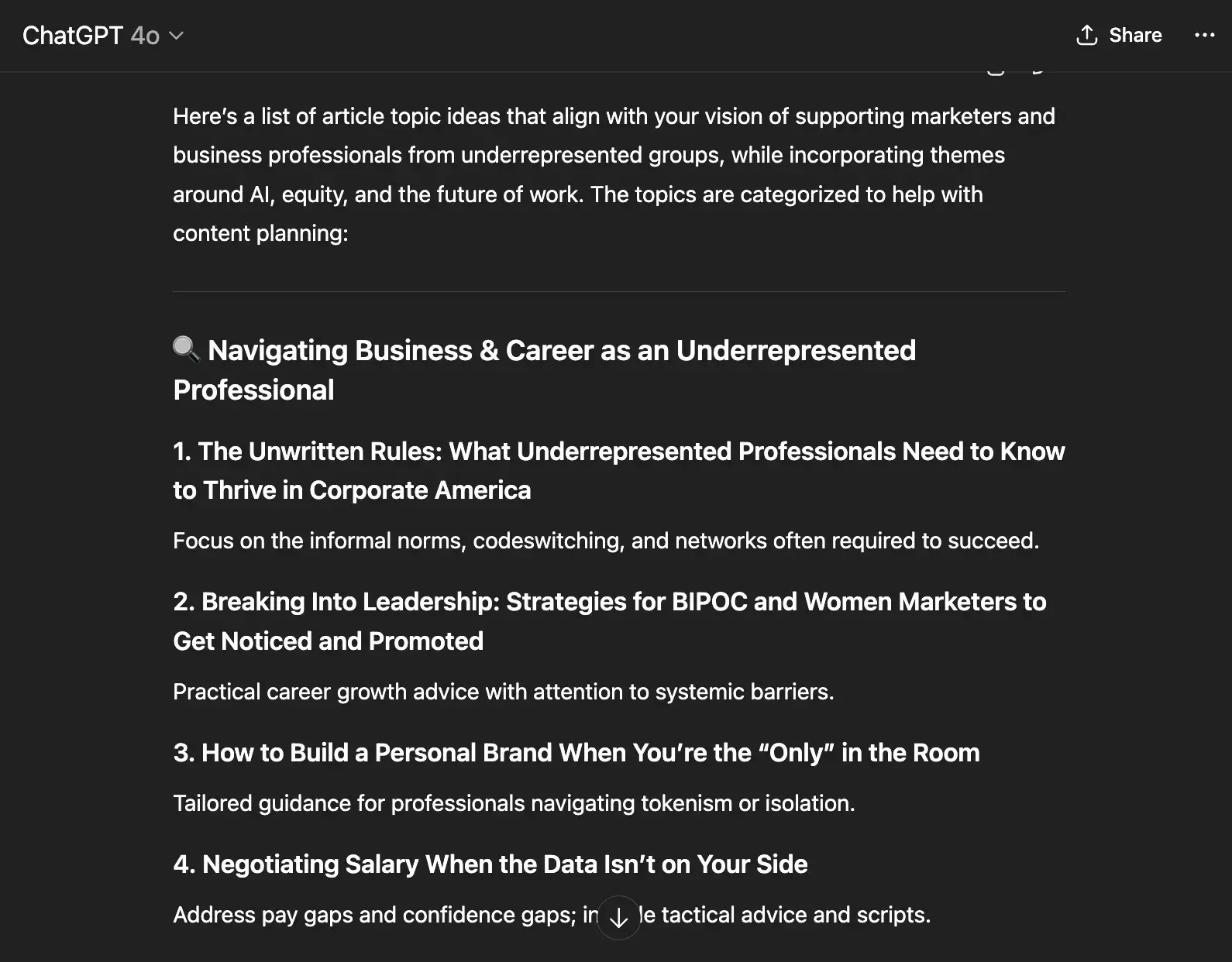
screenshot showing an example of how a hubspot writer might use ai to brainstorm topics

From there, I workshopped the suggestions and then met with a colleague to finalize the topics that best suited our audience.

Like I said, AI doesn‘t fully replace bouncing ideas off a colleague, but it can provide a promising starting point when you’re stuck. This got my creative juices flowing, and that’s all I needed. Once we have our direction, it’s time to dive into research.

Step 2: We power our research with AI as an information assistant.

With our topic and angle defined, we need to understand our subject inside and out. This is where AI becomes our research powerhouse.

As a content marketer and editor, my top concern is always quality and accuracy. I want to make sure the information I put in front of any audience is valuable and trustworthy. That means a lot of research, and good research takes time.

Generative AI can help exponentially here with its ability to gather and summarize information from multiple sources, often in seconds. In fact, 47% of marketers report using AI for research already.

When it comes to my own research process, I no longer have to filter through pages and pages of Google results to find the information I need. Instead, AI does most of the heavy hunting for me and wraps it up into a nice, easy-to-understand package. It doesn’t just give me a resource that might answer my question like a search engine; it gives me an answer directly.

Forsey also sees the benefits of using AI for content research.

She recalls, “Once, I needed to write a post — ironically — about the differences between ChatGPT, Google‘s Bard [now Gemini], and Bing’s AI-powered search engine. So, I asked ChatGPT: ’Can you tell me the differences between ChatGPT, Google‘s Bard, and Bing’s AI-powered search engine? Please put the pros and cons in a table format.’”

Shortly after, Caroline got back a detailed chart illustrating exactly what she wanted in a few short paragraphs:
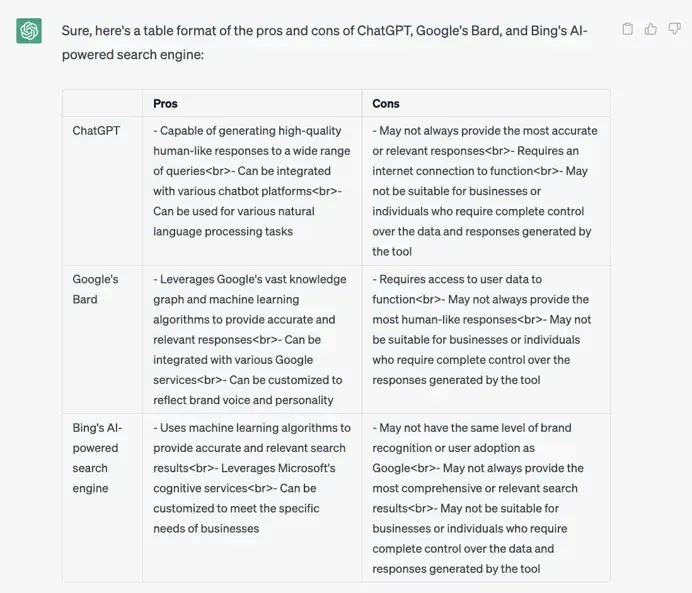
screenshot showing an example of how a hubspot writer might use ai to research topics

Kaitlin Milliken, Senior Program Manager for our Freelance Writer Network, considers AI a big part of her research process as well. She shares how it’s helped her distill information about HubSpot products when writing.

“When we write about products, I’ll ask AI to explain in more detail what makes a certain product unique, and it gives me a list of specifics that can help inform my writing/editing.”

The result? Using AI for content research and analysis has helped us dig deeper and uncover angles and understandings we may have missed or taken more time to come across without it. Now comes the actual writing.

Step 3: We collaborate with AI on rough outlines and messy first drafts.

Here‘s where things get interesting. We don’t just research and brainstorm with AI — we actually let it help us write. But there are parameters to our approach.

The HubSpot blog team doesn’t just copy, paste, and publish AI-generated content. Rather, we use AI as a jumping-off point — that messy first draft to fuel ideas.

One of the big reasons people read HubSpot articles is to learn from real-life marketers, sales, and service people. They want expert, verified examples and accounts of what works and what doesn’t.

That kind of human expertise doesn’t come from AI. Human judgment and storytelling can’t be replicated. AI can’t produce lived knowledge, experience, and insights, but it can quickly gather initial, general information for our writers and editors to build into a final piece.

Our writers use AI to save time, particularly for more general, educational articles. Many, including myself, use AI to draft the more straightforward sections of blog posts so they can focus on more impactful ones.

For instance, I’ve often turned to AI to draft conclusions in recent months. With the bulk of my article content finalized, I pop into ChatGPT and ask it to draft a conclusion that matches the tone and ideas shared. From there, I refine and edit to my liking.
graphic showcasing a quote about using ai to draft introductions and conclusions from hubspot writer tristen taylor

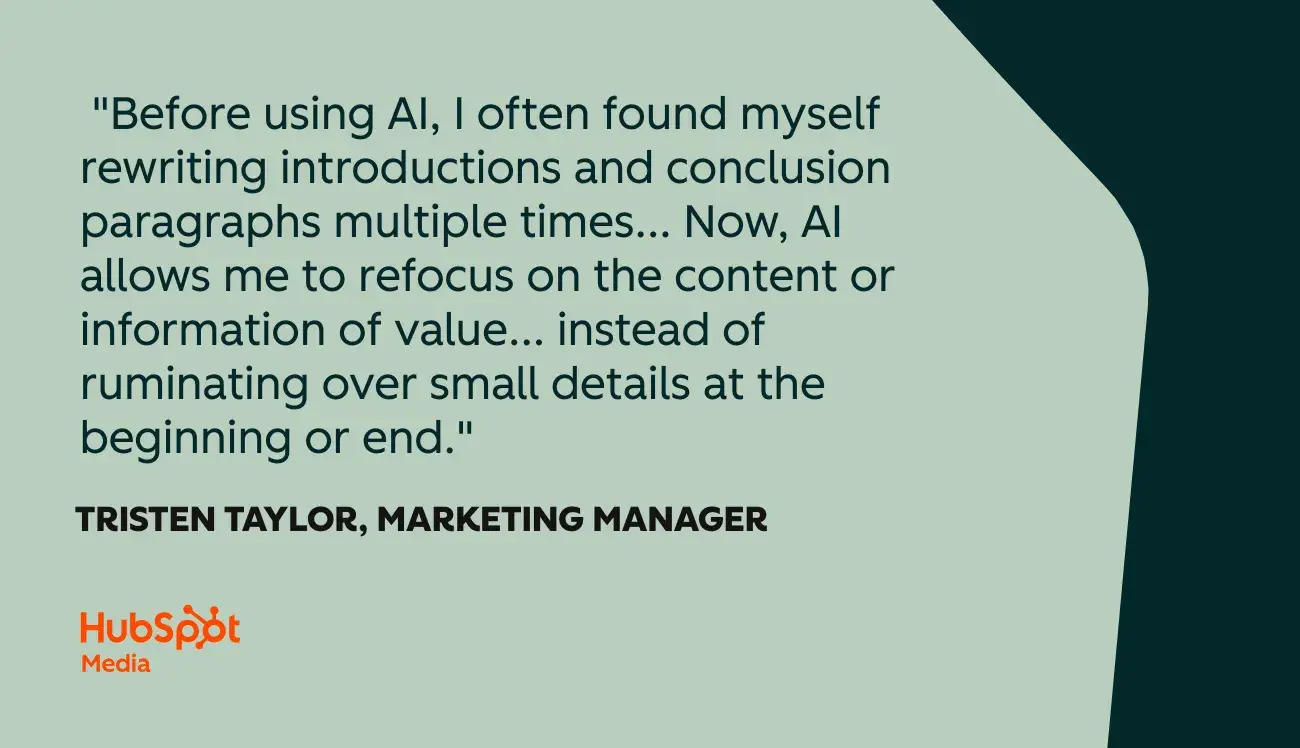
HubSpot writer Tristen Taylor also uses AI for blog intros and conclusions. She explains:

“Before using AI, I often found myself rewriting introductions and conclusion paragraphs multiple times. Now that I have access to these tools, my time for completing blog articles has been cut down tremendously. AI can capture the topic, intent, and targeted keywords I need through refined AI prompts.”

She adds, “It also allows me to refocus on the content or information of value that readers are looking for, instead of ruminating over small details at the beginning or end.”

Our team has used AI in our creative brief and outlining process for over a year, and we‘ve started experimenting with AI-generated first drafts. So far, we’ve found AI drafting to be a helpful time-saving measure for some topics, though not all.

For more general topics, such as “what is” and “how to’s,” it frees up more of our writers‘ and editors’ time to speak with other experts, gather unique examples and case studies, and “humanize” more generic topics overall, but AI can’t offer the original ideas needed for op-eds and thought leadership pieces.

Read: How to Humanize AI Content So It Will Rank, Engage, and Get Shared in 2025
graphic showcasing a quote about using ai to get content organized from hubspot writer and marketer ramona sukhraj

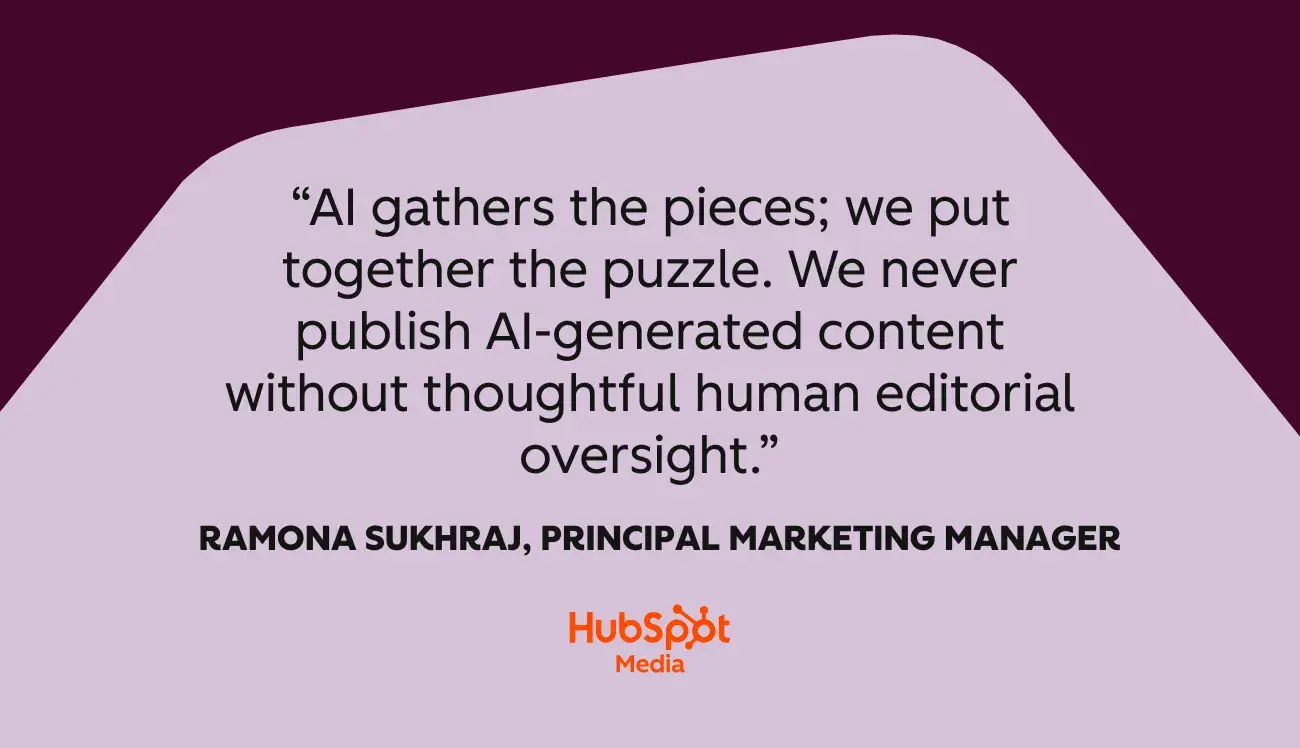
This is where our philosophy comes into play: “AI assists, humans lead.” AI supports ideation, drafting, and iteration — but people make the final call. AI gathers the pieces; we put together the puzzle. We never publish AI-generated content without thoughtful human editorial oversight.

Learn more about our AI principles here.

Step 4: We use AI to analyze data and uncover insights.

Numbers don‘t lie. They add credibility to our articles, but they don’t always tell their story clearly either. Here’s how AI helps us make sense of our data.

Numbers are not my strong suit. When faced with survey data or performance analytics, my head spins a bit, so when the prospect of using AI for data analysis came about, I couldn’t have been more excited.

Earlier this year, I tested this use case for our State of Inclusive Marketing 2025 report. ChatGPT allows you to upload spreadsheets, so I attached the file and asked it to give me the most significant trends coming through the data.

screenshot showing an example of how a hubspot writer might use ai to analyze data from a spreadsheet.

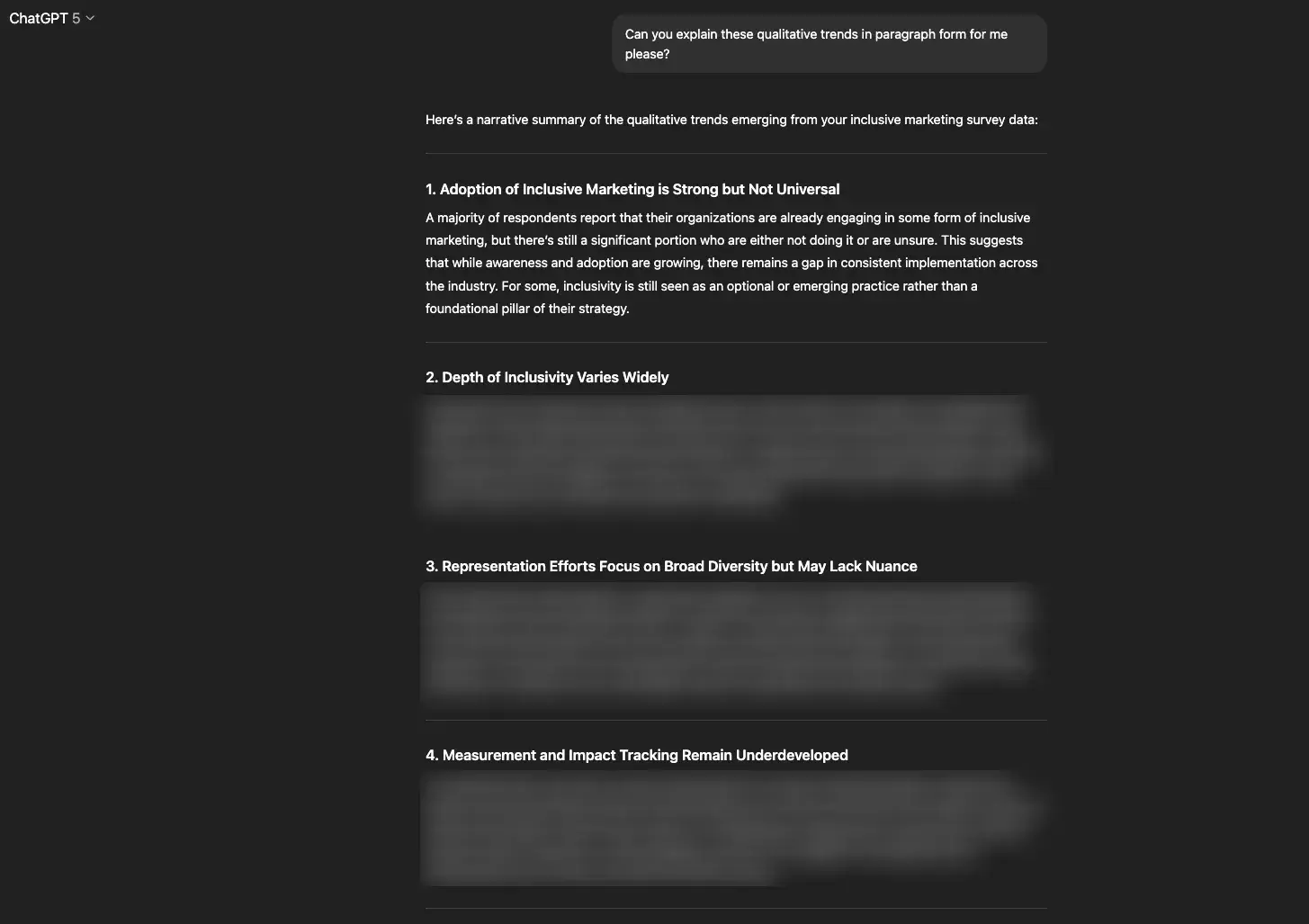
Initially, the agent just returned a simplified spreadsheet (womp), but when I requested that it explain the qualitative trends in paragraph form, here’s what I got:
screenshot showing an example of how a hubspot writer might use ai to analyze data from a spreadsheet into qualitative trends.

Could I have distilled these trends without the help of AI? Yes — but not in the minute or two it took ChatGPT.

Senior Staff Writer and Website Editor Amy Rigby echoes this, reflecting on analyzing data for our website marketing report.

“LLMs are incredibly powerful at identifying patterns in data, especially ChatGPT’s o3 model. I used ChatGPT to help me highlight trends and further segment our website marketing survey data, resulting in a much deeper, richer report. I used to get frustrated with ChatGPT because its math was frequently wrong, but the o3 model has greatly improved.”

While it’s tempting just to take the trends AI finds and run, double-check them. As we know, AI can make mistakes and make things up. This is the biggest challenge marketers report facing with AI, so take the time to spot-check your data to ensure the agent didn’t take any liberties.

(Note: OpenAI just launched GPT 5, so hopefully, it’s improved in this area.)

Step 5: We experiment with AI-generated visuals to enhance our content.

Great words deserve great visuals. Here’s how we use AI to create compelling imagery and interactive elements that would otherwise be out of reach.

So, I fancy myself a keen self-taught graphic designer, but writing remains my first and most refined skill. While written content still matters, consumer content consumption habits and buying behavior increasingly demand more visual and interactive mediums like videos, infographics, and quizzes.

This kind of advanced content is out of reach for me and marketers with limited design and development skills.

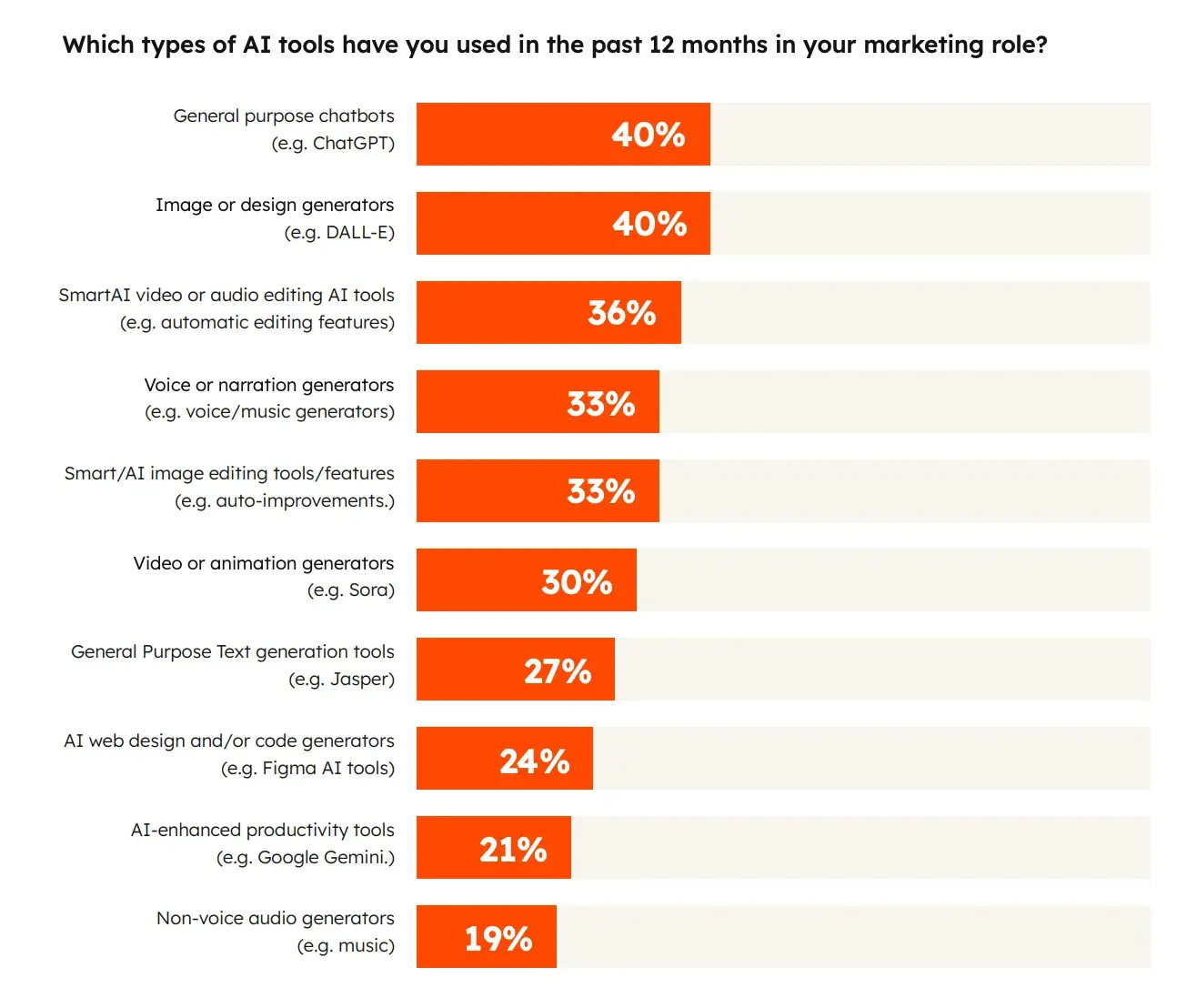
Thankfully, many AI tools are available now to help us. In fact, our AI Trends for Marketers report found that image and design generators are tied with general chatbots for the most popular AI tool marketers use.
bar chart showing the most common types of ai tools used by marketers with chatbots topping the list.

Source

Senior marketing manager and AI blogger Martina Bretous showcases generative AI’s prowess in this area in her series “Is it Real or AI?”

In it, she crafts a variety of multimedia content (i.e., video, audio, photos) using AI and challenges readers to see if they can identify them. For instance, this video of a beautiful yellow bird she featured was AI-generated on PikaLabs.

Impressive, right? I also used ChatGPT to create this highly specific featured image of a piggy bank representing a Facebook budget.

screenshot showing a blog featured image the author created using ai

Source

Overall, AI is helping us create visual elements that can truly enhance the experience of our content and make the concepts easier to grasp. There are tons of robust AI video and AI image generators, including HubSpot’s Breeze, that you can use to do the same.

Step 6: We use AI as a quality control check.

Before any piece goes live, it goes through our editing process. And yes, AI plays a role here too — but not in the way you might expect.

Whether we realize it or not, we’ve been using AI for proofreading and editing for decades.

Think about it: spell and grammar check on Microsoft Word and Google Docs, “autocorrect” on iPhone, Grammarly — even non-writers rely on these tools to minimize misspelled words and grammar issues that could come off as negligent or unprofessional.

Today, this has just gotten more advanced.

“People are rightfully concerned about AI’s potential to hallucinate in editing, but one thing that gets lost in the debate is that humans make mistakes, too,” reflects Rigby.

In recent months, she has turned to AI agents as proofreaders and even editors for her articles.

She continues, “Every writer knows the experience of being too close to their own work to see it clearly or being in such a rush to meet a deadline that they miss something. So, in addition to human editorial oversight, I see LLMs as another set of eyes, an extra layer of verification.”

graphic showcasing a quote about using ai to edit and proofread content from hubspot writer amy rigby.

“I fact-check all of my articles, but for additional assurance, I sometimes run them through ChatGPT or Claude and ask the AI to flag any errors, which I can then look at more closely. AI often does catch typos and errors that I missed.”

She doesn’t just stop at grammar and spelling. Rigby recommends asking agents for feedback on even how to improve your writing.

She says, “I sometimes ask AI to critique my work, poke holes in my logic, and point out weaknesses I may not have noticed.”

I like to prompt it with something like, ‘Think like a digital marketer who will read this piece to decide which software to buy. What concerns would they have after reading this? What questions would come up that were not answered in the piece?” This helps me go back and re-examine and strengthen my arguments.”

Rigby has also built a custom GPT called StyleScout for our team’s internal use, which helps writers quickly scan their drafts for style inconsistencies. This was as easy as uploading our internal style guides to the GPT and letting AI handle the rest to ensure our content is consistently on brand.

“Before I submit an article, I can run it through the GPT and get a line-by-line breakdown of anything that might violate our style guidelines. Yes, AI sometimes returns outputs that are overly pedantic or heavy-handed. That’s why human judgment always gets the final say. It’s my responsibility to check that what it tells me is sensible and accurate. If it isn’t, I disregard it.”

Check out our free Masterclass “How to Create Custom GPTs That 10x Your Marketing Results” to learn how to build a custom GPT for your team.

Step 7: We use AI to whip up “microcopy” (i.e., meta descriptions, social posts).

The article is written, edited, and ready to publish. But our work isn’t done—now we need to promote it. This is another area where AI shines.

For some reason, writer’s block strikes hardest when I write meta descriptions or social posts for my blog articles. Perhaps it’s topic burnout, or I’m just too close to the pieces to distill the real golden nuggets of information.

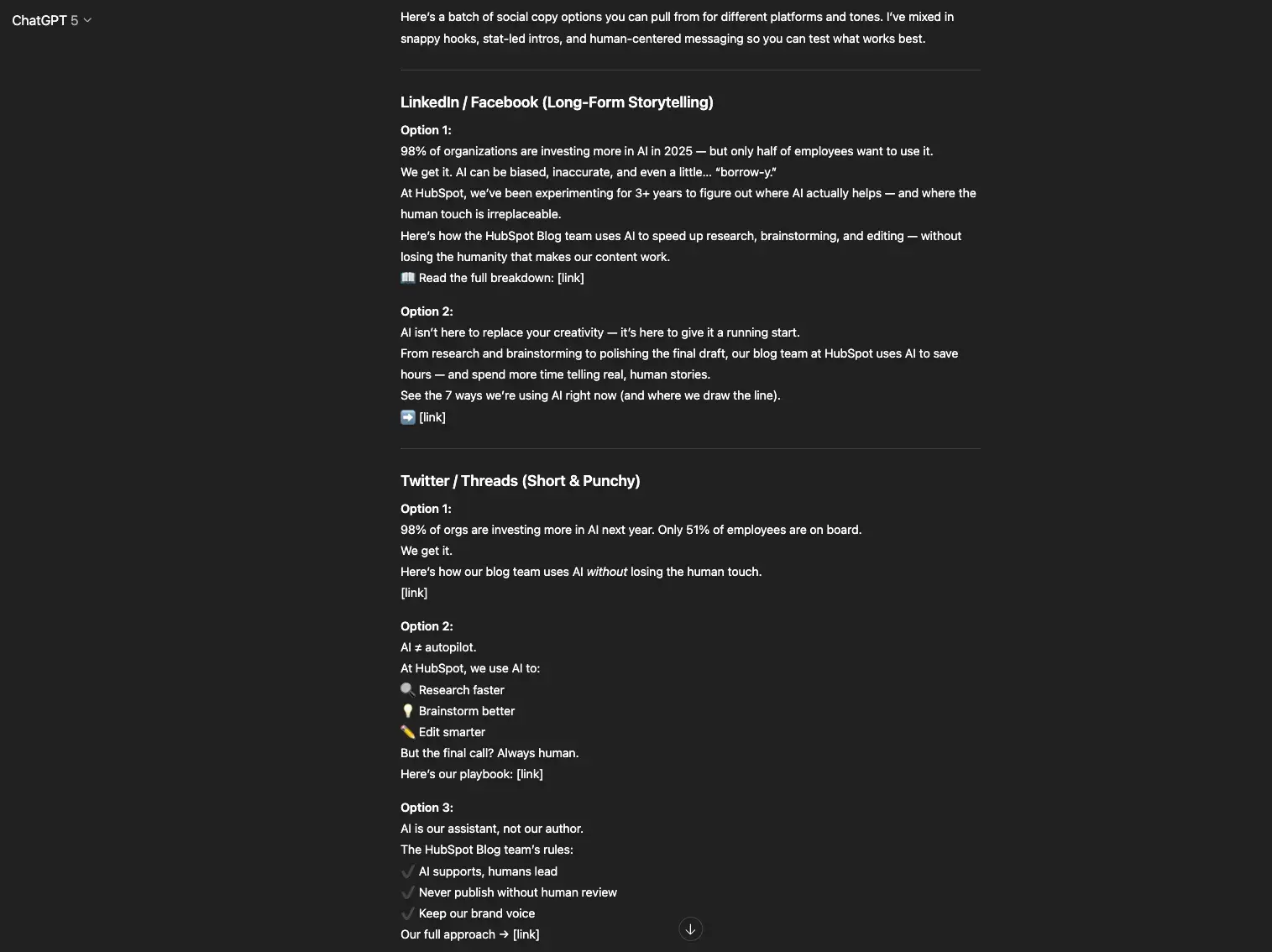
Whatever the reason, quickly generating the right messaging to promote your content is one of my favorite uses of AI. For instance, here’s what ChatGPT gave me when I asked it for some social copy based on this article:
screenshot showing an example of how a hubspot writer might use ai to write social copy or meta descriptions.

It’s not perfect, but it gives me something to take and make my own.

Jamie Juviler, HubSpot Manager, Staff Writing & AEO, has also leveraged AI for meta descriptions. He suggests feeding your introduction paragraph into an AI chatbot and then asking it to produce a 100-150-character meta description.

The beauty of this approach is that AI handles the initial creative lift, freeing us up to focus on refining the message and ensuring it aligns with our brand voice.

Bonus: AI helps us stay current on the industry.

It may sound cliché, but the rumors are true: Marketing changes quickly. Thankfully, AI helps our blog team keep up with it.

Juviler explains his approach. “In this new realm of AEO and, more broadly, AI-powered marketing, I’ve been leveraging Gen AI as an information consolidation agent.”

“We‘re constantly flooded with AI-related news, tips, and technologies, so whenever I come across a new piece of information — whether it’s a video, blog post, podcast, newsletter, etc.— I run it through a custom GPT I’ve set up that helps me determine whether it’s important or new. If it is, the AI modifies a personal tracking document I maintain for the industry as needed.”

This system allows Juviler to stay on top of the stream of AI news without getting overwhelmed. This concept could also be used for other trends we cover, like email marketing, creator monetization, and social platform algorithm changes, or any topic of interest in your industry.

We’re in this together.

Like everyone today, our team is learning as we go when it comes to AI. The technology has its benefits but also drawbacks, and with constantly evolving technology and unclear regulations, it’s a bit of the Wild West. But we’re figuring it out.

We want to lead with transparency with our audience, so we’re committed to sharing how we use AI in our work, as it evolves, and every step of the way.

We will include a disclaimer on any post we write that has been AI-supported, letting you know that we used AI to complete the post. And you’re welcome to dig into the HubSpot Media AI guidelines to learn more.

We don’t know what tomorrow holds, but we know AI will help us all navigate this changing landscape. We know AI can’t replace the humanity behind the HubSpot blog — and we will never take that human connection for granted.

Editor’s note: This post was originally published in May 2023 and has been updated for comprehensiveness.

The Essential Marketing Infographics Guide

Software Stack Editor · October 2, 2025 ·

As a small and medium-sized business (SMB) owner, your content must work harder to grab attention among big-name brands. Even without an in-house designer or large budget, well-planned marketing infographics can engage your target audience and get them to convert.

In this post, you’ll learn how to create visual content that keeps your sales pipeline flowing and moves the needle.

What is a marketing infographic?

A marketing infographic combines data, text and design to present information in a way that’s easier to digest and more memorable. This type of visual content communicates a brand’s message quickly and clearly.

Infographics help your busy SMB showcase its value faster. Speed and clarity are crucial for capturing audiences and standing out against more established companies.

For example, here’s part of a process infographic explaining email delivery:

Marketing infographic Pipedrive email delivery

It uses simple icons and short paragraphs to simplify and make the content more approachable for readers.

Marketers typically use infographics as top-of-funnel (TOFU) content. In this “awareness” stage of your marketing funnel, people are just learning about your brand:

Marketing infographic Pipedrive funnel

Your goal here is to grab attention and build interest (not go straight for the sale, as people aren’t ready to buy).

Infographics work well in this stage because they’re eye-catching, shareable and easy to digest. They allow potential customers to engage with your brand in a low-pressure way while still picking up useful information.

However, you can use infographics throughout your marketing and sales process to:

  • Explain a complex product or service

  • Highlight key stats or benefits of what you offer

  • Share the results of a customer story or case study

  • Recap insights from a blog post, webinar or workshop

  • Support a sales pitch or email with a quick visual summary

As this article shows, effective digital marketing infographics do more than just inform. They inspire people to act.

Recommended reading

https://www-cms.pipedriveassets.com/What-is-Marketing.png

What is marketing? 5 strategy tips every SMB should know

Why should SMB owners use marketing infographics?

The best infographics make your message easier to absorb, remember and act on. When every brand competes for audiences’ limited time and attention, thoughtful resources cut through the noise.

It’s no wonder Venngage reports that infographics are marketers’ most successful types of visual content:

Marketing infographic Venngage report

Infographics can be powerful assets in your content marketing strategy. They convey value instantly, whether you’re explaining your service or proving results.

According to Canva research, 91% of businesses use visual communication to be more efficient. Teams use it to explain ideas clearly, speed up decision-making and connect better with audiences.

Here are four key benefits of business infographics for SMB marketing:

Marketing infographic benefit

Why it works

Increase content engagement

Infographics make complex information visually appealing and highly shareable.

Build credibility

Sharing data-driven, visual proof of success (like ROI stats or case studies) builds trust and authority with prospects.

Create stronger calls-to-action (CTAs)

Infographics provide clear, compelling reasons for leads to move forward with decisions.

Save time in your sales process

Visually addressing common objections or questions helps you close more deals.

A single infographic can also deliver value across multiple touchpoints. They’re easy to repurpose across email marketing, sales presentations and your website.

Recommended reading

https://www-cms.pipedriveassets.com/Marketing-Management-Tools.png

The ultimate marketing management tools guide

5 simple steps to create a content marketing infographic

When created intentionally, infographics become powerful tools in your content marketing efforts.

You just need to clarify why you’re making one, who it’s for and what action you want people to take after seeing it.

Here’s a step-by-step guide for using marketing infographics more effectively.

1. Define your infographic’s goal

Before you start designing, clarify what you want your infographic to achieve. A clear aim (e.g., a specific sales goal) helps you stay efficient and align your content with tangible, intended business outcomes.

Without big budgets or endless resources, every piece of content needs to pull its weight. Decide if you want your infographic to:

Capture your core takeaway in one sentence. For example:

“This infographic will help potential customers understand our onboarding process, so they feel more confident booking a demo”.

Your goal aligns your team and makes every decision easier, from what data to include to where to share your infographic once live.

Here’s how to determine yours:

  • Identify which customer journey stage the infographic will support (e.g., brand awareness, consideration or decision) to shape the message and tone

  • Choose one clear objective to give it purpose (e.g., explaining a product benefit, showcasing a success story or simplifying a common process)

  • Decide how you’ll measure impact (e.g., through downloads, email sign-ups, click-throughs or time on page), so you know if the infographic is achieving its goal

By setting a target and success indicators, you’ll build strategic assets that support a broader marketing plan.

2. Identify the target audience

A compelling infographic speaks directly to specific customer needs, questions or pain points. For example, you may target decision-makers from specific company sizes or existing leads who have yet to convert.

When you know your customer, you can tailor every infographic component (i.e., language, tone, visuals and data points) to what matters most to them.

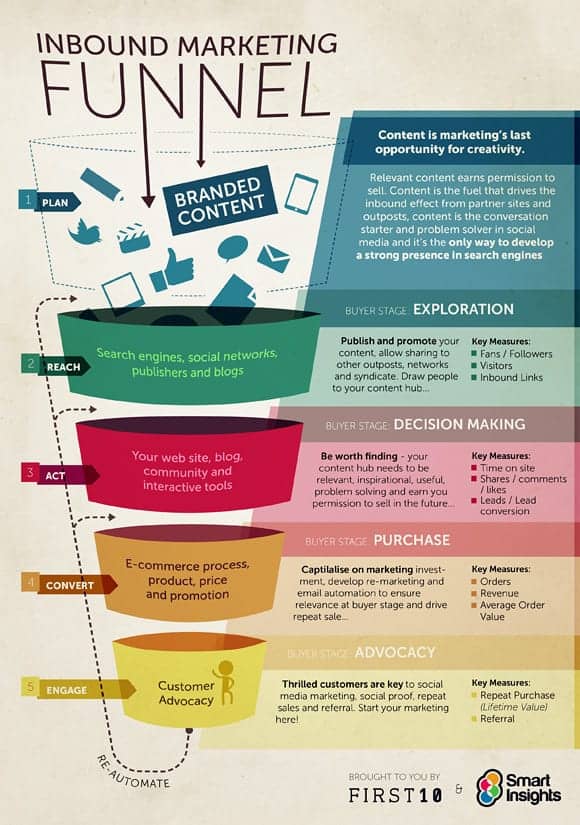
Narrowing your focus also helps make your message more effective and actionable. For instance, this Smart Insights infographic lays out the inbound marketing funnel:

Marketing infographic Smart Insights funnel

The company targets business owners at SMBs who want to drive downloads, demos and sales with their content marketing. By positioning itself as a trusted resource, Smart Insights increases the likelihood that readers will convert when they’re ready to invest in a membership.

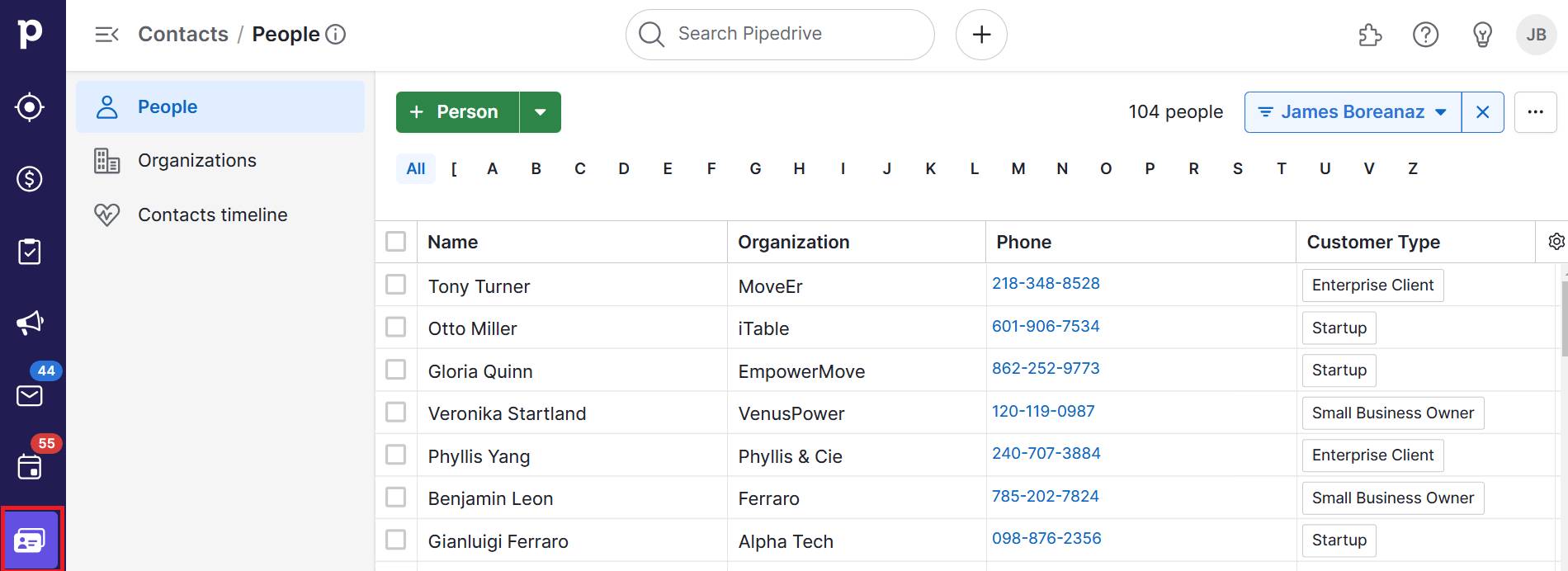
Your customer relationship management (CRM) software is a goldmine for finding key audience information.

Let’s say you use Pipedrive to store key contact data.

Marketing infographic Pipedrive contact list

You can identify individuals by organization and customer type (as above) or even by job roles, industries, pipeline stages and interaction history. These details help you build clearer customer segments on which to base infographics.

For example, you might categorize:

Reviewing FAQs or sales conversations also helps you spot recurring questions or objections that could become infographics.

The more specific your target audience, the more likely your content is to resonate and drive results.

Better understand your customers with our Buyer Persona Templates

Use these templates to ensure your solution always aligns with your customers’ interests and needs

3. Collect relevant data

Your marketing infographic needs relevant, accurate information to attract and convince potential customers.

In fact, Venngage research also suggests data visualizations are marketers’ most popular type of visual content. The right stats give your infographics credibility, while also showing you understand readers’ real challenges.

In the example below, the project management tool Asana highlights stats from its original research:

Marketing infographic Asana report

Instead of reading through a wordy report, readers understand the story the data is telling at a glance.

Your segments guide the theme and content of your infographic. To find the best-fit data, think about what information each audience needs to take the next step. What’s holding them back?

Determine what data you can gather to:

  • Address common objections

  • Highlight a success story from the same industry

  • Break down how your product solves an operational pain point

Once you’ve pinpointed the type of insight you need, find it. You likely already have a lot of valuable data at hand – you just need to know where to look.

Here’s how to collect relevant customer and market information:

Where to look

What you can learn

CRM system (e.g., Pipedrive)

Identify sales trends, common challenges or successful outcomes you can showcase

Database notes and call recordings

Find real customer stories of feedback

Support tickets and FAQs

Spot recurring user issues or questions

Performance metrics

Demonstrate your product’s impact on customers (e.g., time saved or revenue growth)

Industry statistics or market research

Add context or topical authority

For instance, say you run a B2B software company that helps mid-sized logistics firms improve fleet efficiency.

Your sales team has been filtering won deals in your CRM for the past six months. It notices that 70% of successful clients had the same pain point: tracking fuel usage. Notes and call recordings also reveal that compiling reports was a major frustration.

To create an infographic, you gather:

  1. A customer quote from a recent demo about time savings

  2. Internal data showing a 30% reduction in fuel costs after three months

  3. Industry research about rising fuel prices in the logistics sector

Including this information validates your product’s value and directly addresses a high-priority concern for similar prospects.

Using data that matters to your audience makes your infographic feel trustworthy and persuasive. These two things help move leads closer to a decision.

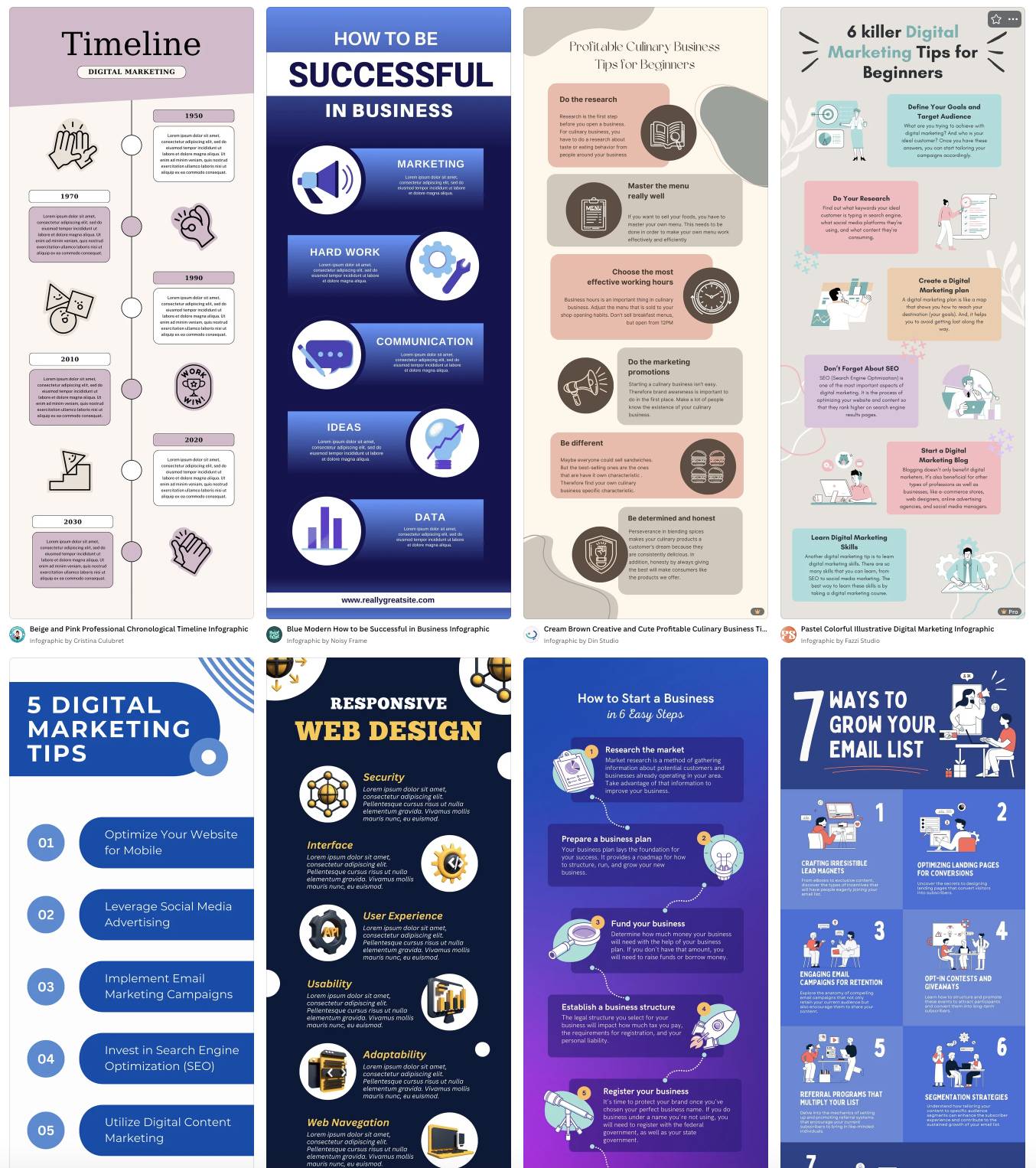
4. Choose a tool with infographic templates

A tool with ready-made templates saves time and ensures your content looks clean, engaging and on-brand. You won’t need an in-house team or freelance designers to create polished and professional infographics.

For example, Canva offers a beginner-friendly drag-and-drop editor across millions of templates:

Marketing infographic Canva templates

It’s especially handy for social media marketing. Pre-set dimensions for every major platform and brand kits keep your visuals consistent.

Other popular design tools with infographic templates include:

  • Venngage – for more data-heavy visuals, with options to visualize charts and stats

  • Piktochart – offers templates designed for marketing, presentations and reporting

  • Visme – ideal for interactive infographics and more complex visual content

Templates can also inspire your own infographic designs, so you never have to sit staring at a blank page.

When choosing an infographic marketing tool, pick one that:

  • Offers templates for different content types (like timelines, comparison charts or process breakdowns)

  • Lets you easily customize fonts, colors, icons and layout

  • Allows collaboration if your team is working together on design and approvals

  • Provides download and sharing options for web, email or print

Start with a layout that fits your goal, then update the content and colors to match your brand style and audience needs.

5. Share through content marketing efforts

Sharing your infographic through the right content marketing channels helps you reach your audience and guide them further along the buyer journey.

Thoughtful distribution ensures your infographic gets the attention it deserves and drives real results.

First, focus on the channels where your audience is already active, such as your email list, blog or social media. Think about how your infographic fits into your existing marketing campaigns when choosing where to share it.

For example, see if it would work as part of a:

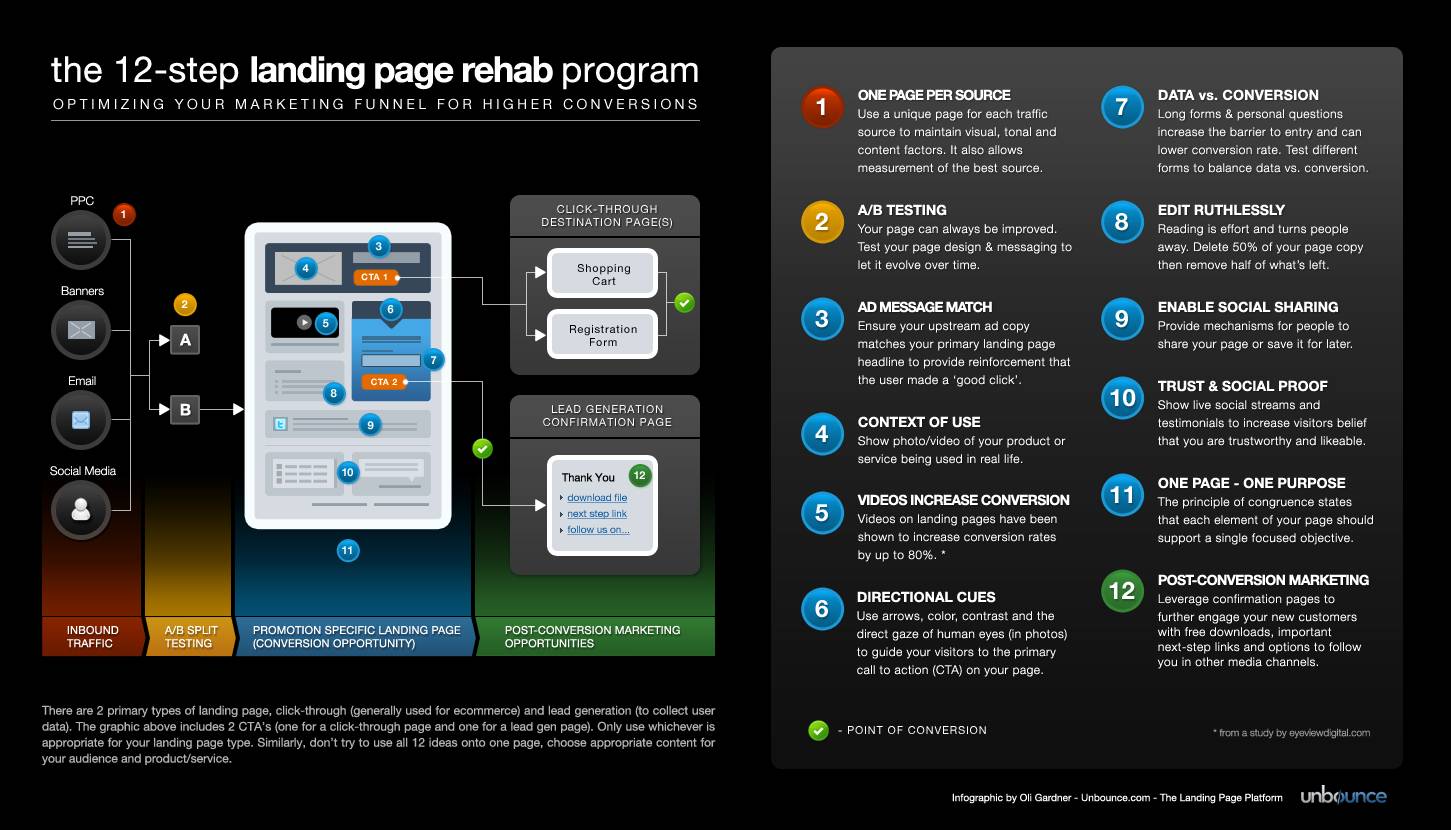
Before publishing, consider the best format and dimensions for each platform. A long, vertical email infographic that looks great as a newsletter might cut off or prove hard to read on Instagram.

For instance, this horizontal Unbounce “landing page rehab” infographic is ideal for how-to guides and presentations:

Marketing infographic Unbounce tips

On the other hand, square or vertical formats perform better on specific social media platforms (like X) and smaller mobile screens.

Remember, one infographic can become an article, several social posts, a slide deck or a downloadable lead magnet. Repurposing drives more value from every piece of content.

Partner with influencers or other businesses to share your infographic. You’ll expand your reach and build credibility through trusted networks.

Recommended reading

https://www-cms.pipedriveassets.com/blog-assets/b2b-email-marketing-ideas-examples.png

5 high-converting B2B email marketing ideas [with samples]

How to use marketing infographics as part of your Pipedrive sales process

Marketing infographics can support your entire sales funnel, especially during the lead-nurturing phase. A CRM like Pipedrive provides the tools to deliver the right content at the right moment.

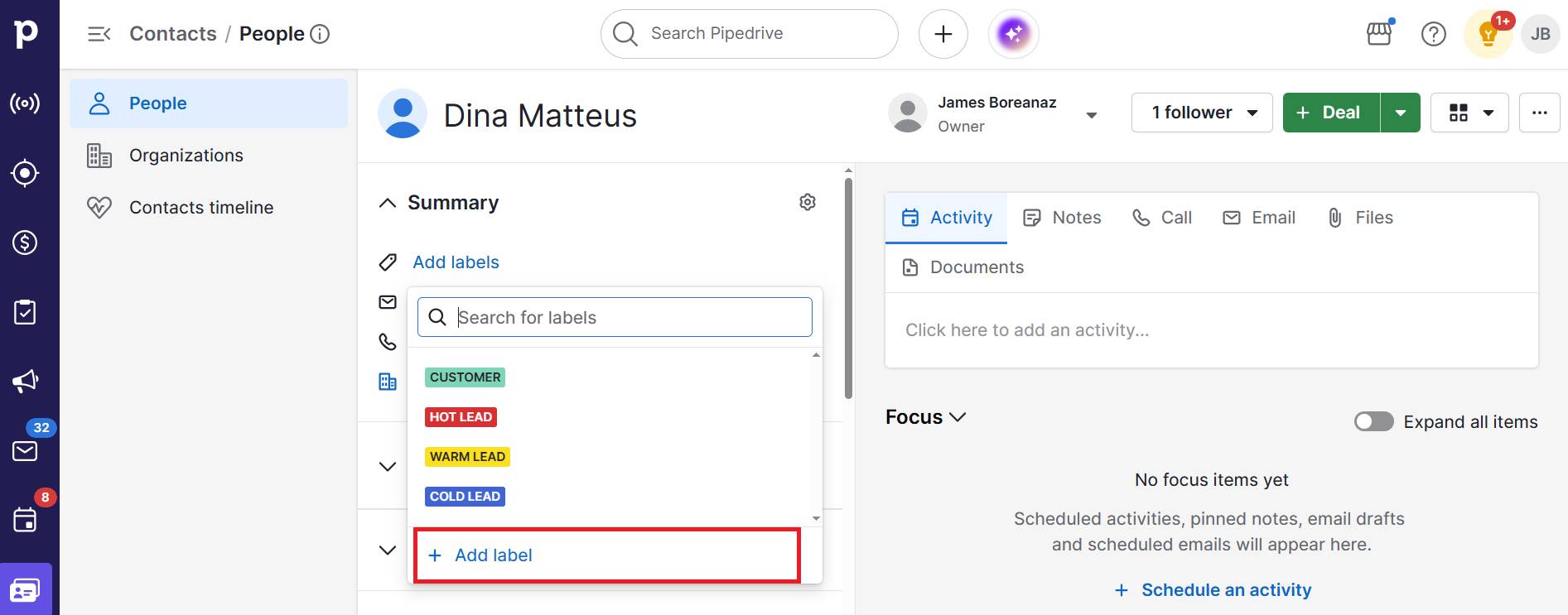
First, create contact labels to group people and organizations based on deal stage, interest level or past engagement:

Marketing infographic Pipedrive contact labels

This intent and behavioral segmentation lets you tailor your infographic content to speak directly to each group’s interests or concerns.

Next, build sequences of personalized emails using Campaigns by Pipedrive:

Marketing infographic Pipedrive Campaigns

For example, set up a series for warm leads with a comparison infographic that helps clarify your value over a competitor’s. Or design one to send alongside a customer success story from their industry.

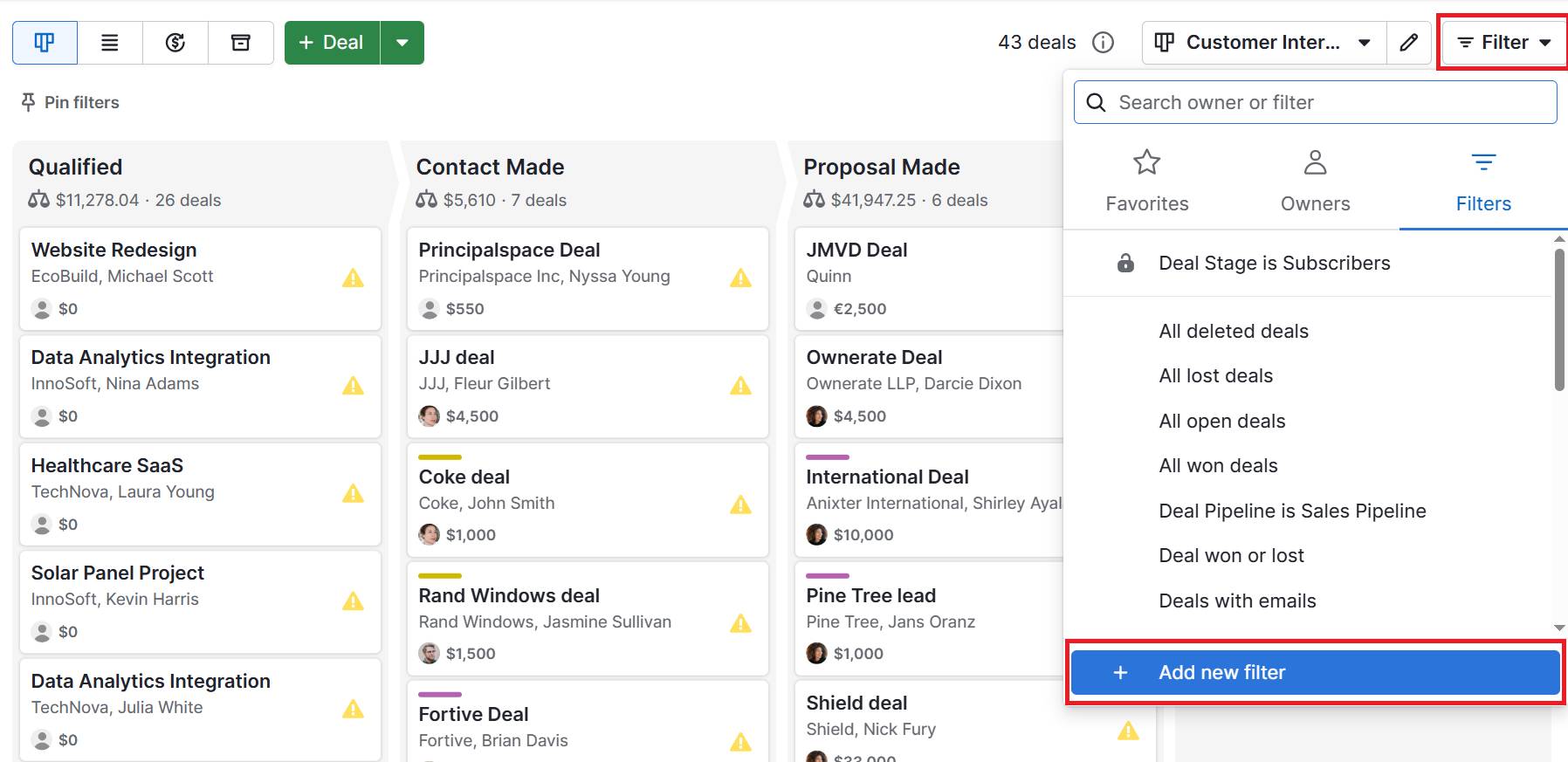
Then, let Pipedrive’s workflow automations send infographics at strategic points. A good opportunity is right after a product demo or consultation:

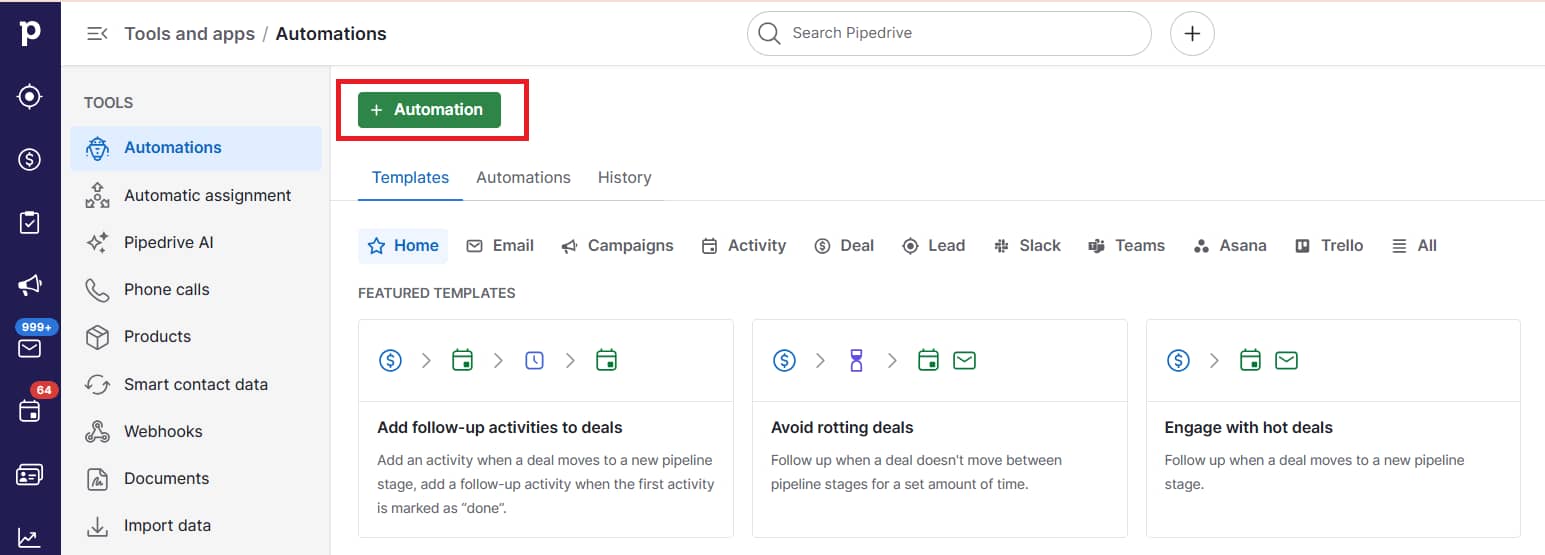
Marketing infographic Pipedrive automations

Reinforcing your message with a visual keeps your solution top of mind without manual follow-ups.

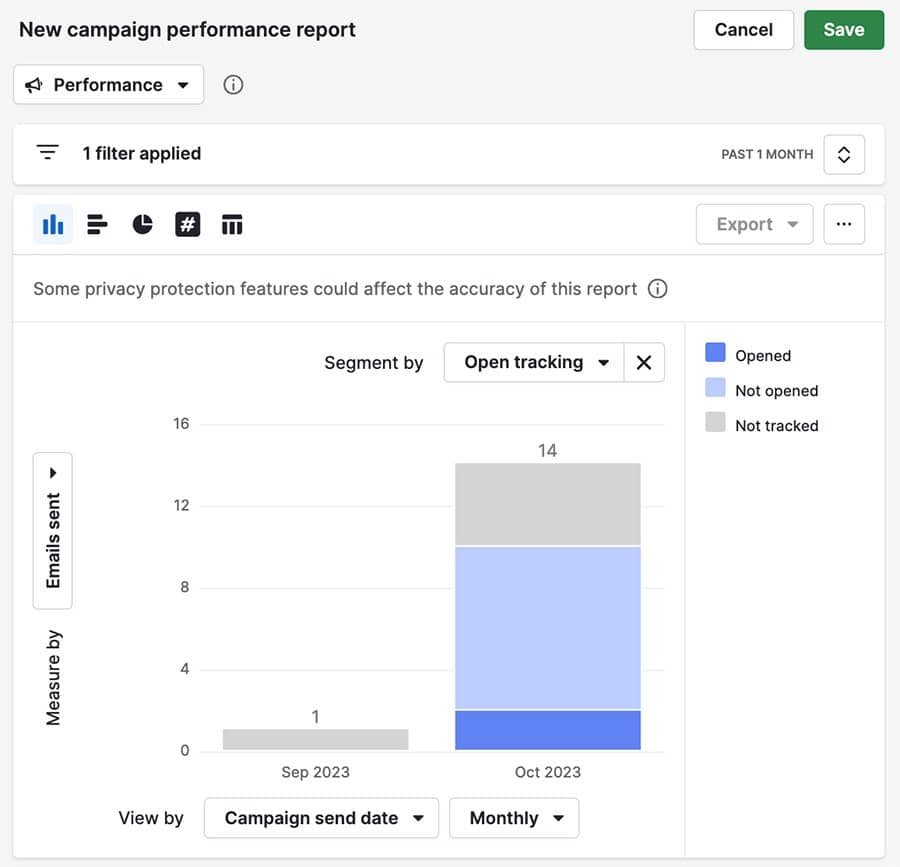
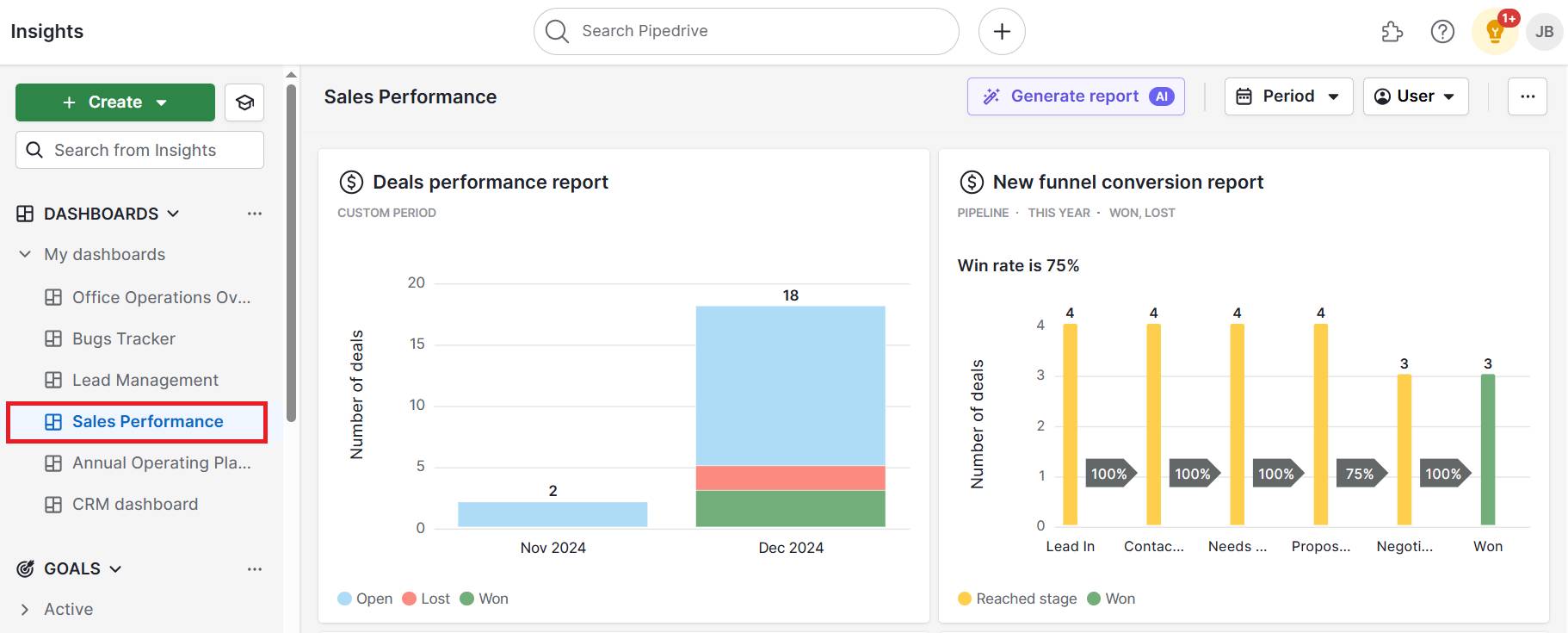
Once you send emails, track how leads engage with them using Pipedrive’s Insights for Campaigns:

Marketing infographic Pipedrive campaign reports

Look for improved (or declining) email opens, clicks and conversion rates tied to infographic content to guide your future efforts.

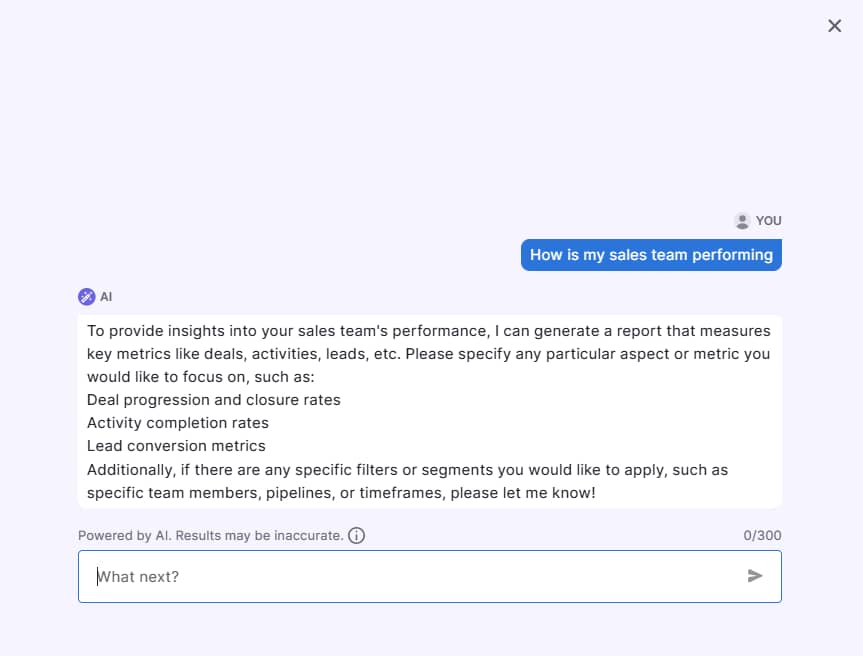
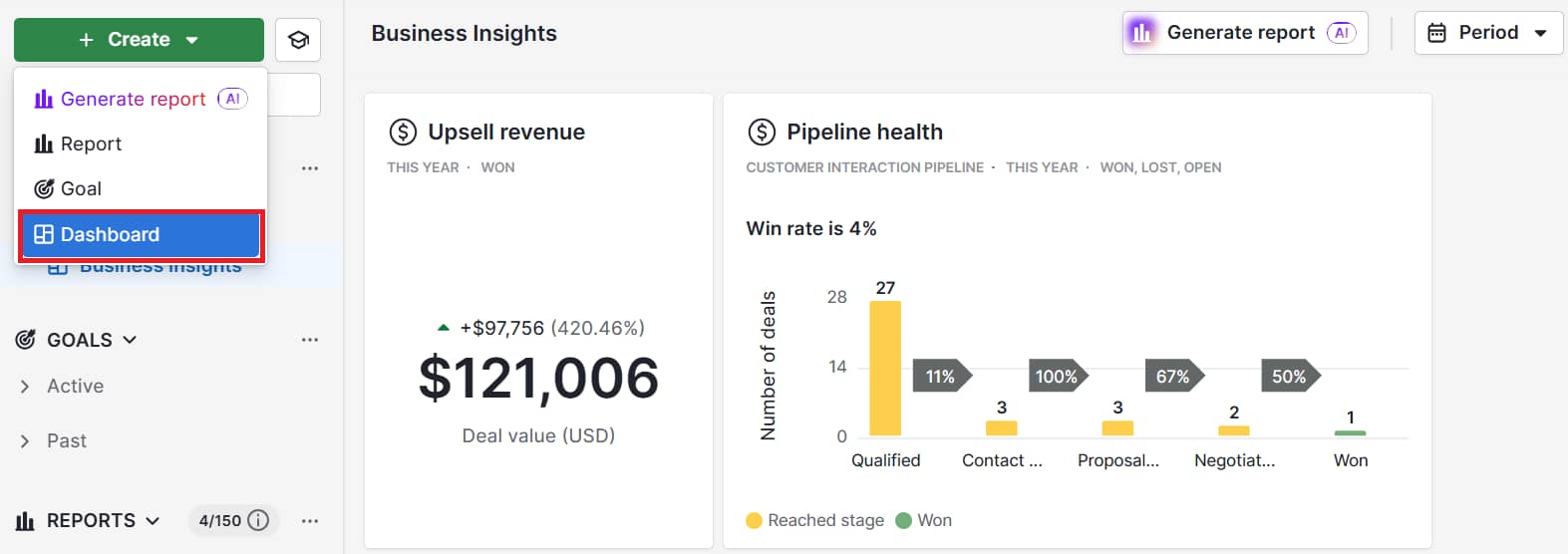
You can also run Pipedrive’s AI report generator to ask for insights in your own words:

Marketing infographic Pipedrive AI reporting

This easy-to-find data can help refine your message or timing for better results.

Pipedrive’s features help you create and share thoughtful, data-driven infographics that move leads closer to becoming customers.

Recommended reading

https://www-cms.pipedriveassets.com/Marketing-Reporting.png

Marketing reporting: how to create reports that inform decisions

9 best practices for creating high-quality marketing infographics

An engaging, informational infographic can be one of your most effective marketing tools. It has the potential to earn backlinks and boost your search rankings when shared widely.

Whether you’re creating a flowchart, process or timeline infographic, a few wise choices can ensure your content always delivers real value to your audience.

Here’s how to use infographics in marketing for the best results:

  1. Keep it simple – focus on one key message or idea to avoid overwhelming your audience

  2. Use plenty of white space – allow room for your visuals and text to breathe, making the infographic easier to digest

  3. Prioritize visual hierarchy – arrange elements so the most important information stands out first (e.g., use larger fonts, bold text or contrasting colors)

  4. Stick to a consistent color scheme – apply a limited palette that aligns with your brand to maintain visual harmony

  5. Use high-quality icons and images – select clear, relevant visuals that support your message (not distract from it)

  6. Include data-driven insights – include charts, graphs and statistics to back up your claims and make the infographic more authoritative

  7. Be concise – aim for clarity over complexity with short, punchy text and let visuals do the talking

  8. Test and optimize – monitor your infographics’ performance to see what resonates with your audience and adjust accordingly

  9. Consider search engine optimization (SEO) – when embedding infographic images, include keyword-rich titles, meta descriptions and alt text so searchers can discover them organically

Following these best practices helps your infographics look more credible and support your broader marketing goals.

Final thoughts

A well-designed marketing infographic can boost engagement, build trust and move leads closer to a purchase.

The right tools make the process faster and more effective. With easy-to-use templates, you don’t need a graphic design background to create something impactful.

Pair that with a CRM that helps you segment your audience and automate your outreach so infographics land where and when they need to. Try Pipedrive free for 14 days and see how your marketing can directly support your sales pipeline.

Why you should build relationships backward (and how)

Software Stack Editor · September 30, 2025 ·

Today’s master has things kinda backward. But she shared with me one of the most clever strategies for collaborative content and brand awareness that I’ve ever heard. (And I talk to a lot of marketers, so that’s saying something.)

And whether you’re working on brand partnerships, influencer marketing, or creator campaigns, you just might start doing it backward, too.

Click Here to Subscribe to Masters in Marketing

Deesha Laxsav, a smiling woman with long dark hairDeesha Laxsav

Senior Manager of Brand Marketing, Clutch

  • Fun fact: Deesha started a (now abandoned) foodie TikTok exploring elite eats in the DC Metro area. (“Turns out, eating was easier than editing videos.”)
  • Claim to fame: Built Clutch’s first influencer marketing program, setting the stage for long-term partnerships with top voices in marketing and tech.

Lesson 1: Social marketing has a trust problem.

A stinging 53% of consumers outright distrust paid endorsements, according to a recent survey by the global service marketplace Clutch. And the better polished the content was, the more suspicious it looked. What’s more, 41% of consumers weren’t sure whether they trusted influencers more than brands.

Which is really awkward because… wasn’t influencer marketing supposed to be the silver bullet against brand backlash?

“Our survey makes it clear that consumer trust in influencer marketing has taken a hit,” Laxsav says, but she isn’t deterred. “When we got the data, we didn’t think, ‘We shouldn’t be doing influencer marketing.’ Instead, it was, ‘How do we do it better?’”

She believes that the high number of scattershot paid posts created by one-off marketing campaigns have turned skepticism into a monster.

So maybe the real silver bullet was the friendships we made along the way. No, really. Laxsav says the solution to the influencer backlash is building authentic relationships with content creators and/or partner brands that deeply understand your audience.

And in that endeavor, Laxsav has it entirely backward.

Lesson 2: Make your own opportunities.

Most folks begin a content campaign by asking a content creator to… y’know, create content. But Laxsav finds that it works best when you flip the script. (And, pro tip, this works with brand collabs, too.)

“We’re a small brand, so the first step is just getting through the door. It’s hard getting the attention of these influencers. They’re getting thousands and thousands of emails.”

So, instead, Laxsav asks influencers if they’ll agree to be interviewed by one of Clutch’s executives.

“We’re not asking to appear on their channel. We want them to appear as a guest on our channels.”

Then, and here’s the kicker, YOU create the content. “The number one thing is giving people something to share. We slice up [one interview] into two to three videos that they could promote. We give them graphics. We even give them social media messaging copy. You build this strong promotional toolkit, and you build that relationship. That’s how it starts.”

But that’s not how it ends. The initial campaign acts as an ice breaker for further collaboration, which, in turn, creates the authenticity your audience is looking for.

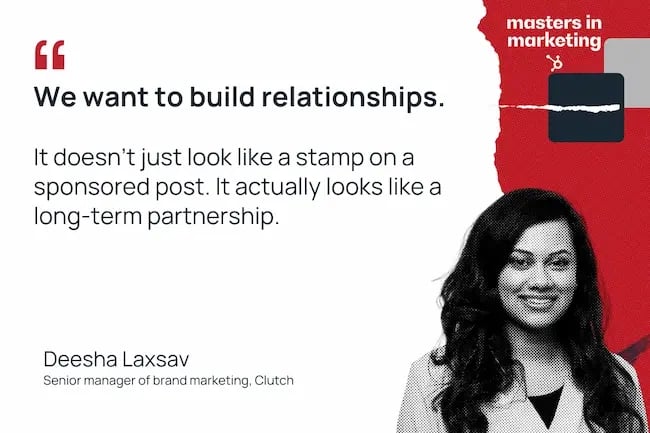
“It doesn’t just look like a stamp on a sponsored post. It actually looks like a long-term partnership.”

And that’s where the next lesson comes in clutch. (I’m sorry.) (No, I’m not.)

Lesson 3: Stop thinking in terms of one-and-done.

I asked Laxsav what I suspect is on all of our minds right now: What if I take all this time to make all this content and then they don’t share it?

“There have been times we’ve interviewed CEOs and founders, and they just say ‘Thank you for the content,’ and it never gets shared. But whether they shared or not, you’re still building that relationship.”

Remember that the goal isn’t simply distribution for your content. Whether you’re talking YouTube videos, social media campaigns, blogs, podcasts, or whatever, the goal is a trusted relationship with people your audience trusts.

“You might work with a really big influencer and see a huge spike in traffic that one week. What is that really doing? Consistency is key. Consistently working with a variety of partners that are reaching your target audience.”

“Don’t chase the glossy campaigns of the past. Today’s audiences are far more interested in transparency, relevance, and real value.”

Lingering Questions

Today’s Question

“As marketing shifts from communication and storytelling to creating authentic cultural experiences, how are you or your company rethinking the role of Creative?” — Alicia Mickes, Senior Creative Director, Magic: The Gathering

Today’s Answer

Laxsav says: At Clutch, we’re making sure every content piece is supported by creative that feels rooted in real-life experiences. That means weaving in authentic perspectives from influencers and providers we quote, so the stories aren’t just polished narratives, they’re reflections of what’s actually happening in the market.

Most recently, we’ve been testing more video content that’s intentionally lighter-touch rather than investing in big, glossy productions. We’re seeing that people consistently choose authenticity over stiffness. They want to hear directly from trusted experts in a way that feels conversational and relatable. For us, creative’s role is to amplify those voices and ensure every piece of content feels like an experience buyers can trust and connect with.

Next Week’s Question

Laxsav asks: When it comes to building partnerships for your event, how do you decide which people to collaborate with — whether that’s speakers, creators, or community leaders — to make sure they authentically represent your mission and resonate with your audience?

Click Here to Subscribe to Masters in Marketing

A Simple Guide to the Future of B2B E-Commerce

Software Stack Editor · September 30, 2025 ·

B2B e-commerce is evolving fast, fueled by digital transformation and new customer behaviors.

Competing amid all the change takes more than just keeping up – you need to get ahead.

This article explores eight key predictions shaping the future of B2B e-commerce, backed by expert research and insights. You’ll also learn practical ways to boost sales and earn long-term customer loyalty as the landscape shifts.

1. B2B marketplaces will gain on traditional channels

B2B marketplaces will reshape how businesses find and buy products from each other. They could eventually overtake conventional sales channels like direct websites and product catalogs.

The marketplace model involves B2B sales organizations allowing third parties like Amazon Business and Alibaba to sell directly on their digital platforms. The third party becomes the merchant of record (MoR), handling payments and legal duties. The B2B brand takes a share of the sales value as commission.

The streamlined procurement process means less paperwork and faster B2B transactions. Buyers can also evaluate and compare vendors side by side, so it’s easier to find the best fit.

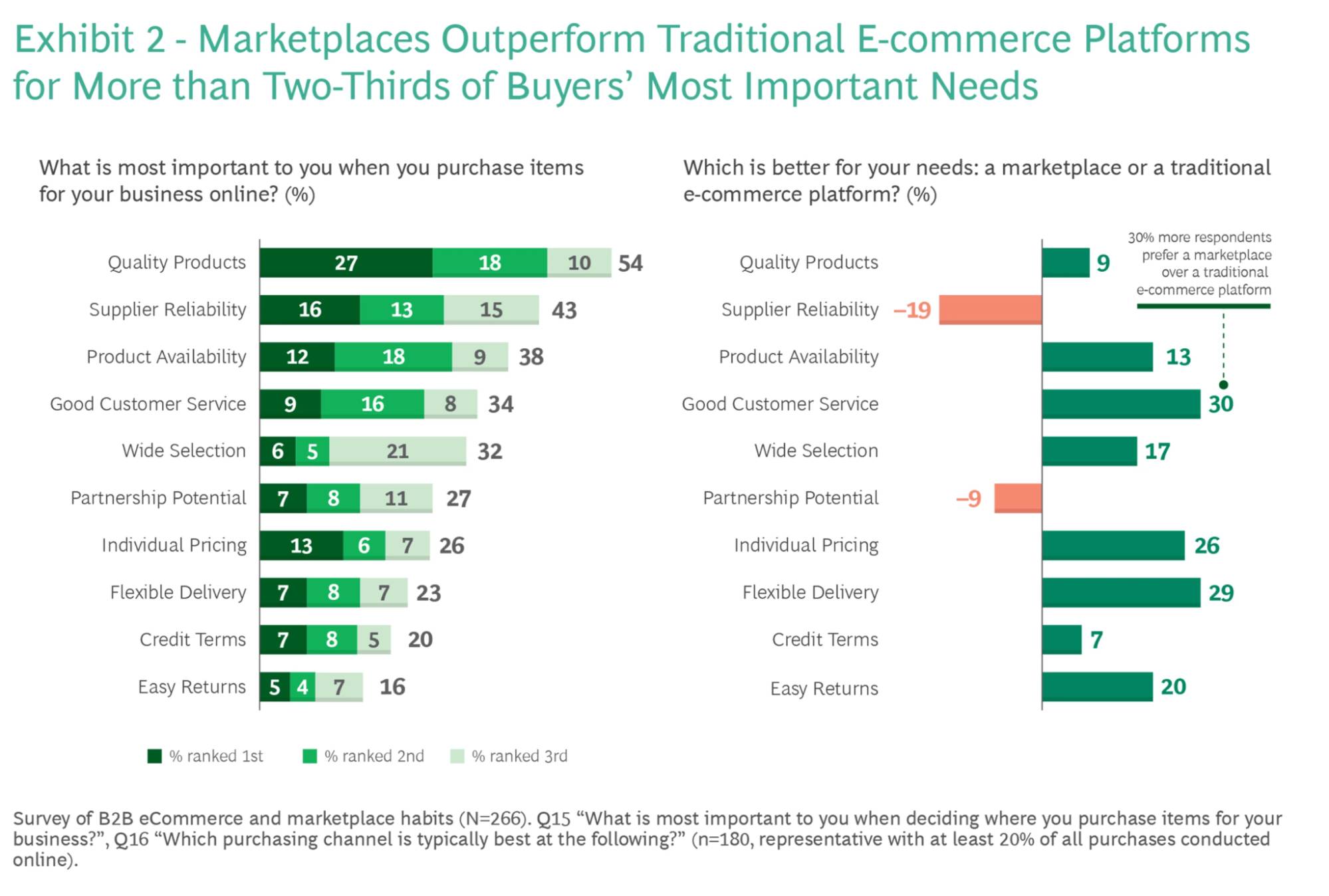
In a BCG survey, marketplaces outperformed traditional e-commerce platforms for eight out of 10 buyers’ most important needs, including product availability, selection and customer service quality.

Future of B2B ecommerce BCG graphs

In addition to meeting their audience’s key needs, B2B companies get to sell more without extra logistical effort. Sales negotiation, user experience (UX), fulfillment and returns are all taken care of, meaning more time for sales strategies and marketing initiatives.

What to do about it

Start evaluating B2B marketplaces close to your industry and explore listing opportunities.

For example, Amazon Business and Alibaba are ideal for selling general products at scale. Knowde (chemicals) and PartsSource (healthcare supplies) cater to specific verticals.

When building your shortlist, check where your competitors are active and consider traffic volume, fee structures and buyer demographics.

Recommended reading

https://www-cms.pipedriveassets.com/E-commerce-CRM.png

What is an e-commerce CRM and why do you need one?

2. Self-service buying experiences will become the norm

B2B buyers are becoming more independent, taking greater control of their purchasing journeys. They expect consumer-grade convenience throughout – including fast, easy access to product details, pricing and ordering.

However, self-service isn’t all about information. Customer experience is just as vital.

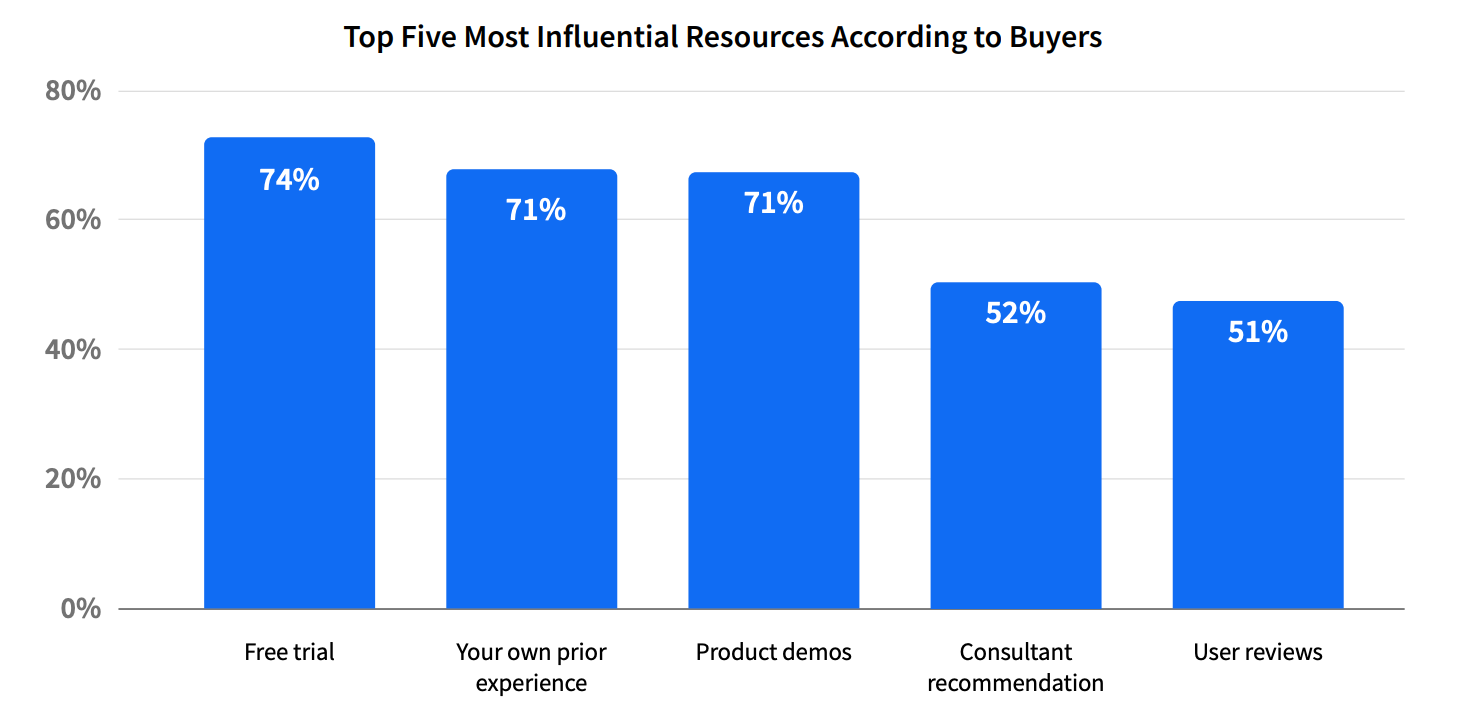
Free trials and product sales demos increasingly influence buyers’ decisions. Of the five most-used resources in 2024, the only one to increase year over year was “own prior experience”. Trials remained the most influential.

Future of B2B ecommerce TrustRadius graph

In other words, a growing proportion of your audience must try before they trust.

Trials and demos are already common in software-as-a-service (SaaS) circles. Forward-thinking brands in many other fields are getting products into sales prospects’ hands.

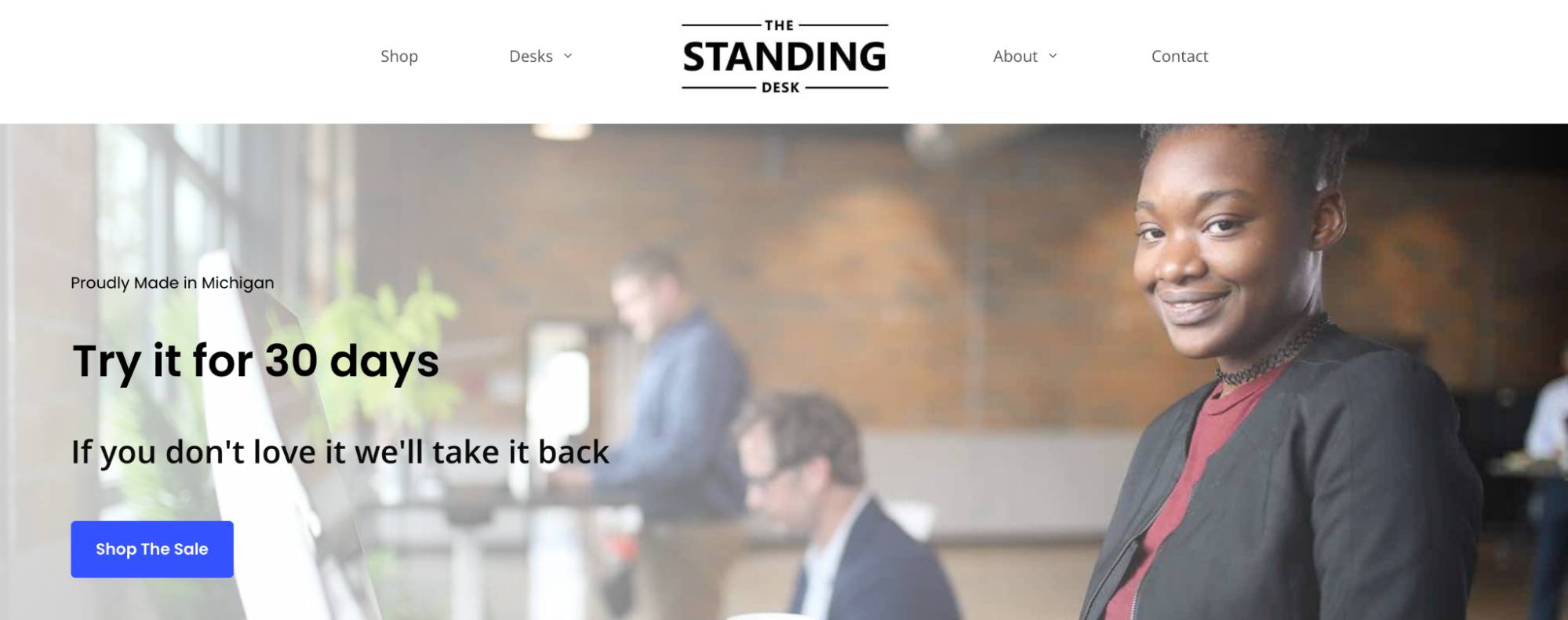
For example, the office furniture company The Standing Desk offers 30-day trial packages to US customers.

Future of B2B ecommerce The Standing Desk homepage

You’ll find risk-free trials on everything from coffee beans and machines to commercial cleaning services. These companies simply lower their entry barrier to build confidence early in the customer journey.

What to do about it

Make it easy for buyers to get hands-on experiences with your product or service.

Start by offering free trials or demos. If that’s not feasible, create interactive product tours or video walkthroughs tailored to different industries and use cases.

Support your self-service experience with intuitive product pages, transparent pricing and contextual help (like tooltips or chatbot guidance).

Recommended reading

https://www-cms.pipedriveassets.com/B2B-content-marketing-strategy-for-SMBs.png

How to create a B2B content marketing strategy for your small business

3. Personalized, omnichannel customer experiences will set the standard

Sales personalization has long been standard in B2C e-commerce. Now it’s becoming essential in B2B too, changing how companies deliver information and price products.

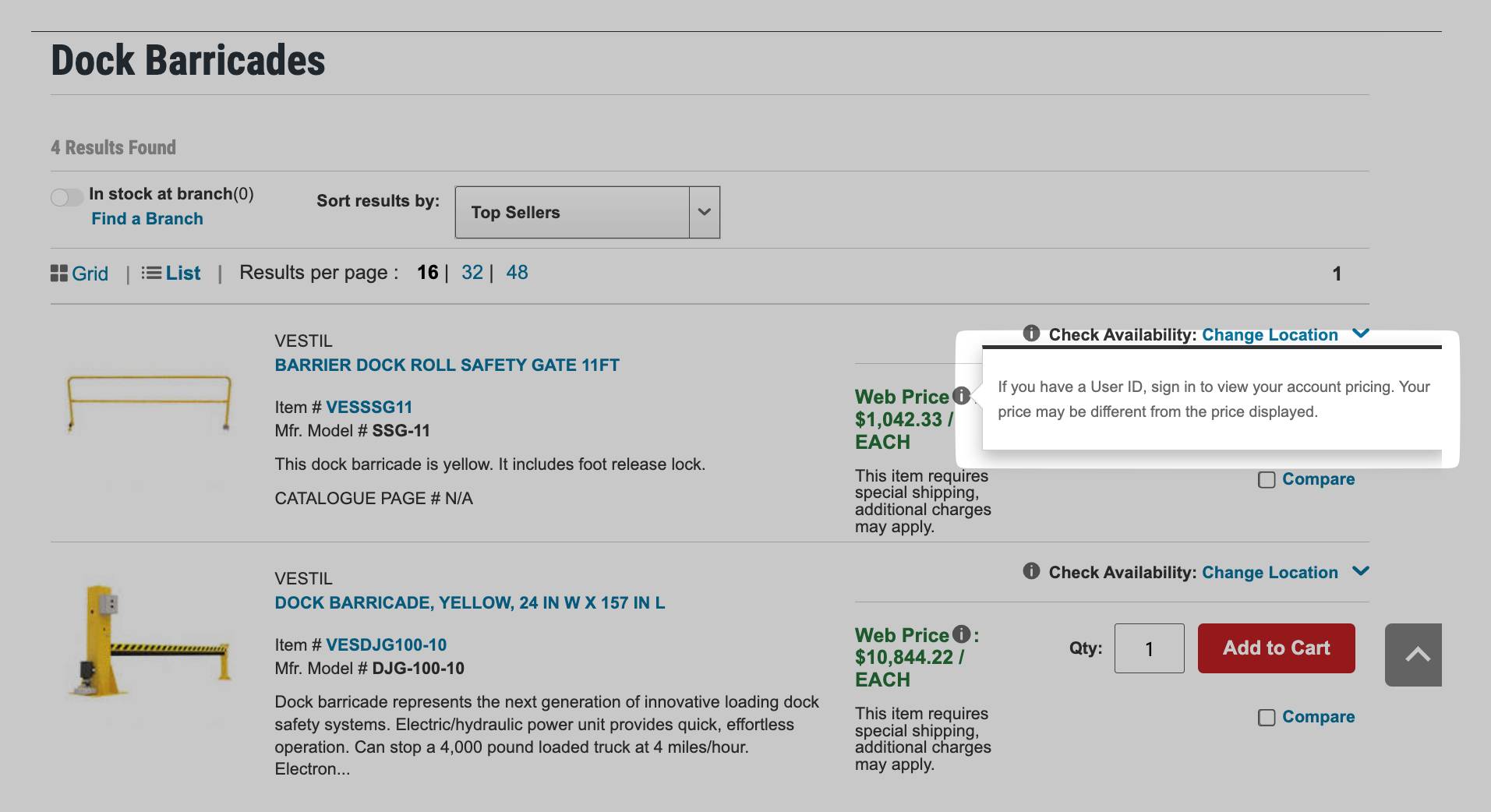
Adobe found that 57% of B2B companies offer customer-specific pricing in their digital channels, acknowledging each client’s unique needs. For example, the industrial supplies firm Grainger shows logged-in users personalized pricing based on account history and contract terms.

Future of B2B ecommerce Grainger product page

Personalized pricing helps to streamline procurement because buyers see the price they’ll pay in real time. They don’t need to inquire or wait.

Like consumers, B2B buyers expect seamless, consistent experiences across channels. Email, e-commerce sites, sales conversations and support interactions must all be customer-centric, with accurate personal information and data-driven product recommendations.

This kind of bespoke, joined-up approach pays dividends. In a Deloitte study, leading B2B brands estimated that customers spend, on average, 62% more when buying experiences are consistently positive.

What to do about it

Use your customer relationship management (CRM) system to segment B2B customers and tailor messaging to their needs.

For example, if hands-on help boosts sales engagement and conversions for one group, increase your focus on demo-driven emails or tools like product selectors.

If another segment prefers reading and research, share relevant use cases or links to industry-specific landing pages.

Recommended reading

https://www-cms.pipedriveassets.com/Types-of-Customer-Service.jpg

9 Types of customer service: Pros, cons and when to choose each one

4. AI and machine learning will drive smarter selling, not just marketing

Artificial intelligence (AI) is no longer just a tool for B2B marketing teams. It’s becoming crucial for e-commerce sales organizations, too.

Pipedrive’s 2024 State of AI in Business report found that AI supports increased conversions and better cross-sell opportunities across the entire sales cycle.

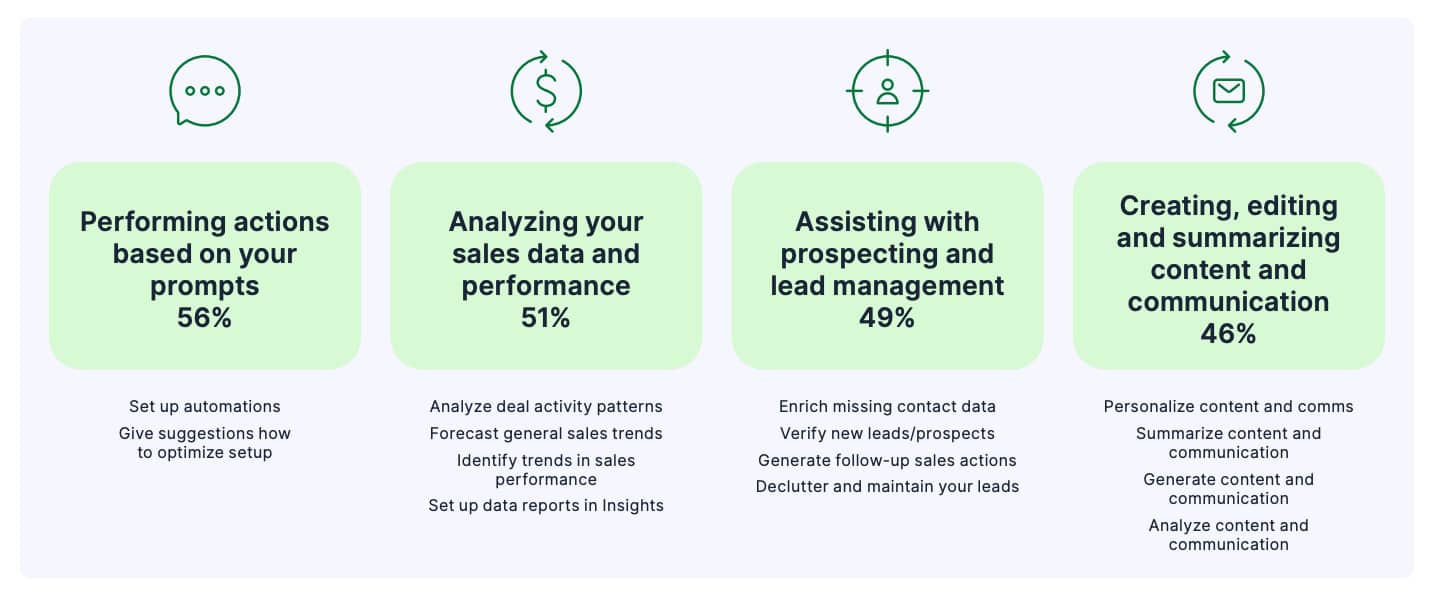
Right now, the most common use cases are performing actions based on prompts, analyzing sales and performance data and assisting with prospecting and lead management – all are in the workflows of around half of the AI adopters Pipedrive spoke to.

Future of B2B ecommerce Pipedrive AI statistics

To get more specific, Pipedrive users are leaning on AI to:

Ultimately, these applications help sales teams focus their energy on meaningful interactions that win buyers’ trust, instead of repetitive admin like sending sales invoices.

For example, a sales rep could use Pipedrive’s AI to enrich a lead’s profile with a missing job title or company info, then get a nudge to follow up based on email engagement. Such smart suggestions make it easy to act fast without combing data or second-guessing priorities.

AI’s efficiency gains feed into our last B2B e-commerce trend of personalization. Reps will be more available to work closely on complex deals, giving high-potential leads the attention they need.

What to do about it

Identify repetitive sales tasks you can automate with AI and other sales tools.

Follow-ups, data enrichment and lead scoring are great starting points. Pipedrive can quickly help with all three.

For example, its AI-powered Sales Assistant flags when leads go cold or engage with your outreach. Meanwhile, the Pulse sales prospecting software uses enrichment data to help you prioritize accounts with the highest conversion potential.

Enterprise resource planning (ERP) software is also valuable for managing inventory, invoicing and order processing.

Then, work closely with reps to ensure these tools streamline their work. New technologies should support – not replace – the human touch needed to close complex B2B deals.

Crush your manual admin with this sales automation guide

Learn how to take advantage of new sales automation tech so you can spend more time selling

5. AI models will shape how buyers find and evaluate vendors

AI won’t just change how B2B sellers operate, it’ll transform how buyers discover and shortlist vendors.

As generative tools become more embedded in everyday workflows, buyers will increasingly rely on what they surface during AI research (much like how they use search engines now).

We’re not all the way there yet. TrustRadius found that only 21% of B2B tech buyers currently use generative AI (or gen AI) during the buying process, and 9% say the tools aren’t helpful yet.

However, this customer behavior will change rapidly as gen AI keeps advancing. For time-constrained buyers evaluating new software categories, AI’s insights will make unfamiliar topics digestible and buying decisions faster.

For example, when we ask Gemini to recommend a simple, easy-to-use sales CRM, it gives us the following information about Pipedrive:

Future of B2B ecommerce Gemini screenshot

Below it, Gemini profiles and compares other helpful products. It’s a quick and simple way to build a product shortlist and speed up decision-making.

You could even ask the app to reorder products based on a specific factor (e.g., price or social media connectivity), which you couldn’t do with standard search results.

As more buyers turn to generative AI for research, your product information’s visibility across public channels will matter more than ever. This information is where tools like the ChatGPT platform, Gemini and others source their “intelligence”.

What to do about it

Strengthen your brand presence by publishing comprehensive product guides, FAQs and other helpful content online.

Strong, publicly accessible content helps train AI models to represent your company accurately during AI-assisted research. What’s more, TrustRadius found that 90% of buyers click through to sources featured in AI overviews.

Recommended reading

https://www-cms.pipedriveassets.com/blog-assets/content-hub.png

Everything you need to know about content hubs

6. Sales teams will shift from order takers to strategic advisors

With more and more B2B sales interactions moving to digital channels, traditional sales roles focused on taking orders and providing basic information are becoming less valuable.

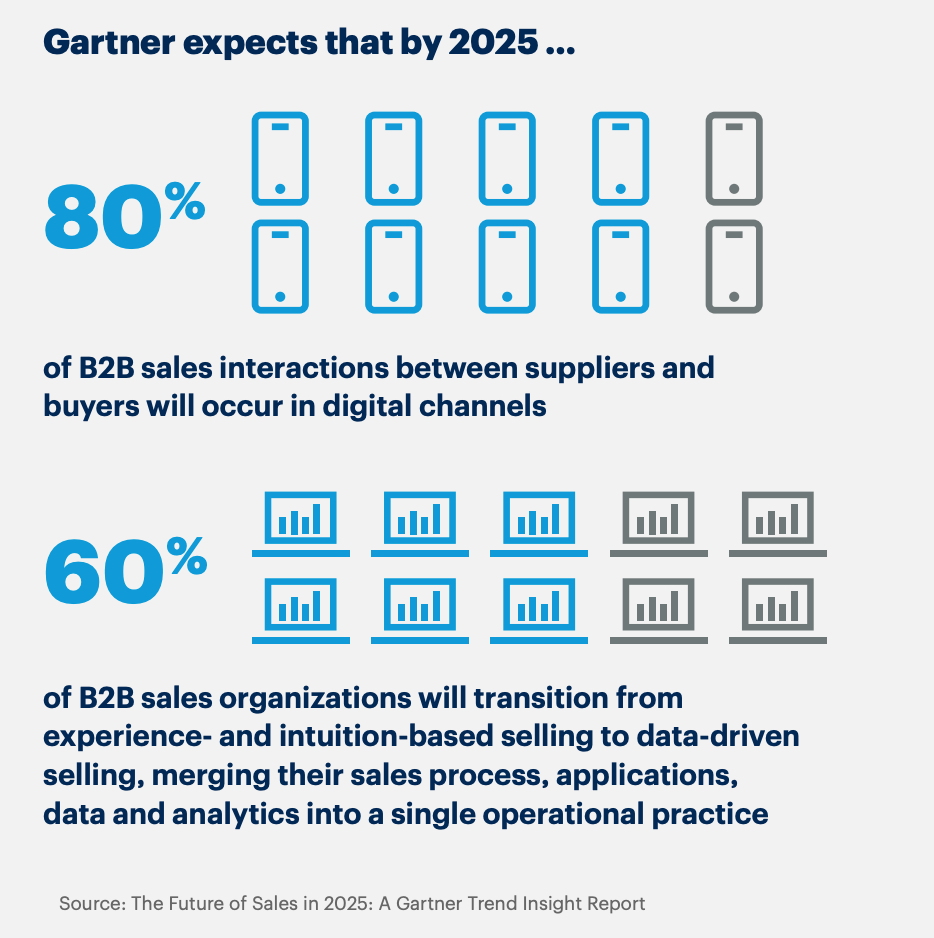
Gartner anticipates that 80% of B2B sales interactions will happen in digital channels in 2025, with younger buyers leading the transition. It found that 44% of millennials prefer rep-free buying experiences, compared with 33% across all age groups.

Future of B2B ecommerce Gartner research illustration

As buyers do so much research online, reps can’t afford to simply repeat what their websites say. They must evolve into supportive partners who add another layer of value to the purchase journey, giving experience-based strategic advice.

Gartner’s researchers explained:

“In a world of ‘everywhere customers’, where it’s even tougher to influence purchase decisions, sales needs to focus on helping buying groups feel more confident in their own decisions.

Instilling that confidence means positioning sellers as consultants rather than information sources. Customer-facing teams must help buyers make sense of everything they learn on their own, wherever they learn it.

What to do about it

Upskill your sales team to act as trusted advisors. Help them back up public information with real success stories, metrics and insights from customer journeys.

Equip reps with sales enablement tools, including:

Base all of these assets on customer data from your CRM.

7. ‘Headless’ e-commerce strategies will gain ground

B2B companies are shifting away from rigid digital commerce platforms toward headless setups that offer greater speed, flexibility and personalization.

Headless architecture is a composable way of building a website or app where the front end (what users see) is separate from the back end (where the data lives).

Linking the two using application programming interfaces (APIs) lets you change the design aspects and functionality customers see without reconfiguring the whole system. That means less work and fewer mistakes.

Adobe reports that 36% of B2B companies either already use a headless commerce solution or are in the process of implementing one. A further 29% are evaluating headless systems.

Future of B2B ecommerce Adobe pie charts

Popular commerce platforms for headless architecture include Shopify, BigCommerce and Adobe Commerce (formerly Magento).

Some platforms can share data with your CRM for smoother B2B sales workflows. For example, the Pipedrive-Shopify integration lets you manage sales, product catalogs and contact data in a single location.

What to do about it

Talk to your dev team about whether headless architecture could aid your site speed, design flexibility or integration capabilities. They’ll know if it’s the right fit for your B2B business.

If you have other stakeholders to persuade, discuss how integrating front- and back-office systems through APIs could make order management smoother (i.e., more profitable).

For example, linking e-commerce to back-office systems means an online order automatically triggers warehouse fulfillment, speeding up buyer journeys.

Recommended reading

https://www-cms.pipedriveassets.com/How-to-Increase-Sales.png

How to increase online sales: 14 proven techniques

8. Security posture will influence more B2B buying decisions

Online security is becoming a key part of the purchase journey, especially in tech.

According to a 2024 G2 survey, 97% of software buyers involved a security stakeholder in procurement, and 81% evaluated a vendor’s breach history before making a decision.

The heightened focus on security reflects the growing risks and fears around data breaches. These aren’t just the IT team’s concerns anymore; they’re business-critical.

ConnectWise reports that 78% of SMBs are worried a serious attack could put them out of business, yet 76% say they lack the in-house skills to deal with cybersecurity issues. They want products to keep their data safe.

Transparency around security practices is essential for e-commerce brands. Badges, compliance certifications and third-party security scores will become standard comparison points between vendors.

What to do about it

Promote your security credentials across the customer journey.

Four in five buyers say data security certifications are essential when selecting a provider, so weaving these into early touchpoints will help you win their trust.

Include badges, assessments and ratings in product listings and sales materials to build customers’ confidence and optimize your sales cycle.

Final thoughts

The future of B2B e-commerce will reward brands that offer flexible, buyer-centric and insight-driven experiences.

The traditional boundaries between B2B and B2C experiences continue to blur, with professional buyers up and down the supply chain expecting the same level of convenience they enjoy as consumers.

Adopting the right tools and strategies will put you ahead of the curve as customer expectations evolve. See how Pipedrive can support you on the journey by combining CRM, AI and automation in one simple platform.

How marketers can boost their executives’ presence on LinkedIn, from a LinkedIn Top Voice

Software Stack Editor · September 30, 2025 ·

Of all the consulting requests I receive, helping executives (or their teams) strengthen their LinkedIn presence is the most common — and for good reason. LinkedIn is no longer optional for executives. It’s where top talent, investors, journalists, and industry peers vet leaders and build trust — often before they’ve ever met you.

Download Now: Free Marketing Plan Template [Get Your Copy]

I’ve seen this firsthand throughout my career. As a founding editor at LinkedIn, I worked on the LinkedIn Influencer program (now known as LinkedIn Top Voices) and watched how the platform evolved into the ultimate professional networking tool.

Since then, I’ve created 20 courses as a LinkedIn Learning Instructor, earned LinkedIn Top Voice recognition with more than 320,000 followers, and wrote about the platform in my bestselling book, Unforgettable Presence.

Most importantly, I’ve worked with C-Suite executives and senior leaders across Fortune 500 companies, startups, and beyond to help them shape a strategic, credible LinkedIn presence.

What I‘ve learned is this: LinkedIn is the ultimate virtual watercooler. Here’s why it matters, and how marketers can make the most of it.

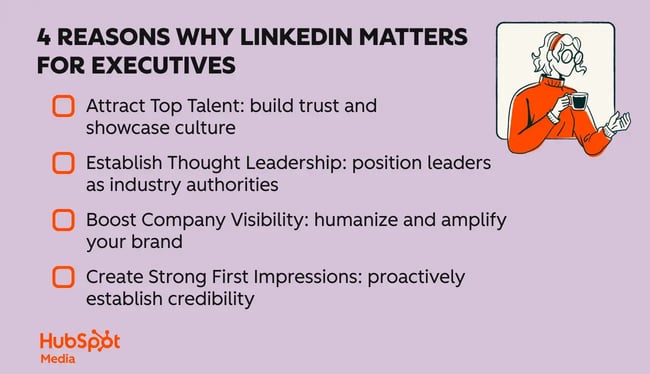
Why LinkedIn Matters for Executives

The benefits of an executive LinkedIn presence extend far beyond personal branding. Here are the four areas where I’ve seen the biggest impact.

1. Attract top talent.

Today’s candidates make it a priority to research company leaders before applying for a job. A strong LinkedIn presence builds trust, signals authenticity, and can directly influence a candidate’s decision to join your organization.

It also gives candidates a clearer picture of your company’s culture, values, and what it’s like to work with your leadership team.

2. Establish thought leadership.

Maintaining a consistent presence on LinkedIn positions executives as industry leaders, opening doors to speaking opportunities, interviews, and strategic partnerships. (In fact, many of my own media opportunities have come directly from my LinkedIn.)

Plus, regularly sharing insights or personal reflections can help spark ongoing conversations that reinforce an executive’s leadership and credibility over time.

3. Boost company visibility.

Executive posts regularly outperform company posts in reach and engagement. Why? Because people ultimately connect with people. When executives actively engage in online discussions, they amplify the company’s overall visibility by showing the human behind the brand. Their presence can make the company feel more authentic, relatable, and trustworthy.

4. Create strong first impressions.

An executive’s LinkedIn profile often creates the critical first impression for investors, partners, and potential collaborators. A comprehensive and engaging profile not only sets clear expectations and establishes credibility but also allows the executive to proactively shape perceptions. It also reinforces your value — well before any meetings or sales conversations take place.

4 reasons why linkedin matters for executives

People connect with people, not logos.

Investors, partners, and top talent want genuine human insights—not polished picture-perfect corporate profiles. An executive’s LinkedIn profile should make visitors feel they’ve genuinely “met” the leader behind the title.

I’ve seen executives with strong in-person presence get negatively impacted by a weak online presence because their profile didn’t reflect who they really are. If someone meets an impressive CEO in person but their LinkedIn is missing a profile picture and has bare bones information, it’s going to impact how you perceive them (this is a real story I heard from someone, by the way!). Executives can avoid this disconnect by ensuring their executive’s profile consistently includes:

  • Original insights on industry trends that demonstrate thought leadership.
  • Authentic personal reflections and stories that humanize and engage.
  • Meaningful milestones and company achievements that build credibility.
  • An approachable, authoritative tone that allows you to connect with your audience.

Let’s take a look at these steps in action.

Case Study: How I Helped a Fortune 500 CEO Build Their LinkedIn Presence

Here’s how I helped one CEO at a Fortune 500 consumer goods retail company grow a bare bones LinkedIn presence into a recognized LinkedIn Top Voice.

The Situation

This CEO’s team reached out to me knowing how important LinkedIn was for establishing credibility. With major announcements on the horizon, they expected a surge in profile traffic, and needed the page to reflect the leader behind the role.

The Challenge

The CEO’s LinkedIn presence was minimal. His communications team was also uncertain about content strategy, unaware of LinkedIn best practices, and unsure how to authentically represent the CEO’s persona online.

They needed fast, strategic guidance to boost credibility and visibility — especially as industry peers and potential partners would be paying attention.

The Strategy

My approach was systematic and data-driven, prioritizing three steps.

1. Competitor Analysis

We jointly created a list of peer executives and competitors. Then, I analyzed the competition’s content from the past six months. We looked at everything:

  • Do they leave comments?
  • How many are LinkedIn Top Voices?
  • What topics are they posting — personal, professional, or promotional?
  • What formats do they use — text, images, or video?

This analysis uncovered unexpected opportunities to differentiate the CEO’s presence (and also get a better understanding of what peers were doing), making their LinkedIn strategy even more impactful.

Pro tip: Don’t limit competitor analysis to your industry. Broaden your scope to include executives across sectors who excel on LinkedIn

2. Profile Optimization

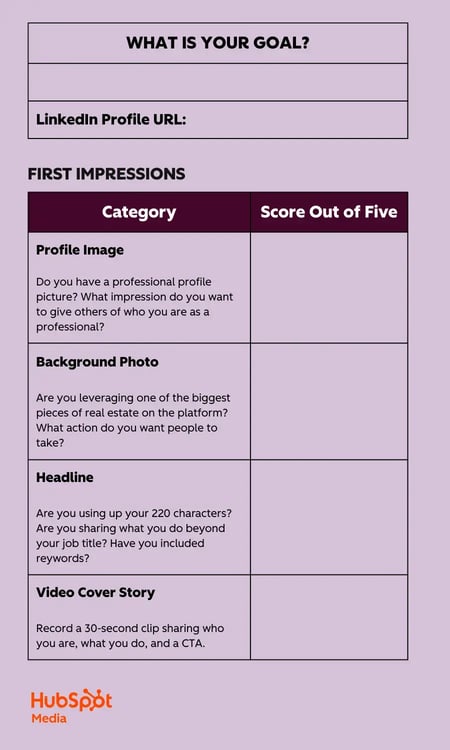
I evaluated the executive’s profile using my custom rubric, scoring every single part of their profile and providing specific suggestions for improvement based on what I learned about this person and the competitive landscape.

rubric for to boosting your executive’s linkedin presence

3. Content Strategy Development

We defined content themes and built a posting rhythm that balanced personal and professional content—while also staying realistic about a posting cadence (remember: you don’t want to start off with a schedule that will cause burnout or that is impossible to maintain, especially while ramping up).

The team needed to get approvals, which took time, and wasn’t super familiar with the platform. So, we started with simpler company news content first, then gradually incorporated more personal stories tied to professional insights.

The Results

The impact extended far beyond what we initially expected. Within a few months, the executive became a LinkedIn Top Voice, which created a ripple effect throughout the organization. Other C-suite teammates became more active on LinkedIn after seeing the power of his presence firsthand, and it also boosted company culture as employees were excited to get to know their CEO better.

Additionally, the communications team also gained a clearer understanding of the competitive LinkedIn landscape and how to use the platform effectively.

Most importantly, we saw meaningful increases in the metrics that actually matter: follower count, profile views, connection requests, and direct messages. These are all clear indicators that people were not only seeing the content but taking actionable steps to stay connected.

Pro tip: While nothing is guaranteed on LinkedIn, a good rule of thumb is consistent activity on LinkedIn (at least 1x/week) should give you enough data to assess what is working. When you double down on that, you will slowly start to see momentum (remember: LinkedIn is a long game!).

How Marketers Can Support Executive LinkedIn Success

If you‘re a marketer looking to boost your executive’s LinkedIn presence, here’s your tactical playbook to get started.

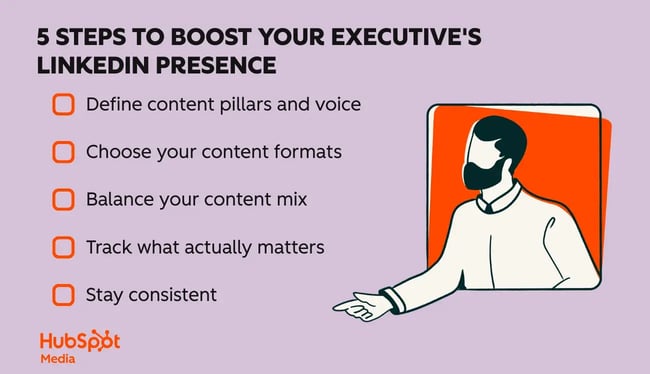
5 steps to boosting your executive’s linkedin presence

1. Define content pillars and voice.

Start by identifying two to three core themes that align with your executive‘s expertise and your company’s goals. These might include leadership, innovation, people development, or industry trends.

Then decide on the tone: Are they visionary? Warm? Analytical? Direct?

To uncover the right themes and tone, ask reflective questions like:

  • What are you passionate about?
  • How did you end up in this industry?
  • What made you want to pursue a C-suite role?
  • What was a big challenge or turning point in your career?

These questions help you understand who they are — not just as a leader, but as a person — and give you stories to draw from later.

Pro tip: Executives at large public companies often have less room for experimentation on LinkedIn. Make sure to coordinate closely with both the communications and executive teams to ensure alignment from the start.

2. Choose your content formats.

Text posts are often the easiest starting point. Add a photo when possible for better engagement (posts with images get 2x the number of comments).

While video is having a big moment on LinkedIn, it‘s a heavier lift for executives and their teams. I don’t see many executives doing carousels.

3. Balance your content mix.

I recommend four types of LinkedIn content: personal, educational, professional, and promotional. Promotional posts should make up no more than 25% of your overall content. The balance between the first three depends on your executive and team goals, but mixing them creates a compelling combination.

When you’re starting out, company news (like earnings reports) is often the easiest content to create because it is more straightforward. As you build confidence, incorporate more personal stories — always tied to professional insights — like sharing experiences from industry events or leadership lessons learned.

Pro tip: Don’t underestimate the power of commenting on LinkedIn. It builds reputation and reach with minimal effort.

4. Track what actually matters.

Don‘t get caught up in vanity metrics. I actually don’t include engagement as a main KPI when working with executives, because no one has control over the algorithm or how people will engage.

Instead, focus on metrics that indicate genuine interest: follower growth, profile visits, connection requests, and direct messages. These show that people are seeing your content and are interested in taking the next step.

5. Stay consistent.

You don’t need to post every day, but consistency is crucial for staying top of mind. According to LinkedIn Top Voices program requirements, aim for at least two original posts per month.

Showing up regularly builds familiarity — and familiarity builds trust.

Start today, build tomorrow.

LinkedIn is an essential tool for executives aiming to amplify their influence and elevate their companies. Don’t wait for strategic milestones or annual reviews. Initiate conversations now about their online presence.

Clarify what they want to be known for. Identify the stories that will resonate. The sooner you start, the stronger their presence will be.

Marketing career path report: What 100+ marketers told us about growth and job security

Software Stack Editor · September 29, 2025 ·

When I introduce myself at workshops, I often joke that my marketing career path looks a bit like two truths and a lie — even though it’s all “truth.” Turns out, I’m not alone. Talking with other successful marketers, a non-linear career path is one thing many of us have in common, whether by choice or necessity.

Download Now: Free State of Marketing Report [Updated for 2025]

The workplace and job market are more unpredictable than ever. Between the economy, competitive hiring processes, and the ever-present elephant in the room (AI), many marketers are wondering what shifts they need to make to stay competitive.

To find out, I surveyed 100 marketing and advertising professionals and spoke with leaders inside and outside HubSpot. Here’s what I uncovered.

Table of Contents

  • The State of the Job Market
  • How Marketers Are Making Themselves More Competitive
  • Tools the Most Productive Marketers Are Using
  • What Leaders Look for in Promotions
  • What Employers Can Do to Better Support Career Growth

The State of the Job Market

It might surprise you to learn that most marketers are exploring new opportunities.

In our survey, 69% of respondents have looked for a new marketing job in the past 12 months, whether actively (32%) or passively (37%).

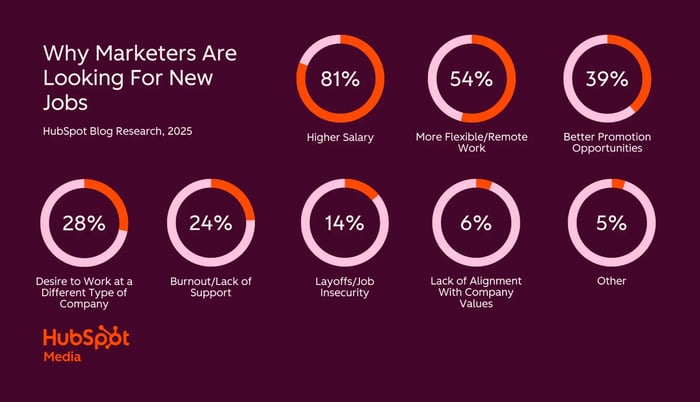
The top reasons? Higher salary (81%), more flexibility (54%), and better promotion opportunities (39%).

marketing career path: data on why marketers are looking for new jobs.

Desire to work at a different type of company (28%) and burnout or lack of support (24%) round out the top five.

Promotions are common — but not guaranteed.

I uncovered that 54% of marketers have pursued a promotion at their current company in the last year, and another 27% plan to.

Just under half were successful.

Those who advanced pointed to work ethic, experience, and visibility as the biggest factors. Those who didn’t cited politics, lack of opportunity, or perceived experience gaps — some also noted gender or age bias.

Confidence in career growth is mixed.

Want to hear the good news? (It’s promising whether you’re an employer or a job-seeker).

Fewer than 10% of respondents expressed low confidence in their ability to advance their marketing career path at their current company. And 43% reported that they are very confident in their ability to do so.

Marketers are navigating career pivots — here’s how.

For marketers who aren’t seeing the advancement they want, the next step isn’t always chasing another full-time role right away.

Some are taking time to find the right job.

Ron Dawson, senior manager of HubSpot for Startups, mentions that it’s tough out there. “I know people who have taken one to two years to land their next role. Staying visible — especially on LinkedIn — and staying up on what’s happening in the industry is crucial.”

Others are striking out on their own.

Freelancing and contract work can feel uncertain, but it also offers control. Matt Hall, co-founder of Common People, explained his perspective:

“I don’t see contract work as any riskier than a job. Everyone knows someone who’s been ‘let go’ through no fault of their own. We’re the CEOs of our own careers. No one has as much investment in our long-term security as we do individually.”

Some are returning to in-house roles.

This is where I personally relate the most. After years of running my own show, I understand the appeal of a steady paycheck and renewed opportunities for growth, and recently went in-house with a client.

Freelance writer and strategist Derek Hambrick put it simply, saying, “The current job market is such that I’ve decided to close my freelance business. I’m seeking full-time employment, which is something I said I would never do. Times are what they are.”

Brand strategist Lindsay Hyatt agrees: “In 2025, I’m re-entering the corporate world for the stability of a paycheck and fresh growth opportunities.”

How Marketers Are Making Themselves More Competitive

In an unpredictable job market, the marketers I spoke to know that opportunities aren’t likely to land at their feet. They’re actively sharpening their skills and making themselves stand out — whether externally on platforms like LinkedIn, or internally within their companies.

I’ve learned that it’s not just about the work you do, but how you position yourself.

survey data on what marketers are doing to further their career path

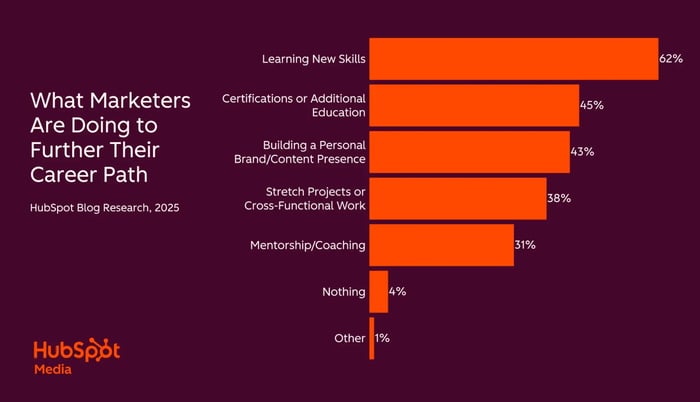
Our survey revealed where most marketers are focusing their efforts:

  • 62% are learning new skills (e.g., AI, analytics, SEO, paid media).
  • 45% are getting certifications or additional education.
  • 43% are building their personal brand or content presence.
  • 38% are taking on stretch projects or cross-functional work.
  • 31% are seeking mentorship or coaching.
  • Only 4% aren’t actively doing anything to make themselves more competitive.

Adaptability and Problem-solving

I’ve learned that adaptability can open doors even when your resume doesn’t align perfectly with a job description. That skill — being able to quickly pivot and solve problems — has been a lifeline in my own marketing career path.

Taking a growth mindset and saying “I can learn how to do that,” often makes all the difference — in how I see myself, and how I present myself to others.

Upskilling (Especially AI)

One clear trend? The marketers who are staying competitive are leaning hard into learning — especially around AI.

I’ve spent the past year experimenting with AI tools myself, figuring out how they can help me work smarter, not just faster. I’ve used them for everything from data analysis to figuring out how to implement my ideas. And I’m not alone.

Amanda Huffman, marketing manager on HubSpot’s Global Growth Team, says that experimentation is key.

“I’ve been learning how to optimize content for AI search platforms like ChatGPT and Google AI Overviews by trying things out and learning as I go. Our team even runs AI Grow Hour twice a month to share how we’re using AI.”

Building Visibility and a Personal Brand

Something near and dear to my heart is helping marketers gain comfort in promoting themselves.

I’ve found that one of the easiest ways to do this is to shift how you think about “self-promotion.” By focusing less on telling everyone how awesome you are (even though you are) and more on how you can help people solve their problems, you can really highlight your experience and show up as your true self.

But it’s not just about showing up “out there.” Marketers who want to grow within their current companies need to position themselves internally as well.

Laura M. Browning, principal newsletter writer at HubSpot, emphasizes this point:

“Many of us (especially if you were socialized as female) are inherently uncomfortable with self-promotion. But it’s a learnable skill. I think about it in terms of sharing my excitement about something, whether it’s a blog post I’ve written that I want my co-workers to see or something I’m promoting on LinkedIn. If you’re passionate about something, it’ll show — and you’ll attract an audience.”

Aligning Ambitions With Company Needs

One of the biggest lessons I’ve learned is that career growth isn’t just about what you want — it’s about how your goals align with the company’s priorities.

Browning explained that a conversation with her boss about her “strengths, interests, and ambitions — and where they fit with the company’s needs” opened up a year-long team lead program that’s building her management skills.

Nicole Morton echoed a similar mindset, saying, “I’m leaning into my strengths in strategic positioning and marketing automation while also building thought leadership. Visibility inside and outside the company is critical.”

Takeaway: Marketers who stay competitive don’t rest on their laurels. They’re naturally curious about how to do things better — and how to adapt what they know to make a bigger impact.

Tools the Most Productive Marketers Are Using

When it comes to staying competitive, the right tools can make or break your ability to deliver results without burning out. And that means balancing diving into new tools with understanding the (constantly) expanding capabilities your current tools share.

A word of caution: It’s easy to get excited about shiny new platforms, but too many tools can create confusion, redundant features, and data silos.

I’ve found that looking for integrations and overlap is key — often the tools you already use (like project management, analytics, or CRM platforms) have built-in functionality you can activate without adding yet another login. Keeping things simple saves money and helps you get the most out of your tools without costing you more time.

tools used to help marketing career paths

So what tools have helped the marketers we surveyed achieve the most visibility and results?

  • 33.7% – AI Tools (ChatGPT, Claude, Gemini, Copilot, etc.).
  • 22.1% – Social Media Platforms (LinkedIn, TikTok, Instagram, etc.).
  • 10.5% – Analytics & Data Tools (Google Analytics, SEMRush, Data Visualization Tools, Trends).
  • 8.4% – Productivity & Project Management (Trello, Teams, Basecamp, etc.).
  • 7.4% – Job Search & Career Platforms (Indeed, Glassdoor, etc.).
  • 5.3% – Creative & Design Tools (Canva, Adobe, WordPress).
  • 5.3% – Learning & Education Platforms (Coursera, LinkedIn Learning).
  • 5.3% – Email & Marketing Platforms (HubSpot, Mailchimp).

AI tools are now a minimum requirement.

With a third of marketers calling out AI as their most impactful category of tools, it’s clear these platforms are no longer “nice-to-haves.”

I use AI daily to brainstorm, analyze data, and streamline repetitive tasks. It’s become one of the easiest ways to stay efficient and free up time for higher-impact work. (And I recently wrote this post comparing the top tools out there.)

Ron Dawson has a similar perspective: “Learning AI is table stakes for staying competitive. Beyond that, you need to take risks. AI tools like Claude, ChatGPT, NotebookLM, and Gamma are part of my daily workflow. They help me research, write, and automate, so I can focus on strategy.”

Amy Rigby uses AI as a thought partner as much as a time saver, sharing how she’s “been using ChatGPT and Claude to poke holes in my work and deepen my understanding of complex topics.”

Social media platforms build visibility.

But AI alone isn’t enough to get you the visibility you need to further your marketing career path. Remember, nearly a quarter of marketers we surveyed named LinkedIn, TikTok, Instagram, or other social platforms as their most effective tools for visibility.

Rigby echoed this and shared how she’s experimented with post types and short-form video: “My most successful post was a vulnerable one about the challenges of being a writer in the age of AI — people are hungry for authentic, human perspectives.”

As for me, I’ve also seen how consistent engagement on LinkedIn has helped me showcase my work and stay top of mind with potential collaborators and hiring managers.

Project management and productivity tools keep teams organized.

How about the 8.4% of marketers who pointed to project management platforms like Trello, Asana, or Teams as their key productivity drivers? I’m a huge fan of ClickUp and Monday myself — keeping tasks out of my head and into a system is the only way I stay sane.

Dawson has found Asana to be a game-changer, “because it gets tasks out of my head and keeps me organized.”

Browning even uses AI to plan her work calendar. “Claude prioritizes assignments in minutes instead of hours and helps me see the whole month at a glance.”

Some marketers are trimming their tech stacks.

Not everyone is adding more tools; some are taking the opposite approach. Of respondents, 27% cited “other” tools, often describing pared-down, minimalist stacks that fit their unique workflows.

Lindsay Hyatt pared back her tech stack, saying, “Google Calendar, Notes, Canva, and Zoom get me most of the way there. Cutting unnecessary tools was the best thing I did for my productivity.”

Takeaway: The most productive marketers aren’t the ones juggling the longest list of tools — though versatility can be a plus. They’re the ones who know which platforms truly drive visibility, results, and efficiency, and use them consistently.

What Leaders Look for in Promotions

Since promotions are such a hot topic right now, let’s have a look at what makes candidates most promotable.

Problem-solving and adaptability are key.

“I’m interested in people who can apply problem-solving skills across different types of work,” said Karla Hesterberg, director of the HubSpot Blog. “That’s what helps people grow with the organization, not a perfectly matched set of past experiences.”

This insight mirrors what I’m hearing “in the wild.” Leaders are far more likely to promote someone who can grow with the company and learn than someone who only checks the boxes.

Visibility matters — but it’s about value.

In practice, visibility means consistently showing your work and the value you bring, including offering solutions in meetings, building relationships with advocates, or taking on cross-functional work

Proactivity and a growth mindset make the difference.

Leaders notice when you take ownership of your growth — through mentorship, certifications, or asking for feedback.

What Employers Can Do to Better Support Career Growth

If you’re a hiring manager reading this — I wanted to include this section just for you. I asked the marketers we surveyed: “What’s one thing companies (including your current employer) could do to better support your career growth?”

what employees say best supports marketing career path growth

Most responses fell into three categories:

  • Invest in training and skill-building (40%). Offer structured development opportunities: launch mentorship programs, fund certifications, outline clear advancement pathways, and provide leadership training.
  • Communicate and recognize consistently (30.8%). Set clear expectations, hold regular career-focused check-ins, and recognize great work publicly and privately to build trust and motivation.
  • Reward employees competitively (29.2%). Review compensation regularly, improve benefits, and offer flexible schedules and remote work options to retain top performers.

Takeaway: When companies invest in skill-building, communicate clearly, and reward employees fairly, they can improve morale and create a strong pipeline of future leaders.

The Big Picture

The data, my conversations, and my own career experience all point to the same truth: The marketing career path isn’t linear anymore — if it ever was in the first place. I see that as a very positive thing because it puts your next step as a marketer firmly in your own hands.

The marketers thriving right now are the ones taking ownership of their careers and staying open to possibilities. They’re learning how to evaluate opportunities not just for titles or salary bumps, but for how each step moves them toward the kind of work — and life — they want.

For companies, this shifting landscape is a chance to rethink how they support talent. The marketers we surveyed made it clear. When employers invest in development, communicate clearly, and build paths for people to grow, they don’t just retain great employees — they create stronger businesses.

So what’s next?

If you’re an individual marketer: Take an honest look at your skills, visibility, and network, and choose one area to improve in the next three months.

If you’re a hiring manager: Audit your team’s career support and start offering clear paths for growth — small steps now will help you attract and keep the people who can help you move forward.

The psychological reason brands use the power of association to sell

Software Stack Editor · September 29, 2025 ·

In the 1890s, Russian physiologist Ivan Pavlov noticed how dogs began salivating not just when food was placed in front of them, but when they heard the footsteps of the person bringing the food.

He ran experiments where he’d ring a bell right before he fed his dogs. After repeating this several times, the dogs started salivating at the sound of the bell alone, no food needed.

Download Now: Free Marketing Plan Template [Get Your Copy]

Pavlov had identified classical conditioning, or learning to associate one stimulus (the bell) with a different stimulus (the food) to produce a conditioned response (salivation).

Now, I like to think I’m a little bit more evolved than those dogs. I’d hope I wouldn’t fall for the same tricks. But I do. In fact, we all do.

The Real Reason You Love That New Car Smell

Take the “new car smell” as my first example. No one is born liking this smell. Instead, we learn to like this smell through repeated associations. That new car smell becomes associated with the pleasurable experience of sitting in a shiny, clean new car.

Yet this association can be hacked to alter our perception.

Charles Spence, in his terrific book Sensehacking, describes how Rolls-Royce customers sent their cars in for service, and they returned to their owners seemingly brand new. Rolls-Royce managing director Hugh Hadland is quoted as saying, “People say they don‘t understand what we’ve done, but that their cars come back different and better.”

marketing psychology, People say they don't understand what we've done, but that their cars come back different and better.

How did Rolls-Royce deliver this incredible service?

Apparently, by spraying the car with an aromatic mixture of leather and wood designed to capture that distinctive new car smell. The scent has become so iconic that the brand released it as a fragrance that can help keep a Rolls-Royce smelling great for longer.

marketing psychology, rolls-royce fragrance

Source

It’s a perfect example of classical conditioning at work — this time on humans. It’s the same formula. We learn to associate one stimulus (new car smell) with another (a new car), producing a conditioned response (believing you’re sitting in a new car).

It’s not the only associative hack pulled off by car manufacturers.

One 2011 study found that students overestimated a car’s speed when the noise of the car was artificially increased. Likewise, one 2008 study found that lowering the in-car noise by five decibels led people to underestimate its speed by 10%.

This is because over time, we’ve built an association between sound and speed. F1 cars make deafening noises, as do jet planes. We have learned to expect that fast cars do the same. So it’s no surprise that some Volkswagen Golf models use sound actuators to help boost the roar of the engine.

From Beer Logos to Air Conditioning — Association Drives Sales

There’s another association spotted by Charles Spence in Sensehacking that’s far too common to be a fluke: beer brands and stars.

Dozens of beer brands seem to include a star shape in their logos: think Estrella, Heineken, Newcastle Brown Ale, and Sapporo. Bintang’s star is visible across most of Indonesia, and in Nigeria, one of the top-selling beers is literally called Star Lager.

marketing psychology, beer brands that feature stars

Why this link between stars and beer?

Well, Spence says it’s due to how we associate carbonation and bitterness with angularity. A star’s angular shape nudges us to think of a refreshing, cold, carbonated beverage.

These attempts to hack our associations aren’t just used by fast cars and beer brands — even luxury stores selling premium goods do the same.

Take Lisa Heschong’s research for her 1979 book Thermal Delight in Architecture. She found that luxury brand stores are, on average, significantly colder than non-luxury stores. In other words, Harrods is colder than Selfridges, and Rolex is colder than Target.

Heschong claims that this deliberate cooling originated from a time when air conditioning was a luxury that could only be afforded by the wealthiest establishments. And it seems as though stores are still leveraging this association today.

Making Connections That Sell

While I may hope to be immune to the tricks Pavlov played on his dogs, it’s clear from the research that I’m just as malleable. I’ll salivate at a fast food brand’s jingle, flinch when I hear a loud engine, and crave a refreshing star-adorned beer. Savvy marketers use that power to sell better. 

Best Customer Transformation Guide for SMBs

Software Stack Editor · September 29, 2025 ·

Customer transformation is about shifting from firefighting problems to proactively shaping customer experiences to grow satisfaction and trust.

For SMBs, that means stronger retention and steadier revenue, even with limited resources.

This article gives you a five‑step framework for implementing customer transformation. You’ll learn how to map your customer journey, set up simple automations, personalize outreach and track the results.

Key takeaways

  • Mapping the customer journey, workflow automation and personalization are simple ways for SMBs to get started with customer transformation.

  • Clean, centralized customer data is the foundation for effective transformation and a better digital customer experience.

  • Measuring retention, engagement and response times helps SMBs track the impact of their transformation and identify areas for improvement.

  • For most SMBS, a good CRM is enough to put customer transformation into practice – try Pipedrive free for 14 days.

What is customer transformation (and why do SMBs need it)?

Instead of waiting for problems, you anticipate customer needs. Rather than treating everyone the same, you personalize interactions based on their history and preferences.

Example: Say a SaaS company loses many customers at subscription renewal. A reactive approach is to contact customers after the fact to find out why they canceled – or use initiatives like discounts to lure them back.

With a transformed approach, the sales team uses CRM insights to flag accounts with low usage and reach out weeks before renewal. Instead of losing revenue, they open conversations that lead to upsells and long-term contracts.

While most transformation advice assumes unlimited resources and dedicated teams, customer transformation isn’t just for enterprise businesses. Here’s why it matters for SMBs:

  • Building a sustainable competitive advantage. While larger companies can outspend competitors, SMBs are better able to adapt quickly and deliver more personal customer experiences. Customer transformation turns that SMB agility into an edge.

  • Retaining more customers. Transformation strengthens customer loyalty, which is cheaper and more effective than always relying on customer acquisition. Retention ensures sustainability for SMBs with limited sales and marketing budgets.

  • Doing more with the same team. Hiring is costly and slow. Transformation helps SMBs serve more customers and grow revenue without adding new roles.

SMBs need practical approaches that work with limited budgets. That’s why customer transformation for SMBs focuses on improving the use of existing tools rather than introducing new technology.

A strategic, step-by-step approach helps serve your SMB’s customer base while strengthening your market position.

Recommended reading

https://www-cms.pipedriveassets.com/AI-Customer-Experience.png

9 effective ways to use AI to improve customer experience

The 5-step customer experience transformation framework for SMBs

Customer transformation doesn’t have to mean a complete overhaul.

Pipedrive’s five-step framework breaks it into simple steps that your SMB can gradually roll out to drive results without disrupting day-to-day business.

5 step customer transformation framework

Learn how and why you should achieve each transformational step below.

1. Audit your current customer touchpoints to spot transformation opportunities

Start by defining how customers interact with your business now.

Create a simple customer journey map by tracking how people move from first contact to purchase.

If you use a customer relationship management (CRM) platform like Pipedrive, look at sales deals you made and the communication history to understand the timeline of customer relationships.

Market research like this helps you understand your target audience better. Look for these specific issues:

  • Communication gaps. Where do customers typically go silent or express frustration?

  • Response time delays. How long does your team take to respond to different types of inquiries?

  • Information silos. Do customer details live scattered across different team members’ notes?

  • Inconsistent experiences. Do different team members handle similar situations differently?

Document findings in a shared spreadsheet to easily spot patterns or pain points.

The goal isn’t perfection. A solid overview of your current baseline lets you pinpoint areas to optimize the customer experience.

Example: A small marketing agency audits its touchpoints and finds that new prospects often wait more than 48 hours for a response to discovery call requests. Documenting this in a shared spreadsheet highlights a high-priority area for improvement.

2. Centralize and organize your customer data to see the full picture

Consolidate all customer information into unified records so your team has a single source of truth.

For instance, store records in your CRM or a shared Google Drive.

While poor data quality sabotages transformation efforts before they start, organized data allows you to understand specific customer expectations and personalize outreach.

Here’s how to compile easily accessible customer data:

  • Decide what data matters. Focus on information that helps effective marketing decision-making, such as customer preferences, demographic and psychographic segments or buying history.

  • Standardize how you capture data. Create clear rules for entering information so everyone contributes consistently (e.g., always include next steps or tag by company size).

  • Segment and prioritize customers. Identify high-value, at-risk or expansion-opportunity accounts so your team knows where to focus.

Pipedrive’s duplicate detection feature merges scattered customer records and eliminates confusion.

Customer transformation Pipedrive merge duplicates

Use the custom label function for quick market segmentation. Tags like “high-value”, “at-risk” or “expansion-opportunity” help your team customize marketing tactics.

Customer transformation Pipedrive custom labels

The more thorough your data is, the more effective your customer transformation efforts will be.

Example: The same marketing agency centralizes all prospect data in its CRM and finds several leads duplicated across records. This error causes confusion about whether discovery calls have been scheduled. The team merges duplicates and tags prospects by priority to ensure timely follow-ups.

3. Automate routine customer interactions to free up your team

Workflow automation handles repetitive tasks so your team can focus on high-value customer conversations.

While more for customers is great, doing it consistently is what drives customer transformation.

For small teams in particular, automating tasks helps them stay customer-centric and respond quickly to customer needs, even when they’re short on time.

Use the customer segments you created in the last step to decide which tasks to automate first. Focus your marketing automation strategy on the groups where it will have the biggest impact.

Here are some examples:

  • Welcome email series – new customer onboarding that introduces your team, sets expectations and provides useful resources

  • Follow-up reminders – automatic tasks to make contact when deals stall or to check in with new customers

  • Renewal alerts – notifications before contract renewals so you can be proactive and confirm pricing with customers

  • Milestone celebrations – automated messages acknowledging customer anniversaries or achievements

Pipedrive has a range of automation templates to help you get up and running fast.

Customer transformation Pipedrive automations

Remember that automation should enhance human connection, not replace it. Prioritize personal outreach for difficult conversations and relationship building to maintain customer satisfaction.

Example: The agency sets up an automated email sequence for prospects who request a discovery call. This activity ensures that every lead receives a timely response.

Automation creates consistency, while personalization creates connection. Your next step is to make every interaction feel tailored to the customer.

Pipedrive in action: Real estate franchising network J’achète en Espagne used Pipedrive to automate personalized emails at different sales pipeline stages.

In addition to saving hours of admin time, automation contributed to a 20% increase in revenue. As founder Thomas Rouer explains:

“We have filters like prospects, customers who bought or did not buy and region. If you have a template that you just need to push, it saves so much time. My team can focus on selling.”

4. Personalize customer experiences to improve engagement

Personalization helps you build stronger relationships by showing customers you appreciate them and listen to their needs.

Transform generic interactions into personalized experiences using these methods:

  • Reference past interactions and purchase history in emails or calls. “Hi [First Name], I noticed you bought [Product A] last month. Here’s a tip on getting the most from it”.

  • Segment your email list by lifecycle stage or customer behavior to deliver targeted messaging. Send high-value customers an exclusive update, while new customers get onboarding tips.

  • Use insights from CRM data to suggest relevant new products or resources. If a customer frequently purchases [Product B], suggest a complementary add-on before they ask.

Artificial intelligence (specifically generative AI) makes it easier than ever to personalize messages.

Pipedrive’s AI email writer summarizes customer conversations in just a few seconds. Once you’re up to speed, prompt the AI to include details specific to the customer.

Customer transformation Pipedrive AI email

Lastly, select the tone and length of email you need for an AI-driven email that’s professional, well-written and customer-focused.

Example: A marketing agency prospect ticks that they’re interested in social media management on their discovery call request form. The agency’s sales rep uses the AI email writer to suggest helpful resources, like their LinkedIn guide.

5. Measure the impact of your transformation efforts so you can improve

Remember: you can’t improve what you don’t track.

The right metrics show whether your customer transformation is impacting your business goals and revenue growth.

For SMBs, focus on simple, actionable data points:

Metric

How to measure it

Customer retention rate

Export your customer list from your CRM and compare the number of active customers at the start and end of a period.

Calculate: (active customers at end ÷ active customers at start) × 100

Customer response time

Use your CRM system or helpdesk to track timestamps for incoming inquiries and when your team first replied.

Average these across all inquiries to get your response time.

Customer engagement

Check email opens or clicks, content downloads or product usage reports in your CRM or marketing analytics tool.

Segment by customer group to spot who is highly engaged or at risk.

Pipedrive’s revenue forecast report shows the value of your open and expected deals over time. This data shows whether your improved overall customer experience translates to increased profitability.

Customer transformation Pipedrive revenue forecast

Review these metrics quarterly and adjust your marketing strategy based on what the data reveals. For example:

  • Customer retention rate is declining. Identify the point in the customer journey where churn occurs. If customers stop using a key feature after week two, send a targeted tutorial or schedule a check-in call at that stage.

  • Response times are slow. Check which channels or types of inquiries are lagging. If support emails take two days to respond, set automated reminders for the team and assign specific agents to high-priority questions.

  • Customer engagement is low. Compare engagement across segments. For inactive users, try adding interactive content like product demos or webinars. For active users, test A/B variations of emails to see which content drives more clicks.

  • Revenue from deals is below forecast. Analyze which customer segments are underperforming. For instance, offer bundle deals to mid-tier accounts with declining renewals. Create upsell campaigns for customers who recently purchased complementary products.

Customer transformation is iterative. Small improvements compound over time into significant competitive advantages.

Example: The marketing agency team notices prospects aren’t engaging with the LinkedIn guide in their email. When it tests a new AI-written email highlighting relevant social media case studies, click-through rates improve.

Following these steps drives steady gains in customer transformation. Additionally, SMBs should monitor their progress closely for anything that might undo it.

Recommended reading

https://www-cms.pipedriveassets.com/Essential-competitive-analysis-guide.png

The essential guide to competitive analysis (including template)

Customer transformation mistakes SMBs should avoid

Being aware of mistakes from the start of your SMB’s transformation strategy prevents costly missteps. Here are a few pitfalls to watch for.

Trying to transform everything at once

Transforming everything in one go overwhelms teams and slows down day-to-day work.

Instead, tackle one step at a time. Clean up your customer data first, then move on to automation. Only add personalization after you’ve completed these steps.

Taking transformation slow and steady ensures sustainable growth.

Ignoring data quality in CRM records

Tidying up data isn’t the most exciting task, but avoiding this step has a knock-on effect.

Automated emails with incorrect names damage relationships. Market segmentation based on outdated information lessens the impact of marketing campaigns.

Keeping your data clean gives you the biggest return on investment (ROI) for your efforts. Check your customer records periodically for duplicates or incomplete entries to ensure organization and accuracy.

Not asking for customer feedback

Transformation should improve customer experience, but you won’t know if you’re succeeding without asking customers directly.

Send simple surveys after implementing changes via a website chatbot or email. Here’s a simple example from insurance company Getsafe:

Customer transformation feedback email

Use the customer feedback to optimize your approach.

Focusing on vanity metrics instead of business impact

Enterprise transformation often emphasizes metrics like “digital engagement score” or “omnichannel optimization”.

Large companies can afford to invest in these because they have complex ecosystems and dedicated teams to act on the insights.

For SMBs, tracking vanity metrics is a distraction. Instead, focus on metrics like retention that actively drive growth.

Set up a simple report on your CRM to track your metrics over time and see whether your actions are making a difference.

Recommended reading

https://www-cms.pipedriveassets.com/sales-dashboard-templates.png

Sales dashboard: How to monitor team performance (with free excel template)

Implementing transformation without team training

CRM tools and automation workflows only succeed when your team understands how to use them effectively.

Invest time in training team members on new processes. Explain how individual contributions support broader business goals. Remember that initiatives like workflow automation improve the employee experience too.

When everyone understands the “why” behind the tools, your team is more likely to stick to new processes.

Customer transformation FAQs

  • Customer transformation (CX transformation) is the process of shifting from reactive customer service to proactive, data-driven experiences.

    The goal is to improve loyalty, streamline customer interactions and deliver business value.

  • Customer transformation focuses specifically on improving customer experiences and relationships.

    Digital transformation covers technology adoption across all business processes.

  • The customer transformation timeline depends on the scope. By improving existing processes and using current tools, SMBs can see results in weeks.

    Introducing new digital technologies may extend the timeframe, as teams need time to learn and integrate them effectively.

Final thoughts

Customer transformation helps SMBs differentiate themselves and compete with larger businesses, even without a big budget.

Simple automation and personalization can be enough to begin a new era of your customer experience (and operational efficiency for your team).

Your CRM is key to making this transformation real. Pipedrive lets you centralize customer records, automate tasks, track engagement and monitor revenue in one place.

Start your 14-day free trial today.

5 Practical Customer Touchpoint Tips for SMBs

Software Stack Editor · September 26, 2025 ·

Every customer interaction with your business defines how buyers perceive your brand, shaping their loyalty and directly impacting sales.

The challenge is knowing where all customer touchpoints occur and how to optimize them for better results.

This article shows you how to identify, analyze and improve touchpoints across the customer journey. Learn practical strategies and examples to streamline processes, personalize communication and turn interactions into growth.

Key takeaways from customer touchpoints

  • For SMBs who struggle to manage touchpoints consistently, using a CRM can streamline communication and follow-ups.

  • Pipedrive’s CRM makes it easy to track, automate and personalize every touchpoint so you can drive long-term growth – sign up for a free 14-day trial.

What are customer touchpoints?

Customer touchpoints are the points of contact between a consumer and your business.

These touchpoints happen online or offline. For example, interacting with staff in-store or discovering your business online and becoming a loyal customer.

What are touchpoints for? Put simply, each touchpoint shapes how your target customer base perceives your business and influences their purchasing decisions.

Small and medium-sized businesses (SMBs) need reliable touchpoints to understand customer needs, tailor their products to the right market and boost sales effectively.

What are common SMB client touchpoints (with examples)

Customer touchpoints fall into three main stages: pre-purchase, purchase and post-purchase:

Customer touchpoints along the customer journey

Source: The Power MBA

Touchpoint mapping shows the full customer journey. The process identifies where you can improve engagement, reduce friction and deliver a better experience.

The following sections explain each stage more closely, with examples of customer touchpoints showing how they work.

Pre-purchase consumer touchpoints

Pre-purchase touchpoints occur before the customer buys from you.

Consistent, trustworthy and engaging pre-purchase experiences build the momentum that drives conversions.

For example, a prospective customer could:

Here’s an example of a paid social media ad from website builder SaaS Framer on LinkedIn:

Customer touchpoints Framer LinkedIn ad

Source: LinkedIn

By appearing in users’ feeds, this ad raises brand awareness and introduces Framer’s value proposition. It also highlights a solution to a common pain point: building and launching a website.

Here’s how the ad nurtures leads at the start of their journey:

In short, this touchpoint captures interest. It informs potential customers and sets the stage for future interactions that can lead to conversions.

Purchase touchpoints

Purchase touchpoints occur at the point of sale.

They directly affect how smooth and satisfying the customer’s experience is when making a purchase.

Common examples include customers:

Take a look at this confirmation email from vegan skincare brand Haoma:

Customer touchpoints Haoma purchase email

Source: Really Good Emails

This email engages the customer immediately after buying, reinforcing their decision and creating a positive emotional connection with the brand.

Highlighting the tree-planting initiative also enhances Haoma’s brand perception. Customers learn that their purchase has a meaningful impact beyond the product itself.

Post-purchase consumer touchpoints

Post-purchase touchpoints happen after the customer completes their purchase.

They’re key for building customer loyalty, ensuring repeat business and sales referrals.

Typical examples include existing customers:

Here’s another example from Framer:

Customer touchpoints Framer upselling email

Source: Really Good Emails

This post-purchase email suggests additional templates and features customers might like, keeping the brand top of mind after their initial purchase.

It also strengthens relationships and boosts loyalty and customer lifetime value (CLV) without a significant marketing spend.

Recommended reading

https://www-cms.pipedriveassets.com/Marketing-Management.jpg

Everything you need to know about SMB marketing management

Why customer touchpoints matter for SMBs

Monitoring and optimizing your SMB’s customer touchpoint strategy helps you deliver a seamless buyer journey, build better relationships and get more value from your limited resources.

The key benefits include:

Enhancing customer success

Smooth, consistent touchpoints grow trust and reduce friction.

As a result, it’s easier for consumers to move through the customer journey and make a purchase.

Shaping first impressions

A quick reply or smooth checkout sets the tone for the entire customer relationship.

Positive early interactions create confidence in your business and help you stand out from competitors.

Spotting bottlenecks

Monitoring customer interactions identifies where people drop off, such as abandoned carts, unanswered inquiries or confusing website pages.

Fixing these points improves the journey and prevents lost sales.

Stretching resources

SMBs often operate with limited sales budgets and staff.

Focusing on the most impactful touchpoints ensures efficient use of time and money, maximizing return on investment.

Driving referrals

Positive experiences, like quick issue resolution or attentive service, encourage customers to leave reviews and recommend your business to others, expanding reach at minimal cost.

Boosting loyalty

Thoughtful customer support, timely follow-ups and helpful communication show that you care.

These consistent experiences turn one-time buyers into long-term, repeat customers.

By paying attention to each touchpoint, SMBs can create a customer journey that satisfies buyers and drives growth for long-term success.

Recommended reading

https://www-cms.pipedriveassets.com/Customer-Sentiment.png

Everything you need to know about customer sentiment

5 simple but effective ways to identify customer touchpoints

Listing all possible customer interactions, gathering feedback and creating a customer journey map are some ways to identify touchpoints.

These five steps help your SMB pinpoint key interactions and optimize the customer journey.

1. Create a customer journey map

Identify customer touchpoints by tracking the key interactions across the entire customer journey.

Start by outlining the stages your customers move through so you can see where touchpoints naturally occur. To do this, create a clear framework of the buying journey for your ideal customer persona.

Here’s how the map might look:

  • Pre-purchase (also known as awareness and consideration). New customers discover your business through ads, social media posts, search engines or word-of-mouth. They research your products, read reviews and compare options.

Mapping these stages helps you understand where customers interact with your brand and the opportunities to improve their experience.

Download our Customer Journey Map Template

Start mapping your customer journey with our free customer journey template.

CRM systems like Pipedrive let you track and visualize the entire journey, making it easy to see where touchpoints exist and where additional customer engagement could help.

For example, create pipeline stages to align the process with your unique customer journey. Then, monitor leads and deals as you nurture them.

Here’s how these stages look in Pipedrive:

Customer touchpoints Pipedrive custom deal stages

With this oversight, you can nurture leads effectively, sharing information at the right time to increase the likelihood of conversion.

Pipedrive in action: Network Financial Planning uses Pipedrive to streamline client acquisition and management. Integrating lead creation, sales tracking and project management gives the business a full view of the customer journey.

Since adopting Pipedrive, the solo operation has expanded to a team of six, with 85% of its processes now running through the platform. The company also completes over 50% more activities.

2. List all possible interactions

Identifying every way a customer interacts with your business ensures you take every opportunity to influence and improve their experience.

Start by thinking broadly about how people might come into contact with your brand. For example, a customer might:

To capture all of these interactions systematically, follow these key steps:

Audit your channels

Action: List all online and offline platforms where customers can see or engage with your brand.

Purpose: Capture every touchpoint and provide a complete view of where potential customers first encounter your business.

Track communication touchpoints

Action: Include emails, chatbot messages, phone calls and direct messages.

Purpose: Understand how customers ask questions, raise complaints or concerns and respond to your outreach, highlighting key engagement points.

Review marketing campaigns

Action: Identify every ad, social post or content piece that sparks engagement.

Purpose: Reveal which marketing efforts attract attention and create meaningful opportunities to connect with customers.

By listing all interactions, you create a comprehensive map of potential touchpoints to optimize engagement at every stage.

3. Gather customer feedback

Asking customers for feedback gives you direct insight into which touchpoints matter most and where you can improve the overall experience.

Example: A SaaS company sends a short net promoter score (NPS) survey after onboarding a new customer. It asks for feedback about ease of use, clarity of instructions and overall satisfaction.

Customer responses reveal that certain features are confusing or that in-app guidance is insufficient, highlighting touchpoints that need improvement.

This direct feedback allows the company to refine the product experience, increase user satisfaction and boost customer retention.

Apply these strategies to collect meaningful feedback from customers at every point:

Send online feedback surveys and forms

Action: Ask users targeted questions after key interactions like onboarding, feature use or support calls.

Purpose: Pinpoint which touchpoints work well and where users encounter difficulties.

Encourage reviews

Action: Request reviews on your website or review platforms.

Purpose: Reveal what users value most and expose friction points that may not appear in internal data.

Include feedback prompts in emails

Action: Add short, easy-to-complete questions in follow-up emails after product use.
Purpose: Gather more accurate and actionable insights.

Monitor social channels

Action: Track comments, messages and user discussions online.

Purpose: Collect more honest feedback than customer surveys or forms, revealing insights that users might not be comfortable sharing in direct responses.

Centralizing and analyzing this data is another key part of the process.

A CRM like Pipedrive allows you to see patterns, identify key touchpoints and understand customer behavior throughout the journey.

Use Pipedrive’s sales dashboards to view key customer data at a glance and quickly spot trends in engagement, drop-offs and conversions

Customer touchpoints Pipedrive insights dashboard

This visibility helps SMBs identify which touchpoints are working well and which need improvement.

By analyzing these patterns, you make data-driven business decisions to optimize interactions and enhance the overall sales cycle.

4. Check your analytics

Monitoring analytics lets you see exactly how customers interact with your brand and identify which touchpoints are effective.

Example: On reviewing its analytics, a financial services firm notices that many potential clients visit the “Investment Plans” page but abandon the process before scheduling a consultation.

This data highlights a key touchpoint where prospects hesitate. The business now has an opportunity to improve the user experience by clarifying plan benefits or simplifying the booking process.

Consider the following strategies to analyze your client touchpoints:

Track website behavior

Action: Monitor page views, clicks, bounce rates and navigation paths using tools like Google Analytics.

Purpose: Identify which web pages attract attention, which lose visitors and which touchpoints need optimization.

Monitor social media interactions

Action: Review likes, shares, comments and clicks across social platforms.

Purpose: Understand which posts or campaigns generate engagement and which touchpoints fail to resonate.

Analyze email marketing performance

Action: Measure email opens, click-through rates and conversions from newsletters, drip campaigns or promotions.

Purpose: Reveal how effectively your communications drive action and where customers disengage.

Track conversion paths

Action: Map how leads move from first contact to purchase using CRM data.

Purpose: Pinpoint areas of friction and make necessary improvements.

Centralizing and analyzing customer data is essential for understanding effective touchpoints. A single source of truth helps you see patterns and identify where leads drop off across the buying journey.

Pipedrive’s sales CRM consolidates all interactions (like website visits, emails, calls, social engagement and support requests) into one platform.

This data allows businesses to visualize customer behavior, identifying which touchpoints drive conversions and lose business leads.

Pipedrive’s custom reports and insights feature also make it easy to track key metrics at a glance, monitor trends over time and measure the effectiveness of specific touchpoints.

Customer touchpoints Pipedrive insights report

By analyzing the data, your SMB can make informed decisions to improve customer interactions and increase sales.

5. Involve your frontline staff

Frontline employees see firsthand how customers interact with your business, making them a valuable source of insight into which touchpoints work well and which need improvement.

Example: A consulting firm asks client-facing consultants to report which questions or concerns come up most often during client meetings.

These insights reveal recurring friction points, such as unclear onboarding instructions, confusing proposals or gaps in service explanations. Identifying these issues allows the firm to optimize these touchpoints and improve the overall client experience.

Follow the steps below to involve your staff in identifying and refining customer touchpoints:

Conduct sales team interviews

Action: Meet with sales, support or service employees to ask about common customer questions and complaints.

Purpose: Gain direct insight into which touchpoints influence customer satisfaction and conversion.

Create staff feedback forms

Action: Ask employees to log frequent issues or observations from their daily customer interactions.

Purpose: Identify key patterns across touchpoints.

Host workshops or brainstorming sessions

Action: Bring teams together to map the customer journey from their perspective.

Purpose: Uncover touchpoints by collaborative team sessions that analytics or surveys might not reveal.

Track anecdotal observations

Action: Encourage staff to note unusual interactions, exceptional experiences or moments where customers hesitate.

Purpose: Highlight opportunities to improve engagement.

Involving frontline staff gives SMBs a clear view of customer pain points and opportunities for improvement.

Recommended reading

https://www-cms.pipedriveassets.com/Feedback-tracker-best-practices.png

How to use a feedback tracker to drive sales and satisfaction

How SMBs can optimize customer touchpoints

Optimizing consumer touchpoints gives SMBs a practical way to improve the buying journey, increase sales and drive growth.

Here are some practical strategies for strengthening key touchpoints.

Map the customer journey with simple tools and methods

Mapping the customer journey helps SMBs see the big picture, making it easier to understand how customers move through the sales process and how to refine each stage for better results.

There’s a lot of complex software on the market for plotting and tracking customer journeys. However, smaller businesses with limited budgets don’t need to invest in expensive tools.

Here are some simple, cost-effective tools and methods for mapping purposes:

  • Create basic CRM pipelines. A simple and customizable CRM like Pipedrive lets you create deal stages that mirror the customer journey. Tracking leads as they move through stages highlights where customers stall and helps you prioritize improvements.

These tactics give SMBs a clear, actionable view of the customer journey to make improvements without a significant investment.

Focus on high-impact client touchpoints

Not all interactions carry the same weight, so SMBs can maximize resources by prioritizing touchpoints that require small changes for the biggest wins.

Example: A small consulting firm notices leads dropping off when booking a discovery call. By simplifying the booking process (removing unnecessary form fields and adding an automated confirmation email), the company can quickly improve the user experience.

These small changes lead to more consultations without draining time and resources.

Here’s how to identify high-impact touchpoints for your business:

  • Analyze conversion data. Review CRM metrics or analytics tools to identify touchpoints where leads stall but require minimal effort to fix. Focusing on these quick wins helps you boost conversions with low-effort improvements.

  • Collect customer feedback. Ask clients which interactions were confusing, slow or frustrating. Feedback highlights the touchpoints that affect satisfaction so you can prioritize improvements with the biggest impact.

  • Review support team insights. Consult frontline employees about common customer questions or complaints. Their observations reveal critical touchpoints that may not appear in data alone, helping you focus on critical changes that improve the overall journey.

Prioritizing these high-impact touchpoints ensures your SMB uses its time and resources efficiently. Your businesses will be able to deliver a smoother customer experience that drives conversions and builds brand loyalty.

Improve communication speed and clarity

Fast and clear communication reduces confusion, strengthens trust and ensures customers move smoothly through the buying journey.

Example: A small SaaS company notices that prospects often request a sales demo but don’t book a session unless they get a timely response. By responding quickly to their request, the company increases the likelihood of conversion.

Follow these tips to make your communication with customers more effective:

  • Automate routine messages. Use CRM tools like Pipedrive to send instant email confirmations, follow-ups and reminders. Email automation ensures customers receive timely updates without adding extra work for staff.

  • Standardize messaging. Create clear, concise templates for emails, chat responses or in-app notifications. Consistent messaging helps customers understand processes and expectations, minimizing confusion across touchpoints.

  • Monitor response times. Track how quickly staff respond to inquiries using CRM dashboards or analytics. Identifying slow points allows SMBs to adjust workflows or resources so that customers always receive prompt, reliable communication.

Clear and consistent communication helps SMBs build trust, engage leads and convert more prospects into loyal customers.

Personalize follow-ups

Personalizing follow-ups strengthens relationships, improves nurturing and increases the likelihood of renewals or long-term partnerships.

Example: A small manufacturer delivers a conveyor system to a food packaging company. After installation, the manufacturer emails a personalized maintenance schedule, troubleshooting video and recommended attachments.

This tailored follow-up helps the client maintain their equipment efficiently. It minimizes downtime and shows that the manufacturer understands their specific customer needs.

Here are some tips to make follow-ups more effective:

  • Send tailored thank-you messages. Include the customer’s name and reference their recent order or interaction. Personalized customer appreciation makes them feel valued, loyal and likely to buy again.

  • Offer relevant recommendations. Suggest compatible products, upgrades or services based on the customer’s purchase history. Targeted recommendations help clients get more value and drive additional sales.

  • Schedule timely reminders. Send follow-ups at the right moment, such as before scheduled maintenance or product upgrades. Timing messages to align with client needs ensures relevance and encourages action.

A CRM helps SMBs manage personalized follow-ups by planning, scheduling and automating communications.

Pipedrive, for instance, allows businesses to schedule follow-up emails and set automated reminders for sales reps to contact leads.

Here’s an example of an email automation sequence in Pipedrive:

Customer touchpoints Pipedrive email automation sequence

Writing compelling emails can be a time-consuming, laborious process that strains sales and customer support reps. When content quality starts to drop, conversions will too.

The Pipedrive AI email generator eases creative stress by turning natural language instructions on tone, style and length into high-quality email drafts.

Pipedrive AI email writer

This functionality ensures every follow-up is timely and relevant, turning each interaction into an opportunity to deepen engagement and drive conversions.

Customer touchpoints FAQs

  • Understanding customer journey touchpoints helps SMBs better understand where consumers engage with the business.

    As a result, they can optimize the buying experience, meet customer expectations and nurture leads more effectively in real time.

  • Customer touchpoints vary depending on the business and the target audience. They often sit within five stages of the buying journey:

  • Common examples of customer touchpoints include:

Final thoughts

Every customer touchpoint directly shapes satisfaction, loyalty and growth. To optimize every stage of the buying journey, SMBs must map all touchpoints, prioritize high-impact moments and personalize communication.

Use a tool like Pipedrive’s CRM to centralize interactions, automate reminders, schedule personalized follow-ups and track engagement performance.

Sign up for a free 14-day trial to transform every customer interaction into stronger relationships and higher conversions.

7 Best Marketing Agency Software Solutions

Software Stack Editor · September 26, 2025 ·

When marketing agencies use the right software stack, scattered projects and messy workflows become smooth, organized systems.

But with so many options available, knowing which tools are worth your time and budget can be hard.

In this article, you’ll discover seven must-have software solutions supporting different marketing agency needs and how to pick the best fit for your business.

Key takeaways from marketing agency software

  • The right marketing agency software stack combines CRM, project management, reporting, social media, email, content and accounting tools.

  • Start with tools that solve your biggest pain points – like client relationship management and project coordination – before adding specialized platforms.

  • Look for software designed specifically for agencies, like white-label reporting and multi-client management features, rather than generic business tools.

  • Pipedrive works as your agency’s CRM, project management platform and email marketing tool in one solution – try it free for 14 days.

What are key features to look for in marketing agency software?

The right marketing agency software combines must-have functionality and user-friendliness to boost productivity.

While every agency has unique needs, here are the core features to consider when evaluating your options:

Feature

Why it matters

Customer relationship management (CRM)

Project management

  • Delivers timely and on-budget marketing campaigns

  • Handles task assignment, deadline management, document sharing and approval workflows

  • Standardizes recurring project types with template functionality

Reporting and analytics

  • Automates custom report generation in real time, saving agencies valuable hours

  • Updates clients and stakeholders with professional, branded reports containing key data and insights

Time tracking and billing features

  • Captures billable hours, tracks project expenses and generates accurate invoices

  • Integration with accounting platforms like QuickBooks and Xero ensures seamless financial data flow

Collaboration tools

  • Streamlines teamwork for distributed staff and team members on the go

  • Provides team visibility through built-in messaging plus real-time commenting and editing capabilities

Integration ecosystem

  • Connects with existing workflows using extensive third-party integrations via application programming interfaces (APIs) or automation tools like Zapier

  • Adds tool functionality to ensure flexibility as your agency needs evolve

Security and compliance

Ultimately, knowing which features to prioritize and what you can add later as you scale is essential to investing in the right technology for your company’s needs.

How to choose marketing agency software for your SMB?

Follow these six simple steps to select software that aligns with your marketing business and growth plans:

  1. Audit your current workflows. List your pain points – think scattered client communications, manual reporting and project bottlenecks. Prioritize functionality that will have the fastest impact.

  2. Consider your team size. Small agencies benefit from all-in-one platforms combining CRM, project management and basic reporting. Larger agencies (20+ people) may need additional functionality through tools that integrate well together.

  3. Plan your total budget. In addition to software subscription and integration fees, account for any hidden costs, such as tool onboarding time and staff training expenses.

  4. Evaluate integration capabilities. Consider software that best fits your workflow and connects seamlessly with your existing tech stack to reduce manual effort and eliminate project, data and team silos.

  5. Try before you buy. Leverage free trials from reputable platforms before you commit to test-drive features on real workflows with your team.

  6. Focus on user adoption. Involve your team in tool evaluation and selection. Prioritize software that they find intuitive and valuable for their work.

Now that you have a clear picture of your marketing agency’s requirements, it’s time to navigate the best options on the market.

Top 7 marketing agency software solutions

The right marketing tool will transform your agency operations.

Here are seven platforms that address different aspects of marketing agency workflows, including an all-in-one solution and specialized software to address specific functions.

1. Best for CRM and end-to-end client communication: Pipedrive

Pipedrive is a customer relationship management (CRM) tool that helps marketing agencies communicate with their clients while tracking leads and deals in one place.

Marketing Agency Software Pipedrive sales pipeline

Potential clients often need several meetings and team approval before signing a marketing contract. The relationship changes completely once they become paying clients.

With Pipedrive, you can monitor exactly where each prospect is in your sales process. And communicate with them effectively at each stage of the marketing funnel.

Once you’re working together, all client marketing information (outreach, project history, email chains, renewal info, etc.) stays on the platform so nothing falls through the cracks.

Key Pipedrive features for marketing agencies

Here are the specific functionalities that make Pipedrive work well for marketing agency workflows:

  • Visual deal pipelines. See where each deal or client project stands with sales pipeline stages like “Discovery call” or “Campaign launch”. Customize steps to suit your unique workflows.

  • Client team management. Interact with multiple contacts at each client company, from the CMO who approves budgets to the project manager who needs weekly updates.

  • Campaign milestone reminders. Automatically schedule sales and marketing client follow-ups like “send monthly performance report” or “schedule quarterly strategy review”.

  • Email sync and notifications. See your full conversation and project history without digging through Slack or hunting down old email threads.

While these features are enough to help most marketing agencies stay organized and connected to their clients, remember that the best CRM for your business depends on your agency’s size and workflows.

How to know if Pipedrive is right for your marketing agency

Consider size, pain points and tech preferences to decide if Pipedrive is the best option for your agency.

Pipedrive is a good fit if…

Look elsewhere if…

You’re a small to midsize agency (five to 50 people) that’s losing deals in lengthy sales cycles.

You’re a large agency (100+ people) that needs custom integrations with specialized marketing tools.

Your team juggles multiple client contacts and campaign types without a clear system.

You want an all-in-one platform rather than connecting separate CRM and campaign reporting tools.

If you’re undecided, Pipedrive offers a 14-day free trial to experience the platform before you commit.

Pipedrive in action: Marketing agency CreativeRace set up customizable pipelines in Pipedrive to keep track of and reach out to leads. With a defined lead generation and sales process, it increased lead-to-opportunity conversion speed by 42%.

As Sales Director Oliver Lee says, “A lot of other CRM tools either aren’t user-friendly or are simply too expensive. Pipedrive is significantly better value than other CRMs, but still has an easy-to-use interface.”

Pipedrive integrations

Pipedrive’s Marketplace offers hundreds of out-of-the-box CRM integrations to slot easily into your tech stack, including:

Pipedrive also integrates with Zapier, opening workflow automation to more business apps.

Zapier’s automated workflows help you cut down on repetitive tasks. For example, if you’re a marketing agency for software companies, you could set up the following trigger:

“When a new SEO retainer deal closes in Pipedrive, automatically create an ‘SEO audit’ project in Asana and add the client to the ‘Monthly SEO Reports’ list in Mailchimp”.

Supercharge Your Sales with This Zapier and Pipedrive Guide

Learn how to combine Zapier and Pipedrive to automate hours worth of annoying manual tasks and spend more of your time selling

Pipedrive pricing

Pricing plans start at $14 for Lite and go up to $79 for Ultimate (all paid per user, per month when billed annually).

The tiered plans let you start small and add more features as your agency grows. You can enrich your plan with add-ons like:

You get everything you need to manage projects, clients and campaigns in one place.

Recommended reading

https://www-cms.pipedriveassets.com/Automation-Marketing-Definition.png

What is marketing automation?

2. Best for standalone client reporting and analytics: AgencyAnalytics

AgencyAnalytics allows marketing agencies to create automated client campaign reports and dashboards.

Marketing agency software AgencyAnalytics dashboard

Source: AgencyAnalytics

Pulling data manually from different platforms to create client reports can take hours. You jump between Google Analytics, Facebook Ads Manager and email platforms to compile basic campaign performance data for your presentations.

AgencyAnalytics puts your marketing data in one place for quicker reporting with less manual input.

Key AgencyAnalytics features for marketing agencies

Here are the specific features that help agencies streamline reporting workflows:

  • Customizable dashboards. See SEO rankings, PPC spend, social engagement and email performance in one view.

  • Automated client reports. Schedule weekly or monthly reports so clients get updates automatically.

  • White-label reporting. Reports show your agency branding instead of AgencyAnalytics’ for a professional look.

  • Campaign comparison functionality. Compare performance across different clients or periods to determine which strategies work best.

These features help marketing teams save time on reporting tasks. With this in mind, the best analytics tools depend on your client reporting needs and data sources.

How to know if AgencyAnalytics is right for your marketing agency

Consider your current reporting workload and client expectations to see if you need to add AgencyAnalytics to your tool suite.

AgencyAnalytics is a good fit if…

Look elsewhere if…

You manage campaigns across multiple platforms and create client reports manually.

You only need basic reporting from one or two platforms.

Your clients expect professional, branded reports with consistent delivery schedules.

You prefer simple Excel spreadsheet reports or your clients don’t need detailed analytics.

You’re a small to midsize agency (five to 20+ clients) that needs to scale reporting without hiring more staff.

You’re a very small agency managing fewer than five clients with simple campaign tracking.

AgencyAnalytics offers a 14-day free trial, so you can test whether it streamlines your reporting workflows effectively.

AgencyAnalytics integrations

AgencyAnalytics connects with the other marketing tools agencies use daily, including:

  • Google Analytics 4. Pull website traffic and conversion data directly into client reports.

  • Mailchimp. Track email marketing performance alongside other campaign metrics.

  • All standard social media apps. Report performance on Facebook, LinkedIn, Instagram and more.

With over 80 integrations, AgencyAnalytics gives you a comprehensive picture of your marketing efforts to share with clients.

AgencyAnalytics pricing

AgencyAnalytics’ Agency pricing is $179 per month, billed annually. The plan includes 10 clients, with each additional client costing $10 per month.

Recommended reading

https://www-cms.pipedriveassets.com/ESG-Report.png

How to write a stellar ESG report for stakeholders (with examples)

3. Best for social media management: Hootsuite

Hootsuite is a social media management platform that helps marketing agencies schedule posts, monitor mentions and track performance.

Marketing agency software Hootsuite analytics

Source: Hootsuite

Managing social media for several clients means constantly switching between apps. Bring different posting schedules and brand voices into the mix, and it gets chaotic fast.

Hootsuite provides a single dashboard to centralize client accounts.

Key Hootsuite features for marketing agencies

Here’s how Hootsuite helps agencies manage multiple social media accounts:

  • Multi-account posting. Schedule posts across Facebook, Instagram, Twitter and LinkedIn. No need to log in to each platform separately.

  • Content marketing calendar view. See all planned client posts and spot gaps or overlaps in content schedules.

  • Social listening. Monitor brand mentions and hashtags for all clients, so you can respond to comments or catch potential issues.

  • Team collaboration. Assign posts for approval, leave comments on content and manage who can access which client accounts.

As you consider how these features can help your marketing agency organize its social media strategies, remember that the tool depends on your team’s size and account volume.

How to know if Hootsuite is right for your marketing agency

Consider how many social accounts you manage and what your workflow needs are before opting for Hootsuite.

Hootsuite is a good fit if…

Look elsewhere if…

You manage social media for five or more clients with regular posting schedules.

You only handle social media occasionally or for one or two clients.

Your team members need collaboration tools for content creation and approval.

You need advanced social commerce features to track return on investment (ROI).

You want to monitor client mentions and engagement from one place.

You prefer simpler tools focused on just scheduling.

Hootsuite offers a 30-day free trial so you can see if its functionality matches your needs before you commit.

Hootsuite integrations

Hootsuite connects with popular platforms, including:

  • Asana. Link social media campaigns to your project management tool.

  • Slack. Get notifications when posts get published or need approval.

  • Adobe Creative Suite. Import graphics and videos directly into your content calendar.

  • Google Analytics 4. Track how social media traffic converts on client websites.

With over 100 integrations available, Hootsuite can likely slot easily into your existing marketing strategies and tools.

Hootsuite pricing

Hootsuite pricing starts at $99 monthly for the Standard tier (billed annually). The plan includes up to five social accounts.

For unlimited social accounts, choose the Advanced plan at $249 per month (billed annually).

Recommended reading

https://www-cms.pipedriveassets.com/Social-Selling_2024-02-26-184202_dczk.jpg

Social selling 101: How to build trust and grow sales

4. Best for marketing collaboration and project management: Asana

Asana is a project management platform that helps marketing agencies organize internal workflows and coordinate team tasks.

Marketing agency software Asana project overview

Source: Asana

Marketing campaigns can involve many team members and freelancers. Designers create assets, copywriters draft content and account managers review deliverables.

In addition, everyone has different deadlines. Clear project organization is essential to avoid creative work bottlenecks and campaign launch delays.

Marketing agencies can use Asana to break down campaigns into manageable tasks and keep internal teams coordinated.

Key Asana features for marketing agencies

Here’s how Asana helps marketing agencies keep campaigns on track:

  • Creative workflow management. Set up approval processes so nothing goes live without proper sign-offs.

  • Campaign task templates. Create reusable workflows for common projects like product launches or seasonal campaigns.

  • Resource allocation. See who’s working on what and when, helping you balance workloads and avoid overloading team members.

  • Internal team communication. Keep project discussions, file sharing and updates organized by campaign.

Good task management can remove a huge headache for agencies. Along with functionality, there are a few other things to consider to see if Asana is right for you.

How to know if Asana is the right marketing agency management software

Consider your current project organization and team collaboration needs:

Asana is a good fit if…

Look elsewhere if…

You manage campaigns with multiple team members and overlapping deadlines.

You’re a small agency with simple task lists.

Your team struggles with creative approval processes and project handoffs.

You need advanced time tracking or detailed resource management features.

You want to standardize workflows across different campaign types.

You prefer simpler tools focused just on basic task management.

Asana offers a free plan, so you can try the platform out and scale up if necessary.

Asana integrations

There are over 100 Asana integrations, including agency tools like:

  • Pipedrive. Automatically create a task or project when you start, close or move a deal. It’s ideal if you already use Pipedrive’s CRM and want to use it as your central marketing hub.

  • Mailchimp. Track Mailchimp email campaigns and key performance indicators (KPIs) in Asana tasks.

  • Slack. Turn ideas and action items from Slack into trackable tasks and comments.

With plenty of other options, you can sync your marketing agency project management software with your most-used tools.

Asana pricing

Asana’s free plan covers basic task management.

Most agencies will need to start with the Starter plan at $10.99 per month (billed annually). This tier includes features like project dashboards and universal reporting.

Note: If you choose Pipedrive as your marketing CRM, you can add Projects for just $6.67. It’s an ideal option for teams that work best with fewer platforms but still want the functionality of a project management tool.

You get an overview of all your tasks, draw data straight from your CRM and keep your team members and projects on track.

5. Best for search engine-optimized content creation: Surfer SEO

Surfer SEO is a content optimization tool that gives you data-driven guidance to create copy that can rank on search engine results pages (SERPs).

Marketing agency software Surfer SEO editor

Source: SurferSEO

Content that drives more traffic and generates SEO leads means understanding two things. First, what Google wants to see. Second, what competitors are doing better.

Surfer SEO analyzes the top-ranking pages for any keyword and tells you what your content needs to compete.

With this knowledge, you can deliver measurable traffic increases that justify your clients’ content marketing investment.

Key Surfer SEO features for marketing agencies

These Surfer SEO features help you create content that’s more likely to rank:

  • Content scoring. Get a real-time score as you write. See how well your content messaging matches what’s currently ranking for your target keywords.

  • One-click optimization. Use AI to improve content and add internal links.

  • Content structure guidance. Get recommendations for ideal word count, heading structure and how many times to use key phrases.

  • Automated SEO audits. Easily find opportunities to improve your client’s traffic.

These features help you create content faster and drive traffic. However, the best SEO tool will depend on how much content you produce and your clients’ goals.

How to know if Surfer SEO is right for your marketing agency

Content marketing is a core part of most agency services, but not every agency needs a content optimization tool. Here’s how to understand if Surfer SEO is for you:

Surfer SEO is a good fit if…

Look elsewhere if…

You regularly create blog posts for clients across multiple industries.

You only create long-form content occasionally or focus mainly on social media content.

You need to show measurable SEO improvements and ranking results.

You need a full SEO suite with backlink analysis (which sites link to your content) and technical audits (checking for site issues that impact SEO).

Your team wants data-driven guidance rather than guessing what will rank well on search engines.

You prefer simpler writing tools without SEO complexity or real-time optimization features.

Surfer offers a seven-day money-back guarantee for first-time subscribers so you can see if its content workflow fits your team.

Surfer SEO integrations

Surfer SEO connects with standard content creation tools, including:

  • Google Docs. Optimize content directly in Google Docs with real-time SEO suggestions.

  • Google Search Console. Analyze your existing content performance and find optimization opportunities.

  • Contentful. Create content within your content management system (CMS) to reduce copy-and-pasting between tools.

  • ChatGPT. Get search data while creating AI-generated content.

Surfer SEO also has an API that lets different apps share data.

You can use the API to connect Surfer SEO to your existing tools. Or can use it to build your own content marketing automations.

Surfer SEO pricing

Surfer SEO’s Essential plan is $79 per month (billed annually) and suits small businesses.

At $175 per month (billed annually), the Scale plan includes weekly content performance reports – which may be a better fit for most agencies.

6. Best for multi-client email marketing: Mailchimp

Mailchimp helps you manage email campaigns for multiple clients when you join its Mailchimp & Co program, designed for agencies and freelancers.

Marketing agency software Mailchimp dashboard

Source: G2

Managing email marketing for multiple clients usually means creating separate accounts for each one. Or mixing client data in often confusing ways.

Mailchimp & Co lets you connect all your client accounts to yours and manage them from one centralized dashboard.

You can switch between client campaigns without losing track of which audience or template belongs to whom.

Key Mailchimp features for marketing agencies

Here are the features that help agencies manage email marketing efficiently:

Switching email platforms later can be a pain and even mess with your email deliverability. It’s well worth comparing platforms and features before you make a decision.

How to know if Mailchimp is right for your marketing agency

Here are a few things to consider before choosing Mailchimp as your multi-client emailing platform:

Mailchimp is a good fit if…

Look elsewhere if…

You manage email marketing for many clients and need centralized account management.

You run simple newsletters for a small amount of clients.

You want to create landing pages to go with your email campaigns.

You want an email platform that will stay affordable as you scale.

You’re interested in getting listed in a partner directory to attract new clients.

You prefer working with an email platform that has a simple user interface minus unnecessarily complex functionality.

Mailchimp’s 14-day free trial lets you see if it’s the email marketing platform for you.

Mailchimp integrations

Mailchimp connects with hundreds of marketing and business apps, including:

  • Google Analytics. See which email campaigns drive the most traffic and customer conversions on client websites.

  • Pipedrive. Automatically add new clients to the right email list – ideal if you already use Pipedrive and want to streamline or scale follow-ups with minimal effort. Here’s how to integrate Mailchimp into Pipedrive’s all-in-one marketing automation toolkit.

  • Shopify. Track purchase behavior and send targeted product recommendation emails for your e-commerce clients.

These connections eliminate manual data entry between your email marketing and other agency tools.

Mailchimp pricing

Mailchimp’s Essentials plan allows you to send up to 10,000 emails per month with three audience segments. The plan costs $13 monthly if you have up to 500 contacts. Annual pricing is available through the sales team.

You join the Mailchimp & Co program when you sign up at no additional cost, or later when you have more email clients.

Tip: Pipedrive has its own email tool, Campaigns by Pipedrive, offering a solid alternative if you want your CRM and email marketing in one place.

The add-on enables you to tailor your marketing messages using your CRM data. The result is more relevant emails and even better conversions.

7. Best for billing and finance operations: Sage Intacct

Sage Intacct is a cloud-based accounting platform that helps marketing agencies manage their invoicing, expense tracking and financial reporting tasks.

Marketing agency software Sage Intacct

Source: G2

Marketing agencies have complex billing needs. Some clients are on retainer, while others pay per project.

You need to track profitability by campaign or service type. Plus, good forecasting to plan freelancer budgets.

Sage Intacct is for businesses with complex billing that need financial visibility to make informed business decisions.

Key Sage Intacct features for marketing agencies

Sage Intacct offers some features designed to simplify complex agency finances:

  • Project-based billing. Track billable time and expenses, then automatically generate invoices.

  • Multi-client financial reporting. See profitability by client, service type or time period to understand which parts of your business make the most money.

  • Automated invoicing workflows. Set up recurring invoices for retainer clients and automated payment reminders to improve cash flow.

  • Expense management. Track client expenses, team travel and overhead costs with approval workflows to keep spending organized.

Sage Intacct’s features cater specifically to agencies and project-based businesses looking to keep track of their financial management. You’ll need additional tools to manage different aspects of your marketing services.

How to know if Sage Intacct is right for your marketing agency

Consider your current billing challenges and financial reporting requirements to see if Sage Intacct is a fit.

Sage Intacct is a good fit if…

Look elsewhere if…

You bill multiple clients with different project types and payment schedules.

You’re a small agency with simple monthly retainer billing.

You need detailed profitability reporting by campaign or service.

You need basic invoicing, not complex project tracking.

You want automated billing.

You don’t have a big budget for accounting software.

Choosing the right billing and accounting software is a big decision. Before you commit, talk to Sage’s sales team to get your questions answered.

Sage Intacct integrations

Sage Intacct comes with hundreds of integrations to make accounting easier, including:

  • Time tracking apps. Connect tools like Harvest or Toggl to automatically sync billable hours into project billing.

  • Ramp. Link credit card transactions, reimbursements, payments and vendor bills in real time.

  • Payroll systems. Unify your payroll and financials without duplicate data entry or complex integrations.

  • Payment processors. Connect with credit card payment systems to automate invoice collections and improve cash flow.

When your systems work well together, you reduce the chances of billing errors that could become costly over time.

Sage Intacct pricing

Sage Intacct offers custom pricing plans specific to your business. Some sources report annual pricing starting from $9,000.

Recommended reading

https://www-cms.pipedriveassets.com/Corporate-finance.png

Corporate finance made simple: tips every SMB should know

Marketing agency software FAQs

  • Marketing agency software is a suite of tools that helps agencies efficiently manage clients, campaigns, reporting and internal workflows.

    The right marketing agency software works together to let teams focus on delivering results instead of juggling tools.

  • Focus on the marketing agency software solution that solves your biggest workflow challenges and integrates well with your existing stack.

    Consider factors like scalability, options and how the software supports collaboration.

  • Provide hands-on onboarding training and gradually set up the workspace to include your chosen marketing agency software.

    Rushing the rollout can lead to resistance from team members and productivity drops.

Final thoughts

There are hundreds of SaaS tools, but the best marketing agency software stack is what makes your life easier. One way to do that is to choose solutions that cover multiple bases.

Pipedrive is an all-in-one agency CRM, project management software and email marketing tool – ideal for handling all your sales and marketing efforts. Try the platform free for 14 days and see how it can transform your workflows.

The Ultimate Event Marketing Playbook for SMBs

Software Stack Editor · September 26, 2025 ·

Events are one of the best ways to get personal with potential customers, but you need a solid plan to get people to show up.

Effective event marketing is your playbook for promoting the event, filling every seat and creating genuine sales leads.

In this guide, you’ll learn how to make the most of your event marketing. You’ll discover how to build hype before your event and turn that energy into a packed sales pipeline.

Key takeaways for event marketing

  • Event marketing is promoting an event to fill seats and meet potential customers.

  • Brands use event marketing to turn in-person conversations into sales opportunities.

  • A strong event marketing plan covers how to promote the event, capture leads on the day of the event and follow up to close deals.

  • Pipedrive’s CRM helps you automate lead capture and follow-up, so you can nurture every prospect. Try Pipedrive free for 14 days and close more sales from your next event.

What is event marketing?

Event marketing definition: Event marketing promotes a brand by hosting or participating in an event.

It’s the entire process of communicating with your audience before, during and after the event to drive attendance and ensure it delivers a return on your investment. The goal is to engage customers and generate leads.

Marketers use different types of events to achieve specific business goals. Here’s a look at the most common events and why they’re valuable for your business:

Types of events

Why they matter for your small business

Webinars and virtual events

Webinars generate leads at a low cost. You can educate a large audience and establish your company as a thought leader in your industry.

Trade shows and conferences

These events put you face-to-face with your target demographic. They’re ideal for capturing high-quality leads at your brand’s pop-up and generating sponsorships.

Workshops and in-person training

Live event training delivers hands-on value, which builds trust. It’s perfect for demonstrating a complex product or upselling features to existing customers.

Product launch events

Launches create a surge of excitement and media attention around your new product. They help you drive initial sales and build market momentum.

Local meetups and seminars

Smaller, casual events build a stronger community around your brand in specific regions. They’re great for nurturing personal relationships with key customers and prospects.

The right event management plan turns event attendees into leads and customers. It builds a connection with your audience that a simple ad or email can’t match.

A quick example: Pipedrive’s webinar series

Pipedrive’s webinar program is a textbook example of how to turn educational content into highly qualified sales leads.

Event marketing Pipedrive webinar series

Here’s what Pipedrive’s marketing schedule generally looks like:

  • Before the event. Pipedrive advertises the webinar on sites like LinkedIn, using problem-focused titles to get the right people interested. Users sign up through a form, which gives Pipedrive their contact details.

  • During the event. Pipedrive’s team gives practical tips and shows how their tool solves the problem. They also hold a live Q&A session to answer audience questions.

  • After the event. A recording is posted on the Pipedrive website so people can watch it anytime. The company also sends follow-up emails to everyone who registered.

This model shows effective event marketing through a series of digital events rather than one large-scale conference or trade show.

Another example: Adobe MAX conferences

Adobe hosts an annual conference called Adobe MAX, which is a masterclass in building community and generating excitement through experiential marketing.

Event marketing Adobe MAX example

Here’s a look at Adobe’s marketing schedule:

  • Before the event. Adobe starts building hype months in advance. The company announces keynote speakers and launches engaging social media campaigns. It also starts creative contests to get the audience and influencers involved early.

  • During the event. The conference is an immersive hybrid event. It uses a mobile app for schedules and hosts hands-on training workshops. Adobe live-streams the main keynotes to include a global audience that couldn’t attend in person.

  • After the event. Adobe uploads session recordings for on-demand viewing. It sends out highlight reels and post-event surveys, and uses themes from the event to guide its content marketing for future events.

Adobe’s strategy makes MAX a conference that inspires and energizes its user base.

Recommended reading

https://www-cms.pipedriveassets.com/The-SMB-guide-to-influencer-marketing-to-building-trust-authority-and-reach.png

The SMB guide to influencer marketing strategies: how to build trust, authority and reach

How to create an event marketing strategy in 4 steps

A solid event marketing strategy ensures that every dollar you spend contributes directly to your sales pipeline.

These four steps will guide you through the event lifecycle, from planning to measuring your final ROI.

1. Pre-event planning: laying the groundwork for a high ROI

Your goal before any event is to get the right people to show up on the day.

Success hinges on choosing the best promotional plays for your audience.

Before you send an email invitation, there are a few things you need to do:

  • Define some specific, measurable marketing goals (e.g., book 20 qualified meetings or register 150 webinar attendees)

  • Identify the ideal customer profile you want to attract or meet

  • Set a clear budget for your promotional activities, including any ad spend

If you have those basics covered, you can start building your strategy. Once you have a shortlist of promotional methods, compare what each one offers.

Here are some key approaches to consider:

Marketing channel

Why it works

Broad email marketing campaigns

Email campaigns are an easy way to drive registrations for events where a large audience is the main goal. It’s the most direct way to reach your existing contacts.

Targeted social media ads

Ads let you reach a highly specific new audience. Use platforms like LinkedIn to find potential attendees based on their job titles, industries or professional interests.

Partnership marketing (or co-marketing)
Brand collaboration with another relevant, non-competing company gives you a warm introduction to its audience. It adds credibility and can expand your reach.

One-to-one marketing

Direct marketing is an effective way to secure meetings with high-value targets at your event. A well-researched message shows you’re serious about connecting.

Here are some tips to get the most from these methods.

  • When running email campaigns, don’t rely on a single announcement. A sequence that builds from awareness (“We’re excited to announce…”) to urgency (“Last chance to register!”) is more effective.
  • If you’re using social ads, target people who follow the event organizer’s company page on LinkedIn and use the event’s official hashtag to join the online conversation.

  • Likewise, if you decide to work with a partner, make it as easy as possible for them to promote you. Give them a promo pack with pre-written email copy, social media posts and images.

The best strategies blend these methods. When you mix channels, you create multiple touchpoints and can reach your ideal attendees in different contexts.

How Pipedrive can help turn strategy into action

A customer relationship management (CRM) system makes executing these marketing strategies much easier.

Pipedrive’s Campaigns add-on gives you tools to run a professional email campaign that drives registrations.

Use a three-part email sequence to build interest and urgency:

  • Announcement. Include details about the event (what, when, where), the key benefit for attendees and a clear call-to-action to register.

  • Value add. Send a follow-up email that shares more value, like a speaker spotlight or the session agenda.

  • Final reminder. Finish with a short, urgent email sent a day or two before the event (or before early-bird pricing ends) to drive last-minute decisions.

To build your sequence, go to the Campaigns tab in the main menu and click “+ Campaign” to open the email builder.

Event marketing Pipedrive create email campaign

Now, use Pipedrive’s AI email writer to draft the copy for your announcement email. In the editor, select the “AI writer” icon in the toolbar.

Give it a simple prompt about your event to generate a strong first draft quickly.

Next, edit your draft as needed and go to the Recipients section and choose the filtered email list you want to target.

Rather than sending it immediately, schedule the campaigns to send at a specific time that’s best for your audience.

When the first campaign is complete, return to the Campaigns dashboard and create your value-add email.

Update the copy and schedule it for a few days after the first one. Repeat the process for your final reminder email to complete the sequence.

Recommended reading

https://www-cms.pipedriveassets.com/FOMO-Marketing-Strategies.png

7 FOMO marketing strategies for SMBs that convert browsers into buyers

2. During the event: making every conversation count

The pre-event plan gets people in the door, but the sales conversations you have on the day drive sales revenue.

The event itself can be chaotic, with many booths and brand activations. You need event marketing tools to cut through the noise and find the best sales opportunities.

Your team’s on-site success comes down to a few core event strategies:

  • Use a digital lead capture system and ditch the business card fishbowl

  • Ask questions to qualify leads before you start pitching

  • Focus on the quality of conversations, not the quantity

  • End every promising conversation with a clear and agreed-upon next action

The biggest mistake teams make at events is inconsistent lead generation.

When one person writes notes, another collects business cards and a third sends themselves emails, leads will fall through the cracks.

The solution is having a single event platform your team uses for every lead. It could be your CRM’s mobile app or a simple QR code at your booth that directs visitors to a lead form or landing page on your event website.

Here’s an example of what this looks like in practice:

Event marketing Unlicensed Orchestra example

A unified system means you capture leads in the same way. They’re ready for immediate follow-up as soon as the event is over.

Once your capture system is in place, you can focus on the quality of your conversations. The goal is to determine if a prospect is a good fit as quickly as you can.

Asking a few targeted questions can help you qualify leads on the spot. Here are some simple discovery questions to guide your discussions:

Goal

Example question

Uncover a need

“What’s the biggest challenge your team faces right now with [their area of work]?”

Understand the timeline

“What does your timeline look like for finding a solution to [their challenge]?”

Identify authority

“Who else on your team is usually involved when you look at new tools or services?”

The answers to these questions are gold. Capture them as notes in your CRM. This context allows you to send a personal and relevant follow-up message instead of a generic template.

Finally, never end a good conversation with a vague “we’ll be in touch”. A strong conversation always ends with a concrete next step you both agree on. It turns a casual chat into the first stage of your sales process.

How Pipedrive can help automate lead capture

A successful on-site lead workflow includes three quick actions that vastly improve the event experience for marketers:

  1. Scan business cards. Capture a new prospect’s contact information in the moment.

  2. Add qualifying notes. Record the answers to your questions for personalized follow-up.

  3. Tag leads. Apply a unique label to group your event contacts for easy tracking later.

Pipedrive’s mobile functionality lets you digitize every conversation as it happens.

To manage your conversations at the event, open the Pipedrive mobile app. From the main menu, select “Contact scanner” to record a prospect’s details using your phone’s camera.

Event marketing Pipedrive business card scanner

After scanning, Pipedrive creates a contact.

Before you save it, scroll down to add notes and apply a specific event label to keep everything organized.

Event marketing Pipedrive contact notes

Finally, if you agree on a next step during your conversation, schedule it immediately.

In the new contact’s profile, choose “Add activity” and create a follow-up task.

Event marketing Pipedrive add activity

For a more hands-off approach, create a Web Form (you’ll need to add the LeadBooster feature to your plan).

Go to the Leads tab and select “Web Forms > New Web Form”.

Event marketing Pipedrive Web Forms

Choose “Registration” and set up important fields in the form builder. When you’re finished, use a free online tool to turn your form’s URL into a QR code for visitors to scan.

Recommended reading

https://www-cms.pipedriveassets.com/Event-checklist-templates-for-small-businesses.png

Event checklists explained: templates and tips for revenue generation

3. Post-event follow-up: turning conversations into customers

The conversations at an event get you in the door, but you need a solid follow-up strategy to convert prospects into customers.

An effective follow-up strategy should look something like this:

Speed is your greatest advantage. The enthusiasm from a great conversation fades quickly, so sending a prompt email the next day shows you’re organized and keeps the momentum going.

Your email also needs to be personal. Avoid sending a generic “Thanks for visiting our booth” blast to everyone.

A better approach is to segment leads into tiers based on the notes you took at the event. For example, you can group your new contacts into hot, warm and cool leads:

Lead quality

Who they are

Hot leads

Highly interested people who asked for a sales demo or meeting. Email them within hours to schedule that next step.

Warm leads

Qualified leads with a longer timeline. Send them a personal email that references your chat and gives relevant information (like case studies) about what interested them.

Cold leads

Contacts you scanned but barely spoke with. Add them to a general, automated email nurture campaign to track their engagement over time.

Here’s what it looks like to label your contacts in Pipedrive’s CRM:

Event marketing Pipedrive lead labels

For your hot and warm leads, mentioning a detail from your chat makes a huge difference. A simple reference separates your message from the dozens of other follow-ups they’ll get.

Remember that most leads from an event aren’t ready to buy immediately. Don’t discard them if they don’t reply to your first email.

Entering your warm and cool leads into a long-term nurturing plan helps build brand awareness. When they’re ready to make a decision, you’ll be the first person they think of.

How Pipedrive automates your post-event follow-up

Pipedrive’s automation tools let you segment your new contacts and send the right message as soon as possible.

Here’s how Pipedrive helps with each step of your follow-up strategy:

  • Creating email templates. Prepare personalized messages in advance to save time.

  • Building automations. Trigger emails and tasks for your hottest leads.

  • Segmenting event leads. Use filters to create hot, warm and cold email lists in real-time.

  • Launching nurture campaigns. Keep in touch with your long-term prospects.

To get started, write your messages in Pipedrive. Go to Company settings and select “Email templates”.

Create templates for your hot and warm leads, using merge fields to add personalization.

Event marketing Pipedrive merge fields

Go to the Workflow Automation tab to build your workflow.

Set the trigger for when Pipedrive creates a new contact and add a condition that the person must have your event label, like “Q4 Summit 2025”.

Add an “If/else condition” that checks the person’s labels.

Set the condition for the “Yes” branch to be “Person > Label > is > Hot”. The “No” branch will apply to warm leads.

Event marketing Pipedrive workflow automation

Last of all, assign the correct email to each branch.

In the “Yes” branch, add an action to send your hot lead template. In the “No” branch, add an action to send your warm lead template. Pipedrive will send the right follow-up based on the label your team applied on-site.

You can build automations for each segment based on their event label – one for hot leads, another for warm – and trigger personalized follow-ups automatically. For a more in-depth look at Pipedrive’s Automations, check out the video below.

4. Measuring your success: calculating true event ROI

Tracking your event ROI lets you measure the financial impact of your efforts as new leads move through your sales pipeline.

The trick is to use the contact labels you created for each lead during the event. These tags let you filter your main pipeline to see only the deals from that specific event.

Event marketing Pipedrive event labels

You’ll see your event leads’ performance in real-time. You can track the number of deals and their combined value, separate from all your other sales activities.

Use this data to work out your ROI and report your marketing results to stakeholders.

To calculate your ROI, you first need the total event cost. Make sure you include all expenses for an accurate result.

The formula for ROI is the total revenue minus the event cost, all divided by the cost.

For example, say the event cost $5,000 and you’ve closed $20,000 in deals. Your current ROI is ($20,000 − $5,000) / $5,000 or 300%.

The best way to monitor these numbers is with a dedicated sales dashboard that pulls all your key event marketing metrics into a visual report.

Your sales dashboard should show your total leads, pipeline value, deal win rate and total revenue closed from the event. It gives you a live look at the event’s ongoing performance.

Event marketing Pipedrive event dashboard

With this detailed context, you can optimize your next event’s digital marketing efforts.

How Pipedrive improves your event reporting capabilities

A CRM gives you the hard data to track your sales KPIs and prove an event’s value.

Pipedrive’s reporting tools track every deal from your event to calculate your ROI.

To start, you need to see all the deals from your event. Go to the Deals view and filter deals for your event label.

Event marketing Pipedrive label filter

Next, go to the Insights tab, click the “+” icon and select “Dashboard”. Give your new dashboard a clear name to create a space for all your event reporting.

Event marketing Pipedrive create dashboard

Inside the dashboard, click “+ Add report”. Choose a Deals started report to see the total number of leads and pipeline value from the event.

Event marketing Pipedrive add report

Add another report to your dashboard, this time for Deals won. This report will show you the total revenue you’ve closed from the event.

Use the live data to calculate your ROI. Take the total revenue from your “Deals won” report and apply the formula above to get your ROI percentage.

Download Pipedrive’s general event checklist template

Use this comprehensive template as your go-to guide for planning and successfully executing any business event.

4 advanced tactics to maximize event conversions

Once you have the fundamentals of event marketing down, you can use additional tactics to stand out from the crowd.

Here are four event marketing best practices top performers use to make the most of every event:

Advanced marketing tactic

Why it maximizes conversions

1. Host an exclusive side-event

Something like a private dinner for your top prospects creates a relaxed environment away from the noisy event.

It makes your guests feel valued and gives your sales team uninterrupted time to build relationships.

2. Secure a speaking slot

Presenting on a panel or hosting a workshop positions you as an industry expert.

It builds massive credibility and attracts a pre-qualified audience already interested in your expertise.

3. Run a pre-event reconnaissance campaign

If it isn’t your event, use LinkedIn and the event’s agenda to find leads that match your target audience profile weeks in advance.

Sending hyper-personalized outreach to book meetings before the event starts means you’ll spend the time in high-value conversations.

4. Create a targeted post-event content piece

Create a valuable report like “The top 5 takeaways from the summit”.

Sending this to new leads reinforces your expertise and gives you a natural reason to re-engage them.

Use these tactics to move beyond just attending events and start creating memorable experiences for your most important prospects.

Recommended reading

https://www-cms.pipedriveassets.com/Event-Ticketing-Software.png

11 best event ticketing software systems: use cases, key features and pricing

Event marketing FAQs

  • The 5 Ps of event marketing are plan (goals), place (venue/platform), people (audience), promotion (marketing) and process (attendee experience).

  • Social media builds buzz before an event with ads and user-generated content. It engages attendees during the event with live content and extends its value after with highlight content.

Final thoughts

Successful events are a powerful way to generate revenue, and a solid event marketing plan is what turns conversations from the event floor into closed sales.

A sales CRM gives you the control to execute that plan at every touchpoint. It organizes your leads, automates follow-up and tracks results so you always know your ROI.

Try Pipedrive free for 14 days and see how it can streamline your event workflow and help you close more deals.

B2B Social Media Marketing, Strategy & Services

Software Stack Editor · September 26, 2025 ·

Buyers research in public. They compare vendors, ask peers for advice and react to expert posts long before they speak with sales. B2B social media marketing meets that intent where it happens and turns attention into qualified conversations.

A focused B2B social media marketing strategy builds credibility with the decision-makers involved in a purchase, from evaluators to budget owners. Customer proof, product walkthroughs and clear points of view reduce uncertainty and lift meeting acceptance rates.

Capture clicks, comments and direct messages with forms or integrations and send them to your customer relationship management (CRM) system with a defined next step so social interactions turn into scheduled meetings and trackable opportunities in your sales pipeline.

Speed and consistency close the loop. Capturing UTM data, auto-assigning owners and setting service level agreements (SLAs) on social leads ensures fast follow-up.

Key takeaways for B2B social media marketing

  • Build a focused strategy around your ideal customer profile (ICP) and buying committee, using clear content pillars (proof, product, POV) and CTAs that route to meetings or trials.

  • Pick two core platforms (often LinkedIn and YouTube) and one to test, then judge performance by meetings, opportunities and pipeline in your CRM.

  • Capture every click, comment and direct message (DM) with UTMs, assign owners with SLAs for fast follow up and log context to keep handoffs clean.

  • Use Pipedrive to centralize social-sourced leads, automate assignments and follow ups. Report meetings, opportunities and pipeline so you invest where ROI is proven, try Pipedrive free for 14 days.

What is B2B social media marketing?

B2B social media marketing is the use of channels like LinkedIn, YouTube, X, Reddit and industry communities to reach defined accounts, educate buyers and generate sales-ready interest. It blends organic and paid programs to influence awareness, consideration and meeting creation.

The work spans content marketing and conversion. Content demonstrates outcomes with proof and practical guidance. Conversion paths move prospects to a clear next step, book a call, start a trial, join a webinar or request pricing, with tracking that ties every interaction back to the pipeline in your sales CRM.

Done well, it’s a coordinated motion across marketing and sales: consistent messaging, clean handoffs from social to reps and measurement that goes beyond vanity metrics to meetings, opportunities and revenue.

B2B buyers now prefer a self-directed journey of digital discovery

– Edelman & LinkedIn, 2024 B2B Thought Leadership Impact Report

How do I build a B2B social media marketing strategy?

Start with the buying committee. Define ideal customer profile (ICP), roles and recurring questions by stage. Map content to those moments: customer proof for risk reduction, product snippets for evaluation and POV posts to frame the problem you solve.

Choose clear conversion paths. Every post should point to a next step that sales can act on, book a call, start a trial, register for a webinar or download a playbook. Track with UTMs and capture sources in your CRM so sales meetings and opportunities are attributable.

Set a publishing rhythm you can sustain. Establish content pillars (proof, product, POV), assign owners and create an approval flow that protects voice without slowing you down. Review performance weekly and adjust topics, formats and CTAs based on reply quality and meetings created.

Align with sales early. Share a calendar of upcoming posts, enable sales reps with short reply guides and route high-intent comments or DMs to owners with an SLA. The strategy works when content, conversion and handoff operate as one motion.

Recommended reading

https://www-cms.pipedriveassets.com/B2B-content-marketing-strategy-for-SMBs.png

How to create a B2B content marketing strategy for your small business

What are the best social media platforms for B2B marketing and how to choose?

Use the platforms your buyers already trust, then judge each by reach in your ICP, format fit and ability to create meetings and pipeline.

  • LinkedIn: Primary B2B network for reach, targeting and credibility, best for thought leadership, customer proof and direct meeting CTAs.

  • YouTube: Searchable sales demos, tutorials and case study videos that sales can reuse, great for long-tail discovery and enablement.

  • X (Twitter): Real-time industry conversation and expert distribution, useful for founders and product leaders to build authority.

  • Reddit and niche communities: Authentic research moments, participate helpfully, collect insight and route qualified interest.

  • Facebook and Instagram: Retargeting, sales events and broad-audience industries, pair with clear offers and tracking.

  • TikTok: Viable if your ICP is present, short product walkthroughs and tips can earn low-cost attention.

Recommended reading

https://www-cms.pipedriveassets.com/Sales-Enablement.png

Sales enablement: definition, benefits and how-to guide

What are B2B social media marketing best practices that drive sales?

Start with a clear, consistent message. Pick three or four themes that match buyer questions, customer proof, product walkthroughs, practical tips and a leadership point of view, stick to them across channels.

Lead with outcomes, then show how. Use short clips or carousels to demonstrate the result, followed by a simple next step (book a call, start a trial or register for a demo). According to the Content Marketing Institute’s 2025 B2B research, 58% of marketers say video delivers the best results.

Repurpose with intent. Turn one case study into a 60-second video, a short post thread and a one-pager for sales. Make it easy to pass along, according to Demand Gen Report’s 2024 study, 72% of B2B buyers share content with teammates.

Bring experts to the feed. Feature product managers, solution engineers and customers in simple, repeatable formats. Familiar faces build trust and sales can reuse those clips in outreach.

Measure what moves deals using sales dashboards. Review reply quality, meetings booked and opportunities opened each week. Cut formats that earn likes without conversations and double down on posts that lead to sales meeting bookings.

Turning social into revenue: attribution and handoffs

Forrester’s Buyers’ Journey Survey (2024) found that buyers see social media as meaningful and impactful throughout the purchase process, therefore, make every interaction attributable and handoffs fast and consistent.

Capture source data at the edge. Add UTM parameters and campaign IDs to every link and map them in your CRM with campaign and UTM tracking. For comments and direct messages, capture details through web forms or live chat and chatbot, then route them to an owner with lead routing rules.

Set ownership and speed standards. Assign social-sourced leads automatically, enforce response targets with SLA reminders and use email templates to keep replies consistent. Make it easy to book time directly from the thread with a meeting scheduler.

Log context sales can use. Record the post, topic and pain point that sparked the interaction, plus the next step and date, use custom fields so the story travels with the record.

Report beyond vanity metrics. Track meetings, opportunities and revenue with pipeline reporting and compare results by platform and message in source and channel dashboards so budget moves to what creates sales conversations.

How to choose between B2B social media marketing services and an agency

Choose the model that fits your goals, pace and internal capacity. Use this quick comparison to decide how to staff and scale without losing sales alignment.

Option

When it fits

What’s included & cautions

In-house and services

You own strategy, need help with production, paid or community.

Content production, paid setup, analytics and community.

Caution: cadence can slip and accountability can blur.

B2B social media marketing agency (managed program)

You want an end-to-end program tied to meetings and pipeline.

Strategy, content, paid, community and reporting.

Caution: requires strong governance and CRM/source tracking.

Hybrid (internal lead and specialist partners)

You keep strategy/voice, outsource execution at scale.

Creative pods, paid media, influencer marketing ops and analytics.

Caution: coordination overhead, set SLAs and a single owner.

Recommended reading

https://www-cms.pipedriveassets.com/B2B-customer-acquisition-tactics-tools-and-metrics.png

9 B2B customer acquisition strategies to try in 2025

How to choose a B2B social media marketing agency

Here are some steps for choosing the right B2B social media marketing agency:

  1. Define success. Set targets for meetings, opportunities and pipeline from social, do not focus on just impressions or followers.

  2. Check domain fit. Ask for case studies in your industry, sample assets and example creative campaign briefs.

  3. Audit measurement. Confirm UTM discipline, CRM mapping and cohort reporting by platform, message and audience.

  4. Test the operating model. Review their cadence for planning, approvals, posting and rapid iteration.

  5. Validate creative and POV. Run a small creative test to assess voice, proof usage and narrative consistency.

  6. Confirm paid media chops. Look for clear learning agendas, audience design and budget pacing controls.

  7. Run a pilot with exit criteria. 60–90 days, one ICP, one offer, agreed SLAs and a go/no-go based on meetings and early pipeline.

How Pipedrive supports B2B social media marketing (sales alignment)

Pipedrive turns social engagement into qualified leads you can act on. Web Forms and live chat and chatbot help in capturing contacts from LinkedIn, YouTube, X and communities with integrations, campaign management solutions and UTM tracking.

Context travels with the lead. Use custom fields to store the source platform, post and offer, then route new leads with lead routing rules to the right owner. Add a direct path to book time with the built-in meeting scheduler to convert interest while it’s fresh.

Speed and consistency come from workflow automation. Assign owners automatically, start follow-ups when a form is submitted or a meeting is booked and use SLA reminders to keep response times tight. Teams reply with email templates and stay on track with activity sequences.

Revenue impact is visible in one place. Pipeline reporting shows meetings, opportunities and value from social cohorts, while source and channel dashboards compare performance by platform, message and audience.

Managers coach on what works, marketing sees which posts drive conversations and teams stay accountable with activities and goals to track follow-ups and hit targets.

FAQ for B2B social media marketing

  • Using platforms like LinkedIn and YouTube to reach a defined ICP with proof, product education and clear CTAs that create meetings, opportunities and pipeline.

  • Start with LinkedIn for reach and targeting, add YouTube for searchable demos, then test a third channel based on your ICP, judge platforms by meetings and pipeline created in your CRM.

  • Map content to buyer questions by stage (proof, product and POV), set conversion paths (demo, trial and webinar) with UTMs and align handoffs to sales with SLAs for fast follow-up.

  • Use services if you own strategy and need execution help, choose a B2B social media marketing agency for an end-to-end program tied to meetings, opps and clear reporting.

Final thoughts

B2B social media marketing works when it’s built for outcomes: the right message on the right platform, a clear path to act and a fast, consistent handoff to sales.

Keep the program small enough to run well, measure it against meetings and opportunities, then scale the formats and channels that move deals.

Use Pipedrive as the operating layer, social is more than awareness. Leads are captured with context, follow-ups happen on time and revenue from social cohorts is visible.

Customer Experience Outsourcing | CX Management & Outsourcing

Software Stack Editor · September 26, 2025 ·

Customer experience (CX) outsourcing gives revenue teams a way to meet rising demand without adding permanent headcount. Buyers expect fast answers across chat, email, voice and social, whereas trials create a spike in product questions.

Renewals and expansions depend on timely help. An outsourced model can extend coverage to 24/7, add languages and protect response speed so qualified intent inquiries turn into scheduled sales meetings and stage-tracked opportunities in your sales pipeline.

With the right setup, outsourced CX fits your sales motion through clear service level agreement (SLAs) and defined handoffs. Align on three metrics: first response time (FRT), time to qualified transfer (TQT) and appointment set rate (ASR) to protect speed, context and conversion.

Conversations are captured in your customer relationship management (CRM) software, so notes, next steps and qualification data stay with the account. The guide covers operating models, omnichannel management, service levels tied to revenue, partner selection and a 90 day rollout.

Key takeaways for customer experience outsourcing

  • Customer experience outsourcing gives revenue teams 24/7 coverage, added languages and faster response without permanent headcount.

  • Tie outsourced omnichannel customer experience management to revenue outcomes with clear routing, shared playbooks and CRM captured context.

  • Set and review SLAs that move sales, first response time, time to qualified transfer and appointment set rate, to protect intent and lift meeting rates.

  • Select partners with sales literacy, native integrations, robust QA and transparent reporting, then pilot narrowly with clear exit criteria and scale on results.

  • Roll out over 90 days and use a CRM like Pipedrive to centralize interactions, automate SLA timers and report pipeline from outsourced channels, explore how it works and try Pipedrive free for 14 days.

What is customer experience outsourcing for sales?

Customer experience outsourcing is a managed service where a partner handles customer interactions under your brand across channels like chat, email, voice, in-app and social, while feeding context into your CRM and handing qualified opportunities to sales.

In a sales context, scope often includes appointment setting, pricing and trial support, light qualification, warm transfers to reps, renewal assistance and routing expansion signals to account owners.

Unlike generic call coverage, outsourced customer experience is governed by playbooks, QA and service levels tied to revenue outcomes. You define the audience, scripts, brand standards and escalation paths.

The partner provides trained agents, workforce management, multilingual capacity and reporting. Together you operate one knowledge base, one qualification rubric and a cadence of calibrations so pre-sale conversations create momentum instead of friction.

Outsourcing, once viewed primarily as a way to reduce costs, is increasingly seen as an effective source of additional skilled capacity and innovation capabilities.

– McKinsey, 2024

How outsourced CX supports revenue across the funnel

Outsourced customer experience can absorb inbound demand at the top of the funnel. Agents handle first responses via chat and email as part of inbound lead management, answer basic questions and route qualified interest with lead routing rules to the right sales rep. Speed here protects intent and lifts meeting rates.

Note: The Lead Response Management Study found that replying within 5 minutes makes teams 21x more likely to qualify a lead than waiting 30 minutes, staffing chat/email via outsourced CX helps you hit that mark.

During trials, partners guide activation, remove friction and capture product feedback. Conversations are logged in your CRM so notes, blockers and next steps travel with the account. That context shortens discovery and improves forecasting.

Near renewal, a save desk can surface risk early. The sales team escalates usage concerns, aligns on remediation steps and books time with the account owner. For expansion, agents flag new stakeholders or use cases and trigger warm transfers to sales.

The model works when qualification is consistent. Use one set of criteria for fit and intent, define warm transfer standards and review a sample of interactions weekly.

Recommended reading

https://www-cms.pipedriveassets.com/Customer-Service-management.jpg

Everything you need to know about customer service management

Outsourced omnichannel customer experience management

Omnichannel CX spans chat, email, voice, social DMs and in-app messaging. Each sales channel should serve a specific outcome: chat moves pricing questions to a meeting link, voice handles complex use cases and books a consult, email confirms decisions with a brief recap and next steps.

Routing rules protect intent. Simple questions stay in the CX queue. Qualified interest transfers to sales within a defined time and edge cases escalate to a specialist with a clear handoff path.

Brand voice and knowledge stay consistent. The partner works from your knowledge base, scripts and macros. Release notes flow into enablement and sales agents tag recurring themes so marketing and product see what prospects ask most.

Measurement and key performance indicators (KPIs) ties channels to revenue. Track first response time (FRT) by channel, time to qualified transfer (QTQ), appointment set rate (ASR) and customer satisfaction (CSAT) for pre-sale interactions.

As KPIs improve, meeting volume and qualified opportunities rise. Include first contact resolution (FCR) too: according to SQM Group, every 1% improvement in FCR drives a 1% rise in CSAT and about 1% lower support costs, linking channel KPIs directly to loyalty and margin.

Customer experience outsourcing service levels that move revenue

Set service levels that support revenue moments. Focus on first response time (inbound sales), time to qualified transfer, appointment set rate and pre-sale CSAT. Add a quick data check so each transfer includes the essentials: what was discussed, who owns it and the next step with a date.

Set targets by channel and intent. During business hours, reply to chat in under a minute and to sales emails within the hour. Create fast lanes for high intent signals. Align incentives to these sales targets and review a small QA sample each week to lift both speed and quality.

Monitor downstream impact. Track no show rates and time to first meeting after transfer. If bookings don’t hold, improve the handoff and confirmation steps. Treat service levels as a living agreement and recalibrate monthly based on volume, channel mix and results.

Note: Forrester reports that 53% of US online adults abandon purchases if they can’t find a quick answer and 73% say valuing their time is the most important part of good service. Set tight service level agreements, sub-minute chat and under-hour email and create fast lanes for high-intent signals.

Recommended reading

https://www-cms.pipedriveassets.com/Sales-Enablement.png

Sales enablement: definition, benefits and how-to guide

Build vs. buy: when customer experience management outsourcing makes sense

Outsourcing works when demand outpaces coverage, especially during trials, launches or seasonal peaks. It also helps when you need 24/7 or multilingual support, but can’t justify permanent headcount. The goal is faster responses without diluting brand or qualification.

Organizations are increasingly focusing outsourced work on front-office and core capabilities like sales and marketing to unlock incremental value.

– Deloitte, Global Outsourcing Survey 2024

Keep core strategy and governance in-house. Own the knowledge base, qualification rubric, CRM fields and sales reporting. The partner supplies trained agents, workforce management and capacity across channels.

Anchor the decision in cost per qualified transfer versus your fully loaded internal cost (including delays).

How to select an outsourced CX partner

Use this checklist to vet vendors for revenue impact:

  • Proven outcomes. Appointment setting, trial support and renewals – ask for vertical case studies and outbound call samples.

  • CRM/help desk fit. Native integrations, clear field mapping and reliable activity logging, confirm data ownership.

  • SLA readiness. Agree service levels and a simple handoff checklist: owner, timeframe, context and next step.

  • Quality review and coaching. Hold weekly review sessions of a sample of calls and chats, use a simple scorecard and check that required fields and next steps are recorded.

  • Security and data protection. Document how customer data is handled, confirm security certifications and sign a data-processing agreement, keep logs of who accessed what.

  • Coverage and staffing. Define hours and languages, how quickly new team members are trained and a staffing plan for busy periods and launches.

  • Reporting visibility. Provide easy-to-read reports by channel and by audience or message, with shared access for your team and the partner.

  • Pilot design. Target a narrow audience with one offer for 30–60 days, with clear success criteria tied to meetings booked and opportunities created.

Recommended reading

https://www-cms.pipedriveassets.com/Outsource-cold-calling.png

How to outsource cold calling services: scale your sales without hiring

Implementation plan: a 90-day rollout for revenue teams

The following CX outsourcing plan lowers risks, keeps messaging consistent and proves improvements in response time, sales handoffs and meetings booked, with clear actions and checkpoints at every phase.

  1. Days 0–30 (foundations): Align scripts, tone of voice with sales mirroring (matching buyer language and pace) and qualification criteria. Map CRM fields, build a shared knowledge base, set channel-specific service level targets, set up test queues and create baseline reports.

  2. Days 31–60 (pilot): Open limited hours and a small set of channels. Handle first responses, apply the qualification criteria and record structured notes. Hold weekly quality reviews with sales managers, refine the handoff and confirmation steps. Track first response time, time to qualified transfer and meeting rate.

  3. Days 61–90 (scale): Expand hours, languages and channels based on the pilot. Set a simple cadence: daily check-ins, weekly quality reviews and a monthly service-level review. Finalize reports for first response time, time to qualified transfer, meeting rate, customer satisfaction and pipeline from outsourced channels, then publish a short improvement plan.

How Pipedrive supports outsourced CX for sales

Pipedrive gives revenue teams a clear, shared view of every interaction. Email sync, sales call tracking and custom fields keep customer history, qualification notes and next steps in one place, so handoffs to sales include the context that moves deals forward.

Sales automations route conversations to the right owner, apply SLA timers and trigger warm transfer tasks with the details a rep needs to act quickly. Alerts surface risks when response times slip or required data is missing, helping managers coach in real time.

Sales dashboards track the metrics that matter for outsourced channels: First Response Time, Time to Qualified Transfer, Meeting Rate, CSAT and pipeline created from the cohort. Shared views keep your partner accountable and make it easy to compare performance by channel, message and segment.

With Pipedrive as the operating layer, outsourced CX stays aligned to revenue goals: consistent qualifications, faster handoffs and measurable impact across the funnel.

  • A partner handles pre and post sale interactions under your brand, then passes qualified opportunities to sales with notes logged in your CRM.

  • Coverage across chat, email, voice, in-app and social, using shared playbooks and one knowledge base with clear routing to sales.

  • First response time, time to qualified transfer, appointment set rate and CSAT, review weekly with QA samples and 14–30 day stage checks.

  • When you need 24/7 coverage, new languages or seasonal scale without headcount, compare cost per qualified transfer and keep governance and data ownership.

Final thoughts

Customer experience outsourcing can unlock faster response, cleaner handoffs and more meetings without expanding headcount. The model works when it’s governed like a revenue program: one knowledge base, clear qualification rules, omnichannel coverage and service levels tied to outcomes.

Make visibility the standard. Operate from your CRM, review SLAs and QA every week and tune routing and scripts based on what moves prospects forward.

With the right partner and operating cadence, outsourced CX becomes a repeatable way to capture intent, protect renewals and create pipeline.

5 Ways SMBs Can Boost Cross-Team Collaboration With AI

Software Stack Editor · September 25, 2025 ·

Cross-team collaboration encourages employees to align their efforts and contribute meaningfully to shared company goals.

Creating a culture of open communication and information sharing is particularly important in SMBs where lean teams and tight resources make every contribution matter.

In this article, you’ll learn what effective cross-functional collaboration looks like and how to improve it. You’ll also discover the role of technology and how tools like Pipedrive and AI keep teams on track and boost productivity.

What is cross-team collaboration?

Cross-team collaboration happens when employees from different departments work together towards a shared goal using open communication, shared responsibility and collective problem-solving.

This approach is mission-critical in small businesses and remote teams where resources may be limited and workflows are naturally decentralized.

Here’s what cross-team collaboration looks like at a startup SaaS company where employees hold multiple roles:

  • The founder or tech lead provides technical expertise, showing customer-facing employees how clients can use the product’s features to solve specific pain points

  • The lone member of the sales team collaborates with a marketing agency to explain customer needs and refine messaging

  • The sales lead shares sales objections with the founder to shape the tool’s value proposition and development roadmap

  • The customer success lead, who is also responsible for billing, meets with the founder every month to run through churn rates and payment queries

Open communication and teamwork prevent information siloing, helping everyone juggle multiple responsibilities successfully.

Recommended reading

https://www-cms.pipedriveassets.com/smarketing.png

Smarketing: How sales and marketing alignment can boost your revenue

What are the benefits of cross-team collaboration?

Increasing teamwork between departments helps small businesses boost productivity, improve workplace culture and deliver better, more consistent customer experiences.

Here are three benefits of cross-team collaboration for SMBs.

1. More open communication, fewer siloes and higher productivity levels

According to McKinsey research, collaborative teams complete projects 20% to 25% faster. They share knowledge, solve problems and are more productive by using technology to enhance collaboration.

cross team collaboration worker productivity

Clear communication breaks down information siloes, making departments less likely to duplicate their work and better able to keep cross-functional projects moving forward.

Shared data also improves decision-making by ensuring all teams can access the same insights.

For example, when the marketing department shares lead reporting data with sales reps, they won’t waste time on unqualified prospects. Similarly, customer support teams that relay customer feedback to developers help them inform and accelerate product roadmaps.

2. Happier workplaces and higher talent retention rates

Employees thrive in workplaces that encourage cross-team collaboration. Like team-building activities, cross-team collaboration efforts boost employee engagement, build trust and create a better corporate culture.

A strong workplace culture will help you hang on to employees, too. Research by MIT Sloan finds that corporate culture is a more reliable predictor of employee attrition than wages.

cross team collaboration workplace culture

Culture is also a compelling factor for younger employees. An EY survey of US workers found that nearly four in 10 Gen Z and millennials say it significantly impacts their intent to stay at their current workplace.

Cross-team collaboration directly improves culture by breaking down departmental barriers and creating shared wins, which younger workers value.

The benefits of collaborating with cross-functional teams also add up over time. Long-time employees find collaborating easier, improving workplace happiness and retention rates.

3. Better alignment and more consistent customer experiences

According to research by Forrester, a lack of organizational cooperation is the biggest impediment to improving the customer experience.

When different teams work together towards a shared goal and communicate openly, they’ll naturally deliver a consistent customer experience that contributes to your brand story, increases customer trust and boosts sales.

When sales and marketing align on their target audience’s pain points, they deliver consistent and relevant messages that reduce friction and keep prospects moving through the sales funnel.

Recommended reading

https://www-cms.pipedriveassets.com/blog-assets/optimize-sales-team-collaboration.png

Fine tune your pipeline by optimizing sales collaboration

5 ways to achieve cross-team collaboration

To enjoy the benefits of cross-team collaboration, you must align teams, increase communication and improve knowledge sharing throughout your small business.

Use these five cross-functional team collaboration strategies to build cooperative teams without tearing up your existing workflows or hiring expensive outside consultants.

1. Create shared goals to align teams

Start every cross-departmental project or initiative by clearly defining what you want to achieve. A common goal helps teams work together and align their work with company objectives.

Uniting behind clear goals also eliminates territorial behavior and cross-departmental competition. Rather than competing to find the right prospects, marketing and sales work together to close sales.

How to achieve it

Use the objective and key results (OKRs) framework to create a big-picture business goal and smaller milestones or sales metrics that let each department track its progress.

For SMBs, OKRs focus scarce resources on the most valuable business activities.

For example, a software company that wants to expand its business by launching a new product might set key results, such as generating 50 new leads per quarter.

Since they rely on marketing to drive growth, they also aim for 75% of those leads – marketing-qualified leads (MQLs) – to be validated by the sales team as sales-qualified leads (SQLs). The company might also target 95% customer satisfaction to maintain quality as it scales.

In action, creating relevant OKRs means:

  • Breaking down your big vision into a set of short-term tasks and objectives for each department to make progress visible and more realistic

  • Making the process even more collaborative by involving each team at the start of the process to ensure you get buy-in

  • Setting individual and departmental goals (like sales commission), while also creating company-wide initiatives like a bonus scheme that rewards all employees fairly

Remember to celebrate each department’s achievements across the business to boost teamwork and reinforce each department’s role in helping your company meet its goals.

Download your guide to managing teams and scaling sales

The blueprint you need to find a team of superstars and build a strong foundation for lasting sales success

2. Invest in tools to boost communication and collaboration

Long email chains, project bottlenecks and missed deadlines happen in businesses of every size. Collaboration tools stop them from becoming major roadblocks for small teams that might otherwise struggle to play catch-up.

Technologies like project management software and video conferencing let small teams be even more agile than larger competitors and complete every project on time.

For example, a shared project dashboard like the one below makes it easy to see each task’s owner and status:

cross-team collaboration project dashboard

Here are three essential collaboration tools for small businesses seeking to eliminate data silos and enhance their communication plan.

Technology

Role

CRM software

A customer relationship management (CRM) system creates a single source of truth that eliminates confusion and accelerates processes through automated workflows.

Communication channels

A dedicated messaging app like Slack eliminates messy email chains and keeps everyone in the loop.

Video conferencing software like Zoom makes internal meetings more practical, particularly for remote companies.

Teams working across different time zones can use Loom for asynchronous communication.

Project management tools

Employees use task management tools like Asana to check project statuses quickly, see who’s responsible for a task and access files other departments upload.

SMBs can purchase tools on subscription, meaning they don’t have to invest in expensive one-off solutions to improve collaboration.

How to achieve it

Choose the best collaboration tools for your company by considering:

  • Ease of use. Does the tool have a clean navigation and a simple interface that every employee can use?

  • Scalability. Will the tool grow with your business and adapt to evolving workflows?

  • Integrations. How well does the tool integrate with your existing business apps?

  • Support. What support is available, and what does the onboarding process look like?

However, be careful when implementing too many tools simultaneously, as it may make it harder for teams to keep track of tasks.

Note: Make collaboration even easier for your team by choosing software that integrates with other apps. For example, Pipedrive is a CRM with project management features and integrates with tools like Slack, helping small businesses centralize work and minimize software subscriptions.

3. Systematize and automate workflows

Everyone has different perspectives and working styles, but systematized and automated workflows remove ambiguity from cross-departmental tasks.

By clearly defining processes and responsibilities, there’s less risk of duplicated work or essential tasks falling through the cracks. Teams can leverage diverse skill sets while everyone takes responsibility for tasks, and work progresses smoothly.

Workflow automation streamlines processes, handling monotonous tasks like notifying someone that a piece of work is ready for your review.

Project management tools often let you create automations using pre-defined triggers. Here’s what it looks like in Pipedrive:

Cross-team collaboration Pipedrive automation workflow

GP Law Group, an LA-based personal injury and mass tort litigation firm, shows how automation transforms collaboration. Since centralizing work in Pipedrive, they’ve increased their caseload by 160% and doubled team size.

Their automated workflows ensure they never miss filing deadlines by:

  • Populating each new deal with pinned notes for maximum visibility of important case information, like treatment plan, status of medical records and status of negotiations

  • Creating calendar events when the team adds essential dates, like the Statute of Limitations (SOLs), to deals

  • Pushing important activities to Slack, where the team holds each other accountable

Centralizing and automating work on the platform improves collaboration and speeds up client onboarding.

How to achieve it

Start systematizing processes by identifying critical and repeatable workflows. For every department:

  • Document the process. Write down each task employees must complete, including step-by-step instructions that make it easy for a new hire to complete the task.

  • Standardize procedures. Add templates, best practices and examples that help employees complete tasks similarly.

  • Automate repetitive tasks. Use existing software to automate manual processes, such as assigning a task to an employee or creating a due date.

  • Assign roles and responsibilities. Add job titles and names next to every task in your workflow.

You now have a set of standard operating procedures (SOPs) that employees can use to complete a task or learn how another department works.

4. Make resources accessible to everyone

Assets like your SOPs are only helpful if everyone can access them. A knowledge management system (KMS) can organize internal information into an easily accessible repository where teams can find and share it.

This central hub removes information barriers between departments, aligning everyone around the same playbook for a consistent customer experience.

As well as SOPs, a KMS holds all your organization’s most important data:

For example, adding buyer personas and ideal customer profiles (ICPs) to your KMS ensures marketing and sales teams focus their messaging on similar topics relevant to your target audience’s needs.

How to achieve it

Several dedicated knowledge management software solutions, like HelpScout, and cloud-based storage solutions, like Google Drive, are available. However, any platform that stores or organizes information works as a knowledge repository.

For example, create a KMS using Pipedrive Smart Docs. It integrates with your CRM, meaning you can autofill documents with sales data, and it comes with user access permissions, so you can decide exactly which documents each team views.

Whichever tool you use, make your system as intuitive as possible using document hierarchies and hyperlinks to help users quickly find the necessary information.

5. Collect and action employee feedback

Frontline employees are often the first to spot collaboration issues like redundant meetings or overly complex workflows. Get their opinion to find and fix roadblocks that stop your team from working together efficiently.

Employee feedback systems, such as surveys and suggestion boxes, foster open communication and help create a culture where everyone feels heard.

How to achieve it

Gather employee input with:

  • Employee surveys. Use a tool like SurveyMonkey to create a collaboration-based questionnaire that gets sent to staff automatically every month

  • In-person meetings. Hold regular check-ins with employees or team meetings to discuss ways they think collaboration can improve

  • Suggestion boxes. Encourage team leaders to create an anonymous suggestion box in their department where employees can leave feedback and propose ideas

Employees are more likely to provide feedback if it leads to fundamental changes. Share your improvement plans every month or quarter and follow through promptly to demonstrate your commitment to collaboration.

Recommended reading

https://www-cms.pipedriveassets.com/Employee-Management-Software.png

8 best employee management software (use cases, key features and pricing)

How to boost collaboration efforts with Pipedrive

Pipedrive is a CRM that centralizes all of your sales and customer data, increasing accessibility and making it easier for separate teams to work together towards shared goals.

For example, Pipedrive’s Contacts timeline, shown below, offers a complete history of customer interactions that sales and customer success (CS) teams use to align themselves during the customer onboarding.
Cross-team collaboration Pipedrive contacts timeline

The timeline gives CS teams access to every interaction, allowing them to learn which features customers care about and tailor the onboarding process. It’s easy to see which sales rep to contact if customers need clarification.

Pipedrive does more for collaboration than centralizing sales data, though. Here are three other ways to use the platform to help teams in your small business work more effectively together.

Optimize post-sales delivery processes using project management tools

Projects by Pipedrive is a project management software available on Power and Enterprise plans and as an add-on for Professional accounts and lower.

Companies use it to bridge the gap between sales and delivery teams, helping with onboarding and project completion as soon as they finalize a deal.

For example, a digital marketing agency can use Projects to set up a new client workflow every time its sales team closes a deal. It can assign, track and complete regular marketing tasks, like creating blog posts and social media assets, without using another tool.

Cross-team collaboration Pipedrive Projects

Pipedrive’s Projects has several features that increase cross-team collaboration, including:

  • A centralized workspace that brings all project-related information, such as tasks, documents and timelines, into one place

  • A kanban-style board so team members see the status of live projects at a glance, increasing visibility and accountability

  • Task assignment and tracking capabilities so everyone knows their responsibilities and how their tasks contribute to the bigger picture

  • Communication tools like notes, comments and mentions to encourage in-app knowledge sharing and reduce context switching

  • Project templates that ensure standardized workflows and save time at the start of projects

This project management tool also syncs with Pipedrive’s CRM, meaning your team doesn’t have to switch between different tools. This integration simplifies small business workflows while reducing the risk of tool fatigue and data loss.

Streamline hand-offs between departments with workflow automation

Pipedrive’s Automations feature helps you automate the repetitive manual parts of your processes to reduce errors, increase productivity and ensure work moves smoothly from one department to the next.

For example, create an automation that automatically transfers the ownership of a deal between marketing and sales teams once it reaches a certain point in your sales pipeline. Another trigger can then transfer ownership from sales to customer success once you sign the contract.

Here’s what creating a trigger in Pipedrive looks like:

Cross-team collaboration Pipedrive Workflow

Automating hand-offs ensures that no deal slips through the cracks and every team member has the information they need to complete their task.

Increase collaboration and communication with tool integrations

Pipedrive integrates with hundreds of business apps to eliminate data silos, automate processes and increase team communication.

Here are a few examples of how to use three popular communication and collaboration tools with Pipedrive:

  • Asana – keep teams up to date with sales developments by automatically updating tasks when a deal’s status changes

  • Trello – increase information flow and eliminate human error by automatically attaching customer information from Pipedrive to task cards

  • Slack – improve communication by creating automatic alerts about important activities, like a new deal

Use SmartApps, Pipedrive’s AI-powered recommendation engine, to suggest relevant integrations based on your existing workflows.

Cross-team collaboration Pipedrive SmartApps

You can also manually search for apps. Pipedrive’s AI-powered search feature will recognize natural language queries to find the perfect tool integration, even if you don’t use the exact terminology.

Recommended reading

https://www-cms.pipedriveassets.com/Best-AI-tools-for-business.png

18 top AI tools for business productivity

Why AI should be part of cross-team collaboration

AI solves cross-team collaboration challenges in small businesses by breaking down communication silos, enabling real-time insights and automating routine tasks to increase efficiency and alignment across various departments.

Here’s how AI can be part of cross-team collaboration.

Keep teams on track with AI project managers

AI agents act as project managers, automating routine tasks, sending reminders and automatically scheduling work. They reduce manual workload and human error, ensuring cross-team projects stay on track.

Here are some of the ways AI improves project management:

  • Analyze project data to identify potential delays and bottlenecks

  • Send reminders and suggest actions when employees miss task deadlines

  • Summarize project information, allowing employees to grasp essential details quickly

Pipedrive’s Sales Assistant acts as an all-in-one sales-focused AI agent. It does everything from recommending actions on deals to summarizing lengthy email threads.

For example, customer success teams use the email summarization tool to quickly understand what customers liked during the product demo and help them achieve their goals:

Cross-team collaboration Pipedrive email summary

Sales Assistant improves task management and increases productivity, meaning fewer bottlenecks and delays in sales-focused workflows.

Increase information flow with AI insights

AI-powered analysis improves cross-team collaboration by unlocking insights and increasing access to information. Artificial intelligence analyzes data sets much faster than humans, spotting trends they might miss.

It also makes sharing and consuming those trends easier using AI dashboards and reports. For example, Piperdrive’s AI report generator lets teams ask simple questions about vast data sets.

This automation means marketing teams don’t have to wait for sales to discuss lead quality. Using a text-based prompt like the following gives a real-time answer from Pipedrive Insights instead:

Cross-team collaboration Pipedrive AI reports

By automating information retrieval and accelerating analysis, AI keeps information flowing across departments, ensuring each team completes tasks on time and to a high standard.

Boost productivity with generative AI

A novel way to strengthen cross-team collaboration is by using generative AI as a virtual teammate that helps with supporting tasks, such as brainstorming ideas and creating content.

AI handles tasks others don’t have time for, reducing bottlenecks and freeing up teams to focus on higher-value tasks.

For instance, if sales teams are always waiting on marketing for outreach emails or one-pagers, ChatGPT can help generate content quickly, freeing up marketing’s time and accelerating sales.

Pipedrive’s AI email writer takes this further by crafting engaging and personalized messaging that sales reps can send without waiting for input from other teams.

To reach out to a sales prospect, they can simply give the tool a short prompt:

Cross-team collaboration Pipedrive AI email writer

The employee can then tweak the output to get the desired effect and personalize it with data from Piperdrive’s CRM.

Recommended reading

https://www-cms.pipedriveassets.com/AI-Tools-for-startup.png

9 AI tools for startups: which AI tools are worth it in 2025?

Cross-team collaboration FAQs

  • An example of cross-team collaboration is when a small software company’s sales and development teams prioritize feature requests based on customer feedback, ensuring the product roadmap aligns with market needs.

  • Facilitate cross-team collaboration by:

    • Aligning separate departments on a single shared goal

    • Investing in communication tools like Slack and project management tools like Asana that improve collaboration

    • Systematizing processes so everyone knows their responsibilities

    • Increasing access to shared resources through a knowledge management system

    • Collecting and acting on employee feedback

  • Cross-team collaboration fails due to poor stakeholder leadership, competing KPIs and poor communication.

  • Technology improves cross-team collaboration by streamlining communication, centralizing information and automating routine tasks.

  • The benefits of cross-team collaboration include:

    • Open communication

    • Fewer information silos

    • Higher productivity levels

    • A happier workplace

    • Higher employee retention rates

    • Better customer experiences

    • More consistent messaging

Final thoughts

Cross-team collaboration helps small businesses stay aligned and productive, even with limited resources. With the right tools and a culture of open communication, teams tackle and achieve ambitious goals together.

With AI, it becomes even easier to streamline workflows, share insights and improve productivity.

Pipedrive combines AI and collaboration tools into a single platform that gives small businesses everything teams need to work well together. Improve collaboration in your SMB by signing up for a 14-day free trial.

From manual to AI-powered orchestration: Winning Fortune 500 IT deals with ABM

Software Stack Editor · September 25, 2025 ·

Account based marketing isn’t just another channel or tactic. It’s a strategic approach that flips the traditional funnel. Instead of casting a wide net, ABM teams select high-propensity accounts. From there, marketers align revenue teams around orchestrated, personalized, and multi-channel programs tailored to buying groups within those accounts.


Download Now: Free Marketing Plan Template [Get Your Copy]

So, marketing doesn’t “throw leads over the wall.” In ABM, marketers co-own an account plan with sales or customer success, share a single view of the buying group, and run coordinated touches across channels to amplify engagement.

As the founder of the NextGenABM, I’ve seen this tactic lead to game-changing growth. Over the past decade, I’ve helped B2B teams break into prospect accounts, from the Fortune 500 to fast-growing startups. I’ve seen the benefits of shifting from manual tactics to automated, AI-assisted marketing orchestration using a strategic ABM approach.

In this guide, I’ll share how I build AI-powered ABM programs to tackle Fortune 500 IT deals and why they work.

Table of Contents

  • How ABM Works (and Why It’s Different)
  • The Fortune 500 IT Landscape
  • Why AI-Enabled ABM Orchestration Outperforms Your Traditional Marketing
  • ABM in an AI-First World
  • The AI-Enabled Orchestration Advantage: Scalability, Speed, Consistency
  • Manual vs. AI-Powered ABM Orchestration
  • Core Pillars of AI-Powered Automated ABM Orchestration
  • The Framework for Winning Fortune 500 IT Deals
  • The Framework in Action [Case Study]
  • Practical Tips for ABM Marketers
  • Q&A

How ABM Works (and Why It’s Different)

Account based marketing (ABM) strategies identify specific target accounts first. Then, teams develop comprehensive marketing and sales strategies designed exclusively for those potential customers. Using software like HubSpot ABM can make the process easy to manage.

ABM success drives real revenue for businesses. In a Forrester and RollWorks poll, personalized advertising strategies resulted in a 60% higher win rate for companies. Beyond that, 58% of B2B marketers closed larger deals after using ABM advertising.

When the process works, three things happen:

  • Tighter sales/marketing alignment throughout the process.
  • Sharper messaging (because campaigns are built on dynamic account intelligence).
  • Cleaner hand-offs (because everyone is looking at the same data and milestones).

Pro tip: ABM focuses sales and marketing resources on high-value accounts. For example, HubSpot ABM tools help marketing and sales teams target Fortune 500 IT decision makers with personalized campaigns that address their unique technical and business challenges.

The Fortune 500 IT Landscape

As companies build an AMB strategy, marketing and sales teams need to create campaigns tailored for each potential buyer. The first step is knowing how most enterprise organizations are structured. From there, teams can identify which accounts to target.

Enterprise IT buying is a consensus-driven decision. I’ve seen committees include at least six to ten stakeholders across functions (IT, finance, operations, security, procurement, etc.). Some stakeholders evaluate technical fit, others scrutinize risk, budget, and ROI.

With so many stakeholders involved in purchasing decisions, ABM must speak to each buyer persona with consistent narratives and experiences. IT decision-making at mid-market businesses operates in a completely different universe from enterprise companies.

So, if you want to sell to Fortune 500 IT decision makers, you have to understand both what their organizations need and how they buy. Here’s the landscape your ABM strategy has to confront head-on.

Structure of Enterprise IT Committees

Fortune 500 IT teams have many decision-makers who need to sign off on new purchases. According to Gartner, teams encounter buying groups of five to 11 stakeholders across five business functions when selling a B2B product. HubSpot ABM and other tools can help navigate that complex landscape at Fortune 500 IT companies.

Often, sales reps are selling to a senior team member like an IT vice president or director. That buyer will have to convince their boss that the product is worth the investment. The target buyer could also escalate the request to the CIO or CTO, depending on the offering or price tag.

ABM teams also need to provide value for lower-level stakeholders. Enterprise architects may need to evaluate technical fit. Individual contributors have to see how the tool will make their jobs easier. Then, sellers need to make sure solutions align with any legal and procurement requirements managed outside of the IT team.

Each company’s buying process will be different. ABM marketers and salespeople need to understand both the requirements and structures of each target company before building an ABM strategy.

Buying Triggers for Fortune 500 IT Decision Makers

Once ABM teams know what buyers to target, they need to understand the signals that lead to purchases. Leadership changes, urgent market trends, and transformation initiatives can push decision-makers to purchase helpful solutions. Marketers and sales reps can track these signals with HubSpot ABM and send key messages at the right time.

automated abm campaign orchestration, buying signals

New Leadership or Organizational Shifts

Nothing shakes up the status quo like new leadership. ABM teams should monitor press releases, earnings calls, and LinkedIn updates. When a target account announces a new CIO or undergoes a major reorg, that’s a great GTM signal. Fresh leaders often come in with a mandate to drive change, which can include adopting new technologies.

Crisis Moments and Urgent Needs

Enterprise giants may be slow to move, but a crisis will light a fire under them. Urgent events — like major security breaches, system failures, or compliance deadlines — can also rapidly accelerate a buying process.

I once had a prospect go dark for months until their legacy system suffered a high-profile outage. Overnight, their “not interested” turned into “let’s talk now.”

Budget Cycles and Transformation Initiatives

Enterprise purchasing is often related to budget cycles and big strategic initiatives. I’ve seen target accounts that were unresponsive in Q3 come alive in Q1 simply because new budget was kicking in.

Similarly, if a company launches a digital transformation project or a cost-cutting initiative, teams become much more receptive to new solutions.

Why AI-Enabled ABM Orchestration Outperforms Your Traditional Marketing

Account-based marketing involves creating customized marketing and sales assets for each Fortune 500 IT decision maker. Automation, like HubSpot ABM, can help with that personalization at scale.

The Limits of Manual Orchestration

Teams can have the best strategists and savvy salespeople, but here’s the truth. The manual approach to account based marketing will only get teams so far. The biggest barriers created by manual ABM include:

  • Too much data to analyze. Marketers and sales reps can’t reliably time outreach when insight is siloed.
  • Too much content to hand-craft. Personalization of landing pages, email sequences, and content libraries at 20+ accounts becomes unsustainable.
  • Too many moving parts. Multi-threaded sequences across roles and channels are hard to maintain without automation.

Pain Points Marketers Keep Running Into

I still remember the first time I tried to land a Fortune 500 account with account-based marketing. I was the lone marketer at a small tech startup. I lived in spreadsheets, built tailored decks for each account, and constantly coordinated with sales. In that role, my team missed a few key decision-makers simply because we couldn’t keep straight who had seen what messages in which channel.

That experience shaped how I operate today: If you want to win over enterprise decision-makers, especially with a lean marketing team, you need automation and orchestration. Here are other common roadblocks that teams need to solve for.

1. Data Overload in Disconnected Systems

One of the first challenges I faced was information overload. There’s so much data available, but it lives in silos.

In the past, my sales counterparts and I would dig through CRM records, marketing automation reports, third-party intent signals, and first-party product engagements to piece together a clear picture of the targeted accounts. Without a unified view of account insights, it’s nearly impossible to confidently pinpoint a buyer’s biggest challenges or time your outreach right.

HubSpot ABM allows teams to see trends in their centralized data. ABM marketing teams can then send Fortune 500 IT decision makers the information they need at key moments. The manual process lacks that oversight.

2. Endless Personalization Demands

Another pain point was the amount of customized content we needed. To resonate with each top account (and key buying groups within those accounts), ABM teams can’t rely on generic one-sheets or a single deck.

At one point, I had a laundry list of custom landing pages, bespoke email sequences, and personalized whitepapers for every target company. Manually tailoring content was exhausting and unsustainable.

HubSpot ABM and other tools can create personalized content faster. For example, HubSpot ABM allows you to flag sales enablement content that works best for each type of Fortune 500 decision maker.

automated abm campaign orchestration, why manual abm doesnt work

3. Timing and Coordination Chaos

Coordinating timing, inbound content efforts, and outreach is a real-life challenge in ABM. Marketers could have one executive receive a follow-up too late, while another stakeholder at the same company was bombarded with marketing emails.

When competitors are moving faster with automated systems, manual teams lose business. HubSpot ABM can keep track of that timing so reps never miss a moment.

ABM in an AI-First World

Knowing which buyers to target and getting them tailored content can be a lengthy manual process. Automated account based marketing can make the process faster. HubSpot ABM is one AI-powered tool that helps with personalization at scale. Here are other benefits of AI-powered ABM.

1:1 Contextual Messaging at Scale

AI helps match role, industry, and live intent to the right narrative, then fills the last mile with contextual snippets (e.g., proof points, customer logos, risk language). The result is human-sounding messages tailored to each buyer at scale.

Automated Multichannel Campaigns Triggered by Behavior

Instead of static “drip” tracks, ABM marketers can orchestrate plays triggered by key events. For example, a CTO who consumes integration content will be served a deep-dive invite. Meanwhile, a CEO or CFO who opens a TCO model sees ROI proof in the next touch.

Timely Outreach Driven by Signals

Speed matters in enterprise deals. Savvy ABM marketers set thresholds that alert sales at the right moments. Reps may get a notification when a new exec is hired, intent surges, or a customer visits the same page multiple times. These AI-driven callouts reduce guesswork. Humans can then jump in when they add the most value, while automation handles the rest.

The AI-Enabled Orchestration Advantage: Scalability, Speed, Consistency

Automated ABM orchestration allows teams to personalize at scale and engage IT committees with the precision and consistency that enterprise buyers expect. Instead of choosing between quality and quantity, automation offers both. HubSpot ABM can help you scale that process.

automated abm campaign orchestration, benefits

You can quickly build personalized experiences.

With automation, speed becomes your competitive advantage. In the past, crafting personalized account messaging took days. Today, automated systems can use account intelligence to identify key stakeholders and launch personalized sequences.

ABM orchestration allows you to personalize at scale and engage IT committees. This responsiveness is crucial when dealing with enterprise buying cycles that can shift quickly based on budgets, leadership changes, or competitive pressure.

You can make the most of your data.

In the past, manual processes led to siloed data. Today, automated ABM systems unify all buyer information, so teams can identify real pain points instead of guessing.

For example, HubSpot ABM tracks every prospect touch point. Teams can see engagement and score accounts based on stakeholder behavior. They can then see what prospects interact with, helping better understand buyer challenges and serve up the right marketing assets to address the main points.

You can tailor messaging for each person on the account.

Automated systems can help you craft compelling messages for every member of the buying committee while maintaining cohesion. HubSpot ABM can help you identify Fortune 500 decision makers and craft content that addresses their questions.

The CTO gets technical deep-dives. The procurement lead receives ROI documentation. The business sponsor sees transformation case studies.

Each message is delivered with perfect timing and brand consistency, speaking to the same underlying challenge. With automated ABM, teams won’t have to worry about confusing accounts or sending the wrong thing to the wrong buyer.

Manual vs. AI-Powered ABM Orchestration

Factor

Manual ABM (what you end up doing)

Automated orchestration (what “good” looks like)

How HubSpot ABM can help

Account research

One-off desk research across CRM, insights go stale quickly.

Unified account profile (firmographic, technographic, intent, engagement) updated on a schedule

HubSpot ABM combines 100+ data sources with predictive intent scoring

Stakeholder mapping

Focus on titles, but hidden influencers missed

Focus on buying roles and buying groups; alerts for role gaps (e.g., “no decision maker”)

HubSpot ABM provides dynamic role mapping with influence scoring specifically designed for Fortune 500 decision makers

Sequence coordination

Ad-hoc timings, with possible overlaps and gaps, easy to go off-message across roles

AI-powered, tailored sequencing by roles and prior engagements

There is cross-stakeholder sequence coordination optimized for Fortune 500 decision makers’ complex buying cycles

Data integration

Manual updates, error-prone

Governed syncs (MAP↔CRM↔enrichment) with rules

HubSpot ABM offers native CRM integration with automatic enrichment

Campaign scalability

Limited

More scalable when plays are modular and tiered (1:1 / 1:few / 1:many)

HubSpot ABM enables enterprise-grade scaling with templates and workflows

Response time

24-72 hours to react (manual routing/creative)

Minutes to hours via alerts and automations

Team can access real-time personalization designed for the fast-paced needs of Fortune 500 decision makers

Consistency

Varies by workload; message drift across teams is common

Repeatable, policy-backed execution; guardrails (frequency caps, suppression) enforced

HubSpot ABM delivers brand-consistent messaging with AI-generated personalization

ROI measurement

Patchy attribution, hard to tie multi-threaded touches to revenue

Sourced + influenced pipeline tracked at account level; time-in-stage and velocity visible

HubSpot ABM offers attribution reporting with revenue impact tracking

Core Pillars of AI-Powered Automated ABM Orchestration

Effective automated ABM systems need a unified customer data platform and an AI-powered orchestration engine to win Fortune 500 accounts. HubSpot ABM offers these features out of the box.

Let’s dive into these key infrastructure elements.

A Unified Customer Data Platform (CDP)

Scattered data kills ABM effectiveness. The foundation of any successful ABM is a unified customer data platform that aggregates information about potential buyers. A CDP should gather:

  • Firmographic data (e.g., information about the company’s size, industry, and tech stack).
  • Technographic data, or current software and infrastructure preferences.
  • Intent signals, including both first and third-party intent data.

The magic happens when these data streams converge in real-time. Instead of manually updating spreadsheets with account intelligence, a CDP continuously enriches profiles with fresh insights. This approach identifies buying signals weeks before manual processes would catch them, giving sales reps and marketers crucial early-mover advantages in competitive deals.

Further, unified data platforms enable account intelligence and drive larger deal sizes. When teams have a complete view of an enterprise account, sales reps can position solutions that address broader transformation initiatives.

An AI-Powered Orchestration Engine

Of marketers, 25% report difficulty knowing which accounts their ABM initiatives should target. AI-driven predictive account scoring makes the process easy.

AI can analyze hundreds of signals simultaneously. The algorithm considers engagement patterns, organizational changes, budget cycles, and competitive intelligence to generate dynamic account scores. This means ABM teams always work on the highest-potential opportunities first.

From there, AI can determine the optimal channel and content combination for each stakeholder. A technical decision-maker might receive detailed whitepapers via email, while the business sponsor gets executive briefings through LinkedIn and personalized video messages.

The right AI orchestration engine not only identifies what to send but also knows when to send it. When a new CTO arrives or a pricing page lights up, the system adjusts timing and surfaces the next best action.

This intelligent scheduling extends beyond individual touches to coordinate cross-stakeholder sequences. The buying groups can then get complementary messages that build consensus rather than creating confusion.

Pro tip: Teams already using HubSpot have access to an AI-powered engine. Lead-scoring is already baked into Marketing Hub, so marketers can find the right accounts to target. Then, HubSpot ABM software can help reps personalize messages for those buyers.

The Framework for Winning Fortune 500 IT Deals

  • Step 1: Account intelligence gathering and unified view
  • Step 2: Buying committee mapping
  • Step 3: Multi-channel orchestration
  • Step 4: Personalized engagement and content
  • Step 5: Unified analytics

At this point, we’ve covered a lot of concepts. Let’s get practical. How do you actually execute an automated ABM program, step by step? In this section, I’ll walk you through a framework I’ve used to successfully target Fortune 500 IT decision makers.

Step 1: Account Intelligence Gathering and Unified View

Start by defining a crisp ICP for the target accounts: firmographics, technographics, operating model, etc. Then, leverage the following into a single account profile.

  • CRM/CDP data.
  • Enrichment and intent information.
  • Marketing automation data.
  • Product analytics.
  • Web analytics.

ABM teams can use that information to operationalize this ideal customer persona into the marketing system by tagging target accounts. From there, all revenue teams have the same source of truth when it comes to who to target, how, and when.

Then, use AI to define and categorize those accounts into Tiers. I blend fit (ICP tier), intent (topic research), and behavior (multi-persona, multi-threads engagement) into one measure to categorize those accounts into Tiers.

Step 2: Buying Committee Mapping

Next, map the decision-making and influencing buying groups:

  • Decision makers (CIO/CTO/VP IT).
  • Champions (IT directors/enterprise architects).
  • Budget holders (finance/procurement)
  • And influencers (security, data, business, compliance).

I capture their personas based on “job to be done”, not just their titles: who forwards decks, who attends calls, who asks implementation questions. I also operationalize them into the system to build the orchestration foundation.

Goal checking: Upon completion, I aim to have the following fields aligned with cross-functional teams and operationalized in the system.

  • “Target Account” property that identifies companies in the ABM program.
  • “Ideal Customer Profile Tier” segments accounts by strategic priority
  • “Buying Role” maps stakeholder influence within each account.

Step 3: Multi-Channel Orchestration

With the committee mapped, ABM teams can orchestrate coordinated engagement programs across online/offline, inbound/outbound, and marketing/sales channels. Teams can also build a combination of time-based and behavior-based rules to pace the orchestrated journey:

  • Multi-persona engagement spike → short executive sequence for the CIO with a value brief and reference offers
  • Stalled account → pivot to light nurture with a data-driven story

Step 4: Personalized Engagement and Content

Personalization needs to happen at two levels: engagement strategy and content. For engagement, teams should decide between one-to-one, one-to-few, one-to-many, and scale/automated, based on the account tiering.

I typically maintain a matrix by role, industry, and solution with reusable modules (headlines, proof points, quotes). As a result, 80% is standardized, 20% tokenized. I also leverage the mapped buying committee to send tailored outreach (e.g., a CIO sees a transformation brief and TCO model, an architect gets integration diagrams, etc.).

Step 5: Unified Analytics

Finally, create durable views that live in either BI or ABM platforms. Dashboards give marketing and sales teams a unified view of key leadership metrics, including:

  • Account and person funnel.
  • Account engagement by role.
  • Account’s time-in-stage.
  • Conversion rates.
  • Sourced/influenced opportunities and pipeline.
  • Average days to close.

automated abm campaign orchestration, framework

The Framework in Action [Case Study]

One of the clients I worked with was an enterprise platform focused on automated cloud data governance for finance companies. I built a Tier-1 account universe using AI-assisted ICP rules and unified firmographics, technographics, and intent. The end result was one revenue-aligned profile.

From there, we mapped the buying committee, in their case: CIO/CTO as decision makers, enterprise architects as champions, and line-of-business influencers, and operationalized those roles for orchestration. Then, we ran a multi-channel play:

  • Executive briefs and a TCO model for leadership.
  • Architecture deep dives for engineers/architects.
  • Business-impact narratives for LOB.

These assets were sequenced by behavioral triggers and coordinated seller steps.

AI-powered personalization drove next-best actions (e.g., surfacing a free-trial CTA after repeated visits to technical pages). Meanwhile, GTM signals monitored momentum and triggered AE alerts and multi-persona follow-ups. We were able to remove bottlenecks and make faster pipeline impacts.

How to Implement HubSpot Automated ABM

With HubSpot Automated ABM, teams can target Fortune 500 IT decision makers and boost sales. HubSpot ABM allows sales reps to prioritize and score target accounts. From there, ABM teams can send the right enablement content to each stakeholder.

Here’s how.

1. Set up HubSpot’s ABM tools.

The first step in automating ABM orchestration is activating HubSpot ABM. Have Super Admin navigate to CRM > Companies, then click “See Target Accounts” and select “Get started.”

Once activated, HubSpot ABM automatically creates three critical ABM properties that become the foundation of your automated orchestration:

  • “Target Account” property that identifies companies in your ABM program.
  • “Ideal Customer Profile Tier” segments accounts by strategic priority
  • “Buying Role” maps stakeholder influence within each account.

2. Set up automated account identification and scoring.

To identify target accounts in HubSpot ABM, head to the “Update company properties based on defined criteria” template. From there, describe which Fortune 500 companies you want to focus on and which decision makers matter most.

You can target characteristics including:

  • Annual revenue.
  • Industry.
  • Number of employees.
  • What’s already in their tech stack.

abm campaign automation for fortune 500, campaign timeline

Source

HubSpot ABM automatically assigns Ideal Customer Profile tiers (from one to three) based on how closely companies match your criteria. This automated tiering ensures consistent account prioritization. Your marketing teams can then allocate resources appropriately across different account segments.

abm campaign automation for fortune 500, orchestration flowchart

Source

3. Automate stakeholder mapping and engagement.

HubSpot ABM can automatically segment contacts based on buying roles and account associations. When tools are activated, HubSpot Automated ABM creates six automated contact labels that update dynamically. Contacts are tagged as:

  • Influencers.
  • Champions.
  • Budget Holders.
  • Decision Makers.
  • Buying Roles.
  • And all contacts associated with target accounts.

These automated lists in HubSpot ABM become the foundation for sophisticated engagement orchestration. You can create automated workflows that trigger different email sequences based on each role. You can also customize social outreach and what gets sent to each person.

For example, Decision Makers automatically receive executive-level content and strategic briefings, while Technical Influencers get detailed product documentation and architecture guides.

4. Review your results.

Perhaps the most valuable automation feature is HubSpot ABM’s reporting dashboard. Here, you get real-time visibility into account engagement, pipeline progression, and revenue attribution.

abm campaign automation for fortune 500, abm reporting dashboard

Source

The Target Accounts dashboard in HubSpot ABM gives marketing and sales teams a unified view of account status, engagement levels, and deal progression. Automated attribution reporting connects marketing activities to closed revenue, so you know exactly what’s working.

Practical Tips for ABM Marketers

Account-based marketing should be implemented as a comprehensive strategy rather than a single channel or campaign. To get ABM right, teams will need close alignment with sales leadership on target accounts and success metrics. Here are the tips that help ABM marketers drive real impact:

  • Treating ABM as an approach instead of a single campaign.
  • Fixing data before adding new tools.
  • Using AI to scale.
  • Orchestrating with a buying committee instead of one contact.

1. Treat ABM as an approach, not a channel.

I can’t emphasize this enough: ABM is a strategy, not a channel or a campaign.

Based on my experience and observation, the ABM owner often is demand gen. In larger orgs, ABM lives best as a center of excellence. From day one, align with sales leadership on the target list and success metrics. Then, review together regularly, even better if you can be embedded in sales leadership calls.

2. Fix data before you add new tools.

Make sure to prioritize your data quality more than anything else. If your CRM and marketing database are full of outdated contacts, missing industry info, or duplicate company records, fix that before you turn on the AI engine. A unified data foundation is a lifesaver here.

Bottom line: clean, rich data is the fuel that makes your ABM run smoothly.

3. Scale personalization with modules + AI.

Don’t make everything bespoke. Standardize 80% of messaging; reserve 20% for tokenized snippets (e.g., role, industry, pain points, trigger). I also leverage AI tools to draft first passes of personalized content, which a human then reviews and fine-tunes.

4. Orchestrate the committee, not the contact.

Make sure to measure your buying group coverage (do we have a decision maker?) and momentum (did the key decision maker engage?). I’ve seen “committee engagement” correlate more strongly with progression than contact-level opens/clicks.

Q&A

How do I identify the right IT stakeholders?

Start with organizational charts and LinkedIn mapping using tools, but don’t stop there. Use AI-powered ABM platforms to analyze buying committee coverage and engagement to identify hidden influencers.

The key is looking beyond job titles to actual decision-making authority. If the person with “Director” in their title is leading the specific transformation initiative you’re targeting, they might have more influence than a VP.

HubSpot ABM software automatically maps stakeholder relationships and tracks engagement patterns across Fortune 500 IT committees. This reveals actual decision-making authority beyond job title.

What content resonates with enterprise IT audiences?

Different stakeholders need different types of collateral that speak to their needs:

  • Enterprise IT leaders respond to content that demonstrates a deep understanding of their challenges and provides clear paths to resolution.
  • Technical stakeholders want architecture diagrams, integration guides, and security assessments.
  • Business stakeholders prefer ROI calculators, transformation roadmaps, and peer success stories.

The automated advantage is delivering the right content mix to each stakeholder based on their engagement patterns and role requirements. HubSpot ABM tools help deliver the right content mix to each stakeholder automatically.

What’s the ROI timeline for automated ABM?

Enterprise ABM requires patience, but the right tools can help you see value fast. HubSpot ABM automated approaches deliver faster results than manual methods when targeting Fortune 500 IT decision makers.

Year one with HubSpot ABM focuses on process establishment and initial wins with Fortune 500 accounts. Years two and three deliver exponential returns as HubSpot ABM account intelligence deepens and stakeholder relationships mature across enterprise committees.

Measuring Success and ROI

At the end of the day, ABM teams need to demonstrate that their efforts pay off. That’s why sales reps and marketers should define success metrics up front for each stage:

  • Engagement (opens, clicks, meeting set).
  • Pipeline (opportunities created/influenced, deal progression speed).
  • And revenue influence (deals won, average contract value).

Teams can use HubSpot ABM or other ABM tools to set up reports that attribute pipeline and revenue to campaigns. In many cases, a well-orchestrated ABM will lead to larger deals and a smoother, possibly faster, sales process compared to business-as-usual leads.

One thing I always do is share “ABM win stories” internally. I may tout a $2M deal closed in 8 months, 4 months faster than our usual enterprise cycle. Those anecdotes, backed by data, help everyone appreciate the ROI beyond just the numbers.

And as you continuously refine your approach, those metrics should only get stronger, proving the value of your ABM investment year after year.

The Ultimate Guide to Integrated Marketing for SMBs

Software Stack Editor · September 25, 2025 ·

One of the core goals of marketing teams is to reach their target audience with messages that feel personal across every channel.

Integrated marketing helps brands cut through the noise, align teams around a strategic approach and deliver a seamless experience from the first ad to the final purchase.

In this article, you’ll learn what integrated marketing is, why it matters for SMBs and how to build an integrated marketing plan that drives real results.

Key takeaways from integrated marketing

  • Integrated marketing unifies your brand image across different channels for a stronger impact.

  • A customer-centric, data-driven approach helps optimize campaigns and build brand loyalty.

  • Measuring KPIs like reach, engagement and conversion rates proves ROI and guides future efforts.

  • Pipedrive gives marketing teams a central hub to manage integrated marketing campaigns. Try it free for 14 days.

What is integrated marketing?

Integrated marketing is the practice of delivering consistent messaging across all customer touchpoints to create a unified brand experience.

Instead of treating each channel as a separate initiative, an integrated marketing strategy combines digital marketing, social media marketing, email marketing and even offline tactics like billboards or events into one cohesive plan.

The goal is to eliminate silos within a marketing team so that every campaign feels connected, reinforces the same brand identity and builds trust with the target audience.

For example, a small business launching a new product might:

This integrated marketing approach ensures that customers encounter unified messaging no matter where they engage.

Are integrated marketing and multichannel marketing the same?

Multichannel marketing and integrated marketing are often interchangeable, though not the same.

integrated marketing vs multi-channel marketing
  • Multichannel marketing means using different channels, such as social media, email marketing and TV ads. Each channel runs independently. For example, a company might launch LinkedIn ads and send email promotions, each with different messaging.

  • Integrated marketing also uses multiple channels, but coordinates them under one marketing plan. In this case, the LinkedIn ads and emails would all deliver the same messaging and brand experience.

Recommended reading

https://www-cms.pipedriveassets.com/Campaign-management-best-practices-for-SMBs.png

Campaign management for SMBs: benefits, best practices and top tools

Why integrated marketing matters for SMBs

Marketing teams operate in an environment where customers engage with brands through more touchpoints than ever, including social media platforms, webinars and industry events.

The challenge is that showing up across multiple channels isn’t enough. Gartner research shows that while 86% of customers appreciate personalized communication, 55% will disengage if it feels invasive, and 40% will leave if it’s irrelevant.

Customers expect every touchpoint to align with their needs, interests and behaviors. By unifying campaigns, SMBs can cut through fragmentation and deliver seamless customer experiences at every stage.

Companies that master integrated marketing communications have clear advantages: stronger brand recognition, higher conversion rates and more loyal customers.

This approach ties every sales channel together under a single brand identity.

Download Your Sales and Marketing Strategy Guide

Grow your business with our step-by-step guide (and template) for a combined sales and marketing strategy.

Core principles of integrated marketing

Integrated marketing only works when teams align around a few core principles. The following table gives a quick summary of what those principles are and why they matter:

Principle

Description

Consistent brand messaging

What it means: Every channel reinforces the same brand message.

Why it matters: Builds trust and strengthens brand identity.

Channel coordination

What it means: Plan and roll out all marketing channel content simultaneously.

Why it matters: Creates a seamless experience across the customer journey.

Customer-centric approach

What it means: Campaigns address customer needs and pain points.

Why it matters: Improves messaging relevance and increases sales engagement.

Data-driven optimization

What it means: Track and adjust marketing efforts in real time.

Why it matters: Increases ROI by driving better conversion rates.

Together, these principles form the foundation of an integrated marketing approach that scales across platforms and delivers unified messaging at every touchpoint.

Recommended reading

https://www-cms.pipedriveassets.com/Brand-Story.png

How to engage buyers with the ultimate brand story

How to develop an integrated marketing plan

An integrated marketing plan gives your team a clear framework for coordinating campaigns.

Below is a four-step process to help teams align on priorities and measure the impact of your campaigns.

1. Choose the right marketing channels

The first step in building an integrated marketing plan is deciding which channels to invest in.

Base this on where your target audience spends time and how they prefer to engage with your brand.

To make the right choices, start by analyzing:

  • Customer demographics and pain points

  • Existing channels’ website traffic and conversion rates

  • Past campaign metrics such as reach, engagement and sales promotion performance

  • Competitor activity across social media platforms, email marketing and other digital marketing channels

By identifying which channels matter most, your marketing team can focus resources where they drive the greatest impact.

Tip: Run small pilot campaigns on two or three channels before scaling. Testing early helps confirm where your audience responds best and prevents wasted spend.

2. Create unified assets and messaging

Once you’ve identified the right channels, the next step is to ensure that every piece of content reinforces a single brand message.

Email campaigns, social media ads and landing pages should all share the same tone, visuals and value proposition.

To make this happen, marketing teams should:

  • Develop a clear brand message and brand positioning statement

  • Use shared design templates and brand guidelines

  • Align campaign messaging with customer needs and pain points

  • Ensure every asset supports a consistent brand identity

Consistent messaging increases the chances that your target audience will remember your campaigns.

Tip: Build a central content hub that stores approved copy, images and design templates so different teams can pull from the same source, reducing duplicate work and preventing off-brand messaging.

Project management tools like Asana or ClickUp can help with this, or you can use a simple Google Drive folder.

3. Assign clear ownership across the marketing team

Every campaign should have defined ownership at each stage.

Assigning specific people to manage campaign strategy, content creation and performance avoids overlap and confusion.

For example, a software company running an integrated marketing campaign for a new product launch might assign:

  • The content team to create assets

  • The demand generation team to manage paid media

  • The communications team to handle public relations

  • The marketing manager to oversee reporting

Smaller teams may need to wear multiple hats. For example, the content team handles both assets and PR while demand generation runs paid media, reporting and campaign analysis.

Tip: Run a kick-off call before each integrated campaign to review the plan. Assign ownership and clarify deadlines and expectations across the marketing team.

4. Launch campaigns with coordinated timing

Now it’s time to launch campaigns in a coordinated sequence across channels.

Timing matters because launching assets in isolation can confuse the target audience. Coordinated rollouts create momentum and reinforce the brand message.

To align timing, marketing teams should:

  • Map out a campaign activity calendar that schedules launches across all chosen channels

  • Sequence assets so that awareness content (like PR and billboards) supports demand-focused efforts (like email marketing and landing pages)

  • Align timing with customer journey stages to move prospects smoothly from awareness to conversion

For example, say a real estate agency issues a press release to announce the release of a new report. It immediately follows the announcement with social media marketing via LinkedIn and Instagram. Finally, it pushes email marketing to leads.

The company takes all these steps within the same week to maximize impact.

Tip: Use shared calendars or project management tools to keep teams aligned on launch dates and prevent overlaps, gaps and missed opportunities.

How to measure integrated marketing campaign performance

Once you’ve created and launched your integrated marketing plan, the next step is proving its impact.

You need the right key performance indicators (KPIs) to measure performance accurately. These metrics should show how campaigns drive engagement and revenue across different channels.

Below is a table briefly explaining some of the most important KPIs to track.

Key performance indicator (KPI)

Description

Impressions (aka reach)

What it is: The number of people exposed to your marketing messages.

Why it matters: Shows campaign visibility and how well your marketing channels are building brand awareness.

Engagement

What it is: Actions your target audience takes, such as clicks, shares or comments.

Why it matters: Shows whether your marketing efforts resonate with customer needs.

Conversion rates

What it is: The percentage of users who complete desired actions like signing up or booking a demo.

Why it matters: Proves how effectively campaigns guide prospects through the customer journey.

Revenue attribution

What it is: Assigning sales outcomes to specific touchpoints in an integrated marketing campaign.

Why it matters: Helps marketing managers justify spending and demonstrate ROI.

Website traffic

What it is: The volume and quality of landing page or website visits.

Why it matters: Reveals how campaigns drive interest so you can optimize your marketing strategy.

Tracking these KPIs allows marketing teams to move beyond vanity metrics and make data-driven adjustments that improve performance and return on investment (ROI).

Multi-touch attribution models

While the KPIs above are essential for tracking performance, they often treat each channel in isolation, which creates a partial view of campaign impact.

In integrated marketing, no single channel carries the entire weight of conversion. That’s why multi-touch attribution is important.

integrated marketing Pipedrive multi-touch marketing attribution

Multi-touch attribution models assign value to every touchpoint a customer engages with along the journey, whether that’s a social media ad, an email campaign or a landing page.

Example: an accountancy firm might see strong email click-through rates and assume email marketing drove most conversions.

With multi-touch attribution, the data could reveal that initial awareness came from a LinkedIn ad and the final push came from a webinar follow-up.

Using a multi-touch attribution model, marketing managers can see how different platforms contribute to conversion rates and allocate budgets more effectively.

This data-driven approach ensures integrated marketing campaigns are optimized across the entire customer journey rather than overvaluing one channel.

Recommended reading

https://www-cms.pipedriveassets.com/Marketing-Attribution-software.png

Marketing attribution software: 7 tools to help you track what really works

Successful integrated marketing examples

Integrated marketing is most effective when campaigns combine multiple channels in a cohesive, impactful way.

The following real-world B2B integrated marketing examples show how two small businesses managed this successfully.

UserEvidence

In 2023, customer feedback platform UserEvidence launched The Evidence Gap report, a research-driven piece designed to spark conversation about how B2B companies use proof in their marketing.

integrated marketing example user evidence report

The campaign combined influencer marketing, employee advocacy on LinkedIn and coordinated social media activations, ensuring the report’s insights reached the right target audience.

The campaign fueled UserEvidence’s social media marketing for months, extending its life beyond the initial launch

integrated marketing example user evidence employee advocacy

This integrated marketing approach worked because every touchpoint reinforced the same brand message – that proof is critical to closing the gap in B2B marketing.

Key takeaway: UserEvidence showed that a single piece of cornerstone content can sustain engagement and build brand authority over time when amplified across social media platforms and employee networks.

Clay

Prospecting tool Clay’s integrated marketing engine uses partners, creators and customers to drive reach across social media.

integrated marketing clay example

The product is flexible and horizontal, so agencies and experts can build novel workflows like waterfall enrichment, then publish tutorials and demos that Clay amplifies across LinkedIn.

For Clay, partners are an extension of the brand. Advocates congregate in a large Slack community of about 27,400. Clay seeds playbooks, collects feedback and turns the best examples into content marketing that powers a steady drumbeat on search engine-friendly pages and social media platforms.

Key takeaway: Clay shows how an ecosystem-first, integrated marketing approach turns third-party voices into a unified message. This unity builds trust, accelerates brand recognition and compounds results across channels.

Power your integrated marketing strategy with Pipedrive

Pipedrive is a CRM software for marketing and sales teams that gives your team a single place to plan campaigns, track sales and unify messaging across touchpoints.

Here are some ways Pipedrive can help.

Visual pipelines for connected campaigns

One of the biggest blockers for integrated marketing is the lack of visibility between marketing campaigns and sales activity.

If each team works in separate systems, you lose track of how leads flow from the first campaign touchpoint into the pipeline.

Pipedrive’s pipeline management software gives both teams a single view of the customer journey.

You can set up multiple pipelines for different campaigns, products or markets, then track how prospects move from initial awareness to closed deals.

integrated marketing Pipedrive's Pipeline Management software

For example, a SaaS company might use one pipeline for inbound leads from email campaigns and another for outbound efforts, keeping progress and performance clear in both streams.

With everything visible in one place, marketing can see which campaigns are creating momentum and sales can see exactly where each lead came from.

Automation for consistent follow-ups

Even strong campaigns can lose their impact if follow-ups are delayed. When leads wait too long for a response, they forget your message and move on to other options.

Pipedrive helps by automating follow-ups so every prospect hears from you at the right moment.

Set emails or tasks to trigger when someone takes an action or reaches a new stage in the pipeline.

integrated marketing Pipedrive email automation

Triggers ensure a consistent experience and allow your team to spend less time on repetitive work.

Integrations for a seamless workflow

Integrated marketing only works when your tools connect smoothly. If your CRM and campaign platforms don’t sync, data gets messy and customers end up with a fragmented experience.

Pipedrive’s Marketplace offers over 500 integrations with sales and marketing tools that tie your workflow together. For example:

  • Trello. Track campaign creation tasks as Trello cards so marketing teams can manage progress in one place.

  • lemlist. Send personalized email sequences from lemlist while keeping engagement data in Pipedrive.

  • Jotform. Capture leads through forms and send them straight into your CRM without manual entry.

  • Zapier. Automate repetitive marketing workflows, like adding new leads from form submissions into Pipedrive or triggering nurture emails.

Integrations let you streamline your tech stack by combining multiple tools into one access point.

Recommended reading

https://www-cms.pipedriveassets.com/Top-10-Pipedrive-Integrations-2023.png

Top 10 Pipedrive integrations to boost productivity

Case study: how Trainify unifies CRM and email marketing

Trainify combined Pipedrive’s CRM with the Campaigns add-on to manage email marketing and sales in one place, reducing tool sprawl and saving two hours per week.

The team created 28 targeted campaigns from within Pipedrive, tying messages to deals and stages so outreach stayed consistent across touchpoints.

How Trainify used Pipedrive:

  • Built and sent emails with Campaigns using CRM data for segmentation and personalization

  • Linked campaign activity to the pipeline to monitor movement and adjust messaging in real time

Result: One system for CRM campaign management that keeps integrated marketing communications aligned and measurable

It’s the best and most cost-effective way to reach your audience with a targeted message. I segment the audience to send them news, sales, reminder or value messages. Since we were a new company, we needed a lightweight tool for sales management.

Viktors PedčenkoCEO, Trainify

Read the full case study.

Recommended reading

https://www-cms.pipedriveassets.com/Marketing-Calendar-2023.png

Marketing calendar template and list of 2025 holidays

Integrated marketing FAQs

  • Integrated marketing is consistent messaging and coordinated execution across all marketing channels and touchpoints to create a unified brand experience.

    Also known as “integrated marketing communications”, this approach keeps every campaign aligned with one brand message.

  • Traditional marketing often runs in silos, with each channel acting alone.

    Integrated marketing orchestrates those channels under one plan so content, timing and creative work together as a single campaign.

  • An integrated marketing strategy strengthens brand awareness and improves conversion rates by delivering a seamless customer experience.

    It also helps teams optimize spend with data-driven decisions tied to shared KPIs.

  • Integrated marketing gives you clearer attribution, higher quality leads and better ROI because unified messaging compounds across social media and email.

    This approach helps teams move faster, eliminate rework and protect brand identity across different channels.

Final thoughts

Integrated marketing is essential for teams that want to grow. Consistent messaging across channels builds trust and keeps the customer journey smooth.

The key is having a plan that connects your channels, aligns your team and shows you what’s really driving results. With the right KPIs in place, you cut wasted effort and double down on what works.

Try Pipedrive free for 14 days to see how it can simplify your integrated marketing campaigns and help you grow smarter.

5 Essential Conflict Resolution Skills for SMBs

Software Stack Editor · September 25, 2025 ·

For small businesses, solid conflict resolution skills can turn potential disputes into stronger team and client relationships.

Resolving conflicts effectively helps protect your revenue and builds trust, giving your business a long-term advantage.

In this article, you’ll learn the essential conflict-resolving skills SMB leaders need and conflict resolution strategies for common business scenarios. You’ll also discover actionable systems and processes to stop conflict before it happens.

Key takeaways from conflict resolution skills

  • For SMBs, conflict resolution skills protect client relationships and revenue by preventing minor issues from spiraling into costly disputes.

  • Active listening, emotional intelligence, clear communication and mediation skills form the foundation of effective conflict resolution.

  • Processes like client check-ins and team retrospectives reduce the risk of recurring disputes.

  • Pipedrive helps you monitor customer relationships and build conflict-resistant systems into your workflows – try it free for 14 days.

1. Active listening to defuse tension

Active listening means listening to understand, not just reply.

When you listen, you give your full attention to what someone says. This skill stops conflicts from escalating between team members or with customers.

Active listening slows the conversation down, ensuring all parties feel heard and understood.

Here are some active listening skills with responses you can tailor to your situation:

  • Paraphrase what you heard. “So you’re saying the project timeline feels unrealistic because…”.

  • Ask clarifying questions. “Help me understand what you mean by ‘unfair workload’”.

  • Reflect emotions back. “You sound frustrated about the lack of communication”.

  • Summarize key points before responding. “Let me make sure I’ve got this right…”.

  • Be aware of your nonverbal communication. Wait three seconds before you respond and maintain eye contact when you do.

Practice this soft skill and you’ll find that you’re naturally less inclined to jump to conclusions. You’ll also save time by addressing the real issue from the start.

Example: A guest approaches the front-desk hotel staff, frustrated that their room isn’t ready.

The receptionist listens closely. They acknowledge the guest’s feelings: “I understand this is inconvenient and appreciate your patience”.

They ask clarifying questions: “Would you like to wait in the lounge or have us call you when your room is ready?”.

Active listening makes the guest feel heard while the front desk staff resolves the issue efficiently.

2. Emotional intelligence to understand what’s driving conflict

Emotional intelligence means recognizing and managing emotions (both yours and others’) during tense situations.

Strong emotional intelligence stops you from worsening team or customer conflicts through reactive, empathic responses. When you understand what’s driving emotions, you address the real problem instead of just the surface tension.

Here are key emotional intelligence skills and response techniques to consider:

  • Notice your body language and facial expressions. Tight shoulders or a furrowed brow signal rising stress. Use these signs as a cue to pause before you react.

  • Name emotions out loud. “I can see this situation is really frustrating for both of us”.

  • Take a pause when you feel triggered. “Let me think about this for a moment” buys you time to respond thoughtfully.

  • Match your tone to the situation. Use a calm, steady voice, even if others raise theirs.

  • Acknowledge others’ feelings before offering solutions. “I understand you’re worried about the deadline”.

Emotional intelligence helps you focus on solving team and customer problems instead of winning arguments.

Example: A prospective buyer reacts angrily after their offer on a property is refused.

Instead of matching the client’s frustration, the real estate agent replies calmly: “I understand this is disappointing”.

They give the client space to vent, then offer a solution: “Let’s look at similar properties that could work for you”.

By staying aware of their own emotions and acknowledging the client’s, the agent keeps the relationship manageable and on track.

3. Negotiation and problem-solving to find win-win solutions

Negotiation and problem-solving involve finding win-win solutions for both parties, where everyone gets something they need.

Smart sales negotiation protects both current deals and future sales opportunities. When you focus on mutual benefit instead of winning, you build a level of trust that leads to better partnerships and greater customer loyalty.

Prevent failure with your guide to handling tricky sales situations

Learn how to prevent and overcome failure for your sales team. This 18-page ebook will help you develop plans for hiring, firing, and managing a crisis.

Here are some examples of conflict management skills for successful negotiations between team members or customers:

  • Identify shared goals first. “We both want this project to succeed and stay profitable”.

  • Offer multiple choices. “We could extend the deadline, add resources or adjust the scope. What works best for you?”.

  • Be firm on priorities but flexible on methods. Protect the non-negotiables, like quality assurance, while exploring creative ways to meet deadlines or sales budgets.

  • Acknowledge trade-offs openly. “If we rush this, we might compromise quality, but if we delay, you’ll miss your launch window”.

  • Focus on future value, not past mistakes. “How can we prevent this issue on the next project?”.

Master this balance between assertiveness and flexibility, and you’ll not only de-escalate conflict but shorten your sales cycle.

Example: A customer calls his banking services provider, upset that he incurred incorrect fees for a wire transfer.

Two customer support agents blame each other for the mistake. One says the other should have checked approvals, while the other says the first misentered the details.

The team lead steps in and focuses on the shared goal: fixing the client’s issue quickly and correctly.

They suggest a plan: one agent corrects the transfer and fees, while the other contacts the client to explain what happened and apologize.

By dividing tasks based on speed and expertise, both agents feel involved in the client’s complaint resolution.

4. Clear communication to set expectations early on

Clear communication means expressing your needs and boundaries in ways customers or team members can easily understand and accept.

Effective communication prevents workplace conflict before it starts. When team members know exactly what’s expected and why, confusion and resentment don’t have room to grow.

Clear communication with customers also builds trust and prevents disputes. Stating expectations around timelines or deliverables up front reduces the chance of frustration later on.

Here’s how you can communicate to reduce and resolve conflicts:

  • Use “I” statements to express concerns. “I need the reports by Tuesday to meet our client deadline”. Not “You always submit things late”.

  • State boundaries with business reasons. “We can’t extend credit beyond 60 days because it affects our cash flow”. Not just “That’s our policy”.

  • Be specific about expectations. “Please update the project status every Friday by 3 PM” beats “Keep me informed”.

  • Choose neutral language over charged words. Say a project is “behind schedule”. Not that it’s “a disaster”.

  • Acknowledge different perspectives before presenting your point of view. “I understand you’re focused on quality, and we also need to consider the deadline”.

Strong communication skills help you create a work environment where issues get resolved through understanding rather than arguments.

Example: A client asks her travel agent for a last-minute hotel room upgrade.

The travel agent communicates clearly: “I can ask, but there’s a chance the hotel may be fully booked. If the room type you want isn’t available, you can stick with your current booking or I can look for similar accommodation at a nearby hotel”.

By using clear language and showing proactive customer service skills, the agent prevents misunderstandings while keeping the client happy.

5. Mediation and facilitation to find common ground

Mediation and facilitation means guiding conflicting parties toward solutions with an open mind and without taking sides.

Strong mediation skills turn you into a valuable asset when workplace conflict arises between team members or with customers.

Instead of letting disputes damage relationships and productivity, you become the person who helps involved parties find common ground. Here’s how:

  • Set ground rules at the start. “We’ll each speak for two minutes without interruption, then discuss solutions”.

  • Ask open-ended questions that reveal shared interests. “What outcome would make this project successful for both departments?”.

  • Redirect blame toward problem-solving. “Let’s focus on preventing this issue next time rather than what went wrong”.

  • Summarize each person’s perspective before moving forward. “Sarah needs faster approvals, Mike needs quality control, but both ultimately want to delight the customer”.

  • Stay neutral with your language. Use “the situation” instead of “your problem” or “their mistake”.

Developing dispute resolution skills is useful for anyone, and learning how to apply them in real-life work scenarios will help you feel confident when team or customer disputes arise.

Recommended reading

https://www-cms.pipedriveassets.com/Sales-Culture.jpg

When to change your sales culture: 9 tips for positivity

How to apply conflict resolution skills to common business scenarios

Conflict situations aren’t just unpleasant. They can derail sales activity and impact your team’s well-being.

Be prepared for everyday causes of conflict with the following tips to stop them from hurting your business.

When service delivery goes wrong

Service delivery failures, like a broken feature or delayed shipment, put customer connections and sales revenue at immediate risk.

Own up to the impact on your customer’s business right away with an apology email. Here’s a good example from Zocdoc:

Conflict resolution skills apology email

Next, create a plan with specific steps and deadlines so customers know exactly how you’re fixing things.

Offer a discount or account credits to say sorry. It’s a small gesture that shows you care about customer relations.

Send a follow-up email within 24 hours that spells out what happens next. Good follow-through shows accountability and often makes relationships stronger than if nothing had gone wrong.

Example: A SaaS company’s API (a connection between software programs) crashes for six hours.

A customer success manager calls affected clients right away to own the problem. She sends hourly updates about the fix and offers one free month of service to show customer appreciation.

The next day, she sends an email explaining how the company plans to prevent future breakdowns by conducting regular checks and adding a backup system.

Navigating pricing and scope disputes

Pricing and scope disputes can kill deals and damage client relationships if you handle them poorly.

When clients ask for extra work don’t just say no, as that can make them feel dismissed. Instead, explain how the new request affects timeline, quality or other priorities they care about.

Find middle-ground solutions that work for both sides. You might offer a basic version now and the full version later. Or even let them choose features to cut to make room for new ones.

Reset expectations early when budgets get tight. It helps to use language that connects costs to business goals. Instead of “This costs $5,000”, try “This feature will save your team 10 hours per week, which pays for itself in two months”.

Example: A marketing agency’s client wants to add social media management to their existing SEO contract without increasing the budget.

Instead of refusing outright, the account manager explains that adding social media would mean less time for SEO lead generation.

He offers three options: increase the budget by 30%, focus on two social platforms instead of five or wait until next quarter when the team can plan properly.

Resolving team conflicts that impact customers

Workplace conflict between team members can cause a lack of professionalism that hurts your company’s reputation and potential deals.

Address any tension fast before customers notice. Get both sides to explain their point of view. Focus on finding common ground around shared work goals, like customer satisfaction, then figure out how to deliver it together.

Stay neutral when conflict situations come up by focusing on the work impact, not who’s right or wrong. Ask questions like “How does this affect our client deliverables?” instead of taking sides.

Example: A software company’s sales rep promises a custom feature the development team says is impossible to build in time.

Instead of discussing the issue directly with the customer, the project manager acts as a neutral third party and brings both sides together privately. They ask what the client really needs and discover it’s better reporting.

The team finds an existing feature that solves the problem, keeping both the sales rep and the developers happy while delivering what the customer wanted all along.

Managing vendor and supplier disputes

Supplier problems can hurt your customer relationships (even when the mistake isn’t yours), as you’re ultimately responsible for the outcome.

Fix today’s problem for your customer. Sometimes, that means adjusting timelines. Other times, it’s about finding alternative suppliers. Occasionally, it requires eating into extra costs to keep everyone happy.

Know when to escalate issues and when to handle conflict management yourself. Let go of minor issues with good vendors.

Repeated failures need higher-level conversations about the relationship. When the conversation happens, approach the dispute as a shared problem to solve together rather than as a blame game.

Example: A marketing agency’s printing vendor delivers incorrect brochures two days before a client’s big trade show.

The account manager arranges rush printing with a backup supplier at double the cost.

She calls the original vendor to discuss how to improve delivery, maintaining the relationship while ensuring her client’s show goes to plan.

While knowing how to resolve common disputes is crucial, building systems that stop them from arising is even more powerful.

How to build a conflict-resistant business

The most effective conflict resolution strategies focus on preventing problems before they appear.

Here are three practical strategies for building prevention into your sales and customer success workflows.

1. Spot trouble early (and keep note of it)

Early warning signs help you address issues while they’re still small and fixable.

Most causes of conflict start as minor communication breakdowns or unmet expectations that grow over time.

Here are some warning signs to track for successful conflict mitigation:

Team warning signs

Customer warning signs

Changes in response time or communication style

Changes in response time or communication style

Shifts in eye contact, facial expressions or tone during video calls

Clients copy additional people on routine communications

Team members miss deadlines or avoid collaboration

Increased complaints about workload or project scope

Team members show decreased engagement in meetings

Escalating tone or frustration in emails or calls

Frequent miscommunication among team members

Requests for repeated clarification or missed expectations

A customer relationship management (CRM) platform like Pipedrive helps you track potential issues with employees you engage with and people you do business with.

Add a note to customer profiles whenever you notice changes in client communication or unusual behavior patterns. This oversight will help you keep your team aligned and proactive.

Conflict resolution skills Pipedrive notes

Create custom labels like “relationship risk” or “follow-up needed” to flag customer accounts that need extra attention.

Conflict resolution skills Pipedrive custom labels

To spot interpersonal conflict in your team, create safe spaces where people feel comfortable giving feedback to managers and each other.

Make it clear that employee feedback builds stronger personal relationships and prevents bigger conflicts that impact everyone’s well-being.

2. Set clear expectations from the start

Workplace and customer conflicts usually surface because people have different ideas about what was supposed to happen.

When you spell out exactly what everyone can expect, you remove the guesswork that leads to disappointment. Make sure to document:

  • Project deliverables with quality standards and deadlines

  • Communication preferences and response timeframes

  • Change request processes and approval requirements

  • Team member roles and decision-making authority

  • Payment terms and late fee policies

Use Pipedrive’s Projects to create a central database for each customer where you store important documents and notes.

Log activities like phone calls and emails, or set tasks with assignees and due dates.

Conflict resolution skills Pipedrive Projects dashboard

Documented expectations give you a shared reference point to return to whenever questions or disagreements arise.

Pipedrive in action: Mobility service provider Blulinc uses Projects to set checkpoints and spot potential issues early. By adding documented processes and automation, the project management team has freed up 30% of their time.

As founder Cihan Kandra explains, “In Pipedrive we have a tool that enables us to be hands-on if there are any issues. We don’t have delays and everyone has all the data when they need it.”

3. Build feedback and training into your business processes

Sometimes, workplace conflicts escalate because people don’t know how to address problems. Or, they lack the communication skills to resolve disputes constructively.

Systematic feedback and employee training fix both issues. Here’s how to integrate these activities into daily operations:

  • Weekly team retrospectives that identify stress points before they cause interpersonal conflict

  • Quarterly satisfaction surveys about customer service

  • Post-conflict reviews to update processes and prevent similar future issues

  • Regular training sessions with human resources that improve self-awareness

  • Team building activities to work on problem-solving skills and teamwork

Use Pipedrive’s automations to stay consistent with these conflict management strategies.

Conflict resolution skills Pipedrive activities

Set up automatic activities for customer check-ins or team retrospectives so everyone knows what’s coming up, keeping your team proactive and your corporate culture strong.

Conflict resolution skills FAQs

  • Conflict resolution in business addresses any disagreements between employees, teams or stakeholders to reduce tension, find common ground and keep work moving productively.

    Happier team members and customers positively impact your company’s overall health and financial success.

  • Examples include active listening, emotional intelligence, clear communication, negotiation and mediation.

    These skills help you manage emotions and guide disputes toward solutions that work for everyone.

  • Effective leaders use conflict resolution skills to make better decisions under pressure and maintain healthy relationships with team members and clients.

  • Unresolved conflicts damage client trust, reduce team productivity and can lead to lost revenue.

    Small unchecked issues often grow into bigger problems that will cost more time and money to fix later.

Final thoughts

Conflict resolution techniques turn potential disasters into stronger client and team relationships.

By integrating conflict-resolving skills into daily workflows, you can mitigate disagreements while nurturing healthy customer connections and fostering a positive team and company culture.

Try Pipedrive free for 14 days to monitor warning signs, organize your processes and strengthen your team’s ability to stop conflict in its tracks.

5 Essential Conflict Management Strategies for SMBs

Software Stack Editor · September 24, 2025 ·

Conflict is a natural part of working closely in small teams. Handle it constructively, and you turn conflict into a catalyst for better business outcomes.

Effective conflict management defuses tension and turns challenges into opportunities to improve teamwork, increase employee engagement and build a more innovative, collaborative workplace.

In this article, you’ll learn five conflict management strategies you can implement in the workplace, along with example scenarios. You’ll also discover how a collaborative CRM like Pipedrive helps reduce disputes and solve them faster when they arise.

What is conflict management?

Conflict management involves identifying and resolving disagreements between two or more employees.

It’s a part of personnel management that uses emotional intelligence, active listening, problem-solving and mediation to minimize negative incidents. It also promotes positive outcomes, such as stronger levels of trust and better working relationships.

There are many sources of conflict in small businesses, including:

  • Unclear roles – a chief sales officer and customer success manager both believe they own the customer onboarding process, leading to tension and duplicated work

  • Communication gaps – a remote development team blames a missed project deadline on the design team’s inability to answer emails promptly

  • Creative differences – two marketing managers have vastly different ways of creating campaigns, leading to intra-department tension and missed deadlines

Conflict resolution strategies resolve issues before they escalate and impact morale.

Imagine a mid-sized B2B SaaS company where project handovers consistently cause issues between designers and developers, delaying product launches.

A director holds a mediation session to solve the conflict. They actively listen to each team’s grievances. Then, they make them aware of the conflict’s impact on the business and help them create a collaborative handover management process that delivers clarity and accountability.

By encouraging teams to work together to solve the issue, the director improves collaboration and productivity and ensures products launch on time.

Now you’ve got an idea of what conflict management looks like, you’ll want to know why it’s so important when managing small businesses.

Download your guide to managing teams and scaling sales

The blueprint you need to find a team of superstars and build a strong foundation for lasting sales success

Why conflict management matters in SMBs

Conflict management is critical in small teams with fewer resources, where a single personality clash can derail entire projects. While intimate settings can heighten tensions and spotlight poor working relationships, they also make it easier to address the problem.

Here are the benefits your small business can expect when you apply effective conflict management strategies.

Lower costs and higher productivity

Conflict management stops workplace disputes from becoming enormous productivity drains, saving businesses millions.

Research finds that conflict costs US companies $3,216.63 per employee per year in productivity. That’s over $1.6m annually for a company with 500 employees..

Quick resolutions let people focus on their work rather than managing tension or ignoring employees. Work gets completed rather than delayed.

Effective conflict management also frees up managers’ time dealing with disputes, which averages over four hours a week, according to the Myers-Briggs Company.

Happier employees and higher retention rates

Conflict management stops disputes from becoming a leading driver of turnover by increasing employee engagement and boosting morale.

Studies show that those who rate their work environment as “uncivil” are three times more likely to be unsatisfied with their job and twice as likely to leave within a year. Conflict also causes 53% of people to feel workplace stress and 77% to disengage.

Solving issues openly and fairly gives your employees confidence that you will address their grievances. It empowers them, allowing them to contribute ideas without fear of backlash.

A more innovative and collaborative workplace

While disputes can damage relationships if left unmanaged, constructive conflict management fosters trust, cooperation and innovation.

The Myers-Briggs Company finds that the most frequently mentioned positive benefit of workplace conflict was the opportunity to increase collaboration and cooperation.

Conflict management benefits graph

Disagreements can even lead to innovative approaches, writes Amy Gallo, a cohost of the Women at Work podcast and the author of Getting Along: How to Work with Anyone (Even Difficult People):

When you and your coworkers push one another to continually ask if there’s a better approach, that creative friction is likely to lead to new solutions.

Conflict resolution skills and open communication prevent costly disruptions, transforming tensions into growth opportunities.

Next, discover how to improve your conflict resolution decision-making by knowing which conflict management styles yield the best results.

Recommended reading

https://www-cms.pipedriveassets.com/Conversational-Intelligence.jpg

How to improve your conversational intelligence in sales

What are the different conflict management styles?

The Thomas-Kilmann Conflict Model identifies five distinct conflict modes, each with different levels of assertiveness and cooperativeness.

In assertive styles, users address their own concerns. In cooperative styles, participants satisfy the concerns of others.

You can see the different types of conflict management styles explained in the following table:

Collaborating

  • A high-assertiveness, high-cooperativeness style

  • Individuals work together to find a win-win solution that satisfies all parties

Competing

  • A high-assertiveness, low-cooperativeness style

  • Specific people pursue their interests at the expense of others

Avoiding

  • A low-assertiveness, low-cooperativeness style

  • Participants withdraw from or sidestep conflict

Accommodating

  • A low-assertiveness, high-cooperativeness style

  • People yield to the needs of others over their own to preserve harmony

Compromising

  • A moderately assertive, cooperative style

  • Participants try to find a middle ground or solution that satisfies everyone

Another way to compare the styles is to use the level of assertiveness and cooperativeness to place them on the following matrix:

Conflict Management styles matrix

5 examples of workplace conflicts and how to manage them

Workplace conflicts are commonplace, with CIPD research suggesting that a quarter of employees face them every year. Disputes occur for various reasons, ranging from simple misunderstandings to significant differences in style and approach.

Handling conflict quickly and effectively requires a tailored approach that considers the issue and the employees involved.

To guide you, here are five common examples of conflict management and suggestions for resolving them.

1. Cultural misunderstandings

Cultural misunderstandings happen when employees from different backgrounds misinterpret a colleague’s language, behavior or communication style.

Conflicts aren’t malicious at first, but they can generate resentment, create rifts, cause good employees to leave and even lead to legal action.

Example: An employee from one cultural background makes an off-hand comment unrelated to work during a sales meeting, offending another team member. The colleague affected doesn’t react immediately. Instead, they take the matter to human resources, who must decide how to respond.

How to resolve the conflict:

The HR manager decides that a policy of mediation, open communication and listening is fundamental to solving the matter. They arrange the following:

  • A private meeting where one colleague explains why they found the comment so offensive

  • Establishing communication guidelines that encourage employees to discuss their perspectives on culturally sensitive topics

  • Mandatory diversity training that teaches employees how to navigate cross-cultural issues in the workplace

A successful meeting involves the offending employee apologising to their colleague, eliminating the need for disciplinary action. An honest conversation and ongoing training help both workers collaborate better moving forward.

2. Work-style clashes

Work style clashes are a type of interpersonal conflict that occurs when employees have differing approaches to completing tasks. They can erupt into arguments, lower employee morale and hinder productivity.

They’re the most common cause of conflict in the workplace, according to the above-mentioned CIPD study.

What issues did the most serious incident of conflict focus on?

Almost half (46%) of survey respondents said classes resulted from personality differences. The second most common cause was incompetence, responsible for 36% of conflicts.

Example: You’re a go-getting project manager who starts tasks immediately. Your colleague is more laid back, preferring last-minute bursts of effort. Things come to a head when their working style delays projects and impacts your team’s performance.

How to resolve the conflict:

Noticing the delays, the business owner steps in to mediate the issue and find a compromise between the two working styles that are unlikely to change significantly. Mediation steps include:

  • Facilitating a conflict resolution session where both parties share their working preferences and concerns

  • Building a hybrid workflow that strikes a balance between both working styles

  • Changing “due dates” to “start dates” to encourage employees to work on projects sooner

The business owner acknowledges that neither employee is willing to change their working style drastically. They find a middle ground that gives both some leeway while ensuring work gets done on time.

3. Power struggles

Power struggles happen when unclear roles or overlapping responsibilities mean senior leaders compete to own the same task. This lack of structure results in duplicated or unfinished work because each team thinks the other is responsible.

Ownership-related conflicts are prevalent in small businesses with limited teams and flat hierarchies.

Example: Imagine a small healthcare software provider where the head of sales and the customer success manager each think they should be responsible for onboarding customers. Neither wishes to cede control, forcing employees in both teams to complete onboarding work twice. The approach leaves customers in limbo, unable to start using the product and unsure who can help.

How to resolve the conflict:

Seeing how the power struggle is destroying the customer experience, the CEO makes intervening a priority:

  • Holding individual meetings helps the CEO to understand each leader’s perspective

  • Chairing a mediation session lets both parties air their grievances with the existing process and work together toward a solution

  • Creating a shared vision and strategy enables leaders to see that they both care about giving the customer a great experience

  • Building a collaborative workflow offers a compromise where both teams can have input over the process

Senior leaders rarely back down from a power struggle, so a win-win solution requires compromise.

By demonstrating that the heads of sales and customer success ultimately share a common goal, the CEO effectively turns the conflict into an opportunity to establish new workflows that improve customer experiences.

4. Performance-related issues

Underperforming colleagues commonly cause workplace conflict, as coworkers take on more work to complete tasks.

Whether due to laziness or unclear instructions, managers must resolve performance issues promptly before high-performing employees seek new roles.

How to resolve the conflict:

When high-performing SDRs complain to sales managers about the state of affairs, it’s up to them to have an honest conversation about the rep’s performance. The sales manager:

  • Uses CRM reports to compare the under-performing rep’s activity with the rest of the team

  • Sits down in private with the rep to show the disparity and uncover the reason behind it

  • Realizes the rep’s underperformance wasn’t due to laziness but a lack of training

  • Arranges for the rep to redo the company’s onboarding process and have one-on-one sales coaching

Performance-related issues don’t have to escalate into an argument or disciplinary action. Difficult conversations can uncover the root cause, improve productivity and boost team morale without having to let a team member go.

5. Resistance to change

Some conflict situations occur when employees are unable or unwilling to adopt new policies. They can cause resentment among team members who go out of their way to learn new practices, and lead to incomplete work due to poor communication.

Example: A web design agency mandates Slack for all team communication. A remote developer refuses to use the platform, meaning they’re uncontactable for large chunks of the day. They miss important project updates and deadlines change as a result. The rest of the team is unhappy about one developer holding them back.

How to resolve the conflict:

The development lead acknowledges their team’s concerns and speaks to the developer in private to resolve the situation. They:

  • Ask why the developer doesn’t want to use Slack, validating the person’s feelings rather than dismissing them

  • Communicates the reasons for the change clearly and honestly, showing them how their work life will improve by using the tool

  • Provide training and support to get up to speed with Slack

  • Offer to meet regularly with them to see how they’re getting on and whether they can improve workflows further

By addressing the developer’s resistance with empathy and involving them in the change, the manager reduces tension, encourages adoption and builds a more collaborative remote team.

Recommended reading

https://www-cms.pipedriveassets.com/Resource-Management.png

An SMB’s guide to resource management

How Pipedrive supports conflict management

Pipedrive is a sales-focused customer relationship management (CRM) tool that small business owners can also use to mitigate workplace conflict.

The platform can help SMBs overcome some root causes of power struggles, performance problems and work-style clashes through effective collaboration, communication and accountability practices.

Here’s how to manage conflict in the workplace using Pipedrive’s core features.

Centralize sales and customer data to increase visibility

A CRM system acts as a company’s single source of truth, centralizing customer data, contact information and interaction history. The software ensures everyone in your business works from the same set of accurate information, reducing silos and increasing transparency.

Features like activity tracking and communication logs minimize misunderstandings and reduce disputes about responsibilities.

For example, employees can use Pipedrive’s contacts timeline feature to see who contacted a lead and when:

Conflict management Pipedrive contacts timeline

If performance or work-related issues crop up, managers have the data to address and fix them quickly and effectively.

Use project management features to set deadlines and assign responsibility

Projects by Pipedrive is a project management tool that lets you map out projects, delegate tasks, set deadlines and track progress.

Here’s what a typical dashboard looks like in Projects:

Conflict management Pipedrive Projects

Use the following features to reduce conflicts within and across departments:

  • Set task ownership and deadlines – assign tasks and subtasks to specific team members with due dates, ensuring everyone knows their responsibilities and timelines

  • Centralized communication – add notes, share files and mention team members directly within specific projects to centralize information and minimize communication issues

  • Progress tracking – create customizable dashboards to track project statuses and bottlenecks, allowing you to resolve conflicts before they escalate

Centralizing your small business’s tasks in Projects reduces power struggles and other conflicts that stem from project ownership or communication issues.

Run reports to solve performance-related conflicts

Use Pipedrive’s Insights feature to address conflicts about performance by tracking real-time sales activity.

Insights lets you break down rep performance in the following ways:

  • Activity reports – the number of sales activities reps complete

  • Email reports – the performance of emails that reps send

  • Lead conversion – how well reps convert leads into deals

You can monitor everything through customizable dashboards like the one below:

Conflict management Pipedrive Insights dashboard

Regularly reviewing reports helps sales managers identify underperforming salespeople before their poor performance leads to team unrest.

Conflict management FAQs

  • A workplace conflict is a disagreement between colleagues and teams, such as:

    These situations can quickly become hostile if you fail to manage them.

  • There are five conflict management styles, according to the Thomas-Kilmann Conflict Model:

    • Accommodating

    • Avoiding

    • Compromising

    • Collaborating

    • Competing

    Each style varies in team member assertiveness and cooperativeness.

  • Typical causes of conflict within teams include communication breakdowns, creative differences and competition over promotions.

    Other common issues include unclear work roles and poor team management.

  • Effective conflict resolution enhances organizational culture. It fosters open communication, improves trust and boosts employee engagement, creating happier and more productive teams.

  • Practical techniques for conflict management include:

    • Encouraging open communication

    • Active listening

    • Focusing on problems, not personalities

    • Using mediators

    • Finding a common ground

    • Working together to develop resolution plans

    Choosing the appropriate management style for a conflict is key to solving it quickly.

  • Improve conflict management by actively listening, improving your communication skills, increasing empathy and learning to read body language.

    Enroll in conflict management training to learn practical techniques and boost your confidence in resolving disputes.

Final thoughts

Effective conflict management turns disputes into growth opportunities. Increasing collaboration in your small business boosts employee satisfaction and cultivates a positive, results-driven workplace.

A CRM like Pipedrive enhances transparency and communication to fix your conflicts fast. It prevents clashes over responsibilities and priorities, centralizes work efforts and stops tasks falling through the gaps.

Discover how Pipedrive’s collaborative features can improve your team’s collaboration and reduce workplace conflicts with a free 14-day trial.

7 Proven B2B Market Penetration Strategies

Software Stack Editor · September 24, 2025 ·

Increasing market share is an easier growth strategy for small business-to-business (B2B) companies than chasing new territories or innovating new products.

You can use several strategies to increase market share, like optimizing pricing and improving sales efficiency.

In this article, you’ll learn seven market penetration strategies, why increasing market share matters and how to calculate your current penetration rate.

Key takeaways for market penetration

  • Market penetration measures how much of your total addressable market currently uses your existing product or service.

  • Higher penetration directly correlates with profitability, economies of scale and wide competitive moats.

  • Increase market penetration by refining your pricing, enhancing product-market fit or pursuing sales strategies like account-based marketing.

  • Pipedrive increases market penetration by streamlining sales processes, centralizing data and increasing efficiencies – try it free for 14 days.

What is market penetration?

Market penetration measures how much your target market uses your product or service.

In other words, it’s how well your product sells.

Market penetration is calculated as a percentage of your total addressable market. Use this metric to benchmark your performance, analyze competitors and find business expansion opportunities.

Market leaders have high penetration rates – think Apple and the smartphone market.

Startups and small-to-medium businesses (SMBs) may have less penetration, but can win a larger market share through a solid market penetration strategy.

Successful market penetration leads to more brand recognition and higher sales without launching a new product or entering a new market.

It can also lead to greater market share, a term people commonly confuse with market penetration.

Download Your Sales and Marketing Strategy Guide

Grow your business with our step-by-step guide (and template) for a combined sales and marketing strategy.

Market penetration vs. market share vs. market expansion

Market penetration, market share and market expansion are similar terms with slightly different meanings:

  • Market penetration measures customer adoption rates within your defined target market. It tells you what percentage of your target market you’re serving.

  • Market share calculates your revenue as a percentage of total industry sales, so you know how much of the total market you control.

  • Market expansion is the process of entering new potential market segments, customer segments or product categories. It encompasses strategies for growing beyond your current market.

While increasing product market fit can increase market share and penetration, it’s not a market expansion strategy as it doesn’t increase your total addressable market.

Is customer penetration the same as market penetration?

Customer and market penetration are related but distinct concepts that measure different things in marketing and business analysis.

  • Market penetration: The percentage of the total addressable market using your product. E.g., if there are one million potential smartphone users in a region and your company sells to 100,000, your market penetration is 10%.

  • Customer penetration: The percentage of your existing customer base that uses a specific product or service, or the average number of products adopted per customer. E.g., if you have 1,000 customers with 200 using your premium service, your customer penetration for that service is 20%.

Now that you know the difference between all these terms, it’s time to learn why increasing penetration matters for SMBs.

Recommended reading

https://www-cms.pipedriveassets.com/How-to-Grow-Your-Business.png

8 tips to help you grow your business

Why high market penetration matters for small B2B brands

Deeper market penetration creates advantages rival companies find difficult to replicate.

It’s why small business leaders often prioritize penetration over market expansion or product diversification strategies.

Here are the full benefits of market penetration.

Increase sales and market share

Greater market penetration means more sales, a bigger market share and a larger company without investing heavily in product development or new market expansion.

That means higher profits. The Harvard Business Review identified market penetration as a key determinant of profitability as far back as 1975:

Market penetration HBR table

Source: The Harvard Business Review

More recent research by McKinsey finds that a 5% increase in revenue per year results in an additional 3% to 4% increase in total shareholder returns. That’s like increasing your market cap by 33% to 45% over a decade.

Leverage economies of scale

Higher market penetration rates allow you to spread fixed costs like salaries and equipment across more accounts. It lowers per-unit costs and improves profit margins.

SMBs with bigger customer bases often enjoy more supplier bargaining power. You could negotiate better rates with volume discounts to further increase your margins.

In a SaaS business, this could involve negotiating better rates on cloud infrastructure and operational tools like employer of record (EOR) software.

Build a competitive moat

Strong market penetration builds a competitive moat, which Warren Buffett calls the sign of a “truly great business”.

“A truly great business must have an enduring ‘moat’ that protects excellent returns on invested capital. The dynamics of capitalism guarantee that competitors will repeatedly assault any business ‘castle’ that is earning high returns.

Higher penetration rates create a flywheel model. The more people who use, review and talk about your products, the stronger your word-of-mouth marketing. The result is even more customers without higher marketing costs.

You may even enjoy network effects if you’re a community-based B2B business like Slack and G2. As more customers adopt your platform, it becomes more valuable for everyone and more consumers will be interested in it.

Increase customer data

A bigger customer base generates more customer data. Small businesses can use the data to improve personalization efforts and keep pace with larger, more advanced competitors.

Consumers prefer brands that make them feel understood and unique. Research by Deloitte finds that brands that excel at personalization are 48% more likely to exceed revenue goals and 71% more likely to improve customer loyalty.

Market penetration Deloitte statistics

Source: Deloitte

Your data advantage will compound over time. It can lead to even greater personalization efforts, stronger customer success programs and more accurate sales forecasting.

Before you can look at increasing penetration, learn to measure your current penetration rate.

How to calculate your market penetration rate

To calculate your market penetration rate, you must know the number of customers you currently serve (your total sales) and the target market size.

You’ll find the first figure in your customer relationship management (CRM) system and the second in market research reports. Many reports are available from market research firms like Mintel, Statista and IBISWorld.

The market penetration rate calculation is simple:

Market penetration rate = (number of customers ÷ total addressable market size) × 100

Consider an e-commerce software company targeting mid-market retailers with 500–2,000 employees.

If its total addressable market contains 5,000 companies and there are 400 current customers, market penetration equals 400 ÷ 5,000 × 100 = 8%.

Once you have your market penetration rate, proceed to implement strategies to improve it.

Recommended reading

https://www-cms.pipedriveassets.com/blog-assets/how-to-scale-a-business-globally.png

6 key lessons for scaling your business globally (and quickly)

7 B2B market penetration strategies

The Ansoff Matrix, a strategic model that helps leaders choose business growth strategies, depicts four main ways to grow a company.

Here’s what the matrix looks like:

market penetration and Ansoff matrix

Most businesses view market penetration as the lowest-risk option. Product development, market development and diversification often require significant upfront investments in new ventures without a guaranteed payoff.

It’s a safer bet for small businesses to do more of what works.

Here are seven proven SMB market penetration strategies you can use individually or in combination to win more of the market.

1. Manage everything in a CRM

Centralizing all your sales data into a single platform, like a CRM, makes it easier for sales reps to address your target market.

Your team can access all relevant data in one place, eliminating silos and ensuring consistent and personalized interactions across every touch point.

The result: a faster and more responsive service that prioritizes customers and closes more deals.

Pipedrive’s visual sales pipeline and in-depth customer profiles are a great way for sales teams to find customer information, track deal progression and identify bottlenecks.

Here’s what your team’s sales process could look like in Pipedrive:

Market penetration Pipedrive sales pipeline

Reps can add notes to customer profiles and refer to them to stand out in future conversations. For instance, if a client loves to travel, a salesperson can make a note to ask about upcoming trips.

Notes feature in Pipedrive

Pipedrive’s workflow automation features let you further streamline processes. You can create triggers that send personalized follow-up emails, move deals along pipeline stages and update customer contact cards.

Market penetration Pipedrive automations

These combined features help sales teams manage more deals at once, improve customer relations and finalize more sales.

Pipedrive in action: B2B lead generation agency Belkin uses Pipedrive to manage over 500 concurrent deals across multiple client verticals.

Since adopting Pipedrive, it has doubled sales effort every year, reduced email creation time from 15 minutes to two minutes and saved 50 hours per week.

2. Optimize your pricing

Pricing is a powerful market penetration strategy that helps you gain market share by undercutting competitors and removing barriers to adoption.

Here are four effective sales pricing strategies to increase penetration:

Penetration pricing

Set a low initial price to quickly attract customers and gain significant market share.

The goal is to entice customers away from competitors by offering a better deal, encouraging rapid adoption and brand loyalty.

Tiered packaging

Create entry-level options that reduce initial barriers while providing upgrade paths:

  • Starter packages with lower prices for budget-conscious SMBs

  • Professional tiers for mid-market companies

  • Enterprise pricing for companies requiring additional features or high product usage rates

Pipedrive’s pricing page is an excellent example of this approach.

Volume pricing

Reward larger commitments from companies with:

For example, a software company charges $20 per user for up to 10 seats, with a discounted rate of $15 per user for teams of 50 or more.

Market-based pricing

Adjust pricing based on consumer willingness to pay and competitive positioning.

For example, a B2B wholesale e-commerce platform with dynamic pricing that changes based on competitor activity, sales trends and inventory levels.

Zoom’s pandemic pricing strategy shows how you can rapidly gain market penetration.

Real-life example: Zoom made the following pricing adjustments to win more customers:

– Removed the 40-minute meeting limit for primary and secondary schools, but kept it for other free users to maintain upgrade incentives

– Added security features to the free tier in response to privacy concerns

– Kept prices stable for paying customers, despite the potential to dramatically increase revenue

Zoom’s pricing decisions increased market share in a rapidly growing and competitive B2B space. It increased by 367% year-over-year to $882.5 million in Q4 2020 and increased customer retention by over 130%

3. Find and increase product market fit

Better product-market fit increases customer satisfaction and makes it easier to grow.

Sales reps will face fewer objections and convert more deals, faster. Happy customers will tell their friends about a great product, creating organic growth through customer referrals.

Achieving all these benefits requires systematic feedback collection and rapid product development. Start by collecting feedback throughout the customer journey:

  • Hold individual or group customer research sessions

  • Run in-product surveys and feedback widgets to gather real-time, contextual input

  • Deliver automated NPS surveys at key touchpoints

  • Organize focus groups or beta testing sessions to observe user interactions

Once you’ve collected all that feedback, you’ll need a place to store it.

Pipedrive lets you create a customer feedback tracker to store, review and action customer suggestions.

Market penetration Pipedrive Feedback Tracker

From there, it’s a case of implementing feedback to improve product-market fit.

Real-life example: As a startup trying to find space in a highly competitive market, email client Superhuman stood out by obsessively focusing on a small customer segment: email power users. It conducted over 500 user interviews to understand customer frustrations, then built prototypes to test extensively.

Superhuman held closed beta testing, which required a 45-minute onboarding call to ensure users matched its ideal customer profile. The company iterated rapidly with new features such as AI triage based on real user behavior.

The combination of in-depth research and rapid development helped Superhuman create a premium email experience, valued at $825 million in 2021.

4. Implement account-based marketing to drive demand

Account-based marketing (ABM) is a sales strategy that concentrates sales resources on high-value prospects within your target market.

Instead of trying to sell to everyone, you take a personalized approach that addresses key decision-makers’ unique pain points and goals.

A high-touch service accelerates sales processes, increases deal sizes and boosts conversion rates. Increase your ABM success using the following tips:

Data platform Snowflake has achieved remarkable success with its account-based marketing efforts.

5. Use AI to increase sales efficiency

Artificial intelligence can dramatically boost your sales productivity and sales efficiency. It helps teams close more deals in their existing markets with less effort.

For example, Pipedrive is an AI-powered CRM that helps sales teams automate repetitive tasks, find high-value prospects and create engaging sales messages faster.

Pipedrive’s AI Sales Assistant monitors your pipeline and sales data. It highlights at-risk deals and suggests which prospects reps should focus on instead. Sales teams spend more time on the deals that are most likely to convert as a result.

Pipedrive sales assistant

The AI email writer helps reps create high-quality, personalized emails at scale, including choosing the type, tone and length of content

Pipedrive AI email assistant

Pipedrive in action: Full-service digital agency Spark Interactive has used Pipedrive’s AI and automation features to grow annual revenue by 12% without expanding its sales teams.

That’s because Pipedrive’s AI features, like Sales Assistant, automate a lot of the extra work. It offers personalized recommendations and timely reminders that help Spark’s sales team focus on the best leads.

6. Run marketing campaigns

A comprehensive marketing campaign increases market penetration by rapidly raising brand awareness and attracting new customers.

Use targeted placements, engaging sales messaging and high-impact offers to stand out and capture more of the market’s attention.

For example, a software company could:

These efforts can be costly, but they can significantly accelerate market capture while increasing brand recognition and driving higher sales volumes.

Real-life example: Clothing retailer Gymshark started life as a garage-based startup. To boost market penetration, it ran aggressive influencer marketing campaigns on Instagram and YouTube, partnering with fitness micro-influencers with highly engaged audiences.

Gymshark’s focus on social-first campaigns, viral challenges and limited-time drops rapidly grew brand awareness among its target market, helping it become a global brand valued at over $1 billion in under 10 years.

7. Leverage partnerships and loyalty programs

You can reach more of your sales prospects with the help of partner companies and platforms.

For example, a project management platform might partner with productivity consultants to reach more of its addressable market.

By carefully selecting and supporting these partnerships, you can reach the same customer demographics and grow market share without investing a lot of your own team’s time or resources.

Here are three ways you can expand your distribution channels:

Reseller networks

  • Partner with specialized vendors serving your target market

  • Consider resellers providing implementation services or technology consultants recommending solutions to their clients

B2B marketplaces

  • List your product on relevant B2B marketplaces and vendor directories

  • Look for industry-specific marketplaces where buyers research solutions, e.g., G2

Referral and loyalty programs

  • Turn current customers and partners into advocates who actively promote your product to their networks

  • Reward referrals with incentives such as discounts, free credits or exclusive offers

Pipedrive Marketplace is a great example of this strategy.

Pipedrive marketplace

By creating an ecosystem for third-party apps, Pipedrive accesses new target audiences and markets without direct sales effort. The CRM also benefits from increased product adoption, deeper brand loyalty and better platform functionality.

Recommended reading

https://www-cms.pipedriveassets.com/blog-assets/growth-hacking-illustration.png

What is growth hacking? A guide with examples

Market penetration FAQs

  • Market penetration measures the percentage of your addressable market using your product.

    It shows how effectively you convert prospects that meet your ideal customer profile.

    Unlike market share, which compares your performance to competitors, market penetration focuses on your absolute performance within the market.

  • Market penetration strategies generally fall into four categories:

    • Price penetration – competitive pricing attracts potential customers and encourages trial adoptions

    • Product penetration – improving product features, quality or positioning to increase customer adoption

    • Promotional penetration – using marketing and advertising campaigns to increase awareness and drive conversions

    • Distribution penetration – expanding sales channels and making current products more accessible to target customers

  • A software company identifies 10,000 qualifying companies in its addressable market.

    After two years of focused sales efforts, it has 800 existing customers with a penetration rate of 8% (800 ÷ 10,000 × 100).

    There is room for growth within their current target market before expanding into new segments or geographies.

  • Measure market penetration by comparing your customer base as a percentage of your total addressable market.

    Here’s the formula:

    Market penetration rate = (active customers ÷ total addressable market) × 100

Final thoughts

Market penetration strategies like price optimization and ABM can increase market share without the need to launch new products or enter new markets.

Market penetration strategies can also build brand recognition, stronger relationships and economies of scale for your SMB.

Pipedrive gives you the tools to streamline your sales process, improve your sales efficiency and convert more leads. Start a free trial today to see the AI-powered CRM in action.

How to onboard non-technical marketers to automation tools with zero headaches

Software Stack Editor · September 24, 2025 ·

Using AI to level up your marketing campaigns shouldn’t require a computer science background. With the right tools, non-technical marketers can use automation tools to turn initiatives into impact.

Download Now: Free Marketing Plan Template [Get Your Copy]

In fact, non-technical marketers can learn HubSpot Marketing Automation and become productive in just two weeks. The difference between HubSpot’s onboarding and other similar tools is a structured, confidence-first approach that delivers early wins without overwhelming anyone.

This guide covers the 14-day onboarding framework teams can use to transition from automation-anxious to automation-empowered.

Table of Contents

  • What are marketing automation tools?
  • Marketing Automation Onboarding Challenges
  • The Benefits of Accelerated 14-Day Onboarding
  • 14-Day Framework for Onboarding Non-Technical Marketers to Automation Tools
  • Checklist for Onboarding Non-Technical Marketers
  • Comparison of Onboarding Approaches
  • Q&A: How to Onboard Non-Technical Marketers to Automation in Two Weeks

What are marketing automation tools?

Marketing automation software enables the team to focus on customer-centric tasks that require a human touch, without being bogged down by repetitive processes that consume the workday.

HubSpot Marketing Automation software uses AI to streamline marketing activities, helping marketers increase the effectiveness and quantity of campaigns. Key capabilities include:

  • Automated lead generation through powerful email and forms features that turn website visitors into customers.
  • Forms that use CRM data to remember returning visitors and adapt based on their behavior.
  • Email triggers and sequences automatically follow up on form submissions to welcome new subscribers, nurture leads with relevant content, or re-engage inactive contacts.

onboard non-technical marketers to automation tools, hubspot automation

The best automation tools can be used by non-technical marketers. Whether you’re building simple follow-up campaigns or complex multi-step journeys, HubSpot Marketing Automation’s user-friendly interface helps teams scale their efforts while maintaining a personal touch.

Marketing Automation Onboarding Challenges

If marketing automation tools have a simple interface and robust training materials, teams can avoid onboarding challenges. HubSpot Marketing Automation’s visual workflow builder is intuitive and designed for non-technical users. Beyond that, marketers have access to HubSpot Academy courses and knowledge base articles that make onboarding easy.

But, when training materials are missing, onboarding challenges arise. Without the right foundation, marketers may not have the right language and skill set to make the most of their tech stack. Common onboarding challenges include:

  • Fear of breaking things in the system.
  • Imposter syndrome in marketing tech.
  • Resistance to change and jargon overload.

I’ve seen these challenges firsthand. The first time I sat in a meeting to discuss marketing automation, I swear I could read the thought bubbles over the heads of the non-technical marketers on my team. Those bubbles read, “I just don’t want to break anything.”

I get it. As a former non-technical marketer, I understand how new technology can leave you feeling uncertain. I’ve also learned that when onboarding lags and software becomes frustrating to use, it’s not really because the team “can’t” learn a new tool. Usually, it’s because the onboard process unintentionally fuels anxiety.

When this happens, these patterns consistently show up.

onboard non-technical marketers to automation tools, challenges

1. Fear of Breaking Things in the System

Many marketers worry that a single click could send an email to the entire database or overwrite essential CRM fields. While these things rarely happen, 37% of CRM adopters feel they lack the internal knowledge needed to make the best use of their chosen platforms.

I asked Vassilena Valchanova, Digital Strategist, if she sees tech anxiety when onboarding teams to a new tool. She has, and it’s more common than you think.

She told me, “In my experience, there‘s this fear among non-marketing people that if they start working with a new tool, they might ‘break it.’ Usually, when people see a new platform they haven’t worked with, they’re uncertain about where to start and what their actions might lead to.”

While the easiest way to fix this is to be curious and experiment, these hesitations often derail entire campaigns.

Pro tip: HubSpot Marketing Automation addresses the confidence gap by designing marketing automation tools that prioritize user confidence and ease of use. The platform’s visual workflow builder eliminates the need for technical expertise, allowing marketers to create targeted workflows through an intuitive drag-and-drop interface.

What’s Worked for the Experts

The easiest way to help non-technical marketers learn new software is to give them a sandbox to play in. A sandbox is a dedicated space for testing features, sending test campaigns, and learning workflows.

Create a test environment — complete with mock customer data — for training purposes. When users feel more comfortable with their tools, they’re more likely to adopt them into their workflows appropriately.

Valchanova uses this approach, too. As she said, “The worst that can happen is spamming colleagues’ emails, not thousands of unintended recipients.”

2. Imposter Syndrome in Marketing Tech

Imposter syndrome can show up in even the most skilled marketers. For non-technical marketers, it can prevent them from fully adopting their tech stacks. In fact, 32% of CRM users say a lack of tech expertise is the biggest hurdle to feeling confident enough to embrace it. These fears are common, but if not squashed early on, they can set the entire team back.

Aaron Whittaker, VP of Demand Generation at Thrive, said he’s noticed this with his team. He told me, “When I rolled out marketing automation to the non-technical team, the main concern they had was the fear of revealing that they didn’t know how to do something. Many of them were anxious that automation meant complicated processes or being put out of work by technology they didn’t really understand.”

What’s Worked for the Experts

Pushing teams toward early wins is one of the most effective ways to eliminate imposter syndrome. Create role‑based starting points, side‑by‑side build sessions, or a five‑minute “you already do this” demo. This helps empower marketing teams to flex their existing knowledge while learning new skills.

Whittaker has used this approach with his team. He says, “One of the early ‘wins’ in transforming that fear to confidence was what I now refer to as a ‘customer journey playback.”

He explains it like this: “We mapped a basic end-to-end campaign from a lead’s point of view and depicted what they would see and go through at each stage of engagement–the goal was to ensure that the team sees and understands that automation allowed us to hyper-personalize at scale.”

3. Resistance to Change and Jargon Overload

Nothing derails adoption faster than a perceived learning curve. Whether big or small, learning curves can cause friction and invite frustration.

When I spoke to Matthew Tran, Engineer and Founder of Birchbury, about this, he said that his team’s biggest concerns about tool adoption stemmed from the complexity. He said, “They feared that the learning curve would take time and that integrating the new system with our existing platforms would cause more headaches than it was worth.”

Tran added, “Hesitation is common in teams without a technical background, especially with tools that seem like they require coding or advanced technical skills.”

Pro tip: HubSpot Marketing Automation’s interface and HubSpot Academy training materials are built with straightforward, accessible language. By removing technical language, teams can focus onstrategy and creative work that drives results, rather than getting bogged down by lengthy learning curves.

What’s Worked for the Experts

While change can be overwhelming, getting team buy-in requires an intentional approach to adoption. Marketing leaders can motivate their teams to start using a new tool by implementing simple systems.

To kick off onboarding, create an onboarding guide to walk users through an automated subscriber campaign. Give your team a chance to learn by establishing test email addresses to use for practice.

Tran notes, “Using a structured onboarding approach has helped reduce our time-to-first campaign from several weeks to just days. A phased rollout paired with guided tutorials allowed us to quickly test and refine our workflows. This hands-on experience accelerated the team’s adoption and made them more comfortable with the tool.”

The Benefits of Accelerated 14-Day Onboarding

Accelerated onboarding can help teams unlock the benefit of automation tools. The right onboarding structure flips the switch from fear to confidence. And when confidence takes hold, marketers don’t just try the tool. They weave it into their everyday workflows.

I’ve seen the process firsthand. Recently, I stepped into the role of CMO at Thoughttree, an early-stage startup. When I joined, the team did not have a CRM in place. We were about to start a beta testing push, and we needed a CRM to track sign-ups. I know from experience that automating certain parts of these processes with HubSpot is the most effective approach.

In fact, HubSpot Marketing Automation is designed to be helpful out of the box with no technical expertise required. Marketers can use an intuitive visual editor to design workflows that make follow-up campaigns and multi-step journeys simple.

Here’s what else happens when you pair accelerated onboarding with marketing automation.

onboard non-technical marketers to automation tools, benefits

1. Immediate Confidence

Structured onboarding reduces time-to-productivity by 70%, and when paired with hands-on learning, users quickly feel more confident using the tool’s basic features. Some onboarding elements that can help marketers better understand automated features include:

  • Selected knowledge base articles related to the tools.
  • Bite-sized modules, such as 10-20 minute videos, that increase user adoption.
  • Roadmaps of which skills to acquire or lessons to learn by key dates.

When Tran’s team began onboarding with new software, they started with a basic, automated welcome email for new subscribers. This helped the team see immediate results from their efforts, without feeling overwhelmed by the tool’s features.

Tran said, “The success gave our team the confidence to move forward with more complex workflows.”

2. Faster Campaign Deployment

Marketing automation training can help reduce complexity and accelerate results. In turn, teams can deploy campaigns more quickly, dramatically reducing time-to-impact. When training reduces complexity, everybody wins.

But that’s not the only metric that improves when teams quickly onboard with a new tool. According to Tran, success can be found in customer retention rates.

Tran said, “With fast onboarding, we saw an 82% higher retention rate in the first three months after launching automated campaigns. It was a clear indicator of the ROI of our efforts.”

3. Peer Learning and Support

Providing marketers new to technical marketing with “what to do when stuck” guides in their own language can minimize frustration and speed up adoption rates. Coupled with peer training, marketers have the support they need to integrate a new tool into their workflow fully.

When Valchanova launches a new marketing automation tool, she opts for the “see one, do one’ approach, similar to what medical students use in their training.

She told me, “First, we start with a clear description of the process, combining video walkthroughs with text and screenshot manuals for quick reference. Then, we demo the first task flow together, showing them what I‘m doing and why, encouraging questions so they can see the process in action. Finally, I have them perform it while I’m there to help.”

Valchanova added, “This doesn‘t just give them knowledge—it ensures they’re confident enough to continue because someone who knows the process has validated they can do it too.

14-Day Framework for Onboarding Non-Technical Marketers to Automation Tools

With a structured plan, leaders can onboard non-technical marketers to automation tools in less than two weeks. The key is to match each day pairs with concise lesson. The plan should include hands-on execution and a simple success metric. This framework keeps the cadence tight and the stakes low, while giving immediate feedback and a needed confidence boost.

While this framework can be adapted to any marketing automation tool, this guide will be tailored to HubSpot Marketing Automation. HubSpot’s visual workflow builder and intuitive interface make it ideal for this sprint approach, as teams can create powerful automation without technical expertise.

Days 1-3: Establish the foundation.

Goal: Platform navigation basics. Marketers learn how to navigate the HubSpot Marketing Automation interface.

Time Required: 1 hour/day

Success Metric: Complete the HubSpot Academy course on marketing automation.

onboard non-technical marketers to automation tools, hubspot academy

Onboarding Activities

  • Day 1: Orientation. See how to work with contacts, lists, emails, workflows, and settings by taking a tour of the interface. Start with the HubSpot Academy Marketing Automation Course to understand the fundamentals and benefits of automation within HubSpot.
  • Day 2: Lists and segments. Create a static list and import contacts CSV using sample data. Review HubSpot Knowledge Base for step-by-step guidance on list management.
  • Day 3: Email builder basics. Review, blocks, preview, test sends, and version history. Complete the Email Marketing Certification section on personalization and automation to understand how email integrates with HubSpot’s automation workflows.

Hands‑On Tasks

  • Create a “Practice – Internal Test” list with 10-20 dummy contacts.
  • Build a “Practice – Internal Only” email using a pre‑approved template.
  • Send a test to a 3‑person internal seed list.

By Day 3, every marketer can segment a list and execute a test send. Spending the first three days learning the basics helps remove the most common bottlenecks that delay first campaigns.

Days 4-7: Build your first campaign.

Goal: Build and launch a simple email

Time Required: 2 hours/day

Success Metric: Live test send

Onboarding Activities

  • Day 4: Define success criteria for a campaign. Understand the goal, audience, offer, CTA, and KPIs for an automated marketing campaign.
  • Day 5: Draft and build a campaign. Then, create a QA checklist. Use HubSpot Marketing Automation’s forms that adapt based on CRM data to create personalized experiences for returning visitors.
  • Day 6: Set up link tracking and UTM basics.
  • Day 7: Set up approval process. Add go/no‑go snapshots.

Hands‑On Tasks

  • Choose a low‑risk internal or “warm” audience, such as customers, for a webinar reminder.
  • Use an approved template and swap in copy and CTA.
  • Execute a live test send to a small, controlled audience.

By Day 7, the team has shipped a real campaign, creating early engagement signals you can optimize next week.

Days 8-10: Master your workflow.

Goal: Create basic automation sequence

Time Required: 2 hours/day

Success Metric: Triggered workflow test

Onboarding Activities

  • Day 8: Use the workflow builder. Leverage HubSpot Marketing Automation’s visual editor to design workflows for common scenarios, like delivering content based on visits to specific pages.
  • Day 9: Focus on branching basics. Establish if/then workflows for engagement or lifecycle stage.
  • Day 10: Quality assess your systems with test contacts, suppression lists, and “kill switch” toggle.

Hands‑On Tasks

  • Build a welcome sequence consisting of a three‑email series, including a delay, and a clear opt‑out. Use HubSpot Marketing Automation’s email triggers and sequences to automatically follow up on form submissions and nurture leads with relevant content.
  • Enroll test contacts and verify each step fires as expected.
  • Create a one‑page “Runbook” with a trigger, audience, content, and stop conditions.

By Day 10, new leads receive timely nurture automatically, shortening the lag between capture and first meaningful touch. (HubSpot’s automated lead scoring helps prioritize contacts based on their interests and behaviors during this process.)

Days 11-14: Build confidence and independence.

Goal: Troubleshoot and optimize

Time Required: 1.5 hours/day

Success Metric: Peer‑led demo session

Onboarding Activities

  • Day 11: Interpret early metrics, such as deliverability, open, click, and conversion proxies.
  • Day 12: Implement common fixes, including subject line tests, CTA clarity, and send time adjustments.
  • Day 13: Add safe edits to live assets, like lines, version control, and rollback
  • Day 14: Hold a peer demo and retrospective.

Hands‑On Tasks

  • Identify one optimization for the week‑1 campaign, like subject line A/B, CTA tweak, or segment refinement.
  • Update the welcome workflow with one branch, such as “if no click after Email 2, then send resource B.” Use HubSpot Marketing Automation’s personalized journey system to deliver the right message at the perfect moment in the buying process.
  • Lead a 5‑minute “show and tell” of the change and result.

By Day 14, marketers can reduce ops dependency, increase campaign throughput, and set the floor for repeatable automation. Teams using HubSpot Marketing Automation can build confidence and focus on strategy that drives results rather than manual processes.

Checklist for Onboarding Non-technical Marketers

Onboarding is only effective if it helps non-technical marketers learn the basic skills to execute and automate marketing workflows. By the end of the onboarding, every marketer should be able to:

  • Navigate confidently. Find contacts, lists, emails, workflows, and settings without assistance.
  • Segment audiences. Build static and simple active lists with clear inclusion/exclusion rules.
  • Ship emails. Draft, build, QA, and send a controlled live test using an approved template.
  • Create workflows. Build, test, pause, and adjust a basic 3‑step nurture sequence.
  • Troubleshoot safely. Clone, roll back, and fix common issues without risking live sends.
  • Read results. Interpret core metrics and propose one improvement per campaign.
  • Document and share. Keep a one‑page runbook per campaign/workflow for consistency.
  • Ask smart questions. Use the “What to do when stuck” guide before escalating to ops.

Comparison of Onboarding Approaches

Factor

Traditional Onboarding (4–6 weeks)

Accelerated 14-Day Onboarding

Time to first live send

It often takes several weeks before the first campaign is ready to go

Teams launch a real campaign within the first week

User adoption

Adoption is inconsistent; many users never move beyond basic features

Nearly all team members gain the confidence to use the platform daily

Ops/IT dependency

Heavy reliance on technical support or operations teams

Lightweight support needs thanks to clear guides and peer demos

Time-to-productivity

Long ramp-up before value is visible

Productivity increases quickly because early wins build momentum

Campaign throughput

Limited output in the first quarter after rollout

Steady campaign flow starts in week two

Team sentiment

Risk of fatigue, frustration, and skepticism

Confidence grows steadily as milestones are hit

Q&A: How to Onboard Non-technical Marketers to Automation in Two Weeks

What if someone falls behind in the 2 weeks?

When transitioning to automation tools, teams benefit from onboarding a new cohort of marketers at the same time. However, things happen, and someone might fall behind. When this occurs, give the marketer priority in daily office hours, provide recordings, and let them shadow a peer for a single day’s module. Keep them in the sprint because momentum matters more than perfection.

If your team is switching to HubSpot Marketing Automation, take advantage of HubSpot’s knowledge base. The guide on how to automate processes provide step-by-step instructions that make it easy for team members to catch up on specific modules they may have missed.

How do I handle resistance to change?

When launching a new automation tool, resistance is inevitable. Instead of giving in to the frustrations, lead with outcomes like “this saves you an hour per campaign.” Onboarding leaders should remove jargon and pair skeptics with early adopters for a quick win. Be sure to also celebrate visible contributions publicly and often.

HubSpot Marketing Automation’s visual workflow builder eliminates technical barriers that often cause resistance, allowing teams to create powerful automations without coding knowledge.

What’s the minimum tech knowledge required?

If your marketing team can manage a spreadsheet and follow a checklist, they can learn HubSpot Marketing Automation workflows and email in this format. The onboarding sprint requires no coding skills and follows a simple step‑by‑step process, designed to give even the most non-technical marketers a solid foundation.

HubSpot Marketing Automation’s visual editor is specifically designed to build powerful marketing workflows without technical expertise. Non-technical marketers can get value out of the tools without diving deep into code.

How should I maintain momentum post‑onboarding?

Don’t lose momentum after the initial onboarding sprint. Run a monthly “automation challenge.” Challenge your team to make one small improvement, create one new trigger, or launch one new peer demo. Add a #automation‑wins channel and rotate a weekly “builder of the week.”

Confidence is the real ROI.

Leaders can’t just give your teams a new marketing automation tool and expect them to know how to use it. Although some CRMs are intuitive, it’s best if marketing team take the time to nail the basics before moving on to more complex workflows.

In our conversation about this, Whittaker made an excellent point. He told me, “The fastest way to drive adoption is to remove fear, start small, and prove value early. Automation succeeds because of technology, yes. But it also succeeds—and creates an even bigger revenue impact—when the people using it feel capable and empowered.”

When structured onboarding builds confidence, it increases adoption. And when marketing automation training reduces complexity, it accelerates results. And yes, non‑technical marketers can learn HubSpot and be productive in two weeks. Make sure to hit these milestones:

  • Launch Day‑1 foundation with a sandbox and a glossary.
  • Iterate campaigns quickly with the first live send by day 7.
  • Build a welcome workflow by Day 10.
  • Celebrate milestones and run peer demos on day 14.

Kick off your 14‑day HubSpot Marketing Automation onboarding sprint and turn “I don’t want to break anything” into “We’ve got this.”

  • « Go to Previous Page
  • Page 1
  • Page 2
  • Page 3
  • Page 4
  • Page 5
  • Page 6
  • Interim pages omitted …
  • Page 97
  • Go to Next Page »

Get your Software Stack together. softwarestack.tech

Software Stack

© 2024–2025 - Software Stack is a trading name of SouthwestCIO Limited ac ompany registered in England & Wales 11319049

  • Knowledgebase
  • Home
  • About Us
  • Contact Us