• Skip to primary navigation
  • Skip to main content
software stack logo

Software Stack

Get your Software Stack together

  • Knowledgebase
    • All Categories
    • Accounting Software
    • Automation & Workflow Software
    • Customer Relationship Management
    • E-Commerce Shopfronts & Payments
    • Marketing Automation
    • Online Courses & Membership
    • Project Management
    • Surveys & Forms
    • Web Hosting
  • Home
  • About Us
  • Contact Us
  • Show Search
Hide Search

Hubspot

11 Social Media Trends Marketers Should Watch in 2024 [New Data]

Software Stack Editor · March 18, 2024 ·

The constant question on every social media marketer’s mind is, “What social media trends should I watch out for?”

Download Now: Free State of Marketing Report [Updated for 2024]

To learn more about what brands can expect this year and beyond, we surveyed 1,528 marketers to discover which social media trends B2B and B2C businesses are paying attention to.

In addition to reviewing the research, I caught up with a few social media marketing experts to compare the data to what they’re seeing firsthand. So let’s dive into ten of the social media trends to watch, explore, and use in 2024.

1. Brands with engaged social media communities will win in 2024.

So many clients and companies I talk to think that social media is all about sharing content. But the truth is that’s only half the battle.

Social media is all about relationships and finding new ways to build trust and loyalty with your audience. I often tell people that it’s not enough just to “spray and pray.” You actually have to show up and engage. Otherwise, posting more content just means throwing more stuff out into the air and hoping some of it sticks.

That’s why when I say that creating and sharing content is only half the battle, I mean that building community is the second half. What’s more, I’d even argue that it’s the most important half.

Expert tip: Angela Russo, founder of DreamBuilder CRM shares, “The biggest trend I‘m seeing is longer nurture and conversion cycles, which is why it’s even more important to have a plan/system to be organized and follow up with people to create real connections and build community.”

But what does it mean to build community? In a nutshell, it’s simply connecting and engaging with your audience.
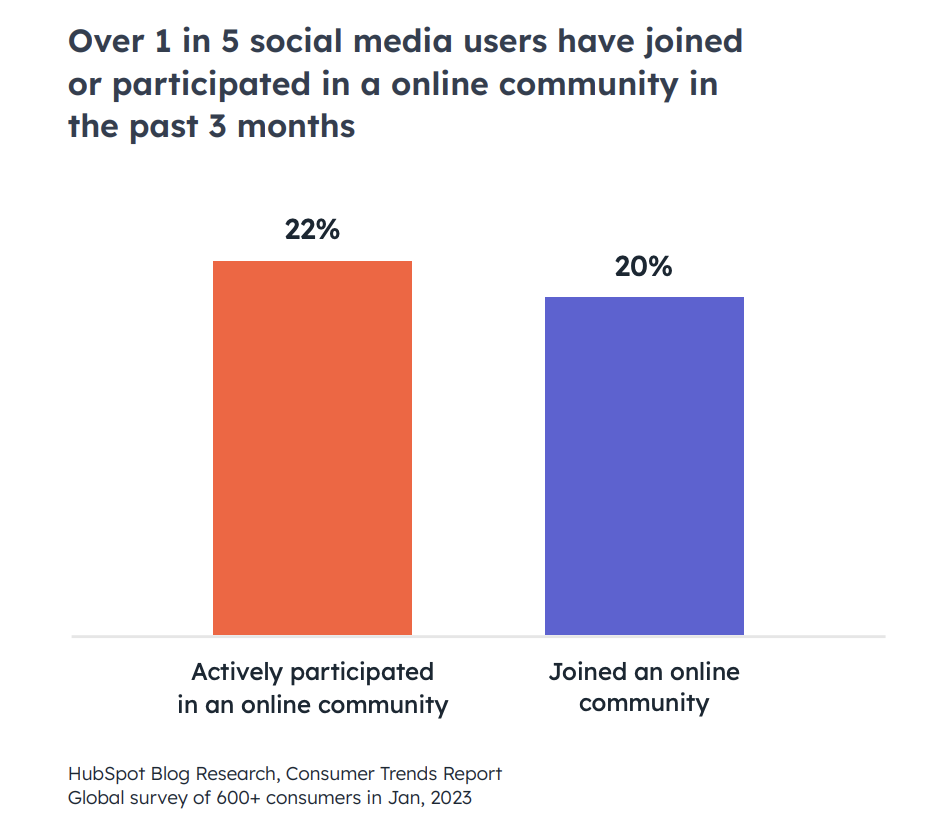
social media trends, community data

Image Source

How do you know if you have an engaged community? Here are some signs that I recommend keeping an eye out for:

  • Unprompted promotion of your brand. Do you have superfans who follow your every move and share your products with their friends? Some people might call these folks brand ambassadors.
  • Sharing of your content. Do people share your posts or articles? Does your content go viral either inside or outside of your community?
  • Communal celebration of brand milestones and successes. Do people in your circle celebrate your wins and those of everyone else?
  • Relationship building rooted in an interest in your brand and/or products. Did your community grow based on people with shared interests or a love of what you do or sell? Does it continue to thrive based on those beginnings?

While not every company with a great, engaged community will exhibit all of these, and there are always other factors, any one of these is a clue that what you’re doing is working.

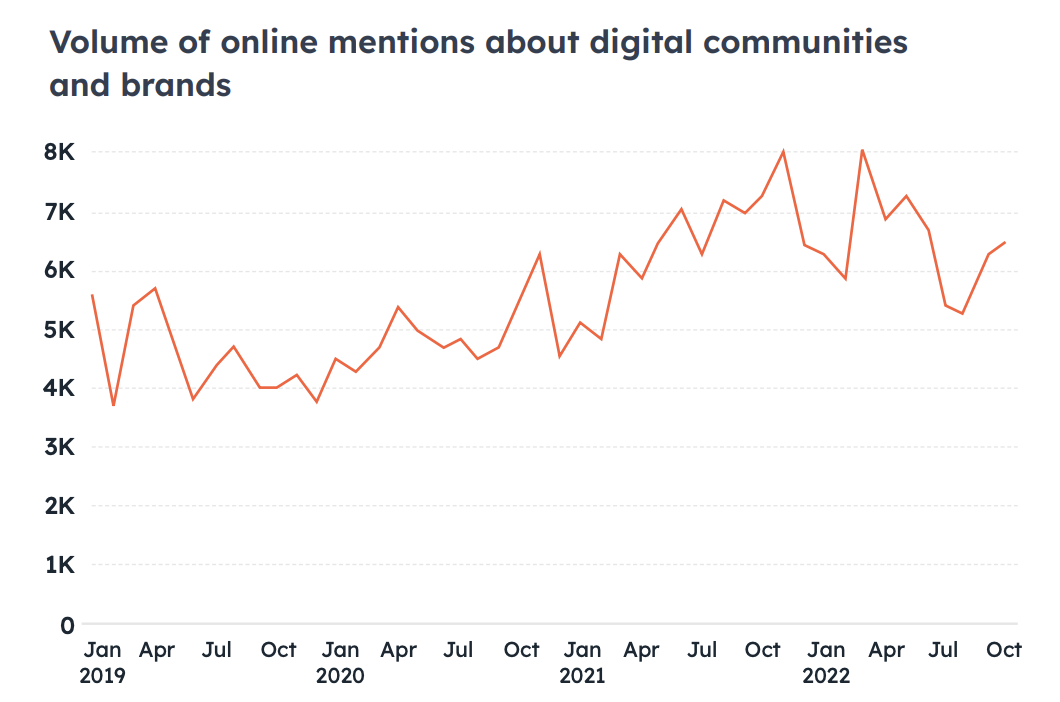
According to our survey, 86% of social media marketers say building an active online community is crucial to a successful social media strategy in 2024 — and it’s one of their top priorities.
social media trends, community data

Image Source

Expert tip: Haley Gray, founder of Women’s Entrepreneur Network, a community of over 75,000 entrepreneurs, says, “I’ve found that building a community allows smaller businesses to make sales to businesses and customers that they wouldn’t otherwise have access to. Engaged communities also massively facilitate the sales process, shortening the time to close a deal and increasing the amount per deal.”

Looking at consumer data, it’s easy to see why. Our 2024 social media survey found that 20% of social media users joined an online community in the past three months, while 22% actively participated in one.

In light of this data, where should you build your online community?

Whereas in 2023, social media marketers split evenly between Facebook and Instagram, the importance of video is changing that significantly in 2024. Facebook still ranks highest, but with YouTube right on its heels. Instagram remains important, coming in third, with TikTok ranking a distant fourth place.

That means you have choices, and I always tell people to choose a platform based on where your audience hangs out. If there are a few options, start with the one where you’re most comfortable.

Then, as you diversify and show up in more places, you can use what you’ve learned about their preferences to inform your strategy on other platforms.

What do I mean here? If your target audience prefers to consume content on YouTube, start there and then apply what you’ve learned to the next place they’re likely to hang out.

Expert tip: Tamara Smith, founder of Studio Three 49, shares that what she’s seeing reinforces that we should define success on social by engagement, rather than vanity metrics.

“Between organic user images outperforming polished graphics and users craving community, authentic connection is key. The brands that win big this year will be those who recognize social media is about true connection. Make sure your audience feels seen and knows they matter most,” Smith says.

2. Social media is the future of e-commerce.

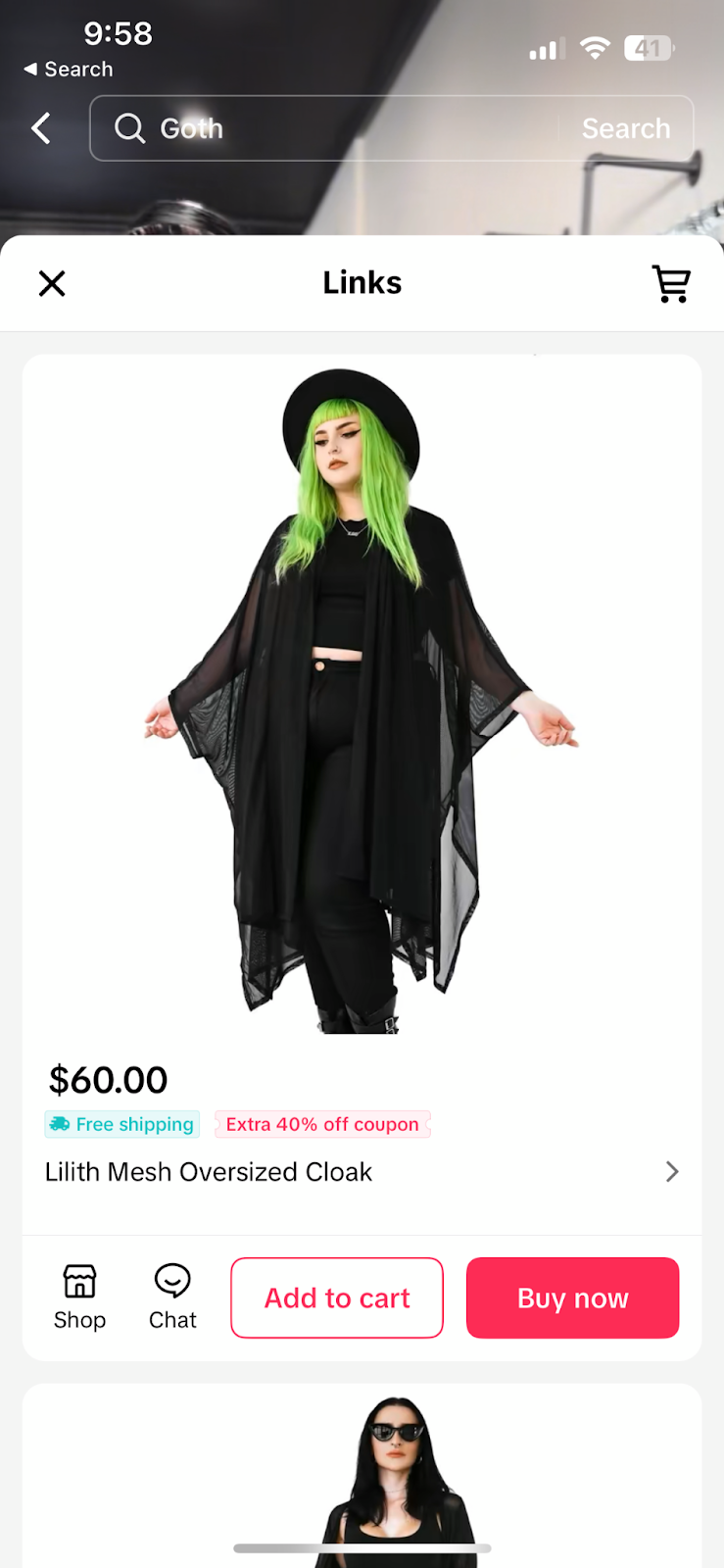
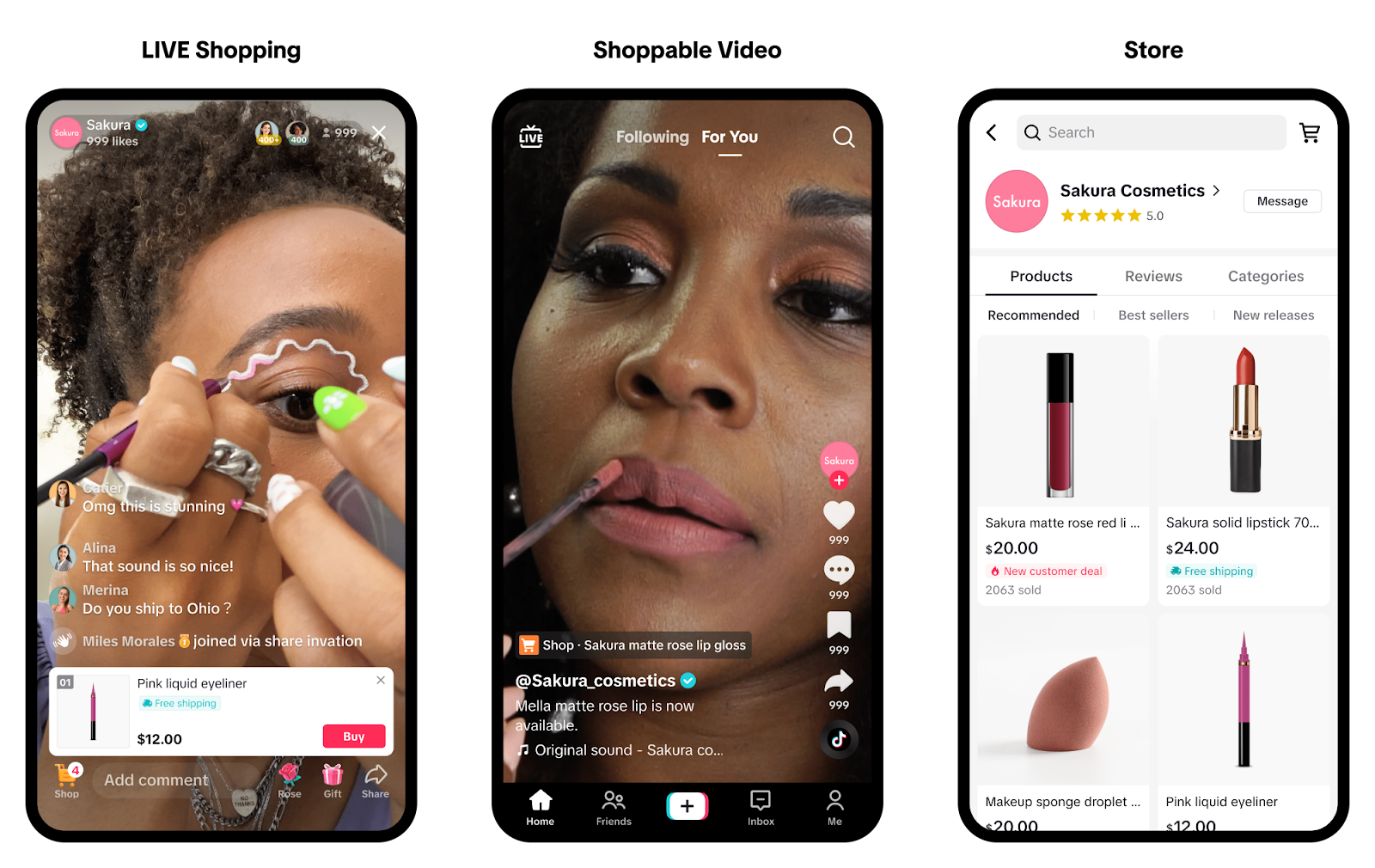
Shopping on social media really took off over the past few years. Platforms like Instagram and now TikTok have made it easy to make in-app purchases through shopping tabs, “save later” buttons, and more.

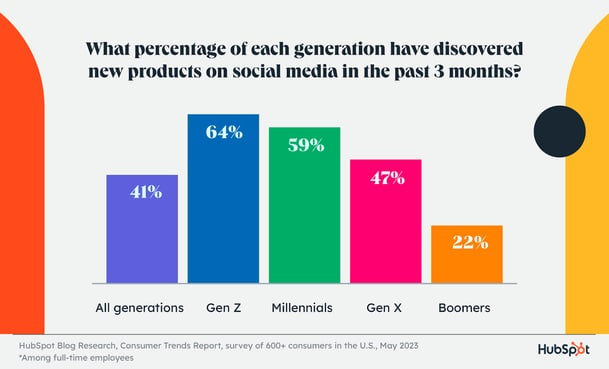
It starts with product discovery. For consumers ages 18 through 54, social media is the preferred channel for finding new products.

As for the purchases, over one in five Gen Z, Millennial, and Gen X social media users bought a product directly in a social media app in the past three months.

Social media marketers have also noticed an uptick in social shopping, with 47% of social media marketers surveyed also reporting in-app sales.

To take it a step further, it’s not just that people will be buying more from social apps. The numbers also show that consumers are increasingly likely to buy from social apps than other places, including a brand’s websites (82%) or third-party websites like Amazon (84%).

Despite these numbers, many consumers are still wary of purchases through social media. According to one HubSpot survey, only 41% of social media users feel comfortable making purchases on social media platforms, and only 37% trust social media platforms with their card information.

The three biggest concerns social media users reported having are:

  • The legitimacy of the brand (54%).
  • The ability to get a refund (48%).
  • The quality of the product (44%).

With platforms using payment integrations like PayPal designed to protect consumers from fraud, it’s getting easier to trust apps for shopping.

Among all the apps offering in-app purchases, Instagram is the one consumers say offers the best shopping experience. Social media marketers also believe it offers the best ROI and marketing tools. However, keep an eye on TikTok. As the TikTok Shop becomes increasingly well known, it’s likely to surge as well in popularity.

If there’s one place to start, the survey suggests that Instagram is the best call. 71% of social media marketers who sell products via social media apps report that Instagram has a high ROI, significantly more than other platforms (the next highest is Facebook, with 63% reporting a high ROI).

3. DMs will be consumers’ preferred customer service channel.

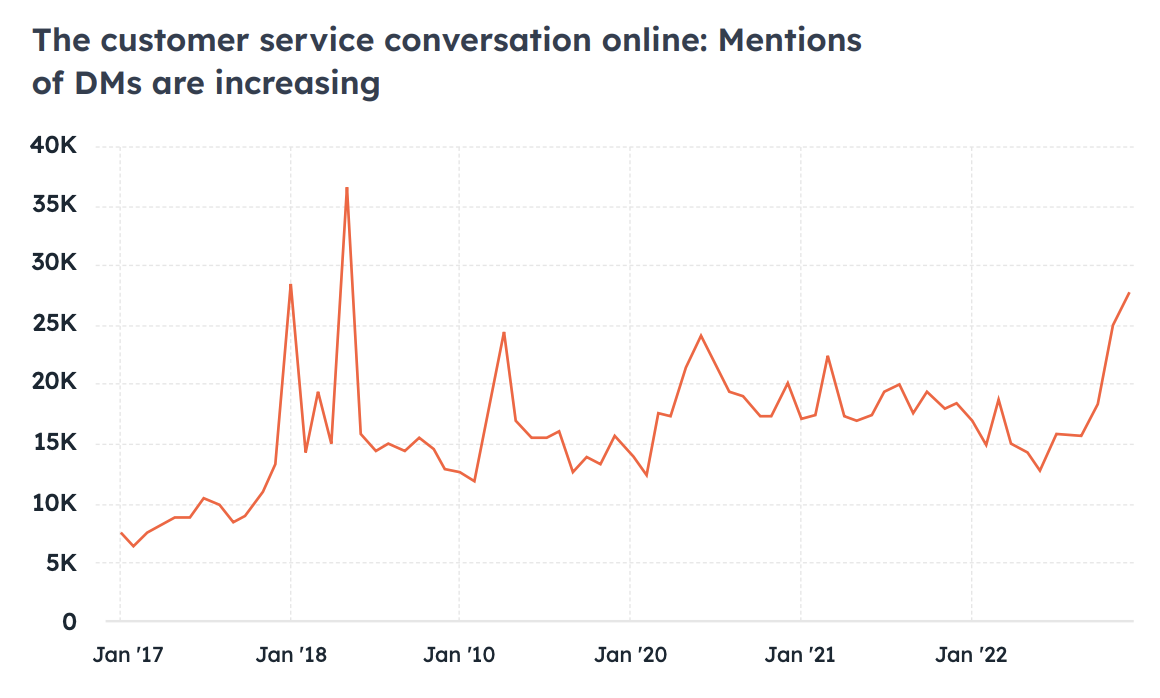
If your brand’s DMs aren’t already flooded with customer service requests, they might be this year.
social media trends, dm volume

Image Source

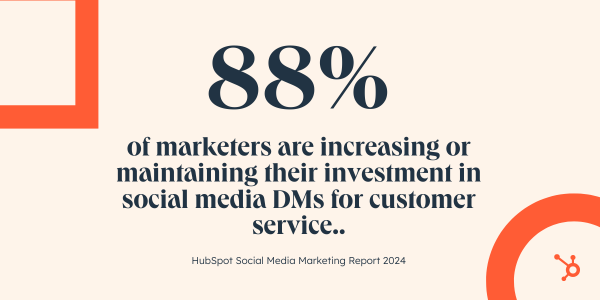
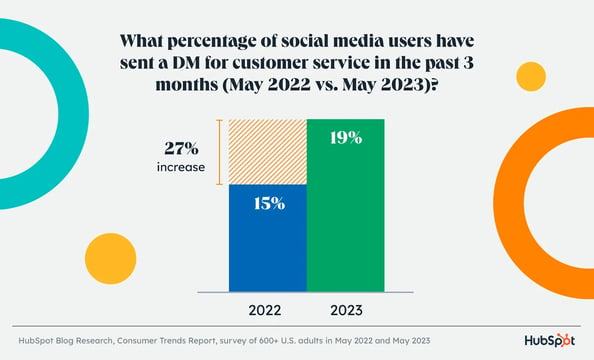
Around one in five Gen Z, Millennial, and Gen X social media users have contacted a brand through DMs for customer service in the past three months. And 88% of social media marketers predict that this will become consumers’ preferred customer service channel in 2024.

It seems like most brands have prepared for this, with 73% of social media marketers saying their company currently offers customer service via social.

Of those companies offering customer service through DMs, 72% say they have a dedicated customer service representative, 62% say it’s a primary responsibility of their job, and 44% shared that automated response tools like chatbots take on this role.

social media trends, customer service offer

With 20% of social media marketers stating that improving customer service and retention is one of their top goals for 2024, this is your sign to develop a plan for funneling customer service requests via social through the proper channels.

4. Search engines lose steam as consumers turn to social search.

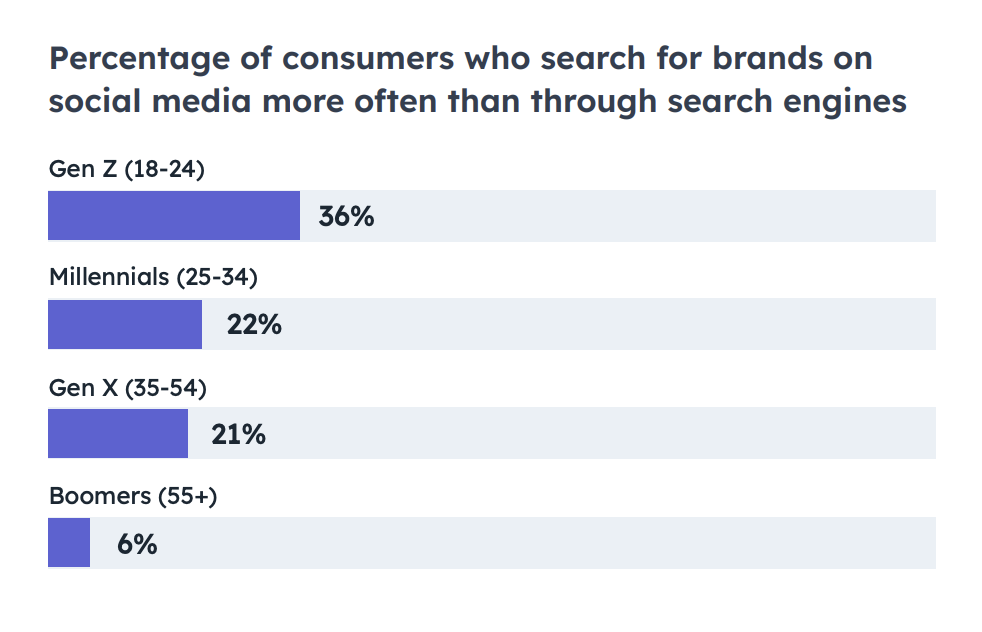
According to our survey, 87% of social media marketers think consumers will search for brands on social media more often than through search engines in 2024.

Our survey found that 22% of consumers between 25 and 34 years old already search for brands on social media platforms more often than through a search engine. This shoots up to 36% among Gen Z.
social media trends, social search

Image Source

This trend was even confirmed in 2022 by Google’s senior vice president of Knowledge & Information, Prabhakar Raghavan. He said that social platforms were eating up Google’s core products: Search and Maps.

“In our studies, something like almost 40% of young people, when they’re looking for a place for lunch, they don’t go to Google Maps or Search,” said the Google exec. “They go to TikTok or Instagram.”

Raghavan explained that nowadays, young consumers are looking for more visual-rich results and steering away from search engines, which favor text.

So, the question is, how should you optimize your profiles for social search? Here are the top recommendations from social media marketers:

  • Including relevant keywords and hashtags in your posts and bio.
  • Making sure your username is easy to search for.
  • Having a consistent username across accounts.

The bottom line: With 86% of social media marketers sharing that social search is important to their social media marketing strategy, it’s important that every business optimizes its findability on social media.

Expert tip: Debbie Moran of RecurPost says they’re actively embracing social search, focusing on advanced analytics and better content optimization features.

“Our goal is simple: help businesses be seen in social search and also understand and use the helpful insights that come with it,” Moran says.

5. Influencer marketers are ditching celebrities for micro-influencers.

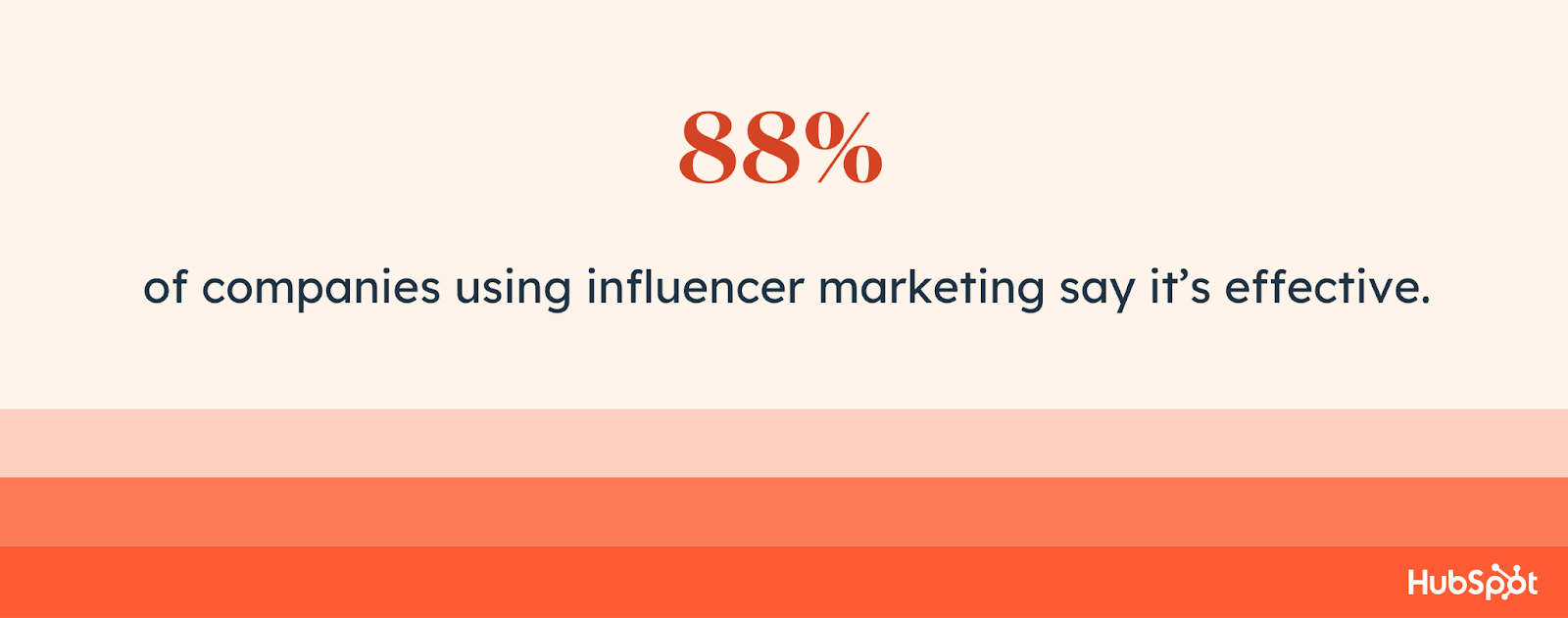
Influencer marketing isn’t going anywhere — 88% of companies using influencer marketing say it’s effective. What’s more, 55% of those surveyed said, “My company will invest more in influencer marketing in 2024.”

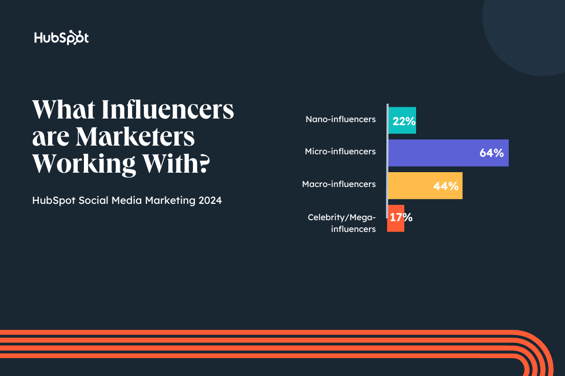
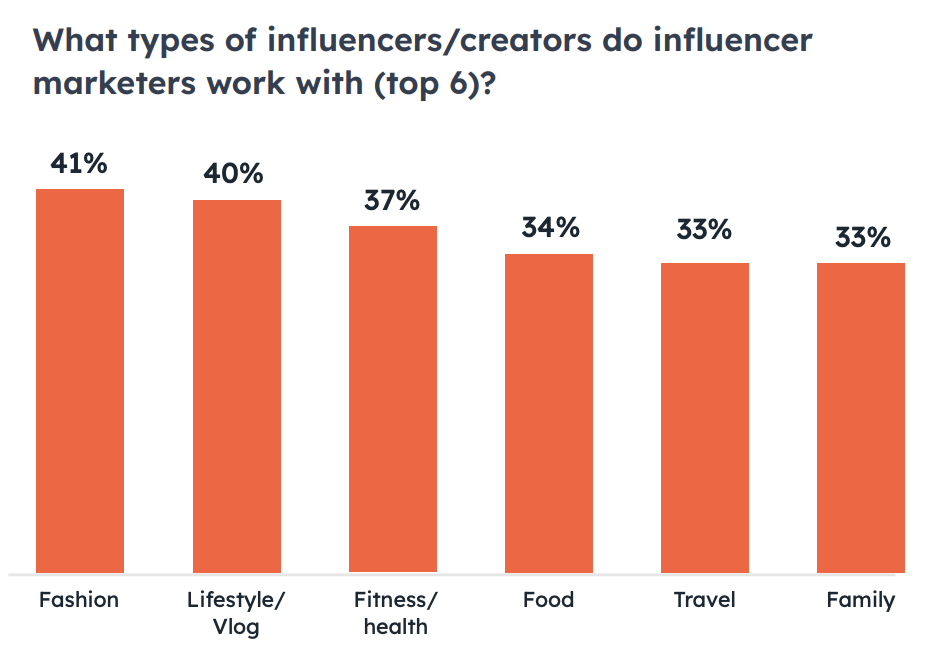
But, here’s something I found interesting in the study: 24% of influencer marketers work with small creators or nano influencers (1K to 9,999 followers/subscribers), and 67% work with micro-influencers (10,000-99,999 followers), while just 17% work with accounts over 1 million followers.
88% of companies using influencer marketing say it’s effective

So, what’s the biggest factor in choosing who to work with? In the earlier days of influencer marketing, follower count was the main allure. Today, it’s quite different — content quality outshines all other factors. Social media marketers who work with influencers said their top goals are:

  • Increasing brand awareness.
  • Reaching new audiences.
  • Improving brand reputation.

Working with smaller influencers is more affordable, establishes long-term partnerships, and offers access to engaged, tight-knight audiences with whom they have a great deal of trust — in part due to the quality of their content.

So, it’s clear that influencer marketing isn’t going anywhere. 84% of those we surveyed agree that most companies will have a creator or influencer as the face of their brand in 2024. What has shifted is which influencers hold the most value.
social media trends, influencer

Image Source

6. Short-form video is the highest ROI format and will see the most growth of any trend in 2024.

In 2021, we predicted TikTok would have a ripple effect on the social media landscape, and we would see the continued rise of short-form video. In 2024, that trend will continue.
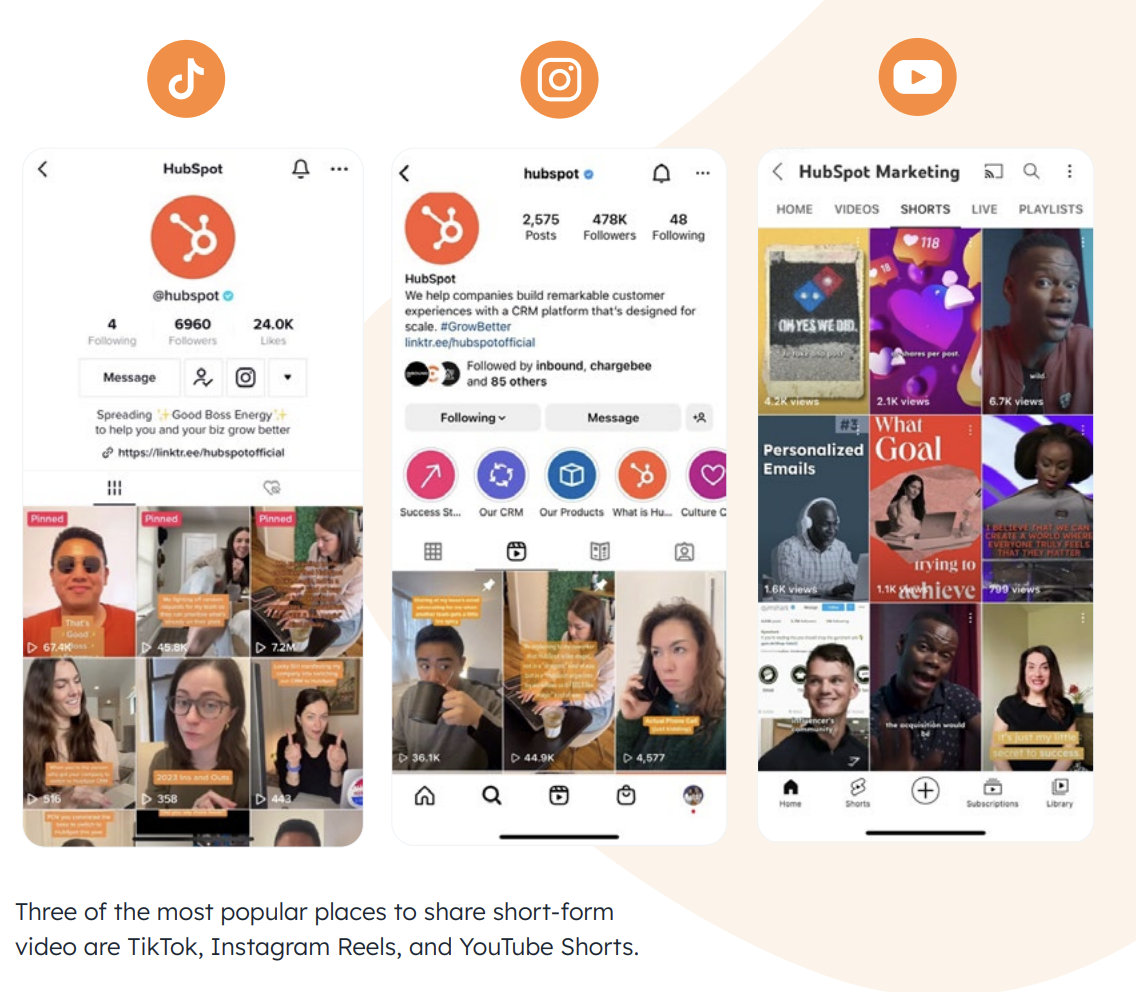
92%  of social media marketers plan to increase or maintain their current investment in Instagram.

Image Source

Short-form video is Gen Z and Millennials’ preferred format to learn about new products, with 57% of Gen Z and 42% of Millennials preferring to learn about products and their features through short-form video.

As for social media marketers, it’s the most popular format used by 54% of marketers surveyed. In addition, 33% of social media marketers plan to invest more in it than any other format, the highest of any format.

Not only is it popular, but it’s also effective; 83% of those who use it say it’s the most effective format they leverage.

This is likely why 42% of social media marketers who don’t use short-form yet plan on trying it for the first time in 2024, the highest of any format.

7. Funny, authentic, and interactive content will stand out in 2024.

Remember when social media was all about aesthetics? You had to have the highest production value to stand out among the competition. Well, not anymore. While marketers in our survey were split down the middle about high-quality production vs. relatable content, they agree that creating content that is authentic to the brand and brand values matters most.

68% of consumers say social media content being authentic and relatable is more important than polished, high-quality content.

Expert tip: Social media strategist Hira Osama agrees, sharing, “Everyone knows that video is trending. But from what I’ve seen, raw and unfiltered videos are now being watched more often than heavily branded productions. In fact, my clients report that unscripted reels are getting more traction than scripted reels.”

In 2023, the focus was on funny content. And while funny content still remains important, driving the highest ROI, it’s no longer the biggest focus for social media marketers.

So what social media trends are marketers looking to in 2024?

Particularly with the advent of AI, which makes it easier to crank out bulk, impersonal content, marketers are more concerned with creating content that’s relatable, interactive, and reflects your brand’s values. If that can be funny, too, then all the better.

But, even if funny doesn’t always equal relatable, don’t count it out just yet. Most social media marketers aren’t. 59% are planning to increase their investment in funny content, and 38% plan to keep their funny content creation budget about the same.

8. Instagram is the highest ROI platform and will see the most growth of any social app in 2024.

Our survey found that Instagram will see the most growth in 2024, compared to other social platforms.

Wondering why? Well, if you ask social media marketers their favorite social platform, they’ll likely say Instagram. In fact, 92% say they plan to increase or maintain their current investment in Instagram.

They rank it #1 for ROI and quality leads. And it ties with YouTube for the highest engagement levels.

Social media marketers also say Instagram has the most accurate algorithm and the most promising potential for generative AI features, which are essential for brand awareness and reach.

On top of that, 39% of those not yet using it plan to leverage Instagram for the first time this year.

9. Data will drive social media marketing budget justification.

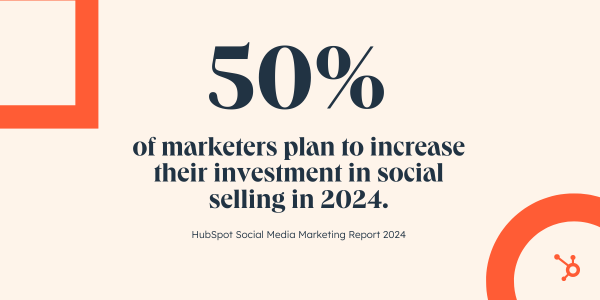
In 2022 and 2023, many marketers faced budget cuts with the threat of a recession looming. In 2024, most marketers don’t expect reductions. On the contrary, 55% say, “I expect my social media marketing budget to increase in 2024.” Another 34% say they expect little change to their budget this year.
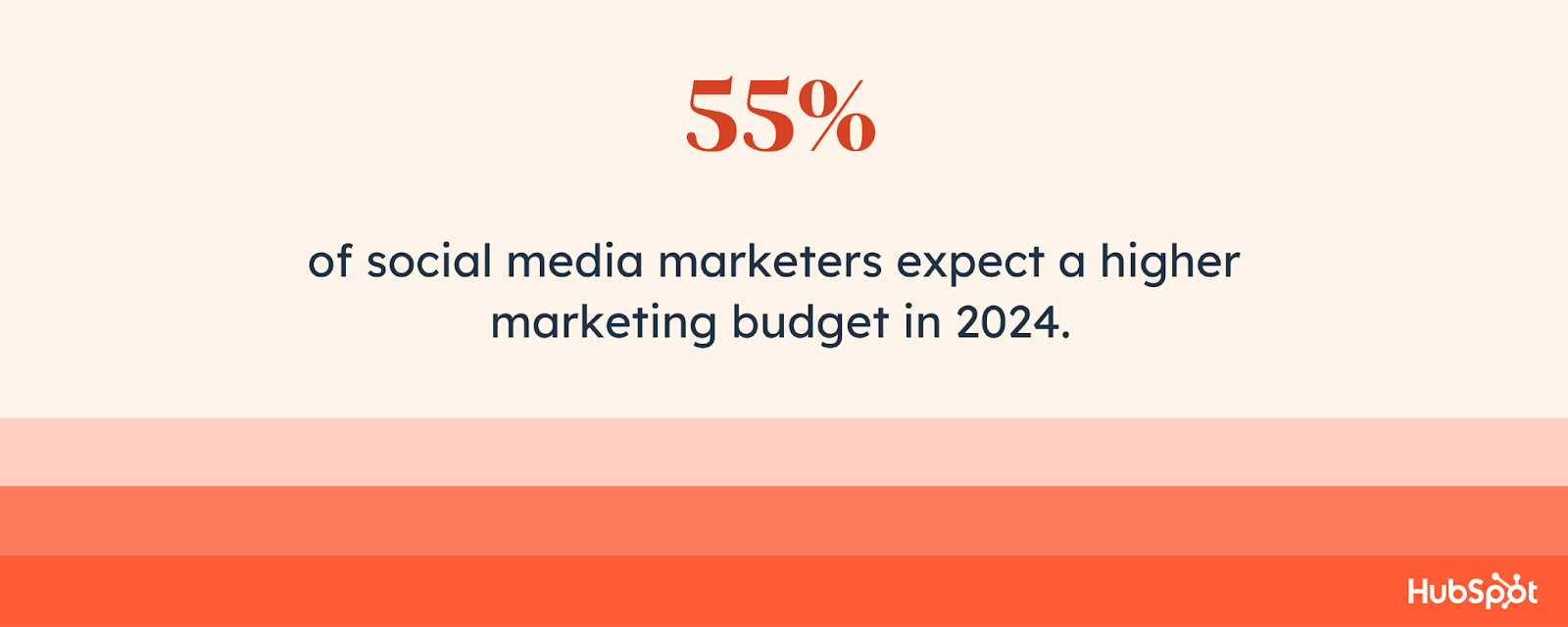
55% of social media marketers expect a higher marketing budget in 2024

However, most of those surveyed indicated that they’re facing more oversight and a greater need to tie their activities to business outcomes.

34% say that it will become more important to use data to drive strategy, and another 33% share that using data to demonstrate ROI and business value of social media efforts will be a top priority in 2024.

Using data to drive decision-making has a place. Although measuring ROI and revenue attribution are challenges social marketers expect to face in 2024, they barely crack the top 10. (More marketers are concerned with creating engaging content, keeping up with algorithm updates, and finding new ideas for content.)

All that to say, the data is important — as is developing a first-party data strategy. However, as long as marketers have a method for tracking the ROI of their social media marketing activities, they’ll be able to identify which strategies are most effective, double down on them, and justify their efforts.

10. Re-sharing the same content across platforms won’t fly in 2024.

Our survey found that social media marketers manage an average of three platforms. Although the benefits of cross-posting are clear, many are starting to steer away from it.

32% believe that tailoring the tone of your content to fit the unique voice of each social media platform will become more important with another 34% placing a higher value on creating content specifically for your audience’s interests and needs.

Our survey found that only 19% of marketers are cross-posting the exact same content. Most are shifting away from a copy-paste approach and instead to a tailored one.

According to our survey, 47% are making tweaks to their content when sharing on various platforms. Meanwhile, over a third are starting from scratch each every time.

So, what types of content come with the highest ROI? Short-form videos ranked highest (according to 71% of those surveyed), with live videos (57%) and VR and AR content (56%) rounding out the top three.

content with highest roi

Expert tip: Lori Highby of Keystone Click says, “Video is still hot, hot, hot! We’re seeing a healthy mix of short form and long form video content, while also tying in live video streams.”

She goes on to explain that the beauty of video is that it can be repurposed into many alternative types of media. “By pulling the audio from your video, you can create a podcast. By pulling the transcript, you create a blog post, email, or even an infographic,” Highby says.

What’s more, with AI becoming increasingly prevalent, repurposing content gets so much easier. And that leads me to the 11th trend.

11. AI will become an increasingly integral part of social media marketing strategies in 2024.

For anyone who has been paying attention to generative AI, it comes as no surprise that over a third of social media marketers we surveyed say that using AI tools in your social media marketing strategy will become more important.

After all, 87% of the marketers already using generative AI believe it’s effective. As the capabilities become clearer, that number is likely to grow.

So how many people is that really? A whopping 73% of marketers are already aboard the AI train, with nearly half (49%) saying that AI tools are extensively integrated into their daily workflow.

And, the types of AI run the gamut, including AI chatbots like ChatGPT, AI assistants like Microsoft Co-Pilot, Visual AI tools for images and videos like MidJourney, and audio AI tools for voice and music.
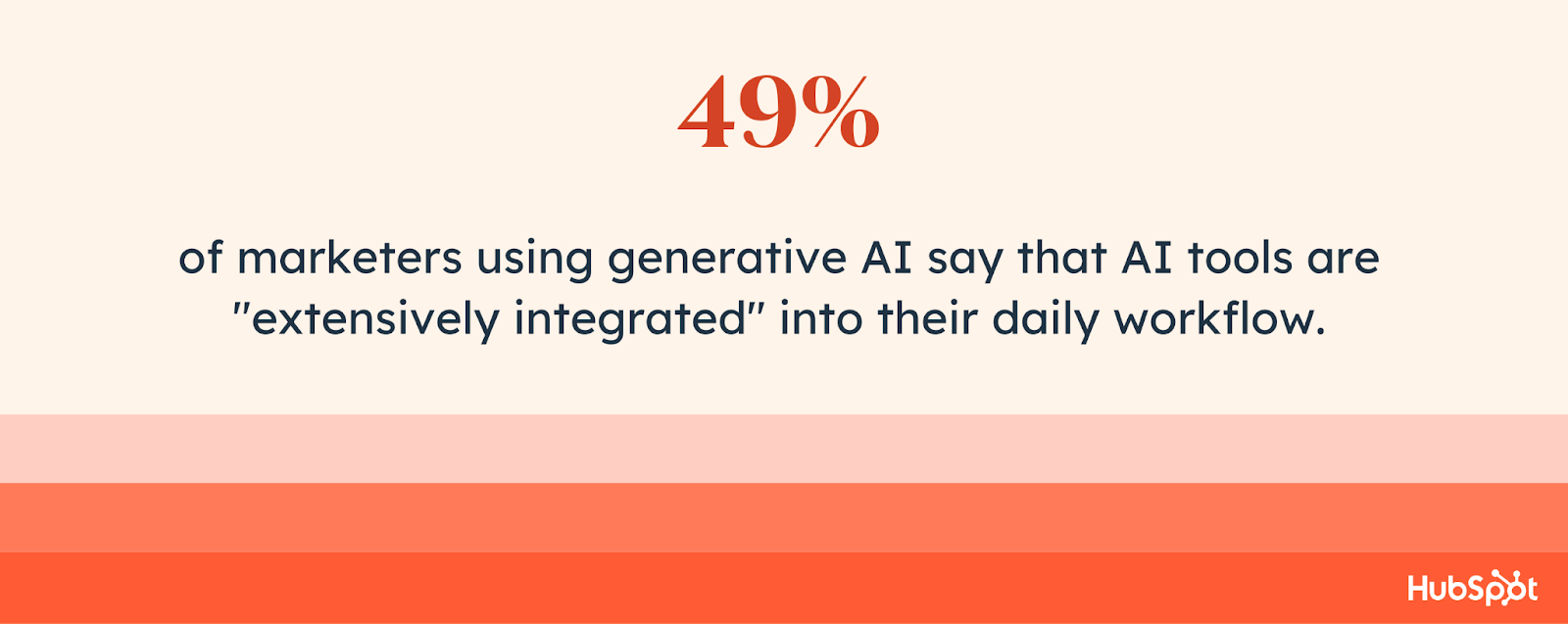
49% of marketers using generative AI say that AI tools are “extensively integrated” in their daily workflow.

But it’s not just about writing copy, creating images, or repurposing content. Social media marketers are also using AI to brainstorm ideas and improve their concepts and content to fit the brand voice or the tone of different platforms.

Wondering about the most popular social media trends in AI? Short-form videos rank first — with 55% of social media marketers using generative AI to create them. Images, captions, and long-form video creation are close on the heels, used respectively by 48%, 41%, and 40% of those surveyed.

The bottom line on generative AI? Across the board, marketers agree that generative AI is a social media trend that’s here to stay — and will continue to make a significant impact on strategy, content creation, and efficiency.

The Constantly Changing Social Landscape

Although we think we know what to expect with social media, this list of trends is likely not exhaustive of what we’ll see in 2024. After all, world news is impossible to predict — and can make a dynamic impact on social media trends and marketing strategy.

As a social media marketer, the best thing you can do is to continue to research trends, online consumer behaviors, and your team’s social media data to determine which trends or strategies to lean into or how to navigate unprecedented online scenarios.state-of-marketing-2024

The 7 Types of Social Media and Pros & Cons of Each (Research)

Software Stack Editor · March 18, 2024 ·

When it comes to social media, I‘m quite the expert. I had to tireless scrub through social media for potential stories back when I was a journalist.

Now, I’m HubSpot‘s go-to blogger for almost anything social media-related, so I’m always keeping up with the latest online happenings.

Plus, I‘m a younger millennial who grew up alongside social media. So if you’e a marketer trying to figure out the right social media platform to increase your brand’s awareness, generate leads, and improve traffic, you’ve come to the right blog.

To help you make the best decision for your brand, I’ve compiled a list of core types of social media, examples of platforms within each category, and the pros and cons that each type might present.

By the end, you should have a clearer idea of what social media strategy will work for your business. Let’s dive in.

Download Now: The 2023 State of Social Media Trends [Free Report]

The list of social media platforms is growing, and well-known platforms like Facebook are constantly evolving and adding new features.

With a greater and greater need for a social presence and an overwhelming amount of platform choices, it can be hard to pick which social channels to use.

You might not want to spread yourself too thin by managing a channel on every imaginable platform, but you don’t want to miss great brand awareness opportunities.


Social Networking

Examples of Major Platforms

  • Facebook: 3.06 billion monthly active users
  • X (formerly Twitter): 528.3 million monthly active users
  • LinkedIn: 1 billion active users

Social networking is possibly the most traditional form of social media, and most social media platforms fall under the social networking category. So, you’ll likely see at least one of the aforementioned platforms (*cough, cough* X) pop up again later in this post.

Platforms like Facebook, X, and LinkedIn are often called “networking” platforms because they allow user accounts to interact (network) in various ways.

Professional Uses

Facebook

Many brands and businesses are leveraging social media direct messaging (DMs) for customer service.

In fact, our 2024 Socia Media Report shows 88% of marketers are increasing or maintaining their investment in social media DMs for customer service.

Facebook Messenger is a great platform for this strategy as it allows you to respond to messages from your brand‘s Facebook followers.

Plus, as a fellow consumer, I can assure you it leaves a great impression on your customers when you’re respond promptly to their DMs.

There have been many times when I‘ve slid into a business’ DMs because I needed an update on an order, more information about a product, or troubleshooting.

And when the business responds back with helpful information, I always made a note to keep buying from them.

If you’re a small business, like a restaurant, I recommend a platform like Facebook as a great place to start your social strategy. With Facebook, you can build a business profile with links to your website and details about your menu.

I‘m especially fond of Facebook’s community feature, which you can also leverage to create a community page for customers to ask questions or rave about your products and services.

In fact, we found that businesses that leverage social media communities will see excellent results in their marketing strategy.

According to our State of Social Media Survey, 90% of marketers say building an active online community is crucial to a successful social media strategy.

I’m not surprised, considering our Consumer Trends survey found 20% of social media users joined an online community in the past three months, and 22% actively participated in one.

LinkedIn

LinkedIn emphasizes career-related networking, and, for years, I only ever used LinkedIn when searching for jobs or to help friends find opportunities. It turns out, however that LinkedIn is very beneficial for businesses.

For companies looking to offer a professional service, such as B2B or publishing companies, LinkedIn is another excellent way to grow a following.

According to our Socia Media Marketing Survey, LinkedIn is among the top six social media platforms yielding the highest ROI for marketers.

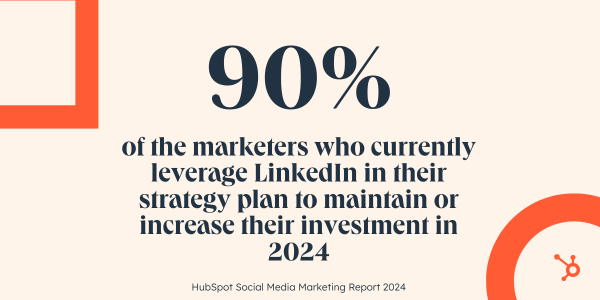
Furthermore, of the marketers who currently leverage LinkedIn in their strategy, 90% plan to maintain or increase their investment in 2024.

Brands looking to build an audience of professionals from a particular industry can create a business profile there, categorize it with an industry type, and then use posts and messaging to publish updates.

They can also use messaging and comment features to interact with their audiences or users who comment on their posts.

X (The app formerly known as Twitter)

An X account could be helpful to companies in a broad spectrum of industries, from entertainment to e-commerce. This platform similarly allows you to create a profile where you can list and link company information.

You can then use X to post about company updates, tag companies or customers in posts, repost positive customer tweets, and respond to customer questions via posts or direct messages.

Like Facebook, you can also post content like photos or videos.

One of my favorite X features I think marketers should look into is Spaces, which allows users to create live audio chatrooms and talk amongst each other.

Companies will often use Spaces to host Q&As, interview thought leaders, or keep audiences informed about the latest happenings with the brand or industry.

On all three social networks, users can easily communicate with others through simple actions like tagging, hashtagging, commenting, private messaging, reacting to posts, and re-sharing content.

Aside from social interaction, feeds on common social networking platforms are designed to show off a mix of text and visuals rather than one primary content type.

This flexibility makes it easy to begin a social strategy on social networking platforms because you can experiment with different forms of content before branching out to platforms that require more specific content types.

For those who want to dabble in video or graphics, these platforms could be a great place to test this new content.

With the growth of video marketing, many have begun to launch more advanced features like Facebook Stories and X’s live streams.

Platforms like Facebook and X have also started encouraging native video and photo uploads more heavily.

Recently, Facebook adjusted its algorithms to favor live video and image uploads. This has caused these types of native content to gain greater user engagement.

If you’re unsure where to start, check out our beginner’s guides for Facebook, X, and LinkedIn.

I’ll be honest, the beginner guide for X was published before the platform rebranded from Twitter, however much of the information still applies today.

Pros and Cons

Pros

  • Facebook, X, and LinkedIn are some of the most prominent forms of social media.
  • Social networking sites often integrate with scheduling tools like HubSpot and Hootsuite software.
  • All platforms have capabilities for photos and video.

Cons

  • Those interested in posting links may have more difficulty getting engagement than uploading photos and videos.
  • Some platforms, like Facebook, put individual user posts higher than business posts in newsfeeds.
  • Facebook may not be the right platform for you business if you’re looking to target younger consumers like Gen Z, who are more likely to use TikTok, X, or Snapchat.

Photo Sharing

Examples of Major Platforms

  • Pinterest: 450 million monthly active users
  • BeReal: 21.6 million monthly active users

Photo-sharing social media platforms are exactly as they sound — they’re platforms where sharing images is the name of the game. I remember the days when Instagram was the most prominent photo-sharing platform.

But that was then and this is now, so if you‘re wondering why Instagram isn’t mentioned here — don‘t worry! I’ll have more on that when I get to the video platforms.

Professional Uses

Pinterest

One of the biggest platforms that specialize in photo sharing is Pinterest. Pinterest is a “visual discovery engine” for users looking for cooking, style, home decor, and general visual inspiration.

Personally, I‘ve been using Pinterest for over 10 years and, like most users, I interact with other accounts on the platform through tags, likes, comments, or direct messages.

In the early days, Pinterest wasn’t as synonymous with brands and companies as it is now.

It was more so about crafting virtual vision boards based around aesthetics.

However, brands, companies, and creators find it useful whey they want to take photographs, display content, and update followers about their food, goods, or products.

Pinterest is well-suited for e-commerce companies, such as those that sell home goods and businesses that would like a place to share crisp standalone product images with links.

The platform offers a photo-based feed with posts that can include a photo and a short description.

In the last few years, Pinterest has also shifted to include more video content to compete with platforms like Instagram Reels and TikTok. However, the platform still remains a place for users to share their favorite photos.

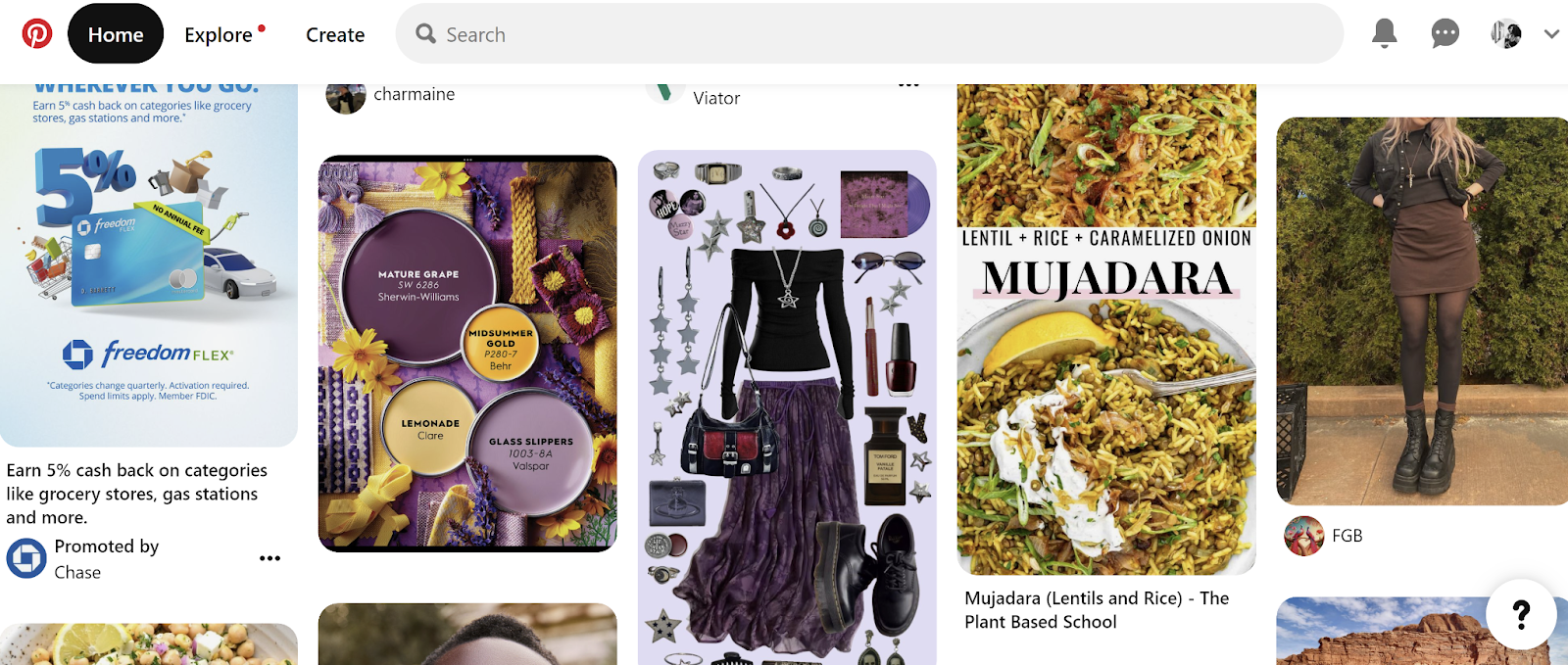
Here’s little look at my Pinterest feed.

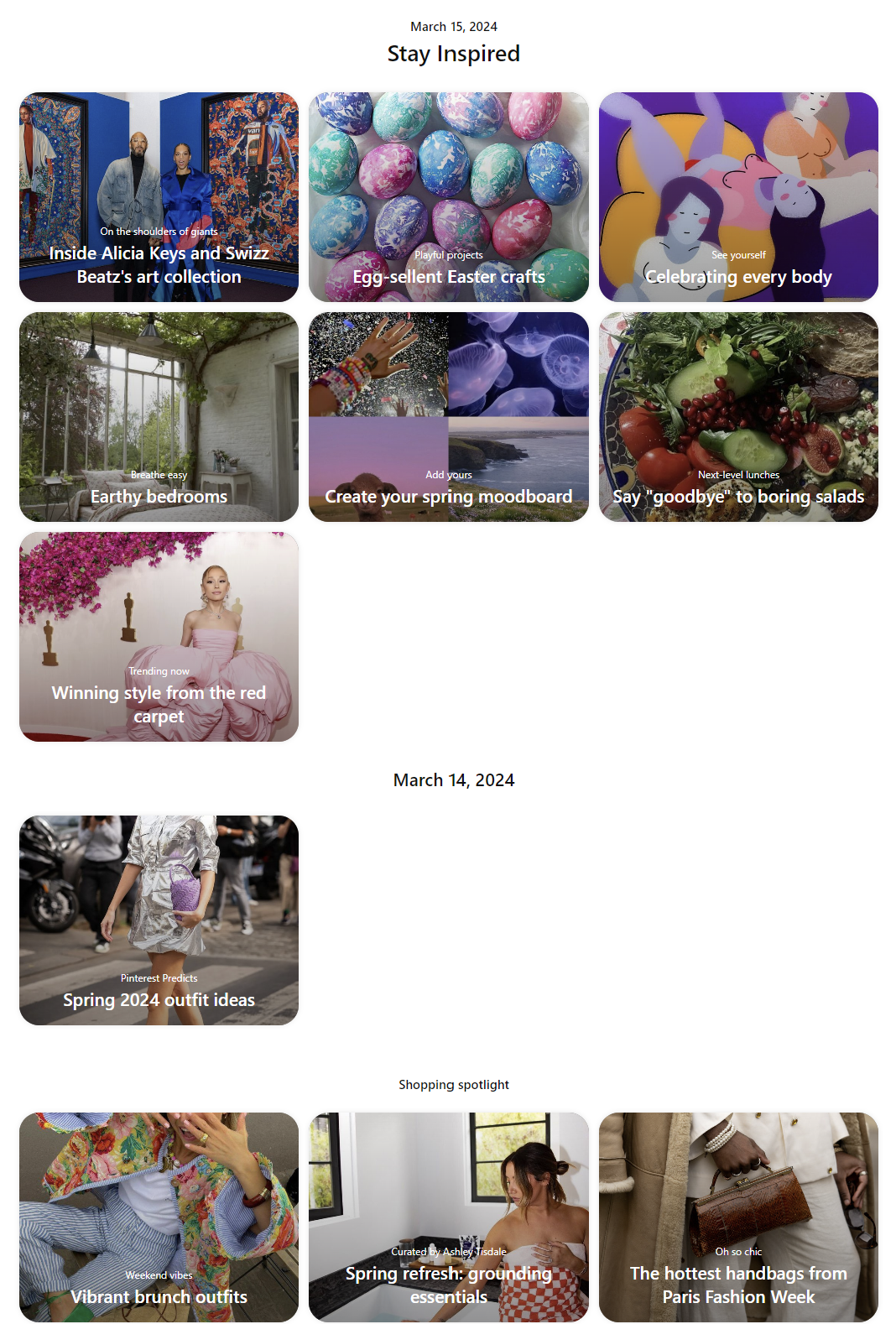
The platform also allows all users to link directly to websites or product landing pages in posts. I especially love Pinterest’s Explore page and can see a lot of opportunities for brands there.

The Explore page updates daily and operates almost like an old-school blog with how you can scroll to see the previous days’ themes as well.

The explore feed features boards curated by celebrities, creators, and brands sharing images their followers would be interested in. And, of course, there are opportunities for consumers to shop.

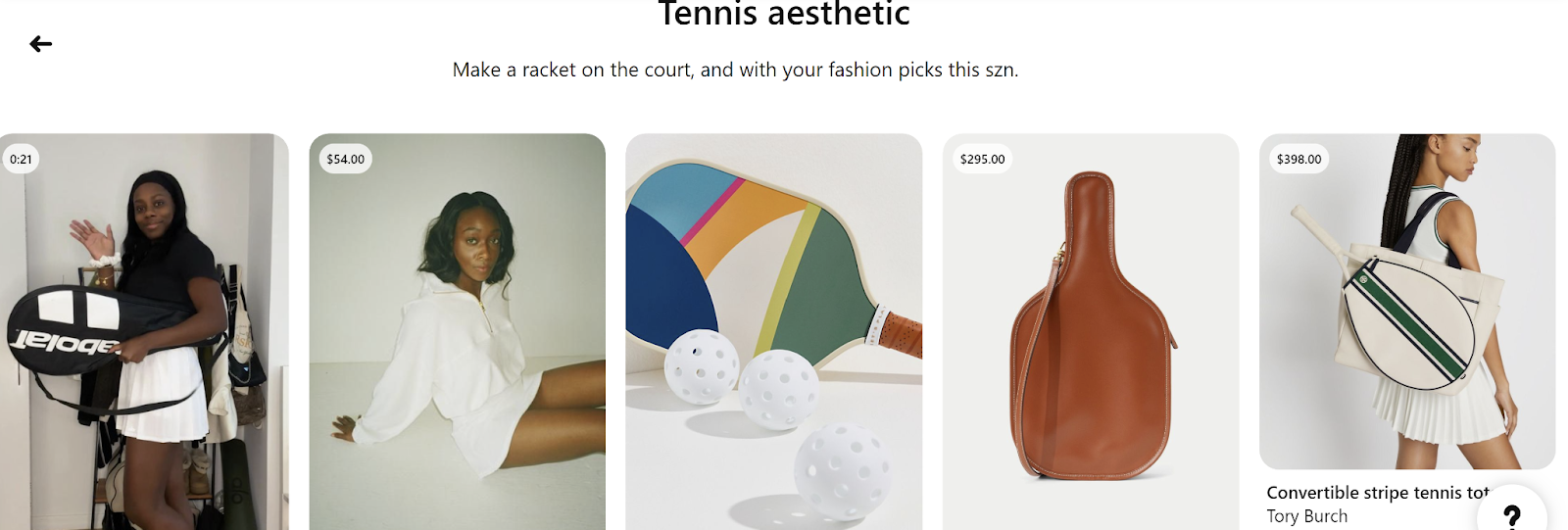
I clicked on the board called Pinterest Predicts: Spring 2024 Shopping Ideas, and was shown different trends expected to take over this season along with links to buy them.

Brands features on the board include Tory Burch, Nordstrom, and STAUD. Unrelated, but I‘m stil laughing at Tennis Aesthetic being the trend of the season because I don’t do sports.

Before starting on a platform like Pinterest, you’ll want to determine whether your goal is to gain brand awareness, or link-based or e-commerce traffic.

BeReal

If you haven‘t heard of BeReal, I don’t blame you. It’s a fairly new app that launched in 2020 and is pretty popular among Gen Z users.

The app’s main feature is that it allows users to share a photo of themselves and their immediate surroundings during a randomly selected two-minute window every day.

The idea of BeReal is to step away from the overly filtered and curated content users often see on other platforms. Just be real. Get it?

With the apps premise being candid and unfiltered, how can brands leverage BeReal? The best way I could think of is to use the app to build trust with your audience and only share behind-the-scenes candids.

However, that can be difficult given users are only given a random two-minute window to post.

Pros and Cons

Pros

  • These kinds of platforms help with brand awareness. Approximately 80% of Pinterest users say they’ve learned about products or services on the app.
  • Pinterest provides an outlet for showing off visual content or product shots.

Cons

  • Upkeep on these platforms might require a photo budget or dedicated production time.
  • Some platforms require you to post from a mobile app.
  • BeReal is starting to wain in popularity as its user base has dropped by 18% from its peak.
  • BeReal is most popular with Gen Z users and there is no opportunity for e-commerce or paid content on the app.

Video Sharing

Examples of Major Platforms

  • YouTube: Over 2.6 billion monthly active users
  • Instagram: 1.4 billions users worldwide
  • TikTok: Over 1 billion active users

Video has been the dominant type of content marketing over the last few years and it has no sign of slowing down — especially short-form video.

53% of marketers whose companies are currently leveraging short-form video say they will increase their investments in 2024.

Adding a video platform to your social strategy could make your brand look relevant and keep you up to speed with your competitors.

Video can be helpful to a wide range of industries. While a restaurant could have a vlog with cooking tips, a technology company might focus its video strategy on product demos.

Professional Uses

There are many way businesses can leverage video sharing platforms like YouTube. YouTube offers both short-form and long-form capabilities.

Regarding short-form video uses, YouTube Shorts can be a platform your business uses to post product demos, explainer videos, and more.

If you want to get interactive, you can also host live-stream Q&As to answer consumer questions and build community.

When it comes to long-form videos, YouTube is one of the leading platforms. Compared to competing video-sharing platform like Vimeo, YouTube has an extensive audience base and better SEO capabilities.

YouTube also seems to have better opportunities for advertisers and monetization, while Vimeo offers viewers the perk of no pre-roll ads.

For a longer list of similarities and differences, check out this head-to-head piece where we compare the business capabilities of Vimeo and YouTube.

Along with YouTube and Vimeo, the more traditional social networking platforms have begun to aggressively embrace video marketing.

Instagram

Another top contender for video platforms is Instagram. You‘re probably thinking, “But isn’t Instagram a photo-sharing app like Pinterest?” Well, it used to be.

However, to compete with TikTok, Instagram has shifted away from being a photo-sharing app.

In fact, Head of Instagram Adam Mosseri clarified in 2021, “We’re no longer a photo-sharing app or a square photo-sharing app.”

While users can still post photos on Instagram, the platform mainly promotes reels and video stories. It’s also worth mentioning that Instagram video posts are more than twice as likely to generate engagement than image posts.

Like YouTube Shorts, Instagram Reels is a great platform for posting short-form content like product demos and explainers. However, YouTube, as a whole, still allows long-form video while Instagram does not.

TikTok

I‘m going to revisit TikTok again later in this post because it also falls under another category of social media platforms, however, it is still a video-sharing channel.

What I love about TikTok in regards to marketing is that it’s a very diverse app with many marketing opportunities.

Yes, you can post short-form demos and explainers like on Instagram Reels and YouTube Shorts, but TikTok has more opportunities to build community with your audience.

This because the app is a breeding ground for new viral trends any can take part in, and the app provides many ways for audiences to interact via liking, commenting, stitching, and repurposing sounds (the latter two really help the app stand out).

But we‘ll dive inter TikTok’s interactive opportunities in the next section.

Pros and Cons

Pros

  • Regarding YouTube, videos can be longer than on other social platforms.
  • All platforms have website linking capabilities.
  • Platforms like YouTube, TikTok, and Instagram often offer analytics.
  • YouTube has search optimization features.

Cons

  • Video content, particularly long-form, might take more time and money to create.
  • Vimeo and YouTube require more backend tasks like SEO.
  • Instagram does not have longform video capabilities
  • TikTok appeals to a younger audience known to distrust brands, so you will likely have to invest in influencer marketing to gain traction on the platform.


Interactive Media

  • Snapchat: 229 daily active users
  • TikTok: 100 million monthly active users in the U.S. alone

Apps like Snapchat and TikTok allow users to share photos and videos and have various unique interactive and highly experimental features.

These two apps include AR/VR filters, musical overlays, and interactive games. Their audience bases are also predominantly Gen-Z.

Professional Uses

Snapchat

Brands with large followings might consider publishing Snapchat Stories or videos curated by fans.

Without a high-budget or giant online following, it might be difficult for a company just starting out on social media to leverage Snapchat.

Brands and influencers on Snapchat tend to cater their content to the platforms’ younger audiences. For example, on Snapchat, you might see stories that present beauty tutorials, wellness tips, news, or trendy new products.

If you’re interested in interactive media, there are still a few viable ways you could get involved with Snapchat.

While major brands, like VICE and BuzzFeed, have become Snapchat Discover partners, the average business can still create a Snapchat business account that users can search for and friend.

This account allows you to publish temporary stories like individual accounts. However, those with a business account can also purchase ad space.

If you’ve set up an account, check out this guide to getting started on Snapchat.

TikTok

When TikTok first rose to prominence in 2020, it mainly an app-based platform catering to a Gen Z market that wanted little to do with brands.

Since then, TikTok has grown to shift its focus to some longer-form content, and brands are much more aware of how to leverage the channel.

In fact, about a quarter of marketers in our Social Media Marketing survey say TikTok yields the highest ROI compared to other social media platforms.

The key to TikTok is to invest in influencer and creator marketing. Build a partnership with a creator who aligns with your brand’s values and can introduce your products and services to their audience.

Pros and Cons

Pros

  • These platforms are very creative and experimental.
  • They have young audiences, which can help brands better target Gen-Z.

Cons

  • Producing regular content could be expensive and time-consuming.
  • Business accounts aren’t promoted up-front on the Snapchat interface. You may want to promote your channel on your website or other social channels because users must search for you with your Snapcode or username.
  • Snapchat is limited to mobile and isn’t as easy to use as other platforms.
  • You will most likely have to invest in influencer marketing to gain traction on TikTok, and finding a creator aligned with your business may be difficult.

Pro-Tip: You should try to correctly estimate the time and money that might go into keeping these accounts up-to-date and relevant.

If you’re unsure how short video ads can benefit your business, remember that short-form videos have the highest ROI compared to other video formats.

Blogging/Community

Examples of Major Platforms

  • Tumblr
  • Reddit

Tumblr and Reddit allow users to post about exciting niche topics, like memes, events, politics, and pop culture.

When users publish a post, these platforms allow others to share it or add it to the conversation with their commentary.

Professional Uses

Both blogging and community-building platforms could be helpful to those who want to encourage discussion around very niche industries or topics.

For example, on these platforms, you might see discussions about anything from alternative health to machine learning.

By blogging, you can write posts about your company’s industry topics and link them to your product or site.

While many people have a blog on their website, platforms like Tumblr might be great to use if you haven’t set this feature up — or just want to see what others in your industry are blogging about.

With a discussion site like Reddit, you could share a link or a post about a specific topic on a discussion board related to your industry and see how users respond.

You could also start your board if a topic you’re looking to encourage discussion on doesn’t have one yet.

These two platforms specifically encourage web chatter and post shares from users who care about the same topics.

Both also allow users to follow you or subscribe to your blogs or Reddit boards so your content can appear on their feeds. Here’s an example of what Reddit’s feed looks like.

Other users can up-vote or down-vote when someone publishes something on Reddit. Up-voting makes a post show up higher in Reddit feeds, while down-voting does the opposite.

On Tumblr, the feeds are organized by time. However, a post can show up higher when it is re-shared by other users. When a user shares or interacts with your Tumblr content, they give it a note.

When they reshare, they can post a comment with the post that gets added to a thread.

Here’s an example of how notes and threads can be used to encourage discussion:

Pros and Cons

Pros

  • Both platforms allow you to share text posts, photos, and videos about your business, brand, or individual thoughts.
  • These platforms enable you to start conversations about a topic.
  • Both platforms allow linking to outside websites.

Cons

  • Longer blog posts might take time to craft or write.
  • Getting downvoted on Reddit or having no reaction from Tumblr users means your posts may go unseen.
  • Your audience might be too niche or limited to just those on the specific platform you use.
Microblogging
  • Threads: 130 million monthly active users
  • X: 528.3 million monthly active users

Microblogging refers to posting short blogs that are meant for quick audience interaction. Both Threads and X fall under this category as they allow users to post blog content with very limited character counts.

Professional Uses

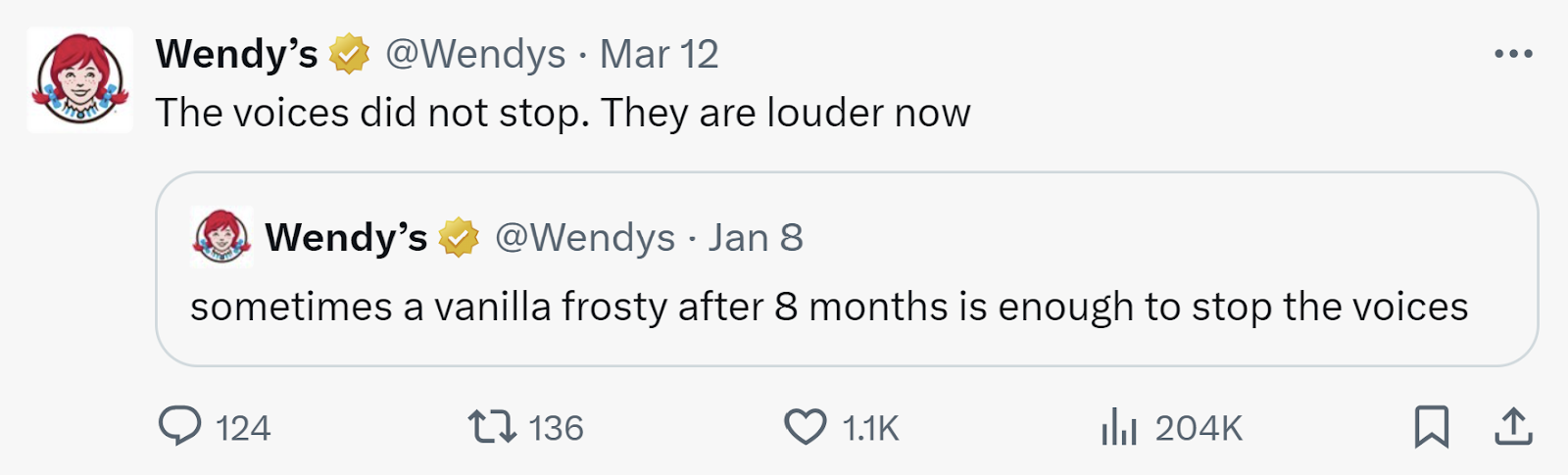
For years, companies have used X to post quick updates regarding their products and services or to engage with their audience in a humorous or relatable way. For example, Wendy’s will often post content like below to humrously entice their audience.

The same can be said about Threads, though the platform has only been around since July 2023.

Both platforms allow users to upload mini blogs, photos, and videos to engage audiences. So, really the possibilities are endless in terms of how to use the platform.

Pros and Cons:

Pros

  • If you have a great sense of humor (like who ever runs Wendy’s social media) you have a great chance of entertaining audiences and raising brand awareness on microblogs.
  • Microblogs are very versatile in terms of the kind of content you can post.

Cons

  • Since rebranding from Twitter, X has been experiencing a steady decline in users.
  • Threads also struggled to maintain consistent users and has yet to eclipse X, it’s direct competitor.

Private Community

  • Discord: 196.2 million monthly active users

Few things are more frustrating and terrifying to me than when I post something on social media that is meant for my friends, followers, or my target audience and it “leaves the neighborhood.”

By that, I mean the post leaves its intended audience and takes on a life of its own.

Sometimes, as a marketer, you want to ensure your content is only being share amongst your audience. You also want to build community and foster trust, which will lead to longterm consumers.

Enter: Private social media community platforms like Discord.

Discord is a voice and chat platform where users join conversation servers, often through exclusive invites, and talk to other members about niche topics.

Professional Uses

Platforms like Discord are great because they allow you to speak directly with your consumers, share content that is more likely to stay with your target audience, and build community with your followers.

You can use Discord as virtual focus group where you can engage with your consumers directly to understand their habits, concerns, and needs.

For example, I have a Discord server I use a content creator to engage with my followers, keep up with the latest happenings in my niche, and build community.

Pros and Cons

Pros:

  • Like I said, private community platforms like Discord are excellent for community building with your followers and likeminded individuals. You can foster community and stay tapped into your audience.

Cons:

  • Discord doesn‘t have features for native advertising, and it’s only really helpful if you already have a stable audience who wants to be in community with you. So, you may have to focus on building your brand’s following before investing in Discord.

A Few Things to Consider

Before you start logging in and setting up your accounts on a bunch of platforms, be sure to consider these factors:

  • How much time do you devote to strategizing around a social platform?
  • Do you have resources for creating graphics or videos?
  • Do your goals involve boosting brand awareness or traffic and revenue?
  • Will you need an additional staff member to run this platform, or will it be easy to maintain?

Once you’re on a platform or two, be sure to stay aware of how it’s changing and what marketers are doing. Check out our Ultimate Guide to Social Media Marketing for a current outlook.

New call-to-action

How to Write a Video Script [Template + Video]

Software Stack Editor · March 15, 2024 ·

Videos tell a story. According to 92% of marketers, video is essential to their approach. So, the storyline should be effective, whether creating video scripts from scratch or using a template.

→ Access Now: Video Marketing Starter Pack [Free Kit]

Although creating, organizing, and editing compelling videos can be lengthy and scary, a good script can make or break the success of your video.

So, why don’t we take you through the steps on how you can start your scriptwriting process?

Any basic video is elevated with a script, but there’s more to creating a video. You’ll need proper equipment, sound, lighting, sets, and the cast and crew. When combining these, it can be challenging to make sure there are no mistakes.

A strong video script can seamlessly bring it all together. Plus, having an in-depth script will boost your team’s confidence and result in a better video outcome.

How to Write a Video Script

Video Script Template

Video Script Example

1. Choose your target audience.

Any marketing project is better with the right buyer persona. This is especially true with video.

Because videos often take more time and investment than an online ad or blog, your video must speak to a specific audience.

So, before you start developing characters or a brief for your video, you need to figure out who your video is for. Your target audience for your video script can impact:

  • The length and format of your video.
  • Where you post your video.
  • Setting, costume, and lighting.

If your video is for brand awareness, you may broadcast to a large and diverse audience. But what if you‘re introducing a product or feature?

In that case, you’ll want to focus your audience on the buyers who are most likely to feel the pain point your product solves.

You might want a different approach if your video is for employee or customer retention. You’ll want to review data, reviews, and testimonials before you begin your script brief.

This will help you create the story and dialogue your audience will respond to.

2. Set a goal for your video script.

Videos are usually team projects. Without a single focus, every person could come to the video with their idea of what it’s about. As the project continues, this can turn a simple video into a convoluted mess.

That’s why starting your video script is essential by just thinking about your goal. So, before you jump into a storyline, character, or setting, figure out the why.

Why are you making this video?

Do you want to teach people about your product? Are you introducing a new pricing structure? Are you trying to expand into a new niche?

If you‘re not sure about your goal, think about the problem you’re hoping this video will solve.

For example, say you’re struggling with conversions for a new product.

  • Is it because you’re breaking into a new niche? A product video on the right social media platform for this niche might be right.
  • Do users need better instructions? You might want to add a product tour or instructional video to your website.
  • Are you getting good reviews? You may want to partner with influencers to build a reputation for this product.

Don’t jump into your video script without deciding on a single goal.

Then, use your goal to set the metrics you‘ll use to measure the video’s performance once it goes live.

3. Choose the main character for your video.

Video marketing helps you show your viewers what your product can do instead of telling them. And characters are essential to storytelling.

Choosing the main character for your video before you begin your script will help you focus on telling a story, not just selling an idea. This will help your audience connect and engage with your video.

You may already know that your main character is your ideal customer or your CEO. They could be a celebrity, a cartoon of your product, or a narrator who speaks in your brand voice.

But if not, before you start writing your video script, decide who will be the focus of your video.

If you don’t know who your main character is, go back to your goal and target audience. Think about who your buyer persona wants to hear from as they reach that stage of their journey.

Next, outline your main character. You can use the habits, quirks, and voice of your main character to paint a picture for your audience that helps them remember and relate to your video.

Once you’ve figured out your main character, you can decide how they relate to your product. Do you want to talk about their back story? Are you going to talk about a specific experience they had and how your product helped?

4. Create a brief.

Creating a brief allows you and your team to document the answers to the most important project questions. This helps everyone involved understand the who, what, when, where, and why of your video.

Say you‘re three-quarters of the way through the editing process. If your boss or colleague wants to completely redo half of your video, that’s a huge problem.

Challenges like this can impact your budget, timing, and campaigns. But with a brief, you can refer to the goals and project plan your team mapped out together and say, “Actually, that’s not what we agreed to.”

Then, you can move forward.

Focus on your goals, topic, and takeaways in your brief.

A brief doesn’t have to be fancy, nor does it have to follow a specific formula. However, there are several vital questions it should include to craft an effective video script.

  • What‘s the video topic? (The more specific, the better. For example, if you’re in the house painting business, you might choose a topic like “buying the right paint brush.”)
  • What are the key takeaways of the video? What should viewers learn from watching it?
  • What‘s our call-to-action? What do we want viewers to do after they’ve finished watching the video?

You can easily create a brief in Google Docs to serve as a living, breathing template that you revise over time – and that your team can collaborate on.


5. Use your brief to write an outline.

Once you‘ve picked a topic and written a brief, it’s time to start constructing your video script. We recommend starting with an outline to give structure to your video script.

This way, you can break your video into subtopics and decide how your dialogue (or monologue) will progress.

Are you basing your video script on a blog?

You can‘t just rewrite a blog post and call it a day – there’s a specific way to write a blog-based script so that it shapes an effective video. Alicia Collins can teach you a bit more in the video below (and yes, we wrote a script for it).

Like Alicia says in the video above, a video script shouldn‘t simply regurgitate the blog post word-for-word. Blog posts are ideally written to be conversational.

But there are pauses and verbal explanations you’ll need to add to your speech patterns that you wouldn’t have without your script.

But, using the blog post’s subsections is a helpful starting point when figuring out how your script will progress from one section to the next.

Are you writing an original video script?

Start with a well-structured outline. Many video scripts follow a three-part structure that includes:

  • An introduction and hook to draw viewers into your video.
  • A problem, pain point, or question comes up.
  • A conclusion and resolution of the problem, including a call to action.

This is a basic video script structure, but you can go in many ways as you outline your story. This structure will help you write a script that covers the details that make your video believable and valuable to your audience.

As you create your outline, think about where natural transitions happen.

For example, say you’re writing a video script about the life of a new product. You might outline your script with the steps a business might take to launch a product, including:

  • Coming up with the idea.
  • Doing market research.
  • Designing the new product.
  • Producing a test product.
  • Editing the product for mass production.
  • Audience testing.
  • Marketing and sales strategies.
  • Product launch.

Your primary goal is to engage your target audience with a situation they can connect with. This can help them understand how the challenges you share in your video relate to the problems they want to solve in their own lives.

6. Start writing your script, section by section.

Your video script doesn‘t have to be fancy. You’re not trying to submit this script for any awards – its purpose is strictly functional.

A good script makes it easy for the people on camera to get their messages across while sounding and acting naturally.

Write conversationally.

Writing a script isn’t the same as writing a college paper or marketing research report. You want to write the script how you want the video subject to speak.

Saying, “I’m gonna create a video after reading this blog post” on camera will read much better than, “I am going to create a video after reading this blog post.” Keep sentences short and crisp, and try to avoid compound sentences.

Make it thorough.

A script doesn’t just include dialogue. If your video will require multiple shots, characters, or scenes, include these details. Be sure to include any necessary information about the set or stage actions, such as a wardrobe change.

Basically, you want the script to be thorough enough that you could hand it off to someone else to shoot, and they’d understand it.

Write for the audience and the platform.

Make sure you‘re keeping your script conversational for the people you’re trying to connect with – and infuse humor, tone, and inflection accordingly.

For example, if you‘re writing a short-form video for Facebook, you might want to consider keeping your script choppier with sentence fragments.

But if you’re producing a long-form explainer video for your website, make sure you’re as thorough as possible.

Script every single word.

It’s understandable to think you can just jot down the main bullet points for a script and then just wing it on camera, especially if you know your subject matter.

This approach makes it tough to communicate a message as clearly and concisely as possible, and it usually results in a lot of redos.

So, we suggest scripting every last word. Doing this will keep you organized during filming and save you loads of time later.

7. Edit your video script.

Writing is tough, and it‘s easy to get stuck if you expect your video script to be perfect on your first draft. It’s worth doing two to three rounds of edits to cut any unnecessary words in your writing.

These are a few more tips for editing your script so that the video script can make your final video shine.

Give yourself a break.

Step away from your script after you write it, and don’t go back until you can look at it from a fresh perspective.

Check for transitions.

Dialogue and actions will move your story forward. So, look for moments in your script that feel abrupt or awkward. Then, add details that will help your viewers understand what is happening.

Cut the extras.

Great writing and interesting dialogue will be bad for your video if they don’t advance your story. Edit out these parts and save them for a later project if you think they can be useful.

8. Do a verbal run-through off-camera.

Now that you know how to write a script, it’s time for a table read. This is the part where you practice bringing your script to life on camera.

Why practice? Because some words look great on paper, but once you read them aloud, they just don’t sound right. Reading your video script out loud can help you make the language more conversational and your sentences shorter.

You can read your script aloud while editing, but the table read is where you really get to fine-tune the tone. It’s when you can mix anything that sounds too proper, improper, robotic, or otherwise inappropriate for the message you want to convey.

Check out this video for a fun example of a table read:

Video Script Template

Nothing is more frustrating than nervously trying to write an effective video script while staring at a blank sheet. It’s easy to feel overwhelmed with all of the ideas floating around.

So, where do you even start? How do you sort and narrow all the ideas to write a strong screenplay? Furthermore, how do you direct this creative tempest into a script that engages the audience?

Well, starting with a template makes it that much easier. Here are some of our video marketing starter packs with a free video script template you can consider. Also, check out the HubSpot video below for more info.

Let’s explore multiple templates for different types of videos:

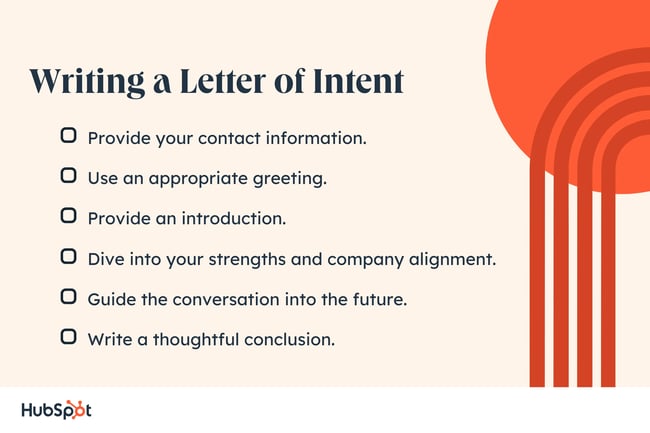
1. HubSpot’s All-in-One Video Script Template

You can modify scripts to match their brand voice and the preferences of their audience by adding sections and prompts that may be customized. This allows for more efficient storytelling and message delivery.

HubSpot‘s template enhances the overall quality of videos while saving time and effort by ensuring the smooth integration of text and visuals.

We’ve incorporated every aspect discussed in this blog post using HubSpot’s video script template below.

Download the template and get started today.

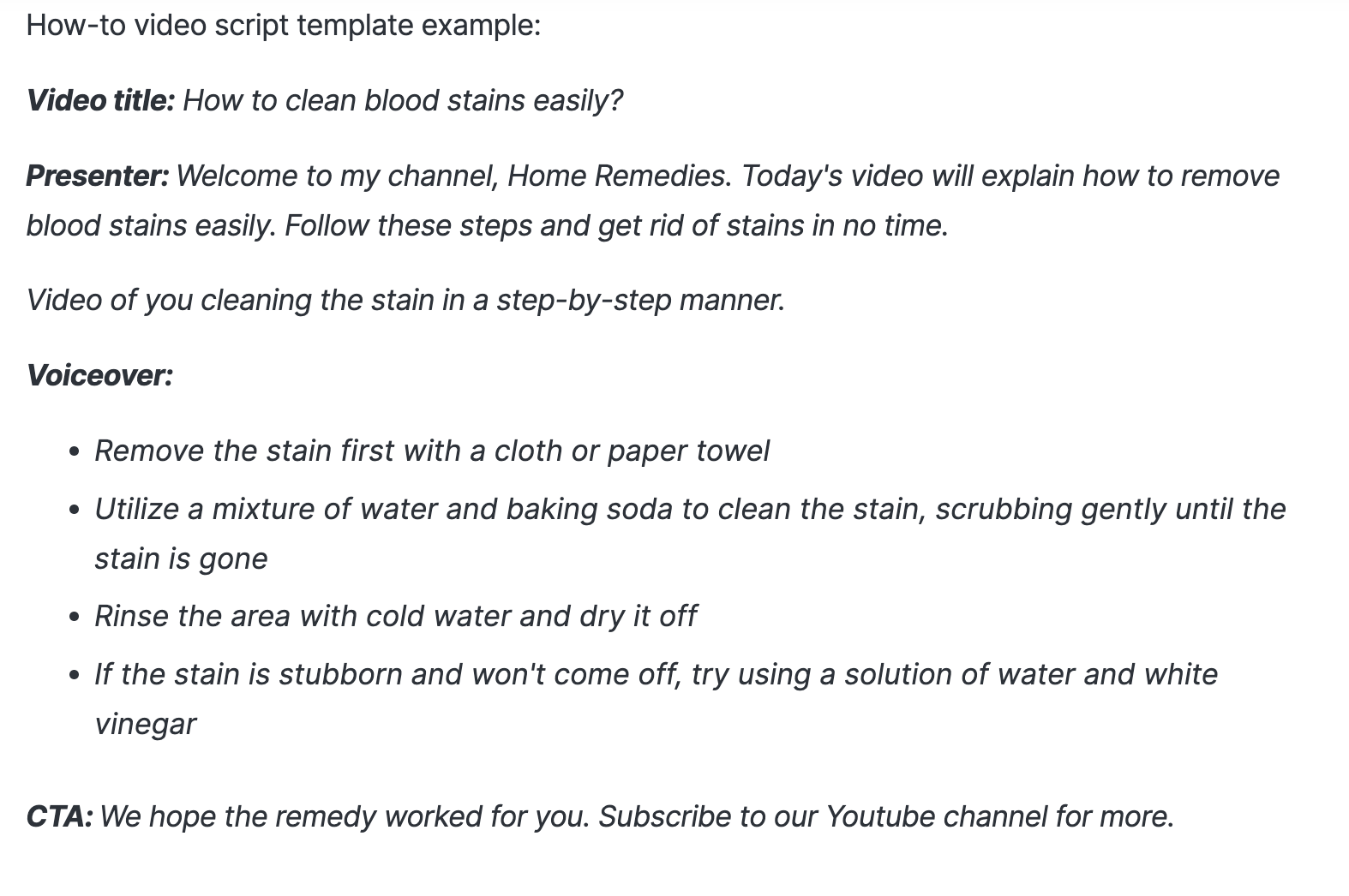
2. How-to Video Script Template

How-to videos, sometimes called instructional or tutorial videos, walk viewers through a concept, activity, or skill in a series of stages that make sense and are simple to duplicate.

So treat it like a step-by-step guide, and here’s what you can start with:

Intro

Don’t beat around the bush here. Simply state what you’re about to discuss and why the reader should focus on this topic.

Outline

Go ahead and break down the procedure step by step in straightforward terms and add examples to ensure better comprehension. You can add troubleshooting advice for common mistakes to foresee the reader’s questions.

Wrap It Up

Your conclusion should be to the point, only focusing on the main idea. Use language that encourages readers to start the process immediately.

Image Source

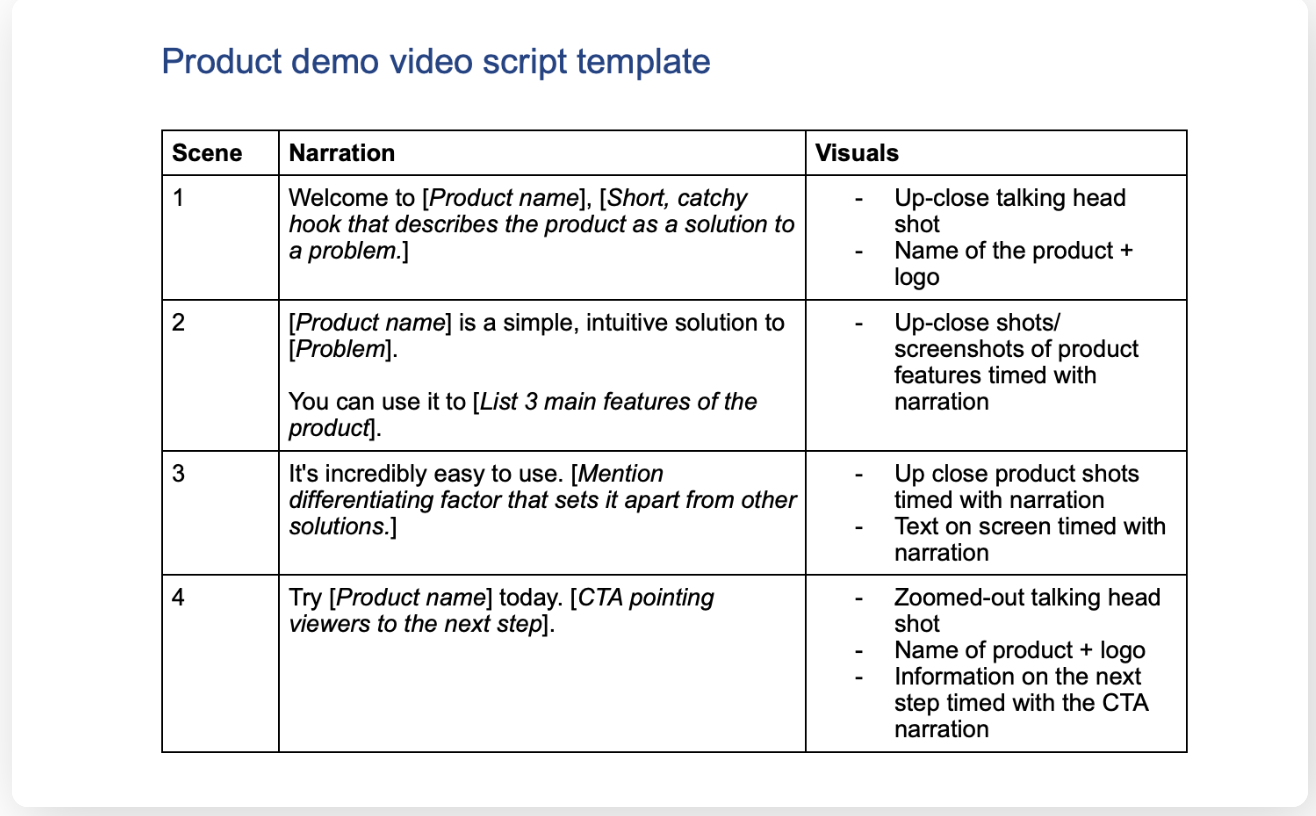
3. Product Demo Video Script Template

Scripts for product demonstration videos have a specific goal. They tell a story and provide visuals that lead to a single outcome: to promote awareness and pique the curiosity of other prospective buyers.

Beyond merely demonstrating a product’s functionality, these scripts also strategically place the product into several stages of the customer journey, highlighting its benefits and answering any queries or needs the potential customer may have.

Let’s see how you can create such a script:

Intro

This should only include the basic details of your product, i.e., what it does and why it’s useful. Make sure to highlight a differentiating factor so that it intrigues the viewers.

Steps + Features

Provide a brief overview of the product‘s noteworthy features, highlight how it addresses a problem or meets the target audience’s goals, and conclude with a direct illustration of how to use it.

To simplify the user’s journey, make sure your video script balances an educational tone and captivating hooks.

Call-to-Action

In the end, stress the significance of the points you have made. After that, add a call to action (CTA) that directs them to make a purchase or request more information, depending on where they are in the customer journey.

Image Source: product demo video script example

Image Source
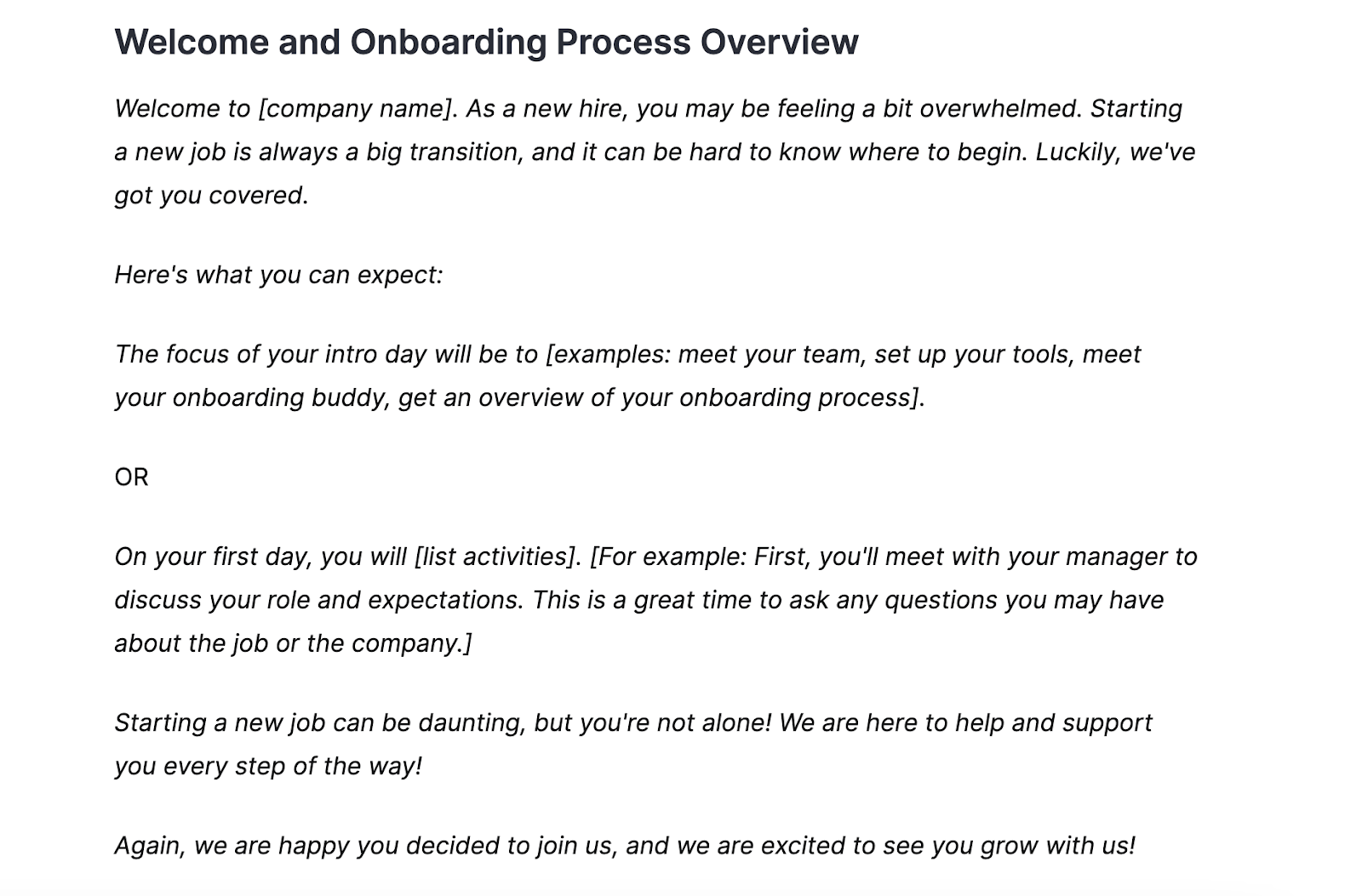
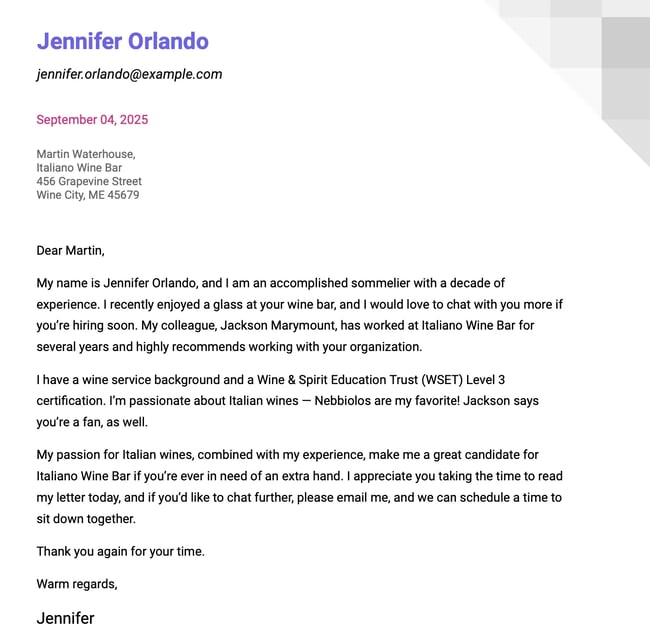
Onboarding Video Script Template

The onboarding process involves a lot of information sharing regarding the position, team, corporate culture, and role. You can provide employees with accurate information with an onboarding video script template.

It provides an organized framework for discussing crucial topics, dispelling misunderstandings, and accelerating onboarding. Corporate organizations typically have brand guidelines that provide all the required information, so take advantage of these resources.

Intro

Provide a brief overview of the organization’s history, mission, and vision at the beginning of the scriptwriting process. Then, use employee testimonies to highlight the corporate culture and values.

Break it Down

For any new employee, you must show them the key milestones, how they can achieve them, or even the KPIs the company has set.

Depending on what type of information you want to share, you could talk about learning opportunities, company frameworks, and much more. Ensure you don’t bombard them with too much information on the first day.

Consider splitting your script into 2 or 3 different ones so you can cover all your company has to offer.

Redirect Them

Once you’ve covered all the basics, you can direct your employees to other company resources for more information.

Image Source
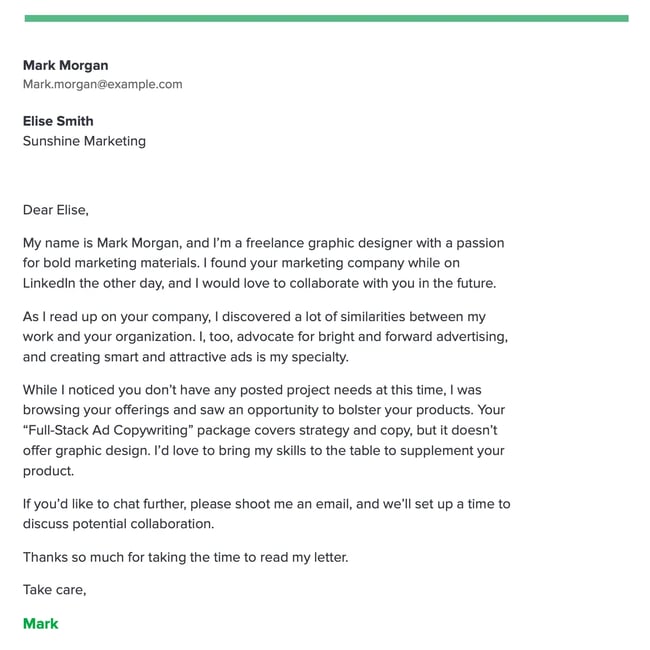
These are just a few examples of video script templates, but many more are out there.

So, here’s my secret formula to ensure you ace them all: Be direct, share as much as you can without overwhelming anyone, and finally, direct your viewers where you want them to go.

Video Script Example

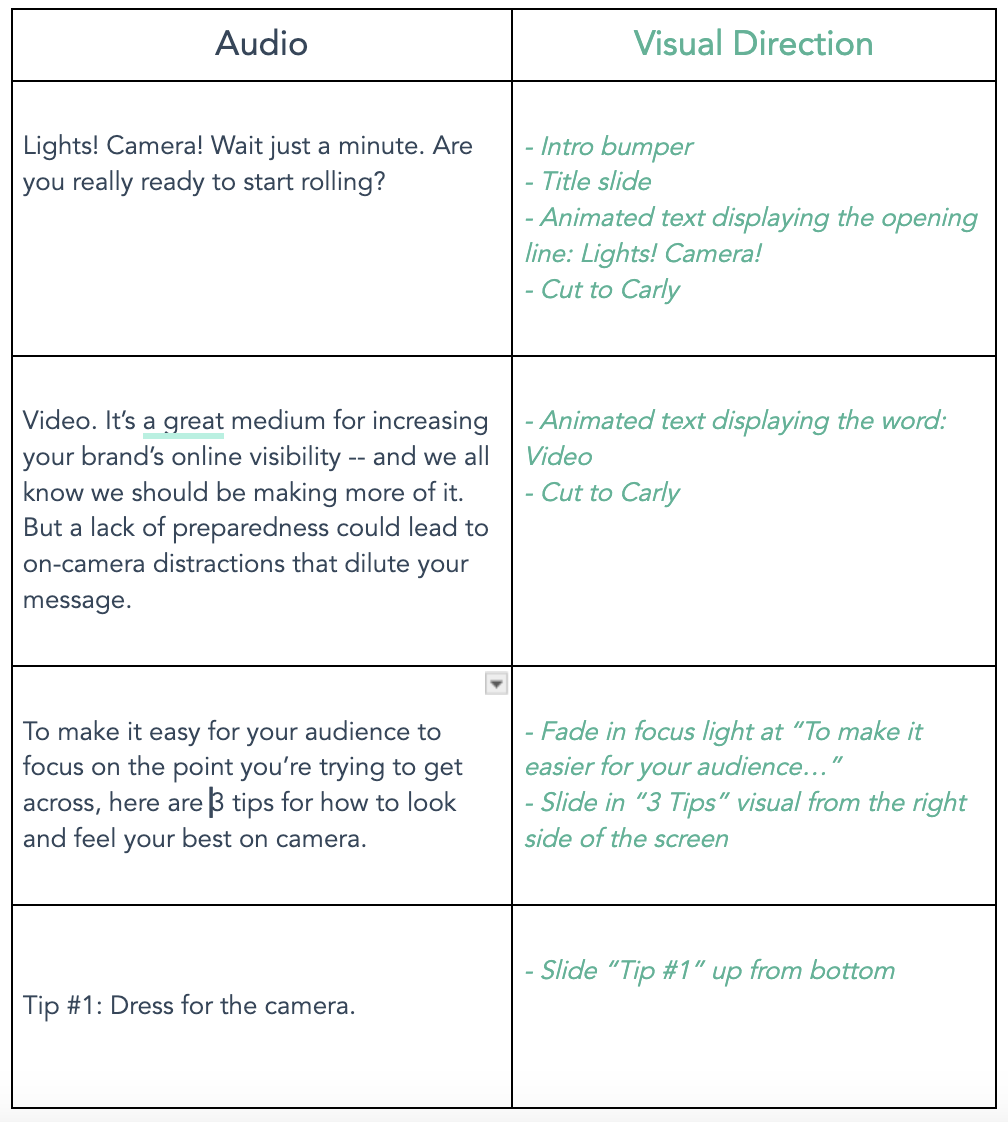
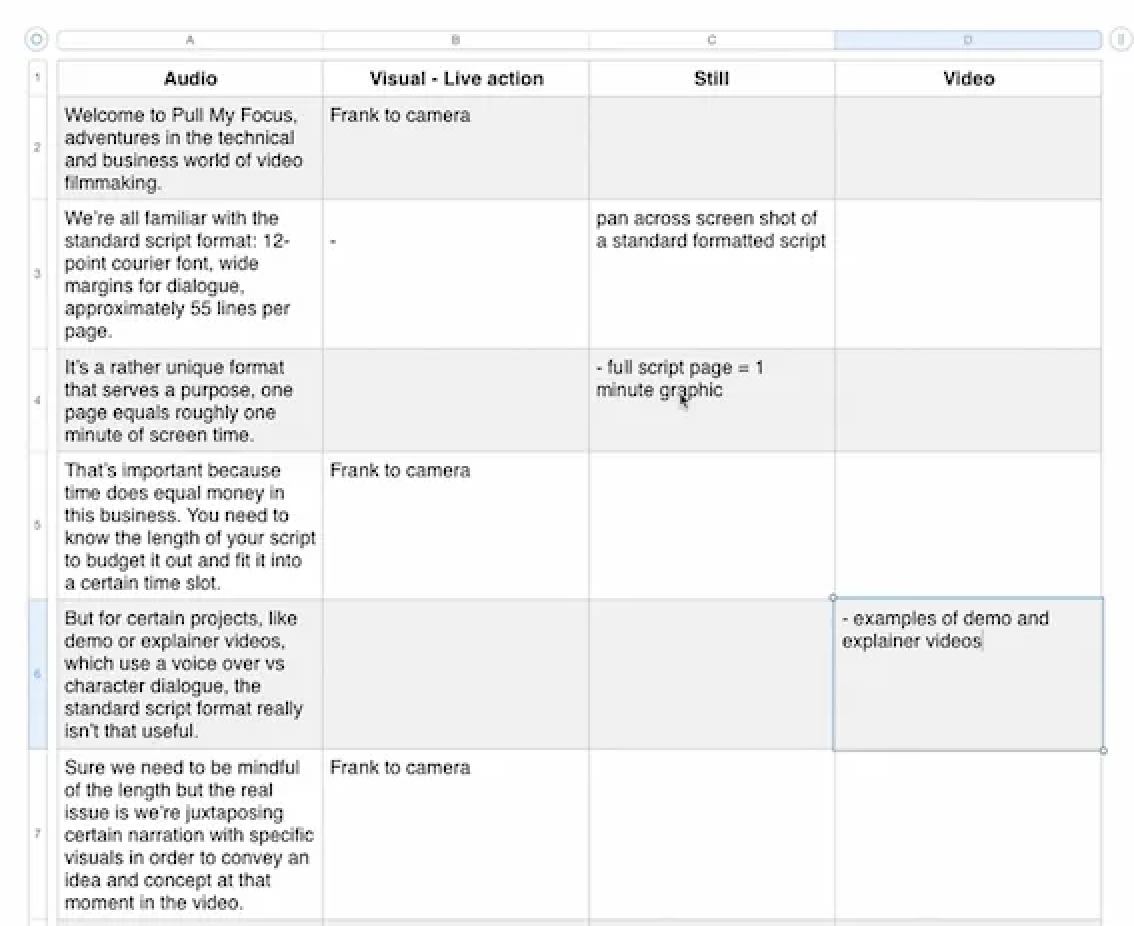
There are many different ways to write a video script. Usually, the format you use will depend on the length and complexity of your video. Adding columns can help you organize crucial information like:

  • Dialogue by scene
  • Run time
  • Effect and audio cues

Besides the video script template above, the examples below are other ways you can approach your video script.

Single-column script:

Two-column video script

Four-column script:

Image Source
1. Create a powerful beginning.

You have more viewers during the first 10% of your video than at any other time. So, your top goal when writing a video script is to hook viewers at the beginning so that they keep watching until the end.

Use the first few lines to introduce the main character or narrator and what the audience will learn by the end of the video. You can offer in-depth details later in your video.

For example, if you’re teaching viewers how to optimize their blog for SEO, your introduction might be:

“Hi there! I’m [narrator’s name] from [company], and in the next [length of video] minutes, I’m gonna teach you how to get your blog ranking on Google.”

And don’t forget that some viewers will be watching your video without sound. Viewers who are silently scanning your social media or website will still need to quickly understand what your video is about.

2. Be concise.

When it comes to marketing, shorter videos tend to be more compelling than longer videos. In fact, 68% of people said they’d rather learn about new products and services through a “short video,” according to a survey by Wyzowl.

To make short videos, you need a short script. Don’t write a script any longer than two pages; if you can keep it to one page, that would be even better.

The result is a succinct, engaging video that allows for a simple editing process.

3. Write in short paragraphs.

Time is important when you‘re writing a script. If you’re reading at an average pace, you’ll cover about two words per second.

Short paragraphs make it easier to understand the timing of your script as you write and edit it. They also make it easier to use a teleprompter.

So, try to keep your paragraphs to 3-4 sentences at most.

4. Support any B-roll with the proper callouts in your main narrative.

If your video will transition from a person speaking in front of a camera to a close-up shot of your product or a demonstration, write these cues into your script.

This way, anyone who reads it knows to introduce these things to the viewer.

What is B-roll?

These secondary shots are often referred to as B-roll, which take place while the person continues to speak off-screen. B-roll is one of the main differences between a blog post and a video script.

For example, if a blog post reads, “Take a look at the graph below,” it clearly refers to a graph embedded below that sentence. This phrasing won’t work on camera.

Instead, your video script might read, “In the graph, you see here” – while you show the graph on-screen.

Give cues to your characters or narrator.

These written exceptions help cue your talent to take certain unspoken actions while reciting the script. It’s also a good idea to add open loops so that your audience has an idea of what is coming next.

This will make them more willing to wait through a section that they might not find engaging.


5. Use graphics to make your video stand out.

Visual cues are important to add to your script. Graphics help you make your dialogue easier for viewers to understand and remember.

Options for graphics you can add to your videos include:

  • Photos.
  • Animations.
  • Infographics.
  • Moving text.

It can be tempting to add visuals just for the cool factor. But every image you add should offer value to your viewers. And if you think about these visuals as you write your script, they will feel more natural in your final video.

6. Add some variety to your script.

Writing video scripts is fun, so make sure that the fun shows. As you write and edit your script, try new things to spice up your dialogue, visuals, and structure.

These are a few ideas that can help you add something new to your scriptwriting.

Create backstories for your characters.

For example, say your main character is talking about finding a better toothbrush.

If her back story is that she was a cookie-loving pastry chef who’s prone to cavities, sharing her back story lets your audience know what inspired her when she was first starting out.

Use opposites.

Opposites are a popular concept in improv acting, and they can help when you’re adding variety to your script.

For example, say your script features two ambitious characters. One could be ambitious because they got poor grades in high school and they want to prove themself.

The other is ambitious because they have always performed well in school, and they want that to continue. These different motivations will help make their conversations more interesting.

Get inspired.

Films, videos, books, and pictures can all help you create a more vivid world for your video script. You can apply your inspiration directly to the scenes you write or use it for motivation when you’re feeling stuck.

Think visually.

Another way to add variety is to step back and look at the big picture. Writing an outline of your script on notecards or using a card for each scene can help you get a sense of where your script may need some work.

7. Plan to repurpose your video content.

While a great final video is your ultimate goal, you’ll also want to plan for the future as you write your script.

Most marketing videos won’t just post to a single platform. Your team will share clips on social media, in email, and during presentations.

So, it’s smart to plan for repurposing. As you write, think about moments in your script that could be engaging on their own.

Even if you‘re writing a script for a short video, try to write with quick clips in mind. For example, if you’re creating a two-minute video, plan to pull out a few five-second clips.

Use a Video Script to Create Incredible Videos

A video script can be a quick outline or a carefully written work of genius. Either way, it will form the foundation of your video and have a major impact on your results.

When you’re scripting, you can let your creativity run wild, test new ideas, and push boundaries. Use these steps, tips, and templates to invent and experiment. Get to work and help your business soar.

Discover videos, templates, tips, and other resources dedicated to helping you  launch an effective video marketing strategy. 

The Worst Super Bowl Ads — Avoid These Blunders

Software Stack Editor · March 15, 2024 ·

There’s a lot to be learned from the Super Bowl.

While athletes gather new motivation and coaches pick up a few more techniques, the Super Bowl is also an excellent place for marketers to gain tips.

How?

The ads, of course.

Between 80 and 100 ads run annually during the Super Bowl. Companies pay millions to have their commercials aired for 30 to 60 seconds.

While many companies see success from their ads, others end the game, facing some alarming results.

So, what makes a bad ad?

I’ll highlight the basics of bad advertising and walk you through ten of the worst Super Bowl ads ever. These lessons apply to all forms of marketing, too, so whether you’re a blogger or a scriptwriter, you’ll gain some takeaways.

Download Now: Free Ad Campaign Planning Kit

What makes an ad flop?

Super Bowl ads are some of the year’s most widely discussed marketing materials. Some ads make a significant splash, while others are memorable for not-so-good reasons.

As a marketer and as a consumer, there are a few things that make an ad flop, including:

  • Offensiveness. While some argue that “all publicity is good publicity,” offensive ads can negatively impact a company’s bottom line. A reputation can affect between 3-7.5% of revenues annually.
  • Confusing messaging. Confusing ads don’t always face the public backlash that offensive ads do, but they aren’t very effective. If viewers don’t know what the ad is or who it’s advertising, it’s tough to take action.
  • Irritating. Annoying ads sometimes have jingles that get stuck in our heads, but it’s not always good. In fact, irritating ads can diminish a brand’s authority.

In my experience, ensuring clear and appropriate messaging should be a priority in all marketing areas, regardless of the ad format. When companies disregard clarity and appropriateness, they become vulnerable to a flop.

The Worst Super Bowl Ads of All Time

The Super Bowl has been a powerful platform for advertisers since its launch in 1968. Even in the very first year of the event, companies paid $150,000 for one minute of ad coverage.

With 58 years of commercials, there are some memorable Super Bowl ad flops. Let’s look at some of the worst Super Bowl ads ever and what made them a flop.

Pepsi x Kendall Jenner

This Pepsi ad, launched in 2017, featured supermodel Kendall Jenner giving a Pepsi to a police officer at a protest. After taking a sip of Pepsi, the officer smiled, and the protesters laughed and cheered in glee.

What Makes It a Blunder

This Super Bowl ad was criticized harshly for being “tone-deaf.” While the ad may have intended to bring awareness to social justice issues, viewers felt that the clip diminished activists’ struggles.

It wasn’t helped by the fact that the influencer they used had little to do with social justice and was a bit controversial herself. My experience as a marketer has taught me that you need to care about the message and the messenger.

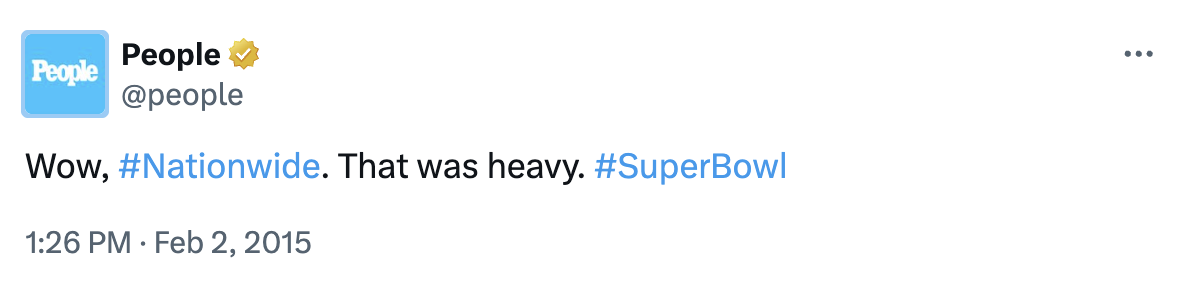
Pepsi’s neglect of both created a guarantee that this ad would flop — and many took to Twitter to share their opinions.

Lifeminders

In 2000, Lifeminders.com paid for what is now known as the cheapest Super Bowl ad of all time. It starts with text on a yellow screen, reading, “This is the worst Super Bowl ad of all time.”

The ad goes on to describe the company, which offers personalized emails.

What Makes It a Blunder

While I think this ad was intended to be funny, it was somewhat off-putting. The ad confused audiences with unclear messaging because it didn’t provide much information about the company.

What it did say about the company also seemed in direct opposition to the ad’s style, which was exceedingly bland.

Despite the ad’s poor reception, Lifeminder said they saw 700,000 new customers in the weeks following their Super Bowl ad — so it wasn’t a total flop.

Sad Robot

The infamous GM Sad Robot ad aired in 2007. The ad begins with a robot being fired for making a mistake. Then, the robot tries to get a new job but fails. After failing a few new jobs, the robot leaps off a bridge, insinuating suicide.

Then viewers discover this is only a dream, and a message about GM’s 100,000-mile warranty appears.

What Makes It a Blunder

GM faced extreme backlash for this ad. At its surface, the ad is unsettling and disturbing, offending audiences. Super Bowl audiences vary in age; overwhelmingly, ads are lighthearted or positive.

This tone clash was jarring for viewers. As a marketer, I know the value of ensuring your tone aligns with your context.

GM’s ad was extremely poorly timed, as it was released amidst significant layoffs. The ad’s messaging spoke directly to this in an insensitive and offensive way.

5 to 9

In this 2021 Super Bowl ad for the website builder Squarespace, you can hear Dolly Parton singing a revamped version of her classic, “9 to 5.”

Instead of “9 to 5,” she’s singing “5 to 9,” highlighting side hustles that bring meaning to employees’ lives.

What Makes It a Blunder

Squarespace and Dolly Parton both received criticism for this Superbowl commercial. Many thought the ad was an offensive suggestion that individuals needed to be overworked to have value.

Additionally, the song isn’t catchy like the original, landing the ad in the irritating category.

Make Safe Happen

Nationwide’s 2015 Make Safe Happen ad featured a young child describing things they’d never do. They’d never get cooties or get married, for example.

At the end of the ad, the young child states that they wouldn’t get to do any of those things because they died in an accident. Then, it said that Nationwide cares about what matters.

What Makes It a Blunder

This ad is one of the most widely criticized ad campaigns ever. It’s a highly morbid ad, considered overly dark and unnerving. And the ad intended to sell insurance, which people found exploitative and offensive.

Overall, this ad flopped on more than a few marks.

Perfect Match

GoDaddy’s Perfect Match ad aired in 2013. It features a supermodel and a nerd, and the spokeswoman states that GoDaddy is both sexy and smart.

Then, as a representation of the fusion of those two attributes, the clip features 10 seconds of kissing — a third of the entire ad.

What Makes It a Blunder

This GoDaddy ad was criticized for making viewers extremely uncomfortable. While the intent was certainly playful, viewers felt the kiss lingered for far too long and became inappropriate for television.

Like many of the ads on this list, GoDaddy neglected to consider the context of its ad.

Ace Metrix, an ad ranking site, stated that this ad had the 2nd lowest rating for Super Bowl ads that year.

Sony Experia

Sony launched an ad for a new Android phone that contained gaming controls in 2011. The ad featured a man wandering through dark streets and ending up in a back room with surgery performed on an Android.

The Android received human thumbs and went out onto the streets, ready to game.

What Makes It a Blunder

The 2011 Sony ad made viewers extremely uncomfortable. The sight of human thumbs on the robot was visually jarring and, for some viewers, terrifying. Additionally, the messaging in the ad was fairly confusing.

While the end of the commercial clarified what was being advertised, there was little information about the product throughout the 60-second ad.

As a marketer, it’s vital to intentionally use all the space you’re given. Whether you’re writing an educational blog or a commercial script, you have to consider your goal: selling a product. Sony neglected to prioritize that goal in this ad.

MLK Dodge Ram

In 2018, Dodge Ram’s Super Bowl ad reinforced the brand’s motto, “Built to Serve.” The commercial featured powerful images of folks engaging in acts of community and service.

The ad was accompanied by an MLK sermon from precisely 50 years prior on servanthood.

What Makes It a Blunder

While some perceived the ad as powerful and inspirational, others found it a diminishing way to honor Martin Luther King, Jr. Critics were outraged by the use of an MLK speech to sell trucks.

Overall, the commercial was thought by many to be an exploitative use of Martin Luther King’s words.

Temu’s 2024 Ad

If you watched the Superbowl this year, you certainly saw Temu’s advertisements, which aired not once but four times. This ad features animated visuals of people’s lives being improved by Temu, with low prices for each item Temu provides.

It’s accompanied by brand audio and concludes with Temu’s motto: Shop like a billionaire.

What Makes It a Blunder

The Temu ad didn’t offend (though there are many critics of the brand itself). Instead, the frequency of the ad annoyed viewers and resulted in a significantly negative perception.

Viewers took to social media to lament their irritation with the Temu ad that really did play four times.

The brand likely spent tens of millions on this campaign, as four 30-second ads is no cheap deal — and the frequency turned out to be an issue.

Groupon’s Tibet Ad

Finally, we’ll take a look at Groupon’s 2011 Super Bowl ad. The first half of the ad featured a narrative about the people of Tibet and how the culture is “in jeopardy.”

Then, the ad cuts to Timothy Hutton sitting in a restaurant being served Tibetan food by a Tibetan man. Finally, Timothy explains that he got this delicious meal for a deal, thanks to Groupon.

What Makes It a Blunder

Groupon’s ad faced an exceeding backlash for offensiveness. The ad was criticized for racism and diminishment of the struggles facing refugees of Tibet.

It was a poorly timed, poorly executed ad — and a major flop. The ad was pulled promptly from television after viewer response.

What We Can Learn From Ads That Flop

As we wrap up our look at some of the Super Bowl‘s biggest ad mishaps, let’s shift our focus to what we can learn and how we can innovate.

The key takeaway? Stay authentic, positive, and aligned with your audience‘s preferences. Those ads that didn’t hit the mark are perfect examples of what not to do, offering valuable insights into crafting effective marketing.

We have a golden chance to transform these missteps into major wins. Aim to create messages that resonate well — be engaging, considerate, and reflective of your audience’s interests, backed by solid data for relevance.

Remember to prioritize clarity and your brand’s integrity regardless of your company or ad format. Even with bold content, ensuring it’s received well should be a top concern.

Keep it casual yet professional, and let’s make marketing that truly stands out.

Improve your website with effective technical SEO. Start by conducting this  audit.  

How to Create an SEO Strategy for 2024 [Template Included]

Software Stack Editor · March 14, 2024 ·

Here‘s a cliche among digital marketers: Search engine optimization (SEO) isn’t what it used to be.

Here‘s a true statement you don’t hear as often: Your SEO strategy shouldn’t focus on keywords.

These days, most businesses understand the basic concepts of SEO and why it’s important.

→ Download Now: SEO Starter Pack [Free Kit]

However,  when developing and executing a sound SEO strategy for your business, just creating content for the keywords your customers are searching for is both arduous and wrong.

In this post, we’ll explain an SEO strategy and how you can create your own to help you meet your content marketing goals.

Know precisely what you need? Jump to one of the following sections:

  • What is an SEO Strategy?
  • SEO Content Strategy
  • Best SEO Examples
  • SEO Process
  • SEO Monthly Plan

An SEO strategy is essential because it helps you stay on track when creating content. Instead of just making what you think people are looking for, your plan will ensure you create content people search for.

For content marketing, an SEO strategy is a critical piece of the puzzle because it is how your content will be seen in the first place, especially in search engine result pages (SERPs). If your content is scattered and unorganized, search engine bots will have more difficulty indexing your site, identifying your area of authority, and ranking your site pages.

Mobile SEO Strategy

Keeping mobile SEO in mind when creating your overall strategy is crucial. Mobile optimization ensures your site and content are available and accessible to visitors on mobile devices. (That means they can have the same experience and receive the same value as desktop browsers.)

Mobile optimization is also essential because Google practices mobile-first indexing. Instead of crawling a desktop site, the algorithm will use the mobile version of your site when indexing and ranking pages for SERPs.

Aside from mobile-first indexing, mobile SEO strategy also matters to consumers. According to HubSpot Blog’s 2023 Web Traffic & Analytics Report:

“54% of consumers use their phones most often when looking up a question on a search engine.”

Over half of online shoppers pick up their phones to ask questions that may lead to purchases. Optimizing your site to reach and capture that market share makes sense when all’s said and done.

While it’s not an entirely separate process, there are distinct considerations for mobile SEO, like monitoring page speed, responsive site design, local SEO, and creating high-quality content, regardless of the device it’s viewed on.

Expert Insight

I spoke with Mersudin Forbes, a portfolio SEO director and agency advisor with 15 years of experience in SEO.

“When it comes to thinking about a mobile strategy for SEO, it is important to think about how a user is seeking to complete their desired transaction and ensuring that this matches their expectations on mobile,” says Forbes.

Forbes explains that it’s not only Google that practices a mobile-first indexing system but most search engines. So, ensuring that relevant content and functionality is surfaced on mobile remains essential.

Pro tip: “You may also want to test your website speed by throttling page speed tests to 3/4G to ensure that user experience and page responsiveness don’t decline with less bandwidth,” says Forbes.

What is a search engine optimizer (SEO)?

Search engine optimizers (SEOs) optimize websites to help them rank higher on SERPs and gain more organic traffic. A search engine optimizer is a highly specialized content strategist who helps a business discover opportunities to answer people’s questions about their respective industries.

There are three types of SEO that an SEO strategist can focus on:

  • On-page SEO. This SEO focuses on the content on site pages and how to optimize it to boost the website’s ranking for specific keywords.
  • Off-page SEO. This SEO focuses on links directed to the website from elsewhere. The number of backlinks a site has from reputable sources helps you build trust with search algorithms.
  • Technical SEO. This SEO focuses on a website’s backend architecture, like site code. Google cares just as much about technical set-up as it does content, so this position is essential for rankings.

Bear in mind that every business has different objectives, so it’s an SEO’s job to examine their industry, determine what their audiences care about, and develop a strategy that gives them what they’re looking for.

Below, I’ll go over some steps you can take to ensure your SEO strategy sets you up for success.


SEO Strategy for Beginners

I’ve been an SEO for the more significant part of the past decade, and I can tell you that our industry has never seen anything like this before.

The search landscape is no longer the same in 2024. With the advent of search AI and AI-generated content, we must implement new approaches to keep our sites ahead of unprecedented competitive challenges.

The good news is that the basics of SEO remain the same. Focus on the user first, always. Focus on helping them, always, and not just gaming the algorithm. Your goal isn’t just to rank highly — it’s to get the right content in front of the right people.

I will walk you through a basic SEO strategy I would use to start a site in 2024 for the first time. Later, below, I’ll cover a more sophisticated SEO content strategy that has generated millions of organic traffic visits for the HubSpot blog.

Let’s get started.

1. Search for your company’s head term on Google.

If I were trying to start an SEO strategy in 2024, my first step would be to look for my company’s head term on Google.

“Head term” refers to the general word or phrase you’d use to describe your product, service, or even the topic you’d like to write about. If I were trying to launch HubSpot for the first time, I would look up “marketing software,” our product’s head term.

And if I were trying to start a blog about publishing, I’d look up “publishing blog.”

Head terms are usually high-volume, meaning many people search for the terms every month. That makes them more challenging to rank for.

What we’re trying to do with this step is not find keywords but rather build our awareness of the search landscape. Take note of everything you see, including the terms suggested after you type in your head term.

We don’t need to use any fancy tools yet, though you’re welcome to use them if you’re familiar with SEO tools. With Semrush, for instance, you can look at the exact number of searches a term receives and an estimation of how difficult it’d be to rank on the first page.

But I’d caution against using tools just yet. Looking directly at the SERPs as you create an SEO strategy is crucial because Google comes up with new SERP features daily.

I’m not just talking about AI-generated results. Featured snippets, local packs, image packs, knowledge packs, and “People Also Ask” boxes can be valuable sources of information that can help you optimize your website later.

2. Look at Google’s suggested searches and filters.

After looking up your head term, the most critical step is to look at Google’s generated filters, highlighted below.

Don’t look at the standard filters, such as “Images, “Shopping,” “Maps,” and so on. You’re looking for the unique filters Google generated for your head term.

These filters are invaluable for answering several questions:

  • What are people looking for that’s related to your head term?
  • What would they find most useful?
  • Does your service or product match what people are looking for?
  • Can you offer a product page or article that people would find helpful?

If I were building a product page for Marketing Hub, I would be able to answer these questions favorably. Marketing Hub is free, small businesses can use it, and it’s useful for digital marketing.

That means I could probably address a person’s goal when they’re looking for this term. This is good strategic information to have. I wouldn’t execute it just yet because I haven’t considered how difficult it is to rank for this term.

Remember: Head terms are more difficult to rank for, so you’ll want to aim for longer keywords (also called “long-tail keywords”) in your SEO strategy. You can begin getting ideas on long-tail terms by clicking on the filters below your head term.

Now, for my publishing blog, I see that I could focus on the publishing industry or self-publishing, as seen by the filters below.

That’s good news — but later down below, I see that Google has included a “What to read” search feature.

That tells me that a blog could be a good fit for this term but that people are also looking for books on publishing. I would then revise my initial head term or revise my blog strategy to slant toward thought leadership.

3. Examine the SERPs.

Once you’ve found a good head term and perused the filters, take a look at the SERPs. I’d recommend going several filters deep so you can get an approximation of a long-tail keyword.

We’re looking for several pieces of information here:

  • How many people are trying to rank for this term?
  • What kinds of publishers and companies are ranking? Well-known publishers like the New York Times or Nerdwallet, or niche publishers and companies?
  • What is located “above the fold” (the area in the upper part of the page before the user scrolls)?
  • What SERP features is Google including?
  • What kinds of pages and articles are ranking?

For “marketing software for small business,” a relatively long-tail keyword, I saw that Google delivered 850M+ results.

Yikes. That’s a lot of competition.

But the truth is Google has excellent crawlers. It will find just about any website related to a term and rank it to answer a searcher’s query. Don’t be discouraged by large search results.

You should pay close attention to what’s happening in the results themselves. For instance, “marketing software for small business” has multiple SERP features:

  • Sponsored ads.
  • “From sources across the web” product panels.
  • A “People also ask” box.

Yikes again. All of these conspire to give us fewer chances for ranking for this keyword because the SERP features push us down, and we’re already competing against publishers like G2.

Even if we managed to rank on the first page, our click-through rates would probably be lower because this is such a competitive term. Click-through rate refers to the number of people who see your search result compared to the number of people who actually click on it.

I would do one of the two things below:

  • Search for an even longer long-tail keyword to try to rank for.
  • Continue examining the SERPs for opportunities related to the same search intent, like related searches and FAQs.

Search intent refers to what the user wants to do when they input a keyword in Google.

If I search “how to bake kale chips,” then I intend to not only bake kale chips but also stay “healthy.” As smart as it is, Google would deliver both recipes and related questions about kale chips’ “health value.”

The SERP features for “marketing software for small business” are all supposed to serve a single intent: A searcher who wants to market their small business using software.

Therefore, every SERP feature you see is an additional opportunity to serve content to the same searcher.

The “People also ask” box is a gold mine for finding related questions that the same user probably has, giving us an opportunity to answer those questions.

With SEO, what matters most is not just that your page ranks — but that the right user finds you and ends up becoming a customer (or signing up for your newsletter, subscribing to your YouTube channel, etc).

If I were creating an SEO strategy for Marketing Hub in today’s search landscape, the “People also ask” box is probably where I’d start for keyword and content ideas, and not the head term itself.

The questions, after all, serve the same user and are much less competitive.

You could also use a tool such as Answer the Public to find questions and related terms.

Image Source
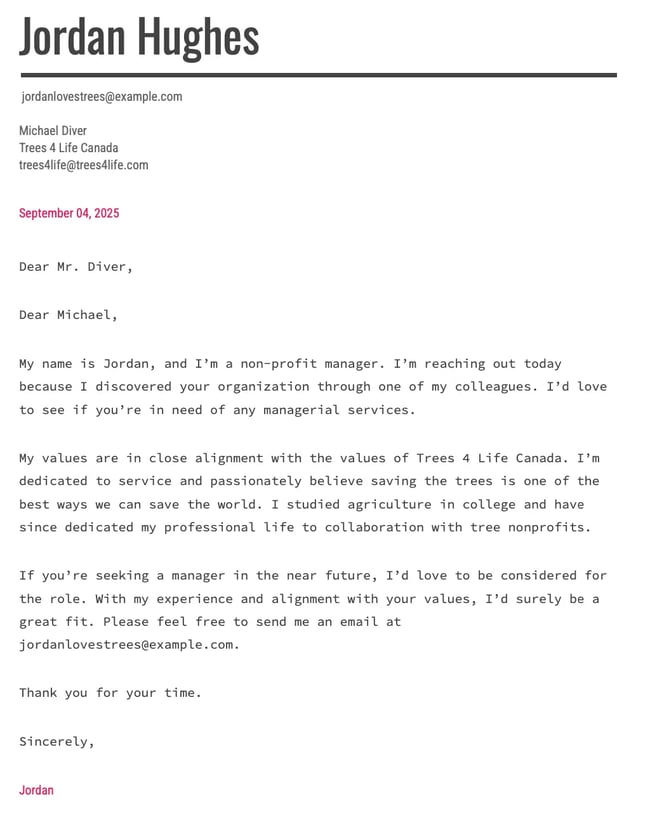
Of course, don’t forget a classic: Looking at suggested searches at the bottom of the SERPs. These will give you alternative terms you could try to rank for and additional long-tails and hints about your top competition.

4. Analyze your competition.

When you find a keyword you’re happy with, it’s time to start looking at your competition.

I would say that with SEO, it’s less about what we do and more about what they do than beating them. The thing is, though, that how we beat competitors has changed. It’s no longer about who has the longest blog post or the most backlinks (although these are still important).

The Google search algorithm has gotten more complicated than ever. It’s important to take into account a wide variety of factors like website age, authority, user experience, and even website structure.

Looking at these elements can help you decide what you should put on your website and learn what Google is currently favoring.

When trying to rank for the term “publishing blog,” I found three top competitors: Selfpublishing.com, thatpublishingblog.wordpress.com, and janefriedman.com.

I would look at several things when trying to beat these competitors.

  • What kind of content do they publish?
  • What kinds of categories do they address?
  • What’s the publishers’ or owners’ personal and professional history? Jane Friedman, for instance, is a known industry veteran.

The first question, in particular, is essential for mapping out my SEO content strategy.

For instance, selfpublishing.com has the following categories:

Image Source
If you’d asked me years ago how I would approach beating this publisher, I would say that I would copy all of their categories and add three more just for kicks.

But Google is no longer the same. It values authority and expertise. It wants to know that you know what you’re talking about and that you’re not just gaming the system.

Therefore, based on my personal expertise, which is in children’s fiction, I’d probably choose two to three categories where I feel I could create a wealth of content: Writing, Children’s Fiction, and Publishing.

If I were trying to rank for “marketing software for small business,” I would ask:

  • What kinds of articles or pages are ranking?
  • Because this is such a competitive term, what kind of authority or history do I need to rank?
  • Could I create something similar?

Look at your competitors’ pages, and keep their qualitative attributes, such as their history in the industry, in mind. But don’t be discouraged by long-time industry players.

When I was an SEO at a transportation startup, we were competing against transportation companies that had been in the industry for 30+ years.

But with a strong content SEO and backlink-building strategy, we managed to get one of our transportation partners to the top of the SERPs.

Once you’ve scanned your competitors, it’s time to dive into a simple three-pronged strategy:

Authority, content, and backlinks.

5. Generate online authority.

If content is queen and backlinking is king, authority is the kingdom.

Authority, in fact, is everything.

These days, SEO isn’t just about writing SEO-optimized content and hoping the algorithm will discover you.

Once upon a time, you used to be able to include the keyword in the title, headings, and text and rank well.

Now, there are a wide variety of content quality factors that Google takes into account, such as:

  • Expertise.
  • Experience.
  • Authority.
  • Trustworthiness.

Collectively, these are called E-E-A-T, and they’re part of Google’s Search Quality Rater guidelines. Google wants to know that you’re qualified to deliver information to searchers. And if you’re selling a product, it wants to know that you’re legitimate.

Let’s go back to the publishing blog example. Jane Friedman, who ranks #3 for the term “publishing blog,” is a well-documented industry veteran. Her site ranks for 30K+ keywords, and she has more than two hundred thousand backlinks.

Her blog post, “How to Find a Literary Agent,” ranks #1 for the highly competitive head term “literary agent,” above top publishers such as Reedsy and even Wikipedia.

Image Source

Why?

Because Friedman has plenty of E-E-A-T — she’s an expert with experience, and therefore, she’s authoritative and trustworthy.

There are several ways to build your authority when creating an SEO strategy for a new site or company:

  • Include your credentials across several sources on the web: LinkedIn, Facebook, your personal website, etc.
  • Interview experts and include their insights in your pages and blog posts.
  • Hire freelance writers who specialize in your niche, and use their name, content, and insights on your website.
  • Publish guest blog posts in authoritative blogs and websites to slowly build a digital footprint.

The Google algorithm is smart. It can cross-reference hundreds of thousands of sources to determine whether you’re an authority in the field.

To make it a bit easier for the algorithm, you should also make your authority clear, as Jane Friedman does below in her biography.

Image Source

If I were launching Marketing Hub for the first time, I would:

  • Cite my nearly decades-long digital marketing experience on the “About” page.
  • Publish guest blog posts on marketing blogs and websites.
  • Start another media outlet, such as a podcast or blog, to publish my marketing opinions and insights.
  • Publish an ebook with my marketing expertise.
  • Hire software developers who’ve created proven products before — and publicize that Marketing Hub was made by the developers who made X.

As you foster authority, you should concurrently create content on your website, which I cover next.

6. Create search engine optimized content.

This step is probably what you thought of when I first started talking about an SEO strategy. And for good reason. According to the web analysts and SEO experts surveyed for HubSpot Blog’s 2023 Web Traffic & Analytics Report:

“Optimizing your on-page content around target keywords is the most effective strategy for ranking highly in SERPs.”

Remember all that research we did at the beginning? It finally comes into play because it’s time to create content that’s optimized for those long-tail keywords.

I recommend using a tool to help you find potential keywords, such as Ahrefs or Semrush.

Here’s a guide on keyword research to help you out.

I follow one simple rule when creating content I want to rank: Write for humans first, search engines second.

I like to think of it this way. I’m writing an article or page to help a person. But also to hold the algorithm’s hand a little bit. Google is smart, but not so smart to rank your page unless you give it a few hints.

Therefore, I like to stick to the basics.

1. Include the Keyword in the Page Title, H1, Text, Meta Description, and URL.

I generally include the keyword a few times on and off your page to give Google a hand.

As an example, our product marketing team optimized Marketing Hub’s page to a T.

What we like: They include the keyword in the page title (which is the text that appears in search results, pictured above), the H1, and the very first line of text at the top of the page.

And, it works: We rank #3 for the highly competitive term “marketing software.”

You’ll also want to include your keyword in the meta description and the URL.

2. Be helpful.

Be helpful with your content. Ask yourself: When a person lands on this page, what would they be looking for?

You can answer this question by examining the SERPs and your competition. You can also think through your reader’s thought process and their search intent.

For Marketing Hub, we included commonly asked questions, even those related to one of our competitors.

Image Source

And Jane Friedman includes information on what to expect from a good literary agent.

Image Source

What we like: Notice that this content is not necessarily beautifully formatted, nor does it target a specific keyword. It’s supposed to help the reader first and foremost — and by helping the reader, you help yourself.

After all, Google only wants to rank content that genuinely helps someone do or learn something.

3. Include alt text and compress images.

Image alt text still remains one of the most underrated ways to optimize your page.

Not only does it improve web accessibility, but it gives you a chance to rank in Google’s image pack and image results. That ultimately means more traffic to your website.

And if you don’t believe me: Here’s a traffic snapshot from HubSpot’s image pack rankings (look under the column titled “Traffic”).

Just from our position for “resignation letter example,” we’ve received more than 6K organic visits.

Not surprisingly, the image that ranks has the alt text “gracious resignation letter sample.”

In addition to describing what the image contains, you should include your keyword in the alt text to give you a better chance of ranking.

Lastly, don’t forget to compress your images so that your page loads more quickly.

4. Build Internal Links

After creating content, internal linking is paramount.

It creates a network for Google to follow. Remember, the Google algorithm is smart, but it still needs a hand here and there. How will it know certain pages are topically related unless you tell it?

So, by internally linking from one page to another, you’re giving the algorithm a pattern to follow.

At the HubSpot blog, we call this the pillar-cluster model, which helped us overcome a year-long traffic plateau.

By internally linking, you’re telling the algorithm that a number of your pages are interrelated. You’re also signaling that you cover specific topics at length and that you’re, therefore, an authoritative resource.

And authority is everything.

Expert Insight

I reached out to Nedim Mehic, who has 10 years of experience in SEO. He’s also the founder of Beki AI, an internal linking software.

“As an internal linking software founder, I might be biased, but I can confidently say that in 2024, internal linking remains a pillar of effective SEO strategies,” says Mehic.

Mehic explains that by strategically interlinking pages, we accomplish two major goals: “We guide users in navigating the site with ease and assist search engines in effectively understanding and organizing our content.”

Aside from achieving those two goals, internal linking can garner significant results in other areas. “I’ve seen so many websites find success after improving their internal linking strategy that they neglected for years,” says Mehic.

When I asked what “success” looks like in this context, Mehic cited a user in the beta test phase for Beki AI. The user reported an 800% click increase after adding relevant internal links to a page that was struggling with traffic.

7. Build backlinks.

Content is still queen — but she has to be accompanied by her king: Backlinks.

You could have the most beautiful, SEO-optimized website, but Google won’t rank it unless you receive “votes” from other sites.

We’ll cover backlinks again for your SEO content strategy below. However, I can’t underemphasize how important they are, so I’m going to repeat it again.

Backlinks are the most quantitative way to build authority in your industry. The more backlinks you have, the more authoritative you seem to the Google algorithm.

Why? Because a site wouldn’t link to you unless you were a legitimate, trustworthy source of information.

Here’s a selection of my favorite backlink strategies:

  • Publish guest blog posts on other publishers’ websites and link back to your site.
  • Write helpful content that other sites will want to link to.
  • Publish original research that other publishers will want to link to.
  • Partner with companies on co-marketing campaigns.
  • Join industry membership organizations with public profiles.
  • Sponsor events and conferences.

Here’s an example of some original research by Design Bundles that generated backlinks.

Image Source

What we like: The research isn’t just compelling but highly tailored to the company’s niche. That means it likely generated relevant backlinks, and thus relevant viewers, to the website. The research methodology is also sound. Plus, we love that Design Bundles repurposed the research and press coverage across its social channels. Here’s how The Calvert Journal featured the research.

Next up, I’m going to dive a little more deeply into the SEO content strategy that’s driven millions of visits to the HubSpot blog.

1. Make a list of topics.

To get your SEO content strategy off the ground, make a list of topics you’d like your content to address.

To start, compile a list of about 10 words and terms associated with your product or service. Use an SEO tool (Google’s Keyword Tool, SE Ranking, Ahrefs, SEMRush, or GrowthBar, just to name a few) to research these words, identify their search volume, and come up with variations that make sense for your business.

By doing this, you are associating these topics with popular head terms (or short-tail keywords, if you’d prefer), but you’re not dedicating individual blog posts to these keywords. Let’s go over an example of this process using the image below.

Let’s say a swimming pool business is trying to rank for “fiberglass pools,” which receives 110,000 monthly searches. This short-tail keyword can represent the overarching topic for creating their content, but the business will also need to identify a series of related keywords to include in their content. For example, they could opt to use the “fiberglass pool prices” or “fiberglass pool cost” to achieve additional rankings for the overall keyword of fiberglass pools.

Using search volume and competition as your measurement, you can create a list of 10-15 short-tail keywords that are relevant to your business and are being searched for by your target audiences. Then, rank this list based on monthly search volume.

Each of the keywords that you’ve identified are called pillars, and they serve as the primary support for a larger cluster of long-tail keywords, which we’ll discuss below.

2. Make a list of long-tail keywords based on these topics.

During this step, you’ll begin optimizing your pages for specific keywords. For each pillar you’ve identified, use your keyword tool to identify five to 10 long-tail keywords that dig deeper into the original topic keyword.

For example, we regularly create content about SEO, but it’s difficult to rank well on Google for such a popular topic with this acronym alone. We also risk competing with our own content by creating multiple pages that are all targeting the exact same keyword — and potentially the same SERPs.

Therefore, we also create content on conducting keyword research, optimizing images for search engines, creating an SEO strategy (which you’re reading right now), and other subtopics within the SEO umbrella.

This helps businesses attract people who have varying interests and concerns, and ultimately creates more entry points for people interested in what you have to offer.

Use your long-tail keywords to create blog posts or web pages that explain the specific topics within the pillars you’ve selected. Together, all of your long-tail keywords create a cluster around a pillar topic. Search engine algorithms depend on the relationships between clusters to connect users with the information they’re looking for.

Here’s a short video on this concept:

[Video: Topic Clusters: The Next Evolution of Content Strategy]

Think of it this way: The more specific your content, the more specific the needs of your audience can be, and the more likely you‘ll convert this traffic into leads. This is how Google finds value in the websites it crawls — the pages that dig into the inner workings of a general topic are seen as the best answer to a person’s query and will rank higher.

3. Build pages for each topic.

When it comes to websites and ranking in search engines, trying to get one page to rank for a handful of keywords can be next to impossible. But here’s where the rubber meets the road.

Use the pillar topics you came up with to create a page or post that gives a high-level overview of the topic using the long-tail keywords you came up with for each cluster in step two. These pillar pages can essentially be a table of contents, where you’re giving a description of the main topic and briefing readers on subtopics you’ll elaborate on in other posts.

Ultimately, the number of topics for which you create pillar pages should coincide with your business needs, like the number of products and offerings you have. This will make it much easier for your prospects and customers to find you in search engines no matter what keywords they use.

4. Set up a blog.

Blogging can be an incredible way to rank for keywords and engage your website’s users. After all, every blog post is a new web page and an additional opportunity to rank in SERPs. It’s no wonder, then, that marketers cite blogging as the top media format they aim to use for the first time in 2024. (HubSpot’s Ultimate List of Marketing Statistics for 2024)

Long story short? If your business does not already have a blog, consider creating one. As you write each blog post and expand on your clusters, you should do three things:

  1. Don‘t include your long-tail keyword more than three or four times throughout the page, as Google doesn’t consider exact keyword matches as often as it used to. In fact, too many instances of your keyword can be a red flag to search engines that you’re keyword stuffing to gain rankings, and they’ll penalize you for this.
  2. Second, always link out to the pillar page you created for your topics. You can do this in the form of tags in your content management system (CMS) or as basic anchor text in the body of the article.
  3. Once you publish each blog post, link to it within the parent pillar page that supports the subtopic. By connecting both the pillar and the cluster in this way, you‘re telling Google that there’s a relationship between the long-tail keyword and the overarching topic you’re trying to rank for.

5. Create a consistent blogging schedule.

Your blog should be a trove of information for your prospective customers. That means not every blog post or web page you create needs to belong to a topic cluster. There’s also value in writing about tangential topics your customers care about. Doing so will help you build authority with Google algorithms.

But it’ll take time to build that authority, so make it a point to blog at least once a week. Remember, you’re blogging primarily for your audience, not search engines, so study your target market and write about things that they’re interested in.

It may also be helpful to create a content strategy to stay consistent with your blogging schedule and focused on your goals.

Expert Insight

I spoke with Zoe Ashbridge, Senior SEO Strategist at forank. Ashbridge has nearly a decade of experience in digital marketing and SEO.

“Your blog will likely become your biggest traffic generator, providing you’re doing it properly,” says Ashbridge.

“Weekly blogging can feel like a lot, but if you’re starting out, content production is truly what you need. You want to become the most trusted resource within your niche so your users are served and Google prioritizes your site in SERPs,” Ashbridge explains.

Pro tip: A simple Google sheet helps manage blog production.

“At minimum, use a Google sheet to keep a record of the blogs you‘re posting, their keywords, the date published, the cluster they belong to, and the live URL. Refer back to this sheet when you’re monitoring performance or for internal linking,” she says.

6. Create a link-building plan.

The topic cluster model is your way forward in SEO, but it‘s not the only way to get your website content to rank higher once it’s been created.

While our first five steps were dedicated to on-page SEO, link-building is the primary objective of off-page SEO. Link-building is the process of attracting inbound links (also called backlinks) to your website from other sources on the internet. As a general rule, sites with more authority that link back to your content have a more significant impact on your rankings.

Dedicate some time to brainstorming all the various ways you can attract inbound links. Maybe you’ll start by sharing links with local businesses in exchange for links to their own sites, or you’ll write a few blog posts and share them on different social media platforms. You can also approach other blogs for guest blogging opportunities through which you can link back to your website or find different agencies that provide link building services.

7. Compress media files before uploading them to your site.

This is a small but important step in the SEO process, especially for mobile optimization.

As your blog or website grows, you‘ll undoubtedly have more images, videos, and related media to support your content. These visual assets help retain your visitors’ attention, but it’s easy to forget that these files can be very large. Since page speed is a crucial ranking factor, it’s important to monitor the size of the media files you upload to your site.

The bigger the file size, the more difficult it is for an internet browser to render your website. It’s also harder for mobile browsers to load these images, as the bandwidth on their devices is significantly smaller. So, the smaller the file size, the faster your website will load. But how do you compress images and still retain quality?

It’s worth considering the use of a compression tool to reduce file sizes before uploading images, videos, and gifs. Sites like TinyPNG compress images in bulk, while Google’s Squoosh can shrink image files to microscopic sizes. However, you choose to compress your media, keeping files in the kilobytes (KB) range is a good rule of thumb.

8. Stay up-to-date on SEO news and best practices.

Just like marketing, the search engine landscape is ever-evolving. Staying on top of current trends and best practices is an important strategy, and there are multiple online resources that can help you do so. Here are a few resources to check out:

  • Moz.
  • SEOBook.
  • Search Engine Roundtable.
  • Search Engine Land.
  • Diggity Marketing.
  • This blog!

9. Measure and track your content’s success.

SEO can take a lot of time and effort, and because of this, you’ll want to know if your strategy works. It’s important to track your metrics to understand the success of your overall process and identify possible areas for improvement.

Not sure where to start when it comes to metrics? According to 2023 HubSpot data, sales, leads, and conversions are the most important metrics tracked by web analysts. Next up are total monthly visitors, click-through rate, search traffic, and bounce rate.

You can monitor organic traffic using your preferred web analytics tool or create your own dashboard using Excel or Google Sheets. Also, tracking indexed pages, conversions, ROI, and your rankings on SERPs can help you recognize your success as well as identify areas of opportunity.

Creating an SEO Report

An SEO report is an overview of the SEO efforts you’ve enacted over a specific period of time. It essentially shows how successful you’ve been, as well as any areas that need improvement. Having a consolidated report also helps you present the data to relevant stakeholders to display why your SEO activities are important and how they drive growth for your business.

Your SEO report can contain metrics like organic traffic results, the SEO health of your website, inbound link generation, and also address any areas where growth has declined that need to be addressed for future improvement.

The image below is an example of an SEO report from Ahrefs, which has given an overview of the link-building progress of the SEO efforts.

Image Source

What we like: We love that the report is broken down across one, seven, and 30 days, so it’s clear to see the traction of link-building campaigns over a given period. You can then identify what’s working and what isn’t across these intervals.

In order to fuel your SEO report, you’ll actually need to have completed some SEO activities, and below, I’ll give some high-quality examples of successful SEO.

Best SEO Examples

As mentioned above, there are a variety of different things you can do for your business to enact your SEO strategy. Below, I go over some examples of what this looks like in practice that you can use as inspiration for your own processes.

There are a variety of different things you can include in your SEO strategy. Consider the following.

1. Writing Compelling Meta Descriptions

A meta description is the snippet of text below a title and link in search results. The description, well, describes the content of the page to the person conducting the queries so they know what to expect. The image below is the result of a search query for market research.

Image Source

What we like: This is a high-quality meta description because it lets Google know exactly what the page contains, helping your content surface in the correct search results and helping audiences understand exactly what they’re about to click on.

2. Getting Content Backlinks and Inbound Links

A backlink, also called an inbound link, is when another website links back to your website or blog content. It’s usually placed as a hyperlink on a string of text that relates to your content, and when clicked, they’re taken to your site.

Backlinks are an effective SEO tool because they show search engines that your content is authoritative and relevant, helping you rank higher in SERPs. The image below is an example of a blog post from the Content Marketing Institute that has a backlink to the HubSpot Blog post that you’re reading right now.

Image Source

Pro tip: You can use different paid tools like Ahrefs and SEMrush to find your existing content backlinks. But to find this one, I made use of Ubersuggest’s free backlink checker.

3. Optimizing Your Site Pages for Page Speed.

Page speed is how quickly the content on your website loads when someone visits a specific page on your website. Google began taking page speed into account for SERP rankings in 2018, making it a critical area of focus when you enact your strategy.

Pro tip: Try the “Compress media files before uploading them to your site” step I outlined above in your SEO strategy. This is a critical step in optimizing your site for page speed.

4. Local SEO

Local SEO is improving search engine visibility for your business’s location. An effective local SEO strategy will surface your content in search queries from customers in your local area, letting them know your business is there to meet their needs.

The image below is a SERP result example for “best restaurants Brooklyn,” showing local SEO in action.

Image Source

What we like: The three businesses that appear in results have an optimized Google My Business profile that contains information that helps it surface in results for Brooklyn-area restaurants. Having up-to-date information here doesn’t just help the restaurant’s wider SEO efforts. It also helps potential customers find the information they need.

Expert Insight

I contacted Christopher Levy, senior manager of SEO at Marketing Six, for comment. Christopher has ten years of SEO experience and specializes in local.

“While most SEOs have had to compensate for traffic erosion due to Google’s increasing use of rich features and paid ads on search engine result pages (or SERPs), local SEOs must compete with two of the most visually appealing and authoritative features that dominate local,” says Levy.

Christopher explains that local service ads (or LSAs) are one of these features. This ad format is exclusive to local businesses in fields such as plumbing, law, dentistry, preschools, childcare, and massage, to name a few.

The other is the local pack or Google Maps — this SERP feature takes up nearly the entire browser menu on mobile search. Google Maps often meets the searcher’s needs by providing geographic proximity, reviews, and an easy click-to-call feature.

“A business’s presence on Google Maps is managed via Google Business Profiles (or GBPs)… Administering a client’s GBP is an important skill set that a local SEO must learn,” Chris emphasizes. This skill set includes optimizing the listing to be up-to-date and accurate, with relevant and compelling visuals.

“You can also share content, updates, and offers on a GBP,” he offers.

Pro tip: “Soliciting and responding to reviews is another important role in managing a GBP that draws on skills needed for outreach. It would be best if you worked with your local clients on a strategy for soliciting reviews from their customers,” he says.

SEO Process

Once you’ve created your SEO strategy, you should also build a process to continue optimizing for new keywords and evolving search intent. Here are a few steps you can take.

1. Historically optimize your content.

Devote some time each month to updating old blog posts with new and up-to-date information to continue ranking in SERPs. You can also use this time to add any SEO best practices that weren’t initially addressed, like missing image alt text.

2. Look out for changing keywords and new search intent.

After a few months, track how your blog posts are ranking and which keywords they’re ranking for. This can help you adjust subheadings and copy to leverage new search intent that your audience may be interested in.

3. Add more editorial value to your old content.

Sometimes, you’ll find that a post is completely out of date. In this scenario, you should go beyond the average historical SEO update and give it a full refresh. You can do this by updating out-of-date information and statistics, incorporating new sections for added depth, and adding quotes or original data to give the post more referral traffic.

4. Create a monthly content plan.

To keep up with your SEO strategy, it can be helpful to create and refine a monthly content plan. You can place it into a spreadsheet, and your teams can track it accordingly. The list below is an example of a monthly content plan that takes the above steps into account.

With a monthly SEO plan like the one above, plus a tracking document like a search insights report, you can build out and execute an efficient SEO strategy. You can also identify and leverage low-hanging-fruit topics to discuss related to your industry.

Create A Strategy That Supports Your Business Goals

Ranking in search pages can be difficult. While it may seem enticing to create content that is centered around high-traffic keywords, that strategy may not help you meet your business goals.

Instead, opt to create an SEO strategy that helps you address your individual business needs, like increasing customer acquisition, for greater marketing success.

Editor’s Note: This blog post was originally published in April 2019 but was updated in January 2024 for consistency and freshness.

marketing


What is a Letter of Intent? How to Write One for a Job [+ Examples]

Software Stack Editor · March 14, 2024 ·

Standard job applications have a standard set of practices. You turn in a resume and cover letter, and then, if selected, you move through a few rounds of interviews and get the job.

However, not all potential job opportunities start with an application. In fact, many begin with initiative from a job seeker.

Free Kit: Everything You Need for Your Job Search

Those job seekers will send in a letter of intent rather than a cover letter. In this article, we’ll take a look at what a letter of intent is and highlight some strategies for writing the best LOI you can. We’ve even included a template to help you get started. 

Here’s what you’ll find:

  • What is a letter of intent?

  • Letter of Intent vs. Cover Letter

  • Letter of Intent vs. Letter of Interest

  • When to Use a Letter of Intent

  • How to Write a Letter of Intent for a Job

  • Letter of Intent Samples

  • Letter of Intent Template

What is a letter of intent?

A letter of intent is a less common way of expressing interest in a company. It targets reasons you’re looking for opportunities with a specific organization.

A letter of intent does include elements of a traditional cover letter, such as relevant experience and skills, but it’s used in slightly different contexts. LOIs emphasize alignment between a job seeker and an organization.

letter of intent example for Publishing Now

Letter of Intent vs. Cover Letter

There are a few key differences between a cover letter and a letter of intent, including:

  • Context. While a cover letter responds to a specific job listing, a letter of intent targets an organization more generally. It may or may not have a specific job opening at the time that the LOI is sent in.

  • Focus. A cover letter explains why an applicant is a good fit for a specific role. An LOI, on the other hand, addresses an individual’s compatibility with an overall organization or more general role.

  • Initiative. A cover letter is a reactive document responding to a job opening. A letter of intent, however, demonstrates more initiative and provides information before an organization specifically requests it.

Letter of Intent vs. Letter of Interest

Letter of intent and letter of interest are often used interchangeably. While there are a lot of similarities between the two documents, there are also a few key differences:

  • Level of intent. Letters of intent have a high level of intentionality, while letters of interest are more exploratory. A letter of intent proposes action, while letters of interest are for information gathering.

  • Commitment level. A letter of intent is a high-commitment way of expressing interest in a company, while a letter of interest is a lower commitment. An individual is more likely to send out multiple letters of interest. 

  • Action orientation. A letter of intent always ends with a call to action, while a letter of interest is more laid-back and may not request anything specific from the recipient.

While both letters demonstrate initiative and are closely tailored to the company, they do serve slightly different purposes.

When to Use a Letter of Intent

There are lots of scenarios where a job seeker may want to send out a letter of intent. Here are a few examples: 

  • You have a high level of interest in a specific company, but there’s not an open role.

  • You are interested in networking with a company in a committed way.

  • You want to reach out with a formal follow-up after a networking event.

  • You’re applying to a highly competitive field.

  • You’re aware of a potential job opportunity with an organization that hasn’t been published yet.

Additionally, students or job seekers switching industries may use letters of intent to apply to educational opportunities like internships and apprenticeships — though those may also be called cover letters. 

when to use a letter of intent

How to Write a Letter of Intent

There are plenty of ways to approach writing a letter of intent for a job. Here’s a step-by-step process for writing your LOI draft:

1. Provide your contact information. 

At the top of your LOI, you’ll want to provide contact information so your recipient can contact you about future opportunities. This can include your phone number, email, and address.

2. Use an appropriate greeting.

For some opportunities, a formal greeting is appropriate. In other situations, a more informal approach may be ideal. If possible, address the specific recipient. 

3. Provide an introduction. 

In the intro paragraphs, you’ll want to tap into three specifics:

  • Who you are.

  • Why you’re reaching out.

  • How you got this company’s information.

Feel free to vary the order of this information. Your LOI intro may be formal or more playful, depending on who you are and the organization you’re submitting to.

4. Dive into your strengths and company alignment. 

An LOI is created to clearly convey why you’re a good fit for the organization. In the body paragraphs of your letter, you’ll want to explain:

  • Your strengths.
  • What you do.
  • How those things would fit with the organization.

5. Guide the conversation into the future. 

All LOIs end with a call to action, which is one of the things that differentiates it from a letter of interest or a cover letter. Map out potential next steps so it’s easy for the reader to take action. It could include:

  • A request to schedule a meeting.

  • Making a specific pitch.

  • Encouraging the recipient to send a follow-up email.

6. Write a thoughtful conclusion.

Conclude your LOI by reiterating your interest in the company. Make sure to thank the recipient for their time, too — there wasn’t a job opening request, so they took time out of their day to read your letter.

If you’re sending your LOI because of an internal referral, be sure to reference them within the letter. 

how to write a letter of intent

Letter of Intent Samples

Let’s go through a few different samples of LOIs and highlight what each does well. Refer to these samples as you draft your own letter of intent for guidance on incorporating the elements of an LOI seamlessly.

Internal Connection

Dear Mr. Waterhouse, My name is Jennifer Orlando, and I am an accomplished sommelier with a decade of experience. I recently enjoyed a glass at your wine bar, and I would love to chat with you more if you’re hiring soon. My colleague, Jackson Marymount, has worked at Italiano Wine Bar for several years and highly recommends working with your organization. I have a wine service background and a Wine & Spirit Education Trust (WSET) Level 3 certification. I’m passionate about Italian wines — Nebbiolos are my favorite! Jackson says you’re a fan, as well. My passion for Italian wines, combined with my experience, make me a great candidate for Italiano Wine Bar if you’re ever in need of an extra hand. I appreciate you taking the time to read my letter today, and if you’d like to chat further, please email me, and we can schedule a time to sit down together. Thank you again for your time. Warm regards, Jennifer

In this letter of intent, Jennifer leverages an internal connection. This is a great way to earn a few extra points when explaining how you know about the business. Beyond that, Jennifer’s experiences align well with the work that the wine bar does.

What I like: This letter of intent does a great job of personalization, weaving through the internal connection perfectly in a few different spots. A referral is a powerful aid to incorporate into an LOI, and Jennifer did a great job dropping hints of her connection.

Making a Pitch

Dear Elise, My name is Mark Morgan, and I’m a freelance graphic designer with a passion for bold marketing materials. I found your marketing company while on LinkedIn the other day, and I would love to collaborate with you in the future. As I read up on your company, I discovered a lot of similarities between my work and your organization. I, too, advocate for bright and forward advertising, and creating smart and attractive ads is my specialty. While I noticed you don’t have any posted project needs at this time, I was browsing your offerings and saw an opportunity to bolster your products. Your “Full-Stack Ad Copywriting” package covers strategy and copy, but it doesn’t offer graphic design. I’d love to bring my skills to the table to supplement your product. If you’d like to chat further, please shoot me an email, and we’ll set up a time to discuss potential collaboration. Thanks so much for taking the time to read my letter. Take care, Mark

What I like: In this letter, Mark is making a pitch. He still covers the bases of a great LOI — discussing his strengths and alignment with the brand. But instead of just calling for a meeting, he makes a pitch that is specific to the organization. This provides value to the recipient and makes Mark look like a strong collaborator. 

Mark could benefit from HubSpot’s CMS Hub to manage his pitches. Lead generation and content creation are important parts of freelancing, and Mark needs to stay organized in order to do it well. Learn more about HubSpot’s CMS Hub here.

Diving Into Alignment

Dear Michael, My name is Jordan, and I’m a non-profit manager. I’m reaching out today because I discovered your organization through one of my colleagues. I’d love to see if you’re in need of any managerial services. My values are in close alignment with the values of Trees 4 Life Canada. I’m dedicated to service and passionately believe saving the trees is one of the best ways we can save the world. I studied agriculture in college and have since dedicated my professional life to collaboration with tree nonprofits. If you’re seeking a manager in the near future, I’d love to be considered for the role. With my experience and alignment with your values, I’d surely be a great fit. Please feel free to send me an email at jordanlovestrees@example.com. Thank you for your time. Sincerely, JordanWhat I like: Jordan is in close alignment with the organization’s values and does a great job of highlighting that in her letter of intent. She’s thoughtful and well-researched, communicates her alignment clearly, and then closes with a call to action.

Letter of Intent Template

Letters of intent are standard documents, so you don’t need to worry about reinventing the wheel each time you send one. Use this template as a resource to ensure your letter includes all the important parts.

[Your name]

[Your contact information]


[Recipient’s Name]

[Recipient’s contact information]


Dear [Recipient or To Whom It May Concern],

My name is [Your Name], [title/relevant information about yourself], and I heard about your organization through [how you know the organization]. I’m reaching out to connect. I would love to chat if your team plans on expanding.

I have skills in [skills] that I believe would be a great fit for your organization. Your values of [company values] are in close alignment with my strengths, and I believe I could make a great contribution.

I believe that my [abilities/skills/interests] would benefit your company, and I’d love to talk more about any potential opportunities that arise with [name of organization]. If interested, please reach out by [phone/email] to schedule a time to meet with me.

Thank you for taking the time to read my letter, and I hope to talk with you further in the future.

Best,

[Your name]

Of course, you’ll want to edit the template for tone and specifics related to yourself and the organization you’re contacting. 

Finding Success With a Great Letter of Intent

Sending a letter of intent can be vulnerable, but it’s a great way to make new connections and set yourself up for employment success.

Refer to these strategies, samples, and templates to make sure your LOI is going to be the most effective letter possible. Emphasize your alignment with the organization, and you’re sure to see success!

Apply for a job, keep track of important information, and prepare for an  interview with the help of this free job seekers kit.

20 Email Opt-In Examples I Love (For Your Inspiration)

Software Stack Editor · March 13, 2024 ·

A few months ago, my inbox was filled with emails from a health specialist. I didn’t remember signing up for random diet plans, so why was I getting constant emails?

I was ready to fire off a complaint, but I checked my inbox first. There it was, an opt-in email I’d actually subscribed to. The specialist hadn’t been consistent with their communication, so it completely slipped my mind.

This is exactly why opt-in emails are crucial. They save you from annoyed subscribers and maintain a clean, respectful email marketing strategy. Opt-in emails ensure that people remember to give you permission to send them content. Without them, you risk becoming just another forgotten sender—or worse, marked as spam.

→ Download Now: The Beginner's Guide to Email Marketing [Free Ebook]

So, how do you word them in a way that encourages people to sign up while not appearing pushy at the same time? In this article, I’ll share my favorite email opt-in wording examples, why they work, and how you can make your own. 

Table of Contents

  • The Best Opt-In Messages in Emails
  • Email Opt-In Language (+ Template)

The Best Opt-In Messages in Emails

What makes an opt-in message stand out in inbox clutter? In this section, I’ll highlight 20 email opt-in wording examples and explain what makes them unique to bring you closer to creating your own.

1. Pitch

email opt-in wording example from Pitch

Image Source

Pitch’s opt-in email is refreshingly straightforward, saying, “We’re all set to send you the latest and greatest reads, Tips, and resources to bring you along the road to presentation enlightenment.”

Their respectful nudge for my explicit permission is great, too. It emphasizes collaboration, saying, “We can’t do this without your explicit permission,” which makes me feel in control. The CTA also feels like an invite to a journey and makes me curious about where it leads.

Pro tip: Be specific about the end goal of your opt-in journey to create a sense of excitement and belonging among subscribers.

2. Deviant Art 

email opt-in wording example from Deviant ArtImage Source

Deviant opt-in email invites you to a huge, exciting club. Their headline, “Get started on your devious journey,” is fun and sparks curiosity. The email also uses the fear of missing out (FOMO) by mentioning “the world’s largest art community — 61 million creatives and over 370 million deviations” to encourage me to confirm. 

Deviant Art also makes it easy to sign by emphasizing how it will “take a second to confirm your email” to show you’re one click away from joining an exclusive club.

Pro tip: Reduce friction with a simple confirmation process and emphasize how easy it is to join your list. 

3. Icon Utopia

email opt-in wording example from Icon UtopiaImage Source

Icon Utopia’s opt-in email is personal and easy to understand. Using the author’s headshot in the email adds a personal touch and builds a connection with subscribers with trust. The copy, “Thanks! You’re almost there! Please confirm your subscription,” is clear and concise and guides me through the next step without confusion. 

The CTA also works as a positive affirmation. It makes me an active participant in the process and reinforces the subscriber’s choice to engage with Icon Utopia. 

Pro tip: Create a CTA that clearly reflects what subscribers are signing up for and makes them feel confident about their decision to opt in.

4. Polaroid

Email opt-in wording example from PolaroidImage Source

Polaroid promises creatives that “a more inspiring inbox awaits…” to build excitement and anticipation. To move forward, they add a prominent “Complete your subscription” button. It’s easy for me to know exactly what I need to do next with the direct call to action.

Polaroid also includes a link to read more about their privacy policy in their newsletter. Lastly, the email ends with a “See you soon! Polaroid” to create a friendly sign-off that keeps the conversation going.

Pro tip: Make subscribers feel welcome and valued by ending your opt-in email on a personal note.

5. Hero Cosmetics

email opt-in wording example from Hero Cosmetics

Image Source

Hero Cosmetics takes a very direct and enticing approach in its opt-in wording. The email promises “early access to exclusive presales, insider announcements, and more” and focuses on the tangible benefits of subscribing.

This strategy is smart — it cuts through the noise and directly addresses the “what’s in it for me?” question that most subscribers have. Highlighting exclusive perks like early access and insider information makes the offer irresistible and taps into the desire to be part of a select group.

Pro tip: Offer a clear value proposition and a sense of exclusivity in your opt-in messaging to make it more compelling.

6. Withings

email opt-in wording example from WithingsImage Source

Withings’ opt-in email gets me excited for a healthier future with their products. The copy says, “The next step on your path to better health,” which sounds like I’m about to start something great. 

The email also talks about using cool tech to help me understand my health better. Their smart gadgets are like an invitation to learn more about your body. They finish by saying, “Subscribe now and be the first to know when the light turns green,” to make me feel like I’m getting an exclusive heads-up on something special. 

Pro tip: Use anticipation and exclusivity in your opt-in emails to engage your audience. Mention how your tech, tools, or information improves their life or solves a problem

7. Gartner

email opt-in wording example from Gartner

Image Source

Gartner’s email is very straightforward, with no fuss at all. The instructions are clear and hassle-free: Please verify your email address. The opt-in also reassures recipients about their privacy, which I appreciate. “Gartner takes your privacy seriously” makes the recipients feel secure and respected.

Pro tip: Emphasize that your audience’s consent and data protection are priorities to counter any hesitation they might have about sharing their info. 

8. Famous Footwear

email opt-in wording example from Famous FootwearImage Source

Famous Footwear followed a community-building approach in its opt-in email. Phrases like “Welcome to our family!” and “This is gonna be fun” add a sense of inclusivity to the email. This approach works well because it taps into our innate desire for connection and belonging and builds an emotional connection.

The brand also builds anticipation with “Things are about to get really, really good” and lists the benefits (trend tips, style inspiration, and sale alerts) I’ll get. This way, I know I have much to look forward to.

Pro tip: Create a sense of community or belonging and highlight the experiential benefits of joining your list, not just the practical ones.

9. Wealthsimple

email opt-in wording example from WealthsimpleImage Source

Wealthsimple, an online investment management service, has a very straightforward opt-in email. The email makes it clear why they’re sending it (to prove I’m not a bot) and what I need to do (confirm my email). 

“You’re almost done” also emphasizes that the process is probably easy and hassle-free, showing that Wealthsimple values a non-nonsense approach. The email also offers support options in case I need clarity regarding anything.

Pro tip: Provide a channel for support in your opt-in emails and communicate that help is available if your subscribers have any questions or need assistance.

10. SEO Notebook

email opt-in wording example from SEO NotebookImage Source

SEO Notebook is a newsletter that provides SEO tips and tricks. The author, Steve Toth, takes a direct and personal approach with a personalized greeting and sign-off that creates a friendly tone. It makes me feel valued from the start and creates a human-to-human connection.

Where the email really stands out is through its value proposition: access to pages from Steve’s exclusive SEO Notebook. This offer taps into the desire for insider knowledge and shows what subscribers can expect if they just press the green button. 

Pro tip: Personalize your opt-in emails to make your subscribers feel valued.

11. Return Path

email opt-in wording example from Return Path

Image Source

Return Path’s opt-in email shows they’re tracking subscriber activity by acknowledging that it’s been a while since I engaged with their emails. It’s a smart way to personalize interactions.

The email also shows respect for my time in two ways: it states its goal to provide interesting and relevant content and gives subscribers the option to adjust their preferences. If I want to opt out entirely, I have that option too.

Pro tip: Provide a preference center link in your opt-in emails to allow subscribers to tailor their experience.

12. Republic

email opt-in wording example from Republic

Image Source

Republic’s opt-in breaks down all the benefits I’ll get from their platform. The opening line (welcome to Republic!) adds to the community they’re trying to build. This step is clearly highlighted with a “Verify your email” button, simplifying the process.

The email also includes a direct link in case of any technical glitches so I can still complete the process without any hiccups. It prioritizes user experience, which is always great.

Pro tip: Include a direct link for email verification alongside the button — it ensures I can proceed even if they encounter issues with the button.

13. Aisle

email opt-in wording example from AisleImage Source

Aisle’s opt-in email is interesting. The tagline “We’re reinventing the period aisle – join our list to stay in the loop” piques my curiosity and makes me wonder what they’re doing differently. The CTA button “Yes, I want to subscribe” also affirms my choice and makes it clear.

The fine print at the bottom is great, too. If I have any questions, they made it easy by saying I could just reply to the email or contact them at updates@periodaisle.com. It felt good knowing they were open to questions. This email made the whole process clear and made me feel like they value my choice and my time.

Pro tip: Be clear about what subscribers can do if they don’t want to receive this email.

14. Beyond the Envelope

email opt-in wording example from Beyond the EnvelopeImage Source

Source: Really Good Emails

Beyond the Envelope’s opt-in email got straight to the point with an important update about the GDPR regulations coming into effect. It clearly explained that to keep getting emails, I’d need to confirm my subscription by a certain date. 

They also offered options to customize the content I’m interested in, like publications, products, apparel, and news. This flexibility allows me to control what I see in my inbox, which I really appreciate. To confirm my preferences, all I had to do was click a button, make my selections, and confirm. It’s an easy step to stay connected with the content I’m interested in.

Pro tip: Letting subscribers choose what information they receive respects their inbox and personalizes their experience.

15. The Sunday Dispatches (Paul Jarvis’s newsletter)

email opt-in wording example from The Sunday DispatchImage Source

The Sunday Dispatches email starts with clear instructions: “Please confirm your subscription to The Sunday Dispatches.” This email displays a clear button that outlines the steps to what to do next.

What really adds a cherry on top is the testimonial: “He is honest, thoughtful, and doesn’t hold back.” It gives a preview of the quality and authenticity I can expect from the newsletter.

The email wraps up with a casual, almost playful line: “Oh my goodness, you are so close! If you click that big grey button above, you’ll be signed up for my list.” It’s the final gentle push to make the decision easier.

Pro tip: Add a testimonial to your opt-in email to show subscribers the value of signing up.

16. Houses Of

email opt-in wording example from Houses OfImage Sources

The greeting, “Thanks for dropping by!” immediately acknowledges and appreciates subscriber interest and sets a positive tone for the rest of the email. Knowing exactly what I was signing up for (“fresh photos and locations via the Houses Of newsletter”) helps me decide to subscribe because I understand the value proposition.

I also noticed the “Manage subscribe preferences” and “Unsubscribe” links, which reassures me I have control over their subscription settings. 

Knowing I could easily adjust my preferences or opt out if I changed my mind built trust. It showed me that the brand prioritizes my comfort and consent over merely increasing their email list numbers.

Pro tip: Clearly communicate the benefits of the subscription to make it easy for people to see the value they’re getting.

17. Recess

email opt-in wording example from recessImage Source

With a simple “hi friend,” Recess’ opt-in email instantly feels personal and laid-back. They thanked me for trusting them with my email and promised to make it worth my while. Occasionally, sending deals or content worth reading makes me feel like they respect my time.

The sign-off “talk soon, the people of Recess” keeps the tone casual and approachable. “Yes, I want to subscribe” is a straightforward CTA that encourages action.

Pro tip: The consistent use of lowercase throughout the email adds to the brand’s casual style and gives the message a more personal feel.

18. CyanVariable360 Studios

email opt-in wording example from CyanVariable360 StudiosImage Source

CyanVariable360 Studios’ simple opening eliminates any confusion. The explicit mention that I won’t receive the newsletter unless I confirm sets clear expectations.

This email includes an “Invite via Twitter” and “Invite via Facebook” option, which encourages me to share the newsletter with their friends. Making sharing easy expands the brand’s reach and builds a community around its content.

Finally, they recommend I add their email address to my address book so I don’t miss out. The fact that they thought about my experience from the beginning is evident from this practical tip.

Pro tip: Encourage new subscribers to share your newsletter on social media to increase your reach and create a community around your brand.

19. Notionway

email opt-in wording example from NotionwayImage Source

Notionway’s opt-in email is also one of those that just get straight to the point. It’s clear that all I need to do is click a button to access the newsletter. It’s also personalized in a way by including the email address to provide maximum clarity.

The email also includes a fine print to show Notionway cares about my privacy and choice and adds a layer of security to the subscription process.

Pro tip: Include a clear and direct confirmation button to simplify the process.

20. Zapier

email opt-in wording example from Zapier

Image Source

Zapier sends this email to existing subscribers as a check-in if they still want to be subscribed. It’s a great way to gauge how active and engaged your audience is. Plus, it’s also a respectful reminder and reinforces the value Zapier places on subscriber satisfaction and consent. 

The email also answers what happens if I don’t confirm. The language (“No hard feelings — we’ll still be friends. :)” also builds a positive relationship. Overall, it’s a win-win, like they’ve mentioned: I receive content they find relevant and valuable, and Zapier maintains a clean list. 

Pro tip: Reengage inactive subscribers based on open rates with a friendly check-in email to remind your audience they have control over the content they receive.

Email Opt-in Language (+Template) 

We’ve discussed 20 email opt-in wording examples and what makes them unique. Now, I’ve chosen some of the most relevant elements—like a placeholder for personalization, value proposition, fine print about privacy, and link to the preference center) to create an email opt-in wording template that you can copy and customize right now. Here it is:

Subject: Welcome to [Brand Name]! Please Confirm Your Subscription

Hi [First Name],

We’re thrilled you’re here! Before we get started, we just need to make sure we have your permission to send you [brief value proposition, e.g., weekly insights, exclusive deals, etc.] straight to your inbox.

Please click the button below to confirm your subscription. By doing so, you’re not just signing up for emails; you’re starting on a journey with us towards [reiterate value proposition briefly].

[Confirm Subscription Button]

Can’t click the button? No problem! You can also confirm by clicking this link: [Direct Link for Email Verification]

We take your privacy seriously. Your information is safe with us, and we promise to only send you content that is relevant and valuable. You can read more about our privacy policy here.

Customize your experience

Want to tailor what you receive from us? Visit your Preference Center here to select the types of emails you’re interested in.

Think a friend would love our content as much as you do? Share our newsletter with them through X/Facebook!

If you have any questions or need assistance, feel free to reply to this email or contact us at [Contact Email]. We’re here to help!

Not You? If you didn’t sign up for this list or you’re unsure why you’re receiving this email, feel free to ignore it. You won’t be subscribed if you don’t click the confirmation link.

Cheers,

The [Brand Name] Team

Having Your Audience Opt In

Healthy subscriber lists have a lot of benefits. They segment your customers better, increase open rates, and decrease marketing costs – just to name a few. When your content matches the interests and needs of your audience, it becomes a no-brainer for them to press the subscribe button.

But when you aren’t sure what works? Use A/B testing to experiment with different phrases, CTAs, and layouts. This way, you’re constantly testing and refining your strategy to meet changing preferences and improve communication with your target audience.

New Call-to-action

The HubSpot Blog’s 2024 Social Media Marketing Report: Data from 1400+ Global Marketers

Software Stack Editor · March 12, 2024 ·

As the resident social media and content creation expert for the HubSpot blog, I know a thing or two about social media marketing. And one of those things is that the social media marketing landscape is constantly evolving.

Fortunately, I can lend my expertise — and that of the 1,460 marketing professionals HubSpot recently surveyed — to help you stay informed on the latest happenings in social media marketing.

Yes, we asked 1,400+ global social media marketers about their biggest trends, goals, challenges, and strategies going into 2024. And we’re passing out knowledge to you.

Not much time on your hands? Click the section you’d like to jump to here:

  • Social Media Trends
  • Top Social Media Platforms
  • Top Social Media Marketing Goals
  • The Top Social Media Challenges
  • Top Social Media Marketing Metrics
  • The Best Times to Post on Social Media
  • Social Media Marketer Predictions

Download Now: Free Social Media Strategy Template

1. Social media e-commerce will continue to grow.

I can’t scroll for more than five seconds on almost any social media app without seeing a chance to purchase something online.

Whether it’s TikTok Shop, Instagram Shopping, or sponsored content from influencers — opportunities to make purchases directly from social media are almost endless and will only grow in 2024.

Our survey shows that a quarter of marketers are currently leveraging the strategy of selling products directly via social media apps, and 50% of marketers plan to increase their investment in social selling in 2024.

Copy of Facebook Shared Link - 1200x628 - Percentage + Copy - Light (600 x 300 px) (1)

Over the last few years, social media apps have evolved into e-commerce platforms that connect users with products they can buy without leaving the app.

While some, like Instagram, are further along in this transformation, many apps are working hard to implement new features and tools that enable social shopping.

TikTok, for example, launched TikTok Shop in the U.S. in 2023, and while 33% of TikTok users say they have not shopped on the platform, 30% have used it, according to Statista.

Furthermore, consumers are discovering new products on social media more than anywhere else. In fact, about 1 in 3 consumers use social media to discover new items and brands, according to Porch Group Media.

And I’m definitely a part of that 1 in 3. A few months ago, I discovered a brand called Midnight Hour on Instagram that sells goth-inspired clothing and accessories. After perusing its Instagram, I bought two blouses and a skirt directly from its Instagram storefront.

Our own research shows I’m not the only millennial influenced by social media shopping.

In our previous social media marketing survey, we found social media especially takes the lead for product discovery among Gen Z, Millennials, and Gen X, beating out internet searches.

Social media is also the channel consumers 18-54 most prefer to discover new products on.

And social selling is yielding results for marketers. The majority of marketing professionals in our survey (16%) say social media shopping tools resulted in the biggest ROI in 2023.

So, it makes sense that 87% of marketers plan to maintain or increase their investment in such tools in 2024.

2. Consumers slide into brands’ DMs for customer service.

Since social media is all about shopping, it makes sense that customer service is moving into the DMs.

In 2023, we found that around one in five Gen Z, Millennial, and Gen X social media users had contacted a brand through DMs for customer service, and 76% of social media marketers reported their company already offers customer service on social.

Fast forward to 2024, and 87% of marketers say they will maintain or increase their investment in using social media DMs for customer service.

With so many consumers sliding into business’ DMs for customer support, customer service professionals could become overwhelmed. This will likely prompt many businesses to turn to AI to lighten their load.

Almost a quarter of marketers in our most recent survey (24%) say AI tools like chatbots would help customer service professionals respond to tickets and inquiries.

So, naturally, 88% of marketers plan to boost or maintain their investment in AI, including tools such as chatbots.

3. AI-generated Social Media Posts

The use of AI isn’t going to stop at just customer service in 2024 — marketers will leverage AI to help them create engaging social media content, according to our survey.

51% of marketers say generative AI is most helpful in creating social media posts, and 58% say that’s what they use generative AI for. And just a few scrolls online prove their statements.

I was shocked and pretty impressed with how big of a role AI played in huge marketing campaigns like Nicki Minaj‘s rollout for her most recent album, Pink Friday 2.

Fans gathered from all over the internet to use generative AI to create Gag City, a fictional utopia made in the rapper’s honor to show fans excitement about the project.

Pretty soon, Nicki Minaj began using her own AI-generated images to promote singles and events for the album.


View this post on Instagram


A post shared by Barbie (@nickiminaj)

And Nicki Minaj isn‘t the only one. If you go on apps like TikTok, you’ll see tons of users using AI to generate viral content. Some users narrate their videos with AI-generated voices or use AI images to ask questions.

TikTok is placing itself at the forefront of the trend by making tools like its Creative Assistant available to users.

So in 2024, consider leveraging AI for social media posts — because your competition likely will. Just make sure to do so ethically and responsibly.

4. Brands continue to swap out celebrities for micro-influencers.

Influencers are becoming the new celebrity endorsements in 2024 as brands and businesses continue to tap into social media personalities to promote their products and services.

Our survey shows that almost a quarter (23%) of marketers currently leverage influencer marketing, and 87% of those marketers plan to maintain or boost their influencer marketing investments.

If you‘re a marketer or an influencer, you may think influencers with massive following are who brands are flocking to for promotions. However, our survey shows that isn’t the case.

64% of marketers have worked with micro-influencers (10,000 to 999,999 followers) in the last year, and 47% say they yielded the most success with micro-influencers—making them the most popular influencers among marketers.

Our survey shows macro-influencers with 100,000 to 999,999 followers are the second most popular.

44% of marketers say they’ve worked with macro-influencers in the last year. Even nano-influencers (less than 10,000 followers) are leveraged by 22% of marketers.

Only 17% of celebrity or mega-influencers with more than 1 million followers have been leveraged by marketers in the last year.

Copy of Copy of Linkedin - 1104x736 - Horizontal Bar Graph - Dark

Compared to celebrities, working with small influencers is less expensive, makes it easier to establish long-term partnerships, and offers access to tight-knit, engaged, and loyal communities.

Regardless of how big or small the influencer is, influencer marketing is a highly effective marketing channel that drives consumer purchase decisions.

Our most recent consumer trends survey shows that 31% of social media users prefer to discover new products on social media through an influencer they follow over any other social format or channel.

This shoots up to 43% for Gen Z – making influencer marketing their preferred product discovery channel.

On top of that, 21% of social media users 18-54 have made a purchase based on an influencer’s recommendation in the past 3 months. This also rises to 32% among Gen Z.

5. Content remains king in 2024.

Of course, with influencer marketing continuing to rise, it makes sense content marketing would continue to be a popular go-to for marketers. After all, all influencers are content creators, though not all creators are influencers.

But that’s a distinction for another blog post.

Anyway, almost a third of marketers in our survey (29%) are leveraging content marketing, and a whopping 90% plan to maintain or boost their investment in the strategy in 2024.

However, content marketing comes with its hurdles. Most marketers in our survey say the biggest challenges they face in content marketing are creating highly engaging content and coming up with fresh ideas.

To combat that, some marketers will likely turn to AI to generate ideas, outlines, or copy. 46% said AI would help their business on that front. However, that doesn’t mean the robots are taking over.

For many marketers, boosting their investments in content marketing means hiring people for specific roles.

According to our survey, three roles expected to be a top priority to recruit in 2024 are content creator, content strategist, and content marketing manager.

1. Brands will flock to Instagram for ROI and audience growth.

Instagram is leveraged by 55% of brands in our survey, coming in just behind Facebook at 57%.

The good news for Instagram marketers is the platform ties with Facebook in the top spot for ROI, with 29% of marketers listing both as yielding the highest ROI in the past year.

Furthermore, 43% plan to increase their investment in the platform in 2024, while another 46% will keep it the same.

If I were a betting person, I’d gamble that Instagram will likely continue seeing growth from marketers due to the growing trend of social media shopping.

The app placed itself at the forefront of the trend by enabling brands to set up Instagram storefronts and shops within the app.

Before moving on to trend #7, let’s take a look at a few more social media platforms and see how they stack up against each other.

2. Facebook will keep growing, but TikTok’s closing in.

Facebook might be the platform used by most social media marketers at 37%, but TikTok is slowly creeping up as 24% of marketers say the latter app yields the most ROI.

Facebook will also see significant growth in 2024, with 23% of social media marketers planning to invest more in it than any other platform, and 43% plan to increase their investment in Facebook, while 41% will continue investing the same amount.

3. More marketers are looking to TikTok.

44% of marketers say their companies leverage TikTok, placing it third behind Instagram and Facebook. This number also goes up from 36% last year.

Furthermore, almost a quarter of marketers (24%) say the platform yields the highest ROI, placing it right behind YouTube (26%).

TikTok‘s growing appeal to marketers concerns the platform’s relationship with Gen Z, the most prominent generation on the app.

Not only does Gen Z flock to the app, they also make purchases from the platform (remember what I said about e-commerce?).

According to TikTok, 1 in 3 of its Gen Z users are interested in buying from TikTok Live, and 74% of Gen Z weekly TikTok users would seek more information about an advertised product after seeing the ad on TikTok.

4. YouTube Comes in 3rd for Usage & ROI, but Will Continue Growing in 2024

As short-form videos continue to dominate (more on that later), marketers shouldn’t count YouTube out. More than a quarter of the marketers in our survey say the platform yields the highest ROI.

Moreover, 88% of marketers say they will increase or maintain their investment in the platform in 2024.

Top Content Type Social Media Marketers Are Leaning Into in 2024

Short-form Video Continues Its Takeover

Short-form video has the highest ROI compared to other marketing trends, according to our survey.

Short-form video will see the most growth in 2024 by far, with 67% of social media marketers planning to invest more in it than any other format.

53% of those using it also plan to increase their investment in 2024, while 38% will keep investing the same amount.

Social Media Challenges

1. Creating engaging content.

One of the top challenges social media marketers face each year involves creating engaging content. So, it’s no surprise that 18% of those we polled said it was their top hurdle.

And it makes sense. In social media, content drives engagement, traffic, and conversions that boost your business. However, social media, its trends, and what people want to see on each platform change daily. It’s pretty tough to keep up.

2. Gaining and Keeping Followers.

18% of marketers also said gaining and keeping followers is another top social media marketing challenge they‘re facing. That’s not surprising, considering how much content consumers are flooded with on a daily basis.

So much content can make it hard for brands to stand out above the noise.

3. Turning engagements into leads.

Like all marketers, social media pros are always asking themselves, “How can my work benefit the bigger business?” And, one measurable way to justify business impact is by driving leads or conversions.

Yet, that‘s still pretty hard. After all, most social media scrollers don’t just want to leave their feed to become a lead or a customer and come right back.

To win them over, you‘ll have to create content that energizes them beyond the point of simply commenting or clicking a reaction emoji.

That’s why we absolutely aren’t shocked that 18% of social media marketers list lead generation as one of their top challenges.

Top Social Media Marketing Goals

It’s all about the money in 2024. According to our survey, the top goal for most marketers (23%) is increasing revenue and sales. Other goals include:

  • Improving the customer experience (19%))
  • Increasing brand awareness and reaching new audiences (19%)
  • Increasing engagement (18%)
  • Improving sales/marketing alignment (16%)
  • Integrating AI with their marketing strategy

The Top Social Media Marketing Metrics

How are social media marketers tracking success? Let’s see what metrics they’re looking at when posting organic and paid content.

  • 41% of marketers say sales is the most important metric to track
  • 32% say web traffic
  • 29% say social engagement
  • 27% say lead generation
  • 23% say on-site engagement

The Best Times to Post on Social Media

As a social media marketer, you likely want to be posting at the best times for peak engagement.

So, while we had our social media survey participants, we got their thoughts on the best times to post across social media platforms in the U.S. specifically.

  • Facebook: 9 AM to 12 AM
  • YouTube: 3 PM to 6 PM
  • Instagram: 12 PM to 6 PM
  • TikTok: 3 PM to 9 PM
  • X: 9 AM to 3 PM
  • LinkedIn: 9 AM to 3 PM

For tips on what other times to post or what to post during the times above, check out this social scheduling guide.

Social Media Predictions for 2024

Based on our findings (and being the Marketing Blog‘s social media expert), I predict more and more consumers will make purchases directly from their favorite brands’ social media platforms, like Instagram and TikTok.

I also predict it will continue to be the norm for consumers to message brands via social media with concerns and inquiries.

None of these predictions may seem surprising, but I do have one that could shock you. While I predict short-form videos will continue to dominate marketing, I do see more creators opting to make longer videos. Why?

Because TikTok is rolling out programs meant to prioritize videos longer than 60 seconds. While I don’t see a resurgence in hours-long video essays, 2-3 minute videos could start springing up on the platform as creators seek revenue from TikTok’s Creativity Program.

What’s Next for Social Media Marketing?

Ultimately, it’s up to you and your company to determine and plan your future success strategies! But our data and insights are always here to help.

To start building, refining, or researching more opportunities for your social media strategy:

  • Take our free social media certification course.
  • Visit our State of Social Media Hub page where you’ll find more data, videos, and exclusive expert insights.
  • Download the free report below for a saveable PDF with key data and insights.

New call-to-action

TikTok Shop: What It Is, How to Launch One & How to Market One

Software Stack Editor · March 12, 2024 ·

I was scrolling through the “For You” page on TikTok when something caught my eye — a TikTok from the clothing brand Foxblood showcasing a black, flowy mesh cloak.

I’d actually been searching for a cloak and while this piece of clothing did not fit the bill completely, I’d still wear it.

Intrigued, I clicked on the shop link, which took me to the product description within the app.

what tiktok shop looks like to users

TikTok made it easy for me to check out the product and add it to my cart. I also instantly saw suggestions for more products from the shop and a chat option where I could ask the company questions. While I didn’t make the purchase, TikTok put this brand (and this cloak) on my radar.

Free Ebook: The Marketer's Guide to TikTok for Business [Download Now]

Why Should Retailers and Entrepreneurs Care?

With 1 billion users, TikTok provides you with bountiful opportunities to get your products in front of your target audience. According to HubSpot’s Social Media Marketing Report, social media marketers already on TikTok planned to double down on their investment in 2023 — more than marketers on any other platform. “53% of them will increase their investment in marketing on TikTok in 2023 and another 36% will keep investing the same amount.”

TikTok Shop is fairly new, having launched in Sept. 2023, but it holds great potential for brands. Below we’ll dive into:

  • What is TikTok Shop? (+Key Features)
  • How to Start a TikTok Shop
  • How to Market Your TikTok Shop

What is TikTok Shop

TikTok Shop is an e-commerce feature within the TikTok platform that allows sellers to display and sell products. TikTok Shop offers in-feed video and live shopping, product showcase, an affiliate program, and advertising.

TikTop Shop Features

TikTok Shop UX

Source

1. In-Feed Video and LIVE Shopping: Customers can shop for tagged products directly from videos and LIVE feeds in your For You feed.

2. Product Showcase: With this feature, you can create personalized product collections on your profile to make it easier for customers to find and buy what they’re looking for with organized product tiles and helpful reviews.

3. Shop Tab: This tab of the app allows customers to search and discover promotions, get recommendations, and manage their orders, all in one convenient place. Once your shop is created, customers might find your showcased products here as well as products from other businesses TikTok’s algorithms might direct to them.

4. TikTok’s Affiliate Program: Want to leverage creators or influencers, but don’t know where to start? Brands can leverage TikTok Affiliate plans to connect with and monetize TikTok creator videos or live streams that mention their product or brand. Depending on the plan, creators usually get some level of commission for marketing a product, service or TikTok Shop (that can also be linked directly within their content.)

5. Shop Ads: Sellers can promote their TikTok Shops with the new TikTok Shop Ads, providing more opportunities for customers to discover and make purchases directly on TikTok.

6. Fulfilled by TikTok: Merchants can now focus on your products while TikTok takes care of logistics. TikTok Shop stores, picks, packs, and ships sellers’ products to your customers, providing a seamless shopping experience.

7. Secure Checkout: Feel confident during the checkout process with TikTok’s trusted third-party payment platforms. Transactions are quick, smooth, and secure, and all US user data is stored and managed by USDS in the US for added protection.

How to Start a TikTok Shop

Setting up a TikTok Shop involves several steps. To set up your shop on TikTok, you’ll need to meet the requirement of having at least 1,000 followers. If you do, go to the TikTok Seller Center.

Create and Verify Your Shop

1. Create a Shop in TikTok Seller Center

Go to the TikTok Seller Center for your specific country/region. Sign up with a TikTok account or phone number and email. Once you’re done with that, set up your shop’s warehouse/pickup address and return address.

2. Verify your documents.

Click on Verify Documents in the TikTok Seller Center. Upload the required documents based on your business type: corporation or individually-owned business. Here, you will enter your shop name.

3. Bind your bank account.

Click on “link bank account” in the TikTok Seller Center. Enter the required details to bind your bank account to your shop.

Adding Products to Your Shop

4. Access the TikTok Seller Center.

Once you’ve set up your shop on TikTok, it’s time to add your products to start selling. Follow these steps:

Login to your TikTok Seller Center account using your credentials.

5. Navigate to Product Management.

In the Seller Center dashboard, find the “Product Management” section or tab.

6. Click on Add Products.

Look for the option to add products and click on it. This will open up the product creation page.

7. Fill in your product’s details.

Enter all the necessary information for your product, including the product name, description, price, SKU (if applicable), and any other relevant details. You can also add product images to showcase your merchandise.

8. Add Product Variants (if applicable)

If your product comes in different variants such as size or color, you can create and include these options along with their corresponding price and inventory details.

9. Set Up Shipping and Inventory

Specify the shipping options and rates for your products. Additionally, manage the inventory for each product to ensure accurate availability information is displayed to customers.

10. Add Product Tags to make items easy to find.

To improve discoverability, add relevant tags or keywords that describe your product. This will help customers find your products when they search for related terms.

11. Save and publish your products.

Once you have entered all the necessary information, review and confirm that everything is accurate. Click the “Save” or “Publish” button to make your product live on TikTok Shop.

12. Repeat for Additional Products

If you have more products to add, you can repeat the above steps for each item. Remember to regularly update your product listings with any changes or new additions to keep your shop fresh and engaging for customers.

How to Market Your TikTok Shop

1. Define your target audience.

Defining your target audience is a crucial step in effectively marketing your TikTok Shop. Take the time to research and understand your ideal customers. Consider factors such as demographics (age, gender, location), interests, behaviors, and purchasing power. This will help you create targeted campaigns and tailor your marketing messages to resonate with your audience.

Hubspot persona creator

Source

You can use tools like HubSpot’s free Make My Persona to construct buyer personas that will help you define who you’re  marketing to.

2. Create engaging content that highlights products.

On TikTok, content is royalty. Create visually appealing and engaging videos that showcase your products in a creative and entertaining way. Experiment with different formats, trends, and challenges to grab attention and keep your audience hooked. Use catchy captions and compelling visuals to make your content stand out.

ai caption highlighting a tiktok shop product

Source

Pro Tip: By leveraging HubSpot’s AI tools, you can generate copy that converts.

3. Utilize influencer marketing

Unsure of HOW to create great content or get recommendations for your products? Consider leaning into influencers.

Influencer marketing can be a powerful strategy for promoting your TikTok Shop. Identify influencers within your niche who have a strong following and engagement rates. Collaborate with them to create sponsored content that showcases your products.

The influencer’s endorsement can help you reach a wider audience and build trust among potential customers.

4. Leverage TikTok Shop Ads for better reach.

Tap into the power of TikTok Shop Ads to expand your reach and drive traffic to your shop.

TikTok shop ads

Source

You can also use TikTok’s advanced targeting options to ensure your ads are shown to the right audience. Monitor and optimize your ad campaigns based on key metrics such as impressions, clicks, and conversions to maximize your ROI.

5. Engage with the TikTok community.

Engaging with the TikTok community is essential for building brand awareness and connecting with potential customers.

Participate in trending challenges, respond to comments, and collaborate with users by duetting or stitching their videos. This interaction can help you build brand loyalty and generate organic reach.

6. Run promotions and contests.

Running promotions and contests is an effective way to drive traffic and generate excitement around your TikTok Shop. Offer exclusive discounts, limited-time offers, or hold contests where users can win prizes by engaging with your content. This will encourage engagement, increase visibility, and incentivize users to make a purchase.

7. Learn about product performance with analytics and insights

Utilize TikTok’s built-in analytics tools to gain insights into your shop’s performance. Monitor key metrics such as views, likes, shares, and conversions to understand which content resonates with your audience. Use this data to refine your marketing strategies and create more targeted and effective campaigns.

By following these steps and consistently refining your marketing efforts on TikTok, you can successfully promote your TikTok Shop, reach your target audience, and drive meaningful engagement and sales.

Get Started With TikTok Shop

Whether you’re a small business looking to grow or a well-established brand seeking to give your audience more options to engage with your products, you need to be on TikTok Shop.

Social media management will be integral to keep things organized. Get started with HubSpot’s Social Media Management Software.

Blog - Content Mapping Template

9 Email Header Examples I Love (For Your Inspiration)

Software Stack Editor · March 12, 2024 ·

Whenever I receive an email, my eyes immediately scroll to the bulk of the email. And why not? The branding, the copy, and sometimes the promise of juicy discounts draw us like moths to a flame.

But — it’s also super important not to gloss over the email header. There are two types of headers: technical and design-based. The design-based header is usually a part of the email content, while the technical part tells you the sender’s and recipient’s email addresses, the path the email has taken, and various identifiers and timestamps.

→ Download Now: The Beginner's Guide to Email Marketing [Free Ebook]

Definitely not as glamorous as the content, the technical email header is your first line of defense against scams and phishing attempts. At the same time, it’s also important for brands to configure headers for deliverability and trust.

In this article, I’ll share my favorite email headers, why they work, and how you can make your own.

The Best Email Headers

The email header is just one part of email design. But picking out the perfect email header can feel like trying to find a needle in a haystack — especially if you’re not quite sure what you’re looking for or what makes one stand out. It’s tough to nail down the right mix of elements that make your email pop and ensure your recipients don’t click the “Mark as spam” button. 

In this section, I’ve rounded up nine of my favorite design-based email headers with their technical counterparts that serve as great benchmarks for your own designs.

1. Evernote

email header examples, Evernote

email header examples, EvernoteNote-taking app Evernote’s approach to their newsletter header is as no-fuss as it gets, and yet, it speaks volumes. It features a sleek megaphone set against its recognizable brand colors. The design is straightforward, without any unnecessary clutter. 

When you glance at the technical header, you’ll notice it clearly states the email is coming from Evernote’s communications team and that it has standard encryption to add a layer of trust and transparency. It’s a prime example of how minimalism can pack a punch.

What I like: What makes the design really interesting is how the icons emerging from the megaphone represent play, stop, and check actions, similar to tasks you might manage within Evernote itself. It subtly reinforces the app’s core functionality and how insights from the newsletter might help you perform those actions. 

2. Mango

email header examples, Mangoemail header examples, MangoMango’s email header design is a beautiful example of minimalism in black and white. It straightforwardly mentions an enticing offer — free shipping for orders over $75 and free returns, and also announces its latest collection with the catchy tagline “New Now | THE LATEST FASHION UPDATES.” 

With the subject line “The New Now: The sartorial combo,” the technical header complements this blend of utility and allure.

What I like: Even in their email headers, Mango conveys its brand’s essence — sophisticated, modern, and customer-focused. This consistency reinforces their identity to me and builds a reliable and stylish image in my mind. It shows that even in the smallest details, staying true to your brand matters.

3. Readwise

email header examples, Readwiseemail header examples, ReadwiseThis colorful gradient background catches my attention, yet doesn’t overshadow the text in Readwise’s newsletter. The header text (“A new newsletter from the folks at Readwise containing the most highlighted content, exclusive ebooks, curated RSS feeds, and more”) is great, too, and outlines what subscribers like me can look forward to. The newsletter’s name, Wisereads, is a clever twist on the brand’s name that also makes sense.

Apart from this, the technical header details, such as the subject line “Wisereads Vol. 23 – Noah Kagan’s Million Dollar Weekend, Dan Wang’s 2023 letter, and more” offer detail about the content of the email. Plus, bounce-back addresses and encryption reinforce the email’s security.

What I like: The one-liner summary in the header is brilliant. It strikes the perfect balance between providing enough detail to intrigue and inform without overwhelming me. This approach respects my time and attention and invites me to explore the newsletter with just the right amount of teaser. 

4. The University of Warwick

email header examples, University of Warwickemail header examples, University of WarwickWho doesn’t love a wave of nostalgia? I really liked this email from my alma mater, The University of Warwick. The header featured a screenshot from a video message by Professor Stuart Croft, which made the email feel quite welcoming and personal. 

The technical header also clearly displayed the subject: “Season’s Greetings from Warwick” and the sender’s address, “alumni@warwick.ac.uk” to show that this message was specially tailored for graduates like me.

What I like: The header’s emotional connection and familiarity were great. This one-liner summary in the header, paired with a familiar face, turned a simple seasonal greeting into a warm, personal message for me. 

The email reminds me of my cherished time at Warwick and reinforces the bond between the university and its alumni. A personal touch and direct engagement are what make it stand out.

5. Proofpoint

email header examples, Proofpointemail header examples, ProofpointProofpoint sent me a really cool email promoting its new report, “The Human Factor 2023: Analyzing the cyber attack chain.” The header also includes an eye-catching preview of the report.

The clear call-to-action (CTA) button in red, saying “Download Now,” provides direct access to the report with just a click. The technical header provides enough detail to pique my interest and perfectly balances the delivery of information with intrigue.

What I like: The header sparks my curiosity. A sneak peek of the report and a direct invitation to learn more draws me into the topic. This strategy of creating anticipation and providing immediate value makes Proofpoint’s email stand out. 

6. Tarte

email header examples, Tarteemail header examples, TarteAn email I received from Tarte featured a simple header with clickable categories that led straight to their website. It was clear and to the point: The brand wanted me to explore more of what they had to offer. 

What’s great about this approach was how effortlessly it allowed me to dive deeper into their products. With just a click on tabs like “Lipsticks” or “Eye Shadows,” I was browsing its latest collections in no time. 

What I like: The email felt like Tarte was extending a personal invitation to me to discover all the beauty treasures they have in store. This kind of direct, user-friendly link in an email is a small detail, but it makes a world of difference in how we experience and interact with a brand.

7. Search Engine Journal

email header examples, Search Engine Journalemail header examples, Search Engine JournalSearch Engine Journal (SEJ) recently sent an email promoting its collaboration with HubSpot on The State of Marketing 2024. 

Here’s why this header works so well: It contains a visual preview of the report and includes a direct CTA to “Get Your Report.” The header also features both brands’ logos. All the elements work really well together and, despite a lot going on, don’t detract from each other.

What I like: Even though the email is from SEJ, the header still complements both brands. It features both logos and brand colors. It drives home the fact that the report is a collaboration, which enhances the content asset’s credibility. 

The header is a great example of how to feature brand partnerships in your email.

8. Glassdoor

email header examples, Glassdooremail header examples, GlassdoorThis header is from a Glassdoor email that highlights interesting discussions from the platform’s Bowls (conversation spaces that allow users like me to discuss different topics). I love the visual — it’s friendly and simply shows different people discussing something amusing in an office space. It’s a great representation of the way people have conversations on the Bowls and how it’s no different from real-life interactions.

The technical header is like any other except for the subject line, which actually offers a preview of the kind of discussions I might be interested in as a Glassdoor user. The choice of discussion is most likely based on my history on the app. This little tidbit makes the email personalized and shows this email is unique for me.

What I like: The header has a very calm and warm feeling. As a result of the light blue background and cheerful visual, Glassdoor Bowls evokes exactly the kind of impression it wants people to have of the company.

9. Meltwater

email header examples, Meltwateremail header examples, MeltwaterMedia, social, and consumer intelligence app Meltwater’s email header is brilliant. The email is about how the chance to get an event’s early-bird prices is ending soon, and Meltwater pulls out all the stops to drive the urgency. The “Time is running out!” creates anticipation and is the main focus of the email.

While Meltwater does mention the event’s details at the top left, the focus is clearly on the urgency. It’s a great way to drive action from recipients and increases the chance of conversion.

What I like: Of course, the moving clock in the header GIF. It’s dynamic, different, and catches the eye right away. It also literally shows how time is running out, which adds to the urgency factor and makes the email more engaging.

Creating Email Headers that Work

Email headers require a balance of design and technical aspects. Compromise one, and the header won’t get your audience to take action.

Find the right mix of design elements for your audience (and different segments). You might get better results with bold, attention-grabbing headers, while others prefer something more subtle. At the same time, technical requirements like using proper code, optimizing for different screen sizes, and including text versions also matter for headers to pass through spam filters.

So what do you do? Test-and-learn. Try different styles, fonts, colors, and layouts to see which perform best with your audience. And most importantly, keep track of these results and pivot to continuously improve your email design and header strategy.

New Call-to-action

I Asked ChatGPT to Write 10 Different Marketing Internship Emails — Here’s What I Got

Software Stack Editor · March 11, 2024 ·

I’ve never been more nervous about writing a job application email than when applying for my first marketing internship. I felt like everyone could tell I had no experience and was utterly desperate for that to change. 

The jitters are normal, and I’ll help make it easier today by showing you exactly how to write an internship email.

Landing your dream internship requires a solid first impression, and your internship application email is the place to make this happen.

Download Now: 17 Professional Email Templates

First, we‘ll look at 10 internship email examples from ChatGPT, examining what bopped and flopped. Then, I’ll write an email replying to one of the internship opportunities (and you can steal it as a personal template).

Table of Contents

  • How to Write an Internship Application Email
  • 10 Internship Email Examples From ChatGPT
  • Writing My Internship Application Email
  • 6 Other Internship Emails To Send

How to Write an Internship Application Email

Potential employers want to see professional, competent communication skills. Here are some best practices to put those qualities on display in your email outreach.

Customize your email to each company.

No one likes to feel like they aren‘t unique enough to warrant a little time and thought. That’s how receiving a copy/pasted internship inquiry email makes potential employers feel.

You must tailor every email to the specific internship position and company you’re applying to. Every email should contain a few basic customizations:

  1. Company name
  2. Hiring manager’s name (if you have it)
  3. Internship opportunity name
  4. How did you discover the position

Even if you’re applying to similar internship opportunities, make sure that you customize each email sufficiently.

Use a professional email address.

While this may seem trivial, other students vying for the same internship opportunities use professional email addresses. If you slide into someone’s inbox with “snoopy12@gmail.com,” you will be remembered for the wrong reasons.

A professional email address can be your school email account or a variation of yourname@gmail.com.

Avoid cliché or vague language.

Sometimes creativity is an asset, and sometimes it muddies your message.

For example, to ensure that someone opens your email, you could write an attention-grabbing subject line like “You dropped your wallet!” and immediately pivot into “Now that I have your attention…”

Unless your potential employer is Michael Scott at Dunder Mifflin Paper Company, funny subject lines won’t leave the right impression. Also, avoid vague, cliché language like “esteemed organization.”

Make it highly relevant.

“It’s important to tailor your resume and email to address the specific needs in the job posting. Consider what skills and/or majors they are looking for and address them right away,” shared Lauren McGoodwin, author of the career book Power Moves and founder and CEO of Career Contessa.

“Follow the job application process and try to find the hiring manager or recruiter to send your resume and email of interest directly to.”

Lauren explained that there are two ways to reach out about an internship:

  1. Warm outreach (responding to a job posting)
  2. Cold outreach (internship request/asking for an internship)

“If you’re pitching yourself for a role, you have to do a bit more work to identify a need the company has and your unique ability to help,” she says.

She explains, “For example, you would love to create Instagram Reels, and the company isn’t currently creating that content. Pitch them on being a social media intern focused on Instagram Reels.”

She also says, “Share why this matters to the company, plus examples of your creative work and details of what you can offer (i.e., number of weeks, paid or unpaid, etc).”

Lauren shared that this is precisely how her company, Career Contessa, hired a social media intern in 2020— a perfect cold pitch with examples of how she could design Instagram infographics for the brand.

Mention previous internship experience.

If you had a previous internship, mention this in your outreach email. Having relevant experience isn‘t required, but it can show that you’ve already been vetted and committed with another organization.

Show potential.

“Prior to sending your internship email, really reflect on your top areas of strength and what successes you’ve had in and out of the classroom that showcases skills that could be used in the internship,” shared Brad W. Minton, certified career counselor and founder of Mint To Be Career.

“Too often, students want to write about themselves and the company but don’t adequately connect the dots between the two. It’s important to discuss your value add and connect that to what you know the role would require.”

Mention mutual contacts (if you have any).

Do you know someone who works for the company already? Casually mention this mutual contact – this can feel like an extension of your research on your company.

Here’s an example of how to mention this in your internship email:

“I’ve been aware of [company name] since my fellow [school name] student Cindy Smith interned with your organization last year. She raved about the workplace culture and the learning experience, so I sought out your internship program.”

Make it grammatically perfect.

Nothing will send your email to the trash faster than a typo. More than 50 percent of resumes contain typos, and that‘s a document that’s given a much heavier editing eye than a standard email.

“Proofread the email to ensure it is free from grammatical errors, which can undermine your credibility and attention to detail,” shared LinkedIn and CV expert Winston Macharia.

“Read the email aloud to catch any awkward phrasing or wordy sentences that could distract the reader,” Macharia says. Pretend you are the hiring manager and view your email through their eyes – would you be compelled to offer an interview? If not, put on your editor’s hat and trim and tighten your content.”

Use tools like Grammarly to catch mistakes as you write:

Image Source

“Grab a second set of eyes, perhaps a career counselor or trusted friend. Having a proofreader spot-check your email can reveal lapses you may be too close to the content to catch yourself,” Winston added.

10 Internship Email Examples From ChatGPT

I found 10 marketing internship opportunities on LinkedIn, and I will use ChatGPT to write an internship email for each position. Here‘s the internship email prompt that I’m using:

You are a college student seeking a marketing internship to supplement your education with real-world experience. Write an internship application email replying to the following marketing internship position you found on LinkedIn. U

se professional language and show your keen interest in the position and company. Limit the email to about 150 words. [copy/paste information from job listing]

How well can ChatGPT write an internship email? Let‘s look at what worked, what didn’t, and how these can be improved to be worthy of hitting send.

Note: ChatGPT initially wrote over 150 words for these emails. For every example, I re-prompted ChatGPT to shorten the email.

Jump ahead:

  • Digital Marketing Study and Internship
  • Marketing Intern (Summer 2024)
  • Marketing Intern (Regional)
  • Digital Marketing Intern
  • Content Marketing Intern (Remote)
  • Social Media Intern (Steelers)
  • Marketing Intern (Cognizant)
  • Social Media Intern (IIN)
  • Marketing Intern (HireIO)
  • Marketing Client Services Intern (Summer 2024)

1. Digital Marketing Study and Internship

See the position on LinkedIn.

ChatGPT1

What worked: Reiterating points of the job description and aligning them with career goals.

What didn’t: Too many points start with “I am.” At a glance, it looks like this email is more about the interns’ needs than the internship position itself.

I’d improve the skills more specifically in how they relate to this position.

2. Marketing Intern (Summer 2024)

See the position on LinkedIn.

chatGPT two

What worked: Reiterating the internship qualifications and showing that you’ve thoroughly reviewed and met the position requirements.

What didn’t: It didn‘t convert the intern’s skills to this position in a specific or impactful way.

What I’d improve: This email mentions content creation and social media – a broad term. I would dive into the specifics of platforms, types of content, etc., to bring this to life.

3. Marketing Intern (Regional)

See the position on LinkedIn.

chatGPT three

What worked: This email expresses genuine interest in the learning opportunity and relates it to the intern’s career goals.

What didn’t: Some words stand out as being over the top; for example, it‘s not natural to say you’re “captivated” by the company’s approach. It feels cheesy.

What I’d improve: I would add a sentence or two about the day-to-day responsibilities of this role to make it less generic and translate your enthusiasm to the specifics of this role.

4. Digital Marketing Intern

See the position on LinkedIn.

chatGPT four

What worked: This internship email reiterates points about the company and the role naturally, making it clear that this isn‘t a generic email you’re sending to everyone.

What didn’t: The first paragraph must address the company‘s needs and how you’d like to contribute to its overall goals.

What I’d improve: This internship position is in the music industry; instead of telling them you’re passionate about music, include nods to favorite artists or trends to show industry understanding.

5. Content Marketing Intern (Remote)

See the position on LinkedIn.

chatGPT five

What worked: The intern was highly interested in the position, and understanding the roles and responsibilities was clear.

What didn’t: The company isn’t centered enough in this email. Specifically, the second paragraph is all about the intern, when it needs to be all about how the organization can benefit from this intern.

What I’d improve: Reframe this application to the organization’s specific goals, your experience, and how you can help contribute to those goals.

6. Social Media Intern (Steelers)

See the position on LinkedIn.

chatgpt six

What worked: The experience referenced here is thorough and speaks well to the internship position, even though the position was extensive.

What didn’t: Too many sentences start with “I,” and enthusiasm (or even a basic understanding of football) doesn’t come through in this email.

What I’d improve: Don‘t just say that you’re sincerely interested in this football position; show it with specific references to the NFL and the Pittsburgh Steelers.

This is the perfect place to mention a hobby, personal blog, or extracurricular activities related to this organization’s audience.

7. Marketing Intern (Cognizant)

See the position on LinkedIn.

chatGPT 7

What worked: This internship position listed particular requirements, and this email shows that you read these thoroughly and are qualified.

The second paragraph also speaks directly to the company’s markets and makes this email feel well-researched.

What didn’t: The second sentence in the first paragraph is confusing – the introduction doesn‘t have anything to do with the second half of the sentence.

“As a dedicated college student…” and “Cognizant’s commitment inspires me…” aren’t related and can give the impression of poor writing skills.

What I’d improve: Make sure that no part of your email is filled with fluff, clichés, or empty platitudes. Pull the sentiments about being a dedicated student and the company’s mission into two unique sentences and complete the thoughts.

8. Social Media Intern (IIN)

See the position on LinkedIn.

chatGPT8

What worked: Social media marketing is a role with a lot of independent work, and the final paragraph of this email leaves the impression of a very confident and keen student who’s excited to dive in and deliver.

What didn’t: The phrases “social video content” and “aesthetic imagery” are vague and leave the reader with many follow-up questions.

What I’d improve: I would get particular with your examples when you’re referencing your experience and include links to your portfolio with examples of your work so that your skills can be demonstrated.

9. Marketing Intern (HireIO)

See the position on LinkedIn.

chatGPT9

What worked: Creativity is an essential marketing skill, so mentioning soft skills such as a “creative mindset” is a positive signal for the marketing manager.

What didn’t: This email communicates apparent enthusiasm for the role‘s responsibilities, but it sounds like it’s just listing the entire job description.

What I’d improve: It‘s good to mention the broad responsibilities of the role but get specific about what you’re genuinely most interested in to make it feel more authentic and action-oriented.

What project would you pick first if you were to start working there today?

10. Marketing Client Services Intern (Summer 2024)

See the position on LinkedIn.

chatGPT10

What worked: The specific details about the company, clients, and internship role make this email feel thoroughly researched.

What didn’t: This email references why the intern would be excited to work with big brands, but it should also express why brands would be excited to work with the intern.

Interns are typically young and from a different generation than most of the workforce, and that’s an asset to the marketing team.

What I’d improve: Youth can be indirectly leveraged with nods to understanding social media platforms and trends that the rest of the marketing team might not be in touch with. Point out opportunities that you see that others may not.

Writing My Internship Application Email

Here’s how these tips look in action. See below for a checklist to use when you write.

Important reminder: if you’re applying for a specific internship position listed online, follow the application process strictly. Failure to attach your internship resume, cover letter, or share essential details will be costly.

Subject line: Marketing Internship Application

Email body: Hello Nadine,

My name is Kayla Schilthuis-Ihrig.

I’m a public relations major at Indiana University of Pennsylvania and like to apply for the marketing internship position at Awesome Marketing Agency.

Your organization is known for its creative ad campaigns, memorable content marketing, and quality workplace culture, so I am interested in your internship position.

Your last holiday TikTok campaign was so engaging that we analyzed it in one of my classes.

As a final-year public relations student, I’ve been closely studying the digital media landscape and developing content creation skills.

Some of my previous projects have included developing public awareness campaigns for a similar company. An example of that campaign is linked below:

  • Portfolio of work [hyperlinked]

Inside that Google Drive folder, you’ll also find my resume and cover letter.

While my professional hands-on experience is limited, I‘ve worked extensively on projects overseen by professors and have references that speak to the valuable contribution I can make to your organization.

After three years of developing skills and gathering academic knowledge, I’m incredibly enthusiastic to learn on my feet, create content, monitor the success of projects, and continually improve to see campaigns reach their potential.

I would be honored to be considered for the opportunity to work with Awesome Marketing Agency.

Are you still vetting candidates for your marketing internship?

I’m reachable anytime by email (myemail@gmail.com) and phone (123-456-7890).

Thank you, Nadine!

Best regards,

Kayla

Email footer: Kayla Schilthuis-Ihrig
Journalism major
Indiana University of Pennsylvania
myemail@gmail.com
123-456-7890
Let’s connect on LinkedIn

Internship Email Template

Ready to write your email? Use this as your internship email template:

  1. Subject line: Quickly identify your email as an application and state which position it’s for.
  2. Recipient’s name: Personalize all internship emails with a specific person’s name if you have it, this sounds better than “dear hiring manager.”
  3. Company name: Always mention the company‘s name right away to show that this isn’t a duplicate copy-paste email that you send to everyone.
  4. Who you are: Your name, what you’re studying and where.
  5. Intention: Why are you emailing them? People‘s inboxes are overflowing with messages; don’t beat around the bush.
  6. Differentiators: What do you like about the company? Be specific: creativity, reputation for excellence, workplace culture, etc.
  7. Specifics: Reference to the specific internship position and why you think it would be a good fit with your specific skills.
  8. Your potential: What value will you add to their organization? Mention your relevant skills and experiences and how they can benefit.
  9. Question: Ask a question to prompt a response from them.
  10. Pleasantries: While many people include pleasantries at the beginning of their email, you can start your email directly and include these at the end.
  11. Contact details: Include your email address and phone number to make follow-up contact easy.
  12. Professional footer: Add your full name, school, major and LinkedIn profile to your email footer to have a polished, professional look.

How long should an internship email be? There‘s no hard word count limit for your internship email, but effective, succinct communication shows good soft skill skills and respect for the recipient’s time.

6 Other Internship Emails To Send

From writing an internship follow-up email to an internship request, there are multiple other types of internship emails that you might need to write during the hiring process.

Use these tips to help you communicate effectively while writing all of your internship emails.

Jump ahead:

  • Internship Request Email
  • No Response Follow-Up Email
  • Interview Confirmation Email
  • Interview Opportunity Thank-You Email
  • Internship Offer Response
  • Internship Opportunity Thank-You Email

1. Internship Request Email

The ChatGPT internship email examples above were all written in response to a job listing, but what about when you want to cold pitch yourself to intern with an organization? Here’s how to cold email for an internship opportunity:

  • Define the internship role that you’d like (ex: content marketing intern).
  • Set basic parameters, like how many hours a week you’re available.
  • List some specifics of the job description that you’d like to deliver and your relevant skills.
  • Offer examples of your work.

As you’re writing your internship request email, remember to make it about them and not about you. An internship is a job, and organizations need to understand how they’ll benefit from hiring you.

2. No Response Follow-Up Email

If you don’t get a response to your internship application, send a follow-up internship email after about a week.

Don‘t worry – you’re not bothering people when you follow up. Most companies get a lot of internship applications for each role, and your follow-up emails express continued interest.

Be very polite and keep your message short. In your follow-up email, you can:

  • Inquire if they still have available internship positions.
  • Ask if there’s someone better to speak to about the internship.
  • Inquire if there’s a better contact method, like a phone call.

Make sure that you reply to your previous email instead of sending a new one so that the recipient has all of the information about your inquiry without having to dig through their inbox.

3. Interview Confirmation Email

The moment has come, you’ve been invited to interview for an internship opportunity! Once they provide the details of your interview, send a brief follow-up email that checks these boxes:

  • Thank them for the opportunity.
  • Repeat the time and place (“I look forward to speaking Friday, March 3rd at 1 p.m. at your downtown office”).
  • Let them know what you‘ll bring (portfolio, references, etc.) and request that they let you know if there’s anything additional that you can provide.

This is a step that a lot of interns will skip, and it shows great communication skills to send a follow-up email.

4. Interview Opportunity Thank-You Email

It’s important to send a thank-you email after every interview that you have in your career.

You can write a foundation of this email before your internship interview, but be sure to mention specifics from your conversation to show good listening skills.

Easy tip: Send this email from your car or the bus immediately after you leave your interview. Sending a detailed thank-you email so quickly will offer a very positive impression of your organization skills!

5. Internship Offer Response

When you get the lucky email that you‘ve been offered an internship position, it’s time to write a professional confirmation email. In this email, you should:

  • Express your gratitude and enthusiasm.
  • Accept the position.
  • Confirm any requests that they had. For example, if they asked you to fill out your tax paperwork within a week, confirm that you will do so by the deadline.
  • Ask any questions that you have.

6. Internship Opportunity Thank-You Email

You should send a thank-you email to every single person that you got to know during your internship. The emails will fall into one of three categories:

  1. “Let’s keep in touch.” Send this email to everyone that you worked with and follow up by connecting with them on LinkedIn.
  2. “I may reach out in the future.” Anyone at your internship who tells you “If you ever need anything, don’t hesitate to reach out!” should be sent a special thank-you email. Let them know that you appreciate them telling you this, and you may reach out in the future to take them up on this offer.
  3. “Can you recommend me on LinkedIn?” Anyone who you directly reported to is a great person to recommend you on LinkedIn.

Email #2 is exactly how I landed my corporate job when I was 23.

I started a spreadsheet where I recorded everyone who made me a blanket “let me know if you ever need anything!” offer, along with their contact information and a few details about our work together.

One man named Bob made this offer to me, and two years after our work together, I saw that his company was hiring new marketing staff. I reached out to him and asked if he had any insights on applying to the company.

He replied, “I’ve just called the hiring manager and told her to make sure she offers you an interview.”

After two interviews I was offered the job, and my manager said that she only offered me an interview because of this email from Bob. Never pass up someone’s offer to keep in touch and lend a helping hand.

Conclusion: Sending Your Application

Whether you‘re applying for available internship positions or you’re drafting an internship request, ChatGPT can make your job easier.

… but it can’t automate the WHOLE email writing process.

Don’t leave your internship inquiry entirely email up to AI. Let ChatGPT reiterate the needs of the role and company, and then bring it to life with specifics about your skills, experience, and passion. Who knows where it will take you.

New call-to-action

What Businesses Get Wrong About Content Marketing in 2024 [Expert Tips]

Software Stack Editor · March 11, 2024 ·

The promise of inbound marketing is a lure that attracts businesses of all kinds, but many don’t understand the effort it takes to be successful.

After a few blog posts, many people flame out and grumble, “We tried content marketing, but it didn’t work for us.” As a content marketer, I see the same content marketing mistakes made across all platforms and industries. After reading, you’ll start noticing these mistakes, too.

There’s an epidemic of half-hearted content marketing out there that’s giving the whole inbound philosophy a bad name. While the content you see online may look effortless and natural, there’s more strategy, experimentation, and skill behind high-quality content.

From identifying your target audience to executing the perfect content marketing strategy, there are 11 common mistakes that digital marketers see again and again.

Download Now: 150+ Content Creation Templates [Free Kit]

Table of Contents

  • Content Marketing Mindset

  • 11 Common Content Marketing Mistakes

  • Invest In Your Content Marketing Strategy

Content Marketing Mindset

Content marketing is not new. The ideas have been around for decades. At this point, no business professional is unfamiliar with a blog, search engine traffic, or social media.

The problem, it seems to me, is that too many people have misunderstood the true purpose of content marketing — and so have missed the mark in their past efforts.

Go to most companies’ blogs, and you’ll often find fluffy, self-serving content: Pictures from their clean-up day at the local park, press release-style articles about promotions, and employee-of-the-month winners.

Or, it’s filled with content that feels derivative and identical to a thousand other articles on the internet.

It is no surprise to me that this kind of content has failed to bring in customers.

Unremarkable effort, unremarkable results.

With most things in life, your results match your efforts. As the saying goes, “You get out of it what you put into it.” Same thing here.

When companies tell me about their forays into content marketing in the past, I’m not surprised it didn’t work for them.

“We tried a content strategy…”

If you’re one of those businesses that “tried” content marketing, only to see sub-par results, something missed the mark:

  • Your content.
  • Your understanding of how to use the different social media channels.
  • Your expectations.

This happens for a few all too common reasons, and I’ll share the specific marketing mistakes to avoid in a moment.

“… But it didn’t work for us.”

There’s something to unpack here, too. What do you mean it didn’t work for you? How did you plan on measuring success?

Any marketing initiative needs to be measured to be evaluated, and those measurements need context to have meaning. It’s possible you need to unlearn what you think you know about inbound marketing.

11 Common Content Marketing Mistakes

Is your online content marketing strategy destined to fail? Check to see if you’re making any of these common content marketing mistakes.

common content marketing mistakes

1. Focusing on the wrong metrics.

The inbound funnel is a compelling idea: If you get enough traffic to your site, a percentage of that traffic will turn into leads, and a percentage of those leads will turn into sales.

So, people mistakenly assume more traffic will equal more sales. This is not necessarily correct.

While organic traffic is important, it can also be a vanity metric that distracts you from the most important business goals.

Imagine this content scenario:

  • Article A gets 10,000 views each month and brings in 10 customers.
  • Article B gets 2,000 views each month and brings in 20 customers.
  • Article C gets 500 views per month and brings in 50 customers.

Too often, companies chase Article A, putting their effort into high-trafficked content that doesn’t end up converting visitors into customers. A successful content marketing strategy is based on understanding the hierarchy of metrics.

This leads us to our second mistake.

2. Not getting sales involved.

The inbound approach is not just a marketing one. In fact, if you limit it to just marketing, you undercut your content marketing results. Inbound is as much about sales as it is about marketing.

If you don’t get your sales team involved with your content marketing, you’re more likely to produce a library of Article A–type content. Marketers love to brag about reach, and what’s more encouraging than thousands of site visitors?

The sales team will bring your marketing team back down to earth. Because your sales reps hear from actual customers each day, they know the questions your prospects are asking. They know why Article C is the better investment of your team’s time.

Generating your content marketing strategy with input from both the marketing and sales teams will help you avoid the next mistake.

3. Making irrelevant content.

If you can’t draw a clear line between the content you create and one of your paid products, then your content marketing efforts will be wasted. Or, at a minimum, they won’t reach their potential.

After analyzing hundreds of blog posts from brands, I’ve observed that many businesses treat their website content like a parking garage for random content ideas:

  • Miscellaneous business updates that aren’t important to viewers.
  • Bragging about company culture or philanthropic work.
  • Random promotional content and sale announcements.

When you’re creating content, every single piece of content needs to lead directly back to:

  1. Email opt-ins and free products.
  2. Industry thought leadership.
  3. Products and services.
  4. Lead generation.

Here’s an example from my website. In my digital shop, I sell a search engine optimization (SEO) checklist for the software Keysearch. So, I wrote a blog post that’s a beginner’s guide to Keysearch:

Screenshot of a blog post example

Image Source

One of these content types is often overlooked, so let’s zoom in on point two on that list: thought leadership.

4. Overlooking thought leadership.

“Content marketing is not just about generating short-term sales, important as those are. It is also an opportunity for you to establish your brand as a thought leader in your space,” said Sally Percy, an author and business journalist who writes thought leadership content on behalf of executives and senior leaders.

Percy elaborated that thought leadership comes when you share insights, data, and expert analysis that give your customers a fresh perspective on pertinent issues and challenges they may be facing, as well as useful strategies that they can apply in practice.

“Establishing your brand as a thought leader through content marketing is critical to building trust with your customer base,” shared Percy.

Here’s an example of Percy’s thought leadership content marketing that promotes her book, 21st Century Business Icons:

Screenshot of a piece of thought leadership content marketing 

Image Source

5. Always playing it safe.

Content marketing is about educating your customers, building trust, and being transparent so that your potential buyers can access the information they need to become customers.

You have to offer honesty instead of a sales pitch, which means you need to sometimes address thorny subjects and answer hard questions.

Hiding things like the prices or drawbacks of your product will make it impossible for customers to have total clarity before purchasing. Your target audience is asking these questions, so it’s productive to create content with the answers.

Good content marketing helps viewers self-select if your product can help them, which means content that helps people opt in and opt out of your offer.

6. Prioritizing quantity over quality content.

“Many people prioritize the sheer volume of content produced rather than focusing on creating high-quality, valuable content,” shared Yogesh Kumar, a digital marketing manager.

While publishing heaps of content may feel productive, Kumar warned that creating low-quality content can harm a brand’s reputation.

“Focusing on generating a large quantity of articles, blog posts, social media updates, videos, or other forms of content won’t work. In place of large quantity, you should focus on quality and ensure that each content piece meets a certain standard of excellence,” Kumar advises. 

Creating exceptional content is easier for companies to achieve when there’s clear ownership of the content marketing efforts.

7. No clear ownership.

If content marketing is something that gets tacked onto other responsibilities, it’s going to fall by the wayside. A dedicated content marketer needs to be leading the charge to create content that’s going to get results.

It’s unrealistic and unfair to ask someone who already has a full-time job to also produce and implement a full content marketing strategy. That in itself is a full-time job, and it’s a mistake to see it as an “add-on” to an existing role.

I know that people power is stretched thin, and there are some common ways to save time, such as publishing user-generated content, but all of the shortcuts in the world can’t compete with an actual content marketer.

That being said, make sure that you hire thoughtfully. This leads us to the next content marketing mistake.

8. Outsourcing mistakes.

The reason I’ve seen many content marketing initiatives fail is that businesses hire ill-prepared agencies or freelancers to do it for them. This sounds like a good idea at first, but the help you hire needs to deeply understand your brand.

Otherwise, they’ll produce the same bland, derivative content that sounds like everyone else in your industry — but it doesn’t sound like you. Or, even worse: You hire the cheapest freelancer to produce content for platforms that they aren’t actually specialized in. This is a content marketing mistake I’ve seen many, many times.

As a Pinterest marketer, I’ve personally seen countless accounts get suspended or flagged as spam because of outsourcing mistakes. Pinterest isn’t a social media platform, as many people assume; it’s a search engine, and it has special needs.

I’ve received emails from many desperate brand owners asking me to help resuscitate their accounts after they’ve assigned their Pinterest account to a virtual assistant or general marketing staff member. The mistakes are very predictable: Newbies immediately start keyword stuffing (adding too many keywords to be natural) and repeatedly publishing pins for the same URL. These accounts are quickly flagged as spam.

These content marketing mistakes can be avoided by hiring specialized help or investing in your team’s education.

9. No content framework.

Without a plan, your content strategy probably isn’t going to get very far. A good content marketing framework gives you:

  1. Goals.
  2. Structure.
  3. Benchmarks.

Without it, you’ve got guesswork and inconsistency — which can quickly lead to frustration. Learn how to build a content creation framework in HubSpot Academy.

10. Focusing solely on short-term content.

One of the biggest content marketing mistakes that I see with content creation is brands only focusing on short-term content. What’s the difference between short-term and long-term content?

  • Short-term content is distributed based on when it was posted (think: your Instagram feed).
  • Long-term content is distributed based on search terms (think: your Google search results).

Some content falls into both of these categories. For example, TikTok has a “for you” page where you’re shown content that the algorithm thinks you’ll enjoy. However, the search function of TikTok works as a search engine. Other types of search-based content include:

  • YouTube videos.
  • Pinterest pins.
  • Blog posts.

Research has shown that 93% of all online user experiences begin with a search. Content marketers who ignore searchable content are leaving a lot of money on the table.

The type of searchable content with the longest lifespan is a blog post. The goal is to write a blog post that shows up in search engine results pages (SERPs, AKA the first page of Google).

Only blog posts that are optimized will be widely circulated by search engines, so there’s a learning curve when learning how to write a blog post. Thankfully, well-written articles can be updated and displayed by search engines for years.

Since a blog post has an extremely long lifespan, it’s okay if this content takes longer to create.

Only creating content that lives for a few hours or a day on viewers’ newsfeeds makes content marketing feel like a hamster wheel.

11. Unrealistic expectations.

This final content marketing mistake is the most fatal. Even if you do everything else correctly, your content strategy will fail if you don’t give it enough time to take root. The time investment is significant, even for professional content creators.

“Over the last four years, The Mindful Mocktail has grown to more than 300K followers on Instagram and 122K on TikTok. I’m closing in on 20K email subscribers, and I had almost 2 million visitors to my website last year, but it took me almost four years to get here,” said recipe creator Natalie Battaglia.

She admits that for the first two years, she wasn’t making anywhere near a full-time wage, and only in the last 12 months has she been able to sit back a little and watch all the hard work from her first three years come to fruition. 

“In my experience, there is no such thing as quick or overnight success if you want to build a long-term, sustainable business,” Battaglia shared.


View this post on Instagram


A post shared by Mocktail Recipes | Natalie Battaglia (@themindfulmocktail)

Invest in Your Content Marketing Strategy

Ready to increase brand awareness, reach more potential customers, and maximize your content marketing efforts? Here’s a blueprint for your content strategy:

  1. Define your target audience.
  2. Choose your marketing channels.
  3. Start posting content.
  4. Measure progress.
  5. Review the analytics.
  6. Double down on what’s getting results.
  7. Continue creating the most compelling content that you can.

Learn more in our Ultimate Guide to Content Marketing.

The Promise of Content Marketing

Which content marketing mistake surprised you the most? These are the biggest mistakes that I see brands making with their content marketing. Pay attention the next time you open a promotional email or scroll on social media, and I bet you’ll start to see these mistakes out in the wild, too.

Brands get started in content marketing for a variety of reasons, but in most cases, the goal is to drive revenue. Brand recognition is great, but it needs to translate into sales at the other end of the funnel.

In order to get content marketing right, we need to re-acquaint ourselves with the real objectives that matter, train our employees for excellence — and be ready for a long-term commitment.

content templates

How to Elevate Your Affiliate Marketing ROI: Insider Tips from HubSpot Pros

Software Stack Editor · March 11, 2024 ·

I’ve worked in the B2B SaaS affiliate marketing space for 1.5 years and here’s my take on it: Affiliate marketing is not for the weak.

It demands a lot of time, effort, and dedication to succeed. But the challenge is what makes it rewarding.

Download Now: Free Affiliate Marketing Templates

The key to making it worthwhile? Using strategies to maximize your return on investment in your brand. Here are some core strategies we discuss with our affiliates that help them increase revenue.

Top 4 Affiliate Marketing Strategies to Maximize ROI

1. Humanize your brand.

Even though we work in the B2B space, we‘re still speaking to people — not businesses. Treating your audience as just another transaction isn’t going to set you apart from others.

People respond better to more personal and relatable interactions because those types of interactions tap into our innate desire for connection.

“Your audience is made up of individual people with their own interests and needs. By humanizing your brand and focusing on authentic, personal interactions, you can create meaningful connections that drive better results. says Lynsey Mc Hugh, Senior Affiliate Manager at HubSpot.

“Understanding your audience’s perspective and tailoring your approach to resonate with them on a more personal level can really make all the difference in maximizing your ROI.”

Let’s talk about how you can humanize your brand.

Use AI but don’t fully depend on it.

AI is one of the biggest tech advances we’ve seen in decades, which makes people feel a type of way. Some people are fascinated and excited, while others are apprehensive and skeptical. Many are both.

In a recent HubSpot study, 76% of business professionals suggested that, “People should use AI/automation in their role, but they should avoid becoming overly reliant on it.”

how should people use AI and automation in their role

AI enables humans to do their work, no doubt. But it shouldn’t be used to do all of our work for us.

To be a successful affiliate marketer, your audience has to care about what you have to say. You can develop a loyal audience by engaging and connecting with them through your experience, wisdom, and creativity — all of which AI lacks.

Another consideration is that AI makes mistakes. It can output false information without you even knowing it. You’re playing a dangerous game if you rely solely on AI-generated content without verifying its accuracy.

So, how should you use AI in affiliate marketing? We encourage our affiliate partners to use AI for tasks like:

  • Brainstorming
  • Generating content outlines
  • Writing catchy headlines
  • Rewriting existing content for different platforms

AI can give you an extra boost when you’re hitting a wall, but it’s in your hands to create something that’s truly unique and valuable. All great things take time and AI simply helps us do our work faster.

Experiment with products and share your findings.

When you have personal experience with a product, it enhances your credibility and authenticity as an affiliate marketer.

Your recommendations carry more weight because your audience knows you have used and benefited from the product yourself.

This is why social proof like user reviews, case studies, customer testimonials, statistics and data-backed resources are so effective in the B2B SaaS market.

Social proof allows real users to share their stories, which can be incredibly persuasive when those stories reflect satisfaction with a company’s products.

We encourage our affiliate partners to test out the HubSpot customer platform and document their usage of our software. They may consider creating content that discusses:

  • How I overcame this business challenge using HubSpot
  • How I achieved all-time-high goals using HubSpot
  • Why I like HubSpot more than a competitor’s solution

These prompts also support our affiliate partners’ E-E-A-T strategy (Experience, Expertise, Authority, and Trust) which can impact how their content ranks in search.

The E-E-A-T principles are included in Google’s Search Quality Rater Guidelines, which is a handbook used by Google to assess the quality of a website‘s content. It’s Google’s attempt to make sure your content is valuable and helpful to users.

the search quality rating process

Image Source

The “experience” element of the E-E-A-T guidelines highlights the importance of including relevant and personal experience in your content if you’re looking to drive more traffic to your website.

Dorissa Saint-Juste, Senior Affiliate Manager at HubSpot, likes to emphasize the significance of providing a unique perspective that differentiates your content from company websites, other marketers’ blogs, or typical reviews.

“What sets you apart? Sharing your own personal experience with a product is a ‌valuable approach. With prospects already leaning toward a product choice, they need less convincing compared to those searching broader terms, which makes your job a little easier,” Dorissa says.

Giving your content a human touch with anecdotal evidence will improve the discoverability of your content, build trust with your audience and compel them to buy the products you promote.

2. Optimize your website.

Not every B2B affiliate marketer has or needs a website, but most do because it serves as a central hub for their online presence and marketing efforts.

But simply having a website doesn’t do you any good if it’s not optimized for SEO and the user experience. Strategically organizing everything on your website makes sure that your content is easily accessible, coherent, and valuable for your audience.

“Imagine your website is a well-organized library. Tidy shelves, clear signage, and easy navigation make it enjoyable for visitors to find the information they need,” says Rex Gelb, Senior Director of Paid Acquisition and Affiliate Manager at HubSpot.

“Just like you wouldn‘t want to search for a specific book in a chaotic and disorganized library, users don’t want to navigate through a cluttered website. Keep your digital library in order for a seamless user experience.”

Website optimization through organization can be broken into two parts:

  1. How your website’s content is interconnected
  2. How the individual pieces of your content are created

Site Structure

At the macro level, organization refers to the structure of a website. By organizing your content in a logical manner, you provide a clear roadmap for visitors to enjoy exploring your site and find the information they need.

Plus, a well-organized website enhances your SEO, helping search engines index and rank your content.

website architecture example

Image Source

You’re doing yourself a major disservice if your website lacks thoughtful organization.

You might have the exact information that someone is looking for, but if they can’t find it quickly and easily, they’re going to leave your website without converting.

Whether you publish blog posts, videos, courses, or ebooks on your website as part of your content strategy, you should consider using categories.

What does this look like in real life? Let’s use this blog you’re on right now as an example.

HubSpot Blog navigation example

HubSpot’s blog homepage provides a navigation menu that gives each type of content its own dropdown menu.

For example, the “Blogs” tab offers several categories to choose from. These categories group content related to the same topic into one bucket. Visitors can even explore more granular topics if they’re looking for something specific within a category.

It’s almost impossible to provide a positive user experience without easy navigation. As a matter of fact, when Clutch surveyed 612 people, 94% of them said easy navigation is the most important website feature.

Don’t underestimate logical categorization and intuitive user pathways when growing and managing your website’s content.

Content Structure

Organization matters at the micro level of content creation just as much as it does at the macro level.

How you organize your thoughts can determine whether visitors stay on your site or leave without ever looking back.

How can you make every piece of content a masterpiece, you may ask? By focusing on these three elements:

  1. Skimmable: Make your content quick and easy to digest to adapt to people’s shorter attention spans.
  2. Quotable: Provide valuable and memorable information that visitors will want to share with others.
  3. Actionable: Define the next steps you want visitors to take after consuming your content.

Here’s how you can implement those three principles into your written content:

  • Use subheadings, bulleted lists and bolded key phrases
  • Add meaningful visuals like infographics and screenshots
  • Keep your paragraphs short (4 sentences max)
  • Take a thought leadership approach
  • Incorporate reliable statistics
  • Implement concise and impactful statements
  • Provide clear call-to-actions

While these general ideas of optimizing content overlap across various forms such as video or digital courses, it’s crucial to know how audiences of different platforms and mediums prefer to engage and consume content.

3. Be smart with your links.

You put in so much effort into creating content and driving visitors to that content — all with the end goal of getting as many people to click on your affiliate link and convert.

“It’s crucial to be strategic with your link placements to drive conversions effectively. By being selective in your approach, you can create a more engaging and trustworthy experience for your audience, ultimately leading to better results,” says Nancy Harnett who leads the HubSpot affiliate program.

“Remember to track performance metrics and continuously experiment with new tactics to stay ahead in the dynamic world of affiliate marketing.”

Let’s get into how you can make the most of your hard work with your links.

Use the right links.

Oftentimes, affiliate programs will provide their partners with a default affiliate link which typically routes to a generic “get started with our main product” type of page.

But if you’re promoting a brand that offers more than one product and price plan, you should use product-specific landing pages depending on where your links are placed.

The reason we recommend that our affiliate partners use standalone product landing pages rather than linking to our website is because landing pages have a single objective — getting visitors to complete a desired action.

This focused approach increases the likelihood of conversions because there is no unrelated content or exit points to distract your leads.

For example, HubSpot’s customer platform has a plethora of tools: CRM, marketing automation, email marketing, sales, help desk, website builder, and more.

Let’s say a HubSpot affiliate writes a listicle for “The Best Email Marketing Tools for Small Businesses.” They should use our email marketing affiliate landing page rather than linking to our website’s email marketing product page or using the generic “get started with HubSpot” link.

Readers on that listicle are interested in buying email marketing tools, so using the corresponding landing page makes the most sense.

Disclose your links.

Always be transparent about your affiliate partnerships, not only to maintain legal compliance but to also build credibility with your audience.

According to the Federal Trade Commission’s (FTC) Endorsement Guidelines, you must “clearly and conspicuously” disclose your affiliate relationship with a brand when affiliate links are present in your content.

What does that really mean? Your readers shouldn’t have to search high and low to see it.

For example, placing your affiliate disclosure in your website footer or somewhere in your navigation menu meets the requirement of having one. However, those placements aren’t easy to see, so they don’t meet the requirement of being displayed clearly and conspicuously.

When in doubt, your best bet is to place your disclosure before your affiliate links at the beginning of your content or as near to the links as possible.

link disclosure example

Image Source

Remember, you should be disclosing your affiliate links wherever they are present so that includes social media posts, too. Our affiliate partners like to do this by adding a hashtag to their post such as #HubSpotaffiliate or #ad.

Be selective and intentional.

If you provide too many links, it becomes harder for your audience to absorb your message.

To avoid overwhelming your audience, focus on relevant and contextual link placement. Place your affiliate links naturally within your content where they will be genuinely helpful.

Putting too much emphasis on your links can be off-putting and steer visitors away. Nobody likes anything spammy.

If all your content looks like this, then you might want to rethink your link placements:

example of a blog post with too many links

Image Source

Track performance and try new things.

At the end of the day, successful affiliate marketing comes down to maximizing your outputs given your inputs (how much money you’re making from your promotional activities).

This is why analyzing performance metrics like your click-through rates (CTR), conversion rates (CVR), and traffic sources is so important. This data helps you identify which links and strategies are working well, so you can optimize your efforts for better results.

Have fun with it. Try testing out different types of content, calls-to-action, and promotion channels to see what works best.

4. Target high buyer intent keywords.

When someone enters a search query into a search engine, their intent can vary.

Some searches are purely informational, seeking general knowledge or answers to specific questions. These users aren’t actively looking to buy anything.

Other searches are driven by buyer intent. These users are actively looking to buy a specific product. They have a clear purpose and are more likely to convert.

Dorissa says, “Targeting high buyer intent keywords is a crucial strategy that every affiliate marketer should prioritize.”

She continues, “By customizing your content to meet the immediate needs of your audience and offering valuable insights and recommendations that align closely with their search intent, you can effectively capture their attention when they are ready to make a purchasing decision.”

You can attract users who are closer to making a purchase by identifying and targeting keywords with strong buyer intent. For B2B, these keywords usually include specific product names and terms like:

  • Best
  • Top
  • Review
  • Rating
  • Comparison
  • Vs
  • Alternatives
  • Demo
  • Integration / works well with

The key to optimizing your content for high buyer intent searches is understanding who you’re trying to reach.

“Tailoring your content specifically to different customer segments can significantly improve engagement and drive conversions. Through this strategy, you can attract better qualified leads and achieve higher conversion rates, ultimately maximizing your earning potential,” Dorissa says.

The Search Engine Journal outlines just how to execute this strategy with the following tips:

  • Use empathy to identify the paint points, needs, and preferences of potential customers.
  • Find out which search queries are currently driving traffic to your site and resulting in conversions.
  • Investigate the search queries people make within your target market.
  • Lean on your sales and customer service teams’ expertise (if you have them).
  • Read comments on relevant YouTube videos, online forums, and social media posts to learn more about your target audience’s motivations and challenges.

Once you gain insight into the intent behind search queries and optimize your content accordingly, you’ll be on your way to driving more conversions.

The Power of The Helpful Approach

What is the common theme among all four strategies we discussed?

They put your audience first.

As an affiliate marketer, you must take a value-first approach rather than a sales-first approach. Being helpful by educating, inspiring and building trust with others is a proven recipe for maximizing ROI.

New Call-to-action

50 Ecommerce Statistics To Know in 2024 [New Data]

Software Stack Editor · March 8, 2024 ·

Ecommerce is businesses selling products online, and people buying those products online.

Consumers and businesses alike are making more and more purchases online, and that’s only expected to increase, especially so on social media.

Download Now: Free State of Marketing Report [Updated for 2024]

Below I’ve compiled a list of ecommerce statistics that will help you understand the potential impact of using the practice, as well as its growth potential throughout 2024 and beyond.

Table of Contents

  • General Ecommerce Statistics
  • Social Media Ecommerce Statistics
  • Ecommerce Growth Statistics
  • Consumer Behavior and Demographics Ecommerce Statistics
  • B2B Ecommerce Statistics
  • B2C Ecommerce Statistics
  • Mobile Ecommerce Statistics

General Ecommerce Statistics

  1. The average number of products bought per online order is 4.95. (Statista, 2023)

  2. The global conversion rate of online shoppers is 1.9%. (Statista, 2023)

  3. High-performing retail businesses are more likely to invest a given amount of their sales in digital and ecommerce. (Boston Consulting Group, 2023)

  4. A majority of social media marketers (68%) use social media to drive traffic to products on its own website. (HubSpot, 2024)

  5. eMarketer predicts that Grocery will become the largest ecommerce category in the U.S. by 2026. (eMarketer, 2024)

    grocery ecommerce-1
    Image Source

  6. There was a 20% increase in consumers shifting to ecommerce channels in 2020. (McKinsey, 2023)The average cart abandonment rate is 70.19%. (Baymard, 2023)

  7. Amazon is the biggest e-commerce company worldwide with a 1.34 trillion USD market cap. (Statista, 2023)

  8. Free delivery is the main reason 45% of shoppers head online. (Data Reportal, 2023)

  9. Most marketers say they have an employee responsible for managing social commerce. (HubSpot, 2024)

Social Media Ecommerce Statistics

  1. 87% of sellers say social selling has been effective for their business this year. (HubSpot, 2023)

  2. 59% of social sellers say their company is making more sales through social media this year than last year. (HubSpot, 2023) 

    social media accounting for more sales-1
    Image Source

  3. High performing salespeople are 12% more likely to use social media when selling. (HubSpot, 2024)

  4. More than half of social media marketers use social media to sell products directly within social media apps. (HubSpot, 2024)

  5. 50% of marketers plan to increase their investment in selling products directly in social media apps in 2024. (HubSpot, 2024)

  6. Facebook, Instagram, and YouTube are the platforms social media marketers most commonly use for social selling. (HubSpot, 2024)

  7. Instagram, TikTok, and Facebook offer the highest ROI for social selling. (HubSpot, 2024)

  8. Social media is 3rd place in terms of channels where consumers are most receptive to advertising. (Integral Ad Science, 2024)

  9. Social media marketers who sell products directly through social media apps say Facebook and YouTube have the highest ROI. (HubSpot, 2024)

Ecommerce Growth Statistics

  1. Retail ecommerce sales are projected to reach more than eight trillion dollars by 2027. (Statista, 2023)

  2. 84% of social media marketers predict that, in 2024, consumers will buy products from brands directly in social media apps more than third-party websites and brand websites. (HubSpot, 2024)

  3. Gartner predicts that 80% of B2B sales interactions will occur on digital channels by 2025. (Gartner, 2020)

  4. eMarketer predicts that global retail media ad spend will reach $140 billion this year, which makes up 20.3% of all digital ad spend. (eMarketer, 2023)

  5. The revenue in the US ecommerce market is forecasted to increase by 475 billion USD between 2024 and 2028. (Statista, 2023)

Consumer Behavior and Demographic Ecommerce Statistics

  1. 19% of consumers have reached out to customer service via DMs in the past 3 months, up 45% from 2022. (HubSpot, 2023)

    social media dms image
    Image Source

  2. A majority of consumers (82%) say they’re satisfied with their most recent social shopping experience. (HubSpot, 2023)

  3. Adults aged 18 to 24 make up the largest share of ecommerce shoppers in the U.S. (Statista, 2023)

  4. China has the highest number of consumers shopping on social networks. (Statista, 2023)

  5. The total revenue of online retail in Asian countries totaled 1.7 trillion USD in 2023. (Statista, 2023)

  6. The most common reason for cart abandonment among consumers is extra costs for things like shipping and taxes. Needing to create an account is the 2nd. (Forbes, 2023)

  7. Gen Z, Millennials, and Gen X prefer finding products on social media over any other channel. (HubSpot, 2023) 

    consumer social media product discoveryImage Source

  8. Just 47% of social media users feel comfortable buying through social media apps. (HubSpot, 2023)

  9. 42% of consumers trust social media platforms with their personal card information. (HubSpot, 2023)

  10. Facebook wins among social media users when it comes to social media shopping. It’s the most popular app for in-app purchases, they say it offers the best in-app shopping experience, and it’s the most trusted. (HubSpot, 2023)

  11. TikTok is the least trusted platform among consumers for in-app shopping. (HubSpot, 2023)

  12. A majority of consumers only somewhat agree that the products they buy directly on social media will come as described/depicted. (HubSpot, 2023)

  13. The main concern consumers have about buying products directly within social media platforms is that the sellers aren’t legitimate companies/are a scam. (HubSpot, 2023)

B2B Ecommerce Statistics

  1. 79% of B2B buyers say they prefer to place repeat orders online. (Sana Commerce, 2023)

  2. The main hurdle B2B buyers face with online purchasing is lack of accurate information on delivery times. (Sana Commerce, 2023)

  3. 65% of B2B companies across all industries offer ecommerce capabilities. (McKinsey, 2023)

  4. 80% of B2B companies say they hold their ecommerce channel to the same or higher standard as other channels. (McKinsey, 2023)

  5. More than 1/3 of B2B buyers say they’re willing to spend $500,000 or more on digital channels, and 15% say they’re comfortable making purchases of more than $1 million online. (McKinsey, 2023)

B2C Ecommerce Statistics

  1. Global B2C ecommerce revenue is projected to grow to 5.5 trillion USD by 2027. (International Trade Administration, 2024)

  2. The most popular B2C e-commerce segments are consumer electronics, fashion, and furniture. (International Trade Administration, 2024)

Mobile Ecommerce Statistics

  1. Smartphones account for 66% of online orders. (Statista, 2023)

  2. Mobile retail e-commerce sales in the U.S. are expected to reach more than 560 billion by the end of 2024. (Statista, 2023)

  3. Mobile Retail ecommerce sales in the U.S. will exceed 450 billion USD by the end of 2024. (Statista, 2024)

  4. Apple Pay is the most used mobile payment format among U.S. consumers. (Statista, 2023)

  5. 60% of US adults believe that mobile shopping is a necessity for online shopping convenience. (eMarketer, 2022)

  6. 80% of consumers worldwide visit a retailer’s website from their smartphone while shopping in-store. (eMarketer, 2023)

  7. Business Insider predicts that mobile commerce will account for 42.9% of e-commerce sales in 2024. (Business Insider, 2022)

state-of-marketing-2024

7 Best Productivity Systems to Simplify Your Workflow (+My Favorite Workflows)

Software Stack Editor · March 8, 2024 ·

I’m a content writer by night and a Head of Partnerships by day, and in my world, being productive is everything.

No scheduling or a lack of project management leads to overdue articles, failed partnership opportunities, high pressure, and stress. We’ve all been there, recovering from zero productivity.

Productivity systems help develop a sustainable work-life balance and prepare for working sprints when needed.

In this post, I’m sharing the seven best productivity systems that have become part of my routine, turning the daily grind into an efficient workday. You’ll find their pros and cons and different use cases.

Download our complete workplace productivity guide here.


What are productivity systems?

Productivity systems are methods and tools that assist you in getting things done efficiently. They don’t do the work for you, but they help you organize and prioritize tasks and your well-being, resulting in more productivity at a given time.

For instance, productivity systems help you with:

  • Breaking down projects into smaller, manageable steps.
  • Focusing and avoiding distractions.
  • Goal setting.
  • Organization and workflow.

Let’s explore the seven productivity systems I use and how they help me.

7 Productivity Systems to Simplify Your Workflow

1. The Pomodoro Technique

I’m simply in love with this method for supercharging my productivity when I struggle to pull myself together and get things done. It instantly activates my focus mode, and I become so in the zone that nothing can distract me.

How does it work?

The Pomodoro Technique breaks your work into short, focused intervals (typically 25 minutes) followed by breaks. It helps you stay sharp and motivated because 25-minute chunks are easily digestible by your brain.

Image Source

Also, seeing a timer counting down in your toolbar reinforces your willingness to complete a task during this time. It’s like your inner voice says, “Com’on, man, you can work for 25 minutes without scrolling your Instagram.”

I use the Marinara: Pomodoro Assistant Chrome extension to make the Pomodoro technique easily accessible. 30-minute timers with a 5-minute rest — that’s my rule.

Image Source

But often, I don’t take breaks and simply continue working on my task until it’s done. And when the timer rings, I set another one to stay focused.

I also use Pomodoro for time-tracking when I work on a specific task to understand my workload and time spent on task X.

It aids immensely in proper time estimation and project management.

Pros:

  • Helps you focus when it’s hard to start working.
  • Reduces procrastination.
  • Less back pain and fatigue.
  • Better planning for weeks and quarters.
  • More accountability for tasks.
  • Fewer distractions — better time management.
  • Consistent motivation throughout tasks.

Cons:

  • None. I’ve been using this method for ages, and it’s always helpful.

Best for: Anyone who wants to manage time better and get more done in less time.

My Verdict

At first, it was hard for me to accept the breaks. I was feeling like I was wasting time during those periods. But then I realized their power — those breaks literally recharge me.

2. Bullet Journaling

A bullet journal, or so-called BuJo, is like an advanced diary that includes writing and drawing. It’s organized with sections for daily tasks, calendars, notes, health tracking, and goal setting.

Image Source

I’ve recently stumbled upon great research exploring how bullet journaling impacts creativity and productivity. The conclusion is that it doesn’t just help with staying organized but also with reflecting on what’s really important.

I also love the piece by a teacher who shared how bullet journaling helped her overcome perfectionism. So, if you’re chasing that elusive perfection, take a read. 🙂

From time to time, I use bullet journaling for planning my days, understanding how packed I am, and carving out time for things I love to do apart from my job. It’s also helped me understand how many projects I can take on.

For example, I draft my schedule in a super old-fashioned way in my paper notebook. So, my bullet journaling usually goes like this:

7:30 — wake up
8:00 — yoga
10:00 — offer an outline for client X
11:00 — interview experts for HubSpot’s article
13:00 — lunch break
14:00 — work for a charitable fund
17:30 — meeting

If you’re not into old-school productivity methods, you can check out digital alternatives like Notion, Trello, Evernote, or Miro.

In my opinion, Miro is the coolest option because it reminds you of a regular notebook. It allows you to easily move items and fosters creativity.

Image Source

Pros:

  • Helps with customizable organization.
  • Assists in boosting creativity and aids prioritization.
  • Provides centralized task management.
  • Facilitates self-reflection.

Cons:

  • Time-intensive upkeep.
  • Risk of inconsistency.

Best for: Creatives, visual thinkers, and individuals seeking personalized organization.

My Verdict

Bullet journaling is a practice many of us have instinctively done at some point in our lives. Let’s say for planning trips, shopping, workout routines, or similar activities.

The trick is learning to do it more systematically. Sometimes, I rely completely on it. Other times, I use bullet journaling just as a scratchpad when transferring information from paper to my project management apps.

3. Calendar Blocking

The major issue people often face with their schedule is constantly switching between tasks. Calendar blocking is a time management method where you allocate specific time slots on your calendar for different tasks.

For instance, my workday before calendar blocking could look like this: I start writing an article. Then, after half an hour, I jump into a meeting. Next, I move to my emails. Finally, I get back to the article. Not effective at all.

Todoist’s graphic perfectly explains my point:

For time blocking, I use Google Calendar and block time for specific tasks. Each task gets its own focused time slot. Doctor appointments, yoga, and reading also go to my calendar.

The result? I get more done faster.

Here are some tips for successful calendar blocking:

  • Divide your day into chunks for specific tasks.
  • Be realistic about how long tasks will take; overestimate if unsure.
  • Schedule breaks to avoid burnout; don’t overbook free time.
  • Adjust plans if needed due to unexpected events.
  • Review and follow your planned tasks regularly.
  • Consider using apps like Todoist and Google Calendar for better organization.

Pros:

  • Improved time management.
  • Enhanced focus.
  • Reduced task switching.
  • Clearer prioritization.
  • Better work-life balance.

Cons:

  • Difficulty in adapting to changes.
  • Potential for under-/overestimating task duration.

Best for: Anyone with multiple tasks and commitments to organize.

My Verdict

Calendar blocking organizes your working and free time and allows you not to get lost in multiple tasks at the same time. The biggest challenge could be sitting down on Sunday night or every Monday morning and preparing everything up front.

But it’s definitely worth it.

4. Eat the Frog

“If you have to eat a live frog, do it first thing in the morning, and nothing worse will happen to you for the rest of the day.” – Mark Twain

This quote explains what the Eat the Frog technique is all about. Do the hardest thing first, and everything else later will seem easier.

Image Source

Last year’s study found that using this method improves soft skills and helps combat procrastination, leading to long-term benefits for career and life.

I totally agree with that and implement the Eat the Frog method almost every day.

Here’s how I do it:

  1. I pick my frog first — the most important but not urgent task. I go with the one that needs a lot of brainpower.
  2. I usually select a task I can finish in 1 to 4 hours max.
  3. I split big tasks into smaller steps.
  4. I always focus on today’s tasks, not far-off ones.
  5. And finally, I begin my day by tackling my frog task first.

Pros:

  • Get tough tasks done first.
  • Feel less stressed.
  • Manage time better.
  • Build good habits.

Cons:

  • Starting with the hardest task may lead to fatigue.
  • It could lead to overlooking time-sensitive matters.

Best for: Anyone who prefers to deal with challenges upfront rather than procrastinate or for anyone struggling with procrastination when it comes to difficult tasks.

My Verdict

When I’ve got those tough tasks to chew (the ones that need tons of focus, numbers, and research), I make them my top priority in the morning. Once I’ve tackled that, I can relax with a cup of coffee, catch up on emails, and move on to one more task.

I tried doing it the other way around, but I just couldn’t focus on anything else while knowing I had that big task waiting. So, for me, the “Eat the Frog” technique is the only way to go.

5. Project Management Practices

When I started freelancing, managing one or two projects without tracking wasn’t too hard. But as my workload grew, it became impossible.

Today, I can’t imagine my work routine without project management tools — Monday and Asana are my productivity lifelines.

They help me break tasks down, set deadlines, track progress, coordinate with my team, and deliver results.

I use Monday to plan and prioritize my weekly tasks for a charitable fund’s work in a simplified Kanban visualization with “Backlog,” “In progress,” and “Done” tabs.

What I like: Monday takes care of the project management essentials like subtasks, flexible statuses, owners and assignees, API integrations, etc.

As for Asana, I mostly use it for client writing and SEO projects. It’s so simple to get and assign tasks, track project progress, and communicate with others through the platform.

Pros:

  • Centralize project information for easy access.
  • Facilitate team communication and idea sharing.
  • Help you break projects into manageable tasks.
  • Keep your team focused and productive.
  • Provide real-time data on project progress.
  • Automate tasks for streamlined workflows.

Cons:

  • I see nothing but benefits to using project management software. Learning how to use it might take time, but once you do, it becomes super easy.

Best for: Individuals, teams, and projects of all sizes. You can use it for small tasks or large-scale initiatives.

My Verdict

Although I like using my notebook for bullet journaling, PM tools help keep my work under control with notifications, reminders, repeated tasks, etc.

6. The Eisenhower Decision Matrix

“I have two kinds of problems — the urgent and important. The urgent are not important, and the important are never urgent.” – Dwight D. Eisenhower

The Eisenhower Decision Matrix categorizes tasks by importance and urgency. I use it to decide what to focus on, delegate, or discard.

Image Source

You should consider using the Eisenhower Matrix if you’re often busy but feel your work lacks impact, struggle with time for long-term goals, or find it hard to delegate or say “no” (been there, done that).

I recently watched a YouTube video by Naomi from Todoist, where she shared insightful tips on the Eisenhower Matrix:

[Video: Beginner’s Guide to the Eisenhower Matrix]

Here’s how she explains each of these four categories:

  1. Quadrant 1 — important tasks needing urgent attention.
  2. Quadrant 2 — important tasks for long-term goals.
  3. Quadrant 3 — urgent tasks that aren’t very important, often just busy work.
  4. Quadrant 4 — tasks neither urgent nor important, providing instant but no lasting satisfaction.

And here’s how I apply this approach in my day-to-day work:

  1. Quadrant 1. I prioritize meeting tight deadlines for articles.
  2. Quadrant 2. I dedicate time to improving my writing and research skills for long-term progress.
  3. Quadrant 3. Sometimes, if I’m too busy, I let a reliable person handle expert interviews for me.
  4. Quadrant 4. I try to avoid spending too much time on social media to stay focused.

Pros:

  • Clear prioritization.
  • Effective time management.
  • Long-term goal alignment.
  • Better delegation.
  • Reduced stress.
  • Improved decision-making.

Cons:

  • At first, it might be tough to decide which tasks are more important with a bigger impact but less urgency. After several practices, one gets used to the system and harvests tangible benefits.

Best for: Organizing obligations; particularly helpful for anyone who struggles with task prioritization, time management, or decision-making.

My Verdict

The sense of urgency posed the greatest challenge during my digital marketing career. It felt like every task demanded immediate attention. My default mode was “ASAP” for everything until I learned to categorize priorities and discern non-priority tasks.

That’s what I learned thanks to The Eisenhower Decision Matrix, and, in my opinion, it’s one of the best productivity systems out there.

7. Kanban and Scrum Methods

To be super productive during a workweek, I combine simplified Scrum and Kanban methodologies.

Scrum: You work in short bursts called sprints (usually one to four weeks long). In each sprint, you set goals and decide what tasks to tackle. Then, you have quick meetings called stand-ups to check progress and adjust your work plan as needed.

Image Source

Kanban: There are no sprints in Kanban. Instead, imagine your tasks on a board with columns labeled “Backlog,” “Doing,” “Review,” and “Done.”

As you work, you shift tasks between columns. It helps you visualize your workflow, limit work in progress, and focus on completing tasks one by one.

Image Source

Here’s how I do it:

Every Monday, I review my Backlog with ideas and tasks that have appeared randomly throughout the previous week, assign priorities and due dates, create subtasks, etc.

Every Friday, I look at my board in the PM tool Monday, a task manager, and analyze why I’m off schedule for some tasks and how to address the cause.

This helps me to be agile, complete as many tasks as fit within a work week (realistically), and spot bottlenecks or roadblocks.

Pros:

  • Helps visualize workflows easily.
  • Limits multitasking and improves focus.
  • Encourages ongoing process improvement.
  • Organizes projects effectively with clear goals.
  • Fosters regular team communication and collaboration.
  • Facilitates adaptation to changing project needs.

Cons:

  • A lack of defined deadlines may lead to delays.
  • Rigidity in sprint timelines (Scrum) may cause stress.

Best for: Environments that value flexibility and adaptability over strict timelines.

📍Note: Implementing the two systems at a time is called Scrumban.

My Verdict

Combining these two methods helps me visualize what I have to do in the Kanban board, while the Scrum sprints help me to make lots of progress on particular projects. I like the balance the two systems bring to my work, which is largely independent and remote.

What’s the best productivity system?

Although every productivity system has its merits, my personal favorites are:

  • The Pomodoro Technique for keeping me focused with 30-minute working sprints and 5-minute breaks.
  • The Eisenhower Decision Matrix for simple organization of urgent and important tasks.
  • Scrumban for regular progress check-ups.

No matter which system you choose, the only thing that matters is that it truly helps improve your productivity. I combine three of them on a daily basis, and I think that’s the best approach for completing the jobs to be done, ideating new projects, and tracking my team’s progress.

Try a few, see what fits and what doesn’t, and ultimately, you’ll find your best solution to avoid mental blocks, demotivation, and burnout.


21 of the Best Free Google Sheets Templates for 2024

Software Stack Editor · March 7, 2024 ·

Google Sheets templates help you create better spreadsheets while saving you valuable time. And it’s no secret to anyone who knows me that I love a good formula to keep manual math to a minimum (and, therefore, data as accurate as possible).

→ Access Now: Google Sheets Templates [Free Kit]

So, what do Google Sheets templates do? Short of reading minds, a template knows what you need and offers it with minimal manual input, giving you the ability to focus on more important things — like analyzing and translating the data itself.

In this post, I’m touching on the most important templates you’ll need to efficiently use Google Sheets for business — including templates for project management, reporting, people management, and customer tracking.

You’ll explore:

  • Why should you use Google Sheets templates for business?
  • How to Find Templates in Google Sheets
  • Helpful Google Sheets Templates

Let’s get started.

Why should you use Google Sheets templates for business?

Google Sheets templates are valuable business tools that can be used by teams of any size. Whether you’re a business just starting out or an established enterprise firm, using Google Sheets templates is highly beneficial.

Even if not a primary business tool, they can supplement other tools. For instance, you might use a free CRM to track customer information, then use a Google Sheets invoice template to quickly create invoices for each customer.

Let’s explore the top benefits of using Google Sheets templates for business.

Google Sheets templates are free to use.

Google Sheets templates are free and cover a wide variety of needs without forcing anyone to spend big bucks on a subscription to Excel or other platforms. When you sign up for a Google Workspace account, you get immediate access to these templates.

Google Sheets templates make collaboration easy.

What I love about Google Workspace and Google Sheets templates, in particular, is how they allow your team to collaborate seamlessly and easily. By clicking the “Share” button at the top right-hand corner of a document, you can give team members access to the file.

You can also limit the collaboration aspect to commenting or viewing only and limit people’s ability to download, print, or copy the document.

Adapting these settings provides a great option for sensitive documents that only a few people should edit.

Google Sheets templates are intuitive to use.

Using a Google Sheets template doesn’t require much experience with spreadsheets. You don’t need to know advanced formulas and functions to make them work for you.

All you have to do is plug in your numbers and populate the fields. The document will generate a report or calculate a total based on the built-in fields.

Google Sheets templates are customizable.

Using a Google Sheets template doesn’t mean that you’re stuck with its look and feel. You can easily change the fields, the colors, and the fonts using Google Sheets’ built-in tools to give your sheets a brand-specific look and feel.

There’s no data loss.

Another great benefit of using Google Sheets templates? Unless a freak accident happens with Google’s servers, it’s nearly impossible to lose data.

Google Sheets stores everything in the cloud, including a version history of the document. You can always revert to a previous version if something happens.

If your laptop crashes or you lose an internet connection, Google Sheets simply freezes the copy until you’re online again. You’ll still want to take a few precautions, such as enabling offline editing and downloading a copy of important documents to your local drive.

How to Find Templates in Google Sheets

Ready to find a few templates that you can start using right now for your business? There are two common ways you can find and use free Google Sheets templates.

1. Google’s Built-In Template Gallery

On your browser, go to Google Sheets. Click Template Gallery at the top right. Explore the templates to find the right one for you.

Image Source

You’ll find different templates for your personal, work, project management, and education needs. Here’s an example of what the Personal template library looks like.

Image Source

2. Add-Ons

Another way to find free templates in Google Sheets is to download and install the Vertex42 add-on. Here’s how.

  • Open an existing Google sheet, or type “sheets.new” into your address bar to create a new one.
  • On the top left menu, go to Extensions, then Add-ons, then Get add-ons.

Image Source

  • Type “Vertex42” into the search bar, and click enter.
  • Install the add-on.

Image Source

  • To access the templates, click on Extensions, then Template Gallery for Sheets.
  • From there, click Browse Templates.

Image Source

Here, you will find templates that can help with almost everything you need — creating an invoice, an income/expense tracker, or a dashboard to manage your projects.

Image Source

Let’s look at some of the free Google Sheets templates you may find useful for your business.

Google Sheets Templates

Whether you send invoices to clients, track website analytics, or create expense reports, you probably work with spreadsheets, which can feel frustrating or tedious when you’re under a time crunch.

Fortunately, Google Sheets offers a wide variety of pre-built templates, allowing you to more quickly and effectively create reports and analyze data. Here are some of the best Google Sheets templates you can start using now.

  • Google Sheets Templates for Finances
  • Google Sheets Templates for Reporting and Analytics
  • Google Sheets Templates for Customers
  • Google Sheets Templates for Project Management
  • Google Sheets Templates for Leading a Team

Google Sheets Templates for Finances

One of the most common ways to use spreadsheets is as a tool for bookkeeping and invoicing. Here are some of my favorite ready-to-go templates that save you time and make it easy to:

  • Invoice clients.
  • Maintain an annual business budget.
  • Generate financial statements.
  • Create expense reports.
  • Generate purchase reports.

Best of all? You don’t have to create or choose any formulas that will help you calculate this data.

1. Invoices

If you’re a freelancer or work for a small business, this invoice template simplifies the process of using invoices to bill clients for services.

It provides space for all the necessary information and looks more professional than a plain spreadsheet. Plus, the template is customizable, so you can create a theme that aligns well with your brand image.

Click here to use this template.

Image Source

Best for: Freelancers and small businesses.

2. Annual Business Budget

More in-depth than it initially appears, this template has tabs for setup, income, expenses, and summary at the bottom, and each includes several subcategories. It’s a good option if your budget requires a lot of customization and many moving parts.

Click here to use this template.

Image Source

What we like: This budget template provides all the essentials while allowing you to customize it to fit your business’ needs.

3. Financial Statements

The financial statements template is an all-in-one resource to keep track of business transactions, profits, and losses. If you work for or own a small business and need to manage your finances, this template makes the process easier and less prone to human error.

Click here to use this template.

Image Source

Best for: Tracking how your small business is doing.

4. Expense Report

Knowing how much you spend is essential for running a successful business. But it’s often easy to forget to record these expenses with the amount of work you have to do every day. This simple expense report template makes it easy to record all expenses — yours and those of your employees.

Click here to use this template.

Image Source

What we like: This template makes it easy to hold you and your team accountable for your expenses.

5. Purchase Order

This template is a lifesaver for professionals in charge of tracking orders, saving time, and avoiding the headaches that come with monitoring supplies or shipments.

Click here to use this template.

Image Source

What we like: This template is simple and straightforward for all purchasing needs.

Google Sheet Templates for Reporting and Analytics

Reporting dashboards are typically built into a wide variety of software products, such as Marketing Hub. However, if you don’t have the budget, you can easily create one using a Google Sheets template.

The below templates automatically gather data from Google Analytics, putting the information in a highly digestible, visual format that you can share.

6. Website Traffic Dashboard

If you analyze website traffic with Google Analytics, this template is a fantastic supplemental tool to pull that data into an organized report. Better still, you can use the dashboard template with the Supermetrics Google Sheets add-on to monitor and analyze data from PPC, SEO, social media, and website analytics.

Click here to use this template.

Image Source

Best for: Collecting and analyzing website traffic to see your strengths and areas for improvement.

7. Website Paid Traffic Report

If you’re looking for a way to demonstrate paid ads’ influence on your business, this template makes analyzing and reporting on paid traffic relatively seamless. It automatically collects data on your paid sources from Google Analytics and provides a clean chart with important information, including PPC’s percentage of goal conversions, total traffic, and bounce rate.

You can also adjust the template to compare different periods, different channels, or segments.

Click here to use this template.

Image Source

Best for: Companies using Google Analytics who want reports on their paid advertisements.

Google Sheet Templates for Customers

If you don’t have access to a CRM yet or your business is still growing, you can use spreadsheets to track customer information and see your growth. The Google Sheets templates below give you a CRM and a sales dashboard without paying the cost typically needed for such software.

However, as your business starts to grow and you earn more customers, you’ll want to switch over to a dedicated CRM.

8. CRM

CRMs help you organize contacts and automate an effective sales and marketing process. However, if you’re a small company just starting out, you might not feel ready to implement a fully established CRM.

This CRM template is a great place to get your feet wet, saving data automatically so you never lose information. Plus, you can share with coworkers, which helps encourage collaboration between your sales and marketing departments.

Click here to use this template.

Image Source

Best for: Small businesses to keep all customer data in one place.

9. Sales Dashboard

This template helps salespeople manage their leads, sales, and revenue all in one place, with multiple tabs feeding your data into a main dashboard. Plus, it features an “instructions” tab to get you up to speed on using the sheet.

Click here to use this template.

Image Source

Best for: Individual sales reps to track their leads and sales.

10. Sales Operations Dashboard

This template contains all the pre-built dashboards a sales manager, analyst, or operations specialist needs to monitor performance and maximize revenue. You can use this template to gain full visibility into your sales pipeline, set and track sales targets, and compare sales KPIs across monthly, quarterly, and yearly periods.

Want to supercharge your dashboard? Connect it to your live HubSpot sales data using the Coefficient add-on for Google Sheets. You’ll always have real-time charts and sales metrics to make better decisions.

Click here to use this template.

Image Source

What we like: This is the perfect way for small businesses to keep track of their sales.

Google Sheet Templates for Project Management

Google Sheets project management templates offer cost-effective alternatives to buying project management software.

You can use them to keep track of your project timeline, create Gantt charts, build product roadmaps, and even generate action lists that you can color-code and categorize.

Pro tip: If you’re managing multiple projects, simply duplicate the initial tab and keep all projects in a single spreadsheet.

11. Project Timeline

Whether this is your first significant project or you’ve been managing projects for years, this timeline template is a valuable tool for organizing each project step, allowing you to visually break up a daunting project into smaller pieces.

Click here to use this template.

Image Source

What we like: This template provides everything you need to plan and organize any project.

12. Project Tracking

If you’re juggling many projects simultaneously, this project-tracking template takes project management to the next level, enabling you to organize your tasks into categories by date, deliverables, status, cost, and hours.

Best of all, you can prioritize and visualize your projects, reducing your time management stress.

Click here to use this template.

Image Source

What we like: This template allows you to include sufficient detail for each project while helping you see everything on your plate at once.

13. Event Marketing Timeline

Promoting an event? This event marketing template offers organization and structure. It also features categories that include local and national marketing, PR, and web marketing, with subcategories ranging from an email newsletter to impact studies.

Click here to use this template.

Image Source

Best for: Storing all your event marketing preparations in one place.

14. Gantt Chart Template

When you’ve got a complex project with overlapping components, timing is one of your primary concerns. This Gantt chart template can help you visualize all steps and delegate essential tasks more efficiently. While there are a variety of different Gantt chart templates out there, Google Sheets is a good place to start and makes collaboration straightforward.

Click here to use this template.

Image Source

Best for: Keeping complicated projects with lots of people and moving parts organized.

15. Product Roadmap

Roadmaps help your team understand the direction you want a project to take. This product roadmap template makes it easy to create a calendar summary of your project and the milestones of your product development process.

Click here to use this template.

Image Source

What we like: The calendar view gives you and your team a clear “big picture” view of what needs to be done and when.

16. Product Launch Plan

This template makes it easy to organize the best product launch possible with fields to help you outline your market and competitive analysis, project strategy, key messaging, and who your target audience is.

Click here to use this template.

Image Source

What we like: This template ensures you don’t miss anything as you prepare to launch a new product.

17. Action List With Ranking

Managing a project requires tracking daily actions to ensure you don’t lose focus. This action list template gives you a tool to prioritize the most important tasks on your list and makes sure your team is on the same page.

Click here to use this template.

Image Source

What we like: The “value” and “difficulty” columns allow you to visually rate each task and then prioritize accordingly.

18. Project Budget

Most project managers create budgets for each of their projects outside of the general business budget. This project budget template offers a simple yet effective option to quickly estimate how much revenue a project might generate and how much it would cost.

While other Google Sheets budget templates might have more detail to them, this spreadsheet is great for focusing on the essentials.

Click here to use this template.

Image Source

Best for: Keeping track of a specific project’s budget.

Google Sheet Templates for Leading a Team

Google Sheets templates make it easier and simpler to manage a team without multiple emails or Slack check-ins. These templates allow you to set employee shifts and track how many hours employees spend on certain projects. And because these templates are collaborative, your employees can fill out forms at their convenience.

19. Employee Shift Schedule

This template simplifies the task of keeping track of who works what hours and how much each employee gets paid. Including slots for employees’ names, hours worked, and monthly wages keeps your paycheck process straightforward and organized.

Click here to use this template.

Image Source

Best for: Leaders who manage teams with shifts and hourly wages or who work with multiple freelancers/contractors.

20. Weekly Timesheet

Like the employee shift schedule, the weekly timesheet helps you track time and know how much to pay employees or subcontractors. Plus, this weekly timesheet template allows you to quickly find out how much time each employee spends on a project.

Click here to use this template.

Image Source

What we like: This template is a great way of keeping track of how employees use their time.

21. Contact List

This template comes in handy if you want to create a contact list database, making it easy to store your contact information (say, phone number and email address), your employees’ contact information, and those of emergency services like the ambulance or fire department.

Click here to use this template.

Image Source

Best for: Keeping important contact information all in one place.

Start Using Free Google Sheets Templates

No matter what your job is, using a suitable spreadsheet simplifies the process and makes it a more enjoyable experience.

So what are you waiting for? Get started with using these free Google Sheets templates to save time and effort, and download ten additional ones to exponentially improve your productivity.

Editor’s note: This post was originally published in January 2018 and has been updated for comprehensiveness.

business google sheets templates

Professional Email Address: How to Create One in 2024 [+ Examples]

Software Stack Editor · March 7, 2024 ·

If you want to be taken seriously, a professional email address is necessary.

You might love your old AIM address from high school, but if your clients, partners, or other professional contacts receive an email from “baseballbro25@aim.com,” there’s a good chance it’ll go straight into the trash.

That said, coming up with a professional address isn’t always easy. To help you figure out how to set up a professional email address for your business, I tried a handful of the top email address generators available today.

Below, I’ll go through some of the most important do’s and don’ts I’ve learned throughout my marketing career before walking you through three of my favorite email name-generation tools.

Get Started with HubSpot's Email Marketing Software for Free

How to Create a Business Email Address

Unprofessional Email Address Examples

Professional Email Address Ideas and Examples

Email Name Generators

1. Choose your email host.

If you want a custom domain for your business, you’ll first need to purchase a domain and hosting site.

One way to create a business email address is to look for a hosting package with a business email. An email address usually costs extra, but many users set up their business email this way because it can be easier than other options.

If you opt for this approach to creating a business email, you must go to your hosting site and set up your email. Usually, this means going to the “Email” section of your hosting site and choosing an email (see tips and examples below).

Alternatively, another way to set up email is to go through G-Suite rather than your hosting platform (this is what we do at HubSpot). Google will walk you through this process, and it’s also pretty straightforward.

2. Connect your email to an email client.

Next, if you choose to host your email through your hosting platform, you must connect your email address to an email client.

To do this, start by logging into your hosting platform. Then, go to the “Email” section and find a button that says “Set up Mail Client” (or something to that effect).

This will walk you through setting up your email with Outlook, Gmail, or any other mail app.

3. Connect your email to your marketing automation software.

Finally, you’ll want to ensure your marketing automation platform has access to your email.

To do this with HubSpot, you can follow these instructions.

If you use another system, you’ll want to go to your settings and look for a “Domains” or
“Email Sending” button. Then, follow the steps to connect your email.

Unprofessional Email Address Examples

We’ve covered the basics of setting up an email address from a technical standpoint. But what address should you choose?

I can tell you firsthand that avoiding an unprofessional email address is critical. Before we dive into ideas to inspire your professional email address, let’s review common mistakes you should make clear of.

Nicknames

Even if your colleagues call you by nickname, you should still leave nicknames and alter-egos from your professional email address.

For example, your name is Daniel Johnson, but your coworkers, friends, and family call you Danny or DJ.

While you may like being called by those nicknames, the following email addresses would still be inappropriate:

  • dannyjohnson@domain.com
  • djdaniel@domain.com
  • dannyj@domain.com

To make a good impression, keep your personal and professional lives separate. Your close coworkers can still refer to you by your nickname.

Still, your business email address must reflect your professional name, especially if you’re emailing someone for the first time or giving your contact information to a potential lead.

What does this look like in practice? Instead of using a nickname, use some combination of your first name, last name, and/or initials, such as:

  • djohnson@domain.com
  • danieljohnson@domain.com
  • danielj@domain.com

Company Position

Though it’s acceptable to include your profession in your business email, you should avoid having your current role. After all, your position within the company can change over time, and your email address is expected to remain the same.

Plus, your job title may only capture a handful of your skills, and the person you’re contacting may not be interested in those particular skills. As such, I’d suggest that you avoid creating an email address like these:

  • jsmithoperationsmanager@domain.com
  • seniorengineerjohnsmith@domain.com
  • jsmithceo@domain.com

Remember, you can always include your job position in your email signature. But it’s best to combine your name and initials in your email address. Plus, it’s also shorter and easier to read.

Numbers

Most names are not unique. Especially if you have a fairly common name, finding an email address that hasn’t been taken yet can be hard. As such, some people may be tempted to include numbers in their email addresses.

However, this can do more harm than good.

When creating email addresses, avoid adding lots of extra numbers like this:

  • janedoe95@domain.com
  • jdoe813@domain.com
  • janedoe1408@domain.com

Usernames like these often come across as unreliable and untrustworthy. They can even set off spam filters, meaning your emails will be sent straight to the recipient’s junk folder.

Instead of numbers, you can use periods or underscores — but do so sparingly because too many punctuation marks or symbols can also trigger spam filters.

If you choose this route, use only one or two punctuation marks in your email address. For example, the following formats are acceptable for a professional email:

  • jane.doe@domain.com
  • jane.a.doe@domain.com
  • jane_doe@domain.com

Professional Email Address Ideas and Examples

Now that you know how to set up your business email (and what to avoid when crafting an address), let me share some of my favorite ideas and examples to help you choose your naming conventions.

Combine your names.

  • First name + last name = cliffordchi@domain.com
  • First name . last name = clifford.chi@domain.com
  • First name . middle name . last name = clifford.douglas.chi@domain.com
  • First initial + last name = cchi@domain.com
  • First initial + middle name + last name = cdouglaschi@domain.com
  • First initial + middle initial + last name = cdchi@domain.com

Pro Tip: A period is a great option if you want to break up your first and last name.

Shorten your names.

  • cliffchi@domain.com
  • cliffdougchi@domain.com
  • cliffdouglaschi@domain.com
  • clifforddougchi@domain.com

Best for: If your name is longer, it’s often worth coming up with a shortened version.

Combine your name with your profession, city, or degree.

  • cliffordchiwriter@domain.com
  • cliffchiwriter@domain.com
  • cchiwriter@domain.com
  • cliffordchiboston@domain.com
  • cliffchiboston@domain.com
  • cchiboston@domain.com
  • cliffordchimfa@domain.com
  • cliffchimfa@domain.com
  • cchimfa@domain.com

What we like: Adding a profession, city, or degree to your email address can effectively differentiate yourself.

Email Name Generators

In my experience, it can be challenging to settle on a professional email address. So, if you’re still struggling to figure out how to set up a professional email address, I’d suggest taking a look at some of the email name generators below:

1. Romarto

Romarto is one of the simplest email generators I’ve used. Just enter your first and last name, and the generator tool will come up with different combinations you can use for your address.

You can also add your profession or city to get more options.

I tried out Romarto, putting my first and last name into the generator. I had the option to include my middle name, profession, and the city I live in.

From there, Romarto created dozens of options that I could use for my email, mixing and matching different elements of my name and profession. This is an excellent option with plenty of outputs if you feel stuck.

Image Source

Best for Romarto is an excellent option for busy professionals seeking a quick and easy email generation tool.

2. 4MeNearMe

Another option I tried was 4MeNearMe. This free email address generator works similarly to Romarto, except it lets you add your email host.

I tested 4MeNearMe. Similar to Romarto, I had the option to share my name, profession, and area. I could also include the email server I planned to use, like Gmail.

The results appeared cleanly in tables, separated by what combinations of information the algorithm used.

Image Source

Pro tip: If you’re looking for a tool to add an email host, 4MeNearMe is the way to go!

3. GetMara.com

Finally, GetMara.com is another excellent tool to help you choose your professional email address.

As you can see in the screenshot below, GetMara allows users to add their company’s domain to craft the correct business email address for their organization.

GetMara.com had fewer fields to fill out. All I had to do was put in my name and company name. As a result, I had fewer options to choose from than the other two email generators. However, constraints can be helpful.

If you’re looking for a shortlist, GetMara.com is the way to go.

Image Source

What we like: GetMara lets you generate over 50 different email addresses, helping you identify the best possible option.

Crafting the Perfect Professional Email Address

In sum, there are a few key takeaways I’ll leave you with when it comes to creating your professional email address:

  • Stick to a variation of your real name, and avoid nicknames.
  • Don’t use numbers because they can result in your email getting flagged as junk mail.
  • If you must use punctuation or symbols, do so sparingly, using only periods and underscores.
  • Keep your professional and personal lives separate.

Choosing a professional email address can be challenging. Fortunately, there are still plenty of ways to choose a solid, professional email address — and my experience has taught me that they’re well worth the effort.

Editor’s note: This post was originally published in October 2018 and has been updated for comprehensiveness.

email marketing free

AI in Digital Marketing — The Complete Guide

Software Stack Editor · March 7, 2024 ·

ChatGPT and Google Bard have entered the chat. You’re missing the party if you haven’t joined the conversation around artificial intelligence (AI) in digital marketing.

Download Now: 100 ChatGPT Prompts for Marketers [Free Guide]

Perhaps you’re exploring AI on your own, or your boss asked you to report back on ways to implement AI in your work (welp!). Whatever your motivation, I’m here to help.

I’ll break down what AI in digital marketing is, how to use it, examples, pros and cons, and marketing strategies that benefit from AI.

Table of Contents

  • What is AI in digital marketing?
  • How do digital marketers use AI?
  • AI in Digital Marketing Pros and Cons
  • Examples of AI in Digital Marketing
  • How to Use AI in Digital Marketing
  • Harnessing the Power of AI

AI uses machine learning and large-language models (LLM) to analyze big data and turn it into actionable insights, automated actions, and content.

AI can even interact with customers who perform a specific behavior on your website, like clicking a button or liking a social media post.

What does this mean for you? With AI, you can analyze customer behavior, predict outcomes, automate marketing tasks, and create and personalize marketing content.

New AI tools are coming on the market every day. They promise to help marketers do their jobs faster, smarter, and more easily. Since these tools are still emerging, not every one is a home run, and the number of tools to research is overwhelming.

We’ve surveyed over 1,000 marketers to see how they use AI in their jobs and where it impacts them.

Pro tip: If you’re a HubSpot user, check out our new AI tools. We have a new content assistant and ChatSpot tools to streamline your day-to-day. Many of our features use AI, including SEO, call recordings, social media, data management, and more.

Get started with HubSpot Content Assistant.

How do digital marketers use AI?

In our survey, 64% of marketing professionals said they use AI tools in some form in their jobs, but the purpose and level of integration can vary widely. Just 21% of marketers said it’s extensively integrated into their daily workflows.

So, how are they using it? Our research found that the top three uses of AI in digital marketing are:

  1. Data analysis/reporting (used by 40% of marketers).
  2. Research, like market research or summarizing articles (39% of marketers).
  3. Content creation (38% of marketers).

Let’s take a closer look at the potential uses of AI in digital marketing.

Ways to Use AI in Digital Marketing

1. Data Analytics

Struggling to make sense of large data sets? Most digital marketing tools give you analytics, but marketers often have to export and piece together data from different platforms like puzzle pieces to get the big picture.

AI can collect and sift through large amounts of data from multiple marketing platforms and summarize the findings.

This will help you save time when strategizing and developing marketing assets for your campaigns.

Pro tip: HubSpot Sales Hub has conversational intelligence capabilities to help you understand how your team performs on customer calls through data-driven insights.

Learn how to use account-based marketing recommendations powered by AI.

2. Content Creation

Digital marketers can instruct AI to write marketing content, including captions, social media posts, email copy, and even blog copy. Beyond writing, marketers can use AI for multimedia like images, audio, and even video.

It’s important to note that most AI-generated content isn’t ready for publishing immediately. Most marketers today use generative AI as a starting point — whether that’s ideation, an outline, or a few paragraphs to ignite your creativity.

Just 6% of marketers using AI say that they publish AI-generated content with no changes. You should always fact-check, edit, and adjust AI’s writing to make it sound more human and on-brand.

Pro tip: HubSpot’s AI-powered Content Assistant helps you generate blog ideas, create outlines, and write blogs or marketing emails.

3. Reducing Admin Work

Like any professional role, digital marketers spend a significant amount of time sitting in meetings and doing administrative tasks.

HubSpot’s State of Artificial Intelligence report uncovered the number-one benefit of using AI in marketing: it saves them time.

In fact, business professionals save an average of two hours and 24 minutes per day by using AI and automation tools.

AI tools can tackle manual tasks like scheduling meetings, summarizing articles and research, and taking notes.

For example, 63% of marketers are using AI tools to take notes and summarize meetings. These functions aren’t sexy, but they free up a marketer’s time to spend on more important, creative parts of their jobs.

3. Content Personalization

Of marketers using AI, 71% say it helps them personalize the experience customers get with their company.

This means AI can change the customer’s experience depending on their online behavior or whether or not they’ve filled out a form for your company.

For example, dynamic content changes depending on the user — their name, occupation, online behavior, etc.

AI analyzes a user online and gives them a more personal experience with marketing assets, including web pages, social media posts, and emails.

6Sense is one example of a tool that leverages AI to sift through intent data. You can then understand who in your audience is looking to make a purchase so you can personalize the marketing experience.

4. Media Buying

Another way to use AI in marketing is through media buying. Gone are the days when junior media buyers hand-select websites or billboards to advertise on.

Instead, adtech platforms use AI to choose the most effective ad and media placements to reach a target audience and maximize ROI.

If you use Google Ads, you’ve already encountered the AI feature that assists with the auction process.

Other standalone AI tools like Pattern89 provide recommendations on your ad spend and enable you to target the right audience to increase performance.

Pro tip: You can also leverage AI to help you write engaging ad copy in a fraction of the time.

Campaign Assistant is a free AI-powered app that can help you generate ad copy for Google, Facebook, and LinkedIn with ease — all with just a few simple prompts.

5. Chatbots

One use of AI in marketing that we’ve seen for years is chatbots. Chatbots, created with natural language processing (NLP), can answer common questions, nurture leads, schedule demo calls, and more.

A chatbot can personalize the customer journey during the stage when they’re consuming marketing content. This tool can also answer customer questions.

Let’s look at Drift, for example. The company has trained its chatbot to answer questions, even outside of a pre-programmed path. This way, if a person has a question that isn’t loaded into the system, the user will still get an answer.

Pro tip: Looking to better understand how AI-powered chatbots can answer customer questions? HubSpot Academy can help. This course describes the difference between rule-based and AI-powered chatbots.

6. Automated Email Marketing Campaigns

Automated email marketing has also been around for years. However, AI tools can help produce more engaging email content and learn about your email list behaviors.

The goal is to have your marketers spend less time researching and brainstorming so they can focus on sending successful campaigns.

As AI expands and improves, automated email marketing software becomes even more important to include in your marketing stack.

HubSpot Content Assistant can help you create marketing emails. Write a prompt about what you’d like to promote — from a discount to a webinar to a blog post — and AI can generate a message with the right tone.

7. Predicting Customer Behavior

Another great use of AI in digital marketing is to forecast customer behavior and sales.

AI can predict the outcome of marketing campaigns by using historical data, such as consumer engagement metrics, purchases, time-on-page, email opens, and more.

AI helps marketers understand the predicted outcome of their campaigns and marketing assets and forecast outcomes. These insights help marketers develop better, more dynamic campaigns that produce sales and boost ROI.

8. Improving Customer Experience

Digital marketing is all about the customer experience, and AI can help marketers deliver the best experience for their visitors to convert them into leads.

AI can help increase customer retention and loyalty, delight customers with personalized content, and improve assets.

AI Marketing Pros and Cons

While AI has a lot of great benefits, it’s still an emerging technology and has some drawbacks. Let’s examine some of the advantages and disadvantages of AI in digital marketing.

Pros of AI in Digital Marketing

1. Increased ROI

As you can see, the main goal of using AI in digital marketing is to increase performance and ROI for your campaigns.

Rather than running an ineffective ad for an entire campaign, you can harness data analytics and insights to produce better marketing assets in real-time.

This saves your marketing team time and money, allowing them to work more efficiently and increase profits. Cutting staff time and production costs also boosts your ROI.

2. Speed and Efficiency

I’ll say it again: Two-thirds of marketers say that time savings is the biggest advantage of generative AI in marketing. How much? Marketers report that they save over three hours for every piece of content that they produce with AI.

This frees up your time and capacity to do more and invest your time where it matters most, but it also helps your brand.

All marketers know that being first in a market is a major advantage.

Whether you’re spinning out social media campaigns based on pop culture moments or launching digital campaigns, the ability to pivot and launch campaigns in days or even hours is pure gold.

3. Better Customer Experience

Another advantage to using AI in marketing is that it can improve your relationship with your customers.

The more personalized your recommendations are and the deeper your relationships are, the more likely they’ll become repeat buyers.

AI can also identify customers at risk of churn and put them in an automated marketing campaign to get them to re-engage with your company.

4. Data-Based Marketing Decisions

AI can make scaling your business easier, using data to analyze, predict, and create marketing assets that sell. See how your team can use artificial intelligence and automation in this course from HubSpot Academy.

Cons of AI in Digital Marketing

1. Content Quality and Accuracy

While generative AI has come a long way, its content isn’t flawless. Factual errors are a particular issue: 47% of marketers say that generative AI has provided them with inaccurate information.

If you’re going to use AI to generate content without having a human edit it, you may see a drop in the quality. The success of AI is reliant on high-quality data that is accurate and timely.

Without a human editor, AI can produce content with factual inaccuracies, bias, or a divergent tone from your brand. Using AI requires human oversight so these types of mistakes don’t happen.

2. Privacy

As marketing assets have become more personalized through the years, customers are beginning to value privacy more and more.

With AI, some of these techniques require using a customer’s cookies and previous internet behavior to predict future purchases.

If your marketing team downloads and uses AI software, you’ll need to be sure you comply with privacy laws, such as GDPR.

3. Copyright Concerns

As a new technology, the legal framework for AI is still being built. Generative AI tools are trained on public content from thousands of companies, so it’s possible they could generate content that’s a little too close to your competitor’s.

Copyright laws are written around human authorship, so it’s unclear if you actually own AI-generated content in the same way.

4. Evaluating Non-Quantifiable KPIs

It might be hard to get buy-in to invest in AI at your company because there are non-quantifiable KPIs at play.

Certain metrics will be easy to track, but others — like improving the customer experience, increasing brand awareness, or improving reputation — will be much harder. That’s why it’s important to have the right measurement tools in place.

Examples of AI in Digital Marketing

At this point, you might be wondering, “Okay, but how does this look in practice?” Let’s review some real-life examples of how big media companies have used AI in their digital marketing.

1. Netflix

If you’re in marketing, you know you have to deliver the right message to the right person at the right time. Netflix uses AI to do this. How?

On a Netflix Tech Blog, the company explains how it uses previous viewing history to determine the artwork for recommended movies or TV shows.

For example, if you’ve watched a lot of one actor’s movies, they might recommend another movie they’re in. But if the artwork doesn’t show off the actor, you may click away.

So, when the movie is recommended to this specific viewer, the artwork will showcase that actor.

Or maybe a viewer tends to watch more comedies than romances. When Netflix recommends a movie, they might change the artwork to show off comedic scenes versus romantic moments from the film.

Let’s take a look at how Netflix would recommend the movie Good Will Hunting to someone who watches romance movies versus the artwork they’d use to recommend the movie to someone who watches comedies.

Image Source

So, why does Netflix do this? The goal is to increase conversion rates and improve the customer experience on their platform.

2. Spotify

Spotify uses a similar approach to Netflix. The company will use AI to understand a user’s music interests, podcast favorites, purchase history, location, brand interactions, and more.

Then, customized playlists and recommendations are curated for each user.

This type of content personalization has helped major media companies like Spotify become top streaming platforms. But the personalization doesn’t end there.

Spotify will also send automated email marketing messages with personalized recommendations.

The goal? Create automated marketing messages and assets that will convert a user because the message is specific to that customer.

3. Amazon

Two major use cases for AI in marketing are forecasting sales and analyzing data. Amazon uses AI to do just that.

When you go on Amazon, there is a recommended products section that uses predictive analytics to determine if a customer is likely to make a purchase.

This helps the marketing teams at Amazon know what products to place in front of which customers. Plus, they can predict how well a product will sell based on their recommended product campaigns.

This type of AI helps increase conversions, improve customer satisfaction, and measure the overall success and ROI of various marketing campaigns.

How to Use AI in Digital Marketing

If you haven’t started deploying AI in your digital marketing strategies, this is your year. Now, 46% of marketers feel overwhelmed by the prospect of integrating AI tools into their daily process or workflow.

But the best way to eat an elephant, as Desmond Tutu once said, is one bite at a time.

I’ve learned through experience that the best way to make any large organizational change is through a strategic, systematic, and empathetic approach.

1. Define your goals.

Before starting out, determine what goal or objective you want to reach. Do you want to make your campaigns more effective? Do you want to save your team time or money?

Don’t skip this step — you can’t determine success without defining your goals and quantifiable KPIs.

2. Audit your infrastructure.

To start, put together a small team to analyze your current tools and infrastructure and find opportunities for adoption.

Write a report with all possible areas of implementation, potential outcomes, and what resources you would need to make it happen.

Assess the quality, quantity, and accessibility of your data to see how suitable it is for AI applications. Don’t forget to identify potential challenges or negative outcomes along with the positive.

You can’t throw out your marketing playbook and replace it with AI strategies overnight, so identify your top two to three areas where you want to test initially.

These don’t all have to be huge initiatives like overhauling your email marketing — small things can add up. For example, I love using AI tools for note-taking from meetings and transcribing interview recordings.

3. Audit staff capabilities.

Another area you should assess is whether your staff has the training and knowledge to implement these programs.

You’ll likely need to invest in training for your current staff, hire a consultant, or create a new position to drive forward your AI initiatives.

Case in point, 62% of marketing leaders say they’ve already considered hiring an employee specifically for AI, and 40% of those who haven’t say they plan to.

Your team likely already has some worries they could lose their jobs to AI, so make sure to position this as an opportunity for your team to reskill, learn, and become better marketers.

4. Select the right AI marketing tools.

Once you’ve identified your goals and top areas for implementation, it’s time to build your toolbox. Your current tools may already offer an AI feature, but it’s smart to look at all of the options on the market.

First, decide whether you’ll use an out-of-the-box AI solution versus a custom one. An example of an out-of-the-box AI solution would be Jasper, ChatGPT, or Google Bard.

A custom solution, which you can create with APIs for an open-source AI like Llama 2, can be a powerful solution for long-term success. You can connect and train AI on your proprietary data or train a GPT on your own voice and style.

This approach takes additional expertise, so you’d need to work closely with a consultant or your IT department.

5. Test and analyze AI.

At last, it’s time to test the waters. Take your top two to three areas of implementation and launch your programs. Set a timeframe and some target KPIs to watch so you can compare results.

For instance, if you want to test AI-written and AI-placed social media ads, run a trial period of a month. Monitor and edit the content throughout the month and document the process.

Once you’re done, compare the performance of AI-generated, human-generated, and AI-assisted content to see how it did and create a plan moving forward.

6. Build a culture of innovation.

As I mentioned, getting your team on board is key with any new technology change. Ask your team for feedback, bring them along in the process, and assure them that AI is intended to make them better, not replace them.

Harnessing the Power of AI

Marketing teams can scale their operations with AI, and it doesn’t have to break the bank.

However, it’s important to keep in mind the limitations of AI, even as the technology continues to get better over time in the changing marketing landscape.

While you might be able to use it to aid several marketing campaigns (and should), it isn’t replacing marketers just yet.

New call-to-action

9 Sponsorship Email Examples I Love (For Your Inspiration)

Software Stack Editor · March 7, 2024 ·

When I was working as an in-house marketer, our team spent months in preparation for a massive industry event.

In the run-up to the big day, one of the biggest challenges was finding sponsors for the show.

Emails went unanswered. Pitches were ignored. Nothing seemed to click.

That’s when we put all our creative instincts into creating the perfect sponsorship emails. And these emails secured positive responses, bringing actual sponsors for the show.

→ Download Now: Sponsorship Proposal Template

If you’re struggling to find sponsors for your next big show, I’ve been where you are. That’s why I’ve curated nine of the best sponsorship email examples to help you perfect your pitch and bag that sponsorship.

We’ll cover:

  • The Best Sponsorship Request Email Examples
  • How to Write an Email for Sponsorship
  • The Ultimate Sponsorship Email Template

The Best Sponsorship Request Email Examples

Let’s look at these nine excellent sponsorship email examples and learn different elements you can emulate. I’ve collected a few real-life email examples and sponsorship email templates you can customize.

1. WTSFest

sponsorship email example from Women in Tech SEO festival

Areej AbuAli, the founder of Women in Tech SEO, hosts the WTSFest every year. This on-site event happens in multiple locations and brings together 500+ women working in the field of tech SEO. Areej shared this email she sent to a potential sponsor interested in contributing to this event.

What I Liked About This Sponsorship Email

This is a winning email because of its brevity. The message opens with a quick elevator pitch for the event. Areej gets straight to the point and briefly highlights what makes WTSFest a unique opportunity for the potential sponsor.

The email takes only a couple of sentences to zoom in on the biggest value proposition for sponsors: one of a kind, with an all-women speaker line-up and attendees. The brochure is a great way to share more details and answer questions/objections without making the email too wordy.

2. The Wall Street Women Forum

sponsorship email request

I found another great sponsorship email example shared by Saranya Balachandran, the Content Marketing Lead at Ionixx Technologies. Saranya sent an email exploring the possibility of sponsoring an event hosted by the Wall Street Women Forum.

On the left, you’ll see the response she received from the event organizers. This email shares a high-level overview of the event and answers the critical question: what’s in it for sponsors?

What I Liked About This Sponsorship Email

The response from the Wall Street Women Forum’s team was crisp yet detailed. It covers all the key details about the event: when, what, who, and where. Plus, sponsors can also check out the event’s agenda.

More importantly, the email specifically highlights the benefits for sponsors. It also includes a more comprehensive brochure sharing more insights that sponsors would be interested in. and I particularly liked that the message invites sponsors to get in touch with the event co-chairs to discuss more details.

3. SaaS Sponsorship

sponsorship email example template

If you think your potential sponsors are too busy to read a long email or go through a brochure, then this email can be a great template for you. It’s concise and creates interest without giving away too many details.

What I Liked About This Sponsorship Email

This example works great if you want to keep your message simple and short. It’s a brief pitch inviting potential sponsors to explore opportunities over a chat. So, the email highlights only essential information sponsors need: what’s the event for and what the key benefits are.

4. Healthcare Sponsorship

sponsorship email examples, healthcare sponsorship

I believe emails requesting sponsorships should have two parts:

  • What the event is about.
  • Why sponsors should care.

This email template addresses both parts well. It gives you a brief description of the event, attendees, and themes to be covered. And it gives you three clear points of what you get as a sponsor.

What I Liked About This Sponsorship Email

I love that this email is easily scannable and delivers a convincing pitch, even if you skim through the message. It also has a personal tone with first-person pronouns and nudges sponsors to explore possibilities for contributing to the show.


5. Big Event Sponsorship

sponsorship email examples, big event sponsorship

Big events typically include sponsors in different tiers with varying packages and benefits. If you’re targeting sponsors for multiple levels/tiers, then this email is great to give people a quick overview of the event. It encourages them to check out the brochure or deck and learn more about different packages.

What I Liked About This Sponsorship Email

If you’re doing cold email outreach to find sponsors, you have to set some context around who you are and why you’re reaching out. I like this example because it starts by establishing credibility for the sender.

The message doesn’t beat around the bush. Instead, it takes very few words to emphasize the main CTA (view sponsorship packages). And it ends by highlighting that it’s a location-specific event — an important detail for companies trying to enter this territory or build their stronghold.

6. Data Analytics Event

sponsorship email examples, data analytics sponsorship

While most sponsorship request emails rinse and repeat the same set of benefits, this example takes a different approach. It explains how companies can strengthen their brand image and reinforce their business values by sponsoring the event.

The message essentially banks on the quality and central theme of the event rather than highlighting flashy marketing and similar perks.

What I Liked About This Sponsorship Email

This email positively influences companies to sponsor the event by highlighting how both businesses are driven by mutual values. It also gives sponsors the promise of interacting with key opinion leaders and potential customers in the industry.

7. Innovation in Fintech

sponsorship email templates

If you’re giving sponsors access to a niche audience, it’s best to lead your sponsorship request with this focus. This example is entirely centered around the fintech vertical and promises sponsors great opportunities to reach a niche audience of professionals and businesses in this space.

What I Liked About This Sponsorship Email

This email can catch sponsors’ attention with one compelling sentence: Sponsoring this Expo would position your brand at the forefront of the fintech revolution. It’s an aspirational opportunity—one that would excite brands to explore sponsorship opportunities.

The message also highlights all the benefits specifically aimed at the fintech industry. Its focused messaging stands out from generic pitches.

8. Sustainability Event

sponsorship email examples, sustainability sponsorship

What if you create a sponsorship email the same way you write a LinkedIn post? Open with an intriguing hook, contextualize your idea, make the offer, and end with a gentle CTA. I love this example because it follows this structure and delivers a compelling message without sounding pushy or too direct.

What I Liked About This Sponsorship Email

This email opens with an idea that sponsors could relate to. This opening sentence sets the stage for the event and draws readers’ attention to the rest of the pitch.

The message doesn’t spotlight the same old benefits for sponsors. Instead, it focuses on the event’s mission and how sponsors can become a critical part of this mission. It also sheds light on the audience attending the show for sponsors to see if it aligns with their business.

9. Cybersecurity for Enterprises

sponsorship email examples

I’ve also found that opening your sponsorship emails with an ambitious promise can be a creative way to reel people in. Give them a view of what they’ll achieve by contributing to your event, then share more details about how you’ll make it happen — like in this example.

What I Liked About This Sponsorship Email

I like how this example opens with a unique proposition to provoke a sense of intrigue among readers. The messaging also speaks from the sponsors’ perspective and highlights what’s in it for them. Plus, it mentions a key benefit: positioning each sponsor as a thought leader in the industry.

How to Write an Email for Sponsorship

I’ve read, analyzed, and written dozens of sponsorship emails. Some worked well, and some tanked. After evaluating all my experiments with these emails, I’ve narrowed down my best tips for writing sponsorship emails.

email for sponsorship

Emphasize your shared brand values.

High-decibel marketing campaigns won’t impress sponsors. They want to know the core values of your event and how they align with their brand.

I recommend highlighting your business values at the start of the email with a personal touch. You should show that you’ve done your research about them and understand their mission. Present these values to resonate more with your prospects and nudge them to have a conversation.

One of the biggest value-driven benefits you can highlight for sponsors is that they can get behind a cause they truly believe in.

This way, you can also build long-term partnerships with these sponsors instead of creating a transactional relationship for a one-off event.

Share specific insights about your audience.

Another decisive factor for sponsors is knowing who they’ll reach, aka the audience. You can’t simply write a line or two describing the kind of folks attending your show and call it a day. Give sponsors more context about participants and explain how they can benefit from this specific audience.

This clarity on your event audience will add more value to your sponsorship proposal. It can make your pitch instantly appealing if the audience aligns with a company’s target market.

Plus, this audience research shows you’ve put enough thought into curating a world-class experience for a highly niche group of people instead of making it open for all.

Create a sense of exclusivity.

You can increase the perceived value of the sponsorship opportunity by offering some exclusive benefits or early access to your event. Build a sense of urgency and hype to make your offer sound more exciting to prospects.

For example, you can provide exclusive rights to host the first session or early access to the tickets. This time-bound offer can also fast-track decision-making and encourage sponsors to take the spot before the opportunity goes away.

Sign off with a single call-to-action.

You should conclude your sponsorship request with a clear CTA highlighting the immediate next step. Don’t confuse readers with multiple CTAs, like “let’s discuss more” and “check out our packages.” You have to make it easy for them to proceed and learn more about this opportunity.

Remember to steer clear of pushy messaging. You have to encourage them to explore the sponsorship packages instead of using promotional words.

A Tried-and-Tested Sponsorship Email Template

Here’s a pre-made sponsorship email template you can use to create your first set of emails.

Subject: Become a sponsor for [Event]!

Hey [Sponsor’s Name],

I’ve been following [Sponsor Company] for a few years now, and I recognize your commitment to [specific values or mission]. That’s why I’m reaching out to you with an exciting opportunity to showcase your passion for this cause by becoming a part of [event name].

Here’s why I believe it’s a great opportunity for your brand:

  • Benefit #1
  • Benefit #2
  • Benefit #2

I’d love to give you the exclusive offer of [mention exclusive offer] and a platform to partner with key industry leaders and decision-makers.

Would you be keen to discuss more details about this partnership? Please book time here to learn more about our sponsorship packages.

Best,
[Your signature]

Securing Sponsorships Made Easy with Email Examples

Finding sponsors is no mean feat — and I say this from my experience of spending weeks of trial and error to secure sponsorships for our event.

But with these handpicked examples, you now know how to write sponsorship emails that make people tick and engage in further conversation.

So, bookmark this post for the next time you’re reaching out to potential sponsors and need a pinch of inspiration to write your messages.

sponsorship proposal template

  • « Go to Previous Page
  • Page 1
  • Interim pages omitted …
  • Page 47
  • Page 48
  • Page 49

Get your Software Stack together. softwarestack.tech

Software Stack

© 2024–2026 - Software Stack is a trading name of SouthwestCIO Limited ac ompany registered in England & Wales 11319049

  • Knowledgebase
  • Home
  • About Us
  • Contact Us