• Skip to primary navigation
  • Skip to main content
software stack logo

Software Stack

Get your Software Stack together

  • Knowledgebase
    • All Categories
    • Accounting Software
    • Automation & Workflow Software
    • Customer Relationship Management
    • E-Commerce Shopfronts & Payments
    • Marketing Automation
    • Online Courses & Membership
    • Project Management
    • Surveys & Forms
    • Web Hosting
  • Home
  • About Us
  • Contact Us
  • Show Search
Hide Search

CRM

10 best email marketing tools for financial service businesses in 2025

Software Stack Editor · October 29, 2025 ·

Running a financial-services business is about far more than moving money in and out of accounts — it’s about managing client trust, regulatory complexity, personalized advice, ongoing service relationships, and layered compliance. The challenge? CRM needs in the financial services industry are uniquely demanding. Firms must track high-value clients, nurture relationships over long horizons, monitor referrals and regulatory touches, segment based on asset classes or risk profiles, deliver timely compliance-safe email communication, and do all of this while maintaining a polished, secure, and scalable marketing system.

Boost Opens & CTRs with HubSpot’s Free Email Marketing Software

That’s where a thoughtful email marketing tool (or CRM with strong email capabilities) becomes a solution. When properly configured, a CRM becomes your operational backbone, enabling you to centralize client data, automate compliant email follow-ups, segment clients by product or asset class, trigger campaigns when life events or portfolio thresholds change, and maintain the audit trail and data governance necessary for financial services.

In this article, you’ll get:

  • A comparison table of the top 10 email marketing tools (or CRM-email hybrids) suited to financial service businesses in 2025
  • Feature breakdowns (for each tool, what it offers for automation, segmentation, compliance/record-keeping, reporting, integrations with financial systems, and mobile access)
  • Real-world pros and cons, especially for companies in financial services (what works, what doesn’t, and what to watch out for)
  • A step-by-step how-to guide for setting up email automations tailored to financial services (i.e., how to map workflows, design compliant templates, segment by client type and asset class, and measure performance)
  • Tips for migration, measurement, and scaling (how financial services firms can move from spreadsheets or generic tools to a best-in-class email/CRM setup, how to measure ROI, and how to scale the system for growth or acquisitions)

It’s also worth noting that real financial services companies already use HubSpot. In the following sections, we’ll examine how other tools compare to HubSpot (and each other) and identify which ones offer the best fit for financial services marketers and operations teams in 2025.

Table of Contents

  • What is email marketing for financial service businesses?
  • Best Email Marketing Tools for Financial Service Businesses at a Glance
  • Best Email Marketing Software for Financial Service Businesses
  • Benefits of Email Marketing Software for Financial Service Businesses
  • How to Choose an Email Marketing Tool for Financial Service Businesses (Step-by-Step)
  • How to Create Email Marketing Campaigns for Financial Service Businesses
  • Frequently Asked Questions (FAQ)
  • Meet HubSpot, the Top Email Marketing Choice for Financial Service Companies

What is email marketing for financial service businesses?

Email marketing for financial service businesses is the practice of using targeted, permission-based email communication to build trust, educate clients, and nurture long-term relationships in a regulated industry. Unlike retail or eCommerce campaigns that focus on quick conversions, email marketing in financial services emphasizes credibility, compliance, and consistency.

Advisors, lenders, and wealth managers use email to deliver timely market insights, policy updates, product announcements, and personalized advice — all while maintaining strict data privacy and communication standards. The goal isn’t just to sell a service; it’s to position your firm as a trusted advisor who provides ongoing value and transparency.

When done right, email marketing becomes a scalable way to:

  • Strengthen client relationships through personalized, compliant communication
  • Automate onboarding, reminders, and follow-ups
  • Keep clients informed about financial trends, products, and milestones
  • Convert leads into loyal, long-term customers

In short, email marketing for financial service businesses bridges the gap between relationship-driven trust and digital efficiency, helping firms deliver the right message to the right client at the right time.

Best Email Marketing Tools for Financial Service Businesses at a Glance

CRM

Best For

Key Features

Pricing

Free Trial

HubSpot (Marketing Hub)

Complete financial services marketing automation with enterprise-grade compliance

Advanced email segmentation for client portfolios

Built-in compliance tracking and audit trails

AI-powered send time optimization

Automated lead scoring for high-value prospects

GDPR/CCPA compliance tools

Breeze AI for content personalization

Multi-touch attribution reporting

Native integration with financial data platforms

Free: $0/month/seat

Starter: $9/month/seat

Professional: $800/month/seat

Enterprise: $3,600/month/seat

Yes, 14 days

Salesforce Financial Services Cloud

Large financial institutions needing industry-specific CRM

Pre-built financial data models

Household relationship mapping

Compliance documentation workflows

Einstein AI for predictive analytics

Wealth management dashboards

Insurance policy tracking

Financial Services Cloud (Sales): $325/user/month

Financial Services Cloud (Service): $325/user/month

Financial Services Cloud (Sales and Service): $350/user/month

Financial Services Cloud Agentforce 1 (Sales): $750/user/month

Financial Services Cloud Agentforce 1 (Service): $750/user/month

Yes, 30 days

Zoho CRM (Finance)

Small to mid-sized financial advisory firms

Pre-built financial data models

Household relationship mapping

Compliance documentation workflows

Einstein AI for predictive analytics

Wealth management dashboards

Insurance policy tracking

Standard: $14/month

Professional: $23/month

Enterprise: $40/month

Ultimate: $52/month

No, demo only

Pipedrive

Sales-focused financial advisors and brokers

Visual sales pipeline

Activity-based selling

Revenue forecasting

Email tracking and templates

Smart contact data enrichment

Workflow automation builder

Custom pricing only (see here)

Yes, 14 days

Microsoft Dynamics 365 (Business Central)

Enterprise financial services with existing Microsoft infrastructure

Unified customer profiles

Regulatory compliance management

Power BI integration

Customer insights AI

Outlook and Teams integration

Financial services accelerators

Free: $0/user/month

Dynamics 365 Business Central Essentials: $70/user/month

Dynamics 365 Business Central Premium: $100/user/month

Dynamics 365 Business Central Team Members: $8.00/user/month

Yes, 30 days

Wealthbox

Independent financial advisors and RIAs

SEC/FINRA compliance features

Task workflow automation

Email archiving

Client meeting scheduler

Investment account linking

Mobile-first design

Basic: $59/user/month

Pro: $75/user/month

Premier: $99/user/month

Enterprise: Custom pricing only (see here)


Redtail

Wealth management and financial planning firms

Integrated compliance archive

Client portal with document vault

Seminar management tools

Commission tracking

Custodian integrations

Workflow automation

Launch: $45/month

Growth: $65/month

Enterprise: Custom pricing only (see here)

Yes, 30 days

Keap

Small financial service businesses focused on automation

Appointment scheduling

Pipeline automation

Smart forms and landing pages

Text messaging

Quote and invoice management

Lead capture tools

*Note: Pricing varies based on the number of subscribers, the pricing plans below are based on a 1,500-subscriber amount

2 users/1500 contacts: $299/month

Yes, 14 days

ActiveCampaign

Financial marketers needing sophisticated email automation

Predictive sending

Split testing automation

Site tracking

Attribution reporting

Lead scoring

SMS marketing

Custom reporting dashboards

Starter: $15/month

Plus: $49/month

Pro: $79/month

Enterprise: $145/month

Yes, 14 days

CopperCRM

Financial teams using Google Workspace

Native Gmail integration

Automatic contact enrichment

Pipeline management

Project tracking

Document management

Workflow automation

Chrome extension

Starter: $12/month

Basic: $29/month

Professional: $69/month

Business: $134/month

Yes, 14 days

Best Email Marketing Software for Financial Service Businesses

1. HubSpot
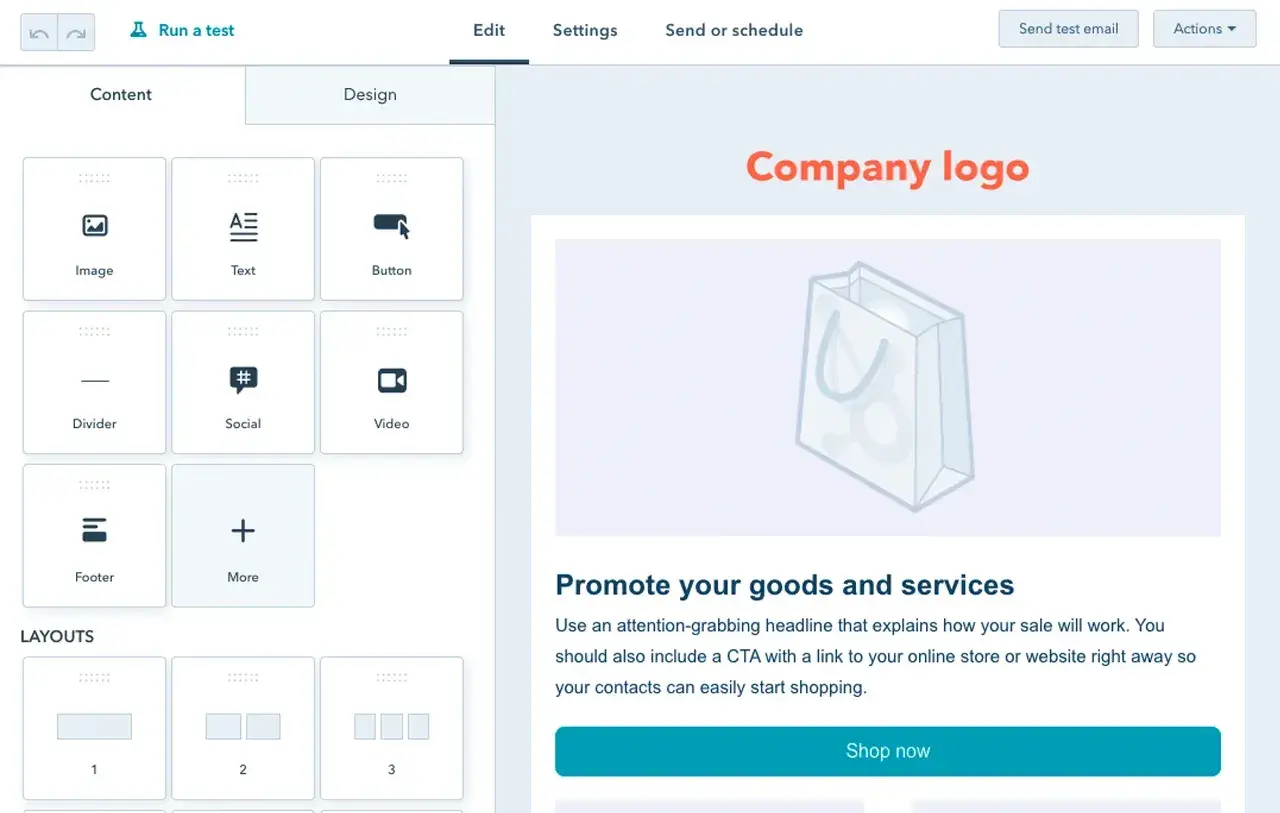
a screenshot of hubspot’s email marketing user interface

Source

Best For: Financial service businesses needing comprehensive marketing automation with built-in compliance tools.

Key HubSpot Features:

  • HubSpot’s AI-powered email segmentation: Financial advisors can automatically segment clients by portfolio size, risk tolerance, and life stage, ensuring personalized communication.
  • HubSpot’s automated compliance workflows: Built directly into the email creation process, HubSpot’s compliance tracking integrations capture approval chains and maintain audit trails required for SEC and FINRA regulations.
  • HubSpot’s Breeze AI integration with financial data platforms: Seamlessly connects with platforms like Creditsafe and Causal, allowing Breeze AI to generate personalized market insights and automatically trigger relevant email campaigns based on market movements.

HubSpot Pricing:

  • Free: $0/month/seat
  • Starter: $9/month/seat
  • Professional: $800/month/seat
  • Enterprise: $3,600/month/seat

2. Salesforce Financial Services Cloud
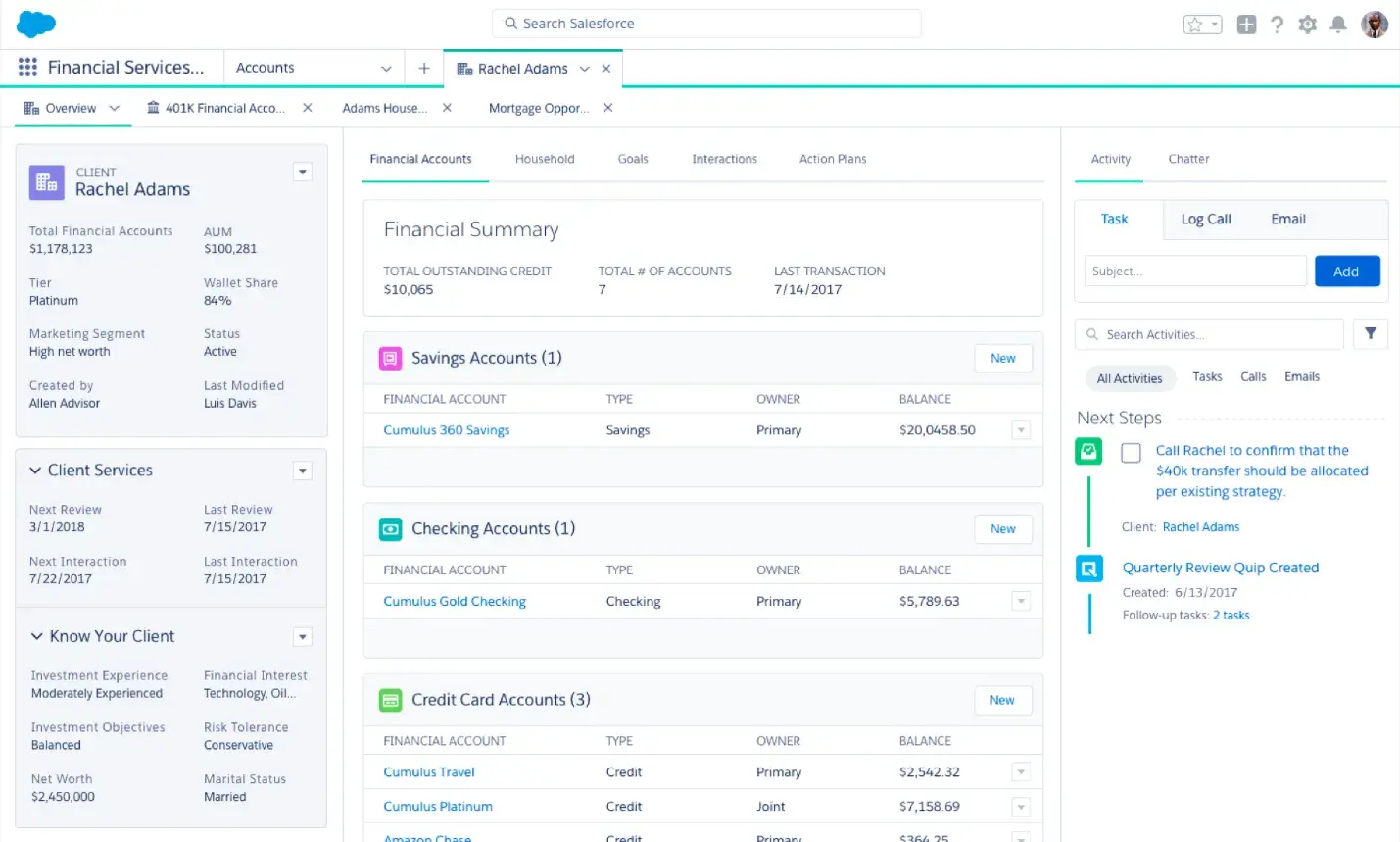
a screenshot of salesforce financial service cloud’s email marketing software user interface

Source

Best For: Large banks and insurance companies requiring enterprise-scale relationship management with regulatory compliance.

Key Salesforce Financial Services Cloud Features:

  • Household relationship mapping: Critical for wealth managers who need to view entire family financial ecosystems, tracking multiple accounts, beneficiaries, and trust relationships.
  • Einstein AI predictive analytics: Automatically scores leads based on likelihood to convert for specific financial products, helping advisors prioritize outreach to prospects most likely to need retirement planning or investment services.
  • Pre-built compliance documentation workflows: Integrates with DocuSign and Adobe Sign to automate KYC (Know Your Customer) processes, reducing onboarding time from days to hours while maintaining regulatory standards.

Salesforce Financial Services Cloud Pricing:

  • Financial Services Cloud (Sales): $325/user/month
  • Financial Services Cloud (Service): $325/user/month
  • Financial Services Cloud (Sales and Service): $350/user/month
  • Financial Services Cloud Agentforce 1 (Sales): $750/user/month
  • Financial Services Cloud Agentforce 1 (Service): $750/user/month

3. Zoho CRM for Finance
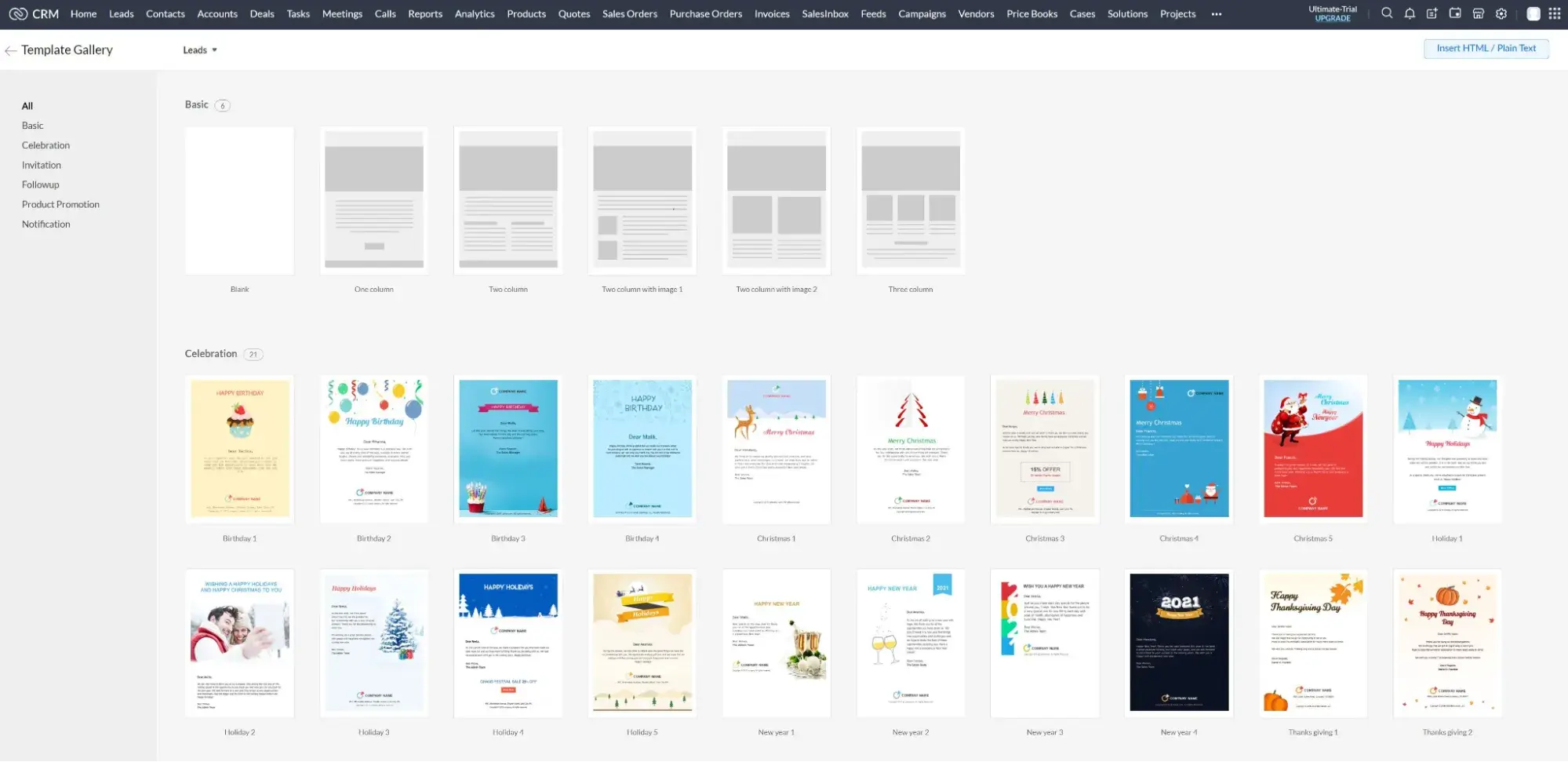
a screenshot of zoho CRM for finance’s email marketing user interface

Source

Best For: Small financial advisory firms needing affordable CRM with document management capabilities.

Key Zoho CRM Features:

  • Built-in commission tracking: Automatically calculates advisor commissions based on product sales and AUM changes, essential for RIAs managing multiple fee structures and revenue streams.
  • Client portal with e-signatures: Streamlines account opening workflows by allowing clients to review, sign, and submit documents digitally.
  • Financial calculator integrations: Native connection to mortgage, retirement, and investment calculators that auto-populate CRM fields, enabling advisors to run scenarios during client meetings and save results directly to contact records.

Zoho CRM Pricing:

  • Standard: $14/month
  • Professional: $23/month
  • Enterprise: $40/month
  • Ultimate: $52/month

4. Pipedrive

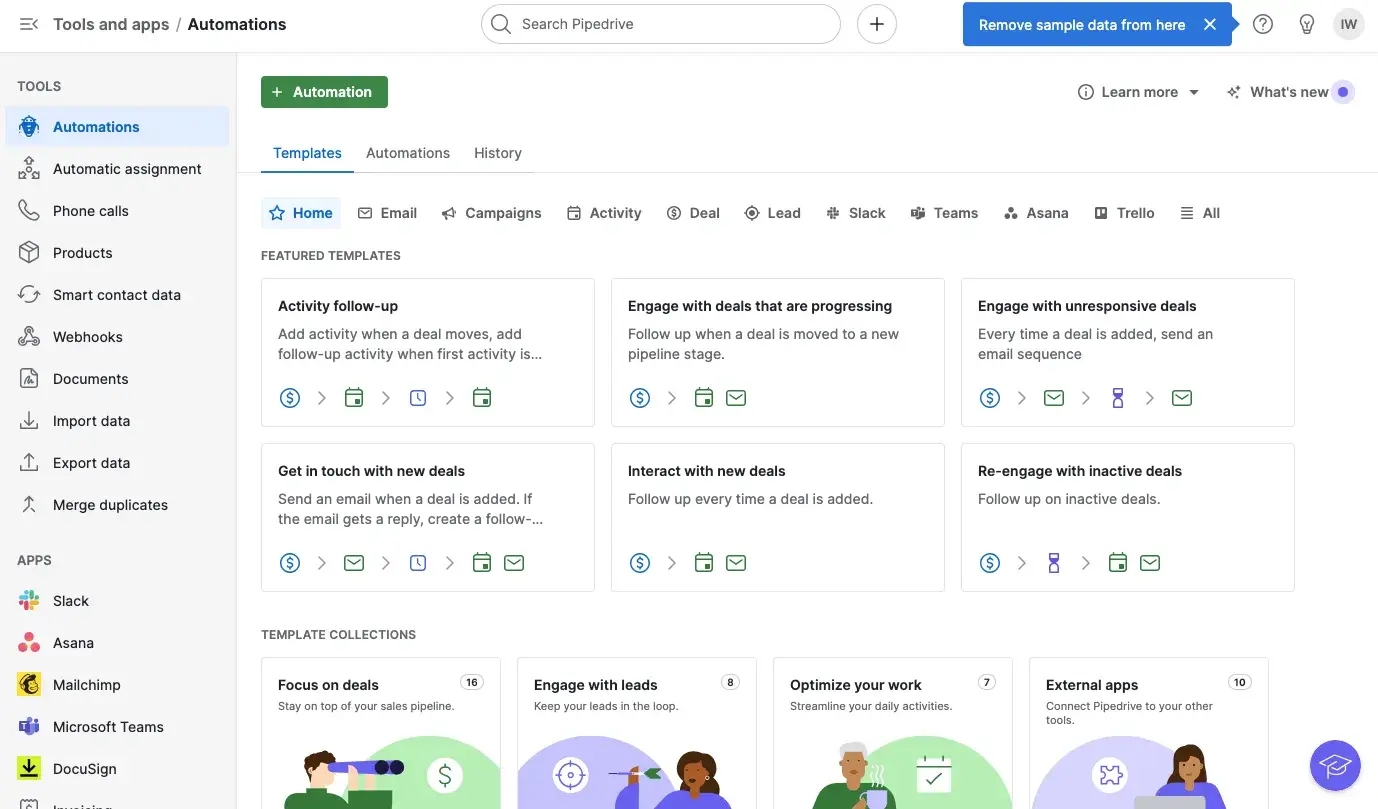
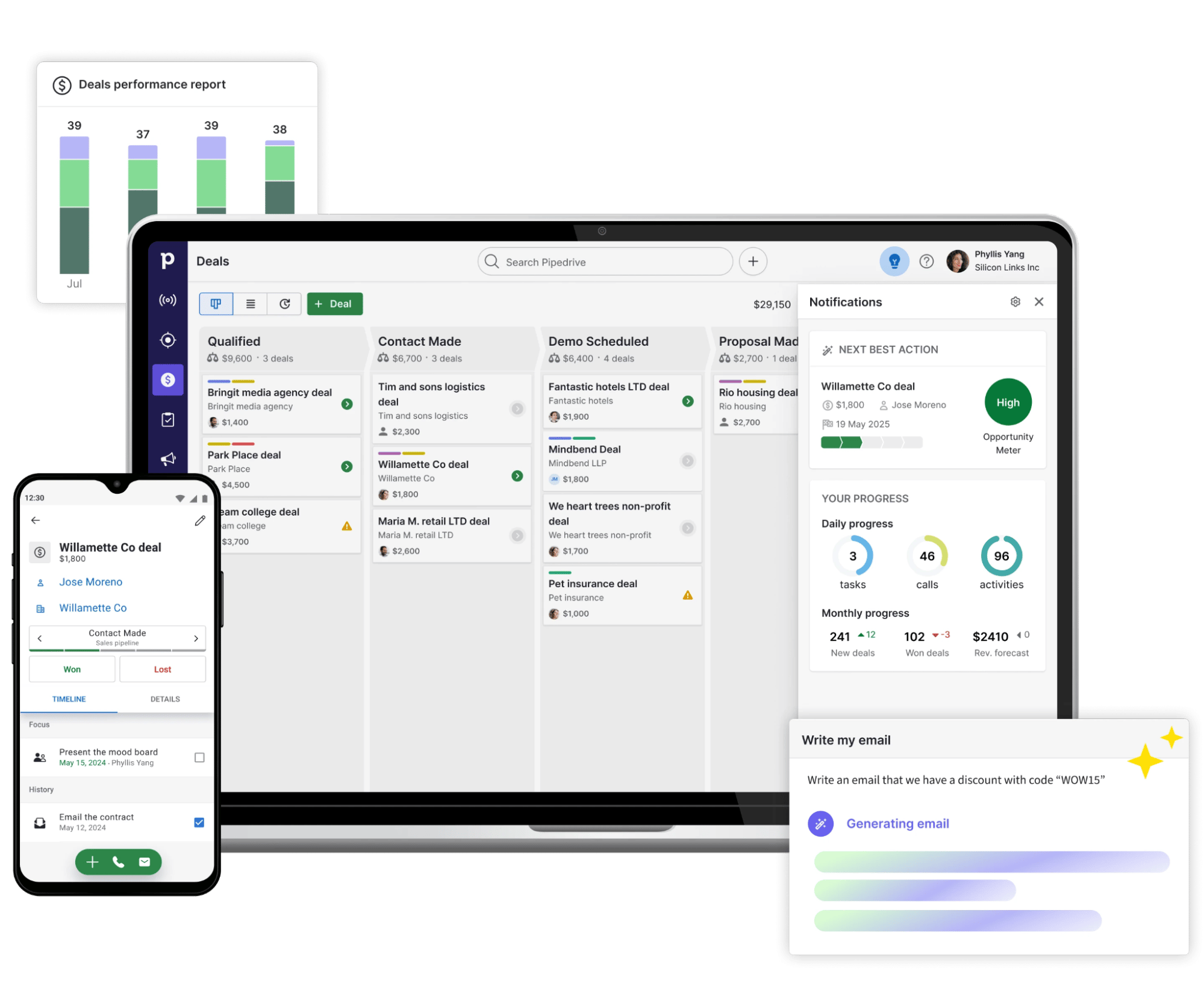
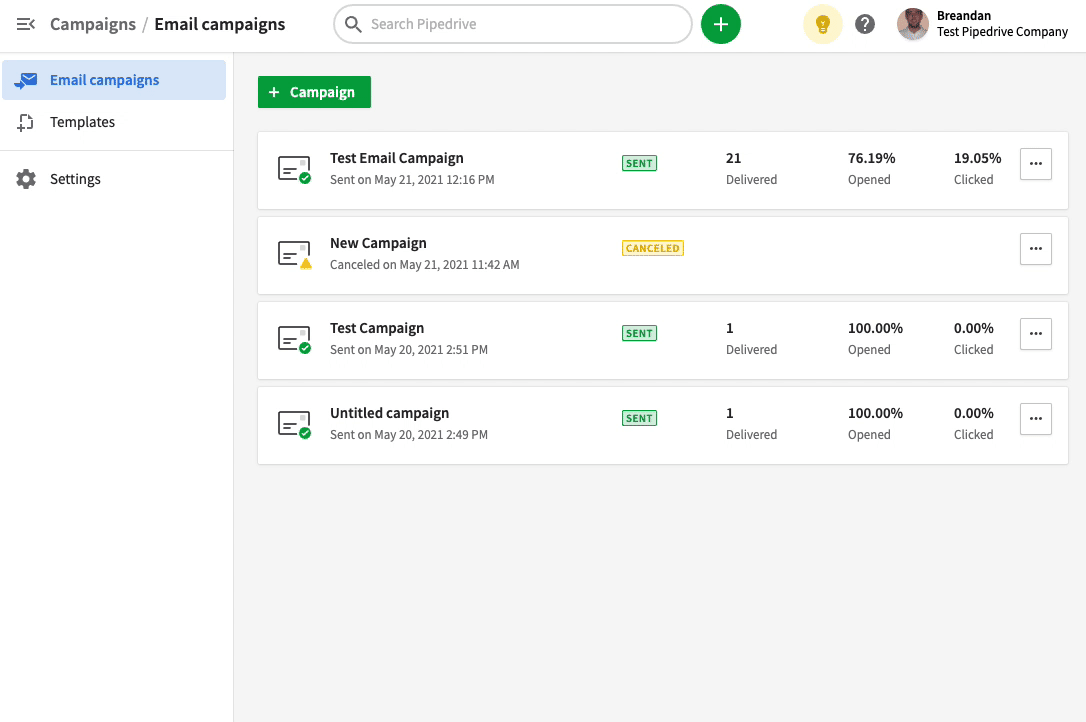
a screenshot of pipedrive’s email marketing user interface

Source

Best For: Independent insurance brokers and financial sales teams focused on pipeline velocity

Key Pipedrive Features:

  • Visual sales pipeline for policy tracking: Insurance agents can drag-and-drop policies through underwriting stages, instantly seeing bottlenecks.
  • Smart contact data enrichment: Automatically pulls financial data from public sources and LinkedIn, giving advisors instant context about prospect employment changes or company IPOs that signal investment opportunities.
  • Activity-based selling automation: Triggers follow-up sequences based on prospect actions (like downloading retirement guides or attending webinars).

Pipedrive Pricing:

  • Custom pricing only (see here)

5. Microsoft Dynamics 365
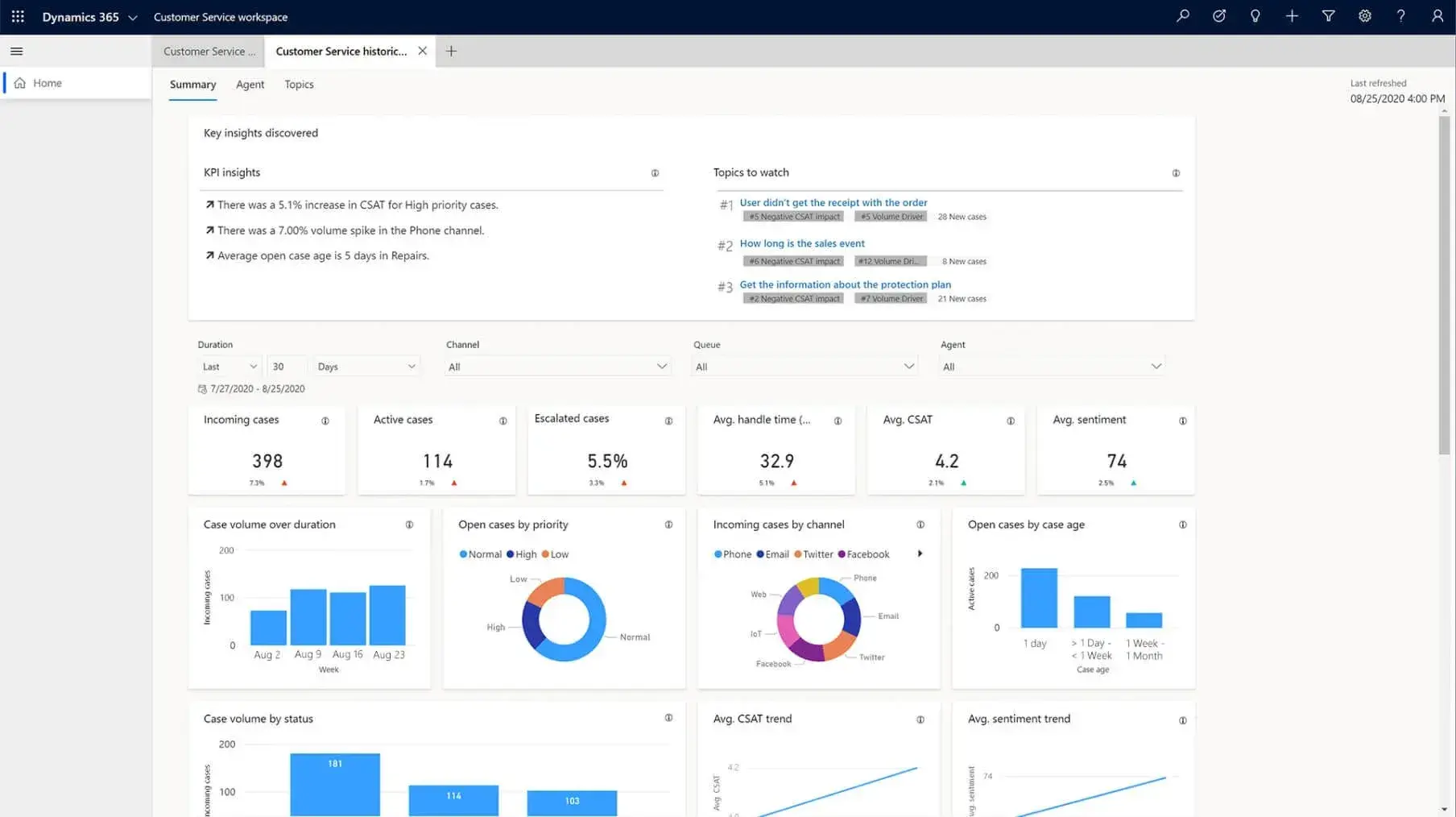
a screenshot of microsoft dynamics 365 email marketing user interface

Source

Best For: Enterprise financial institutions already invested in Microsoft’s ecosystem, requiring seamless Office integration.

Key Microsoft Dynamics 365 Features:

  • Power BI integration for portfolio analytics: Financial advisors can embed real-time portfolio performance dashboards directly in client records.
  • Regulatory compliance management module: Specifically designed for financial services, tracking MiFID II, GDPR, and Dodd-Frank requirements with automated alerts for compliance deadlines and documentation requirements.
  • Teams integration for client collaboration: Enables secure video consultations with screen sharing for portfolio reviews, with automatic meeting notes and action items synced to the CRM record.

Microsoft Dynamics 365 Pricing:

  • Free: $0/user/month
  • Dynamics 365 Business Central Essentials: $70/user/month
  • Dynamics 365 Business Central Premium: $100/user/month
  • Dynamics 365 Business Central Team Members: $8.00/user/month

6. Wealthbox
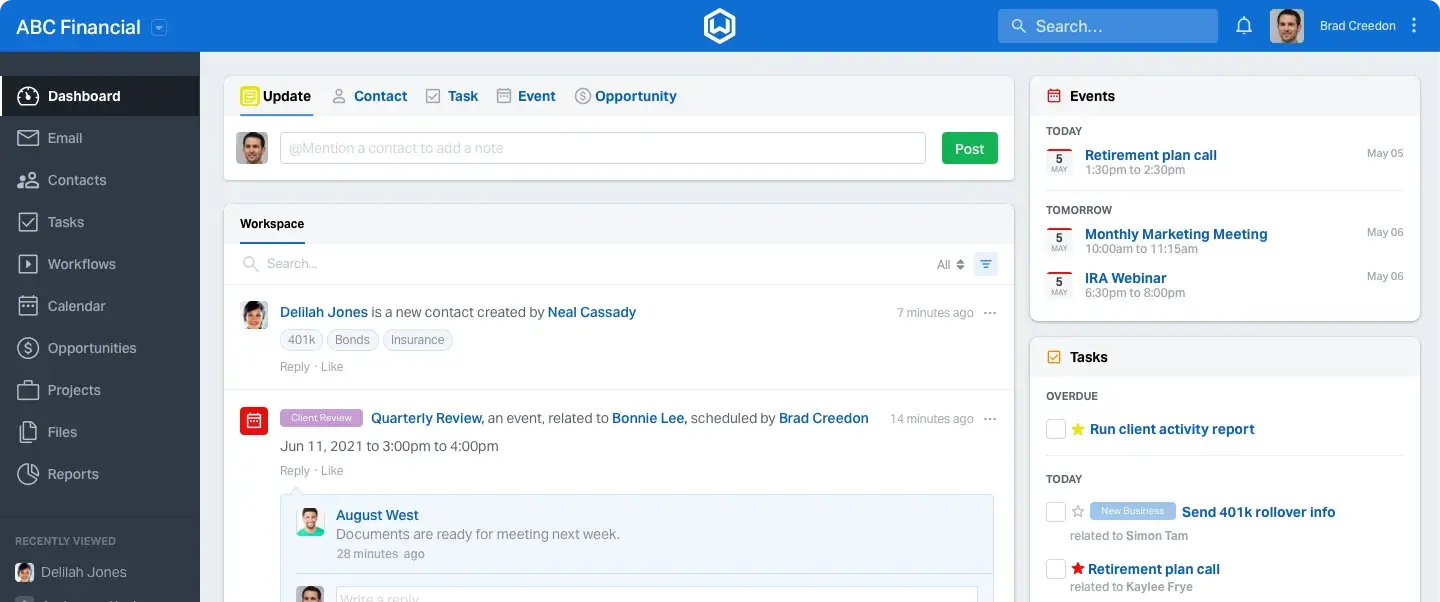
a screenshot of wealthbox email marketing software user interface

Source

Best For: Registered Investment Advisors (RIAs) needing purpose-built wealth management tools with mobility.

Key Wealthbox Features:

  • SEC/FINRA-compliant email archiving: Every client email is automatically archived and indexed for regulatory reviews.
  • Investment account aggregation: Pulls real-time balances from custodians like Schwab and Fidelity, allowing advisors to see total AUM per client and trigger rebalancing workflows when allocations drift.
  • Mobile-first task management: Advisors can update client meetings, log calls, and assign tasks from their phone between appointments, with offline sync ensuring no data loss in areas with poor connectivity.

Wealthbox Pricing:

  • Basic: $59/user/month
  • Pro: $75/user/month
  • Premier: $99/user/month
  • Enterprise: Custom pricing only (see here)

7. Redtail

a screenshot of redtail email marketing user interface

Source

Best For: Traditional wealth management firms requiring deep custodian integrations and seminar management.

Key Redtail Features:

  • Integrated compliance archive with keyword search: Critical for firms facing SEC audits, allowing instant retrieval of specific client communications using compliance keywords like “guarantee” or “performance.”
  • Seminar management workflow: Automates the entire educational event process from invitation emails to RSVP tracking, attendance check-in, and post-event drip campaigns for retirement planning workshops.
  • Direct custodian integrations: Bi-directional sync with TD Ameritrade, Pershing, and LPL Financial eliminates duplicate data entry and ensures account values update nightly for accurate reporting.

Redtail Pricing:

  • Launch: $45/month
  • Growth: $65/month
  • Enterprise: Custom pricing only (see here)

8. Keap
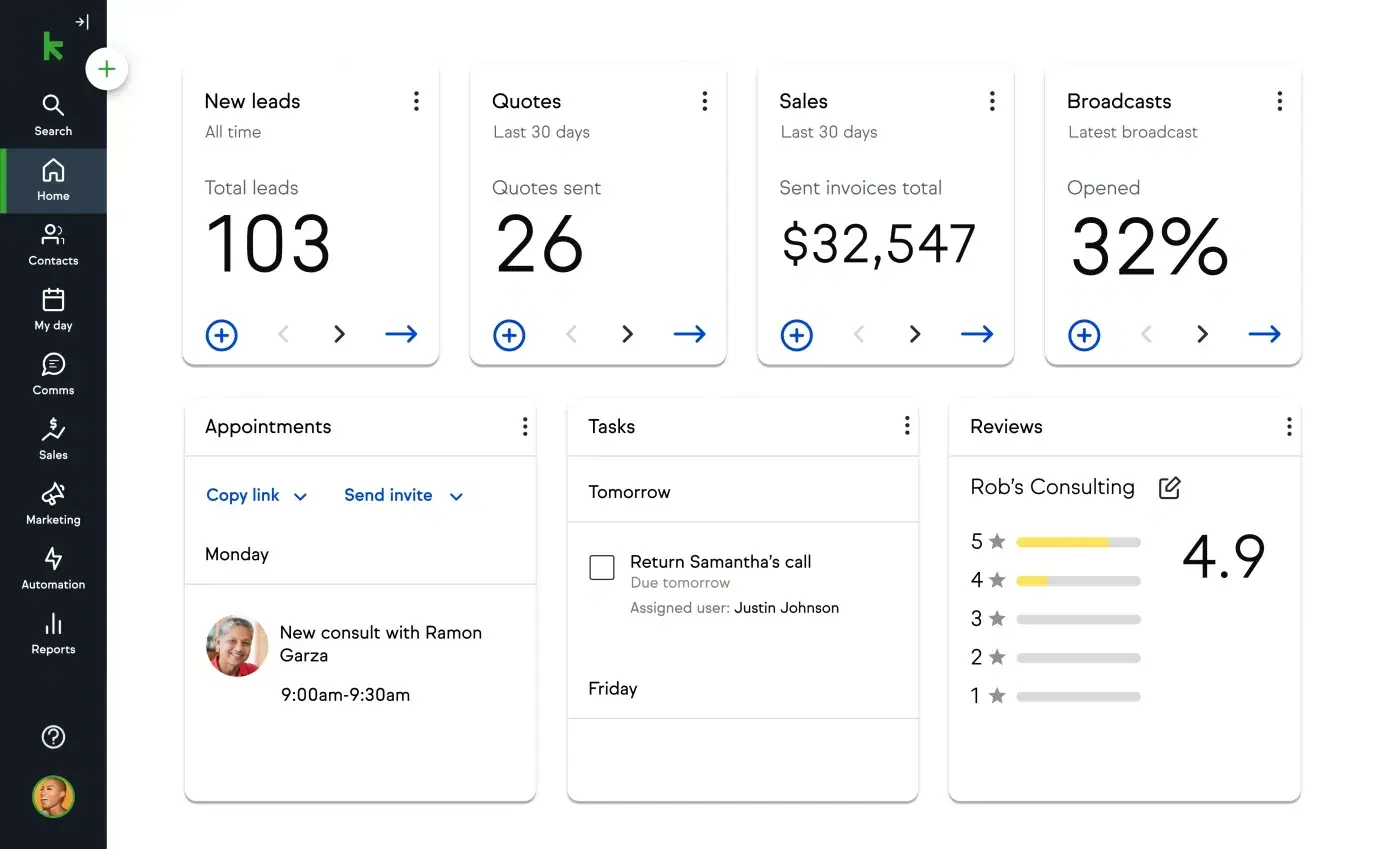
a screenshot of keap’s email marketing user interface

Source

Best For: Solo financial advisors and small teams automating repetitive marketing tasks.

Key Keap Features:

  • Appointment scheduling with buffer time: Essential for financial consultations that often run long, automatically blocking calendar time for prep and follow-up notes while sending reminder texts to reduce no-shows.
  • Smart forms with conditional logic: Pre-qualification forms adapt based on responses, asking relevant questions about retirement goals or insurance needs, routing hot leads directly to calendars while nurturing others.
  • Quote and invoice automation: Integrates with QuickBooks to generate fee proposals based on AUM tiers, automatically sending invoices for quarterly advisory fees and tracking payment status.

Keap Pricing:

*Note: Pricing varies based on the number of subscribers; the pricing plans below are based on a 1,500-subscriber amount

  • 2 users/1500 contacts: $299/month

9. ActiveCampaign

a screenshot of activecampaign’s email marketing user interface

Source

Best For: Financial marketers running sophisticated multi-channel campaigns with attribution tracking.

Key ActiveCampaign Features:

  • Predictive sending for market updates: AI determines optimal send times for market commentary emails, crucial for when financial advisors need to reach clients before market open with timely insights.
  • Multi-touch attribution reporting: Tracks which content pieces drive AUM growth, showing if clients who read retirement guides are more likely to rollover 401(k)s, justifying content marketing spend.
  • Site tracking with lead scoring: Monitors which financial calculators and resources prospects use on your website.

ActiveCampaign Pricing:

  • Starter: $15/month
  • Plus: $49/month
  • Pro: $79/month
  • Enterprise: $145/month

10. Copper

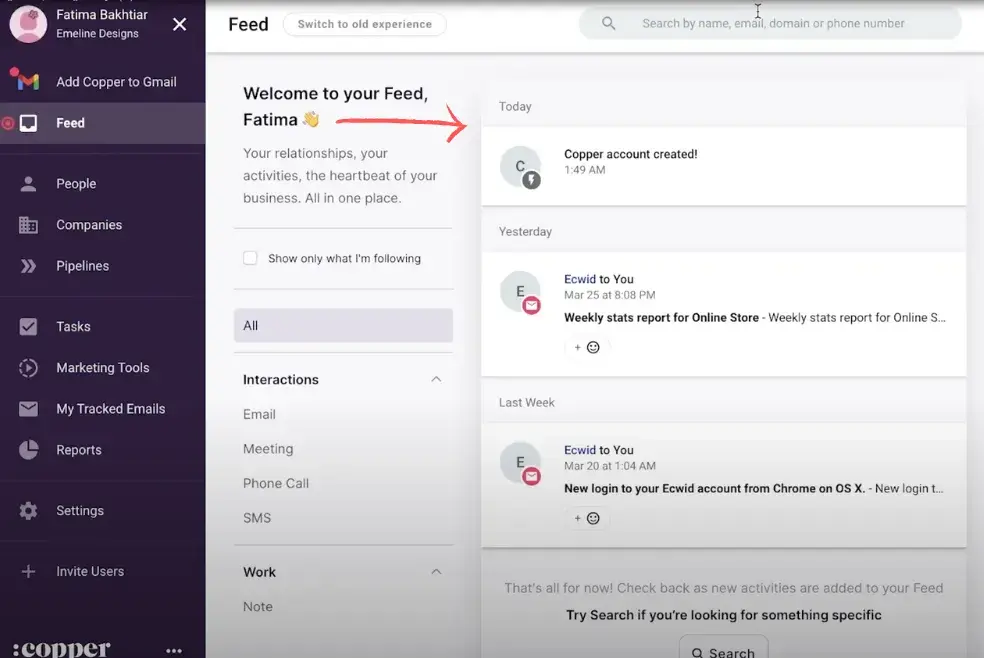
a screenshot of copper’s email marketing user interface

Source

Best For: Financial teams using Google Workspace seeking zero-friction Gmail integration.

Key Copper Features:

  • Native Gmail integration for compliance: Automatically logs every client email without plugins or BCC addresses, essential for advisory firms needing complete communication records for regulatory compliance.
  • Automatic contact enrichment from Google: Pulls LinkedIn profiles and company data directly into contact records, helping advisors identify high-net-worth prospects based on job titles and company exits.
  • Project tracking for client onboarding: Creates templated workflows for account opening, moving each new client through KYC verification, investment policy creation, and initial deposit tracking with deadline automation.

Copper CRM Pricing:

  • Starter: $12/month
  • Basic: $29/month
  • Professional: $69/month
  • Business: $134/month

Benefits of Email Marketing Software for Financial Service Businesses

Automated compliance documentation eliminates regulatory risk.

Financial service businesses face constant scrutiny from SEC, FINRA, and state regulators who require detailed documentation of all client communications. Manual tracking of email approvals, archiving conversations, and maintaining audit trails consumes hours of administrative time while leaving firms vulnerable to compliance violations that can result in hefty fines.

Plus, HubSpot’s compliance integrations can:

  • Capture email interactions
  • Log approval chains
  • Maintain searchable archives that satisfy regulatory requirements

When advisors create emails in HubSpot, its compliance tracking features flag potentially problematic language, route content through designated compliance officers for pre-approval, and timestamp all modifications.

AI-powered personalization increases client engagement and AUM growth.

Financial advisors struggle to maintain personalized communication with hundreds of clients while managing portfolios, attending meetings, and staying current on market conditions.

Breeze AI analyzes client data including:

  • Portfolio composition
  • Life stage
  • Past interactions to generate hyper-personalized email content that resonates with individual financial goals

For instance, HubSpot’s Breeze-generated subject lines can increase open rates by crafting messages like “John, your tech holdings outperformed the S&P by 12%” rather than generic “Q3 Market Update” subject lines.

Pro tip: HubSpot’s smart content rules dynamically adjust email sections based on client segmentsc (i.e., ensuring young professionals receive 401(k) maximization tips while retirees see RMD reminders).

Mobile CRM access enables real-time client service.

Financial advisors spend significant time outside the office meeting clients at their homes, attending networking events, or traveling between appointments, yet critical client information often remains trapped on desktop systems. This disconnect leads to missed opportunities when advisors can’t access portfolio details during impromptu client encounters or update meeting notes before details fade from memory.

HubSpot’s mobile CRM app provides complete access to client records, email history, and portfolio data from any device, allowing advisors to pull up account information during meetings or log touchpoints immediately after leaving a client’s office.

Integrated analytics prove marketing ROI and drive strategic decisions.

Financial marketing teams struggle to demonstrate how their email campaigns translate into actual AUM growth or new client acquisition, often relying on vanity metrics like open rates that don’t connect to revenue. Without clear attribution between marketing efforts and business outcomes, firms continue investing in ineffective strategies while missing opportunities to scale successful campaigns. Luckily, HubSpot’s multi-touch attribution reporting tracks the complete client journey, revealing exactly which content drives conversions.

For example, HubSpot’s revenue attribution dashboard can show that clients who engaged with retirement calculator emails subsequently rolled over an average of $450,000 in 401(k) assets, while those receiving only market commentary averaged $125,000 — providing clear direction for content strategy and budget allocation.

Workflow automation reduces administrative burden.

Financial service teams waste countless hours on repetitive tasks like sending appointment reminders, following up on incomplete applications, and manually segmenting clients for quarterly review outreach. This administrative overhead prevents advisors from focusing on high-value activities like financial planning and relationship building.

HubSpot’s workflow automation builder creates sophisticated trigger-based sequences that handle routine communications without human intervention, which automatically:

  • Sends onboarding emails when prospects schedule consultations
  • Triggers document reminders for unsigned forms
  • Initiates birthday greetings with personalized portfolio milestone updates

Lastly, HubSpot’s customizable email templates maintains brand consistency while allowing quick personalization.

5 Important Features for Financial Planning Email Marketing Software

  1. Regulatory Compliance Management and Audit Trail Documentation: Financial planners must maintain meticulous records of all client communications to satisfy SEC, FINRA, and state regulatory requirements, with the ability to produce complete email histories during surprise audits. HubSpot’s embedded security frameworks automatically archives every email interaction with tamper-proof timestamps, creates approval workflows that route marketing content through compliance officers before sending, and maintains searchable audit trails that can be exported in regulator-friendly formats.
  2. Mobile CRM Access with Offline Functionality: Financial planners frequently meet clients outside traditional office settings — at their homes for estate planning discussions, restaurants for prospecting lunches, or conference venues for educational seminars — requiring instant access to portfolio data and planning tools. Plus, HubSpot’s mobile CRM app provides complete functionality on iOS and Android devices, allowing planners to access client net worth statements, update meeting notes with voice-to-text transcription, and trigger follow-up email sequences directly from their phones.
  3. Advanced Pipeline Customization for Complex Financial Products: Financial planning involves multiple parallel pipelines — from 401(k) rollovers and life insurance applications to estate planning and college savings accounts — each requiring unique stages, timelines, and documentation. HubSpot’s customizable pipeline builder allows firms to create separate tracks for each financial product with industry-specific stages like “Risk Assessment,” “Underwriting,” “Carrier Selection,” and “Policy Delivery,” ensuring nothing falls through the cracks during lengthy sales cycles. HubSpot’s pipeline automation features automatically move opportunities through pipeline stages based on triggers like document submission or approval notifications, while the platform’s probability weighting helps planners forecast commission income based on historical conversion rates for each product type.
  4. Sophisticated Email Automation with Behavioral Triggers: Financial planning requires nurturing prospects over extended periods — sometimes years — as they approach major life transitions like retirement, inheritance receipt, or business exits that trigger planning needs. HubSpot’s workflow automation processes create complex, multi-year drip campaigns that adapt based on prospect behavior, such as automatically intensifying communication frequency when someone downloads a free guide or resource. Plus, HubSpot’s behavioral scoring tracks engagement across email opens, link clicks, and website visits to identify when prospects transition from education mode to active decision-making, triggering alerts for planners to initiate personal outreach at optimal moments.
  5. Native Integrations with Financial Planning Ecosystem: Financial planners rely on specialized software for portfolio management, insurance quoting, and, of course, financial tools that must seamlessly exchange data with their CRM. HubSpot’s extensive integration marketplace includes pre-built connectors to major financial platforms, automatically syncing account values, investment performance, and planning projections to trigger relevant email campaigns. The bi-directional sync capabilities in HubSpot ensure that updates made in financial planning software — like revised retirement dates or beneficiary changes — automatically update CRM records and trigger appropriate email workflows, eliminating duplicate data entry while maintaining information consistency across all systems.

How to Choose an Email Marketing Tool for Financial Service Businesses (Step-by-Step)

Step 1: Map your workflows.

Start by documenting your financial service firm’s unique processes across client acquisition, onboarding, and retention cycles. Financial planners typically manage multiple parallel workflows, including:

  • Initial consultation scheduling
  • Risk assessment questionnaires
  • Account opening documentation
  • Quarterly portfolio reviews
  • Annual planning meetings

Then, map out your current manual processes, identifying where emails are triggered (like after a prospect downloads a retirement guide), what approvals are needed (compliance review for market commentary), and which team members are involved at each stage. Consider the complexity of financial product sales cycles that can span months, requiring sophisticated nurture sequences that adapt based on life events like job changes, inheritance receipt, or approaching retirement dates.

Pro tip: Document integration points where your email marketing must connect with portfolio management systems, custodian platforms, and financial planning software to maintain data consistency.

Step 2: Identify must-have features.

Financial service businesses require specialized capabilities beyond standard email marketing, with regulatory compliance topping the list of non-negotiable features. Your platform must include:

  • Automated email archiving with timestamps
  • Pre-send compliance workflows that route content through designated officers
  • Searchable audit trails that satisfy SEC and FINRA requirements during examinations

Look for behavioral tracking that identifies when prospects transition from research to decision mode — such as multiple retirement calculator uses or repeated visits to rollover guides — triggering timely advisor alerts. Additionally, mobile access is essential for advisors meeting clients outside the office, while advanced segmentation capabilities must handle complex criteria like asset levels, risk tolerance, age brackets, and product ownership. Ensure the platform offers dynamic content blocks that automatically adjust messaging based on client life stage.

Step 3: Compare ease of use and team fit.

Next, evaluate how quickly your team can become proficient with each platform, considering that financial advisors often have limited technical expertise and even less time for extensive training. Request hands-on trials where your actual team members (not just IT staff) create email campaigns, set up automation workflows, and generate compliance reports to assess real-world usability. Additionally, don’t forget to consider the learning curve for different user roles:

  • Advisors need intuitive mobile interfaces for logging client interactions
  • Marketing teams require drag-and-drop email builders with compliant templates
  • Compliance officers need straightforward approval workflows with clear audit trails

Assess vendor support quality by testing response times with financial industry-specific questions about regulatory features, checking whether they offer dedicated onboarding specialists who understand financial services, and evaluating the depth of their knowledge base for self-service troubleshooting. Platform adoption succeeds when the interface feels familiar to users accustomed to financial software, with terminology that matches industry conventions like “AUM” instead of “deal size” and “client households” rather than “companies.”

Step 4: Check cost at scale.

Calculate the true cost of ownership beyond initial license fees, factoring in how pricing scales as your firm grows AUM, adds advisors, and expands client databases.

Many platforms charge per contact or email send, which can exponentially increase costs for financial firms maintaining large prospect databases for long-term nurturing, especially when considering that financial planning prospects may take years to convert. Evaluate whether the platform includes essential financial features in base pricing or requires expensive add-ons for compliance archiving, advanced automation, or CRM functionality that are non-negotiable for your operations.

Heavily consider hidden costs like:

  • Implementation fees
  • Data migration charges
  • Training requirements
  • Ongoing consulting needs

Compare pricing models carefully — per-user pricing may seem expensive initially but often provides better value than per-contact models for financial firms with small teams managing large client bases.

Step 5: Choose a flexible platform — like HubSpot.

Select a platform that can evolve with your financial service business from solo advisory practice to multi-advisor firm without requiring a complete system migration. Look for solutions offering modular upgrades where you can start with basic email marketing then add advanced automation, compliance management, or multi-touch attribution as your AUM grows. HubSpot exemplifies this scalability — financial planning firms can begin with free CRM tools then progressively adopt Starter, Professional, or Enterprise tiers while maintaining consistent client records and regulatory documentation.

Franchise Brokers Association, a membership organization supporting entrepreneurs, achieved a 216% increase in lead generation, 60% increase in deal closures, and unified their fragmented data systems, all by using HubSpot’s Marketing Hub. Marketing Hub’s flexibility enabled automated member onboarding workflows, boosted content production organization-wide, and consolidated reporting for leadership decision-making.

Franchise Brokers Association’s success proves that an investment in HubSpot means growth without limitations (or frustration), allowing financial advisors to create custom objects for investment products and insurance policies, build specialized workflows for different client segments, and, most importantly, achieve measurable AUM growth that justifies marketing spend to compliance officers and firm partners.

How to Create Email Marketing Campaigns for Financial Service Businesses

Step 1: Define your campaign goals and compliance requirements.

Before creating any email content, establish clear objectives aligned with measurable financial outcomes like:

  • AUM growth
  • Client retention rates
  • New account openings

Then, document your compliance requirements including SEC and FINRA regulations for client communications, required disclosures for investment products, and approval workflows for market commentary or performance discussions.

Pro tip: Set up HubSpot’s compliance tracking features to route all campaigns through designated compliance officers for pre-send approval, ensuring every email meets regulatory standards without slowing down your marketing velocity.

Step 2: Segment your audience by life stage and financial goals.

Move beyond basic demographic segmentation to create sophisticated audience groups based on:

  • Life stages
  • Risk tolerance
  • Portfolio composition
  • Upcoming financial milestones (like retirement or college funding needs)

Additionally, HubSpot’s lead scoring tools automatically identifies prospects transitioning from research to decision mode by tracking engagement patterns like multiple retirement calculator uses or repeated downloads of estate planning guides. Then, build dynamic sequences in HubSpot that update automatically as clients’ situations change — moving them from “young professional” segments to “growing family” campaigns when they add beneficiaries or open 529 accounts.

Step 3: Create personalized email content with AI-powered tools.

Leverage HubSpot’s Breeze AI to generate compelling subject lines and email copy that resonates with specific financial planning needs while maintaining compliance standards.

Next, use HubSpot’s drag-and-drop email designer with pre-built financial services templates that include compliant disclaimers, dynamic content sequences that adjust based on client segments, and mobile-responsive layouts optimized for advisors reviewing emails between client meetings.

Step 4: Set up automated workflows and behavioral triggers.

Build sophisticated multi-touch campaigns using HubSpot’s custom report builder that nurtures prospects through lengthy financial planning sales cycles with perfectly timed touchpoints.

Afterwards, create branching workflows in HubSpot’s automation engine that adapt based on prospect actions, sending different sequences for term life insurance inquiries versus whole life interest, while maintaining personalized follow-up cadences that respect the longer decision timelines in financial services.

Step 5: Implement A/B testing for continuous optimization.

Test every element of your financial services emails using HubSpot’s built-in A/B testing tools that automatically determine statistical significance and declare winners based on your chosen success metrics.

Run split tests on subject lines comparing urgency-based messaging (“Only 3 days left for 2024 IRA contributions”) versus benefit-focused approaches (“Maximize your tax deduction with IRA contributions”) to identify what motivates your specific client base.

Pro tip: Use HubSpot’s Complete A/B Testing Kit to elevate your email marketing tactics.

Step 6: Launch campaigns with mobile preview and compliance checks.

Preview every email across devices using HubSpot’s mobile optimization tools, ensuring critical CTAs remain visible and clickable for advisors and clients checking emails on smartphones during commutes or between meetings.

Run final compliance checks through HubSpot’s approval workflow system that logs reviewer comments, tracks version changes, and maintains an audit trail showing exactly who approved each campaign element before sending.

Pro tip: Activate HubSpot’s send time optimization feature that analyzes historical engagement data to deliver emails when individual recipients are most likely to open them — crucial for time-sensitive market updates or deadline-driven communications about contribution limits.

Step 7: Monitor performance and attribution analytics.

Track campaign performance using HubSpot’s real-time analytics dashboard that goes beyond vanity metrics to show actual business impact like influenced revenue, new AUM acquired, and client lifetime value changes.

Lastly, configure custom reports in HubSpot that connect email engagement to downstream activities like appointment bookings, account openings, and portfolio transfers, proving marketing’s contribution to firm growth.

Frequently Asked Questions (FAQ)

What is the best email marketing tool for financial service companies?

HubSpot stands out as the most comprehensive email marketing solution for financial service companies, combining robust compliance features with sophisticated automation capabilities that address the industry’s unique requirements. As previously mentioned, HubSpot’s built-in compliance software automatically archive all client communications with timestamps, route content through designated compliance officers for pre-approval, and maintain searchable audit trails that satisfy SEC and FINRA examination requirements.

Unlike generic email platforms that require costly add-ons or custom development for financial services functionality, HubSpot includes native features like:

  • Household relationship mapping
  • Lead scoring for high-net-worth prospects
  • AI-powered personalization that adapts messaging based on client life stages and portfolio characteristics.

What features should I look for in email marketing tools for financial planning companies?

Financial planning companies should prioritize five critical features when evaluating email marketing platforms:

  • Regulatory compliance management with automated archiving and audit trails
  • Mobile CRM access with offline functionality for advisor meetings outside the office
  • Advanced pipeline customization for complex financial products (like insurance and retirement accounts)
  • Trigger automation that identifies when prospects transition from research to decision mode, and native integrations with financial planning software (like Datarails, Creditsafe, and Acterys Analytics & Planning)

Furthermore, the platform must handle sophisticated segmentation based on:

  • Asset levels
  • Rsk tolerance
  • Life stages

Pro tip: Look for platforms that offer pre-built compliance templates flagging problematic language like “guaranteed returns,” role-based permissions ensuring only authorized team members approve client communications, and multi-touch attribution reporting that connects email campaigns directly to AUM growth and client acquisition metrics.

Is HubSpot good for financial servicing?

HubSpot excels in financial services environments by providing purpose-built features that address strict regulatory requirements while enabling sophisticated client engagement strategies that drive AUM growth.

Plus, HubSpot’s Breeze AI analyzes:

  • Client portfolios
  • Life stages
  • Interaction history to generate hyper-personalized content

Financial firms using HubSpot’s Marketing Hub report 58% more deals closed, allowing advisors to focus on high-value activities like financial planning rather than manual email management.

How much does email marketing software for financial servicing cost?

Email marketing software for financial services typically ranges from $20/month for basic platforms to $3,600+/month for enterprise solutions, with pricing models varying between per-user, per-contact, and flat-rate structures.

When calculating total cost of ownership, financial firms must consider hidden expenses including implementation fees ($5,000 to $50,000), data migration charges, training requirements, and ongoing consulting needs, plus the opportunity cost of advisors spending hours on manual tasks that proper automation eliminates. Per-contact pricing models can become prohibitively expensive for financial firms maintaining large prospect databases for long-term nurturing — a firm with 10,000 contacts might pay $500 to $2,000 monthly on platforms like ActiveCampaign or Mailchimp, while HubSpot’s user-based model provides better value for small teams managing extensive client bases.

Pro tip: HubSpot offers transparent tiered pricing starting at $9/month for Starter, $800/month for Professional, and $3,600/month for Enterprise, including essential compliance features in base packages rather than requiring expensive add-ons like many competitors.

How can email marketing software help with regulatory compliance in financial services?

Email marketing software designed for financial services automates the complex compliance requirements that can otherwise consume hours of manual documentation and expose firms to regulatory penalties ranging from $10,000 to millions in fines. Platforms like HubSpot include:

  • Pre-sending compliance workflows that automatically route marketing content through designated compliance officers
  • Flagging potentially problematic language such as “guaranteed returns” or “risk-free investments”
  • Maintaining email archives with complete audit trails searchable by keyword, date range, or client name

Additionally, a CRM software’s role-based permissions ensure only authorized personnel can approve external communications, while automated retention policies preserve emails for the required timeframes (typically 3 to 7 years depending on communication type) and securely purge outdated records according to regulatory guidelines.

Pro tip: During SEC or FINRA examinations, firms using compliant email marketing platforms can instantly produce required documentation showing approval chains, modification histories, and complete client communication records.

Meet HubSpot, the Top Email Marketing Choice for Financial Service Companies

HubSpot stands out as the premier email marketing solution for financial service companies, offering enterprise-level compliance and automation capabilities at a price point that scales with firm growth. Unlike traditional financial CRM systems that charge per asset under management or require expensive custom compliance modules, HubSpot’s CRM provides built-in regulatory features starting at just $9/month, making sophisticated email marketing accessible to solo advisors and billion-dollar RIAs alike.

Key HubSpot Features for Financial Services

  • Automated Compliance Management: Built-in SEC/FINRA-compliant email archiving with pre-send approval workflows and searchable audit trails that satisfy regulatory examinations without expensive add-ons or manual documentation.
  • AI-Powered Client Personalization: HubSpot’s Breeze AI analyzes portfolio data, life stages, and behavioral patterns to generate hyper-personalized email content that increases engagement while maintaining compliance standards through automated language screening.
  • Integrated Financial Ecosystem: Native connections with financial operations software like Maxio and SaasGrid ensure seamless data flow that triggers timely rebalancing reminders and opportunity alerts.

Proven Real-World Impact with HubSpot

HubSpot transformed NQM Funding’s high-touch broker relationships by unifying their fragmented communication systems into one scalable platform that could grow with their expanding network of specific broker segments. Over the course of their implementation period, the organization achieved a remarkable 900% increase in contact growth by leveraging HubSpot’s Marketing Hub.

All-in-all, HubSpot’s true power for financial services lies in its comprehensive approach — combining regulatory compliance, sophisticated automation, and measurable ROI tracking in one platform.

Ready to see how HubSpot can transform your financial firm’s client relationships while maintaining regulatory compliance, all through the power of email marketing? Get started with HubSpot’s email marketing tools today.

Best CRM for Outlook in 2026

Software Stack Editor · October 29, 2025 ·

image

Outlook has long been the standard for business email and scheduling. For millions of companies, it remains a reliable hub for daily communication and calendar management. And when paired with the right CRM, Outlook becomes much more than just an inbox.

On its own, Outlook keeps teams connected through email and meetings. What it doesn’t cover is customer relationship management.

CRM integrations close that gap. With the right setup, Outlook can log customer interactions automatically, turn emails into contacts, and link conversations directly to deals or projects. Calendar events sync into the CRM, so follow-ups and meetings sit alongside the customer record.

You just need the right CRM.

In this guide, we’ll explore the CRMs that work best with Outlook.

Capsule CRM software + Outlook

Outlook is a daily workspace for millions of professionals. But for businesses that rely on customer interactions and sales follow-ups, Microsoft Outlook alone doesn’t go far enough.

Capsule CRM helps here with a lightweight, effective add-in that brings customer data, tasks, and opportunities directly into the Outlook environment.

It’s a solution designed to feel natural, without the complexity often associated with larger CRM platforms.

Setup and availability of Outlook CRM integration

The Capsule Outlook Add-in can be installed directly from Microsoft AppSource. It’s available on all Capsule plans and works seamlessly across Outlook Web, Windows, Mac, iOS, and Android.

A key detail: the integration requires a Microsoft 365 Business or Commercial subscription.

Personal, Family, or on-prem Exchange accounts aren’t supported, which is an important limitation to note upfront. Once installed, connecting Capsule to Outlook is straightforward – users authenticate their Capsule account, grant permissions, and the add-in is ready to use within minutes.

The add-in can also be pinned to the Outlook sidebar, giving teams constant visibility of CRM records while they process emails. This eliminates the stop-start workflow of switching between the inbox and CRM tabs.

Core features, including calendar

  • Email capture and storage: Save entire conversations from Outlook directly into Capsule, where they’re linked to the right contact. With the “conversation tracking” feature, future replies in the same thread are automatically stored.
  • Contact management: Add new people or organizations to Capsule straight from incoming emails. Capsule even supports merging new email addresses with existing contacts, helping teams maintain clean records.
  • Tasks, projects, and opportunities: Create follow-up tasks, open opportunities, or new projects without leaving the message view.
  • Calendar sync: Capsule integrates with Outlook Calendar to display past and upcoming events within contact timelines. Meeting details – including descriptions, Teams links, and attendees – are logged as activities, keeping communication and scheduling aligned in one place. Attendees not yet in Capsule can be added instantly as contacts.
  • Automatic email storing: On Growth, Advanced, and Ultimate plans, Capsule can auto-store all emails for a given contact. This feature gives teams a full history of communication without manual logging.

Together, these features turn Outlook into a live hub of customer insights.

What users say about the best Outlook CRM

User reviews highlight Capsule’s ease of use and reliability. One Marketplace reviewer described it as an “absolute game changer,” noting how emails and calendar events track against contacts “with very minimal effort.”

Another praised the add-in for being “far better than Salesforce’s Outlook add-in,” appreciating how diary records sync cleanly.

Other feedback emphasizes its intuitive flow: “Really easy to use, it just flows. Love the Outlook add-in feature for attaching emails,” one G2 user wrote.

Another described Capsule as the “perfect CRM for our needs in every respect,” citing the Outlook integration alongside FreeAgent support as indispensable.

The recurring theme is simplicity. Capsule’s Outlook add-in doesn’t overwhelm with unnecessary functions, but instead delivers exactly what small and mid-sized businesses need: a clean, functional way to align email, calendar, and CRM.

Beyond the basics

Capsule’s Outlook integration also supports customization.

Businesses can tailor fields, tags, and pipelines to match their processes, and those elements flow naturally into the Outlook add-in.

Combined with Capsule’s integrations with QuickBooks, Xero, Mailchimp, and other tools, Outlook becomes part of a wider connected ecosystem.

For mobile teams, the fact that the add-in works on Outlook for iOS and Android means customer interactions are captured no matter where the email arrives. Capsule’s 99.99% uptime and strong focus on data security add an extra layer of confidence for SMBs managing sensitive client communications.

Why Capsule stands out – more than affordable CRM solution

Many CRMs offer Outlook integrations, but Capsule’s approach stands out for three reasons:

  1. Simplicity → Setup takes minutes, and the interface is intuitive enough that teams actually use it daily.
  2. SMB focus → Unlike Salesforce or HubSpot, Capsule doesn’t overload smaller businesses with enterprise-grade complexity.
  3. Value → With pricing starting at $18/user per month, Capsule offers a cost-effective way to connect Outlook with a powerful CRM system.

For SMBs looking for a CRM that feels like a natural extension of their inbox, Capsule remains the best choice.

Pipedrive

Pipedrive offers several ways to bring CRM directly into Outlook. The official “Pipedrive for Outlook” add-in lets users create new contacts and activities straight from their inbox, while third-party options such as Pipelook or SaySync expand functionality with task management features and opportunity management tools.

Beyond the add-in, Pipedrive also supports native email and calendar sync through Office 365 or IMAP, with Smart Bcc available as a fallback. This setup means customer emails and contact records flow smoothly into the CRM.

Teams benefit from access to pipeline management, email templates, and basic sales automation. The platform is often seen as an affordable CRM solution compared to enterprise systems like Microsoft Dynamics or SalesOutlook CRM, while still offering robust features for lead capturing, lead progression, and team collaboration.

The limitation is that feature depth varies by plan and sync setup – some advanced sales automation or reporting tools, like Excel reports or data analytics, require higher-tier paid plans. Still, for SMBs looking for a user-friendly Outlook CRM experience that saves time and supports everyday sales processes, Pipedrive remains one of the best Outlook CRM options.

HubSpot CRM

Not every business needs a heavyweight Outlook integration – but HubSpot’s add-in shows what a broader CRM software can deliver when email is only part of the workflow.

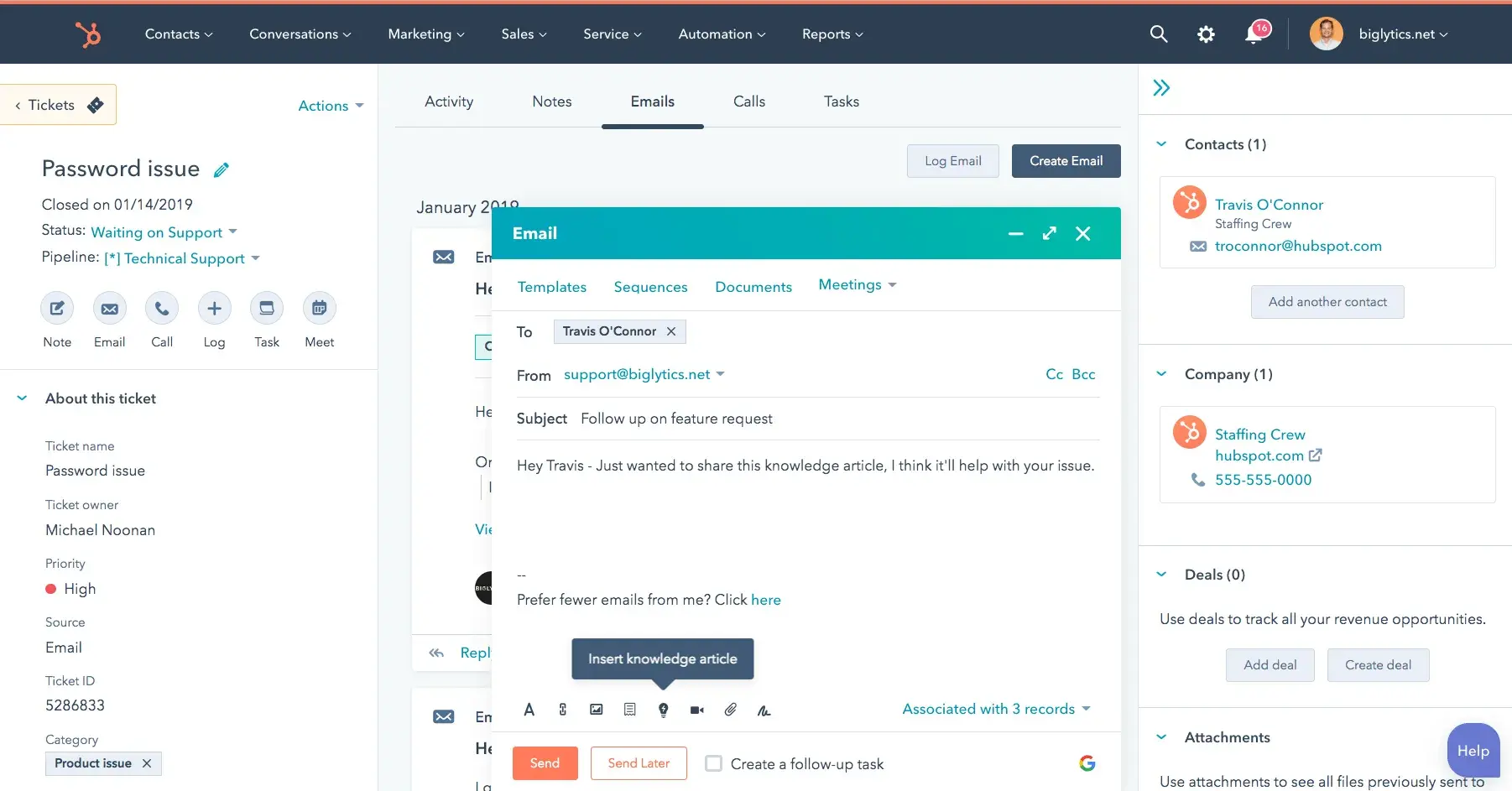
When installed inside Microsoft Office Outlook, it adds a sidebar where users can log emails, track opens and clicks, insert templates or snippets, and even schedule meetings. Sales teams also gain access to sequences and workflow automation, linking daily Outlook emails to larger email marketing and customer management strategies.

For companies already invested in Microsoft products and looking to tie Outlook into campaigns, lead nurturing, or analytics, HubSpot can fill the role of a complex CRM.

However, it’s worth noting that many of the more advanced capabilities – like sequences and detailed reporting – sit behind paid Sales Hub tiers, leaving the free plan with a more limited scope.

For organizations that need depth beyond Outlook but can handle the cost, HubSpot stands as a flexible option, even if lighter tools (like Capsule) may suit SMBs seeking simplicity.

Salesforce

Salesforce brings its CRM software into Outlook through the official add-in, which connects directly to records such as accounts and opportunities. From inside Outlook emails, users can log customer communication, track calendar events, create email templates, and manage tasks, giving both sales and support teams the context they need.

A key feature is Einstein Activity Capture, which automates the logging of emails and events – removing a lot of routine tasks and helping teams stay focused on selling. For larger organizations, the add-in also blends with broader Microsoft tools and products, aligning Outlook with Salesforce’s wider tech stack for marketing or lead scoring.

There are some caveats: Salesforce Inbox is a paid add-on, not included in all editions, and the older plugin is being phased out. Still, for enterprises already running Salesforce across departments, the integration makes Outlook part of a solid system that improves team productivity and ties email workflows into wider business processes.

Zoho CRM

What if your Outlook inbox could double as a gateway to full CRM software? With the Zoho CRM Outlook plugin – available across all plans – you can add contacts directly from emails, log conversations, and view engagement history. For small teams, it’s an affordable CRM solution that ties basic Outlook usage to lead management and light automation.

Because Zoho is a fully fledged CRM, users can expand beyond the plugin into pipeline management and reporting as their needs grow. The plugin is simple enough to start with, yet it plugs into a much larger ecosystem of features, from opportunity tracking to campaign tools.

The limitation is scalability: the free plan covers the essentials, but advanced workflow automation, analytics, and deeper integrations come with higher tiers. For SMBs needing a low-cost way to connect Outlook with CRM systems, Zoho remains a practical on-ramp.

Insightly

Insightly offers an Outlook sidebar plugin that brings CRM software features into the inbox. Users can view and manage contacts and log correspondence directly to customer records.

Project-driven organizations often value Insightly’s focus on combining contact management with opportunity management and project context, making it more than just an email logging tool. Teams can track leads, attach emails to opportunities, and maintain visibility across the sales process.

That said, setup details are less clearly documented compared to other Outlook CRM integrations, and many of the more advanced capabilities are tied to paid tiers. For businesses already invested in Insightly’s broader platform, the plugin extends Outlook into a practical workspace, but it may feel limited as a standalone add-in.

Conclusion

Outlook remains a trusted tool for email and scheduling, but it gains real power when paired with a CRM. From Salesforce and HubSpot with their enterprise-level automation to Zoho and Pipedrive offering affordable entry points, there’s no shortage of options. Each solution adds something extra to Outlook.

For many SMBs, though, the complexity of these platforms can outweigh the benefits.

Capsule CRM takes a different route: instead of overwhelming users with features, it makes the essentials – email logging, contact management, calendar sync – work smoothly inside Outlook. The result is less admin and a CRM system that teams actually want to use.

If Outlook is already central to your daily workflow, Capsule shows how a simple integration can turn it into a smarter, more connected space for managing customer relationships.

FAQ

What is CRM in Outlook?

CRM in Outlook refers to connecting customer relationship management software directly into your Outlook inbox and calendar. With an add-in, you can log emails and link messages or events to deals and projects without leaving Outlook.

Is Outlook a good CRM?

On its own, Outlook is not a CRM. It’s excellent for communication and scheduling, but it doesn’t offer sales pipeline management or customer data tracking. With the right integration – such as Capsule CRM – it can work as part of a complete CRM setup.

Can Outlook act as a CRM?

Outlook can support basic contact and email management, but it isn’t designed to be a fully fledged CRM. By connecting it to CRM software, Outlook emails and meetings become part of a wider system that manages leads and customer records.

What is the best CRM for Outlook?

The best CRM for Outlook depends on your team’s needs. Enterprise companies often turn to Salesforce or HubSpot for their advanced automation. Smaller businesses usually prefer Capsule CRM because it’s lightweight and integrates seamlessly with Outlook while still covering essential CRM functions.

Ultimate Strategic Marketing Guide for SMBs

Software Stack Editor · October 29, 2025 ·

Strategic marketing management turns scattered efforts into a repeatable system for small businesses.

The payoff is clear: steady leads that drive measurable growth.

In this article, you’ll learn how to build a strategic marketing approach that makes every marketing dollar work harder. You’ll also get a four-step framework and practical tactics that integrate with your sales processes.

Key takeaways from strategic marketing

  • Strategic marketing online aligns all marketing activities with business goals, creating predictable revenue growth instead of marketing experiments.

  • Focusing marketing efforts on channels and content that reach the right prospects improves conversion speed and efficiency.

  • Integrating marketing campaigns with CRM and sales processes reduces lost leads and makes follow-up more effective.

  • Pipedrive helps your team set goals and track your strategic marketing impact in real-time – try it free for 14 days.

What is strategic marketing? (and why most advice doesn’t work for SMBs)

Strategic marketing definition: Strategic marketing means having a clear plan and purpose that aligns with your business goals for every marketing activity.

This approach helps companies avoid random acts of marketing, where you might launch a campaign or write an article without knowing how it contributes to business growth.

For small and medium businesses (SMBs), being strategic means using your marketing spend and resources even more efficiently.

Example. A project management SaaS startup publishes blog posts sporadically, based on topics the sales team suggests. Traffic is inconsistent and the blog posts don’t generate many leads.

The marketing lead does market research and maps topics to the customer journey. Each new post nurtures leads and directly supports sales.

Much of the strategic marketing advice out there has large enterprises in mind. It often assumes you have a big team, deep budgets and time to test multiple approaches at once.

Typical advice may include strategies like advanced market segmentation – which requires digging through lots of data – or public relations campaigns that rely on costly agencies and media connections.

When you have fewer resources, an SMB marketing strategy should integrate with your existing workflows – not require a complete organizational overhaul.

Recommended reading

https://www-cms.pipedriveassets.com/Marketing-Management-Tools.png

The ultimate marketing management tools guide

The 4-step strategic marketing framework for SMBs

Following a framework helps keep your marketing team on track and working toward the same goal.

These four steps take you from the decision-making and planning process to a fully-fledged marketing strategy.

1. Align your strategic marketing plan with sales objectives

Start with your sales targets and work backward to determine what marketing needs to deliver.

While getting more social media followers or newsletter subscribers is good, revenue is the clearest measure of success for SMBs.

Download Your Sales and Marketing Strategy Guide

Grow your business with our step-by-step guide (and template) for a combined sales and marketing strategy.

Aligning marketing with sales goals ensures that every activity contributes to the key results, such as generating leads or shortening the sales cycle.

You can use customer relationship management (CRM) data to help set your marketing objectives.

Example: One in five leads typically becomes a customer. Since your goal is 10 new customers this quarter, your marketing objective is to generate 50 qualified leads. By focusing on specific outcomes, you easily measure the impact of your strategic marketing efforts.

Using Pipedrive as your CRM, you can set a goal for how many new leads enter your sales pipeline.

Strategic marketing Pipedrive goals

Set a timeframe and assign the relevant stakeholders. Visualizing your progress is a great way to motivate your team.

Pipedrive in action: Tour and activity booking company TrekkSoft aimed to increase sales in specific areas and verticals. With Campaigns by Pipedrive, it personalized emails to each segment, increased email sends from 500 to 4,000 per week and doubled sign-ups.

2. Define and segment your ideal customer for laser-focused targeting

Focus on the customer groups that generate the most revenue instead of relying on broad buyer personas.

Strategic marketing is most effective when it reaches the customers who matter most to your business. Chasing every possible lead can spread resources thin.

Look at the closed deals in your CRM and see if you can find and see if you can find patterns in:

  • Deal size – which customers bring the most revenue?

  • Sales cycle length – who tends to close faster?

  • Close rate – which types of customers are most likely to convert?

  • Lifetime value – who renews or expands their contracts?

From there, group similar customers together. Aim for around two or three main segments that represent most of your revenue.

Example: The SaaS company finds that creative agencies close quickly and adopt premium features, but their budgets are smaller and these customers churn more often. Consulting firms take longer to decide, but when they do, they bring bigger contracts and stay longer.

Map out pain points, buying behavior and preferred channels for each segment to create marketing campaigns that speak directly to those groups.

Note: If you have access to more detailed data, you can create in-depth marketing segmentation based on factors like customer demographics or purchase history. This approach lets you refine your value proposition and make more confident marketing decisions for each group.

3. Choose marketing channels that fit your resources and feed your sales process

Spreading efforts across every possible platform can drain resources and dilute results.

Instead, pick two or three channels. When evaluating these channels, consider:

  • Resource requirements – can you use the channel consistently with your current team?

  • Audience alignment – are your target customers active and reachable there?

  • CRM integration – can you track leads from this channel through your sales pipeline?

  • Measurable ROI – can you link activity on this channel directly to closed deals?

While limiting the channels you use seems counterintuitive, it lets your SMB team invest their time where it matters most.

The result? Greater customer engagement and improved conversion across your campaigns.

Example: The SaaS team focuses on LinkedIn and content marketing. Consulting firms in the brand’s target audience spend time on LinkedIn, where case studies and posts build trust. Creative agencies respond better to practical blog articles that show how the software saves time.

4. Measure your success through sales outcomes, not marketing metrics

At this stage, focus on immediate sales outcomes that show whether your marketing activities are helping deals move forward.

Traditional marketing metrics like email opens, website traffic and social media engagement don’t directly predict revenue. Instead, focus on signals like:

  • Lead-to-opportunity conversion rate. The percentage of marketing-sourced leads that become qualified opportunities.

  • Opportunity-to-customer conversion rate. How many of those opportunities turn into paying clients.

  • Time to close. How quickly marketing-sourced deals move from first contact to signed deal.

With Pipedrive, you can easily see how many of your leads convert with the deal conversion report.

Strategic marketing Pipedrive deal conversion report

You could even add custom labels to deals that come from your marketing campaigns (like “Newsletter” or “Facebook ad”).

Then, you can filter for those labels in the conversion report to see how well leads convert from specific campaigns.

Remember, sales metrics don’t just indicate how successful your campaigns are. The data also shows you where to focus your efforts to reach your goals faster.

Example: The project management SaaS sees that leads from case study downloads move through the pipeline faster than article lead magnet downloads. The marketing team decides to prioritize case studies next quarter.

Having marketing metrics and sales data at your fingertips empowers you to make more confident decisions and helps your teams stay focused.

Pipedrive in action: Digital agency Spark Interact created custom dashboards in Pipedrive to track campaign results and daily KPIs. This visibility helped it identify top-performing sales and marketing strategies, leading to a 12% average annual revenue increase.

As Marketing Technology Specialist Mackey Kandarajah observes: “With marketing and sales data housed in one place, the team gains a clear view of which content truly moves prospects, allowing them to refine strategy in real time and convert interest into long-term client relationships.”

Now that you know how to structure your marketing strategically, learn how to execute that framework in practice with concrete tactics ideal for SMBs.

Proven strategic marketing tactics for resource-strapped SMBs

Strategic marketing campaigns don’t need to be flashy to get results.

The tactics below work because they directly support sales and move deals forward.

Align email marketing campaigns with your sales stages

Develop email sequences that mirror your sales process. Instead of generic newsletters, create targeted campaigns for each buying stage:

  • Awareness – product marketing and educational content addressing pain points.

  • Consideration – case studies and product comparisons.

  • Decision – testimonials and implementation guides.

  • Post-purchase – onboarding resources and referral or partner programs.

Planning campaigns with these stages in mind ensures you meet customer needs throughout their buying journey.

Here’s an onboarding email example from product analytics platform Posthog:

The email works because it focuses on the onboarding stage and directly addresses what the user needs to do next.

It sets clear expectations for how often emails will arrive and maintains a personal, approachable tone that encourages engagement.

Create content for in-market buyers

Content is most effective when it speaks to people further along in the marketing funnel who are already evaluating solutions.

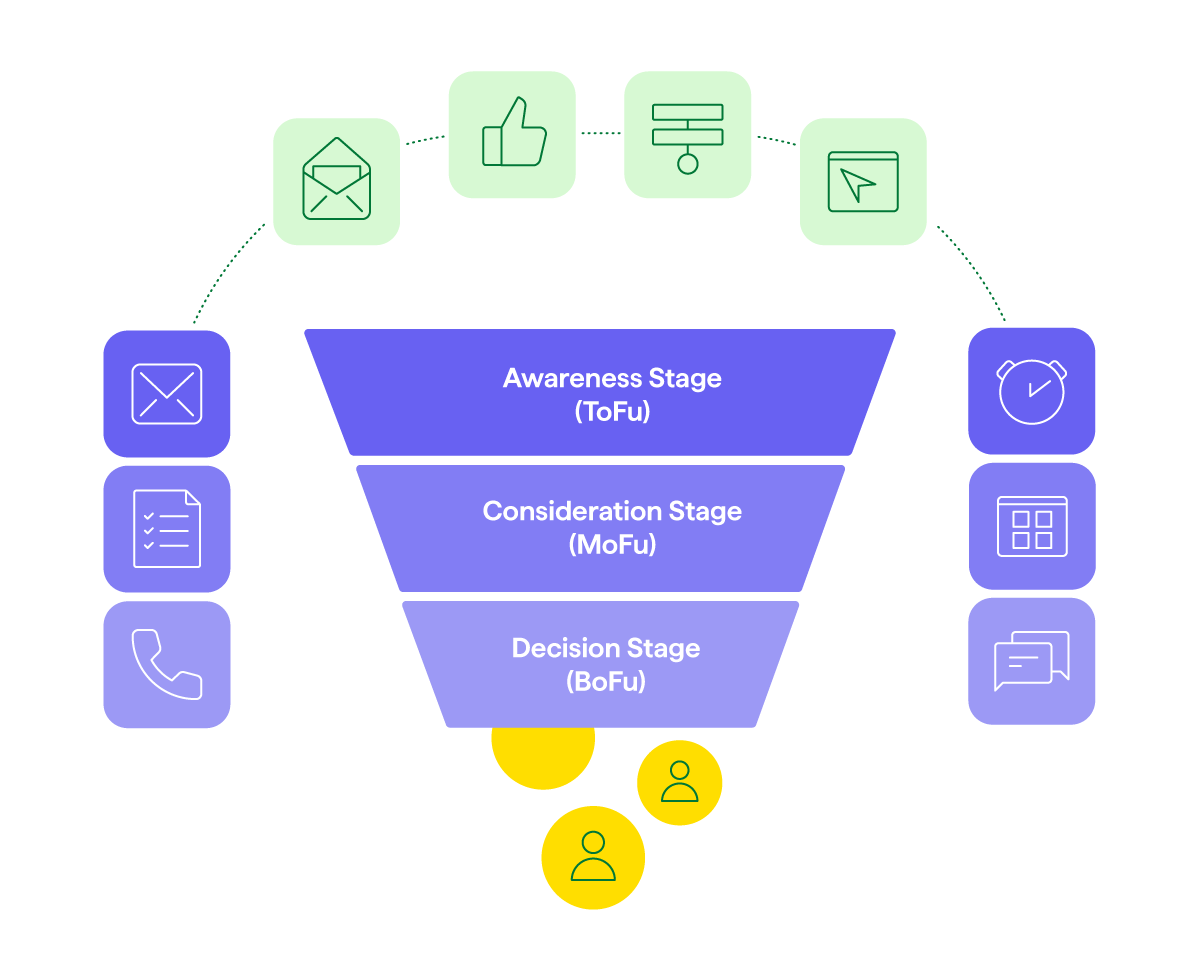
Instead of broad awareness pieces, focus on bottom-of-funnel (BoFu) assets that help prospects choose your product.

Strategic marketing Pipedrive marketing funnel stages

Comparison guides and “top X software” roundups often have much higher conversion rates than top-of-funnel content and help secure your market position.

Work with your sales team to surface common objections and decision factors, then create content that addresses them head-on.

Here’s an example from time-tracking app Buddy Punch:

Strategic marketing Buddy Punch article

The introduction speaks directly to its customer base by addressing pain points head-on. The rest of the article shows how Buddy Punch solves those problems and offers alternative solutions.

Build relationships on LinkedIn for social selling

Equip your sales team with LinkedIn social selling strategies that complement marketing efforts.

Share valuable industry insights or new products, engage with prospect content and build relationships with your target market.

Here’s how Will Allred, co-founder of AI email assistant Lavender, connects with sales teams on LinkedIn:

Strategic marketing Will Allred LinkedIn post

Coordinate your social media marketing efforts with marketing campaigns. When the marketing team publishes new content, sales reps can share it with relevant prospects while adding personal commentary.

When marketing runs LinkedIn ads, the sales team can follow up with warm messages to engaged prospects.

Run referral or affiliate programs

Referrals are among the most cost-effective ways for small businesses to grow.

Your program could be as simple as a discount for referred clients or as formal as an affiliate program with recurring commissions.

Here’s an example from Senja, a customer testimonial tool:

Its affiliate program clearly outlines how partners earn commissions, making it easy for customers to share the product and earn rewards.

A clear, consistent sales referral system means you can turn happy customers into one of your strongest acquisition channels.

How to measure strategic marketing success over time

Along with tracking immediate results, it’s essential to monitor longer-term trends that show the overall impact of your marketing efforts.

These metrics reveal whether your strategy is sustainable and scalable, not just effective in the short term:

Metric

Details

Lead quality score

  • What it is: The percentage of marketing leads that become qualified opportunities.

  • How to calculate: Divide the number of marketing-generated leads that reach the “qualified” stage by total marketing-generated leads in the same period.

Pipeline velocity

  • What it is: How quickly marketing-sourced deals move through sales stages.

  • How to calculate: Average number of days a deal spends from first contact to close, for all marketing-sourced deals.

Customer acquisition cost (CAC)

  • What it is: Total marketing spend per new customer acquired.

  • How to calculate: Add all marketing expenses (tools, content, ads, staff) and divide by the number of new customers in the same period.

Revenue per lead

  • What it is: Average revenue generated by marketing-sourced prospects.

  • How to calculate: Total revenue from marketing-sourced deals divided by the number of marketing-sourced leads.

Alongside these metrics, examine marketing attribution to learn where leads came from and which campaigns influenced their decisions.

The simplest starting point for SMBs is single-touch attribution. It credits just one touchpoint per conversion, while multi-touch attribution splits credit across all interactions.

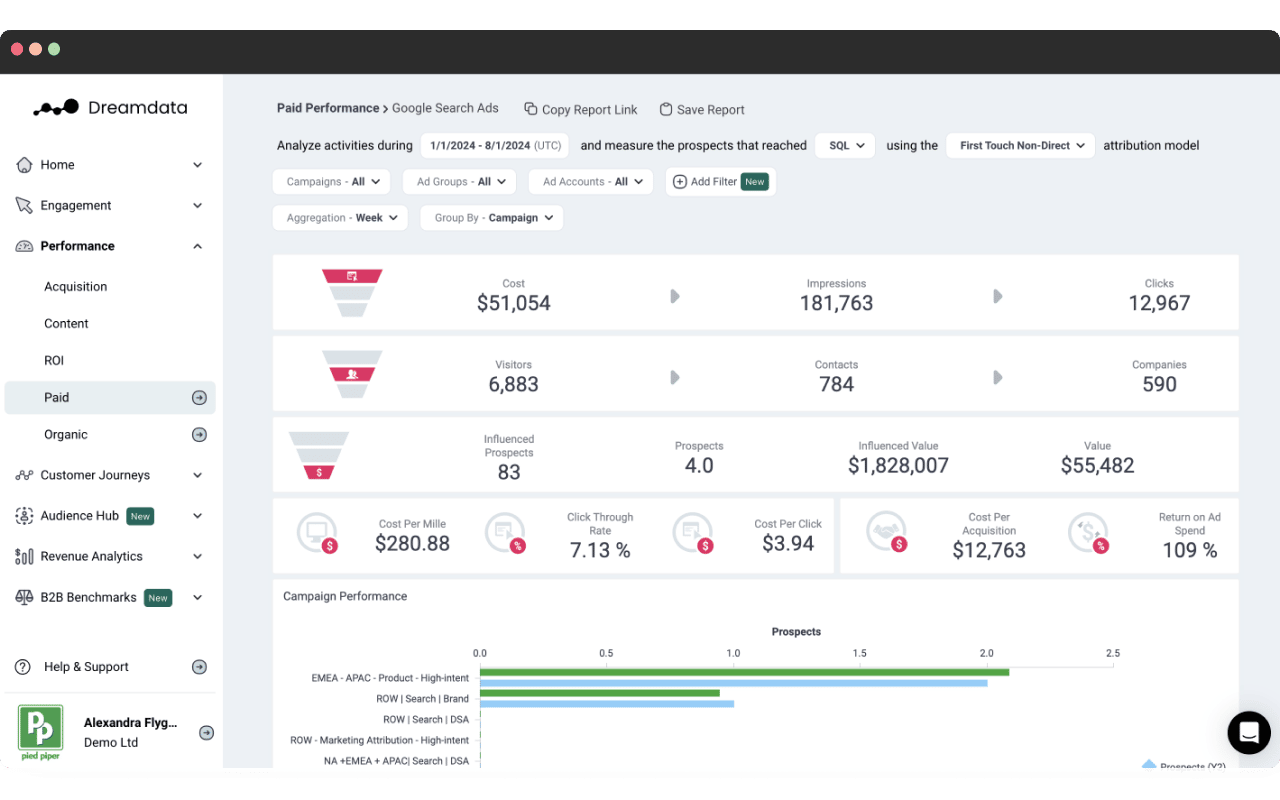
You can track attribution through tools like Google Analytics or a platform like Dreamdata.

Strategic marketing Dreamdata dashboard

Dreamdata integrates directly with Pipedrive to sync conversions automatically and link leads and digital marketing campaigns to your revenue. You can easily identify your most successful campaigns without creating complex dashboards.

Even with the right tools, SMBs can fall into pitfalls when implementing strategic marketing. Awareness of the risks helps your business manage its marketing efforts safely and successfully.

Common strategic marketing mistakes SMBs make

Avoid these mistakes to protect your marketing budget and make your campaigns more effective.

Copying enterprise tactics without the resources to execute them

Enterprise marketing strategies need dedicated teams, big budgets and sometimes complex new technology.

Small businesses should focus on simplified versions that fit their constraints. For instance:

  • Create basic qualification criteria based on company size and budget instead of complex lead scoring

  • Develop a few targeted email campaigns for the primary customer segments instead of elaborate automation sequences

It’s best to start small. You can always add more complexity as your strategic marketing and sales processes evolve.

Spreading efforts too thin across different channels

Focused marketing on two or three channels can deliver better results than implementing efforts across many platforms.

When you master a few key channels, you can create higher-quality content and build stronger engagement with prospects.

Pick channels where your target audience is active and you can execute consistently. Build expertise in these areas before expanding to new ones.

Running marketing separately from CRM and sales processes

Connecting marketing directly to your sales processes improves conversions and keeps leads moving forward.

Here’s how to link the two:

  • Build CRM integration into every marketing campaign from the start

  • Set up lead capture forms to automatically create CRM records

  • Configure email campaigns to track engagement in your sales system

Campaigns by Pipedrive connects email marketing directly to your CRM, so every email interaction automatically updates contact records.

Strategic marketing Pipedrive Campaigns detail

When your email marketing lives inside your CRM, your sales reps can see which prospects engage with content and tailor their outreach accordingly.

Pipedrive in action: Trainify, a corporate education company in Latvia, uses Campaigns by Pipedrive to connect its email marketing with the CRM. This two-in-one functionality saves Trainify two hours per week on campaign creation and management while automatically tracking interactions to support sales follow-up.

Focusing on brand awareness instead of lead generation

Brand awareness works best as a side benefit rather than the primary goal.

Small businesses get better ROI from demand generation that directly feeds the sales pipeline.

Focus on creating content that captures contact information and moves prospects toward purchase, like webinars or free templates that solve a specific challenge.

Your brand naturally builds market share through valuable, lead-generating content that solves real customer problems.

Strategic marketing FAQs

  • Strategic marketing connects all marketing activities to business goals and measures success by sales results.

    Regular marketing focuses on specific tactics like content or emails without necessarily planning how they link to revenue.

  • Initial results usually appear within a few months as you optimize targeting and messaging.

    Early indicators include better lead quality, shorter sales cycles and higher conversions from marketing-generated leads.

  • Your SMB can build a strategic marketing strategy using your customer data. Broader market research can add valuable context if you have the resources to pull it off.

    A focused market analysis can help you identify market trends affecting strategy.

    For instance, a simple SWOT analysis and benchmarking (comparing your performance to competitors or industry standards) highlight your sales opportunities and challenges.

    This insight informs decisions about pricing strategies, segmentation and new business opportunities.

  • Start by defining your ideal customers and segmenting them based on their needs and behaviors.

    Choose a marketing mix that fits your resources and feeds your sales process. Track results with marketing analytics to see what’s driving leads and revenue.

    This approach turns your marketing into a repeatable system that supports growth.

Final thoughts

The strategic marketing process isn’t about having the biggest budget or the largest team.

Focus on the most impactful marketing initiatives for your small business to turn strategy into a sustainable competitive advantage.

Tracking your marketing campaigns’ performance is key to effective marketing and sales success, helping you see what works and optimize it for improved results.

Pipedrive supports a strategic approach by connecting your leads, sales activity and revenue in one place – try it free for 14 days.

10 best email marketing tools for event planning businesses in 2025

Software Stack Editor · October 28, 2025 ·

Planning events is about more than venue bookings and catering — it’s about orchestrating countless moving pieces, building relationships, delivering memorable experiences, and sustaining them over time. The challenge? CRM needs in the event-planning industry are uniquely demanding. Event-planning businesses must juggle multiple stakeholders (clients, vendors, attendees, and sponsors), shifting timelines, varied event formats (virtual, hybrid, and live), and the need to both scale and personalize communications — all at once.

Boost Opens & CTRs with HubSpot’s Free Email Marketing Software

Generic CRMs often struggle to meet these demands: they don’t always support multi-channel attendee journeys, complex registration flows, sponsor and vendor tracking, or the seamless follow-up needed to turn one-off attendees into repeat event advocates. That’s where a CRM built (or configured) for the event industry becomes a solution.

A properly chosen CRM becomes your operational backbone: it lets you centralize attendee, client and vendor data; automate email sequences for invitations, reminders, and post-event follow-ups; segment contacts by event type or role (vendor versus sponsor versus attendee); integrate registration and ticketing systems; and track engagement and ROI across your event lifecycle.

In this article, you’ll get:

  • A comparison table of the top 6 email-marketing/CRM tools suited to event-planning businesses in 2025
  • Feature breakdowns of what each tool offers (automation, segmentation, mobile access, event-specific workflows, integrations, email flows, etc.)
  • Real-world pros and cons, especially for event planners navigating attendees, sponsors, vendors, and multiple formats
  • A step-by-step how-to guide for setting up email automations tailored to event-planning workflows (e.g., initial invite → reminder → follow-up → referral nurturing)
  • Tips for migration, measurement, and scaling your system as your business grows and your event types diversify

And just so you know: HubSpot is already used by real event-planning companies — for example, event organizations report saving thousands of hours annually after switching to HubSpot’s event-centric workflows.

So, if you’re ready to cut through the chaos, streamline your attendee/vendor/client communications, and bring real ROI to your events business in 2025, read on.

Table of Contents:

  • What is email marketing for event planning businesses?
  • Best Email Marketing Tools for Event Planning Businesses at a Glance
  • Best Email Marketing Software for Event Planning Businesses
  • Benefits of Email Marketing Software for Event Planning Companies
  • 5 Important Features for Event Planning Email Marketing Software
  • How to Choose an Email Marketing Tool for Event Planning Companies (Step-by-Step)
  • Frequently Asked Questions (FAQ)
  • Meet HubSpot, the Top Email Marketing Choice for Event Planning Companies

What is email marketing for event planning businesses?

Email marketing for event planning businesses is the strategic use of email to promote events, manage attendee relationships, and drive engagement before, during, and after an event.

In this industry, email isn’t just about announcements — it’s about creating a seamless attendee journey. From the first save-the-date invitation to post-event thank-you messages, email marketing helps event professionals nurture relationships with clients, sponsors, vendors, and guests at every stage of the planning process.

Effective email marketing lets event planners:

  • Build anticipation through personalized invitations and countdown campaigns
  • Boost attendance with targeted reminders and RSVP follow-ups
  • Enhance the attendee experience by sharing updates, agendas, and logistical details
  • Drive long-term growth by collecting feedback, sharing highlights, and promoting future events

In short, email marketing acts as the connective tissue of an event-planning business — turning one-time guests into repeat clients and loyal brand advocates through timely, relevant, and automated communication.

Best Email Marketing Tools for Event Planning Businesses at a Glance

CRM

Best For

Key Features

Pricing

Free Trial

HubSpot (Marketing Hub)

All-in-one event marketing automation with robust CRM integration

Event registration forms

Automated email workflows

Smart segmentation

RSVP tracking

Post-event surveys

Breeze AI for subject line optimization

Landing page builder

Social media integration

Free: $0/month/seat

Starter: $9/month/seat

Professional: $800/month/seat

Enterprise: $3,600/month/seat

Yes, 14 days

Mailchimp

Small to mid-sized event planning businesses seeking ease of use

Drag-and-drop email builder

Event announcement templates

Audience segmentation

Basic automation

Social media ads

Calendar integration

Free: $0/month

Essentials: $13/month

Standard: $20/month

Premium: $350/month

Yes, 14 days

Constant Contact

Event planners needing built-in event management tools

Event marketing suite

Online ticketing

Registration management

Automated event reminders

Attendance tracking

Custom event pages

Lite: $12/month

Standard: $35/month

Premium: $80/month

Yes, 30 days

Eventbrite

Event-first businesses prioritizing ticketing with email marketing

Native ticketing platform

Automated confirmation emails

Waitlist management

Attendee messaging

Check-in tools

Promotional email campaigns

Free: $0/month/seat

Additional tiers: Custom pricing only (see here)

No, but free version available

ActiveCampaign

B2B event planners requiring advanced automation

Predictive sending

Event attribution tracking

Multi-step automation

CRM with deal tracking

SMS marketing

Dynamic content

Starter: $15/month

Plus: $49/month

Pro: $79/month

Enterprise: $145/month

Yes, 14 days

Brevo

Budget-conscious planners needing transactional emails

Unlimited contacts on all plans

Transactional email API

SMS campaigns

Event invitation templates

WhatsApp campaigns

Signup forms

Starter: $8.08/month

Standard: $16.17/month

Professional: $449.08

Enterprise: Custom pricing only (see here)

No, demo request only

GetResponse

Webinar and virtual event organizers

Built-in webinar hosting (up to 500 attendees)

Landing pages

Conversion funnels

Automated webinar reminders

Registration forms

Email automation

Starter: $19/month

Marketer: $59/month

Creator: $69/month

Enterprise: Custom pricing only (see here)

Yes, 14 days

Kit

Creator-led events and workshops

Visual automation builder

Subscriber tagging

Content upgrades

Workshop registration forms

Creator network

Deliverability focus

*Note: Pricing varies based on the number of subscribers, the pricing plans below are based on a 1,000-subscriber amount

Newsletter: $0/month

Creator: $39/month

Creator Pro: $79/month

Yes, 14 days

Moosend

Small event businesses wanting affordability

Event countdown timers

RSVP tracking forms

Weather-based sending

Advanced segmentation

Landing pages

Automation templates

*Note: Pricing varies based on the number of subscribers, the pricing plans below are based on a 1,000-subscriber amount

Pro: $16/month

Moosend+: Custom pricing only (see here)

Enterprise: Custom pricing only (see here)

Yes, 30 days

Klaviyo

Event planners in e-commerce or retail spaces

Revenue attribution

Predictive analytics

CDP capabilities

SMS & email coordination

Abandoned cart recovery for event tickets

Dynamic segmentation

*Note: Pricing varies based on the number of subscribers, the pricing plans below are based on a 1,000-subscriber amount and 250 messages-per-month limit

Free: $0/month

Email + mobile messages: $60/month

Email: $45/month

No, demo request only

Best Email Marketing Software for Event Planning Businesses

1. HubSpot

a screenshot of hubspot’s email marketing for event planning user interface

Source

Best For: Event planning businesses need comprehensive marketing automation that centralizes attendee management and campaign orchestration.

Key HubSpot Features:

  • HubSpot’s Breeze AI-powered email personalization: Event planners can leverage Breeze AI to automatically optimize subject lines and send times based on attendee engagement patterns.
  • HubSpot’s automated event workflow builder: Create multi-touch campaigns that trigger based on registration status, with HubSpot’s workflows automatically sending confirmation emails.
  • HubSpot’s native CRM integration with smart lists: Segment attendees by event history, ticket type, or engagement level using HubSpot’s unified database, then automatically sync with Eventbrite, Zoom Events, or Cvent through HubSpot’s app marketplace.

HubSpot Pricing:

  • Free: $0/month/seat
  • Starter: $9/month/seat
  • Professional: $800/month/seat
  • Enterprise: $3,600/month/seat

2. Mailchimp

a screenshot of mailchimp email marketing for event planning user interface

Source

Best For: Small event planning businesses managing under 50 events annually.

Key Mailchimp Features:

  • Pre-built event invitation templates: Access professionally designed event templates optimized for mobile devices.
  • Audience journey mapping: Visualize the attendee experience from first touchpoint to post-event feedback, automatically moving contacts through different segments based on their RSVP status and engagement.
  • Social media retargeting integration: Connect Facebook and Instagram ads to automatically retarget email subscribers who opened but didn’t register.

Mailchimp Pricing:

  • Free: $0/month
  • Essentials: $13/month
  • Standard: $20/month
  • Premium: $350/month

3. Constant Contact

a screenshot of constant contact’s email marketing for event planning user interface

Source

Best For: Traditional event planners coordinating in-person conferences and trade shows that require integrated registration management.

Key Constant Contact Features:

  • Built-in event registration system: Eliminate third-party ticketing fees by managing registrations directly.
  • Automated reminder sequences: Schedule a series of touchpoints, including “save the date” (60 days out), early bird deadlines (30 days), and day-of logistics automatically based on event date.
  • Real-time attendance tracking integration: Sync with check-in apps to trigger automated emails to no-shows or send immediate thank you messages to attendees.

Constant Contact Pricing:

  • Lite: $12/month
  • Standard: $35/month
  • Premium: $80/month

4. Eventbrite

a screenshot of eventbrite’s email marketing for event planning user interface

Source

Best For: Ticketed event organizers who prioritize seamless payment processing with integrated promotional email campaigns.

Key Eventbrite Features:

  • Native ticketing with email automation: Automatically trigger different email sequences based on ticket type (VIP, early bird, general admission).
  • Waitlist management workflows: When events sell out, automatically add interested attendees to waitlists and send instant notifications when spots open up.
  • Organizer app integration: Send real-time updates directly from the Eventbrite Organizer mobile app during events.

Eventbrite Pricing:

  • Free: $0/month/seat
  • Additional tiers: Custom pricing only (see here)

5. ActiveCampaign

a screenshot of activecampaign’s email marketing for event planning user interface

Source

Best For: B2B event coordinators managing multi-day conferences with complex speaker and sponsor communications.

Key ActiveCampaign Features:

  • Predictive content personalization: AI analyzes past event behavior to customize email content blocks automatically.
  • Multi-channel automation sequences: Coordinate email with SMS reminders for time-sensitive updates.
  • CRM deal tracking for sponsors: Track sponsor engagement from initial outreach through post-event ROI reports.

ActiveCampaign Pricing:

  • Starter: $15/month
  • Plus: $49/month
  • Pro: $79/month
  • Enterprise: $145/month

6. Brevo

a screenshot of brevo’s email marketing for event planning user interface

Source

Best For: Budget-conscious event startups managing community workshops and local meetups with under 500 attendees.

Key Brevo Features:

  • Unlimited contacts storage: Store your entire event database without per-contact fees.
  • Transactional email API: Ensure critical emails like ticket confirmations and password resets achieve successful delivery rates.
  • WhatsApp Business integration: Reach international attendees through their preferred messaging app.

Brevo Pricing:

  • Starter: $8.08/month
  • Standard: $16.17/month
  • Professional: $449.08
  • Enterprise: Custom pricing only (see here)

7. GetResponse

a screenshot of getresponse’s email marketing for event planning user interface

Source

Best For: Virtual event hosts combining webinars with email marketing for online summits and digital conferences.

Key GetResponse Features:

  • Integrated webinar hosting platform: Host events for up to 500 attendees directly within the platform.
  • Automated webinar funnel templates: Deploy proven registration-to-attendance sequences that typically increase show rates.
  • Post-webinar engagement automation: Automatically segment attendees vs. no-shows, sending replay links to non-attendees, and special offers to engaged participants.

GetResponse Pricing:

  • Starter: $19/month
  • Marketer: $59/month
  • Creator: $69/month
  • Enterprise: Custom pricing only (see here)

8. Kit

a screenshot of kit’s email marketing for event planning user interface

Source

Best For: Workshop facilitators and course creators hosting educational events with content delivery requirements.

Key Kit Features:

  • Visual automation builder with tagging: Create branching paths based on workshop attendance.
  • Digital product delivery system: Automatically send workshop materials, recordings, or certificates upon registration or completion.
  • Creator network cross-promotion: Tap into Kit’s creator community for speaker recommendations and cross-promotional opportunities.

Kit Pricing:

*Note: Pricing varies based on the number of subscribers. The pricing plans below are based on a 1,000-subscriber amount

  • Newsletter: $0/month
  • Creator: $39/month
  • Creator Pro: $79/month

9. Moosend

a screenshot of moosend’s email marketing for event planning user interface

Source

Best For: Seasonal event organizers managing holiday parties and outdoor festivals with weather-dependent logistics.

Key Moosend Features:

  • Weather-based sending optimization: Automatically adjust email send times based on local weather forecasts.
  • Countdown timer emails: Embed dynamic countdown clocks that update in real-time.
  • Recurring event automation: Set up template campaigns for monthly or annual events that automatically clone and adjust dates.

Moosend Pricing:

*Note: Pricing varies based on the number of subscribers. The pricing plans below are based on a 1,000-subscriber amount

  • Pro: $16/month
  • Moosend+: Custom pricing only (see here)
  • Enterprise: Custom pricing only (see here)

10. Klaviyo

a screenshot of klaviyo’s email marketing for event planning user interface

Source

Best For: Event planners selling merchandise or running festivals with e-commerce components requiring revenue attribution.

Key Klaviyo Features:

  • Revenue per recipient tracking: Monitor exactly how much revenue each email campaign generates in ticket sales, helping justify marketing spend with ROI metrics.
  • Abandoned cart recovery for registrations: Automatically remind prospects who started but didn’t complete registration.
  • Dynamic VIP segmentation: Automatically identify and segment high-value attendees based on lifetime event spend.

Klaviyo Pricing:

*Note: Pricing varies based on the number of subscribers. The pricing plans below are based on a 1,000-subscriber amount and a 250-messages-per-month limit

  • Free: $0/month
  • Email + mobile messages: $60/month
  • Email: $45/month

Benefits of Email Marketing Software for Event Planning Companies

Automate time-consuming registration and follow-up workflows.

Event planners typically spend countless hours manually sending confirmation emails, reminders, and post-event surveys — time that could be spent securing sponsors or improving attendee experiences. Email marketing software eliminates this administrative burden through intelligent automation that handles the entire attendee journey.

HubSpot’s workflow automation builder enables event teams to create multi-step campaigns that trigger based on registration actions. These campaigns automatically send personalized confirmations within seconds of sign-up, provide parking instructions 24 hours prior to the event, and include feedback surveys after the event concludes.

Plus, by implementing HubSpot’s pre-built event workflow templates, planning teams can significantly reduce manual email tasks while ensuring no attendee falls through the cracks, whether managing a 50-person workshop or a 5,000-attendee conference.

Maximize attendance rates through data-driven optimization.

The industry-wide challenge of no-shows costs event planners money in wasted catering, materials, and venue capacity; however, email marketing platforms provide the analytics to help improve these numbers.

Modern email software tracks open rates, click patterns, and engagement timing to identify which messages actually drive attendance versus those ignored in crowded inboxes. HubSpot’s Breeze AI analyzes historical event data to automatically optimize subject lines and send times for each segment, helping event planners to improve their attendance rates when utilizing HubSpot’s predictive sending features.

Additionally, HubSpot’s A/B testing tools allow teams to experiment with different reminder frequencies and messaging styles, providing precise data on whether attendees respond better to “last chance” urgency or exclusive “VIP preview” framing.

Centralize attendee data across multiple events and touchpoints.

Event planning companies juggling multiple simultaneous events often struggle with scattered attendee information across spreadsheets, registration platforms, and email lists, leading to duplicate communications or missed VIP recognitions.

Email marketing CRMs create a single source of truth that tracks every attendee interaction from initial interest through post-event engagement. HubSpot’s unified contact database automatically syncs with popular event platforms, such as Eventbrite and Zoom Events, while maintaining complete histories of which events each contact attended, their ticket types, and engagement levels.

This centralization through HubSpot’s Marketing Hub means planners can instantly identify that a registrant attended three previous conferences as a VIP, automatically triggering premium treatment and early-access offers without manual research or risk of overlooking loyal attendees.

Scale personalization without expanding team size.

Growing event companies face the paradox of needing more personalized communication as their attendee base expands, yet lacking the resources to write individual emails to hundreds or thousands of registrants. Email marketing software enables mass personalization that maintains the boutique touch attendees expect from premium events.

HubSpot’s smart content dynamically adjusts email sections based on attendee attributes, displaying different agenda highlights to speakers versus sponsors, or customizing meal options according to previously indicated dietary preferences. Additionally, with HubSpot’s personalization tokens and Breeze AI, a single team member can:

  • Create emails that address each recipient by name
  • Reference their company
  • Recommend relevant breakout sessions based on past attendance

Measure ROI and justify marketing investments.

Event planning companies often struggle to prove the value of their marketing efforts to stakeholders, relying on basic metrics like registration numbers that don’t tell the complete story of campaign effectiveness.

Comprehensive email marketing platforms provide attribution reporting that connects specific campaigns to:

  • Revenue
  • Sponsor acquisitions
  • Long-term attendee value

HubSpot’s attribution reporting dashboard tracks the complete journey from first email open to ticket purchase, showing exactly which campaigns drive the highest-value registrations and which messages convert free attendees to paid tickets. By leveraging HubSpot’s custom reporting builder, event teams can demonstrate clear ROI from their email campaigns, whether that’s ticket sales from early-bird promotions or new sponsorships generated through HubSpot’s sequences tool, providing concrete data that secures continued marketing investment.

5 Important Features for Event Planning Email Marketing Software

  1. Event Registration Forms with Smart Field Mapping: The ability to create customizable registration forms that automatically populate your CRM is essential for capturing attendee information without manual data entry. HubSpot’s drag-and-drop form builder allows event planners to design registration pages with conditional logic, showing different questions based on ticket type or displaying meal preferences only for in-person attendees. Most importantly, HubSpot’s forms integrate directly with the CRM, automatically creating or updating contact records, assigning lead scores based on ticket value, and triggering appropriate nurture workflows based on registration type.
  2. Multi-Channel Campaign Automation with Timeline Visualization: Event promotion requires coordinated outreach across email, SMS, and social media on precise schedules leading up to event day. HubSpot’s visual workflow editor lets event teams map entire promotional campaigns on a timeline, setting automatic triggers for early-bird announcements, deadline reminders, and day-of logistics. Within HubSpot’s automation suite, planners can create branching logic that sends different messages based on a user’s registration status. HubSpot’s Marketing Hub also enables cross-channel coordination, allowing teams to pause email campaigns if an attendee registers through a social media ad, preventing redundant messaging while maintaining consistent communication across all touchpoints.
  3. Mobile CRM Access for On-Site Event Management: Event planners require real-time access to attendee information as they navigate between venue spaces, manage vendor relationships, and address last-minute changes. HubSpot’s mobile app provides full CRM functionality from any smartphone or tablet, enabling planners to check attendee lists, update contact records, and even send targeted emails while walking the event floor. During registration, staff can use HubSpot’s mobile app to manually check in attendees, add notes about dietary restrictions or special requests, and immediately trigger welcome emails with WiFi passwords and agenda updates.
  4. Native Integration Ecosystem with Event-Specific Platforms: Modern event planning requires seamless data flow between ticketing platforms, virtual event software, payment processors, and marketing tools. HubSpot’s App Marketplace offers pre-built integrations with essential event platforms, including Eventbrite for ticketing, Zoom Events for virtual components, Calendly for speaker scheduling, and Stripe for payment processing. These native HubSpot integrations eliminate the need for manual CSV exports or custom API development, automatically syncing registration data, attendance records, and payment status in real-time.
  5. Advanced Analytics with Attribution Reporting: Understanding which marketing efforts drive ticket sales and sponsor conversions is crucial for optimizing event promotion budgets and demonstrating ROI. HubSpot’s attribution reporting tools track the complete journey from first touchpoint to ticket purchase, showing whether attendees converted from organic search, email campaigns, or social media ads. Event planners can leverage HubSpot’s custom report builder to create dashboards showing registration pace compared to previous events, geographic distribution of attendees, and revenue by ticket type.

How to Choose an Email Marketing Tool for Event Planning Companies (Step-by-Step)

Step 1: Map your event marketing workflows.

Before evaluating any email marketing platform, document your complete event lifecycle from initial promotion through post-event follow-up. Start by outlining each touchpoint in your attendee journey, including:

  • Awareness campaigns
  • Early-bird promotions
  • Registration confirmations
  • Reminder sequences
  • Day-of logistics
  • Feedback surveys

Identify which communications are currently manual versus automated, noting pain points like sending individual sponsor updates or coordinating speaker confirmations. Then, consider the complexity of your events — do you manage single-day workshops or multi-track conferences with VIP tiers? Map how data flows between your registration platform, payment processor, and communication tools.

This workflow visualization reveals whether you need basic email broadcasting or sophisticated automation with branching logic based on attendee behavior, helping narrow your platform requirements before entering the evaluation phase.

Step 2: Identify must-have features for event success.

Create a prioritized list distinguishing between essential capabilities and nice-to-have features based on your mapped workflows. Essential features for event planners typically include:

  • Registration form builders with conditional logic
  • Automated confirmation and reminder sequences
  • Mobile access for on-site management
  • Integration with ticketing platforms like Eventbrite or Cvent

Next, consider your team’s technical expertise — do you need drag-and-drop simplicity or are you comfortable with HTML customization? Evaluate whether you require advanced capabilities like dynamic content personalization for different attendee segments, attribution reporting to prove event ROI, or multi-channel coordination across email and SMS.

Pro tip: Don’t forget operational necessities like list segmentation for speakers versus sponsors, GDPR compliance tools for international events, and the ability to quickly send urgent updates about schedule changes or weather delays.

Step 3: Compare ease of use and team fit.

Request trials of your top platforms and have your actual event team test core functions they’ll use daily. Evaluate how quickly team members can create and send a basic event invitation without technical support (if it takes more than 30 minutes, consider the productivity impact across dozens of annual events).

Test the learning curve for advanced features: can your coordinators build automated workflows independently, or will you need ongoing IT involvement? Assess the quality of customer support, particularly during critical pre-event periods when you can’t afford delays.

Once you’ve done all of this, review the vendor’s training resources, looking for:

  • Event-specific templates
  • Best practice guides
  • Dedicated onboarding for event planning companies (versus generic setup assistance)

Step 4: Check cost at scale.

Calculate total cost of ownership beyond base subscription fees, factoring in your expected growth over the next 2 to 3 years. Most platforms price by contact volume, so project costs if your database grows from 5,000 to 15,000 contacts as you add events. Include hidden expenses like overage charges for:

  • Exceeding email send limits during peak registration periods
  • Fees for additional user seats as your team expands
  • Costs for premium features like custom reporting or dedicated IP addresses

Lastly, compare pricing models — some platforms charge per email sent while others offer unlimited sending to your contact limit. Factor in potential savings from consolidated tools; replacing separate email, survey, and landing page services with an all-in-one platform might justify higher upfront costs.

Pro tip: Request custom quotes if you’re managing over 10,000 contacts or 50+ events annually, as enterprise pricing often includes negotiable discounts and additional support resources.

Step 5: Choose a flexible platform — like HubSpot.

Select a platform that can evolve with your event business from intimate workshops to large-scale conferences without requiring a complete system migration. Look for solutions offering modular upgrades where you can start with basic email marketing then add advanced automation, CRM capabilities, or reporting tools as needs develop. HubSpot exemplifies this scalability — event planning companies can begin with free email marketing tools then progressively adopt Starter, Professional, or Enterprise tiers while maintaining consistent workflows and historical data.

Clearwing, a high-end audio, lighting, video, and staging systems company, managed 500+ campaign assets for AVL Expo, an audio, video, and lighting technology conference, generated 250+ leads, and delivered 4,200% ROI, all by using Marketing Hub. Marketing Hub’s flexibility lead to faster campaign launches, stronger event attendance, and more engaged, loyal prospects.

Clearwing’s success proves that an investment in HubSpot means scalable growth without limitations, allowing event planners to create custom objects for venues and speakers, build specialized workflows for different event types, and, most importantly, achieve measurable ROI that justifies marketing spend to big decision-makers.

Frequently Asked Questions (FAQ)

What is the best email marketing tool for event planning companies?

The best email marketing tool for event planning companies depends on your specific event types, audience size, and automation needs.

HubSpot’s Marketing Hub consistently ranks as a top choice because it combines robust email marketing with integrated CRM capabilities, event-specific workflows, and comprehensive analytics in one platform.

For small event businesses just starting out, HubSpot’s free tools provide email marketing for up to 2,000 sends per month, while growing companies can scale into paid tiers that include advanced features like Breeze AI for subject line optimization and multi-touch attribution reporting.

What features should I look for in email marketing tools for event planning companies?

Essential features for event planning email marketing include:

  • Automated workflow builders (for registration confirmations and reminder sequences)
  • Customizable registration forms with conditional logic
  • Mobile accessibility for on-site event management

Additionally, look for platforms offering:

  • Segmentation capabilities to differentiate between attendees, speakers, sponsors, and prospects
  • Integration options with ticketing platforms (like Eventbrite or Cvent)
  • Dynamic content personalization that adjusts messaging based on ticket type or past attendance history
  • Attribution reporting to track which campaigns drive ticket sales
  • Multi-channel coordination for combining email with SMS updates

The platform should also provide responsive templates optimized for mobile devices, since many attendees check event emails on smartphones, and real-time analytics to monitor registration pace and adjust promotional strategies accordingly.

Is HubSpot good for event planning?

Yes, HubSpot excels for event planning companies due to its all-in-one approach that eliminates the need for multiple disconnected tools.

HubSpot’s Marketing Hub provides event planners with pre-built workflow templates for common event sequences, smart lists that automatically segment attendees based on behavior and attributes, and the ability to create custom objects for tracking venues, speakers, and sponsors beyond standard contact records.

Lastly, as previously mentioned, event planning companies like Clearwing have achieved 4,200% ROI using HubSpot’s Marketing Hub for conference promotion, demonstrating the platform’s ability to handle complex, multi-faceted event campaigns while providing clear attribution data that proves marketing impact.

How much does email marketing software for event planning cost?

Email marketing software for event planning typically ranges from free for basic tools to $3,000+ monthly for enterprise solutions.

HubSpot offers a free tier with basic email marketing, with paid plans starting at $9/month per seat for Starter and scaling to $800/month for Professional (includes 3 seats). Costs typically increase based on:

  • Contact list size
  • Number of emails sent
  • Additional user seats
  • Advanced features (like predictive analytics or dedicated IP addresses)

Event planners should budget for 20 to 30% annual price increases as their contact databases grow and factor in potential savings from consolidating multiple tools into one platform.

Can email marketing software integrate with my existing event ticketing platform?

Most modern email marketing platforms offer native integrations or API connections with popular event ticketing systems, enabling automatic data synchronization between platforms.

As mentioned before, HubSpot’s App Marketplace includes pre-built integrations with Eventbrite, Zoom Events, Cvent, and other major ticketing platforms, automatically syncing:

  • Registration data
  • Attendance status
  • Tticket types

These integrations enable powerful automation possibilities — for example, when someone purchases a VIP ticket through Eventbrite, HubSpot can automatically trigger a premium welcome sequence with exclusive content and special venue access instructions.

Pro tip: If your ticketing platform doesn’t have a native integration, look for email marketing tools with Zapier connectivity or open APIs that allow custom connections, though these may require technical setup and ongoing maintenance compared to out-of-the-box integrations.

Meet HubSpot, the Top Email Marketing Choice for Event Planning Companies

HubSpot stands out as the premier email marketing solution for event planning companies by offering enterprise-level automation capabilities at a price point that works for businesses of any size. Unlike traditional event management software that charges per registration or requires expensive custom implementations, HubSpot provides a robust free tier supporting email marketing up to 2,000 sends monthly, making it accessible to solo planners and growing agencies alike.

Key HubSpot Features for Event Planners

  • Free Forever Foundation: Start with comprehensive attendee management, email automation, and registration forms at no cost, then scale features as your event portfolio grows without migrating platforms or losing historical data.
  • Integrated Event Workflows: Process registrations through native Eventbrite and payment integrations while automatically triggering personalized confirmation sequences, reminder emails, and post-event surveys based on ticket type and attendee history.
  • 360-Degree Attendee View: Track every touchpoint from initial email open through event check-in and post-event feedback in one timeline, ensuring any team member can provide informed support to attendees, speakers, or sponsors.

Proven Real-World Impact with HubSpot

INBOUND, HubSpot’s flagship industry event, achieved 40% conversion rate (CVR) from event page visits to registrations by leveraging LinkedIn ads through HubSpot’s Marketing Hub.

All-in-all, HubSpot’s true power lies in its scalability — start free, pay only for what you need, and never outgrow your system as you expand from local workshops to international conferences. With built-in tools for sponsor management, speaker coordination, and attendance analytics, HubSpot eliminates the need for multiple disconnected tools that complicate your workflows and inflate your technology costs.

Ready to see how HubSpot can transform your event planning business? Get started with HubSpot’s free email marketing tools today and join thousands of event professionals who’ve streamlined their marketing while boosting attendance rates.

6 best email marketing tools for cleaning companies in 2025

Software Stack Editor · October 28, 2025 ·

Running a cleaning company is about more than mops and elbow grease — it’s about managing relationships, schedules, recurring contracts, field teams, and customer retention. The challenge? CRM needs in the cleaning industry are uniquely demanding. Cleaning businesses juggle high-volume recurring work, on-the-move teams, location-based services, spot‐jobs, and varying customer preferences, all while trying to deliver consistent quality and timely communication.

Boost Opens & CTRs with HubSpot’s Free Email Marketing Software

Generic CRMs often struggle to meet these demands: they lack effective route optimization, mobile crew updates, recurring job automation, and field-to-office synchronization capabilities. That’s where industry-aware CRMs become a solution.

A properly configured CRM becomes your operational backbone. It lets you centralize all client touchpoints, automate email reminders and follow-ups, sync field data in real time, track job frequency, and segment communication based on property type or service history. In effect, it turns a cleaning company’s scattered workflows into a streamlined, scalable system.

In this article, you’ll get:

  • A comparison table of the top 6 email/CRM tools suited to cleaning businesses
  • Feature breakdowns that highlight what each tool offers (automation, mobile access, segmentation, email flows, integrations, etc.)
  • Real-world pros and cons, especially from companies in the cleaning space
  • A step-by-step how-to guide for setting up email automations tailored to cleaners
  • Pro tips for migration, measurement, and scaling

Before we dive in, it’s worth noting that HubSpot is already used by real cleaning companies to unify their marketing, service, and operations on one platform. Throughout this post, you’ll get clarity on how tools like HubSpot stack up and which options offer the best fit for cleaning business owners in 2025.

Table of Contents

  • What is email marketing for cleaning companies?
  • Best Email Marketing Tools for Cleaning Companies at a Glance
  • Best Email Marketing Software for Cleaning Companies
  • Benefits of Email Marketing Software for Cleaning Companies
  • 5 Important Features for a Cleaning Company Email Marketing Software
  • How to Choose an Email Marketing Tool for Cleaning Companies (Step-by-Step)
  • How to Create Email Marketing Campaigns for Cleaning Companies
  • Frequently Asked Questions (FAQ)
  • Meet HubSpot, the Top Email Marketing Choice for Cleaning Companies

What is email marketing for cleaning companies?

Email marketing for cleaning businesses is the strategic practice of using automated and personalized email communications to acquire new clients, retain existing customers, and maximize the lifetime value of both residential and commercial cleaning contracts.

Unlike general email marketing, cleaning company email strategies focus on:

  • Service-specific touchpoints like appointment reminders
  • Seasonal cleaning promotions
  • Review requests after service completion
  • Recurring contract renewals (that align with the unique customer journey of property maintenance services)

HubSpot’s Marketing Hub enables cleaning businesses to centralize their email marketing with CRM data and service scheduling workflows. Additionally, by connecting email campaigns directly to customer service histories and booking patterns, HubSpot’s Email Marketing Software transforms routine operational messages into revenue-generating touchpoints. This integration means cleaning companies can automatically trigger personalized campaigns based on specific customer behaviors.

In the next section, I’ll provide a brief overview of the best email marketing tools for cleaning companies, including pricing for each tool and the features available.

Best Email Marketing Tools for Cleaning Companies at a Glance

CRM

Best For

Key Features

Pricing

Free Trial

HubSpot (Marketing Hub)

Growing cleaning companies that are seeking all-in-one marketing automation with AI-powered optimization

Breeze AI for predictive engagement scoring and send time optimization

Marketing Hub integration with scheduling and invoicing tools

Intelligent segmentation for residential vs. commercial clients

Automated review request campaigns

Revenue attribution tracking for cleaning services

Mobile-optimized booking forms

Content Hub for SEO-optimized service pages

Free: $0/month/seat

Starter: $9/month/seat

Professional: $800/month/seat

Enterprise: $3,600/month/seat

Yes, 14 days

Jobber

Field service businesses that need integrated scheduling with email marketing

Built-in client management for cleaning routes

Automated appointment reminders

Quote and invoice email automation

Service history tracking

Two-way calendar sync

Customer portal access

Individual Plans:

Core: $39/month

Connect: $89/month

Grow: $149/month

Team Plans:

Connect: $129/month

Grow: $249/month

Plus: $449/month

Yes, 14 days

ServiceTitan

Large commercial cleaning operations requiring enterprise-level automation

Advanced dispatch integration

Membership and recurring service campaigns

Equipment maintenance reminders

Multi-location management

Performance analytics dashboard

Custom workflow automation

Custom pricing only (see here)

Yes, 14 days

Housecall Pro

Residential cleaning services that prioritize ease of use

Pre-built cleaning industry templates

Instant booking links

Before/after photo sharing

Automated review invitations

Text and email combo campaigns

Quick estimate builders

Basic: $79/month

Essentials: $189/month

Max: $329/month

Yes, 14 days

Mailchimp

Budget-conscious cleaning startups focusing on email design

Drag-and-drop email builder

Basic automation journeys

Social media integration

Landing page creator

A/B testing tools

Mobile app management

Free: $0/month

Essentials: $13/month

Standard: $20/month

Premium: $350/month

Yes, 14 days

Constant Contact

Cleaning franchises needing multi-account management

Industry-specific templates

Event management for open houses

SMS marketing add-on

List segmentation by service type

Social media scheduling

Real-time reporting

Lite: $12/month

Standard: $35/month

Premium: $80/month

Yes, 30 days

Best Email Marketing Software for Cleaning Companies

1. HubSpot

a screenshot of hubspot’s email marketing software user interface

Source

Best For: Growing cleaning companies that need comprehensive marketing automation with AI-powered customer engagement.

Key HubSpot Features:

  • HubSpot’s Breeze AI predictive engagement scoring: HubSpot’s Breeze AI analyzes which residential and commercial cleaning clients are most likely to book recurring services, helping cleaning businesses prioritize outreach to high-value prospects and reduce churn by identifying at-risk customers before they cancel.
  • HubSpot’s automated review request workflows: HubSpot’s Marketing Hub triggers personalized review invitations 24 hours after service completion, automatically segmenting satisfied customers (based on NPS scores) into advocacy campaigns while routing dissatisfied clients to service recovery sequences.
  • HubSpot’s Content Hub integration for service area pages: HubSpot’s unified platform connects email campaigns with SEO-optimized location pages, enabling cleaning businesses to automatically personalize email content based on service areas while tracking which geographic segments generate the highest lifetime value through HubSpot’s revenue attribution models.

HubSpot Pricing:

  • Free: $0/month/seat
  • Starter: $9/month/seat
  • Professional: $800/month/seat
  • Enterprise: $3,600/month/seat

2. Jobber

a screenshot of jobber’s email marketing software user interface

Source

Best For: Field service cleaning teams with 5-50 employees managing recurring residential routes.

Key Jobber Features:

  • Two-way calendar sync with route optimization: Automatically sends confirmation emails when cleaners are assigned to jobs.
  • Quote-to-cash email automation: Follows the typical cleaning business workflow from estimate request through approval, automatically converting approved quotes to scheduled jobs.
  • QuickBooks and Stripe integration: Syncs payment status with email campaigns, enabling automated thank-you messages after payment processing.

Jobber Pricing:

Individual Plans:

  • Core: $39/month
  • Connect: $89/month
  • Grow: $149/month

Team Plans:

  • Connect: $129/month
  • Grow: $249/month
  • Plus: $449/month

3. ServiceTitan

a screenshot of servicetitan’s email marketing software user interface

Source

Best For: Commercial cleaning enterprises managing technicians across multiple locations.

Key ServiceTitan Features:

  • Multi-location dispatch integration: Matters for large cleaning operations managing different service territories, automatically routing email communications to the appropriate branch manager while maintaining centralized campaign oversight.
  • Membership renewal automation: Handles the complex workflow of recurring commercial contracts, sending escalating renewal reminders 90, 60, and 30 days before expiration.
  • Salesforce and NetSuite ERP integration: Enables enterprise cleaning companies to sync customer data across platforms, triggering targeted upsell campaigns based on facility square footage and service frequency patterns.

ServiceTitan Pricing:

  • Custom pricing only (see here)

4. Housecall Pro

a screenshot of housecall pro’s email marketing software user interface

Source

Best For: Solo cleaners and small residential teams prioritizing mobile-first operations

Key Housecall Pro Features:

  • Before/after photo sharing automation: Critical for building trust in residential cleaning, automatically embeds service photos in follow-up emails to showcase work quality and justify premium pricing.
  • Instant booking links with real-time availability: Streamlines the booking workflow by embedding calendar availability directly in emails.
  • Google My Business and Facebook integration: Automatically triggers review requests through preferred platforms, while syncing positive reviews to email signatures and marketing campaigns for social proof.

Housecall Pro Pricing:

  • Basic: $79/month
  • Essentials: $189/month
  • Max: $329/month

5. Mailchimp

a screenshot of mailchimp’s email marketing software user interface

Source

Best For: New cleaning startups testing email marketing with limited budgets.

Key Mailchimp Features:

  • Pre-built cleaning service templates: Saves time on email design with industry-specific templates for seasonal promotions, move-in specials, and spring cleaning campaigns.
  • Customer journey builder for service packages: Maps the standard cleaning customer lifecycle from initial inquiry through recurring service setup, with branching logic based on residential versus commercial segments.
  • WooCommerce and Shopify integration: Enables cleaning businesses selling supplies or gift certificates to sync purchase data with email campaigns.

Mailchimp Pricing:

  • Free: $0/month
  • Essentials: $13/month
  • Standard: $20/month
  • Premium: $350/month

6. Constant Contact

 a screenshot of mailchimp’s email marketing software user interface

Source

Best For: Cleaning franchises managing brand consistency across 10+ locations.

Key Constant Contact Features:

  • Multi-account management dashboard: Essential for franchise operations to maintain brand standards while allowing individual locations to customize local offers and service area messaging.
  • Event marketing for open houses: Supports the common franchise workflow of hosting community events and property manager meetups, with RSVP tracking and automated reminder sequences.
  • SMS add-on with email coordination: Integrates text messaging for urgent communications like arrival notifications while maintaining longer-form email nurturing for contract renewals and seasonal promotions.

Constant Contact Pricing:

  • Lite: $12/month
  • Standard: $35/month
  • Premium: $80/month

Benefits of Email Marketing Software for Cleaning Companies

Automated appointment management reduces no-shows and cancellations.

Cleaning businesses, like most service-/client-based companies, often face revenue loss from last-minute cancellations and no-shows, particularly during peak seasons when rebooking slots becomes challenging.

Email marketing software addresses this costly problem through automated reminder sequences that trigger at optimal intervals before scheduled services. HubSpot’s Marketing Hub workflow automation allows cleaning companies to set up multi-touch reminder campaigns that:

  • Send initial confirmations immediately after booking
  • Deliver follow-up reminders 48 hours before service
  • Dispatch day-of notifications with cleaner arrival times

Additionally, HubSpot’s mobile CRM access enables field teams to update appointment status in real-time, automatically triggering rescheduling options for affected customers.

AI-powered personalization increases booking rates for seasonal services.

Most cleaning companies struggle to promote seasonal services like spring deep-cleaning or holiday prep packages because manually segmenting customers and crafting targeted messages requires hours of administrative work.

Modern email marketing platforms solve this challenge by leveraging artificial intelligence to personalize campaigns at scale. HubSpot’s Breeze AI generates customized subject lines and email copy based on individual customer preferences and past service history, while HubSpot’s predictive engagement scoring identifies which clients are most likely to book seasonal add-ons, enabling cleaning businesses to focus promotional efforts on high-conversion segments.

Centralized customer communication improves team coordination.

Cleaning companies often face communication breakdowns when customer interactions are scattered across phone calls, texts, and various email accounts, leading to mishaps like:

  • Duplicate bookings
  • Missed follow-ups
  • Inconsistent service delivery

Email marketing CRMs create a single source of truth for all customer communications. HubSpot’s unified inbox consolidates emails from multiple service areas and team members into one dashboard; its customizable email templates ensure consistent brand messaging, whether communications come from sales, scheduling, or field teams.

Additionally, HubSpot’s conversation intelligence tracks all interactions automatically, giving managers complete visibility into customer service quality without manual logging.

Revenue attribution tracking identifies most profitable customer segments.

Without proper tracking, cleaning businesses can’t determine which marketing efforts drive the most valuable contracts, often wasting budget on channels that attract one-time customers rather than recurring commercial accounts.

Email marketing software provides detailed analytics that connect marketing activities directly to revenue outcomes. Plus, HubSpot’s revenue attribution models track the complete customer journey from initial email open through contract signing and renewal, while HubSpot’s custom reporting dashboards visualize which email campaigns generate the highest customer lifetime value.

This enables cleaning companies to identify that, for instance, commercial property managers acquired through targeted LinkedIn integration campaigns deliver 5x more revenue than residential customers from general promotions.

Automated review management builds online reputation without extra staff.

Cleaning businesses know that online reviews drive a large chunk of new customer decisions, yet most struggle to consistently request feedback because manual follow-up requires dedicated staff time they can’t afford.

Email marketing automation transforms review collection into a systematic process that runs without intervention. HubSpot’s automated review request workflows trigger personalized emails 24 hours after service completion when satisfaction is highest, while HubSpot’s smart content features dynamically insert the customer’s specific service details and cleaner’s name for a personal touch.

Additionally, when integrated with HubSpot’s Service Hub, the system automatically routes four to five star reviewers to public review platforms while directing dissatisfied customers to internal feedback forms, protecting online reputation while capturing valuable service improvement insights.

5 Important Features for a Cleaning Company Email Marketing Software

  1. Mobile-First CRM Access for Field Teams: Cleaning businesses need email marketing platforms that work seamlessly on mobile devices. HubSpot’s mobile app enables cleaning crews to access customer communication history, update job statuses, and trigger automated email sequences directly from job sites. For instance, when a cleaner marks a service as complete in HubSpot’s mobile CRM, it automatically initiates the review request email sequence and schedules the next recurring appointment reminder. HubSpot’s offline sync functionality ensures that field updates made without an internet connection automatically update once reconnected, preventing communication gaps when teams work in buildings with poor connectivity.
  2. Service-Based Pipeline Customization: Standard sales pipelines often fail to match the unique workflow of the cleaning industry, which spans from quote request to recurring service management, necessitating extensive customization capabilities. HubSpot’s custom pipeline builder allows cleaning companies to create separate tracks for residential one-time services, recurring maintenance contracts, and commercial RFP processes — with HubSpot’s deal stage automation triggering specific email sequences at each phase. For example, HubSpot’s pipeline automation can send immediate quote follow-ups when prospects enter the “Estimate Sent” stage, deliver onboarding packets when deals move to “Contract Signed,” and queue renewal campaigns 60 days before commercial contracts expire in the “Renewal Pending” stage.
  3. Scheduling and Route Management Integrations: Email marketing effectiveness for cleaning companies depends on seamless connection with operational tools that manage scheduling, routing, and dispatching. Plus, when integrated with route optimization tools, HubSpot’s workflow automation can send arrival window notifications based on real-time traffic data.
  4. Dynamic Quoting and Proposal Tools: Cleaning businesses lose prospects during the lengthy quote-to-approval process, necessitating email marketing software with built-in proposal capabilities that accelerate decision-making. HubSpot’s quote builder creates professional, mobile-responsive proposals that embed directly in emails with e-signature functionality. Additionally, HubSpot’s smart content personalizes pricing based on property size, service frequency, and customer segment, all of which are pulled from the CRM.
  5. Multi-Channel Automation Workflows: Modern cleaning customers expect communication through their preferred channels, requiring email marketing platforms that coordinate messages across multiple touchpoints, including email, SMS, and social media. HubSpot’s workflow builder creates sophisticated multi-channel sequences that adapt based on customer preferences and behaviors. For instance, sending booking confirmations via email while delivering day-of-arrival notifications through SMS. HubSpot’s branch logic enables different communication paths for residential versus commercial clients, while its re-engagement automation identifies inactive customers and initiates win-back campaigns across channels. Most importantly, HubSpot’s conversation intelligence prevents redundant messaging by tracking all interactions in a unified timeline, ensuring customers don’t receive duplicate appointment reminders through different channels.

How to Choose an Email Marketing Tool for Cleaning Companies (Step-by-Step)

Step 1: Map your workflows.

Start by documenting your cleaning company’s entire customer journey from initial inquiry through service delivery and retention.

Then, identify every touchpoint where email communication occurs, including:

  • Quote requests
  • Booking confirmations
  • Appointment reminders
  • Rescheduling notifications
  • Payment processing
  • Review requests
  • Contract renewals

Next, map out which team members handle each communication type and note where manual processes create bottlenecks. For residential cleaning services, this might include a 5-step flow from online booking to post-service review request, while commercial cleaning contracts might require a 12-step process, including RFP responses, site visits, and quarterly business reviews.

Document how long each step currently takes and where customers typically drop off to identify automation opportunities.

Step 2: Identify must-have features.

Based on your workflow mapping, create a prioritized list of non-negotiable features your email marketing tool must provide. For cleaning businesses, essential features typically include:

  • Mobile access for field teams (using HubSpot’s mobile app)
  • Scheduling integration to sync appointment changes
  • Automated review request sequences
  • Quote and invoice capabilities (using HubSpot’s Invoice Software)
  • Customer segmentation for residential versus commercial accounts (using HubSpot’s Audience Segment Software)

Consider operational necessities like:

  • Multi-location management if you service different territories
  • SMS integration for day-of notifications
  • Route optimization connections to update arrival times automatically

Rank these features by impact on your daily operations. For instance, if 60% of your revenue comes from recurring commercial contracts, automated renewal reminders should top your list.

Step 3: Compare ease of use and team fit.

Evaluate how quickly your team can adopt each platform by requesting demos and free trials focused on your specific use cases. Then, test critical workflows with actual team members who’ll use the system daily (i.e., have schedulers create appointment confirmations, field supervisors update job statuses from mobile devices, and office managers run basic reports).

Pro tip: Pay attention to training requirements and ongoing support availability, especially during evenings and weekends when cleaning businesses often operate; be sure to consider whether the platform requires dedicated administrators or if team members can self-serve for routine tasks (like updating email templates or pulling performance reports).

Step 4: Check cost at scale.

Calculate the total cost of ownership beyond initial pricing by projecting expenses as your cleaning business grows. Factor in:

  • Costs per contact as your database expands
  • Additional user licenses when you hire more cleaners
  • Premium features you’ll need as operations become more complex
  • Potential integration costs with your existing scheduling or accounting software

Also, remember to include hidden expenses (i.e., implementation consultants, ongoing admin support, and time lost to manual workarounds) if the platform lacks critical features. Then, compare this against potential revenue gains from improved customer retention, increased booking rates from automated follow-ups, and time savings from eliminating manual communication tasks.

Step 5: Choose a flexible platform — like HubSpot.

Select an email marketing platform that can grow and adapt with your cleaning business rather than forcing you to switch systems every few years. Look for comprehensive solutions that combine email marketing with CRM, scheduling, and reporting capabilities to avoid the “Frankenstein tech stack” problem many growing businesses face. HubSpot’s extensive platform exemplifies a solution-oriented, unified approach, helping Botkeeper save $100,000 annually.

Prior to onboarding its employees onto HubSpot’s CRM, Botkeeper struggled to maintain a plethora of disconnected tools, leaving the business with a more-than-fragmented stack of tools. But with the help of HubSpot’s diverse CRM system (including Marketing Hub, Sales Hub, and Service Hub), Botkeeper was able to migrate 300+ people, including 60+ sales users, as well as deploy three full-time employees (FTE) to do more important, less time-consuming tasks.

Botkeeper’s success with HubSpot’s tools proves that an investment in HubSpot isn’t another expense. It’s a revenue multiplier, growth accelerator, and efficiency engine for companies of all sizes.

How to Create Email Marketing Campaigns for Cleaning Companies

Step 1: Define your campaign goals and target segments.

Start by establishing clear objectives for each email campaign based on your cleaning business’s growth priorities.

Your goals might include:

  • Increasing recurring residential bookings by 25%
  • Winning back dormant commercial clients
  • Promoting seasonal deep-cleaning packages during peak periods

Segment your contact database into actionable groups:

  • Residential one-time customers: Target for recurring service conversion
  • Commercial property managers: Focus on contract renewals and upsells
  • Inactive customers (90+ days): Design win-back campaigns with special offers
  • High-value recurring clients: Prioritize retention and referral requests
  • Geographic service areas: Customize messaging for different neighborhoods

Pro tip: HubSpot’s Marketing Hub enables cleaning businesses to set measurable campaign goals with built-in tracking for conversion rates and revenue attribution.

Step 2: Build your email list with permission-based tactics.

Grow your subscriber base through ethical collection methods that comply with CAN-SPAM regulations while attracting qualified cleaning prospects.

Check out some effective list-building strategies for cleaning businesses below:

  • Place email signup forms on high-traffic pages (like pricing calculators and service area maps)
  • Offer downloadable cleaning checklists or seasonal maintenance guides (in exchange for email addresses)
  • Include opt-in checkboxes on quote request and booking forms
  • Collect emails during in-person estimates with tablet-based forms
  • Add QR codes to service vehicles linking to special offer landing pages

BTW: HubSpot’s form builder creates mobile-responsive intake forms that cleaning companies embed on service pages, quote requests, and booking confirmations.

Step 3: Choose campaign types based on customer journey stages.

Select email campaign formats that align with where customers are in their relationship with your cleaning service, such as:

  • Welcome series (new subscribers): Thank you message with service overview, introduction to your cleaning team and values, first-time customer discount or incentive, and service area confirmation and availability
  • Booking confirmation and reminder sequences: Immediate confirmation with service details, 48-hour reminder with preparation checklist, day-of notification with cleaner details and arrival window, and post-service feedback requests
  • Seasonal promotion campaigns: Spring deep-cleaning packages (March – April), holiday prep services (November – December), move-in/move-out specials (May – September), and commercial facility maintenance (quarterly)

Remember: Different touchpoints require different messaging strategies to maximize engagement and conversion.

Step 4: Design mobile-responsive email templates.

Create professional email designs that display correctly across devices. HubSpot’s drag-and-drop email editor provides cleaning businesses with industry-specific templates that automatically adjust for smartphone, tablet, and desktop viewing.

If you were wondering what your email template should include, here’s a list quick-hit list of design elements that you should use for any (and all) cleaning company emails:

  • Clear company branding: Logo, brand colors, and consistent fonts
  • Prominent call-to-action buttons: “Book Now,” “Get Quote,” “Schedule Service”
  • Before/after service photos: Visual proof of cleaning quality
  • Trust signals: Insurance badges, certifications, review ratings
  • Contact information: Phone, email, and service area details in every footer

Step 5: Write compelling subject lines and preview text.

Craft attention-grabbing subject lines that achieve 25 to 35% open rates typical for service businesses while avoiding spam triggers.

Here are a few high-performing subject line formulas to get you started:

  • Urgency-based: “Last-minute opening tomorrow in [Neighborhood]”
  • Benefit-focused: “Get your weekends back with recurring cleaning”
  • Seasonal: “Spring cleaning special: 20% off deep clean services”
  • Personalized: “[Name], your next cleaning is scheduled for Tuesday”
  • Question-based: “Ready for a cleaner office environment?”

Pro tip: HubSpot’s Breeze AI suggests optimized variations based on cleaning industry benchmarks and recipient behavior patterns.

Step 6: Set up automated workflow triggers.

Configure smart automation rules that send the right message at the optimal moment based on customer actions and timing. HubSpot’s workflow builder connects email campaigns with CRM data, ensuring cleaning businesses deliver personalized communications without manual intervention.

The following key automation workflows for cleaning companies:

  • Quote follow-up sequence: Triggers 24, 72, and 168 hours after estimate delivery
  • Service anniversary campaigns: Celebrates one-year milestones with loyalty rewards
  • Weather-based promotions: Sends gutter cleaning offers before storm seasons
  • Re-engagement series: Activates after 60 days of inactivity with win-back offers
  • Contract renewal reminders: Initiates 90, 60, and 30 days before expiration

Step 7: Test and optimize campaign performance.

Implement A/B testing to continuously improve email performance based on data-driven insights rather than assumptions. If you’re new to A/B email testing, start with HubSpot’s testing tools to measure multiple campaign variables simultaneously.

To help you start A/B testing smoothly, these are elements to test for your cleaning company emails:

  • Send times: Morning (7 to 9 AM) vs. evening (5 to 7 PM) for residential clients
  • Discount amounts: 15% off vs. $50 off for first-time customers
  • Image styles: Before/after photos vs. team member introductions
  • CTA placement: Top of email vs. multiple throughout content
  • Email length: Brief 3-sentence messages vs. detailed service explanations

Step 8: Analyze results and scale successful campaigns.

Review campaign analytics to identify top-performing emails that drive bookings and revenue growth.

These are the critical metrics for cleaning company email campaigns:

  • Open rate: Target 25-35% for service businesses
  • Click-through rate: Aim for 3-5% on booking links
  • Conversion rate: Track quote requests and completed bookings
  • Revenue per email: Calculate average value generated per send
  • List growth rate: Monitor monthly subscriber increases
  • Unsubscribe rate: Keep below 0.5% to maintain list health

Once you’ve identified campaigns that exceed these benchmarks (for at least three consecutive sends), document:

  • Winning campaign templates
  • Subject lines
  • Automation workflows that consistently generate results

Then, replicate these proven formulas across different customer segments and service offerings to maximize your email marketing ROI.

Pro tip: HubSpot’s reporting dashboard visualizes key metrics that cleaning businesses need to track ROI and optimize future campaigns.

Frequently Asked Questions (FAQ)

What is the best email marketing tool for cleaning companies?

The best email marketing tool for cleaning companies depends on your business size, budget, and specific operational needs.

For growing cleaning businesses seeking comprehensive automation, HubSpot’s Email Marketing Software offers the most complete solution with integrated CRM, scheduling workflows, and AI-powered optimization.

Pro tip: When choosing your next email marketing tool, select a platform that can automate your unique workflow while providing mobile access for field teams and integration with your existing scheduling tools.

What features should I look for in email marketing tools for cleaning companies?

Essential features for cleaning company email marketing tools include:

  • Mobile CRM access for field teams to update job status in real-time
  • Automated appointment reminder sequences to reduce no-shows
  • Integration with scheduling and routing software
  • Customizable quote and invoice templates
  • Review request automation
  • Customer segmentation for residential versus commercial accounts

These other features are also must-haves:

  • Multi-channel communication (email plus SMS)
  • Territory-based personalization for different service areas
  • Revenue attribution reporting to track which campaigns drive recurring contracts

Additionally, advanced features like predictive engagement scoring and dynamic content personalization can significantly improve conversion rates as your cleaning business scales.

Is HubSpot good for cleaning companies?

Yes, HubSpot is particularly well-suited for cleaning companies due to its comprehensive feature set that addresses industry-specific challenges.

HubSpot’s Marketing Hub enables cleaning businesses to automate the entire customer lifecycle while maintaining personalized communication at scale.

As previously mentioned, the platform’s mobile app allows field teams to access customer information and trigger follow-up sequences from job sites, while Breeze AI helps optimize send times and subject lines for maximum engagement. Plus, the free tier makes it accessible for startups, while enterprise features support multi-location operations with thousands of recurring clients.

How much does email marketing software for cleaning companies cost?

Email marketing software for cleaning companies ranges from free to $500+ per month depending on features and contact volume. HubSpot’s paid tiers range from $9/month for Starter to $3,600/month for Enterprise-level features.

When calculating costs, factor in hidden expenses like:

  • Implementation fees
  • Training time
  • Integration costs with existing tools
  • Potential admin support needs

Can email marketing software integrate with my existing cleaning business tools?

Yes, modern email marketing platforms offer extensive integration capabilities with cleaning-specific software for scheduling, routing, invoicing, and customer management.

While HubSpot’s integration ecosystem doesn’t presently connect with popular field service tools like Jobber, ServiceTitan, and Housecall Pro, it does have direct linkages with accounting software including QuickBooks and Xero. Plus, through Zapier or other native APIs, you can connect email campaigns with route optimization tools, payment processors, review management platforms, and even smart home access systems for keyless entry coordination.

The right integrations eliminate manual data entry, prevent double-bookings, and ensure consistent communication across all customer touchpoints.

Meet HubSpot, the Top Email Marketing Choice for Cleaning Companies

HubSpot stands out as the premier email marketing solution for cleaning businesses by offering enterprise-level automation capabilities at price points that work for companies at every growth stage.

Unlike traditional field service software that charges per technician or requires costly custom implementations, HubSpot provides a robust free tier, making professional email marketing accessible to solo cleaners and multi-location operations alike.

Key HubSpot Features for Cleaning Companies

  • Free Forever Foundation: Start with comprehensive email automation, and booking forms at no cost, then scale features as your client base grows without switching platforms or losing historical data.
  • Integrated Service Workflows: Connect scheduling, dispatching, and invoicing tools while automatically triggering appointment reminders, review requests, and renewal campaigns based on service history and customer segments.
  • 360-Degree Customer View: Track every touchpoint from initial quote request through recurring contract renewal in one timeline, ensuring any team member can see complete service history and communication logs.

Proven Real-World Impact with HubSpot

Before adopting HubSpot, SANDOW Design Group, a Florida-based media agency, struggled immensely with navigating a complex tech stack — too many processes, not enough results, and a lack of collaboration and understanding between sales and marketing teams.

However, with the help of Marketing Hub, SANDOW Design Group was able to develop a more agile, user-friendly email design experience, resulting in better email marketing communications and 30% growth in B2B subscribers. Moreover, they were also able to reduce email campaign build time by 97% by implementing HubSpot’s drag-and-drop email builder and workflow automation.

All-in-all, HubSpot’s true power lies in its scalability — start free with basic email automation, add Marketing Hub as you grow, and integrate Service Hub when you’re ready for advanced customer support features. With built-in tools for route optimization, review management, and revenue attribution reporting, HubSpot eliminates the need for multiple disconnected tools that drain your budget and complicate your operations.

Ready to see how HubSpot can transform your cleaning company’s customer communications? Get started with HubSpot’s free email marketing tools today.

Best email hosting for small business: our picks

Software Stack Editor · October 28, 2025 ·

image

First impressions start in the inbox.

That old free Gmail address might still work… but it’s quietly hurting your brand.

Still using a free Gmail account for your business? It’s time for an upgrade. A professional email address gives you credibility, security, and control: everything free inboxes lack.

We’ve rounded up the best email hosting providers for small businesses in September 2025, with clear pricing and key features to help you choose the right fit.

Why email hosting services are so important

Email hosting is all about building trust and keeping communication secure. And when you open your inbox right now, most professional messages you see come from hosted business domains. What are its benefits?

  • Professional image: An address like john.doe@acme.com instantly looks credible, unlike johndoeacme@yahoo.com.
  • Security and compliance: Paid plans include enterprise-grade spam filtering, malware protection, and encryption. For industries like healthcare, HIPAA-compliant hosting is non-negotiable.
  • Reliability: Business hosting guarantees uptime and consistent access to your email, even during spikes in activity.
  • Scalability and storage: As your team grows, you can add accounts and expand storage without managing servers yourself.
  • Collaboration tools: Many providers bundle calendars, contacts, and file sharing to simplify teamwork.
  • User management and support: You control access through admin tools and get responsive, human support when needed.

Most providers offer these basics, but the real difference lies in pricing, scalability, and performance, especially if you manage multiple mailboxes.

How to choose an email host

In 2025, business email hosting options range from simple IMAP mailboxes to full productivity suites with calendars, chat, and collaboration tools. Before you decide, review what really matters (and what’s just a bonus).

Must-haves (non-negotiables)

These are the essentials every small business should look for:

  • Scalability. Affordable entry-level plans with the flexibility to add users or upgrade storage as your team grows.
  • Security and privacy. Built-in spam filtering, malware protection, encryption, and two-factor authentication. Bonus points for providers operating under EU/Swiss privacy laws.
  • Reliability and uptime guarantees. At least 99.9% uptime with clear SLAs so you can depend on consistent access.
  • Support and ease of use. Responsive customer service and migration assistance if you’re switching from another host.
  • Storage and attachments. At least 10 GB per user (preferably 30 GB+) if your business handles large files or frequent attachments.

Nice-to-haves (depends on your needs)

These features can enhance productivity but aren’t essential for everyone:

  • Productivity suite integration. Calendars, file storage, and video calls.
  • Shared inboxes or team collaboration tools: Useful for customer support or marketing teams.
  • Advanced admin controls: Centralized account management, role-based permissions, and reporting dashboards.
  • Regional data centers: Choose this if compliance or data residency is a priority.
  • AI-powered tools: Some modern platforms include smart replies, email scheduling insights, or spam learning algorithms.

Once you’ve outlined your must-haves, compare plans side by side; not just for price, but for how they fit your current workflows and growth plans.

PS. If you need a way to sell and market, not just communicate, Transpond is a capable email marketing platform that integrates seamlessly with Capsule CRM.

Best email hosting solutions for small businesses

Google Workspace (Gmail for Business)

Google Workspace is one of the most popular options for small businesses thanks to its low entry price point and rich feature set.

Pricing plans (billed annually with a 16% discount):

  • Starter, at $6.30 per user per month
  • Standard, at $12.60 per user per month
  • Plus, at $22 per user per month
  • Enterprise with custom pricing

Every plan includes Gmail, Drive, Calendar, Chat, and Meet, with a 99.9% uptime guarantee.

Key features

  • Professional email on your own domain with Gmail’s familiar interface
  • Collaboration tools like Docs, Sheets, Calendar, and Meet, all accessible across devices
  • Spam filtering, two-factor authentication, and strong admin controls
  • 30 GB to 5 TB of storage per user, depending on the plan

Pros

  • Smooth integration with Google’s productivity apps
  • Simple onboarding for teams already using free Gmail accounts
  • Robust security and centralized admin controls

Cons

  • Subscription costs scale quickly as you add users
  • Limited flexibility outside Google’s ecosystem

Best for:

Small businesses that value simplicity, collaboration, and familiarity. Ideal for teams that already rely on Google tools like Docs and Sheets and want a trusted all-in-one environment.

Hostinger

Hostinger’s business email hosting offers one of the best solutions for a competitive price in the market.

Pricing plans

  • Business Starter, at $2.99 per user per month
  • Business Premium, at $5.99 per user per month

Every plan includes a free domain for 1 year, 50 email aliases, and at least 1000 emails/day per inbox.

Key features

  • Auto-replies for when you are away and want to respond
  • Audit logs to track all mailbox activity
  • End-to-end encryption to keep the data safe
  • Catch emails sent to mistyped addresses
  • Integration with Outlook, Gmail, CRM tools, and more

Pros

  • Relatively cheap with a 30-day money-back guarantee
  • Easy setup and migration
  • Advanced security for your email
  • 24/7 support to assist you

Cons

  • Offers only two plans, which are not super flexible
  • Storage per mailbox might be lacking for some users

Best for:

Individuals and small businesses that want a user-friendly platform and excellent value for the money spent.

Microsoft 365 (Exchange Online)

Looking for an email host that fits naturally into the Microsoft tools you already use? Microsoft 365 combines Exchange email with Office apps such as Outlook, Teams, Word, and Excel — making it a solid choice for many small and midsize businesses.

Pricing (per user/month):

  • Exchange Online Plan 1: $4 50 GB mailbox
  • Plan 2: $8; 100 GB mailbox and 150 MB attachments
  • Business Standard: $12.50; everything from Plan 2 plus Office apps and Teams
  • Business Standard (no Teams): $10.25

Key features

  • Custom domain email via Exchange, accessible across web, desktop, and mobile
  • Advanced security: anti-spam, anti-malware, encryption, and eDiscovery
  • Tight integration with Microsoft Office apps and Teams
  • 99.9% uptime SLA and 24/7 customer support

Pros

  • Familiar Outlook experience with seamless Office integration
  • Enterprise-grade security and compliance (GDPR, DLP, HIPAA)
  • Generous mailbox sizes (50–100 GB)

Cons

  • Higher learning curve for new users
  • Licensing structure and plan names can be confusing

Best for

Businesses that already rely on Microsoft tools for daily operations or need strict compliance and strong data protection. A solid pick for B2B teams that want everything (email, meetings, and files) under one Microsoft roof.

Zoho Mail (Zoho Workplace)

Zoho is mainly known for its all-in-one business tools (CRM, invoicing, and help desk software), but it also offers Zoho Mail, a privacy-focused email hosting service that fits neatly into the same ecosystem.

It includes a forever-free plan for up to five users (5 GB per user), which works well for freelancers or very small teams. Paid tiers expand both mail and file storage:

  • Mail Lite: €0.90/user/month,5 GB mail storage, unlimited seats
  • Mail Premium: €3.60/user/month, 50 GB mail storage
  • Workplace Standard: €2.70/user/month, 30 GB mail + 100 GB file storage
  • Workplace Professional: €5.40/user/month, 100 GB mail + 1 TB file storage
  • Workplace Enterprise: custom pricing with advanced identity management

All plans include Zoho WorkDrive, Calendar, and ToDo, while Directory and eProtect appear in higher tiers.

Key features

  • Ad-free email hosting integrated with Zoho Workplace
  • Built-in AI assistant to suggest replies and manage tasks
  • Free plan for up to five users
  • Multi-region data centers for performance and privacy

Pros

  • Competitive pricing and flexible entry-level options
  • Simple, intuitive interface that’s easy to onboard
  • Integration with Zoho’s wider suite of business tools

Cons

  • Some advanced features (like eDiscovery) are limited to higher tiers
  • Occasional performance dips and smaller storage caps on free plans

Best for

Small businesses already using Zoho apps or looking for an affordable, ad-free email solution that covers the essentials.

Proton Mail (Proton Business)

When privacy tops your priority list, Proton Mail stands out as the go-to option. Built and hosted in Switzerland, it’s governed by some of the world’s strongest privacy laws and uses end-to-end encryption to secure every message.

Proton offers plans for individuals, families, and businesses, but only business plans include admin controls and multiple user management. There’s no free tier for Proton Business, though a 14-day trial is available.

Pricing (per user/month):

  • Mail Essentials: €6.99, 15 GB mail storage, 10 addresses per user
  • Mail Professional: €9.99, 50 GB mail storage, 15 addresses per user
  • Proton Business Suite: €12.99, 1 TB storage, full productivity suite, Optional add-ons: Proton VPN (€6.99), Proton Pass (€1.99), Proton Drive (€7.99 for 1 TB).

Key features

  • End-to-end encryption with open-source cryptography
  • Self-destructing messages and metadata protection
  • Swiss-based data centers under strict privacy regulation
  • Bridge app for using Proton Mail with Outlook or Apple Mail

Pros

  • Unmatched privacy and security credentials
  • No ads, tracking, or data mining
  • Anonymous sign-up option for extra discretion

Cons

  • No free plan for business use
  • Some encryption options (like subject-line protection) are not standard
  • Requires the Bridge app for third-party mail clients

Best for

Businesses handling sensitive communications or operating in regulated industries that require airtight privacy, secure hosting, and multiple addresses per user.

IONOS Mail and Microsoft Exchange

Want a professional email address for just a few dollars a month? IONOS Mail delivers exactly that: affordable business email hosting with the flexibility to add Microsoft Exchange if you need more power later on.

Pricing (per account/month):

  • Mail Basic 1: $1.10, 2 GB storage
  • Mail Basic 25: $2 25 accounts, 2 GB storage each
  • Mail Business: $3 — 50 GB storage per user (five users cost $22 total) These prices require a three-year contract.

Exchange users can access additional features such as Microsoft-preferred architecture, geo-redundant setup, and multiple domain controllers for $4.50 per user/month (one-year term). You can also bolt on Microsoft 365 or Google Workspace for just $1 per user/month.

Key features

  • Custom domain with free registration included
  • Spam and virus filtering, plus scheduling and email templates
  • Shared calendars and contacts in Exchange plans
  • 24/7 support and integration with the IONOS website builder

Pros

  • Some of the lowest-priced business mailboxes available
  • Easy upgrade path to Exchange or 365 without switching providers
  • Domain hosting and email are bundled under one roof

Cons

  • The control panel can feel dated and unintuitive
  • Premium features require commitment to higher tiers or add-ons

Best for

Businesses that want cheap, reliable email hosting tied to their domain, with the option to expand into Exchange or Microsoft 365 when collaboration needs grow.

Fastmail

If you want to move away from big ecosystems like Google or Microsoft but still expect reliability, Fastmail offers a clean, privacy-focused alternative. It combines custom domain email and strong security: all without ads, tracking, or unnecessary add-ons.

Fastmail supports business accounts with custom domains. Its privacy stance and minimalist design make it a favorite among teams that value simplicity.

Pricing (per user/month):

  • Basic: $3, 5 GB email, 1 GB file storage
  • Standard: $5, 50 GB email, 10 GB file storage
  • Professional: $9, 100 GB email, 50 GB file storage

Only the Standard and Professional tiers allow integration with third-party apps like Outlook or Apple Mail. The Professional plan also includes email retention and compliance features.

Key features

  • Custom domain support with modern web and mobile apps
  • Advanced search and filtering with JMAP protocol support
  • Masked email addresses to protect your primary identity
  • Built-in calendar, contacts, and file storage tools

Pros

  • Fast, intuitive interface with a strong focus on productivity
  • Great privacy and no ad-tracking policies
  • Reliable uptime and responsive customer support

Cons

  • Pricier per user than budget-focused hosts
  • No built-in office suite or deep collaboration features

Best for

Small teams and professionals who want a private, fast, and uncluttered email host with the essentials covered, and none of the ecosystem lock-in.

Rackspace Email

When uptime and real human support matter more than flashy features, Rackspace Email is a solid choice. It’s built for businesses that can’t afford downtime, with a 100% uptime guarantee and 24/7 support from real people, not bots. Despite being more enterprise-leaning, its entry price makes it accessible for small businesses, too.

Rackspace keeps things simple with one core plan and a couple of optional upgrades.

Pricing (per mailbox/month):

  • Standard mailbox: $2.99 — 25 GB mailbox, 30 GB file storage
  • ActiveSync add-on: +$1 — shared calendars, contacts, and Microsoft Office app compatibility
  • Advanced security add-on: +$3 — attachment scanning, unlimited storage, and email retention for compliance-heavy sectors

Key features

  • Business email hosting with optional shared calendar and contact tools
  • Compliance with HIPAA and SOC 2 standards
  • 100% uptime guarantee and 24/7/365 live support
  • Optional archiving, retention, and Exchange add-ons

Pros

  • Enterprise-grade reliability and security for a small-business price
  • Generous storage allocation for base plans
  • Excellent support and compliance coverage for regulated industries

Cons

  • More complex setup compared with lighter hosts
  • Tailored more toward mid-size businesses; it may be too robust for solo users

Best for

Small and mid-size businesses in regulated industries such as finance or healthcare that value compliance and hands-on support over extensive integrations or productivity add-ons.

Greatmail

When all you want is solid email hosting on US-based servers, Greatmail delivers exactly that. Founded in 2003, it’s one of the few providers that focus purely on email.

Pricing (per mailbox/month, minimum 5 users):

  • Standard: $1.95 — 10 GB mailbox storage
  • Groupware: $3.95 — 25 GB mailbox storage plus shared calendars and contact sync

Key features

  • IMAP/POP email hosting with custom domain and multi-domain support
  • Shared calendars and contact sync in the Groupware plan
  • SPF, DKIM, and DMARC support for high deliverability
  • Migration assistance and responsive admin support via phone or ticket

Pros

  • Low entry price and flexible mailbox options
  • Strong focus on email deliverability and security protocols
  • US-based data centers for businesses that require domestic hosting

Cons

  • Basic interface without collaboration tools or modern design
  • A minimum five-seat purchase may not suit freelancers or very small teams

Best for

Small businesses that want reliable, inexpensive IMAP hosting without productivity suites: just dependable email that does what it’s supposed to.

Mailbox.org

When privacy and independence from big tech are non-negotiable, Mailbox.org stands out as a trustworthy choice. Based in Germany, it’s known for its commitment to data protection, transparency, and green infrastructure; without leaning on Google Workspace or Microsoft 365. Migration is straightforward, there are no ads, and every plan operates under strict German and EU privacy laws.

Pricing (per user/month):

  • Light: €1, 2 GB of email storage
  • Standard: €3, 10 GB of mail and 5 GB of file storage
  • Premium: €9, 25 GB of mail and 50 GB of file storage

Key features

  • Custom domain hosting with built-in office suite and video conferencing
  • End-to-end PGP encryption and ISO 27001-certified data centers
  • 100% renewable energy operations and GDPR-compliant policies

Pros

  • Exceptional privacy standards and full data sovereignty within the EU
  • Integrated productivity tools and collaboration features
  • Transparent, ad-free environment focused on security

Cons

  • Interface feels dated compared to slicker alternatives
  • Pricing can add up for larger teams or heavy storage users

Best for

Privacy-conscious small businesses that value security and European data hosting, but with enough collaboration tools to replace mainstream ecosystems.

Conclusion

At first glance, most email hosting services look the same: similar prices, familiar promises, identical checklists of features. But once you dig in, real differences emerge: some prioritize privacy, others collaboration or scalability.

The best choice depends on what you value most, but one thing’s certain. Anything beats using a free, generic email address if you want customers and partners to take you seriously.

Once your communication is set up, it’s time to connect it to the bigger picture. Capsule CRM lets you link every email, contact, and interaction, so you can nurture leads, close deals, and run segmented campaigns… all in one place.

Start for free and give your communication the structure it deserves.

The 11 best low-cost CRMs for small businesses

Software Stack Editor · October 28, 2025 ·

image

Small businesses have a lot of expenses to manage, so the idea of adding another monthly subscription for a CRM can feel like a luxury. Many owners worry about high fees, complicated features they’ll never use, or surprise costs hidden in the fine print.

At the same time, relying on old methods often makes it harder to stay on top of client conversations and opportunities.

That’s where low-cost CRMs step in. They strip away the bloat and give small firms just what they need: a clear view of contacts, deals, and ongoing relationships.

This article looks at 11 of the best affordable CRMs on the market today, starting with Capsule CRM, which consistently stands out as the most practical choice for small firms.

What makes a CRM “low-cost, high-value”?

For many small businesses, the decision to invest in software comes down to simple math: will this tool save enough time or win enough new business to justify the cost?

A low-cost CRM has to do more than carry an attractive price tag: it needs to deliver real value.

What “low-cost” really means for small businesses

Low-cost CRMs are built with the realities of small businesses in mind. Most firms don’t have the budget for enterprise licenses, training, or consultants to manage their systems. They need software that can be up and running quickly, without complex setup or hidden extras. A low-cost CRM, then, isn’t just about being cheaper but also about offering the right features at a fair, predictable price.

Criteria for low-cost, high-value CRMs

1. Free plans or affordable entry tiers that are genuinely usable

A free trial is helpful, but many small firms need a free or budget-friendly plan they can use long-term while they grow. “Free” should mean functional: the ability to add contacts, track a pipeline, edit a lead profile, or manage follow-ups. If a plan locks essential features behind expensive upgrades, it’s not truly low-cost.

2. Transparent pricing without forced onboarding fees

Hidden charges are one of the biggest frustrations small businesses face with software. A low-cost CRM should make pricing simple: a flat monthly fee, per-user pricing, a one-time payment, or simply a clear tier system. Predictability matters as much as affordability.

3. Core features that cover daily needs

The most valuable CRMs don’t overload small businesses with dozens of modules they’ll never touch. Instead, they focus on essentials like:

  • Contact management → keeping all client details, emails, and notes in one place.
  • Sales pipelines → visualizing where deals stand and what actions come next.
  • Task reminders → staying on top of calls, meetings, and deadlines.
  • Reporting –> simple insights into what’s working and what isn’t.

These features form the backbone of everyday client management, and they need to work well even in lower-cost tiers.

4. Flexibility to grow without cost spikes

A low-cost CRM shouldn’t trap you. As a business adds more clients, projects, or staff, the software should scale smoothly. That means affordable upgrades, not sudden leaps into enterprise pricing. A good system grows with you, instead of forcing a costly CRM migration just as your business grows.

Why value matters as much as cost

For small businesses, time is often more scarce than money. A low-cost CRM earns its keep if it saves hours of manual data entry or keeps your business up and running. That’s what “high-value” really means: not bells and whistles, but a system that makes daily work easier and more reliable at a price that makes sense.

Best cheap CRM software for small businesses

“Cheap” in this context doesn’t mean low quality: it means getting strong functionality without overpaying. The goal is a CRM that fits the budget of a small business while still handling real client work reliably.

Capsule CRM

Capsule CRM strips away the noise of enterprise tools, giving teams a lean, capable system that scales at a fair price.

Why it’s low-cost / high-value

  • Generous free tier for small users. Up to 2 users can use Capsule free forever, giving small firms a no-risk entry point.
  • Transparent, predictable pricing. Pricing is published clearly (Starter, Growth, Advanced, Ultimate) without hidden onboarding fees or surprise modules.
  • No forced upsells on core features. Essential CRM tools like contact management, pipelines, tasks, and reporting are included; you don’t need to pay extra for features many consultancies rely on.

Standout features

  • Customizable pipelines. Define stages and deal flows that match your sales or consulting process, not a rigid preset.
  • Tracks automations. Create “tracks” (automated workflows) to trigger follow-ups or reminders when conditions are met.
  • Task management/activity reminders. Associate tasks and follow-ups to contacts and deals.
  • Gmail / Outlook integration. Log emails, link them to contacts, and keep communication connected without switching tools.
  • Project boards. Once a deal is won, shift it into a project board to track deliverables visually (e.g., Kanban style).
  • Dashboards & reporting. Built-in dashboards let you view pipeline health, business conversion metrics, and task performance.

Ideal for

Small consultancies, freelancers, and SMEs that want a CRM that stays out of the way while providing structure. If you want to avoid paying for every little add-on and just have a reliable CRM that grows with you, Capsule is a strong choice.

Reviews

Capsule has solid user feedback on G2 and other platforms.

One reviewer said:

“It’s easy to set up… the project boards are very handy too.”

Another:

“Customer support has always been absolutely first class … the learning curve was very quick.”

Critics do point out that reporting capabilities at the lowest tiers are somewhat limited, and the mobile app isn’t always as full-featured as the desktop.

Pricing

  • Free. Up to 2 users, includes basic contact & pipeline features.
  • Starter. ~$18/user/month. Adds more contacts, email templates, shared inbox, and basic reporting.
  • Growth. ~$36/user/month. Includes automations, multiple pipelines, project boards, advanced reporting, and team permissions.
  • Advanced & Ultimate. Higher tiers focused on larger teams, richer contact enrichment, higher limits, and priority support.

Start simple with the free version, then upgrade when you’re ready to see how Capsule scales with your work.

Zoho CRM

Zoho CRM offers flexible pricing that scales gradually, giving small consultancies room to grow. Its customization depth is useful, though setup may take time.

It works especially well when you want a CRM solution that grows, start simple and unlock extras later.

Standout features

  • Contact management tools. Zoho helps you store, organize, and access all your contacts in one central system.
  • Lead management. You can track leads from first touch all the way through to conversion.
  • Track customer interactions. Every call, email, meeting, or note can be logged and tied back to the right record.
  • Custom reports. Design dashboards and reports that align with your business goals (not just default charts).

Considerations

  • The free tier is limited in users and functionality, so serious teams will likely move to a paid plan.
  • Some advanced automation features and AI tools are only available in higher-priced editions.
  • The interface and depth of customization can feel overwhelming initially, especially for small teams.
  • While Zoho integrates well inside its ecosystem, connecting to some third-party tools may require extra paid modules or technical effort.

Pricing

Zoho CRM’s pricing starts with a Free Edition for up to 3 users. Paid tiers include:

  • Standard: $20/user/month, for essential CRM functions.
  • Professional: $35/user/month, with more automation and workspace flexibility.
  • Enterprise: $50/user/month, includes AI and expanded customization.
  • Ultimate: $65/user/month, for maximum scale, analytics, and support.

Zoho CRM brings strong capabilities to the table, though consultants who prefer simplicity might find its depth more distracting than helpful.

Less Annoying CRM (LACRM)

Less Annoying CRM is aimed at small teams that value practicality and clear organization above customization.

That simplicity means fewer barriers to entry, and fewer headaches down the road.

Standout features

  • Contact and customer data history. Every call, note, file, or interaction is tied to the same record.
  • Pipeline management. Supports basic pipelines that help you track where prospects are in your process.
  • Task reminders & calendar sync. Set reminders, sync with Google/Outlook calendars, and never miss follow-ups.
  • Unlimited custom fields & reporting. Let you shape the tool to your business and pull basic reports on contacts, activity, and pipeline health.

Considerations

  • It is not built for large sales teams or complex sales organizations; advanced workflows or team-level automation are largely absent.
  • It lacks automated lead scoring or more sophisticated predictive tools, which some growing firms will want.
  • Integration options are limited compared to more extensible CRM systems; connecting to niche tools may require custom work.
  • Advanced analytics and in-depth dashboards are minimal; reporting is basic by design.

Pricing

One flat plan: $15/user/month, no tiers, no hidden fees. Like many “cheap” CRM offerings, the power comes in knowing exactly what you’re getting without unexpected costs.

Less Annoying CRM delivers what many small businesses need – predictable pricing and core functionality – but for firms that need advanced features or deep team tools, it may feel limiting.

HubSpot CRM (Free Sales Hub)

With its free tier for unlimited users, HubSpot CRM provides a low-barrier entry for small firms getting their first system in place. Its close link to HubSpot’s marketing tools helps when outreach becomes a bigger focus.

HubSpot CRM lowers the entry barrier for small firms by offering a free CRM plan that scales with new users.

Standout features

  • Contact database. Manage and segment all your contacts with rich contextual data.
  • Pipelines & deal management. Track deals through stages to help you close deals more predictably.
  • Email tracking & templates. Send and monitor emails directly from the CRM with notifications.
  • Basic automation. Build simple workflows and triggers to reduce repetitive work.

Considerations

  • The free plan handles the basics, but advanced business features live in paid “hubs.”
  • Deep automation or custom logic is locked behind higher tiers.
  • As your list of high-value customers grows, you may hit limits in free tools.
  • Reporting and analytics are more restricted compared to paid plans.

Pricing

HubSpot offers its core CRM for free, letting teams add capabilities later through the Sales, Marketing, or Service Hubs.

HubSpot CRM works well as an entry point for small teams, but its advanced tools can feel excessive before your processes mature.

Pipedrive

With clear pricing and a sharp focus on deal flow, Pipedrive gives sales-first teams structure without the distractions of complex CRM suites.

That focus makes it practical for teams that value efficiency over customization.

Standout features

  • Visual pipelines. See deals as cards in stages, making it easier to prioritize and move opportunities.
  • Workflow automation. Automate repetitive tasks like status changes, notifications, and simple follow-ups.
  • Communication capabilities. Integrated tools make it easy to send and track emails directly within the CRM.
  • Contact & customer information sync. All client details, history, and interactions live in one place.

Considerations

  • Reporting in the entry plans covers only the basics; meaningful insights and customization appear once you move to the upper tiers.
  • More advanced automations sit behind higher-tier plans or paid extensions.
  • Pipedrive stays firmly sales-focused, so anyone expecting full marketing capabilities will need separate tools.
  • Handling client relationships after a deal closes often requires creative workarounds or integrations with customer success platforms.

Pricing

Pipedrive doesn’t offer a free plan, but there is a 14-day free trial. Plans start at about $24/user/month for the Essential tier, with higher tiers adding automation and team features.

Pipedrive gives sales-focused small teams a clear, efficient CRM setup, though firms that rely on advanced marketing or analytics may find noticeable gaps.

BIGContacts

BIGContacts offers a simple path into CRM use through a capped free plan and affordable paid options. It’s practical for small teams that want structure for their client data but don’t require complex integrations.

You won’t get every advanced module, but it includes more than just the bare minimum.

Standout features

  • Contact management. Consolidate names, email histories, notes, files, and custom fields in unified records.
  • Email workflows. Automate reminders, drip-style follow-ups, or alerts tied to contact stages.
  • Visual sales pipeline. A drag-and-drop board makes it easy to shift deals between stages as your sales cycle progresses.
  • Project tie-ins/opportunity linking. Tie tasks, activities, and follow-ups directly to deals and contacts, helping with account management post-sale.

Considerations

  • As a CRM provider aimed at small businesses, it may lack the depth or modularity found in larger suites.
  • The CRM setup is generally straightforward, but some integrations or custom workflows may require manual tweaking.
  • It doesn’t aim to replace full enterprise software; big firms with heavy needs for reporting, security, or scale may find it lacking.
  • It includes basic service tools, but more advanced customer support capabilities will require add-ons or complementary tools.

Pricing

  • Free / Forever Free allows up to 100 contacts with core features.
  • Business plan starts around $9.99/month for 1,000 contacts, with more users and premium features.

BIGContacts delivers strong basic CRM and pipeline capabilities for micro-businesses, but if your team demands advanced analytics or deep support, it may not take you all the way.

Nimble CRM

Nimble takes a people-first approach to CRM, emphasizing quality interactions and lasting connections.

It’s best suited for consultants and small firms that build business through relationships, not high-volume selling.

Standout features

  • Unified inbox/communications history. All emails, social messages, and notes are centralized so you see the full context per contact.
  • Social profile data enrichment. Pulls in public social and web data to build richer contact profiles.
  • Visual pipelines. Track deals with drag-and-drop interfaces, clearly showing where each opportunity stands.
  • Workflow automations & reminders. Automate simple follow-ups or moves in your deal flow to reduce repetitive tasks.

Considerations

  • It’s less suited for teams that depend heavily on rigorous data management and complex operations.
  • Some features that support business strategy (e.g., advanced forecasting) are limited or only available in higher tiers.
  • Integration with external tools is solid, but customizing deep business processes may require workarounds.
  • As contact volumes and deal complexity grow, you may find gaps in analytics or scalability for small business teams.

Pricing

Nimble doesn’t offer a free tier, but it provides a 14-day trial. Paid Nimble plans start at $29.90/user/month.

Nimble CRM works well for firms that grow through relationships and personal service, though it can feel limited for operations that depend on heavier systems.

Salesflare

Salesflare is an automation-led CRM designed for small B2B teams. It minimizes manual data entry so teams can focus on conversations and deal flow rather than upkeep.

It’s particularly useful for firms aiming to scale sales processes without expanding operations staff.

Standout features

  • Email sync & auto-logging. Captures email activity and links it to the correct contact without manual input.
  • Lead tracking & enrichment. Surfaces signals about promising prospects by pulling in extra data and interaction history.
  • Pipeline automation. Tasks, reminders, and stage transitions can trigger automatically, smoothing your sales flow.
  • Mobile access & inbox sidebars. Use the CRM from your phone or directly inside Gmail/Outlook, making it easier to stay on top of activity.

Considerations

  • For deep customer relationships work (like support tickets or customer success), it’s not as full-featured as some larger platforms.
  • Customization of dashboards and reports is decent, but not as flexible as in enterprise CRMs.
  • Because it automates much of the tracking, mapping logic must be set up correctly.
  • It focuses heavily on sales workflows, so teams needing heavy post-sale modules or service tools may find gaps.

Pricing

Salesflare offers a free trial. Plans begin at $29/user/month (Growth), move to $49/user/month (Pro), and top out at $99/user/month (Enterprise) with added features like custom dashboards, team permissions, CRM training, and migration services.

Salesflare provides helpful automation for teams that want a streamlined CRM experience. It’s best suited for sales-focused workflows rather than end-to-end operational needs.

Folk CRM

Folk CRM offers a modern, lightweight setup for teams that need more structure than a simple contact list but don’t want the weight of a full enterprise platform.

Because it centralizes both contacts and activity, small firms can view client interactions as part of an ongoing relationship rather than one-off touchpoints.

Standout features

  • Centralized platform across tools. Bring together your communications and schedules by syncing email, calendar, and LinkedIn data into a single, organized view.
  • Customizable pipelines. Shape your pipeline to match your actual sales instead of adjusting your work to legacy structures.
  • Built-in email marketing & templates. Run email campaigns or outreach from within the CRM using templates and scheduling.
  • Historical data & enrichment. Logs past interactions and uses tools like folkX to enrich contacts automatically.

Considerations

  • Reporting and analytics are fairly basic; deep dashboarding is not Folk’s strongest suit.
  • Because it emphasizes simplicity, you won’t find advanced admin controls or enterprise-grade modules.
  • While integrations exist, some niche tool connectivity may require using Zapier or custom workarounds.
  • The mobile experience is improving, but some users report limitations compared to the desktop interface.

Pricing

Folk offers a free trial for new users. Its entry-level paid plan starts at $25/user/month, scaling upward for more contacts and features.

Folk CRM gives small firms a well-rounded system that stays simple to use. Teams needing deeper reporting or enterprise-level oversight, however, may find its scope limited.

Monday CRM

Monday CRM combines customer management with everyday project tracking, offering small teams a visual, board-based workspace. It works well for firms that prefer one adaptable system instead of switching between multiple tools.

The platform’s customizable templates make it easy to shape workflows around how your team actually operates.

Standout features

  • Customizable boards. Create boards for your pipeline and adjust each column to fit your process, from first contact to close.
  • Automation rules. Take care of routine updates and notifications, helping work move forward automatically.
  • Dashboards & reporting. Pull data into visual dashboards to monitor performance.
  • Web forms & lead capture. Embed forms to collect lead info directly into your pipeline.

Considerations

  • To use Monday CRM beyond a basic use case, you’ll need at least three users, which raises the entry cost for solo consultants.
  • Some advanced automations or reporting features are reserved for higher-cost tiers.
  • Because it blends project and CRM features, it may feel more complex than a lean budget-friendly CRM built only for sales.
  • As your workflow grows more complex, you might hit limits in how far boards and automations can scale.

Pricing

  • Basic: ~$12/seat/month, includes unlimited contacts, pipelines, and boards.
  • Standard: ~$17/seat/month, adds 2-way email sync, account/deal management.
  • Pro: ~$28/seat/month, adds advanced analytics and automation.

Monday CRM provides a mix of sales and project tools, ideal for teams that manage both pipelines and delivery. Firms looking for a lighter, sales-only setup may find it more expansive than required.

Insightly

Insightly ties sales tracking and project coordination together, helping teams move from deal to delivery with less handoff.

It’s often used by small businesses that want a unified system.

Standout features

  • Projects linked to deals. Convert won opportunities into project tasks and milestones.
  • Workflow automation. Set rules to send follow-ups, update fields, or trigger actions when deal stages change.
  • Centralized contact data. Have a unified view of each client, where all communication and records sit together for quick reference.
  • Customizable dashboards. Build reports and views that align with how your business tracks progress and performance.

Considerations

  • The free trial is limited; there isn’t a permanent free tier for up to three users under the newer pricing structure.
  • While it handles contact, project, and sales workflows, it’s less focused on customer support or post-sale service modules out of the box.
  • Some users note performance lags or complexity in setup when customizing for larger datasets or workflows.
  • Because of its breadth, there’s a steeper onboarding curve; getting the entire team aligned on how to use both CRM and project tools may take time.

Pricing

  • Insightly offers a free 14-day trial.
  • Paid plans start at $29/user/month (Plus), with a Professional tier at ~$49/user/month and Enterprise at ~$99/user/month.

Insightly combines sales tracking and project management in a single system, offering a structure where many tools separate the two. It can, however, feel a bit heavy for firms that prefer minimal setups or focus mainly on client support.

Take care of customer relationship management today!

Your CRM should feel like a silent teammate, not another expense to manage. The right CRM improves client service by giving every team member visibility into the sales process.

The best CRM is one you’ll actually use: simple where possible, powerful where needed. Capsule nails that balance: it’s built for small firms that want clarity.

7 Best Customer Marketing Strategies for SMBs

Software Stack Editor · October 28, 2025 ·

Customer marketing transforms one-time buyers into brand advocates who drive growth.

For small businesses, it means shifting focus from the high costs of chasing new prospects to maximizing the value of customers who already trust the brand – and are easier to sell to.

In this article, you’ll discover seven effective customer marketing strategies to generate predictable revenue and sustainable business growth from your existing customer base.

Key takeaways from customer marketing

  • Customer marketing focuses your efforts on existing customers who already trust you instead of only chasing new prospects.

  • Focusing on existing customers drives more revenue through upgrades or selling additional products while keeping acquisition costs low.

  • Programs like referrals, loyalty rewards and VIP treatment turn satisfied buyers into advocates and prevent churn.

  • Pipedrive tracks customer history, automates follow-ups and helps you segment by value so you can focus on marketing strategies that drive the highest returns – try it free for 14 days.

What is customer marketing?

Customer marketing definition: Customer marketing takes a customer-centric approach by focusing marketing efforts on the existing customer base. Your business encourages current customers to buy more, stay loyal and refer others

While many businesses focus on customer acquisition, this approach overlooks easier revenue opportunities.

Customer marketing focuses on your current customers, who already know your business. They’ve experienced your value first-hand and may be more willing to re-purchase.

According to Smile.io research, customers who buy from your online store once have a 27% chance of buying again. Their second and third purchase probability goes up further.

customer marketing repeat customers

Your existing customers become more valuable over time, with each purchase building trust and familiarity with your business.

Still, you can’t treat all customers the same way. Someone who bought from you once needs different attention than a customer who’s been with you for years.

There are three key elements to effective customer marketing based on your buyers:

  1. Segmentation – segment according to people’s customer engagement and purchase behavior

  2. Personalization – create messages that address specific customer needs

  3. Progression – strengthen customer relationships and move them toward higher value

You need to understand where each customer sits in their journey with you. Then, create clear paths that guide them toward higher value and deeper engagement.

Benefits of customer marketing

Customer marketing gives you a head start over acquisition. You skip the awareness and consideration stages altogether.

The customer journey becomes shorter and you start with warm leads instead of cold leads every time.

Download our customer journey map template

Start mapping your customer journey with our free customer journey template.

Here are some of the benefits of customer marketing for small businesses:

Higher profitability

Why it works: Your existing customers are more profitable than new ones.

Example: Say your acquisition cost is $500 per customer and you sell software plans of $1,000 annually. When users renew next year, you make $1,000 in profit instead of $500. Moreover, you already know their specific needs.

Cost-effective growth

Why it works: Existing customers require less marketing budget and effort.

Example: A B2B SaaS company may spend $5,000 on ads to get five new trial users. However, an upgrade email to existing users might convert more for the cost of one email blast.

Revenue expansion

Why it works: Existing customers are easier to upsell and cross-sell.

Example: A three-person sales team uses your basic software plan at $50 per user. When the team doubles, your customer marketing manager sends an email offering additional seats. They upgrade immediately, adding $150 in monthly revenue. No re-pitch required – they already trust your solutions.

Competitive protection

Why it works: Satisfied buyers become loyal, improving customer retention rates.

Example: Your customers get cold emails from competitors with promotions, but are reluctant to change service providers. A 20% off offer in HR software isn’t attractive when they’ve already built their processes in your system. They’d have to start over and lose the relationship they’ve built with your team.

Business insights

Why it works: Long-term buyers give you better customer feedback and data.

Example: Say you run a survey and find out most of your customers prefer using the mobile app. So you improve the mobile experience, which helps you sell more effectively to similar sales prospects.

Now that you understand why customer marketing works, learn why it’s different from lifecycle marketing in a fundamental way.

Customer marketing vs. lifecycle marketing

Customer marketing and lifecycle marketing differ in timing.

Customer marketing starts after the first sale. You increase customer satisfaction, build loyalty and move customers toward advocacy. The main focus is developing the post-purchase relationship for retention and repeat purchases.

Lifecycle marketing starts before potential customers know you exist. You create marketing for every customer touchpoint along the journey – from brand awareness to advocacy.

Customer marketing is one function of lifecycle marketing, while the latter spans the whole journey.

Most businesses need both approaches for successful growth. Yet, small-scale business owners often focus on acquisition and miss out on crucial customer retention opportunities.

Recommended reading

https://www-cms.pipedriveassets.com/Delight-the-Customer.jpg

10 reliable ways to delight the customer and amplify customer loyalty

7 successful customer marketing strategies for SMBs

Customer marketing strategies work best when they match your current business stage and customer needs..

Here are some successful marketing strategies you can use.

1. Customer onboarding campaigns

A customer onboarding campaign is a sequence of emails that guides new customers.

You design these emails to educate customers or help them achieve milestones. For example, helping them set up their first sales pipeline or importing their contact list.

The main goal of these emails is to move customers from “I’m just signed up” to “I’m getting value”. If customers don’t get value quickly, they may churn.

An onboarding campaign can have the following email sequence:

First milestone email (e.g., create an email campaign or import contacts)

SMB benefit: Onboarding campaigns work better for small businesses that need to educate customers. If customers can understand your offer without guidance, onboarding may be unnecessary.

Here’s an example of an email from Pipedrive’s onboarding sequence:

customer marketing pipedrive onboarding email

This is a milestone email to help customers import data. Rather than making customers log into their account and navigate to the feature, Pipedrive provides a handy “Let’s go!” button.

The message also includes a link to a video tutorial. This gives customers additional support if they need more guidance on the import process.

2. Upselling and cross-selling

Upselling and cross-selling marketing help you promote upgrades and complementary products to get more value from customers.

Upselling campaigns promote premium versions of products your customers already use. For instance, you may market a pro plan to customers who are on your software’s basic plan.

Meanwhile, cross-selling campaigns promote additional or new products that complement customers’ purchases. For example, a buyer who’s upgraded to your pro plan may need your consulting services.

SMB benefit: Upselling and cross-selling increase customer lifetime value without adding acquisition costs. Higher lifetime values mean you can invest more in your business growth

Take Grammarly, the writing assistant that marketing teams can use to create content faster. Here’s how it subtly upsells to its customers:

customer marketing grammarly upselling

When you use the free plan, Grammarly catches basic spelling and grammar errors – providing immediate value. Pro suggestions appear greyed out as you write, promising to improve your content quality.

SMBs can instantly see how a product upgrade benefits their limited resources, which makes the sales conversation easier.

3. Customer loyalty programs

Customer loyalty programs are reward systems that give customers incentives to keep buying.

They typically involve points, tiers or membership benefits. You structure these programs so customers earn rewards after reaching a specific milestone.

A few examples for a small SaaS provider can include:

  • “Pay yearly, get 15% off”

  • “Refer a client, earn $100 credit”

  • “Spend $,5,000 yearly, unlock VIP support”

SMB benefit: Loyalty programs are critical for SMB management and success because you can turn occasional customers into predictable revenue. Users earn rewards for repeat purchases, making them less likely to switch to competitors.

Take how an Amazon Prime subscription can help small businesses get supplies delivered quickly at no extra cost.

Amazon Prime represents a new approach to loyalty programs. Instead of using point accumulation, it creates loyal customers through upfront membership fees.

customer marketing amazon prime

The subscription offers fast shipping, exclusive discounts and access to other Prime products.

Because of these benefits, Prime members may be more motivated to buy from Amazon. They’ve already paid for the benefits, so they’ll want to maximize their investment.

If loyalty works for Amazon, you can make it work for your valued SMB customers.

4. Customer advocacy programs

Customer advocacy programs turn your happiest customers into brand ambassadors who promote your business through content creation and customer stories.

This content may come in the form of:

Advocacy initiatives recognize a simple truth. Happy customers often enjoy sharing their wins. Your job is to give them easy ways to share those stories.

SMB benefit: Advocates create authentic marketing content. Sales prospects trust real customers more than ads, making social proof more effective for SMB sales than any campaign you could run.

Atlassian owns project management tools like Jira and Trello, which small teams can use to track tasks and collaborate on projects.

Here’s how Atlassian’s community champion program turns customers into advocates

customer marketing atlassian champion

Atlassian looks for customers with deep product expertise. The company gives these champions free course vouchers, exclusive champion-only spaces and even direct access to the Atlassian team.

Champions create educational content about Atlassian products in return. They host webinars, mentor other users and speak at conferences.

This advocacy feels natural because it builds on real expertise and genuine enthusiasm – an ideal scenario in the tech industry.

5. Referral programs

Referral programs are a word-of-mouth strategy in which customers refer others to your product or service.

Referrals involve giving both the referring customer and the new customer a reward. This reward often comes in the form of:

A referral program works because it leverages the existing trust between customers and their networks. When someone gets a recommendation from a trusted source, they’re more likely to pay attention to it and dismiss any sales pitch.

SMB benefit: Referral programs are one of the most effective ways of acquisition. Instead of paying upfront for advertising that may not deliver results, you only pay when someone brings you a new customer.

Consider Dropbox. Small businesses can use the cloud storage service to collaborate on documents and back up important data.

Here’s how Dropbox’s referral program makes both existing and new customers willing to take part:

customer marketing dropbox referral

You just need to sign up for Dropbox and send an email or referral link to your contacts. If one of them joins Dropbox, you both get an extra 500 MB (Basic users) or 1 GB (Plus users) of space.

Everyone benefits from this interaction. Dropbox gains a new customer and users win more storage space.

This makes the referral process feel mutually beneficial rather than a transaction.

6. Win-back campaigns

Win-back campaigns try to re-engage customers who stopped using your product or service.

It often involves sending emails with compelling offers to convince customers to buy from you again. The email may start with a simple “we miss you” message and escalate to special discounts.

Win-back strategies work because former customers are easier to convert than new customers. They already know your business and have experience with your product.

SMB benefit: When you have a limited marketing budget, reaching out to former customers is more cost-effective than acquiring new ones. You’re essentially skipping the awareness stage and going straight to conversion.

At the same time, by understanding why customers left, you prevent future customer churn.

Canva’s design tool is popular among small businesses looking to create professional-looking marketing materials.

Here’s how the brand re-engages customers:

customer marketing canva strategy

After you’ve been on the free plan for a while, when you log into Canva, a pop-up offers you 30 days of premium features for free. This achieves several purposes:

  • Removes the cost barrier that made you downgrade

  • Reminds you of premium features you’re missing

  • Creates urgency with a time limit

  • Provides value without risk

When you can remind customers of specific benefits, your win-back strategies become more compelling.

7. VIP/exclusive programs

VIP programs provide exceptional customer experiences to high-value customers.

The value of these customers is often based on their spending or strategic importance. Losing one usually costs far more than losing an average customer. They represent a considerable amount of your revenue, so it makes sense to invest in extra resources to keep them happy.

Keeping high-value customers is more about risk management. Not an optional customer service enhancement.

SMB benefit: Retaining high-value customers becomes even more critical for SMBs. If you generate $500k a year and a customer account for $75k, losing them means losing 15% of revenue.

Small businesses rely on Microsoft tools for daily operations – from email to file sharing. Here’s how its Premier Support program provides VIP treatment to high-value clients:

customer marketing microsoft partners

The program offers a dedicated account manager, faster response times, workshops and in-depth customer support.

A key component of this strategy is recognizing that the cost of extra services is far less than losing high-value customers and that VIP marketing efforts help preserve their lifetime value.

Recommended reading

https://www-cms.pipedriveassets.com/Campaign-management-best-practices-for-SMBs.png

Campaign management for SMBs: benefits, best practices and top tools

How to implement customer marketing strategies with Pipedrive

While Pipedrive’s customer relationship management (CRM) software manages your sales pipeline and tracks customer interactions, it can also power your customer marketing efforts.

The platform streamlines email campaigns, identifies high-value customers and segments audiences for targeted marketing.

Here are three ways Pipedrive supports some of the customer marketing strategies outlined in this article.

1. Automate email sequences with Campaigns

Pipedrive’s Campaigns feature automates your email campaigns and customer communications directly from your CRM.

With this customer marketing solution, you can send onboarding sequences or win-back marketing campaigns.

Create an automated email campaign by going to Campaigns > Automated campaigns > + Campaign.

customer marketing Pipedrive automated campaign setup

Enter the trigger, condition and action. For example, to build a welcome sequence that includes tutorial videos on day one, set:

  • Trigger as “deal won”

  • Condition as a label for “new customer”

  • Action as “send email immediately”

customer marketing Pipedrive campaign automation

Once your campaign is live, you can track open rates and click-throughs to see which messages resonate best with your customers.

The drag-and-drop builder makes it easy to design professional emails. You can customize your messages by adding your brand colors, images and CTA buttons.

Pipedrive in action: Trainify, a corporate education company in Latvia, struggled with disconnected email marketing and CRM tools. Every campaign required the company to export contacts from its CRM into its email tool first. This process wasted hours each week and created errors when the data didn’t sync properly.

After switching to Pipedrive’s CRM and adding the Campaigns feature, Trainify consolidated all contacts on a single platform. Email campaigns now pull data directly from the CRM without manual exports or imports, saving the company two hours every week.

2. Track customer value with deal data

Pipedrive stores metrics and information about every customer sale in your deal records.

You can see purchase history and product preferences all in one place. The deal records help you identify which customers spend the most in your business. You can spot patterns like:

customer marketing Pipedrive deal view

From these insights, you can identify upsell and cross-sell opportunities.

Example: You might notice a client’s marketing team has grown from five to 10 people. Their current plan only covers five seats, which signals a perfect moment to reach out about upgrading.

Pipedrive in action: Snug, a subscription rental housing platform, relied on spreadsheets to track customer data. This manual process made it difficult for the sales team to access and act on information.

With Pipedrive, everything moved into a centralized system. Custom fields and automation helped Snug’s small sales team prioritize leads more effectively,boosting its prospect list growth by 40% a month.

3. Segment customers with labels and filters

Pipedrive lets you organize customers into groups using labels and custom filters.

You can create segments based on purchase behavior, engagement levels or customer value. Think of these segments as customer personas that help you send the right message to the right people.

customer marketing Pipedrive leads filter

Example: You might create labels like “VIP customer”, “upsell ready” or “at risk of churning”. Apply these labels to deals or contacts based on the patterns you spot in your customer data.

When you need to run a specific campaign, filter your contact list by label to target exactly the right people.

Pipedrive in action: UK-based marketing agency Creative Race struggled to monitor prospects’ movements across the pipeline, leading to missed sales opportunities and poor forecasting.

With Pipedrive’s customizable fields, CreativeRace built targeted customer lists and maintained accurate data across its dashboards and reports. The payoff:a 600% year-over-year boost in client acquisition.

Final thoughts

Customer marketing can increase revenue per customer, reduce churn and turn satisfied customers into brand advocates – all while keeping marketing costs low.

Instead of chasing new, costly prospects, you focus on those who already trust and know your value.

Pipedrive gives you the tools you need to implement effective customer marketing strategies. You get automated campaigns, customer segmentation and value tracking in one platform.

Sign up for a 14-day free trial to grow your SMB through your existing customers.

Loop Marketing vs Inbound Marketing: How they work together

Software Stack Editor · October 28, 2025 ·

  • TL;DR: Loop marketing enhances inbound marketing for the AI era by adding four continuous stages (Express, Tailor, Amplify, Evolve) that use AI and unified data to personalize, distribute, and optimize content, without replacing inbound’s customer-first foundation.
  • Layer loop onto your existing inbound assets with AI-powered personalization, multi-channel distribution, and real-time testing, starting with whichever stage addresses your biggest bottleneck.

If you’ve heard about loop marketing and wondered whether it replaces the inbound methodology you‘ve spent years mastering, I have good news: it doesn’t. Loop marketing builds on inbound‘s foundation, bringing it into the AI era with personalization, multi-channel amplification, and real-time optimization that simply wasn’t possible before.

Download Now: Free Loop Marketing Prompt Library

The question isn‘t “loop or inbound?” It’s “how do I layer loop onto my existing inbound strategy?”

This guide will show you exactly how these frameworks complement each other, how to map loop stages to your current funnel, and how to start implementing loop marketing without throwing away what’s already working.

Table of Contents

  • What is loop marketing?
  • Loop Marketing vs Inbound Marketing
  • How Loop Marketing Builds on Your Inbound Foundation
  • How Loop Maps to the Inbound Flywheel
  • Inbound vs Loop Metrics
  • Common Pitfalls When Shifting From the Flywheel to Loop
  • Frequently Asked Questions about Loop Marketing vs Inbound

What is loop marketing?

Loop marketing is HubSpot’s framework for growth in the AI era. Unlike traditional linear funnels, loop marketing operates as a continuous cycle with four stages:

  • Express – Define your unique brand identity and style guide based on deep audience understanding, establishing what makes you different before bringing AI into the mix.
  • Tailor – Use unified customer data and AI to create genuinely personal experiences that feel individually crafted, not just mail-merged.
  • Amplify – Diversify content distribution across channels where your buyers actually are—from Answer Engine Optimization (AEO) to creator partnerships to community spaces.
  • Evolve – Optimize continuously with AI-powered insights, running rapid experiments and applying learnings in real time rather than waiting for quarterly reviews.

The loop functions as an ongoing system rather than a single campaign. Each cycle contributes to the next, increasing your growth speed over time.

Want the full framework? Check out HubSpot’s complete Loop Marketing guide.

Loop Marketing vs Inbound Marketing

Here’s the core difference: inbound marketing focuses on attracting, converting, closing, and delighting customers through valuable content. Loop marketing focuses on expressing, tailoring, amplifying, and evolving that content using unified data and AI.

Inbound gave us the playbook for content-first growth when search engines changed how people buy. Loop adapts that playbook for a world where 60% of Google searches now end without a click, where buyers research in ChatGPT before visiting your site, and where traditional lead generation is fundamentally disrupted.

Key Comparison

Aspect

Inbound Marketing

Loop Marketing

Core Structure

Linear funnel (Attract → Convert → Close → Delight)

Continuous loop (Express → Tailor → Amplify → Evolve)

Primary Focus

Creating valuable content to attract customers

Personalizing and optimizing content with AI in real-time

Distribution

Blog-centric, SEO-driven

Multi-channel (SEO, AEO, video, communities, creators)

Personalization

Basic segmentation (e.g., first-name tokens)

AI-powered 1:1 personalization using unified CRM data

Optimization

Post-campaign analysis

Real-time iteration and continuous learning

Relationship

Foundation

Evolution that builds on inbound principles

What stays the same:

  • Customer-first content creation
  • Building trust through education
  • Creating genuine value before asking for a sale
  • Long-term relationship building

What changes:

  • Distribution includes AI engines, communities, and trusted creators, not just your website.
  • Personalization becomes truly individual, not just segment-based
  • Optimization happens in real time, not quarterly
  • Measurement focuses on velocity and continuous learning

Loop doesn’t replace inbound — it modernizes it. Consider inbound as your foundation and loop as the engine for success in an AI-driven world.

How Loop Marketing Builds on Your Inbound Foundation

You don’t need to tear down your inbound infrastructure to adopt loop marketing. Your existing blogs, lead magnets, emails, and landing pages remain valuable. Loop simply wraps AI-enabled personalization, multi-channel distribution, and continuous optimization around these assets.

Here’s what you need before you start:

  • Brand voice and style guide: Document your unique perspective, tone, and positioning. This becomes the foundation for all AI-generated content, ensuring outputs sound like you, not generic spam.
  • Unified customer data: Consolidate behavioral signals, firmographics, and engagement history in one place. HubSpot’s Smart CRM gives you this unified view automatically.
  • Priority segments: Identify 2-3 high-value customer segments based on fit and intent. Start here rather than trying to personalize everything at once.
  • Measurement plan: Define what success looks like at each loop stage. More on metrics below.

Once these prerequisites are in place, you can start applying loop principles to your existing inbound assets. Take that evergreen blog post and use AI to create personalized versions for different industries. Repurpose your webinar into short-form video clips optimized for social platforms. Set up real-time engagement monitoring instead of waiting for monthly reports.

Tools like Breeze AI and Marketing Hub make this layering process substantially easier by giving you AI assistance that already knows your business context.

How Loop Maps to the Inbound Flywheel

Loop marketing’s four stages align naturally with inbound’s customer journey, creating clear entry points for implementation:

Express → Attract

Your Express stage defines the authentic brand voice and audience insights that power your Attract efforts.

  • Use Content Hub to codify your brand voice and create comprehensive pillar pages that answer buyer questions
  • Build your brand style guide with audience insights from CRM data analysis
  • Create foundational content that expresses your unique perspective, not just generic industry advice
  • Develop thought leadership that positions you as the trusted source in your space

Tailor → Convert/Close

Tailor takes your expressed brand identity and makes it personal to each prospect. This maps directly to converting visitors and closing deals.

  • Deploy AI-powered email personalization that goes beyond “Hi [First Name]”
  • Use dynamic landing page content that adapts based on visitor behavior and firmographics
  • Implement Smart CRM enrichment to understand buyer intent signals
  • Create personalized nurture sequences triggered by specific actions, not just time delays
  • Set up individualized CTAs that speak to each visitor’s specific needs

Amplify → Attract/Engage across channels

Amplify extends your reach beyond traditional inbound channels while maintaining authentic connection.

  • Optimize existing content for Answer Engine Optimization using the AEO Grader to understand how AI sees your content
  • Repurpose long-form content into short videos, social posts, and community contributions
  • Build partnerships with trusted creators and influencers in your space
  • Activate conversational experiences on high-intent pages using AI-powered chatbots
  • Diversify beyond blog traffic into YouTube, newsletters, podcasts, and community forums

Evolve → Delight/Optimize

Evolve transforms the traditional “delight” stage into continuous optimization across the entire customer journey.

  • Monitor campaign performance in real time using Marketing Analytics rather than waiting for quarterly reviews
  • Run rapid A/B tests on messaging, channels, and formats
  • Use AI to predict which recipients will engage before sending campaigns
  • Apply learnings immediately to the next loop iteration
  • Track learning velocity as a key performance indicator

The beauty of this mapping is that you can start with one stage based on your current bottleneck. Struggling with generic content? Focus on Express. Low conversion rates? Start with Tailor. Traffic declining? Prioritize Amplify. Can’t move fast enough? Begin with Evolve.

Inbound vs Loop Metrics

Traditional inbound metrics still matter, but loop marketing introduces new measurements that reflect AI-era growth:

Metric Category

Inbound Marketing

Loop Marketing

Key Difference

Traffic & Awareness

Website traffic, blog visits, organic search rankings

Multi-channel traffic (blog, YouTube, podcast, Reddit), AI visibility, brand mentions in LLM responses

Loop diversifies beyond owned channels and measures AI engine presence

Conversion

Visitor-to-lead rate, form fills, content downloads

Conversion rate by channel and segment, personalized engagement rate, AI-referred conversion

Loop tracks personalization effectiveness and segment-specific performance

Lead Quality

MQL/SQL counts, lead scoring

Intent-based segmentation, behavioral signals, AI-enriched lead data

Loop uses real-time signals and AI enrichment for deeper qualification

Content Performance

Page views, time on page, bounce rate, social shares

Content velocity (time to publish), cost per asset, AEO citations, repurpose rate

Loop measures creation efficiency and cross-channel amplification

Optimization

A/B test results (post-campaign), campaign ROI

Experiments per month, loop velocity, real-time performance alerts, learning rate

Loop emphasizes continuous testing speed over post-mortem analysis

Customer Journey

Funnel stage conversion rates, days to close

Path analysis across touchpoints, drop-off identification, journey optimization rate

Loop maps non-linear journeys and identifies real-time friction points

Business Impact

Cost per lead, CAC, marketing-influenced revenue

CAC by channel, AI-referred customer value, compound loop improvement

Loop attributes value to new channels and measures velocity gains

The shift here is from static reporting to dynamic optimization. You‘re not just measuring what happened — you’re measuring how fast you’re learning and adapting.

According to research from Semrush, AI-referred traffic converts 4.4x better than traditional search traffic because these visitors arrive with higher intent. That makes AI visibility metrics particularly valuable for understanding where your growth will come from next.

Common Pitfalls When Shifting From the Flywheel to Loop

Even experienced inbound marketers hit obstacles when adopting loop marketing. Here are the most common traps and how to avoid them:

Treating Loop as a Campaign Instead of a System

Fix: Start with one loop cycle focused on a specific challenge (like email conversion), then expand. Loop is a operating system, not a one-time project.

Over-automating Without Brand Guardrails

Fix: Document your brand style guide first. Never let AI generate content without human review until you’ve validated output quality consistently over multiple cycles.

Skipping Data Hygiene

Fix: Clean up duplicate contacts, standardize field values, and consolidate your tech stack before scaling personalization. Bad data creates bad experiences no matter how sophisticated your AI.

Measuring Only Top-funnel Activity

Fix: Track metrics at every loop stage. Amplify without Evolve means you‘re distributing content without learning from it. Express without Tailor means you’ve defined your brand but haven’t made it personal.

Siloed Ownership

Fix: Loop requires cross-functional collaboration. Content, demand gen, marketing ops, and sales must work together. Appoint a “loop owner” who coordinates across teams rather than letting each function optimize their piece in isolation.

Abandoning SEO Entirely for AEO

Fix: Answer Engine Optimization complements SEO, it doesn’t replace it. Use the AI Search Grader to understand how you’re performing in both traditional and AI search, then optimize for both.

Expecting Immediate Results

Fix: Loop marketing compounds over time. Your first cycle might feel awkward. By cycle three, you‘ll start seeing velocity. By cycle ten, you’ll have a compounding advantage competitors can’t match.

The teams that succeed with loop marketing treat it as a long-term capability build, not a quick win. They invest in foundations (unified data, brand documentation, measurement frameworks) before scaling tactics.

Frequently Asked Questions About Loop Marketing vs Inbound

Does loop marketing replace inbound marketing?

No. Loop marketing modernizes inbound for the AI era while preserving its customer-first principles. Inbound taught us to attract with valuable content, convert with trust, close with alignment, and delight with exceptional experiences. Loop keeps all of that and adds AI-powered personalization, multi-channel amplification, and continuous optimization. Think of inbound as your foundation and loop as the engine that makes it work when buyers research in ChatGPT, discover brands on TikTok, and expect every interaction to feel personally relevant.

How do I map loop to my current funnel stages?

Start by identifying your current bottleneck—is it traffic, conversion, or retention? Then pilot the corresponding loop stage:

  • Low traffic → Begin with Express (define brand voice) and Amplify (diversify channels)
  • Low conversion → Start with Tailor (AI personalization) and optimize high-intent pages
  • Low retention → Focus on Evolve (continuous testing and journey optimization)

Map your existing inbound assets to loop stages: blogs and SEO content support Express and Amplify; lead magnets and landing pages fit Tailor; analytics and A/B testing live in Evolve. Layer new loop capabilities onto these existing assets rather than rebuilding from scratch.

What should I measure first if I’m new to loop?

Start with loop velocity; how many experiments or iterations you complete per month. This single metric captures whether you’re truly embracing continuous improvement or just rebranding traditional campaigns as “loop marketing.”

Add one metric per stage as you mature:

  • Express: Time from concept to published content
  • Tailor: Email or landing page conversion rate improvement
  • Amplify: Percentage of traffic from non-blog channels
  • Evolve: Number of active A/B tests running simultaneously

These metrics give you early signals of loop adoption without overwhelming your analytics infrastructure.

Where should I start if my data is messy?

Begin with a lightweight cleanse focused on your highest-value segments. Consolidate duplicate contacts, standardize critical fields (industry, company size, lifecycle stage), and ensure your CRM connects to your email, website, and advertising platforms.

You don’t need perfect data to start; you need good enough data on your best customers.

Use Smart CRM to enrich contact records as people engage with your content automatically. Then pilot personalization on one high-impact page or email sequence. Measure the lift. Use that proof point to justify deeper data investment. 

Do I need HubSpot to implement loop marketing?

The loop marketing framework is platform-agnostic. You can apply Express, Tailor, Amplify, and Evolve principles with any marketing stack. However, HubSpot‘s unified platform makes implementation substantially easier because your CRM, content creation, email marketing, advertising, and analytics already work together. Breeze AI knows your business context automatically. Personalization doesn’t require custom development. AEO optimization tools are built in. You spend time on strategy and execution instead of duct-taping systems together.

If you’re evaluating whether to implement loop with your current stack or migrate to HubSpot’s Marketing Hub, ask yourself: how much time does my team spend on integration maintenance versus strategic work? Loop is possible anywhere, but it’s dramatically faster on a unified platform.

Ensure your strategy is up to speed — and in the Loop.

Loop marketing doesn‘t ask you to abandon what’s working. It asks you to evolve. Take the inbound foundation you’ve built and layer on AI-powered personalization, multi-channel amplification, and real-time optimization.

Start with one loop cycle. Pick your biggest bottleneck and apply the framework there. Measure the lift. Then expand.

The teams winning in the AI era aren‘t the ones with the most sophisticated technology. They’re the ones cycling through Express, Tailor, Amplify, and Evolve faster than their competitors can plan a quarterly campaign.

Ready to get started? Check out the Loop Marketing Playbook for step-by-step implementation guidance, or explore how Breeze AI can accelerate your first loop cycle.

Marketing is removing barriers: Lessons from a destination marketing expert

Software Stack Editor · October 27, 2025 ·

If you think balancing your content calendar and your Monday meetings is too much, imagine if you also had to factor in superstition, literal witch trials, and being a magical mecca for millions.

But it’s not all black cats and broomsticks. Today’s master oversees year-round tourism marketing for one of the US’s oldest and most history-rich towns — and also one of the largest Halloween destinations in the world.

Click Here to Subscribe to Masters in Marketing


Ashley Judge, a smiling woman with glasses

Ashley Judge

Executive director, Destination Salem

  • Fun fact: Ashley lives on the same street as the iconic Ropes Mansion (aka Allison’s house in Hocus Pocus) and gives away 1,500 pieces of candy every Halloween!
  • Claim to fame: Before Destination Salem, she bootstrapped an ecommerce gift shop called Always Fits to $10m in annual sales.


Lesson 1: Nobody’s offended by “Remember us?”

As things start to look spoOoOoky in SEO and social marketing, Ashley Judge is finding scary good success with owned media.

“Which doesn’t feel sexy in 2025, but it is,” Judge says. (Note to self: Sexy Marketing Channel costume?) “Algorithms change, but emails let us tell our stories and connect to our people.”

The key, she says, is finding the right mindset. “It’s not a hard sell pitch. It’s just, ‘Hi! Remember us?’”

To illustrate her point, imagine being on the email list for a local arcade. If your inbox is constantly full of ads, you’re gonna send them straight to spam hell. But if they just send a little hello and maybe some free tokens…

“If it’s on a day when you don’t want to go to an arcade, you just won’t go to an arcade. But you’re not likely to be offended by a ‘Hi! Remember us?’ campaign.”

“And then, one day, it’s a Tuesday and you’re bored and you get an email from the arcade, so you go in. But that can’t happen if you’re not emailing them.”

To find that mindset, Judge recommends imagining you’re sending the message to a friend.

“What would the accompanying text be if I screenshot this and sent it to one of my friends? It would be very weird if they got a text from Ashley that said ‘THIS JUST IN!’ But my friends aren’t going to block me if I say ‘Wouldn’t this be fun?’”

Lesson 2: Marketing is removing barriers.

What would you do if you were expecting over 1 million visitors, but only had 3,000 parking spots available?

Personally, I’d curl into a ball and cry. But Judge had a better idea: Convince them to take the train. So she scooped up a dozen of Salem’s many colorful street performers and whipped up a campaign around riding Salem’s public transportation.

“In every facet of marketing, there’s always an opportunity to remove barriers. We’re answering business and customer service challenges.”

salem-train-mim

Photo credit: Jessica Shada

Analyzing the problems that exist along your customer journey is a great way to inspire useful marketing content and boost your metrics.

“When you have millions of eyeballs, any small barrier to conversion could be the loss of thousands of orders. A really small example: a pamphlet that’s been distributed to motor coaches for years, that was meant to be a trifold, that got uploaded as a PDF. Who wants to read an upside-down PDF?”

If you’re not sure what haunts your audience, I bet your Sales and CS teams have a clue. And you’ll be their new best friend if you ask them.

Lesson 3: Let your audience tell you who they are.

“When I worked in ecommerce, we focused on personas like ‘The Bestie,’ or ‘The Bird Lover,’ or ‘The Sweary Friend.’ These hyper-specific profiles made our marketing feel like you were talking to one person at a time.’”

Now, specific personas as a concept may not be new, but Destination Salem raises it to an artform. Faced with the challenge of a very broad audience with very diverse interests, Judge and her team needed a way to very quickly talk to many different people.

So they magicked up a ’90s Cosmo-style quiz that sorts you into personas like Cultural Connoisseur or Epicurean Explorer.

“Our biggest group, for example, is what we call ‘Muggles Seeking Magic.’ They’re not part of modern witch culture, nor are they history buffs, but they’re seeking tarot, aura photos, and spell shops.”

The quiz then offers viewers personalized suggestions and the chance to create a custom itinerary. But it also doubles as a data collection tool, which allows Judge to better understand who is visiting Salem and why.

“It’s about starting with the broadest umbrella, and then pointing them to the places that are best for them.”

And, if you’re burning with curiosity, I’m an Atlas Obscura Enthusiast.

Lingering Questions

Today’s Question

Every leader must justify marketing and brand investment with hard numbers. How do you functionally bridge the gap between creative, intangible brand value and tangible financial outcomes, and how do you justify that brand investment to key stakeholders? — Katie Miserany, Chief Communications Officer and SVP of Marketing, SurveyMonkey

Today’s Answer

Judge says: In destination marketing, our work sits between numbers and imagination. We’re here to drive economic value for residents and small businesses, so we measure everything: visitation, spending, seasonality, excise tax.

But the way we get there is by creating a bit of fantasy. People don’t visit because of data; they visit because they’ve been pulled into a story about a place. Our creative work builds that story, and when it works, you can see it in the numbers that follow.

Next Week’s Question

Judge asks: What’s something your team does purely out of love for the user — not metrics, not growth, just because it feels right?

Click Here to Subscribe to Masters in Marketing

The Salesperson’s COB vs. EOD Guide

Software Stack Editor · October 27, 2025 ·

End of day (EOD) and close of business (COB) both mean “at the end of the day”. But what is COB exactly and how does it differ from EOD?

Knowing which term to use helps you set clear deadlines and keep your team on the same page.

In this guide, you’ll learn to use COB vs. EOD in practice, with practical examples you can use to communicate deadlines everyone understands.

Key takeaways for COB vs. EOD

  • COB and EOD are very similar terms – understanding their nuances helps you use them more effectively.

  • Using these terms with care builds trust and keeps projects moving forward by preventing the confusion caused by different work schedules.

  • Replacing “EOD” with something specific, like “3 PM EST tomorrow”, eliminates confusion and prevents deals from stalling due to miscommunication.

  • A CRM like Pipedrive helps you manage timed activities and store contact data such as time zones. Try it free for 14 days to bring clarity to your sales process.

COB vs. EOD at a glance

COB stands for close of business, while EOD stands for end of day.

COB typically refers to 5 or 6 PM, while EOD is more flexible and could mean anytime before midnight.

Here’s the difference between these two business abbreviations:

What is COB in business?

What is EOD in business?

It’s the time that your office officially closes for the day.

Most businesses close between 5 PM and 6 PM, so when someone asks for something by “close of business”, they want it during standard business hours.

It refers to the end of the business day.

For some people, “end of day” means when they personally finish work. For others, it means the end of the calendar day (at midnight).

Best for: Client deadlines, formal documentation and external communication.

Best for: Team communication, internal deadlines and projects with flexible timing.

The biggest problem with both business acronyms is time zones. Take a look at the different zones in this map of the US:

COB vs. EOD US time zones

If you tell someone in another city to finish something by EOD or COB today, they might not know whether you mean your time or theirs.

For remote teams spread across the country – or even the world – that can easily create a three-hour (or more) expectation gap.

In business, you might also come across similar terms:

  • EOP (end of play) and COP (close of play) mean the same thing as COB and are more common in British and Australian workplaces

  • EOB (end of business) means the same as EOP and COB

  • EOW (end of week) typically means Friday at COB, though some people interpret it as Sunday at midnight

  • EOM (end of month) refers to the last business day of the month, usually at the close of business

These terms carry the same time zone problems as COB and EOD, but the fix is simple. All you have to do is include the actual time and time zone.

Note: Historically, COB has referred to the closing of the New York Stock Exchange financial markets. These days, people typically use it to refer to the end of a typical workday rather than relating it to the stock market.

How to use COB and EOD in practice

In the business world, being specific about deadlines helps build trust and create a better first impression.

Clear communication shows you’re professional, organized and respectful of your sales prospect’s time.

Here are two quick examples of how a simple wording choice can change the outcome with a new lead.

Example 1: A sales rep follows up with a high-value prospect

Imagine a sales rep needs to send a proposal to a new prospect in a different time zone and works a standard nine-to-five schedule.

The examples below show how the two different approaches play out.

In the first approach, the rep uses common office shorthand in their follow-up email:

Subject: Following up

Hi Jane,

Great talking to you. I’ll get that sales proposal over to you by EOD.

Best, Alex

The outcome: Alex sends the proposal at 7 PM his time, which is 9 PM for the prospect. The email arrives after the prospect has logged off for the day. Because “EOD” is ambiguous, it creates uncertainty and leaves the delivery time open to interpretation.

In the second approach, Alex takes an extra few minutes to be precise and confirm the prospect’s time zone.

Subject: Your Proposal

Hi Jane,

Following our call, I’ll prepare a detailed business proposal and send it to your inbox by 3 PM your time (CST) tomorrow.

Best, Alex

The outcome: The proposal arrives exactly when promised. Alex looks organized and reliable. He builds trust before the prospect opens the document, smoothing the sales process.

Example 2: Aligning deadlines for a global team

Imagine a project manager in London needs to collect feedback from team members in New York and Bengaluru.

In the first approach, the project manager sets a deadline that’s clear to her, but ambiguous to the rest of the team:

Subject: Feedback on Project Alpha Draft

Hi Team,

Please submit all feedback on the Project Alpha draft by the end of the workday.

Thanks, Maria

The outcome: The message is confusing. The New York City resident thinks the deadline is 5 PM Eastern Standard Time (EST). For London, that’s 10 PM; for Bengaluru, it’s 2:30 AM the next day. The deadline is impossible to meet and creates delays.

In the second approach, Maria uses a universal time standard to create a single deadline for everyone’s deliverables:

Subject: Feedback on Project Alpha Draft

Hi Team,

Please submit all feedback on the project report by Wednesday at 14:00 UTC.

For reference, that’s 10 AM in New York (EST) and 7:30 PM in Bengaluru (IST).

Thanks, Maria

The outcome: There’s no confusion. Every team member understands when the feedback is due. The deadline falls within a reasonable workday and ensures everyone can contribute on time. The project stays on track and the team feels aligned.

Turn Maybe Into Yes With These Killer Follow Up Email Templates

These customizable follow up email templates will help you boost your chances of breaking through to your busiest prospects.

How concrete deadlines help you avoid sales problems

Using concrete deadlines helps sales teams prevent costly bottlenecks, from inaccurate forecasts to losing deals in the final stage.

It’s beneficial when you have remote or flexible teams working throughout the day in different countries.

Here are five scenarios where a concrete deadline prevents miscommunication:

Vague deadline scenarios

Concrete deadline scenarios

Sales forecasting: A manager asks for updates by EOW. Reps send them at different times, so the final report has inconsistent data.

Sales forecasting: The manager sets a firm cutoff time. Reps submit on time, giving her complete data and an accurate forecast.

Contract management: A rep promises a sales contract by COB. The client is in a different time zone, so the contract arrives late, pushing the deal to the next quarter.

Contract management: The rep confirms the client’s cutoff and schedules the delivery beforehand. The legal team has plenty of time to review and the deal closes this quarter.

Deal management: A prospect needs a final proposal by COB. The rep sends it by their COB, so it arrives after the prospect’s meeting ends and they choose a competitor.

Deal management: The rep double-checks when the prospect needs the proposal and gets it in on time. The prospect can prepare for their meeting and they make a deal.

Marketing campaigns: The marketing team asks the design team for new assets by EOD. They deliver by 10 PM, but marketing needed them by 4 PM, delaying the campaign.

Marketing campaigns: The marketing team provides a clear handoff time. The design team delivers on schedule and the new campaign launches smoothly.

Product launches: The US team needs a press release from the UK team by their EOD. It arrives too late to pitch to morning media outlets and the launch loses steam.

Product launches: The teams establish a single deadline using a universal time standard. The US team gets the marketing materials in time to hit the media cycle.

Building clarity into your communication and time management practices is the most effective way to prevent these problems.

It’s a straightforward habit to build and it starts with a few simple techniques.

Recommended reading

https://www-cms.pipedriveassets.com/Email-Etiquette.png

16 email etiquette tips for effective communication

4 simple ways to improve deadlines and move deals forward

Here are four practical strategies to help you communicate timing more effectively and close deals faster.

1. Use scheduling tools to eliminate back-and-forth

Appointment scheduling tools save you time by letting prospects book meetings into your calendar without endless emails.

Consider this common problem: a prospect in Sydney asks for a call next Tuesday morning, but you’re in Boston.

Scheduling software solves this instantly.

It automatically displays your availability in your contact’s local time zone, so they can choose a slot that works for them.

You both get a calendar invite with the correct time – no confusion, missed deadlines or delays.

Pipedrive’s scheduling tools in action

Pipedrive’s Scheduler connects to your CRM and shows prospects when you’re free. When they book a meeting, Pipedrive creates an activity in your sales pipeline and adds the time zone details – no need to type anything.

To use the Scheduler tool, click “Tools” in your main menu and click “Scheduler”. Link your calendar and choose when you’re available for meetings.

COB vs. EOD Pipedrive meeting scheduler

Then, share the link in your emails. When someone books a time with you, Pipedrive will record it and email you both a confirmation.

2. Save time zone data in your contact records

Saving time zone information in your customer relationship management (CRM) system means you always know the best time to reach a prospect.

When you manage dozens of contacts worldwide, it’s easy to lose track of who’s in which time zone. You check LinkedIn profiles or scroll through email signatures whenever you need to schedule a call or set a deadline.

The solution is to capture time zone data upfront and store it somewhere your team can see it.

That way, anyone who touches the deal knows when to reach out.

Pipedrive’s contact management features in action

Pipedrive’s custom fields make contact management easy.

Go to “Settings” > “Data fields” and create a new field called “Time zone”. Set it up as a dropdown menu and write the major time zones your team deals with.

Once you create the field, it’ll appear on every contact record. Fill it in when you make a new contact; the information will stay there permanently.

Whenever you or your teammates open that contact’s 360-degree view, you’ll see their time zone right next to their email and phone number.

COB vs. EOD Pipedrive contact view

Having this information in one place unlocks some practical workflows. For example, you can filter your email list by time zone and batch your outreach by region.

For example, you could call your East Coast prospects in the morning when they’re settling into their day, then switch to the West Coast in the afternoon.

You’ll reach more people when they’re available and ready to talk, keeping your day organized.

3. Define and track the next action for every deal

Clear next steps keep deals moving and stop sales opportunities from going cold in your pipeline.

A prospect tells you they’ll get back to you by the end of the week. You agree and move on to the next call.

Friday passes. Then the weekend. By Monday, you’re unsure if you should follow up or wait.

The prospect might be thinking the same thing. Without a concrete next action, the deal sits in limbo until someone remembers to check in.

At this point, the momentum is gone.

The solution is to confirm the following action, who owns it and when it’s due. Instead of “I’ll send the proposal soon”, be specific. Both sides will know what happens next and when.

Pipedrive’s Activities and Goals feature in action

Pipedrive’s activity management system helps you turn commitments into trackable tasks. After a call or meeting, create an activity linked to the deal.

Set the date and time, write what needs to happen and assign it to the right person. Go to the deal card and click “Add activity”. Choose the activity type (cold call, email or task), set the due date and time and then add notes about what needs to happen.

Pipedrive will send you a reminder as the deadline approaches, so nothing slips through the cracks.

The calendar view shows all your upcoming activities, clearly showing what needs to happen across your entire pipeline. If you’re managing a team, you can also check your team members’ sales activities and spot deals that need attention.

4. Create an internal communication standard

Setting team-wide rules keeps everyone on the same page. Here’s how to create a simple communication plan your team will follow.

Start with a clear, easy-to-remember standard. Agree on just a few basics, such as:

  • EOD always means 5 PM in the office’s local time

  • Any deadline after 5 PM must include a specific time

  • All global project deadlines will use [specific time zone] as the default

Rules that are out of sight are out of mind. The best way to make a standard stick is to build it into your team’s daily tools.

Pipedrive in action: Internal communication isn’t easy, but getting it right can drive serious business growth. As Falcon.io expanded beyond 100 employees, its sales and customer success teams began working in silos, causing delayed handoffs and inconsistent customer experiences.

The company adopted Pipedrive for its 100+ commercial team members to solve this, creating a shared view of the entire customer journey. Now, the customer success team has instant access to every deal detail, helping the company deliver faster responses and achieve an impressive 98% customer satisfaction rate.

Internal mix-ups happen when one person’s EOD is another’s 10 PM.

Setting a shared standard for how your team communicates deadlines helps prevent confusion and keeps projects moving on time.

COB vs. EOD FAQs

  • Yes, but it’s redundant. EOD already means “the end of today.” Simply say “by EOD”.

    If you’re referring to the next day’s working hours, say “by EOD tomorrow”.

  • Use COB when discussing standard business hours and EOD when you mean any time before midnight.

    The meaning of COB is more precise because it sets a more exact time at the end of a business day.

  • A business day is Monday through Friday, excluding public holidays. This is how most companies operate.

    Once Friday ends, the next business day begins on Monday morning.

Final thoughts

Clear and specific deadlines are a simple way to keep your team working smoothly.

As you implement these practices, you’ll keep your clients happier and spend less time clarifying expectations. This small change directly impacts your bottom line.

Pipedrive makes it easy for your team to communicate clearly. It gives you a single place to track every activity and build a standard process for your team. Start building a more efficient workflow with a free 14-day trial.

5 Key B2B Pre-Sales Tips for SMB Success

Software Stack Editor · October 27, 2025 ·

Pre-sales activities help SMBs focus on high-potential leads, demonstrate value effectively and close deals faster.

Yet many SMBs struggle with limited time and resources, meaning it’s easy to waste efforts on unqualified prospects.

By prioritizing pre-sales activities, SMBs maximize their time and resources, ensuring every targeted interaction is impactful.

In this article, you’ll learn each step of the pre-sales process, from lead qualification to stakeholder engagement. Then, apply actionable strategies to streamline your approach, improve conversion rates and increase sales.

Key takeaways from what is pre-sales

  • Pre-sales activities happen in the lead up to a sale, including lead qualification, needs assessment and stakeholder engagement.

Pipedrive’s CRM centralizes pre-sales data, tracks performance and helps SMBs prioritize the right deals – sign up for a 14-day free trial to close deals more efficiently.

What is pre-sales and is it necessary for SMBs?

Pre-sales definition: Pre-sales consists of the activities, processes and interactions that happen before a business closes a deal, typically between the first contact with a lead and the point where they’re ready to buy.

Pre-sales bridges marketing and sales by preparing prospects for a successful purchase. The entire process qualifies leads, educates and engages them and prepares proposals that align with their needs.

By handling key activities early, pre-sales shortens the sales cycle and time to conversion.

Common pre-sales activities include the following:

List of Common Pre-sales Activities

Take a look at the purpose of each of these activities in more detail:

Researching prospects

Function: Gathering information about potential customers to understand their industry, business challenges and buying behavior.

What it achieves: This research helps develop a clear understanding of the prospect’s world and tailor outreach accordingly.

Assessing customer needs

Function: Engaging with prospects to uncover their goals, pain points and priorities.

What it achieves: These insights guide how you position your solution to solve specific challenges and improve customer satisfaction.

Demonstrating solutions

Function: Showing potential clients how your business solves their challenges.

What it achieves: These activities bridge the gap between interest and confidence, allowing prospects to see value firsthand.

Providing technical knowledge or product expertise

Function: Answering complex product questions, configuring solutions or developing proposals that fit each customer’s technical and business needs.

What it achieves: This guidance builds trust and credibility and reassures prospects that your solution meets their requirements.

Is creating a pre-sales process worth it for smaller businesses?

Pre-sales helps small and medium-sized businesses (SMBs) with limited time and staff to identify which leads are worth pursuing. By qualifying sales prospects early, teams avoid wasting resources on unfit opportunities.

These pre-sales activities speed up the sales cycle since prospects already understand how your product meets their needs before entering formal negotiations.

As a result, you can focus discussions on pricing, implementation and closing rather than continuously clarifying the product’s value proposition.

Effective pre-sales can also improve conversion rates. By building trust and addressing objections upfront, sales teams move from interest to commitment with greater confidence and less friction.

Recommended reading

https://www-cms.pipedriveassets.com/Sales-experience-guide-SMBs.png

Everything you need to know about sales experience

What does the pre-sales process include?

Pre-sales covers all activities that prepare a prospect for a successful sale, turning raw inquiries into qualified, decision-ready opportunities.

To show how pre-sales works in practice, consider the following hypothetical example.

DataCloud, a SaaS company that sells a cloud-based data analytics platform for mid-sized logistics firms, engages with TransLogix, a prospect that manages fleet operations. TransLogix wants better visibility into delivery times and fuel efficiency.

Here are the pre-sales activities that DataCloud might use to guide TransLogix toward a confident purchase decision.

Lead qualification to identify high-potential prospects

Lead qualification helps sales teams focus their time and effort on prospects with high conversion potential, improving efficiency and win rates.

Here’s an example of how lead qualification works as part of pre-sales:

  • The company evaluates each lead against its ideal customer profile using criteria such as business size, industry and buying urgency

What this pre-sales activity would look like for DataCloud: DataCloud’s sales development rep (SDR) receives a demo request from TransLogix.

During a short sales discovery call, they confirm that TransLogix operates 200 delivery vehicles, currently relies on spreadsheets for route data and has a budget for analytics software this quarter. The decision-maker is the Head of Operations.

Based on this insight, the sales rep marks TransLogix as a qualified lead and highlights it for deeper assessment.

Start generating quality leads with your B2B Prospecting ebook

This guide will help you find high-quality leads while staying compliant with the rules and regulations.

Needs assessment to uncover operational challenges

A thorough needs assessment helps salespeople connect product features to a prospect’s pain points, increasing the likelihood of a tailored, high-value proposal at the pre-sales stage.

Here’s how it works:

  • Businesses schedule discovery calls to learn how prospects operate and where they struggle

  • Pre-sales teams ask targeted questions about workflows, data sources, reporting methods and business goals

The needs assessment stage helps teams align product value with measurable outcomes.

What this pre-sales activity would look like for DataCloud: During the discovery call, TransLogix explains that it lacks real-time visibility into delivery delays and fuel usage. It manually compiles data from GPS trackers and spreadsheets, taking 10 hours a week.

The primary goal is to reduce delivery delays by 15% and cut fuel costs by 10% over six months.

Solution design to align your product with prospect goals

Custom solution design allows teams to translate prospect needs into practical, tailored offerings that demonstrate real business impact.

Here’s a breakdown of how this customization might look in pre-sales:

The goal is to create a clear plan that connects the product’s capabilities to the prospect’s measurable goals.

What this pre-sales activity would look like for DataCloud: DataCloud’s pre-sales engineer proposes integrating directly with TransLogix’s GPS tracking and fuel management systems. The tailored solution will display route performance dashboards and automated efficiency reports.

A two-week configuration plan outlines milestones for setup, testing and training.

Product demonstrations to build confidence and trust

Product demos show prospects how your solution directly improves their operations, helping sales teams turn interest into buying intent.

Delivering product demos typically includes the following steps:

Using relevant or sample data helps prospects visualize how the solution performs in their environment and builds confidence in its value.

What this pre-sales activity would look like for DataCloud: DataCloud runs a live demo using sample delivery data from TransLogix. The dashboard highlights late deliveries, identifies routes with excess fuel consumption and suggests optimization strategies.

The pre-sales rep walks through how the system would save roughly 30 staff hours per month.

Proposal and pricing preparation to communicate clear ROI

A well-structured business proposal translates technical value into business outcomes, helping sales teams justify cost and speed up decision-making.

These steps show how sales teams might create proposals to demonstrate ROI:

  • Businesses prepare detailed proposals that outline the product scope, pricing structure, implementation plan and expected outcomes

A clear, structured proposal helps decision-makers understand costs, benefits and timelines before moving to contract discussions.

What this pre-sales activity would look like for DataCloud: DataCloud’s software proposal for TransLogix includes a quote for 50 user licenses, integration setup and sales onboarding support.

The proposal includes an ROI projection showing potential annual savings of $60,000 from reduced fuel costs and improved scheduling efficiency.

Download your guide to perfecting your sales proposals

Everything you need in your sales proposals to win more business, how you can automate the process and a free template to get you started.

Technical or consultative support to remove barriers before sign-off

Technical support addresses final integration or security concerns, ensuring the prospect feels confident committing to the purchase.

Here are some of the ways support teams might ensure a smooth implementation:

This step builds customer trust and eliminates last-minute obstacles before final approval.

What this pre-sales activity would look like for DataCloud: Before committing, TransLogix’s IT manager asks about data security and integration reliability. DataCloud’s pre-sales engineer provides an architecture diagram, confirms compliance with ISO 27001 standards and sets up a 30-day proof of concept using limited data.

The pilot shows accurate reporting and seamless integration with TransLogix’s GPS.

Stakeholder engagement to secure company-wide buy-in

Engaging all stakeholders early in the pre-sales process ensures alignment across departments, speeding up approvals and reducing deal friction.

Here’s how businesses might engage with all stakeholders:

  • Sales teams hold separate sessions with operations, IT and finance leaders to address their unique concerns and success metrics

Effective stakeholder engagement shortens approval cycles and increases confidence in the decision.

What this pre-sales activity would look like for DataCloud: DataCloud’s team presents to TransLogix’s operations director (who focuses on delivery speed), IT lead (who verifies system compatibility) and CFO (who reviews ROI projections).

By addressing each stakeholder’s priorities early and establishing its trustworthiness, DataCloud shortens the final approval process.

Recommended reading

https://www-cms.pipedriveassets.com/B2b-Customer-experience.png

B2B customer experience: what it involves and 5 CX best practices

How to ensure an effective pre-sales process: 5 tips for SMBs

An effective pre-sales process helps SMBs qualify the right leads, tailor their approach and close deals faster.

Each activity strengthens the link between marketing and sales, ensuring SMBs handle every opportunity efficiently and precisely.

Here’s how to create a pre-sales framework that delivers measurable results.

1. Clearly define lead qualification criteria

Lead qualification sets the standards that determine whether a lead is worth your team’s time, ensuring effort goes toward prospects most likely to convert.

For example, a financial advisory firm might define a qualified lead as a business with:

  • Over 50 employees

By defining lead qualification criteria, the sales team can focus on warm leads and increase the likelihood of making a sale.

Clarifying these criteria also standardizes the qualification process. All team members can evaluate leads consistently and prioritize efforts that generate revenue.

Here’s how to define what a qualified lead looks like so your team targets only high-potential prospects:

  • Identify ideal customer traits. Analyze existing successful clients to define company size, industry, role and budget ranges. Your team can then focus on prospects with similar characteristics.

  • Score and prioritize leads. Assign points for key criteria, such as decision-maker involvement and urgency. Scoring leads directs your team to follow up with the most promising opportunities first.

  • Review and adjust regularly. Update qualification criteria based on market trends, product updates or changes in your ideal customer persona. Regular review keeps your pipeline efficient and aligned with current business goals.

By implementing these steps, your team can focus on the best leads, improving efficiency and effectiveness.

Customer relationship management (CRM) can help you prioritize leads by automatically applying your qualification criteria and ranking prospects, so your team knows exactly which opportunities to focus on first.

Pipedrive’s solution, for example, automatically scores leads based on custom fields such as company size, budget or engagement activity.

What is pre sales Pipedrive lead scoring

This automation ensures your team spends time on the right prospects.

Pipedrive in action: Flowbird, a marketing and CRM implementation company, used Pipedrive’s lead scoring to prioritize prospects based on engagement and activity. This approach helped the sales team focus on the most promising leads, increasing business by 23%.

2. Understand your prospect’s needs

A needs assessment uncovers the customer’s pain points, goals and success metrics before proposing a solution.

Understanding these aspects allows your team to position your product or service as the ideal solution, increasing the likelihood of conversion.

For example, an inventory management company might discover that its prospects are struggling with managing high volumes of seasonal orders. The company offers advanced features and predictive demand forecasting to address these challenges.

By aligning the solution with the prospect’s goals, the sales team builds credibility and proves business value.

Here are some of the ways to gather customer insights and position your solution as an ideal choice:

  • Research thoroughly. Examine the prospect’s website, press releases and industry trends to understand their business context. Market research gives your team the background needed for informed discussions.

  • Ask targeted questions. Conduct discovery calls and ask about workflows, business bottlenecks and current tools. Asking the right questions identifies challenges your solution can address.

Thoroughly understanding your prospect’s needs helps you address their specific challenges, increasing the likelihood of a successful sale.

Pipedrive’s customer management software supports needs assessment by centralizing all prospect and customer information in one place. Your team can log discovery call notes, track interactions, store research insights and attach relevant documents directly to each lead or deal.

Here’s an example of a contact in Pipedrive, where you can see activity, call, email and file history:

What is pre sales Pipedrive contact management

Centralizing communication and documentation ensures that everyone on the sales team can access the same up-to-date information without miscommunication or repeated questions.

3. Customize solutions and demos

Customization ensures demos and sales pitches that reflect the prospect’s real-world use cases, making it easier for customers to see value.

For example, a consulting services firm might customize a demo to show how its solution can streamline project management processes. The demo focuses on how the solution can improve efficiency and reduce costs for potential customers.

Tailoring presentations to the prospect’s needs and challenges demonstrates a deep understanding of their business and positions the consulting firm as the ideal solution.

Here’s how to adapt your presentations to show how you address each prospect’s goals:

  • Emphasize measurable benefits. Focus on results such as time and cost savings or efficiency improvements to reinforce the product’s value. Pipedrive’s custom fields let you track past successes and relevant metrics, making it easy to showcase outcomes that resonate with the prospect.

Customizing your solutions and demos lets you highlight the value of your offering, making prospects more likely to buy.

4. Ensure sales reps are confident with pre-sales tasks

A confident salesperson can manage demos, proposals and consultative discussions without errors, maintaining professionalism and momentum.

For example, an IT company might train its sales team to conduct technical demos and create customized proposals to address specific client needs.

Providing the sales team with the necessary training and resources ensures they can effectively nurture leads to close more deals.

Note: While large organizations often have pre-sales teams, SMBs typically do not. Ensure sales reps master pre-sales activities to maintain deal velocity and deliver a professional customer experience without additional resources.

Take a look at some of the ways to provide practical sales team training:

  • Develop sales enablement materials. Create sales playbooks, FAQs, case studies and other materials to minimize mistakes and build confidence. With Pipedrive, reps can access these readily available documents in Smart Docs, which keeps all resources centralized and easily retrievable.

  • Gather feedback and improve. Review performance after each engagement to identify areas for improvement. Using Pipedrive’s web forms, collect structured client feedback to help reps refine selling techniques and increase success rates.

Ensuring your sales reps are confident and well-prepared means you can boost deal velocity without additional resources.

5. Track and measure pre-sales performance

Tracking pre-sales metrics shows which activities boost sales and where you need to improve.

A SaaS sales leader might track metrics (such as demo attendance) to assess the effectiveness of their pre-sales efforts.

Monitoring these key performance indicators (KPIs) helps the team identify successful strategies and areas for improvement, creating more efficient sales pipelines that lead to higher conversion rates.

Here are some of the ways to monitor pre-sales performance:

  • Collect prospect feedback. Request the prospect’s input after demos or trials to learn what influenced their buying decisions. Use their feedback to inform improvements to presentations, proposals and demos.

Tracking and measuring pre-sales performance consistently helps you make data-driven decisions to enhance your process and improve sales outcomes.

Using a CRM allows you to centralize data, monitor key metrics and identify trends in your pre-sales activities.

For instance, Pipedrive’s in-depth analytics dashboards track conversion rates, demo effectiveness and proposal success:

What is pre sales Pipedrive CRM dashboard

This overview provides clear visibility into where deals stall and which pre-sales actions drive the most impact.

Pipedrive in action: Spark Interact used Pipedrive’s analytics dashboards to monitor key metrics and identify areas for improvement. With these insights, the digital agency increased revenue by 12% year-over-year without expanding its sales team.

Pre-sales FAQs

  • Pre-sales strategies are structured approaches that engage and qualify prospects before a sale.

    Efforts include researching prospects, assessing needs and preparing tailored proposals.

    This way, sales reps focus on high-potential leads and position solutions to increase conversion rates.

  • A sales professional typically focuses on the entire sales process, including closing deals, managing customer relationships, negotiating contracts and increasing customer retention.

    A pre-sales professional usually focuses solely on the activities before the sale. They support the process by generating leads, understanding customer needs and providing technical guidance to simplify and speed up the sale.

  • A request for proposal is a document a company issues when seeking a vendor to solve a specific problem or provide a service.

    The document outlines solution requirements, timelines and evaluation criteria. Vendors then submit detailed solutions and pricing for consideration.

    An RFP enters the pre-sales process during solution design and proposal preparation. Responding effectively builds credibility, shortens decision cycles and focuses efforts on qualified opportunities.

  • A solutions consultant bridges the gap between technical expertise and customer needs. They’re also known as:

    • A solutions engineer

    • A solutions architect

    • A pre-sales consultant

    These professionals work with prospects to understand business challenges, design tailored solutions and demonstrate how a product meets those needs.

  • For sales leaders, pre-sales means different things based on their business type, size, industry and ideal audience.

    One business might focus on qualifying leads and running discovery calls, while another could tailor demos or conduct needs assessments.

Final thoughts

Pre-sales helps SMBs qualify leads, tailor solutions and close deals faster.

Define lead criteria, understand customer needs and track performance to create consistent high-value opportunities.

A CRM centralizes data and provides visibility into every pre-sales activity. Pipedrive, for example, tracks lead engagement, demo effectiveness and proposal success to prioritize high-potential deals.

Sign up for a 14-day free trial to see which prospects drive revenue and efficiently close deals.

4 best email marketing tools for nonprofit businesses in 2025

Software Stack Editor · October 24, 2025 ·

Nonprofit organizations face limited staff and budgets, but they still need to personalize donor communications at scale, segment audiences based on giving behavior, maintain engagement between campaigns, and track the full donor journey from first contact to recurring supporter. Email marketing software addresses these challenges by automating donor segmentation, personalizing communications without manual effort, tracking engagement across the donor lifecycle, and centralizing donor data in one platform.

Boost Opens & CTRs with HubSpot’s Free Email Marketing Software

This article compares the best email marketing tools for nonprofit organizations in 2025. You’ll find a comparison table of top platforms, detailed feature breakdowns for each tool, guidance on selecting the right software for your organization, step-by-step instructions for creating effective nonprofit email campaigns, and answers to frequently asked questions about nonprofit email marketing. To bring you this comprehensive guide, we used AI for research and drafting, and a HubSpot staff writer reviewed and revised the article before publication.

The median email open rate for nonprofits in 2024 was 53.21% — much higher than the median across all industries of 42.35% (data from MailerLite).

Organizations like Greater Good Charities use HubSpot Marketing Hub to increase email open rates and decrease bounce rates while scaling personalized engagement to reach supporters with tailored messages across channels.

Table of Contents

  • What is email marketing for nonprofits?
  • Comparison Table: Email Marketing Software for Nonprofits
  • Best Email Marketing Software for Nonprofits
  • Benefits of Email Marketing Software for Nonprofits
  • 5 Important Features for Nonprofit Email Marketing Software
  • How to Choose an Email Marketing Tool for Nonprofits (Step-by-Step)
  • How to Create Email Marketing Campaigns for Nonprofits
  • Frequently Asked Questions
  • Meet HubSpot, the Top Email Marketing Choice for Nonprofits

What is email marketing for nonprofits?

Email marketing for nonprofits is the practice of using email communications to build relationships with donors, volunteers, and supporters while driving fundraising and mission engagement. Nonprofits use email marketing to share impact stories, send donation appeals, recruit volunteers, promote events, and maintain ongoing supporter relationships. Effective nonprofit email marketing segments audiences based on giving history and engagement levels to deliver personalized messages that inspire action and build long-term loyalty. HubSpot Marketing Hub enables nonprofits to scale personalized email engagement and reach each supporter with the right message at the right time.

Comparison Table: Email Marketing Software for Nonprofits

Email Marketing Tool

Best For

Key Features

Pricing

HubSpot Marketing Hub

Nonprofits needing CRM-integrated email alongside their donor database

Integrated CRM and email tools, workflow automation, third-party donation platform connections

40% nonprofit discount available. Free plan available. Paid plans start at $15/mo/seat billed monthly for up to 1,000 marketing contacts.

Sender

Budget-conscious nonprofits sending moderate email volumes monthly

1,100+ email templates, drag-and-drop email editor, integrations

Free plan. Paid plans start at $10/mo billed monthly for up to 12,000 emails per month.

Brevo (formerly Sendinblue)

Nonprofits with extensive contact lists sending periodic multi-channel campaigns

Advanced segmentation, multi-channel messaging, transactional email included

Free plan available. Paid plans start at $9/mo billed monthly for up to 100,000 monthly email sends.

SendGrid

Nonprofits prioritizing email deliverability and inbox placement rates

Deliverability optimization tools, automation workflows, CRM and donation platform integrations

Free trial for 60 days. Paid plans start at $15/mo for up to 300,000 emails per month.

Best Email Marketing Software for Nonprofits

The following platforms offer email marketing features suited to nonprofit organizations. Each tool includes pricing details, key features relevant to donor communication and fundraising workflows, and differentiated strengths to help you identify the best fit for your organization’s needs.

1. HubSpot Marketing Hub

email marketing for nonprofits: hubspot

Source

Best For: Nonprofits needing CRM-integrated email alongside their donor database

Key HubSpot Marketing Hub Features:

  • Integrated CRM and email tools – Email campaigns access contact data stored in HubSpot’s CRM, including donation history and engagement records stored as contact properties.
  • Workflow automation – Create automated email sequences that trigger based on contact properties, form submissions, or specific actions using HubSpot’s workflow builder.
  • Third-party donation platform connections – HubSpot lists integrations with fundraising platforms including Classy (now GoFundMe Pro), Fundraise Up, and Eventbrite through the HubSpot App Marketplace.

HubSpot Marketing Hub Pricing:

HubSpot offers a nonprofit discount of 40% off its regular pricing. HubSpot Marketing Hub is regularly priced as follows:

  • Free plan available for up to two users, no credit card required.
  • Marketing Hub Starter: $15/mo/seat billed monthly for up to 1,000 marketing contacts.
  • Marketing Hub Professional: $890/mo billed monthly. Includes three core seats and up to 2,000 marketing contacts.
  • Marketing Hub Enterprise: $3,600/mo (annual billing only). Includes five core seats and up to 10,000 marketing contacts

2. Sender

email marketing for nonprofits: sender

Source

Best For: Budget-conscious nonprofits sending moderate email volumes monthly

Key Sender Features:

  • 1,100+ email templates – Take advantage of onboarding, educational, and targeting templates to save time on your emails.
  • Drag-and-drop email editor – Use the visual email builder with pre-designed templates that require no coding knowledge.
  • Integrations – This tool integrates with Pipedream, ZohoFlow, and Zapier, allowing you to extend the capabilities of your email marketing.

Sender Pricing:

Contact Sender to inquire about nonprofit discounts. Below is Sender’s pricing:

  • Free plan. Includes one seat for up to 2,500 subscribers.
  • Standard. $10/mo billed monthly for three role-based seats and up to 12,000 emails per month.
  • Professional. $20/mo billed monthly for 10 role-based seats and up to 24,000 emails per month.
  • Enterprise. Contact for pricing. Includes unlimited emails.

3. Brevo (formerly Sendinblue)

email marketing for nonprofits: brevo

Source

Best For: Nonprofits with extensive contact lists sending periodic multi-channel campaigns

Key Brevo Features:

  • Advanced segmentation – Group contacts by purchase history, demographics, and subscriber activity.
  • Multi-channel messaging – Send email, SMS, and WhatsApp messages from one platform with a CRM.
  • Transactional email included – Marketing plans allow you to send transactional emails, too.

Brevo Pricing:

Contact Brevo to inquire about nonprofit pricing. Below are Brevo’s pricing plans:

  • Free plan. Includes one user and up to 300 email sends per day per month.
  • Starter. $9/mo billed monthly for one user and up to 100,000 monthly email sends.
  • Standard. $18/mo billed monthly for up to three users and up to 1 million monthly email sends.
  • Professional. $499/mo billed monthly for 10 users and up to 10 million monthly email sends.
  • Enterprise. Contact for pricing. Includes unlimited users.

4. SendGrid

email marketing for nonprofits: sendgrid

Source

Best For: Nonprofits prioritizing email deliverability and inbox placement rates

Key SendGrid Features:

  • Deliverability optimization tools – Built-in spam testing, email rendering previews, and authentication protocols (SPF, DKIM) to improve inbox placement rates.
  • Automation workflows – Build automated email sequences, including welcome series and drip campaigns triggered when contacts join lists or meet specific criteria.
  • CRM and donation platform integrations – Integrates with CRMs like Salesforce and donation platforms like Donately to sync donor data and trigger automated email responses based on contribution activity.

SendGrid Pricing:

Contact SendGrid to inquire about nonprofit pricing. Below are SendGrid’s Marketing Campaigns pricing plans:

  • Free trial for 60 days. Includes up to 100 contacts and up to 100 emails per day.
  • Basic. Starts at $15/mo for up to 100,000 contacts and up to 300,000 emails per month.
  • Advanced. Starts at $60/mo for up to 200,000 contacts and up to 1 million emails per month.
  • Custom. Contact SendGrid for custom pricing.

Benefits of Email Marketing Software for Nonprofits

Automates Repetitive Donor Communications

Email marketing software automates welcome messages and re-engagement campaigns that would otherwise require manual sending. Nonprofits with limited staff can maintain consistent supporter communication without dedicating hours to individual email sends.

Enables Audience Segmentation Without Manual List Management

Using software, you can group supporters based on donation history, engagement level, or custom criteria. Organizations can send targeted appeals to major donors, first-time givers, or lapsed supporters without manually sorting contact lists before each campaign.

Provides Campaign Performance Data in One Location

Platforms track open rates, click-through rates, and donation conversions for each email sent. Nonprofits can identify which subject lines, content types, and send times generate the most engagement without compiling data from multiple sources.

Reduces Communication Costs Compared to Direct Mail

Email campaigns eliminate printing, postage, and fulfillment expenses associated with physical mailings. Organizations sending monthly updates can reach thousands of supporters for a fraction of direct mail costs while maintaining regular communication frequency.

Centralizes Donor Contact Data and Email History

Email marketing platforms can store supporter contact information, communication preferences, and engagement history in one system. Teams can access complete donor communication records without searching through multiple spreadsheets or email accounts.

5 Important Features for Nonprofit Email Marketing Software

  1. Automated workflow capabilities. Nonprofits need software that triggers email sequences based on donor actions like first-time donations, recurring gift cancellations, or event registrations without manual intervention.
  2. Donor segmentation tools. Platforms should segment contacts based on giving history, engagement level, volunteer status, and custom fields to send personalized appeals to different supporter groups.
  3. Donation platform integrations. Your email marketing software should integrate with fundraising tools like Donately or Fundraise Up — and event platforms such as Eventbrite — so donor and attendee data sync automatically and trigger timely follow-up emails.
  4. Campaign performance analytics. Nonprofits need access to open rates, click-through rates, unsubscribe rates, and donation conversion tracking to measure campaign effectiveness and optimize future appeals.
  5. Contact management and list building. Software should store high volumes of contacts, import data from spreadsheets, and provide signup forms to grow email lists without technical barriers.

How to Choose an Email Marketing Tool for Nonprofits (Step-by-Step)

Step 1: Map your donor communication workflows.

Document your current email sending patterns, including donation acknowledgments, monthly newsletters, fundraising appeals, event invitations, and volunteer recruitment messages. Identify which communications are one-time sends versus automated sequences triggered by supporter actions.

Step 2: Identify must-have features for your organization.

Determine which features are essential versus nice-to-have based on your workflows. Nonprofits typically require automation capabilities, donor segmentation, donation platform integrations, and campaign analytics at minimum. Organizations with technical staff may prioritize API access while smaller teams need intuitive visual editors.

Step 3: Compare ease of use and team capacity.

Evaluate whether your team has dedicated marketing staff or relies on volunteers and part-time employees. Platforms with drag-and-drop editors, pre-built templates, and simple automation builders reduce the technical expertise required. Test free trials to assess whether your team can execute campaigns without extensive training.

Step 4: Check pricing as your contact list grows.

Calculate costs based on your current contact list size and projected growth over 12 to 24 months. Some platforms charge per contact while others charge per email sent. Factor in nonprofit discounts. HubSpot offers 40% off for qualifying nonprofit organizations.

Step 5: Choose a platform that connects email with donor data.

Select software that integrates with your existing donation platform and CRM to maintain unified supporter records. Greater Good Charities uses HubSpot Marketing Hub to increase email open rates and decrease bounce rates while scaling personalized engagement across its donor base.

How to Create Email Marketing Campaigns for Nonprofits

Step 1: Write an eye-catching subject line.

Subject lines can be tricky. You’re looking for a short phrase that communicates your intent while retaining your non-profit’s unique voice. An interesting subject line should include the following elements.

  • Urgency. You want recipients to feel the urgency to both open emails from your NPO and take action.
  • Specificity. If you have an interesting statistic or data point to share, be sure to put it in the subject line.
  • Upcoming events. To increase engagement, your newsletter should let people know what upcoming events they can attend or volunteer at.
  • Name recognition. Pique your audience’s interest by including their name in the subject line (when appropriate).
  • Relevancy. If current events or politics influence your nonprofit’s goal(s), referencing those events can make your newsletter more relevant and timely.

Step 2: Give compelling updates.

An amazing nonprofit newsletter should include the latest and greatest from your organization. Inform your recipients of recent goals reached, heartwarming stories of those you help, life updates of staff and volunteers, and anything else of note.

Pro tip: To make your emails visually interesting, take pictures during events to include in your newsletters. With permission, include the names of the volunteers pictured and describe what activities took place.

Step 3: Have an attitude of gratitude.

Your cause is near and dear to those who subscribe to your newsletter. Their time spent volunteering and money donated should always be received with a spirit of gratitude.

Let email recipients know the immediate impact of their donations with interesting data points. For example, “Your donation helped x number of families” or “Your volunteer efforts fed x number of children.”

Pro tip: Some of your newsletter recipients will be more involved than others. Consider opening the line of communication with these donors by sending a personalized, non-automated email that references their specific efforts to the cause.

Step 4: Include a call-to-action.

A call-to-action (CTA) is an invitation to your audience to do something. In an email or newsletter, your CTA should be a button that links to the action you want recipients to take next.

Examples of CTAs for your nonprofit email could be “Subscribe to the newsletter,” “Donate now,” “Refer a friend,” or more. Don’t be afraid to get creative with your CTAs, and be sure to measure your conversion rate.

Pro tip: There are lots of CTA tools you can use to make linking to the next step easier. Explore common options here.

Frequently Asked Questions

What is the best email marketing tool for nonprofits?

The best email marketing tool can be somewhat subjective, but here’s an objective fact: HubSpot Marketing Hub works well for nonprofits needing integrated CRM and email tools with fundraising platform connections. Sender suits budget-conscious organizations with its unlimited triggers and automation steps on the free plan. SendGrid serves organizations prioritizing email deliverability with built-in authentication tools.

What features should I look for in email marketing tools for nonprofits?

Nonprofits should prioritize automation capabilities for donor nurturing sequences, segmentation tools to target different supporter groups, donation platform integrations to sync contribution data, mobile-responsive templates for emails that display correctly on all devices, and campaign analytics to track open rates and donation conversions. Additional useful features include signup forms for list growth, drag-and-drop email editors for teams without coding experience, and contact management systems that handle large supporter databases.

Is HubSpot good for nonprofits?

HubSpot works well for nonprofits needing integrated CRM and email marketing tools. HubSpot offers a 40% nonprofit discount on Professional and Enterprise plans and includes features like workflow automation, contact segmentation, and integrations with donation platforms, including GoFundMe Pro and Fundraise Up.

How much does email marketing software for nonprofits cost?

Email marketing software costs vary by platform and contact list size. Free plans exist for small nonprofits: HubSpot offers a free plan. Additionally, Sender has a free plan for 2,500 subscribers max, Brevo provides 300 emails daily, and SendGrid includes 6,000 monthly emails. Paid plans typically range from $9-$15 monthly for basic tiers. Many platforms offer nonprofit discounts, such as HubSpot, which provides 40% off.

Meet HubSpot, the Top Email Marketing Choice for Nonprofits

HubSpot Marketing Hub provides nonprofits with integrated tools to scale donor engagement while maintaining personalized communication across growing supporter bases.

Key features for nonprofit email marketing:

  • CRM-integrated email campaigns – Email tools access donor history, engagement data, and custom properties stored in HubSpot’s CRM, eliminating the need to toggle between separate systems for contact data and campaign execution.
  • Behavior-triggered automation workflows – Automated email sequences trigger based on things like contact properties and form submissions, allowing small teams to maintain consistent supporter communication without manual sending.
  • Fundraising platform integrations – Native connections with GoFundMe Pro and Fundraise Up help you power your campaigns with donation data.

British Red Cross Training boosted revenue 66% with Marketing Hub. Nonprofit FIRST used HubSpot to send nearly 5 million emails in one year while maintaining an open rate above 38%.

Ready to transform your nonprofit email marketing with HubSpot? Get started with HubSpot for Nonprofits today and ask about the 40% nonprofit discount on Professional and Enterprise plans.

Editor’s note: This post was originally published in February 2016 and has been updated for comprehensiveness.

5 best email marketing tools for property management businesses in 2025

Software Stack Editor · October 24, 2025 ·

Property management companies are tasked with marketing to multiple distinct audiences simultaneously. While prospective tenants need nurture campaigns showcasing available units, property owners expect market insights and portfolio performance updates — all requiring different messaging, timing, and tone. Email marketing tools for property management solve this multi-audience marketing challenge through advanced segmentation and automation that keep communications organized and effective. But how do you know which tool is the best for your unique business?

Boost Opens & CTRs with HubSpot’s Free Email Marketing Software

In this article, we’ll compare the best email marketing tools for property managers, including a comparison table, detailed feature breakdowns, a step-by-step selection guide, and answers to frequently asked questions. To bring you this comprehensive guide, we used AI for research and drafting, and a HubSpot staff writer reviewed and revised this article before publication.

Real property management companies like APM Property Management are already seeing results: APM eliminated manual work by using HubSpot to implement one-click email sending to tenants.

Table of Contents

  • What is email marketing for property management?
  • Comparison Table: Email Marketing Software for Property Management
  • Best Email Marketing Software for Property Management Businesses
  • Benefits of Email Marketing Software for Property Management
  • 7 Important Features for Property Management Email Marketing Software
  • How to Choose an Email Marketing Tool for Property Management (Step-by-Step)
  • How to Create Email Marketing Campaigns for Property Management
  • Frequently Asked Questions
  • Meet HubSpot, the Top Email Marketing Choice for Property Management Companies

What is email marketing for property management?

Email marketing for property management is the strategic use of campaigns and automated messaging to market to multiple distinct audiences — property owners, prospective tenants, current tenants, and potential property owner clients. These tools handle marketing communications like owner newsletters featuring market trends, tenant community updates promoting amenities and events, and nurture sequences for prospective renters, through advanced segmentation and automation.

Platforms like HubSpot Marketing Hub centralize these multi-audience marketing communications, allowing property managers to reach targeted groups with one click while tracking engagement across the entire lifecycle.

Comparison Table: Email Marketing Software for Property Management

Email Marketing Tool

Best For

Key Features

Pricing

HubSpot Marketing Hub

All-in-one CRM unifying marketing, sales, and service

Centralized marketing, sales, and service; automated targeted email campaigns; AI-powered content creation and insights

Free plan. Paid plans start at $15/mo/seat billed monthly for up to 1,000 marketing contacts.

Zoho Campaigns

Budget-friendly option for property managers already using Zoho ecosystem tools

Dynamic personalization and content, advanced drag-and-drop workflows, native CRM and other integrations

Free plan. Paid plans start at $4/mo billed monthly for up to 500 contacts. 14-day free trial available.

ActiveCampaign

Advanced automation workflows responding to tenant behavior and lease lifecycle events

Built-in marketing CRM, advanced automations, extensive software integrations

Plans start at $19/mo month-to-month for up to 1,000 contacts. Free trial available.

Mailchimp

Visually appealing marketing emails based on prebuilt templates

Drag-and-drop email editor, plus 250+ templates; segmentation for targeted audience outreach; integration with CRMs

Free plan. Paid plans start at $13/mo for up to 500 contacts. 14-day free trial available.

Constant Contact

User-friendly email marketing platform for focusing on event marketing for community events and property tours

Hundreds of email templates and AI content generator, event marketing, 300+ integrations

Plans start at $12/mo billed monthly for up to 500 contacts.

Best Email Marketing Software for Property Management Businesses

The following email marketing platforms offer the segmentation, automation, and integration capabilities necessary to manage multi-audience workflows effectively while scaling from small portfolios to enterprise-level operations.

1. HubSpot Marketing Hub

email marketing for property management: hubspot marketing hub

Source

Best For: All-in-one CRM unifying marketing, sales, and service

Key HubSpot Marketing Hub Features:

  • Centralized Marketing, Sales, and Service – HubSpot Marketing Hub is built on a Smart CRM, which also has tools for sales and service. That means your all of your data is accessible in one place, streamlining communication and workflows. No need to figure out how to connect your CRM to your email marketing platform — it’s already there.
  • Automated Targeted Email Campaigns – Create automated campaigns that send based on marketing triggers, such as when a prospect downloads a neighborhood guide or when someone attends a property tour. HubSpot Marketing Hub powers your campaigns with CRM data, helping you send more targeted, relevant marketing emails to prospects, residents, and owners.
  • AI-Powered Content Creation and Insights – Breeze, HubSpot’s AI tools, empowers you to create content faster and gain insights into your data. Personalize content based on segments, or ask Breeze Assistant to help you analyze data, such as which email campaign had the highest open rate in the last 30 days.

HubSpot Marketing Hub Pricing:

  • Free plan available for up to two users, no credit card required.
  • Marketing Hub Starter: $15/mo/seat (billed monthly) for up to 1,000 marketing contacts.
  • Marketing Hub Professional: $890/mo (billed monthly). Includes three core seats and up to 2,000 marketing contacts.
  • Marketing Hub Enterprise: $3,600/mo (annual billing only). Includes five core seats and up to 10,000 marketing contacts.

2. Zoho Campaigns

email marketing for property management: zoho campaigns

Source

Best For: Budget-friendly option for property managers already using Zoho ecosystem tools

Key Zoho Campaigns Features:

  • Dynamic Personalization and Content – Enrich your emails with dynamic content that changes based on role. Tailor emails for owners versus tenants, ensuring recipients receive relevant messages that align with their specific needs.
  • Advanced Drag-and-Drop Workflows – Take advantage of advanced email automation and automated drip series, such as welcome emails for new tenants. Save even more time with prebuilt workflow templates, including ones for welcome and onboarding.
  • Native CRM and Other Integrations – Zoho Campaigns integrates with Zoho CRM as well as external CRMs, including HubSpot and Salesforce. It also integrates with other popular apps, including Google Drive, Dropbox, YouTube, Vimeo, and Zendesk.

Zoho Campaigns Pricing:

Zoho Campaigns offers a 14-day free trial (no credit card required).

  • Forever Free: $0 for up to 2,000 contacts and 6,000 emails per month.
  • Standard: Starts at $4/mo billed monthly for up to 500 contacts and unlimited emails with basic segmentation.
  • Professional: Starts at $6/mo billed monthly for up to 500 contacts and unlimited emails with advanced segmentation.

3. ActiveCampaign

email marketing for property management: activecampaign

Source

Best For: Advanced automation workflows responding to tenant behavior and lease lifecycle events

Key ActiveCampaign Features:

  • Built-in Marketing CRM – Store all of your contact information, including preferences, in one place. Use that CRM data to inform your marketing emails, ensuring they’re tailored to each individual.
  • Advanced Automations – Get AI-powered suggestions that help you build your workflows. With SMS marketing automations, you can text your clients tour reminders and prevent no-shows.
  • Extensive Software Integrations – Extend the email software’s capabilities with 900+ apps and integrations, including useful PM-related software like DocuSign for e-signatures and Calendly for property tours.

ActiveCampaign Pricing:

ActiveCampaign offers a free trial. Paid plans are as follows:

  • Starter: Starts at $19/mo (month-to-month) up to 1,000 contacts.
  • Plus: Starts at $59/mo (month-to-month) for up to 1,000 contacts.
  • Pro: Starts at $89/mo for up to 1,000 contacts, with a one-year commitment that is charged monthly. Note that if you cancel early, you must still pay your monthly payments until the annual term ends.
  • Enterprise: $159/mo for up to 1,000 contacts, with an annual commitment paid monthly. Note that if you cancel early, you must still pay your monthly payments until the annual term ends.

4. Mailchimp

​​email marketing for property management: mailchimp

Source

Best For: Visually appealing marketing emails based on prebuilt templates

Key Mailchimp Features:

  • Drag-and-Drop Email Editor, Plus 250+ Templates – Save time on design and copywriting by choosing from one of 250+ email templates, tweaking them with the drag-and-drop editor, and using AI to refine the copy.
  • Segmentation for Targeted Audience Outreach – Property managers can segment their lists to send market performance reports to property owners, community event announcements to current tenants, or available unit showcases to prospective renters — ensuring each audience receives relevant marketing messaging.
  • Integration with CRMs – Mailchimp offers 300+ integrations and connects with CRMs like HubSpot. It also connects to LeadSimple through LeadSimple’s native integration, so if you already use that as a property management CRM, you can do a one-way push to Mailchimp.

Mailchimp Pricing:

  • Free: $0 with a max of 1,000 monthly email sends or 500 per day.
  • Essentials: Starts at $13/mo for up to 500 contacts. 14-day free trial available.
  • Standard: Starts at $20/mo for up to 500 contacts. 14-day free trial available.

5. Constant Contact

email marketing for property management: constant contact

Source

Best For: User-friendly email marketing platform for focusing on event marketing for community events and property tours

Key Constant Contact Features:

  • Hundreds of Email Templates and AI Content Generator – Create campaigns fast by choosing from hundreds of mobile-friendly templates that you can edit via drag and drop. Generate content fast using AI, which can also turn your emails into social media posts.
  • Event Marketing – Get more feet in the door of your property tours and get more of your residents involved in community events. This email marketing tool helps you with creation of landing pages, promotion on social media, and registrations for many types of events.
  • 300+ Integrations – Connect with CRMs, including HubSpot, Salesforce, and Zoho CRM.

Constant Contact Pricing:

  • Lite: $12/mo billed monthly for up to 500 contacts. Includes one user, monthly email sends of up to 10x your number of contacts, and polls/surveys.
  • Standard: $35/mo billed monthly for up to 500 contacts. Includes three users, monthly email sends up to 12x your number of contacts, and scheduled sends.
  • Premium: $80/mo billed monthly for up to 500 contacts. Includes unlimited users, monthly email sends of up to 24x your number of contacts, and full access to automation and segmentation tools.

Benefits of Email Marketing Software for Property Management

Eliminates Manual Communication Workflows

Email marketing platforms automate repetitive marketing tasks like monthly owner newsletters, tenant community updates, and prospective tenant nurture sequences that property managers traditionally handle manually. Instead of copying contact lists into BCC fields or managing multiple Excel spreadsheets across teams, automation ensures consistent, timely delivery of marketing communications.

Manages Multi-Audience Segmentation at Scale

Property management requires simultaneously marketing to property owners, prospective tenants, current tenants, and potential owner clients. Email marketing tools solve this complexity through advanced segmentation that ensures each audience receives relevant marketing messaging — preventing the confusion of owners receiving tenant-focused community updates or prospects getting newsletters meant for current residents.

Centralizes Team Communication and Contact Data

Disparate systems and siloed spreadsheets create version control issues where one team‘s contact updates don’t reach others, leading to delivery failures and outdated information. Email marketing platforms provide a single source of truth for all contact data, enabling team members across multiple properties or locations to access current information, view engagement history, and coordinate communications without manual syncing or duplicate data entry.

Scales Efficiently as Portfolios Grow

Managing 50 units requires different tools than managing 500 units, and property management companies need platforms that grow with their business. Email marketing software handles increasing contact volumes, automated workflow complexity, and multi-property operations without requiring proportional increases in administrative staff — allowing companies to expand their portfolios while maintaining consistent communication quality across all properties.

Delivers Professional Communications Without Design Resources

Smaller property management companies often lack dedicated marketing staff but still need to send polished owner reports, branded newsletters, and professional tenant communications. Email marketing platforms provide pre-built templates, drag-and-drop editors, and AI content generation that enable teams to create visually appealing, on-brand emails quickly. This helps PMs maintain a professional image that builds trust with property owners and differentiates the company from competitors.

7 Important Features for Property Management Email Marketing Software

  1. Advanced Segmentation – Separate communications for tenants, property owners, prospects, and vendors to ensure each audience receives relevant messaging without overlap or confusion.
  2. Marketing Automation – Automate owner newsletters, tenant community updates, prospective tenant nurture sequences, and welcome campaigns to save time and ensure consistent delivery across your entire portfolio.
  3. SMS Capabilities – Many email marketing platforms include or integrate with SMS messaging, allowing property managers to send text reminders for open houses, property tours, or time-sensitive marketing announcements. This ensures prospects and tenants receive important marketing messages through their preferred channel, even when email response times are slower.
  4. Integrations with Property Management Software – Connect with platforms like LeadSimple to sync contact data and streamline workflows between operations and marketing.
  5. CRM and Contact Management – Centralized database that tracks the entire communication history with each contact, preventing duplicate outreach and enabling teams to view past interactions before responding.
  6. Mobile Access – Manage campaigns, review campaign performance, and approve marketing communications from any device — essential for property managers who work on-site or across multiple locations.
  7. Analytics and Reporting – Track open rates, click-through rates, and engagement metrics to demonstrate ROI to property owners and optimize future campaigns based on what resonates with each audience.

How to Choose an Email Marketing Tool for Property Management (Step-by-Step)

Selecting the right email marketing tool requires more than comparing feature lists. Property management companies need platforms that handle multiple audiences, scale with portfolio growth, and integrate with existing systems. Follow this framework to find the platform that fits your workflow.

Step 1: Map your multi-audience marketing communication needs.

Document all the different groups you market to: property owners (market analysis, portfolio updates), prospective tenants (available units, neighborhood guides), current tenants (community events, amenity promotions), and potential owner clients (thought leadership, market insights). List all your regular marketing communications and identify which could be automated versus which need manual personalization to reveal the complexity your email marketing tool must handle.

Step 2: Identify must-have integration and automation capabilities.

Your email marketing tool must connect to your property management system (Buildium, AppFolio, or Propertyware) and CRM through direct integrations or API access to sync contact data. Evaluate whether it can trigger marketing emails based on prospect actions like downloading content, attending tours, or reaching specific engagement thresholds and automatically move contacts between marketing segments as their status changes.

Step 3: Test usability across your team.

Request demos or trial periods and involve multiple team members, including leasing agents, property managers, and office administrators, in the evaluation to ensure the platform feels intuitive for all skill levels. Look for drag-and-drop editors, pre-built templates, and clear navigation that reduce the learning curve.

Step 4: Calculate true cost at your target scale.

Calculate costs based on your projected contact volume in 12 to 24 months, not just your current list size, since many platforms charge per contact. Factor in additional expenses for SMS messaging, advanced automation, API access, and transactional emails if needed.

Step 5: Choose a unified platform that grows with you.

Accommodation.co.uk eliminated manual processes by centralizing communications in HubSpot, growing from 35 monthly landlord leads to over 1,200 while automating 92% of its lettings process through 150+ email and SMS communications across 12 different pipelines. A unified system like HubSpot Marketing Hub allows you to trigger targeted campaigns based on actual tenant and owner behavior tracked in the same CRM.

How to Create Email Marketing Campaigns for Property Management

Step 1: Set up your list segments.

Create separate contact lists for each audience type: current tenants, property owners, prospective renters, and potential property owner clients. Within each list, add segmentation criteria like property type (single-family, multi-family, commercial), geographic market, investment portfolio size, or engagement level. This segmentation ensures owner newsletters highlight relevant market data while tenant community updates focus on local events and amenity promotions.

Step 2: Define goals and KPIs for each segment.

Establish specific marketing objectives for each audience. For property owners, track newsletter open rates, referral generation, and contract renewals. For prospective tenants, monitor newsletter opens and tour booking rates. For potential owner clients, measure consultation requests and content downloads. Setting clear KPIs helps measure whether your marketing content resonates with each audience.

Step 3: Create campaigns for each segment.

Develop email marketing campaigns tailored to each audience’s interests. Build monthly newsletters for property owners featuring market trends, occupancy rates, and investment insights. Create community newsletters for tenants highlighting upcoming events, local business spotlights, and amenity promotions. Design nurture sequences for prospective tenants showcasing available units, neighborhood guides, and move-in specials.

Step 4: Connect your email platform to a CRM.

Integrate with a CRM to centralize contact data and track all marketing interactions in one place. Platforms like HubSpot’s Marketing Hub provide unified systems that combine email marketing with contact management, enabling you to see who opened newsletters, track engagement history, and trigger automated campaigns based on when someone downloads content or attends a property tour.

Step 5: A/B test subject lines and content.

Split test subject lines and content to see what really drives results. Property owners may respond better to data-driven headlines (“Seattle Rental Market: Rents Up 7% in Q4”), while prospective tenants may prefer more lifestyle-focused messaging (“Discover Your New Neighborhood”). Test email content formats; some audiences prefer text-heavy market analysis while others respond to visual property showcases.

Step 6: Review analytics and engagement metrics.

Monitor open rates, click-through rates, and conversion metrics for each campaign and audience segment. Track which newsletter topics drive the most engagement from owners, which community updates generate the most interaction from tenants, and which property showcases generate tour requests. Pay attention to unsubscribe rates to ensure your marketing content remains valuable and relevant.

Step 7: Refine campaigns based on performance data.

Use your analytics to optimize future marketing campaigns. If owner newsletters featuring local market data get higher engagement than general industry trends, increase localization. If tenant newsletters sent mid-week outperform weekend sends, adjust your schedule. Continuously test new content types, formats, and approaches to improve engagement across all audience segments.

Frequently Asked Questions

What is the best email marketing tool for property management?

HubSpot Marketing Hub is the best email marketing tool for property management because it centralizes CRM, email marketing, and automation in one platform. Accommodation.co.uk grew from 35 monthly landlord leads to over 1,200 while automating 92% of its lettings process using HubSpot. The platform allows property managers to trigger campaigns based on behavior tracked in the same CRM, eliminating data syncing between separate tools. Other strong options include ActiveCampaign for advanced automation, Zoho Campaigns for budget-conscious teams, and Mailchimp for template-based campaigns.

What features should I look for in email marketing tools for property management?

Property management email marketing tools need advanced segmentation to separate marketing communications for tenants, property owners, prospects, and potential owner clients, plus marketing automation that triggers campaigns based on prospect actions like content downloads, tour attendance, or engagement milestones. Integration with property management systems is essential for syncing contact data and eliminating manual entry. Other critical features include SMS capabilities for time-sensitive marketing reminders, centralized contact management, mobile access, analytics to demonstrate ROI, and drag-and-drop editors with pre-built templates.

Is HubSpot good for property management?

Yes, HubSpot is excellent for property management because it unifies email marketing, CRM, and operations data in one platform. APM Property Management eliminated manual work by using HubSpot to implement one-click email sending to tenants while consolidating contact data previously scattered across Excel spreadsheets. HubSpot allows property managers to create automated campaigns triggered by events like tour bookings and segment audiences for targeted messaging.

How much does email marketing software for property management cost?

Email marketing software for property management ranges from free plans to $3,600+ per month depending on contact volume and features. Free options include HubSpot Marketing Hub (up to 2 users), Zoho Campaigns (up to 2,000 contacts), and Mailchimp (1,000 monthly sends). Entry-level paid plans start at $4-$19/month for 500-1,000 contacts. Most platforms charge per contact, so calculate costs based on your projected growth in 12 to 24 months rather than current list size.

Can email marketing tools integrate with property management software?

Yes, many email marketing tools can integrate with property management software, but you need to consider what type of integration you want. API integrations require more work than native integrations, for example. If you’re hoping for native integrations with your existing software, you need to carefully read each email marketing tool’s documentation or contact their sales reps. LeadSimple has a native integration with Mailchimp, so if you’re looking for easy syncing with an email marketing platform, and you already use LeadSimple, then Mailchimp makes sense. However, many email marketing platforms have APIs you can use to set up your own integration with pretty much any software. HubSpot has an integrations library of over 1,900 apps, as well as an API with extensive documentation.

Meet HubSpot, the Top Email Marketing Choice for Property Management Companies

Property management companies need email marketing tools that handle multiple audiences, scale with portfolio growth, and eliminate manual workflows. HubSpot Marketing Hub delivers all three through a unified CRM platform that combines email marketing, automation, and operations data in one system.

Key HubSpot Marketing Hub Features for Property Management:

  • Unified CRM Platform – Centralize tenant communications, owner reporting, and prospect nurturing in one system that eliminates data syncing between separate tools and provides complete visibility across your entire portfolio.
  • Multi-Pipeline Automation – Create automated email and SMS campaigns, with the ability to manage multiple distinct communications across several pipelines as your portfolio scales.
  • AI-Powered Personalization – Use Breeze AI to generate segment-specific content faster, analyze campaign performance, and personalize messaging based on CRM data, whether you’re communicating with tenants, property owners, or prospects.

Real property management companies are seeing measurable results with HubSpot. Accommodation.co.uk increased tenant inquiry conversion from 18% to 53% using HubSpot’s centralized platform. Real estate tech company Wahi saves time by automating follow-up emails through HubSpot Marketing Hub.

Ready to streamline communications for your property management business? Get started with HubSpot today.

7 best email marketing tools for ecommerce businesses in 2025

Software Stack Editor · October 24, 2025 ·

As an ecommerce business, you’re managing a catalog of products with constantly changing inventory, coordinating time-sensitive seasonal campaigns around Black Friday and Cyber Monday, and competing for attention in crowded inboxes teeming with promotional emails. How do you win back shoppers who add items but never complete their purchase?

Boost Opens & CTRs with HubSpot’s Free Email Marketing Software

Email marketing software solves these challenges by automating cart recovery sequences, segmenting customers based on purchase patterns, and personalizing product recommendations at scale. The payoff is huge: Ecommerce has the highest email marketing ROI of any industry: $45 for every $1 spent, according to data from Litmus. Ecommerce company Spocket doubled its conversion rate with the help of HubSpot Marketing Hub email sequences and workflow automation. But getting ROI like that requires the right email marketing tools.

This guide will compare the top seven email marketing tools for ecommerce businesses, including detailed pricing, feature breakdowns, and step-by-step guidance on choosing the right platform. We used AI for research and drafting, led by a HubSpot staff writer who reviewed and revised this article before publication. 

Table of Contents

  • What is email marketing for ecommerce?
  • Comparison Table
  • Best Email Marketing Software for Ecommerce Businesses
  • Benefits of Email Marketing Software for Ecommerce
  • 5 Important Features for Ecommerce Email Marketing Software
  • How to Choose an Email Marketing Tool for Ecommerce (Step-by-Step)
  • How to Create Email Marketing Campaigns for Ecommerce
  • Frequently Asked Questions
  • Meet HubSpot, the Top Email Marketing Choice for Ecommerce Companies

What is email marketing for ecommerce?

Email marketing for ecommerce involves sending targeted email campaigns to customers and prospects to drive product sales, recover abandoned carts, and increase repeat purchases. Online stores use email marketing software to automate personalized messages triggered by shopping behaviors like browsing products, adding items to cart, or completing purchases, turning one-time buyers into loyal, repeat customers. HubSpot Marketing Hub integrates with ecommerce platforms like Shopify, BigCommerce, and WooCommerce to automate these campaigns directly from its CRM.

Comparison Table

Email Marketing Tool

Best For

Key Features

Pricing

HubSpot Marketing Hub

B2B and B2C ecommerce businesses wanting an email marketing tool with built-in CRM, plus sales, service, and operations tools

Unified customer profiles for data-driven ecommerce personalization, AI-powered email generation and optimization, native ecommerce integrations with automatic data sync

Free plan. Paid plans start at $15/mo/seat (billed monthly).

Klaviyo

Ecommerce businesses wanting to optimize email + SMS on one platform

Multi-channel automation flows for revenue generation, predictive analytics and segmentation powered by built-in CDP, AI-powered optimization and content generation

Free plan. Paid email plans start at $20/mo.

Zoho Campaigns

Businesses focused on B2C marketing or organizations already leveraging the broader Zoho ecosystem (e.g., Zoho CRM) seeking an integrated marketing suite

Optimal Send Time Optimization for maximizing engagement, multi-channel marketing automation journeys, integrations with other Zoho apps and external apps

Free plan. Paid plans start at $4/mo (billed monthly). 14-day free trial available.

Mailchimp

Small businesses or organizations primarily focused on B2C ecommerce marketing and customer retention

Predictive segmentation and personalization for driving sales, marketing automation flows (Customer Journey Builder), extensive native and API integrations

Free plan. Paid plans start at $13/mo. 14-day free trial available.

Kit (formerly ConvertKit)

Creators (such as bloggers, consultants, and educators) who sell digital products/subscriptions

Monetization tools (digital products & paid newsletters), visual automation builder (flows), creator-focused integrations (Kit App Store)

Free plan. Paid plans start at $39/mo (billed monthly). 14-day free trial available.

ActiveCampaign

Ecommerce businesses requiring sophisticated cross-channel automation (email, SMS, WhatsApp) for retention marketing

Sophisticated marketing automation engine, cross-channel communication (SMS & WhatsApp), extensive integrations and customization

Free trial available. Paid plans start at $19/mo.

MailerLite

Ecommerce businesses and small businesses/creators seeking an easy-to-use platform with strong deliverability for monetization and retention

Ecommerce automation templates, direct digital product and subscription sales, top-of-class deliverability and core integrations

Free plan. Paid plans start at $10/mo (billed monthly). 14-day free trial available.

Best Email Marketing Software for Ecommerce Businesses

The following email marketing tools for ecommerce offer native ecommerce integrations, automated workflows for cart abandonment, and impressive segmentation capabilities. Each platform varies in pricing, complexity, and specific strengths, so review the features and use cases to determine which best fits your business needs.

1. HubSpot Marketing Hub

email marketing for ecommerce: hubspot marketing hub

Best For: B2B and B2C ecommerce businesses wanting an email marketing tool with built-in CRM, plus sales, service, and operations tools

Key HubSpot Features:

  • Unified customer profiles for data-driven ecommerce personalization – HubSpot’s Smart CRM automatically connects customer interactions, giving ecommerce businesses comprehensive visibility into shopping behavior, purchase history, and customer preferences without requiring separate integrations. This enables deeper segmentation and personalized email campaigns based on complete customer data.
  • AI-powered email generation and optimization – Save time on email creation with Breeze, HubSpot’s AI tools that draft subject lines and email copy, test performance variations, and optimize campaigns.
  • Native ecommerce integrations with automatic data sync – HubSpot connects with major ecommerce platforms, including Shopify, BigCommerce, and WooCommerce, automatically syncing customer data into your CRM for personalized email campaigns based on shopping behavior.

HubSpot Pricing:

  • Free plan available for up to two users, no credit card required.
  • Marketing Hub Starter: $15/mo/seat (billed monthly) for up to 1,000 marketing contacts.
  • Marketing Hub Professional: $890/mo (billed monthly). Includes three core seats and up to 2,000 marketing contacts.
  • Marketing Hub Enterprise: $3,600/mo (annual billing only). Includes five core seats and up to 10,000 marketing contacts.

Notes: You can store non-marketing contacts for free in the CRM, up to 15 million overall contacts. You can pay for extra marketing contacts, if needed. There is a one-time Professional Onboarding fee of $3,000. There is a one-time Enterprise Onboarding fee of $7,000.

2. Klaviyo

email marketing for ecommerce: klaviyo

Source

Best For: Ecommerce businesses wanting to optimize email + SMS on one platform

Key Klaviyo Features:

  • Multi-channel automation flows for revenue generation – Create automated email, SMS, and push notification sequences triggered by specific customer events like sign-ups, purchases, browsing behavior, or cart abandonment, with pre-built flows for welcome series, win-back campaigns, and post-purchase follow-ups.
  • Predictive analytics and segmentation powered by built-in CDP – The Customer Data Platform automatically centralizes all customer information, including purchases, website activity, and preferences, updating profiles in real-time as customers browse products or take actions.
  • AI-powered optimization and content generation – Use AI tools to generate subject lines and email copy using natural language input, implement automated A/B testing to determine winning content variations, and leverage Smart Send Time optimization that predicts when each subscriber is most likely to engage.

Klaviyo Pricing:

  • Free plan available for up to 250 active profiles, 500 emails per month, and 150 mobile credits per month.
  • Upgrade to 500 active profiles, 5,000 emails, and 150 mobile messaging credits per month for $20/mo.

3. Zoho Campaigns

email marketing for ecommerce: zoho campaigns

Source

Best For: Businesses focused on B2C marketing or organizations already leveraging the broader Zoho ecosystem (e.g., Zoho CRM) seeking an integrated marketing suite

Key Zoho Campaigns Features:

  • Optimal Send Time Optimization for maximizing engagement – Automatically delivers emails when each recipient is most likely to engage based on their individual behavior patterns, helping ecommerce businesses reach customers at their optimal engagement windows.
  • Multi-channel marketing automation journeys – Build visual marketing automation flows that orchestrate complex nurture strategies across various touchpoints beyond just email.
  • Integrations with other Zoho apps and external apps – Integrate Zoho Campaigns with Zoho CRM, Zoho Commerce, or Zoho Survey to sync data and extend marketing workflows. Connect with external apps like Shopify, WooCommerce, Salesforce, or HubSpot. Use Zoho Flow to connect with 300+ additional apps beyond native integrations.

Zoho Campaigns Pricing:

Zoho Campaigns offers a 14-day free trial (no credit card required).

  • Forever Free: $0 for up to 2,000 contacts and 6,000 emails per month.
  • Standard: Starts at $4/mo billed monthly for up to 500 contacts and unlimited emails with basic segmentation.
  • Professional: Starts at $6/mo billed monthly for up to 500 contacts and unlimited emails with advanced segmentation.

4. Mailchimp

email marketing for ecommerce: mailchimp

Source

Best For: Small businesses or organizations primarily focused on B2C ecommerce marketing and customer retention

Key Mailchimp Features:

  • Predictive segmentation and personalization for driving sales – Categorize audiences based on predictive data points like Customer Lifetime Value and Purchase Likelihood during the campaign strategy phase. Automatically surfaces personalized product recommendations in emails by connecting directly with your ecommerce store.
  • Marketing automation flows (Customer Journey Builder) – Map and automate sequences triggered by contact actions, such as abandoned cart reminders. Flows can include emails, SMS messages, multivariate tests, and social posts.
  • Extensive native and API integrations – Synchronize customer data across platforms with 300+ integrations, including popular native connections to Shopify, WooCommerce, Salesforce, Zapier, and Square.

Mailchimp Pricing:

  • Free: $0 with a max of 1,000 monthly email sends or 500 per day.
  • Essentials: Starts at $13/mo for up to 500 contacts. 14-day free trial available.
  • Standard: Starts at $20/mo for up to 500 contacts. 14-day free trial available.

5. Kit (formerly ConvertKit)

email marketing for ecommerce: kit

Source

Best For: Creators (such as bloggers, consultants, and educators) who sell digital products/subscriptions

Key Kit Features:

  • Monetization tools (digital products & paid newsletters) – Earn recurring income by running a paid newsletter and selling digital products and memberships directly to your audience. Create customizable sales pages and easy checkout flows directly within the platform, with products set for one-time purchase or recurring subscriptions.
  • Visual automation builder (flows) – Organize your audience based on interests using tags and segments to ensure the right people get the right message at the right time. Construct email funnels for customer nurturing and sales sequences triggered by user behaviors, including split paths and automated email sequences like welcome or content series.
  • Creator-focused integrations (Kit App Store) – Connect 100+ direct apps that integrate creator tools directly to Kit, extending functionality and reducing manual tasks. Examples include Shopify for ecommerce, Canva for media gallery access, and Thinkific for online courses, supporting various workflows including content creation, scheduling, and ecommerce.

Kit Pricing:

  • Newsletter (free): $0 for up to 10,000 subscribers and unlimited email broadcasts.
  • Creator: Starts at $39/mo on monthly billing for up to 1,000 subscribers.
  • Creator Pro: Starts at $79/mo on monthly billing for up to 1,000 subscribers.

6. ActiveCampaign

email marketing for ecommerce: activecampaign

Source

Best For: Ecommerce businesses requiring sophisticated cross-channel automation (email, SMS, WhatsApp) for retention marketing

Key ActiveCampaign Features:

  • Sophisticated marketing automation engine – Automate and optimize advanced customer journeys with workflows built using sophisticated triggers, split branches, and complex logic that adapt campaigns based on customer health and feature adoption.
  • Cross-channel communication (SMS & WhatsApp) – Send personalized messages across email, SMS, and WhatsApp within multi-channel marketing automation workflows. WhatsApp is available as an integration with workflow and inbox management tools. SMS is available as an add-on.
  • Extensive integrations and customization – Connect customer data from external systems and third-party tools into marketing workflows with approximately 1,000 integrations.

ActiveCampaign Pricing:

ActiveCampaign offers a free trial. Paid plans are as follows:

  • Starter: Starts at $19/mo (month-to-month) up to 1,000 contacts.
  • Plus: Starts at $59/mo (month-to-month) for up to 1,000 contacts.
  • Pro: Starts at $89/mo for up to 1,000 contacts, with a one-year commitment that is charged monthly. Note that if you cancel early, you must still pay your monthly payments until the annual term ends.
  • Enterprise: $159/mo for up to 1,000 contacts, with an annual commitment paid monthly. Note that if you cancel early, you must still pay your monthly payments until the annual term ends.

7. MailerLite

email marketing for ecommerce: mailerlite

Source

Best For: Ecommerce businesses and small businesses/creators seeking an easy-to-use platform with strong deliverability for monetization and retention

Key MailerLite Features:

  • Ecommerce automation templates – Automatically turn interest into sales with triggers based on buying intent. Choose from 15 pre-built automation templates, including post-purchase, welcome emails, and abandoned cart sequences to quickly build professional email workflows.
  • Direct digital product and subscription sales – Build, promote, and sell digital products, memberships, and paid newsletter subscriptions directly within MailerLite. For payment processing, connect to a Stripe account.
  • Top-of-class deliverability and core integrations – Help ecommerce emails avoid the spam folder and get seen by customers with high deliverability. Automatically sync data from major ecommerce platforms like Shopify, WooCommerce, and payment processors like Stripe through prebuilt integrations.

MailerLite Pricing:

MailerLite offers a free 14-day trial. Plans are as follows:

  • Free: $0 for up to 500 subscribers and 12,000 monthly emails.
  • Growing Business: Starts at $10/mo on monthly billing for up to 500 subscribers and unlimited monthly emails.
  • Advanced: Starts at $20/mo on monthly billing for up to 500 subscribers and unlimited monthly emails.

Benefits of Email Marketing Software for Ecommerce

Reduce cart abandonment.

Recover lost revenue with automated emails that encourage customers to come back and complete their purchases. B2C businesses can connect their store to HubSpot to automate abandoned cart emails.

Pinpoint which products drive the most conversions.

With an analytics dashboard, you can see opens, clicks, conversions, and which products drove the most conversions. HubSpot Marketing Hub has advanced marketing reporting, allowing you to connect email campaigns to revenue outcomes.

Personalize marketing emails at scale.

Email marketing software segments customers based on purchase history, browsing behavior, and engagement patterns, automatically sending relevant product recommendations and personalized content to each segment. Because Marketing Hub is built on HubSpot Smart CRM, you can use customer data to power your email campaigns. HubSpot’s personalization tokens and dynamic content ensure that every email feels tailor-made to the audience segment.

Increase customer lifetime value.

Automated drip campaigns keep your brand top of mind for customers long after their first purchase, nurturing relationships and encouraging repeat orders over time.

5 Important Features for Ecommerce Email Marketing Software

  1. Advanced analytics and reporting. Track email opens, clicks, conversions, and revenue attribution all within the same platform to optimize campaigns and prove ROI without jumping between tools. HubSpot offers customizable reporting and analytics across all customer data (marketing, sales, and service), with multi-touch revenue attribution reports available in Marketing Hub Enterprise to measure the impact of every touchpoint on revenue.
  2. Integrations with ecommerce software. Native connections to major ecommerce platforms like Shopify, BigCommerce, Magento, and Square ensure customer data flows automatically into your email marketing tool for personalized campaigns. HubSpot offers over 1,900+ integrations (including Shopify, BigCommerce, and WooCommerce), plus Commerce Hub for B2B commerce features like CPQ, billing, and payments as part of the unified customer platform.
  3. Automated workflows. Email automation workflows trigger campaigns based on customer behaviors like cart abandonment, product purchases, or browsing activity, saving time while delivering timely, relevant messages. HubSpot Marketing Hub supports powerful email automation that ties emails directly to lead behaviors and lifecycle stages.
  4. SMS capabilities. Ecommerce businesses have seen significant success combining email marketing with SMS marketing to reach customers on multiple channels. HubSpot has an SMS add-on available for U.S. customers on Marketing Hub Professional and Enterprise plans.
  5. Ability to grow with your business as it scales. Your email marketing tool should handle increasing contact volumes, more complex workflows, and expanding team needs as your ecommerce business grows. Marketing Hub is part of the HubSpot customer platform, an all-in-one solution with sales, marketing, and service tools built on one Smart CRM, ensuring your marketing software shares the same data with sales and customer service for incredibly targeted campaigns that scale with your business.

How to Choose an Email Marketing Tool for Ecommerce (Step-by-Step)

Step 1: Map your current ecommerce workflows.

List every customer touchpoint where email plays a role, from welcome sequences and abandoned cart recovery to post-purchase follow-ups and win-back campaigns. Understanding your existing customer journey helps you identify which automation capabilities you‘ll actually use versus nice-to-have features you’ll pay for but never implement.

Step 2: Identify must-have integrations.

Determine which ecommerce platform, payment processor, and other tools your email marketing software must connect with to sync customer data automatically. Native integrations with your existing tech stack (like Shopify, WooCommerce, or BigCommerce) eliminate manual data entry and ensure your email campaigns use real-time purchase and browsing behavior.

Step 3: Evaluate automation and segmentation capabilities.

Test how easily you can create segments based on purchase history, browsing behavior, and customer value, then build automated workflows triggered by specific ecommerce events. The right platform should let you set up abandoned cart sequences, product recommendation emails, and customer lifecycle campaigns without requiring developer resources.

Step 4: Check pricing as your contact list scales.

Calculate costs at your current contact count, then project what you’ll pay when your list doubles or triples as your business grows. Many email marketing tools seem affordable at 1,000 contacts but become prohibitively expensive at 10,000 or 50,000 contacts, so understanding long-term costs prevents budget surprises.

Step 5: Choose a platform that grows with your business.

Select an email marketing tool that can handle increasing complexity as you expand from basic newsletters to sophisticated multi-channel campaigns with advanced segmentation and attribution tracking. Watchmaker CODE41 sends 2.5 million emails per month using HubSpot’s Email Marketing tool to manage their community of half a million supporters with advanced list segmentation that improved conversions.

How to Create Email Marketing Campaigns for Ecommerce

1. Define your email marketing goals and KPIs.

Decide what you want each campaign to achieve, whether it’s driving product sales, recovering abandoned carts, increasing repeat purchases, or growing your email list. Set specific metrics to track success, such as conversion rate, revenue per email, click-through rate, or average order value.

2. Build a calendar for seasonal campaigns.

Plan email campaigns around major shopping seasons like Black Friday, Cyber Monday, holiday gift guides, and back-to-school periods when customers are actively looking to purchase. Schedule promotional emails, product launches, and exclusive offers to align with these high-intent buying windows.

3. Set up automated year-round campaigns.

Nurturing your list year-round helps keep cash flow strong even when Black Friday has come and gone. Create evergreen automated workflows that run continuously, such as welcome series for new subscribers and win-back campaigns for lapsed customers.

4. Segment your list based on purchase behavior.

Group customers by purchase history, browsing activity, customer lifetime value, and engagement levels to send more relevant product recommendations and offers to each segment. Ensure you have proper opt-in consent.

5. A/B test subject lines and content.

Test different subject lines, email designs, product placements, call-to-action buttons, and send times to identify what resonates best with your audience. Start with simple tests comparing two variations, then expand to multivariate testing as you gather more data.

6. Analyze performance and optimize.

Review your email analytics dashboard to see which campaigns drove the most revenue, which products performed best, and where customers dropped off. Use these insights to refine your segmentation, adjust your messaging, improve your product recommendations, and repeat successful patterns in future campaigns.

Frequently Asked Questions

What is the best email marketing tool for ecommerce?

The best email marketing tool for ecommerce depends on your business size, budget, and specific needs. HubSpot Marketing Hub is the top choice for businesses wanting unified marketing, sales, and service tools with native ecommerce integrations, advanced automation, and revenue attribution reporting. Klaviyo excels for businesses prioritizing email + SMS optimization with predictive analytics, while Zoho Campaigns offers the most affordable option for businesses already using the Zoho ecosystem. For budget-conscious startups, MailerLite provides strong deliverability and ecommerce automation templates starting at just $10/month.

What features should I look for in email marketing tools for ecommerce?

Look for native integrations with your ecommerce platform (Shopify, WooCommerce, BigCommerce) that automatically sync customer and product data. Advanced features include automated workflows for cart abandonment and post-purchase sequences, segmentation based on purchase behavior and customer lifetime value, predictive analytics for targeting high-value customers, and revenue attribution reporting to track which campaigns drive sales. Multi-channel capabilities (email + SMS), A/B testing, and personalization tools like dynamic product recommendations are also important for maximizing conversions.

Is HubSpot good for ecommerce?

Yes, HubSpot Marketing Hub works well for ecommerce businesses, particularly those wanting unified marketing, sales, and service tools. HubSpot offers native integrations with major ecommerce platforms, including Shopify, BigCommerce, WooCommerce, Magento, and Square, that automatically sync customer purchase data into the Smart CRM. The platform supports ecommerce-specific automations like abandoned cart emails, post-purchase follow-ups, and customer win-back campaigns.

How much does email marketing software for ecommerce cost?

Email marketing software for ecommerce varies widely in cost depending on features and contact list size. HubSpot has a free plan for up to 2,000 monthly email sends, Zoho Campaigns‘ Forever Free plan allows for up to 2,000 contacts, and MailerLite’s free plan accommodates up to 500 subscribers. Kit has an impressive free plan, allowing you up to 10,000 subscribers and unlimited email broadcasts. Paid plans for ecommerce email marketing software in this article typically start between $4-$20/month for small contact lists (500-1,000 contacts), with costs scaling based on your contact count. Mid-tier plans range from $49-$89/month, while enterprise solutions like HubSpot Marketing Hub Enterprise start at $3,600/month for 10,000 marketing contacts with advanced features like multi-touch revenue attribution.

Meet HubSpot, the Top Email Marketing Choice for Ecommerce Companies

Marketing Hub is built on the all-in-one HubSpot customer platform, so you can connect your email marketing, sales, and customer service, plus power your marketing efforts with CRM data.

  • Native ecommerce integrations with automatic data sync – HubSpot connects with major ecommerce platforms, including Shopify, BigCommerce, WooCommerce, and Magento, automatically syncing data directly into your CRM for personalized email campaigns based on customer behavior.
  • Multi-channel marketing automation workflows – Create sophisticated automated email sequences that trigger based on customer behaviors like cart abandonment or product views. HubSpot Marketing Hub customers using automation see 34x more inbound leads.
  • Advanced analytics and revenue attribution reporting – Track email opens, clicks, conversions, and revenue attribution all within the same platform to optimize campaigns and prove ROI. Multi-touch revenue attribution reports (available in Marketing Hub Enterprise) measure the impact of every touchpoint on revenue.

Home appliance manufacturer InSinkErator increased ecommerce revenue by 27% with the help of HubSpot’s email marketing and automation to send targeted campaigns.

Custom sock maker Sock Club shortened its sales cycle from 22 to 11 days using HubSpot’s personalized and segmented email campaigns with automated follow-up workflows.

Join other ecommerce brands that are growing with HubSpot’s email marketing. Get started with HubSpot today.

6 best email marketing tools for consulting firms in 2025

Software Stack Editor · October 24, 2025 ·

If you run or market a consulting firm, you already know email isn’t just a channel — it’s your relationship lifeline.

Boost Opens & CTRs with HubSpot’s Free Email Marketing Software

Your prospects don’t buy impulsively; they engage and evaluate your thought leadership, collaboration, and expertise for months. That’s why email marketing for consulting firms differs from that of B2C or e-commerce companies.

You manage long sales cycles, high-value deals, and multiple stakeholders. Without the right email tools, staying top of mind can turn into a manual grind of segmenting contacts by industry, sending follow-ups, syncing data between CRMs, and tracking which campaigns actually influenced revenue.

The right email marketing software simplifies all of that. This article will share the best email marketing tools for consulting firms, including HubSpot. (And not to brag, but companies have used HubSpot’s AI-powered email personalization to increase conversions by 82%.)

Table of Contents

  • What is email marketing for consulting firms?
  • Best Email Marketing for Consulting Firms at a Glance
  • Best Email Marketing Software for Consulting Firms
  • Benefits of Email Marketing Software for Consulting Firms
  • Important Features for Consulting Firms’ Email Tools
  • How to Choose an Email Marketing Tool for Consulting Firms (Step-by-Step)
  • How to Create Email Marketing Campaigns for Consulting Firms
  • Frequently Asked Questions about Email Marketing for Consulting Firms
  • Meet HubSpot, the Top Email Marketing Choice for Consulting Firms

What is email marketing for consulting firms?

Email marketing for consulting firms is arguably more focused on nurturing relationships than other industries, not just blasting promotions.

Unlike retail businesses that see immediate purchases, consulting firms use email to educate decision-makers, demonstrate thought leadership, and stay top-of-mind during lengthy evaluation processes. You can deliver case studies, industry insights, and personalized follow-ups that position your firm as the trusted advisor prospects turn to when they’re ready to move forward.

The right email marketing tool helps you replace these manual follow-ups with structured, intelligent workflows that save time and build trust.

Best Email Marketing for Consulting Firms at a Glance

Email Marketing Tool

Best For

Key Features

Pricing*

Free Trial

HubSpot Marketing Hub

Full-service firms needing CRM + marketing

Deal-linked workflows, AI personalization, analytics

Free plan. Paid starts ~$9/mo; scales to Pro/Enterprise

Yes

Audienceful

Thought leadership content

Document-style editor, minimalist design, lead magnets

Custom

Contact for demo

ActiveCampaign

Small to mid-size firms seeking automation-first

Conditional logic, tagging, CRM sync

From ~$15/mo (1,000 contacts)

14 days

MailerLite

Solo consultants and small firms

Simple UI, landing pages, automations

Free up to 1,000 contacts; paid from ~$9/mo

Yes

Brevo (Sendinblue)

Multi-channel outreach (email + SMS)

Email + SMS + chat

Free plan available; paid starts at ~$8/mo

Yes

Klaviyo

Data-heavy firms needing deep segmentation

Analytics, attribution, scalability

Free plan. Paid starts at $45/mo

Yes

*Pricing reflects Q4 2025. Check vendor sites for the latest updates.

Best Email Marketing Software for Consulting Firms

Choosing the right email marketing platform can transform how your consulting firm attracts and converts clients. Here are the top solutions built for professional services.

1. HubSpot Marketing Hub

If you want to connect every email touchpoint directly to your pipeline, HubSpot is built for you. It combines CRM, marketing automation, and analytics in one platform, so you never have to switch tabs to see how an email influenced a deal.

hubspot email marketing ux for consulting firms

Source

Best For: Consulting teams that want unified marketing, sales, and service data.

Why It Works for You:

  • Smart workflows tied to deals – Build sophisticated nurture sequences that adapt based on prospect behavior, industry, or engagement level. For example, you can set up automated follow-ups when deals move to “Proposal Sent” or “Decision Pending.”
  • AI-powered personalization & content creation – HubSpot’s AI assistant Breeze helps you write compelling email copy, generate subject lines, and create campaign content faster. It also helps you personalize the content using your CRM data for context.
  • Attribution built in – You’ll see exactly which emails or campaigns influenced a client win.

Pricing: Free Plan. Paid plans start around $9/mo/seat for basic email tools. Learn more.

2. Audienceful

Designed specifically for consultancies, Audienceful streamlines client engagement, inbound marketing, and prospect nurturing with a minimalist interface focused on content over design complexity.

This is made clear by its document-style editor, which makes newsletters feel like personal correspondence rather than corporate broadcasts.

audienceful email marketing ux for consulting firms; dropdown for text, heading, small heading, etc.

Source

The platform emphasizes building valuable email lists through lead magnets and targeted campaigns that showcase expertise in specific industries or functions. Its simplicity makes it ideal for consultants who want to focus on writing great content rather than wrestling with complex design tools.

Best For: Solo consultants and small firms focused on thought leadership and content-driven email marketing with minimal design complexity.

Key Audienceful Features:

  • Document-style email editor – Create newsletter-like emails that feel personal and authentic rather than overly designed. The minimalist approach helps your expertise and insights take center stage, building trust through valuable content rather than flashy templates.
  • Lead magnet setup and automation – Quickly create signup forms for whitepapers, guides, or webinars that automatically trigger welcome sequences. Build targeted email lists around specific expertise areas or industries to ensure prospects receive relevant content.
  • Post-engagement sequences – Automatically follow up after client projects to collect testimonials, encourage referrals, and maintain relationships. Turn satisfied clients into advocates who actively promote your services in their networks.

Audienceful Pricing:

  • Custom pricing based on list size and features needed
  • Contact for demo and personalized quote
  • Integrates with 4,000+ tools via Zapier or API

Learn more

3. ActiveCampaign

If you want sophisticated automation at an approachable price, ActiveCampaign is a strong pick. With over 950 pre-built automation templates and machine learning capabilities, it’s ideal for consulting firms ready to scale their outreach without adding headcount.

activecampaign email marketing ux for consulting firms

Source

Best For: Mid-sized consulting firms that need enterprise-grade automation and segmentation capabilities without enterprise pricing.

Why It Works for You:

  • Conditional branching logic – Create multi-step workflows with conditional logic that routes prospects based on their behavior, industry, or engagement level. (i.e. “If opened, send X; if not, resend Y.”) This is perfect for consulting firms managing different service lines or geographic markets with tailored messaging for each segment.
  • Sales deal tracking – Track deals, manage pipelines, and automate sales tasks alongside your email marketing. Your team gets full visibility into where each prospect stands in the buying journey, making handoffs from marketing to sales seamless.
  • Predictive sending and content AI – Machine learning algorithms determine the optimal send time for each contact and suggest content based on engagement patterns. This ensures your expertise-driven emails land when prospects are most receptive.

Pricing: Starts at $15/month for 1,000 contacts (10x email send limit). Learn more.

4. MailerLite

If simplicity and ease matter more than depth, MailerLite helps you move fast without the clutter. Founded by over 130 designers and developers focused on “keeping it simple,” MailerLite proves that affordable doesn‘t mean limited, offering landing pages, automation, and e-commerce integrations at a fraction of competitors’ costs.

mailerlite email marketing ux for consulting firms

Source

Best For: Solo consultants or small firms getting started with email marketing.

Why It Works for You:

  • Drag-and-drop builder – Create professional emails in minutes with a responsive editor that requires zero coding knowledge. Pre-built templates help you maintain brand consistency while customizing content for different client segments.
  • Landing pages + popups – Build dedicated pages for campaigns promoted in your emails without needing a separate tool. Capture leads directly and automatically add them to targeted email sequences.
  • Unlimited email sends – Unlike competitors that cap monthly sends, MailerLite lets you email your list as often as needed with any paid plan (Free plan is limited to 12,000/month, which is still generous). This is crucial for consulting firms running multiple thought leadership campaigns, event invitations, and follow-up sequences simultaneously.

Pricing:

  • Free: Up to 500 subscribers, 12,000 emails/month, includes most features with MailerLite branding.
  • Growing Business: $9/month for 500 subscribers with unlimited emails, removes branding, and unlocks premium templates.
  • Advanced: $18/month with priority support, Facebook integration, and advanced automations.
  • Enterprise: Custom pricing for large organizations requiring dedicated support and custom designs.

Learn more

5. Brevo (formerly Sendinblue)

Brevo stands out with its unique pay-per-email pricing model rather than charging based on contact count. This makes it exceptionally cost-effective for consulting firms with large databases but moderate sending needs.

brevo email marketing ux for consulting firms

Source

Best For: Firms that want multi-channel client communication.

Why It Works for You:

  • Email + SMS in one place – The platform also includes transactional email capabilities, SMS marketing, and live chat — giving you multiple touchpoints with prospects.
  • Segmentation optimization – Brevo makes it easy to send messages to different segments of your email marketing list. You can create different recipient groups by using filters and attributes, segment according to demographics or purchase history, and create dynamic lists that automatically update according to subscriber activity.
  • Transactional email support – Send proposal confirmations, meeting reminders, and invoice notifications through the same platform as your marketing emails. Add SMS campaigns to reach prospects who prefer text communication.

Pricing: Free plan available up to 300 emails/month. Paid plans starting at $8.08/month with Brevo branding. Learn more.

6. Klaviyo

Klaviyo is best known in B2C e-commerce circles. Still, many of its strengths — especially around segmentation, analytics, and data-driven triggers — can be adapted to a consulting context when you have rich behavioral data or want to adopt more advanced targeting.

klaviyo email marketing ux for consulting firms

Source

Best For: Consultancies with stronger analytics or data teams, or firms that already have event / behavior tracking (e.g. pattern of site visits, content consumption) and want to bring that behavioral depth into email.

Why It Works for You:

  • Granular & real-time segmentation – Klaviyo lets you build dynamic segments that update automatically based on any criteria you choose — behaviors, demographics, custom properties, engagement, etc. For example, if a prospect visits a pricing page or a case study, they immediately move to a more aggressive track and get prioritized outreach.
  • Split testing / A/B testing & content optimization – Klaviyo supports A/B testing for subject lines, content, or send times. This helps you refine what resonates with your audience to encourage the best performance.
  • Detailed attribution reporting – Klaviyo gives you behavior tracking, funnel performance dashboards, cohort analysis, and attribution models to help you understand and capitalize on what actually works.

Pricing: Free plan up to 500 emails/month. Paid plans start at $45/month. Learn more.

Benefits of Email Marketing Software for Consulting Firms

The right email marketing platform solves common challenges that consulting firms face when trying to grow their client base while delivering excellent service. Here’s how email marketing software directly addresses these pain points.

Keeps Prospects Engaged

Consulting sales cycles often span 3-12 months as prospects evaluate options, secure budget, and build internal consensus. Manual follow-up at this scale is impossible.

Email automation ensures prospects receive timely, relevant content throughout their journey without requiring your team to remember every touchpoint.

HubSpot’s workflows let you create sophisticated nurture sequences that adapt based on prospect behavior. Send industry-specific case studies to engaged leads, reactivation campaigns to dormant contacts, and educational content to early-stage prospects — all automatically.

hubspot workflows; email marketing ux for consulting firms

Source

Enables Personalized Expertise

Generic email blasts don’t work for consulting firms.

Decision-makers expect communications that speak directly to their industry, role, and specific challenges. Email marketing software enables precise segmentation based on company size, industry, pain points, and engagement level, which lets you tailor your message to make it more relevant.

With HubSpot’s smart lists and segmentation, you can create dynamic segments that automatically update as prospects engage with your content. Send CFOs content about financial optimization while COOs receive operational efficiency resources—all from the same platform.

Its personalization tokens and smart content let you take this further, adjusting the messaging to speak specifically to the recipient based on CRM data.

Better Sales and Marketing Alignment

When marketing and sales operate in separate systems, leads fall through the cracks, and opportunities go cold. Integrated email marketing and CRM ensures every team member (even service) sees complete prospect history (i.e., which emails they opened, which content they downloaded, and which webinars they attended).

HubSpot’s unified CRM means your email engagement data automatically informs all customer conversations from marketing to sales to service. Your team knows exactly what the person has been through with your firm, leading to more relevant discussions and faster closes.

hubspot crm; email marketing ux for consulting firms

Source

Proven Marketing ROI

Great email marketing platforms provide detailed analytics that show which campaigns drive engagement, which content resonates, and which leads are sales-ready.

HubSpot’s attribution reporting connects email engagement to closed deals, proving marketing’s contribution to revenue. Track which campaigns generate the highest-value clients and double down on what works.

Scalable Growth

Research reveals that 90% of consulting clients rank communication frequency as crucial when they decide to stay with an advisor and make referrals.

Consultants who succeed know they must send the right type of email at the right time, and automation enables this at scale. Welcome sequences for new subscribers, proposal follow-ups, and client onboarding can all run automatically while you focus on billable work.

HubSpot’s marketing automation handles repetitive tasks like appointment confirmations, content delivery, and lead scoring. This operational efficiency means you can nurture more prospects without expanding your team.

Important Features for Consulting Firms’ Email Tools

Not all email features matter equally for consulting firms. Focus on these capabilities that directly support complex sales cycles, relationship-based selling, and thought leadership positioning.

Advanced Segmentation and Contact Management

Consulting firms often work with diverse prospects across industries, company sizes, and maturity stages. Basic list management isn’t enough. You need granular segmentation based on multiple criteria, including engagement level, specific services of interest, and where prospects are in their buying journey.

HubSpot’s smart lists automatically update as contacts take action, ensuring segments stay current without manual maintenance.

Email Automation

According to 3cLogic, 80% of sales require five follow-ups after the first meeting, yet 44% of sales reps give up after only one follow-up.

Furthermore, manual follow-up doesn’t scale when you nurture dozens of prospects simultaneously through multi-month sales cycles. Automated workflows help in both of these instances. They maintain consistent communication with mutual contacts simultaneously.

HubSpot’s visual workflow builder makes it easy to create sophisticated nurture sequences without technical knowledge, triggering relevant content based on prospect actions.

Detailed Analytics and Attribution

Consulting firm leaders need to know which marketing activities drive revenue, not just vanity metrics like open rates. For instance, if you can show that a specific email campaign generated three $150K projects, you can justify marketing investment and optimize future campaigns.

HubSpot’s revenue attribution reports track the complete journey from first email touch to closed deal, showing which campaigns contribute most to your bottom line.

CRM Integration and Deal Tracking

Email marketing platforms that operate separately from your sales process create blind spots and can duplicate effort. Proper integration means every email interaction automatically updates contact records, informing sales conversations and triggering appropriate follow-up.

I mean, when a prospect opens your proposal follow-up email five times, your sales team should know immediately—that’s a hot lead ready for a call.

HubSpot’s native CRM integration ensures marketing and sales always work from the same data, eliminating silos that cause prospects to fall through the cracks.

Mobile-Optimized Templates and Design

65% of all email opens now happen on mobile devices, and executives are increasingly reading email on smartphones between meetings. Your campaigns must look professional and function perfectly on small screens, or you’ll lose credibility.

HubSpot’s responsive email templates automatically adapt to any screen size, ensuring your brand looks polished everywhere prospects engage.

hubspot mobile responsive emails; email marketing ux for consulting firms

Source

Lead Scoring and Qualification

Not all email engagement signals the same level of buying intent. Lead scoring helps you identify which prospects actively evaluate solutions versus those casually browsing.

Consulting sales cycles are long and resource-intensive. Lead qualification can focus your team’s time on prospects showing genuine buying signals.

HubSpot’s predictive lead scoring uses AI to identify which prospects match your best customers’ behavior patterns, surfacing opportunities before competitors reach them.

A/B Testing and Optimization

What works for one audience segment may flop with another. A/B testing lets you experiment to know for sure and to continuously improve campaign performance.

Small improvements in email effectiveness compound over time. A subject line that increases open rates by 5% means hundreds of additional prospects seeing your expertise over a year.

HubSpot’s A/B testing tools let you test different approaches and automatically send the winning version to the rest of your list.

How to Choose an Email Marketing Tool for Consulting Firms (Step-by-Step)

Follow this structured approach to evaluate email marketing platforms and select one that truly fits your consulting firm‘s needs, not just the vendor’s ideal customer profile.

1. Map your client acquisition workflows.

Start by documenting how prospects currently become clients.

What touchpoints matter? How long does the process take? Where do prospects get stuck? Understanding your actual workflow prevents you from buying features you won’t use while missing capabilities you actually need.

Map these paths first, so you know what your email marketing tool to support.

2. Identify must-have features vs nice-to-haves.

Based on your activities, distinguish between essential features and those that sound impressive but won‘t be used. If you don’t host events, for example, advanced event management is irrelevant to your email marketing efforts.

Consider what would break your email marketing process if it were missing. Prioritize platforms that nail these essentials over those offering dozens of features you’ll never use.

For most consulting firms, HubSpot‘s combination of CRM, automation, and analytics makes it a robust solution. It’s one platform that handles the client journey rather than forcing you to connect multiple tools.

3. Evaluate ease of use and team adoption.

The most powerful platform is worthless if your team won’t use it. Consider technical skill levels, available training time, and whether you need a dedicated marketing person to run campaigns. Simple interfaces accelerate adoption while complex ones gather dust.

Test interfaces during free trials, focusing on tasks you‘ll do daily, not impressive features you’ll use rarely.

HubSpot is known for its intuitive and user-friendly interface. Most consultants can use it without becoming marketers, and it offers depth for teams with dedicated marketing resources. We also have robust training resources and easy-to-contact support via live chat and phone.

4. Calculate true cost at scale.

Look beyond starting prices to understand costs as your contact numbers and sending volume increase. Many platforms appear affordable at first, but become expensive as you grow.

Analyze and factor in per-contact pricing increases, feature tier upgrades, and additional user seats. Also, calculate the 12-month total cost of ownership, not just month one.

HubSpot’s transparent pricing and free plans mean you know exactly what growth costs, and the value often justifies premium pricing as deal sizes increase.

5. Choose a flexible platform that grows with you.

Your needs will evolve as your firm grows. The platform you choose should support your current stage while scaling to accommodate future complexity.

Can this platform handle automated client onboarding when you scale? Will it integrate with future tools you might need? Does the vendor show commitment to innovation and regular updates?

Avoid tools with rigid contact limits, limited user seats, or features locked behind impossible price jumps.

HubSpot’s platform flexibility makes it ideal for growing consulting firms. You can start with basic email marketing and gradually adopt sales automation, customer service tools, and advanced analytics as your needs expand, all within one integrated system.

How to Create Email Marketing Campaigns for Consulting Firms

Building effective email campaigns requires strategic thinking about your audience, clear messaging that showcases expertise, and systematic testing to improve performance over time.

Read: How to Launch a Successful Email Marketing Campaign: Tips + Data from an Email Marketer

1. Define your campaign goal and target audience.

Every campaign should have one primary objective (i.e., generating event registrations, nurturing cold leads, following up on proposals, or re-engaging dormant contacts). Vague campaigns produce vague results.

Simultaneously, identify exactly who should receive this message based on their industry, role, engagement level, or stage in the buying journey.

Start by asking: What specific action do I want recipients to take? Who will most likely take that action based on their current relationship with our firm? Create segments in your email platform that match these criteria—don’t send the same message to everyone.

Using HubSpot: Create smart lists that automatically include contacts matching your criteria (e.g., CFOs at mid-market companies who downloaded your whitepaper but haven‘t engaged in 60 days). HubSpot’s segmentation ensures you’re always messaging the right people with relevant content.

2. Create email content.

With your goals and list complete, now’s the time to write your email or emails.

Your subject line determines whether prospects open your email or ignore it among the dozens they receive daily. Subject line personalization can increase open rates. So, focus on value, curiosity, or urgency—avoid clickbait that damages credibility.

Keep subject lines under 50 characters so mobile users see the complete message. Use preview text (the line below the subject in most email clients) to expand on your promise and increase opens. Test different approaches to learn what resonates with your audience.

Using HubSpot: AI tools like HubSpot’s Breeze can help you draft this copy, including your subject lines and preview text. You can also A/B your emails so you can identify what drives opens. HubSpot automatically sends the winning version to the rest of your list, continuously improving campaign performance.

3. Test your email on mobile.

With most emails opened on smartphones, responsive design isn’t optional.

Choose or create templates for your campaign that automatically adjust to screen size and mobile behaviors.

This means using single-column layouts, large fonts (14pt minimum for body text), and prominent buttons rather than text links. Every email should also only have one primary call-to-action that’s impossible to miss.

Using HubSpot: All HubSpot templates are mobile-responsive by default. The drag-and-drop editor shows mobile previews, and you can customize mobile layouts separately if needed — ensuring perfect display on every device.

4. Set up automation workflows for consistent follow-up.

Map your ideal follow-up sequence, then build workflows that execute it automatically. Depending on your campaign, include delays between emails (3-5 days typically), conditional logic that adapts based on engagement, and automatic goal tracking that stops sequences when prospects convert.

Using HubSpot: Create visual workflows that nurture prospects throughout your sales cycle. Triggers can include form submissions, email clicks, page visits, or CRM events—enabling sophisticated automation that feels personal. HubSpot’s AI can even suggest workflow improvements based on performance data.

5. Analyze results and optimize campaign performance.

Your email send is just the start of your work. Real email marketing growth and results come from systematic improvement based on data.

Track opens, clicks, and conversions, but also monitor metrics that predict revenue like sales-qualified leads generated, opportunities created, and deals closed that touched your campaign.

Review performance 3-5 days after sending for early signals, then again after 30 days to see complete impact. Take note of which subject lines work best, which segments engage most, and what CTAs drive action. Apply these insights to future campaigns.

Using HubSpot: Campaign analytics connect email performance to revenue outcomes. See which emails contributed to closed deals, which content types generate the most pipeline, and where prospects engage before converting. HubSpot‘s attribution reporting proves email marketing’s ROI, justifying continued investment.

Frequently Asked Questions about Email Marketing for Consulting Firms

What is the best email marketing tool for consulting firms?

HubSpot is arguably the best email marketing tool for most consulting firms because it combines email marketing with an integrated CRM, sales automation, and comprehensive analytics in one platform.

Consulting firms using HubSpot report significant improvements in lead generation. Consulting agency, Digistorm firm saw an 45% increase in leads using HubSpot, while Thomas Witt Consulting generated over 80,000 British pounds from a single client acquired using HubSpot.

The “best,” however, depends on your specific needs. The right choice balances features you’ll actually use, ease of team adoption, and sustainable costs as you grow.

What features should I look for in email marketing tools for consulting firms?

Prioritize these essential features for consulting firms:

  • CRM integration to track prospect engagement throughout long sales cycles and ensure marketing and sales work from the same data.
  • Advanced segmentation to send industry-specific, role-appropriate content that demonstrates relevant expertise.
  • Marketing automation workflows that nurture prospects over 3-12 month evaluation periods without manual follow-up.
  • Analytics and attribution reporting connecting email campaigns to closed deals and revenue — proving marketing ROI to stakeholders.
  • Mobile-responsive templates are essential since 65% of email opens happen on mobile devices, especially among busy executives.
  • Lead scoring to help sales teams prioritize prospects showing genuine buying signals over casual browsers.

HubSpot includes all these features in its integrated platform, making it the most comprehensive solution for consulting firms that want to grow systematically rather than rely on referrals alone.

Is HubSpot good for consulting firms?

Yes, HubSpot is excellent for consulting firms. Thomas Witt Consulting achieved over 1,000% ROI in the first year using HubSpot. Can’t argue with that!

HubSpot works particularly well for consulting firms because:

  • It’s designed for relationship-based, consultative selling with long sales cycles — exactly how consulting works.
  • The integrated CRM eliminates data silos between marketing and sales, ensuring nothing falls through the cracks.
  • Content management and email tools work together, making thought leadership distribution seamless.
  • The platform scales as you grow, from solo consultant to multi-person firm without switching systems.

HubSpot’s free tier lets you start risk-free, and its extensive training resources (HubSpot Academy) help consulting teams implement inbound marketing effectively.

How much does email marketing software for consulting firms cost?

Email marketing software pricing for consulting firms ranges from free to several hundred dollars monthly, depending on the number of contacts (most platforms charge based on list size), feature requirements (automation and CRM capabilities cost more), and integration needs (all-in-one platforms cost more than single-purpose tools).

HubSpot, MailerLite, and Brevo all offer free plans suitable for solo consultants or small firms getting started. HubSpot can also scale to offer many premium features for enterprise-level firms.

Meet HubSpot, the Top Email Marketing Choice for Consulting Firms

HubSpot has become the platform of choice for ambitious consulting firms because it does something competitors can‘t: combine email marketing, CRM, sales automation, and analytics into one system that’s actually easy to use.

Instead of duct-taping together multiple tools and hoping data syncs correctly, you get a unified platform designed specifically for relationship-based selling, and you can get started for free.

Why consulting firms choose HubSpot:

  • Integrated CRM and email marketing – Every email interaction automatically updates contact records in your CRM. Sales teams see exactly which prospects are engaged, which content they‘ve consumed, and when they’re ready for outreach—no manual data entry required.
  • Sophisticated marketing automation – Build complex nurture sequences that adapt based on prospect behavior, industry, or engagement level. Automate proposal follow-ups, re-engagement campaigns, and thought leadership distribution without sacrificing the personal touch that wins consulting engagements.
  • AI-powered content creation with Breeze – Generate email copy, subject lines, and campaign content faster using HubSpot’s AI assistant. Breeze helps time-strapped consultants maintain consistent communication without spending hours crafting each message.
  • Comprehensive analytics and attribution – Connect email campaigns directly to closed deals and revenue. Prove marketing ROI with attribution reporting that shows which campaigns contribute most to your bottom line, justifying continued investment.

Real consulting firms achieving real results:

Thomas Witt Consulting used HubSpot‘s integrated approach to land a long-pursued “white whale” client. Digistorm, specializing in educational technology, implemented HubSpot and saw a 105% traffic increase. The platform’s automation capabilities saved their team countless hours while the integrated CRM gave them complete visibility into their sales pipeline.

Ready to see how HubSpot can work for your consulting firm? Get started with HubSpot‘s free CRM and email marketing tools today—no credit card required. Experience the integrated platform that’s helping thousands of consulting firms grow faster and more predictably.

The Complete Guide to Warm Leads for SMB Sales

Software Stack Editor · October 24, 2025 ·

Finding and converting the right prospects is essential for small businesses with limited time and resources. Warm leads offer the best balance between effort and opportunity.

In this guide, you’ll learn the meaning of warm leads, how to generate them and how to nurture those relationships through your pipeline. You’ll also discover practical strategies for closing deals with warm leads more quickly and efficiently.

Key takeaways for warm leads

  • Warm leads are potential customers who already know your business and have shown genuine interest.

  • Nurturing warm leads consistently through personalized communication and relevant content helps keep them engaged.

  • Following up promptly when a warm lead shows buying signals ensures you capitalize on momentum and maximize conversions.

  • A CRM like Pipedrive makes it easy to capture, track and convert warm leads efficiently. Try it out today with a 14-day free trial.

What are warm leads, and why should you pursue them?

Warm leads are potential customers who are familiar with your brand and have shown some interest in buying from you.

They have already engaged with your brand (e.g., by downloading content, attending a webinar or interacting on social media) and are open to further outreach.

By contrast, cold leads have had no prior interaction and hot leads are ready to buy.

Warm leads sit in the middle of the lead funnel. They are more likely to convert and move through the sales cycle faster than cold leads, but less likely to do so than hot leads.

This table summarizes the differences between cold, warm and hot leads:

Cold leads

Warm leads

Hot leads

  • Engaged with your business

  • Ready to buy

  • Bottom of the lead funnel

  • Strong chance of converting quickly

Warm leads are especially important for SMBs because they bridge the gap between brand awareness and buyer intent.

Warm leads often deliver higher conversion rates, helping small businesses know where to focus their sales teams and resources.

Concentrating on these engaged sales prospects enables small teams to spend less time on cold outreach and more time on conversations that will impact the bottom line.

For SMBs, investing in nurturing warm leads can mean shorter sales cycles and higher conversion rates, even if budgets are limited.

Four Steps to Finding the Right Leads Fast

Make instant improvements to your lead qualification process with this four-step guide full of actionable sales advice.

How to identify warm leads among your prospects

Warm leads show interest through consistent actions that indicate they’re considering your solution.

If you’re wondering whether you’re working on a warm lead, look for behavioral signals and engagement patterns like:

  • Repeated website visits

  • Content downloads

  • Response to sales outreach

  • Activity following an email campaign (e.g., clicking through to a landing page)

  • Response to experiential marketing activity (e.g., attending a webinar or event)

  • Engagement on social media (e.g., following your business’s account)

These actions all indicate genuine curiosity and growing intent, even if the prospect isn’t ready to buy yet.

Here’s a checklist you can use to identify warm leads. The more boxes you can check, the warmer a prospect is likely to be:

Is this a warm lead?

– Engaged with your content marketing or email newsletter

– Downloaded a lead magnet or registered for a webinar

– Followed or interacted with your brand on LinkedIn or social media

– Opened or clicked through recent email campaigns

– Revisited key landing pages or pricing pages

– Scored as “warm” in your CRM or lead scoring system

– Responded to or acknowledged previous sales outreach

A sales CRM like Pipedrive offers more sophisticated methods for identifying warm leads.

With lead scoring and activity tracking, you can automatically assign points to each meaningful interaction.

Warm leads Pipedrive lead scoring

This practice helps B2B sales teams distinguish truly qualified leads from those that may have started to cool.

Over time, these data-driven insights make it easier for SMBs to prioritize outreach activity, personalize communications and prevent promising leads from falling by the wayside.

Now that you know how to identify warm leads, let’s explore some ways to generate them.

Recommended reading

https://www-cms.pipedriveassets.com/Pipedrive-Data-Enrichment-to-uncover-missing-organization-and-people-details.png

Fill in the blanks faster with Data Enrichment

4 tried and tested ways to generate warm leads

Generating warm leads is all about investing in relationship-building tactics to attract qualified prospects.

Here are four proven lead generation tactics to warm up new leads without overstretching budgets or teams.

1. Make the most of referrals

Sales referrals are one of the most reliable ways to generate qualified leads, as a personal endorsement carries more weight than an ad or a cold call or email.

If a prospect has received a recommendation from someone they trust, they will already be warm when they start interacting with you. A referral might be more likely to take a call from you, reply to a voicemail or respond to an email from your company.

The key to encouraging referrals from your existing customers is to make the process easy and rewarding.

For example, after a successful project, send a simple follow-up email to thank your customer and invite them to write a review or provide a testimonial.

You might also consider introducing a more formal referral program to encourage customers to make recommendations.

Your CRM should allow you to store and organize referrals so your sales reps can follow up with these leads systematically. Pipedrive integrates with tools like Referral Factory to automate referral outreach activity and make it easier to manage your referral program.

2. Use LinkedIn for outreach

Using B2B social media, particularly LinkedIn, is one of the most effective ways to identify and engage with warm leads.

The key is to focus on authentic, personalized outreach rather than sending mass messages.

Salespeople can start by:

  • Connecting with their ideal customers on LinkedIn

  • Engaging with prospects’ posts (i.e., by reacting to them or posting a meaningful comment)

  • Sharing professional insights relevant to their ideal customers’ pain points

From there, sending a thoughtful direct message to ideal customers can kick-start a conversation.

For example:

Subject line: Loved your post on [topic]. Here’s a quick idea

Hi [Name], I really enjoyed your recent post about [topic]. We’ve encountered similar challenges with [pain point] and have helped several teams streamline it using [your solution].

Would you be open to having a quick chat this week?

This kind of warm message demonstrates understanding, adds value and builds trust – all of which are essential to effective lead generation.

Some AI sales automation tools automate LinkedIn outreach activity. Many solutions – like Surfe – integrate with Pipedrive, allowing users to add data from LinkedIn directly to their CRM.

3. Build trust with relevant content

Most B2B prospects aren’t ready to buy immediately, but you can stay top of mind by giving them useful, relevant content that builds trust until the time is right.

Content marketing is a powerful way for small businesses to attract and nurture warm leads over time. Creating valuable, relevant information that engages your audience also supports SEO-driven lead generation.

Focus on creating relevant content that addresses your target audience’s biggest challenges. This content might include:

For example, the e-commerce platform Shopify shares business strategy tips through blog posts, lists and other articles in its content hub.

Warm leads Shopify content marketing

By offering real value in exchange for contact information, these assets act as lead magnets by bringing new prospects into your sales funnel.

Consistently delivering this type of content helps you build trust, strengthen credibility and establish your business as a go-to resource for your target audience.

Over time, those informed, engaged contacts can become your warmest, most qualified sales leads.

Your CRM should offer functionality to support this kind of activity. For example, with Campaigns, Pipedrive’s email marketing software, you can create and distribute content easily through email.

Warm leads Pipedrive Campaigns

Campaigns helps you win customers’ attention with beautiful email communications, allowing you to manage all of your data directly in Pipedrive.

4. Use software to automate lead generation activity

Conducting lead generation manually can be time-consuming and energy-draining, especially for smaller businesses juggling multiple priorities.

Automation helps you optimize your sales process by automatically capturing and scoring new leads, freeing your team to focus on conversations that close deals.

Using CRM and marketing automation, you can create email campaigns, log phone calls and assign tasks to sales reps as leads move through the sales funnel.

Automating this activity results in a sales process that keeps every potential buyer engaged without overwhelming your team.

Pipedrive in action: Australian web design agency Nirmal Web Studio used Pipedrive and Overloop (formerly Prospect.io) to streamline its lead qualification activities and automate email outreach.

The agency achieved a 50% increase in annual sales, and the number of daily outreach emails it could send shot up from 12 to 250.

With Pipedrive’s LeadBooster add-on, you can use embedded web forms to collect leads directly from your landing pages.

Warm leads Pipedrive Lead-booster web forms

LeadBooster is available in Pipedrive’s Premium and Ultimate pricing plans.

Recommended reading

https://www-cms.pipedriveassets.com/B2B-content-marketing-strategy-for-SMBs.png

How to create a B2B content marketing strategy for your small business

How to nurture warm leads to conversion

Nurturing warm leads means building trust, demonstrating value and making it easy for prospects to take the next step.

Here’s how to do that effectively.

1. Act promptly to make sure no lead is lost

The longer you wait to reach out to a warm lead, the more likely they are to cool off or turn to your competition.

Fast action shows professionalism, responsiveness and genuine interest in helping. These are all signals that will help keep prospects engaged and eager to continue the conversation.

Pipedrive in action: When Pipedrive started, our sales team had to manually assign leads to each rep. As the company scaled, we refined our processes to manage the increasing volume of new leads.

Today, our sales team uses automatic assignment in Pipedrive to connect a lead to a rep within the first five minutes. Automatic assignment also contacts new leads within 10 seconds, ensuring no prospect feels neglected or overlooked.

Acting quickly and building automation into your sales process ensures no opportunity slips through the cracks, regardless how busy your team becomes.

2. Warm your leads up with personalized outreach

When prospects feel seen and understood, they’re more likely to engage and move forward.

Personalizing your outreach communication is a great way to ensure that happens from the start of your relationship with prospects.

Personalization involves tailoring every touchpoint to your lead, from subject lines to email marketing content. This personalization might include:

  • Addressing your lead by name in emails, follow-ups or even subject lines to create a friendly, one-to-one tone

  • Referencing their role, business or industry to show that you understand their unique challenges and priorities

  • Referring to their past interactions with your brand, such as a webinar they attended, a pricing page visit or a content download

  • Highlighting specific pain points they might be experiencing, such as common efficiency or automation issues, you’ve seen similar businesses face

Before sending an email, refer to the note system in your CRM to review previous interactions between your prospect and other sales reps.

Warm leads Pipedrive custom notes

Pipedrive’s CRM notes system is a powerful tool for recording customers’ preferences and engagements, providing unparalleled access to their history.

Notes in Pipedrive intelligently integrate with the software’s sales pipeline, linking rich customer insights directly to deals and contacts.

Find more of the best leads fast with your lead qualification ebook

Learn how to find more of the right leads faster. This 22 page ebook will help you build a scalable lead qualification process for your team.

3. Mix channels to keep leads engaged

Different prospects have different communication preferences, so use a mix of channels to follow up with warm leads.

For example, a B2B SaaS company might use a combination of phone calls, emails and direct marketing to stay top of mind for the widest range of prospects.

By diversifying your communication channels in this way, you can ensure consistent visibility and build familiarity among warm leads without overwhelming them.

Reps can use Pipedrive’s Activities feature to schedule and track communications across a wide range of channels.

Warm leads Pipedrive Activities

Pipedrive’s integrations allow users to make phone calls, send WhatsApp messages and manage all their lead nurturing communications from a single platform.

4. Deliver the right content at the right stage of the buying journey

Effective nurturing means delivering relevant content that matches where prospects are in the buying journey.

Sharing the right insights at the right time builds trust, prevents leads from cooling and positions your business as a helpful partner.

For example, an e-commerce retailer might:

  • Send a product guide to prospects who have browsed certain categories

  • Offer a discount to new shoppers who abandon their carts

  • Share customer success stories with leads who add items to their wishlists but don’t buy

In Pipedrive, you can filter email lists to ensure each group receives the most appropriate content.

Warm leads Pipedrive Campaigns filter list

You can also use Pipedrive’s Campaigns functionality to schedule regular nurture emails and send out content automatically.

Now that you know how to nurture warm leads, let’s explore how to get them over the line and close the deal.

Recommended reading

https://www-cms.pipedriveassets.com/blog-assets/Swapping_blog.jpg

How to fill your sales pipeline with hot leads (and lose the cold leads fast)

Best practices for closing warm leads, and how Pipedrive can help

The key to closing warm leads is adopting the right approach and timing your move carefully.

Here are some best practices to help SMB sales teams convert warm leads into loyal customers.

1. Recognize when a warm lead is becoming a hot lead

A lead transitions from warm to hot when they show high buying intent, including include signals such as:

  • Engaging repeatedly with your marketing efforts

  • Requesting a demo of your product

  • Responding consistently to communications

  • Asking about pricing or talking about their budget

Spotting the right signals allows reps to time their closing sales pitch perfectly.

Pipedrive’s lead scoring CRM qualifies and categorizes leads based on key attributes so reps can take the right actions to engage them.

Warm leads Pipedrive Scores

The Scores feature is available in Pipedrive’s Premium and Ultimate pricing plans.

Real-time activity notifications empower team members to strike when the lead is hot and close the deal.

Meanwhile, Pipedrive’s lead conversion report gives you insight into conversion rates across types of leads, allowing you to define what “hot” looks like for your business.

2. Time your outreach and follow-up carefully

A well-timed follow-up can reignite interest among warm leads, while getting your timing wrong can turn leads cold.

Use the functionality in your CRM to get the timing of your outreach and follow-up activity right. For example, you can use Pipedrive to:

  • Schedule automated follow-ups for key touchpoints like demo requests or content downloads

  • Use the Activities feature to keep your pipeline organized and maintain consistent timing

  • Review analytics to see when leads are most likely to respond

Acting quickly and systematically will warm leads, improve conversion rates and increase workflow efficiency.

3. Align your sales and marketing teams

Alignment between sales and marketing (sometimes known as smarketing) ensures that both teams share data, context and goals when moving leads through the funnel.

Warm leads are far more likely to do business with you when they have a seamless experience throughout the entire buying process, from initial contact to final signature.

Pipedrive gives sales and marketing teams a “single source of truth” for learning about contacts and leads.

Sharing CRM insights like interaction notes, deal status and customer preferences helps marketing and sales understand lead pain points and priorities.

Warm leads Pipedrive People contacts

Reps can use these insights to guide leads through the buying journey, and both teams can use the data to optimize processes and refine strategies.

4. Deliver value in every interaction

Closing a deal doesn’t happen because of one perfect pitch but because of the value and trust you build over time with each interaction.

That means it’s vital to keep sharing valuable insights throughout the entire buyer journey, even in the final stages.

In Pipedrive, you can build an automation workflow to send content designed for late-funnel leads (such as case studies or comparison guides) when a deal enters the “proposal” stage.

Warm leads Pipedrive automations

You can then use the software to track the engagement of each asset to see which content resonates the most with high-intent buyers.

Start generating quality leads with your B2B Prospecting ebook

This guide will help you find high-quality leads while staying compliant with the rules and regulations.

Warm leads FAQs

  • You can track marketing metrics like conversion rates, time to close and engagement to see how effectively warm leads move through the sales funnel.

    A CRM with reporting and analytics makes it easier to monitor these results.

  • Common mistakes include slow follow-up, generic communication or neglecting lead signals.

    Prompt, personalized communication prevents leads from cooling off.

  • While you can track leads manually, a CRM streamlines organization, automates follow-ups and provides insights that make nurturing and converting warm leads far more efficient.

Final thoughts

Focusing on warm leads can transform your small business by speeding up the sales cycle and increasing conversion rates. By combining marketing strategies with the right CRM, you can automate key tasks, personalize outreach and ensure no promising lead slips away.

Whether you’re refining your lead generation process or scaling your sales team, investing in warm leads will deliver lasting growth and stronger customer relationships. Start managing and converting your warm leads with Pipedrive. Begin your free 14-day trial today.

9 Powerful Affiliate Marketing Niches to Drive Sales

Software Stack Editor · October 24, 2025 ·

image

Affiliate marketing lets small business owners generate new revenue streams by promoting products they trust.

The most successful affiliate marketers focus on a specific niche. Instead of trying to sell to everyone at once, they build a dedicated audience and create targeted content in that area.

In this guide, you’ll learn how to find the best affiliate marketing niches that fit your market and customer base. You’ll discover nine growing sectors and learn how to choose products that business owners in your network need and will invest in.

Affiliate marketing niche key takeaways

  • Choosing a high-quality niche starts with building business expertise and conducting market research.

  • The most successful SMB affiliates build a loyal audience by solving specific business problems.

  • Build authority through consistent, valuable content that serves your specific audience.

Pipedrive helps you manage your affiliate partnerships and content so you can focus on profitability. Try it free for 14 days.

What is affiliate marketing?

Affiliate marketing is a way to earn money by promoting another company’s products or services.

You receive a unique trackable link when you sign up for an affiliate program. If someone clicks your link and makes a purchase, the company pays you a commission.

Affiliate marketing means you can run a business without launching new products or managing inventory.

The core of this strategy is customer trust. To succeed, you must build a credible brand, and the most effective way to do this is by choosing a niche.

Here is how a niche-focused strategy compares to a general one:

General affiliate marketing

Niche-focused affiliate marketing

Without a defined audience, it’s challenging to build trust and credibility

You target a specific group of people with shared interests and problems

You face massive competition from established, broad-topic websites

Your content stands out easily, since niches have less competition

You lack a clear focus, so your recommendations seem random

You build brand authority by becoming a go-to expert on one topic

Your content lacks a clear direction

You can create highly relevant content that directly answers your audience’s questions

Without targeted sales promotions, your conversion rates are low

Conversion rates are higher because your recommendations solve specific needs

A focused approach allows you to connect with a specific audience instead of getting lost in the noise of general marketing.

9 profitable and growing affiliate marketing niches

Finding the right niche can be challenging, but new opportunities emerge yearly.

Here are nine trending niches to explore – use them as inspiration to find the ones that best fit your interests and expertise.

1. Software-as-a-service (SaaS) and artificial intelligence (AI)

The SaaS and AI sector pays you monthly commissions for every customer you refer to subscription services.

Quick facts:

  • Target audience – Small business owners, marketing managers, sales teams and entrepreneurs

  • Best marketing approach – Create problem-solving guides, step-by-step tutorials and real-world examples

  • Typical commissions – Around 20–50% recurring (monthly or first year only)

Fortune Business Insights valued the SaaS market at $266 billion in 2024 and predicts it’ll grow to $1,131 billion by 2032.

On the AI side, Grand View Research expects the artificial intelligence niche to surge from $279 billion in 2024 to $3,497 billion by 2033. That means there will be a constant flow of new products and customers looking for solutions.

Popular sub-niches include:

To succeed when selling software to businesses, show people how to use it. Create detailed walkthroughs that prove the tool saves time or makes money. Use real examples from actual companies.

For SMBs already using tools like a CRM, affiliate marketing creates an additional revenue stream with minimal overhead.

You’re likely already recommending solutions to peers in your network. Affiliate partnerships let you monetize that expertise while strengthening your reputation as a trusted industry resource.

When you demonstrate clear value, you’ll become the go-to source for B2B customers ready to buy.

2. Personal finance and investing

Credit cards and budgeting apps pay some of the highest commission rates in affiliate marketing.

Quick facts:

  • Target audience – Young adults learning to budget, experienced investors and anyone seeking financial services

  • Best marketing approach – Use educational content, case studies and personal finance stories to build trust

  • Typical commissions – $100–250 per sign-up or approval

Finance is one of the most profitable affiliate marketing niches, particularly for business consultants and accountants who already advise SMBs on financial decisions.

You’re likely already recommending banking solutions or financial tools – affiliate partnerships let you monetize that expertise while adding value to client relationships.

The fintech market keeps growing. Global Market Insights projects it will jump from $260 billion in 2023 to almost $1 trillion by 2032.

It’s an evergreen niche, with mobile banking and investing apps creating new opportunities yearly.

Popular finance niches include:

Personal finance sub-niches

Examples

Investing and trading platforms

eToro offers several different affiliate programs based on your country, usually a flat fee of around $200 or a percentage of around 25%

Credit cards

Credit card affiliate programs like American Express pay a flat fee of up to $200 for each approved application

Budgeting apps

Rocket Money pays a small commission for each user who signs up for its premium subscription

Cryptocurrency platforms

Coinbase gives a 50% commission on your referee’s trading fees for the first three months

Building trust is everything here. Your content needs to be well-researched because people make decisions with money.

Share case studies or personal finance journeys that readers can relate to. Show them how you’ve used these tools or the results from people you’ve helped.

Always include disclaimers that you’re not a licensed financial advisor. Focus your affiliate marketing efforts on educational content rather than aggressive selling.

When you help people make informed decisions, the conversions will follow.

3. Health tech and digital wellness

The health tech and digital wellness niche continues growing as more people use technology to manage their well-being.

Quick facts:

  • Target audience – Fitness enthusiasts, people managing mental health and those with chronic conditions

  • Best marketing approach – Share personal experience, video diaries and long-term product tests

  • Typical commissions – Around $100 flat fee per subscription or percentage on device sales

According to Grand View Research, the global digital health market is expanding from $330 billion to $1.5 trillion by 2032.

The top affiliate marketing niches in health include:

Health tech sub-niches

Examples

Fitness and nutrition apps

Noom, a weight loss app, offers a commission for each new user

Home gym equipment

Bowflex provides a 3% order-based commission rate on purchases

Supplements and vitamins

iHerb gives partners a 10% commission for the first three months, then 5% or more afterwards

Hair care products

Function of Beauty pays a dynamic commission on custom product sales

Authenticity matters more in this market than almost anywhere else. The most effective strategy is sharing your own journey with the affiliate products you promote.

Show the real results, whether that’s better sleep from a tracking ring or improved fitness.

Be transparent and clarify that you’re sharing your personal experience, not giving medical advice.

4. E-learning and online courses

Online education gives high commissions as people always look to upskill or learn something new.

Quick facts:

  • Target audience – College students, professionals upskilling, entrepreneurs and hobbyists

  • Best marketing approach – Course reviews from personal experience, outcome showcases and comparison guides

  • Typical commissions – Around 15–45% per course sale or 30% recurring for platforms

Global Market Insights expects the e-learning industry to rise to over $1 trillion by 2032.

Content creators and bloggers succeed here because educational content is one of the best ways to promote courses.

The e-learning landscape covers a wide range of sub-niches, like:

E-learning sub-niches

Examples

Broad skill-based platforms

Coursera offers a commission of up to 45% on thousands of courses and specializations from top universities

Creator-focused platforms

Teachable gives affiliates a recurring 30% commission by referring course creators to its platform

Language learning apps

Babbel, a popular language-learning service, offers a commission for new subscriptions

Business and marketing guides

Udemy gives affiliates a 10% commission rate on its courses

To build credibility, actually take the courses you promote. Share your honest experience and results.

Create content that answers the questions people are asking. Is this course worth it? What will they be able to do afterwards?

When you show real outcomes, people will invest in the course.

5. Home office and productivity

Remote work has created massive demand for home office products, from ergonomic furniture to home office software.

Quick facts:

  • Target audience – Remote employees, freelancers, entrepreneurs and students

  • Best marketing approach – Desk tour videos, setup guides and long-term product reviews

  • Typical commissions – Around 5–50% depending on product type (physical vs software)

Small business owners are particularly well-positioned in this niche. You understand what remote teams need because you’ve solved these problems yourself.

Share how you’ve optimized your own workspace or equipped your team; those recommendations will convert fellow business owners who trust your experience.

This lucrative affiliate marketing niche lets you promote products at every price point. Fortune Business Insights shows the digital workplace market was worth $39.81 billion in 2023 and should reach $164.55 billion by 2032.

The home office sector includes a mix of physical products and digital tools:

Home office sub-niches

Examples

Ergonomic furniture

FlexiSpot, a popular maker of standing desks, offers a 5–12% commission on sales

Productivity tools

Notion offers partners a 50% commission per sign-up and 20% of the first year’s revenue

Focus and deep work tools

With no minimum threshold, Bose offers up to 5% commission on its audio products

Laptops and computers

Dell gives a 3% commission on business laptop and desktop computer sales

Home office is a visual niche, so help people see what’s possible in your marketing. Build different workspace setups and show them off through desk tour videos and great photos.

Demonstrate how products work together to create a comfortable workspace.

Long-term reviews work exceptionally well because they build trust, which you can use to sell more expensive items, such as desks.

6. Sustainability

Eco-conscious consumers search for sustainable businesses in fashion, home goods, beauty and more.

Quick facts:

  • Target audience – Eco-conscious families, young professionals and ethical consumers

  • Best marketing approach – Share the “why” behind brands (their environmental impact, mission and ethical practices) to build a customer connection

  • Typical commissions – Around 5–15% on product sales, with low competition compared with larger niches

The Business Research Company projects that the ethical fashion market will grow from $8.77 billion in 2024 to over $12.95 billion by 2029.

It’s another evergreen niche that’s gaining momentum in influencer marketing.

Sustainability is especially popular among younger audiences on platforms like TikTok and Instagram. This niche also appeals to environmentally conscious businesses looking to partner with ethical brands.

As people consider the environment more, they seek trusted recommendations for sustainable products.

Here are some types of products you can market in this sector:

Sustainability sub-niches

Examples

Sustainable fashion

Pact, a brand known for its organic cotton basics, offers affiliates a commission on sales through the ShareASale network

Clean beauty and personal care

The Detox Market, a retailer for non-toxic beauty products, gives affiliates a custom commission on makeup and skincare

Renewable energy tech

Goal Zero gives a dynamic 10% commission on all its products, with an average order value of over $600

Home decor

Etsy offers affiliate programs for sustainable items, usually around 4% commission

Authenticity is everything for this market, as the audience is wary of “greenwashing”. You must build your content on a genuine passion for sustainability.

Go beyond simple reviews and tell the story behind the brands you promote: their mission, materials and ethical practices.

Your own commitment to sustainability is your brand. Be transparent about your journey and it’ll help you convert a mindful audience.

7. E-commerce tools

Online store owners need software to run their businesses and are willing to pay premium prices for tools that increase sales.

Quick facts:

  • Target audience – New entrepreneurs, small business owners, dropshippers and marketing agencies

  • Best marketing approach – Show real numbers and results and walk your audience through how the tools work in practice

  • Typical commissions – Around 20% recurring, or high fixed bounties ($50–500 per sale)

Grand View Research valued the global e-commerce market at $5.47 trillion in 2023 and projects it will expand to $17.77 trillion by 2030.

It’s one of the best niches for business owners building affiliate revenue.

This niche complements marketing and consulting business owners. If you’re already helping clients with their online presence, why not use affiliate partnerships with e-commerce platforms to add value while creating recurring income?

This way, you won’t just sell tools, you’ll become a strategic partner who guides businesses toward sustainable growth.

This sector provides a variety of solutions for online sellers:

E-commerce sub-niches

Examples

E-commerce platforms and web hosting

Shopify offers a fixed bounty for each new merchant who signs up for a paid plan (up to $150 for a Point of Sale Pro referral)

Marketing and sales automation

Omnisend provides a 20% recurring revenue share on the monthly payments of referred customers

Dropshipping and sourcing tools

SaleHoo, a directory of wholesale suppliers, pays affiliates up to $500 a year for every sale (a 50% commission rate)

Customer support helpdesks

LiveChat gives partners a commission rate up to 22%, with 24/7 live support

When creating content, think like a business consultant. Your audience wants to know how a tool will boost sales or save time.

Create case studies showing real outcomes, like “how email automation reduced abandoned carts by 20%”.

When you prove ROI with numbers, store owners will trust your recommendations.

8. Meal kits and food subscriptions

Busy professionals and families need convenient meals and subscription services pay reliably for each new customer you refer.

Quick facts:

  • Target audience – Busy professionals, families and health-conscious eaters

  • Best marketing approach – Film unboxing-to-eating experiences, compare multiple services side-by-side and show prep time and portion sizes

Grand View Research predicts the meal kit market will grow from $20.54 billion in 2023 to $64.27 billion by 2030.

This industry serves a variety of dietary needs and culinary preferences:

Meal kit sub-niches

Examples

Standard meal kits

HelloFresh gives a fixed commission (up to $20) on the first sale, with bonuses for top sellers

Specialty and dietary kits

Green Chef has an affiliate program that pays $15 per new customer

Pet food subscriptions

Farmer’s Dog, Ollie and other services for pet owners offer affiliate programs with commissions on new subscriptions

First-hand reviews work best here because people want to see what they’re getting before they commit.

Video marketing content performs well, since customers need to see the food quality and portion sizes to feel confident about subscribing.

9. High-end hobby gear

Passionate hobbyists invest heavily in equipment. In this niche, even small commissions can mean substantial earnings.

Quick facts:

  • Target audience – Dedicated experts, enthusiasts and creative professionals

  • Best marketing approach – Test gear over weeks or months with data, compare competing products and explain the differences that justify pricing

  • Typical commissions – Around 2–12% on high-ticket items

The photography market is a prime example. Grand View Research projects it will grow from $7.16 billion in 2023 to $10.25 billion by 2030.

While the sales compensation might seem lower than other niches, 5% on a $2,000 camera lens still earns you $100 per sale.

This sector spans a wide range of passions and interests:

Hobby gear sub-niches

Examples

Photography and videography

B&H Photo Video offers a 2% commission on its inventory

Outdoor and adventure gear

Backcountry pays a 4–12% commission for premium climbing, skiing and camping equipment sales

Smartphones and gadgets

Amazon Associates offers up to 12% for sales on qualifying purchases

Gaming niche gear

Razer grants 3% commissions on video game equipment like mice, keyboards, headsets and streaming gear for gamers

Serious buyers demand the best, so you must prove you’re an expert if you want them to listen to you.

This audience researches extensively before purchasing, which creates opportunities for detailed, helpful content.

To earn their trust, demonstrate actual expertise through hands-on testing. Create in-depth, long-term reviews and technical comparisons.

How to choose a niche for affiliate marketing

Choosing the right niche is the most critical step in building a thriving affiliate business.

Here’s how to find a lucrative affiliate marketing niche that matches your interests and expertise:

  • Start with what you know and care about. List your passions, hobbies and professional skills. You’ll find it much easier to create content about topics you enjoy. Inbound marketing works better when you’re passionate about what you promote.

  • Find a customer base with real problems. A niche is a group of people with similar issues you can solve by recommending related products. For each of your ideas, define who would buy these products. What challenges do they face?

  • Check if you can make money. Once you have an audience and a problem in mind, ensure it’s profitable. Look for existing affiliate marketing programs to see what products and commissions are available.

  • Use keyword research to prove high demand. Use Google Trends and keyword tools to see how many people search for terms in your niche. High search volume for problem-focused keywords shows an audience seeking solutions.

  • Test before you fully commit. Create a few pieces of content and promote them to your target audience through social media or paid ads. The engagement and feedback you get will show if the niche has potential before you build your affiliate marketing business.

You gain a significant advantage when you can identify a specific audience that competitors overlook.

As your affiliate network grows, staying organized becomes critical. Pipedrive’s pipeline management features help you see which partnerships generate the most revenue.

You can create custom fields to track commission rates, payment terms and monthly earnings per program. This way, you quickly identify your most profitable affiliates and turn them into a predictable revenue stream for your business.

15 Best Prospecting Tools for Sales Teams

Software Stack Editor · October 24, 2025 ·

Engaging new customers shouldn’t drain reps’ valuable time – not when prospecting tools can connect them to the right leads, verify contact information and handle outreach efficiently.

The challenge is picking from hundreds of platforms, all marketed as the perfect prospecting fix.

This guide cuts through the noise. Below, you’ll find the best prospecting tools for SMBs, organized by use case, with clear details on key features and ideal use cases.

Key takeaways for prospecting tools

  • Prospecting tools help sales professionals find qualified leads faster and focus on meaningful conversations instead of admin work.

  • Automation, AI and CRM integrations improve data accuracy, simplify outreach and shorten the sales cycle.

  • Building a connected tech stack – linking prospecting, enrichment and engagement tools – creates a smoother workflow for sales teams.

  • Try Pipedrive free for 14 days to organize leads, automate outreach and close deals more efficiently.

How a B2B sales prospecting tool improves lead-gen and outreach

Prospecting tools help sales professionals find and engage high-quality leads faster. They automate repetitive tasks and provide more accurate customer and company data access.

Instead of scouring social media for decision-makers or checking phone numbers one by one, which does not guarantee a qualified lead, you can let one of these platforms do the heavy lifting.

The best sales prospecting tools help sales teams:

  • Identify qualified leads that match ideal customer profiles (ICP)

  • Access accurate contact data, including email addresses and phone numbers

  • Automate outreach with personalized email sequences and other communications

  • Track engagement to see who’s interested and when to follow up

  • Enrich prospect data with company details, job titles and buyer intent signals

Prospecting takes up 40% of the average salesperson’s working day, according to Pipedrive’s State of Sales and Marketing Report.

It’s why automation matters: the right tools save time, increase profitability and allow reps to build relationships and close deals faster.

Recommended reading

https://www-cms.pipedriveassets.com/Small-Business-Lead-Generation.png

Small business lead generation: top techniques to fill your pipeline

The best sales prospecting tools for B2B SMBs

Here’s a curated list of prospecting tools to help you find and convert the right prospects faster and with less manual effort.

Each tool addresses one or more parts of the prospecting process, from lead generation and research to outreach automation.

1. Pipedrive and LeadBooster

Category: All-in-one prospecting and sales acceleration

Pipedrive is a cloud-based sales CRM that brings lead generation, outreach and deal tracking together into one place.

Prospecting tools Pipedrive workflow

Users can manage their entire prospecting workflow without wasting time switching tools.

According to one HBR study, eliminating app-switching can save teams as much as five weeks annually.

How to prospect better with Pipedrive:

  • Manage contacts and track deals through every sales pipeline stage

  • Access built-in prospecting, lead management and email marketing features without paying for separate point solutions

  • Automate follow-up actions and get timely reminders so that no opportunities can fall through the cracks

  • Get real-time notifications when prospects engage with outreach efforts

In addition to all the deal and contact management functions any fast-moving sales team needs, LeadBooster adds powerful lead-generation capabilities directly to your CRM.

The add-on includes Prospector’s B2B database of over 400 million verified contacts and Live Chat and Web Forms to capture visitor information. Chatbot qualifies leads while you focus on selling.

Here’s Prospector in action:

Prospecting tools Pipedrive Prospector B2B database

Brazilian waterproofing business Salis reduced lead qualification time by almost a third using LeadBooster with Pipedrive’s CRM features.

The tools’ automation and integration capabilities have proved particularly useful, as partner Dominic Dutra explains:

Automating tasks is wonderful. It allows me to send a presentation email automatically. In that email, I can ask questions and make some assumptions, and the integration with Google Apps is fantastic. I can see representatives’ emails, automate them, do follow-ups en masse and many other things.

Who Pipedrive CRM and LeadBooster are best for: SMB sales leaders who want a complete prospecting solution that stays valuable throughout the buyer journey. Cloud infrastructure and flexible pricing suit fast-scaling teams on tight budgets.

Pricing: Plans start at $14 per seat per month when billed annually. LeadBooster is included with Premium and Ultimate plans. Otherwise, it’s available as a company-wide add-on.

Recommended reading

https://www-cms.pipedriveassets.com/CRM-Evaluations.png

CRM evaluations: How to choose the perfect system

2. LinkedIn Sales Navigator

Category: Lead generation and data enrichment

Sales Navigator makes it easy to find and contact the exact decision-makers in your target market using LinkedIn’s live company and role data.

Regular LinkedIn users will find the interface familiar.

Prospecting tools LinkedIn Sales Navigator interface

You can also use the automation app Zapier to share new lead information with a CRM, like Pipedrive. Giving sales reps easy access allows them to make informed decisions when nurturing prospects.

How to prospect better with LinkedIn Sales Navigator:

  • Filter contact records by job title, seniority, location, industry and more

  • Save lists and specific accounts for faster access across the team

  • Combine InMail (direct messaging) and account alerts for timely, impactful outreach

Who LinkedIn Sales Navigator is best for: Sales teams with existing social selling strategies that want to target particular B2B audiences.

Pricing: Subscription plans vary by team size and feature access, with monthly and annual billing option

3. Apollo.io

Category: Lead generation and data enrichment

Apollo.io combines a B2B database of around 270 million contacts with outreach functions. It lets you find potential customers and launch email sequences from a single platform.

Prospecting tools Apollo interface

Users access the enriched data using credits. An email address costs one credit while a phone number – a more direct prospecting route – costs eight.

Apollo’s Chrome extension can add prospects to sequences straight from LinkedIn profiles or company websites, making it easy to build lists on the fly.

How to prospect better with Apollo.io:

  • Organize prospective customers using their name, job title, persona, company and 60+ other filters

  • Identify high-converting accounts based on buyer intent data from Bombora and LeadSift, website activity and org charts

  • Book meetings and manage availability with an in-built scheduling system

Who Apollo.io is best for: SMB sales teams that want a balance of contact data and lightweight outreach without juggling multiple tools.

Pricing: Free and paid plans available, with pricing based on contact volume and automation features.

4. Pulse

Category: Lead generation and data enrichment

Pulse is Pipedrive’s AI-powered lead qualification and engagement scoring tool, built to enrich CRM contact data with public information about organizations and decision-makers.

Prospecting tools Pipedrive Pulse notification

Pulse helps users sell more by automatically scoring leads based on engagement signals and company fit. Reps can cut through the noise to focus on those most likely to convert.

How to prospect better with Pulse:

  • Plug CRM gaps in seconds as AI auto-populates industry, size, revenue and contact detail fields

  • Prioritize leads based on the criteria that matter most to your business (e.g., strong ICP match, recent activity and response times)

  • Blend automated and manual outreach for maximum impact in seamless email Sequences

Who Pulse is best for: Sales professionals who want to know who to engage with and when for the best chances of closing deals without laborious manual research.

Pricing: Available as part of Pipedrive’s Professional plan and higher, starting at $34 per user per month when billed annually.

Recommended reading

https://www-cms.pipedriveassets.com/Customer-Data-Platform.png

What is a customer data platform (and do you need one)?

5. Campaigns

Category: Email outreach and automation

Campaigns is Pipedrive’s built-in email marketing tool that integrates directly with your CRM.

Prospecting tools Pipedrive Campaigns interface

Instead of exporting lists into third-party software, sales and marketing teams can create, send and track targeted email campaigns from one place.

How to prospect better with Campaigns:

  • Build branded email campaigns using professional templates and a simple drag-and-drop design tool

  • Segment audiences using CRM fields and send the most relevant content to the right people at the perfect moments

  • Track open and click-through rates in real time alongside sales metrics to see how campaigns contribute to conversions

Who Campaigns is best for: SMBs that want to combine email marketing with sales data without paying for separate systems. No design skills are needed, as the email builder is intuitive and easy to use.

Pricing: Campaigns is a paid add-on available for companies, in addition to a Pipedrive CRM subscription.

Pipedrive in action: Latvian training company Trainify streamlined its sales and marketing by combining CRM and email in Pipedrive Campaigns. Automatic contact syncing cut manual admin and accelerated campaign prep, saving the team around two hours per week.

6. Mailshake

Category: Email outreach and automation

Mailshake streamlines prospecting by combining email, LinkedIn and cold calling features in one sales engagement platform.

Prospecting tools Mailshake recipients data

Sales leaders, reps and agency owners can build large-scale outreach campaigns using various automation triggers and templates.

The platform includes an in-built dialer for easy phone calls and integrations for sharing data with other sales and marketing tools – including Pipedrive and HubSpot.

How to prospect better with Mailshake:

  • Build multi-channel outreach sequences with simple templates (e.g., social, email and phone calls)

  • Use the built-in A/B testing features to refine campaigns and learn the best tactics

  • Validate contacts’ email addresses to ensure messages land in inboxes, not spam folders (i.e., email deliverability)

Who Mailshake is best for: B2B sales teams prioritizing cold outreach over other lead-gen tactics. Most will need to connect a sales CRM to engage buyers differently and manage lead data effectively.

Pricing: Simple tiered pricing based on user count and automation features, with a 30-day free trial.

Heat up your cold emails with 25 customizable email templates

These cold email templates sourced from Pipedrive sales experts will help you scale your prospecting, drive more replies and stay out of those trash folders.

7. Hunter.io

Category: Email outreach and automation

Hunter.io is billed as an “all-in-one” email outreach platform, but is best known for its email finder and verifier features.

Prospecting tools Hunter email finder

The tool scans company domains to find valuable contacts. It then checks deliverability to avoid bounces and protect your sender reputation.

There are some basic outreach functions, but Hunter’s strength is building useful prospect lists.

Fortunately, a native Pipedrive integration allows you to seamlessly import data from Hunter into your sales pipeline and contact records. You can then use it in multichannel outreach campaigns.

How to prospect better with Hunter.io:

  • Find email addresses for specific people at target companies or source new contacts on the fly with a browser extension

  • Verify email addresses to reduce bounce rates and improve your sender reputation, so that fewer messages land in spam folders

  • Identify companies whose websites use tech that aligns or competes with your product (i.e., good-fit prospects)

Who Hunter.io is best for: Sales teams looking to build their prospect lists with accurate contact data and improve email deliverability.

Pricing: A free tier is available, with paid plans scaling by monthly email verification limits.

Recommended reading

https://www-cms.pipedriveassets.com/email-drip-campaign-example.jpeg

Drip marketing: Creating the perfect email campaign

8. LinkedIn

Category: Social selling and online engagement tracking

Regular engagement on LinkedIn builds credibility and keeps you visible to potential customers. Even if you don’t treat it as active prospecting, your presence helps generate and nurture leads.

Prospecting tools Pipedrive LinkedIn company page

Prospecting on LinkedIn requires more manual effort than using the paid tools on this list, but it can also foster more authentic relationships that often lead to warmer responses.

A Sopro study ranked LinkedIn second only to internal databases for finding new B2B customers.

How to prospect better with LinkedIn:

  • Research prospects to better understand their interests, challenges and backgrounds before reaching out

  • Share valuable content to show your expertise and build authority in your industry

  • Use strategic connection requests to expand your network organically over time

Who LinkedIn is best for: Anyone involved in B2B prospecting, regardless of company size or industry.

Pricing: Free to use, with premium and Sales Navigator options for advanced search and outreach.

9. PhantomBuster

Category: Social selling and online engagement tracking

PhantomBuster is a social media automation tool built to take various prospecting tasks off reps’ plates so they have more time to sell.

Prospecting tools PhantomBuster dashboard

The B2B prospecting tool connects to LinkedIn and other social networks to extract data and perform helpful but repetitive actions. For example, it can visit profiles and send connection requests on your behalf.

How to prospect better with PhantomBuster:

  • Export prospects’ contact info from search results or groups, ready for outreach

  • Segment potential leads based on ICP fit, so reps know who to contact

  • Send connection requests and follow-up messages in automated sequences

Who PhantomBuster is best for: Sales teams running high-volume social media prospecting campaigns who want to automate repetitive outreach tasks on LinkedIn and other platforms.

Pricing: Monthly and annually billed plans available, with a possibility of upgrading to team plans.

10. Shield

Category: Social selling and online engagement tracking

Shield is a LinkedIn analytics tool that gives users deeper insights than the social network’s performance reports.

It pulls profile and content performance data into simple dashboards, so you can track prospecting efforts without switching apps.

Prospecting tools Shield dashboard

With Shield’s advanced search and filtering, you can instantly uncover key profile insights and identify new sales or marketing opportunities.

How to prospect better with Shield:

  • Track post performance to learn what resonates with your target market

  • Monitor profile views and connection requests to see who’s already interested in your brand

  • Get insights on the best times to post based on past engagement

Who Shield is best for: Sales professionals and teams for whom LinkedIn is a primary prospecting channel.

Pricing: Monthly and annual plans are available based on the number of LinkedIn profiles tracked.

Recommended reading

https://www-cms.pipedriveassets.com/Social-Media-Management.png

Social media management for small businesses

11. Dealfront

Category: Web visitor and buyer intent tracking

Dealfront identifies anonymous visitors on your site and turns them into actionable company profiles complete with contact data and buyer intent signals.

Prospecting tools Dealfront company profiles

Dealfront claims its database of 60 million companies and 400 million verified contacts can cut prospecting time by up to 75%.

You can filter and set alerts with over 100 options, including trigger events like company growth and management changes.

How to prospect better with Dealfront:

  • See which companies independently research your brand or products and add their data to your connected CRM

  • Get alerts when target accounts visit your site, for perfectly timed outreach

  • Track visitor behavior to understand buying signals and use what you learn to improve lead scoring accuracy

Who Dealfront is best for: B2B firms with active websites that struggle to turn traffic into revenue.

Pricing: Contact Dealfront for a custom quote.

12. Visitor Queue

Category: Web visitor and buyer intent tracking

Visitor Queue is a simpler alternative to Dealfront for identifying and engaging website visitors. It stands out for its ease of use and affordability.

Prospecting tools Visitor Queue interface

The tool aggregates company social profiles along standard firmographic data, giving you more ways to connect with interested prospects.

How to prospect better with Visitor Queue:

  • Learn about new leads in real time, so reps can reach out while your product is at the front of their mind

  • Give the same prospecting support to your entire team, with all plans allowing unlimited users at no extra cost

  • Personalize your website based on company firmographics, so each segment gets the most relevant content (this is a premium add-on)

Who Visitor Queue is best for: Budget-conscious SMBs that need to track multiple websites (e.g., for different brands or product lines).

Pricing: Tiered pricing based on website traffic volume, with free trials for new users.

13. Leadinfo

Category: Web visitor and buyer intent tracking

Leadinfo focuses on the European market, offering GDPR-compliant visitor identification with a special emphasis on data privacy.

Prospecting tools Leadinfo visitor identification

The software builds a profile for each new visitor and presents the information in a simple dashboard.

Leadinfo is based in the Netherlands and keeps all its data in the EU. This aspect helps meet regional compliance standards and build trust with privacy-conscious businesses.

How to prospect better with Leadinfo:

  • Access detailed data on European companies that US-focused tools may miss

  • Set up automated workflows that trigger based on visitor behaviors such as LinkedIn connections, emails and meeting requests

  • Connect to your CRM or ERP system and plug leads straight into your sales cycle

Who Leadinfo is best for: Privacy-conscious B2B companies that primarily target European markets, although their contact database broadly covers 195 countries.

Pricing: Monthly and annual plans are available and priced by site traffic and integration needs.

Recommended reading

https://www-cms.pipedriveassets.com/blog-assets/google-analytics-email-tracking.png

How to track your email campaigns with Google Analytics email tracking

14. Pipedrive’s automations and integrations

Category: Workflow automation and AI assistance

Pipedrive allows you to automate tasks across the entire sales funnel, from prospecting to nurturing, closing and following up.

Prospecting tools Pipedrive automations

A well-stocked integration marketplace adds further automation opportunities. Over 400 apps help to reduce manual data entry and ensure consistency throughout the prospecting phase.

Prospecting tools Pipedrive marketplace

Pipedrive has a track record of helping SMBs shorten their sales cycles.

For example, interior design firm Pole Design saves at least two days weekly using the software to convert web form submissions into deals.

How to prospect better with Pipedrive’s automations and integrations:

  • Pull lead data straight from web forms, chatbots or social networks into your CRM

  • Route potential customers to the best-fit reps based on your chosen criteria

  • Auto-fill missing CRM data from the integrated Prospector database and further enrich records with Pulse AI

  • Send timed outreach emails when new leads enter the pipeline

Who Pipedrive’s automations and integrations are best for: Sales, marketing and customer support teams eager to grow efficiency and make their tech stacks more effective without writing code.

Pricing: AI and automations are included with all Pipedrive plans. Prospector, Web Forms and Chatbot are part of LeadBooster, which comes with Premium and Ultimate plans or as an add-on.

Start generating quality leads with your B2B Prospecting ebook

This guide will help you find high-quality leads while staying compliant with the rules and regulations.

15. ChatGPT

Category: Workflow automation and AI assistance

ChatGPT is a straightforward but powerful conversational AI assistant that supports prospecting by handling tasks that often drain reps’ time.

Provide clear, detailed prompts and the app can accelerate research and help craft personalized outreach. It’ll also generate sales enablement content on demand.

Prospecting tools ChatGPT cold email draft

Integrated with CRMs via third-party apps or alone, the tool gives sales teams a fast way to personalize messages and summarize prospect data before reaching out.

How to prospect better with ChatGPT:

  • Draft grammatically correct cold emails and LinkedIn messages in seconds, ready to send or edit

  • Summarize prospect company news or websites into quick talking points for smoother cold calls

  • Generate call scripts and objection-handling notes to make outreach consistent across your team

Who ChatGPT is best for: Sales reps who want to save time preparing personalized outreach or need quick summaries before prospect calls.

Pricing: Free version available. Paid Plus plan adds advanced features and higher limits.

Recommended reading

https://www-cms.pipedriveassets.com/Best-AI-B2B-tools-to-improve-operations.png

7 top AI B2B tools for doing more with less effort

How to choose the right prospecting tool for your business

The best prospecting tool depends on your team’s size, sales process and growth stage.

Before committing, map out where your reps spend the most time and where you lose leads.

Consider these key points when researching:

  • Your ICP and channel mix. Choose tools that help you reach decision-makers where they’re most active – LinkedIn, email, phone or web.

  • Ease of use. A lightweight, intuitive platform will save you more time than a complex system your reps avoid. Training can help, but the software’s probably not intuitive enough if it requires too much.

  • Integration with your CRM. Prospecting tools for sales are most valuable when they connect seamlessly with your existing pipeline and reporting software. Siloed systems lead to data discrepancies, making it harder to see what’s happening in your business.

  • Scalability and pricing. Look for flexible plans that grow with you. This capability is critical if you’re on a limited budget, as it’ll save you from needing to re-invest later.

Here’s a simple comparison guide to help you decide:

Your needs

Recommended tools

You’re building from the ground up and need a complete sales and prospecting solution

Pipedrive (with LeadBooster)

You already have a CRM tool, but need more data

Pulse, Apollo.io

You’re focused on email outreach and building customer relationships

Campaigns (Pipedrive), Mailshake

Social prospecting is your primary focus

LinkedIn, Sales Navigator, PhantomBuster, Shield

Your website traffic is healthy, but not converting

Dealfront, Visitor Queue, Leadinfo

Your limited budget is making prospecting harder

Hunter.io, ChatGPT, Visitor Queue

Don’t worry about having the flashiest features. The right choice is the software – or combination of – that fits your workflow today while leaving room to grow tomorrow.

Prospecting tools FAQs

  • CRM platforms organize prospect data, record interactions and show your sales pipeline in one place.

    The best CRMs have built-in prospecting features. Look for lead databases, email marketing tools and automations that cut manual work.

  • Outreach software automates and manages communication with potential customers.

    It sends personalized email sequences, tracks engagement and helps sales reps know when to follow up.

  • Sales prospecting software handles repetitive tasks like manual list building and contact research.

    It keeps data quality high while freeing sales professionals to have more conversations with qualified leads.

Final thoughts

Chasing more leads isn’t the fastest way to increase sales. You’ll see better results by streamlining how you find customers so reps have more time to nurture and convert them. That’s where prospecting tools make the difference.

For small and growing businesses, the best approach is to start simple: find your biggest bottleneck, choose a tool that solves it and integrate it with your CRM. From there, build a scalable tech stack that can grow with your business.

Pipedrive unifies the entire prospecting process, from finding leads to nurturing them with automated outreach. Try it free for 14 days and see how much time and revenue you save.

Is marketing tuberculosis?

Software Stack Editor · October 24, 2025 ·

You might know him as the author of YA bestsellers like The Fault in Our Stars, but John Green’s most recent book is a nonfiction defense of its own title: In Everything is Tuberculosis, he argues that tuberculosis has shaped everything around us.

Click Here to Subscribe to Masters in Marketing

For instance: When a hatmaker in the 1850s started coughing up blood, his doctor told him to head West, where the dry air would heal him. The hats in the West, Green writes, “sucked” — they were either “bug-infested, brimless coonskin caps” or “wide-brimmed straw hats that … leaked in the rain.”

So the consumptive hatmaker — one John B. Stetson — designed the cowboy hat.

Upon finishing the book, I fired off an interview request to try to get an answer to my burning question: Could John Green make a connection between marketing and tuberculosis?

John Green

Author, YouTuber, TB fighter

On brand deals

When Green got invited to discuss a possible partnership with Dr Pepper, he was over the moon, so to speak. (He showed up 10 minutes early. To Zoom. Dude really likes Dr Pepper.)

He had a modest proposal: that Dr Pepper sponsor humanity’s relationship with the moon. (Pause for impact.)

Green would make videos about humanity’s relationship with the moon, sponsored by Dr Pepper.

“I‘ve always thought this was a funny idea — that you can’t sponsor a heavenly body, but you can sponsor humanity’s relationship with a heavenly body.”

He didn’t get a follow-up meeting.

“the number of things that have official sponsors is so ludicrous. so the only thing out there left to be colonized in that space is humanity’s relationship with the moon, i figured. that’s the idea i pitched. and i think we were on different pages, probably.” —john green

Green doesn’t fault Dr Pepper (the missing period isn’t a typo —“it‘s a big part of Dr Pepper’s brand identity, whether they know it or not”). It’s an absurd idea.

But that’s kind of the whole point: “I’m not particularly interested in doing a brand deal for the sake of doing a brand deal. I’m interested in brand deals that can enhance the absurdity and joy in the world.”

On scaling passion projects

Passion is powerful fuel. Whether the endeavor is personal or professional, passion can give you wings and make you soar — and it can bring you a little too close to the sun.

So I asked Green, who’s successfully scaled more passion projects than I’ve so much as dreamt of, what his early-warning system is. How do you know when growth is going to kill what made your project so special?

“I think the most important thing is the very first person you hire who isn’t you,” he says. “Making sure that their values fit, that they share your passion, that they want the same thing out of the project that you want.”

With Crash Course, the educational YouTube channel Green co-founded with his brother, internet science guy Hank Green, the first hire “was a guy who, like me, loves history; who, like me, loves online video; who’s really passionate about trying to reach people with educational media. I don’t think he was concerned with being able to market effectively. I think he was concerned with making awesome videos that became undeniable and that served a real purpose in the lives of the people who use them.” 

On bottom-up marketing strategies

“In some ways with Crash Course, the marketing took care of itself because kids would go into their high school history classes and say to their teacher, “Hey, I think you should watch this show. It‘s really good. It’s called Crash Course.”

“It was really kind of bottom-up that way. The way that we marketed it was essentially marketing it to students and then letting teachers discover it through their kids.”
On ROI and shared values

Green acknowledges that he’s been very lucky in some business ventures, which has let him take risks — it was the runaway success of The Fault in Our Stars, he says, that let him and his brother build their YouTube channel Crash Course for two and a half years before they saw a single dime.

“for the first two and a half years that hank and i made videos, we didn’t make a dime. we were just doing it because we loved it and because we felt that if we built an audience, good things could happen. and that’s the kind of investment in an audience that i want to be making.” —john green

That’s an enviable position for any marketer to be in, but his wisdom is budget-agnostic: “I believe in an ROI that unfolds over long periods of time, not an ROI that can be immediately measurable.”

And “sometimes ROI gets in the way. You know, what you really want to have is a core group of enthusiastic customers. And I think sometimes it’s a mistake to market to what you see as a demographic rather than marketing to a core group of enthusiastic customers.”
Take his coffee company, for instance.

“There‘s no particular demographic. It’s not like we sell coffee to women between the ages of 24 and 30,” says Green.

The common denominator instead is “people who are interested in purchasing coffee in a way that‘s ethically sourced and where all the profit goes to charity. That’s not a demographic audience. It’s more of a vibes-based, values-based audience.”
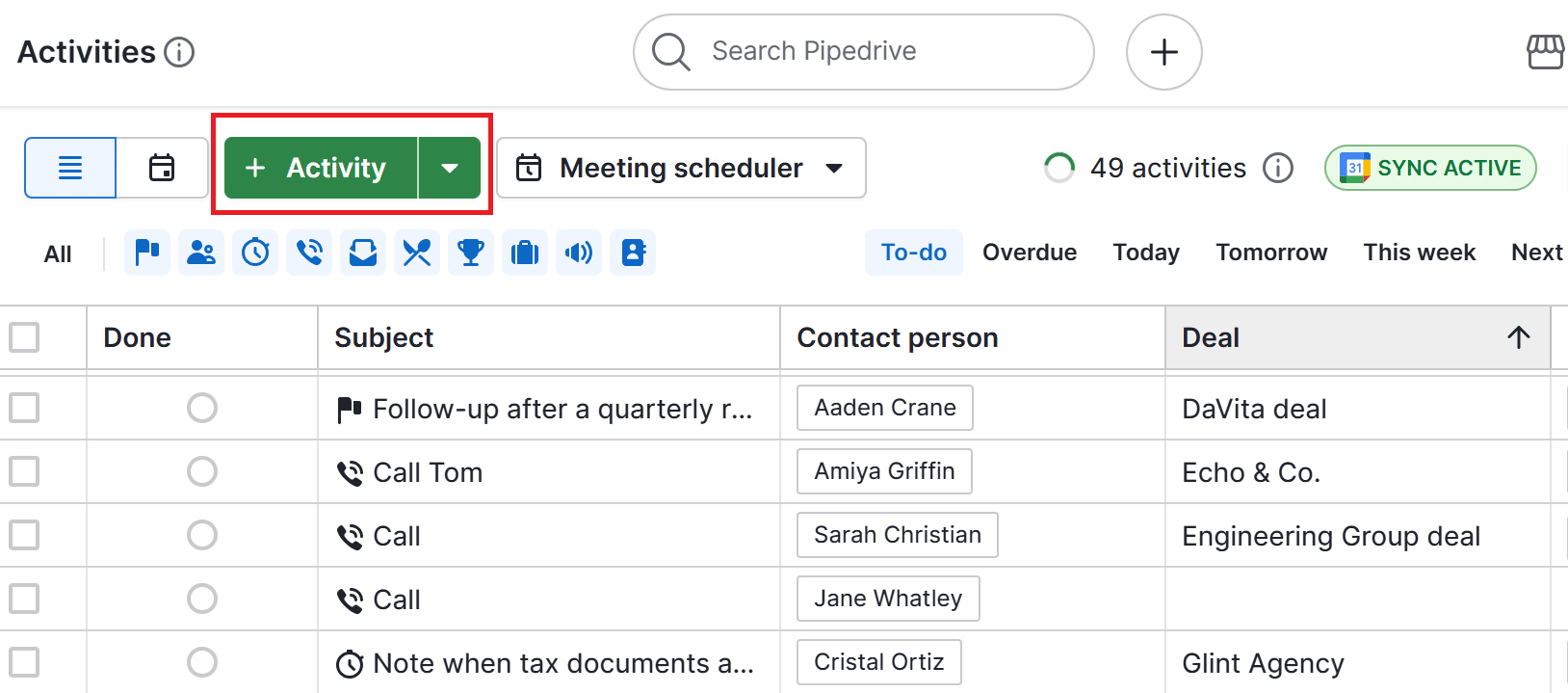
On risky marketing investments

Although he’s best known for his young adult novels and more recent nonfiction books, Green is also something of a serial co-founder of small businesses — DFTBA, Complexly, and Good Store are but a few.

There’s a through-line of joy in his business ventures; helping small content creators finance and sustain their work, helping nurses-to-be pass their anatomy and physiology exams, selling ethically grown coffee.

“I like working with brands that empower creators and that recognize the benefit of working with creators, which is that you‘re going to be a little bit off the beaten path. That’s what I find most interesting. That’s also the riskiest kind of investment that you can make as a marketer. And so I understand why lots of people don’t make it.”

On authenticity and taking risks with your audience

Green has a remarkably devoted audience that has followed him across platforms, from YA books to YouTube to Instagram to awesome socks. For somebody who describes himself as “extremely risk averse — especially when it comes to taking risks with [my] audience,” he sure has taken a lot of risks with his audience.

“It‘s about answering the call of my own inspiration as much as it’s about and then trusting that the audience will be there one way or another,” he explains. “I mean, if you told me in 2015 that I was going to write a book about tuberculosis, I would have been very surprised. But that’s where my curiosity has led me over the last 10 years. And so I just have to honor that and hope that the audience will be there with me.”

“if you told me in 2015 that i was going to write a book about tuberculosis, i would have been very surprised. but that's where my curiosity has led me over the last 10 years. and so i just have to honor that and hope that the audience will be there with me.” —john green

Marketers might call it authenticity, but Green prefers “creative honesty.” “Everybody talks about being authentic to themselves, but that’s a very hard thing to actually be,” he says.

“Whereas when you‘re trying to be honest to your sense of inspiration or spark of curiosity, I think that’s something that I can quantify a little easier.”

On marketing and tuberculosis

So, back to tuberculosis, the world’s deadliest infectious disease (yes, even in 2025).

Green says that a TB expert once told him that the problem with eradicating the disease is that “tuberculosis doesn’t have a constituency.”

Green’s first reaction was one of incredulity. “I was like, of course tuberculosis has a constituency. It has 10 million people who survive it each year who want to live in a world without it. And it has hundreds of millions of people who are infected with it, who don’t want to become sick with it. This is obviously a disease with a constituency.”

But what that expert meant, Green thinks, is that tuberculosis actually has a huge marketing problem. “Most people don‘t even know that it’s the deadliest infectious disease in the world, let alone that it’s curable and preventable and has been since the 1950s. And so I think that TB is the ultimate example of a disease in need of a marketing campaign.”

“Malaria,” he says, “had a really good one in the early 2000s with Malaria No More. ACT UP made HIV/AIDS undeniable starting in the 1980s and 90s. We need a similar marketing campaign around tuberculosis.”

“i don't have to tell marketers that we live in a very fractured information environment. it's hard to reach people, with tough messages especially. [marketing and tuberculosis are] very closely related, because i think one of the reasons why a million and a half people are dying of tuberculosis every year is because we're not doing a good job of spreading the word about the disease in the rich world.”

And, he adds, “I don‘t have to tell marketers that we live in a very fractured information environment. It’s hard to reach people, with tough messages especially.”

“So yeah, I think [marketing and tuberculosis are] very closely related, because I think one of the reasons why a million and a half people are dying of tuberculosis every year is because we’re not doing a good job of spreading the word about the disease in the rich world.”

Your move, marketers.

Click Here to Subscribe to Masters in Marketing

  • Page 1
  • Page 2
  • Page 3
  • Interim pages omitted …
  • Page 97
  • Go to Next Page »

Get your Software Stack together. softwarestack.tech

Software Stack

© 2024–2025 - Software Stack is a trading name of SouthwestCIO Limited ac ompany registered in England & Wales 11319049

  • Knowledgebase
  • Home
  • About Us
  • Contact Us