• Skip to primary navigation
  • Skip to main content
software stack logo

Software Stack

Get your Software Stack together

  • Knowledgebase
    • All Categories
    • Accounting Software
    • Automation & Workflow Software
    • Customer Relationship Management
    • E-Commerce Shopfronts & Payments
    • Marketing Automation
    • Online Courses & Membership
    • Project Management
    • Surveys & Forms
    • Web Hosting
  • Home
  • About Us
  • Contact Us
  • Show Search
Hide Search

Software Stack Editor

How Aliya Uses FreshBooks to Scale Her Communications Firm and Stay Confident During Tax Season

Software Stack Editor · March 17, 2022 ·

Aliya Jiwan-Thawer is a seasoned media trainer and media relations consultant who brings over 20 years of communications experience to the table. After working 10+ years as a television and radio news reporter for major Canadian broadcast networks, Aliya transitioned into the world of public relations.

While in public relations, she had the chance to work with both large and boutique PR agencies, creating and executing public and media relations campaigns in a variety of industries including financial, health, IT, education, childcare, corporate and non-profit sectors.

Aliya’s insight into the workings of a newsroom allows her to identify the qualities that make stories stick. She understands the science of generating media interest, and her rapport with media connections enables her to secure media interviews for clients on a wide range of topics.

Today, using her experience as a television news reporter, Aliya has also trained countless CEOs and company spokespeople for some of the toughest media interviews. She’s used her platform and company to help successfully launch a variety of products and charities for her . She has also media trained a wide range of spokespeople and managed numerous fundraising events while positively positioning her clients in ways that have raised awareness and brought attention to their stories.

As Aliya found herself making a career transition from journalist to media trainer and media relations consultant, she found herself in pursuit of added flexibility to help her dedicate more time to motherhood, “When I really needed that flexibility, I didn’t have it. So I left, and it was scary. I was very lucky that I had the support of my parents and my spouse because it’s a scary thing to go from making really good money on a consistent basis to not being sure how much money is coming in”.

Today, Aliya is able to maintain a balance that suits her professional profile while also carving out enough time to spend time with her family. As she continues to scale her , she remains focused on her passions while allowing FreshBooks to take over the parts she’s happy to spend less time on.

Was the transition from journalism to media relations consulting slow and natural, or something that sort of happened overnight?

Aliya: After spending over a decade as a TV news reporter and anchor, and a little bit of time as a producer with various news outlets at places like CBC and CTV, the natural progression from journalism for me was to move into media relations. I got a job working at a large PR agency, and there was so much I learned there about just the actual job and media relations, media training, writing, editing, and managing teams. Then I got an opportunity to work at a smaller agency, which involved a lot of leadership, as it was a smaller firm. The biggest perk there was I got to work from home most of the time.

After a lot of commuting from the suburbs to the city with that job, I found myself having to endure a struggle that a lot of parents face when their kids first start daycare–being at an age where they are changing socially and sick often—you need a very understanding employer who is comfortable with you stepping away and go pick up your kid first, and putting the grind second.

After a while, I realized I didn’t really have that flexibility, and I felt like I was constantly walking on eggshells. With both of my parents being self-employed, they would say time and time again that consulting or starting my own business would be the right move. With that in the back of my head, when I really needed that flexibility I decided to leave and transition to working for myself, which was very scary initially. I was extremely lucky to have the support of my family and go from making really good money on a consistent basis to not being sure how much money I’m going to make.

With FreshBooks, it’s hard for me to fall behind on invoices and lose grip of my income projections since everything is tracked month to month. That makes tax time especially painless.

What unforeseen challenges hindered you early on in your journey as a small business owner?

Aliya: The actual client services part came naturally to me because I was already managing clients, and I knew exactly what the clients needed. Having the taste level with the writing and the editing along with having that news judgment of what will help clients get media coverage, all of that came naturally to me. But knowing how to run a business? That was tougher to handle.

Making sure I was the person who was client-facing and doing the work wasn’t an issue at all, but also being the person sending out invoices and making sure the money came through was not something that came naturally to me. I was lucky to have the guidance of my parents who were both self-employed and both accountants. They kind of guided me through the process of and tracking my billable hours to make sure I was ready for tax time.

What was your old accounting process like, and how do you think it changed over time?

Aliya: For me, it was a series of spreadsheets and Word documents. Microsoft Office was my best friend initially because that’s all I knew. And when you only have a handful of clients, you can get away with it. As soon as I started ramping up clients, it became apparent that I needed a better way to do things.

The other challenge when you’re a consultant is, you need to really be prepared for the ebbs and flows of the business. Some months can be very, very busy, and suddenly other months can be very quiet. You need to really manage your cash flow properly so that you not only have the money when it comes time to pay your taxes and and all that fun stuff, but also so that you have the income to carry you during those slower months.

How does the seasonal nature of your business translate into tax prep? Is tax time an especially intense period?

Aliya: When it comes time for tax season, I basically give my accountants access to my FreshBooks account and they see everything at a glance. What I have to stay on top of are expenses, and incurring any mileage. With FreshBooks, it’s hard for me to fall behind on invoices and lose grip of my income projections since everything is tracked month to month. That makes tax time especially painless.

At what point did FreshBooks become the clear solution to help you streamline your accounting?

Aliya: It was really when I started scaling and adding more clients to my business. In the beginning, when you only have a handful of clients, tracking in a spreadsheet and having a column for billables and another for taxes felt sufficient. But at scale, those things were impossible to sustain. I started working with agencies who would subcontract work, and when I was getting 10-12 invoices per month, I knew it was time to find a better way—I was taking way too long to process them. I went from spending hours upon hours with my invoices to spending maybe two minutes tops. It was such a breeze to track billables in FreshBooks and then simply press “Generate Invoice”. It’s the best!

What sets FreshBooks apart in your mind?

Aliya: From the moment I first used FreshBooks it was immediately apparent that it was quite user-friendly. I didn’t really want to go through a steep learning curve with a new platform, I just wanted to use something that I know works. What I really needed was to be able to track billable hours. It was important for me to make sure that I was billing my clients accurately. At the same time, if I had a , I wanted to be able to let my clients know in advance that this was going to be a slow month, but that we had some money to carry over. Or, if it was going to be a really, really heavy month, maybe we want to scale back a bit next month, just to balance things out. FreshBooks gives me a level of foresight that I couldn’t achieve before.

[embedded content]

Which features are you the biggest fan of? Do you use some FreshBooks features more than others?

Aliya: I use invoicing literally all of the time. Every single project that I do with every client that I service involves invoicing through FreshBooks. I also put all of my expenses in there which includes monthly expenses like newspaper subscriptions, but also includes parking or any purchases I make for my business—software, subscriptions, etc. The one thing I still want to implement would be using the feature more. With COVID, I haven’t had as many excuses to travel!

Invoicing was a very manual process and something that took a lot of time for me before. I was tracking the time on a spreadsheet and then manually creating an invoice, whereas now I spend a couple of seconds generating invoices directly in FreshBooks.

Today, I can probably block off an hour at the end of every month and get all my invoices and expenses sorted. That’s a game-changer for me, and it helps me put that time back into my business, or spend more time with my family.

Your 5-Step Checklist to Closing the Books in FreshBooks

Software Stack Editor · February 8, 2022 ·

If you want to avoid stress at tax time, it all comes down to one thing: Preparation.

Even before you or your client (whoever is doing the hands-on bookkeeping) can , some housekeeping is in order. That means making sure all financial data is accurate and compliant.

There are many moving parts, and it can be easy to overlook something, especially when you’re working with , or you’ve got clients on multiple platforms. Unless that is, you have a handy-dandy checklist like this one that covers the steps you need to get tax-ready.

Et voilà! Here are all the end-of-year processes to complete in FreshBooks so you’re ready to file.

Table of contents icon

Table of contents iconTable of Contents

    First, Get Set Up With the Accountant Role in FreshBooks

    First things first: To gain access to your client’s account in FreshBooks, you’ll need them to from within the platform. (Note that there is no cost to your client to do this.)

    Once you accept the invite, you can . In the Accountant role, you can access all your client’s accounting reports and expenses. You’ll also be able to create Journal Entries and custom Sub-Accounts in the Chart of Accounts.

    However, only can request admin-level permissions (the Accountant – Full Access role in FreshBooks), which allows you to complete many tasks, like setting up your client’s account for them, doing day-to-day tasks like invoicing and managing bank connections for bank feed.

    If you are a FreshBooks Accounting Partner and need these permissions turned on, contact your Partner Consultant directly.

    Reconcile Your Bank and Credit Card Accounts

    Step one is ensuring that FreshBooks balances match up with the bank and credit card balances. This task is done using our Bank Reconciliation feature. If the balances still don’t match, it is time to review the bank accounts!

    Using the , start at the opening balance date of the bank account and go month by month. If you find a place where the FreshBooks balance doesn’t match the bank statement, a transaction was missed. If you run into any problems, check out the answers to .

    Check Your General Ledger’s Petty Cash Account

    If you’ve done step 1, your petty cash balance should be $0. But I recommend double-checking the Trial Balance to be sure. If petty cash is not $0, you can drill down into the Petty Cash balance and view all transactions that make up the balance in the .

    The only transactions you should see under the Petty Cash account in the General Ledger are transactions marked as transfers. (Transfers between connected business accounts and credit card payments, for example.)

    Expense Allocation, Including COGS, Uncategorized Expenses, and Expense Refunds

    For a full view of last year’s expenses, run the (P&L). Viewing either month-on-month or quarter-on-quarter is a great way to quickly spot spikes in spending/expenditure. You can drill down into what makes up the expense category total and easily to fields like merchants or expense categories.

    If you need more explanation on expense categories or expense refunds, you can run the . You can email your client directly from FreshBooks to ask for additional expense information to complete your year-end tasks.

    In FreshBooks, any expense refunds (located at the bottom of the Expense report) are deducted from the refunded expense category.

    Calculate Owner’s Equity and Personal Expenses

    Consistency is key and helps keep the business owner’s personal expenses separate from business expenses.

    Run the General Ledger report or Trial Balance report for transactions that are in the personal expense category or marked as Owner’s Equity in the Bank Reconciliation screen.

    If business expenses paid for with the business owner’s personal credit card were added here accidentally, this will need to be fixed manually. on how to do that in FreshBooks from one of our Accounting Partners, Kate Josephine Johnson.

    Run These Key Accounting Reports

    You’ll want to run all of the following reports. I recommend running them in the order listed below.

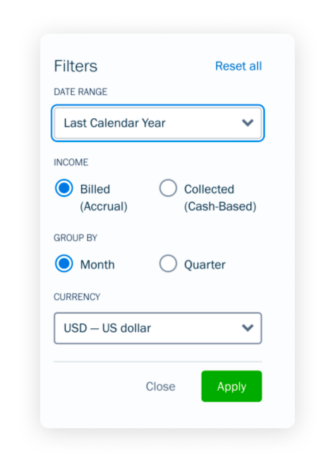
    Make sure you run your reports with your preferred accounting basis: Billed (Accrual Basis) vs. Collected (Cash Basis). And be sure to set the filters consistently when you run each report.

    All reports are available on accrual and cash basis except for the Trial Balance and General Ledger reports, which are accrual-basis only.

    FreshBooks UI - report filters

    FreshBooks UI - report filters

    Profit & Loss Report (P&L)

    You know it, you love it, you need it for tax filing. It’s the P&L report! has general info and FAQs about how to access and run this report in FreshBooks.


    Related Articles


    Invoice Details Report

    While your P&L summarizes revenue from invoices on a single line, the gets into the nitty-gritty. In this report, you can dig into which items and services make up the revenue amount, whether sales tax was applied, and more details. This report can be exported to Excel.

    Expense Report

    If you’ve been following the steps to this point, you’ve already run your . Done and done!

    Sales Tax Summary Report

    The shows the amount owing to the government in sales taxes. For each sales tax set up in FreshBooks, you can see the total sales tax collected minus sales tax paid for expenses.

    These amounts can be reconciled/matched to your Invoice Details and Expense reports to see which transactions have sales tax applied.

    Accounts Aging Report (and Accounts Payable, If Applicable)

    Run the to confirm whether invoices have truly not been paid or to determine if they are due to be paid in the following period. (See the , if needed.)

    A Note About Payroll

    Businesses with employees or contractors have additional tax requirements. Be sure you and/or your client know the deadlines and understand which forms to file. In the U.S., it’s 1099 forms for contractors and W-2 forms for employees.

    For businesses with W-2 employees, in 2024, we launched , powered by Gusto, as an add-on to your FreshBooks subscription. Look for enhancements to this add-on, including processing payroll for contractors.

    One, Two, Five…File!

    Once you or your client have ticked off each box on this checklist, you’re ready to file all your paperwork. If you rely on your clients to do their bookkeeping, share this for clients with them as a next step.

    Keep in mind that FreshBooks Accounting Partners receive comprehensive training in all the platform’s business tools, accounting features, and reports. In addition, Accounting Partners get 1:1 support from FreshBooks Partner Support Specialists, which can be extremely helpful during tax time. If you haven’t considered becoming a partner yet, .

    Thanks to  for inspiring this post.

    This post was updated in March 2024.

    Sara Uses FreshBooks Because She Knows Accounting and Getting Paid Are Tough

    Software Stack Editor · November 11, 2021 ·

    Throughout her career, Sara Lobkovich has honed in on her expertise in adult learning, instructional design, and helping teams understand their strengths to work together and achieve peak performance. She has oscillated between being an entrepreneur and holding full-time positions across technology, law, marketing, and strategic ops.

    Her latest passion is her own company, . The company focuses on OKR coaching, business strategy, conflict resolution, and sustaining organizational momentum.

    “OKRs are about increasing organizational performance and results, and, done with integrity, help organizations improve inclusion, belonging, and increase well-being and humane conditions in the workplace,” Sara said.

    With Red Currant, Sara was looking to translate her passions and career experience into a viable business, but scaling her business quickly while starting with no revenue was quite the challenge. By seeking out FreshBooks to , invoices, and expenses, and to fill in her , Sara was able to focus on growing her business with confidence that her books and finances were in good hands.

    Talk to me about Red Currant. What made you decide to start your own business after stints of full-time employment?

    Sara: Red Currant Collective is a strategic impact consultancy. The main services we’re focused on are around objectives and key results (OKRs) for organizations to build momentum throughout all areas of their business.

    I formed the business in January of 2020, but I took on some full-time work amidst the pandemic and officially opened Red Currant in March of 2021. We’re relatively new, but we’ve exceeded my own expectations in terms of revenue and growth so far, so I’m really happy and excited about where we are headed.

    Accounting tends to be an afterthought for small business owners. How did you initially feel about handling your finances? Empowered? Terrified?

    Sara: The scariest part for me of starting my own business is the financial operations of it. It’s not my zone of genius or competence. I knew I needed help with this area, and my husband is also a small business owner on the blue-collar side.

    I learned through his business that outsourcing what isn’t in my area of expertise could only make things run smoother, and I made that decision to immediately look for a good way to outsource both the bookkeeping and the financial component of my business before I actually needed to. It was important to me to find a platform I trusted and the best tool for the job.

    So you knew you were gapped when it came to finances, and finding a solution was more of an exercise in foresight?

    Sara: Exactly. There wasn’t a pain point necessarily. It was more just the awareness of knowing the and financial side of things was not my strong suit. For me, it was important to invest in a tool like FreshBooks to fill that gap and give me confidence on that side of my business.

    I don’t have to spend a moment worrying about my finances. I know this is not super sexy to say, but it just works.

    How did you hear that FreshBooks and Bench work so well together?

    Sara: I used FreshBooks at a previous business years ago and loved it, and Bench was also recommended to me by a colleague. Knowing I needed help in this area, I didn’t even do a trial. I just signed up and took the leap of faith, and I have absolutely been blown away by the effectiveness of

    We’re trying to get my husband to move over to FreshBooks, but there are some industry-specific details in his inventory management which make that tedious. It’s so much less of a hassle using FreshBooks, though! We’ll migrate him eventually, [laughs].

    Being a new business owner at the time, did you look at other solutions in your search for an accounting tool?

    Sara: I looked at a few other options, but considering where my business was starting from zero, anticipating rapid growth, and needing an extremely easy-to-use tool, FreshBooks stuck out to me, and I’m so glad I went that way.

    How has FreshBooks fast-tracked your business growth?

    Sara: I knew I needed it for invoicing, and I knew I needed expense tracking management, so basically bookkeeping. I also really wanted something I could accept online payments through, and that’s been of tremendous value for me. Lately, I’ve actually been really annoyed when won’t use the online payment option, [laughs]. I have a client right now who’s asked me to send them my bank routing number and account numbers so they can pay me. And I’m like, come on, just pay me through FreshBooks!

    You mention the tremendous value you get from FreshBooks with tools like online payments. What would you tell other business owners considering FreshBooks?

    Sara: With FreshBooks and Bench, I don’t have to spend a moment worrying about my finances. I know this is not super sexy to say, but it just works. And for a business owner to subscribe to platforms and services and then have them over-deliver on their promises, it just makes a huge difference.

    I would say it’s never too early and never too late to get on board with FreshBooks. When I wrote the first check for that first month of service, I didn’t have any real revenue yet. It was difficult because it felt like I was spending money before I was making money. However, worked with me going back to the very beginning of my business, only a month or two after I really started operations. They helped me account for everything from my owner contributions, to the startup of the business, from my personal finances before the business was formalized and held my hand through that transition from being a personal project, spending money on my future business all the way to being an up and running LLC with .

    So, when I think about tax time coming up and my overall readiness, I have so much peace of mind. I’m thrilled that I signed on early because things were so simple in the first couple of months. But now, as things get a little more complex, I have a solid foundation with a few months of finances that are crystal clear and accounted for.

    With FreshBooks, Victoria’s Marketing Agency Is Invoicing 5 Times Faster 🇨🇦

    Software Stack Editor · June 28, 2021 ·

    When Victoria launched her Ottawa-based marketing agency 16 years ago, she expected to ease into entrepreneurship. Instead, on day 1 her former employer called up to hire her as a contractor and she was off to the races. From that day, has seen consistent organic growth.

    Rapid growth is the dream, . Victoria didn’t have systems in place—everything was done manually. And it was just her. She was the designer, the marketing expert, the accounts, the admin. It only took a few months to realize that she needed help.

    Today, Excentric Agency is a full-service marketing firm specializing in branding with B2B in Canada, the U.S., and the UK. Victoria’s 15-person team is a mix of graphic designers, web designers, website developers, marketing strategists, and SEO/PPC experts, plus contract writers and other freelancers.

    We spoke with Victoria to learn more about why and how she uses FreshBooks for her agency.

    Why did you first look into FreshBooks?

    Victoria: We had a client using FreshBooks and she was telling us how great it was. At that time, we were using Excel. And then we had to do our invoices in another program. Because we’re a branding company, our invoices had to look nice. So we had Excel for tracking the financials and then we had another program to make them look pretty and then another system for people to track their time. And it was just it was so cumbersome.

    And that’s okay if you’re just starting out and you have just a few invoices. But as the company started to grow, the team members started to grow, the client base started to grow, keeping track of receivables just was not easy. And end-of-month invoicing was very time-consuming. It was a real chore. End-of-month invoicing was taking 5 times as long as it needed to.

    We can actually say within a Project how many hours we have as a team and we can monitor where we are. [It] gives us really good intel for quoting future projects.

    Which features in the app are most useful for you?

    Victoria: I like that we can set up Projects. We do have clients that use us on a monthly basis, but we also win project-based work. So we know based on the price tag of the job, we know how many hours, if we’re estimating correctly, it should take us combined as a team. And it’s important that we know where we are in the hours that we have allotted to that project.

    So [in FreshBooks] we can start a Project and we can actually say within the Project, how many hours do we have combined as a team and we can monitor where we are. And then also it gives us really good intel for quoting future projects. Because we can go back into FreshBooks and we can say, “Oh, wow, we were way under on that one, or we were way over on that one.”

    And because our team members are logging specific tasks of what they’re doing…we can actually see even where we need to allot more or less time on similar future Projects. So it’s really, really good in that respect.

    So it sounds like you’re a fan of the features built for project-based work. Are you using Proposals in FreshBooks too?

    Victoria: Yes, and I like that there’s a choice between Estimates and Proposals. The Estimates are great for smaller project-based work, but the Proposal is nice because you can actually do a long-form Proposal in FreshBooks with an overview of the Project.

    Sometimes we have 30- to 40-page proposals that we do, say, in Google Docs. We PDF them and we can actually embed the 30- to 40-page long-form in the FreshBooks Proposal, so we can just put the pricing and everything for signature in FreshBooks with the attached 40-pager. And then it acts as a service-level agreement. And it’s more like a contract because we can request an actual signature.

    How has using FreshBooks changed how you run your business?

    Victoria: Now it’s just so much more efficient. It’s just easy. The Dashboard alone. Just to go and see: How much do I have in receivables? What’s in U.S. dollars, what’s in Canadian dollars? What’s [owing] past 30 days? Just to see that at a glance—it’s fantastic. And to be able to sort. I do that often, for example, when I’m at the end of Q1, I can go and look at, okay, well, what are our earnings for Q1? And then I can see what are our taxes collected so that we know how much of that is tax.

    End-of-month invoicing is a breeze now, it really is. We can see the number of hours each team member has worked on a project. I would say end-of-month invoicing saves us a full day of time each and every month. It also reduced our bookkeeping costs because our bookkeeper has access to our FreshBooks account.

    How has it been working with your bookkeeper in FreshBooks?

    Victoria: My bookkeeper is added [with the Accountant role] so she can go in and see, what have we invoiced, what have we collected, what tax have we collected. So she just is invited to that. And then every month… I mean, in the old days, I used to have to send her all these attachments of files and now she’s just she can go in and she can just look. So that is really great, too.

    End-of-month invoicing is a breeze now, it really is.

    For businesses like yours that are growing quickly—or hoping to grow—what would you say about investing in FreshBooks?

    Victoria: Well, we actually had a record year this past year. And so, you know. Could we have done it without a platform like FreshBooks? I don’t know how we would have, to be honest with you; because as you grow, you need to have processes in place. [There’s] no way we could have grown without the tools in place.

    So I would say if they want to keep a pulse on how their company is doing financially, that’s key. And if they want to spend less time on admin, then they should try it out… And honestly, I wouldn’t even say “invest”, because it’s not a lot of money, and the time that you’ll save alone is— your time is more valuable.

    Any parting words to share about FreshBooks—good or bad?

    Victoria: I know this sounds like a silly thing, [but] I love the new feature of the motivational quotes. You’ve added this is a kind of a new feature where when you’re waiting, instead of looking at a spinning wheel, they serve you with a motivational quote. And I know it’s such a small thing, but I like it. It’s a nice touch.

    Accessibility Improvements For Form Builders | Make

    Software Stack Editor · June 26, 2021 ·

    How FreshBooks Makes Accounting Easier for Global Entrepreneur Carolina

    Software Stack Editor · June 1, 2021 ·

    Carolina Ramirez Herrera is a digital nomad and dot connector with brands and people in the travel agency, amassing an incredible portfolio of work and collaborations around the world with her namesake agency

    Prior to flying solo with her own venture, Carolina cut her teeth as a Global PR Director for the Oasis Collections team specializing in strategic partnerships and business development. She has mastered the art of collecting memories without sacrificing her knack for business, but her initial introduction to being a solopreneur was accidental.

    “I started consulting kind of by accident,” said Carolina. “I said, ‘OK, let me start freelance consulting until I know what I want to do’. One thing led to another, and four years later, here I am. Today, Carolina specializes in consulting across public relations, marketing, and digital media with clients ranging from real estate, hospitality, travel, art, and health and wellness.

    Born and raised in Miami, Florida, with Colombian heritage, Carolina is fluent in English, Spanish, and Italian, and truly embodies a worldly perspective in her business and private life. We sat down with her to understand how she has been able to scale her business with the help of and balance her jet-set lifestyle.

    Why Miami for your business?

    Carolina: I’m Colombian originally. My parents and I grew up in Miami. My parents live in Miami, and I grew up there, went to school there. I moved to New York after college and traveled a ton. But my base, I guess, for a while has always been Miami just because my family is there. I guess it’s also a great place to “hub,” in terms of travel. It’s super close to travel to Latin America and to Europe. It was only later in life when I noticed people were like, oh, of course, Florida. That’s where you have your company. Taxes. Duh.

    How did FreshBooks first get on your radar?

    Carolina: I remember it was around the time I was doing my first invoice for my company, and I was thinking it would be easy to just do them in Excel. After using Excel for about a month or so, my business began to grow quickly, and it was hard to keep up. I even tried writing down expenses and owing amounts in my physical notebook. Finally, I realized it just wasn’t the way to move forward.

    And then, it was actually one of my really good friends who said, “Wait, you don’t have accounting software?!”

    After some Googling, I looked at my options and bounced around between FreshBooks and QuickBooks. QuickBooks, for me, was too expensive, and the user interface of FreshBooks stuck out as it was very simple to navigate. The competitive pricing of FreshBooks and the user interface…it’s just very user-friendly. For someone in branding and marketing PR, that’s important.

    What FreshBooks features have been most useful in your day-to-day business?

    Carolina: Invoicing and are a lifesaver for me. The invoices dashboard is so useful; the fact that it shows you overdue amounts right away keeps me organized. Rather than stressing about it, I basically look at it once or twice a day and know what’s coming in and what’s going out.

    I love the offered as well because I work with clients in different countries with multiple currencies constantly. It shows me euros and dollars separately, and it’s easy to stay organized and takes away a lot of manual work.

    What does that added boost in efficiency do for your business?

    Carolina: Consulting in marketing and PR, every client is different in their needs and what they’re looking for. For example, I use many contractors, and then I kind of build mini-teams with the people I am working with.

    For example, there might be one client that needs a social media manager and a copywriter, so I need to find a way of tracking that. Now I use the FreshBooks Bills and Vendors tabs in the Accounts Payable section. Before, I would just write things down ad-hoc!

    What would you tell other small business owners and solopreneurs about investing in accounting software?

    Carolina: Well, you should definitely invest in accounting software because will murder you if you don’t, for starters!

    Taxes can be really difficult if you’re not an accountant. If there’s one thing you should be organized with, it’s and your finances because it’s your money. And there’s no way you’re going to grow, especially when you work with larger clients with full-on accounting departments. They don’t have time to deal with your invoice mayhem.

    How do you and your business plan to evolve and grow in the future with FreshBooks?

    Carolina: Honestly, there’s a lot more I could be doing with FreshBooks for my business. I love Recurring Invoices and some other features, but there’s a lot more I have to learn.

    What makes it easy with FreshBooks is the customer service. Not to sound like a cheerleader, but support is always so supportive and quick on calls and emails. Since I’m always traveling, sometimes I need quick answers and quick fixes, and FreshBooks is very supportive.

    [embedded content]

    What Are Accounting Advisory Services? Here’s What You Need to Know

    Software Stack Editor · May 7, 2021 ·

    The term “advisory services” gets thrown around a lot, so it can be hard to know exactly what it means. “Is this something new?” “Is it different from what I’m already doing?” “I feel like I advise my clients all…the…time!”

    So what is it really?

    I believe advisory services will be the future of accounting and bookkeeping for firms and solo practitioners. Why? One reason is that technology is making compliance work easier. Increasingly, businesses can automate accounts receivable processes, expense management, and more, making outsourcing less appealing.

    Another reason is that the post-pandemic economic uncertainty has prompted business owners to keep a close eye on cash flow. More than ever, businesses need the advisory services a professional can offer.

    So, let’s break down what accounting advisory services really are, what they mean to your firm, and what they can do for your clients.

    Table of contents icon

    Table of contents iconTable of Contents

      But First, Do You Have What It Takes to Be an Advisor?

      Want to hear a secret? No degree or credential is required to offer advisory services. What is required is the ability to help your clients solve their problems and improve their business.
      Delivering on a value proposition like that requires you to continually grow and develop these skills:

      • big-picture thinking to envision solutions for your clients’ problems
      • research and evaluation skills so you can poll current clients, evaluate industry and market trends, and follow tech advances
      • empathy, curiosity, good communication, and change management to guide clients through these recommendations and develop deeper client relationships

      You don’t need to be born with these skills. You can identify your strengths and weaknesses and create your own path through books, training courses, and mentorship to fill out your advisory toolbox.

      The key here is to realize your clients don’t need someone with all the answers. What they need is someone willing to ask the right question (sometimes a lot of questions). They need someone who understands how stressful and isolating it can be to run a business and who will come alongside them and help them solve problems. What they need is a human being. What they need is you!

      What Advisory Services Are (and Are Not)

      Most of the traditional services we think of as accounting and bookkeeping are compliance services. These include keeping up with the books, generating financial reports, and filing taxes—all compulsory for business owners. These services are focused on historical data.

      Advisory accounting goes beyond this by examining the present or looking to the future and providing guidance to business owners. With the right direction, owners can make better-informed business decisions, increase their profits and cash flow, and avoid potential problems — but more on that later.

      Consulting Versus Advisory

      Consulting services are typically provided on an as-needed basis, often as one-time engagements. When the client runs into a problem, they call you up to ask for your help. You consult until the issue is solved, and then go back to compliance. You may collect a consulting fee, or—far too often—your client may just assume these 911 phone calls are part of the deal when they hired you.

      Advisory services, on the other hand, are built into your engagement with the client. Your client knows you’ll provide guidance in certain areas, and they understand that they’re paying a higher fee for the added value of your advice.

      In a study conducted by CPA.com, nearly . So, it’s likely that you’ve already been offering advisory in one form or another.

      However, if you want the best results for you and your clients, it’s important to make it integral to your offering.

      Compliance Versus Advisory

      Compliance services are increasingly becoming a commodity. There’s little differentiation between the tax returns or financial statements produced by one firm versus another. The result is a race to the bottom in terms of pricing. This is why you see so many firms marketing themselves with phrases like “trusted” or “accurate,” which are standard expectations.

      A way to set your firm apart is with advisory services.. You can add real value to a client’s business and help them reach new levels of success, and it all starts with your greatest areas of expertise.


      Related Articles


      So, What’s Your Specialty?

      Start by asking yourself:

      • What do you do best?
      • What do you know that your client doesn’t?
      • Where do they need the most help?
      • What matters to your clients?

      Through advisory services, you can help answer those questions by offering support such as:

      • tech stack implementation
      • budgeting
      • business planning
      • financing and loan applications
      • operations reviews
      • HR, payroll, and employee benefits
      • KPIs and metrics
      • pricing analysis
      • technology training
      • tax planning
      • improving workflows

      It can also mean helping your clients understand complex business issues based on their accounting data. For example: Advising on increasing revenue, reducing costs, determining the right time to hire, or renegotiating a bank loan.

      Again, consider what matters to them.

      What Advisory Can Do for Your Clients

      A few years ago, I was working with a fitness studio owner looking to expand to more locations across the country. We went into our meeting with plans to review the previous quarter’s financial results, followed by an examination of the forecasts I had prepared for the next 3 locations they wished to open. (You can see that I was dabbling in advisory by forecasting.)

      When the meeting started, instead of getting right into the numbers, we ended up spending 20 minutes talking about our children, business travel, and the mom guilt that we both felt as with children who sometimes have to be away from our families. We spent the next 20 minutes discussing staffing challenges they were facing and developing a plan to kick off a program that would help motivate employees.

      Only then did we discuss the forecasts and opportunities for their 3 new locations to determine the capital required to grow their business.

      That may sound like wasted “free time” chatting with a client and fielding questions, but it wasn’t wasted at all. It was an essential piece of developing trust and understanding. At that moment, she didn’t need just accounting expertise, she needed me to be human.

      By empathizing, listening, asking questions, and contributing to the conversation in a relatable and authentic way, I was able to uncover the client’s biggest pain points and, ultimately, developed a better financial plan for her that aligned with her goals and values.

      It’s Not All About the Accounting

      As an advisor, it’s important to remember that clients don’t primarily value the spreadsheets, numbers, or the effort you put into creating them. What makes a real impact is the outcome. The partnership and relationship you bring to the table are a huge part of helping them get where they want to go. Financial reports and data should support client conversations, not monopolize them.

      The fitness studio owner I previously mentioned initially came to me for bookkeeping and taxes, but she became an ongoing advisory client. She later confided that there was no way she would have been able to expand her business and add new locations without us. Developing that “partnership” plus the financial insight made it happen.

      Key Advisory Advantages for Clients

      When clients recognize you as a partner or integral part of their team, it can alleviate their stress about income and expense concerns and give them a sense of financial security for the future.

      “The intersection of your client’s needs and your skills forms the basis of advisory.”

      They can simplify their business and better understand their finances by or another platform. A powerful aspect of advisory services is helping clients design suitable workflows and coaching them to effectively use tools to streamline their day-to-day financial tasks.

      Ultimately, advisory services are all about to overcome their biggest problems and achieve their biggest goals. These are unique to every business, and the intersection of their needs and your skills forms the basis of advisory.

      It’s crucial to remember that many businesses don’t know what they need or what’s causing their biggest problems. They may also be floating downstream, headed toward a waterfall, and be blissfully unaware of the trouble coming their way. This is why it’s vital to build advisory into your . Often, clients don’t know they need to ask for these services and won’t ask for your help in a consultative capacity until it’s too late.

      What Advisory Can Do for You

      Advisory services are a fantastic opportunity to grow, both in terms of income and professional development.

      By embracing the , you can revolutionize client interactions and enhance your capacity to deliver scalable advisory solutions.

      Collaborative Accounting is a technology-driven approach to accounting, supported by a shared workflow between accountants and their clients. It streamlines front-end tasks for business owners through an intuitive software platform, leaving accountants the space to focus on high-value advisory services.

      This approach offers numerous benefits, including:

      • client experience
      • pricing (explained below)
      • niching
      • scalability
      • advisory

      With Collaborative Accounting, the possibilities for enhancing client experiences and delivering impactful advisory solutions are endless.

      The Benefits of Value-Based Pricing

      Advisory allows you to create more value for your clients and increase your prices. If your clients still pay by the hour (), it might be time to reconsider your price structure. Value-based pricing ensures that your clients know exactly what it will cost each month and lets them clearly see the return they’re getting from your services.

      Hourly rates, on the other hand, punish you for getting better at your job and don’t reflect what clients are actually paying for.

      Ready to Get Started?

      If you’re an accounting professional interested in offering advisory services but you aren’t sure where to start, begin by taking small steps.

      The best thing to do is to get educated by obtaining the . In under 4 hours, this program will guide you through various advisory opportunities related to the everyday tasks of business owners. It covers the framework in detail, including shared workflows for each front-end accounting tasks, tips on advisory conversations, and much more.

      Remember, every journey begins with a single action. Your path to becoming an indispensable advisor for your clients starts today.

      This post was updated in May 2024.

      Pipedrive and Zapier: Transforming Leads into Action

      Software Stack Editor · February 17, 2021 ·

      image

      There are dozens of ways to use Pipedrive and Zapier to automate your lead nurturing process and drive the hottest prospects through your funnel.

      Take advantage of Pipedrive’s lead generation toolset

      You can also automate lead generation just using Pipedrive using our Automations feature and add-ons.

      Last year, we launched many new features to help you generate more high-quality leads. Our LeadBooster add-on now comes with four great tools:

      • Prospector
      • Web Forms
      • Chatbot
      • Live Chat

      There’s also our additional Web Visitors add-on, which enables you to discover which previously anonymous organizations are visiting your website. Both of these add-ons easily connect to your Leads Inbox, a new section in Pipedrive that helps you manage leads and focus on the ones that are most likely to convert.

      When you set up your LeadBooster’s Chatbot, you just need to select “Leads” as the save location of your playbook and every new lead Chatbot finds will go straight to your Leads Inbox.

      You can also do the same with Web Forms, so that anyone who fills out one of your forms gets added to your Leads Inbox.

      Furthermore, using Automations, you can automatically have an email sent or an activity scheduled when a lead is added, updated or deleted within your Leads Inbox. Alternatively, you can guarantee a lead is created when a trigger is met, such as when a deal is won or lost.

      There are dozens of ways you can integrate Pipedrive and Zapier to automate your sales processes, especially when your team works remotely. Use a combination of all these features plus Zapier to fully automate your entire lead generation and management process in limitless ways.

      This article was published on February 17, 2021. Product descriptions were correct at the time of publishing.

      How Boardsports Brand Volcom Makes Ecommerce Flow

      Software Stack Editor · January 4, 2021 ·

      Vista Equity Partners Investment

      Software Stack Editor · November 11, 2020 ·

      image

      We’re excited to announce that market-leading investment firm Vista Equity Partners has made a majority investment in Pipedrive.

      In this article, we answer some of the questions you might have and explain what this means for our customers.

      Who is Vista Equity Partners?

      Vista Equity Partners is a leading global investment firm with more than $58 billion in cumulative capital commitments. The firm invests exclusively in software, data and technology-enabled businesses, bringing an approach that prioritizes creating enduring market value for the benefit of its global ecosystem of investors, companies, customers and employees.

      Based in the US, the firm’s other investments include category-leading companies from all around the world, such as Ping Identity, MindBody, PowerSchool and more.

      What will the investment be used for?

      Vista Equity Partners’ investment, as well as its partnership with Pipedrive, will further fuel our ongoing expansion and enable us to continue building our product portfolio, so that we can offer solutions to more customers in new markets.

      What does the investment mean for me as a Pipedrive customer/partner?

      Nothing will change for our customers, who can still expect the same 24/7 support, reliability and service as before. We will continue to develop new solutions to ensure that we can service our customers’ needs as they continue to grow. Vista will allow us to go even further. Their resources and global footprint will help Pipedrive provide even better support and solutions to our customers and partners, so that our customers can continue to grow their own businesses in the future.

      The capital from the investment will enable us to provide, build, and grow our product lines while other programs will improve our customer and employee experience. Our continued focus on innovation will ensure product leadership in the market, while market expansion opportunities will allow us to deliver our products to new customers.

      How will being part of the Vista family help Pipedrive grow?

      Now is the perfect time to work with a partner like Vista: Vista’s team of investors, operators, technologists and entrepreneurs understand the unique challenges and opportunities of enterprise software companies like no other investor and we look forward to partnering with them to accelerate our growth trajectory.

      Collectively, Vista’s companies make up one of the largest software companies in the world by revenue and headcount, meaning we are joining an ecosystem that provides access to a vast community of resources, peers and practice experts who can help grow and advance our company.

      Pipedrive is on the edge of a tremendous amount of opportunity and growth. Combining our deep-rooted understanding of our customers with the strength and strategic oversight of Vista will help Pipedrive accelerate this growth.

      Why Vista?

      With the vision and industry leadership to bring Pipedrive to the next level of growth, Vista clearly stands above the competition. In our engagements with the team, Vista demonstrated how their commitment, experience and focus on the software sector could help us grow and evolve our business and result in our shared success.

      The firm has $58 billion in capital commitments, over 450 private equity transactions worldwide, deep industry expertise and executive resources, making it the obvious partner to help Pipedrive execute on its mission.

      What attracted Vista to Pipedrive?

      As more and more small- and medium-sized businesses look to accelerate their digital adoption, solutions like Pipedrive are crucial to helping enable this growth and success.

      Vista saw a tremendous opportunity with Pipedrive. Through this partnership, Vista can leverage its capital and strategic guidance to help Pipedrive accelerate growth, improve its product and provide solutions to more markets. Vista is partnering with Pipedrive and its existing investors to provide disruptive, innovative and value-driving sales enablement solutions to help even more companies across the globe sell with certainty and efficiency.

      Will Pipedrive continue to operate as a standalone entity?

      Pipedrive will operate as an independent entity with Vista as our owner and partner, continuing our mission to provide the best-in-case CRM solutions for as many sales teams around the globe as possible. As owners and board members, Vista will provide their expertise and work alongside our leadership team to ensure we continue to grow effectively. However, the core of Pipedrive and our values will remain the same.

      Will there be any product integrations that result from the investment?

      Pipedrive is always looking to build more integrations with tools that our customers are using. While there is no immediate plan to build integrations as a direct result of this investment, we are looking forward to being part of the Vista ecosystem and developing connections with other successful software companies.

      What will happen to Pipedrive’s existing investors?

      Pipedrive’s existing investors Bessemer Venture Partners, Insight Partners, Atomico, DTCP, and Rembrandt Venture Partners, will continue as minority investors in the company and will partner with Vista and the Pipedrive team to accelerate the company’s growth trajectory.

      What happens next?

      Our leadership team remains committed to our mission of serving our customers and the values that underpin our company and business philosophy. Over the next few months, we will work closely with Vista to determine how we impact positive change in our business and take advantage of the opportunities in front of us to improve our offering for customers. Stay tuned for further details.

      Welcome to the FreshBooks Accounting Partner Program

      Software Stack Editor · August 20, 2020 ·

      For Lindsay Darby, CMA, using FreshBooks with her small business clients has been transformative. Why? They love the automation and the ease of using FreshBooks compared to other tools.

      Once she became a FreshBooks-Certified Accounting Partner, Lindsay realized how valuable the community behind the program is:

      “I just really love being able to bounce ideas off the other accountants. The other FreshBooks Accounting Partners have been so helpful. … I’ve received great feedback from them—and from the FreshBooks Accounting Specialists. It’s been really collaborative.”

      (Read more about as a FreshBooks Accounting Partner.)

      What Sets It Apart (Why Partner With Us?)

      Not all accounting partner programs are created equal. Our program is designed for accountants and bookkeepers who are seeking deeper connections with their clients and want to work with clients in a more strategic and advisory capacity. We make this happen through what we call Collaborative Accounting.

      Collaborative Accounting™ Model

      In a Collaborative Accounting model, your business-owner clients manage some or all of their day-to-day operations, like invoicing, expenses, and payments. This frees up your time to provide high-value services, including strategy, analysis, and coaching.

      You and your clients work together in the software, each handling part of the workflow. That way, you both have visibility into the business and a deeper understanding of it. The goal is a seamless experience where the accounting professional becomes a true partner in their client’s business.

      User-Friendly Platform

      FreshBooks was built for small business owners. Again and again, they to use FreshBooks compared with other accounting software. They tell us how by their bookkeeping. And that their accountants are relieved to no longer wade through piles of receipts at tax time.

      That creates a ripple effect that makes the collaborative accounting approach possible.

      “When business owners have access to the technology they’re comfortable with, accounting professionals get timely data that enables them to provide so much more than bookkeeping or compliance support,” said , CPA and Head of the FreshBooks Accountant Channel.

      “Businesses benefit immensely when their accountant or bookkeeper offers forward-looking analysis and advice. It sets the stage for success.”


      Related Articles


      What Is the FreshBooks Accounting Partner Program?

      The mission of the Accounting Partner Program is twofold:

      • To promote collaborative accounting between accounting partners and their
      • To empower accounting partners—through knowledge, community, and support—to provide more  strategic and to clients (which, in turn, empowers clients)

      Our mission centers around the FreshBooks’ 4E philosophy: “Execute extraordinary experiences every day.”

      Partner Program Benefits

      Just looking for the master list of partner program benefits? Okay, you’ve got it!

      Comprehensive Collaborative Accounting™ certification and ongoing education. Starting with our comprehensive FreshBooks accounting professional certification and training, you’ll have many opportunities for learning and development.

      Human-centric account management. Work with a Partner Consultant who will help you reach your goals as a FreshBooks Accounting Partner.

      Dedicated support. Get help when you need it from Accounting Specialists on our industry-defining support team. These FreshBooks experts understand the needs of accountants and bookkeepers.

      Client discounts. Offer your clients access to exclusive FreshBooks discounts, including a 15% discount on new subscriptions.

      Free data conversion. We’ll help you migrate client data from another accounting platform to ensure a smooth transition to FreshBooks.

      Free FreshBooks Account. Receive a personal subscription to use for your own books
      or as a demo environment.

      Client referrals. ​​Want more clients? Through our FreshBooks-Certified Accounting Partner Directory, you can get connected with our small businesses seeking your services.

      In addition to these program benefits, as an accounting partner, you also have opportunities to provide product feedback and contribute to the FreshBooks feature roadmap.

      Who Is the Program For?

      The Accounting Partner Program is best suited to modern accountants and progressive bookkeepers who are interested in a and are actively building a cloud-based practice.

      The Collaborative Accounting model makes it that much easier to plan proactively. So, the program is also for accounting professionals who are investing in working with scaling businesses and want to grow alongside them.

      How Do I Become a FreshBooks Accounting Partner?

      Curious to learn more and connect with the program? We can’t wait to hear from you.

      First, to apply online. Then, we’ll be in touch directly so you can:

      • Complete your FreshBooks certification
      • Access all your , including your discounts and referral bonuses
      • Share your goals for the program
      • Connect with your dedicated Partner Consultant
      • Join the FreshBooks Accounting Partner Community

      Ready to begin your journey?

      [embedded content]

      Pipedrive Launches Community: A Sales Forum

      Software Stack Editor · March 16, 2020 ·

      image

      We’ve launched The Community: A new forum where both amateur and professional sales and marketing people can connect, share what they’ve learned and discover new ways to improve and develop themselves.

      A marketing and sales forum that’s open to everyone

      The Community is an open forum where anyone from around the world can post about sales and marketing. To join, all you have to do is sign-up and log in. You don’t even have to be a Pipedrive user—anyone can set up a profile and start scrolling and posting in minutes.

      Members will have their own profile, where they can find the groups they’ve followed and the posts they’ve liked. Other users can jump to your profile and even follow you.

      You can post in whichever language you choose and, in addition, every post, page and profile can be translated into any of the languages supported by Google Translate, so you don’t have to worry about missing out on new content.

      Find the content that you’re interested in

      Besides being able to follow any channel that takes your interest around specific topics, or a channel containing all the salespeople in your country, you’re also free to create your own. You can create public channels, which are open to all Community users, private channels that are visible to all users but invite-only and hidden channels that are only visible to members.

      Want a space where salespeople from Connecticut can talk about the local market, or want to connect with other inside salespeople around the world? Just create a group.

      Although the Community is open to everyone, it’s especially useful to Pipedrive users who want to be able to discover new ways to use our software.

      Pipedrive users can connect to the Community through the Pipedrive interface by clicking at the question mark on the top right. If you’re already a Community user, you won’t have to log in, the forum will just open automatically. When you join the community from your Pipedrive account, we autofill name, email, country and industry fields in your community profile. If you join from LinkedIn, only your name and email will be autofilled. Of course, you have complete control over your profile information and can edit all the fields, so that you only share the personal data that you feel comfortable with.

      If you have questions about how best to use Pipedrive, the Community is a great place to find suggestions and advice from other users. Don’t worry, our support team will still be available through in-app chat or over email for any complex and unique issues you come across.

      In addition to everything else, we’ll be sharing Pipedrive news and content through the community, including the latest blog posts, Academy videos and product updates.

      In times of crisis, such as during the Covid-19 pandemic, a sense of community is important. At Pipedrive, we’re committed to staying in touch with Pipedrive users and sales and marketing experts, keeping you all informed of the changes we are undergoing and responding to the messages you direct to us on the forum as quickly as possible. You’ll also be able to find discussions and guidance around how to deal with the potential impact on your business.

      Be rewarded for your contributions

      The Community is a marketing and sales forum that’s powered by you: the user.

      Our team of Community Managers will be supported by forum members who set up and act as admins in their own groups.

      Our admins will be entrusted with keeping any spam, abuse and unsuitable content off the Community so that everyone can enjoy their experience. You can find the content guidelines in the main Community feed.

      We’ll also reward admins and users who go that extra mile with badges to show that they are experts in their field and contribute top-performing tips, comments and sales content to the forum.

      More ways to connect

      The Community is still in its early stages, but we’re looking forward to welcoming you into the forum and helping all the members build a space where they can create relationships, share their knowledge and experience and develop their talents.

      Join our Community today to start building sales and marketing connections.

      This article was published on March 16, 2020. Product descriptions were correct at the time of publishing.

      Cold Email

      Software Stack Editor · March 11, 2020 ·

      image

      Some people might say ‘If you can’t cold call, then don’t be in sales,’ but as the world becomes increasingly digital, I think the salespeople who are not able to ‘sell digitally’ via email and social will be the ones that really fall behind.

      What is a sales pipeline and how do you build one?

      Software Stack Editor · January 29, 2020 ·

      What is a sales pipeline and how do you build one? | Pipedrive

      sales pipeline stages graph
      Topics

      What is a sales pipeline?

      What you’ll need before you start building your own pipeline

      What the stages of your sales pipeline should be

      How to create a pipeline for your organization

      Bonus tip: When to move a deal from one stage to another

      What tools you’ll need to build and maintain a pipeline

      Final thoughts

      ‘Sales pipeline’ is one of those sales terms that gets thrown around a lot. If you spend any time in sales circles, you’ll often hear about “getting prospects into the pipeline”, “increasing your pipeline” and “filling your pipeline with hot leads”.

      It can be easy to forget that “pipeline” is more than just a buzzword. Instead, it’s an important sales tool for any sales management operation, and it can make a significant difference to your bottom line.

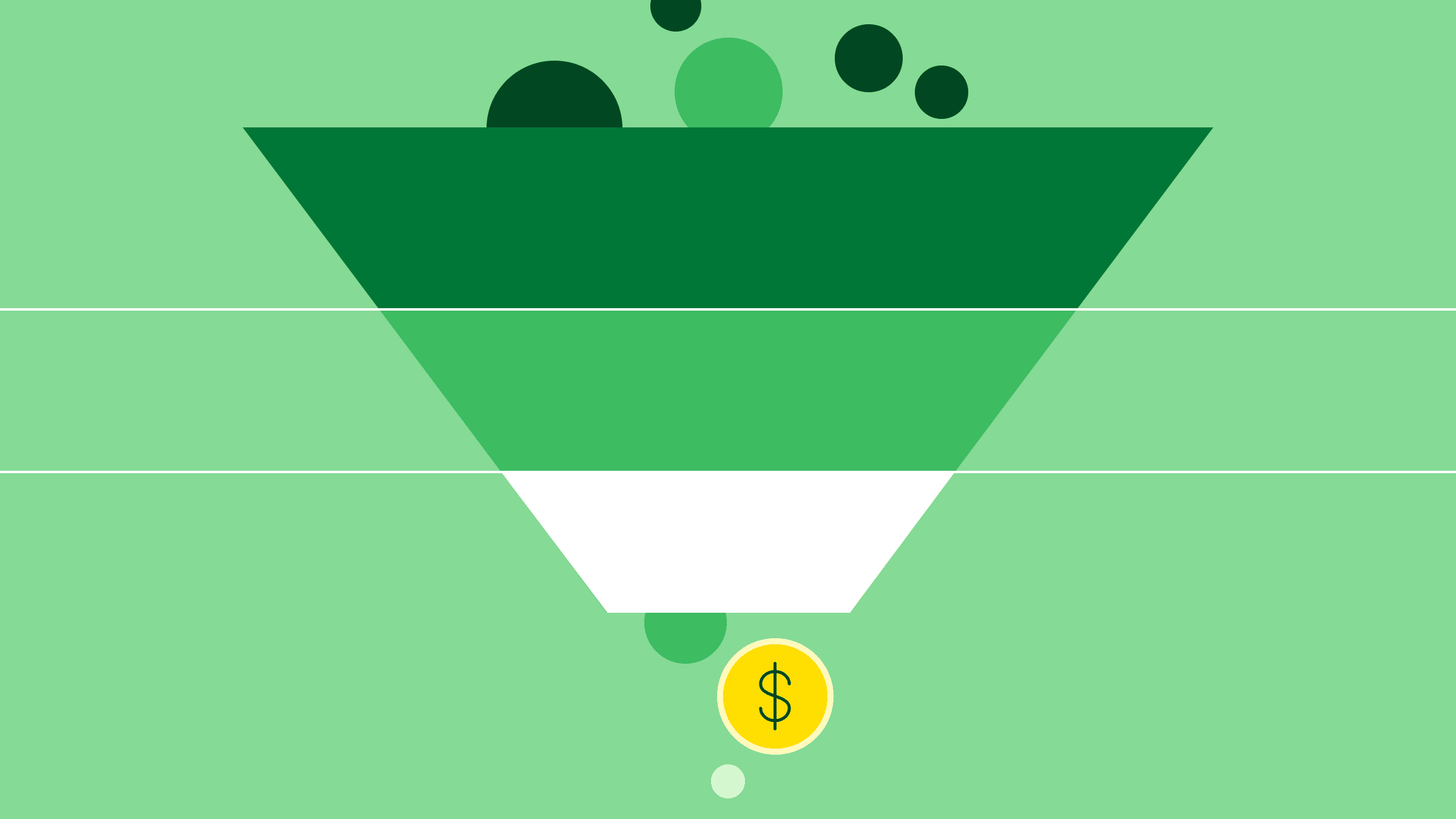
      The stages of a sales pipeline can help you and your team better understand your sales process. This visual representation portrays where in the sales funnel your deals are located, where deals are stalling and which sales activities are contributing to reps closing deals and bringing in the most revenue.

      If you aren’t using a sales pipeline, you may lack valuable insights about how effective your sales process is and where your deals are at any given time.

      In this article, we’ll explain what sales pipelines are, break down the sales pipeline stages, explain how sales pipeline management can help you hit more of your sales targets and show you how to build your own.

      What is a sales pipeline?

      A sales pipeline is an organized, visual way of tracking potential buyers as they progress through different stages in the purchasing process and buyer’s journey.

      Often, pipelines are visualized as a horizontal bar (sometimes as a funnel) divided into the various stages of a company’s sales process. Leads and prospects are moved from one stage to the next as they maneuver through the sales process (e.g. when reps receive a response to outreach like a cold email or when a potential customer is marked as a qualified or unqualified lead).

      Sales pipeline stages add a layer of accountability and make sales goals easier to achieve by breaking the sales process down into small, trackable tasks.

      With a pipeline, salespeople are able to see exactly where their money, deals and other sales efforts are at all times. This is vital, given that salespeople are often juggling many sales prospects and deals and can’t afford to let anything slip through the cracks.

      It’s also a powerful tool for sales managers who want to collate and analyze data on how well their sales process is working, or not, so that they can optimize it accordingly. As a sales pipeline tracks a salesperson’s activities, it offers visibility into which sales activities are giving a company the greatest return.

      “Companies don’t know what their possibilities are,” says Michelle Seger, a partner at Atlanta-based SalesGlobe. “If you can actually look at your activities, how long they’ve been there and what are your conversion rates, it tells you where you are and what’s not working.”

      Recommended reading

      https://www-cms.pipedriveassets.com/blog-assets/sales-funnel-image.png

      Sales funnels: definition, process, stages, template and examples

      What you’ll need before you start building your own pipeline

      Given that a sales pipeline is such an important sales tool, you should take care to build it properly. Make sure you have specific information about your company, sales team, existing customers, target audience, target market, product and pricing before you begin assembling one.

      Here are some of the basic things you should have on hand before you start building each stage of the sales pipeline:

      • A list of your prospective buyers

      • Your team’s sales process

      • Your revenue targets

      • A meeting scheduled with colleagues

      Let’s take a look at each:

      A list of your prospects

      The first thing you’ll need is a list of prospects that fit your target audience and ideal customer profile (ICP) that have a need (and budget) for the product or service you’re selling. This list should align with your buyer personas and be as detailed as possible.

      This includes names, contact information, their company (including the industry and size of their business), their position at work, whether or not they’re a decision-maker, how you first made contact with them (or vice versa), their pain points and challenges, etc.

      If they’re already talking to you, try to assign them a rough pipeline stage. Don’t worry about getting this part wrong as you can adjust these stages later.

      Your sales process

      A sales process is a clear, structured, step-by-step formula that tells your team exactly what sales activities they need to conduct to close a deal. A good sales process empowers your sales reps to repeatedly win deals simply by following the steps and activities in their workflows.

      If your team already has a defined sales process, great news: you’ve more than likely got the steps of your pipeline outlined. If not, don’t worry. As you build each stage of the pipeline, which we will explore in the next section, you’ll be able to map out your sales process in tandem.

      Your revenue targets

      Your lead pipeline is a tool that will help you meet your revenue goals. Thus, in order to design a successful pipeline, you’ll need to have your goals on hand.

      Those numbers will eventually help you answer an important question: How many deals do you need to add to your pipeline to reach your objectives? If you know how many of your qualified leads convert into new customers, for example, you can easily calculate the number of deals you need in each of the early pipeline stages.

      Your colleagues

      A sales pipeline helps to improve both individual and teamwide task management and tracking. Since everyone on your sales team will be using the same pipeline, you should include your team members in the decision-making process as you build it.

      This way, everybody has a chance to offer their opinions and advice, which in turn will make your sales pipeline a more effective tool for collaboration, communication and project management.

      What the stages of your sales pipeline should be

      No two businesses are exactly the same and neither are all sales pipelines. Some organizations use a five-step pipeline, others incorporate as many as eight stages and some swear by seven stages.

      The number and type of stages in your sales pipeline depend on several factors, including how you contact leads and the type of product or service you sell. For example:

      • Salespeople that sell SaaS tools will often have a sales presentation stage where they demonstrate their product to prospects

      • B2B sales professionals are known for implementing buyer personas before reaching out

      • Car salespeople will have a test drive stage at some point in their pipeline

      • A real estate agent’s pipeline will likely contain a house viewing

      Below are some of the stages common to most sales lead pipelines, with an explanation of what each stage means.

      Prospecting

      Every organization prospects differently, depending on its clients, products and organizational structure. For instance, you may have a lead generation team devoted entirely to sourcing new leads, or you may primarily generate leads via marketing campaigns that leverage downloadable content, social media engagement and email marketing.

      Regardless of how you go about it, the first stage in any pipeline is always the same: finding prospective buyers who need what you’re selling.

      Qualifying

      Qualifying (also called “research”) in lead pipelines is all about finding prospects who are the right fit for what you’re selling. Occasionally, lead qualification comes later in the process, after a rep has made contact with a potential new customer.

      Lead qualification is an invaluable step, because you don’t want your sales professionals wasting their time on leads who can’t or won’t buy your product, or who might be the wrong fit and cause problems down the line. In this step, you’ll analyze fit via lead scoring and separate hot sales qualified leads from cold opportunities.

      Qualifying leads is all about answering the following questions:

      • Does your prospect have the budget for your product?

      • Can the prospect actually make the decision to purchase, or do they need to convince someone else?

      • Do they truly need your product?

      • Do they seem ready to buy now?

      If you get one or more negative responses, that lead might not be a good fit for your product or service. In other words, they’re probably cold.

      There’s nothing wrong with cold leads, you just don’t want to keep them in your pipeline. Instead, save their contact information (or move them to another category if you’re using a CRM with multiple pipelines) and move on.

      Approximately 20% of your leads are going to provide 80% of your revenue (according to the Pareto Principle). If you find a prospect who has been clogging your pipeline up for longer than your typical sales cycle, put the prospect in a different category, such as a future pipeline or a future callback list, and set a reminder to follow-up down the line to see if circumstances have changed.

      You can also save some time by automating this process with a deal-rotting feature in a CRM.

      Contacting

      This step is pretty straightforward. In this stage, a salesperson makes first contact with a prospect. This might be done over the phone, via email, through social media, a text message or an in-person chat.

      Make sure you’ve been thorough in the qualifying stage and done your due diligence before contacting prospects. Use the actionable information you’ve collected to focus your approach when targeting segments.

      Try out our cold calling sales scripts to start engaging leads and developing connections.

      Building relationships

      It’s not enough to simply sell to the customer. You need to demonstrate that you’re mindful of your prospect’s needs from the initial contact onward.

      Your reps should be nurturing potential buyers and building relationships with them at every single stage in the buyer’s journey.

      Lead nurturing doesn’t mean your reps should annoy your clients by calling or emailing them constantly. It may simply be forwarding an article that applies to the prospect’s unique issues, or liking their posts on LinkedIn. It could be as simple as honestly listening to objections and responding. The goal is to build trust with your prospects so they’ll feel comfortable buying from you.

      This part of the pipeline usually stretches across a number of stages, depending on how many touch points leads and prospects need to be converted into customers.

      Closing

      Once your reps have made contact, explained your product and built trust, it’s time to finalize the deal.

      How do you ask for a sale? Well, that depends a lot on your reps, organization and customers. Sometimes the customer says ‘yes’ outright. In some cases, you might need to make concessions in order to make a sale, but you should always be okay with those specific concessions in advance.

      If a customer disappears right before a deal, make a few attempts at contact, and then send a message explaining that you realize it may not be a good time and that they can reach out when they’re ready.

      Then, mark that contact as a cold lead.

      Following up with cold leads

      Speaking of which, contacting cold leads should also be a stage in your pipeline. Just because they weren’t ready to buy when they were first contacted doesn’t mean they’re not ready to buy now.

      Check in periodically to see how they are and what they’re up to (this is also part of the building relationships step). You never know; they may now have the budget, authority or need that they didn’t have before.

      It’s also a good opportunity to review your approach throughout the previous stages. Many leads might still be cold simply because you haven’t properly communicated their problem and clearly explained your solution.

      • What are the stages in the sales pipeline?

        The steps in the sales pipeline are usually a combination of prospecting, lead generation, qualifying leads, engagement (contacting leads), nurturing (building relationships), conversion (closing), implementation and onboarding – the last two are more common with B2B companies. You also might follow up with cold leads.

      • How long does it take to build a pipeline?

        The time it takes to build a sales pipeline can vary depending on several factors, such as the complexity of the product or service being sold, the size of the target market, the resources available and the sales strategy employed. However, building a pipeline to manage leads and customers is always worthwhile.

      How to create a pipeline for your organization

      Step 1: Take stock of your prospective buyers

      In the beginning, before you even have a pipeline, all you’ll have is a list of the potential customers you think would like to buy your product. If there are a lot of them, you will need something to help you manage not only those contacts, but also your interactions with these potential new leads.

      One way to track sales opportunities is to use a spreadsheet tool such as Google Sheets or Excel. Here is a free sales pipeline template to get you started. Alternatively, dedicated sales CRM software also works.

      Using a spreadsheet template like this makes perfect sense if the number of deals you need to manage simultaneously is fewer than 10, or if you’re just starting out and want to organize your pipeline before finding a purpose-built tool to manage it.

      A CRM, however, is a more efficient tool if you’ve got more than a few deals or more than a few salespeople. CRMs allow teams to manage deals collectively, easily move deals from one stage of a pipeline to another and effortlessly link to prospects’ contact information. Importantly, they also allow sales managers to keep an eye on an entire team’s progress toward revenue goals.

      Need more reasons to look into a CRM? We’ll dig deeper into the benefits of CRMs shortly.

      Step 2: Set up your sales pipeline stages

      It’s easy for reps to get overwhelmed by their goals; sometimes a quarterly or annual number may seem too big to achieve. There’s a way to control this sort of overwhelm: Break down each deal into the daily activities a rep needs to do in order to close a sale.

      That’s what your pipeline is measuring and managing: Activities. By managing and focusing on sales activities, your team is likely to be more successful at making their sales goals.

      To set up the stages in your pipeline, think about your team’s common sales activities and the ones you think have the most impact on sales. You can use the list of sales pipeline stages above to guide you, or work out the steps in your own sales process and sales strategy.

      If you need more ideas check out our guide to activity-based-selling.

      Step 3: Refine your stages as you go along

      Once you’ve implemented your sales pipeline, you may see that certain types of conversations between reps and prospects happen consistently. For example, if you are a real estate agent, you may want to add a “reassure buyer” column if you face a lot of nervous buyers. You need to decide whether these regular occurrences lend themselves to being sales stages in your pipeline.

      When clearly defined and planned, sales stages constitute your pipeline’s fundamental building blocks and set you on your way to predicting your sales revenue with decent accuracy.

      Both your marketing team and sales leaders at your company should collect relevant sales metrics (and refer back to them) as you continue to refine your pipeline stages.

      It may take numerous attempts to figure out what works best for your business. You’ll find that some stages end up being unnecessary and discover others that you actually need.

      Step 4: Keep your pipeline up to date

      You’ve built a pipeline and you’ve put your existing contacts and deals into it. Now, how can you make sure it stays updated?

      This part can be tricky. Often, when a team hasn’t worked with a pipeline, they may have a hard time adjusting to the habit of entering contacts and deals into the pipeline and moving them through the stages. The key here is to develop a habit of moving deals through the pipeline.

      The easiest way to do that is by thinking of the stages of your pipeline like a to-do list. Each stage correlates to an activity your team must complete. Once an activity is completed, your team will move a deal to the next stage. It may take a while for your team to get the hang of it, but after a while, the pipeline will be an invaluable tool for them because it shows them what they’ve done, what they need to do and where in the pipeline each deal is.

      Pipeline tools

      Bonus tip: When to move a deal from one stage to another

      Some stages are like a checklist: If you’ve made contact, or set a meeting, that activity is done and it’s time to move them to the next stage.

      For others, like lead qualification, the rules about moving a deal aren’t as clear cut. There are a couple of things you can do to avoid confusion about which stage a deal should be in.

      • First, be very specific about potentially vague stages. Make sure you know which conditions must be satisfied for a lead to be qualified.

      • Second, consider breaking some of the broader stages into smaller, easy to tick off stages. This might mean that “Making Contact” is sorted into three stages: “First Contact”, “Set Meeting” and “Presentation”, for example.

      • Third, if you have too many stages, and moving deals from one to the other is becoming cumbersome, you may want to do the opposite and consolidate. Your pipeline is an important tool, but reps shouldn’t spend all their time managing it.

      What tools you’ll need to build and maintain a pipeline

      You can build and manage your pipeline with just about any tools that come to hand, from sticky notes to an Excel spreadsheet.

      Download the Sales Presentation Templates ebook

      Nail your sales presentations with this guide containing the 8 slides you need and tips on how to make them.

      However, if you have a complex or long sales cycle or you’re managing more than 10 contacts, a spreadsheet is likely to get out of hand pretty quickly. You’re probably better off using a CRM for efficiency. A good CRM allows you to link contacts to deals, integrate email correspondence, see your team’s sales data in real time, automate tasks that will keep you on top of your game, and more.

      Pipedrive, for example, enables you to customize your pipelines so that they map to your sales process. If you manage more than one team and the sales processes are different for each, no problem. You can even add pipelines for each of your sales projects.

      Pipedrive’s intuitive interface makes it easy for salespeople to log their activities. They log in and work on the platform every day, completing activities, checking them off as done and sending emails right from Pipedrive. Using integrations like those found on the Pipedrive Marketplace, or the call tracking feature, your team can also make phone calls from the platform.

      Final thoughts

      Implemented, managed and updated properly, your sales pipeline stages will help you and your sales team seamlessly track deals and activities.

      Remember to set up your lead pipeline stages based on the activities your sales team does to bring in revenue. Don’t be afraid to revise if it seems like your pipeline needs more or fewer stages. Honing your pipeline will make it more accurate, which will help you meet your numbers.

      With a clear, functioning pipeline, you’ll be able to work out what brings in revenue and start making more of it.

      Driving business growth

      Recommended

      The Challenger Sales Model: Methodology & Summary

      Software Stack Editor · January 15, 2020 ·

      image

      Many sales strategies would lead you to believe that building relationships with prospects is an integral part of the sales process. However, the authors of “The Challenger Sale”, Matthew Dixon and Brent Adamson, have different ideas, which they explain through their challenger sales model.

      The authors say that when it comes to top-performing sales reps, building relationships is the least effective strategy in closing sales. Instead, they argue that sales reps who take control of a sale and teach their prospects how to solve their problem are more successful than sales people who spend long amounts of time building a relationship with their lead.

      What does “The Challenger Sale” say about customer conversations?

      Research from Gartner highlights a growing trend in the customer buying journey. Gartner’s research found that when considering a purchase, B2B buyers only spend 17% of their time meeting with potential suppliers. Instead, they’re spending 27% of their time researching independently online.

      This tells us that prospects are coming into a selling environment with preconceived ideas about what features they want and how much they’re willing to pay.

      It’s in this environment where the Challenger sales model shines. The prospects aren’t as interested in being told about the product features and benefits, as they already know about them from their own research. Buyers are inundated with and have access to high-quality information readily available on the internet. Because of this power, most prospects already know what’s out there.

      Yet, rather than feeling confident in their purchase path forward, buyers are becoming overwhelmed by the seemingly endless good choices and need help making a decision. If they reach out to a sales rep, they are most interested in their purchase experience and the answer to ‘why’ they should buy, rather than ‘what’ they should buy.

      So, is the Challenger sales methodology the answer to these new buying behaviors?

      Let’s evaluate that in more detail.

      What is the Challenger sales model?

      The Challenger sales model and methodology is built around a sales process that focuses on teaching, tailoring and taking control of a sales experience. Using the Challenger sales model, Dixon and Adamson argue that with the right sales training and sales tools sales reps can take control of any customer conversation.

      Before we look at how to take control of a sales situation using the challenger sales methodology it’s essential to dive into what exactly it means to be a “Challenger”.

      Dixon, Adamson and their colleagues researched the attitudes and behaviors of thousands of sales reps and discovered that they fall into one of five distinct profiles:

      • The Hard Worker. Goes the extra mile, doesn’t give up easily, is self-motivated and likes feedback and development.

      • The Relationship Builder. Builds strong customer advocates, generates customer loyalty, is generous with giving their time to help others and gets along with everyone.

      • The Lone Wolf. Follows their own instincts, is self-assured and independent.

      • The Problem Solver. Is reliable, ensures all of their customer’s problems are solved and is detail-oriented.

      • The Challenger. Has a different view of the world, understands the customer’s business, loves to debate, pushes the customer to get out of their comfort zone.

      The Challenger profile allows reps to build up to a sale by creating constructive tension. Challengers intentionally dispute their customer’s way of thinking and force them to contemplate a new perspective. This creates some slight tension in the form of a casual debate. By encouraging their customers to consider new opportunities, the Challenger sales rep can begin to offer an alternative way forward.

      The Challenger sales method relies on delivering insight about an unknown problem or opportunity in the customer’s business that the supplier is uniquely positioned to solve.

      It captures a prospect’s assumptions or beliefs, pinpoints flaws or untruths in them, and then makes room for a sales rep to offer a better solution.

      Here’s a relevant quote from the Challenger sales book.

      How can businesses benefit from Challenger selling?

      As modern-day products and services become more complex, so do the sales processes behind them. In fact, 77% of B2B buyers note that their latest purchase was “very complex or difficult”, according to Gartner.

      Customers now have more access to information than ever before. A quick search online can uncover endless details on a product and customers’ experiences with it.

      As a result, customers are delaying contact with salespeople while they do their own research, and by the time they’re speaking to you or your sales team, they already have a pretty clear idea of what they want, and what you offer.

      It’s in this complex sales process where businesses can use the Challenger sales model to their advantage. Studies have found that the Challenger sale approach is the best solution to complex sales conditions. While other methods stagnate, the Challenger methodology is a winning sales formula when it comes to complex selling.

      It’s these figures that make it worthwhile to pay attention to the Challenger approach.

      A further study that involved interviewing more than 6,000 sales reps uncovered some interesting findings:

      • 40% of top sales performers primarily used a Challenger sales selling style
      • Top performers were more than two times likely to use a Challenger approach than any other approach
      • Over 50% of all-star performers fit the Challenger profile in complex sales
      • Only 7% of high sales performers took a Relationship Building approach (the worst-performing profile)

      These statistics tell us that the success of a chosen sales methodology is directly dependent on the customer’s buying experience. If sales reps are using relationship-building methodologies for complex scenarios, they may not have success, and vice versa.

      By adopting a Challenger sales approach, companies can empower their top-performing reps to close even the most complex deals in their funnel.

      What are the pros and cons of the Challenger sales methodology?

      There are many positives to adopting the challenger sales model within your sales force. However, there are also a few downsides. While your best sellers who choose the Challenger sales methodology can help push sales through constructive tension, the method isn’t as useful for average performing reps or when a product has a simple sales cycle. It might be best to start your high performers training on this sales method first.

      Your qualified reps should first evaluate their prospect’s needs and background, and then decide if the Challenger sales methodology is the right fit.

      Using “Reframe” to turn your sales team into Challengers

      Getting your team to adopt the Challenger sales methodology is easier said than done. It can mean breaking down everything they thought they knew about selling and putting them into a teaching role instead, this is a great way to go about Challenger training.

      Sales management can use a “Reframe” method to help sales reps start to think like teachers, instead of relationship builders.

      To start the exercise off, gather up anything you can find in the sales room (we’re talking pens, notepads, staplers, etc.) and put them all into a bag. Then split your reps into teams and have each one grab an item out of the bag. This item becomes the product they’ll try to sell to their (imaginary) prospect (i.e. the challenger customer).

      For example, one group may have picked an energy-saving light bulb out of the bag. The typical, product-centric approach to selling this would be to position it as a “perfect way to save money on your power bill”. Yet, you can teach your sales reps to take on the Challenger methodology through a scenario that might look something like this:

      • Teaching point: “A lot of people are looking for more ways to make their homes more environmentally friendly. However, did you know that traditional light bulbs use a large amount of energy that’s environmentally unfriendly?”

      If the prospect uses traditional light bulbs, this teaching point will pique their curiosity.

      • The Warmer: “Our customers often tell us that they struggle to make small changes in their home that can make a difference to the environment. They tell us that their houses might be too old to make expensive changes like adding solar panels. Is this the case for you as well?”

      Asking this will help validate the prospect and, at the same time, encourages them to talk about their energy-saving problems at home.

      • Reframe: “A lot of our customers feel the same. We hear them taking measures such as turning their heating down or recycling more, which is excellent. Still, it’s interesting to know that a change of light bulb can make a big difference to your energy usage and environmental impact. Have you ever considered the fact that your traditional light bulbs use between 25-80% more energy than an energy-efficient bulb? How many rooms does your house have?”

      Now, your rep can use that last question to build an emotional connection.

      • Emotional connection: “That’s interesting. One of my grandparents has a similar size house to you, and it seems that you share a lot of the same traits, like using traditional light bulbs. It’s a shame, as his energy costs are astronomical. Is that the case for you as well?”

      Once the prospect realizes that your rep can empathize with them about their energy costs, it’s the perfect moment to offer a solution.

      • Value proposition: “Well, you will be happy to know that you can make small changes around your house to cut your energy costs. For example, your four-bedroom home would have roughly 50 light bulbs, I would assume? By replacing those with energy-efficient light bulbs, you can save $150 a year, and they will last four times as long as traditional light bulbs. Is that something you would be interested in?”

      Then all your sales rep has to do is introduce your product.

      • Value proposition: “That’s fantastic. We are currently running an introductory offer on our energy-efficient light bulbs, and I would be happy to talk more about how we can make your entire house more energy efficient to keep your energy costs down. Is that something you would want to talk about in more detail?”

      The last step of this exercise is to get your entire sales team to give feedback on how each team did.

      • Did they lead the prospect to the solution effectively?
      • Did they reframe the problem in a way that strayed from the traditional approach to selling?

      Once you’ve done this with objects from around the office, you’ve shown your sales team how the Challenger sales methodology can benefit them in complex selling scenarios. Now, you can take them through each approach in detail to get them ready to use these sales tactics when selling one of your products.

      How to adopt the Challenger sales methodology in 5 steps

      The backbone of the Challenger sales methodology is teaching prospects as opposed to building a relationship with them.

      Your sales reps must be equipped to take control of the sale and nudge customers into making purchase decisions. If done right, the selling style mirrors a ride on a rollercoaster. It taps into a prospect’s fears by showing them what will happen if they don’t act and eventually raises their hopes by positioning your product as the solution to these alarming scenarios. This emotional rollercoaster ends on a high — with the prospect eager to purchase your product.

      The methodology can be adopted using a five-step process.

      Step 1: The warm-Up

      The first step of the Challenger sales process is to build credibility with prospects using intelligent communication skills. It’s crucial that your sales reps show their prospects that they understand the challenges they’re facing. To do this, your reps need to thoroughly research and investigate the prospect’s pain points, challenges and needs.

      While other selling techniques require reps to talk about what your product does, the Challenger sale method demands reps talk about their prospect’s needs instead. Your product is never mentioned at this stage, but rather the entire discussion should focus on the prospect’s problem.

      Sales reps should:

      • Show prospect’s why they’re contacting them: Talk about typical issues the prospect might be dealing with to show that they understand and can empathize.
      • Prove they’re an expert: Demonstrate that they have the necessary experience to understand their prospect’s problems and what they’re dealing with.
      • Get them feeling curious: Introduce any facts or research about the problem that might pique interest.
      • Get interactive: Use visuals and interactive content to get the prospect involved in the discussion and uncover crucial pain points they are facing.

      Sales reps should aim to have nothing more than a thought-provoking conversation with their prospect at this point. The groundwork put into these early conversations helps to lay the foundation for selling further down the track.

      Step 2: Reframe the conversation

      During the warm-up, the prospect might’ve said that their biggest problem is landing customers. Or, that their marketing costs are too high. This next step focuses on finding the root of the prospect’s problems and reframing them as growth opportunities.

      Once the sales rep digs a little deeper, they can begin to break down any misconceptions the prospect has about how they will solve the prospect’s problems. By forcing a new perspective into the conversation, the prospect should slowly begin to shift their mindset away from what they perceived to be the answer to their problems.

      By the end of the conversation, the sales rep is essentially telling the prospect that the problem-solving solution they had in mind isn’t going to work. After challenging the prospect to accept this, even only hypothetically at this point, they can begin to reframe the conversation around better solutions. They can do this by:

      • Staying on topic. Address the concerns the prospect talked about in step 1 and reiterate understanding, knowledge and expertise.
      • Surprising the prospect about their misconceptions. Challenge them to shift their focus away from how they thought they could solve their problem to the new more effective methods they could use.
      • Addressing the problem with confidence. Turning the conversation around like this requires a certain level of fearlessness and assurance, an essential character trait in the best sales professional. The more confident and relatable the rep can be, the more the prospect will trust them to present alternative solutions.

      Once again, the goal of this step isn’t to sell. All the rep should be trying to do is evoke a sense of curiosity in the prospect and get them to think in new ways.

      Step 3: Use emotions

      No matter how good your product is or how many features it has, emotions will still play a key role in B2B sales. Up to 95% of our decision-making is subconscious and usually driven by our emotional reaction, according to professor Gerald Zaltman.

      “One firm with a very ‘tired’ brand explored consumers’ hidden thoughts and feelings and discovered a relevant, basic emotion that had been overlooked by all brands in the category. They were able to connect this emotion with their brand giving it a major sales boost.”

      The more that a prospect can personally relate to a product, the more likely they are to buy it.

      A great way to get prospects to see personal value is by presenting them with relatable customer stories. By telling stories of customers that have similar problems, the prospect can begin to see themselves as the main character and feel more connected to your product. And by showing the prospect how these other customers benefited from a new solution, you’re forcing them to picture how they could benefit, too.

      Once a prospect realizes that an alternate solution could, in fact, solve their problem, it’s harder for them to go back to their old ways of thinking.

      Now that the prospect is happily picturing themselves using a new solution, reps can take the emotional rollercoaster a step further by showing prospects what will happen if they don’t change their outlook. They can do this by:

      • Telling a story. The emotional impact will come from storytelling. Reps should tell a story that paints a picture of what will happen if their prospect continues down their familiar path. They should make the story relatable by addressing their prospect’s pain points, challenges and failing solutions.
      • Using customer stories. Then, replace this fictional unhappy ending with real-life success stories. The stories should be backed by case studies of people who have solved their problems using these alternative solutions. Sales reps should use visuals when telling the stories, as pictures stick in people’s minds more than words during a sales pitch or sales presentation – or even when shared over email.
      • Doing research. Now is the time to provide invaluable insight in a way that resonates with the prospect’s concerns and aspirations. As soon as the prospect begins to picture themselves using a new solution, reps should back up their argument with data to rationalize their statements.

      It’s in this step where all of the hard work starts to line up. If done right, it’s almost impossible for a prospect to see the benefits of continuing down the same path they were on before.

      Step 4: The value proposition

      It’s now time to show the prospect and any stakeholders the possibilities of a better future if they choose the new path laid out in front of them.

      Similar to other sales approaches, like SPIN selling, reps should still not introduce your product as the solution early on. Instead, they should focus on showing the prospect that their problem can be easily solved.

      Reps can frame these solutions by:

      • Painting a picture of a positive future. In the last step, reps told a story with a bad ending. Now, they should flip this story to show their prospect what the future will look like if they decide to take action.
      • Focusing on solutions. And nothing else. The prospect needs to start connecting the dots themselves.
      • Running a marathon, not a sprint. Reps should take their time to explain anything the prospect is unsure about. They can help the prospect connect the dots, if absolutely necessary.

      The ultimate goal in this step is to educate the prospect about what the ideal solution to their problem looks like, without ever mentioning your product. It seems counter-intuitive, but if reps do this right, their prospect will sell themselves on your solution before your rep ever has to.

      Step 5: The product

      The hard work is done. Reps have taken the prospect’s problem, reframed it, gained their trust and offered up a solution to solve it. The only thing left for reps to do is fill in the blank and show their prospect that they have that exact solution.

      If reps follow all the steps in the process correctly, this final step should be painless and quick, because with challenger sales, the sales rep is already leading the conversation from the beginning. How they introduce your product will depend on what you’re selling. If your company is a SaaS product, reps might offer their prospects a demo. If you are a web development agency, reps may provide a detailed walkthrough of what working with your company would look like.

      How to apply the Challenger sale methodology

      Let’s look at how using these five steps could play out in a fictional scenario.

      For example, if a rep is talking to a business owner that is struggling to acquire customers, they may have uncovered that the root issue is misguided digital marketing efforts. By digging further, the rep may discover the prospect’s misconception that the only way to solve their problem is to spend money on social media ads to boost reach.

      Armed with this knowledge, the rep can position themselves as an authority on the subject, using facts and data to present compelling reasons for why the problem exists. They can reframe the problem in a new way by explaining that paid ads work best in x, y and z scenarios so that their target’s business doesn’t fall into them.

      By shocking the prospect into this realization, the rep can begin to outline several more effective methods that are better solutions to their problems. By doing this, the rep begins to shift the prospect’s mindset about how to improve their digital marketing efforts and boost curiosity in how these new solutions work.

      Next, the rep can begin sharing compelling customer stories to open up the prospect’s eyes. The prospect will now begin picturing themselves using these new solutions and relating to the stories the rep is telling. In a final emotional rollercoaster, the rep can tell a story with a negative ending, forcing the prospect to picture what will happen if they do not stray from their current path.

      The rep can then present case studies backed by real data that show how other people with similar problems chose a new solution. By now, the prospect is beginning to see these solutions as the only sensible next step and is eager to hear how to get started.

      Finally, the rep can present their company’s solution, which is an analytics tool that captures data and provides actionable insights for how companies can save money and boost reach through digital marketing efforts other than paid social media ads. The prospect’s company is young and has not yet ramped up its content marketing, organic customer outreach through storytelling, cleverly crafted campaigns based on smart data and so much more.

      The idea is that by the time the rep presents their solution, they will have positioned it as the obvious choice and the prospect will be ready to buy.

      Wrapping up

      Sales processes are becoming more complex and prospects are doing more research on their own before they make contact with a sales rep, this is where the Challenger sales model and methodology comes in handy.

      Sales leaders and sales organizations must try to find ways to get ahead. When tackling complex sales cycles, research has proven that the Challenger sales model helps sales teams close deals and come out on top. By taking a prospect on a rollercoaster and teaching them that the solution they thought was best may not be so, sales reps can take control of the selling process.

      The result? A prospect’s thought process is stripped back, and they are taught something new. If done right, your product can go from one of many options to the only plausible solution in solving their problem.

      Sales Presentation Template and Examples

      Software Stack Editor · December 3, 2019 ·

      Sales Presentation Template and Examples | Pipedrive

      Sales Presentation
      Topics

      What is a sales presentation?

      How (and why) to use storytelling in your sales presentation

      Creating a winning sales presentation slide deck

      What else to bring to your sales presentation

      Tailoring your sales presentation to speak to your audience

      How to nail your sales presentation delivery

      What to do after the sales presentation to close the deal

      Great sales presentation examples (and why they worked)

      Final thoughts

      A good sales presentation is more than a simple pitch, a demo or a list of facts and figures. Done well, at the right time in your sales process, it’s a tool for getting your prospects’ attention, drumming up excitement and moving prospects toward a buying decision.

      In this guide, you’ll learn how to use the power of storytelling to drive decision-making and close more deals. We’ll also cover the fundamental elements of an effective sales presentation strategy, what to include in your sales decks and practical ideas on how to deliver them.

      What is a sales presentation?

      A sales presentation is a live meeting where your team showcases your product or service and why it’s the best option for your prospect.

      Although the terminology differs from company to company, a sales presentation is not always the same as a sales pitch.

      A sales pitch is what your sales professionals do all day long, on the phone, over Zoom or in person with clients.

      A sales presentation (although it’s still a sales pitch) is a point-in-time event that usually happens when your sales team is trying to close a more lucrative deal. It’s not a simple phone call, as it often involves a meeting and a demo.

      Because you’re likely presenting to a group of senior decision-makers and executives, sales presentations require ample prep time and coordination across multiple team members.

      How (and why) to use storytelling in your sales presentation

      Use stories in your presentations to help people remember and relate to your brand.

      Statistics, facts and figures can help when you’re trying to persuade a prospect to become a customer, but they’re more impactful if you can frame them with a memorable story.

      For example, tell a story about a customer who faced the same challenges as your prospect and supplement it with powerful data, they are more likely to listen and want to know more.

      Human beings have a deep relationship with storytelling. Stories move, teach and, in a sales context, persuade audiences.

      Chip Heath, a Stanford professor and the co-author of Made to Stick, demonstrates the importance of storytelling by doing an exercise with his students. He divides them into groups and asks them to deliver a one-minute persuasive pitch based on data he’s just shown them.

      After the pitches are delivered, he asks the class to jot down everything they remember about them. Although most students use stats rather than stories, 63% remember the stories, while only 5% remember an individual data point.

      The stickiness of stories makes them a useful tool for developing a sales presentation outline. They help prospects understand and remember the key points of the presentation and your product.

      Analogies or relatable stories are an extremely powerful technique to avoid using internal ‘jargon’ and allows the customer to understand the product/service in the real world

      Thomas DredgeSales Manager, Particular Audience

      Start with a problem (and a deadline)

      Your presentation is about the solution you’re offering your prospects, but it shouldn’t start with that solution.

      Instead, lead with the problem your solution was designed to solve.

      “Value selling is key,” says Bradley Davies, business development at Cognism. “It is important to understand your buyer and tailor their journey to what you can do for them.

      “First, you need to understand what is motivating them to have a discussion, which allows you to identify their pains and present how your offering solves their pains. Everything presented to a prospect should be based on the value for them specifically.”

      You might choose to tell a story that positions your product as the hero, helping the customer vanquish a villain: their pain point.

      Your story should be tailored to the pain points of the prospects in the room. For example, a change to their business, industry or the technology they use.

      “If an element of your offering is not relevant, then don’t distract them from the important features. It will keep them engaged and help to build their user story,” adds Bradley.

      Recommended reading

      https://www-cms.pipedriveassets.com/blog-assets/determine-customers-pain-points.png

      Digging deep to determine customer pain points and make the sale

      Create a sense of urgency around your product: It’s a solution to their problem, but if they don’t act now, they could miss an opportunity. Tell a story about what might happen if your prospect doesn’t change, framing the consequences of inaction.

      Focus on outcomes

      You’ve outlined the problem and, if you’re doing your job, your audience is nodding along. Now it’s time to start talking about the solution.

      However, that doesn’t mean you should launch into the features and benefits of your product just yet.

      Rather than presenting your product, a good sales presentation draws a picture of what life could look like for a customer once they start doing things differently. How will their workload or productivity improve? What will they be able to do with additional time and resources? How will they reduce spending and increase revenue?

      From there, introduce your solution and the features that can make this brave new world possible. Do this in a few ways:

      1. Position your features against the old way of doing things

      2. Present those features as “superpowers” that will solve your prospect’s problems

      3. Compare those features to competitors’ features

      4. Quantify the value your features bring vs. the cost of doing nothing

      5. Use a combination of some or all of the above

      Creating a winning sales presentation slide deck

      Most sales presentations include a slide deck to deliver facts, case studies and statistics that convey the value of your solution.

      Create your sales pitch deck in an application like PowerPoint or Google slides to ensure your presentation is visible to everyone in the room (or in a virtual setting).

      The best sales decks have a few key elements:

      • A great cover image or opening slide. Like the story you open your presentation with, your cover slide should grab your audience’s attention.

      • Data and key points. Charts, graphs, infographics, quotes and other information back up your presentation. Your slides should support your presentation by visualizing data, not repeating what you’re saying. You can get metrics from third-party sources or (if appropriate) from your own sales dashboard.

      • Testimonials and case studies from other customers. Quotes and success stories from or information about other customers, preferably in the same industry as your prospects, will act as social proof and go a long way to backing up your claims.

      • Competitive context. In all likelihood, your product isn’t the only one a potential customer is evaluating. Savvy sales professionals take the opportunity to proactively communicate how their product stacks up to their competitors’ and anticipate objections.

      • Customized content. While it might seem tempting to use the same content for every presentation, you should personalize your presentation for each meeting. You might want to use your prospect’s brand colors, find data specific to their market or industry, or reference an earlier exchange. You can find ready-to-use customizable sales decks through a graphic design app, such as Canva.

      • A glimpse into next steps. Give your prospects an understanding of what new customer onboarding looks like with a slide that includes a direct call to action offering next steps. For some companies, the training and customer support experience can be a value proposition in and of itself.

      • A note about text in your sales deck: Keep the slides simple and light on text. Your prospects don’t want to look at a wall of words to read. According to data from Venngage, 84% of presenters use visual data in their presentations – and for good reason: You don’t want to overwhelm your audience with text as they listen to you, look at your sales deck and watch the demo.

      When you do include text, ensure you use a font (and font size) that can be easily read by everyone sitting in on your presentation.

      Download the Sales Presentation Templates ebook

      Nail your sales presentations with this guide containing the 8 slides you need and tips on how to make them.

      What else to bring to your sales presentation

      Now that we’ve discussed the story elements of a sales presentation and your slide deck, what else should you bring to the meeting?

      Most sales presentations are in-person affairs and include visual elements like a sales deck, handouts or even an in-person demonstration of the physical product. Here are a few things to think about including in your pitch.

      Recommended reading

      https://www-cms.pipedriveassets.com/blog-assets/sales-collateral.png

      13 examples of sales collateral you need to drive revenue

      The product

      Nothing sells a product like seeing it in action.

      Take Scrub Daddy, a sponge that changes shape depending on the heat of the water. When Aaron Krause, Scrub Daddy’s founder and inventor, presented the product on Shark Tank in 2012, he demonstrated the sponge cleaning dirty kitchenware and greasy countertops. He also used bowls of water and two 10-pound weights to show the sponge’s amazing morphic abilities.

      The tactic paid off: Scrub Daddy partnered with Lori Greiner for $200,000, in return for 20% equity in the business and is now considered one of Shark Tank’s most successful products.

      Not all products are easy to demo, so you may have to improvise.

      • With a physical product, think of the perfect environment for a demo. What would show the product at its best?

      • With a digital product, make sure you have the technology on hand to show what your product can do (and check beforehand that the tech works). If it’s a mobile app, have your prospects download it. If it’s a platform, consider producing recorded or interactive product demos that can be embedded in your sales presentation.

      • For items that are too big to be brought in or which are location-specific, you may have to rely on a video as part of the presentation.

      Recommended reading

      https://www-cms.pipedriveassets.com/blog-assets/sales-demo.png

      7 steps to putting together a brilliant sales demo

      Leave behinds

      Depending on the nature of your solution, you may want to have materials you can leave with the prospects in the room.

      This can be as simple as contact information or sales literature you pass out at the end of the presentation. It can also be something that’s part of the presentation, like a QR code that allows them to download the demo on their phones. Whatever format you choose, make sure the material is concise and to the point.

      Tailoring your sales presentation to speak to your audience

      Once you develop a strong sales deck template, it’s tempting to use it over and over with your target audience. Remember, personalization is essential in sales.

      During lead generation, prospecting and sales calls, you know that prospects are more interested in buying if your pitches are tailored to them. It’s the same with your sales presentations, especially if you have an unusual prospect.

      Let’s say your product is a CRM that’s normally used by sales organizations, but a human resources department is interested in using it to create a recruiting pipeline.

      You wouldn’t use a sales deck with sales-related examples to sell it during the presentation.

      Instead, you’d research talent acquisition challenges, ask your product department to create a template or a demo aimed at recruiting and build your sales deck accordingly.

      Different industries have unique challenges and opportunities. It’s your responsibility to tailor your value proposition and key bullet points accordingly.

      “To craft the perfect sales presentation pitch,” advises Danny Hayward, Sales Manager at Unruly, “ensure you take care of these three things:

      1. Ask the right questions beforehand to understand the needs of the client, especially their flaws

      2. Learn your product inside and out

      3. Rehearse, rehearse and rehearse again

      Asking the right questions before sculpting your sales presentation pitch allows you to tailor it directly to what the client needs to help them meet their specific business objectives. Learning everything you need to know about your product ensures you know it inside and out, so no stone is left unturned in case you get asked any sticky questions. Finally, rehearsing out loud is fundamental. Record yourself if need be to uncover any sticking points.

      Danny HaywardSales Manager, Unruly

      How to nail your sales presentation delivery

      Here are a few tried and true sales presentation techniques to make sure you close the deal.

      Plan ahead

      Whether you’re presenting solo or as part of a team, it’s important to plan in advance. Follow these sales presentation tips for preparation.

      • Practice, practice, practice. You’ll need to get the timing right, especially if your presentation has a lot of moving parts. Go through it to make sure your timing works, so that you can nail the meeting itself.

      • Make sure everything works. You don’t want to go into a meeting with a faulty PowerPoint presentation or a broken sample – or find out there is no whiteboard when one is integral to your demonstration. Do your best to make sure everything goes to plan.

      • Decide on everyone’s roles. This one is just for those presenting as a team. Will different sales reps speak through each section? Will one rep talk while the others handle the sales deck and demo? Decide who will do and say what ahead of time.

      • Know your attendees. Make sure you know who from the prospect company will be in the meeting, their titles and the roles they each play in the buying process. Conducting light social media research can also clue you into attendees’ past experiences or alma maters (information that can fuel pre-presentation small talk and forge closer connections with your audience).

      Practice confident body language

      Presentations usually happen in person, which is why you need to practice strong body language. You want to look relaxed and confident (even if you’re shaking in your shoes).

      Here are some ways you can improve your body language:

      1. Eye contact. Make and maintain eye contact, even in virtual meetings. This shows people you’re interested in them and invested in what they have to say.

      2. Stand up straight. Pull your shoulders back and straighten your spine; fixing your posture is an easy way to convey confidence. You’ll also feel better if you’re not hunched over.

      3. Chin up. It’s hard when you’re in front of people, but don’t look at the floor or your shoes. Face straight ahead and make eye contact (or look at the back wall rather than the floor.)

      4. Have a firm handshake. Some people judge others by their handshakes. Offer a firm handshake to make a good first impression.

      Engage your audience

      Presentations can span 30 to 60 minutes or more, so you need to be able to hold your prospects’ attention. There are a number of ways to keep everyone interested:

      1. Understand your audience’s attention span

      The beginning and the end of your presentation are the most memorable, so that’s where you want to use your strongest material.

      Rather than leading with your product’s features, use the first few minutes of a presentation to briefly introduce yourself, and share the compelling story we mentioned earlier. If your demo itself is compelling, lead with that.

      Then talk about product features and pricing. Your prospects might have already researched it or can look it up afterward, so it’s fine that it’s occupying real estate in the middle of the presentation.

      Lastly, finish strong. Return to your story, sharing how your product solved an important problem. Close with confidence, and open the floor for questions.

      2. Be funny

      Humor can be tricky, so if you’re not comfortable making jokes, don’t force it. If, however, humor is part of your brand voice and you think it will be well-received by your audience, go for it. Humor can be a good way to connect with prospects, make your presentation memorable and relax everyone in the room.

      3. Use a little showmanship

      The best thing about a sales presentation is that it lets you show off your product. Unlike a pitch, a presentation lets you pull out the stops, make a splash and showcase your solution.

      Use this to your advantage and be as memorable as you possibly can.

      Get public speaking coaching, even if you are a competent speaker. I once took an eight-week course that immensely improved my communication skills during a pitch. Just to drive this home, I then coached someone who entered a Santander startup competition. They won.

      Sophie CameronBusiness Development Representative, CAKE

      What to do after the sales presentation to close the deal

      The sales cycle isn’t over when the sales presentation ends. Here are some tips on how to wrap up loose ends and close the deal.

      Take questions

      Encourage questions to show prospects you care about their experience.

      Sometimes prospects may want a question answered right in the middle of a presentation. Interactivity is a great sign of engagement. If that happens, stop the presentation and take their questions head-on to show you’re listening and validate their thoughts.

      Other times they may sit silently waiting for you to give them all the information they need.

      In either case, proactively ask for questions once you’ve ended your presentation. Encourage them to share their concerns. This is a consultative selling approach that works to build a relationship with your prospects.

      Follow up

      By the end of your sales pitch, your prospect should be ready to come along with you and start your business relationship.

      Outline the next steps of the process. The first could be offering a trial of your product, scheduling a follow-up meeting or sending over a proposal.

      Whatever the steps, make sure they’re clearly defined. If you don’t hear from the prospect soon after the proposal, check back in with a follow-up email or call.

      Recommended reading

      https://www-cms.pipedriveassets.com/Response-worthy-follow-up-emails.png

      How to write a response-worthy follow-up email (with 15 templates)

      Great sales presentation examples (and why they worked)

      Here are some sales pitch examples you can use to inform your next sales presentation; these examples range from great sales decks to presentations and we’ll explain why they worked so well.

      The successful demo

      Stephen Conway of vegan chocolate brand Pure Heavenly opened his elevator pitch on the UK’s Dragons’ Den in 2019 by handing out samples of his chocolate. The product, paired with Stephen’s story about wanting to create an allergen-free treat that his young daughters could enjoy, led to three offers.

      Why it worked: Conway knew the strength of his product and packaged it in a personal story, betting (correctly) that it would sell itself.

      The data-driven presentation

      Lunchbox is a restaurant technology company that specializes in online ordering, customer loyalty and guest engagement software. The sales deck the company used to raise its $50 million Series B in 2022 relied on bold visuals and graphs to illustrate its market opportunity, ARR history and competitive differentiators.

      Lunchbox

      Why it worked: The deck tells two stories, one about the company itself and another about the way consumer dining habits have changed in the wake of COVID-19. Lunchbox used data to show how it met the industry’s new pain points for both itself and other companies.

      Recommended reading

      https://www-cms.pipedriveassets.com/blog-assets/Sales-Data.png

      Sales data: How to analyze sales data and a sample Excel spreadsheet

      The presenters with overwhelming confidence

      When Brian and Michael Speciale went on Shark Tank in 2017 to pitch their product, The Original Comfy, they had very little – no numbers or inventory, just a prototype of a big fleece blanket/hoodie and video of that hoodie being worn everywhere from the couch to the beach. What they did have was a good product and confidence in that product. Their presentation earned them an offer of $50,000 for 30% from Barbara Corcoran.

      Why it worked: Corcoran says she bought in because the Speciale brothers had a good idea, the guts to present it and knew they had to strike while the iron was hot. While you probably should be more prepared for your own sales presentation, the Original Comfy story shows just how important confidence is in a sales presentation.

      • How should you begin your sales presentation?

        Begin your sales presentation by capturing your audience’s attention and establishing a solid foundation for the rest of your presentation. Here are some steps to consider:

        1. Greet and introduce yourself

        2. Establish rapport

        3. State the purpose and agenda

        4. Address the pain points

        5. Present a compelling hook

        6. Outline the benefits

        7. Establish credibility

        8. Set expectations

        Remember to maintain a confident and enthusiastic demeanor throughout your presentation.

      • How long should a sales presentation be?

        The ideal length of a sales presentation can vary depending on factors such as the complexity of the product or service, the audience’s attention span and the context in which the presentation is being delivered. However, keeping a sales presentation concise, focused and within the timeframe is generally recommended.

      • How to end a presentation (including an example)

        The conclusion of a sales presentation is a significant opportunity to leave a lasting impression and inspire action from your audience. Here are a few steps you should take to end your presentation effectively.

        1. Include a call to action

        2. Summarize key points

        3. Showcase success stories

        4. Open the floor to questions

        5. Offer additional resources

        Here’s an example of how to end your presentation:

        “To quickly recap, we’ve covered these key points today: [Summarize the main features and benefits briefly].

        “Now, let’s revisit our success stories. Our clients, like [Client A] and [Client B], achieved [mention their specific results]. These successes demonstrate how our product/service can deliver tangible benefits for your business.

        “I’d be happy to address any questions or concerns you may have. Please feel free to ask about anything related to our offering, implementation process or pricing.

        “Before we finish, I’d like to encourage you to take the next step. Schedule a demo, request a trial or start a conversation with our team. Don’t miss the opportunity to experience the advantages firsthand.

        “Lastly, we have additional resources available, such as case studies and whitepapers, to provide you with more insights. Feel free to reach out to our team for any further assistance.

        “Thank you all for your time and consideration today.”

      Final thoughts

      It can be tempting to play it safe with a sales presentation by keeping it to a sales deck and a speech – but a sales presentation should be a show-stopper.

      The best sales presentation tells your customer’s story, validates with data, offers a demo and more. It’s a major undertaking that shows the strength of your product. Done well, it keeps your prospects engaged and will make them want to do business with you.

      Show customers how your product can push their business forward (or better yet, how your product can make them the superhero) and you’ll have a winning sales presentation that sparks your customer’s interest and drives revenue.

      Download the Sales Presentation Templates ebook

      Nail your sales presentations with this guide containing the 8 slides you need and tips on how to make them.

      Driving business growth

      Recommended

      13 Real Estate Cold Calling Scripts

      Software Stack Editor · November 4, 2019 ·

      Filling your real estate prospecting funnel involves a lot of outreach, which can be costly and time-consuming. Cold calling can be a great way to connect with prospects – if you do it well.

      Successful real estate cold calls come down to preparation, targeting and delivery. If you’re up for the challenge, a database of killer cold calling scripts for real estate agents can help you land more clients.

      In this article, we’ll explore how real estate sales cold calling works and share 10 real estate scripts (plus two real estate wholesaling scripts) to help you fill your sales funnel and your CRM with new leads and prospects. For even more ideas, read our cold calling scripts article.

      What is a real estate cold calling script?

      A real estate cold calling script is a pre-written dialogue for talking to potential clients over the phone. It helps real estate agents generate new leads, build a rapport with prospects and encourage potential customers to use your services.

      With a cold calling script, you can plan exactly what you want to say. It’s all written down to ensure you cover all the key areas of your pitch.

      Real estate agent scripts are also useful for nurturing different consumer groups.

      For example, if you’re calling a first-time buyer, you can create a script that outlines how you can help them navigate the baffling process of buying a house. If you’re calling an investor, you can explain how your services will make it easier for them to buy and invest in worthwhile real estate.

      The structure of a cold calling script varies depending on who you’re calling and what you’re trying to achieve. To give you some inspiration, take a look at these 10 cold calling scripts for real estate.

      For the examples in this piece, we’re going to use the persona of John, who works for Big Wins Real Estate. Here are 13 of the best cold calling scripts John could use.

      Recommended reading

      https://www-cms.pipedriveassets.com/blog-assets/real-estate-prospecting.png

      13 real estate prospecting tips to generate leads

      1. The initial cold calling script

      Let’s start with a real estate script for making an initial cold call to a potential seller.

      “Hi! My name is John. It’s so good to finally reach you! I’m a real estate expert for the Big Wins Real Estate community. Just checking, is this a good time to talk?”

      Now, let the prospect respond. Showing a prospect that you understand they may be busy is a good way to build rapport.

      At this point, your prospect will either give you an objection (such as “I’m not interested or give you a couple of minutes of their time. Regardless of their answer, steer the call with empathy:

      • “I totally get it, you’re busy and I understand you can’t talk right now. It’s [prospect’s name], right?”

      • “Sure, I can feel your frustration. The market certainly is difficult right now, [prospect’s name]”

      • “Of course, I completely understand you’re low on time, [prospect’s name], so I’ll get to the point”

      This prospecting script is good for: Understanding a prospect, hearing their pain points and getting your foot in the door. If they don’t write you off and hang up, arrange a time to call them back for a more in-depth chat about how you can help with their property affairs.

      2. The script that measures interest

      This script measures a prospect’s interest in the market and whether they’d consider selling their property.

      “Hi, I’m John with Big Wins Real Estate. Is this the homeowner?”

      Wait for their confirmation.

      “Ok, great! The reason for my call is that I have some home buyers who are looking for homes in your neighborhood at the moment. Would you consider selling your home if you had someone lined up to buy it?”

      By telling the prospect you have interested buyers, you’re creating a sense of urgency which may encourage them to sell.

      If the property owner shows an interest, make an appointment to do an initial pricing assessment of their property.

      Many homeowners will tell you that they aren’t interested in selling at the moment. If that’s the case, pass on your contact information and explain how they can get in touch with you. A cold lead is better than no lead, so keep them in your sales pipeline to follow up later.

      This script is good for: Getting a more in-depth look into a homeowner and if they’ve considered putting their property on the market.

      3. The script that positions you as a community champion

      Positioning yourself as a champion in the community builds trust between you and your prospects.

      “Hi [prospect’s name], this is John from Big Wins Real Estate. Just reaching out as I’ve been living in the [neighborhood/area name] for over 20 years and I just love this place. As a new agent at Big Wins who specializes in the local area, I wanted to know if I could find a suitable buyer for your property in the next 30 days. Would you be open to meeting with me to discuss?”

      The best cold calling scripts like this one get to the point. Your prospect will either say “yes” or “no”. Even if the prospect says “no,” you’ll likely strike up a conversation about the local area.

      It’s a great way to build the foundations of a relationship, and they may refer you to friends or family members who are looking to sell.

      This script is good for: Humanizing yourself as an agent and connecting with prospects through their sense of community. It’s a great way to build relationships with prospective sellers and buyers.

      4. A script for leveraging a recent sale

      This real estate script builds trust with prospects by showing that you have sold a property in their local area.

      It also helps you with circle prospecting techniques. Homeowners who live near your real estate listings will want to know who you are and how you operate in case they decide to sell or buy a new home in the future. The best real estate agents are consistently building relationships that help them stay top of mind.

      “Hi, I’m John from Big Wins Real Estate. Is this the homeowner?”

      Wait for their confirmation.

      “Just getting in touch because I recently sold a property down the street from you at (recent sale address). It’s a great area with a lot of interest at the moment and the properties are selling for fantastic prices. Out of interest, have you thought about selling your home?”

      Highlighting recent sales in a neighborhood is a great way to get a prospect thinking about if it’s also the right move and if you’re the person who can get them the best price. It also helps you stand out from other cold callers for real estate agencies.

      If the prospect shows a hint of interest, offer up any information about the recent sale that’ll paint you in a good light. It could be how quickly you sold the property, or how well the property was priced (e.g. above market value).

      From there, you can book an appointment to meet or price their property for them.

      This script is good for: Building trust and getting prospects to think about how much their properties are worth by highlighting a recent sale in their area.

      5. The script for nailing your elevator pitch

      Elevator pitches have one goal: to highlight why a buyer or seller should pick you as their real estate agent.

      Every realtor needs an elevator pitch, but a big mistake many cold callers for real estate make is coming across as robotic and callous. You need to sound natural and convincing. It’s crucial to show that you care about helping prospects rather than having your call sound like a rehearsed telemarketing campaign.

      Here are some examples:

      “I just sold a property in this area last week for considerably more than the asking price. I know you’ve got a tight deadline for selling your property. If I could show you a plan to get your property moving on the market and above the asking price, can we set up a meeting?”

      “I’m on a mission to help 50 people find their dream homes by the end of the year. I’d like you to be one of those people and I want to be the person that finds your dream home in the shortest time frame possible. Would you be open to meeting with me tomorrow?”

      Your goal with this elevator pitch script isn’t to sell yourself as the best realtor in the area but to book an appointment with the prospect.

      If they do object, here’s what you can do:

      • Show empathy toward their objection: “I understand you’re busy”

      • Ask for details: “Can I ask, why do you have a tight deadline for your property sale?”

      • Offer up a solution: “We can get your property sold within your timeframe.”

      Positioning the conversation around their pain points can make a difference in success.

      This script is good for: Getting prospects curious about your real estate company and what you might be able to offer them.

      Turn talk into action with these cold calling scripts

      Download these customizable cold calling scripts to convert more conversations into qualified leads

      6. The script for pitching to someone you already know

      Has somebody put their property on the market that you’ve already met at an event or know through a mutual friend? If so, this is a great opportunity for you to connect organically and build on the trust you’ve already established.

      “Hi [prospect’s name], this is John! We met at [fundraiser, mutual friend’s birthday etc.]. So, how have you been?”


      Don’t open with the fact that you’re a real estate agent. Try to build the conversation from your last engagement with the prospect.

      “I was calling you because, as [mutual friend’s name] might have told you, I’m a real estate agent for Big Wins Real Estate. I’m just reaching out to family and friends to see where they’re at with their properties and if they’ve thought about upgrading, downsizing or selling their home. [Prospect’s name], have you considered a move, considering the market right now?”

      Reconnecting with someone you’ve already met means they’re much less likely to be defensive. Chances are, they’ll be more open to a discussion and want to keep the conversation casual.

      This script is good for: Building on an existing connection. You already know the prospect, so use that to your advantage and get your foot in the door before your competitors.

      7. The script that gets to the point

      Cold calling can be time-consuming. With this script, you can get straight to the point (without making your prospect feel cornered or rushed).

      “Hi, this is John from Big Wins Real Estate. I’m calling as my agency has some buyers who are interested in buying a home in [prospect’s area]. Can you tell me if you are looking to sell your home either now or in the near future?”

      If they’re interested, move on to your next pitching technique. If they say “no”, add them to your CRM as a cold lead and make a note to follow up with them in the future.

      This script is good for: Fitting the number of cold calls you require into your day. This one is short, sharp and clear, so your prospect instantly knows why you’re calling.

      8. The script to pitch to a “for sale by owner” (FSBO) prospect

      Motivated sellers will sometimes try to sell their homes themselves to avoid commissions and make a fast sale. They’ll usually list their house for sale on websites such as Zillow or Trulia.

      If they’re struggling to sell, you can pitch to them to offer them a helping hand and relieve some of the pressure.

      “Hi, is this [prospect’s name]? My name is John and I’m calling from Big Wins Real Estate. I was surfing the web this afternoon and I noticed you’ve got your house up for a private sale. I was just wondering if you have had any success?”

      Wait for their answer, which will most likely be a “no” if you’ve spotted the property online.

      “I’m not surprised, it’s hard selling a house on your own. How long have you been on the market for now?”

      Wait for their answer.

      “Hmm. What kind of response have you got from interested buyers so far?”

      Wait for their answer.

      “Where are most of the interested buyers coming from? Have you had an open house or are you relying on your internet advertisement?”

      Wait for their answer. By now, you’ve already got some information that can steer the pitch in your favor.

      “That’s very interesting. The reason I’m calling you today is just to see if there’s anything I can do to help you with the sale and if you would like my assistance with getting more interest in the property.”

      At this point, you may get some objections from the prospect. For example, they might reassure you that they’ve got the sale under control or that they can’t afford a realtor. If this is the case, you can then ask whether they’d change their mind if you could get them the property price they’re asking for.

      Recommended reading

      https://www-cms.pipedriveassets.com/blog-assets/real-estate-tips.png

      6 pipeline management tips for real estate agents

      Either they’ll bite at this point, or they won’t. If they don’t, make a note of it in yourreal estate CRM and follow up with them in the future.

      9. The script for cold texting a “for sale by owners” prospect

      Phone calls may not be the best method, or the only method, to reach out to potential clients. Cold texting is another option for real estate professionals hoping to find people who need help with a property sale.

      Here’s a cold texting “for sale by owners” script.

      Hi, I’m a realtor working in your area and I saw that you are hoping to sell your property at [property address]. I’ve had plenty of experience selling houses in the neighborhood, so I know it’s a popular area. I expect you have plenty of interest, how are you managing the offers coming in?

      With this text, you hit a number of important points:

      1. You know the area

      2. You’ve had success selling houses there

      3. The seller may have a lot of offers and could potentially use your help managing them

      This script is good for: reaching out to FSBO prospects when a phone call hasn’t worked.

      10. The script to follow up on a previous property appraisal

      If you’ve given a property appraisal and don’t hear back from a prospect, it doesn’t mean you should write them off. They’ve shown initial interest in selling their property, so try following up six months after the appraisal to see where they’re at.

      “Hi [prospect’s name]. It’s John calling from Big Wins Real Estate. I just wanted to touch base with you about the appraisal I conducted on your home in [month of appraisal]. I’ve been watching the market in your area closely and there’s been quite a lot happening. Has your position on selling the property changed at all?”

      Wait for their answer.

      “Okay, no problem. Because the market in your area has been so busy, it may be worthwhile updating the initial estimate I gave you. Would this be something you would be interested in?”

      Want to Learn How to Influence Your Prospect’s Buying Decisions?

      Get inside the head of your customers and take advantage of consumer psychology with this Psychological Selling Guide.

      Wait for their answer. If they say “no”, don’t give up.

      “Okay [prospect’s name], I completely understand. I’m picking up that you aren’t planning on moving from the [neighborhood] at the moment, but I think you might be interested in how other properties in the area have sold since I spoke to you in [month you last spoke].”

      Wait for their answer. If they don’t put up any immediate objections, you can talk to them about any new sales or listings in the area.

      As mentioned previously, people are often interested in how much properties are selling for in their local area, so use it to your advantage.

      This script is good for: Following up with cold leads. If you’ve provided an appraisal but haven’t heard back, this script allows you to engage with the prospect and give them a chance to reconsider using your services.

      11. The script to stop a discussion about commissions

      It’s likely your prospect will want to discuss your commission rate. To help them overcome any objections or concerns about your commission rate, this script acknowledges their concerns while moving the process forward by arranging a meeting.

      The best way to handle an objection about commission is to extinguish it early.

      Prospect: “John, I don’t want to pay more than 3% commission on the sale.”

      John at Big Wins Real Estate: “[Prospect’s name], I’m making a note that you don’t want to pay anything more than 3% commission. How’s tomorrow or Tuesday looking to meet up to preview the property?”

      Here, you’re not agreeing to their terms, but merely acknowledging their concern to help the prospect feel understood. If they won’t move past it and they want to know what your rates are, you can share them but add a caveat that rates can change based on several factors (including sale price).

      If your rates are higher than they’re willing to pay, outlining your benefits can be a good way to encourage them to up their budget.

      Also, explain that you’ll have a better idea of your rates after reviewing the property in person. After valuing the property, let them know what you can offer them as a realtor and what your commission fee will be.

      This script is good for: Not getting locked into talking about your commission on a call.

      How to use the scripts in this article for wholesaling

      Wholesaling is when a real estate wholesaler puts a seller’s home under contract and then finds an investor to buy it. In a wholesale deal, the agent acts as an intermediary between a seller motivated to sell their property quickly and a buyer who wants to purchase a property at a discount.

      A wholesaler would use a cold calling script for two reasons:

      All of the scripts in this article can be used for wholesaling houses. However, you might need to tweak them to suit your audience.

      Here are a couple of wholesaling real estate scripts you can use as a guide.

      12. A wholesale real estate script for contacting a potential seller

      Here’s a cold calling script for contacting a potential seller.

      “Hi, it’s John from Big Wins Real Estate. Is this [prospect’s name]?”

      Wait for their answer. If they say “yes”, start to build rapport.

      “Great, thanks for taking my call. I’m calling because you have a property in [add location] that you might be interested in selling. Is that correct?”

      Identifying need:

      “I’d like to learn more about your situation and see if we can help you in any way. Can you tell me a bit about why you’re considering selling your property?”

      Now, you can offer some value and build a connection.

      “At Big Wins Real Estate, we help homeowners like yourself get the best possible value for a fast sale. We sell properties quickly and easily, without any hassles or headaches.”

      From here, you can either arrange a time to meet in person or continue the call to further explain your services, prices and what the next steps should be.

      If they don’t want to meet or learn more about what you do, let them know that you’ll reach out again in a few months to see if their needs have changed.

      This script is good for: Reaching out to a potential seller for the first time to find out more about their situation and their property.

      13. A wholesale real estate script for reaching out to a potential investor

      Use this cold calling script to reach out to a potential investor.

      “Hi, it’s John from Big Wins Real Estate. Is this [prospect’s name]? Great, thanks for taking the time to chat. I’m calling because I came across your name as a potential investor and I’m keen to learn more about your investment interests. Can you tell me more about your current investments and your goals for the future?”

      If the investor sounds like a good fit, explain more about what you do and how you can help them achieve their goals.

      “It sounds like your investment goals align with our company’s investment opportunities. At Big Wins Real Estate, we offer real estate investment opportunities for investors just like yourself. Our investments provide high returns, and we make sure the entire buying process runs as smoothly as possible.”

      After this, you can continue the call to further explain your services, prices and what the next steps should be. Or, you could arrange a time to meet in person to discuss your services in more detail. Let the prospect decide what works for them.

      If these options don’t interest them, let them know that you’ll reach out in a few months to see if their position has changed.

      This script is good for: Contacting a potential investor to see if they want to buy a property you’re selling.

      Does cold calling work in real estate?

      When done well, ​​cold calling can be an effective lead-generation tool. In fact, 41.2% of respondents to this survey from Sales Insights Lab said that the phone is the most effective sales tool at their disposal.

      It can be challenging and time-consuming, but it can also connect you with potential clients who may not have otherwise found you.

      Here are some of the other benefits of cold calling in real estate.

      • You have direct contact with potential clients: With other forms of outreach (such as email or paid ads), prospects have the option to keep scrolling. Cold calling cuts through the noise and puts you front and center of the prospect’s attention.

      • You can gather immediate feedback: If a prospect doesn’t want to use your services, they can instantly tell you why. This gives you valuable information, which can help you improve your scripts going forward.

      • It’s cost-effective. Unlike paid advertisements, direct mail or other marketing strategy tactics, cold calling is a relatively low-cost method of outreach. It does require more time (you may be on the phone for a few hours at a time) but has less impact on your marketing budget.

      Recommended reading

      https://www-cms.pipedriveassets.com/Lead-Gen-Real-Estate.png

      Lead gen in real estate: 6 ways to find new clients

      The secrets to creating the perfect cold calling scripts

      There’s no single recipe for success when it comes to cold calling. However, there are some best practices you can follow to increase your chances of conversion.

      Identify the purpose

      When you know what you’re trying to achieve with your call, you can make a script that’s more likely to succeed. For example, if you want to encourage an investor to buy a property that you’re selling, you can create a script for this exact purpose.

      Here are some of the areas to consider when identifying the purpose of your cold call:

      • What’s the goal? Start by clarifying the goal of the phone call. It might be to connect with new customers, referrals or past clients who are looking to put their property on the market. Or, it may just be to reach out and see if a homeowner is looking to sell in the future.

      • What do you want your prospects to know? Be clear about what information you want your prospects to know from the call. For example, do you want them to know that you’re offering a discount for beginners that are trying to get on the property ladder? Or that you’ll provide a free valuation?

      • What are your prospect’s pain points? Think about the challenges your prospects face and how you can solve these problems. This will help you create cold calling scripts that resonate with your audience and build a connection.

      Practice makes perfect

      According to sales training guru Mike Ferry, practicing real estate cold calling services is the key to making them as successful as possible.

      To do this, you must practice and develop your skills for any cold sales pitch. Ferry says this means practicing cold call lead generation with intensity:

      Okay, let’s role-play, ‘So when do you plan on moving?’ Everybody likes that question. ‘And how long have you lived there?’ No, no. It’s not how long have you lived there, it’s ‘How long have you lived at this address?’ It’s ‘Where did you folks move from?’ See, you practice with the intensity as if you were actually working with a buyer or seller.

      You can also enlist the help of other salespeople and real estate cold callers in the office to help you practice the script and share feedback.

      The great thing about the real estate industry is that objections from buyer or seller leads are easy to predict, so you can practice a variety of scenarios. As a realtor, you’ll likely get asked for the following information:

      If you practice handling these objections in-house, it gives you a better chance of tackling them with confidence in the real world.

      Do your research

      Before making any real estate cold calls, take some time to research the prospect and their background. This can help you tailor your pitch to their specific needs and establish a connection with them.

      Here are the steps you can take to perform this research:

      • Identify your target market: Start by identifying the market you want to focus on. Are you looking for first-time buyers, real estate investors or a mixture of both? After figuring out who you want to target, create a buyer persona for your audience. This will give you a better understanding of who they are, what they want and how they behave.

      • Research the area: Learn as much as you can about the area you’re targeting. This includes the local real estate market, property values and recent sales. All of this information will help you understand the market, which puts you in a stronger position to sell.

      • Create a list of potential clients: Based on the information you have from your research, compile a list of potential clients. If you have more than one target audience, you can create more than one list for each type of client.

      Focus on the benefits

      When making the call, focus on the benefits you can offer your prospect. This will show prospects why your services are worth using and how you can help them overcome their challenges and start to build trust.

      Let’s take a look at how you can promote these benefits.

      • Highlight valuable services: Outline any unique or valuable services that your real estate business provides. For example, offering a free valuation of their property or providing discounted fees if the property sells within 30 days.

      • Address pain points: Consider the pain points that your prospects may be experiencing and highlight how you can solve the problem. For instance, if a seller wants to make a quick sale, you can explain how your services will speed things along.

      • Use specific examples: Use real case studies to demonstrate how your services have been beneficial to other customers. That way, the prospect can understand exactly how you can help. It also builds trust, showing the prospect that you’ve supported other customers in similar situations.

      Final Thoughts

      To be successful at the cold calling game, you need to do more than dial phone numbers and tell prospects you can sell their house.

      Whether you’re just touching base or looking to make ground with an old relationship, the strategy is the same: listen to their pain points, be empathetic and let them know you’re the right realtor to make ground with their property.

      To track and manage all your prospects, take a look at Pipedrive’s real estate CRM. With our software, you can track conversations, segment different audience groups and automate follow-ups to keep the relationships going.

      You can also use our sales pipeline templates to better understand the real estate sales process. Try it for free today.

      The complete guide to real estate sales

      When it comes to Real Estate Sales, process is king. Optimize your process with our free ebook guide.

      What is a Sales Pitch? Examples with Strategy Ideas

      Software Stack Editor · October 30, 2019 ·

      A well-crafted sales pitch can get your prospect excited about the opportunity you’re offering and encourage them to take the next steps with you.

      Sales pitches are about crafting a compelling narrative for your client. However, many it can be easy to fall into the trap of treating your sales pitch as a presentation of facts, figures and results, expecting to make a compelling argument based on data alone.

      In this guide, you’ll learn how to use the power of stories to drive decision-making and close more deals after the sales pitch. We’ll also cover the fundamental elements to include in your sales decks, and practical ideas on how to deliver them (combined. Read on for plenty of great sales pitch ideas and suggestions.

      First, though, exactly what is a sales pitch?

      What is a sales pitch?

      When most people hear the term ‘sales pitch’ they imagine a room full of potential clients and a salesperson or sales team going through a slideshow in front of them – like “Shark Tank” or “Dragons’ Den”.

      But a sales pitch is more versatile than that.

      “Sales pitch” meaning

      It can be a script you go through on a call, a two-minute speech you perfect for networking opportunities or the classic presentation in front of decision-makers.

      In fact, every time you pick up the phone and tell a lead about your product, or meet someone at a business mixer and give them the lowdown about your product or company, that’s a sales pitch.

      So, as you see the sales pitch definition isn’t a simple one and you need to find the best sales pitch examples and templates for each channel and prospect.

      Storytelling: The foundation of your sales pitch

      As the old sales saying goes: facts tell, but stories sell. This is especially true when putting together your perfect sales pitch.

      Here, we’ll dive into how to frame your sales pitch around a narrative that engages your prospect and gets them invested in what your solution has to offer.

      The problem you solve

      It may seem counterintuitive, but a product pitch shouldn’t start with the product, it should start with your client’s biggest pain points (something that will surely resonate with decision-makers on their side).

      The focus of your solution isn’t product features or service capabilities. It’s about the critical challenges you solve for your customers.

      This is why your pitch must begin with a story that highlights a big enough pain you help customers to alleviate – specifically customers in the same industry and market as your prospect.

      “I still see so many reps lead a pitch with the features that they love,” observes Sophie Cameron, business development representative at CAKE. “While it’s great to see they have such passion and believe in what they’re selling, this doesn’t match the customer’s needs.

      “So, start by figuring out their problems and pain points, and then tailor the pitch to those. Why did they decide to talk with you in the first place? Which features will help them achieve their goals? Getting the answers to these correct is what will really resonate with your prospect.”

      A strong opener should focus on a critical change in the prospect’s industry, career or life that they must pay attention to. They should consider what you’re offering as a new, superior way of doing things. This is how you get your prospect’s attention, and it shows that you truly understand them, focusing on their needs rather than yours (making them a lead) is what compels them to keep listening. The role of presenting this change is twofold:

      1. It must show that the opportunity is too great for the prospect to ignore
      2. It should create a sense of urgency by outlining what will happen if they do not take action

      By focusing on a change, rather than just the problem alone, you‘ll create a sense of urgency and encourage prospects to share their thoughts on how this change will affect them. Immediately, you go from persuasion to collaboration. It’s a consultative selling approach that works to build a meaningful relationship with your prospects.

      “For me, pitching is all about relationships! Building trust and being honest. Rather than focus on the product, focus on how the product can help the end user,” says Lewis Bruford, Sales Manager at haart.

      Let’s say we wanted to do this when pitching Pipedrive:

      1. The problem: Salespeople are starved for time and are struggling to meet sales quotas.
      2. The change: As more consumers are making purchasing decisions based on their own research, salespeople are having to work harder and engage more leads to make a sale. That means more time spent on admin to track all the leads and engagements in their pipeline, which takes time away from selling. However, there is technology that can streamline this process.

      By leading with the second option, we’re more likely to shift perspectives, or attract leads who believe in what we believe.

      Highlight the pain

      It’s easy to look at change with rose-tinted glasses. But without clearly framing the consequences for not taking action, you’ll struggle to close deals.

      Explaining what is likely to happen if your prospect continues down the same road will get their attention and inspire them to take action.

      This is where having third-party statistics can go a long way. It allows you to present a data-driven argument behind the pain point your solution alleviates.

      Another way to highlight the pain is to create a “villain” and position yourself as the hero who will battle against it.

      This “villain” shouldn’t be a real person or a competitor, as that will come across as underhanded. Instead, it should represent old ways of doing things, legacy systems and forces that push against getting the desired result. Your product or service should be positioned as a more optimized, effective solution to whatever “villain” you’re choosing to point out.

      Share the upside and a new way of doing things

      Once you highlight the pain, it can be tempting to start pitching your product. But there’s an important step to handle before you start talking about your solution and its features.

      While highlighting the pain will get your prospect’s attention, it’s not the most effective way to elicit action. They are likely still going to be hesitant to change, especially when it is costing them upfront. You must show them the upside of the challenge, and what they stand to gain if they enter the arena.

      The “new way” you presented earlier has to yield results or an outcome that the prospect actually wants. But you must also position it as something that can only be achieved with help from the right people or organization: AKA you.

      Remember, you’re pitching your vision here, not your product. The new way of doing things isn’t what your product or service is, but rather what life will look like once potential customers invest in it.

      Position features as superpowers

      You’ve painted a picture of the core problem you solve, the change in the prospect’s world, why your prospect should pay attention and how they’ll benefit from this change if they take action.

      Now, it’s finally time to present your product as the solution to these problems, and the path your prospect must take to reach the desired outcome.

      There are two ways to do this, and it can be more effective to do both:

      • Positioning your features against the “old way” of doing things
      • Present them as superpowers for your prospect

      Use a features checklist, or even a data quadrant comparing your product with the old way of doing things, or your competition. You also might be able to use examples of how you’ve helped other clients as proof that your product or service is worth the investment.

      Top rated CRM quadrant

      Your product is the key to succeeding in the new world or defeating the villain. With the groundwork set, your product isn’t just a set of features; they act as superpowers for your prospect to succeed.

      Champion your customers

      While we will be covering how to implement traditional sales principles into your pitch later, there’s a critical final piece to your story arc to explain first.

      That piece is, of course, evidence. How can you back up your claims? How have you generated results in the past?

      You could use the power of testimonials and case studies to demonstrate social proof as well as the results you’ve helped clients achieve.

      This is your chance to present the other heroes of your story: your existing customers and prospective clients. Showcase how they’ve gained results by using your product or service, and how you helped them navigate the new world.

      Four good sales pitch examples (and which you should use)

      Having a framework to shape your narrative will allow you to connect with your prospects on a deeper level.

      Now it’s time to shape that story into the different scenarios you’ll find yourself in the day-to-day.

      You wouldn’t go into a full-scale sales presentation during a cold call, you need a concise, compelling opener that only lasts a minute or two. This is why it’s important to shape your story and value proposition for the different sales activities and environments you’ll find yourself in.

      Here, we explore five of the most common formats, with the best sales pitch examples for each situation, sales pitch templates and how to use each opportunity to capitalize on attention.

      1. Cold calling

      Once you have the attention of a prospect, it’s the perfect opportunity to share your story with them.

      But this doesn’t mean you should start your pitch as soon as you get connected! Keep in line with cold calling best practices by introducing yourself first.

      Here’s a simple phone call script you can use to gauge your prospect’s interest (courtesy of Jessica Magoch, CEO of JPM Partners):

      “Hi, this is Jess from JPM. How are you? We’re working on some solutions to help you recruit and train a new generation of salespeople. Is that something you’d like to hear more about?”

      If they say yes, then it’s the perfect time to lead with your narrative. Here’s how to frame your story using a proven cold calling framework:

      1. Introduction and opening line: In the sales pitch example above, Jessica introduced herself and then opened by gauging interest in the specific pain point that her firm solves.
      2. Reason for calling: Show the prospect why they should pay attention, touching upon the old way of doing things vs. the new way of doing things, as well as the pain point (and be sure to personalize!)
      3. Value proposition: Share some of the results you’ve helped clients achieve. Make sure to frame them as customer stories rather than simply presenting cold hard facts.
      4. Question: Ask if they’re interested and address any immediate objections.
      5. Close: Get some time in their calendar and secure the appointment.

      Here’s an example of how you might put these steps together in your own sales pitch template:

      Hi [NAME], this is James calling from Pipedrive. I’m calling because I noticed you recently secured a new round of funding and, as expanding the growth of [COMPANY] might be a priority now, you might be interested in how we’re helping salespeople achieve better results through a new way of selling. Would you like to hear more?

      If they say yes, continue:

      Great! We’ve noticed that when salespeople focus more on the right activities, instead of worrying about hitting quotas, they end up reaching those numbers faster while working in a more efficient manner.

      This is why, at Pipedrive, we’ve created a CRM that focuses on activity-based sales, a new way of selling that empowers reps to do their best work and become better salespeople. In fact, we’ve recently helped [BRAND] generate [RESULT] through our solution.

      If this is of interest, I’d love to share more about this new way of selling, and how it would benefit your revenue goals at [COMPANY]. Shall we schedule a call in the calendar sometime over the next week or so?

      Here, we’ve touched upon the old way of doing things (measuring salespeople on quota) and presented a new way of doing things (activity-based selling). We also touched upon the superpower we provide and the results we’ve generated.

      While it doesn’t give all the details, it’s enough for the prospect to decide whether or not to take the next step, because they have a general idea of what you have to offer their business.

      2. Email outreach

      Just like cold calling, your email outreach needs to be succinct and get to the point quickly.

      According to Boomerang, the sweet spot for email length is between 50-125 words. Furthermore, they discovered that a 25-word email is as effective as one with 2,000 words.

      Here’s a simple framework you can use to write your cold email pitches:

      1. The opener: As with cold calling, be sure to personalize your opener, and tie the reason for reaching out to something relevant to them.
      2. The pitch: Condense everything we talked about earlier into a single paragraph, using no more than one to three sentences.
      3. Call-to-action: Ask them if they’d be interested in learning more and suggest a quick call as the next step.

      Again, using Pipedrive as an example, here are these elements in play:

      Hi [NAME],

      First of all, congratulations on your new round of funding with [INVESTOR]! I expect growth is going to be a high priority for you now, so thought you might find this of interest.

      We help SaaS companies like yours move away from the old quota-driven way of selling and empower salespeople to get better results with activity-based selling. Using our CRM system, we’ve seen [CLIENT] generate [RESULT] using this activity-based selling approach.

      I’d love to share more about this during a quick call sometime over the next week or so. Is this of interest?

      Thanks,

      James

      Excluding the greeting and sign-off, this email runs in at 95 words. It lightly touches on the most important aspects and, most importantly, talks about results that greatly benefit the customer.

      3. Social selling

      From LinkedIn to Twitter, your buyers are now active on and can be reached through social media. They’re the perfect platforms to connect and share your narrative with them.

      The two fundamental approaches to social selling are:

      1. Outreach: Connecting, following and messaging your prospects
      2. Content: Creating content that aligns with your narrative

      For the sake of this guide, we’ll focus on the former. Let’s dig deeper into some of the most common social selling outreach methods:

      1. LinkedIn invite: A short message when requesting to connect with your prospect
      2. LinkedIn message: Using the same principles as cold emailing to pitch your solution to connections
      3. Tweets: If a prospect talks about a problem you solve on Twitter, it’s the perfect opportunity to start a conversation

      For LinkedIn invites and Tweets, you have a limited number of characters to play with. You’ll need to get creative here when presenting your pitch. In some cases, it’s best to focus on one element of your narrative.

      Here’s an example of a LinkedIn connection invite that focuses on results:

      Hi NAME, congrats on the latest round of funding! We’ve just helped [COMPANY IN PROSPECT’S INDUSTRY/MARKET] generate [RESULT] and thought you might be interested in learning how we did it. – [YOUR NAME]

      Whichever aspect of your sales narrative you choose, use it to pique interest and get the initial response. You can then lead the conversation and nurture the lead from there.

      Elevator sales pitch


      4. Elevator pitch

      The elevator pitch is typically what you use at networking events, or when meeting someone in your industry for the first time. Think about it as something you could easily convey to someone you’re sharing a short elevator ride with.

      It’s a simple way of sharing your solution in 30 seconds or less. Use it to differentiate yourself from other people in the room using your narrative-driven sales pitch.

      Be sure to practice your elevator pitch before going out into the field. Test it on a colleague and ask them for their feedback, or work as a team to refine one that you all use.

      How to create engaging sales pitch content

      You may be looking at the list of sales pitch formats above and wondering, “what about the trusty sales presentation?”

      This is the most common and, arguably, the most complex type of sales pitch. It’s the sort that requires 30 to 60 minutes’ worth of time, careful consideration, preparation and testing – which is why we’ve dedicated two entire sections of this guide to it.

      Here, you’ll learn how to structure your sales pitch into a deck that keeps your prospects engaged. Using the storytelling principles we covered earlier, you’ll be closing more deals in no time.

      Customize the content

      Just as personalization is key during your prospecting and verbal communications, it’s also well worth applying to your pitch decks.

      Even a simple touch, such as applying prospect brand colors, can go a long way. But your sales presentation should never be fully recycled for multiple clients because each client has different pain points and different needs. You can invest the time to customize sales presentations because they’re likely presented deeper into the relationship with a client; they already have heard the elevator pitch at this point, or they came to you and expressed that they want to learn more.

      Customization should also be applied to the challenges of your prospect. This is especially effective if you serve different industries, as each will have its own set of problems and goals.

      Visualize data and key points

      Many salespeople make the mistake of being too “text-heavy” with their sales decks. By applying too much copy to your slides, you risk making information difficult to assimilate and losing your prospect’s attention.

      Therefore, use minimal text and visualize as many elements as possible – especially stats and data. If you need to go into more detail, write yourself a script so you can talk around the stats.

      You should be able to talk about your product as much as your customer is interested, but everything doesn’t need to be shown physically in your deck, or else it will be too hard to follow.

      Share your history

      If the story of your brand is relevant to the problem you solve, don’t be afraid to share its history with your prospects.

      This is the short version of our story: Pipedrive’s founder, Timo Rein, started out as a salesperson who wanted a better CRM to become more efficient in his job. Instead of waiting for it to come along, he decided to bring his vision to life.

      Just make sure that you relate aspects of your story to the challenge your prospect faces and how you can help them tackle it.

      While your backstory isn’t hugely persuasive, it can be an important step to adding context and building a connection with your prospect. Here’s our sales training video on how to tell your company story in a sales call.

      Inject some humor

      While humor can be a tricky thing to execute, don’t be afraid to let your personality shine. If it aligns with your brand and is well received by your buyer personas, humor can be an effective way to connect with your prospects. It makes customer relationships feel more natural and friendly, which in turn makes you more trustworthy to your customer.

      For example, injecting memes, puns or cultural references can go a long way. To advertise their new shop on Broadway, Casper created theatre-style posters, full of puns and joke reviews, to emphasize how comfortable their mattresses are, which also adds a level of customization to a pitch or marketing strategy:

      Casper ad


      Be succinct

      You will generally have a limited amount of time to make your pitch, so you have to be succinct. After all, there’s a lot to include. You have to:

      1. Introduce yourself and quickly build rapport
      2. Ask questions about the prospect and their organization
      3. Save some time for Q&A and objection handling

      Being concise allows you to uncover your prospect’s needs before you share your deck. It also means you’ll have plenty of time to handle any objections that get in the way.

      Once you’ve put your deck together, look through the slides and remove anything that isn’t critical at this stage of the relationship (doesn’t mean it won’t be later, but you don’t want to overload your lead with information). At the very least, find slides that can be merged together to make a single point.

      If you’ve nailed your 30-minute pitch, but a prospect only gives you 15 minutes, try to book another time – your pitch can only be effective if you give it the time that it deserves.

      Add more content for internal sharing

      If there are other stakeholders involved in the buying process, it’s likely the prospect who attends your presentation will want a copy of the slides.

      This is where having two versions of your deck can help with internal communications. The first version should only include text that guides the conversation. This includes sub-headings, data and short bullet points.

      The second version is for your prospect’s internal use. Here, you can expand upon the points raised in each slide and add more information that wouldn’t have otherwise fit into the allotted time, or would have distracted from the key message.

      Tips for delivering a bulletproof sales pitch

      Putting together the content for your sales pitch is one challenge. But having the ability to deliver it in a clear, confident manner requires practice – especially for new salespeople.

      This section provides advice for managers to consider including in their training material.

      For the SDRs and sales reps out there, you can use this as a checklist to improve your verbal selling skills and deliver your pitches with confidence.

      Get a deeper understanding of your prospect

      Before jumping on the call, make sure you conduct as much research on your prospect as possible. This includes:

      1. Looking at their company website to learn more about their customers and value proposition
      2. Looking at the company LinkedIn profile to get a feel for organizational structure
      3. Looking at the prospect’s LinkedIn profile to learn more about their career

      Conducting this preparation beforehand will help you build rapport once you jump on a call or meet the prospect in person. It will also help you ask the right questions before jumping into your sales pitch.

      “It’s important to understand who it is that you are trying to sell to from a personal level—not just their title and the company they work for,” explains Jack Scarr, Sales Manager at Netmums.

      “If you can do some light research and find out that they listen to a certain music artist, support a football team or favor a certain type of cuisine, inclusion of this in your pitch can reduce the time it takes to get their unrivaled attention exponentially.

      “They’ll see that you have taken an interest in them as a person, not just their title and access to budgets.”

      Use simple, concise language

      In other words; get to the point. Avoid using overly technical language unless you know your prospect will understand it – there’s no point if your sales pitch ideas aren’t clear. If you must use technical language, define the meaning and explain why it’s important. Keep in mind, in some cases using technical language is a good thing, because it shows that you understand the industry or field.

      Try to avoid stumbling over your words or saying “um” between your words. This is where practicing with a colleague can help, as they’ll point out when you’re meandering away from the purpose of the pitch.

      You should also practice talking slowly and talking less. Talk slowly because it shows that you’re more calm and confident, and gives your prospect more of a chance to take in what you say; talk less because reps are proven to have a higher closing rate if their prospect does more of the talking and they do the listening.

      When conducting demos, focus on the critical features

      If you’re giving a demo for your SaaS product, the first five to ten minutes of the conversation are critical. This will allow you to ask questions around the prospect’s primary goals and challenges.

      Once you uncover these challenges, you can tailor the demo to focus on the features that the prospect would benefit the most from. It can be tempting to run through your entire suite of features. But while you may see the value in everything your solution has to offer, your prospect might not agree.

      By doing this, you tie the features and solutions of your product directly to what they’re trying to achieve. As you wrap up each feature, use phrases like “by using [FEATURE], you’ll be able to achieve [OUTCOME] and solve [PAIN POINT].”

      Practice confident body language

      Pitching your solution in person? Be sure to practice strong body language while you rehearse your pitch. This will help you both appear and feel more confident.

      Here are some basic ways you can improve your body language:

      1. Eye contact: They say the eyes are the portal to the soul. Making and maintaining eye contact shows people you’re interested in them and invested in what they have to say.
      2. Stand straight: Fixing your posture is an easy way to convey confidence. Simply pull your shoulders back and straighten your spine.
      3. Chin up: Avoid looking down at the floor. Make an effort to stand straight and face straight ahead.
      4. Firm handshake: A limp handshake signals a lack of confidence. Make sure you offer a firm handshake to make a strong first impression.

      Prepare for objections

      Chances are, you’re going to receive several questions and objections during your sales pitch. If you’re not ready for them, you may appear unsure of yourself, and your prospect could lose confidence in your expertise.

      This is why collecting a library of common sales objections is invaluable to the process of strategizing your sales pitch. When you know how to handle objections quickly, you’ll appear more credible to the prospect, and they’ll feel like they’re in the hands of a professional.

      “Ask yourself the toughest questions,” recommends Jack. “The biggest part of a sales pitch is after you’ve finished talking about yourself as a person or the brand you represent; it’s when the questions start.

      “Preparing for those questions can be the difference between a successful pitch and losing business. So, before you get to that stage, read your pitch and prepare answers to questions you might be asked.”

      Make objection handling a core part of your sales training. Whenever you hear a new objection, make a note of it (as well as your response) to share with the rest of the team.

      For more sales pitch ideas, check out our tool featuring the experts’ responses to common sales objections, and our videos on how to tackle the following objections:

      Lead the conversation to the next stage of the relationship

      Finally, take the age-old advice of “always be closing” (ABC) to heart (while remembering that the journey to close is where the important work is done). By the end of your sales pitch, your prospect should be ready to take the next step in doing business with you.

      This might be for them to trial your software, or for you to send a proposal and schedule a follow-up meeting. Whatever it is, lead your prospect to it. Make them feel like they’re in good hands by taking charge at every step of the conversation.

      Curveball questions

      Sales pitch strategy in review

      A good sales narrative not only keeps your ideal prospects engaged, but it persuades them to follow along with the journey. If they believe in what you believe, and you can present a better way of doing things, it’s more likely you’ll secure them as a customer for life.

      But this can only work if the entire organization is aligned with this story. Indeed, this story and “reason why” should be present in your marketing, customer service processes and the solution itself.

      Communicate a better way of doing things, and show your prospects how they can drive results with the superpowers that you can give them. This is the key to crafting a sales pitch that inspires awe.

      Introducing Pipedrive Academy: Free Video Tutorials on Sales and CRM

      Software Stack Editor · July 10, 2019 ·

      image

      Pipedrive Academy is a new platform we’ve created to help you master sales and CRM. Full of video tutorial series covering everything from tracking performance to using automations in Pipedrive, Pipedrive Academy is completely free to use.

      The Academy features CRM training videos and tutorials to help you level up your customer relationship management and sales skills, from quick functionality courses to in-depth tutorials on specific features.

      If you are trialing Pipedrive, or have just been added as a new user to an account, the resources on the Academy platform are geared towards your needs. It’s also great if you’re an admin who’s responsible for adding and training new users, as this is the place to send them to learn everything about Pipedrive’s functionality.

      For those who’ve been using Pipedrive for years but haven’t changed their process in a while, there are new features and functionality for you to discover that could help you automate your process and save valuable time.

      Currently, there are plenty of courses for you to get your teeth into, but we’ll continue to add tutorials periodically.

      Visit Pipedrive Academy at https://www.pipedrive.com/en/academy.

      Sales Management Process, Definition, Strategies & Resources

      Software Stack Editor · July 5, 2018 ·

      Sales Management Process, Definition, Strategies & Resources | Pipedrive

      Sales management
      Topics

      What is sales management?

      The three key aspects of sales management

      What is a sales manager and what does a sales manager do?

      Who benefits from sales management?

      Use technology to manage customer relationships

      Sales management tips and tricks

      Sales manager resources: How to start managing a sales team

      Final thoughts

      Key terms for your sales glossary

      An effective sales management process ensures every aspect of your company’s collective sales effort works efficiently.

      To succeed in any industry, it’s important to have a great sales manager who helps their team satisfy buyers and maximize profits.

      In this article, we look at what sales management is, the role of a good sales manager in building and managing sales teams and how to report on the sales process.

      We’ll also touch on sales management tools and explain how to empower your team’s professional development.

      What is sales management?

      Sales management is the process of developing a sales force, organizing sales efforts and implementing sales techniques that allow a business to hit its sales goals.

      The secret to boosting sales in any industry is always precise sales management processes. This starts with a great sales manager who can inspire and lead a sales department.

      Besides helping your company reach its sales objectives, a sales management system allows you to stay in tune with your industry. It can be the difference between surviving and flourishing in a competitive marketplace.

      Whether you’re an experienced or new sales manager, the following guide to sales management will help you evaluate and gain visibility into your current sales force.

      Once you have a clear picture of what processes to monitor and how to keep track, you’ll be ready to pinpoint issues early on, coach people before it’s too late and have a better overview of which tasks the team should focus on to increase sales.

      Sales reps who stumble across this guide can also benefit.It will help you understand how your company manages its sales process, allowing you to become more in sync with your team, create a better relationship with your manager and achieve better individual sales results.

      The three key aspects of sales management

      There are three umbrellas to manage within the sales process:

      The process will vary from business to business but operations, strategy and analysis are the three key starting points.

      Sales management office block

      What is a sales manager and what does a sales manager do?

      The first step in answering the question “What is sales management?” is understanding the role of a sales manager.

      A great sales manager is the person who guides your salespeople and is responsible for:

      These are just some of the responsibilities in a sales manager’s job description. Let’s focus on three of the most important tasks a good sales manager excels at: building the team, defining the sales process and reporting.

      Sales operations: Building the team

      After you’ve acquired a great sales manager, it’s time to expand the team.

      The sales team is the backbone of any company: a direct connection between product and customer.

      Sales team members should feel like they are valued parts of the company and have the resources to progress, instead of being viewed as money-making machines.

      When selecting and onboarding new talent, thoroughly train them and develop their skills regardless of their sales experience and sales certifications.

      This is because it’s not enough for salespeople to be great sellers – they must also be great at dealing with your product and representing your organization, so that customers want to engage with it.

      Recommended reading

      https://www-cms.pipedriveassets.com/Hiring-salespeople.png

      Hiring Salespeople: How to Create the Perfect Sales Recruitment Strategy

      The sales team you manage should be closely aligned, working as individuals within a collaborative unit. A joined-up approach will result in fewer errors and greater achievements for the sales force and wider company.

      Set your team up for success by giving them ambitious yet realistic targets, which you can track to measure future success (learn more about this in the “Reporting” section below).

      To do this:

      • Set sales and development targets

      • Assign territories for team members to manage

      • Establish goals and sales quotas

      Note: Sales territory management is a delicate process but important for any national or regional sales manager to get right. It is recommended that sales managers review their territory structure regularly to tweak their strategies and optimize their sales budgets. Learn more in our guide to sales territory management.

      The sales manager must also counsel the team throughout the process, ensure they are still on track and motivate them when needed.

      Think about what experiences have driven you throughout your career, and use them to inspire and motivate your sales team. On the flip side, don’t forget to share your disappointments and failures, how you overcame those challenges and offer support during difficult periods.

      Download your guide to managing teams and scaling sales

      The blueprint you need to find a team of superstars and build a strong foundation for lasting sales success

      Sales strategy: Defining the sales process

      Once you have a sales team and know your targets, you might wonder: how do you carry out the sales?

      Sales has many definitions but it essentially means facilitating a transaction between your company and its customers, moving them through a process that leads to an exchange.

      Every business has a sales cycle. This is a series of tasks that helps a company’s product reach its users. A sales pipeline, or sales funnel, makes it easier to organize these tasks and maneuver deals to completion.

      What is a sales pipeline?

      A sales pipeline is a visual way of tracking prospects and leads as they move through various stages of the buying journey.

      A visual pipeline helps salespeople organize their work.

      However, even with a clearly mapped pipeline, there are some things you have little or no control over, such as your results.

      That’s where managing activities comes into play. Seeing the sales process broken down into stages motivates salespeople to work harder on controllable activities, stay focused and conquer more challenges.

      Sales activities that are within a salesperson’s control include:

      • Lead generation, scoring and qualification

      • The number of sales calls, follow-up emails, social media messages (e.g., LinkedIn) and other outreach activities they undertake

      • Market research on new products, new segments and other relevant information

      • Product knowledge

      Keeping salespeople accountable for performance is also an important aspect of the sales manager’s job – that’s where reporting comes in.

      Sales analysis: Reporting

      Reporting helps you understand how your current strategy affects your company’s success and gives you insight into what you can do to improve your efforts, whether it’s hiring more salespeople or redistributing tasks.

      Successful reporting involves using sales metrics or quantifiable indicators that tell you how each aspect of your sales operations performs and whether you are achieving your targets.

      With the standard sales funnel, you should be able to measure the following four metrics:

      1. Number of deals

      2. Average deal size in your funnel

      3. Close ratio, or average percentage of deals won

      4. Sales velocity, or average deal lifetime before closing

      Collecting this sales data will help you find your ideal customers quicker. This is because you’ll see which types of customers move through the process in the shortest time and who spends the most.

      A CRM sales management tool will help you gather this information in reports and dashboards to streamline your sales management process.

      Who benefits from sales management?

      Effective sales management positively affects everyone involved in the sales cycle.

      The more mature your sales process is and the more the sales manager adapts and improves it, the more likely your team will achieve top performance.

      Three key stakeholders are involved with the sales management process: the sales manager, the salesperson and the customer.

      Sales managers

      A sales manager directs an organization’s sales team, oversees its processes and is typically in charge of talent development and leadership.

      Clarity and scope are essential to sales managers, who typically oversee the planning and execution of company-wide targets.

      Having an effective management process allows them to drive the company forward. They’ll have a clearer vision of where they stand amongst their competition and know how to stay ahead.

      Recommended reading

      https://www-cms.pipedriveassets.com/blog-assets/Team-management12.png

      7 steps to becoming the sales manager everyone wants to work for

      Salespeople

      A salesperson represents their company and directly contacts potential customers whether face-to-face, via phone or solely online. Salespeople typically report to and work closely with their sales managers on performance goals.

      Sales is tough. To succeed, you need to be able to engage your current customer base while also expanding your reach.

      As with the sales manager, the scope and clarity that come from effective sales management boost confidence and give salespeople better visibility of their work. If you’re a business owner, consider investing in sales training for every team member – it’ll pay off in the long run.

      Customers

      The customer will inevitably have a better experience and be more inclined to purchase your product or services with an effective sales management process.

      They may even share their experiences online, providing social proof to help other prospects convert.

      With all these parts working well together, a great sales company can set itself up for success.

      Use technology to manage customer relationships

      You need an organized sales funnel to get a clear view of your sales management process.

      A sales funnel provides a clear view of the opportunities available to a sales team while forecasting revenue for the months ahead.

      While some initially opt for Excel spreadsheets and sticky notes, a CRM tool will give you a clearer overview of your current assets and pinpoint key factors in your company’s future success.

      Incorporating technology in your sales strategy will help to ensure no deals fall through the cracks so you can maximize profits.

      Cloud-based CRMs are great for helping your team improve collaboration, as they typically offer flexible pricing and easy access via the internet. There are tons of popular CRMs out there, but choosing the right one can be challenging.

      Before purchasing any CRM tool, answer the following questions to ensure you make the most suitable choice for your team:

      • Is it easy to learn and use?

      • How can I customize it to fit my needs?

      • Are there cross-platform integrations?

      • Will it notify me when I need to take action, and will those notifications come in real time or intervals?

      • Does it offer accurate sales forecasting and reporting?

      • Is it mobile-friendly? Can I access it from anywhere?

      Download the ultimate sales kit

      You’ll get 8 free guides, templates, spreadsheets and process docs to take your sales skills to a new level

      Sales management tips and tricks

      Your sales process should be simple and save you time, not drain it.

      The more time you put in, the more you should get out. For example, if you put time into building a CRM that aligns with your processes, needs and goals – and employ integrations and automation to help you save time – you’ll be able to push more deals through the pipeline and pull in more revenue.

      For busy sales leaders and salespeople, there are plenty of productivity tools to help ease the process of managing and closing deals. They include apps like Evernote, Any.do, Audible, Downcast and Pocket. Scanner Pro, Calendars 5 and Waze are also useful.

      Also, sales managers can work with content teams to develop content marketing materials that build value around their products or services, making it easier for salespeople to sell.

      After all, selling is an ongoing process as most people don’t buy immediately. They need convincing and reassuring.

      In the same way trials or testers are used to make products more attainable, content can help customers become familiar with your services, especially if it solves a highly specific and relevant problem.

      Having a content team working within the company ensures creators can get to know the product and better understand the value it provides to customers. However, you can also outsource content creation to a freelancer or agency if you’re not ready to hire full time.

      Great content is more likely to move consumers along the sales cycle than a salesperson alone. In fact, informative content often introduces products and services to potential buyers – especially when it appears high in search engine results pages, where many buyers start their journeys.

      Note: Finding the CRM market daunting? Check out our guide on how to choose the perfect CRM. It covers the core features to prioritize and includes an evaluation checklist.

      Sales manager resources: How to start managing a sales team

      If you’re interested in becoming a sales manager or improving in the sales manager role, you must understand the importance of the sales management process. This includes the planning and goal-setting tasks that come with it.

      Planning is a vital part of achieving results. There are endless resources that will help you get started as you build your team and grow your company.

      Let’s look at two of the key aspects most sales professionals consider first when moving into management: career types and compensation.

      Sales leadership careers

      There are many kinds of sales management jobs but they all share the same core responsibility: refining the sales process to make sure the company improves its bottom line.

      The people who oversee sales organizations and manage sales teams typically have one of the following roles:

      • Director of sales

      • District sales manager

      • General manager

      • Chief revenue officer

      • Sales and account manager

      • Business development manager

      • Regional sales manager

      • Sales and marketing manager

      • Sales and marketing vice president

      • Sales supervisor

      • Vice-president of sales

      Some of these titles may even be interchangeable depending on the size and structure of your company.

      Sales managers can also come from a variety of backgrounds. Some start off as sales representatives and work their way up and others come from unrelated fields without years of experience.

      Either way, anyone applying for a sales manager role must have strong communication skills, leadership skills and problem-solving abilities in their sales manager cover letter and resume.

      Sales leadership salaries

      A sales manager’s salary will vary depending on the type of business and the geographical location.

      According to the latest US Bureau of Labor Statistics data (May 2022), sales managers earned a median salary of $130,600.

      Glassdoor, which measures salaries based on user submissions, lists the average sales manager salary in the US at around $120,000, as of 2024.

      • How to build a sales team from the ground up

        To build a sales team from the ground up, you need to define roles and responsibilities, hire talented individuals with relevant skills, provide comprehensive training, establish clear goals and metrics, foster a positive team culture and continually assess and develop the team’s performance.

      • How important is sales management?

        Effective sales management is vital to an organization’s success. It ensures alignment of sales activities with business objectives, maximizes sales team productivity, improves customer satisfaction, identifies growth opportunities, enhances sales forecasting accuracy and drives revenue growth. Effective sales management is essential for sustainable business growth.

      Final thoughts

      Ready to find out more about achieving success in the sales manager position? There’s plenty to learn and work on.

      Once you decide to build or improve your sales management process, you can start by:

      • Reading account management books, sales books or blogs

      • Making a Google alert for key terms such as “sales management” to stay up-to-date with the latest news in your industry

      • Experimenting with sales management software that will help you gain visibility into and stay on top of your management process

      • Reading the sales glossary below to brush up on your sales vocabulary

      Also, check out our Global Sales Performance Review for a global insight into how others sell.

      Note: There are books and blogs on all sales specialisms. For example, if you’re wondering how to manage a store successfully, focus on books and articles from retail experts. If you want to know how to project sales for a new business, seek content from a startup specialist.

      Key terms for your sales glossary

      Here’s a selection of key lingo, but for a more comprehensive guide visit our full glossary of sales terms.

      Activity-based selling: The theory that you can close more deals by focusing on the activities you can control, such as the number of calls or appointments made, rather than focusing on sales results or sales volume, or making a certain amount of money in sales.

      Close/closing: Bringing a prospect to a final buying decision.

      Close ratio: Number of deals you close compared to the number of deals you have presented.

      Cold calling: Getting in contact with a potential customer with no prior contact or relationship in hopes of setting up an appointment or informing them about your product or service.

      Conversion: The act of turning a prospect into a customer.

      Conversion rate: The percentage of prospects turned into new customers

      Customer relationship management (CRM): A tool or piece of sales management software to manage your customer relationships and sales pipeline. Often also used as process management software.

      Deal: An agreement to meet or take action with a prospect.

      Demo: A sales presentation of your product or service.

      Lead: Anyone who could potentially be a customer.

      Marketing: The act of promoting your product or service.

      Metrics: A collection of individual and organizational performance indicators and ratios calculated from collected data that describe a company’s historical and ongoing sales processes.

      Product: Something made to be sold to a consumer.

      Prospect: A potential customer or person who may be interested in a company’s product or service.

      Sales quota: A fixed share of something that a person or group is expected to achieve or contribute to.

      Retention rate: The percentage of customers who stay with a business.

      Revenue: A company’s income or earnings.

      Sales cycle: The series of predictable phases required to sell a product or a service. Sales cycles can vary greatly among organizations, products and services, and no two sales will be exactly the same.

      Sales dashboard: A method of measuring sales performance from a birds-eye view. A sales dashboard helps measure key metrics, individual team members and sales activities.

      Sales force: Division of a business responsible for selling products or services.

      Sales funnel (or pipeline): A systematic and visual approach to selling a product or service. The sales pipeline is helpful in showing you exactly where the money is in your sales process.

      Sales management: Process of developing and coordinating a sales team.

      Sales management planning: Process of thinking and organizing activities to achieve a desired goal.

      Sales management process: Steps taken to attain a company’s performance objectives.

      Sales management strategy: A method to bring about a desired outcome.

      Sales manager: Someone who’s responsible for managing sales professionals and overseeing a company’s sales process.

      Sales meeting: A meeting with the sales team, often to discuss processes, products and services, as well as the potential benefits for the buyer.

      Salesperson: Someone who typically works directly with customers to inform them and sell a product while providing customer service.

      Sales reporting: The documentation of a company’s activities.

      Sales targets: Objectives or goals for a salesperson or company.

      Sales velocity: Time it takes for a new deal to close, from the initial contact.

      Service: An action performed to satisfy a customer’s need or problem.

      Managing teams ebook

      Download your guide to managing teams and scaling sales

      The blueprint you need to find a team of superstars and build a strong foundation for lasting sales success

      Driving business growth

      Recommended

      • « Go to Previous Page
      • Page 1
      • Interim pages omitted …
      • Page 360
      • Page 361
      • Page 362
      • Page 363
      • Go to Next Page »

      Get your Software Stack together. softwarestack.tech

      Software Stack

      © 2024–2025 - Software Stack is a trading name of SouthwestCIO Limited ac ompany registered in England & Wales 11319049

      • Knowledgebase
      • Home
      • About Us
      • Contact Us