
The post Proven Tactics To Keep Customers Coming Back appeared first on ClickFunnels.
One of the biggest traps that new businesses fall into is that they get caught in an endless cycle of customer hunting. Each month starts with the same frantic push: more ads, more discounts, and more hustle to find new buyers. Meanwhile, existing customers quietly drift away.
It’s like pouring water into a leaky bucket – you’re working harder and harder just to stay afloat, which is why growth seems unachievable.
The answer lies in customer retention – keeping the customers you already have rather than constantly chasing new ones.
In this blog, we’ll discuss five tactics that helped businesses like yours build a stable customer base in their critical first year. Whether running a local shop or an online store, each strategy is simple enough to start today yet powerful enough to shape your business’s future.
What is Customer Retention?
Customer retention means keeping the customers who have already bought from you so they come back and buy again. The more customers stick around, the more stable and profitable your business becomes.
You can calculate your customer retention rate using a simple formula:
Retention Rate = (End Customers – New Customers) / Starting Customers x 100
Let’s say your store started January with 200 customers. Throughout the year, you got 50 new customers, and in December, you had 180 customers.
Your retention rate would be: (180 – 50) / 200 x 100 = 65%
A low rate might mean customers aren’t happy with your products, prices, or services. A high rate usually means strong business health and steady income.
Not every industry will have the same retention rate.
A software company should have high retention since businesses usually need their software continuously, and switching is complicated. A coffee shop might see lower retention simply because people move or find a closer café. Retail fashion stores often see lower retention as customers might shop around for different styles or better deals.
Professional services like accountants or lawyers tend to keep clients longer because building new trust takes time. Online stores face tough retention since customers can easily compare prices and switch with one click.
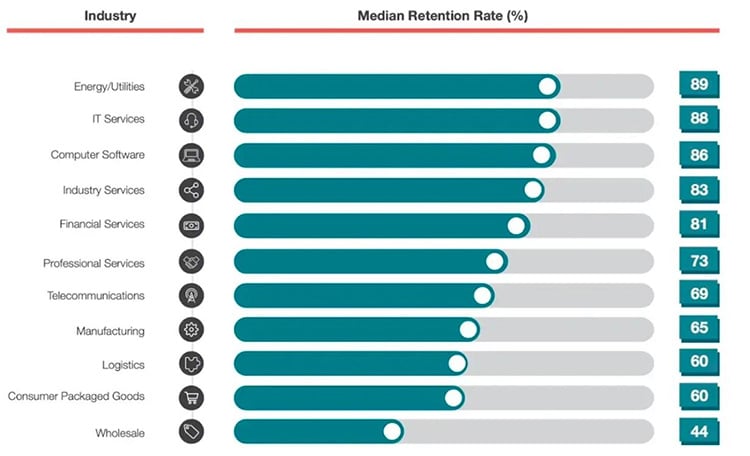
Here are some standard benchmarks for the retention rate of different industries:
Why is Customer Retention Important?
Lower Costs Mean Higher Profits
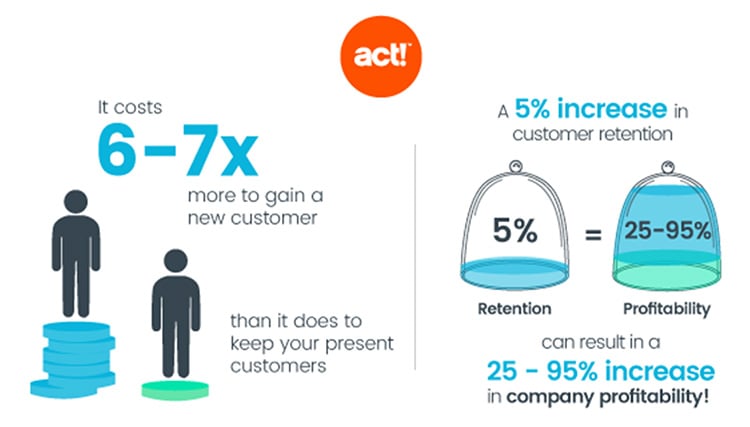
Keeping existing customers costs less than finding new ones. You don’t need to spend on ads, marketing campaigns, or introductory discounts to convince them to buy. Your existing customers already know and trust your business.
Each new customer acquisition requires significant investment – from running ads and offering first-time discounts to spending time explaining your products. When you focus on retention, you can invest those resources into improving your product or service instead.
Repeat Customers Buy More
Long-term customers tend to buy more over time. Once they trust your products or services, they’re more likely to try new offerings and make more significant purchases. They also understand your value, so they’re less likely to leave just because a competitor offers a lower price.
They’re also more open to suggestions and cross-sells because they trust your recommendations. This leads to higher average order values and more frequent purchases.
Free Marketing Through Word-of-Mouth
Satisfied long-term customers bring in new business through word-of-mouth. They recommend your business to friends and family, write positive reviews, and share their experiences online. This organic growth is more reliable than paid advertising because people trust recommendations from people they know.
Better Customer Insights
Long-term customers provide invaluable insights into your products and services. The longer someone uses your offering, the more detailed and actionable their feedback becomes. These customers can spot subtle issues, suggest improvements, and help you understand evolving customer needs.
Unlike new customers who might only see surface-level features, loyal customers understand your product’s nuances and can help shape its future development. Their deep understanding of your product makes them excellent beta testers for new features, and their feedback often leads to innovations that attract even more customers while keeping existing ones satisfied.
5 Strategies for Customer Retention
Let’s look at 5 strategies that will help you retain customers without trying to lure them with discounts or any pushy sales tactics.
1- Create a Post-Purchase Experience
When customers genuinely understand how to use what they’ve bought, they’re more likely to stick around.
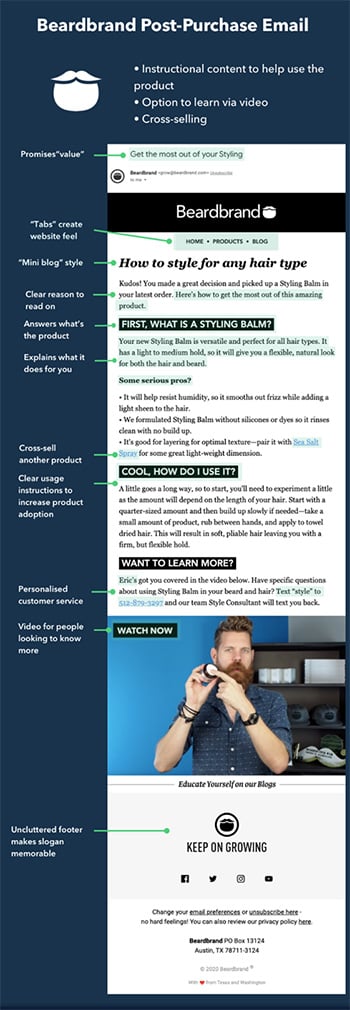
For example, Beardbrand does this beautifully in their welcome email. They immediately show new customers how to style their hair with the balm they just bought.
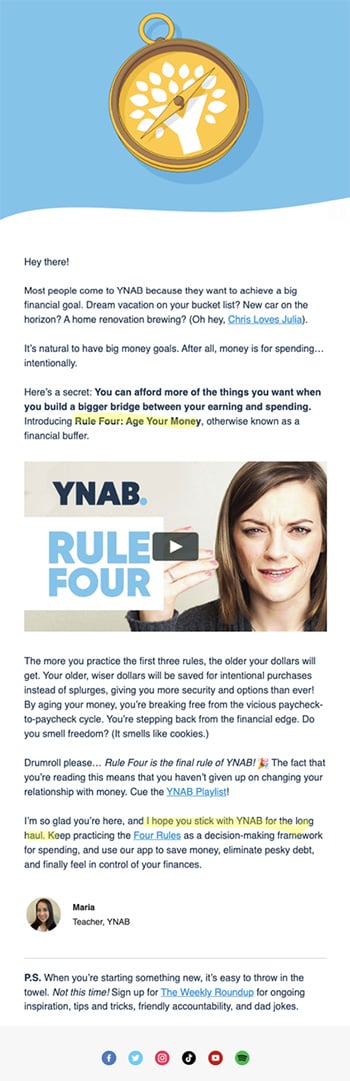
YNAB takes a similar approach to helping customers succeed with budgeting. Their initial email acknowledges the customer’s goal – like finally getting control of their finances. Then they introduce simple concepts one at a time, making sure customers actually benefit from the software rather than getting overwhelmed and giving up.
ClickFunnels takes a different approach to retention by creating multiple touchpoints. They offer:
- Regular live training sessions for new skills
- Traffic generation workshops
- A help center with searchable resources
- Community spaces where customers can connect

This approach ensures customers build confidence and actually use the platform to grow their business, rather than abandoning it out of frustration.
Simple training sessions, clear usage guides, and showing customers how others are succeeding with your product – all help customers get more value from their purchases. And when customers see that value, they stay.
Start by mapping out the key moments where customers might struggle with your product or miss out on its full value.
For example, if you sell skincare, identify when customers typically give up (maybe they don’t see results quickly enough) or miss important steps (like not using sunscreen with retinol). Then create simple educational content for these moments – a mix of emails, short videos, or even text messages that arrive right when customers need them.
Make this education feel natural and helpful, not overwhelming. Break everything down into small, actionable pieces. Instead of sending one massive guide, send bite-sized tips that build on each other.
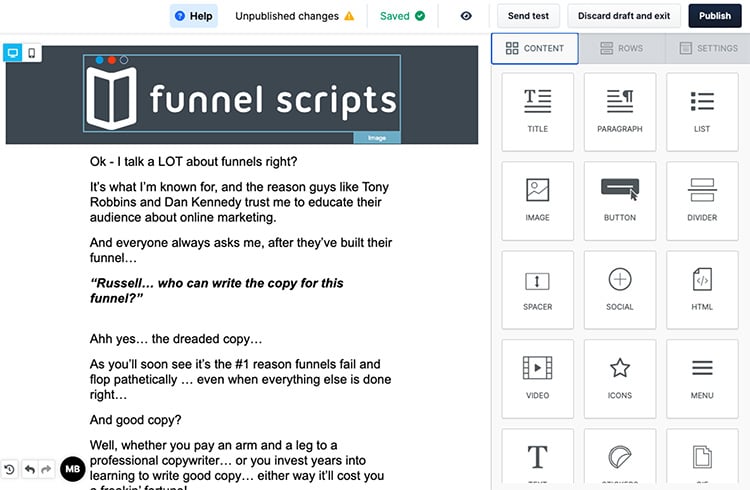
At ClickFunnels, we’ve made it incredibly simple to create these post-purchase emails. Our drag-and-drop email editor lets you build beautiful, engaging emails in minutes. No tech skills are needed.
Schedule these emails to automatically go out at the perfect time, so you never miss an opportunity to help your customers succeed with their purchase.
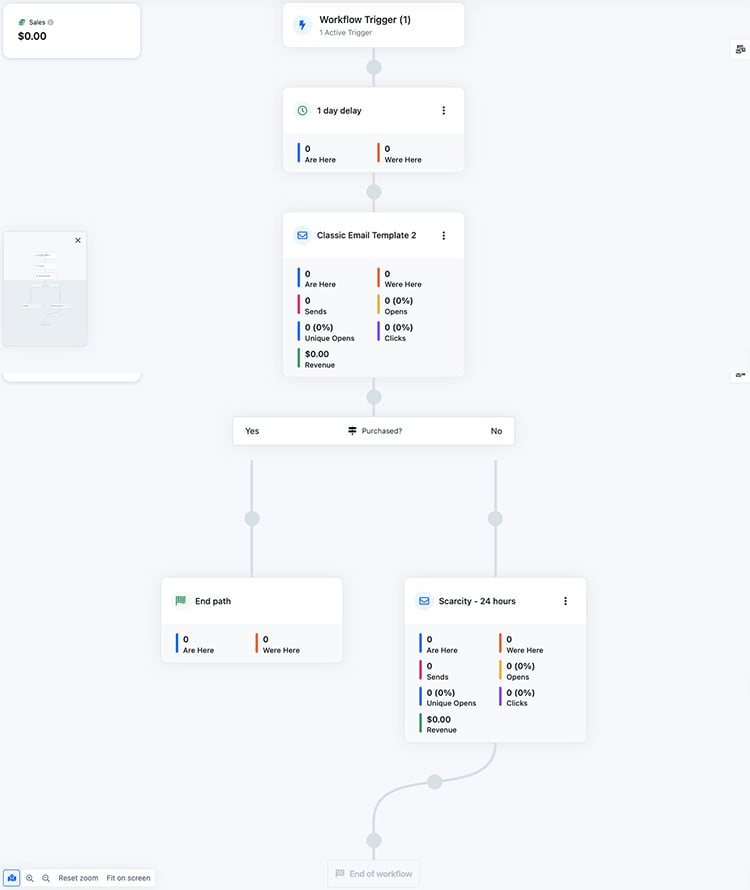
Easily Create And Send Emails With ClickFunnels
2- Reward Loyalty
You can create a reason for your customers to stick with your business rather than trying competitors by offering them rewards, points, or special benefits if they decide to purchase from you again.
For example, customers choose Starbucks over other coffee shops because they’re always working toward their next reward.
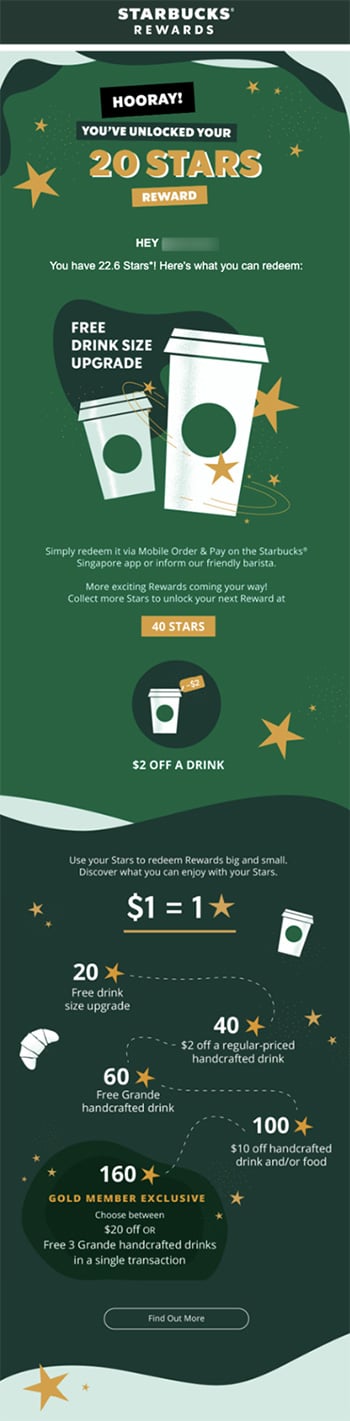
But what makes loyalty programs truly work goes deeper than just points and perks.
The most effective loyalty programs work on multiple levels. On the surface, they offer clear, tangible benefits like points, discounts, or special perks. But deeper down, they tap into powerful motivators like status (through VIP tiers), achievement (by reaching milestones), and exclusivity (with member-only benefits).
For example, Sephora’s loyalty program mixes immediate rewards (like points on purchases) with long-term benefits (like special tier status) that customers won’t want to give up.
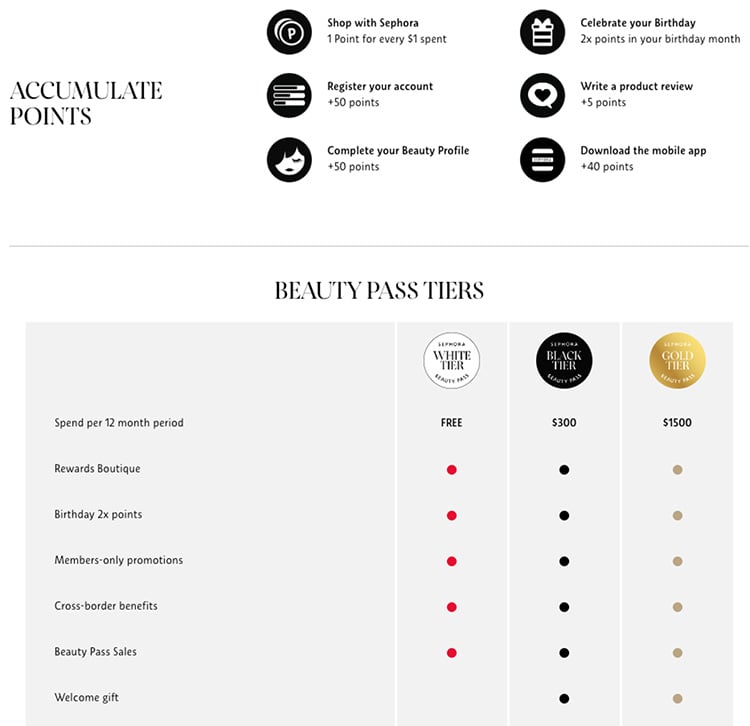
Loyalty programs tap into several core psychological principles that make them incredibly effective at keeping customers coming back.
At the most basic level, they trigger our brain’s reward system. Every time we earn points or unlock a new tier, we get a small hit of dopamine, the neurotransmitter responsible for making us feel good when we accomplish goals.
But there’s something even more powerful at work: loss aversion.
Once customers accumulate points or achieve a certain status, they become resistant to losing these benefits, even if they could find slightly better deals elsewhere.
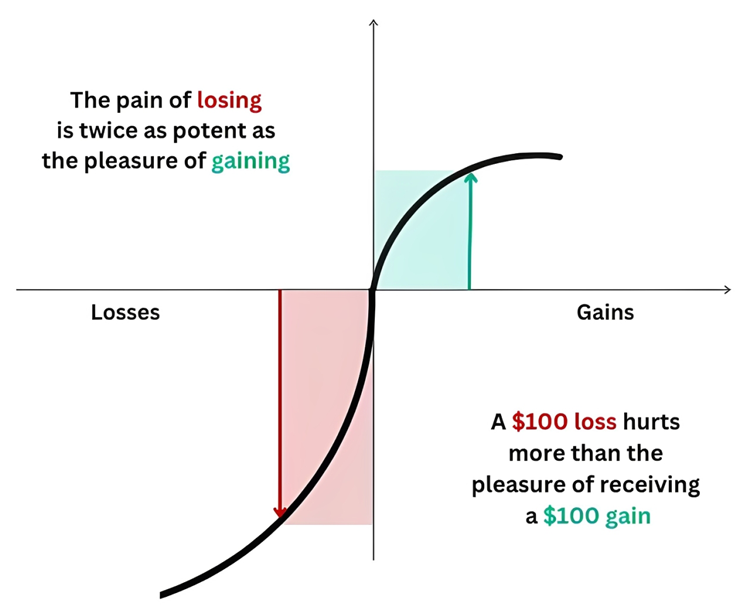
The endowment effect further strengthens this – people place higher value on things they already own, including loyalty program benefits they’ve earned.
To make your loyalty program effective, keep it simple and attainable. Make sure rewards feel worthwhile, but don’t cut too deeply into your margins. Most importantly, focus on creating benefits that enhance the customer experience rather than just offering discounts. The goal is to make customers feel valued and give them a genuine reason to keep choosing your business.
3- Build a Strong Customer Community
Creating a community means fostering a space where your customers can connect, interact, and engage not just with your brand but with each other. It transforms the traditional one-way business-customer relationship into a network of relationships between your brand and its customers and among customers themselves.
When customers feel part of a community, they develop emotional connections that make them more likely to stay loyal to your brand.
For example, Ahrefs has a 15,300-member Facebook group exclusively for paying customers. This has created a self-sustaining ecosystem where customers help each other, reducing support costs while strengthening brand loyalty through peer-to-peer interactions.

Small and medium businesses can implement community-building strategies by starting small and scaling gradually.
- Begin with a private Facebook group or Discord server where customers can interact.
- Actively moderate the community and seed discussions with valuable content like product tips, industry insights, or behind-the-scenes looks at your business.
- Encourage customer success stories and facilitate peer learning.
- Host regular virtual meetups or Q&A sessions to maintain engagement.
When you use ClickFunnels, instead of juggling multiple tools or relying on third-party platforms, you can use our ‘Community’ feature to create and manage your members. Our customers love how easy it is to host discussions, share updates, and celebrate wins – all in one unified space.
Setting up your community takes just minutes: name your group, add a description, choose your privacy settings, and you’re ready to go. You can even customize the URL to match your brand.
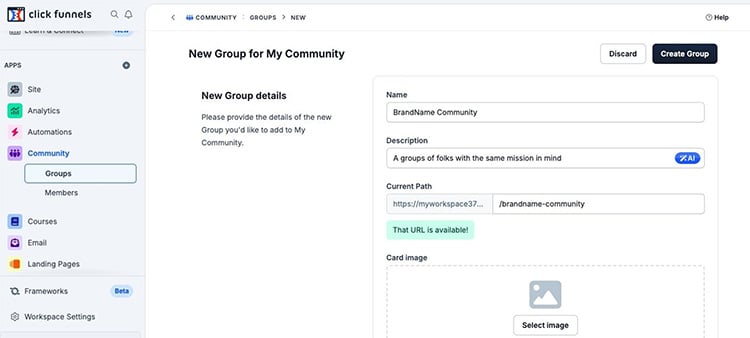
You can create different types of groups – whether open to all your customers, private to specific segments, or secret for exclusive access. You also have full control over permissions, such as requiring post approval or automatically adding members to new topics.
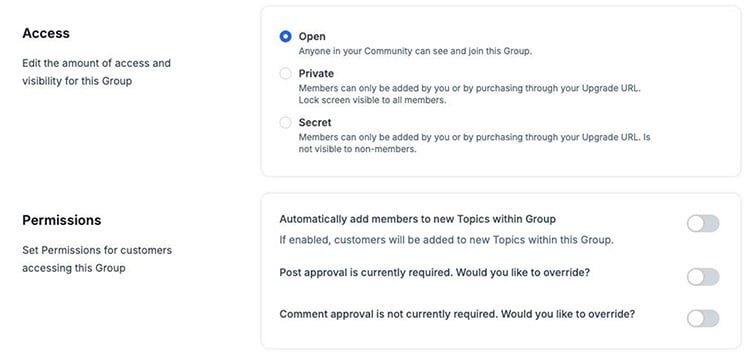
Create And Launch Engaged Communities With ClickFunnels
4- Identify Customers at Risk of Churn
Some customers will naturally drift away, but unexpected or high churn can impact your growth and profitability. That’s why it’s necessary to keep an eye on customers who might churn and take action if the churn rate is growing.
Churn is the rate customers stop doing business with you in a certain period.
It is calculated as –
Churn Rate = (Lost Customers / Starting Customers) × 100
For example, if you started January with 200 customers and by the end of January, you lost 20 customers, your churn rate would be: (20 / 200) × 100 = 10%
The signals of when a customer is about to churn vary by industry but they often fall into three main categories:
- Engagement signals: How often customers interact with your product or service compared to their normal patterns. A sudden drop in usage, fewer logins, or decreased feature adoption often indicates dissatisfaction or lack of value.
- Purchase patterns: Changes in buying behavior can reveal impending churn. Look for reduced purchase frequency, smaller order sizes, or longer gaps between transactions compared to their historical average.
- Support interactions: Multiple support tickets, unresolved complaints, or increasingly frustrated communication tone often precede customer departure. Even seemingly minor issues can indicate growing dissatisfaction.
To implement a strategy to prevent churn, start by establishing your customer’s normal behavior patterns. What does a healthy, engaged customer look like in your business? This becomes your baseline. Then, monitor for deviations from this pattern.
The most effective approach is creating a simple scoring system. When any risk signal appears, assign it a value based on how strongly it predicts churn in your business.
For example:
- Missed payment: 5 points
- 50% drop in usage: 3 points
- Support complaint: 2 points
When a customer hits a certain threshold (say 7 points), it triggers an alert for your team to intervene. This intervention should be personalized based on their specific risk signals – if they’re having technical issues, have a support specialist reach out. If they’re not using key features, schedule a training session.
The goal is to identify at-risk customers early enough to address their concerns before they decide to leave because it’s much easier to keep a customer than to win them back after they’ve gone.
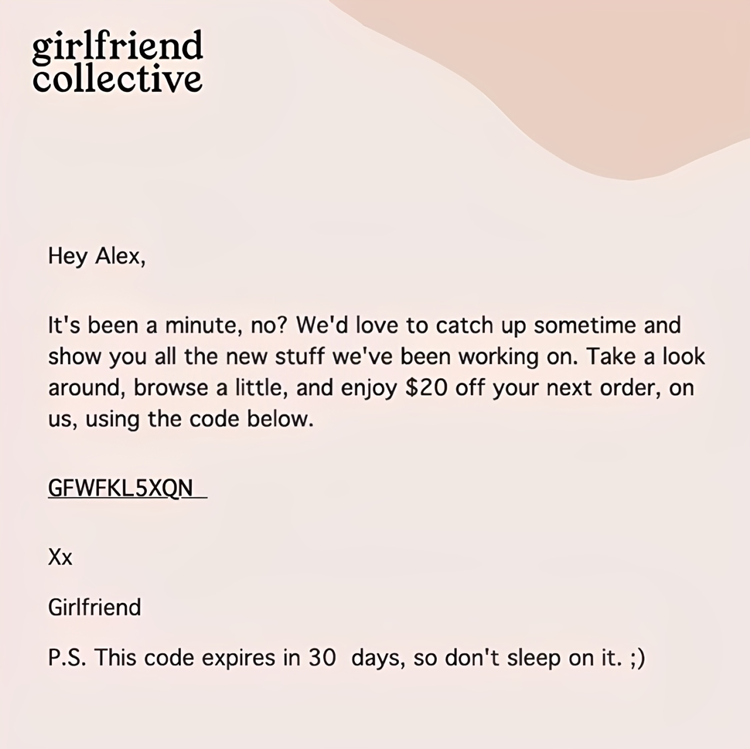
Here’s an example of an email sent by the clothing brand Girlfriend Collective to prevent at-risk customers from churning:
5- Conduct Exit Interviews
An exit interview is a structured conversation with a customer who has decided to leave your business (cancel a subscription, stop buying, request a refund, etc.). The goal is to understand why they’re leaving and gather insights to prevent others from going for the same reasons.
The process starts when you notice a customer is leaving – whether through a cancellation, refund request or when a regular customer goes quiet. Reach out quickly, ideally within 24 hours, with a personal touch.
A simple, genuine email works best. You can write:
Subject: Quick question about your [Product] experience
Hi [Name], I’m [Your Name], the [role] at [Company].
I noticed you’ve recently [canceled/requested a refund], and I’d love to understand why so we can improve. Would you be open to a brief 15-minute chat? As a thank you for your time, I’ll send you a [specific incentive].
You can pick a time that works best for you here: [Calendar link]
Best, [Your name]
During the conversation, focus on these key areas:
- The specific trigger that prompted their departure
- Features or services they felt were missing
- Price-to-value perception
- Competitor comparisons (if they’re switching to another solution)
- What changes would make them reconsider
Document each interview using a consistent framework to identify patterns.
The most important part comes after the interview – acting on the feedback.
Review your exit interviews monthly and look for common themes. If multiple customers mention the same issue, that’s your priority for improvement.
When you make changes based on feedback, reach back out to those customers who suggested them. Not only does this show you value their input, but it also gives you a natural opportunity to win them back.
Final Thoughts
While the strategies we’ve discussed are powerful, they’re just the starting blocks. The real change happens when you stop seeing retention as a metric and start viewing it as relationships you’re nurturing.
Think about your own favorite businesses. What makes you come back? What problems did they solve, and how did that make you want to buy from them again?
Take your customer list. Pick one person who bought from you recently. And instead of only thinking about what they might buy next, imagine where they want to be in six months. How can your product or service help them get there? What small step could you take today – perhaps a simple email or check-in call – to show them you’re invested in their journey?
Start with one strategy today. The sooner you begin, the sooner you’ll see those retention numbers climb.
ClickFunnels makes implementing everything we’ve discussed easy – from automated post-purchase sequences to engaging community spaces. Start your free trial today and see how simple it can be to turn one-time buyers into loyal customers.
Create And Launch Engaged Communities With ClickFunnels
Thanks for reading Proven Tactics To Keep Customers Coming Back which appeared first on ClickFunnels.